In the race to become L.A.’s next mayor, the city’s top cop — LAPD Chief Jim McDonnell — has become a lightning rod for debate.
The two candidates — incumbent Karen Bass and City Councilmember Nithya Raman — have staked out differing positions about how the Los Angeles Police Department has performed under McDonnell.
Raman has vowed to replace McDonnell, saying he has not “met the moment” given the department’s response to federal immigration raids. Bass has publicly backed the chief she hired two years ago, saying the LAPD could be thrown into disarray if McDonnell is removed before the 2028 Olympic Games.
Raman’s potential ouster of McDonnell and desire to push reforms on the LAPD has pitted her against the Los Angeles Police Protective League, the powerful union for rank-and-file officers that campaigned against Bass during her first election but is now backing her. The union has poured millions of dollars into attack ads against Raman, who has said she declined contributions from the organization in the past.
In an op-ed published in the Protective League’s monthly magazine earlier this year, union president Richard Mendoza called the Democratic Socialists of America, which has endorsed Raman, an “imminent threat to our members.”
Last week, Raman faced criticism for an Instagram video in which she appeared to slam McDonnell and the mayor, saying at one point “only you can stop fascist liars.” She later denied that she was referring to Bass or McDonnell, saying her remarks were improperly edited — and that she had the video pulled.
The Raman campaign did not respond to numerous requests for an interview about her vision for the LAPD.
Raman, a Harvard-educated urban planner, has sought to burnish her credentials as a political outsider by publicly calling for a change in LAPD leadership — but she hasn’t given a clear timeline on when she would replace McDonnell.
LAPD Chief Jim McDonnell greets Mayor Karen Bass during a ceremony at police headquarters in downtown Los Angeles on May 27.
(Christina House / Los Angeles Times)
Last week, Raman told ABC7 she expected to replace McDonnell in 2030, after he has finished his first five-year term. Hours later, she pulled back a bit, issuing a statement saying she expects to replace him prior to the end of his term, which concludes in late 2029.
“Chief McDonnell is Mayor Bass’s police chief,” her statement said. “I have made it clear that I would seek a chief who can keep Angelenos safe and restore trust with our immigrant communities.”
Her comments at a mayoral debate this week threw further uncertainty about who will run the LAPD if she gets the top job.
Raman sidestepped a question about whether she would replace McDonnell before the Olympics.
“I believe he’s lost the trust of Angelenos, especially in light of the ICE raids,” she said, adding that she wasn’t sure that she could make a “unilateral decision” to fire McDonnell outright. Bass pounced on the comment, saying that the fact that Raman didn’t know the mayor has that authority to get rid of a police chief shows she is unfit for the office.
The LAPD didn’t immediately respond to a request Thursday for an interview with McDonnell.
Asked about Raman’s remarks during his regular appearance on Fox 11 Los Angeles on Wednesday, McDonnell said he found it “problematic” to hear criticism of the LAPD’s response to civil unrest from someone “who wasn’t there.”
He defended the department’s protest response, saying his officers acted appropriately when confronted by unruly demonstrators hurling bottles, bricks, Molotov cocktails and commercial-grade fireworks. Fifty-two officers suffered injuries, ranging from concussions to hearing loss, he said. Such “riotous situations” necessitated the use of tear gas against crowds, he said, something the department hadn’t done in decades.
“It was getting to a point where it could become a deadly force situation, which we were trying to avoid at all costs,” he said. “I don’t think it could’ve been done differently that could’ve had a better outcome.”
City Councilmember Nithya Raman speaks during a debate with incumbent Mayor Karen Bass on Oct. 13.
(Eric Thayer / Los Angeles Times)
Conventional wisdom holds that new mayors will eventually select their own chief, a decision that is considered as important as any in defining a city leader’s legacy. Some have waited longer than others to do it. Bass, for instance, oversaw the reappointment of McDonnell’s predecessor, Michel Moore, shortly after her election and stood by him for a year before Moore’s abrupt resignation in early 2024.
Mayors in other big cities have faced similar dilemmas.
In New York City, Mayor Zohran Mamdani, a democratic socialist whom Raman is sometimes compared to, recently announced that he intends to retain NYPD Commissioner Jessica Tisch, in a move that was decried by his progressive base. Mamdani told local media that he believed that Tisch was right for the job, based on a proven track record of rooting out corruption and had overseen a crime drop as commissioner, which is the equivalent of a police chief in L.A.
Bass selected McDonnell to lead the LAPD in November 2024 after a lengthy nationwide search.
His appointment was viewed with surprise in local political circles, where some questioned why a progressive mayor like Bass, with a background in community organizing, would hitch her fortunes to a law-and-order chief. Others argued that McDonnell was an appealing choice: An LAPD veteran who offered experience and respect after serving as the chief in Long Beach and later as L.A. County sheriff.
After numerous scandals under Moore, McDonnell was seen as offering stability while the city prepared for the massive security challenges of the World Cup and Olympic Games. In McDonnell, his supporters say, the mayor has an honest and principled leader who has managed to steady a department beset by low morale, dwindling staffing levels and aging facilities. Violent crime has fallen to historic lows under his watch, as it has it many other U.S. cities.
McDonnell, however, has faced withering scrutiny over a dramatic rise in police shootings last year and for the department’s use of hard foam projectiles, tear gas, horse-mounted officers and other tactics against protesters. Within the LAPD, some have also criticized McDonnell for taking a detached approach to running the department and ceding control to underlings, such as Assistant Chief Dominic Choi.
During Tuesday’s debate, Raman suggested that under McDonnell the LAPD has drifted back to being a more opaque, closed-off agency that no longer publishes basic information such as neighborhood-level crime statistics.
In a recent interview with The Times, Bass signaled her frustration with the slow pace of change within the LAPD.
Without singling out McDonnell by name, Bass said she was concerned about the lack of progress on revamping LAPD’s much-maligned disciplinary system, which the chief oversees and which — depending on who you ask — either punishes officers too harshly or fails to hold them accountable.
Bass said that when she toured police station houses after being elected, the number one complaint she heard was about the perception that lower-ranking officers are punished more severely than command staff.
“They feel that command gets away with a lot of things that the rank and file does not,” she said. “So I feel like the reform of the disciplinary system has not gone fast enough, and I am concerned about that.”
Bass has also vowed to make a priority of addressing police shootings of civilians, particularly those involving people experiencing mental health crises. Last month, she signed an executive directive calling for an outside review of the LAPD’s policies and training, which she referred to as “woefully inadequate.”
Los Angeles Police Chief Jim McDonnell speaks at a news conference at the Hall of Justice on Aug. 6.
(Arwen Clemans / Los Angeles Times)
If McDonnell has any doubts about his future, he hasn’t hinted at them during recent public appearances, often talking about the department’s role in the Olympics.
Bass told The Times that a push to replace McDonnell right before the 2028 Olympic Games would leave the LAPD with a leadership vacuum just as its leaders are supposed to be focused on security plans for that event. The last time city leaders recruited a new chief, the search process was nationwide, lasting more than 10 months, she said.
“I think that [Raman] is naive on what it means to do that,” Bass said. “I think she’s naive, and not understanding the instability to the department when leadership is in flux. And so if it took her the same amount of time, that means we’d have a new police chief about seven to eight months before one of the most high-profile security events in U.S. history.”
LAPD Chief Jim McDonnell with his wife Kathy, right, is introduced as the 59th chief of the Los Angeles Police Department with Dr. Erroll Southers, then the president of the Los Angeles Police Commission, left, and Mayor Karen Bass on Nov. 14, 2024.
(Brian van der Brug / Los Angeles Times)
In some ways, Raman and Bass are not as far apart on public safety as they previously were. Both candidates have been critical of the license plate reader company Flock Safety, advocated for investing in alternatives to policing and have recently indicated that they are committed to keeping the LAPD from shrinking any further. And since launching her mayoral bid, Raman’s campaign has publicly distanced itself from the “defund the police” movement that Bass has consistently rebuffed.
Where the two candidates diverge most sharply was over a package of police raises negotiated by Bass in 2023 that Raman said has deepened the city’s financial problems. Sold as a way to boost recruitment, the pay increases are among the reasons the police union has endorsed Bass’ reelection. The next mayor will be asked to negotiate a new police contract, which is set to expire next year.
Matt Klink, an L.A.-based Republican political consultant, said that law enforcement groups, such as the Protective League, were skeptical of Bass when she first took office but now back her because she has “shown through her first term in office that she has consistently supported the police.” He said that Raman, on the other hand, has played to the far left by villainizing McDonnell and downplaying concerns about safety.
“Mayor Bass has a stronger record of supporting the police,” he said. “She backed our contracts and our budgets — she has generally supported public safety.”
UCLA professor David Turner said despite his wariness of Bass’ centrist drift, he and other progressives are equally skeptical of Raman, who, has repeatedly voted to increase the LAPD budget without any meaningful efforts to rein in police misconduct.
“That money was proposed by Mayor Bass and voted and approved by Councilmember Nithya Raman,” said Turner, who runs Million Dollar Hoods, which seeks to map the impact of mass incarceration. Still, he said, he hopes that Raman’s tough talk about McDonnell will translate into more accountability for the LAPD.
“What I’m looking for and what L.A. progressives are looking for is a certain level of boldness and a willingness not to capitulate to the [Protective League] and their whims,” he said.
Times staff writers David Zahniser and James Queally contributed to this report.
For truckers, that’s a crisis. Their big rigs get about a paltry six miles to the gallon and filling their tanks in the Golden State now costs up to $2,500 a pop. For the guys who own a single truck or the small companies (which is the majority of trucking businesses), it can be hard to pass along those extra fuel costs to customers — which, as my colleague Nilesh Christoper wrote about, is causing a lot of pain in the industry.
Truckers everywhere are stomping mad, and it’s a problem for President Trump and Republicans heading into the midterms. Eventually, higher diesel prices are going to mean higher prices on the goods those trucks are transporting, and that’s an even bigger problem.
Trump has been throwing spaghetti at the wall trying out one limp solution after another to bring prices down — cutting taxes, brokering deals with Russia, telling us it’s just not a problem. But of course, it is.
Truck drivers fill they diesel tanks at United Oil in Long Beach on Wednesday, Oct. 7, 2026.
(Christina House / Los Angeles Times)
One Southern California energy expert has spent recent days in Washington, D.C., trying to convince the administration that the solution lies in California, in the vast oil reserves under our cities and farms that we largely leave untapped for environmental reasons. Environment aside, it’s a long-running and compelling (to some, anyway) argument that may have found its moment, meaning California might become Trump’s next solution — or at least scapegoat — to a costly problem.
More on that, but first, a recap of where we are.
The red dye ploy
Three thousand years ago in Trump time, but which I mean earlier this month, the president signed an executive order that allowed truckers to use red dye diesel as a way to lower costs.
Red dye diesel is, you guessed it, my genius readers, diesel that has been dyed red — to differentiate it from the stuff at truck stops. Farmers and other agricultural types are allowed to buy red dye diesel without certain taxes to use in tractors and other equipment that doesn’t run on our roads.
The Trump order allows truckers to buy red dye and defer paying the roughly 25-cent-per-gallon federal tax on it. So it’s not really saving them money, just delaying payment.
President Trump signs an executive order to lower the cost of diesel fuel during a campaign rally on Oct. 5, 2026, in Grand Island, Neb.
(Win McNamee / Getty Images)
But there’s a problem with Trump’s red dye plan. States have their own laws about red dye diesel, and the feds can’t change them. So even if truckers could find a place to buy red dye diesel (again, not sold at regular gas stations), and even if the incentive of paying taxes later made the search seem worthwhile, they would often be breaking state laws.
Eric Sauer, chief executive of the California Trucking Assn., a trade group that advocates for the industry, said his group has been advising members not to use the crimson fuel until it’s clear that states are going to change their rules. Some, like Missouri, have. California has not.
Either way, Sauer said, allowing truckers to use diesel dyed red really doesn’t increase the overall supply, just shifts it around — which is unlikely to bring prices down.
“It’s still the same supply of diesel fuel out there,” Sauer said.
Global supply
The global supply of crude oil, has been, shall we say, negatively affected by our war with Iran. Despite Trump’s assurances that the conflict is winding down, two container ships in the Strait of Hormuz were attacked this week, highlighting that perhaps Iran is unaware the war is over. Fears of that conflict and others sent energy prices soaring even higher.
The PCK petroleum refinery stands illuminated at twilight on April 28, 2026, in Schwedt, Germany. The refinery, which produces gasoline, diesel, kerosene and bitumen, receives 20% of its oil from Kazakhstan through the Russian Druzhba pipeline.
(Sean Gallup / Getty Images)
That deal could bring 36 million barrels of Russian diesel, at most, to American shores, which sounds like a lot until you realize we use about 4 million barrels of the stuff every day. So Trump essentially sold out Ukraine and demolished what was left of our European standing for nine days of diesel — an amount unlikely to lower prices.
In California, that’s especially true because, as UC Berkeley professor Aaron Smith points out, about 70% of our diesel “is actually not made from crude oil and coming from oil refineries. It’s made from vegetable oils and animal fats.”
Yes, the Golden State relies heavily on so-called renewable diesel that, Smith says, “introduces, I think, another wrinkle” when trying to lower costs.
California’s fault
But let’s get back to Mische, the USC professor. For years, he’s been arguing that California’s refusal to pump more oil should be viewed as a national security concern.
California actually imports the majority of its crude oil, more than 60% from other countries, and our refineries for a number of debated reasons have been closing. Our imports have been growing in recent years. We also have no pipelines connecting us to the rest of the U.S., unlike many other states. That means we can’t easily get oil except what’s shipped in through our ports.
At the same time, the West Coast with its many military installations is undeniably pivotal to national security. Mische argues that without adequate fuel reserves for a shortage — like during a war — our military readiness could be jeopardized. He wants to see California not only pump more, but for the federal government to store more of that California crude.
A train of tank cars enters the Chevron EL Segundo refinery, one of the largest petroleum processing facilities in California, on April 8, 2026. California imports approximately 75% of its crude oil, with nearly one-third of the crude supplied from the Middle East. Prices at the pump in the state are averaging $5.93 per gallon today amid the war in Iran.
(Mario Tama / Getty Images)
These arguments haven’t gained much traction in our heavily Democratic state, which has moved forcefully away from fossil fuels and toward renewable sources in recent years and which has little interest in increasing drilling. But Mische and his colleagues may have found their moment.
Earlier this year, they wrote draft executive orders about California’s oil industry that he says the Trump administration is considering — one would attempt to force California to pump more oil using the authority of the Defense Production Act of 1950.
Trump has used that wartime act several times in the last few months, and Tuesday, Vice President JD Vance announced it would be used to expand production at a Texas oil refinery.
Mische said he spent last week in conversations with the administration on the proposed orders and is “confident” Trump will “issue additional executive orders under the Defense Production Act for California” by the end of the year.
Beyond the national security argument, such orders could please Trump because they do two things. First, if California pumps its own oil, it could free up some imported oil for other states, which could lower prices — though it would certainly take time and require more refinery capacity.
Second, and likely of more interest to the White House, it makes California — and Newsom — the villain for this sticky Republican problem. California will sue, of course, which would just help the Trump political narrative.
Kevin de León, a California Senate president emeritus and author of SB 100, California’s landmark 100% clean energy law, said he can easily envision Trump claiming that “we have lots of cheap oil in the United States that can lower your gas prices — but crazy lefty California is blocking us.”
Actually, it’s hard to imagine Trump not grabbing the chance to blame gas prices on the Golden State — or Newsom.
Karina Longworth loves Los Angeles for all its quirks and charms.
Born and raised in the San Fernando Valley, the film critic, author and journalist has made a career out of celebrating her city. Her podcast “You Must Remember This,” about “the secret and/or forgotten histories of Hollywood’s first century,” has spent 21 seasons diving into the intricacies of the movie industry, from lauded stars to undersung production designers. (Its new season, “The Bisexuals,” tells the story of singer turned actor Libby Holman, whose love life would later intersect with the now-famously queer screen star Montgomery Clift.)
In Sunday Funday, L.A. people give us a play-by-play of their ideal Sunday around town. Find ideas and inspiration on where to go, what to eat and how to enjoy life on the weekends.
She’s also fiercely loyal to the hangouts and haunts she grew up frequenting.
“Until they closed down three or four years ago, my favorite Indian restaurant was this place in Studio City on Ventura Place called Gangadin,” she says. “That was the only place I would order from, and I have not been able to find an Indian spot that I like since just because I’m comparing it to Gangadin, which probably wasn’t even the most authentic or the best. It’s just what I had been eating for 30 years.”
Here’s how Longworth would spend her perfect Sunday in L.A., from a stroll down Mulholland Drive to grabbing a cup of frozen yogurt with a cinematic spin.
This interview has been lightly edited for length and clarity.
9 a.m.: Get up and grab a latte
I try to sleep as late as possible, but the older I get, the harder it is to actually sleep in. Ideally on a perfect Sunday, I would sleep until 9. It doesn’t always happen, but I try.
My favorite place to get coffee in L.A. is Kings Road Cafe. I’ve been going there since the ‘90s, and I still think they have the best coffee in Los Angeles. It’s very strong and they give you a large portion, and I find that you rarely get both of those things in L.A. (I like a coffee that can last me multiple hours.) I’ll usually get an almond milk latte — iced if it’s warm out, hot if it’s not.
10 a.m.: A Laurel Canyon hike
Probably what I’d do next is go over to Laurel Canyon. I built my recording studio in a tiny house at the end of a cul-de-sac in Laurel Canyon a few years ago, and I really like hiking around there. So I’d drive up, park there, and then walk up Laurel Pass to the Nancy Hoover Pohl Overlook.
The first half of that walk is really tough because it’s just straight uphill until you get to Mulholland, but I like it because it’s not a hiking trail, so it’s not dusty and there aren’t that many people. There’s an element of solitude and quiet to it, and I love that the end of it is all downhill so you can just kind of run down and get it over with.
Growing up in the Valley, I always romanticized Mulholland Drive, which was always quote-unquote “over the hill.” There’s something about manifesting and then realizing my ideal adult life that I can come to understand by standing at the overlook and looking at the other side, remembering when I dreamed of living where I do now.
In the ‘80s and ‘90s, the Valley wasn’t what it is now. There wasn’t an Alfred Coffee or anything like that. It was a few years behind the times compared to Hollywood or Beverly Hills, where all the cool stuff that I wanted to do was usually happening. All the good record stores, all the good bookstores and movie theaters.
I used to go to the Silent Movie Theater when I was a teenager or the Beverly Cinema, which is now the New Beverly. I’d go to the Nuart all the time, too. I saw a lot of important movies at the Sunset Five, which is now called the Landmark Sunset [Hollywood] and isn’t going to be showing the 2026 equivalent of “Gummo.” I think being in the Valley just felt like being in the Los Angeles version of suburbia and so it was like, “I’ve got to get out of here and go to where things are actually happening.”
11:30 a.m.: An old favorite
After that walk, I’ll go back to my place in Laurel Canyon to have a shower and get dressed and then it’s off to Art’s Deli on Ventura Boulevard in Studio City, which is a place that I’ve been going to since 1987. I had friends that worked there in high school, too, so I was there almost every day having matzo ball soup and coffee.
There used to be a lot more really good delis in L.A. My favorite actually was Solley’s in Sherman Oaks, where I used to go with my grandfather. I’ve never had white fish salad that’s better than what they had at Solley’s, but Art’s Deli is good, too. I really like their knishes, or I’ll get a half-sandwich and soup. I’d probably do turkey on rye with mustard, but with coleslaw and Russian dressing on the side so I can add small amounts when I want. That and a cup of split pea soup.
1 p.m.: Sweet treats
Ideally after lunch, I’ll get dessert at Humphrey Yogart. It’s sort of a funny joke that I’ve become this classic movie person and there’s this frozen yogurt place inspired by the name Humphrey Bogart, but I’ve actually been eating Humphrey Yogart since before I knew who Humphrey Bogart was.
They take frozen yogurt — sweet or tart — add mix-ins, and then put it in this crazy blender that’s like a giant drill with a handle that comes down. I like to do sort of a fake Cherry Garcia with cherries and some kind of nut, but they also have an option called Killer Chocolate where they take plain tart yogurt and add a dark chocolate syrup, which I really like. I’ll add orange and espresso to that, and sometimes I’ll have them put sprinkles on top because sprinkles are amazing.
2 p.m.: Movie magic
I love to go to the movies. On Sundays at the Los Feliz Three, they do something called “Sunday Print Edition” where they show a 35mm print and have somebody come and talk about it, which is always cool. Or if there’s a festival happening at the Egyptian or something I wanted to see at Vidiots, maybe I’d do that.
I think the Egyptian is probably my favorite movie theater in L.A. It’s historic, it’s beautiful inside, and I find that the projection and programming are both very good. It’s also close to where I live so that’s convenient and, assuming they’re open, you can go have a drink or food at Musso and Frank after, which is perfect.
4 p.m.: Dodgers and drinks
Usually on Sundays, the Dodgers play at 1 o’clock, but if it’s a nationally broadcast game sometimes it’ll be on at 4 o’clock. If that’s the case, then I’d like to go to Colombo’s to sit at the bar, have a drink, and watch some of the game.
I think I’d have either a vodka martini, a Manhattan on the rocks, or maybe a glass of wine. Colombo’s is my favorite place to watch a Dodger game that’s not a sports bar. I don’t really love sports bars anyway, but if it’s a big World Series game maybe I’d go somewhere in Koreatown that’s more sporty to watch. But for sitting in a dark bar to watch an hour and a half of a game while you have one or two drinks, Colombo’s is perfect.
6 p.m. Dinner at Da Prato
Right now, I really like Da Prato, which is run by this chef Elisa Da Prato, and she’s calling it a supper club. It’s in this strange almost-loft space on 2nd Street downtown, and I’ve been there three times since early July. Each time it’s gotten busier and busier, too, so I think word of mouth is growing.
She just makes very beautiful traditional but artistically done Italian food. Everything is homemade, and it’s very L.A., but at the same time, it feels like you stumbled into some small place in an alleyway in Rome because it’s informal and they only have a small staff. It’s such a great experience, but you have to think of it in a European way because it’s not a place where you’re going to get in and out in 45 minutes. You’re going to have several courses, you’re going to linger over your food, order a couple bottles of wine, and everything’s going to be very relaxed and wonderful.
If I can’t go to Da Prato or if I need a more “special occasion” place, I’d do Jacaranda, which was started by chef Daniel Patterson and his wife, Sarah Lewitinn. I’ve been internet friends with Sarah for 15 to 20 years, so I went a couple times when they were doing it as a pop-up in their house, and now I’ve gone once since they opened the official restaurant. I’m not normally a tasting menu person because some places it can feel like too much food, but Daniel’s cooking is so phenomenal and you can absolutely manage to eat all 12 courses without feeling like you want to die.
10 p.m.: Skincare and sleep
After dinner, I’d head home and maybe take a little walk to burn off dinner a bit. Otherwise, it’s time for my nighttime routine, which is boring middle-aged lady stuff like skincare and taking magnesium. I try to be asleep by 10, but oftentimes the only time I really have to read a novel or to read for pleasure is in the 10 minutes before bed. So I’ll read a physical book or my Kindle or put on a show that I’ve seen 1,000 times if I just need something to fall asleep.
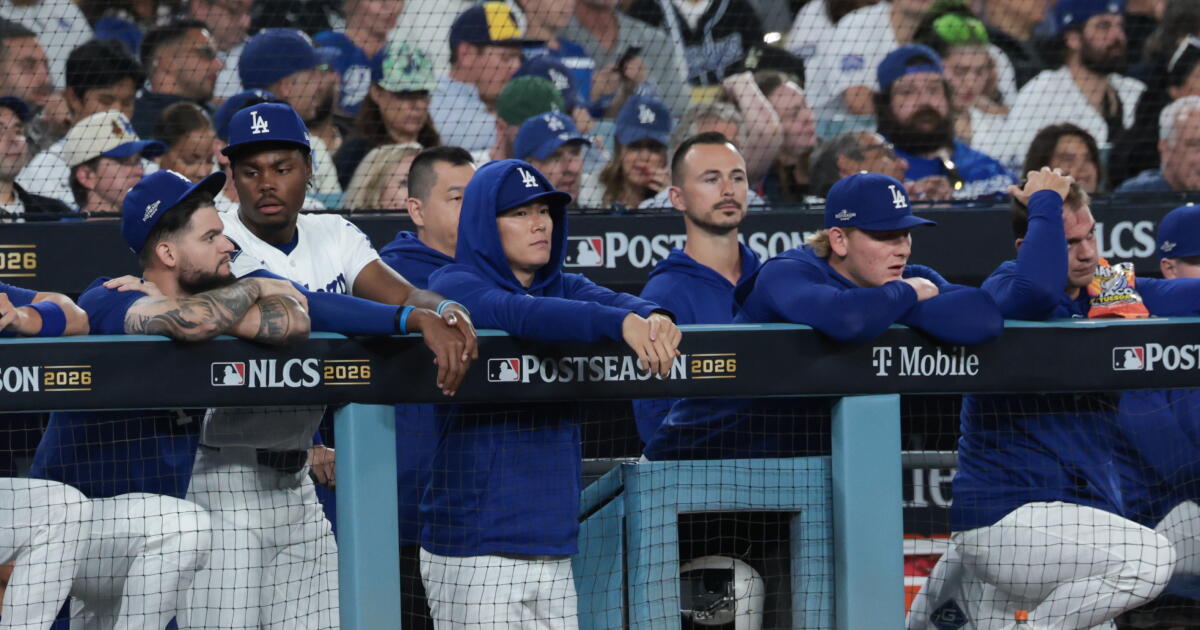
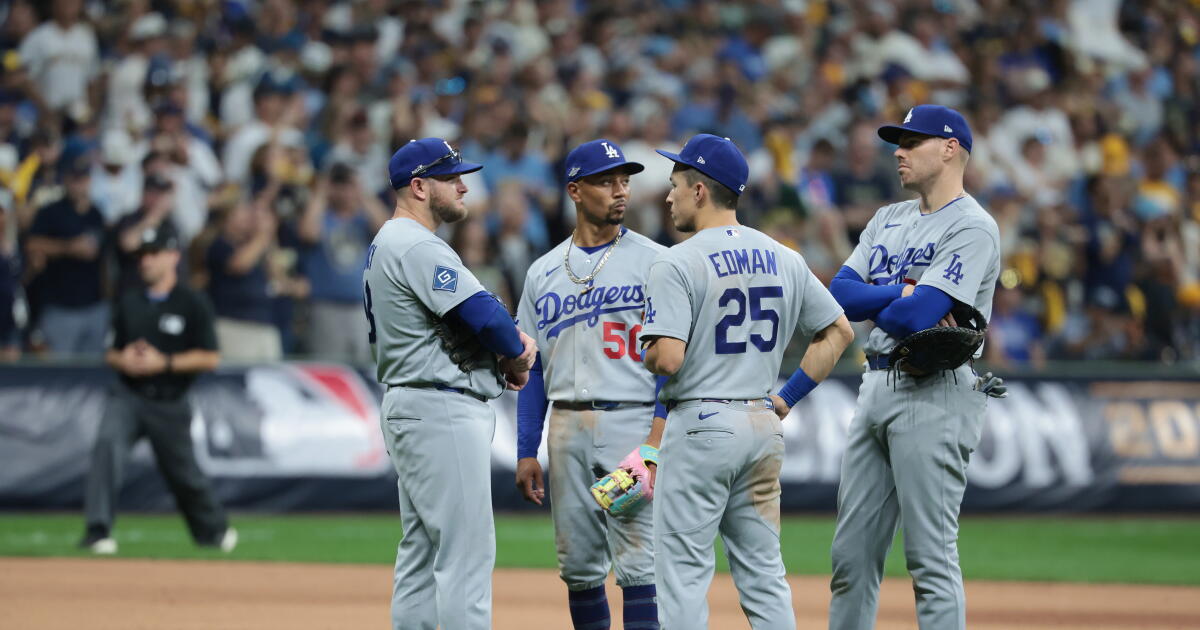
The veteran infielder stood by his locker at Dodger Stadium, his eyes red and watery, his uniform covered in dirt, knowing that when he pulled them off, it would be for the last time.
“This is it, guys,” he said, announcing his retirement, after the Dodgers were swept by the Milwaukee Brewers in the National League Championship Series on Thursday. “It’s been a lot, the last four years of my life here. And obviously making my debut here in 2014 changed my life, not just for me but for my whole family. They took care of my son, my daughter, my wife, and everybody in my family. It’s really amazing what I can think about, what happened to me and to my family the last few years.”
Rojas addressed the team after the 6-4 loss to the Brewers. He said he was going to stay loyal to the Dodgers organization but in a different role.
Rojas, 37, has a player development role lined up, the first step in a post-playing career that he hopes eventually will land him in a manager’s seat.
“I just wanted to say thank you to all the veteran guys for allowing me to be myself when I got here, even though I didn’t play one game for the Los Angeles Dodgers for the last eight or nine years before I came here,” Rojas said. “They allowed me to be the leader that I wanted to be, the person that I wanted to change the culture and kind of give a little bit more of a culture, chemistry to the clubhouse. I feel like that is going to be a legacy that I wanted to leave here, other than my performance on the field. … I want them to remember me as a guy who always did everything possible to help my teammates win and to help the team get better every single day.”
Rojas put together a 13-year career split between the Dodgers and Miami Marlins. He had a career .260 batting average, won two World Series rings and three straight Roy Campanella Awards for his leadership in the Dodgers’ clubhouse.
Miguel Rojas hits a single during Game 3 of the NLCS against the Brewers on Wednesday.
(Gina Ferazzi / Los Angeles Times)
After Rojas made his major league debut with the Dodgers in 2014, the team traded him to the Marlins. He played eight seasons there. Then in 2023, the Marlins traded him back to the Dodgers.
Rojas, a key contributor in the Dodgers’ back-to-back championship seasons, saved the Dodgers’ 2025 World Series with his Game 7 home run. He re-signed in December for what was expected to be his last season.
Right before the playoffs, Rojas, who is from Venezuela, took his U.S. citizenship test. He said the person administering his interview didn’t realize he was a baseball player until she asked who his employer was.
“I actually wanted it to be that way because I didn’t want to have any kind of preference or anything because this process has nothing to do with baseball,” he said last week. “I felt like, as a citizen, as a human being, I always wanted to be a good person off the field and not let my performance influence anything, because we all know how hard this game can be and how high you can be and how low you can be one day. I don’t want to be judged by my performance on the field. I want to be judged by the person I am and my preparation.”
Heidi Burge Horton, a former WNBA player who started her basketball career alongside her twin sister at Palos Verdes High School and inspired a Disney Channel Original Movie, has died. She was 54.
Horton died Oct. 5 after a battle with gliobastoma, a type of brain cancer, according to an online obituary. The former University of Virginia standout was reportedly diagnosed with the Grade 4 cancer last year and briefly went into remission, but the tumors returned in July, according to Houston news site Chron.
“We are deeply saddened by the passing of Heidi Burge Horton,” the Virginia women’s basketball team said in a statement posted last week on X. “Heidi was a cherished member of the Virginia Women’s Basketball family, her legacy will forever be a part of Virginia Athletics.”
Horton and her identical twin, Heather Burge, played four seasons at Virginia, where they helped the team win three Atlantic Coast Conference titles and make three NCAA Final Fours under future Hall of Fame coach Debbie Ryan. Among their teammates at college was Dawn Staley, the Hall of Famer and Olympian who coaches the University of South Carolina.
“We are all heartbroken!” Staley wrote on X following Horton’s death. “We love you Heidi. May your soul rest in peace and your body pain free.”
The University of Virginia’s Heidi Burge, right, with sister and teammate Heather Burge during the 1991 NCAA women’s championship game against Tennessee.
(Jim Gund / Getty Images)
After graduating from college, Horton and her sister headed overseas to play professionally in Europe. When the WNBA was formed in 1996, she joined the Sparks to play in the inaugural season alongside a familiar face, Lisa Leslie.
“I played with the twins since we were 14 years old,” Leslie wrote, along with a broken heart emoji, in the comments of the WNBA’s Instagram post announcing Horton’s death. “I’m so sad to hear this! I pray for the whole family.”
Heidi Ann Burge was born six minutes after her twin sister, Heather Marie, on Nov. 12, 1971, in Harbor City. She grew up in Redondo Beach before her family moved to Palos Verdes so the sisters could attend the high school there, according to a notice by Eickenhorst Funeral Services.
The twins didn’t grow up playing basketball but were recruited by Palos Verdes High‘s coach, who noticed their towering height. Both sisters were 6 feet 1 by ninth grade and would grow to be 6-5.
Horton was more resistant to trying out than her sister, and both were novices when they joined the team. The sisters would become star players over the course of their high school careers, but they were praised more for their character and work ethic than their impact on the court.
“I don’t think they’ve had a weekend off in three years,” their coach, Wendell Yoshida, told The Times in 1989. “They’ve practiced when they didn’t want to practice. They’ve worked through the tears, the sweat, the hurt, the pain. That’s what made them special. They didn’t make it just because they’re tall.”
Horton was known as the more outgoing and gregarious of the pair, but both sisters were described as being inquisitive, opinionated, fiercely loyal and competitive.
The adjustment to the college game was a bit rough for them at first, and the sisters did not get much playing time together until their junior year. They developed a reputation for being prone to mistakes and turnovers and were considered a bit soft. But once again, the sisters put in the work to improve and became key pieces for their team.
“When we did cry it was mostly out of frustration,” Horton told The Times in 1992. “Just not being able to do the things the other players could do. … Our defense wasn’t effective enough for us to deserve to be out there together. Now, we’ve proved offensively and defensively that we are an unstoppable pair when we get to play together.”
Heidi Burge, right, rises up to block Houston Comets guard Kim Perrot during a game on July 16, 1997.
(Mark J. Terrill / Associated Press)
After graduating with degrees in Spanish and rhetoric and communications studies, Horton played basketball professionally in Europe. After the establishment of the WNBA, she played for the Sparks in 1997 and the Washington Mystics in 1998 before retiring after two seasons.
Horton and her sister inspired the 2002 Disney Channel Original Movie, “Double Teamed.” The movie told a fictionalized account of the twins’ time at Palos Verdes High School. Horton was portrayed by Annie McElwain.
After retiring from playing, Horton moved to Houston, where she briefly served as a commentator for the Comets. She later became involved with Hoops-School, a youth basketball camp where she served as a coach and mentor.
“When you had the kind of coaching I did, you have to work really hard,” Horton told the Buzz Magazines in 2024. “But I also want to give a lot of credit to my coaches. Now I get to give the golden nuggets of wisdom to the kids I coach.
“Second graders, fifth graders, they listen,” she added. “That’s the biggest reward in your whole life. I had so many people pour into me, and I get to just pour it right out. That’s the torch.”
Horton is survived by her husband, Patrick; their children, Jonathan and Holly; her twin sister, Heather Quella, and other loved ones.
Hi, and welcome to another edition of Dodgers Dugout. My name is Houston Mitchell. Game 3. What will happen? Let’s find out together.
Are you a true-blue fan?
Get our Dodgers Dugout newsletter for insights, news and much more.
By continuing, you agree to our Terms of Service, which include arbitration and a class action waiver. You agree that we and our third-party vendors may collect and use your information, including through cookies, pixels and similar technologies, for the purposes set forth in our Privacy Policy such as personalizing your experience and ads.
Game 3 thoughts
—Well, Shohei Ohtani is in the lineup and batting sixth. How will he do tonight? Who knows. My feeling has always been this: Great players always want to play. It’s the job of the front office and manager to protect the player from himself. If Ohtani was just in a normal slump, I’d play him. But if he’s injured so badly it is hurting his swing, which appears to be the case, he needs to sit. No player, even as great as Ohtani, is bigger than the team.
—Will Smith is batting seventh. He’s in a worse slump than Ohtani.
—Many people are calling this a must-win game. The only must-win game is an elimination game.
First inning
—That is not the start the Dodgers were looking for. Brewers 1, Dodgers 0.
—Home run, then three straight strikeouts. Did the homer make Snell angry?
—Never thought I would see a Corey Seager hair ad.
—The Dodgers have solid warning-track power in this series so far.
Second inning
—First and second, one out. This is not the start the Dodgers were looking for.
—Someone needs to tell Will Smith that’s it’s OK to use an ABS challenge early in the game occasionally.
—And Snell gets out of it.
—Some of these TV ads make no sense at all.
—Kyle Tucker batting cleanup in the postseason. Who would have believed it?
—”Shohei was adamant that he could play!” That doesn’t mean that he should.
—Ohtani and Smith are now a combined four for 45 in this postseason.
Third inning
—Snell seems locked in now. It’s time for the Dodgers to make the Brewers pitchers feel unlocked in.
—That’s the kind of sterling analysis that you only get here.
—I was just getting ready to wonder why Miguel Rojas is starting over playoff Kiké when Rojas singled. Never mind.
—First and second, one out. Really need to score a run here. Especially with Freddie Freeman and Teoscar coming up.
—Every overhead shot shows a bunch of empty seats. This happens when you outprice the regular fan.
—And the Dodgers don’t score.
Fourth inning
—Will Smith made an early ABS challenge and won! Stop the presses! Bring me the finest muffins and bagels in all the land!
—Ohtani got on base!
—Smith challenged another call! What’s going on?
—And then he struck out anyway, taking all of the joy out of the successful challenge.
Fifth inning
—Just think if Snell could stay healthy a full season. He’d probably have six Cy Youngs.
—Somewhere in America, a child to his father during the Megan Fox ad: “Hey dad?” “Yes son?” “What’s Viagra? And why does that woman have red skin and make me feel all tingly inside?”
—Our version of Front Row Amy, Mary Hart, is in her traditional spot, looking bored as ever.
—Rojas walks. Dodgers really need to score a couple of runs.
—Tommy Edman swings at the first pitch after the previous batter drew a walk. Things that make you go hmmmm.
—The Brewers outfielders dive for a lot of catches that they don’t need to dive for.
—And the Dodgers strand another leadoff runner.
Sixth inning
—Ad begins “You never know how many days there are in October.” Well, yes I do. 31.
—You really have to score when the first two batters walk.
—They pitched Ohtani like he was MVP Ohtani.
—I probably wouldn’t have hit for Pages, the only guy with a hit with runners in scoring position this series.
—The Dodgers finally get a clutch hit. And it’s Will Smith. He’s on a roll! Dodgers 2, Brewers 1.
—Abner Uribe was struggling. You had to foresee them going with Hall, the left-hander, next. Wasted Josue De Paula, who is on the roster only for his bat. Better to see Rojas or Kiké against a struggling Uribe. And then, if they bring in Chad Patrick to face Rojas or Kiké, then you go with De Paula.
—But they should have scored at least one more. This may become important later.
Seventh inning
—Snell still in the game. Good.
—Leadoff walk. Bad.
—Dodgers only have one bench player left, Hunter Feduccia.
—Jake Bauers is pesky. Every team needs a guy like Bauers.
—Snell up to 97 pitches, Bauers could be his last batter.
—And Bauers homers. Brewers 3, Dodgers 2.
—See, if Dave Roberts had taken Snell out, people would have said “Why didn’t they leave him in? He was doing so well.” And now people are saying “They should have gone to the bullpen!”
—And there’s another home run. Brewers 4, Dodgers 2.
—It might be time to remove Snell now.
—Here comes Evan Phillips, who has pitched 17 scoreless innings in his postseason career. Yet he has been relegated to mop-up duty.
—And the Dodgers go down quietly. In this series, the Brewers always answer back when the Dodgers score. The Dodgers don’t answer back when the Brewers score.
Eighth inning
—Brewers feel like the Team of Destiny right now.
—The other thing that needs to be remembered: It’s easy to say “Dodgers hitters are just terrible, they are slumping at the worst time.” But sometimes you just tip your cap to the other team and say “Your pitchers beat us.” The Brewers look like the Dodgers of the last two seasons.
—Max Muncy made a nice play on that ball, even if it turned into an infield single. And Muncy was named a finalist today at third base for the Gold Glove award. I would have never thought that possible as little as two years ago.
—Justin Wrobleski now in the game. Where’s Jack Dreyer?
—I’m picking on Ohtani far too much. They don’t win two World Series without him. He gave them the swagger they were missing. That shouldn’t be forgotten. And as I’ve mentioned, it’s the team’s job to bench the player, not the player’s job. What great player would say “I don’t want to play?”
—And the Dodgers go down quietly. I have that phrase saved so I just have to paste it in. Saves me a lot of time.
Ninth inning
—Why do people get seats behind home plate and then spend most of the game on their phone?
—And the Brewers add on an insurance run. Brewers 6, Dodgers 2.
—And the Dodgers go down quietly.
—So the Dodgers are down 3-0. Only once in postseason history has a team rallied from a 3-0 deficit, the 2004 Boston Red Sox in the ALCS. Dave Roberts had an important stolen base in that series.
—It’s not impossible for the Dodgers to come back from this, but it is improbable. They have been outplayed in every aspect of the game. Offense, pitching, managing, energy, clutch ability, the list goes on.
—We’ll just have to wait and see what Game 4 brings us. Remember, game time changed from 6 p.m. to 5 p.m. In the meantime, enjoy life.
Up next
Thursday at Dodgers, 5 p.m., FS1/Fox Deportes/Fox One
*Friday at Dodgers, 6 p.m., FS1/Fox Deportes/Fox One
*Sunday at Milwaukee, 5 p.m., FS1/Fox Deportes/Fox One
*Monday at Milwaukee, 5 p.m., Fox/FS1/Fox Deportes/Fox One
Have a comment or something you’d like to see in a future Dodgers newsletter? Email me at houston.mitchell@latimes.com. To get this newsletter in your inbox, click here.
It was a crowning moment. Netflix appeared to have prevailed in an audacious $82.7-billion deal to scoop one of the industry’s most prestigious studios: Warner Bros. The move seemed to cement Netflix’s status as the ultimate Hollywood gate-crasher and its dominance as the leading new player in media.
Now, nearly a year later, the plotline for Netflix has dramatically changed. The streaming giant lost out to Paramount Skydance in its bid for Warner Bros. Discovery and is facing headwinds on multiple fronts.
That was underscored this week when the streaming giant Netflix began shedding 6% of its workforce, or about 1,000 jobs — believed to be the largest layoff in the company’s history and exceeding the last round of job cuts in 2022, when it reported subscriber declines.
On Wednesday morning, Ted Sarandos and Co-Chief Executive Greg Peters sent a note to employees confirming the job losses, adding that the bulk of the cuts would affect the tech, product, legal and human resources teams.
“Our mission — to entertain the world — is ambitious, and delivering on it requires us to be disciplined about where we prioritize our people and resources,” wrote Sarandos and Peters in the memo obtained by The Times.
The cuts mark the latest reductions across the film and TV industry. Other entertainment and media companies have slashed their payrolls, including Walt Disney Co., Paramount and Sony Pictures Entertainment during a period of economic uncertainty in Hollywood.
But the scale of such downsizing is unusual for Netflix. Industry analysts and insiders chalk up the reversal of fortune to several factors. Although it still dominates the television business, the Los Gatos company hasn’t been able to produce enough new hit franchises to replace culture-defining shows from years past such as “Stranger Things” and “Squid Game.”
At the same time, Netflix faces rising competition from rivals such as HBO Max, Apple TV, Hulu and others that have upped their game. Free, ad-supported streaming platforms such as YouTube are increasingly taking a larger slice of consumer streaming hours. And Netflix’s efforts to diversify its business into new areas such as games have yielded mixed results.
A Netflix building on Sunset Boulevard in Los Angeles in 2025.
(Myung J. Chun / Los Angeles Times)
The upshot: Netflix continues to be the dominant video subscription streaming player with more than 325 million subscribers, but the time that consumers spend on the platform is growing at a slower pace than what investors want. In the first half of this year, consumer watch time on Netflix increased only 2% compared with a year earlier, even as content spending increased 11% to $20 billion this year. Netflix also narrowed its annual revenue forecast last summer, disappointing some investors.
“Netflix’s layoffs show that even the top streaming companies are not immune to stagnation and financial difficulties,” said Ross Benes, senior analyst at research firm Emarketer.
Amid the sobering signs, investors have grown restless. Netflix shares, which closed at $70.57 on Wednesday, have plummeted 42% in the last year. Part of that decline was fueled by anxiety among investors over Netflix’s deal to buy Warner Bros. Discovery, but the share price hasn’t rebounded even after that deal fell apart.
“They need to better prepare their balance sheet and economics since engagement has plateaued,” said Brandon Katz, director of insights and content strategy at Greenlight Analytics.
Katz said that Netflix’s five most-watched English-language scripted summer movie releases in their first eight weeks posted the lowest average hours watched compared with the streamer’s top five summer releases in 2025, 2024 and 2023, citing Nielsen data.
Sarandos acknowledged concerns about engagement at a Bloomberg Screentime event Sept. 30.
“Overall we’re not growing as fast as I want us to, and we’re working on making that move faster,” Sarandos said.
Netflix declined to comment on the layoffs.
“We’ll continue to invest aggressively in high-impact areas to improve our service and further drive growth and innovation,” Sarandos and Peters said in their memo to employees.
In some ways, Netflix has been victim of its own success. It has produced a string of shows and movies that have hit the cultural zeitgeist such as “KPop Demon Hunters” and “Squid Game.” But finding enough new popular shows that continue to drive subscriptions has been a challenge.
“A lot of these major hits are coming to an end at similar times, and they don’t yet really have heir apparents to replace them,” Katz said.
Sci-fi hit “Stranger Things” released its finale last year, followed by the young-adult drama “Outer Banks” and “Emily in Paris,” which ends this year. Netflix also announced that “The Witcher” and “The Lincoln Lawyer” will wrap after their next seasons.
What’s more, the second seasons of some shows with big followings have seen large view drop-offs compared with their first seasons. For example, the fantasy series “Avatar: The Last Airbender” season 1 debuted with 21.2 million views, but views for its second season dropped 59% to 8.7 million, according to Netflix data.
New series from Netflix also haven’t captured as much consumer demand as other competing shows from rival streamers, according to Parrot Analytics.
Last year, Netflix had just one show — the Japanese anime and manga series “Sakamoto Days” — that made it in Parrot’s top 10 list of first season original series on streaming platforms. Parrot’s ranking measures consumer demand in the U.S. and is based on digital interactions such as social media chatter and Google searches. By comparison, Netflix had three titles in 2022 alone: the true crime show “Monster,” the documentary series “Harry & Meghan” and the sci-fi mystery show “1899,” Parrot said.
Sarandos told investors in July that such declines are typical and that second season falloff is slightly improved this year. But popular shows on rival streaming services such as the medical drama “The Pitt” on HBO Max have not seen such declines. “The Pitt” drew even more viewers in its second season than the first.
To diversify its business, Netflix has expanded its programming offerings beyond TV shows and movies to include live sports, such as football and baseball games.
Although live programs have helped to spur significant subscription sign-ups, they still represent just 1% of watch time on Netflix while costing 5% of the company’s content budget, Sarandos has said.
Netflix also has added video podcasts that have helped to boost daytime viewing on the platform, and has made deals with YouTube creators to bring their content to the streaming service.
But some of the new content hasn’t clicked, particularly in games, analysts said. In August, Netflix shut down Hollywood-based Night School, the maker of supernatural adventure game “Oxenfree,” and said it was closing a Helsinki-based games studio.
“They are spending on a lot of things that haven’t necessarily proven to be effective yet,” said Rob Rosenberg, a partner at law firm Moses & Singer and former Showtime Networks general counsel. “It feels a lot like they’re trying to send a message to Wall Street that ‘we’re re-examining how we do business.’”
Meanwhile, Netflix continues to face more competition from rivals such as YouTube, which offers a free, ad-supported version of its video library.
Unlike Netflix, YouTube does not pay for the creation of many of the videos on its platform. Instead, creators or companies upload and produce the programs themselves and YouTube shares ad and subscription revenue.
YouTube’s share of streaming watch time in the U.S. on TVs has steadily increased. In July, YouTube represented 14.2%, compared with Netflix’s 7.8%, according to Nielsen.
The pressure to boost engagement on Netflix has caused tension within the company, particularly between the teams of people responsible for how programs are promoted on the platform and the employees responsible for bringing shows and movies on Netflix, according to people familiar with the matter who were not authorized to speak publicly.
Some blame the content for not being enticing enough, while others contend that the programs could be promoted better on Netflix.
“It’s a bit of a quagmire,” said one of the sources familiar with the matter. “There is a tension when things aren’t working. People tend to point fingers.”
In their staff memo, Sarandos and Peters said Netflix is on track to deliver its full-year forecast and will continue to invest in areas that improve its service and drive growth and innovation.
“Doing that means making focused choices across the business so we can keep delivering for our members, partners, employees, and investors,” they wrote.
Despite the downsizing, Netflix remains highly profitable. In the second quarter, the company generated $3.4 billion in net income, up 9% from a year earlier. Revenue rose 13% to $12.6 billion last quarter, including double-digit revenue growth in all of its regions. Next week, the company will share its third-quarter results.
The streamer is expected to get a boost from new seasons of popular shows — including season 4 of the political drama “The Diplomat” and spy series “Lupin: Part 4,” as well as Thanksgiving Eve and Christmas Day NFL games.
Having new seasons of popular shows such as “Lupin” and “The Diplomat” will help boost Netflix’s engagement, said Alejandro Rojas, vice president of applied analytics at Parrot Analytics.
“The new season is like a catalyst for people to watch the previous seasons,” Rojas said.
On the theatrical side, Netflix also has high hopes for upcoming movies including La Bola Negra, starring Penelope Cruz; and “The Further Mis-Adventures of Cliff Booth” featuring Brad Pitt. Next year, Netflix will release the Greta Gerwig-directed film, “Narnia: The Magician’s Nephew” on Imax screens.
Netflix has not signaled any changes to its strategy for releasing movies or TV shows. But some analysts said it could benefit from having more theatrical releases and by dropping episodes of shows once a week, instead of all at once, to generate more buzz for programs. They also expect that Netflix will be more disciplined in its content spending.
“While the company will expand its sports roles, it’s cutting back at a time when revenue matters much more than subscriber additions,” said Benes of Emarketer. “With pressure mounting, Netflix will look to turn the tide by getting a boost from low-cost content. The battle for top creators will become more pitched.”
Times staff writer SamanthaMasunaga contributed to this report.
With three weeks left to go until election day and polls showing her on the brink of losing, Los Angeles Mayor Karen Bass has begun to channel the Sun King himself, Louis XIV:
L’État, c’est moi.
Gaslighting voters by insisting the political establishment that has left Los Angeles a mess and that she personifies is worth keeping in office for four more years is her only hope for victory. It’s a wild strategy that reached a crescendo during Tuesday night’s debate, as Bass kept bringing up the fact that L.A.’s ancien régime just doesn’t like her democratic socialist opponent, Nithya Raman.
“Your colleagues have a very difficult time working with you,” Bass snapped at one point, later claiming that Raman’s constituents don’t care for her even though the council member won reelection two years ago. The mayor twice bragged that immigrant rights groups support her; twice referenced Imelda Padilla, the moderate San Fernando Valley council member whose internet dragging of Raman has been out of the Burn Book from “Mean Girls”; and described her opponent as “not ready for prime time.”
Well, the way the mayor’s term has gone in the last couple of years, if it was a prime-time TV show, it might be called “Breaking Bad 2.” And it wouldn’t exactly be a hit.
If it were, two-thirds of Angelenos wouldn’t have decided to vote for anyone but Bass in the primary.
Bass arguably won the debate Tuesday night, but it felt like the technical “victory” — and that’s probably the wrong word — of a politician who is simply more polished. The mayor really needed a knockout punch, and that she did not achieve.
Instead, she in effect told voters that the last four years of disasters, inefficiencies and ineptitude are still a better option than taking a chance on the City Hall equivalent of the classroom dork.
Yet people are so angry at Bass and what she represents that a democratic socialist has a great shot at becoming L.A.’s next mayor — an unthinkable prospect even last year, with no one to blame but the ruling class that has left this great city hobbled, cynical and at the point of giving up.
So the establishment doesn’t like Raman: So what? And: Boo-hoo.
Casting Raman as a political leper while asserting that Bass represents stability and good times ahead isn’t the winning strategy that Bass and Raman’s critics think it is. It’s really just a sad coda for Bass.
She’s been a good soldier for L.A., someone who has participated in nearly every progressive movement to pass through Southern California since volunteering for Robert F. Kennedy’s presidential campaign as a teenager nearly 60 years ago. Even as Bass embarked on a 22-year political career that has seen stops in Sacramento, Washington and City Hall, the native Angeleno always successfully depicted herself as a political outsider.
Because she was:a Black woman in a realm not meant for people like her. She was someone who co-founded a pioneering nonprofit in the crucible of a changing South L.A. in the 1990s and always seemed to land on the right side of history until becoming mayor in 2022.
Sadly, Bass didn’t turn out to be the visionary L.A. desperately needed.
Mayor Karen Bass, left, sits for Tuesday’s debate with Councilmember Nithya Raman, right. Between them are NBC4 reporter Conan Nolan, NBC4 News anchor Colleen Williams and Telemundo 52 anchor Alejandra Ortiz.
(Eric Thayer / Los Angeles Times)
Like so many baby boomers, Bass eventually became The Man without realizing it. Today, she not only stands as the figurehead of the city’s liberal potentates, but she’s also calling on them to rally around one of their own — and they have responded in kind. Democratic politicians, bureaucrats and labor leaders, once rabble-rousers like Bass who nowadays seem to exist mostly to keep their sinecure, have labored mightily to convince unbelieving voters that Bass deserves another shot.
That’s always been the marvel of L.A.’s political establishment. It can take someone like Bass, once considered so radical that her days visiting communist Cuba in the 1970s torpedoed her chances of becoming then-presidential candidate Joe Biden’s running mate in 2020, and transform her into an anodyne incumbent. It can make democratic socialists like Councilmembers Eunisses Hernandez, Ysabel Jurado and Hugo Soto-Martínez — people who explicitly ran to take on a sclerotic City Hall — full-throated Bass supporters who have refused to support one of their own in Raman.
Raman was also becoming part of L.A.’s political chosen ones, to the point she initially endorsed Bass. But she now embraces her turn as the machine’s biggest sellout — whether it’s a true change of heart or a chameleonic self-serving measure, as critics maintain, remains to be seen. It was Raman who said at the end of the debate, “When the mayor is confronted with issues, she blames the system. With your support, we can actually change the system” — catnip to enough Angelenos that Raman seems to be at the cusp of victory and a monumental upset.
After the debate, NBC reporter Robert Kovacic interviewed elected officials to let them hype up Bass or Raman. The latter’s proxy was City Controller Kenneth Mejia, another person loathed by L.A.’s political know-it-alls because he keeps bucking the establishment. Mejia gushed about how Raman “destroyed” Bass with the enthusiasm of a Swiftie.
Bass’ supporters were Councilmember Monica Rodriguez and Assemblymember Rick Chavez Zbur, both of whom gravely parroted their candidate’s warnings about just how dangerous a Raman mayoralty would be. Chavez Zbur reduced Raman’s not-bad performance to a “host of complaints” — ironic, because most of Bass’ night was spent bashing Raman instead of offering much of anything positive.
Rodriguez, meanwhile, told Kovacic that voters shouldn’t choose Raman because “we can’t afford that level of indecisive leadership.”
I rolled my eyes when Rodriguez — whose office declined a chance for her to sit down with me to talk up why Latinos should support Bass — said that.
She’s part of the fabled eastern San Fernando Valley Latino political machine, another group of former gatecrashers who assumed the trappings and stylings of the old guard once they assumed power. Rodriguez long blasted Bass with the same venom she reserved for Raman until the latter mounted her challenge — but now that Rodriguez’s power is under threat, she’s all of a sudden decided to become Bass’ ride-or-die?
Moves like that remind me of another French monarch, Louis XV. “After me, the deluge,” he is supposed to have said, a warning of what would happen once his reign ended.
If Bass’ vow to rule the same as before represents a decisive leader, more and more Angelenos seem to be saying, give us the Raman flood.
Besides, nobody ever said, nor ever put on a campaign sticker, “The establishment? It’s cool!”
With less than two years until the 2028 Olympic and Paralympic Games in Los Angeles, serious questions remain about funding and coordination for the Cultural Olympiad, the arts and culture program accompanying the Games.
The Cultural Olympiad is a measure of a host city’s commitment to the creative arts and can have a lasting impact on a region’s artistic legacy. The 2024 Olympics in Paris featured more than 2,500 projects over a period of three years. And while Los Angeles arts organizations and neighboring cities are already commissioning work and developing neighborhood celebrations, critics say a more formal and cohesive plan has failed to materialize.
At a legislative hearing Wednesday at the California Science Center, lawmakers pressed organizers for answers to a basic question: How much money will there be to support the Cultural Olympiad, and when will that money reach the artists and communities expected to bring it to life?
Former Los Angeles County Supervisor Zev Yaroslavsky, director of the Los Angeles Initiative at UCLA’s Luskin School of Public Affairs, criticized the failure to mobilize cultural planning earlier. Los Angeles was awarded the Games in September 2017, giving it nearly 11 years to prepare.
“I’m not trying to point a finger here, but it just didn’t happen,” he said.
The delay had consequences, he warned: major artists book engagements years in advance, limiting what organizers can now arrange.
“So that’s the kind of thing that we lose. But that doesn’t mean that the Cultural Olympiad is a flop.”
Yaroslavsky also described the 1984 Olympic Arts Festival as a catalyst for Los Angeles’ cultural growth. “It allowed us to think much bigger,” he said.
“The urgency to share what our local communities can expect has been pressing, and many local cities and nonprofits could no longer wait for outside direction,” said Sofia Klatzker, Santa Monica’s cultural affairs manager.
She outlined Santa Monica’s proposed cultural framework, “Land and Water Here and Now,” encompassing performances, exhibitions, public art and international cultural exchanges.
The joint hearing of the Senate’s Special Committee on International Sporting Events and the Legislature’s Joint Committee on the Arts brought together about 100 city and county officials, LA28 Cultural Olympiad leaders and arts advocates. Their presentations revealed a patchwork of efforts, with municipalities and organizations moving ahead while seeking clearer coordination and financial commitments.
Sen. Benjamin Allen (D-Santa Monica), who chairs both committees, convened the hearing.
A September report from City Administrative Officer Matthew W. Szabo and Chief Legislative Analyst Sharon M. Tso puts LA28’s Olympic and Paralympic Games budget at $7.263 billion.
At Wednesday’s hearing, Dwayne Jones, LA28’s senior vice president for the Cultural Olympiad and stakeholder events, did not disclose a precise cultural budget or how much funding had been secured. He described a fundraising ambition in the tens of millions of dollars, with conversations underway with philanthropic donors and LA28 partners.
The Olympic cauldron is lit at the Los Angeles Memorial Coliseum ahead of the launch for ticket registration to the 2028 Summer Olympic Games Tuesday, Jan. 13, 2026, in Los Angeles.
(Damian Dovarganes / Associated Press)
Sen. Lola Smallwood-Cuevas (D-Los Angeles) repeatedly questioned how those resources would reach artists and community organizations. After the hearing, she conceded that “there are a lot of unanswered questions.”
LA28 Cultural Olympiad Executive Director Nora Halpern and Jones provided updates on plans first outlined in May, including an official Cultural Olympiad mark recognizing participating programs and a digital calendar and mapping platform. They also said programming spanning fashion, film, food, music, performing and visual art, will be announced in 2027.
Applications for the mark are expected to open in early 2027. The calendar and mapping platform is scheduled to launch in January 2028.
Separately, Halpern said artists had been selected to create 16 official posters — eight Olympic and eight Paralympic — through a process involving nominations from regional curators. The posters will be unveiled in July 2027.
Jones also described free community film screenings paired with local food and musical performances, as well as plans for dance, theater and spoken-word programming. Further announcements will come in 2027, he said.
City and county cultural affairs officials presented complementary efforts. Los Angeles’ Department of Cultural Affairs general manager Daniel Tarica said $15 million from its existing budget has been committed to its core program.
The department reported completing 19 programs and events this year, citing World Cup celebrations that combined sports screenings with art-making and dancing. The department is continuing exchanges between local and international artists and testing neighborhood programming ahead of an official summer 2027 launch. Additional initiatives, including 15 new Olympic and Paralympic murals and disability arts celebrations, depend on further funding.
Los Angeles County’s Department of Arts and Culture is building its 2028 effort around existing grants, youth programs, public art and neighborhood partnerships, Director Kristin Sakoda said. Plans include a Year of Creative Youth, an Olympic arts education curriculum being developed with the Olympic Museum in Switzerland, and outreach through parks, libraries and cultural venues.
Arts administrators from Long Beach and West Hollywood described local initiatives. Long Beach Cultural Affairs Officer Griselda Suarez reported investing $135,000 in 12 groups to pilot cultural projects, while Rebecca Ehemann, arts manager, City of West Hollywood, said the city was completing its first year of implementing a multiyear creative plan.
Arts for LA CEO Gustavo Herrera presented Mosaic LA, a community-led initiative intended to coordinate neighborhood cultural programming and sustain investment beyond 2028. Its proposals include a pooled fund, technical assistance and shared promotion, alongside exploration of a new county-level arts funding mechanism. Cultural districts would anchor the effort.
Its financing remains unresolved. “There are budgets that have been laid out, but no resources that have been allocated to it yet,” Herrera said.
The discussion also touched on the federal government’s role. Congress has appropriated $1 billion through FEMA’s State Homeland Security Grant Program for Olympics-related security, planning and other costs, and $94.3 million for Games-related transportation assistance. Those commitments are separate from the cultural fundraising described at the hearing.
Assemblymember Christopher M. Ward (D-San Diego) called for federal financial support and “a little bit of a better attitude,” saying recent political rhetoric was unhelpful to attracting visitors to California.
Earlier this month, President Trump drew criticism for remarks at a Nebraska rally about Iran potentially striking Los Angeles and San Diego. He subsequently said his comments had been misinterpreted.
The potential benefits of the Games are not automatic, UCLA professor of history Dr. Tawny Paul cautioned. Her research found that large Olympic visitor numbers do not necessarily translate into higher museum attendance, underscoring the importance of local audiences and programming before and beyond the competitions.
For Smallwood-Cuevas, securing additional state support requires a clearer account of the needs.
“At the end of the day, we need a concise, coordinated and clear ask,” she said after the hearing. “That’s rooted in some real facts.”
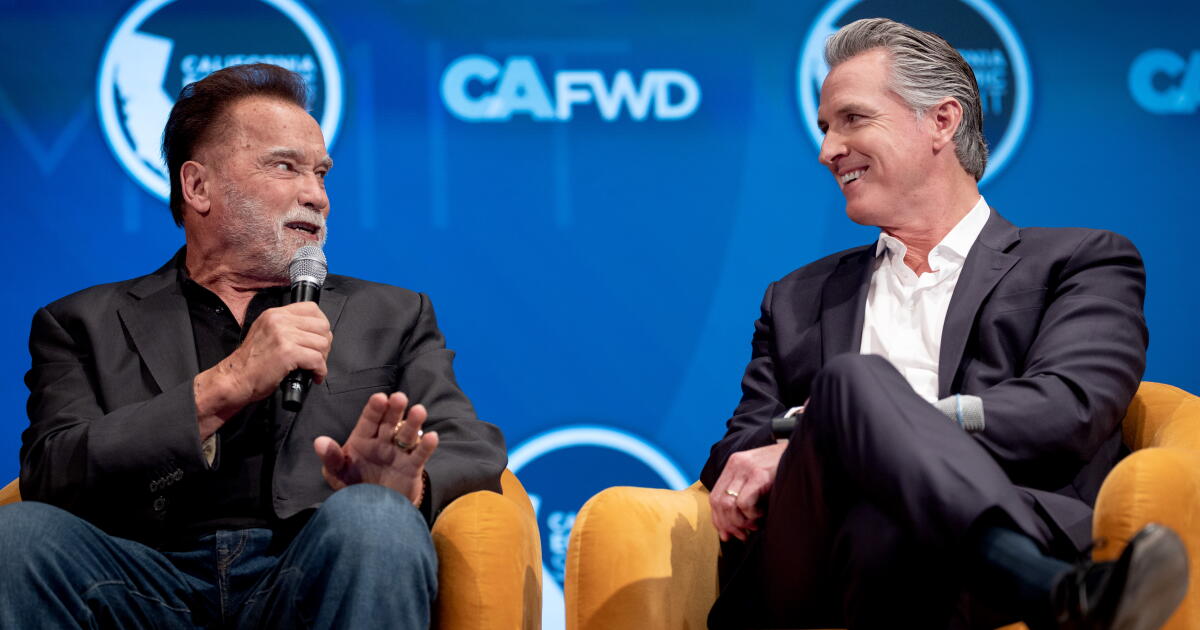
Former Gov. Arnold Schwarzenegger, a Republican, celebrated the 20-year anniversary of landmark climate legislation he signed while in office alongside Democrats including Gov. Gavin Newsom on Wednesday.
“California is the perfect example of what can be done when people work together and when we don’t look at this as a Republican or as a Democratic issue,” Schwarzenegger said at an economic conference in Long Beach, noting that Assembly Bill 32, the Global Warming Solutions Act had significantly reduced greenhouse gas emissions while creating more than a half a million clean-energy jobs.
“This is the message that is so important for the world,” he said, because the state’s policies have become a model for other states and nations.
Newsom noted that the state had met “audacious” goals for reducing greenhouse gas emissions, touting 39,000 megawatts of clean energy that have been installed in the last seven years, 23,000 megawatts of battery storage created, and that no flex alert has been issued in the state in four years.
“So we’re not in the goal-setting business; we’re in the how business,” he said.
He added that the clean energy transition is “the most critical national security issue in the United States of America,” with economic and supply chain leadership at stake as China surpasses the U.S. in electric vehicles, clean-energy manufacturing and the deployment of renewables.
The state already met the climate change legislation’s ambitious target — returning emissions to 1990 levels by 2020 — four years ahead of schedule. However, recent analyses indicate California is not on track to meet its future targets of cutting emissions 40% by 2030 and 85% by 2045.
The event as well as a luncheon the prior day in Santa Monica were rare displays of bipartisan unity at a time of heightened political polarization in the United States. Schwarzenegger and Newsom piled praise upon each other during the Wednesday afternoon discussion, hugging at the end.
At the luncheon, former Gov. Gray Davis, whom Schwarzenegger ousted from office in the 2003 recall election, as well as billionaire hedge-fund founder turned environmental warrior Tom Steyer, who unsuccessfully ran for governor this year, were among the Democrats in attendance, as well as former state Assembly Speaker Fabien Nunez and former state Sen. Fran Pavley, who were both pivotal in the passage of the climate-change legislation.
In addition to remarks highlighting the foundation of some of the nation’s bedrock environmental policies, such as former GOP President Richard Nixon creating the Environmental Protection Agency and signing the Endangered Species Act, there were moments of levity.
Schwarzenegger said he told fellow Republicans “f— you” when they balked at him naming Susan Kennedy, a Democrat, as his chief of staff, he said Tuesday.
During a breakout session at the Wednesday conference, he referenced his former wife, Maria Shriver, a scion of the Kennedy family, as he described his desire to hear from people on both sides of the aisle.
“So I had Democrats in my administration, and of course the Republican Party went nuts,” he said. “I didn’t care because, to me, I thought I wanted to hear what the Democrats were thinking. Plus, I was sleeping with one every night anyway.”
The 9th Circuit Court of Appeals nixed a trailblazing California law on Wednesday, permanently barring the state’s efforts to force federal immigration agents to display identification while on duty.
“As before, we conclude … the No Vigilantes Act attempts to directly regulate the United States in its performance of governmental functions,” Judge Mark J. Bennett wrote for the panel. “No set of circumstances exist under which the Act would be valid.”
The U.S. Justice Department first sued to block the ID requirement alongside a related law attempting to ban masks for federal agents and local police in the fall of 2025.
The joint case hit Los Angeles federal court at the beginning of this year amid a surge of immigration enforcement in Minneapolis that led to the shootings of civilians Renee Good and Alex Pretti by U.S. Immigration and Customs Enforcement agents.
By then, more than a dozen other states were pursuing similar statutes in an effort to rein in what many saw as lawlessness in President Trump’s sprawling deportation force.
Judge Christina A. Snyder ultimately blocked California’s law prohibiting the use of masks by law enforcement, on the grounds that it unfairly carved out an exception for state peace officers, but allowed the ID requirement for ICE agents and others to go forward, agreeing with the state that it was more akin to a speed limit on the highway than a direct regulation of the federal government.
“If a state law directly regulates the governmental conduct of the United States without congressional authorization, it is void irrespective of whether the regulated activities are essential to federal functions or operations, and irrespective of the degree to which the state law interferes with such functions or operations,” Bennett wrote.
The decision comes as ICE is quietly shedding many of the 12,000 new recruits it hired last year. Although public outrage over Trump’s militarized mass deportation efforts has diminished somewhat since the winter, it remains a potent election issue.
A Reuters/Ipsos poll from September showed more than 40% of Americans strongly disapprove of the president’s handling of immigration. Meanwhile, the share who fret over unauthorized immigration is nearly identical to the proportion who worry about the unchecked spread of measles — anxieties that pale in comparison with stress over the cost of living, the proliferation of data centers and the war with Iran, data show.
WASHINGTON — Federal authorities investigating Minnesota Rep. Ilhan Omar seized the Democratic lawmaker’s phone and have issued more than a dozen grand jury subpoenas, including to some of her relatives, according to a person briefed on the probe.
The subpoenas were issued for a grand jury collecting evidence in Minnesota as federal authorities probe potential fraud in Omar’s immigration paperwork, said the person, who spoke on the condition of anonymity because they were not authorized to discuss an ongoing investigation. The investigation led to federal agents searching Omar’s Washington, D.C. home on Monday just weeks before the November midterms, in which Omar is seeking reelection.
The scope of the investigation into Omar is unclear, though Homeland Security Secretary Markwayne Mullin has suggested that authorities were examining potential crimes related to her family’s immigration paperwork.
On Tuesday, Washington D.C. U.S Attorney Jeanine Pirro said in a Fox News interview that “there are several investigations going on” related to Omar and that her office is also probing issues concerning the lawmaker’s financial disclosures.
“If there was a crime that was committed, it will be prosecuted,” Pirro said.
The search of Omar’s home so close to next month’s midterm contests that will determine control of the House and the Senate was swiftly condemned by Democrats, who accused the administration of targeting the Democrat for political purposes. Omar, in a statement on X, called the search an “attempt to target political enemies and weaponize federal law enforcement.”
“For 10 years, Trump has targeted me with baseless lies and smear campaigns. This is just the latest escalation in his campaign of political intimidation,” she said. “I will not be silenced.”
A phone message seeking comment was left Wednesday with a representative for Omar.
Though the Republican focus on Omar’s background dates back years, the search notably took place three weeks before the November midterms, in which Omar is seeking reelection. The Justice Department has historically sought to avoid public investigative actions involving a candidate within 60 days of a primary or general election.
Omar, who was first elected to the House in 2018, represents Minnesota’s 5th District, including Minneapolis. She is part of The Squad of progressive lawmakers who are a vibrant political force on the left wing of Congress but have also endured repeated attacks from President Trump, dating back to his first term. She was one of the first two Muslim-American women in the House and the first African refugee to be elected to Congress.
Sikorsky is aiming to start offering a new modular and readily swappable nose for the venerable H-60 family of helicopters within the next year or so. The noses will be made available on new-production H-60s, as well as be retrofittable to helicopters in service now. The ‘nose jobs’ will help operators relatively quickly reconfigure their H-60s for very different missions, from cargo-carrying to serving as gunships, as required. It also opens new avenues to integrating autonomous capabilities and other advanced functionality.
Our Howard Altman had a chance to speak with representatives from Sikorsky, now a subsidiary of Lockheed Martin, about the plans for the new nose for the H-60-series at the Association of the U.S. Army’s (AUSA) main annual convention today. This is part of a larger vision for keeping the design operationally relevant into the 2070s, which also includes uprated engines and increased total payload capacity. You can read more about the overall Black Hawk 2070 strategy here.
Inside Sikorsky’s UH-60 “Black Hawk 2070” Plan
Of the different elements of Black Hawk 2070, “the nose is a good one, and it’s one that’s on a pretty accelerated timeline. Within the next, I would say, year or so, the nose will be available to be retrofitted or to be coming off the line,” Jason Wrigley, Sikorsky’s director of business development for Black Hawk, said. “We’ve gone through a design cycle with it.”
As it stands now, the new nose structure will offer roughly double the physical space of the standard nose on current-generation H-60s today.
“We’ve done the design. We then 3D-printed the noses, and we did that so that we can physically interact with it, because the whole point of this is for maintainability and access to be able to integrate these different sensors and comms gear,” he continued. “We’ve gotten some feedback from the engineers, from operators, from maintainers, and that goes back into the next cycle of the design.”
Exploring ways to optimize accessibility to areas of the new nose was a major focus of this ‘test print,’ according to Wrigley. Sikorsky has a scale model on the show floor at AUSA this week that highlights how the current design opens from the top, as seen below. Ensuring that it will be possible to keep any systems inside sufficiently cooled has also been an important design consideration already.
Jamie Hunter
Overall, “we just are kind of confirming, can we reach everywhere we need to? What are the different configurations?” he added. There’s been “a lot of work with the [U.S.] Army around what do you envision potentially could go in here?”
“This is one of those cases also where our whole engineering team gets more comfortable. It’s not something where the Army came to us and said, ‘this is exactly what I want. Here’s my spec,’” he also noted. “It was more, ‘here’s what I want to achieve. Here’s what I want to be able to do.’ And so we went off and designed that.”
Another look at the long-nosed Black Hawk model on display at AUSA. Jamie Hunter
“I like to highlight this, because it’s part of the way we’re also changing the way we design and deliver the Blackhawk,” Wrigley added as an aside. “So we’re very much in a model-based environment.”
While Wrigley mentioned sensors and communications equipment as possible payloads to fit into that extra space initially when talking with us today, he made clear later on that these are just some of the potential options.
“It’s using the old term, but it’s open architecture, and so the whole point is whatever the mission requires” can go into these new extended noses, he explained. “There’s always a demand for real estate up front.”
A head-on look at one of the 160th Special Operations Aviation Regiment’s MH-60s, with a nose absolutely crammed with sensors and other systems. USNA look at the distinctive nose on the HH-60W Jolly Green II packed with sensors and other gear. USAF
“There’s a big focus on open architecture and that ability to quickly plug-and-play,” Wrigley also told TWZ earlier this month in the context of the larger Black Hawk 2070 plan. “The new modular nose will change the look of the Black Hawk up front to provide even more space for equipment that will work directly with the new digital architecture.”
In terms of swapping out modular noses on individual helicopters, Wrigley said that it is still too early in the design process to know exactly how that would be done and how long it might take to do so in practice.
“Part of the design process is to also write up the documentation for the retrofit, but we don’t see this one as very invasive,” he explained.
It is not hard to imagine use cases for long-nosed H-60s, especially ones that can then be reconfigured between missions, and not just for the U.S. Army. As Wrigley already underscored, there is long-standing demand for H-60s with longer and larger noses to accommodate additional mission systems. Modular noses, in general, have been becoming more and more common in aviation design for some time now.
The ability to readily swap modular noses could also allow operators of even relatively small H-60 fleets to gain a valuable new degree of multi-mission capability. As one example, cargo-carrying helicopters could be converted into gunships, and back again, as required, using a small common pool of noses with the requisite sensors, laser designators, and other equipment. All of this could offer cost benefits when it comes to sustainment and logistics, as well as added operational flexibility.
The long-nosed Black Hawk model on display at AUSA is notably configured as a gunship. Sikorsky has also talked previously about leveraging the new nose to reconfigure H-60s for search and rescue, airborne drone control, and other missions.
A full view of the model of the gunship-configured H-60 with the new modular nose on display at AUSA. Jamie Hunter
Just being able to install a radar for one series of missions, and then quickly switch over to an electro-optical wide-area surveillance system or another kind of sensor for the next run of sorties, would bring new adaptability to the already very flexible Black Hawk. Defensive systems could also be readily swapped from aircraft to aircraft, as well as more quickly upgraded, as needed.
The modular nose also opens the door to a new way to integrate advanced capabilities, including autonomy packages, which Wrigley said is also driving demand for more space at the front end of the helicopter. Sikorsky has been developing various tiers of autonomous capabilities for the H-60 family for years now, including artificial intelligence-driven ‘copilots’ designed just to help reduce the workload of human crew members and increase safety margins. Autonomous flight capabilities require additional sensors, such as LIDAR and cameras, to help with navigation and to provide additional situational awareness. At least some of those components could be hosted within new modular noses.
At the same time, integrating higher degrees of autonomy could require more substantial modification. Sikorsky is now developing a fully uncrewed version of the H-60, and has been doing so with an eye toward converting older Black Hawks to this configuration as they are retired from service, as you can read more about here.
Introducing the S-70UAS™ U-Hawk™
In line with the Black Hawk 2070 vision, the modular noses could be part of a broader equation for modernizing existing H-60 fleets, as well.
“In our conversations with the Army, I think they’ve been using a phrase that they call targeted modernization,” Wrigley told us, speaking more generally. “There’s a daunting task that says there’s 1,000-1,500 Black Hawks in inventory. If you literally tried to upgrade every one of them, it’s a very expensive proposition, and it probably takes a long time.”
“I don’t think that’s the way they’re thinking about it. I think they’re thinking about it more on a battalion basis or a unit basis,” he continued. “Like, what’s the mission, and maybe certain Black Hawks get upgraded with autonomy, and other Black Hawks get upgraded with sort of the expanded launched effects capability, the engine, the structural upgrades, the [stub] wings, stuff like that.”
“Maybe some of them become ‘Superhawks’ or whatever, [and] get the whole package,” he added.
There is certainly still work to be done on the development of the new modular nose and then actually integrating it onto the H-60 platform. At the same time, Sikorsky clearly already sees demand for this new feature, which could lead to a breadth of new opportunities for new and old helicopters in the H-60 line.
Everyone is going to die. Acknowledging this — and reminding oneself daily of one’s mortality — is a core tenet of Buddhist teachings. Few places make that reminder more vivid than Hollywood Forever Cemetery, the iconic Los Angeles graveyard where more than 90,000 people are buried.
Inside the Masonic Lodge on the cemetery grounds, beneath chandeliers, dozens of people search for stillness with a meditation class. In an ornate Italian Renaissance-style room, participants sit scattered across couches and cushions, cross-legged with their eyes closed. The room is silent.
Headstones at Hollywood Forever Cemetery.
Nico Cary is one of the meditation group leaders at Hollywood Forever Cemetery.
For meditation teacher Nico Cary, the cemetery is an ideal backdrop for mindfulness and a lesson in impermanence. “It is quite grounding and an extension of some of the practice we do,” Cary says.
Beth Kaiserman, who regularly attends the meditation group, sees the cemetery as a chance to demystify death. “It’s accepting it as part of life. We’re coming out of our lives to come to this meditation. We’re walking by these gravestones that have been here for so long,” she says. Death, in her mind, doesn’t have to be taboo. “It is a big part of the practice to hopefully come to some level of acceptance that it’s just part of the cycle.”
Practicing meditation at Hollywood Forever is a privilege, explains Cary. The cemetery is not simply a place where people come to mourn; it is a place where relatives return to remember, honor and love those who have died.
Hollywood Forever is, quite literally, livelier than most cemeteries. The grounds are home to a colony of roughly 60 abandoned cats that has attracted a group of loyal caretakers, as well as dozens of peafowl roaming freely. The cemetery is also the final resting place of Hollywood legends, including Cecil B. DeMille, Judy Garland and the rock group the Ramones, where fans leave offerings. Since 2002, Cinespia has hosted outdoor screenings of iconic films at the cemetery during the summer, drawing hundreds of people to the grounds. The cemetery also hosts summer concerts.
“It feels pretty special to be somewhere, on land that’s so cared for, and that so many people come to share love, really — to remember their loved ones, to honor their ancestors,” Cary says.
For more than eight years, Insight LA has brought meditation to Hollywood Forever every Monday night, with a revolving list of teachers leading sessions in the Masonic Lodge. The class is donation-based, as is traditional in the Buddhist practice. Often, the teachers will lead a guided walking meditation through the cemetery grounds.
Insight LA, a Buddhist teaching nonprofit that was founded in 2002 by Trudy Goodman, is based in Santa Monica but also has a retreat house in Benedict Canyon for daylong events.
Members of a weekly meditation group at Hollywood Forever Cemetery participate in a guided session inside the Masonic lodge.
“We have yearlong programs. We have residential retreats. We have weekly drop-in meditation classes, and then we have the Hollywood Forever group too,” says Melissa McKay, the executive director at Insight LA.
According to McKay, the benefits of meditation are striking. “Put simply: It decreases stress, bringing calm and clarity, becoming more aware of oneself,” she says. “It decreases the negativity of the mind, self-hatred, the fears, the spiraling judgment — all of that. It increases the positive sides of our mind: our compassion, care, friendliness, clarity.”
A 2026 UC San Diego study confirms that just seven days of meditation can create molecular changes in the brain linked to stress relief, enhanced neuroplasticity and natural pain relief. The study also shows that meditation can positively affect the immune system and metabolism.
James Rokel practices mindfulness while walking alongside tombstones.
Despite the backdrop, meditation is not just about facing death, McKay says — it’s about learning how to live consciously. One participant, Jared Swanson, thinks of the meditation group as a school for emotional awareness.
“There was a moment where I realized I was in a lot of cycles — relational cycles — and wanted change,” says Swanson. He has been integrating the mindful practices into his life. “I think it’s a desire to be more responsible for my life, to be more present and responsible for my actions and choices,” he says.
Meditation nights attendees range from curious first-time visitors to seasoned veterans who have been practicing Buddhism for over two decades. Cary says the practice can benefit people regardless of their experience level.
“The intentional space to be with ourselves is so nourishing,” says Cary. “Then we practice. You add in a practice on top of that and magical things start to happen.”
Cary leads the group in 30 minutes of silence before a lesson. Participants settle into their cushions. He invites them to rock gently back and forth, a movement he calls “grandmother wisdom,” the kind of care one might offer a crying child. He poses a question for reflection: “What are you trusting right now?”
Insight LA has brought meditation to Hollywood Forever Cemetery every Monday night for nearly 10 years; a walking meditation is often involved.
Nicki Katz, who has been attending the meditations for two years, enjoys the practice of sitting in the quiet. Last year, she attended a 10-day silent retreat, only to accidentally break her silence by excitedly greeting a bunny during a picnic. “I come back to the body and the present awareness of allowing my mind to find some sense of gratitude,” says Katz. She explains that silence also helps her become more intentional with her words.
Tonight’s lesson is on truthfulness and embodying loving kindness. Lessons vary from week to week. “Oftentimes, it’s what the teacher is feeling or what’s come up for them in their practice,” says Cary.
For Monday meditation, the teaching group has assigned the 10 paramis (spiritual virtues) of Buddhism, which explore topics like generosity, wisdom and patience. “We’ve been going into that all year, so each month is one of the paramis,” says Cary.
“The intentional space to be with ourselves is so nourishing,” says meditation leader Nico Cary.
To begin the lesson, he reads a letter he wrote to the president at 5 years old, cautioning him of the perils of nuclear war. The letter is met with snaps and giggles, as a 5-year-old Cary warns of imminent death. “Apparently I was a peculiar child with a morbid sensibility, preoccupied with nuclear war,” he says, smiling. “It makes a lot of sense as to why I became a Buddhist.”
Cary begins to speak about the current moment and how he believes truth has become distorted and refracted in the age of social media. “Trauma is a distortion of reality,” he says. He then invites group members to consider love and kindness in their daily practice.
As the session winds down, participants spring to their feet to discuss the evening. The Masonic Lodge bursts into chatter — the silence abandoned. Tonight, the cemetery is alive.
Ryanair services daily direct flights on the route for just £15 but from April next year, layovers will now be required for those wanting to fly to fly from the UK to this city
Ryanair plans to cut all flights to a European airport next year(Image: Getty Images/Stock Image)
Ryanair plans to cut all flights to a European airport next year. From April 2027, Europe’s biggest budget airline will no longer fly to Bremen in Germany.
This will axe around 500,000 seats. At present, Ryanair services daily flights on the route from London Stansted to Bremen for just £15. The airline’s website appears to have tickets for the final flights to Bremen scheduled for March 27, 2027.
Ryanair previously announced it would be cancelling 24 routes to and from Germany, cutting 800,000 seats in total. Nine airports will be affected by the decision, affecting major cities and popular with tourist spots:
Berlin
Hamburg
Memmingen
Baden-Württemberg
Cologne
Frankfurt-Hahn
Dortmund
Dresden
Leipzig
Earlier this year Ryanair said it will be reducing its flight schedule to and from Berlin by 50 per cent.
CEO Eddie Wilson subsequently said that Germany’s aviation market is “broken”. He also said it “needs an urgent fix.”
“As a result of these high government taxes/fees (the highest in Europe), and Lufthansa’s high-fare monopoly, German citizens/visitors now pay the highest air fares in Europe,” Mr Wilson said.
The former “Good Morning America” anchors tied the knot in a private Arkansas ceremony back in September. The marriage license, obtained by People, confirmed the Washington County nuptials.
Last October, the couple announced their engagement on the “Amy & T.J.” podcast. “We’re actually surprised we’re just now talking about it,” Holmes said. “We wanted to let you all know before anybody was able to. We learned that lesson I guess in the past about our relationship: We want to be the first to talk about it.”
The lesson Holmes is referencing is the couple’s big relationship reveal, which happened while they were both anchors on “GMA3” and married to other people.
In 2022, the paparazzi leaked photos of the two holding hands, nestled into each other at a New York bar, and Holmes patting Robach on the rear. Chaos broke loose in the media and behind the scenes at ABC. Holmes’ then-wife, attorney Marilee Fiebig, filed for divorce shortly thereafter, followed by the divorce of Robach and her second husband, “Melrose Place” actor Andrew Shue, months later.
The same month that news of the scandal broke, ABC parted ways with the anchors, and they deactivated their social media accounts. A year later, the broadcasting duo embraced their coupledom, naysayers be damned, and teamed up with iHeartPodcasts to launch “Amy & T.J.,” marketed as “informative, entertaining, and above all, authentic; it will mark the first time Robach and Holmes speak publicly since their own names became a part of the headlines.”
In the debut episode, Robach and Holmes detailed how the scandal unfolded and insisted they’d been quietly separated from their spouses before their love affair began. Both said that the scandal dominating the headlines and the loss of their dream jobs sent them into the depths of despair.
“But we have had each other through it all,” Robach said. “It has been the most beautiful relationship I have had in my life.”
The surge in soccer fans this summer was bad for some businesses in Los Angeles.
World Cup host cities had lofty economic expectations for the summer tournament. But the city’s hotels only got a 1% bump in occupancy, according to a report published this week by Hospitality Education and Research Organization, a project of the Hotel Assn. of Los Angeles.
Seventy-two percent of surveyed hotels said the tournament hurt their 2026 finances, and 48% called the impact “extremely negative.” Just 2% said it met projections.
Downtown occupancy reached 66% in June, down from 71% a year earlier, the report says. Room nights fell between 10% and 12%.
Hotel guests at the Metropole restaurant just opposite the main lobby at the Hotel Indigo in downtown Los Angeles in May.
(Genaro Molina / Los Angeles Times)
Ahead of World Cup tournaments, FIFA holds large blocks of rooms. But FIFA canceled or released up to 70% of the hotel room blocks it had reserved in host cities, including Los Angeles.
“We understood that we were maybe going to be disappointed with attendance going into the World Cup simply by the volume of cancellations that came out of the room block agreement,” said Jackie Filla, president and CEO of the Hotel Assn. of Los Angeles.
The disappointing turnout led to staff reductions. Of the hotels surveyed 82% reduced seasonal staff and more than six in 10 reported reducing employee shifts, scheduled hours, or permanent staff.
Hotels did raise prices, with the average daily rate hitting $228, the highest of any comparable L.A. event in three years. But occupancy was 71%, well below the 83% recorded during Taylor Swift’s Eras Tour.
A visitor walks in the lobby of the Hotel Indigo in downtown Los Angeles.
(Genaro Molina / Los Angeles Times)
The survey drew 58 responses from 210 hotels, and the analysis was done by travel-data firm Rove using CoStar and AirDNA data. International visitors were also scarce, with Los Angeles welcoming 700,000 international arrivals in June and July — roughly 80,000 visitors below 2024 levels for the same period, the report says.
“We particularly didn’t see a lot of foreign visitors and that’s something that was disappointing,” Filla said. “Foreign visitors do spend three times the amount of money as the average domestic traveler.”
Short-term rentals, meanwhile, gained. Their demand rose 23% and revenue 21% versus July 2024, while hotel revenue fell 3.3%. Airbnb, the tournament’s official fan accommodation, offered new hosts $750 incentives.
The city is currently weighing a temporary proposal to ease its short-term rental rules through the end of 2028 to accommodate tourists. “That will really, truly undercut the business of hotels,” Filla added. “We saw some of that with the World Cup.”
The worry is carrying over to the Olympic Games, set to be hosted in Los Angeles in 2028. Six in 10 surveyed hoteliers expect an Olympic rental surge to hurt their bookings and rates, the report says.
The World Cup “gave us false hope to recover from a negative year,” one Los Angeles hotelier said, according to the report. “I also feel [the] same thing will probably happen for [the] Super Bowl and Olympics.”
Discovery+, one of Skydance’s new streaming assets, will now cost $6.99 a month for its ad-supported tier, up $1. Its ad-free tier is also up $2, costing viewers $11.99 a month. The prices take effect immediately for new subscribers. Existing subscribers will get 30 days’ notice and see the higher rates on bills dated on or after Nov. 12.
Skydance did not immediately respond to a request for comment.
The platform first launched in 2021, at $4.99 a month for its ad-supported tier and $6.99 for ad-free. Nearly six years later, the price of the cheapest tier has risen roughly 40%, and the ad-free tier has jumped about 72%. This is the service’s second price hike since January 2025.
The standalone streaming service features tens of thousands of TV episodes from cable networks like HGTV, Food Network and TLC.
Before the merger, each company maintained its own streaming services, with HBO Max and Discovery+ under Warner Bros. Discovery and Paramount+ under Paramount Skydance. The services are currently operating as separate entities. But David Ellison, Skydance’s chairman and chief executive, has said he plans to merge the two platforms into one streaming service. It’s unclear when that might happen, what it would cost, or where Discovery+ fits in. The company has not publicly laid out plans for the service.
Prices for HBO Max currently range between $10.99 and $22.99 monthly. Paramount+ costs between $8.99 and $13.99 a month.
Streaming is one of the biggest open questions for Skydance as it enters a new era. The company is carrying roughly $80 billion in debt and is targeting more than $6 billion in cost savings over three years. Skydance has said those savings will come primarily from technology, procurement, marketing and real estate, and Ellison has said the bulk won’t come from layoffs. Industry observers expect that debt load to add pressure for more price increases across Skydance’s streaming lineup.
This price increase also comes at a time when many streaming platforms are similarly hiking their prices — in part to cover the rising cost of programming and talent. Discovery+ joins platforms like Netflix, Apple TV, Hulu and Disney+ which have all raised their subscription fees in the last year. Prime Video raised the cost of its ad-free add-on in April.
ANCHORAGE, Alaska — It’s a long way from Washington, has a small population and hasn’t backed a Democrat for Senate in nearly 20 years.
Yet President Trump on Tuesday will devote a big chunk of his dwindling time ahead of crucial midterm elections to head all the way to Alaska — attempting to bolster a Republican incumbent senator in another sign of GOP fears about retaining control of Congress after Election Day on Nov. 3.
Trump is headlining a rally for Sen. Dan Sullivan in Wasilla, about 45 miles north of Anchorage — famous for being the hometown of former Republican vice presidential nominee Sarah Palin and the headquarters of the Iditarod sled dog race across the state.
Trump’s stop is part of a western swing also taking him to rallies in Arizona and Montana on Wednesday.
“I’m right now going to Alaska to try and help Dan Sullivan. That’s a long way away,” Trump told reporters as he left the White House for the trip on Tuesday. “I would only do it if I thought he was good. And he’s very good. And so, I’m going to Alaska to help Dan Sullivan, and then I’m stopping in numerous places.”
Democrats last won a Senate seat in Alaska in 2008, and the state hasn’t elected a governor from that party since 1998. The only time Alaska didn’t vote Republican for president was during Lyndon B. Johnson’s landslide 1964 reelection.
Yet high gasoline prices from the Iran war and persistently elevated inflation have damaged Trump’s approval ratings enough to leave Democrats dreaming of Alaska upsets.
Trump and Vance have been trying to boost Sullivan repeatedly
Seeking his third Senate term, Sullivan faces Democrat Mary Peltola, a former congresswoman running to put “Alaska First,” emphasizing cost-of-living issues.
Alaska pollster Ivan Moore said he’s seen a decline in Trump’s support statewide that mirrors the president’s falling approval ratings nationally — meaning the Senate race may be decided by Trump 2024 voters who are now unsure they still back him.
“The visit is certainly appropriate. Whether the visit will be effective or not is another matter,” said Moore, who said when he first heard that Trump would visit Alaska, he didn’t believe it would actually happen.
The Trump administration has prioritized the opening of more of Alaska to oil and gas drilling. Vice President JD Vance already campaigned in Fairbanks for Sullivan.
The senator also recently joined Trump in the Oval Office where the president announced a $54 billion investment by South Korea’s government into an Alaska natural gas project. That’s despite South Korea saying the deal, and its total value, haven’t been finalized.
Still, Trump trekking four time zones west to get to Sullivan’s home turf — an unusually long trip so close to the midterms — is his strongest show of support.
Trump last campaigned in Alaska to try to defeat a fellow Republican
Alaska is home to around 740,000 people, making it slightly less populous than Denver. It ranks 48th out of 50 states in population, smaller than all but Vermont and Wyoming.
Trump nonetheless headlined a 2022 rally in Anchorage opposing Republican Alaska Sen. Lisa Murkowski after she voted to convict him on a charge of incitement of insurrection during his second impeachment trial, following the attack on the U.S. Capitol by a mob of his supporters on Jan. 6, 2021.
Trump endorsed Kelly Tshibaka, who challenged Murkowski that year, but that didn’t stop incumbent Murkowski from winning reelection.
This year, there are two Dan Sullivans on the ballot
Trump has complained about Alaska’s unique elections system. The state has open primaries, in which the four top vote-getters — regardless of party affiliation — advance to the general election, which uses ranked choice voting.
That’s led to a scenario where there also will be another Dan Sullivan on the ballot on Nov. 3: retired teacher Dan J. Sullivan, whom Trump and other allies of Sen. Sullivan have called a sham candidate. Dan J. Sullivan has denied this.
At his rally, Trump also plans to stump for Republican Rep. Nick Begich. Begich is facing a competitive challenge from Bill Hill, an independent.
Alaska has a history of rewarding candidates with an independent streak — something Vance acknowledged during his trip to Fairbanks last week. “In very deep red years, Alaska is competitive. In very deep blue years, Alaska is still competitive,” Vance said. “I think it’s just a reality of the politics of the state.”
Independence has been hard to find in the Republican Party where Trump for years had total control. Some Republicans facing tough elections have begun tiptoeing away from Trump on key issues like Iran and tariffs, but not Sullivan, who has been vocal in supporting both.
In a post last week, Trump questioned why three Republicans were running against a Democrat for governor. “How stupid are we to do this?” he said on social media. This comes at the same time state Republican party leaders are urging voters to rank Republicans on the ballot and leave the Democrats blank.
“We want to be clear: we do not support ranked choice voting. It is a confusing, burdensome and costly voting scheme,” party leaders, including GOP chair Carmela Warfield, said in a statement Saturday. “That said, ranked choice voting is the system Alaska will use for the 2026 General Election, and we must work within it for this election to keep Alaska’s recent momentum going strong.”
Trump’s trade war with Canada may also be a factor
Trump has also triggered a trade war with Canada, which shares a 1,500-plus-mile border with Alaska and is among the state’s most important trading partners.
The U.S. banned nearly $1 billion worth of imports from its neighbor to the north — including alcoholic beverages, dairy products and motorcycles — after previously imposing 50% tariffs on about $20 billion in Canadian products. Canada has responded with reciprocal bans and its own import levies, and the back-and-forth could raise prices for Alaska consumers.
Making Canada an enemy of sorts is “discomforting” for many Alaskans, said pollster Moore.
“We associate, I think, probably more closely with the Canadians — more than a lot of the Lower 48,” he said.
Weissert and Bohrer write for the Associated Press. Weissert reported from Washington. AP reporter Michelle L. Price contributed to this report.
Jimmy Crowley, the son of former Southern Section commissioner Dean Crowley, had a Friday night off from officiating Big Sky Conference football games, so he went to St. John Bosco last week to evaluate the high school officials for a game against Orange Lutheran.
Southern California high school football games have been used as a proving ground for years and a first stop for officials wanting to move to college and the NFL.
It used to be that the commissioners in the City Section and Southern Section were high school or college officials. Jim Cheffers, a former City Section commissioner, used to officiate in the Pac-8. Now his son, Carl, is one of the top NFL referees and has worked three Super Bowls.
Tony Corrente, a former baseball coach at La Mirada who won a CIF title in 1988, made it to the NFL for 26 years as an official and was referee for Super Bowl XI. Former Hollywood High principal Jim Tunney was a long-time NFL referee.
While fans sometimes don’t appreciate officials, in Southern California high school football, you might be watching a future college or NFL referee.
This is a daily look at the positive happenings in high school sports. To submit any news, please email eric.sondheimer@latimes.com.
WASHINGTON — Chuck Schumer has won and lost Senate majorities since becoming Democratic leader a decade ago. But this year’s midterm elections could be his most important yet, with some in the party having said he needs to step down and make way for a new generation.
Schumer, who has directly or indirectly overseen his party’s Senate campaign arm in almost every election cycle over the last 20 years, has regained trust within his caucus, for now, as Democrats are hopeful of making gains in the midterm elections despite a difficult map that favors Republicans.
Allies of the New York Democrat say it’s a significant turnaround from last year, when the party was still reeling from major election losses. A low point came in the spring of 2025, when the party’s base erupted at Schumer for voting to keep President Trump’s government open.
Interviews with more than a dozen Democratic senators in recent weeks indicate that Schumer has recovered his political standing with many in his caucus. If Democrats gain seats in the election, colleagues expect him to easily win enough support in the closed-door leadership election, likely the week after Election Day.
Should they win a majority, a feat once seen as improbable, another term as leader would be nearly assured, many said. Both parties pick their Senate leaders by secret ballot, so no senator has to reveal their vote.
Still, nothing is guaranteed. While no Democrat has stepped up to challenge Schumer, that could quickly change if his party suffers an unexpected level of losses. And several Democratic candidates around the country have said publicly that they won’t vote for Schumer or have remained noncommittal.
Interviewed by The Associated Press earlier this month, Schumer stated unequivocally that he’s running for another term as leader. He said he believes Democrats have won more favor with voters over the last year and have a shot at winning the majority after fighting Trump’s tariffs, forcing more than a dozen votes to end the war in Iran and focusing on affordability, corruption and healthcare.
“I think our caucus is strong, it’s united,” Schumer said. “A year ago, everyone said it was out of reach. Today, we have a broader map, strong candidates, a clear contrast.”
Sen. Sheldon Whitehouse, D-R.I., said that “Senate seats in some ruby red states seem to be in play” because of candidates Schumer recruited.
Oregon Sen. Ron Wyden, a Democrat who has served with Schumer for almost 30 years, said that “if you had told us in 2025 that we’d be in the home stretch with a really good shot of taking the majority, it would have been like, ‘You’ve got to be kidding me.’ You can’t argue with results.”
And if Democrats don’t win additional seats? “I’m not thinking about that,” Wyden said.
Some senators won’t commit to supporting Schumer
While Schumer appears to be in a good position at the moment, many Democratic senators won’t say publicly whether they will support him — particularly those in the most progressive wing of the party.
“It’s a little bit too early to speculate on that right now,” said Sen. Bernie Sanders, a Vermont independent who caucuses with Democrats.
Massachusetts Sen. Elizabeth Warren said she is focused on November’s elections. “We’ll know a lot more after the midterms,” she said.
Freshman Sen. Elissa Slotkin of Michigan has called for a “new generation” of leaders across the party.
“It’s not a secret that Democrats still haven’t totally found their footing after Trump,” Slotkin said in a recent interview, adding that “we have to see what the results of the election are.”
It’s unclear if anyone else wants the job
Even if there are losses in Senate races, it’s unclear if any other Democrat wants the burden of being leader. Many are instead eyeing runs for the White House in 2028.
Speculation about a challenge to Schumer has centered on Sens. Chris Van Hollen of Maryland, Chris Murphy of Connecticut and Brian Schatz of Hawaii, who has already said he’s running for the No. 2 leadership spot to replace retiring Illinois Sen. Dick Durbin.
Asked about Schumer, Van Hollen said he doesn’t want to discuss it yet.
“Look, I think everybody wants to get through this election, and then we’ll go from there,” Van Hollen said in an interview before the Senate left Washington to campaign.
Several Senate candidates around the country have either said they won’t vote for Schumer if they are elected or remained noncommittal, including Troy Jackson in Maine, Adam Hamilton in Kansas and Abdul El-Sayed in Michigan.
At the same time, the Senate Majority PAC, which is closely aligned with Schumer, has put millions of dollars into those campaigns and others. Schumer backed El-Sayed’s primary opponent, but the two met in Washington last month.
El-Sayed said after the meeting that the party is united and “we’re having really productive conversations about what it takes to win.”
Schumer has kept his caucus close
Several of the Democratic senators who insisted on anonymity to share their views agreed that Schumer is likely to win another term as leader. There have been very few discussions about a change, said one, partially because Schumer has stayed close to almost everyone in his caucus, keeping them on speed dial in his famous flip phone. Another senator said that they aren’t aware of Schumer asking for any commitments just yet.
At the same time, some said they would like to see Schumer, who is up for reelection in 2028, announce that this is his last term as leader and commit to helping transition to a successor. A commitment like that could end the conversation, one senator said.
Another senator said that a commitment from Schumer about the future isn’t as important — what will matter is if they win in November.
All of the senators agreed that there are no obvious contenders right now to challenge him, but that could change quickly if Democrats lose Senate seats in November.
Schumer has turned the tables since 2025
Attitudes within the Democratic caucus have improved since last year, when the base revolted against Schumer for the March vote to keep the Republican president’s government open. Progressive groups like MoveOn called for him to step down, arguing that Democrats needed to fight harder against Trump and Republicans.
Schumer regained some favor with Democrats inside and outside the Capitol during a prolonged government shutdown a year ago and as he has repeatedly blocked Trump’s nominees and Republican legislation.
But while the calls to resign or step aside have waned, many are still agitating for change.
“Our priority right now is organizing and making sure we elect a new generation laser-focused on affordability and fighting corruption,” said Joel Payne, a national spokesman for MoveOn.
Referring to the 2025 calls for Schumer to step aside, Payne said the group’s members have “already rendered a judgment on Schumer’s tenure and made clear they’re eager for new leadership that energizes the party base.”
It’s unclear, though, whether calls from the progressive wing of the party will influence the secret ballot vote, in which Schumer needs only a majority to win.
Sen. Ben Ray Lujan, D-N.M., dismissed the talk about Schumer’s future.
“It’s hard to lose if no one else is challenging you,” he said.
Jalonick writes for the Associated Press. AP writers Steven Sloan, Seung Min Kim and Joey Cappelletti contributed to this report.
Hi, and welcome to another edition of Dodgers Dugout. My name is Houston Mitchell. Win or lose, Tuesday is an off day. So forget about the Dodgers for a day and enjoy life.
Are you a true-blue fan?
Get our Dodgers Dugout newsletter for insights, news and much more.
By continuing, you agree to our Terms of Service, which include arbitration and a class action waiver. You agree that we and our third-party vendors may collect and use your information, including through cookies, pixels and similar technologies, for the purposes set forth in our Privacy Policy such as personalizing your experience and ads.
Game 2 thoughts
First inning
—Nervy ABS challenge by Mookie Betts. First batter of the game challenges?
—Takes second on a groundout. Third on a wild pitch. Scores on a sacrifice fly. Is this the mid-60s Dodgers? Dodgers 1, Brewers 0.
—And Shohei Ohtani still looks lost.
—I’ll bet on Yoshinobu Yamamoto every time.
—Where’s this Brice Turang guy come from?
—And then the score is tied. Dodgers 1, Brewers 1.
Second inning
—Nice to see Andy Pages draw a walk, but the Dodgers go down relatively quietly.
—There’s something about the name Garrett Mitchell that I like. I can’t figure out why, though.
—Can you tell I had to step away for a few minutes during this inning? Sorry.
Third inning
—Tommy Edman pays immediate dividends.
—Wow. Betts hit that ball hard.
—Sal Frelick made a great catch in right field.
—The Brewers taketh away and giveth. Don’t see that many errors on pickoff throws nowadays. Dodgers 2, Brewers 1.
—I think after the season we will see the headline “Ohtani spotted in full body cast.”
—Wow! Brewers manager Pat Murphy basically buried his rookies for making mistakes in the previous half-inning.
—A nice play by Kyle Tucker. He’s gotten better at everything!
—Sometimes John Smoltz will fall in love with a topic and won’t let it go. Like drawing throws to first base.
—First and second, one out. Can the Brewers cash in?
—Brewers are making Yamamoto work.
—Another PitchCom problem for the Dodgers! The battery probably ran out because of this long at-bat by Jake Bauers.
—Is it me, or could Teoscar have caught that ball if he hustled?
—Nice 12-pitch at-bat by Bauers.
—And the Brewers cash in. Brewers 3, Dodgers 2.
Fourth inning
—The Dodgers knocked out the Brewers’ ace early in Game 1 and still lost. Can they reverse that this game?
—I prefer the Limu Emu (and Doug) commercials to the Liberty Bibberty commercials.
—Only in this newsletter are those types of important things debated.
—The Dodgers seemed to be in a hurry to end that half-inning. Must be some great food in the clubhouse.
—For those of you emailing to ask, the woman who sits in the front row behind home plate and writes down every play is Front Row Amy, Amy Williams. She’s had season tickets for about 15 years and logs every play. She’s very famous in Milwaukee.
—Roki Sasaki quiets things in the bottom half. How many innings will he pitch?
Fifth inning
—Leadoff double for Tucker. Can the Dodgers cash in?
—The Dodgers bunted! And Logan Henderson threw the ball away! He should never be allowed to throw to first again. Dodgers 3, Brewers 3.
—Murphy must be extra furious at his rookies now!
—Could I use any more exclamation marks?!?
—Henderson pitched well, but two throws cost him. Baseball!
—Hey, the Dodgers used to have a pitcher named Dustin May too. What are the odds?
—Betts advanced the runner to third, Small ball.
—Can the Dodgers cash in?
—Freeman gets a sacrifice fly. Or does he? The Brewers challenge the call.
—And the call stands. Everything is happening in this game. Dodgers 4, Brewers 3.
—Tommy Edman always seems to be in the middle of the action.
—That HPE self-driving network commercial doesn’t work at all.
—Only one inning for Sasaki. Surprising.
—Kris Bubic, who made the team over Jack Dreyer, which made some fans mad, gets to earn his keep.
—And he doesn’t earn his keep. Dodgers 4, Brewers 4.
—This has been a great series.
—Christian Yellich singled, Mitchell walked. Where’s Jack Dreyer?
—That infield hit seemed to anger Brock Stewart. He fired three fastballs right past Sal Frelick.
Sixth inning
—The Dodgers go down quietly. Ohtani again looked terrible.
—Can no pitcher throw the ball to first anymore?
—If you are going to intentionally walk a guy to get to William Contreras, make sure your first pitch to him is not right down the middle. Brewers 5, Dodgers 4.
—The Brewers fans can get really loud.
—Tanner Scott comes in and quiets things down.
Seventh inning
—That was an at-bat from the last season version of Pages, flailing at a pitch way out of the zone.
—The Dodgers again go quietly. All their power has drained away.
—This is what drives me crazy about modern baseball. Scott strikes out all three batters he faces, but they take him out of the game.
—And Edgardo Henriquez gives up a hit to the first batter he faces.
—I seem to be extra cranky today. Must be how Pat Murphy feels all the time.
—And the inning ends quietly.
Eighth inning
—Another quiet inning for the Dodgers. Those are piling up.
—The Dodgers have scored four runs. Two on errors, two on sacrifice flies. Not they typical way they score runs.
—David Hamilton hit .245 this season, but you’d never guess that watching him in this game.
—He steals second, takes third on a groundout, scores on a single. Small ball. Brewers 6, Dodgers 4.
—And the Dodgers turn to their seventh reliever of the game, Justin Wrobleski.
—Another run comes in. Brewers 7, Dodgers 4.
Ninth inning
—The Dodgers need to have a tough discussion about Ohtani. Yes, he’s great. Yes, he’s won two MVP awards in two seasons with the Dodgers. And if he was just in a slump, I’d be OK with leaving him in the lineup. But he is obviously hurting. You are doing him and the team a disservice.
—Ohtani flies to left.
—Will Smith, also not hitting well, flied to right.
—Miguel Rojas, batting for Max Muncy, strikes out.
—Dodgers now trail 2-0. Desirable? No. Happy about it? No. But teams have come back from 2-0 deficits before. It could happen again. We could be sitting here Thursday wondering what happened. Or thinking the Dodgers are right back in it. We’ll just have to wait and see.
—Meanwhile, like I said at the start, take Tuesday and enjoy life. It’s just a baseball game.
Up next
Wednesday at Dodgers, 5 p.m., FS1/Fox Deportes/Fox One
Thursday at Dodgers, 6 p.m., FS1/Fox Deportes/Fox One
*Friday at Dodgers, 6 p.m., FS1/Fox Deportes/Fox One
*Sunday at Milwaukee, 5 p.m., FS1/Fox Deportes/Fox One
*Monday, Oct. 19 at Milwaukee, 5 p.m., Fox/FS1/Fox Deportes/Fox One
Have a comment or something you’d like to see in a future Dodgers newsletter? Email me at houston.mitchell@latimes.com. To get this newsletter in your inbox, click here.