The incident is the latest suspected Russian drone incursion, as fears grow that the war in Ukraine could spill over.
Published On 5 Oct 20265 Oct 2026
Ukraine’s President Volodymyr Zelenskyy has blamed a Russian drone attack for the sinking of a ship in Romania’s section of the Black Sea.
Romania reported that two people were killed and 11 rescued when a grain ship caught fire and sank in its waters on Monday. The Ukrainian president’s claim suggests the incident is the latest in a series of suspected incursions along NATO’s eastern flank, and will fuel concerns that Moscow’s war in Ukraine could spill over.
Recommended Stories
list of 4 itemsend of list
“A horrific strike by two Russian drones on a civilian vessel in neutral waters carrying corn and owned by Turkiye,” Zelenskyy wrote on social media.
According to the Romanian Ministry of Internal Affairs, the coastguard was alerted at about 11am local time (08:00 GMT) that a fire had broken out on the ship, adding that it was in the country’s “exclusive economic zone”.
The ministry did not identify the cause of the fire.
Azerbaijani and Indian citizens were on board the ship at the time of the attack, it is reported.
A Romanian F-16 fighter jet flies amid heightened security concerns over cross-border drone incursions, on August 17, 2026 [Andreea Alexandru/AP]
Romania is among several NATO members to have reported incursions this year, as Russia and Ukraine have increasingly turned to launches of hundreds of drones and missiles.
In May, a Russian drone hit an apartment building. In June, a stray Ukrainian maritime drone exploded in the Black Sea port of Constanta. In July, Bucharest summoned Russia’s ambassador after air defences intercepted three drones within the span of one week.
Incursions by Russian drones into eastern European airspace are seen by some as a test of NATO and the European Union’s defences and response capabilities.
The Baltic states have also seen drones enter their airspace throughout the war, with airspace violations contributing to the collapse of Latvia’s government in late May after a dispute over how to respond to the incursions.
The incursions have also prompted Poland to bolster its air defence posture after accusing Moscow of violating its airspace in September. Suspected drones were shot down twice in Moldova.
Romania’s Ministry of National Defence said the Romanian Naval Forces had destroyed nine drifting sea mines in the Black Sea since the start of the war.
Days later, the United States speedily sent B-1 bombers stationed there, which were used to strike Iran in its ongoing war, back home. About a dozen had been stationed at the air base.
The foiled incident resulted in no charges and the release of five suspects, and subsequently a separate British-Iranian suspect. But the US cited concerns about more potential attacks for its decision to withdraw its fleet. Tehran has denied any link to the alleged plot to target the base.
RAF Fairford was a pit stop for US bombers during the war – but more importantly, it allowed Washington to rapidly unleash intensive strikes on Iran, say analysts.
They added that their withdrawal reduces Washington’s ability to rapidly generate and sustain bombing missions, but it will not prevent the US from continuing to strike Iran.
“The United States has lost a convenient launchpad, not its underlying strike capability,” Dania Thafer, executive director of the Gulf International Forum and a lecturer at Georgetown University, told Al Jazeera.
Long bombing campaigns made more demanding
The analysts were in agreement that the British base gave the US a faster and more efficient way to sustain strikes on Iran.
The bombers at the Fairford base were officially stationed there for defensive strikes – at the behest of the UK government – and likely had a modest targeting list, said Christoph Bergs, an analyst at the world’s oldest defence and security thinktank, the Royal United Services Institute.
“Their withdrawal reduces the capacity to quickly surge sorties against Iran, reducing the threat level somewhat,” Bergs told Al Jazeera.
Thafer explained that while the loss of the bombers does not remove the US’s ability to strike or escalate, “depending on where other assets are positioned, it could make a prolonged bombing campaign more demanding”.
The removal of B-1 bombers imposes a number of tactical costs, says Arun Dawson. He is a PhD candidate at King’s College London’s Freeman Air and Space Institute and a researcher with the UK Nuclear Deterrence Network.
Unlike the more modern B-2 stealth bomber designed to make enemy tracking difficult – which has also previously been stationed at RAF Fairford – “the B-1’s principal advantage is its conventional weapons payload – the largest of any aircraft in the US military”, Dawson told Al Jazeera. The B-1 carries at least 34 tonnes of ordnance, he said.
“This makes the B-1 particularly effective at delivering large volumes of precision-guided weapons against multiple targets during a prolonged air campaign,” said Dawson.
“In the Iran war, those targets may include air-defence infrastructure, ballistic missile sites and IRGC facilities,” he added, referring to the Islamic Revolutionary Guards Corps.
With the B-1s withdrawing, the US may now have to rely more heavily on longer-range missions from the US or other distant bases, increasing flight times, crew fatigue and the need for aerial refuelling, he explained.
Still, the US may have made the withdrawal decision based on an examination of risks, said Dawson.
“Their abrupt departure suggests that specific threats may have been directed at the aircraft, their crews or the base itself,” he said.
Washington may have also calculated that temporarily withdrawing the bombers could protect it for future operations, especially if the US does not expect the Iran war to intensify any time soon, said Dawson.
For David Des Roches, a professor at the Thayer Marshall Institute and a former Pentagon official, the B-1 withdrawal suggests that the risks outweighed the benefits of keeping the jets at the UK airbase.
The security incident last week “exposed a vulnerability” as the aircraft were “out in the open” and only about 300 yards (275 metres) from where the public could see them.
“So they were very vulnerable to, say, drone attacks or other kind[s] of mortar attacks,” he told Al Jazeera.
“Just a small drone or any kind of a drone with explosives on board could conceivably cause significant damage,” said Des Roches.
The former Pentagon official acknowledged that the deployment of the US bombers means “you lose a little bit of operational ability,” but said that given the threat seen at Fairford, “we should have had overhead cover for all of our aircraft, globally, years ago”.
Can the bombers go elsewhere?
The US has two potential options if the bombers are to be redeployed: to Diego Garcia, the remote coral atoll in the central Indian Ocean hosting both a US and UK military base; or to its many US bases in the Gulf.
Thafer pointed out that Diego Garcia offers greater protection from potential Iranian attacks, but requires longer flight distances.
Rerouting the bombers to Diego Garcia will also depend on how quickly additional aircraft can be folded into the local basing infrastructure, pointed out Bergs.
Stationing them in the Gulf closer to Iran would give them the advantage of shortened transit times, reduced tanker requirements and the ability to generate sorties more rapidly, said Dawson.
But basing in the Gulf region, the analysts agreed, will require more deliberate negotiations around risk mitigation, given that these countries have taken the brunt of Iranian counterstrikes throughout the war. They also want to avoid being seen as direct participants in a US campaign against Iran.
Fairford had therefore offered a “useful” middle ground between the two options, said Thafer.
But with Fairford no longer an option, Diego Garcia would be the more obvious choice, Dawson said, offering not only greater distance from Iran but also a more secure operating environment. It has infrastructure designed to support large-scale US air operations, he said.
US capabilities in the war ahead
For now, the withdrawal appears to blunt rather than eliminate US bombing capacity against Iran.
However, the practical impact on US military options will depend largely on whether the administration sees a need for such strikes now, or whether the threat posed by similar aircraft stationed at Diego Garcia is sufficient for the time being, said Bergs.
The expected arrival of the Theodore Roosevelt carrier strike group and the Makin Island Marine Expeditionary Force to the Middle East by November, meanwhile, will add significant US carrier-based air power in the region, said Dawson.
“Aircraft for aircraft, carrier fighters cannot substitute for the B-1’s enormous payload, but there are many more of them, giving commanders additional options for shorter-range strikes,” he said.
What this episode highlights, said the researcher, is the importance – and the vulnerability – of the US’ alliances and overseas basing.
Washington has long enjoyed access to a global network of military facilities – which has been key for its ability to project power rapidly and at scale, he said.
But if those bases face attacks or political restrictions – the implications would extend beyond the Iran war, warned Dawson.
They would affect “how the US military structures its forces, distributes its assets, generates combat power and sustains operations overseas”.
WASHINGTON — Late September in the Oval Office, President Trump declared, “Iran will never have a nuclear weapon. We’re gonna win that war very soon.”
It wasn’t the first time he’s described the hostilities as “war.”
On Feb. 28, the day U.S. and Israeli began bombarding Iran, he warned that “the lives of courageous American heroes may be lost, and we may have casualties. That often happens in war, but we’re doing this not for now. We’re doing this for the future, and it is a noble mission.”
But throughout seven months of back-and-forth strikes with Iran, Trump administration officials, and sometimes Trump himself, have performed verbal acrobatics to avoid the “W” word.
President Trump, addressing the United Nations General Assembly on Sept. 22, used the word “war” one time when referring to hostilities with Iran.
(Pool / Getty Images)
Senior administration officials loosely tossed around “war” during the first stages of conflict, but with polls showing the war in unpopular and congressional support waning, “war” and even “Operation Epic Fury” have become taboo among members of the Trump administration.
Trump has called attacks on Iran a “military operation,” “military decimation,” “excursion” and “skirmish.”
At a White House press briefing last month, Vice President JD Vance attempted to clear the air when a reporter asked about a potential end to what she called a “war in Iran.”
“I wouldn’t call it a war right now,” Vance said. “Major combat operations lasted for about six weeks.”
Vice President JD Vance, addressing reporters at the White House on Sept. 3, said, “I wouldn’t call it a war right now” when asked about the conflict with Iran.
(Chip Somodevilla / Getty Images)
Defense Secretary Pete Hegseth tread carefully in front of the Senate Appropriations Committee in July, repeatedly referring to a “conflict” in Iran that needed additional funding to continue.
On May 5, during the first of two delicate ceasefires with Iran, Secretary of State Marco Rubio announced an end to the objectives laid out in Operation Epic Fury and the beginning of “Project Freedom” — an effort to escort merchant ships through the Strait of Hormuz.
In April, Trump announced the blockade of Iranian ports. When asked about whether the blockade constituted an act of war, Rubio replied, “That’s not an act of war, that’s a defensive measure. It’s a counter to what they have decided to do.”
Senior Trump officials have maintained that the conflict can no longer be viewed as war because the intensity of strikes between the two countries has been reduced.
The “end” of Operation Epic Fury, the name Trump used when he announced hostilities on Feb. 28, was declared on May 5 — 60 days after the fighting began.
The timing was no coincidence. Under the War Powers Resolution of 1973, a president must cease all hostilities abroad after 60 days if there is no congressional declaration of war.
Legal and political considerations
Under the Constitution, only Congress declares war, but past presidents have routinely circumvented this rule by exercising their authority to direct the military and initiate strikes on targeted nations.
Nearly every modern president, from Dwight D. Eisenhower to Trump, has used this justification to undertake military action without the declaratory approval of Congress.
Congress can also choose to approve an Authorization for Use of Military Force, which grants the president legal authority to conduct military operations overseas.
Unless Congress sets a time limit on the authorization, authority to use the legal justification to launch military strikes can theoretically span multiple administrations.
Rep. Jamie Raskin (D-Md.), a former constitutional law professor at American University, said that presidents of both parties have avoided the term “war” when attempting to evade congressional approval of hostile action abroad.
“Trump has followed some of his predecessors in playing word games with the war power,” Raskin said. “What makes his case so extreme is that he proudly described it as a war and depicted it in glorified military terms.”
In March, seven days into the fighting, Trump said, “The war itself is going unbelievably. It’s as good as it can be.”
Congress has not officially declared war since World War II. The Vietnam War, the invasion of Afghanistan and both wars in Iraq were all approved by Congress under the umbrella of an Authorization for the Use of Military Force.
This year Congress has not approved such an authorization for the action with Iran. Fourteen Senate votes for a War Powers Resolution to curb Trump’s war efforts have failed in the chamber so far.
According to a CNN/SSRS poll last month, only 26% of Americans approve of the Trump administration’s handling of the Iran war.
Raskin said that he believes Trump’s terminology has shifted with the public mood, adding that he hasn’t heard any of his Republican colleagues “play along with the semantic games.”
“When things have turned south in the fortunes of this war, he has tried to pretend it’s something else,” Raskin said. “I think that has just further enraged the population.”
Past handling of congressional war power
The administration’s declaration that Operation Epic Fury had concluded echoed May 2003, when then-President George W. Bush stood in front of a banner reading “Mission Accomplished” aboard the USS Abraham Lincoln, approximately six weeks after Operation Iraqi Freedom began.
“Major combat operations in Iraq have ended,” Bush said. “And now our coalition is engaged in securing and reconstructing that country.”
President George W. Bush speaks aboard the aircraft carrier USS Abraham Lincoln off the California coast on May 1, 2003.
(J. Scott Applewhite/AP)
Despite the victory lap, combat operations in Iraq and across the Middle East continued through the aughts. The Iraq war wouldn’t officially end until 2011, with President Obama’s signature.
Obama himself relied heavily on the 2001 Authorization for the Use of Military Force — passed by Congress under Bush — in his military campaign against Islamic State during his presidency.
According to Council on Foreign Relations data, Obama launched 542 drone strikes and killed 3,797 people in Yemen, Pakistan and Somalia without renewed approval from Congress.
A case more analogous to Trump’s comes in former President Truman’s unilateral decision to deploy U.S. troops to Korea in 1950. The Truman administration forwent congressional approval altogether and used United Nations Security Council resolutions to justify the intervention against Communist forces in the north, according to a White House news release from the time.
There were many critics of this exercise of executive war powers, most notably, Ohio Republican Sen. Robert A. Taft, who argued that Truman had usurped congressional war powers.
However, that Congress still provided monetary support, granting Truman military funds and extensions to the draft to raise additional troops for the Korean War effort. According to historical Gallup polls, 78% of Americans in 1950 approved of U.S. intervention in Korea.
Trump sticking with ‘war’
While Vance and other administration officials continue to avoid “war,” it does slip out now and then. Trump has been, perhaps, the most discordant messenger of the administration when discussing Iran.
After referring to the “war” on social media and public interviews more than a dozen times, Trump backed Vance’s comments about the Iran war no longer being active as he spoke to reporters in the Oval Office in September. He refuses to call the conflict a “war,” Trump said, because “you are supposed to get approval.”
“I call it a military conflict, because it’s small potatoes for us,” Trump said.
German Chancellor Friedrich Merz, on a surprise visit to Kyiv, announced $1.5 billion in military and reconstruction aid and expanded drone cooperation with Ukraine, giving Kyiv greater capability to strike deeper inside Russia. He also urged Russian President Vladimir Putin to end the war.
Trilateral talks could happen this month in UAE or another US-proposed venue, says the president.
Published On 4 Oct 20264 Oct 2026
Ukraine is ready to hold trilateral talks with the United States and Russia this month, President Volodymyr Zelenskyy has said.
The Ukrainian president made the comments on Sunday during a news conference alongside German Chancellor Friedrich Merz in Kyiv. He said Ukraine supports a swift timeline for returning to talks to try to end the war fought for over four and a half years.
Recommended Stories
list of 3 itemsend of list
US efforts to broker a ceasefire have been paused since Washington launched its war on Iran. However, Washington is now pushing for technical-level talks by the end of October, Zelenskyy said.
He confirmed earlier reports that the United Arab Emirates, which has hosted previous talks, could again be the setting for a meeting.
“I confirmed to [the US] that our side is ready to support this timeline,” Zelenskyy said, adding that Kyiv is open to meeting in the UAE or “another country proposed by the American side”.
Washington had also been in touch with Moscow about the plan, Zelenskyy said. The Kremlin said last month that it did not rule out the possibility of three-way talks this month.
Despite suggestions of their willingness to discuss an end to the conflict, both Russia and Ukraine have also said they will ramp up long-range attacks on military and related targets.
Moscow has said it is targeting Ukraine’s energy sector as winter approaches. Last year, similar attacks knocked out power and heating for days on end as temperatures plummeted to minus 20C.
Zelenskyy on Sunday said he was “amazed” by Russia’s “savage desire to escalate the situation every day”.
He yet again accused Moscow of targeting “civilian infrastructure, including data centres and mobile network facilities”.
“Honestly speaking, I am not surprised by this approach to the war – by Russia’s hatred towards Ukraine – but I am surprised by the specific tactics used”, the Ukrainian leader said.
Alongside the return of the US to efforts to broker a ceasefire, India on Sunday said that it aims to step up its efforts to play a larger role in mediating an end to the conflict.
Speaking at the Munich Security Conference in New Delhi, Foreign Minister Subrahmanyam Jaishankar said his country had become more involved in recent months, specifically regarding shipping in the Black Sea, which has been plagued by mines and attacks on commercial vessels.
India was also “going beyond that,” said Jaishankar, including with discussions on grain and energy exports and “on non-attack possibilities,” he said.
German chancellor visits Kyiv amid air raid sirens, pledging strong support as Russian strikes disrupt the capital.
Published On 4 Oct 20264 Oct 2026
Russia has struck a key bridge in Kyiv just as German Chancellor Friedrich Merz arrived in the Ukrainian capital to meet President Volodymyr Zelenskyy.
The unannounced visit, marked by the sound of air sirens and explosions, came on Sunday to underscore Germany’s support for the nation at a time when Russian attacks on Ukrainian cities are increasing.
Recommended Stories
list of 3 itemsend of list
In a written statement, Merz said he “travelled to Kyiv today because Ukraine needs all our support in the coming weeks”.
“If Russia is not stopped, its war machine will sooner or later turn against us,” he said.
Ukraine’s President Volodymyr Zelenskyy meets German Chancellor Friedrich Merz at the memorial of fallen Ukrainian soldiers at Independence Square in Kyiv, October 4, 2026 [Dan Bashakov/AP Photo]
Merz and Zelenskyy met at the National Academy of Sciences, which was struck by a Russian drone on September 28.
Zelenskyy told Merz that Kyiv’s citizens are going through “terrible nights and days” due to the ongoing Russian attacks.
Merz was accompanied by his economy minister, as well as executives from several large German companies, such as Siemens Energy and Diehl Defence.
Ukraine and Germany are also expected to finalise a deal to produce drones and other weapons together that can travel more than 600 miles (965.6km) in an effort to strike deeper into Russia.
Germany has been one of Ukraine’s staunchest supporters. In April, the two countries signed a military pact worth more than $4bn. On Sunday, a $1.1bn military aid package is set to be announced, alongside $394m to repair damage to Ukraine’s energy sector.
Merz’s visit comes a day after Russia warned foreign diplomats and nationals to leave the capital to avoid getting hurt.
Russia’s Ministry of Defence promised to intensify strikes on Ukraine after Zelenskyy said in an interview with the Reuters news agency that it is doubling down on targeting Russian oil refineries after several civilians were killed and wounded over the weekend.
The strike that hit the Northern Bridge over the Dnipro River on Sunday also damaged a road and the supply of hot water in the area, according to a social media statement from Kyiv Mayor Vitali Klitschko. It is the second bridge in the capital to be hit this weekend.
Russia’s all-out war on Ukraine is in its fifth year. Both sides have increased the number of drone and missile attacks on infrastructure, logistics and military sites in recent months.
Iran’s Foreign Ministry says reopening the strait has been its main goal, while the US continues to focus on nuclear talks.
Published On 4 Oct 20264 Oct 2026
The Strait of Hormuz is going to remain closed until the United States accepts Tehran’s seven-day plan to reopen the waterway, Iran’s top negotiator and parliament speaker has said.
Iranian state-linked news agency Nournews, quoting Mohammad Bagher Ghalibaf, reported on Sunday that Washington made “some proposals through a mediator” days after the US replied to Iran’s diplomatic proposal.
Recommended Stories
list of 4 itemsend of list
The US should know “that the era of wasting time and dictating unilateral demands is over”, Ghalibaf said, adding Iran’s position remains “clear and definite”.
He emphasised that “the Strait of Hormuz will not open until our seven conditions based on the Islamabad memorandum are met”, and that Iran is “present on the military battlefield and will confront them with new surprises”.
He added that Iran was neither “excited” nor “intimidated” by the latest US proposals and would “both fight and negotiate”.
US President Donald Trump ruled out an Iranian proposal to reopen the Strait of Hormuz last week, hours after Iran put forward a roadmap to reopening the strait, through which one-fifth of global oil and natural gas is shipped during peacetime.
Last month, Trump threatened to “annihilate” Iran in his speech on the floor of the United Nations General Assembly (UNGA).
On Sunday, Iranian Foreign Minister Abbas Araghchi also said Iran is “serious about finding diplomatic solutions just as we are serious about defending ourselves”.
Speaking to foreign ambassadors and diplomats in Tehran, Araghchi said Iran had clearly explained its conditions for reopening the strait and that Tehran hoped Washington would choose diplomacy and accept its proposal.
However, Araghchi warned that if the US takes military action again, Iran is “more prepared than before and will take whatever action is necessary to defend ourselves”.
Iranian Ministry of Foreign Affairs spokesman Esmaeil Baghaei added that Tehran used the UNGA platform last month to provide world leaders with its position on ending the US-Israel war on Iran.
He said the US has continued to focus on nuclear talks, while reopening the strait has been Iran’s main goal.
“We are at this stage mainly focusing on the strait, and our principal concern is to reach a solution and to have peace and stability restored within this waterway,” Baghaei said.
The Strait of Hormuz has been largely blocked and disrupted for more than seven months, since the US and Israel launched strikes on Iran on February 28, driving one of the worst maritime shipping disruptions in decades.
About one-fifth of global oil and natural gas is shipped through the Strait of Hormuz during peacetime, as the US-Israel war on Iran has created several trade chokepoints [File: Al Jazeera]
The Group of Seven countries has agreed to release 100 billion barrels of crude oil and diesel from emergency reserves over several months in an effort to reduce soaring energy prices after pressure from US President Donald Trump.
The US and Israel’s war on Iran, as well as Russia’s war on Ukraine, have triggered a spike in global oil and diesel prices.
Recommended Stories
list of 3 itemsend of list
Oil prices jumped on Thursday and settled up more than $4 a barrel. Global diesel prices also hit a record high last Friday with the average price for a gallon (3.79 litres) of diesel at $6.50, up from $5.61 a month earlier, according to the American Automobile Association (AAA).
In a statement on Thursday, G7, which includes the US, UK, Canada, Japan, Germany, Italy and France, with the EU also represented, said there will also be a “substantial diesel release within the first 20 days” and discussions over “additional diesel releases as necessary” will be held in the coming days.
Will the G7’s energy release stabilise the global energy market?
Here’s what we know:
What has the G7 announced?
After a video conference of G7 leaders chaired by French President Emmanuel Macron on Friday, the group said in a joint statement: “Taking into account commitments that have already been fulfilled, we will implement our commitments with a coordinated release through the IEA of 100 million barrels.”
Earlier this week, the International Energy Agency’s (IEA) Executive Director Fatih Birol said that members had released about two-thirds of the 400-million-barrel agreement.
The G7 energy release will begin immediately and last for four months and will include a substantial diesel release for 20 days. It is not clear how many oil and diesel stocks each member of the group will release.
“We will convene in the context of the IEA in the coming days to discuss the possibility of additional diesel releases as necessary,” the statement said.
“We will coordinate maintenance schedules across G7 refineries to prevent simultaneous capacity shutdowns and temporarily increase utilization rates where feasible,” it added.
The G7 also urged member countries to refrain from imposing export restrictions on energy products among themselves.
Earlier this week, the Trump administration had threatened to impose a ban on US diesel exports and also pressured Europe to release its emergency diesel stocks to help ease soaring diesel prices.
Why are oil and diesel prices so high?
Global energy prices have been soaring due to the US and Israel’s war on Iran, which has disrupted energy exports from the Gulf. Meanwhile, the Ukraine attacks on Russian energy installations have also disrupted global energy supplies.
Former head of the International Energy Agency’s Oil Industry and Markets Division Neil Atkinson told Al Jazeera that there are three key factors contributing to the decline in global diesel supply.
First, “there isn’t diesel coming out of the Middle East to Europe, and Europe took quite a lot of diesel from Saudi Arabia and from Kuwait.”
Second, “Russia has now ceased to export diesel at all” due to “the attacks by Ukraine on Russian refineries”.
“And China is no longer exporting diesel,” he added.
“We’re in a situation where demand remains relatively high and is likely to stay high because of the agricultural harvesting season.”
According to data from the Joint Organizations Data Initiative (JODI) and the Organization of Petroleum Exporting Countries (OPEC), the United States is the world’s largest producer and exporter of diesel. It produces around 240.5 million tons and exports around 1.26 million barrels of diesel per day.
Russia is the world’s second-largest exporter of diesel, supplying 783.4 thousand barrels per day to the global market. Saudi Arabia is the world’s second-largest producer of diesel at 58.4 million tons, but it consumes large portion of its diesel domestically.
Will the G7 energy release bring prices down?
After the G7 announcement, French President Macron, who had co-chaired the meeting, said the group’s move to release the oil will “bring down the prices of petroleum products, particularly diesel.”
The price of Brent crude oil, the international benchmark, briefly dropped below $100 a barrel after the G7 announcement, but rose to around $102 in the evening.
Naeem Aslam, Chief investment Officer at Zaye Capital Markets, told Al Jazeera that the G7 energy release was “very much needed”, but the group’s announcement was just to ease off the pressure on the energy market.
“The actual structure changes about who is going to release [the energy stocks] and what and where the bans will be lifted, remains an important component in terms of the market,” he said.
Aslam added that by Sunday night especially before the markets open, the added pressure on energy prices will come off. “But going into Monday morning…we could potentially see the reversal in the market,” he added.
Atkinson, the energy expert, said the G7’s fuel release is welcome but “doesn’t deal with the fundamental problem that the global supply remains lower than normal”.
Atkinson told Al Jazeera that “seven months after this war started in the Middle East, we are still in a situation where the global supply of crude oil or products remains significantly below pre-war levels.”
“We are now in a situation where the focus is on end use of products, mainly diesel, which is what we’re talking about here,” he added.
What has Trump said?
Soaring diesel prices have been a source of tension for the Trump administration and Republicans who fear this will cost them votes in the upcoming November midterm elections.
Last week, Trump pressured Ukraine to stop attacking Russian diesel facilities amid the war.
Then, on Thursday this week, the US president told reporters that his administration “may” ask European countries to release diesel stocks, shortly after Treasury Secretary Scott Bessent urged Europe to “immediately” tap its reserves.
Trump also threatened to impose a ban on US diesel exports if Europe did not release emergency diesel stocks.
But on Friday, Trump told reporters at the White House that Washington would not impose a diesel export ban. He said the plan was never really on the table.
“Europe has a lot of diesel, and they’re going to be making a major world contribution, and so are we. And we’re not going to be doing the export ban. We’re going to be doing what we’re supposed to do,” Trump said.
“Trump is scared by diesel prices above $6, which is a price jump of 70 percent compared to before he started the war. This is likely to get worse with US diesel inventories at their lowest seasonal level since records began in 1982. So if there is not enough diesel being produced because of the US-Israeli war on Iran, and diesel reserves have been used up, the only way to bring more diesel to the US market is by exporting less,” Frederic Schneider, a nonresident senior fellow at the Middle East Council on Global Affairs, told Al Jazeera on Friday.
After the G7 announcement, Trump wrote on his Truth Social platform: “Europe has just agreed to release a massive amount of their heavily stocked Diesel Oil. The process will begin immediately.”
The White House is also reportedly preparing an executive order to tackle record-high US diesel prices that could be unveiled as early as next week, two people familiar with the process told the Reuters news agency.
Schneider noted that countries are also concerned about high energy prices since diesel and gasoline are important for economies and fulfil different roles.
“While gasoline fuels cars, diesel fuels anything from trucks, freight trains, ships, tractors, harvesters, construction machinery, mining equipment and backup generators. This means gasoline is used more by consumers while diesel is mostly used by producers, meaning a diesel price shock spreads into the price of almost everything else, most prominently food, building materials and anything delivered by truck,” he added.
Farmers are hit twice because diesel prices are rising at the same time as fertiliser prices, both of which have been pushed up by the closure of the Strait of Hormuz.
“A higher diesel price therefore acts like a tax on production and logistics, while higher gasoline prices act like a tax on consumers directly. Like higher gasoline prices, higher diesel prices risk stagflation by pushing up inflation while simultaneously squeezing margins in transport and agriculture, meaning central banks find [themselves] in a dilemma between cutting rates [helping producers] and raising rates [cutting inflation],” he said.
Eritrea has cut off diplomatic relations with neighbouring Ethiopia, escalating a long-simmering conflict between the two states rooted in territorial disputes and mutual accusations of interference.
The move comes as fighting flares in northern Ethiopia between Ethiopian federal troops and an opposition alliance that Addis Ababa accuses Eritrea of backing.
Recommended Stories
list of 3 itemsend of list
The clashes are the most severe in Ethiopia since its 2020-2022 civil war that killed hundreds of thousands of people.
But this time, the ripple effects could go further, potentially fuelling broader unrest in a region already plagued by numerous interrelated conflicts, analysts warn.
Here’s what we know about the Ethiopia-Eritrea conflict, the latest fighting in northern Ethiopia and what it could mean for the region at large:
Why did Eritrea break off ties with Ethiopia?
Eritrea announced it was severing ties with Ethiopia on Thursday, after Addis Ababa announced it would close its embassy in Asmara and expel 10 Eritrean diplomats.
In a statement, Eritrea’s Ministry of Foreign Affairs said Ethiopia’s actions had left it with “no option but to reciprocate in kind and sever all diplomatic ties with Ethiopia”.
The Eritrean ministry accused Ethiopia of pursuing a years-long “agenda of incessant hostility”, including by infringing on its coastal areas and arming fighters opposed to Ethiopia’s government.
Ethiopia has likewise accused Eritrea of backing armed groups opposed to its government. Both sides have rejected the other’s accusations.
The diplomatic breakdown follows months of worsening relations, driven largely by disputes over landlocked Ethiopia’s push for access to the Red Sea and allegations that Eritrea is backing the rebel Tigray People’s Liberation Front (TPLF), which leads the Ethiopian Peoples’ Forces Alliance for Survival, a rebel alliance fighting for control of parts of northern Ethiopia.
Have Ethiopia’s ties with Egypt and Sudan been hit, too?
Yes. Ethiopia accuses Egypt and Sudan of joining Eritrea in backing Tigrayan rebel forces, worsening already strained ties with both countries.
Ethiopia has long been at odds with Egypt over the status of Ethiopia’s Grand Ethiopian Renaissance Dam (GERD) project, which Cairo views as a risk to its water security and share of the Nile.
Ethiopia and Egypt have also expelled diplomats. Cairo ordered an Ethiopian diplomat to leave the country on Thursday, after Addis Ababa earlier kicked out an Egyptian diplomat, Egyptian state-linked media reported.
Egyptian state-linked broadcaster Al-Qahera News quoted an Egyptian official as calling Ethiopia’s move to expel the Egyptian diplomat as “regrettable and unjustified” and saying that Cairo responded in line with “the principle of reciprocity”.
The latest conflict also has implications for Sudan, whose military-backed government accuses Ethiopia of backing rebel forces it is fighting in its own civil conflict. Ethiopia rejects those allegations.
“The conflicts in Ethiopia and Sudan have become more interconnected, with the Ethiopian government and Sudanese Armed Forces accusing each other of harbouring and equipping respective opposition forces from inside their own borders,” Ahmed Soliman, senior research fellow at the Chatham House think tank’s Africa programme, told Al Jazeera. “Egypt has also been drawn into the escalation with its long-running enmity with Ethiopia over the Nile.”
What is happening in northern Ethiopia?
Tigrayan-led rebel forces have engaged in clashes with Ethiopian government-backed forces in the country’s north since last week. Fighting is concentrated in three regions: Tigray, Amhara and Afar.
Al Jazeera’s bureau chief in Ethiopia, Mohammed Taha Tawakel, reported that forces loyal to the federal government have made significant gains in the Tigray region, taking control of several towns and closing in on the regional capital, Mekelle.
Further east in Afar, a pro-government armed group claimed on Thursday to have recaptured the town of Erebti, which rebel forces had taken control of earlier in the week. The pro-government group thanked the Ethiopian military for its “magnificent air support” and said it would pursue further advances.
Despite the pro-government advances, Tawakel reported that rebel forces still maintain what he described as a “strong rear link with Eritrea” along the countries’ border.
He also reported growing fears that fighting could move into major urban centres of Tigray, such as Adwa, Axum, Shire and Mekelle. Some people have already begun fleeing to Amhara and Afar, he added.
Outside northern Ethiopia, the conflict appeared to spill into the capital, Addis Ababa, for the first time early on Thursday, as an explosion was reported at the Ministry of Defence.
AFP quoted a diplomatic source as saying small drones were the most probable cause of the blast.
While Ethiopia’s army has a much larger arsenal of drones, rebel forces have previously used them to target airbases and airports in various parts of the country, reported conflict monitor ACLED.
What are the roots of the Ethiopia-Eritrea dispute?
Ties between the neighbours have been historically fragile. In 1962, Ethiopia annexed Eritrea. An armed independence struggle, led by Eritrea’s current President Isaias Afwerki, secured independence in 1993. The countries fought another border war from 1998 to 2000.
When Ethiopian Prime Minister Abiy Ahmed came to power in 2018, he moved to end the tensions and normalise diplomatic relations with Eritrea. During Ethiopia’s last civil war in 2020-2022, Eritrea even backed Ethiopia’s government against the TPLF.
But Abiy’s ambitions to seek direct sea access for landlocked Ethiopia have contributed to recent tensions, say analysts. Abiy has repeated that Ethiopia has a right to sea access, words that officials in Asmara take as a declaration of territorial conflict with Eritrea.
Could the current conflict spread in the region?
Many analysts fear it could.
Laura Hammond, professor in development studies at SOAS University of London, told Al Jazeera this scenario is already under way.
“The risks that conflict will spread to other countries, or that neighbours in the region will be brought into the present conflict are already playing out in terms of Eritrea’s support for the TPLF and the Alliance for Survival,” said Hammond.
“There is a strong possibility that Eritrea will become more involved in the conflict on the ground inside Tigray if it continues much longer,” she continued. “There is also a risk that the conflict could inflame relations with and inside Sudan.”
Martin Plaut, an analyst specialising in the Horn of Africa, also said there was a “real danger” of the conflict spreading.
“The situation is extremely tense and it would only require a spark to ignite a conflagration that could engulf [Ethiopia and Eritrea], as well as neighbouring Sudan,” he told Al Jazeera.
Two large explosions have occurred near Taftanaz military airport in Syria’s Idlib province, sending a plume of smoke into the sky. Witnesses say reconnaissance aircraft circled overhead afterwards. The military has not commented, and the cause of the explosion remains unknown.
Putin warned the West he would deploy nuclear weapons if necessary to defend the Russian Baltic exclave of Kaliningrad.
Published On 1 Oct 20261 Oct 2026
Russian President Vladimir Putin has ruled out a ceasefire on long-range strikes with Ukraine as Moscow steps up its campaign of aerial attacks on Kyiv.
“We are told: ‘Let them stop striking your refineries, and you will stop striking their ships.’ It is simply ridiculous,” Putin said on Thursday at the Valdai political forum in Moscow.
Recommended Stories
list of 3 itemsend of list
The remarks followed a meeting between United States President Donald Trump and Ukrainian President Volodymyr Zelenskyy in New York on September 22, when Zelenskyy said Kyiv was ready to cease strikes on Russian oil refineries and other energy facilities if Moscow also stopped its attacks on Ukrainian energy infrastructure.
Speaking at the forum of the Moscow-based think tank, Putin said Ukraine had “partially achieved its objectives” with these strikes, with attacks on Russian oil refineries having cost the country 1 percent of its gross domestic product (GDP), but added that Russia was now responding in kind.
Russia has ramped up long-range strikes, targeting Ukraine’s steel companies as well as supply chains, notably in the rail sector. Ukraine accuses Moscow of deliberately hitting civilian targets and keeping Kyiv on a near-constant state of alert as it braces for another tough winter.
A Russian drone struck a school in Kyiv on Thursday, according to city officials, as the Ukrainian capital endured relentless aerial attacks. No casualties were reported as children and staff at the school were in shelters when the drone hit.
Putin added that Russia would prefer to end the conflict in Ukraine through talks and wanted it to be a neutral country after the end of hostilities.
The nuclear option
He warned the West not to escalate the standoff over Ukraine by threatening the Russian exclave of Kaliningrad, which is wedged between Poland and Lithuania, and pledged to defend it with nuclear weapons if necessary.
“If it comes to a direct attack on the Russian Federation – in this case, we are referring to Kaliningrad, and perhaps other territories as well – the question of the Russian Federation deploying all the weapons at our country’s disposal will, of course, inevitably and immediately be on the agenda,” he said.
Putin’s comments followed a diplomatic note which NATO said this week it had received from Russia, warning the Western military alliance it would be ready to resort to nuclear weapons if NATO attempted to cut off Russia’s Baltic exclave.
Putin warned that cycles of escalation in international conflict could quickly lead to dangerous scenarios. “We must realise that the moment when nothing can be changed any longer may come very quickly and unexpectedly for everyone. The logic of escalating, increasingly harsh retaliatory measures leads to a fatal point of no return,” he said.
On the contrary, in the event of a “favourable scenario”, Putin said the assets of Western companies that Moscow had seized could potentially be returned. Putin last month ordered the seizure of businesses and assets of Swiss food giant Nestle, French retailer Auchan, the former Leroy Merlin DIY chain and German wholesaler and food retailer Metro.
Nearly 70 percent of Americans say the US-Israeli war is not worth fighting, marking a significant spike since July.
Published On 1 Oct 20261 Oct 2026
Approximately 70 percent of US adults in a new nationwide poll say the US-Israeli war has not been worth fighting, a five-point spike since July.
“Seventy-one percent of adults disapprove of how Trump is handling Iran and 69 percent say the war in Iran has not been worth fighting,” said the survey released on Thursday by The Associated Press-NORC Center for Public Affairs Research.
Recommended Stories
list of 3 itemsend of list
The poll, which surveyed more than 2,000 adults in the US, also suggested that Americans are deeply frustrated with US President Donald Trump’s handling of the economy and rising prices, with only 17 percent of US adults polled approving of his handling of the cost of living. Just 26 percent approved of his handling of the economy overall, marking a new low.
Public angst over fuel costs has surged, with about half of respondents now deeply concerned about being able to fill their tanks —up from 39 percent in July. Roughly half of respondents are also highly concerned about being able to afford food.
The data comes as Trump kickstarts his midterm campaign trail in an all-in effort to galvanise the Republican base, stumping first in Texas and Oklahoma amid widespread voter anxiety surrounding the war on Iran’s mounting economic fallout.
The poll also indicated that, despite their frustration, two-thirds of Republicans surveyed said that higher than usual prices are due to factors outside of Trump’s control, with about one-third saying it was directly related to Trump’s policies.
The sombre numbers suggest the president remains deeply unpopular nationally, with some Republicans also faulting him for failing to deliver on promised relief.
‘Pollsters are corrupt’
Overall, more than half of adult respondents said the national economy and the country as a whole are worse off since President Trump took office again in 2025.
In an interview with TIME magazine, published on Thursday, Trump was asked if the deeply unwanted war would threaten his party’s chances in November, to which he initially responded, “It’s possible,” before adding that “it should help, because Iran will not have a nuclear weapon.”
Confronted with sliding poll numbers, Trump said that the “pollsters are corrupt” and that the bad polls “are fake”, adding that he would beat anybody running today “by 20 points”.
Fighting in Sudan’s Kordofan region has intensified since late 2025, turning it into one of the main battlegrounds in the war between the Sudanese Armed Forces (SAF) and the paramilitary Rapid Support Forces (RSF), now in its fourth year.
The vast region, which comprises North, West and South Kordofan states, lies where the two sides’ areas of control meet, between the army-held central region and the RSF-controlled Darfur in the West. In recent months, the SAF has pushed the RSF out of much of North Kordofan.
The battle is increasingly being fought from the air. Drone strikes on towns in North Kordofan are growing more frequent and deadly, and civilian infrastructure has been hit across the region.
Since the war began in April 2023, one in five recorded attacks in Sudan has taken place in Kordofan.
Al Jazeera maps where the fighting is concentrated in Kordofan and across Sudan, and the displacement that has followed.
Who controls what on the ground?
Sudan is broadly divided between the two sides. The SAF controls the capital, Khartoum, and most of the north, east and centre, while the RSF controls the west, including almost all of Darfur and parts of Kordofan. Smaller armed groups, including the RSF-allied Sudan People’s Liberation Movement-North (SPLM-N), hold pockets of territory in the south.
The army has the upper hand in the north, the RSF in the west, and South Kordofan remains contested.
Where have most attacks occurred?
According to an Al Jazeera analysis of data from the Armed Conflict Location and Event Data (ACLED), an independent conflict monitor, there were 14,648 recorded attacks between the start of the war on April 15, 2023, and September 19, 2026.
The four most affected states include:
Khartoum: The capital region has seen the most, with 5,719 attacks, or 39 percent of the total, almost three times as many as North Darfur, the second-highest
North Darfur has witnessed 1,999 attacks (13.7 percent)
Gezira state has seen 1,435 attacks (9.8 percent)
Kordofan emerged as a major centre for fighting. North, South and West Kordofan together recorded 2,876 attacks, or about 19.7 percent of all recorded attacks, putting the region behind only Khartoum when considered collectively.
Who has carried out the most attacks?
The SAF is associated with the largest share of recorded attacks between April 15, 2023 and September 19, 2026, accounting for just over half (52 percent), compared with just over a third (34.7 percent) for the RSF and 13.3 percent for other actors.
Smoke billows after drone strikes by the paramilitary Rapid Support Forces (RSF) targeted the northern port in the Red Sea city of Port Sudan, Sudan, on May 6, 2025 [AP Photo]
The balance of attacks has shifted over time. The SAF was associated with more recorded attacks than the RSF in the first year and a half of the war, before the RSF overtook it in number of attacks from late 2024 to mid-2025.
Since August 2025, the two sides’ monthly attack counts have been closer, with the SAF generally recording slightly more, even as the overall number of attacks has fallen sharply.
Where have attacks in Kordofan occurred?
After the fall of el-Fasher, the last major Darfur city held by the army and its allies, in October 2025, attention shifted to Kordofan. The region sits between RSF-held Darfur and the army-held centre, north and east, forming a corridor between the two sides’ heartlands.
Kordofan’s three states recorded 2,717 attacks: North Kordofan had 1,205 (44 percent), South Kordofan 789 and West Kordofan 723. Adding Abyei, a disputed oil-rich area on the Sudan-South Sudan border that was historically part of Kordofan, brings the total to 2,878.
Soldiers arrive at the Allafah market, in an area recently recaptured by Sudan’s army from the Rapid Support Forces paramilitary group, in the al-Kalalah district, south of Khartoum, Sudan, on March 27, 2025 [AP Photo]
The concentration of attacks differs from state to state. In North Kordofan, Sheikan locality alone accounted for 497 attacks, or 41 percent of the state’s total. Sheikan is home to the state capital, el-Obeid, a commercial and administrative hub linking central Sudan with the west. Taking the city would open a route east towards Khartoum for the RSF.
On September 9, a drone strike on a college in el-Obeid tore the roof off the building and killed a security guard, the college’s dean, Abdel Aziz al-Sheikh, told Reuters.
“As you can see, the entire faculty is destroyed and we feel that our dreams are destroyed, our future is destroyed,” Omnia Aboul Gassim, a student who had sat her exams at the el-Obeid college just one day before the attack, told Reuters.
In South Kordofan, Dilling locality was the main hotspot, with 242 attacks (31 percent), followed by Kadugli with 107 (14 percent) and Al Quoz with 94 (12 percent).
Attacks in West Kordofan were spread more evenly across localities. Babnusa recorded the most, with 142, followed by En Nuhud (119), Al Khiwai (112) and Abu Zabad (111).
ACLED has recorded at least 12,314 reported fatalities in Kordofan since April 2023.
The SAF was associated with 1,323 attacks (46 percent) across all three states in Kordofan, compared with 920 (32 percent) for the RSF and 633 (22 percent) for other actors.
How many people are displaced?
About 8.6 million people remain internally displaced across Sudan, according to the latest United Nations figures, down from a peak of 11.6 million in January 2025 as millions returned home to areas retaken by the army. New displacement continues in Kordofan, Darfur and Blue Nile.
Darfur hosts the largest concentrations of internally displaced people (IDPs), particularly South and North Darfur.
Returns have steadily increased since 2025, reaching about 5.1 million by August 2026. Khartoum has seen a major return of displaced people, with about 2.7 million returnees.
A displaced woman from Dalanj braids her grandmother’s hair at a displacement registration centre in El Obeid, North Kordofan State, Sudan, on January 15, 2026 [El Tayeb Siddig/Reuters]
Despite the decline, millions remain displaced more than three years into the war. The International Organization for Migration (IOM) says the number of people newly displaced in Kordofan since fighting escalated in October 2025 has risen 65 percent in four months, from more than 132,000 in February to at least 219,000 by late June.
The agency has warned that el-Obeid, which shelters about 500,000 people, including more than 83,000 displaced, faces a looming threat of a full-scale invasion.
“The warning signs are impossible to ignore,” said IOM Director General Amy Pope earlier this month. “Across Sudan, families are fleeing violence, losing access to water, electricity and healthcare, and now facing the added burden of destructive floods.”
As Iran and the United States work with mediators to end seven months of hostilities, the reality in the Strait of Hormuz is shifting in ways that could prove to be a game-changer in ongoing negotiations.
According to the latest data from tanker-tracker websites, traffic through the key waterway has been steadily increasing, with some estimates putting oil and petroleum flow through the Strait of Hormuz at nearly 80 percent of what it was before the US-Israeli war on Iran began on February 28.
Recommended Stories
list of 3 itemsend of list
This could dent Iran’s leverage in reaching a favourable deal for itself in its attempts to end the fighting, which has seriously hampered its already heavily sanctioned economy, amid the US blockade of Iranian ships and ports.
Despite that, experts believe it would be a mistake to think normality in the Strait of Hormuz is imminent, or that Iran will fold easily despite growing economic hardship.
“The fact that oil is getting through the Strait of Hormuz is encouraging, but flows are not yet regarded as completely secure or guaranteed, particularly while the wider conflict remains unresolved,” Susannah Streeter, chief investment strategist at Wealth Club, told Al Jazeera.
Moreover, oil prices remain high globally, including in the US, where President Donald Trump faces a crucial midterm election that could see his party swept away in both houses of Congress.
Tanker insurance costs also remain elevated and energy flows through Hormuz are still far from secure, suggesting Iran’s leverage may be weakening rather than disappearing.
Oil flows through Hormuz recovering
The latest data from commodity analytics firm Kpler points to a significant recovery in oil exports from the Middle East.
Crude exports reached an estimated 16.328 million barrels per day (bpd) in September – their highest level since the war began in late February, the firm reported this week.
Flows through the Strait of Hormuz itself were expected to reach about 9.719 million bpd during the month. Saudi Arabia has driven much of the increase, with its exports rebounding from 2.446 million bpd in August to about 5.4 million bpd in September.
Kpler said Middle East crude exports have recovered to just under 80 percent of their pre-war level. But the figures remain about 3.2 million bpd below the 19.513 million bpd exported in February.
The data also does not include ships crossing Hormuz with their tracking systems switched off, meaning actual traffic could be higher.
Prior to the war, an estimated 120-140 vessels crossed through the waterway daily, roughly half of them oil tankers moving approximately 20 million barrels per day. At the height of the fighting, traffic through the waterway collapsed to as few as two tankers a day after Iran in effect closed the strait in retaliation for US-Israeli attacks.
Is Iran losing leverage?
The rebound in oil flow presents a challenge for Tehran. Iran has sought to use its ability to disrupt the Strait of Hormuz – one of the world’s most important energy chokepoints – as leverage against Washington’s military and economic pressure.
But if large volumes of oil can continue moving through the strait while Iran itself remains under a US naval blockade, Tehran’s bargaining power could diminish.
Iran, however, rejects any assessment that its control over the strait is slipping.
Islamic Revolutionary Guard Corps spokesperson Hossein Mohebbi on Tuesday said the ability of vessels to transit the waterway with US assistance did not mean Hormuz had returned to normal.
Oil prices are another indication that Iran has not lost all of its leverage.
Villagers stand near plastic containers at a fuel station to fill their water pumps, as India faces rising oil prices, in Halvad, Gujarat, India [File: Amit Dave/Reuters]
Brent crude fell 2.6 percent to $102.59 a barrel on Tuesday as traders focused on recovering Middle East exports. But it was still heading for a roughly 13 percent gain in September.
Chris Beauchamp, an analyst at IG, said markets were beginning to incorporate evidence of recovering flows but remained wary about how durable that recovery would be.
“It takes time for evidence to filter through to markets,” Beauchamp said. “Oil prices came off yesterday as the narrative began to take hold, and should continue to fall.”
But he said concerns persisted over whether the US protection system could withstand a renewed barrage of Iranian missiles and drones.
Streeter of Wealth Club said the market still had a geopolitical risk premium built into crude prices, despite the improving flows.
“Insurance costs for tankers also remain elevated because of the perceived risks of operating in the region, adding to the cost of transporting crude even as more ships make it through the waterway,” she said.
Moreover, Streeter warned that crude figures tell only part of the story. Flows of refined fuels, particularly diesel and gasoline, remain constrained, while damage to infrastructure has placed additional pressure on energy supply chains, she added.
There is another vulnerability, the investment strategist pointed out. Countries including the US have relied heavily on strategic oil reserves to cushion the impact of the disruption and help contain prices.
“With those stockpiles now significantly depleted, there is a thinner buffer if there is another disruption, which is helping to keep a floor under crude prices,” Streeter added.
‘Economic war’ on Iran
There is little doubt that economic pressure on Iran is intensifying, potentially increasing Tehran’s incentive to reach an agreement.
Official data from the Statistical Center of Iran earlier this month showed gross domestic product (GDP) contracting 10.1 percent year on year between March 21 and June 20, while the crucial oil and gas sector shrank 26.4 percent.
Iran has also been battling high inflation and a plunging currency as the US blockade constrains oil exports and foreign currency earnings.
Twelve-month average inflation reached 69.9 percent earlier in September, while the rial had fallen beyond 2.2 million to the US dollar in early September.
People shop at Tajrish Bazaar in northern Tehran, Iran [File: Abedin Taherkenareh/EPA]
In August, the US announced a fresh economic pressure campaign against Iran, promising to target Tehran’s financial interests across the world.
Mohammad Eslami, a research fellow at the University of Tehran, told Al Jazeera that Iran was facing an “economic war” alongside the military conflict.
“There is a US blockade of the Strait of Hormuz, which affects Iran’s revenues from oil exports and other products such as petrochemicals, which are important to Iran’s economy,” Eslami said. “As a result, Iran’s dollar revenues have been affected by the blockade.”
But he cautioned against judging Iran’s economy solely through the value of its currency.
“The exchange rate is a very important indicator, but it is not the only measure for explaining what is happening or the difficulties and challenges facing Iran’s economy,” Eslami said, adding that Iran has faced US economic pressure for “five decades”.
Can a deal be reached?
Despite the military and economic pressure, negotiations have not collapsed.
At the United Nations General Assembly last week, Tehran and Washington engaged in three hours of indirect talks, as US special envoys Steve Witkoff and Jared Kushner met with Iranian Foreign Minister Abbas Araghchi.
President Trump later described the encounter as “very good” and “very productive.”
Iran also proposed a seven-day roadmap under which the Strait of Hormuz could be reopened and normal maritime traffic restored if Washington meets Tehran’s conditions, a plan Trump categorically rejected.
Those conditions included ending the naval blockade on Iran, easing sanctions and releasing frozen Iranian funds.
However, on Wednesday, Reuters news agency reported that Araghchi had received US feedback on the proposal through Qatari mediators.
An official briefed on the talks said the main disagreement now centred on the sequencing of measures rather than the components of the plan.
WASHINGTON — President Trump’s administration was set to issue a last-minute reprieve Tuesday over the planned closure of a camp in Qatar that houses more than 1,000 Afghans who assisted America’s war effort or are the relatives of U.S. service members.
Secretary of State Marco Rubio is expected to sign off on a diplomatic note to Qatar extending for nine months the life of Camp As Sayliyah, which had been due to close Wednesday at the end of the U.S. budget year, according to two U.S. officials familiar with the matter. The officials spoke to the Associated Press on the condition of anonymity to offer details before the public announcement.
The decision comes months after Rubio told Congress that the U.S. was still in discussions with several third-party countries to take the 1,039 Afghans who worked as interpreters or in other roles helping the American war effort as well as relatives of U.S. service members who have been stranded in Qatar for more than a year.
Rubio’s testimony in June came after the AP and other outlets reported that war-torn Congo was among the countries where the Trump administration was considering resettlement.
The State Department would not immediately comment on Rubio’s extension for the camp but said it “continues to work toward a positive resolution that provides safety for these remaining people to start a new life outside of Afghanistan while upholding the safety and security of the American people.”
The department also repeated its claim that the camp is a legacy of an attempt by President Biden’s administration “to move as many Afghans to America as possible without properly vetting them” — an assertion that has been denied by former officials and refugee advocates.
The group of Afghans in Camp As Sayliyah includes those who fought or worked alongside the U.S. military between 2001 and 2021, with more than 70% of the camp’s residents being women and children, according to statistics from #AfghanEvac. The group has spent the last five years advocating for Washington to make good on its promise to resettle those whose service has put them at risk since the chaotic U.S. withdrawal from Afghanistan and the Taliban’s reassertion of control.
“This is a victory for those people, and they’re going to have some semblance of knowing that they’re safe there because they’ve been worried that at any moment somebody’s going to come and rip them out of there,” Shawn VanDiver, a Navy veteran who heads #AfghanEvac, told the AP.
But he added that there needs to be a permanent solution to this years-long crisis.
Despite the camp’s reprieve, which protects those housed there from possible forcible removal to Afghanistan, residents have little hope of being allowed to enter the United States.
Upon entering his second term, Trump, a Republican, paused his Democratic predecessor’s Afghan resettlement program as part of a series of executive orders cracking down on immigration, including dramatically altering refugee admissions to focus on white South Africans. Only five Afghans have been admitted to the U.S. since October 2025, #AfghanEvac says.
The refugee changes left thousands of people who fled war and persecution — and had gone through a sometimes years-long vetting process to start new lives in America — stranded at places worldwide, including the base in Qatar.
Advocates have warned that if there is no alternative, the only other option for the group of residents would be to go back to Afghanistan, where they face likely reprisal from the Taliban.
In the coming nine months, the State Department said it would “continue to work to identify options for voluntary resettlement of all Camp As-Sayliyah residents.” It gave no additional details.
Lee and Amiri write for the Associated Press. Amiri reported from New York.
Indirect talks between the United States and Iran aimed at ending the seven-month-long war continue – most recently via Qatar as mediator on the sidelines of the United Nations General Assembly (UNGA) in New York – but the two sides still disagree about the agenda.
Iranian Foreign Minister Abbas Araghchi left New York on Tuesday after telling state-run Islamic Republic of Iran Broadcasting (IRIB) that he expects an official response to Tehran’s proposal to reopen the Strait of Hormuz by the end of the day. The proposal, which Iran said would see the strait reopened within seven days, was first passed to the US via Qatari mediators last week.
Recommended Stories
list of 3 itemsend of list
United States President Donald Trump was reported to have rejected that offer, under which Tehran would reopen the strait in return for Washington lifting its naval blockade, waiving sanctions, releasing an estimated $12bn in frozen Iranian assets and enforcing a wider regional ceasefire that includes Lebanon.
Under Iran’s proposal, wider peace talks, including discussions of its nuclear programme, would begin only then
Despite Trump’s public rejection, Araghchi says he has not yet received a formal response from Washington. Meanwhile, US media reports that Trump may well be willing to relax sanctions and unfreeze Iranian assets have been strongly denied by the US president.
Instead, US officials say, the US wants a deal that resolves all outstanding issues, particularly Tehran’s nuclear programme, in one go, rather than pursuing a gradual, step-by-step approach.
Here’s what we know about the talks:
Qatari mediators met Araghchi in New York on Monday to discuss how to advance Tehran’s proposal for reopening the Strait of Hormuz and then progressing to wider peace talks.
In a post on Telegram, Araghchi insisted that the talks focused solely on the Strait of Hormuz. He denied that the US had formally rejected the Iranian proposal.
“Despite what the US president said, I said that we were waiting for the official US response through the mediators … They [Qatar] had ideas, and we discussed them. They are going to raise this issue with the American side again, and then the final response from the American side will be conveyed to us through the Qatari mediator,” Araghchi said late on Monday.
Araghchi also said negotiations had become more “serious”, but cautioned that Tehran’s position has not changed.
“I state firmly that there has been no change in Iran’s position. Our conditions for opening the strait are clear. Our position on other issues is also clear. At present, there has been no discussion at all about flexibility,” he added.
Tehran’s proposal includes elements of the Islamabad memorandum of understanding (MoU), which was signed by both the US and Iran on June 17.
Is Trump willing to accept some Iranian demands?
A US official told The Associated Press news agency last week that Trump is not willing to make a final peace deal with Iran until the issue of its nuclear programme is addressed. According to the official, who has not been named, the US president would be willing, however, to grant Iran sanctions relief and release some frozen funds if progress is made on the nuclear file.
Then, on Monday, US-based news outlet Axios also reported that Trump had offered Iran sanctions relief in return for concessions on its nuclear programme. The report also cited US officials, one of whom told Axios that the indirect talks had been “positive and constructive”, adding that Tehran had indicated it was “flexible” on nuclear issues.
Trump, however, angrily denounced the story as a “hoax” in a post on Truth Social, the social media platform he owns. He said the story was “not true” and demanded Axios remove the article.
Iran has been heavily sanctioned for decades. The restrictions have severely affected Iranians’ quality of life, including their access to essential medicines and healthcare.
In August, the US announced yet more sweeping economic sanctions on Iran and countries that trade with it as it sought to apply more economic pressure to isolate the country from the global economy during the diplomatic deadlock in their war.
US Treasury Secretary Scott Bessent described the campaign as the “economic asphyxiation” of Iran.
It is difficult to quantify exactly how many Iranians have been killed by what Tehran views as “economic warfare”. However, a study published last year by the highly regarded medical journal The Lancet Global Health concluded that more than 564,250 people worldwide die annually as a result of US sanctions.
What does the US want?
In late February, just before the US launched its first strikes on Iran, the two sides were already holding talks hosted by Oman, which included the issue of Iran’s nuclear programme.
But before those talks could conclude, the US and Israel launched strikes, triggering the closure of the Strait of Hormuz, through which one-fifth of the world’s oil and natural gas is shipped in peacetime, by Iran. The closure of the strait has since become the primary point of contention between the two sides, when it had not been an issue before the war began. The strait is currently subject to blockades by both sides.
Throughout the war, Trump has repeatedly expressed his desire to strike a deal with Tehran. However, serious differences between the two sides will need to be resolved first, including the order in which issues are addressed for the purpose of peace talks.
Iran wants to establish its control of the Strait of Hormuz, have sanctions lifted and assets unfrozen, as well as ensure an end to US-Israeli strikes before it will go back to negotiating other issues, such as its nuclear programme. This was the order of events laid out in the MoU agreed between Iran and the US in June, but which quickly fell apart.
The US, however, wants everything to be on the table at the same time – it does not want to agree to anything relating to these Iranian demands before it addresses the other issues.
Scott Lucas, professor of US politics and international relations at University College Dublin, told Al Jazeera that Washington effectively wants Iran to surrender.
“The Strait of Hormuz has become a fundamental issue. The question here is, will both sides give? The memorandum of understanding clearly gave Iran a role in the management of the strait,” Lucas said.
“When the Trump administration pulled away from negotiating on the basis of the memorandum, they effectively went back to the idea of Iran having to completely allow passage through the Strait of Hormuz with no guarantees over it, in terms of not only what it means for Iran financially, but [also] in terms of Iranian security. The Iranian government is not going to agree to that, so we’re stuck in this limbo right now,” he added.
“Are the Trump folks going to come back to the talks on the basis of the memorandum of understanding or something that is a revised version of it, or are they going to try and break the government with economic warfare until at least after the US elections in November? That’s where we are right now.”
What does Iran want?
After half a century of bitter enmity with Washington, Iran wants to consolidate what it sees as the strategic gains it has made during a war it did not start. This specifically includes its newly established ability to close the Strait of Hormuz, sending global energy markets into a tailspin and placing additional pressure on the Trump administration.
Since US-Israeli strikes on Iran began on February 28, Hormuz has dominated talks aimed at ending the war and emerged as Tehran’s greatest point of leverage. Prior to the conflict, Iran did not exert control over the waterway and all commercial shipping passed through freely.
For this reason, Iran will not move on to wider peace talks until it has leveraged its control of the strait to get its demands met. “Our discussion is clear. Right now, it is only about the Strait of Hormuz,” Araghchi said late on Monday.
“The opening of the Strait of Hormuz is also subject to the fulfilment of a series of conditions that we announced to the other side.”
Ali Salehian, director of the Center for Intellectual Diplomacy at the Governance and Policy Think Tank in Iran, told Al Jazeera that Tehran does not believe Washington will honour any future deal as it did not honour what was agreed under the Pakistan-brokered June MoU.
“For Iran, the bottom line of every negotiation with Trump, considering all of his misbehaving and [military] targeting of Iran during negotiations, is the Islamabad MoU,” Salehian said.
“Tehran thinks that if the US doesn’t fulfil its commitments based on the MoU, there is no guarantee that any kind of future deal would be sustainable.”
Iranian-made Zolfaghar missiles are seen on display beside a large portrait of Iran’s Supreme Leader Mojtaba Khamenei at Baharestan Square in Tehran on September 28, 2026 [AFP]
What is likely to happen next?
It does not look likely that the diplomatic standoff will be eased anytime soon, analysts say.
Both the US and Iran have indicated throughout the war that they would prefer a diplomatic settlement to a continuation of the war. However, Trump has continued to threaten Iran with more strikes if it does not agree to a deal, and Araghchi told US news outlet NBC on Sunday that Tehran is also prepared to resume fighting, even though it has not abandoned diplomacy.
“We are fully prepared for the time for the war to be resumed, and I repeat, we stand firm in the face of any new aggression, even if it comes to a doomsday war,” he said.
Trump said last week that he expects a deal will be reached, but not until after the US midterms on November 3.
“For the moment, the Trump administration is going to try to make the Iranian government capitulate through economic warfare,” Lucas said.
However, a deep sense of distrust remains between the two sides. Senior Iranian officials believe Trump will restart the war after the midterms on a far greater scale and that Israel would also participate.
If that theory proves true, Tehran may well prefer the fighting to resume before November’s elections, as it would allow Iran to impose a greater cost on Trump.
“The reaction of the Iranians to that might be to actually trigger the war themselves, early, right before the midterm elections in order to maximise the pain that [it] will impose on the US president,” Trita Parsi, executive vice president of the US-based Quincy Institute for Responsible Statecraft, told Al Jazeera earlier this month.
As US President Donald Trump announced a $15bn steel megaplant while seated at his Oval Office desk on Monday, he had a lineup of mostly US politicians standing behind him – from cabinet members to elected representatives from Iowa, where the mill is to be built. There was one exception: an Indian man with a receding hairline and a lilac pocket handkerchief, standing behind the US president’s right shoulder.
Ravi Ruia is a cofounder of the Essar Group, which owns Mesabi Metallics, the Minnesota-based firm that’s building the steel mill, which is expected to be the United States’s largest once it is complete. A decade earlier, in October 2016, his brother Shashi was in the photo frame with a different president during the signing of another major deal: Russian leader Vladimir Putin.
Steel and metallics aren’t Essar’s only association with minerals and natural resources. The conglomerate had been involved for years with oil, before it sold one of India’s largest private oil refineries to a Russian-led consortium in 2016 for nearly $13bn. Essar Oil was rebranded as Nayara Energy.
Today, Nayara Energy is half-owned by Russian gas major Rosneft, which is under heavy US and European sanctions over Moscow’s war on Ukraine. Nayara has also emerged as a supplier of petroleum products to Russia at a time when the country is facing a fuel crisis following multiple Ukrainian attacks on its oil and gas depots.
And as part of a 99-year deal, Nayara is continuing to use Essar’s branding in India, where the company runs thousands of petrol stations. Nayara is under European Union sanctions.
The White House is touting the Iowa steel project, unveiled just before the US midterm elections, as a major economic win for Americans, promising hundreds of jobs and billions of dollars in revenue. And there is no evidence that the steel project is in violation of any Russia-specific US sanctions.
But Trump’s announcement of a mega project with an Indian firm closely tied to Russian investments under Western sanctions underscores how the US has struggled to isolate Moscow economically despite an unprecedented economic pressure campaign.
And the timing of the steel mill announcement raises questions, because it comes days after Trump signed a law that empowers him to punish countries that buy Russian oil with up to 100 percent tariffs. India is Russia’s second-largest oil buyer. But the legacy Indian conglomerate that best epitomises the country’s links to Russian energy is now also behind the US’s biggest steel factory.
Rewant Ruia, left, chairman of Mesabi Metallics, and Ravi Ruia, centre, board member of Mesabi Metallics and director of Essar Capital, listen as US President Donald Trump delivers remarks in the Oval Office at the White House on September 28, 2026, in Washington, DC [Kevin Dietsch/Getty Images]
What’s the steel factory project about?
The new project would integrate its iron ore mining operations in Minnesota’s Mesabi Iron Range with the upcoming steel complex in Iowa.
The White House and the company’s announcements said that the Iowa steel plant is expected to create at least 1,750 permanent jobs – “while continuing to work with suppliers and businesses throughout Iowa and the Midwest” – and support up to 6,000 construction jobs.
Washington also noted that the mill will produce 7.5 million tonnes of steel per year in its first phase, expected to rise to 10 million tonnes. First steel production is expected in 2030.
The first phase of the project is expected to generate $95bn in total economic impact during construction and its first 10 years of operation, according to the White House.
Trump’s commerce secretary, Howard Lutnick, told the reporters that “these are your 232 tariffs, the steel tariffs at work.” He added: “Without those tariffs, this mine and steel plant doesn’t get built.”
Trump chipped in, too. “Soon after my inauguration, I imposed powerful 50 percent tariffs on all foreign steel, and now our steel industry is roaring back to life,” Trump said. “Everyone’s building their plant here because they don’t want to pay tariffs.”
But the steel project is also evidence of how countries and companies have skirted US economic pressure – and how it gives them leverage to continue to do so.
An Essar petrol station with pumps showing no fuel in Stanley, County Durham, UK, September 27, 2021 [Lee Smith/Reuters]
What are Essar’s ties to Russia?
Essar Oil, the group’s energy arm, began refining crude in 2008 at its refinery in Vadinar on the coast of the western Indian state of Gujarat.
But by 2016, the company was in deep debt, listed as a defaulter by the Reserve Bank of India, the country’s central bank, and desperately looking for a buyer who would take over its oil operations. The timing was opportune. President Putin in Russia was at the time trying to get Rosneft, his country’s energy giant, to offload some stakes in exchange for foreign capital.
Indian Prime Minister Narendra Modi played matchmaker, helping stitch together a series of deals between 2014 and 2016 that helped Rosneft and Essar. First, Indian public sector oil majors bought stakes in Rosneft, giving it the cash it needed. Rosneft, in turn, joined hands with other investors to buy the Vadinar refinery, freeing Essar from its debts.
Essar Oil became Nayara Energy – a company in which Rosneft owns a 49 percent stake, and United Capital Partners, a Russian asset management company, owns another 49 percent. The buyers paid Essar $12.9bn for the deal. As part of the agreement, Nayara got to use Essar’s branding – including on thousands of petrol stations across India – for 99 years.
Logo of Nayara is seen at its fuel station on the outskirts of Ahmedabad, India, November 16, 2022 [Amit Dave/Reuters]
Is Nayara under Western sanctions?
Yes. The European Union imposed sanctions on Nayara in July last year as part of the broader 18th package of sanctions against Russian oil.
The sanctions banned the import of petroleum products processed using Russian crude oil and restricted the refinery’s access to EU shipping insurance, as well as financial and other services.
Nayara’s Vadinar refinery in western India has been processing only Russian oil since other suppliers backed out following the sanctions. Since then, Nayara has relied on international traders to import crude and export refined fuels.
In July this year, Nayara Energy sold petroleum to Russia as Ukrainian attacks targeted oil refineries across the country, triggering a fuel crisis.
In recent months, Ukrainian forces have targeted Russian oil facilities, setting them ablaze and causing long lines for fuel across the country, including in the capital, Moscow. The fuel crisis, unprecedented for Russia, a country that is one of the world’s biggest energy producers, has led to rationing in many regions.
These Russian links have brought Nayara Energy under wider scrutiny, prompting companies, including SAP, to suspend services to the refiner, citing sanctions and obligations under EU law.
Nayara challenged the move in the Delhi High Court, which ordered SAP India to restore its services earlier this month.
Are Essar or the steel plant violating any sanctions?
While Nayara is under EU sanctions, Essar does not face any US or EU sanctions.
In October 2016, after Essar struck its deal with Rosneft and United Capital Partners to sell the Vadinar refinery, the US – at the time under the Barack Obama administration – said that the agreement was not in violation of any sanctions.
“I don’t think we see any violation of any US-EU sanctions stemming from this deal,” State Department spokesperson Mark Toner said at the time. Essar also said that the deal was compliant with US sanctions.
There is no evidence of any sanctions breach in Essar’s investment in Mesabi, or in the planned investment to set up the steel factory in Iowa.
But Essar’s relations with Russia have nevertheless attracted scrutiny, including in the United Kingdom, where the Ruia brothers have long had major investments.
At the time of the sale of the Vadinar refinery to Russian buyers, the Russian bank VTB also gave Essar a $3.9bn loan for debt reconstruction.
The bank was hit by major US and EU sanctions in February 2022, right after Russia’s full-fledged invasion of Ukraine. Essar, reporting published in April 2026 by The Guardian and investigative journalism platform SourceMaterial, showed, moved the VTB loan to Mauritius, a tax haven, allegedly to avoid the sanctions. Essar owns the Stanlow oil refinery in the UK.
US President Donald Trump waves as he walks to board Marine One as he departs from the South Lawn of the White House in Washington, DC, on September 26, 2026 [AFP]
Why is the timing of the steel plant announcement significant?
Trump’s Republican Party is heading for crucial midterm congressional elections in November, while his approval rating has been plumbing all-time lows in the face of voter concerns about inflation, the cost of living, and the war on Iran.
In his second term, Trump has made tariffs and a revival of US manufacturing a cornerstone of his economic vision, claiming that higher barriers to imports will drive investment back to the US.
Moreover, Washington introduced legislation that would allow the president to impose tariffs of up to 100 percent on imports from countries that continue economic engagement with Russia or Iran, aiming to put pressure on countries that continue buying Russian energy.
New Delhi is particularly exposed since it became one of the largest buyers of discounted Russian crude after the invasion of Ukraine in 2022. Trump imposed an additional 25 percent tariff on Indian imports in 2025 over the issue, before removing it in February 2026 after India committed to stop buying Russian crude.
Russia has remained India’s largest source of crude, although purchases have declined as the threat of US penalties has grown. The news agency Reuters reported that India imported approximately 2.1 million barrels per day of Russian crude in August.
There is also a recent parallel to underscore the incentives for investment in Trump’s US. In May this year, Washington moved to dismiss the criminal fraud and bribery charges against Indian billionaire Gautam Adani, while his lawyers had told the Justice Department that Adani was prepared to invest $10bn in the United States. A federal judge subsequently dismissed the criminal case in August.

![A Romanian F-16 fighter jet flies amid heightened security concerns over cross-border drone incursions, August 17, 2026 [Andreea Alexandru/AP Photo]](https://i0.wp.com/occasionaldigest.com/wp-content/uploads/2026/10/AP26219409679050-1791212123.jpg?w=640&ssl=1)
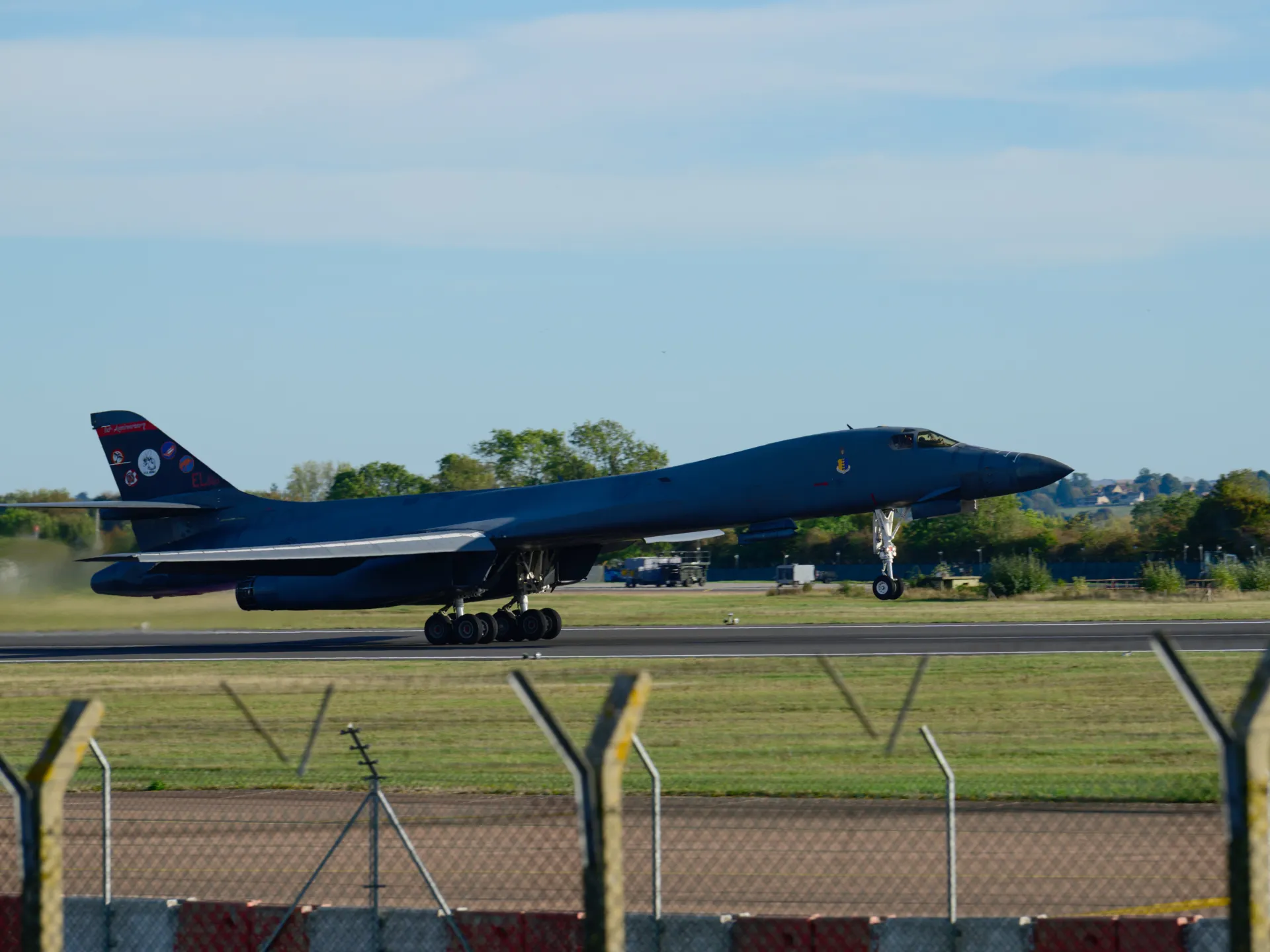
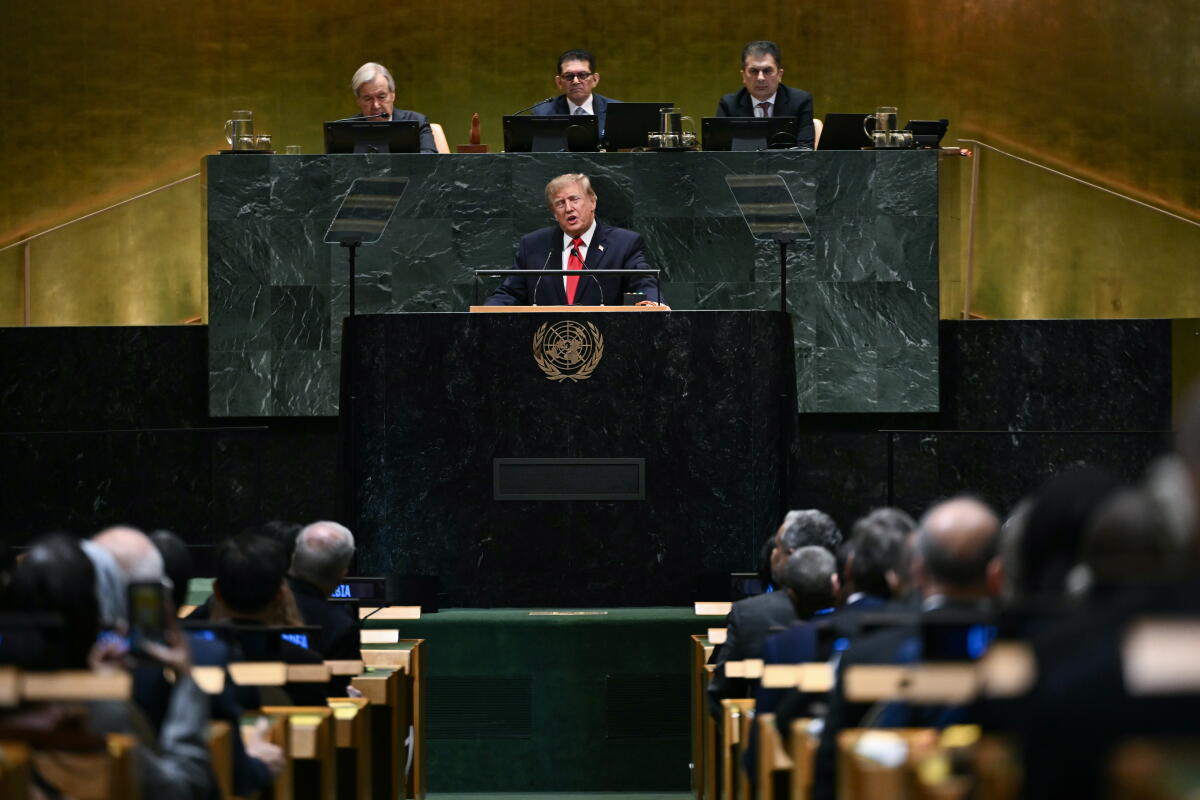





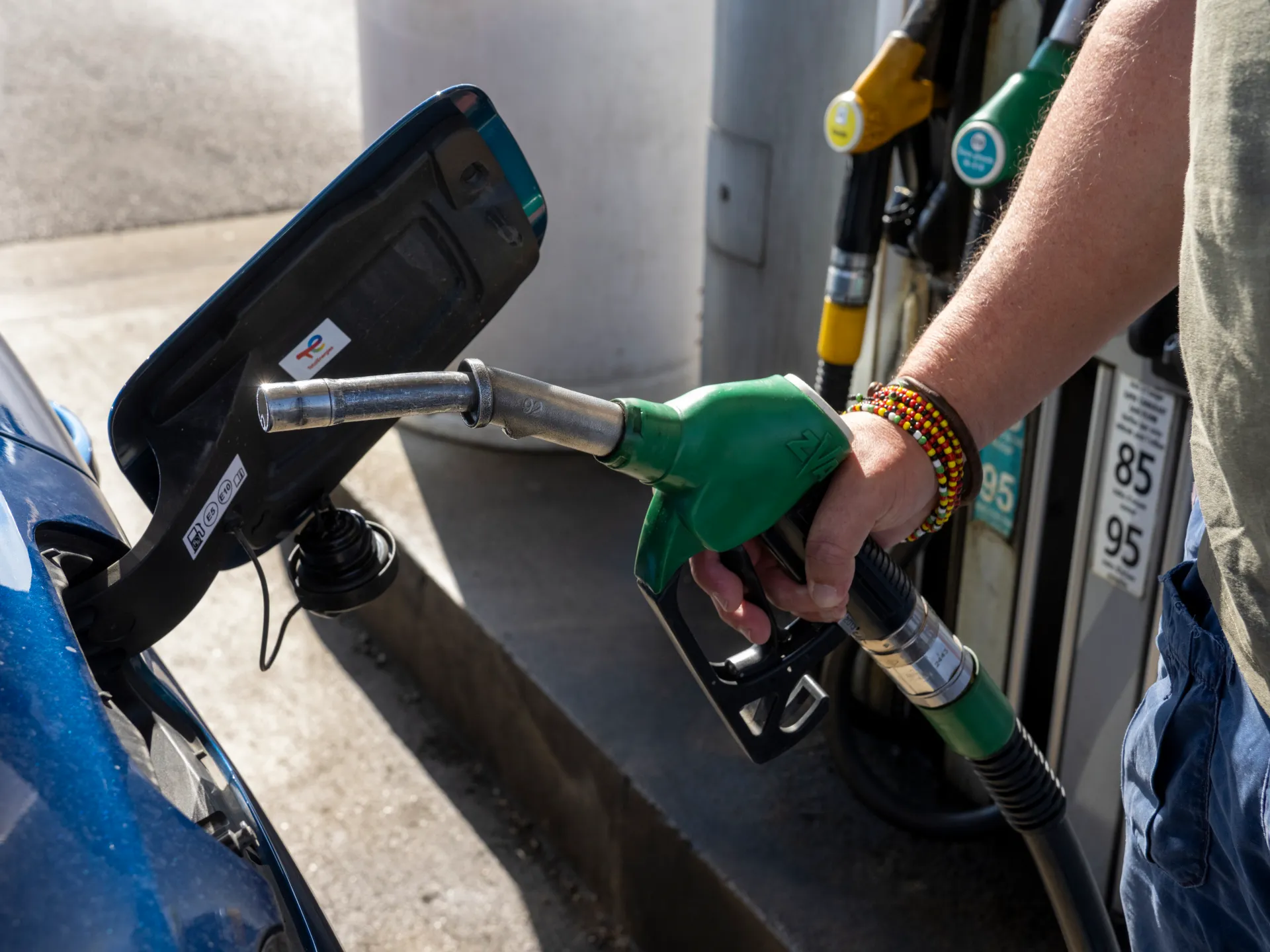
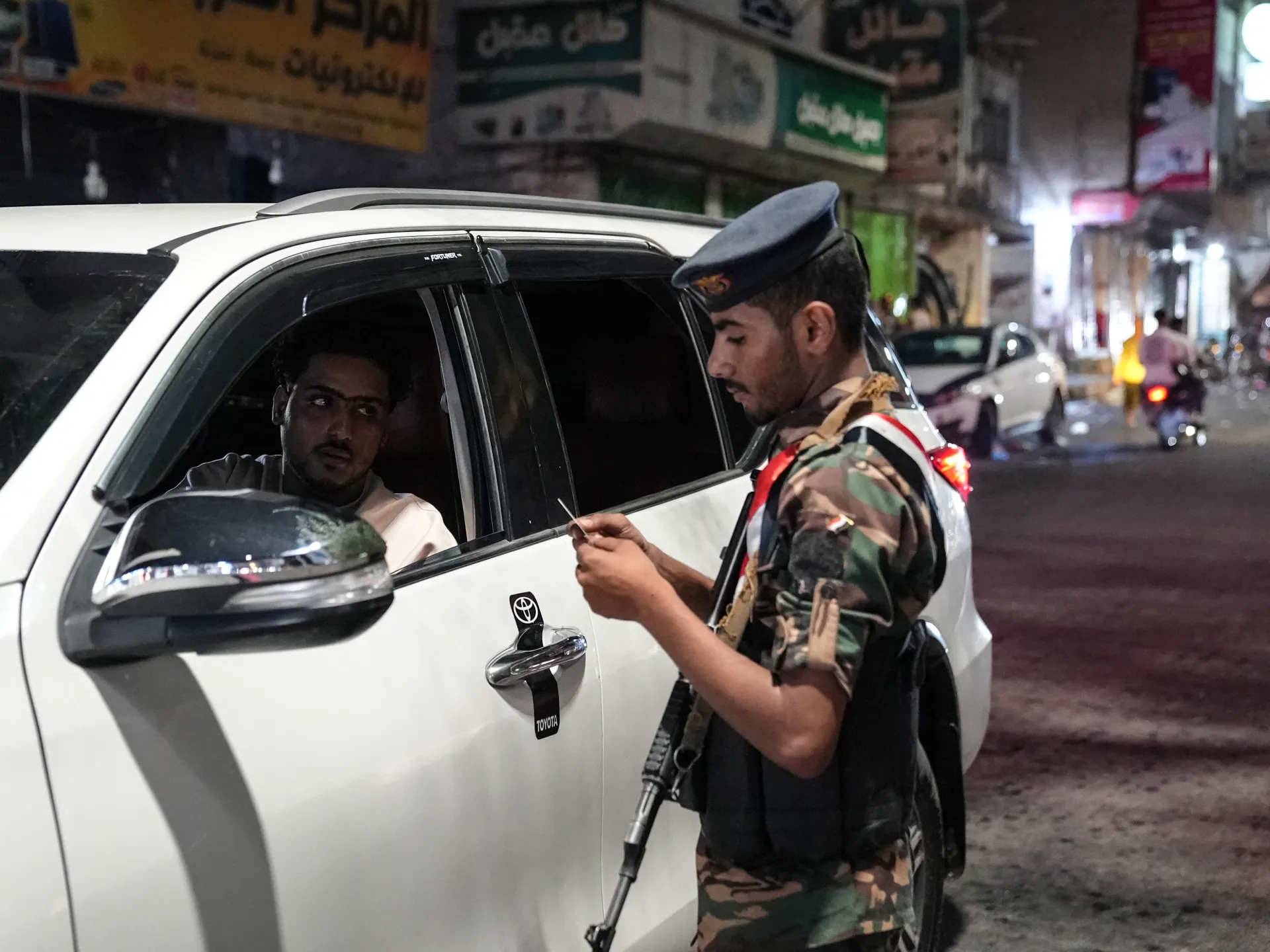
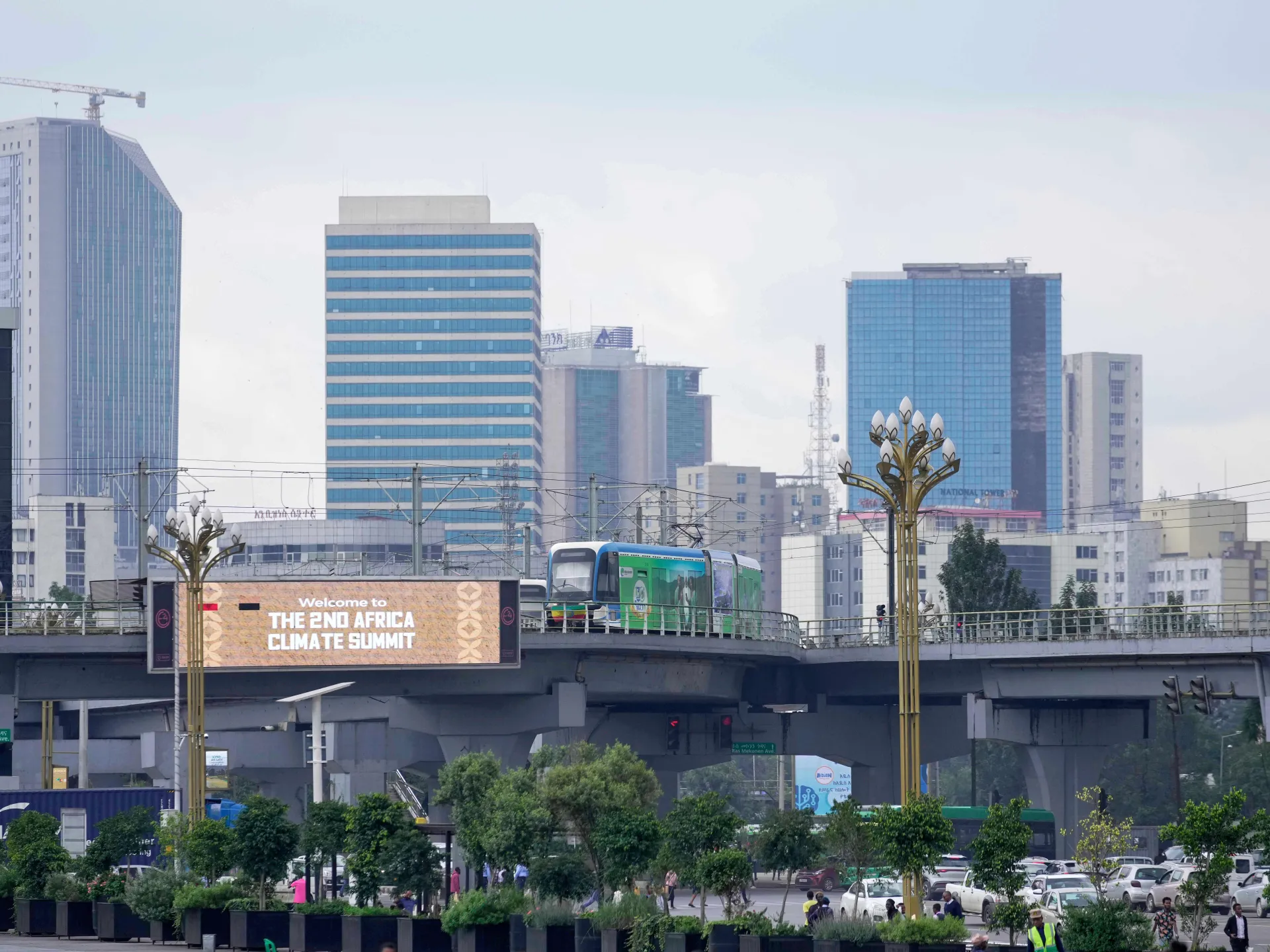
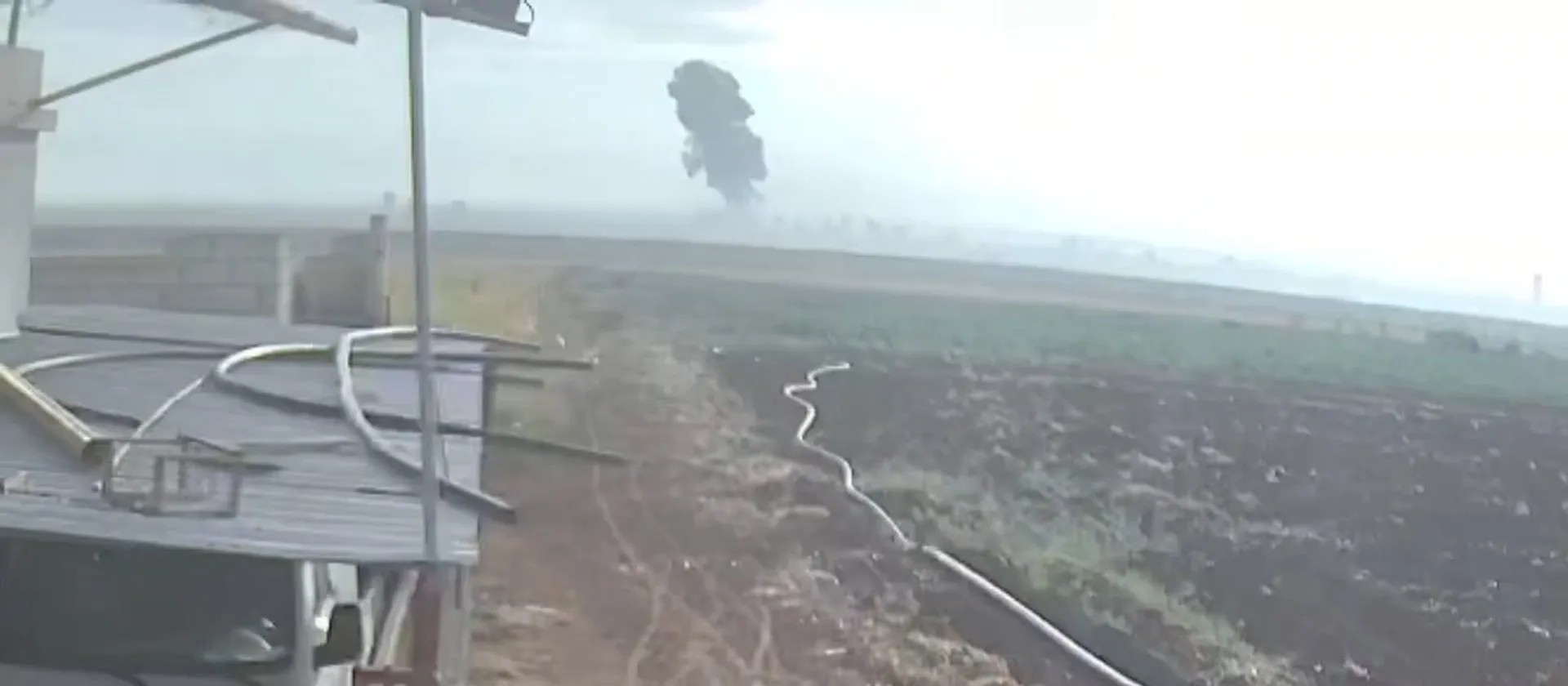


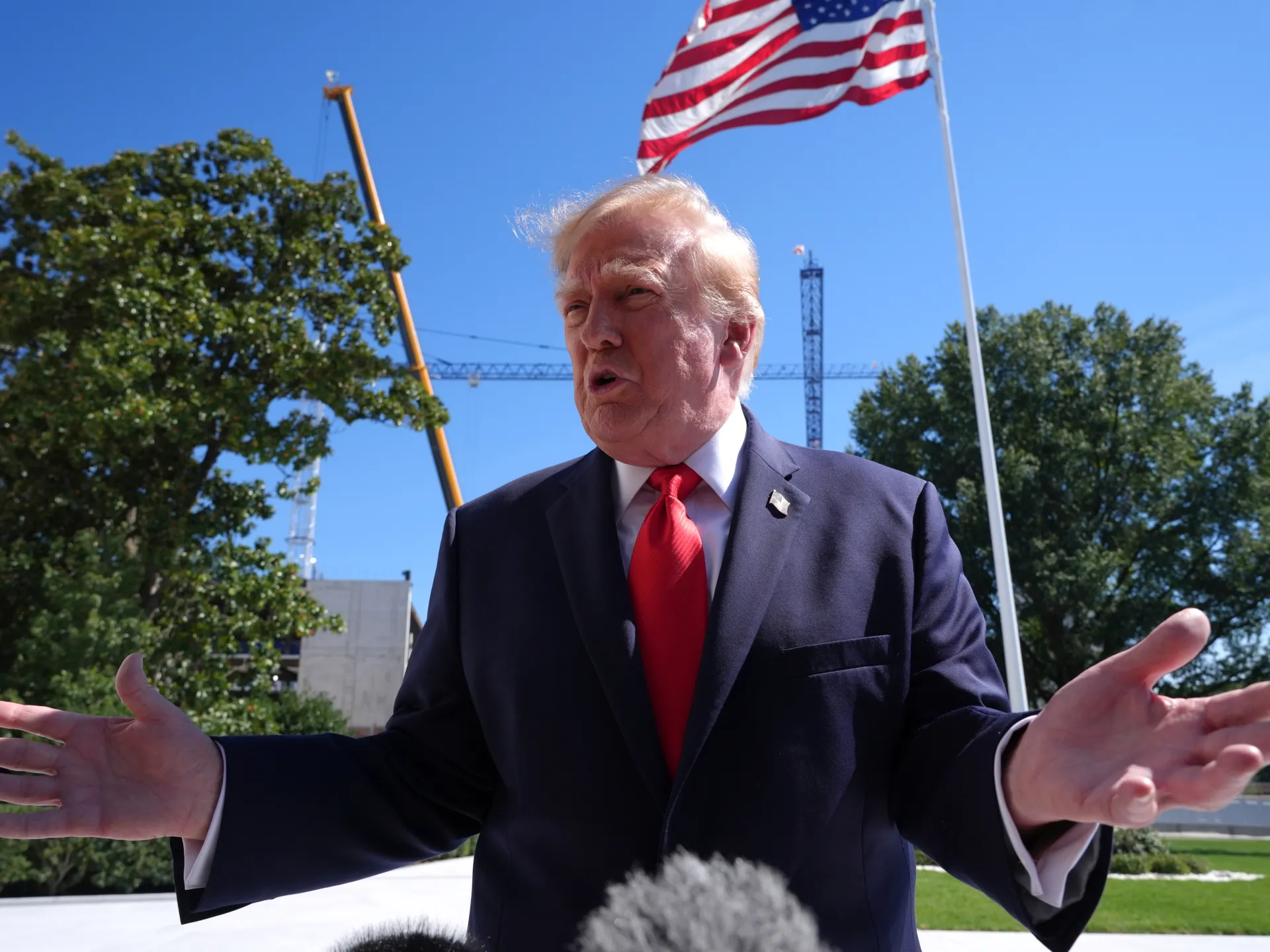
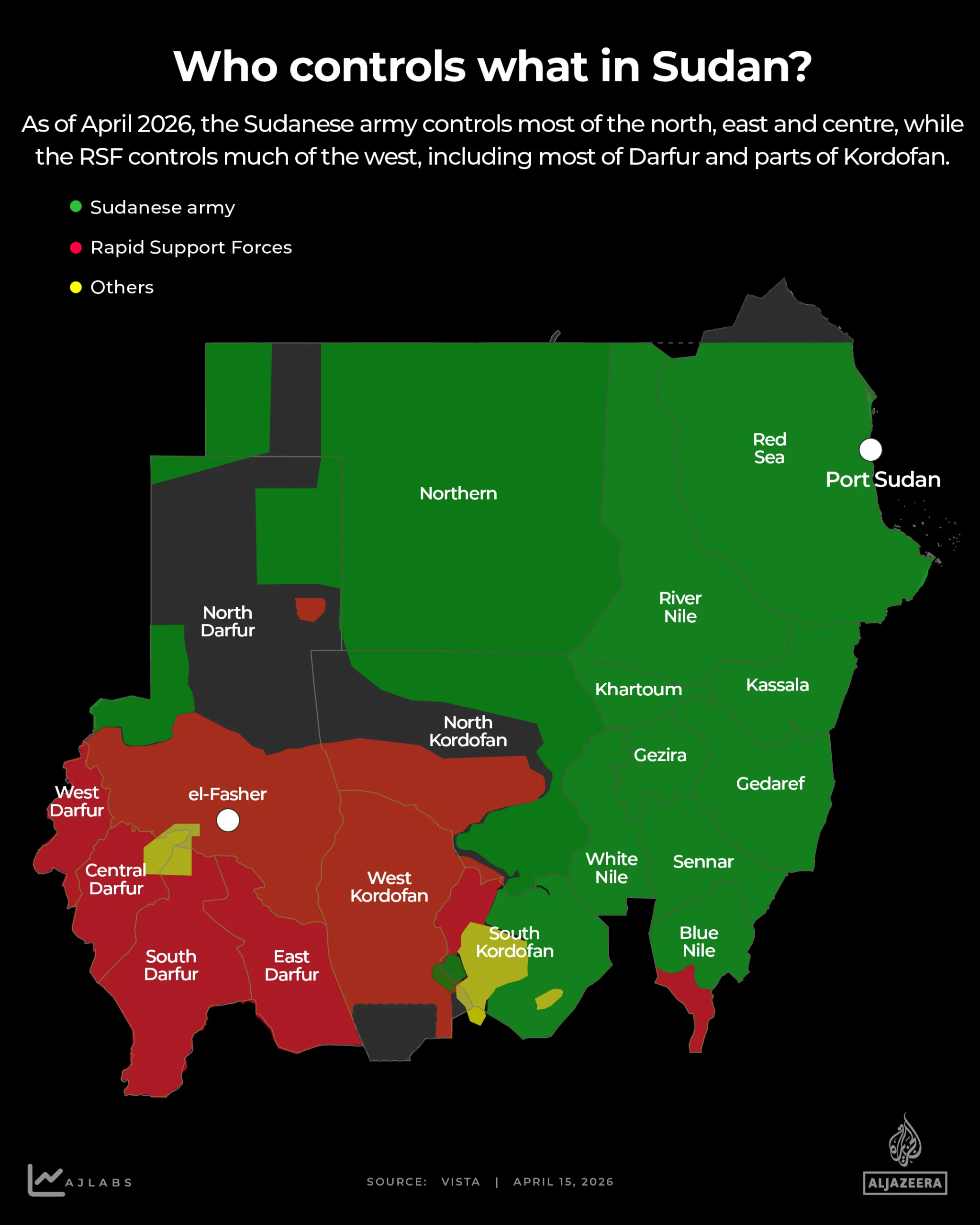


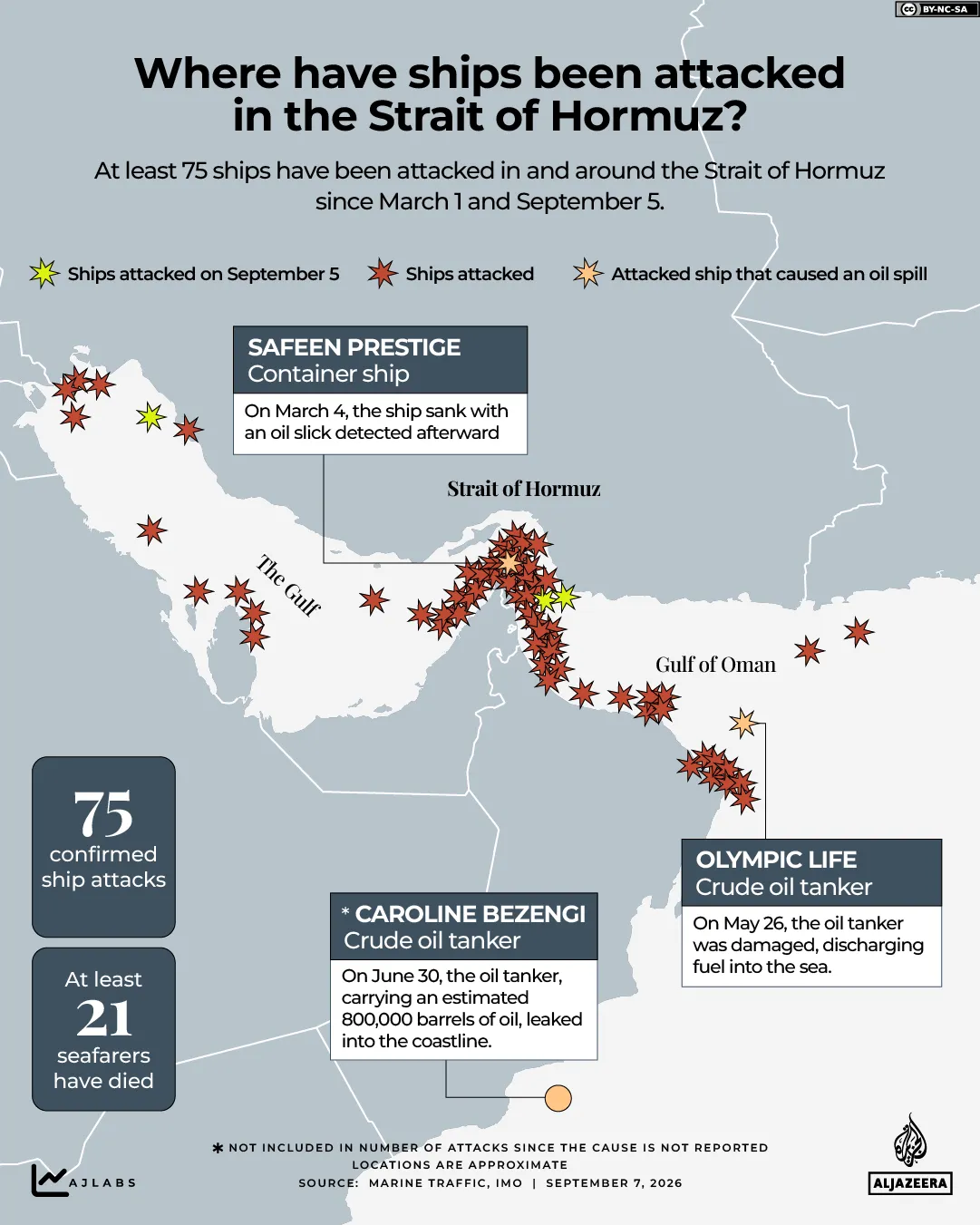


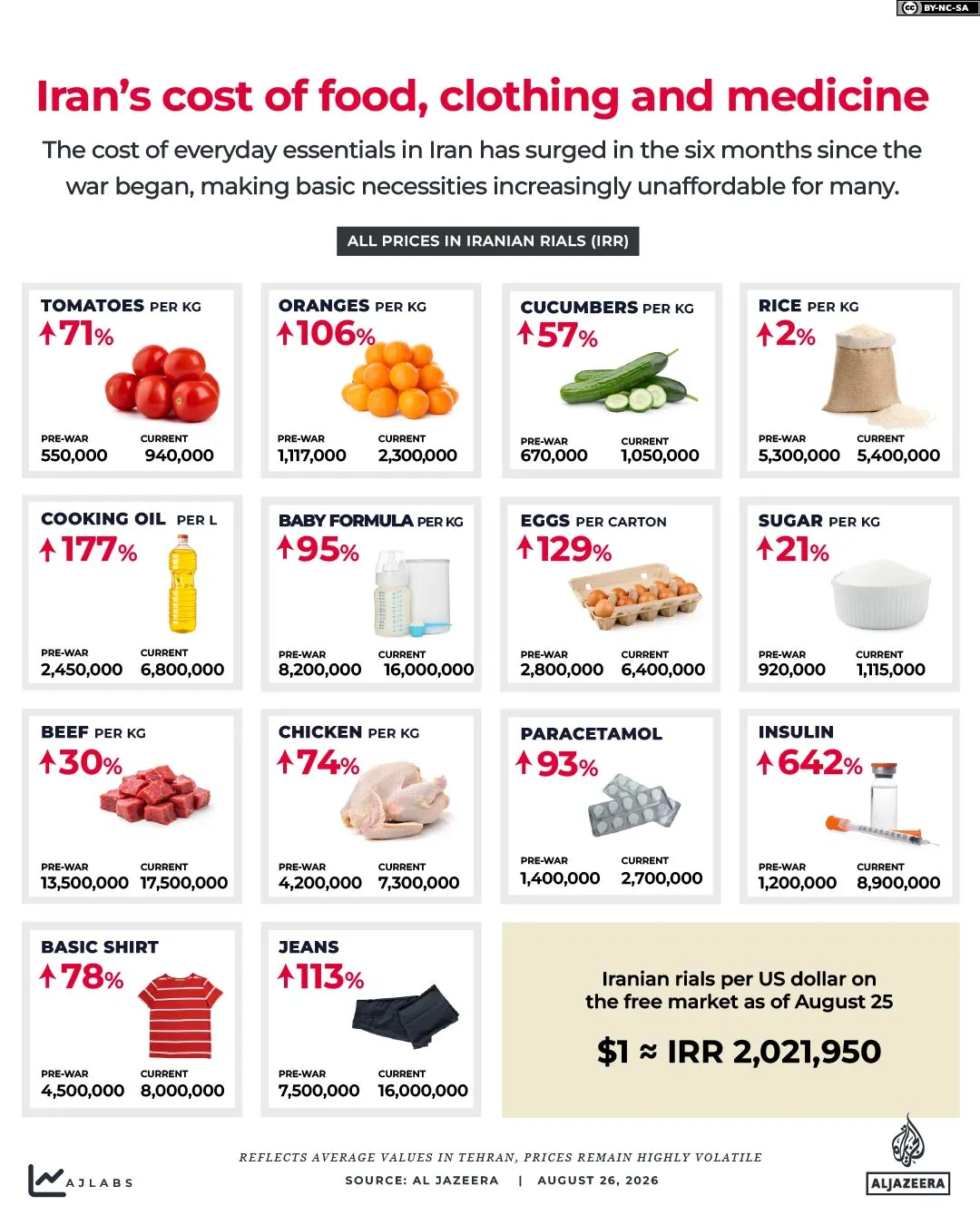

![Iranian-made Zolfaghar missiles are seen on display beside a large portrait of Iran’s Supreme Leader Mojtaba Khamenei at Baharestan Square in Tehran on September 28, 2026 [AFP]](https://i0.wp.com/occasionaldigest.com/wp-content/uploads/2026/09/afp_6abbb983ec1b-1790687619.jpg?w=640&ssl=1)
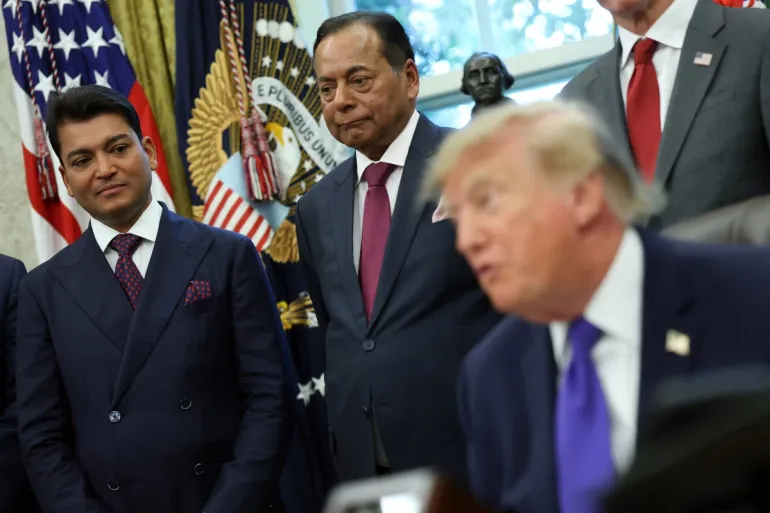


![US President Donald Trump waves as he walks to board Marine One as he departs from the South Lawn of the White House in Washington, DC, on September 26, 2026 [AFP]](https://i0.wp.com/occasionaldigest.com/wp-content/uploads/2026/09/1790693783_407_afp_6ab7d4f7ee67-1790432503.jpg?w=640&ssl=1)