war

‘Masterpiece’ war film based on true story with ‘excellent’ lead now streaming

The film has been hailed a “must-see” by fans.

Fans of war films are being urged to watch a “powerful and moving” movie with a star-studded cast.

Those who love war movies and historical dramas are in for a treat as a classic biographical war drama is available to stream now.

The film is based on the Austrian mountaineer and Schutzstaffel sergeant Heinrich Harrer’s 1952 memoir of the same name.

Documenting his experiences in Tibet between 1944 and 1951, Seven Years in Tibet stars Brad Pitt and David Thewlis, and it is available to stream on Paramount+.

The film sees Thewlis play Austrian Peter Aufschnaiter, with Pitt as Harrer as the pair go mountaineering in 1930s India.

When the Second World War begins, their German citizenship results in their imprisonment in a British prisoner-of-war camp in the Himalayas.

Fans have taken to IMDb reviews to share their thoughts on the film, with one hailing it a “masterpiece”, adding: “I strongly recommend this movie to those who think about war and occupation all day long.”

Another called it “vital viewing”, adding: “This movie is in my Top 100 of all time. Well acted by everyone involved, well directed, and the soundtrack is awesome. I feel this movie should be shown in schools [over the world].”

A third called it a “must-see”, sharing: “I accidentally picked this movie up w/o knowing anything about it! I was intrigued with it from the very beginning! Brad Pitt did an excellent job! I don’t know why I haven’t seen or heard anything about it before.”

Another fan added: “I can’t believe I did not watch this masterpiece earlier. Heinrich Harrer, from climbing mountains and escaping prison to being the Dalai Lama’s teacher, lived a life that it’s fascinating to learn about, and the movie shows that excellently.”

Another viewer commented: “This masterpiece still makes me curious every time I see it. Brad Pitt does an amazing job portraying an Austrian, even down to his accent.

Get Paramount+ free for a week

This article contains affiliate links, we will receive a commission on any sales we generate from it. Learn more
Content Image

£4.99

£0

Amazon/Paramount+

Get Paramount+ here

Telly fans can get seven days of free access to Paramount+ shows like Tulsa King and Dexter: Original Sin by signing up for a free trial via Amazon Prime’s Paramount+ channel.

“The cinematography is extraordinary, and the direction is quite good. I love watching it every so often, and learning new things that I missed the times before.”

The film did not go down well in China, and it was condemned by the government of the People’s Republic of China, which said the Communist Chinese military officers were intentionally shown as rude and arrogant, brutalising the local people.

Films produced by Sony were initially banned from playing in China and Pitt and Thewlis were temporarily banned from entering the country.

The movie was nominated for a Golden Globe Award and Pitt won a Rembrandt Award for Best Actor for his role.

Seven Years in Tibet is on Paramount+

Source link

Syria puts first Assad-era official on trial in Damascus | Syria’s War News

Atef Najib, former head of political security in the Deraa province, is charged with ‘crimes against the Syrian people’.

Syria has begun its first public trial of officials who served under longtime leader Bashar al-Assad, 15 years after the start of the civil war.

Trial proceedings opened in Damascus on Sunday for Atef Najib, the former head of political security in southern Syria’s Deraa province.

Recommended Stories

list of 3 itemsend of list

He is accused of overseeing a violent crackdown on protesters there during the 2011 uprising, and faces charges related to “crimes against the Syrian people”, according to Syria’s state-run news agency, SANA.

Najib, who is a cousin of al-Assad, was the sole defendant in court for Sunday’s preparatory session of the trial set to continue next month.

Charged in their absence are Al-Assad and his brother, Maher, former commander of the Syrian military’s 4th Armoured Division. Along with other former high-ranking security officials also charged in absentia, they are accused of killings, torture, extortion and drug trafficking.

Crowds gathered outside the court on Sunday in celebration, as families of victims, including some from Deraa, attended the session.

Speaking to Al Jazeera Mubasher, a spokesman for Syria’s Justice Ministry said holding the trial in public was important to ensure transparency and judicial independence as part of the transitional justice process.

People gather in the courtroom, on the day Atef Najib, a brigadier general and former head of the Political Security Department in Daraa during Syria's ousted President Bashar al-Assad's rule, who is accused of committing war crimes, attends a trial session at the Palace of Justice, in Damascus, Syria, April 26, 2026. REUTERS/Khalil Ashawi
Syrians pack the Palace of Justice in Damascus as Atef Najib, former head of political security in Deraa, attends a trial session, April 26 [Khalil Ashawi/Reuters]

Najib oversaw political security in Deraa when teenagers who scrawled antigovernment graffiti on a school wall in Deraa were arrested and tortured, in a case that became a catalyst for the broader uprising.

Further protests were met by a brutal government crackdown and spiralled into a 14-year civil war that ended with al-Assad’s overthrow in December 2024 in a lightning rebel offensive. Al-Assad then fled to Russia, and most members of his inner circle have also escaped Syria.

The government of interim President Ahmed al-Sharaa has faced criticism over delays in launching a promised transitional justice process following the civil war, in which an estimated half a million people were killed. But authorities now appear to be moving more aggressively to prosecute officials linked to al-Assad.

On Friday, Syrian authorities arrested former intelligence officer Amjad Yousef, the main suspect accused of the 2013 Tadamon massacre in Damascus, when at least 41 people were killed.

In 2022, a leaked video appeared to show Youssef shooting civilians who had been detained and blindfolded, with their hands bound.

Source link

Russian attacks on Ukraine kill at least five, damage ship in port | Russia-Ukraine war News

Ukraine’s attacks on Russia injure at least six people in the region of Vologda and the annexed Crimea.

Ukrainian officials say Russian attacks in several regions have killed at least five people and damaged a ship in the port of Odesa – as Moscow claimed to have intercepted more than 200 Ukrainian drones.

A Russian drone attack killed two men on Saturday in Ukraine’s northeastern Sumy region, according to Governor Oleh Hryhorov. He said civilians were hit in Bilopil close to the Russian border.

Recommended Stories

list of 4 itemsend of list

In the central Dnipropetrovsk region, Russian attacks on four districts killed one person and injured four others, Governor Oleksandr Ganzha said.

In the southern region of Kherson, Governor Oleksandr Prokudin said Russian shelling wounded seven people.

Further east, Russian forces launched more than 700 attacks on 50 settlements in the Zaporizhia region over the past 24 hours, killing two people and injuring four, according to Governor Ivan Fedorov.

Homes, vehicles and infrastructure were damaged, he added.

In Odesa region, Deputy Prime Minister Oleksii Kuleba said Russian forces again targeted port infrastructure.

“The attack damaged port and logistics infrastructure facilities, warehouses, technical equipment, cargo storage tanks, administrative buildings, as well as freight transport,” Kuleba said on Telegram.

He added that a civilian vessel flying the flag of Palau was damaged while loading in port. No injuries to the crew were reported.

Ukraine’s air force said it shot down or disabled 124 of 144 drones launched by Russia overnight with impacts recorded at 11 locations.

Russia reports Ukrainian drone attacks

Russia’s Ministry of Defence said its air defences destroyed 203 Ukrainian drones between Saturday evening and Sunday morning over Russian regions and the Black Sea.

The ministry said 95 Ukrainian drone control centres were destroyed over the previous 24 hours.

In Russia’s Vologda region, Governor Georgy Filimonov said five people were injured in a Ukrainian drone attack on a nitrogen complex.

In Sevastopol in Crimea, which was annexed by Russia, debris from downed drones struck the cardiology department of a hospital, injuring one person, according to Governor Mikhail Razvozhayev. He said 16 Ukrainian drones were shot down over the city overnight.

Razvozhayev added that drone debris also fell on rail tracks, damaging overhead power lines and causing train delays.

Peace efforts continue

The latest attacks came as diplomatic efforts to end the war, now in its fourth year, remained stalled.

Ukrainian President, Volodymyr Zelenskyy, said he signed agreements on security and energy cooperation with Azerbaijan’s President Ilham Aliyev in Baku on Saturday.

Zelenskyy said Kyiv wanted to draw on its experience defending airspace from Russian attacks. He also said he had discussed the possibility of holding future talks between Ukraine and Russia in Azerbaijan.

“We are ready for the next talks to be in Azerbaijan, if Russia will be ready for diplomacy,” Zelenskyy said.

Source link

Iran war: What’s happening on day 58 as Tehran-Washington talks stall? | News

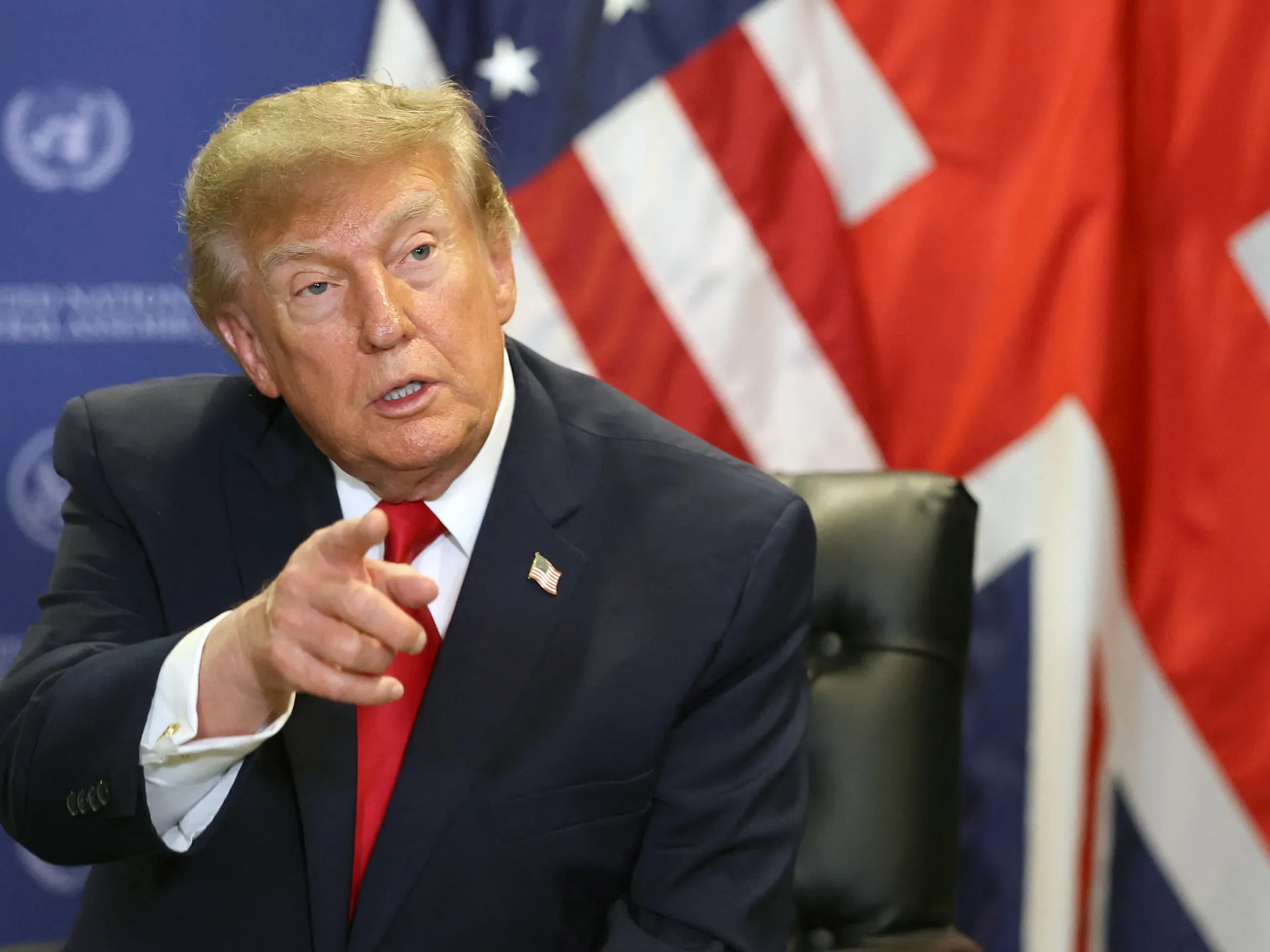
US President Donald Trump calls off a planned trip to Pakistan by his envoys, in the latest setback to efforts to end the war with Iran.

Prospects for a diplomatic breakthrough in the US-Israeli war with Iran appear to have dimmed, with negotiations to end the two-month conflict stalled as both Tehran and Washington show little sign of easing their positions.

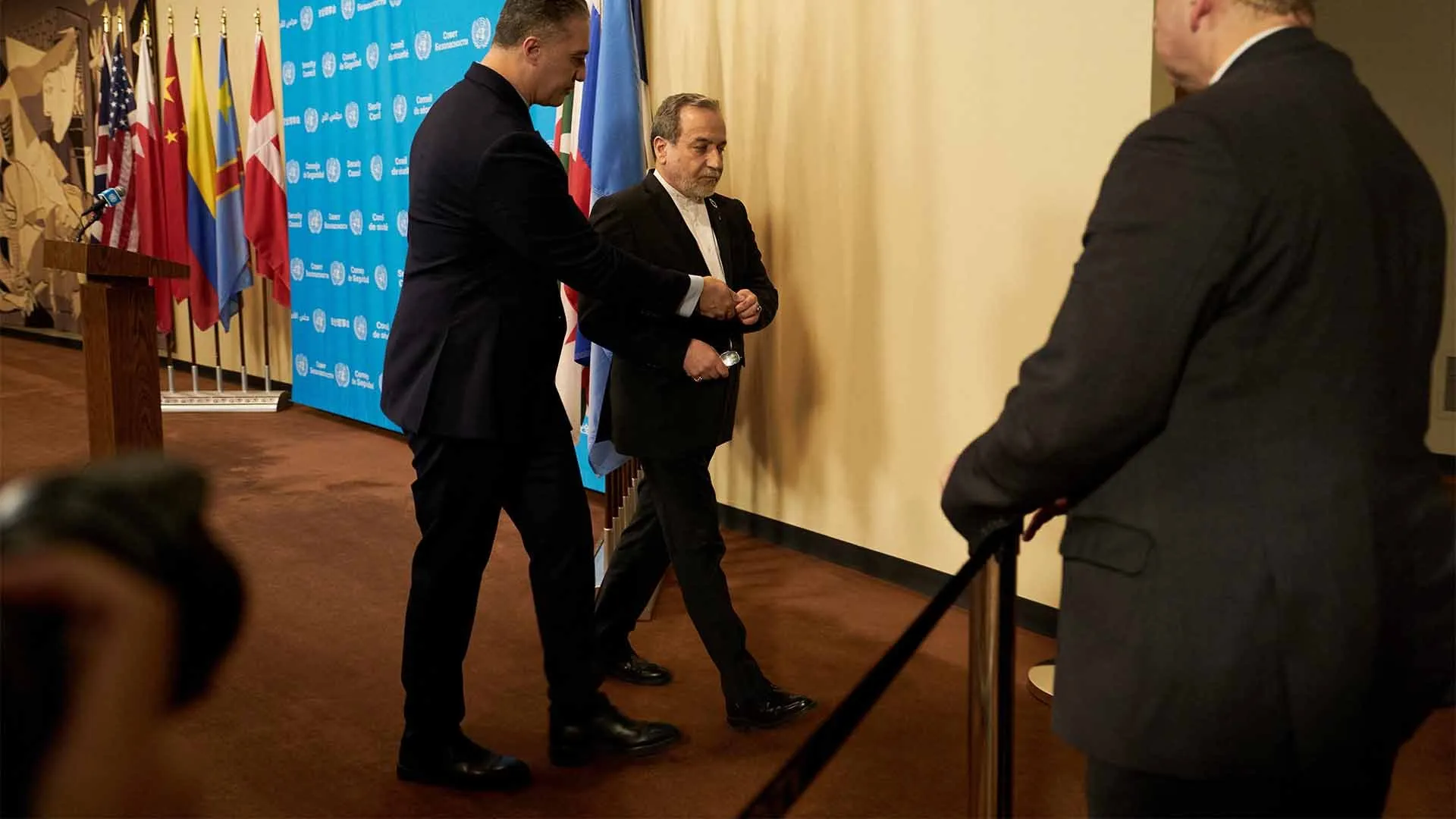
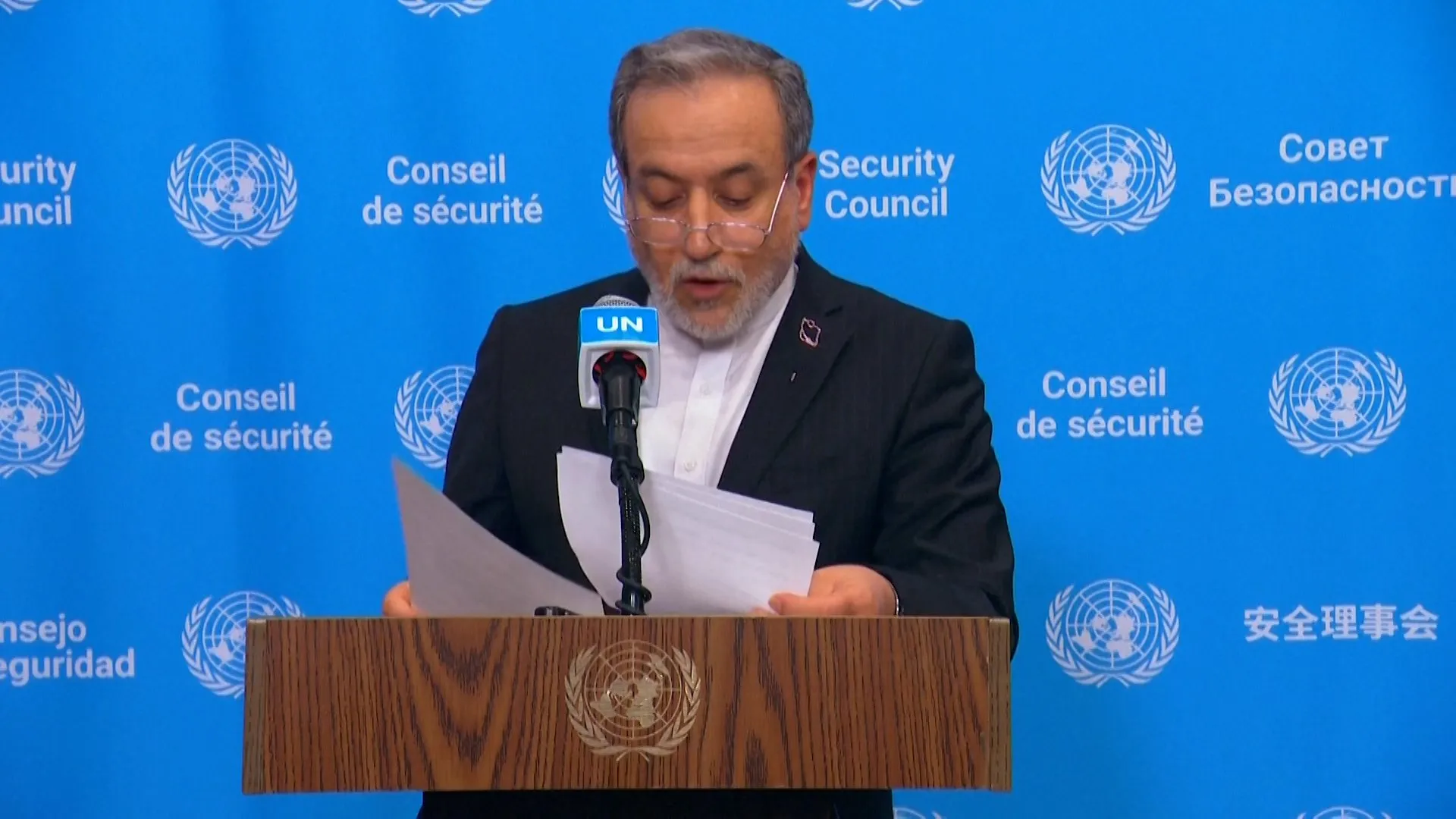
US President Donald Trump cancelled a planned visit to Islamabad by his envoys, Steve Witkoff and Jared Kushner, dealing blows to peace prospects, while Iranian Foreign Minister, Abbas Araghchi, left Pakistan at the weekend. There, he presented mediators with a potential framework for ending the conflict.

Recommended Stories

list of 3 itemsend of list

The US president has said that Washington has received a new peace proposal from Tehran, but it has already been rejected.

The conflict has already pushed energy prices to multi-year highs, stoked inflation and darkened global growth prospects.

Here is what we know on day 58 of the conflict:

In Iran

  • Araghchi left for Oman, saying he would return to Pakistan again on Sunday before heading to Russia, Iran’s state-run IRNA news agency reported.
  • According to a statement posted on X by US Central Command (CENTCOM), US forces intercepted a sanctioned ship linked to Iran’s so-called “shadow fleet”.
  • The ship, identified as the Sevan, was part of a 19-vessel “shadow fleet” transporting Iranian oil and gas products to foreign markets, the US military said.
  • Iran executed a man convicted of being a member of the armed group Jaish al-Adl and carrying out attacks on Iranian security forces, the semi-official Tasnim news agency reported.

War diplomacy

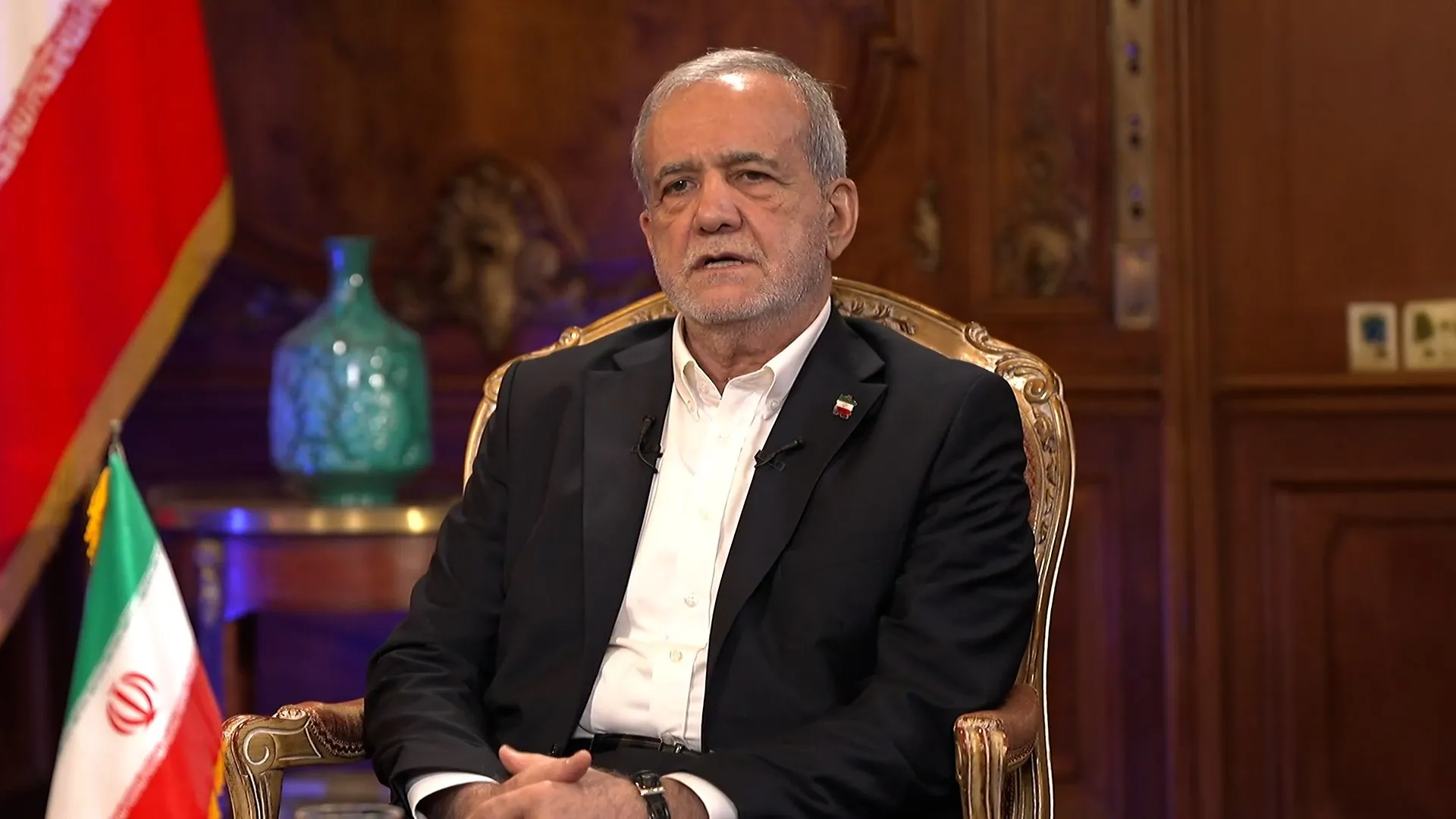
  • Iranian President Masoud Pezeshkian told Pakistani Prime Minister Shehbaz Sharif by phone that Tehran would not enter “imposed negotiations” under threats or blockade, an Iranian government statement said.
  • Pezeshkian said the United States should first remove “operational obstacles”, including its blockade on Iranian ports, before negotiators can lay any groundwork to resolve the conflict.
  • Iran’s IRNA news agency is reporting that Araghchi and his Egyptian counterpart, Badr Abdelatty, “discussed and exchanged views on issues related to diplomacy and ceasefire, as well as the latest regional developments”.
  • Araghchi also had a call with Turkiye’s Foreign Minister, Hakan Fidan, but the agency did not provide further details.

In the US

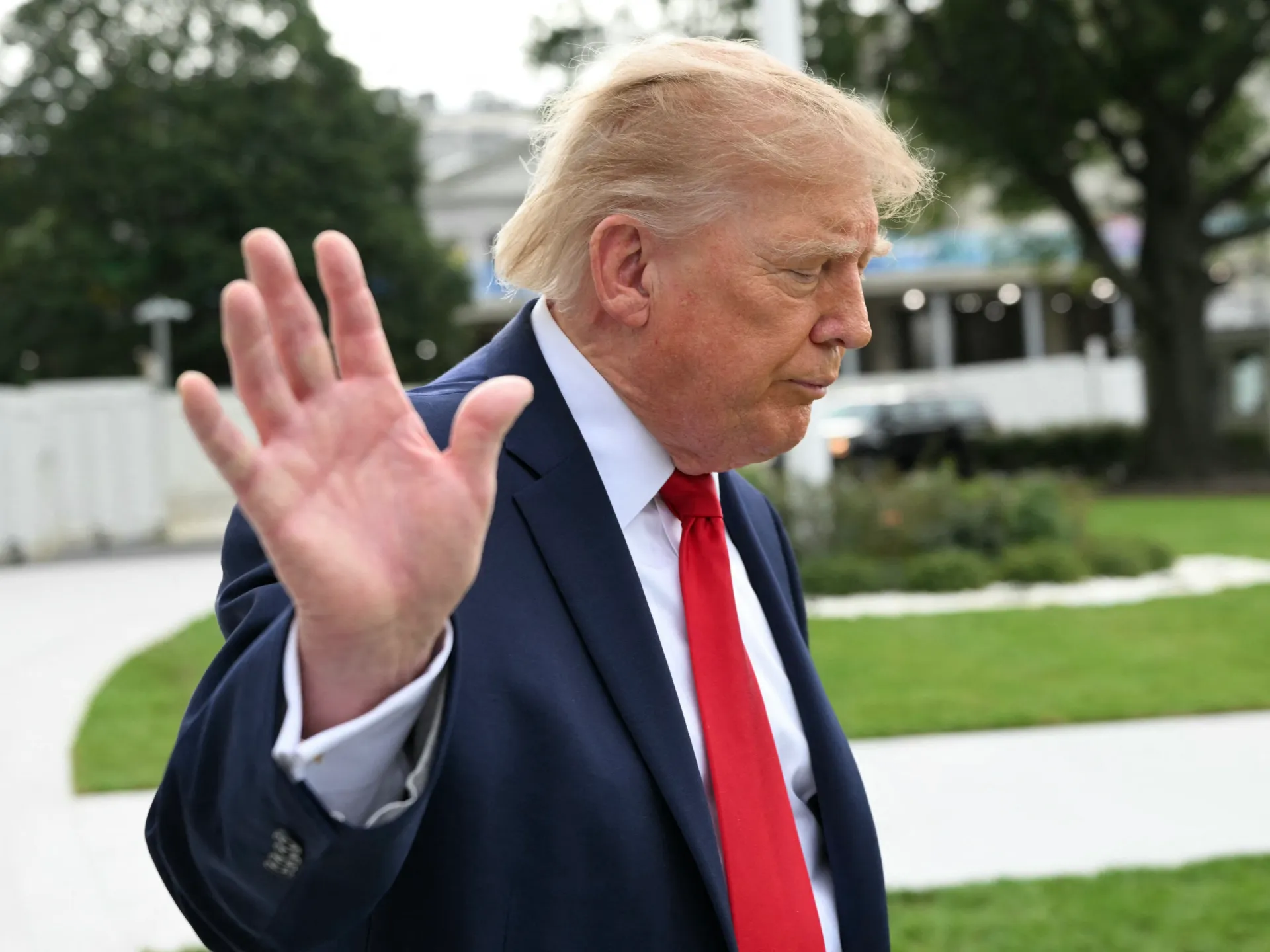
  • Trump told reporters in Florida that he scrapped the envoys’ visit because the talks involved too much travel and expense to consider an inadequate offer from the Iranians. After the diplomatic trip was called off, Iran “offered a lot, but not enough”, Trump said.
  • On Truth Social, he wrote that there was “tremendous infighting and confusion” within Iran’s leadership.
  • “Nobody knows who is in charge, including them,” he posted. “Also, we have all the cards, they have none! If they want to talk, all they have to do is call!”
  • Trump said that the shooting at the White House Correspondents’ dinner on Saturday was unrelated to the Iran war. “It’s not going to deter me from winning the war in Iran. I don’t know if that had anything to do with it, I really don’t think so, based on what we know,” Trump told reporters.

In Lebanon

  • Israeli Prime Minister Benjamin Netanyahu ordered troops to attack Hezbollah targets in Lebanon, his office said, further testing the three-week ceasefire.
  • Lebanon’s Ministry of Public Health’s emergency operations centre said two Israeli raids on a truck and a motorcycle in the town of Yohmor al-Shaqif in Nabatieh district killed four people, the Lebanese National News Agency reported.
  • Also in southern Lebanon, Israeli soldiers reportedly blew up buildings in the city of Bint Jbeil.

Source link

Trump cancels US envoys’ trip after Iran’s Araghchi leaves Pakistan | US-Israel war on Iran News

Trump later suggests that next talks will be over phone, saying ‘If they want to talk, all they have to do is call!!!’

United States President Donald Trump has announced that his envoys would not be travelling to Pakistan for talks with Iranian officials after Foreign Minister Abbas Araghchi left the country.

The US president told news outlet Fox News that he had ordered Steve Witkoff and Jared Kushner to ditch plans to visit the Pakistani capital, Islamabad, for the possible talks, despite his earlier claims that Iran was “making an offer” aimed at resolving the two-month conflict.

“I said, ‘Nope, you’re not making an 18-hour flight to go there. We have all the cards. They can call us anytime they want, but you’re not going to be making any more 18-hour flights to sit around talking about nothing,” Trump said.

In any case, Araghchi had already departed Islamabad, the first destination of a three-leg tour including Oman and Russia. Iran’s state-run Press TV confirmed he left on Saturday after meeting Pakistani Prime Minister Shehbaz Sharif, Army chief Field Marshal Asim Munir and Foreign Minister Ishaq Dar.

Posting on X, Araghchi said he had shared “Iran’s position concerning workable framework to permanently end the war on Iran” with Pakistani officials. “Have yet to see if the U.S. is truly serious about diplomacy,” he added.

Later, Trump appeared to say on social media that any future talks would be taking place over the phone. “If they want to talk, all they have to do is call!!!” he wrote, adding that nobody knew who was in charge in Iran and that there was “tremendous infighting and confusion within their ‘leadership’”.

Reporting from Washington, Al Jazeera’s Rosiland Jordan said Trump’s comments suggested that the US did not see “any yielding on the Iranians part”.

She said that his talk of holding “all the cards” appeared to allude to “the US naval blockade, as well as the ongoing presence of more than 50,000 troops in the region, ready to resume combat operations”.

The pressure to strike a deal to permanently end the war has mounted amid an ongoing standoff in the Strait of Hormuz, through which approximately one-fifth of global oil and liquefied natural gas shipments transit.

Iran’s powerful Islamic Revolutionary Guard Corps said Saturday that they had no intention of ending their effective blocking of the waterway, which has thrown energy markets into turmoil, according to the news agency AFP.

Asked by US media outlet Axios whether the cancelled trip by his envoys meant a resumption of hostilities, Trump said: “No. It doesn’t mean that. We haven’t thought about it yet.”

Iran’s Ministry of Foreign Affairs said Araghchi had arrived in Muscat on Saturday for meetings with Omani officials. He is also expected to travel on to Russia to discuss efforts to end the war, which the United States and Israel began against Iran on February 28.

Source link

Iran FM Abbas Araghchi and Pakistan PM Shehbaz Sharif meet in Pakistan | US-Israel war on Iran News

NewsFeed

An Iranian delegation led by Foreign Minister Abbas Araghchi met Pakistani Prime Minister Shehbaz Sharif in Islamabad. Iran outlined its proposal to Pakistani mediators as part of efforts to revive direct negotiations with the US.

Source link

Government confirms passengers’ rights when flights are cancelled over ‘act of war’

Some airlines have confirmed they will be operating fewer flights

Six major airlines have confirmed they will be cancelling and cutting back on flights to and from the UK due to the rise in jet fuel costs triggered by the war in Iran. As a result, many travellers may have to prepare for their plans to be disrupted as they anxiously await updates from their airlines.

However, the Government has confirmed the full list of rights passengers have when their flight is cancelled due to an act of war. This includes what compensation or rebooking options people should be given.

Parliamentary Under-Secretary for the Department for Transport, Keir Mather, clarified: “Where UK law applies, if a flight is cancelled by the airline, then passengers would be entitled to a choice between a full refund or to be re-routed. These rights would apply if disruption were linked to war.

“Information on air passenger rights is already available in the Department’s Air Passenger Travel Guide, and the Civil Aviation Authority (CAA) recently provided specific advice to passengers in response to the Middle East disruption.”

The MP had been responding to Liberal Democrat Sarah Dyke who requested the DfT layout guidance on the “Act of War” clause which is meant to protect customers who should receive appropriate refunds for holidays they cannot take due to conflict.

According to the Civil Aviation Authority, if your flight is cancelled your airline must let you choose one of two options under UK law:

  • Receive a refund for the parts of the journey you haven’t used
  • Choose an alternative flight

If your flight is cancelled with less than 14 days’ notice, you may be entitled to some compensation if it is deemed to be the airlines’ fault. Issues like extreme weather, employee strikes or ‘extraordinary circumstances’ won’t count.

UK law around cancelled flights usually applies to airlines departing from or arriving in the UK as well as flights arriving in the EU on a UK airline. Under this law, your airline must also provide you with ‘care and assistance’ if your flight is cancelled.

This ‘care and assistance’ is separate from compensation and can include:

  • Reasonable amount of food and drink, usually vouchers
  • Means to communicate, such as refunding the cost of phone calls
  • Accommodation if your replacement flight is the next day
  • Transport to and from the accommodation or your home if you’re able to return

The UK Civil Aviation Authority notes: “The airline must provide you with these items until it is able to fly you to your destination, no matter how long the delay lasts or what has caused it.”

According to the BBC, six airlines have said they will operate fewer flights including KLM, Air Canada, Asiana Airlines, Delta Airlines, Lufthansa and SAS. Other airlines, such British Airways owner IAG, EasyJet and Jet2Holidays, have assured that they don’t plan to make any changes at the moment as of April 25.

Some airlines have said they will increase charges as a result of the jet fuel supply disruption. These include:

  • Air France-KLM
  • Indigo
  • Pakistan International Airlines
  • Thai Airways
  • Turkish Airlines-Sun Express
  • Virgin Atlantic

Source link

Staycations surge in three UK hotspots as Iran war shakes foreign travel plans

As uncertainty in international travel continues amid the conflict in the Middle East, travel firms have reported increased bookings to three UK destinations

With mounting worries about flight cancellations and soaring prices among UK travellers due to the Iran conflict, new data indicates that staycations are becoming increasingly popular. Travel experts have cautioned that, should disruption to oil supplies through the Strait of Hormuz persist, Europe could see jet fuel reserves dwindling within a matter of weeks, heightening the threat of flight disruptions.

Several airlines are already cutting back on flights and starting to impose fuel surcharges, prompting many to question whether their travel arrangements in the coming months will proceed – and which destinations might be hardest hit.

Asia is especially vulnerable to the fuel shortages, given its greater dependence on Gulf imports. Yet European nations including Italy, France, the Netherlands, and Denmark are also said to be tapping into reserves, according to Bryan Terry, managing director at Alton Aviation Consultancy, speaking to The Times.

Earlier this week, Germany’s largest carrier Lufthansa revealed it had scrapped 20,000 flights between May and October in a bid to conserve fuel.

Amid the ongoing uncertainty, travel firms have noted a spike in bookings for three sought-after UK staycation destinations; the Lake District, Northumberland, and Pembrokeshire.

The Lake District welcomes roughly 18 million visitors annually. While many are attracted by its stunning landscapes, peaceful surroundings and walking trails, others head there for particular attractions or to enjoy outdoor pursuits. Guests typically choose from a variety of accommodation options, encompassing both self-catering and serviced properties.

Northumberland similarly lures tourists with its blend of scenic beauty, historical heritage and adventure activities. Key draws include beaches like Bamburgh, alongside iconic sites such as Bamburgh Castle, Alnwick Castle and Hadrian’s Wall. Popular outdoor activities encompass hiking, watersports, cycling and wildlife watching.

Wales’ Pembrokeshire stands out as one of Britain’s premier coastal destinations, providing a distinct alternative to more conventional holiday spots.

Attractions feature the Pembrokeshire Coast National Park, striking clifftops, secluded bays and expansive sandy shores, with places like Barafundle Bay and Whitesands frequently listed among the nation’s finest.

Airbnb’s Lisa Marcais told The i Newspaper: “As we enter the spring and summer season, we’re already seeing a clear uptick in demand for UK getaways,” s Searches have reportedly risen by over 15 per cent for May bank holiday breaks versus last year.

“Lesser-known destinations are particularly popular, with Brits swapping traditional hotspots for rural escapes in Northumberland, Pembrokeshire and the Derbyshire Dales.”

James Shaw from Sykes Holiday Cottages has also noted an increase in staycations over the Easter period and anticipates this trend will carry on throughout the summer months.

“The rise in last-minute bookings is particularly interesting,” he said. “With this level of demand continuing into spring, we’re expecting a strong summer ahead.”

He went on to say that holidaymakers are displaying growing enthusiasm for locations such as Whitby in North Yorkshire, Lyme Regis in Dorset, and Lake District favourites including Windermere and Keswick.

Meanwhile, Yorkshire-based luxury holiday cottage firm Holiday at Home has similarly recorded a 17 per cent surge in reservations.

Source link

Overnight Russian attacks on Ukraine kill five, injure 30 | Russia-Ukraine war News

Russia launched more than 600 drones and 47 missiles as it targeted eight regions in Dnpiro, authorities say.

Overnight Russian attacks in eight regions of Ukraine have killed at least five people and wounded 30 others, Ukrainian officials say.

The central Ukrainian city of Dnipro was hardest hit, with more than 20 people reported wounded, including a nine-year-old and two police officers, according to a Telegram statement from Ukraine’s National Police.

Recommended Stories

list of 4 itemsend of list

Two people died in the city of Nizhyn in the northern region of Chernihiv, while a one-year-old boy was among the wounded in Kharkiv region, police said.

A rescue operation was underway at a residential building in Dnipro, while emergency services worked in regions across Ukraine, including in Chernihiv, Odesa and Kharkiv.

Donetsk Governor Vadym Filashkin wrote on Telegram that one person was wounded in attacks on Sloviansk, and another in Kramatorsk. Six homes, five high-rises and buildings, including a post office and a church, also reported damage.

Ukraine’s Air Force tallied 619 Russian drones and 47 missiles launched during the attacks. Air defences shot down or suppressed 610 of them, it said.

“Russia’s tactics remain unchanged – attack drones, cruise missiles, and a significant number of ballistic missiles. Most targets are civilian infrastructure in cities,” President Volodymyr Zelenskyy posted on X on Saturday, along with a video of emergency workers responding to shelled-out buildings.

The latest attacks came on the heels of the killings of a Ukrainian married couple, both aged 75, during a Russian strike on the port city of Odesa yesterday. Strikes also destroyed residential buildings and hit a foreign ship, Ukrainian authorities said.

The European Union this week approved a new round of sanctions targeting Russia’s energy, banking and trade sectors. Discussions had previously stalled amid opposition from Hungary.

The EU’s foreign policy chief, Kaja Kallas, called on Friday for a new package of sanctions, telling reporters in Cyprus that the EU is “really pushing”.

Zelenskyy urged European leaders to expedite the process in light of the latest attacks.

“The pause caused by the blocking of the 20th package gave the aggressor additional time to adapt – it is important to counter this,” he added.

Source link

‘Amrum’ review: Director Fatih Akin delivers complex coming-of-age tale

The best coming-of-age stories derive their power from being endings as much as beginnings. There’s often a clarifying, poignant harshness in the losses they depict. That applies — with sobering grace — to the memory ballad “Amrum,” set on Germany’s titular North Sea island in 1945, when the winds of a world war’s conclusion blow into a 12-year-old boy’s life with unexpected consequences.

The movie bears a curious credit: “A Hark Bohm film by Fatih Akin.” Bohm, who died last year at 86, was a highly respected film writer, actor and academic, a veteran of Germany’s New Wave. Realizing he’d be unable to direct his fictionalized childhood remembrance, he entrusted it to his mentee Akin, the firebrand behind modern German classics such as “Head-On” and “In the Fade.” The project became, according to Akin, like “adopting a child.”

In story terms, that child, a stand-in for Bohm himself, is wide-eyed, sensitive Nanning (well-cast newcomer Jasper Billerbeck), who works in the potato fields of local farmer Tessa (Diane Kruger, in a small but key role). At home, he has a pregnant mother, Hille (Laura Tonke), aunt Ena (Lisa Hagmeister) and two younger siblings, but not the high-ranking Nazi officer patriarch who relocated them from bombed-out Hamburg to an ancestral house on this tiny, beachy outpost. Pejoratively dubbed a mainlander by even the friendliest neighbors and generally viewed with suspicion for his family’s Nazi ties, Nanning is assured by his ideology-soaked mom that their roots, their “bloodline,” make them real Amlumers.

The boy’s first real lesson in the shifting sands comes when, at dinner, he remarks that the war will soon be over, intending it as good news — Dad could come home. Yet his mother reacts as if he’d sided with the enemy by wishing defeat. Later, with the news of Hitler’s demise, she sinks into a depression, refusing food unless it’s white bread, butter and honey, all in scarce supply. So Nanning sets out to secure her the necessary ingredients, as if the fabric of his world depends on it.

What follows is a tightly told fable-like journey built around the war-battered realities of survival when everyone’s tired, hungry and irritated. There are brutal truths in store for Nanning about what his family represents. It’s an evolving boyhood, framed with unshowy elegance by cinematographer Karl Walter Lindenlaub against the island’s flat, grassy, weather-rich horizons. “Amrum” avoids the sentimentality baked into so many childhood-during-wartime stories. Akin, as if inspired by the unfussy youthfulness that marked Italian neorealism and the New Waves in both France and Iran (there are shout-outs to “Bicycle Thieves” and “The 400 Blows”), zeroes in on the steady accumulation of detail rather than the trappings of cuteness or melodrama.

That measured approach, exemplified in star Billerbeck’s arresting simplicity and the many fine supporting turns around him, allows us to clock Nanning’s growing awareness of what matters to others, what’s impossible to ignore and how to interpret an unjust world that’s still full of beauty and kindness if you know where to look. Which, of course, includes inside himself.

Near the end, “Amrum” serves up a wonderfully understated moment: Nanning is invited to celebrate the war’s end with a small group of dancing, drinking islanders. He hangs back, though, as if not quite ready to choose their joyous relief over obediently tending to his broken family. But you can see this dutiful son’s wish to be one of them. For all of us wondering when an ugly time will fade, the moment will resonate like a cautious, dawning hope.

‘Amrum’

In German, with subtitles

Not rated

Running time: 1 hour, 33 minutes

Playing: Opens Friday, April 24 at Laemmle Royal and Laemmle Town Center, Encino

Source link

What’s at stake for Iran and the US in Islamabad? | US-Israel war on Iran

NewsFeed

Iran’s foreign minister is in Islamabad, with US envoys also on the way. Iranian officials deny they plan on holding talks with US delegates, but the visits have raised hopes the two sides can break the Strait of Hormuz deadlock with diplomacy.

Source link

US sending envoys to Pakistan, raising hopes of talks with Iran’s Araghchi | US-Israel war on Iran News

Iranian Foreign Minister Abbas Araghchi arrives in Islamabad, but Tehran yet to commit to more talks with US delegation.

United States President Donald Trump is sending envoys Steve Witkoff and Jared Kushner to Pakistan as Iran’s foreign minister arrived in the country, raising hopes of new talks on ending the US-Israeli war on Iran amid a fragile ceasefire and growing tensions over control of the Hormuz Strait.

White House press secretary Karoline Leavitt said on Friday that US envoys would sit down with Abbas Araghchi, expressing hope that parties would “move the ball forward to a deal”, but it remained unclear whether the Iranian delegation had agreed to hold talks.

Recommended Stories

list of 3 itemsend of list

Writing on X on Friday, Iran’s top diplomat had said he was off on a “timely tour of Islamabad, Muscat, and Moscow”, to coordinate on “bilateral matters”, with no specific mention of any intention to meet with US negotiators.

Trump expressed optimism over a potential deal, telling the news agency Reuters that Iran was “making an offer” aimed at satisfying US demands, which include ending its nuclear programme.

Earlier, US Defense Secretary Pete Hegseth said Iran had a chance to make a “good deal”. “Iran knows that they still have an open window to choose wisely … at the negotiating table,” he said, adding that all they had to do was “abandon a nuclear weapon in meaningful and verifiable ways”.

But two Pakistani government sources told Reuters that the Iranian foreign minister’s visit would be brief, focusing on Iran’s proposals for talks with the US, which mediator Pakistan would then convey to Washington.

Reporting from Tehran, Al Jazeera’s Ali Hashem said a “senior official” had “made it clear” to him that there would not be any US-Iran talks in Pakistan.

“These regional partners all have their own ideas on how to solve this deadlock, but for the moment, Iran has said it would not meet for a new round of talks,” he said.

Top negotiators from last round absent

Reports on Araghchi’s trip in Iranian state media made no mention of Mohammad Baqer Ghalibaf, the speaker of Iran’s parliament, who was the head of its delegation at talks with a US delegation earlier this month that ended with no breakthrough.

The Iranian parliament’s media office denied a report that Ghalibaf had resigned as head of Iran’s negotiating team, adding that there was no new round of talks scheduled yet, according to Reuters.

US Vice President JD Vance also participated in the first round of talks, but is not travelling to Pakistan on this occasion, though Leavitt said he remained “deeply involved” and was on “standby” to join if needed.

She said Trump decided to send Witkoff and Kushner to Pakistan “to hear the Iranians out”. “We’ve certainly seen some progress from the Iranian side in the last couple of days,” she maintained, without offering any further details.

Reporting from Washington, Al Jazeera’s Mike Hanna said there appeared to be a “graded process” in place, describing it as “an initial exploratory phase” that could lead to “higher-level engagement if negotiations deepen”.

A new round of talks had been expected to start on Tuesday but did not materialise, with Iran saying it was not yet ready to commit to attending.

Trump had unilaterally extended a two-week ceasefire on Tuesday to allow more time to reconvene the negotiators as the US continued its blockade on Iranian ports.

Iran says it will not stop blocking the Strait of Hormuz, a crucial maritime trade chokepoint, until Trump lifts his blockade. On Friday, the US applied more pressure on Tehran by freezing $344m in cryptocurrency assets in a bid to “systematically degrade Tehran’s ability to generate, move, and repatriate funds”.

Source link

US has three aircraft carriers in the Middle East for first time since 2003 | US-Israel war on Iran News

As tensions ramp up amid fragile truce, US military says it ‘redirected’ 34 vessels as part of blockade on Iran’s ports.

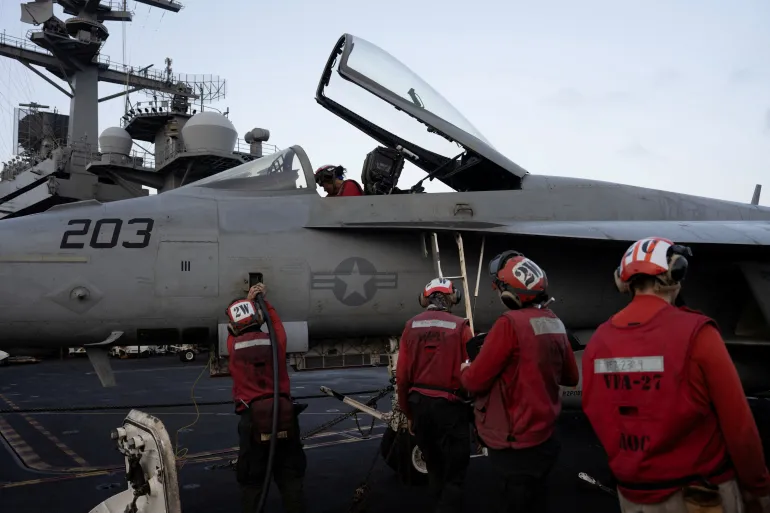
The United States has three aircraft carriers in the Middle East for the first time in 23 years with the arrival of the USS George HW Bush, the US military has said, amid a fragile ceasefire with Iran.

The Middle East-based Central Command (CENTCOM) of the US military said on Friday that the carriers include 12 accompanying ships, more than 200 aircraft, and 15,000 soldiers.

Recommended Stories

list of 3 itemsend of list

“For the first time in decades, three aircraft carriers are operating in the Middle East at the same time,” CENTCOM said.

The last time the US amassed that amount of military assets in the region’s waters was in the lead up to the US-led invasion of Iraq in 2003.

The other two US aircraft carriers in the region are USS Abraham Lincoln and USS Gerald R Ford, which is the largest in the world.

The show of force signals that the US is preparing to return to fighting should the fragile ceasefire between the US, Israel and Iran unravel.

Diplomacy between the two countries has been in limbo, with Iran setting the lifting of the US naval blockade against its ports as a condition for resuming the talks.

US President Donald Trump announced extending the truce on Wednesday, but he said the naval siege would persist.

For its part, Iran has reblocked the Strait of Hormuz in response to the US blockade after declaring the waterway completely open last week when the regional ceasefire was extended to Lebanon.

Trump has not set a deadline for the extended ceasefire and suggested that he is comfortable with the status quo, which he argues is depleting the Iranian economy at a low cost for the US.

“I have all the time in the World, but Iran doesn’t,” he wrote in a social media post on Thursday.

The US president was later asked how long he would be willing to wait before receiving a proposed deal from Iran. He said: “Don’t rush me.”

Iran has described the blockade – which has seen US forces seize at least two Iranian oil ships – as an “act of war”.

Iranian forces have also captured foreign commercial ships in the Hormuz Strait, accusing them of violating maritime regulations.

With negotiations on hold, Trump has shown no signs of willingness to lift the siege in order to facilitate talks.

On Friday, the US military said it has “redirected” 34 vessels in the region. “The blockade against ships entering or exiting Iranian ports continues,” CENTCOM said.

Trump has previously threatened to destroy Iran’s civilian infrastructure, including bridges, power and water stations.

Israeli Defense Minister Israel Katz said on Thursday that his country is awaiting the green light from Trump to return Iran to the “age of darkness”.

“Israel is prepared to renew the war against Iran. The [Israeli military] is ready in defence and offence, and the targets are marked,” Katz said, according to The Times of Israel newspaper.

Source link

Iran-Iraq Tanker War redux? Why the Strait of Hormuz crisis is different | US-Israel war on Iran News

On April 20, the United States fired at and then seized an Iranian-flagged container ship close to the Strait of Hormuz in the northern Arabian Sea, amid its blockade of Iranian ports.

It was similar to a scene which played out in the 1980s during the so-called Tanker War between Iran and Iraq, during which both countries fired on each other’s tankers in the Strait of Hormuz, seeking to cripple each other’s economies.

Recommended Stories

list of 3 itemsend of list

As naval tensions rise again in the Strait of Hormuz – this time between Iran and the US – we break down what happened in the 1980s and examine the parallels and differences between the situations then and now:

1987 tanker war
The ‘Pivot’ tanker in flames in the Strait of Hormuz in 1987 during the Iran-Iraq war [File: Francoise De Mulder/Roger Viollet via Getty Images]

How the 1980s Tanker War played out – a timeline

The war between Iran and Iraq began in 1980 when then-Iraqi President Saddam Hussein launched a full-scale invasion of Iran following Iran’s 1979 Islamic revolution.

In 1984, this war reached the Gulf when Iraq attacked Iranian oil tankers, seeking to cripple its oil-revenue-dependent economy. Iran retaliated by firing at oil tankers belonging to Iraq and its allies in the Gulf.

According to a report by the University of Texas’s Robert Strauss Center for International Security and Law, Iran also threatened to close the Strait of Hormuz then, but did not do so since its own economy, already crippled by the war, was dependent on exporting oil to the rest of the world through it.

In November 1986, when Iran struck Kuwait’s ships, Kuwait asked for foreign help. The former Soviet Union was the first to respond and helped escort the nation’s ships in the Gulf.

The US, led by then-president Ronald Reagan, launched Operation Earnest Will in July 1987, also seeking to protect tankers in the Gulf and render more assistance than Moscow. The operation involved reflagging Kuwaiti tankers with the US flag so they could legally sail under US protection.

According to an article by the Veterans Breakfast Club, a US-based website which shares experiences of former US military veterans, during Washington’s very first escort mission in July 1987, a reflagged tanker hit an Iranian mine in the Gulf.

“The convoy continued, but the incident made clear that the United States had entered a shadow war with Iran at sea,” the article said.

“Over the next fourteen months, dozens of US warships rotated through the region escorting tankers and protecting shipping lanes. US forces also conducted special operations to hunt Iranian mine-layers at night and conducted strikes against Iranian military positions and ships. The mission wasn’t a small one, consuming 30 US Navy ships at one time,” the article added.

Then in April 1988, the US frigate USS Samuel B Roberts was damaged by an Iranian mine in the Strait of Hormuz. Historian Samuel Cox, writing for the US Naval History and Heritage Command (NHHC), noted in 2018 that by the end of 1987 that vessel was so badly damaged, that “the only thing actually holding the ship together was the main deck”.

So, the US launched Operation Praying Mantis, seeking to destroy Iranian vessels.

The tanker war eventually ended in August 1988, following a United Nations-brokered ceasefire agreement between Iran and Iraq.

Cox noted that by the end of 1987, “Iraq had conducted 283 attacks on shipping, while Iran attacked 168 times. Combined, the attacks had killed 116 merchant sailors, with 37 missing and 167 wounded, from a wide variety of nationalities.”

“Initially, there was great concern that the attacks would cut off the vital flow of oil from the Arabian Gulf, but all they really did was drive up insurance rates. The world’s need for oil was so great, that over 100 dead merchant seamen was apparently an acceptable price,” he wrote.

1987 tanker wars
A tanker in flames in the Strait of Hormuz in December 1987 during the Iran-Iraq war [File: Francoise De Mulder/Roger Viollet via Getty Images]

What is happening in the Strait of Hormuz now?

The current hostilities between the US and Iran in the Strait of Hormuz began when Tehran, whose territorial waters extend into the strait, closed passage to all vessels after the US and Israel began bombing the country. On March 4, the Islamic Revolutionary Guard Corps (IRGC) declared that it was in full control of the strait, and ships would need to get clearance from them to pass through it.

Shipping through the strait collapsed by 95 percent, sending the price of oil – 20 percent of global supplies of which are shipped this way – soaring above $100 a barrel.

Iran, through its imposition of control over who passes through Hormuz, has for almost eight weeks now, determined which vessels can exit the strait from the Gulf into the Gulf of Oman.

At first, Iran indicated that it would allow “friendly” ships to pass if they paid a toll. On March 26, Iran’s Foreign Minister Abbas Araghchi told Iran’s state TV: “The Strait of Hormuz, from our perspective, is not completely closed. It is closed only to enemies. There is no reason to allow the ships of our enemies and their allies to pass.”

Vessels from Malaysia, China, Egypt, South Korea, India and Pakistan passed through the strait through most of March and early April.

Iran’s Islamic Revolutionary Guard Corps (IRGC) provided these vessels with an alternative route through the Strait of Hormuz to avoid potential sea mines. US officials, including Donald Trump, have said mines have been placed there by Iran, although it has not officially confirmed or denied this.

INTERACTIVE - Alternative route throughthe Strait of Hormuz - APRIL 14, 2026-1776162674
(Al Jazeera)

But on April 13, alarmed that Iran was continuing to ship its own oil out of the strait, the US imposed a naval blockade of all Iranian ports. Since then, US Central Command has said US forces have directed 33 Iran-linked vessels to turn around or return to an Iranian port.

On Monday, the US military fired on and then captured the Iranian-flagged container ship Touska close to the Strait of Hormuz in the northern Arabian Sea, and, a day later, detained another oil tanker sanctioned for transporting Iranian crude oil as it sailed in the Bay of Bengal, which links India and Southeast Asia.

In a post on social media after detaining the Touska, the Pentagon wrote: “As we have made clear, we will pursue global maritime enforcement efforts to disrupt illicit networks and interdict sanctioned vessels providing material support to Iran – anywhere they operate.
International waters are not a refuge for sanctioned vessels.”

Since the US naval blockade of Iranian ports began, Tehran, which was earlier allowing vessels from “friendly” nations to pass through the Strait of Hormuz, has further tightened its grip on the strait.

Justifying the decision not to allow any foreign ships to pass until the US ends its naval blockade on April 19, Iran’s First Vice President Mohammad Reza Aref said the “security of the Strait of Hormuz is not free”.

“One cannot restrict Iran’s oil exports while expecting free security for others,” he wrote in a post on X.

Last Saturday, Iran reportedly fired at two Indian-flagged merchant vessels in the strait. The IRGC said the two ships were attacked because they were “operating without authorisation”, according to state media reports.

Then, on April 22, Iran captured two container ships seeking to exit the Gulf via the Strait of Hormuz after firing on them and another vessel.

What are the parallels between the two wars?

Just like during the Tanker War of the 1980s, shipping has been severely disrupted by the US-Israel war on Iran, upending global oil and gas prices.

According to an April 17 article by the World Economic Forum, from the mid-1980s when the Tanker War took place, to the start of the new millennium, a barrel of crude oil averaged $20.

On Friday, while a ceasefire between the US and Iran was in effect, a naval battle was still playing out in the Strait of Hormuz, and Brent crude, the international benchmark, topped $106 per barrel. During open warfare between the US, Israel and Iran in March and early April, oil rose as high as $119 per barrel.

Mines in the sea are another problem common to both time periods.

While vessels were damaged by mines during the 1980s Tanker War, there has so far been no report of vessels being damaged by mines in the current war. However, the risk is the same.

US President Donald Trump has said the US will ramp up efforts to remove mines from the Strait of Hormuz. This has not begun yet, however.

According to CNN, there are only a few US minesweeping ships in the Gulf. The US Navy also told the broadcaster that four dedicated minesweepers stationed in the Gulf region were decommissioned last year.

John Phillips, a British safety, security and risk adviser and former military instructor, told Al Jazeera: “There are some clear parallels between the current situation in Hormuz and the Tanker War of the 1980s. In both cases, the basic idea is the same: pressure at sea can have effects far beyond the water itself.

“A relatively small amount of naval disruption, whether that means mining, harassment of shipping, missile threats, or attacks on tankers, can create real strategic and economic consequences, especially in a chokepoint like the Strait of Hormuz. So in that sense, the original Tanker War is a useful reminder of how vulnerable global trade can be when the maritime domain becomes part of a wider political or military confrontation.”

What are the differences between the two wars?

During the Tanker War, the US escorted ships to protect them from Iranian attacks and also deployed vessels to remove mines. NATO countries like the United Kingdom, Belgium, the Netherlands, France and Italy also joined.

But in the current standoff in the Strait of Hormuz, US allies like the UK and other NATO nations have refused to join Washington in reopening the Strait of Hormuz, or begin minesweeping operations, fearing they will be dragged into the war.

In a post on Truth Social in early April, the US president took aim at allies, “like the United Kingdom”, which, he said, have “refused to get involved in the decapitation of Iran”, telling them to either buy US fuel or get involved in the rapidly escalating war.

“You’ll have to start learning how to fight for yourself, the U.S.A. won’t be there to help you anymore, just like you weren’t there for us. Iran has been, essentially, decimated. The hard part is done. Go get your own oil!” Trump wrote.

The framework of the US-Israel war on Iran is different from that of the war between Iraq and Iran in the 1980s, experts say.

“In the 1980s, the Tanker War was part of the broader Iran-Iraq War, so the shipping attacks were tied to a much larger land conflict between two regional armies. Today, the situation is more about Iran’s standoff with the United States and its allies, and the maritime activity is less about asymmetrical war at sea and more about deterrence, signalling and the threat of escalation,” said Phillips.

“The military lesson, really, is that Hormuz is still one of those places where limited actions can have outsized effects, but the modern setting is more fast-moving, more technologically advanced and potentially more volatile than the original Tanker War,” he added.

Analysts have also pointed out that, unlike in the 1980s, Iran is currently stronger when it comes to withstanding attacks and naval blockades by the US.

In the Tanker War, Iraq was militarily supported by Western allies, while Iran was under a US arms embargo imposed in 1979 after the Iranian revolution. While this gave Iraq a military advantage, Iran’s IRGC used asymmetric warfare tactics by striking Iraq’s allies’ ships and oil tankers.

Experts also say that since the 12-day war between Iran and Israel last year, Tehran has shifted its military doctrine from one that is primarily about defensive containment to an explicitly offensive asymmetric posture.

“Iran today appears more structurally aggressive in doctrine where it is formally embracing earlier and more extensive use of regional missiles, drones, cyberattacks and energy coercion [when energy resources and infrastructure are targeted or cut off], but is operationally constrained by battle damage, sanctions and internal instability,” Phillips, the risk adviser and a former military chief instructor, told Al Jazeera in an interview on March 2.

A former US ambassador to Bahrain, Adam Ereli, also told Al Jazeera that Iran and the IRGC have “revolutionary fervour”, which means they can “survive”.

“They can tolerate pain for a lot longer than I think most American decision-makers and planners calculate,” he said.

Source link

Syrian authorities arrest main suspect in 2013 Tadamon massacre | Syria’s War News

Ex-intelligence officer Amjad Youssef was seen shooting blindfolded civilians in a leaked video.

Syrian authorities have arrested the main suspect accused of the 2013 Tadamon massacre in Damascus, during which at least 41 people were killed.

Amjad Youssef was arrested following a “tightly executed security operation”, the interior ministry said, adding that surveillance and tracking operations were employed for days across the Al-Ghab Plain in Hama.

Recommended Stories

list of 4 itemsend of list

Footage circulating on social media showed the moment Youssef was arrested. He is seen handcuffed on the floor and then in a vehicle surrounded by security forces, with traces of blood on his face.

An intelligence officer during the leadership of former Syrian leader Bashar al-Assad, Youssef was responsible for security operations in southern Damascus during the Syrian uprising. He has been accused of numerous crimes against civilians.

In 2022, a leaked video appeared to show evidence of crimes committed by Syrian forces. Youssef, whose face appeared clearly in the footage, was seen shooting civilians who had been detained and blindfolded, with their hands bound.

A military recruit filmed the incident and leaked the video, date-stamped on the day of the Tadamon massacre – April 16, 2013, after fleeing war-torn Syria.

The release of the video footage triggered an outcry, with some families recognising their relatives being killed in the video.

Youssef went into hiding after the fall of Assad in December 2024.

The Tadamon district was a battlefront between Syrian government forces and opposition forces at that time.

Youssef was trained in military intelligence and rose through the ranks to become an investigator.

Accountability following the massacre

In August 2023, German police arrested Ahmed al-Harmouni, a friend of Youssef, also accused of taking part in the Tadamon massacre, after a three-year investigation in cooperation with the Syrian Centre for Justice and Accountability.

Syria’s new government began a security campaign to pursue figures of the former leadership, while citizens launched a public fundraising campaign to offer a reward to anyone who could find those accused of atrocities, primarily Youssef.

Since then, several suspects of the Tadamon tragedy have been arrested and confessed to the killings.

Human Rights Watch visited the southern Damascus neighbourhood in December 2024, where it found human remains that showed signs consistent with execution and called on the transitional authorities to preserve evidence of war crimes.

Source link

How long can Iran survive the US’s Hormuz blockade? | US-Israel war on Iran News

United States President Donald Trump has claimed Iran is “collapsing financially” and said the country is losing millions of dollars a day due to Washington’s naval blockade of Iranian ports.

In a post on his Truth Social platform on Tuesday night, Trump wrote: “Iran is collapsing financially! They want the Strait of Hormuz opened immediately – Starving for cash! Losing 500 Million Dollars a day. Military and Police complaining that they are not getting paid. SOS!!!”

Recommended Stories

list of 3 itemsend of list

The US blockade of Iranian ports began at 14:00 GMT on April 13. Since then, the US has fired on and seized an Iranian-flagged tanker near the Strait of Hormuz, and redirected ships in the open seas carrying cargo to or from Iran. Iran’s armed forces have called this “an illegal act” that “amounts to piracy”.

In response to the US naval blockade, Iran has closed the Strait of Hormuz to all foreign shipping and has captured several foreign-flagged ships. Previously, it had allowed some ships deemed “friendly” to Iran to pass.

On April 19, Iran’s First Vice President Mohammad Reza Aref said the “security of the Strait of Hormuz is not free”.

“One cannot restrict Iran’s oil exports while expecting free security for others,” he wrote in a post on X.

“The choice is clear: either a free oil market for all, or the risk of significant costs for everyone,” he added. “Stability in global fuel prices depends on a guaranteed and lasting end to the economic and military pressure against Iran and its allies.”

In a statement on social media on Thursday, Iran’s parliamentary speaker and lead negotiator in the ceasefire talks, Mohammad Bagher Ghalibaf, said a full ceasefire could only work if the US naval blockade is lifted.

Analysts say the blockade is hurting Iran but believe the country has the economic and political will to sustain it.

How long can Iran survive the naval blockade?

Here’s what we know:

How is the naval blockade hurting Iran?

Iran exports oil, gas and other goods including petrochemicals, plastics and agricultural products by sea. Analysts say the US naval blockade of its ports, including in the Strait of Hormuz, could therefore affect this trade.

Soon after the start of the US-Israel war on Iran on February 28, authorities in Tehran implemented the effective closure of the Strait of Hormuz, the only waterway out of the Gulf, through which 20 percent of the world’s oil and liquefied natural gas (LNG) supplies were shipped from Gulf producers in peacetime.

The near-shutdown of the vital chokepoint sent global oil and gas prices soaring, and since then, Iran has controlled the strait. However, it has continued to export its own energy products through the waterway.

Iran’s oil exports through the Strait of Hormuz account for about 80 percent of its total oil exports. According to Kpler, a trade intelligence firm, Iran exported 1.84 million barrels per day (bpd) of crude oil in March and has shipped 1.71 million bpd so far in April, compared with an average of 1.68 million bpd in 2025.

From March 15 to April 14, it exported 55.22 million barrels of oil. The price per barrel of Iranian oil – across its three major variants, known as Iranian light, Iranian heavy and Forozan blend – has not fallen below $90 per barrel over the past month. On many days, the price has surpassed $100 a barrel.

Even at the conservative estimate of $90 a barrel, Iran has earned at least $4.97bn over the past month from its ongoing oil exports.

By contrast, in early February before the war started, Iran was earning about $115m a day from its crude oil exports, or $3.45bn in a month.

Simply put, Iran has earned 40 percent more from oil exports in the past month than it did before the war.

Stopping this is a key motivation behind the US naval blockade of Iranian ports.

In an interview with Al Jazeera on April 14, Frederic Schneider, a nonresident senior fellow at the Middle East Council on Global Affairs, told Al Jazeera that the previous six weeks had been a boon for Iran in terms of oil revenues, but with the US blockade, that will change.

“Iran has some buffer in the form of crude oil reserves in floating tanks – basically parked tankers – which was estimated at about 127 million barrels in February. But that doesn’t mean that the blockade wouldn’t hurt Iran,” he said.

On Friday, Schneider told Al Jazeera that Iran, however, seems to be “playing the longer game” and has anticipated and prepared for this sort of conflict to some degree.

“The naval blockade has added economic strain, as several civilian ships have been captured in international waters. But it remains unclear how tight the blockade is, how many ships manage to pass given the considerable amount of floating Iranian oil, and how long Trump can maintain the blockade,” he said.

INTERACTIVE - Strait of Hormuz - March 2, 2026-1772714221
(Al Jazeera)

Can the US keep the blockade going for long?

Schneider noted that Trump will face a legislative challenge by May 1, when the 60 days he can maintain a foreign offensive without congressional approval come to an end.

Dire conditions have been reported on the ships that are upholding the blockade, he said, and it remains to be seen how China will react to the continuing seizure of ships that carry any of its cargo.

“China has already said it sees the blockade of Chinese trade with Iran as unacceptable. Further, the closure of Hormuz by Iran in retaliation is hurting, if not the US itself that much, American allies in the region and globally, raising the pressure on Trump,” he said.

“If we can glean anything from the behaviour of the two sides, it is Iran that is signalling patience and Trump showing impatience,” he added.

Adam Ereli, a former US ambassador to Bahrain, told Al Jazeera’s This is America programme that while the US blockade of Iranian ports and seizure of vessels transporting Iranian oil “makes sense” as a policy, it may not work as intended due to domestic political considerations in the US.

“The Iranians have prepared for this, for this eventuality. They have their own plans. They’ve got alternative means of storing their oil or selling their oil,” Ereli told Al Jazeera.

“Even if they ran out of oil, they have ways to survive a very tough blockade and sanctions regime that, frankly, I think will outlast Trump’s patience and the patience of the American people,” he said.

“Remember, this isn’t just about moving soldiers and ships and planes around on a map. There’s politics involved here in the United States,” he added.

“Trump is nothing if not attuned to the political winds. And for that reason, I think that you’ve got this Iran strategy on the one hand that runs up against an electoral strategy on another hand, and therefore, the question is, which one is going to give?”

Can Iran store the oil the US is blockading in the meantime?

Iran’s domestic refineries have a capacity of 2.6 million bpd, according to consultancy FGE Energy. Its oil and gas production facilities are concentrated in southwestern provinces: Khuzestan for oil and Bushehr for gas and condensate from the South Pars gasfield.

Iran is also the third-largest oil producer in the Organization of the Petroleum Exporting Countries (OPEC) and exports 90 percent of its crude oil via Kharg Island for shipping through the Strait of Hormuz.

The US naval blockade has begun affecting the country’s storage capacity, according to TankerTrackers, the maritime intelligence agency. The blockade means Iran has to store more oil, and space could become tight.

TankerTrackers said that on Kharg Island, to prepare for the possibility of running out of oil storage space, Iran has brought an old tanker named NASHA (9079107) out of retirement.

“She’s a 30yo [year old] VLCC [Very Large Crude Carrier] that’s been anchored empty for the past few years; currently spending 4 days on a trip that should take 1.5-2 days,” TankerTrackers said in a post on X, suggesting that the tanker is being used to store oil. It is unclear if the ship has a heading or course.

Can Iran continue to earn revenues from oil?

Yes, analysts say that for a few months, Iran can continue to earn revenue from oil which is already in transit at sea.

Kenneth Katzman, former Iran analyst at the Congressional Research Service in Washington, DC, said Iran is not exporting new oil amid the US blockade of Iranian ports, but Tehran has between 160 million and 170 million barrels of oil “afloat” on ships around the world currently.

Those supplies, which transited the Strait of Hormuz before the US blockade was imposed, are on board hundreds of tankers and “waiting to be delivered”, Katzman told Al Jazeera.

Katzman said he had been informed by an Iranian professor that, based on those supplies, Tehran could have revenue flows that can last until August despite the US naval blockade.

“Which is a long time. Does President Trump have until August? Probably not,” he said.

“He’s probably going to have to look at kinetic escalation if he wants to bring this to the conclusion that he wants, or he’s going to have to accept less than the deal he ideally wants,” he said.

Iranian ships will still have to avoid US naval ships on the open ocean, as the US Navy has also recently intercepted ships carrying Iranian cargoes.

On Wednesday this week, for example, the US military intercepted at least three Iranian-flagged tankers in ‌Asian waters, Reuters reported, and was said to be redirecting them away from their positions near India, Malaysia and Sri Lanka.

How else can Iran earn revenue?

Besides oil revenue, Iran is also currently receiving revenue from a “toll booth” system that the country imposed on the Strait of Hormuz in March.

On Thursday, Iran’s deputy parliament speaker Hamidreza Haji-Babaei said Tehran’s central bank had received the first revenues from tolls imposed since the start of the war, according to the semiofficial Tasnim news agency. It is unclear how much that toll revenue is.

Iranian politician Alaeddin Boroujerdi told the United Kingdom-based, Farsi-language satellite TV channel Iran International in March that the country has been charging some vessels as much as $2m each to pass through the strait.

According to Lloyd’s List, the shipping news outlet, at least two vessels that have transited the strait so far have paid fees in yuan, China’s currency. Lloyd’s List reported that one “transit was brokered by a Chinese maritime services company acting as an intermediary, which also handled the payment to Iranian authorities”. It is, however, not clear how much the vessels paid.

How resilient is Iran’s leadership?

In recent days, while pressuring Iran to negotiate a ceasefire deal, US President Donald Trump has claimed that Iranians are “having a very hard time figuring out who their leader is”, alleging that there is “crazy” infighting between “moderates” and “hardliners” in Tehran.

But the country’s officials have insisted that Iran’s government is united.

Mohammad Reza Aref, Iran’s first vice president, said on Thursday: “Our political diversity is our democracy, yet in times of peril, we are a ‘Single Hand’ under one flag. To protect our soil and dignity, we transcend all labels. We are one soul, one nation.”

Foreign Minister Abbas Araghchi also dismissed allegations that the Iranian military may be at odds with the political leadership.

“The failure of Israel’s terrorist killings is reflected in how Iran’s state institutions continue to act with unity, purpose, and discipline,” he wrote on X, referring to the assassinations of Iranian political and military figures Israel has carried out in recent weeks.

“The battlefield and diplomacy are fully coordinated fronts in the same war. Iranians are all united, more than ever before.”

One of the strongest messages of unity came from Iran’s President Masoud Pezeshkian.

“In Iran, there are no radicals or moderates,” he said on X.

“We are all Iranians and revolutionaries. With ironclad unity of nation and state and obedience to the Supreme Leader, we will make the aggressor regret.”

How strong is Iran militarily?

Iran has demonstrated considerable military resilience in the face of weeks of US-Israeli strikes through its use of asymmetric warfare.

This includes the use of guerrilla tactics, cyberattacks, arming and supporting proxy armed groups and other indirect tools.

During its war with the US and Israel, Iran has targeted energy infrastructure in Israel and across the Gulf, threatened to target banking institutions and targeted US data centres of technology companies such as Amazon in the United Arab Emirates and Bahrain.

Iran has also blocked the Strait of Hormuz and reportedly placed mines in the strait to disrupt shipping, sending global oil prices soaring.

Since the US began its naval blockade of Iranian ports in mid-April, Iranian officials have repeatedly promised that their country will defend itself and respond to any US attack.

Earlier this week, after the US military said it had seized an Iranian vessel and ordered dozens of others to turn around, Iran also retaliated by capturing foreign commercial vessels around the Hormuz Strait, which it said violated naval regulations.

Ereli, the former US ambassador, told Al Jazeera that Iran and the IRGC have “revolutionary fervour”, which means they can “survive”. “They can tolerate pain for a lot longer than I think most American decision makers and planners calculate,” Ereli said.

Ereli said it was unknown how long Tehran could last under “siege conditions” imposed by the US, but probably a lot longer than the US anticipates.

“I think they can go a lot longer, especially than most people imagine, and especially when it comes to kneeling to the Americans,” Ereli said.

“There’s a level of pride and survival. They’re at war with us, and for them it’s a war of necessity. They’ve got to survive,” he added.

Source link

Column: Tucker Carlson’s reversal on Trump is a familiar script

This week Tucker Carlson apologized for unintentionally “misleading” voters into supporting President Trump’s return to the White House. The apology came days after the president called Carlson dumb and overrated on social media. We’ve seen this plot before: It’s a different name but the same story.

Recall the president’s first term was closely shadowed by high-profile breakups from loyalists who disagreed with him on matters of substance. For example, the split with his first Defense secretary, James Mattis, began in 2017 when Mattis, a man who spent more than four decades in uniform, defended the importance of NATO. His successor, Mark Esper, found himself at odds with the president for refusing to use the military on citizens. On his way out the door, Esper told the country that if his replacement was “a real ‘yes man’ … then God help us.”

Some of the highlights from Trump’s second term include squabbles with his biggest donor, Elon Musk, who was upset the president wasn’t lowering the national debt enough; with former congresswoman Marjorie Taylor Greene because millions of Americans faced losing health insurance; and with Rep. Thomas Massie for having the audacity to seek justice for the victims of Jeffrey Epstein’s child sex-trafficking operation.

Now it appears it’s Carlson’s turn. He, like Pope Leo XIV and many of our allies and nearly 70% of Americans, disapproves of the president’s handling of the war in Iran. On a recent episode of the Carlson podcast, the former Fox News host invited his brother Buckley, himself a former Trump speechwriter, on the show to discuss their buyer’s remorse.

Everyone has that line they won’t cross for the president.

Omarosa Manigault Newman left reality TV to advise Trump. She followed him to the White House, found out there was a lot of racism over in MAGA land, and ended up back on reality TV. For Mattis, it was abandoning our allies. For Esper, it was shooting protesters.

For Carlson, it’s Iran. Candidate Trump campaigned on ending endless wars. This week, Trump said there’s no timeline for when the war he started with Iran will end.

“I do think it’s like a moment to wrestle with our own consciences,” Carlson told his brother. “We’ll be tormented by it for a long time. I will be. And I want to say I’m sorry for misleading people.”

Now before Tucker’s apology, Buckley defended his initial support of Trump’s candidacy in 2015 — despite “all of his obvious foibles and his disgusting elements of his personality” — in part because “he built things.” Buckley also said that after the election of President Obama, white Americans in Washington were subjugated by a version of Jim Crow in education and society, and that progressives “would look blank or angry” whenever he asked what Obama was doing to strengthen the nation.

In other words, being red in the face over Trump did not turn the Tucker boys blue. In fact, the episode ended with the two calling the left a bunch of “lunatics,” even after listing the ways the Trump administration was holding back release of the Epstein files and hurting the country.

“Demonic influences concentrate on those who have power. Beware of power,” Tucker warned listeners halfway through the show before his brother chimed in: “And those who seek power.”

Of course, Trump’s ascension to the White House wasn’t solely based on the contributions of media folks. The president entered 2015 having been a public figure for more than 30 years. He’s had the luxury of criticizing elected officials and legislation on camera without the burden of governing for much of that time. When he entered the political arena, he didn’t have a record to defend. He likes being quotable, not being held accountable. That’s why it’s doubtful he would have been elected a second time if not for the support from unscrupulous podcasters masquerading as political journalists such as Joe Rogan, Theo Von and Andrew Schulz, who less than a year ago said everything Trump “campaigned on, I believed he wanted to do. And now he’s doing the exact opposite thing.… I voted for none of this.”

As if “this” had not been clearly spelled out in the pages of Project 2025 for all to see before deciding whether to vote for Trump and that agenda.

Schulz, the comedian and podcaster, might not have read that outline, but Tucker Carlson probably did. That’s why his apology to listeners — like the mea culpas from the discarded loyalists of the past — ultimately won’t mean anything to mainstream Republicans or MAGA. Those who identify with the latter listen only to Trump. As for the former — they have always known that people like Carlson don’t regret supporting Trump. They regret falling out of favor.

YouTube: @LZGrandersonShow

Source link