


Emanuel M Schwermer/DigitalVision via Getty Images
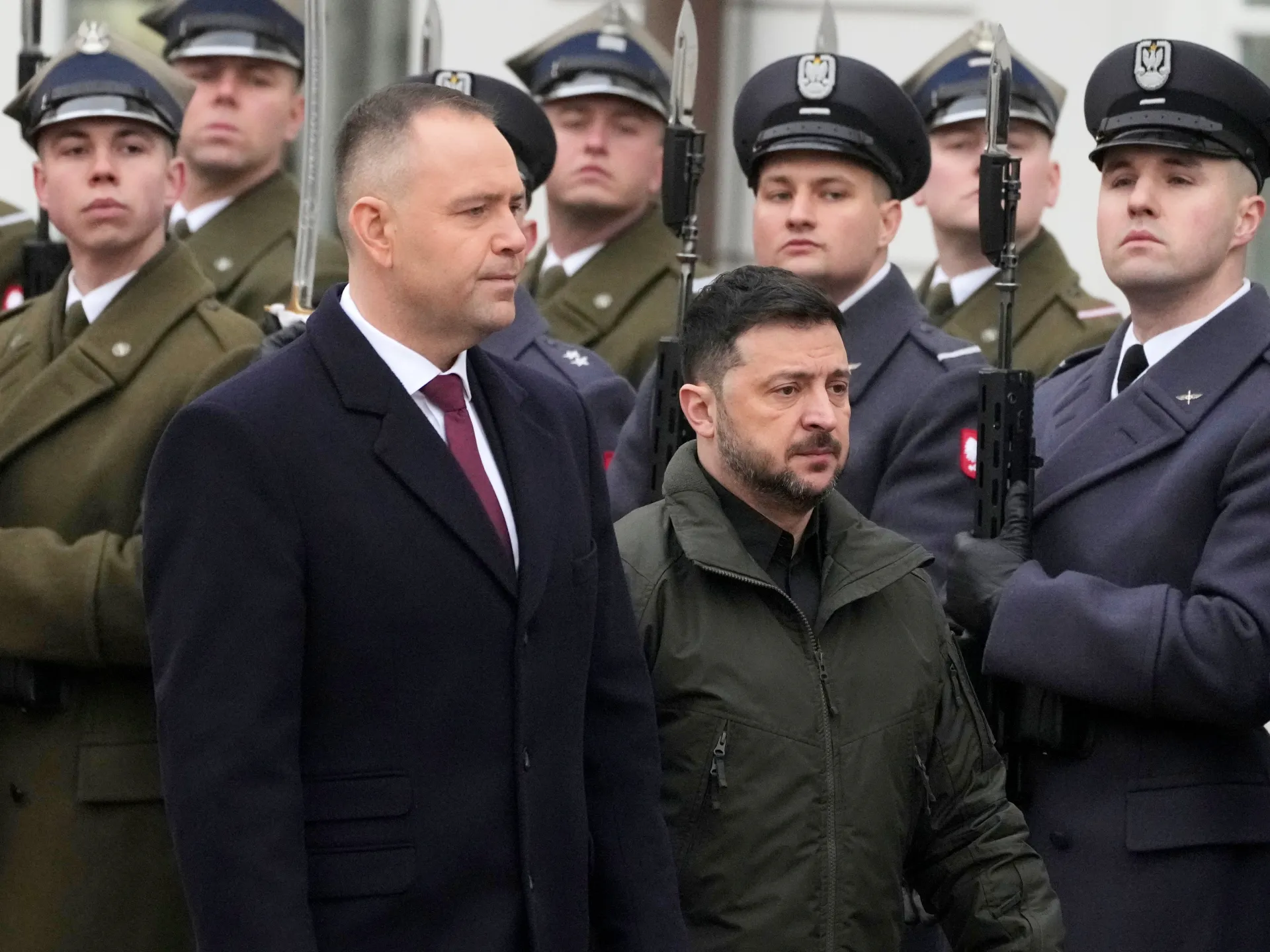
The move comes after Ukrainian President Volodymyr Zelenskyy was stripped of Poland’s top honour.
Published On 20 Jun 202620 Jun 2026
Top Ukrainian officials have said they are returning Polish awards after President Volodymyr Zelenskyy was stripped of Warsaw’s top honour in a dispute between the allies over World War II massacres.
Zelenskyy’s chief of staff, Kyrylo Budanov; Ukraine’s ambassador to Warsaw, Vasyl Bodnar; and Foreign Minister Andrii Sybiha said on Saturday they would relinquish awards bestowed by Poland.
list of 4 itemsend of list
“Our nations have long-standing relations and different pages of history – both heroic and tragic,” Budanov posted on social media. “However, this should be an occasion for deep reflection, not crude political speculation.”
Zelenskyy angered many in Poland over his naming of a military unit after a Ukrainian paramilitary organisation accused of massacring Poles during World War II.
In a decree on May 26, Zelenskyy named a military unit the Ukrainian Insurgent Army (UPA) – the name of a group that operated in the 1940s and 1950s.
On Friday, Polish President Karol Nawrocki announced he would strip Zelenskyy of the Order of the White Eagle, which was bestowed on him by Former Polish President Andrzej Duda in 2023 for services to security, resilience and the defence of human rights.
For most in Poland, “the Ukrainian Insurgent Army remains above all a formation responsible for cruel crimes against the citizens of the Polish Republic during World War II,” Nawrocki said on social media, adding that the decision would not end Poland’s support for Ukraine against Russia.
Ukrainian officials criticised the decision as one that played into Russia’s hands. Budanov, the Ukrainian Presidential Office chief, wrote on Telegram that it was “an unfriendly act toward our people” and “a gift to the Moscow aggressor, which will certainly use it against both of our countries”.
Foreign Minister Sybiha called it a “strategic mistake” while Bodnar said it was “especially painful” as Ukraine fends off Russian attacks.
Polish Prime Minister Donald Tusk, a political rival of President Nawrocki, urged both sides to “calm tensions” in a post on X on Friday.
Conflict between Poland and Ukraine “delights Putin and shocks our allies”, he said.
The UPA fought against both Nazi German and Soviet forces, but is also accused of mass killings of Poles in Nazi-occupied areas. Ukrainians say UPA and Polish underground forces launched large-scale attacks and reprisals against each other that led to deaths among Ukrainian and Polish civilians.
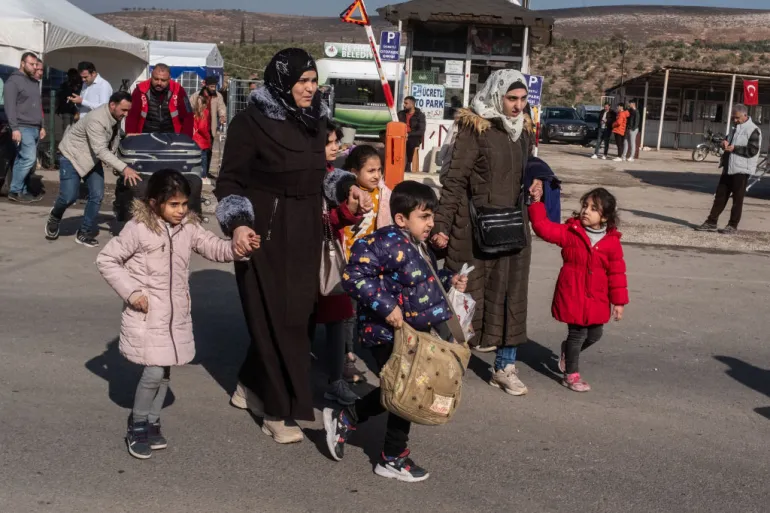
Approximately 1.3 million Syrians returned from abroad in 2025, nearly three times the figure recorded the previous year, while a further two million internally displaced Syrians went back home, cutting the global Syrian refugee population from 6 million to 4.9 million.
On December 8, 2024, the al-Assad dynasty, which lasted 54 years, was removed from power by a rebel offensive.
The 14-year-long war led to one of the world’s largest migration crises, with some 6.8 million Syrians, about a third of the population, fleeing the country at the war’s peak in 2021, seeking refuge wherever they could find it.
More than half of these refugees, about 3.74 million, settled in neighbouring Turkiye, while 840,000 found refuge in Lebanon and 672,000 in Jordan.
Hiam told Al Jazeera she returned to Syria with her family after more than a decade of living in a host country. “The reason that pushed us to return was the high cost of living we were facing in the host country. We stayed there for 12 years, and it was a great hardship for us as refugees.”
We returned to Syria, thank God, but in the beginning it was difficult because we didn’t find homes or anything. Syria now is completely different from when we left. The return was very difficult at first – the scene was very hard for me.
“But thank God, I became stronger. The first period was very difficult, and at the beginning, it was hard to cope,” Hiam explained.

According to UNHCR data, some 556,00 Syrians returned from neighbouring Turkiye, 465,000 from Lebanon and 256,000 from Jordan.
More than seven in 10 returnees have reported improvements in security and freedom of movement in Syria, according to the UNHCR. Almost three-quarters of Syrian refugees abroad have also said they would eventually like to return home.
Returns in 2026 reached 549,800 by mid-May, driven by deteriorating conditions in Lebanon.

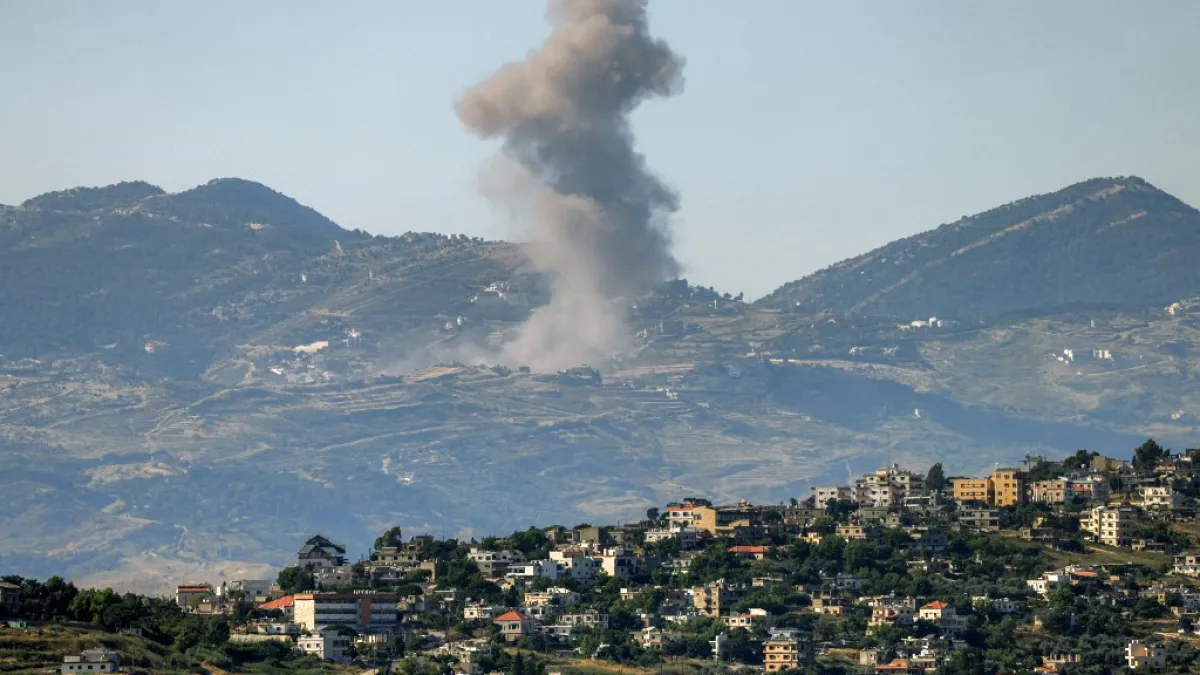
Iranian deputy foreign minister says Iran ‘ready to move forward’ on diplomacy with US, but war must end on all fronts.
Published On 20 Jun 202620 Jun 2026
Share
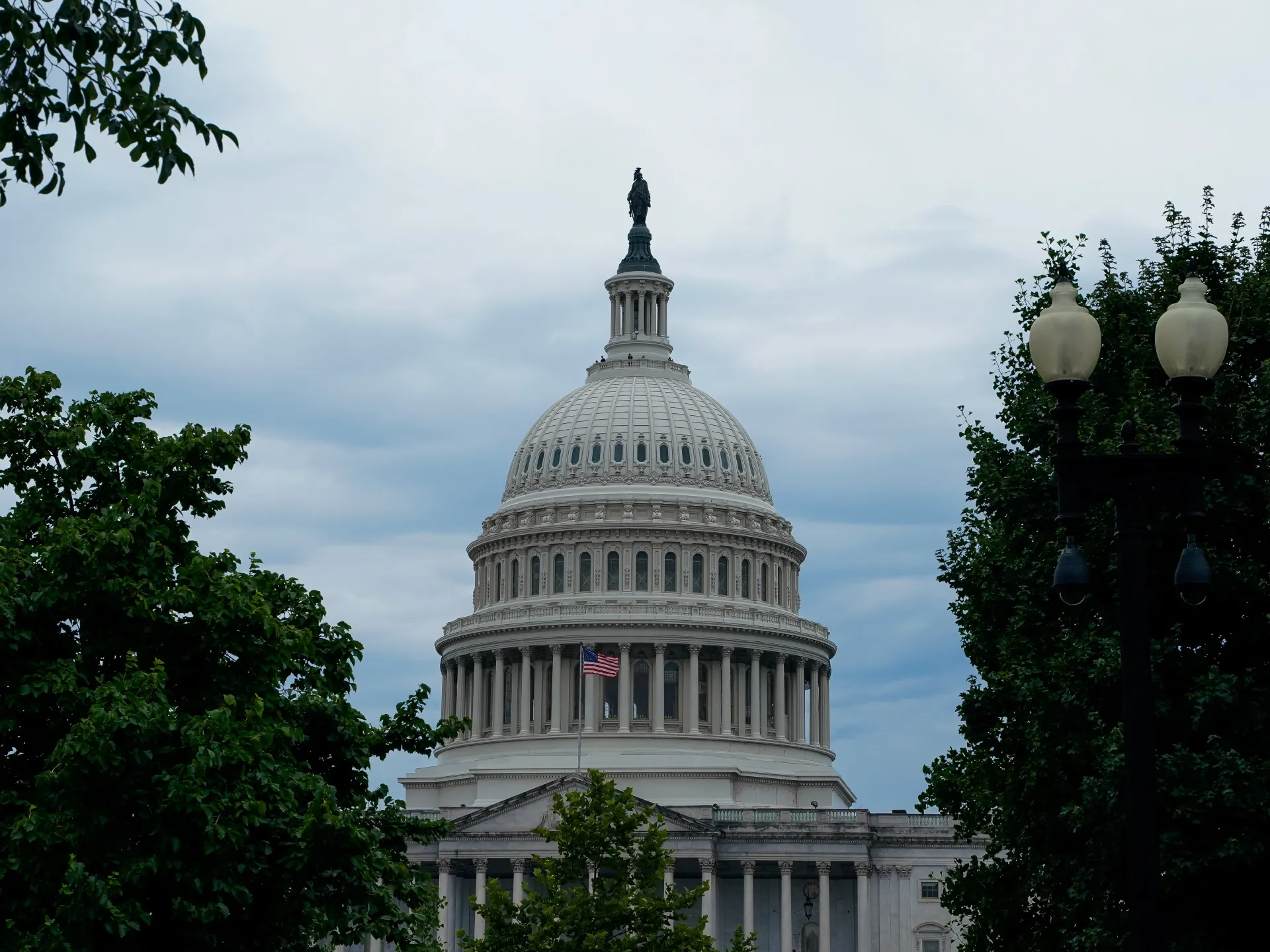
Lawmakers and pro-Israel groups have issued calls for United States President Donald Trump to ask Congress to review a recent memorandum of understanding (MoU) designed to end the US-Israeli war with Iran.
They cite the Iran Nuclear Agreement Review Act (INARA) as a precedent. Passed in 2015, the law says any agreements with Iran related to its nuclear programme must be submitted to Congress for review and a possible vote of disapproval.
list of 3 itemsend of list
The act came into effect when former US President Barack Obama was negotiating the now-defunct Joint Comprehensive Plan of Action (JCPOA) with Iran, and it remains on the books today.
US Senator Lindsey Graham was among the first lawmakers to invoke the act after this week’s memo was announced.
“Under our law, any nuclear deal with Iran will be sent to Congress for review and a vote. I look forward to reviewing the final product,” Graham, a longtime Iran hawk, wrote in a social media post on Sunday.
Critics, including some Democrats and pro-peace groups, have questioned the newfound interest in Congress asserting its powers, after Republicans repeatedly flouted the legislature’s authority during the war itself.
Some see the push as an effort to give the memorandum greater legitimacy, as Trump comes under fire for its terms. Others question whether Iran hawks are invoking INARA to push for a return to war.
Here’s what to know about the debate:
INARA creates requirements for any agreement between the US and Iran “related to the nuclear program of Iran”, no matter “the form it takes” or whether the agreement is legally binding.
Ahead of its passage in 2015, it was championed by bipartisan opponents of the JCPOA. That deal, which saw Tehran curtail its nuclear programme and submit to regular inspections in exchange for sanctions relief, was subsequently subject to provisions of the law.
The law requires the president to submit the text of any agreement he strikes with Iran to Congress within five days, along with any related materials. That triggers a 30-day approval period.
During that period, members of Congress can choose to pass a joint resolution of disapproval to scuttle the deal.
Still, such a resolution would be subject to the presidential veto. A successful disapproval resolution would therefore require a two-third majority from both chambers to override any vetoes, an extremely high bar.
During the congressional review period, the president “may not waive, suspend, reduce, provide relief from, or otherwise limit the application of statutory sanctions with respect to Iran under any provision of law or refrain from applying any such sanctions pursuant to [the] agreement”, the law states.
Those terms could limit this week’s memorandum, as it includes sanctions relief for Iran.
Trump has suggested he was open to sending the US-Iran memorandum to Congress, telling reporters earlier this week: “I like the idea. I mean, who wouldn’t approve it?”
But his administration has not yet done so. Administration officials have also not articulated a stance on whether or not they believes the memo is subject to the law. Trump, after all, has frequently denied needing congressional approval for his actions against Iran.
This week’s memorandum opens the Strait of Hormuz, lifts the US blockade on Iran’s ports, and halts fighting on all fronts, including in Lebanon.
It also immediately lifts US sanctions on Iran’s fossil fuel industry, while launching negotiations on the future of Iran’s nuclear programme, among other issues.
As part of the deal, both countries agree to maintain their nuclear “status quo” during ongoing negotiations, and Iran commits to diluting its highly enriched uranium “on site”, with details to be determined during the negotiations.
While Trump has yet to acknowledge INARA’s authority, legal experts from across the ideological spectrum have argued that his memorandum is subject to the law.
Tess Bridgeman, a legal adviser for the Obama White House, wrote that the law applies to “this new MoU, and any future final agreement that might be negotiated in the coming months”.
But in an article published in the policy forum Just Security, she argues that INARA should be repealed, so as to not impede the ongoing diplomacy.
“INARA was never an appropriate way for Congress to engage on Iran’s nuclear program, and that is even more true today,” Bridgeman wrote.
Jack Goldsmith, a Harvard Law School professor and fellow at the conservative American Enterprise Institute, also believes that the memorandum should trigger an INARA review.
He also notes that Trump’s commitment to “immediately” lift sanctions on Iran’s oil industry appears to run afoul of INARA.
“I don’t think the president has the authority under domestic law to issue these waivers,” Goldsmith wrote on the Executive Functions website.
Still, he anticipates that neither Congress nor the judicial branch will confront Trump over the issue.
Trump’s second term has been defined by a broad interpretation of presidential power.
His administration has previously flouted the US Constitution’s provision that Congress alone has the power to declare war.
Trump has maintained that Iran represented an “imminent threat” to the US, which allowed him to launch defensive strikes without congressional approval.
Administration officials have also argued that the president is not beholden to the legal requirement that he gain congressional approval within 60 days of launching an attack. The war, which started on February 28, has lasted nearly three and a half months.
In an interview with the news outlet Axios on Thursday, Trump mused that the war taught him there are “no limits” to his power as president.
It remains unclear if Trump will change course and embrace the congressional collaboration required for diplomacy under INARA.
In her article, Bridgeman argued that Trump could flout the law in whole or in part, particularly when it comes to the immediate sanctions relief, because his party controls Congress.
Goldsmith, meanwhile, pointed out that the administration could also try to argue that the memorandum only sets out terms to reach an eventual agreement and is not an agreement itself.
While Goldsmith believes that argument is faulty, he noted that “it’s doubtful that any institution will make the president comply with INARA”.
Several pro-Israel groups, including The Jewish Institute for National Security of America (JINSA) and the American Israel Public Affairs Committee (AIPAC), have been among the loudest voices calling for congressional involvement in the deal.
Since the outset of the war, JINSA defended Trump’s claims that Iran represented an “imminent threat” to the US, thereby granting him authority to attack without congressional approval.
However, the group also called on Congress to pass an Authorisation for the Use of Military Force (AUMF) to bolster his actions.
Congress, however, has repeatedly sought and failed to re-assert over its authority to send the US to war.
Since February, several war powers resolutions have been introduced to halt US action against Iran and force Trump to engage with Congress.
Initially, several Democrats backed by AIPAC, including Senator John Fetterman, Representative Jared Moskowitz and Representative Josh Gottheimer, broke from the party to oppose those efforts.
Moskowitz and Gottheimer eventually shifted their stances in March to vote in favour of one of the resolutions. But Congress has yet to pass a bill with enough votes to overcome an eventual Trump veto.
Meanwhile, Republicans in both the House and Senate chose to ignore a 60-day deadline in May that legally required Trump to get congressional approval for continued military operations — or stop fighting.
In a statement on Friday, Democratic Senator Chris Van Hollen characterised the Republican embrace of INARA as evidence of hypocrisy.
“Republican senators who were AWOL [absent without leave] regarding their constitutional duties around STARTING the war against Iran all of a sudden demand that Congress play a role in STOPPING the war,” he wrote.
“A whole lot of warmongering going on.”
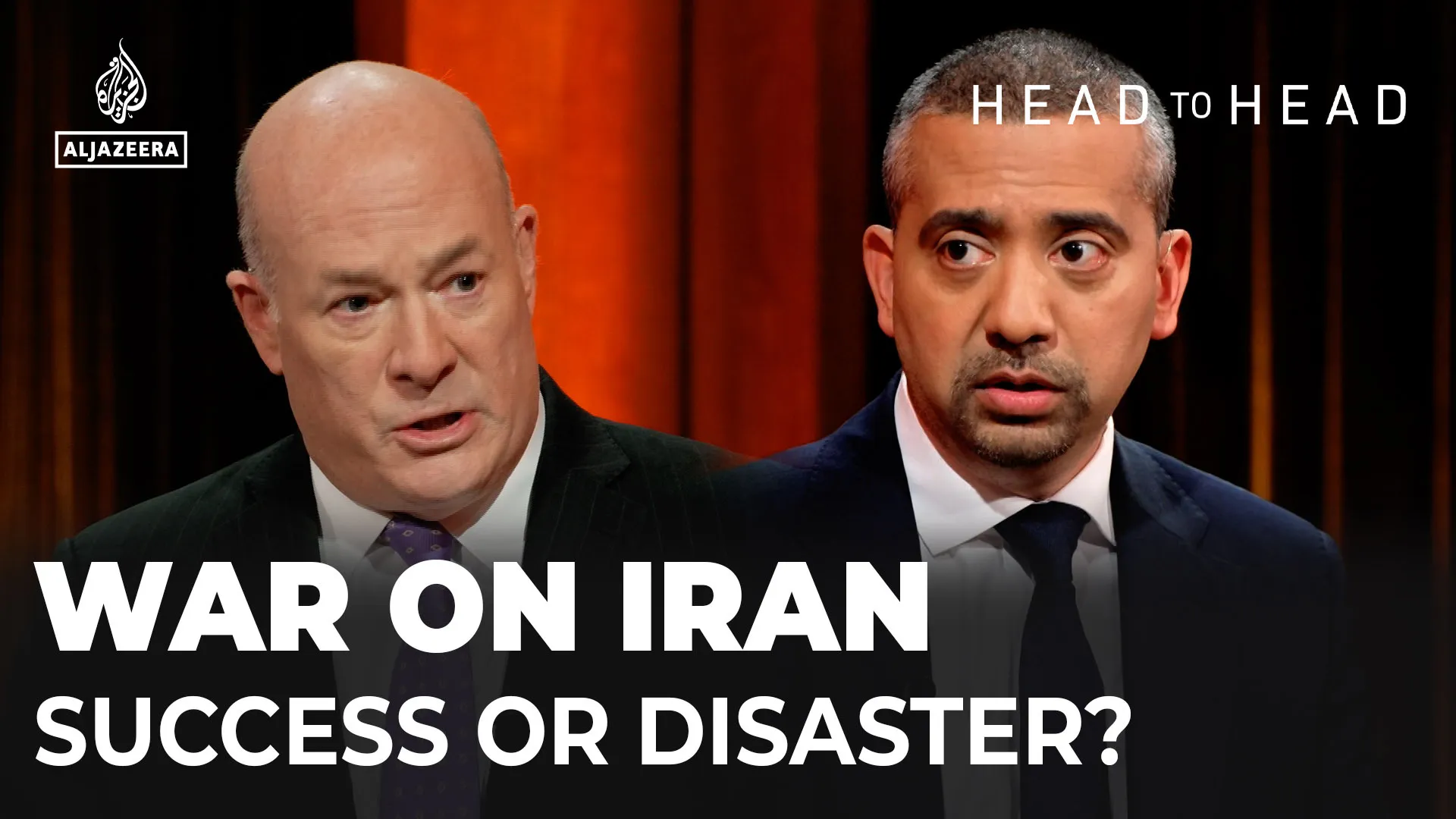
Following the US and Israeli airstrikes on Iran in February, reverberations were felt globally. But is the world really safer and Iranians freer or has the war unleashed disastrous consequences?
Mehdi Hasan goes head to head with David Des Roches, retired colonel, former Pentagon official and professor at the National Defense University on the justifications and costs of the war – and whether President Donald Trump sent U.S. troops to fight Israel’s war.
Joining the discussion are:
Sanam Naraghi-Anderlini – founder and CEO of the International Civil Society Action Network
Mohammad Ali Shabani – Middle East scholar and Editor of Amwaj.media, a London-based news outlet focused on Iran, Iraq and Arabian Peninsula countries
Barak Seener – Associate Research Fellow, Henry Jackson Society
Recorded shortly before the announcement of a deal between the US and Iran.
Published On 19 Jun 202619 Jun 2026
Share
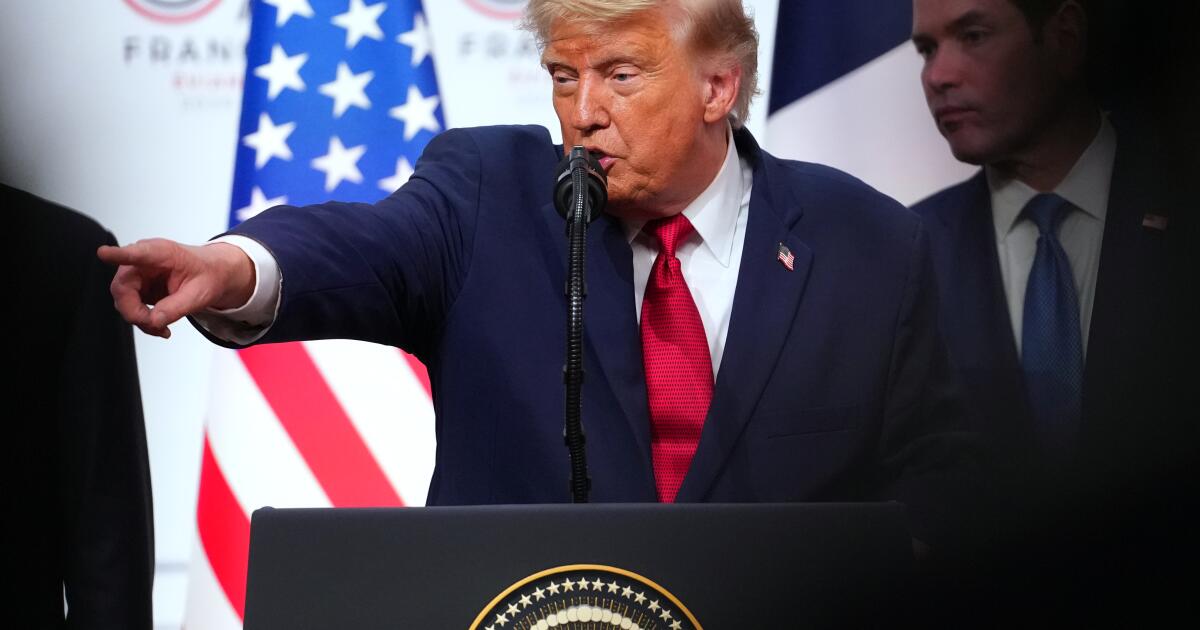
WASHINGTON — Most Americans continue to disapprove of how President Trump is handling Iran, while his overall presidential approval holds steady, according to a new AP-NORC poll that was conducted as he suggested a deal with Iran had been reached.
The poll points to just how unpopular the war, which began Feb. 28, has been with Americans even as the Republican president turned abruptly from threatening Iran to reopening negotiations. Support for his handling of the war remains lopsidedly partisan. About two-thirds, 65%, of U.S. adults disapprove of how Trump is handling issues with Iran. But while the vast majority of Democrats and independents view Trump’s actions negatively, only 28% of Republicans are unhappy.
Americans’ views on how the president is handling Iran are roughly in line with his overall job approval, which stands at 37%, unchanged from an Associated Press-NORC Center for Public Affairs Research poll conducted in May.
The new survey was conducted June 11-17, just after Trump called off threats to escalate the war with Iran. The poll was fielded as Trump announced a deal with Iran and authorized an end to the U.S. naval blockade in the Strait of Hormuz, concluding just before the deal was signed Wednesday.
Approval of Trump’s actions on Iran has been low over the past few months. But in interviews, some Republicans also weren’t pleased with the outcome of this week’s agreement, which gives Iran an immediate benefit, allowing it to sell its oil freely again.
The deal also reopens the strait without tolls for two months, restarts talks between the U.S. and Iran over Tehran’s nuclear program and calls for Tehran to dilute its stockpile of highly enriched uranium.
David Farrington, a 79-year-old Republican-leaning independent in Fort Worth, Texas, “doesn’t have any love lost” for Iran, but he’s frustrated the agreement focused on the strait and didn’t deliver more on the country’s nuclear weapons program.
“Any agreement regarding the strait is hardly what I would consider a recognizable concession on the part of Iran,” Farrington said. “So, I consider that some fluff that attempts to make this agreement look better when it’s not.”
Only about one-third of U.S. adults approve of how Trump is handling Iran in the new poll, in line with May.
Donald McBride, a 28-year-old independent in Plano, Texas, is frustrated that Trump has not maintained his campaign promise to keep America out of foreign wars. McBride voted for Trump but he opposed going to war with Iran.
“I would like the war to end,” he said. “The original objective of the war was to end the Iranian regime, and that’s just not possible. I don’t really know why we’d continue fighting.”
The poll suggests most Americans want action in Iran to wrap up. Even with an agreement on the horizon, 53% of U.S. adults said American military action against Iran had “gone too far,” only a slight decline from 59% in March.
About 4 in 10 Republicans, though, said in the latest poll that action has been “about right,” and 37% said it had not gone far enough.
Joan Jones, a 64-year-old independent in northwest Florida, believes the United States’ actions in Iran have been necessary to address the threat Iran posed.
“Those attacks are ultimately to protect us from nuclear attacks,” Jones said. “I think we have to go through that … and eliminate that worry so we don’t have that hovering over us.”
About one-third, 34%, of U.S. adults approve of how Trump is handling Israel.
Tensions have been rising between Israeli Prime Minister Benjamin Netanyahu and Trump as the president criticizes recent Israeli attacks in Lebanon, which jeopardized negotiations between Washington and Tehran.
James Huffman, a 69-year-old Republican in Medway, Ohio, thinks Trump is taking the wrong strategy when it comes to Netanyahu.
“Netanyahu is not going to do everything Trump wants. He’s going to do what he wants,” Huffman said. “I just don’t think it’s effective.”
About one-third of U.S. adults approve of Trump’s approach to the economy. That’s in line with last month, and continues a challenging stretch for Trump on the issue.
Jones, the Florida independent, is more optimistic than most. She said she can hardly leave the house some hours without getting stuck in the traffic of tourists headed to the beach on vacation. She also spots lines around the block for Starbucks, McDonalds and Chick-fil-A in her community — all signs to her that the economy is doing well overall.
“I think President Trump’s policies are contributing to a better economy,” Jones said.
Other Republicans are more skeptical, a troubling sign for a president who prides himself on his business acumen. Only 69% of Republicans approve of how he’s handling the economy, slightly lower than the 78% who approve of how he’s handling the presidency overall.
Patricia Bailey, a 42-year-old Republican in Parkersburg, West Virginia, sees an economy where prices have gotten out of control. “I just said the other night, ordering pizza is for rich people,” she said. Bailey voted for Trump but added, “He’s kind of let me down a little bit.”
Even if high prices preceded Trump, Bailey doesn’t think he’s lived up to his pledge to improve the economy.
“I think he got so distracted with the war that he forgot some old promises,” she said.
Sanders and Thomson-Deveaux write for the Associated Press.
The AP-NORC poll of 3,040 adults was conducted June 11-17 using a sample drawn from NORC’s probability-based AmeriSpeak Panel, which is designed to be representative of the U.S. population. The margin of sampling error for adults overall is plus or minus 2.8 percentage points.
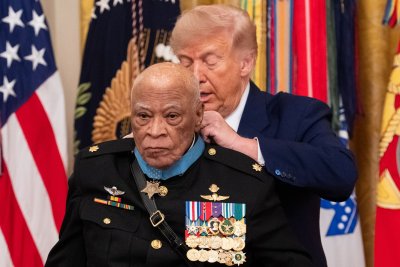

June 19 (UPI) — President Donald Trump has awarded the Medal of Honor to three veterans, honoring their acts of heroism in battle in Vietnam and Afghanistan.
At a White House ceremony on Thursday, Trump awarded the nation’s highest military honor to retired Marine Corps Maj. James Capers Jr. and retired Army Maj. Nicholas Dockery. He also awarded the medal posthumously to Marine Corps Col. John Ripley, who died in 2008, with the honor accepted by his son, Tom Ripley.
Trump opened his remarks by touting the stock market and lower oil prices, then appeared to joke that he wanted to award himself the nation’s highest military honor but was told he could not. He then introduced Capers, saying he was the first Black Marine in history to receive a battlefield commission during wartime when he was promoted to second lieutenant during the Vietnam War.
Capers was awarded the medal for his “acts of gallantry and intrepidity above and beyond the call of duty” in the spring of 1967, when he led a four-day reconnaissance patrol that made contact on three separate occasions with a superior enemy force, and on the final day, was ambushed, the White House said in a release.
Trump said Capers was hit by an explosion that sent him into a tree, “ripping open his abdomen.” His body was pierced by 17 pieces of shrapnel and his leg was broken, but despite his injuries, he refused to be extracted before his men were safe.
Trump said that Capers was recommended for the award that year, but his commanding officer died before he could sign the paperwork.
“That’s a bad break. But now you’re doing it. This is maybe, this is better,” he said, adding that “The nation kept you waiting far too long.”
Ripley was also awarded the medal, though posthumously, for acts of heroism during Vietnam. The White House said Ripley played a pivotal role in halting a major North Vietnamese mechanized assault by destroying a bridge in the village of Dong Ha.
Trump described Ripley as completing five trips to move explosives into position on the bridge while under gunfire.
“When John detonated the explosives, the bridge collapsed into the river, crushing the advance and saved the hope of a free Vietnam for Easter morning,” the president said.
Dockery received the medal for actions taken to save his platoon in Kapisa Province, Afghanistan, on Oct. 2, 2012.
Trump said about 150 Taliban fighters ambushed Dockery’s platoon that fall day as they were guarding the governor’s compound. For more than four hours, he fought the Taliban, risking his life on several occasions to protect and evacuate three wounded members of his platoon, according to the White House.
Trump said Dockery personally rescued members of his platoon and at one point killed a Taliban fighter and detained two others, and killed two others in a separate confrontation. He also administered CPR on one of his platoon members whom he found unconscious “until the sergeant’s heart kicked back in,” Trump said.
“As we approach the 250th anniversary of our founding, we remember that we owe everything to heroes like those we celebrate today — men who went willingly to the darkest and most dangerous corners on Earth to defeat evil so we could live free,” Trump said.
“That’s exactly what happened. These are great men, great people.”

WASHINGTON — Tom Daschle, the former Democratic senator from South Dakota, remembers the exchange vividly.
The time was September 2002. The place was the White House, at a meeting in which President Bush and Vice President Dick Cheney pressed congressional leaders for a quick vote on a resolution authorizing military action against Iraq.
But Daschle, who as Senate majority leader controlled the chamber’s schedule, recalled recently that he asked Bush to delay the vote until after the impending midterm election.
“I asked directly if we could delay this so we could depoliticize it. I said: ‘Mr. President, I know this is urgent, but why the rush? Why do we have to do this now?’ He looked at Cheney and he looked at me, and there was a half-smile on his face. And he said: ‘We just have to do this now.’ ”
Daschle’s account, which White House officials said they could not confirm or deny, highlights a crucial factor that has drawn little attention amid rising controversy over the congressional vote that authorized the war in Iraq. The recent partisan dispute has focused almost entirely on the intelligence information legislators had as they cast their votes. But the debate may have been shaped as much by when Congress voted as by what it knew.
Bush’s father, President George H.W. Bush, did not call for a vote authorizing the Persian Gulf War until after the 1990 midterm election. But the vote paving the way for the second war with Iraq came in mid-October of 2002 — at the height of an election campaign in which Republicans were systematically portraying Democrats as weak on national security.
Few candidates sparred over the war resolution itself. But Republicans in states including Minnesota, Iowa, South Dakota and Georgia strafed Democratic senators seeking reelection who had supported military spending cutbacks in the 1990s, accepted money from a liberal arms-control group, opposed Bush’s preferred approach for organizing the new Department of Homeland Security, and voted in 1991 against the Persian Gulf War.
With national security then such a flashpoint in so many campaigns, many Democrats believe, the vote’s timing enormously increased pressure on their party’s wavering senators to back the president, whose approval rating approached 70% at the time.
“There was a sense I had from the very beginning that this was in part politically motivated, and they were going to maximize the timing to affect those who were having some doubt about this right before the election,” Daschle said.
White House counselor Dan Bartlett denied that charge, saying the vote’s timing represented a desire to increase pressure on Iraqi President Saddam Hussein, not Democrats.
“The president, during the run-up to the war, went out of his way not to make it political,” Bartlett said.
Whatever the motivation for the vote’s timing, the effect was to produce a clear contrast between the Democratic senators who sought reelection that November and those who did not.
The Democrats not on the ballot split almost evenly, with 19 supporting the war resolution and 17 opposing it. Among those facing the voters, 10 voted for the resolution while only four opposed it. And of those four, only one — Sen. Paul Wellstone of Minnesota, who died in a plane crash a few weeks after the resolution vote — was in a seriously competitive race.
“The political currents were extraordinarily strong for everybody involved,” said Jim Jordan, then executive director of the Democratic Senatorial Campaign Committee. “I’m certainly not implying that Democrats had their finger to the wind and didn’t make votes of conscience, but it was a piece of the puzzle, clearly.”
It is, of course, impossible to say whether more Democrats would have opposed the war resolution — which passed the Senate 77 to 23 on Oct. 11, just hours after the House approved it 296 to 133 — if the vote had occurred after the 2002 election.
Daschle, who voted for the resolution and was not up for reelection that year, said he did not think so, “given the circumstances, the environment, the sense that we were responding to 9/11, and all of the urgency that was created by the rhetoric and cajoling of the administration.”
But Sen. Edward M. Kennedy (D-Mass.) said recently that a delay might have prompted more Democrats to vote no by increasing the time available to study the evidence for war and by dissipating the political pressures surrounding the decision.
“There was a stampede to vote on this,” Kennedy said. “A lot of our people got caught up in it.”
Bartlett said that if some Democrats felt “like they would have made a different decision before the election or after, that doesn’t speak very well of them, because the facts didn’t change in the course of one month.”
Democrats themselves were divided over the vote’s timing. Kennedy, Wellstone and Sen. Robert C. Byrd (D-W.Va.) were among those who passionately urged Daschle to defer the vote until after the election, said several sources who requested anonymity when discussing the party’s internal debate.
The sources said that other Democratic senators supported Bush’s push, in part because the senators believed an early vote might help the party shift attention to domestic issues it wanted to spotlight before election day. Democrats also felt more pressure to act because they recognized that the GOP-controlled House would agree to Bush’s request on the vote’s timing.
Against this backdrop, Republicans across the country were escalating attacks on their Democratic opponents on defense issues.
Starting in mid-September, for instance, then-Rep. John Thune (R-S.D.) issued statements and organized news conferences by veterans to criticize Democratic Sen. Tim Johnson for voting against the 1991 Persian Gulf War.
On Oct. 4, one week before the Senate vote, Thune released an ad that used images of Hussein and terrorist leader Osama bin Laden to criticize Johnson for voting against missile defense systems.
In Minnesota beginning in mid-September, Republican Norm Coleman organized retired military officials to hold news conferences charging that Wellstone “didn’t just vote to devastate our defense; he voted to dismantle it.” In late September, the National Republican Senatorial Committee ran ads attacking Wellstone over votes to reduce military spending.
The committee ran similar ads against Sen. Tom Harkin (D-Iowa) one week before the vote.
Although he did not criticize Democrats over Iraq, Bush stoked the overall security debate during a series of appearances between Sept. 23 and Oct. 4. He criticized Senate Democrats who were blocking the administration’s preferred version of legislation to create the Department of Homeland Security because, they said, it gave the president too much freedom to suspend workers’ civil service protections.
“The Senate is more interested in special interests in Washington and not interested in the security of the American people,” Bush said in New Jersey.
Bush’s comments reverberated most powerfully in the Senate race in Georgia, where Saxby Chambliss, then a Republican House member, began criticizing incumbent Democrat Max Cleland over the Homeland Security issue.
Less than a day after the Senate authorized the use of force in Iraq, Chambliss aired what became the most talked-about ad of the 2002 election: a sharply worded jab that used pictures of Hussein and Bin Laden to accuse Cleland of voting “against the president’s vital Homeland Security efforts.”
Cleland, Johnson and Harkin were among the Democrats who voted for the war resolution; Wellstone voted no.
Less than a month later, Johnson and Harkin were reelected, Cleland was defeated and Coleman beat former Vice President Walter F. Mondale for Wellstone’s seat after the senator’s death. Overall, Republicans widened their majority in the House and swept back into control of the Senate.
WASHINGTON — The White House pushed back Thursday against growing bipartisan criticism of a negotiated settlement to the war with Iran, arguing its concessions to the Islamic Republic were contingent on its conduct and essential to securing peace.
The administration’s defensive posture came as details of the framework agreement, known as a memorandum of understanding, were finally shared with the public, revealing a raft of compromises with Tehran long opposed by Republicans.
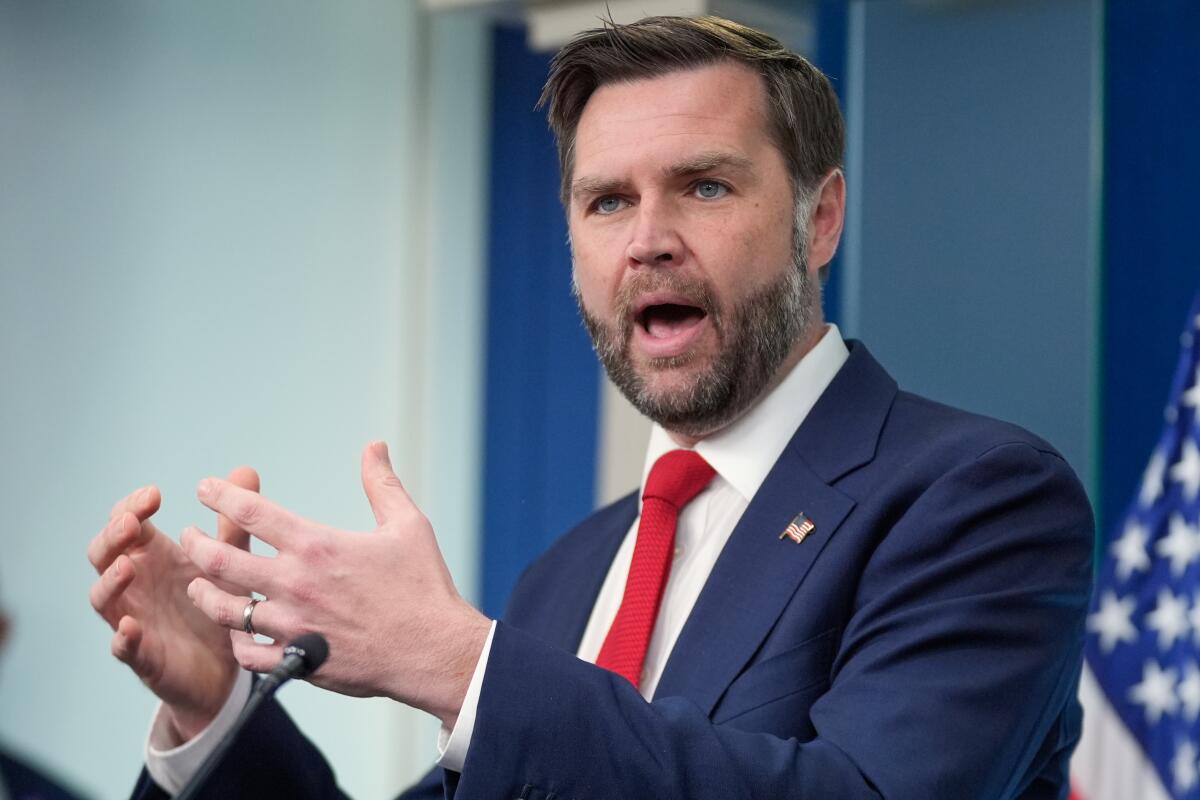
Vice President JD Vance, who helped negotiate the deal, told reporters Thursday that the deal was structured to reward Iran for good behavior. But the text of the agreement suggests otherwise.
The Trump administration agreed to release billions of dollars in Iranian assets that were frozen and restricted by the United States “upon the implementation” of the memorandum — before any further actions are taken or additional negotiations begin. The president will issue sanctions waivers on Iranian oil, allowing Tehran to resume trading its most valuable export and breaking with decades of policy. And to facilitate that trade, boosting Tehran’s revenues, Trump agreed to immediately end a U.S. naval blockade of Iranian ports.
Still more concessions were offered to the Iranians, including a commitment by the U.S. administration to establish a fund of “at least $300 billion for the reconstruction and economic development of the Islamic Republic” — in effect providing reparations for the war Trump started.
“All required licenses, waivers and permissions needed for the relevant financial transactions will be granted by the United States of America,” the memorandum reads.
Taken together, the document reads as a stunning reversal of U.S. policy toward Iran after decades of concern across administrations in Washington — including throughout Trump’s two terms — that the Islamic Republic represents the nation’s greatest security threats as the world’s largest state sponsor of terrorism.
Criticism from Republican senators, in particular, has been sharp and swift.
Sen. Roger Wicker (R-Miss.), chairman of the Senate Armed Services Committee, said the $300-billion fund “would make Iran’s payoff under President Obama’s 2015 deal look like a pittance by comparison.” And Sen. Ted Cruz (R-Texas) accused the Trump administration of giving Iran money it would use to kill Americans.
“History demonstrates that giving billions of dollars to theocratic lunatics who want to murder us is an exceptionally bad idea, and I think, unfortunately, the president is receiving some really bad advice on this deal,” Cruz said. “I don’t want to see us send a penny to the ayatollah. And I hope that we don’t.”
The Obama-era deal, known as the Joint Comprehensive Plan of Action, included structured sanctions relief for Iran in exchange for concrete and verifiable steps by Tehran to dismantle much of its nuclear program — a framework that Republicans broadly criticized at the time.
By contrast, Trump’s agreement commits the United States to pursuing economic relief for Iran while providing no clarity about the future of Iran’s nuclear program — the very issue Trump cited as the rationale for launching the war.
The memorandum includes a pledge by Iran to never purchase or construct nuclear weapons — a vow the Islamic Republic has made multiple times before, including by signing the Nuclear Non-Proliferation Treaty, in a religious edict issued by the late supreme leader and in the Obama-era nuclear accord.

Vice President JD Vance speaks to reporters at the White House on June 18, 2026.
(Manuel Balce Ceneta / Associated Press)
Detailed negotiations over Iran’s nuclear program — including whether Tehran could continue domestic uranium enrichment, at what level, and under what monitoring regime — were left for another day.
For more than a decade, the U.S. intelligence community has assessed that Iran sought a threshold nuclear capability, securing the strategic advantages of a nuclear power without incurring the costs of openly pursuing a bomb.
The agreement does include a commitment by Iran to do its “best” to bring commercial shipping traffic through the Strait of Hormuz, a vital international waterway, back to prewar levels. But critics of the president said he had to make deep, historic concessions just to secure a status quo ante upended by the war he started. And in the document, Tehran agreed to refrain from imposing a toll on ships transiting the strait for only a 60-day period.
“Unless you were homeschooled by a day drinker, no one’s confident that Iran is going to do anything,” Sen. John Kennedy, a Republican from Louisiana, told reporters this week.
Sen. Bill Cassidy, Kennedy’s Republican counterpart from Louisiana, called the deal “the worst foreign policy blunder in decades” that would have President Reagan “rolling over in his grave.”
“Iran’s nuclear ambitions were not curbed, and they have learned that threatening the Strait of Hormuz works and will undoubtedly leverage it in the future. Now, Iran gets to build brand-new infrastructure under this deal,” Cassidy said.
“Before the war, the strait was open, Iran was being crushed by sanctions, and 13 service members were still alive,” he added. “Now, 13 Americans are dead, families have paid billions at the pump, sanctions will be lifted, and the bombing has stopped.”
Despite mounting criticism, Trump put his signature to the memorandum on Wednesday night while attending a dinner with the French president in Versailles, a palace infamous for hosting a treaty signing that disgraced Germany at the end of the First World War.
He defended the agreement while in Europe and suggested further concessions might be forthcoming, including recognition of Iran’s claimed right to enrich uranium and a new willingness to tolerate its continued ballistic missile development — another program that Trump had vowed to eliminate as a central war aim.
“He took America to war — killing 13 soldiers, thousands of Iranian civilians and costing taxpayers $60 billion — to get rid of Iran’s missile program. And now that he’s lost the war, he pretends like it’s no big deal,” said Sen. Chris Murphy, a Democrat from Connecticut.
“Just unforgivable,” he added. “What a charlatan.”
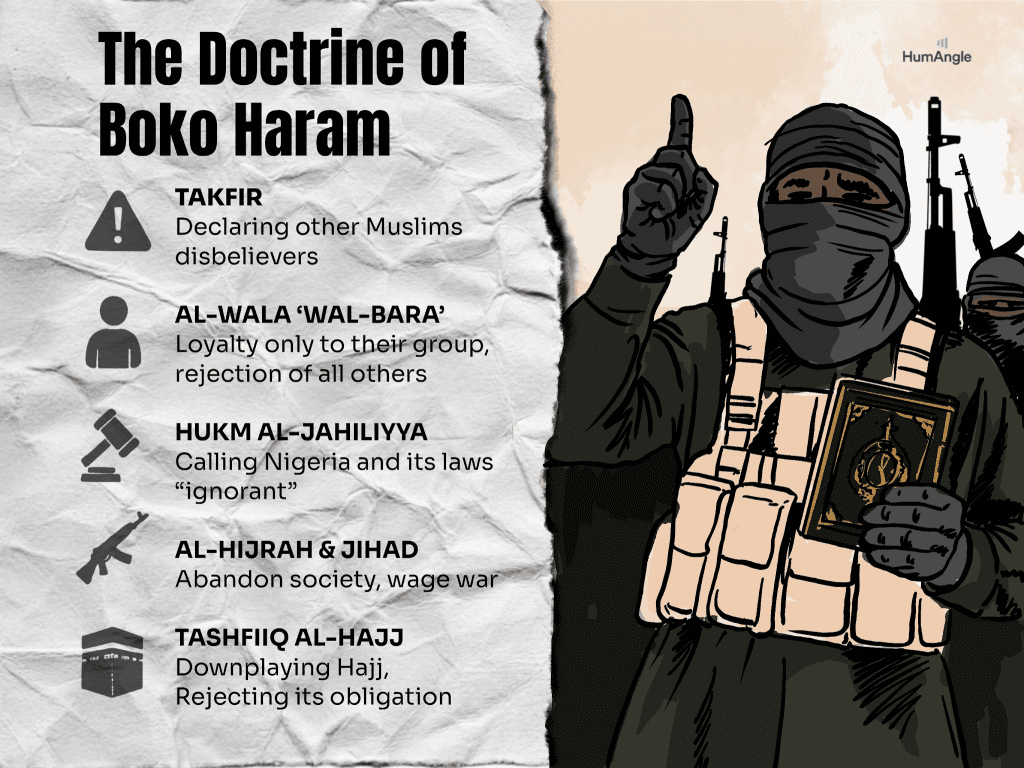
For years, the Boko Haram and the Islamic State West Africa Province (ISWAP) terror groups have told Muslims in Nigeria and the Lake Chad Basin that the world outside their camps is not merely corrupt, but that living in it constitutes unbelief. They reinforce this stance through the misinterpretation of scripture, selective history, and the authority of armed men. They use terms such as tawheed (monotheism), hijrah (migration), bay‘ah (allegiance), jihad, daulah (sovereign state), Darul Islam (abode of Islam), Darul Kufr (abode of unbelief), and takfir (excommunication).
To the ordinary ear, it may sound like religion, but beneath the vocabulary is a hard political claim: only their authority can certify Islam. Through this doctrine, they decide who is allowed to live, who must die, who is Muslim, who is no longer Muslim, which land is pure, which land is condemned, which ruler is apostate, and why a farmer, teacher, cleric, trader, voter, soldier, journalist, or civil servant can become a target.
At the centre of this war is takfir, the act of declaring a professed Muslim to be an unbeliever. Mainstream Islamic scholarship treats takfir as a grave matter. It requires knowledge, evidence, context, intention, and due process. A Muslim does not leave Islam because he lives under a flawed state, or because he carries an identity card, works in a hospital, teaches in a school, votes in an election, or refuses to migrate to a forest camp – all of which the terror groups view as signs of belief in Western values.
Boko Haram, or Jama’atu Ahlis-Sunna Lidda’Awati Wal-Jihad, shortened as JAS, loyal to Abubakar Shekau, decreed that if you did these things, you were suspect. The most frightening part of Shekau’s doctrine was that he demanded others declare the same people unbelievers, too. If he declared a Muslim in Maiduguri an unbeliever because he lived under the Nigerian state, then ISWAP also had to declare that person an unbeliever. If ISWAP refused, Shekau’s logic turned against the group; they too became unbelievers because they failed to excommunicate those he had excommunicated.
This doctrine explains why JAS could kill villagers, denounce scholars, attack mosques, murder defectors, bomb displaced people, and fight ISWAP while still claiming to defend Islam. In Shekau’s universe, the circle of Islam narrowed until only his faction stood inside it. Everyone else stood outside the gate.

Abdulbasit Kassim, assistant professor of religion and classics at the University of Rochester, who specialises in the histories and cultures of Muslim societies in West Africa, places this doctrine inside a longer history. He argues that the question did not begin with JAS but reaches back into debates in Muslim West Africa over land, power, law, colonial rule, and the status of Muslims living under non-Islamic authority.
“Before colonial rule, much of what is now northern Nigeria, southern Niger, northern Cameroon, and western Chad belonged to a wider region known as Central Bilad al-Sudan. Muslim polities such as the Sokoto Caliphate and the Kanem-Borno Empire governed social, economic, political, and legal life through Islamic norms,” he said.
Colonialism disrupted that order. By conquering territory, the British introduced a hierarchy of laws in which Islamic law survived, but with a narrowed jurisdiction. Sharia courts continued in civil matters, especially marriage, inheritance, and family disputes. Criminal punishments under the Islamic canon became restricted, weakened, or rendered practically dormant.
“After 1999, when Zamfara State under Ahmad Sani Yerima revived the criminal aspect of Sharia, old tensions returned,” the professor added. “Some scholars and activists welcomed it as a restoration. Others argued that full Sharia could not operate inside a constitutional democracy where any law inconsistent with the 1999 Constitution could be struck down.”
JAS, evidently, did not emerge in a vacuum. Kassim said, “Mohammed Yusuf rejected Nigeria’s Sharia implementation because, to him, it remained trapped inside a secular constitutional order.” For him, it was not enough for a northern governor to introduce Sharia penal codes. The state itself had to be Islamic. Its sovereignty had to come from Islamic political precepts, not a constitution inherited from colonial rule. This is where the movement’s argument becomes more dangerous. It is not only saying that Nigeria fails to implement Sharia properly, but that the entire political foundation of Nigeria is illegitimate.
To Kassim, figures such as Ibrahim Zakzaky and Mohammed Yusuf shared one major point, even though their methods and movements differed. “They rejected the possibility of fully reconciling the Islamic juridical canon with Nigeria’s inherited secular constitutional order.”
This was the opening JAS exploited.

After JAS’s leaders convinced followers that the Nigerian state was illegitimate, the movement moved to the next step: migration. If Nigeria is Darul Kufr, the abode of unbelief, then Muslims had a duty to leave it, they said. If JAS’s territory was Darul Islam, the abode of Islam, then migration into its territory became a religious obligation. The group took an old legal category and weaponised it to control territory, Kassim argued.
This was not abstract in Borno, Yobe, Adamawa, Niger, Chad, and Cameroon. It meant families were pressured, threatened, abducted, or killed. Villages were told to submit. People who remained under government control became suspects; those who cooperated with the military became enemies; those who joined the Civilian Joint Task Force (CJTF) and their families became legitimate targets in the eyes of the insurgents; and traditional rulers, clerics, teachers, and government workers became exposed.
Shekau then stretched the doctrine further.
According to Kassim, “Shekau held that Muslims living under the Nigerian state were no longer Muslim if they refused to migrate into JAS-held territory. ISWAP contested this. It did not accept Shekau’s blanket takfir against all Muslims living in government territory. ISWAP argued that such Muslims became unbelievers only if they gave material support to the Nigerian state or its security forces in the war against the insurgents.”
This difference shaped the split between the factions. ISWAP still accepted the larger jihadist fiction that the Nigerian state was illegitimate and that true authority flowed from the Islamic State. It still treated soldiers, political rulers, security officials, and those directly supporting the state’s war effort as apostates. It still imposed taxes, punishments, surveillance, recruitment, and control over civilians. It still placed armed authority above the lived Islam of communities that had practised the faith for generations.
The difference between Shekau’s terror and ISWAP’s brutal governance is the difference between reckless excommunication and structured coercion. One faction burned the village and shouted scripture. The other taxed the village, citing the doctrine. Both denied ordinary citizens the right to live safely and peacefully.
Kassim captured this danger years ago in his 2018 study, JAS’s Internal Civil War: Stealth Takfir and Jihad as Recipes for Schism. He wrote that the internal war between JAS factions could only be understood through “a close reading of the constant stream of primary sources produced by the two factions”.
Kassim wrote a sentence that still sits heavily over this conflict: “Those who kill know why they kill, but the majority of those about to be killed will hardly understand why they are being targeted.”
Get our in-depth, creative coverage of conflict and development delivered to you every weekend.
Subscribe now to our newsletter!
That is the tragedy of takfir in the Lake Chad war.
A farmer on his way to the field may not know the difference between JAS and ISWAP doctrine. A displaced woman in a camp may not know what Shekau wrote about Darul Kufr. A trader at a market may not have heard of Abu Malik al-Tamimi, Anas al-Nashwan, or the arguments ISWAP sent to Islamic State scholars. A village imam may know the Qur’an, but not the way and manner in which insurgents interpret it. Yet their lives can be judged based on those interpretations.
Shekau saw ISWAP’s caution as a compromise and that is where the blood began to flow inward. Kassim explains that Shekau’s rigidity helped push internal revolt. Ansaru had earlier objected to JAS’s killing of Muslims and the violation of what its leaders considered the ethics of jihad. Later, Abu Musab al-Barnawi and Mamman Nur moved against Shekau from within the Islamic State framework. They accused him of extremism, arbitrary killing, and corruption of the cause.
In the interview for this article, Kassim explained that Shekau was far more reckless on takfir than Muhammad Yusuf. Yusuf laid the ideological foundation for rebellion against the Nigerian state, but he was more cautious about excommunicating Muslims. Shekau removed many of those restraints.

Kassim’s 2018 chapter recorded that Shekau viewed people living beyond JAS’s controlled territory as infidels and therefore legitimate targets within Darul Harb (abode of war). He also noted that Shekau’s position was harsher towards those who fled from JAS territory to areas controlled by the Nigerian state. In that logic, their camps, mosques, markets, and places of refuge could be attacked until they repented and returned.
ISWAP challenged part of this logic. Abu Musab al-Barnawi argued that Muslims who had always lived outside JAS territory could not be declared unbelievers merely for that reason. In his view, they crossed the line when they gave active or passive support to the Nigerian Army, the Civilian JTF, or other forces fighting the insurgents.
Abu Musab died in Kaduna, northwestern Nigeria, an area that both JAS and ISWAP consider Darul Kufr. This may partly explain ISWAP’s relative fluidity on the issue, compared with JAS.
HumAngle spoke to a former JAS shura member who later joined ISWAP. He subsequently completed the Nigerian government’s deradicalisation programme and now lives freely in Maiduguri. He says the Shekau faction does not recognise the Islam of Nigerians, Saudis, or anyone outside its creed. “To them, whoever is not with them is an unbeliever. Saudi Arabia is no different from a non-Muslim society in their imagination. It is simply another land of unbelief.”
He said ISWAP classifies Muslims living in Nigeria, Cameroon, Chad, Niger, and other states into categories. Those who can migrate but refuse to do so are sinners, not necessarily unbelievers. Their offence is treated as a major sin. The weak, the elderly, women, children, and those without means may be excused. Those who remain outside insurgent territory while openly challenging secular rule and calling people to Islamic governance may even be rewarded. In his telling, Mohammed Yusuf’s preaching before 2009 fits this category.
But those who join the democratic system, legislate, govern, enforce state authority, or fight under the security forces enter a more dangerous category. Politicians and legislators become tawaghit (false gods). Security officials become direct enemies. Soldiers, police officers, Civilian JTF members, and others who bear arms against the insurgents are treated as apostates whose blood is lawful to be spilt.
Doctors and teachers sit lower in ISWAP’s hierarchy of offence. They are not treated the same way as soldiers or politicians, but they still operate inside a system the group condemns.
This is the cold bureaucracy of ISWAP’s worldview. It sorts society by perceived allegiance, measuring sin by proximity to the state. The former Shura member called JAS a Khawarij-type movement because of its sweeping excommunication of Muslims. He said Shekau and his followers misused verses on oppression, migration, and disbelief. They took verses that classical exegetes treated with care and turned them into proof that any Muslim living in Darul Kufr had committed major shirk.
The key verse in their argument comes from Surah An-Nisa, where angels question those who wronged themselves and failed to migrate when Allah’s earth was spacious. ISWAP reads this as a grave warning against remaining in a land where Islam cannot be practised fully. Still, it leaves room for categories such as weakness, inability, and sin below disbelief.
The former shura member says Shekau’s faction then links this to another Qur’anic discussion of zulm (oppression), or wrongdoing, in which classical explanations connect the greatest zulm to shirk (polytheism). From there, JAS concludes that staying in Darul Kufr is not merely a sin but a state of unbelief. That leap is where the danger sits.
The former Shura member said JAS uses this belief to seize wealth, abduct people, kill travellers, attack farmers, and justify arbitrary violence.
ISWAP and the wider Islamic State network, the former shura member explains, take a more layered position on Hajj (pilgrimage to Mecca), which is generally regarded by Muslims as one of the five pillars of faith. “They still recognise Hajj as an obligation for Muslims who have the means. But they argue that tawheed has been corrupted worldwide and that restoring it through jihad takes priority. In practice, a wealthy fighter should not spend money on Hajj. He should donate it for weapons.”
Islam makes Hajj one of its five pillars. ISIS and ISWAP do not always deny that in theory, but they demote it in practice. They turn the battlefield into a higher obligation that suspends pilgrimage, family obligations, learning, work, charity, and ordinary religious life.
The anonymous source says senior Islamic State scholars issued rulings that no mujahid should spend his money on Hajj when he can spend it on arms.
They take a religion structured around testimony, prayer, fasting, zakat, and pilgrimage, then reorder it around obedience to commanders and permanent war. The recruit is told that the world is corrupt, his parents are ignorant, his old imam is compromised, his country is unbelieving, his passport is a symbol of loyalty to kufr, and his only safe identity is inside the jama‘ah (the jihadists’ community). By the time he is asked to kill, the moral world that could have restrained him has already been dismantled.

For Muslims around the world, Saudi Arabia holds Mecca and Medina, the two holiest sanctuaries in Islam. Millions perform Hajj under Saudi administration, yet jihadist ideologues have long denounced the Saudi state as apostate, accusing its rulers of alliance with Western powers, partial application of Sharia, participation in the United Nations system, and military cooperation with the United States and others.
Kassim points to Abu Muhammad al-Maqdisi, the Jordanian jihadist ideologue, whose writings attacked the legitimacy of the Saudi state. The argument is familiar in jihadist circles: Saudi rulers claim Sharia, but rule partly through artificial laws; they belong to the international state system; they support Western military campaigns; they host or cooperate with foreign military power; they have betrayed Muslims.
This is why jihadists can condemn Saudi rulers while still struggling over the status of Hajj. Some declare the rulers apostate but still accept that Muslims may perform Hajj because the holy places remain sacred. Others move closer to rejecting Hajj under Saudi authority or treating it as inferior to jihad.
The anonymous source says ISWAP and Islamic State circles call the Saudi royal and scholarly establishment “Ahl Salul”, a contemptuous distortion linking them to hypocrisy. They do not call them “A’l Saud” or “A’l Sheikh” with respect. They dismiss many Saudi scholars as apostates or compromised because they did not confront the Saudi state.
Who gets to define religion? The scholars of centuries? The community? The custodians of the holy cities? The legal schools? The state? The armed commander in the bush? JAS and ISWAP argue that authority belongs to the armed vanguard. That is why they reject Nigeria’s Sharia states, Saudi Arabia, Qatar, UAE, Afghanistan, Mali, Niger, Chad, and other Muslim-majority or Muslim-populated states.
Kassim warned in the interview that the conflict is entering a third generation, which JAS described in one of its propaganda videos as “Jiyalit-Tamkin” (reinforcement generation). Many fighters were born into war and therefore did not sit through the early debates or learn the tradition deeply. They inherited fear, slogans, weapons, commanders, and survival inside an insurgent economy.
The first generation, including Mohammed Yusuf, Shekau, Mamman Nur, and others, had some level of Islamic training. One may reject their interpretations, but they tried to ground their actions in texts. Shekau himself wrote books and cited Usman Dan Fodio, even if, as Kassim notes, the citations were often erroneous and shallow.
The current generation is different. For many of them, jihad is the only economy they know, and now functions as the road to food, wives, money, status, revenge, protection, and belonging.
The former shura member says this is visible among the Shekau loyalists who remain under Bakura’s orbit. He says they suffer from a dearth of scholars and describes figures around the faction as lacking deep knowledge, with some retained by kinship, money, fear, or coercion rather than conviction. This is one of the most important revelations.
“The war is no longer driven only by men who believe they are restoring an Islamic order. It is also driven by men trapped inside a violent economy that needs theology to keep feeding itself,” the former shura member said. War has become a livelihood.
Ending the conflict requires more than defeating JAS’s ideology. Many actors are bound to the war by power, profit, survival, and identity, making violence harder to end than extremist beliefs.
The state did not create JAS’s theology, but it gave the movement that emerged in northeastern Nigeria some of its most powerful stories. The killing of Mohammed Yusuf in 2009, mass arrests, military abuses, corruption, abandoned communities, failed justice, and the humiliation of civilians all became material for insurgent propaganda.
Across the Sahel, the same pattern repeats. Jihadist groups exploit weak courts, abusive soldiers, predatory officials, unresolved local disputes, ethnic suspicion, rural abandonment, and poverty. This is why Nigeria cannot bomb its way out of the conflict.
The anonymous former shura member rejected claims linking recent schoolchildren kidnappings in Oyo State to either ISWAP or JAS. According to him, the perpetrators are unlikely to belong to either group. Instead, they may be newly emerging terrorist cells, former Lake Chad insurgents, or criminal networks that have adopted the rhetoric, tactics, and imagery associated with the Lake Chad insurgency.
Nigeria now faces more than one threat. There are jihadist factions with doctrine, command structure, and transnational links. There are armed gangs with local motives. Some kidnappers borrow religious language. Some opportunists understand that the word Sharia can create fear, attract attention, or confuse investigators.
Bad analysis merges them all while good analysis separates doctrine, network, command, territory, language, and motive.
Experts say mainstream Islamic scholars must speak with more precision and courage. They must confront takfir clearly and explain why residence under a secular state does not erase religion. They must explain why bad governance does not give an insurgent the right to cancel the faith of millions, why Hajj cannot be demoted by men who need money for weapons, and why Sharia without mercy, restraint, due process, and qualified authority becomes rule by fear.
It is not enough to say JAS has nothing to do with Islam. That may comfort outsiders, but it does not answer the recruit who has heard verses, hadith, juristic language, and historical references.
Kassim admits he does not see a clear solution. The idea of restoring an Islamic state will remain as long as many Muslims see the Nigerian system as chaotic, unjust, corrupt, and unable to serve its people. The dysfunction of democracy strengthens the insurgents’ claim.
The insurgents do not need Nigeria to fail. They only need it to be failed enough for a young man to feel humiliated and for a farmer to distrust soldiers. It was enough for a displaced family to feel forgotten. Every abuse becomes a sermon for them.
The fight against JAS and ISWAP is often framed as a fight to win back territory in Sambisa, Alagarno, Mandara, Marte, Abadam, Lake Chad, or the borderlands. But it is also about authority: Who defines religion? Who protects life? Who dispenses justice and punishes wrongdoing? Who can call another person an unbeliever?
This explains why the majority of JAS’s victims have been Muslims. The war has devastated Muslim villages, clerics, farmers, traders, women, children, and displaced families.
JAS and ISWAP are defending their monopoly over religion. And inside that monopoly, Daniel the priest, Ibrahim the imam, the displaced mother, the market trader, the farmer, the journalist, and the child on the road can all meet the same fate.
The value of Iran’s currency has risen by more than 15 percent against the US dollar, and its stock market has shattered records in the wake of the memorandum of understanding agreed between the United States and Iran on Sunday.
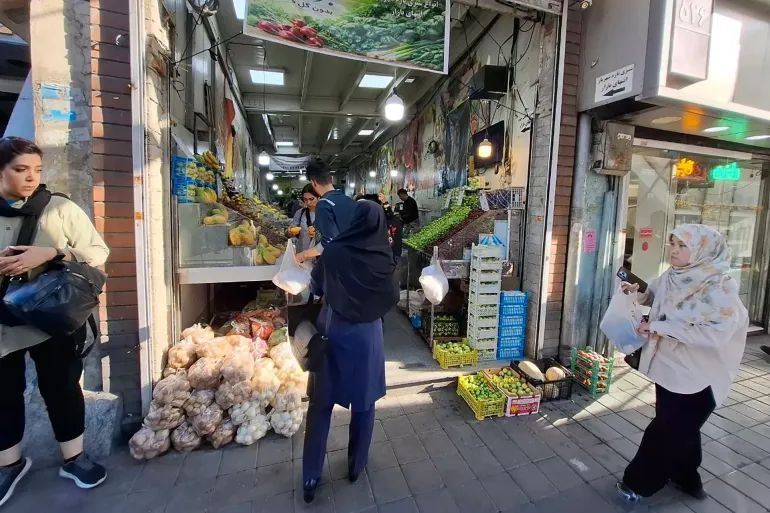
However, Iranians suffering for years from extremely high inflation and a plunging rial have found little economic relief as the prices of basic goods, such as food, remain high despite the diplomatic breakthrough.
list of 4 itemsend of list
The Iranian economy has suffered due to decades of US sanctions. The economic crisis was exacerbated after the US and Israel launched a war against Iran on February 28. As subsequent US naval blockade on Iranian ports further added to the misery of Iranians.
In Ferdowsi Street, the beating heart of Tehran’s foreign exchange market, the scene on Thursday was a stark departure from the panic of recent months. Exchange office boards flashed rapidly changing numbers as foreign currencies, led by the dollar, took a sharp dive.
“We closed our doors just hours before the official announcement of the US-Iran understanding at a rate of 1.8 million rials to the dollar,” Amir, a 35-year-old exchange office worker who asked to remain anonymous, told Al Jazeera. “Now it has fallen to 1.54 million rials, and we expect further declines.”
Amir noted a significant increase in sales volumes although buyers remained scarce as many anticipated the rial would strengthen further, potentially dropping to 1.4 million to the dollar or lower.
The recent gains mark a sharp turnaround. After the outbreak of the war, the exchange rate jumped to a historic peak of 1.9 million rials (190,000 tomans) to the dollar in March before settling at about 1.685 million just before recent attacks carried out despite a ceasefire.
Despite the rial’s recovery, a walk through Tehran’s grocery stores reveals a starkly different reality. For Iranians grappling with the economic fallout of crippling sanctions and the US naval blockade, the diplomatic thaw has yet to lower the cost of living.

Reza, a 42-year-old Tehran resident, told Al Jazeera that prices for daily staples like milk, cheese, cooking oil and flour remain unchanged. “They say the dollar dropped, but my shopping basket costs the same as last week,” he said. “This means the agreement hasn’t reached our pockets yet.”
From behind the cash register, 55-year-old shop owner Ramin echoed his customer’s frustration. He explained that while the government continues to distribute subsidised goods like bread, the fluctuations of the free-market dollar do not immediately impact basic food prices.
The value of the dollar on the free market varies from the official exchange rate.
Pointing to a shelf of imported goods, another shopkeeper named Karim noted that items like shampoo, toothpaste and laundry detergent are still locked at inflated prices.
“Distributors say they bought these goods two months ago at the old dollar rates,” Karim explained. “Prices will remain high until the old stock runs out and new goods enter at the lower exchange rates.” He estimated it would take at least two weeks for the market to adjust, meaning Iranians will continue to face compounding inflation in the interim.
While Main Street struggles, Tehran’s stock market is experiencing an unprecedented boom amid expectations of improved economic conditions. The trading floor has been awash in green since the initial leaks of the Washington-Tehran agreement emerged.
On Monday, the main index jumped by a record-breaking 161,000 points in a single session, marking the highest-ever influx of cash from individual investors.
By Tuesday, the market continued its staggering ascent, climbing another 112,000 points to cross the psychological barrier of 5 million, ultimately settling at a historic high of 5.1 million.

Saeed, a 40-year-old investor, called it a “historic day”. He noted that investors are rushing to buy shares in the energy and petrochemical sectors, betting heavily on the resumption of exports and the reopening of global markets.
However, Saeed remained cautiously optimistic. “The stock market is often driven by rumours,” he warned. “I don’t want to repeat the experience of the 2015 nuclear deal when the market soared and then collapsed after the US withdrawal.”
He was referring to US President Donald Trump’s 2018 withdrawal from the agreement, under which Iran agreed to restrictions on its nuclear programme in exchange for sanctions relief.
The wait-and-see approach in effect has paralysed other sectors of the economy. In central Tehran’s electronics hubs, 38-year-old shop owner Reza reported that while the prices of imported appliances have dropped in tandem with the dollar, sales have stalled because customers are holding out for steeper discounts.
A similar freeze has gripped the housing market. Nasrin, a 36-year-old real estate agent in northern Tehran, observed that a recent price surge that accompanied the initial truce has now given way to stagnation. Many property owners are clinging to inflated prices, seemingly unaware that the market dynamics have shifted, bringing property transactions to a virtual standstill.
For macroeconomic experts, the mixed market signals are entirely expected. Hossein Selahvarzi, the former head of the Iran Chamber of Commerce, Industries, Mines and Agriculture, cautioned that the new agreement is “not a magic wand” capable of instantly fixing years of structural issues in the economy.
While the war severely damaged Iran’s infrastructure, Selahvarzi emphasised that the roots of the country’s economic malaise were firmly planted well before the bombing began.
“War is the enemy of investment, production, trade and public welfare,” Selahvarzi told Al Jazeera. He warned against the analytical mistake of believing that a peace memorandum alone would revive the economy.
“Ending the military confrontation does not necessarily mean the beginning of economic prosperity,” he said, stressing that restoring stability to the business environment remains the country’s most urgent priority.
“What we have before us is a limited and fragile opportunity to correct course and rebuild the economy, and this opportunity could be lost quickly if not managed correctly.”
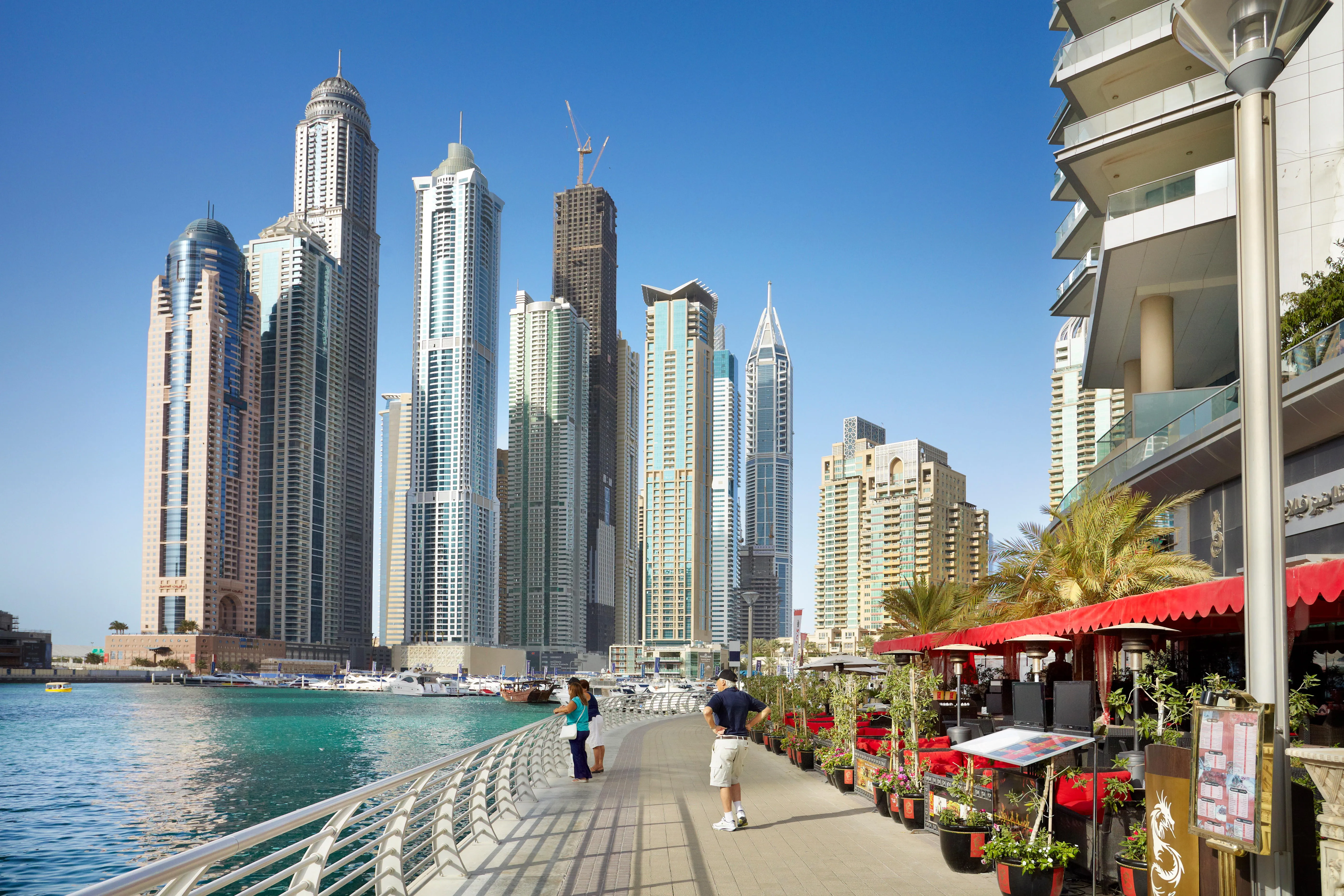

DUBAI holidays can now go ahead as the UK Foreign Office has lifted the travel ban.
All non-essential travel to the United Arab Emirates (UAE) was banned back in March.

This was due to the Iran conflict which saw Dubai caught up in the attacks, which included a drone strike on Dubai International Airport.
However, the US and Iran have since signed a peace plan that ends the ongoing war.
In response, the UK Foreign Office has updated their travel advice earlier today.
It now says: “FCDO no longer advises against all but essential travel to UAE.”
It still warns that the situation is “unpredictable and attacks could resume at short notice”.
However, the lifting of the ban means holidays can resume to the region.

Last year, 1.4million Brits visited Dubai alone, which have since massively dropped due to the travel ban.
British Airways and Virgin Atlantic have already suspended flights to Dubai until October 2026 and winter 2027, respectively.
However, Emirates continues to operate flights between the UK and the UAE.
The travel ban being lifted also affects Abu Dhabi, where holidays can also resume.
The UK Foreign Office has lifted the travel ban for Qatar as well, which includes flights going through Doha.
In response, Qatar Airways has increased the number of flights operating between the UK and Doha, including 49 flights a week from London Heathrow and 14 a week from Edinburgh.
The Sun’s Head of Travel Lisa Minot explains more:
It’s back!
Travel to the Middle East plummeted in the wake of the Iran war and our Foreign Office advising against all but essential travel to the UAE, Qatar, Bahrain and Kuwait.
For decades, British sun-seekers have been used to flying via the Middle Eastern hubs. Airlines like Emirates, Etihad and Qatar aggressively took on the legacy carriers like British Airways and Singapore Airlines with value flights and unbeatable service.
All that came shuddering to a halt when the war in Iran saw missiles fired at the glitzy skyscrapers of Dubai and drones were shot down over Qatar’s major hub airport in Doha.
Overnight, hotels emptied and travellers scrabbled for direct flights to destinations in the Far East and Australia, or switched to the traditional hub airports in Singapore and Hong Kong.
With the peace plan now agreed, there is light at the end of the tunnel.
It is fantastic news that the Foreign Office has moved swiftly to lift the blanket ban that threw the holiday plans of millions into chaos.
Demand to Dubai and its neighbouring emirates including Abu Dhabi will no doubt bounce back quickly.
Those tourism-dependent countries are desperate to tempt us back. Expect a wave of great holiday deals and rock bottom fares in the coming weeks to encourage us to pack our bags.
But there is still a sting in the tail – the shocking rise in oil prices due to the closure of the Hormuz Straits hit the industry hard. Airfares will have to rise as airlines attempt to balance their books after such a sustained period of unrest.
But for now, for those who loved the Dubai beach clubs or appreciated the chance to travel seamlessly across the globe via the Middle East, there’s cause for celebration.
The gateway to these sun-drenched spots is open once more.
This affects long-haul holidays to places like Sri Lanka, the Maldives and Australia, who often use these Middle East hubs as stopover destinations.
Many destinations have seen a drop in tourism because of the war – Thailand predicted as many as 11million long-haul arrivals this year, but has since dropped this to 10million.

Oil fell sharply in early trading after US President Donald Trump and his Iranian counterpart, Masoud Pezeshkian, put their names to an initial accord to halt hostilities, a move expected to restore the flow of crude through the Strait of Hormuz, one of the world’s most important shipping arteries.

At the time of writing on Thursday morning, the front-month contract on WTI, the US benchmark, was down by 2.3% to $75 a barrel, while Brent crude, the international gauge, traded 2% lower at around $78 a barrel.
Both remain above the roughly $70 level seen before the conflict, but they have fallen well below the peaks of more than $100 reached only weeks ago.
The deal sets a 60-day window for the two sides to negotiate a final settlement on Iran’s nuclear programme, with Tehran agreeing in the interim to dilute its stockpile of highly enriched uranium.
Crucially for energy markets, it lifts US-backed sanctions, allowing Iran to resume selling its oil freely, and clears the way for tankers to move crude out of the Persian Gulf once more.
US President Donald Trump has said the strait will be fully open by Friday and operate without transit charges, a pledge that has encouraged traders to bet on easing supply pressures.
After signing the memorandum of understanding, Trump stated, “oil down, stocks up”, with hand motions.
The optimism arrives against a strained backdrop.
In its June Oil Market Report, the International Energy Agency said strategic oil reserves across advanced economies had slipped to their lowest level since 1990, with government stockpiles in OECD countries down by 163 million barrels since the conflict began as emergency releases accelerated.
The agency also trimmed its outlook for global demand, which it now expects to contract through 2026 as elevated fuel prices and supply disruptions bite, before recovering next year.
It cautioned that any rebound in supply may be gradual, citing the slow clearance of mines and continued disruption to shipping routes even with the interim deal in place.
Flows through the Strait of Hormuz had already begun to recover, rising from a May low to around 12 million barrels a day in early June.
Equities offered a patchier picture following Wednesday’s losses on Wall Street, where the S&P 500 fell 1.2% after fresh Fed projections showed nearly half of policymakers expect at least one interest rate hike this year.
The Dow Jones Industrial Average shed 1%, and the Nasdaq Composite slid 1.3%.
In his first press conference as Fed chair, Kevin Warsh declined to forecast where rates would end the year and signalled a rethink of how the central bank communicates, dropping the customary hints about future policy direction from its statement.
US President Donald Trump, who had long pressed Warsh’s predecessor to cut rates, was unusually relaxed about the outcome.
“It’s all right. Whatever,” Trump told reporters in France as he attended the G7 meeting.
Asked about the prospect of a hike, he said it was “hard to believe” but that, with Warsh now in place, he was “guided by what he wants.”
US stock futures pointed higher early on Thursday, with contracts on the S&P 500 up 0.9% and on the Nasdaq Composite around 1.4% higher.
In Asia, Tokyo’s Nikkei 225 and South Korea’s Kospi both jumped 2.3%, helped by hopes for an end to the Iran war and strong demand for technology shares.
European trading was more subdued, with the Euro Stoxx 50 rising 1% but the broader pan-European Stoxx 600 trading flat.
The UK’s FTSE 100, Germany’s DAX 30, Italy’s FTSE MIB, Spain’s IBEX 35, the Netherlands’ AEX, and Switzerland’s CH20 all traded between 0.4% and 0.8% higher than their Wednesday close.
France’s CAC 40 led the pack and jumped roughly 1.3%.
Additional sources • AP
Russia’s oil refineries have been heavily targeted, damaging its energy facilities and the country’s fuel crisis.

Published On 18 Jun 202618 Jun 2026
Ukrainian drones have hit a Moscow oil refinery for the second time this week while Russia fired missiles at Kyiv, as President Volodymyr Zelenskyy seeks support from the United States and Europe to reach a deal to end the war.
Russia’s Defence Ministry said on Thursday that its air defences shot down 555 Ukrainian drones over several regions overnight, with almost 200 intercepted as they were approaching the Russian capital.
list of 4 itemsend of list
Moscow Mayor Sergey Sobyanin said several drones hit an oil refinery.
“Air defence forces continue to repel a massive attack. Several drones managed to reach the Moscow oil refinery,” Sobyanin said, adding that a shopping centre also suffered minor damage.
The attack on the oil facility is the second this week, after a drone attack on Tuesday halted operations at the refinery, according to the Reuters news agency, as widespread damage to Russian energy facilities worsens the country’s fuel crisis.
The regional governor said that in the surrounding Moscow region, a high-rise residential building, an industrial facility and a number of private houses were also damaged in the drone attack. The Sheremetyevo airport, Moscow’s busiest, suspended flights and evacuated people, as several sought shelter in the car park, the airport said in a statement.
Kyiv meanwhile came under a second Russian air attack this week, as ballistic missiles were unleashed on the Ukrainian capital, city officials said. Earlier this week, a major attack on Kyiv by Russia killed 11 people and damaged a UNESCO-listed 1,000-year-old monastery, drawing condemnation from European leaders. Russia denied striking the monastery.
The attacks come as Zelenskyy works to pressure Russia into negotiating an end to its more than four-year-long war. Zelenskyy said he had spoken to US President Donald Trump, French President Emmanuel Macron and other leaders from G7 countries to coordinate ways to end the war.
G7 leaders pledged to strengthen Ukraine’s air defences and increase pressure on Moscow’s war economy, including by tightening sanctions on the Russian oil and gas sectors.
Trump told reporters he was “gonna do whatever I can” to end the war.
Zelenskyy said he received important commitments from the G7, including “more air defence missiles along with licenses to produce them, and a winter support package.”
“Importantly, the US is ready to provide backstop across these lines of effort,” Zelenskyy wrote on X. “It is key that everything discussed be implemented. Russia must come to learn that its war will never be normalised.”
Brent crude drops as much as 1.6 percent, while key stock indices in Japan, South Korea and Taiwan climb.

Published On 18 Jun 202618 Jun 2026
Oil prices have dropped following the United States and Iran’s signing of an interim peace agreement, resuming a slide interrupted by US President Donald Trump’s warning that he could restart his military campaign.
Brent crude fell as much as 1.6 percent on Thursday morning in Asia, returning the international benchmark to almost exactly where it was 24 hours previously.
list of 4 itemsend of list
Brent futures for delivery in August stood at $78.23 as of 04:00 GMT, only about 7 percent higher than before the US and Israel launched their war on Iran on February 28.
After several days of declines, Brent briefly spiked above $81 a barrel on Wednesday after Trump warned that the US could “go right back to dropping bombs” on Iran if it doesn’t “behave”.
Asian stock markets rallied on Thursday on renewed optimism for an end to nearly four months of disruption to global energy supply chains.
Japan’s benchmark Nikkei 225 and South Korea’s Kospi both hit all-time highs, gaining 1.8 percent and 1.4 percent, respectively.
Taiwan’s Taiex rose as much as 1.3 percent.
Hong Kong’s Hang Seng Index bucked the trend, dropping 1.7 percent.
US stock futures, which are traded outside of regular market hours and often foreshadow the next day’s performance, climbed, with those tied to the benchmark S&P 500 and the tech-heavy Nasdaq Composite climbing about 0.8 percent and 1.3 percent, respectively.

Pakistani Prime Minister Shehbaz Sharif, who mediated the negotiations between Washington and Tehran, said on Wednesday that the US-Iran memorandum of understanding (MoU) had entered into force with “immediate effect”.
Sharif said Iran would “instantly reopen” the Strait of Hormuz and the US would “immediately” lift its naval blockade of Iranian ports, though it was not immediately clear if the announcement had any effect on boosting maritime traffic in the critical waterway.
Shipping in the strait has been reduced to a fraction of peacetime levels due to the threat of Iranian missiles, drones and mines, as well as the US blockade.
While more than 500 vessels are estimated to be waiting to exit the Gulf through the strait, shipping companies have expressed concern about the lack of clarity on how to ensure the safety of their vessels and crews in the channel.
In a statement earlier this week, the Baltic and International Maritime Council (BIMCO), one of the world’s largest associations for shipowners, said the US and Iran had yet to provide information about “key aspects such as timings and safe routes”.
“Due to lack of details and a history of overly optimistic reassurances, we believe the security situation for the shipping industry remains volatile, and we still consider it very risky for ships to commence transits at this point,” Jakob Larsen, chief safety and security officer at BIMCO, said in a statement on Monday, responding to the initial announcement of the MoU.
“We advise shipowners to continue doing thorough risk assessments and appeal to all parties to put the safety of seafarers first.”
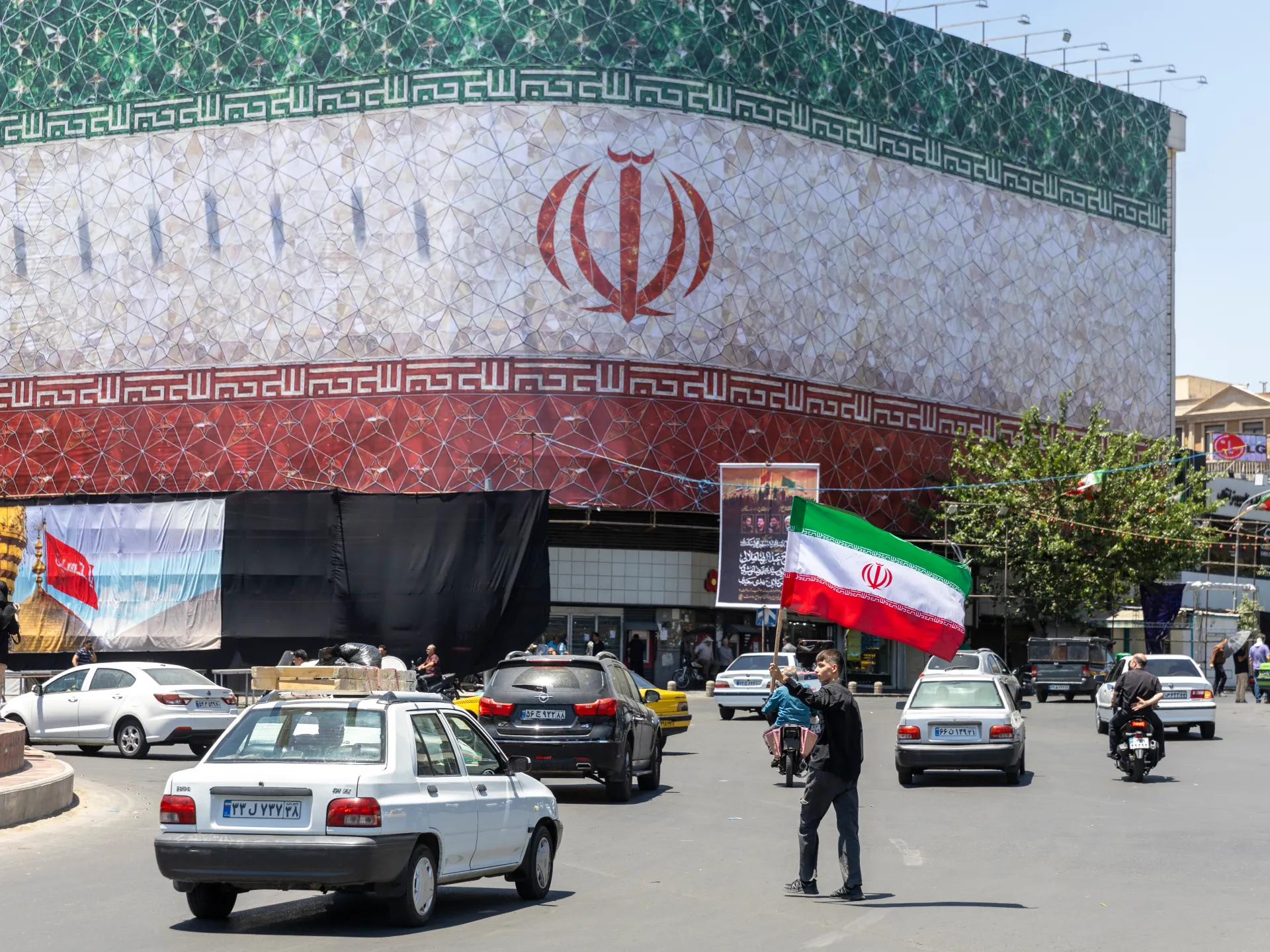
Iran’s Ministry of Foreign Affairs spokesperson, Esmaeil Baghaei, has announced that a memorandum of understanding with the United States has been finalised and signed electronically by both sides.
He added that the agreement has already gone into effect.
list of 3 itemsend of list
“The text of the Islamabad Memorandum of Understanding was finalised with the signatures of the presidents,” Baghaei told the news agency IRNA. “Now it is time to test the implementation of the agreement.”
Wednesday’s statement appears to confirm that the US and Iran have agreed to suspend military operations, paving the way for further negotiations.
Given that both sides signed the agreement electronically, Baghaei noted that there would be no signing ceremony on Friday in Geneva, Switzerland, as had previously been expected.
Negotiating teams, however, still plan to be in the Swiss city. A decision on a possible in-person meeting between them is expected in the coming hours, though for now such plans are paused, according to Baghaei.
While the office of US President Donald Trump has yet to issue a formal statement on the signing, Al Jazeera correspondent Mike Hanna explained that a White House spokesperson confirmed earlier in the day that it happened.
But Hanna warned that the memorandum is likely to face domestic backlash in the US, where Trump had been under right-wing pressure to take a hard line against Iran.
“There’s a great deal of dissatisfaction with the memorandum of understanding, as it has been outlined to the public at this particular point, even among some Republicans who have expressed the concern that Iran is being treated leniently,” Hanna said.
He also emphasised the administration’s position that the memorandum is not a full-fledged deal but rather a prelude to more negotiations.
“The administration is fighting hard to persuade the American public and American politicians that this is not a defeat for the United States,” Hanna said.
Since February 28, the US and Israel have been jointly engaged in a war against Iran, though a temporary ceasefire suspended much of the most intense fighting on April 8.
Trump has repeatedly said his goal in launching the war was to prevent Iran from acquiring a nuclear weapon.
Since the memorandum was revealed, he has highlighted the document’s assurances that Iran will not seek a nuclear weapon, though Tehran has long denied any intention of doing so.
But according to a US account, the memo goes beyond the question of nuclear weapons. It sets up a 60-day timeline for a final deal to be struck, and it indicates that the US will rally “regional partners” to create a $300bn for Iran’s reconstruction.
US sanctions would also work towards lifting its sanctions against Iran, and the country would issue waivers for the export of Iranian fuel.
Iran has touted those terms as a victory. On Wednesday, chief negotiator Mohammad Bagher Ghalibaf told Fars, an Iranian state news agency, that the US had failed to achieve its goals with Iran and pointed to the memo as proof.
“The agreement is a record of US failure,” Ghalibaf said. “People will see it and judge.”
He also explained that the Strait of Hormuz would not return to “pre-war conditions” after the 60-day period for negotiations stipulated in the agreement. He suggested that Iran will expect payments for use of the waterway.
“I emphasise again that the Strait of Hormuz will never return to the previous conditions,” Ghalibaf said.
“Iran has the right to sovereignty over the Strait of Hormuz, and of course, we will receive a fee for services.”
That position is likely to put pressure on the Trump administration, which had pledged that the strait, a key waterway for trade, would be “permanently toll-free”.
Since the start of the war, Iran has blocked the waterway, sending global prices for fuel, fertiliser and other goods soaring.
The US had responded with its own blockade of Iranian ports, though that effort is slated to end under the memorandum.
Both sides, however, have emphasised that the memorandum of understanding is not a final agreement on all issues of dispute. More negotiations are expected to resolve lasting impasses.
“It will only become a deal, as such, at the end of the 60-day negotiation period. At least, that’s the intention,” Hanna reported.
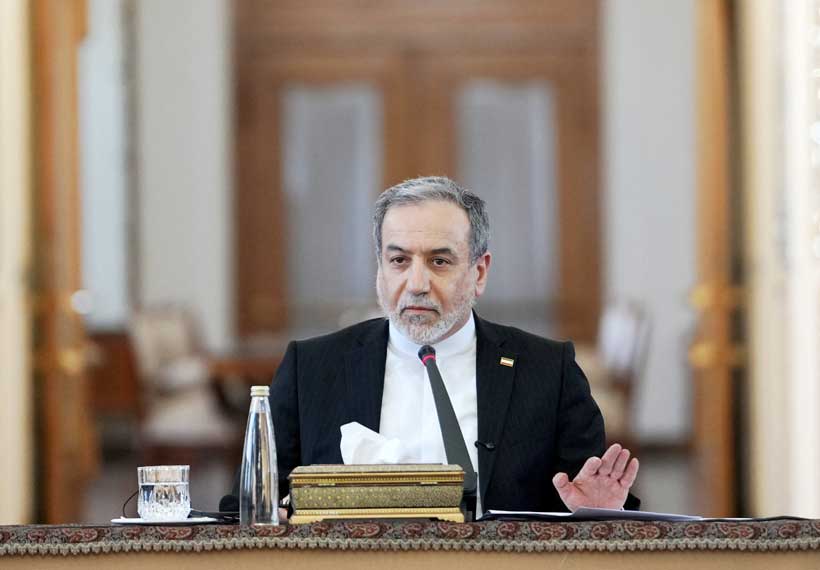
Iran’s government has portrayed the interim agreement with the United States as a victory that ended months of conflict and prevented further escalation. The deal halted a war that saw U.S. and Israeli airstrikes, disruptions to trade, and severe economic damage across Iran.
However, interviews with ordinary Iranians reveal a starkly different picture. Many citizens say years of sanctions, combined with the recent conflict, have left them struggling with rising prices, declining living standards, and deep uncertainty about the future. While the fighting may have stopped for now, many remain unconvinced that the agreement will bring meaningful economic relief or lasting stability.
For many Iranians, the ceasefire has not changed the reality of daily economic struggles.
Business owners, students, and workers interviewed across the country described a population focused on survival rather than recovery. Many reported cutting household spending, reducing social activities, and adjusting to higher living costs. Small businesses continue to face weak consumer demand, while young people increasingly worry about their economic prospects.
The war added another layer of pressure to an economy already weakened by years of international sanctions, inflation, and limited foreign investment. As a result, many citizens see little immediate prospect of improvement even if the ceasefire holds.
The agreement has exposed a clear divide between the government’s narrative and public sentiment.
Supporters of the Islamic Republic view the deal as proof that Iran resisted external pressure and preserved its political system. Some hardliners argue that the country emerged stronger and demonstrated resilience despite military and economic pressure.
Many ordinary citizens, however, are less focused on geopolitical outcomes and more concerned about living standards. For them, the key measure of success is whether the agreement leads to lower prices, economic opportunities, and greater stability. So far, few appear convinced that such changes are imminent.
Beyond economic concerns, many Iranians fear that the post war environment could lead to tighter political controls.
Some citizens believe the government may use the conflict and national security concerns to justify stronger oversight and restrictions. These fears are particularly pronounced in regions populated by ethnic minorities, where previous protests have often been met with heavy security responses.
There is also uncertainty about whether public frustration over economic conditions could trigger future demonstrations. While many people remain cautious after previous crackdowns, underlying grievances over jobs, inflation, and political freedoms remain unresolved.
The ceasefire may have reduced the immediate threat of war, but it has done little to address the deeper challenges facing Iran. Public opinion appears increasingly shaped by economic realities rather than political declarations of victory.
The government may benefit in the short term from ending the conflict and avoiding further military escalation. However, lasting stability will depend on whether authorities can deliver tangible economic improvements and restore public confidence.
The biggest challenge for Tehran is that expectations remain extremely low. Many Iranians do not see the ceasefire as a turning point but rather as a temporary pause in a broader cycle of economic hardship and political uncertainty. If future negotiations fail to produce sanctions relief, investment, and economic recovery, public frustration could continue to grow despite the end of active conflict.
Attention will now shift to negotiations aimed at turning the interim agreement into a permanent settlement. Iranian leaders will seek economic benefits and sanctions relief, while Washington is expected to push for further commitments on security and nuclear issues.
Domestically, the government faces the challenge of managing economic expectations and maintaining stability. Whether the ceasefire translates into meaningful improvements for ordinary Iranians may ultimately determine how the agreement is judged inside the country.
With information from Reuters.
Al Jazeera journalist Al-Tahir al-Mardi has been reunited with his family in Khartoum after three years of separation and forced displacement caused by Sudan’s war.
Published On 17 Jun 202617 Jun 2026
Share

Emanuel M Schwermer/DigitalVision via Getty Images
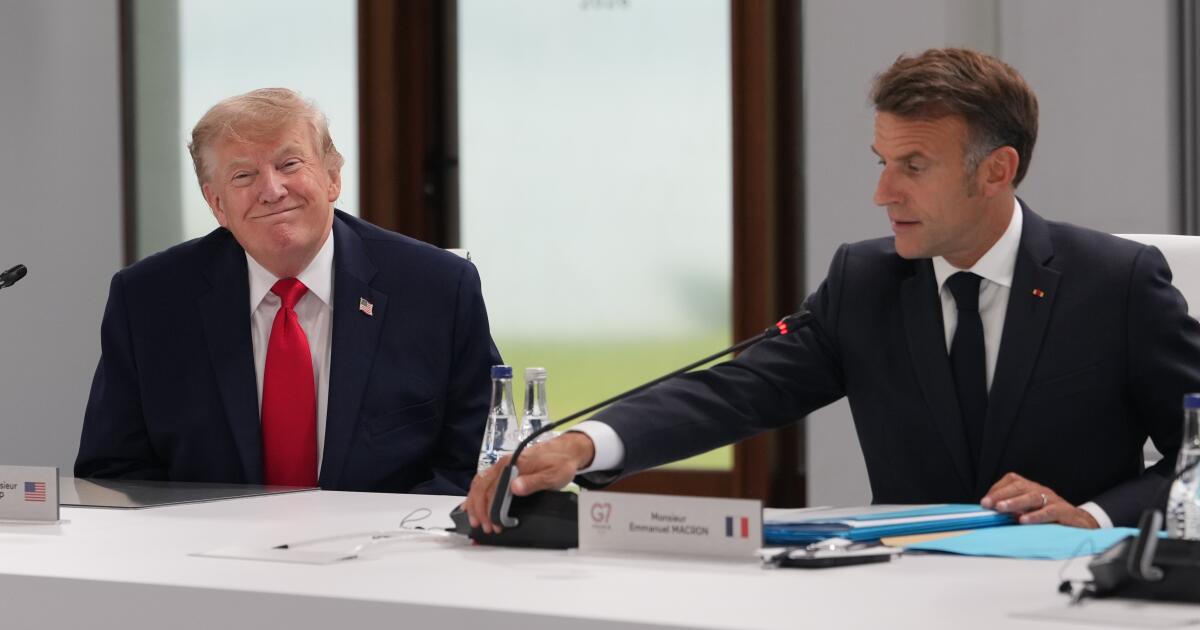
EVIAN-LES-BAINS, France — The United States could soon reimpose sanctions on Russian oil shipments after President Trump and fellow leaders at the Group of Seven summit of major industrialized democracies moved Tuesday to put the war in Ukraine back on top of their agenda, more than four years after Russia launched its full-scale invasion.
The Iran war has recently overshadowed Ukraine, but Trump said he wants to shift the focus following the announcement of an agreement to end the 3½-month-old conflict in the Gulf.
Trump said Iran will soon be “back in the rearview mirror.”
Trump said the sanctions on Russia that were eased during the Iran war to help lower oil prices can go back in place as more oil moves through the Strait of Hormuz.
“Soon we’ll be able to do that because the oil is now flowing,” Trump told reporters in Evian, the French spa town close to the Swiss border that is hosting the summit. “We’re in a position to do that soon.”
The U.S. in March temporarily eased some sanctions on some Russian oil shipments as crude prices sharply increased. The waiver has been extended.
Ukrainian President Volodymyr Zelensky joined the G7 leaders for talks on the war in his country. They wrapped quickly, after just 75 minutes.
Zelensky said Ukraine is serious about peace while Russia toys with world leaders. “The entire ‘Seven’ supports Ukraine unanimously today,” he said.
Zelensky added that G7 leaders supported Ukraine’s need for more Patriot missiles and discussed how to increase production by licensing production. Patriot missiles are able to counter Russian ballistic missile attacks on Ukraine’s power grid and cities.
As the U.S. under Trump has cut back aid to Ukraine, France and its European allies are now the biggest providers of military and financial support to Kyiv.
Trump downplayed the impact of the Russia-Ukraine war on the U.S. but lamented the death toll.
“The whole thing is ridiculous,” Trump said. “So, yeah, I’m going to do whatever I can.”
Meanwhile, the U.K. announced new sanctions targeting the “shadow fleet ” Russia uses to ship oil and gas, and the finance networks used by Moscow to evade Western sanctions. The ships targeted include several recently purchased by Russia to transport liquefied natural gas from its sanctioned Arctic LNG 2 project.
Hours before the summit began Monday, Russia fired hundreds of drones and dozens of missiles at Ukraine’s biggest cities in a barrage that killed 11 people and set fire to a religious landmark.
The attacks came after Zelensky and Putin spoke separately by phone with Trump on Sunday, the U.S. leader’s 80th birthday.
While campaigning in 2024 for a return to the White House, Trump claimed he could end the Russia-Ukraine war within 24 hours of taking office. However, negotiations have faltered and Trump has acknowledged it has proved much harder than he thought.
Ukraine on Monday officially started European Union membership negotiations, launching a process that will require its government to commit to years of political reforms even as it fights the Russian invasion.
Ukraine sees EU membership as a security guarantee for a stable future once the war ends. Its best guarantee would be membership in the NATO military alliance, but the Trump administration insists that cannot happen, and others are wary of Ukraine joining while the war continues.
The U.S.-Iran ceasefire deal got plenty of attention at Tuesday’s sessions, with Trump voicing his openness to sending the deal to Congress for review. The text has not been made public.
“I like the idea, send it to Congress please,” Trump said at the start of a meeting with United Arab Emirates President Sheikh Mohamed bin Zayed Al Nahyan on the summit’s sidelines. He added, “I mean who wouldn’t approve it?”
Republicans on Capitol Hill say they want Trump to provide more information about the agreement, with some expressing skepticism that the deal can deter Iran from pursuing a nuclear weapon.
Trump also met with the Emir of Qatar, Sheikh Tamim bin Hamad al-Thani. The Gulf nations are not part of the G7, but French President Emmanuel Macron extended invitations to their leaders at a fraught moment for their region.
Trump also expressed frustration over Israel’s continued hostilities with the Iranian-backed militia Hezbollah in Lebanon, telling reporters he’s “not happy with the way Israel has handled themselves with Lebanon and with Hezbollah.”
Trump said Israeli operations to target Hezbollah “should have been able to deal with them faster,” adding: “It just goes on forever. And when that happens, it throws a negative light on the big deal. And that’s the deal with Iran.”
Macron said France and other Western partners are “ready to take action very quickly” to help reopen the Strait of Hormuz peacefully to ease the economic impact of rising oil prices. France and the U.K. have championed a mission to restore maritime security there as soon as conditions allow.
The G7 comprises France, the United States, Canada, Germany, Italy, Japan and the United Kingdom. Other guest nations, including Brazil, India, Kenya and South Korea, were invited to participate in some discussions.
Superville, Corbet and Madhani write for the Associated Press. Madhani reported from Geneva. AP writers Jill Lawless and Samuel Petrequin in London, Collin Binkley in Washington and Illia Novikov in Kyiv contributed to this report.

Damaged vehicles are seen following an Israeli airstrike that targeted an apartment in Choueifat, south of Beirut, Lebanon, on May 28. File Photo Wael Hamzeh/EPA
BEIRUT, Lebanon, June 16 (UPI) — Lebanon’s economy, shattered by the 2019 financial collapse, has suffered another major shock from the Israel-Hezbollah war, which has disrupted recent recovery efforts and hit the tourism sector — the country’s main revenue generator — particularly hard.
The war, which began in October 2023 when Hezbollah opened a support front for Gaza, escalated as Israel intensified its attacks and the Iran-backed regime resumed fighting in solidarity with Iran last March after 15 months of inactivity. It further deepened Lebanon’s economic crisis and left the country grappling with its repercussions.
Direct and indirect losses are initially estimated at $20-30 billion, reflecting extensive destruction and mass displacement caused by the conflict, along with severe disruptions to economic activity. Inflationary pressures have also intensified due to the closure of the Strait of Hormuz.
Nearly every sector of the economy has been affected.
The escalation in March dramatically expanded the scale of destruction, with more than 70 villages in southern Lebanon reduced to ruins by advancing Israeli troops. Entire neighborhoods were leveled, while businesses, public infrastructure, schools, hospitals, and roads suffered extensive damage.
Beirut’s southern suburbs and parts of the Bekaa Valley in eastern Lebanon were also heavily targeted by Israeli airstrikes, resulting in similar devastation.
Beyond the heavy casualty toll of 3,826 killed and 11,851 injured since March 2, the widespread physical destruction, and the displacement of 1.2 million people forced to flee their homes and villages under Israeli evacuation orders, the war has also resulted in significant indirect losses.
Unemployment rose as job losses mounted, while recession and inflation eroded household purchasing power, making people poorer.
The tourism sector was also badly hit, and the economy is expected to contract by between 7% and 10% in 2026 if the war continues, according to estimates by Finance Minister Yassine Jaber.
More critically, the recent escalation came as the reform-minded government of Prime Minister Nawaf Salam had begun putting the country on a path to recovery, and the economy was starting to pick up.
Despite the war — largely concentrated in southern Lebanon at that time — 2025 ended on a positive note, with the World Bank reporting modest GDP growth of 3.5 percent and a rebound in tourism.
A key highlight was a visit by Pope Leo XIV, which raised hopes and called for peace, alongside approximately 1.63 million visitors; an increase of 44.6% compared with the previous year.
“That showed that demand for Lebanon was returning… The escalation in March interrupted that momentum,” Tourism Minister Laura Khazen Lahoud told UPI.
Lahoud explained that the collapse became visible in cancellations, empty restaurants, very low hotel occupancy, and travel agencies shifting from selling trips to managing cancellations.
According to figures released by the relevant syndicates, travel and tourism activity declined by around 80%, while hotel occupancy in Beirut fell to roughly 7-10%, occasionally reaching 12%.
Tourism activity became concentrated in “a very small number of spots,” where hotels sought to attract displaced people seeking refuge in safer areas, according to Lahoud.
Charles Arbid, President of Lebanese Economic Social and Environmental Council, explained that the country was in “a state of stagflation,” with little economic activity or production, inflation reaching 20%, and businesses closing down or partially operating.
“This is a catastrophic economic situation, following a prolonged period of weak growth and the accumulation of structural economic problems,” Arbid said in an interview with UPI, referring to the drop in government revenues due to the inability to pay taxes and the complete halt of economic activity in southern Lebanon.
He was particularly concerned about the impact of the war on the population, as many were losing their jobs and depleting their remaining savings to cope with the spiraling inflation.
He said Lebanon is facing “a social and societal crisis,” exacerbated by the massive displacement, and would need a “Marshall Plan” for reconstruction, rehabilitation of its crumbling infrastructure, securing the return of the displaced to their villages, and supporting economic recovery.
In the meantime, many are struggling to keep their businesses afloat and secure an income.
Mohammad Farid, who has been displaced three times with his wife and son from their home in Beirut’s southern suburbs since 2024, has not given up despite suffering heavy losses: $250,000 after an Israeli strike destroyed a solar panel project he had co-partnered in the village of Ansar in southern Lebanon, and about $100,000 from two shops badly damaged in Israeli strikes in Beirut’s southern suburbs.
Farid and his wife, Malak, had started a new business, Oilganic, specializing in cold-pressed organic oils shortly before the 2023 war erupted, importing oil press machines from China and renting their first shop.
Their business began to flourish, expanding into online sales and building a strong reputation.
“That came to a halt when the war extended to our area, forcing us to leave and then return after a truce was reached, rent a new shop, and see it destroyed again months later,” Farid told UPI.
They were again displaced, taking refuge at their friends’ house in the mountains, where they resumed production on a smaller scale using small oil-press machines.
“We are doing our best so as not to lose our clients,” Farid said, determined to grow his business and relocate to his native border village of Naqoura in southern Lebanon after the war ends. “I want to go back to the south, rebuild our house, and continue my oil business there. This is our land, and we will never give it up.”
A glimmer of hope for ending the longest and most devastating war between Israel and Hezbollah emerged after the United States and Iran reached a memorandum of understanding, which was due to be signed in Geneva on Friday.
The agreement includes a full ceasefire in Lebanon, which has not yet been fully observed by either side.
A cessation of hostilities, or even a durable de-escalation, could bring much-needed relief, starting with salvaging part of the summer tourism season, largely relying on Lebanese expatriates and the diaspora.
Lahoud said the diaspora would help sustain the sector but noted that a very large segment of the diaspora, whether in West Africa or northern Europe, originates from southern Lebanon and would be less likely to visit this year.
She explained that the tourism sector has survived repeated shocks, but emphasized that “businesses cannot absorb losses indefinitely,” with hotels, restaurants, travel agencies, transport companies, event organizers, and seasonal workers remaining under real pressure.
As the region is being reshaped by major developments, Lebanon is looking to close the chapter of war and move into a period of peace, engaging in U.S.-mediated direct negotiations with Israel for the first time.
Arbid appeared confident that Lebanon “is heading into a better phase,” one that would require a new political understanding and security stability.
“That would pave the way for reconstruction and recovery… It will be a long journey, but we will make it in the end,” he said.

WASHINGTON — As Spencer Pratt fell behind in the Los Angeles mayoral primary, an unexpected group began claiming election fraud: people tracking the Republican’s success on prediction markets, the increasingly popular online exchanges on which people can make bets on almost anything.
“Crazy how much voter fraud can be done with mail in ballots,” one user following bets on the mayoral race wrote last week on Kalshi, one of the top trading platforms.
“Same old California fraud,” said another who had bet that Pratt would win.
Election fraud claims extended to social media, where a handful of influencers who post content for prediction market platforms questioned the ballot count. “It’s a dead heat on Kalshi,” one user wrote on social media. “Is CA cheating to get Spencer Pratt out?”
Kalshi told the influencers to delete the posts, which violated company guidelines. Polymarket, the other leading platform, directed them to remove the paid partnership label from those posts.
The amplification of election misinformation by users who had money staked on the mayoral race adds a new twist to evolving scrutiny of prediction markets, and scholars say the ability to bet on elections broadly raises questions about whether the exchanges could alter how Americans engage in democracy.
“Elections are not a game,” said Davina Hurt, director of government ethics at the Markkula Center for Applied Ethics at Santa Clara University. “[If market] probabilities begin influencing donor decisions, media attention, the energy around [campaign] volunteers — at that point, markets aren’t just observing the election. They’re a part of it.”
Fans of the exchanges say they are powerful tools that can help decision makers, and company leaders have touted them as highly accurate predictors that can act as an antidote to misinformation and provide election insights.
“By shifting focus from ‘what people say’ to ‘where they put their money,’ and filtering out social media noise and pundit bias, we are providing a level of clarity and predictive power that cannot be matched,” said Kalshi spokesperson Dani Lever .
But these markets’ rapid rise has also raised a host of questions among members of Congress, state lawmakers and others — about betting on elections, wars and other political events, about potential insider trading, and about whether the platforms should be left to self-regulate. Some states are also in legal battles with the federal government over whether the activity amounts to gambling, which they seek to regulate.
“It’s like we’re in the 1930s with financial markets — we have some things that we want to regulate and restrict [as a country], and we’re sort of in the early stages of trying to lay out what the rules are,” said Koleman Strumpf, an economist at Wake Forest University.
The discourse around the Los Angeles mayoral race was the latest to raise questions at the intersection of prediction markets and politics. Earlier this year, an Army soldier was indicted after allegedly using his knowledge of the planned U.S. operation to capture former Venezuelan leader Nicolas Maduro to make bets on it, winning more than $400,000. He has pleaded not guilty.
Around the same time, several anonymous users reportedly earned $2.4 million combined by making remarkably prescient bets on the Iran war, prompting concern in Congress about insider trading. And during the primary elections, Kalshi fined a few politicians for betting on themselves, while the Justice Department began investigating a former congressman on similar charges.

Kalshi co-founder Luana Lopes Lara speaks at a conference in Santa Monica, Calif., in April.
(Anna Webber / Inc.)
The episodes set off a debate in Washington. The Republican-led House Oversight Committee opened an investigation into potential insider trading, and a bipartisan group in Congress has introduced a flurry of bills seeking to put up guardrails. It remains unclear whether any will pass this session.
The chatter in Congress appeared to lead the Commodities Futures Trading Commission, which regulates prediction markets, to propose a new framework last week to govern issues raised by lawmakers, such as potential betting on wars. Commission Chair Mike Selig said the proposal would allow for scrutiny of suspicious activity “while letting legitimate markets move forward pursuant to the public interest.”
The markets commission under former President Biden was viewed as somewhat skeptical of prediction markets; the agency under President Trump — whose eldest son holds advisory positions at both Polymarket and Kalshi — has been seen as more favorable to the industry. The federal government has sued several states over their attempts to regulate the markets under state laws banning sports gambling and other measures.
Sen. Adam Schiff (D-Calif.), who has introduced legislation on the topic, said the agency’s framework would benefit the industry at the expense of the public interest.
The agency lacks “the leadership, will and investigative staff needed to confront the dangers of election misinformation, insider trading, and more,” Schiff said, “and seems content to allow the industry to police itself.”
As California’s primary neared, people staked their dollars on the state’s races in droves. On Kalshi, trading volume on one contract about who will win the L.A. mayoral race in November had reached more than $117 million as of Tuesday.
Prediction market users trade on the outcome of future events, making money if they’re correct and losing money if they’re wrong. Someone can purchase a contract on the prediction that L.A. Mayor Karen Bass will win in November, a yes contract, or on the prediction that she will lose, a no contract.
On Tuesday, Bass contracts on Kalshi were selling at 63 cents each for yes and 38 cents for no, meaning the market was forecasting a 63% chance of her winning. Users receive $1 per contract if their prediction is correct, creating a profit on their initial investment.
Prediction markets generally create more accurate forecasts than political polls, according to Strumpf, whose research has examined 30 years of prediction markets in various forms.
Many of the issues critics raise are theoretical and have not been seen in practice, Strumpf said. By his analysis, there is no evidence that the markets have ever influenced an election outcome. He said serious traders tend to do extensive research in order to make money, meaning their bets are educated.
Rep. Mike Levin (D-San Juan Capistrano), who has introduced legislation to prohibit event contracts involving terrorism, war, assassination and deaths, said the platforms may be useful in some cases but shouldn’t be left to police themselves. He said he’s concerned that the markets create “all the wrong incentives” for people, including political candidates and officials, to abuse inside knowledge.
“I don’t trust them to self-regulate at all,” Levin said of the companies. “The federal role should be guardrails that are reasonable and pragmatic.”
Skeptics’ concerns regarding elections largely center around the markets’ introduction of a new way for money to potentially influence politics.
They say the desire to elevate a candidate’s market odds could create an incentive for market manipulation, and they worry that the votes of Americans using the market could be influenced by their desire to profit.
“This has real impacts for the sanctity of our elections,” said Assemblymember Maggy Krell (D-Sacramento), who raised concerns about how prediction markets could impact the democratic process in a March letter to the state’s Fair Political Practices Commission. (California lawmakers are looking at the issue, a spokesperson for Assembly Speaker Robert Rivas (D-Hollister) said, though none of the bills introduced this year have yet moved forward.)
The platforms create a potential new channel “for dark money to flow into our elections,” Krell said. “Specifically, someone who’s opposing or supporting a candidate could potentially use sites like Kalshi to elevate that candidate and impact the entire pool.”
The industry has endeavored to “get out in front” of concerns by creating their own policies aimed at preventing insider trading, market manipulation and other issues, said attorney Ronak D. Desai, partner and head of the congressional practice at the Washington law firm Paul Hastings.
Kalshi has a ban on those practices and has banned markets tied directly to death and war, Lever said. It also screens all new users and, in the first quarter of this year, blocked more than 100 potential insider trades and referred more than 20 cases to law enforcement.
In the case of the military member who bet on the United States’ operation in Venezuela, for instance, Polymarket caught the activity and referred the case to the Justice Department, a spokesperson said. The company has referred nearly 100 cases of suspicious activity to law enforcement, he said.
Election markets are not offered on Polymarket’s U.S. exchange — though users in the U.S. and other countries that ban the company’s international exchange are widely reported to access it using online tools.
“Polymarket prohibits trading based on stolen information, illegal tips, or information obtained in breach of a duty of trust, confidentiality, or other legal obligation,” the Polymarket spokesperson said in a statement.
Aaron Klein, senior fellow in the Center on Regulation and Markets at the Brookings Institution, predicted that pressure for further regulation would continue to mount.
“The top goal of a society is to have free and fair elections,” Klein said. “At a time in our nation’s history where people are doubting the integrity of elections and foreign governments are stoking those flames, we ought to be pretty careful.”