war

Skeptical Democrats confront Hegseth about Iran war for the first time since conflict started

Making his first appearance before Congress since the Trump administration went to war in Iran, Defense Secretary Pete Hegseth faced withering questioning from skeptical Democrats Wednesday over a costly conflict being waged without congressional approval.

The war has cost $25 billion so far, according to Pentagon numbers presented to the House Armed Services Committee during the contentious hearing, ostensibly focused on the administration’s 2027 military budget proposal, which would boost defense spending to a historic $1.5 trillion.

While Republicans focused on the details of military budgeting and voiced support for the operation, Democrats pivoted to the ballooning costs of the war, the huge drawdown of critical U.S. munitions and the bombing of a school that killed children. Some lawmakers also questioned President Trump’s dealings with allies and his shifting justification for the conflict.

Hegseth dismissed the criticism as political and rebuked lawmakers who pushed him for answers.

“The biggest challenge, the biggest adversary we face at this point are the reckless, feckless and defeatist words of congressional Democrats and some Republicans,” Hegseth said.

Democrats press about reasons for war

Wednesday’s hearing stretched nearly six hours as Democrats and some Republicans questioned Hegseth over the war and his ouster of several top military leaders.

In one tense exchange, Hegseth told Rep. Adam Smith (D-Wash.) that Iran’s nuclear facilities were obliterated in a 2025 attack by the U.S., prompting Smith to question the Trump administration’s reasoning for starting the Iran war less than a year later.

“We had to start this war, you just said 60 days ago, because the nuclear weapon was an imminent threat,” said Smith, the ranking Democrat on the committee. “Now you’re saying that it was completely obliterated?”

Hegseth responded by saying that Iran “had not given up their nuclear ambitions” and still had thousands of missiles.

Smith said the war “left us at exactly the same place we were before.”

Democrats accused Hegseth of misleading Americans about the reasons for the conflict and said rising gas prices are now threatening the pocketbooks of millions of people in the U.S.

“Secretary Hegseth, you have been lying to the American public about this war from day one and so has the president,” said Rep. John Garamendi of Walnut Grove, who called the war “a geopolitical calamity,” a “strategic blunder” and a ”self-inflicted wound to America.”

Hegseth blasted Garamendi’s remarks.

“Who are you cheering for here?” he asked the lawmaker. ”Your hatred for President Trump blinds you” to the success of the war.

Hegseth defends firings of officers

The Defense secretary faced intense questions from Rep. Chrissy Houlahan (D-Pa.) about his decision to oust the Army’s top uniformed officer, Gen. Randy George, one of several top military officers to be dismissed since Trump’s reelection.

Houlahan said George was deeply respected by both members of the military and Congress and asked why Hegseth fired him. Hegseth’s response that “new leadership” was needed failed to satisfy Houlahan.

“You have no way of explaining why you fired one of the most decorated and remarkable men —” Houlahan began before Hegseth interrupted her. “We needed new leadership,” he repeated.

The Pentagon announced this month that Navy Secretary John Phelan was stepping down. Hegseth previously removed Adm. Lisa Franchetti, the Navy’s top uniformed officer, and Gen. Jim Slife, the Air Force’s No. 2 leader, while Trump fired Gen. Charles “CQ” Brown Jr. as chairman of the Joint Chiefs of Staff.

Republican Rep. Don Bacon of Nebraska said that while Hegseth is empowered to make personnel changes, he shares what he called “bipartisan concern” about the firings.

“We had a huge bipartisan majority here that had confidence in the Army chief of staff and the secretary of the navy,” Bacon said. “And I would just point out it may be constitutionally right … but it doesn’t make it right or wise.”

Hegseth has said the changes are part of building a “warrior culture” at the Pentagon.

Republican Rep. Nancy Mace of South Carolina defended Hegseth’s personnel moves, saying he is “trying to innovate and trying to change the way we do business.”

“I’m glad that you’re firing people,” Mace said. “There are people there that are getting in your way. They need to go.”

Republicans back Trump on Iran

During the extended hearing, Hegseth detailed plans to increase pay for service members and upgrade munitions while also announcing that, as of Tuesday, the Pentagon had authorized $400 million in military aid for Ukraine in its fight against Russia.

But the debate and the questions were dominated by the war in Iran.

While a fragile ceasefire is now in place, the U.S. and Israel launched the war Feb. 28 without congressional oversight. House and Senate Democrats have failed to pass multiple war power resolutions that would have required Trump to halt the conflict until Congress authorizes further action.

Republicans say they back Trump’s wartime leadership, for now, citing Iran’s nuclear program, the potential for talks to resume and the high stakes of withdrawal. Still, GOP lawmakers are eager for the conflict to end, and some are eyeing future votes that could become an important test for the president if the war drags on.

Democrats questioned Hegseth over the war’s economic impact and rising gasoline costs, noting Trump’s promise to lower consumer costs. Hegseth responded by citing the threat posed by Iran.

“What is the cost of Iran having a nuclear weapon that they wield?” he said.

Republicans expressed support for Trump’s decision to strike Iran, including Mace, who in late March had expressed concerns about the justification for the war. “The longer this war continues, the faster it will lose the support of Congress and the American people,” she wrote in a social media post.

On Wednesday, Mace noted her past concerns but said she is “impressed with where we are today.” She told Hegseth: “Everything I have seen, you have surpassed all of my expectations.”

Iran’s closing of the Strait of Hormuz, a vital shipping corridor for the world’s oil, has sent fuel prices skyrocketing and posed problems for Republicans ahead of the midterm elections. The U.S. has imposed a naval blockade of Iranian shipping and three American aircraft carriers are in the Middle East for the first time in more than 20 years.

The countries appear locked in a stalemate. Trump told Axios on Wednesday that he is rejecting Iran’s proposal to reopen the Strait of Hormuz in exchange for lifting the U.S. blockade.

Finley, Groves, Klepper and Toropin write for the Associated Press.

Source link

Lawmakers grill Pete Hegseth over Iran war in defense budget hearing

WASHINGTON, Apri; 29 (UPI) — Secretary of Defense Pete Hegseth alternated between championing a proposed massive increase to defense spending and fielding attacks from Democratic lawmakers during testimony on Capitol Hill Wednesday.

It marked the secretary’s first appearance before lawmakers since the start of a war that has roiled the global economy and decimated Iran’s military.

Hegseth appeared before the House Armed Services Committee alongside Gen. Dan Caine, chairman of the Joint Chiefs of Staff, and the Pentagon’s comptroller, Jules Hurst III. They entered the hearing room past protesters’ chants of “arrest Hegseth” and yells of “war criminal.” The secretary appeared unfazed.

“We’re rebuilding a military that the American people can be proud of — one that instills nothing less than unrelenting fear in our adversaries.” Hegseth said in his opening statement.

Hegseth’s testimony was intended to serve as a defense of the White House’s petition to Congress for $1.5 trillion in defense spending for 2027, a 44%t increase from the 2026 budget.

It’s an increase that, by itself, would be more than the total defense spending of any other nation, according to recently released figures. The spending level exceeds that spent on the Reagan-era military buildup and would be only overshadowed by levels seen during World War II.

The spending boom would come at the cost of domestic programs and at a time when federal tax revenue is set to take a $4.5 trillion hit over the next 10 years, mostly from tax cuts codified in last year’s One Big Beautiful Bill Act, according to the Bipartisan Policy Center, a Washington-based think tank.

But rather than question Hegseth on the specifics of the budget proposal, many Democratic members grilled him about the war in Iran, recent firings of senior leaders in the Pentagon and lethal strikes against alleged drug traffickers in the Pacific and Caribbean oceans.

In one heated exchange, Rep. John Garamendi, D-Calif., delivered a sharp critique of the war in Iran when questioning the defense secretary, calling it a “blunder” in which the United States had expended much to gain little.

Garamendi said it would take years for the U.S. and global economies to recover. The war has hiked average unleaded gas prices in the country to more than $4.20 a gallon and inflation to its highest level in nearly two years.

“Secretary Hegseth, you have been lying to the American public about this war from Day 1,” Garamendi said. “The strategy has been an astounding example of incompetence.”

Hegseth counterattacked. With his voice raised, he accused the congressman of “handing propaganda to our enemies.”

“I hope you appreciate how reckless it is,” Hegseth said of Garamendi’s description of the two-month-long war as a quagmire. “Shame on you.”

Hurst, the comptroller, told lawmakers the Iran war has cost the Pentagon $25 billion. Committee ranking member Rep. Adam Smith, D-Wash., responded that was the first time he had been given a cost figure, despite repeated inquiries to the department.

In March, the Pentagon reportedly petitioned Congress for an additional $200 billion to replace stocks from the war and prepare for future operations, should they be ordered. When asked about it at the time, Hegseth indicated the report’s veracity.

“That number could move, obviously,” Hegseth said then. “It takes money to kill bad guys.”

Hegseth’s central defense of the war during the hearing was arguing that it served to prevent Iran from obtaining a nuclear weapon. Republican members echoed his contention.

Iran maintains uranium supplies that could eventually be used to build a nuclear weapon if it were to be further enriched. But since the U.S. bombed Iran’s nuclear facilities in June, Iran has made “no efforts since then to try to rebuild their enrichment capability,” Tulsi Gabbard, the director of national intelligence, said in a written statement to Congress in March.

“What is it worth to ensure Iran never gets a nuclear weapon?” Hegseth asked rhetorically in Wednesday’s hearing.

A defense budget unprecedented in modern times

The Pentagon’s budget request is composed of $1.1 trillion in base discretionary funding and an additional $350 billion in mandatory spending.

The mandatory funds, which are earmarked mostly for munitions and the expansion of the defense industry, would go through the budget reconciliation process and therefore would be shielded from a potential Democratic filibuster in the Senate.

The expansion of America’s defense industrial base — the network of private manufacturers that supply the Pentagon — is a central facet of the proposed budget.

“President Trump inherited a defense industrial base that had been hollowed out by years of ‘America Last’ policies,” Hegseth said. “Under the leadership of President Trump, our builder-in-chief, we are reversing this systemic decay and putting our defense industrial base on a war-time footing.”

Another of the administration’s top defense funding priorities, as reflected in the budget document, is the procurement of munitions.

“Critical munitions are vital to the administration’s priorities to defend the homeland and deter potential aggression after years of neglect by the previous administration,” the White House wrote in a recent budget justification. Limited munitions stockpiles and the United States’ inability to quickly produce them have long troubled U.S. war planners.

While the Trump administration has pushed to expand munitions stockpiles, it has also expended massive amounts of scarce ordnance in the Middle East in recent months.

An April analysis by the Center for Strategic and International Studies estimated that the U.S. military has expended more than 850 Tomahawk cruise missiles in the Iran war from an estimated prewar inventory of 3,100.

Key U.S. capabilities like the Patriot and THAAD air defense systems have also seen stockpiles dwindle by about half since the start of the war, according to the report.

“We’re fighting wars”

The administration’s request for the massive infusion of cash comes as Trump has said that federal spending on healthcare and social programs should take a back seat to “military protection.”

In its proposed budget, the White House moved to cut non-defense discretionary spending by 10%. The spending category comprises public health, scientific research and scores of other domestic programs, but excludes mandatory programs like Medicare and Medicaid.

In a speech at a private Easter luncheon, Trump said spending on childcare, Medicare and Medicaid should be left to the states, while the federal government should be focused solely on national defense.

“We’re fighting wars,” Trump said.

The sentiment runs contrary to Trump’s long-held foundational critique of his predecessors — that money spent on foreign wars from Iraq, to Afghanistan, to Ukraine, should have been used to benefit Americans at home.

Source link

Iran’s currency falls to new low as US blockade, sanctions impact trade | US-Israel war on Iran News

Tehran, Iran – Iran’s national currency has plunged to new lows as authorities mobilise to dampen the impact of the naval blockade enforced by the United States.

The Iranian rial shot above 1.81 million to the US dollar on the open market by early afternoon on Wednesday before partially recovering. The embattled currency changed hands for about 1.54 million earlier this week, and its rate was about 811,000 per US dollar a year ago.

Recommended Stories

list of 3 itemsend of list

The rial had remained relatively stable over the past two months after experiencing an earlier drop as US forces amassed in the lead-up to the US-Israeli war on Iran, which began at the end of February.

The latest freefall follows on from unchecked inflation, which has been increasingly plaguing the Iranian economy as a result of mismanagement and sanctions, and continues to ravage households. Washington now has three aircraft carriers in the region and is bringing in more troops and equipment as Israel expresses readiness to restart fighting, three weeks after a ceasefire began.

Iran’s authorities this week projected a hardened stance on negotiations with Washington, and pledged to fight the naval blockade of Iran’s southern waters, which the US Central Command insisted on Tuesday had “cut off economic trade going into and coming out of” the country.

Amid threats by US President Donald Trump, the Iranian government has also tried to empower its own border provinces to import essential goods by reducing red tape. It has also allocated $1bn from the sovereign wealth fund to buy food, and made a partial policy U-turn to restart offering a preferential subsidised exchange rate with the goal of reducing prices, despite concerns about corruption.

Non-oil trade takes hit

According to customs data released by state media, Iran’s non-oil trade has been negatively affected after commercial ties were disrupted or cut off as a result of the war, and critical infrastructure was bombed.

Iran’s customs authority put the total value of non-oil trade in the Iranian calendar year that ended on March 20 at close to $110bn, with $58bn going to imports. The figure was about 16 percent lower than the year before.

The volume of non-oil trade was valued at approximately $9bn for the 11th month of the calendar year ending on February 19, and $6.46bn in the final month, indicating a drop of about 29 percent in connection with the war, which started on February 28. The final month was also about 50 percent lower than the more than $13bn estimated value for last year’s corresponding month.

Part of the drop is linked with the fact that shipping has been significantly disrupted through the Strait of Hormuz as Iran and the US spar over control of the strategic waterway. The US and Israel also directed some of their thousands of strikes against ports, naval facilities, airports, and railway networks across the country.

Iran’s top steel and petrochemical producers were also extensively bombed, as were oil and gas facilities, power stations, and major industrial zones. The US and Israel have threatened to take Iran “back to the Stone Age” through systematic bombing of civilian infrastructure like power plants.

To manage the impact and preserve domestic supply, Iranian authorities have imposed temporary restrictions on exports of steel, petrochemicals, polymers and other chemicals.

Oil exports in the crosshairs

The US is using its military capabilities and economic chokeholds to drive down Iran’s oil exports, a goal that it has also pursued over recent years through sanctions.

Since mid-April, the US military has been deploying its soldiers to take over or inspect ships transiting through waterways near Iran, in addition to targeting what is known as a shadow fleet of tankers used by Iran to circumvent sanctions and ship its oil.

Warships and thousands of troops could still launch a ground invasion or destructive aerial attacks against Iran’s Kharg and other critical islands, and the Trump administration expects increased pressure on Iran’s oil sector due to hampered access to export routes and supertankers keeping the oil stored on the water.

The US Treasury has been blacklisting refineries in China, the biggest buyers of Iranian crude oil, and going after the banking and cryptocurrency channels alleged to be facilitating Tehran’s oil trade, and having links to the IRGC – which Washington considers a “terrorist” organisation.

“We will follow the money that Tehran is desperately attempting to move outside of the country and target all financial lifelines tied to the regime,” said US Treasury Secretary Scott Bessent on social media.

Chinese refineries buy roughly 90 percent of Iran’s oil shipments, and imported a record 1.8 million barrels per day ⁠in March, according to Vortexa Analytics data cited by the Reuters news agency, which also said purchases were expected to slow due to worsening domestic refining and processing margins.

According to figures released by the General Administration of Customs of China, the volume of the country’s bilateral trade with Iran during the first quarter of 2026 stood at $1.55bn, down 50 percent year-on-year.

In March, the first month of the war, trade stood at $184m, which was nearly 80 percent lower than the year before and 64 percent lower than the month before. China’s imports from Iran and exports to the country were both considerably reduced as a result of the war.

The removal of the United Arab Emirates as a major trade partner and import market for Iran has also significantly affected the country’s economy, increasing its reliance on land neighbours like Turkiye and Iraq to the west and Pakistan to the east.

The UAE, a big part of the Trump-led Abraham Accords that saw multiple countries normalise relations with Israel, was heavily targeted by ballistic missiles and drones launched by Iran.

The UAE has closed down numerous Iranian institutions on its soil over the past two months, including financial facilitators, instructed Iranian citizens to leave, and has said it will take years to restore bilateral relations to previous levels.

Source link

Is Iran’s oil storage nearly full – and will it have to cut production? | US-Israel war on Iran News

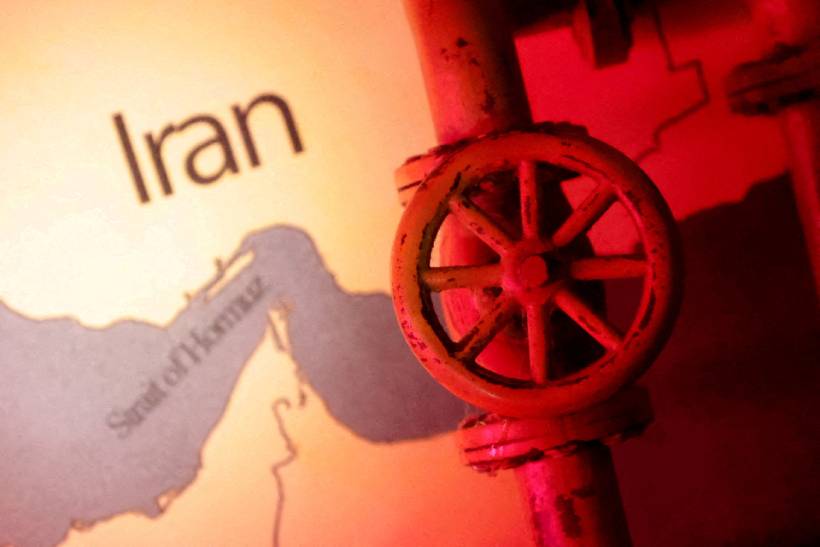
The US naval blockade of Iranian ports and the Strait of Hormuz, in place since April 13, has raised concerns that Iran could run out of crude oil storage capacity and be forced to curb production.

Bloomberg reported analysis on Tuesday from the data and analytics company Kpler suggesting Iran could run out of crude storage in 12 to 22 days if the blockade persists.

Last week, United States Treasury Secretary Scott Bessent claimed that storage capacity at Kharg Island, where most of Iran’s oil is exported, would be full “in a matter of days”.

So how quickly could Iran run out of oil storage, and why does it matter?

What is happening in the Strait of Hormuz?

The Strait of Hormuz is a narrow channel that connects the Gulf to the open ocean. It spans the territorial waters of Iran on its northern side and Oman on its southern side. It is not in international waters.

During peacetime, 20 percent of the world’s oil and liquefied natural gas (LNG) supplies are shipped through the corridor.

Two days after the US and Israel launched their first air strikes in their war on Iran on February 28, Ebrahim Jabari, a senior adviser to the commander in chief of Iran’s Islamic Revolutionary Guard Corps (IRGC), announced that the strait was “closed”. If any vessels tried to pass through, he said, the IRGC and the navy would “set those ships ablaze”.

INTERACTIVE - Strait of Hormuz - March 2, 2026-1772714221

As the war has dragged on and negotiations have failed to achieve a settlement, Iran has at times in the past two months allowed some “friendly” ships and those that pay tolls to pass. It is currently refusing to allow any foreign-flagged ships, including those previously deemed friendly, to pass until the US lifts its own naval blockade.

Iranian First Vice President Mohammad Reza Aref said on April 19 that the “security of the Strait of Hormuz is not free”.

“One cannot restrict Iran’s oil exports while expecting free security for others,” he wrote in a post on X.

“The choice is clear: either a free oil market for all, or the risk of significant costs for everyone,” he added. “Stability in global fuel prices depends on a guaranteed and lasting end to the economic and military pressure against Iran and its allies.”

Since the US naval blockade on the strait began, the US has opened fire on and taken control of an Iranian-flagged tanker near the Strait of Hormuz while also redirecting vessels on the high seas transporting cargo to or from Iran. Iran’s armed forces have denounced these actions as “an illegal act” that “amounts to piracy”.

The US naval blockade of the strait means that Iran might have to store the oil it produces.

Iran is the third largest oil producer in the Organization of the Petroleum Exporting Countries (OPEC) after Saudi Arabia and Iraq and exports 90 percent of its crude oil via Kharg Island in the Gulf for shipping through the Strait of Hormuz.

INTERACTIVE - Kharg Island Iran map oil coastline-1775116731

What has the US claimed?

The US is eager to curb Iran’s oil revenues, which have risen since Tehran closed the Strait of Hormuz to other shipping. This is the primary motive behind Washington’s naval blockade of Iranian ports.

Iran exported 1.84 million barrels per day (bpd) of crude oil in March and shipped 1.71 million bpd in April, compared with an average of 1.68 million bpd in 2025, according to Kpler.

However, the US naval blockade since mid-April now means that most of its exports are having to be stored instead.

Bessent wrote in an X post on April 22: “In a matter of days, Kharg Island storage will be full and the fragile Iranian oil wells will be shut in.”

“Constraining Iran’s maritime trade directly targets the regime’s primary revenue lifelines.”

How much oil can Iran store?

Iran’s domestic refineries have a production capacity of 2.6 million bpd, according to the energy consultancy Facts Global Energy.

Satellite data show the amount of oil Iran has in storage has risen sharply since the US blockade began, and in the days after the US tightened it, stocks were rising so fast that it appeared Iran had been barely able to export any oil at all.

From April 13 to April 21, data showed that stocks rose by more than 6 million barrels, according to the Columbia Center on Global Energy Policy (CGEP). From April 17 to April 21, the stock increased very rapidly, growing by 1.7 bpd.

As of April 20, the storage tanks at Kharg were about 74 percent full after the island alone had taken on about 3 million extra barrels of oil, the CGEP reported.

Generally, oil companies avoid filling their storage beyond 80 percent capacity to balance safety, emissions control and flexibility.

However, Iran and other oil producing countries have exceeded this limit before, for instance, during the COVID-19 pandemic. In April 2020, Kharg island’s stocks reached close to 90 percent capacity, an all-time high.

Iran also has some crude oil storage capacity in the form of “floating tanks”, or parked ships. About 127 million barrels can be stored in this way, Frederic Schneider, a nonresident senior fellow at the Middle East Council on Global Affairs, told Al Jazeera in an interview on April 14.

Will Iran need to cut oil production?

Muyu Xu, a senior crude oil analyst at Kpler, told Al Jazeera that the blockade could eventually force Iran to cut production.

“However, given there is still available storage capacity onshore (roughly covering 20 days of Iran’s current production), we expect any production reduction to be gradual over the coming week with a higher likelihood of acceleration into May,” she said.

Analysis by CGEP nonresident fellow Antoine Halff echoed this. Halff wrote in an article published by CGEP on Tuesday that it may be some time before the US blockade causes Iran to shut off its production “in a big way”.

However, Halff added, Iran may still choose to halt production “fairly aggressively” but this “would be more by choice than by necessity”.

He explained: “Doing so would have the advantage of providing Iran with relatively ample spare storage capacity after the shutdown and would allow for a smoother restart of operations once conditions permit, and the constraint is relaxed, thus minimising adverse impacts from the blockade on longer-term supply.”

Why does this matter?

Halting oil production risks damaging underground reservoirs by reducing reservoir pressure, allowing water or gas to encroach into producing layers and changing patterns of oil flow. This can make some oil harder or more expensive to recover later, experts said.

Restarting the process of oil production can also be slow and costly, involving repairs of corroded equipment or unclogging pipelines.

Halting production would also cause Iran’s export revenues to drop. However, analysts said that for a few months, Iran can continue to earn revenue from oil that is already in transit at sea.

Kenneth Katzman, former Iran analyst at the Congressional Research Service in Washington, DC, said Iran is not exporting new oil during the US blockade of Iranian ports but Tehran has 160 million to 170 million barrels of oil on ships around the world currently.

Source link

Germany arrests Kazakhstan citizen accused of spying for Russia | Russia-Ukraine war News

Prosecutors say the man, identified only as ‘Sergej K’, has been in ‘continuous contact’ with Russian intelligence.

German authorities have arrested a Kazakh man in Berlin on suspicion of spying for Russia, according to the German Federal Prosecutor’s Office.

Identified only as Sergej K, the man had been “in continuous contact from Germany with a Russian intelligence service” since at least May last year, the office said in a statement on Wednesday, a day after the arrest.

Recommended Stories

list of 4 itemsend of list

Prosecutors said Sergej K provided his Russian handler with details about German military aid for Ukraine, including companies involved in developing drones and robotic systems. He also allegedly sent photos of NATO military convoys and public buildings in Berlin.

Other activities included offering to find other espionage agents in Germany, prosecutors added, but they did not make clear whether he had done so.

There was no immediate reaction from Kazakhstan or Russia.

Previous cases

The case is the latest in a string of Moscow-linked espionage and disinformation plots German authorities claim to have discovered since Russia’s full-scale invasion of Ukraine in 2022.

Two German-Russian dual nationals were arrested in 2024 on suspicion of plotting sabotage attacks on United States military sites in Germany to undermine Western military support for Ukraine.

German police have also arrested various alleged “disposable” agents, known to carry out sabotage and espionage without any formal training for Russia in exchange for small payments.

Earlier this month, Berlin summoned the Russian ambassador to condemn what it called “direct threats” against “targets in Germany”.

Berlin’s Federal Foreign Office said at the time that the threats were intended to undermine Germany’s support for Ukraine. “Our response is clear: we will not be intimidated. Such threats and all forms of espionage in Germany are completely unacceptable,” the Foreign Office said.

Germany has also accused “state-sponsored” Russian hackers of carrying out an “intolerable” 2023 cyberattack on members of the Social Democratic Party, a charge that Russia’s embassy in Germany “categorically rejected”.

Meanwhile, Russia has essentially banned Germany’s international broadcaster Deutsche Welle on the grounds that it produces “hostile anti-Russian propaganda”.

Moscow has repeatedly denied any involvement in Germany-based espionage schemes.

Source link

Oil prices rise despite UAE exit from OPEC as Iran war ceasefire hangs in balance

Oil markets face renewed instability following the United Arab Emirates’ formal exit from the Organisation of the Petroleum Exporting Countries (OPEC) and its wider alliance (OPEC+), announced on Tuesday and taking effect on Friday.


ADVERTISEMENT


ADVERTISEMENT

The move, which ends decades of membership, comes as the global economy continues to reel from the ongoing war with Iran and the blockade of the Strait of Hormuz remains in place.

Investors are currently weighing the potential for higher future output from the UAE against the immediate and acute risks posed to global supply routes, as well as the increased chances that more countries drop out of OPEC and OPEC+.

Following the announcement, markets reacted swiftly as the potential for oversupply from the UAE was priced in. Oil prices fell by between 2% and 3%, particularly in futures contracts a couple of months ahead.

However, the move was just as quickly offset by the risk premium associated with the Middle East conflict and the current halt to US-Iran negotiations.

At the time of writing, US benchmark crude, WTI, is trading above $105 a barrel, while Brent crude, the international standard, is over $112. Both prices are around 4% higher on Wednesday from the UAE announcement low.

The UAE’s decision follows years of simmering tension between Abu Dhabi and Riyadh over production quotas. The UAE has invested over $150 billion (€128bn) in the state-owned Abu Dhabi National Oil Company (ADNOC) to expand its capacity to five million barrels per day.

However, under OPEC’s restrictive framework, much of this capacity remained underutilised, now prompting the government to prioritise its national interest.

The departure of the group’s third-largest producer is a significant blow to the cohesion of the 60-year-old organisation. Maurizio Carulli, global energy analyst at Quilter Cheviot, noted the limitations this exit places on the remaining members.

“Until tanker traffic through the Strait of Hormuz is safe again, OPEC’s ability to stabilise prices is sharply constrained, while US producers have gained outsized influence,” Carulli explained.

While the UAE has pledged to bring additional production to the market in a “gradual and measured” manner, the sudden lack of coordination within OPEC has introduced a new layer of uncertainty.

For the UAE, the blockade served as a final catalyst for its exit. With its primary export route under threat, Abu Dhabi has sought the diplomatic flexibility to forge independent security and trade partnerships outside the traditional cartel structure.

Despite the geopolitical turmoil, energy equities have remained resilient.

According to Carulli, “integrated majors such as BP, Shell, TotalEnergies, ENI, Chevron and ExxonMobil are benefitting from a price uplift that could add 5-10% to operating cash flow for every $10 increase in oil prices.”

Standoff over the Strait of Hormuz

In a separate but related development, the security situation in the Middle East remains precarious despite a fragile ceasefire. Iran has recently offered a ten-point proposal to reopen the Strait of Hormuz.

In exchange for restoring maritime traffic, Tehran is demanding a full withdrawal of the US naval blockade and an end to the current hostilities.

US President Donald Trump, who recently extended the two-week ceasefire mediated by Pakistan, described the latest Iranian offer as “much better” than previous iterations but still did not accept the terms.

Shortly after, Trump posted on social media claiming that Iran is in a dire and desperate condition with no leverage to negotiate.

Washington continues to insist on a permanent settlement regarding Iran’s nuclear programme and an “unconditional” reopening of the waterway before sanctions are lifted.

The impact of this blockade on global energy security cannot be overstated.

“The prolonged closure of the Strait of Hormuz has removed roughly 12% of global oil supply from the market, according to the IEA, a bigger disruption than the Yom Kippur war, the Iran‑Iraq conflict, the invasion of Kuwait or even the fallout from Ukraine,” Carulli highlighted.

Source link

‘Particularly badly exposed’: How the Iran war is hitting the UK | US-Israel war on Iran News

London, United Kingdom – Recent headlines from British newspapers speak to different areas of tension in the UK due to the United States-Israel war on Iran: economic woes, political friction and worries about the country’s readiness for the future, strategically and militarily, if the conflict persists.

On Thursday, the Financial Times blared, “Consumer confidence slumps to two-year low,” as The Guardian reported, “UK braces for price rises driven by Iran war as economic confidence plummets” and “UK prepared to deploy RAF Typhoons to keep Strait of Hormuz open after Iran war.” Earlier this month, The Independent reported that Prime Minister Keir Starmer risked US President Donald Trump’s wrath as he “refuses to let US use UK bases” for strikes on Iran’s infrastructure. And on Sunday, quoting a minister, The Times said the  “economic fallout from the Iran war” would last at least eight months.

Recommended Stories

list of 4 itemsend of list

Beyond the headlines is real public angst about what the war in Iran means on a human level and what the economic and political fallout may be.

For Iranians living in the UK, there is a whole other level of worry.

Omid Habibinia, a man in his 50s who was born in Tehran but moved to the UK 25 years ago, described the impact on him personally.

“Since the first day of the war, connection has been cut off. I am witnessing the pain and suffering of those close to me, many of whom have no news of their families. Beyond the fact that around 90 million people inside Iran have effectively been imprisoned by the internet shutdown and millions more have been deprived of contact with their loved ones, the attacks on the country’s critical infrastructure – alongside the killing and injury of thousands of civilians and the displacement of many – are deeply distressing to me,” he told Al Jazeera.

It seems clear that the impact will last long after the conflict has ended or at least a long-term ceasefire is agreed. There are worries of higher mortgage costs and higher food and fuel prices amid a continued cost-of-living crisis.

Luke Bartholomew, deputy chief economist at fund manager Aberdeen, said the UK economy is “particularly badly exposed to the Iran shock as a big energy importer with weakly anchored inflation expectations and an already soft labour market”.

For many people still recovering from the energy inflation shock that followed Russia’s invasion of Ukraine in 2022, this is a hit to their household finances that is hard to manage.

Although the government has urged people not to worry, sporadic queues at petrol stations and talk of a return to panic shopping seen during the start of the COVID-19 pandemic are commonplace.

‘We will stand by working people’: Starmer

Starmer formed an Iran crisis committee that met on Tuesday to persuade people that “you can be sure we will stand by working people in this crisis”.

He hinted that people might change their holiday plans and might already be cutting back on food.

“I think we’ll see how long the conflict goes on. I can see that, if there’s more impact, people might change their habits, … where they go on holiday this year, what they’re buying in the supermarket, that sort of thing,” he said.

Critics said the government’s stretched finances mean it cannot afford the energy subsidy that may be needed. They have also lamented the government’s reluctance to exploit the nation’s untapped oil reserves in the North Sea. Experts disagreed on whether this would make any significant difference.

Before the Iran war began, the UK economy was turning a corner. Inflation and fuel costs were falling, government borrowing was down and unemployment was falling.

The hits to the UK population range from the relatively trivial to the potentially terrifying.

London house prices have tumbled as sellers become nervous and buyers sit tight, but some observers have noted that they were overpriced in the first place.

Flights being cancelled due to a lack of jet fuel might be an inconvenience. Higher prices for fuel and food and then everything else are a major problem for those whose incomes are already stretched.

Then there is the genuine fear of what a prolonged war could mean, such as a serious recession or military involvement.

Thomas Pugh, chief economist at the consulting firm RSM UK, said: “The Strait of Hormuz has effectively been shut since early March. The International Energy Agency called it the largest supply disruption in the history of the global oil market. Oil prices have spiked, gas prices are climbing and inflation fears are back. But the bigger risk is ‘demand destruction’.

“Demand destruction happens when high prices force people and businesses to buy less. We’re seeing it already in fuel rationing in emerging market economies. It means fewer cars sold, fewer homes bought, fewer restaurant meals, fewer business investments and eventually fewer jobs. Because this crisis is about more than oil, demand destruction appears across the whole economy.”

A man who described himself as a 'patriot counter-protester' and supports the U.S. and Israeli operation against Iran, wears a Union Jack-themed jacket while waving an England flag, as anti-war activists protest outside RAF Fairford, which hosts United States Air Force (USAF) personnel, amid the U.S.-Israeli conflict with Iran, in Fairford, Britain, March 7, 2026. REUTERS/Toby Melville
A man who describes himself as a ‘patriot counterprotester’ and supports the US-Israeli war against Iran demonstrates as antiwar activists protest outside RAF Fairford, where US Air Force personnel are stationed, in Fairford, England [File: Toby Melville/Reuters]

The Iran war arrived at a time when the UK population was already unhappy.

A survey by the polling company IPSOS in December reported: “Three quarters of Britons expect large-scale public unrest in 2026. 59 percent think there will be protests against the way their country is being run, highest in Peru (80%) and South Africa (76%). In Great Britain, 74% predict large scale unrest. Since 2019, three of the G7 countries – Great Britain, Japan (both+11pp [percentage points]) and United States (+10pp) – have seen a double-digit increase in the proportion that think there will be large-scale public unrest.”

Bartholomew added: “With inflation rising and wage growth sluggish after a sustained period of very weak employment activity, real wages are likely to turn negative in coming months, adding a further headwind to the economy. So it’s probably just too early for the full effects of the war to be felt or show up in the data yet. But one place the impact of the war is very clearly showing up is around the path of interest rates.

“It is very likely that were it not for the war, the Bank of England would be cutting rates at its April meeting. Instead, the market is pricing in a series of rate hikes this year. For households that were hoping for mortgage rate cuts this year, the prospect of rates staying on hold is almost as painful as renewed hikes.”

Source link

Can Russia serve as an economic lifeline for Iran amid the Hormuz blockade? | US-Israel war on Iran News

As Iran stares down the economic consequences of a prolonged blockade of the Strait of Hormuz, attention is shifting north.

With Gulf shipping lanes disrupted and oil exports constrained, Tehran may seek to depend less on the Gulf and more on a patchwork of railways, Caspian ports and sanctions-era trade networks linking it to Russia.

Recommended Stories

list of 4 itemsend of list

The importance of that relationship was underscored this week when Iranian Foreign Minister Abbas Araghchi travelled to St Petersburg for talks with Russia’s President Vladimir Putin, praising Moscow’s “firm and unshaken” support as the two sides discussed the war, sanctions and the future of the Strait of Hormuz.

But could Moscow really offer a lifeline for Iran’s beleaguered, war-torn economy, and would it even want to? We spoke to experts to find out.

Increasing but modest bilateral trade

Economic relations between Iran and Russia deepened after the US withdrew from a 2015 nuclear deal with Iran and other nations in 2018 and reimposed sweeping sanctions on Tehran.

Russia’s full-scale invasion of Ukraine in 2022 served to accelerate that trend as both countries found themselves increasingly cut off from the Western financial system. They turned to sanctions-evasion networks, alternative payment systems and non-Western trade corridors to keep goods, energy and money flowing.

Current trade is dominated by agricultural products – especially wheat, barley and corn – alongside machinery, metals, timber, fertilisers and industrial inputs. Tehran has also supplied Russia with low-cost Shahed drones, which Russia updated and has been using in its war on Ukraine.

“Trade turnover reached $4.8bn last year [2024], but we believe that the potential for our mutual trade is much greater,” Russian Energy Minister Sergey Tsivilyov told an intergovernmental commission on trade and economic cooperation between Moscow and Tehran in 2025.

Bilateral trade is reported to have increased by 16 percent during that period, driven largely by Russian exports of grain, metals, machinery and industrial goods.

But experts say that despite this increase, the overall trade relationship remains relatively modest compared with Iran’s trade with China or the Gulf countries.

Trade between the two is “not substantial, because both countries are producing almost similar products and the industries are similar”, Mahdi Ghodsi, an economist at the Vienna Institute for International Economic Studies, told Al Jazeera.

Russian President Vladimir Putin shakes hands with Iranian Foreign Minister Abbas Araqchi during a meeting at the Boris Yeltsin Presidential Library in Saint Petersburg, Russia April 27, 2026. Dmitri Lovetsky/Pool via REUTERS
Russian President Vladimir Putin shakes hands with Iranian Foreign Minister Abbas Araghchi during a meeting at the Boris Yeltsin Presidential Library in Saint Petersburg, Russia, April 27, 2026 [Dmitri Lovetsky/Pool via Reuters]

Alternatives to Hormuz

The backbone of Russia-Iran trade is the International North-South Transport Corridor (INSTC), a network of shipping lanes, railways, and roads linking Russia to Iran and onward to Asia, bypassing Western-controlled maritime routes.

Goods move from southern Russian ports, across the Caspian Sea to northern Iranian ports, including Bandar Anzali, before continuing by rail or truck.

The route has become increasingly important for Russian grain, machinery and industrial exports to Iran.

This route can serve as a “viable but partial lifeline”, Naeem Aslam, chief market analyst at London-based Think Markets, told Al Jazeera, adding that Russian ports in Astrakhan, on the Volga River delta near the Caspian Sea, and Makhachkala, on the Caspian Sea, are already “primed for a surge in grain, metals, timber and refined products”.

A western branch also runs through Azerbaijan, though a key missing rail link between Rasht and Astara in northern Iran remains unfinished.

In 2023, Moscow agreed to help finance the line, with Russia’s president calling the agreement a “great event” that “will help to significantly diversify global traffic flows”.

Easier in theory than in practice

Analysts say that, although these routes may provide a temporary solution, the Strait of Hormuz offers a scale and efficiency that rail and land corridors cannot easily replicate.

Although maritime trade has been highly volatile in recent weeks, “from a historical perspective it is simply the quickest and the most cost-effective way of transporting anything”, Adam Grimshaw, an economic historian at the University of Helsinki, told Al Jazeera.

“Roughly 90 percent of Iran’s international trade is maritime trade that goes through the Gulf, which can’t be quickly or immediately replaced through land access to Iran or through air transport to circumvent the American blockade”, Nader Hashemi, an associate professor at Georgetown University, told Al Jazeera.

Ghodsi said Russia might be able to offer a “lifeline” in the short term, as it did when it exported grain during Iran’s droughts, but in the long run, it simply “cannot substitute” the vast amounts of maritime trade.

Re-routing trade routes via land “takes time”, pushing up prices for consumers and creating more food waste as perishables rot en route.

Does Moscow want to help Iran?

Most analysts say throwing an economic lifeline to Iran is not in Russia’s interests.

“They’ve got their own economic problems,” John Lough, head of foreign policy at the New Eurasian Strategies Centre, told Al Jazeera, pointing to signs of stagnation inside Russia, pressure on reserves and growing frustration over the prolonged war in Ukraine.

While Moscow could offer symbolic support or limited humanitarian assistance, “now is not a good time” to invest in Iran, he said, referring to the US-Israel war on the country.

Replacing maritime trade with overland routes would be extremely difficult, despite years of discussion about alternative corridors linking the two nations, he said.

It also won’t necessarily help Iran’s economy, which needs all the export revenue it can get, experts say.

“Much of Iran’s economy revolves around the sale of oil, and with that blocked or prevented by the American blockade, Russia really can’t help in that regard”, Hashemi said.

Others are more optimistic, however.

“Propping [up] Iran locks in higher global oil prices that buoy Russia’s war economy, cements INSTC dominance for Asian trade, and keeps a key anti-Western ally alive – no downside for Moscow in a fragmented Gulf,” Aslaam said.

Source link

UAE quits OPEC as oil cartel takes blow during war on Iran | Oil and Gas

NewsFeed

The UAE’s decision to quit OPEC to prioritise its ‘national interests’ deals a blow to the oil group already grappling with the challenge of shipping Gulf exports through the Strait of Hormuz. Here’s what we know about why it’s withdrawing and the impact it might have.

Source link

Trump approval dips to record low amid Iran war, inflation woes: Poll | Donald Trump News

Only 22 percent of US voters back the president’s performance on the cost of living, Reuters/Ipsos survey suggests.

United States President Donald Trump’s approval rating has dropped to its lowest point since he returned to the White House, sinking to 34 percent amid economic uncertainty and the US-Israel war on Iran, a Reuters/Ipsos poll suggests.

The poll, released on Tuesday, also showed that only 22 percent of respondents back Trump’s performance on the cost of living. Affordability has been a top issue for US voters.

Recommended Stories

list of 3 itemsend of list

The Iran war, which saw Tehran block most shipping through the Strait of Hormuz, has sent energy prices soaring across the world and fuelled inflation in the US.

The Reuters poll was conducted April 24-27, and it surveyed 1,014 US adults.

It comes months before the midterm elections in November when Trump’s Republican Party will have to contend with the US president’s abysmal job approval ratings as it tries to retain control of the Senate and House of Representatives.

Trump continues to enjoy near-unanimous support from Republicans in Congress despite growing criticism of the war on Iran by some right-wing commentators and podcasters.

The conflict has also been unpopular with US voters, including a sizeable Republican constituency.

A Marquette Law School survey released last week suggested that only 32 percent of voters approve of Trump’s handling of the war.

The number rose to 65 percent among Republican respondents, but it still showed significant dissent within the party on the issue.

A separate Associated Press-NORC poll last week reported similar findings – Trump’s overall approval rating at 33 percent, support for the war at 32 percent and his handling of the economy at 30 percent.

The US and Iran reached a two-week ceasefire on April 8 that Trump extended indefinitely, but tensions remain high in the region.

Duelling blockades in the Gulf – Iran shutting down the Strait of Hormuz and the US laying a naval siege on Iranian ports – have caused global energy supply issues to persist despite the truce.

In the US, the average price of 1 gallon (3.8 litres) of petrol is currently at $4.17, up from less than $3 before the war.

Still, Trump has suggested that he is comfortable with the status quo, claiming repeatedly that the Iranian economy is crumbling and that time is on his side.

“Iran has just informed us that they are in a ‘State of Collapse,’” the US president wrote in a social media post on Tuesday.

“They want us to ‘Open the Hormuz Strait,’ as soon as possible, as they try to figure out their leadership situation (Which I believe they will be able to do!)”

It’s not clear how or why Iran, which is currently refusing to hold direct negotiations with the US without it lifting the naval blockade, would inform Trump that its own economy is collapsing.

Source link

From exile to judge: Symbolism in Syria’s trial of Assad, former officials | Syria’s War News

On March 13, 2013, Fakhr al-Din al-Aryan, a judge at Idlib’s Civil Court of Appeal, publicly defected from the Syrian regime – an act that led him to be sentenced to death in absentia.

In December 2024, more than a decade later, Bashar al-Assad’s regime – the very one he had defected from – was overthrown, and al-Aryan was able to finally return to Syria’s judiciary.

Recommended Stories

list of 3 itemsend of list

In the latest step on al-Aryan’s journey from defection to exile to return, he was the presiding judge on Sunday at the opening of the trial of Atef Najib, a cousin of former President al-Assad and the former head of political security in the southern province of Deraa who faces charges of premeditated murder, torture leading to death and crimes against humanity.

Al-Assad and his brother Maher al-Assad, a former top military commander, are also being tried in absentia. Both men fled to Russia after their 2024 overthrow.

Fadel Abdulghany, the founder of the Syrian Network for Human Rights (SNHR), told Al Jazeera that the moment carries deep symbolic weight.

“A judge once sentenced to death by the Assad regime for defending the rule of law has returned to the bench to apply that same law to one of the regime’s most extensively documented perpetrators of violations,” Abdulghany explained. “This reversal of power dynamics reflects the promise of the rule of law so rarely fulfilled in post-authoritarian transitions. The significance of this moment lies not in spectacle but in its adherence to due process.”

Defection and return

Al-Aryan was a judicial adviser during the early years of Syria’s uprising, which began in March 2011, as protests intensified and the state increasingly relied on security-based rule.

By 2013, he decided that he had to break from the Syrian state and defected in a recorded statement that framed his decision as a matter of legal and moral responsibility.

“In light of the responsibility placed on the shoulders of judges, who are the guardians of justice and truth, and as a result of the massacres committed by the regime against civilians, children and women, … I announce my defection from the Ministry of Justice and my joining the Independent Syrian Judicial Council … to be a strong shield for justice and equality,” he said in the video.

After his defection, al-Aryan joined the judicial bodies of the then-Syrian Interim Government and became involved in building what was described as a parallel judicial track in opposition-held areas.

As part of that, he worked on establishing alternative courts, handling legal cases and documenting alleged crimes committed by the now former regime.

In response, the authorities sentenced al-Aryan to death in absentia and confiscated his property, including assets later sold at public auction.

After the fall of al-Assad’s regime, al-Aryan’s name re-emerged in June after a presidential decree reinstating dismissed judges. That process culminated in his appointment as head of the Fourth Criminal Court in Damascus, positioning him at the centre of the country’s first transitional judicial proceedings.

The transformation in al-Aryan’s life mirrors that of the man on trial in his courtroom on Sunday.

The position of the al-Assad family member as a top security official in Deraa in 2011 placed Najib at the centre of some of the first major confrontations between civilians and state security officers. Deraa is called the “cradle of the revolution” after government repression of protesters there inspired al-Assad’s opponents in other areas of the country to rise up.

One specific incident – the arrest and torture of schoolchildren detained after scrawling, “The people want the fall of the regime,” and the killing of one of them, 13-year-old Hamza al-Khateeb – is widely regarded as the spark for the country’s revolution.

Najib’s connection to that incident and the death of Hamza is one of the reasons why his trial is so significant in Syria.

The former official was arrested in January 2025 in the Latakia region, where some former regime loyalists had taken refuge.

Transitional justice

For the Syrian Network for Human Rights, the trial is significant because of how it is being conducted and not just who is being tried.

Abdulghany stressed that “this is neither a revolutionary court nor a victors’ court” but a case that has moved through formal legal stages, including arrest by the Ministry of Interior, investigation, prosecution and referral to a criminal court in Damascus.

The charges include premeditated murder and torture leading to death, classified as crimes against humanity under international law. This framing, Abdulghany said, is deliberate: It places domestic proceedings within the framework of international criminal standards, which is essential for the credibility of any verdict.

Abdulghany also highlighted the institutional message of the trial and in particular the inclusion of the former president and his brother as defendants despite their absence from the proceedings and from Syria.

“Physical absence does not amount to legal immunity,” he said.

Despite this, Abdulghany stressed that the trial was not the end of the transitional justice process in a country where hundreds of thousands of people died and disappeared during the war and the five-decade rule of al-Assad and his father, Hafez. There is still little information in many of the cases of the disappeared and imprisoned. The SNHR has documented at least 177,000 cases of enforced disappearances since 2011 with the vast majority attributed to the former government.

Abdulghany explained that accountability in Syria cannot be reduced to criminal trials alone and instead must include four interconnected pillars: criminal accountability, truth-seeking, reparations and institutional reform.

These, he argued, must function together under a unified structure rather than as separate or sequential processes.

Abdulghany placed particular emphasis on institutional reform, noting that Syria’s judiciary was previously used as a tool of repression rather than justice.

“Without these reforms, transitional justice trials risk being conducted through judicial institutions that have not themselves been transformed,” he said, pointing to the need to dismantle exceptional courts and rebuild judicial independence.

Truth-seeking, he added, is equally essential.

Families of victims have a right to know what happened to their relatives, and this right exists independently of criminal prosecutions, Abdulghany said.

“They deserve answers,” he said, adding that recognition of truth, justice and reparations must be unconditional if any durable reconciliation is to be achieved.

Source link

King Charles to address Congress as U.S.-British ties face rare strain

King Charles III will address a joint session of Congress on Tuesday, becoming the second British monarch in history to do so as the United States commemorates the 250th anniversary of its independence from England.

The king’s address, the centerpiece of a four-day state visit, comes at a moment of unusual strain between Washington and London. President Trump has repeatedly clashed with British Prime Minister Keir Starmer over the United States’ war with Iran, derided the British government’s refusal to commit forces to the conflict and even mocked the Royal Navy’s battleships as “toys.”

At a welcome ceremony for the king and Queen Camilla at the White House, Trump struck a more appreciative tone, describing the relationship between the two nations as a centuries-old “cherished bond.”

“Long before Americans had a nation or a Constitution, we first had a culture, a character and a creed,” the president said. “Before we ever proclaimed our independence, Americans carried within us the rarest of gifts — moral courage — and it came from a small but mighty kingdom from across the sea.”

Trump said that some may think it is “ironic” to honor the British king during celebrations of America’s independence, but argued the tribute “could not be more appropriate.”

“Americans have had no closer friends than the British,” Trump said. “We share the same root. We speak the same language. We hold the same values. And together, our warriors have defended the same extraordinary civilization under twin banners of red, white and blue.”

Trump said he will not be attending the king’s remarks at the Capitol due to security protocols, but said he planned to watch from afar. He did not elaborate on any security concerns, but the decision comes in the aftermath of a shooting at the White House correspondents’ dinner in which authorities said Trump was a likely target.

Following the welcome ceremony, the king joined Trump in the Oval Office for a closed-door bilateral meeting.

The president appeared to be enjoying the visit. He told the crowd at the White House that his late mother “loved” the royal family and watched their events on television. The president even joked his mother had a “crush” on the king when he was younger.

“I wonder what’s she’s thinking right now,” he said.

Earlier in the day, Trump posted on Truth Social that he planned to raise with the king and queen a media report suggesting his family roots may be tied to the royal family, a prospect he appeared to find amusing.

“I’ve always wanted to live in Buckingham Palace!!!” the president said in the post.

The king is scheduled to address Congress at 3 p.m. EDT. He is expected to delivered prepared remarks about the two nations’ shared history and their enduring diplomatic ties, while offering measured acknowledgment to the tensions defining the current moment.

The only precedent for an address by a British monarch was 35 years ago, when Queen Elizabeth II addressed a joint session of Congress in 1991. The timing of her address came after the end of the Gulf War.

How the king will address the current geopolitical tensions, including the Iran war and Trump’s threats to leave the North Atlantic Treaty Organization, remains to be seen.

But hanging over the king’s visit is the shadow of the Jeffrey Epstein scandal.

Rep. Ro Khanna (D-Fremont), one of the most vocal lawmakers pushing for the release of the Epstein files, last month requested that the king privately meet with some of the women who were sexually abused by the late financier.

The request was made in a letter to Buckingham Palace. In it, Khanna noted that the Epstein scandal extended to Britain, where the king’s brother, Andrew Mountbatten-Windsor, was tied to the alleged misconduct.

In February, the former Prince Andrew was arrested on suspicion of misconduct in public office related to his links to Epstein, marking the first time in nearly four centuries that a senior British royal was criminally apprehended.

But the king declined to meet directly with the survivors, Khanna said in an MS NOW interview on Tuesday morning. The California Democrat said he expects the king to address the issue during his remarks to Congress.

Source link

What’s in Iran’s latest proposal – and how has the US responded? | US-Israel war on Iran News

The United States is considering a new proposal from Iran to end the ongoing war amid a fragile ceasefire between the longtime adversaries.

The offer focuses on reopening the strategic Strait of Hormuz while postponing a deal on Iran’s nuclear programme, arguably the most contentious issue between Tehran and Washington.

Recommended Stories

list of 3 itemsend of list

According to US media outlets, the proposal has drawn scrutiny in Washington, and officials there have expressed scepticism.

Early indications from the Trump administration suggest the plan is unlikely to be accepted in its current form, potentially further delaying any prospect of permanently ending the currently paused US-Israel war on Iran, which has killed thousands and sent global energy prices soaring.

Here is what we know so far:

What’s in Iran’s latest proposal?

Iran’s latest proposal aims for de-escalation in the Gulf without immediately placing restraints on its nuclear programme, as the US has demanded. Tehran has offered to reopen the Strait of Hormuz on the condition that the US lifts its naval blockade on Iranian ports and agrees to end the war.

Iran has effectively closed the strait to shipping, creating global economic pressure by driving up energy prices and disrupting supply chains. In peacetime, one-fifth of the world’s oil and liquefied natural gas (LNG) supplies are shipped through the narrow passage, which links Gulf oil producers to the open ocean.

Days after the ceasefire began on April 8, Trump announced a blockade on Iranian ports and ships, restricting Tehran’s ability to export oil and cutting off a crucial source of its revenue.

epa12918541 Iranians walk past a huge billboard carrying a sentence reading in Persian 'The Strait of Hormuz remains closed' at Enghelab Square in Tehran, Iran, 28 April 2026. US President Donald Trump announced that a ceasefire between the US and Iran has been extended. EPA/ABEDIN TAHERKENAREH
Iranians walk past a huge billboard carrying a sentence reading in Persian ‘The Strait of Hormuz remains closed’ at Enghelab Square in Tehran, Iran, 28 April 2026 [Abedin Taherkenareh/EPA]

However, a central feature of Iran’s offer to reopen the Strait to all traffic is that discussions over Iran’s nuclear activities would be postponed until after the war ends.

The proposal was conveyed to Washington through Pakistan, which has been acting as a mediator.

“These messages concern some of the Islamic Republic of Iran’s red lines, including nuclear issues and the Strait of Hormuz,” Iranian state media Fars News Agency reported.

“Informed sources emphasise Mr Araghchi is acting entirely within the framework of the specified red lines and the diplomatic duties of the Ministry of Foreign Affairs.”

The news agency said the messages relayed were “unrelated to negotiations” and are “considered an initiative by Iran to clarify the regional situation”.

Iranian analyst Abas Aslani said Iran’s latest proposal is based on an “altered” approach.

Aslani, a senior research fellow at the Centre for Middle East Strategic Studies, told Al Jazeera that Tehran believes its previous model – which was based on making compromises on its nuclear programme in exchange for economic sanctions relief – is no longer a “viable path towards a potential accord”.

“Iran believes this can also function as a trust-building measure to compensate for the trust-deficit issue,” he added.

On Monday, Tehran’s envoy to the United Nations, Amir Saeid Iravani, said “lasting stability and security” in the Gulf and the wider region can only be achieved through a durable and permanent cessation of aggression against Iran.

How has the US responded so far?

US President Donald Trump met with top security advisers on Monday to discuss the Iranian proposal, the White House confirmed.

However, according to media reports, the US response has been largely dismissive. According to Reuters, an unnamed US official said President Trump was unhappy with the proposal because it did not include provisions for Iran’s nuclear programme. The official noted that “he doesn’t love the proposal”.

Citing two people familiar with the matter, US media outlet CNN reported that Trump was unlikely to accept the proposal. It said Washington lifting its blockade of Iranian ports without resolving questions over Tehran’s nuclear programme “could remove a key piece of American leverage in the talks”.

Secretary of State Marco Rubio told Fox News on Monday that the proposal was “better than what we thought they were going to submit”, but questioned Tehran’s intentions.

“They’re very good negotiators,” he said. “We have to ensure that any deal that is made, any agreement that is made, is one that definitively prevents them from sprinting towards a nuclear weapon at any point.”

Al Jazeera’s Mike Hanna, reporting from Washington, said, “There’s been a complete lid over what was discussed” during the meeting between Trump and his national security team.

“It was so tight that we do not know exactly who in his national security team was present at that meeting,” Hanna added.

“Normally, there is some form of readout or some form of more information giving, fleshing out the details of a meeting like this.”

What has been the response from other countries?

While the “US and Iran feel that time is on their side, the longer this goes on, the more difficult it’s going to be,” Mohamed Elmasry, an analyst for the Doha Institute of Graduate Studies, said.

“I really don’t think time is on anyone’s side. I really do think the Europeans are losing patience,” he told Al Jazeera.

On Monday, German Chancellor Merz stated that the “Iranians are negotiating very skilfully”, Elmasry noted. He said this shows that Trump is coming under increasing pressure from his allies, “who believe he [Trump] got them into this big mess and isn’t able to clean it up”.

“Trump isn’t going to be happy hearing that and the chancellor is hitting Trump where it hurts.”

Source link

Why Subsea Cables in Hormuz Are at Risk in the Iran War

Iran has raised concerns about the vulnerability of submarine cables in the Strait of Hormuz, which are crucial for the region’s digital economy. This narrow waterway, known for its importance in global oil shipments, also supports several fibre-optic cables connecting countries from India and Southeast Asia to Europe via the Gulf states and Egypt.

Submarine cables are essential for transmitting data and power, carrying about 99% of the world’s internet traffic. They play a significant role in telecommunications, cloud services, and online communication. Damage to these cables can lead to internet slowdowns, outages, disrupted e-commerce, and delayed financial transactions, causing economic consequences, according to analyst Masha Kotkin.

Gulf countries, especially the UAE and Saudi Arabia, have invested billions into artificial intelligence and digital infrastructure to reduce dependence on oil, with their national AI companies relying heavily on undersea cables for data transfer. Key submarine cables in the Strait of Hormuz include the Asia-Africa-Europe 1 (AAE-1), the FALCON network, and the Gulf Bridge International Cable System, with additional infrastructures being built.

Despite the growth in submarine cable length, faults have remained stable at around 150–200 incidents yearly, largely due to human activities like fishing and anchor dragging, with state-sponsored sabotage being a potential risk. Other threats include undersea currents, earthquakes, and typhoons. To mitigate these risks, the industry has measures such as burying cables and selecting safer routes.

The ongoing Iran war has caused significant disruption to energy supply and regional infrastructure, though subsea cables have not yet suffered damage. However, military operations increase the risk of unintentional damage from ships inadvertently impacting cables. Historical incidents, like one in 2024, highlight these risks.

Repairing damaged cables in conflict areas presents challenges, including obtaining permits and addressing the dangers of remaining fighting or mines. Once conflicts end, another challenge lies in re-evaluating the sea floor to ensure the cables’ safety.

If subsea cables are damaged, there are alternatives like land-based links, but experts warn that satellite systems cannot replace them due to limited capacity and higher costs. Low-Earth-orbit networks like Starlink are not a scalable solution for millions of users at present.

with information from Reuters

Source link

Prospects Dimming On Iran-U.S. Deal To Open Strait, End War

U.S. President Donald Trump met with top national security officials today to discuss a new Iranian proposal that would reopen the Strait of Hormuz, White House Press Secretary Karoline Leavitt confirmed. Iran offered a new deal to reopen the Strait and end the war, with nuclear negotiations postponed for a later stage, Axios reported, citing a U.S. official and two sources with knowledge.

As part of that deal, “the ceasefire would be extended for a long period or the parties would agree on a permanent end to the war,” Axios posited. “According to the proposal, the nuclear negotiations would only start at a later stage, after the strait was open and the blockade lifted.”

NEW: Iran gave the U.S. a new proposal for reaching a deal on the reopening of the Strait of Hormuz and lifting the naval blockade first, and postponing nuclear negotiations for a later stage. My story on @axios https://t.co/eP7aExSECf

— Barak Ravid (@BarakRavid) April 27, 2026

The new proposal, passed to the United States by Pakistan, likely won’t earn the support of Trump, who has repeatedly demanded a final end to Iran’s nuclear program as part of an overall deal to reopen the Strait, lift the blockade, and make the ceasefire permanent.

“We have all the cards,” Trump told Fox News on Sunday. He also stated it is imperative the U.S. gets Iran’s enriched Uranium.

Trump says the US will take Iran’s stockpile of highly enriched uranium, saying “we have to take their nuclear dust. We’re gonna take it.”

— Faytuks Network (@FaytuksNetwork) April 26, 2026

“These are sensitive diplomatic discussions and the U.S. will not negotiate through the press,” Assistant White House Press Secretary Olivia Wales told us Monday morning in response to our questions about the claimed Iranian offer. “As the President has said, the United States holds the cards and will only make a deal that puts the American people first, never allowing Iran to have a nuclear weapon.”

The claimed Iranian offer comes as diplomacy has stagnated. Late last week, Trump called off a trip to Pakistan by envoy Steve Witkoff and Jared Kushner after Iran signaled it wouldn’t meet with the U.S. delegation there.

Trump: “We have all the cards. If they want to talk, they can call us. We have nice secure lines, although I’m not sure any telephone line is secure, frankly. We’re not sending people to travel 18 hours. We’re gonna do it by telephone.” pic.twitter.com/M4Iko7DZkP

— Aaron Rupar (@atrupar) April 26, 2026

In an interview with Fox News on Monday, U.S. Secretary of State Marco Rubio pushed back on Iran’s claim that it will reopen the Strait of Hormuz.

“And what they mean by opening the Straits is, yes, the Straits are opened. As long as you coordinate with Iran, get our permission, or we’ll blow you up and you pay us,” Rubio stated. “That’s not opening the Straits. Those are international waterways. They cannot normalize, nor can we tolerate them trying to normalize a system in which the Iranians decide who gets to use an international waterway, and how much you have to pay them to use it.”

.@SecRubio: “They cannot normalize, nor can we tolerate them trying to normalize, a system in which the Iranians decide who gets to use an international waterway, and how much you have to pay them to use it.” pic.twitter.com/OajCcJxwc4

— Rapid Response 47 (@RapidResponse47) April 27, 2026

Iran’s armed forces would be the authority responsible for the Strait of Hormuz under the country’s proposed law for managing the waterway, a top official says.

Ebrahim Azizi, head of the national security commission in Iran’s parliament, tells state television that the armed forces are already in control of the Strait and are seeking to prohibit the passage of “hostile vessels.”

Azizi added that the proposed law states that financial gains from the strait should be paid in the local rial currency.

BREAKING: Iran’s armed forces should be given authority to target “hostile vessels” using the Strait of Hormuz under a proposed law, says the head of parliament’s National Security Commission, Ebrahim Azizi, on state TV.

🔴More on https://t.co/5H0QqpfIYw pic.twitter.com/mQ0H4S8nTR

— Al Jazeera Breaking News (@AJENews) April 27, 2026

Clearly, Trump’s blockade aims to cripple Iran economically and pressure the regime into making a deal or face possibly years of economic ruin once their oil infrastructure degrades.

A satellite image emerged showing Iran, as of Sunday, still loading oil onto tankers at Kharg Island.

“So beware of talk about Tehran running out of onshore / floating storage in only a couple of days,” Bloomberg energy and commodities columnist Javier Blas said Monday on X. 

PHOTO OF THE DAY: As of yesterday (April 26), Iran was still loading oil into tankers at Kharg Island. So beware of talk about Tehran running out of onshore / floating storage in only a couple of days.

(Photo via @CopernicusEU Sentinel-2 satellite) pic.twitter.com/DDVfTZ7ISl

— Javier Blas (@JavierBlas) April 27, 2026

Blas’ observation about Kharg Island was in reference to a statement Trump made Sunday on Fox News signaling an interest in maintaining the blockade of Iranian ports. The president claimed that Iran’s oil infrastructure could “explode” in about three days because of mechanical issues exacerbated by that blockade.

“When you have, you know, lines of vast amounts of oil pouring through your system, if for any reason that line is closed because you can’t continue to put it into containers or ships, which has happened to them — they have no ships because of the blockade — what happens is that line explodes from within, both mechanically and in the earth,” Trump told Fox News’ “The Sunday Briefing.”

“It’s something that happens where it just explodes. And they say they only have about three days left before that happens. And when it explodes, you can never, regardless, you can never rebuild it the way it was.”

President Trump in a Fox interview: “Iran has about 3 days left before they run out of space to store oil, and their oil infrastructure will be blown up. They will have to shut down oil facilities, and the recovery will be very difficult — it will only operate at 50% capacity.… pic.twitter.com/mwb8PJHLLF

— Dana Levi דנה🇮🇱🇺🇸 (@Danale) April 26, 2026

On that note, WSJ reports that China is looking to export oil to China via railway in order to circumvent the blockade, even though this is a far less efficient method:

Iran is working to export oil by rail to China.

WSJ — whose editorial page supports blockade — calls it an “extreme measure.”👇

Hardly.

It’s less profitable at normal prices when sea lanes are open, but these aren’t normal prices.

Expect more adaptation to follow.

— Rosemary Kelanic (@RKelanic) April 27, 2026

UPDATES

An Iranian F-5 combat jet flew through U.S. air defenses and struck Camp Buehring in Kuwait during the first days of the war, NBC News reported. The attack happened despite the aircraft being heavily outclassed by opposing aircraft and air defenses and the infrastructure to operate Iranian fighters being heavily targeted during this conflict, as well as the 12-Day War between Iran and Israel last June. 

The news about the F-5 was part of a larger story by NBC that claimed Iran caused billions of dollars in damage to U.S. military assets and bases in the Gulf region. The targets included runways, high-end radar systems, dozens of aircraft, warehouses, command headquarters, aircraft hangars and satellite communications infrastructure, much of it we have already reported.

🇮🇷🇺🇸⚡️– Published for the first time: NBC news reports that Iranian F-5 fighter jets caused extensive damages to US bases by conducting airstrikes and returning safely back to their bases. pic.twitter.com/vM3v9sW3vw

— MonitorX (@MonitorX99800) April 25, 2026

As TWZ editor-in-chief Tyler Rogoway notes, U.S. Marine Corps F/A-18 C/D Hornets F/A-18C Hornets from the VMFA-312 “Checkerboards” that arrived in the Middle East will bring special capabilities to the fight, especially around the Strait of Hormuz, should it reignite.

“USMC F/A-18C/Ds pushed to the Middle East are extremely capable drone hunters,” he wrote on X. “Now significantly upgraded w/APG-79V4 AESA and APKWS air-to-air rockets. Good targeting pod etc. Marines better at dispersed ops. Expect them forward and working in counter air screen over gulf if needed. Good for hunting small boats too etc.”

USMC F/A-18C/Ds pushed to the Middle East are extremely capable drone hunters. Now significantly upgraded w/APG-79V4 AESA and APKWS air-to-air rockets. Good targeting pod etc. Marines better at dispersed ops. Expect them forward and working in counter air screen over gulf if…

— Tyler Rogoway (@Aviation_Intel) April 24, 2026

Iranian Foreign Minister Abbas Araghchi met with Russian President Vladimir Putin today in St. Petersburg to discuss the war and efforts to end it. The meeting comes as a shaky ceasefire extension issued by U.S. President Donald Trump continues to hold despite Iran’s closure of the Strait of Hormuz and an ongoing U.S. blockade of Iranian ports.

Araghchi “explained the diplomatic process of Pakistan’s mediation for the complete end of the imposed war and the establishment of peace and security in the Persian Gulf region and the Strait of Hormuz,” his Telegram channel noted. “He considered the continuation of America’s destructive habits, especially insistence on unreasonable demands, frequent changes in positions, threatening rhetoric, and continuous breaches of agreements as factors slowing down diplomatic progress.”

Putin, for his part, said he hopes that the Iranian people will get through “this difficult period of trials and that peace will come,” according to Russia’s official TASS news outlet.

Putin added that Moscow is ready to do everything in its power to ensure that peace in the Middle East “is achieved as quickly as possible.” He also stressed that Russia “intends to maintain” its strategic relations with Iran.

As we have frequently noted, Iran and Russia have close military and economic ties. Moscow has reportedly provided Iran with intelligence to help its targeting of U.S. assets in the Middle East while Iran provided Russia with Shahed-136 drones used during the war in Ukraine.

Referring to the U.S., German Chancellor Friedrich Merz said “an entire nation is being humiliated by the Iranian leadership, especially by these so-called Revolutionary Guards.”

“The Iranians are obviously very skilled ⁠at negotiating, or rather, very skillful at not negotiating, letting the Americans travel to Islamabad ​and then leave again without any result,” he added during a talk to students in the ​town of Marsberg.

Merz also said the Strait of Hormuz had been partially mined and added that he did not see what exit strategy the United States was pursuing in the war.

Germany’s Merz on Iran:

This whole affair is, to say the least, ill-considered.

At the moment, I cannot see what strategic exit the Americans are opting for.

The Iranians are negotiating very skillfully—or rather, very skillfully not negotiating.

An entire nation (the U.S.)… pic.twitter.com/hii7IznEha

— Clash Report (@clashreport) April 27, 2026

The number of ships transiting the Strait continues to drop amid the Iranian closure and U.S. blockade of Iranian ports. On Sunday, transit volume through the Strait of Hormuz fell to eight crossings — four inbound and four outbound, all AIS-visible (zero dark transits in either direction),” the maritime intelligence firm Windward reported Monday. “Inbound was led by Panama-flagged products tanker Deepblue (Iran-staged, High risk) via the Northern Corridor, with three small India/Comoros cargo dhows (MSV Al Shama, MSV Al K M Khwaja, Al Ahmed) routing through the Southern Corridor. Outbound traffic was uniformly Northern Corridor: high-risk Barbados bulker Kaia, moderate-risk bulker Kaiser (St K&N), Panama general-cargo Cstar Voyager, and Comoros aggregate carrier Arad 10.”

Gulf-wide presence of ships “rose to 920 vessels (an increase of 28 from the previous day), while dark activity events eased to 117 (a 5% reduction) — a small but constructive divergence between rising AIS-visible traffic and falling dark behavior,” Windward noted, adding that the list of ships in the Gulf region included 156 bulk carriers, 146 product tankers, 83 crude tankers, 62 container ships, 43 LNG/LPG carriers, and 38 chemical tankers.

Windward Multi-Source Intelligence confirms the continued presence of a 7-tanker dark cluster (6 VLCCs, 1 Suezmax) idling off the coast of Chabahar. This points to sustained deliberate loitering rather than transient traffic.

The only vessel transmitting AIS is the sanctioned,… pic.twitter.com/dSQxEuTI0B

— Windward (@WindwardAI) April 27, 2026

A superyacht linked to sanctioned Russian billionaire Alexey Mordashov sailed through the Strait of Hormuz on Saturday, shipping data showed, according to Reuters. Nord is one of very few vessels to ​transit the blockaded shipping lane at the heart of the conflict.

“Nord – a ‌142-meter (465-foot) yacht worth over $500 million – left a Dubai marina at around 1400 GMT on Friday, crossed the strait on Saturday morning, and arrived in Muscat early on Sunday,” according to data on the ​MarineTraffic platform.

A superyacht belonging to Russian billionaire Alexey Mordashov passed through the Strait of Hormuz despite ongoing restrictions on maritime traffic in the region.

According to vessel tracking data from MarineTraffic, the 142-meter Nord superyacht departed Dubai on April 24 and… pic.twitter.com/yproQUowdt

— Anton Gerashchenko (@Gerashchenko_en) April 27, 2026

The status of the Tifani and Majestic X – two Iranian-linked oil tankers seized by the U.S. in the Indian Ocean last week – remains unclear.

Both appear to be crossing the Indian Ocean westbound in quite close proximity to one another, digital signals from the two carriers indicate, according to Bloomberg News.

“The US has given no formal indication of what it intends to do with either,” the outlet added. “They are still signaling the same destinations in Asia as they were when the interdictions happened, adding to the confusion about where they’re going now.”

Cape Town, at the southern tip of Africa, would be a standard waypoint for ships sailing onward to the U.S., Bloomberg noted. “Equally, they are heading in the direction of the UK-controlled Chagos archipelago, where there’s an American military base at Diego Garcia.”

We have reached out to the Coast Guard and Department of Justice for more details. The Coast Guard referred us to the Pentagon, which declined comment.

Two Iran-linked oil tankers that US forces interdicted near Sri Lanka last week are now sailing west. The US has given no formal indication of what it intends to do with either vessels https://t.co/iMBrYRFCfV

— Bloomberg (@business) April 27, 2026

The downstream effects of the Strait closure are being increasingly felt in the U.S.

The average price of gasoline in the U.S. rose 7 cents over the last week and currently stands at $4.04 per gallon, according to new data released by GasBuddy, an app that tracks gas prices across parts of North America and Australia. 

While average gas prices have increased in 39 U.S. states since last week, average diesel prices declined across the country, said Patrick De Haan, a petroleum analyst at GasBuddy, told CBS News.

“However, that divergence may prove short-lived,” he said. “Oil prices have been climbing again as markets react to renewed geopolitical tensions and the cancellation of talks between the U.S. and Iran. As a result, gasoline prices are set to rise further this week, with diesel expected to follow.”

De Haan suggested the Great Lakes and Plains regions, as well as other inland states, could see average gas prices reach their highest points since 2022.

Texas shrimp boat captains told NBC News that the surge in diesel prices since the Iran war makes it almost impossible to turn a profit.

“The industry is going to disappear,” one of the captains told the network.

The surge in diesel prices since the Iran war make it almost impossible to turn a profit, shrimp boat captains tell NBC News: “The industry is going to disappear.” https://t.co/7kzEC9R0P0

— NBC News (@NBCNews) April 27, 2026

Israel sent the United Arab Emirates an Iron Dome air defense system with troops to operate it early in the war with Iran, Axios reported, citing two Israeli officials and one U.S. official.

The military, security and intelligence cooperation between Israel and the UAE has reached new heights during the war,” the outlet added. “The unprecedented deployment of the Iron Dome system during the war was not previously made public.”

This explains the military airlift between the UAE and Israel 🇮🇱🇦🇪

At least nine UAE military cargo flights have landed in Israel since the war began.

Most of the flights landed at Nevatim Air Base in southern Israel.

Seven flights were carried out by UAE AF C-17A while the… https://t.co/gwaBf6BJr4 pic.twitter.com/J7B5pDCqYV

— Egypt’s Intel Observer (@EGYOSINT) April 26, 2026

Dr. Anwar Gargash, diplomatic adviser to UAE President Sheikh Mohamed, said the Gulf’s containment strategy towards Iran had “failed miserably” and warned the country could pose a threat for decades to come.

The senior Emirati official said the “ferocity and recklessness” of Iranian aggression against its neighbors during the conflict had been unexpected, according to The National, an Abu Dhabi-based English language news outlet.

Gargash added that agreements were in place that U.S. military bases in the region would not be used to launch strikes against Iran and insisted Tehran had deliberately stoked confrontation.

“This folly, this ferocity, this indiscriminate attack, which we now see from the launch sites of the aggression, is clearly a premeditated attack,” Gargash proffered during the Gulf Creators event, held at Atlantis, The Palm in Dubai.

“This was a premeditated plan, not a decision made in 24 or 48 hours,” the advisor noted. “Iran’s attack on its Arab neighbors is a planned attack, part of a confrontation scenario devised by the Iranian planners, who built the necessary fortifications and armed themselves accordingly.”

.@AnwarGargash: “This was a premeditated plan, not a decision made in 24 or 48 hours. #Iran‘s attack on its Arab neighbours is a planned attack, part of a confrontation scenario devised by the Iranian planners, who built the necessary fortifications and armed themselves…

— Jason Brodsky (@JasonMBrodsky) April 27, 2026

Hezbollah drones continue to take a toll on Israeli forces in southern Lebanon. Video shot by an IDF soldier shows a Hezbollah one way attack munition striking just a few meters from an Owl helicopter that was dispatched to the incident where a sergeant was killed and five more soldiers were wounded by an explosive drone launched at them. We outlined this threat earlier this month in a story you can read here.

Hezbollah and Israel each escalated their attacks and accusations over the other side violating the ceasefire, according to the Jerusalem Post.

“Leading into Sunday, the first dispute between the sides following the April 17 ceasefire was that Israel said that the ceasefire only applied North of the Litani River, but not within southern Lebanon,” the newspaper noted. “The IDF already controlled southern Lebanon and wanted to continue to destroy Hezbollah’s weapons stored in nearby villages as well as kill the terror group’s fighters if they remained in that area and refused to surrender.”

Since the ceasefire, the IDF had killed over 40 Hezbollah fighters, but almost all in southern Lebanon, the Post stated.

In the broader scheme, Israel has also hoped to hold onto southern Lebanon for an extended period to help pressure Hezbollah into a process of disarming.

Israeli military vehicles and convoys of tanks were seen moving along the northern border on April 26 while pillars of smoke billowed in southern Lebanon, as the hostilities between Israel and Hezbollah persist, despite a US brokered ceasefire https://t.co/Lz78wZMzHH pic.twitter.com/g6CaNLx8Dr

— Reuters (@Reuters) April 27, 2026

Hezbollah rejected the ceasefire worked out between Israel and Lebanon.

Hezbollah leader Naim Qassem in a written statement:

We categorically reject direct negotiations with Israel. The Lebanese government must halt direct negotiations, and rescind its decision criminalizing our military wing.

We do not recognize these direct negotiations or… pic.twitter.com/GvR9gc29Zj

— Ariel Oseran أريئل أوسيران (@ariel_oseran) April 27, 2026

The Israeli Air Force said it has begun to attack infrastructure of the terrorist organization Hezbollah in the Beqaa Valley and in several areas in southern Lebanon.

חיל-האוויר החל לתקוף תשתיות של ארגון הטרור חיזבאללה בבקעא ובמספר מרחבים בדרום לבנון.

— Israeli Air Force (@IAFsite) April 27, 2026

Contact the author: howard@thewarzone.com

Howard is a Senior Staff Writer for The War Zone, and a former Senior Managing Editor for Military Times. Prior to this, he covered military affairs for the Tampa Bay Times as a Senior Writer. Howard’s work has appeared in various publications including Yahoo News, RealClearDefense, and Air Force Times.


Source link

Bahrain strips 69 people of citizenship over Iran support | US-Israel war on Iran News

Rights groups have described the move as a “blatant abuse of power”.

Bahrain has stripped dozens of people of their citizenship for allegedly supporting Iranian attacks on the country.

Bahrain’s Ministry of Interior announced on Monday that it had revoked the citizenship of 69 people, some of whom were related, after accusing them of sympathising with Iran and “colluding with foreign entities”. The move comes after Tehran carried out strikes on facilities in Bahrain as part of the war launched against Iran by Israel and the United States.

Recommended Stories

list of 3 itemsend of list

The directive, issued by King Hamad bin Isa Al Khalifa, stated that all 69 people were “of non-Bahraini origin”. Under Bahraini law, a person can be stripped of citizenship if they are deemed to have caused harm to the country or shown disloyalty.

The London-based Bahrain Institute for Rights and Democracy described the move as “dangerous” and a clear violation of international law.

The organisation said the individuals had not been publicly identified, and it remained unclear whether they had been arrested, whether they were inside or outside Bahrain, and whether they held another nationality.

Iranian strikes

Tehran began striking its Gulf neighbours on February 28, shortly after Israel and the United States began the war by launching attacks on Iran.

Tehran accused the targeted countries of allowing the US to conduct its strikes from their territory. Iran’s retaliatory attacks reportedly caused significant damage to US military sites across the region, including a Navy base in Bahrain, which was hit by missiles and drones.

Iran ceased its attacks on Gulf neighbours on April 9, following the introduction of a ceasefire brokered by Pakistan. Negotiations to permanently end the war are ongoing three weeks later.

Bahrain’s Shia population has long accused authorities of marginalising them. During the Arab Spring in 2011, mass protests against the country’s leadership broke out. The Bahraini government has long blamed Iran for fomenting unrest against it.

Source link

Google co-founder Sergey Brin confronted Gavin Newsom — then launched a political war

In a treehouse nestled in redwoods north of San Francisco, Gov. Newsom stood cold and hungry as Sergey Brin, the world’s fourth-richest man, and his wellness-influencer girlfriend told him they were leaving the state.

It was late in the evening at a Christmas party hosted by crypto titan Chris Larsen — featuring singer Janelle Monáe and a towering abominable snowman with glowing red eyes — when Brin and his partner, Gerelyn Gilbert-Soto, confronted Newsom about a new proposal to tax billionaires in California, according to people who’ve spoken with the governor. Such a levy could hit Brin’s stake in Alphabet Inc. and his $272.6 billion fortune.

Newsom, who opposes the wealth tax, was still telling people about the lengthy exchange at the party months later, complaining of a lingering cold the pair had given him, according to the people, who asked not to be named discussing private conversations with the governor.

Brin, meanwhile, followed through. He left the state, bought a lakeside mansion in Nevada, and started bankrolling a billionaire political uprising in California.

Newsom, through a spokesperson, declined to comment on the interaction. “The governor has been very clear with everyone, no matter who they are, that this effort will do serious damage to the state, including for public safety workers and schools, at the expense of one special interest group,” Izzy Gardon, a spokesperson, said.

A representative for Brin didn’t respond to requests for comment.

Brin’s political push reflects a broader awakening among California’s ultrawealthy. Over the past six months, the proposed billionaire tax and a heated governor’s race have drawn tech titans and business leaders more directly into the state’s affairs — a space many of them have traditionally kept at arm’s length.

Prior to this year, Brin’s last contribution in a California election cycle was 2010 when Arnold Schwarzenegger was governor and the Google co-founder largely backed climate causes. He’s now spent more than $58 million in the last four months, including an extra $9 million disclosed late Friday, but more importantly has helped mobilize a network of fellow tech titans in a push to sway state issues.

“The wealth tax was a wake up call, it was a fire that just lit up Silicon Valley literally in a matter of weeks,” said Steven Maviglio, a veteran Democratic strategist. “I’ve never seen anything like it.”

Altogether, ultrawealthy donors have injected more than $270 million into California’s political scene in this election cycle. Outside of the wealth tax, billionaire Tom Steyer is emerging as a top Democratic candidate for governor after the downfall of former Representative Eric Swalwell following allegations of sexual assault. Steyer, a former hedge fund manager, has spent more than $140 million in his election bid, crowding TV airwaves with ads and labeling himself a “class traitor” with a campaign modeled after Vermont Senator Bernie Sanders.

Ballots for the June 2 primary election start going out next week. Brin and a cohort of the ultrawealthy including Coinbase CEO Brian Armstrong and venture capitalists Vinod Khosla and John Doerr have plowed millions into supporting Matt Mahan, a Silicon Valley mayor, with a back-to-basics agenda and a penchant for taking on the state’s Democratic establishment.

That money has helped Mahan buy airtime and attracted controversy, but his polling numbers remain stuck in the single digits while Steyer’s well-funded progressive campaign is gaining favor with voters. Brin has also backed Republican Steve Hilton, who’s currently leading polls.

“You have two polar opposites going on. You have a billionaire running who has actually fully adopted an agenda that the vast majority of voters agree with: Taxing billionaires, funding healthcare, fighting back against ICE,” said Lorena Gonzalez, head of the state’s largest union group, the California Federation of Labor Unions. “And then you have billionaires pushing a candidate whose talking points are apologetic to the tech industry.”

The billionaire political activism in California mirrors larger shifts in Silicon Valley and the nation. President Donald Trump has given tech billionaires broad access to the White House, inviting Brin and other industry captains over for dinner and to join advisory boards.

Back in September, Trump singled out Gilbert-Soto as Brin’s “really wonderful MAGA girlfriend” at a White House dinner also attended by Mark Zuckerberg, Tim Cook and Sam Altman. She has publicly supported Republican Steve Hilton for California governor, a candidate Trump endorsed and Brin has also donated to.

In California, Brin’s newfound political action was catalyzed by the wealth tax proposal, which would levy a one-time 5% tax on billionaires to help offset federal healthcare cuts. In a Signal group chat earlier this year with other Silicon Valley elite, Brin floated the idea of raising hundreds of millions of dollars to influence California politics, according to a person who saw the message.

Brin left California for Nevada ahead of a Jan. 1 residency deadline for the proposed wealth tax. He moved to a $42 million mansion on the Nevada side of Lake Tahoe, featuring two glass-walled funiculars.

Shortly after leaving California, Brin contributed $20 million to a new group dedicated to fighting the tax while also pushing pro-business and housing affordability policies, Building a Better California, making him the single largest contributor. He added $37 million over the spring, as the group quickly started supporting a trio of anti-wealth tax measures that could nullify a billionaire tax if it gets passed in an election. One of the measures, the so-called Transparency Act, has enough signatures to qualify for the November ballot, its backers claimed on Monday.

Building a Better California “remains fixed on long-term reforms supported by most Californians: housing affordability, stable funding for education, infrastructure investments, and government accountability,” a spokesperson said.

Joining Brin in the effort were other billionaires, including former Google CEO Eric Schmidt, Stripe CEO Patrick Collison and venture capitalist Michael Moritz. Peter Thiel, who also left California ahead of the New Year’s Day deadline, gave $3 million to a separate committee opposing the wealth tax.

“They don’t trust California anymore,” said David Lesperance, a tax attorney who specializes in relocations and has helped move five families out of the state because of the wealth tax threat.

Brin and his fellow billionaires helped push up the costs to gather the more than 870,000 signatures required to qualify a ballot measure. This forced the union behind the wealth tax, SEIU-UHW, to spend more on their efforts.

Now, the union says it has succeeded in getting the signatures it needed, which will likely force the business leaders opposing it into further spending.

“A very small group of the most controversial billionaires on the planet tried to stop Californians from being able to save their local emergency rooms and hospitals — but our current signature tally proves frontline healthcare workers will prevail in bringing this commonsense proposal to voters,” said Suzanne Jimenez, SEIU-UHW’s chief of staff. “When our growing coalition files these signatures, David will have won the first round against Goliath.”

Other billionaires have bankrolled their own political initiatives, including Larsen, who set up his own network of influence groups with names like Grow California and Golden State Promise.

Many in Sacramento are skeptical that Brin and his fellow ultra-rich will succeed in swaying California state politics. They point to the failed candidacy of former eBay executive Meg Whitman, who spent around $144 million of her own fortune to become governor, or even venture capitalist Tim Draper’s longshot initiative to split California into six separate states.

“They’re trying to extrapolate from their own industry, which might have been fabulously successful, that they know something about political advertising, when they don’t,” said Garry South, a veteran Democratic strategist. “They think, ‘Hey, I’ve got money I can throw it around,’ and they don’t really do their homework.”

Political consultants describe their frustration with some wealthy tech donors, who often view their political giving through an investment lens, promising big checks and not following through if they don’t see momentum. That’s led to questions about whether the California billionaire activism would continue if Mahan’s governor bid fails and the wealth tax passes.

Even Larsen, who’s worth around $13 billion, has expressed anxiety that not enough business leaders are stepping into politics. “It’s a lot of talk, and they’re happy, but we don’t see the firepower we need to take on the SEIUs,” he said, referring to the state’s largest union.

Newsom, for his part, acknowledges that many of the state’s wealthiest residents are willing to donate significant sums of money, but want to do it on their own terms and not through a tax.

“Some will never give a penny away,” he said at a Bloomberg News event in January, not long after his encounter with Brin in the treehouse. “Some I respect. Some I don’t.”

Kamisher and Carson write for Bloomberg.

Source link

Will the Iran war push millions back into poverty? | TV Shows

US-Israel war on Iran drives up fuel and food costs, putting 32.5 million people at risk of poverty worldwide.

Fuel costs more. Food is harder to get or afford. Jobs are disappearing. Remittances are drying up.

These are the consequences of the United States-Israel war on Iran – felt not only in the Middle East but also in the fields and homes of Africa and Asia.

Countries in the Global South are particularly vulnerable to the economic fallout because of their dependence on imports from the Gulf.

The United Nations warned that the conflict could push as many as 32.5 million people globally back into poverty.

The war is weakening economies that were already fragile. Governments are scrambling, and international aid is becoming scarce.

Source link