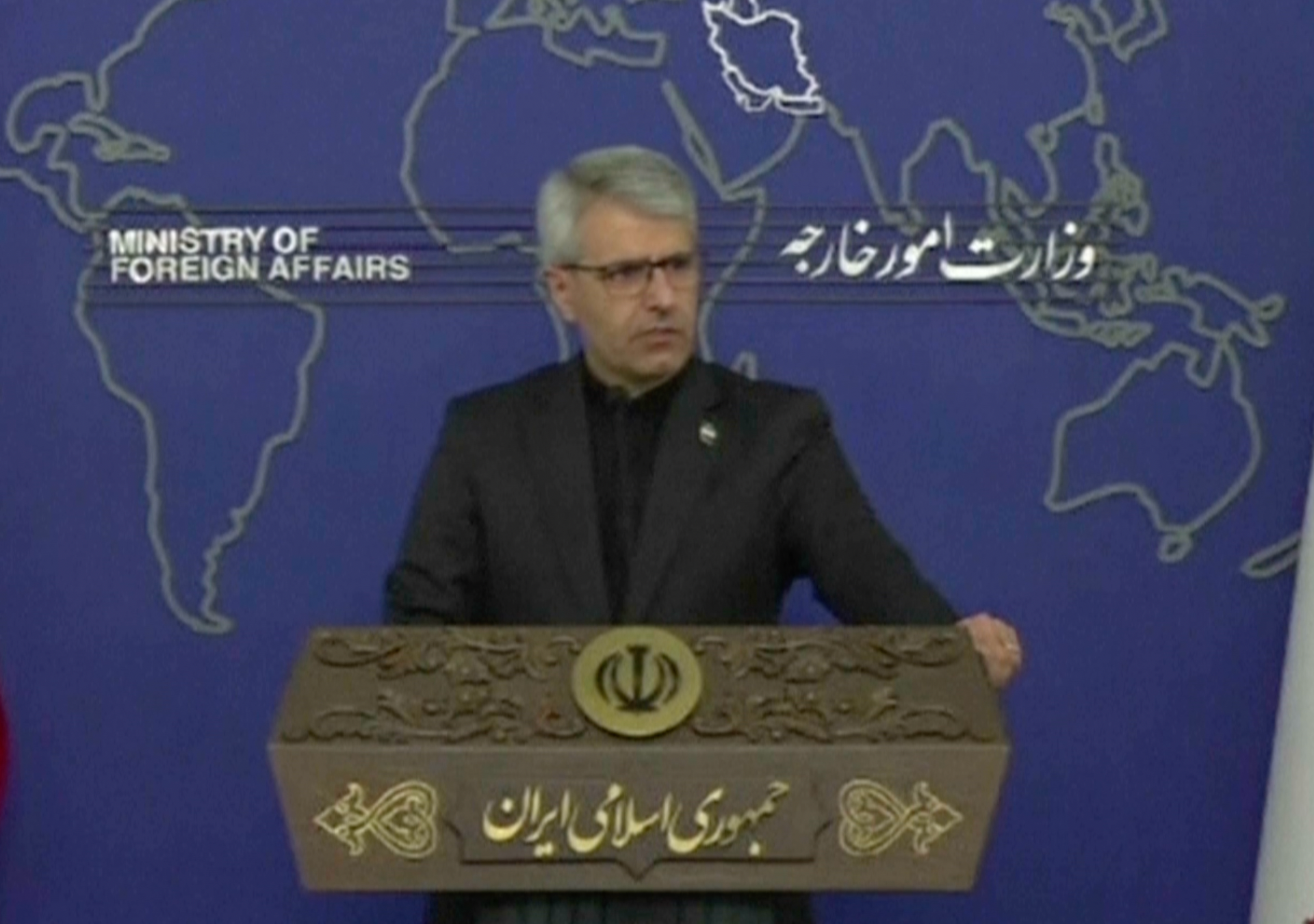
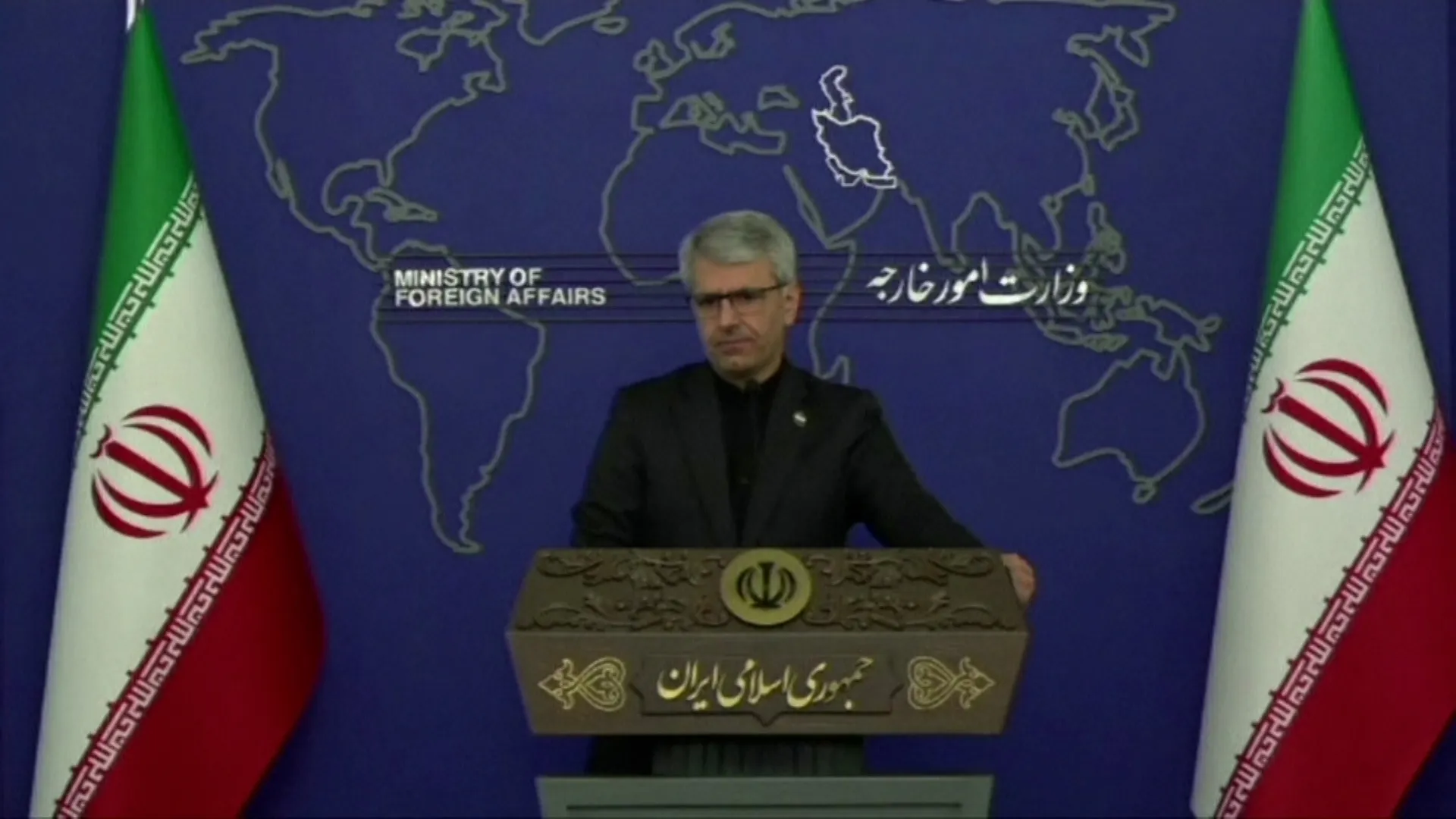
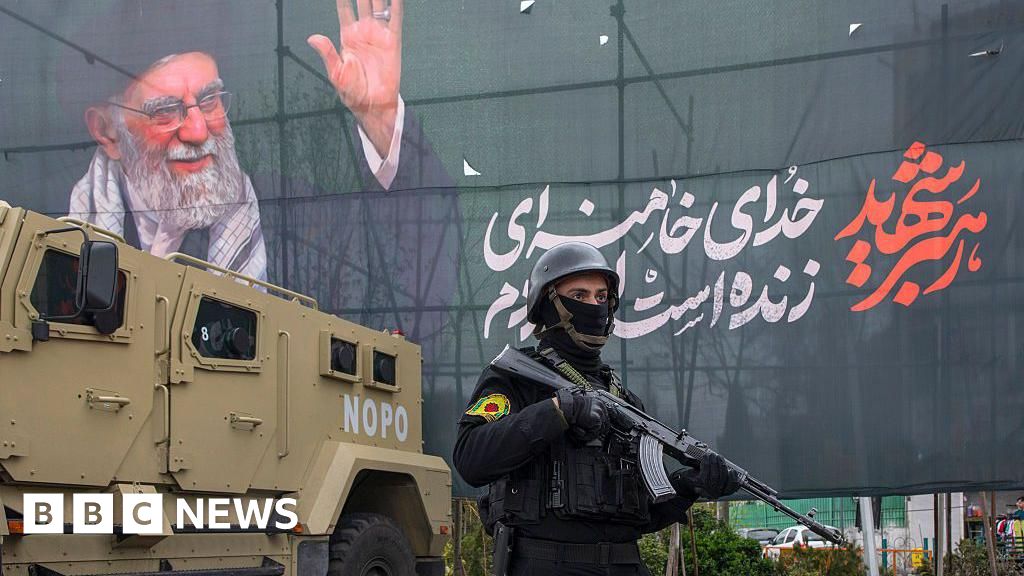
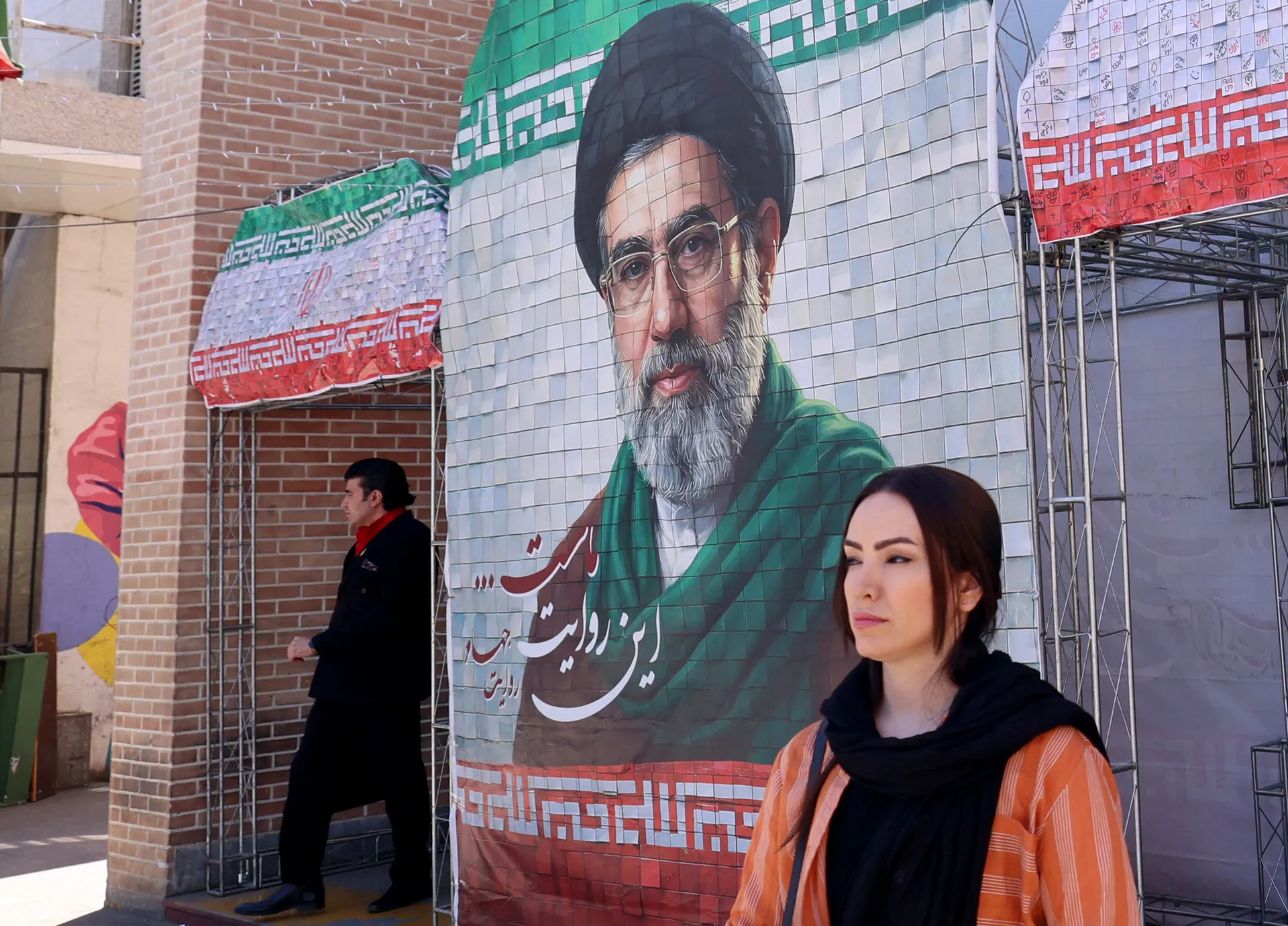
Iran’s Foreign Ministry spokesperson Esmail Baghaei says Tehran’s response to the latest US proposal to end the war was “not excessive.” He says it’s the US that continues to make “unreasonable demands” during negotiations over ending the war and reopening the Strait of Hormuz.
Global currency markets remained broadly stable on Monday despite escalating geopolitical tensions linked to the ongoing conflict involving the United States and Iran. The limited movement in the US dollar came after President Donald Trump rejected Iran’s response to a United States peace proposal, reinforcing concerns that the conflict in the Middle East may persist for an extended period.
At the center of global financial attention is the interaction between geopolitical risk, energy prices, and monetary policy expectations. Rising oil prices, driven by uncertainty in the Strait of Hormuz and broader regional instability, continue to shape inflation expectations across major economies. However, currency markets have shown relative restraint, suggesting that investors are balancing immediate geopolitical risks against expectations of eventual diplomatic stabilization.
The US dollar index, which measures the currency against a basket of major global currencies, remained largely unchanged. At the same time, oil prices rose sharply, reflecting renewed concerns about supply disruptions and prolonged conflict conditions.
Geopolitical Risk and Market Equilibrium
Financial markets are currently operating in a state of tension between short term geopolitical shocks and longer term expectations of resolution. The stability of the US dollar suggests that investors are not fully pricing in a sustained breakdown in global energy flows, despite elevated uncertainty in the Middle East.
The oil market, by contrast, continues to respond rapidly to political developments. The rise in crude prices reflects concerns that prolonged instability could restrict supply routes and tighten global energy availability. This divergence between currency stability and commodity volatility highlights the uneven transmission of geopolitical risk across financial systems.
Market analysts note that expectations of diplomatic engagement between the United States and China remain a key stabilizing factor. Investors increasingly view high level diplomatic meetings as potential mechanisms for de escalation, particularly given the influence both countries exert over global energy and trade systems.
The Role of the United States and China in Market Sentiment
A major factor influencing market behavior is the anticipated summit between President Trump and Chinese President Xi Jinping. The meeting is expected to cover a wide range of strategic issues including energy security, artificial intelligence, nuclear policy, and regional conflicts.
Markets are closely monitoring this engagement because both the United States and China possess significant leverage over geopolitical and economic developments in the Middle East. China’s role as a major energy importer and diplomatic stakeholder in the region gives it potential influence over Iranian policy, while the United States remains the dominant military and financial actor in global markets.
This dual influence creates expectations that broader geopolitical tensions may eventually be moderated through strategic dialogue. As a result, investors are partially pricing in the possibility of containment rather than escalation, which helps explain the relative stability of major currencies.
Inflation Expectations and Central Bank Positioning
Energy price movements remain central to global inflation dynamics. Rising oil prices directly influence transportation costs, production expenses, and consumer prices, creating upward pressure on inflation across both advanced and emerging economies.
In the United States, recent economic data has reinforced expectations that the Federal Reserve will maintain a cautious monetary stance. Strong employment figures combined with persistent inflation risks have reduced expectations of near term interest rate cuts. This has contributed to support for the US dollar, as higher interest rate expectations typically attract capital inflows into dollar denominated assets.
The interaction between monetary policy and geopolitical risk is becoming increasingly complex. Central banks are now required to respond not only to domestic economic indicators but also to external shocks originating from energy markets and international conflicts.
In this environment, currency movements reflect not just economic fundamentals but also expectations regarding central bank behavior under conditions of sustained uncertainty.
Diverging Currency Movements and Global Economic Signals
While the US dollar remained stable, other major currencies exhibited modest weakness. The euro, yen, and British pound all recorded slight declines, reflecting broader caution in global markets.
The movement of the Chinese yuan, which briefly strengthened to its highest level in several years, adds another dimension to the global currency landscape. This reflects both domestic economic data and broader expectations regarding China’s role in global trade and energy markets.
China’s economic performance, particularly in exports and industrial activity, continues to be closely linked to global energy prices and supply chain dynamics. Strong export growth suggests resilience in external demand, even amid geopolitical uncertainty and rising production costs.
These currency movements collectively indicate that global markets are navigating a period of uneven economic signals, where regional conditions and geopolitical developments interact in complex ways.
The Interplay Between Markets and Political Uncertainty
One of the defining characteristics of the current financial environment is the speed at which geopolitical developments translate into market expectations. Currency traders and investors are increasingly sensitive to political signals, particularly those involving energy producing regions and major global powers.
However, despite heightened volatility in oil markets, the US dollar’s stability suggests that investors still view the global financial system as structurally resilient. Rather than anticipating systemic disruption, markets appear to be pricing in cyclical instability followed by eventual stabilization.
This reflects a broader pattern in which financial markets absorb geopolitical shocks through short term volatility without fully abandoning long term confidence in global economic integration.
Analysis
The stability of the US dollar amid escalating geopolitical tensions highlights a critical feature of contemporary global markets. While energy prices and regional conflicts generate significant short term volatility, currency markets remain anchored by expectations of monetary policy stability and eventual diplomatic resolution.
The current environment is characterized by three overlapping dynamics. First, geopolitical risk is elevated due to sustained conflict in the Middle East and uncertainty surrounding diplomatic negotiations. Second, energy markets are highly sensitive to supply disruptions, producing rapid price fluctuations. Third, central bank policy expectations continue to play a stabilizing role in currency valuation.
The anticipated meeting between the United States and China represents a key focal point for market sentiment, as investors look for signals of broader strategic coordination or de escalation. However, the underlying structural tensions in the global system remain unresolved.
Ultimately, the current stability of the dollar should not be interpreted as a sign of reduced risk, but rather as evidence that markets are temporarily balancing competing expectations of conflict, diplomacy, and monetary policy. In such an environment, volatility in commodities and geopolitical headlines may continue, even as major currencies appear relatively stable on the surface.
Iranian foreign ministry spokesman Esmaeil Baqaei says Iran’s latest response to the US had asked for an end to the war, removal of the naval blockade, and release of assets.
The US had dismissed the Iranian response, Baqaei said, as it clings to its ‘unreasonable demands’.
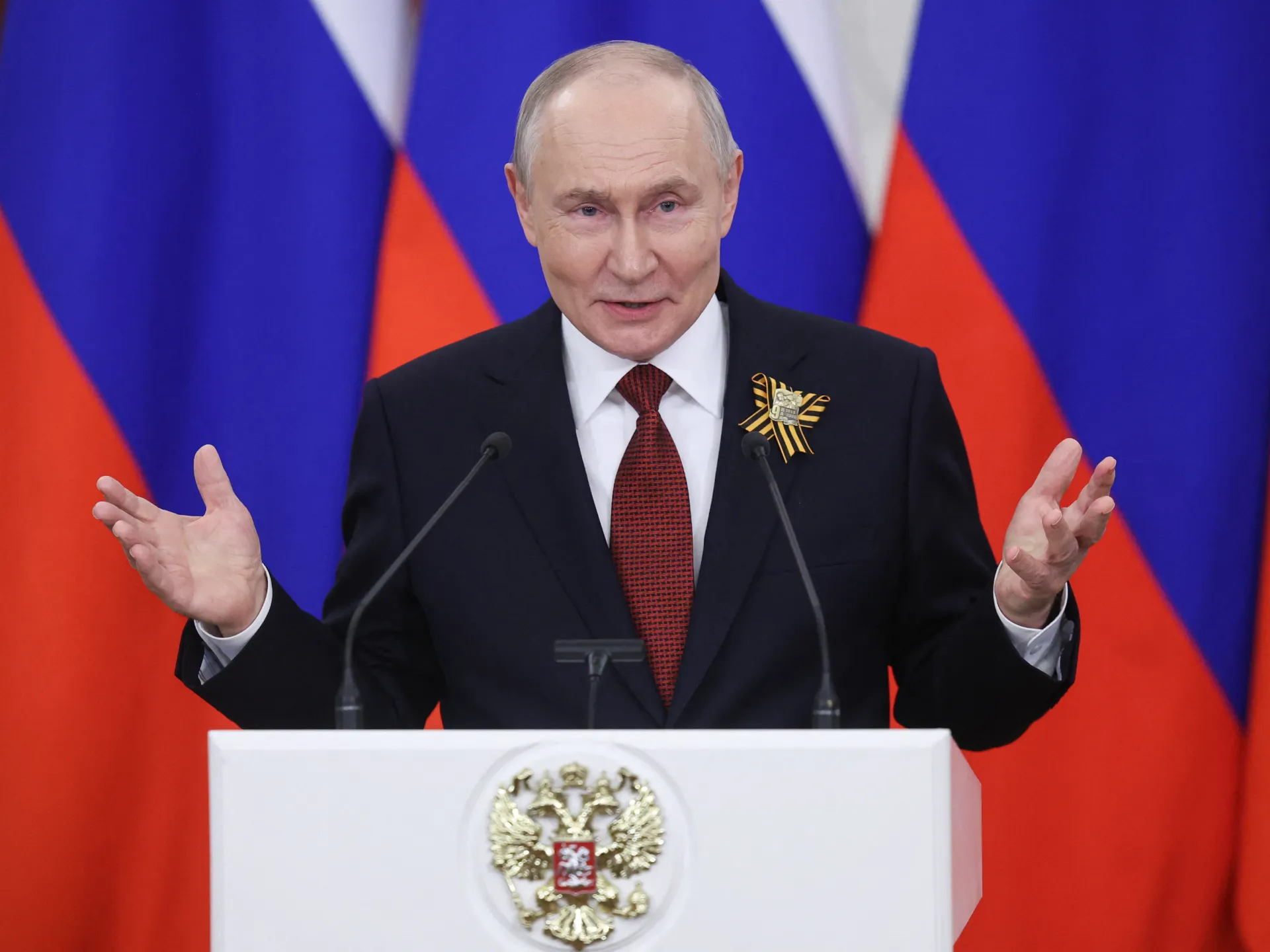
Russian President Vladimir Putin has suggested that former German Chancellor Gerhard Schroeder could coordinate talks with the European Union to secure a peace deal in Ukraine – a proposal met with scepticism by EU officials.
European Council President Antonio Costa said recently he believed there was “potential” for the EU to negotiate with Russia and to discuss the future of Europe’s security architecture.
Recommended Stories
list of 3 itemsend of list
Asked on Saturday whom he would like to see restarting talks with Europe, Putin said he would “personally” prefer Schroeder, who led Germany from 1998 to 2005 and has remained close to the Kremlin leader since leaving office.
A day later, the Russian leader said the four-year-old war may be “coming to an end”, adding that he was ready to hold direct talks with his Ukrainian counterpart, Volodymyr Zelenskyy, in Moscow or a neutral country.
Speaking after Saturday’s celebrations for Victory Day, which marks Russia’s victory over Nazi Germany in 1945 at the end of World War II, Putin added he would be willing to meet Zelenskyy only once the terms of a peace agreement had already been settled.
Russia had announced a unilateral two-day ceasefire on May 8-9 to mark Victory Day, while Zelenskyy countered it with his own proposed pause in fighting starting earlier, on the night of May 5-6.
As part of a broader Washington-led push for peace, United States President Donald Trump on Friday announced a three-day pause in the conflict, but both sides have since accused the other of breaking it.
As US-backed peace talks between Kyiv and Moscow stall, here is a look at who Schroeder is and whether he could be a trustworthy mediator.
Who is Gerhard Schroeder?
The 82-year-old leader of the Social Democratic Party (SPD) served as Germany’s chancellor from 1998 to 2005, focusing his political goals on European integration, reducing unemployment, liberalising German citizenship laws, curbing nuclear power and rebuilding the economy.
Disagreements over the Iraq war caused a serious rift in German-US relations in 2003, when Germany sided with France and Russia in opposing military intervention in the country over claims that the then-Iraqi president, Saddam Hussein, was producing weapons of mass destruction.
After leaving office in 2005, Schroeder almost immediately took a job as chairman of a controversial German-Russian consortium building a gas pipeline under the Baltic Sea. He held key roles in Russian energy projects, including work on the Nord Stream gas pipelines and a seat on the board of Russian oil firm Rosneft, which he gave up in 2022.
While he quit that role, the former chancellor has remained close to Putin, standing apart from most Western leaders since Russia invaded Ukraine in 2022 and facing heavy criticism in Germany.
His failure to publicly condemn Russia’s invasion of Ukraine has cost him several privileges normally granted to former chancellors, including receiving a state-funded office, making him a controversial figure at home.
What is his relationship with Putin?
Schroeder referred to Putin as “a flawless democrat” in 2004, declaring himself “thoroughly convinced that the Russian president wants to transform Russia into a democracy and that he is doing so out of a deeply held conviction”.
The then-German chancellor had little to say about Russian attempts to influence the elections in Ukraine during those years or about the Kremlin’s attacks on press freedom. On the contrary, under his leadership, Germany deepened its economic ties with Russia, grew trade and increased its dependency on Russian oil and natural gas.
In his book Klare Woerter (Straight Talk), Schroeder spoke about his relationship with the Russian leader, who worked as a KGB spy in the then-East Germany in the 1980s and is fluent in German.
“The most important thing for a friendship is a common language,” Schroeder, who has two adopted children from Russia – Viktoria and Gregor – said. “It makes everything easier.”
Their friendship reportedly continued to blossom over the years. Schroeder criticised moves to impose sanctions and eject Russia from the Group of Eight and even backed a Kremlin argument comparing the annexation of Ukraine’s Crimea region with NATO’s intervention in Serbia’s Kosovo province in 1999, which he himself helped lead as the German chancellor.
How are the Russia-Ukraine negotiations going?
The US-backed talks have faltered over the latest Russian offensive to seize the remaining parts of Ukraine’s eastern Donetsk region, which Moscow has demanded Kyiv cede before it considers ending its war. Meanwhile, the two sides continue to carry out strikes against each other, with Ukraine making significant inroads in destroying Russian energy infrastructure in recent weeks.
On Sunday, Ukrainian officials said Russian attacks had killed at least three people, and that close to 150 combat engagements had occurred on the front lines in the previous 24 hours, despite the three-day pause in fighting.
“In other words, the Russian army is not observing any silence on the front and is not even particularly trying to,” Zelenskyy said in his evening address, adding that Ukrainian troops were responding and defending their positions.
On Sunday, Russia’s Ministry of Defence accused Ukraine of violating the pause, saying it had downed 57 Ukrainian drones over the past day and “responded in kind” on the battlefield.
Control of the Russian-occupied Zaporizhzhia Nuclear Power Plant, Europe’s largest, has also been a point of contention.
While Putin suggested the war was “coming to an end” on Saturday, Kremlin spokesman Dmitry Peskov said peace in Ukraine was a “very long way” away.
On Sunday, Russia’s Interfax news agency quoted Kremlin adviser Yury Ushakov saying that US envoys Steve Witkoff and Jared Kushner would visit Moscow “soon enough” to continue talks with Russia.
Are Ukraine and the West likely to trust Schroeder?
EU foreign policy chief Kaja Kallas reacted with scepticism to Putin’s proposal. “If we give the right to Russia to appoint a negotiator on our behalf, you know, that would not be very wise,” she told reporters on Monday in advance of foreign ministers’ talks in Brussels.
“Gerhard Schroeder has been a high-level lobbyist for Russian state-owned companies. So it’s clear why Putin wants him to be the person so that actually, you know, he would be sitting on both sides of the table,” she added.
Germany dismissed Putin’s suggestion on Sunday. The Reuters news agency quoted a German official as saying the offer was not credible because Russia had not changed any of its conditions, stressing that any talks with the EU would need to be closely coordinated with member states and Ukraine.
The official, who spoke on condition of anonymity, said Putin had made a series of bogus offers aimed at dividing the Western alliance.
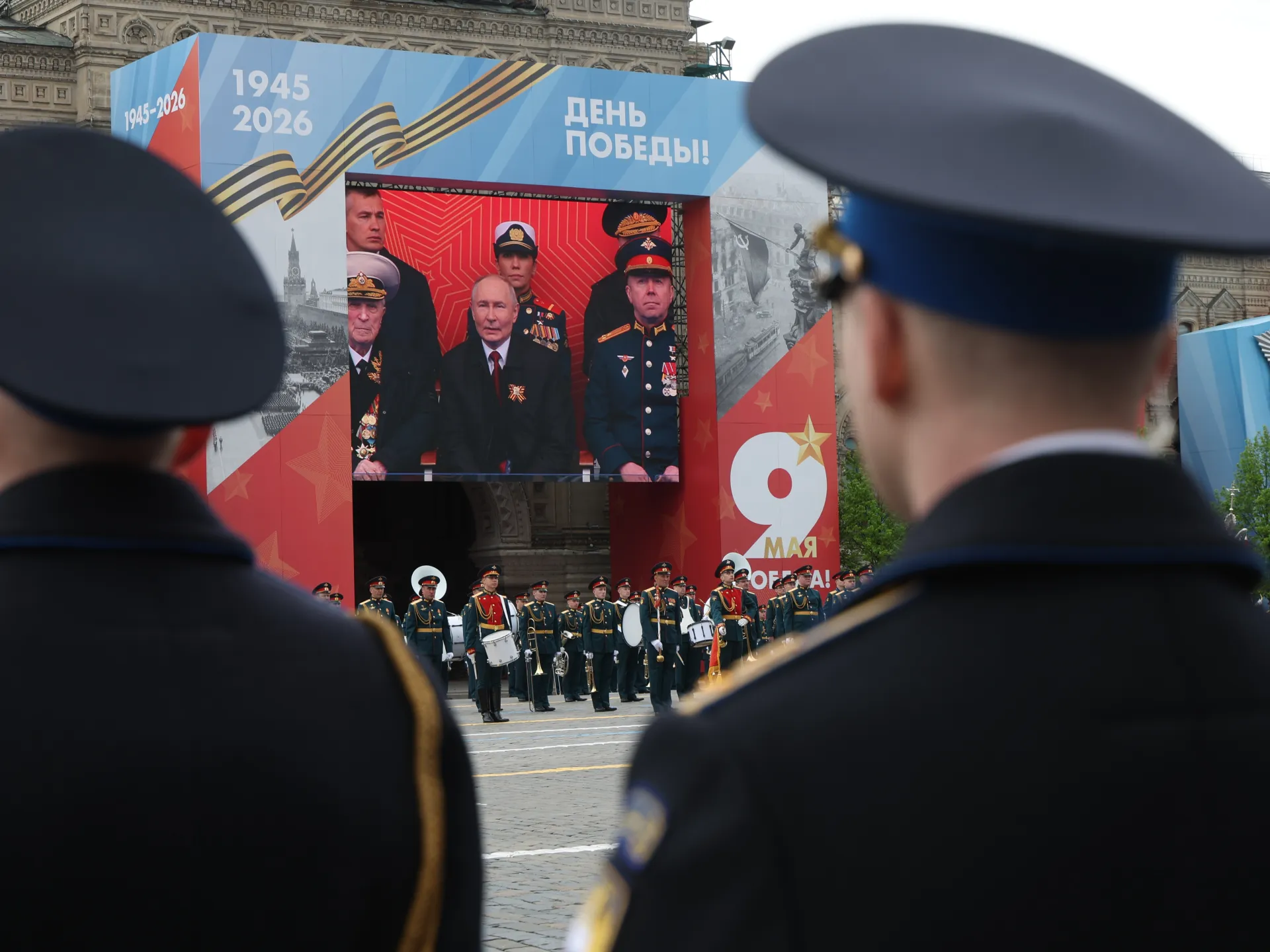
The annual ritual that is the Victory Day Parade in Moscow serves a dual purpose. It reminds Russia’s citizenry and the Kremlin’s audience across the former Soviet Union of the glorious past. The muscle flexing on May 9 each year benchmarks Russia’s geopolitical fortunes.
Last year on the 80th anniversary of the Soviet triumph over Nazi Germany, Russian President Vladimir Putin was flanked by foreign dignitaries from far and wide: Chinese President Xi Jinping, Brazilian President Luiz Inacio Lula da Silva, Slovak Prime Minister Robert Fico, Serbia’s Aleksandar Vucic, Nicolas Maduro of Venezuela, Abdel Fattah el-Sisi of Egypt and Mahmoud Abbas, the head of the Palestinian Authority.
This year, the lineup was much less impressive. Leaders from Belarus, Kazakhstan, Laos, Malaysia and Uzbekistan attended – with Republika Srpska, Abkhazia and South Ossetia for some added flavour – but no heavy hitters like India or China.
The talk of Russia as a linchpin of a new multipolar world order rings a tad hollow today, not least because no heavy equipment was marched through during the parade out of fear of Ukrainian drone strikes. On top of it, United States President Donald Trump claimed credit for a three-day ceasefire between Moscow and Kyiv.
The relatively dull affair that was this year’s parade speaks volumes about Russia’s current state. On paper, everything is going just fine. Trump has not wholly abandoned the idea of a deal to freeze the war in Ukraine, even at the cost of major concessions by Kyiv. The current US National Security Strategy calls for “strategic stability” with Russia while blasting Europe’s “woke” policies.
The inconclusive war against Iran, meanwhile, has exposed the limits of US military might. Oil prices have jumped, filling Russia’s coffers and improving its fiscal balance. On top of it, Trump has removed sanctions on some Russian oil to increase the global supply. Meanwhile, the Europeans are signalling they want to talk to Moscow.
In reality, the mood is gloomy. The Russian war effort in Ukraine continues to be stalled no matter how much money, materiel and human lives the Kremlin throws into the meat grinder that is the so-called special military operation (SVO). Ukrainian drones have hit deep inside the Russian homeland with even Red Square apparently not being immune to aerial attack.
Trump has lost interest in wooing Putin. With Hungarian Prime Minister Viktor Orban gone, the European Union has consolidated ranks. In Russia itself, economic growth has plummeted from 4 percent in 2024 to a projection of just over 1 percent this year.
The prospects for long-term development, productivity growth and technological innovation are lacklustre. There are modest signs of discontent within the Russian elite. Even Putin’s sky-high popularity ratings are slightly down, according to pollsters.
The stifling of the mobile internet in Moscow and other big cities has been met with dismay. Russians could be excused for puzzling over how the SVO, sold as a glorious repeat of the 1941-1945 Great Patriotic War, has gone on longer than the latter with no end in sight. It is no wonder Putin felt compelled to say on Saturday that “the matter” is coming to an end.
While its resources are focused on Ukraine, Russia is on the back foot in what it still calls its “near abroad” too. The past week showed that Europe is gaining momentum there.
On Monday, Armenia hosted the annual summit of the European Political Community (EPC), where European leaders gathered. Ukrainian President Volodymyr Zelenskyy was in attendance too. Once Moscow’s loyal client and member of the Russia-led Collective Security Treaty Organisation and Eurasian Economic Union, Yerevan is now strengthening ties with the West.
Even if the EPC is dismissed as a pan-European talking shop – or maybe a transatlantic one, given that Mark Carney, the Canadian prime minister, came as well – observers cannot ignore the fact that it was followed by the first EU-Armenia summit. The high-profile meeting signalled in no ambiguous terms that Yerevan sees its future in the EU. Strategically, it is looking at joining the trio of Ukraine, Moldova and Georgia.
The EU is reciprocating: The summit discussed up to 2.5 billion euros ($2.95bn) in investment in Armenia; cooperation on energy, transport and digital infrastructure; and visa liberalisation.
In parallel, both Armenia and Azerbaijan are courting the Trump administration. The two countries have welcomed the US as a peacebroker as they move closer to normalising ties. In August at the White House, Armenian Prime Minister Nikol Pashinyan and Azerbaijani President Ilham Aliyev signed a joint declaration pledging to seek peace.
In February, JD Vance became the first sitting US vice president to visit Yerevan and then hopped over to Baku. Armenians and Azeris are negotiating the opening of the Zangezur corridor running between Azerbaijan proper and its exclave Nakhchivan (from where the Aliyev family hails). The project has a name – Trump Route for International Peace and Prosperity.
In short, the US has scored a couple of points in Russia’s back yard with the help of Pashinyan and Aliyev. Moscow is watching from the sidelines as a former satellite drifts away from its embrace. And the EU but also Turkiye are to benefit because Armenia’s opening and interconnection with its neighbours favours their pro-integration agenda.
Of course, this does not mean that Armenia could simply jump ship from Russia to the West. Moscow retains stakes in the Armenian economy and, therefore, political leverage.
This will be put on display in the June general election, which will pit Pashinyan’s Civil Contract against the Armenia Alliance of former President Robert Kocharyan and Strong Armenia associated with the Russian-Armenian billionaire Samvel Karapetyan. Both Kocharyan and Karapetyan have strong connections to Moscow.
Public opinion is in favour of diversifying relations but not a complete break-up. That is a pragmatic position shared by Pashinyan too despite his focus on deepening ties with the West.
Russia failed to – or was reluctant to – support Armenia against Azerbaijan and prevent the loss of the Nagorno-Karabakh region, and Armenians are right to look for alliances elsewhere. But without a peace treaty with Azerbaijan and without full normalisation with Turkiye, one has to tread carefully and not burn bridges.
The Armenian leadership has to also factor in neighbouring Iran, with whom it enjoys positive ties. An escalation of the US-Israel war on Iran could threaten cross-border energy trade.
Putin would have loved to see Armenia and Azerbaijan attending Saturday’s parade. Ditto for Moldova, where pro-EU forces prevailed in the 2025 parliamentary elections. Or Georgia, which still has no diplomatic relations with Russia despite the rule of the authoritarian-minded Georgian Dream, a party viewed positively in the Kremlin.
The chances of those countries turning up next year are slim too. Even Kazakhstan and Uzbekistan will probably not confirm until the last minute, as they have been doing for years.
These days, Russia’s near abroad is much more abroad than near.
The views expressed in this article are the author’s own and do not necessarily reflect Al Jazeera’s editorial stance.
May 10 (UPI) — Energy Secretary Chris Wright said Sunday the Trump administration is “open” to the possibility of suspending the federal tax on gasoline sales as prices spike amid the U.S.-Israeli war against Iran.
Wright said during an appearance on NBC’s Meet the Press he and Trump are “open to all ideas” to lower energy prices, including following the lead of some U.S. states in temporarily shelving taxes on gas at the pump amid the price surge.
“All measures that can be taken to lower the price at the pump and lower the prices for Americans, this administration is in support of,” he said. “We are constantly looking for different ideas.”
Citing previous measures such as releasing oil from the U.S. strategic petroleum reserves and “revising federal regulations on summer gasoline blends to make it easier for American refineries to produce more gasoline,” Wright said the suspension of the 18-cents-per-gallon federal tax on gas is also on the table.
“We are working every day to offset this rise in prices because of a critical conflict in Iran to drive prices down, and we’re open to all such ideas,” he said.
Wright’s comments came as the average national price of a gallon of unleaded gasoline stood at $4.52 per gallon as of Sunday, according to the Automobile Association of America.
U.S. drivers have seen sharp increases in pump prices in recent weeks after Iran blocked the vital Strait of Hormuz waterway connecting Persian Gulf oil and natural gas producers with world markets.
The move came in retaliation to a wave U.S.-Israeli bombing attacks on Iran beginning Feb. 28, which Washington and Tel Aviv claim were necessary to prevent the imminent development of a nuclear weapon by Iran’s rulers.
The price of regular gas last week surged 25 cents for the second consecutive week to $4.55 — $1.40 higher than they were a year ago and marking their highest level since 2022, the AAA reported.
Crude oil prices have dipped below $100 per barrel while a fragile cease-fire between the United States and Iran has been in place and negotiations to reopen the Strait have been ongoing. But with global oil supplies tightening, upwards pressure on pump prices continues.
In a separate appearance on CBS News’ Face the Nation on Sunday, Wright refused to predict were gas prices were heading.
“I don’t know the future of gas prices,” he said while admitting that “gasoline and diesel prices are up, and they will remain up while this conflict’s in place, and then they will come back down.
“And, ultimately, they’ll come back down lower than they were before.”
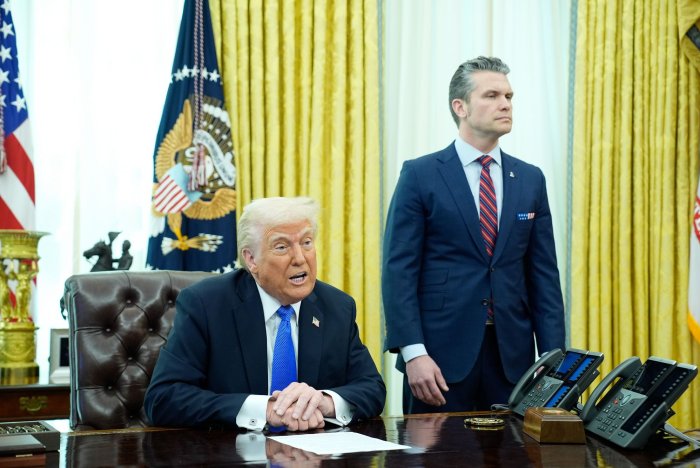
President Donald Trump is joined by Defense Secretary Pete Hegseth as he announces that Boeing has won a contract for a new fighter jet in the Oval Office of the White House on Friday. Photo by Yuri Gripas/UPI | License Photo
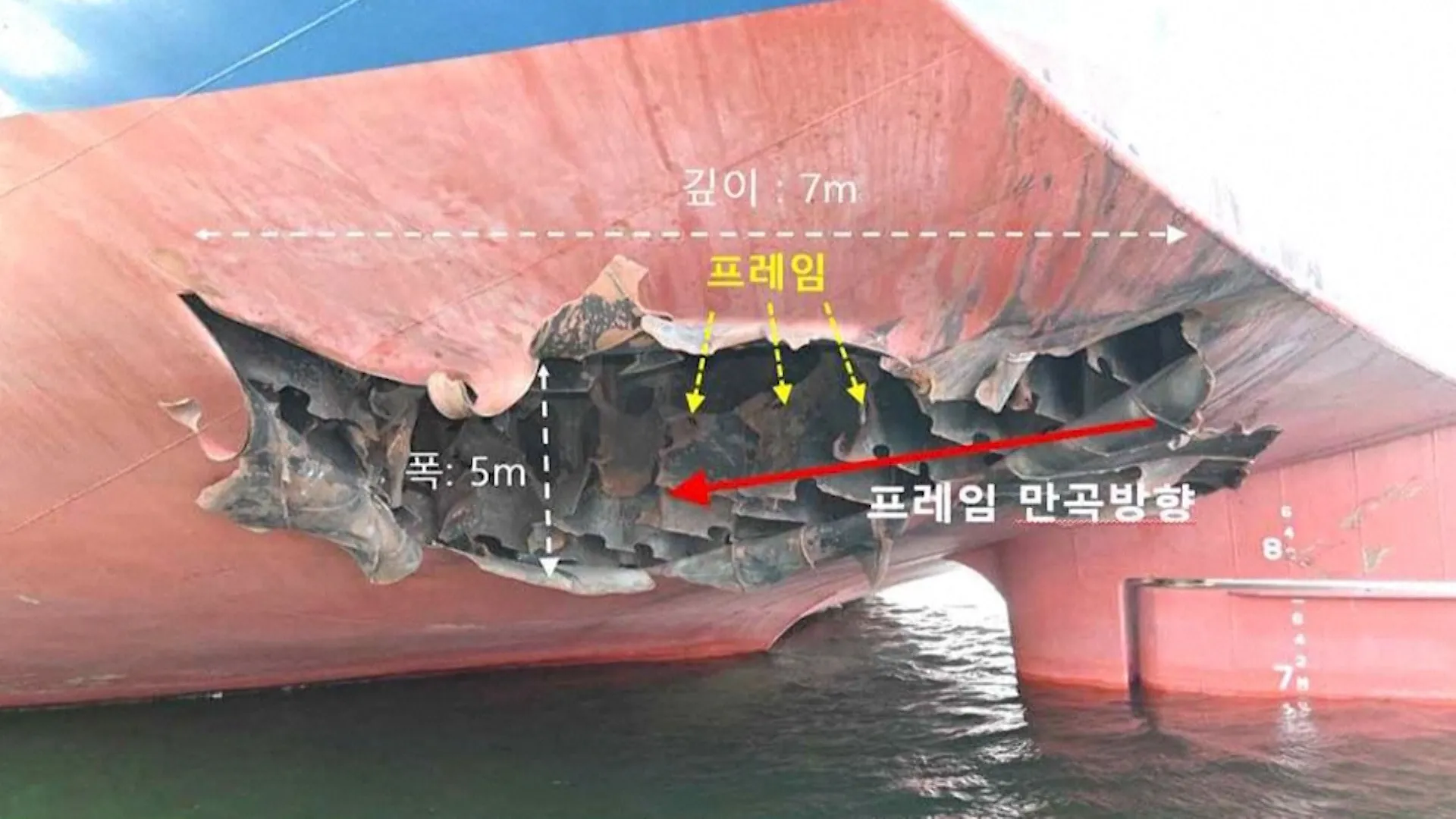
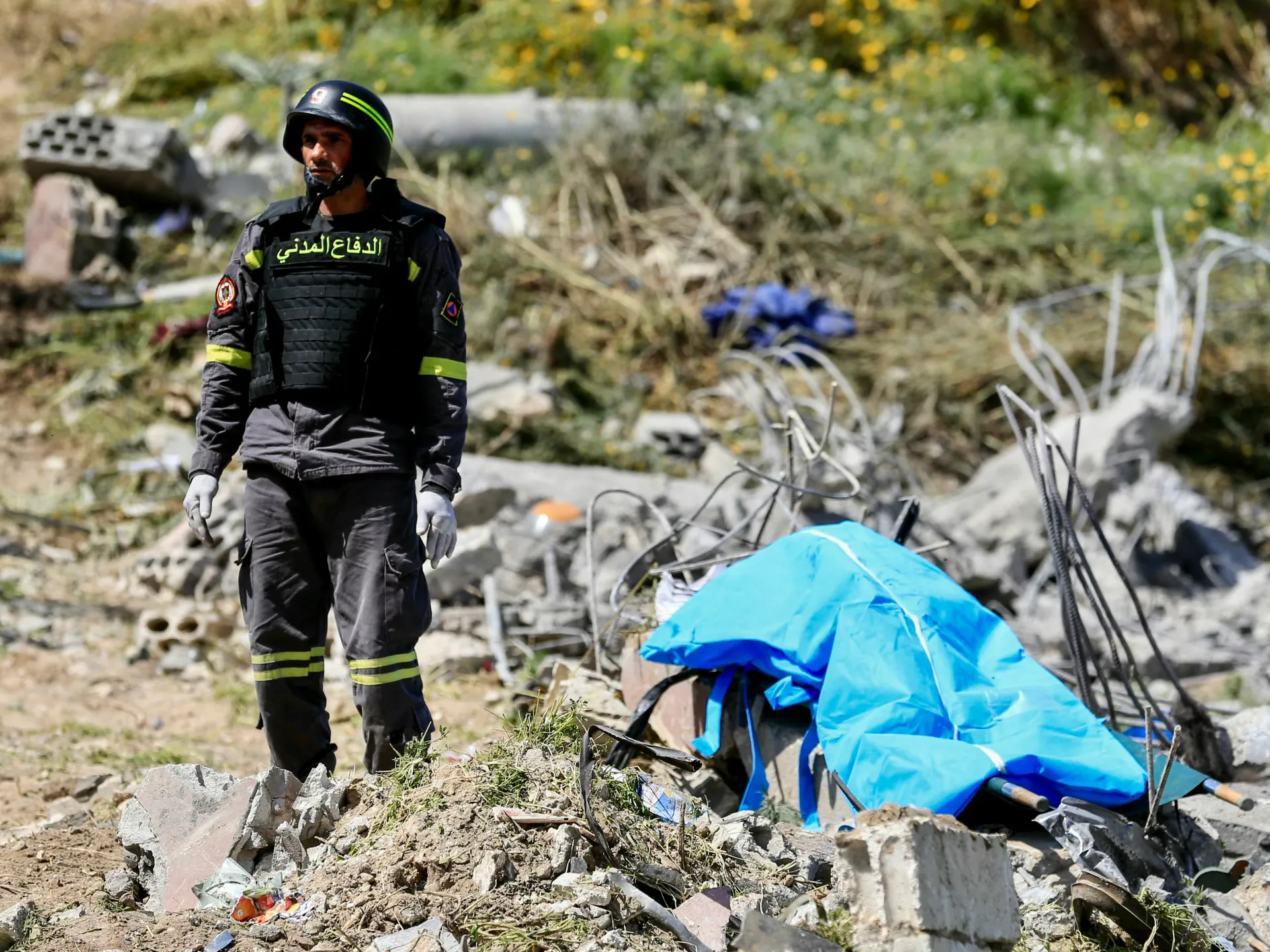
South Korea says it is investigating an incident on May 4 when two unidentified objects struck a Korean-operated cargo ship in the Strait of Hormuz.
The strike caused a fire and damaged the vessel’s stern.
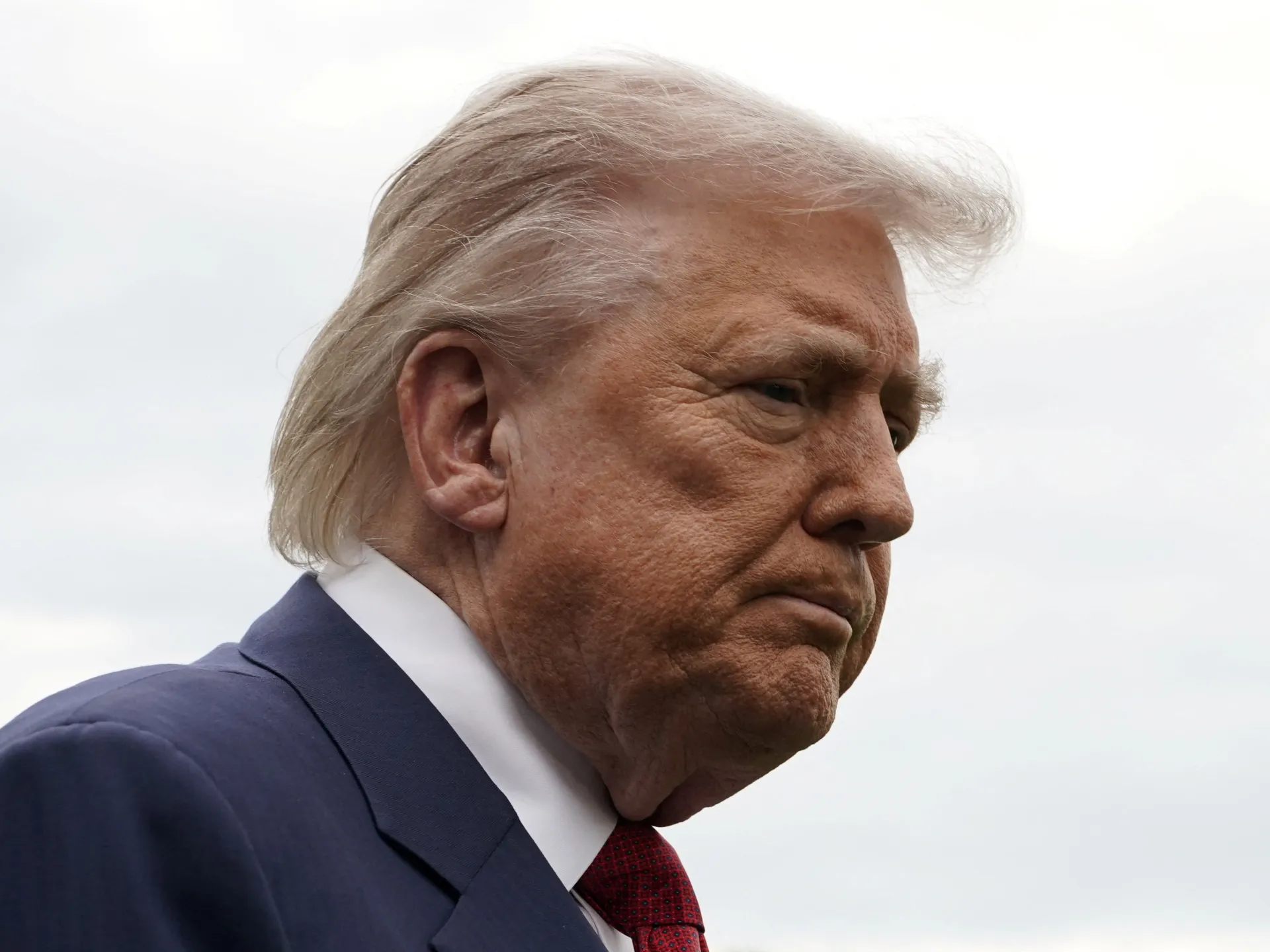
President Donald Trump has warned that the United States will target any Iranian trying to reach the country’s highly enriched uranium, saying that the nuclear material is under constant surveillance by the US military.
In an interview with the syndicated TV show Full Measure that aired on Sunday, Trump appeared to play down the significance of the uranium, which is believed to be buried under the rubble of nuclear facilities, remaining in Iran for now.
Recommended Stories
list of 3 itemsend of list
“We’ll get that at some point, whenever we want. We have it surveilled,” Trump said.
“I did a thing called Space Force, and they are watching. If somebody walked in, they can tell you his name, his address, the number of his badge … If anybody got near the place, we will know about it, and we’ll blow them up.”
Iran’s highly enriched uranium is one of the major sticking points between Washington and Tehran in ceasefire negotiations to end the 10-week US-Israel war on Iran.
The US wants Iran to transfer the uranium outside the country and completely shut down its nuclear programme, but Tehran has stressed that it will not give up its right to a domestic enrichment programme.
Several international media reports have said that the uranium remains under nuclear sites that the US bombed in June 2025, but Tehran has not confirmed the location of the nuclear material.
Last month, Trump announced that Iran had agreed to allow Washington to retrieve the uranium and bring it to the US – claims that Tehran quickly dismissed.
Trump told Reuters on April 17 that the US would work with Iran “at a nice leisurely pace, and go down and start excavating with big machinery” to retrieve the uranium stockpile at the sites.
“We’ll bring it back to the United States,” he added.
Iran’s Foreign Ministry spokesperson Esmaeil Baghaei denied Trump’s claim. “Enriched uranium is as sacred to us as Iranian soil and will not be transferred anywhere under any circumstances,” he said.
Iran is estimated to have more than 400kg (882lb) of uranium enriched at 60 percent purity.
Uranium enrichment is a complex process of isolating and garnering the most radioactive variety – isotope – of the element to produce nuclear fuel.
When enriched to around 90 percent purity, uranium can be used to make nuclear weapons.
In 2015, Iran agreed to a multilateral deal that saw Tehran scale back its nuclear programme and cap its uranium enrichment at 3.67 percent under strict international supervision in exchange for lifting sanctions against its economy.
Trump nixed that agreement – known as the Joint Comprehensive Plan of Action (JCPOA) – and started reimposing sanctions on Iran.
In response, Tehran – which denies seeking a nuclear weapon – began to advance its enrichment programme well beyond the limits set by the JCPOA.
Trump has argued that the ongoing conflict with Iran aims to prevent the country from acquiring a nuclear bomb.
Asked about the rising oil prices due to the war, Trump said: “We cannot let Iran have a nuclear weapon because they’re crazy.”
The average price of one gallon (3.8 litres) of petrol or gasoline in the US has risen to more than $4.50 due to supply issues linked to the Iranian blockade in the Strait of Hormuz, fuelling inflation. It was less than $3 before the war.
Despite the truce that came into effect last month, skirmishes have erupted in the Gulf over the past week as the US continues to enforce a siege on Iranian ports amid Tehran’s Hormuz blockade.
Iranian state-affiliated news outlets reported on Sunday that Iran has delivered its response to the latest US proposal to end the war to Pakistan, which is mediating the talks.
But Trump said the war is not over while reiterating his claim that Iran has been “defeated”.
“They are defeated, but that doesn’t mean they’re done,” the US president said. “We could go in for two more weeks and do every single target. We have certain targets that we wanted, and we’ve done probably 70 percent of them, but we have other targets that we could conceivably hit.”
TAIPEI, Taiwan — A resolute Secretary of State Marco Rubio took to the White House lectern Tuesday and declared the United States, under President Trump’s leadership, had launched a bold new operation to reopen the Strait of Hormuz, based on the principle that international waterways must remain free.
An hour later, Trump walked it all back, ending the complex military endeavor after less than a day.
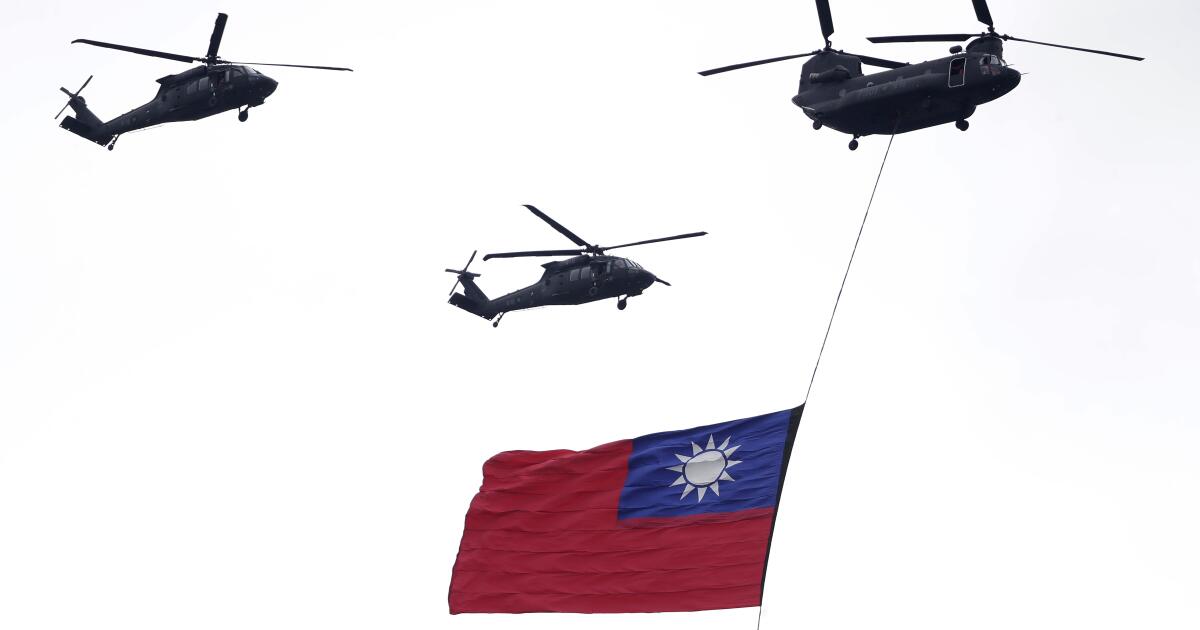
It was just the latest evidence to America’s allies that the word of the U.S. government is subject entirely to the president’s whims. And such is the worry fueling concerns in Taipei ahead of Trump’s state visit to China this week.
Privately, senior administration officials have assured Taiwanese leadership ahead of the trip that Trump has no intention of changing long-standing U.S. policy on the island, two sources familiar with the discussions said — a stance of “strategic ambiguity” that has avoided any declarative statements on Taiwanese independence since it was coined by Henry Kissinger 55 years ago.
A White House official was definitive that U.S. policy toward Taiwan “remains the same as the first Trump administration.”
“The U.S. One China policy, as our cross-strait policies are collectively known, is based on the Taiwan Relations Act, the three U.S.-PRC Joint Communiques and the Six Assurances to Taiwan,” the official said. “There is no change to our policy with respect to Taiwan.”
But Chinese officials told The Times that their president, Xi Jinping, intends to raise the matter as a top priority, knowing that only one person — Trump himself — speaks for the administration today.
Whether Xi can leverage the intimacy of a private audience to shift Trump’s stance, potentially linking it to other U.S. objectives, is the source of significant concern here.
Taiwanese officials fear even the most subtle rhetorical change in policy from Trump could imperil a delicate status quo that has held, to its benefit, for decades. They have similarly sought assurances that the administration will follow through on a pending U.S. arms sale worth over $10 billion, which received approval from Taiwan’s legislature on Friday.
“The most serious scenario would be if President Trump were to make an impromptu statement, such as, ‘I oppose Taiwanese independence,’ particularly if he were to link this to trade, the Iran issue, or a summit agreement,” said Chienyu Shih, of the Institute for National Defense and Security Research in Taiwan. “This would constitute a rhetorical concession of substantial significance to Beijing.”
Rubio told reporters at his news conference Tuesday — with a similar confidence he expressed on the Iran file — that China understands Washington’s long-standing position on the island.
“I’m sure Taiwan will be a topic of conversation. It always is. The Chinese understand our position on that topic — we understand theirs,” Rubio said.
“I think both countries understand that it is in neither one of our interests to see anything destabilizing happen in that part of the world,” he added. “We don’t need any destabilizing events to occur with regards to Taiwan, or anywhere in the Indo-Pacific. And that’s to the mutual benefit of both the United States and the Chinese.”
Trump has suggested a willingness to shift U.S. policy on Taiwan before.
During his initial campaign for the presidency in 2016, Trump openly questioned the One China policy, drawing ire from Beijing for suggesting he might endorse Taiwanese independence. He accepted a call from Taiwan’s president after his victory and would later support significant arms sales to Taipei.
And yet, at a 2017 meeting with Xi, Trump vacillated, telling the Chinese leader he could “deal with” the Taiwan issue in “a matter of months,” according to the Wall Street Journal. The Chinese were reportedly so flabbergasted by the comment that they dismissed it as rhetorical flourish.
“There is concern that the conversation between the two leaders could veer into sensitive territory on the topic of Taiwan,” said Brian Hart, deputy director of the China Power Project at the Center for Strategic and International Studies, “but there are many in the administration who would still appreciate the importance of general continuity in U.S. policy.”
U.S. support for Taiwan’s democratic movement used to be a matter of principle. Today, Washington sees it as a matter of national security. Over 60% of semiconductors are produced in Taiwan, including 90% of the world’s most advanced chips. And it is viewed as the clasp of the first island chain guarding against Chinese maritime expansion.
A robust debate between Taiwan’s Cabinet and the opposition in parliament ended Friday not over whether to accept U.S. defense equipment, but over how much to spend. The Legislative Yuan approved $24 billion in purchases — including a defense package passed by Congress in December and the pending arms sale — falling short of Taipei’s $40-billion proposal.
Anticipation for the president’s state visit is high here in the capital city, where local news is filled with questions over the influence Trump’s war in Iran might have on his appetite for supporting Taiwan.
Chinese defense analysts have seen the war as a sign of U.S. weakness. But Taiwanese defense experts have taken away a different lesson: cheap equipment from a lesser military, such as dumb mines thrown in a strait, may just be enough to paralyze a superpower.
The latest U.S. National Security Strategy, released by the Trump administration in December, emphasized the importance of support for Taiwan and the status quo.
But the Taiwanese took note that the strategy also called for an end to forever wars in the Middle East, offering little preview of the president’s sudden strategic pivot on Iran in February, launching a war few saw coming.
What Trump chooses to say in China “might be difficult to predict,” said Jyh-Shyang Sheu, a scholar of Chinese politics and military capabilities based in Taiwan.
But “in Taipei, we are still focusing on the U.S. policy,” he added, “more focusing on what he does instead of what he says.”
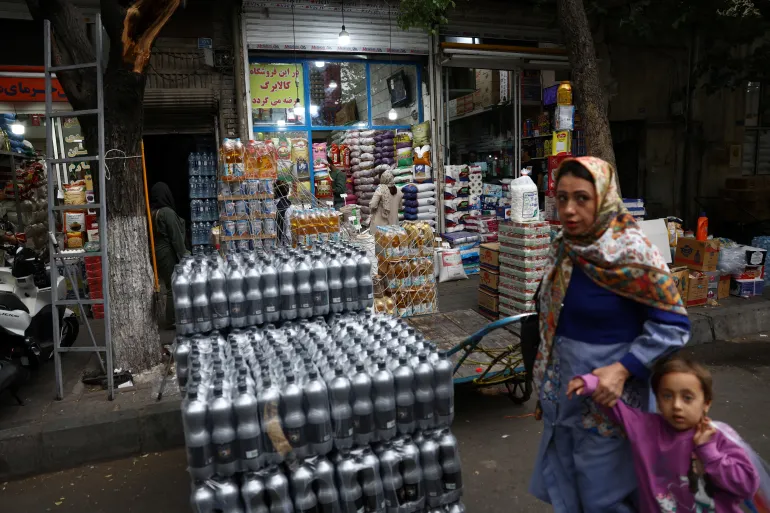
Tehran, Iran – Skyrocketing inflation is jeopardising food security among households in conflict-hit Iran, new figures show, as diplomatic efforts to end the war launched by the United States and Israel intensify.
“The people must realistically understand the conditions and restrictions of the country,” President Masoud Pezeshkian told a group of officials who gathered on Sunday to discuss rebuilding structures damaged or destroyed in US and Israeli attacks.
“It is natural that there are difficulties and problems in this path, but through people’s cooperation and reliance on national cohesion, problems can be solved,” he was quoted as saying by state media.
Pezeshkian’s comments came a day after the Statistical Center of Iran (SCI) said Farvardin, the first month of the Persian calendar year that ended on April 20, had an inflation rate of 73.5 percent compared to the same month of the previous year. The SCI also noted that inflation was five percent higher in Farvardin compared to the previous month.
The Central Bank of Iran, which reports figures based on a different method and with different data sets, reported a slightly lower inflation rate of 67 percent for Farvardin compared to a year earlier, and a seven percent monthly increase.
Although not matched, both figures indicate a considerably accelerating pace for general inflation, which has been among the highest in the world over recent years, and is continuously making Iranians poorer.
A Tehran resident told Al Jazeera she could no longer afford some of the items she could just last month.
“And it’s not just me – I think most people in society right now can’t afford many of the things they want,” she said.
Figures from the institutions also showed that food inflation is much higher than headline inflation, meaning that people are increasingly forced to pay an expanding share of their shrinking salaries on basic items.
The SCI reported a staggering 115 percent food inflation rate for the first month of the year, compared to the same period the year before, with several staple items more than tripling in price.
Solid vegetable oil had the highest increase at 375 percent, followed by liquid cooking oil at 308 percent; imported rice at 209 percent; Iranian rice at 173 percent; and chicken at 191 percent. The lowest price hikes were for butter, at 48 percent, followed by infant formula at 71 percent and pasta at 75 percent.
Majid, a young man who works at a liver kebab shop in the capital, said the eatery has increased prices three times in recent months.
“The price of liver has doubled. When we ask suppliers why, they either say there’s a shortage or that sheep are being exported. Honestly, there’s no real oversight,” he said.
The state-run Consumers and Producers Protection Organization said in a directive sent to 31 governors across Iran on Sunday that new price hikes for cooking oil are “illegal” and “must be returned to previous levels”, without saying how officials expected that to happen amid deteriorating economic conditions.
The country’s embattled currency, the rial, has also been registering new all-time lows over the past two weeks. On Sunday afternoon, it stood at about 1.77 million against the US dollar in Tehran’s open market after marginally recovering. The rate was about 830,000 per US dollar a year ago.
Subsidies and ‘enemy plots’
The response from the government has included offering subsidies and coupons, while trying to crack down on acts such as hoarding that are perceived to be contributing to price hikes.
But this has not been accompanied by a clear macroeconomic stabilisation package as the US presses on with a naval blockade of Iranian ports.
As Iranian media reported on Sunday that Tehran had sent an official response to the text for an agreement earlier proposed by the US through mediator Pakistan, Pezeshkian said, “If there is talk of negotiations, it does not mean surrender.”
People walk through a local market in Tehran [File: Majid Asgaripour/WANA via Reuters]
The government hands out monthly cash subsidies and electronic vouchers to buy essential goods at select stores, which together amount to less than $10 each month per person. Authorities are considering raising the amount, but a hefty budget crunch has made that more difficult.
Pezeshkian and Central Bank chief Abdolnasser Hemmati have said they are aware of the price increases, but have blamed the war that began in late February while coordinating with the judiciary to act against price gauging and hoarding.
A number of lawmakers in Iran’s hardline-dominated parliament, as well as state television hosts and outlets linked to the Islamic Revolutionary Guard Corps (IRGC), have said the price surges are suspicious. They have described the runaway prices as being part of an “economic revenge” campaign by enemies who suffered failures in the military arena.
“I want the people of Iran not to be fooled by the enemy-made price hikes,” a guest on state television’s Ofogh network said on Saturday. “Great things have happened, and great things are ahead. The economic achievements of the war are unrivalled by any other period.”
But some of the economic pain continues to be inflicted as a direct result of a near-total internet shutdown now being imposed by Iranian authorities for a 72nd day.
Numerous officials in the government, internet infrastructure firms, telecommunication companies and other state-linked organisations have emphasised that they are against a tiered internet system that is now being implemented. But they have said they bear no responsibility, since the blackout, which is expected to remain in place until the war ends, is ordered by the Supreme National Security Council.
In the meantime, the combined impact of local mismanagement, Western sanctions, blockade, war and the internet shutdown is squeezing people and businesses hard.
“The startup ecosystem of the country is dead, we are searching for a tombstone for it,” the Guild Association of Internet-based Businesses said in a statement on Saturday.
The Culver City museum has purchased a historically significant midcentury modern building in Hawthorne, which it plans to transform into a research institute and interactive storage facility for its collections — a “living archive,” as it’s calling the facility.
The Wende plans to debut the space in spring 2028.
“In the museum world, there’s typically public space and storage space — meaning dead storage,” Wende founder and Executive Director Justin Jampol said in an interview. “And this living archive is a hybrid that combines both. It houses the collections and makes them accessible for discovery.”
The 24,000-square-foot building was erected in 1965 by shopping mall pioneer and developer Ernest Hahn to serve as his corporate headquarters. It was designed by movie theater architect George Nowak, who also designed the Writers Guild Theater.
The Wende plans to renovate the building, adding a 7,000-square-foot extension, with flexibility to further expand in the future. The facility will include state-of-the-art, climate-controlled storage for the museum’s more than 250,000-object collection of paintings, sculptures, photographs, tapestries and Cold War-era ephemera from the Soviet Union, East Bloc, China and other countries.
Interactivity, however, is the goal: so there will be spaces for “respite and inspiration,” Jampol said, such as a “scholar’s garden,” reading rooms and a library with a community learning lab and free coffee for visitors.
“The idea is to make it as engaging and comfortable as possible,” Jampol said. “Most archives are places that are very uncomfortable and uninspiring — think fluorescent lights blinking in a basement. The idea here is to open this up in a way that makes people want to be here. And focus on the content and not the space itself. We’re trying to create an experience that makes visitors want to go on an adventure.”
The Glorya Kaufman Community Center at the Wende Museum debuted this past fall.
(Stella Kalinina / For The Times)
The Wende’s Collections Department will be headquartered in the new building. The facility will also house a conservation center for endangered objects and paper archives, and will feature a digitization and imaging lab that will make the collections available online, free of charge.
It will also include reading rooms and research offices for up to 100 visiting scholars or artist fellows annually.
“The collections, instead of being hidden in a box, will be on full view,” Jampol said. “When you walk through, you won’t see boxes. You’ll see vases, tapestries, ceramics and more.”
The Wende Museum in Culver City opened its doors in 2017 inside a former 1949 atomic bomb shelter. It now draws about 25,000 visitors annually, who come to take in four exhibitions and more than 60 public programs. Admission is free.
Rapid expansion has been a hallmark of the Wende of late.
In September, it debuted a $17-million culture and wellness center offering free yoga, meditation, sound baths and therapy. The 7,500-square-foot facility was made possible with funding from the late philanthropist Glorya Kaufman who died a month before the building opened to the public. It’s called the Glorya Kaufman Community Center.
The Wende’s Glorya Kaufman Community Center includes a century old A-frame theater, an old MGM prop house, for free culture and wellness events.
(Stella Kalinina / For The Times)
In February, the Wende bought a three-bedroom house built in the 1940s adjacent to the museum’s campus that will be used as a live-work space for photographers in residence. It will include a community space for photography workshops and a post-production studio. The Nikita Foundation and the Victor Family Foundation provided funding.
It debuted a tiny home on its campus last fall, nicknamed “The Stevie” after donor Steve Markoff. It’s used for cross-disciplinary artist residencies.
A facility for interactive museum storage and research is not a new concept in Los Angeles.
The so-called “Resources Center” was built to house, conserve and care for both museums’ collections in a state-of-the-art, climate-controlled and fire-safe environment. It also serves as a research destination for scholars, artists, tribal representatives and others to study the collections.
Jampol said that the project will enable the Wende to serve a wider swath of visitors, from specialists to the general public, and to venture outside of Culver City to engage other communities.
“It’s about making the collections both safe and accessible,” he said. “We looked to the Autry for inspiration alongside the V&A East in London — they both invite people in from the community, alongside scholars, to explore the collections. It’s the democratization of art — I love the ethos and spirit of that.”
Addressing reporters on a recent flight to Algeria, Pope Leo XIV invoked the Gospel, called himself a peacemaker and pledged to keep speaking out on behalf of the downtrodden.
“Too many people are suffering in the world today,” he said. “Too many innocent people are being killed, and I think someone has to stand up.”
Pontiffs have a tradition of weighing in on global strife, and Leo’s words were in keeping with long-standing church teaching. Appearing in front of reporters in this fashion was also not new: Pope John Paul II began taking questions from journalists on the papal plane in the 1970s.
But the first American pope was in fact wading into an unprecedented political tempest — responding to a series of broadsides from President Trump that drew Leo into debates over the war with Iran, immigration policies and more, all while Catholics in the U.S. and around the world looked on.
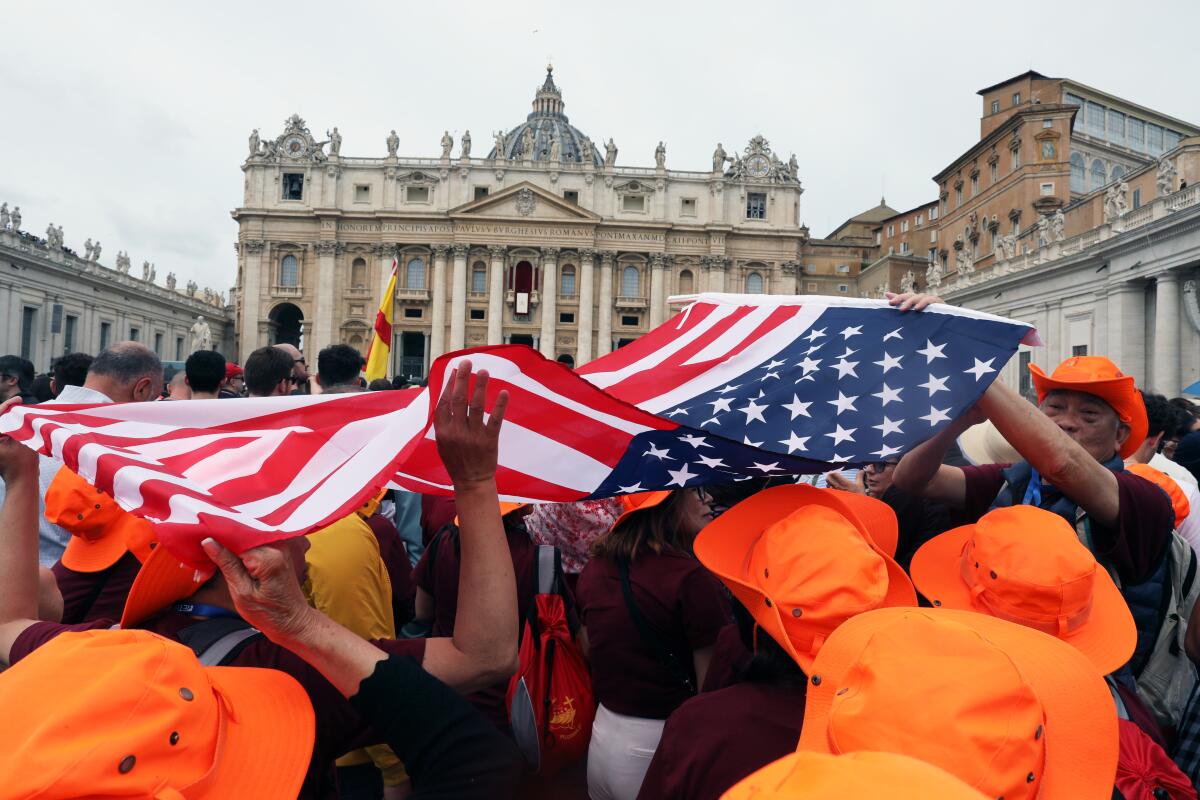
Missionaries from Austin, Texas, gather for prayer in St. Peter’s Square on May 11, 2025.
(Marco Di Lauro / Getty Images)
With no permanent peace deal in sight to end the war, two of Trump’s top lieutenants — Vice President JD Vance and Secretary of State Marco Rubio, both Catholics and potential 2028 presidential candidates — have also been pulled into the fray. On Thursday, Rubio met Pope Leo at the Vatican in what he said was a long-planned diplomatic visit. Next month, Vance will release a memoir, “Communion: Finding My Way Back to Faith,” detailing his 2019 conversion to Catholicism.
Trump’s invective has not abated, even in the week his chief diplomat met the pontiff. Ahead of Rubio’s visit, Trump repeated his claim that Leo was “just fine” with Iran developing a nuclear weapon. In response, Leo said that his critics should go after him “truthfully,” noting that the Catholic Church has spoken out against all nuclear weapons.
Against the backdrop of this sparring, Rubio sought to downplay the drama after his official visit to the Holy See, which lasted about two hours. On X, he said the meeting with Leo focused on their “shared commitment to promoting peace and human dignity.”
The episode has revealed the unique power Leo holds on the U.S. stage, with his inherent understanding of the country’s politics and an ability to deliver his message in an accent that at times reveals his Chicago roots.
“He’s speaking in English and he’s American,” said Father James Martin, a Jesuit priest and author, most recently of the memoir “Work in Progress.” “People can’t dismiss him as not understanding the United States.”
For weeks, Leo has been asked to respond to a cascade of insults from Trump, including accusations that he is “weak on crime,” that he was chosen as pope because of Trump, and that the leader of the world’s 1.4 billion Catholics should “get his act together.”
In measured tones, Leo has repeatedly said he does not want to fight with the president. He counters that he is merely preaching the Gospel. On that flight in April, the pope told journalists: “I do not look at my role as being political, a politician. I don’t want to get into a debate with him.”
He added: “I will continue to speak out loudly, looking to promote peace, promoting dialogue and multilateral relationships.”
He may not be a politician, but Leo’s preaching, ranging from Iran to immigration and global warming, has touched a nerve with Trump. In the U.S., Catholics often serve as a powerful swing vote and hold a wide range of views on those issues. But even in a time of deep division and political malaise, enthusiasm for the pontiff, born and raised in the Chicago area, is hard to dismiss.
Leo’s ascendancy comes as engagement with the Catholic Church appears to be growing in the United States. Though comprehensive data are hard to come by, parishes are reporting renewed interest.
Mark Gray, a senior research associate at the Center for Applied Research in the Apostolate at Georgetown University, said there was evidence of an increase in baptisms, a trend that appeared to predate Leo’s election as pope last May.
Some of the new American converts lean more conservative, experts said, part of a broader rise in traditionalism. Amid tensions over whether the church should focus more on traditional issues of morality, such as abortion and marriage, or global concerns like war and migration, Leo has stressed that all are welcome and that he wants the church to function as a big tent.
Making history
U.S. presidents have long sought to court the pope, mindful of the country’s sizable Catholic population and its potential as a swing vote in elections. Woodrow Wilson was the first president to meet with the pope, in 1919, during talks after the end of World War I. Since Dwight Eisenhower made a trip to Rome in 1959, every president has traveled to meet the pope, some more than once.
That includes Trump, who traveled to see Pope Francis in 2017, accompanied by First Lady Melania Trump and his daughter Ivanka Trump. He also attended Francis’ funeral in 2025.
Asked if there was any precedent for Trump’s clash with the pope, Steven Millies, a professor of public theology at Catholic Theological Union in Chicago, invoked an English king who changed the course of church history: “Henry VIII invites a comparison,” he said. Henry rejected Catholicism in the 1500s and founded a new church in order to ratify a divorce rejected by the pope.
Though Trump — who is not Catholic — has not suggested any such schism, he certainly appears to have discarded most niceties. The president has not apologized for any of his comments, though he did, after widespread backlash, take down a social media post that appeared to depict him as Christ.
Trump is constitutionally blocked from seeking another term, so picking a fight with Pope Leo may not have lasting political implications for him. But it’s a different story for Vance and Rubio, both of whom may need to appeal to the country’s Catholic voters to further their ambitions.
In the 2024 election, the Catholic vote tilted more decisively to the right, with 55% supporting Trump compared with 43% for Kamala Harris, according to the Pew Research Center. Four years earlier, Catholics were evenly divided, with 50% supporting Joe Biden, a practicing Catholic, and 49% backing Trump.
Rubio noted as he headed to Rome that “obviously we had some stuff that happened” between the White House and the Vatican. Vance, who has frequently expressed his support for the pope but is also known for his often-punchy defense of the president’s positions, drew some derision in April when he was asked at a conference about Trump’s comments and suggested that Leo should “be careful when he talks about matters of theology.”
Pope Leo XIV exchanges gifts with U.S. Secretary of State Marco Rubio in the pope’s private library at the Vatican on Thursday.
(Vatican Media via Associated Press)
He later modified his tone, posting on X: “Pope Leo preaches the gospel, as he should, and that will inevitably mean he offers his opinions on the moral issues of the day. The President — and the entire administration — work to apply those moral principles in a messy world. He will be in our prayers, and I hope that we’ll be in his.”
Still, the rift could cloud the upcoming release of Vance’s memoir, overshadowing a book meant to burnish a potential 2028 bid with questions about Trump’s antagonism toward the pontiff.
Two Catholics have served as president — Biden and John F. Kennedy. During an era of stronger anti-Catholic sentiment, Kennedy famously gave a speech as a candidate emphasizing the separation of church and state. Biden was more openly devout, attending Mass every weekend and quoting Catholic hymns in his speeches. Vance is the second Catholic vice president, following Biden’s two terms as President Obama’s deputy.
In a statement, White House spokeswoman Taylor Rogers said Trump’s social policies were a boon for U.S. Catholics and alluded to electoral politics without mentioning the pope. “President Trump has great respect for the more than one billion Catholics around the world, especially the Catholic Americans who helped power his landslide election victory in 2024,” she said.
The Midwestern pontiff
It’s been a year since the man born Robert Prevost in 1955 stepped out onto the Vatican balcony as pope, a role that predates the United States by nearly 2,000 years. The first American pope’s compatriots quickly seized on his Midwestern upbringing (he’s a White Sox fan) and relatable family dynamics (one of his two brothers supports Trump). In a nod to his Chicago roots, an Iowa-based clothing store, Raygun, began selling a T-shirt bearing the slogan “Da Pope.”
Leo also served for years as Bishop of Chiclayo in Peru, building a global profile that helped propel him to the papacy. It hasn’t stopped Chicagoans from claiming him as one of their own — even showing up at the Vatican with Chicago-style deep-dish pizza.
Known as “Bob” before becoming Pope Leo, the new pontiff chose a name that clearly signaled his intentions as a leader, invoking memories of Leo XIII, an intellectual considered a pioneer of modern Catholic social teaching and an advocate for workers. Millies said the choice signaled that Leo wants to refocus on justice and care for others as well as the rising threats around the globe. Leo has cited artificial intelligence as one of those challenges.
With a more low-key presence than his predecessor, Pope Francis, some observers have labeled Leo as quiet. But as his tug of war with Trump shows, his messages are frequently not subtle. In fact, his reserved style may be a reflection of his Midwestern roots.
Pope Leo XIV presides over the Prayer Vigil for Peace at St. Peter’s Basilica, on April 11.
(Antonio Masiello / Getty Images)
This mild manner comes across in public statements that nonetheless make a lasting impact.
Last fall, Leo questioned Trump’s decision to rename the Department of Defense as the Department of War. “Let us hope it is just a way of speaking,” he said. More recently, he took aim at the president’s preferred method of communication, his social media site Truth Social. Asked about Trump’s vitriol on the platform, Leo said: “It’s ironic — the name of the site itself. Say no more.”
Perhaps no message has been clearer than the pope’s decision on how to spend the Fourth of July this year. For the nation’s 250th birthday, as Trump hosts a giant celebration, the pope will be an ocean away. His plans? Visiting Lampedusa, an Italian island that serves as a stop for migrants traveling to Europe.
As Russia held its most scaled-back Victory Day parade in years with Vladimir Putin suggesting the war on Ukraine is ‘coming to an end’, Theresa Fallon argues Volodymyr Zelenskyy has played a bad hand of cards very well in order to gain momentum against Moscow.
A fragile ceasefire in the US-Israel war on Iran is coming under growing strain as several Gulf countries have reported drone attacks.
Qatar said on Sunday that a drone struck a cargo ship in Qatari waters, sparking a fire, while Kuwait and the United Arab Emirates said they repelled drone attacks.
Recommended Stories
list of 3 itemsend of list
Though no Gulf country reported casualties in the latest attacks, they have put pressure on the fragile ceasefire, which took effect on April 8.
Qatar’s Ministry of Defence said the freighter had been arriving in the country’s waters from the UAE capital, Abu Dhabi, and was hit by a drone northeast of the port of Mesaieed.
“The vessel continued its journey toward Mesaieed Port after the fire was brought under control,” the ministry said.
The United Kingdom Maritime Trade Operations (UKMTO) said a bulk carrier reported being struck by an “unknown projectile”, and a small fire had been extinguished, but there were no casualties from the incident. “There is no reported environmental impact,” it said.
Kuwait’s Defence Ministry said a “number of hostile drones” were detected in the country’s airspace at dawn. In a post on X, a spokesperson said the drones were dealt with “in accordance with established procedures”, but did not specify where the drones were launched from.
The UAE Defence Ministry said two Iranian drones were intercepted.
“UAE air defence systems successfully engaged two UAVs launched from Iran,” the ministry said in a statement on X.
Ceasefire tested
The Trump administration has said the truce is still in effect, but a naval battle has been taking place in the Gulf region, with Iran restricting traffic through the Strait of Hormuz, a strategic waterway through which a fifth of traded oil transited before the war, and the United States imposing a blockade of Iranian ports.
Several attacks have been reported on ships in the Gulf and the countries in the region over the past week.
On Friday, the US struck two Iranian oil tankers, saying they were trying to breach its blockade of Iran’s ports.
On Tuesday, the UAE said it came under attack from Iranian missiles and drones for the second day in a row. Iran’s Islamic Revolutionary Guard Corps (IRGC), however, denied the claim.
The IRGC Navy on Sunday reiterated its warning that any attack on Iranian oil tankers or commercial vessels would be met with a “heavy assault” on one of the bases in the region used by US forces and enemy ships.
The spokesperson for the Iranian parliament’s foreign policy and security committee, Ebrahim Rezaei, said Tehran’s “restraint is over”.
“Any aggression against our vessels will be met with a heavy and decisive Iranian response against American vessels and bases,” Rezaei wrote on X.
“The clock is ticking against the Americans’ interests; it is to their benefit not to act foolishly and sink themselves deeper into the quagmire they have fallen into. The best course is to surrender and concede concessions. You must get used to the new regional order,” he added.
Talks to end the war
While the truce remains in effect, President Donald Trump has repeatedly threatened to resume the US bombardment if Iran does not accept a deal which includes reopening the Strait of Hormuz and rolling back its nuclear programme.
Iran is still mulling its response to a 14-point proposal by Washington, with Iranian frozen assets and war reparations among other main sticking points.
In a meeting with US Secretary of State Marc Rubio on Saturday, Qatar’s Prime Minister Sheikh Mohammed bin Abdulrahman bin Jassim Al Thani pushed for all parties to respond to the ongoing mediation efforts and to reach an agreement for lasting peace.
Qatar’s prime minister also held a phone call with Iran’s Foreign Minister Abbas Araghchi, the Qatari foreign ministry reported on Sunday.
Sheikh Mohammed told Araghchi that Iran’s use of the Strait of Hormuz as a “pressure card” would only deepen the crisis in the Gulf, and said all parties in the conflict should respond to mediation efforts to end the war.
Reporting from Tehran, Al Jazeera’s Tohid Assadi said when it comes to diplomatic engagement, it seems that the US and Iran want the content of any negotiations to remain private.
Meanwhile, there is a mixture of different sentiments among Iranian citizens, he noted.
“Since the early days of the war, people have gathered to show their sense of nationalism and support for the political establishment,” he said.
“But we also know that there is a sense of frustration, especially when it comes to soaring prices and economic difficulties,” he added.
At a meeting on the reconstruction after damage caused by the war, President Masoud Pezeshkian said negotiations with the US on ending the war do not mean Iran is surrendering.
“The goal is to realise the rights of the Iranian people and defend national interests with authority,” he said.
Russian President Vladimir Putin has suggested that his country’s war on Ukraine may be “coming to an end” and expressed a willingness to meet his Ukrainian counterpart, Volodymyr Zelenskyy, in a third country if a peace deal is finalised.
Putin made the comments to reporters on Saturday, hours after promising victory in Ukraine at Russia’s most scaled-back Victory Day parade in years.
Recommended Stories
list of 4 itemsend of list
The remarks came as Russia and Ukraine began a three-day ceasefire and agreed to exchange 1,000 prisoners, in developments that raised cautious hopes of renewed diplomatic progress.
At the parade, Putin praised Russian troops fighting in Ukraine, framing their mission as a “just cause” against “an aggressive force armed and supported by the entire NATO bloc”.
“Victory has always been and will be ours,” he added, as columns of troops lined up on Moscow’s Red Square.
Speaking to reporters afterwards, Putin blamed Western “globalist elites” for the war, saying they had promised NATO would not expand eastward after the 1989 fall of the Berlin Wall, but then tried to draw Ukraine into the European Union’s orbit.
He then declared, “I think the matter is coming to an end.”
Russia’s annual Victory Day holiday marks the Soviet Union’s defeat of Nazi Germany in World War II and honours the 27 million Soviet citizens who died in the conflict.
This year’s parade was more subdued than usual, with videos of military hardware shown on giant screens rather than tanks and missile systems rolling through Red Square.
For the first time, Saturday’s parade featured troops from North Korea, a tribute to Pyongyang that sent its soldiers to fight alongside Moscow’s forces to repel a Ukrainian incursion into Russia’s Kursk region.
Russia had declared a unilateral ceasefire for the holiday on Friday and Saturday, while Zelenskyy announced a truce that was supposed to begin on May 6, but neither held, and the parties traded blame for the continuing attacks.
Fears for the festivities eased on Friday, when US President Donald Trump announced that Russia and Ukraine had bowed to his request for a ceasefire running Saturday through Monday and an exchange of prisoners.
“This Ceasefire will include a suspension of all kinetic activity, and also a prison swap of 1,000 prisoners from each Country,” Trump wrote in a Truth Social Post on Friday.
“Talks are continuing” on ending the war, Trump said, adding that “we are getting closer and closer every day”.
“Hopefully, it is the beginning of the end of a very long, deadly, and hard fought War,” he said.
Zelenskyy followed up on Trump’s statement with a decree mockingly permitting Russia to hold its Victory Day celebrations, declaring Red Square temporarily off-limits for Ukrainian strikes.
The Kremlin shrugged off the comments as a “silly joke”.
Zelenskyy has previously proposed to meet with Putin to negotiate a peace deal, but has dismissed the Russian leader’s suggestion that he come to Moscow. On Saturday, Putin told reporters he could meet with Zelenskyy in another country, but only to endorse a comprehensive accord.
“A meeting in a third country is also possible, but only after a peace treaty aimed at a long-term historic perspective is finalised,” Putin said. “This should be a final deal, not the negotiations.”
Putin, who has governed Russia as president or prime minister since the last day of 1999, faces a wave of anxiety in Moscow about the war in Ukraine, which has killed hundreds of thousands of people, left swaths of Ukraine in ruins, and drained Russia’s $3 trillion economy.
Russian troops have been fighting in Ukraine for more than four years. That is longer than Soviet forces fought in World War II, known in Russia as the Great Patriotic War of 1941-45.
But Russian forces have so far been unable to take the whole of the Donbas region of eastern Ukraine, where Kyiv’s forces have been pushed back to a line of fortress cities. Russian advances have slowed this year, though Moscow controls just under one-fifth of Ukrainian territory.
European Council President Antonio Costa said last week that there was potential for talks between Europe and Russia on the continent’s future security architecture.
Asked on Saturday if he was willing to engage in talks with the Europeans, Putin said the preferable figure for him was Germany’s former Chancellor Gerhard Schroder.
“For me personally, the former chancellor of the Federal Republic of Germany, Mr Schroder, is preferable,” Putin said.
Truce will also include swap of 1,000 prisoners of war from each country, US president says.
Published On 8 May 20268 May 2026
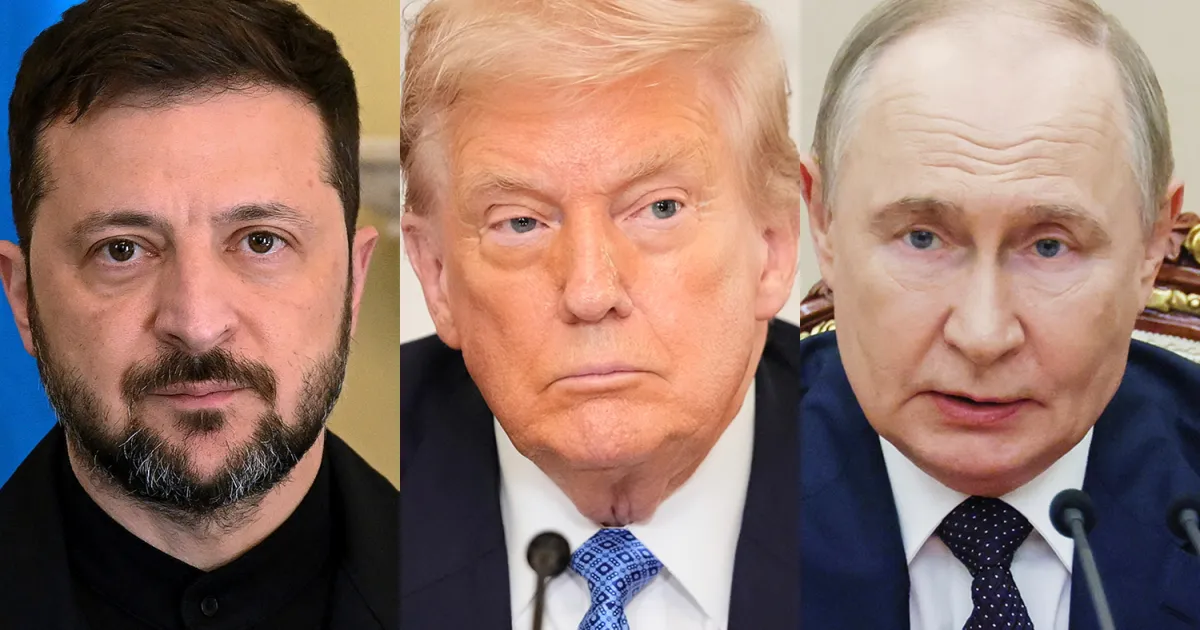
United States President Donald Trump says there will be a three-day ceasefire in the war between Russia and Ukraine.
Posting on Truth Social on Friday, the US leader said the truce would last from Saturday to Monday.
“I am pleased to announce that there will be a THREE DAY CEASEFIRE (May 9th, 10th, and 11th) in the War between Russia and Ukraine,” Trump posted.
“The Celebration in Russia is for Victory Day but, likewise, in Ukraine, because they were also a big part and factor of World War II. This Ceasefire will include a suspension of all kinetic activity, and also a prison swap of 1,000 prisoners from each Country,” he added.
Russia had previously announced a two-day unilateral ceasefire to mark its May 9 World War II Victory Day on Saturday.
Ukraine previously stated that it too had offered a truce but that this had been ignored by Moscow.
“This request was made directly by me,” Trump said on Friday, thanking his Russian and Ukrainian counterparts Vladimir Putin and Volodymyr Zelenskyy for agreeing to it.
“Talks are continuing” on ending the war, Trump said, adding that “we are getting closer and closer every day”.
“Hopefully, it is the beginning of the end of a very long, deadly, and hard fought War.”
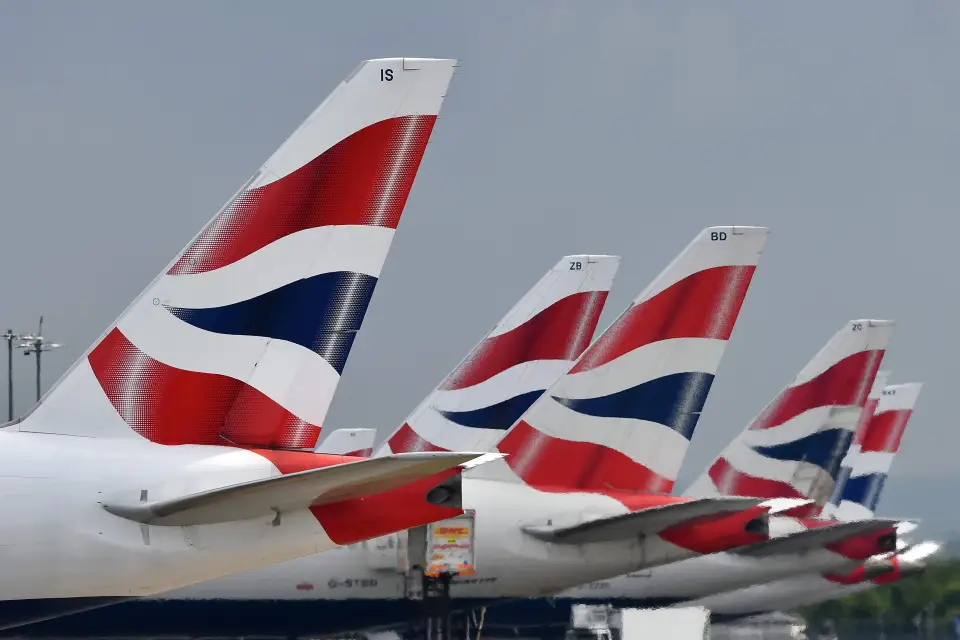
JET fuel restrictions could hit airlines on a global scale, a major airline owner has warned.
International Airlines Group (IAG), who owns British Airways, Iberia and Aer Lingus, initially said that most of its airlines will unaffected this summer.
Sign up for the Travel newsletter
Thank you!
IAG, who owns airlines like British Airways, has warned of restrictions if the war continuesCredit: AFP or licensors
However, they warned that if the crisis continues, shortages will result in restrictions across the globe.
They said: “If the current conflict continues to restrict flows of both crude oil and jet fuel from the Middle East, there is the potential for supplies of jet fuel to be restricted on a global basis.
“We are engaging with governments in each of our home markets as well as with the EU to ensure that the industry is getting the support it needs to navigate this situation.”
IAG has said they expect their profit to be lower than anticipated. It also expects spend more than £1.72billion extra on fuel costs that previously predicted.
The closure of the Strait of Hormuz since March has resulted in fears of fuel shortages, and caused airlines to start hiking prices.
Some airlines, such as Lufthansa, Scandinavian Airlines and Cathay Pacific, have already reduced their flights scheduled for the upcoming months in an attempt to avoid cancellations caused by shortages.
May 9 is a venerated date on the Russian calendar. The anniversary of the Soviet Union’s victory over Nazi Germany in World War II is usually commemorated with a grand military parade outside the Kremlin, on Moscow’s Red Square.
“For modern Russia, it’s the main holiday of the year,” said Oleg Ignatov, senior Russia analyst at Crisis Group. “There are two main holidays in Russia, the ninth of May and the New Year. And if you asked Russians, what is the main holiday, I think they would answer you that it’s the ninth of May.”
Recommended Stories
list of 4 itemsend of list
This year, however, for the first time in nearly 20 years, there will be no tanks, missiles or junior cadets in the parade. The decision to hold back on showcasing military equipment comes as a result of heightened security fears over the war in Ukraine.
However, personnel from higher-level military academies will still take part in the procession on foot, while the aerial portion of the programme will remain unchanged – an aerobatic show, followed by a team of Sukhoi Su-25 fighter jets painting the sky in the tricolours of the Russian flag.
In official statements, the Kremlin has referred to “the current operational situation,” and threats of “Ukrainian terrorist activity.”
Ukrainian drones are now striking deeper and deeper into Russian territory on an almost daily basis, hitting targets such as oil facilities and airfields. A recent spate of drone attacks on the oil refinery in Tuapse, on Russia’s Black Sea coast, has caused an ecological catastrophe and prompted the evacuation of the town.
“Drones are indeed the primary means to attack Russia’s territory,” explained Olha Polishchuk, research manager for Europe, Central Asia and the Caucasus at Armed Conflict Location & Event Data (ACLED). “They are relatively cheap, modifiable and can travel long distances … Both Ukraine and Russia have switched to using primarily drones for their attacks.
He said that since 2025, drone strikes “completely overshadowed other attacks”.
“Their use has been effective overall; most drones are intercepted but if you send enough of them, some will reach the target.”
Fears of ‘political and psychological consequences’
Security and anti-drone defences have been tightened in the capital since the Ukrainian armed forces began sending drones there in 2023, with one striking the Kremlin itself.
Mobile internet has been periodically shut off in Moscow, Saint Petersburg and other areas of the country in the days running up to the event, with providers citing “security reasons”.
“Moscow has very strong air defence, which includes short-range surface-to-air missile systems, other missile systems, small arms and electronic warfare systems,” explained Polishchuk. “It is a multilayered system located both around and inside the city. In the past, authorities have shut down cellular networks in Moscow to complicate drone navigation.
“Ukraine very rarely attacks Moscow because the air defence would require a very large swarm of drones for any attack to land, but also because there are plenty of other strategically relevant targets that do not carry such a high risk of civilian casualties.”
Nevertheless, the Victory Day ceremonies present a clear risk. Such a concentration of troops and vehicles is vulnerable not only on the day of the parade itself but before and after, too: after all, that hardware must be stored somewhere.
“Of course, they care about drones which can fly from Ukraine, but most of these drones are being intercepted,” Crisis Group’s Ignatov told Al Jazeera. “They are more afraid of groups of people using small drones which are delivered to Russia, and used against targets inside Russia, like in Operation Spiderweb [in 2025] … Even if one or a couple of small drones hit a military parade, it may not cause a casualty, but it will have a demonstrative and psychological effect. I think what they care about is the political and psychological consequences of this.”
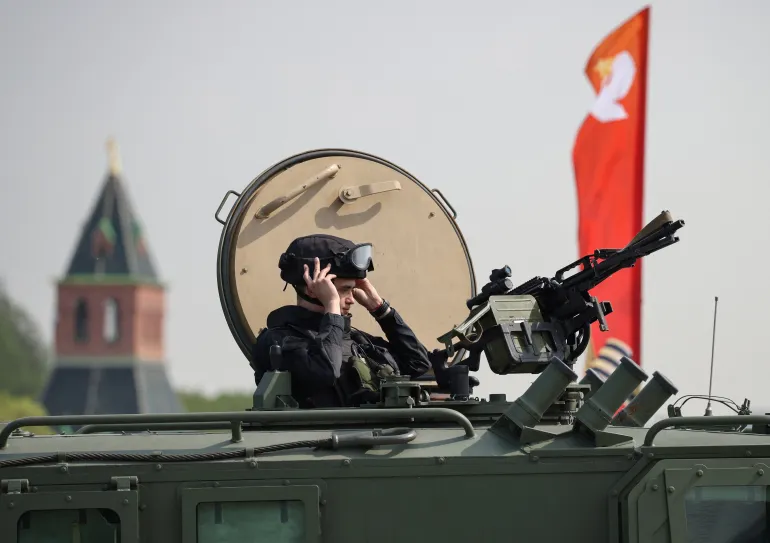
A Russian security officer sits atop an all-terrain infantry mobility vehicle amid increased security measures ahead of Victory Day, marking the anniversary of victory over Nazi Germany in World War II, near the Kremlin in central Moscow, Russia, on May 7, 2026 [Reuters]
The Victory Day parade is a tradition from the communist era, an occasion on which the citizenry could catch a glimpse of Soviet statesmen waving from atop Lenin’s tomb, as well as a chance for the then-superpower to show off its military might. But when the USSR collapsed in December 1991, the parades were shelved for nearly two decades until they were revived by President Vladimir Putin in 2008.
Since the start of the full-scale war in 2022, the Victory Day parade has been scaled back again. Only a solitary Soviet-era T-34 tank symbolically rolled across Red Square in 2024, although other types of vehicles, such as armoured personnel carriers and mobile missile launchers, were present.
Last year’s proceedings, however, packed a little more pomp. Not only did the parade feature modern tanks, the TOS-2 Tosochka heavy flamethrower systems and Iskander ballistic missiles, but also Russian troops marching alongside Chinese soldiers.
Chinese leader Xi Jinping watched the show sitting beside Putin, one of 27 heads of state in attendance, including Brazilian President Lula da Silva and Ibrahim Traore of Burkina Faso. The turnout seemed to indicate that, despite international condemnation of the invasion of Ukraine, Moscow was not isolated.
‘Victory over Nazi barbarism’ or a ‘cynical distortion of history’
“A celebration of the Soviet and Allied defeat of Hitler’s Nazi-Fascist alliance, Victory Day is the most sacred date on Russia’s political calendar,” said British historian Geoffrey Roberts.
“As ever, Victory Day will be celebrated as a Soviet as well as a Russian victory – the result of the common struggle of all the peoples of the multinational USSR, not least millions of Ukrainians. Victory Day is for the Russian government a day of multiethnic unity. It is also a reminder of the international antifascist unity – of the Soviet-Western coalition during World War II that together saved the world from Nazi barbarism.”
The Eastern Front of the second world war, known as the Great Patriotic War in Russia, occupies a central place in Russian national memory. About 27 million Soviet citizens, including Russians, lost their lives in the conflict, more than any other country, and it was the Red Army’s soldiers that hoisted their flag over the Reichstag in Berlin in 1945. The German surrender was officially finalised on May 9.
This memory is evoked by Putin’s government today, claiming it is fighting “Nazis” on the battlefields of Ukraine.
Spectators, including Russian President Vladimir Putin, Chinese President Xi Jinping, Tajik President Emomali Rahmon, Turkmen President Serdar Berdimuhamedov and Uzbek President Shavkat Mirziyoyev, attend a military parade on Victory Day, marking the 80th anniversary of the victory over Nazi Germany in World War II, in Red Square in central Moscow, Russia, on May 9, 2025 [Sputnik/Vyacheslav Prokofyev/Pool via Reuters]
“It appears that in modern Russia, 9 May has been twisted to actually support aggressive behaviour and militarisation,” Polishchuk said.
“It is a big source of pride which supports the notion that Russia is strong, undefeated, and will not tolerate disrespect from anyone. The more common ‘never again’ in reference to WWII became ‘we can do it again’ in Russia as a popular Victory Day slogan. This posturing becomes even more important during an ongoing war, as it supports another sort of reality – one where Russia has not made a mistake by invading Ukraine and is not currently failing to achieve its military objectives.”
According to the open-source intelligence project Oryx, more than 14,000 Russian tanks, APCs and other combat vehicles have been destroyed, captured, abandoned or otherwise lost since the start of the full-scale invasion in 2022.
Modern Ukraine considers Victory Day, as celebrated in Russia today, a cynical distortion of history and seeks to discourage foreign dignitaries from attending, Polishchuk added.
“Ukraine is generally more level-headed than Russia in sticking to targets that have a military objective, but this is indeed one of the instances where the [potential] attack appears largely symbolic,” she said. “Ukraine may decide to save resources this time and not attack Moscow – it could be a sane choice since air defence will be on high alert and security concerns may already discourage participation, yet Russian authorities have no choice but to try to reduce the risk regardless.”