United States President Donald Trump has said Europe has agreed to release a “massive amount” of their diesel stockpile, although no European parties have confirmed the claim.
Trump made the statement on his Truth Social account on Friday as he has heaped pressure on European countries to release diesel stockpiles to ease soaring prices caused by the US-Israel war with Iran and the resulting constriction of traffic via the Strait of Hormuz.
Trump had previously floated banning US diesel exports if European countries did not comply. The European Union had earlier on Friday said it “fully rejects” the threat.
Donald Trump has said he may ask European countries to release some of their diesel reserves as he considers banning US exports of the fuel.
The US President’s comment comes after Treasury Secretary Scott Bessent urged Europe to get ready to release diesel supplies immediately, arguing that US farmers, truckers, and businesses “should not be left carrying the burden” as prices soar.
The US has threatened to restrict diesel exports after the war in Iran caused sharp price rises for US voters ahead of the midterm elections in November.
On Thursday, the UK held talks with European partners about the potential release of diesel reserves in response to any ban.
Banning exports would flood the US market with diesel, and could bring prices down significantly for American drivers.
But experts warn such a ban would put further pressure on diesel prices in other countries, unless they can access further supplies.
The US is a vital supplier of diesel to the world, exporting between 1.2 and 1.5 million barrels per day.
Over half of the UK’s diesel is imported, with 31% of the imports coming from the US.
On Thursday, Trump was asked whether he would call on European countries to release some of their own diesel reserves.
“We may do that. They have some diesel,” he said.
An earlier post from Bessent on social media said European countries should “make additional supplies immediately available”.
The president is set to travel across the US campaigning for Republicans in the coming weeks in hopes of keeping control of the House and Senate in the November’s elections.
Diesel prices in the UK hit record highs this week and are hovering just under 200p per litre, according to motoring organisation the RAC.
UK Energy Minister Martin McCluskey was on a call with European counterparts on Thursday to discuss the potential ban.
A source familiar with the discussions told the BBC it was prudent to prepare a co-ordinated response with other countries, including those across EU, but added that there were still European reserves left from a coordinated release of strategic fuel stocks earlier in the year.
“We have a diverse and resilient supply. We continue to engage with our international partners and the UK fuel industry,” a government spokesperson said.
The government has stressed that there is no cause for concern about potential diesel shortages, though prices are expected to rise further.
SACRAMENTO — Supporters of a high-profile Nov. 3 ballot measure that would require Californians to show identification when they vote accused state Democratic leaders of falsely stating that President Trump has endorsed the initiative.
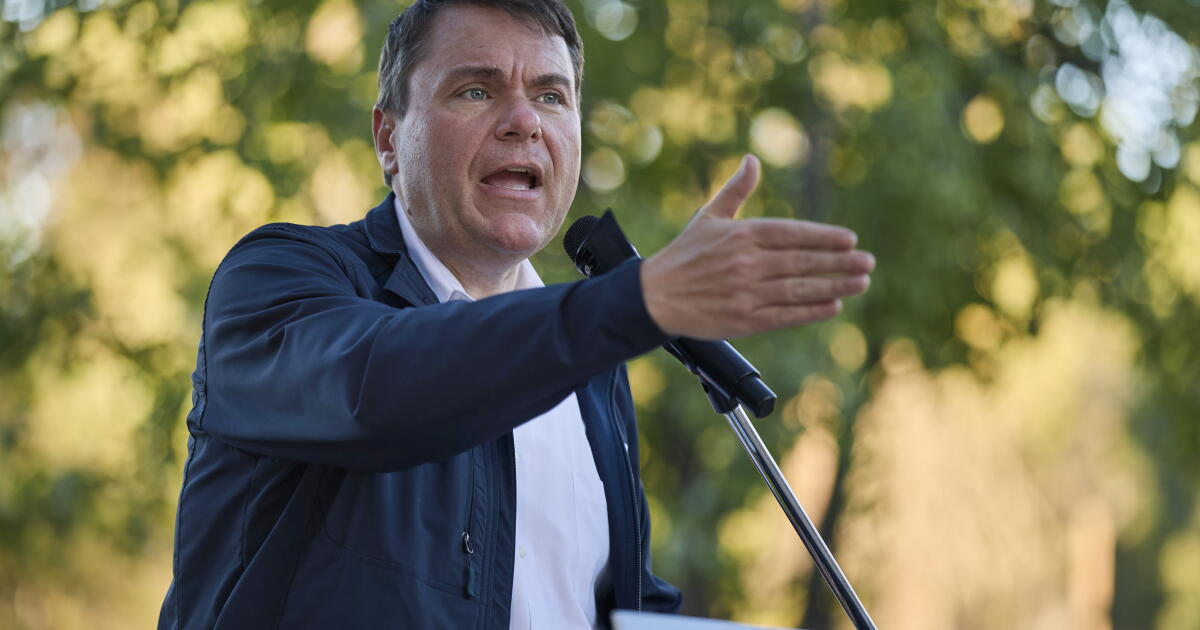
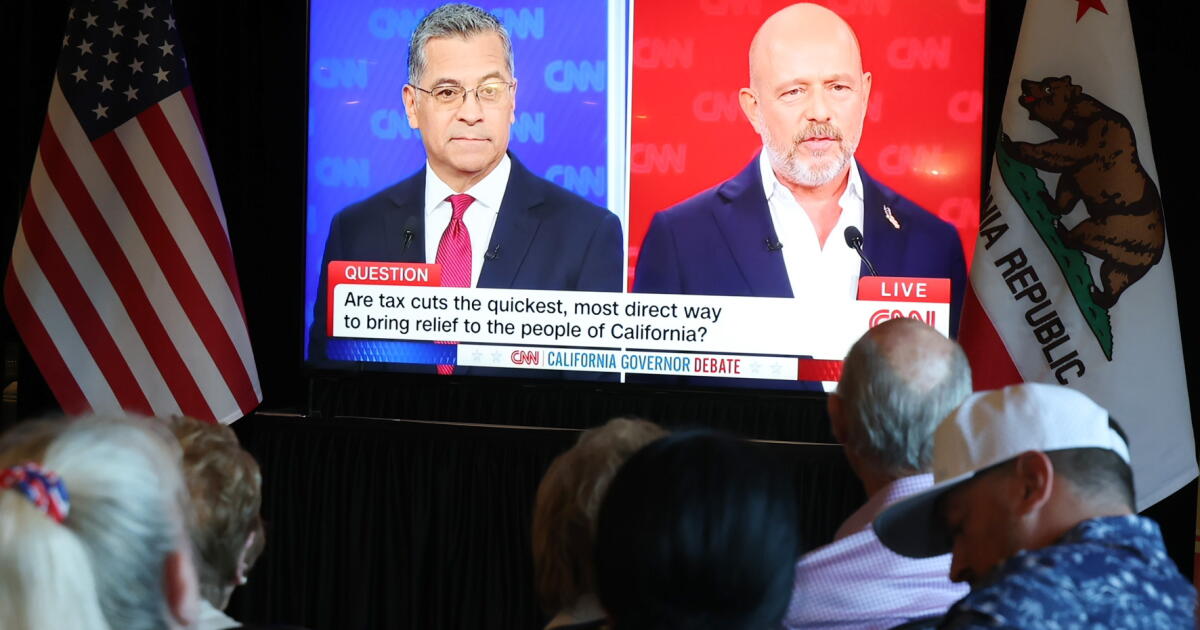
Republican Assemblymember Carl DeMaio of San Diego, one of the measure’s authors, on Thursday called Democratic gubernatorial candidate Xavier Becerra a “bald-face liar” over comments he made during Wednesday’s gubernatorial debate hosted by CNN.
Becerra said during the debate with Republican Steve Hilton that Trump was instrumental in the voter ID measure, Proposition 39, qualifying for California’s November ballot. Trump for years has tried to cast doubt about American elections, and unsuccessfully pushed Congress to pass a strict voter ID and proof of citizenship measure known as the SAVE America Act.
“Prop. 39 is an initiative that is backed by Donald Trump,” Becerra said during the hourlong debate. “He couldn’t get his SAVE Act out of Congress, which tries to interfere in elections. So he’s gone around the country and put initiatives on the ballot. In California, it’s Prop. 39.”
Though Proposition 39’s provisions are less restrictive than those in the SAVE America Act, its proponents echo Trump’s unsubstantiated claims that voter fraud and noncitizen voting are widespread in California and therefore stricter ID measures are needed.
DeMaio said the ballot measure qualified for the ballot because of strong support from California voters, including many Democrats and independents. Supporters collected more than 1 million petition signatures in support of the measure, surpassing the 874,641 needed to qualify.
“It was not put on the ballot by Donald Trump,” said DeMaio, who also founded the conservative advocacy group Reform California.
Becerra is “showing that he’s not willing to be truthful with California voters,” DeMaio said.
Meredith Shields, press secretary for the Yes on Prop. 39 committee, reiterated that Trump hasn’t taken a position on the initiative.
“The opposition will do anything to advance their cause and protect their power,” Shields said. “It will come as a surprise to no one that career politicians don’t always tell the truth, and they certainly aren’t telling the truth here.”
The White House didn’t immediately respond to a request for comment about Trump’s position on Proposition 39.
The measure would require anyone voting in person in California to present a government-issued ID, and those voting by mail ballot to include the last four digits of the ID number provided when they registered to vote. State and county election officials would be required to verify the U.S. citizenship of registered voters using government data and publicly report the findings.
The ballot measure is backed by DeMaio and several deep-pocketed Trump supporters. Julie Luckey, director of the group Californians for Voter ID, is the mother of billionaire tech entrepreneur Palmer Luckey, a major Trump fundraiser and Republican donor. Richard Uihlein, chief executive of the shipping and packing supplies company Uline, has given the campaign $17 million.
Representatives for Becerra and the No on Prop. 39 campaign on Thursday argued that Trump pushed for voter ID in California before Proposition 39 officially qualified for the ballot, pointing to a March 11, 2025 news release on Reform California’s website acknowledging Trump’s support.
In January 2025, Trump endorsed “CA Voter ID” as a “condition” for continued federal funding to the state, according to the release, which was updated this year with an editor’s note to clarify that Proposition 39 hasn’t been endorsed by Trump.
“Carl DeMaio knows Prop. 39 is central to Trump’s voter suppression playbook, and he’s doing everything he can to hide that from voters,” said Jonathan Underland, spokesperson for Becerra’s campaign.
The No on Prop. 39 campaign repeatedly has sought to link Trump to the measure, which has not been a surprise given that the Republican president remains extremely unpopular among a majority of Californians.
“The fact that Donald Trump has endorsed it tells you everything you need to know,” Assembly Speaker Robert Rivas (D-Hollister) and Senate pro Tempore Monique Limón (D-Santa Barbara) said in a statement released by the “No” campaign this year.
U.S. Sen. Alex Padilla (D-California) suggested to reporters at a rally organized by the “No” campaign last month that Trump is behind Proposition 39.
“Carl DeMaio has been the face of this in California, but don’t be fooled into thinking this has nothing to do with Donald Trump and the MAGA agenda nationally,” Padilla said.
Separately, DeMaio on Thursday accused Secretary of State Shirley Weber, another Democrat, of falsely stating that Proposition 39 would end California’s vote-by-mail system. The vast majority of Californians use mail-in ballots.
Weber, in a television interview that aired this week on KCRA in Sacramento, said the state already requires ID for those who register to vote.
“But if you tell me everybody has to take their ID to the poll, Californians should be concerned because 90% of them don’t want to do that,” she said. “They want to vote by mail, and you would effectively eliminate vote by mail.”
DeMaio questioned whether Weber understood what Proposition 39 proposes.
“If she truly is concerned about trust and confidence in our elections, she should start with her own behavior by refraining from spreading misinformation about Prop. 39 and our election,” he said.
Weber, when asked about her statement this week, said in an email to The Times that Proposition 39 would “cause disruption” in the state’s mail-in voting system because it would require voters “to write private personal information on the ballots.”
A Weber campaign spokesperson followed up with another response Thursday.
“What Dr. Weber actually said was that, if passed, this very poorly drafted proposition could cause people to decide not to vote by mail because it creates unnecessary and burdensome steps,” the spokesperson said.
United States President Donald Trump has kicked off a 32-day campaign tour ahead of the November midterm elections that could see his Republican Party hurt by his handling of the war on Iran and the economy.
On Thursday, Trump travelled from Washington, DC, for back-to-back rallies in Texas and Oklahoma.
Recommended Stories
list of 3 itemsend of list
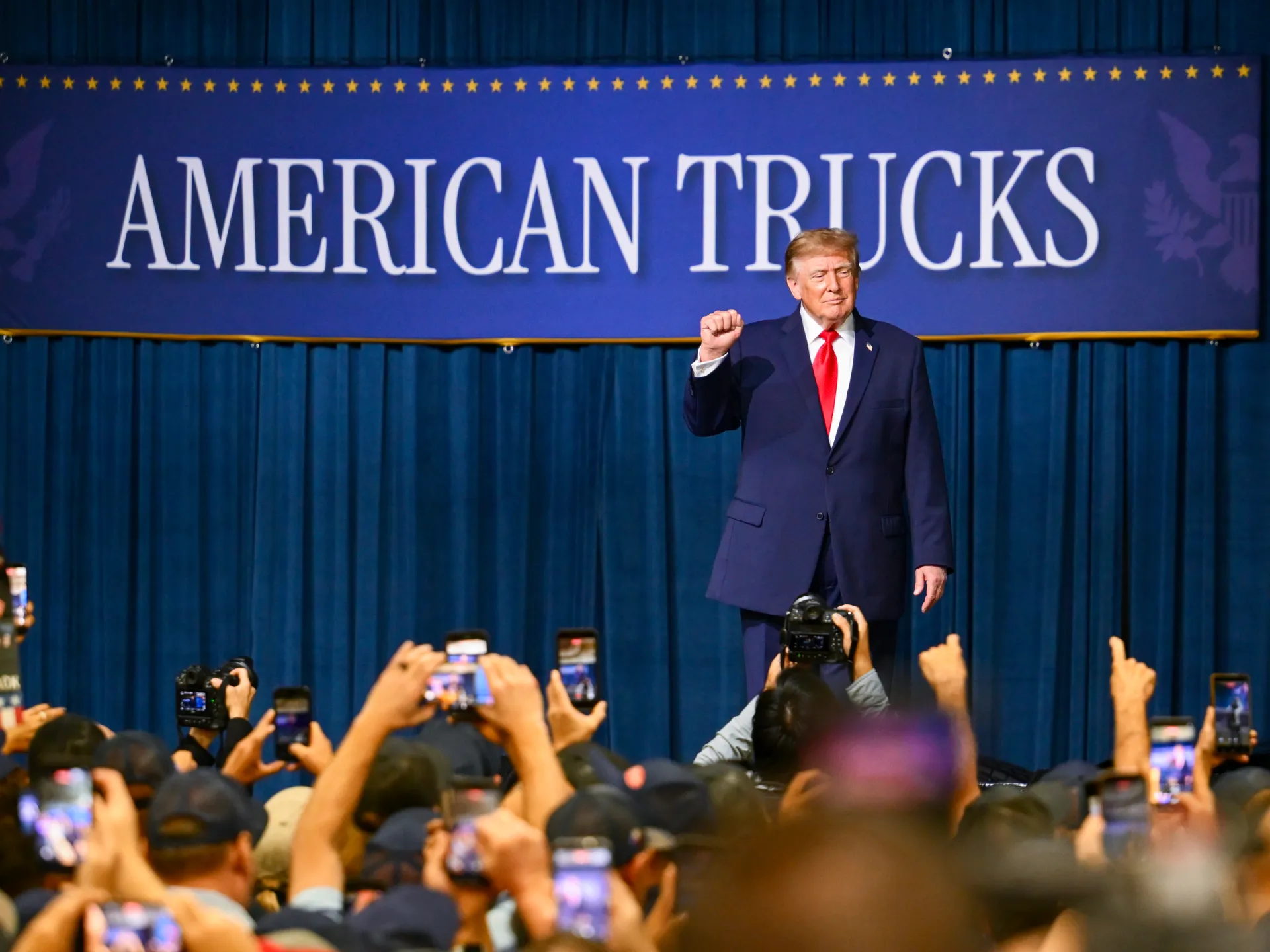
At his first stop in Denton, Texas, Trump sought to shift the narrative around his drooping approval ratings, offering a personal assessment of his administration’s performance.
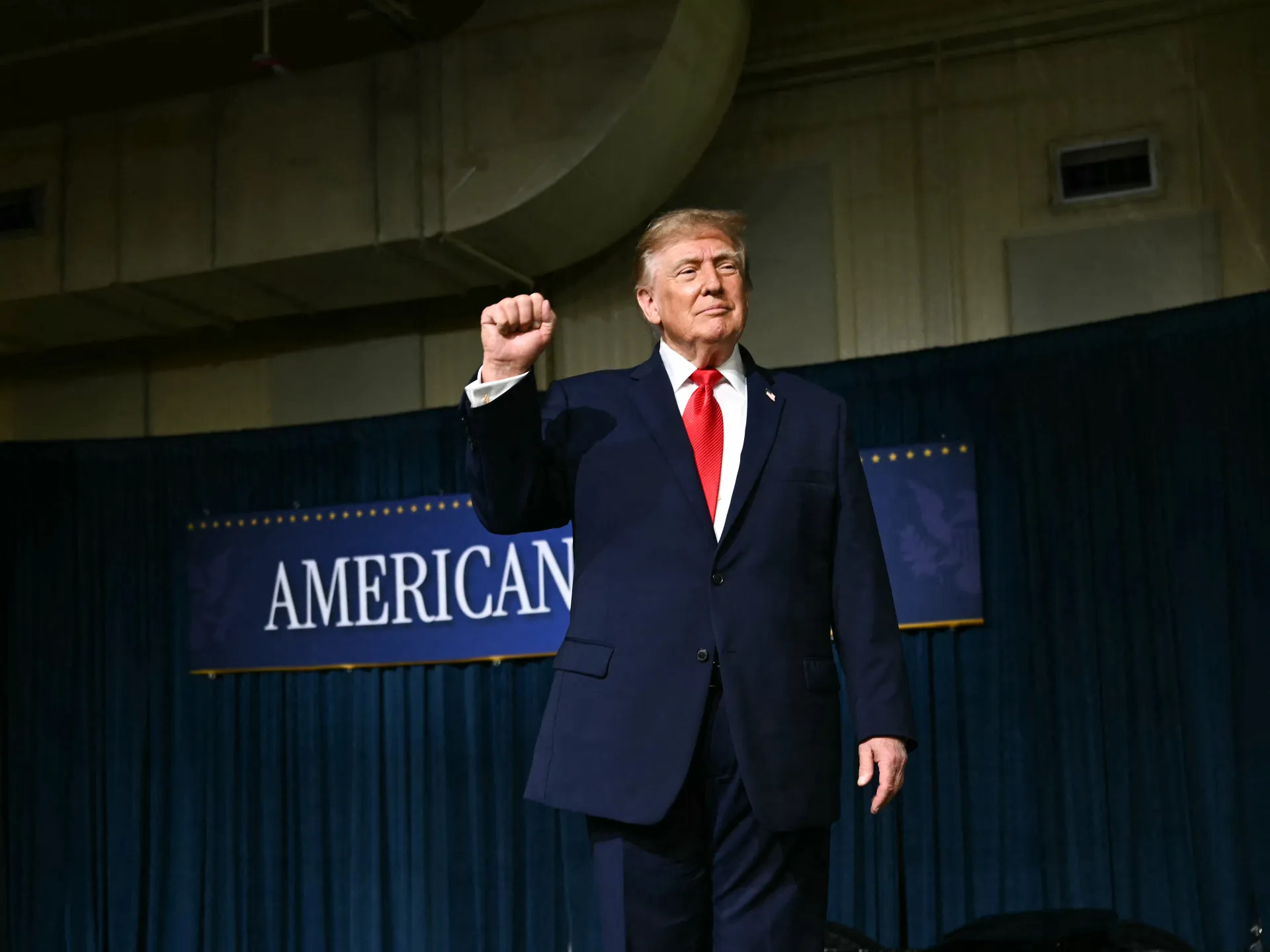
“I give us an A+ on the government, on economics, on everything,” Trump told a crowd of supporters at the Peterbilt Motors Company, a truck manufacturer.
The president also blamed unfair media coverage for his growing unpopularity, arguing that his pre-election rally blitz was necessary to set the record straight.
“We’re doing an extremely poor job of promotion and an extremely great job of running the country,” Trump said.
But Trump’s poll numbers have raised concerns about Republican prospects ahead of the November 3 midterm election.
Trump himself is not on the ballot, but Republican candidates across the country are seeking to defend the right-wing party’s majorities in both chambers of Congress, as well as key state and local offices.
The economy and Trump’s war on Iran are expected to weigh heavily on the election outcome.
On Thursday, The Associated Press and the NORC Center for Public Affairs Research released new poll results showing that 71 percent of Americans disapprove of the war, which has driven up the price of fuel.
About half of survey respondents also said they were worried they would not be able to afford food and petrol. Only 26 percent approved of Trump’s handling of the economy.
Taking centre stage
Still, despite record low approval ratings, Trump has positioned himself as key to the Republican midterm strategy.
At a first-of-its-kind Republican midterm convention in September, Trump encouraged voters to consider his record while at the ballot box. “I’m asking you to pretend that I’m on the ballot,” he said.
During Thursday’s tour, he touted the impact of his tariff campaign, which he credited with creating thousands of manufacturing jobs.
“For decades, you were heartlessly betrayed by politicians, lousy politicians, who let foreign trade cheaters plunder your wages, loot your factories, close up your jobs,” Trump told Peterbilt workers. “They’d still be doing it if I wasn’t here, believe me.”
Trump’s tariffs, however, have been highly controversial, prompting a series of court challenges. Critics have argued that the sweeping import taxes surpass the president’s constitutional powers.
Trump also used his stump speech to ease concerns about the US-Israel war on Iran, which began on February 28. Both sides have declared victory, though a ceasefire remains elusive.
“Just as I promised, I’m ensuring that Iran will be very quickly ended. I will tell you the energy prices are going to be rapidly, rapidly coming down,” Trump said.
“We’ll win very easily right now,” he added. “I believe right after the election we’ll win, but maybe before the election.”
The war, however, resulted in Iran stopping commercial traffic through the Strait of Hormuz, a key waterway for the global fuel trade.
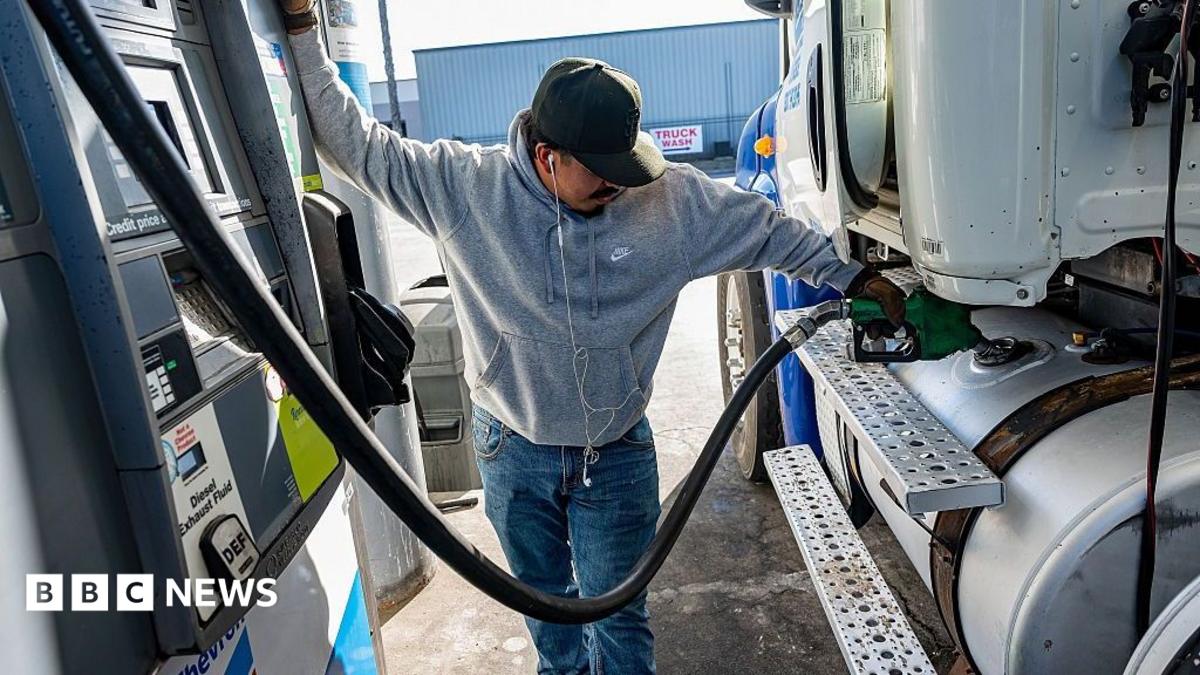
The price of diesel — the fuel the trucks built at the plant use — soared to record highs of more than $6 per gallon (3.8 litres) last week. Petrol prices have similarly skyrocketed.
Hurting or helping his fellow Republicans?
Trump, however, has acknowledged that the stakes are high for his presidency in the upcoming midterms.
All 435 seats in the House of Representatives are up for grabs, as are 35 seats in the 100-member Senate.
Losing Republican control of either chamber could create roadblocks for Trump’s legislative agenda during the final two years of his second term.
But Trump has also expressed concern that he could be impeached for a third time, after two prior impeachments during his first presidency.
At Thursday’s second stop, in Durant, Oklahoma, the Republican leader repeated that fear. “Pretend I’m running, please,” he told the crowd. “If we don’t win, they’ll end up impeaching me.”
Many of the places Trump is scheduled to visit this month are perceived as reliably Republican voting districts. Following his stops in Texas and Oklahoma on Thursday, Trump will be heading to Alabama, Ohio and Nebraska in the coming days.
Still, some elections that ordinarily would be considered shoo-ins for Republicans have grown more competitive in recent months.
In Texas, for instance, no Democrat has won a statewide race since the 1990s. But this year, Republican Ken Paxton, the state’s attorney general, is struggling to win a Senate contest against Democrat James Talarico.
During both of Thursday’s stops, Trump sought to bolster Paxton’s prospects. At the Peterbilt factory, for instance, he called Paxton “the greatest attorney general in the United States of America”.
“We gotta get this guy elected,” Trump said, before pivoting to criticisms of Talarico, whom Republicans have sought to paint as out of touch with Texas’s large beef industry.
“He’s a vegan,” Trump said of Talarico, repeating an unsubstantiated rumour. “And vegans don’t do well in Texas.”
But leaked audio appeared to show Paxton lamenting the negative impact Trump had by holding the Republican midterm convention in Texas last month.
Trump has nevertheless used his pre-election tour to highlight social issues he feels will help rally voters to the Republican cause.
On Thursday, he returned to familiar subjects like immigration and transgender rights, which he depicted as a part of the Democrats’ “radical” agenda.
“They want women in men’s sports. They want open borders. They want transgender mutilation for your children,” Trump said. “What the hell are you thinking about, you liberals?”
The president also used his Texas appearance to push back against critics of data centres, despite bipartisan concern.
Critics worry that the rapid growth of artificial intelligence (AI) has fuelled the proliferation of data centres, which require large amounts of electricity and water to process mass data quantities.
While Trump has dismissed fears about AI as largely unfounded, a poll last month found 53 percent of Americans are “extremely” or “very” concerned about the technology’s environmental impacts.
Even fellow Republicans in Texas are responding to public pressure about the growing number of data centres, more than 300 of which are operational, with hundreds more in progress.
In August, Governor Greg Abbott called for an audit of all data centres to map their water and electricity usage, and the following month, Paxton in his role as state attorney general launched an investigation into whether they were complying with water reporting requirements.
Trump nevertheless used his Texas rally to tout the expansion of such enterprises.
“It’s a huge thing. It’s bigger than the industrial revolution,” he said, dismissing the concerns as part of a “scam”. He then explained he had urged AI companies to “take care of the people”.
“They’re making a fortune for the communities,” he added.
WASHINGTON — The U.S. military is dispatching roughly 9,000 troops aboard a group of ships to the Middle East, a U.S. official said Thursday. The bolstering of the American military presence comes as President Trump warned anew that new strikes against Iran could be on the horizon.
He also said early indications suggest that Iran is linked to the co-pilot who stabbed his captain and tried to crash an Israel-bound flight on Wednesday.
In an exchange with reporters at the White House, Trump raised the connection when asked by a reporter if there were any links between the pilot behind the attack and Tehran.
“I would say the answer, based on what I’m hearing, is ‘yes,’ but we’re working on it right now,” Trump said, without offering details.
Trump also warned that if the link is established to Iran, the United States would retaliate.
“Oh they’ll be hit, very hard, don’t worry,” Trump said. “You just ask them. They know what happened. They’ll be hit very hard.”
Meanwhile, the group of ships now en route to the Middle East together carry over 7,000 sailors and 2,000 Marines.
It includes the USS Theodore Roosevelt carrier strike group, which recently deployed with the cruiser USS Chosin, and the USS Makin Island amphibious readiness group, which includes the USS John P. Murtha and USS Anchorage amphibious landing ships.
It could mean that three carriers are in the region as early as the end of October, according to the U.S. official who spoke to the Associated Press on condition of anonymity to discuss sensitive military operations.
Given the personnel already in place in the Middle East, the move would bring the U.S. naval presence to an unusually high number of more than 20,000 sailors and Marines and hundreds of aircraft. The Navy previously had three carrier strike groups in the Middle East in April for the first time since 2003.
The carriers USS George H.W. Bush and the USS George Washington are in the region now, along with the USS Boxer amphibious readiness group. The Washington is typically deployed to Pacific Ocean but it was moved to the Middle East to relieve the USS Abraham Lincoln, whose arduous deployment resulted in the crew being at sea for more than 260 days straight.
Trump, in a Time magazine interview published Thursday, also raised the prospects of new strikes, saying it is “possible” that he will ramp up bombing in Iran after the Nov. 3 elections in the United States.
When pressed, Trump said he could not go further in detailing his strategy.
“I can’t tell you that because look, you know, you’re asking, where are you going to bomb?” Trump said.
He said in the interview, conducted Monday, that he rejected the latest ceasefire proposal from Iran because “things that I wouldn’t have approved a year ago I wouldn’t have today.”
Trump cited as an example an offer from Iran to “open up” the Strait of Hormuz, the key energy shipping corridor, but said the overall proposal was “not good enough.”
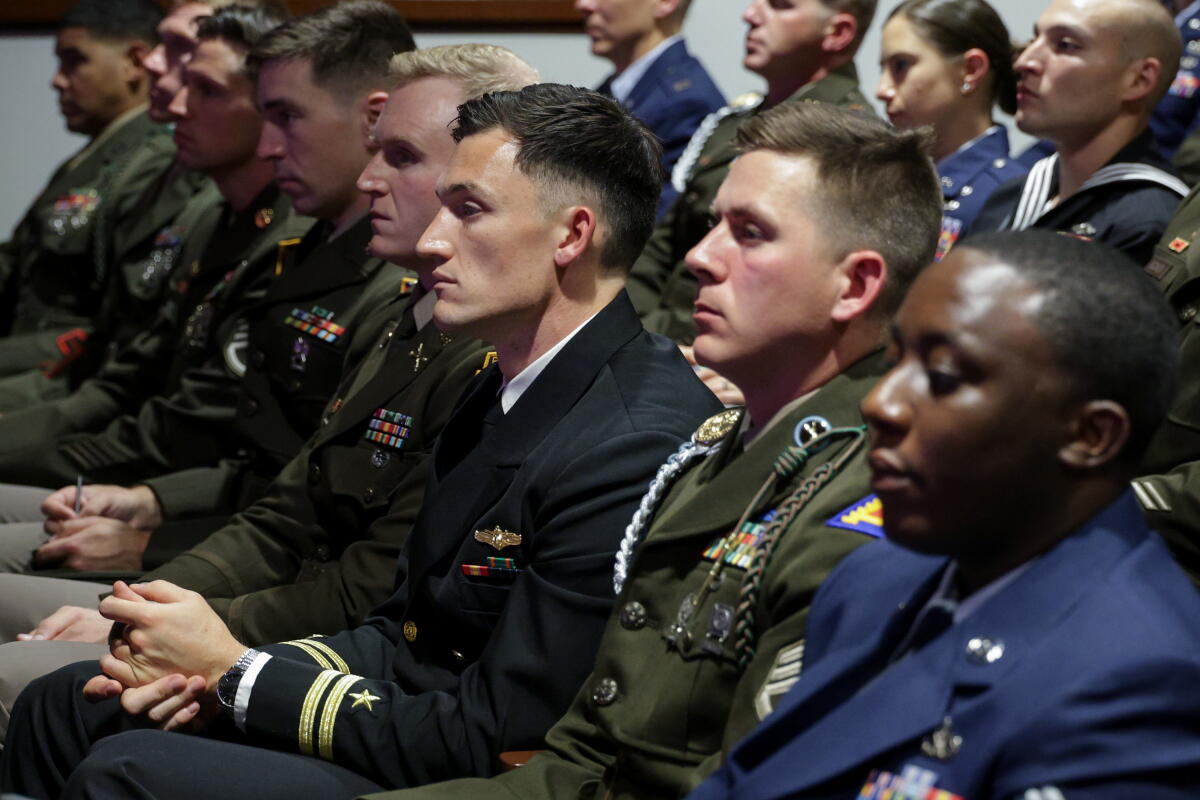
Members of the military listen as Defense Secretary Pete Hegseth gives a State of the Force address at Marine Corps Base Quantico.
(Alex Wong / Getty Images)
Asked if the increasingly unpopular war would threaten Republican Party chances in November, Trump at first responded, “It’s possible.” But then he added, “It should help, because Iran will not have a nuclear weapon.”
The president said “100% of the people” oppose Iran having nuclear attack capabilities “including worldwide.”
“So, when you say it that way, It would help,” Trump added. “If you don’t say that, it could hurt.”
Toropin and Price write for the Associated Press. AP writers Seung Min Kim, Will Weissert and Aamer Madhani contributed to this report.
WASHINGTON — The Supreme Court on Thursday agreed to review a Trump administration policy denying bond hearings for immigrants as the government carries out a sweeping crackdown.
The justices will consider whether immigrants who have been living in the U.S. have a right to a hearing to determine if they should remain detained while challenging their possible deportation.
The case will test a key pillar of the Trump administration’s hard-line immigration agenda.
Most appeals courts to have considered the issue have found that it violates federal law to detain immigrants, including those living in the U.S. illegally, without a bond hearing. Those decisions conflict with rulings by the 5th and 8th circuits, which held that immigrants accused of illegally entering and remaining in the U.S. must be detained while their deportation cases are pending.
The high court agreed to hear the case of Ricardo Aparecido Barbosa da Cunha, a citizen of Brazil. Authorities say he entered the United States illegally two decades ago and applied for asylum in 2016. He sought a bond hearing after an immigration judge determined that his detention was mandatory following his September 2025 arrest.
He has never been charged or convicted of a crime, his attorneys said. The court is expected to hear the case in the coming months.
President Trump’s administration had urged the high court to take up a different but related case that involves the broader constitutional implications of the new policy.
Attorneys from the Republican administration argue the circuits’ split is “disrupting the orderly administration of immigration law.” They say the nation’s courts have been inundated with thousands of petitions filed by immigrants challenging the government’s legal interpretation.
“The result is an unworkable patchwork of inconsistent immigration enforcement, where aliens present without admission are subject to mandatory detention in some circuits but are entitled to bond hearings and often released in others,” lawyers for the administration wrote.
The plaintiffs are immigrants represented by the American Civil Liberties Union, which says hundreds of district court judges have joined most circuits in rejecting the Trump administration’s new reading of the statutes. Plaintiffs’ lawyers say the administration is trying to deny bond hearings for immigrants apprehended anywhere in the U.S. — no matter how long they’ve lived in the country — rather than limiting the restriction to noncitizens stopped at the border.
“Millions of noncitizens could be affected by the government’s new interpretation,” ACLU attorneys wrote.
The Trump administration says its new mandatory detention policy is legal under a 1996 immigration law. The policy change departs from the practices of prior administrations, which typically allowed most noncitizens without criminal records to request a bond hearing if they were arrested away from the border.
CNN Chairman and Chief Executive Mark Thompson could remain in his role at the news network after Paramount completes its deal to acquire the news network’s parent company, Warner Bros. Discovery.
Thompson, 69, is said to be in early stages of a discussions with Paramount Skydance Chief Executive David Ellison about continuing in the job he has held since April 2023, according to two people familiar with the matter who were not authorized to discuss it publicly.
The Wall Street Journal was first to report Thursday that Thompson has been approached by Ellison about staying with the network. A representative for Paramount declined to comment.
Retaining Thompson in his role would provide short-term relief to CNN staffers who are concerned about the change in ownership. As Paramount pursued its $111-million deal to acquire Warner Bros. Discovery — which is moving forward following a judge’s decision to settle an antitrust suit filed by state attorneys general who wanted to block the deal — the Ellison family have reportedly had discussions with President Trump about altering the network’s coverage, which he has often deemed as unfair.
As part of the settlement, Paramount agreed to the formation of an editorial oversight board that will monitor adherence to editorial independence from its owners and shareholders. The editorial board is part of an agreement to end the states’ antitrust fight that threatened to delay the completion of the deal for months.
Keeping Thompson at CNN raises questions of how CBS News Editor-in-chief Bari Weiss will be integrated into the new company.
Weiss, who joined the storied news division after Paramount acquired her contrarian digital news site the Free Press last year, has made major changes at “CBS Evening News” and the top rated newsmagazine “60 Minutes,” with no audience gains to show for it.
CNN insiders have been skeptical over how Weiss could take over the vastly larger and more profitable news organization based on her CBS track record so far.
CNN and CBS News are expected to consolidate some of their operations, such as its overseas bureaus. But there are obstacles to a rapid consolidation, as many CBS News employees work under union contracts. Most of CNN is not unionized.
But if Thompson remains, its likely he we will have the task of reducing costs, as the traditional TV audience that provides the bulk of revenues for both CNN and CBS News continues to shrink.
Thompson has been behind a major effort to generate more revenue from CNN’s digital operations, which now include a subscription streaming service that makes the channel available without a cable or satellite TV package. He oversaw the New York Times’ successful transformation into a dominant digital news product during his run as president and chief executive from 2012 to 2020.
The Paramount-Warner deal will close soon after a judge signed a settlement that ended the antitrust lawsuit brought by Calif. Atty. General Rob Bonta and 11 other attorneys general. The detente , however, has not cooled tensions between CNN and the White House.
CNN was scheduled to provide press pool coverage of Trump’s trip to Texas and Oklahoma on Thursday. But the White House removed the network from the pool, despite a judge’s order last week to block the administration’s attempt to ban access for some media outlets.
Last week, CNN, MS NOW and Politico were banned from White House grounds. Trump cited the outlets’ ongoing negative coverage of him as the reason for the ban. The administration later tried to argue in court that their coverage was a threat to national security.
Two Democratic lawmakers are said to have called for independent probes into taxpayer-funded TV ads featuring President Donald Trump running ahead of the November midterm elections.
Representative Jamie Raskin, the top Democrat on the House Judiciary Committee, and Representative George Whitesides, asked the Government
New Delhi, India — Speaking at an event in New York this week, India’s Foreign Affairs Minister S Jaishankar offered a blunt assessment of Washington: It has been an insensitive partner to India’s concerns over “terrorism”; has warmed to its arch-rival Pakistan; and has pursued “self-centered” trade policies that have disproportionately hurt the Global South.
That tone marks a new edge in how New Delhi is dealing with US President Donald Trump’s administration in Washington, analysts say, on the back of rising bilateral tensions between the capitals.
For decades, India has dealt with divisive issues with otherwise friendly nations quietly behind the scenes, away from spectacle. That has especially been New Delhi’s approach with Washington, where the relationship has broadly enjoyed wide bipartisan support.
However, after months of tensions, New Delhi is adopting a more openly critical tone towards Washington to address the volatility and uncertainty that Trump brings to the White House.
The changing tune in New Delhi also comes at a critical time for Prime Minister Narendra Modi, who faces mounting domestic pressure and criticism from the opposition for allegedly bowing down to US pressure, time and again. On Wednesday, Modi held a telephone call with Trump, which the Indian PM called “productive” — a cold and formal depiction far removed from his description of the US president as a “good friend” in previous years.
Chietigj Bajpaee, a senior research fellow for South Asia at the Chatham House think tank, said that Jaishankar’s remarks “offer a frank assessment” on the current state of the India-US relationship. “Clearly, the shine has come off the bilateral relationship after India was initially among the most optimistic about a second Trump term,” he said.
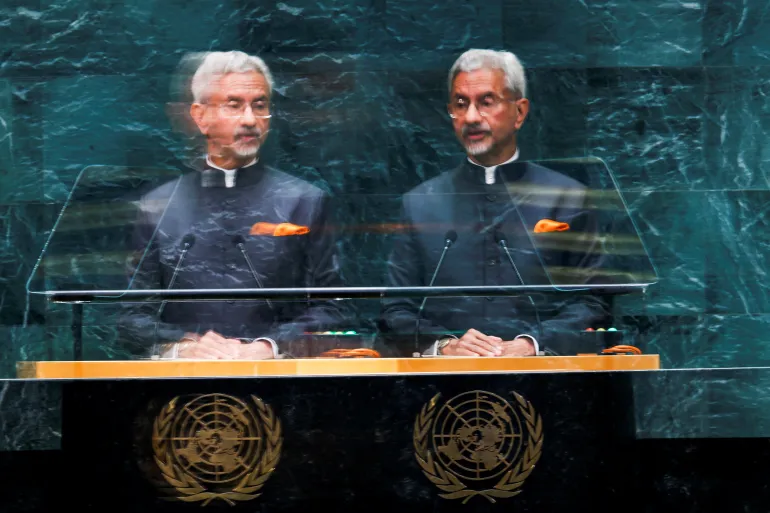
Indian Minister of External Affairs Subrahmanyam Jaishankar addresses the 81st United Nations General Assembly at UN headquarters in New York City, US, September 26, 2026 [Eduardo Munoz/Reuters]
India’s pain points
Jaishankar addressed frictions between India and the US while speaking at an Asia Society event after the UN General Assembly in New York ended on Monday.
“If I stand back and look at the [India-US] relationship, I note that much of the world has had a more difficult relationship with the US,” he said. “I mean that may not be a consolation, but that’s a reality.”
Trade
Trade has been one of the flashpoints. Washington is India’s largest trading partner, with bilateral goods trade reaching $149.1 billion in 2025; but the relationship remains tilted towards India with a $58.4 billion goods surplus.
Jaishankar started by noting: “Countries should not be so self-centred that you’re in your own world and take your decision and say, ‘Well, it was not my intention to make your life difficult’.”
The minister was partly referring to the economic spillover of the wars in Iran and Ukraine, urging that “sound common sense” should ensure that the basic needs of countries were not neglected.
But then, he referred to the trade negotiations between India and the US, that have so far yielded a roadmap to a deal — but not a deal itself. “Apart from the per capita gap between India and the United States, the nature of production and the nature of society is very different,” he noted.
The agricultural sector has been among the most contested points between the two, where India has kept its market largely closed for decades to safeguard its farmers. “The expectation that it could rapidly move forward was tested against the ground reality, which was much more complex,” he said, adding that “there is more or less an understanding on the trade agreement.”
At one point, India was among the countries facing the worst tariff rates imposed by Trump. After the US Supreme Court struck down Trump’s sweeping tariffs in February, his administration swiftly turned to other tools, including a new 10 percent global tariff. Earlier this month, Trump signed a law under which the US can impose up to 100 percent tariffs on countries like India that purchase Russian oil.
Jaishankar pointed to these changes, noting that the negotiations created “bumps last year for the relationship,” and added that once the deal is closed, it “would contribute to a better relationship.”
Ajay Bisaria, a retired diplomat who served as high commissioner to Canada and Pakistan, and as ambassador to Poland, told Al Jazeera that with Washington, in particular, “India has decided to be more public because there has been a lot of public criticism and a sentiment that the US is bullying India and India has been silent.”
The new 100 percent tariff on India, due to come into effect in less than a month, “is sort of a deal breaker in the relationship right now,” said Bisaria. “If that becomes reality, then all Indian efforts [to reach out to the US] would come under scrutiny.”
‘Terrorism’
But trade isn’t the only challenge in the relationship. A major rupture emerged in May last year, when New Delhi engaged in a four-day war with its bitter neighbour, Pakistan, after an attack by armed fighters in Indian-administered Kashmir killed 26 civilians.
New Delhi was upstaged as President Trump announced a ceasefire, claiming that he threatened both countries with economic damage if they didn’t stop fighting. For India, any question on Kashmir is strictly bilateral with Pakistan, with no room for so-called third-party intervention.
Nevertheless, Trump has gone on to claim dozens of times that he brokered the crucial ceasefire — as recently as at the UNGA in New York — that halted the war between two nuclear-armed neighbours. India took offence to these claims.
On the other hand, Pakistan’s leaders cozied up to Trump, showered high praise, and nominated him for a Nobel Peace Prize. Since then, the relationship between Islamabad and Washington has bloomed, to New Delhi’s obvious irk.
For India, Jaishankar said, “particularly important is the issue of terrorism.”
“As a country, perhaps there are very few countries which have been subjected to the kind of terrorism that we have from a neighbour as part of a deliberate, conscious policy over many, many decades,” Jaishankar said, referring to Pakistan.
“Now, if something which matters so deeply to us, there isn’t enough understanding or appreciation or empathy of that, I think that creates a problem too,” he said, adding that India’s primary concerns are “not fully appreciated” by its partner, the US.
New Delhi’s changing tone while addressing Washington “is a lesson learnt from its experiences,” said Bisaria, the former diplomat. “After the ceasefire issue, the moods changed — and it all became worse.”
Harsh Pant, vice president of the Observer Research Foundation, a New Delhi-based think tank, said that “the obsession with Pakistan in the Trump administration without taking India’s sensitivities into account contributed to the sense that, look, we need to start articulating it.”
“When at the top level, you don’t see reciprocity, then calculations change and decisions are taken to bring differences out in the open,” Pant told Al Jazeera, referring to Jaishankar’s comments.
India’s Prime Minister Narendra Modi offers a hand to US President Donald Trump during a family photo before a cultural performance and concert during the G7 summit, in Evian-les-Bains, France, June 16, 2026 [Evelyn Hockstein/Reuters]
Domestic Pressure
Indians have been the biggest beneficiaries of the US’s H1B programme which allows hiring of foreign workers with training in specialty fields. But that has come under fire from Trump, under whose watch Washington has raised barriers and fees for applicants, amid growing criticism of the scheme from supporters of his MAGA movement.
“For many years, mobility was seen as an economic gain. Today the economics of mobility and the politics of mobility are at odds with each other, at least in some quarters,” Jaishankar said, referring to Trump’s anti-immigration politics.
“That certainly in public perception is an issue,” the minister said.
Domestic pressure appears to be finally catching up in New Delhi. “Modi is feeling domestic pressure, with key state elections coming up next year, especially amid some anti-incumbency,” said Bisaria. “It dictates that the government’s posture should not be one of taking bullying from the US.”
Pant said issues like migration impact the general public in India, with the world’s largest population. For years, such connections made the US “an attractive partner for a large mass of Indians.” But today, he said, ”the same issues are becoming a negative drag on the relationship.”
“The public mood in India is also changing perceptibly towards the US. And I think the government is articulating that negative sentiment now publicly,” Pant said.
President Donald Trump and India’s Prime Minister Narendra Modi shake hands during a news conference in the East Room of the White House, Thursday, February 13, 2025, in Washington. (Alex Brandon/AP Photo)
‘Waiting out Trump’
When Trump returned to the White House for his second presidential run, many in New Delhi’s strategic community were optimistic about bilateral relations, because of the US president’s warm personal relations with PM Modi during his first term.
But things unravelled in the coming months.
Still, Chatham House’s Bajpaee said that despite widening divisions between the US and India, “both have not given up on reviving their relationship”.
He pointed to Jaishankar’s remarks that India isn’t singled out in having a difficult relationship with the US. “Rather, the downturn in India-US relations is a reflection of the Trump administration’s transactional and often unpredictable or erratic foreign policy,” he told Al Jazeera.
“This offers a potential off-ramp for an eventual reset in relations. The conclusion of a bilateral trade agreement is a key watchpoint for this,” Bajpaee added.
For New Delhi, Pant said, “it is now just the question of waiting Mr. Trump out.” Though he added, with a laugh, that India is not alone in that queue.
“Everyone is waiting him out. President Trump has little respect for conventions and norms of inter-state behaviour. How do you just deal with that individual?” Pant said.
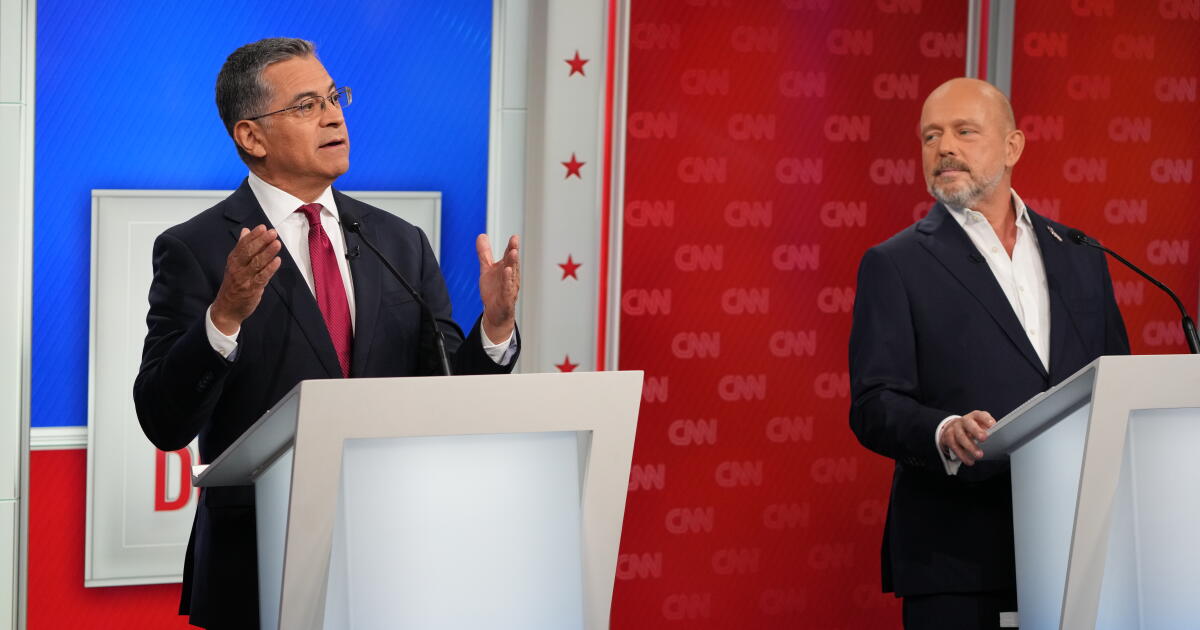
The two candidates to become California’s next governor painted vastly different portraits of the state they want to lead during a televised CNN debate Wednesday night — though they both agreed the state faces tremendous challenges.
Democrat Xavier Becerra, leading in polls, cast the state as an economic engine and a critical bulwark against the disastrous economic policies and creeping authoritarianism of the Trump administration, but also a victim of Trump policies, including tariffs and the war in Iran, that have made life less affordable and the nation less safe.
Becerra said he would work hard to help struggling Californians — including by cutting red tape on housing and regulating AI to ensure it doesn’t destroy jobs — while his challenger, Republican Steve Hilton, would harm them further by backing President Trump’s agenda at every turn.
Hilton, endorsed by Trump, blamed the state’s most entrenched ills on years of Democratic governance, awash in unnecessary state bureaucracy and regulation that have made it wildly unaffordable, and wrongly obsessed with fighting the president instead of bringing down costs and fixing related local issues like homelessness.
Hilton said he would help struggling Californians by cutting taxes, cutting the cost of building new housing, eliminating fraud and bringing common sense back to state policy-making.
Both candidates came out of the gate on offense, and at times it got intensely personal, particularly on immigration — with Becerra accusing Hilton of welcoming white immigrants into the country while rejecting Latino immigrants, and Hilton accusing Becerra of handing migrant children over to sex and labor traffickers during his time as U.S. Health and Human Services secretary.
With ballots soon arriving in voters’ mailboxes and the Nov. 3 midterm election rapidly approaching, the hour-long debate — moderated by CNN anchors Jake Tapper and Dana Bash in Burbank and aired live by the national news network — provided the public with its latest look at two candidates vastly different both in politics and campaign style.
Becerra, a former Congress member from Los Angeles, California attorney general and Health secretary under President Biden, surged past a slate of other Democrats to win the June primary after onetime front runner Rep. Eric Swalwell dropped out of the race amid sexual assault allegations. Hilton placed second after Republican voters and others coalesced behind his message to shake up Sacramento — earning him the right to face off against Becerra in November.
Hilton, a former British political aide, former Fox News host and Silicon Valley entrepreneur, has been crisscrossing the state looking for votes anywhere he can find them — an uphill battle given registered Democrats outnumber Republicans by a nearly 2-to-1 margin, and opposition to Trump is widespread in the state and growing even among Republican voters.
A poll this month by the UC Berkeley Institute of Governmental Studies and co-sponsored by the Los Angeles Times found 58% of likely voters surveyed said they support Becerra, compared with 33% who back Hilton — a slight increase to Becerra’s lead compared with an August IGS poll. California voters identified the high cost of living as their top concern, but that was followed closely by opposition to the Trump administration.
Becerra has taken a less visible approach to campaigning, with critics accusing him of intentionally keeping a low profile in an effort to cruise to victory in a state that hasn’t elected a Republican to statewide office in two decades.
“I just want to say thank you to CNN for bringing Xavier out of hiding,” Hilton said at the beginning of Wednesday’s face-off. “He’s barely been seen in public since the primary four months ago; it’s very important we have this debate.”
During the debate, both candidates seemed prepared to focus on the lack of affordability — namely by blaming the other’s political party for it. But they also discussed artificial intelligence and data centers, immigration policy and, of course, Trump.
Tackling gas prices, high cost of living
California has some of the highest housing and energy costs in the nation, and affordability tops the list of concerns for likely voters. It also was the first issue the candidates debated.
Hilton has made the cost of living a central theme of his campaign, with a plan he calls “Califordable” to cut gas prices and end income taxes on earnings up to $150,000. He blamed California’s high costs on Democrats, who have controlled the Legislature and statewide offices for more than 15 years. Hilton says he can lower costs by slashing onerous state regulations on businesses.
Hilton said the “quickest way to get more money in people’s pockets is for the government to take less out” and to reduce regulations to allow more housing to be built — including in “10 new cities” he said he would help build in the state.
Becerra has blamed higher prices on Trump’s tariffs and the war against Iran. In response to attacks from the U.S. and Israel, Iran has for months choked off a major oil trade route, sending global gas prices soaring — to a national average of $4.48 per gallon this month.
Becerra said Hilton’s plan to end income taxes would amount to a massive tax cut for “billionaires and millionaires” that would take money from schools, healthcare and other critical services. “The math doesn’t add up to what he’s talking about. He’s going to have to take it out of somewhere. It will come out of our schools,” Becerra said.
Becerra said he would bring down costs for people by cutting red tape, including on housing, and fighting the Trump administration — which he said is the real driver of cost increases. He also said he has helped create millions of jobs during his career.
Agree but disagree on AI and data centers
Hilton and Becerra both support regulations for data centers and artificial intelligence companies, a sign of growing bipartisan pushback seen across the country.
Hilton said he wants California to take a leading role in regulating AI, given much of the industry is located in the state, and expressed concern about losing AI jobs to other states such as Texas and Arizona. Hilton questioned whether Becerra would have the political courage to rein in the industry, saying his campaign has received funding from it.
When Bash asked Hilton if those companies should be able to “self-police,” as Trump has suggested, Hilton said, “We’ll have to see.” He also said he appreciates the effort by Trump to get assurances from AI companies on safety during a recent summit, and he would work to make sure that those promises are upheld.
Becerra derided Trump’s deal as a meaningless “pinky promise” that does not guarantee a safe path forward. He said he would lead efforts to reach real and meaningful regulations but also work directly with local communities on what they want.
“If someone wants to come in and build a data center that creates more jobs in the community, adds more energy to our grid, and it actually protects and adds more water capacity, then let’s talk,” he said. “But it has to be good for the community.”
Sharp attacks on immigration
Becerra has faced bipartisan criticism of how Health and Human Services cared for the influx of unaccompanied immigrant children during the pandemic.
Hilton has hammered Becerra on it, and at the debate accused him of sending “thousands of young children directly into the clutches of child sex and labor traffickers.”
Becerra was attacked by Democratic rivals in the gubernatorial primary in the aftermath of a Pulitzer Prize-winning series in the New York Times, including an article that said thousands of migrant children who entered the United States between 2021 and 2023 worked in slaughterhouses, factories and other dangerous jobs that violated child labor laws. The investigation also alleged that tens of thousands of the children Becerra’s agency released couldn’t be found because he relaxed screening of relatives and sponsors.
Becerra repeatedly has said that despite a lack of congressional funding for licensed-care facilities dismantled by the Trump administration, his staff worked hard to vet the people who the children would be placed with.
At the debate, he called Hilton’s claims “Trump talking points.” He also said more needs to be done to ensure children aren’t separated from their immigrant parents.
Becerra also has slammed the Trump administration for its mass deportation program and immigration crackdown, which has sent immigration enforcement agents into cities across the country, including Los Angeles.
Hilton said he would work to “lower the temperature” in the immigration debate and “prioritize the removal of dangerous criminals,” which he said is not occurring in California because Democrats are playing “politics” with the Trump administration.
Becerra, the son of immigrants, said California welcomed Hilton as an immigrant, and Hilton “welcomed ICE mercenaries” into California in return. He also accused Hilton of welcoming immigrants that look like Hilton, who is white, while working to remove immigrants who look like Becerra, who is Latino.
“I have fought all my life to make life better for immigrants, to represent them well, to defend them, to let them grow and build like my parents. But here’s the problem I have with your policies: You seem to welcome immigrants who look like you, but deport immigrants who look like me,” Becerra said.
Hilton called that “disgraceful.”
Trump, Trump and more Trump
Hilton repeatedly has praised Trump and his policies and consolidated support among California Republicans after Trump endorsed him before the June primary. But Trump’s endorsement could be an albatross in the Nov. 3 election, given his low approval ratings — particularly in California.
Becerra repeatedly hammered Hilton as a Trump acolyte, so much so that Hilton said that it was Becerra’s only attack line, and that Becerra “takes no responsibility” for Democratic policies that have harmed California for years.
“All you ever say is Trump, Trump, Trump, and that’s nothing but an insult to every Californian who is desperate for something to change in this state, and all you’re offering is more of the same,” Hilton said.
Becerra countered that Hilton embraced Trump during the primary.
“Your words, Trump, Trump, Trump. Because he is your supporter,” Becerra said. “You chased his endorsement.”
Where they stand on billionaire’s tax, schools and other quick hits
Proposition 40, the billionaires tax: Both Becerra and Hilton oppose the controversial wealth tax proposal on the ballot that would enact a one-time 5% levy on billionaires’ assets to largely replace $100 billion in federal healthcare funding cuts to California.
Proposition 39, voter ID: Hilton expressed support for the ballot measure, which would require voters to present ID at the polls or write a special pin on their mail-in ballot. Becerra, who opposes the measure, claimed the initiative is part of an effort by Trump and his supporters to interfere in elections.
Improving schools: Fewer than half of third-grade students read at grade level. Hilton said it’s a “catastrophe” that exemplifies Democratic failure in the state. Becerra conceded that the school system is not “well coordinated” but supports transitional kindergarten, a new pre-K grade created by Gov. Gavin Newsom.
Democrat Xavier Becerra and Republican Steve Hilton debated for 60 minutes Wednesday night on a soundstage in Burbank. Times columnists Gustavo Arellano, Anita Chabria and Mark Z. Barabak watched the gubernatorial match-up and weigh in.
Arellano: Steve Hilton came in with next to no chance of becoming the next California governor, but maybe if he focused on touting the feel-good messages he’s been spouting since launching his campaign in front of the Huntington Beach Pier earlier this year — Make California Gold Again! Califordable! I’m a Legal Immigrant with a British Accent! — he might’ve convinced at least a few voters to go with him.
Instead, Hilton debated like someone already preparing to launch a podcast or beg for his old Fox News job back after he gets walloped. When your solution for solving California’s housing crisis is building 10 new cities, you’re not running for California governor — you’re angling for an influencer job with the Irvine Co.
He whined and grumbled and grinned and quoted someone calling Becerra a “bitch ass,” which would’ve been a funny dig if he wasn’t running to run the greatest state on Earth. Hilton is charming in person, in the way all British people inevitably, initially come off as to Americans, and he has traveled to every California county — and especially to Latino-majority cities. He should’ve shared some of the many stories of hardship that I’m assuming he’s heard over the last year.
Nope! Instead, Hilton attacked Becerra again and again — why? California is a super-blue state, Latino Trump supporters notwithstanding, so Hilton should’ve tried to at least offer a reason for voters to choose him instead of saying — not completely inaccurately — that the problems Californians deal with are the fault of Democrats.
But blaming the other side only gets you so far — just ask Democrats how it worked out with them in 2024.
“We’ve got to try something different,” Hilton said in his concluding remarks. Californians agree — and his name is Xavier Becerra, who last I heard isn’t Gavin Newsom, no matter how much the California GOP is trying to convince people otherwise.
Becerra, meanwhile, didn’t offer much in terms of vision, mostly because he played defense most of the evening. But he didn’t have a major flub, except maybe raising a CNN coffee cup a few too many times. Why, Becerra sometimes even smiled — proof that he’s not some Chicano automaton. He hasn’t agreed to any more debates with Hilton — but after this blowout, Becerra should take the both of them on the road to make Hilton the next John Cox.
Chabria: Becerra came out as more of a fighter than we’ve seen before, even in the earlier Democratic debates. He held his own against Hilton, who is a skilled orator and attacker with a pointed wit and slick accent. But please, for the love of God, Hilton, button that shirt. This is not a casino.
Becerra was the clear winner, and to be honest, Hilton — usually a nimble pugilist — came across flat too much of the time. Maybe he’s already signed his Fox contract, as Gustavo suggests.
But Becerra also failed to lay out any kind of vision for the future of California. He did a good job of fending off Hilton’s attacks, but never told us what a vote for him will bring to the average Californian. There was some talk about housing, about protecting health insurance, but no big picture of what the California Dream of the future is and how we deliver it for the next generation.
I walked away from this debate certain that Hilton hadn’t gained a single voter, and equally certain Becerra hadn’t lost one. But also certain that Californians are rightfully disenchanted with this political moment because it offers little for the people who are voting. Becerra is going to ghost-coast into leading the most powerful state in the nation, and none of us will know what that will mean or why we should care one way or another.
Yes, there is a strong Legislature that will certainly keep the next governor focused on Democratic priorities. But what Becerra stands for remains a mystery that only the next four years will reveal. Let’s hope it has to do with our collective well-being.
Becerra exited the stage a little over an hour later, still the overwhelming favorite to become California’s next governor.
As the Democratic nominee in a state where Democrats enjoy big numerical, structural and political advantages — and have for decades — Becerra needed only to show up at CNN’s Burbank studio, field some questions alongside Hilton and avoid a Bidenesque disaster. (Even that might not have mattered.)
It was an exceedingly low bar, and one Becerra easily surmounted.
He was authoritative, crisp and kept on the offense most of the night, which raises the question of why his campaign handlers have been sheltering him up to now. Yes, it did get a bit repetitive when the Democrat’s response to so many questions amounted to: Trump, Trump, Trump! But that’s hardly surprising in a state where the president is about as popular as $6-a-gallon gas and $10-a-pound hamburger.
What was surprising was Hilton’s failure to do more to unshackle himself from the ball-and-chain sitting in the White House.
He allowed a smidgen of daylight here and there, but not enough to doff the MAGA mantle Becerra has draped around him. If anything, Hilton yoked himself even closer to Trump, sounding at times like his wacky Health secretary, Robert F. Kennedy Jr,. as he talked about vaccines — Hilton said he was for them, but also favored more parental discretion — and re-litigated masking and other pandemic policies from the Biden administration.
Hilton’s most effective moments came when he asked why unhappy California voters should expect anything different if they keep electing Democrats. Not an unreasonable question. Trump Lite, however, doesn’t seem like the remedy most are looking for.
Little to nothing seems likely to change as a result of Wednesday night’s encounter. Still, it was important to give California voters an opportunity to take the measure of the two gubernatorial hopefuls side by side and hear — in something more than a 30-second commercial — how they would lead the state.
It’s far more probable than not Becerra will be the candidate voters choose on Nov. 3. But for those who don’t like Becerra’s vision, his record, Democratic affiliation or, heck, his glasses or salt-and-pepper hair, Hilton offered an alternative — albeit more of a grouchy one than the happy warrior who’s appeared on the campaign trail.
Hilton gave it his best shot. Becerra ably deflected him.
Seven Minnesota judges face ethics complaint after speaking publicly about the US president’s immigration crackdown.
Published On 30 Sep 202630 Sep 2026
The United States Justice Department has filed a misconduct complaint against seven federal judges in Minnesota who spoke publicly about the pressure their courts came under during President Donald Trump’s immigration crackdown.
The judges spoke to The New York Times this month about dealing with a flood of cases during Operation Metro Surge, an immigration crackdown that led to thousands of arrests in the Minneapolis-St Paul area from December to February.
Recommended Stories
list of 4 itemsend of list
The Justice Department says it crossed an ethical line by talking publicly about the cases.
Attorney General Todd Blanche accused the judges of showing “obvious bias” against the Trump administration and called on them to step aside from any cases involving the Department of Homeland Security (DHS).
“When we have a situation like we have now, where you have a judge, a couple of judges, just not only violating the canons in our view but also showing bias in what they’re saying, we have no choice but to act,” Blanche told reporters.
The judges say they did nothing wrong. A spokesperson for Minnesota’s federal court system said legal experts had found that the judges were “well within the ethical rules” when they spoke to the newspaper.
The complaint is the latest in a series of clashes between the Trump administration and the judiciary, which has blocked some of the president’s policies and, in several cases, accused government lawyers of failing to follow court orders.
One of the judges named in the complaint, Patrick Schiltz, alleged that the government did not comply with nearly 100 court orders related to immigration enforcement in January alone.
In one ruling, he wrote that US Immigration and Customs Enforcement (ICE) “is not a law unto itself”.
Schiltz was nominated by Republican President George W Bush and previously clerked for conservative Supreme Court Justice Antonin Scalia.
He later told The New York Times that what happened in Minnesota’s federal courts during the crackdown “created a grave threat to the rule of law”.
Schiltz also pointed to guidance issued by a federal judicial ethics panel in February, saying that judges can speak publicly about issues such as the rule of law and judicial independence.
WASHINGTON — About half of rural voters identify with Make America Healthy Again, a sprawling political movement championed by the Trump administration, but most said President Trump’s healthcare policies have not benefited their communities, according to a new poll from The Associated Press in partnership with KFF.
About 8 in 10 rural voters — an important voting bloc for Trump and fellow Republicans — said the Trump administration’s policies have had a negative effect or no impact on the health of people where they live. Most MAHA supporters, 68%, also feel this way, according to the national survey of more than 2,000 rural registered voters.
The findings signal an apparent disconnect between the Trump administration’s MAHA-branded policy priorities and rural America’s perception of their reach and effectiveness.
Iowa pastor Mike Jager, 58, is a registered Republican and considers himself part of the MAHA movement. The Trump administration’s health policies have had “minimal” impact on the health of his community, Jager said, but he added that Trump’s health secretary, Robert F. Kennedy Jr., is moving the needle “in the right direction.”
“It’s a beginning,” Jager said. “It’s a big ship to try and turn around and course-correct.”
Kennedy has used the MAHA label to support various agendas, including abandoning long-standing vaccine guidance, researching ultraprocessed foods and investing in regenerative agriculture.
Jager lives in Sumner, Iowa, “less than a quarter mile from where the corn ends and the city begins.” He’s seen family members and neighbors develop diseases that he believes resulted in part from exposure to agricultural chemicals and consumption of unhealthy, processed foods.
In the June Republican primary for governor, Jager voted for Zach Lahn, a businessman and farmer who ran on a MAHA platform and beat out Trump-backed U.S. Rep. Randy Feenstra. He plans to vote for him again in November.
Many rural voters are prioritizing health issues
About two-thirds of rural voters who support MAHA said it’s “extremely” or “very” important to them to vote for a candidate who does, too, while only 4 in 10 rural voters overall said the same.
Trump sought to seize on MAHA support during his campaign for another term two years ago. Now, amid tight midterm races, Kennedy has campaigned to galvanize the movement’s support. In May, he attended a MAHA bill signing with Iowa Republican Gov. Kim Reynolds, and in August, he went fishing with Lahn, posting about it on social media.
Yet the survey indicates voters are noticing “this weird split in the Trump administration” between what Kennedy messages and what Trump says and does, said David Peterson, a political science professor at Iowa State University.
In Iowa, concerns about what’s causing rising cancer rates are “a big deal,” he said. For many people who identify with MAHA, being healthy includes taking on corporate agriculture and pharmaceutical companies that they think cause cancer, he added.
In the poll, views on healthcare access and costs largely diverged along party lines. Most Democratic and independent voters said the Trump administration’s healthcare policies have had a negative impact on their healthcare costs and the health and well-being of people in their communities. Republicans were likelier to say there hasn’t been an impact.
Talking on the phone from her 200-acre farm in Carroll County, Iowa, 71-year-old Donna Klocke said that her husband had died from cancer and that she has neighbors who also have cancer.
“It’s just very prevalent,” Klocke said. “We’re in a farming community. We use chemicals and pesticides and all kinds of things that aren’t necessarily good for us.”
Klocke, a Democrat, said the MAHA movement is a good idea because she cares about being healthy, but she does not consider herself part of it and will not be voting for a candidate who represents the movement.
“Measles are coming back and polio,” Klocke said. “It’s the measles that really gets me. It’s like, do you not understand how dangerous it is?”
Survey reflects angst over healthcare
Nearly half of rural voters said their communities don’t have enough doctors or other healthcare providers, and even more said there aren’t enough mental health workers specifically. The share of rural voters who said their community does not have enough hospitals increased to 35% from 21% in a similar question asked in a KFF-Washington Post survey in 2017.
And as with the general population, healthcare, gas and grocery costs are top pain points. At least 6 in 10 rural voters said they were worried about healthcare costs.
The level of worry varied based on coverage, with rural voters enrolled in employer plans or Medicare less likely to be worried. The survey found that 80% of working-age rural voters on Medicaid were very or somewhat worried about healthcare costs. Last year, Republicans passed a tax and spending bill that cut over $900 billion in projected Medicaid spending over a decade and mandated new eligibility requirements.
In the tiny community of Lipan, Texas, west of Dallas, Kim Solis and her husband have a handyman-and-home-remodel business and get their insurance on the marketplace. Since Trump returned to office, their premium payment jumped from zero to $166 a month. Their copays went up, and their deductibles each increased by $2,000.
Solis, 62, said she worries what will happen if they get a big medical bill.
“Certainly, we’d be in a world of hurt trying to take money out of savings or getting it out of our 401(k) just to be able to do something about it,” she said.
Most MAHA voters are also MAGA — but not all
Like the general population, rural voters said they trust their own doctors and healthcare providers for health information over government agencies or officials, according to the poll.
Trust in Kennedy and Trump fell largely along partisan lines. About 10% of rural Democratic voters reported having a “great deal” or “fair amount” of trust in Kennedy, compared with 74% of rural Republican voters. About 5% of rural Democrats and 69% of rural Republicans said they trust Trump a “great deal” or “fair amount” for reliable health information.
While Make America Great Again and MAHA identities are “linked in a lot of ways,” the rising costs of healthcare and groceries pose a challenge for those committed to the MAHA principles that Kennedy promotes, said Peterson, the Iowa State professor.
Buying healthy food “becomes, ‘I can’t afford to do that because of Trump’s policies,’” he said.
In Stamping Ground, Kentucky, Alma Johnson, 65, works night security at a horse farm.
Johnson voted for Trump in 2016, 2020 and 2024 and said she “pretty much” likes how Trump is running the country. But she said she is not a MAGA devotee, preferring to “think for myself.”
MAHA, however, is an easy sell for Johnson because, she said, she doesn’t think people should be able to buy junk food in the Supplemental Nutrition Assistance Program, or SNAP.
Still, she said she hasn’t seen much impact from the Trump administration’s healthcare policies, including the new food pyramid.
“It takes a long time to change people, their habits, their thoughts or the things they do,” Johnson said.
Swenson, Tribble and Sanders write for the Associated Press.
The poll of 2,241 U.S. adults registered to vote in rural areas of the country was conducted Aug. 12-24, 2026, using a sample drawn from the probability-based SSRS Opinion Panel. The margin of sampling error for the full sample is plus or minus 3 percentage points. In collaboration with AP, KFF researchers worked to design the survey sample and questionnaire, analyze and report findings. This report is a collaboration between the Associated Press and KFF Health News. KFF Health News is a national newsroom that produces in-depth journalism about health issues and is one of the core operating programs at KFF — the independent source for health policy research, polling and journalism.
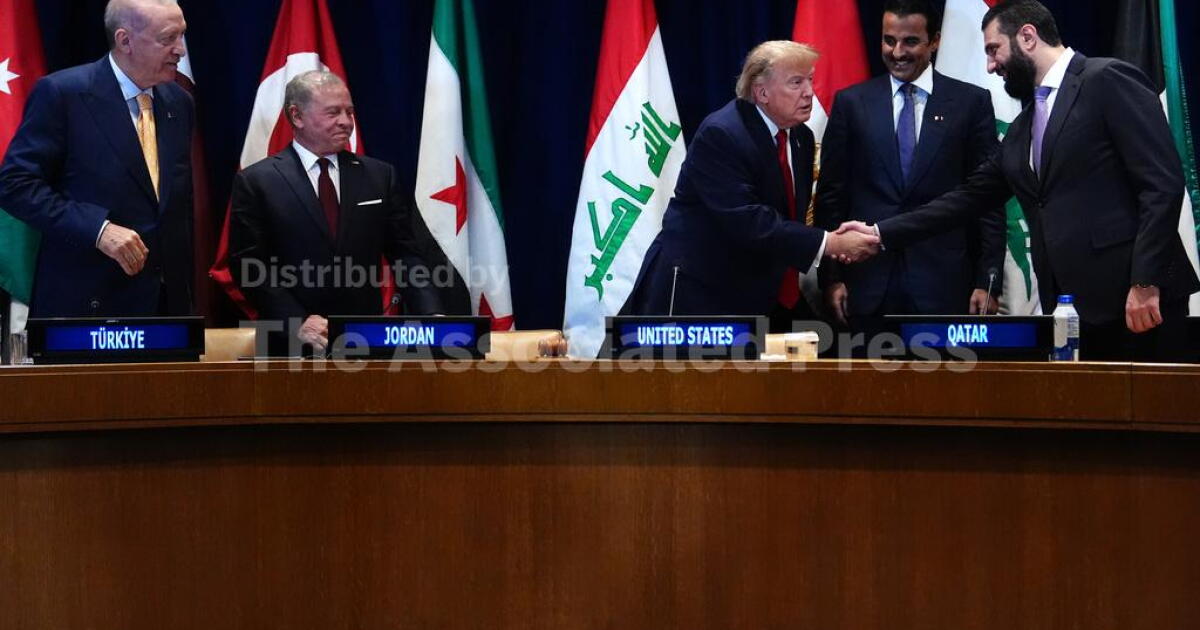
WASHINGTON — The Trump administration is removing Syria from a list of countries that are not allowed to purchase or import U.S. weaponry, a step that is part of a monthslong process of easing sanctions on the new government in Damascus and its leaders.
In a notice published Wednesday in the Federal Register, the State Department said it was amending its International Traffic in Arms Regulations, or ITAR, so that Syria no longer was among the nations subject to a policy of denial for licenses and other approvals needed for the sale of U.S. weapons and munitions.
The change effective Thursday means that arms sales requests from Syria will now be considered on a case-by-case basis.
President Donald Trump acted last year to ease economic sanctions on Syria that had been in place for decades during now-ousted President Bashar Assad’s rule. In August, Secretary of State Marco Rubio rescinded Syria’s designation as a state sponsor of terrorism, helping paving the way for the latest step in drawing closer to the current government.
The State Department has also announced plans to reopen the U.S. Embassy in Damascus. It has been closed for 14 years.
With Syria’s removal from the ITAR blacklist, only seven countries remain subject to the policy of denial for licenses for U.S. arms exports: Belarus, China, Cuba, Iran, Myanmar, North Korea and Venezuela.
Syria’s interim president, former rebel leader Ahmad al-Sharaa, overthrew the Assad government nearly two years ago and has embarked on a policy of change that has impressed the Trump administration. His moves have led to hopes of eventual stability in a country that was wracked by civil war and the Islamic State insurgency that engulfed northeast and western Iraq for years.
Wednesday’s withdrawal of U.S. forces from Iraq may mean that the Syrian government plays a greater role in preventing an IS resurgence.
With gas prices topping $6 a gallon and an unpopular war continuing in Iran, President Trump’s approval has slipped with California Republicans — a falloff that could diminish the party’s chances in the state’s few competitive congressional races.
A new poll by the UC Berkeley Institute of Governmental Studies, co-sponsored by The Times, found that 76% of Republican voters in the state approve of the president’s performance, down from 83% last year.
The president’s approval has softened even among those who still support his performance. Only 44% of Republicans in California said they strongly support Trump’s performance, down from 57% who said the same in August 2025.
That could translate into lower Republican turnout in the state’s few competitive races, said the poll’s director, Mark DiCamillo.
“Republicans are losing some of their enthusiasm in terms of being motivated to vote,” he said.
In addition, the more Trump tries to make the midterm elections about himself — such as the pro-Trump ads recently sponsored and paid for by the government — the more Democrats might be inclined to show up, said G. Cristina Mora, the UC Berkeley institute’s co-director.
“That might actually have a galvanizing effect on voters,” she said.
The congressional map in the state was already challenging for Republicans after voters last year approved a referendum championed by Gov. Gavin Newsom to redraw districts to be more favorable for Democrats — a response to similar efforts by Republicans in Texas and other states.
In the new map, only four of the state’s 52 districts are currently considered safe Republican districts, while three additional districts are seen as competitive, according to the Cook Political Report, a nonpartisan political handicapper.
The remaining 45 districts are seen as either likely or solidly Democratic in a state where Democrats hold a roughly 20% advantage in party registration.
Only one race is considered by Cook to be a true toss-up — California’s 22nd Congressional District in the Central Valley, which is held by Republican Rep. David Valadao.
“We’re looking at the best case scenario for Democrats at this point,” said Erin Covey, Cook’s U.S. House editor.
Valadao, one of only 10 Republicans to vote for Trump’s impeachment in the wake of the Jan. 6, 2021, insurrection, faces progressive Democrat Randy Villegas, a political science professor who has the backing of Bernie Sanders. The Vermont senator is joining Villegas this weekend for a rally in Bakersfield.
Valadao first won a seat in Congress in 2012, but was ousted from office during the Democrats’ “blue wave” election in 2018, in which the party gained 40 seats in the House in the first election after Trump took office in 2016. Valadao was able to win back his seat in 2020 and has held it since.
There has been scant public polling in the race, but a poll conducted in June by a political committee backing Villegas showed the Democrat holding a 4-point lead over Valadao.
Two other congressional districts in the state are listed by Cook as leaning Democratic:
California’s 48th Congressional District in Riverside and San Diego counties, now held by Republican Rep. Darrell Issa, who opted to retire rather than seek reelection in the redrawn district.
California’s 13th Congressional District in the San Joaquin Valley, where Democratic Rep. Adam Gray is trying to fend off a challenge from Republican Kevin Lincoln, the former mayor of Stockton.
Trump’s approval also dipped among Black and Latino voters in the poll. Both groups were part of Trump’s winning coalition in the 2024 presidential election.
The poll also found broad disapproval of two signature Trump administration policies.
It found that 70% of California voters disapprove of Trump’s decision to go to war in Iran, including 1 in 5 Republicans.
Also, 70% of California voters believe that the president’s immigration policies are hurting California’s economy and local businesses, including 1 in 5 Republicans.
The poll was conducted online in English and Spanish between Sept. 15 and Sept. 20 and included the opinions of 6,989 registered California voters. The margin of error is plus or minus 1.5 percentage points.
US president’s comments came after he was asked why North Korea can have nuclear weapons when Iran cannot.
Published On 30 Sep 202630 Sep 2026
United States President Donald Trump has described North Korean leader Kim Jong Un as “a friend” and played down concerns about Pyongyang’s nuclear arsenal, saying, “as long as I’m around, he’s going to be fine”.
Trump made the remarks in Washington, DC, on Tuesday after a reporter asked him why North Korea could have nuclear weapons but Iran could not.
Recommended Stories
list of 3 itemsend of list
“That’s interesting. You know why? Because you had a different president, and they could have stopped him,” he said, referring to previous US administrations.
“He happens to be a friend of mine, Kim Jong Un, he’s a friend of mine. He likes Trump, doesn’t like a lot of other people. I’m about the only person in the entire world that he likes, and I like him,” he said.
He said North Korea’s nuclear capacity was “pretty large” but “not like us”.
“You know what, as long as I’m around, he’s going to be fine,” he added. “You know why? Because he respects me and he likes me.”
South Korea’s Defence Minister Ahn Gyu-back said last week that its northern neighbour possessed between 80 and 120 nuclear warheads. The figure is significantly higher than Trump’s recent assertion that Pyongyang has 57 nuclear weapons.
Trump is seeking to re-engage with Kim and secure a win on the international stage as the US and Israel’s war on Iran enters its eighth month.
The US president launched the war along with Israel on February 28, saying Iran could not have a nuclear weapon. Iran has denied seeking a weapon, noting it had signed an agreement with world powers in 2015 that curbed its nuclear programme in exchange for sanctions relief. But Trump abandoned the agreement during his first term in 2018.
The US-Israel war on Iran has disrupted global energy supplies, raised fuel costs and hurt Trump’s popularity ahead of the November midterm elections.
Trump held summits with North Korea’s Kim in 2018 and 2019, but diplomacy broke down over US demands that Pyongyang give up its nuclear weapons. Since then, Kim has expanded his arsenal of nuclear-capable missiles and strengthened his diplomatic footprint by aligning with Russia over its war in Ukraine and tightening relations with China.
Trump had earlier said he planned to hold in-person talks with Kim before the end of the year.
Political strategist Celinda Lake says that young voters don’t usually cast their ballots in midterm elections, but they’re ‘very unhappy about the war’ and the rising cost of living in the US. Democrats see the youth vote as a key trigger to flip power in Congress.
US President Donald Trump and leading tech companies have signed a voluntary agreement to regulate AI that includes internal reviews and joint monitoring, but falls short of introducing concrete ‘guardrails’.
Rodríguez publicly thanked Trump in her UN speech. (Presidential Press)
Photographic evidence
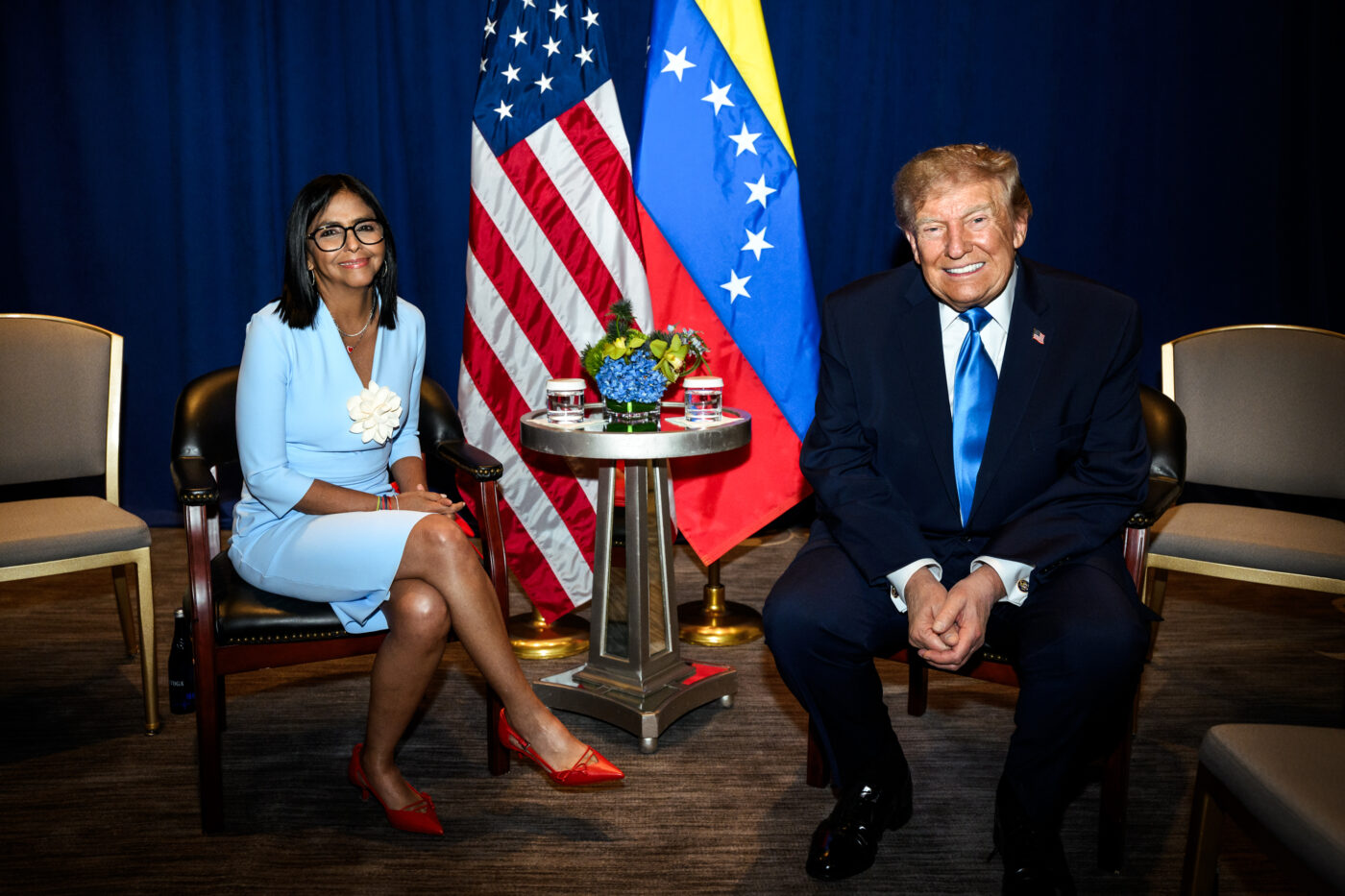
There is a photograph that serves as evidence: Delcy Rodríguez and Donald Trump, together, smiling, in New York. Hundreds of narratives can be constructed around that photo. Diplomatic, tactical, or strategic explanations can be devised. Some may speak of pragmatism, power dynamics, negotiation, or political necessity. All of that is open to debate. But there is something that remains true regardless of any narrative: the photograph is evidence and depicts a specific scene. And that scene is difficult to reconcile with much of the political tradition from which Delcy Rodríguez hails.
Because there is another image from the same day that completes the picture: Delcy Rodríguez approaching [Spanish President] Pedro Sánchez while he is on the phone, waiting for him to finish so she can greet him. The image conveys something difficult to reconcile with the power of the Bolivarian Revolution’s historic leadership: a desire to reach out, almost like a student waiting for the other person to hang up the phone so she can greet him; an attitude that seems a far cry from the dignity and authority with which Chavismo once stood up to global powers. And a few hours later, the photo-op with Trump appears. Two images from the same day that speak for themselves, because diplomacy is one thing, and the position from which it is exercised is another; negotiating is one thing, and showing subordination is another. That is what it looks like.
Chavismo’s tradition
And what we see today is a far cry from Hugo Chávez’s “Go to hell, you fucking Yankees.” It’s a far cry from that rebellious Chavismo that could stand up to the King of Spain, that could publicly confront the United States, and that built much of its political identity around an idea of sovereignty, dignity, and resistance in the face of imperial power. There was a political force there, a capacity to stand up to power, a way of exercising leadership, that is hard to find in these recent images.
When the narrative trumps reality
We live, at the same time, in a dystopian world in which artificial intelligence, technological advances, and algorithms often lead us to be unaware of reality or to experience it from a perspective different from what is actually observed. We can construct stories, narratives, and entire universes around a single scene until the narrative ends up overtaking reality. While the world’s wealthy talk about moving to Mars or colonizing other planets, perhaps the biggest debate we face is much more fundamental: aligning stories, narratives, and algorithmic trends with reality.
Assuming that reality is something different from what we see often leads us to explore ideas, utopias, or even political stances from a perspective increasingly distant from what is actually happening. And perhaps today, a revolutionary leap would be to align reality with what is being recounted or narrated. Ideas, utopias, and political stances need to stem from reality—not from a reality constructed to align with what we need to believe. When the narrative begins to take the place of facts, we stop interpreting reality and start adapting it to our needs.
The power of what is seen
That is why the power lies in what is seen. And what is seen is not just a photograph of Delcy Rodríguez and Donald Trump. That photograph appears in the wake of a US military intervention in Venezuela, which led to the kidnapping of Nicolás Maduro and Cilia Flores, and after Trump publicly took credit for the operation. What we see is Delcy Rodríguez standing before the man who brags about this operation and presents its outcome as a victory. And this matters because the photograph isn’t floating in a vacuum: it has a context—it involves deaths, a military attack, a captured Venezuelan president, strategic resources at stake, and a US president claiming credit for the outcome of that operation.
At this very moment, paradoxically and surprisingly, an entire epic narrative of triumph and “peace diplomacy” is emerging, a grandiloquent celebration of a supposed victory. And the important thing is to state something very simple: defeat is not epic. A defeat can simply be a defeat. What can be discussed is how one faces it, what stance one takes in the face of it, and what dignity one maintains when conditions are adverse. But a defeat does not become a victory simply because we construct a grand narrative around it. Reality retains a dimension that rhetoric cannot erase.
The words of the victor
What we see is a Delcy Rodríguez who tolerates Trump saying outrageous things. Trump spoke of the US operation in Venezuela in terms of victory and the victor; he justified the use of force and even spoke of the spoils that belong to the victor. This is an offensive affront to the dead—who are not only Venezuelans but also Cubans—and, fundamentally, to those killed in an intervention on Latin American soil. That context does not disappear simply because a diplomatic facade is later constructed or by conjuring a strategic explanation for every gesture.
It happened. And it is incomprehensible that Delcy Rodríguez would then appear in a triumphant, smiling manner in the face of that display of power and in the presence of the very person who has abducted Venezuela’s President Nicolás Maduro and Cilia Flores. We can discuss the reasons for the negotiations, the balance of power, the tactical necessities, the circumstances, and the alternatives. All of that is part of politics and can be analyzed. But there is something that comes before all those explanations: what actually happened.
Tactics and consistency
And this raises a question we should not shy away from: What is the difference between Milei’s stance and Delcy Rodríguez’s stance with regard to the US? No doubt, in the coming hours, explanations will emerge aimed at establishing profound differences between the two, and we will be told that they follow different logics, that one expresses subordination and the other a tactic, that one represents a political project and the other a historical necessity. All of that is open to debate. But it is important to look at the concrete attitude, because if politics can always be explained away as a tactic, then consistency begins to lose all specific weight. And when consistency loses its specific weight, almost anything can become a strategy: a concession can be presented as a victory, subordination as pragmatism, a defeat as peace diplomacy, and a photograph as an epic moment. Reality, however, remains.
A model of dignity
If there is a model to look to today—as we saw on January 3—it was Cuban dignity, which fought to the very end against US troops and delivered a fierce, dignified response, despite being outmatched in firepower and at a disadvantage in every respect. At the UN General Assembly, too, it was the Cuban delegation that stood up and walked out [during Trump’s speech]. Therein lies a model of dignity—a model from which to fight and from which to view ourselves. There are moments when politics needs to reclaim the ability to set boundaries against power.
And this matters especially for those of us who see ourselves within a tradition of the left, of sovereignty, of emancipation, and of transformation. Because we cannot lose the ability to recognize a point of reference when we see it. We cannot construct an artificial epic around something that offers us no point of reference. And we cannot turn a scene of subordination into a revolutionary one simply because we need to preserve a certain narrative.
Surrender is also conceptual
If we fall into this pragmatic, tactical logic—where consistency seems to carry little weight and reality can be distorted through grandiloquent rhetoric—we lose something far more important than a short-term political debate: we lose the ability to think. What we see is a very happy Delcy Rodríguez standing next to Trump. What we see is a Venezuelan historical process that we have admired but which no longer serves as a point of reference, because today it is part of mechanisms that strengthen Donald Trump and of a strategic surrender of resources—not only natural ones but also conceptual and ideological ones.
And the latter is perhaps even more important, because it is not just about oil, natural resources, or economic agreements. Symbols, references, words, and political traditions are also being surrendered. A tradition that for years was built around resistance to imperialism may end up being used to legitimize a new relationship of subordination. And when that happens, the surrender is not only material—it is also conceptual. A part of what for years allowed us to construct a worldview, a way of interpreting sovereignty, and a way of understanding emancipation is being surrendered.
Intellectual honesty
So there is no turning back. As a matter of dignity, as activists, it is important not to betray our intellect and to realize that this is what it looks like.
Some will come forward in the next few hours to say, “No, it’s a tactic.” Well, but no revolutionary process has ever come about that way. Can you imagine Fidel Castro celebrating with Kennedy after the Bay of Pigs? It would be something similar. The comparison may seem harsh, but it actually helps us understand the problem: it’s one thing to negotiate with an adversary and quite another to stage a celebration with someone who has just bragged about a military intervention; it’s one thing to manage a defeat and quite another to build an epic out of a defeat.
Back to reality
Perhaps the problem of our time is precisely this: we have learned to construct narratives capable of altering our perception of reality. Artificial intelligence can do it, algorithms can do it, political narratives can do it, the great powers can do it, and we ourselves can do it when we need reality to resemble what we want to believe. That is why, perhaps, a revolutionary leap today is something much more fundamental and, at the same time, much more difficult: returning to reality, aligning what is with what is reported and narrated; not abandoning utopias but preventing them from becoming an excuse to ignore the facts; not abandoning politics but preventing politics from forcing us to deny what is right before us; not ceasing to think strategically but reclaiming coherence as a dimension of strategy.
And perhaps the first obligation of those of us who still believe that politics can transform reality is not to betray our intellect in order to save the narrative. To look at reality, to think from within it, and to hold our ideas up against what is actually happening. Because before any explanation, before any epic, and before any narrative construction, there is something that remains right before us.
The high court grants an emergency petition ahead of expected arguments in the case, slated for December.
The United States Supreme Court has allowed President Donald Trump’s administration to continue third-country deportations, halting a lower-court ruling that paused such removals over questions of due process.
On Tuesday, the high court granted the administration’s emergency request to resume the deportations, which involve sending immigrants to countries they may have no connection to.
Recommended Stories
list of 3 itemsend of list
The court’s order was unsigned, as is typical for an emergency petition. It also does not include an explanation or a list of how the justices voted.
But at the bottom of Tuesday’s order, the court’s three left-leaning justices – Sonia Sotomayor, Ketanji Brown Jackson and Elena Kagan – indicated they would have denied the Trump administration’s petition.
The Supreme Court’s decision to pause the lower court ruling is temporary. The order calls for arguments to be heard in December.
That hearing comes as Trump administration continues its appeal against the lower court’s ruling, handed down by Judge Brian Murphy in Boston, Massachusetts.
Murphy had ruled that immigrants must be given a “meaningful” chance to raise safety concerns before their removal to third-party countries.
In pausing such deportations, Murphy indicated that some immigrants may have been denied the opportunity to challenge their deportations as part of their due process rights.
Tuesday, however, is not the first time the Supreme Court justices have weighed in on the practice of forcibly sending people to third countries, which Trump dramatically stepped up since his return to office in 2025.
Trump campaigned on a pledge to implement the “largest deportation operation in American history”, and his officials have argued that third-country deportations are a means of removing individuals whose home countries may not accept them.
In June 2025, the Supreme Court also issued an unsigned order allowing such removals to proceed.
That cleared the way for eight men, including nationals of Cuba, Myanmar and Vietnam, to be deported to South Sudan, a country the US State Department advises against visiting because of “crime, kidnapping, and armed conflict”.
The Department of Homeland Security at the time called the removals “a win”, while rights groups said the move flouted basic legal protections.
Critics have expressed concern that many of the governments receiving third-country deportations have a record of human rights abuses.
Third-country deportations have been used to bypass court protection orders that prevent immigrants from being sent back to their home countries due to fears of persecution.
But advocates say that some of those third-party countries have ultimately sent deportees, including asylum seekers, back to the places where they feared they would be at risk of torture or other harms.
At least 35 countries have signed agreements with the Trump administration to take in the third-country nationals, according to a tally by the nonprofits Refugees International and Human Rights First.
The groups estimate that more than 25,000 people have been subject to third-country deportations so far.
On Monday, human rights experts at the United Nations wrote to the US government urging a halt to such removals, warning they were putting deportees at heightened risk of abuse.
“At gravest risk are children, women, persons with disabilities, victims of trafficking, LGBT persons, human rights defenders, stateless persons and other people in extremely vulnerable situations,” the experts said.
On Tuesday, Burundi became the latest country to enter an agreement with the US to take non-citizen deportations.
Officials said the country would only take in people who were not facing prosecution and had no links to “terrorism”.