trump

Trump says Iran has 48 hours to make deal as search for US pilot continues | US-Israel war on Iran News

United States President Donald Trump has issued another threat to Iran, writing that it has two days to “make a deal or open up the Hormuz Strait”.

Saturday’s brief, three-sentence post on Truth Social did not reference the ongoing search for a US pilot who is believed to have ejected over Iran after an F-15 fighter jet crashed in the country. Iran has taken responsibility for the downing, the first of its kind since the US and Israeli launched attacks on Iran on February 28.

Recommended Stories

list of 3 itemsend of list

A separate incident on Friday saw Iran claim it shot down an A-10 Warthog near the Strait of Hormuz, raising questions about Trump’s earlier assertion that the US has established dominance over Iran’s airspace.

Rather than remark on the recent crashes, Trump’s post focused on a 10-day deadline he announced on March 26.

He had called on Iran to open the Strait of Hormuz to international traffic, or else face the “destruction” of its energy plants. That 10-day period is set to expire on Monday.

“Remember when I gave Iran ten days to MAKE A DEAL or OPEN UP THE HORMUZ STRAIT,” Trump wrote. “Time is running out – 48 hours before all Hell will reign down on them. Glory be to GOD!”

Stalled negotiations

While Trump did not provide further details about Saturday’s threat, in a series of posts this week, he pledged to attack Iran’s power plants, oil facilities and “possibly all desalinization plants”.

During a national address on Wednesday, he also threatened to bomb Iran “back to the Stone Ages”, and on Friday, he cheered a strike on a bridge that connects Tehran to the Caspian Sea.

Just this week, more than 100 international law experts published an open letter, warning that targeting civilian infrastructure is a violation of the Geneva Convention and could constitute war crimes.

The Trump administration has also offered shifting objectives and plans for ending the war.

Administration officials have repeatedly said that the US prefers a diplomatic solution. Trump, meanwhile, has touted “victories” even as he has hinted at more weeks of attacks.

At the same time, Iran and the US have sent contradictory messages on the progress of peace talks.

On Saturday, Iranian Foreign Minister Abbas Araghchi said Tehran remained open to diplomacy, after Iran rejected an “unreasonable” 15-point plan put forward by the Trump administration.

“What we care about are the terms of a conclusive and lasting END to the illegal war that is imposed on us,” Araghchi said in a post on X.

The US, however, has argued that Iran’s demand that it maintain “sovereignty” over the Strait of Hormuz is a non-starter.

Pakistan has indicated it will continue to try to support ceasefire negotiations despite the ongoing “obstacles”.

No mention of downed pilot

While Trump has not publicly addressed the ongoing search for the US pilot, NBC News reported on Friday that he did not believe the incident would affect any negotiations with Iran.

“No, not at all. No, it’s war,” he reportedly told the network in a phone call.

Nevertheless, experts have warned that the possible Iranian capture of the pilot could create a crisis for Washington, giving Tehran a major leverage point that could snarl any diplomatic resolution.

The incident could also undermine US claims it has a dominant position in negotiations.

Marina Miron, a researcher at King’s College London, said the shooting down of the F-15 undercuts statements from Trump and Pentagon chief Pete Hegseth that the US has established complete control over Iranian airspace.

“Now we have a visible example that Iran still has the capability to target and successfully shoot down US aircraft, making this, of course, very important for Iran to demonstrate the capability to resist,” Miron told Al Jazeera.

“Most likely, the kinds of air defences that Iran is using, such as man-portable air defences, will be much more difficult to locate.”

Any US efforts to rescue the pilot would risk US casualties, Miron added, heightening the risk of further military escalation.

“It’s a race for time, because right now we have this critical window of up to 72 hours where both sides are trying to get hold of the pilot for both military and political purposes,” she said.

Source link

Two days a month? Rivals for city attorney spar over return to office

Good morning, and welcome to L.A. on the Record — our City Hall newsletter. It’s Noah Goldberg and David Zahniser, giving you the latest on city and county government.

Los Angeles City Atty. Hydee Feldstein Soto and challenger Marissa Roy have sharply different views on how the office should be run.

Literally, the office.

Feldstein Soto said it’s important for attorneys to be in the office, and adopted a policy last year requiring most staff attorneys to be there at least three days a week, with supervisors required to be in four days weekly. Previously, the rule was up to three days of remote work per week.

“It builds teamwork. It ensures cohesion. It ensures that you have the opportunity to review and evaluate the work of new employees while they are still on probation,” she said in an interview.

That policy, however, has put Feldstein Soto at odds with the Los Angeles City Attorneys Assn., which endorsed Feldstein Soto in 2022 but has yet to weigh in this year.

Roy, the deputy state attorney general and the most well-funded of three challengers in the June 2 city primary election, recently told the city attorney’s union that the city’s lawyers should only have to show up at the office two days a month, not counting court appearances. That’s the policy at the state attorney general’s office, where Roy works for Atty. Gen. Rob Bonta.

“There’s no reason why the city attorney’s office can’t have that same policy,” Roy told The Times.

Many companies and public agencies adopted liberal work-from-home policies during the COVID-19 pandemic, although those policies have been largely rescinded to one degree or another. Still, Roy contends that the two days a month is reasonable given the sacrifices lawyers make to work for the government.

“You’re taking a pay cut from the private sector. You’re doing it because you care. You’re doing it for work-life balance and we have to respect that,” said Roy, who has been endorsed by the Los Angeles chapter of the Democratic Socialists of America as well as the county Democratic Party.

Feldstein Soto said Roy’s two-days-per-month proposal creates logistical issues since the city’s lawyers are required to appear in court and be present for legal questions that arise at city meetings. She also said liberal work-from-home policies make it too easy for lawyers to take on outside work.

Roy is Feldstein Soto’s most significant opponent, racking up endorsements and more than $450,000 in campaign contributions through the end of December. Feldstein Soto raised more than $685,000 through the end of last year.

Challenger Aida Ashouri, a lawyer and activist, said she supports the current policy, saying it provides flexibility to employees while also ensuring they confer in person.

“We want to continue to make sure that people see their co-workers, that we have meetings in person,” Ashouri said. “I think meetings in person can be very effective and better for communication purposes.”

The fourth candidate, Los Angeles County Deputy Dist. Atty. John McKinney, said remote work is a “valuable tool for work-life balance.”

He said he would build on Feldstein Soto’s existing remote work rules, though he did not outline exactly what his policy would be.

The Los Angeles City Attorneys Assn. filed an unfair employee relations claim against the city last year when Feldstein Soto toughened the rules. The attorneys claim that the changes should have been bargained with the union.

The Los Angeles City Attorneys Assn. endorsed Feldstein Soto when she first ran four years ago, but hasn’t yet made an endorsement in the city’s June 2 election. The endorsement is expected to be discussed by union officials next week, said union president Ann Rosenthal, who said the city policy makes it hard to recruit new attorneys.
Citywide, departments make their own determinations on RTO, said Matt Szabo, the city administrative officer.

Szabo said the city is discussing a draft citywide policy on remote work with city employee unions.

You’re reading the L.A. on the Record newsletter

Sign up to make sense of the often unexplained world of L.A. politics.

State of play

— DOCUMENT DROP: The Charter Reform Commission sent the City Council its written recommendations for changing the city’s government. Among the ideas: a larger City Council, a two-year budgeting cycle and greater authority for the council over policing policies. The council will decide how many of the proposals should appear on the Nov. 3 city ballot.

— A NEW FRONT-RUNNER? City Councilmember Nithya Raman came out ahead of incumbent Karen Bass in a new poll on the Los Angeles mayor’s race, though the poll’s director cautioned that it did not give the whole picture. Raman had a commanding lead, with 33% of voters supporting her, while Bass trailed at 17%, according to the poll by Loyola Marymount University’s Center for the Study of Los Angeles.

— OR MAYBE NOT: Meanwhile, a survey released by UCLA’s Luskin School of Public Affairs found Bass in the lead, with reality TV star Spencer Pratt coming in second and Raman a close third. With 40% undecided, the race remains “wide open,” said Zev Yaroslavsky, director of the Los Angeles Initiative at UCLA Luskin, a former L.A. council member and county supervisor. The poll’s margin for error is 4%.

NEED FOR SPEED (CAMERAS): By the end of the summer, 125 speed cameras will be installed on dozens of streets throughout Los Angeles, specifically on roads that are in school zones, are known street-racing corridors or where speeding has resulted in a high rate of traffic accidents.

— EATON FIRE RECOVERY: At the end of March, just under 3,400 applications to rebuild residences destroyed in the January 2025 Eaton fire had been filed. That’s about 56% of the roughly 6,000 residential structures in Altadena that CalFire designated as destroyed, a Times review found.

— CAL-EXODUS: A new UC Berkeley study found that people who moved out of California dramatically improved their financial conditions. A surprising finding from the California Policy Lab: Those leaving the state are increasingly moving out of its wealthiest areas.

— PACK YOUR TRUNK: Nearly a year after the Los Angeles Zoo shipped Billy and Tina the elephants off to a zoo in Tulsa, Okla., animal rights activists have kept up the call to relocate them to a sanctuary. Actor Samuel L. Jackson is among those weighing in.

QUICK HITS

  • Where is Inside Safe? The mayor’s signature homeless relocation program was in North Hollywood and brought more than 40 people indoors in Councilmember Imelda Padilla‘s district.
  • On the docket next week: The City Council will remain in recess next week.

Stay in touch

That’s it for this week! Send your questions, comments and gossip to LAontheRecord@latimes.com. Did a friend forward you this email? Sign up here to get it in your inbox every Saturday morning.

Source link

The loophole that keeps a Trump loyalist as L.A.’s federal prosecutor

Across the country, President Trump has installed handpicked loyalists as top federal prosecutors. Several have been pushed out after legal battles because they lack Senate confirmation to serve as U.S. attorneys.

But in Los Angeles, Bill Essayli wields the power of a top prosecutor under a lesser title: “first assistant.”

Essayli clocked his first full year in office this week. He has survived the kinds of challenges that sunk Trump picks in other states through a combination of legal gamesmanship by the U.S. Department of Justice and a lack of action by judges in the Central District of California.

Essayli has used his position to act as one of Trump’s fiercest legal foot soldiers. He has pursued criminal charges against protesters, activists and immigrants while dropping cases involving administration allies and supporting lawsuits over transgender and environmental policies in California.

After Trump’s firing Thursday of U.S. Atty. Gen. Pam Bondi, it’s unclear how her replacement will handle continuing battles over the legality of Trump’s appointees. Essayli is popular with high-level administration officials, and received a congratulatory post on X from Vice President JD Vance over the filing of fraud cases earlier this week.

A conservative former state Assembly member from Riverside County, Essayli, 40, was sworn in as interim U.S. attorney last April. Around the time he hit that role’s 120-day limit, Bondi made him a “special attorney” and designated him “first assistant.” A federal judge later disqualified Essayli as acting U.S. attorney, finding he was “not lawfully serving” in the top role. But the judge said he had no authority to undo Essayli’s designation as first assistant. With no one above him in the office, that title leaves Essayli as the de facto U.S. attorney.

In other jurisdictions, members of the federal bench have exercised their authority to appoint an interim U.S. attorney. Chief U.S. District Judge Dolly M. Gee’s chambers did not respond to a request for comment about why no similar action has been taken in L.A.

A court spokesman declined to comment. Essayli did not respond to a request for comment. The White House referred questions to the Justice Department.

A Justice Department spokesperson issued a statement that praised Essayli for prosecuting “drug cartels and transnational criminal organizations, sex traffickers, violent street gangs, leftist rioters and domestic terrorists, fraudsters, and child predators.”

“It is a disservice to our prosecutors and the American people when judges prevent the President and the Attorney General from installing qualified and capable prosecutors who will aggressively enforce our laws and make America safe again,” the Justice Department spokesperson said.

The lack of action by Gee, a President Obama appointee, has surprised some legal observers, especially given the swiftness with which judges in other districts have acted. It also has frustrated some former federal prosecutors that fled the office under Essayli’s chaotic tenure.

One former assistant U.S. attorney, who left the office under Essayli and requested anonymity to discuss sitting judges who will likely preside over future cases of theirs in the district, accused Gee and others of “shirking their responsibilities” by not appointing someone to the vacant U.S. attorney post.

Another former Central District prosecutor who left the office before Essayli’s appointment said Gee was being practical, taking a “protective” stance to “keep the court away from the ire and invectives coming out of the White House.”

It is “unfair to say the court is abdicating its authority,” said the ex-prosecutor, who also requested anonymity to speak candidly about the district’s judges.

Under long-standing Senate tradition, individual senators can block a U.S. attorney nominee in their home state by withholding their “blue slip,” which clears a nominee’s path to a confirmation hearing.

Trump has tried to skirt the Senate confirmation process to appoint top federal prosecutors in multiple states, including New Jersey and Virginia, where two of the president’s personal lawyers were named U.S. attorney — who immediately moved to zealously advance the president’s agenda and, in some cases, prosecute his rivals.

In Virginia, Trump replaced U.S. Atty. Erik Siebert, a nominee who was under Senate consideration, with one of his former personal attorneys, Lindsey Halligan. Siebert had refused to prosecute some of Trump’s political enemies and resigned. In her first ever criminal case, Halligan swiftly moved to indict former FBI Director James B. Comey. The prosecution was later thrown out and Halligan’s appointment deemed illegal.

In New York’s Northern District, when judges moved to oust the president’s former campaign attorney — who received the same “first assistant” designation as Essayli — Justice Department officials promptly fired his replacement.

Erwin Chemerinsky, dean of the UC Berkeley School of Law, said Trump’s attempts to bypass the normal confirmation processes are unconstitutional.

This is very troubling because it circumvents the constitutional procedure of having the president nominate and the Senate confirm. That’s crucial to checks and balances,” he said. “This allows the president to appoint whoever he wants.”

Though Essayli has more law enforcement experience than many of Trump’s chosen prosecutors, he’s still struggled to achieve courtroom victories. His prosecutors have lost nearly all the cases they’ve brought to trial against anti-Trump protesters and abandoned others after grand juries refused to return indictments.

Meghan Blanco, a former federal prosecutor and veteran defense attorney, suggested Gee’s inaction with Essayli might be a clever act of resistance. Rather than picking a fight with the White House, Blanco said, the judges are letting the top prosecutor fall on his face.

“If you’re a judge and displeased with what DOJ is doing and the shenanigans they’re pulling … you let the Essayli appointment play out,” Blanco said. “No one has seen a U.S. attorney’s office lose the way this office is losing now.”

Sen. Adam Schiff (D-Calif.) told The Times this week that he is working with Sen. Cory Booker (D-N.J.) to craft legislation to clarify the procedures required to appoint U.S. attorneys and prevent Trump and future presidents from circumventing the Senate.

The legislation, which Schiff did not describe in detail, faces an uphill battle even if Democrats retake the Senate in the upcoming midterms. But the California senator said he is committed to challenging Trump’s maneuvering.

Schiff said Essayli “could not be confirmed and for a reason: He lacks the judgment, temperament and integrity required of a U.S. attorney.”

Laurie Levenson, a Loyola Law School professor and former federal prosecutor, said local federal judges may believe it would be “more disruptive to try and put somebody in when the administration will just fire them.”

But their inaction, she said, has effectively confirmed Essayli as U.S. attorney — and highlights “a real weakness in the system” that demands a legislative fix.

“The bottom line is you have an administration that just doesn’t want to follow the rules,” she said. “There has to be some political will to have Congress do its duty.”

Source link

Trump requests $152M to reopen Alcatraz as a prison

April 3 (UPI) — The Trump Administration has requested $152 million in its fiscal year 2027 federal budget proposal to refurbish and reopen Alcatraz as a prison.

President Donald Trump first broached the idea of reopening the prison on Alcatraz Island in the San Francisco Bay in May 2025, but with the administration’s release of its budget proposal to Congress he is looking to put his plan in motion.

Alcatraz was closed in 1963 after 30 years as an active prison that has become famous for its former inmates and stories of attempted escapes, but has long been a popular tourist attraction that sees more than one million people per year visit the island, the San Francisco Chronicle reported.

In the budget proposal, the administration argued that restoring Alcatraz is an appropriate response to the federal Bureau of Prisons housing “violent criminals in crumbling detention centers.”

“The Budget affirms the President’s commitment to rebuild Alcatraz as a state-of-the-art secure prison facility, providing $152 million to cover the first year of project costs,” the budget proposal said.

The request is part of the administration’s $5 billion request for the BOP, and its larger intent is to improve working conditions and pay to stem shortages of correctional officers.

While the $152 million is projected to over the first year of refurbishing the prison, there are no details of the project or longer-term details included in the proposal.

In 2025, however, when Trump said he’d directed his administration to start looking into reopening Alcatraz as a prison, his administration suggested that the multi-year project to make it usable could cost around $2 billion.

The prison originally was closed because it was so expensive to run — every supply needed for the facility has to be brought there by boat because it is in the middle of the San Francisco Bay — and had at least 36 inmates attempt a total of 14 separate escapes in its 30 years as a prison.

“Alcatraz is a historic museum that belongs to the public, and San Franciscans will not stand for Washington turning one of our most iconic landmarks into a political prop,” U.S. Rep. Nancy Pelosi, D-Calif., told The Los Angeles Times.

President Donald Trump delivers a prime-time address to the nation from the Cross Hall in the White House on Wednesday. President Trump used the address to update the public on the month-long war in Iran. Pool photo by Alex Brandon/UPI | License Photo

Source link

Trump’s budget singles out L.A. homelessness agency as he proposes housing cuts

President Trump is singling out the Los Angeles Homeless Services Authority as a cautionary tale about Democratic mismanagement of publicly funded programs, using it to justify proposed cuts to homeless assistance services across the country.

Trump’s proposed budget for the next fiscal year, released Friday, asks Congress to eliminate the Continuum of Care — a federal program that funds housing and services for homeless Americans — citing concerns about “fraud and corruption” among local agencies that administer it.

The White House points to LAHSA, which manages many homeless services for the city and county, as the example of why the program needs to go.

The agency has faced criticism locally for years for lack of proper oversight and the county is in the process of transitioning programs to an internal department.

“LAHSA has an abysmal record of reducing what is the highest number of street homeless individuals in the United States, and an independent audit issued in March 2025 found that the authority failed to accurately track billions of Federal and local dollars,” the budget says.

The local agency pushed back in a statement after the budget was released.

“Cutting this funding or destabilizing the Continuum of Care program would directly result in more tents on our streets, not fewer,” said Gita O’Neill, the agency’s interim chief executive, adding that under its leadership unsheltered homelessness in Los Angeles has fallen 15% and that 90% of the program’s funding goes “directly to rental assistance.”

Local officials are already grappling with homeless service cuts at the state and county level given budget constraints and LAHSA warned Trump’s proposal would make matters worse.

“If anything, we need additional funding to cover rising costs, not fewer, to maintain our current momentum,” the agency said Friday.

The funding dispute over homelessness services is one front in a broader budget assault on California programs by the Trump administration.

Trump’s proposal also asks Congress to eliminate millions in funding from state initiatives the White House is characterizing as wasteful, ineffective or “woke.”

The cuts, if enacted, would cancel $4 billion in unspent funding for the state’s high-speed rail project, which the White house called a “boondoggle,” and strip grants from the Fair Housing Advocates of Northern California, which the budget criticized for “actively working to dismantle systems of power and privilege that favor whiteness.”

Smaller items are also targeted on the White House’s chopping block: a Los Angeles gelato festival, a dance building in Santa Cruz — which the White House dubs “one of the richest cities in the nation” — and a $3-million grant for a playground tied to an unspecified performing arts center in California.

Trump’s proposed cuts to California projects are part of a broader effort by the Trump administration to reshape federal spending priorities, largely by trading social programs for a massive military buildup.

The president is asking Congress to approve $1.5 trillion for defense and to slash $73 billion from domestic programs, a massive restructuring that would leave states, including California, to absorb costs Washington no longer wants to carry.

Trump made that vision explicit at a private Easter lunch at the White House on Wednesday, telling guests that the federal government should no longer be responsible for funding social programs that many Americans rely on.

“We can’t take care of daycare. We are a big country,” Trump said. “We are fighting wars. We can’t take care of daycare.”

If states want to offer those services, Trump said, they should raise taxes to pay for them.

“Medicaid, Medicare, all these individual things, they can do it on a state basis,” he said. “We have to take care of one thing: military protection.”

His proposed budget reflects that priority, which lawmakers will need to contend with as they grapple with the mounting costs of the Iran war and an economic fallout from a military operation that has left Americans paying more items, including gas pump.

Under the proposed budget, Trump is also seeking to make some investments in California projects.

The White House, for example, is seeking $152 million from Congress to turn Alcatraz back into a maximum-security prison, an idea the president has talked about for several years.

He also called on Congress to establish a National Center for Warrior Independence at the West Los Angeles VA Medical Center.

Times staff writer Andrew Khouri, in Los Angeles, contributed to this report.

Source link

Trump pushing to stabilize college sports and limit transfers

President Trump signed an executive order aimed at fixing college sports Friday that would give federal agencies authority to cut funding at schools that don’t comply with mandates covering transfers, eligibility and pay-for-play in the rapidly changing industry.

The order is a laundry list of proposed fixes, many of which lawmakers and college leaders have been pushing for since the approval of a $2.8 billion settlement changed the face of games that were once played by pure amateurs.

Among the notable parts of the order was a call to establish “clear, consistent and fair eligibility limits, including a five-year participation window” — an element that could fend off the dozens of lawsuits the NCAA has faced of late.

It also calls for “structured transfer rules,” but offered no specifics for a system that allows players to move around freely, sometimes in the middle of the season, which adds uncertainty to roster building that many consider unsustainable.

As much as the changes he directs, Trump’s call for the Education Department, the Federal Trade Commission and the attorney general’s office to evaluate “whether violations of such rules render a university unfit for Federal grants and contracts” stands out as a proactive way to force change.

Several universities across the country have made policy changes related to diversity, equity and inclusion, transgender rights and even the sorts of courses they teach to comply with federal orders and avoid funding-related showdowns with the government.

At a college sports roundtable last month, Trump said he anticipated any order he signed would trigger litigation. Attorney Mit Winter, who follows college sports law, agreed, saying the order “appears to direct the NCAA to create rules that would likely violate” court orders.

NCAA President Charlie Baker, however, did not signal any intent to litigate, saying Trump’s order “reinforces many of our mandatory protections — including guaranteed health care coverage, mental health services and scholarship protections.”

“This action is a significant step forward, and we appreciate the administration’s interest and attention to these issues,” Baker said. “Stabilizing college athletics for student-athletes still requires a permanent, bipartisan federal legislative solution.”

Trump, in the order, also called on Congress to “quickly pass legislation,” the likes of which has stalled multiple times.

The president’s mandate is likely to set up a situation where the NCAA and schools have to decide whether to follow a federal court order or an executive order, Winter said.

“Federal court orders prohibit the NCAA from making athletes sit out a season if they transfer more than once and prohibit the NCAA from enforcing rules that limit collectives from being involved in recruiting,” he said. “The EO appears to direct the NCAA to create rules that would likely violate both of these court orders. Will the NCAA create rules that do that? And if they do, will schools follow them?

“Either way, we’re likely going to see litigation challenging the EO by athletes and third parties.”

Winter added that the order also appears to urge schools to pay new revenue share amounts.

“Most schools are paying 90-95% of their rev-share funds to men’s basketball and football players,” he said. “And those funds are already promised via contracts signed with those athletes. Will the order purport to make schools not adhere to those contracts?”

Long and Pells write for the Associated Press. AP writer Maura Carey contributed.

Source link

Tour Championship: Judd Trump beats Neil Robertson to reach final in Manchester

Judd Trump swept to a commanding 10-4 victory over Neil Robertson but expressed concern about his cue tip as he reached the final of the Tour Championship in Manchester.

World number one Trump laid the platform for his success in Friday’s afternoon session which he dominated to establish a 7-1 lead, before finishing the job in the evening.

Trump, who will be making a first appearance in the final of the event, set the tone with breaks of 87, 94 and 113 as he registered 294 unanswered points in the opening three frames.

He will face either world champion Zhao Xintong or Scotland’s John Higgins in Sunday’s final which begins at 13:00 BST.

“I started off well in the first three frames and after that it went a bit downhill so I am pleased to get over the line,” Trump said on 5Action.

“I have been struggling with my tip for the whole tournament. Somehow I have had a good run and Neil struggled a bit and that was the difference.”

Armed with his hefty lead, Trump made sure he carried focus into the evening session.

The Tour Championship launched in 2019 and this is the eighth edition, with Robertson a two-time former winner, so Trump knew he was not to be underestimated.

“In my eyes Neil loves to win 10-0 so I wanted to beat him 10-1 or give myself something to focus on so he didn’t get back in it,” said the 36-year-old Englishman.

“At this point you want to beat everyone with the World Championship just around the corner. Whoever I play in the final it will be an amazing game.”

After Trump built on his brisk start to develop a 6-0 lead, Australia’s Robertson celebrated with the crowd when he won frame seven.

While Robertson reduced his arrears to 7-3 by winning the first two frames when play resumed in the evening, Trump closed the door on any prospect of a full-scale fightback with runs of 87 and 75 to move 9-3 ahead.

He then traded frames with his opponent to set up a mouth-watering finale to the tournament against Zhao or reigning champion Higgins, who begin their semi-final at 13:00 BST on Saturday.

This is the final event for snooker’s elite players before the World Championship begins in Sheffield on 18 April.

Source link

Trump asks Congress for $152 million to start rebuilding Alcatraz prison

President Trump is requesting $152 million from Congress to begin “rebuilding” the prison on Alcatraz Island for operational use, though his administration appears to have taken few steps toward advancing the project.

The request, in the president’s proposed budget for fiscal year 2027, resurrects Trump’s attention-grabbing concept of converting the crumbling site — which has stood as a piece of history for more than 60 years — into a working federal prison.

But the Bureau of Prisons on Friday said it had no new information to share about the potential project and no updates about whether assessments that the agency had said it launched last year had been completed.

A spokesperson said the bureau was “moving forward, evaluating, and formulating the actions necessary” and pointed to to a May 2025 statement from bureau director William K. Marshall pledging to “vigorously pursue all avenues to support and implement the President’s agenda.”

The funding request was included in Trump’s budget proposal, which provides Congress with a look at the administration’s priorities ahead of the next fiscal year. Congress makes the ultimate funding decisions for the government.

Creating a working prison on the San Francisco Bay island would be extremely costly, the administration’s critics say, and would raise questions about its fate as a historic site that draws more than a million tourists a year.

Rep. Nancy Pelosi (D-San Francisco) said Friday she would attempt to block Trump’s proposal in Congress by any means possible, calling it “a stupid notion that would be nothing more than a waste of taxpayer dollars.”

“Alcatraz is a historic museum that belongs to the public, and San Franciscans will not stand for Washington turning one of our most iconic landmarks into a political prop,” she said in a statement.

The $152-million request is for only the first year of the project’s costs. How long the project could take or what the total cost could be are not clear. The budget proposal described the project as a “state-of-the-art secure prison facility.”

The White House did not respond to a request for comment Friday.

“It represents something very strong, very powerful, in terms of law and order,” Trump told reporters last year. “It housed the most violent criminals in the world. … It sort of represents something that’s both horrible and beautiful, strong, and miserable.”

He characterized the historic site as “rusting and rotting.”

Sen. Patty Murray (D-Washington), vice chair of the Senate appropriations committee, said Trump would waste taxpayer money on Alcatraz “while ignoring billions of dollars in repair-backlog needs for existing” federal prisons.

The government opened the federal penitentiary on Alcatraz in 1934, hoping to use the remote island to house particularly difficult prisoners, according to the National Park Service. Its cells held infamous criminals such as Al Capone, and several unsuccessful escape attempts captured public imagination.

The prison was closed in 1963 after becoming too costly to run. A group of Native American activists occupied the land during a period between 1969 and 1971, and in 1972, Alcatraz became a national recreation area under National Park Service management. It opened to the public as a national park attraction the following year and was later designated a National Historic Landmark.

Trump, who has pushed to round up criminals and pursued plans to open new detention centers in his second term, floated the Alcatraz idea last year, saying he wanted to send “America’s most ruthless and violent Offenders” there.

He directed the Bureau of Prisons to take up the task. In July, then-Atty. Gen. Pam Bondi and Interior Secretary Doug Burgum visited the island.

“Alcatraz could hold the worst of the worst, it could hold middle-class violent prisoners, it could hold illegal aliens,” Bondi told Fox News during the visit. “This is a terrific facility; it needs a lot of work, but no one has been known to escape from Alcatraz and survive.”

The Bureau of Prisons said at the time that no final decision had been made as to whether to use the site, but that the agency would determine whether “it makes sense operationally, legally, and financially.”

The bureau said then that was working on a cost estimate and feasibility report to present to Congress following a site assessment with the National Park Service and work by engineers and planners on potential budgets and models.

Sen. Adam Schiff (D-Calif.) said Friday opening Alcatraz would be “prohibitively expensive” for the federal government to undertake. He has previously characterized the concept as part of an attack by the Trump administration on national parks.

“Trump’s continued push to reopen it as a federal prison is a wasteful exercise in futility,” Schiff said. “He should focus on lowering the cost of living for the American people, not raising the cost of our prisons.”

Source link

Two dozen Democrat-led states sue Trump over mail-in ballot limits | Donald Trump News

Rights groups have raised concerns about Trump’s efforts to change election administration before November’s midterms.

About two dozen Democrat-led states have filed a lawsuit against the administration of United States President Donald Trump to block an executive order setting new limits on mail-in ballots.

Friday’s lawsuit comes as voting rights groups charge that Trump is seeking to make it more difficult to vote before the consequential midterm elections in November.

Recommended Stories

list of 3 itemsend of list

Trump, meanwhile, has argued that his efforts are meant to counter rampant voter fraud in US elections.

That opinion runs counter to the findings of independent election monitors, including the conservative Heritage Foundation, whose decades-spanning database has found an exceedingly low rate of election fraud.

New ‌York Attorney General Letitia James was among the attorneys general in 23 states and the District of Columbia who filed Friday’s suit, alongside the governor of Pennsylvania.

In a statement, she argued that Trump’s executive order exceeded his presidential power.

“Free and fair elections are the cornerstone of our democracy, and no president has the power to rewrite the rules on his own,” James said.

Trump’s latest executive order, signed on Tuesday, calls on the Department of Homeland Security to “compile and transmit” a list of United States citizens who are eligible to vote in each state.

It then requires the United States Postal Service (USPS) to “transmit ballots only to individuals enrolled on a State-specific Mail-in and Absentee Participation List, ensuring that only eligible absentee or mail-in voters receive absentee or mail-in ballots”.

Voting rights groups have said the measures would likely rely on an incomplete federal list of US citizens and would heap too much responsibility on USPS.

Mail-in voting has increased across the US, in states that lean both Republican and Democratic, particularly after the COVID-19 pandemic. In the 2024 elections, a third of all ballots were cast by mail.

In Friday’s lawsuit, the states argue that Trump’s order violates the US Constitution, which says that state officials decide the “times, places and manner” of elections.

The states further maintain that only Congress can pass new restrictions related to how elections are conducted. Forcing a change to election administration so close to the November elections will also create chaos, according to the lawsuit.

The midterm elections will determine which party controls the US House of Representatives and Senate.

Trump has previously voiced concern that he may face impeachment proceedings, should the Republican Party see its majorities in both chambers disappear.

For years, Trump has maintained, without evidence, that his 2020 election loss was the result of widespread fraud, and he has pledged reforms to the voting system.

He previously signed executive orders seeking to overhaul US election administration, although they have been mostly blocked by the court system.

The Department of Justice has also sued several states in an attempt to gain access to voter information, and the FBI seized ballots from the 2020 election during a raid last January in Fulton County, Georgia, further stoking concerns.

Trump, meanwhile, has been pushing lawmakers to pass the “SAVE America Act”, which would require increased proof of US citizenship when registering to vote, including a birth certificate or a passport, as well as a photo ID to cast a ballot.

Rights groups have warned the measures could disenfranchise many voters, including women who changed their last name upon marrying.

Source link

US judge upholds decision to toss subpoenas into Fed Chair Jerome Powell | Donald Trump News

A United States federal judge has once again batted down a pair of subpoenas from the administration of President Donald Trump seeking information about Jerome Powell, the chairman of the Federal Reserve, the country’s central bank.

In a brief, six-page opinion published on Friday, Judge James Boasberg rejected the Department of Justice’s motion to reconsider his earlier ruling rejecting the subpoenas.

Recommended Stories

list of 3 itemsend of list

“The Government’s arguments do not come close to convincing the Court that a different outcome is warranted,” Boasberg wrote.

On March 13, Boasberg, a judge for the federal court in the District of Columbia, nullified the subpoenas on the basis that they were issued for an “improper purpose”: to pressure Powell into compliance with the president’s demands.

Trump and Powell — an appointee from the president’s first term — have been at loggerheads since the Republican leader returned to the White House in January 2025.

Although the Federal Reserve is an independent government agency, not subject to political demands, Trump has repeatedly called on the bank to slash interest rates, and he has denounced Powell as “incompetent”, “crooked” and a “fool” for not following suit.

For months, pressure had been building from the Trump White House to investigate Powell and push him prematurely from his job as Federal Reserve chair. Powell’s term is slated to expire in May.

Much of the Trump administration’s focus has fallen on renovations to the Federal Reserve’s historic 1930s buildings in Washington, DC, which have gone over budget.

The administration has pointed to the cost overruns as evidence of malfeasance.

Last July, for instance, Trump appointee William Pulte called on Congress to investigate Powell for “political bias” and “deceptive” testimony related to the renovation project.

The following month, Trump posted on his platform Truth Social that he was considering “a major lawsuit against Powell” in response to “horrible, and grossly incompetent” work on the renovations.

The pressure reached a climax on January 11, when Powell made a rare statement announcing he was under a Justice Department investigation over the renovation project. He dismissed the probe as a “pretext” to undermine the Federal Reserve’s leadership over monetary policy.

“The threat of criminal charges is a consequence of the Federal Reserve setting interest rates based on our best assessment of what will serve the public, rather than following the preferences of the president,” Powell said.

The Federal Reserve has since sought to have the subpoenas into Powell’s behaviour tossed.

Boasberg sided with the central bank in his initial ruling, and in Friday’s opinion, he called the Trump administration’s efforts to change his mind insufficient.

The Justice Department had argued that it does not need to produce evidence of a crime to seek a grand jury subpoena.

Boasberg agreed with that point, but he said subpoenas were also subject to a legal standard that bars them from being issued for “improper” purposes.

“The subpoena power ‘is not unlimited’ and may not be abused,” Boasberg wrote, citing court precedent.

He therefore ruled that the lack of evidence overall against Powell was relevant to the legality of the subpoenas.

“The controlling legal question is what these ‘subpoena[s’] dominant purpose’ is: pressuring Powell to lower rates or resign, or pursuing a legitimate investigation opened because the facts suggested wrongdoing,” Boasberg said.

“Resolving that question requires probing whether the Government’s asserted basis for the subpoenas — suspicions of fraud and lying to Congress — is colorable or tenuous. That inquiry, in turn, means asking how much evidence there is to back up the Government’s assertions.”

Boasberg underscored that he has seen no suggestion that Powell committed criminal wrongdoing and pointed to the long list of statements Trump has made attacking the Federal Reserve chair, suggesting an ulterior motive.

“The Government’s fundamental problem is that it has presented no evidence whatsoever of fraud,” he concluded.

Friday’s ruling is likely to set the stage for the Trump administration to appeal. US Attorney Jeanine Pirro has previously denied any political motivation for the investigation.

She has also asserted that Boasberg is “without legal authority” to nullify the subpoenas.

Source link

Bondi struggled to prosecute Trump foes. But will a new attorney general make a difference?

Pam Bondi is out of her job after failing to deliver criminal cases against President Trump’s political enemies.

But there’s no guarantee her successor will have any better success at placating the president.

Over the last year, Bondi’s Justice Department has encountered resistance from judges, grand jurors and its own workforce in trying to establish criminal conduct by one Trump foe after another. A new attorney general will confront not only Trump’s demand for political prosecutions — a constant dating back to his first term in the White House — but also the same skeptical court system, and factual and legal hurdles, that have impeded efforts to deliver the sought-after results.

“At the end of the day, it’s not like there were some magic steps that Pam Bondi could have taken to make bad cases look good to grand juries or judges,” Peter Keisler, a former acting attorney general in President George W. Bush’s administration, said in an email. “The problem is that the president is demanding that prosecutions be brought when there’s no evidence and no valid legal theory. A new Attorney General won’t change that.”

Bondi was just the latest Trump attorney general pressed to meet the president’s demands of loyalty and desire for retribution. Trump in his first term called for Jeff Sessions to investigate Democrat Hillary Clinton and ultimately pushed him out over his recusal from the Russia election interference investigation. He berated another attorney general, William Barr, over Barr’s refusal to back his false claims of election fraud in the 2020 contest. Barr resigned soon after.

Bondi arrived at the Justice Department 14 months ago seemingly determined to remain in Trump’s good graces unlike her predecessors had, heaping praise on him, offering unflinching support and embarking on investigations into Democrats and the president’s adversaries — even amid concerns from career prosecutors about the sufficiency of evidence.

Days after Trump implored Bondi via social media last September to prosecute former FBI Director James Comey and New York Atty. Gen. Letitia James, the Justice Department did just that, securing indictments in Virginia.

But the win was short-lived: a judge weeks later dismissed the cases after finding that the prosecutor who filed them, Lindsey Halligan, was illegally appointed. Grand juries have since refused to bring new mortgage fraud charges against James and the Comey case is mired in a thorny evidentiary dispute and statute of limitations concerns. Both Comey and James have vigorously denied any wrongdoing and called the cases against them politically motivated.

Since then, a federal grand jury in Washington refused to return an indictment against Democratic lawmakers in connection with a video in which they urged U.S. military members to resist “illegal orders.” And a federal judge has quashed Justice Department subpoenas issued to the Federal Reserve as part of an investigation into testimony last June by Chair Jerome Powell about a $2.5 billion building renovation.

The judge, James Boasberg, said that the government has “produced essentially zero evidence to suspect Chair Powell of a crime” and called its justifications for the subpoenas a “thin and unsubstantiated” pretext to force Powell to cut interest rates. A prosecutor on the case subsequently conceded in court that the investigation had not found evidence of a crime.

An additional investigation into a Trump enemy remains underway with prosecutors in Florida scrutinizing former CIA Director John Brennan over testimony to Congress related to Russian interference in the 2016 election. That investigation has been open for months, but has not produced charges and it’s not clear that it will. Brennan’s lawyers have similarly called the investigation baseless.

One high-profile Trump critic who could face trial in the years ahead is his former national security adviser, John Bolton, though the investigation that produced that indictment and examined Bolton’s handling of classified documents began before Trump took office.

For now, the Justice Department will be led by Deputy Atty. Gen. Todd Blanche, who has a longstanding relationship with Trump after having served as one of his personal lawyers. Several people familiar with the matter told the Associated Press on Thursday that Lee Zeldin, a Trump loyalist and head of the Environmental Protection Agency, has been privately mentioned by Trump as a possible pick.

Whoever holds the job in the long term will almost certainly be expected to carry out Trump’s retribution campaign with more success, said Jimmy Gurule, a former Justice Department official and law professor at Notre Dame. Blanche appeared to acknowledge as much in a Thursday evening interview with Fox News, saying “I think the president is frustrated, everybody is frustrated ” and that “what we saw happen for the past four years is unforgivable and can never happen again.”

“If she was fired because Trump did not think that she was moving quickly enough in bringing criminal cases against his political enemies, then you would expect that the person that would replace her would probably agree to escalate those efforts,” Gurule said.

Tucker writes for the Associated Press.

Source link

Trump requests $1.5 trillion increase in Pentagon budget

April 3 (UPI) — President Donald Trump has requested that Congress increase the Pentagon’s budget by $1.5 trillion for fiscal year 2027 on Friday.

The additional funding the president is asking for is a 40% increase over the current budget. At the same time he is requesting a 10% decrease in all non-defense spending, cutting about $73 billion from domestic programs.

Some of the programs that Trump is proposing to reduce funding to include environmental, renewable energy, transportation and infrastructure programs. About $1.6 billion would be eliminated from National Oceanic and Atmospheric Administration research programs.

The budget request is being led by White House Budget Director Russell Vought, the author of Project 2025.

“The 2027 budget builds on the president’s vision by continuing to constrain non-defense spending and reform the federal government,” Vought wrote in a message to Congress. “A historic paradigm shift in the budget process is occurring and is producing real results for the American public. Fiscal futility is ending. Together, we will achieve significant budgetary savings for the American people while implementing the president’s bold vision.”

The request comes on the heels of Trump’s speech on Wednesday, in which he said the United States cannot “take care of day care, Medicaid, Medicare, all of these individual things.” Instead, the United States must focus on war.

“Don’t send any money for day care, because the United States can’t take care of day care,” Trump said Wednesday. “We’re fighting wars. We can’t take care of day care.”

Fiscal year 2027 begins in October.

The White House published a top-line fact sheet summarizing the request for more defense spending on Friday, along with additional documents highlighting the president’s spending goals. It outlines Trump’s wish to “reinvigorate” the military.

Trump is calling on Republicans in Congress to approve $350 billion in additional funds through reconciliation for obtaining munitions and expanding the defense industry.

By taking $350 billion in additional funding through the budget reconciliation process, Republicans could avoid the Senate filibuster and the need to negotiate with Democrats on Capitol Hill.

Trump is also requesting $40.8 billion in discretionary funding for the Department of Justice, a $4.7 billion increase over its current budget. The White House says this is to continue the Trump administration’s efforts to “stop the migrant crime epidemic.”

Another $1.47 billion is being requested for the Department of Defense to add resources to the southern border, including sensors and surveillance technology.

President Donald Trump delivers a prime-time address to the nation from the Cross Hall in the White House on Wednesday. President Trump used the address to update the public on the month-long war in Iran. Pool photo by Alex Brandon/UPI | License Photo

Source link

Trump’s Iran war leaves Republicans adrift ahead of midterms

This is not the run up to the midterm elections that Republicans wanted.

A year and a half after winning the White House by promising to lower costs and end wars, Donald Trump is a wartime president overseeing surging energy costs and an escalating overseas conflict that many in his own party do not like.

He offered little clarity to a nation eager for answers this week during a prime-time address from the White House, his first since the U.S. and Israel attacked Iran more than a month ago, simultaneously suggesting that the war was ending and expanding.

“Thanks to the progress we’ve made, I can say tonight that we are on track to complete all of America’s military objectives shortly, very shortly,” Trump said. “We’re going to hit them extremely hard over the next two to three weeks.”

Trump’s comments come roughly six months before voters across the nation begin to cast ballots in elections that will decide control of Congress and key governorships for Trump’s final two years in office. For now, Republicans, who control all branches of government in Washington, are bracing for a painful political backlash.

“You’re looking at an ugly November,” warned veteran Republican pollster Neil Newhouse. “At a point in time when we need every break possible to hold the House and Senate, our edge is being chipped away.”

Republicans confront evolving political landscape

It’s hard to overstate how dramatically the political landscape has shifted.

At this time last year, many Republican leaders believed there was a path to preserve their narrow House majority and easily hold the Senate. Now they privately concede that the House is all but lost and Democrats have a realistic shot at taking the Senate.

Republicans are also struggling to coalesce around a clear midterm message on Iran.

The Republican National Committee has largely avoided the war in talking points issued to surrogates over the last month. The leaders of the party’s campaign committees responsible for the House and Senate declined interview requests. Many vulnerable Republican candidates sidestep the issue, unwilling to defend or challenge Trump publicly.

The president remains deeply popular with Republican voters, and he has vocal supporters like Sen. Lindsey Graham of South Carolina.

“That was the best speech I could’ve hoped for,” he wrote on social media after Trump’s address on Wednesday evening. Graham said Trump “gave the American people a clear and coherent pathway forward.”

Trump made little effort to sell the conflict to Americans before the initial attack. Five weeks later, at least 13 U.S. service members have been killed and hundreds more injured. Thousands more troops have converged on the region, and the Pentagon requested $200 billion in new funding.

The Strait of Hormuz, a key passage for a fifth of the world’s oil, remains closed. The average price for a gallon of gasoline in the U.S. was $4.08 on Thursday, according to AAA, almost a full dollar higher than on President Joe Biden’s last day in office.

On Wednesday, Trump insisted that gas prices would fall quickly once the war concluded but offered no solution for reopening the Strait of Hormuz. Instead, he invited skeptical U.S. allies to do it themselves.

He insisted that the war would be worth it.

“This is a true investment in your grandchildren and your grandchildren’s future,” Trump said. “When it’s all over, the United States will be safer, stronger, more prosperous and greater than it has ever been before.”

Former Rep. Marjorie Taylor Greene, a Georgia Republican who was once among Trump’s most vocal allies in Congress, lashed out against his Iran policy.

“I wanted so much for President Trump to put America First. That’s what I believed he would do. All I heard from his speech tonight was WAR WAR WAR,” she wrote on social media. “Nothing to lower the cost of living for Americans.”

Time is not on Trump’s side

About 6 in 10 U.S. adults say the U.S. military action in Iran has “gone too far,” according to AP-NORC polling from March. Roughly a third approve of how he’s handling Iran overall.

The possibility of sending U.S. forces into Iran also appears politically unpalatable.

About 6 in 10 adults are “strongly” or “somewhat” opposed to deploying U.S. troops on the ground to fight Iran. That includes about half of Republicans. Only about 1 in 10 favor deploying troops.

At the same time, Trump’s approval ratings have remained consistently weak. About 4 in 10 Americans approve of how he’s handling the presidency, roughly in line with how it’s been throughout his second term.

Republican strategist Ari Fleischer, a senior aide in former President George W. Bush’s administration, acknowledged that Trump has not received the polling bump in this war that Bush got after invading Iraq.

Bush, of course, worked to build public backing for the Iraq War before going in. Immediately after the 2003 invasion, Bush’s popularity soared, as did the stock market.

Public sentiment and the economy soured only after the conflict stretched on. It ultimately spanned more than eight years, spawning a generation of anti-war Republicans — and sowing the seeds of Trump’s “America First” foreign policy.

“My hope is that the Trump experience is the exact opposite of the Bush experience,” Fleischer said.

He said Trump must win the war decisively and quickly to avoid a further backlash, saying there could be a “very significant political upside if things end well, oil comes down and markets rally.”

Fleischer added that Trump’s actions will matter much more than his words.

“Ultimately, he is not going to get judged on his persuasion or his explanations or his assertions, he’s going to get judged on results,” he said.

Peoples writes for the Associated Press. AP writer Linley Sanders in Washington contributed to this report.

Source link

Trump budget seeks $1.5T in defense spending alongside cuts in domestic programs

President Trump has proposed boosting defense spending to $1.5 trillion in his 2027 budget released Friday, the largest such request in decades, reflecting his emphasis on U.S. military investments over domestic programs.

The sizable increase for the Pentagon had been telegraphed by the Republican president even before the the U.S.-led war against Iran. The president’s plan would also reduce spending on non-defense programs by 10% by shifting some responsibilities to state and local governments.

“President Trump is committed to rebuilding our military to secure peace through strength,” the budget said.

The president’s annual budget is considered a reflection of the administration’s values and does not carry the force of law. The massive document typically highlights an administration’s priorities, but Congress, which handles federal spending issues, is free to reject it and often does.

This year’s White House document, prepared by Budget Director Russ Vought, is intended to provide a road map from the president to Congress as lawmakers build their own budgets and annual appropriations bills to keep the government funded. Vought spoke to House GOP lawmakers on a private call Thursday.

Trump, speaking ahead of an address to the nation this week about the Iran war, signaled the military is his priority, setting up a clash ahead in Congress.

“We’re fighting wars. We can’t take care of day care,” Trump said at a private White House event Wednesday.

“It’s not possible for us to take care of day care, Medicaid, Medicare — all these individual things,” he said. “They can do it on a state basis. You can’t do it on a federal.”

Immigration enforcement, air traffic controllers and national parks

Among the budget priorities the White House called for:

-Supporting the Trump administration’s immigration enforcement and deportation operations by eliminating refugee resettlement aid programs, maintaining Immigration and Customs Enforcement funds at current year levels and drawing on last’s year’s increases for the Department of Homeland Security funds to continue opening detention facilities, including 100,000 beds for adults and 30,000 for families.

— A 13% increase in funding for the Department of Justice, which the White House said would be focused on violent criminals.

— A $10 billion fund within the National Park Service for beautification projects in Washington, D.C..

— A $481 million increase in funding to enhance aviation safety and support an air traffic controller hiring surge.

With the nation running nearly $2 trillion annual deficits and the debt swelling past $39 trillion, the federal balance sheets have long been operating in the red.

About two-thirds of the nation’s estimated $7 trillion in annual spending covers the Medicare and Medicaid health care programs, as well as Social Security income, which are essentially growing — along with an aging population — on autopilot.

The rest of the annual budget has typically been more evenly split between defense and domestic accounts, nearly $1 trillion each, which is where much of the debate in Congress takes place.

The GOP’s big tax breaks bill that Trump signed into law last year boosted his priorities beyond the budget process — with at least $150 billion for the Pentagon over the next several years, and $170 billion for Trump’s immigration and deportation operations at the Department of Homeland Security.

The administration is counting on its allies in the Republican-led Congress to again push the president’s priorities, particularly the Defense Department spending, through its own budget process, as it was able to do last year.

It suggests $1.1 trillion for defense would come through the regular appropriations process, which typically requires support from both parties for approval, while $350 billion would come through the budget reconciliation process that Republicans can accomplish on their own, through party-line majority votes.

Congress still fighting over 2026 spending

The president’s budget arrives as the House and Senate remain tangled over current-year spending and stalemated over DHS funding, with Democrats demanding changes to Trump’s immigration enforcement regime that Republicans are unwilling to accept.

Trump announced Thursday he would sign an executive order to pay all DHS workers who have gone without paychecks during the record-long partial government shutdown that has reached 49 days. The Republican leadership in Congress reached an agreement this week on a path forward to fund the department, but lawmakers are away on spring break and have not yet voted on any new legislation.

Last year, in the president’s first budget since returning to the White House, Trump sought to fulfill his promise to vastly reduce the size and scope of the federal government, reflecting the efforts of billionaire Elon Musk’s Department of Government Efficiency.

As DOGE slashed through federal offices and Vought sought to claw back funds, Congress did not always agree.

For example, Trump sought a roughly one-fifth decrease in non-defense spending for the current budget year ending Sept. 30, but Congress kept such spending relatively flat.

Some of the programs that Trump tried to eliminate entirely, such as assisting families with their energy costs, got a slight uptick in funding. Others got flat funding, such as the Community Development Block Grants that states and local communities use to fund an array of projects intended mostly to help low-income communities through new parks, sewer systems and affordable housing.

Lawmakers have also focused on ensuring the administration spends federal dollars as directed by Congress. This year’s spending bills contained what Sen. Patty Murray, the ranking Democratic member of the Senate Appropriations Committee, described as “hundreds upon hundreds of specific funding levels and directives” that the administration is required to follow.

Mascaro and Freking write for the Associated Press. AP reporter Bill Barrow in Atlanta contributed to this report.
Source link

Contributor: What can Democrats stand for when there’s no Trump to stand against?

Thanks in large part to President Trump’s disastrous policies, Democrats have a decent shot at not just retaking the House, but maybe even flipping the Senate.

Here’s the thing to know: Midterms are a referendum on the incumbent president. And this is especially true when the president is Donald Trump, who dominates every news cycle. He creates weather. He is, in short, always the issue.

But what happens when Trump is gone? What happens when Democrats have to defend their record of leadership? What happens when the referendum is on them?

Even now — as Dems appear to be surging — polling suggests that fewer than 40% of Americans view the Democratic Party favorably. That’s not exactly a mandate.

Yes, voters might choose Democrats as the lesser of two evils this November, but that doesn’t mean Americans are out there buying Democratic foam fingers. Not yet, anyway.

It also doesn’t mean Democrats are technically competent. As I type this, the Republican National Committee currently has a 7-to-1 money advantage over Democrats.

While Dems might win in 2026 in spite of all of their problems, a false sense of security would not bode well for 2028 — and beyond.

In fact, “beyond” starts to look structurally challenging, with things like the 2030 census and potential changes to voting laws threatening to rearrange the electoral map in ways Democrats will not enjoy.

But before we spiral into a dystopian future, let’s focus on the single most important decision Democrats will make: their 2028 presidential nominee. I’m not saying issues don’t matter. They do. But candidates function as shorthand for those policies.

That’s how politics works now: less like a detailed policy seminar, and more like a series of vibes that overwhelm us on our iPhones.

The next Democratic nominee will redefine what their party stands for. This one choice could spell defeat or a stunning victory that ushers in a political reordering.

Part of the challenge is that Trump has scrambled traditional political categories. He has borrowed selectively from modern Democratic economic policy preferences — tariffs, skepticism of free trade — while discarding unpopular ideas like entitlement reform and parts of the old Republican moral framework.

The next Democratic nominee will have to scramble things, too.

This isn’t a call for them to “move to the center” or “radicalize to the left.” Scrambling isn’t a linear project.

Let’s start with the premise that Democrats cannot afford to be outflanked on populism again. That already happened once, and it was not their finest hour.

Economic inequality is rising, and artificial intelligence threatens to widen that gap while disrupting millions of jobs. Meanwhile, the tech billionaires (who will profit handsomely from AI) are all lining up behind MAGA.

Putting these tech bros on the ballot should be a no-brainer.

Likewise, young people who were wooed in part by Trump’s “no new wars” promise are suddenly disenchanted.

Democrats should capitalize by nominating a candidate who can credibly promise “no stupid wars.”

In 2024, Trump capitalized on areas where progressives became out of step with mainstream values on cultural issues. Here, Democrats face a different challenge: realigning with mainstream public opinion without sounding inauthentic or uncompassionate.

Let’s take the issue of immigration. Democrats can vehemently oppose the ICE raids while also promising to keep most of Trump’s border policies in place.

Consider the recent comments of Texas Democrat James Talarico, the Senate nominee who recently criticized outside advocacy groups that convinced the Biden administration “that it was racist to support border security.” He added: “Nothing could be further from the truth.”

But that’s not the only issue that has proven to be devastating for Dems. As Thomas B. Edsall recently wrote in the New York Times, “The trans issue clearly weakened Kamala Harris’s presidential campaign, leaving her open to devastating pro-Trump ads.”

Here, a future Democratic nominee might simply say, “What adults do is none of our business, but I am not going to support taxpayer funding of ‘gender-affirming surgery’ — or the use of irreversible treatments or procedures for kids, or trans women competing in women’s sports.”

This statement might not sit well with some progressives, but it would decidedly be on the side of public opinion (three-quarters of adults say trans women shouldn’t be allowed to play female sports).

Don’t hold your breath waiting for Dems to take my advice in the 2028 presidential race — especially if they have a great midterm election night.

Indeed, Ruy Teixeira, a political scientist who has warned Democrats that they have shifted too far to the left, recently lamented that “the desire for change seems to be hovering around zero, as more and more Democrats have convinced themselves that their problems have essentially been solved.”

The path forward is not especially mysterious, but it is very difficult.

In the short term, Democrats can probably ride the blue wave. But in the long term, they need a standard bearer who can synthesize economic populism with mainstream American cultural credibility.

The future may rest on whether that political savior ever arrives.

Matt K. Lewis is the author of “Filthy Rich Politicians” and “Too Dumb to Fail.”

Source link

Venezuela: Trump Administration Lifts Sanctions on Acting President Rodríguez

The Venezuelan acting leader called the decision “a step for the normalization” of bilateral relations. (RTVE)

Caracas, April 2, 2026 (venezuelanalysis.com) – The US Treasury Department removed Venezuelan Acting President Delcy Rodríguez from the Office of Foreign Assets Control (OFAC) “Specially Designated Nationals” list on Wednesday, April 1.

Rodríguez had been on the list since 2018. The sanctioned individuals are barred from any sort of economic or financial relationship with US entities and have any US-based assets frozen.

The Venezuelan acting head of state reacted to the decision with a message on her X account, calling it “a step in the direction of normalizing and strengthening relations between our countries.”

Rodríguez added that she is confident this step will lead to the lifting of all sanctions currently in place against Venezuela “in order to guarantee an effective binational cooperation agenda” that benefits both Washington and Caracas. In recent weeks, the Trump administration has issued licenses allowing Western corporations to engage with the Venezuelan energy and mining sectors, but wide-reaching coercive measures remain in place.

The US government targeted Rodríguez in September 2018, Trump’s first presidential term, alleging that the then–vice president was part of a group that contributed “to the destruction of democracy.” The same round of sanctions targeted First Lady and Deputy Cilia Flores, as well as Vladimir Padrino López and Jorge Rodríguez, who respectively served as defense and communications ministers at the time.

Delcy Rodríguez denounced the 2018 measures as “illegal” and “unjust,” arguing that they were part of an “economic blockade” that undermined her country’s right to food, health, and sovereignty.

The Venezuelan leader’s sanctions removal opens the door for direct engagement with US entities and multilateral organizations such as the IMF. Creditors have likewise expressed intentions to launch renegotiation efforts surrounding Venezuela’s sizable foreign debt.

The Trump administration’s move comes on the heels of a fast-tracked rapprochement with Washington that Rodríguez has spearheaded since the January 3 attacks and kidnapping of President Nicolás Maduro. Rodríguez, who took over the acting presidency, has hosted a number of high‑ranking US officials, among them Trump Energy Secretary Chris Wright.

Similarly, last week Rodríguez took part via videoconference in a business gathering in Miami organized by Saudi Arabia’s Future Investment Initiative Institute. During her address, she touted the country’s recent pro-business reforms and urged investors to come to Venezuela.

Caracas and Washington formally reestablished diplomatic ties on March 5, with the Trump administration recognizing the acting president as Venezuela’s “sole” leader days later.

Regaining control of CITGO

The lifting of coercive measures against the Venezuelan acting president raised the possibility of the Rodríguez acting government retaking control of US-based assets that had been frozen and placed under the control of the hardline opposition. According to Reuters, Venezuelan authorities are preparing to take control of the boards of directors of the US subsidiaries of state oil company PDVSA, including refiner CITGO. However, the US State Department must also sign off on the appointments.

This past March, PDVSA’s board ratified Asdrúbal Chávez, cousin of the late Venezuelan President Hugo Chávez, as director of all its US subsidiaries. Nonetheless, Chávez, who was previously denied a US visa to run Houston-based CITGO, has been unable to manage the companies for more than seven years.

CITGO has been administered since 2019 by boards of directors appointed by a defunct Venezuelan opposition‑led National Assembly whose term expired in January 2021. The company, which is Venezuela’s most valuable foreign asset, underwent a long and protracted court-mandated auction to satisfy creditor demands which concluded with a winning bid from vulture fund Elliott Management.

The CITGO sale requires a US Treasury license in order to conclude. The Trump administration has not publicly disclosed whether it will greenlight or halt the ownership transfer.

Edited by Ricardo Vaz in Caracas.

Source link

Rights groups, Milwaukee leaders slam ICE’s arrest of Palestinian advocate | Donald Trump News

Ten Muslim civil rights groups have issued a joint letter denouncing the arrest of a Palestinian American community leader in Wisconsin, Salah Sarsour.

The president of the Islamic Society of Milwaukee and a vocal Palestinian advocate, Sarsour was reportedly pulled over by 10 federal agents from Immigration and Customs Enforcement (ICE) while driving on March 30.

Recommended Stories

list of 3 itemsend of list

The joint letter explains that Sarsour was transferred to a detention facility in Illinois, then to Indiana, leaving his family “scrambling to determine his whereabouts”.

A lawful permanent resident, he had lived in the US for 32 years, according to the letter, and his wife and children are all US citizens. Sarsour has been in immigration detention ever since his arrest.

“We must be clear that Salah is being targeted on the basis of his Palestinian and Muslim background,” the letter, issued Thursday, said.

It was co-signed by organisations including the Council on American-Islamic Relations (CAIR), the Muslim Legal Fund of America, and the US Council of Muslim Organizations.

The groups noted that, under President Donald Trump, a number of immigrant activists, scholars and foreign students had been targeted for deportation based on their pro-Palestinian solidarity.

“His detention reflects a troubling trend we’ve seen with Mahmoud Khalil, Leqaa Kordia, Mohsen Mahdawi and other voices critical of Israeli oppression,” the groups wrote.

“This administration is weaponizing the U.S. justice system to advance the interests of a foreign state, Israel, at a time when it is carrying out a genocide in Gaza.”

The groups have launched an online campaign for Sarsour’s legal defence. By Thursday afternoon, it had earned over $35,500 in donations.

While the Trump administration has yet to issue a statement about Sarsour’s arrest, it has taken a hardline approach to pro-Palestinian activism.

When running for re-election in 2024, Trump pledged to crack down on protesters denouncing human rights abuses during Israel’s genocidal war on Gaza.

According to statements obtained by the Washington Post in May 2024, Trump reportedly called the protest movement a “radical revolution” and said that, if he were elected, he planned “to set that movement back 25 or 30 years”.

Within months of taking office in January 2025, Trump proceeded to take action.

Starting in March 2025, his administration moved to strip hundreds of millions of dollars in federal funds from universities that saw protests unfold on their campuses, citing claims of anti-Semitism.

Federal agents also arrested legal permanent residents like Mahmoud Khalil, a Palestinian student leader, stripping him of his green card.

One scholar, Rumeysa Ozturk of Turkiye, saw her student visa revoked for co-signing a pro-Palestinian opinion piece in her school’s student newspaper.

The arrests and subsequent efforts to rapidly deport the activists and scholars have prompted widespread condemnation as a violation of the Constitution’s First Amendment right to free speech and protest.

Officials in Wisconsin have been among the leaders to denounce Sarsour’s arrest as the latest in a series of efforts to stifle free speech. Two local alderpersons, JoCasta Zamarripa and Alex Bower, called the situation a “nightmare”.

“This is an illegal detention of a longtime permanent U.S. resident, as Mr Sarsour is a Milwaukeean who is lawfully present in our community,” they wrote in a joint statement on Thursday.

“The unacceptable activities by ICE — and especially illegally detaining citizens without due process — must stop immediately. How dare federal ICE agents come into our community and unlawfully detain a grandfather, a faith leader, a Wisconsinite!”

State Senator Chris Larson, meanwhile, underscored that the federal government has yet to offer any reasons publicly for Sarsour’s arrest.

“We have already seen numerous Muslim activists unfairly and unlawfully targeted by the Trump Administration for their beliefs and their speech,” Larson wrote.

“These Unconstitutional assaults on our freedoms should alarm all of us. When any individual or group is targeted by the government for their speech, all of our freedoms are threatened.”

Source link

Trump unveils 100 percent tariff on drugs to push for pharmaceutical deals | Donald Trump News

US president has said that he will use tariffs to bring down costly pharmaceutical drugs, but the impact remains uncertain.

United States President Donald Trump has signed an executive order that could slap long-threatened tariffs of up to 100 percent on some patented drugs if pharmaceutical companies don’t reach deals with his administration in the coming months.

Under Thursday’s executive order, companies that have signed a “most favoured nation” pricing deal and are actively building facilities in the US will have a zero-percent tariff.

Recommended Stories

list of 3 itemsend of list

For those that don’t have a pricing deal but are building such projects in the US, a 20 percent tariff will apply, but it will increase to 100 percent in four years.

A senior administration official told reporters on a press call that companies still have months to negotiate before the 100 percent tariffs kick in. Bigger companies will have 120 days, and 180 days are offered for everyone else.

The official, speaking on condition of anonymity to preview the executive order before it was issued, did not identify any companies or drugs that were in jeopardy of getting hit with the increased tariffs.

But the source noted the administration had already reached 17 pricing deals with major drugmakers, 13 of which have signed.

In Thursday’s executive order, Trump wrote that he deemed the tariffs necessary “to address the threatened impairment of the national security posed by imports of pharmaceuticals and pharmaceutical ingredients”.

The order arrived on the first anniversary of Trump’s so-called Liberation Day, when the president unveiled sweeping new import taxes on nearly every country in the world, sending the stock market reeling. Those “Liberation Day” tariffs were among the duties the Supreme Court overturned in February.

Critics, pharmaceutical leaders and medical groups warned of the consequences the new tariffs could bring.

Stephen J Ubl, the CEO of the pharmaceutical company trade group PhRMA, said taxes “on cutting-edge medicines will increase costs and could jeopardize billions in US investments”.

He pointed to America’s already large footprint in biopharmaceutical manufacturing and noted medicines sourced from other countries “overwhelmingly come from reliable US allies”.

Trump has launched a barrage of new import taxes on US trading partners since the start of his second term and repeatedly pledged sky-high levies on foreign-made drugs.

But the administration has also used the threat of new levies to strike deals with major companies — like Pfizer, Eli Lilly and Bristol Myers Squibb — over the last year, with promises of lower prices for new drugs.

Beyond company-specific rates, a handful of countries have reached trade frameworks with the US to further cap tariffs on drugs sent to the US.

The European Union, Japan, Korea and Switzerland will see a 15 percent US tariff on patented pharmaceuticals, matching previously agreed rates for most goods.

Meanwhile, the United Kingdom will get 10 percent, which Thursday’s order noted would “then reduce to zero” under future trade agreements.

The UK previously said it secured a zero-percent tariff rate for all British medicines exported to the US for at least three years.

Source link

Trump speech on Iran war and recent remarks on oil, NATO, daycare costs land with a thud

President Trump’s meandering speech on the Iran war late Wednesday — in which he paired promises of a swift exit with new threats of escalated bombing and denied responsibility for the Strait of Hormuz — did little to assuage U.S. allies and world markets concerned about the conflict’s ongoing disruptions to the global oil supply.

Stocks dropped after markets opened Thursday and oil prices soared, with the price of U.S. crude oil jumping more than 10%, to above $110.

In the wake of the speech, diplomats from more than 40 nations — not including the U.S. — met to strategize on how to lift Iran’s continued stranglehold on the strait, the vital oil corridor that the U.S.-Israeli war drove Iran to restrict but which Trump on Wednesday said wasn’t his problem.

Iranian officials remained unbowed, asserting the U.S. and Israel “know nothing” of its remaining capabilities, that “not a single life will be spared” if either attempts a ground incursion into its territory, and that “every last” Iranian would become a soldier if necessary.

“Iranians don’t just talk about defending their country. They bleed for it,” Iranian parliament Speaker Mohammad Qalibaf, a pugilistic figure and one of Iran’s most prominent wartime voices, wrote on X. “You come for our home… you’re gonna meet the whole family. Locked, loaded, and standing tall. Bring it on.”

Meanwhile, remarks Trump made earlier Wednesday about leaving NATO elicited subtle rebukes from both international and domestic allies, including French President Emmanuel Macron and Senate Majority Leader John Thune (R-S.D.), while the president’s comments about the U.S. not being able to focus on social services like Medicare or other domestic needs such as child care as it wages its foreign war sparked outrage at home.

Far from a call for a unified push to end the war alongside allies, Trump’s speech — his first formal address to the nation since the war began a month ago — further isolated the U.S. and the Trump administration on the global stage.

Trump firmly asserted in his speech that reopening the Strait of Hormuz to oil tanker traffic was not the responsibility of the U.S., despite it causing the war, because it receives less oil from the corridor than other nations.

“The countries of the world that do receive oil through the Hormuz Strait must take care of that passage. They must cherish it. They must grab it and cherish it. They could do it easily. We will be helpful, but they should take the lead in protecting the oil that they so desperately depend on,” Trump said.

“To those countries that can’t get fuel, many of which refuse to get involved in the decapitation of Iran — we had to do it ourselves — I have a suggestion: No. 1, buy oil from the United States of America. We have plenty. We have so much,” Trump continued. “And No. 2, build up some delayed courage.”

He said those nations should have been better assisting the U.S. in its war effort already, but should now “go to the strait and just take it, protect it, use it for yourselves.”

“Iran has been essentially decimated,” he said. “The hard part is done, so it should be easy.”

Trump has consistently downplayed the threat Iran continues to pose in the region. And securing the strait — which runs along Iran’s mountainous coast, full of strategic locations from which Iranian forces can threaten ship traffic — is not an easy task, as was acknowledged by the foreign diplomats meeting to solve the issue without the U.S. on Thursday.

“We have seen Iran hijack an international shipping route to hold the global economy hostage,” said U.K. Foreign Secretary Yvette Cooper.

Meanwhile, Macron, speaking in South Korea, said the U.S. “can hardly complain afterward that they are not being supported in an operation they chose to undertake alone.”

Macron also slammed Trump’s criticism of NATO, which Trump called a “paper tiger” in remarks prior to his speech Wednesday.

“If you cast doubt on your commitment every day, you erode its very substance,” Macron said.

Trump for weeks has suggested that NATO allies who declined to join the U.S. war had failed to live up to their treaty obligations, and that remaining in the alliance may not be worth it for the U.S., though he made no mention of NATO in his Wednesday evening speech.

Trump has no power to unilaterally withdraw the U.S. from NATO. That power sits with Congress — where Trump’s own allies downplayed the idea.

“We got an awful lot of people who think that NATO is a very critical, incredibly successful post-World War II alliance,” Thune said. “I think in the world today, you need allies.”

Trump’s formal speech appeared to be geared in part toward his allies at home, including his MAGA base, where frustrations with the war have mounted among the cohort of Trump supporters who’d championed his “America First” message and campaign promises to extricate the U.S. from foreign entanglements, not start new ones.

Trump said he has promised since his first foray into politics in 2015 that he would never let Iran develop a nuclear weapon. He told Americans listening that the war “is a true investment in your children, and your grandchildren’s future,” because it was making the world safer.

However, Trump exacerbated frustrations over the war’s distraction from domestic priorities with separate comments he made earlier on Wednesday at a private Easter luncheon, video of which the White House posted online and then deleted.

In those remarks, Trump said U.S. military needs had to take priority over social services and other major costs for Americans, such as child care, which maybe states could pay for by increasing taxes.

“It’s not possible for us to take care of daycare, Medicaid, Medicare, all these individual things,” Trump said. “They can do it on a state basis. You can’t do it on a federal. We have to take care of one thing: military protection. We have to guard the country.”

The president’s political opponents leaped on the remarks as out of touch.

“Trump says we can pay for war in Iran but can’t afford childcare,” Rep. Ro Khanna (D-Fremont) wrote on X, before asserting that the billions of dollars the U.S. has spent in Iran could have been used to offset Americans’ daycare costs.

White House Press Secretary Karoline Leavitt, in response, accused Democrats and the media of taking Trump’s remarks “out of context,” and claiming he was only talking about “stopping the scams” and rooting out fraud in such programs.

Democrats also took broader swipes at Trump’s framing of the war.

“Donald Trump’s month-long war with Iran has come at a big cost to taxpayers and has tragically taken the lives of 13 American service members. He dragged our country into a conflict that rattled markets, drove up gas prices, squeezed working families, and further destabilized the Middle East,” Sen. Alex Padilla (D-Calif.) wrote on X. “With his poll numbers falling to record lows, Trump is now trying to cut and run with little to show for it. He started this unauthorized war with no clear or consistent justification and the consequences of his choices won’t disappear when he walks away.”

United Nations Secretary-General António Guterres on Thursday said the war was “inflicting immense human suffering and already triggering devastating economic consequences,” and called directly on the U.S. and Israel to end it. He also called on Iran to “stop attacking their neighbors” and “respect navigational rights and freedoms along critical maritime routes, including the Strait of Hormuz.”

“Conflicts do not end on their own,” Guterres said. “They end when leaders choose dialogue over destruction.”

In addition to defending NATO, Macron and other French politicians on Thursday were also reacting to Trump mocking Macron in his remarks Wednesday. He mimicked a French accent while accusing Macron of only wanting to aid the U.S. war effort once the battle had been “won” and referenced a moment last year when Brigitte Macron was caught on video pushing her husband’s face, which he said was them joking with each other.

“There is too much talk, and it’s all over the place,” Macron said, according to French newspaper Le Monde. “We all need stability, calm, a return to peace — this isn’t a show!”

Yaël Braun-Pivet, president of France’s lower house of parliament, told the French broadcaster franceinfo that the Iran war is “having consequences for the lives of millions of people, people are dying on the battlefield, and we have a president who is laughing, who is mocking others.”

Times staff writer Nabih Bulos in Beirut contributed to this report.
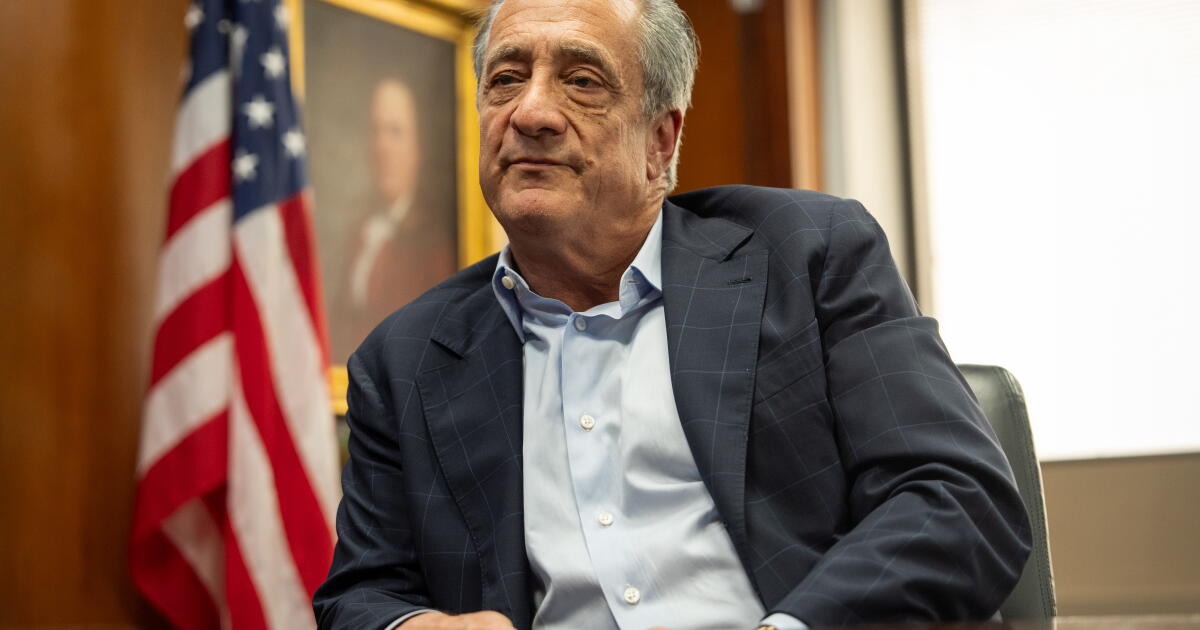
Source link

Legal groups condemn arrival of a dozen deportees from US to Uganda | Donald Trump News

Legal groups in Uganda have announced that a dozen deportees from the United States are expected to land in the country, following a deal with President Donald Trump.

On Thursday, the Uganda Law Society and the East Africa Law Society announced they had gone to court to challenge the deportation, which they called “an undignified, harrowing and dehumanising process”.

Recommended Stories

list of 3 itemsend of list

“We have approached the Courts of Law in Uganda and the region, seeking bespoke reliefs designed to arrest this patent international illegality,” Asiimwe Anthony, the vice president of the Uganda Law Society, wrote in a statement.

“Our perspective of the matter is broader than a single act of deportation. We view it as but one gust from the ill winds of transnational repression that are blowing across our world.”

Thursday’s deportation marks the first confirmed instance of deportees being transferred from the US to Uganda.

The 12 people reportedly landed at the Entebbe International Airport, some 40 kilometres (25 miles) from Kampala, by private aircraft. No identifying information was provided about the deportees.

But the deportation is the latest example of Trump’s far-reaching efforts to offload immigrants to “third countries”, where they have no personal connections — and may not even know the language.

Scrutiny of third country deportations

So far, Trump has struck deals with a number of countries to accept deported foreigners. They include at least six African countries, among them Equatorial Guinea, Ghana, Rwanda, Eswatini and South Sudan.

The deal with Uganda came to light last August. The country’s Ministry of Foreign Affairs confirmed that the agreement was a “temporary arrangement” and that priority would be given to deportees from other African countries.

Unaccompanied children and people with criminal records would not be allowed under the deal, according to the ministry’s statement at the time.

It is unclear whether Uganda received payment for its decision to accept third-country deportations.

Other countries, though, have signed multimillion-dollar deals. El Salvador was given nearly $6m to imprison deportees from the US, Equatorial Guinea got $7.5m, and Eswatini nabbed $5.1m.

There is no official estimate about the total cost of these third-country deals, but Senate Democrats in the US have estimated that at least $40m in funding has been given as incentives for countries to accept deportations.

Most of those funds, the Democrats added, were disbursed in lump sums before any deportees arrived. They also note that those funds are separate from the additional costs of the deportation flights: US military aircraft can cost $32,000 per hour to operate.

“Through its third country deportation deals, the Trump Administration is putting millions of taxpayer dollars into the hands of foreign governments, while turning a blind eye to the human costs,” Democratic Senator Jeanne Shaheen said in a February statement.

“For an Administration that claims to be reigning in fraud, waste and abuse, this policy is the epitome of all three.”

Critics have also questioned whether the countries receiving US deportees are adequately safe.

In the past, the US has criticised Uganda for “significant human rights abuses”, citing reports of extrajudicial killings, life-threatening prison conditions, and torture and other degrading treatment from government agencies.

It also noted that Uganda had government restrictions against human rights and civil society organisations, and that consensual same-sex conduct was outlawed.

According to the United Nations, Uganda already plays host to nearly 1.7 million refugees and asylum seekers, as people flee violence in neighbouring countries like the Democratic Republic of Congo (DRC) and South Sudan.

An ‘authoritarian project’?

In his letter on Thursday, Anthony, the vice president of the Uganda Law Society, called the US deportations part of a “broader authoritarian project” that his group felt compelled to oppose.

“This development and the attendant illegalities that accompany it are reminiscent of a dark past that the global family of humanity supposedly put behind itself in the pursuit of the ideal that every human being is born equal,” Anthony wrote.

He added that US actions under Trump were paving the way for similar policies elsewhere.

“In the United States, the militarisation of society has given carte blanche to captured democracies in Africa to carry on with despotism unchecked,” he said.

Still, the Trump administration has defended the deportations as legal under the US Immigration and Nationality Act, which has loopholes for removals to “safe third countries”.

The Trump administration has also pointed to diplomatic assurances from the “third countries” in question that US deportees would not face persecution.

The “third-country” policy has, however, faced numerous legal challenges. While the US Supreme Court has largely let such removals proceed, a lower court once again ruled in February that the policy could infringe upon immigrants’ due process rights.

In the case of Salvadoran immigrant Kilmar Abrego Garcia, lawyers have even argued that his deportation to a country far from home was evidence of “vindictiveness” on the part of the Trump administration.

Uganda has been floated as one of the destinations for Garcia, who was wrongfully deported in March 2025 and then returned to the US in June, only to face deportation proceedings once more.

Trump has pushed an aggressive programme of mass deportation since returning to the White House for a second term in 2025.

At least 675,000 people have been removed under his administration as of January, according to US government statistics.

Source link

Colorado court orders resentencing for former county clerk in election fraud scheme

A Colorado appeals court ruled Thursday that a former county clerk convicted in a scheme that sought to prove fraud in the 2020 presidential election should be resentenced because a judge wrongly punished her for statements protected as free speech.

Tina Peters is serving a nine-year prison term after being convicted of state crimes for sneaking in an outside computer expert to make a copy of her county’s election computer system during a software update in 2021. A photo and video of confidential voting system passwords were later posted on social media and a conservative website.

Calls for Peters’ release have become a cause celebre in the election conspiracy movement. President Trump has sought unsuccessfully to pardon Peters and pressured Colorado to set her free.

Judges on the Colorado Court of Appeals upheld her conviction in a 74-page ruling that rejected the notion that Trump has authority to pardon her state crimes. But they said a lower court judge should not have considered Peters’ continued promotion of election fraud conspiracies when he sentenced her in 2024.

One of Tina Peters’ lawyers, John Case, said the court’s ruling affirmed the importance of free speech.

“Tina Peters was punished for words that she used to criticize our insecure and illegal voting system,” Case said. “The decision affirms that people are free to speak what they believe in Colorado as well as the rest of the United States of America.”

Case said he would likely ask at resentencing for Peters to receive the approximately 540 days she’s served already. That would allow her to be freed.

Democratic Colorado Gov. Jared Polis, who has been considering granting clemency to Peters, praised the court’s decision for rejecting Trump’s pardon but upholding her free speech rights.

“This case has been very challenging and a true test of our resolve as a state to have a fair judicial system, not just for people we agree with but a fair system for Coloradans that we vehemently disagree with,” Polis said in statement.

Peters was the former clerk in Mesa County, in the far western part of Colorado, and convicted by jurors in the Republican stronghold that has supported Trump.

She was unapologetic when she was sentenced by Judge Matthew Barrett and insisted that she tried to unearth what she believed was fraud for the greater good. He ripped into her, calling her a “charlatan” who had used her position to “peddle snake oil.”

The appeals court found that Barrett violated her rights to free speech by punishing Peters for persistently alleging fraud in the 2020 election. They noted that because Peters is no longer serving as an election clerk, she can no longer engage in the conduct that led to her conviction.

“The trial court obviously erred by imposing sentence at least partially based on Peters’ protected speech,” Judge Ted Tow wrote in Thursday’s ruling.

The court sent Peters’ case back to a lower court for a judge to issue a new sentence.

Trump has threatened to take “harsh measures” against Colorado unless the state releases Peters. In February, Trump said Colorado was “suffering a big price” for refusing to release her.

Colorado Atty. Gen. Phil Weiser, a Democrat who is running for governor, has accused the Trump administration of waging a revenge campaign by choking off funds and ending federal programs over the state’s refusal to free Peters.

Weiser said in response to the ruling that the original sentence had been “fair and appropriate.”

“Whatever happens with her sentence, Tina Peters will always be a convicted felon who violated her duty as Mesa County clerk, put other lives at risk, and threatened our democracy. Nothing will remove that stain,” Weiser said in a statement.

The Justice Department inserted itself into Peters’ bid to be released while her state appeal was considered. The federal Bureau of Prisons also tried to get Peters moved to a federal prison. After both efforts failed, Trump in December announced a pardon for Peters.

However, the appeals court judges said they could find no prior example of a president pardoning someone for a state crime. And they rejected her attorney’s claims that Peters actions had been carried out while “defending a federal interest.”

“We have found no instance where the presidential pardon power has been stretched in such a way as to invade an individual state’s sovereignty,” they said, adding that the president’s pardon has “no impact” on the state’s case against Peters.

The Associated Press left messages with the White House for comment.

She was convicted of three counts of attempting to influence a public servant and one count each of conspiracy to commit criminal impersonation, first-degree official misconduct, violation of duty and failure to comply with the requirements of the secretary of state.

Peters’ lawyers didn’t deny that she used the security badge of a local man she pretended to hire to allow an associate of MyPillow CEO Mike Lindell to make a copy of the Dominion Voting Systems election computer server during an annual software update in 2021.

But they said she only wanted to preserve election data and find out whether any outside actor had accessed the system while ballots were being counted. They said she didn’t want the information made public.

Slevin and Brown write for the Associated Press.

Source link