trump

Colorado court orders resentencing for former county clerk in election fraud scheme

A Colorado appeals court ruled Thursday that a former county clerk convicted in a scheme that sought to prove fraud in the 2020 presidential election should be resentenced because a judge wrongly punished her for statements protected as free speech.

Tina Peters is serving a nine-year prison term after being convicted of state crimes for sneaking in an outside computer expert to make a copy of her county’s election computer system during a software update in 2021. A photo and video of confidential voting system passwords were later posted on social media and a conservative website.

Calls for Peters’ release have become a cause celebre in the election conspiracy movement. President Trump has sought unsuccessfully to pardon Peters and pressured Colorado to set her free.

Judges on the Colorado Court of Appeals upheld her conviction in a 74-page ruling that rejected the notion that Trump has authority to pardon her state crimes. But they said a lower court judge should not have considered Peters’ continued promotion of election fraud conspiracies when he sentenced her in 2024.

One of Tina Peters’ lawyers, John Case, said the court’s ruling affirmed the importance of free speech.

“Tina Peters was punished for words that she used to criticize our insecure and illegal voting system,” Case said. “The decision affirms that people are free to speak what they believe in Colorado as well as the rest of the United States of America.”

Case said he would likely ask at resentencing for Peters to receive the approximately 540 days she’s served already. That would allow her to be freed.

Democratic Colorado Gov. Jared Polis, who has been considering granting clemency to Peters, praised the court’s decision for rejecting Trump’s pardon but upholding her free speech rights.

“This case has been very challenging and a true test of our resolve as a state to have a fair judicial system, not just for people we agree with but a fair system for Coloradans that we vehemently disagree with,” Polis said in statement.

Peters was the former clerk in Mesa County, in the far western part of Colorado, and convicted by jurors in the Republican stronghold that has supported Trump.

She was unapologetic when she was sentenced by Judge Matthew Barrett and insisted that she tried to unearth what she believed was fraud for the greater good. He ripped into her, calling her a “charlatan” who had used her position to “peddle snake oil.”

The appeals court found that Barrett violated her rights to free speech by punishing Peters for persistently alleging fraud in the 2020 election. They noted that because Peters is no longer serving as an election clerk, she can no longer engage in the conduct that led to her conviction.

“The trial court obviously erred by imposing sentence at least partially based on Peters’ protected speech,” Judge Ted Tow wrote in Thursday’s ruling.

The court sent Peters’ case back to a lower court for a judge to issue a new sentence.

Trump has threatened to take “harsh measures” against Colorado unless the state releases Peters. In February, Trump said Colorado was “suffering a big price” for refusing to release her.

Colorado Atty. Gen. Phil Weiser, a Democrat who is running for governor, has accused the Trump administration of waging a revenge campaign by choking off funds and ending federal programs over the state’s refusal to free Peters.

Weiser said in response to the ruling that the original sentence had been “fair and appropriate.”

“Whatever happens with her sentence, Tina Peters will always be a convicted felon who violated her duty as Mesa County clerk, put other lives at risk, and threatened our democracy. Nothing will remove that stain,” Weiser said in a statement.

The Justice Department inserted itself into Peters’ bid to be released while her state appeal was considered. The federal Bureau of Prisons also tried to get Peters moved to a federal prison. After both efforts failed, Trump in December announced a pardon for Peters.

However, the appeals court judges said they could find no prior example of a president pardoning someone for a state crime. And they rejected her attorney’s claims that Peters actions had been carried out while “defending a federal interest.”

“We have found no instance where the presidential pardon power has been stretched in such a way as to invade an individual state’s sovereignty,” they said, adding that the president’s pardon has “no impact” on the state’s case against Peters.

The Associated Press left messages with the White House for comment.

She was convicted of three counts of attempting to influence a public servant and one count each of conspiracy to commit criminal impersonation, first-degree official misconduct, violation of duty and failure to comply with the requirements of the secretary of state.

Peters’ lawyers didn’t deny that she used the security badge of a local man she pretended to hire to allow an associate of MyPillow CEO Mike Lindell to make a copy of the Dominion Voting Systems election computer server during an annual software update in 2021.

But they said she only wanted to preserve election data and find out whether any outside actor had accessed the system while ballots were being counted. They said she didn’t want the information made public.

Slevin and Brown write for the Associated Press.

Source link

Trump has privately discussed possibility of firing Bondi, AP sources say

President Trump has privately discussed the possibility of firing Atty. Gen. Pam Bondi and replacing her with Environmental Protection Agency Administrator Lee Zeldin, three people familiar with the matter told the Associated Press on Thursday.

In those conversations, Trump has discussed his ongoing frustration with Bondi over her handing of the Jeffrey Epstein files and hurdles the Justice Department has encountered in investigations into Trump’s perceived enemies, the people said. The Republican president has mentioned other candidates but has raised Zeldin’s name as recently as this week, the people said.

The people were not authorized to publicly discuss the private conversations and spoke to the AP on the condition of anonymity.

No decision has been announced, and Trump has been known to change his mind on personnel decisions.

“Attorney General Pam Bondi is a wonderful person and she is doing a good job,” Trump said in a statement produced by the White House.

Zeldin, a former Republican congressman from New York, has been publicly and privately praised by Trump, who at an event in February described him as “our secret weapon.”

Bondi, a former state attorney general in Florida and a Trump loyalist who was part of his legal team during his first impeachment case, has been in her position for more than a year. She came into office pledging that she would not play politics with the Justice Department, but she quickly started investigations of Trump foes, sparking an outcry that the law enforcement agency was being wielded as a tool of revenge to advance the president’s political and personal agenda.

She has also endured months of scrutiny over the Justice Department’s handling of the Epstein files that made her the target of angry conservatives even with her close relationship with Trump.

Under Bondi’s leadership, the department opened investigations into a string of Trump foes, including Federal Reserve Chair Jerome Powell, New York Atty. Gen. Letitia James, former FBI Director James Comey and former CIA Director John Brennan.

The high-profile prosecutions of Comey and James were quickly thrown out by a judge who ruled that the prosecutor who brought the cases was illegally appointed. Other politically charged investigations have either been rejected by grand juries or failed to result in criminal charges.

Richer, Tucker, Balsamo and Price write for the Associated Press.

Source link

A look at the U.K.’s Royal Navy, which has faced jibe after jibe from Trump and Hegseth

President Trump and his Defense Secretary Pete Hegseth have been damning of the U.K.’s naval capabilities. Their jibes may have stung in a country with a long and proud maritime history, but they do carry some substance.

The U.K. has been at the forefront of Trump’s ire since the onset of the Iran war on Feb. 28, when British Prime Minister Keir Starmer refused to grant the U.S. military access to British bases.

Though that decision has been partly reversed with the decision to permit the U.S. to use the bases, including that of Diego Garcia in the Indian Ocean, for so-called defensive purposes, Trump is adamant he was let down.

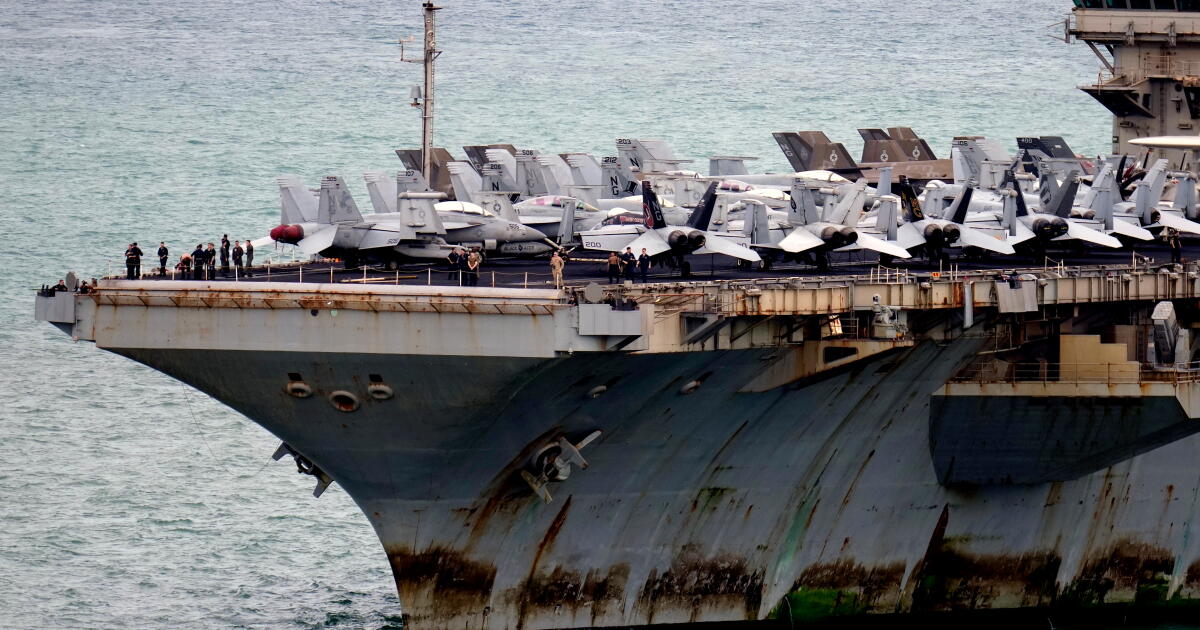
He has repeatedly lashed out at Starmer and branded the Royal Navy’s two new aircraft carriers as “toys.”

“You don’t even have a navy,” he told Britain’s Daily Telegraph in comments published Wednesday. “You’re too old and had aircraft carriers that didn’t work.”

The HMS Queen Elizabeth and the HMS Prince of Wales are the largest and most powerful vessels ever constructed for the Royal Navy, though smaller and less capable than the U.S. Navy’s main fleet carriers. However, they are widely considered to be highly capable, especially for coalition warfare, despite some technical issues that have afflicted them in their first years of service.

Hegseth, meanwhile, said sarcastically that the “big, bad Royal Navy” should get involved in making the Strait of Hormuz safe for commercial shipping.

For numerous reasons, the Royal Navy is not as big and bad as it used it to be when Britannia ruled the waves. But it’s not as feeble as Trump and Hegseth imply and is largely similar with the French navy, with which it is often compared.

“On the negative side, there is a grain of truth, with the Royal Navy being smaller than it has been in hundreds of years,” said Professor Kevin Rowlands, editor of the Royal United Services Institute Journal. “On the positive side, the Royal Navy would say that it’s entering its first period of growth since World War II, with more ships set to be built than in decades.”

Capabilities and preparedness

It’s not that long ago that Britain could muster a task force of 127 ships, including two aircraft carriers, to sail to the south Atlantic after Argentina’s invasion of the Falkland Islands, a British overseas territory. That 1982 campaign, which then-U. S. President Reagan was lukewarm about, marked the final hurrah of Britain’s naval pedigree.

Nothing on that scale, or even remotely, could be accomplished now. Since World War II, Britain’s combat-ready fleet has declined substantially, much of it linked to changing military and technological advances and the end of empire. But not all.

The number of vessels in the Royal Navy fleet, including aircraft carriers, destroyers frigates and submarines has fallen from 166 in 1975 to 66 in 2025, according to the Associated Press’ analysis of figures from the Ministry of Defense and the House of Commons Library.

Though the Royal Navy has two aircraft carriers at its command, there was a seven-year period in the 2010s when it had none. And the number of destroyers has halved to six while the frigate fleet has been slashed from 60 to just 11.

Diminished state

The Royal Navy faced criticism for the time it took to send the HMS Dragon destroyer to the Middle East after the war with Iran broke out. Though naval officials worked night and day to get it shipshape for a different mission than the one it was readying for, to many it symbolized the extent to which Britain’s military has been gutted since the fall of the Berlin Wall in 1989.

For much of the Cold War, Britain was spending between 4% and 8% of its annual national income on its military. After the Cold War, that proportion steadily dropped to a low of 1.9% of GDP in 2018, fuel to Trump’s fire.

Like other countries, Britain, largely under the Labour governments of Tony Blair and Gordon Brown, sought to use the so-called “peace dividend” following the collapse of the Soviet Union to divert money earmarked for defense to other priorities, such as health and education.

And the austerity measures imposed by the Conservative-led government in the wake of the global financial crisis of 2008-09 prevented any pickup in defense spending despite the clear signs of a resurgent Russia, especially after its annexation of Crimea and parts of eastern Ukraine.

No quick fix

In the wake of Russia’s full-blown invasion of Ukraine in 2022, and with another Middle East war underway, there’s a growing understanding across the political divide that the cuts have gone too far.

Following the Ukraine invasion, the Conservatives started to turn the military spending tide around. Since the Labour Party returned to power in 2024, Starmer is seeking to ramp up British defense spending, partly at the cost of cutting the country’s long-vaunted aid spending.

Starmer has promised to raise U.K. defense spending to 2.5% of gross domestic product by 2027, and the updated goal is now for it to rise to 3.5% of GDP by 2035, as part of a NATO agreement pushed by Trump. That, in plain terms, will mean tens of billions pounds more being spent — a lot more equipment for the armed forces.

The pressure is on for the government to speed that schedule up. But with the public finances further imperiled by the economic consequences of the Iran war, it’s not clear where any additional money will come.

The jibes will likely keep coming even though the critiques are unfair and far from the truth, said RUSI’s Rowlands, who was a captain in the Royal Navy.

“We are dealing with an administration that doesn’t do nuance,” he said.

Pylas writes for the Associated Press.

Source link

Trump Threatens NATO Departure, Claims Iran Wants A Ceasefire Ahead Of National Address (Updated)

Iran has asked for a ceasefire, U.S. President Donald Trump says. In a statement on Truth Social today, Trump claimed the request came from “Iran’s New Regime President.” Trump added: “We will consider when Hormuz Strait is open, free, and clear. Until then, we are blasting Iran into oblivion or, as they say, back to the Stone Ages!!!”

Trump did not mention the top official by name, but described the individual as “much less Radicalized and far more intelligent than his predecessors.”

Trump:

Iran’s New Regime President, much less Radicalized and far more intelligent than his predecessors, has just asked the United States of America for a CEASEFIRE!

We will consider when Hormuz Strait is open, free, and clear. Until then, we are blasting Iran into oblivion… pic.twitter.com/fwhoilfmCz

— Clash Report (@clashreport) April 1, 2026

Iran still has Masoud Pezeshkian as its president, but he was elected back in 2024. In media appearances — most recently yesterday, according to Iranian sources — Pezeshkian said that Tehran had the “necessary will” to bring the war to an end, while stressing that certain conditions and guarantees would be required for that to happen.

The Iranian foreign ministry says President Trump’s claim that the country has asked for a ceasefire is “false and baseless.”

Trump added, “I didn’t need regime change, but we got it because of the casualties of war. We got it. So we have regime change, and the big thing we have is they’re not going to have a nuclear weapon. Nor do they want one.” Iran, for its part, has always claimed that it has no plans to develop nuclear weapons.

Barak Ravid, global affairs reporter with Axios, writes that three U.S. officials confirmed that discussions are taking place about a possible ceasefire, dependent on the reopening of the Strait of Hormuz.

🚨Three U.S. officials told me discussions are taking place about a possible ceasefire with Iran in return for the reopening of the Hormuz strait. The officials said it is unclear if a deal can be reached https://t.co/an8vwqcEj6

— Barak Ravid (@BarakRavid) April 1, 2026

On Monday, Trump claimed he had already accomplished regime change by killing Iran’s supreme leader, Ayatollah Ali Khamenei, despite the fact that he had been succeeded by his son, Motjaba. While several other senior Iranian officials have been killed since the war began, critics argue that a leadership shift alone does not amount to true regime change.

“What we are seeing in Iran is not a regime change — but a transformation within the regime itself, one that has made it more extreme,” Danny Citrinowicz, the Israeli military’s former top Iran researcher, posted on X.

What we are seeing in Iran is not a regime change — but a transformation within the regime itself, one that has made it more extreme.

For years, Ali Khamenei maintained a delicate internal balance between hardliners and more pragmatic elements. That balance has now been… https://t.co/JZrTVXQhzy

— Danny (Dennis) Citrinowicz ,داني سيترينوفيتش (@citrinowicz) March 30, 2026

Overall, there are ongoing questions about whether the United States has met its evolving objectives since launching a joint attack with Israel on Iran more than four weeks ago.

As for the enriched uranium still possessed by Iran, Trump told Reuters today, “That’s so far underground, I don’t care about that… We’ll always be watching it by satellite.”

Here are some Trump quotes on Iran from his interview with Reuters’ @steveholland1:

Asked when the war would be over, Trump said: “I can’t tell you exactly …. we’re going to be out pretty quickly.”

“They won’t have a nuclear weapon because they are incapable of that now, and…

— Phil Stewart (@phildstewart) April 1, 2026

Speaking last night, Trump said that Operation Epic Fury could be concluded within two to three weeks. Trump added that reaching a deal with Tehran is not required to bring the conflict to an end.

“We will be leaving very soon,” Trump told reporters in the Oval Office last night.

Trump: “We’ll be leaving very soon… what happens in [Hormuz] we’ll have nothing to do with”

Other countries can “fend for themselves” if they want gas or oil from the Persian Gulf. pic.twitter.com/mZbaQNLCjA

— OSINTtechnical (@Osinttechnical) March 31, 2026

Whatever Trump’s intentions are, we should know more tonight. The White House announced that the U.S. president will deliver “an important update” in a national address this evening at 9:00 p.m. Washington time.

For those curious about the “behind the scenes” conversations: Yes, the White House asked the broadcast networks for airtime for Trump’s speech, and yes, all the networks are going to carry it. (Requesting time is customary since broadcasters have to preempt shows for POTUS.) pic.twitter.com/UcECoG9vwi

— Brian Stelter (@brianstelter) April 1, 2026

While it remains unclear what new details Trump will share about the claimed ceasefire request, it seems likely that he will voice his opinions about the future of U.S. membership in NATO.

In an interview with Reuters, Trump says: Will express ‘my disgust’ with NATO in his speech; says he is ‘absolutely’ considering withdrawing U.S. from NATO.

— Idrees Ali (@idreesali114) April 1, 2026

President Trump has said he is seriously weighing the possibility of withdrawing the United States from NATO, once again describing the alliance as a “paper tiger.”

“[NATO] is beyond recognition,” he said in an interview with The Telegraph.

“I was never swayed by NATO. I always knew they were a paper tiger, and Putin knows that too, by the way.”

In recent weeks, the U.S. president has criticized allied nations for their lack of involvement in efforts to reopen the Strait of Hormuz, which Iran has effectively closed amid the escalating conflict in the Middle East.

“Beyond not being there, it was actually hard to believe. And I didn’t do a big sale. I just said, ‘Hey’, you know, I didn’t insist too much. I just think it should be automatic,” Trump said.

He also stated that the United States has supported countries in need, including Ukraine, even though it “wasn’t our problem.”

Trump also directed further criticism at the U.K. government, with which his relationship is increasingly strained. He added, “You don’t even have a navy. You’re too old and had aircraft carriers that didn’t work.”

🚨 EXCLUSIVE: Donald Trump has told The Telegraph’s @connor_stringer he is strongly considering pulling the United States out of Nato after it failed to join his war on Iran.

Read the US president’s thoughts on what Putin thinks of the alliance and the UK’s reluctance to spend… pic.twitter.com/IrH3QYe3fE

— The Telegraph (@Telegraph) April 1, 2026

Soon after, U.K. Prime Minister Keir Starmer provided a press conference on the situation in the Middle East, referring to the growing rift with Washington.

“It is increasingly clear that as the world continues down this volatile path, our long-term national interest requires closer partnership with our allies in Europe and with the European Union,” Starmer said.

“It is increasingly clear that as the world continues down this volatile path, our long-term national interest requires closer partnership with our allies in Europe and with the European Union,” PM Keir Starmer says

Follow live: https://t.co/HwLsKBvAw5 pic.twitter.com/9lHRbQ1trv

— BBC Politics (@BBCPolitics) April 1, 2026

The Telegraph interview with Trump followed comments from U.S. Secretary of State Marco Rubio suggesting Washington may need to reassess its ties with NATO once the conflict with Iran concludes.

“We’re going to have to reexamine the value of NATO and that alliance for our country,” Rubio said in an interview with Fox News last night.

“If NATO is just about us defending Europe if they’re attacked, but them denying us basing rights when we need them, that’s not a very good arrangement. That’s a hard one to stay engaged in.”

SECRETARY RUBIO: Why are we in NATO? You have to ask that question. Why do we send trillions of dollars and have all of these American forces stationed in the region, if in our time of need, we won’t be allowed to use those bases? pic.twitter.com/DdYahXhli0

— Department of State (@StateDept) April 1, 2026

UPDATES:

Over coverage has now concluded.

UPDATE: 9:54 PM EST –

During his roughly 19-minute speech from the White House about the war in Iran, Trump offered no real concrete details about its future. He made no mention of sending in ground troops and provided no real sense of when it might end. Meanwhile, contrary to earlier reporting that he might announce a U.S. withdrawal from the NATO alliance, he didn’t even mention the word NATO once.

Here are some highlights.

On the goals of Epic Fury being met:

Our objectives are very simple and clear. We are systematically dismantling the regime’s ability to threaten America or project power outside of their borders. That means eliminating Iran’s Navy, which is now absolutely destroyed, hurting their Air Force and their missile program at levels never seen before, and annihilating their defense industrial base. We’ve done all of it. 

Their Navy is gone, their Air Force is gone, their missiles are just about used up or beaten. Taken together, these actions will cripple Iran’s military, crush their ability to support terrorist proxies and deny them the ability to build a nuclear bomb. Our armed forces have been extraordinary. There’s never been anything like it militarily. Everyone is talking about it, and tonight, I’m pleased to say that these core strategic objectives are nearing completion.

On Iran no longer being a threat:

We are in this military operation so powerful, so brilliant, against one of the most powerful countries for 32 days, and the country has been eviscerated and essentially is really no longer a threat. They were the bully of the Middle East, but they’re the bully no longer.

On The Strait of Hormuz, the flow of oil and allied involvement:

Remember, because of our Drill, Baby, Drill program, America has plenty of gas. We have so much gas. Under my leadership, we are the number one producer of oil and gas on the planet, without even discussing the millions of barrels that we are getting from Venezuela. Because of the Trump administration’s policies, we produce more oil and gas than Saudi Arabia and Russia combined. Think of that, Saudi Arabia and Russia combined, and that number will soon be substantially higher than that. 

There’s no country like us anywhere in the world, and we’re in great shape for the future. The United States imports almost no oil through the Hormuz Strait, and won’t be taking any in the future. We don’t need it. We haven’t needed it, and we don’t need it. We’ve beaten and completely decimated Iran. They are decimated both militarily and economically and every other way. And the countries of the world that do receive oil through the Hormuz Strait must take care of that passage. They must cherish it. They must grab it and cherish it. They can do it easily. We will be helpful, but they should take the lead in protecting the oil that they so desperately depend on. So to those countries that can’t get fuel, many of which refuse to get involved in the decapitation of Iran, we had to do it ourselves. I have a suggestion. Number One, buy oil from the United States of America. We have plenty. We have so much. And Number Two, build up some delayed courage. Should have done it before. Should have done it with us as we ask, ‘go to the Strait and just take it, protect it, use it for yourselves.’ Iran has been essentially decimated. The hard part is done. So it should be easy, and in any event, when this conflict is over, the Strait will open up naturally. It’ll just open up naturally. They’re going to want to be able to sell oil, because that’s all they have to try and rebuild.

On what happens next:

I’ve made clear from the beginning of Operation Epic Fury that we will continue until our objectives are fully achieved. Thanks to the progress we’ve made. I can say tonight that we are on track to complete all of America’s military objectives shortly, very shortly. We’re going to hit them extremely hard over the next two to three weeks. We’re going to bring them back to the Stone Ages, where they belong.

In the meantime, discussions are ongoing. Regime change was not our goal. We never said regime change, but regime change has occurred because of all of their original leaders’ death. They’re all dead. The new group is less radical and much more reasonable. Yet, if during this period of time, no deal is made, we have our eyes on key targets. If there is no deal, we are going to hit each and every one of their electric generating plants, very hard and probably simultaneously. We have not hit their oil, even though that’s the easiest target of all, because it would not give them even a small chance of survival or rebuilding, but we could hit it and it would be gone, and there’s not a thing they could do about it. 

UPDATE: 6:30 PM EST –

The New York Times is reporting that “multiple U.S. intelligence agencies have assessed in recent days that the Iranian government is not currently willing to engage in substantial negotiations over ending the U.S.-Israeli war.” The newspaper cited anonymous U.S. officials.

“The assessments say the Iranian government believes it is in a strong position in the war and does not have to accede to America’s diplomatic demands,” the Times proffered. “And while Iran is willing to keep channels open, they said, it does not trust the United States and does not think President Trump is serious about negotiations.”

Multiple U.S. intelligence agencies have assessed in recent days that the Iranian government is not currently willing to engage in negotiations over ending the war -U.S. officials to the NYT

Iran believes it is in a strong position and does not have to accept US demands.

— OSINTtechnical (@Osinttechnical) April 1, 2026

According to The Wall Street Journal, the Low-Cost Uncrewed Combat Attack System (LUCAS) kamikaze drones were designed not by private industry, but by the Pentagon. The drones were used in combat for the first time during Epic Fury. You can read more about these weapons, which CENTCOM commander Adm. Brad Cooper told us are “indespensible” here.

The powerful, low-cost attack drone the U.S. is using in its war with Iran doesn’t come from one of America’s venture-backed drone startups. Instead, the drone was designed by the U.S. military itself, using reverse-engineered Iranian technology. https://t.co/7yUW34Lbgm

— The Wall Street Journal (@WSJ) April 1, 2026

An image emerged online purporting to show damage to the Tabriz Shahid Madani International Airport control tower. The facility, which also serves as a military airbase, was struck in an attack earlier this week.

Footage shows the control tower at Tabriz Shahid Madani International Airport, which also serves as a military airbase, after it was struck in an attack earlier this week. pic.twitter.com/DLvjVJmhzY

— Open Source Intel (@Osint613) April 1, 2026

The explosive aftermath of an Israeli airstrike on an IRGC missile site can be seen in the following video.

Citing an intelligence firm, The Telegraph is reporting that Iran is using a covert network of front companies in China and Hong Kong to secretly bypass international sanctions and import parts to build its fleet of kamikaze drones.

🚨EXCLUSIVE🚨
Iran is using a covert network of front companies in China and Hong Kong to secretly bypass international sanctions and import parts to build its fleet of kamikaze drones. Full story: https://t.co/0I8nKnArnz

— Tom Cotterill (@TomCotterillX) April 1, 2026

The Israeli military said a strike in central Iran killed a figure it identified as a senior engineering officer in Iran’s Islamic Revolutionary Guard Corps (IRGC) Quds Force.

The Israel Defense Forces (IDF) said Mahdi Vafaei, head of engineering in the IRGC Quds Force’s Lebanon Corps, was killed in a strike yesterday in Mahallat.

According to the IDF, Vafaei “advanced underground projects across Lebanon and Syria” over the past two decades, including “dozens of underground projects in Lebanon that were used to store advanced weaponry.”

🔴ELIMINATED: Mahdi Vafaei, the Head of the Engineering Branch of the Quds Force’s Lebanon Corps in the Mahallat Area in Iran

Vafaei advanced underground projects across Lebanon and Syria, leading efforts to establish and manage underground terrorist infrastructure sites for…

— Israel Defense Forces (@IDF) April 1, 2026

Iran continues to send drones and missiles against different countries in the Gulf region.

According to the Israeli military, Iran launched its biggest ballistic missile salvo against Israel in recent weeks, when it fired 10 of the weapons at targets in the centre of the country today.

In the largest Iranian salvo on Israel since the early days of the war, some 10 ballistic missiles were fired at central Israel a short while ago.

— Emanuel (Mannie) Fabian (@manniefabian) April 1, 2026

A drone strike ignited a major fire at Kuwait International Airport, the state news agency reported, adding that no casualties had been recorded. This morning, Saudi Arabia said it intercepted and destroyed two drones. Bahrain also stated early Wednesday that it was tackling a fire at a commercial facility caused by an Iranian attack. The United Arab Emirates reported five ballistic missiles launched by Iran toward its territory today, as well as 35 drone attacks.

Remarkable footage posted by the IDF shows what it identifies as an Iranian ZU-23-2 anti-aircraft gun positioned on the roof of a high-rise building in Tehran. The gun is struck by an Israeli man-in-the-loop-controlled missile, after which two individuals can be seen hanging from the edge of the burning roof, before one falls. While old, the ZU-23-2 twin-barreled 23mm anti-aircraft gun remains most relevant for engaging helicopters, low-flying drones, and cruise missiles.

Israeli missile strikes hit an Iranian ZU-23-2 anti-aircraft gun positioned on the roof of a high-rise building in Tehran.

At the end, two people — possibly the gun operators — are seen hanging from the edge of the burning roof, and one falls. pic.twitter.com/CvWTngemVL

— Clash Report (@clashreport) March 31, 2026

QatarEnergy, the world’s largest liquefied natural gas (LNG) producer, said one of its tankers, the Aqua 1, was struck in a missile attack earlier today.

“None of the crew members on board were injured, and there is no impact on the environment as a result of this incident,” the state-owned company said in a statement.

Previously, the U.K. Maritime Trade Operations (UKMTO) had said that a tanker off Qatar’s coast was hit by two projectiles — one sparked a fire that has since been put out, while another remained unexploded in the ship’s engine room.

The vessel was hit roughly 17 nautical miles north of Qatar’s Ras Laffan industrial hub.

In a statement carried by Iranian state media, the IRGC said an oil tanker belonging to the “Zionist regime with the trade name Aqua 1” in the Persian Gulf “was precisely targeted.”

QatarEnergy statement on a missile attack on a fuel oil tanker

QatarEnergy confirms that the Aqua 1, a fuel oil tanker on charter to QatarEnergy, has been the subject of a missile attack in the northern territorial waters of the State of Qatar in the early morning hours of…

— QatarEnergy (@qatarenergy) April 1, 2026

According to Michael Haigh, Global Head of FIC and Commodities Research, the final vessels carrying jet fuel to the United Kingdom will arrive in the next 48 hours, with no more fuel scheduled to arrive after that.

The Strait of Hormuz closure is turning into real energy shortages according to Societe General.

Michael Haigh, Global Head of FIC and Commodities Research says the final vessels carrying jet fuel to the UK will arrive in the next 48 hours and “there is no more after that”… pic.twitter.com/Q3rDP1CJdJ

— Bloomberg TV (@BloombergTV) March 31, 2026

There are more signs that the Iran-backed Houthis are ramping up their strikes on Israel.

Houthi forces in Yemen say they were behind a missile strike on southern Israel earlier today, describing it as a coordinated effort with Iran and Hezbollah.

In a statement, the Houthi movement said it carried out its third missile attack in the conflict “in conjunction with Iran and Hezbollah in Lebanon”.

The Tehran-backed group added that it “carried out the third military operation… targeting sensitive Israeli enemy targets… with a barrage of ballistic missiles”.

It also warned of “further escalation” if Israel continues its attacks on Lebanon, Iran, Iraq, the occupied West Bank, and Gaza.

The statement was issued roughly three hours after the Israeli military reported intercepting a ballistic missile launched from Yemen toward southern Israel, noting that no injuries occurred.

The Israeli military says air defenses responded to a missile launched from Yemen, where Iran’s Houthi allies have claimed attacks on Israel in recent days.https://t.co/GYFllHYbHp

— Al Arabiya English (@AlArabiya_Eng) April 1, 2026

A video has emerged that may show the first documented instance of an interceptor drone being used to bring down an Iranian Shahed-series long-range one-way attack drone in Iraq.

Baxtiyar Goran shared the video on the social media platform X.

According to him, the footage was taken near the city of Erbil in northern Iraq, where pro-Iranian forces have launched various drone strikes against U.S. and allied objectives.

Possibly the first known video documenting the use of an interceptor drone to take down an Iranian Shahed-type long-range OWA-UAV during the ongoing war in the Middle East region.

Taken over Erbil in northern Iraq.pic.twitter.com/9CwUEb4d7r

— Status-6 (War & Military News) (@Archer83Able) March 31, 2026

Recent satellite imagery reveals the aftermath of Iran’s missile and drone attacks on Al-Udairi Air Base in northern Kuwait.

Imagery shows destroyed hangars, damaged military vehicles, and affected personnel shelters.

Also known as Camp Buehring, Udairi Air Base is a key strategic hub for the U.S. Army in the Middle East. Situated in the desert near the Iraq border, it functions as a major logistics center for U.S. forces.

Further details have emerged of the movement of U.S. Air Force A-10C Warthog attack jets to England, ahead of a likely move to the Middle East.

RAF Lakenheath in England has now received 12 A-10s from the 107th Fighter Squadron at Selfridge Air National Guard Base, Michigan, which arrived on March 30.

They were followed by another six A-10s from the 190th Fighter Squadron out of Gowen Field Air National Guard Base, Idaho, which touched down at Lakenheath on March 31.

All these aircraft departed for their transatlantic flight from Pease Air National Guard Base, New Hampshire.

CBS News reports that the U.S. military has lost 16 MQ-9 Reaper drones since the war with Iran began, including two more this week near Isfahan.

News: US has lost 16 MQ-9 Reaper drones since the war on Iran began, including two more this week near Isfahan, sources told @JimLaPorta. A single Reaper drone can cost around $30 million. The remotely piloted aircraft are used for intelligence, surveillance, and reconnaissance…

— Jennifer Jacobs (@JenniferJJacobs) April 1, 2026

In its latest Middle East update, the U.K. Ministry of Defense stated that it destroyed 10 Iranian drones overnight.

RFA Lyme Bay, a Bay class auxiliary dock landing ship of the British Royal Fleet Auxiliary (RFA), is seen here headed to port in Gibraltar, where it will reportedly be equipped with autonomous minehunting capabilities. It is unclear if and when the vessel will return to the Gulf region after spending a period on station in the eastern Mediterranean.

.@RFALymeBay inbound to Gibraltar this morning after short deployment to Eastern Mediterranean.

Due to be equipped with autonomous minehunting capabilities. She will be alongside for a while and deployment to the Gulf in the near future is unlikely without a change in… pic.twitter.com/A6RKLfsQye

— Navy Lookout (@NavyLookout) April 1, 2026

Greece is conducting training maneuvers to respond to possible Iranian attacks, according to Al Jazeera. The news agency reported on recent drills by the Greek merchant navy. These are primarily in response to the risk of drone strikes against Cyprus, where the British airbase of RAF Akrotiri has already been hit.

Greece is preparing for possible Iranian attacks, with its merchant navy holding drills after a drone strike.

While Gulf tankers remain potential targets, the only strike on European soil so far hit a British airbase in Cyprus.

Al Jazeera’s John Psaropoulos reports. pic.twitter.com/l1qLLU3UxN

— Al Jazeera English (@AJEnglish) April 1, 2026

U.S. military commanders voiced concerns about the vulnerability of the bases they were using in Saudi Arabia and other Persian Gulf states to Iranian missile and drone attacks years ahead of Operation Epic Fury. They proposed stationing key aircraft during a conflict in the western part of the kingdom, a safer distance away from Tehran, The Wall Street Journal reports. As we reported yesterday, the Pentagon is now prioritizing more hardened shelters to better protect U.S. forces at bases in the Middle East, according to Secretary of War Pete Hegseth.

The proposal was never adopted, with the Pentagon instead focusing on potential contingencies in the Asia-Pacific region. Last week, Iranian strikes heavily damaged or destroyed U.S. military aircraft at Prince Sultan Air Base, Saudi Arabia, including at least one of the Air Force’s prized E-3 Airborne Warning and Control System (AWACS) aircraft and refueling tankers.

“The Biden and Trump administrations didn’t act on recommendations to upgrade a network of Saudi bases near the Red Sea, focusing instead on strengthening the American military position in the Pacific to counter China, according to current and former officials…

The idea of… https://t.co/yhqWgjJskj pic.twitter.com/LadHxTmwt6

— Rob Lee (@RALee85) April 1, 2026

In his address to the nation, Prime Minister of Australia Anthony Albanese said the months ahead “may not be easy” and urged Australians to “think of others in your community, in the bush and in critical industries.”

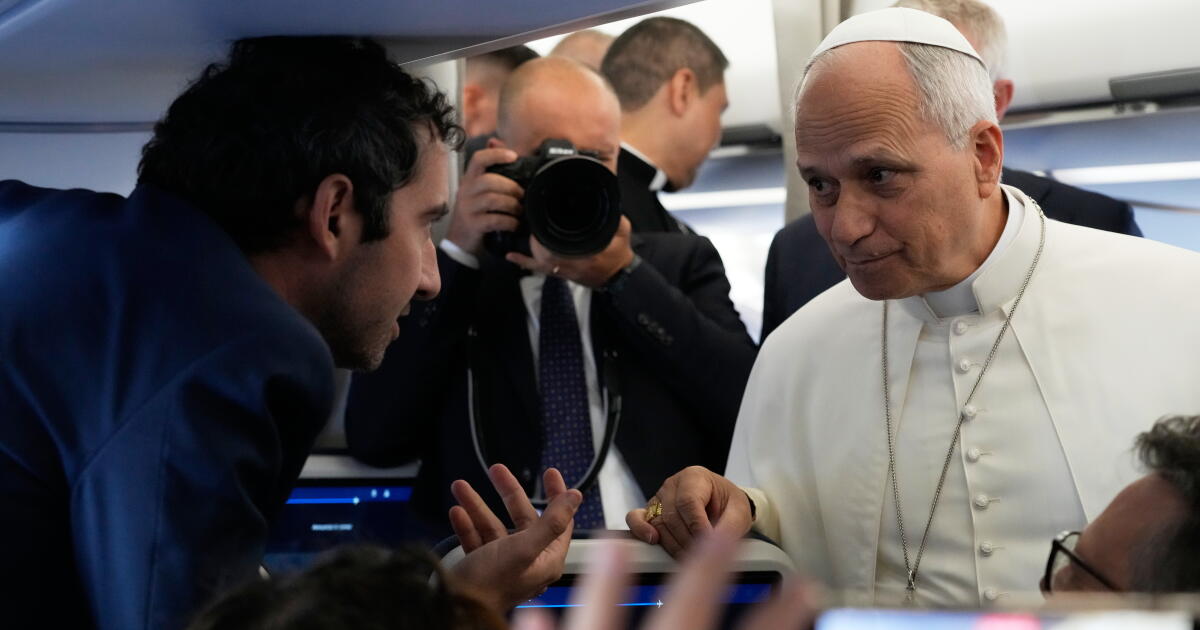
The pope expressed his hope that President Donald Trump is seeking a way to decrease violence in the Middle East.

“I’m told that President Trump recently stated that he would like to end the war,” Pope Leo XIV said. “Hopefully he’s looking for an ‘off ramp.’ Hopefully, he’s looking for a way to decrease the amount of violence, of bombing, which would be a significant contribution to removing the hatred that’s being created and that’s increasing constantly in the Middle East and elsewhere.”

Pope Leo XIV: “I’m told that President Trump recently stated that he would like to end the war. Hopefully he’s looking for an ‘off-ramp’. Hopefully he’s looking for a way to decrease the amount of violence, of bombing, which would be a significant contribution to removing the… pic.twitter.com/PcANLJASri

— Catholic Sat (@CatholicSat) March 31, 2026

Contact the author: thomas@thewarzone.com

Thomas is a defense writer and editor with over 20 years of experience covering military aerospace topics and conflicts. He’s written a number of books, edited many more, and has contributed to many of the world’s leading aviation publications. Before joining The War Zone in 2020, he was the editor of AirForces Monthly.


Howard is a Senior Staff Writer for The War Zone, and a former Senior Managing Editor for Military Times. Prior to this, he covered military affairs for the Tampa Bay Times as a Senior Writer. Howard’s work has appeared in various publications including Yahoo News, RealClearDefense, and Air Force Times.


Source link

Trump signals Iran war offramp while administration reexamines NATO

President Trump signaled Wednesday that the United States is eyeing an offramp in its war with Iran, as he also raised the possibility of a major shift in U.S. alliances, including the potential withdrawal from NATO.

Trump indicated in a social media post that Iran’s president wanted a ceasefire, and that the United States would be open to doing so, if Iran agrees to reopen the Strait of Hormuz, a vital oil shipping route that has been affected during the monthlong conflict.

“Until then, we are blasting Iran into oblivion or, as they say, back to the Stone Ages!!!” Trump wrote.

The remarks appeared to outline a possible diplomatic opening with Tehran, but hours later Iranian officials said that Trump’s claims about being close to a deal were “false and baseless” and that the waterway remained “firmly and decisively under the control” of the Islamic Republic’s forces.

“The strait will not be opened to the enemies of this nation through the ridiculous spectacle by the president of the United States,” the paramilitary Islamic Revolutionary Guard Corps wrote in a statement.

Iranian President Masoud Pezeshkian on Wednesday also wrote a public letter denouncing what he described as a “flood of distortions and manufactured narratives” about the war from the U.S., arguing that Iran is not a threat and had only defended itself against American aggression.

He called on the American people to “look beyond the machinery of disinformation” to reach their own conclusions about the war and its purpose.

“Is ‘America First’ truly among the priorities of the U.S. government today?” he wrote, echoing recent complaints from Trump’s own base about the president’s commitments to his campaign promises.

The dueling messages underscored the uncertainty about how much longer the conflict in the Middle East will last and whether the United States will be able to achieve its main goal of preventing Iran from ever producing a nuclear weapon.

Trump, who on Tuesday said he expects the U.S. will leave Iran within three weeks, was poised to address the nation Wednesday night about the war. The White House said the president’s address would formally outline the objectives of Operation Epic Fury, whose mission has at times been convoluted even as Trump administration officials maintain their explanations for waging the war have been “clear and unchanging.”

White House Press Secretary Karoline Leavitt announced Trump’s speech late Tuesday, after Trump downplayed remarks made by Defense Secretary Pete Hegseth about Iran’s lingering military capabilities.

In the lead-up to those remarks, Trump told Reuters that he was looking to pull American forces from the region “quickly” with the possibility of returning to Iran periodically for “spot hits” when necessary.

The president, who said he believed the U.S. military is close to ensuring Iran loses its ability to possess a nuclear weapon in the future, did not seem too worried about Iran having highly enriched uranium in its stockpiles.

“That’s so far underground, I don’t care about that,” he told Reuters, adding that the U.S. military will be “watching it by satellite.”

Trump, however, remained focused on having Iran reopen the Strait of Hormuz, an oil route through which a fifth of the world’s oil flows.

He said this week that he may pull American forces from the region and leave other countries to deal with the hurdles of reopening the waterway. But on Wednesday, he seemed to walk back that stance, and said a key part of the ongoing negotiations hinged on Iran ending the de facto blockade on the strait.

It remains unclear whether Israel, which began bombing Iran alongside the U.S. on Feb. 28, would agree to the same terms as Trump and stop hostilities against Iran.

Talks about the potential end of the conflict led stocks to rise Tuesday, but it remains unclear whether higher food prices could persist for months or longer. It is also uncertain when U.S. gas prices — which jumped past an average of $4 a gallon this week for the time since 2022 — would go lower.

NATO becomes a factor in the war

As Trump considers pulling out of Iran, he is also weighing a withdrawal from NATO, telling Reuters that fellow member states’ lack of support during the war has him “absolutely” considering withdrawing from the security alliance, which was ratified by the Senate in 1949.

In an interview with Fox News on Tuesday night, Secretary of State Marco Rubio said the U.S. is planning to “reexamine” its relationship with the North Atlantic Treaty Organization and whether it makes sense to be part of a “one-way-street” alliance.

“Why are we in NATO?” Rubio said. “Why do we send trillions of dollars and have all of these Americans stationed in the region, if in our time of need, we are not going to be allowed to use those bases?”

Rubio’s comment marks a notable evolution from his position in Congress. As senator in 2023, Rubio helped spearhead legislation that said the president “shall not suspend, terminate, denounce, or withdraw the United States” from NATO unless the Senate agrees by a two-thirds vote to do so.

On Wednesday, Rubio told CBS that he maintains Congress should play a role on whether the U.S. should withdraw from NATO. He added that he does not believe Trump “will remove us from NATO,” but he does believe the president will demand that NATO allies “do more.”

In a joint statement Wednesday, Sens. Mitch McConnell (R-Ky.) and Chris Coons (D-Del.) said that the United States will remain in the treaty and that the Senate “will continue to support the alliance for the peace and protection it provides America, Europe and the World.”

Although Trump has previously threatened to end U.S. membership in NATO, his most recent remarks have put added pressure on European allies to revisit the terms of their relationship.

In a post on X, Finnish President Alexander Stubb said he had a “constructive discussion” with Trump on Wednesday about NATO.

“Problems are there to be resolved, pragmatically,” Stubb wrote.

Their conversation came after Trump and Hegseth complained that European countries have been hesitant to help the U.S. in its war against Iran. Just this week, Italy and Spain refused to allow U.S. warplanes from landing at their military bases before flying to the Middle East.

Britain’s prime minister, Keir Starmer, defended NATO on Wednesday, saying it was the “single most effective military alliance the world has ever seen” and, more broadly, said he would not cave to pressure to join the Iran war.

“Whatever the pressure on me and others, whatever the noise, I’m going to act in the British national interest in all the decisions that I make,” Starmer told reporters. “That’s why I’ve been absolutely clear that this is not our war, and we’re not going to get dragged into it.”

As diplomatic efforts continue, the Trump administration has increased its military presence in the Middle East, with thousands of U.S. troops arriving in the region as ground operations in the war remain an option.

The U.S. military buildup in the Mideast came as fighting continued to escalate in the Persian Gulf region on Wednesday.

Iran hit an oil tanker off Qatar’s coast, prompting the evacuation of 21 crew members. In Bahrain, there were alerts for incoming missiles, while Kuwait’s state-run news agency KUNA reported that a drone hit a fuel tank at Kuwait International Airport. Meanwhile, Jordan’s military intercepted a ballistic missile and two drones fired by Iran, and an airstrike in Tehran appeared to have hit the former U.S. Embassy compound.

Additionally, Israeli strikes killed at least five people on a Beirut neighborhood. Israel invaded southern Lebanon in March after the Iran-linked militant group Hezbollah began launching missiles into northern Israel.

This article includes reporting from the Associated Press.


Source link

White House address: Trump says Iran war goals nearing completion

April 1 (UPI) — President Donald Trump told the nation Wednesday night that the U.S. military was close to achieving its goals in the war against Iran and would bomb the nation “back to the stone ages where they belong” over the next two weeks to finish the job.

In the nearly 20-minute, prime-time address to the nation, Trump repeated claims of military successes in the war, while offering little new information about the progress of Operation Epic Fury.

He said U.S. forces “have delivered swift, decisive, overwhelming victories on the battlefield” and “never in the history of warfare has an enemy suffered such clear and devastating large-scale losses in a matter of weeks.”

“Our enemies are losing and America, as it has been for the five years under my presidency, is winning and now winning bigger than ever before,” he said.

Trump offered no specifics on how or precisely when the war will end, while claiming the military objectives he announced shortly after the war began in late February were “nearing completion.”

“We’re going to finish the job. And we’re going to finish it very fast. We’re getting very close,” he said.

In his early Feb. 28 address, he said the military goals were to defend the American people by eliminating threats posed by Iran; ensure its proxy militias no longer destabilize the region and attack U.S. forces; destroy its missile capabilities, missile industry and navy; and ensure the Iranian regime does not obtain a nuclear weapon.

His first address notably encouraged regime change, urging Iranians to “take over your government.”

In his address Wednesday night, Trump claimed regime change had occurred, though there has been no clear indication Iran is under fundamentally different leadership.

Democrats were quick to criticize Trump over what they called shifting military objectives and for failing to lay out an exit plan.

“This war of impulse & illusion is plagued by confused, chaotic & contradictory objectives — none seem to have been achieved,” Sen. Richard Blumenthal of Connecticut said in a statement.

Trump also said the U.S. military was fighting the war to help its allies, while calling on those who receive oil that transits through the important Strait of Hormuz chokepoint to “take care of that passage.”

Iran has been maintaining a blockade of the important trade route through which 20% of global oil and liquefied natural gas flow by attacking tankers that attempt passage.

The near halt in energy deliveries through the route has drive up gas prices at pumps in the United States and across the world but also the price of oil on the markets to $106.05 a barrel for Brent crude, compared to about $72 before the war.

He instructed those nations reliant on the Hormuz Strait to seize it from Iran.

“They must cherish it. They must grab it and cherish it,” he said. “They can do it easily. We will be helpful, but they should take the lead in protecting the oil that they so desperately depend on.”

But even if they do not act, “when this conflict is over, the strait will open up naturally,” he said. “It’ll just open up naturally.”

While briefly touching on the economic effects of the war on Americans, he blamed Iran for attacking tankers and Persian Gulf countries while assuring them that the economic situation would have been worse if they hadn’t attacked Iran and allowed it to secure a nuclear weapon.

“This is yet more proof that Iran can never be trusted with nuclear weapons. They will use them and they will use them quickly,” he said. “It would lead to decades of extortion, economic pain and instability worse than you can ever imagine.”

Threats against Iran were also made. Despite ssaying the U.S. military will “hit them extremely hard over the next two weeks,” American forces will attack key oil and electric generating plants if Iran does not reach an agreement with the United States, seemingly to end the war.

Trump late last month offered Iran an ultimatum to reach an agreement with the United States to reopen the Strait of Hormuz or have its energy facilities obliterated. He gave them an April 6 deadline.

On Tuesday, the president told reporters that a deal with Iran was unnecessary.

In concluding his address Wednesday night, he referred to the war as “a true investment in your children and grandchildren’s future.”

“Tonight, every American can look forward to a day when we are finally free from the wickedness of Iranian aggression and the specter of nuclear blackmail,” he said.

Source link

In major speech, Trump says Iran war will be over ‘shortly’ but offers little clarity

In his first formal address to the nation since launching a war on Iran more than a month ago, President Trump on Wednesday night repeated a familiar list of claimed successes — and brushed aside setbacks — while providing little clarity on a clear path to ending the conflict.

“We are going to finish the job, and we’re going to finish it very fast. We are getting very close,” the president said from the White House.

Trump said Iran is “no longer a threat,” yet spoke of potentially needing to escalate the conflict and increase bombings on Iran’s energy and oil infrastructure if it continues to fight back.

“If there is no deal, we are going to hit each and every one of their electric generating plants, very hard and probably simultaneously,” he said. “We have not hit their oil, even though that’s the easiest target of all, because it would not give them even a small chance of survival or rebuilding. But we could hit it, and it would be gone, and there’s not a thing they could do about it.”

Trump earlier this week said he expects to pull American forces from Iran within three weeks, and emphasized that the United States does not have to be in the Middle East but that it is only there to “help our allies.”

In his speech, Trump did not lay out a specific timeline for an exit strategy, but said the the U.S. is “on track to complete all of America’s military objectives shortly, very shortly.”

“We are going to hit them extremely hard over the next two to three weeks. We are going to bring them back to the Stone Ages, where they belong,” he said. “In the meantime, discussions are ongoing.”

He also repeated his assertions, made for weeks, that the U.S. has basically already defeated Iran and won the war, which he characterized as a “decisive, overwhelming victory.”

He also stressed that it is “very important that we keep this conflict in perspective,” before listing out — by month and day — the length of World War I, World War II, the Korean War, the Vietnam War and the Iraq War.

Prior to Wednesday night’s formal address, Trump had only spoken of the war — which U.S. and Israel launched against Iran on Feb. 28 — in less formal settings, during media gatherings and other public events.

The speech was a key messaging moment for the president, who, 33 days into the war, has struggled to clearly explain the scope and objectives of a conflict that has killed thousands of people in Iran and neighboring countries and disrupted global markets.

Trump repeatedly insisted that the U.S. is doing great, is “in great shape for the future,” and doesn’t need the oil that Iran has put a stranglehold on in the Strait of Hormuz, ignoring the clear effects of the war and those disruptions on the U.S., including on gas prices.

Those effects are already contributing to fractures within Trump’s base. Some have expressed frustration with the administration’s decision to enter a new conflict in the Middle East, concerns that could become a political liability for Republicans ahead of the high-stakes midterm elections in November.

In his remarks, Trump appeared to be speaking to those who have criticized him for deviating from his campaign promises by entering the war, saying he had promised to never allow Iran to have a nuclear weapon “from the very first day” he announced his first presidential campaign in 2015.

Trump has repeatedly downplayed the economic pressure the war has placed on Americans, including rising gas prices, arguing that the short-term financial strain is necessary for national security. He has also promised that gas prices will “come tumbling down” when the conflict ends.

“Gas prices will rapidly come back down,” Trump repeated on Wednesday. “Stock prices will rapidly go back up. They haven’t come down very much. Frankly, they came down a little bit, but they’ve had some very good days.”

Trump appeared less energetic during his evening speech than during some of his previous daytime events, where he has consistently maintained an upbeat tone about the war, while offering inconsistent accounts of what his administration aimed to achieve, or how long and what it would take to meet those objectives.

Those inconsistencies were evident even hours ahead of the address. In an interview with Reuters, he said he was not concerned about the enriched uranium held by Tehran — a statement that appeared to undercut a central justification for the war.

“That’s so far underground, I don’t care about that,” Trump said, adding that the U.S. military will be “watching it by satellite.”

In public remarks ahead of the address, Trump said the war was launched to prevent Iran from developing a nuclear weapon, but also that the U.S. had completely obliterated Iran’s nuclear capabilities months prior, in separate attacks over the summer. He also said he was worried about Iran’s enriched uranium, wanted the U.S. to take it, and would even consider sending U.S. forces inside Iran to collect it.

There have also been mixed messages about the U.S.’s intentions for Iran’s leadership since Iran’s Supreme Leader Ayatollah Ali Khamenei was killed at the start of the conflict, leaving a leadership vacuum that was filled by his son, Mojtaba Khamenei, a 56-year-old hard-line cleric who Trump initially called an “unacceptable choice.”

As Iran’s clerical rulers maintained a firm grip on the country, Trump administration officials, such as Secretary of State Marco Rubio, argued that U.S. war objectives had “nothing to do” with Iran’s leadership. But Trump in recent days has repeatedly talked about how “regime change” was achieved.

On Wednesday, Trump said a deal remained within reach with Iran’s new leaders, who he called “less radical and much more reasonable.”

Hours before Trump was to deliver his speech, Rubio posted a video which he began by saying, “Many Americans are asking, ‘Why did the United States have to attack Iran now?’” — an apparent acknowledgment that Trump’s own answers to that question in recent days may have failed to resonate.

Rubio also pushed another rationale for the war that the administration has floated on and off for the past month — saying Iran was building up an arsenal of missiles and drones to shield its nuclear ambitions, and that the war was the “last best chance” for the U.S. to eliminate those weapons capabilities before it was too late.

“We were on the verge of an Iran that had so many missiles and so many drones that nobody could do anything about their nuclear weapons program in the future,” Rubio said. “That was an intolerable risk.”

Others also tried to frame the war narrative Wednesday.

Prior to Trump’s speech, Iran President Masoud Pezeshkian issued a public letter denouncing what he described as “a flood of distortions and manufactured narratives” from the U.S., and arguing Iran is not a threat and has only ever defended itself against U.S. aggression.

He called on the American people to “look beyond the machinery of misinformation” from the Trump administration and reach their own conclusions about the war and its purpose, at one point echoing a question also being asked by some in Trump’s base: “Is ‘America First’ truly among the priorities of the U.S. government today?”

He noted Iran was in the midst of nuclear negotiations with the U.S. when the U.S. attacked it “as a proxy for Israel,” and accused U.S. leaders of committing a “war crime” by targeting Iran’s energy and industrial facilities.

“Exactly which of the American people’s interests are truly being served by this war?” he asked.

Source link

Trump isn’t immune from civil claims his Jan. 6 rally speech incited riot, judge says

President Trump is not immune from civil claims that he incited a mob of his supporters to attack the Capitol on Jan. 6, 2021, a federal judge has ruled in one of the last unresolved legal cases stemming from the riot.

U.S. District Judge Amit Mehta ruled Tuesday that Trump’s remarks at his “Stop the Steal” rally, held on the Ellipse near the White House shortly before the siege began, “plausibly” were inciting words that are not protected by the 1st Amendment right to free speech.

The Republican president is not shielded from liability for much of his Jan. 6 conduct, including that speech and many of his social media posts that day, according to the judge. But Mehta said Trump cannot be held liable for his official acts that day, including his Rose Garden remarks during the riot and his interactions with Justice Department officials.

“President Trump has not shown that the Speech reasonably can be understood as falling within the outer perimeter of his Presidential duties,” Mehta wrote. “The content of the Ellipse Speech confirms that it is not covered by official-acts immunity.”

Not the first court ruling on presidential immunity

The decision is not the court’s first ruling that Trump can be held liable for the violence at the Capitol and it is unlikely to be the last given the near-certainty of an appeal. But the 79-page ruling sets the stage for a possible civil trial in the same courthouse where Trump was charged with crimes for his Jan. 6 conduct, before his 2024 election ended the prosecution.

Mehta previously refused to dismiss the claims against Trump in a February 2022 ruling that Trump was not entitled to presidential immunity from the claims brought by Democratic members of Congress and law enforcement officers who guarded the Capitol on Jan. 6. In that decision, Mehta also concluded that Trump’s words during his rally speech plausibly amounted to incitement and were not protected by the 1st Amendment.

The case returned to Mehta after an appeals court ruling upheld his 2022 decision. He said Tuesday’s ruling on immunity falls under a more “rigorous” legal standard at this later stage in the litigation.

Mehta, who was nominated by Democratic President Obama, said his latest decision is not a “final pronouncement on immunity for any particular act.”

“President Trump remains free to reassert official-acts immunity as a defense at trial. But the burden will remain his and will be subject to a higher standard of proof,” the judge wrote.

Official capacity vs. office-seeker

Trump spoke to a crowd of his supporters at the rally before the mob’s attack disrupted the joint session of Congress for certifying Democrat Joe Biden’s 2020 electoral victory over Trump. Trump closed out his speech by saying, “We fight. We fight like hell and if you don’t fight like hell, you’re not going to have a country anymore.”

Trump’s lawyers argued that Trump’s conduct on Jan. 6 meets the threshold for presidential immunity.

The plaintiffs contended that Trump cannot prove he was acting entirely in his official capacity rather than as an office-seeking private individual. They also said the Supreme Court has held that office-seeking conduct falls outside the scope of presidential immunity.

Rep. Bennie Thompson, D-Miss., who at that time led the House Homeland Security Committee, sued Trump, Trump’s personal attorney Rudolph Giuliani and members of the Proud Boys and Oath Keepers extremist groups over the Jan. 6 riot. Other Democratic members of Congress later joined the litigation, which was consolidated with the officers’ claims.

‘Victory for the rule of law’

The civil claims survived Trump’s sweeping act of clemency on the first day of his second term, when he pardoned, commuted prison sentences and ordered the dismissal of all 1,500-plus criminal cases stemming from the Capitol siege. More than 100 police officers were injured while defending the Capitol from rioters.

The plaintiffs’ legal team includes attorneys from the Lawyers’ Committee for Civil Rights Under Law. Damon Hewitt, the group’s president and executive director, praised the ruling as a “monumental victory for the rule of law, affirming that no one, including the president of the United States, is above it.”

“The court rightly recognizes that President Trump’s actions leading to the January 6 insurrection fell outside the scope of presidential duties,” Hewitt said in a statement. “This ruling is an important step toward accountability for the violent attack on the Capitol and our democracy.”

Kunzelman writes for the Associated Press.

Source link

Hundreds rally outside Supreme Court to defend birthright citizenship against Trump’s executive order

Inside the Supreme Court, as justices heard oral arguments in the case over birthright citizenship, President Trump became the first sitting president to attend such a proceeding.

Outside the court, the great-grandson of Wong Kim Ark — the San Francisco man whose landmark Supreme Court case affirmed birthright citizenship in 1898 — addressed a crowd of hundreds of people.

“Wong Kim Ark’s victory ensured that people like me and millions of others would be recognized as fully American, not outsiders in the country of our birth,” said Norman Wong. “This case transformed the 14th Amendment from words on paper into living promise. Today, that promise is still being tested.”

Surrounded by protesters in favor of birthright citizenship was a lone counter-protester. The woman, who wore a red baseball cap and a sweatshirt stating “Chicago flips red,” yelled into a megaphone as speakers addressed the crowd.

“Freedmen stand with Donald Trump,” she said as the Rev. William Barber II spoke. “America first. Americans first.”

The Rev. William Barber II speaks during a rally on protecting birthright citizenship outside the Supreme Court on Wednesday.

The Rev. William Barber II speaks during a rally on protecting birthright citizenship outside the Supreme Court on Wednesday.

(Al Drago / Getty Images)

Undaunted, Barber noted that the 14th Amendment, ratified in 1868, makes clear that anyone born in the U.S. is a citizen.

“The 14th Amendment protects babies from a caste system,” Barber said. “They didn’t allow evil in 1868, and we’re not going to allow evil in 2026.”

“Stop lying, pastor,” the woman taunted him.

After Barber finished his remarks, the woman was drowned out by Aretha Franklin’s “Respect” playing over the speakers.

Inside the building, justices heard arguments over a Trump executive order which aimed to end birthright citizenship. The administration has argued that children born of parents who are in the country illegally or temporary visas should be denied citizenship.

A man from Cameroon said he chose to speak out because he doesn’t want future generations to become stateless and feel what he has felt. The man said he had been authorized to work in the United States Temporary Protected Status until the Trump administration terminated it last year.

“I know what it feels like to have your sense of belonging taken from you overnight,” he said.

Nancy Jeannechild, 69, traveled from Baltimore with a handwritten sign asking the justices to “Do your job.” She said Trump has amassed too much power and that the Supreme Court hasn’t stood up to him enough.

“This is another opportunity for them to do the right thing, and I hope that they will,” she said. “Just because Trump doesn’t like it doesn’t mean it’s not what’s in the Constitution.”

Araceli Hernandez, 29, attended the rally with her 1-year-old son. She said she immigrated from Honduras five years ago and that her son being born here means he has better opportunities to study, access to healthcare and a safe environment to live in.

“We came to represent the children who are not yet born because they also have a right to have a better future in this country,” she said.

Sen. Alex Padilla (D-Calif.) said he was confident birthright citizenship would prevail because the Constitution is clear. The fight is personal, he said, as the a proud American and son of immigrants.

“The moment I was born on U.S. soil I was born a citizen, and I’ll be damned if Donald Trump tries to take that away from me,” he said. “What’s on the line isn’t just a question about citizenship — it is about upholding the Constitution, respecting the rule of law and keeping the promise that the 14th Amendment has held for more than 150 years.”

After the arguments wrapped up, Cecilia Wang, who led the defense of birthright citizenship for the American Civil Liberties Union, addressed the crowd. She said she was confident that the Trump administration would lose the case.

“Whether you’re an indigenous American, whether you are descended from African Americans who were enslaved and free, whether you are the descendant of someone who came on the Mayflower or someone who arrived just before your birth, we all are Americans alike,” she said. “That is the principle that we stood up for together, all of us, in the Supreme Court of the United States today.”

Source link

Judge rules Trump not immune for Jan. 6 actions, Georgia phone call

April 1 (UPI) — A federal judge ruled that a civil suit against President Donald Trump for his actions on Jan. 6, 2021, can continue.

District Court Judge Amit Mehta ruled Tuesday that Trump’s speech on the Ellipse in Washington, D.C., on Jan. 6 was not covered by the Supreme Court‘s immunity ruling, meaning it could not be considered a core presidential act.

The suit was brought by several Democratic lawmakers and Oakland, Calif., Mayor Barbara J. Lee. The American Civil Liberties Union is also helping with the case.

“President Trump has not shown that the Speech reasonably can be understood as falling within the outer perimeter of his Presidential duties,” Mehta wrote in his decision. “The content of the Ellipse Speech confirms that it is not covered by official-acts immunity.”

Trump has tried to get the case thrown out by claiming presidential immunity for his actions on that day and in the weeks before it.

But Mehta said, “Nearly all the individuals who ran the nuts and bolts of the operation [the Jan. 6 rally] were former Campaign officials, paid staff or consultants, who had concluded their formal work for the Campaign within the 60 days prior to January 6. In fact, on January 4, the President met with [Katrina] Pierson, still a senior campaign advisor only four days prior, in the White House to discuss the Rally’s production elements and speaker list. She — not White House officials — communicated the President’s wishes back to Rally organizers.”

Mehta also declared that Trump’s phone call to Georgia Secretary of State Brad Raffensperger asking him to “find” more votes “can only reasonably be viewed as the act of an office-seeker” and was an effort “to alter the outcome of Georgia’s election, not those of an incumbent President acting in his official capacity.”

Joseph Sellers, an attorney for the plaintiffs, said he welcomed the ruling.

“We’re very pleased that the court recognized that President Trump cannot avoid accountability for his conduct on Jan. 6, 2021,” Sellers said in an interview with Politico. “This decision, if it holds up, is going to pave the way to a trial in federal district court on these claims.”

In a statement, Trump’s legal team disputed the judge’s conclusion.

“The facts show that on January 6, 2021, President Trump was acting on behalf of the American people, carrying out his official duties as President of the United States,” Politico reported the statement said. “President Trump will continue to fight back against the Democrat Witch Hoaxes and keep delivering historic results for the American People.”

“Donald Trump thinks he can get away with murder,” Rep. Eric Swalwell, D-Calif., one of the plaintiffs, said in a statement.

“This lawsuit is long overdue for his hand in the destruction of our Capitol and the attack on our democracy on January 6. This case is for my colleagues, the brave Capitol Police officers, Americans everywhere, and the future of our nation. Those who incited and fueled the violence must be held responsible. I’m thankful that we will get some accountability and some measure of closure from that dark day. And that finally, the truth will come to light. We deserve it,” Swalwell said.

Vice President JD Vance swears in Colin McDonald as assistant attorney general for national fraud enforcement in the Eisenhower Executive Office Building on Wednesday. Pool Photo by Will Oliver/UPI | License Photo

Source link

From TMZ to Trump, pressure grows to bring Congress back during partial shutdown

TMZ built its brand tracking celebrities. Now it’s turning its attention to Congress, chasing down paparazzi-style shots of lawmakers on break from Washington during a record-long partial government shutdown.

Videos and photos posted by the tabloid website showing lawmakers in airports, Las Vegas and even Disney World have racked up millions of views and fueled a growing backlash. With travel disruptions persisting and some federal workers going without pay, pressure is mounting on Congress to cut short its regularly scheduled recess.

Beyond TMZ, President Trump also wants lawmakers to come back, even hinting he might invoke rarely used powers to call Congress into session.

Still, it’s not clear what a return would accomplish, with the 45-day partial government shutdown at a deeper impasse than ever. The Senate reached a bipartisan funding deal last week, but House Speaker Mike Johnson rejected it, and House Republicans passed their own version before heading for the exits.

“I’m not sure that we’d come,” Democratic Sen. Chris Coons said Monday when asked about members being called back. “And I’m not sure that there would be any difference from what’s happened so far.”

On recess — and on camera

As lawmakers headed out of Washington last week, the celebrity-gossip outlet TMZ put out a call.

“TMZ is on the hunt for photos of politicians on vacay as TSA officers suffer!” the outlet said in a social media post.

The focus from TMZ — an outlet known more for capturing unflattering footage of celebrities than digging into the nuances of federal policy — was the latest example of how politics is being fueled by viral images and populist sentiment.

Videos quickly followed, showing senators moving through airports — often attempting to shield themselves from cameras — with provocative headlines layered on top. The clips racked up millions of views.

The outlet didn’t stop there. Photos of lawmakers on vacation soon followed, including viral images of Republican Sen. Lindsey Graham at Disney World with captions such as: “Lindsey Graham lives it up at Disney World during the partial government shutdown!”

Graham said that he had been in Florida for a meeting with Trump administration officials and had made a stop at Disney World with a friend. He also blamed Democrats for the shutdown.

Another widely shared post showed Democratic Rep. Robert Garcia in Las Vegas.

“Actually I don’t mind what TMZ is doing here,” Garcia posted in response, adding that he was visiting his father. “Like I said a few days ago, Speaker Mike Johnson should have never sent us all home.”

The effort grew out of frustration, said TMZ executive producer Harvey Levin, after the outlet interviewed a TSA worker struggling due to missed paychecks during the shutdown.

“It outraged us so much we wanted to use our platforms to show how Congress — Dems AND Republicans — have betrayed us,” Levin said in a statement.

He added that lawmakers shouldn’t expect the coverage to end anytime soon.

“Several months ago we decided to amp up our presence and our voice,” Levin said. “We now have a producer and a photog circulating in the Capitol, showing the intersection between politics and pop culture.”

Pressure mounts on Congress to return

The backlash playing out online is fueling other pressure as well. Trump has called on Congress to return. He spoke with Senate Majority Leader John Thune on Sunday and Monday, and White House press secretary Karoline Leavitt said he has urged leadership to cancel recess “repeatedly.”

“He’ll host a big Easter dinner here at the White House if Congress will come back,” she added.

So far, Republican leadership has not blinked, raising questions about how much pressure Trump will ultimately apply — and whether he would be willing to concede ground to Democrats to end the shutdown.

Unions are adding to that pressure.

“To leave Washington while tens of thousands of workers are going without pay shows a clear lack of respect for the essential employees tasked with keeping our nation safe,” said Hydrick Thomas, president of the American Federation of Government Employees TSA Council 100.

Although vacation snapshots have stirred outrage, recess is also an opportunity for lawmakers to reconnect with constituents back home. Some hold town hall events. Others go on trips abroad, such as joining a delegation to Taiwan.

Why the funding impasse won’t be easy to solve

Even if lawmakers return to Washington, there isn’t an easy way out of the funding impasse.

Senators already labored for weeks to try to find agreement on Democrats’ demand that any funding for the Department of Homeland Security come with restrictions on how federal immigration agents conduct enforcement. In vote after failed vote, Democrats showed they wouldn’t budge.

As the partial government shutdown extended to the longest in U.S. history, the Senate settled on a last-ditch effort to fund most of DHS while leaving out money for Immigration and Customs Enforcement and U.S. Border Patrol.

But that deal was rejected by Johnson in the House, who instead pushed through a bill to extend DHS funding on a party-line vote. The collapse of the bipartisan agreement has soured the mood for negotiations and left lawmakers pointing fingers.

“There’s no point in calling us back because that was the result of a conscious choice by the Republican majority,” said Coons, a Delaware Democrat.

Johnson, a Louisiana Republican, told Fox News on Tuesday that the House can come back “on a moment’s notice,” but “the Senate has to do their job and help us on this heavy lift.”

But Thune, a South Dakota Republican, has been clear that he sees no way to get a DHS funding bill through the Senate with its 60-vote threshold for advancing legislation, known as the filibuster.

Still, Thune is coming under renewed pressure to find a way past the funding impasse — with calls from Trump and some conservatives to get rid of the filibuster.

That’s unlikely to work either because of a handful of Republican senators who have made it clear they won’t vote to change the Senate’s rules. Still, Trump told reporters Sunday night that, “They should terminate the filibuster and they should vote.”

Sen. Mike Lee, a Utah Republican, agreed. He said on social media that he thinks one of the only options for the Senate is to “nuke the filibuster and pass everything.”

“Inaction is unacceptable,” he added.

Cappelletti and Groves write for the Associated Press. AP writer Mary Clare Jalonick contributed to this report.

Source link

Trump arrives at Supreme Court to attend birthright citizenship arguments

President Trump on Wednesday became the first sitting president to attend oral arguments at the Supreme Court, inserting himself directly into a high-stakes legal battle over one of the most consequential orders of his administration.

Trump arrived at the court Wednesday morning by limousine for arguments over whether the president has the authority to effectively rewrite the Constitution by ending birthright citizenship for children born in the United States to parents who are in the country unlawfully or temporarily.

In the run-up to Wednesday’s arguments, Trump suggested that Supreme Court justices appointed by Republicans who have ruled against his agenda are “so stupid.”

“Some people would call it stupidity; some people will call it disloyal,” Trump told reporters in the Oval Office on Tuesday.

“Dumb Judges and Justices will not a great Country make!” the president wrote on Truth Social on Monday.

The unprecedented appearance highlights how high Trump believes the stakes are, according to Adam Winkler, a constitutional law professor at UCLA.

“It’s not clear why Trump is attending,” Winkler said. “Maybe he is just interested in the unusual drama of a Supreme Court argument. Or perhaps he is trying to intimidate the justices, like the scene in ‘The Godfather Part II’ where the mob boss shows up at a hearing to scare the witness into recanting his testimony.”

Regardless, Trump’s presence probably won’t change any minds on the bench, Winkler said.

The justices prize their independence, including many who share Trump’s judicial philosophy. Still, it will likely change the mood, Winkler said — most hearings are quiet and academic.

The birthright citizenship order, which Trump signed on the first day of his second term, is a keystone of his administration’s broad immigration crackdown.

Trump has framed the policy as a necessary step to curb what he describes as abuse of the immigration system.

“Birthright Citizenship is not about rich people from China, and the rest of the World, who want their children, and hundreds of thousands more, FOR PAY, to ridiculously become citizens of the United States of America. It is about the BABIES OF SLAVES!”

Every lower court that has considered the issue has found the order illegal and prevented it from taking effect. A definitive ruling by the nation’s highest court is expected by early summer.

This is a developing story and will be updated.

Source link

Transatlantic rift widens as Trump lashes out at NATO allies over unpopular Mideast war

President Trump has said he is strongly considering pulling the U.S. out of NATO, ratcheting up his criticism of European allies and exposing a wider rift in the transatlantic alliance — this time over America’s war alongside Israel against Iran.

While Trump’s talk of a possible NATO pullout dates back years, the comments to Britain’s Telegraph newspaper, published Wednesday, were among the clearest and most disparaging yet — suggesting the fracture has deepened perhaps to a point of no return.

Asked whether he would reconsider U.S. membership in the alliance after the war on Iran ends, Trump replied: “Oh yes, I would say (it’s) beyond reconsideration.”

Contacted by The Associated Press, NATO did not provide an immediate comment.

British Prime Minister Keir Starmer, asked about the comment, said Britain was “fully committed to NATO” and called it “the single most effective military alliance the world has ever seen.”

Many European leaders have felt political pressure over the war, which faces opposition in their countries and has sent petroleum prices soaring as Iran has effectively shut the Strait of Hormuz, the narrow waterway between Iran and Oman through which about one-fifth of the world’s oil passes.

“Whatever the pressure on me and others, whatever the noise, I am going to act in the British national interest in all the decisions I make,” Starmer said Wednesday.

Long-simmering tensions within the alliance have bubbled up again over the war. As energy prices have spiked, Trump has been desperate to get countries to send their ships to the Strait. He’s called his NATO allies “cowards,” pulling at any rhetorical lever he can to get help with the fallout of a war that no ally was consulted on or asked to take part in.

For years, Trump has berated America’s European allies, urging them to assume greater responsibility for their own security and spend more on defense. He has argued that the U.S. has done more for them than the other way around.

A U.S. pullout would essentially spell the end of NATO, which flourished for decades under American leadership.

On Truth Social on Tuesday, Trump lashed out at countries “like the United Kingdom, which refused to get involved in the decapitation of Iran,” and suggested they buy U.S. oil or go to the Strait of Hormuz themselves “and just take it.”

He also wants allies to help fix damage from the war that they had no part in starting.

The U.K. is working on plans that could help assuage Trump.

On Thursday, Foreign Secretary Yvette Cooper will host a virtual meeting of 35 countries that have signed up to help ensure security for shipping in the Strait after the war. Starmer said military planners will also work on a postwar security plan for the strait.

The backdrop: NATO not on board to join U.S. in war

NATO is built on Article 5 of its founding treaty, which pledges that an attack on any one member will be met with a response from them all.

As the Iran war has spread, missiles and drones have been fired toward NATO member Turkey and a British military base on Cyprus, fueling speculation about what might prompt NATO to trigger its collective security guarantee and come to their rescue.

The alliance has not intervened or signaled any plan to. Secretary-General Mark Rutte — who has voiced support for Trump and America’s role in the alliance — has been focusing mostly on Russia’s war against Ukraine, which borders four NATO countries.

NATO operates uniquely by consensus. All 32 countries must agree for it to take decisions, so political priorities play a role. Even invoking Article 5 requires agreement among the allies. Turkey or the U.K. cannot trigger it alone.

In the Mideast war, Trump has bristled at the across-the-board rejection from European and other allies, and even rival China, to help secure the Strait of Hormuz.

Many European Union and NATO member country leaders have fumed since the war’s outset on Feb. 28 because they weren’t informed ahead of time, seen as a break with precedent.

Trump insisted he needed the element of surprise, and he spoke out about possible military action and visibly built up U.S. forces in the region in the run-up to the war.

Rising voices, and tougher action, from Europe over the Mideast war

European leaders have called for the war to stop and want the United States and Iran to return to negotiations over Tehran’s nuclear program, which America and Israel see as a threat.

The vocal opposition in Europe to Trump’s war against Iran has started to turn into action.

Spain — the most vocal critic in Europe — on Monday said it closed its airspace to U.S. planes involved in the Iran war.

Early last month, France agreed to let the U.S. Air Force use a base in southern France after receiving a “full guarantee” from the United States that planes not involved in carrying out strikes against Iran would land there.

Other countries have spoken out against it: Frank-Walter Steinmeier, Germany’s largely ceremonial president, last week called the aggression against Iran a “dangerous mistake” in violation of international law.

U.S. relations with Europe had already soured in recent months over Trump’s call for Greenland — a semiautonomous territory of stalwart NATO ally Denmark — to become part of the United States, prompting many EU countries to rally behind Copenhagen.

Lawless and Keaten write for the Associated Press. Keaten reported from Geneva. AP writer Lorne Cook in Brussels contributed to this report.

Source link

Supreme Court weighs Trump’s bid to end birthright citizenship

The Supreme Court on Wednesday will hear President Trump’s claim that he has the power to revise the Constitution and to end birthright citizenship for babies born in this country to parents who were here unlawfully or temporarily.

Trump proposed this potentially far-reaching change in an executive order. It has been blocked by judges across the country and has never been in effect.

His lawyers contend they seek to correct a 160-year misunderstanding about the Constitution’s promise that “all persons born” in this country are deemed to be citizens.

The president’s executive order “restores the original meaning of the citizenship clause” and would deny “on a prospective basis only” citizenship to the “children of temporarily present aliens and illegal aliens,” Solicitor Gen. D. John Sauer wrote in his appeal.

But the first hurdle for Trump and his lawyers may concern the powers of the president.

In February, the court blocked Trump’s sweeping worldwide tariffs on the grounds the Constitution gave Congress, not the president, the power to impose import taxes.

By comparison, the president has even less power to set the rules for U.S. citizenship. The Constitution gives Congress the power to “establish a uniform rule of naturalization.”

After the Civil War, Congress adopted a civil rights act in 1866 that said “all persons born in the United States and not subject to any foreign power, including Indians not taxed, are hereby declared to be citizens of the United States … of every race and color.”

To make sure that rule stood over time, it was added to the Constitution in the 14th Amendment. Its opening line says: “All persons born or naturalized in the United States and subject to the jurisdiction thereof are citizens of the United States and of the State wherein they reside.”

In 1898, a conservative Supreme Court upheld that rule and affirmed the citizenship of Wong Kim Ark. He was born in San Francisco to Chinese parents who later returned to China.

“The 14th Amendment affirms the ancient and fundamental rule of citizenship by birth within the territory,” the court said. “In clear words and in manifest intent, [it] includes the children born, within the territory of the United States, of all other persons, of whatever race or color.”

In 1952, when Congress revised the immigration laws, it added the same provision without controversy. Lawmakers set multiple rules for deciding disputes over American parents who live abroad, but the first rule was simple and undisputed.

“The following shall be nationals and citizens of the United States at birth: a person born in the United States and subject to the jurisdiction thereof,” the law said.

Critics say Trump’s plan could replace a clear and simple rule with a confusing and complicated one. States would have to look into the history and legal status of a newborn’s parents to decide whether they met the new qualifications.

Until now, a valid birth certificate had been sufficient to establish a person’s U.S. citizenship.

Last week, Trump was urging Senate Republicans to pass a new election law that would require millions of Americans to present a birth certificate as proof of their citizenship if they register to vote or move to a new state.

“Proving citizenship to vote is a no brainer,” the White House said.

This week, however, Trump’s lawyers are urging the court to rule that their birth in this country is not proof of their citizenship.

There is a “logical inconsistency” here,” said Eliza Sweren-Becker, a voting rights expert at the Brennan Center.

In the legal battle now before the court, the key disputed phrase is “subject to the jurisdiction.” That has been understood to mean that people within the United States are subject to the laws here, except for foreign diplomats and, for a time, Native Americans who lived on tribal reservations.

But Sauer contends it excludes newborns who are “not completely subject to the United States’ political jurisdiction” because their parents are in this country unlawfully.

Lawyers for the American Civil Liberties Union called this a “radical rewriting” of the 14th Amendment, which says nothing about the parents of a newborn child.

If upheld, this order could apply to “tens of thousands of children born every month, “ they said, “devastating families around the country.” But worse yet, they said, the outcome “would cast a shadow over the citizenship of millions upon millions of Americans, going back generations.”

Some legal experts predict the court may rule narrowly and reject Trump’s executive order because it conflicts with federal immigration laws. Such a ruling would be a defeat for Trump, but it could allow Congress in the future to adopt new provisions, including a limit for expectant mothers who enter this country to give birth.

Source link

Most Californians still disapprove of immigration crackdown, poll says

Two-thirds of California voters disapprove of President Trump’s immigration policies and a majority believe those policies are discriminating against Latinos, according to a new poll.

Nearly half of the voters said they were concerned that they, a family member or a close friend could be detained because of Trump’s immigration policies.

The findings of the UC Berkeley Institute of Governmental Studies poll, released Wednesday, show that most Californians haven’t budged on their thoughts about the president’s approach to immigration since he returned to office. A poll last August similarly showed strong disapproval of the Trump administration’s approach to immigration enforcement.

The poll, which was conducted for the Los Angeles Times, showed the usual division along party lines when voters were asked whether they trust the U.S. Border Patrol and Immigration and Customs Enforcement, whether agents should wear masks while on duty, and whether Latinos are being discriminated against.

“This suggests that a significant number of voters see ICE infringement on the individual rights of the undocumented as also potentially leading to broader infringements on citizens’ rights,” said G. Cristina Mora, co-director of the institute and a sociology professor at UC Berkeley who studies race and immigration.

“Latino voters also seem to particularly worry about the way that racism is motivating current immigration practices,” she said, which is likely tied to the Supreme Court’s approval of immigration agents detaining people on the basis of their perceived race, ethnicity, language or occupation.

The overall disapproval among voters of Trump’s immigration policies — 64% — was down a bit from the August poll, in which 69% of respondents said they disapproved of how immigration enforcement was being carried out in California.

Republicans appear to be more approving of immigration policies now, with 86% saying they approve of Trump’s immigration policies — up from 79% approval of enforcement in California last August.

Mora said the tilt among California Republicans toward the Trump administration could be due, in part, to the framing of the question, which asked about “President Trump’s immigration policies.”

Any time Trump’s name is included, Republicans are more likely to agree with him, she said. The same effect is seen when asking about other issues, such as the economy.

Another factor could be the timing, Mora said. Last summer, federal agents conducted widespread raids in Los Angeles before moving on to target other cities, such as Chicago and Minneapolis.

Now that the administration has shifted away from some tactics that resulted in escalations of violence, Republicans are “falling in line” again with the administration, she said.

“My hunch is it was shocking,” Mora said of the immigration raids last summer. “Things have normalized because the tension is somewhere else.”

Seeking to de-escalate after two protesters were shot and killed by federal agents in Minneapolis, the president tapped his border advisor Tom Homan to take control of the immigration enforcement operation there.

Republican strategist Ford O’Connell said that’s why voters are more supportive.

“Tom Homan being in charge and publicly taking a much lighter touch and appearing reasonable to the average voter is why you’re seeing this turnaround,” he said.

But Democratic strategist Maria Cardona said that that’s wishful thinking and that ICE’s approach hasn’t substantially changed.

“It only went down five points,” she said, referring to the disapproval of Trump’s policies. “That’s not the American people being on the side of the administration — it’s that they’re not seeing American citizens murdered on their screens every day.”

One question saw strong division among Republicans: Should immigration agents be allowed to enter the homes of suspected undocumented immigrants without a judge-approved search warrant?

Among California Republicans, 45% said no, 38% said yes, and 17% said they have no opinion.

O’Connell said that’s because Republicans strongly value civil liberties, especially around property.

Republicans were more strongly in favor of a different policy, allowing ICE agents to wear masks while on duty. While 91% of Democrats opposed the policy, 68% of Republicans favored it.

In the August poll, 45% of Republicans said federal agents should be required to show clear identification when carrying out their work. That desire for identification doesn’t appear to extend to being fully identifiable by face.

O’Connell said Republicans understand the concern over agents increasingly being doxxed.

“The administration wants to find a happy medium there, whether it’s a nameplate or a badge number,” he said. “There is wiggle room.”

Nearly 7 in 10 respondents said they want state and local authorities to intervene when they witness unlawful detentions or excessive use of force by federal immigration agents.

Voters were also asked about their level of concern that they, a family member or a close friend could be detained because of Trump’s immigration policies. While 85% of Republicans said they are not too concerned or not concerned at all, 63% of Democrats said they are somewhat or very concerned.

Overall, nearly half of the respondents, 45%, said they are somewhat or very concerned. Among racial and ethnic groups, 62% of Latino voters, 46% of Black voters and 43% of Asian or Pacific Islander voters said they are somewhat or very concerned.

“The Latino community has always wanted to think the best of this country and they still do,” Cardona said. “Our positivism, our optimism, our hope in a better future is second to none. I think that’s what you’re seeing in those numbers, even as our community feels totally attacked.”

Mora said the high concern among Black residents is notable because, while most Black Californians aren’t immigrants themselves, Los Angeles has one of the largest concentrations of Blaxicans — the children of one Black parent and one Latino parent.

Beyond intermarriages, Black residents in California are also likely to have immigrant friends or neighbors, she said.

O’Connell took a different view: “I don’t think we can glean anything from it other than how one party focuses more on identity politics than the other.”

The Institute of Governmental Studies poll was completed online in English and Spanish from March 9 to 15 by 5,109 registered voters in California.

Source link

Stocks jump and oil drops as Trump renews hopes of Iran war ending

Published on

Renewed optimism over a possible de-escalation in the Iran war, now in its fifth week, gave a strong boost to stock markets in Europe and Asia on Wednesday.


ADVERTISEMENT


ADVERTISEMENT

At the time of writing, the Euro Stoxx 50 is up over 1%, while the broader pan-European Stoxx 600 is around 2.5% higher.

In London, the FTSE 100 has risen roughly 0.8% with Germany’s DAX 30 and France’s CAC 40 making equal moves to the upside. Italy’s FTSE MIB has jumped the most and is 1.7% higher.

During a press gaggle at the White House on Tuesday, US President Donald Trump stated that the country would “probably” stop attacks on Iran within two to three weeks “‘whether we have a deal or not”.

Following Trump’s comments, the front month future contracts for oil also saw a sharp decline, with Brent crude and WTI both trading around 4% lower and below $100 a barrel.

Trump also stressed that the US would “not have anything to do with” what happens next in the Strait of Hormuz.

Despite the relief, markets are eagerly anticipating Trump’s address to the nation about the conflict, which will occur overnight on Wednesday, according to the White House Press Secretary.

Asian markets, US futures and precious metals

Asian shares also rose sharply on Wednesday after Trump’s statement.

At the time of writing, South Korea’s Kospi has recovered losses from earlier this week, surging over 8%, while Tokyo’s Nikkei 225 rose more than 2%.

A survey by Japan’s central bank released on Wednesday showed that business sentiment among major manufacturers had improved despite concerns over the Iran war.

Hong Kong’s Hang Seng index is also over 2% higher, while the Shanghai Composite has jumped around 1.5%. Additionally, India’s Sensex rose roughly 2%, Australia’s ASX 200 is up 1% and Taiwan’s Taiex climbed more than 4%.

“De-escalation hopes have given markets a lift, but we think the effects of the war would, in many cases, persist even if it were to end soon,” said Thomas Mathews, head of markets for Asia Pacific at Capital Economics, in a research note on Wednesday.

US futures are also all trading between 0.7% and 1.2% higher.

The move comes after US stocks recorded their strongest day in almost a year on Tuesday, when the S&P 500 rose 2.9%, its largest gain since May.

The Dow Jones Industrial Average climbed 2.5%, while the Nasdaq jumped 3.8%.

“It’s worth considering how markets might respond if the war were to end very soon. Do markets have further to recover if sentiment continues to improve? The answer is almost certainly yes,” Mathews added.

In other trading, gold rose is up 1.4% trading at around $4,730 while silver is down roughly 1% to $74.3 an ounce.

Source link

Trump says he expects U.S. to end role in Iran war within 3 weeks

President Trump said Tuesday that he expects the United States to end its involvement in the war with Iran within three weeks, declaring there probably will be “no reason” for American forces to stay in the region even as top defense officials maintain Tehran’s military capabilities have not been fully eliminated.

Trump told reporters during an Oval Office event that he is confident the U.S. objectives in the conflict will be largely achieved by then, whether Iran makes a “deal” with the United States or not.

“If they come to the table that will be good, but it doesn’t matter whether they come or not,” Trump said. “We’ve set them back. It will take 15 to 20 years to rebuild what we have done to them.”

Trump added that he believes the threats to the Strait of Hormuz, a key oil route, will be “all cleared up” by the time the U.S. leaves the region. But if issues remain, he said, that will not be a problem for the United States.

“That’s not for us,” he said. “That will be for whoever is using the strait.”

Trump’s comments came hours after Defense Secretary Pete Hegseth said that, a month into the war, Iran still has the ability to launch offensive missiles, despite ongoing U.S. and Israeli efforts to weaken Tehran’s military capabilities and weapons programs.

“Yes, they will shoot some missiles, but we will shoot them down,” Hegseth told reporters at a Pentagon briefing, acknowledging the remaining threat.

The comment, made during the first public briefing on the conflict in nearly two weeks, underscored that despite weeks of intensive U.S. military operations and repeated assertions by Trump that Iran’s military has been “obliterated,” the threats posed by Iranian forces have not been fully eliminated.

Gen. Dan Caine, the chairman of the Joint Chiefs of Staff, told reporters at the briefing that the U.S. military remains focused on “interdicting and destroying” Iran’s weapons warehouses and facilities.

“We’ve continued to do the work against Iran’s missile, drone and naval production facilities,” Caine said.

Although air and naval strikes have been the primary focus so far, U.S. officials have not ruled out the possibility of ground operations as thousands of American soldiers and Marines have begun arriving in the Middle East.

Hegseth said it is up to Trump to determine whether ground operations in Iran will become the next phase in the conflict, which the president has said he is open to ending through diplomatic talks.

Trump repeated over the weekend that Iran is “begging to make a deal” to end the war, but on Monday, the president threatened to target Iran’s power-generating plans and oil wells and even desalination plants if a “deal is not shortly reached.”

President Trump speaking Tuesday in the Oval Office.

President Trump speaking Tuesday in the Oval Office.

(Alex Brandon / Associated Press)

White House Press Secretary Karoline Leavitt told reporters Monday that the administration will “operate within the confines of the law,” when asked about Trump’s threat to target infrastructure that would potentially harm civilians.

Caine told reporters Tuesday that the U.S. would only “strike lawful targets” when asked about American military considerations for civilian targets.

“We are always thinking about those considerations and developing options to be able to mitigate those risks,” Caine said.

Since the start of the war, Iranian officials have condemned a series of U.S. military attacks that have hit schools, including a Feb. 28 strike at an elementary school that killed at least 175 people, many of them children.

As Trump issues a new wave of threats on key infrastructure, he has at the same time touted ongoing diplomatic talks with Iran and reportedly told aides he’s willing to end the war without resolving Iran’s de facto blockade of the Strait of Hormuz that has rattled global energy markets.

Americans have also felt the financial pinch because of the war when it comes to energy prices. Gasoline prices in the United States reached an average of $4 a gallon Tuesday, a price that Trump says Americans are willing to pay to endure because “they are also feeling a lot safer.”

“All I have to do is leave Iran, and I will be doing that very soon and, [prices] will come tumbling down,” Trump said.

Hegseth, for example, said those diplomatic talks are “very real,” but stressed that the military pressure will continue alongside those negotiations and that ground operations remain an option.

“Our adversary right now thinks there are 15 different ways we can come at them with boots on the ground. And guess what? There are,” Hegseth said. “If we needed to, we could execute those options on behalf of the president of the United States and this department, or maybe we don’t have to use them at all. Maybe negotiations will work.”

He said the goal was to remain “unpredictable.” Caine added that the presence of U.S. ground forces in the region can serve as a “pressure point” as diplomatic efforts continue.

As the hostilities continued in the region on Tuesday, the State Department warned American citizens in Saudi Arabia that U.S. officials were “tracking reports of threats against locations where American citizens gather.

“We advise U.S. citizens that hotels and other gathering points including U.S. businesses and U.S. educational institutions may be potential targets,” officials wrote in a new warning.

And in Rome, Pope Leo XIV told reporters that he hopes Trump is “looking for an offramp” to end the war in Iran and made an appeal to “decrease the amount of violence,” according to the Associated Press.

Meanwhile, Trump administration officials have faced challenges in securing support from some U.S. allies, an issue that Hegseth and the president have publicly pointed out.

On Tuesday, Trump complained that countries have “refused to get involved” in the war and efforts to reopen the Strait of Hormuz.

U.S. allies’ access to oil has been affected by Iran’s chokehold on the key waterway as a result of the joint operation launched by U.S. and Israel. But now, Trump wants those countries to deal with the strait.

“All of those countries that can’t get jet fuel because of the Strait of Hormuz, like the United Kingdom, which refused to get involved in the decapitation of Iran, I have a suggestion for you: Number 1, buy from the U.S., we have plenty, and Number 2, build up some delayed courage, go to the Strait, and just TAKE IT,” Trump wrote on his social media website.

Trump added that countries will have to “start learning how to fight” for themselves.

“The U.S.A. won’t be there to help you anymore, just like you weren’t there for us,” Trump wrote. “Iran has been, essentially, decimated. The hard part is done. Go get your own oil!”

In a separate post, Trump singled out France for barring Israeli military planes from flying over its airspace.

“The USA will REMEMBER!!!” Trump posted on his social media website.

On Tuesday, the Italian and U.K. governments reportedly restricted U.S. warplanes from landing in their military bases.

At the Pentagon, Hegseth acknowledged that the U.S. military has faced “roadblocks or hesitations” from U.S. allies when asking for assistance or use of their bases — and said the president is simply noting that “we don’t have much of an alliance.”

“A lot has been shown to the world about what our allies would be willing to do for the United States of America when we undertake an effort of this scope on behalf of the free world,” Hegseth said.

Source link

Trump’s gold statue at presidential library is a terrible idea

The recently revised food pyramid may put fruit as a medium priority, but there is nothing the Trump administration likes more than the apple of discord.

Every news cycle, the president seems intent on introducing something new for Americans to argue about: the wisdom (and legality) of war in Iraq; the term “affordability”; the efficacy of mail-in ballots (which the president recently used); the meaning of birthright; the legitimacy of a vice president who has been publicly admonished by two popes for writing a book about his conversion to Catholicism — heck, we’re still arguing about that new food pyramid.

But there is one recent development upon which we really should all agree — erecting a gold statue of President Trump in the middle of his proposed presidential library is a No Good, Very Bad Idea.

On Tuesday, the president’s son Eric posted a first-look video for said library, which will reside on the waterfront in Miami. While questions were raised about the inclusion of the Boeing 747-8 the president controversially accepted as a gift from Qatar and the apparent lack of space in the sky-scraping library for, you know, books, it was the enormous gold statue of Trump towering over the stage in a proposed auditorium that drew the most immediate attention.

That Trump chose to reveal this little (well, actually quite big) beauty mere days after millions of Americans across the country participated in a coordinated No Kings march can be taken as either breathtaking irony or, more probably, a rage-baiting metaphoric middle finger.

As he has been recently wont to do, California Gov. Gavin Newsom quickly responded on his press office X account with photos of gold statuary depicting former chairman of the Chinese Communist Party Mao Zedong, North Korea’s Kim Il-Sung and Turkmenistan’s Saparmurat Niyazov and the observation that “The gold statue in Trump’s new library (of himself) looks awfully familiar to a few others from around the world.”

Trump’s obsession with gold will no doubt obsess future generations of historians, artists, psychoanalysts and Wikipedia editors — the guerrilla art group Secret Handshake on Monday put up a gold toilet statue on the National Mall mocking the president’s plans to renovate the Lincoln bathroom during a time of war and strife, as tribute, according to the statue’s plaque, “to an unwavering visionary who looked down, saw a problem and painted it gold.”

But even allowing for personal taste, a big golden statue of Trump is a terrible idea. For him.

In times of trouble and/or leadership changes, statues are often the first to go — as Trump knows well, since he’s working to replace the Confederate generals displaced after the Black Lives Matter movement and recently erected, near the White House, a replica of the Christopher Columbus statue thrown into Baltimore’s Inner Harbor during 2020 protests.

After hearing the Declaration of Independence read publicly for the first time, members of the Sons of Liberty tore down a statue of King George III from Bowling Green; during the French Revolution, the kings all across Paris came down; ditto Napoleon when he fell out of favor. In Russia, tsarist monuments were replaced by statues of Communist leaders, which in turn were torn down — statues of Stalin also fell in Hungary, Georgia and Albania. More recently, a statue of Saddam Hussein famously met the same fate.

As Robert Frost might have put it: Something there is that doesn’t love a statue of a divisive leader. Especially if it’s gold.

OK, I added that last bit.

There are plenty of famous and popular gold statues — Thailand’s Golden Buddha; the Golden Madonna of Essen in Germany; Jeanne d’Arc in Paris; Prometheus at Rockefeller Center in New York; even Tutankhamun’s death mask and solid gold coffin, which travel the world. But, as perhaps you have noticed, they trend toward the religious, mythic or historic, i.e. dead.

In the lavish memorial erected by his grieving widow, Queen Victoria, Prince Albert is golden, but few world leaders are permanently gilded, and certainly not before their deaths. (London’s golden statue of King Charles II was erected during his lifetime but originally in bronze — the gold was added later. It also depicts Charles in Roman garb, so I suppose the Trump statue could be worse — at least we don’t see his naked knees.)

In the United States, golden statuary is rare and usually metaphoric — the Oregon Pioneer, the Golden Driller, the Spirit of Communication. Gold remains captivating, an aspirational symbol of success (“gold standard”) and wealth (“golden touch”), but it can also bring with it an air of mockery (“golden boy”) and warning. The original golden touch belonged to King Midas, who loved it until he accidentally killed his daughter by turning her into a gold statue.

Displays of it, particularly in architecture or public art, are often perceived as tacky, kitschy or, heaven forbid, nouveau riche. Trump is fine being perceived as all of these things; he has long embraced the gleaming excesses of Versailles — the golden elevator will also be featured in the new proposed library.

His personal taste is his right and is shared by many.

In terms of statuary, however, “golden” is most typically associated with “idol,” figures that are erected specifically to be worshiped — the Golden Calf that made God and Moses so angry comes to mind — and Americans, historically, have not been big fans of idolatry.

Hence the separation of church and state, a three-branch government and a president with a limited term. The early colonists were very much anti-idol worshippers and even modern Catholics, as Vice President Vance surely knows, have long been criticized by their Protestant counterparts for a love of statuary, reliquaries and other iconography that some have argued fall into idolatry.

Trump clearly has no problem with idolatry, as long as he is the idol in question — he has long characterized his supporters as people who will love him no matter what he does. So no one should be surprised that his son would anchor the Trump presidential library with an enormous golden statue of his father — Trump is not a man to be satisfied with bronze or, heaven forbid, a marble bust.

No doubt, any criticism of that statue will be met with derision from Trump supporters. In its many guises, idolatry has survived, despite regular and often cataclysmic proof of its dangers, for centuries and many people will consider a much-larger-than-life golden statue of a president to be perfectly splendid.

But someone might want to mention to the president that flashing a big gold statue of himself while cities are still doing cleanup from enormous No Kings marches might seem funny to some. But to others … well, Versailles was once a dazzling royal residence.

Until it wasn’t.

Source link

Trump tells UK ‘go get your own oil’ and ‘King sent to US’

The headline on the front page of the Daily Mail reads: "Trump's taunt exposes a PM without a plan."

“Trump’s taunt exposes a PM without a plan” says the Daily Mail. The paper says MPs have accused Sir Keir Starmer of not having a clear plan after it emerged that the UK’s last known shipment of jet fuel from the Middle East is due to arrive within two days. Elsewhere, the paper continues its coverage on the BBC’s sacking of radio presenter Scott Mills. The broadcaster sacked Mills on Monday over allegations related to his personal conduct. The BBC has not given any further details over the allegations and it is not clear what, if any, role a police investigation into sexual offences played in his sacking. The investigation, which began in 2016, was closed in 2019 after the Crown Prosecution Service (CPS) deemed there was insufficient evidence to bring charges. Mills has been approached for comment.

Source link