trump

Trump slams NATO over Iran after meeting Rutte, renews Greenland threat | NATO News

US president meets NATO chief, expresses disappointment over member states failing to back war on Iran.

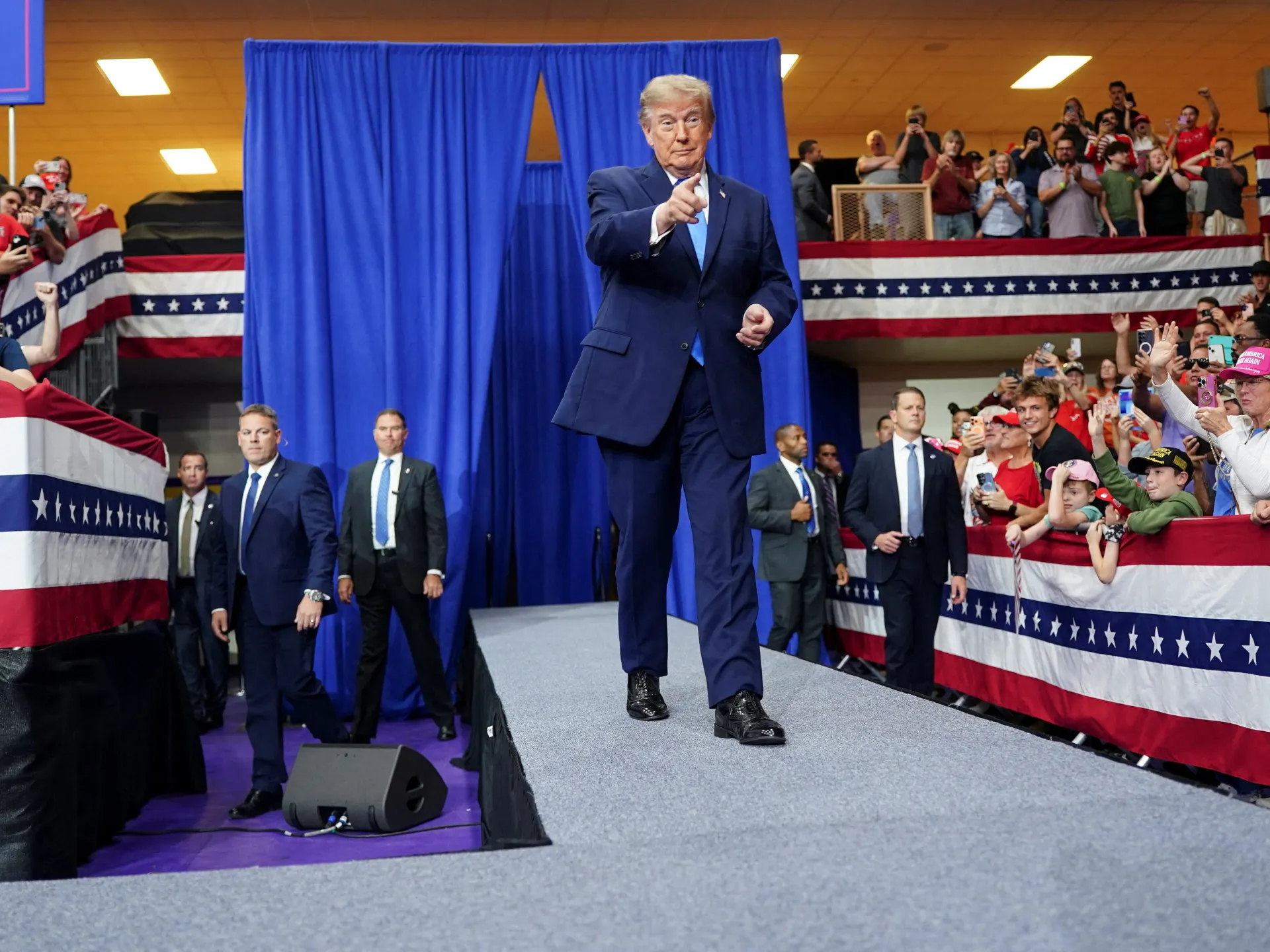
United States President Donald Trump has lashed out at NATO over its reluctance to join Washington’s war on Iran, and appeared to revive threats over Greenland, following a meeting with the alliance’s secretary-general.

Writing on his TruthSocial platform on Wednesday, Trump said in capitalised letters that “NATO wasn’t there when we needed them, and they won’t be there if we need them again”.

Recommended Stories

list of 4 itemsend of list

The remarks came after a two hour meeting with NATO’s Mark Rutte at the White House, a day after the US and Iran agreed to a ceasefire.

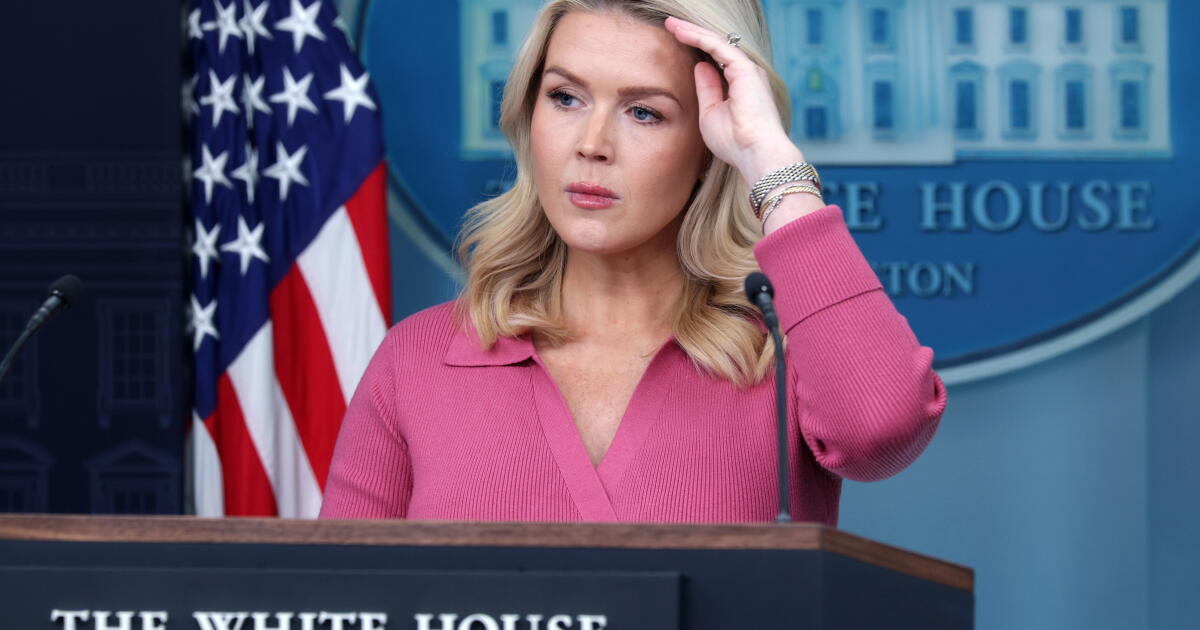
Ahead of the meeting, White House spokesperson Karoline Leavitt said that member states had “turned their backs on the American people”, who fund their nations’ defence. She said Trump would have a “very frank and candid conversation” with the NATO chief and quoted the US president as saying: “They were tested, and they failed.”

The rhetoric has raised seats in the West that Trump could move to withdraw the US from the transatlantic alliance, which he has repeatedly called a “paper tiger”. Several NATO members refused to open their airspace to US military aircraft or send naval forces to help reopen the Strait of Hormuz, a vital energy route that Iran has effectively closed.

Trump – following his meeting with Rutte – also appeared to revive his threat to seize Greenland from NATO member Denmark – a move had roiled the alliance before he launched his war on Iran

“Remember Greenland, that big, poorly run, piece of ice!!!”, he wrote.

Rutte, known in Europe as the “Trump whisperer” for his skill in maintaining a productive relationship with the US president, told the CNN broadcaster that Trump was “clearly disappointed with many NATO allies”.

Rutte said he had “very frank” and “very open” discussions with Trump during the meeting, and that while he understood the US president’s frustrations, he had pushed back against some of the broader criticism.

“I was also able to point to the fact that the large majority of European nations have been helpful, with basing, with logistics, with overflights, with making sure that they live up to the commitments,” Rutte said.

“What the US did with Iran, they could do because so many European countries lived up to those commitments. Not all of them, and I totally understand his disappointment about that, but it is, therefore, a nuanced picture,” he added.

Rutte also rejected the notion that NATO members considered the war on Iran “illegal”, arguing that there was widespread support in Europe for degrading Iran’s nuclear and ballistic missile capabilities. He also said that prolonged diplomacy risked a “North Korean moment” – where talks drag on until a country acquires nuclear capacity and it becomes too late to act.

The NATO chief declined to answer directly when asked multiple times if Trump had said he would leave the alliance.

NATO, which includes European countries, the US and Canada, was formed in 1949 to counter the Soviet Union and has been the cornerstone of the West’s security ever since.

The alliance has only activated its mutual defence clause on one occasion, following the September 2001 attacks on the World Trade Center in the US.

It was not clear what role Trump had expected it to play in the ⁠Middle East.

The Wall Street Journal, meanwhile, reported that Trump was looking at punishing some NATO members he believed were unhelpful during the conflict by moving US troops out of their countries.

The plan, reported by the Wall Street Journal, would fall short of Trump’s hinted threats to pull the US out of NATO entirely – a move for which he would need the approval of the US Congress.

Rutte did not answer directly when asked about that report.

“The large majority, including France, of European nations, has been doing what they committed before they will do in a case like this,” he said instead.

“So Europe, as a platform of power projection for the United States, was in full play over the last six weeks.”

Source link

Trump threatens 50% tariffs on countries that supply Iran with weapons | Donald Trump News

It’s not clear under what legal authority Trump can tack on this tariff, and analysts called it an ’empty threat’.

United States President Donald Trump has said imports from countries supplying Iran with military weapons will face immediate 50 percent tariffs with no exemptions, announcing the threatened duty in a social media post just hours after agreeing to a two-week ceasefire with Tehran.

Trump’s Truth Social post on Wednesday did not specify which legal authority he would invoke to impose such tariffs, as the Supreme Court in February struck down his use of the International Emergency Economic Powers Act [IEEPA] to impose broad global tariffs, prompting a lower court to order refunds of some $166bn collected over the course of a year.

Recommended Stories

list of 4 itemsend of list

The 1977 IEEPA law has been used extensively for decades to back financial sanctions against Iran, Russia and North Korea, but the court ruled that Trump overstepped his authority in using it to impose trade tariffs.

“A Country supplying Military Weapons to Iran will be immediately tariffed, on any and all goods sold to the United States of America, 50%, effective immediately. There will be no exclusions or exemptions! President DJT,” Trump wrote.

However, “it’s a lot more complicated to do that after IEEPA was struck down”, Rachel Ziemba, adjunct senior fellow at the Center for a New American Security, told Al Jazeera. “There’s no immediate policy lever and authorisation that is available for the US to do that. So they need either an act of Congress or need to adapt some other trade tool, and there isn’t really a national security-oriented trade tool.”

Trump did not name any countries that could face punitive tariffs. China and Russia have helped Iran build military capacity to counter US and Israeli pressure, supplying missiles, air defence systems and technology intended to bolster deterrence.

But that support appeared capped during the US-Israeli attacks on Iran. Both Beijing and Moscow have denied supplying any weapons recently, although allegations against Moscow have persisted.

The Reuters news agency has previously reported that Tehran was considering a purchase of supersonic antiship cruise missiles from China. In March, Reuters reported that China’s top semiconductor maker, SMIC, has sent chipmaking tools to Iran’s military, according to two senior Trump administration officials.

“This is a China-related threat, the way I read it. And China will read it that way,” said Josh Lipsky, vice president and chair of international economics at the Atlantic Council.

Although drone and missile parts routinely flow from Chinese entities to Iran, evading US sanctions, Lipsky said Trump was unlikely to follow through with new tariffs in the near term because that would derail his planned trip to Beijing to meet with Chinese President Xi Jinping in mid-May.

“US tariffs on Chinese products have gone down a lot since the court ruling,” said Ziemba, “and slapping on 50 percent tariffs now would be very expensive, especially for US importers and consumers.”

Moreover, with the Trump-Xi meeting looming, “this is kind of an empty threat, but shows that when push comes to shove, Trump comes back to tariffs”, Ziemba said.

Trump does have active “Section 301” unfair trade practices tariffs on Chinese goods from his first term, to which he may be able to add duties and similar pending cases related to excess industrial capacity and China’s compliance with a 2020 trade deal. But these would require a public notice period before they could take effect.

Trump also may be able to invoke Section 232 of the Cold War-era Trade Expansion Act of 1962, which allows sector-specific tariffs to protect strategic domestic industries on national security grounds, but using this law would require a new months-long investigation and public comments.

Russia has been another source of arms technology for Iran, but US imports of Russian goods have fallen sharply since the invasion of Ukraine in 2022 and the wave of financial sanctions imposed on Moscow as a result.

US imports from Russia, one of the only countries not subject to Trump’s now-cancelled “reciprocal” tariffs, jumped 26.1 percent to $3.8bn in 2025. These are dominated by palladium used in automotive catalytic converters, fertilisers and their ingredients, and enriched uranium for nuclear reactors. The US Department of Commerce is already moving to impose punitive tariffs on Russian palladium after an anti-dumping investigation.

Source link

Trump administration signals it is mulling NATO withdrawal after Iran war | Donald Trump News

The US president has lashed out at European partners for declining to contribute military forces to the war on Iran.

United States President Donald Trump has reportedly discussed withdrawing from NATO, the transatlantic alliance that has been a central pillar of Western security for decades.

At a news briefing on Wednesday, White House Press Secretary Karoline Leavitt framed the US and Israel’s war on Iran as a “test” that the alliance had failed.

Recommended Stories

list of 3 itemsend of list

Despite Trump’s pressure, NATO allies had declined to contribute military forces to the war, outside of defensive manoeuvres.

Leavitt’s comments came shortly before Trump met with NATO Secretary-General Mark Rutte at the White House.

“I have a direct quote from the president of the United States on NATO, and I will share it with all of you. They were tested, and they failed,” Leavitt said.

“I would add, it’s quite sad that NATO turned their backs on the American people over the course of the last six weeks, when it’s the American people who have been funding their defence.”

Trump, she continued, was preparing to have “a very frank and candid conversation” with Rutte that afternoon.

In an interview with the news outlet CNN after their meeting, Rutte likewise described the encounter as “frank and open”. He reiterated his support for Trump, but added that NATO allies had offered support through logistics and access to bases.

“Did the president say he was going to try withdraw from NATO or, at the very least, not support NATO as much as other presidents have,” CNN host Jake Tapper asked Rutte.

“There is a disappointment, clearly. But at the same time he was also listening careful to my arguments of what is happening,” Rutte replied, before pivoting to praise of Trump’s leadership.

The US president has had a mixed relationship with NATO, sometimes threatening to pull US support and, at other times, reassuring allies of the US’s continued commitment to the alliance.

Since returning to the presidency in 2025, Trump has renewed his pressure campaign for NATO’s European partners to step up their defence spending.

Last June, at the 2025 NATO summit, he largely succeeded. The NATO members agreed to nonbinding commitments to increase their defence budgets to 5 percent of their gross domestic product (GDP) by 2035.

But Spain sought an exemption, leading Trump to denounce the country repeatedly over the past year.

Tensions between the US and its European allies were further strained last year when Trump threatened to use military force to seize the self-governing Danish territory of Greenland, claiming that its ownership was essential for national security.

The US has eased away from those threats. But Trump has continued to assert that US ownership of Greenland is necessary, despite strong protests from the territory’s residents and European leaders.

After the US and Israel unilaterally launched a war against Iran on February 28, Trump lashed out at European countries for their lack of interest in contributing to the campaign.

Many legal scholars consider the war an act of aggression, in violation of international law.

The Wall Street Journal reported on Wednesday that the Trump administration is considering whether to close US bases or move troops out of countries such as Spain and Germany as punishment for their stance on the war.

When asked by reporters if Trump was considering leaving NATO, Leavitt said it was something the president “has discussed” and could address after his meeting with Rutte.

Trump and Rutte are considered to have a close relationship. Rutte has visited the White House multiple times during Trump’s second term, including in March, July, August and October of last year.

In the past, Rutte has warned that NATO “will not work” without US support.

Source link

Iran ceasefire deal frays as attacks continue; peace terms are unclear

A day after the United States and Iran agreed to a two-week ceasefire, the truce showed signs of strain Wednesday as Iranian leaders accused Americans of violating the agreement and reports emerged that Tehran had moved to restrict traffic through the Strait of Hormuz.

The developments tested President Trump’s ability to parlay a fragile pause in fighting into a lasting peace deal with a country he has spent weeks threatening to destroy, and raised questions about whether the Trump administration had the diplomatic leverage to hold the deal together.

The White House sought to project confidence about the ceasefire, but the fragile deal grew shakier after Israel carried out its largest attack against Hezbollah in Lebanon since the conflict began. Iran said the strikes by the U.S. ally amounted to a breach of the ceasefire terms, even as Trump and Israeli Prime Minister Benajmin Netanyahu maintained that Lebanon was not subject to the agreement.

The big issue seems to be that the two sides can’t agree on what the agreement is,” said Michael Rubin, an expert on Iran at the American Enterprise Institute. At best, he said, the two sides had secured a “tactical pause.”

Iranian Foreign Minister Abbas Araghchi said the United States must choose between a ceasefire or “continued war via Israel.

“It cannot have both,” Araghchi wrote on X. “The world sees the massacres in Lebanon. The ball is in the U.S. court, and the world is watching whether it will act on its commitments.”

Whether Iran will draw a red line over Lebanon could become a key question. The Wednesday back-and-forth represented “threshold-testing” of Iran and whether it will be willing to reengage the United States in conflict over the issue, said Ross Harrison, senior fellow at the Middle East Institute.

The parties’ prospects for reaching an agreement — and what Trump’s options become for declaring success — will depend on how the ceasefire goes in the coming days, Harrison said.

“There’s some room here … if [the Iranians] see that negotiations are real and not a pretext for further attacks,” he said. “A lot of what the United States can get depends on what the United States is willing to give — not just in terms of the points of their plan, but also in terms of the signaling that they too have an interest in de-escalating.”

Reports that Iran had moved to restrict traffic through the Strait of Hormuz, a crucial waterway whose opening was central to the truce negotiations, further complicated the ceasefire.

“Any vessel trying to travel into the sea … will be targeted and destroyed,” the Iranian navy told shipping vessels, Fars News reported. The news agency is aligned with the Islamic Revolutionary Guard Corps.

At a news briefing Wednesday, White House Press Secretary Karoline Leavitt said Trump was aware of reports that the Strait of Hormuz had been closed, a move she called both “completely unacceptable” and “false.” She added that the president expects the waterway will be “reopened immediately, quickly and safely” during the ceasefire.

Leavitt sidestepped questions about who currently controls the oil route.

Earlier in the day, at a Pentagon briefing, Defense Secretary Pete Hegseth told reporters that “commerce will flow” through the strait, but did not say whether U.S. warships would be escorting vessels through the waterway. Joint Chiefs of Staff Chairman Gen. Dan Caine, who stood next to Hegseth, was asked whether the strait was open. He said: “I believe so.”

Hegseth emphasized that Iran should keep its end of the bargain or face the consequences.

He said the U.S. military plans to maintain a presence in the region to ensure Iranian compliance, saying American troops are ready to “go on offense and restart operations at a moment’s notice” if the truce broke down.

“We’ll be hanging around,” Hegseth said. “We are going to make sure Iran complies with this ceasefire and then ultimately comes to the table and makes a deal.”

The warning came as several Persian Gulf nations reported Iranian missile and drone attacks on their territories despite the ceasefire. Kuwait said its air defenses intercepted drones, while Bahrain reported that an Iranian attack has sparked a fire at one of its facilities.

Hegseth downplayed the continued Iranian attacks in the region, saying that “it takes time sometimes” for ceasefires to take hold, but advised Iran to “find a way to get a carrier pigeon to their troops in remote locations” and ensure compliance moving forward.

Israel, meanwhile, carried out its largest strike against Hezbollah since the militant group began launching rockets in solidarity with Iran last month. Lebanese health authorities said hundreds were killed and wounded in the Israeli strikes.

Trump and Israeli Prime Minister Benjamin Netanyahu have maintained that Lebanon is not subject to the ceasefire agreement. Leavitt reiterated that stance, telling reporters that “Lebanon was not part of the ceasefire” and that it had been relayed to all parties.

Asked whether Trump would want to add Lebanon to the agreement in the future, Leavitt said that the matter “will continue to be discussed but that “at this point in time they are not included.”

More than a dozen European heads of state called on “all sides” to cease fire, including in Lebanon. In a Wednesday statement, they urged the parties to move quickly in diplomatic talks.

“The goal must now be to negotiate a swift and lasting end to the war within the coming days,” they said in the statement, which was signed by French President Emmanuel Macron, Italian Prime Minister Giorgia Meloni and German Chancellor Friedrich Merz, along with Japanese Prime Minister Sanae Takaichi as well as other European leaders.

Pakistani Prime Minister Shehbaz Sharif, who helped broker the ceasefire, wrote on X that ceasefire violations had been reported at “a few places across the conflict zone” and urged all parties to exercise restraint. He did not detail the violations but said the attacks “undermine the spirit of the peace process.”

The situation in the Strait of Hormuz underscores how much remains uncertain about the agreement between the United States and Iran. The full terms of the ceasefire have not been publicly disclosed, and Trump wrote on his social media website that the “only group of meaningful ‘POINTS’ that are acceptable to the United States” will be discussed behind closed doors.

Trump also seemed to take issue with the 10-point peace plan that Iran publicly released Wednesday. He said that there are terms being floated by people who have “absolutely nothing to do” with the negotiations between the United States and Iran. He said that “in many cases, they are total Fraudsters, Charlatans, and WORSE.”

Leavitt declined to offer details about the working proposal being negotiated, saying the talks will take place privately. Both Leavitt and Hegseth, however, mentioned that the U.S. wants to ensure Iran does not have stockpiles of enriched uranium, the fissile material that is key in developing nuclear weapons.

“This is on the top of the priority list for the president and his negotiating team as they head into the next round of discussions,” Leavitt said.

Hegseth told reporters earlier in the day that Iran may “hand it over.” If they don’t, he said, “we will take it out, or if we have to do something else ourselves like we did [with] Midnight Hammer or something like that, we reserve that opportunity.” He was referring to the 12-day war against Iran in June.

Leavitt reiterated that administration officials “hope it will be through diplomacy,” but left open the possibility that the uranium could be retrieved through ground operations.

There is probably negotiating room over enrichment, said Harrison of the Middle East Institue, while Iran may be less flexible on the Strait of Hormuz. The United States needs a resolution more quickly than Iran, he added.

“Time is their friend, not a friend of Donald Trump’s,” Harrison said.

Source link

Americans question Trump’s instinct on Iran war | Donald Trump

NewsFeed

Americans are split on whether to trust Donald Trump’s instinct-driven approach to the Iran conflict. The range of opinions reflects a deeper unease about a president bypassing his cabinet and Congress in favour of gut decisions. Al Jazeera’s Heidi Zhou-Castro speaks with US citizens at the White House.

Source link

Trump has found his Iran off-ramp – but at what cost? | US-Israel war on Iran News

Domestically and internationally, the effects of the war will felt for years to come.

The US president has stepped back from the brink.

After calling for the destruction of an entire civilisation, it appears Donald Trump is in the mood for peace.

Recommended Stories

list of 4 itemsend of list

He has confirmed that Israel and the United States will stop attacking Iran for two weeks.

And while it’s not clear if the agreement will lead to lasting peace, what is certain is that the US – and the world stage – have been changed.

So how has the US been shaped by Trump’s war on Iran? How has the world order?

And can any of it be walked back?

Presenter: James Bays

Guests:

Sanam Vakil – Director of the Middle East and North Africa programme at Chatham House

Robert Pape – Professor of political science at the University of Chicago

Kim Wehle – Professor of constitutional law at the University of Baltimore Law School

Source link

Trump claims victory in Iran — but is this really a win? | US-Israel war on Iran

NewsFeed

Before a single term has been negotiated, Trump is claiming total victory over Iran, but with leadership intact, enrichment continuing, and a new Strait of Hormuz toll that didn’t exist before the conflict, is this really a win? Al Jazeera’s Kimberly Halkett explains.

Source link

Trump-endorsed Republican Clay Fuller wins Marjorie Taylor Greene’s former House seat in Georgia

Republican Clay Fuller on Tuesday won Marjorie Taylor Greene’s former U.S. House seat in Georgia, turning back a Democratic challenge with the help of President Trump’s endorsement despite uneasiness over the war in Iran.

In a deep red district that Greene won by 29 points and Trump carried by almost 37 points two years ago, Fuller was on track to prevail by about 12 points with almost all votes counted. The result added to a string of special elections where Democrats performed better than expected, a track record that the party hopes will create momentum toward November’s midterm elections when control of Congress hangs in the balance.

In another election held Tuesday, a Democratic-backed candidate for the Wisconsin Supreme Court won by double-digit margins, growing the liberal majority there.

Fuller insisted that his victory over Democratic candidate Shawn Harris in Georgia was a testimony to Trump’s staying power.

“They couldn’t beat Donald Trump and they never will,” he told supporters in Ringgold, near the border with Tennessee. “And I will be on Capitol Hill as a warrior to have his back each and every day.”

However, Trump’s escalating rhetoric had some Republicans concerned, even in this deep red district. The president had set a deadline for Tuesday at 8 p.m. — one hour after polls closed in Georgia — for Iran to reach a deal with the United States, saying that “a whole civilization will die tonight, never to be brought back again.” However, he later announced a two-week ceasefire to allow negotiations to continue.

Acworth resident Jason McGinty said he was worried Trump was “about to go too far” and “may be committing a war crime” if he followed through on threats to bomb power plants and other infrastructure in Iran. He voted for Fuller to “make sure the America First party is still in place.”

Retiree Judy McDonald agreed with the president’s decision to go to war but was “very anxiety-ridden” over the conflict.

“Eventually we will have peace and the Iranians will kind of come to a conclusion that they won’t have a country if they don’t stop the terrorism,” she said.

Some Democrats hoped the election would send a message to Trump

Fuller will serve out the remaining months of Greene’s term, bolstering the party’s slim majority in the House, where Republicans control 217 seats to Democrats’ 214, with one independent.

He’ll have to face another Republican primary on May 19 to win a full two-year term, and could face a June 16 party runoff. Harris is already the Democratic nominee for November.

Retiree Melinda Dorl supported Harris “so it sends a message to Trump and his cronies that people aren’t happy,” she said.

“This war was totally uncalled for. Trump is a liar. Everything he says is a lie,” Dorl said, adding that Trump was wrecking relationships with countries that have traditionally been American allies.

Harris, a cattle farmer and retired general who describes himself as a “dirt-road Democrat,” stirred enthusiasm even among supporters who expected him to lose.

“I voted for the Democrat even though this is a very red district and the Democrat has almost no chance of winning,” said Michael Robards, a software engineer from Kennesaw who calls himself a center-right independent. He said he wants to see Trump’s policies rolled back and the president again impeached.

Georgia’s 14th District stretches across 10 counties from suburban Atlanta to Tennessee. After losing to Greene two years ago, Harris said his strong showing this time would be a stepping stone to November.

“We’re going to beat him next time,” Harris said on Tuesday in Rome, Georgia.

Fuller said he had withstood Democrats’ best punch.

“The left did their best. They poured in millions upon millions of dollars,” Fuller told reporters. “And what you’re seeing is the best that they can accomplish.”

Fuller had presidential support

Trump endorsed Fuller, a district attorney who prosecuted crimes in four counties, to succeed Greene in February, boosting him over other Republican candidates in a crowded field.

Greene, once among Trump’s most ardent supporters, had split with the president by criticizing his foreign policy and his reluctance to release documents involving the Jeffrey Epstein case. The president eventually had enough, saying he would support a primary challenge against her. Greene announced a week later that she would resign.

Outside of Congress, Greene has continued to assail Trump.

“Trump was elected to go to war against America’s deep state and to end America’s involvement in foreign wars,” she wrote on social media on Tuesday. “Not to kill an entire civilization while waging a foreign war on behalf of Israel, another foreign country.”

However, Fuller has backed Trump to the hilt — including the war — and has identified no issue on which he disagreed with the president.

Trump reiterated his support for Fuller on Monday night and then again on Tuesday.

“To the Great Patriots in Georgia’s 14th Congressional District: GET OUT AND VOTE TODAY for a fantastic Candidate, Clay Fuller, who has my Complete and Total Endorsement!” the president wrote on social media.

Amy writes for the Associated Press.

Source link

Sen. Elissa Slotkin sits down with Trump voters in Iowa while campaigning for Democrats

Before Michigan U.S. Sen. Elissa Slotkin spent Tuesday afternoon supporting Democratic congressional candidates in Iowa, she was picking the brains of a table of President Trump’s voters.

Slotkin, a potential Democratic 2028 presidential contender, peppered five Iowa voters with questions about divisiveness in U.S. politics and issues affecting their communities. She also wanted to know what the voters would look for if they could “build a candidate in a test tube” and why they chose Trump over Vice President Kamala Harris in 2024.

“What would have gotten you to actually consider a Democrat?” Slotkin asked as the discussion winded down.

She hadn’t told them yet she was one.

The conversation was one of many Slotkin is having ahead of this fall’s crucial midterm elections. They are a way for the Midwestern Democrat to hear what it might take for the party to win back parts of the country like Iowa, which swung from backing President Barack Obama in 2008 and 2012 to Trump in the last three elections.

Slotkin on Tuesday described a Democratic Party that has forgotten about the middle of the country, has spent too much time rehashing old fights and lacks coordination in delivering a strong counter to Trump.

“I’m pretty clear-eyed about the problems,” Slotkin told The Associated Press in an interview. “I’m interested in being a part of the next generation who’s going to rehab the Democratic brand.”

Slotkin’s sit down with Trump voters in Iowa Tuesday, and a town hall in Ohio Wednesday, was organized by a PAC dedicated to reshaping the party, Majority Democrats. But for Slotkin, the stops in red and purple states also are opportunities for the former CIA analyst to introduce herself to voters outside her home state, many of whom — like those gathered for Tuesday’s lunch — don’t know who she is or what she stands for.

Slotkin was elected to the Senate in 2024 after serving three terms in the U.S. House. She was among six Democrats in Congress with military or national security backgrounds who in a video last year urged U.S. military members to resist “illegal orders.” Trump accused the lawmakers of sedition punishable by death, and the video prompted a Justice Department investigation.

Slotkin said Tuesday that they made the video “for moments exactly like this,” shortly before Trump paused for two weeks his threat to take out Iran’s “whole civilization.”

Democrats want to flip House seats in Iowa

Later Tuesday, Slotkin’s schedule included headlining a fundraiser and a county party dinner. She also held a health care-focused town hall with Iowa state Sen. Sarah Trone Garriott, a Democrat looking to unseat Republican U.S. Rep. Zach Nunn in one of the most competitive House seats in the country.

She shared some of the same themes to the friendly faces in Des Moines as she did earlier with the Trump voters, lamenting that politics is so divisive and describing the bipartisan disappointment over the health care system that she hears across the country.

But she put a finer point on her own views to the Democratic audiences, saying that the U.S. needs a public health insurance option for people of any age and giving advice on how to convince voters that supporting a Democrat is in their best interest.

“I want to win in November,” Slotkin told an applauding audience. “That means being honest about where the Democratic Party needs to go.”

“The debate is not between progressive and moderate,” she said. “It’s fight or flight.”

Slotkin shies away from answer on 2028

Visiting Iowa used to hold more obvious significance for Democrats before the party shook up the early presidential nominating calendar last cycle, bumping Iowa from its place as the first state to weigh in on the nominations. The state party in 2024 did away with the traditional, quirky caucuses that have historically been the first contest for both parties.

Now Iowa Democrats are among those pitching their state should go first in 2028; Michigan is also vying for the first Midwest slot. But it’s still months before the Democratic National Committee will decide the order.

Slotkin is one of many prominent Democrats eyeing a potential 2028 run that have been visiting swing states and those that have traditionally been important in the nominating process.

“I’m not announcing anything,” Slotkin said Tuesday, and even joked about Iowa and Michigan’s “cage match” for the early position.

The ambition didn’t get past Ed Klavins, a Trump voter who participated in the focus group.

“She’s trying to figure out what she can do differently to have a better chance of getting reelected and maybe higher office,” said Klavins, a retiree from Urbandale, Iowa, who didn’t know Slotkin was the guest for Tuesday’s focus group lunch and said he was paid $200, plus lunch, to be there.

Klavins wants politicians on both sides of the aisle that challenge their party’s status quo. He told Slotkin that he wants a candidate who doesn’t pander to what they think voters want. He voted for Trump and thinks he’s succeeding in putting national security first, like closing the U.S.-Mexico border and eliminating the threat Iran poses to national security.

But Slotkin showing up to listen “makes her a little more genuine in my eyes,” he said. “I like her.”

Fingerhut writes for the Associated Press.

Source link

NATO Secretary General Mark Rutte meets with Trump amid Iran tensions

April 8 (UPI) — NATO Secretary General Mark Rutte was set to kick off a visit to Washington on Wednesday with a meeting with U.S. President Donald Trump after European allies’ lack of support for the Iran war prompted fresh threats to pull the United States out of the defensive alliance.

Rutte was expected to use the meeting, at which U.S. Secretary of State Marco Rubio and Defense Secretary Pete Hegseth will also be present, to try to smooth over trans-Atlantic tensions stoked by the refusal of several NATO countries to let U.S. military planes to use their airspace or bases.

Allies also declined to take part in military action to reopen the Strait of Hormuz, effectively blockaded by Iran since the start of the war on Feb. 28, and provide naval vessels to escort oil and gas tankers through the key sea lane.

Trump’s frustration with what he views as a NATO relationship that is unfairly weighted in European allies’ favor boiled over last week after the spat over the strait, with him questioning the point of U.S. membership and saying he would rethink how much the United States contributes to the alliance going forward.

Rubio has also adopted an increasingly hawkish stance calling it a “one-way street” where the United States was always there for other NATO members but was told ‘no’ when it needed to use their military bases, begging the question why it was in the alliance.

The position of European NATO allies is that they were not consulted before the United States launched its airborne offensive in Iran — with the majority of states were not even informed beforehand — and that as a purely defensive alliance, the action has no relevance to NATO.

Former U.S. Ambassador to NATO Kurt Volker told Euronews that vocal criticism of military action against Iran expressed by countries including Germany, France, Spain and Finland ran counter to their own interests.

“The messaging from Europe has been terrible,” said Volker, explaining that it created an opening for Trump to deflect blame onto partners who refused assistance, if his Iran gambit backfires.

“The Europeans could have said, ‘we all have a stake in this and let’s see how we can help,'” added Volker who said this could have been achieved without getting pulled into direct military confrontation with Iran.

Patrick Bury, Senior Associate Professor in Warfare at Bath University, said Rutte had a delicate balancing act to perform of persuading Trump of the alliance’s value while as diplomatically as possible defending members’ right to stay out of the war

“His job is to keep the U.S. in NATO. He represents the alliance as a whole, rather than individual member states,” said Bury.

Matthew Kroenig, vice president and senior director of the Atlantic Council’s Scowcroft Center for Strategy and Security, said if any one could talk Trump down it would be Rutte, calling him a “Trump whisperer.”

Acting Attorney General Todd Blanche speaks during a press conference on the Trump Administration’s efforts to combat fraud at the Department of Justice Headquarters on Tuesday. Last week, President Donald Trump fired Attorney General Pam Bondi over her handling of the Epstein files and the lack of investigation into individuals he felt should face criminal charges. Blanche, a former personal lawyer to Trump, will lead the Justice Department temporarily. Photo by Bonnie Cash/UPI | License Photo

Source link

On Hungary visit, Vance urges voters to support Orbán days before pivotal election

Vice President JD Vance on Tuesday urged Hungarians to back Prime Minister Viktor Orbán in upcoming elections, dubbing the populist leader a defender of “Western civilization” during a visit to Hungary meant to help push Orbán over the finish line.

Vance’s two-day visit to Budapest was the clearest sign yet that President Trump’s administration is going all in for an Orbán victory when Hungarians go to the polls on Sunday. With only five days until the vote, Orbán, the European Union’s longest-serving leader and a close Trump ally, is trailing in the polls.

Speaking before over 1,000 Orbán supporters at an election rally at a sports arena in Budapest, Vance campaigned openly for the autocratic leader, telling the crowd: “We have got to get Viktor Orbán reelected as prime minister of Hungary, don’t we?”

Orbán is running for his fifth-straight term as prime minister. He and his nationalist-populist Fidesz party are facing their toughest race in two decades against a center-right challenger, the Tisza party led by Péter Magyar, that could bring an end to his 16 years in power.

Orbán has bristled at the slightest mention of the Hungarian election by any of his EU partners, decrying any expressions of support for his opponent as a grave breach of Hungary’s sovereignty and meddling in the election.

Yet Vance’s appearance alongside Orbán at the election rally — dubbed a “Day of Friendship” event — was an unusual step from a foreign leader, and a break with most politicians who avoid taking an active role in the political campaigns of other countries.

To loud applause, Vance asked rally attendees: “Will you stand for Western civilization? Will you stand for freedom, for truth, and for the God of our fathers?”

“Then, my friends, go to the polls in the weekend. Stand with Viktor Orbán, because he stands for you, and he stands for all these things,” Vance said.

‘I love that Viktor’

Long accused by critics of taking over Hungary’s institutions, clamping down on press freedom and overseeing entrenched political corruption — charges he denies — Orbán has become an icon in the global far-right movement.

Trump has repeatedly endorsed Orbán’s candidacy for reelection, and many in the Make America Great Again movement approve of the Hungarian leader’s opposition to immigration, curtailing of LGBTQ+ rights, and capture of the media and academia.

But with most independent polls showing a double-digit deficit for Fidesz among decided voters ahead of the vote, Orbán has sought to boost his profile by appearing publicly with his international admirers.

Vance spoke at length on Tuesday about what he views as the civilizational dangers posed by progressivism, “faceless bureaucrats” and censorship. He lauded Orbán for his strong stand against immigration, and his adversarial approach to the EU.

“I admire what you’re fighting for,” Vance said. “I am here because President Trump and I wish for your success, and we are fighting right here with you.”

Vance used his phone to call Trump from the lectern, to loud applause. After first reaching an automated message about the caller’s voicemail box not being set up yet, Trump answered the call and told the crowd through a microphone: “I love Hungary and I love that Viktor, I tell you he’s a fantastic man.”

Trump said Orbán had not allowed migrants “to storm” and “ruin” Hungary.

“He’s kept Hungarian people in your country,” Trump said.

Hungarian ‘reconquista’

The Trump administration’s embrace of Orbán reflects its affinity for European far-right parties broadly, and the admiration, from Spain to France to Germany and the Netherlands, has been mutual.

Orbán has long been a thorn in the side of the EU, and has tested the bloc’s system of governance by frequently using his veto power to paralyze decision-making in order to leverage concessions.

Last month, he vetoed a major, 90-billion euro ($104-billion) EU loan to Ukraine, angering the bloc’s leaders who accused him of hijacking the critical aid while undermining the EU in an effort to win his election.

At the rally on Tuesday, Orbán declared that “freedom-loving Americans and Hungarians must unite and save Western civilization.”

“To do this, we must fight the progressives that nest in Brussels,” the EU’s de-facto capital, he continued. He declared that Hungary had launched a “reconquista” of EU institutions which “will bring new patriotic governments to power.”

Late last month, Orbán hosted dozens of allies from around Europe and beyond at the Hungarian iteration of the Conservative Political Action Conference, and at a meeting of the far-right Patriots for Europe party family, the third-largest group in the European Parliament.

Trump sent a video message to Conservative Political Action Conference Hungary, saying Orbán had his “complete and total endorsement” and was a “fantastic guy.”

Still, Trump’s recent approach to foreign affairs has reverberated in Europe, with his actions over Greenland, Venezuela and Iran straining those relationships. Some commentators have suggested support from Vance and Trump may not help boost Orbán’s popularity at home.

Orbán, however, has remained deferential, and echoed Trump’s false claims that he won the 2020 election.

Russian energy

Orbán’s government has broken with most EU countries by refusing to assist Ukraine with financial aid or weapons to ward off Russia’s full-scale invasion. Meanwhile, it has remained firmly committed to purchasing Russian energy despite EU efforts to wean off such supplies.

In November, Hungary received an exemption from U.S. sanctions on Russian oil and gas after a White House meeting between Orbán and Trump.

Yet at a joint news conference with Orbán earlier on Tuesday, Vance seemed to contradict U.S. efforts to push its allies to break with Russian energy, excoriating other EU countries for moving to cease their imports of Russian fossil fuels in response to the war.

“It’s funny to watch prime ministers and leaders in some of the Western European capitals talk about the energy crisis when frankly they should have been following the policies of Viktor Orbán,” he said.

Despite his clear endorsement of Orbán, Vance lashed out at the EU for what he said was “one of the worst examples of foreign election interference that I’ve ever seen or ever even read about.”

Vance did not address numerous recent reports that Russian secret services are meddling in Hungary’s election to tip it in Orbán’s favor.

Spike writes for the Associated Press. Mike Catalini in Morrisville, Pa., contributed.

Source link

L.A. election shadow hearing: Democrats, experts defend voting systems

House Democrats and a panel of elections experts expressed unwavering confidence in state voting systems and dismissed Trump administration claims of widespread fraud and other vulnerabilities during a special “shadow hearing” in Los Angeles on Tuesday.

They accused President Trump and his Republican allies of pushing sweeping federal reforms — including stricter voter ID laws and new restrictions on voting by mail — that would disenfranchise millions of eligible Americans, especially low-income, rural and elderly voters, as well as voters of color and those with disabilities.

“They are taking us backward, and not to a good place,” said Rep. Nancy Pelosi (D-San Francisco), who helped lead the hearing at the Daniel K. Inouye National Center for the Preservation of Democracy in Little Tokyo.

They also stressed that they and their allies were working hard to prevent such backsliding.

“While Republicans are expecting Democrats to just sit idly by as they attempt to steal yet another election, Democrats are getting out in the community, raising the alarm bells about the GOP’s efforts to rig these elections and fighting back in the courts, in Congress and in our communities,” said Rep. Pete Aguilar (D-Redlands), chair of the Democratic Caucus. “We won’t let Republicans get away with their anti-democratic and un-American schemes.”

Such “shadow hearings” allow Democrats to highlight issues their majority-Republican counterparts won’t schedule for formal hearings in Washington. This week’s discussions — a second is scheduled Thursday in San Francisco — follow others in California in recent months, including on Trump’s immigration raids.

Pelosi, the former House speaker, led the hearing alongside Aguilar and Rep. Joseph Morelle of New York, the ranking Democrat on the House Administration Committee, which has oversight of elections. Joining them were fellow Democratic Reps. Nanette Barragán of San Pedro, Judy Chu of Monterey Park, Gil Cisneros of Covina, Laura Friedman of Glendale, Luz Rivas of North Hollywood, Linda Sánchez of Whittier, Norma Torres of Pomona and Maxine Waters of L.A.

Pelosi noted the setting on the grounds of the Japanese American National Museum, where Japanese Americans were detained before being unconstitutionally stripped of their belongings and taken to internment camps during World War II.

“To be here on a day when the president of the United States has talked about destroying the civilization of a country is so appalling. It’s so appalling, and I don’t think we can ignore comments like that, especially in a setting like this,” Pelosi said.

She also said that securing the nation’s elections against Trump’s threats and getting out the Democratic vote was the surest way of restoring order to U.S. relations abroad — and far more likely than getting Trump’s Cabinet to remove him from office by invoking the 25th Amendment.

“We have to make sure that the mentality that would obliterate a civilization, undermine a democracy by fighting free and fair elections, just cannot prevail,” she said.

The hearings were designed to challenge a narrative Trump has pushed for years — that U.S. elections are badly compromised by widespread fraud, that mail ballots such as those used in California are a particularly large source of abuse, and that noncitizens are voting in large numbers — none of which he has supported with evidence.

Trump tried unsuccessfully to challenge his 2020 loss to Joe Biden using similar arguments. When he returned to the White House, he immediately directed his administration to pursue the claims anew, including under executive orders he issued asserting new and sweeping federal authority over elections, which by law are controlled by the states.

The Justice Department in September sued California and other states for their voter rolls, which courts rejected. The FBI in January raided and seized 2020 election records from an elections office in Fulton County, Ga., where Trump rejected 2020 results. Trump in February said Republicans “ought to nationalize the voting.” Last week, he issued an executive order purporting to give federal agencies control over ballot processing by the U.S. Postal Service, which followed a previous order seeking to place new federal requirements on voter identification and proof of citizenship.

Trump has said his efforts are “common sense” steps average Americans support to secure elections against noncitizens voting and other threats.

Experts who provided testimony at Tuesday’s hearing roundly rejected that argument, saying the measures address problems that don’t existand are more geared toward securing wins for Republicans than ensuring election safety.

Jenny Farrell, executive director of the League of Women Voters of California, said that Americans are “more likely to be struck by lightning” than to commit voter fraud, and that many recent proposals framed around election integrity are really designed to narrow access to voting for certain groups. She also said California’s elections are particularly strong.

“We’re like the Dodgers of elections,” she said.

Darius Kemp, executive director of Common Cause California, said the state’s elections “are safe and secure,” and the Trump administration is threatening democratic participation in novel and alarming ways that his organization is watching carefully.

Justin Levitt, a Loyola Law School professor, said Trump is trying to project power over elections “that he simply does not have,” and if local and state officials, the courts and pro-democracy groups stand their ground, he will fail.

“If we keep calm and carry on, we can make our voices heard loud and clear,” he said.

Hector Villagra, vice president of policy advocacy and community education at MALDEF, or the Mexican American Legal Defense and Educational Fund, said “the evidence could not be more clear — noncitizen voting is exceedingly rare,” and Trump’s proposals would simply “raise the cost of lawful voting” for groups already underrepresented at the polls.

“The question is not whether we can verify eligibility. We already do that,” he said. “The question is whether we will impose new barriers that will prevent eligible citizens from participating at all.”

Sonni Waknin, senior staff attorney at the UCLA Voting Rights Project, said “democracy is under attack” across the nation, and that the photo identification requirement Trump and other Republicans are pushing would disenfranchise a million eligible voters in California alone.

When Cisneros asked about what could be done to prepare for the inevitable claims of fraud from Trump and other Republicans after the midterms, Levitt said that such claims must be called out for what they are.

“We call those lies, because they are lies,” he said.

When Waters asked the experts about the effect of federal immigration agents being deployed to polling places, as some in Trump’s orbit have suggested, Villagra said damage was already being done just from the rumors of such action — whether agents show up or not.

“It’s the threat that’s really what’s powerful here,” he said, as people — especially Latino voters — are already intimidated, and leaders should do more to reassure voters and offer alternatives to showing up to polls, such as voting by mail.

Source link

Trump agrees to pause attacks on Iran if Strait of Hormuz opens | US-Israel war on Iran

NewsFeed

US President Donald Trump says he has agreed to extend his threatened deadline to attack Iran by two weeks, if Iran immediately re-opens the Strait of Hormuz. His Truth Social post came less than two hours before he had said Iran would face widespread attacks on civilian infrastructure.

Source link

Trump: ‘A Whole Civilization Will Die Tonight’ if Iran Defies Deadline

Iran showed no sign of accepting Donald Trump’s ultimatum to open the Strait of Hormuz by the end of Tuesday. Trump stated that “a whole civilization will die tonight” unless Tehran reached a last-minute agreement. As the deadline approached, strikes on Iran escalated, targeting railway bridges, a petrochemical plant, an airport, and power lines, according to Iranian media. Explosions were also reported on Kharg Island, which houses Iran’s oil export terminal. Iran stated it would no longer hold back from attacking the infrastructure of neighboring Gulf countries and claimed to have launched strikes on a ship in the Gulf and on Saudi industrial facilities tied to U. S. firms.

In a post on his Truth Social site, Trump expressed his concerns, saying, “A whole civilization will die tonight, never to be brought back again. ” He added that with “Complete and Total Regime Change,” there could be a positive outcome, stating that it could be one of history’s most important moments. Iran, however, rejected a proposal for a temporary ceasefire that had been communicated by intermediaries. A senior Iranian source explained that talks for lasting peace could only commence once the U. S. and Israel stopped their strikes, assured they wouldn’t resume, and compensated for damages. The Iranian source insisted that any settlement must give Iran control of the Strait, enabling them to impose fees on passing ships.

Trump’s deadline was set for 8 p.m. in Washington (midnight GMT and 3:30 a.m. in Tehran) for Iran to end its blockade of Gulf oil, with threats to destroy every bridge and power plant in Iran if they did not comply. Iran indicated it would retaliate against the infrastructure of U. S. allies in the Gulf. Despite intense military actions and heated rhetoric, global markets remained cautious about betting on whether Trump would follow through with his threats or retract them, as he had done in previous situations.

Reports indicated ongoing strikes inside Iran, including hits on railway and highway bridges and facilities. Power outages were reported in parts of Karaj, near Tehran, due to a strike on transmission lines. Israel warned Iranians via social media to keep away from trains, citing safety concerns. A synagogue in Tehran was reportedly destroyed in what Iran called Israeli air strikes, with Hebrew texts found among the debris. Iran’s Revolutionary Guards declared that their response to attacks on their infrastructure would result in a significant reduction of oil and gas supply to the U. S. and its allies.

Amid the rising tensions, Pakistan is trying to mediate an end to the conflict. An Iranian citizen expressed hope that Trump’s threats were a bluff, observing that Trump had previously backed off from similar ultimatums. The two nations had exchanged proposals through Pakistan, but a compromise seemed elusive, with each claiming victory in the conflict. Iran’s ambassador to Pakistan indicated that mediation efforts were at a critical stage but did not provide specific details. A proposal from Pakistan suggested a temporary ceasefire and lifting of Iran’s blockade while postponing a more comprehensive peace discussion. However, Iran’s 10-point response called for an end to the war, lifting of sanctions, and reconstruction pledges from damaged sites, alongside a new mechanism for governing passage through the Strait, which had been effectively blocked to most ships since U. S. and Israeli strikes began in February. Trump’s latest deadline statement used aggressive language, underscoring his seriousness about potential military action against Iran.

With information from Reuters

Source link

Georgia congressional election pits Trump-backed Clay Fuller against Shawn Harris

Republican Clay Fuller will try to close the deal with Georgia voters on Tuesday to succeed Marjorie Taylor Greene in Congress, while Democrat Shawn Harris seeks an upset.

Harris led a first round of voting on March 10 with 37% in the district that stretches across 10 counties from suburban Atlanta to Tennessee. While Fuller came in second in the 17-candidate all-party special election with 35%, the Republican candidates combined won nearly 60% of the vote. The 14th District is rated as the most Republican-leaning district in Georgia by the Cook Political Report.

President Trump in February endorsed Fuller, a district attorney who prosecuted crimes in four counties, to succeed Greene in Georgia’s 14th Congressional District. Greene, once among Trump’s most ardent supporters, resigned in January after falling out with the president.

Fuller has backed Trump to the hilt, finding no issue on which he disagreed with the president when asked in a March 23 debate.

“We need an America First fighter to stand strong for northwest Georgia,” Fuller said March 23. He was a White House fellow in the first Trump administration and is a lieutenant colonel in the Georgia Air National Guard.

Trump reiterated his support for Fuller on Monday night.

“I am asking all Republicans, America First Patriots, and MAGA Warriors, to please GET OUT AND VOTE for a fantastic Candidate, Clay Fuller, who has my Complete and Total Endorsement!” the president wrote on social media.

Harris, a cattle farmer and retired general who lost to Greene in 2024, has contrasted himself with Greene’s bomb-throwing style. He said he’s a “dirt-road Democrat” with common sense, and practical-minded Republicans should vote for him because he will focus on the district’s interest.

“He has sold his soul to Donald Trump,” Harris said of Fuller on March 23. “The reality of it is he cannot fight for you because he cannot go against the president.”

The winner will serve out the remaining months of Greene’s term. A Republican win would bolster the party’s slim majority in the House, where Republicans control 217 seats to Democrats’ 214, with one independent.

But if the winner wants to remain in Congress beyond January, he will have to run again. Republicans seeking a full two-year term are set for a May 19 party primary, and possibly a June 16 party runoff, before advancing to the general election in November. Harris is the only Democrat running, meaning he faces no primary election.

Greene was one of the most well-known members of Congress until she left in January. She remained loyal to Trump after he lost to Democrat Joe Biden in 2020, promoting Trump’s falsehoods about a stolen election. When Trump ran again in 2024, she toured the country with him and spoke at his rallies while wearing a red “Make America Great Again” hat.

But Greene began clashing with Trump last year after he and other Republicans pushed back against her running for U.S. Senate or governor. Greene criticized Trump’s foreign policy and his reluctance to release documents involving the Jeffrey Epstein case. The president eventually had enough, saying he would support a primary challenge against her. Greene announced a week later that she would resign.

Amy writes for the Associated Press.

Source link

Trump threatens Iran: ‘A whole civilisation will die tonight’ | US-Israel war on Iran

NewsFeed

Donald Trump warned that “a whole civilisation will die tonight” if Iran does not open the Strait of Hormuz, ahead of a Tuesday night deadline for Tehran to comply. The comments follow a “pretty shocking” silence from US Congress on the US-Israeli war, Al Jazeera’s Kimberly Halkett explains.

Source link

Trump’s message to Iran on deadline day: ‘A whole civilization will die tonight’

President Trump warned that a “whole civilization will die” on Tuesday night if Iran does not meet his deadline to fully reopen the Strait of Hormuz, escalating tensions as diplomatic talks to end the war remain underway.

“A whole civilization will die tonight, never to be brought back again,” Trump wrote Tuesday morning on Truth Social. “I don’t want that to happen, but it probably will.”

The extraordinary threat signaled Trump’s willingness to authorize U.S. military strikes on Iranian infrastructure — including bridges and power plants —- if the United States and Tehran are unable to reach a ceasefire deal by a Trump-imposed deadline of 5 p.m. PDT on Tuesday.

Trump has a history of issuing deadline in diplomatic standoffs, only to quietly walk them back when they pass without resolution. But Trump’s warning on Tuesday stood apart as it invoked apocalyptic language that goes well beyond his previous ultimatums.

The threat came a day after Trump indicated that a ceasefire proposal communicated by mediators in the Middle East ahead of the deadline was insufficient. He called the offer “not good enough,” but acknowledged it as a “significant step” in negotiations.

Trump declined to provide details on the ceasefire negotiations on Monday, but he has made clear that a core part of the negotiations hinges on the reopening of the Strait of Hormuz, a crucial waterway through which roughly a fifth of the world’s oil passes flows through daily.

On Tuesday morning, Iranian leaders remained defiant ahead of the looming deadline.

Iranian President Masoud Pezeshkian wrote on X that “more than 14 million proud Iranians have so far registered to sacrifice their lives to defend Iran.”

“I too have been, am, and will remain devoted to giving my life for Iran,” Pezeshkian wrote ahead of the looming deadline.

Trump on Monday mused about taking control of the waterway and charging tolls for passage, as well as taking control of Iranian oil.

“If it were up to me, I’d take the oil, keep the oil and make plenty of money,” Trump told reporters at the annual White House Easter Egg Roll.

Iranian officials on Monday rejected a ceasefire proposal, calling American demands “both highly excessive and unusual, as well as illogical.”

The ceasefire proposals have been communicated through mediators from Egypt, Pakistan and Turkey, according to the Associated Press.

After Iranians rejected the American proposal, Trump said at a news briefing on Monday that the U.S. military was prepared to strike Iran’s vital infrastructure if a deal cannot be reached.

The president has also dismissed questions that targets to infrastructure would amount to war crimes because it would impact civilians.

“You know what’s a war crime? Allowing a sick country with demented leadership to have a nuclear weapon,” Trump said.

Source link

What’s Iran’s 10-point peace plan that Trump says is ‘not good enough’? | International Trade News

Iran has proposed a 10-point peace plan to end the war as the United States and Israel intensify their attacks on Tehran and a deadline looms that was set by US President Donald Trump for Iran to open the Strait of Hormuz, whose near-closure has triggered a global energy crisis.

At the White House on Monday, Trump called the 10-point plan a “significant step” but “not good enough”.

Recommended Stories

list of 4 itemsend of list

Iran’s top university and a major petrochemical plant were hit on Monday after Trump threatened to target power plants and bridges until Tehran agreed to end the war and open the strait, through which 20 percent of the world’s oil and gas supplies pass.

Here is more about Iran’s 10-point plan and Trump’s response to it:

What is Iran’s 10-point plan?

On Monday, Pakistan, which has mediated talks in Islamabad aimed at ending the war, put forth a 45-day ceasefire proposal after separate meetings with US and Iranian officials. The Iranian and US negotiators have not met face to face about the 45‑day truce plan. In late March, Trump told reporters that his envoys were talking to a senior Iranian official, but this was not confirmed by Iran. Tehran has denied holding talks with US negotiators.

Iran’s state-run IRNA news agency said Tehran had conveyed its response via Islamabad. Iran reportedly rejected the proposed ceasefire, putting forward instead a call for a permanent end to the hostilities.

The Iranian proposal consisted of 10 clauses, including an end to conflicts in the region, a protocol for safe passage through the Strait of Hormuz, the lifting of sanctions and reconstruction, IRNA reported. The conflict has spread to the Gulf region and Lebanon, where 1.2 million Lebanese people have been displaced due to Israeli attacks.

Details about the 10 clauses have not been published.

How did the White House respond?

Speaking to reporters about Iran’s plan, Trump said: “They made a … significant proposal. Not good enough, but they have made a very significant step. We will see what happens.”

“If they don’t make a deal, they will have no bridges and no power plants,” he added.

In a profane Truth Social post on Sunday, Trump threatened to attack Iran’s civilian infrastructure, including bridges and power plants, if the Strait of Hormuz is not fully reopened. “Tuesday will be Power Plant Day, and Bridge Day, all wrapped up in one, in Iran. There will be nothing like it!!! Open the F****** Strait, you crazy bastards, or you’ll be living in Hell – JUST WATCH! Praise be to Allah,” he wrote.

The deadline is set for 8pm Washington time on Tuesday (00:00 GMT). Tehran has rejected this ultimatum and threatened to retaliate.

Human rights organisations and members of the US Congress have criticised Trump for threatening to attack civilian targets, which is considered a war crime.

The Axios news website reported that an unnamed US official who saw the Iranian response called it “maximalist”.

What other proposals have been on the table?

The last time the word “maximalist” was used to describe a peace plan in this war was late last month when Iran called a US plan “maximalist”.

An unnamed, high-ranking diplomatic source told Al Jazeera on March 25 that Iran had received a 15-point plan drafted by the US. The plan was delivered to Iran through Pakistan.

The source said Tehran described the US proposal as “extremely maximalist and unreasonable”.

“It is not beautiful, even on paper,” the source said, calling the plan deceptive and misleading in its presentation.

The 15-point plan included a 30-day ceasefire, the dismantling of Iran’s nuclear facilities, limits on Iran’s missiles and the reopening of the Strait of Hormuz.

In return, the US would remove all sanctions imposed on Iran and provide support for electricity generation at Iran’s Bushehr Nuclear Power Plant.

Iran has rejected a temporary ceasefire, arguing it would give the US and Israel time to regroup and launch further attacks. Tehran has pointed to Israel’s 12-day war on Iran in June. The US joined that conflict for one day, hitting Iran’s three main nuclear sites with air strikes. Trump claimed at the time that the US had destroyed Iran’s nuclear facilities but months later justified the current war by saying Iran posed an imminent threat.

The UN nuclear watchdog, however, said Iran was not in a position to make a nuclear bomb.

The US and Israel launched the war on February 28 as Washington was holding negotiations with Iran. On the eve of the war, Oman, the mediator of the talks, had said a deal was “within reach”.

Tehran has said for years that its nuclear programme is for civilian purposes and it does not intend to create nuclear weapons. It even signed a deal with the US in 2015 to limit its nuclear programme in exchange for sanctions relief. But Trump withdrew from the landmark deal in 2018 and slapped sanctions back on Iran.

In response, Iran decided to enrich uranium from 3.6 percent, which was allowed under the 2015 deal, to almost 60 percent after its Natanz nuclear facility was bombed in 2021. Iran blamed Israel. A 90 percent level of purity is required to make an atomic bomb.

Why does this matter?

With Tuesday’s deadline fast approaching, chances for a ceasefire appear remote as the two sides remain far from agreement and the conflict is now in its second month.

On Tuesday, Reza Amiri Moghadam, Iran’s ambassador to Pakistan, posted on X: “Pakistan positive and productive endeavours in Good Will and Good Office to stop the war is approaching a critical, sensitive stage …”

“Stay Tuned for more”.

Source link