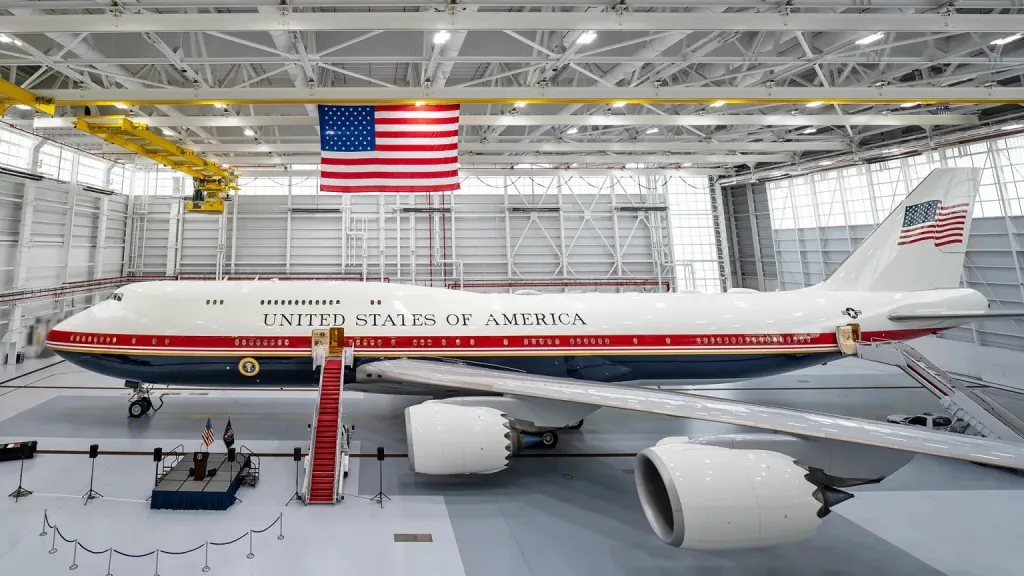
trump

Republicans pitch $1B for Trump ballroom project

1 of 2 | The demolition of the East Wing of the White House is seen in November 2025 in Washington, D.C. While President Donald Trump has touted the construction of a ballroom on the site as privately funded, a bill proposed by Republicans this week calls for $1 billion in taxpayer money for security upgrades. File Photo by Bonnie Cash/UPI | License Photo

May 5 (UPI) — Senate Republicans have released an immigration enforcement package that includes $1 billion in taxpayer money earmarked for President Donald Trump‘s massive ballroom project at the White House — a project the president has widely touted as being fully funded by private donors.

That $1 billion is to be used for security improvements to the 90,000-square-foot space, including “security adjustments and upgrades, including within the perimeter fence of the White House Compound to support enhancements by the United States Secret Service relating to the East Wing ModernizationProject, including above-ground and below-ground security features,” the bill says.

Since a shooting at the White House Correspondents’ Dinner in late April, Republicans have said the ballroom is needed for presidential security. Trump administration court filings on the plan from early April say the project will be able to withstand drone attacks and include a bomb shelter and underground medical facilities, NBC News reported.

“Congress has rightly recognized the need for these funds,” White House spokesperson Davis Ingle said in a prepared statement Tuesday. “Due in part to the recent assassination attempt on President Trump at the White House Correspondents’ Dinner, the proposal would provide the United States Secret Service with the resources they need to fully and completely harden the White House complex, in addition to the many other critical missions for the USSS.”

This $1 billion is part of a reconciliation bill that Congress plans to pass with only Republican votes, CNN reported. The full package contains about $70 billion for U.S. Immigration and Customs Enforcement and border patrol. Democrats have earlier blocked such funding without reforms, including requiring judicial warrants and banning officers from wearing masks.

Trump has long said the ballroom project, which is expected to cost $300 million to $400 million, is a gift to the nation from private donors with “not one penny” of government funds to be used, NBC News reported. The president demolished the White House’s East Wing without congressional approval for the project, a move that’s drawn ongoing legal challenges.

Last week, after the Correspondents’ Dinner incident, the Department of Justice asked a court to dismiss a lawsuit by the National Trust for Historic Preservation that challenged the ballroom plans. DOJ officials said “there is no better example of why this ballroom is necessary.”

Senate Democrats say they’ll try to force a vote to strip the $1 billion in ballroom money from the bill, which is expected to be voted on later in May.

Source link

Before Vatican trip, Rubio defends Trump remarks on Pope Leo over Iran | Donald Trump News

United States Secretary of State Marco Rubio has pushed back on comments that President Donald Trump accused Pope Leo XIV of “endangering Catholics” over his stance on the Iran war, saying his early remarks had been mischaracterised.

“Well, I don’t think that’s an accurate description of what he said,” Rubio told reporters on Tuesday when asked about Trump’s comments that the pope was “endangering a lot of Catholics”.

Recommended Stories

list of 3 itemsend of list

Rubio said the president’s concern was rooted in the threat Iran could pose to “places that have a lot of Catholics and Christians and others”, and questioned why “anyone would think that it’s a good idea for Iran to ever have a nuclear weapon”.

He also pointed to rising tensions in the Strait of Hormuz, accusing Tehran of “holding the whole world hostage” and endangering commercial shipping.

Trump had earlier criticised the pope in remarks to right-wing radio host Hugh Hewitt, suggesting the pontiff was too soft on Tehran.

“The pope would rather talk about the fact that it’s OK for Iran to have a nuclear weapon, and I don’t think that’s very good,” Trump said.

“I think he’s endangering a lot of Catholics and a lot of people. But I guess if it’s up to the pope, he thinks it’s just fine for Iran to have a nuclear weapon,” he added.

The exchange comes in advance of a meeting between Rubio and Pope Leo XIV at the Vatican on Thursday, which the US ambassador to the Holy See said is expected to be “frank”, underscoring tensions between Washington and the Catholic Church.

“Nations have disagreements, and one way to work through them is through dialogue,” Ambassador Brian Burch said on Tuesday.

“I think the secretary is coming here in that spirit, to have a frank conversation about US policy and engage in dialogue,” he added.

The pope has not said Iran should have nuclear weapons, but has opposed the war, which Trump says is aimed at stopping Tehran’s nuclear programme.

War of words between Trump and Pope Leo

Strains between Trump and Pope Leo began in March after the pontiff spoke out against the war in Iran and criticised the use of Christian rhetoric to justify military action.

The dispute escalated in April when Trump attacked the pope on social media, calling him “weak on crime” and accusing him of aligning with the “radical left”.

Pope Leo later responded during a trip to Algeria, saying he was not afraid and would keep speaking out against the war.

“I will continue to speak out loudly against war, looking to promote ⁠peace, promoting dialogue and multilateral relationships among the states ⁠to look for just ⁠solutions to problems,” he said, speaking in English.

“Too many people are suffering in the world today. Too many innocent people are being killed. And I think someone has to ‌stand ‌up and say there’s a better way.”

Cardinal Pietro Parolin, the Vatican’s top diplomat, said he did not know if Leo would respond to Trump’s latest comments.

“The pope will go ahead on his path, in the sense of preaching ‌the Gospel [and] ⁠peace,” Parolin, the Vatican’s secretary of state, told journalists. He said Leo would speak about peace at every opportunity, “convenient and inconvenient”.

Rubio is also set to meet on Friday with ⁠Italian Prime Minister Giorgia Meloni, who defended the pope, while her defence minister has said the war in Iran puts US leadership at risk.

The pope has also criticised the Trump administration’s hardline immigration policies and called for dialogue between the United States and Cuba, which has faced frequent blackouts linked to US sanctions.

Source link

Video: Trump says Iran should ‘wave the white flag’ | Donald Trump

NewsFeed

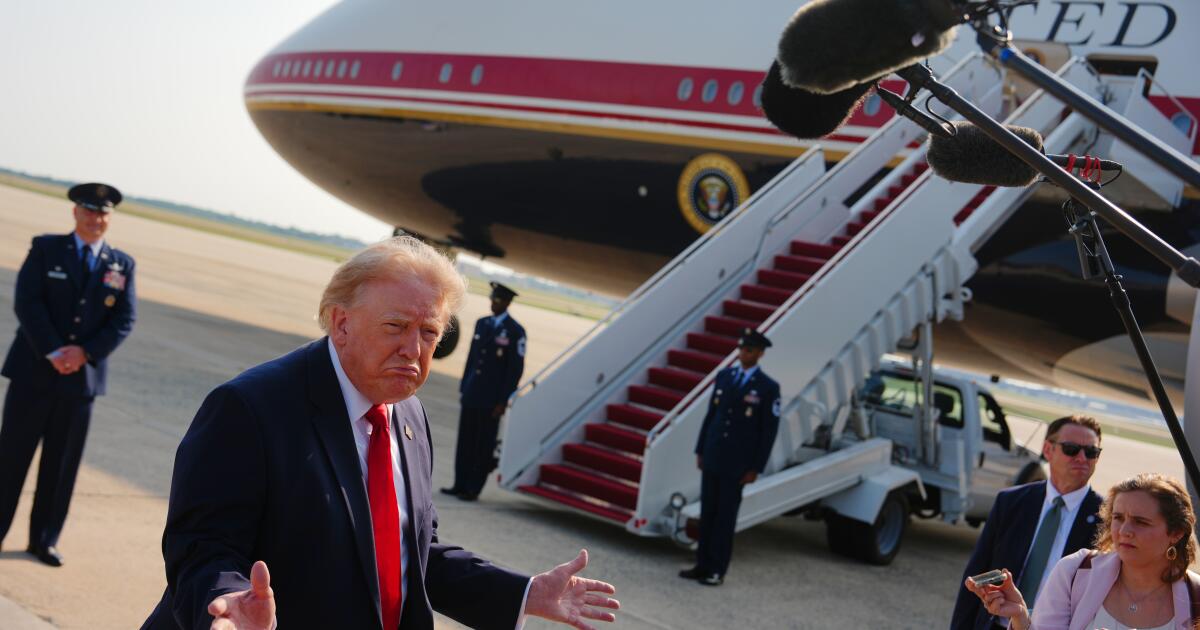
US President Donald Trump said Iran should ‘wave the white flag of surrender’ in the war, and accused Iran’s leaders of playing games in negotiations. He also said higher oil prices are a ‘small price to pay’ to keep Iran from having a nuclear weapon.
Source link

Trump’s drugmaker deals may save economy $529B over 10 years, White House says

White House economists estimate that President Trump’s deals with pharmaceutical companies to drop some of their U.S. prescription drug prices to what they charge in other countries could save $529 billion over the next 10 years.
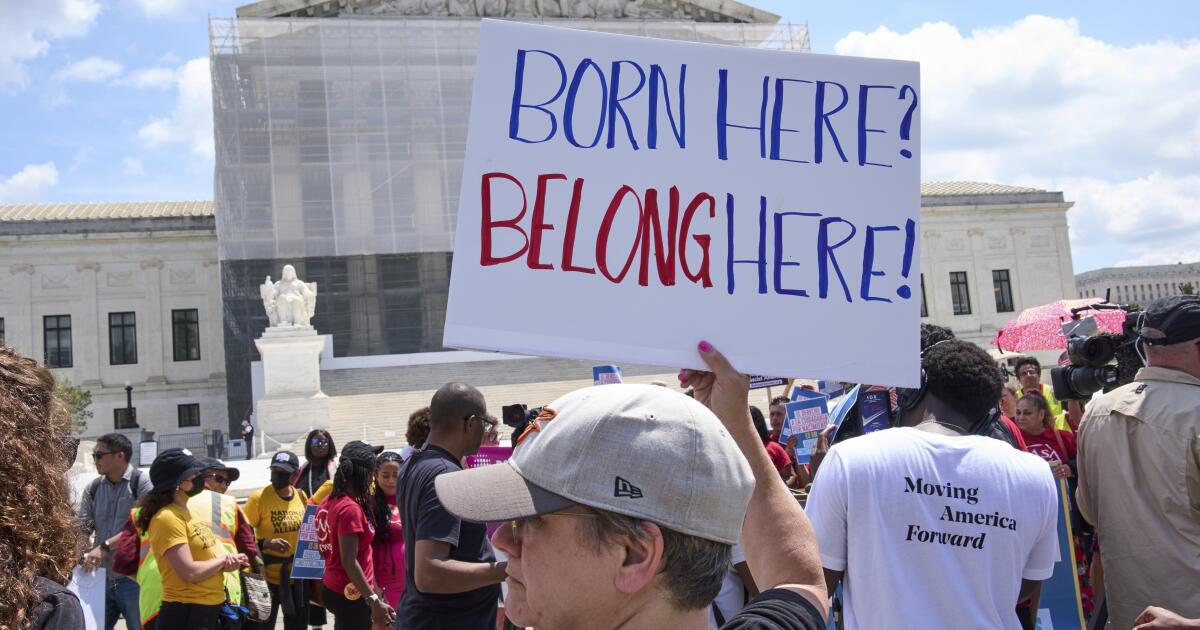
The analysis obtained by the Associated Press includes the first economy-wide projections behind a policy at the core of Trump’s pitch to voters going into November’s midterm elections for control of the House and Senate. Democratic lawmakers have been doubtful about the savings claimed by Trump and these new numbers are likely to trigger additional questions about the data.

Cost-of-living issues are at the forefront of voters’ concerns and higher energy prices tied to the Iran war have deepened the public’s anxiety. Trump has tried in part to address affordability concerns by focusing on his efforts to cut deals with companies so that the cost of prescription drugs in the U.S. would no longer be dramatically higher than in other affluent nations.

“Now you have the lowest drug prices anywhere in the world,” Trump said at a Friday rally before a crowd of seniors in Florida. “And that alone should win us the midterms.”

The analysis was done by administration officials for the White House Council of Economic Advisers. They also estimated that federal and state governments could save a combined $64.3 billion on Medicaid during the next decade because of what Trump calls his “most favored nation” policy on drug prices.

Few of the details of the deals struck by the Trump administration and 17 leading pharmaceutical companies have been made public, making it hard to independently verify the projected savings. The White House analysis sought to estimate the prospective savings as more medications come onto the market and fall under Trump’s framework — with one model in the report tallying the possible savings at $733 billion over a decade.

Trump and his Department of Health and Human Services have touted his drug-pricing deals as transformative and urged Congress to codify their principles into law. Democratic lawmakers have challenged the administration’s claims of savings. Senate Finance Committee Ranking Member Ron Wyden, D-Ore., and 17 Senate Democrats in April proposed a measure requiring the administration to disclose the terms of the agreements signed by pharmaceutical companies.

“If these deals are so great, why is the Trump administration afraid of showing them to the public?” Wyden said when announcing the measure. Health Secretary Robert F. Kennedy Jr. said his team would share details that didn’t include proprietary information or trade secrets.

The White House said it has not shared the text of the agreements because they include highly sensitive data that could move financial markets.

The potential savings estimated by the Trump administration would be substantial as Americans spent $467 billion on prescription drugs in 2024, according to the most recent government data available. The analysis is premised on the idea that foreign countries would also pay more for their prescription drugs, which would diversify drugmakers’ sources of revenue and preserve their ability to innovate with new treatments.

Outside economists have caveated that any savings might not flow directly to patients, many of whom already pay discounted prices for their drugs through their insurance coverage.

The Congressional Budget Office in October 2024 estimated that a plan similar to what Trump ended up adopting could reduce prescription drug prices by more than 5%, though the decrease “would probably diminish over time as manufacturers adjusted to the new policy by altering prices or distribution of drugs in other countries.”

The scope of the savings claimed by the Trump administration are likely to intensify the scrutiny by Democrats, who counter that any price reductions would be offset by higher costs for prescription drugs not covered by the “most favored nation” framework. One of their main critiques is that pharmaceutical companies have increased their profit margins while working with the administration.

In April, staff working for Sen. Bernie Sanders, I-Vt., released an analysis that looked at 15 of the companies that have agreed to this drug-pricing plan and found that their combined profits jumped 66% over the past year to $177 billion. The report noted that the tax cuts Trump signed into law last year “exempted or delayed many of the most expensive drugs” from price negotiations with Medicare.

The Trump administration has countered that they consider Sanders’ critique to be flawed, saying that it’s based on the list prices for pharmaceutical drugs instead of the actual price that patients pay.

Boak writes for the Associated Press.

Source link

Venezuela’s Rodríguez Praises ‘Man of Action’ Trump, Strikes Energy and Mining Deals

Venezuelan and US officials celebrated the resumption of direct Caracas-Miami flights. (EFE)

Caracas, May 5, 2026 (venezuelanalysis.com) – Venezuelan Acting President Delcy Rodríguez called US President Donald Trump a “man of action” and reiterated her commitment to long-term relations with Washington during a ceremony at Miraflores Palace on May 1.

Rodríguez received a delegation of US officials and business executives led by Jarrod Agen, executive director of the Trump administration’s National Energy Dominance Council.

“Please tell President Trump, who is a man of action, that in Venezuela there are men and women of action, but also of their word,” she told the US guests during a televised broadcast. “And we have made a commitment to build solid, long-term relations between the US and Venezuela.”

For his part, Agen first referred to Trump as a “man of action” and claimed that US-Venezuela relations are currently moving at “Trump speed” and that the White House is looking to promote oil, gas, and mining investments in the Caribbean nation.

The public statements followed the signing of contracts with Overseas Oil Company and Crossover Energy Holding for oil and gas projects in Anzoátegui, Barinas, and Monagas states, with investments of up to US $2 billion planned. Venezuelan authorities provided no details about the ventures, with Rodríguez only stating that the natural gas output would be used to strengthen the country’s electricity generation.

According to Argus Media, the two corporations will “work with” Venezuelan state oil company PDVSA on extra-heavy crude projects in the Orinoco Oil Belt. Venezuela’s recent pro-business overhaul of the Hydrocarbon Law allows PDVSA to lease out projects in exchange for a portion of the output.

While Crossover Energy does not have a track record of any past energy initiatives, Overseas Oil is a subsidiary of Hunt Oil, a 90-year-old company founded by Texas magnate H.L. Hunt. Hunt Oil previously used its close ties to the George W. Bush administration to secure oil contracts in Iraqi Kurdistan following the 2003 US invasion.

The latest oil agreements follow major energy deals struck by Chevron, Eni, Repsol, and Shell under the favorable conditions of the reformed Hydrocarbon Law, which include expanded control over operations and sales as well as reduced taxes and royalties.

On May 1, the acting Rodríguez administration also signed a memorandum of understanding in the mining sector with the US’ Heeney Capital and Switzerland’s Mercuria Energy Group.

In a statement, Mercuria, one of the world’s largest commodity traders with a history of involvement in international mining projects, explained that it had entered into “a series of strategic offtake agreements” to purchase around $2.2 billion a year of Venezuelan bulk commodities and gold. 

“The transactions align with ongoing efforts by US authorities to encourage responsible foreign investment in Venezuela’s extractive industries and to facilitate offtake structures that prioritize supply to Western markets,” the communiqué read.

Mercuria and Heeney likewise expressed interest in aluminum, nickel, and ferrous products “opportunities” that could represent a further $3 billion in annual exports.

Heeney co-founder and partner Sean Pi, who signed the agreement on behalf of the foreign companies, thanked Trump for his “leadership” in defending US access to critical minerals. Pi testified before the US House of Representatives in February to back legislative initiatives deregulating and streamlining mining projects to bolster the US supply of critical minerals.

Venezuelan Mining Minister Héctor Silva hailed the deal a “first step for the strengthening of mining ties between the US and Venezuela.” The Venezuelan National Assembly recently approved a new Mining Law that establishes incentives for Western conglomerates to exploit the South American country’s vast mineral resources.

The US delegation for the energy and mining deals with Caracas arrived on board the first direct flight between the US and Venezuela. American Airlines will hold a daily Miami-Caracas connection and will add a second one beginning on May 21 due to high demand.

US Chargé d’Affaires in Venezuela John Barrett held a ribbon-cutting ceremony alongside Venezuelan Transport Minister Jacqueline Faría to mark the resumption of the direct flights. 

Addressing reporters, Barrett stated that the reestablished air connection was a “milestone” and a “clear sign that Venezuela is open for business.”

Caracas and Washington fast-tracked a diplomatic rapprochement in the wake of the January 3 US military strikes and kidnapping of President Nicolás Maduro. Acting President Rodríguez has hosted several White House officials and touted investment opportunities for US corporations. For its part the Trump administration has issued sanctions waivers allowing select Western companies to participate in the Venezuelan energy and mining sectors but imposing control over Venezuelan export revenues.

Edited by Lucas Koerner in Caracas.

Source link

Kimmel vs. Trump’s FCC: What a license review means for ABC’s stations

Federal Communications Commission Chairman Brendan Carr has shown an ability to make a lot of noise at the government agency known in recent years to be a little sleepy.

But his April 28 announcement that the Walt Disney Co.’s eight ABC TV stations will undergo an early review of their broadcast licenses is his loudest action yet taken on behalf of President Trump, who repeatedly threatened media outlets that he believes are critical of him.

Carr is calling for the review two years before any of the station licenses are up, citing the agency’s inquiry into Disney’s diversity, equity and inclusion policies and whether they violated federal anti-discrimination rules.

The timing of Carr’s move is raising eyebrows as it comes after First Lady Melania Trump’s call for the firing of ABC late-night host Jimmy Kimmel over his April 23 comedy bit on the White House correspondents’ dinner. A tuxedo-clad Kimmel called Melania Trump “beautiful,” saying she had “the glow of an expectant widow.”

The first lady’s remarks came after a man armed with a shotgun, handgun and several knives breached security at the Washington black-tie event on April 25. The suspect, Cole Tomas Allen of Torrance, was arrested and faces three criminal charges, including attempting to assassinate the president.

Kimmel’s gag became ammunition for right-wing commentators, who claim the left is stoking political violence.

The host said the joke was about the age difference between the 79-year-old president and his wife. Kimmel denied it was a call for violence and has continued to mock the president on his show.

Carr insisted at a Washington news conference last week that his demand for a review is not related to Kimmel’s remarks.

Although many are skeptical, Carr, who was at the April 25 dinner, told The Times there would be an action related to ABC coming soon. The conversation occurred hours before the shots were fired.

The investigation into Disney’s practices began in March 2025, part of a broader effort by the Trump administration to reverse DEI initiatives across private companies, federal agencies, universities and other organizations.

After the 2020 police killing of George Floyd in Minneapolis, which spurred the Black Lives Matter movement, companies such as Disney and NBC-owned Comcast aggressively promoted their diversity efforts.

But experts believe Carr is acting on ABC at the behest of Trump, as the chairman has often expressed support on social media whenever the president criticizes one of the broadcast TV news outlets.

“It might be the case that Disney can get some early relief by saying this should be dismissed because this is really a 1st Amendment issue,” said James Speta, a professor at the Northwestern University School of Law. “We all know what’s going on here — the administration doesn’t like the speech that’s coming out of the talent on the broadcasting airwaves.”

Disney is not commenting on Carr’s DEI investigation, but it earlier defended the record of its TV stations, which are ratings leaders in most markets. “We are confident that record demonstrates our continued qualifications as licensees under the Communications Act and the First Amendment and are prepared to show that through the appropriate legal channels,” the company said.

Here’s a primer on what to know and the challenges Disney may face.

Why are TV stations licensed by the government?

Government licensing regulates the spectrum allocated to broadcast channels, largely to prevent interference between TV signals. When renewals come up, the license holder must demonstrate that the station is serving the public interest by providing local news, program diversity and educational and informational shows for children. The procedure once occurred every three years, but deregulation efforts have extended that period to the current span of eight years.

When was the last time a TV station faced a significant license renewal challenge?

The most notable recent example was Fox Corp.’s Philadelphia station WTXF, which was up for a license renewal in October 2023. Activist groups filing the challenge said Fox was unfit to own the outlet after a judge ruled earlier that year that the company’s Fox News Channel had spread falsehoods about voter fraud in the 2020 election.

Fox paid $787 million to settle a defamation lawsuit filed by Dominion Voting Systems that alleged the cable news channel damaged the company’s reputation.

Fox News, which operates on cable and satellite and is therefore not subject to FCC control, has a different management team than the parent company’s local TV stations, which mostly cover their communities and do not typically present political commentary. The FCC rejected the renewal challenge in January 2025, noting that none of the false information on Fox News was heard on the Philadelphia station. WTXF was not cited in Dominion’s lawsuit.

Are there any other examples?

Yes. Other White House administrations have threatened to pull TV station licenses in response to negative news coverage. At the height of the Watergate scandal in the 1970s, Richard Nixon’s allies unsuccessfully attempted to challenge the TV licenses of three stations then owned by the Washington Post.

Has a company ever lost its broadcast license?

RKO General, a unit of the General Tire and Rubber Co., was the last company to lose broadcast TV station licenses in 1987, including Los Angeles outlet KHJ. The case was related to corporate malfeasance and not broadcast content on the stations.

The process to revoke the RKO licenses took seven years from the moment the FCC voted in favor of the move.

But isn’t this case different?

Yes. Although the rule Carr mentioned is legitimate, the FCC has rarely if ever acted on it, according to one veteran TV executive who was not authorized to speak publicly on the matter. If Disney or any other company was found to violate the nondiscrimination rule, they would in previous eras probably be subjected to a just a fine, not the denial of a license, which would be viewed by many as government censorship.

What happens in the event that ABC licenses are not renewed?

Nothing immediately, as the licenses are in effect through 2028 to 2032, depending on the outlet. If Disney had to sell the stations, the price would probably be depressed due to pressure to unload the properties.

But public communications attorney Andrew Jay Schwartzman told The Times last month that the bar for denying a renewal is high and any effort would be tied up in court on constitutional grounds.

“The law intentionally sets out a very steep burden for the FCC to deny a license renewal; the process takes many years, during which time the licensee continues to operate normally under ‘continuing operating authority,’” Schwartzman said.

Source link

Judge in dispute over Washington golf course tells Trump officials not to cut trees without notice

A federal judge told the U.S. government Monday not to cut down more than 10 trees without first providing notice amid a legal dispute at a historic Washington golf course that President Trump plans to renovate.

U.S. District Judge Ana Reyes said during a remote hearing that she wasn’t going to issue a temporary restraining order just yet in the case brought by the DC Preservation League. She also told the National Park Service that it should first discuss any plans with government lawyers if it was going to cut down more than 10 trees.

Monday’s hearing came after the plaintiff’s emergency petition seeking to stop work at the course, citing news reports that major renovations were to begin Monday.

Kevin Griess, the superintendent of the National Mall and Memorial Parks for the Park Service, said during the hearing there was no plan to begin such work Monday but added that a safety assessment was underway.

Reyes told the parties she didn’t want to play the role of the “Parks and Rec” department, an allusion to the sitcom, but said she also didn’t want trees being bulldozed.

“I’m no Amy Poehler,” she said referring to the show’s star.

At one point during Monday’s hearing, the judge said she was made aware that closure signs had been put up at the site, which led to Griess’ asking someone to check. He later reported that there were no such signs. Reyes asked that if any such signs were found that the government’s attorney be told.

The complaint filed against the Department of the Interior argues that the Trump administration’s reconstruction of East Potomac Park, including the East Potomac Golf Course, would violate the congressional act that created the park in 1897. The roughly 130-year-old act established the park for the “recreation and the pleasure of the people.” The course itself opened in 1919.

Trump, an avid golfer, also plans on renovating a military golf course just outside Washington that has been used by past presidents going back decades.

Source link

What to know about the U.S. military presence in Europe as Trump seeks to draw down troops

President Trump’s vow to shrink America’s military deployment in Germany has put a new spotlight on the U.S. role in Europe.

There are usually 80,000 to 100,000 troops on the continent, with more than 36,000 in Germany. The Pentagon announced Friday that it would remove 5,000 troops from Germany, and Trump said the next day that he would go “a lot further” than that.

The U.S. military presence is a legacy of World War II, when Americans helped stabilize and rebuild Europe, and the Cold War, when the troops served as a bulwark against Soviet expansion. More recently, the deployment has played a key role supporting operations in the Arctic, Africa and the Middle East including the current conflict with Iran.

But Trump has broken with years of bipartisan consensus, criticizing European allies in NATO and following through on threats to reduce the U.S. commitment to the continent’s security. The recent announcement comes after escalating tensions with German Chancellor Friedrich Merz, who last week said the U.S. was being “humiliated” by Iran and accused Washington of lacking a clear strategy.

Here’s a look at America’s current deployment in Europe and how it could change.

What to know about the U.S. defense posture in Europe

The U.S. European Command, created in 1947 and known as EUCOM, is one of 11 combat commands within the Defense Department, and covers some 50 countries and territories.

In addition to more than 36,000 troops in Germany, Italy hosts more than 12,000 and there’s another 10,000 in the United Kingdom, according to Pentagon numbers from December.

The Pentagon has offered few details about which troops or operations would be affected in the drawdown announced Friday.

The U.S. increased its European deployment after Russia launched its full-scale war on Ukraine four years ago. NATO allies like Germany have expected for over a year that these troops would be the first to leave.

European deployment has global role

Aside from its role as a deterrent to Russia, the U.S. military presence in Europe helps Washington project power across the globe.

U.S. Gen. Alexus Grynkewich, who is the commander in Europe of both U.S. and NATO forces, reinforced the benefits of a strong footprint on the continent to the Senate Armed Services Committee in March.

“It is having capabilities in Europe, munitions in Europe that allow us to help U.S. Africa Command to target terrorists in Africa, or to help U.S. Central Command as they execute Operation Epic Fury,” he told lawmakers, referring to the Iran war. “The distances are shorter, it’s less expensive and it’s much easier to project power.”

Germany hosts the headquarters of the U.S. European and Africa commands, Ramstein Air Base and a medical center in Landstuhl, where casualties from the wars in Afghanistan and Iraq were treated. U.S. nuclear weapons are also stationed in the country.

The U.S. has approximately 100 nuclear bombs deployed to bases in Europe that would be delivered by aircraft, according to a March estimate from the Federation of American Scientists. The group’s report said the bombs are at bases in Belgium, Germany, Italy, the Netherlands and Turkey, while it’s possible they’re also at a base in the United Kingdom.

A call to move U.S. forces further east in Europe

Even before Trump’s comment Saturday to reporters, Republican leaders of both armed services committees in Congress expressed concern about the Pentagon plan, warning a premature drawdown in Europe would send “the wrong signal to Vladimir Putin” as the Russian president continues his war in Ukraine.

Sen. Roger Wicker of Mississippi and Rep. Mike Rogers of Alabama said troops should be shifted to bases in Eastern Europe rather than withdrawn.

The lawmakers also said allies have made “substantial investments to host U.S. troops.”

Wicker and Rogers said the Pentagon, following its announcement Friday, has also decided to cancel the planned deployment to Germany of one of the U.S. Army’s long-range fires battalions, which operate ground-launched missile systems.

Trump’s vision: DIY defense in Europe

As part of its National Defense Strategy announced in January — a sweeping document laying out a vision on everything from deterring China to defending against cyberattacks to disrupting Iran’s nuclear ambitions — the administration said Europe must do more for its own defense.

While “we are and will remain engaged in Europe, we must — and will — prioritize defending the U.S. Homeland and deterring China,” it said.

Among other things, the document noted that Europe’s economic power, while shrinking in relative terms globally, remains significant, and said that Germany’s economy alone “dwarfs that of Russia.”

“Fortunately, our NATO allies are substantially more powerful than Russia — it is not even close,” it said, noting a recent commitment among NATO allies to raise national defense spending to 5% of GDP in total, a push led by Trump.

What Germany has been doing to beef up its forces

Germany has moved to modernize its long-neglected military, or Bundeswehr, since Russia’s invasion of Ukraine in 2022. That year, it set up a $117 billion special fund to boost Bundeswehr, much of which has been committed to procuring new equipment.

Late last year, Merz’s government announced plans to raise the number of military personnel to 260,000, up from about 180,000. In 2001, when Germany still had conscription, the headcount was 300,000 — more than a third of them conscripts.

Berlin says it will also need around 200,000 reservists, more than double the current figure.

Defense Minister Boris Pistorius, in comments to German news agency dpa after the Pentagon’s drawdown plan was announced Friday, acknowledged that Europe must take more responsibility for its own security — and said the Bundeswehr is growing, military equipment is being procured more quickly, and infrastructure is being developed.

Keaten and Finley write for the Associated Press. Keaten reported from Geneva.

Source link

Does Trump hold ‘all the cards’ against Iran in the Strait of Hormuz? | US-Israel war on Iran News

“I have all the cards,” posted the White House on its X account on Sunday, alongside an image of President Donald Trump holding playing cards from the Uno game, in a message appearing to signal Washington’s confidence in its ongoing war on Iran.

Uno is a card game in which the winner is the first to get rid of all their cards.

Recommended Stories

list of 4 itemsend of list

The post came after Trump announced on his Truth Social platform that the US military would begin guiding ships stranded around the Strait of Hormuz by the war on Monday, in a sign that the conflict could further escalate, despite the near-month-long fragile ceasefire. Tehran has been effectively blocking nearly all shipping from the Gulf for more than two months, after the US and Israel attacked Iran two months ago, disrupting global energy supplies.

“We have told these countries that we will guide their ships safely out of these restricted waterways, so that they can freely and ably get on with their business,” Trump said, dubbing the campaign “Project Freedom”. “They are merely neutral and innocent bystanders!”

The president added that US negotiators were engaged in “very positive discussions” with Tehran, which could lead to “something very positive” without further elaboration.

Iran, however, reacted by insisting that the security of the waterway was in the hands of its armed forces, and warned that “any safe passage and navigation in any situation” should be “carried out in coordination with the armed forces”.

On Monday, the Iranian Fars news agency reported that a US warship had been hit by two Iranian drones, the claim was denied by US Central Command.

So what leverage do the US and Iran hold over each other, and what happens next?

In response to Trump’s “I have all the cards” social media post, Iran’s Consulate General in Hyderabad, India, posted its own image on X.

“Yes, we have less cards,” Iran’s consulate in the Indian city of Hyderabad wrote on X, together with a photo of an Iranian military spokesperson holding four Uno cards compared to Trump’s five, pointing out that usually holding all the cards means you are losing, not winning, in the game of Uno.

In response to Trump’s “Project Freedom” declaration, Iran’s Islamic Revolutionary Guard Corps (IRGC) warned that ships deemed to be in breach of its rules in the Strait of Hormuz “will be stopped by force”, while insisting there has been no change in how it manages traffic through the strategic waterway.

On Monday, it issued a new map of the Strait of Hormuz with boundaries extending further to the east than its previous one, and said any ship travelling between the two sides must coordinate with the IRGC first.

“There has been no change in the management process of the Strait of Hormuz,” spokesperson Sardar Mohebbi said, adding that vessels that comply with the “transit protocols issued by the IRGC Navy” will be “safe and secure”.

“Other maritime movements that are contrary to the declared principles of the IRGC Navy will face serious risks. Violating vessels will be stopped by force,” he said.

What leverage does the US have over Iran?

Sanctions

The United States’ most enduring source of leverage over Iran remains its sanctions regime, which was launched in 1979 when Ayatollah Ruhollah Khomeini declared Iran an Islamic Republic.

Successive US administrations over the past 47 years have hit Tehran with a series of financial restrictions targeting Iran’s banking, oil exports and access to international markets – the US says the sanctions are a response to Iran’s nuclear programme.

Sanctions have significantly constrained Iran’s economy, limiting government revenue and contributing to inflation and currency depreciation. Measures enforced through the US Treasury also deter other countries and companies from engaging with Iran, further strangling its economy.

The economic pressure has been central to US strategy towards Iran, particularly during its attempts to force Tehran back to negotiations over its nuclear programme, under both Democratic and Republican administrations.

Military power

Beyond economics, the US maintains overwhelming military superiority, especially air power. Aircraft carriers, long-range bombers and precision strike capabilities give Washington the ability to target Iranian infrastructure with relatively low risk to its own forces.

US bases across the Gulf, as well as military partnerships with regional allies – most notably Israel – reinforce this advantage.

American forces, together with the Israeli army, have killed more than 3,000 people, and struck thousands of sites across Iran in the current war, including Iran’s energy and nuclear sites.

Naval blockade

Since mid-April, the United States has enforced a widespread naval blockade of Iranian ports and ships. The operation began on April 13 after talks between Washington and Tehran collapsed, with US forces ordered to stop or divert vessels entering or leaving Iranian ports.

US forces have since intercepted or turned back dozens of ships, and seized a container ship, the Touska. On Monday, the US announced that its crew had been repatriated to Iran from Pakistan, where they were taken after their ship was captured in the Gulf of Oman last month.

According to Trump, the blockade is designed to choke Iran’s oil exports, its main revenue source.

US officials say the measures have severely disrupted Iran’s trade, which relies heavily on sea routes.

What leverage does Iran have?

Strait of Hormuz

The vital waterway is Iran’s most significant strategic asset, the narrow passage ships one-fifth of the world’s oil and liquefied natural gas (LNG) supplies in peacetime.

Tehran has effectively closed the strait since the war began on February 28, sending global oil and gas prices soaring and energy markets into turmoil. Iran has repeatedly demonstrated its ability to target shipping, seize vessels, or conduct military exercises, demonstrating its ability to close or restrict the strait.

The result is soaring energy prices globally, forcing many countries to implement severe austerity measures to soften the blow.

Last week in the US, the average price of a gallon (3.8 litres) of gasoline (petrol) rose to $4.30, according to the American Automobile Association (AAA), up from less than $3 before the war.

Surging energy costs have driven up inflation and deepened economic uncertainty in the US, compounding Trump’s political troubles amid overwhelming disapproval for the war amongst Americans.

Even if the US does begin escorting ships through safely – the threat from mines or Iranian strikes may be enough to prevent tankers from attempting to sail, experts say. Insurance companies are also unlikely to underwrite voyages.

Regional allies

Iran’s network of allied groups across the Middle East is another asset that Tehran relies on heavily. These include armed groups in Iraq and Syria, as well as Hezbollah in Lebanon and the Houthis in Yemen

Through these groups, Iran has exerted pressure indirectly, targeting US interests and allies without engaging in direct confrontation.

One critical threat Iran has previously made is for the Houthis to disrupt shipping in the Bab al-Mandeb, another vital maritime chokepoint linking the Red Sea to the Gulf of Aden.

INTERACTIVE - Bab al-Mandeb strait red sea map route shipping map-1774773769

The Houthis, an Iran-aligned group in Yemen, have previously targeted shipping in this area, most notably during Israel’s genocidal war on Gaza, further raising concerns about the security of global trade routes.

Roughly 4.2 billion barrels of crude oil and refined petroleum liquids flowed through the strait in 2014, accounting for about five percent of global supply.

Cheap drones and cluster bombs

While nowhere near the military capabilities of the US, Iran’s investment in missile and drone programmes has proven to be an effective means of deterrence. That is particularly through its ability to threaten regional US bases and impose significant costs on regional countries hosting American assets involved in military operations against Tehran.

While the US undoubtedly has a more sophisticated and powerful arsenal at its disposal, the interceptors it uses to combat Iranian drones cost around $4 million each, while Iran’s Shahed drones can be mass-produced at $20-50,000 each.

Furthermore, Iran’s ballistic missiles have proved capable of breaching Israel’s much-lauded “Iron Dome” defence system on several occasions. Iran has also dropped cluster bombs, which divide before they can be intercepted, making them much harder to stop.

So does the US really hold the most cards?

Michael Clarke, visiting professor at the Department of War Studies, King’s College London, said Trump’s overwhelming conventional military strength has failed to translate into strategic leverage on the ground.

“President Trump thinks he is a great poker player,” Clarke told Al Jazeera. “He thought America’s sheer destructive potential put all the ‘cards’ in his hand” when starting the war on Iran.

But Iranian forces have consistently disrupted US expectations through asymmetric tactics, he said.

“At every turn, the Iranians have come up with asymmetric tactics – vicious, reckless tactics – that have negated everything the Americans have tried to do,” Clarke noted, describing a pattern in which traditional US military superiority has been blunted by unconventional responses.

Despite significant American forces and assets in the region – including “no fewer than three US Carrier Strike Groups, two Marine Expeditionary Units, hundreds of combat aircraft and thousands of troops”, Clarke argued that Washington has struggled to find an effective use for its multi-billion-dollar resources at its disposal.

Moreover, he said, domestic pressure on Trump is growing. Trump “can’t find a way to use them [US forces] that will make any real difference to the current stalemate in the limited time he has before his own MAGA base concludes he has lost the game”.

Clarke also highlighted the willingness of Iran’s IRGC to escalate tensions. “Whatever this war might do to Iranian society, the IRGC is prepared to gamble with its own existence in the fight,” he added.

Source link

NATO chief says Europeans have ‘gotten the message’ from Trump on defence | European Union News

The US president has accused some NATO countries of not doing enough to support the US-Israel war on Iran.

NATO Secretary-General Mark Rutte says European leaders have “gotten the message” after United States President Donald Trump announced plans to withdraw 5,000 soldiers from Germany.

Trump has grown increasingly frustrated with NATO allies, accusing them of not doing enough to support the US-Israel war on Iran. Speaking on Monday, Rutte acknowledged “disappointment from the US side”.

Recommended Stories

list of 3 itemsend of list

“European leaders have gotten the message. They heard the message loud and clear,” Rutte said before a European Political Community meeting in Armenia.

“Europeans are stepping up, a bigger role for Europe and a stronger NATO,” he added.

The Pentagon announced the troop withdrawal from Germany on Friday, days after German Chancellor Friedrich Merz said Iran was humiliating the US during the negotiations aimed at ending the war.

The European Union’s top diplomat, Kaja Kallas, called the announcement’s timing a “surprise”.

“I think it shows that we have to really strengthen the European pillar in NATO, and we have to really do more,” Kallas said while stressing that “American troops are not in Europe only for protecting European interests but also American interests.”

Over the weekend, NATO spokesperson Allison Hart said officials in the 32-nation military alliance “are working with the US to understand the details of their decision on force posture in Germany”.

‘Dangerous military intervention’

European criticism of the war on Iran has mounted in recent weeks as the conflict sends shockwaves through the global economy due to the continued disruption to shipping in the Strait of Hormuz.

Last week, Merz compared the war to previous military quagmires, such as the US invasions of Iraq and Afghanistan.

“It is, at the moment, a pretty tangled situation,” he said. “And it is costing us a great deal of money. This conflict, this war against Iran, has a direct impact on our economic output.”

Spain has refused to let the US launch attacks on Iran from its airspace or military bases. Prime Minister Pedro Sanchez has condemned the war as “unjustified” and a “dangerous military intervention” outside the realm of international law.

In response, Trump called Spain “terrible” and threatened to end all trade ties.

Despite this, Rutte said “more and more” European nations were now pre-positioning assets such as minehunters and minesweepers close to the Gulf to be ready for the “next phase” in the war.

He provided no details, and European nations have previously insisted they would not help to police the Strait of Hormuz until the war is over.

Increased defence spending

Many European countries have committed to ramping up defence spending in the face of fears over Trump’s commitment to NATO and Russia’s assault on Ukraine – a push underscored by several leaders in the Armenian capital.

“Europeans are taking their destiny into their own hands, increasing their defence and security spending, and building their own common solutions,” French President Emmanuel Macron said.

“We have to step up our military capabilities to be able to defend and protect ourselves,” European Commission President Ursula von der Leyen told reporters.

Source link

Oil markets lower as Trump vows to help ships leave Strait of Hormuz

Published on

Crude prices were slightly lower ahead of European markets opening as traders digested comments from US President Donald Trump that Washington would help ships leave the Strait of Hormuz from today. Iran, however, has rejected the plan.


ADVERTISEMENT


ADVERTISEMENT

At the time of writing, the price of a barrel of US benchmark crude (WTI) was down 0.28% to $101.65 a barrel, while Brent crude, the international standard, edged down 0.06% to $108.10 a barrel.

Much hinges now on progress towards ending the war with Iran and unlocking the bottleneck through the Strait of Hormuz.

The oil market “remains the fulcrum, with hundreds of tankers, bulk carriers, and cargo ships still stranded across the Gulf, idling as storage constraints force producers to shut … production simply because there is nowhere left to store it,” Stephen Innes of SPI Asset Management said in a commentary note.

Trump said what he called “Project Freedom” would begin Monday morning in the Middle East. The US Central Command said it would involve guided-missile destroyers, more than 100 aircraft and 15,000 service members, but the Pentagon did not immediately answer questions about how they would be deployed.

Asia-Pacific and US markets

In Asian share trading overnight, Hong Kong’s Hang Seng jumped 1.4% to 26,135.47. Markets in mainland China and Japan were closed for “Golden Week” holidays. In Australia, the S&P/ASX 200 slipped 0.3% to 8,704.70.

Strong buying of tech stocks pushed shares in South Korea sharply higher, as the Kospi gained 3.8%. Taiwan’s Taiex surged 4.2%.

On Friday, the S&P 500 climbed 0.3% to another all-time high of 7,230.12, closing out a fifth straight winning week. The Dow Jones Industrial Average dipped 0.3% to 49,499.27, and the Nasdaq composite added 0.9% to a record close of 25,114.44.

Apple led the way after delivering better profit than expected. Because it’s one of Wall Street’s biggest stocks in terms of overall size, its rally of 3.3% was by far the strongest force lifting the S&P 500.

Stock prices generally follow the path of corporate profits over the long term, and US companies have been exceeding expectations for earnings in the first three months of 2026. That’s even with the war with Iran and high oil prices souring confidence for many US households.

Strong earnings boost S&P 500

A little more than a quarter of the companies in the S&P 500 have reported already, and 84% of them have topped analysts’ estimates, according to FactSet. The index is on track to deliver roughly 15% growth in profit from a year earlier.

The main uncertainty for the global economy is where oil prices are heading because of the Iran war. Oil prices moved higher last week on worries that the war might keep the Strait of Hormuz closed for a long time, trapping oil tankers pent up in the Persian Gulf instead of delivering crude to customers worldwide.

Brent was selling for a little more than $70 per barrel before the war began, and soaring prices helped the two biggest U.S. oil companies report stronger profit for the latest quarter than analysts expected. But stock prices nevertheless fell for both Exxon Mobil, 1%, and Chevron, 1.4%, as oil prices regressed Friday and each reported drops in net income from a year earlier.

In other dealings early Monday, the dollar rose to 157.18 Japanese yen from 156.80 yen. The euro fell to $1.1724 from $1.1746.

Source link

Trump says US to begin escorting ships in Strait of Hormuz | US-Israel war on Iran

NewsFeed

US President Donald Trump has announced ‘Project Freedom’, a naval mission to escort stranded ships through the Strait of Hormuz starting Monday, warning any interference will be met “forcefully”. The move comes amid a fragile US-Iran truce, with Tehran warning it would treat US intervention as a breach.

Source link

Ex-NYC mayor, Trump ally Rudy Giuliani in critical condition

1 of 3 | Former New York Mayor Rudy Giuliani is interviewed on the floor of the 2024 Republican National Convention at Fiserv Forum in Milwaukee, Wis., on July 16, 2024. Giuliani has been hospitalized in critical condition, his spokesman said Sunday. File Photo by Tannen Maury/UPI | License Photo

May 3 (UPI) — Former New York Mayor Rudy Giuliani has been hospitalized and is in critical condition, his spokesman said Sunday.

Giuliani “is currently in the hospital, where he remains in critical but stable condition,” Ted Goodman said in a statement.

“Mayor Giuliani is a fighter who has faced every challenge in his life with unwavering strength, and he’s fighting with that same strength now. We do ask that you join us in prayer for America’s Mayor Rudy Giuliani.”

Goodman did not say why Giuliani, 81, was hospitalized.

The former mayor’s condition was also noted by President Donald Trump, who wrote on his Truth Social platform, “True Warrior, and the Best Mayor in the History of New York City, BY FAR.”

Trump also took the occasion to praise his political ally and former lawyer, who served as one of the key figures in the president’s baseless campaign attacking the results of his 2020 election loss to Joe Biden as “rigged.”

“They cheated on the Elections, fabricated hundreds of stories, did anything possible to destroy our Nation, and now, look at Rudy. So sad!” Trump wrote.

Trump in November pardoned Giuliani and 76 others tied to his efforts to overturn the 2020 election, including participation in what has become known as the fake electors scheme. The strategy involved the creation of false slates of pro-Trump electors in every battleground state that he lost to Biden, including Georgia.

The former mayor’s championing of Trump’s claims also resulted in his own financial troubles.

In September, he reached a confidential settlement with Dominion Voting Systems, which had filed a $1.3 billion defamation lawsuit against him for his allegations the company rigged the 2020 presidential election.

Giuliani was previously disbarred as a lawyer in New York and Washington, D.C.

Source link

Iran Ceasefire Means Trump Needs No Congressional Approval To Continue War: White House

The 60-day clock for President Trump to seek congressional approval for further military actions against Iran was stopped by the April 7 ceasefire, a senior White House official claimed to The War Zone Friday morning. As we previously noted, the president faced a deadline today under the War Powers Resolution of 1973 to obtain permission from Congress to continue fighting.

The White House decision comes as the now-paused war is at a stalemate, with both sides believing they can outlast the other. Meanwhile, Trump is considering options for a new round of strikes while Iranians say they have presented new plans for working toward a peace deal.

“For War Powers Resolution purposes, the hostilities that began on Saturday, February 28 have terminated,” the official told us, speaking on condition of anonymity to discuss the matter. “Both parties agreed to a two-week ceasefire on Tuesday, April 7 that has since been extended. There has been no exchange of fire between U.S. Armed Forces and Iran since Tuesday, April 7.”

The administration’s statement today follows War Secretary Pete Hegseth’s Congressional testimony yesterday that “the 60-day clock pauses or stops in a ceasefire.”

🚨🛑🚨
US Defense Secretary Pete Hegseth says a ceasefire could pause the 60-day war powers deadline, but Senator Tim Kaine argues the law may not allow it.
Source::CNN news pic.twitter.com/NfzHb79NEC

— Naki (@Naki_BK8) May 1, 2026

Under the War Powers Resolution, the use of armed forces should be terminated within 60 days unless Congress has declared war or voted to approve a 30-day extension. Since Trump formally notified Congress about the Iran war on March 2, that deadline fell today. Even though several other presidents have simply ignored the War Powers Resolution, the Trump administration is now arguing that the measure doesn’t really apply to their operation just yet.

It remains unclear how or if Congress will react. It adjourned yesterday for a week-long recess. On Thursday, the Senate rejected the latest of many resolutions intended to halt the war, The Washington Post noted

Republican lawmakers appear to be deferring to Trump on the issue of the War Powers Resolution. Senate Majority Leader John Thune, R-S.D., told The Associated Press on Thursday that he doesn’t plan on a vote to authorize force in Iran or otherwise weigh in.

“I’m listening carefully to what the members of our conference are saying, and at this point I don’t see that,” Thune said.

Republican Sen. Kevin Cramer of North Dakota said he’d vote for an authorization of war if Trump asked for it. But he questioned if the War Powers Act, passed during the Vietnam War era as a way for Congress to claw back its power, is even constitutional.

“Our founders created a really strong executive, like it or not like it,” Cramer said.

In a post on X, Republican Sen. Susan Collins of Maine, who joined with nearly all Democrats for the vote, said Trump’s authority as commander in chief is “not without limits.”

The 60-day deadline “is not a suggestion; it is a requirement,” she said, adding that further military action “must have a clear mission, achievable goals, and a defined strategy for bringing the conflict to a close.”

As I have said since these hostilities with Iran began, the President’s authority as Commander-in-Chief is not without limits. The Constitution gives Congress an essential role in decisions of war and peace, and the War Powers Act establishes a clear 60-day deadline for Congress…

— Sen. Susan Collins (@SenatorCollins) April 30, 2026

UPDATES

Iran says that it has “delivered its latest proposal for negotiations based on efforts to end the war to Pakistan,” the official Iranian IRNA news outlet reported on Friday.

“Iran handed over the text to Pakistan – a mediator for negotiations with the United States – on Thursday evening,” IRNA stated, without providing any details about what it entailed.

​Iranian Foreign Ministry Spokesperson Esmaeil Baqaei emphasized in a television interview “that ending the war and establishing a sustainable peace remain Tehran’s main priorities in negotiations with the United States,” according to IRNA.

However, how much the new proposals will move the needle is unclear. Trump’s major demand is that Iran give up its nuclear ambitions. Baqaei’s comments followed those yesterday by Iran’s Supreme Leader, Ayatollah Mojtaba Khamenei, that seem to be in opposition to Trump’s demand. Khamenei said that his country will protect its “nuclear and missile capabilities” as a national asset and that the only place Americans belong in the Persian Gulf is “at the bottom of its waters.”

As we noted yesterday, the injured Iranian supreme leader rarely communicates publicly and Trump claims there is a fracture in Tehran’s government, making negotiations difficult. The schism in Iranian leadership should come as no surprise. This is exactly what we predicted could happen before the war even started.

Pakistan has been serving as an intermediary between the U.S. and Iran. Talks in Islamabad on April 11 concluded without reaching an agreement to end the war.

Iran submitted a revised negotiation proposal to the United States through Pakistani mediators on Thursday, IRNA news agency reported on Friday.

Foreign ministry spokesman Esmail Baghaei earlier said Tehran seeks a durable peace in talks with Washington, even as senior clerics… pic.twitter.com/UwdvXeVDOU

— Iran International English (@IranIntl_En) May 1, 2026

While details of the new plan are unknown, CNN International Diplomatic Editor Nic Robertson said that from talking to sources, it could involve a situation where the U.S. lifts its blockade of Iranian ports at the same time Iran ends its closure of the Strait of Hormuz.

At the 11th hour in Pakistan Iran’s proposal arrives – will it go far enough for the US President – here’s what we know about it pic.twitter.com/j7r4QB5sUB

— Nic Robertson (@NicRobertsonCNN) May 1, 2026

U.S. Central Command commander Adm. Brad Cooper and Joint Chiefs of Staff Chairman Gen. Dan Caine briefed President Trump Thursday night for 45 minutes “on new operational plans for potential strikes against Iran,” Axios reported on X, citing two senior American officials.

As we noted yesterday, CENTCOM has prepared three options, according to Axios. They include: 

  • “Short and powerful” waves of strikes on Iran, likely including infrastructure targets. 
  • “Taking over part of the Strait of Hormuz to reopen it to commercial shipping. Such an operation could include ground forces,” one source told the outlet.
  • A “special forces operation to secure Iran’s stockpile of highly enriched uranium.” As we have reported in the past, such an operation faces tremendous challenges and great risk for a questionable chance of success.

“President Trump has all the cards as negotiations continue, and he always has all options at his disposal to ensure that Iran can never possess a nuclear weapon,” White House deputy press secretary Anna Kelly told us Friday morning in response to our query about the briefing. CENTCOM declined comment and the Joint Chiefs have not responded to our request.

מפקד פיקוד מרכז של צבא ארה”ב האדמירל בראד קופר וראש המטות המשולבים הגנרל דן קיין תדרכו הלילה את הנשיא טראמפ במשך 45 דקות על תכניות מבצעיות חדשות לתקיפות אפשריות נגד איראן, כך לפי שני בכירים אמריקנים https://t.co/p4GOe8rdAf

— Barak Ravid (@BarakRavid) May 1, 2026

Addressing one of those options listed by Axios, Iranian MP and member of the negotiation delegation Mahmoud Nabavian warned that if Iranian leaders are assassinated in any attack, leaders of Persian Gulf nations “will be killed and their palaces destroyed.”

Iranian MP and member of the negotiation delegation Mahmoud Nabavian states that if Iranian leaders are assassinated in any attack, all of the complicit despots in the Persian Gulf will be killed and their palaces destroyed. pic.twitter.com/JUioYttQtc

— Seyed Mohammad Marandi (@s_m_marandi) May 1, 2026

While Israel has managed to meet its military objectives against Iran, leaving the Islamic Republic with highly enriched uranium would be a huge mistake, a senior military official told the Israeli Ynet media outlet.

The air force established an “Iran Department,” and the goals that had been set were achieved, the anonymous official told the publication.

“Now we will see whether another ‘clarification’ is needed to make them sit down for negotiations,’” the senior military official told the outlet, adding that “without a solution to the issue of uranium enrichment and the nuclear program, it will be one major failure.”

Israel Air Force chief exits with warning: no nuclear deal with Iran would be ‘a major failure’

Maj. Gen. Tomer Bar is ending 39 years in uniform after leading the Israel Air Force through October 7, internal reservist turmoil, his…https://t.co/AOAmxFbB64 pic.twitter.com/xwsLRe3Zyn

— Ynet Global (@ynetnews) May 1, 2026

An Iranian official claims that last night, “small enemy drones appeared to assess the country’s air defense, and Iran’s air defense responded decisively.”

“The Islamic Republic must respond offensively to the presence of micro-drones so that the enemy does not make such a mistake again,” said Ali Khodarian, Iranian National Security Commission of the Parliament Member. He did not say whose drones flew over Iran.

The War Zone cannot independently verify that claim, but this would be very much in line with preparations for resuming the air war. Stimulating an enemy’s air defense network via decoy drones would provide critical intelligence on the enemy’s electronic order of battle, including the status and locations of threat emitters and Iran’s ability to respond.

JUST IN: Iranian National Security Commission of the Parliament Member, Khodarian:

“Last night, small enemy drones appeared to assess the country’s air defense, and Iran’s air defense responded decisively. The Islamic Republic must respond offensively to the presence of… pic.twitter.com/pri0iBauOd

— Sulaiman Ahmed (@ShaykhSulaiman) May 1, 2026

Khodarian’s comments follow video emerging on social media last night showing Iranian air defenses firing over Tehran.

In a major sign of growing cooperation between Israel and Gulf nations spurred by the war, Israel “sent sophisticated weapons systems — including an advanced laser — to the United Arab Emirates to help defend the Gulf monarchy from a ferocious onslaught of Iranian missiles and drones,” Financial Times reported.

Israel sent the UAE a version of its Iron Beam laser defense system, FT stated, citing one person familiar with the deployment and another with knowledge of the preparations to operate the system.

As we have previously explained, Iron Beam is a trailer-mounted weapon using directed-energy to destroy targets, including rockets, mortars, and drones. Reports described the system as firing “an electric 100-150 kW solid-state laser that will be capable of intercepting rockets and missiles.”

It was first deployed by Israel earlier this year to defend against incoming Hezbollah projectiles from Lebanon. 

Israel also provided UAE with its lightweight Spectro surveillance system, “which helped the Gulf nation detect incoming drones, especially Shaheds, from as far as 20km away,” the publication stated. The system “integrates a wide range of digital imaging, high-definition optical sensors and advanced lasers, providing simultaneous multi-spectral observation capabilities and enabling ultra-long-range detection,” according to the Israel manufacturer Elbit

In addition to Iron Dome, #Israel dispatched a version of the Iron Beam laser-based air defense system to the United Arab Emirates during the recent fighting with #Iran to help protect the Gulf nation from missile and drone attacks. https://t.co/AAuUpfxyxK

— Jason Brodsky (@JasonMBrodsky) May 1, 2026

A satellite image emerging on social media purports to show that Iran is continuing to load oil onto tankers at Kharg Island.

“No sign yet Tehran has run out of storage, despite baseless claims from the White House,” Javiar Blas, energy and commodities columnist at Bloomberg stated on X. 

As we previously reported, Trump suggested that Iran’s oil infrastructure could “explode” in about three days because of mechanical and geologic issues exacerbated by the blockade.

Transits of the Strait of Hormuz continue to decline during the ongoing closure by Iran and U.S. blockade of Iranian ports.

As of April 30, “Hormuz crossings reduced to seven transits, split between four commercial and three non-commercial movements, with direction broadly balanced at four west-to-east versus three east-to-west,” the global trade intelligence firm Kpler stated on X. “Only two laden west-to-east crossings were recorded, under Pakistani and Comoros flags carrying [refined petroleum] and dry bulk, while higher-risk tonnage remained limited with just three shadow or sanctioned vessels observed and the rest assessed low-risk.”

No new physical attacks have been recorded since April 22, Kpler added, with permissive passages continuing.

Strait of Hormuz | Daily Vessel Crossings

As of 30 April, Hormuz crossings halved d/d to seven transits, split between four commercial and three non-commercial movements, with direction broadly balanced at four west-to-east versus three east-to-west.
Only two laden west-to-east… pic.twitter.com/y5Mc39xarg

— Kpler (@Kpler) May 1, 2026

The UK Maritime Trade Operations (UKMTO) group says strait transits have fallen by more than 90%, leaving 850 merchant ships and around 20,000 sailors trapped inside the Gulf and unable to leave. 

The Royal Navy maritime monitoring team has warned that shipping through the Strait of Hormuz has fallen by more than 90 per cent, with 850 merchant ships and around 20,000 sailors trapped inside the Gulf and unable to leave. Click image for more.https://t.co/XgKDZjSzql

— UK Defence Journal (@UKDefJournal) May 1, 2026

Despite a ceasefire, Israel said it has continued attacking Hezbollah positions in southern Lebanon.

Troops from the Paratroopers Brigade, Givati Brigade, Commando Brigade, and the Fire Brigade (214), under the command of the 98th Division, have operated in recent weeks in the area of the town of Bint Jbeil to clear the area of Hezbollah infrastructure and eliminated its fighters, the IDF said on Telegram.

“During the operations, the troops dismantled more than 900 terrorist infrastructure sites, located hundreds of weapons, and eliminated more than 200 terrorists in close-quarters combat and precise airstrikes.”

“After it was identified as booby-trapped, the Israeli Air Force struck and dismantled the stadium as part of the division’s efforts to locate and dismantle infrastructure used for terrorist purposes,” IDF claimed. “The IDF will continue to operate against threats to the citizens of the State of Israel and IDF forces, in accordance with the directives of the political echelon.”

IDF Division 98 completed a large-scale clearing operation in southern Lebanon. Hundreds of Hezbollah infrastructure sites destroyed, over 200 terrorists eliminated, and massive weapons stockpiles seized.

A town stadium rigged by Hezbollah as a booby-trapped compound was among… pic.twitter.com/l0SGpZXI1h

— Open Source Intel (@Osint613) May 1, 2026

Contact the author: howard@thewarzone.com

Howard is a Senior Staff Writer for The War Zone, and a former Senior Managing Editor for Military Times. Prior to this, he covered military affairs for the Tampa Bay Times as a Senior Writer. Howard’s work has appeared in various publications including Yahoo News, RealClearDefense, and Air Force Times.


Source link

Investigators say Trump assassination suspect shot officer at press gala | Donald Trump News

Secret Service agent at White House correspondents’ dinner was ‘definitively’ hit by suspect’s bullet, prosecutor says.

Authorities in the United States have said that the suspect accused of attempting to kill President Donald Trump was the one who shot a Secret Service agent at the White House correspondents’ dinner last month.

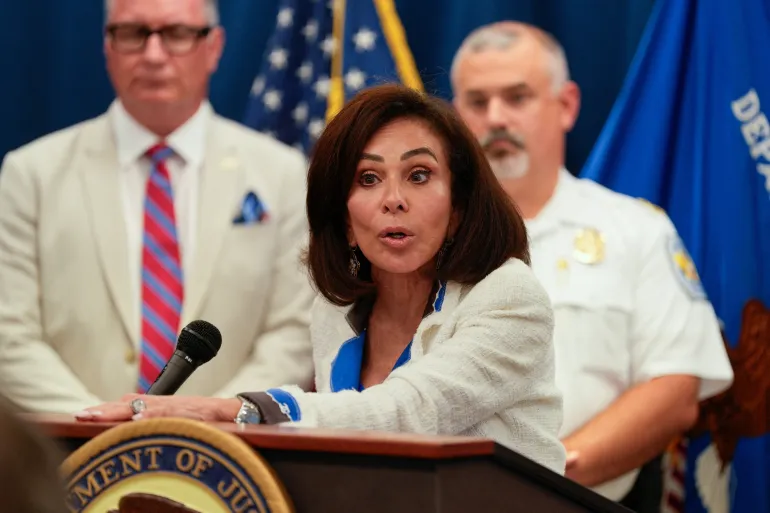
Officials initially did not provide details on how the agent – who was wearing a bulletproof vest – was injured. On Sunday, US Attorney Jeanine Pirro told CNN that investigators have confirmed that the agent was shot by the alleged gunman, Cole Tomas Allen.

Recommended Stories

list of 3 itemsend of list

“It is definitively his bullet. He hit at that Secret Service agent. He had every intention to kill him and anyone who got in his way, on his way to killing the president of the United States,” Pirro said.

“This was a premeditated, violent act, calculated to take down the president, and anyone who was in the line of fire.”

She added that a pellet that came from the suspect’s shotgun was “intertwined with the fiber” of the agent’s protective vest.

The determination could lead to additional legal charges against the 31-year-old suspect. It also rules out speculation that the agent may have been struck by so-called “friendly fire”.

The Justice Department announced three charges against Allen last week – attempting to assassinate Trump, the transportation of a firearm across states with intent to commit a felony and the discharge of a firearm during a crime of violence.

A sentence of life in prison faces anyone convicted of attempted assassination.

Last week, Acting Attorney General Todd Blanche said Allen had travelled via train from his home near Los Angeles to Chicago and then to Washington, DC.

He arrived in the US capital on April 24, the day before the dinner at the Washington Hilton hotel, and checked in.

According to Blanche, during the dinner, Allen approached a security checkpoint on the terrace of the hotel, one level above the ballroom where Trump was.

“He ran through the magnetometer holding a long gun. As he did so, US Secret Service personnel assigned to the checkpoint heard a loud gunshot,” Blanche said.

“One Secret Service officer was shot in the chest, but was wearing a ballistic vest that worked. This heroic officer, who was hit, fired five times at Allen, who was not shot, but fell to the ground and was promptly arrested.”

Officials have said Allen was carrying a shotgun, a semiautomatic pistol and three knives.

The shooting, considered to be the third assassination attempt against Trump since 2024, has shaken US politics. The White House has accused the US president’s Democratic rivals of inspiring political violence with their verbal attacks on the administration.

But Trump himself is known for personal attacks against opponents, and critics have accused him of using the shooting to censor his rivals.

Source link

What’s Iran’s 14-point proposal to end the war? And will Trump accept it? | US-Israel war on Iran News

Iran has offered a new 14-point proposal to the United States in the latest diplomatic step to reach a permanent end to the war, which has exposed the limits of US military dominance and shaken the global economy.

Responding to the new proposal on Saturday, US President Donald Trump said he is studying it but is not sure he can make a deal with Iran, a day after he voiced frustration with a previous offer from Tehran through the mediator Pakistan.

Recommended Stories

list of 3 itemsend of list

Late on Thursday, Tehran sent the proposal to Pakistan, which got the two sides to agree on the ceasefire. According to the Iranian Tasnim news agency, the 14-point plan was formulated in response to a nine-point US plan.

But weeks since the ceasefire began on April 8, Washington and Tehran have been unable to negotiate a peace deal. Tehran wants a permanent end to the war, while Trump has insisted that Iran first end the effective blockade of the Strait of Hormuz, through which a fifth of global oil and gas exports pass. The US president has also made the issue of Iran’s nuclear capability a “red line”.

Iran’s de facto blockade of the strait came in response to the US and Israel launching attacks on the country on February 28. A naval blockade of Iranian ports by the Trump administration, despite the ceasefire deal, has heightened tensions.

The US and Iran have also been continuing to attack, capture, and intercept each other’s ships, pointing to an ongoing naval war still playing out in the Strait of Hormuz.

So what’s the new proposal, and will President Trump accept it?

Here’s what we know:

INTERACTIVE_LIVETRACKER_IRAN_US_ISRAEL_MIDDLEEAST_ATTACKS_April 27_2026_GMT1645-1777299147
(Al Jazeera)

What is Iran’s 14-point proposal to end the war?

According to Iranian media reports, Tehran’s new proposal came in response to a Washington-backed nine-point peace proposal, which primarily sought a two-month ceasefire.

However, in its latest peace proposal, Iran said it wants to focus on ending the war instead of extending the truce and wants all issues resolved within 30 days.

The new proposal calls for guarantees against future attacks, a withdrawal of US forces from around Iran, the release of frozen Iranian assets worth billions of dollars and the lifting of sanctions, war reparations, ending all hostilities, including in Lebanon, and “a new mechanism for the Strait of Hormuz”.

Iran, which was also attacked by the US and Israel last June, wants a guarantee against future aggression. Israel has previously targeted Iranian nuclear scientists and run campaigns to sabotage its nuclear sites.

Tehran also wants its right to uranium enrichment guaranteed as a signatory to the Non-Proliferation of Nuclear Weapons (NPT), but Trump has made the nuclear issue a “red line”. Iran wants decades of sanctions, which have devastated its economy, to be lifted as part of any deal. The navigation through the strait and demands for war reparations are other sticking points in the talks.

According to a report by Iranian state broadcaster IRIB, after delivering the proposal, Deputy Foreign Minister Kazem Gharibabadi said, “Now the ball is in the United States’ court to choose the path of diplomacy or the continuation of a confrontational approach.”

Paul Musgrave, an associate professor of government at Georgetown University in Qatar, said Iran has “slightly softened” its proposal.

“The news reports on it indicate that there is a slight softening in the proposal, or rather a run-up to discussing the proposal, namely that the Iranian side may have given up its precondition that the US cease its distant blockade of Iranian traffic [in the Strait of Hormuz],” he told Al Jazeera.

“Beyond that, though, a lot of the things that are reportedly in the proposal include maintaining Iran’s sovereign ability to enrich uranium, its nuclear programme and, of course, what it delicately refers to as a ‘control mechanism’ over shipping in the Strait of Hormuz.”

Musgrave said on the two biggest issues – enrichment of uranium and transferring its highly enriched uranium – the US and Iran remain “far apart”.

“President Trump has been unyielding that Iran must surrender its nuclear capability,” he said.

Kenneth Katzman, a senior fellow at New York-based nonprofit Soufan Center, said Iran’s mistrust of Trump remains a bigger obstacle.

“The differences on the nuclear issues are actually … not that great a difference any more. It’s still substantial, but can be narrowed. The issue is that Iran really mistrusts Trump and the United States and does not want to move, really, into full discussion until this blockade is lifted,” he said.

“That’s a problem that could lead to US escalation. As Trump knows, he must break this Iranian control of the strait, so that’s where the issue is.”

Katzman said while both sides are “frustrated”, neither is likely to give up on the negotiations in the immediate future.

SH
The MSC Francesca captured by the Islamic Revolutionary Guard Corps in the Strait of Hormuz on April 24, 2026 [Meysam Mirzadeh/Tasnim/WANA via Reuters]

How did the US respond?

Trump has said he is reviewing Iran’s proposal, but warned that Washington could resume attacks if Tehran “misbehaves”.

Speaking to reporters in Florida before boarding Air Force One on Saturday, Trump confirmed that he had been briefed on the “concept of the deal”.

Despite the diplomatic opening, the president struck a characteristically blunt tone regarding the possibility of renewed hostilities, which have been paused since the ceasefire.

“If they do something bad, there is a possibility it could happen,” Trump said when asked if strikes would resume.

Trump added that the US was “doing very well” and claimed that Iran was desperate for a settlement because the country had been “decimated” by months of conflict and a naval blockade.

Trita Parsi from the Quincy Institute for Responsible Statecraft told Al Jazeera the economic cost of the blockade on Iranian ports has exceeded what the White House anticipated and argued that the broader strategic damage to the US was probably more significant.

“Iran has been under all kinds of economic pressure and sanctions for 47 years,” Parsi told Al Jazeera. “None of them has managed to break the Iranians or force them to capitulate,” he said.

In a post on Truth Social later on Saturday, Trump said it was difficult to imagine that the Iranian proposal would be acceptable as Tehran had “not yet paid a big enough price for what they have done to Humanity, and the World, over the last 47 years”.

Trump seems to have rejected the new Iranian proposal “without reading it or being briefed on it”, according to Musgrave from Georgetown University.

What are the previous peace proposals to end the conflict?

Iran’s latest proposal comes amid a fragile three-week truce that came into effect on April 8 and has put a pause on the US-Israel war on Iran.

A day before the ceasefire, Iran had proposed a 10-point peace plan, which included an end to conflicts in the region, a protocol for safe passage through the Strait of Hormuz, the lifting of sanctions and reconstruction, state-run news agency IRNA reported.

Trump had said Iran’s 10-point plan was a “significant proposal” but “not good enough”.

The April 7 proposal from Iran came in response to a 15-point plan drafted by the US on March 25.

Washington’s plan included a one-month ceasefire while the two sides negotiated terms to end the war, via Pakistan.

According to Israel’s Channel 12, it also included the dismantling of Iran’s nuclear facilities in Natanz, Isfahan and Fordow, a permanent commitment from Iran to never develop nuclear weapons, the handover of Iran’s stockpile of already enriched uranium to the International Atomic Energy Agency (IAEA), a commitment from Iran to allow the United Nations watchdog to monitor all elements of the country’s remaining nuclear infrastructure, reopening of the Strait of Hormuz and end of all sanctions on Iran, alongside the ending of the UN mechanism that allows sanctions to be reimposed.

Iran, however, rejected this plan and said a temporary ceasefire would give the US and Israel time to regroup and launch further attacks and in turn proposed its 10-point plan.

What is the situation on the ground now?

Despite a ceasefire, the Islamic Revolutionary Guard Corps (IRGC) said on Saturday that it remains on “full standby” for a return to hostilities, citing the US’s lack of commitment to previous treaties.

In a post on X on Sunday, the IRGC’s intelligence unit said, “There is only one way to read this: Trump must choose between an impossible military operation or a bad deal with the Islamic Republic of Iran. The room for US decision-making has narrowed.”

The impasse is further complicated by technical obstacles to reopening the Strait of Hormuz, including the presence of Iranian sea mines. Tehran has closed the strait since the war began on February 28, upending global oil and gas prices.

To pressure Iran to open the strait, the US imposed a blockade of all Iranian ports on April 13, stoking the oil and gas crisis. On Friday, Brent crude, the international benchmark, was at $111.29 per barrel at 08:08 GMT, compared with about $65 before the war.

Tensions have been further stoked by Trump’s recent characterisation of the US naval blockade as a “very profitable business”.

“We took over the cargo. Took over the oil, a very profitable business. Who would have thought, we’re sort of like pirates, but we’re not playing games,” Trump said at an event in the US state of Florida on Saturday.

Tehran’s Ministry of Foreign Affairs seized on the remarks, labelling them a “damning admission of piracy”.

Parsi from the Quincy Institute told Al Jazeera the US naval blockade of Iran has backfired on Trump and is making the situation worse.

“The negotiations were taking place and could have continued regardless of the blockade,” he said.

“The blockade has nothing to do with the Iranians being at the table. If anything, it is blocking diplomatic progress more than anything else,” Parsi noted.

He argued that Trump had actually secured his greatest advantage through diplomacy before the blockade was imposed.

“Once he managed to get the ceasefire, the primary pressure on him, the war itself and the way it was pushing up gas prices, was lifted. Had he stayed in that scenario and used time to his advantage, he would have been in a much stronger position vis-a-vis the Iranians, because the Iranians had not managed to get the key thing they wanted: sanctions relief.”

Instead, by imposing the blockade, Trump took more oil off the market.

“Oil prices are now higher during the ceasefire than they were during the war itself. All of these economic indicators show that the blockade is making the situation worse for Trump,” Parsi said.

However, Trump has been looking at options to resolve the oil crisis, including setting up a naval coalition called the Maritime Freedom Construct (MFC) to restore freedom of navigation in the Strait of Hormuz.

According to US media reports, core functions of the naval coalition would be to share intelligence among member nations, coordinate diplomatic efforts, and enforce sanctions to manage shipping traffic through the strait.

Source link

Iran war: What’s happening on day 65 as Trump reviews new plan to end war? | US-Israel war on Iran News

Iran has sent the US a new 14-point proposal to end the war.

United States President Donald Trump says he will review the latest Iranian proposal to end the war but has expressed doubt that the new plan will lead to a deal as the two sides have escalated their rhetoric.

Tehran has sent a 14-point plan to Washington, calling for guarantees of nonaggression, sanctions relief, the lifting of a naval blockade and an end to the war “on all fronts”, including in Lebanon. This proposal seeks to postpone nuclear talks to a later stage, an issue Trump has considered a “red line”.

Recommended Stories

list of 3 itemsend of list

Despite the diplomatic opening, the US president did not rule out the possibility of renewed hostilities. “If they do something bad, there is a possibility it could happen,” Trump said.

The Iranians have also fired back with the Islamic Revolutionary Guard Corps (IRGC) saying it is on standby for a return to war.

Here is what we know as the conflict enters day 65:

INTERACTIVE_LIVETRACKER_IRAN_US_ISRAEL_MIDDLEEAST_ATTACKS_April 27_2026_GMT1645-1777299147
(Al Jazeera)

In Iran

  • While Washington requested a two-month ceasefire, Tehran wants to focus on ending the war instead of extending the truce and wants all issues to be resolved within 30 days, according to Iran’s Tasnim News Agency.
  • The 14-point Iranian plan includes guarantees of nonaggression, the withdrawal of US forces from the vicinity of Iran, the lifting of the US naval blockade, the release of Iran’s frozen assets, the lifting of sanctions and an end to the war “on all fronts“, including in Lebanon, according to Tasnim.
  • The IRGC said it is on standby for a return to war with the US, saying a resumption of hostilities is “likely” as “evidence shows that [the US] is not committed to any agreements or treaties”.
  • Iran’s Ministry of Foreign Affairs said Trump’s description of the US capture of Iranian vessels as “piracy” is a “direct and damning admission of the criminal nature of their actions” against Tehran.
  • TankerTrackers.com said an Iranian supertanker has evaded the US blockade and reached the Asia Pacific while carrying more than 1.9 million barrels of crude oil valued at nearly $220m.

Diplomacy

  • The US has approved $8.6bn in major arms deals and military support for Qatar, Kuwait, the United Arab Emirates and Israel.
  • A convoy of 70 tanker trucks carrying Iraqi crude oil has crossed into Syria via the al-Yarubiyah border crossing as Baghdad seeks alternative export routes after the closure of the Strait of Hormuz.

In the US

  • Trump said he is studying Iran’s latest 14-point peace proposal but warned that attacks could resume if the Iranian government “misbehaves” or does “something bad”.
  • The US is seeking to form an international naval coalition called the Maritime Freedom Construct (MFC) to restore freedom of navigation in the Strait of Hormuz, which in effect has been blocked by Iran since the US-Israel war on the country began on February 28. According to US media, its core functions would be to share intelligence among member nations, coordinate diplomatic efforts and enforce sanctions to manage shipping through the strait.
  • Trump said a US troop withdrawal from Germany could far exceed 5,000 soldiers as tensions between the two allies rise over the war on Iran.

In Lebanon

  • At least 41 people have been killed as Israel launched 50 air strikes on southern Lebanon in 24 hours despite a ceasefire between Israel and Lebanon being in place since April 16. The death toll since the latest escalation in the war between Israel and Hezbollah began on March 2 has risen to 2,659 people.
  • The Israeli military issued a new warning, threatening attacks on 12 towns and villages in southern Lebanon and ordering residents to flee their homes.The towns and villages include al-Duwayr, Arab Salim, al-Sharqiya (Nabatieh), Jibshit, Braashit, Sarafand, Dounin, Briqa, Qaaqaiya al-Jisr, al-Qasiba (Nabatieh) and Kfar Sir.
  • Israel’s military has admitted to striking and damaging a Catholic “religious building” in southern Lebanon on Saturday as criticism grows over Israeli attacks on Christian sites.

Source link

Trump reviews Iranian peace proposal, warns strikes could resume | Donald Trump News

US president says he is considering the 14-point peace plan, but warns strikes could resume if Tehran ‘misbehaves’.

United States President Donald Trump has said he is reviewing Iran’s 14-point proposal to end his war on the country, while warning that Washington could restart air strikes if Tehran “misbehaves”.

Speaking to reporters in Florida before boarding Air Force One on Saturday, Trump confirmed that he had been briefed on the “concept of the deal”.

Recommended Stories

list of 3 itemsend of list

Despite the diplomatic opening, the US president struck a characteristically blunt tone regarding the possibility of renewed hostilities, which have been paused since the announcement of a ceasefire between the sides on April 7.

“If they do something bad, there is a possibility it could happen,” Trump said when asked if strikes would resume.

Trump added that the US was “doing very well” and claimed that Iran was desperate for a settlement because the country had been “decimated” by months of conflict and a naval blockade.

In a post on Truth Social later, Trump said it was difficult to imagine that the Iranian proposal would be acceptable as Tehran had “not yet paid a big enough price for what they have done to Humanity, and the World, over the last 47 years.”

Tehran’s 14-point plan reportedly calls for the lifting of the US naval blockade, war reparations, and the release of all frozen assets.

It also seeks a 30-day window to finalise the terms of their peace, a timeline at odds with Washington’s preference for a longer transition.

The diplomatic push comes amid a fragile three-week truce that has put a pause on the US-Israel war on Iran, which began in late February.

Despite the ceasefire, the Islamic Revolutionary Guard Corps (IRGC) said on Saturday that it remains on “full standby” for a return to hostilities, citing the US’s lack of commitment to previous treaties.

Tensions have been further stoked by Trump’s recent characterisation of the US naval blockade as a “very profitable business”.

Tehran’s Ministry of Foreign Affairs seized on the remarks, labelling them a “damning admission of piracy”.

The impasse is further complicated by technical obstacles to reopening the Strait of Hormuz, including the presence of Iranian sea mines, and a growing rift with NATO allies following Trump’s decision to withdraw 5,000 US troops from Germany.

Source link

The rise of political violence under Trump | Donald Trump

Redi Tlhabi speaks to Professor Robert Pape on the rise of political violence in the US.

After the shooting at the White House Correspondents’ Association dinner, has the US entered a new age of political violence? The third alleged attempted assassination of US President Donald Trump in recent years follows a series of politically motivated violent incidents last year, including the assassinations of right-wing activist Charlie Kirk and Democratic state legislator Melissa Hortman. What is causing the increase in political violence in America? And how much is the Trump administration driving the politically divisive atmosphere with violent rhetoric and lethal foreign policy?

This week on UpFront, Redi Tlhabi speaks with Robert Pape, professor of political science at the University of Chicago and author of the upcoming book “Our Own Worst Enemies: America in the Age of Violent Populism”.


Source link

Trump flouts lower court rulings in unprecedented display of executive power

When a federal judge shot down a Trump administration policy of holding immigrants without bond last December, it seemed like a serious blow to the president’s mass deportation effort.

Instead, a top Justice Department official insisted the ruling wasn’t binding, and the administration continued denying detainees around the country a chance for release.

By February, the district court judge, Sunshine Sykes, was fed up. Sykes, a nominee of President Biden, accused Trump officials in a ruling that month of seeking “to erode any semblance of separation of powers,” adding that they could “only do so in a world where the Constitution does not exist.”

Hardly isolated, the case illustrates a broader pattern of defiance of lower court decisions in President Trump’s second term.

The failure of Trump officials to follow court orders has been highlighted most notably in individual immigration cases. But a review of hundreds of pages of court records by the Associated Press also shows an extraordinary record of violations in lawsuits over policy changes and other moves.

In the administration’s first 15 months in office, district court judges ruled it was violating an order in at least 31 lawsuits over a wide range of issues, including mass layoffs, deportations, spending cuts and immigration practices, the AP’s review of court records found. That’s about 1 out of every 8 lawsuits in which courts have at least temporarily blocked the administration’s actions.

The Trump administration’s power struggle with federal courts — which is testing basic tenets of U.S. democracy — reflects an expansive view of executive authority that has also challenged the independence of federal agencies, a president’s ethical obligations and the U.S. role in the international order.

Widespread noncompliance found

The Trump administration violations in the 31 lawsuits are in addition to more than 250 instances of noncompliance that judges have recently highlighted in individual immigration petitions — including failing to return property and keeping immigrants locked up past court-ordered release dates.

Legal scholars and former federal judges said they could recall at most a few violations of court rulings over the full four-year terms of other recent presidential administrations, including Trump’s first time in office. They also noted previous administrations were generally apologetic when confronted by judges; the Trump administration’s Justice Department has been combative in some cases.

“What the court system is experiencing in the last year and a half is just qualitatively completely different from anything that’s preceded it,” said Ryan Goodman, a law professor at New York University who studies federal courts and is tracking litigation against the Trump administration.

Though Trump officials eventually backed down in about a third of the 31 lawsuits, legal experts say their treatment of court orders poses serious dangers.

“The federal government should be the institution most devoted to the rule of law in this country,” said David Super, a constitutional law scholar at Georgetown University. “When it ceases to feel itself bound, respect for the rule of law is likely to break down across the country.”

The White House’s aggressive policy moves have prompted a barrage of lawsuits — more than 700 and counting.

Higher courts boost Trump efforts

The AP’s review also found that higher courts, including the Supreme Court, overruled the district courts and sided with the White House in nearly half of the 31 cases. Critics say those decisions are emboldening the administration to ignore judges’ orders.

White House spokesperson Abigail Jackson said the higher courts had overturned “unlawful district court rulings.” The administration will “continue to comply with lawful court rulings,” she added in a written statement.

“President Trump’s entire Administration is lawfully implementing the America First agenda he was elected to enact,” the statement said.

Among other instances of noncompliance, judges found the White House defied rulings when it deported scores of accused gang members to a notorious prison in El Salvador, withheld billions of dollars in foreign aid and failed to restore programming at the Voice of America. The three cases date to the first few months of the new administration, but judges have continued to find violations since then, including in two cases in April.

“The danger is that this gets normalized,” said JoAnna Suriani, counsel at the nonpartisan group Protect Democracy, which is tracking noncompliance cases. The group is also involved in litigation against the administration.

‘Ham-handed,’ ‘hallucinating’

In October, U.S. District Judge William Smith took little time to conclude Homeland Security officials were flouting one of his orders. Smith, a nominee of President George W. Bush, had blocked them from making billions of dollars in disaster relief funding to states contingent on cooperation with the president’s immigration priorities.

The Department of Homeland Security responded by keeping the immigration requirement on some grants, but making it contingent on a higher court overriding Smith’s injunction. The judge called the move “ham-handed” and said the agency was trying to “bully the states.”

In a case over the suspension of refugee admissions, U.S. District Judge Jamal Whitehead, a Biden nominee, accused the Justice Department last May of “hallucinating new text” in an appellate court order and “rewriting” it to achieve the government’s preferred outcome.

In four additional cases the AP reviewed, judges stopped short of a clear written finding of noncompliance but still criticized the administration’s response to their orders.

Of the judges who have confirmed violations, 22 were appointed by Democratic presidents and seven by Republican presidents.

Former federal judges Jeremy Fogel and Liam O’Grady said jurists are losing trust in the integrity of the Department of Justice.

That’s making them “more aggressive in accusing the government of bad faith,” said O’Grady, who along with Fogel is part of the nonpartisan democracy group Keep Our Republic.

Fogel said judges are also getting frustrated.

“They make orders and the orders don’t get complied with, and then they have to inquire why the orders are not being complied with, and that’s where it gets very mushy and very political,” he said.

Education case raises alarms

In Eureka, Calif., school administrator Lisa Claussen is worried about the impact on her students’ mental health if a judge does not find the Education Department in violation of a court order on federal grants.

Grant money allowed the school district in the poor coastal community in Northern California to hire more than a dozen psychologists and social workers to help students struggling with drug use and suicidal thoughts.

Education officials in the Trump administration told schools in California and other states last year that it was discontinuing the grants; the administration opposed diversity considerations in the grant process.

U.S. District Judge Kymberly Evanson blocked the move permanently in December, but California and 15 other states now say the administration is making an end run around her injunction by imposing new rules, including an initial limit of six months of funding.

Attorneys for the Education Department said they wanted to see whether schools were making progress on performance goals before releasing additional funds. The judge’s order did not block the six-month limit, they added in a court filing.

Evanson, a Biden nominee, has yet to rule.

In the absence of a one-year funding guarantee, Eureka City Schools and other districts say they have already issued layoff notices to mental health providers or eliminated positions.

“We have many kids who don’t trust adults for very good reason, and to be able to just swipe this grant like they’re doing … ,” Claussen said in a phone interview, her voice trailing off. “We didn’t do anything wrong.”

Justice Department response

In court filings, Justice Department attorneys have generally disputed accusations that the government was not complying. They have argued over the meaning of words, cited favorable appellate court rulings and said they were acting outside the scope of the court’s order, among other legal maneuvering.

Outside of court, Trump and White House officials have railed against federal judges. Vice President JD Vance has even suggested the president could ignore court orders.

Will Chamberlain, senior counsel with the conservative legal advocacy group the Article III Project, said many of the judges who have found violations are ignoring laws that clearly prohibit their rulings.

Trump officials are “generally complying, appealing and winning,” he said. “If they were defying orders left and right, they’d be losing them.”

A justice’s rebuke

In March, a federal appeals court ruled Sykes, the judge in California, had probably exceeded her authority in requiring bond hearings nationwide and blocked her February decision.

The outcome was not unusual.

In 15 of the 31 lawsuits the AP reviewed, an appellate court or the Supreme Court either allowed the administration’s underlying policy, limited the district court’s efforts to correct or punish the noncompliance, or both.

Supreme Court Justice Sonia Sotomayor criticized her fellow justices after one such ruling.

“This is not the first time the Court closes its eyes to noncompliance, nor, I fear, will it be the last,” she wrote in June in a dissent joined by the court’s two other liberal justices. “Yet each time this Court rewards noncompliance with discretionary relief, it further erodes respect for courts and for the rule of law.”

Thanawala writes for the Associated Press. AP writer Michael Casey in Boston contributed to this report.

Source link