trump

Why U.S. World Cup hotel bookings are disappointing

Why isn’t the World Cup drawing foreign visitors as expected? Blame Trump’s immigration policies, his Iran war and his tariffs

Almost exactly one year ago, I speculated about how President Trump could sabotage the World Cup and the L.A. Olympics.

Since then, speculation has congealed into reality.

By almost any measure, tourism to the United States has cratered. Overall, it was down 5.5% last year from the year before. Visitors from Canada, traditionally the largest pipeline of foreign tourism, plummeted 21%.

Even with global anticipation building, the path to the U.S. for many World Cup travelers feels increasingly less like a red-carpet welcome.

— American Hotel & Lodging Association

That’s the largest drop from any country, according to statistics from the Commerce Department’s International Trade Administration cited by the Congressional Research Service. The runner-up is Germany, with a decline of 11.3%.

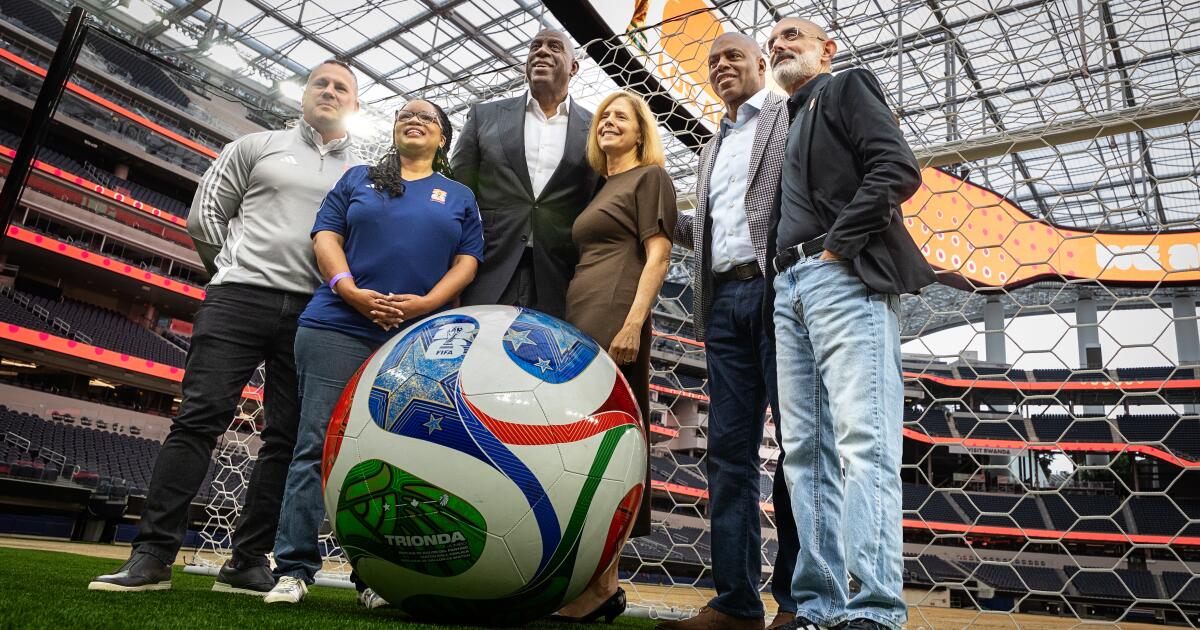
Expectations have faded that this summer’s World Cup games, which begin in the U.S. on June 12 with USA vs. Paraguay at SoFi Stadium, would buoy the flow of foreign visitors. Hotel bookings show that hasn’t happened, as my colleague Caroline Petrow-Cohen reports. According to an April survey by the American Hotel & Lodging Assn., hotel operators in all 11 of the U.S. host cities say that bookings are below their expectations.

Get the latest from Michael Hiltzik

Commentary on economics and more from a Pulitzer Prize winner.

Those figures bode ill for the 2028 Los Angeles Olympics, whose organizers are also counting on a robust flow of foreign visitors.

More than 65% of the Los Angeles hotels responding to the survey reported dashed expectations, the association said. That wasn’t the worst result; the percentage was higher in five host cities, led by Kansas City, where nearly 90% of survey respondents reported booking paces below expectations.

The association identifies several reasons for the lackluster bookings, including botched planning by FIFA, the World Cup’s governing body. But much of the blame falls on issues created by one person: President Donald Trump. These include “increased gas and jet fuel prices,” which are artifacts of Trump’s Iran war and its upward pressure on oil prices.

The survey also points to concerns about visa availability and the treatment of foreign visitors once they land in the U.S. or cross the border.

The administration has disavowed any intention to interfere with the World Cup or the Olympics.

“Thanks to President Trump’s leadership, the FIFA 2026 World Cup will no doubt be one of the greatest and most spectacular events in the history of mankind,” White House spokesman Davis Ingle told me by email.

“International visitors who legally come to the United States for the World Cup have nothing to worry about,” the Department of Homeland Security said. “What makes someone a target for immigration enforcement is whether or not they are illegally in the U.S. — full stop.”

Trump pledged in 2018, when FIFA was weighing bids to host the 2028 World Cup, that “all eligible athletes, officials and fans from all countries around the world would be able to enter the United States without discrimination.” But concerns remain that family members of participating athletes might face restrictions on entering the U.S.

Those concerns could hardly be assuaged by a comment from Vice President JD Vance, chair of a government task force overseeing preparations for the World Cup, at a 2025 meeting attended by FIFA President Gianni Infantino.

Vance said the U.S. wants foreign visitors “to come, we want them to celebrate, we want them to watch the games. But when the time is up, we want them to go home, otherwise they will have to talk to Secretary Noem.” (Trump subsequently ousted Kristi Noem as Secretary of Homeland Security, replacing her with former Sen. Markwayne Mullin, Republican of Oklahoma.)

Trump also committed himself to safeguarding the L.A. Olympics, stating, “I’m going to be supportive in every way possible and make them the greatest games.”

Yet America’s standing as a world-class tourist destination has plainly soured under Trump.

“Even with global anticipation building, the path to the U.S. for many World Cup travelers feels increasingly less like a red-carpet welcome,” the Hotel & Lodging Assn. observed.

“There is a perception that international travelers may face lengthy visa wait times, increased visa fees, and lingering uncertainty around entry processing. For those who do make the journey, concerns do not end at the border — questions about airport security screening wait times and airport congestion add another layer of hesitation.”

None of this should come as a surprise. As I projected last June, two administration initiatives in particular were poised to affect the World Cup and Olympics. The first was Trump’s crackdown on immigration.

Immigration agents, I noted, were acting as though they had carte blanche to detain people suspected of being in the U.S. illegally, conducting raids that sometimes swept up American citizens. That was before the Immigration and Customs Enforcement raids in Los Angeles, Minneapolis and other communities where immigration agents were accused of targeting specific ethnic and racial groups. And it was before the shootings of Renee Good and Alex Pretti in Minneapolis by immigration agents worsened their image as lawless thugs.

By then, however, stories had surfaced of foreign tourists being detained for weeks, even months, without explanation or apparent cause. A 65-year-old British woman named Karen Newman traveling on a valid tourist visa was arrested in September 2025 at the Montana border, shackled and held for six weeks in an ICE detention center. Other stories involved a German tourist who said she was held by ICE for 45 days, some of that time in solitary confinement; and a New Zealand woman who was detained with her 6-year-old son for three weeks.

The Department of Homeland Security didn’t deny that these incidents had occurred, though in relation to the New Zealand woman, whose visa had been only partially renewed, a U.S. Customs and Border Protection spokesman said, “When someone with an expired parole leaves the country and tries to re-enter the US, they will be stopped in compliance with our laws and regulations.”

The other policy that could interfere with the World Cup and Olympics are Trump’s travel bans and restrictions, which as of January covered 75 countries, including Brazil, Russia and 26 African countries.

Stringent regulations for some visa applicants — notably those coming to the U.S. to study or for work-study programs and their dependents — have further clouded America’s image as a destination. Applicants for those visas are required to open their social media accounts for the last five years for inspection by visa officers.

And Homeland Security Secretary Mullin last month raised the prospect of withdrawing customs officers from airports in so-called sanctuary cities, a move that would effectively shut down international flights at those airports.

The change couldn’t happen in time to affect the World Cup, but it could happen before the 2028 Olympics. Mullin’s idea didn’t win immediate favor with other members of Trump’s cabinet, including Transportation Secretary Sean Duffy.

Last year, the Department of Justice published a list of nearly three dozen states, cities and counties it defined as “sanctuary jurisdictions” because they “obstruct or limit local law enforcement cooperation” with ICE. Most are led by Democrats. They include California, and the cities of Los Angeles, San Francisco and Berkeley.

It’s true that immigration policies and rising travel costs are only part of the problem. The Hotel & Lodging Assn. also flayed FIFA for having block-booked hotel rooms in venue cities. These blocks “manufactured artificial demand by locking up large pools of inventory well ahead of the tournament,” the hotel group complained. The practice upended hotels’ planning by prompting them to increase staff and begin World Cup-themed renovations, preparing for crowds that may have been overestimated from the outset.

The block-booking “masked softer underlying traveler demand,” the association said, “with FIFA returning some blocks without a single reservation having been made.”

The hoteliers also groused that New Jersey and Philadelphia had proposed raising sales or lodging taxes in order to squeeze visitors. New Jersey lawmakers have proposed a short-term increase in its sales tax to 9.6% from 6.6% and in its lodging tax to 7.5% from 5%. Philadelphia is planning to raise its hotel tax to 10.5% from 8.5%.

None of this means that ticket sales for the World Cup won’t be healthy. FIFA has said that 5 million tickets have already been sold for the matches, even though the average price for even the cheapest seats at some venues tops $500. As my colleague Kevin Baxter has reported, fans are beginning to feel mulcted. That’s so especially because ticket buyers only learned the specific location of their seats after plunking down their money, at which point they discovered that they were placed in sections nowhere as desirable as they expected.
Source link

Brazil’s Flavio Bolsonaro meets with Trump amid troubled presidential bid | Elections News

Son of former President Jair Bolsonaro is fighting to recover from a scandal that has rocked his presidential campaign.

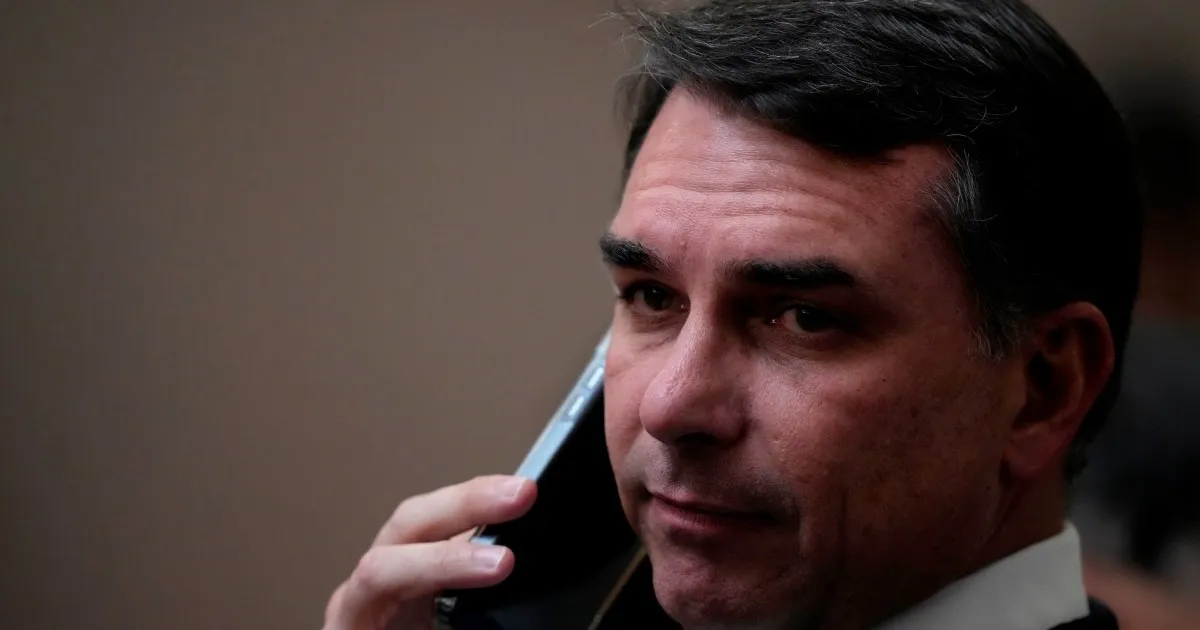
Brazilian Senator Flavio Bolsonaro has shared a photo that appears to show him meeting with US President Donald Trump at the White House, as he seeks to bolster his image amid a scandal that threatens to derail his presidential campaign in Brazil.

Bolsonaro shared a photo on Tuesday of him standing by Trump’s side in the Oval Office, with a caption showing the thumbs-up emoji.

Recommended Stories

list of 3 itemsend of list

Flavio is the son of former Brazilian President Jair Bolsonaro, a right-wing Trump ally who is serving a 27-year prison sentence in connection with a coup attempt after his re-election loss in 2022 to current leftist President Luiz Inacio Lula da Silva.

The younger Bolsonaro has replaced his father as the standard-bearer of Brazil’s political right and is seen as the top contender challenging Lula in the South American country’s election in October.

But his campaign has struggled to regain its balance following a report that he sought funds from a disgraced banker convicted of fraud to finance a film about his father. Bolsonaro has acknowledged requesting the money, but denied any impropriety or wrongdoing.

Recent polls suggest that the scandal has set back his campaign, with Lula retaking the lead from the younger Bolsonaro after previous polls had shown them in a close race.

Media reports in recent days stated that Bolsonaro had sought a meeting with Trump, who previously placed tariffs on Brazil in a bid to have the case against the elder Bolsonaro thrown out.

Flavio then travelled to Washington without a guaranteed appointment in the hope of meeting with the US president. Trump has yet to share information about the meeting on his social media website.

While tensions have remained between Trump and Lula, the two leaders have built a more cordial relationship in recent months, with the Brazilian leader visiting his US counterpart at the White House earlier this month.

Source link

South Carolina Senate adjourns without new map, defying Trump

May 26 (UPI) — South Carolina’s state Senate adjourned Tuesday without acting on a new congressional map that would have redrawn voting districts in favor of Republicans.

President Donald Trump has called on states to redraw their voting maps to favor Republicans, especially after a recent U.S. Supreme Court decision that badly weakened a part of the landmark federal Voting Rights Act of 1965 that helped protect minority voting power.

However, as voters started heading to the polls Tuesday for the first in-person voting in primaries, state senators said it was just too late. If the state Senate pushed the map through Tuesday, the state would have had to throw out tens of thousands of ballots that had already been cast that day and schedule a new primary.

“Neither my conscience nor my common sense would allow me to stop an election that is already underway,” Republican state Sen. Richard Cash said during the vote, The BBC reported.

The new congressional map pitched for South Carolina would do away with the state’s only majority Black district, which is represented by Rep. James Clyburn, a Democrat. Clyburn is seeking his 18th term in office this year.

Republicans have a narrow majority in the U.S. House of Representatives, and Trump and other conservatives are calling for district changes to hold on to that majority during the midterm elections in November. Other states, including Tennessee, have already redrawn and approved new maps eliminating majority Black districts.

CNN reported that Trump called Republican state Senate Majority Leader Shane Massey at least twice about the plan, and the president has posted regularly on social media about the matter as well.

“South Carolina Republicans: BE BOLD AND COURAGEOUS, just like the Republicans of the Great State of Tennessee were last week!” the president wrote in a post earlier this month.

South Carolina state senators will likely pick up the matter again after the primary voting ends June 9. State Sen. Brad Hutto, a Democrat, said his party members worked all weekend to make voters headed out to the polls today, The New York Times reported.

“The people in South Carolina were sending us a message that their vote mattered,” he said. “It was important, and they didn’t want us to cancel their vote.”

Democrats had another win in the redistricting wars on Tuesday, with a federal court temporarily blocking Alabama from using its newly redrawn congressional map, which includes only one Black majority district out of seven. The population of Alabama is about 27% Black.

The South Carolina map in question, meanwhile, would have resulted in no Black majority districts out of the state’s seven. The state is about 26% Black, based on 2025 U.S. Census numbers.

Source link

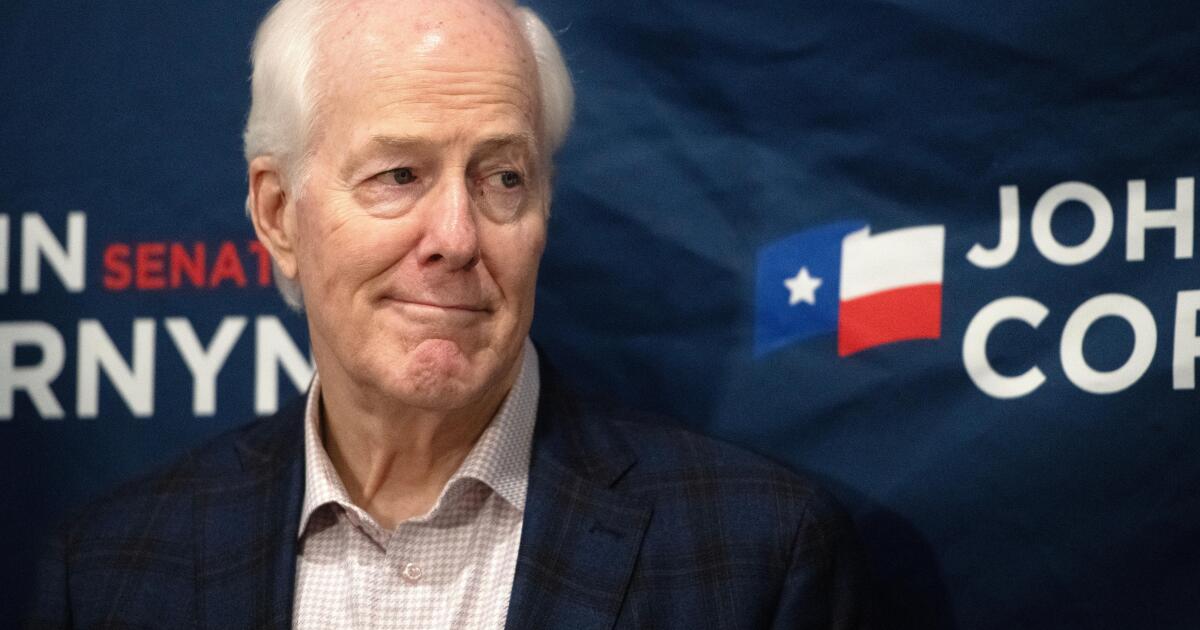
Cornyn tries to hold on to Texas Senate seat in runoff with Paxton, the latest test of Trump’s power

Texans are choosing a Republican nominee for U.S. Senate in Tuesday’s runoff election, bringing to a close the extended, bitter and expensive primary where President Trump weighed in late to tip the race in another effort to rid the GOP of leaders less devoted to him.

Trump’s endorsement of state Atty. Gen. Ken Paxton over four-term Sen. John Cornyn gives the challenger a late boost and puts Cornyn at risk of becoming the first Republican senator in Texas history to seek the party’s nod and lose.

That’s despite Cornyn’s campaign and allied groups spending roughly $90 million in advertising since last year, the vast majority of it attacking Paxton.

It’s the latest GOP contest where Trump has sought to punish a Republican he sees as insufficiently loyal. This month, he has successfully backed challengers to incumbents in Louisiana, Kentucky and Indiana, a sign of his enduring influence among primary voters.

Paxton’s campaign and a pro-Paxton super PAC began airing ads promoting the endorsement within 24 hours of Trump’s announcement. Cornyn acknowledged Trump’s move would have an impact but said he wasn’t giving up.

“I know who gets to choose our senators, and it’s the people of Texas,” he said hours after the endorsement.

The winner will run in November against Democratic state Rep. James Talarico.

Tuesday’s runoffs also will decide Democratic U.S. House nominees for districts in Dallas and Houston that overwhelmingly support Democrats, and a San Antonio-area seat the party hopes to flip.

The primary has been long, bitter and costly

Cornyn led Paxton in the March primary but failed to win a majority in the three-way contest that also included U.S. Rep. Wesley Hunt, who finished in a distant third.

That was after Cornyn’s campaign and allied groups waged a monthslong ad campaign, mostly attacking Paxton for ethical and personal questions. The two-term attorney general was acquitted in a 2023 impeachment trial when allegations of extramarital affairs surfaced. Last year, Paxton’s wife filed for divorce, citing “biblical grounds.”

The alliance of pro-Cornyn groups have continued its attack, outspending Paxton’s campaign and two allied super PACs $16.5 million to $5.9 million since March 3, according to the ad-tracking firm AdImpact.

Trump promised to endorse immediately after the primary, asking the unchosen candidate to withdraw. But he didn’t act until after early voting began on May 18.

“Ken Paxton has gone through a lot, in many cases, very unfairly, but he is a Fighter, and knows how to win,” Trump wrote in a social media post endorsing him. “Our Country needs Fighters, and also Loyalty to the Cause of Greatness.”

Pro-Cornyn groups lately have been airing ads criticizing the attorney general office’s handling of a Waco sex abuse case. Pro-Paxton groups had seized on Cornyn’s awkward relationship with Trump.

Trump snubs Cornyn amid retribution campaign

The negative tenor could diminish turnout in an election already complicated by coming a day after Memorial Day, Texas Republican strategist Tyler Norris said. About 2 million of Texas’ 18.7 million voters participated in the GOP primary.

The dynamic could favor Paxton, whose support draws from more of the most loyal Trump base in Texas, said Norris, who isn’t affiliated with either campaign.

“The defining battle lines are based around hyper-negative messaging, which dampens turnout to begin with,” he said. “So who is going to show up is the hardest of the hard core.”

Trump in his endorsement also poked at Cornyn, as he has done with other Republicans who are not in lockstep with the president.

He blasted Republican Louisiana Sen. Bill Cassidy as “a Disloyal Disaster” on May 16, before Cassidy lost a GOP primary for the office he has held since 2015. The two-term senator had voted to convict Trump after his 2021 impeachment trial over the Jan. 6, 2021, attack on the U.S. Capitol. Trump backed U.S. Rep. Julia Letlow, who advanced to a runoff with John Fleming, the state treasurer. Cassidy finished well behind them.

Last week, Trump celebrated as Kentucky Rep. Thomas Massie, a critic of the Trump administration’s handling of the Jeffrey Epstein files, lost his primary to Ed Gallrein. Trump called Massie “the worst congressman in the history of our country.”

In endorsing Paxton, Trump said Cornyn “was not supportive of me when times were tough” and that “John was very late in backing me.”

Cornyn suggested in 2023 that Trump could not win the presidency again in 2024 and that his “time has passed him by.” He also was an early critic of Trump’s plan for a border wall between the U.S. and Mexico — a project he now supports.

Senate GOP leaders backed Cornyn, saying he would be stronger in the general election. Some GOP strategists have argued a Paxton nomination would cost millions of dollars more to promote in the fall, when money could be spent defending Republican seats in more competitive states. Democrats need to gain a net of four seats to take the majority.

Democrats also will choose U.S. House nominees

Newly elected Rep. Christian Menefee and veteran Rep. Al Green are vying for the party nod in Texas’ 18th District, which the Republican-led Texas Legislature redrew last year to help the GOP. The new map led to a contest between incumbents and marks the end of a dizzying series of elections in the Houston area. Menefee was elected in a special runoff in January to the seat that had been held by the late Rep. Sylvester Turner, who died in March 2025.

Menefee finished narrowly ahead of Green in the March 3 primary but didn’t win a majority to avoid the runoff.

Former Rep. Colin Allred and U.S. Rep. Julie Johnson are competing in the Dallas-area 33rd District. Johnson was elected to the seat in 2024, the year Allred lost his U.S. Senate challenge to Republican Sen. Ted Cruz. Allred was running for Senate again this cycle but dropped his bid and instead is looking to return to the House.

Near San Antonio, Democratic leaders are trying to prevent Maureen Galindo, who has expressed antisemitic views, from winning the party’s runoff with Johnny Garcia. While Texas lawmakers redrew the 35th District to help Republicans, Democrats view it as within reach and don’t want Galindo’s past comments to impede them.

Beaumont and Bedayn write for the Associated Press. Bedayn reported from Austin.

Source link

Trump administration proposes NDAs for federal employees to stop leaks

The Trump administration wants all current and future federal employees to sign nondisclosure agreements, part of a continuing crackdown on leaks to the media.

The notice in the Federal Register from the Office of Personnel Management posted Tuesday asked for comment on a draft NDA to be used by federal agencies for “both new and existing employees.”

“The form is intended to document Federal employees’ acknowledgment of, and agreement to comply with, current legal obligations to safeguard non-public, confidential, or proprietary information, created or obtained through their official duties, while expressly preserving the right to make disclosures authorized by law,” the notice said.

The Office of Personnel Management noted “several recent instances” where internal agency communications related to rulemaking and policy development were disclosed without authorization. It also discussed specific instances in which federal employees at the FBI and the Department of Homeland Security disclosed information without authorization about planned immigration enforcement actions.

In one case, the New York Times and Washington Post received unauthorized information on the U.S. raid on Venezuela in January and delayed “publishing what they knew to avoid endangering U.S. troops,” the request for comment said.

Representatives for the two newspapers did not immediately respond to a request for comment.

Ferreting out leaks that the administration deems harmful to its messaging has been a priority across multiple agencies since President Trump returned to the White House. As part of that crackdown, the FBI in January seized the electronic devices of a Washington Post reporter, a move that alarmed media organizations and advocates of press freedom.

One other notable incident occurred last year when dozens of reporters turned in their access badges at the Pentagon, rejecting new rules imposed by Defense Secretary Pete Hegseth that would leave journalists vulnerable to expulsion if they sought to report on information — classified or otherwise — that had not been approved by Hegseth for release.

The American Federation of Government Employees did not immediately respond to requests for comment.

Source link

Trump wraps up 3-hour medical visit to Walter Reed

President Trump had another medical exam Tuesday, putting his health under renewed public scrutiny as he has worked to dismiss concerns over his age and stamina.

The 79-year-old president spent more than three hours at Walter Reed National Military Medical Center for what the White House described as preventive medical and dental checkups. It was Trump’s fourth publicly disclosed medical exam since he returned to office for a second term, and it comes as he tries to project strength ahead of midterm elections that will test his sway with voters.

In a social media post after the visit, Trump said he just finished his “6 month physical” and “Everything checked out PERFECTLY.”

For decades, administrations have released selected results from presidential physicals, offering the public a glimpse at the commander in chief’s health. But the results are filtered through the White House and must be approved by the president, raising questions about what the public does and doesn’t get to see.

Trump turns 80 next month and was the oldest person elected president. His immediate predecessor, President Biden, was 82 when he left office, dropping out of the 2024 race because of widespread concerns he was too old for the job.

A Washington Post/ABC News/Ipsos poll conducted in April found that less than half of U.S. adults think Trump has the mental sharpness or physical health to serve effectively as president.

“I think concern for the president’s physical health is probably at an all-time high, and I think advanced physical age is the No. 1 concern,” said Dr. Jeffrey Kuhlman, who served as a White House physician for more than a decade under Presidents Obama, George W. Bush and Clinton.

For a president of Trump’s age, a complete physical would be expected to include advanced heart testing, screening for common cancers and a cognitive assessment, along with basics like height, weight and blood pressure, Kuhlman said.

The White House has not disclosed what the visit entailed but expressed confidence in what it will show.

“President Trump is the sharpest and most accessible President in American history who is working nonstop to solve problems and deliver on his promises, and he remains in excellent health,” White House spokesperson Davis Ingle said in a statement.

No law requiring presidents to disclose medical records

In the weeks leading up to his visit, Trump has been saying he feels as good as he did five decades ago — even as he jokes about his fondness for fast food and his minimal exercise regimen. Yet he’s also sensitive to perceptions about his age, noting that he takes extra caution descending the steps from Air Force One to avoid headlines about a stumble.

There is no law requiring presidents to publicize their health records, and the degree of transparency has varied by administration. Trump’s past reports have been criticized for offering scant detail and providing statistics that some medical experts eyed with skepticism.

At public appearances, Trump often is seen wearing makeup to conceal bruising on his hands, which the White House attributes to handshaking and regular aspirin use. He sometimes has appeared drowsy during meetings and closed his eyes for long stretches, though he denies having fallen asleep.

Trump often boasts of having “aced” cognitive tests while frequently deriding Biden, who faced questions about his mental acuity. Biden and his aides pushed back aggressively against doubts raised about his fitness for office.

Some of Trump’s previous physicals have included the Montreal Cognitive Assessment, used to screen for dementia and cognitive impairment. His physicians reported a score of 30 out of 30 for him at 2018 and 2025 checkups.

Yet critics have pointed to Trump’s meandering speeches and sometimes bellicose rhetoric as evidence of cognitive decline.

Last month, a statement from more than 30 neurologists, psychiatrists and other medical experts — who acknowledged they’ve never examined him — said Trump was mentally unfit to serve and warned of an “increasingly dangerous decline” in his behavior based on what they called “objectively observable signs of serious medical concern.″

“Any so-called medical professionals engaging in armchair diagnosis or false speculation for political purposes are clearly breaking the Hippocratic Oath they’ve sworn to,” Ingle said.

Just like any other patient, presidents get to choose what’s disclosed about their health, said Sara Rosenthal, a bioethicist at the University of Kentucky who studies presidential health. Questions about transparency have become more acute as America elects aging presidents like Trump and Biden, she said.

“We can expect very little disclosure about the true health status of any president unless they’re in perfect health,” said Rosenthal, who has suggested an independent medical organization to review and report on the health of the president and those in the line of succession.

‘Nothing should be hidden’

Trump’s first medical report in his second term was released in April 2025. In July, he was diagnosed with chronic venous insufficiency, a common condition in older adults that causes blood to pool in his veins. Photographs have shown the president with swollen feet, ankles and calves, described by the White House as a symptom of chronic venous insufficiency leading to “mild swelling” in his lower legs.

Following his last publicly disclosed exam, described as a routine follow-up in October, Trump’s physician issued a one-page summary saying the president was in “exceptional health” without divulging many specific results.

The frequency of Trump’s medical checkups is not uncommon for someone his age, according to S. Jay Olshansky of the University of Illinois-Chicago, who has studied the health of past presidents. It’s part of a strategy to catch problems while they’re still treatable, Olshansky said.

Olshansky says the public deserves to see more than White House medical summaries that “may be subject to editorial discretion.” Full, unredacted medical records should be made public, he said. “Nothing should be hidden.”

Binkley writes for the Associated Press.

Source link

Those caught in Trump immigration dragnet seek millions for raids, shootings, trauma

Last June 16, armed immigration agents broke the locks to forcibly enter an Oxnard auto body shop. Juan Carlos Ramirez, a U.S. citizen, filmed as they arrested his father.

Then the agents pepper-sprayed Ramirez, slammed him onto the hoods of two vehicles, punched his face and kneed him in the side, according to a legal claim he later filed against the federal government.

Local attorney Vanessa Valdez denounced Ramirez’s arrest at an Oxnard City Council meeting the next day. The following month, Valdez found herself in a similar situation when agents raided the cannabis company Glass House Farms.

Despite identifying herself as a legal observer, she said, agents — or possibly National Guard — deployed tear gas and shot her six times with rubber bullets. She ran and then, unable to see, crawled on all fours to escape.

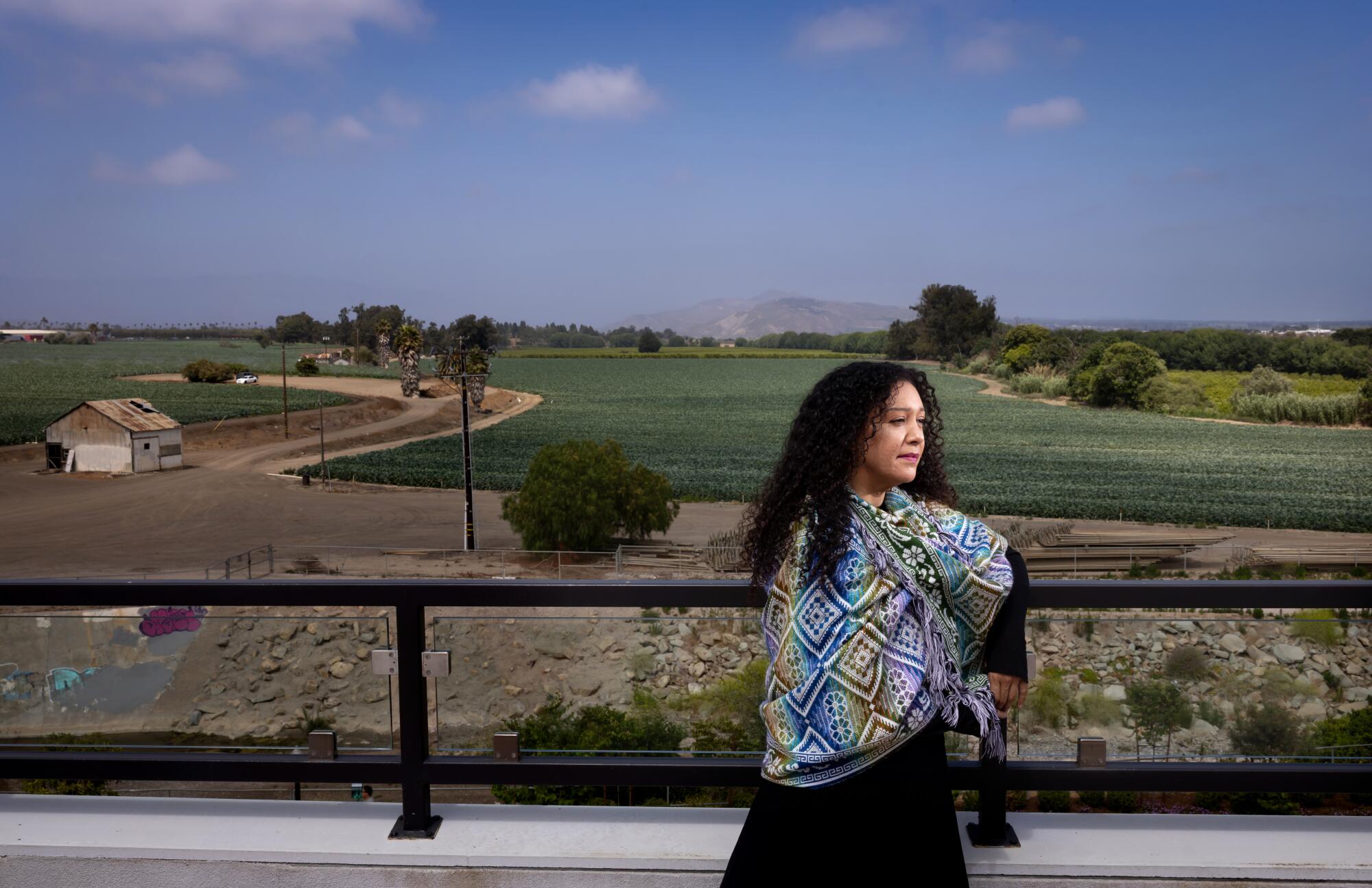
Vanessa Valdez leans on a railing.

Vanessa Valdez, a Ventura-based attorney, has filed a claim against the federal government, alleging she was hit with tear gas and six rubber bullets during the Glass House Farms raid last July.

(Christina House / Los Angeles Times)

“They were just shooting aimlessly, it seemed like,” she said. “I thought maybe they had fractured a rib because that’s how painful it was. I couldn’t sleep face down for three weeks.”

Ramirez and Valdez are among the dozens of U.S. citizens and immigrants who are seeking financial compensation for damages they say they suffered during President Trump’s immigration dragnet. For Valdez, that includes the cost of hospital visits, lost wages as she recovered, anxiety medication and seeing a therapist.

After reviewing public accounts and legal documents and interviews with more than a dozen lawyers and immigrants, The Times found that claimants from across the country are seeking at least $260 million.

In a statement, Homeland Security spokesperson Lauren Bis wrote that ICE officers are held to the highest professional standard and receive regular training. Bis said that when agents are faced with danger, they use their training to protect themselves and the public.

“The pattern is NOT of law enforcement using force. It’s a pattern of violent agitators attacking our law enforcement,” she wrote.

Asked about Valdez, Bis said law enforcement deployed chemical irritants including pepper balls, but not rubber bullets, after agitators attempted to breach the perimeter at Glass House Farms. She said Ramirez refused officer’s commands and physically attacked them, so they pepper-sprayed him in self-defense.

Lawyers who are experts in tort claims said the bureaucratic process is lengthy and complex, and any damage award would likely be lower than what a claimant is seeking.

Still, seeking redress through the Federal Tort Claims Act is one of the few legal remedies available for those seeking financial compensation for deaths, physical injuries, emotional trauma, unlawful detention or property damage caused by federal employees.

The number of claims is expected to rise.

Federal agents, some wearing street clothes and some wearing uniforms and protective gear, stand together.

Federal agents, some wearing street clothes and some wearing uniforms and protective gear, form a defensive line against hundreds of protesters outside the Metropolitan Detention Center in Los Angeles on Jan. 30.

(Allen J. Schaben / Los Angeles Times)

In recent months, advocacy organizations have prepared practice advisories for attorneys interested in filing tort claims, and law groups across the country have begun holding training sessions on the process.

“There is no question in my mind that a lot of people — hundreds, thousands — have been harmed significantly and will be legally entitled to large damages payouts, which are going to come from the federal government,” said Jonathan Feinberg, a Philadelphia-based attorney.

Feinberg, who specializes in cases involving excessive use of force by police and abuses of detained immigrants, is president of the board of directors for the National Police Accountability Project, which focuses on law enforcement misconduct.

“We’re going to be talking about Minneapolis in 2030,” he added.

Before they can sue in federal court, individuals must first request a review by the agency that they say is responsible, such as Immigration and Customs Enforcement or Customs and Border Protection. The agency has six months to respond and deny the claim or offer a settlement.

If the agency doesn’t respond or denies a claim, the claimant can then file suit.

Unlike civil rights lawsuits, in which juries decide the verdict, in tort cases, judges make that call. Only the agencies are named as defendants, not individuals.

The Times reviewed the claims of nearly 80 people filed since the start of 2025. The vast majority remain in the review stage. Lawyers anticipate most will not be settled, unleashing a flood of lawsuits starting this summer.

Federal law since 1871 has established that people can sue state and local officials for violating their constitutional rights. But the law left out federal actors.

One hundred years later, the Supreme Court allowed for damages lawsuits against federal officials who violate a person’s civil rights, though decisions in recent years have substantially narrowed that ability.

Democrats in California are pursuing legislation that would make it easier for residents to seek financial damages for constitutional violations committed by federal agents. Similar laws were already enacted in Maryland, Illinois and Connecticut, though the Trump administration has sued to block the latter two.

But there is a different route — tort claims.

Tort cases can be difficult to win, in part because the government can claim a “discretionary function exception,” which shields the agency from liability when the situation involves a policy-driven judgment call.

“So that’s what a lot of plaintiff’s lawyers are really anxious about, that the Trump administration is going to say, ‘Well, we’ve got our own immigration policies. Of course a lot of people disagree with them, but the statute is designed to give us the right to make those policy judgments,’” said Benjamin Zipursky, a Fordham University law professor who studies torts.

“Now, if I were the plaintiff’s lawyer, I would say, ‘Yeah, but shooting somebody in cold blood because you’re just mad about their political views, and they’re not really threatening your life at all — that’s not a policy judgment,’” he said.

The law office of John Burris, an Oakland-based attorney who represented Rodney King after he was severely beaten by Los Angeles police officers in 1991, has taken on damages clients in Minnesota. He said he anticipates filing around 80 tort claims stemming from the immigration enforcement actions there.

A sign amid flowers says "MN is greater than ICE."

A memorial for Renee Good at the location where she was fatally shot in Minneapolis.

(Eric Thayer / Los Angeles Times)

Burris said the experience has given him flashbacks to the period before King’s beating and the subsequent protests over police brutality, when officers felt they could act with impunity.

“There’s 1779798656 a more fundamental understanding that bad stuff does happen,” he said. “Everyday people are not as willing as they once were to just accept a police officer’s perspective.”

Public disapproval over immigration enforcement rose after federal immigration agents in Minneapolis shot and killed two 37-year-old U.S. citizens, Renee Good, a mother of three, and Alex Pretti, an ICU nurse, in separate incidents.

Other deaths took place before the Minnesota operation: 23-year-old Ruben Ray Martinez, who was killed by an ICE agent in Texas who fired repeatedly through the open window of his car; Keith Porter, 43, who was killed in Los Angeles by an off-duty ICE agent after shooting his gun into the air on New Year’s Eve; and Jaime Alanis Garcia, 57, who fell 30 feet from atop a greenhouse while fleeing agents at the Glass House Farms site in Camarillo.

Lawyers for the families of Good, Martinez and Garcia confirmed they are pursuing tort claims. Lawyers for the other families did not respond to requests for comment.

Additional highly publicized cases have also resulted in tort claims: Marimar Martinez, who was shot five times by a Border Patrol agent in Chicago; Mahmoud Khalil, the Columbia University student and Palestinian rights activist who spent 104 days detained after the administration labeled him a national security threat; Aliya Rahman, a disabled woman on her way to a doctor’s appointment in Minneapolis who blacked out at a detention facility after ICE agents detained her.

New claims appear to be filed weekly. Seventeen men, women and children who were detained in a military-style raid at a Chicago apartment complex filed claims this month seeking about $5 million each.

In many of the cases, Bis said, the claimants impeded or assaulted agents. Pretti’s death remains under investigation, she said.

Willy Wender Aceituno stands in a parking lot.

Willy Wender Aceituno stands in the parking lot where he was arrested last November by ICE agents in Charlotte, N.C.

(Jesse Barber / For The Times)

Willy Wender Aceituno was already a plaintiff in a class-action lawsuit filed by the ACLU of North Carolina challenging the policy allowing warrantless immigration arrests after he was stopped twice in a span of minutes by immigration agents last November. In March, he also submitted a tort claim.

Aceituno is a Honduran-born U.S. citizen who voted for Trump. On the day he was arrested, a group of masked agents checked his identification and left. Aceituno then filmed as a second group surrounded his red truck.

“If you break it, you will pay for it,” he tells them in Spanish seconds before one agent smashes the window with a baton. “Why did you do that, sir?”

Aceituno suffered cuts when agents threw him to the ground, which was covered in shattered glass. They placed him in an SUV with other detainees and drove him around Charlotte, N.C., before releasing him, still bleeding, more than 2 miles from his vehicle.

The moment brought back Aceituno’s childhood memory of watching his father be arrested by the Honduran military and disappeared.

“I remember they broke down the door, entered, put him in handcuffs and threw him to the ground,” he said. “I thought, ‘It’s happening again.’ To see the other Hispanics in the car made it feel like this is racial persecution. This is about skin, not criminality.”

Bis, the Homeland Security spokesperson, said Aceituno acted erratically, escalated the situation and refused to comply with officers’ commands.

Lawyers said many people, especially immigrants, who have viable claims have chosen not to pursue them out of fear of being targeted for deportation. Some were deported before they could sue.

“Even now, our clients wake up some days thinking, ‘What am I doing suing the federal government?’” said Iván Espinoza-Madrigal, executive director of the Massachusetts-based Lawyers for Civil Rights. “You have to have a lot of courage to be able to stand up against an administration that has put a bull’s-eye on you and that has targeted you based on your identity.”

Others have turned to mutual aid or online fundraisers to pay for medical bills or to repair property damage. On the website GoFundMe, donation campaigns describe shattered car windows, broken limbs, head trauma and mounting bills.

Some damage can’t be fully recompensated, Espinoza-Madrigal added.

Protesters hold signs reading "Deportations Put Lives At Risk."

Members of the Haitian community hold signs in support for the extension of Temporary Protected Status during a rally last month in Miami.

(Carl Juste / Miami Herald / Getty Images)

One of the organization’s clients is Jose Pineda, a Salvadoran man with Temporary Protected Status. A year ago, Pineda was stopped by ICE officers on his way to work in East Boston as a landscaper. They wouldn’t accept his Social Security and work authorization cards as proof enough that he was not deportable, and detained him without explanation, according to his tort claim.

So Pineda spent nearly two days in a holding cell at the ICE Boston Field Office with around 50 other people. He couldn’t sit or sleep and received minimal water and food.

Bis said agents “briefly questioned” Pineda because he matched the description of the subject of an operation, and that he was released after being identified.

When he was released, the claim alleges, his documents were returned but $600 in cash that he was saving to pay rent was not. The incident left him with frequent headaches, anxiety and memory loss, and exacerbated his gastritis. His absence from work resulted in a demotion from lead foreman to an assistant role.

“Whenever I drive, if someone stays behind me for three, four or five minutes, I start to imagine that it’s them again,” he said in an interview.

Pineda’s arrest also caused recurring nightmares that leave him shouting and thrashing around in bed. Out of fear that he could inadvertently harm his wife, they now sleep in separate beds.

Source link

Trump lays wreath at Tomb of the Unknown Soldier

1 of 5 | President Donald Trump delivers remarks in the Amphitheater after laying a wreath at the Tomb of the Unknowns at Arlington National Cemetery in Arlington, Virginia, on Memorial Day. Photo by Kyle Mazza /UPI | License Photo

May 25 (UPI) — President Donald Trump on Monday laid a wreath at the Tomb of the Unknown Soldier at Arlington National Park in Arlington, Va., to mark Memorial Day.

The annual tradition also saw Trump give an address honoring the 13 U.S. service members that have been lost during the U.S.-Israeli war in Iran during the last three months, the New York Post and USA Today reported.

“These incredible men and women gave their lives to ensure that the world’s number one state sponsor of terror will never have a nuclear weapon,” Trump said after laying the wreath.

“Oh, and they won’t,” he said. “They will never have a nuclear weapon. I’m sure you know that one.”

The United States and Iran are reportedly close to a deal to end the war and reopen the Strait of Hormuz. Secretary of State Marco Rubio said early Monday that “we’re either going to have a good agreement or we’re going to have to deal with it another way,” while Iran said the agreement is “still a work in progress.”

The Armed Forces Full Honor Wreath Ceremony started around noon on Monday, with Trump, Vice President JD Vance, Secretary of Defense Pet Hegseth and Major Gen. Antoinette Gant, commanding general of the Joint Task Force for the National Capital Region and Joint Chiefs of Staff Chairman Gen. Dan Caine in attendance.

In his remarks, Trump asked the family Air Force Capt. Airiana Savino, one of 13 service members to die in the Iran war, to stand for applause.

Trump also asked people to applaud for 97-year-old Harry Miller, who lied about his age, joined the armed forces at age 15 and found in the Battle of the Bulge in World War II.

“Harry Miller lied about his age to enlist and was soon fighting to stop the SS Panzer divisions as part of the famed 740th Tank Battalion,” Trump said. “The Daredevils, they were called, of which he is among the last surviving members.”

Members of the 3rd U.S. Infantry Regiment, or “The Old Guard,” place some 250,000 American flags throughout Arlington National Cemetery in preparation for Memorial Day in Arlington, Va., on May 21, 2026. Photo by Bonnie Cash/UPI | License Photo

Source link

Trump Ties Iran Deal to Abraham Accords Expansion

Donald Trump announced that he has requested several countries, including Qatar, Saudi Arabia, Pakistan, Egypt, Jordan, and Turkey, to join the Abraham Accords to normalize relations with Israel as part of an agreement with Iran.

U. S. President Donald Trump announced that he has requested several countries, including Qatar, Saudi Arabia, Pakistan, Egypt, Jordan, and Turkey, to join the Abraham Accords to normalize relations with Israel as part of an agreement with Iran. He stated he spoke to the leaders of these countries, as well as the United Arab Emirates and Bahrain, which have already signed the accords.

Trump expressed his wish for all these countries to immediately sign the accords and suggested that if Iran agrees to a deal with the U. S., it would be an honor to include Iran in this coalition. He mentioned the complexity of the negotiations that the U. S. has been working on and said most countries should be open to making a historic settlement with Iran.

While Trump indicated that negotiations with Iran were progressing, he didn’t provide details about a potential deal. He also noted that Egypt and Jordan already have relations with Israel, and he remains optimistic about Saudi Arabia joining the accords, although no movement from Riyadh has been observed.

With information from Reuters

Source link

Trump warns negotiators ‘not to rush’ on Iran deal

President Donald Trump speaks in the Oval Office at the White House in Washington, D.C., on Thursday. On Sunday, he urged negotiators on the deal with Iran to take their time and get it right. Photo by Al Drago/UPI | License Photo

May 24 (UPI) — President Donald Trump on Sunday urged his negotiators “not to rush into a deal” with Iran because “time is on our side.”

He made the comments in a post on Truth Social that also took aim at the Joint Comprehensive Plan of Action, the so-called Iran nuclear deal created in 2015 and which Trump withdrew from in 2018. In his post, Trump called it “one of the worst deals ever made by our country” and blamed former President Barack Obama and his administration.

“It was a direct path to Iran developing a Nuclear Weapon,” Trump wrote. “Not so with the transaction currently being negotiated with Iran by the Trump Administration – THE EXACT OPPOSITE, in fact!”

Trump said Saturday the deal with Iran had been “largely negotiated” and that final aspects were being worked out. On Sunday, he added that talks were “proceeding in an orderly and constructive manner.

“I have informed by representatives not to rush into a deal in that time is on our side,” he wrote.

“Both sides must take their time and get it right. There can be no mistakes!”

Secretary of State Marco Rubio also said Sunday that “significant progress” had been made and hinted that Trump may make an announcement on the issue “a little bit later today,” The New York Times reported.

“Suffice it to say some progress has been made, significant progress, although not final progress,” he said during a news conference in New Delhi.

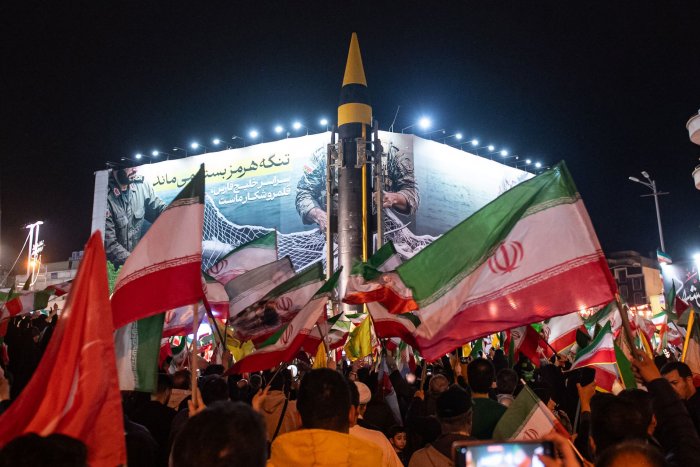
A missile identified as “Khorramshahr-4” was on display during a public rally in Tehran’s Enghelab Square on April 21, 2026. Photo by Behnam Tofighi/UPI | License Photo

Source link

White House shooter identified; Trump touts ballroom safety

May 24 (UPI) — The gunman who opened fire at the White House this weekend before being fatally shot by Secret Service officers has been identified as Nasire Best, unnamed sources confirmed to multiple media outlets.

The 21-year-old had previous encounters with the Secret Service and had previously posted threatening statements online, the sources told CBS News, NBC News and CNN. The sources said Best had never acted violently or brandished a weapon prior to Saturday evening, when police said he approached a checkpoint at the White House, pulled a firearm from his bag and opened fire.

Officers returned fire, striking Best, who was transported to a hospital where he was declared dead, Anthony Guglielmi, chief of communications for the Secret Service, said in the statement.

A bystander was also injured in the shooting and was in critical condition.

“It remains unclear whether the bystander was struck by the suspect’s initial gunfire or during the subsequent exchange of gunfire,” a Secret Service representative told CNN.

President Donald Trump, who was inside the residence at at the White House at the time of the shooting, was unharmed. In a post on Truth Social just after midnight Sunday, Trump thanked the Secret Service for their actions during the shooting.

“Thank you to our great Secret Service and Law Enforcement for the swift and professional action taken this evening against a gunman near the White House, who had a violent history and possible obsession with our Country’s most cherished structure,” Trump wrote.

Sources told CNN that Best had been detained in June 2025 and committed to the Psychiatric Institute of Washington for evaluation after he blocked an entry lane at the White House and proclaimed he was God. A month later, the Secret Service arrested him after he allegedly tried to enter a White House driveway. A judge told him to keep away from the White House.

Investigators at the time said they found that he had made statements online saying he wanted to hurt Trump and that he was the real Osama bin Laden, the mastermind behind the Sept. 1, 2001, terror attacks.

Trump also took the opportunity in his Truth Social post to renew his stance that the new ballroom he’s constructing would serve as added security at the White House.

“This event is one month removed from the White House Correspondent’Dinner shooting, and goes to show how important it is, for all future Presidents, to get, what will be, the most safe and secure space of its kind ever built in Washington, D.C. The National Security of our Country demands it!”

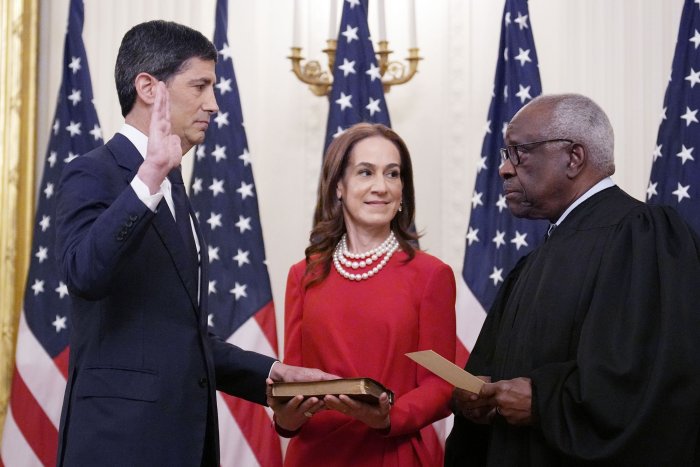
Kevin Warsh takes the oath of office as he is sworn-in as the new chairman of the Federal Reserve by Supreme Court Associate Justice Clarence Thomas in the East Room of the White House on Friday. Photo by Yuri Gripas/UPI | License Photo

Source link

Poll of judges, lawyers sees grave Trump threat to rule of law

Sometimes it seems as though the only thing that stands between a functioning democracy and a full-on Trump autocracy is a thin, black-robed line.

Although the Supreme Court, in general, and conservative appellate courts, in particular, have bowed and granted President Trump permission to do pretty much anything he wants, they haven’t thoroughly capitulated to his endless grasping for ever more power. (The way invertebrate congressional Republicans have.)

At the lower-court level, judges have repeatedly ruled in ways intended to check Trump, most notably when it comes to violating civil and constitutional rights in pursuit of his indiscriminate immigration dragnet.

The tendency to slow-walk his administration’s response to those rulings — and ignore others that Trump thinks he can safely snub — only contribute to the perception of presidential lawlessness and a sense that our judicial system is being strained to something approaching a breaking point.

Go ahead, if you’d like, and dismiss those concerns as just so much overwrought hand-wringing, or the mindless anti-Trump blathering of your friendly political columnist. A new survey of legal experts — including federal judges, top-tier lawyers and scores of professors from some of the country’s leading law schools — finds widespread concern about the brittle state of our legal system.

And it’s not just the fears of a lot of shaggy-thinking liberals.

“The nation is strong as is its commitment to the rule of law,” said one appellate judge, a Republican appointee. “The current president presents the greatest threat in decades.”

The survey was conducted by Bright Line Watch, a nonpartisan academic group that monitors the health and resilience of American democracy, in conjunction with the Safeguarding Democracy Project at UCLA’s School of Law.

Conducted between mid-February and early March, the poll anonymously surveyed 21 federal judges, 113 lawyers, 193 law professors, 652 political scientists and a nationally representative sample of 2,750 Americans.

What leapt out to UCLA’s Rick Hasen, director of the Safeguarding Democracy Project, was that “across the ideological spectrum and across judges, lawyers and law professors, there was considerable agreement that the rule of law in the U.S. is under tremendous stress.” That consensus, he said, suggests “a real risk to democracy.”

Most legal experts agreed that Trump is using executive power excessively, with a majority doubting the conservative-leaning Supreme Court would handle cases involving the Trump administration impartially. The experts also expressed concern about politicized law enforcement — Trump seeking to persecute his perceived enemies — executive branch overreach, and the failure of Congress or the Supreme Court to do more to rein in the rogue president.

Eight in 10 of those surveyed said federal officials fail to comply with court orders somewhat or very often, and nearly 9 in 10 said political appointees in Trump’s Justice Department mislead federal judges somewhat or very often.

Talk about contempt of court — not to mention our vital system of checks and balances.

There was, unsurprisingly, a split among conservatives and liberals who took part in the survey. (The study defined legal conservatives as those saying the Supreme Court should base rulings on its understanding of what the Constitution meant as originally written. Liberals, who made up most of the respondents, were defined as those saying the court should base its rulings on what the Constitution means in current times.)

Conservatives, for instance, were more likely than liberals to see former President Biden as a greater threat to the rule of law than Trump. Liberals were more likely than conservatives to see evidence of Trump politicizing the Justice Department.

There were also differences between legal experts — those most intimately involved in the judicial system — and the public at large. The experts were more concerned about Trump’s excesses and threats to the rule of law, which, Hasen said, stands to reason.

The legal system is not something most people encounter daily in the same way they do, say, gasoline prices or the cost of groceries. “Yet,” Hasen said, “it’s one of these background things that really matters.”

Why?

Hasen put it this way: “Imagine that a person had a dispute with their neighbor and it ended up in small claims court before a judge and the judge made the decision not based on the merits of the case but based on whether he was friends with one of the parties, or didn’t like people who were similar to one of the parties.”

Now imagine that kind of corrupted, perverted system of justice writ large.

If, for instance, “people know that the government can successfully seek retribution from people who criticize it, people will be less likely to criticize the government,” Hasen said, leaving the country worse off by muzzling those who would hold their elected leaders to account.

Or if, say, rioters overran the U.S. Capitol and tried to steal an election and, instead of being punished, received cash payouts from the federal government, what incentive would there be to follow the law?

Happily — and who couldn’t use a bit of good cheer right about now — all is not lost.

People “can demand that their elected representatives take steps to assure that the rule of law will be followed,” Hasen said, and can insist “that the government [not] play favorites or seek retribution against perceived enemies.”

That’s the power people have, come election time. That’s why voting matters.

There are lots of things riding on the outcome in November, not least the sanctity and integrity of our legal system.

Bear that in mind when you cast your ballot.

Source link

Travel industry worries after Trump administration reiterates threat to ‘sanctuary city’ airports

The travel industry is on edge after Homeland Security Secretary Markwayne Mullin reiterated his threat to withdraw U.S. Customs and Border Protection officers from airports in so-called sanctuary cities in a move that could jeopardize international flights.

The U.S. Travel Assn. said that Mullin confirmed he is considering withdrawing the officers in a meeting where the trade group was pressing its concerns about other proposals the Trump administration is considering that could hamper travel. The travel association and major airlines quickly condemned the idea, and even Transportation Secretary Sean Duffy said it doesn’t make sense to him.

“U.S. Travel believes such a move would have devastating consequences for the travel industry and communities that depend on international visitation,” the industry group said Friday in a statement.

Details of the meeting were first reported by the Atlantic.

Duffy said at a congressional hearing this week that he wasn’t familiar with Mullin’s remarks, and he’d like to learn more about the context and maybe ask Mullin a question about what he meant. But Duffy said it would be a bad idea to start restricting travel based on political views. After all, he acknowledged, at some point Democrats will be in charge and “you will all switch spots at one point — hopefully not too soon, Mr. Chairman.”

“We have people from around the world and around the country that need to be able to fly into all different kinds of places. We shouldn’t shut down air travel in a state that doesn’t agree with our politics,” Duffy said.

So it’s not clear how much support this idea has within the administration, though President Trump has previously threatened to withhold funding from sanctuary cities.

There is no strict definition for sanctuary policies or sanctuary cities, but the terms generally refer to jurisdictions that limit cooperation with U.S. Immigration and Customs Enforcement. And courts have rejected the idea of pulling funding from them in the past.

In Trump’s first term in office, in 2017, courts struck down his effort to cut funding to the cities.

It’s not clear exactly which cities and airports Mullin might target, but the Justice Department last year published a list of three dozen states, cities and counties that it considers to be sanctuary jurisdictions. They include California, Los Angeles, San Francisco and San Diego County.

The Airlines for America trade group was quick to say the idea would hurt the economy and disrupt travel.

“Reducing CBP staffing at major airports would have a devastating effect on the airline and tourism industries, causing a significant operational disruption to carriers, travelers and the flow of international cargo.”

Funk and Yamat write for the Associated Press.

Source link

Trump says U.S., Iran are ‘getting a lot closer,’ but questions remain about concessions

President Trump said Saturday that the United States and Iran have agreed on the basic terms of an agreement to end the two countries’ nearly three-month-long war and reopen the Strait of Hormuz.

“An Agreement has been largely negotiated,” Trump wrote in a social media post. “Final aspects and details of the Deal are currently being discussed, and will be announced shortly. In addition to many other elements of the Agreement, the Strait of Hormuz will be opened.”

Iran’s state television network quoted Foreign Ministry spokesman Esmail Baghaei as saying the draft pact will be a “framework agreement” that defers talks toward limiting Iran’s nuclear program until later. Trump did not mention the nuclear issue in his statement.

If that is the form the deal takes, it would represent at least a short-term concession from the president, who initially demanded a definitive end to Iran’s nuclear program as the price of peace.

Trump has also relaxed an earlier U.S. demand that Iran give up its right to enrich uranium and says he would be satisfied with a deal to “suspend” enrichment for 20 years.

Those signs of U.S. flexibility have raised alarm from Iran hawks, reportedly including Israeli Prime Minister Benjamin Netanyahu. They say they fear Trump is so intent on restoring the flow of oil from the gulf that he might agree to a deal that falls far short of U.S. goals.

Mark Dubowitz, a leading critic of past agreements with Iran, said he worries that Trump might settle for “a foolish agreement” to reopen the Strait of Hormuz.

“I’m concerned that the administration is looking to cut some ‘Phase One’ deal” in which Iran is given “significant sanctions relief in exchange for agreement to reopen the strait,” he said in an interview Friday. “I think that would be a foolish agreement. Iran would get real money, but they could continue to close the strait any time they wanted simply by making threats.”

Robert Kagan, a conservative foreign policy scholar at the Brookings Institution, wrote that a deal to reopen the strait while deferring the nuclear issue would amount to a U.S. “surrender.”

“On the present trajectory, Iran will emerge from the conflict many times stronger and more influential than it was before the war,” Kagan wrote in the Atlantic.

When the war began in February, Trump said he wanted not only to end Iran’s nuclear activities and destroy its ballistic missile program, but bring about regime change as well.

Instead, the nuclear talks have focused on narrower, more achievable goals: a “suspension” of nuclear enrichment for 20 years or less and removal or destruction of Iran’s highly enriched uranium, the essential ingredient for a nuclear weapon.

“A basic agreement shouldn’t be impossible to achieve,” said John W. Limbert, who worked on Iran policy at the State Department for three decades, and was one of the American hostages seized by Iranian militants in 1979. “The deal would be some kind of verifiable limits on the nuclear program in return for economic relief.”

“The fact that we’re talking about a suspension of all enrichment, and the question is whether it will be five years, 20 years or halfway in between — that’s important,” said Nate Swanson, an Iran expert who worked at the National Security Council under President Biden and Trump. “That sounds like you really have the basis for an agreement. … But don’t fool yourself to think that completely addresses the situation.”

Swanson said other issues, including Iran’s nuclear research and its advanced ballistic missiles, haven’t been addressed.

Despite signs of progress toward an agreement, the gaps between the two countries remain large.

Part of the problem is that both sides appear to believe they have won the war, said Danny Citrinowicz, a former Iran analyst at Israel’s defense intelligence agency.

Trump and other U.S. officials frequently assert that the United States has gained the upper hand by destroying Iran’s navy, air force and many of its missiles.

But the Iranians use a different scoring system, Citrinowicz said.

“Iran does not measure success the same way Washington often does,” he wrote in an email. “From Tehran’s perspective, simply holding firm in the face of American pressure can be framed as a win.”

“Tehran believes time is working against Trump politically and strategically,” he added. “Iran is prepared for prolonged confrontation; the United States, far less so.”

And even if a negotiated agreement is reached, the deals under discussion now won’t resolve all the conflicts between the two countries.

“An interim deal to buy time [is] probably where we end up,” Swanson said. “Buying time is not a bad thing. Ending a war is not a bad thing. But it’s not a comprehensive solution.”

Source link

Trump’s Justice Department scrubs its website of news releases about Jan. 6 defendants

The U.S. Department of Justice has acknowledged removing from its website news releases about criminal cases related to the Jan. 6, 2021, riot and insurrection, calling the information about the prosecutions “partisan propaganda.”

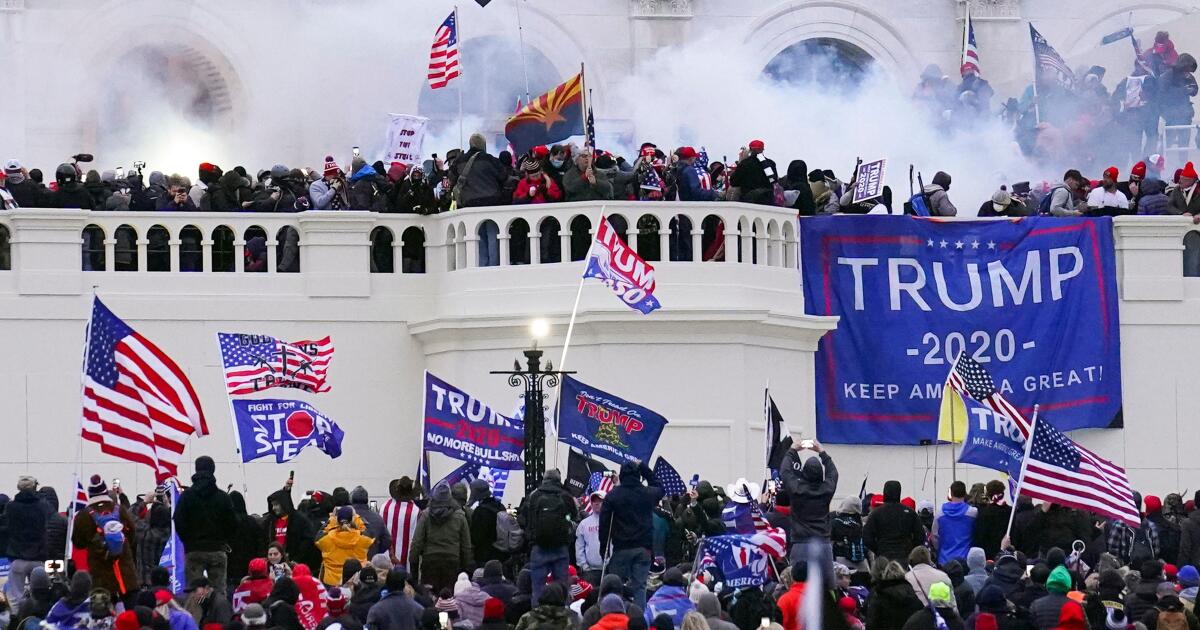
The purge of news releases documenting criminal charges, convictions and sentencings is the latest step by the Trump administration to reimagine the history of the assault on the U.S. Capitol, when hundreds of supporters of President Trump stormed the building in an effort to halt the congressional certification of his 2020 election loss to Joe Biden.

Trump, on his first day back in office in January 2025, pardoned, commuted the prison sentences or vowed to dismiss the cases of all of the 1,500-plus people charged with crimes during the Capitol assault, including those convicted of sedition and of attacking officers with makeshift weapons such as flagpoles, a hockey stick and crutch. More than 100 police officers were injured, many of them seriously, and five died as a consequence.

On Monday, the Justice Department announced the creation of a $1.776-billion fund meant to compensate Trump allies who claim they were unjustly investigated and prosecuted. Acting Atty. Gen. Todd Blanche has not ruled out that Jan. 6 rioters convicted of violence will be eligible for payouts, prompting bipartisan anger in Congress.

After a journalist on Friday observed on the social media platform X that the Justice Department was “quietly” removing news releases on its website that were related to the Jan. 6 attack, including about a Texas man who pleaded guilty to assault and also faced separate state charges of soliciting a minor, the department responded through its “rapid response” account that there was “nothing ‘quiet’ about it.”

“We are proud to reverse the DOJ’s weaponization under the Biden administration. We will do everything in our power to make whole those who were persecuted for political purposes,” the post said. “This includes stripping DOJ’s website of partisan propaganda.”

Among the releases removed from the site were those concerning seditious conspiracy cases against members of the Proud Boys and Oath Keepers, far-right extremist groups, some of which resulted in convictions and long prison sentences.

The Justice Department, in an unopposed motion last month, asked a federal appeals court to vacate those seditious conspiracy convictions, a request that was granted Thursday. The department on Friday moved to dismiss the cases against the group members.

Trump was impeached for inciting an insurrection on Jan. 6 and was indicted on felony charges related to his actions. Those charges were dismissed after his 2024 election victory.

Tucker writes for the Associated Press.

Source link

Iran submits new peace proposal; Trump expected to reply by Sunday

May 23 (UPI) — Iran and Pakistan submitted a revised proposal Saturday to the United States in the hopes of ending the war and reopening the Strait of Hormuz.

A response from President Donald Trump is expected by Sunday, Al Jazeera reported.

Trump told Axios Saturday that he would meet with his negotiators to discuss the offer and would likely decide by Sunday. He said odds were a “solid 50/50” on whether he would be able to make a deal or “blow them to kingdom come.”

Trump conducted a call on Saturday with leaders from Saudi Arabia, the United Arab Emirates, Qatar, Egypt, Turkey and Pakistan, Axios reported.

Trump also skipped Donald Trump Jr.’s wedding in the Bahamas Saturday because of the Iran war, he said.

“While I very much wanted to be with my son, Don Jr., and the newest member of the Trump Family, his soon to be wife, Bettina, circumstances pertaining to Government, and my love for the United States of America, do not allow me to do so,” the president said on Truth Social. “I feel it is important for me to remain in Washington, D.C., at the White House during this important period of time. Congratulations to Don and Bettina!”

Secretary of State Marco Rubio alluded to news coming possibly today.

“There may be news later today. I don’t have news for you at this very moment, but there might be some news a little later today. There may not be. I hope there will be, but I’m not sure yet,” Rubio told reporters in New Delhi on Saturday.

Sen. Lindsey Graham, R-S.C., told Axios that some leaders in the gulf have pushed Trump to strike Iran to weaken the regime and get better terms. But other leaders and the president’s advisors are urging him to take the deal that’s been offered. They say Iran can destroy Gulf oil operations if attacked.

“Count me as a strong skeptic that Iran can’t be prevented from terrorizing the Strait of Hormuz and that we can’t defend vital interests in the region after massive attacks against Iran — if they have been truly obliterated they shouldn’t be able to do either,” Graham said. “Time will tell. I am hoping for a good outcome still.”

Trump told Axios he’d meet with Steve Witkoff, Jared Kushner and Vice President Vance later Saturday.

“I think one of two things will happen: either I hit them harder than they have ever been hit, or we are going to sign a deal that is good,” Trump said.

Iranian Ambassador to Pakistan Reza Amiri Moghadam said on X that he discussed the “achievements of the negotiations with the officials of my country after returning from Tehran” with Pakistani Interior Minister Mohsin Naqvi.

“With conservative optimism, we can hope that, if the other side is adequately committed, a positive stride is taking shape which is the result of the positions of the Islamic Republic of Iran based on dignity, the steadfastness of the courageous armed forces and the resistance of the brave Iranian nation, as well as the initiative and dedicated endeavors of the Pakistani mediator,” Moghadam said.

Source link

Trump says Iran agreement ‘largely negotiated’, still awaiting finalisation | News

Trump says deal would include re-opening of Strait of Hormuz after call with Middle East leaders.

United States President Donald Trump has said that a Memorandum of Understanding in ceasefire talks to end the US-Israeli war with Iran “has been largely negotiated”.

Trump said on Saturday the agreement will include the re-opening of the Strait of Hormuz, adding that it remained “subject to finalization” by US and Iranian negotiators and “various other countries”.

Recommended Stories

list of 3 itemsend of list

Trump made the announcement after holding a call with the leaders and officials from Qatar, Saudi Arabia, the United Arab Emirates, Pakistan, Jordan, Egypt, Turkiye, and Bahrain. He said he also separately held a call with Israeli Prime Minister Benjamin Netanyahu.

“Final aspects and details of the Deal are currently being discussed, and will be announced shortly,” he said.

The announcement was the latest turn in a week that began with Trump threatening Iran that time was running out to make an agreement for a more lasting ceasefire. He later told reporters he was just moments away from resuming attacks, which he decided to put “on hold” at the behest of Gulf countries.

Trump has since alternated between renewing threats of escalation, including posting a picture on Saturday of Iran covered in a US flag, and saying a deal was close.

The US president released the statement shortly after Pakistan’s army chief Asim Munir concluded a short but “highly productive” visit to Iran on Saturday, according to a statement from Pakistan’s military.

It said “encouraging progress” was made towards reaching a final understanding.

Iranian officials have repeatedly voiced wariness over negotiating with the US, which had twice launched military attacks on Iran during talks about its nuclear programme.

The US and Israel launched the latest war on February 28, but fighting has largely remained paused as of April 8, barring a handful of flare-ups.

The US has continued to blockade Iran’s ports, with Iran effectively closing the Strait of Hormuz.

Key sticking points have been the future of Iran’s nuclear programme and its influence over the strait, the future of US military presence in the region, and access to frozen Iranian funds.

Source link

‘United States of the Middle East?’: Trump posts US flag covering Iran | US-Israel war on Iran News

Latest Truth Social post comes amid ‘delicate diplomacy’, expert says, as US and Iran indicate progress in talks.

Washington, DC – President Donald Trump has posted a photo of the United States flag covering the map of Iran, with the question: “United States of the Middle East?”

The post on Truth Social on Saturday represented another potentially incendiary message from Trump amid ongoing negotiations for a more lasting ceasefire in the US-Israeli war with Iran, experts said.

Recommended Stories

list of 3 itemsend of list

It carries the potential to roil both regional allies and foes alike given Washington’s past intervention in the Middle East, most notably during the US invasion of Iraq from 2003 to 2011, as well as the Trump administration’s push to increase its influence abroad.

The sentiment also appears to run counter to the Trump administration’s repeated statements that it is not seeking a prolonged occupation of Iran. The US has maintained it is not seeking outright regime change in its war, which it launched alongside Israel on February 28, but that it would welcome such change as a byproduct of the military campaign.

Even for a president known for outlandish social media posts and conflicting messaging on the war, the post could have implications for ongoing negotiations aimed at a more lasting ceasefire, according to Vali Nasr, professor of international affairs and Middle East studies at Johns Hopkins University.

He pointed to Trump’s threat in early April that an “entire civilisation will die” if Iran did not agree to a deal at the time. Hours later, both sides agreed to a pause in fighting.

That pause has held since, save for a handful of flare-ups, with the US continuing to blockade Iranian ports and Tehran effectively closing the Strait of Hormuz.

“First he declared he wanted to eradicate Iran’s civilisation now he is declaring that he wants to turn Iran into an American property,” Nasr wrote on X.

“It is this kind of grotesque behaviour that undermines diplomacy and unites Iranians in defence of their country,” he added. “In the middle of delicate diplomacy he casts doubts on America’s true intentions.”

The White House did not immediately respond to a request for comment.

Fragile negotiations continue

On Saturday, both US and Iranian officials indicated a new deal may be within reach.

Trump told CBS News both sides were “getting a lot closer”. US Secretary of State Marco Rubio said an update could be coming shortly, the broadcaster reported.

Iranian Foreign Ministry spokesperson Esmaeil Baghaei said the two sides were “currently working to finalise” a memorandum of understanding, and that “the opinions have been converging”.

Still, there have been no official announcements related to key sticking points in the standoff, including the future of Iran’s nuclear programme, the fate of its highly enriched uranium stockpile, and its future influence over the Strait of Hormuz.

Trump regularly uses his Truth Social account, which he launched after being briefly banned from Twitter, now X, in the wake of the 2020 election, to make major announcements, attack political enemies, and post AI-generated images and videos.

The foreign policy of his second term has been defined by efforts to grow US influence abroad, particularly in the Americas. That has included the military abduction of Venezuelan leader Nicolas Maduro, continued threats against Cuba, and vows to take control of Greenland, the semi-autonomous Danish territory in the North Atlantic.

The Trump administration has adopted the term the Donroe Doctrine, a reference to the 1823 Monroe Doctrine, which sought to diminish European influence in the Western Hemisphere.

On Saturday, Trump also posted an image of his face peering over a mountain range in Greenland.

“Hello, Greenland!” it said.

Source link