Yemen’s Iran-backed Houthi rebels have announced a maritime blockade on Saudi Arabia after the two sides traded fire last week for the first time in years. Observers have described the announcement as a “significant military move” that threatens global trade.
The facade of Terminal 3 at Jose Marti International Airport in Havana is shown on Saturday. Cuban artist and dissident Luis Manuel Otero Alcantara departed for the United States after being granted humanitarian parole following a five-year prison sentence on the island, Photo by Ernesto Mastrascusa/EPA
July 20 (UPI) — Cuban artist and dissident Luis Manuel Otero Alcántara said he cannot return home after arriving in exile in the United States this weekend.
Meanwhile, Secretary of State Marco Rubio renewed his call Monday for the Cuban government to release more than 700 political prisoners amid rising tensions between Washington and Havana.
Otero Alcántara, 38, arrived in Miami on Saturday after spending five years imprisoned in Cuba on charges of desecrating national symbols, contempt and public disorder.
His arrival was confirmed by Rubio, who said the artist had been imprisoned for challenging the Cuban government.
After years of unjust imprisonment for challenging the Marxist tyranny of the Cuban regime, Luis Manuel Otero Alcántara has arrived in the United States. The Cuban government’s brutal crackdown against its own people five years ago is yet another reminder of the unique misery and…— Secretary Marco Rubio (@SecRubio) July 18, 2026
In his first public remarks since arriving in the United States, the founder of the San Isidro Movement said prison changed the way he sees people, but acknowledged that exile carries a high personal cost.
“Five years later, I am more human. Prison is a place where you can look into the eyes of people who, even after committing the worst crimes, are still human beings,” he said in videos published by Caraota Digital.
However, he said that being forced to leave Cuba does not represent true freedom.
“I have been expelled from Cuba. This is not right. … I can’t see my son. I can’t return to my home. It’s just not right,” he said.
Otero Alcántara gained international prominence via a collective of artists and intellectuals that called for greater freedom of expression in Cuba and that, according to Amnesty International, has been the target of constant persecution by Cuban authorities.
He was arrested while attempting to join the anti-government protests of July 11, 2021, and was sentenced to five years in prison a year later.
After confirming Otero Alcántara’s arrival in the United States, Rubio said on X that the artist’s imprisonment was the result of challenging “the Marxist tyranny of the Cuban regime,” and he demanded the immediate release of “the more than 700 political prisoners unjustly detained” on the island.
Rubio said President Donald Trump‘s administration will continue to support those seeking greater political freedoms in Cuba.
July 20 (UPI) — A ferry carrying 133 passengers and crew members capsized off the coast of Guyana, where authorities continued searching Monday for dozens of missing people while investigating possible irregularities in the vessel’s operation.
The MV Barima departed Georgetown on Saturday afternoon bound for Port Kaituma, a remote community in the country’s northwest that is primarily accessible by sea and river.
According to the official manifest, the vessel was carrying 116 passengers, 17 crew members and some 268 tons of cargo when it issued a distress signal about 11 p.m., Prime Minister Mark Phillips said.
By midday Sunday, rescue teams had saved 67 people, including 41 men, 11 women and 15 children, while the search continued across an area expanded to more than 385 square miles with support from the Guyana Defence Force, the Coast Guard, other government agencies and local fishermen, according to the government.
As rescue efforts progressed, authorities discovered several of the people found alive were not listed on the ferry’s official manifest.
In addition, two crew members tested positive for cannabis during medical examinations conducted after the accident, Phillips said.
After those findings, the government ordered a joint investigation by the Guyana Police Force, the Guyana Defence Force, the Maritime Administration Department and technical experts to determine the cause of the capsizing.
The investigation will examine the accuracy of the manifest, the cargo being transported, compliance with maritime safety regulations and the actions of the captain and crew before and during the trip.
GUYANA
MV Barima Ferry sinks with 133 persons on board; Search & Rescue Operation underway
July 19, 2026
Ferry carrying 133 passengers and crew sinks off Guyana coast
Sixty-seven people have so far been rescued after a ferry carrying 116 passengers and 17 crew sunk off… pic.twitter.com/vk7jPmbbio— Sid (@Trending_Sid) July 20, 2026
As part of the initial measures, authorities removed the entire team responsible for the MV Barima’s cargo, dispatch and operational management from their duties to preserve the integrity of the investigation and prevent any interference with the evidence, Public Works Minister Juan Edghill said.
Edghill said the Guyana Police Force had obtained security camera footage from Kingston Goods Wharf, from which the ferry departed, to reconstruct the sequence of events leading up to the accident.
“Where negligence, misconduct or criminal acts are established, those responsible will face the full force of the law,” Phillips said in a statement.
Edghill described it as “criminal” that some passengers were not listed on the official passenger manifest, saying the situation makes it difficult to determine how many people were actually on board, local outlet Kiskadee Watch reported.
He said the captain and two other crew members remain in custody while the investigation continues.
Some survivors also said the vessel was overloaded and that crew members had been drinking alcohol and smoking before the accident, according to Kiskadee Watch.
Authorities initially maintained that the MV Barima had been operating within authorized limits. According to the official manifest, the ferry had capacity for more than 300 passengers and 284 tons of cargo, and it was carrying 268 tons at the time of the accident.
The government also said the vessel completed its mandatory maintenance in 2024 and was operating with new engines.
As search and rescue operations continue, assistance centers remain open for relatives in Georgetown, Port Kaituma and Mabaruma, where authorities are providing official information, psychological support and other services to those affected.
July 20 (UPI) — The Department of Defense on Monday identified the two active-duty U.S. soldiers who were killed in action by an Iranian strike on Friday in Jordan.
The Pentagon announced the deaths of 25-year-old Tyler James Feehan of Ewa Beach, Hawaii, and 19-year-old Isabella Gonzales of Carrollton, Texas. They were stationed at the Muwaffaq Salti Air Base in Jordan when it was hit by Iranian ballistic missile and drone strikes.
Four more U.S. troops were injured in the strikes.
The deaths of Feehan and Gonzales were the first deaths of U.S. troops since the peace deal between the United States and Iran was briefly met earlier this month. Since the war began in February, 17 U.S. troops have been killed, including a soldier who was killed in Iraq on Saturday. That soldier has not been publicly identified.
Feehan was assigned to the 32nd Army Air Missile Defense Command in Fort Bragg, N.C. Gonzales was assigned to the 10th Army Air Missile Defense Command in Ansbach, Germany.
The United States and Iran have traded strikes for nine consecutive nights since the peace agreement between the sides was broken earlier this month. President Donald Trump said Sunday that the U.S. strikes over the weekend were in “honor” of the “probably three” soldiers killed in Jordan and Iraq.
U.S. Central Command said in a statement on Saturday that it began launching new airstrikes against Iran at Trump’s direction.
President Donald Trump delivers a prime-time address to the nation from the East Room of the White House on Thursday. Pool photo by Saul Loeb/UPI | License Photo
July 20 (UPI) — The average price of a gallon of regular grade gasoline in the United States has again reached $4 on Monday with renewed fighting in Iran.
AAA reported a 13-cent hike in the average gas price over the past week, bringing an end to declining prices. The latest surge comes on the back of the peace deal between the United States and Iran falling apart with both sides reigniting attacks.
The lowest gas prices in the United States on Monday can be found in Indiana, where a gallon of regular gasoline is $3.35. California has the highest average price per gallon at $5.49 and Washington and Hawaii are above $5 per gallon.
The average price of a gallon of gas was $2.98 before the United States and Israel launched strikes on Iran on Feb.28. Prices climbed quickly after that due to Iran effectively closing the Strait of Hormuz, a critical chokepoint in the Middle East oil trade. The average gas price in the United States topped $4.50 in May, marking a four-year high.
Brent crude oil, the international benchmark, surpassed $90 per barrel on Monday for the first time since early June. The price of Brent crude oil has climbed by 16% in the past week.
The price of a barrel of West Texas Intermediate crude oil has increased by $12 in July, hitting $82 per barrel.
Aggressions between the United States and Iran have brought the return of the U.S. naval blockade on the Strait of Hormuz. U.S. forces are again targeting any ships using Iranian ports.
U.S. economic data showed improvement beginning in June as talks of a peace agreement heated up. The White House welcomed a report from the U.S. Bureau of Labor Statistics last week that showed consumer prices falling in June.
“Prices are coming way down, and we’re doing a great job,” President Donald Trump told reporters last week. “And remember that for the midterms.”
The decline in consumer prices was largely attributed to falling gas and energy prices. Those prices were also the catalyst for prices surging over the past five months.
President Donald Trump delivers a prime-time address to the nation from the East Room of the White House on Thursday. Pool photo by Saul Loeb/UPI | License Photo
For the ninth consecutive night, the United States mounted attacks on Iran’s defence facilities and maritime capabilities into the early hours of Monday, with Tehran hitting back in tit-for-tat strikes as warning sirens blared in neighbouring Gulf countries and Jordan, home to US military bases.
Both sides have accused each other of violating the memorandum of understanding (MoU) they had signed in Islamabad, Pakistan, on June 17. US President Donald Trump has said he views the truce as over, while Iran has said it no longer intends to adhere to the MoU.
Meanwhile, the Strait of Hormuz — through which 20 percent of the world’s oil and gas passed during peacetime — is shut again, sending crude prices shooting up yet again. On Sunday, the US military said another American service member had been killed late last week, bringing the total number of deaths to 17.
So, what has changed in the last two months for the US, Iran and the Gulf countries as the MoU has unravelled in terms of economic impact, widening of military targets, and how they view the war?
A billboard depicting US President Donald Trump lying in a coffin on a building in Tehran, Iran, July 18, 2026 [Majid Asgaripour/West Asia News Agency via Reuters]
Economy
The Strait of Hormuz — the kill switch of the global economy — has been closed down by Iranian authorities, warning that not even a drop of oil shall pass through the waterway amid US attacks and a naval blockade against Iran’s ports.
The MoU had paved a path for the reopening of the strait. And that had briefly pulled oil prices to par with pre-war levels.
The GCC
The strait is of critical importance, especially for Gulf Cooperation Council (GCC) states, which saw their economic security and energy strategy severely affected by export curbs. The war on Iran has brought about the largest disruption to global oil and liquefied natural gas (LNG) supplies in modern history.
The costs go beyond just energy revenue losses, noted Mohammad Reza Farzanegan, an economist at Germany’s Marburg University.
“The conflict also threatens the GCC countries’ diversification strategies. Tourism, aviation, logistics, construction, real estate and foreign investment all depend on perceptions of regional stability,” he told Al Jazeera. “Continued war increases insurance and transport costs and encourages investors and tourists to reconsider their exposure to the region.”
Iran
For Iran, the MoU lifted the naval blockade against Iranian ports and offered oil and banking sanctions waivers, and Tehran rushed to export tens of millions of barrels of crude oil.
The earlier US blockade had curbed Iranian exports, with Iran’s parliament speaker and chief negotiator, Mohammad Bagher Ghalibaf, telling Iranian state TV in an interview last month that “we did not export even one barrel” during the blockade.
However, as fighting resumed, the US disabled a vessel in the Strait of Hormuz, reported to be carrying Iranian crude. Tehran has also hit commercial vessels in the waterway, and the US has been bombing Iran’s coastal areas since then.
“[The renewed US naval blockade] is more damaging than conventional sanctions because the restrictions are now enforced physically,” said Farzanegan. “Iran therefore has much less room to use intermediaries, alternative flags and informal shipping arrangements to maintain oil exports.”
“The immediate consequences are lower foreign-exchange revenues, further depreciation of the rial and stronger inflationary pressure,” the economist told Al Jazeera.
Iran’s economy has been suffering from one of the world’s highest inflation rates. The rial touched nearly 1.9 million against the US dollar this week, a new all-time low. The Tehran Stock Exchange’s main index lost another 120,000 points or 2.4 percent on Saturday to stand at 4.77 million.
The US
Trump’s war has been widely unpopular in the US. The president recorded a 60 percent disapproval rating on the economy, as per the latest CNBC polling, with a net approval rating of -22, reported to be the lowest of his political career.
As per the poll, 61 percent of respondents said they are pessimistic about the state of the economy, the highest percentage since December 2023.
“The effects are most visible in energy prices and consumer purchasing power. This increases household costs and complicates the political position of President Trump and Republican candidates ahead of the November 2026 congressional elections,” said Farzanegan.
A vessel in the Strait of Hormuz, as seen from Musandam, Oman, July 16, 2026 [Reuters]
Military
The US
The US military has had 17 personnel killed in the war with Iran so far. Three of them have been killed since the resumption of the war about 10 days ago.
“We hit them very hard again tonight,” Trump said on Sunday, adding, “We did that in honour of the – probably three – it’s probably three great patriots.”
Two US personnel were killed in an Iranian attack on an airbase in Jordan on Friday, and a third is missing. Another soldier was killed last week in Iraq while defusing unexploded ordnance from an Iranian drone.
Tehran has claimed to have hit several US military facilities in Kuwait, Bahrain, and Jordan, including an aircraft at Aqaba airport.
Al Jazeera could not immediately verify the extent of damage to any facilities.
The Gulf
The renewed attacks from Iran on most Gulf countries, as well as Jordan, have forced them to deploy their interceptors. GCC countries had already used hundreds of expensive interceptors during the first phase of the US-Israel war on Iran in March and April.
But the Iranian military’s attacks have also hit civilian infrastructure in Gulf countries. The bombing of power and desalination plants in Kuwait has drawn widespread regional condemnation.
“What is happening is a severe shock to the GCC countries,” Nader Habibi, an Iranian-American economist, told Al Jazeera. “Now, after the disruptions of the past seven months, even as they have tried to avoid getting involved, the civilian population is indirectly impacted.”
Iran
The US insists that it has focused its attacks on Iran’s military infrastructure, especially on the country’s southern islands — some of which act as forward military or surveillance posts, and others that are believed to host missile bunkers.
But Tehran has accused the US of targeting civilian infrastructure as well in recent days, including bridges and tunnels, ports and dock facilities, power stations and water plants. Iranian officials have said more than 50 people have been killed and about 500 wounded in US attacks in the past three weeks.
Narrative
More than the war itself, a significant part of the messaging from the US and Iran has been over the control of the Strait of Hormuz.
The US
Washington says its renewed attacks are aimed at degrading Iranian capabilities to disrupt maritime traffic in the waterway, with Trump saying last week that “the US controls the Strait”.
Iran
Tehran has pushed back on Trump’s claim.
Farzanegan said Iran’s “ability to influence shipping through the Strait of Hormuz remains a unique source of bargaining power”. “Tehran is therefore prepared to bear considerable costs to preserve this leverage.”
He added that Iran may also calculate that extending part of the economic costs to neighbouring oil-exporting countries will encourage these governments to use their political influence in Washington and push the US towards negotiations.
“This appears to be one reason why Iran is prepared to maintain pressure in the Strait despite the considerable costs to its own economy,” the analyst added.
Aniseh Tabrizi, an associate fellow on the Middle East and North Africa Programme at think tank Chatham House in London, said the significant change since the MoU unravelled “is that there is less optimism than before about diplomacy being feasible”.
“For all the sides, it is difficult to foresee a scenario in which another deal is not only reached, but also implemented successfully,” she told Al Jazeera. “And that makes it particularly concerning for all the parties involved.”
Tabrizi noted that there appears to be “no imminent drive” from the Iranian side to sign a deal. “They are still maintaining escalatory attacks, but also reciprocating the kind of attacks that are conducted against the country,” she said.
Smoke rises from an explosion at an unknown location after a US strike on Iran in this screengrab from a video released on July 19, 2026 [Handout/US Central Command via Reuters]
The Gulf
GCC countries have continued to condemn Iran’s attacks on the regional countries, while calling for diplomacy to dial down the escalation. They have made it clear that Iran’s unilateral control over the Strait of Hormuz would not be acceptable to them.
Tabrizi added that, like the weeks before the Islamabad MoU, regional countries, especially Qatar, are still batting for talks.
If anything, Farzanegan said, the economic losses can bring all the sides to the table again for talks.
“Higher economic losses increase the incentives for negotiations,” he said. “A return to negotiations becomes more likely when both sides conclude that continued escalation cannot improve their bargaining position.”
Economist Habibi agreed that if an agreement is reached again, “it would be primarily because of the stability of the economic pressures on both sides”. However, he added that the probability of escalation in the next couple of weeks is higher than the probability of negotiation.
Britain was set to get its seventh prime minister in 10 years Monday when the king invites Andy Burnham (L) to form a new government, only four weeks after the former Mayor of Manchester was elected to parliament in a by-election. Photo courtesy of House of Commons/EPA
July 20 (UPI) —Andy Burnham was set to become British Prime Minister on Monday after a private audience with King Charles III at Buckingham Palace, at which he will ask the former Manchester Mayor to form a government.
Burnham is expected to head to the palace late morning after outgoing Prime Minister Keir Starmer gives a farewell speech outside No. 10 Downing Street at around 11:15 a.m. local time and departs to make the 1-mile journey to meet with the king to officially tender his resignation.
Burnham will be the country’s seventh prime minister in 10 years and brings to five the number among those leaders installed in Downing Street by their respective parties and without initially winning a mandate from the electorate.
He takes over just two years after Starmer led the party to a landslide general election victory that returned Labour to power after 14 years in opposition.
On his arrival in Downing Street but before going inside, Burnham will make his first speech as prime minister in which he is expected to promise to give people “breathing space” from cost of living pressures.
Afterward, he will head inside for briefings on classified national security matters, including the launch codes for the country’s nuclear missile arsenal, before getting on with appointing his chancellor of the exchequer, foreign and home secretaries and the rest of his cabinet, as well as other ministers and departmental heads.
Burnham inherits a daunting in-tray of complex, deep-seated problems to tackle that Starmer was perceived as failing to get to grips with or failing to do so with sufficient pace, which led to his downfall.
Those issues include cutting spending on welfare, sickness and disability benefits which is projected to rise from its current $78 billion to $105 billion by 2030, finding $12.1 billion a year to fund the outgoing administration’s Defense Investment Plan, fixing the “social care” system that looks after the elderly in the community or in retirement homes, meeting a 300,000 a year house-building target, and getting over a million 16-24 year-olds into work.
What little specifics Burnham has set out include ditching a national digital ID scheme, easing a ban on new oil and gas drilling in the North Sea by allowing existing fields to expand into adjacent untapped areas, some form of public control of water utilities, and cuts to taxes on local businesses funded by major multinational corporations which currently pay a lower rate.
Emma Burnell of the LabourList website told the BBC that while the mood within the party was upbeat, members of the Parliamentary Labour Party believed it was their last chance to get it right.
“It’s going to be a long, hard project. I don’t think he’s going to be able to do it overnight, he will need to show that there is real, tangible progress being made,” she said.
In a letter to Burnham posted on X on Sunday, Conservative opposition leader Kemi Badenoch accused Burnham of lacking “a clear plan on any of the issues facing our country” and avoiding legitimate questioning regarding his intentions.
“You have refused calls to come to Parliament for questions from MPs, and you have not submitted yourself to serious media scrutiny. This is not a promising start.”
She vowed the Conservatives would back any bid to slash benefits, saying the country was in danger of becoming “a welfare state with a country attached” and called on Burnham to rule out tax rises and to grant new licenses to drill for oil and gas in the North Sea.
“Where we support your agenda, I will say so. But I will always stand against the instincts of Labour MPs for higher taxes and more spending,” wrote Badenoch.
Astronaut Buzz Aldrin walks on the surface of the Moon during the Apollo 11 mission on July 20, 1969. Photo by NASA/UPI | License Photo
A million jubilant Spain supporters are expected to greet their heroes on Monday in Madrid, as the World Cup winners return home after clinching their second star.
Spain’s 1-0 victory against Argentina in New Jersey on Sunday, secured by a Ferran Torres strike in extra-time, has sparked an outpouring of national pride in the football-mad country, whose only other World Cup triumph came in 2010.
Recommended Stories
list of 4 itemsend of list
Coach Luis de la Fuente and his squad’s flight had a scheduled landing time in Madrid of 12:50pm (10:50 GMT) with the golden trophy in tow, after a dominant performance with “total control” against a “helpless Argentine side”, according to Spanish daily Marca.
Many younger supporters were not yet born when Andres Iniesta’s extra-time goal against the Netherlands secured Spain’s first World Cup in South Africa 16 years ago.
On Monday morning, the Castellana, Madrid’s main avenue, bore the marks of a boozy evening – the tarmac strewn with rubbish, beer cans and shards of glass.
Among the last remaining supporters, some slept with grins on their faces on the pavement or on benches, while others were still staggering home as cleaning crews worked from the early hours to prepare the route for tonight’s party.
“I didn’t sleep much, because … [of] the celebration and then the tension of the match. I think it was a little more difficult for all of us to fall asleep,” Madrid Mayor Jose Luis Martinez-Almeida told RNE radio.
After landing, the players will be received by King Felipe VI at Zarzuela Palace, on the outskirts of Madrid, according to the mayor.
It is not yet known whether the team will be met by Prime Minister Pedro Sanchez at the government headquarters, La Moncloa, as he had to make a swift visit to Algeria.
Spain’s World Cup winners will enjoy an open-top bus parade, starting at Moncloa and heading to Cibeles Square, the central government’s representative in Madrid, Francisco Martin, told Spanish public television.
A ceremony involving the players will then be held at the square, the traditional gathering point for celebrations by the Spanish national team and its supporters.
About one million people are expected to line the parade route, with additional security and transport measures planned to handle the crowds, Martin explained.
A total of 2,050 police officers and 400 Civil Guard personnel will be deployed, he added.
Some supporters who already had only a short night’s sleep are planning to celebrate again, like Bruno Gonzalez del Yerro, a 32-year-old financier.
“We’ll have to celebrate it one way or another, given that it only happens every four years and that Spain hadn’t won it for about [16] years now. It definitely deserves a party,” he said.
Spain’s women’s side won the World Cup in 2023, meaning for the first time a country has both trophies at the same time.
In 2030 Spain will defend their crown on home soil, as one of the World Cup hosts along with Portugal and Morocco.
The Spanish press was running out of superlatives to describe its heroes after they overcame favourites France in the semifinal before downing Argentina.
“The kings of all-time!” wrote Marca, celebrating a “second star that will now be stitched onto the Spanish jersey after yet another masterclass in collective play”.
On a tragic note, a 13-year-old boy was killed at about midnight in the town of Ciudad Rodrigo in the west, after a fountain crumbled under the weight of supporters who had climbed onto it to celebrate.
In Buenos Aires, the initial silence after defeat was striking, and then the tears came once the reality sank in. Their hopes of a fourth World Cup were dashed, but hundreds of thousands of people are expected to greet the team on their return at 5pm local time (20:00 GMT).
After more than five weeks of competition with the expanded format and 48 teams, only Spain and Argentina were left standing by the 104th and final match.
The 2022 champions, despite the presence of all-time great Lionel Messi, failed to create clear chances against Spain’s well-organised and more positive side.
Enzo Fernandez’s red card left Argentina with their backs pinned to the wall, and Barcelona forward Torres slammed home after fellow substitute Nico Williams teed him up.
“It’s not my goal, it’s the goal of 47 million people,” said Spain’s match-winner.
Messi had a sensational World Cup but drifted through the final like a ghost, shedding tears at the end. In Madrid, tears will also flow on Monday night, but tears of joy.
Tragedy struck in the Salamanca province when a 13-year-old died during celebrations for the win against Argentina.
Published On 20 Jul 202620 Jul 2026
A 13-year-old died and another child was among the injured when a fountain partially collapsed in western Spain during mass celebrations of the country’s second football World Cup final victory, regional emergency services have said.
The accident occurred shortly after midnight on Monday in Ciudad Rodrigo, a walled medieval city of about 12,000 in Salamanca province, near the border with Portugal.
Recommended Stories
list of 4 itemsend of list
Hundreds of residents had gathered at the Arbol Gordo fountain in the city’s centre when the upper part of the monument broke loose and struck several people, emergency services said.
In a statement, Ciudad Rodrigo’s town hall expressed condolences for the victim.
“The entire city feels this loss and accompanies the minor’s friends and family in their grief … What should have been a celebration of the Spanish national team’s World Cup victory has turned into a tragedy,” it said.
It is understood that the fountain collapsed under the weight of numerous people who had climbed onto it to celebrate Spain’s first World Cup victory since 2010.
“A few minutes after 12:30 am local time, rescue services received calls over a fountain collapsing on numerous people,” emergency services said in a post on X, adding that another youth, believed to be in a serious condition with a broken leg, was among the injured.
Spain beat Argentina 1-0 to win the 2026 edition of FIFA’s showpiece global event, which was staged at New York New Jersey Stadium by cohosts United States.
The match was 0-0 after regulation time, forcing the game to extra time where Ferran Torres scored the only goal of the game.
July 20 (UPI) — Taylor Farms said late Sunday the Trump administration mistakenly informed it that a sample of its shredded iceberg lettuce tested positive for a parasite amid a multi-state outbreak that prompted the U.S.-based fresh-produce giant to initiate a recall of the salad staple distributed to 27 states.
The Food and Drug Administration reversed the finding Sunday, determining that the purported positive test for the microscopic Cyclospora parasite, which causes the intestinal illness cyclosporiasis, was a false positive.
“Today, FDA apologized to us,” the company said in a statement.
“Today, we were informed that FDA made a mistake.”
Taylor Farms had initiated the voluntary recall Friday after federal health investigators linked shredded iceberg lettuce sourced from central Mexico to a multi-state cyclosporiasis outbreak through a traceback investigation.
At least 1,644 people in five states have been infected, including 94 hospitalizations, since May 13, according to the U.S. Centers for Disease Control and Prevention, which said there have been no fatalities.
Federal health investigators have linked the illnesses to shredded iceberg lettuce served at Taco Bell locations in Indiana, Kentucky, Michigan, Ohio and West Virginia.
The FDA said Friday that its traceback investigation identified the supplier as Taylor Farms de Mexico. The company then initiated the voluntary recall.
On Saturday, federal investigators said a sample collected during targeted import surveillance tested positive for Cyclospora. The FDA said the produce was not part of the initial recall and investigators were working to identify whether any of the lot was available in commerce.
A day later, Taylor Farms said it was informed of the FDA’s “mistake.”
“To be clear, at this moment, the FDA has not identified a single positive product test result for Cyclospora,” it said.
The FDA told media it had discovered the false positive after rechecking the results of the purported positive sample.
“As of July 19, 2026, there are no confirmed positive sample results for product testing for Cyclospora,” the FDA said in a statement, NBC News reported.
Taylor Farms said it had completed the voluntary recall, which was limited to iceberg lettuce grown and processed in central Mexico, and that all of its other produce is available for purchase.
“Our thoughts remain with everyone who has fallen ill in this outbreak,” it said.
“We are committed to working with public health authorities as the ongoing outbreak investigation continues.”
The People’s Action Party, which prides itself on a clean reputation, has been rocked by a series of scandals recently.
Published On 20 Jul 202620 Jul 2026
Singapore’s acting Minister-in-charge of Muslim Affairs Faishal Ibrahim has resigned over his interactions with a woman, Prime Minister Lawrence Wong has said.
“Most of their interactions took place through online messages,” Wong said in a statement on Monday. “They also met on the sidelines of public events.”
Recommended Stories
list of 4 itemsend of list
Both parties made allegations of harassment against each other, and the matter is being investigated by the police, he added.
In 2023, then Transport Minister Subramaniam Iswaran was put under investigation for corruption alongside Malaysian billionaire hotel tycoon Ong Beng Seng. A year later, Iswaran pleaded guilty to receiving more than 380,000 Singapore dollars ($294,000) worth of gifts from Ong, including tickets for West End shows and football matches, some of them in exchange for advancing Ong’s business interests.
Two senior members of Singapore’s largest opposition party also resigned in 2023 after they admitted to having an affair, while two ministers were investigated and cleared of wrongdoing over their rental of state-owned properties. This prompted former Prime Minister Lee Hsien Loong to say that his party’s image was damaged by a series of scandals.
Wong said no criminal offence had been committed by either party in Faishal’s case, and no criminal action would be taken, but “there was a separate question of whether Associate Professor Faishal’s conduct met the standards expected of a political office holder and member of parliament”.
Faishal has been a member of parliament since 2006 and became the acting minister-in-charge of Muslim affairs in 2025. He has now resigned from the ruling People’s Action Party as well as his cabinet position.
In his resignation letter posted on the website of the prime minister’s office, Faishal said: “While there was no physical relationship between us, and I did not intend for the interactions to develop into one, there was a lapse of judgment on my part in the way I handled the interactions, and in failing to establish clearer boundaries at an earlier stage.”
Wong said he was saddened Faishal was leaving politics under such circumstances.
Last night, Spain defeated Argentina to win the World Cup. Ordinarily, for those of us with no national connection to either country, the choice of whom to support would have been gloriously trivial. We might have chosen the team that played more beautiful football, the player we most admired or simply the side whose colours we preferred.
But these are no ordinary times.
Gaza and Palestine have changed the way many of us see the world. It has become a moral prism, refracting our judgments not only about governments and political leaders, but about institutions, universities, media, corporations and public figures. We have watched people and institutions we once respected avert their eyes from the destruction of a people. We have watched others discover elaborate vocabularies of qualification and equivocation when confronted with horrors that, in another place and against another people, they would have condemned without hesitation.
And we have remembered those who refused to look away.
That is why, last night, I was Spanish.
Of course, a football team is not a government. Spanish footballers are not responsible for the policies of Spanish Prime Minister Pedro Sánchez, any more than Lionel Messi and his teammates are responsible for the politics of Argentinian President Javier Milei.
But sport has never existed in the hermetically sealed apolitical world we sometimes pretend it inhabits. We bring ourselves to sport. We bring our histories, our identities, our sympathies and, inevitably, our moral judgements. We decide whom we want to win for reasons that often have very little to do with formations and statistics.
And so, for many people of conscience, Spain has come to represent something larger.
At a moment when much of the Western political establishment has twisted itself into moral and linguistic contortions over Gaza, Spain has stood apart. Sánchez and his government have been willing to speak with a clarity conspicuously absent from many of Spain’s Western allies. Spain recognised the State of Palestine. Sánchez has openly used the word genocide to describe what is being done in Gaza. His government has moved to entrench an arms embargo against Israel.
One need not agree with every policy of the Spanish government to recognise the significance of that position. Moral courage is measured precisely when taking a position carries a cost.
There was also something deeply moving about seeing Lamine Yamal, one of the brightest young stars in world football, waving the Palestinian flag during Barcelona’s celebrations after winning La Liga.
It was a small gesture in the vast landscape of Palestinian suffering. But symbols matter, particularly when so many powerful institutions have worked so hard to make Palestine invisible.
There was Yamal, at the summit of sporting success, surrounded by celebration, holding up the flag of a people whose suffering the world has been asked repeatedly to forget. And last night he wore the colours of Spain in a World Cup final and emerged a world champion.
On the other side stood Argentina, a magnificent footballing nation led by perhaps the greatest footballer of his generation. And here, too, Gaza intruded upon the emotions with which some of us watched. An image of Lionel Messi at the Western Wall in occupied East Jerusalem has circulated widely. It dates back to Barcelona’s 2013 visit to Israel and the Occupied Palestinian Territory, years before the present catastrophe. But images have lives beyond the circumstances in which they were created, and Gaza has transformed the way many of us see them.
FC Barcelona football player Lionel Messi puts a paper with wishes in a crack in the Western Wall, Judaism’s holiest site, in occupied East Jerusalem on August 4, 2013 [Oliver Weiken/AFP]
The contrast with Lamine Yamal is striking. There is the image of Messi at the Western Wall. And there is the image of Yamal, at one of the happiest moments of his young career, waving the Palestinian flag. Different moments, different circumstances, different intentions.
But symbols matter. For those whose view of the world has been transformed by Gaza, it is impossible not to feel the emotional force of the contrast.
And beyond Messi stands the politics of Javier Milei. Argentina’s president has made his allegiances clear. He has embraced US President Donald Trump and declared himself “the most Zionist president in the world” at precisely the historical moment when Palestinians in Gaza have endured unimaginable destruction.
Argentina’s footballers are not responsible for Milei, and its people cannot be reduced to their president. But neither can those politics be entirely erased from the emotions with which the rest of us watch.
Then there was another recent vote, far removed from Gaza but revealing in its own way. In March, the United Nations General Assembly adopted a landmark resolution confronting the historical wrongs of the transatlantic trafficking and enslavement of Africans and calling for reparatory justice. One hundred and twenty-three countries voted in favour. Fifty-two abstained. Only three countries in the entire world voted against it: the United States, Israel and Argentina.
There is something extraordinary about that alignment. On an issue concerning one of humanity’s greatest historical crimes and the continuing demand for reparatory justice, Trump’s America, Benjamin Netanyahu’s Israel and Milei’s Argentina found themselves standing together, virtually alone.
It is difficult for those of us who increasingly view the world through the prism of Gaza not to notice the pattern. The issues are different, the histories are different and the legal questions are different. But the moral instinct seems eerily familiar: when the victims of historical injustice demand recognition, accountability and redress, the same governments so often seem to find reasons to stand on the other side.
So, yes, last night I watched a football match.
I admired Messi because greatness remains greatness. I marvelled at the extraordinary history of Argentine football.
But I wanted Spain to win.
And Spain won.
Perhaps that says something about what Gaza has done to us. It has rearranged our moral geography. Countries that once felt distant can suddenly feel close because they spoke when others were silent. Governments we barely thought about can earn our respect because, at a moment of profound moral testing, they refused to avert their gaze.
A mural painted by Palestinian artists depicts football star Lamine Yamal, who waved a Palestinian flag during Barcelona’s LaLiga victory parade, on the rubble of buildings destroyed by the Israeli army in Al Shati refugee camp in Gaza City on May 13, 2026 [Ebrahim Hajjaj/Reuters]
And sometimes that moral geography spills into the most unexpected places.
Last night it spilled onto a football pitch.
Millions celebrated Spain’s victory because they love Spanish football, because they admire Lamine Yamal or simply because their team had won the greatest prize in the sport.
But many also celebrated out of solidarity with the Palestinian people.
A World Cup cannot deliver justice to Palestine. Spain’s victory will not feed a hungry child in Gaza, rebuild a destroyed home or bring back the dead. We should never confuse symbolism with justice.
But human beings live partly through symbols. And last night, for some of us, the red shirt of Spain carried a meaning it was never designed to bear.
When Lamine Yamal and his teammates lifted the World Cup, I celebrated with them.
Not because football can change what has happened in Gaza.
But because Gaza has changed the way I watch even a game of football.
The views expressed in this article are the author’s own and do not necessarily reflect Al Jazeera’s editorial stance.
The US military carried out its ninth consecutive night of strikes on Iran, targeting military command centres, air defence systems and coastal surveillance facilities, according to CENTCOM. The US military said it hit maritime capabilities, missile and drone launch sites, and communications networks.
1 of 4 | A visitor applies sauce to fried chicken with a brush at Kyochon F&B’s training academy in Osan, South Korea. Kyochon says preparing one chicken requires an average of 72 brushstrokes. Photo by Asia Today
July 19 (Asia Today) — “Dip the brush at least 1.2 inches into the sauce, shake it three times and brush each side of the chicken three times.”
The eyes of the participants followed Do Min-su’s hand as he moved a brush across freshly fried chicken Wednesday at Kyochon F&B’s training academy in Osan, about 30 miles south of Seoul.
Layers of glossy soy sauce spread across the crisp coating, demonstrating a preparation method the South Korean fried chicken company has maintained for decades.
Kyochon converted its former headquarters in Osan into an education and visitor center after moving its main office to Pangyo last year.
The academy opened in January as a place where domestic and international visitors can experience the company’s cooking methods and brand philosophy. About 9,600 people from 77 countries visited during its first six months, according to Kyochon.
The building has one underground level and three floors above ground. Its main experience area on the second floor covers about 4,973 square feet.
Training can be conducted simultaneously in three spaces called the Honey Room, Soy Room and Red Room. The floor also contains a brand exhibition area, cooking stations and a smart kitchen.
The exhibition traces Kyochon’s expansion beyond fried chicken into other food and beverage businesses.
Displays introduce the group’s Fermentation Workshop 1991 traditional liquor brand, Moon Bear craft beer and K&P Food, which produces the pickled radish commonly served with Korean fried chicken.
The cooking demonstration attracted the most attention.
Do, who leads Kyochon’s 1991 School team, lowered a 2.28-pound chicken into oil heated to 356 degrees Fahrenheit. The sound of frying filled the room as the aroma spread through the demonstration area.
The first frying took about 10 minutes.
Do said Kyochon fries chicken at a higher temperature than many other brands to create its characteristic crisp texture.
The chicken weighed about 1.62 pounds after the first frying because moisture had escaped during cooking.
The staff then shook off loose pieces of batter over a wire screen in a shaping process before frying the chicken again for one to two minutes.
Its final weight was about 1.41 pounds.
The two-stage process creates the thin, crisp coating associated with Kyochon chicken.
After the frying was completed, attention shifted to the application of sauce.
Kyochon calls its method the “333 sauce rule.” The cook dips the brush at least 1.2 inches into the sauce to collect garlic particles, shakes it three times and brushes each side of the chicken three times.
Preparing one chicken requires an average of 72 brushstrokes.
“The repeated brushwork ensures that the sauce is applied evenly so customers get the same flavor from every piece,” Do said.
Restaurants may slightly adjust the amount of sauce in response to customer requests, he said, but they must remain within standards established by the company.
Across from the cooking area, a collaborative kitchen robot repeatedly moved its mechanical arms as visitors watched through a glass partition.
The robot automatically handled battering and both stages of frying.
Kyochon said 33 of the robots are operating at 25 restaurants in South Korea, while four are in use at three overseas locations, including restaurants in the United States.
The company plans to expand kitchen automation by developing additional battering equipment and robots capable of applying sauce.
After the demonstration, participants took up their own brushes.
They applied sauce with varying levels of skill, finished their own chicken and concluded the program by eating the food they had prepared with side dishes.
Kyochon is developing Kyochon 1991 School as a program for introducing Korean fried chicken culture to international visitors.
The company works with 11 organizations, including the Korea Tourism Organization and the Korean Food Promotion Institute, to offer programs for foreign tourists.
It has also held culinary exchange events with visiting international chefs.
Beginning next year, Kyochon plans to add programs in which visitors can make pickled radish, traditional Korean fermented sauces and traditional alcoholic drinks.
“The Osan academy was created to allow visitors to directly experience the cooking philosophy and brand competitiveness Kyochon has developed,” a company representative said.
“We will expand our education and experience programs, create more opportunities to engage with customers in Korea and overseas and develop the academy into a center for promoting the value of Korean fried chicken.”
July 19 (UPI) — Second lady Usha Vance gave birth Sunday to her fourth child, JD Vance announced, making him the first sitting vice president in more than 150 years to welcome the birth of a child.
“We are excited to announce that our baby boy, Alec Neel Vance, was born this morning,” JD said in a statement.
“Usha and the baby are happy and healthy, and our kids are overjoyed to meet their little brother.”
The Vances have three other children: two sons, Ewan and Vivek, ages 9 and 6, respectively; and a 4-year-old daughter, Mirabel.
“The incredible military doctors and staff members of Walter Reed [National Military Medical Center] and the White House Medical Center and the White House Medical Unit have been a blessing,” JD continued.
“We are deeply thankful for all they have done for our family.”
Usha — a lawyer who resigned from Munger, Tolles & Olson on the day her husband was tapped to be Donald Trump‘s running mate in 2024 — announced her fourth pregnancy in January with a due date of late July.
With the birth, the Vances became the first vice presidential couple to welcome a child while in office since Vice President Schuyler Colfax’s wife, second lady Ellen Maria Colfax, gave birth to Schuyler Colfax III in 1870.
President Donald Trump delivers a prime-time address to the nation from the East Room of the White House on Thursday. Pool photo by Saul Loeb/UPI | License Photo
As Africa’s economies expand and become more technologically advanced, governments face a growing challenge: protecting the chemical, biological, radiological and nuclear (CBRN) materials used in healthcare, industry, research and mining from theft, diversion or misuse.
For decades, security discussions on the continent focused largely on armed groups, “terrorism” and conflict. But as healthcare systems expand, mining grows and trade accelerates, governments are managing increasing quantities of sensitive CBRN materials essential to development.
Their growing use is driving demand for stronger regulation, oversight and enforcement.
CBRN security covers radioactive sources used in cancer treatment, chemicals used in manufacturing and mining, biological materials handled in laboratories, and technologies with both civilian and security applications.
Most materials are used safely every day, but weak regulation, inadequate oversight or theft can allow them to be diverted for criminal or malicious purposes.
“The same materials that strengthen healthcare, scientific research, mining and industry can also become security risks if poorly managed,” Mubarak Aliyu, a Nigeria-based political and security risk analyst, told Al Jazeera. “The challenge is not to restrict development, but to ensure that innovation is matched by effective oversight, secure handling practices and robust regulatory systems that prevent diversion or misuse without slowing economic progress.”
Securing growth
Held July 14-16 in Tunis, Tunisia, the Africa Shield 2026 Regional Counterproliferation Workshop brought together more than 100 participants from across Africa, including law enforcement officials, military representatives, policymakers and national coordinators responsible for implementing United Nations Security Council (UNSC) Resolution 1540, which requires states to prevent non-state actors from acquiring weapons of mass destruction and related materials.
The workshop was led by the International Counterproliferation Program of the US Defence Threat Reduction Agency (DTRA), in partnership with the European Union Chemical, Biological, Radiological and Nuclear Centres of Excellence Risk Mitigation Initiative and the United Nations Interregional Crime and Justice Research Institute.
Now in its sixth edition, Africa Shield helps African governments strengthen their ability to prevent, detect and respond to CBRN risks through training, coordination and capacity building.
The workshop examined how governments can ensure that materials used for peaceful purposes remain secure as industries expand and cross-border links deepen.
The discussions highlighted a practical challenge: ensuring that the systems protecting these materials develop alongside the industries and services that depend on them.
From response to prevention
Africa Shield reflects a move from responding to CBRN incidents after they occur towards preventing vulnerabilities before they are exploited.
Rather than reacting only after a crisis, the programme focuses on reducing risks through stronger border controls, export monitoring, emergency preparedness and closer coordination between agencies.
Law enforcement, military and policy officials participate in discussions during the Africa Shield 2026 workshop in Tunis [Handout/Andrea Chaney/Defense Threat Reduction Agency]
Through partnerships with African governments and international organisations, Africa Shield contributes to the implementation of UNSC Resolution 1540.
Major Brittany Brown, the coordinator of DTRA’s Global Threat Reduction Africa Region Counter Weapons of Mass Destruction Program, said Africa Shield provides an opportunity for participating countries to “exchange expertise and lessons learned” while deepening partnerships to address increasingly complex transnational security challenges.
Brown said the programme had enabled African countries to “clearly demonstrate their ownership of the counterproliferation problem set”, describing it as “a critical multilateral investment” that strengthens cooperation across the continent.
Her comments reflect a wider shift in international security cooperation, with external partners increasingly focusing on strengthening national institutions and capabilities rather than creating long-term dependency.
Tunisia’s hosting of the workshop underscored the regional nature of the challenge. Positioned between North Africa, the Mediterranean and the Sahel, the country sits at the intersection of major trade and transport routes.
As those networks become more interconnected, the same corridors that facilitate commerce can also be exploited to move chemicals, radioactive sources and other controlled materials across borders.
The enforcement gap
The success of Africa Shield will depend not only on training and cooperation, but on whether governments can translate those efforts into stronger institutions and more effective enforcement.
Many African countries already have legal frameworks regulating chemicals, radioactive materials and strategic trade, but implementation remains uneven.
Authorities often face shortages of funding, specialised personnel and modern equipment needed to inspect shipments, monitor facilities and investigate possible violations.
Existing trafficking networks involving weapons, narcotics and other illicit goods demonstrate the difficulty of monitoring Africa’s vast borders and expanding trade routes. The same weaknesses could create vulnerabilities around the diversion and unauthorised movement of controlled materials.
The expansion of trade under the African Continental Free Trade Area adds another layer of complexity. Governments must strengthen security measures without undermining the trade and investment the agreement is designed to promote.
Managing that balance will require governments to strengthen security systems without creating barriers that slow legitimate trade.
“Monitoring shipments, securing materials and sharing intelligence across borders are daily struggles compounded by limited resources and exploited smuggling routes,” Phil Efe Benard, country director of the African Chamber of Content Producers (ACCP) Nigeria, told Al Jazeera. “We cannot rely solely on foreign partners. Building our own intelligence, forensic capacity and regional networks is essential, ensuring partnerships are built on African capacity, not dependency.”
Why it matters
Africa Shield reflects a broader evolution in Africa’s security priorities, expanding the focus beyond traditional threats to the institutions, regulations and technical expertise needed to safeguard increasingly modern economies.
For African governments, that means stronger customs systems, closer coordination between regulators, border agencies and security services, and greater investment in specialised capabilities.
For the challenge is ensuring that security and development advance together.
“Economic development and security should mutually reinforce each other. By enhancing oversight and promoting the responsible management of sensitive and hazardous materials, we can create an environment where innovation can thrive safely,” Kupagme told Al Jazeera.
Ultimately, Africa Shield is about more than preventing the misuse of controlled materials. It reflects a growing recognition that economic transformation brings new security responsibilities.
“One of the biggest obstacles is that CBRN security depends on consistent implementation rather than policy commitments alone,” Aliyu said. “Many countries still struggle with monitoring cross-border shipments, securing sensitive materials, enforcing regulations and sharing timely information with neighbours. Closing these gaps requires sustained investment, stronger institutions and greater trust between national authorities.”
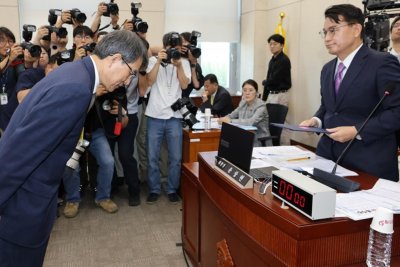
Rho Tae-ak (L), former head of the National Election Commission, bows to Yoon Sang-hyun, chief of a parliamentary special committee during a plenary session of the committee tasked with investigating an unprecedented shortage of ballots reported during the 03 June local elections, at the National Assembly in Seoul, South Korea, 23 June 2026. Photo by YONHAP / EPA
July 19 (Asia Today) — A South Korean parliamentary committee investigating a ballot shortage during the June 3 local elections is divided over whether to publicly recount about 2.48 million ballots stored at a counting center in Seoul.
The ruling Democratic Party argues that the recount should begin promptly because establishing a special counsel investigation would take time.
The opposition People Power Party says lawmakers should first pursue legislation authorizing a special counsel to determine who was responsible for the ballot shortage.
The National Assembly’s special investigation committee is considering a public recount of 2,476,661 ballots stored at the Olympic Park counting center in Seoul’s Songpa District.
The disagreement over whether to prioritize the recount or the special counsel investigation could determine how the committee proceeds with its inquiry.
Rep. Yoon Sang-hyun of the People Power Party, who chairs the committee, said the recount and special counsel investigation should proceed simultaneously.
“A recount and a special counsel investigation are not alternatives,” Yoon wrote on Facebook.
“A public recount is a process for verifying the facts before the people, while a special counsel investigation is a process for determining responsibility in accordance with the law and principles,” he said.
Yoon said a recount could not replace a special counsel investigation and that an investigation could not eliminate the need for a recount.
“Transparent verification and a thorough investigation must proceed together,” he said.
Other People Power Party members of the committee have indicated that establishing a special counsel investigation should take priority.
Rep. Choi Bo-yoon told reporters that lawmakers had not determined the legal procedure under which a recount could be conducted.
“We have to question whether it is appropriate to set the recount schedule first under these circumstances,” Choi said.
She said the People Power Party wanted discussions on a special counsel to proceed quickly so the necessary legislation could be passed.
Rep. Seo Beom-su, the committee’s opposition secretary, was reportedly coordinating opinions within the party and considering a compromise.
The Democratic Party argues that an open, manual recount should be conducted first to resolve questions surrounding the ballot shortage.
Democratic Party floor leader Han Byung-do said his party had proposed an immediate public recount and manual count to ensure no doubts remained.
“The People Power Party, which had demanded a recount, has now changed its position and says a special counsel investigation must come first,” Han said during a party policy meeting at the National Assembly.
Han accused the opposition party of lacking genuine interest in determining whether voters’ political rights had been violated.
The committee is expected to discuss whether to conduct the public recount and what verification procedures to use during its second hearing Wednesday.
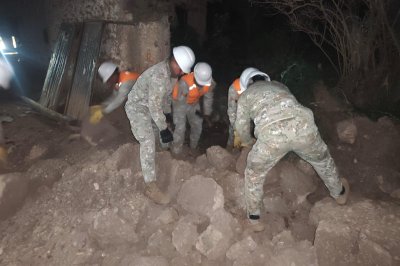
July 19 (UPI) — Extensive search and rescue missions were underway in Peru’s mountainous central Andean highlands Sunday following a deadly 5.1 magnitude earthquake.
The Peruvian National Police said they were actively conducting search, rescue, emergency response and security operations in the Junin region after Saturday’s temblor, which had its epicenter in the Chongos Bajo district of Chupaca province, about 200 miles east of Lima.
More than 250 personnel from the Peru’s emergency services, K-9 and medical units, as well as other specialized teams, were also in the rugged highlands as the government issued a preliminary report of five dead, 21 injured and more than 300 affected by the quake.
It struck at 9:21 p.m. Saturday local time.
“I deeply regret the consequences of the earthquake that occurred in Junín,” Peruvian President-elect Keiko Fujimori said in a statement. “I express my most heartfelt condolences to the families of those who have passed away and my solidarity with those who have been affected.”
The national volunteer firefighting corps were similarly dispatched to the region to aid the National Police in search and rescue operations, debris removal, evacuations and pre-hospital care for those in the hardest-hit areas, the interior ministry said.
The health ministry, meanwhile, sent a brigade of specialists brigade to begin providing medical care to those affected, joining local teams already present in Junin.
“The Ministry of Health maintains continuous monitoring of the emergency and will continue to mobilize the human, logistical, and medical resources necessary to safeguard the lives and health of the affected population,” officials said.
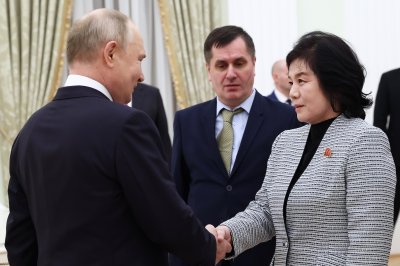
Russian President Vladimir Putin (L) welcomes North Korean Foreign Minister Choe Son Hui (R) during their meeting in the Moscow Kremlin, Russia. Photo by ARTEM GEODAKYAN / EPA-EFE
July 19 (Asia Today) — North Korea is intensifying engagement with China and Russia as South Korea, the United States and Japan broaden their cooperation to include the overseas deployment of small modular reactors.
The diplomatic activity follows events marking the 65th anniversary of the North Korea-China Treaty of Friendship, Cooperation and Mutual Assistance.
North Korea received a senior Chinese delegation for the anniversary and dispatched Foreign Minister Choe Son Hui to Russia, signaling efforts to manage relations with both of its principal partners.
The moves are widely viewed as an attempt to strengthen alignment among North Korea, China and Russia as Seoul, Washington and Tokyo expand their security and economic cooperation.
The three allies recently signed a memorandum aimed at encouraging cooperation among their civilian nuclear industries and supporting the deployment of small modular reactors in third countries.
The Korean Central News Agency said Choe left Pyongyang aboard a government aircraft Saturday at the invitation of Russian Foreign Minister Sergei Lavrov.
Russia’s Foreign Ministry also said Choe was making an official visit to the country.
It was Choe’s first visit to Russia in about nine months and the first major high-level exchange between the countries since the April opening of a memorial in North Korea honoring troops sent to support Russia.
Because the trip was not tied to a major anniversary or previously announced diplomatic event, analysts said Choe could be preparing for a possible visit to Russia by North Korean leader Kim Jong Un.
Russian President Vladimir Putin reportedly invited Kim to visit Russia during their June 2024 summit and again when the leaders attended events in China marking the anniversary of the end of World War II in Asia.
Possible subjects for Choe’s talks include a visit by Kim, recent developments in North Korea-China relations and coordination involving the Tumen River region, where the three countries share geographic and economic interests.
Park Won-gon, a professor of North Korean studies at Ewha Womans University in Seoul, said military and diplomatic accomplishments are easier for Pyongyang to demonstrate than economic achievements.
“If Chinese President Xi Jinping visits North Korea and Kim Jong Un subsequently visits Russia, North Korea could present those events as major diplomatic accomplishments,” Park said.
“Practical trilateral cooperation among North Korea, China and Russia has not progressed smoothly, but the Tumen River project could become a vehicle for cooperation among the three countries.”
China ties show signs of recovery
Relations between North Korea and China also appear to be recovering rapidly around the treaty anniversary.
Kim and Xi exchanged messages, a North Korean delegation traveled to China and Wang Huning, chairman of the Chinese People’s Political Consultative Conference, led a Chinese party and government delegation to North Korea.
The exchanges could expand cooperation in economic affairs, science and technology, public health and culture.
Wang’s visit to the Wonsan Kalma Coastal Tourist Area was particularly notable because the resort is one of Kim’s priority development projects.
Analysts have questioned whether Russian tourists alone can generate enough demand to make the resort financially sustainable.
Wang’s visit has therefore raised the possibility that the two countries discussed bringing larger numbers of Chinese tourists to the site.
Tourism is considered an area in which China may be able to support North Korea without directly violating the main restrictions imposed by U.N. Security Council sanctions.
Oh Gyeong-seop, a senior research fellow at the Korea Institute for National Unification, said attracting Chinese visitors is crucial to the resort’s prospects.
“Bringing in Chinese tourists is an issue that can avoid U.N. Security Council sanctions and is therefore critically important for North Korea,” Oh said.
“Large numbers of Chinese tourists are necessary to revitalize the Wonsan Kalma Coastal Tourist Area, so related discussions are likely to have continued.”
North Korea’s renewed engagement with China and Russia does not necessarily indicate that the three countries have established a formal trilateral alliance.
Their interests frequently differ, and analysts say much of their coordination remains bilateral.
The latest exchanges, however, demonstrate Pyongyang’s effort to strengthen diplomatic, economic and strategic ties with Beijing and Moscow while South Korea, the United States and Japan deepen their own cooperation.
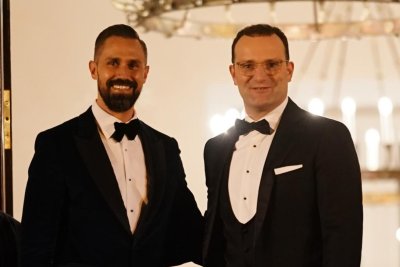
German Health Minister Jens Spahn (R) and his husband Daniel Funke (L) arrive for a state banquet in honor of the queen and crown prince of Denmark at Bellevue Palace in Berlin on November 10, 2021. On Saturday, Spahn, now a member of the Bundestag, resigned his post after the couple used a surrogate in the United States to have a baby. File Photo by Clemens Bilan/EPA
July 19 (UPI) — Jens Spahn, a member of Germany’s Bundestag, has resigned his post amid uproar over his use of a surrogate to have a baby.
The leader of the center-right Christian Democrats in parliament quit abruptly Saturday, The New York Times reported. The move came three days after he announced the birth of his child, Georg, with husband Daniel Funke.
“Georg is our greatest joy,” Spahn, 46, told the German newspaper Bild. “This feeling is almost impossible to put into words.”
The couple faced criticism for the decision to use surrogacy to have a baby because the practice is outlawed in Germany — a law Spahn and fellow Christian Democrats voted to keep in place in February. Spahn and Funke used a surrogate in the United States to welcome their son.
In 2015, Spahn wrote that “as a gay man and a Christian, I find it personally very hard to warm to the idea of a rented womb,” The Guardian reported.
In an appearance on a podcast, Spahn said he struggled with the decision to use surrogacy but ultimately put his family first, the Times reported.
German Chancellor Friedrich Merz, also a member of the Christian Democratic Union, called on Spahn to step down Saturday. Other regional members of the party also sought his ouster.
Andy Burnham, who becomes the United Kingdom’s next prime minister on Monday, faces a roster of challenges as the country’s seventh leader in a decade.
Burnham was overwhelmingly backed as Labour leader on Friday after current Prime Minister Keir Starmer resigned last month.
It has been a whirlwind month for the former Greater Manchester mayor, with his vision for the country and his cabinet still unclear.
“This has gone faster than he thought. It’s only been four weeks since he won the by-election. I don’t think he knows all of the answers yet; he hasn’t had the thinking time,” Sunder Katwala, director of the British Future think tank, told Al Jazeera.
Experts say the incoming prime minister will inherit an economy that has barely grown in two decades and a challenging geopolitical environment. He also has to deal with a marked decrease in Labour’s popularity, with the party trailing the right-wing Reform UK in the polls for 18 months.
“Burnham has relatively little fiscal room for manoeuvre,” said Anand Menon, director of UK in a Changing Europe.
New spending will have to be raised via taxation rather than borrowing, though there may be scope for “hypothecated spending” tied to a clear purpose, such as defence bonds, Menon said.
“If you make it absolutely clear what these things are for, the markets will be more permissive. But the fiscal situation is tight,” he noted.
Andy Burnham, mayor of Greater Manchester, in the stands during a football match [David Klein/Reuters]
Manchester model
The government spent around 110 billion British pounds ($148bn) on debt interest in 2025-26 alone, about eight percent of all public spending. Borrowing has run higher than planned this year, and taxes are forecast to reach their highest share of the economy since World War II by the end of the decade.
Gareth Dale, associate head of Social and Political Sciences at Brunel University, points to Burnham’s record in Manchester, including the city’s fare-capped bus network, as proof that “meaningful reforms needn’t always come with a big price tag”.
Whether that scales up nationally will hinge on his willingness to confront the bond markets.
“What Burnham did in Manchester might be harder to do at a national level,” warned Menon. “He’s got to get the balance right between showing he’s aware of the fact that there’s a country outside of London and that isn’t just Manchester.”
Menon doubts fiscal manoeuvring alone will shift the public mood. He says that living standards have stagnated and services have eroded since 2008 so “people don’t just want to listen to what you’re saying, they want to see changes for the better in their lives”.
Burnham’s in-tray is complicated further by a diplomatic dispute that flared days before he is slated to take office. The government fully nationalised British Steel’s Scunthorpe works, a year after taking control of the loss-making plant when Chinese owner Jingye Group said it planned to close it.
Jingye has vowed to pursue “full compensation through legal means,” while China’s Ministry of Commerce accused London of undermining Chinese investor confidence.
It leaves Burnham managing a strained relationship with China from day one, after Starmer went to great efforts to reset relations between the two countries.
The United Kingdom’s government announced this morning that it was taking British Steel into public ownership in a bid to ‘protect UK steelmaking’ [Christopher Furlong/Getty Images]
Beyond borders
Menon argues that much of what shapes a prime minister’s fortunes lies outside their control and outside Britain’s borders.
“Sometimes the drivers of political success and failure are utterly out of your hands,” he said. He cited the war in Ukraine, Brexit and the COVID-19 pandemic as reminders that a “medium-sized open economy” is exposed to forces it cannot direct.
That extends to Washington, where personal chemistry with US President Donald Trump will matter “at least for a while, until he goes off people”, Menon said.
Dependence on the US for defence and technology rules out any dramatic reconfiguring of British-US ties.
Menon expects European Union relations to get less attention than under Starmer, predicting Burnham to be “more avowedly domestic” focused.
This could still be tested by Gaza, where Burnham has apologised for the previous government’s stance. Menon cautions that turning words into policy “depends heavily on events”.
“He’s given some hints he’ll be less knee-jerkly supportive of Israel than Starmer was, but whether that carries over into power, we’ll have to wait and see,” explained Menon.
He also doubts whether Burnham would risk a rupture with Washington regarding US bases in Britain, which could be used, indirectly, in US-Israel war on Iran.
Andy Burnham, right, shakes hands with Neil Kinnock, former Labour Party leader in the 1980s and 1990s, as he arrives before being confirmed as the Labour Party’s new leader and the country’s next prime minister during ‘Labour’s Special Conference’ in London, England, the United Kingdom, July 17, 2026 [Henry NIicholls/Pool/EPA]
Defence first
Reports suggest that Burnham is likely to put defence above welfare spending, which will again rankle some in his party.
“He’ll probably prioritise arms spending over welfare… while dialling down the ‘net zero’ programme,” warns Dale, with Burnham expected to allow for new North Sea oil and gas drilling.
“And he voted to make the asylum system more brutal. If he does set policy in these directions, it’ll put wind in the sails of the far right, and probably accelerate the shift of voters from Labour to Green,” Dale said.
Burnham has moved from Labour’s Blairite wing to its soft left, but “commands widespread support among Labour MPs” and “gets on with various factions”, he noted.
But that unity masks deeper erosion: Labour’s vote fell from 12.9 million in 2017 to 9.7 million under Starmer.
The centre-left party’s support base is also “narrowing towards wealthier, less diverse parts of the electorate, with the Greens now drawing disillusioned voters on the left”, said Dale.
Political divides
That erosion is bound up with a wider polarisation in the country that Katwala says no government can avoid.
“I don’t think it’s enough to say we’d like to talk about jobs and devolving power and therefore we won’t talk about identity, immigration, race,” says Katwala.
A woman holds a placard outside Downing Street during a ‘National March for Palestine’ calling on Britain’s next prime minister, Andy Burnham, to stand up for the Palestinian people, in London, Britain, July 18, 2026 [Jack Taylor/Reuters]
He argues that fairness should be framed as universal rather than a concession to certain groups of society.
“Whether it’s tackling anti-Semitism, Islamophobia or racism generally, these are issues for everybody in society. It’s not for the minority group itself to work out how to challenge the prejudice it faces,” Katwala said.
“The people who are hostile to Muslims are the people who know the least Muslims and live furthest away. It’s the government’s job to get to that really tough end of attitudes and perceptions that are making people feel less safe.”
Menon sees a narrow opening on the right-wing narratives popularised by the Reform UK party.
Labour entered government in 2024 with 33 percent of the vote against Reform’s 14 percent, a gap that has since collapsed following the right-wing party’s links to George Cottrell, a convicted fraudster.
Recent polls put Reform around 24-26 percent and Labour close behind it, a marked turnaround from polling earlier this year.
By-election results also suggest a broad anti-Reform coalition and tactical voting exist, which should strengthen Labour.
“Even if 30 percent of people are willing to vote Reform, almost 70 percent are willing to do whatever it takes to stop them being elected,” Menon noted.
Whether that holds, he said, depends on how Burnham performs once the difficulties of government set in.
“It becomes a very different game when things are going badly, and if he ends up being a lucky general, then Reform self-destructs,” Menon said.
July 19 (UPI) — A majority of delegates have committed to voting for Troy Jackson to give him the Democratic nomination, replacing the beleaguered Graham Platner in Maine’s U.S. Senate race.
While Jackson’s nomination isn’t official — the Democratic Party is set to hold its U.S. Senate nominating convention Saturday — his name dominated county-level meetings this weekend, Politico reported. The swing in his favor led Maine Secretary of State Shenna Bellows to drop out of the race Sunday.
The Washington Post reported that 600 delegates will vote on the nominee at Saturday’s convention in Bangor.
Maine Democrats have been scrambling to find a replacement for Platner after he dropped out of the race earlier this month under pressure from those who previously endorsed him. A former partner of his accused him of sexually assaulting her while he was drunk, an allegation he has denied.
Whoever gets the Democratic nomination will face incumbent Sen. Susan Collins. The Republican has won election to the U.S. Senate five times prior, and if a Democrat unseats her, it could put control of the upper chamber within Democrats’ reach.
Jackson, 58, ran earlier this year for the gubernatorial nomination, but lost out to Hannah Pingree. She will face Republican Bobby Charles and Independent Richard Bennett in the general election.
Jackson adjusted his gubernatorial campaign for the Senate race, facing Bellows and Nirav Shah, who also lost out in the gubernatorial primary.
In a video statement to supporters on Facebook, Jackson said he was surprised at his success in the Senate race.
“I’ve been getting text messages all day about, you know, what a great job I did, and I didn’t do a [expletive] thing,” he said. “All of you just smoked it.”
President Donald Trump delivers a prime-time address to the nation from the East Room of the White House on Thursday. Pool photo by Saul Loeb/UPI | License Photo




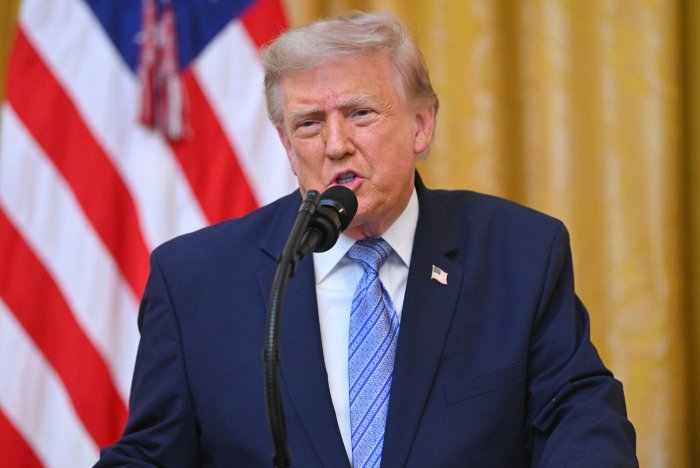

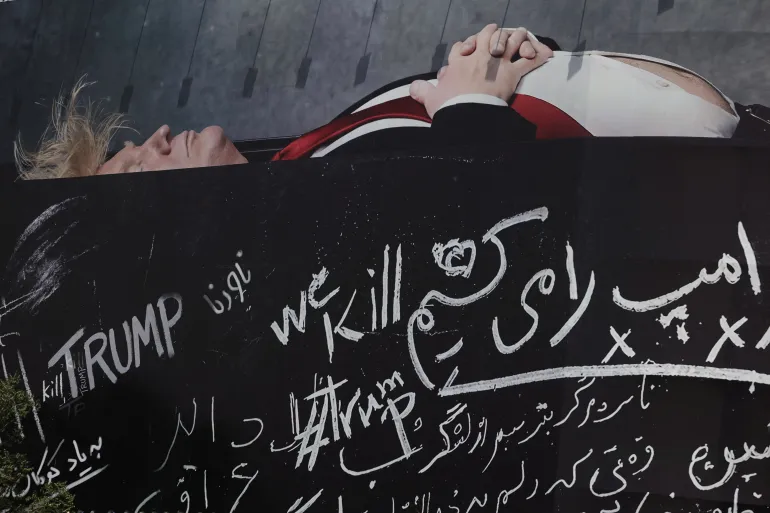

![A vessel in the Strait of Hormuz, as seen from Musandam, Oman, July 16, 2026 [Reuters]](https://i0.wp.com/occasionaldigest.com/wp-content/uploads/2026/07/2026-07-16T062529Z_1977252053_RC2QEMAIXJ4I_RTRMADP_3_IRAN-CRISIS-OMAN-HORMUZ-1784543675.jpg?w=640&ssl=1)

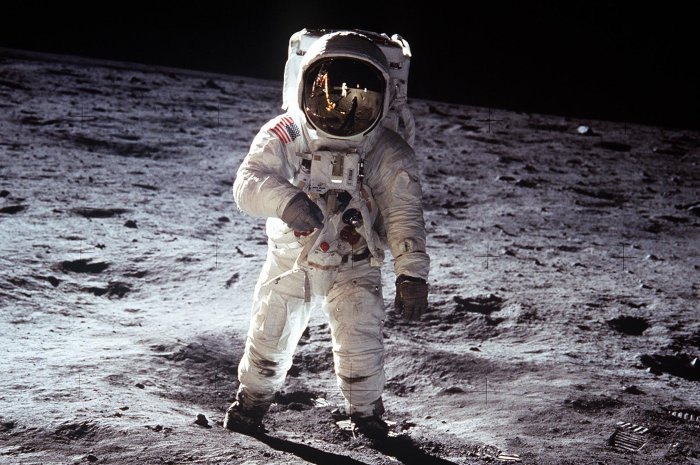

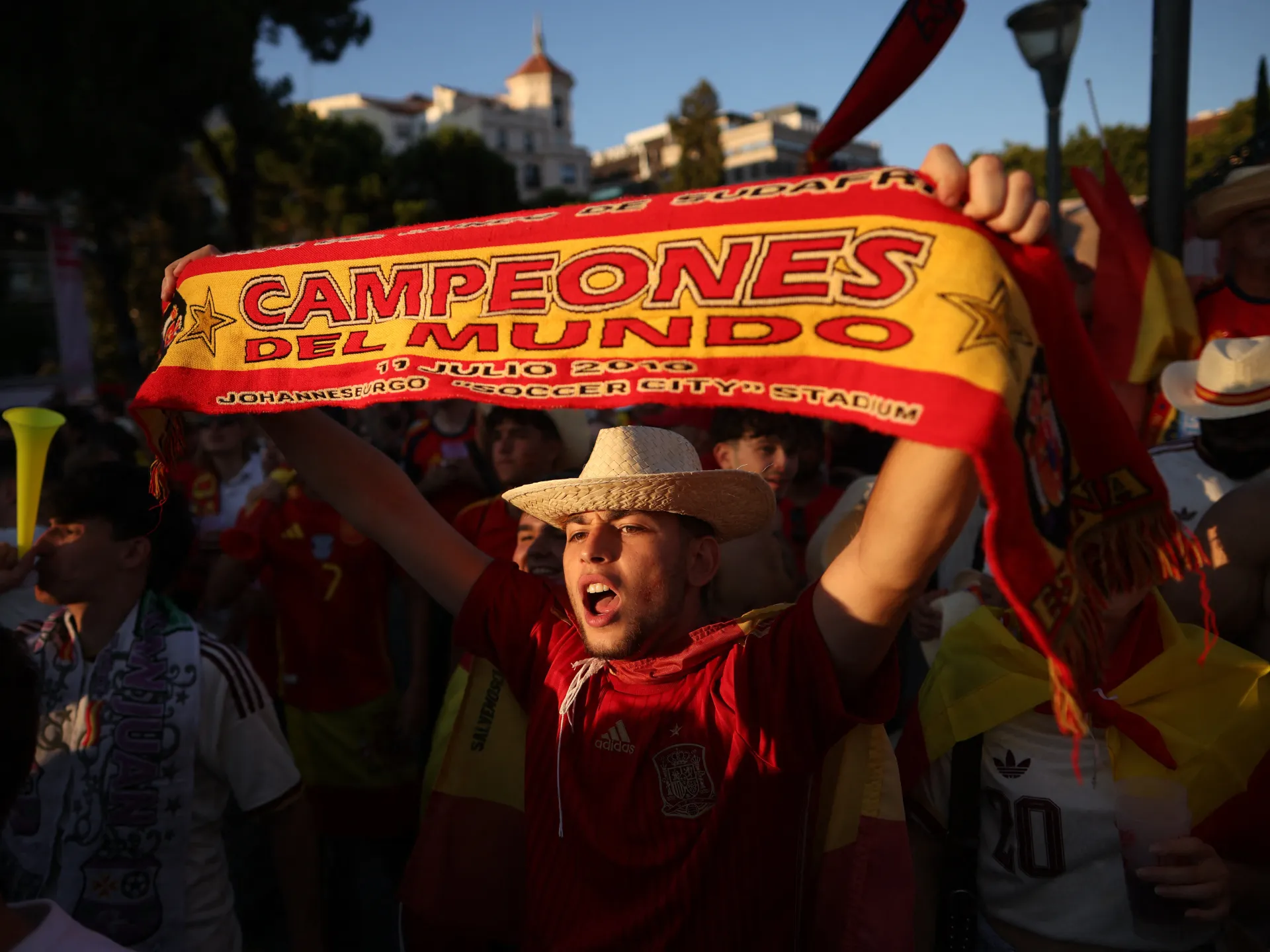







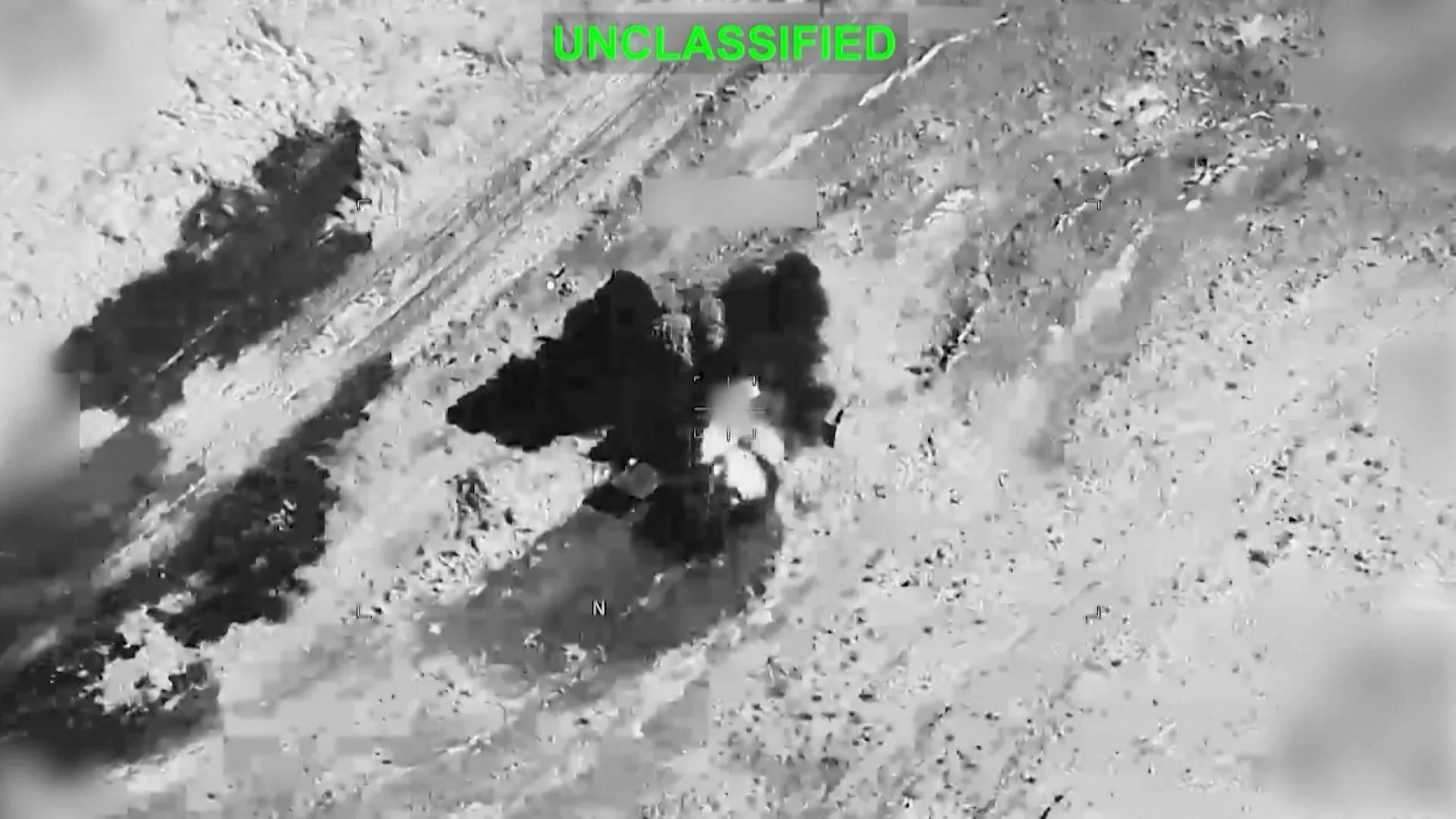


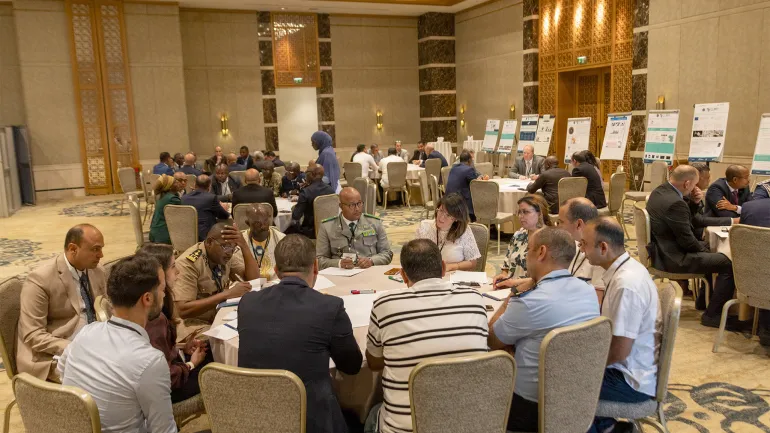
![Law enforcement, military and policy officials participate in discussions during the Africa Shield 2026 workshop in Tunis [Handout/Andrea Chaney/Defense Threat Reduction Agency]](https://i0.wp.com/occasionaldigest.com/wp-content/uploads/2026/07/africa_shield_2026_strengthening_counterproliferation_efforts_across_africa-1-1784438713.jpg?w=640&ssl=1)