Al Jazeera reporters on ground faced lengthy queues to enter the stadium due to tighter security checks.
Published On 19 Jul 202619 Jul 2026
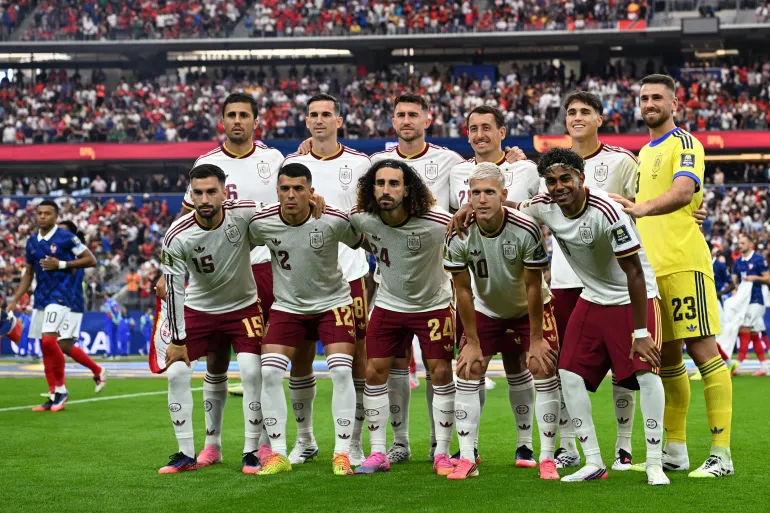
Fans, media workers and employees faced lengthy queues to get in to the FIFA World Cup final between Spain and Argentina, which is expected to be attended by United States President Donald Trump.
In the 48 hours before Sunday’s finale at New York New Jersey Stadium, FIFA sent emails to media staff inviting them to arrive as early as six hours before kickoff and warned them of road closures 150 minutes beforehand.
Recommended Stories
list of 4 itemsend of list
Among the media and stadium employees, the result appeared to be an early crunch to clear tight security that included inspections by Secret Service agents.
Al Jazeera reporters had a two-hour wait between entering the queue and clearing the initial security perimeter. Other journalists who arrived earlier reported wait times of three hours or more.
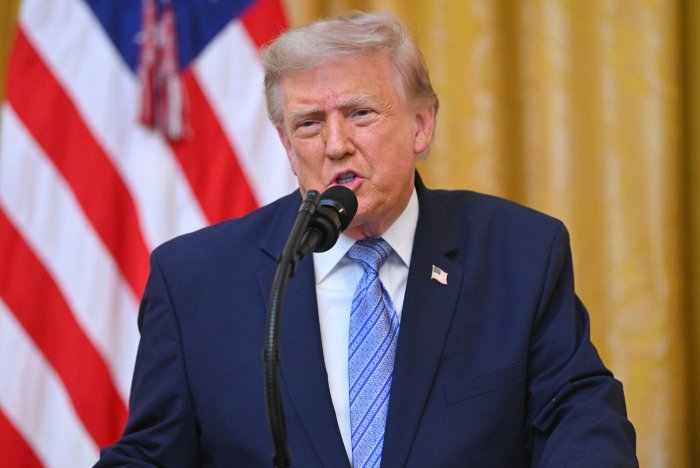
Trump’s helicopter landed next to the stadium as long lines of spectators waited to enter through enhanced security checks because of him.
One reporter was denied entry into the venue despite having tournament accreditation.
Malfunctioning ticket scanners added to everyone’s frustration as they queued in the heat.
Numerous other media personnel were denied entry at the security perimeter of the 80,000-capacity venue and sent to the stadium’s accreditation centre.
Media workers and staff queue outside the stadium before the match. [Jeenah Moon/Reuters]
The same scenario was true for many fans, according to online reports. Despite warnings advising ticket-holders to show up four hours early, there were numerous reported waits of two hours or more in fan queues, with some also reporting malfunctioning ticket scanners.
However, when players from Spain and Argentina first took the field roughly 45 minutes before kickoff, a healthy portion of the lower stadium bowl appeared to be full, including the overwhelming majority of allocated supporters’ sections.
It is not the first major cup final on US soil to have logistical delays for fans.
In 2024, the kickoff of the Copa America final in Miami Gardens, Florida, was delayed by about 75 minutes due to overwhelmed personnel at fan entrances.
Significant numbers of un-ticketed fans then rushed turnstiles and forced entry before law enforcement gradually worked to clear those without paid admission as the match progressed.
Georges Hana Dib, known as Dr Food, was sentenced for smuggling hashish out of Lebanon in cake packaging.
Published On 19 Jul 202619 Jul 2026
Beirut, Lebanon – The popular Lebanese food influencer, known as Dr Food and dubbed Lebanon’s Breaking Bad, has been sentenced to life in prison with hard labour for drug smuggling.
Hashish reportedly hidden in cake packaging produced in Baalbek in eastern Lebanon was transported to Turkiye and then shipped internationally.
Georges Hanna Dib and other Lebanese and Syrian nationals were sentenced under Lebanon’s Narcotics Law, which covers the manufacturing of banned drugs, according to reports.
Judge Elie al-Helou, sentenced him to life imprisonment with hard labour and fined him 120 million Lebanese pounds ($1,341).
The sentencing comes after a 2024 drug bust involving 820kg (1,800 pounds) of hashish hidden in cake packaging.
Dib, who is not a real doctor but has more than five million followers on TikTok, is believed to be out of the country. He and others who were sentenced in their absence were also stripped of their civil rights.
Dib was recommended a life sentence and hard labour in February last year when a Mount Lebanon investigative judge charged him with “manufacturing, trafficking, and smuggling drugs abroad”.
On Sunday, Dr Food’s Instagram page made no mention of the court case or any reaction to the sentencing. The page shared a giveaway that his food product brand was running.
People who received the message, posted it on TikTok and received 100,000 views would win $100 from the influencer.
In one video posted to Instagram, Dr Food appears to be filming himself in his car but does not address the court’s decision.
His last story was posted on March 27 from Beirut’s waterfront. There, he is asking displaced Lebanese what they miss eating and then proceeds to order food for them from some of Lebanon’s most popular food chains.
Lebanon’s Bekaa Valley is notorious for hashish production. Last November, Lebanese police arrested Noah Zaiter, a 48-year-old drug trafficker, known as the Lebanese Pablo Escobar. He was sentenced to four months in prison in February.
Abandoned as a baby with severely underdeveloped limbs and brought up by nuns in Baghdad, Kelly will be performing at the World Cup final alongside some of the biggest global stars.
Among the headline performers at the first-ever FIFA World Cup half-time show alongside Shakira, BTS, Justin Bieber and Madonna is a man with a remarkable life story – Iraqi-born singer Emmanuel Kelly.
Kelly says he was found abandoned in a box as a baby, and was brought up by nuns at Mother Teresa’s orphanage in Baghdad. Some of his limbs were severely underdeveloped, and at the orphanage he became friends with another boy called Ahmed, who had a similar condition.
Recommended Stories
list of 3 itemsend of list
In 1998, when Emmanuel was around four years old, the Australian Catholic humanitarian worker Moira Kelly visited the orphanage and witnessed the plight of Emmanuel and Ahmed.
She was determined to bring the boys to Australia for medical treatment, and after two years, she succeeded.
Emmanuel and Ahmed arrived in Australia in 2000, and both underwent multiple surgeries to enable them to wear prosthetic limbs. They were adopted by Moira the same year, and in 2009 they officially became Australian citizens.
In an interview published on the FIFA website in 2025, Emmanuel said the surgery and prostheses enabled him and his brother to be self-reliant for the first time.
“We learned all the basic things I think that humans take for granted sometimes, like walking and feeding themselves and things like that,” he said. “Eventually I decided I wanted to pursue entertainment and music.”
Emmanuel Kelly attends the Variety Club Showbusiness Awards 2025 October 19, 2025 in London, England [Shane Anthony Sinclair/Getty Images]
In 2011, at the age of 17, Emmanuel was a contestant in the Australian version of television talent show The X Factor. His rendition of John Lennon’s song Imagine captivated the live audience and was viewed millions of times online. Although he was eliminated relatively early in the series after forgetting the words to a song he was performing, this was the start of his musical career.
His brother Ahmed, meanwhile, became a competitive swimmer, representing Australia multiple times and winning the silver medal in the men’s 150-metre individual medley at the 2020 Tokyo Paralympics.
In 2016, as the band Coldplay were preparing for concerts in Australia, lead singer Chris Martin saw a video of Emmanuel Kelly performing and resolved to meet him. Kelly was invited onto the stage at the Coldplay concert in Melbourne and sang Imagine in a duet with Martin.
The two became friends, and in 2024 Kelly was invited to be the headline opening act for Coldplay for their four concerts in Australia during their Music of the Spheres tour.
“Chris has been my brother, Chris Martin, for eight years or so, and he said to me, ‘Hey, come on tour with me and join me on a stadium tour.’ I did that, and that was pretty epic,” Kelly said in his FIFA interview.
Last year, Martin was asked by FIFA to curate the half-time show at the Club World Cup final at the MetLife Stadium in New Jersey. Kelly was one of the singers Martin asked to take part in the performance. He was described by organisers as “the first differently abled artist to headline a FIFA half-time show”.
Sunday’s World Cup final between Spain and Argentina is taking place in the same stadium. Once again, Martin is curating the musical performance, and Kelly will be one of those on stage for what FIFA hopes will be the most viewed half-time show in history.
“What an exciting opportunity to get to represent true full-scale global unity,” Kelly said in a video on Instagram ahead of the show. “No matter how different you are, you will still be seen.”
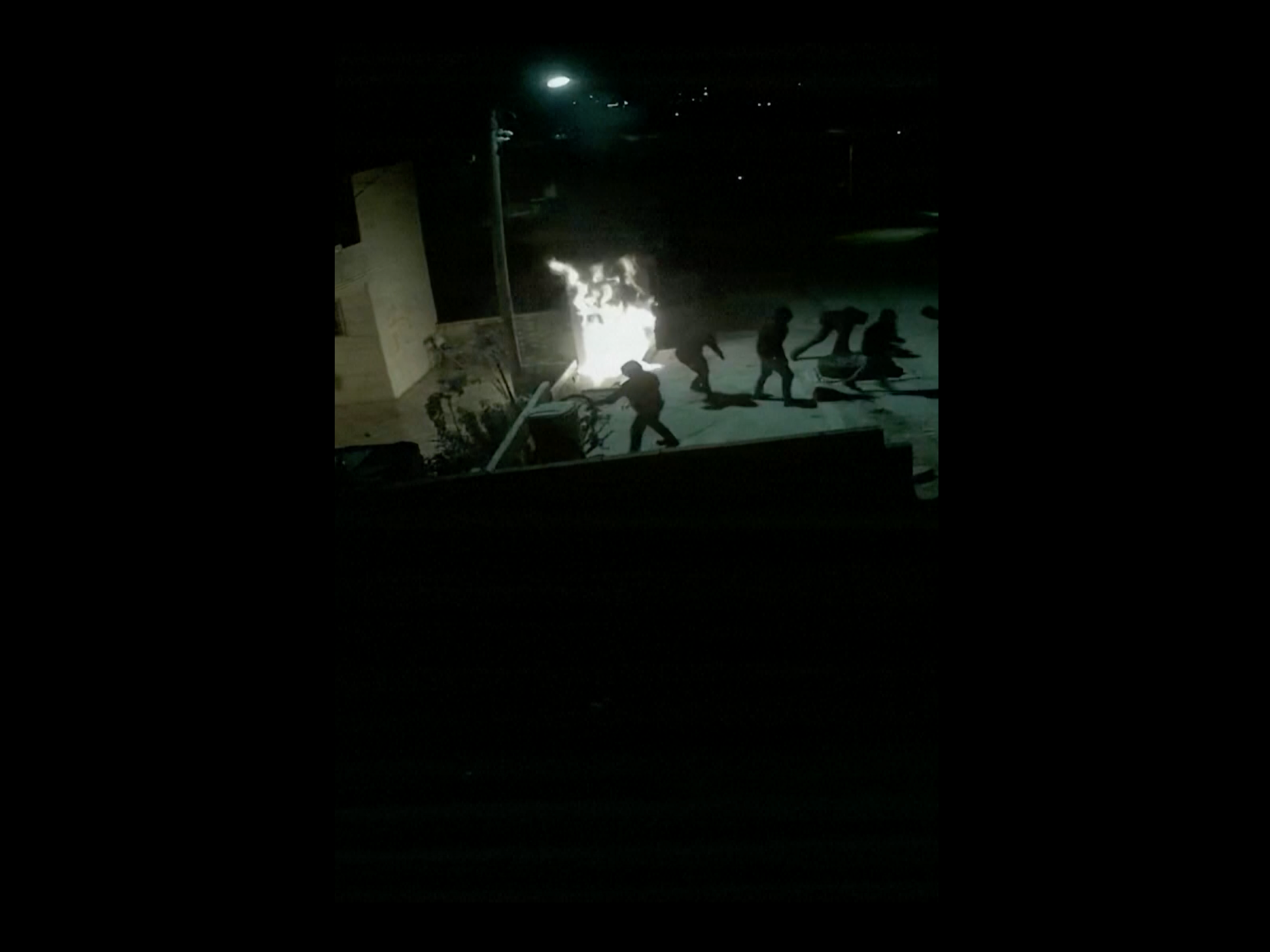
Videos show Israeli settlers attacking the Palestinian village of al Tuwani in Masafer Yatta, south of Hebron, setting homes, vehicles and a mosque on fire. According to Palestinian media, Israeli forces provided protection for the settlers during the assault.
Mercedes driver won his sixth GP of 2026 as championship rival and teammate George Russell crashes out on first lap.
Published On 19 Jul 202619 Jul 2026
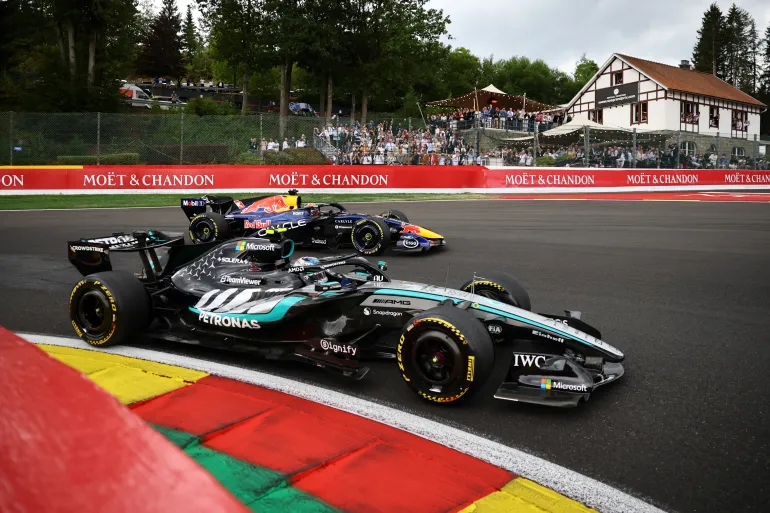
Kimi Antonelli won the Belgian Grand Prix for Mercedes on Sunday to stretch his Formula One lead to 45 points over Ferrari’s Lewis Hamilton on a bleak day for teammate George Russell, his closest title rival heading into the race.
Russell had been the 19-year-old Italian’s closest rival before the start at Spa-Francorchamps, but the Briton spun off into the gravel on the opening lap after a collision with Hamilton while trying to make up places lost at lights out.
Recommended Stories
list of 4 itemsend of list
Ferrari’s Charles Leclerc was second in the 44-lap race, 1.952 seconds behind after leading, thanks to a pit stop while a virtual safety car was deployed, with Max Verstappen third to give Red Bull their 300th Formula One podium.
Hamilton finished fourth, despite serving a five-second penalty for the collision with Russell, but remained under investigation for an unsafe release from a pit stop that could drop him to fifth and further stretch Antonelli’s lead.
Mercedes’ Kimi Antonelli leads Red Bull Racing’s Max Verstappen at the beginning of the Belgian Grand Prix [Sarah Meyssonnier/POOL via AFP]
It was Antonelli’s sixth win in 10 rounds this season, leaving him 50 points clear of Russell. Antonelli was first in qualifying, continuing Mercedes’ clean sweep of pole positions this season.
“It’s great to be back on the top step after a few difficult rounds,” said Antonelli, who had drawn a blank in two of the past three rounds.
“It was a hard-fought race. We lost first place with the VSC but then we managed to make our way back.
“The momentum was always there. It was just about getting the results,” he added. “Today we were a bit lucky with what happened in terms of the championship but you have to take every opportunity because we saw how much it can swing.”
McLaren’s Oscar Piastri finished fifth, with Isack Hadjar sixth for Red Bull from last on the grid. Reigning champion Lando Norris was seventh for McLaren after starting 13th due to a 10-place grid drop.
Gabriel Bortoleto brought more points for Audi in eighth place, with Arvid Lindblad ninth for Racing Bulls and Argentine Franco Colapinto completing the scoring in 10th place for Renault-owned Alpine.
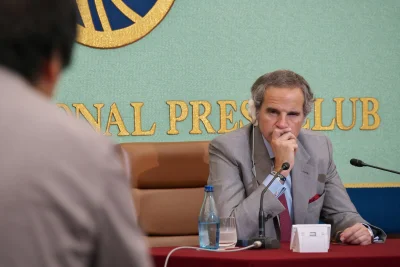
International Atomic Energy Agency Director-General Rafael Grossi attends a press conference at the Japan National Press Club in Tokyo on June 26. On Sunday, he said the IAEA plans to investigate reports U.S. airstrikes hit an Iranian nuclear power plant under construction. Photo by Keizo Mori/UPI | License Photo
July 19 (UPI) — The United Nations’ nuclear energy agency said Sunday it’s investigating Iran’s allegation that the U.S. military struck a nuclear power plant under construction as part of renewed fighting after the deaths of two U.S. service members.
The International Atomic Energy Agency said it reached out to the Iranian government about the reported attacks on the Darkhovin Power Plant in southern Iran on Sunday morning. Iran’s Atomic Energy Organization said U.S. forces hit the site, which was under construction.
“The facility is in the very early stages of construction and contained no nuclear material when last visited by the IAEA,” the agency said in a post on X.
“While the reported attack is not believed to pose any radiological risk, [IAEA Director-General Rafael Grossi] reiterates call for military restraint in the vicinity of all nuclear-related sites.”
Iran’s Atomic Energy Organization first began work on the Darkhovin Power Plant in 2022, but construction didn’t officially start until March 2026, CNN reported, citing the World Nuclear Association.
The United States ordered fresh airstrikes on Iranian targets Saturday after two U.S. service members were killed in Iranian attacks Friday in Jordan. A third service member was missing.
The U.S. Embassy in Amman, Jordan, warned U.S. citizens to avoid traveling to the international airport or seaport in Aqaba, and all military bases in Jordan. Jordan’s military said Sunday afternoon it intercepted three Iranian missiles, and a third landed in a remote area.
Aqaba is situated on Jordan’s southern coast, within a few miles of the border with Israel. The Israeli military warned of potential spillover of Iranian attacks into Israel, The Times of Israel reported Sunday morning.
“There may be spillover into Israeli territory as a result of the fire,” the military said.
By Agence France Presse, Reuters and The Associated Press
Published On 19 Jul 202619 Jul 2026
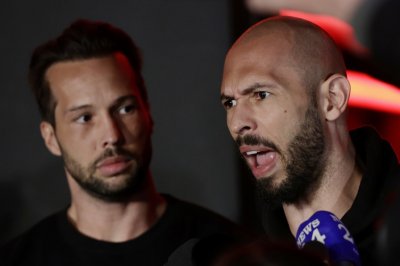
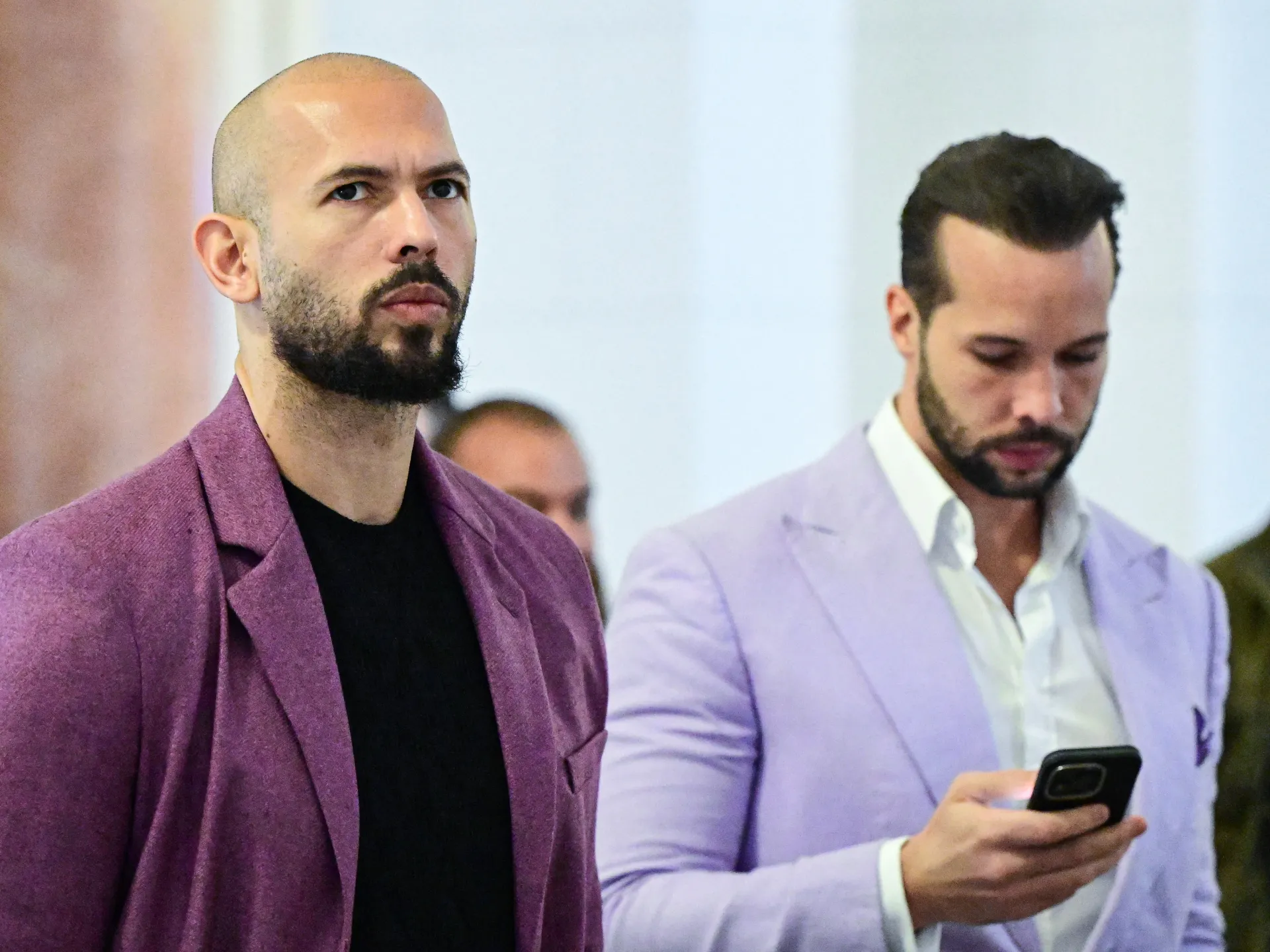
Influencer brothers Andrew Tate and Tristan Tate have been arrested in Miami, in the US state of Florida, after prosecutors in the United Kingdom brought further rape and sex trafficking charges against them.
The brothers were taken into custody on Saturday on a sealed warrant, the United States Marshals Service said, placing the US at the centre of an international legal saga that has stretched from Romania to the UK.
Recommended Stories
list of 4 itemsend of list
Raised in the UK, the Tate brothers hold dual US and UK citizenship. The UK government says it will seek their extradition to face 38 new charges of rape, sex trafficking and assault.
Here is what we know about the Tate brothers, their arrest and the possibility of extradition:
Who are the Tate Brothers?
Andrew, 39, and Tristan, 38, are former professional kickboxers. They are known for their social media empire promoting wealth, male dominance and misogyny.
Andrew is one of the most prominent proponents of the so-called “manosphere” network of communities, many of them online, that focus on traditional masculinity, antifeminism and self-improvement. He promotes his divisive views, often incorporating alpha-male and aggressively misogynistic themes, to millions on social media, including 10.8 million followers on X.
Andrew has been banned from platforms like YouTube, TikTok and Instagram for violating hate speech guidelines. He also runs an online academy where he says he teaches young men how to get rich and attract women.
The brothers are also avid supporters of US President Donald Trump.
What are the new charges against the Tates?
British prosecutors say the 59 new charges – 42 against Andrew and 17 against Tristan – relate to alleged offences that took place between 2010 and 2017.
They said Andrew was charged with seven further counts of rape, three counts of arranging or facilitating trafficking for sexual exploitation, three counts of assault, and 19 charges for offences relating to indecent images of a child and extreme pornography.
Tristan was charged with one count of sexual assault, two counts of rape and three counts of arranging or facilitating sex trafficking.
“We have decided to prosecute Andrew and Tristan Tate for further offences including rape, arranging or facilitating trafficking for sexual exploitation and offences relating to indecent images of a child,” the UK Crown Prosecution Service (CPS) said in a statement.
Since the arrest warrant was sealed, US Marshals did not disclose the charges on which the Tate brothers were arrested.
Their lawyer, Joseph McBride, said the brothers “are innocent”.
“We are confident that once a competent judge sees the facts, and once the Department of Justice confronts this egregious abuse of its own authority, Andrew and Tristan Tate will walk free,” McBride said in a statement.
What are the other charges against the brothers?
Andrew and Tristan already face multiple charges in the UK and Romania, where they moved to in 2016.
Four women have accused Andrew of physical and sexual abuse.
The claimants, who have been granted anonymity, allege the elder Tate subjected them to physical or sexual violence between 2013 and 2015. Two say they were in an intimate relationship with him, while two worked for his online webcam business.
In June, a UK High Court judge threw out a legal bid by the Tates to be told the names of their accusers.
In Romania, the siblings were arrested in late 2022 along with two Romanian women. The four were accused of participating in criminal schemes to lure women for sexual exploitation. They denied the allegations and the Romanian case has not gone forward because of legal and procedural problems. The case has not been closed.
Andrew has repeatedly claimed that prosecutors in Romania have no evidence against him and that there is a political conspiracy to silence him.
The Tate brothers are also accused of tax evasion and money laundering in the UK.
The UK CPS said it is seeking their extradition.
“The CPS has requested the extradition of the Tates from the US,” it said, adding that the latest charges stem from receipt of new evidence from Bedfordshire police that brings the total number of alleged victims in the Tates’ case to seven.
The British police previously sought the Tates’ extradition to the UK once their legal proceedings in Romania concluded.
But in February 2025, they were allowed to leave Romania after authorities lifted travel restrictions, and they flew to Florida on a private jet.
Romania’s foreign minister said at the time that a US official in the Trump administration had expressed interest in the brothers’ legal case in Romania.
Trump said he knew “nothing about” the case when asked if his administration pressured the Romanian government to release the Tates.
The FIFA World Cup 2026 final is not far away, and the predictions are coming in thick and fast.
Spain, the reigning European champions, are eyeing their second World Cup title, 16 years on from their maiden triumph in South Africa. But standing in their way are holders Argentina, the South American giants aiming to become just the third country to win back-to-back World Cup titles.
Recommended Stories
list of 4 itemsend of list
Stats provider Opta predicts Spain as the favourites to win the 2026 World Cup, with a 59.56 percent probability of lifting the trophy in New Jersey. La Roja are also the picks of several former players and pundits.
Former England striker Michael Owen said world number two Spain are the “deserved” winners of the tournament.
“Spain haven’t got the greatest individual players, I think France probably have … but Spain as a team are everything England are not – they are brave, courageous with the ball,” Owen told The Straits Times.
“Spain are just a great team that pass the ball confidently and play amazing football as a collective.”
Spain, the reigning European champions, are looking to add a second world title to their trophy cabinet [File: Mauro Pimentel/AFP]
Zlatan Ibrahimovic, the ex-Barcelona and Manchester United striker who represented Sweden at two World Cups, expects Spain to dominate the final, which comes two years on from their Euro 2024 triumph.
Spain handled France very good [in the semifinals]. I believe they can handle this Argentina,” Zlatan, now a pundit on US broadcaster Fox Sports, said.
“Argentina is not a counterattacking team. Spain are going to do their thing. They’re going to play collectively … I believe Spain are going to dominate that game.”
Spain were also John Terry’s favourites for glory, with the former England captain saying on the Sports Uncensored show that Luis de la Fuente’s side have “got too much for Argentina”.
Former goalkeeper Iker Casillas, the Spain captain during their maiden World Cup triumph in 2010, expressed his confidence in the team’s ability to bring home a second, sharing a picture of another star halfway stitched on the top of their badge.
A star represents every World Cup a team has won.
[Translation: And why not?]
While a lot of the consensus centred around a Spain win, some think Argentina have a chance, even if it is slim.
Alan Shearer, one of England’s greatest strikers of all time, backed the reigning champions, saying on The Rest is Football podcast, “If there’s one team that can do it in terms of stopping them [Spain], it’s Argentina because of their mentality and togetherness.
“They have been down so many times and in trouble, and somehow managed to get a win. That’s what you’ve got to admire about them.
“When you’ve got a genius in your side,” he added, referring to Messi, “you’ve always got a chance.”
But how can Argentina beat favourites Spain in the title clash?
English football pundit Micah Richards thinks the answer to that is low-block transition – the strategy of teams sitting back closest to their goal and, after winning possession, rapidly shifting from a compact defensive shape into an offensive counterattack.
“Get the ball to Messi, whereas [Julian] Alvarez or [Lisandro] Martinez just make it horrible, make it how they did with England,” he added.
“I think Argentina need to stay in the game as they did against England and turn it on when they see a shift in momentum.”
Can Lionel Messi, centre, guide Argentina to their fourth World Cup victory [Handout/Michael Regan/FIFA via Getty]
Meanwhile, another of England’s greats, Gary Lineker, stuck with his pretournament pick, Spain, but added that Argentina are “so gritty”, making the predictions a very tough choice.
“You cannot go against that little fella [Messi]. He’s so great; it’s going to be really, really close. It’s genuinely 50-50.”
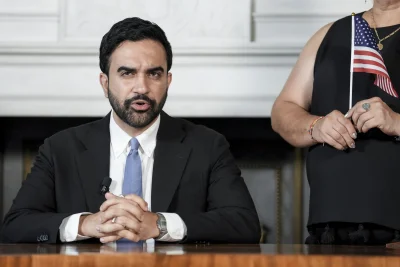
Unlike others, New York City Mayor Zohran Mamdani refused to pick a side.
“Everyone I root for has lost,” he said, with a laugh. “So I feel like whoever I say is going to lose at this point.
“I’m gonna say the classic politician’s answer – I’m excited for a good game.”
Rescue operations for remaining passengers and crew ongoing, authorities say.
Published On 19 Jul 202619 Jul 2026
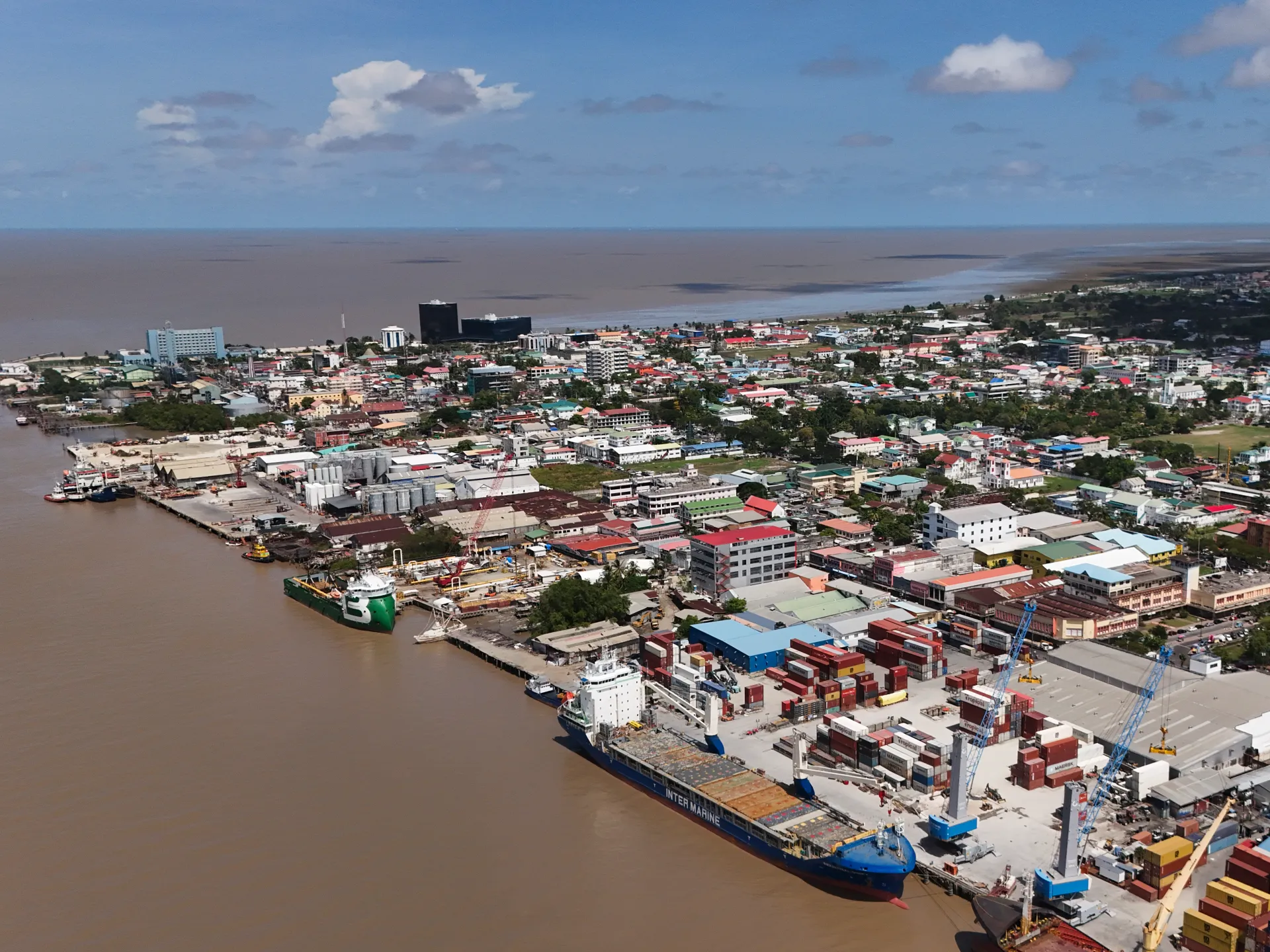
Rescuers in Guyana are racing to find dozens of people missing at sea after a ferry carrying 116 passengers and crew capsized off the country’s coast, according to local authorities.
The MV Barima, which issued a distress call at about 11pm on Saturday (03:00 GMT on Sunday), capsized near Iron Punt while travelling from Guyana’s capital Georgetown to Port Kaituma.
Recommended Stories
list of 3 itemsend of list
Guyana’s Prime Minister Mark Phillips told the AFP news agency on Sunday that 53 people had been rescued. He said authorities expected to rescue more people as the search operation progresses during daylight hours.
The operation involves Guyana’s coastguard and private vessels, according to Guyana’s Public Works Minister Juan Edghill.
Edghill said the ferry was equipped with some 250 life jackets, eight lifeboats and other safety gear.
He added that a medical team was being dispatched to the search area to treat people “as soon as they are rescued”.
“There is an active search and rescue operation that is taking place, and we pray for the safety of all,” Edghill said in a video post shared on Facebook.
The circumstances surrounding the boat accident were not immediately clear.
Iranian women hold an image of supreme leader Ayatolla Mojtaba Khamenei as Iranian officials, military commanders, families of war victims and their supporters gathered at Imam Khomeini Mosque in Tehran on Sunday. On Saturday, Khamenei called the United States “The Great Satan.” Photo by Behnam Tofighi/UPI | License Photo
July 18 (UPI) — Iran’s supreme leader, Ayatollah Mojtaba Khamenei called the United States the “Great Satan,” ramping up the war of words amid an actual war in the Persian Gulf.
“Today, the Great Satan has once again revealed its true, unmasked face, so that this dark episode of criminality and broken promises serves as yet another indisputable testament to the U.S.’s dishonesty, irrationality, unreliability, and malicious nature,” a post on X from Khamenei’s account said Saturday.
He also said, in another post: “Coercion, totalitarianism, and brutality are inseparable components of the U.S. creed and doctrine.”
On his Telegram channel, Khamenei said, “The Great Satan has once again revealed its malicious nature.
“The repeated breaches of the agreement by the Great Satan [the U.S.] regarding the memorandum of understanding (MOU) signed by the Presidents of Iran and the United States have once again laid bare a fundamental truth: the signature of the U.S. President is utterly worthless and devoid of credibility. It further reaffirms that coercion, totalitarianism, and brutality are inseparable components of the U.S. creed and doctrine,” he said.
“The Great Satan” is an epithet for the United States and was coined by supreme leader Ayatollah Ruhollah Khomeini in November 1979, one day after 66 American diplomats and civilians were taken hostage at the U.S. embassy in Tehran. Most of the hostages were held for 444 days.
Iran and the United States have increased strikes in the region for the past week. Both countries are enforcing blockades in the Strait of Hormuz: Iran is preventing ships from passing, and the United States is blocking Iranian ships and ports. The strait is a vital waterway for oil and gas transport.
As of this writing, President Donald Trump hasn’t responded on his social media channel.
President Donald Trump delivers a prime-time address to the nation from the East Room of the White House on Thursday. Pool photo by Saul Loeb/UPI | License Photo
The survivors were found clinging to a fish trap and floating debris at sea three days after the boat sank.
Published On 19 Jul 202619 Jul 2026
Five people have been rescued, including a seven-year-old girl, who were stranded at sea off the Indonesian coast for three days after their boat sank south of Sulawesi. A search is ongoing for at least 20 others.
The five survivors – one man, three women and the girl – were located by a fishing boat before dark on Saturday near Matallang Island off the coast of Sulawesi and taken to a search-and-rescue vessel.
Recommended Stories
list of 3 itemsend of list
They had stayed afloat by clinging to a fish trap and buoyant debris after the KM Nurul Salsa suffered engine failure and sank on Wednesday with 78 passengers and crew members on board.
“After the ship sank, each of them saved themselves using whatever equipment or makeshift flotation they could find,” local search-and-rescue official Muhammad Arif Anwar said.
“They rigged together jerry cans and pieces of cork tied up with rope, then climbed on top of them.”
They told rescuers they had been part of a group of 25 people, but during their ordeal they were separated from the others by strong winds.
Local media reported 47 people had been rescued the day after the boat sank, and one person is known to have drowned.
Five large ships, a reconnaissance aircraft and a helicopter are being used in ongoing search efforts for those still missing.
The KM Nurul Salsa was en route from Jampea Island to the port of Benteng on Selayar Island in South Sulawesi province. It sank about 43 nautical miles (79km) from the port.
Passenger boats are a common form of transport in Indonesia, an archipelago with more than 17,000 islands. Lax safety standards and problems with overcrowding frequently result in accidents.
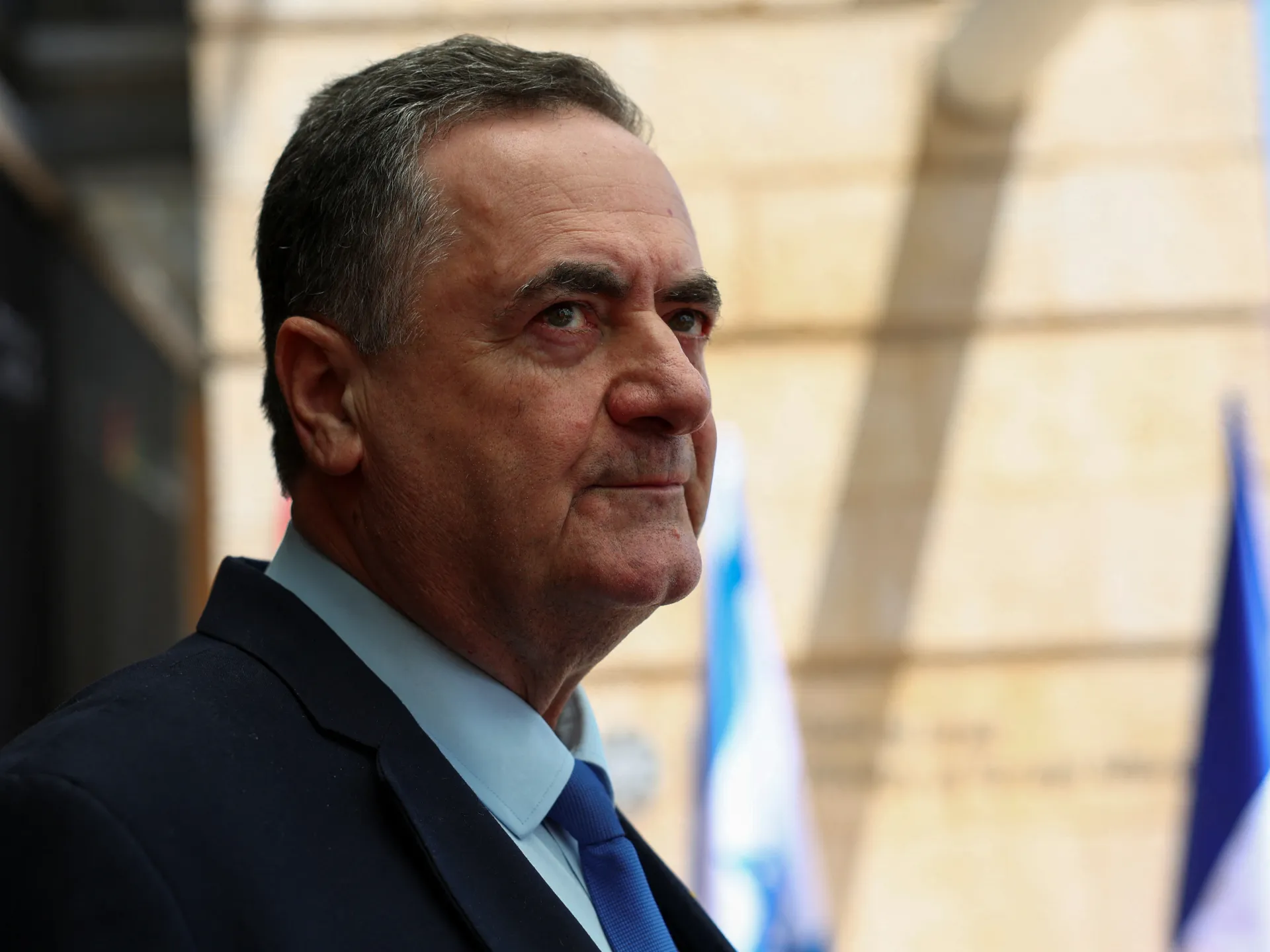
With the ruins of the Gaza Strip lying around him, Israeli Defence Minister Israel Katz last week renewed his push to set up illegal settlements in the battered territory’s north.
“I intend to establish three Nahal outposts, which is also a military entity, in those places that were in northern Gaza,” Katz told Channel 14, referring to bases that combine farming with an armed presence in a bid to consolidate control over a territory.
The minister said, in his view, establishing these settlements would enhance security – but execution would have to be “in the right way, at the right timing, while coordinating”.
It was not the first time the member of Prime Minister Benjamin Netanyahu’s Likud party has made such remarks. In December, Katz said the Israeli military would “never leave all of Gaza” but “in due course” would establish Nahal posts despite a United States-brokered plan stipulating a full Israeli military withdrawal and barring the re-establishment of Israeli settlements.
His comments also echoed a recent statement by Finance Minister Bezalel Smotrich that “the groundwork to establish three settlements in the North Gaza area” had been completed. Smotrich, who also holds the portfolio of “settlement administration” in the Ministry of Defence, has repeatedly called for the full occupation of the Gaza Strip.
Such a push has been central to the goals of Israel’s settler movement, which in January 2024 organised a conference attended by government ministers to advocate for the re-establishment of settlements in the Strip.
“This is their ideology. They want the Gazans out of Gaza and they want to settle there like they settle in the West Bank,” former Israeli diplomat Alon Liel told Al Jazeera.
All settlements on Palestinian land are illegal under international law, but settlement expansion and annexation have been a core objective of Netanyahu’s hard-right government. In recent years, it has carried out unprecedented settlement expansion, resulting in the forced displacement of dozens of Palestinian communities and the de facto annexation of land in the occupied West Bank.
Issam Younis, a prominent Palestinian human rights defender and director of the Al Mezan Center for Human Rights, said he was not surprised by Katz’s latest comments. “It was very clear from day one in the genocide that the main goal was to make life impossible in Gaza by destroying everything,” he told Al Jazeera. “It’s a race for time – take over land, starve Gaza and deny it any chance at life, then expel the population and build settlements.”
Younis said Israel’s conduct during its genocidal war against Palestinians in Gaza and the “ceasefire” agreed in October under the US plan clearly showed that expelling the population is the main objective of the Israeli government.
“Dehumanising statements by senior Israeli officials reaffirmed this: calling Palestinians in Gaza ‘human animals’, saying that there are no civilians in Gaza, then saying clearly that the objective was to expel the population and create settlements in the Gaza Strip,” Younis added.
Israel made no secret of that objective. In early 2025, the government announced it was setting up an agency to oversee the “voluntary migration” of Palestinians from Gaza as part of a plan proposed by Katz.
The announcement drew widespread international condemnation. Experts warned that such a move would amount to a war crime. Last month, the Israeli government decided to rebrand the agency and replace talk of “voluntary migration” with the “free movement plan” while using “language deemed more acceptable internationally”, according to Israeli media.
The policy enjoys widespread support in Israel. A 2025 poll commissioned by the University of Pennsylvania found that 82 percent of Jewish Israelis support the expulsion of Palestinians from Gaza.
Meanwhile, nine months into a “ceasefire”, during which Israeli attacks have killed at least 1,127 Palestinians, conditions in Gaza remain unbearable.
The United Nations says at least 265 children have been killed during the period while hunger persists and the debilitated healthcare system continues to suffer acute medicine shortages.
“Only 20 percent of what Gaza needs has been allowed to enter – things related to water and health and to life in general,” Younis said, referring to Israeli restrictions on aid entering the Strip. “Gaza is being starved and parched for water.” For him, the aim is clear: expulsion, “even if they call it voluntary migration”.
Liel said Israel is doing the minimum on the humanitarian track to avoid upsetting US President Donald Trump, who has set up what he has named the Board of Peace to oversee the administration and reconstruction of the Strip.
“I don’t think that Israel wants Gaza to be reconstructed like Trump is dreaming,” he said.
Palestinians have been increasingly frustrated with the Board of Peace’s failure to pressure Israel or implement the recovery and construction plans outlined in Trump’s “ceasefire” plan, including the entry of critically needed assistance.
“The Board of Peace is complicit until it moves to rebuild Gaza immediately,” Younis said. “Otherwise, it would not be allowing Israel to create the conditions that make life impossible for Palestinians in Gaza, which will result in expulsion.”
Israeli forces have also expanded the “Yellow Line”, demarcating Israeli-controlled areas within Gaza, to encompass 70 percent of the Strip. “We are not retreating from the ‘Yellow Line’, unequivocally, as long as Hamas does not truly disarm, and even after that, we remain inside Gaza,” Katz told Channel 14 during his tour of northern Gaza, saying the destruction of the territory was “the result of a deliberate policy”.
The settlement push comes as Israel is gearing up for elections, which will be held on October 27.
According to Liel, Katz and other ministers are openly talking about building settlements in Gaza because their calculation is that it would boost their electoral chances amid a shift to the right by the electorate.
Many observers expected the weeks leading up to the polls to be accompanied by a serious escalation in Gaza, the West Bank and other Israeli “war fronts” without changing the political situation in Israel.
“The wish of this Israeli government was that as many [Palestinians from Gaza] will leave. Hopefully voluntarily. If not, Israel will help, and this is the reason you don’t want to rebuild Gaza,” Liel said.
Who: Spain vs Argentina What: FIFA World Cup 2026 final Where: New York-New Jersey Stadium, East Rutherford, New Jersey, United States When: Sunday at 3pm (19:00 GMT) How to follow: We will have all the build-up on Al Jazeera Sport from 15:00 GMT before our live text commentary stream.
Chaos vs calm. Godfather vs heir. World number one vs world number two.
Recommended Stories
list of 4 itemsend of list
The storylines could not be any better.
As the sun shines on the New York skyline, football’s biggest stage gets ready for its perfect closing act: the FIFA World Cup final between Argentina and Spain.
It is a gift for the football purists, a clash of philosophies, if you will – Argentina, the reigning champions who have made a habit of embracing the suffering, and Spain, the European winners who have taught the world a masterclass in control.
On one hand is the unstoppable, almost unnatural force of Lionel Messi – whose movements on the field are no less than spells from a magic wand – and on the other is Lamine Yamal, the teen prodigy whose flair on the field and flamboyant personality off it show signs of a superstar in the making.
So when the confetti falls and the fireworks erupt, will it be Argentina lifting a historic second straight world title, or will the golden generation of Spain bring back joy after 16 years of waiting?
Here’s all to know about the seismic showdown:
Who will win the battle between Lamine Yamal and Lionel Messi [File: Charly Triballeau and Roberto Schmidt/AFP]
How did Spain and Argentina reach the World Cup final?
Spain topped Group H with seven points, beating Saudi Arabia and Uruguay and drawing with Cape Verde. They began their knockout campaign with a 3-0 thrashing of Austria in the round of 32 before beating Portugal 1-0 with a late goal in an Iberian football derby in the round of 16.
Argentina had a strong showing in the first round, topping Group J by beating Algeria, Austria and Jordan. In the round of 32, they were pushed to their limits before squeezing past Cape Verde 3-2 in extra time, and came from two goals down to beat Egypt 3-2 in a controversial last-16 contest which drew allegations of officiating bias.
Against Switzerland in the quarterfinals, they again played a full 120 minutes before securing a 3-1 win and broke English hearts with a late 2-1 comeback win in a highly charged semifinal encounter.
Marvellous Messi’s Last Dance?
If there were not already enough new records Messi has made in the past month, the 39-year-old diminutive forward is set to add another to his tally – the oldest outfield player to feature in a World Cup final.
It could also be his last.
Leo – as Argentinians commonly call him – has not spoken about his future, but with an illustrious career, headlined by his 2022 World Cup triumph, this year’s tournament seems to be his last, especially if he fulfils a rare back-to-back World Cup title dream.
“He has made history. He is a legend,” Argentina coach Lionel Scaloni said of Messi, one of the greatest players to have graced the football field.
A decade ago, frustrated after a Copa America final loss to Chile, his fourth defeat in a final for Argentina, Messi hung up his boots. The narrative then centred around the fact that despite all his success at the club level, international glory had eluded Messi.
But fast forward to 2026, the Argentina captain has led his team to successive World Cup finals and is bidding for his first Golden Boot – a twist of fate even Messi would not have imagined.
“To have been able to get to a final in the way that he has in this moment, at the age of 39, I think it is incredible,” Scaloni added. “That is why I said we should enjoy having him, because look at what happened with Diego [Maradona] and how we ended up missing him.
“We still have Leo, and we should appreciate that. He is the historic figure and the legend, as are all these players who have given us these marvellous years.”
The little magician from Rosario will lead Argentina’s charge on Sunday, as La Albiceleste aim to become just the third team in the tournament’s history to retain the World Cup after Italy (1934 and 1938) and Brazil (1958 and 1962).
Slick Spain out to silence Argentina
Unlike Argentina, whose game largely depends on the individual brilliance of Messi, Spain are a team built solidly on the collective.
La Roja love to keep the ball and suppress the attacking potential of any opponent.
Their organised, sturdy defence has kept six clean sheets, already the most by any side at a single World Cup tournament, and leaked just one goal en route to the final.
On Sunday, Spain will carry more hunger than fear against Argentina, “the team to beat”, as described by captain Rodri.
“We’ve been through a gradual process of growth, where we’ve seen a team mature over the last few years,” Rodri said. “This team and this generation were going to make a name for themselves … and now reaching the final of a World Cup.
“So we’re pleased with the journey the team has taken, but we’re not stopping there; our ambition goes much further.”
Left to right, Spain’s Lamine Yamal, Dani Olmo and Mikel Oyarzabal are key players of their attack [File: Jessie Alcheh/Imagn Images via Reuters]
The bookmakers’ favourite from the beginning, Spain have played like a side that knows best how to deal with pressure. They produced the performance of the tournament in their stunning semifinal defeat of France, silencing Les Blues’ valiant attack.
Rodri said while that display was “one of the best” the current Spanish side had ever produced, they would need to scale new heights to defeat Argentina and clinch their first world title since 2010.
“I think we have to raise the level because they are the champions. And I’m really confident that we can do [it],” he added.
Spain vs Argentina predictions
The Opta supercomputer views Spain as the favourites in the final, with a 45 percent probability of winning in 90 minutes. It predicts a 26 percent probability of Argentina winning in regulation time, while there is a 29 percent probability of the match going to extra time or penalties.
Overall, Spain have a 59.56 percent chance of winning the 2026 World Cup, while Argentina have a 40.44 percent probability of retaining the title they won in Qatar four years ago.
Who are the referees for Spain vs Argentina?
Referee: Slavko Vincic (Slovenia)
Assistant referee 1: Tomasz Klancnik (Slovenia)
Assistant referee 2: Andraz Kovacic (Slovenia)
Fourth official: Adham Makhadmeh (Jordan)
Reserve assistant referee: Mohammad Alkalaf (Jordan)
Spain vs Argentina: Kickoff time, where to watch
Spain: DAZN Mundial (9pm, Central European Summer Time)
Argentina: TyC Sports, TyC Play (4pm, Argentina Standard Time)
United Kingdom: BBC One, BBC iPlayer, STV, STV Player, ITV1, ITVX, Red Button 1 (8pm, British Summer Time)
US: Fox, Fox One, Peacock, Telemundo App and Network, Universo, Telexitos (3pm, Eastern Daylight Time)
To check the TV listings for your country, head to FIFA’s TV listing schedule here.
Where is Spain vs Argentina being played?
The World Cup final will be played at MetLife Stadium, home to two National Football League (NFL) teams: the New York Giants and the New York Jets. For the FIFA World Cup, the venue has temporarily been rebadged as New York-New Jersey Stadium.
Built in 2010, this huge multipurpose stadium holds up to 82,500 spectators for football matches. The venue also hosted the 2025 FIFA Club World Cup final and both semifinals.
The last World Cup match at the MetLife Stadium was a round-of-16 match that Norway won 2-1 against Brazil [File: Omar Aziz/Reuters]
What is the weather forecast and air quality for New Jersey?
AccuWeather predicts mostly sunny and less humid weather for Sunday in New Jersey.
Smoke from Canadian wildfires has blanketed much of the northeastern US, triggering health alerts. On Thursday, the air quality in New Jersey was rated “unhealthy for sensitive groups” by several air quality measurement platforms.
But for Sunday, the US government’s official air quality monitoring site, airnow.gov, expects the air quality index (AQI) to be “moderate”.
Spain vs Argentina: Head-to-head
This will be only the second World Cup meeting between Spain and Argentina, with Argentina winning 2-1 in the group stages in 1966.
Mogadishu, Somalia – Thousands of reel-to-reel tapes sit in an air-conditioned room in the archive of Somalia’s public radio, Radio Mogadishu, stacked on steel shelves and lined up like old manuscripts beneath a thick layer of dust.
Each reel contains a small fragment of Somalia’s 20th-century history, from news bulletins to speeches, music and voices that were once beamed out across the nation’s airwaves, some dating back to the early 1950s.
Recommended Stories
list of 3 itemsend of list
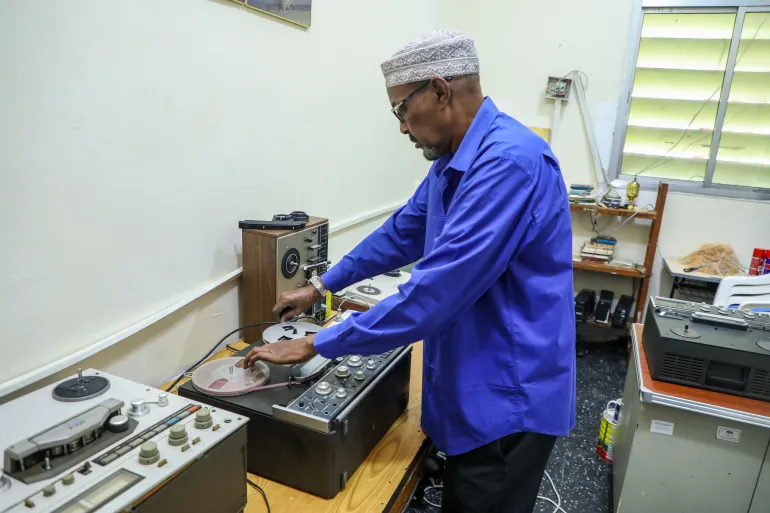
Abdiqadir Geedi Robleh, an archivist at Radio Mogadishu, threads a reel onto an old tape machine, connects it to a computer, and records the contents of each tape. A tape with a love song by Mohamed Mooge Liban, a prominent singer fills the room, and Robleh is transported, he says, to his youth.
He is working with a small team to digitise and methodically order approximately 400,000 hours of broadcasts, officials here say, before the magnetic tape deteriorates beyond recovery, taking with it a crucial record of the country’s past.
Abdiqadir Geedi Robleh cues up a tape, ready to hear a recording. [Abdimajid Abdillahi Farah/Al Jazeera]
“This is the world’s largest store of Somali language music, culture, dramas and everything else, and at the moment it is locked away from the public in a kind of prison,” Robleh tells Al Jazeera. “We’re working to preserve it but also open it up in future to the public.”
Founded in 1951 during the Italian colonial era, Radio Mogadishu would grow into Somalia’s largest and most important public broadcaster. It initially broadcast in Italian and Somali before introducing foreign language services, including everything from Swahili and Oromo to English and Arabic.
In its heyday, it was among the most influential and distinctive voices in East African media, reaching audiences as far afield as Tanzania, Ethiopia, and the Middle East with a style of radical pan-African broadcasting reminiscent of Radio Cairo in the Nasser years.
With the exception of a brief hiatus in the 1990s, when it fell under the control of a warlord, it has served not only as a key source of news for Somalis and audiences across the region, but also as a vital repository of the country’s collective memory.
The effort to preserve its archives has gathered new momentum this year.
In early June, Somalia’s information ministry and the UNESCO regional office for Eastern Africa – the UN’s heritage agency – brought archivists from across the country to a workshop in Mogadishu, aimed at eventually registering its contents with UNESCO’s Memory of the World programme, which catalogues archives of important historical value.
“Protecting this knowledge isn’t just relevant for Somalia, but it is relevant for everyone,” said Guilherme Canela, a senior UNESCO official who is overseeing the project.
Thousands of tapes fill the shelves of Radio Mogadishu’s archive, holding decades of Somali history [Abdimajid Abdillahi Farah/Al Jazeera]
An expert assessment carried out in April counted roughly 45,000 tapes and reels, representing an estimated 400,000 hours of material recorded since the station’s founding. More than 85 percent remain playable, but around one in 10 has deteriorated with age, and more than 5 percent has been destroyed or severely damaged, according to UNESCO.
Radio Mogadishu’s collection was recognised both for its size and because so much of what it holds exists nowhere else.
Some were damaged in an electrical fire in 2018, Robleh says, while others were lost during fighting in 1992, when US forces battled Somali militias in the streets of Mogadishu.
During the worst of the civil war, police colonel Abshir Hashi Ali risked his life to prevent the contents of the archives from being looted. When fighting engulfed Mogadishu following the 1990 collapse of the government, he said he ran back “with the aim of conveying to Somalis the wealth that is stored here”.
Abdi Jeite, the station’s director, says the digitisation drive began as early as 2012, but has been held back for years by a lack of resources. By his estimate, only approximately 10 percent of the archive has so far been converted.
“We’ve got some new tools, and more training for our archivists, but there is still a lot of support needed,” he says.
An old reel-to-reel machine used to play and digitise tapes at Radio Mogadishu’s archive in Mogadishu begins spinning [Abdimajid Abdillahi Farah/Al Jazeera]
To understand why the archive matters so much, it helps to understand what radio once meant in Somali life.
“Radio Mogadishu was arguably the preeminent media institution in post-independence Somalia,” Iman Mohamed, an assistant professor at the University of Minnesota and historian of Somalia, tells Al Jazeera.
“In a society that prizes orality above the written word, radio was uniquely effective at creating a common public sphere through which ordinary people could feel bonded to one another and to a shared sense of nationhood,” Mohamed adds.
Though Somali audiences could also access BBC Somali, Radio Hargeisa, and opposition stations when the government began to deteriorate in the latter part of the 20th century, it was Radio Mogadishu that dominated the “soundscape of urban Somalia”, Mohamed said.
That dominance made Radio Mogadishu a national factory of talent. “If you were a musician, poet, playwright or producer, Radio Mogadishu was the platform you wanted to appear on,” Robleh, the archivist, said. “It made Somalia’s stars.”
Robleh points to the label on a tape of a love song recorded at Radio Mogadishu in 1974 [Abdimajid Abdillahi Farah/Al Jazeera]
Robleh, the archivist, added that many BBC Somali journalists who went on to have distinguished careers first cut their teeth at Radio Mogadishu, which became an important pipeline for Somali-language talent to the BBC.
Hassan Dahir, a former journalist at the station, was one of many Somali children who grew up dreaming of working there. For years, he recalled, Radio Mogadishu was virtually the only source of news for millions, “the eyes and ears of the community”, he told Al Jazeera.
“Its reach was so extensive that even nomadic herders followed events as far afield as the Vietnam War and the American Civil Rights Movement,” Dahir said.
Under Siad Barre, the military officer who seized power in a 1969 coup and ran Somalia for two decades under a self-styled socialist, revolutionary government, the station became an instrument of state ideology, mixing news, drama and religious programming with nationalist and anti-colonial content.
The station beamed pan-African songs Oh Africa, still asleep by Halimo Khalif Magool, which spurred the continent’s inhabitants to awaken and take charge of their own destinies. Mahamud Abdullahi Sangub’s Reject the Color of Imperialism was another popular song of the era in this same tradition of politically charged music, with lyrics like: “Africans listen to each other, reject the colour of imperialism, reject it, reject it, reject it!”
Many of those songs have been covered, sampled or repurposed since, and younger Somalis often encounter them with no idea who performed the originals, or the politics that shaped them, say Mohamed.
Its news coverage focused on anti-colonial wars in places such as Mozambique against Portugal, the struggle against apartheid in Rhodesia and South Africa and the Civil Rights Movement in the US. It covered everything from colonial battles in Guinea-Bissau to the arrest of African American political activist and author Angela Davis.
“We were telling the stories of people resisting their oppressors”, said Dahir.
After seizing power in a 1969 coup, Major General Mohamed Siad Barre used Radio Mogadishu as a key instrument for disseminating his regime’s messages [Abdimajid Abdillahi Farah/Al Jazeera]Portraits of Somalia’s presidents line a wall at Radio Mogadishu above the entrance to the archive [Abdimajid Abdillahi Farah/Al Jazeera]
The station was a “mouthpiece of the government”, cautions Mohamed, but took on a crucial role of inculcating “a patriotic and revolutionary ideological orientation in the Somali people”.
One of the most important projects the radio supported was the Somali mass literacy campaign, when the government sent students to rural Somalia in 1972 to teach the newly developed Somali script. The campaign led to a dramatic increase in literacy across the country.
It also became deeply entangled with Somalia’s regional foreign policy, as the government spent much of the 20th century at loggerheads with Ethiopia before eventually invading in 1977.
That rivalry led Radio Mogadishu to dedicate airtime to Ethiopia’s marginalised ethnic communities, as well as armed rebel movements, particularly those from Eritrea. Among its most notable initiatives were broadcasts in Oromo and Sidama.
Dahir, the former Radio Mogadishu journalist who covered Ethiopia, told Al Jazeera that these were the first-ever radio programmes in either language, both of which had been suppressed for many years in Ethiopia under policies that privileged Amharic, the language of the country’s elite.
The station itself has taken on a far smaller role in Somali life since.
The collapse of the central government in 1991 broke the state’s grip on broadcasting, opening space for private radio, television and online outlets, which have proven popular with the Somali public.
It has lost most of its foreign-language programming, and with it, much of its revolutionary edge. The Somali state also continues to be constrained by limited resources as it rebuilds after decades of conflict.
The entrance to Radio Mogadishu’s studios. [Abdimajid Abdillahi Farah/Al Jazeera]
In November 2021, the al-Qaida-affiliated armed group al-Shabab, which has waged a long rebellion against Somalia’s government, assassinated the station’s then-director, Abdiaziz Mohamud Guled, in a suicide bombing in Mogadishu.
Iman Mohamed, the historian, says that with the civil war in the country, now in its third decade, preserving the archive for posterity has become more urgent.
“The destruction of archives during the civil war has left an enormous gap in Somalia’s documentary record, which means that anyone researching the country’s history is almost entirely reliant on foreign archives or oral history,” Mohamed said.
“That is especially problematic for young people,” she adds. “Recovering what we can matters for the youth who will never have known the world that Radio Mogadishu broadcast in its heyday.”
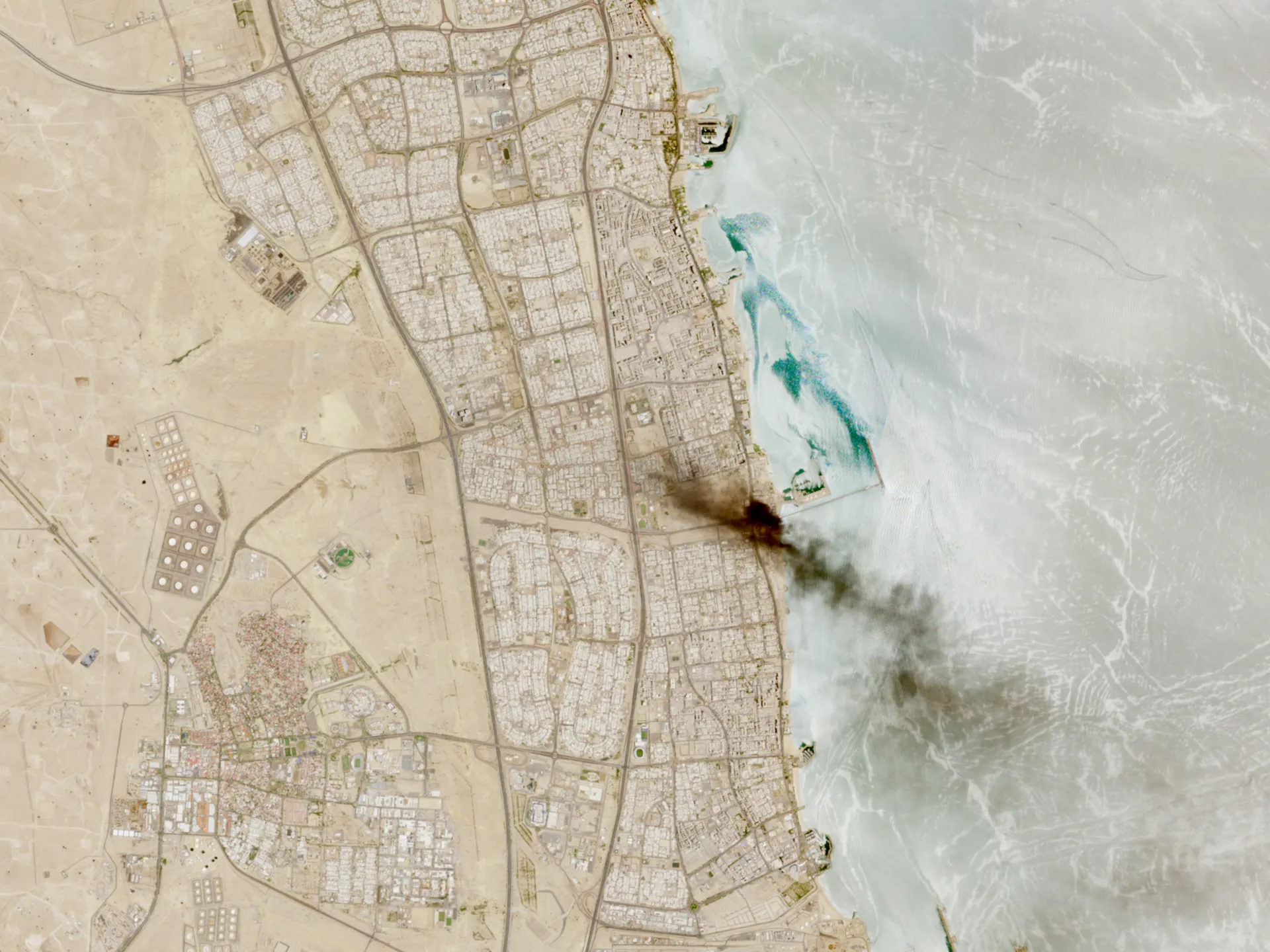
US Central Command says new strikes on Iran are designed to further degrade Iran’s ability to choke the Strait of Hormuz.
By Al Jazeera Staff, AP and Reuters
Published On 19 Jul 202619 Jul 2026
The United States military said Sunday that it launched new strikes on Iran to “swiftly punish” the country’s Islamic Revolutionary Guard Corps (IRGC) for an attack that killed two American service members and left one missing and four requiring hospitalisation.
An area near Sirik in Iran’s Hormozgan province and Qeshm Island have been hit on the eighth consecutive night of US air strikes on Iran, according to Iran’s semi-official Mehr and Tasnim news agencies.
Recommended Stories
list of 3 itemsend of list
The attacks happened early on Sunday, hitting Sirik at 1:30am local time (22:00 GMT, Saturday), and Qeshm Island at about 3:38am (00:08 GMT, Sunday) and again at 6:10am local time (0240 GMT) according to Iranian reports.
Tasnim also said the US military targeted a location near Shadegan in Iran’s Khuzestan province at 5:55am (02:25GMT Sunday).
The reports said there were no casualties and that residential and commercial infrastructure was not damaged in the attacks.
In a post on X, US Central Command (CENTCOM) said the US military launched new strikes “designed to further degrade Iran’s ability to threaten commercial shipping in the Strait of Hormuz”.
The post added that strikes were also in retaliation for Iranian ballistic missile and drone attacks on a US base in Jordan that killed the two US service members on Friday.
US Central Command later said its strikes targeted “Iranian military coastal surveillance and air defense facilities, maritime capabilities, and missile and drone storage sites.”
Since the war began in February, 16 US service members have been killed and more than 430 wounded.
The Tasnim news agency said there were reports of explosions in Qom, Arak and Behbahan that were later denied by local authorities.
The governor of Arak said that “the situation is completely normal and so far we have not had any reports of attack or explosion”.
Iranian retaliatory strikes
Tasnim news agency said the Iranian army targeted US military assets in two bases in Kuwait.
A statement from Iran’s military said, “In response to the repeated aggressions of the enemy”, the army targeted a US “ammunition depot at Al-Adiri camp and the Patriot radar and air radar” at the Ali Al Salem base in Kuwait.
“Unforgettable lessons”
Before the latest US strikes began, Iran’s supreme leader warned of “unforgettable lessons” if the US continued its attacks on Iran.
Initially, the battle focused on control of the Strait of Hormuz. But US strikes have now widened to include civilian infrastructure, including bridges and desalination plants for drinking water.
State-run news agency IRNA said the Bonji desalination plant was destroyed, cutting off water supplies to about 10,000 people, and a desalination plant on strategic Qeshm Island inside the strait was damaged.
Iran’s Deputy Foreign Minister Kazem Gharibabadi told state television the US is violating terms of the interim deal and “no longer implementing them”.
Iranian authorities said at least 50 people have been killed and more than 500 wounded in US strikes in the past three weeks.
Late Saturday, the Iranian embassy in India named two girls – Sogand Dardmand and Fatemeh Zahra Akbari – who were among seven killed in a US strike on Bandar Khamir in southern Iran, which took place on Thursday.
Al Jazeera’s Tohid Asadi, reporting from Tehran, said that the last eight nights of US strikes on Iran have caused “anger” and “frustration” among the populace.
“People don’t really know whether they are going to see the continuation of this confrontation, or how long it’s going to take, and also if there is a possibility for a diplomatic settlement to resolve all these complexities and find a long-lasting solution”, he said.
A landslide in central China has killed eight people, and 34 are still missing. Image courtesy of UPI
July 18 (UPI) — At least eight people are dead and 34 are missing after a massive landslide fell in Chongqing, China, Friday morning.
Rocks and soil slid down the mountain and buried more than 10 residential buildings in the suburbs of the city in Pengshui County, in central China. There were 10 people pulled from the rubble and sent to hospitals. More than 1,100 people were forced to evacuate their homes.
The landslide included 635,664 square feet of materials, officials confirmed. The largest rock is estimated to be about 105,944 square feet, Wang Chuanjun, head of Planning and Natural Resources in Pengshui County, told The Independent.
Heavy rains got in the way of rescue operations. The area got about 8 inches of rain overnight Friday and Saturday morning.
China’s National Development and Reform Commission has allocated about $4.4 million to help with restoration of infrastructure and public services to the area.
Customers inspect various wind chimes during the opening day of the Furin-Ichi wind chimes market at the Kawasaki Daishi Heikenji Temple in Kawasaki, Kanagawa-Prefecture in Japan, on July 17, 2026. Photo by Keizo Mori/UPI | License Photo
July 18 (UPI) — New York City Mayor Zohran Mandani on Saturday said his government is reviewing whether it could legally arrest Israeli Prime Minister Benjamin Netanyahu over accusations of war crimes.
In 2024, the International Criminal Court issued a warrant for the prime minister’s arrest over alleged war crimes and crimes against humanity in Gaza, including starvation and attacking a civilian population.
“I believe that Prime Minister Netanyahu belongs in The Hague,” Mamdani told The New York Times. “He’s a war criminal who has been charged by the International Criminal Court, and what you will find is that is an opinion that is held by many, purely because of what his actions have wrought over these past many years.”
Mandani said his legal team is reviewing the city’s options.
“We’re not talking about a personal assessment of Benjamin Netanyahu,” the mayor told The Times. “We’re talking about the International Criminal Court and the fact that they have a warrant out for this prime minister’s arrest, and I think it’s important to talk about the weight that that has as a charge and that also, as the mayor of New York City, I’ll be following the laws of New York City.”
Netanyahu has denied the ICC charges and disputes the court’s jurisdiction.
In a previous interview, the prime minister claimed without evidence that Mandani is a Hamas supporter.
“He is with the terror actors,” he told WABC. “I think, secretly, he hates America.”
Michael Waltz, the U.S. ambassador to the U.N., called Mandani’s comments “pure political theater.”
“The U.S. is not party to the Rome Statute that underlies the ICC,” he wrote on X, adding, “The U.N. Headquarters Agreement grants diplomatic protections to visiting heads of government.”
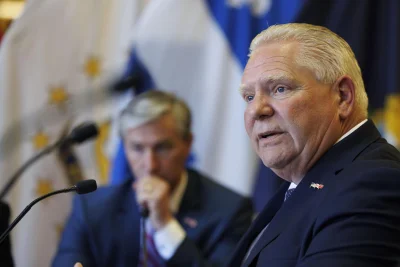
Ontario Premier Doug Ford said President Donald Trump’s comments about Canada’s efforts to control the ongoing wildfire crisis are a “shame” and “totally unacceptable.” File Photo by CJ Gunther/EPA
July 18 (UPI) — Ontario Premier Doug Ford on Saturday shot back at President Donald Trump, saying his comments about Canada’s efforts to control the ongoing wildfire crisis are a “shame” and “totally unacceptable.”
Trump threatened Friday to impose tariffs on Canadian imports and accused the country of “willful negligence” in its management of the blazes.
“I find it a shame, the administration in the U.S. and Congress people, writing these letters and blaming us,” Ford said in a press conference on Saturday. “They have a very short, short memory. We had the water bombers, everyone ready, going over to California — it was last year. We sent hydro linemen down to the Carolinas and Georgia to help out.”
Ford added, “That’s what neighbors do, right? You don’t get on and start threatening and criticizing because, guess what? One day it’s going to be your turn.”
As of Saturday, there were 959 active wildfires burning through Canada, 102 of which started in the past 24 hours, Canadian Interagency Forest Fire Centre reported.
The blazes have left more than 100 million Americans under air quality alerts, from Minnesota to Virginia.
“We are holding Canada responsible for the fact that they are not properly maintaining their Forests, and Brush therein, and the United States is being unnecessarily invaded by filthy, polluted, and unhealthy air, the quality of which is dangerous, and totally unacceptable!” Trump wrote on Truth Social.
Despite the dispute, Ford said Canadians would stand at the ready should Americans need support in the future.
“We’re going to be down there without hesitation to support our neighbors, which we should be,” he added.
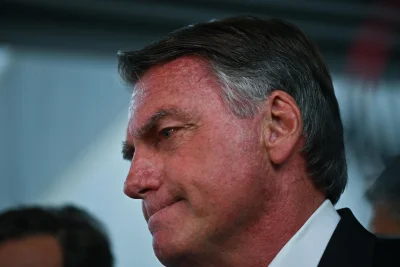
Former Brazilian President Jair Bolsonaro, who is serving a 27-year sentence for a coup attempt, was placed under further restrictions on Friday for breaching conditions of his house arrest. File Photo by Andre Borger/EPA-EFE
July 18 (UPI) — Brazil’s top court on Saturday denied a request from former President Jair Bolsonaro to be visited by Argentinian President Javier Milei while under house arrest.
The attempted visit by Milei, a political ally of the far-right Bolsonaro, was part of a campaign to drum up political support for the son of the former president, who is running against leftist President Luiz Inacio Lula da Silva.
He was already barred from participating in national politics as part of his sentence.
But Bolsonaro was placed under further restrictions on Friday for breaching conditions of his house arrest, after he wrote a political letter supporting his son’s candidature for president.
The son, right-wing state Sen. Flavio Bolsonaro, then showed the endorsement letter during a live stream on social media.
Supreme Court Justice Alexandre de Moraes barred Bolsonaro from receiving any visits of a “political-electoral” nature until after Brazil’s general elections in October.
Bolsonaro’s defense lawyers argued in court he was unaware that his son would divulge his writing on social media, though the former president titled the text “letter to the Brazilian people.”
“The letter — written and personally signed by Jair Messias Bolsonaro — was addressed ‘to the Brazilian people,’ demonstrating that it was not of a private nature but rather intended for political and electoral purposes, with dissemination to the general public, using Flavio Nantes Bolsonaro as an intermediary, or in his own words, as his ‘spokesperson,'” Moraes wrote in his decision, G1 reported.
“The text of the ‘Letter to the Brazilian People,’ therefore, clearly shows that Jair Messias Bolsonaro intended to communicate with his political supporters through his son’s social media accounts,” the justice added.
Bolsonaro is now barred from receiving visits for 30 days, except by his medical and legal teams.
He is also not allowed to be visited by his son for 90 days.
Britain’s Crown Prosecution Service said brothers Andrew (R) and Tristan (L) Tate are awaiting extradition to the U.K. to face a slew of charges over alleged sex crimes. File Photo by Robert Ghement/EPA-EFE
July 18 (UPI) — Influencer brothers Andrew and Tristan Tate were arrested in Miami Saturday on dozens of new charges stemming from alleged sex crimes in the U.K., including child pornography, British prosecutors said.
Britain’s Crown Prosecution Service said the brothers are awaiting extradition to the U.K. to face 21 original charges — as well as a slew of new accusations.
“We have decided to prosecute Andrew and Tristan Tate for further offences including rape, arranging or facilitating trafficking for sexual exploitation and offences relating to indecent images of a child,” said Malcolm McHaffie, head of the Special Crime Division at CPS, in a statement.
Andrew Tate, 39, was charged with 19 counts related to indecent images of a child and extreme pornography. He is also accused of rape, arranging or facilitating trafficking for sexual exploitation and assault occasioning actual bodily harm.
Tristan Tate, 38, was charged with sexual assault, rape and arranging or facilitating trafficking for sexual exploitation.
“These charging decisions followed receipt of a further file of evidence from Bedfordshire Police and bring the total number of alleged victims in this case to seven,” McHaffie said.
CPS said the new charges stem from offenses taking place between July 2010 and August 2017.
The Tate brothers, who hold dual British-American citizenship, were first charged in the U.K. last year for alleged rape and human trafficking.
They are former kickboxers with millions of followers on social media.
The brothers have denied all charges against them.
In order to afford a last-minute ticket to the World Cup final at New York New Jersey Stadium — widely billed as the single most expensive sporting event ever played in the United States — you might have to be a millionaire, as the cost for a coveted seat at the venue crossed the $2m mark less than 24 hours before kickoff.
As Lionel Messi’s Argentina face Spain and their teenage superstar Lamine Yamal, ticket prices have soared on the resale market.
By Friday, nearly all tickets appeared to be sold, with a few listed on FIFA’s sales platform at about $32,000 apiece.
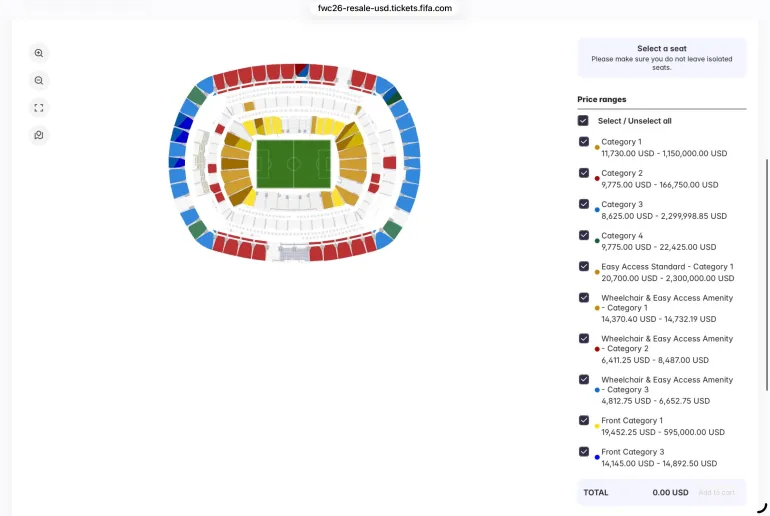
On Saturday, there were no last-minute tickets available on the site. However, FIFA’s resale platform had tickets available from a little less than $10,000 to as high as $2.3m.
The final caps a World Cup where fans were willing to shell out more than ever for a seat at the quadrennial showpiece, as ticket buyers confounded even the greatest cynics in the face of sky-high prices.
It is a fitting end to a tournament that has tested the limits of what fans will spend, with FIFA’s gamble paying off after concerns over visa restrictions and domestic unrest in the US.
“What FIFA did a very good job of was determining what demand would be because people [were] paying these absurd prices for just about all the 104 matches,” said Scott Friedman, a ticketing expert who previously worked for the Cleveland Cavaliers.
“A year ago, we didn’t think people would be travelling with Trump’s ICE stuff and all this other conspiracy stuff. But it’s the most popular tournament in the world by far globally, and FIFA, to their credit, they set the prices high, and people ended up paying them.”
According to the Reuters news agency, an analysis of FIFA attendance data found that more than half the 72 group matches were attended to capacity, with most others only a few hundred fans short of a full house. About 99.7 percent of available seats were filled during the preliminary stage matches, FIFA said.
The data erased early concerns that FIFA’s infamously steep prices would put off fans, after swaths of empty seats were seen around the Guadalajara Stadium for the June 11 match between South Korea and Czechia.
Higher prices, higher demand
As the tournament expanded to its largest-ever field, however, with 48 teams involved, so too did interest among fans.
Prices were set initially at $575 a ticket for group games — more than double the most expensive group ticket available during the 2022 tournament — but FIFA’s dynamic pricing system meant that many ticket holders paid far more.
Hundreds of tickets were still available for the final on Wednesday, priced at little more than $7,000 on FIFA’s platform, a surprising fact that prompted speculation over whether FIFA had finally gone too far with its prices.
But the batch of seats available was likely the result of a process known as “slow ticketing”, Friedman explained, a common practice in mega-events in which organisers restrict inventory to motivate buyers.
“They can act like they already sold their seats and kind of just dribble them in accordingly to obviously increase market demand,” said Friedman, who runs the Ticket Talk Network, dedicated to exploring how seats for sports mega-events are bought and sold.
“Like, ‘Oh, there’s only so-and-so amount of tickets left available in the section, I better buy now,’”
A screenshot of the seat map showing available tickets to the World Cup final on the FIFA Marketplace.
‘No one really knows how this works’
An opaque “dynamic pricing” process has also proven a boon for FIFA, as the sport continues its uneasy evolution from a working-class game to a pastime of the wealthy.
FIFA introduced dynamic pricing for the first time at this tournament, allowing ticket prices to fluctuate based on real-time demand and other factors.
“One reason for the frustration over the last few months is that no one really knows how this works,” said Adam Elmachtoub, an associate professor of industrial engineering and operations research at Columbia University.
“People are willing to accept dynamic pricing — we deal with it for airfare, we deal with it even [for] buying clothes — but I think when it’s such a high-profile event, transparency will help a lot.”
FIFA introduced a small number of lower-cost tickets in response to backlash over prices, as politicians including New York City Mayor Zohran Mamdani lobbied for locals to have access to affordable seats.
A high-quality tournament also spurred demand, with the four top-ranked nations in the semifinals for the first time since rankings were introduced, and Sunday’s final will feature the 39-year-old Messi in what is probably his final World Cup match.
“The notion of what is fair pricing here is complex because entertainment is not like a necessity,” said Elmachtoub.
Fan appetite holds up
Lax rules around the resale market in the US have only served to accelerate the pocket-emptying around the tournament, with second-hand ticket sellers largely empowered to set their own prices.
The rules in the US stand in contrast to cohosts Mexico, where resellers are prohibited from listing their tickets above what they spent — and much of the rest of the world.
A flood of final-week listings brought prices down on resale platform SeatGeek, with the average ticket for the final listed for more than $11,000 as of Friday. Still, that figure easily made the final the most expensive event that the platform had sold, 8 percent above the 2024 Super Bowl, SeatGeek said.
“What we’re seeing with this year’s World Cup is that demand fluctuates with every round and every match-up reveal,” said Chris Leyden, senior director for marketing at SeatGeek.
“The appetite for this tournament has held up remarkably well from the group stage through the knockouts.”
An Argentina fan holds a sign for a match ticket in Kansas City before his team’s quarterfinal against Switzerland [Lee Smith/Reuters]
World Cup for ‘a happy few’
Human rights experts warned, however, that the tournament remained out of reach for far too many fans.
At what FIFA President Gianni Infantino had promised would be the most inclusive World Cup, supporters from multiple countries were unable to obtain visas, according to the Sport & Rights Alliance.
“It’s been a World Cup for a happy few,” Ronan Evain, executive director of Football Supporters Europe, told reporters.
“Those in Europe, Norwegians, Scottish, who have enough purchasing power to travel to the US, don’t need a visa to enter the country and can afford the extortionate ticket prices.”













![Abdiqadir Geedi Robleh cues up a tape, ready to hear a recording for the first time in years. [Abdimajid Abdillahi Farah/Al Jazeera]](https://i0.wp.com/occasionaldigest.com/wp-content/uploads/2026/07/2F3A0163-1783253287.jpg?w=640&ssl=1)
![Thousands of tapes fill the shelves of Radio Mogadishu's archive, holding decades of Somali history. [Abdimajid Abdillahi Farah/Al Jazeera]](https://i0.wp.com/occasionaldigest.com/wp-content/uploads/2026/07/2F3A0155-1783253271.jpg?w=640&ssl=1)
![An old reel-to-reel machine used to play and digitise tapes at Radio Mogadishu's archive in Mogadishu. [Abdimajid Abdillahi Farah/Al Jazeera]](https://i0.wp.com/occasionaldigest.com/wp-content/uploads/2026/07/2F3A0085-1783253236.jpg?w=640&ssl=1)
![Robleh points to the label on a tape of a love song recorded at Radio Mogadishu in 1974. [Abdimajid Abdillahi Farah/Al Jazeera]](https://i0.wp.com/occasionaldigest.com/wp-content/uploads/2026/07/2F3A0122-1783253259.jpg?w=640&ssl=1)
![After seizing power in a 1969 coup, Major General Mohamed Siad Barre used Radio Mogadishu as a key instrument for disseminating his regime's messages. [Abdimajid Abdillahi Farah/Al Jazeera]](https://i0.wp.com/occasionaldigest.com/wp-content/uploads/2026/07/2F3A0132-1783255045.jpg?w=640&ssl=1)
![Portraits of Somalia's presidents line a wall at Radio Mogadishu. [Abdimajid Abdillahi Farah/Al Jazeera]](https://i0.wp.com/occasionaldigest.com/wp-content/uploads/2026/07/2F3A0102-1783253246.jpg?w=640&ssl=1)
![The entrance to Radio Mogadishu's studios. [Abdimajid Abdillahi Farah/Al Jazeera]](https://i0.wp.com/occasionaldigest.com/wp-content/uploads/2026/07/2F3A0182-1783253368.jpg?w=640&ssl=1)