top news

Peru says presidential election results due by mid-May after delayed count | Elections News

The EU’s election observer said the vote met democratic standards despite fraud allegations.

Peru’s presidential election result will not be finalised until mid-May, with challenged ballots from last Sunday’s vote still being reviewed, says the electoral authority.

With 93 percent of ballots counted, right-wing candidate Keiko Fujimori leads with 17 percent, according to officials.

Recommended Stories

list of 4 itemsend of list

Under Peru’s electoral system, the top two candidates advance to a second-round runoff. A close contest has emerged for second spot between left-wing candidate, Roberto Sanchez on 12 percent, and ultra-conservative Rafael Lopez Aliaga close behind on 11.9 percent.

The margin between the two widened slightly on Saturday to about 13,600 votes.

Yessica Clavijo, secretary general of the National Jury of Elections (JNE), said the delay was due to the review of more than 15,000 challenged ballots. About 30 percent concern the presidential race, the rest relate to legislative elections.

Lopez Aliaga, a former mayor of the capital Lima, has been the most vocal critic of the delay. He has alleged fraud without presenting evidence and called for the election to be annulled. He urged supporters of his Popular Renewal Party to protest on Sunday.

Sanchez also criticised the election process, telling reporters: “These serious organisational issues must be investigated and there must be appropriate sanctions”.

A record 35 candidates ran for president in Peru, a country that has faced years of political instability. Four of its last eight presidents have been impeached by Congress.

Voting was disrupted by delays in the delivery of election materials, forcing authorities to extend polling into Monday in parts of Lima.

Despite the setbacks, the European Union’s election observer mission said the vote met democratic standards. On Friday, prosecutors raided a warehouse belonging to the National Office of Electoral Processes (ONPE), the body responsible for organising the election. Four officials have been reported to the JNE over alleged offences linked to voting rights.

Source link

Australia and Japan sign contracts for $7bn warships deal | Military News

Defence deal is latest example of deepening ties between Canberra and Tokyo amid shared concerns over China’s rise.

Australia and Japan have signed contracts for the first three of 11 warships set to be delivered to the Australian navy under a landmark $7bn defence deal, as the two close US allies in the Asia Pacific region deepen defence cooperation.

Australia’s Defence Minister Richard Marles and Japanese Defence Minister Koizumi Shinjiro made the announcement in Melbourne on Saturday at the signing ceremony for the Mogami-class warships.

Recommended Stories

list of 4 itemsend of list

The “Mogami Memorandum” pledges to deepen military ties, including through “closer industrial cooperation” in defence.

Japan’s Mitsubishi Heavy Industries will build three of the stealth frigates in southern Nagasaki Prefecture, while Australia’s Austal will build eight in Western Australia.

The first of the Japanese-built warships is scheduled to be delivered in 2029 and enter service in 2030.

“Our surface fleet is more important than at any time in decades,” Marles said in a statement.

“These general-purpose frigates will help secure our maritime trade routes and northern approaches as part of a larger and more lethal surface combatant fleet.”

Shinjiro said closer defence coordination was becoming more important as Australia and Japan faced an “increasingly severe security environment”.

Australia’s government last year announced that it had chosen Mitsubishi Heavy Industries to build its fleet of next-generation warships, following a bidding war between the Tokyo-based firm and Germany’s Thyssenkrupp.

Australia has committed to a record $305bn in military spending over the next decade, as part of a widespread defence overhaul aimed at boosting the country’s naval power to levels not seen since World War II.

Under the plans, Canberra’s defence spending is set to rise to 3 percent of gross domestic product (GDP) by 3033, from about 2 percent now.

Australia and Japan, two of the United States’ closest allies, have ramped up military cooperation in recent years amid shared concerns about shifts in the regional security environment, particularly China’s rising influence. Tokyo and Canberra are also members of the Quad security bloc led by the US.

Source link

China posts 5.0% Q1 growth, defying war concerns

People ride on bicycles and scooters on a street, in Shanghai China, 10 April 2026. Photo by ALEX PLAVEVSKI / EPA

April 16 (Asia Today) — China’s economy grew 5.0% in the first quarter, exceeding expectations despite concerns over the impact of the Iran conflict, official data showed Thursday.

The National Bureau of Statistics said gross domestic product rose 5.0% from a year earlier, topping the 4.8% forecast by economists surveyed by Reuters and Bloomberg.

The stronger-than-expected growth was driven by manufacturing and exports. Industrial production rose 5.7% in March from a year earlier, while retail sales increased just 1.7%, highlighting weak consumer recovery.

High-tech industries showed particularly strong momentum. Output in the sector rose 12.5% in the first quarter, with industrial robot production up 33% and integrated circuit output increasing 24%. Manufacturing accounted for about one-third of overall economic growth.

The impact of the Iran conflict has so far been limited. Bloomberg reported that China’s efforts to bolster energy security, along with prolonged deflationary pressures, helped cushion the shock from rising oil prices. However, some effects were visible, including a 2.2% decline in refined oil production in March.

Domestic demand remains a key concern. Real per capita consumption rose just 2.6%, while wage growth slowed. The urban unemployment rate reached 5.4%, the highest level in a year.

Investment indicators were also weak. Fixed-asset investment increased 1.7% in the first three months of the year, while real estate investment fell 11.2%. Private investment declined for the first time outside the pandemic period.

Analysts said China’s economy continues to show an “imbalanced structure,” with growth driven by exports and manufacturing while domestic demand lags. Falling sales of automobiles, home appliances and furniture further point to soft consumption.

Policy responses are expected to remain measured. With growth exceeding expectations, pressure for large-scale stimulus has eased, and the government has set a relatively modest annual growth target of 4.5% to 5%.

Still, targeted fiscal support and cost-cutting measures are likely to continue to address rising energy prices and external uncertainties. Some economists also see room for monetary easing, including a possible reduction in banks’ reserve requirement ratio.

— Reported by Asia Today; translated by UPI

© Asia Today. Unauthorized reproduction or redistribution prohibited.

Original Korean report: https://www.asiatoday.co.kr/kn/view.php?key=20260416010005290

Source link

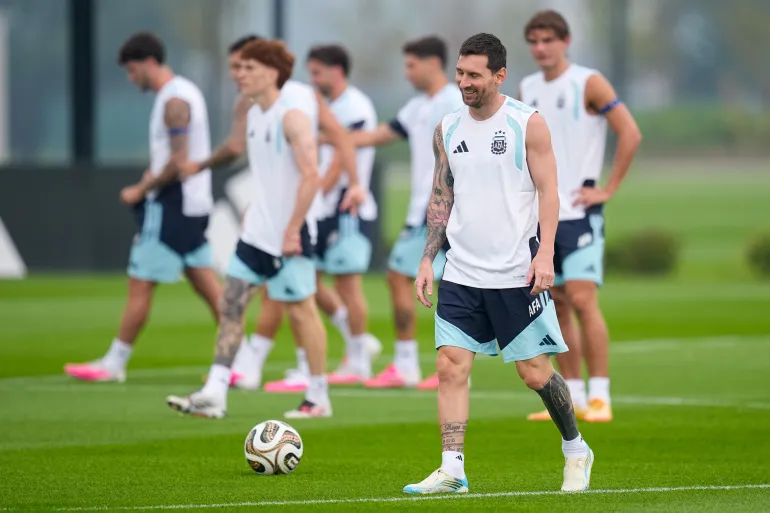
Lionel Messi scores twice as Inter Miami defeat Rapids in MLS | Football News

Argentine forward’s brace included the match winner against Colorado Rapids in front of over 75,000 fans in Denver.

Lionel Messi scored a brace and ‌German Berterame headed another as Inter Miami earned a ⁠3-2 win over ⁠the Colorado Rapids in Major League Soccer (MLS) on Saturday in Denver.

Messi scored the go-ahead goal in the 79th minute. He started a run just inside midfield and went ⁠unchallenged until the box, where he blasted into the upper left corner for a 3-2 lead.

Recommended Stories

list of 4 itemsend of list

Rafael Navarro and Darren Yapi each scored for Colorado (4-4-0, 12 points) in front of 75,824 at Empower Field, the second-largest crowd in MLS history.

Miami (4-1-3, 15 points) took a 1-0 lead in the 18th minute after Colorado goalkeeper Zack Steffen’s pass was intercepted by Yannick Bright. Josh Atencio offered a hard challenge ‌and was shown a yellow card after video review.

Messi took the resulting penalty and rolled his shot straight down the middle as Miami took a 1-0 lead.

Colorado had a solid look at the goal when midfielder Wayne Frederick attempted a one-touch lob. Miami goalkeeper Dayne St. Clair was out of position and well beyond the penalty arc after heading away a loose ball, but Frederick’s attempt sailed ⁠over the open net.

In the fifth minute of first-half stoppage ⁠time, Miami extended their lead to 2-0, connecting on a series of passes deep in their attacking third. Messi got the run of play started with a tight touch pass to Rodrigo De ⁠Paul.

De Paul sent Mateo Silvetti on a run to the boundary line. His inward-spinning cross floated to the front of ⁠goal, where Berterame rose above the Colorado defence and ⁠tucked a header under the bar.

Navarro’s goal cut Miami’s lead to 2-1. He started a run in midfield and used a step-over move to get an open shot a few steps into the ‌box that tucked inside the left post past a diving St. Clair in the 58th minute.

In the 62nd minute, second-half substitute Yapi settled on a direct pass from Lucas ‌Herrington ‌and sizzled a shot past St. Clair for the equaliser.

Miami closed the win playing a man down as Yannick Bright was sent off with a red card in the 87th minute.

Lionel Messi in action.
Inter Miami forward Lionel Messi scores his 13th-minute penalty against the Colorado Rapids [Geneva Heffernan/AP]

Source link

South Korea opposition leader delays return from U.S.

Jang Dong-hyeok (L), chief of the main opposition People Power Party, speaks during a meeting of the party’s Supreme Council at the National Assembly in Seoul, 02 February 2026. Photo by YONHAP / EPA

April 17 (Asia Today) — Jang Dong-hyuk, leader of South Korea’s main opposition People Power Party, has delayed his return from a U.S. visit by three days at the request of U.S. officials, party aides said Thursday.

Park Jun-tae, Jang’s chief of staff, told reporters at the National Assembly that Jang had originally planned to return later in the day but would now arrive early Sunday.

“While heading to the airport for departure procedures, special circumstances arose, leading to an extension of his schedule,” Park said.

The delay was made at the request of officials from the U.S. Department of State, Park added. He said speculation about possible meetings with Vice President JD Vance or Secretary of State Marco Rubio remained unconfirmed.

Some members of Jang’s delegation have already returned to South Korea, while others remain in the United States.

Jang departed for Washington on April 11 and was initially scheduled to return Friday via Incheon International Airport.

During the visit, he met with U.S. lawmakers including Bill Hagerty and delivered a speech at the International Republican Institute, where he emphasized the U.S.-South Korea alliance.

He also criticized the South Korean government’s policy toward North Korea, arguing it prioritizes dialogue over deterrence and risks weakening trust in the alliance. Jang called for “peace through strength” to counter North Korea’s nuclear threat.

— Reported by Asia Today; translated by UPI

© Asia Today. Unauthorized reproduction or redistribution prohibited.

Original Korean report: https://www.asiatoday.co.kr/kn/view.php?key=20260417010005446

Source link

Bulgarians head to polls for eighth time in five years | News

Bulgarians vote to elect a new parliament, after mass protests brought down the previous Conservative-led government in December.

Bulgarians have started voting in the eighth parliamentary election in five years after mass protests brought down the previous Conservative-led government in December.

Polling stations opened at 7am local time (0400 GMT) and are due to close at 1700 GMT, according to AFP journalists.

Recommended Stories

list of 2 itemsend of list

Sunday’s vote is significant as it could bring to power a left-leaning, pro-Russian former president Rumen Radev – just days after voters in Hungary rejected the authoritarian policies and global far-right movement of Viktor Orban, who cultivated close ties with Russian President Vladimir Putin.

The December protests drew hundreds of thousands of mainly young people to the streets. The protesters called for an independent judiciary to tackle widespread corruption.

Radev, a former air force general, has said he wants to rid the country of its “oligarchic governance model” and backed anti-corruption protests late last year that brought down the conservative-backed government.

He has advocated for renewing ties with Russia and criticised sending military aid to Ukraine. He resigned from the mainly ceremonial presidency in January to launch his bid to lead the government as prime minister.

He leads the newly formed centre-left grouping, Progressive Bulgaria. Opinion polls before Sunday’s vote suggested it could gain 35 percent of votes.

Since 2021, the nation of 6.5 million has struggled with fragmented parliaments that produced weak governments. None managed to survive more than a year before being brought down by street protests or backroom deals in parliament.

Source link

Japan to create control system for defense exports

An F-2 fighter jet flies during a live fire exercise conducted by the Japan Ground Self-Defense Force (JGSDF) at East Fuji Maneuver Area in Gotemba, Shizuoka, Japan. Photo by Tomohiro Ohsumi / EPA

April 17 (Asia Today) — Japan is moving to strengthen a government-wide system to boost defense exports, including creating a centralized control structure and easing restrictions on what military equipment can be sold overseas, according to media reports.

The government plans to establish a director-general-level coordination body involving key ministries to oversee arms export policy and execution, the Asahi Shimbun reported Thursday.

Tokyo is also considering revising guidelines tied to its Three Principles on Defense Equipment Transfers to remove restrictions on five categories – rescue, transport, patrol, surveillance and mine countermeasures – that have limited exports so far.

According to Reuters, the government could move as early as this month to revise the guidelines, with the ruling Liberal Democratic Party already approving the direction at a party meeting Sunday.

The policy shift reflects a broader strategy with two main goals: expanding the range of weapons Japan can export and overhauling how those exports are managed.

Japan has effectively limited defense exports to non-lethal equipment in the past but is now moving to include systems with lethal capabilities. At the same time, the new coordination body would bring together the foreign, defense and industry ministries, along with private companies, to align export approvals, regulatory changes and sales support.

Prime Minister Sanae Takaichi said in parliament that easing arms export restrictions would contribute to economic growth, signaling a shift toward treating defense exports as part of industrial policy rather than solely a security measure.

Japanese officials have argued that expanding exports is necessary to sustain the domestic defense industry, maintain production capacity and secure supply chains that are difficult to support through domestic demand alone.

Analysts say the move goes beyond regulatory changes and represents a broader effort to build a national system designed to facilitate arms sales.

If implemented, the revisions would significantly lower barriers to exporting finished weapons, marking a major shift from Japan’s traditionally restrictive defense export framework.

— Reported by Asia Today; translated by UPI

© Asia Today. Unauthorized reproduction or redistribution prohibited.

Original Korean report: https://www.asiatoday.co.kr/kn/view.php?key=20260417010005454

Source link

Iran blocks Strait of Hormuz, fires on commercial ships

The Strait of Hormuz is closed again, this time by Iran. Two ships have reported being fired on in the strait Saturday. File Photo by Divyakant Solanki/EPA

April 18 (UPI) — Just one day after the Strait of Hormuz was declared open, Iran has blocked the passage again, citing “breach of promise” by the United States, and has begun firing on commercial ships.

Iran accused the United States of “banditry and piracy under the guise of a so-called blockade.”

“Until the United States ends its interference with the full freedom of movement for vessels traveling to and from Iran, the status of the Strait of Hormuz will remain under intense control and in its previous state,” Iran’s semiofficial Fars media said on X.

On Friday, Iranian Foreign Minister Seyed Abbas Araghchi said the Strait of Hormuz was open after a cease-fire in Lebanon.

But by Saturday morning, that had changed. President Donald Trump said the United States would continue blocking Iranian ships.

Gunboats fired on a tanker in the strait Saturday morning, CNN reported the United Kingdom Maritime Traffic Organization said.

The UKMTO said a tanker captain reported that it was “being approached by 2 [Islamic Revolutionary Guard Corps] gun boats,” about 20 nautical miles off the coast of Oman.

The captain said there had been no radio warning before the ship was fired on.

“Tanker and crew are reported safe,” UKMTO posted.

Just hours later, a container ship was hit by “unknown projectile which caused damage to some of the containers” about 25 nautical miles off the coast of Oman, CNN reported the UKMTO said. In the second event, the UKMTO did not say who was responsible for the attack. No fires or environmental damage have been reported.

Trump reported Saturday that talks between Iran and the United States were continuing but that “Iran got a little cute,” CNN reported.

“We have very good conversations going on,” Trump said. “They got a little cute, as they have been doing for 47 years.”

“They wanted to close up the strait again, as they’ve been doing for years. They can’t blackmail us,” the president said.

“We’re talking to them, and you know, we’re taking a tough stand. They killed a lot of people. A lot of our people have been killed,” Trump said.

On Friday, Trump told CBS News in a phone interview that Iran had “agreed to everything.”

He said that the United States would remove Iran’s enriched uranium but would not involve ground troops.

“No. No troops,” he said. “We’ll go down and get it with them, and then we’ll take it. We’ll be getting it together because by that time, we’ll have an agreement and there’s no need for fighting when there’s an agreement. Nice right? That’s better. We would have done it the other way if we had to.”

“Our people, together with the Iranians, are going to work together to go get it. And then we’ll take it to the United States,” he said.

But hours later, a spokesperson for Iran’s foreign ministry said in a statement, “Enriched uranium is as sacred to us as Iranian soil and will not be transferred anywhere under any circumstances. … Transferring uranium to the United States has not been an option.”

Source link

North Korea launches ballistic missiles towards sea off its east coast | Kim Jong Un News

Multiple ballistic missiles fired from eastern Sinpo area in seventh such test this year.

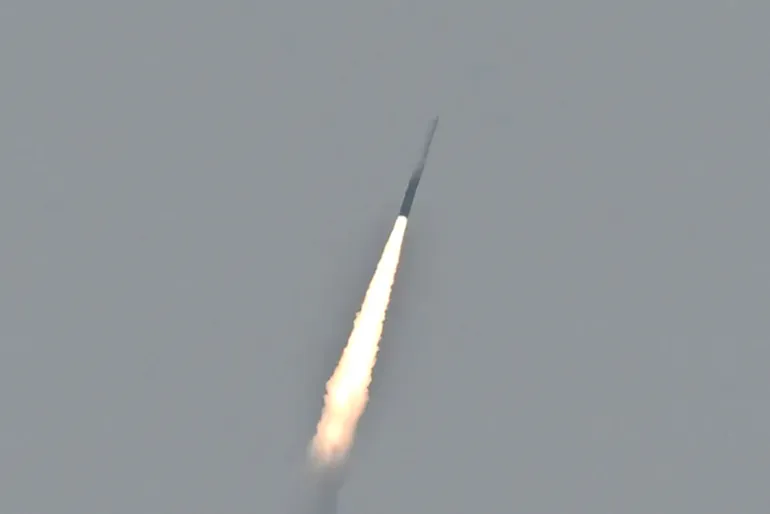
North Korea has launched multiple ballistic missiles towards the sea off its eastern coast, according to South Korea and Japan.

The incident on Sunday marked North Korea’s seventh ⁠ballistic missile launch this year and its fourth in April.

The missiles were fired near the city of Sinpo on North Korea’s east coast at about 6:10am on Sunday (21:10 GMT, Saturday), South Korea’s military said in a statement. It added that South Korea had bolstered its surveillance posture and was closely exchanging information with the United States and Japan.

Japan’s ⁠government posted on social media that the ballistic missiles were believed to have fallen near the east coast of the Korean Peninsula. No incursion into Japan’s exclusive economic zone was confirmed.

South Korea’s presidential office said it has held an emergency security meeting, according to media reports.

Such tests violate United Nations Security Council resolutions against North Korea’s missile programme. The diplomatically isolated country rejects the UN ban and says it infringes on its sovereign right to self-defence.

The launches come as China and the US prepare for a summit in mid-May, ⁠in which Chinese President ⁠Xi Jinping and his US counterpart, Donald Trump, are expected to discuss North Korea.

North Korea has made “very serious” advances in its ability to turn out nuclear weapons, with the probable addition of a new uranium enrichment facility, ‌International Atomic Energy Agency chief Rafael Grossi said on Wednesday.

Late last month, North Korean leader Kim Jong Un said his country’s status as a nuclear-armed ‌state ‌was irreversible and that expanding a “self-defensive nuclear deterrent” was essential to national security.

Source link

FAA accepting bids for AI system to assist air traffic controllers

The FAA is considering bids to develop an artificial intelligence system that could help air traffic controllers predict and correct potential issues hours earlier than they currently can. File Photo by Caroline Brehman/EPA

April 18 (UPI) — The Federal Aviation Administration is working with three bidders to develop artificial intelligence software to help air traffic controllers manage flights across the nation’s airspace.

Transportation Secretary Sean Duffy discussed the effort during a media event on Friday, and said the goal is to help anticipate schedule conflicts and improve planning for bottlenecks at busy airports.

“This software, as they look at the flight paths, won’t see [potential issues] 15 minutes before it happens .. a controller will get a notice that they could change one of the airplane’s flight paths slightly and they can deconflict it an hour and a half or two hours before the conflict even happens,” Duffy said during a media event hosted by Semafor.

The program is aimed at fundamentally changing how airspace in the United States operates, The Air Current reported, and is a major part of the agency’s efforts at modernization and redesign.

The FAA has mounted an effort to see how AI can improve the functionality and safety of the country’s air traffic control systems, especially amid a growing shortage of controllers, at least partially because political debates that have hampered the agency’s funding.

The system that the FAA is looking to develop — called SMART, which stands for Strategic Management of Airspace Routing Trajectories — is part of a $32.5 billion modernization program that includes replacing hundreds of radars and growing its air controller staff, The Next Web reported.

Development of the new system, which follows a series of issues at airports across the country that have seen near-misses and actual crashes that have raised concerns among experts and travelers alike, is being bid on by the companies Palantir, Thales and Air Space Intelligence.

The system could begin to be operational some time later this year, with an update on progress expected from the Department of Transportation and FAA on April 21.

Secretary of Health and Human Services Robert F. Kennedy, Jr. speaks during a House Appropriations Subcommittee on Labor, Health and Human Services, Education, and Related Agencies hearing on the budget for the Department of Health and Human Services in the Rayburn House Office Building near the U.S. Capitol on Thursday. Photo by Bonnie Cash/UPI | License Photo

Source link

Life jacket of Titanic survivor sold for $900K at auction

A life jacket from a survivor of the Titanic tragedy sold at auction on Saturday for $906,000, and was among a collection of other artifacts from the doomed ocean liner. Photo courtesy Henry Aldridge & Sons

April 18 (UPI) — The only life jacket worn by a person who survived the sinking of the Titanic ever put up for auction was sold for $906,000 on Saturday.

The jacket, which was worn by Laura Mabel Francatelli, a passenger in first class who boarded lifeboat number 1, sold for nearly twice the roughly $473,000 it was expected to sell for., and reported.

The life jacket, sold during an auction that also included a handful of other Titanic artifacts, was sold by Henry Aldridge & Sons in Britain to the Titanic Museum and Attraction in Pigeon Forge, Tenn., and Branson, Mo., auctioneer Andrew Aldredge told The BBC.

Aldridge said that the life jacket is the only one from a survivor that has been offered for auction since the ill-fated ship set sale 114 years ago.

“It reflects the ongoing interest and passion for the story of the Titanic, and its passengers and crew,” he said, calling the opportunity to buy it a “once in a lifetime opportunity for collectors.”

Francatelli, who at the time of the sinking was husband of Sir Cosmo Edmund Duff-Gorden, a Scottish landowner and the 5th Baronet of Halkin, was the sister of novelist Elinor Glyn, and herself a famous dress designer who ran several famous salons in London, Paris and New York, according to Aldridge & Sons’ auction listing.

Her survival has carries slight controversy because the lifeboat that her husband shepherded several people onto as the Titanic was going down – for reasons that remain the subject of questions – lowered from the ship with only 12 people aboard, despite having room for 40.

The Titanic Museum and Attraction, which The Independent also reported purchased the life jacket, has since March 2025 had on display five of the 14 known life jackets to have survived the sinking, it said.

Most recently, the life jacket has been on display not only at the Pigeon Forge museum, but also at Titanic Belfast, a museum in Ireland.

Secretary of Health and Human Services Robert F. Kennedy, Jr. speaks during a House Appropriations Subcommittee on Labor, Health and Human Services, Education, and Related Agencies hearing on the budget for the Department of Health and Human Services in the Rayburn House Office Building near the U.S. Capitol on Thursday. Photo by Bonnie Cash/UPI | License Photo

Source link

Manchester United beat Chelsea as Cunha strike boosts Champions League hope | Football News

Manchester United strengthen grip on third spot in Premier League with 1-0 win that leaves Chelsea relying on favours.

Manchester United took a giant step towards ending a two-year exile from the Champions League as Matheus Cunha scored the only goal in a 1-0 win against Chelsea.

United’s victory on Saturday opens up a 10-point gap between the Red Devils in third place and sixth-placed Chelsea, with only 15 points left to play for this season.

Recommended Stories

list of 4 itemsend of list

The top five in the Premier League will qualify for the Champions League next season.

But a fourth consecutive league defeat leaves Chelsea’s chances of being back among Europe’s elite next season in tatters. It also piles pressure on manager Liam Rosenior, only three months into his reign.

Chelsea once again bemoaned the lack of a clinical striker as they failed to break down a makeshift United defence ravaged by injury and suspension.

United manager Michael Carrick was forced to name a backline featuring three full-backs and 19-year-old Ayden Heaven. But they held out to boost the former England midfielder’s case to get the job at Old Trafford beyond the end of this season.

Chelsea were missing their top scorer, Joao Pedro, through injury, and one-time United target Liam Delap failed to take his chance to shine up front.

Rosenior recalled Enzo Fernandez after the Argentinian was given a two-game suspension by the Blues for suggesting he would be open to a summer move to Real Madrid.

Fernandez started with a point to prove and came agonisingly close to the opener when he curled inches wide.

United looked rusty in a 2-1 defeat to Leeds on Monday, their first action for three and a half weeks.

But Carrick’s men repaired the damage done to their chances of returning to the Champions League next season.

Cunha provided a precise finish to open the scoring two minutes before the break from Bruno Fernandes’s 18th Premier League assist of the season.

Chelsea improved after the break but failed to prevent another damaging defeat, leaving Rosenior’s role in doubt heading into next season.

Delap crashed a header against the woodwork, and Noussair Mazraoui turned a dangerous cross onto his own bar, under pressure from Wesley Fofana.

Moises Caicedo, fresh from signing a new seven-year contract, also came close to rescuing a point for the hosts.

But the final whistle was met by a chorus of boos at full-time, with the Club World Cup winners looking resigned to Europa League football at best next term.

Source link

Trump signs order to speed research on psychedelics for mental health

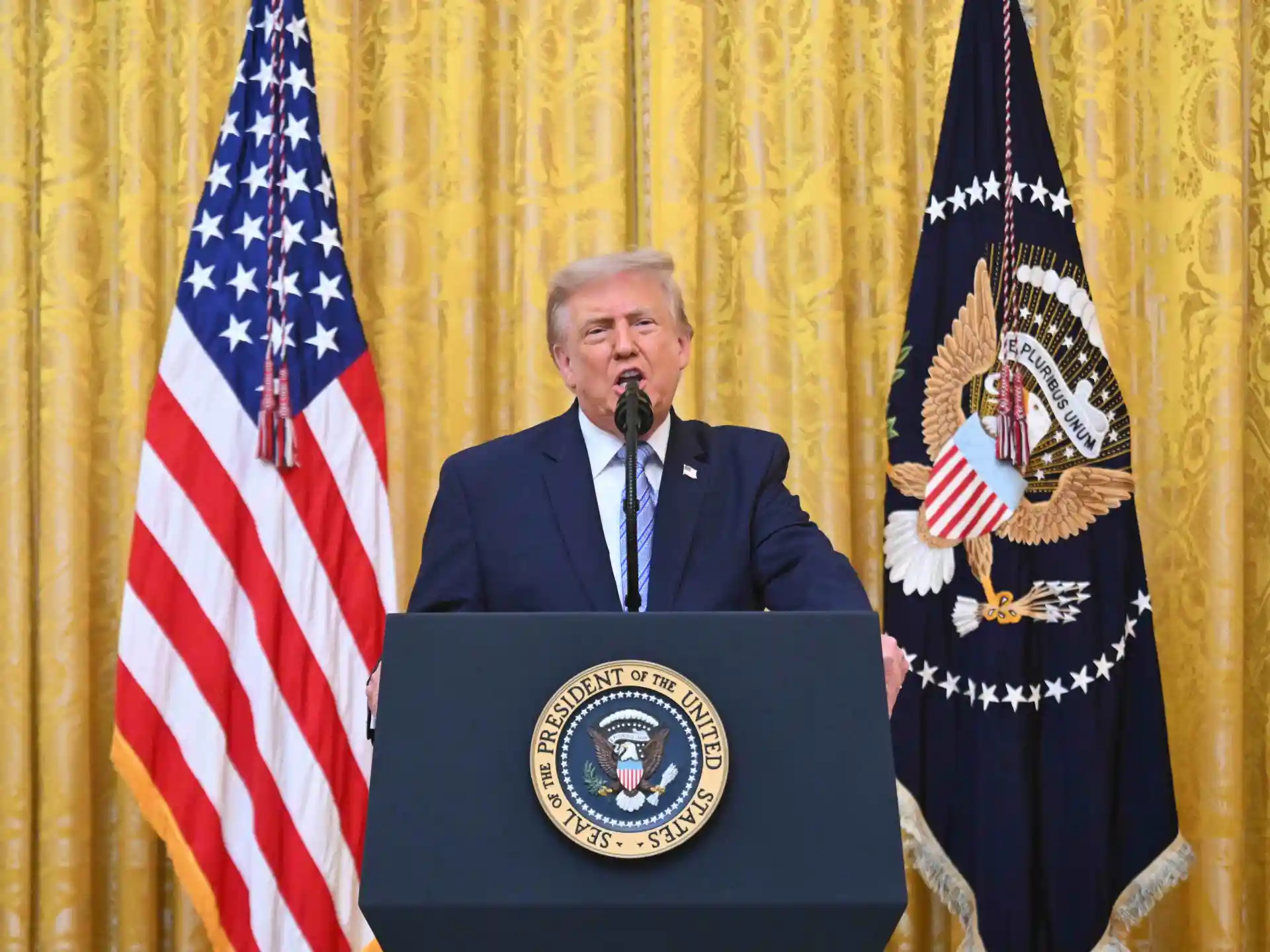
April 18 (UPI) — President Donald Trump signed an executive order Saturday to accelerate research for some psychedelic drugs to treat mental health disorders.

Surrounded by podcaster Joe Rogan and veterans, the president signed the order that could lead to use of the psychedelics in controlled, therapeutic settings.

“We’re taking this decision, this decisive step, to confront one of the most urgent public health challenges facing our nation, the mental health crisis,” Trump said Saturday in the Oval Office.

“Today’s order will ensure that people suffering from debilitating symptoms might finally have a chance to reclaim their lives and lead a happier life,” Trump said.

The order directs the Food and Drug Administration to speed its review of new treatments. Trump said the order applies to certain drugs that are already in the “advanced stages of clinical trials.”

Rogan said he sent the president “some information” about the drugs after he heard about them on his podcast, The Hill reported.

“I sent him that information. The text message that came back: ‘Sounds great. Do you want FDA approval? Let’s do it.’ Literally that quick,” Rogan said.

Trump mentioned ibogaine, which has been used to treat post-traumatic stress disorder in other countries. He said the administration would be “opening the pathway” for the drug to be included in the Right to Try Act, which allows terminally ill patients to participate in clinical trials for treatments still under FDA review, The Hill reported. Trump signed that act into law in 2018.

“Under this new program in this administration, drugs can get approved in weeks, not a year or year plus, but in weeks, if they are in line with our national priorities,” FDA Commissioner Martin Makary said at the signing.

“This is an unmet public health need, and there are potentially promising treatments,” Makary said. “That’s why there’s a sense of urgency around this. That’s why we’re doing it now.”

In 2024, 471 U.S. service members died by suicide, and there were 1,515 attempts reported, according to the Pentagon’s Annual Report on Suicide in the Military.

Some of the drugs included are ibogaine; LSD; psilocybin; known as magic mushrooms; and MDMA, known as ecstasy. Trump added that the government had just committed $50 million in additional funding for ibogaine research, The Post reported.

“Federal prohibition of psychedelic medicine in America is over,” said W. Bryan Hubbard, an advocate for access to ibogaine, The Washington Post reported.

Kevin Sabet, who was a White House drug policy adviser over three presidential administrations, disagreed. He said the order will “send the wrong message” and encourages hasty, potentially dangerous research.

“People need to realize there is little to no evidence for most of these drugs and most of the conditions they claim to alleviate,” Sabet, president of Smart Approaches to Marijuana, wrote in a text message to The Post.

Health and Human Services Secretary Robert F. Kennedy Jr. has championed the idea of using psychedelics to help with mental health conditions. On Saturday, he said officials owed it to veterans “to turn over every stone.”

“It’s disturbing to me and to the president that hundreds, in fact, thousands of veterans are having to travel to Mexico or other countries to experiment with interventions that hold great promise,” Kennedy said.

Source link

Tornadoes cause damage in Minnesota, Wisconsin, Illinois; no injuries

Storms tore through the upper midwest, causing damaging tornadoes Friday. Image courtesy of UPI

April 18 (UPI) — Tornadoes swept through several midwestern cities Friday leaving destruction and devastation in their wakes as a massive storm system tore through the area.

Rochester, Minn., Lena, Ill., and Ringle, Wis., were hit by tornados on Friday.

Rochester saw winds at about 130 mph. The NWS has teams surveying the damage in Minnesota and Wisconsin Saturday, CBS News reported.

No injuries have been reported, the Olmsted County Sheriff’s Office said. But damage to homes and vehicles was extensive in Rochester.

No injuries were reported in Lena, Ill., either, though there is extensive damage. The village in northwestern Illinois is completely blocked, the Stephenson County Sheriff’s Office posted on Facebook.

“There is no way to get into town due to trees and wires down,” the post said. “Emergency Services are assisting people per Sheriff [Steve] Stovall.”

“We are extremely fortunate that this storm did not result in loss of life or serious injury,” Stovall said in a statement. “Our focus remains on ensuring the safety of our residents, securing the affected areas, and supporting the Village of Lena as recovery efforts move forward.”

About 75 homes suffered damage in Ringle, Wis., west of Green Bay. Ringle Fire Chief Chris Kielman said some people were trapped in their basements, but there were no injuries or deaths.

A tornado flipped a semi-tractor near Elgin, Minn., and caused damage on two farmsteads, The Weather Channel reported.

More storms are expected in the region Saturday, but they aren’t likely to be as severe.

Wisconsin has seen a week of destruction as severe weather has pummeled the state. On Monday, a tornado touched down in the central part of the state, followed by five touchdowns on Tuesday, the Milwaukee Journal Sentinel reported. There was another round of storms on Wednesday that flooded homes, businesses and roads in Milwaukee.

“Having four out of five severe weather days with tornado activity is very rare for southern Wisconsin, especially in April,” Marcia Cronce, a meteorologist with the Milwaukee/Sullivan National Weather Service office, told the Journal Sentinel. “We had a very broad weather pattern over the center of the country, and Wisconsin was right in the battleground.”

“I have not seen devastation like this in my 35 years working in Marathon County,” Marathon County, Wis., Sheriff Chad Billeb said.

“Most of the damage [in central Wisconsin] is associated with the potential tornadoes that occurred,” Scott Berschback, a meteorologist with the Green Bay weather service office, told the Journal Sentinel.

“One of these events is not rare — we have severe weather quite often in April — but the back-to-back nature of them is a pretty unprecedented event,” Berschback said.

Dave Vetsch told CBS he was next door to his father’s place with two of his sons at his business when his kids said they had a tornado alert on their phones.

“We stepped out on the loading dock and holy smokes, there was one coming right at us,” Vetsch said.

Andrew Hawkins’ father-in-law lost his home to Friday’s tornado in Rochester.

“You always, you know, see it on the news and hear about it, to see it is another thing,” Hawkins said.

“The electricity went out, and I took the dog and went down in the basement in the shower, and I heard a big old crash, and I thought, ‘Oh, well, there goes the roof!’ but it wasn’t,” said Marcia, a Lena resident, to CBS. The noise was a large tree falling in her yard.

Source link

Mazzucato on the Iran war’s economic shock: Who pays the price? | Business and Economy

Redi Tlhabi speaks to economist Mariana Mazzucato on the Iran war’s economic fallout and who’s really paying the price.

The world is reckoning with the biggest oil supply disruption in history, one that has sent energy prices soaring, rattled stock markets and exposed the deep vulnerabilities of economies still hooked on fossil fuels. While millions face higher fuel and energy bills, top oil and gas companies are reportedly profiting about $30m per hour since the war began.

This week on UpFront, Redi Tlhabi speaks with renowned economist Mariana Mazzucato about what a genuine green industrial strategy looks like, why the World Bank has fallen short, and how her concept of the “common good economy” offers a new compass for governments navigating crises.

Source link

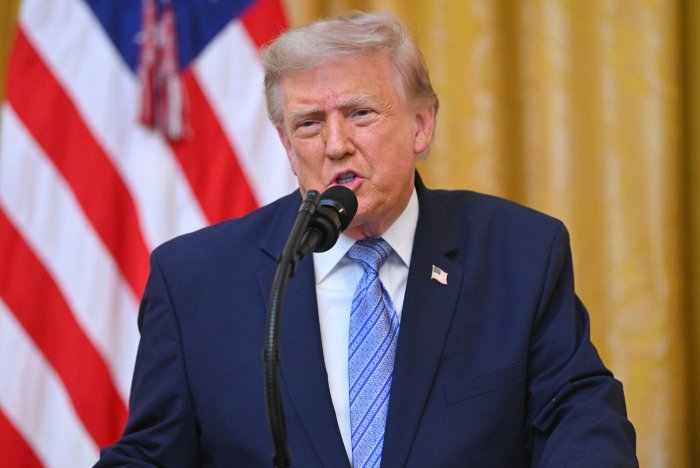
Trump joined by Joe Rogan as he signs order to speed up psychedelic review | Health News

The order calls on the federal government to relax restrictions on psychedelics, including ibogaine, for potential treatments.

United States President Donald Trump has signed an executive order to speed up the review of a handful of psychedelic drugs, including the controversial ibogaine.

Trump was joined by podcaster Joe Rogan during Saturday’s Oval Office event.

Recommended Stories

list of 3 itemsend of list

Rogan, considered one of the most influential podcasters in the country, has been a leading proponent of ibogaine, which is derived from a plant that grows in West Africa and has been embraced by some military veteran groups as a treatment for post-traumatic stress.

Speaking at the event, Rogan recounted how he had previously texted information to Trump about ibogaine.

He recalled that the president quickly texted back: “Sounds great. Do you want FDA [Food and Drug Administration] approval? Let’s do it.”

Advocacy groups have long pushed for more research into the possible use of psychedelics to treat an array of issues, including depression.

“Today’s order will ensure that people suffering from debilitating symptoms might finally have a chance to reclaim their lives and lead a happier life,” Trump said at the signing.

“If these turn out to be as good as people are saying, it’s going to have a tremendous impact.”

At one point, the president quipped that he would be open to taking psychedelics himself: “Can I have some, please? I’ll take some.”

But he quickly pivoted away from the joke. “I don’t have time to be depressed. You know, if you stay busy enough, maybe that works, too. That’s what I do,” he said.

Increasing research into psychedelics has proven a rare issue with bipartisan support in the US, where ibogaine and other psychedelics remain banned under the federal government’s most restrictive category for illegal drugs.

Health Secretary Robert F Kennedy Jr had previously pledged to ease access to psychedelics for medical use.

Trump’s executive order calls on the Department of Health and Human Services to direct at least $50m to states that have enacted or are developing programmes to advance psychedelic drugs for serious mental illness.

It also arrives ahead of several actions from the FDA to loosen restrictions.

This week, the agency will issue so-called “national priority” vouchers for three psychedelics, which the agency’s commissioner, Marty Makary, said will allow certain drugs to be approved quickly “if they are in line with our national priorities”.

The FDA is also taking steps to clear the way for the first-ever human trials of ibogaine in the US. Previous research had been stalled by concerns over the drug potentially triggering fatal heart problems.

Ibogaine was first used by members of the Bwiti religion in African nations like Gabon for religious ceremonies.

Rogan’s endorsement helped boost Trump ahead of the 2024 presidential election. He has since publicly questioned the administration’s war with Iran, saying it runs counter to Trump’s campaign pledges.

Also present on Saturday was Marcus Luttrell, a former Navy SEAL whose memoir about his time in Afghanistan, Lone Survivor, was later made into a film.

He praised ibogaine during the ceremony: “It absolutely changed my life for the better.”

Source link

Pope Leo XIV flies to Angola, says he is not debating Trump

1 of 2 | Pope Leo XIV waves during a welcome ceremony at Quatro de Fevereiro International Airport in Luanda, Angola, Saturday. The Pope is on an 11-day trip to Africa, with stops in Algeria, Cameroon, Angola and Equatorial Guinea. Photo by Jose Sena Goulao/EPA

April 18 (UPI) — Pope Leo XIV said he has no interest in debating President Donald Trump as he flew to Angola for the third leg of his 11-day trip to Africa.

In Cameroon on Thursday, Leo told attendees at a prayer meeting that the world was being “ravaged by a handful of tyrants.”

“The masters of war pretend not to know that it takes only a moment to destroy, yet often a lifetime is not enough to rebuild,” he said.

While traveling on the papal plane from Cameroon to Angola Saturday, Leo said his words were not an attack on Trump or his actions in Iran.

He told reporters that his speech was written “weeks ago, well before the president ever commented on myself, and on the message of peace I am promoting,” NBC News reported. “It looked like I was trying to debate the president, which is not my interest at all.”

Last Sunday, Trump lashed out at Leo over his criticism of the war in Iran, claiming a reason the American was named pontiff was because the Catholic Church was trying to curry favor with his administration.

Leo responded saying, “I have no fear of the Trump administration or of speaking out loudly about the message of the Gospel, which is what the Church works for.”

Aboard the plane Saturday, Leo vowed to “promote peace in our world,” and said that his Africa trip is to “be with, to celebrate with, to encourage and accompany all of the Catholics throughout Africa.”

Leo landed in Luanda, Angola, around 3 p.m. WAT Saturday and was welcomed by President João Manuel Gonçalves Lourenço.

The pope met with Angola’s authorities and others at the Presidential Palace in Luanda Saturday. In his speech, he acknowledged those who were affected by recent flooding in the Benguela Province, a coastal area south of Luanda. More than 30 people were killed.

He said he is praying for the victims and noted the national response, that Angolans are “united in a great chain of solidarity in support of those affected.”

Leo said the country’s most important resources are not material but human. “Your people possess treasures that cannot be sold or stolen. There is within them a joy that not even the most adverse circumstances have been able to extinguish,” he said.

The pope is scheduled to celebrate mass at Kilamba, a Luanda suburb, before travelling to the Shrine of Muxima. On Monday, he will travel to Saurimo, where he will visit the elderly and celebrate mass, before returning to Luanda. Tuesday morning, he travels to Equatorial Guinea for his final stop on the trip.

Source link

‘No regrets’: Venezuela’s Machado defends giving Nobel medal to Trump | Donald Trump News

Maria Corina Machado gave Trump her Nobel Peace Prize after the US leader captured Nicolas Maduro.

Venezuela’s main opposition leader Maria Corina Machado says she has “no regrets” about giving US President Donald Trump her Nobel Peace Prize medal.

Machado, the 2025 recipient of the prestigious prize, presented the medal that accompanies the prize to Trump when she met him at the White House in January, two weeks after he ordered US special forces to seize Venezuelan President Nicolas Maduro from Caracas.

Recommended Stories

list of 4 itemsend of list

Trump’s military operation to remove Maduro, who is currently detained in the US facing drug trafficking charges, is “something we Venezuelans will never forget”, she was quoted by AFP news agency as saying at a conference in Madrid on Saturday.

“There is a leader in the world, a head of state in the world, who risked the lives of his country’s citizens for Venezuela’s freedom,” she said.

Trump, who has long publicly coveted the Nobel Peace Prize, called Machado’s presentation of the medal at the time a “wonderful gesture of mutual respect”.

The Norwegian Nobel Committee, which honoured Machado for her tireless campaign to restore democratic rights in Venezuela and her struggle to achieve a peaceful transition from authoritarian rule, made clear after the handover that the prize is nontransferable and cannot be revoked, shared or transferred to others.

Machado, who had been living in hiding before leaving Venezuela in December to collect her prize in Oslo, said she was coordinating her return to the country with Washington.

US key to ‘democratic transition’

“I am speaking with the US government, and we are working in coordination, with mutual respect and understanding,” she said, adding that she believed Washington was “key to advancing a democratic transition” in Venezuela.

Trump has, however, publicly questioned Machado’s standing, calling her a “very nice woman” but saying she lacks “respect” within Venezuela. He has instead backed Maduro’s former vice president, Delcy Rodriguez, as the country’s interim leader.

Venezuela’s opposition last week called for presidential elections. Machado, who was banned from running in the disputed 2024 vote that returned Maduro to power, has not yet said whether she would stand in a future poll.

While in Spain, Machado declined a meeting with Prime Minister Pedro Sanchez, citing his hosting of a progressive leaders’ summit in Barcelona as proof the meeting was “not advisable”. Sanchez had said he was willing to meet her at any time.

This snub comes in contrast to her frequent encounters with Sanchez’s right-wing opponents.

Source link

Slavery reparations are just, but who exactly owes whom? | Opinions

On March 25, the International Day of Remembrance of the Victims of Slavery and the Transatlantic Slave Trade, the United Nations General Assembly passed a landmark resolution. Proposed by Ghana, it recognised the transatlantic slave trade as the “gravest crime against humanity” and called for reparations. A total of 123 countries supported the resolution; three opposed it, including the United States and Israel, while 52 abstained, Britain among them, and several European Union countries.

The UN’s slavery resolution is a historic moment, but what comes next is even more important. Leading up to the resolution, the African Union urged its 55 member states to pursue slavery reparations through formal apologies, the return of stolen artefacts, financial compensation, and guarantees of non-repetition.

This raises a question the resolution does not directly ask: reparations from whom, and to whom? If the answer is simply from European governments to African governments, then the reparations movement risks ignoring the long history of European engagement with Africa, and in doing so delivering justice to the wrong people.

What the reparations debate misses

The contemporary framing of the reparations debate is seductive in its simplicity: Europeans arrived in Africa, Africans were enslaved, Europeans grew rich, and Africans became impoverished. Therefore, Europe owes Africa. This narrative carries moral force, but it risks flattening the complex history of European engagement with the continent.

While European actors undeniably drove the demand for enslaved labour, African political and economic elites were not passive victims. They played a significant role in capturing, transporting and selling enslaved people to European traders.

In some cases, African states, seeking to expand their treasuries and consolidate territorial power, preyed on neighbouring communities, condemning them to enslavement for profit. The Oyo Empire, a powerful Yoruba state in what is now south-western Nigeria, expanded significantly in the eighteenth century through its participation in this commerce. Across the region, African elites who had the means sustained the system by exchanging enslaved people for European goods such as alcohol, textiles and other manufactured commodities.

None of this diminishes European culpability in the slave trade. The demand was European. The ships were European. The plantation system was European. The racialised ideology constructed to justify slavery was European. But it does complicate the story.

The transatlantic slave trade was not solely a narrative of African victimhood and European perpetration. It is a story of elite collaboration, which did not end when the slave ships stopped sailing.

The historical argument: three phases, one logic

European encounter with African societies can be understood in three broad phases, each distinct in form but similar in the underlying logic of collaborative extraction.

The first phase was slavery. Europeans extracted human labour from Africa, often with the active participation of African political rulers. Britain emerged as the world’s leading slave-trading country, transporting roughly 3.4 million Africans across the Atlantic between 1640 and 1807. The abolition of the British slave trade in 1807 marked the formal end of this phase. But abolition did not disrupt the underlying logic of the elite collaboration. It reshaped it.

The second phase was colonialism. A less understood aspect of European domination in Africa is how seamlessly some African rulers transitioned from collaborators during the slave trade to intermediaries in the colonial period.

In Nigeria, for example, regional African rulers became intermediaries for British administrators. As Nigerian historian, Moses Ochonu, demonstrates in Emirs in London, a study of Northern Nigerian Muslim aristocrats who travelled to Britain between 1920 and independence in 1960, these African figures were far from passive subjects of British rule. They actively leveraged their relationship with British authorities to reinforce their own authority at home. Such sponsored travel to the imperial centre helped solidify personal ties between Nigerian elites and British administrators, reinforcing the system of indirect rule.

The third and current phase is the postcolonial era. While formal empire has ended, the structure of elite alignment endures. In countries such as Nigeria, the majority of citizens remain largely excluded from political and economic power. The institutional successors of intermediaries and collaborators during the eras of slavery and colonial rule are now running the African postcolonial states.

Rather than dismantling extractive systems, many have repurposed them. Similar patterns of exclusion and extraction that defined earlier periods have been reproduced, leaving the majority of Africans short-changed by a system that continues to serve elite interests.

Nigerian President Bola Tinubu’s state visit to the United Kingdom last month – complete with royal ceremony, photo opportunities and symbolic gestures – reflected this relationship whose origins lie in the very history the UN resolution condemns. While the majority of Nigerians face difficult socio-economic conditions, the British government announced that Nigerian companies would create hundreds of new jobs in the UK.

This is not an anomaly but a continuation of the extractive logic that shaped the slave trade and colonialism. It endures, now recast in the language of diplomacy and partnership.

Reparations are just, and Britain’s debt is undeniable. But direction matters. If compensation flows from one set of elites to another, the oppressed majority of Africans will once again be excluded. True justice must run in two directions: from European states to formerly colonised societies, and from African elites to the citizens they continue to exploit.

The views expressed in this article are the author’s own and do not necessarily reflect Al Jazeera’s editorial stance.

Source link