Aug. 28 (UPI) — Far-right political commentator Milo Yiannopoulos was detained Friday in Louisiana for overstaying his visa, immigration officials said.
The Department of Homeland Security said Yiannopoulos, a British citizen, was detained by Immigration and Customs Enforcement agents at the New Orleans International Airport.
Yiannopoulos entered the United States legally in May 2019 but “chose to overstay his welcome in violation of our nation’s laws,” DHS said in a statement on X.
“Yiannopoulos was issued a final order of removal by an Immigration Judge on July 22, after failing to show up for his immigration hearing,” the statement added. “He will remain in ICE custody pending removal.”
In 2024, he worked on the presidential bid of rapper Ye, formerly known as Kanye West.
Yiannopoulos is a vocal supporter of immigration enforcement.
“California needs ICE checkpoints at supermarket entrances, gas stations, strip malls, intersections and government buildings, with on the spot deportation for anyone who can’t prove they are in the US legally,” he wrote on X last year.
On Friday night, online records showed Yiannopoulos was “in ICE custody” but did not indicate where he was being held.
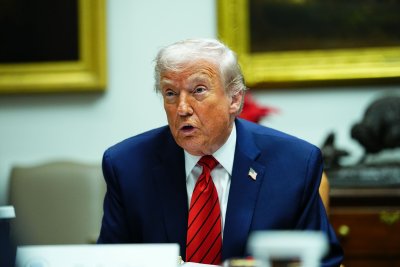
Aug. 28 (UPI) — President Donald Trump on Friday said his administration had reached a deal with Venezuela to secure a stake in more than 65 billion barrels of the country’s oil reserves.
In an evening social media post, Trump called the move “the biggest oil deal in world history,” and said it would come at no cost to American taxpayers.
“This Historic Transaction MORE THAN DOUBLES American Oil Reserves, greatly increases our Oil Supply, and will substantially lower Gas Prices for all Americans, long into the future, while helping to continue to set Venezuela on a course toward Tremendous Success and Great Prosperity,” the president wrote on Truth Social.
The president said his administration and Venezuela’s interim president, Delcy Rodriguez, reached the deal in a partnership with private businesses.
Inventory of the United States’ strategic oil reserve hit a four-decade low this month, following supply disruption caused by the war with Iran, CNBC reported.
Venezuela has the world’s largest proven crude oil reserves.
The United States could take over as many as 17 oil fields in the South American country, though many lack any infrastructure and could cost billions to develop, the Washington Post reported.
“I think oil companies in the end will be pretty hesitant,” Francisco Monaldi, director of the Latin American Energy Program at Rice University, told the newspaper.
State Secretary Marco Rubio, who was involved in the negotiations, said the deal would bring $100 billion in private investment to Venezuela.
“This deal is a huge win for both the American and Venezuelan people,” Rubio said in a statement on X. “It demonstrates how President Trump’s bold foreign policy is driving America First wins: securing stable reserves and low-cost oil in our Hemisphere and lowering gas prices here at home.”
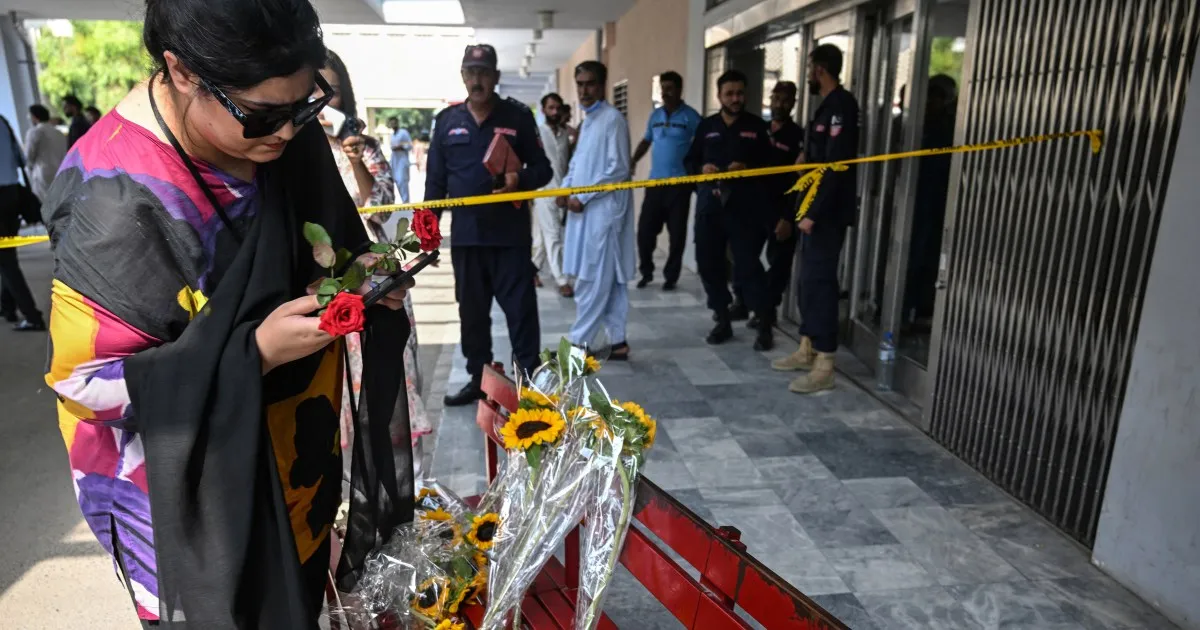
This week, three newborns died in an NICU (neonatal intensive care unit) fire at a government hospital in Amravati, in the western Indian state of Maharashtra. Two days later, 14 newborns were killed in a fire that broke out in the maternity ward at one of Pakistan’s most prominent state hospitals. The reported causes of the fire were different – a faulty ventilator in Amravati and an exploding air conditioner in Islamabad – but the harrowing stories of the parents on both sides of the border are identical.
On both sides, parents stand outside a government hospital, trying to make sense of this state-inflicted cruelty. In Amravati, one father was still distributing sweets to celebrate the birth; he had not yet seen the baby’s face. In Islamabad, a family was celebrating the first baby boy in years. The circumstances are different, but the institutional failures and official response followed a familiar pattern. Rescue teams arrived late, while emergency evacuation was hampered by basic fire-safety failures. Politicians were quick to express their sorrow. High-level inquiries were announced, along with financial compensation and fire safety audits. As the dust settles, the two tragedies expose the same indecent truth: lives of poor, vulnerable families are expendable in both nations.
The two countries are rivals in cricket, military posturing and diplomatic rhetoric, but united when it comes to spending lives of ordinary citizens like pocket change.
Over the past 26 years, as a health reporter, I have watched hospital fires in India and Pakistan result in significant and frequent loss of life, without a jot of difference in regulating these institutions. In India, the AMRI Hospital fire of 2011 in which 89 people died and the SUM Hospital fire in Bhubaneswar in 2016 in which 24 people died were traumatising to write about. Not a single person was convicted.
In Pakistan too, a fire at Services Hospital in Lahore killed 10 newborns in 2012 and another 11 infants died at Sahiwal Teaching Hospital in 2024.
I dredge these memories because the latest fires – in Amravati and Islamabad – cannot be reduced to stories about faulty equipment or individual negligence. The hospital fires did not happen in the boondocks, but in India’s wealthiest state and Pakistan’s capital. They are stories about government priorities.
The longer you look at government data, the more grisly it gets. Year on year, both nations sacrifice their citizens to fire like medieval societies trying to appease indifferent gods. India and Pakistan are not poor or war-torn countries without knowledge or wealth to do what is needed. The refusal to make any meaningful improvements is a political choice. An unforgivable one at that.
India and Pakistan have spent decades convincing their citizens that the highest form of security is protection from each other. The truth is that the greatest co-morbidity citizens of both nations live with is our own careless governments.
Fires in large buildings such as factories, shopping centres and hospitals are frequent in India and Pakistan, often due to poor compliance with safety laws and lax enforcement of building codes. These repeated incidents raise questions about our political system, the judiciary, our newsrooms and civil society all in one sweep. What they expose is the very core of these two democracies – what they prioritise and who they value. And all the questions raised are being answered in one voice – not the vulnerable or the sick or the poor.
Earlier this month, both nations marked 79 years of independence. Both have, for 79 years, reminded each other of the pride they take in their complicated histories and their fabled cultures, languages and cuisines. Yet, on both sides of the border, we are governed with careless barbarity. What we have right now are nations that have the trappings of procedural democracies but refuse to concern themselves with bringing change to the poorest. We are taught to sacrifice – wealth, family members, dignity – everything in the service of our nation, and must forage for our own safety without expecting anything from the governments.
This week, as I watched newborns utterly unable to protect themselves die in an inferno on both sides of the border, I wondered if the men leading both states are filled with some shame. Shame over the fact that women who had just given birth had to run down several flights of stairs and climb out of windows and down ladders to escape. Or that families found to their horror that the ward’s water spray system failed to function when the fire broke out. Or that these families will spend the rest of their lives recovering from the horror of seeing charred babies, their bodies covered in black ash.
I wondered what the military might and nuclear arsenal mean to Prime Minister Narendra Modi and Prime Minister Shehbaz Sharif as they stand facing a mother crying outside a neonatal ward. This is not polemic or rhetoric, simply a sober assessment of our incompetent leadership that has no love for its own people. Because countries that can spend billions preparing for war cannot plausibly claim that a functioning sprinkler system or fire safety regulation in a hospital is an unreasonable expectation.
Fire safety is not a luxury. It is not a Western or colonial aspiration. It is not even an infrastructure of affluence – like, say, bullet trains – that a country acquires once it has become sufficiently rich, sufficiently modern or sufficiently powerful. It is the floor. The floor beneath which a government cannot allow its people to fall repeatedly and remain shamelessly indifferent every single time.
Seventy-nine years is a long time for a country to become itself. Long enough to build armies, send satellites into space, build a nuclear arsenal and to flex them at neighbours. But what good is national security if a newborn cannot survive the building in which she was born? Or does security only mean the ability of the state to protect itself from another state – while its citizens die like insects in unpredictable ways.
The parents in Amravati and Islamabad did not need a nuclear arsenal to defend their babies. They needed the fire alarm to work and emergency exits to not be blocked. Nations that cannot guarantee such a basic amenity must have no right to national pride.
The views expressed in this article are the author’s own and do not necessarily reflect Al Jazeera’s editorial stance
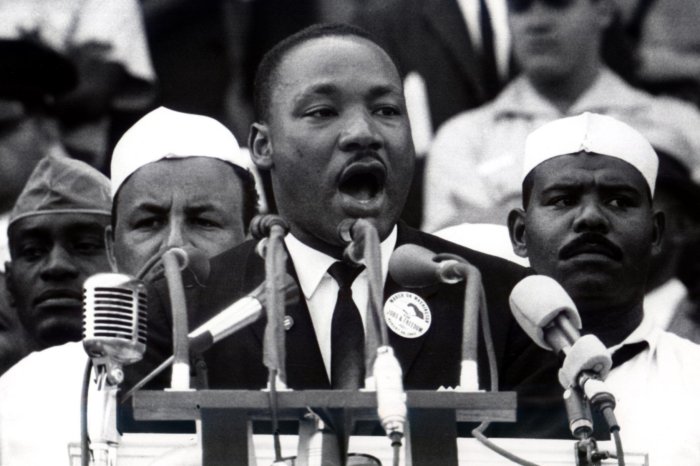
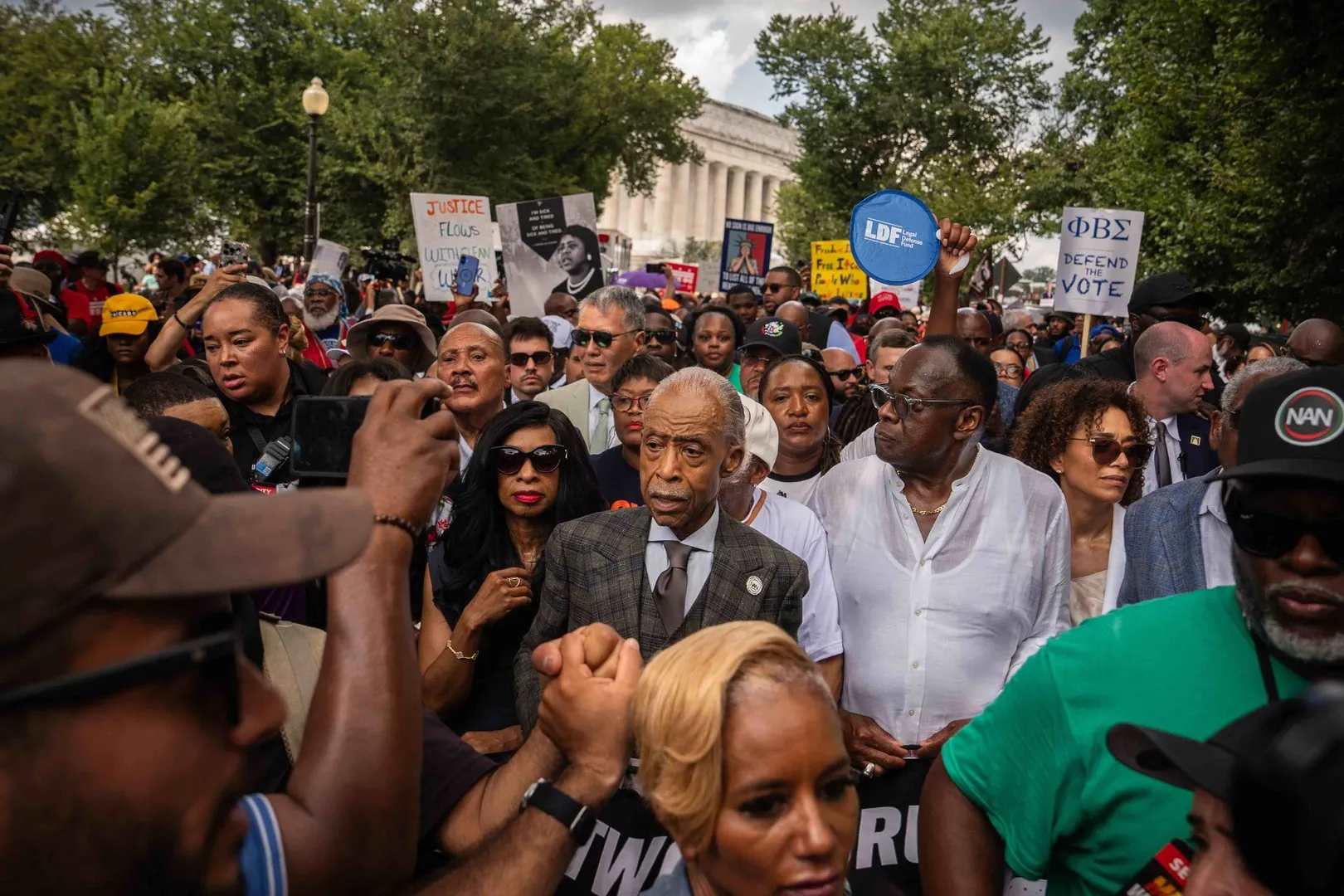
Thousands of people marched on Washington DC, invoking Martin Luther King Jr.’s legacy on the 63rd anniversary of his ‘I have a dream’ speech, warning that voting rights and other civil liberties are under threat.
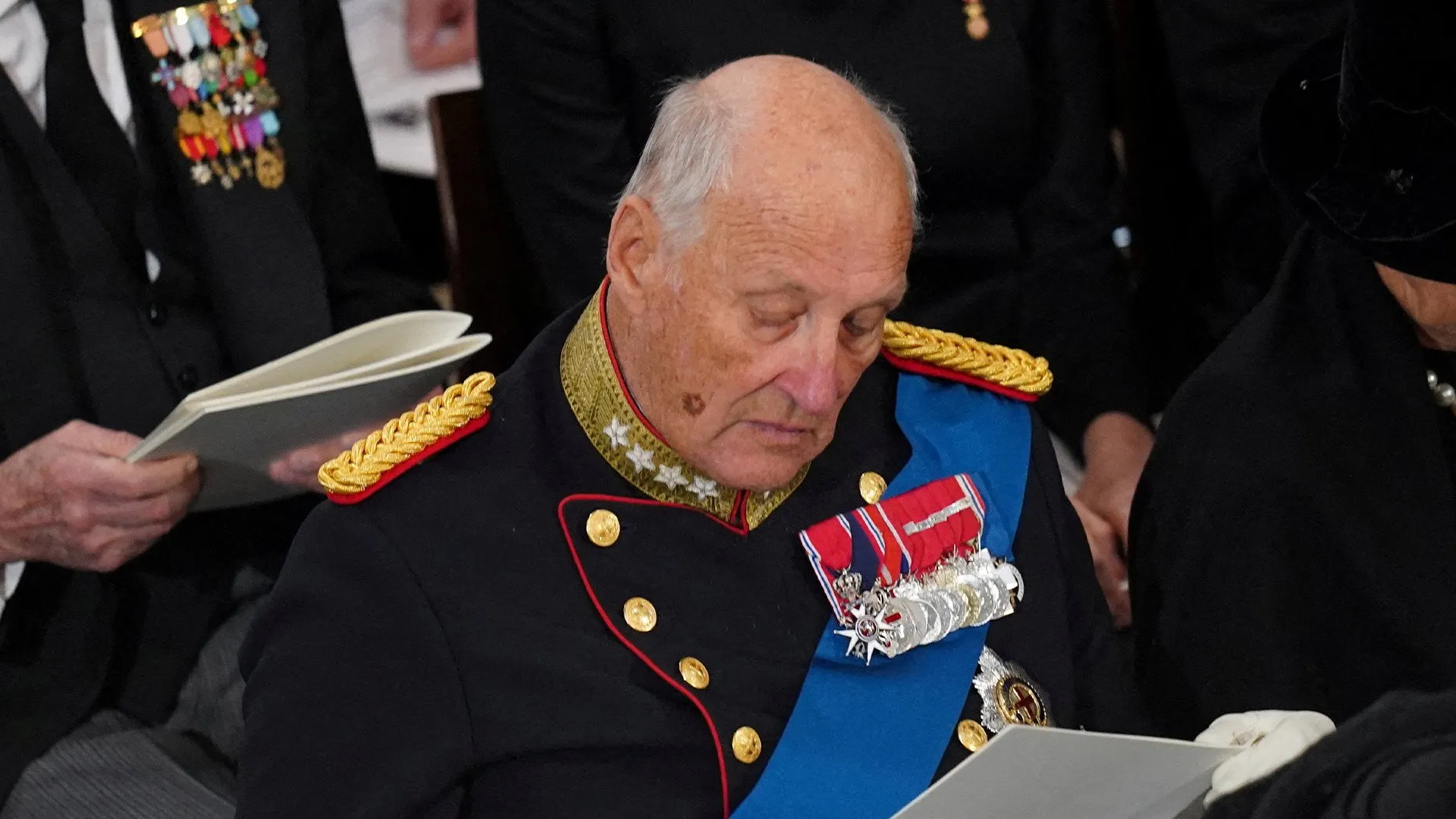
Norwegians are saying goodbye to King Harald V, Europe’s oldest reigning monarch. The 89-year-old king died on Friday, after days in hospital. He is succeeded immediately by his son, now known as King Haakon VIII.
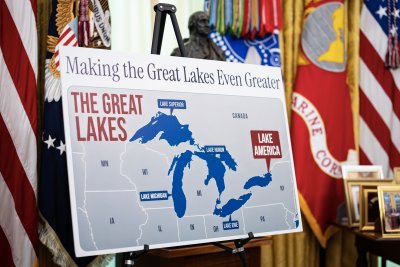
Aug. 28 (UPI) — The leader of the Seneca Nation on Friday called on President Donald Trump to reverse his decision to rename Lake Ontario as Lake America.
Trump on Thursday signed an executive order renaming the body of water amid a trade dispute with Canada.
J. Conrad Sence, president of Seneca Nation, said, “The president cannot assert ownership over our culture or erase it through irresponsible political action.”
“His order should be rescinded and the name Lake Ontario should be left as it is, reflective of the Seneca people, other Haudenosaunee nations and all Indigenous people surrounding the lake,” Seneca said in a statement shared with WIVB.
“To us, Lake Ontario is not a political pawn,” he added. “It does not separate the countries of the United States and Canada. It is all Indigenous land, which has been occupied by Indigenous people since time immemorial.”
Jérôme Marty, executive director at the International Association for Great Lakes Research, said the lake was named by indigenous people.
“They gave the name of Lake Ontario, and then this name was then used to give the name of the province of Ontario, so it’s certainly not the province of Ontario that gave the name of the Lake Ontario, but it’s the opposite,” Marty told WIVB. “It’s prior to Canada, the creation of the United States, it’s been there for a really, really long time.”
Conrad told WGRZ the people of the region will continue to call it Lake Ontario, and urged others to do the same.
In a statement, a White House spokesperson pushed back against the criticism.
“As the president said yesterday, the majority of the great lake’s volume sits in United States territory,” the spokesperson told WIVB. “Thanks to President Trump’s bold action, its name will now reflect its place in America and her heritage.”
Lake Ontario is called sga:nyodai:yoh in the Seneca language, meaning “beautiful lake,” WGRZ reported.
Trump has also changed the name of Alaska’s Mount Denali, an indigenous name, to Mount McKinley after the 25th president of the United States.
He also renamed the Gulf of Mexico to Gulf of America.
Voters in Guinea-Bissau will decide on August 30 whether to approve a new constitution that would significantly strengthen the presidency and reshape the country’s electoral system.
The vote comes nine months after the military seized power and installed General Horta Inta-A Na Man as transitional president, and just more than three months before presidential and legislative elections scheduled for December 6.
Supporters of the reform say it would provide clearer lines of authority and help address years of political instability and disputes between state institutions. Critics argue that it would concentrate too much power in the presidency and have questioned the process through which the draft was produced.
The African Party for the Independence of Guinea and Cape Verde (PAIGC), one of Guinea-Bissau’s main opposition parties, has rejected the referendum and called for a boycott.
The referendum will determine whether the constitution approved by the National Transitional Council (CNT) enters into force and provides the framework for the country’s return to elected government.
Why is Guinea-Bissau changing its constitution?
The process began after the November 26, 2025, military coup.
Presidential and legislative elections had been held three days earlier. The military seized power while the electoral process was still under way, one day before the electoral commission was due to announce the presidential results.
Horta, then army chief of staff, became transitional president.
The transition charter established a National Transitional Council (CNT), which was given legislative powers during the transition. The council approved the proposed constitutional text on January 13, 2026.
Guinea-Bissau is a small Portuguese-speaking country on the West African coast, bordered by Senegal to the north and Guinea to the east and south. It gained independence from Portugal in 1974 and has experienced repeated coups and political crises since independence.
Under the existing constitution, Guinea-Bissau operates a semi-presidential system in which executive authority is shared between the president and prime minister.
The proposed constitution would substantially alter Guinea-Bissau’s existing semi-presidential system, giving the president significantly greater executive authority and reducing the prime minister’s role in government.
What would change?
Under the proposed constitution, the president would have greater control over the government, including the appointment and dismissal of the prime minister and members of the government.
The president would also chair the Council of Ministers and have the power to create or abolish ministries.
The proposed constitution would reduce parliament from 102 seats to 65 and cut the number of electoral constituencies from 29 to 12.
It would also introduce new requirements for presidential candidates.
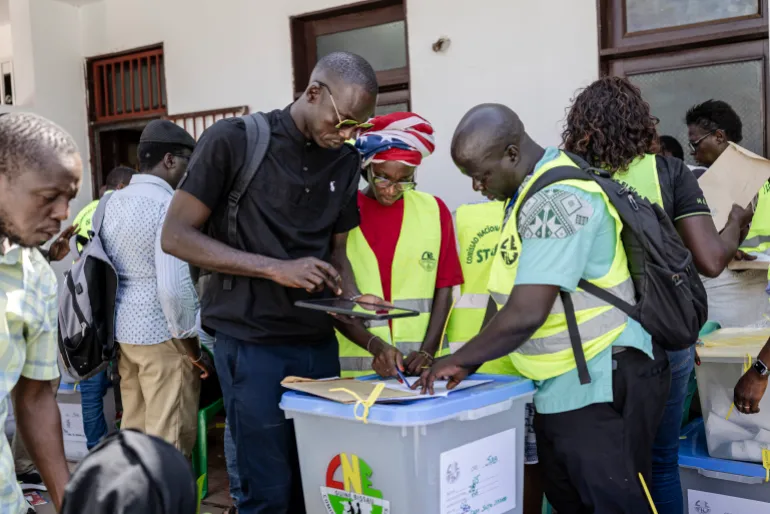
The referendum will determine the constitutional framework under which Guinea-Bissau’s next elected president and parliament will govern [Patrick Meinhardt/AFP]
Candidates would have to have lived permanently in Guinea-Bissau for the five years preceding an election. They would also have to pay a 50 million West African CFA franc deposit, or approximately $90,000.
Political parties sponsoring presidential candidates would need at least 5,000 members, including at least 300 in each region.
The proposed constitution would also establish a Constitutional Court.
Why is a stronger presidency controversial?
Guinea-Bissau’s political system has repeatedly been marked by disputes between presidents, prime ministers and parliament.
Supporters of the reform argue that giving the president clearer authority over the government could reduce institutional conflicts and make decision-making more effective.
Critics fear that concentrating executive authority in the presidency would weaken parliament and other checks on government, significantly altering the balance between the executive and legislature.
Critics have also raised concerns about the proposed reduction in the number of electoral constituencies, arguing that it could affect political representation and weaken parties that rely on strong local support.
The new financial and membership requirements have likewise drawn criticism from those who argue that they could make it harder for smaller political movements to contest presidential elections.
There is a separate dispute over how the constitution was produced.
The draft was prepared during a military-led transition rather than by a restored elected parliament. Opposition parties and civil society groups have criticised the process and questioned whether the drafting process was sufficiently inclusive.
Is the referendum about Horta Inta-A Na Man?
Horta has led the transition since the coup, but the referendum is not simply a vote on his political future.
The transition framework bars the transitional president and prime minister from running in the elections at the end of the transition.
The immediate issue is therefore what powers the next elected president will have.
If the constitution passes, the president elected in December would have considerably greater authority over the government than under the existing constitutional system.
Why does the timing matter?
The referendum comes before the presidential and legislative elections scheduled for December 6.
Voters will therefore decide the proposed constitutional framework before choosing the leaders who are expected to govern under it.
That means the next president and parliament could take office under rules drawn up during the military-led transition.
For the transitional authorities, the referendum is part of the process leading to a return to elected government.
For opponents, the timing raises the question of whether a military-led authority should determine fundamental political rules before elected institutions are restored.
What would a yes or no vote mean?
A yes vote would bring the proposed constitution into force, including stronger presidential powers, a smaller parliament, fewer electoral constituencies and new requirements for presidential candidates.
A no vote would reject the proposed constitution, leaving the question of constitutional reform unresolved.
At stake is not simply whether Guinea-Bissau adopts a new constitution, but how much power the presidency should hold when the country returns to elected government.
New York City police on Friday said they seized 580 pounds of cocaine worth $10 million, the largest cocaine seizure in the city in decades. File Photo by Justin Lane/EPA-EFE
Aug. 28 (UPI) — New York City police on Friday said they seized 580 pounds of cocaine worth $10 million, the largest cocaine seizure in the city in decades.
Nelson Salcedo, 35 of New Jersey, was arrested while moving several boxes hiding cocaine from a self-storage facility in Queens.
“This was a massive shipment of narcotics, tied to an interstate trafficking network with connections across the country, including in New York and New Jersey,” NYPD Commissioner Jessica Tisch told the New York Post.
“And because of the work of the investigators standing with me today, those drugs will never make it into the streets of New York City.”
Police began following Salcedo on Aug. 12, when he was spotted dropping off packages believed to contain drugs near the north end of Central Park.
Then on Wednesday, officers spotted the suspect loading boxes into a van registered to an elevator repair company.
Police and Drug Enforcement Administration agents recovered 230 bricks containing 580 pounds of cocaine.
“This appears to be the largest single cache of cocaine my office has seized in 20 years,” Special Narcotics Prosecutor Bridget Brennan told the New York Daily News.
“Thanks to our investigators and our law enforcement partners in this case, these drugs will never make it onto the streets of New York City.”
Salcedo and two suspected accomplices were arrested.
He was arraigned on charges of criminal possession of a controlled substance.
An ICE official tells Al Jazeera the British political commentator overstayed his visit in the US and will be removed.
Published On 28 Aug 202628 Aug 2026
Milo Yiannopoulos, a far-right British commentator known for previously being a vocal supporter of United States President Donald Trump, has been detained by Immigration and Customs Enforcement (ICE).
A spokesperson for the US Department of Homeland Security told Al Jazeera that Yiannopoulos was taken into custody at the Louis Armstrong International Airport in New Orleans, Louisiana, on Thursday.
Recommended Stories
list of 3 itemsend of list
He allegedly overstayed his legal authorisation to remain in the US after entering the country through New York City on May 14, 2019.
“Yiannopoulos was issued a final order of removal by an Immigration Judge on July 22, after failing to show up for his immigration hearing,” the spokesperson wrote on Friday. “He will remain in ICE custody pending removal.”
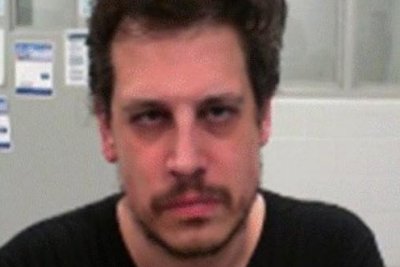
The Department of Homeland Security also posted a photo to social media that appeared to be a mugshot of the 41-year-old conservative firebrand who, in June 2025, called on the Trump administration to “deport millions and millions and millions of people”.
In the post, the department warned that those detained for overstaying their visit would be “arrested and deported without a chance to return”.
The Department of Homeland Security posted a photo on Friday identified as Milo Yiannopoulos [Department of Homeland Security]
Online records do not specify which ICE detention facility is currently holding Yiannopoulos. Instead, it refers “family members and legal representatives” to contact the ICE field office in Alexandria, Louisiana, for additional details.
Reports indicate Yiannopoulos was in New Orleans for a concert by the musician Ye, formerly known as Kanye West. TMZ was the first to report Yiannopoulos’s detainment.
Laura Loomer, a top Trump ally known for spreading conspiracy theories, appeared to take credit for Yiannopoulos’s detainment, calling it a “great day for America”.
She also denounced Yiannopoulos’s work with former US Representative Marjorie Taylor Greene, a Trump supporter-turned-critic.
“I was the first person to report on the fact that Milo was in the US illegally where he incited violence against President Trump and worked for Marjorie Traitor Greene,” Loomer wrote on the social media platform X. “When Milo called for me to be assassinated, I reported him to ICE and FBI.”
Loomer has publicly sparred with Yiannopoulos for years. He previously exposed what he purported to be Loomer’s mental health struggles in a September 2024 post, claiming she had been involuntarily committed to psychiatric facilities.
Yiannopoulos, known for his online trolling and anti-Islamic postings, was permanently banned by X’s predecessor, Twitter, in July 2016. His account was reinstated when Elon Musk took over the company.
After that, Yiannopoulos returned to the platform with a series of inflammatory posts, including one that called the “Muslim world functionally retarded”.
More recently, the 41-year-old founded a Los Angeles-based talent management called Tarantula that offers, in its own words, “unrivalled connections, capital and expertise” to a host of celebrities and public figures.
The site lists a number of controversial “past and present” clients like Trump, Ye, convicted fraudster “Pharma Bro” Martin Shkreli and rapper Azealia Banks.
An Israeli drone strike killed three Palestinians in Jenin, the first such attack in the occupied West Bank since February 2025. Medics say Israeli forces detained them and blocked access to the casualties.
Truth commission to be established after two expert reports failed to agree whether scheme constituted genocide.
Published On 28 Aug 202628 Aug 2026
Greenland is establishing a truth and reconciliation commission surrounding a decades-long forced contraceptive scheme against Indigenous girls and women, after two expert reports failed to agree whether it constituted genocide.
From the 1960s to the 1990s, at least 4,000 Greenlandic Inuits – including girls as young as 12 – received intrauterine devices (IUDs) or contraceptive injections, often without their consent or knowledge, a joint Danish-Greenlandic inquiry found last year.
Recommended Stories
list of 4 itemsend of list
That inquiry found the practice was intended to reduce birth rates and family sizes, which Danish authorities at the time viewed as a way to improve living standards and social and health conditions in Greenland, an Arctic island and semi-sovereign territory of Denmark, with a population of 57,000.
Greenland’s government tasked a four-member commission in 2024 with investigating the campaign, which led some victims to suffer serious infections, scarring of the fallopian tubes or removal of the uterus. Some were later unable to have children.
But the experts could not reach a unanimous conclusion, Greenland’s Justice Minister Marianne Paviasen told reporters on Friday, with one report stating there was no genocide and the other saying the extent of the violations could not be established.
“We cannot say, on behalf of the government, whether there was genocide. This is something we can continue to debate,” Paviasen said.
Greenland’s Prime Minister Jens-Frederik Nielsen said the reconciliation commission would “not be about assigning blame, but about uncovering the truth with a view to genuine reconciliation”.
Danish Prime Minister Mette Frederiksen said Copenhagen would “handle the political process together with the government of Greenland”.
The Greenlandic Siumut Party, however, urged the genocide question to be settled by “a competent and independent international court”.
“Today we could have been far more Greenlanders,” the party added.
‘Treated like animals’
Victims have questioned why no Greenlandic Inuit were appointed as experts while recounting painful histories dug up by the panel.
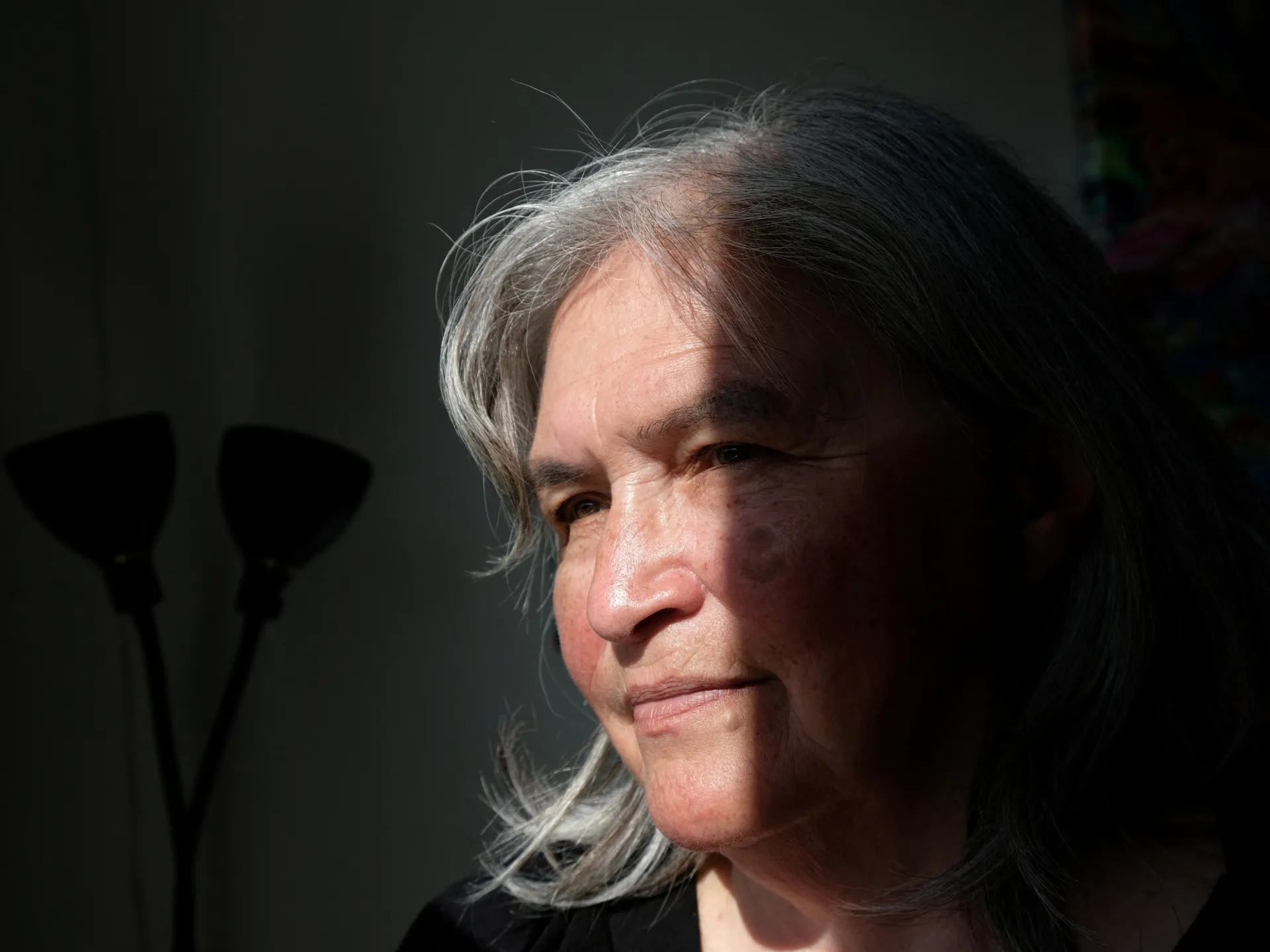
“For me, this is not just about history or politics. It’s my body, my life, and my right to self-determination,” Henriette Berthelsen told the AFP news agency.
“And once again, I see that it is others who will investigate and define what was done to me and to other Inuit women,” she added.
Inger Platou, 70, told Reuters she had woken up from what she had been told was a minor operation only to discover an IUD had been inserted without her consent.
“It turns out we were treated like animals,” she said. “Without consent, they just wanted to stop women from giving birth or having children. It was a very inhumane act.”
Complications from the coil left her unable to become pregnant, she said.
Denmark apologised for the scheme last year, with Frederiksen describing “systematic discrimination” against Greenlanders.
On Thursday, the Danish parliament agreed that women affected by the forced contraception campaign can claim compensation of up to 300,000 Danish crowns ($46,758) each.
Bogota, Colombia – Opposition politicians and migrant communities in Colombia have decried President Abelardo de la Espriella’s plan to launch a deportation campaign against foreign nationals living irregularly in the country.
De la Espriella unveiled the crackdown during a security council meeting on Sunday, ordering police to begin operations as soon as this week.
Recommended Stories
list of 3 itemsend of list
The policy is expected to primarily affect Venezuelans, by far the largest migrant population in Colombia.
It marks a stark departure from measures under previous administrations, which largely sought to create legal immigration pathways for those fleeing hardship in neighbouring Venezuela.
“I will not accept any illegal immigrants, wherever they come from,” said de la Espriella in a video shared on the social media platform X on Sunday evening. “They will have to leave and be deported. It is a political decision I am taking responsibility for.”
The far-right president – who was inaugurated earlier this month – said his government will first target those “committing crimes” and then those whose “status has not been regularised”.
While de la Espriella did not address any specific nationalities, some 95 percent of Colombia’s migrant population are Venezuelan, according to the Organisation for Economic Co-operation and Development (OECD), an intergovernmental group.
Approximately 2.8 million Venezuelans reside in Colombia, making it home to the largest Venezuelan migrant community in the world.
While nearly 2 million have a Temporary Protection Permit (PPT) authorising them to live in the country, an estimated 500,000 lack permission to be in Colombia, according to migration authorities. Many of them were granted temporary permits that have since expired.
De la Espriella, a political outsider, pledged to tackle illegal immigration during his presidential campaign, his first bid for elected office.
The former lawyer has aligned himself with right-wing leaders such as US President Donald Trump, who initiated his own deportation campaign in the United States.
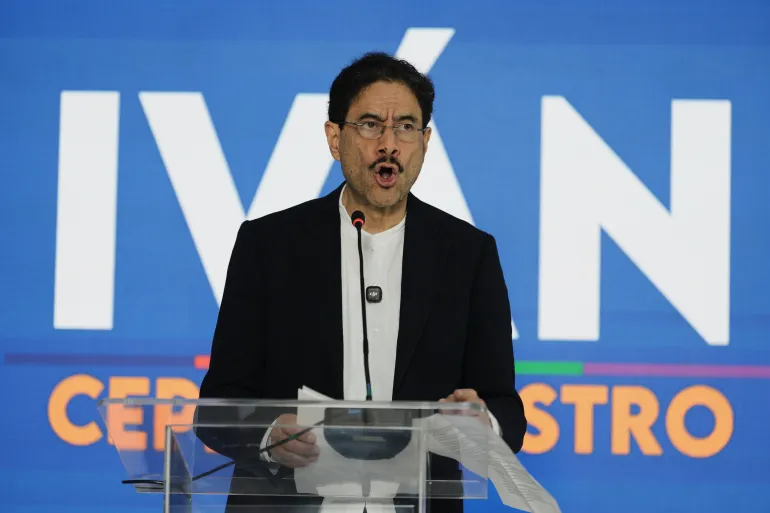
De la Espriella’s declaration on Sunday triggered uproar among opposition leaders, including leftist Senator Ivan Cepeda, who narrowly lost the presidency in a June run-off. He leads the Historic Pact, the largest party in Colombia’s Congress.
“Today, de la Espriella has added xenophobia to all the authoritarian, despotic and discriminatory traits of his policies,” Cepeda wrote on X.
Cepeda then accused de la Espriella of failing to protect Colombian deportees from the United States.
“De la Espriella is bold enough to target migrants from Latin American countries in Colombia, yet cowardly when it comes to protecting our fellow migrants in the United States,” he said.
Maria del Mar Pizarro, a Historic Pact congresswoman, also denounced de la Espriella’s plans in an interview with Al Jazeera. She questioned whether the deportation campaign was about security or discrimination.
“Foreign nationals who commit crimes must be prosecuted,” she said. “But persecuting and deporting someone — simply because their immigration status is not in order — is populism, not security.”
Given the porous nature of the roughly 2,200-kilometre (1,370-mile) land border between the two countries, Pizarro added that there is little to stop deported Venezuelans from returning to Colombia.
“Without border control, legalisation and intelligence efforts against criminal gangs, the government pays for the deportation, and the problem returns,” she said.
Senator Ivan Cepeda, who narrowly lost to Abelardo de la Espriella in June’s presidential race, has called his rival’s deportation policy xenophobic [Ivan Valencia/AP Photo]
Venezuelan diaspora fears policy implications
De la Espriella has announced that the deportation operation will begin with a pilot programme in the coastal city of Barranquilla, which is home to an estimated 182,000 Venezuelans.
Members of the Venezuelan diaspora in the city, however, fear that the crackdown will feed into stereotypes about their community.
“We must not confuse irregular immigration status with criminality. They are two completely different things,” said Juan Carlos Viloria Doria, the vice president of Venezuelans in Barranquilla, a migrant advocacy organisation.
While he backed the need to prosecute those who commit crimes, he said the law should apply to everyone “independent of nationality”.
Viloria also noted that many migrants could face political persecution if deported back to Venezuela.
Experts at the United Nations and other human rights watchdogs have accused the Venezuelan government of “repressive” activities, including the arbitrary detention and torture of political dissidents.
“We have people who left because they believed their lives, their freedom, or their safety were at risk,” Viloria explained. “Added to that are the economic, social and humanitarian conditions that Venezuela still faces.”
Despite being home to the world’s largest petroleum reserves, Venezuela has suffered from a plummeting gross domestic product (GDP) and rampant hyperinflation in the past decade.
Critics of the governing United Socialist Party of Venezuela (PSUV) say it has presided over chronic economic mismanagement, funnelling oil profits to a small elite while underfunding public services.
The Venezuelan government, however, argues it has been constrained by US sanctions, which have affected oil revenue, trade and foreign investment.
Faced with Venezuela’s economic crisis and threats of political persecution, some 7.6 million citizens have left the country since 2014, according to the UN.
Ronald Vergara moved to Colombia in 2016 and founded Fundacion Hermanos Caminantes, a nongovernmental organisation that supports recently arrived migrants. He fears how de la Espriella’s crackdown may harm an already struggling community.
“It would truly be inhumane to deport people who came here to survive and to work – decent people, who account for the majority of us,” he told Al Jazeera.
Despite living in Colombia for 10 years, Vergara was only granted a Temporary Protection Permit a few months ago, due to delays in the system. He said that residing in Colombia without papers limited his opportunities.
“I always felt excluded. I was never able to get a job that paid a decent wage,” he explained.
Vergara also said he has seen cases where those who had a Temporary Protection Permit lost their legal status because their identity card was lost or stolen. Thousands of others are still waiting to be granted their papers, including his son.
“He’s 17 and about to graduate from high school, but he can’t graduate without the PPT,” said Vergara.
Venezuelan migrant Naomi Diaz sits on a boat with her children as they travel to the Colombian border in February 2025 [AP Photo]
A departure from political tradition
De la Espriella’s announcement heralds a new era of anti-immigrant politics in Colombia, according to experts.
Since the Venezuelan migration crisis began, successive administrations in Bogota have responded by offering new arrivals assistance and opportunities for integration.
In 2017, for instance, then-President Juan Manuel Santos introduced a two-year temporary permit for Venezuelans called the Special Permit of Permanence and bolstered humanitarian assistance on the border.
His successor, right-wing leader Ivan Duque, severed relations with Caracas in 2019, closing the land border to vehicular traffic and suspending air travel. But he still offered migrants the chance to remain in Colombia by rolling out the PPT in 2021.
Most recently, Colombia’s first left-wing president, Gustavo Petro, presided over a thaw in bilateral relations with Venezuela and adopted a pro-migrant stance. His presidency ended this year, with de la Espriella’s victory.
Ronal Rodriguez, a spokesperson at the Venezuela Observatory, a research centre at Bogota’s Rosario University, said de la Espriella’s policies interrupt a years-long trend.
“Everyone had a favourable stance toward migration and, in particular, used language that promoted integration,” Rodriguez explained.
“Unfortunately, I believe that this ends – for the moment – with what President Abelardo de la Espriella is now saying.”
While the president has pledged a crackdown on irregular migrants, the full details of his deportation platform have yet to be revealed.
For Rodriguez, de la Espriella may yet back down from his bold declarations.
He hopes that the president will “reconsider and return to the Colombian government’s policy of integration”.
Israel’s prime minister and defence minister praise the attack as Hamas calls for Israeli ‘crimes’ to stop.
Published On 28 Aug 202628 Aug 2026
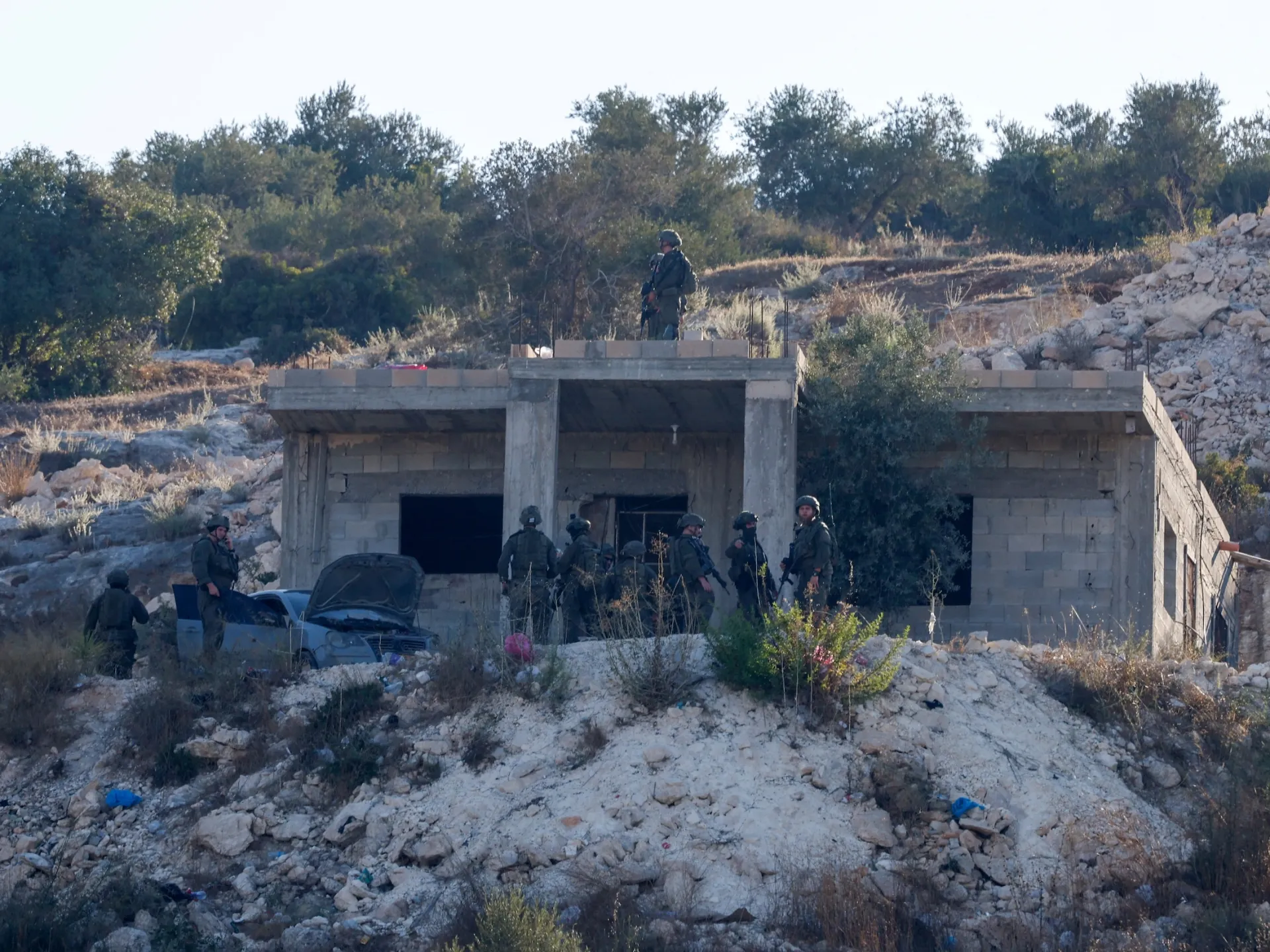
The Israeli army has killed three Palestinians in Jenin in a rare air strike in the occupied West Bank, amid growing tensions in the territory.
In a statement, the Israeli military said it “eliminated” three people on Friday, one a Palestinian it described as a Hamas operative as well as two of his accomplices.
Recommended Stories
list of 3 itemsend of list
Hamas condemned the strike but did not claim the person targeted – whom the Israeli military identified as Qais Bitawi – as a member. Palestinian Islamic Jihad said in a statement Bitawi was a senior operative of its armed wing.
A spokesperson for the Israeli military said the strike targeted a car carrying the men.
The Palestine Red Crescent ambulance service said Israeli ground troops raided the site of the drone strike, briefly detained medics and prevented them from transporting those wounded or killed to hospital.
The Red Crescent said its personnel were also detained after arriving at the scene.
The Palestinian Wafa news agency reported that the Israeli drone strike had targeted a house under construction in the western area of Jenin City, and that three Palestinians were killed instantly.
Photos from the AFP news agency showed Israeli soldiers removing a body from a house under construction on the outskirts of Jenin.
People gather in a building, following an Israeli military air strike, in Jenin, on Friday [Mohammed Torokman/Reuters]
‘Stop these crimes and end impunity’
Israeli Prime Minister Benjamin Netanyahu celebrated the strike in a post on X, calling it a “successful thwarting” of the three targeted individuals.
After the attack, Israeli Defence Minister Israel Katz congratulated the military, police and Shin Bet for the strike and said the Jenin camp has been “evacuated of residents”. He added that the Israeli military is now “permanently stationed there, like other terrorist camps” in the West Bank.
Hamas condemned the strike in a statement mourning “the martyrs who fell in the occupation’s bombing of Jenin,” saying that Palestinians “will continue to cling to their land and rights”.
The group called on the international community “to take immediate action to stop these crimes and end impunity” and hold Israel “fully responsible for the repercussions”.
The occupied West Bank, home to the Palestinian Authority, has seen soaring violence by Israeli settlers and soldiers but has recently avoided Israeli military strikes that have devastated the Gaza Strip since the genocidal war began on October 7, 2023.
Military raids on Palestinian towns in the West Bank are common, but Israel last carried out a strike there in February 2025.
Friday’s strike in Jenin comes as separate Israeli strikes in Gaza killed at least five people, and as Nikolay Mladenov, the high representative for the United States-led Board of Peace, warned that the failure of both sides to adhere to the roadmap for peace “threatens a collapse of the ceasefire in Gaza”.
U.S. first lady Melania Trump and U.S. President Donald Trump attend a remembrance ceremony at the Pentagon on September 11 to mark 24 years since the September 11, 2001, terrorist attacks in Arlington, Va. File Photo by Annabelle Gordon/UPI | License Photo
Aug. 28 (UPI) — President Donald Trump plans to observe the 25th anniversary of the Sept. 11, 2001, terror attacks at the Pentagon in Washington, D.C., instead of at Ground Zero in New York City, those familiar with the details told media outlets Friday.
People briefed on the details told CNN, The New York Times and The Hill that Trump plans to give remarks at the Pentagon, one of the sites of the terror attacks.
Those familiar with the plans said the president chose the Pentagon because he wants to deliver remarks on the anniversary, and politicians aren’t allowed to give remarks at the New York City site. The National September 11 Memorial and Museum has blocked politicians from speaking at the location since 2012 in an effort to be nonpartisan.
Officials said Vice President JD Vance plans to attend the New York City anniversary event.
“As a proud New Yorker, President Trump has spoken about his own experiences watching the horrific events of September 11, 2001,” White House spokeswoman Anna Kelly said in a statement.
“On the 25th anniversary of this tragic day, the president will remember those who were killed at the hands of evil terrorists, honor their loved ones, and pay tribute to the brave first responders who put their lives on the line to rescue their fellow Americans.”
Trump also marked the anniversary of the terror attacks at the Pentagon last year. He visited Ground Zero in 2024 and previously gave remarks at the Flight 93 National Memorial in Shanksville, Pa.
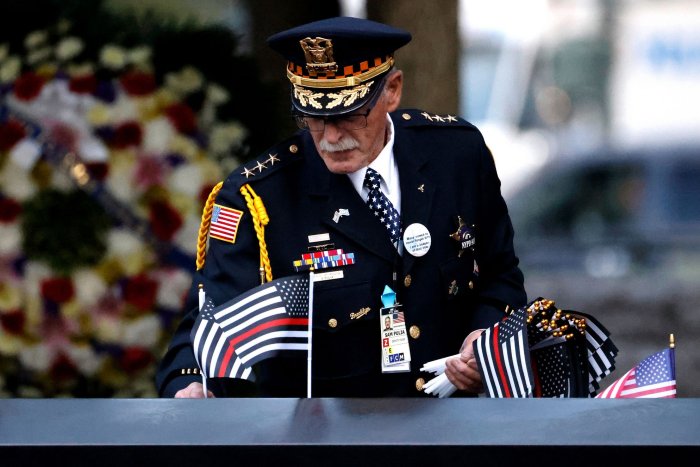
Retired Deputy Police Chief Sam Pulia from Willow Springs, Ill., places American flags at the 9/11 memorial south pool before the start of the 9/11 Commemoration Ceremony at the National September 11 Memorial & Museum in New York City on September 11, 2025. Photo by Peter Foley/UPI | License Photo
Peruvian President Keiko Fujimori’s government was to ask Congress on Friday for authority to legislate by decree for 120 days, seeking broader powers to advance its security and economic agenda. Photo by Paolo Aguilar/EPA
Aug. 28 (UPI) — Less than a month after taking office, Peruvian President Keiko Fujimori’s government was to formally ask Congress on Friday for authority to legislate by decree for 120 days, seeking broader powers to advance its security and economic agenda.
The Council of Ministers, led by Fujimori, approved a bill containing 66 legislative proposals Thursday night for congressional consideration and debate.
The initiatives focus on public safety, formal employment, economic development, the removal of bureaucratic barriers, structural reform of the state, taxes and customs, among other areas.
La presidenta de la república, Keiko Fujimori, lideró una nueva sesión del Consejo de Ministros, con la participación del premier Luis Galarreta, en la que se abordaron la solicitud de facultades legislativas al Congreso y el proyecto de presupuesto fiscal para el 2027. pic.twitter.com/B5aYk4xrlb— Presidencia del Consejo de Ministros (@pcmperu) August 27, 2026
The core of the government’s request centers on the so-called “Shield Plan,” a punitive security strategy designed to address the country’s public safety crisis and the expansion of transnational organized crime.
The bill seeks to establish the legal framework needed to institutionalize and expand joint patrols by the Armed Forces and National Police in urban areas with the highest rates of violent crime.
The proposal also includes measures to address prison overcrowding and organized crime by giving the military administrative control of prisons as well as responsibility for border security.
The legislative package also proposes changes to the Penal Code to increase penalties for common crimes and redefine police powers during preliminary investigations conducted in coordination with the Public Prosecutor’s Office.
On the economic front, Fujimori’s proposal seeks to reshape labor market conditions to attract investment and boost economic activity.
The government contends that reducing nonwage labor costs for businesses is necessary to address an informal employment rate that affects almost 70% of the economically active population.
The government also proposes greater flexibility in traditional employee benefits through individual agreements or collective bargaining between workers and employers.
In Peru’s new bicameral Congress, the government needs a simple majority in the Chamber of Deputies to secure the legislative package approval, requiring at least 66 votes from the chamber’s 130 members.
Because the governing bloc does not have enough votes on its own, Fujimori’s government must negotiate with moderate opposition lawmakers and secure at least 10 additional votes.
Israeli settlement expansion in the occupied West Bank isn’t just driven by ideology, but also by economic incentives. Al Jazeera’s Leila Warah explains the two main types of Israeli settlers and how they contribute to the expansion of illegal settlements.
Immigration and Customs Enforcement officers stand by as they check the documentation of a construction worker during a random stop in Minneapolis on Jan. 9 ICE has awarded a $16.7 million no-bid contract to Compliant Technologies for 6,000 shock gloves to be used to detain people by force. File Photo by Craig Lassig/UPI | License Photo
Aug. 28 (UPI) — U.S. Immigration and Customs Enforcement has awarded a $16.7 million no-bid contract to Compliant Technologies for 6,000 shock gloves to be used to detain people by force.
The agency is ordering the product Generated Low Output Voltage Emitter, or GLOVE, a glove that delivers an electrical current when contacting a person’s skin. The gloves cost $2,495 each, the contract published on a federal database on Thursday reads.
ICE said it “requires a non-lethal, de-escalation device” to “diffuse situations or high-stress environments where physical altercations are likely.”
Along with the gloves, the contract also grants ICE support and equipment services from Compliant Technologies.
“This technology is vital to meeting mission demands, ensuring officer safety, and achieving the President’s public safety and immigration enforcement priorities,” the contract reads.
Compliant Technologies is a Kentucky-based company. Its instruction manual says that users should “always give the subject(s) a reasonable opportunity to comply before force is used.”
A group largely consisting of Democratic senators is opposing the use of the gloves, penning a letter to ICE’s acting Director David Venturella on Thursday.
“Over the past year, ICE personnel have been involved in numerous well-documented incidents of excessive force and civil rights violations,” the letter reads. “These incidents have shown the American people that ICE personnel are not adequately trained or accountable for their interactions with civilians.”
The incidents of excessive force referred to in the letter include the killings of U.S. citizens, including Renee Good and Alex Pretti within weeks of each other in the Minneapolis metropolitan area earlier this year.
“The American people have made it clear that ICE must de-escalate its immigration enforcement operations,” the letter reads.
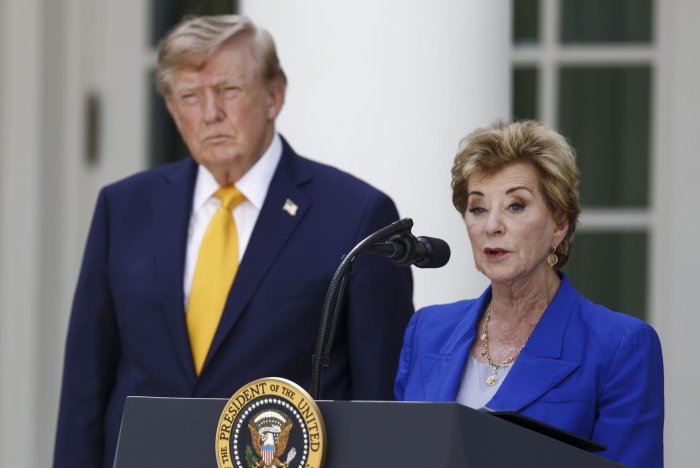
President Donald Trump looks on as Secretary of Education Linda McMahon speaks during a back-to school event in the Rose Garden of the White House on Monday. The event focused on education and the Trump administration’s education policies. Photo by Will Oliver/UPI | License Photo
Aug. 28 (UPI) — Economists and financial markets will be watching closely on Friday when the Federal Reserve Chairman Kevin Warsh delivers a keynote address at the central bank’s annual symposium in Jackson Hole, Wyo.
Federal Reserve chairmen often use the speech to discuss monetary policy initiatives on a broad level, including offering insight into future interest rate plans. Since being appointed chairman in May, Warsh has been scant with details on future policy decisions and Friday’s address is expected to be more of the same.
The U.S. economy continues to face inflation pressures with inflation rates well above the Federal Reserve’s 2% annual target. Under Warsh, inflation markers have moved higher yet while the Federal Open Market Committee has maintained its benchmark interest rates at 3.5% to 3.75%.
Some members in the central bank are calling for another hike in interest rates, which would be a first since July 2023.
“If I had to guess, I would say that he’s going to give a very high-level, broad look at the work of the task forces and how he thinks the Fed should operate, as opposed to a nuts-and-bolts assessment of the economy and expectations for policy,” Luke Tilley, chief economist at M&T Bank and Wilmington Trust Investment Advisors, told CNBC.
Warsh has established five task forces that are reviewing how the Federal Reserve approaches its policy decisions, including its use of data, technology including artificial intelligence, and its balance sheet.
The Federal Open Market Committee did not meet in August. Its next meeting is on Sept. 15 and 16, during which it will decide whether to hold interest rates firm or make adjustments.
After Warsh’s address following last month’s FOMC meeting, yields for long-term bonds rose. This happens when bond traders are skeptical that the central bank will cool inflation.
President Donald Trump looks on as Secretary of Education Linda McMahon speaks during a back-to school event in the Rose Garden of the White House on Monday. The event focused on education and the Trump administration’s education policies. Photo by Will Oliver/UPI | License Photo
Aug. 28 (UPI) — The U.S. State Department removed a Kehinde Wiley painting from its embassy in the Dominican Republic and wants to sell it after Trump administration officials called it “woke.”
The department is talking with legal representatives to determine whether it can sell Young Artists After Siamesas 1960, which was commissioned with taxpayer funds in 2013 for the Art in Embassies cultural diplomacy program.
U.S. Ambassador Leah Campos posted a video Aug. 11 showing the painting being removed after it was initially covered with a tarp featuring a U.S. flag design.
“Under the Trump administration and my leadership, we are leaving behind globalist and ‘woke’ ideologies to embrace American patriotism and the beauty of our great country,” Campos wrote.
Erin Scavino, director of Art in Embassies, said in a recent interview with former Trump White House press secretary Sean Spicer that her team had worked to remove the painting. She described it as “very woke” and “aesthetically terrifying.”
The State Department cited comments Wiley made about another of his works and sexual misconduct allegations that the artist has denied, according to The Art Newspaper.
Dominican law would allow physical ownership of the painting to be transferred, but Wiley would retain his intellectual property rights, according to an analysis published by the Dominican news outlet Acento.
Attorney Edwin Espinal Hernández said the Dominican Republic’s copyright law distinguishes between ownership of the physical object and intellectual property rights over the work, Acento reported.
A buyer could own and display the canvas, but could not reproduce it, print it or sell copies without Wiley’s authorization unless the parties expressly agree otherwise.
Dominican law also recognizes an artist’s resale right. If the transaction takes place through a public auction, an exhibition or a professional dealer, Wiley would be entitled to receive at least 2% of the sale price from the seller.
In addition, if the transaction exceeds approximately $12,000, Dominican anti-money laundering law would prohibit a cash payment and require verifiable proof of the transaction.
Wiley created the painting in 2015 in collaboration with Dominican students from the School of Arts and the Altos de Chavón School of Design in La Romana, according to the official documentation from Art in Embassies.
According to the expanded Art in Embassies description, the 107-by-150-inch oil-on-linen painting depicts four local art students in poses inspired by Female Nude (1940) by Celeste Woss y Gil and Siamese Twins (1960) by Gilberto Hernández Ortega.
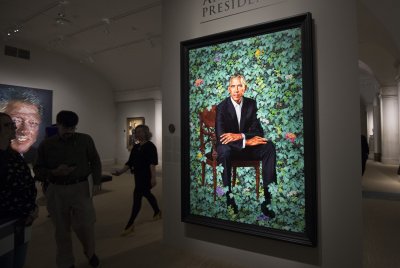
Wiley gained international recognition after painting President Barack Obama‘s official portrait, which was unveiled at the National Portrait Gallery in 2018.
The State Department had awarded Wiley a Medal of Arts in 2015 for his contributions to U.S. cultural diplomacy.
Thousands of people gathered to pay their respect and leave flowers in Palace Square in the center of Oslo on Friday after the passing of King Harald V earlier. Photo by Thomas Andersen/Pool/EPA
Aug. 28 (UPI) —King Harald V of Norway died early Friday in an Oslo hospital where he was undergoing treatment for a rare blood disorder. He was 89 years old.
He passed peacefully at 6:35 a.m. local time, according to the Royal Palace, which said the royal flag was flying at half mast on the palace roof.
Family were called to his bedside after his condition worsened on Thursday at the national hospital, 10 days after he was admitted suffering from complications from haemolytic anaemia, a rare blood condition that depletes the number of red blood cells, causing fatigue and shortness of breath.
Harald leaves behind his wife Queen Sonja, also 89, the new king, Haakon, their daughter Princess Märtha Louise and six grandchildren.
King Haakon, 53, was due to hold an extraordinary council of state with the government later on Friday.
Harald’s cousin, King Charles, was among the first to pay their respects in a message in which he also wished Haakon, to whom he is godfather, “success and good fortune” as he assumes the monarchy.
In a statement on X, Charles and Queen Camilla said they were profoundly sad to hear his “dear cousin,” had died, extending their “deepest and most heartfelt condolences” to Queen Sonja and all her family, and saying Britain shared Norway’s grief at what he said was a time of “such heartbreaking loss.”
He said Britain and Norway shared a particularly close relationship dating back more than 120 years, with London one of the first capitals to recognize it following independence from Sweden in 1905 and that the allies’ bond was further strengthened by their shared “dreadful trials” during World War II.
Born in 1937, Harald’s mother brought him and his siblings to Sweden when the Nazis occupied Norway in 1940 and when U.S. President Franklin D. Roosevelt offered them refuge, moved to Washington for the remainder of the war, returning to Norway in 1945.
After becoming crown prince at the age of 20, Harald served in the military and went up to Oxford University in 1962 where he studied studied social science, history and economics at Balliol College.
He broke with royal tradition in the face of the opposition of his father, King Olav V, by marrying the then-Sonja Haraldsen, the daughter of a businessman, in 1968, instead of a scion of one the European royal families.
Harald stepped up as regent in 1990 after Olav became ill and ascended the throne in 1991 after his father died on Jan. 17 of that year.
Martin Luther King Jr. delivers his famed “I Have a Dream” speech from the steps of the Lincoln Memorial in Washington on August 28, 1963. The speech galvanized the nation’s civil rights movements and led to the passage of the 1964 Civil Rights Act, the 1965 Voting Rights Act and the 1968 Fair Housing Act. File photo by UPI | License Photo
Judge blocks Trump’s mail voting rules for a second time, just days before ballots go out for the midterms.
Published On 28 Aug 202628 Aug 2026
A United States federal judge has for a second time blocked the Trump administration’s overhaul of election rules aimed at limiting voting by mail.
District Judge Indira Talwani late on Thursday blocked the US Postal Service’s new ballot rules for 14 days, hours after the agency said they had taken effect.
Recommended Stories
list of 3 itemsend of list
The ruling is part of an ongoing battle prompted by President Donald Trump’s bid to limit voting by mail, which is heating up as the US heads towards midterm elections in November that will decide control of Congress and the Senate.
Nearly a third of American voters cast votes by mail. The first ballots for the midterms are due to be sent out in about a week.
The new rules require states to submit approved voter lists and follow new ballot formatting before USPS can deliver voting slips. The restrictions were enacted on Thursday after the Supreme Court cleared the way for them.
Talwani wrote in a statement late on Thursday that states “have neither time nor funds” to redesign ballots, update election systems or train officials on the new USPS portal before the upcoming election.
The fight traces back to March, when Trump ordered the Postal Service to withhold ballots unless states supplied approved voter lists and new formatting rules.
Voting rights groups and democratic officials sued, arguing only states and Congress, not the president, can set election rules. Talwani agreed, blocking the rules over the summer.
On Monday, the Supreme Court’s conservative majority threw out that earlier ruling on a technicality, saying that the legal challenge on which it was based was filed too early.
Democratic officials and voting rights groups quickly refiled their challenge once the rules became official, allowing Talwani to block them once more in a late-night order.
Separately, attorneys general from 24 states filed a new lawsuit this week making the same core argument: that only the Senate and Congress, not the president, can have constitutional authority to set election rules.
A hearing on the refiled case is scheduled for September 3, just as ballots are set to go out. That timeline means whatever Talwani or a higher court decides next could take effect as voting begins, or after it is already under way.
Who: Liverpool vs Nottingham Forest What:English Premier League Where: Anfield, Liverpool, United Kingdom When: Saturday, August 29, at 12:30pm (11:30 GMT) How to follow: Al Jazeera Sport will bring you all the buildup from 08:30 GMT ahead of our live text commentary stream
Both sides are looking for their first wins of the season, as Liverpool host Forest at Anfield.
Recommended Stories
list of 4 itemsend of list
Liverpool struggled in their first competitive game under new boss Andoni Iraola, although they battled to come back from behind to salvage a 2-2 draw away at Newcastle.
The Reds are still hoping to bolster their rather threadbare squad and are reportedly closing in on a deal to sign French forward Bradley Barcola from Paris Saint-Germain.
Meanwhile, Forest have lost their first two games of the season as they begin a new era under coach Oliver Glasner.
Forest lost both games at home to Leeds – the first a 1-0 defeat in their opening league game last weekend, the second a 2-0 midweek loss in the League Cup.
So both teams will be very eager to find their form at Anfield and get back to winning ways.
Iraola hoping for ‘good news soon’ in transfer market
Liverpool’s new boss said on Thursday it is no secret the club are in the hunt for more wingers after reports that the Reds are edging closer to a deal for Barcola.
Liverpool have also been credited with an interest in Brighton’s Yankuba Minteh and Crystal Palace’s Ismaila Sarr as potential recruits to fill the void left by Mohamed Salah’s departure.
“We cannot talk about players that right now are not ours, but it is evident that we are trying to improve or try to fill that position because we don’t have the numbers,” Iraola told a pre-match news conference ahead of his home debut against Nottingham Forest on Saturday.
“I hope we have good news soon but we are still not there.”
The arrival of French international Barcola could lead to Cody Gakpo’s exit from Anfield.
The Dutchman, who scored in Iraola’s first match in charge in a 2-2 draw at Newcastle last weekend, is reportedly a target for Manchester City and Tottenham.
“When the market is open, you cannot guarantee anything with anyone. You never know who’s going to arrive,” Iraola added when asked about Gakpo’s future.
“I would like to know how the market finishes but I don’t know what will happen with any of our players. I cannot guarantee anything.”
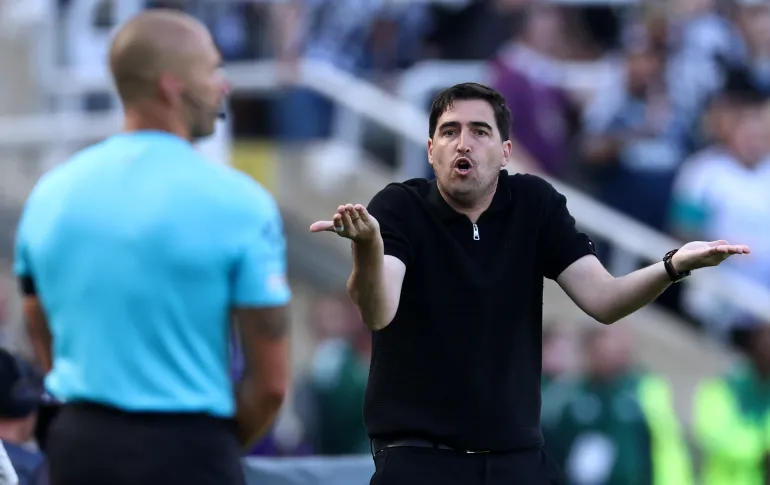
Iraola expresses his frustration to a match official during the draw at Newcastle on Sunday [Molly Darlington/Getty Images]
‘I’m no magician’: Glasner already feeling the heat
The Austrian expressed frustration with the recruitment situation at his new club after their second defeat to Leeds, saying that Forest had “ignored reality” after losing at home to Leeds for the second time in a matter of days.
“The fact is that this team had a relegation battle for nine months. Very turbulent season and it ended with a huge effort to stay in the league, and this is our starting point,” he said.
“It’s really very important not to blame anybody because sometimes I tell them facts and they say, ‘Oh, Glasner is complaining’.
“No, no, no. But [our] best midfielder [Elliot Anderson] leaves the club and now we expect we compete for European places because Oliver Glasner is in. Sorry, this is what I can’t deliver within six weeks.
“I’m no magician, no messiah, just hard work. That is what we have to do.”
Glasner should at least be pleased that Forest broke the club’s transfer record on Thursday to sign the talented, but out-of-favour young striker Liam Delap from Chelsea for a reported 45 million pounds ($61m).
Glasner during the League Cup defeat to Leeds United at the City Ground [David Rogers/Getty Images]
Prediction
The Opta supercomputer has made Liverpool the favourites, with a win probability of 61.1 percent. Forest were given a 18.2 percent chance of winning, while a draw was estimated at a 20.7 percent likelihood.
Head-to-head
They have faced each other 124 times; Liverpool winning 61, Forest 33 and 30 draws.
Last five encounters:
February 22, 2026: Forest 0-1 Liverpool (Premier League)
November 22, 2025: Liverpool 0-3 Forest (Premier League)
January 14, 2025: Forest 1-1 Liverpool (Premier League)
September 14, 2024: Liverpool 0-1 Forest (Premier League)
March 02, 2024: Forest 0-1 Liverpool (Premier League)
What happened when Liverpool and Forest last played?
Liverpool midfielder Alexis Mac Allister struck the winner deep into stoppage-time as his side snatched a scarcely-deserved 1-0 win at Forest in the Premier League in February.
After a pedestrian 90 minutes in which they barely managed a shot on target, Mac Allister lit the fuse with a stoppage-time effort that was ruled out for handball before rifling home a rebound in the 97th minute to grab the win.
Mac Allister celebrates scoring the late winner for Liverpool at the the City Ground [Chris Radburn/Reuters]
Liverpool’s team news
The Reds are missing a number of long-term casualties, including forward Hugo Ekitike, who is recovering from an Achilles injury, as well as right-back Conor Bradley and centre-back Giovanni Leoni, who have knee issues.
Defender Joe Gomez remains sidelined due to a muscle injury.
Alexander Isak is again likely to play at centre forward, with Florian Wirtz playing behind him in the number 10 role. Cody Gakpo is set to play on the left wing, despite reported interest from other clubs.
Victor Munoz impressed when he came off the bench against Newcastle, and may start out on the right wing in place of Rio Ngumoha.
Defender Nicolo Savona has been ruled out after a setback in his return from a knee problem, while injured midfielder Ryan Yates is also set to miss out.
Full-back Neco Williams and playmaker Morgan Gibbs-White are both doubts due to knocks, although Forest are hopeful that both key players will be fit in time.
Predicted starting XI:
Sels (goalkeeper); Cunha, Milenkovic, Murillo; Aina, McAtee, Sangare, Netz; Gibbs-White, Ndoye; Jesus



![The referendum will determine the constitutional framework under which Guinea-Bissau’s next elected president and parliament will govern [PATRICK MEINHARDT / AFP]](https://i0.wp.com/occasionaldigest.com/wp-content/uploads/2026/08/afp_692748369f11-1764182070.jpg?w=640&ssl=1)


![Milo Yiannopoulos is seen in a photo posted to social media by the United States Department of Homeland Security on Friday [File: DHS]](https://i0.wp.com/occasionaldigest.com/wp-content/uploads/2026/08/HQ1aa0bW4AAMjfi-1787951756.jpg?w=640&ssl=1)