A dust storm swept across Homs in central Syria, turning the sky and surrounding landscape an intense reddish-orange. The thick sandy haze sharply reduced visibility, creating an eerie atmosphere across the city.
In 1780, Gen. Benedict Arnold betrayed the United States when he promised secretly to surrender the fort at West Point to the British army. He fled to England where he died in poverty, and his name became synonymous with treason.
In 1918, Fanta Kaplan, a member of the Socialist Revolutionary Party, attempted to assassinate Russian Prime Minister Vladimir Lenin, shooting him twice. He survived wounds to each shoulder, one of which pierced his lung.
In 1945, Gen. Douglas MacArthur landed in Japan to oversee the country’s formal surrender at the end of World War II. MacArthur told United Press Japan’s “punishment for her sins, which is just beginning, will be long and bitter.”
In 1954, Hurricane Carol prompted evacuations along the North Carolina coast. The storm later battered states along the northern eastern seaboard and killed 72 people.
In 1963, a hotline was established between Washington, D.C., and Moscow, allowing President John F. Kennedy direct phone access to the Kremlin for the first time.
In 1983, Guion Bluford became the first Black American astronaut in space aboard the Challenger as part of the STS-8 mission. Bluford participated in four Space Shuttle missions, his final in 1992.
In 1994, the Lockheed and Martin Marietta corporations agreed to a merger that would create the largest U.S. defense contractor.
In 2003, more than 120 people, including prominent Shiite cleric Ayatollah Mohammad Baqir al-Hakim, were killed in a bomb attack on Iraq’s Imam Ali Mosque.
In 2003, a Russian K-159 nuclear-powered submarine was lost in the Barents Sea, claiming the lives of nine of its 10-member crew. Russian authorities blamed negligence by navy officials.
In 2011, two senior U.S. Justice Department officials charged with overseeing the failed government gun-smuggling “sting” operation dubbed “Fast and Furious” were replaced amid bitter congressional criticism of the mission. The plan was to pass thousands of weapons to suspected Mexican gun smugglers and trace them to drug leaders, but hundreds of firearms were lost, some showing up at crime scenes, including the 2010 slaying of a U.S. Border Patrol agent.
In 2021, the United States completed its evacuation mission at the international airport in Afghanistan, officially bringing an end to the longest war in U.S. history.
In 2024, Ewan, Jamie and Lachland Maclean of Edinburgh, Scotland, set a record by completing a 9,000-mile row from Peru to Australia that lasted nearly 140 days. The brothers bested the 162-day record set by solo Russian rower Fyodor Konyukhov in 2014.
Six months into the war on Iran, the largest US oil companies have posted their biggest profits since 2022, selling less oil at far higher prices. But the conflict is also putting their longstanding Gulf investments at risk, exposing the industry’s uneasy balance between wartime gains and mounting geopolitical vulnerability for investors worldwide.
Since the war began on February 28, Brent crude has risen about 22 percent, from $72 to $88 a barrel.
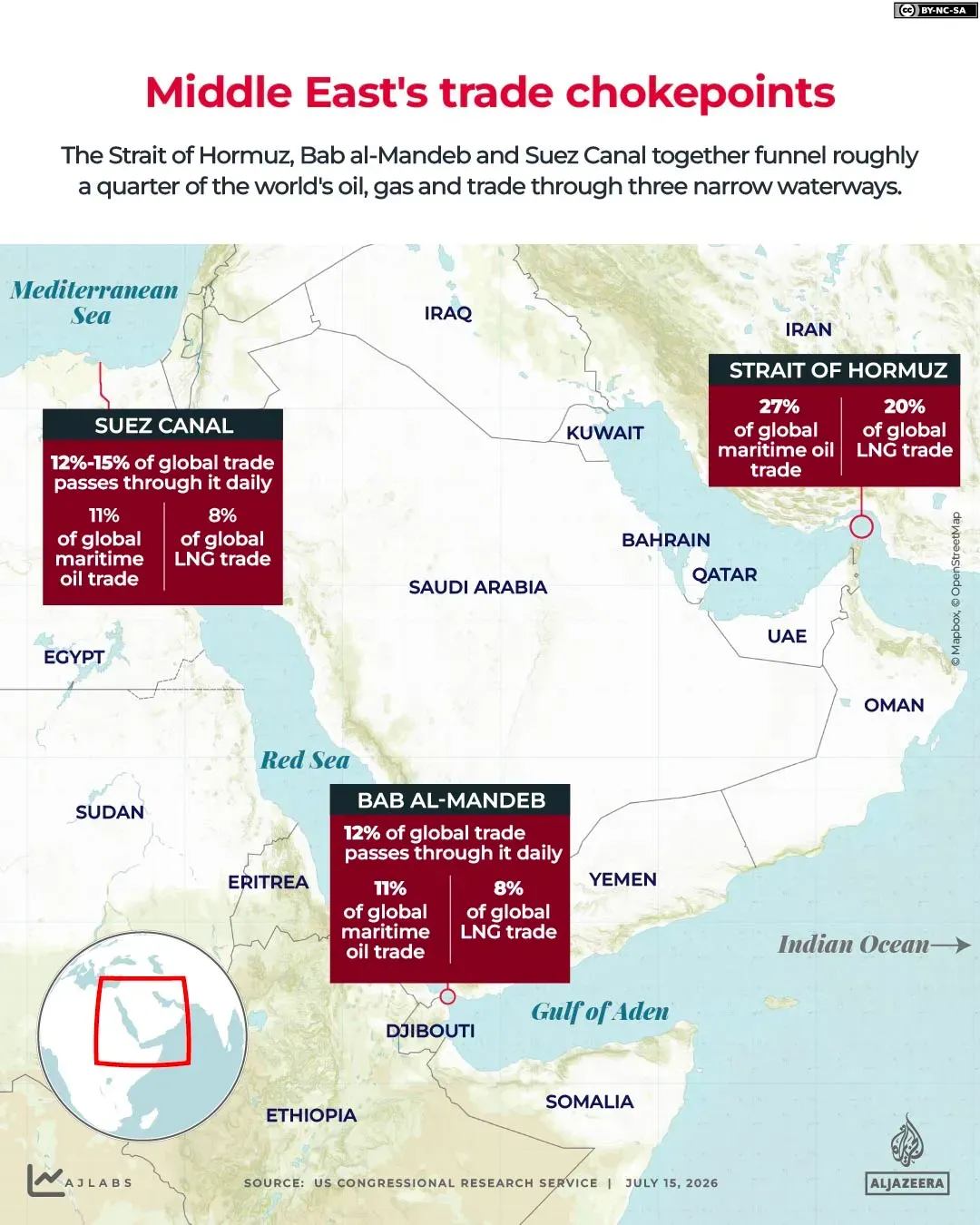
The Strait of Hormuz – through which one-fifth of the world’s oil and natural gas was shipped before the war – remains largely closed to commercial traffic, though Iran and Oman agreed last week on a temporary maritime route. Iran says the strait will not fully reopen until the United States fulfils its commitments under a lapsed interim peace deal, leaving longer-term security and management arrangements unresolved.
In the absence of a lasting resolution, the disruption is likely to continue supporting higher energy prices and creating windfalls for producers, despite placing energy companies’ regional assets and future projects at greater risk.
Rahul Choudhary, vice president of Upstream Research at Rystad Energy, an independent energy research company, said the conflict has already reduced the amount of oil and gas US energy firms are drawing from the Gulf region.
“Overall we expect US companies’ share of gas supplies [from the region] to fall by around 40 percent this year compared to last year [and] the share of oil supplies to drop by 30-35 percent,” he told Al Jazeera.
While higher commodity prices have helped offset the immediate financial impact, Choudhary said prolonged disruption is likely to delay major projects and weigh on the future growth plans of US oil and gas companies with a presence in the region.
Who has profited?
The surge in the oil price since early March, when Iran first closed the Strait of Hormuz, has delivered a windfall for oil companies, but gains have been tempered by challenges in the Gulf.
Chevron has limited exposure to Arab Gulf supply disruptions, with the region accounting for just 5 percent of its total global output. The group reported its highest quarterly profit in six years of $12bn in adjusted earnings on July 31.
Gas prices at a Chevron station in downtown Los Angeles, California, US [File: Kirby Lee-Imagn Images/Reuters]
ExxonMobil, by contrast, has been far more exposed to disruption in the Middle East, with the closure of the Strait of Hormuz and Iranian attacks on US-linked infrastructure in the region affecting its operations in Qatar and the United Arab Emirates (UAE), which together account for 20 percent of its global equity upstream supply, according to Choudhary.
“We already saw in H1 [the first half of] 2026, the company’s upstream earnings dropped by around $1.3bn compared to H1 2025, due to lower upstream volumes from the Middle East. However, the shortfall was covered well by higher commodity prices,” Choudhary said.
The contrast highlights a broader divide between those US energy companies which have benefitted from tighter global supply – and the corresponding rise in the oil price – and those with assets, partnerships or operations in the Gulf at greater risk of disruption caused by recent attacks on energy facilities.
Where are US energy companies exposed in the Gulf?
The Gulf’s energy sector is dominated by state-owned giants such as Saudi Aramco, Abu Dhabi National Oil Company (ADNOC) and QatarEnergy.
Although these national oil and gas companies retain control over the region’s reserves and core infrastructure, US energy firms have carved out strategic positions across the region.
US companies generate revenue through stakes in production assets, joint ventures, production agreements, refining and petrochemical projects, as well as through long-term contracts to provide equipment, engineering and operational expertise.
ExxonMobil has some of the largest US commercial interests in the Gulf.
The company has been a major partner in Qatar’s LNG sector for decades, holding stakes in several QatarEnergy LNG joint ventures linked to the expansion of the North Field. The field is the Qatari section of the North Field-South Pars structure, the world’s largest natural gas field, which Qatar shares with Iran, where it is known as South Pars. ExxonMobil also holds an interest in the UAE’s Upper Zakum offshore oilfield alongside ADNOC.
(Al Jazeera)
Similarly, ConocoPhillips joined the North Field East (NFE) and North Field South (NFS) expansion projects with QatarEnergy in 2022 to increase export capacity at Ras Laffan.
The US group, Occidental Petroleum, has become one of the largest foreign producers in Oman, operating the Mukhaizna heavy oilfield, the country’s biggest producing oilfield. It also holds interests in UAE gas and pipeline projects.
Chevron maintains a smaller but strategically important Gulf footprint. Through Saudi Arabian Chevron, the company operates oil assets in the Saudi-Kuwait Partitioned Zone, including the Wafra field. In July, it said it was exploring potential routes to move Iraqi crude to Mediterranean export terminals, which could reduce reliance on the Strait of Hormuz.
Where have attacks on energy facilities taken place?
According to the Armed Conflict Location and Event Data (ACLED), a US-registered independent conflict monitor, Iran and Iran-backed groups in the region have carried out at least 172 attacks on nonmilitary infrastructure across the six Gulf Cooperation Council (GCC) countries since the US and Israel launched their war on February 28.
Energy infrastructure has been hit hardest, with oil and gas facilities, along with power plants and desalination plants, accounting for nearly half (48 percent) of all strikes on nonmilitary targets.
The UAE, Kuwait and Bahrain have suffered the highest number of successful strikes, with the majority aimed at oil and gas facilities.
Among the sites that have been struck are Kuwait’s Mina Abdullah and Mina al-Ahmadi refineries, the Bahrain Petroleum Company oil refinery, and ADNOC’s al-Ruwais Industrial City and the Habshan gas complex.
There have also been several strikes on Saudi Aramco facilities, most recently a drone strike on July 27 on the Abqaiq processing complex, one of the most critical nodes in Saudi Arabia’s oil infrastructure, processing more than seven million barrels of oil per day.
Nasser Khdour, Middle East assistant research manager at ACLED, said: “Oil and gas facilities, power plants and water desalination plants are likely to remain key targets for Iran because disruption to these sectors can increase economic pressure on Gulf states, while disruption to global energy supplies increases prices and pressure on the US during periods of escalation.”
In March, a drone attack close to the Saudi Aramco-ExxonMobil SAMREF refinery in Yanbu disrupted oil loading at the city’s Red Sea port. While the attack had only minimal operational impact, it highlighted the vulnerability of US-linked energy assets in the region.
Qatar’s Ras Laffan Industrial City, the world’s largest LNG export hub, which hosts major joint ventures between QatarEnergy, ExxonMobil and ConocoPhillips, also came under repeated attack in March, at one point forcing the plant to halt production entirely. In June, an explosion as a result of a “technical malfunction” on Qatar’s Barzan gas project, where ExxonMobil holds a stake, killed at least 13 people.
“In terms of gas assets being impacted, major blows have been [dealt to] companies [that are] part of LNG projects in Qatar: ExxonMobil and ConocoPhillips,” Choudhary said.
He added that ExxonMobil’s share of LNG supply from Qatar is expected to fall significantly this year to about four million tonnes compared with 13 million tonnes last year, while ConocoPhillips has also experienced reduced volumes to one million tonnes this year compared with 2.5 million tonnes last year.
The attacks on Qatar’s LNG infrastructure could have longer-term consequences. Damage to LNG trains at Ras Laffan could take years to repair, according to QatarEnergy, while delays to Qatar’s North Field expansion projects could push back planned supply growth.
“The attack on LNG trains 4 and 6 at Rasgas damaged roughly 13 million tonnes of capacity, which will take anywhere between three to five years to come back online with a total repair cost estimate of around $3bn,” said Choudhary.
He added that the second most impacted gas project has been the Shah gas project in the UAE, in which Occidental Petroleum has a 40-percent stake and where drone attacks in March caused a fire at the gas plant that halted operations.
The conflict has also affected ExxonMobil’s oil interests in the UAE, Choudhary said. Production from Upper Zakum, where ExxonMobil has a 28 percent stake, was reduced between March and May when export routes were disrupted, limiting the ability to move offshore crude.
Beyond the UAE, the most significant impact on US companies’ oilfield operations played out in Iraq. A drone attack hit the Sarsang oilfield in March, followed by an explosion at one of its storage facilities in April, together causing damage to the field.
Looking ahead, Choudhary said higher prices could support cash flows, but prolonged conflict risks could threaten future growth. ExxonMobil’s $10bn Upper Zakum and Qatar LNG expansions could face delays, while ConocoPhillips remains exposed through investments in higher-risk markets, including its planned 42-percent stake in BP’s Kirkuk operations in Iraq.
“For companies like Chevron and Occidental Petroleum, whose presence are in less volatile countries like Israel and Oman respectively, the impact of escalations will not be as severe, as we have not seen significant disruption in these countries,” said Choudhary.
US oilfield service companies in the Gulf
Oilfield service giants, including US firms SLB (formerly Schlumberger), Halliburton and Baker Hughes, provide drilling technologies, equipment and operational expertise across the Gulf, supporting Saudi Aramco, ADNOC and QatarEnergy.
For oilfield service companies, the outlook is mixed, according to Chinmayi Teggi, energy research analyst at Rystad Energy, a research group. While higher oil prices and energy security concerns could lift demand over time, near-term margins remain under pressure from higher logistical costs, supply-chain disruptions and delayed projects.
“For the Big Three (SLB, Baker Hughes and Halliburton), the conflict continues to weigh on regional revenues,” Teggi told Al Jazeera, adding that second-quarter Middle East revenues were down 8-10 percent compared with the previous year across the three companies, while higher oil prices meant revenues were higher in other geographies.
However, a recovery in suspended operations and production could help drive growth into 2027.
For US companies, therefore, the Gulf remains both an opportunity and a risk.
“The impact on US companies will depend on the extent of exposure and countries in which these companies are present,” Choudhary said.
Their investments have secured US access to some of the world’s most important oil and LNG projects, but the conflict has exposed the risk of operating in a region where energy infrastructure has become increasingly vulnerable to geopolitical conflict.
US President Donald Trump has repeatedly warned Iran against restricting access to the Strait of Hormuz, arguing that the waterway must remain open to global commerce.
But for companies with billions of dollars invested across the Gulf, the challenge isn’t just about keeping shipments moving – it is ensuring the infrastructure remains secure, they say.
People sits on a safer ground after another flash flood alert iin Nuwakot district, Nepal, on Friday. Photo by Narendra Shresth/EPA
Aug. 28 (UPI) — After Wednesday’s devastating glacier collapse in the Himalayas, scientists and geologists are warning that unstable conditions and the accelerating retreat of Andean ice sheets are exposing Chile, Argentina and Peru to the risk of catastrophic floods and mudslides.
The retreat of Andean glaciers has accelerated the formation of unstable lakes and exposed large slopes of loose rock that can collapse more easily as global temperatures rise, experts say.
Fast-moving floods and mudslides through mountain valleys could directly threaten drinking water supplies, energy projects and the lives of thousands of people living in vulnerable areas of the three countries.
The Himalayan disaster, which has left almost 600 people dead and more than 1,900 others missing, experts say that although monitoring and early-warning technologies exist, the speed and scale of glacial lake outburst floods, or GLOFs, such as the one in Nepal can make responding difficult.
“What happened in Nepal has already happened in Argentina,” Juan Pablo Milana, a researcher with Argentina’s National Scientific and Technical Research Council, told Infobae.
In November 2005, Laguna de los Erizos in San Juan province suddenly burst, releasing more than 1.1 billion cubic feet of water in just 67 minutes, Milana said. The flood traveled more than 155 miles, destroying crops and roads and isolating communities. No deaths were reported because the area was sparsely populated.
In Argentina, the areas at greatest risk are concentrated in Patagonia. One of the most critical sites currently under observation is the tourist town of El Chaltén, where instability on the slopes of Cerro Solo directly threatens Laguna Torre.
Lakes formed by the retreat of large ice masses, such as the Upsala Glacier, also pose a potential threat. In 2013, a collapse in the glacier’s channel generated a destructive wave in Onelli Bay.
Argentina’s Geological and Mining Survey and research teams from the University of Buenos Aires are responsible for monitoring the threats.
They combine satellite imagery used to update the National Glacier Inventory with projects to establish ground-based early-warning systems. Those systems are designed to use weather stations and hydrological sensors to detect changes in water levels and unusual slope movements in real time.
With more than 26,000 glaciers, Chile is among the countries most exposed to GLOFs worldwide, with risks divided between two distinct geographic areas.
The largest high-risk zone is concentrated in remote Chilean Patagonia, particularly the Aysén and Magallanes regions, where the rapid retreat of the Northern and Southern Patagonian Ice Fields has increased the formation of unstable lakes held back by fragile natural dams, although the region has a low population density.
Geographer Simón Inzunza told Chilean broadcaster T13 that the country has recorded GLOFs, particularly in Patagonia, as well as other emergencies associated with glacier melting and ice collapses.
In central Chile, watersheds are smaller but the risk is significant because of the high concentration of infrastructure, including hydroelectric plants, mining operations and drinking water systems serving millions of people.
Darío Ormeño, a geologist and professor at Andrés Bello University’s School of Earth Sciences, told BioBioChile radio that a mudslide is a real risk in Chile, although an event on the scale of the Nepal disaster is unlikely.
“Our glaciers are much smaller and do not have such an extreme elevation difference,” Ormeño said.
Chilean government agencies monitor glaciers using a national inventory updated with satellite imagery and radar. The tools allow authorities to measure the growth of glacial lakes and detect cracks in Andean slopes in an effort to issue early warnings before a disaster occurs.
Peru faces the highest risk in South America of disasters caused by GLOFs, with a history of deadly events and significant geographic vulnerability.
Paola Moschella, director of glacier research at Peru’s National Institute for Research on Glaciers and Mountain Ecosystems, or INAIGEM, told Exitosa radio that Peru has 528 lakes at risk of overflowing, including 58 considered high risk.
Unlike Patagonia and some high-altitude areas of Chile and Argentina, where glaciers are in remote valleys, entire cities and critical infrastructure in the Peruvian Andes, particularly in the Áncash region, lie directly along potential flood and mudslide routes.
Lake Palcacocha, in Peru’s Cordillera Blanca mountain range, is considered by scientists to be one of the world’s most critical cases because of its instability and proximity to the city of Huaraz, which has more than 120,000 residents.
The lake holds more than 599 million cubic feet of water and is fed by hanging glaciers that are susceptible to large avalanches as global temperatures rise.
If a large block of ice were to collapse into the lake, it could generate a massive wave capable of breaching its natural barriers and triggering a destructive flood that could reach urban areas in less than an hour.
The threat has a deadly historical precedent. In 1941, a similar outburst from the same lake destroyed about one-third of Huaraz and killed thousands of people.
Scientific monitoring in Peru has advanced significantly through the deployment of permanent personnel in high-altitude areas and the use of satellite surveillance systems.
Experts warn, however, that physical mitigation infrastructure installed in previous decades is outdated or insufficient to contain current water volumes.
Footage shows an Arkansas state patrol officer pulling a passenger by his hair and punching him during an arrest following a high-speed police chase. The man was charged with resisting arrest and obstructing governmental operations.
The Department of Homeland Security said Milo Yiannopoulos, a British citizen, was detained by Immigration and Customs Enforcement agents at the New Orleans International Airport on Friday. He was deported to the United Kingdom that same day. File Photo by John Angelillo/UPI | License Photo
Aug. 29 (UPI) — Far-right political commentator Milo Yiannopoulos was deported to the United Kingdom, immigration officials said Saturday.
The Department of Homeland Security said Yiannopoulos, a British citizen, was detained by Immigration and Customs Enforcement agents at the New Orleans International Airport on Friday.
He was deported “back to his home country” that same night, a DHS spokesperson said in a statement to the BBC.
Yiannopoulos entered the United States legally in May 2019 but “chose to overstay his welcome in violation of our nation’s laws,” DHS said in a statement on X.
“Yiannopoulos was issued a final order of removal by an Immigration Judge on July 22, after failing to show up for his immigration hearing,” the statement added.
Yiannopoulos was an editor for Breitbart News and interned for former U.S. Rep. Marjorie Taylor Greene.
In 2024, he worked on the presidential bid of rapper Ye, formerly known as Kanye West.
Yiannopoulos is a vocal supporter of immigration enforcement.
“California needs ICE checkpoints at supermarket entrances, gas stations, strip malls, intersections and government buildings, with on the spot deportation for anyone who can’t prove they are in the US legally,” he wrote on X last year.
In 2025, he said “We have got to deport millions and millions of people.”
“Without that, nothing else matters,” he added in a social media post.
Aug. 29 (UPI) — Tennessee Gov. Bill Lee on Friday said he wants to rename Nashville International Airport in honor of Dolly Parton.
Lee said he wants to create a lasting tribute to the “indelible legacy” of the country music legend, who died on Tuesday at the age of 80.
“Dolly Parton’s extraordinary life is forever woven into the fabric of our state,” Lee said in a statement. “From her rural mountain home in East Tennessee to global stages, Dolly carried the Volunteer Spirit with her.
“At a place where Tennessee welcomes the world, it is fitting that Nashville International Airport would bear the name of our state’s favorite daughter and greet travelers with the enduring legacy of Dolly’s music, generosity, faith, and kindness.”
Lee said Parton’s team was “touched by the idea.” The 11-time Grammy winner had lived in Nashville since the 60s.
The proposal will be discussed by the Metro Nashville Airport Authority at its next meeting on Sept. 17.
Parton died after “bravely facing a brief battle with cancer,” her publicist said. Her career spanned more than six decades.
Alongside her Grammy Awards, she earned three Emmy Awards, an honorary Academy Award and a star on the Hollywood Walk of Fame.
Her many hits included “Jolene,” “9 to 5” and “I Will Always Love You,” which was famously covered by Whitney Houston.
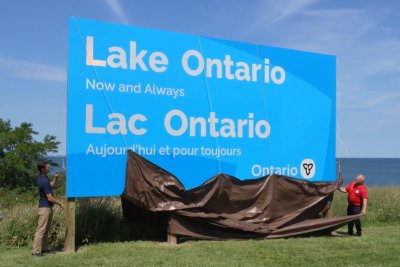
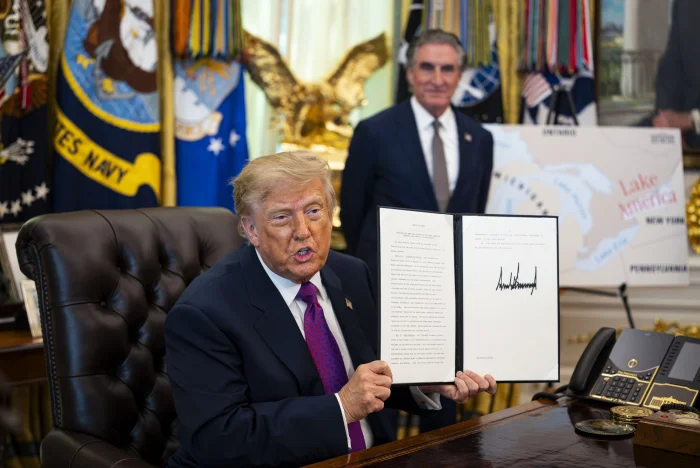
Aug. 29 (UPI) — Ontario Premier Doug Ford on Saturday erected a massive sign saying “Lake Ontario — Now and Always” in a rebuke to President Donald Trump‘s move to rename the body of water Lake America.
The sign in Hamilton sits on the shores of Lake Ontario and measures 18 feet tall, nearly two stories. It also says in French, “Lac Ontario — Aujourd’hui et pour toujours.”
“I’m here on the shores of beautiful Lake Ontario, a crown jewel of our province and our country,” Ford said in a video statement posted on X. “You may have heard that President Trump is trying to rename this lake, all because he doesn’t like Ontario and Canada standing up for ourselves.”
“But let’s be serious,” he added. “Long before President Trump, this lake was called Lake Ontario, and long after President Trump is gone, it will still be called Lake Ontario.”
He called Canada “entitled” and repeated claims that the country has ripped off the United States for years.
Canadian Prime Minister said it would be called Lake Ontario “now and always.”
J. Conrad Sence, president of Seneca Nation, said, “The president cannot assert ownership over our culture or erase it through irresponsible political action.”
“His order should be rescinded and the name Lake Ontario should be left as it is, reflective of the Seneca people, other Haudenosaunee nations and all Indigenous people surrounding the lake,” Seneca said in a statement shared with WIVB.
“To us, Lake Ontario is not a political pawn,” he added. “It does not separate the countries of the United States and Canada. It is all Indigenous land, which has been occupied by Indigenous people since time immemorial.”
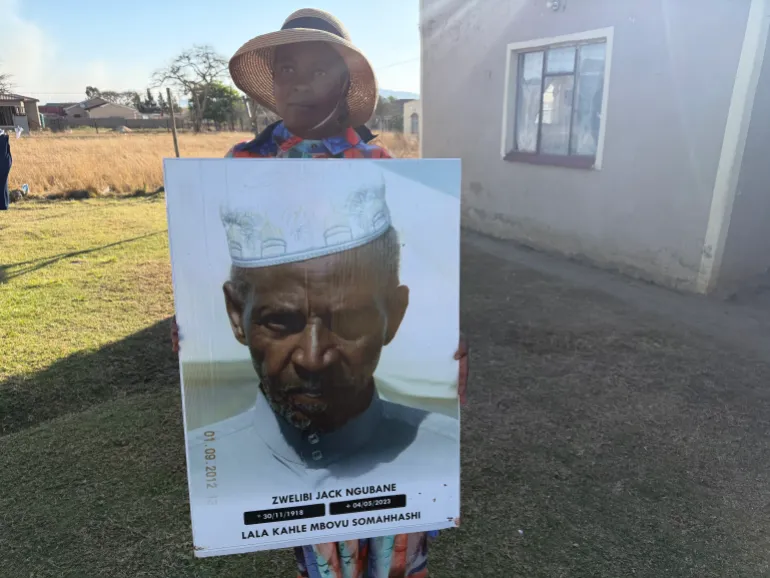
Nquthu, South Africa – When Zwelibi Jack Ngubane died at the age of 105, he had already made one thing clear to his family: he wanted to be buried as a Muslim.
Hundreds of family and community members gathered for his funeral in Nquthu, a rural part of northern KwaZulu-Natal where Christianity and traditional African beliefs are dominant and Muslims are a tiny minority. Ngubane had converted to Islam late in life after observing the faith of his young grandson.
When he died, his family honoured his wishes. His funeral was conducted according to Muslim burial rites before he was laid to rest in the family burial plot in his village. For a community largely unfamiliar with Islamic burial practices, the funeral was a novelty.
But it wasn’t a controversy. That distinction has become increasingly important in South Africa.
In recent months, anti-Muslim rhetoric has become more visible online, intersecting with a heated national debate about immigration and anti-migrant movements. Posts have accused Muslims of attempting to take over South Africa, questioned their belonging in the country and accused Muslim organisations of using charity and poverty to convert Black South Africans to Islam.
One social media post complained that humanitarian organisation Gift of the Givers had been “getting on our nerves with their insistence on pushing their Muslim beliefs in South Africa”. Another claimed: “Most foreigners in South Africa are Muslim and if you look most countries experiencing war are Muslim countries not Christian ones.” Others have accused Muslims of “targeting poverty-stricken communities and converting them to Islam”.
But in the rolling hills and villages of Nquthu, the picture is different.
For Samukelisiwe Ngubane, her first encounters with Muslims came through Indian shopkeepers in a nearby town. “We have never had a problem. Some people are curious about what they [Muslims] do, but there have been no problems,” she told Al Jazeera.
When her brother, Khethukuthula Dlame, converted to Islam in 2012 as a teenager, it was hardly an issue. Dlame, now 26 and one of only a handful of Muslims known in his village, is familiar enough to his neighbours that his Islamic clothing is a source of teasing rather than hostility. One neighbour jokes that he wears a dress.
“In these communities, there’s harmony and respect. People really respect my religion,” he told Al Jazeera, standing alongside his grandfather’s gravesite.
The contrast raises a question: is South Africa experiencing a rise in Islamophobia, or is social media making a marginal phenomenon appear much larger than it is?
Muslims make up a small minority in South Africa. The country’s 2022 census counted less than one million Muslims, or approximately 1.6 percent of the population. South African Muslim leaders give higher estimates, with some putting the country’s Muslim population at between two million and five million people.
Samukelisiwe Ngubane, a community activist in Nquthu, holds a photograph of her grandfather, Zwelibi Jack Ngubane [Qaanitah Hunter/Al Jazeera]
But Islam’s presence in South Africa stretches back centuries. Muslims came to the Cape through several routes, including enslavement and political exile, from parts of Asia and the Indian Ocean world under Dutch colonial rule from the 17th century. Muslims were already present at the Cape before the arrival in 1694 of Shaykh Yusuf of Macassar, a Muslim scholar and political exile.
Today, the community includes descendants of enslaved Muslims brought to the Cape centuries ago, South Africans of Indian ancestry whose families have lived in the country for generations, Black African Muslims, converts and more recent migrants.
Dlame believes attempts to mobilise people against Muslims are not primarily emerging from rural communities.
“The move to orchestrated hate towards Muslims is not at a community level. If you’re looking at people when they’re mobilising, it’s not people from the villages. It is people in cities and in hostels.”
“The people behind this understand the flash points. If you really want to cause divisions, you use tribal rhetoric and the people you mobilise and agitate are in hostels because the living conditions are not good.”
South Africa has repeatedly experienced outbreaks of xenophobic violence since the end of apartheid, with migrants from elsewhere on the African continent often bearing the brunt. The question is whether some of that anti-migrant rhetoric is also being directed at Muslims.
‘No widespread Islamophobia’
Thembisa Fakude, a South African political analyst and journalist who is Muslim, told Al Jazeera that fears of widespread Islamophobia are being overstated.
“I’ll argue that there is no widespread or any orchestrated, well-planned Islamophobia directed towards Muslims. We don’t have that.”
He acknowledges anti-Muslim rhetoric online, but argues that it should not automatically be interpreted as evidence that South African society itself has become Islamophobic.
“It’s true, but it’s not only South Africa. This is global … In South Africa, yes, it’s true. You find that there will always be bigots, you know, and others will be, you know, ultra-Zulu nationalist or ultra-nationalist.”
Fakude also argues that Muslim communities need to confront allegations of racism and exploitative labour practices within their own ranks rather than characterising every criticism as religious prejudice.
“It is a storm in a teacup. And I think what’s concerning me is this othering by Muslims wanting to position themselves as victims and taking this course by themselves. It’s extremely dangerous.”
What starts online does not always stay there
Muslim religious leader Moulana Sulaiman Ravat told Al Jazeera that, while ordinary South Africans are largely not Islamophobic, he is more cautious about what could happen next.
“At the same time, I think on the ground, South Africans in the main are not Islamophobic, and there’s a variety of indicators to substantiate that.”
Samukelisiwe Ngubane says Muslims have long been part of everyday life in the rural KwaZulu-Natal community [Qaanitah Hunter/Al Jazeera]
But Ravat warns that online rhetoric can influence attitudes over time.
“I don’t think we can go to the other extreme. We must understand that there are certain global political realities, and the Islamophobia project aligns with those global agendas. And therefore, if we become complacent or nonchalant about it, what people are exposed to online could start impacting their psyche and how they think.”
Ravat argues that Muslim identity is sometimes being presented as evidence that a person is somehow less South African. For him, the premise is false.
“I would think I would say they are deeply religious and deeply patriotic, and there is no contradiction between the two.”
His own children, he said, are fifth-generation South African Muslims of Indian heritage.
“They don’t speak the language any more. They are as South African as anyone else.”
Two South Africas?
Back in Nquthu, Islam does not arrive through a social media algorithm. It arrives through a neighbour, where Dlame’s mother cooks a halal meal for this reporter and other guests. Earlier, at a community meeting, Dlame explained that Muslims, too, believe that Jesus was a prophet of God. Ordinary villagers listened attentively and joined in Zulu melodies in praise of God.
For now, the distance between the online conversation and life in communities such as Nquthu remains significant. But Ravat says that does not mean the possibility of deeper hostility should be dismissed.
“Better be proactive than reactive. It’s a global reality. It has been for the last 20 years. And the fact that it could increase in South Africa and could have serious consequences, you could argue, is unlikely but not impossible.”
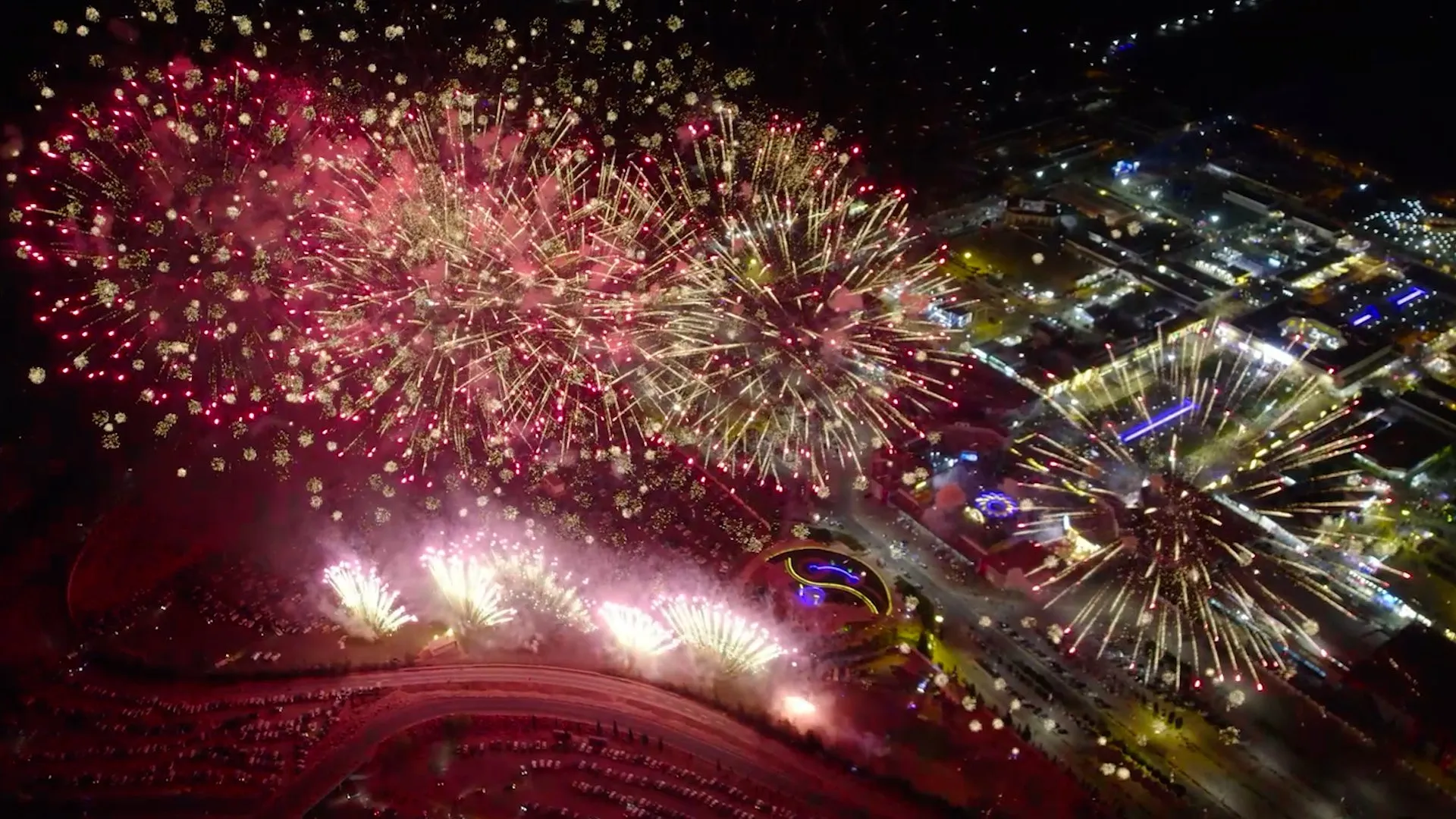
Footage shows fireworks lighting up Damascus as the Syrian capital hosts its first Damascus International Fair since the fall of Bashar al-Assad. The 63rd edition is themed ‘Syria Shines Again’.
Aug. 29 (UPI) — A federal judge in California on Friday ruled that the Trump administration violated the Constitution’s First and Fifth Amendments when it sought to deport international students critical of Israel.
Judge Noël Wise, of the Northern District of California, sided with student journalists at the Stanford Daily, which sued because some of its noncitizen writers had been afraid of deportation for expressing opinions critical of the administration’s policies.
“Foundational to America’s enduring democracy are our freedoms of speech and the press embodied in the First Amendment,” Wise wrote in a 90-page ruling. “In the United States, free speech, including the freedom to criticize the government and its leaders, is not a sign of our democracy’s fragility. It is evidence of its strength.”
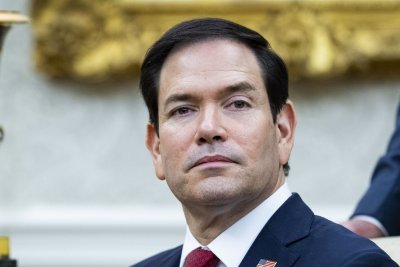
Wise ruled that it was unconstitutional for State Secretary Marco Rubio to use immigration law to deport students for their opinions.
Last year, Rubio sought the deportations of several student activists in the pro-Palestininan movement, including Columbia University’s Mahmoud Khalil and Tufts University’s Rümeysa Öztürk.
Fearing similar repression, the Stanford Daily sued to stop the government from revoking the visas of other students with views critical of Israel’s war in Gaza.
Wise said the strength of the Constitution “is diminished when members of our society — citizens and noncitizens alike — must self-censor and ‘behave’ or suffer the government’s retaliation.”
“In March 2025, that retaliation was directed at those engaged in pro-Palestine and anti-Israel speech,” the judge continued. “In September 2025, caught in the government’s net were people critical of Charlie Kirk.
“In May 2026, it potentially included ‘weighing in on a peace deal that’s being negotiated’ in Iran regarding the Strait of Hormuz. Tomorrow, or perhaps even today, targets may include anyone in the United States who exercises their freedom of speech to simply express opinions the government does not like.”
Attorney Conor Fitzpatrick, whose Foundation for Individual Rights and Expression sued the government on behalf of the students, said, “Today’s ruling proves that free speech isn’t a privilege, but the inalienable right of every man, woman, and child.”
“In America, free speech doesn’t just belong to the people who say things the government agrees with,” the attorney added in a statement.
Anger is growing in the flood-hit Nuwakot district as survivors accuse the government of delays in delivering aid and finding missing loved ones after a flash flood devastated the area near the Nepal-Tibet border on Wednesday, Al Jazeera’s Barnaby Lo reports.
Gabriel Perez was ordered to return $107,529 in unlawful trading, earned on the platform Kalshi, and pay a monetary penalty of $65,000. He was fined for using his knowledge of President Donald Trump’s speeches to place bets. Photo by Al Drago/UPI | License Photo
Aug. 29 (UPI) — A former White House teleprompter operator on Friday was fined $172,000 for placing bets on prediction markets using his knowledge of President Donald Trump‘s statements.
Gabriel Perez was ordered to return $107,529 in unlawful trading, earned on the platform Kalshi, and pay a monetary penalty of $65,000, the Commodity Futures Trading Commission said.
He is also not allowed to participate in trading for three years.
“The order finds that between December 2025 and February 2026, while working as a teleprompter operator for the White House, Perez traded presidential mention market contracts, which are event contracts reflecting words or phrases the President may use during his speeches,” federal regulars said in a statement.
“In his position, Perez had access to presidential speeches prior to those speeches being delivered and Perez misappropriated that information — in breach of his duty of trust and confidence — to trade presidential mention market contracts, generating over $107,500 in profits.”
Perez had been Trump’s teleprompter operator since 2016. He was earning a $175,000 salary in 2026.
He reportedly made bets on more than a dozen of Trump’s speeches over three months, including the State of the Union and a speech at the World Economic Forum in Davos, Switzerland.
Earlier this year, the White House warned staff against participating in prediction markets.
“The White House has strict ethics guidelines that we expect all staffers and officials to follow,” White House spokesperson Davis Ingle told ABC News.
The social media personality had been detained by immigration agents at an airport in New Orleans earlier in the week.
Published On 29 Aug 202629 Aug 2026
Milo Yiannopoulos, a far-right provocateur who feuded with other right-wing content creators, has been deported to the United Kingdom, according to authorities in the United States.
On Saturday, the Department of Homeland Security (DHS) confirmed Yiannopoulos’s removal a day earlier.
Recommended Stories
list of 3 itemsend of list
“He chose to overstay his welcome in violation of our nation’s laws,” the department posted on social media, in announcing Yiannopoulos’s arrest.
According to the department’s statement, Yiannopoulos was apprehended by Immigration and Customs Enforcement (ICE) while travelling through the Louis Armstrong New Orleans international airport in Louisiana on Thursday.
He entered the country through New York City in May 2019. After Yiannopoulos missed an immigration hearing earlier this year, a judge issued a final order for his removal on July 22.
In announcing Yiannopoulos’s detention on Friday, the DHS encouraged noncitizens who overstayed their visas to self-deport.
“We encourage every person here illegally to take advantage of this offer and reserve the chance to come back to the U.S. the right legal way to live the American dream,” the department wrote. “If not, you will be arrested and deported without a chance to return.”
Yiannopoulos has not publicly weighed in on his deportation, with his usually active social media account on X staying silent since his detention.
But Yiannopoulos had formerly been an outspoken supporter of US President Donald Trump and the mass deportation campaign the Republican leader had pledged to undertake during his second term.
“Zero immigration for the next 20 years. No ifs, no buts,” Yiannopoulos wrote in a social media post last year.
Known for his attacks on feminism, immigrants and Muslims, Yiannopoulos is believed to have been in New Orleans this week as part of his work with musician Ye, formerly known as Kanye West.
Far-right activist and Islamophobe Laura Loomer, a Trump ally, has celebrated Yiannopoulos’s removal after calling for his deportation.
She has often used her social media platform to call on the Trump administration to take action against specific individuals. Loomer and Yiannopoulos have been feuding for years.
“Milo is going to be deported back to the UK where he can live among the Muslims he has recently chosen to embrace,” Loomer said in a social media post on Friday. “Today is a great day for America.”
Loomer also called for leftist streamer Hasan Piker, who has been critical of Israel, to be deported as well. Piker, however, is a US citizen.
“DEPORT HASAN PIKER AND HIS TURKISH MOM NEXT!” she wrote.
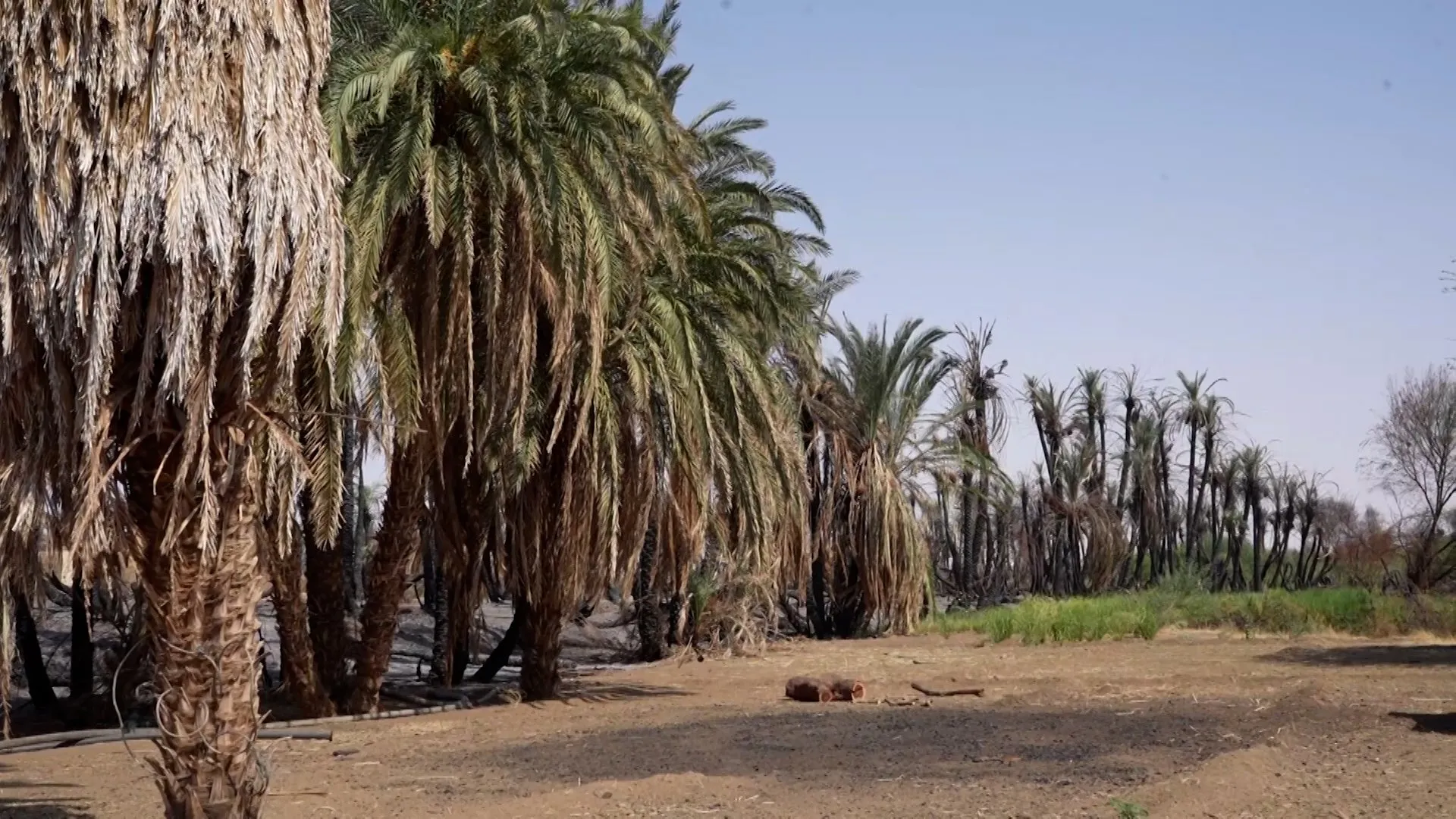
In Sudan, date palm trees are an economic lifeline for residents of Northern State. However, drought and successive wildfires in recent years have damaged thousands of trees, threatening the livelihoods of farmers across the region.
Lightning flashes over the Kennedy Space Center’s Vehicle Assembly Building at the Cape Canaveral Space Force Station, Florida, on Aug. 4. On Friday, President Donald Trump announced the U.S. Space Academy to train future space staff. Photo by Joe Marino/UPI | License Photo
Aug. 28 (UPI) — President Donald Trump Friday signed an executive order to create the U.S. Space Academy to train and educate potential aerospace workers and service members.
“That’s a big deal. So, you think of West Point, and you think of Annapolis, and you think of the Air Force Academy, and you think of the Coast Guard Academy — great — they’re all great, but we’re going to have now a space force,” Trump said at NASA’s Johnson Space Center in Houston. “We’re going to have an academy for what the people in this room love the most.”
The action said the mandate for the academy is to “strengthen the Nation’s space workforce by expanding opportunities to educate and develop the next generation of leaders across the space domain.”
Trump also awarded the Congressional Space Medal of Honor to the crew of the Artemis II.
He also signed a directive to begin the process of creating the new academy by creating a commission chaired by NASA Administrator Jared Isaacman. The commission will report to the president within 120 days on key details to establish the school.
The White House said the academy will be a “NASA-led federal academy dedicated to combining rigorous technical education with leadership development, discipline and a durable commitment to public service. The Space Academy will develop a professional corps of civically grounded leaders prepared to advance American interests within the space domain.”
The location hasn’t yet been named, but Trump said in his remarks that Sen. Ted Cruz, R-Texas, has been pushing for it to be in Texas.
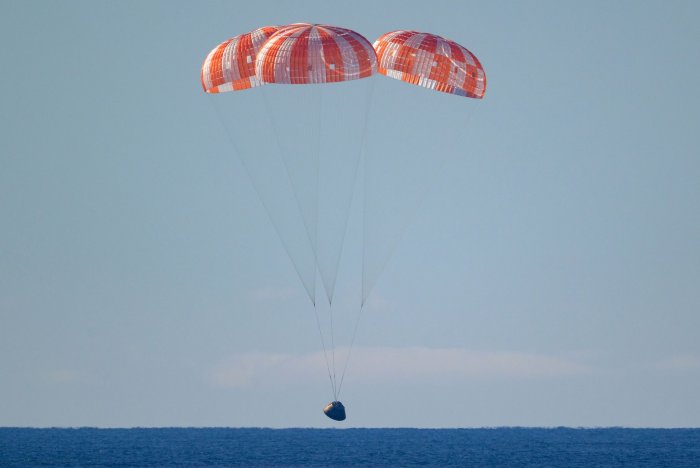
NASA’s Orion spacecraft, with the four-member Artemis II crew aboard, is seen under parachutes as it lands in the Pacific Ocean off the coast of California on Friday after its nearly 10-day journey around the Moon and back. NASA Photo by Bill Ingalls/UPI | License Photo
People walk around the site of a Russian strike on an ammunition storage warehouse near Kyiv, Ukraine, Saturday. At least 37 people died, and many others were injured. Photo by Sergey Dolzhenko/EPA
Aug. 29 (UPI) — At least 37 people are dead and many more wounded after a Russian drone hit an ammunition warehouse, which then caused a large fire and several explosions in a residential area near Kyiv.
The attack on Friday, which was in Myla, in the Kyiv district, was part of a barrage of aerial attacks by Russia. But the ammunition depot made the attack much worse.
Ukrainian President Volodymyr Zelinsky said he would punish those who allowed explosive materials storage so close to homes.
“Since yesterday evening and throughout the day today, I have been receiving reports on the situation in the village of Myla, Kyiv region, where detonation began following a Russian strike. A terrible situation and terrible negligence on the part of those who stored explosives right next to people,” Zelensky posted on X.
“I want to separately thank everyone who is there on the ground and at other sites of Russian strikes, doing everything possible to help and save people,” he added.
Tymur Tkachenko, head of the Kyiv region military administration, said that as of Saturday afternoon, 37 people were known to have died, and the toll could still rise. It is one of the deadliest Kyiv has seen since the start of the war more than four years ago, CNN reported.
“This is a terrible and irreparable loss. Our heartfelt condolences go out to the families and loved ones of those who have died,” Tkachenko said.
A home for older adults and disabled people was severely damaged, The New York Times reported officials said. On Sunday, the capital region will observe a day of mourning..
Taras Didych, the long-time head of the local municipality, was killed when he arrived at the scene to help, Ukrainian authorities said.
“He always stood by his people. He did not abandon them even during the Russian occupation — he was there, offering support and assistance, and keeping the community together during one of the most terrifying periods,” CNN reported Mykola Kalashnyk, Ukraine‘s Minister for Recovery, Infrastructure and Transport, said in a statement.
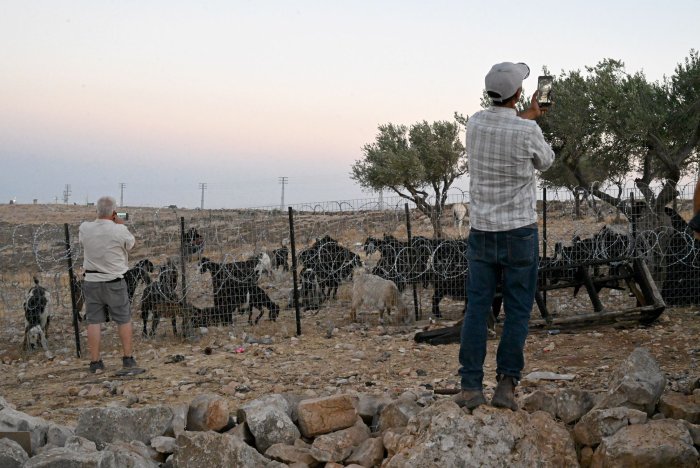
Palestinian Nayef Kaabnah takes videos of a masked Israeli settler with his herd of goats next to the fence surrounding Kaabnah’s property, on the edge of Taybeh, the only Christian village in the West Bank, on August 27, 2026. Photo by Debbie Hill/UPI | License Photo
Aug. 28 (UPI) — Treasury Secretary Scott Bessent announced Friday that the United States is working to cut off bank branches in the United Arab Emirates from the U.S. financial system, part of his campaign to target financial systems that enable Iran.
The Department of the Treasury said it is proposing a rule that will ban U.S. banks from facilitating transactions involving the UAE-based branches of Banque Misr, one of Egypt’s largest banks.
“Iran’s enablers cannot continue to enjoy access to the U.S. dollar and the global financial system,” Bessent said in a statement. “Banque Misr UAE decided to find out the hard way, and today, we are taking the first step in holding it accountable for its continued, egregious support of the Iranian regime.”
Bessent on Monday announced a new pressure campaign called Operation Economic Outcast to force countries to sever ties with Iran.
The department accused Manque Misr’s operations in the UAE of being “a significant conduit for Iranian shadow banking.” It said the bank allows Iranian entities access to U.S. dollars, circumventing U.S. sanctions.
Treasury said it had found 103 potential front companies that moved $1.8 billion through Banque Misr UAE accounts from January 2024 to June 2026.
Bessent is invoking powers under the Patriot Act that allow the treasury secretary to take action against foreign banks that are a “primary money-laundering concern” to the U.S.
It also said the Treasury will sanction the general manager of the Dubai branch of Bank Melli and a Hong Kong-based company it alleges is laundering money for Iran.
Earlier this month the UAE said it was suspending all trade with Iran.
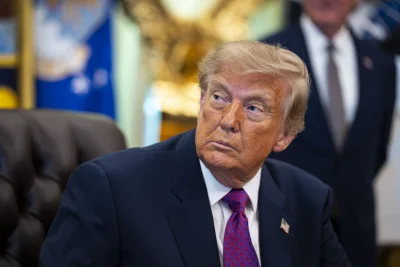
President Donald Trump signs an executive order to rename Lake Ontario as Lake America in the Oval Office of the White House on Thursday. Photo by Al Drago/UPI | License Photo
An Immigration and Customs Enforcement officer walks back to his vehicle after checking the documentation of a construction worker during a random stop in Minneapolis, Minn., on January 9. File Photo by Craig Lassig/UPI | License Photo
Aug. 28 (UPI) — A federal appeals court on Friday ruled against a policy by the U.S. Immigration and Customs Enforcement that greatly expanded detention for migrants living in the country for years.
Under the Trump administration, ICE has changed its policies to treat people with extensive ties to the United States as still “seeking admission.”
That policy shift allows the agency to subject people who have lived in the country for years to mandatory detention without bond.
On Friday, the 3rd U.S. Circuit Court of Appeals struck down the policy, marking the eighth time ICE has been rejected over this same issue in federal appeals court.
In more than 13,000 cases challenging the policy, judges have ruled against ICE more than 90% of the time, Politico reported.
The federal panel said ICE’s policy is incongruent with the law, which is to be applied differently depending on how recently a specific person entered the country.
“Contrary to the Government’s view, the Illegal Immigration Reform and Immigrant Responsibility Act of 1996 (‘IIRIRA’) retained two tracks for detention even though it overhauled the procedures for removing noncitizens from the United States,” the court wrote in its decision.
“Before IIRIRA, noncitizens arriving in the United States were subject to ‘exclusion’ and those already in the country were subject to ‘deportation’ — the former were held in mandatory detention while the latter were afforded bond.”
The appeals court also ruled that ICE’s policy violates the Constitution’s Due Process Clause.
“The Supreme Court has recognized the Fifth Amendment’s ‘Due Process Clause applies to all ‘persons’ within the United States, including aliens, whether their presence here is lawful, unlawful, temporary, or permanent.'”
The court added: “Because Petitioners here have lived in the United States for decades, they have ‘established connections’ in the country and are entitled to due process rights beyond those provided to noncitizens at the border.”
President Donald Trump signs an executive order to rename Lake Ontario as Lake America in the Oval Office of the White House on Thursday. Photo by Al Drago/UPI | License Photo
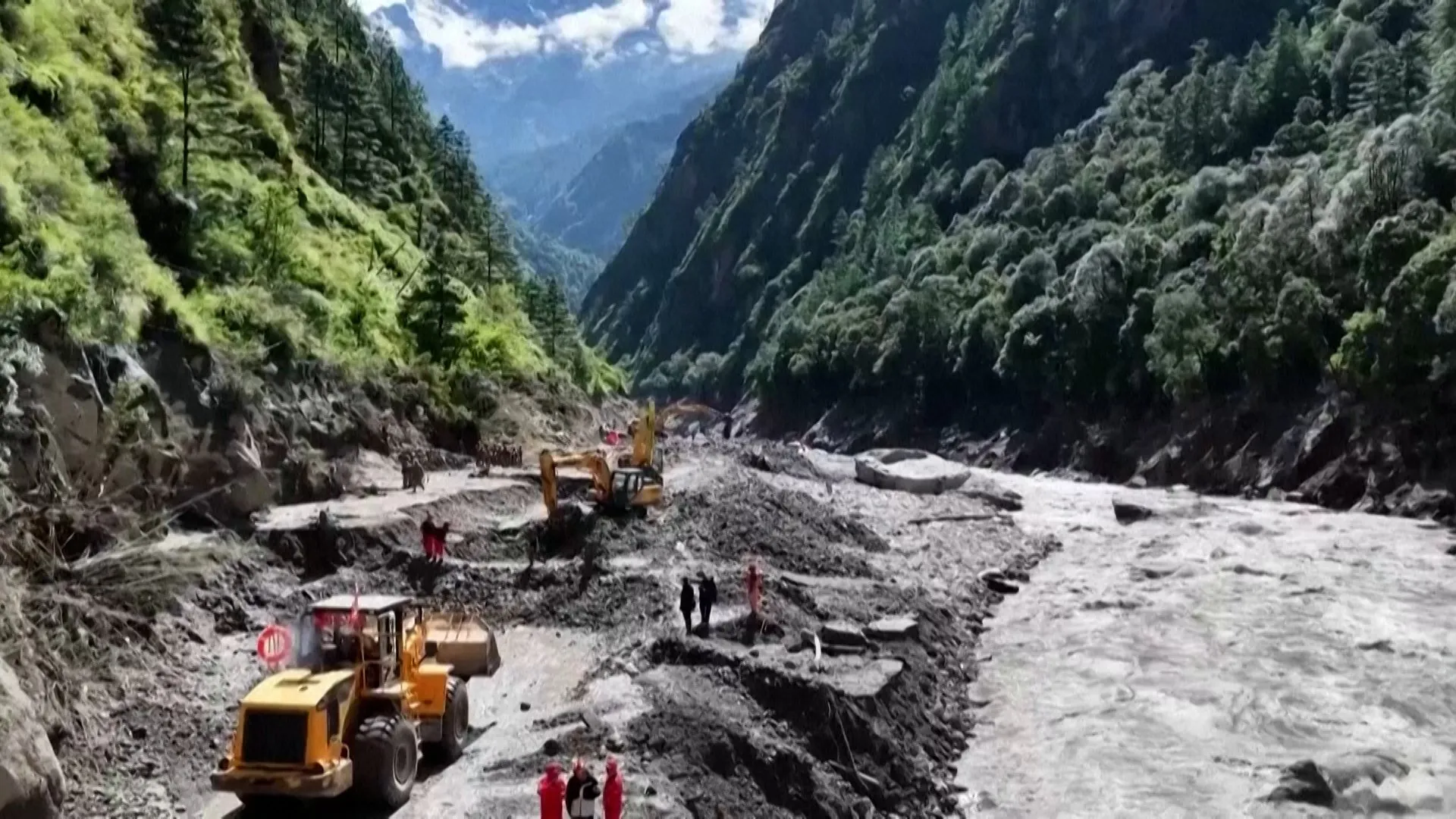
Rescuers raced to clear roads leading to the mudslide-hit border port of Gyirong in southwest China’s Tibet Autonomous Region, so more personnel can reach the core disaster zone. Al Jazeera’s Katrina Yu reports from Beijing.
Belgium’s foreign minister on Friday summoned U.S Ambassador Bill White over an Instagram story the American diplomat posted targeting the country’s health minister. File Photo by Olivier Hoslet/EPA
Aug. 28 (UPI) — Belgium’s foreign minister on Friday summoned U.S Ambassador Bill White over an Instagram story the U.S. diplomat posted targeting the country’s health minister.
White posted an AI-generated image of Health Minister Frank Vandenbroucke on a cigar box, apparently mocking the minister’s efforts to change how alcohol companies display health warnings on products.
The box read, “Damages every form of joy in life,” while White captioned the image, “Who’s the biggest loser in Belgium?”
“It is unacceptable that an ambassador uses such insulting language against a member of government,” Foreign Minister Maxime Prévot said in a statement to Politico.
This is the second time White has been summoned over comments made toward the health minister.
In February, he accused Belgium of antisemitism over an investigation of three mohels for performing ritual circumcisions without a doctor present.
White called the move “ridiculous” and demanded Brussels drop its investigation.
He said Vanenbroucke was “very rude” and asked for his intervention in the case, adding, “You must make a legal provision to allow Jewish religious MOHELS to perform their duties here in Belgium.”
On Friday, White’s comments about the health minister also drew criticism from Conner Rousseau, who leads the political party Vooruit.
“Bill can be a funny guy,” said Rousseau, whose party includes Vanenbroucke, in a statement on Instagram. “But he knows nothing about healthcare.
“He only repeats what daddy Trump says. They only care about money, not our health.”
Aug. 28 (UPI) — The Trump administration on Friday asked the Supreme Court to allow the Pentagon to ban transgender individuals from serving in the military.
A federal appeals court ruled in June that the military’s attempts to remove transgender Americans was “both arbitrary and based upon animus.”
On Friday, Solicitor General John D. Sauer appealed to the country’s top court to reverse the ruling.
“The court asserted that the policy likely denies equal protection because it reflects invidious discrimination against trans-identifying people,” Sauer wrote in his petition. “That gravely erroneous holding warrants this Court’s review.”
“The authority of the U.S. military to determine who may serve in the Nation’s armed forces is a matter of exceptional importance,” he added. “Whether the Constitution prohibits the military from exercising that authority by adopting a policy like the one here is a recurring issue, which has arisen before and will likely arise again absent this Court’s review.”
He signed an executive order saying transgender troops’ health needs are “inconsistent” with service in the military.
The National Center for LGBTQ Rights and GLAD Law sued in February, and the federal appeals court in the District of Columbia agreed with the plaintiffs.
Judge Robert Wilkins said the ban on transgender service members “appears driven by the bare desire to harm a politically unpopular group.”
“We are confident the Supreme Court will affirm that the Trump administration cannot base policies on hostility toward a group of people,” said Jennifer Levi, GLAD Law senior director of transgender and queer rights, in a statement.
“As the Trump administration’s own attorneys admitted, these are qualified individuals who are meeting all military standards,” Levi added. “There is no reason to waste millions of taxpayer dollars to kick out thousands of highly trained, skilled, and decorated troops based on nothing but hostility and this administration’s political whims.”
The Supreme Court is on summer recess and will return on Oct. 5.
President Donald Trump signs an executive order to rename Lake Ontario as Lake America in the Oval Office of the White House on Thursday. Photo by Al Drago/UPI | License Photo