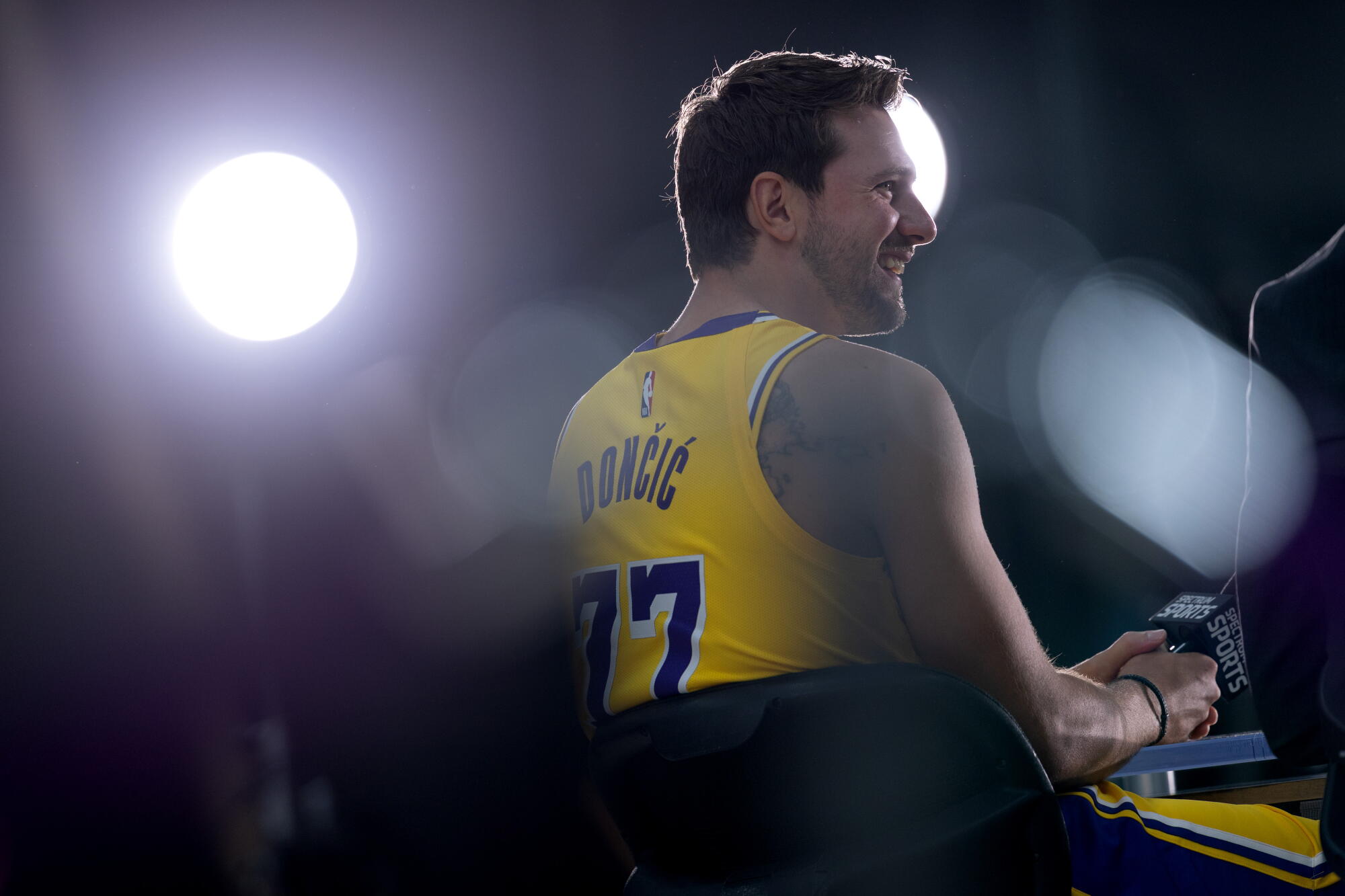
After eight years of James being the Lakers’ leader, the role now will be shared by Doncic and Reaves.
Doncic already took a step in that direction when he invited his teammates to his home country of Slovenia in August for a bonding trip.
Reaves chided Doncic about losing in rowing, bowling and golf while they were in Slovenia together.
Reminded about it Monday at the Lakers’ media day, Doncic immediately retorted: “I beat him in golf two days ago. … He didn’t say that, huh?”
Doncic paused and smiled.
“The key was I was playing great golf,” Doncic said. “He gave me some strokes, I’m not going to lie — as he should.”
Reaves spoke about the events his group won in Slovenia and how they beat Doncic in the process.
“We won the rowing, we won the golf, we won bowling,” Reaves said. “Luka tried to put on a blue shirt when his rowing team lost, which is crazy. But he did host us, so we let him hold the first-place trophy for once.”
The two friends and teammates have developed a closeness that their teammates have noticed.
“They get along so well that it’s kind of easy for them to co-lead this team — in different ways sometimes,” Jake LaRavia said. “I think sometimes Luka leads by example and we watch him and we watch how he goes about himself. AR can sometimes be a bit more vocal. But I think they both do a great job at what they are good at it when it comes to being leaders for this team.”
Lakers guard Luka Doncic speaks during the team’s media day in El Segundo on Monday.
(Eric Thaye r/ Los Angeles Times)
Doncic led the NBA in scoring last season (33.5 points per game) and was third in assists (8.3). He averaged 7.7 rebounds and shot 47.6%, including 36.6% from three-point range.
The three-year, $165-million contract extension Doncic signed last year kicked in this season.
“Obviously, it’s a new challenge,” he said about his leadership role. “I was in this position in my career a lot of times, so it’s not new to me. But I feel great, I feel excited, and like I said, I’m ready to go. It’s been a long time since I played basketball, so I’m ready.”
Reaves is entering his sixth season with the Lakers, making him the longest-tenured player on the team. In June, he signed a four-year, $180-million deal, the largest contract for an undrafted player in NBA history.
Reaves earned it by averaging career-highs in points (23.2) and rebounds (4.7).
The Lakers have nine new players and Reaves knows he’ll need to provide guidance.
“I think it’s different for everybody,” Reaves said. “I’m not going to lead the same way Bron does. I’m not going to lead the same way Luka does. I like to do things a little different. I was talking about doing more one-on-one conversations. There will be times where I need to speak up in group settings and I’ll do that when the time comes. But I think you just got to be true to yourself and do what’s comfortable for you.”
Doncic played in just 64 games last season. He missed the last five regular-season games and all of the playoffs with a left hamstring strain. After spending time in Europe rehabbing his hamstring over the summer, Doncic said he’s healthy and ready to go with no restrictions when the Lakers begin training camp Tuesday.
“I know I had a lot of time, just taking it slowly, not taking no risks,” Doncic said. “But right now, I’m feeling great. I feel rested. Mentally I feel great, so I can’t wait just to start.”
With Walker Kessler, Quentin Grimes, Jaden Hardy, Kevon Looney, Sandro Mamukelashvili, Collin Sexton, Matisse Thybulle and Ziaire Williams among the newcomers on the Lakers, Doncic and Reaves are looking forward to what comes next.
“I like everybody that we signed,” Doncic said. “I think there’s a lot of underrated guys. … Now training camp is going to help us a lot, focus on basketball, get to know what they like on the court, but I’m very excited to play with all of them.”
DOTHAN, Ala. — People crowded shoulder to shoulder upstairs in a south Alabama coffee shop, in a region sometimes called the reddest in the heavily conservative state.
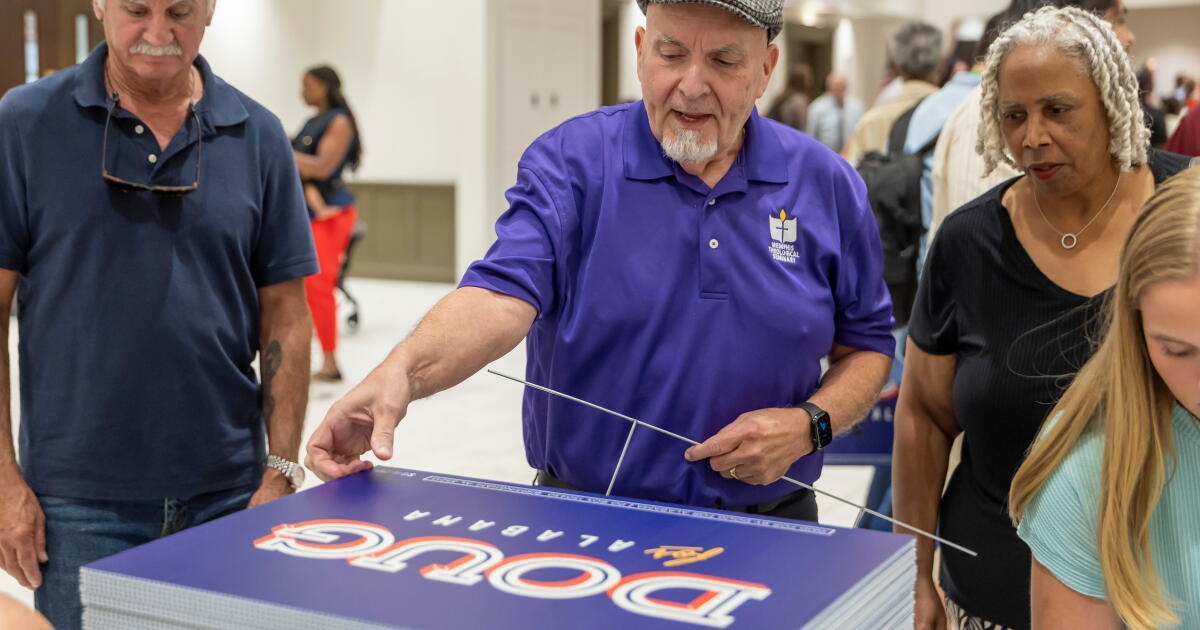
They were there to hear Doug Jones, the Democratic nominee for governor and the last Democrat to hold statewide office in Alabama.
“Alabama has been under Republican control for almost two decades. We’re not getting any better,” said Jeff Scroggins, 61, a government contractor from Slocomb who was part of the crowd that came to Mural City Coffee Company and said he is voting for the Democrat.
Scroggins, who usually votes Democratic, called himself the “black sheep of the family” in supporting Jones this fall against Republican U.S. Sen. Tommy Tuberville, but said there are more Democrats and “stubborn independents” in the state than people realize.
Jones and other Democrats running in Alabama and neighboring states are banking on it.
“People want change,” Jones said after an hour of talking with people who came to see him. “That is the real key. People are not satisfied with their government of Alabama.”
Democrats sense a shift among voters
Deep South Democrats, largely absent from statewide offices, are aiming for a comeback this year. They are seeking to mobilize Black voters who are angered about the Republican moves to dismantle minority congressional districts, as well as voters who are frustrated with high gas prices, the Iran war, data centers and other issues.
Jones is trying to win a rematch with Tuberville after the Republican ousted him in a 2020 Senate race. Jones would be the first Democrat since 1998 to win an Alabama governor’s race.
In Mississippi, prosecutor Scott Colom is trying to unseat Republican Cindy Hyde-Smith and become the state’s first newly elected U.S. senator since 1946. In Georgia, former Atlanta Mayor Keisha Lance Bottoms is trying to reverse a losing streak in races for governor that began for Democrats in 2002. Elsewhere, Democrats are trying to pull off U.S. Senate upsets in Louisiana and South Carolina.
In Alabama, Jones’ town halls have attracted hopeful Democrats, some independents and even a few Republicans. Their concerns mirror those of voters nationwide: the rising cost of living, worries over data centers and the affordability of healthcare, issues they say have gone unaddressed by the Republicans who control the state.
Some said state policies, including an abortion ban that makes no exemption for rape, have been too extreme. Others said some comments by Tuberville, such as calling Islam “a cult,” are embarrassing to the state.
Still, the math across the Deep South has been difficult for Democrats. Other than Jones’ victory in the special U.S. Senate election, the last Democrat holding statewide office in Alabama was defeated in 2012. Statewide Democratic candidates have hit a ceiling of around 40% of the vote in recent elections.
The results are similar in most other Deep South states. In Georgia, U.S. Sens. Raphael Warnock and Jon Ossoff, who is seeking reelection this year, offer a bright spot for Democrats.
Jones noted that Alabama saw a surge in the number of people voting in the Democratic primary. While about 58% of primary voters were Republican, the Democratic primary vote doubled since 2022. Some counties, including a tech hub in north Alabama, saw more Democratic votes than Republican.
Optimistic about their chances, Democrats are running candidates in all major state races for the first time in years.
“The numbers are there,” Jones said. “It’s a question of getting those voters out.”
Republican gerrymandering creates a backlash
In nearby Troy, a crowd gathered on the campus of Troy University to hear Jones speak alongside Shomari Figures, one of Alabama’s two Black U.S. House members. The district was substantially redrawn by Republicans after the U.S. Supreme Court earlier this year gutted the Voting Rights Act.
Figures said there is an excitement he has not felt since Jones’ 2017 Senate victory. Figures won election two years ago after a federal court ruled that Alabama had been illegally diluting the voting power of Black Alabamians and ordered new district lines. The Supreme Court’s reversal this year allowed state Republicans to reshape the district and substantially reduce the percentage of Black voters who align with Democrats.
Figures said the goal of the redraw was obvious: to reduce Black representation.
“But we are going to win it in November,” he said.
Figures has often emphasized the economic needs of the district at a time when affordability is one of the main topics of the midterms. He noted that the individual median income in Alabama is $34,000.
“Let that sink in — $34,000 before taxes, before rent, before water, before lights, before gas, before cellphone, before health insurance, before car insurance, before childcare, before food,” he said.
Alabama is one of 10 states that did not expand Medicaid under the Affordable Care Act, a decision that Jones and Figures said leaves thousands of working people without access to healthcare coverage.
Figures faces Trump-endorsed Republican Rhett Marques, a state lawmaker. Marques framed the race as “common sense” versus “craziness.” Both have raised about $1.3 million so far.
In Mississippi, Colom looks to make history
Colom echoes many of Jones’ and Figures’ arguments in his bid against Hyde-Smith.
“We’ve been gifted an opportunity,” he said, pointing to Mississippi’s large base of Black Democratic voters, Hyde-Smith’s relatively low profile in her first full Senate term and voters’ frustrations over the economy.
With the largest share of Black voters of any state, Mississippi’s general elections have been closer for years than its immediate Southern neighbors. Trump won by double digits in each of his three presidential contests, but in 2023 Republican Gov. Tate Reeves managed to win reelection by a margin of just 3 percentage points.
Colom insists he can close the gap by increasing Black turnout and peeling off enough disenchanted white voters from Republicans. It is the same kind of electoral math that propelled Ossoff and Warnock in Georgia.
“For me, it can’t be just about getting a Senate majority,” Colom said. “It’s got to be about having a party that represents rural America again, suburban America, urban America — a party that makes sure we actually deliver for voters in ways that make their lives better, and we don’t come up with excuses as to why we can’t do it.”
Republicans say they aren’t worried
Alabama’s Republican Party chairman, Scott Stadthagen, said Democratic priorities, in his opinion, “are far outside the views of conservative Alabamians.” He said there has been previous chatter of a Democratic resurgence, and “each election cycle, we remain the brightest red state in the decidedly conservative southeastern United States.”
Tuberville has declined Jones’ challenge to debate. Expressing confidence about November, Tuberville said he is running “against an ideology that’s not very compatible with the people of Alabama.” He will appear with Trump at a rally in Mobile next week.
“I’ve been representing Alabama for six years, and we’ll turn it over to the voters here in about six, seven weeks and see what they say,” Tuberville told reporters.
As the November election draws closer, Democratic candidates are attracting impressive crowds.
To Sam Phillips, who attended the rallies in Dothan and Troy, the crowds and energy felt different from previous election years.
“It doesn’t get any redder than here, and there was a whole lot of excitement in both places,” the 67-year-old said. “So I feel optimistic.”
Gwendolyn Davis, a 67-year-old retired special education teacher, left the town hall in Troy with an armful of yard signs for Figures and Jones. She said she is determined to reach people who have been sitting out elections.
“If we don’t get people out to vote, it will be kind of heartbreaking,” she said.
Chandler and Barrow write for the Associated Press. Barrow reported from Atlanta.
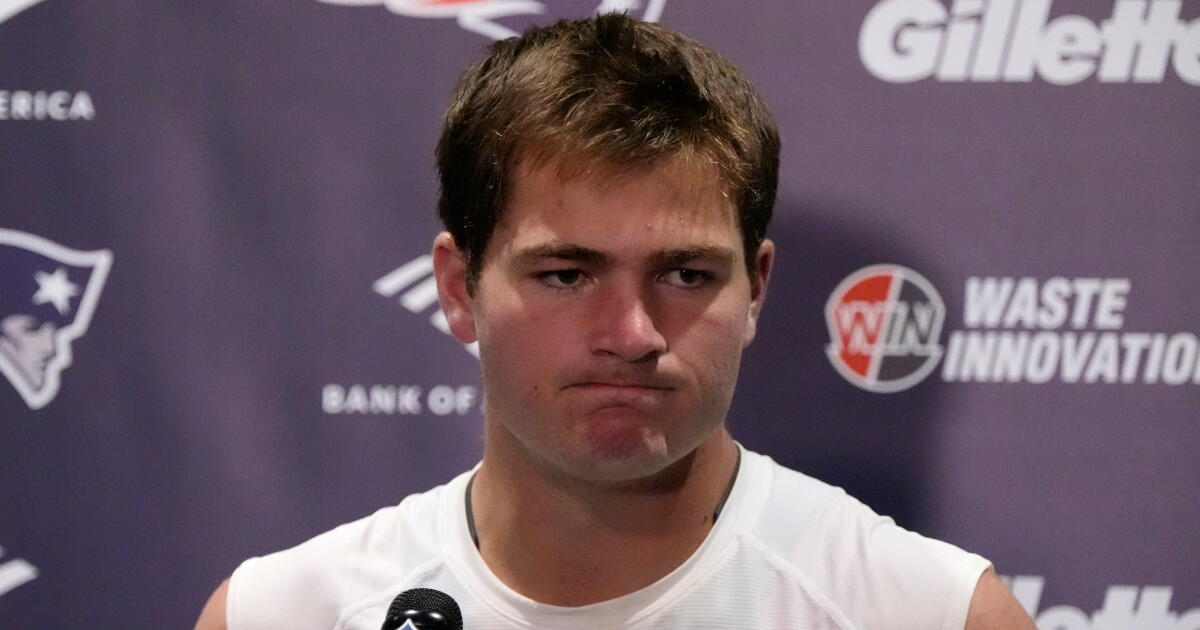
The New England Patriots quarterback finished second in the Associated Press poll of national media members, with 23 first-place votes and 361 total points. Rams quarterback Matthew Stafford edged him out with 24 first-place votes and 366 overall points.
Chances are, Maye won’t be receiving any votes this year — at least not if the first three games are any indication of how the rest of the season will go. Months after helping the Patriots to a surprise Super Bowl appearance, the third-year player and two-time Pro Bowl selection is not playing close to the standard he established last year.
Maye has thrown only one touchdown pass so far this season after tossing 31 a year ago. And he has been intercepted six times already in 2026 after getting picked off only eight times total last season.
The Patriots are 1-2 at the moment, the same record they had after the first three games last season. But Maye showed promise in those games a year ago, throwing for five touchdowns and two interceptions.
During a 35-6 loss to the Jacksonville Jaguars on Sunday, Maye was picked off twice and also fumbled two times, losing one. The lost fumble came first, when an untouched Maye lost grip of the ball while reaching back to pass late in the first quarter.
After the game, Maye told reporters that blood from center Jared Wilson’s hand had gotten on the ball and made it slippery. But, he added, “at the same time, I’ve got to hold onto the football.”
Jaguars two-way player Travis Hunter, the 2024 Heisman Trophy winner and second overall draft pick in 2025, got his first NFL interception when he picked off Maye in the end zone late in the second quarter.
Then in the third quarter, on the Patriots’ first play from scrimmage after falling behind 21-3, Maye had a pass intercepted by Jacksonville’s Jarrian Jones. Jones stepped in front of a pass intended for Kyle Williams and returned it to the New England 5-yard line.
The Jaguars scored on the next play to take a 28-3 lead, after which Patriots coach Mike Vrabel could be seen on the sideline with both hands on Maye’s shoulders in an apparent attempt to comfort his quarterback.
“My conversations with each person on that sideline, I have to do my best each and every play, whoever I’m communicating with, to try to get the best out of them,” Vrabel told reporters Monday. “So I’ll have conversations with a lot of people. I’ve got a lot of faith and confidence in everybody that’s here. That’s why they’re here.”
Maye, who completed 14 of 25 passes for 199 yards and was sacked three times, finished with a passer rating of 48.6, the second-lowest of his career.
“It’s disappointing,” Maye told reporters after the game. “I think the ball starts rolling like that, we can’t get out of our own way — can’t get out of my own way, personally. So I gotta look myself in the mirror and take it to the turning point. … I’ve got to start with myself and lead these guys and we’ve got to get back after it.”
After the 2025 season, Maye revealed that he had injured his throwing shoulder during the AFC championship game against the Denver Broncos and received an injection to help with the pain before the Patriots’ 29-13 loss to the Seattle Seahawks in Super Bowl LX. Both he and Vrabel have said they don’t feel there have been any lingering effects from that injury.
On Sunday, Maye told reporters that his confidence hasn’t wavered despite the rough start to the season.
“This is an opportunity to band together and realize that the best football that we play is together,” he said, “and realize that’s going to start with me, protecting the football and protecting this team. Because that’s my job and I’ve been failing to do that.”
EXCLUSIVE: on his latest TV travelogue Michael Palin is in the Phillippines, but he draws the line at one recycled food type in a poverty stricken area and spoke to the Mirror about his experiences.
Michael Palin says the chicken dish was “a bridge too far” for him to eat in the morning of filming
Michael Palin says he had to turn down a food dish in the Phillippines as it was a “bridge too far” for him. The former Monty Python star, 83, normally tries lots of the local cuisine on his travelogues.
But in new Channel 5 series Michael Palin In The Philippines he was surprised by one thing on the menu known as Pagpag. Michael was told that it was recycled chicken which they took after people ate it.
He explains in the programme: “I’ve never seen anything that illustrates poverty quite as clearly as half-eaten fried chicken, which has been taken from the bins of fast food restaurants and then re-cooked. So this is ultimate food recycling. Food that’s already been on someone’s plate has been left behind, and this nice lady goes and collects it. Seeing this, I’m starting to understand why so many people are angry about the inequalities here.”
Speaking to the Mirror about his experiences in the Philippines, Michael admitted he was intrigued by the snack, but not enough to try it.
He said: “It was a bridge too far for me, certainly. Yeah. But it was interesting. The lady who was selling it again, she wasn’t conning anybody. She wasn’t a gangster or something like that showing off. She was a middle-aged woman. She was obviously a pillar of the community. People trusted her, and she’d been recycling these food for years and years, and no one seems to have died.
“I’ve eaten everything on my journeys, but I couldn’t eat recycled food. I’m afraid at that time of the day.”
The food was for sale in an area of poverty called Tondo and on the morning he was there Michael learned that the seller and friends had gone to fast food outlets the night before.
He added: “Any meat that had been thrown away, they brought it back, scraped it off the bone, cleaned it all up, and reboiled it, so everything was sort of officially hygienic, and then sold it the next the next day as little sort of delicacies.”
Elsewhere on his trip Michael gets up to all sorts of other adventures, including travelling through underground rivers and swimming with thousands of sardines in Moalboal.
Under military escort, Michael explores the extraordinary and haunting remains of the destroyed city of Marawi, and on the island of Jolo he meets a member of the terrorist group, Abu Sayyaf.
He said the trip, filmed last year when he was still 82, made him feel young at heart and told the Mirror: “When I actually did the Philippines show. There’s no special sort of conditions because of my age or something like that. I just did it like I used to travel, and it’s extraordinary how your body or your mind can help your body to carry on. And physically, I didn’t feel the strain of the Philippines journey until I came home, and it was a long flight, 16 and a half hours to get to Manila from London, and that’s what really wears you out. It’s the airports and the long flights.
“Time in the Philippines was rejuvenating. I felt great, you know. And I thought to myself, I’ll check on my passport that I really am 82.”
* Michael Palin in the Philippines – starts Monday, September 28 at 9pm, Watch|stream on 5.
SEATTLE — Logan Gilbert struck out eight in four no-hit innings and five Seattle pitchers combined for 12 strikeouts as the Mariners beat the Angels 7-3 in the regular-season finale for both teams.
The Angels finish 2026 with a record of 62-100, the first 100 loss season in franchise history. It was a 10-game slide for the Angels, who had a 72-90 record in 2025.
Gilbert retired the first 12 batters he faced and, after walking Moisés Ballesteros at the start of the fifth inning, was lifted and left to a standing ovation from the Mariners fans.
The Mariners took a 1-0 lead in the second inning when Weston Wilson drove in Cole Young with a grounder to third base.
Seattle scored two more runs in the third on Cal Raleigh’s RBI single off Angels starter Yusei Kikuchi, and Dominic Canzone scored on a groundout by Josh Naylor to make it 3-0.
Kikuchi (1-7) gave up three runs and six hits over five innings, with one walk and seven strikeouts.
Bryce Teodosio scored for the Angels on a sacrifice fly in the top of the sixth inning, but the Mariners responded with three in the bottom half when Young scored on an Angels throwing error and Randy Arozarena drove in two with a double to make it 6-1.
Jose Siri hit a two-run homer for the Angels in the eighth, and Leo Rivas scored for the Mariners in the bottom half on a wild pitch.
Cooper Criswell pitched the ninth for the Mariners. Eduard Bazardo (4-4) got the win.
After finishing the 2025 season with a 90-72 record and advancing to the seventh game of the ALCS against Toronto, the Mariners missed the playoffs with a disappointing 76-86 record this season. Despite that mark, the Mariners drew 2,883,798 fans in 2026, the team’s highest total since 2004.
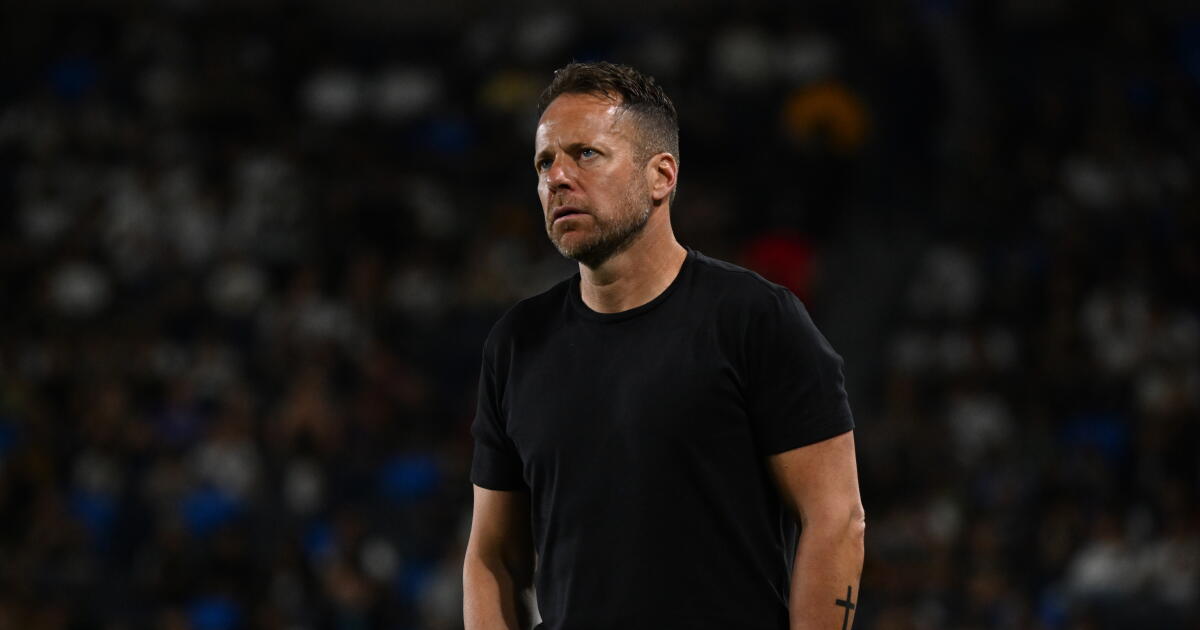
LAFC, mired in a slump having won just two of its last 13 games in all competition, fired first-year coach Marc Dos Santos on Sunday with six matches left in the MLS regular season.
The firing, announced in a three-paragraph statement, comes less than 24 hours after Saturday’s 1-0 loss to FC Dallas dropped the team to sixth in the Western Conference table.
“Marc has given a great deal to this club over the years, and we are grateful for his commitment, care and contributions to LAFC,” said John Thorrington, the team’s president of soccer operations, in the release. “We wish Marc and his family all the best moving forward.”
LAFC (11-9-8) said it will begin the search for a new manager immediately but didn’t say who would coach the team in its next game on Oct. 10, after the two-week FIFA international break.
Dos Santos, 49, was an assistant on Bob Bradley’s staff in LAFC’s inaugural season in 2018. He left after the season to take over the Vancouver Whitecaps but struggled to a 22-39-20 record in 2 ½ years that were heavily affected by the COVID-19 pandemic, which forced the team to play many of its games on the road.
Dos Santos returned to LAFC as an assistant in 2022, this time for Steve Cherundolo, helping the team to a Supporters’ Shield and MLS Cup. When Cherundolo stepped down after last season, Dos Santos was given the head coaching job just two weeks later, becoming the third manager in the team‘s history.
His two stints as an assistant at LAFC taught him that the team’s fans are among the most demanding in MLS, something he said he embraced.
“It’s a privilege when you coach a team in Los Angeles,” he said at the time. “Every sport here is pressure. Every team here is win, win.
“It’s a winning city and the culture of the city. So I understand that.”
Dos Santos, who is fluent in four languages, was born in Montreal and split his childhood between Quebec and Portugal. With the exception of Vancouver, he has won everywhere he’s managed, from the Ottawa Fury of the NASL, where he was named the league’s coach of the year in 2015, to the San Francisco Deltas, whom he guided to an NASL title.
LAFC was unbeaten in its first 11 matches in all competition under Dos Santos, outscoring opponents 27-3 and advancing to the semifinals of the CONCACAF Champions Cup, where it lost to Mexico’s Toluca, the eventual winner. But the team has gone 6-9-7 in MLS play since then, including Saturday’s loss when Dos Santos was without six key players — including leading scorer Denis Bouanga and captain Son Heung-min — who were with their national teams.
Afterward, he spoke about his plans for the two-week international break.
“It’s a hard moment right now for us. And we have to face it,” said Dos Santos, who was popular with his players. “It’s been hard for us to get wins. A lot of draws, a lot of close games.
“We need to have everybody together and start working on what this team can be. That’s the big objective during the break.”
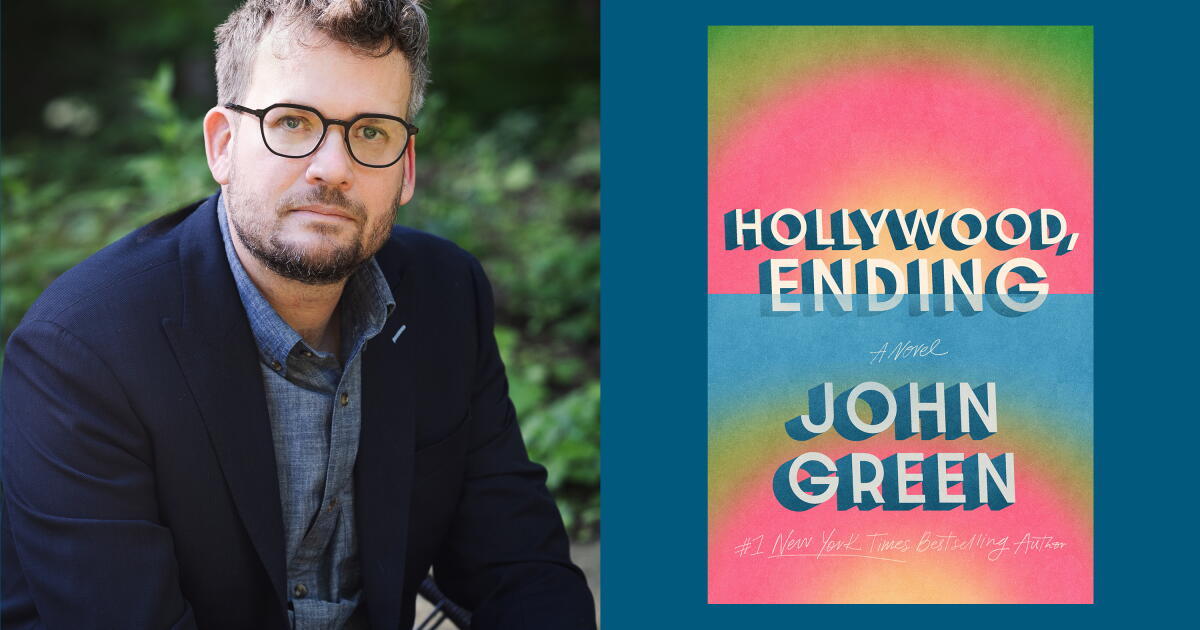
John Green’s nine-year hiatus from fiction has ended, and his adult debut, “Hollywood, Ending,” comes right on time to explore the dark side of fame.
The novel centers on former child actor Juniper Castillo and Hollywood newbie Kai Laramie, who are cast in the artsy biopic “Andy Warhol Never Gets Old,” with hotshot movie star Matthew Malone in the title role. It’s Juniper’s chance to establish herself as an adult actor and Kai’s first foray into the spotlight, a position he quickly realizes doesn’t come without a personal cost.
“There’s no way I could have written this book without spending a lot of time on film sets,” Green told The Times in a recent call.
On the Shelf
Hollywood Ending
By John Green Dutton: 304 pages, $32
If you buy books linked on our site, The Times may earn a commission from Bookshop.org, whose fees support independent bookstores.
Over the last two decades, several of the author’s bestselling young-adult novels have been adapted for the screen. His debut, “Looking for Alaska” (2005), was adapted as a Hulu limited series in 2019, the same year Netflix released the feature film adaptation of his co-authored holiday anthology, “Let It Snow” (2008). On the big screen, “Paper Towns” (2008) made its film debut in 2015, while his bestseller “The Fault in Our Stars” (2012) became a box-office hit in 2014. Most recently, his 2017 novel, “Turtles All the Way Down,” received a feature film adaptation in 2024.
“I hope the book is a love letter to movies. But I also wanted to be honest about how difficult it is to make a work of art that, in order to be commercially successful, has to be loved by millions of people,” Green said. That’s where the Hollywood machine comes in. “It’s really hard to figure out how to get millions of people to pay to watch something, and that challenge leads to all kinds of compromises and sacrifices.”
While Green’s young-adult novels have often explored the teenage experience, he never felt confined by the YA genre. “I think teenagers have infinite intellectual capacity,” he said, adding that he doesn’t really think about which shelf will hold his novels inside a bookstore. In “Hollywood, Ending,” his main characters are navigating their early 20s, a period which Green finds especially interesting.
“The questions in this novel explore how it feels in those early years of adulthood when there are still so many possibilities, so many directions you might go,” he said.
The following conversation has been edited for length and clarity.
How did you land on Andy Warhol as a celebrity figure and metaphor to use in telling this story about Kai and Juniper?
I think Andy Warhol saw so much of our world coming. He saw that three-dimensional experience was going to be rendered in two dimensions. He’s most famous for taking cylindrical soup cans and making them flat, but he also saw celebrity culture coming.
There’s the famous quote about everybody being world-famous for 15 minutes. I think he understood that normal people were going to experience celebrity, and he also saw the way that the repetition of images, as I write about in the novel, would lead to a certain desensitization. So I think everything from screen-based experience to the ways that technology was going to reshape our lives, he was the patron saint of all of that.
One of the images that really struck me is when you talk about him dying wigless and being too uncomfortable with that to have friends come and visit him in the hospital.
I think Juniper says at one point that fame is a kind of armor. I don’t know how Warhol thought of his wigs, but I wanted it to be a sort of emblem of protection for him.
Your wife, Sarah, is an Andy Warhol scholar. Was that a major strength while you were writing this?
There’s a huge advantage to being able to fact-check something by shouting down the hall. I also wanted to include Warhol partly as a love note to Sarah … She co-wrote a book about Andy Warhol’s relationship with money and business called “Andy Warhol Enterprises.” After 25 years, our way of looking at art and the art that we’ve shared together is so deeply intertwined that anything I write is unimaginable without her. She’s my first reader and most important reader … It’s only thanks to her that Warhol’s in the book.
You really humanize the young actors in “Hollywood, Ending,” which, unfortunately, is a unique thing. This is an intimate, vulnerable portrayal of behind-the-scenes Hollywood — why was that important for you to examine?
I wanted to write about the machine that takes private experience and commodifies it, and I think that machine is especially challenging to navigate when you’re young, when you’re in early adulthood, because you don’t yet have those relationships that are going to carry you through. You don’t have the love that you need to survive all that you’ve got to survive. When my work became very successful, I was in my 30s. I was married. I had two kids. I lived in Indianapolis. I had best friends. I was pretty grounded, and it was still very disorienting.
How so?
It’s a completely different life to have everybody have opinions about your work than it is to take your kids to school every day. So I was thinking partly about that, but I was also thinking about the influencers I’ve known, and the actors I’ve known who’ve had to go through that [while] much younger, and what that’s been like for them as well.
You do a really good job of examining the dark side of the attention economy. Why was this especially of interest?
Well, it used to be that the attention economy was mostly a problem for actors and other celebrities, but now the attention economy is something we all participate in. We’re all taking our private experiences and packaging them up for public consumption on Facebook and Instagram and Twitter and Reddit, and I think we gain something from that, or we wouldn’t do it. But we also lose a lot.
I wanted to try to be honest about what we gain, and also be honest about what we lose. My last novel, nine long years ago, was about a young woman with OCD. I also have OCD, and I had to make a decision when I was promoting that book, about whether I would talk about having OCD, and I decided that I would, and that became a huge part of talking about the novel — talking about my own experiences with mental illness, and it was a gift in many ways because so many people have said to me that it helped them to see that it’s possible to have a good and fulfilling life while living with a serious mental illness, and it was helpful for me because it helped me feel less alone in it.
But it was also complicated because there are real costs when you share something. It’s not yours anymore in ways that are a relief, but also in ways that are difficult.
You’re offering it up for scrutiny in a way that can be really scary.
It is really scary to have your private life scrutinized in that way, right? And there’s an element of judgment that comes with creative expression that’s a natural and healthy part of conversations about what art is and what art should be, but being in the middle of those conversations isn’t always fun.
I think you capture that in Kai’s experience.He is really pressured to come out and talk about his traumatic experience, and he doesn’t want to. The “machine” wants to sell tickets and exploit his trauma in the process.
It’s one thing to try to make good art. It’s another thing to try to make good art that lots of people interact with, and a portion of that second issue is inevitably finding ways to interest an audience, and nothing interests an audience quite like a personal story, especially a personal story of overcoming difficulty.
Was the movie star Matthew Malone based on anyone specifically?
I have aphantasia, this brain condition that causes me not to be able to imagine anything visually. I have no visual imagination, and so I can’t see actors when I’m writing. I can’t see characters when I’m writing. I can’t see anything. Everything’s made out of language, and so there’s no way I could have cast the movie in my mind or had somebody in mind for the character. It’s been great to hear all the folks who people were thinking of. I’m curious who you were thinking of.
I thought of Tom Cruise a couple of times. Have other people said that?
A couple people have said that as well. Yeah.
That’s so interesting about your work with language solely. Do you think that’s been a strength with you as a writer? Because you create such vibrant visuals for your readers.
It’s the only way I’ve ever been. I never knew that other people had this vibrant visual imagination until I was in my 40s, and my wife said I think maybe the reason you don’t have a sense of direction and you have to open up all the cabinets when you put away the dishes and you don’t know whether there’s a rug in the living room is because you don’t have a visual imagination, and I was like, of course I don’t. Nobody does, and she was like, you can’t picture an apple in your head? And I was like, no, nobody can picture an apple in their head. They say they can, but they mean it metaphorically … And Sarah explained to me that, in fact, the vast majority of people can see an apple, which still seems fictional to me, like science fiction stuff.
Some people don’t have that inner voice in their head (anendophasia).
I do have an inner voice. I think. But this all gets to something really interesting about being a person, though, which is that you’re stuck the whole time you’re here inside of one consciousness and looking at the world through one set of eyes. And I have no idea what it’s like to be you. The great thing about writing fiction for me is that act of imagination, that attempt to empathize, that attempt to escape the self and imagine what it would be like to be somebody else with some clarity, but of course, there’s always a limit to my ability to do that, and that problem has fascinated me my whole career.
Your books have meant so much to so many people, and in recent years, I’ve reported quite a bit on your book, “Looking for Alaska,” being one of the most commonly banned books. How do you feel about that?
I’m really concerned about attempts to limit intellectual freedom in the U.S., especially when it comes to libraries and schools. We have professionals we’ve trained to make collection decisions and to make curricular decisions in schools, and those professionals are teachers and librarians, and I’m very disturbed when other people come into that conversation and try to usurp the work that teachers and librarians are doing. I think a lot of times authors get most of the credit for the fight against book bans, and the truth is, all the credit should go to the teachers and librarians who are often putting their jobs on the line, making really difficult decisions to try to do the best by the kids that they’re representing and working with.
John Green will be in conversation with Julia Whelan to discuss “Hollywood, Ending” at 7 p.m. Tuesday, Oct. 13, at a ticketed ALOUD event hosted at Saban Theatre. 8440 Wilshire Blvd., Beverly Hills.
KATHERINE Ryan has been spotted out and about for the first time since issuing an apology to Victoria Beckham.
The star used the C-word when talking about Posh Spice last year during an episode of Have I Got News For You, and recently apologised for it online after facing backlash.
Katherine Ryan has been spotted for the first time since apologising to Victoria BeckhamCredit: GettyShe dazzled in a green dress for a Wicked eventCredit: Getty
Katherine got dolled up in a stunning green sparkly dress to embrace her inner Elphaba on the green carpet for Wicked’s West End 20th Anniversary Gala Performance.
The dress featured sequins all over as well as dangling tassels across the shoulders.
Sign up for the Showbiz newsletter
Thank you!
The comedian held her hands in front of her and smiled for the camera while a buzzing crowd was forming behind her for the event.
Speaking in an episode that aired on November 7, Katherine made reference to a 2013 private email sent byDavid Beckham, where he allegedly used the word ‘c****’.
Katherine apologised for using the C-word when talking about Victoria last yearCredit: Instagram/kathbumKatherine also claimed she has always loved the starCredit: Getty
She said on the show: “I don’t know that we are allowed to broadcast the C-word, but you did referenceVictoria Beckhamearlier and we’ll allow that.”
TheBBC‘s Executive Complaints Unit (ECU) have issued it’s ruling on the matter and have revealed there was no justification for Victoria being labelled with the offensive word.
In a reel chatting to the camera, she began: “Hi I’m comedian Katherine Ryan and today the BBC announced their decision to uphold a complaint made by two very influential viewers about a joke that I tried to make on an episode of Have I Got News For You eleven months ago.
“At that time, though there is no defence, I was suffering from a condition called matrescence.
“I was in that building with a 10-day old baby. Should I have left the house?
“This is gonna be a tough one for the feminists because I was a woman going to work but I did call another woman a c***.
“[…] “The trouble is now that section’s been taken off iPlayer so the incident only exists in printed media, online media and then you lost the context because on the day, if you watched it, it was clearly a joke and the whole audience went ‘huhhhh’ and I said ‘whoaaaa’.”
An edited version of the episode has replaced the original on the BBC’s streaming service.
Kelsey Parker has been seen on her first family outing with newborn daughter RiverCredit: Click News and MediaShe revealed last week her and boyfriend Will Lindsay had welcomed their little oneCredit: Click News and Media
River’s birth came after the devastating loss of Kelsey’s son Phoenix, who was stillborn shortly before his due date last year.
Kelsey – who shares Aurelia, six, and Bodhi, five, with late husband Tom – appeared ever the doting mum on an outing with her family this weekend.
Sign up for the Showbiz newsletter
Thank you!
Enjoying a day out to the park near their South London home, Kelsey was seen planting a kiss on daughter River’s head.
The newborn was sweetly dressed in a white babygrow and hat, as older sister Aurelia helped cradle her.
Eldest daughter Aurelia was ever the doting sister on the outingCredit: Click News and MediaKelsey welcomed Aurelia and Bodhi with her late husband Tom ParkerCredit: Click News and MediaIt’s the first time the family have been seen publicly since announcing River’s birthCredit: Click News and MediaWill appears to be stepping in to fatherhood smoothly with Kelsey by his sideCredit: Click News and Media
In more snaps from the day out, Kelsey was glowing as she pushed River around in a pram while new dad Will wrapped his arm around her.
Aurelia and Bodhi joyfully walked beside the couple.
Last week, Kelsey confirmed her daughter had arrived safely as she said via Instagram: “Welcome to the world, River. Our little bit of hope.”
Kelsey was married to singer Tom from 2018 up until his death four years ago.
He passed following a two-year battle with terminal brain cancer.
The new Netflix thriller is currently sitting at number one on the streaming platform’s most-watched films
22:33, 26 Sep 2026Updated 22:34, 26 Sep 2026
Netflix viewers have shared their verdicts on the new film (Image: Netflix )
The true-story thriller has been slammed by furious viewers who ‘wasted an hour and a half of their lives’.
Brand new film Unabomber is based on the real story of lone wolf American terrorist Theodore Kaczynski, who carried out a mail bombing campaign that killed 3 people and injured 23 more. Known as the Unabomber, he committed his crimes between 1978 and 1995.
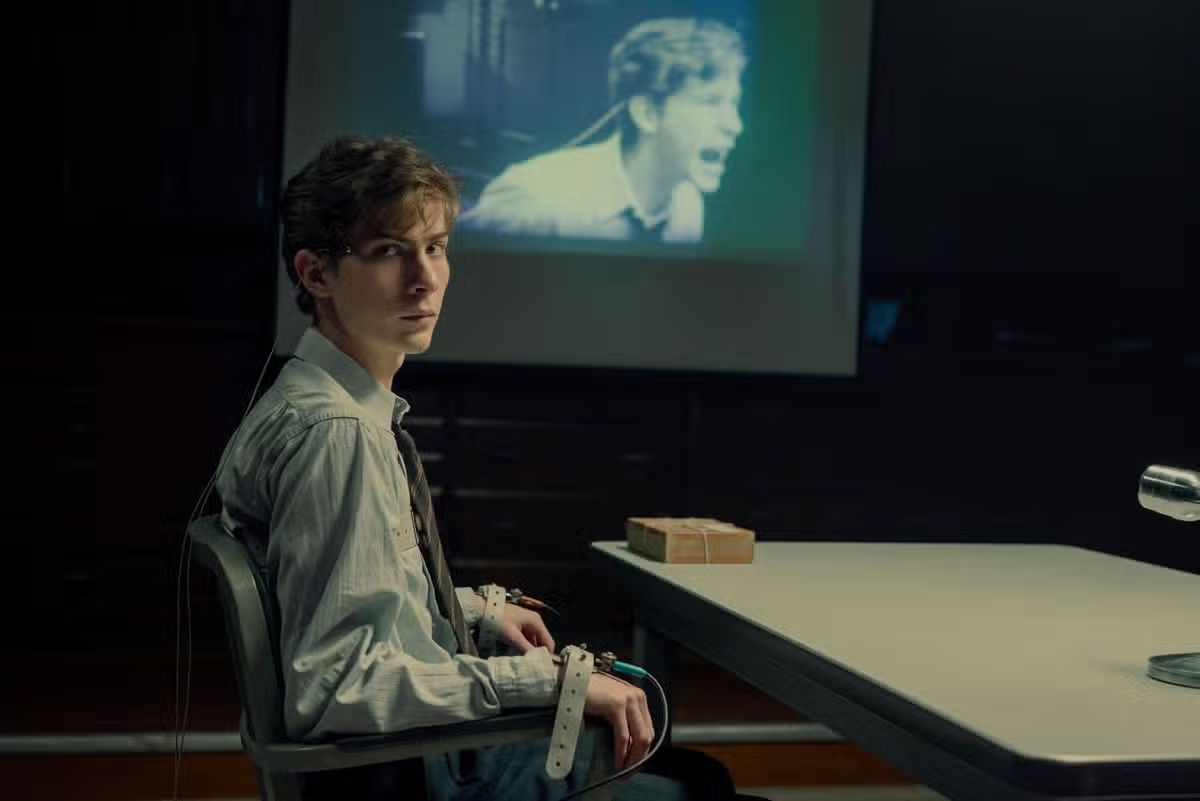
Netflix’s take on the late criminal’s story explores his transformation from a bright Harvard student into the infamous Unabomber. It stars 19-year-old actor Jacob Tremblay as the title character.
The main cast also features Oscar winner Russell Crowe, playing a Harvard professor who gets caught in Theodore’s orbit. While beloved actress Shailene Woodley portrays an FBI agent determined to get to the bottom of the Unabomber’s crimes.
The film has already climbed to Number 1 on Netflix’s most-watched charts after just one day on the streaming platform. But many viewers have urged others to skip the star-studded drama.
Writing on Rotten Tomatoes, one disappointed viewer said: “What an absolute waste of time. As far as movies go this had an okay cast. The story was based on real life so interesting I guess as it did happen. It’s sad it happened though but it did. I watched it and was expecting more than I receive.”
Someone else joined in to add: “A word that comes to mind is HOW. HOW DO THEY GET SO MANY BRILLIANT ACTORS IN 1 MOVIE AND STILL FIGURE OUT HOW TO MAKE THE MOVIE SUCK. I WAS BARLEY ABLE TO FINISH IT. COULD OF USED THESE ACTORS TO MAKE SOMETHING GREAT. LET DOWN.”
Get Netflix free with Sky
This article contains affiliate links, we will receive a commission on any sales we generate from it. Learn more
Sky is giving away a free Netflix subscription with its new Sky Stream TV bundles, including the £15 Essential TV bundle. This lets members watch live and on-demand TV content without a satellite dish or aerial and includes hit shows like Stranger Things and The Last of Us.
Someone else simply wrote on X: ” #unabomber on Netflix is an hour and a half of my life I’m not getting back.” At the time of writing, the thriller has a sour 22% score on Rotten Tomatoes.
But others have rushed to the movie’s defence, with one sharing: “Surprised by the negative reviews. I found the film very well done and with a captivating story, quite well engineered. Acting is brilliant and everything is top notch (costume, music, etc). Great film.”
While a second fan added: “I actually loved this. I was just hooked at the very start. And I’m not easily entertained by movies. First of all I loved the switch from the 50s to the 90s it was refreshing. “
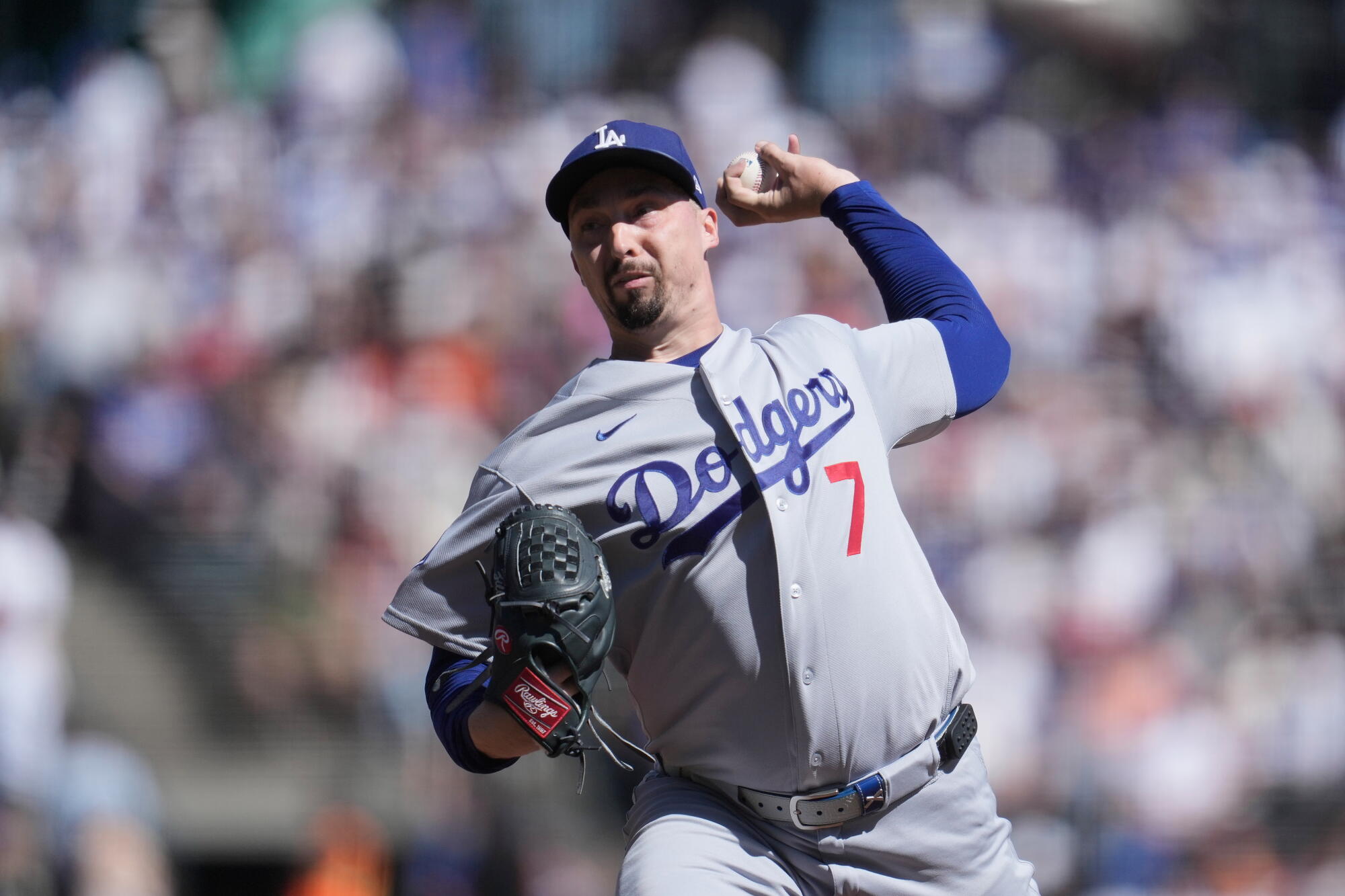
SAN FRANCISCO — The result of Blake Snell’s final pitch Saturday, a fastball that San Francisco Giants third baseman Shay Whitcomb lined into left field, mattered far less than the fact that the left-hander had passed the 75-pitch mark without incident.
Dodgers left fielder Teoscar Hernández threw out Whitcomb at second. And Snell walked off the field to complete a four-inning start in the Dodgers’ 4-3 win.
“Definitely needed to pitch today,” Snell said of his first start in a week and a half. “Definitely showed that. I was trying to go up and in, I was missing up and away. Even the last pitch of the game, I try to go up and in and miss right down the middle. I don’t know the last time I did that. It’s been a while.”
The Dodgers (99-62) entered locked in as a No. 2 seed for the playoffs. So, the stakes of their last two games of the regular season boiled down to health and preparation for the postseason. There was no better example of that give-and-take than Snell’s five-hit, one-run start.
Because Snell left his previous start with tightness in his left groin, the Dodgers planned for a short outing Saturday, prioritizing his health for the postseason.
“We were confident,” Roberts said of Snell’s recovery from the injury. “But it’s still good to see it. And it’s good also that we got it out of the way, that rust off — versus whatever game in the postseason, then he’s rusty, and you’ve got to kind of pick up the pieces in a playoff game. So I thought today it was really best-case scenario.”
The only run Snell gave up was the result of a double, stolen base and sacrifice fly in the third. He had three strikeouts and no walks.
Snell’s changeup was about two miles per hour faster than usual, something he wants to address before his next start. And he wants to hone the release on his curveball. But his slider, the pitch he would be most worried about if his groin injury wasn’t resolved, had promising velocity and shape.
“To throw a 92 [mph] with good horizontal break, and to see the trust I had in the back leg when throwing that, that’s a really good sign,” Snell said.
Dodgers pitcher Blake Snell throws against the San Francisco Giants in the first inning Saturday.
(Jeff Chiu / Associated Press)
Snell said he thinks he’s fully past the injury, and didn’t even think about it during the start.
“Definitely happy about where I’m at,” he said. “Now, it’s a big week for me. Catch has to be great, bullpens have to be great. I’ve really got to focus on getting in my legs, and the consistency of every throw. So to be able to pitch today and learn all of that is bigger than I could ever really express.”
Snell, who missed time because of a late spring training build-up and arthroscopic surgery in May to remove loose bodies from his left elbow, finished the regular season with just 42⅔ innings pitched. But he posted an impressive 1.90 ERA in that time.
The team considered replacing Snell’s start Saturday with a live batting practice session, Roberts said, which would have still given Snell feedback from hitters, but in a more controlled environment.
“We gave him and the training staff every out to do so,” Roberts said. “But there was a lot of confidence that he’s in a great spot.”
Snell’s recent workload was another reason for the Dodgers to be conservative with his workload Saturday. Over the past two weeks, he’s only thrown one inning.
“So there’s a balance between getting your work in, making sure you feel good coming out of it,” Roberts said. “Even for example, I could’ve pushed Tarik [Skubal in his start Friday], given his efficiency. But to me, to what end?”
Snell should be full-go for the playoffs, Roberts said. But count Snell among the Dodgers players who can benefit from the wild-card bye.
“This is still an important one,” Roberts said of Snell’s start Saturday, “to go into it feeling good, to then take that extra six, seven, eight days.”
Six to eight days off would line Snell up to start Game 2 or 3 of the National League Division Series. But Roberts declined to tip his hand on rotation order. The days off give the Dodgers extra flexibility to line up their pitching.
Mookie Betts celebrates after hitting a home run for the Dodgers in the third inning Saturday against the Giants.
(Jeff Chiu / Associated Press)
“You’re looking at, the first series, who could pitch on regular [rest], who needs extra, how potentially the next series lines up,” Roberts said. “How you can … maximize those four guys. And I do think with those four guys, it doesn’t matter the opponent, so that’s not a variable.”
Roberts also said alternating between right- and left-handers was not a variable.
“To be honest with you, you could put them all in a hat, and you could make a case for any order you put them in,” Roberts said.
Right-hander Yoshinobu Yamamoto, the stalwart of the rotation, certainly has performed to the level of a Game 1 starter, both this season and in a heroic World Series run last year.
For Game 2, it would make sense to choose a pitcher who’s comfortable starting on four days rest. Then, thanks to a pair of off days built into the series, both the Game 1 and Game 2 starters could be available to throw in an if-necessary Game 5.
Skubal has pitched on regular rest this season more than any of his rotation mates, making him a strong option to take the ball in the second game.
If the Dodgers do, indeed, go in that direction for Games 1 and 2, Snell would then be the natural choice for Game 3, on eight days’ rest. And right-hander Tyler Glasnow could take an if-necessary Game 4.
The Dodgers, however, don’t need to finalize their pitching decisions just yet.
“I love our starters,” Snell said. “I love the staff, the way we push for each other to be great and support each other. So, I can’t wait. It’s what we’ve all been waiting for, and now it’s time to prove it.”
Kyle MacLachlan is living up to his reputation as the Internet’s Dad.
It’s an especially warm day in August, and the bespectacled actor, best known for his many projects with the late auteur David Lynch, is approaching with a coffee (black, naturally) in one hand and a massive cookie in the other. The snack, it turns out, is meant for us to share.
On the Shelf
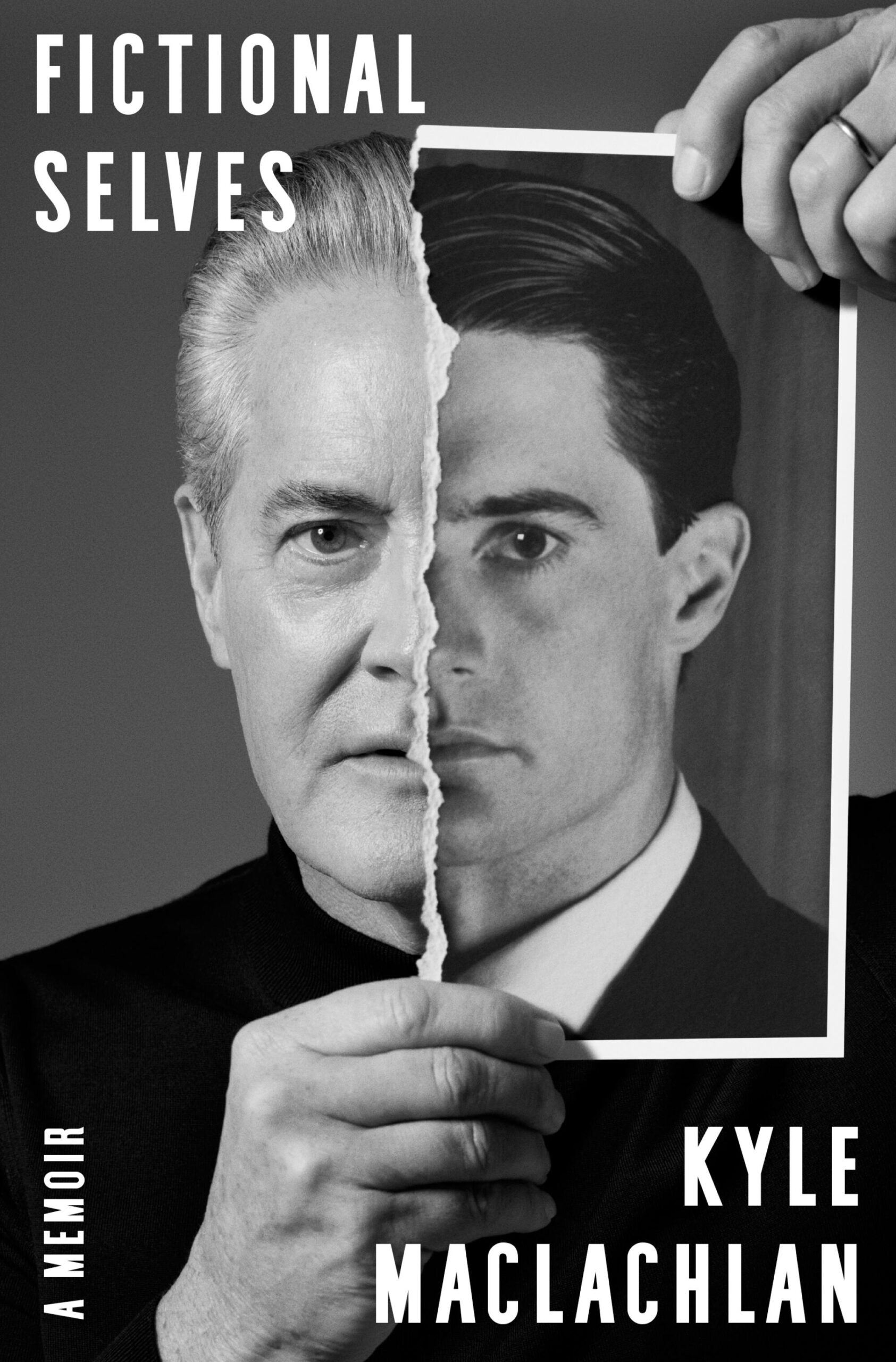
Fictional Selves: A Memoir
By Kyle Maclachlan Crown: 320 pages, $34
If you buy books linked on our site, The Times may earn a commission from Bookshop.org, whose fees support independent bookstores.
“Whatever it is, it’s very healthy,” he says when I ask what sort of confection he chose. “It’s cranberry, oatmeal and gluten-free. Who knows if there’s any sugar in there?”
At 67, MacLachlan isn’t necessarily a health nut. But he is highly amenable and willing to roll with my vegan cafe selection, which is conveniently located near our photo shoot location. “I come from Eastern Washington state — it’s a desert,” he says assuringly when I offer to move us to an indoor seat with air conditioning. Later, as we prepare to leave for the shoot, he clocks my car, a rare station wagon, and dubs it “spec-TAC-u-lar.”
That’s MacLachlan for you — all it takes is one word (he also drops an “Aces!” during our meeting) or enthusiastic gesture (very likely a swooping thumbs up) to channel the type of eccentric and upbeat characters he’s spent the last 40 years playing. Now, with the release of his thoughtful new memoir, “Fictional Selves,” MacLachlan gives us a much closer look at the man behind the chin-jutting grin, and, in doing so, introduces us to his doppelganger, “Other Kyle,” an image-conscious shadow figure constantly trailing behind, questioning his choices.
“There’s definitely another entity, an observer, the ego, the harder self,” MacLachlan says of how he would describe Other Kyle, whom ghostwriter Jon Sternfeld first identified after noticing the way MacLachlan tended to fall into conversation with himself while recounting his life. “[He’s] the kind of person that I’m not comfortable leading within the world. But he’s definitely in there commenting on the things that I do.”
Other Kyle first began to taunt MacLachlan after he saw himself on a gargantuan billboard for “Dune” in Times Square. (In his early 20s, MacLachlan was famously plucked from obscurity to lead David Lynch’s 1984 adaptation of Frank Herbert’s sci-fi epic.)
Well before his alter ego materialized, and well before Hollywood found him, MacLachlan was prone to anxiety and fears of never fitting in. Born in Yakima, Wash., MacLachlan grew up the oldest of three boys; his parents were solidly middle-class, with his father working as a lawyer, and then stockbroker. His mother was a homemaker known in the community for her civic involvement, particularly in local arts programs. In fact, it was MacLachlan’s mother who first encouraged him to try a “Teen Theater” program, drawing him in with the promise that there might also be girls in attendance.
But it took a minute for MacLachlan to genuinely embrace his calling. As a young adult, his father pushed him to study business, while his mother urged him to try PR or communications. His studies at the University of Washington weren’t going well, so he dropped out and worked at a manufacturing plant back in Yakima. It wasn’t until a girlfriend recommended a summer theater program in North Carolina that MacLachlan leaned back into his first real passion, eventually returned to school with a newfound focus, and was accepted into the University of Washington’s professional acting program.
Kyle MacLachlan at the glass and mirror shop LA Mirror Man on La Cienega Boulevard.
(Christopher Patey / For The Times)
Fast-forward 40 years, it’s impossible to imagine that MacLachlan would have anything else for Other Kyle to latch onto. For one, his acting resume is the stuff of thespian fantasy. Sure, “Dune” infamously flopped hard upon arrival, and all planned sequels were immediately canceled. But it wasn’t long before MacLachlan had teamed back up with his mentor, with whom he had developed an almost telepathic bond on “Dune,” to lead Lynch’s much more kindly received 1986 neo-noir arthouse entry, “Blue Velvet.” A few years later, the overwhelming success of the TV mystery series “Twin Peaks” propelled the actor to the upper stratosphere of celebrity.
“When we were working together creating Jeffrey in ‘Blue Velvet’ or [Coop in] ‘Twin Peaks,’ we would sit and talk or not talk, we melded together in some weird way, we were like one person,” MacLachlan says of his bond with Lynch, who died in early 2025 of cardiac arrest due to chronic obstructive pulmonary disease. “It was this very symbiotic kind of thing in front of the camera,” MacLachlan continues. “It was like this weird circular energy. … He’s the only director I share that with.”
And yet, breaking out of what MacLachlan refers to as “The Black Suit,” worn by his unceasingly chipper “Twin Peaks” character, Special Agent Dale Cooper, proved challenging. By the time “Twin Peaks” left the air in 1991, MacLachlan had grown ambivalent about the job that changed his life, partially because he felt Lynch didn’t fight hard enough to keep artistic control of the show’s second season, which saw the network upping its creative involvement and Lynch distancing himself until the final few episodes.
MacLachlan longed to diversify his output — to show that he was capable of being a mainstream Hollywood leading man, one who could interface with a variety of directors. In the book, he writes about jobs he comes so close to booking — roles in Robert Redford’s “A River Runs Through It” and Francis Ford Coppola’s “Dracula” — but losing out at the last minute.
Kyle MacLachlan explores his alter ego “Other Kyle” in his new memoir.
(Christopher Patey / For The Times)
He took these rejections hard at the time. Many decades later, however, he can see how he was the one holding himself back. “I felt like people were only seeing the black suit,” MacLachlan says. “Now, the truth is, they would probably have been more than happy to see me as somebody else, but I was not able to deliver. … I think there was a lot of insecurity,” he continues. “I was like, ‘Maybe it’s not the suit. Maybe it’s me.’”
As the 1990s played out, MacLachlan fought an on-again, off-again existential crisis regarding the type of actor he was really meant to be. His friend and former “Doors” co-star Val Kilmer urged him to accept a lead role in a BBC adaptation of Kafka’s “The Trial,” which didn’t move the cultural needle in the States, but did put him in the same room as enormously pedigreed actors like Anthony Hopkins and Alfred Molina. He snagged a role in a Paul Verhoeven film about topless dancers — a career risk he hoped would pay off but ultimately felt like “walking into a buzz saw,” as he writes in the book.
Despite the cult reappraisal of “Showgirls,” and the lasting popularity of “Sex and the City,” Other Kyle had a few things to say about both of these roles, but the Kyle sitting across from me has a much more measured approach, particularly to “Showgirls.”
“I think it’s fun that it’s still around,” MacLachlan says. “I’ll still argue with anyone that [says] it’s a good movie. It’s not a good movie, but it’s definitely an appreciated movie, and that is kind of where I leave it.”
In the early 2000s, his wife, Full Picture founder and chief executive Desiree Gruber, pushed him to accept a role in HBO’s “Sex and the City,” playing an Upper East Side doctor with erectile issues.
Portraying Trey MacDougal was a mixed bag for MacLachlan. On one hand, he was thrilled to be part of such a cultural juggernaut, and he delighted in the emphasis the show placed on female friendship and sexual agency.
“I want to keep being challenged,” says Kyle MacLachlan, looking ahead to the next chapter of his 40-year career.
(Christopher Patey / For The Times)
At the same time, he had mixed feelings about playing an old-money mama’s boy with a Freudian Madonna-whore complex. Not to mention the sheer ridiculousness of the things the writers would have him do: One scene had him bent over a bathroom sink, masturbating to a pornographic magazine. A passage of “Fictional Selves” also recalls the cringe-inducing moment when Trey gives his wife, Charlotte (Kristin Davis), a cardboard cutout of a baby in an effort to make light of their struggle to conceive.
In the book, MacLachlan recalls being utterly dumbfounded at having been asked to do something so oblivious at best and cruel at worst. Eventually, however, he writes that he realized the writers just needed a way to foist him off the show. (His and Davis’ characters get divorced soon after the cardboard baby incident.)
“Every time I got a script, I’d be like, ‘Oh boy, OK, what’s going to happen here?’” MacLachlan says. “And then it would be, like, whatever they’ve come up with, ‘how can I shape it? What is it that [Trey’s] wrestling with? What are the issues here? Then, you know, realizing that in some cases it was just going to be a sight gag. Like, the Juggs magazine is going to be a sight gag. And as I said in the book, in my mind, I would sort of float away. I would be like, ‘That’s not really me. I don’t know who that is down there doing that.’”
As MacLachlan moved into middle age, he gradually grew more comfortable with the clean-cut oddball characters he’d so often be asked to play: a refined but possibly murderous dentist on “Desperate Housewives,” an idiosyncratic boat obsessive on “How I Met Your Mother,” an over-the-top civic leader on “Portlandia,” and, once again, Special Agent Dale Cooper (plus his doppelgängers) on “Twin Peaks: The Return.”
The 2017 “Twin Peaks” reboot would be the last big project MacLachlan would work on with Lynch, but MacLachlan would frequently visit the director in their shared Hollywood Hills neighborhood. “It’s many things,” MacLachlan says when I ask what he misses most about his friend and mentor. “The voice on the phone — ‘HEY, KALE! Come on up for coffee!’” he continues in a pitch-perfect Lynch imitation. (“Kale” became Lynch’s nickname for MacLachlan, referencing “Dune” producer Dino De Laurentiis’ Italian pronunciation.)
“Towards the end, I would go to visit him, and I would sometimes take my phone and record things. I still have these stories loaded in my iPhone — about ‘Dune,’ or a story about a moment in ‘Blue Velvet,’ or a story about when he met John Huston, or when he got a kiss from Elizabeth Taylor. … I have these little gems, and I savor those.”
Lately, Other Kyle has been replaced by Online Kyle, a goofy, lighthearted version of MacLachlan who primarily lives on TikTok and Instagram — thus the wholesome, Gen Z title of “Internet’s Dad.” And when he’s not playing a father to Ella Purnell on Prime Video’s hit “Fallout,” or interviewing a younger generation of entertainers on his podcast, “What Are We Even Doing,” MacLachlan is also someone’s real dad. One of the most endearing moments in our afternoon happens when his teenage son, Callum, calls looking for something around the house. “Oh, it’s in the fridge in the gym. In a foil. And there’s chicken in the fridge. Love you too,” MacLachlan tells his son.
There’s certainly no doubt that this Kyle doesn’t get in his head — or in his own way — the way earlier versions did. He’s still eager to test his limits as an actor, but he’s comfortable with the thought that there is no plan. “I want to keep working with interesting people,” he says with his trademark buoyancy. “I want to keep doing fun things. I want to keep being challenged. … I don’t really know where I’m going, but something will excite me, and I’d be like, ‘OK, what the hell?’ And I jump in.”
Brodsky is an L.A. culture and music writer. Her biography of Stevie Nicks “Lessons & Lace” is out now.
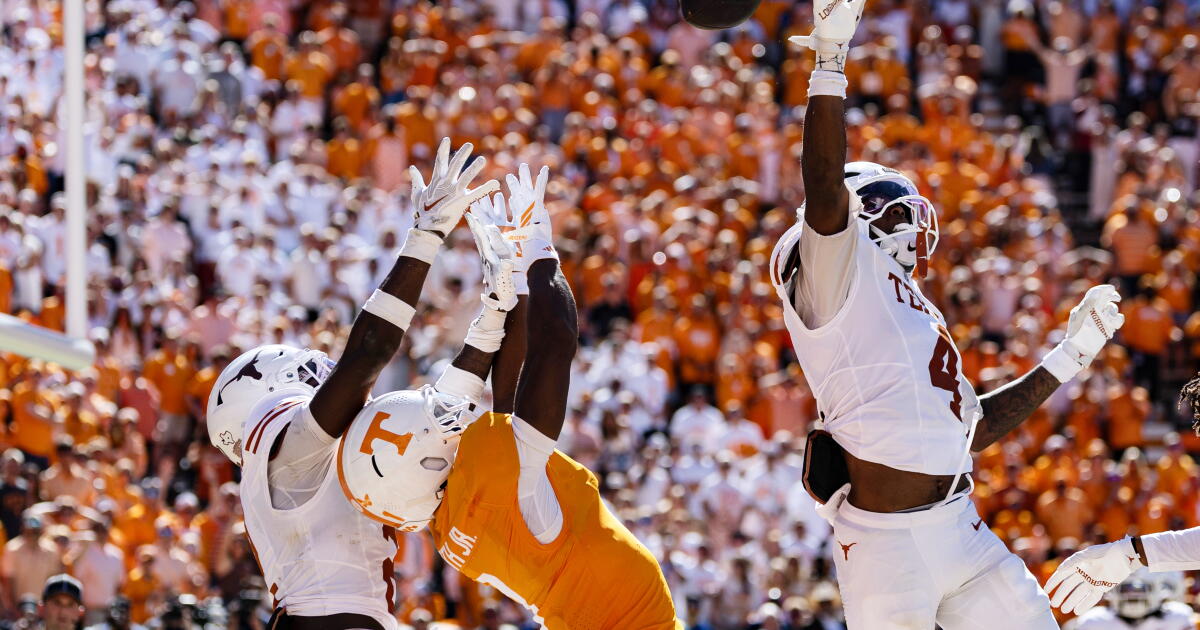
Colin Simmons tied the program record with five sacks as top-ranked Texas held off No. 14 Tennessee 20-17 Saturday with President Donald Trump on hand in the Longhorns’ first visit to Neyland Stadium.
Raleek Brown ran for 67 yards and a pair of touchdowns, and his four-yarder with 5:41 left gave the Longhorns the winning margin in the Southeastern Conference opener for both teams. Giannis Spetic had a pair of field goals.
It was a defensive day with Texas (4-0) dominating with 10 sacks. Simmons’ big day will be remembered for his vulgar celebration after one sack. He was flagged for unsportsmanlike conduct with the referee saying Simmons was “simulating” using the restroom.
“We took him out, we addressed it and put him back in,” Sarkisian said of Simmons. “At that point, I’m not going to give the guy a death penalty over an unsportsmanlike conduct. We got to fix it though. That can’t continue.”
Quarterback Brandon Faizon of Tennessee (3-1) made it interesting late, capping an 80-yard drive with a 30-yard touchdown pass to Mike Matthews with 1:22 left. Linebacker Arion Carter recovered the onside kick, and Jelani McDonald batted away Brandon’s pass to Travis Smith Jr. on the final play in the end zone.
Texas’ Arch Manning threw for 201 yards while being sacked six times. He also was intercepted once with the Longhorns needing the smothering defensive performance to help on a day with too many penalties, including two illegal forward passes by Manning.
at No. 2 Georgia 41, Oklahoma 13: Chris Cole scored on a 85-yard fumble return as the Bulldogs (4-0) took advantage of three first-half turnovers by John Mateer and overwhelmed the struggling Sooners in the SEC opener for both schools.
Mateer lost two fumbles, each recovered by Cole, and and had a pass instercepted as Oklahoma, which finished with four turnovers, fell behind 28-0. K.J. Bolden picked off a pass from Mateer in the second quarter.
Gunner Stockton was almost perfect in the first half for Georgia. Stockton completed his first nine passes, including a 35-yard touchdown throw to Talyn Taylor.
No. 3 Notre Dame 49, at Purdue 10: CJ Carr threw three touchdown passes and ran for another score and linebacker Drayk Bowen scored his first career touchdown on a 15-yard fumble return for the Fighting Irish.
Carr was 14-of-22 passing for 237 yards with his first interception of the season.Aneyas Williams carried 14 times for 80 yards with one TD as Notre Dame (4-0) produced a season-high 177 yards rushing. Notre Dame has won 14 straight and will start October with a perfect record for the first time since 2021.
at No. 7 Ohio State 42, Illinois 19: Jeremiah Smith tied an Ohio State record with four touchdown catches and also had career highs with 12 receptions and 217 yards in the rout of the Illini.
According to Sportradar, it is the 23rd time since 2000 an FBS player has had double-digit catches for at least 200 yards and four scores in a game. The last to do it was Western Michigan’s Sky Moore against Northern Illinois in 2021.
It is the fifth time an Ohio State receiver has had four touchdowns. The last time it happened before Saturday was Noah Brown at Oklahoma in 2016.
at No. 11 Texas Tech 49, Sam Houston 14: Red Raiders linebacker Austin Romaine returned two interceptions for touchdowns on consecutive passes thrown by different Sam Houston quarterbacks in the first half of what became a rout.
Texas Tech led only 7-0 before fellow linebacker Brock Gowlas leaped to deflect a pass thrown by Brett Holloway. Romaine, who had also jumped, then grabbed the ball out of the air and ran 15 yards for a touchdown with 14:54 left in the first half. On the first play after the ensuing kickoff, Bearcats starting quarterback Landyn Locke was back in the game, and his pass on first down was picked off by Romaine. That 31-yard return made it 21-0.
Wake Forest 30 at No. 16 Louisville 27: Connor Calvert kicked three field goals, including a 32-yarder with 6:20 remaining, to lift the Decons (3-1, 1-1 ACC) to the upset.
Gio Lopez threw for 225 yards and a touchdown. on 12 of 19 passing for the Demon Deacons (3-1, 1-1 Atlantic Coast Conference) against Louisville (2-2, 1-1). Carlos Hernandez caught nine of those for 194 yards, just three yards off the career best he set last season against Delaware. Ty Clark III carried the ball 21 times for 91 yards and two touchdowns.
No. 17 Iowa 20, at No. 18 Michigan 19: Hank Brown threw a game-ending, 16-yard touchdown pass to Reece Vander Zee to lift the Hawkeyes to the win in the Big Ten opener for both teams.
Iowa (4-0) went 91 yards on the final drive — boosted by an unnecessary roughness penalty against Michigan on a third down at midfield. Brown’s 29-yard pass to Addison Ostrenga set up the final play with two seconds on the clock.
Bryce Underwood threw a 49-yard touchdown pass to JJ Buchanan early in the fourth quarter — their second scoring connection of the game — but the Wolverines (3-1) could not make enough plays on both sides of the ball to hold on for the win.
Etc.
Wayshawn Parker broke a 54-yard run on the game’s opening play from scrimmage for the first of his three touchdowns and No. 15 Utah (4-0) held off host Iowa State (2-2) in the second half for a 31-17 win on Saturday in a Big 12 opener for both teams. … Conner Weigman threw four touchdown passes and ran for two scores, leading No. 25 Houston (3-1) to a 42-28 win over visiting Georgia Southern.
Lee Beebe Jr. rushed for 203 yards, including a 70-yard burst that set up Josh Hoover’s game-sealing one-yard touchdown run with 1:56 to play, and No. 5 Indiana (4-0) held on for a 29-23 over surprising Northwestern (2-1) in the Big Ten opener for both schools on Friday night. …
Mason Heintschel passed for 403 yards and six touchdowns, and host Pittsburgh (4-0) remained perfect by rolling past Bucknell 59-0 on Saturday. … Jeffrey Overton Jr. ran for a 76-yard, go-ahead touchdown late in the fourth quarter as Virginia Tech (4-0) rallied for a 21-14 victory at Boston College (2-2) in an ACC opener for both teams that was played in a nor’easter. …
A British Excalibur uncrewed underwater vehicle (UUV) has fired a U.S. Mk 48 heavyweight torpedo in what is said to be a first-of-its-kind test for both countries. Though just a proof-of-concept so far, this is a significant new step for the United States and the United Kingdom toward future operational fleets of armed UUVs.
📰 U.S. NAVY UPDATE: U.S. Navy and Royal Navy Successfully Test Fire Torpedo from Unmanned Undersea Vehicle
📍WASHINGTON – On September 13, 2026, the U.S. Navy and the Royal Navy successfully conducted the proof-of-concept launch of an exercise U.S. Mk 48 Heavyweight Torpedo… pic.twitter.com/lVB4wYSwC0
— Office of the Chief of Naval Operations (@USNavyCNO) September 22, 2026
The test was also carried out under the umbrella of Pillar 2 of the trilateral Australia-United Kingdom-United States (AUKUS) defense cooperation agreement, which was first announced in 2021. AUKUS’ Pillar 2 covers a wide range of advanced technology cooperation, with particular focus on uncrewed platforms and autonomy. Pillar 1 of the agreement centers on support for Australia’s establishment of a nuclear submarine force.
For the September 13 test, the Mk 48 torpedo was slung under the Excalibur UUV. The nearly 40-foot (12-meter) long, 19-metric-ton submersible drone has a large internal payload bay, but it is reportedly not large enough to accommodate the Mk 48, which is the standard heavyweight torpedo in U.S. Navy service today. The 19-foot-long, 21-inch-diameter weapon has been successively upgraded over the years to expand its capabilities and improve its resistance to enemy countermeasures.
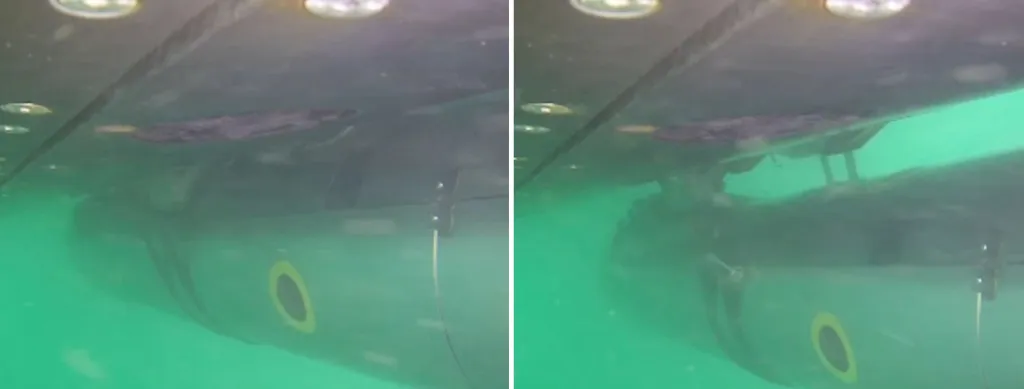
Screen captures from a video the US Navy released today showing the release of the Mk 48 torpedo from the Excalibur UUV during the test earlier this month. USN capturesA stock picture of a Mk 48-series torpedo. DODA US Navy infographic detailing just some of the upgrades to the Mk 48 series over the decades. The Navy has now moved on to the further improved Mk 48 Mod 8 variant. USN
The Royal Navy officially unveiled Excalibur, which was developed by U.K.-based MSubs under Project Cetus, last year. The external torpedo launch capability was the result of two additional efforts, called Project Broadsword and Trial Iron, according to the U.S. Navy release.
A picture of an Excalibur UUV at the time of its unveiling in 2025, giving a good general sense of its size. Royal Navy
The September 13 test “successfully validated the mechanical, electrical, and software integration of a U.S. kinetic payload onto an allied autonomous vessel, proving that allied forces can rapidly achieve weapon interchangeability,” the Navy’s release adds. “Approved in February 2026 by the Department of the Navy Rapid Capabilities Office (DONRCO), the project was executed in less than seven months.”
How the Excalibur UUV was controlled during the test and whether the torpedo was launched at a test target of some kind are unknown. TWZ has reached out for more information.
A look at the Excalibur UUV submerged, from the video the US Navy released today. USN capture
“BROADSWORD is a great example of how AUKUS Pillar II drives interoperability in across the alliance. Demonstrating the launch of a US torpedo from a UK extra-large unmanned underwater vehicle (XLUUV) is an important early step in developing lethality in our undersea autonomous systems,” U.S. Navy Vice Adm. Robert Gaucher, Director of Submarine Programs, did say in a statement. “We look forward to continuing to leverage the AUKUS partnership to keep pushing the potential warfighting advantages of unmanned undersea systems.”
“This successful test marks a historic first for allied undersea warfare,” U.S. Navy Adm. Daryl Caudle, Chief of Naval Operations, also said in a statement. “Proving that we can seamlessly launch a U.S. heavyweight torpedo from a Royal Navy autonomous underwater vehicle validates our shared vision for true interchangeability.
“This is a really important moment in our journey towards building a hybrid navy, which is where the Royal Navy will sail with crewed ships and submarines alongside uncrewed and autonomous vessels,” Luke Pollard, U.K. Minister of State for Defence Readiness and Industry, separately said in an interview with LBC radio. “It is a substantial increase in our lethality, to show that torpedoes can be fired not just by the Astute class hunter-killer submarines that we have in the Royal Navy, but also now by our uncrewed systems.”
A Royal Navy Astute class nuclear-powered attack submarine. UK Ministry of Defense
The U.S. Navy and the Royal Navy employ various tiers of UUVs operationally today, but primarily for mine-sweeping and reconnaissance and surveillance missions. Future fleets of submersible drones capable of carrying out attacks on other vessels will create entirely new operational possibilities. Operated closely together with crewed surface warships and submarines, torpedo-toting UUVs could be sent ahead into riskier environments and offer an immediate option for engaging any threats they might find. Even a bigger UUV like Excalibur would also be more challenging for opponents to spot and track than a traditional attack submarine.
Excalibur is also in a category of larger and more capable submersible drones that offer significant endurance and higher degrees of autonomy. Adding in the ability to launch torpedoes, in turn, then opens the door to new concepts for employing these UUVs in groups more independently of crewed companions. In the future, for instance, armed Excaliburs or similar UUVs might be deployed to a particular maritime choke point to not just monitor for enemy movements, but actively hold them at risk.
The Royal Navy’s Xtra Large Underwater Autonomous Vehicle – project CETUS
In addition, in general, UUVs offer a way to expand total undersea warfare capacity in a more cost-effective manner compared to acquiring and fielding more traditional submarines. The ability to have more presence below the waves at a lower price point also translates to more persistence across large areas, something that could be especially valuable across the broad expanses of the Pacific, as well as other bodies of water globally. This presents additional targeting challenges and uncertainty for opponents.
“In securing the North Atlantic, especially against those nations that wish to do us harm, like Russia, the ability for us to now say it’s not just where our submarines are that you need to worry about – it is about how we create greater deterrence and question marks in the eyes of our adversary, with uncrewed systems there as well,” U.K. Minister Pollard said in speaking with LBC.
Pollard’s remarks here speak to particular considerations the British government is faced with just in its backyard. This includes the so-called Greenland-Iceland-United Kingdom (GIUK) Gap, which is the main path through which Russian Navy submarines transit to and from bases in the northwestern end of that country and the Atlantic proper. There is also the English Channel and the nearby Baltic Sea. The Royal Navy has limited capacity with its crewed submarines to monitor this and other critical regional chokepoints. UUVs could then help take pressure off its fleet of just five (of a planned seven) Astute class submarines, helping free those boats up for the myriad other missions they are tasked with, including carrier escort and special operations support.
“By converting commercial and allied uncrewed undersea hulls into high-end strike assets, the partnership drastically alters the cost-exchange ratio in contested maritime environments,” the U.S. Navy’s press release today notes, as well.
There are still many questions still to be answered about future larger UUV operations, including just how they will be deployed and recovered. Video the U.S. Navy released today shows that the torpedo-armed Excalibur was launched into the water in Scotland using a commercial truck-mounted crane. U.S. shipbuilders Huntington Ingalls Industries (HII) and General Dynamics National Steel and Shipbuilding Company (NASSCO), among others, have been working on new options for launching and retrieving larger drone submersibles from surface warships. External carriage on the hulls of ships and/or submarines might also be an option in the future.
A picture from a test in 2022 of a prototype portable cradle for launching large UUVs developed by HII. The UUV seen here is that company’s Proteus design. HII
Additional torpedo and other munition options for UUVs beyond the full-size Mk 48 could also be on the horizon. The U.S. Navy has invested heavily in compact and lightweight torpedo designs that could be well suited for employment from underwater drones like Excalibur.
The U.S. Navy says it is working with its international partners on another similar UUV capability demonstration, but this time involving an Anduril Dive-XL, under what is dubbed Project Cutlass. This effort “will tackle advanced payload integration data, command and control architectures, and tactical employment scenarios to further mature uncrewed undersea capabilities,” according to the U.S. Navy’s release.
The Royal Australian Navy is already in the process of acquiring and fielding a militarized version of the Dive-XL, called Ghost Shark. It’s also worth noting that the Dive-XL evolved from the earlier Dive-LD design. The Dive-LD is in at least limited operational U.S. Navy service now, a fact that was revealed by Iran’s capture of one of these submersible drones earlier this month, as you can read more about here.
Excalibur’s ability to launch a standard Mk 48 heavyweight torpedo is already an important show of progress now toward a shared goal of a future underwater ecosystem that includes submersible drones that are able to attack other vessels.
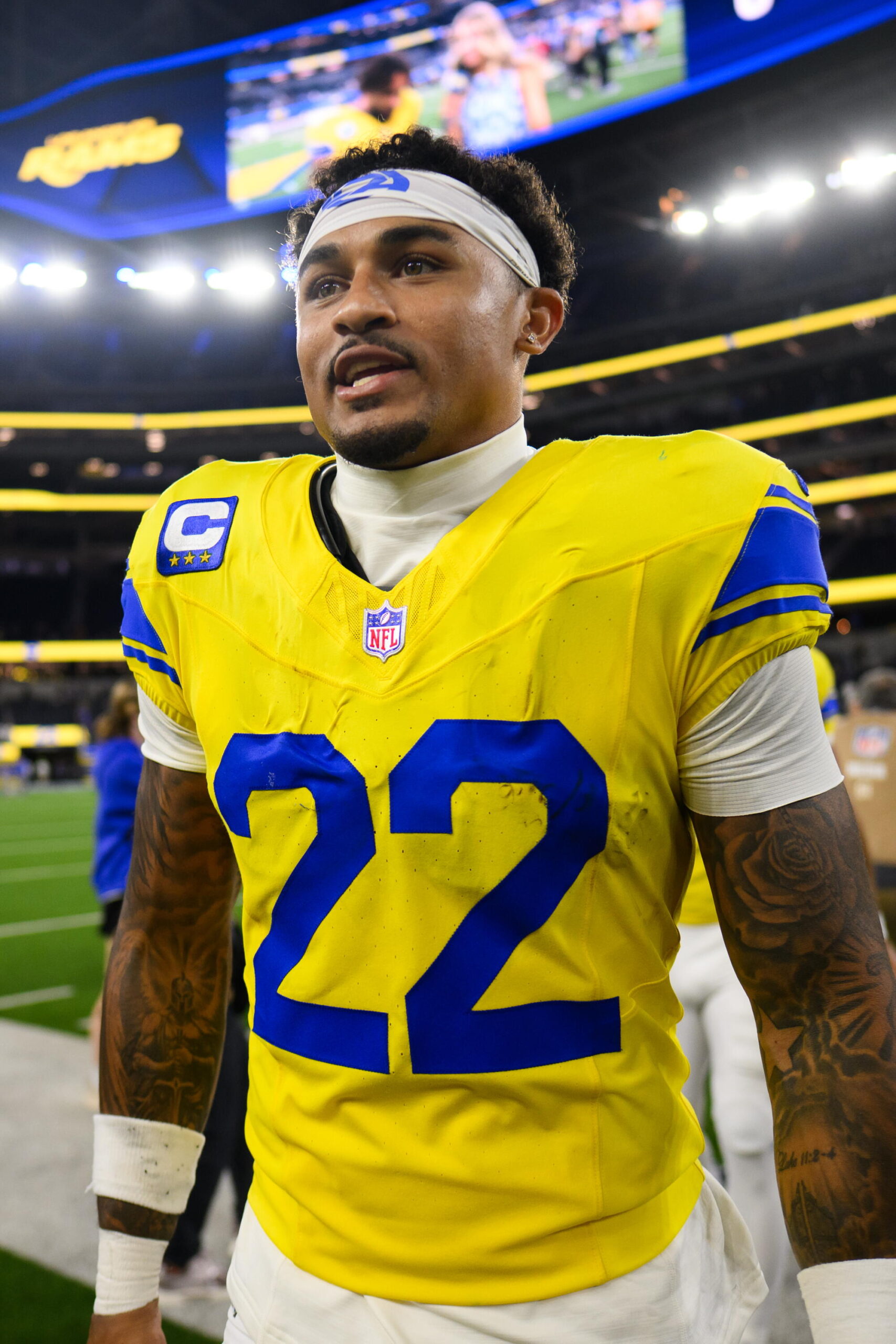
Rams coaches and personnel executives call it “the moment of truth,” the split second when a defensive back, usually on the run in full stride next to a receiver, must decide how he is going to play a pass that is already in the air.
Top NFL cornerbacks remain calm. They do not panic.
“It’s those guys that just kind of — their blood pressure never rises,” defensive coordinator Chris Shula said.
The Rams traded for the All-Pro cornerback in March, sending the Kansas City Chiefs the 29th overall pick and three other draft picks for the four-year veteran. They quickly signed McDuffie to an extension that includes $100 million in guarantees.
Last Monday, McDuffie intercepted a pass in the Rams’ 28-6 victory over the New York Giants, a win that helped erase some of the sting from their embarrassing season-opening defeat by the San Francisco 49ers in Australia.
In McDuffie, a two-time Super Bowl winner, the Rams got even more than expected, coach Sean McVay said.
“He just has an amazing emotional intelligence of how to uplift and lead his teammates and challenge them in a way that’s authentic to his personality,” McVay said. “He loves the opportunity to be able to have some of the hard downs that a lot of corners sometimes don’t want, but this guy wants them.”
McDuffie, 26, is looking to make more plays Sunday night when the Rams play the Denver Broncos at Empower Field at Mile High.
With the Chiefs, McDuffie played against the Broncos six times, and he is still looking for his first interception against the former AFC West rival.
But mainly, he aims to help the Rams continue their momentum after giving up only two field goals against the Giants.
“It was one of those attitude games, where we didn’t have the greatest Week 1 performance,” McDuffie said. “So there was a little chip on our shoulder, a little attitude we brought.”
McDuffie began his rise to NFL stardom during a high school career that featured stops at Santa Ana Mater Dei, Anaheim Servite and Bellflower St. John Bosco, before playing in college at Washington.
Rams cornerback Trent McDuffie walks off the field after a win over the New York Giants on Sept. 21.
(Kyusung Gong / Associated Press)
The Chiefs selected him in the first round of the 2022 draft, and he helped them make three Super Bowl appearances, winning two.
McDuffie said he learned a tough but valuable lesson against the Philadelphia Eagles in Super Bowl LVII in Arizona in 2023.
With the ball at the Chiefs’ 45-yard line, the 5-foot-11 McDuffie lined up against 6-1, 225-pound receiver AJ Brown. As they ran downfield, McDuffie saw the ball in the air. But he did not know which way to turn his head. He did not know how he wanted to play the ball.
Brown caught the pass for a touchdown.
“Too much thinking in my head to where I didn’t make the play,” McDuffie said.
McDuffie turned the experience into a positive while developing into one of the NFL’s top players at his position.
“From then on, it was almost like, ‘All right, the ball’s in the air, it’s not so much a panic, it’s like you get an opportunity now,’” McDuffie said. “When you’re a DB in the NFL, there’s only so many times they’re going to throw the ball your way. There’s only so many times you’re in a position to make a play, so just kind of calming myself down.
“When the ball’s in the air, don’t panic — just become the receiver. Get back to the basics. You know how to play football. You know how to catch the ball. Just go make a play.
“And really, it’s the fear of failure that I don’t have anymore. Like if they make a play, they make a play. Let’s just line up and let’s keep attacking.”
The next season, despite not intercepting a pass, McDuffie earned All-Pro recognition. He forced five fumbles and had three sacks.
It did not take long for McDuffie to make an impression on his Rams teammates. During offseason workouts and training camp, he established himself as a leader and was voted a team captain.
His first interception for the Rams was the fourth of his career.
“I was in the right place at the right time to make the play,” said McDuffie, who also broke up three other passes, “but I think overall as a group we really took a step in the right direction, which looking back at the film was the most exciting part for me.”
Rams receiver Davante Adams raved about McDuffie during training camp. This week, he said McDuffie had been the “best-kept secret” in Kansas City.
“I’m just glad to see him making plays on guys that aren’t our receivers now,” Adams said. “Go out there and do his thing, show the world.”
Defensive lineman Aaron Donald did not see McDuffie up close until he came out of retirement to rejoin the Rams last month. McDuffie made an impression in Donald’s first game against the Giants.
“I usually don’t watch the DBs,” Donald said, “but he caught my eye. He’s something special.”
On Sunday, McDuffie won’t be the only elite cornerback on the field. “There’s a ton of great corners in the league,” McDuffie said, but he regards Patrick Surtain II of the Broncos, the 2024 NFL defensive player of the year, as the best.
“It’s always fun just being able to see him in person and work his craft,” McDuffie said.
McDuffie intends to showcase his own against a Broncos team that features quarterback Bo Nix operating coach Sean Payton’s offense.
The Rams are seeking another dominant performance.
“Now that we did it once,” he said, “now we have to prove it again.
THINGS seem to be going from strength to strength for Olivia Attwood and Pete Wicks as they enjoyed a loved-up weekend together after spending time apart.
The couple cuddled up for a mirror selfie in a lift, with Pete holding up his phone as Olivia leaned into him.
Olivia Attwood cuddled up to boyfriend Pete Wicks for a lift selfieCredit: p_wicks01/InstagramOlivia and Pete made their romance Instagram official in JulyCredit: Getty
Shared by Pete on Instagram, the presenter’s £26kHermès bag could also be seen at her side as they posed for the cosy snap.
Olivia, 35, recently spent time in New York for Fashion Week while Pete, 37, remained in the UK.
Sign up for the Showbiz newsletter
Thank you!
The pair had made their red carpet debut as a couple at the National Television Awards just days before she flew out.
They shared a kiss in front of the cameras at London’s O2 Arena, after keeping their romance a secret from fans for months.
Pete and Olivia were snapped kissing at the recent National TV AwardsCredit: GettyOlivia had a loved-up snap of her and Pete as her phone screensaverCredit: Instagram
Olivia and Pete were first pictured kissing in March, following her split from footballer husband Bradley Dack in January.
Pete finally made their relationship Instagram official in July with a series of cosy snaps from a trip to Ibiza. Alongside them, he wrote: “I guess someone has to go first.”
Their romance grew out of a long friendship, and the pair previously hosted The Sunday Roast together on KISS.
Olivia has described being with the former Towie star as “the easiest thing I’ve ever done”.
And their latest loved-up picture suggests the couple are definitely pleased to be back together after Olivia’s trip across the Atlantic.
The U.S. Navy has given us the first look at Blackbeard hypersonic strike missiles under the wings of F/A-18E/F Super Hornets during actual flight testing. The Navy is hoping to have Blackbeard in at least limited service no later than 2028, giving its carrier air wings an all-new fast-flying standoff weapon, particularly for engaging enemy ships. The missile is also being designed to be relatively cheap and quick to manufacture.
The Navy’s Office of the Portfolio Acquisition Executive for Aviation (PAE-A) has released a video montage of Blackbeard undergoing flight testing, seen in the social media post below. The service confirmed that it had at least begun test-loading the missiles onto F/A-18E/F Super Hornets in a presentation at the Tailhook Association’s annual convention last month. Now we know the program has moved ahead substantially from that point.
The company behind Blackbeard, defense start-up Castelion, has received several multi-million-dollar contracts from the Navy just this year explicitly to support integration of the weapon onto the Super Hornet, as well as otherwise accelerating its development. In its daily contracting on September 14, the Pentagon announced the Navy had struck yet another deal with Castelion, valued at $43.65 million, “for the manufacturing, assembly, testing, and delivery of the first production lot of 444 All-Up Rounds (AURs), defined as fully functional tactical missiles packaged within specialized shipping and storage containers.”
A screen capture from the Blackbeard flight testing video montage the Navy released today. USN capture
In terms of what we know today about Blackbeard’s design and capabilities, as we have previously written:
“A profile photo [seen below] at the company’s headquarters reveals a weapon with a ballistic missile-like booster, on top of which is mounted what could be an unpowered hypersonic glide vehicle (HGV). A booster brings an HGV to the desired velocity and altitude before releasing it toward its target. The concept is in contrast to air-breathing cruise missiles capable of traveling at hypersonic speeds. Hypersonic speed is generally defined as anything above Mach 5, which larger ballistic missiles also reach in the course of their flights. More precise performance figures for Blackbeard are lacking, but Castelion has previously hinted it could hit targets out to just under 500 miles. Alternatively, the second stage may also have its own motor, allowing it to continue accelerating or sustain high-speed flight. A similar arrangement has been suggested as the propulsion system for the Russian Zircon missile.”
Castelion
“Both stages of the weapon have cruciform fins, while the upper one features a prominent ‘chine’ line along the length of its body, and a slightly beaklike nose. The trolley on which the weapon is mounted provides some idea of its overall size. The blue stripes seen on each stage normally signify that a munition is an inert, non-explosive round utilized for training or tracking purposes. This would indicate a real (unarmed) missile rather than a dummy or mockup.”
A picture shown at Tailhook had also offered a new look at the front of the missile, exposing what looked to be an aperture on one side of the design’s wedge-shaped nose. As we wrote after that image emerged:
“The apparent apertures are also seen pointed up, but many air-launched munitions do flip down after release.”
“How exactly Blackbeard is guided remains unknown, but a downward-angled aperture at the nose end for a seeker system would make sense for this weapon, which the Navy is pursuing primarily as a new way to target enemy ships. In particular, a wide array of existing anti-ship and land attack missiles, as well as certain anti-air types, have variously shaped apertures in their noses for imaging infrared seekers. Imaging infrared has the benefit of being immune to radio frequency electronic warfare jamming. In addition, it is a passive capability that does not send out signals that can give an opponent advance notice of an incoming attack. Blackbeard’s full guidance package very likely also includes some means of navigating to a target area first, and it could have multiple modes of operation.”
The new flight testing footage released today also underscores the relatively small size of Blackbeard overall. While the Super Hornet is set to be the first operational launch platform, it is very likely to be integrated on other aircraft quickly thereafter. The Navy is acquiring Blackbeard under a program called the Multi-mission Affordable Capacity Effector (MACE).
Another screen capture from the new Navy video offering a different of Blackbeards under the wings of a Super Hornet, underscoring their relatively small size. USN capture
Requirements for MACE that the Navy put out previously explicitly called for a design compact enough for carrier-based F-35C (and land-based F-35A) Joint Strike Fighters to carry four of them internally. Whether that remains a goal in any way is unclear. Still, being able to carry some number of Blackbeards internally would not only give those jets a hypersonic strike weapon, but one that they could carry in the most stealthy configuration. The Navy also notably does operate the F-35A outside of the test and evaluation community, which might point to air-launched Blackbeards entering service elsewhere in the future. As an aside, the U.S. Army is pursuing a ground-launched version of this missile, as well.
As mentioned, the Navy’s stated goal now is to reach an early operational capability with Blackbeard by 2028, if not sooner. What the exact fielding plan for those missiles might be is unclear. PAE-A did write “Coming soon to a theater near you” in its post on X containing the video montage, and tagged the official accounts for U.S. Central Command (CENTCOM) and U.S. Pacific Command (PACOM). CENTCOM oversees U.S. military activities in and around the Middle East, including ongoing operations against Iran. U.S. military officials have also long touted hypersonic weapons, in general, as key to success in any future conflict in the Pacific, especially a high-end fight against China.