A quick glance from the sidewalk shows a midsize home in the Valley. Fallen leaves from a large tree scatter across the neatly trimmed front lawn. It’s just like any other house in a suburban neighborhood outside of Los Angeles.
Inside, there’s a whole network TV operation going on.
The three-bedroom chateau is packed with people. Every inch of space in the house is being used to make “Good Night With Ben Gleib” happen. The living room TV displays the multiple angles of cameras spread across the house. The pantry doubles as a control room while the backyard shed was turned into a venue for the musical guest.
It’s not a traditional late-night talk show. It’s not on a legacy network, it isn’t filmed in a studio, and the U.S. president isn’t calling the host a “deranged lunatic.”
Share via
This show is filmed in a room of Gleib’s house that was converted into an 18-seat studio. The host drinks a cocktail as he delivers his topical monologue in front of blue drapes, and after the taping concludes the cameras continue to roll and capture the nightcap, where Gleib mingles with audience members.
Rather than following the traditional path — from stand-up or sketch comedy to eventually landing behind a late-night desk — Gleib built his own opportunity and releases it on YouTube, a trend becoming more prominent in the comedy world.
“The landscape has changed very largely,” Gleib said. “It’s hard to make your mark in TV and a stand-up appearance on late night doesn’t change your career like it use to, you really have to find creative ways to create your dream career.”
Production staff controls the taping of the show “Good Night With Ben Gleib” on Sept. 16.
(Brian Feinzimer / For The Times)
Since “Lazy Sunday” from “Saturday Night Live” hit the airwaves and caught a second wind on YouTube, the comedy landscape “had changed forever,” according to Seth Meyers.
“What made it so great then and still today is that it was an instant hit but also felt DIY in a way things hadn’t for so long,” said the “Late Night” host in an interview with GQ.
Social media platforms like YouTube have helped make it easier for anyone with a camera to create original content and spread it to the masses. The hashtag “comedy” has 20 billion views on TikTok and genres such as stand-up and sketch comedy grow every year, according to Business Insider. Meanwhile, late-night television has taken a dip in audience and ad revenue.
The old guard of comedy is changing and the DIY movement has transformed fame in the comedy world. Comics no longer have to wait to get stage time on a late-night talk show, they just need to get it done, said Nicole Blaine, owner of the Crow comedy club. It is also inexpensive to create digital content. With platforms like TikTok, Instagram and YouTube, the ability to be seen is easier, she added.
“I don’t think you can count on anyone to ‘make it,’” Blaine said. “I think you literally have to make it yourself and I do believe that the industry [is] paying attention behind the scenes in more ways than the artists know.
“You want to be your own showrunner,” she added.
Makeup artist Lisa Lopez gets musical guest Ada Pasternak ready in the kitchen of Ben Gleib’s home, also the set of “Good Night.”
(Brian Feinzimer / For The Times)
Representation comes and goes, but the fan base a comedian creates for themselves stays with them, Blaine said. Creating digital content for social media to back up a career in stand-up demonstrates that success is completely within the control of comics, she continued.
The DIY formula relies on taking advantage of the skills each performer has and using them to self-produce material to build a fan base, a concept that comedian Emmy Browning is putting into practice. Using her background in screenwriting, she pitched “Hands!” to the Elysian Theater and performed it for its Spaghetti Festival, designed to showcase new work, within three months.
“I essentially wrote, cast, directed, produced, got a crew together …,” she said. “It was just a crazy team of people that came together for no money to make this thing happen.”
“Hands!” spoofs FX’s “The Bear,” while satirizing TV conventions, like the will-they-won’t-they romantic plotlines, multicamera operation and filming in front of a live studio audience. Browning’s show was performed live while a camera crew shot different angles that were being projected on screens located on stage.
It made the stream of the show feel like an actual live performance. Now the stream can be seen by anyone, anywhere in the world, at any time. Browning said when her comic friends began to create clips for social media, they were able to travel around the country and perform for the fans they’ve garnered from their content.
“There are so many different ways and opportunities to be seen first,” Browning said. “…If you have the stamina to generate content online that promotes yourself, you can really make a living or create a fan base yourself.”
Self-producing isn’t only about promotion, it’s about creative ownership.
“There’s nothing as creatively freeing as being your own boss and not having to conform to network notes or the comedic ideas and opinions of people who have never been comedians and have never been recognized for their comedy skills,” Gleib said.
Guests are interviewed during the taping of “Good Night With Ben Gleib.”
(Brian Feinzimer / For The Times)
The sentiment is shared by Ron Lynch, a comedian known for voicing Hugo, the neurotic health inspector in Fox’s animated series “Bob’s Burgers,” who’s produced a variety show at the Elysian Theater called “Tomorrow!” for 20 years now.
The show gives participants the opportunity to do whatever they want, within a five-minute time frame. Half the acts are stand-ups, the other half “are just weird.”
“We’re not responsible for sponsors or anything like that,” Lynch said. “We can basically do whatever we want.”
Self-producing allows creators to explore their voice without any limitations.
“What we do is provide entertainment,” Lynch said.
In the new DIY era, it is not a matter of when a performer will make it, but rather how much a performer really wants it, Blaine said. It’s a lot of work that needs to get done, even after a day job, but it will separate the people who want it badly over those not wanting to put in the time, she added.
It isn’t about landing a late-night talk show, it is about creating.
“It isn’t easy,” Blaine said. “But artists will always find a way if we really want to do it.”
The DIY movement also comes with big risks that will not work unless the comedian believes in it, said Gleib. His team is putting a lot on the shoulders of the comedian to reinvent late night and make it a lucrative business.
And if the big swing doesn’t work?
“I’ll have to come crawling back to the traditional entertainment industry, hoping that I still have a place there,” he added.
After a concertgoer died in the audience at a Carson music festival on Saturday, an artist is outraged the show continued while the deceased was still on-site.
On Saturday, at Carson’s Anderson Memorial Park, Shari Sanders of Altadena was found unconscious in the VIP section of the city’s annual jazz festival.
Dr. Dionne Leslie, a festival attendee, told KTLA that she performed CPR on Sanders before paramedics arrived. “[I was] just trying to breathe air into that woman and for her to look up in that moment, I just thought that she was going to make it,” Leslie told KTLA.
Sanders was later pronounced dead after what her family described as a heat-related illness. The cause of death is still under investigation.
Representatives for the city of Carson and the Los Angeles County Sheriff’s Carson station did not immediately return requests for information or comment.
Now Sheila E., a legendary percussionist and frontwoman who headlined the festival, has criticized promoters, she said, for allowing the show to continue before Sanders’ body was removed around 5 p.m.
“I would have never, never gotten onstage if I would have known that her body was still sitting there with her family surrounding her,” Sheila E. said in video statement after the festival. “Production, whoever, the city, the mayor was there. All of you guys should have stopped the festival. I’m sorry. You should have stopped the festival.”
The drummer said she was distressed by the paucity of water stations available, and feared the triple-digit heat was a risk for fans.
“We heard that … there was only one water station, which was unfortunate because there was just not enough water for everyone,” she said. “Carson, you guys have to do better. This was horrible. Horrible. And I’m so sorry that I played because I would not have gotten onstage knowing that she was still there.”
Strictly Come Dancing viewers spotted a switch-up with the new presenters and made a plea with producers ahead of next week’s show
19:45, 04 Oct 2026Updated 19:56, 04 Oct 2026
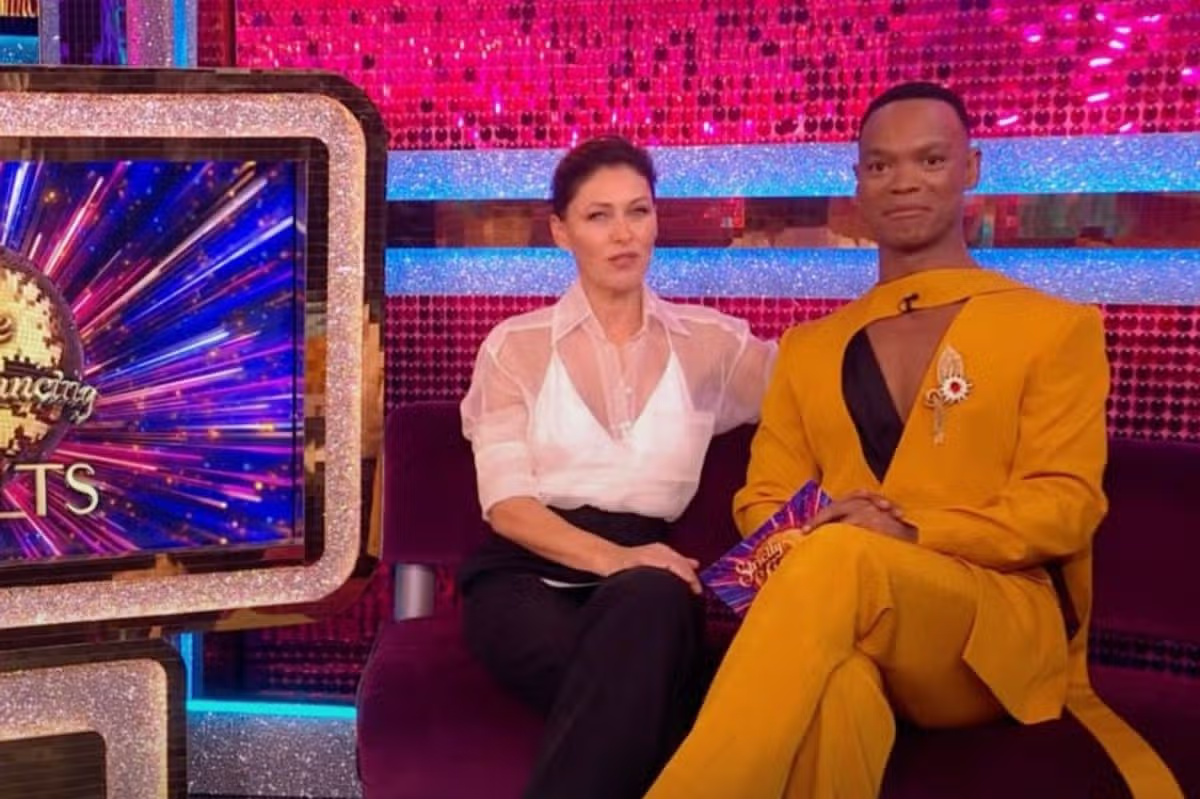
Fans enjoyed Emma and Johannes’ opening pairing(Image: BBC)
Strictly viewers made a plea to the big bosses after noticing a presenter switch-up for the first results show. Josh Widdicombe, Emma Willis and Johannes Radebe have been heavily scrutinised in their first few appearances since taking the baton from Tess Daly and Claudia Winkleman.
But after Emma and Johannes were paired together for the start of Sunday’s show, fans pleaded for it to stay that way. The pair discussed Saturday’s show with the judges and viewers took to social media to share their thoughts.
One user on X, formerly known as Twitter, said: “JoJo and Emma finally presenting together. Now can we have them downstairs on the main show please.”
To see more of the stories you love from The Mirror and to find them easily in Google then make us your preferred source. Free and easy-to-do, just click on the link here to find more from The Mirror at the top of your feed.
Another added: “Emma Willis & Johannes Radebe are the only presenters the show needs. A respected individual with years of presenting on her CV & a fantastic dancer with charisma & enthusiasm flowing out of his pores #Strictly”
And a third said: “This is showing that it should be just Emma and Johannes they’ve had more Chemistry in a few minutes then two weeks of Josh. Emma upstairs and Johannes.”
However, when Emma made her way down out of the Clauditorium to reveal the votes, she was replaced by Josh, who joined Johannes to chat with the celebs. And once again he divided opinions.
One user said: “Absolutely love Josh widdicombe but I feel like he should be on it takes too, he feels a little outta place on the main show.”
It wasn’t all doom and gloom for comedian Josh, though. One viewer claimed: “I’ve never thought I’d say it, but @bbcstrictly is better without Tess and Claudia. It seems like it’s got a new lease of life with the new presenters. #strictly.”
And another was team Josh too, adding: “#Strictly Josh is so much Better up there…”
Chris Appleton went on to become the first celeb to be voted off the show following a unanimous decision by the judges. Jaime Winstone’s Cha Cha to Pretty Women won the votes as the actress was allowed to dance another day.
It marked the second consecutive year that Amy Dowden was the first professional dancer to be voted off the show. Last year, she made a swift exit alongside The Apprentice’s Thomas Skinner.
Fans of Strictly Come Dancing made their thoughts clear after the first dance off of the series sent one emotional couple packing after just two weeks
20:16, 04 Oct 2026Updated 20:16, 04 Oct 2026
The first dance off left one Strictly couple heading for the exit(Image: BBC)
Strictly Come Dancing fans were shocked as the first celebrity was sent packing after Movie Week. Celebrity hairstylist Chris Appleton was emotional after he was cut from the hit BBC competition after losing in a dance off against Jaime Winstone.
The stylist, 43, who has worked with the likes of Kim Kardashian and Jennifer Lopez, was near the bottom of the leaderboard with a score of 33 after two weeks of dancing.
And it was the end of the road for Chris and his pro partner Amy Dowden, who were tearful at the decision They performed their Cha Cha to I’ll Be Ready from Baywatch, before Jaime and Carlos Gu performed their Cha Cha to Oh, Pretty Woman from Pretty Woman.
Jaime was unanimously saved buy the judges and lives to dance another day.
To see more of the stories you love from The Mirror and to find them easily in Google then make us your preferred source. Free and easy-to-do, just click on the link here to find more from The Mirror at the top of your feed.
Viewers took to X to say: “i so wish amy and chris’ partnership could’ve lasted longer 🙁 , a partnership i wanted from the very beginning.”
Another said: “SO sad to see Chris and Amy go. I don’t think they deserved to this week. Imo it should’ve been Melanie and Aljaz. But the public vote how they want to. And honestly I do still think Chris would’ve done MUCH better in a same sex partnership, but it was his choice. #Strictly.”
And a third said: “God I can feel myself crying for Chris and Amy. It’s so unfair.”
It’s the second time in successive series that Amy has been dumped at the first hurdle. She also got the boot alongside The Apprentice’s Thomas Skinner in 2025.
Chris said he had felt a “whirlwind of emotion” and said: “I’m 43 and got good at doing what I did which is hair. So to come into something like this, I felt so out my comfort zone.
“I saw myself in a way I’d never seen myself and challenged myself in ays I never knew I’d be challenged. But I’m very grateful for everyone who’s been involved.”
And he said having a friend in Amy is something he is thrilled with, before saying he wished he could have helped her go further. The professional dancer added she is “heartbroken” but her heart is only breaking because she doesn’t get to dance with Chris any more.
Fans were shocked after Melanie and Aljaz avoided the dreaded dance off despite being rock bottom of the judges’ leaderboard. One user said: “melanie must have got more votes than loads of people to get through over jaime who was much higher on the leaderboard #Strictly.”
The show was a huge success with fans tuning in too. A Strictly spokesperson said: “Strictly’s movie week was the most watched programme of the night, with a peak of 5.6 million viewers. As ever, overnight ratings do not give the full picture of all those who watch in an on-demand world.”
BIG Brother fans may recognise Omar El Mayer’s from another telly show – as it’s not his first rodeo.
The contestant, who is currently taking part on the fly-on-the-wall show, took part on a YouTube series called The Intern, which aired late 2025.
Big Brother star Omar previously took part on YouTube series The InternCredit: Channel 4.0The contestant is currently on the ITV fly-on-the-wall showCredit: Shutterstock Editorial
Love Island star Chloe Burrows, Nella Rose, Harry Pinero, and PK Humble featured in the digital comedy series.
It followed twenty contestants claiming to be superfans of Nella and fight to win a real internship working with her.
Sign up for the Showbiz newsletter
Thank you!
But some participants were hidden clout-chasers trying to fake their fandom to win a £3,000 cash prize instead of the job.
Omar was a participant on the online series and revealed himself to be a “clout chaser”.
Omar has clashed with some of his fellow housemates this weekCredit: Shutterstock EditorialYasmin hit out at him for being the ‘fun police’ after they repeatedly clashedCredit: Shutterstock Editorial
He admitted he was only there for the money and fired by the hosts during the elimination process.
Things have continued to spiral on Big Brother, with a series of rows and housemates butting heads.
In a recent explosive clash, Omar and Yasmin went head-to-head as she insisted he was the “fun police“.
The first row kicked off when Omar clashed with Rob after he was seen dancing barefoot across the kitchen table.
A fuming Omar loudly exclaimed: “Get off the table – we eat on it. Get off the table, please.”
Rob continued to dance before being shouted at once more by Omar.
Annoyed at Rob, he remarked to Rochelle: “This is mad – I put my bread on that table yesterday. And he’s got his feet on it. It’s horrible.”
A back and forth soon ensued with Omar saying: Yesterday I put my toast on that table and ate it off the table.
“That means if I didn’t see you do that, today I would have put toast on top of your feet.”
Rochelle later remarked that Rob is left upset by Omar’s comment before Omar raged: “I don’t care if he is sensitive, bro and he needs to f***ing deal with it, bro.”
But Rob was not his only target with Yasmin also coming under fire from Omar as he took aim at her loudness.
He said to her: “You need to stop with the obnoxiously loud songs.”
As Yasmin hits back and suggested he was against “people having fun,” she soon got more riled up and said: “Let your hair down. Have a laugh. It’s alright.
“F***ing hell. I’m going to do what the f*** I please.
“Stop telling me what to do. You keep telling me what to do and I don’t like it.”
The anonymous arts group known as Secret Handshake has gone international with its piquant form of satirical anti-Trump artwork, this time placing a playable video game console called “Nuuk ‘Em All” in, yes, Nuuk, Greenland. The group sent a picture of the console to The Times. It sits alone on a barren cliff above the sea, with a smallish iceberg visible in the water below. The peaked roofs of a nearby town can be seen in the distance.
Secret Handshake has created more than a dozen pieces of guerrilla art mocking Trump since last year — all of which appeared on the National Mall in Washington, D.C., until July when a golden, 10-foot tall “Iran War Participation Trophy,” cropped up in New York City. That piece arrived at the Minnesota State Capitol in early August.
Greenland is ambitious though, even for a collective that revels in creating outsize splashes with its work (see the Trump-Epstein “Best Friends Forever” sculpture). Asked via email how the group transported the full-size video game console to the country — which has weathered a series of unwelcome overtures from Trump to become part of the U.S. since he retook office early last year — a representative wrote, “You have no idea — it was honestly very difficult. A true ‘planes, trains, and automo … ships’ situation. Did you know that the arctic is actually quite far? And they’re not used to whipping over arcade games.”
“Nuuk ‘Em All” is the second satirical video game Secret Handshake has released since July when it first introduced the world to “Operation Epic Furious: Strait to Hell,” which finds Trump waging a futile war with Iran while making all kinds of bumbling choices including whether to order a Diet Coke or bomb the country.
The game arrives in Greenland shortly after the Trump administration signed an agreement with the country and Denmark to expand the U.S. military presence in the Arctic while seemingly dropping threats to annex the semi-autonomous Danish territory.
Three additional cabinets of the game were simultaneously placed at the D.C. War Memorial on the National Mall, and can be played online on any old computer. The game begins with an animation of the White House, its lawn covered with cranes and backhoes. “The year is 2026,” the scrolling text reads. “The White House is under constant construction, reconstruction and construction of the reconstruction.”
The action moves to Trump’s Mar-a-Lago headquarters where Trump is approached by Defense Secretary Pete Hegseth, who apologizes for waking Trump from his “tactical nap” to tell him about some “issues with Iran.” Trump asks if the Strait of Hormuz is 100% open and Hegseth replies, “Yes, sir. It’s so open that we’ve used up all our missiles, and gas now costs more than bourbon.”
I haven’t had the chance to play the game for long, but Secret Handshake’s email details what to expect, “In this game, Iran is going great (spoiler — it’s not), so Trump heads north to check on his new frozen frontier. Along the way, he battles unthinkable evils like Fully Vaccinated Children, Woke Yetis, and the happiest people on Earth, the Danish. All the while, the player’s greatest challenge is trying to keep President Trump from falling back asleep.”
Secret Handshake didn’t have any information about how Greenland has responded to the game, with the rep noting, “I think there is a lot of hope and relief over there right now that this agreement is the end of the barrage of bullying and threats from the US. But our feeling—and I truly hope we’re wrong— is that it’s just the beginning. Especially with Trump refusing to answer if an invasion is completely off the table now.”
Regardless of what happens in Greenland, the rep continued, “the thing I really like the most about this new game is that between all the satire, and jokes, and silliness, it actually ends up back in reality — the character is still stuck in an endless loop of war in Iran. And that, sadly, is still just as true as when we released the Iran game almost half a year ago.”
I’m Arts editor Jessica Gelt screaming into the void. This is your arts and culture news for the week.
You’re reading Essential Arts
Our critics and reporters guide you through events and happenings in the SoCal arts scene. In your inbox every Friday.
By continuing, you agree to our Terms of Service, which include arbitration and a class action waiver. You agree that we and our third-party vendors may collect and use your information, including through cookies, pixels and similar technologies, for the purposes set forth in our Privacy Policy such as personalizing your experience and ads.
The week ahead: A curated calendar
FRIDAY
Boston Marriage David Mamet’s 1999 epigram-filled comedy about two women sorting out their affairs while maintaining their standard of living at the turn of the 20th century. Directed by Bernardo Cubría. With Nicole Pacent, Heather Wake and Dulce Valencia. 8 p.m. Fridays-Saturdays (and one Thursday, Oct. 22): 2 p.m. Sundays, through Oct. 24. European House LA, 12355 Rye Street, Studio City. ticketsource.com
Yvette Janine Jackson With Radio Opera Workshop The ensemble integrates electronics, acoustic instruments, voice and images to produce new music by the award-winning composer and sound artist. Presented by CAP UCLA in collaboration with the UCLA Herb Alpert School of Music and the UCLA Center for Musical Humanities. 8 p.m. The Nimoy, 1262 Westwood Blvd. cap.ucla.edu
The Little Women Ballet in action.
(Edie Tyebkhan-Melissa O’Gara)
Little Women Ballet The dance troupe’s Autumn Immersive Experience brings audiences into the world of Louisa May Alcott through movement amid Victorian Era architecture. 6:30 p.m. Friday, 3 and 6:30 p.m. Saturday-Sunday. Heritage Square Museum, 800 Homer St., Montecito Heights. littlewomenballet.org
Outside Mullingar An Irish romance written by Pulitzer Prize and Academy Award winner John Patrick Shanley that premiered on Broadway in 2014 finds a middle-age man and woman, longtime neighbors, circling an uneasy relationship in uncertain times. Michael Kirby, Liza Seneca, Armin Shimerman and Kitty Swink star. Directed by Matthew Leavitt. 8 p.m. Fridays-Saturdays, 2 p.m. Saturdays, 4 p.m. Sundays, through Oct. 25. Sierra Madre Playhouse, 87 W. Sierra Madre Blvd. sierramadreplayhouse.org
Gretchen Parlato The jazz singer-songwriter performs music from her new album, “The Wise Ones,” joined by her band Alan Hampton on bass and guitar, Mark Guiliana on drums and percussion and Gerald Clayton on piano and keyboards. 8 p.m. Carpenter Center, 6200 E. Atherton St., Long Beach. carpenterarts.org
SATURDAY
Isaiah Collier performs Saturday at the Segerstrom Center for the Arts.
(Johanna Brinckman)
Isaiah Collier Plays Coltrane The rising jazz musician and composer pays tribute to the saxophone legend by applying his own sound and reaffirming the music’s ability to evolve. 7:30 p.m. Segerstrom Center for the Arts, Samueli Theater, 600 Town Center Drive, Costa Mesa. scfta.org
Democracy Sessions 2026 Music collective Wild Up expands upon its successful election-themed 2024 event examining how art can function as a democratic practice in this time of censorship, polarization and shifting public trust. The new month-long festival was developed in partnership with MOCA, REDCAT and CalArts, with related programming independently conceived and presented by Clockshop, 2220 Arts + Archives, Human Resources, Performance Art Museum and Living Earth, for the run-up to the Nov. 3 midterms. Saturday through Nov. 3, various locations. wildup.org
A calavera mask designed by artist Leo Limon and a paper marigold for Self Help Graphics & Art’s Dia de los Muertos Community Art Workshop Series in October 2026.
(Self Help Graphics & Art)
Día de los Muertos Community Art Workshop Series Self-Help Graphics & Art launches the holiday season with five free Saturday community art workshops. Participants of all ages will learn crafts to honor ancestors and loved ones. Each week features papel picado (tissue paper with cutout shapes) and a paper marigold craft activity, plus a special project: Stamp collages with SHG Lead Printer Dewey Tafoya (Oct. 3); Calavera (skull) masks featuring a design by artist Leo Limon (Oct. 10); Recuerdo (memory) posters with Victoria Delgadillo (Oct. 17); “Living candle” mini paintings with Ivan Zuno (Oct. 24); and Candle decorating with Nupur Behera (Oct. 31). Noon-3 p.m. Saturdays through Oct. 31. East Los Angeles County Library, Community Room, 4837 E. 3rd St. selfhelpgraphics.com
Woof A revised version of “Go Play,” written and directed by Barra Grant, featuring the same loquacious dogs with new insights into their clueless owners. Previews, 2 and 7 p.m. Saturday, 2 p.m. Sunday and Oct. 10; opens 7 p.m. Oct. 10; 2 and 7 p.m. Saturdays, 2 p.m. Sundays, through Nov. 8. Odyssey Theater, 2055 S. Sepulveda Blvd. odysseytheatre.com
SUNDAY
Come From Away The award-winning Broadway hit musical, written by the husband-and-wife team of Irene Sankoff and David Hein, tells the true story of a Canadian town that sheltered thousands of airline passengers whose flights had been diverted on Sept. 11, 2001. Directed by Julia Rodriguez-Elliott, with music direction by Rod Bagheri. Previews, 2 p.m. Sunday, 7:30 p.m. Wednesday, Thursday and Oct. 9; opens Oct. 10 through Nov. 8. A Noise Within, 3352 E. Foothill Blvd. Pasadena. anoisewithin.org
WEDNESDAY
The Best Medicine Caroline Aaron stars in the West Coast premiere of this solo comedy by playwright Robin Gerber and directed by Jane E. Unger. Previews, 8 p.m. Wednesday-Friday; Opening, 8 p.m. Saturday; 8 p.m. Fridays-Saturdays, 2 p.m. Sundays, through Nov. 15. Odyssey Theatre, 2055 S. Sepulveda Blvd. odysseytheatre.com
B+ Mom (An Enthusiastic Guide to Imperfect Parenting) Melissa Greenspan wrote and performs this solo comedy directed by Guy Picot. 7:30 p.m. Wednesdays, through Oct. 28. Rogue Machine at the Matrix Theatre, upstairs on the Henry Murray Stage, 7657 Melrose Ave. roguemachinetheatre.org
Charlemagne Palestine The Brick and Piano Spheres presents the visual artist and musician performing “Strumming Music,” which he describes as “an evolutionary liquid sound continuum process” and performed hundreds of versions over the last 50+ years. 8 p.m. The Brick, 518 N. Western Ave. the-brick.org
THURSDAY
Ronald K. Brown / Evidence The landmark African diasporic dance company led by choreographer Brown recently celebrated its 40th anniversary. West Coast fans will have the chance to experience the New York-based company’s unique blend of contemporary, African and African American dance traditions with this program of four pieces that includes tributes to some of Brown’s most enduring collaborators. (Eloise Rollins-Fife) 7:30 p.m. Thursday-Oct. 10. The Wallis, 9390 N. Santa Monica Blvd., Beverly Hills. thewallis.org
Wives East West Players presents the Southern California premiere of Jaclyn Backhaus’ feminist comedy examining a selection of “great men” in 16th century France, 1920s India and 1960s Idaho. A primarily South Asian and South Asian American cast, under the direction of Hypokrit Live Arts NYC co-founder and artistic director Arpita Mukherjee, brings this redress of women’s erasure in history to astringent comic life. (Charles McNulty) Through Nov. 1, check website for specific dates. East West Players, Union Center for the Arts, David Henry Hwang Theater, 120 Judge John Aiso St. eastwestplayers.org/wives
Yamel Cucuy Austin’s Glass Half Full Theatre returns with this production, last seen in L.A. at the Latino Theater Company’s 2024 Encuentro theater festival. The tale of a girl on the verge of adulthood facing the threat of immigration agents and haunted by specters from Mexican folklore is told through live actors, sophisticated puppetry and an original score of Indigenous percussion. Written by Gricelda Silva, Indigo Rael and Caroline Reck, with additional writing by Jesus I. Valles and Connor Hopkins. Directed by Reck. 8 p.m. Thursdays-Saturdays, 2 p.m. Sundays, through Nov. 1. Los Angeles Theatre Center 514 S Spring St. latinotheaterco.org
The SoCal scene
Wendy Raigosa, 27, Long Beach, uses repurposed materials in her art project at Kate Ingold’s bi-monthly Samizdat Sundays workshop at the Wende Museum.
(Carlin Stiehl / For The Times)
Times contributor Miranda Huang wrote about bi-monthly classes at the Wende Museum called “Samizdat Sundays” in which teacher Kate Ingold teaches participants samizdat, “a practice in which Soviet dissidents hand-typed literature, criticism and poetry to bypass state censorship. Each week, Ingold opens the workshop with a new prompt related to speech suppression — an issue with renewed currency today.”
Vincent Price Art Museum is currently staging a unique exhibit featuring the work of Anida Yoeu Ali, a Cambodian-born artist who lives in Tacoma, Wash. It’s called “The Buddhist Bug” and features a 328-foot-long orange insect, which Ali will occupy on opening day, and again on closing day. “Ali’s numerous performance-based exhibits explore her Cambodian American identity and Buddhist and Muslim religions. The bug is her ‘totally humorous take on hybridity’,” writes contributor Siran Babayan.
Ed Ruscha’s new poster for Alejandro Iñárritu’s “Digger,” featuring the Boy Scout Utility Modern font, which Ruscha designed himself and has used exclusively since around 1980.
Segerstrom Center for the Arts turned 40 last month and Times contributor Jenelle Riley made the drive to interview the organization’s leaders, including President and Chief Executive Casey Reitz, about how the campus grew out of windswept lima bean fields to become the epicenter of art and culture in Orange County.
Architecture critic Sam Lubell went to the Lucas Museum of Narrative Art last weekend and was sorry to see that the museum has erected gates around its main courtyard. Lubell, like many, had been under the impression that the courtyard was meant to function as a grand civic plaza, so he penned a piece of commentary questioning the founders’ motives for cordoning off the area. “It’s hard not to wonder whether these barriers represent something more than security: the extension into public space of the gated, closely guarded world inhabited by co-founders George Lucas, Mellody Hobson and those in their orbit,” Lubell writes.
Enjoying this newsletter? Consider subscribing to the Los Angeles Times
A rendering of the Las Vegas Museum of Art, designed by architect Francis Kéré.
(Kéré Architecture / Las Vegas Museum of Art)
Culture News
Earlier this week the long-gestating Las Vegas Museum of Art hosted a preview of its Grand Central Galleries — a multipurpose media lab and exhibition space located in Symphony Park down the street from the museum’s future main building. Scheduled to open in April 2027, the 15,000-square-foot space will act as an entry point to the museum and is slated to host a variety of exhibitions and programs while the museum’s Francis Kéré-designed building remains under construction through 2029.
The Grand Central Galleries exhibition program was organized by the LVMA in collaboration with LACMA, and will open with “A Shared Light: Monet, Impressionism, and the American Landscape,” organized by Shannon Vittoria, LACMA’s associate curator of American art, along with David Bardeen, LACMA’s assistant curator of European painting and sculpture. It features nearly 60 works by artists including Claude Monet, Paul Cézanne, John Singer Sargent, Pierre-Auguste Renoir and James McNeill Whistler.
In 2011, Joe Kay debuted Soulection as a college radio show at Cal State Long Beach, spinning rare B-sides, progressive beats, inventive flips of classic records and soulful underground tracks.
Fifteen years later, the niche local broadcast on K-Beach Radio has ballooned into a cultural movement that extends far behind his alma mater’s campus. Beyond its flagship on Apple Music with nearly 750 episodes (Grammy-winning producer Swizz Beatz was a recent guest DJ), Soulection is also an independent record label, live event and clothing brand. Operating under the banner “the Sound of Tomorrow,” the collective championed artists like Kaytranada, Brent Faiyaz, Bryson Tiller and Snoh Aalegra before they were household names.
Still, Kay remains hungry for more. “There’s so much more to do,” says Kay, who released his first project “If Not Now, Then When?” last year.
“We’re at this breaking point of not just being underground,” he adds. “It’s like we’ve been D-1. We’ve been to the playoffs. Now we’re like how do we get to the championship and not just show up to the championship, how do we win?”
On Saturday, Kay and his tight-knit crew are celebrating Soulection’s 15th anniversary with a festival at Reframe Studios Outdoors in Atwater Village. The lineup includes DJ sets from Kay, Grammy-winning producer and artist Kaytranada, Sango, Esta, DJ Miss Milan (who DJs for Doechii), Ayanna Heaven and surprise guests. (Kay doesn’t even know who all will show up.)
Ahead of the hallmark event, Kay spoke about how he continues to find emerging talent when everyone’s an artist or DJ these days, building long-term staying power, his new dance music concept and why he’s nowhere near done pushing the limits of what Soulection can do.
Joe Kay and his team are celebrating 15 years of Soulection on Saturday at Reframe Studios Outdoors in Atwater Village.
(Jason Armond / Los Angeles Times)
This weekend, you are celebrating the 15th anniversary of Soulection with several guests, including Kaytranda, who has been connected to the brand for years but has yet to be on an official Soulection lineup until now. What does this homecoming mean for you?
It’s special. Just having Kaytranada, it’s been long overdue but right on time, and to me that’s all that matters. About four years ago, we did a private party in L.A. in between Coachella, and it was him, Peggy Gou and myself, and it was a really cool party. So we played together, but in terms of a public, front-facing event, this is the first time he’s been on one of our lineups. What I appreciate about him is his work ethic. That man just doesn’t love to DJ, but this man works so hard. I work really hard, and then I see him and it makes me just want to go harder. This man is constantly on tour and he just finds a way to keep putting out music that people care about so much. I think that alignment between him, Esta and Sango is special. Even having Miss Milan, it’s one thing to be a DJ for someone like Doechii, but to also see what she does independently, I really admire that. There’s not a lot of women in the space who are moving like that and are recognized. She’s a boss on stage. Then, Ayanna Heaven is from New York, but she’s Jamaican and we’re lucky to have her.
What else can we expect at the show?
We’ll have a sunset set of Soulection and Friends, so special guests will pop out to do a couple songs. We’re not even sure who’s going to be popping out completely, but we have a handful of names and there’s some good people who I feel like have been part of the Soulection sound and Soulection radio. In London, people were like :We wanted a party. There were a lot of performances.” So now we’re giving people the party and we’re trying to move, but there will be a portion where everyone does a couple of songs. I love how we listen to feedback from one event and we make adjustments. I think that’s part of why we’re still around.
Soulection was pivotal in giving early platforms to artists like Brent Faiyaz, Bryson Tiller and Anderson .Paak before they became global superstars. What is your internal filter for spotting rising talent and has this changed over the years?
It’s a loaded question because talent and gifted people are everywhere. I find those people everyday. But in terms of who has the “it factor,” that one takes more layers. It’s not about “Does this person have to have that ‘factor’ for me to give them an opportunity or to be excited about them?” It’s more so an internal feeling. Nowadays, content is important so it’s the music and it’s mainly how they message themselves. How are they communicating their work, their vision and is it resonating with me? Then I scan their socials. I have no problem following anyone. I’m not one of those guys like “I have to have my following ratio at a certain amount and I’m too cool to follow you.” If I’m interested, I’m interested. I think today it takes a lot more to stand out. It’s a saturated [market], but I feel if you can break off and stand out now, it says a lot more than ever because everyone’s an artist and a DJ. Whereas 10 to 30-plus years ago, it was so much more of a rarity. It was a lot harder to be an artist so now that’s what makes it a bit more complicated.
It’s been over a year since you released your debut project “If Not Now, Then When?” You’ve talked about overcoming impostor syndrome to make it. What did you learn about yourself throughout the process?
It went by really quick. I’m really glad we dropped that project. It taught me a lot. When people ask, “So what do you do? Or can I find you on Apple or Spotify?” It’s nice to have something to direct people to outside of the radio show, there’s a body of work. I get emails every week of how many people are still discovering the music even though it might be old to us. Working on this project taught me a lot about accountability. I realized putting out a project as a label head and allowing artists to share their vision versus how I would do things are two different worlds even under Soulection. I’m so used to being on the executive or A&R side and letting people cook like “We’re here to help market it, but this is your work.” I honestly was proud of it because in my opinion “This is how I think you should do a rollout” and it was nice to show proof of concept. Also, working with all these great artists. I’m still in awe when I think about D-Mile being on two records. Bruno Mars is on tour right now, selling out SoFi Stadium. He’s doing like 8-10 times what we’re doing and D-Mile is a big part of his sound. To know we had him be a part of my project was a blessing and says a lot about the work that has been done.
Last year, you talked about potentially releasing an album this year. Are you still planning to do that?
It truly is extremely difficult to get a project done when you’re on tour and that’s why it didn’t get done. I did about 30 cities and when you’re going city to city, country to country, there’s really no time. When you’re putting together these projects, I feel like you have to literally be stationary for weeks at a time when you wake up and that’s all you think about. It’s very difficult when you’re stopping and going and nowadays. There’s a lot of chasing with the artists. Even if they are down, artists have their own projects, their own rollouts, their own tours. We’ve also been working on this 15-year celebration for the last year and a half, so I would say the album is the next focus.
You’ve been cooking up a new concept called Tempo. Can you tell us about that?
I’m very passionate about Tempo. If I could launch it today, I would. I’ve been using that word so much because I keep trying to tell people we’re trying to make people dance. If the women move and are having a good time, everyone’s moving. That’s why we love dancehall, Afrobeats, amapiano and now as we’ve seen in the last years, Afro House, and these other genres. It’s essentially dance music. I’m also very close to South Africa, specifically Cape Town and Johannesburg. That’s a place I’ve been going since 2015 and I’ve built a really good connection with people out there. As these new subgenres started to come out in like 2018, I’ve been very passionate and researching that music. A couple years ago, I was there and I curated these shows with some really great local artists and producers. I’m just very passionate about trying to push those artists to a higher scale. Imagine Brent [Faiyaz], Leon [Thomas], SiR or Snoh Aalegra or Kwn, hearing their vocals on an Afro House record or just the right tune that has that tempo. Now all of a sudden, you have Shimza, Keinemusik or Francis Mercier playing the records in front of 30,000 to 50,000 people. I feel like we have those relationships with the artists. They need to be told like, “This is who you need to work with. Trust me.” Then bringing them together and not feeling like we have to make it pop or saturate the music or make the drums lighter and more radio-friendly. I think we do it in an organic Soulection style. To me, that’s really the goal of Tempo. It’s not just an event, but it’s also like a sub label of Soulection that focuses on electronic music, a lot of Afro electronic music but not just that — just house music in general. There’s no boxes or boundaries to it. If it moves you, we’re going to put it out.
Joe Kay will be DJing alongside Kaytranda, Sango, Esta, DJ Miss Milan and Ayanna Heaven at the Soulection anniversary show on Saturday.
(Jason Armond / Los Angeles Times)
Looking back on the last 15 years, what are you most proud of what you’ve built with Soulection?
There’s a couple things. One, it’s nice to have my team who have been with us for over a decade. It’s a testament to what we’ve built, that people still want to be here. It makes me feel good that I have a loyal group of people who are my friends, who I’m grateful to call my family and who go up to bat for me and the team everyday. It’s not easy. Now that we’re older, I feel like, we choose to be here. Secondly, to think about all the artists and collectives that have been motivated by Soulection and have gone on to create their own businesses or have gone on to sign to agencies or get a manager. To know they were listening to Soulection at one point, that’s all it was meant to be — to inspire. It’s not about being on Soulection, it’s more of how do you take this motivation and create your own. It’s nice to be a part of that, but also they did the work.
That’s cool because it makes me think of how you were heavily inspired by labels like Stones Throw. You wanted to intern for them, but ended up creating your own thing and now Soulection is a blueprint for others.
I’m still inspired by Stones Throw. They literally just hit 30 years, so they’re literally two times what we’re doing. That had me thinking like, “Damn, what are we at year 30?” To see them still doing it, it’s very admirable. To be [a blueprint] is still great, but I don’t feel complacent. We just feel like there’s so much more to do. You asked, “How do I stay excited to show up to work everyday amongst all the craziness” and I think it’s my curiosity. I’m just grateful to provide for my family and for so many others for just doing something that I love everyday. Being about music, arts and highlighting people, that’s a blessing. I think we can take that for granted, but I don’t and I really do wake up everyday like, “How are we going to change someone’s life?” That’s the best part about it.
Country music star Zach Bryan signaled his support for Palestinians at the same stadium that recently banned rapper Macklemore over his efforts to do the same.
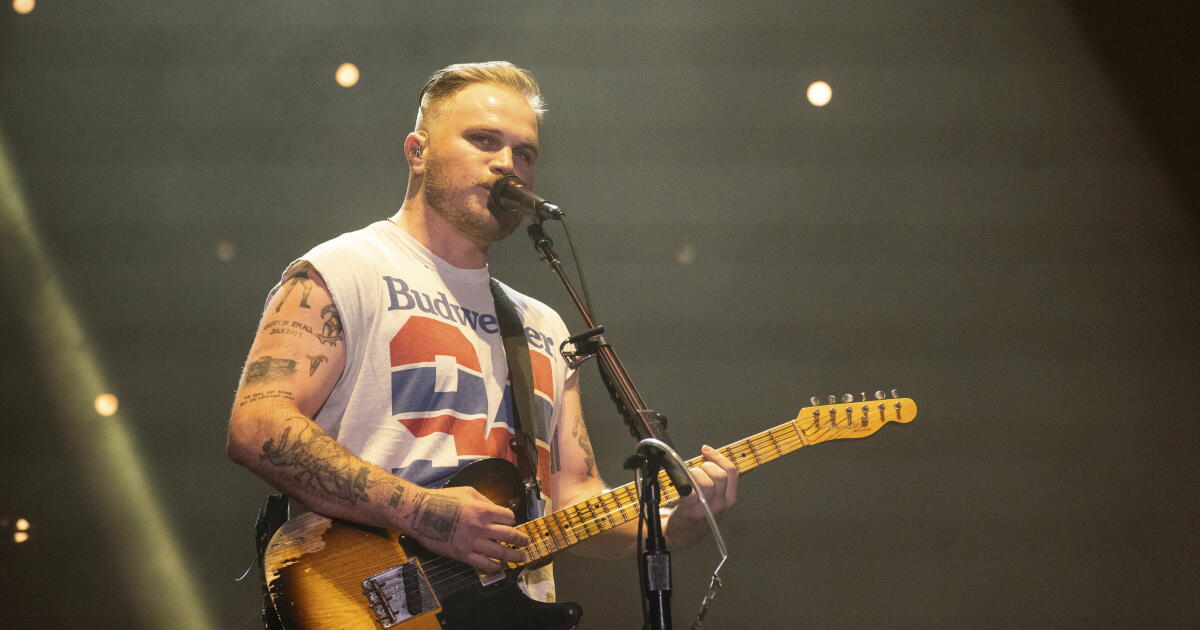
Grammy winner Bryan donned a black T-shirt emblazoned with the words “Free Palestine” and “Appeal to Heaven” during his Friday concert at Gillette Stadium in Foxborough, Mass., according to photos and videos shared on social media.
Members of his backing band also wore similar shirts, including drummer Nate Head, whose jersey paid homage to Hind Rajab, the 5-year-old girl killed alongside five members of her family in a 2024 attack by Israeli forces in Gaza.
Bryan’s Friday concert marked the first of two at Gillette Stadium, owned by billionaire Robert Kraft. The musician’s public display of support for Palestinians comes weeks after Kraft urged pop star Ed Sheeran to remove Macklemore from his tour, citing concerns over his pro-Palestinian messaging.
Last month, Sheeran and his touring team faced pressure to remove former opening act Macklemore from the rest of the tour. The Grammy-winning “Same Love” musician faced backlash from a number of Jewish advocacy groups over his performances at MetLife Stadium in New Jersey.
Days after the New Jersey shows, Messina Touring dismissed the rapper, who has been a vocal advocate for the Palestinian cause. “Shape of You” singer Sheeran denied playing a part in Macklemore’s departure, but confirmed in a statement that he spoke with Kraft, who was among the stadium owners expressing concern about Macklemore’s further involvement.
The remaining supporting acts for Sheeran’s tour, including Grammy winner Finneas (and brother of Billie Eilish) and folk band Beoga (Sheeran’s backing band), quit Sheeran’s Loop tour in solidarity. Sheeran carried on with his tour, but it hit another snag when his shows at Gillette Stadium last weekend were canceled “due to severe weather warnings” in the region.
Following the fallout, Macklemore announced his Free Palestine tour, which begins later this month with three shows in Dublin, Paris and London. Macklemore said he will be joined by artists “who have shown up and used their stages to stand in solidarity with the Palestinian people.”
The rapper announced on Wednesday that “all three shows sold out immediately.” He also said the full concert lineups and U.S. tour stops will come in a later announcement.
Macklemore, in his announcement, said all proceeds from the tour will go to a handful of charities supporting the Palestinians amid Israel’s war in Gaza. Macklemore previously said he would donate all $1 million of his earnings from his time on Sheeran’s tour to numerous pro-Palestinian charities.
Bryan’s With Heaven on Tour will return Saturday at Gillette Stadium. The “I Remember Everything” and “Pink Skies” singer will conclude his tour Oct. 10 at Jordan-Hare Stadium in Auburn, Ala.
The country star and U.S. Navy veteran, 30, is no stranger to channeling his political views in his music and performances. In 2025, Bryan released “Bad News,” a song critical of nationwide federal immigration enforcement operations.
Bryan’s pro-Palestinian stage gesture adds to a noticeable shift among mainstream artists speaking openly about their support for Palestinians amid Israel’s ongoing strikes on Gaza. Melissa Barrera, Rachel Zegler, Irish rap trio Kneecap and rap-punk group Bob Vylan have been among the entertainers who faced professional backlash for their criticism of Israel.
In April 2025, Cornell University also dismissed Kehlani from her headlining performance at the school after President Michael Kotlikoff accused the singer of espousing “antisemitic, anti-Israel sentiments in performances, videos, and on social media.”
In recent months, however, artists and entertainers, including Mark Ruffalo and the Israeli “NAZA” filmmakers Yuval Abraham and Rachel Szor (co-directors of Oscar winner “No Other Land”), continue to face backlash for criticizing Israel.
Saturday Kitchen Live underwent a huge schedule shake-up during the latest episode of the BBC One cooking show
BBC Saturday Kitchen host, Matt Tebbutt, was absent on the latest episode (Image: BBC)
Saturday Kitchen Live saw a new presenter on today’s episode.
The hit BBC One cooking show was back with a new instalment, welcoming chefs Jamie Oliver, Gennaro Contaldo and Julie Lin, as well as Stranger Things actor Gaten Matarazzo, in the studio.
However, viewers expecting host Matt Tebbutt got a surprise to see the presenter absent and instead Donal Skehan in presenting duties.
Addressing Matt’s, 52, absence, Donal, 40, said: “Welcome to the show, Matt is away, so Donal can play!”
It appears that Matt is busy on another project as he posted updates to his Instagram Story about working on The Go To Food Podcast, writing: “Did a fun thing with these two smashers! Coming soooooonnn!”
Prior to Saturday Kitchen Live airing, BBC Breakfast spoke to Donal to hear what the show had coming up, where Naga Munchetty spoke about Matt’s absence.
Naga, 51, said: “Donal! Good morning to you!” with Donal responding: “Good morning, Naga, this might be a nice little palate cleanser for you. You know, no Matt this week, but I’m here!”
With Naga joking: “Well, yeah, this is definitely a palate cleanser, in terms of no Matt!” the BBC Breakfast host then put Donal on the spot, asking if anyone had ever told him his recipe hadn’t worked after releasing an impressive 13 cook books.
A shocked Donal responded: “Never. Why?” with Naga admitting: “Because I don’t think… I don’t think they’re always accurate. Especially when it, you know, comes to time and whatever. What do you think?”
With Donal replying: “Naga! Well, I think you’re completely wrong, firstly, and we have Jamie Oliver in the house to prove you wrong, because we’re going to do 20 minutes of straight-through cooking, showing you can make anything delicious in no time at all!
“So, er, my cookbooks aren’t tested like that, but Jamie’s are, and we’re going to… we’re going to do great things, and hopefully prove you wrong.”
Donal then quipped: “I thought you were going to be nice to me after Matt’s out of the seat!” with Naga joking in response: “That was nice!”
Saturday Kitchen Live continues on BBC One and BBC iPlayer
BROOKLYN Beckham seemed to snub his family again by attending a Paris Fashion Week event — then giving his mum’s nearby show a miss.
Brooklyn flew to the French capital with wife Nicola Peltz for a VIP bash just two miles from where designer Victoria was later unveiling her own collection.
Brooklyn Beckham and Nicola Peltz seem to have snubbed his family again by attending a Paris Fashion Week event but giving his mum’s nearby show a missCredit: SplashVictoria Beckham appears at the end of her ready-to-wear collection show in ParisCredit: Reuters
As their feud with his parents continued, they were at the Messika Womenswear 2027 show at the Grand Palais on Thursday.
Meanwhile, in a display of unity from the rest of the family, ex-Spice Girl Victoria was yesterday joined at La Conciergerie museum by hubby David, sons Romeo, and Cruz, daughter Harper and Cruz’s singer-songwriter girlfriend Jackie Apostel.
Sign up for the Showbiz newsletter
Thank you!
Despite being a car journey of just a few minutes away, it appeared Brooklyn and Nicola stayed away.
Brooklyn has been estranged from his family for almost two years.
In January, he wrote a savage statement on Instagram — telling the world he had no desire to make up.
After cruelly accusing Posh and Becks of treating him as a commodity to further their image rather than as a son, Brooklyn, 27, wrote: “I do not want to reconcile with my family.
Smartly-dressed hubby David arrives at the show by designer wife VictoriaCredit: Reuters
“I’m not being controlled, I’m standing up for myself for the first time in my life.”
Just days later, former footie superstar Sir David was asked about young people and social media.
In what many saw as a public response to Brooklyn, David said: “I’ve been able to use my platform and following for Unicef, and it’s been the biggest tool to make people aware of what’s going on around the world for children.
“I’ve tried to do the same with my children, to educate them. They make mistakes.
Harper and Romeo on the way to Posh’s showCredit: InstagramBrooklyn cruelly accused Posh and Becks of treating him as a commodity to further their image rather than as a sonCredit: Getty
“Children are allowed to make mistakes, that’s how they learn . . . but, you know, you have to sometimes let them make those mistakes as well.”
Last year, Brooklyn missed both his dad’s knighthood ceremony at Windsor Castle and all his 50th birthday celebrations.
Gogglebox has returned to screens for another episode – but one notable face was missing from screens
Gogglebox legend rushed to hospital as they’re forced to miss filming for Channel 4 show(Image: mirror.co.uk)
A Gogglebox legend was rushed to hospital this week, causing them to miss out on filming for the latest instalment.
The long-running Channel 4 show returned to screens on Friday evening (October 2) for another episode. Back to share their thoughts on the latest bits of telly were siblings Pete and Sophie Sandiford and Ellie and Izzi Warner.
Married couple Andrew and Alfie and best mates Danielle and Daniella from Leeds also made an appearance, as well as newbies to the show, good friends Jude and Sherry.
However, one couple that failed to make an appearance was Sue and Steve from South London. The pair joined the programme in 2019 and quickly became firm favourites with fans.
But this week, Steve was rushed to hospital, meaning they were unable to film this week’s episode. On Instagram, the couple issued an update and shared a photo of Steve in hospital.
In the caption, they wrote: “What a difference a week makes. Steve was a little poorly and had to spend a few days in hospital & but he is home now. Out for lunch and enjoying his first beer in a while. Just call me Nurse Ratched.”
Confirming their absence from the latest episode, Sue told a follower in the comments section of the post: “We won’t see you this week but hopefully next week.” Meanwhile, other fans and Sue and Steve’s Gogglebox co-stars flooded the couple with support.
Izzi Warner wrote: “Glad you’re feeling better Steve.” Meanwhile someone else wrote: “Sorry to hear Steve wasn’t well, glad to hear he’s home and feeling better.” Another then penned: “Sorry to see this. Hope you’re feeling better soon.”
South London couple Sue and Steve joined Gogglebox almost 10 years ago in 2019 – and it’s fair to say it didn’t take them long to become firm favourites with fans.
Over the years, Steve, a retired black cab driver, and Sue, who is semi-retired, have had viewers in stitches thanks to their hilarious one-liners and comical takes on the telly highlights.
Away from the programme, the pair – who have been married for over four decades – are also doting parents to two daughters and are also grandparents to grandson Roman.
MAYA Jama looked incredible as she stepped out in Paris for Fashion Week – just moments after back in the UK she was being compared to the Honey Monster.
The fashionista and Love Island host is currently making waves on Celebrity Traitors, but in the French capital Maya traded in killer instincts for a killer look in a black and white dress.
Maya Jama looked incredible as she stepped out in Paris for Fashion WeekCredit: GettyThe star looked in great spirits as she appeared at the Louboutin fashion showCredit: Getty
Keeping her long locks poker straight, Maya wore a tight white dress with a black bodice as she arrived at the Louboutin show – wearing snakeskin shoes made by the iconic footwear brand to complete the look.
Smiling and waving, Maya looked in great spirits as she made her way into the Womenswear Spring/Summer 2027 event.
Sign up for the Showbiz newsletter
Thank you!
While she was rubbing shoulders with the fashion world’s elite, back in the UK she was on our screens sporting a very different look on Celebrity Traitors – one that definitely raised eyebrows in a way that was unexpected.
Donning a thick, fluffy mustard yellow coat in the Scottish castle, she quickly drew comparisons with the Sugar Puffs mascot, the Honey Monster.
In a chat with Rob Beckett, the comedian couldn’t help but joke: “You look like the Honey Monster’s lost his head!”
But he better be careful with comments like that – considering he’s one of the people who has his fate in her hands.
The fashionista’s choice of outfit didn’t go down as well on Celebrity TraitorsCredit: BBCThe star partnered her monochrome dress with a pair of snakeskin LouboutinsCredit: Getty
Maya was chosen by host Claudia Winkleman to be one of this year’s traitors, joining Richard E Grant in the ultimate game of deception.
However, while Maya has flown under the radar, suspicion has already been raised around Richard, who foolishly declared he was a traitor within minutes of the roundtable where the killers were decided.
Since then, he’s been working with Maya to try and keep the suspicion at bay, blaming his “excitement” at being on the show for the gaffe, and claiming he was trying to initiate a “Spartacus-like moment” that backfired.
Maya was compared to the honey monster by her fur coat in the Traitors castleCredit: BBCThe model turned heads in the French capital – as on screens in the UK she was causing a stir on The TraitorsCredit: Getty
Now viewers have to wait a week to see if his attempts to throw the faithful off the scent has been successful, with the roundtable which gives the faithful a chance to banish someone ending on a cliffhanger.
If he’s successful, he will rejoin Maya and James in the turret to decide who out of Professor Hannah Fry and Jerry Hall to kill off next.
All the other players had earned their safety in the daily challenge, with Ross Kemp opting to save everyone after they were buried alive rather than go for the prize money.
While they ended up walking away with only half the cash, it cemented his position as a faithful to most of the players – a move which backfired on the traitors, who had placed him as the only star to remain above ground in a bid to raise suspicion on him and his paranoid behaviour.
The Celebrity Traitors continues next Thursday at 8pm on BBC One and BBC iPlayer.
VICTORIA Beckham was supported by husband David and sons Romeo and Cruz at her Paris Fashion Week show – but Brooklyn has once again swerved the family.
The fashionista and iconic Posh Spice is hosting her annual display of her clothing collection in the French capital, with David sitting front row with most of their children at the Conciergerie at 2 Boulevard du Palais.
Victoria hosted her Spring/Summer show at Paris Fashion Week tonightCredit: ReutersDavid led the Beckhams supporting Victoria at her fashion show in Paris tonightCredit: ReutersBrooklyn and Nicola put on a united front at the Messika event – just a mile down the road less than 24 hours beforeCredit: Splash
Romeo and Cruz were both supported by their girlfriends Jackie Apostel and Kim Turnbull, with Harper Beckham, the youngest of the Beckham clan, also there to cheer on her mum.
The couple were spotted watching the Messika runway at Paris’s Grand Palais on Thursday evening, just a mile down the road from the venue the Beckhams appeared at today.
The day before, they attended another show for Balenciaga.
Romeo had also arrived in the city ahead of his mum’s event, though according to the Daily Mail, successfully managed to swerve his brother by partying at another event.
A source told the site: ‘No good will come from them bumping into one another, relations are still devastatingly strained.”
Romeo arrived dressed in an outfit created by his mumCredit: ReutersDavid was beaming in a sharp suit as he took his seat on the front rowCredit: Reuters
They added that, despite the animosity “Brooklyn is missed” from the family events, but at this point he’s decided to keep away.
In the meantime, the rest of the Beckham clan have been putting on a united front, coming together to watch Cruz perform at Reading and Leeds Festivals at the end of August.
“I am so grateful for everyone around me, not only are they my best friends but they are family, this journey has been so incredible and i have learned so much because of these people.”
He then shared some extra words for partner, Jackie, writing: “Last but definitely not least Jackie, you honestly have no idea how lucky we are to have you, not only do you take care of me but this whole operation, from creative to strategy to mgmt.
“We are a team and would not be doing this without you. I really love you so much.”
Strictly Come Dancing fans are all making the same comment new It Takes Two presenter about Ellie Taylor. The comedian has replaced Fleur East and Janette Namrara on the BBC Two show
Ellie Taylor has earned praise from It Takes Two viewers(Image: BBC/Strictly It Takes Two)
Following the announcement that Emma Willis and Josh Widdicombe would be replacing Tess Daly and Claudia Winkleman on the main programme, the BBC revealed in August that there were plans to revamp the midweek show as well. This decision saw Ellie given the It Takes Two presenting duties – four years after her stint on Strictly as a contestant.
Following the Beeb’s confirmation of Ellie’s role back in August, she said in a statement: “What a total joy to return to Strictly in this new role. I feel incredibly honoured to follow in the footsteps of the phenomenal line-up of hosts who’ve made Strictly – It Takes Two so loved over the years.
“I can’t wait to immerse myself in all the gossip and sequins flying out of the ballroom in order to bring my fellow Strictly fans everything they need to know. I’m so excited, I could cha cha! (But I won’t – don’t worry… no one needs to see that again.)”.
Now, after the series’ first two showers, fans have issued praise towards Ellie, 42.
“Just catching up on It Takes Two,” one person said on X.” I’m not enjoying everything, but my God Ellie is smashing it soo far. Absolutely brilliant.”
A second person agreed: “Don’t like the changes, but Ellie is fab. Should have got the main gig with Emma.”
A third shared: “Ellie Taylor hosts it well, but the new version of It Takes Two has nothing worth watching anymore.”
While a fourth viewer added: “Ellie Taylor is good, the new It Takes Two set is awful with the wooden unvarnished floor all that glitz and glamour gone, no pro interviews. I know they wanted to revamp both the Strictly main show and It Takes Two but the changes aren’t good.”
And a fifth asked: “I adore Ellie Taylor but I’m not sure I like this new It Takes Two at all. Why are they making so many changes – why change the ITT set this year when it literally got changed last year?”
Content cannot be displayed without consent
Essex-born Ellie old rose to prominence as a comedian before transitioning into presenting roles on programmes including Snog Marry Avoid? and The Great Pottery Throw Down. On It Takes Two, she faces the challenge of following in the footsteps of previous hosts Zoe Ball, Rylan Clark and Claudia.
It Takes Two producer Rhe-An Archibald said of the changes: “This is Strictly – It Takes Two, reinvented for the 2026 season. With a wealth of new features and deep dives, we want to reflect the conversations happening in living rooms up and down the country – full of opinions, laughs, surprises and those moments everyone wants to talk about.
“With the fun and funny Ellie at the helm, it will be an utterly unmissable companion to Strictly Come Dancing.”
Strictly Come Dancing: It Takes Two airs Monday to Friday at 6:30pm on BBC Two and is also available on BBC iPlayer.
Strictly Come Dancing hosts Josh Widdicombe, Emma Willis and Johannes Radebe have revealed all about the chaotic first live show, with them admitting to tears amid a ‘baptism of fire’
19:20, 01 Oct 2026Updated 19:24, 01 Oct 2026
Johannes, Josh and Emma spoke to Ellie on It Takes Two
Strictly Come Dancing host Johannes Radebe admits he cried on the first live show, which was dubbed chaotic by fans.
The BBC programme’s hosts including former professional dancer Johannes, as well as Josh Widdicombe and Emma Willis have revealed all about the chaotic first live show, with Emma describing it as a “baptism of fire”.
Johannes admitted he was teary amid his live debut. He confessed to Ellie Taylor on It Takes Two that he was in tears in rehearsals for missing out on the chance to dance with a celebrity this year.
“In rehearsal, seeing them all come down in their outfits, knowing what they’re dancing that week, what they had to go through in the past two weeks, I was just like, ‘Ugh, I miss that.’ But I’ve got partners with me, so it’s fine,” he said.
Josh even quipped that he wasn’t ready to say goodbye to one of the celebrities this week after they dance their movie-themed tunes. Whilst no one left this week, one will leave next Sunday.
Asked how he feels about the elimination, he said: “I feel really bad. I feel terrible already. Do you know what, I think I’m just going to do the Saturday show this week, and leave the other two to do the Sunday.
“Last week, after the show, it was just joyous, everyone was really happy, and then Jojo went to us, ‘Wait till next week.'”
To see more of the stories you love from The Mirror and to find them easily in Google then make us your preferred source. Free and easy-to-do, just click on the link here to find more from The Mirror at the top of your feed.
“I don’t think I actually really thought about that until you’ve just brought it up, and you’ve just said how nervous you are, and now I’m like oh,” Emma added as they discussed the upcoming exit.
Emma also branded the first live show as a “baptism of fire”, whilst Josh seemed to reference the backlash to his performance for the first time, quipping: “It was incredible. It’s been very low-key since, no one’s talked to me about it.” He has been barraged with comments online about his appearance on the show, with critics pointing out one time he missed his cue.
Former The Voice host Emma also said she felt bad how Josh was stood on one side of the stairs at the start, whilst her and Johannes walked down the same side of the famous Strictly stairs.
GLASTONBURY punters have fumed over the ‘s*** show’ website chaos after the first set of 2027 tickets went on sale tonight.
Those who have managed to get their hands on them will travel to Worthy Farm in Somerset and dance away to their favourite tunes between Wednesday 23 June to Sunday 27 June next year.
Glastonbury punters have fumed over ‘s*** show’ website chaos as the first set of 2027 tickets went on saleCredit: GettyOlivia Rodrigo performing on the Pyramid stage in 2025Credit: Getty
Festival-goers logged online just before 6:00pm this evening (Thursday 1 October) to try and get their hands on ticket + coach passes for the five day music event.
They were told to enter the website at 5:50pm, and those who were on the page were given a place in the queue.
Sign up for the Showbiz newsletter
Thank you!
This was followed by a progress bar which showed how close you were to purchasing.
It comes as no surprise that they sold out within 30 minutes – meaning that loads of people have sadly gone without.
Fans have been discussing who they think might be named one of the three Traitors this evening.
One fan has picked out who they don’t trust, saying: “Miranda Hart is just too nice, so obviously it’s her. Michael Sheen could lie to me for ten episodes and I’d thank him for it. And Hannah Fry looks like she’s already done the maths on all of us.”
Another suggested: “The story about James Acaster having a panic attack or similar leading to the game being paused makes me think he’s probably not one.”
“I am really hoping for at least Bella and either James Acaster of Joe Lycett. Joanne, Miranda and James Blunt would also be cool and could pull it off,” a third wrote.
So who do you think will be given those coveted roles? I’d love to see Miranda Hart be named a Traitor but after last year and Alan’s success, Claudia may choose a different personality this time around…
The leader of the world’s biggest band is nervous.
“I think I revised this speech about 10 times, but somehow the more I worked on it, the more confused I became, like always,” said K-pop star and BTS rapper RM on Tuesday at a preview of a show he has co-curated at San Francisco Museum of Modern Art called “RM x SFMOMA: Between You and Me”
Three years ago, RM held an anonymous show in South Korea, but this is the first proper exhibition he has staged. For many of his fans — some of whom wait outside the museum trying to get a glimpse of him — his favorite activities, including museum-hopping, bicycling and being out in nature, come as no surprise. There is even a word for it: “namjooning,” a play on the singer’s first name, Namjoon. But still, the exhibition is the rare chance to view RM as a serious art collector; someone who values Korean identity in art but also loves works from many genres, eras and countries.
Philip Guston, Untitled (Red and Black Book), 1969; from the collection of RM.
(The Estate of Philip Guston / Hauser & Wirth)
Dressed in a gray T-shirt, dark collared shirt and leather pants, RM’s hair is a light burnt sienna color matching the fur of the stylized tiger on the screen behind him. From a 17th century painting by Lee Won-chan, it’s from his personal collection of more than 400 artworks. For this exhibition, 142 pieces owned by RM will be shown alongside 36 works from SFMOMA for a total of 178 works on display.
RM sees “Between You and Me” as an introduction to his inner life and reflection of contrasting aspects of his personality, whether as a public figure interacting with his adoring fans or an erudite intellectual and avid reader with a reputation as a clumsy and lovable goofball.
RM was on a hiatus from BTS and on the cusp of beginning his mandatory military service in South Korea when SFMOMA first approached him for the project two years ago. As it came to fruition, he sought to answer two main questions when contemplating which works of his collection to share with the public.
Does the artwork move him deeply? And, if the work is from a noncontemporary artist, does the piece have something to communicate in 2026?
“In an age where everything is consumed so fast,” RM explained, “I believe the attitudes of some of the past artists can resonate even more deeply today.
“I’ve always dreamed of seeing different places, times, boundaries and backgrounds all mixed together in harmony,” he continued. “It could be a mess because I’ve never formally studied, and I’m not a ‘curator, curator,’ but in any field sometimes an outsider can bring in a new breeze.”
Wonwoo Lee, “Candy,” 2023; from the collection of RM
(Wonwoo Lee / PKM Gallery)
It’s not RM’s first time working with a museum. In 2023, he partnered with Los Angeles County Museum of Modern Art to provide guided audio narration for “The Space Between: The Modern in Korean Art”.
At SFMOMA, RM was joined in his effort by two co-curators: SFMOMA project manager América Castillo and assistant curator of painting and sculpture Hyoeun Kim.
Kim, who has long championed Korean artists internationally, was particularly impressed with the diversity of Korean art that RM has amassed, including its “remarkable range.”
“His collection began with 6th century works, moved through the Joseon Dynasty, and continued to major Korean modern and contemporary art. It spans nearly 1,500 years,” Kim said during the preview.
The show is arranged in eight parts and begins with a large white wall at the entrance with the title of the show scrawled in RM’s handwriting. Handwritten touches are found everywhere — “Plz take it in with your eyes and heart” is scribbled on the floor in both English and Korean. The wall text for each piece, which also includes a QR code for audio narration, is composed by RM in both languages.
An inscription on the floor of an SFMOMA exhibit curated by RM of BTS features RM’s writing as part of the wall (and floor) text.
(Christine Terrisse.)
Guests will also receive a zine-style pamphlet with the same homespun appeal explaining each of the eight sections in RM’s words alongside a diagram of the room.
“Blue Water” centers the work of Kim Whanki, the late globe-trotting abstract artist and the first RM says he “fell for.” In addition to Whanki and works by Vija Celmins and Tony Feher, some RM fans might recognize one of Roni Horn’s glass cylinder sculptures from a now-archived Instagram post where it was casually displayed in RM’s apartment.
There’s even a room filled with especially eclectic pieces called “i don’t know..but i like it.” By way of explanation, RM said, “Sometimes I don’t really know why I collected all these things.”
The last room, “Umber” or “Dasaek” (referring to the color of Korean rice fields) might be the most meaningful to the singer. It features works by the late artist Yun Hyong-keun, for whom RM has a particular personal affinity. The cover for his debut solo studio album, “Indigo,” depicts Hyong-keun’s 1972 painting “Blue,” and the album’s lead track, “Yun,” a collaboration with Erykah Badu, kicks off with recorded dialogue from the artist.
Back in 2018, around the same time RM began his art journey with not much formal training in art history, co-curator Castillo began her career with SFMOMA.
At the time, she was in awe of the power of art to connect with people, but frustrated that more people from unconventional backgrounds weren’t being given opportunities to curate major shows, thereby shaping the stories told. Her work on this exhibition is part of a continuing mission to bridge the art world and the ordinary person.
Chang Ucchin, “Road,” 1986, from RM’s collection.
(Chang Ucchin Foundation / Seoul Auction)
This mission guided her through the process of selecting works by famous artists from SFMOMA’s collection to contextualize RM’s pieces from lesser-known but equally important names.
“The first time we pulled a list on the SFMOMA side, we had like 500 options we then dwindled down,” she said in an interview while standing in the “Umber” room. “There were some artworks and specific artists that we knew from the get-go we wanted to be in the show. We wanted them to have a moment. Mark Rothko was definitely one of them.”
The sole Rothko piece in SFMOMA’s collection, “No. 14,” (1960) is featured in one of the final rooms in the exhibition. Adjacent to it is “untitled” (1986-90) by Hyong-keun. In the exhibit pamphlet, RM notes that Hyong-keun’s paintings are often compared to Rothko’s, but “their darkness is not the same.” “To my eyes, if Rothko’s darkness is one that ‘opens’ then Yun’s is the darkness that remains after he endured everything he possibly could,” he writes.
As RM steps into the spotlight of the art world, he is learning to become comfortable with the uncomfortable in-between spaces he occupies. “I started this with an innocent heart. As I’m standing here talking to you, I still feel like I’m always drifting and floating somewhere, ” he said, adding that the feeling comes when he’s in the U.S. but also when he’s in his hometown of Seoul. “It’s not a very pleasant feeling. I think I’ve leaned on art a lot because of that feeling.”
Before the preview, BTS fans, called the ARMY, passed out small gifts to the press, and afterward donors lined up for a special reception. RM’s mother, father and sister even arrived to celebrate, but he didn’t have much time to hang around. He was scheduled to depart for Bogotá, Colombia, to join his bandmates on the Latin American leg of their ARIRANG stadium world tour.
It is time to leave the quiet of the museum for the roar of the crowd.
“RM SFMOMA: Between You and Me” opens to the public on Oct 3, and runs through Feb.7, 2027. For more information visit sfmoma.org
Zoe finished her look with sparkling earrings and a sleek updoCredit: Shutterstock EditorialThe Avatar star smiled for cameras at the Saint Laurent showCredit: Shutterstock Editorial
She added Nat King Cole’s Autumn Leaves as the soundtrack, giving a nod to the changing season.
Away from the catwalk, Zoe has been keeping busy filming the hit Paramount+ spy thriller Lioness.
She plays CIA operative Joe McNamara and also serves as an executive producer on the drama, which recently aired its third series.
However, Zoe is probably best as blue-skinned warrior Neytiri in Avatar or Gamora in Marvel’s Guardians of the Galaxy movies.
Most read in Entertainment
The film star also bagged her first Oscar last year, scooping best supporting actress for her role in Emilia Pérez.
Off screen, she has been married to Italian artist and filmmaker Marco Perego since 2013.
The couple have three sons, twins Cy and Bowie, 11, and Zen, nine.
The Celebrity Traitors is back on our screens this week, and what better time to book that cosy country escape with your very own abode on the grounds of majestic Scottish castles
AN X Factor-winning group have revealed their next gig could be their last ever, after taking a huge gamble.
Rak-Su star Myles Stephenson took to TikTok to reveal that they had “the biggest show of their lives” coming up.
Myles Stephenson revealed that Rak-Su’s next gig could be their last everCredit: Raksumusic/TikTokRak-Su were mentored by Simon CowellCredit: Rex Features
Speaking to the camera, Myles explained: “In less than three weeks we will be doing a show on October 18th at Watford Palace Theatre and I’m a little bit nervous.”
Myles revealed the reason behind his nerves is that they’ll be doing the show “fully independent,” with no label or management, as well as funding the entire show themselves.
Sign up for the Showbiz newsletter
Thank you!
He continued: “We have put a lot of money into this, and we don’t know if it’s going to pay off, but it’s not about the money.
“It’s about the fact that potentially this might be our last show so whatever it costs to put on the best show ever, we’re going to do that.
“I’m nervous because I don’t want it to be our last show, I want it to continue forever.”
Myles went on: “We’ve been full time musicians for nine years and that’s a very, very long time and that’s a very long time for musicians in today’s age.”
The singing star finished by saying: “If we sell out this show on October 18th, we will tour next year so don’t let this be the last time that Rak-Su ever performs, ever again.”
Myles said if they sell out their gig, they’ll go on tour next yearCredit: Getty Images – GettyRak-Su members Myles, Rak-Su J, Ashley Rak-Su and Pharoahcious.Credit: Getty Images – Getty
Fans flooded the comments section tagging pals and saying they were excited to watch the show.
Myles, Ashley Fongho, Jamaal Shurland and Mustafa Rahimtulla went to No2 with Dimelo, featuring Wyclef Jean and Naughty Boy, when they came off the 2017 show.
But their next four singles were poorly received and they struggled to shift copies of two EPs.
A music insider said at the time: “It’s a tough time to be in pop and the buzz for Rak-Su fizzled out fast. They haven’t delivered the huge chart singles which bosses were convinced they would, despite being so popular on the show. The feeling is that their moment has passed and it’s going to be tough to revive it.”
But Rak-Su have rebuilt momentum, with a huge following on social media and now a gig to look forward to ahead of, if ticket sales go well for October, their teased tour next year.