politics

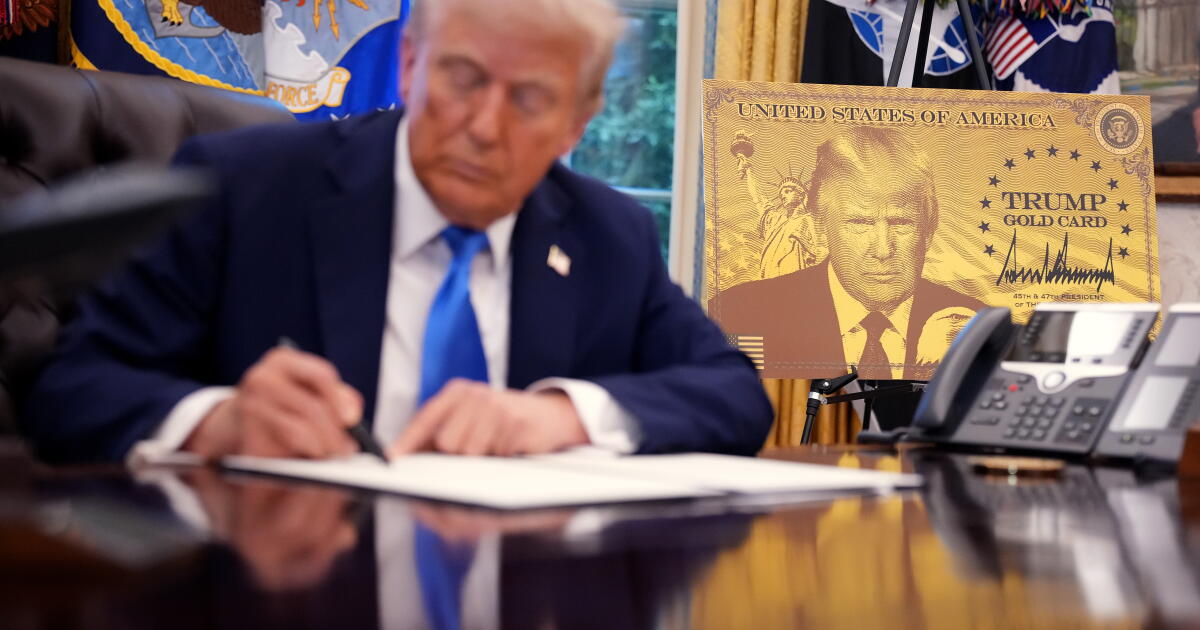
Republicans mull dropping $1-billion security money request for the White House and Trump’s ballroom

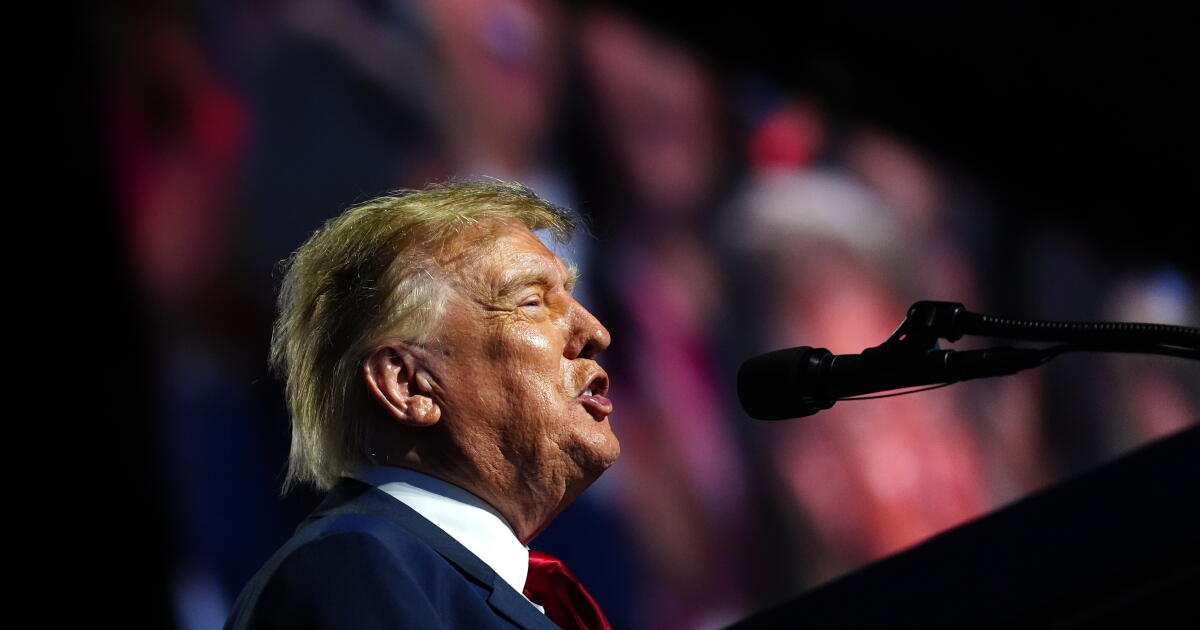
Republican senators are considering dropping a proposal for $1 billion in security money for the White House complex and President Trump’s ballroom after it has failed to win enough party support on Capitol Hill.

Pressured by the White House, Republicans have tried to add the money to a roughly $70-billion bill to restore funding to U.S. Immigration and Customs Enforcement and the Border Patrol. But the security proposal has met with backlash from some GOP lawmakers who are questioning the cost and the lack of detail from the White House and U.S. Secret Service about how the taxpayer dollars would be used.

Sen. John Kennedy (R-La.) said Wednesday that the bill was “back to square one” without the security money because “the votes are not there.”

Sen. Thom Tillis (R-N.C.) said the effort to add the security package to the bill was a “bad idea” and he does not think there is enough backing to pass it, even if it were reduced.

The text of the bill has not yet been released. But Senate Majority Leader John Thune (R-S.D.) acknowledged “ongoing vote issues” as leaders try to measure Republican support, as well as “ongoing parliamentarian issues” as they try to figure out what will be allowed in the bill under the chamber’s rules.

The wrangling comes as Democrats have criticized Republicans for trying to fund Trump’s ballroom when voters are concerned about basic affordability issues — and as some GOP lawmakers have grown increasingly frustrated with Trump. Several have spoken out against the administration’s $1.8-billion settlement fund designed to compensate Trump’s allies, and many were upset by the president’s endorsement Tuesday of Texas Atty. Gen. Ken Paxton in the party primary runoff next week against Sen. John Cornyn.

“There’s always a consequence with taking on United States senators,” Thune said. Trump “obviously has his favorites and people he wants to endorse and that’s his prerogative. But what we have to deal with up here is moving the agenda, and obviously that can become slightly more complicated.”

Republican opposition blocks Secret Service request

Under the Secret Service request, about $220 million would pay for security improvements related to the ballroom. The rest would go for a new screening center for visitors, training and other security measures.

Tillis said the bill should not have included the other security improvements “because it’s just giving everybody the ‘billion-dollar ballroom.’”

“They need to explain to me why we need this,” Tillis said, noting that Trump had originally said private money would cover the project.

Several other Republicans in the House and Senate have questioned the request, and senators left a briefing with the director of the Secret Service last week saying they needed a lot more information.

People “can’t afford groceries and gasoline and healthcare, and we’re going to do a billion dollars for a ballroom?” asked Louisiana Sen. Bill Cassidy (R-La.), who lost reelection in the GOP primary on Saturday after Trump endorsed one of his opponents.

Sen. Jim Justice (R-W.Va.) said he is supportive of the security money and thinks it is necessary to protect the president. But he acknowledged that the optics are not very good for Republicans, and that they have not communicated about it well.

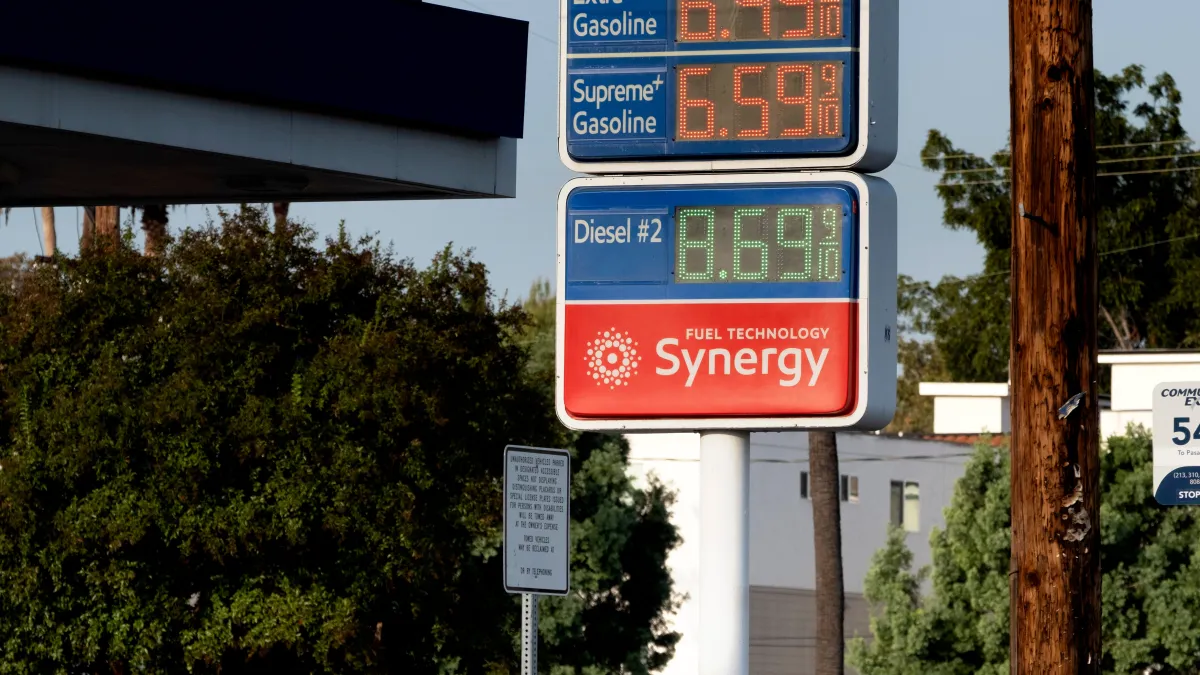
“We’ve got people out there who are worried about how in the world they’re going to have enough gas to get home,” Justice said.

Tensions rise between Senate and White House

As Republicans challenged parts of his agenda, Trump unloaded on the Senate in a social media post.

He urged Republicans to fire the Senate parliamentarian, Elizabeth MacDonough, who said over the weekend that parts of the $1-billion security proposal cannot remain in the ICE and Border Patrol bill. Trump renewed his long-standing calls for the Senate to pass the SAVE Act, a Republican bill that would require all voters to prove U.S. citizenship, and to end the Senate filibuster.

“Republicans play a very soft game compared to the Dumocrats,” he wrote. “It is their single biggest disadvantage in politics.”

Trump said Democrats would eliminate the filibuster “on the First Day” if they ever get full power in Washington again and that Republicans need to “get smart and tough” or “you’ll all be looking for a job much sooner than you thought possible!”

Republicans have been loyal to Trump on most issues, but they have resisted his repeated calls — even in his first term — to kill the filibuster, which triggers a 60-vote threshold in the Senate.

Hanging over the growing GOP rift is Trump’s surprise endorsement of Paxton. That intervention has Republican senators privately fuming that it could cost them their majority in November as they view the incumbent, Cornyn, as the better candidate in the November general election.

Democrats test Republicans on settlement fund

As Republicans move forward on the immigration enforcement legislation, Senate Democratic leader Chuck Schumer of New York said Democrats plan to force a vote on Trump’s proposed settlement fund.

Democrats have an opening because Republicans are trying to pass the immigration enforcement bill through a complicated budget process that requires a long series of amendment votes. Democrats are considering multiple amendments potentially to block that new fund outright or to ban any payments to Trump supporters who harmed law enforcement officers in the Jan. 6, 2021, attack on the Capitol.

Those amendments, along with others, could pass as a growing number of Republicans speak out against the fund and other parts of Trump’s agenda.

Thune said he was “not a big fan” of the new fund, which the administration announced as a part of a settlement that resolves the president’s lawsuit against the IRS over the leak of his tax returns. Cassidy called it a “slush fund” and said “you can’t just make up things.”

Tillis said he thinks it is a “real risk” that some of the rioters charged — and later pardoned by Trump — in the Jan. 6 attack could get compensation through the fund. He said that would be “absurd.”

On Wednesday, two police officers who helped defend the Capitol in the 2021 assault sued to block the payouts. Acting Atty. Gen. Todd Blanche, a personal attorney for Trump before joining the Department of Justice in Trump’s second term, would not rule out the possibility that rioters who assaulted police on Jan. 6 would be eligible for compensation when he testified in a Senate hearing this week.

Jalonick, Freking and Cappelletti write for the Associated Press.

Source link

Where Trump stands with Republicans nationally in a new AP-NORC poll

Republicans are unhappier with President Trump’s handling of the economy than they were a few months ago, but they’re largely continuing to stand behind him as the war with Iran continues, a new AP-NORC poll finds.

About 6 in 10 Republicans approve of how Trump is handling the economy, according to the poll from the Associated Press-NORC Center for Public Affairs Research. That’s down from about 8 in 10 in February, before the war began.

The poll comes as the Mideast war fuels higher gasoline prices, while the U.S. and Iran struggle to move toward a permanent ceasefire. Trump’s hold on the GOP remains strong, as he demonstrated Tuesday when his handpicked candidate defeated Rep. Thomas Massie, a critic of the president, in a primary election challenge. The findings highlight Trump’s continued strength within the Republican Party, even as economic frustration grows.

Ariel Gutierrez, a 55-year-old Republican in Wisconsin, usually requires his teenage children to pay for their own gas. But with spiking gas costs, he’s helping out his 15-year-old, who’s just learning to drive.

“The whole Iran issue has just exacerbated it,” he said. “Maybe we were seeing it in groceries before, but now — with this push on gas and travel and all that — that is how people want to live the leisure part of their lives … and it is directly impacting us there now. And yes, that is, I believe from Trump’s policies, not from his predecessors.”

Trump remains unpopular outside his base. Most Americans continue to disapprove of Trump’s approach to both Iran and foreign policy. His overall approval rating in the new poll stands at 37%, up slightly from 33% in April. Nearly all Democrats disapprove of his performance as president, as do about 7 in 10 independents.

The economy remains a struggle

About one-third of U.S. adults approve of how Trump is handling the economy. That’s in line with an AP-NORC poll conducted in late April, but down slightly from the start of his second term, when 40% of U.S. adults approved.

The economy was a strength for Trump in his first term, but he’s struggled with skepticism about his handling of the issue since his return to the White House last year, after repeatedly promising to bring prices down. His second-term economic approval has fallen among Republicans, in particular. While a majority, 63%, still approve, that’s down from 79% in February, a few weeks before the war with Iran began.

Richard Baumgartner, a 77-year-old Republican from Las Vegas, believes higher costs are a necessary side effect of the war, which he supports.

“Unfortunately, because of the war, the economy is a little bit off-kilter,” Baumgartner said. “I think it’ll fall back into place after things resolve over there. Temporary price increases — it’s unfortunate, but it’s something that has to be confronted in a situation like this where you have a very serious problem.”

Trump regains some strength on immigration

Although economic promises were pivotal to Trump’s reelection, so were his goals of stricter immigration enforcement — and this issue may be reemerging as an asset.

Immigration emerged as one of Trump’s strengths early in his second term, with about half of U.S. adults saying they liked his approach, but approval of his handling of the issue dipped to 38% in January and February, after months of aggressive immigration enforcement that led to the shooting deaths of two U.S. citizens in Minneapolis.

Now, just under half of U.S. adults, 45%, approve of how he is handling that issue.

Brenda Theiss, an independent from Cullman, Ala., doesn’t like everything Trump is doing. But she gives him credit for being willing to disrupt the status quo to reduce the flow of immigrants who are in the country illegally, compared with Democratic Presidents Obama and Biden.

“I liked Obama; I voted for Obama — but Trump was the only one that did something. All of the other presidents sat back and went, ‘Well, there’s nothing we can do,’” the 73-year-old said. “He’s closing the border. He did it. Biden didn’t do it. For that, I give him one hundred.”

Over the last few months, the Trump administration has appeared to recalibrate its approach on immigration, moving away from aggressive, public-facing tactics toward a quieter approach to enforcement.

Immigration remains one of Trump’s stronger issues among Republicans. About 8 in 10 approve of his handling of the issue, which is roughly 10 points higher than the share who say he’s doing a good job as president.

Few approve of Trump on Iran or issues abroad

Trump’s handling of the war with Iran remains unpopular.

Only about one-third of U.S. adults approve of how he is handling Iran. Roughly two-thirds of Republicans approve, though an AP-NORC poll conducted last month found that younger Republicans are more likely to disapprove of Trump’s performance on the issue than older ones.

Similarly, about one-third of Americans approve of Trump’s approach to foreign policy. Though Trump has zeroed in on a more aggressive international approach this year — including capturing the leader of Venezuela and threatening Cuba — Americans’ views of his overall handling of foreign policy have not shifted significantly in recent months.

Amanda Wylie, a 22-year-old who lives in Athens, Ga., says Iran is one of the few issues where Trump doesn’t have her support.

“I feel like we’re wasting resources over there at this point and not for the benefit of the American people,” said Wylie, who identifies as a Republican-leaning independent. “Especially if everyone is worried about gas prices and the ultimate goal of this is to prevent Iran from having a nuclear weapon. Yes, that’s important, but at what cost?”

Sanders and Thomson-Deveaux write for the Associated Press. The AP-NORC poll of 1,117 adults was conducted May 14-18 using a sample drawn from NORC’s probability-based AmeriSpeak Panel, which is designed to be representative of the U.S. population. The margin of sampling error for adults overall is plus or minus 3.8 percentage points.

Source link

Trump tells Coast Guard graduates they will ‘be tested’ in their military careers

President Trump told the U.S. Coast Guard Academy’s graduates on Wednesday that they show “unbelievable heroism and exceptional selflessness” but that the cadets will “be tested further” as they embark on their military careers.

Trump’s remarks to the class of 2026 were the first time he has given a commencement address at one of the nation’s military academies after sending U.S. troops to fight a new war.

He told the cadets that they will be America’s “first defenders” and “first responders.”

“You’ve all been tested. You’ll be tested further and probably at higher levels as your career goes on,” Trump said.

During his address, Trump quickly touched on the war with Iran, now in its 12th week, as a sign of U.S. success from “the hottest country anywhere in the world.”

“The only question is, do we go ahead and finish it up or are they going to be signing a document? Let’s see what happens,” Trump said.

The Republican president had threatened to launch renewed strikes on Iran this week as talks with Tehran seemed to have stalled and a fragile ceasefire appeared to be teetering. But Trump on Monday said he was giving Iran a few more days because “serious negotiations” were underway.

He has not offered details and has in the past backed away from following through on threats to Iran, citing breakthroughs in talks that have not publicly materialized.

Earlier Wednesday, he told reporters that he’s “in no hurry” to strike a deal to wrap up the war because of political concerns and the November midterm elections.

The commencement was held on a day with scorching heat and there was little shade available as the crowd waited for the ceremony to begin.

At least one person required medical attention after passing out. Others pleaded with organizers for elderly attendants to sit in the shade under tents. Chilled water bottles were distributed freely but quickly became warm.

Trump, who spoke at the academy’s graduation in 2017 during his first term, said he was proud to be the first president to give two commencement addresses at the school.

“We’re going to have to try it maybe a third time, too, to keep that record intact,” Trump said Wednesday.

The president and vice president traditionally speak at one of the military service academies every year. Vice President JD Vance is set to give the commencement address on May 28 at the U.S. Air Force Academy.

Before he flew to Connecticut, Trump told reporters that his message to the cadets would be, “Just enjoy your life.”

“You know, you don’t really realize how important Coast Guard is until you have a hurricane,” Trump said as he praised the maritime service.

Price and Kruesi write for the Associated Press. Price reported from Washington.

Source link

Former Rep. Barney Frank dies at 86

1 of 2 | Former Rep. Barney Frank speaks in 2022 during a signing ceremony for the Respect for Marriage Act, which requires the U.S. federal government to recognizing the validity of same-sex and interracial marriages in the United States, in the Rayburn Room of the U.S. Capitol in Washington, D.C. Frank died Tuesday at age 86. File Photo by Bonnie Cash/UPI | License Photo

May 20 (UPI) — Barney Frank, a former Massachusetts congressman who was instrumental in overhauling the country’s financial regulations and was one of the first openly gay members of Congress, died at his home in Maine. He was 86.

Frank had entered hospice care last month with congestive heart failure, The New York Times reported.

Rep. Nancy Pelosi, D-Calif., worked with Frank in Congress for decades. Pelosi called him “a real mentor” and said she learned a lot from him.

“He has been about idealism and pragmatism to get the job done,” she told NBC News.

Frank served in the House of Representatives for more than 30 years and led the House Financial Services Committee from 2007 to 2011. One of the successes for which he was best known was the Dodd-Frank Act of 2010, which he co-sponsored with Sen. Chris Dodd. The act, a response to the 2008 financial crisis, tightened regulations on Wall Street, preventing banks from taking part in the riskiest behaviors and protecting consumers.

Frank was one of the first U.S. politicians to come out as gay voluntarily — in a 1987 interview with the Boston Globe, a statement he followed with “So what?” He became the first member of Congress to marry a same-sex partner when he wed Jim Ready in 2012. Ready survives him.

“I think the key to our having made the enormous progress we made in defeating anti-gay prejudice had to do with all of us coming out and people discovering the gap between between our reality and the way we were painted,” Frank said in an interview last month with NBC News.

Frank was also known for championing civil rights and women’s rights and advocating for issues including environmental protection and abortion rights.

“I’m a left-handed gay Jew,” he often said, The New York Times reported. “I’ve never felt, automatically, a member of any majority.”

Frank’s first book, Frank: A Life in Politics from the Great Society to Same-Sex Marriage, was published in 2015. His second, The Hard Path to Unity: Why We Must Reform the Left to Rescue Democracy, is expected to be published in September.

In Frank, he wrote that he’d been good at his job but in retirement, he was ready to be “good at life.”

Brandon Clarke

Memphis Grizzlies forward Brandon Clarke (R) and Golden State Warriors guard Jordan Poole reach out for a rebound in San Francisco on May 7, 2022. Clarke died at the age of 29 on May 11. Photo by John G. Mabanglo/EPA

Source link

U.S. announces criminal case against former Cuban President Raúl Castro

Federal prosecutors on Wednesday announced charges against former Cuban President Raúl Castro in the 1996 downing of civilian planes operated by Miami-based exiles as the Trump administration escalated pressure on the socialist government.

The indictment was related to Castro’s alleged role in the shootdown of two small planes operated by the exile group Brothers to the Rescue. Castro, now 94, was Cuba’s defense minister at the time. The charges included murder and destruction of an airplane.

Acting Atty. Gen. Todd Blanche and other top Justice Department officials made the announcement in Miami at a ceremony to honor those killed in the shootdown.

President Trump has been threatening military action in Cuba ever since U.S. forces captured the Cuban government’s longtime patron, Venezuelan President Nicolás Maduro. After ousting Maduro, the White House ordered a blockade that choked off fuel shipments to Cuba, leading to severe blackouts, food shortages and an economic collapse across the island.

Since Maduro’s capture, Trump has ratcheted up talk of regime change in Cuba after pledging earlier this year to conduct a “friendly takeover” of the country if its leadership did not open its economy to American investment and kick out U.S. adversaries.

Trump’s first administration indicted Maduro on drug-trafficking charges and used that to justify removing him from power during a surprise military raid in January that whisked the Venezuelan leader to New York to face trial.

Secretary of State Marco Rubio on Wednesday urged the Cuban people to demand a free-market economy with new leadership that he said will chart a new course in relations with the U.S.

“In the U.S., we are ready to open a new chapter in the relationship between our people,” Rubio, the son of Cuban immigrants, said in a Spanish-language video message. “Currently, the only thing standing in the way of a better future are those who control your country.”

Cuba’s deputy foreign minister, Carlos F. de Cossío lashed out at Rubio on X, saying he “lies so repeatedly and unscrupulously about Cuba and tries to justify the aggression he inflicts on the Cuban people.” Rubio “knows full well that there is no excuse for such cruel and ruthless aggression.”

Raúl Castro believed to wield power behind the scenes

There’s no indication Castro will be taken into U.S. custody anytime soon.

He took over as president from his ailing older brother Fidel Castro in 2006 before handing power to a trusted loyalist, Díaz-Canel, in 2018.

While he retired in 2021 as head of the Cuban Communist Party, he is widely believed to wield power behind the scenes, underscored by the prominence of his grandson, Raúl Guillermo Rodríguez Castro, who previously met secretly with Rubio.

Last week, CIA Director John Ratcliffe traveled to Havana for meetings with Cuban officials, including Castro’s grandson. Two other senior State Department officials met with the grandson in April.

“The symbolic nature is absolutely crucial,” said Lindsey Lazopoulos Friedman, a former prosecutor at the U.S. attorney’s office in Miami who handled national security cases and crimes involving Cubans.

“Even though Raúl Castro will likely stay and die in Cuba, you can use the indictment as a pressure point, a tactical advantage, to extract other concessions like the release of prisoners or to keep Russia out,” she added.

The investigation into Castro stretches back to the 1990s

Starting in 1995, planes flown by members of Brothers to the Rescue, a group founded by Cuban exiles, buzzed over Havana dropping leaflets urging Cubans to rise up against the Castro government.

The Cubans protested to the U.S. government, warning that they would defend their airspace. Federal Aviation Administration officials also opened an investigation and met with the group’s leaders to urge them to ground the flights, according to declassified government records obtained by George Washington University’s National Security Archive.

“This latest overflight can only be seen as further taunting of the Cuban Government,” an FAA official wrote in an email to her superiors after one intrusion in January 1996. “Worst case scenario is that one of these days the Cubans will shoot down one of these planes.”

But those calls went unheeded and on Feb. 24, 1996, missiles fired by Russian-made MiG-29 fighter jets downed two unarmed civilian Cessna planes a short distance north of Havana just beyond Cuba’s airspace. All four men aboard were killed.

Raúl Castro faced earlier indictment

Guy Lewis, who was a federal prosecutor, uncovered evidence linking senior Cuban military officials to cocaine trafficking by Colombia’s Medellin cartel. Following the shootdown, the investigation expanded, and prosecutors pursued charges against Raúl Castro for leading a vast racketeering conspiracy by Cuba’s armed forces.

“The evidence was strong,” Lewis said in an interview.

In the end, the Clinton administration indicted four individuals, including the MiG pilots, the head of the Cuban air force and the head of a Cuban spy network in Miami — the only one to see the inside of a U.S. prison — for providing valuable intelligence about the flights.

The incident led the U.S. to harden its position against Cuba, even though the Cold War had ended and the Castros’ support for revolution across Latin America was a fading memory.

But Castro himself was spared as the Clinton administration — which had quietly sought to expand relations with Cuba prior to the incident — raised foreign policy concerns about such a high-profile indictment.

“Raúl was definitely one who slipped through the noose,” Lewis said. “The crime is notorious. Three U.S. citizens and one legal permanent resident were killed in a premeditated orchestrated murder. That should never be forgotten.”

Goodman and Richer write for the Associated Press. Richer reported from Washington.
Source link

Chavismo Restored Political Violence as a State Weapon

A few weeks ago, Argentine journalist Martín Caparrós recalled at an event commemorating the 50th anniversary of Spanish newspaper El País that Venezuela, in 1964, was the first place in the world to abolish the death penalty. These were the times of Marshal Juan Crisóstomo Falcón, and the word “federation” had become the epitome of the supposed solution to all the nation’s ills in a young, devastated, and empty republic.

Although this was true on paper, in practice we had Antonio Guzmán Blanco, trained in the federalist ranks and who became the supreme leader of the Liberal Cause, decreeing in 1872 the execution by firing squad of his former ally, the caudillo Matías Salazar. In less than a decade, this declaration of principles had been easily overturned by one of its promoters.

The self-proclaimed revolutions continued to undermine national life until Cipriano Castro and his crony Juan Vicente Gómez defeated them all and proclaimed the restoration of liberal principles. “New men, new ideals, new procedures,” declared the man who moved the presidential office from the Yellow House to Miraflores Palace. But, having consolidated his regime and enjoying his days for vanity and festive revelry, in 1907, amidst delirium and a display of brute force, he ordered the execution of his great opponent, General Antonio Paredes, once the Army frustrated a supposed new revolution.

After sending him to the firing squad, Castro did not remain in power for long. At the end of 1908, Gómez toppled him with a palace coup, justifying the murder of Paredes as the reason his former crony was never allowed to enter Venezuela again.

The Gómez regime (1908-1935) was cruel. It tortured and imprisoned its opponents. However, he was careful to avoid such incidents. He defeated them in prisons and in the military fray to maintain his sepulchral order. It wasn’t until the next military dictatorship in the 1950s that news emerged of what we might call summary executions of members of the Acción Democrática resistance and union leaders. Thus, Leonardo Ruiz Pineda, Antonio Pinto Salinas, and Luis Hurtado remained in the collective memory when neighborhoods were named after them. The tortures inflicted by the fearsome Seguridad Nacional or the days spent in the Guasina concentration camp became literature or anecdotes in a historical thread woven by this type of political violence.

Perhaps the great Venezuelan tragedy has not only been the repetition of violence, but the inability to fully transform its tragedies into republican memory.

Later, the great unifying word was Democracy. Under this system, the country had achieved greater pluralism, freedoms, and social development. That said, excesses were committed during the counterinsurgency campaign, and thus, among others, the names of Alberto Lovera and Jorge Rodríguez Sr. remained, cases that were openly denounced in the media and for which some form of justice was sought.

In the 1980s, we witnessed the extrajudicial killings known as the “false positives” of the El Amparo Massacre and the repressive chaos of El Caracazo, a moment when the system should have been more deeply confronted with its errors and adopted more profound forms of reparation. Although political violence did not disappear with democracy, it had ceased to be accepted as a natural aspect of public life. The problem was that many of its wounds were poorly healed, if at all, and festered into resentment.

The return of horror

The 1999 Constitution was born with the idea of ​​refounding the Republic and making it “Bolivarian.” Initially, this meant defeating corruption, building a “participatory democracy,” and erasing all traces of what they began to call the “Fourth Republic.” This refounding ultimately meant reusing and multiplying the evils of the past and waging a systematic battle against democratic resistance.

The cruelty quickly became apparent: the impunity and flippant treatment of the April 11 murders; the shootings in Plaza Altamira in December of that same year; the political assassination of the controversial prosecutor Danilo Anderson and the subsequent witch hunt; the exponential increase in repression in 2014, 2017 and 2019, and the widespread fear following July 28, 2024. This cruelty is replete with numerous new stories of deaths under the indifference or custody of the State, from Franklin Brito to Fernando Albán, Raúl Baduel, Rodolfo González “El Aviador”,  the extrajudicial executions, and the cases we still don’t know about.

The ordeal Carmen Navas endured to learn about her son, Víctor Hugo Quero, and the cruelty with which his death was concealed have shaken Venezuelan society, which sees mothers as its embodiment of grief and national outrage, and which finds in women its greatest source of peaceful resistance.

As an old folk song, collected by Aquiles Nazoa and sung by Simón Díaz in his second volume of Tonadas (1976): “Little girl who embroiders the white cloth, little girl who weaves on your loom, embroider for me the map of Venezuela and a little handkerchief to cry with.” Perhaps the great Venezuelan tragedy has not only been the repetition of violence, but the inability to fully transform its tragedies into republican memory.

Every time pain becomes merely an anecdote or a slogan, the country remains haunted by the same monsters and ghosts. But, just as we have had this tradition of assassination and political cruelty, which today are multiplied in family tragedy and shared horror, on each occasion Venezuelans have been deeply moved by injustice, and this has led us to mobilize to transform darkness into brighter moments for our republic. May the future be not only bright, but much more lasting.

Source link

Xi, Putin resurrect Siberia gas pipeline talks but fail to reach deal

Despite a raft of unrelated agreements resulting from talks between President Vladimir Putin (L) and Chinese President Xi Jinping on Wednesday, the pair failed to make progress on a long-planned 1,615 mile second pipeline from Siberia to supply China with natural gas. Photo by Alexander Kazakov/EPA

May 20 (UPI) — Talks between Russian President Vladimir Putin and Chinese President Xi Jinping on Wednesday failed to make progress on a long-planned 1,615-mile pipeline to supply China with an annual 50 billion cubic meters of natural gas from Russia’s Yamal field in Siberia.

The Power of Siberia 2 project negotiations on the final day of Putin’s two-day state visit to Beijing stalled due to differences over the timetable, financing and cost of the gas with Beijing holding out for a price of around 12-13 cents per cubic meter, in line with the cost in the domestic Russian market.

Moscow and Beijing signed a binding contract to develop the project during Putin’s last visit to China in September but left the details to be ironed out down the line.

Russia wants a similar deal to that for Power of Siberia 1, which experts projected would mean the price of the gas would be at least double the 12-13 cents figure.

The talks yielded 20 other trade and technology agreements and while a joint leaders’ statement talked of boosting their “comprehensive partnership” and shared vision “for a multipolar world and a new type of international relations,” the summit produced no breakthroughs of any great significance.

Analysts said the power imbalance in the Sino-Russia relationship — one where Russia needed China more than China needed Russia — was on full display during Putin’s visit.

Putin said that as one of China’s largest energy suppliers, Russia was ready to “reliably” meet fast-growing Chinese demand for oil, gas and coal.

“Russia and China are actively cooperating in the energy sector. Our country is one of the largest exporters of oil, natural gas, including liquefied gas, and coal to China. We are, of course, ready to continue to reliably ensure uninterrupted supplies of all these fuels to the rapidly growing Chinese market,” Putin said in comments that made no reference to the pipeline.

Kremlin spokesman Dmitry Peskov said the sides had “reached an understanding on the project’s main parameters” in Wednesday’s talks but that “some nuances remain to be ironed out.”

Beijing, which is looking to Russia to ameliorate the energy shock from the severe disruption to its supplies of oil and LNG caused by the Iran war and the closure of the Hormuz Strait, has already imported 35% more Russian oil in the January to March quarter than in the same period in 2025.

“Both China and Russia need each other, but Russia clearly needs China more than before at the global stage. Given today’s international environment, deep co-operation with China is extremely important for Russia in dealing with many of its current challenges,” Zheng Runyu, of the Centre for Russian Studies in Shanghai, told the BBC.

Wreathes are seen amongst the statues at the Korean War Veterans Memorial during Memorial Day weekend in Washington on May 27, 2023. Memorial Day, which honors U.S. military personnel who died while in service, is held on the last Monday of May. Photo by Bonnie Cash/UPI | License Photo

Source link

The Right Sees a Strong — and Wrong — Signal

Bold conservative thinkers with clear public records need not apply.

An increasing number of conservative activists fear that is the message President Bush is sending with his two choices for the Supreme Court.

This week’s nomination of White House Counsel Harriet E. Miers, following Bush’s earlier selection of John G. Roberts Jr. as chief justice, means that the president has chosen two Supreme Court nominees with limited — or virtually no — public records on the key constitutional controversies dividing the parties. In the process, he’s bypassed a long list of judges with consistent conservative records on state and federal courts.

“I don’t know that there is a deliberate message — I think he is just trying to avoid trouble — but the message comes through: Do not be controversial, do not express strong opinions that arouse opposition,” said Robert H. Bork, the conservative legal scholar and former federal judge. Bork’s extensive writings keyed an explosive confirmation battle that culminated in his rejection by the Senate when President Reagan nominated him to the Supreme Court in 1987.

During almost five years of bruising partisan warfare on issues from taxes to Iraq, few people have ever accused Bush of dodging a fight. But that’s exactly the charge he is now facing from disgruntled conservatives.

They contend that Bush has chosen Miers, and even Roberts, largely because he fears Democratic resistance to conservatives with more concrete public records, such as appellate court Judges J. Michael Luttig and Edith H. Jones.

“Is the president sending a message that these distinguished conservatives are too controversial to be nominated for the high court, even with a Senate containing 55 Republicans?” a Wall Street Journal editorial asked Tuesday.

White House officials and some Bush allies on the right deny the charge that he is gun-shy about promoting nominees with extensive public records. They note that the president has consistently appointed known conservatives, such as Janice Rogers Brown and Priscilla R. Owen, to the powerful federal appellate courts — even renominating them after they were initially blocked by Democratic filibusters.

“In the president’s mind, it is not disqualifying if you have a public track record of conservatism, and he has proved that through his appellate court appointees,” said White House counselor Dan Bartlett.

Bush, at a Tuesday news conference, sought to assure his supporters that Miers shared his conservative views and would remain steadfast to them.

“I know her well enough to be able to say that she’s not going to change, that 20 years from now she’ll be the same person, with the same philosophy, that she is today,” he said.

But Bush’s critics on the right maintain that his reluctance to nominate a known conservative for the Supreme Court sends a strong signal encouraging caution and consensus among conservative legal thinkers and judges.

“I suppose a lot of people are not going to want to join the Federalist Society,” said Bork, in a reference to a conservative legal group.

Both sides agree that the 1987 defeat of Bork marked a turning point in Supreme Court nominations. Since then, both parties have generally favored nominees without the detailed and controversial record he carried to the witness table.

“It’s almost become a qualification,” said Bork, a senior fellow at the conservative Hudson Institute think tank.

But Bush’s conservative critics say he has carried this tendency to a new height through his selection of Roberts, who had served just over two years as a federal judge, and Miers, who has never served on the bench or written publicly on major legal questions.

In contrast, both of President Clinton’s Supreme Court appointees — Stephen G. Breyer and Ruth Bader Ginsburg — had served for more than a decade on federal appellate courts. And Ginsburg had written widely as a law professor and general counsel for the American Civil Liberties Union.

Bush’s conservative critics acknowledge that Roberts’ limited public record made it more difficult for Democrats to organize against him, an advantage that Miers may also benefit from.

But the president’s critics maintain that Bush is underestimating his ability to win confirmation for a more clearly defined candidate while Republicans hold 55 Senate seats; only twice since 1930 has a president’s Supreme Court nomination been rejected while his party controlled a Senate majority.

“If Bush feels he could have put a Mike Luttig on there without a fight, he would have done it,” said Mark Levin, president of the conservative Landmark Legal Foundation and a former chief of staff to Edwin Meese III, who was attorney general under Reagan. “It’s a political calculation that he’s got enough on his table right now, and why instigate a fight?”

Luttig, of Virginia, is a favorite of conservative activists.

The critics on the right see two principal risks in choosing justices without a long pedigree. One is that without a firm anchor in conservative legal views, they will trend leftward on the court — the way almost all conservatives believe David H. Souter, appointed by President George H.W. Bush, has done. This fear is greater about Miers because Roberts’ advocacy for conservative positions in previous GOP administrations has left the right considerably more, though not completely, confident about him.

The other fear is that the nomination of candidates without lengthy public records will discourage conservatives from advancing controversial positions that challenge legal conventional wisdom — either in their writings or on the courts. The Wall Street Journal said that by appointing Miers, the president “missed a chance to send a message that taking firm sides in our judicial debates is not politically disqualifying.”

Bush advisors and allies say such conclusions misread his logic for the Miers appointment. They say his long personal relationship with Miers gives him more confidence about her judicial philosophy than he could obtain from reading a judge’s opinions or from a short interview.

“Harriet Miers reflects less a reticence to appoint someone with a record and more a commitment to appoint someone he knows shares his judicial philosophy,” said Leonard Leo, a former vice president of the Federalist Society now working with groups supporting the president’s court nominees.

Still, the uneasiness on the right about Bush’s decision-making has reached the point that two prominent legal conservatives this week joked that the best thing that ever happened to Roberts was the refusal by the Senate, then controlled by the Democrats, to confirm him after President George H.W. Bush nominated him to the Court of Appeals for the District of Columbia Circuit in 1992.

If Roberts had been confirmed then, his lengthy legal record might have dissuaded the current President Bush from nominating him to the Supreme Court this summer, said one of the conservatives, who asked not to be identified.

Source link

Tina Peters pardon by Jared Polis wrongly subverts process

It’s entirely possible — as hard as it may be to conceive in these deeply tribal, us-vs.-them times — for two competing notions to be true.

Tina Peters personally enriched herself and betrayed the public trust by perpetrating a harebrained scheme to “prove” the 2020 election in Mesa County, Colo., was rigged against President Trump. The former county clerk and MAGA warrior deserved to go to jail.

But the nine-year sentence she received was unduly harsh and, according to an appeals court decision, improperly meted out as punishment for the false and reckless public statements Peters made, a clear violation of her 1st Amendment rights. The court kicked the case back for resentencing.

That’s when Colorado’s Democratic governor, Jared Polis, stepped in.

And stepped in it.

Over the strenuous objection of fellow Democrats and many Republicans — including Peters’ prosecutor and a majority of Colorado’s election clerks — Polis commuted her sentence, clearing the way for Peters’ parole on June 1 after less than two years in prison.

Which just goes to show three wrongs don’t make a right.

Peters, 70, was convicted on multiple criminal counts, four of them felonies, for conspiring to let an unauthorized person access supposedly compromised voting equipment. She then lied to cover up her actions.

Trump carried Mesa County, a conservative stronghold, by nearly 30 percentage points, making Peters’ actions — apart from illegal — unaccountably stupid. But her conniving made her a belle of Mar-a-Lago and a celebrity on the election-denial circuit, jetting around the country and spewing cockamamie conspiracy theories.

Trump loudly agitated for her release.

His corrupted Justice Department sought to get Peters sprung from Colorado prison, presumably to set her loose from a federal facility. The president issued a symbolic “pardon,” though Peters’ conviction on state charges put her beyond his crooked reach. Trump insulted and belittled Polis, suggesting, among other things, he “rot in hell.” More significantly, the vengeful president waged economic war against Colorado.

Among the retributive acts, Trump slashed federal funds earmarked for the state, closed a climate research center in Boulder and moved the U.S. Space Command headquarters from Colorado Springs to Alabama.

Polis, who has a broad libertarian streak, insisted his freeing of Peters was not a capitulation to Trump, but rather a matter of principle, which seems plausible to the extent the governor could have anticipated the unshirted hell he’s gotten from fellow Democrats.

Among the great many infuriated by Polis’ decision are Colorado’s two U.S. senators, as well as other vocal critics up and down the ballot. (One of those indignant senators is Michael Bennet, who is running to replace Polis.) There have been calls, within his own party, to investigate and impeach the governor, who had been spoken of as a potential presidential candidate in 2028.

“He was aiming for a national profile,” said Floyd Ciruli, a pollster who’s been taking soundings of Colorado voters for decades. “This makes it much more difficult.”

Given Democrats’ molten outrage, that seems like an understatement.

The judge who sentenced Peters in October 2024 was unsparing.

“You’re as defiant … a defendant as this court has ever seen,” District Judge Matthew Barrett scolded her. “You are as privileged as they come and you used that privilege to obtain power, a following and fame. You are no hero…. You’re a charlatan who used and is still using your prior position in office to peddle a snake oil that’s been proven to be junk time and time again.”

Amen.

The problem, according to the Colorado Court of Appeals, was that Barrett wrongly punished Peters not just for her illegal actions but for speaking out about alleged election fraud.

“Her offense was not her belief, however misguided the trial court deemed it to be, in the existence of such election fraud,” the three-judge panel wrote in a unanimous April decision. “It was her deceitful actions in her attempt to gather evidence of such fraud.”

The judges — all Democratic appointees — upheld Peters’ conviction and denied her request to transfer the case from Barrett. They ordered him to come up with a new sentence.

And that’s where Polis, who placed Barrett on the bench, should have let things alone.

Instead, the governor interceded and essentially cut Peters’ sentence in half.

“The crimes you were convicted of are very serious and you deserve to spend time in prison,” Polis wrote in his commutation letter. “However, this is an extremely unusual and lengthy sentence for a first time offender who committed nonviolent crimes.”

In response, Peters thanked Polis, apologized and expressed contrition.

“I made mistakes, and for those I am sorry,” Peters wrote in a statement addressed to the governor. “I have learned and grown during my time in prison and going forward I will make sure that my actions always follow the law, and I will avoid the mistakes of the past.”

We’ll see about that. If Peters clambers back aboard Mike Lindell’s crazy plane — he of MyPillow and election denial fame — we’ll know Polis was duped.

It’s easy to see his actions as surrendering to Trump. If so, Polis’ cave-in was pointless. The president is a bully to his core, always demanding more.

But if you take the governor at his word, and his actions weren’t meant as appeasement, what he did was bad nonetheless. He emulated one of Trump’s worst habits, short-circuiting a well-established, independent process by substituting his own headstrong judgment.

Pride, the saying goes, comes before a fall. In Polis’ case, so does arrogance.

Source link

Immigrant rights advocates rally for more state healthcare funding, criticize Newsom

Human rights advocates on Tuesday rallied outside the state Capitol to push back on Gov. Gavin Newsom’s proposed budget plan to reduce state-sponsored healthcare coverage for undocumented immigrants.

“We are here to demand a budget that protects California’s values,” said Kiran Savage-Sangwan, executive director of California Pan-Ethnic Health Network. “We are fighting for a budget that rejects Medi-Cal cuts, seeks new revenues and strengthens our safety net reserve to keep families whole.”

Newsom last week unveiled his revised budget proposal, which would further move away from his previous policy to provide free healthcare coverage to all low-income undocumented immigrants.

His proposal would require monthly premiums for undocumented immigrants receiving coverage from Medi-Cal, the state’s version of the federal Medicaid program. It would also continue to block new adult applications, a cutback imposed last year.

The governor has explained that his original policy was more costly than expected and that difficult decisions must be made as the state could soon face an economic downturn.

Speakers at Tuesday’s rally argued this was unacceptable.

The cuts would force many immigrants to choose between putting food on the table or visiting a doctor, said Savage-Sangwan. She said certain groups, including refugees, older adults and those with disabilities, would be left especially vulnerable.

“These are the kinds of actions we would expect from a federal government that scapegoats immigrants and sends violent ICE forces to terrorize our community,” she said. “Instead, these proposals were made by our own governor in a state that claims to value immigrant communities. We know California is better than this.”

The governor’s office did not respond to a request for comment about the rally.

The event drew about 100 attendees, including Anahi Araiza, a policy researcher with Imperial Valley Equity and Justice. She told The Times that many immigrants in their community struggle to afford medical care and subsequently put off doctor visits.

“They wait until it’s an absolute emergency,” she said. “We’ve heard stories where people delay care and then get diagnosed with Stage 4 cancer.”

The event was supported by several organizations, including California Pan-Ethnic Health Network, Survivors of Torture International, Communities Organized for Relational Power in Action, Health4All Coalition, and Organizing Rooted in Abolition, Liberation and Empowerment.

One man carried a large sign with an image of the Virgin Mary that read “Safety Net For All.” Other marchers donned flowing monarch butterfly wings. The orange-and-black insect became a symbol for the pro-migrant movement years ago because it travels long distances between Mexico and the United States.

Meanwhile, another group gathered outside the Capitol for a news conference to raise awareness about the instability caused by federal healthcare cuts.

Assemblymembers Patrick Ahrens (D-Sunnyvale), Robert Garcia (D-Rancho Cucamonga) and Tina S. McKinnor (D-Hawthorne) joined several doctors and nurses to call for a $500-million state investment into public hospitals.

“Public hospitals are the backbone of our healthcare system,” Ahrens said. “It is estimated that federal cuts will strip over $3 billion a year from the California public hospital system — we cannot balance our budget on the backs of the most vulnerable Californians.”

The Republican-backed “Big Beautiful Bill” signed by President Trump last year shifted federal funding away from safety-net programs and toward tax cuts and immigration enforcement. During a legislative hearing this year, healthcare professionals warned state lawmakers the cuts would harm all patients, including those with private insurance.

Source link

Contributor: Trump has left himself only bad options on Iran

Nearly three months after the United States and Israel launched their large-scale bombing campaign against Iran and about six weeks since the April 8 ceasefire took effect, President Trump faces an inflection point. Does he return to war? Maintain the ceasefire and U.S. blockade on Iranian ports in the hope of cutting a deal on American terms? Or drop his maximalist negotiating stance?

Sen. Lindsey Graham (R-S.C.), an informal foreign policy advisor for the White House, continues to press for more aggressive U.S. military action. Trump’s political advisors would prefer that the war end as soon as possible to minimize political repercussions against the Republican Party in a midterm election year.

Trump seems conflicted. Despite weeks of U.S. bombardment and an ongoing naval blockade, Tehran is as protective of its nuclear program today as it was before the war began. “For Iran, the Clock is Ticking, and they better get moving, FAST, or there won’t be anything left of them,” Trump wrote on Truth Social over the weekend. A day later, Trump took to the social media platform again to announce he suspended planned U.S. attacks on Iran to give talks more time.

Unfortunately for Trump, he’s proved to be his own worst enemy on this subject. Iran’s stockpile of highly enriched uranium and Tehran’s effective control of the Strait of Hormuz, the regime’s two biggest cards, are a byproduct of Trump’s own policy decisions.

The first is a clear indictment of Trump’s first-term order to withdraw the United States from the Obama-era Joint Comprehensive Plan of Action, a highly technical accord that put Iran’s nuclear work in a box by restricting the number and quality of centrifuges it could use, capped the amount of enriched uranium it could produce and compelled Tehran to ship 97% of its stockpile out of the country. When the Trump administration scrapped that hard-won deal, Iran responded by enriching more nuclear material at a faster pace and accumulating the very stockpile the Trump administration is now seeking to neutralize.

The Strait of Hormuz, Iran’s second card, would not even be an issue today if the Trump administration had refrained from going to war in the first place. On Feb. 27, the day before the conflict began, more than 150 tankers and vessels traveled through the strait. The international waterway was open for business.

Not so today. On Thursday, a grand total of three crossings were registered in the waterway. This collapse of commerce is a consequence of Iran’s ability to harass civilian tankers so much that shipping companies no longer view the journey as worth the cost. As Adm. Brad Cooper, the top U.S. commander in the Middle East, testified to the Senate Armed Services Committee on Thursday: “The Iranian capability to stop commerce has been dramatically depleted through the strait, but their voice is very loud. And those threats are clearly heard by the merchant industry and insurance industry.”

By virtue of his own actions, Trump is now left with a series of policy options that range from least bad to terrible. None of them are ideal, and all of them carry some risk.

For starters, Trump could resume the war. Any renewed U.S. bombing campaign would probably expand the U.S. military’s original set of targets to include a portion of Iran’s energy infrastructure, which Trump has threatened repeatedly to hit. A U.S. invasion of Kharg Island, where 90% of Iran’s oil processing takes place, might also be up for discussion. The aim would be to destroy Iran’s remaining military capabilities and further squeeze its oil revenue until Tehran’s strategic calculus on the war shifts to Washington’s liking.

Yet there are no guarantees that doubling down on military force will work. Trump’s entire strategy has relied on a baseline assumption: The more punitive the United States is, the more likely Tehran will be to cave. Yet that simply hasn’t occurred. If anything, Iran is more dug in now than it was in the opening days of the conflict. For the regime, capitulating to Trump is as dangerous as losing the war. Why would more bombing succeed where previous bombing failed?

The risks of additional U.S. military action are considerable as well. Before the ceasefire, Iran was launching ballistic missiles and attack drones across multiple gulf Arab states, hitting Qatar’s largest natural gas processing facility, Saudi Arabia’s east-west oil pipeline and Dubai’s luxurious high-rises. As the Iranians have stated, such attacks will not only resume if Trump orders a resumption of the war but will expand to new targets, including desalination facilities and nuclear power plants. Such strikes would raise global oil and gas prices to even more absurd levels, adding to the extra $40 billion the American people are already paying for fuel since the war began.

What about continuing the status quo? While this contingency would be less costly than another round of bombing or a U.S. ground invasion, it’s unclear whether it would help or hurt negotiations toward a settlement. There’s a possibility that extending the U.S. blockade of Iranian ports could merely reaffirm the regime’s earlier decision to preserve its own shutdown of the strait. Iran is now urging Washington to end its blockade before talks on the nuclear file can be held. And it’s a mystery whether Trump’s blockade is working anyway; the U.S. intelligence community assesses that Iran could withstand this pressure point for three to four more months, which may be too long for Trump to sustain given the oil disruptions that are bound to get worse.

Striking an agreement to end the war, return the strait to open traffic and restrict Iran’s nuclear program would be the most beneficial policy for the United States with the least amount of cost attached — not quite undoing the harm from Trump’s first-term decision to scrap the nuclear deal and his second-term decision to start a war. U.S. and Iranian negotiators are passing proposals back and forth as we speak. But as of now, Trump can’t stomach agreeing to a deal that covers some of Iran’s terms, including but not limited to a shorter suspension of enriched uranium and some kind of Iranian role in the management of the strait. Even if Trump did reassess his position, he would be forced to confront the hawks in his political coalition who would consider anything short of Iran’s total surrender a failure.

In short, Trump is in an unenviable position. He’s got nobody to blame but himself.

Daniel R. DePetris is a fellow at Defense Priorities and a syndicated foreign affairs columnist.

Source link

Senate advances Democrats’ Iran war powers measure in 8th vote

May 20 (UPI) — In its eighth war powers resolution vote since the United States went to war with Iran, the U.S. Senate has advanced legislation seeking to curb President Donald Trump‘s ability to engage in conflict with Tehran.

Senate Democrats have repeatedly used War Power Resolution privileges to force votes on ending Trump’s use of military force in the Middle Eastern country without congressional approval and have vowed to continue to do so for as long as necessary.

In its eighth vote on the resolution Tuesday, Democrats were able to court enough Republican votes to advanced the measure in a 50-47 result, with three lawmakers not voting.

The Democratic victory is largely procedural, as it discharges the resolution from committee for floor consideration, limited debate and a final vote on whether to send it to the House for consideration.

The Democrats have slowly cobbled together a handful of Republican votes as the war and its effects on the economy drag on.

Republican Sen. Bill Cassidy of Louisiana cast the deciding vote to push the legislation over the threshold on Tuesday, days after thee 15-year-veteran lost the Republican primary to Rep. Julia Letlow, whom Trump endorsed in turning against Cassidy for voting to convict him during his second impeachment trial in 2021.

“While I support the administration’s efforts to dismantle Iran’s nuclear program, the White House and Pentagon have left Congress in the dark on Operation Epic Fury,” he said in a social media statement, referring to the Defense Department name for its military operation against Iran.

“In Louisiana, I’ve heard from people, including President Trump’s supporters, who are concerned about this war. Until the administration provides clarity, no congressional authorization or extension can be justified.”

Since the war began on Feb. 28 with the joint U.S.-Israeli attacks on Iran, Democrats have been accusing the Trump administration of waging an unlawful war, stating the Constitution mandates that only Congress can authorize such military force.

The president is required to end the use of U.S. forces after 60 days unless Congress authorizes the action or extends the deadline, which was May 1.

Trump argues the resolution effort is moot, stating the conflict is over, and pointing to the fragile cease-fire announced in April.

The cease-fire “gives you additional time,” he told reporters earlier this month, describing the Democrats behind the legislative effort as “not patriotic people.”

Sen. Tim Kaine, D-Va., the sponsor of Tuesday’s bill, said he was grateful that “enough of my colleagues stood up for the Constitution and listened to their constituents.”

“President Trump’s deeply unpopular war of choice in Iran has imposed a tremendous cost on the American people — including deaths and injuries of our service members and soaring gas prices,” he said in a statement.

The vote, he continued, sends “a strong message” to the Trump administration “that the American people aren’t interested in more war in the Middle East.”

The other three Republicans to vote in favor of the resolution were Sens. Susan Collins of Maine, Lisa Murkowski of Alaska and Rand Paul of Kentucky.

Sen. John Fetterman of Pennsylvania has been the lone Democrat to consistently vote with the Republicans on this war powers measure.

Source link

Indonesia Targets Strong Economic Growth as Prabowo Pushes Fiscal Reform Agenda

Indonesian President Prabowo Subianto unveiled ambitious economic growth and fiscal deficit targets for 2027 while promising reforms aimed at restoring investor confidence and strengthening state institutions. The announcement comes after months of market concerns over government spending plans, policy uncertainty, and weakening confidence in Southeast Asia’s largest economy.

Government Sets Ambitious Economic Targets

Prabowo outlined a growth target of 5.8 percent to 6.5 percent for next year while aiming to lower the fiscal deficit to between 1.8 percent and 2.4 percent of gross domestic product. The government also expects inflation to remain under control and pledged to improve food security and attract greater investment.

Investor Confidence Faces Pressure

Indonesia has faced growing scrutiny from investors and rating agencies this year. Credit rating outlooks were downgraded due to concerns about policymaking credibility, fiscal discipline, and transparency. Market fears intensified after discussions around possible changes to the country’s long standing fiscal deficit ceiling and rising state spending commitments.

Commodity Control Plan Sparks Market Concerns

Prabowo confirmed plans to establish a new state agency to oversee exports of major commodities including coal, palm oil, and nickel. The government says the move is intended to reduce revenue losses and strengthen national control over natural resources, but investors worry it could disrupt pricing systems and reduce private sector profitability.

Private Sector Role Remains Important

Despite increasing state involvement in strategic sectors, Prabowo stressed that Indonesia still welcomes private companies and small businesses as partners in economic development. He called for cooperation between the government and the private sector to achieve long term prosperity.

Analysis

Indonesia’s latest economic strategy reflects a balancing act between ambitious state led development goals and the need to maintain investor confidence. While the government aims to accelerate growth and strengthen control over key resources, markets remain cautious about rising fiscal risks and unpredictable policy changes.

The proposed commodity export agency could significantly reshape Indonesia’s role in global resource markets because the country is one of the world’s largest exporters of coal and palm oil. However, stronger government intervention may create uncertainty for foreign investors and commodity traders.

At the same time, maintaining fiscal discipline will be critical as Prabowo moves forward with large welfare programmes and economic reforms. The success of his agenda will likely depend on whether the government can reassure markets while delivering growth, stability, and stronger institutional credibility.

With information from Reuters.

Source link

Taiwan’s president says future will not be decided by ‘external forces’ | Politics News

President Lai says Taiwan’s future is up to its people as the island faces Chinese and US headwinds.

Taiwanese President William Lai Ching-te said the future of Taiwan should not be decided by “foreign forces” but is instead in the hands of its 23 million citizens.

Speaking on the second anniversary of his inauguration on Wednesday, Lai said his goal as president continued to be maintaining peace and stability across the Taiwan Strait – the 180km (112-mile) waterway dividing Taiwan from China – and to prevent “external forces” from altering the island’s political status quo.

Recommended Stories

list of 4 itemsend of list

The president said he was still willing to engage with Beijing, which cut off communication with Taipei in 2016, but only through “orderly exchanges” based on the principles of “equality and dignity”.

Taiwan is a responsible member of the international community, not a “party that undermines stability”, he also said, in an apparent swipe at Beijing.

China’s Taiwan Affairs Office on Wednesday accused Lai of inciting “cross-strait confrontation” by supporting “Taiwan independence” in remarks coinciding with his anniversary.

The office’s spokesperson, Zhu Fenglian, said Lai “peddles separatist fallacies” while using a narrative of “democracy versus authoritarianism” to describe the Taiwan-China relationship.

Zhu also accused Lai of ignoring the wellbeing of the Taiwanese public to pander to “external forces attempting to ‘seek independence through foreign aid’ and ‘seek independence through force’.”

Lai has faced a tumultuous 24 months as president, with pressures from both inside and outside Taiwan, including from traditional ally the United States.

The opposition-controlled legislature cut down a signature special defence budget from $40bn to $25bn, and this week tried and failed to impeach him over a tax revenue dispute.

He has a 38 percent approval rating, according to a poll conducted earlier this month by news network TVBS, which, while low, is still better than his 32 percent approval rating during his first year in office.

His disapproval rating has also fallen from 55 percent to 44 percent.

Lai said on Wednesday that his government would take other measures to make up the shortfall in Taiwan’s defence spending.

As president, Lai has also had to contend with uncertainty from the US, Taiwan’s longstanding unofficial ally, amid growing pressure from China, which has staged five rounds of military exercises around Taiwan since his May 2024 inauguration.

US President Donald Trump said last week that US arms sales to Taiwan could be used as a “very good negotiating chip” with Beijing.

Trump’s remarks followed a meeting with Chinese President Xi Jinping in Beijing, where the Chinese leader called on Trump to take a stronger stance on Taiwan’s political status.

The US has for decades maintained a deliberately ambiguous stance on the issue.

Lai was also forced to delay a state visit to Eswatini, formerly known as Swaziland, Taiwan’s only diplomatic ally in Africa, in April when several countries denied him access to their airspace due to alleged Chinese pressure. He later made the trip through a circuitous route on board Eswatini King Mswati III’s private jet.

Source link

Republican Thomas Massie who stood up to Trump defeated in Kentucky primary | US Midterm Elections 2026 News

With an estimated 72 percent of the vote counted, Ed Gallrein led with 54.4 percent to Massie’s 45.6 percent.

US President Donald Trump has tightened his grip on the Republican Party as Kentucky voters ousted one of the few conservative lawmakers willing to openly challenge his authority.

Congressman Thomas Massie‘s defeat, which was predicted by US news networks, including NBC and CNN, about two hours after polls closed on Tuesday, marks another victory in Trump’s campaign to punish dissent within Republican ranks.

Recommended Stories

list of 4 itemsend of list

With an estimated 72 percent of the vote counted, former Navy SEAL Ed Gallrein led with 54.4 percent of the vote to Massie’s 45.6 percent.

The Associated Press news agency called the race for Gallrein, whose campaign was backed by Trump’s endorsement as well as millions of dollars from pro-Trump and pro-Israel political lobby groups.

The contest, widely described as the most expensive House of Representatives primary in US history, saw more than $32m spent on advertising and offered the latest evidence of Trump’s hold over Republicans. It followed the primary defeat on Saturday of another Trump critic, Senator Bill Cassidy of Louisiana, as well as losses for dissenting Republican state lawmakers in Indiana earlier this month.

“Massie got Trumped. Donald Trump is the sun and the moon and the stars in the Republican Party in Kentucky,” Kentucky-based Republican strategist TJ Litafik said.

A test of Trump’s influence

The Kentucky vote was closely watched as a test of whether Trump’s hold on Republican voters remained firm despite concerns over his war on Iran, growing inflation and declining personal approval ratings, and whether there was still space in the party for lawmakers willing to break with him.

Massie had angered Trump by opposing US military action in Iran and Venezuela, criticising aid to Israel, resisting parts of the president’s agenda, and backing efforts to release files related to the late sex offender Jeffrey Epstein.

The president spent months attacking Massie, a libertarian-leaning seven-term congressman, calling him a “moron”, a “nut job” and a “major sleazebag”.

“Dealing with him is just horrible. I don’t think he’s a Republican… He’s not a libertarian,” Trump told reporters after polls opened on Tuesday.

“Sometimes they say he’s really a Dumb-ocrat. He votes against us all the time,” Trump said, using a nickname he frequently deploys against Democrats.

‘I’m not running against President Trump’

In the northern Kentucky city of Covington, Rob Barkley, a former Trump supporter who backed Massie, said the president’s attacks had pushed him further towards the congressman.

“He’s on the Republican side, so he has a conservative mindset,” Barkley told US media after casting his ballot.

“But he’s not as far-right leaning as Trump’s politics,” he said.

Massie, who voted with Trump roughly 90 percent of the time during the president’s second term, framed the contest as a broader test of independence within the Republican Party.

“I’m not running against President Trump. Most of the people voting for me support President Trump like I do,” Massie said.

Secretary of Defense Pete Hegseth also made a rare appearance in Massie’s district on Monday to campaign for Gallrein.

Federal law restricts government employees from engaging in partisan political activity while on duty, but Hegseth’s office said he attended in a personal capacity and that no taxpayer money was used.

Trump later revealed that Hegseth’s campaign appearance came just hours before the US had expected to launch a new military assault on Iran, although the operation was later postponed.

Several US states, including Georgia and Pennsylvania, held primaries on Tuesday in advance of November’s midterm elections, but the Kentucky race emerged as one of the night’s most closely-watched contests.

Massie, first elected in 2012, had long been one of Trump’s most persistent Republican critics.

Source link

China’s Xi Jinping and Russian President Vladimir Putin meet in Beijing | Politics News

DEVELOPING STORY,

Xi and Putin hold talks just days after US President Donald Trump made an official visit to China.

A meeting between Chinese leader Xi Jinping and visiting Russian President Vladimir Putin has started in Beijing, Chinese state media report.

Xi welcomed Putin to the Chinese capital on Wednesday, shaking hands with the Russian leader outside the Great Hall of the People before their talks, video by Russian media showed.

Recommended Stories

list of 4 itemsend of list

Before entering the Great Hall, Putin and Xi walked down a red carpet, rolled out to greet the Russian leader, and stood as a military band played their two national anthems.

Putin began the talks by hailing the “strong, positive” momentum in cooperation between Russia and China, according to Russian media.

“Even amid unfavourable external factors, our cooperation and economic cooperation is showing strong, positive momentum,” Putin told Xi.

Addressing Putin, Xi lauded the “unyielding relationship” between China and Russia.

“We have been able to continuously deepen our political mutual trust and strategic coordination with a resilience that remains unyielding despite trials and tribulations,” Xi told Putin, according to China’s Xinhua news agency.

The Chinese leader also addressed war in the Middle East, telling his Russian counterpart that further conflict was “inadvisable” and a ceasefire was necessary.

“A comprehensive ceasefire is of utmost urgency, resuming hostilities is even more inadvisable and maintaining negotiations is particularly important,” Xi said, according to Xinhua.

Russian President Vladimir Putin walks with Chinese President Xi Jinping during a welcoming ceremony at the Great Hall of the People in Beijing, China May 20, 2026. REUTERS/Maxim Shemetov/Pool TPX IMAGES OF THE DAY
Russian President Vladimir Putin walks with Chinese President Xi Jinping during a welcoming ceremony at the Great Hall of the People in Beijing, on Wednesday [Maxim Shemetov/Pool/Reuters]

Al Jazeera’s Katrina Yu, reporting from Beijing, noted that Putin’s visit and that of the recently concluded trip by US President Donald Trump to China were very different.

Putin, she said, is marking 25 years of the Sino-Russian friendship, has visited China dozens of times, and met with Xi on more than 40 other occasions.

“So this visit will really be about deepening existing coordination and cooperation,” Yu said.

“We are expecting that the two sides will update each other on the situation in the Middle East, as well as Ukraine. No doubt, Xi Jinping will also talk to Putin about what was discussed with Donald Trump last week,” Yu said.

Putin is being accompanied by a large delegation of Russian businesspeople and government leaders, and the Kremlin has announced that the two leaders will sign some 40 different agreements, Yu said, covering everything from the economy and tourism to education.

“But I think for Putin, the main topic of discussion with Xi Jinping is going to be on energy security,” Yu said.

“Since the war in Ukraine, any gas sales that were previously heading to Europe – that is all dried up – and Russia is in desperate need of revenue to replace that, especially since we are in the fifth year of the Ukraine war,” she added.

In a video address released before meeting Xi, Putin said Beijing and Moscow are prepared to cooperate with each other on “core interests ‌of ⁠the two countries, including the protection of sovereignty and national unity”, the Reuters news agency reports.

Both countries are actively expanding ⁠ties in economy, politics and defence, Putin said, adding that “a close” and “strategic” connection between Moscow and Beijing ⁠was playing “a stabilising role” in global relations.

“We are not aligning against anyone, but working ⁠for the cause of peace and universal prosperity,” Putin said.

Source link

Behind the numbers of Prop. 8

Immediately after Proposition 8 passed, many who supported same-sex marriage tried to make sense of the results. A set of assumptions gained wide acceptance. Some are correct. Most, however, are just plain wrong. And it’s crucial that we know what happened in the last election before launching another attempt to legalize marriage for all.

I recently headed a team that analyzed data from polls conducted by the No on 8 campaign during the run-up to the election. Our analysis sheds new light on what fueled the Proposition 8 victory.

One big question after the election: Who moved? Six weeks before the vote, Proposition 8 was too close to call. But in the final weeks, supporters pulled ahead, and by election day, the outcome was all but certain.

After the election, a misleading finding from exit polls led many to blame African Americans for the loss. But in our new analysis, it appears that African Americans’ views were relatively stable. True, a majority of African Americans opposed same-sex marriage, but that was true at the beginning and at the end of the campaign; few changed their minds in the closing weeks.

The shift, it turns out, was greatest among parents with children under 18 living at home — many of them white Democrats.

The numbers are staggering. In the last six weeks, when both sides saturated the airwaves with television ads, more than 687,000 voters changed their minds and decided to oppose same-sex marriage. More than 500,000 of those, the data suggest, were parents with children under 18 living at home. Because the proposition passed by 600,000 votes, this shift alone more than handed victory to proponents.

Perhaps it shouldn’t be a surprise. The Yes on 8 campaign targeted parents in its TV ads. “Mom! Guess what I learned in school today!” were the cheery-frightening first words of the supporters’ most-broadcast ad. They emerged from the mouth of a young girl who had supposedly just learned that she could marry a female when she grew up.

Among the array of untrue ideas that parents could easily take away: that impressionable kids would be indoctrinated; that they would learn about gay sex; that they would be more likely to become gay; and that they might choose to be gay. California voters, depending on where they lived in the state, were exposed to the Yes on 8 ads 20 to 40 times.

The lesson: It’s not enough to make the case for same-sex marriage. It’s also important to arm voters — particularly parents — against an inevitable propaganda attack. And it’s crucial to rebut lies so parents don’t panic.

Another misconception was that those who voted for Proposition 8 were motivated by hate. This does not describe most of the 687,000 who changed their minds in the closing weeks. After all, they supported same-sex marriage before the opposition peeled them away. Yes, they turned out to be susceptible to an appeal based on anti-gay prejudice. But they were frightened by misinformation. No on 8’s one TV ad that directly responded to the fear-mongering helped assuage some of the fear, but it was too little, too late.

One final false assumption by same-sex marriage supporters was that the election was so close that it will be easy to pass same-sex marriage the next time out.

It’s true that the official election results — 52% to 48% — appeared quite close. But the truth is more complicated. The data we analyzed show that the No on 8 campaign benefitted from voter confusion.

Polling suggests that half a million people who opposed same-sex marriage mistakenly voted against the proposition. They were confused by the idea that a “no” vote was actually a vote for gay marriage. This “wrong-way voting” affected both sides, but overwhelmingly it helped the “no” side. Our analysis suggests that the division among California voters on same-sex marriage at the time of Proposition 8 was actually 54% to 46% — not so close. We are actually 1 million votes away from being able to reverse Proposition 8.

This analysis makes absolutely clear that supporters of same-sex marriage have a lot of work to do before we return to the ballot. But that work is already underway, and now real knowledge can underpin our efforts.

David Fleischer heads the LGBT mentoring project, which is now part of the Los Angeles Gay and Lesbian Center’s new leadership program Learn Act Build. The project’s full report and data can be viewed at prop8report.org.

Source link

Trump shows reporters ballroom site amid $1-billion security request

Shouting over the banging and clanging sounds from heavy construction equipment, President Trump on Tuesday gave a group of reporters a closer look at the construction for the White House ballroom he’s building on the site of the former East Wing to mount a defense for the project that has hit a speed bump in Congress.

The administration has asked for $1 billion from taxpayers for security additions on the White House campus, including for the ballroom. But the Senate parliamentarian ruled the proposal could not be included in a bill to fund immigrant enforcement agencies for three years, and several Republican lawmakers have balked at the price tag in an election year where voters are grappling with gasoline, grocery and other prices spurred to new heights by the Iran war and the disruption in oil supplies.

So Trump, ever the pitchman, surprised White House reporters by bringing them to a platform overlooking the construction site on a hot and breezy morning as workers in hard hats and fluorescent yellow vests milled about below.

Easels were set up to display renderings of the ballroom building and at least one of them blew off in the wind. “Give that to me, I’ll hold it,” Trump told an assistant.

“There will never be another building like this built, that I can tell you,” Trump told reporters.

He highlighted the security aspects of the building, notably its “dead flat” roof made of “very strong steel” and said it is “drone-proof” because “if a drone hits it, it bounces off, it won’t have any impact — but it’s also meant as a drone port, so it protects all of Washington, the roof of the building.”

He said the military will “stay on it” to keep watch over the city.

There’s no air conditioning or other equipment on the roof for safety reasons, Trump said, explaining that all duct work and equipment like it was hidden within the walls of the complex, which will serve as a “shield” for a military hospital, research facilities, offices for the first lady and her staff, and a full-service kitchen — in addition to a ballroom big enough for 1,000 people.

He said the ballroom building goes down six stories underground and is really “complex” because “everything is intertwined.”

“The roof goes with the ground floor, the ground floor goes with the roof. The roof also goes down into the basement,” the president said. “This is one well-knit building. One thing doesn’t work without the other.”

Trump says the ballroom is a ‘gift’ to the country

He reiterated that the $400-million ballroom cost will be covered by donors, including him, and that the work is being done “in strict coordination” with the military and U.S. Secret Service.

“This is not going to be paid for by the taxpayer,” Trump said. “This is a gift to the United States of America.”

But it’s somewhat of an unwanted present as polling shows most Americans oppose the ballroom, which is embroiled in litigation in federal court. A Washington Post/ABC News/Ipsos poll conducted in April found that a majority, 56%, of U.S. adults oppose Trump’s decision to tear down the East Wing to make way for the ballroom, while only 28% are in support.

The National Trust for Historic Preservation sued to halt construction until Congress approves plans for the building.

Trump insisted he will have “very little” time to use the ballroom. He recently announced that it will be ready in September 2028, less than six months before his term ends.

“This is really for other presidents,” he said.

Trump sidestepped a question about whether he’ll kick in any more of his own money if Congress rejects the $1-billion funding request.

White House spokesperson Davis Ingle said Trump’s tour was not in response to the difficulties brewing in Congress. “President Trump is the most transparent president of all time and was excited to showcase to the press and American people the amazing gift he is giving to the White House and generations of future presidents to come,” Ingle said.

Trump also touched on some of the other beautification projects he’s undertaking across the city, such as restarting dormant park fountains. He claimed to be spending much less to clean up the Lincoln Memorial Reflecting Pool than did his immediate predecessors — both Democrats.

“I’m doing a job on the Reflecting Lake for a fraction of what they paid,” Trump said. He’s having the surface coated in a shade of blue and wants to reopen it by July 4. A separate nonprofit group, the Cultural Landscape Foundation, has sued to halt this project.

Superville writes for the Associated Press.

Source link

California, other states sue over new Trump limits on loans for nurses, PAs, therapists

California and a coalition of other Democratic-led states are suing the Trump administration over new limits on federal borrowing by aspiring nurses, physician’s assistants, therapists, social workers, mental health practitioners and other healthcare workers, arguing the changes will further reduce a struggling but vital workforce.

“This case is about protecting access to education, protecting our healthcare workforce, and protecting patients who rely on these providers every single day,” California Atty. Gen. Rob Bonta said during a virtual news conference Tuesday. “The Trump administration is going out of its way to make it harder and more expensive for students to pursue the advanced degrees necessary to serve their communities and pursue meaningful careers that allow them to support themselves and their families.”

Bonta said the new limits on loans sought by nursing and other healthcare students — which the U.S. Department of Education initiated in response to Republicans passing broader student loan caps as part of last year’s One Big Beautiful Bill Act — was an illegal overreach by the agency that was “deeply shortsighted” and went beyond the scope of the legislation.

“Congress can act,” he said. “But what the Department of Education can’t do is — contrary to law and in an arbitrary and capricious way and in violation of the Administrative Procedure Act — redefine what a professional student is.”

In response to the litigation, Trump administration officials defended the new rules, saying they will help student borrowers in the long run by driving down schooling costs at universities nationwide and preventing them from taking on too much debt.

“After decades of unchecked student loan borrowing that gave schools no reason to control costs, these commonsense loan caps — created by Congress — are already incentivizing colleges and universities to lower tuition,” Under Secretary of Education Nicholas Kent said in a statement to The Times.

Kent said Bonta and his fellow Democratic litigants “are more concerned about institutions’ bottom-line [than] American students and families’ ability to access affordable postsecondary education.” As one example of institutions responding to loan caps by lowering costs, Kent pointed to UC Irvine reducing the costs of its master’s in business programs by up to 38% to keep them below a federal loan cap for such programs.

The One Big Beautiful Bill, passed by Congress in July 2025, placed new limits on student loans, which could previously be sought for the full cost of such degrees. Starting this July, applicants categorized as “graduate students” will be capped at borrowing $20,500 per year and $100,000 in total, while applicants categorized as “professional students” will be allowed to borrow up to $50,000 annually and $200,000 in total.

On May 1, the U.S. Department of Education issued a new rule defining the “professional student” category as including those pursuing degrees to become doctors, pharmacists, dentists, veterinarians, lawyers, various medical specialists, pastors and other religious academics, and excluding those pursuing nursing and other advanced healthcare degrees.

In announcing the change, Kent said it would “simplify our complex student loan repayment system and better align higher education with workforce needs,” “drive a sea change in higher education by holding universities accountable for outcomes and putting significant downward pressure on the cost of tuition,” and “benefit borrowers who will no longer be pushed into insurmountable debt to finance degrees that do not pay off.”

Others fiercely disagreed, including healthcare industry leaders who also had objected to the rule change during a public comment period. Some said the changes would simply increase student reliance on less favorable, private-sector loans.

The American Assn. of Colleges of Nursing, in a statement, said it and its members were “angered by the Department of Education’s failure to support the nursing profession as the demand for patient care services rises.”

Nearly 150 members of Congress — including more than a dozen Republicans — wrote a letter the day after the rule was promulgated expressing “disappointment” over the exclusion of post-baccalaureate nursing degrees.

“At a time when our nation is facing a health care shortage, especially in primary care, now is not the time to cut off the student pipeline to these programs,” the lawmakers argued.

Rachel Zaentz, a spokesperson for the University of California, which is not party to the lawsuit but operates a vast network of public health programs, said in a statement Tuesday that UC “strongly opposed” the administration’s new caps on federal loans for nurses and other health professionals, which she said “will be felt most strongly by lower-income graduate students.”

“UC will continue to do all we can to ensure that cost is not a barrier for anyone who wants to pursue higher education, and we will continue to advocate with our federal partners for the programs and policies that make this possible,” Zaentz said.

Bonta rejected the administration’s argument that the new caps would help students pursuing a dream of a medical career avoid taking on too much debt — calling it “tone deaf.” He said those students are already “struggling with all costs right now” thanks to the Trump administration’s tariffs, war in Iran and lax approach to regulating monopolies and other big business.

He also rejected the idea that the new loan caps would force institutions to reduce costs for students, calling that “wishful thinking.”

The lawsuit is the 68th filed by Bonta’s office against the second Trump administration. Joining Bonta in the lawsuit — which was filed in the U.S. District Court in Maryland — were the attorneys general of Arizona, Colorado, Connecticut, Delaware, the District of Columbia, Hawaii, Illinois, Maine, Maryland, Massachusetts, Michigan, Minnesota, Nevada, New Jersey, New Mexico, New York, North Carolina, Oregon, Rhode Island, Vermont, Virginia, Washington and Wisconsin, as well as the governors of Kentucky and Pennsylvania.

Times staff writer Jaweed Kaleem contributed to this report.

Source link

Senate advances bill aimed at ending Iran war as Cassidy, after primary loss, flips to support it

The Senate advanced legislation Tuesday that seeks to force President Donald Trump to withdraw from the Iran war, as a growing number of Republicans defied the president’s wishes.

Since Trump ordered the attack on Iran at the end of February, Democrats have forced repeated votes on war powers resolutions that would require him to either gain congressional approval for the war or withdraw troops. Republicans had been able to muster the votes to reject those proposals, but Louisiana Sen. Bill Cassidy — fresh off a primary election loss in which Trump endorsed his opponent — switched sides to deliver a crucial vote to pass the legislation.

The 50-47 vote tally demonstrated the small but crucial number of Republicans voting to halt the war with Iran. The legislation will get a vote on final passage, but the timing was not immediately clear.

Republican Sens. Rand Paul of Kentucky, Susan Collins of Maine and Lisa Murkowski of Alaska had all previously voted for similar war powers resolutions and did so again Tuesday. Cassidy voted for the legislation for the first time.

After his primary election loss last week, Cassidy returned to Washington saying that he was proud of his work to uphold the Constitution and would carefully consider how he would vote on several priorities of the Trump administration.

Groves writes for the Associated Press.

Source link

In deal with business leaders, $30 minimum wage for L.A. hotel and airport workers will be delayed

A $30 minimum wage for hotel and airport workers will be delayed after Los Angeles elected officials persuaded a group of business leaders to drop a ballot measure that would have devastated the city budget.

On Tuesday, the City Council approved the 18-month delay, which will postpone the wage increase until after the 2028 Olympics and fend off the business-backed initiative to eliminate the gross receipts tax, which is the city’s second-largest revenue stream.

The minimum wage will still increase to $25 in July and continue in increments until reaching $30 in January 2030.

Because the 11 to 4 vote was not unanimous, the new pay schedule will head to a second vote next week. Councilmembers Eunisses Hernandez, Ysabel Jurado, Nithya Raman and Hugo Soto-Martínez cast the “no” votes.

In May 2025, the council approved a proposal that would have increased the minimum wage to $30 in July 2028 and also raised an hourly payment for healthcare coverage.

In response, a coalition of airline and hotel businesses gathered enough signatures to place a measure on the Nov. 3 ballot that took aim at the city’s gross receipts tax, which is imposed on a vast array of businesses, including entertainment companies, child-care providers, law firms, accountants, healthcare businesses, nightclubs and many others.

If approved by voters, the measure would have stripped $740 million from the city’s general fund over the first year, according to city officials, and over five years would have amounted to a $860 million loss annually on average.

City officials, hotel and airport businesses and labor unions had been in continuous negotiations since last Wednesday, when the council narrowly approved an initial postponement of the wage increase to allow time to reach an agreement. The business coalition agreed to withdraw the measure if the council permanently approved the delay.

In addition to delaying the $30 minimum wage, the council on Tuesday pushed back the hourly healthcare payment to start at $8.15 an hour for airport workers in July 2027 and $4.25 for hotel workers July 1 of this year.

The council also voted to set up a committee to study possible changes to the business tax structure.

“Imposing wages and benefits without bringing business to the table is not reasonable,” said Nella McOsker, president and CEO of the downtown business group Central City Assn., at the council meeting. “It is reasonable to ask us to partner together to be on the other side of the table and negotiate, but it is not OK to do so without that process.”

Kurt Petersen, president of Unite Here Local 11, which represents the hotel workers, accused city officials of giving “into blackmail.”

“They now have a playbook. The next time workers win something, they’ll threaten to blow up the city,” Petersen said of the business coalition. “It’s a bad day for workers.”

Council President Marqueece Harris-Dawson described the process as painful but nearing a conclusion.

“I think we walked away from the negotiating table, like many negotiating tables, where no one was happy about the outcome, but everybody came away better than when we started off,” he said.

Shortly before the council vote, Mayor Karen Bass issued a statement that said she was called in by both business and labor leaders to close the deal.

She called the proposed repeal of the gross receipts tax “an existential threat to the city budget and the services it supports,” including street repairs, public safety and efforts to clean the city.

“This agreement ensures workers are paid fairly and that businesses that create jobs can continue serving LA and hiring Angelenos,” Bass said.

On Tuesday, the council chamber was filled with union workers in red, purple and yellow shirts.

Laura Esquivel, a janitor at Los Angeles International Airport, expressed frustration that council members were not standing by their earlier commitment.

“We’re sick and tired of being exploited. Some members of the council that are here, now we know, do not stand with workers,” Esquivel said. “We are not giving up, we will continue to fight and we’ll be back here in 2028.”

Before voting against the delay, Soto-Martínez, a former Unite Here organizer, called it sad and enraging.

“I cannot support anything that is going to take away money from workers,” he said.

Councilmember Imelda Padilla, who spoke in Spanish, was critical of the way the negotiations unfolded.

“If this thing about the gross tax receipts passes, we don’t have a city,” Padilla said. “The business community has us by our necks.”

She said workers deserve the wage increase, though she voted for the delay.

“Next time, let’s negotiate, and let’s negotiate well,” she said.

Times staff writer Suhauna Hussain contributed to this report.

Source link