oil

Is Iran’s oil storage nearly full – and will it have to cut production? | US-Israel war on Iran News

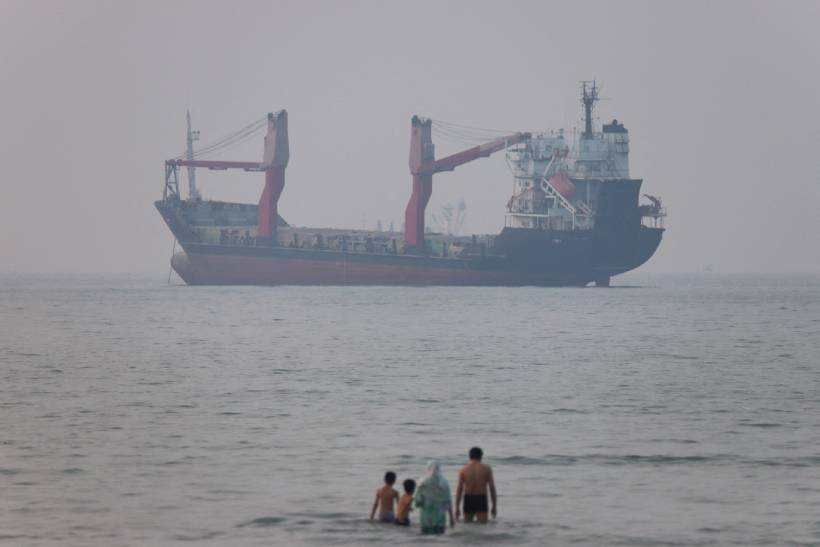
The US naval blockade of Iranian ports and the Strait of Hormuz, in place since April 13, has raised concerns that Iran could run out of crude oil storage capacity and be forced to curb production.

Bloomberg reported analysis on Tuesday from the data and analytics company Kpler suggesting Iran could run out of crude storage in 12 to 22 days if the blockade persists.

Last week, United States Treasury Secretary Scott Bessent claimed that storage capacity at Kharg Island, where most of Iran’s oil is exported, would be full “in a matter of days”.

So how quickly could Iran run out of oil storage, and why does it matter?

What is happening in the Strait of Hormuz?

The Strait of Hormuz is a narrow channel that connects the Gulf to the open ocean. It spans the territorial waters of Iran on its northern side and Oman on its southern side. It is not in international waters.

During peacetime, 20 percent of the world’s oil and liquefied natural gas (LNG) supplies are shipped through the corridor.

Two days after the US and Israel launched their first air strikes in their war on Iran on February 28, Ebrahim Jabari, a senior adviser to the commander in chief of Iran’s Islamic Revolutionary Guard Corps (IRGC), announced that the strait was “closed”. If any vessels tried to pass through, he said, the IRGC and the navy would “set those ships ablaze”.

INTERACTIVE - Strait of Hormuz - March 2, 2026-1772714221

As the war has dragged on and negotiations have failed to achieve a settlement, Iran has at times in the past two months allowed some “friendly” ships and those that pay tolls to pass. It is currently refusing to allow any foreign-flagged ships, including those previously deemed friendly, to pass until the US lifts its own naval blockade.

Iranian First Vice President Mohammad Reza Aref said on April 19 that the “security of the Strait of Hormuz is not free”.

“One cannot restrict Iran’s oil exports while expecting free security for others,” he wrote in a post on X.

“The choice is clear: either a free oil market for all, or the risk of significant costs for everyone,” he added. “Stability in global fuel prices depends on a guaranteed and lasting end to the economic and military pressure against Iran and its allies.”

Since the US naval blockade on the strait began, the US has opened fire on and taken control of an Iranian-flagged tanker near the Strait of Hormuz while also redirecting vessels on the high seas transporting cargo to or from Iran. Iran’s armed forces have denounced these actions as “an illegal act” that “amounts to piracy”.

The US naval blockade of the strait means that Iran might have to store the oil it produces.

Iran is the third largest oil producer in the Organization of the Petroleum Exporting Countries (OPEC) after Saudi Arabia and Iraq and exports 90 percent of its crude oil via Kharg Island in the Gulf for shipping through the Strait of Hormuz.

INTERACTIVE - Kharg Island Iran map oil coastline-1775116731

What has the US claimed?

The US is eager to curb Iran’s oil revenues, which have risen since Tehran closed the Strait of Hormuz to other shipping. This is the primary motive behind Washington’s naval blockade of Iranian ports.

Iran exported 1.84 million barrels per day (bpd) of crude oil in March and shipped 1.71 million bpd in April, compared with an average of 1.68 million bpd in 2025, according to Kpler.

However, the US naval blockade since mid-April now means that most of its exports are having to be stored instead.

Bessent wrote in an X post on April 22: “In a matter of days, Kharg Island storage will be full and the fragile Iranian oil wells will be shut in.”

“Constraining Iran’s maritime trade directly targets the regime’s primary revenue lifelines.”

How much oil can Iran store?

Iran’s domestic refineries have a production capacity of 2.6 million bpd, according to the energy consultancy Facts Global Energy.

Satellite data show the amount of oil Iran has in storage has risen sharply since the US blockade began, and in the days after the US tightened it, stocks were rising so fast that it appeared Iran had been barely able to export any oil at all.

From April 13 to April 21, data showed that stocks rose by more than 6 million barrels, according to the Columbia Center on Global Energy Policy (CGEP). From April 17 to April 21, the stock increased very rapidly, growing by 1.7 bpd.

As of April 20, the storage tanks at Kharg were about 74 percent full after the island alone had taken on about 3 million extra barrels of oil, the CGEP reported.

Generally, oil companies avoid filling their storage beyond 80 percent capacity to balance safety, emissions control and flexibility.

However, Iran and other oil producing countries have exceeded this limit before, for instance, during the COVID-19 pandemic. In April 2020, Kharg island’s stocks reached close to 90 percent capacity, an all-time high.

Iran also has some crude oil storage capacity in the form of “floating tanks”, or parked ships. About 127 million barrels can be stored in this way, Frederic Schneider, a nonresident senior fellow at the Middle East Council on Global Affairs, told Al Jazeera in an interview on April 14.

Will Iran need to cut oil production?

Muyu Xu, a senior crude oil analyst at Kpler, told Al Jazeera that the blockade could eventually force Iran to cut production.

“However, given there is still available storage capacity onshore (roughly covering 20 days of Iran’s current production), we expect any production reduction to be gradual over the coming week with a higher likelihood of acceleration into May,” she said.

Analysis by CGEP nonresident fellow Antoine Halff echoed this. Halff wrote in an article published by CGEP on Tuesday that it may be some time before the US blockade causes Iran to shut off its production “in a big way”.

However, Halff added, Iran may still choose to halt production “fairly aggressively” but this “would be more by choice than by necessity”.

He explained: “Doing so would have the advantage of providing Iran with relatively ample spare storage capacity after the shutdown and would allow for a smoother restart of operations once conditions permit, and the constraint is relaxed, thus minimising adverse impacts from the blockade on longer-term supply.”

Why does this matter?

Halting oil production risks damaging underground reservoirs by reducing reservoir pressure, allowing water or gas to encroach into producing layers and changing patterns of oil flow. This can make some oil harder or more expensive to recover later, experts said.

Restarting the process of oil production can also be slow and costly, involving repairs of corroded equipment or unclogging pipelines.

Halting production would also cause Iran’s export revenues to drop. However, analysts said that for a few months, Iran can continue to earn revenue from oil that is already in transit at sea.

Kenneth Katzman, former Iran analyst at the Congressional Research Service in Washington, DC, said Iran is not exporting new oil during the US blockade of Iranian ports but Tehran has 160 million to 170 million barrels of oil on ships around the world currently.

Source link

Oil prices rise despite UAE exit from OPEC as Iran war ceasefire hangs in balance

Oil markets face renewed instability following the United Arab Emirates’ formal exit from the Organisation of the Petroleum Exporting Countries (OPEC) and its wider alliance (OPEC+), announced on Tuesday and taking effect on Friday.


ADVERTISEMENT


ADVERTISEMENT

The move, which ends decades of membership, comes as the global economy continues to reel from the ongoing war with Iran and the blockade of the Strait of Hormuz remains in place.

Investors are currently weighing the potential for higher future output from the UAE against the immediate and acute risks posed to global supply routes, as well as the increased chances that more countries drop out of OPEC and OPEC+.

Following the announcement, markets reacted swiftly as the potential for oversupply from the UAE was priced in. Oil prices fell by between 2% and 3%, particularly in futures contracts a couple of months ahead.

However, the move was just as quickly offset by the risk premium associated with the Middle East conflict and the current halt to US-Iran negotiations.

At the time of writing, US benchmark crude, WTI, is trading above $105 a barrel, while Brent crude, the international standard, is over $112. Both prices are around 4% higher on Wednesday from the UAE announcement low.

The UAE’s decision follows years of simmering tension between Abu Dhabi and Riyadh over production quotas. The UAE has invested over $150 billion (€128bn) in the state-owned Abu Dhabi National Oil Company (ADNOC) to expand its capacity to five million barrels per day.

However, under OPEC’s restrictive framework, much of this capacity remained underutilised, now prompting the government to prioritise its national interest.

The departure of the group’s third-largest producer is a significant blow to the cohesion of the 60-year-old organisation. Maurizio Carulli, global energy analyst at Quilter Cheviot, noted the limitations this exit places on the remaining members.

“Until tanker traffic through the Strait of Hormuz is safe again, OPEC’s ability to stabilise prices is sharply constrained, while US producers have gained outsized influence,” Carulli explained.

While the UAE has pledged to bring additional production to the market in a “gradual and measured” manner, the sudden lack of coordination within OPEC has introduced a new layer of uncertainty.

For the UAE, the blockade served as a final catalyst for its exit. With its primary export route under threat, Abu Dhabi has sought the diplomatic flexibility to forge independent security and trade partnerships outside the traditional cartel structure.

Despite the geopolitical turmoil, energy equities have remained resilient.

According to Carulli, “integrated majors such as BP, Shell, TotalEnergies, ENI, Chevron and ExxonMobil are benefitting from a price uplift that could add 5-10% to operating cash flow for every $10 increase in oil prices.”

Standoff over the Strait of Hormuz

In a separate but related development, the security situation in the Middle East remains precarious despite a fragile ceasefire. Iran has recently offered a ten-point proposal to reopen the Strait of Hormuz.

In exchange for restoring maritime traffic, Tehran is demanding a full withdrawal of the US naval blockade and an end to the current hostilities.

US President Donald Trump, who recently extended the two-week ceasefire mediated by Pakistan, described the latest Iranian offer as “much better” than previous iterations but still did not accept the terms.

Shortly after, Trump posted on social media claiming that Iran is in a dire and desperate condition with no leverage to negotiate.

Washington continues to insist on a permanent settlement regarding Iran’s nuclear programme and an “unconditional” reopening of the waterway before sanctions are lifted.

The impact of this blockade on global energy security cannot be overstated.

“The prolonged closure of the Strait of Hormuz has removed roughly 12% of global oil supply from the market, according to the IEA, a bigger disruption than the Yom Kippur war, the Iran‑Iraq conflict, the invasion of Kuwait or even the fallout from Ukraine,” Carulli highlighted.

Source link

UAE quits OPEC as oil cartel takes blow during war on Iran | Oil and Gas

NewsFeed

The UAE’s decision to quit OPEC to prioritise its ‘national interests’ deals a blow to the oil group already grappling with the challenge of shipping Gulf exports through the Strait of Hormuz. Here’s what we know about why it’s withdrawing and the impact it might have.

Source link

UAE To Exit OPEC, Fracturing Powerful Gulf Oil Alliance

UAE exits OPEC, exposing Gulf rift over oil strategy, Iran policy, and market stability.

The United Arab Emirates’ announcement to leave OPEC on May 1 marks more than a policy shift: It signals the unraveling of a long-eroding Gulf consensus on oil, economic strategy, and Iran. The announcement comes on the heels of the Gulf Creators event in Dubai on April 27.

“Every Gulf state had its own policy of containment toward Iran, and all of those containment policies have failed,” senior Emirati official Anwar Gargash said at the event. “All our policies have failed miserably,” he added—a rare public admission of strategic exhaustion that underscores why Abu Dhabi is recalibrating its regional and energy posture.

That recalibration now includes leaving the Organization of the Petroleum Exporting Countries. The UAE joined the bloc in 1967, when Abu Dhabi—now the federation’s capital—emerged as an oil producer. In announcing its exit from both OPEC and OPEC+ (a larger coalition that includes Russia), the UAE said the move aligns with its long-term strategy and will allow it to increase output in line with market demand gradually.

Widening Divide

At the heart of the split is a widening divide between Riyadh and Abu Dhabi. Oil policy has long been a source of tension between the two Gulf powerhouses. The UAE’s exit now leaves Saudi Arabia to shoulder a heavier burden in stabilizing global oil markets.

The UAE isn’t the only country to abandon OPEC cohesion. Qatar exited OPEC in 2019, breaking with the Saudi-led bloc amid an ongoing boycott.

Angola and Ecuador also left in recent years. The UAE’s similar move underscores that politics continues to shape the cartel, even as it focuses on stabilizing oil prices through production decisions. And because of its status as a major producer, the UAE’s exit is structurally more consequential for global supply management.

Experts say the UAE produced about 3.4 million barrels per day—about 13% of OPEC’s total output—and had the capacity to reach 5 million barrels per day before the US-Iran war began on February 28.

In effect, OPEC is not just losing a member—it is losing a key balancing force at a moment when geopolitical instability and oil market fragmentation are accelerating.

Source link

Dirk Kempthorne, former Idaho governor and U.S. Interior secretary, dies at 74

Former Idaho Gov. and U.S. Interior Secretary Dirk Kempthorne has died at age 74, his family said in a written statement Saturday.

Kempthorne died Friday evening in Boise, the statement said. No cause was given. He had been diagnosed with colon cancer last year.

“Beyond his public service, he was a devoted husband, father, and grandfather whose greatest joy came from time spent with family and the people he met along the way,” his family said. “He had a rare gift for truly seeing others — remembering names, stories, and the small details that made each person feel known and valued.”

Kempthorne, a moderate Republican, was elected mayor of Boise in 1985 at age 34, and he was credited with revitalizing the downtown by securing an agreement to build a convention center and promoting other development. He served seven years before winning the U.S. Senate seat vacated by Sen. Steve Symms in 1992.

During his time in Washington, he authored legislation — signed by Democratic President Clinton — to end unfunded federal mandates on state and local governments.

Rather than run for reelection in 1998, he entered an open election for governor, trouncing his Democratic opponent by garnering more than two-thirds of the vote.

President George W. Bush appointed him Interior secretary in 2006, a position he held until the end of Bush’s presidency — and during which he lived on a houseboat docked in the Potomac River.

“Dirk was one of the finest public servants I ever knew because he was one of the finest men,” former President George W. Bush said in a written statement Saturday. “He was considerate, smart, and capable. Dirk loved our lands and waters, and as Secretary of the Interior, he was an effective steward of our natural resources.”

He protected polar bears

Environmentalists often found Kempthorne too accommodating to industry, citing his efforts to push oil and gas development in the Gulf of Mexico and off Alaska. More than 100 conservation groups opposed his nomination as Interior secretary, saying that as a senator he had voted to eliminate federal money for recovery of the endangered wolf, to open the Arctic National Wildlife Refuge to oil and gas exploration, and to sell off federal public lands.

Yet in 2008, he bucked other advisers in the White House by insisting that the polar bear should be listed as a threatened species under the Endangered Species Act because of the loss of sea ice in the Arctic. He was prepared to resign over it when Bush decided to back him.

“As Governor, Dirk left an enduring mark on our state,” Idaho Gov. Brad Little said in a written statement. With the partnership of his wife, Patricia, Kempthorne “championed children and families, strengthened public education, and led transformational investments in our transportation system that will benefit Idahoans for generations.”

After leaving the federal government, he became the chief executive of a trade association of life insurance companies.

He helped Afghan refugees

In a 2023 question-and-answer session with the George W. Bush Presidential Center, Kempthorne recalled helping evacuate nearly 400 U.S. citizens and Afghan allies from Afghanistan two years earlier, as many were being sought by the Taliban following the U.S. military’s chaotic withdrawal. Kempthorne and others worked frantically for months to raise money and garner the support of diplomatic channels to charter buses and an Airbus A340 to help resettle the evacuees in the U.S. and Canada.

At one point, with the flight fully booked, the organizers received a list of more people who needed to leave urgently.

“That night, at a total loss for answers, alone, I knelt in prayer,” Kempthorne recalled. “I said, ‘Dear God, we cannot leave these people behind, please give a path forward.’”

He said he then had a vision of Mother Mary holding the infant Jesus. It gave him an idea: The babies on the flight didn’t need their own seats, as their parents could hold them. The organizers confirmed that with the airline and were able to add an additional 50 people to the flight, Kempthorne said.

Kempthorne was born in San Diego and grew up in Spokane, Wash. His father was a regional representative for Maytag, the appliance company. His mother, a homemaker, once worked as a secretary for the Legislature in Nebraska, her home state.

Kempthorne attended San Bernardino Valley College in California before transferring to the University of Idaho, where he served as student body president and met Patricia, his future wife. After graduation he worked as executive assistant to the director of the Idaho Department of Lands before joining the Idaho Home Builders Assn. as the executive vice president.

Kempthorne is survived by his wife, as well as their children Heather and Jeff and their families.

Johnson writes for the Associated Press. Johnson reported from Seattle.

Source link

America Replaces OPEC as Global Oil Shock Absorber

The ongoing Iran war has reshaped global energy dynamics, shifting influence away from OPEC toward the United States. Traditionally, OPEC and key producers like Saudi Arabia acted as “swing suppliers,” adjusting output to stabilize markets.

However, disruptions caused by the closure of the Strait of Hormuz have left millions of barrels stranded, limiting OPEC’s ability to respond and opening space for the United States to take on that stabilizing role.

Collapse of OPEC’s Leverage

The near shutdown of Gulf energy routes has forced major producers to cut output significantly. Even Saudi Arabia’s alternative export routes have proven insufficient to offset the scale of disruption.

This has weakened OPEC’s traditional power, which relied heavily on spare production capacity to manage supply shocks and influence prices.

Rise of U.S. Energy Dominance

The United States has stepped in decisively, leveraging its position as the world’s largest oil producer. Since surpassing both Saudi Arabia and Russia in output in 2018, the U.S. has built unmatched capacity to influence global markets.

Exports have surged to record levels, with both crude and refined products flowing to regions hit hardest by supply shortages, particularly in Asia. This rapid response has helped cushion the global economy from a deeper energy crisis.

Strategic Tools Beyond Production

Washington’s influence extends beyond production alone. The government has released oil from its Strategic Petroleum Reserve, providing an additional buffer against supply shocks.

It has also used sanctions policy as a flexible tool, selectively easing restrictions on Russian and Iranian oil to increase global supply when needed, while tightening measures to maintain geopolitical pressure.

Economic and Political Impact

For U.S. producers, the crisis has generated substantial financial gains through higher export revenues. At the same time, Washington’s actions have helped stabilize global markets, reinforcing its role as a central player in the energy system.

However, these moves carry political risks, including potential contradictions between economic goals and foreign policy objectives.

Limits of U.S. Power

Despite its growing influence, the United States cannot fully replicate OPEC’s traditional role. Unlike centralized producers, the U.S. oil industry operates within market constraints, limiting the government’s ability to directly control output.

Policies such as export restrictions could theoretically impact global prices, but would also risk damaging domestic production systems and relations with international partners.

Analysis

The Iran war has accelerated a structural shift in global energy power. The United States has effectively become a “swing supplier,” not through coordinated production cuts like OPEC, but through a combination of market scale, strategic reserves, and policy flexibility.

This transformation highlights a new model of energy influence, where rapid responsiveness and financial depth replace centralized control. While OPEC remains relevant, its ability to dominate global supply dynamics has been significantly weakened under current conditions.

At the same time, U.S. dominance introduces new complexities. Balancing domestic political pressures, international alliances, and market stability requires careful calibration. The use of sanctions as a supply management tool also raises questions about long term consistency in foreign policy.

Ultimately, the shift signals a more fragmented and dynamic energy landscape. The United States may not control the market in the traditional sense, but its ability to shape outcomes quickly and at scale makes it the most influential actor in the current crisis.

With information from Reuters.

Source link

Robert Brovdi, Ukraine’s drone commander with Russian oil in his sights

Four years ago, Robert Brovdi was more comfortable in auction houses like Christie’s than filthy trenches. A well-off grain dealer in those days, with a sideline as an art collector, fragments of his pre-war life survive in the paintings and sculptures by Ukrainian artists dotted around the bunker. They’re displayed beside missile casings and captured drones. He’s an ethnic Hungarian, from Uzhgorod in western Ukraine, and best known by his military call sign, Magyar. Clean-shaven before the war, he now wears a long ginger and grey-speckled beard.

Source link

Oil prices rise amid stalled US-Iran peace talks | Oil and Gas News

Brent crude rises more than 2 percent after Washington and Tehran fail to hold second round of talks in Pakistan.

Oil prices have climbed higher amid stalled peace talks between the United States and Iran.

Brent crude rose more than 2 percent on Sunday after hopes for a second round of ceasefire negotiations between Washington and Tehran unravelled over the weekend.

Recommended Stories

list of 4 itemsend of list

After easing slightly, Brent, the primary benchmark for global prices, stood at $106.99 as of 1:30 GMT.

Stock markets in Asia shrugged off the impasse to open higher on Monday, with Japan’s benchmark Nikkei 225 and South Korea’s KOSPI gaining 0.9 percent and 1.5 percent, respectively, in morning trading.

US President Donald Trump on Saturday cancelled a planned trip to Pakistan by his envoys, Steve Witkoff and Jared Kushner, after Iranian Minister of Foreign Affairs Abbas Araghchi departed Islamabad before any direct engagement could take place between the sides.

Araghchi arrived in Russia’s Saint Petersburg on Monday for talks with Russian President Vladimir Putin and other officials as Tehran seeks a way out of the diplomatic impasse.

Araghchi’s trip, which follows a whistle-stop visit to Oman on Sunday, comes as uncertainty hangs over the fragile ceasefire between Washington and Tehran.

Trump announced an extension to their two-week truce last week, without specifying a deadline for reaching a deal to end the war.

As US and Iranian negotiators struggle to break the deadlock, Tehran’s threats against commercial shipping in the Strait of Hormuz have reduced traffic to a trickle, paralysing a large portion of the world’s supply of oil and natural gas.

On Saturday, 19 commercial vessels transited the strait, which normally carries about one-fifth of global oil and natural gas supplies, according to maritime intelligence platform Windward.

Before the US and Israel launched their war on Iran in late February, the waterway saw an average of 129 daily transits, according to the United Nations Trade and Development.

Source link

Trump likes a naval blockade. But Iran presents big differences from Venezuela and Cuba

President Trump has turned to naval blockades to pressure the governments of Venezuela, Cuba and now Iran to meet his demands, but his preferred tactic is confronting a very different reality in the Middle East than in the Caribbean.

Unlike Cuba or Venezuela, Iran choked off a crucial trade route for energy shipments, meaning the longer the standoff persists, the more the global economy will suffer. Tehran also poses a greater military threat than those two adversaries in America’s own hemisphere and requires a sustained military presence far from U.S. shores.

Iran’s leverage over the Strait of Hormuz gives it power during a shaky ceasefire because the widening economic risks, especially higher U.S. gas prices in an election year, could force the Republican president to end the blockade on Iran’s ports and coastline, experts say.

“It’s really a question now of which country, the U.S. or Iran, has a greater pain tolerance,” said Max Boot, a military historian and senior fellow for national security studies at the Council on Foreign Relations.

Iran presents ‘major differences’ from other blockades

The effectiveness of Trump’s use of the world’s most powerful navy to block the trade of Iran’s sanctioned oil and other goods is very much up for debate. But it certainly appears to be intensifying as the war grinds on.

The U.S. military on Thursday announced the seizure of another tanker associated with the smuggling of Iranian oil, a day after Iran’s paramilitary Revolutionary Guards took control of two vessels in the crucial waterway.

Trump also announced he has ordered the U.S. military to “shoot and kill” Iranian small boats laying sea mines in the strait.

But the situation in Iran is not exactly analogous to what is playing out with the U.S. operations in Venezuela and Cuba.

Some experts say Trump’s success in Venezuela probably had more to do with the U.S. military raid that captured leader Nicolás Maduro than American warships seizing sanctioned oil tankers to enforce U.S. control over the South American country.

A U.S. oil embargo on Cuba, meanwhile, has caused the island’s most severe economic crisis in decades. While U.S. and Cuban officials have met recently on the island for rare talks, the financial strangulation has failed to produce the Trump administration’s stated goal of leadership change.

“I do think that the success of the Maduro mission in Venezuela has probably emboldened the president,” said Todd Huntley, director of Georgetown University’s National Security Law Program.

That does not make the situations in Venezuela and Iran similar — geographically, militarily or politically. “There are some major differences,” said Huntley, a retired Navy captain and judge advocate general.

While the blockade against Iran has delivered a severe blow to its economy, including stopping freighters from importing various supplies, the country has still been able to move some of its sanctioned oil, ship-tracking companies say.

Iran has rejected Trump’s demands to reopen the strait, where 20% of the world’s oil normally flows, and it has been firing on ships again this week. Stalled shipments through the strait have sent gasoline prices skyrocketing far beyond the region and raised the cost of food and a wide array of other products, creating a political problem for Trump before the November’s elections.

“Blockades are usually just one tool of a mechanism used in a conflict,” said Salvatore Mercogliano, a maritime history professor at Campbell University in North Carolina. “They can be important. But it’s only one element. And I don’t think it’s going to be enough to convince the Iranians.”

Effectiveness of U.S. blockade called into question

Adm. Brad Cooper, head of U.S. Central Command, claimed last week that “no ship has evaded U.S. forces.” The command overseeing the Middle East said it has directed 31 ships to turn around or return to port as of Wednesday.

Merchant shipping groups are skeptical.

Lloyd’s List Intelligence said “a steady flow of shadow fleet traffic” has passed in and out of the Persian Gulf, including 11 tankers with Iranian cargo that have left the Gulf of Oman outside the strait since April 13.

The maritime intelligence firm Windward said this week that Iranian traffic continues to flow “via deception.”

Iranian ships have several ways to sneak through the blockade, including spoofing their location tracking data or traveling through Pakistani territorial waters, Mercogliano said. He also noted that the sheer volume of shipping traffic the military needs to screen is a challenging task.

Blockades require patience to work

The last time the U.S. mounted a blockade similar to the one focused on Iranian ships was during the Kennedy administration in the early 1960s, against Cuba, Huntley said.

“And it wasn’t even called a blockade,” he said. “We called it quarantine.”

Some naval blockades over the course of history have had an impact, such as Britain’s blockade on Germany during World War I. “But they tend to be very long-term impacts, whereas Trump is looking for short-term, quick results,” according to Boot, the military historian.

He said Trump probably saw the blockade on sanctioned oil tankers tied to Venezuela as playing a large role in the success of leadership changes in that country. But Boot said it had more to do with the U.S. ousting Maduro and the subsequent cooperation from his vice president, Delcy Rodríguez, who is now the acting president.

“There is no Delcy Rodríguez in Cuba or Iran,” Boot said. “I think his success in Venezuela led him astray, thinking that this was a template that could be replicated elsewhere. He sees it as a huge success at little cost. And, in fact, it turns out to be a unique set of circumstances.”

Finley, Klepper and Toropin write for the Associated Press.

Source link

Oil rises above $106 per barrel as US, Iran deadlocked in Strait of Hormuz | US-Israel war on Iran

Jump in prices comes as Donald Trump says vessels will need permission of US Navy to transit key waterway.

Oil prices have jumped on heightened tensions between the United States and Iran in the Strait of Hormuz following Washington and Tehran’s tit-for-tat captures of commercial vessels.

Brent crude, the international benchmark, topped $106 per barrel early on Friday morning as Washington and Tehran stepped up their confrontation over the key maritime route for transporting the world’s energy.

Recommended Stories

list of 4 itemsend of list

Brent stood at $106.80 as of 01:00 GMT, up nearly 5 percent from its closing price on Wednesday, when it surpassed $100 per barrel for the first time in two weeks.

US stocks fell overnight, with the benchmark S&P 500 index dipping 0.41 percent and the tech-heavy Nasdaq Composite dropping 0.89 percent.

Shipping in the Strait of Hormuz, which normally carries about one-fifth of the world’s supply of oil and natural gas, remains at a standstill as Iran continues to demand the right to decide which vessels may pass and the US blocks Iran’s maritime trade.

US President Donald Trump said in a Truth Social post on Thursday that he had ordered the US Navy to destroy any Iranian boats laying mines in the strait, shortly after the Pentagon announced that it had seized a tanker carrying sanctioned Iranian oil for the second time in less than a week.

Trump also appeared to expand the scope of the US naval blockade beyond Iranian ports, writing on Truth Social that no ship “can enter or leave” the strait without the approval of the US Navy.

“It is ‘Sealed up Tight,’ until such time as Iran is able to make a DEAL!!!” Trump said.

Trump’s threats came a day after Iran’s Islamic Revolutionary Guard Corps announced the capture of two foreign cargo ships in the waterway.

The IRGC said it had seized the Panamanian-flagged MSC Francesca and Greek-owned Epaminondas after the vessels had endangered maritime security “by operating without the necessary permits and tampering with navigation systems”.

The Greek Maritime Affairs and Insular Policy Ministry has denied that the Epaminondas was captured and said the vessel remains under the control of its captain.

Only nine commercial vessels transited the strait on Wednesday, compared with seven on Tuesday and 15 on Monday, according to maritime intelligence platform Windward.

Before the US and Israel launched their war against Iran on February 28, the waterway saw an average of 129 transits each day, according to United Nations Trade and Development.

Source link

The Venezuelanalysis Podcast Episode 44: Venezuela’s Natural Resources, Oil Reform, and Sovereignty

Venezuela’s January 2026 hydrocarbons law reform marks a major shift in the country’s oil sector. It establishes a more flexible fiscal regime in the name of “international competitiveness,” while expanding the private sector role in extraction, operations, and dispute resolution mechanisms.

The reform follows years of US sanctions on Venezuela’s oil industry and coincides with new US licenses allowing Western conglomerates to move into Venezuela’s energy sector.

Join Blas Regnault, energy policy analyst and consultant focused on oil geopolitics, alongside Venezuelanalysis editors Ricardo Vaz and Lucas Koerner, as they break down the reform, its economic and political context, and what it means for control over strategic resources and national sovereignty.

Powered by RedCircle

Source link

Oil prices surge amid mixed signals on US-Iran peace talks | US-Israel war on Iran News

Brent crude rises more than 7 percent as Washington and Tehran offer conflicting accounts on ceasefire negotiations.

Oil prices have risen sharply following attacks on commercial vessels in the Strait of Hormuz and conflicting messages about the prospect of renewed negotiations between the United States and Iran.

Brent crude futures, the primary benchmark for global prices, jumped more than 7 percent in Asia on Monday as the outlook for peace between Washington and Tehran darkened.

Recommended Stories

list of 4 itemsend of list

Prices eased somewhat later in the morning, with the benchmark at $94.69 a barrel as of 02:05 GMT, up from just under $90.40 on Friday.

The latest price surge came after US President Donald Trump said US forces seized an Iranian-flagged cargo vessel that had attempted to evade the US blockade of Iran’s ports.

Trump’s announcement followed reports by the United Kingdom Maritime Trade Operations (UKMTO) Centre over the weekend that two vessels came under attack while transiting the strait.

Iranian gunboats fired on a tanker, while an “unknown projectile” struck a container ship, according to the UKMTO.

After declaring the strait “completely open” on Friday, Tehran reversed course less than 24 hours later, citing the ongoing US blockade.


Earlier on Sunday, Trump said that a US delegation would travel to Pakistan on Monday to hold a second round of ceasefire talks with Iranian officials.

Iranian state news outlet IRNA later reported that Tehran would not participate in the talks, citing the US blockade and Washington’s “excessive demands” and “unrealistic expectations”.

A two-week ceasefire between Washington and Tehran is set to expire on Wednesday if the sides cannot agree on an extension.

An initial round of talks held in Islamabad earlier this month broke down without any agreement between the sides.

Iran’s effective closure of the strait, which usually carries about one-fifth of global oil and natural gas supplies, has driven a surge in fuel prices worldwide, forcing governments to tap emergency supplies and roll out energy-saving measures.

Nineteen vessels crossed the strait on Saturday, up from 10 the previous day, but far below the historical average of 138 daily transits, according to the UKMTO.

Asia’s main stock markets opened higher on Monday despite the dimming prospects of de-escalation.

Japan’s Nikkei 225 rose more than 1 percent in morning trading, while South Korea’s KOSPI gained about 1.3 percent.

Hong Kong’s Hang Seng Index rose about 0.5 percent, while the SSE Composite Index in Shanghai gained more than 0.4 percent.

Source link

U.S. renews pause on Russian oil sanctions (CL1:COM:Commodity)

Apr 18, 2026, 8:42 AM ETCrude Oil Futures (CL1:COM), USO, CO1:COM, NG1:COM, , , , , , , , , , , , , , By: Dulan Lokuwithana, SA News Editor
Top view on Oil-storage tank with the tanker at a mooring.

KadnikovValerii/iStock Editorial via Getty Images

The U.S. Treasury Department has extended a waiver that will temporarily ease some sanctions on Russian oil shipments just two days after Secretary Scott Bessent said Washington would not renew the exemption despite surging oil prices caused by Middle Eastern tensions.

Source link

As oil prices plunge below $91 after weeks, a new Hormuz crisis emerges | Oil and Gas News

Brent crude falls more than 9 percent after Iran said it will reopen the strategic waterway, only to shut it down again over US blockade of its ports.

Oil prices have plummeted to their lowest point in weeks after Iran said the Strait of Hormuz was open for passage during a ceasefire in Lebanon, and United States President Donald Trump said he expected to ⁠reach a deal to end the war soon.

Brent crude, the international benchmark, fell more than 9 percent to $90.38 a barrel on Friday, taking it below $91 for the first time since March 10.

Recommended Stories

list of 4 itemsend of list

The plunge came after Iranian Foreign Minister Abbas Araghchi said the strait was “completely open” and would remain so for the duration of the 10-day ceasefire between Israel and Lebanon, which took effect on Friday.

Hailing Tehran’s announcement, Trump declared the waterway “ready for business and full passage,” but said the US Navy’s blockade of Iranian ports would remain in “full force” until the sides reached a peace deal.

On Saturday, however, Iran rowed back on its decision to reopen the Strait of Hormuz, warning that it would continue to block transit through the key waterway as long as the US blockade of Iranian ports remained in effect.

The announcement came after Trump said the blockade “will remain in full force” until Tehran reaches a deal with the US, including on its nuclear programme.

Roughly one-fifth of the world’s oil passes through Hormuz and further limits would squeeze already constrained supply, driving prices higher once again.

Amid the escalation, Pakistani officials say they are trying for more talks between the US and Iran ahead of the April 22 ceasefire deadline.

Meanwhile, ship tracking data displayed by MarineTraffic earlier on Saturday showed a significant uptick in vessels crossing the strait, which is located between Iran, the United Arab Emirates and Oman.

“It’s busy out there, the busiest I’ve seen it since the Strait of Hormuz was effectively closed at the beginning of the war,” Michelle Wiese Bockmann, an analyst at maritime intelligence firm Windward, said in a post on X.

“Last night there were few ships taking the risk but overnight there seems to have been a change.”

While Iran allowed a limited number of vetted ships to transit the waterway since the start of the war, traffic has remained at a trickle compared with pre-conflict levels.

The near-total closure of the strait has triggered one of the worst energy shocks in history, driving up fuel prices and prompting governments to roll out emergency measures.

Oil prices have swung wildly since the US and Israel launched strikes on Iran on February 28, hitting a post-conflict peak of $119 a barrel on March 19.

Source link