oil

Gold, silver surge to 3-week highs as Iran ceasefire sends dollar & oil plunging (XAUUSD:CUR:Commodity)

Business gold candlestick investment stock exchange wealth financial concept on 3d golden trade market background of growth finance chart success commercial graph diagram or savings trading value.

Lemon_tm

Gold prices advanced in Asian trading on Wednesday after U.S. President Donald Trump and Iran agreed to a two-week ceasefire to finalize talks on ending the war.

Spot gold (XAUUSD:CUR) rose 1.8% to $4,794.08 per ounce at press time, after gaining as much as 3.1% earlier in

Source link

Can Africa tackle the oil shock from the Iran war? | US-Israel war on Iran

African nations are scrambling to secure oil and gas as the Iran war disrupts supplies from the Middle East.

The war in Iran has created an energy shock in Africa.

The continent relies heavily on oil and gas imports from the Middle East.

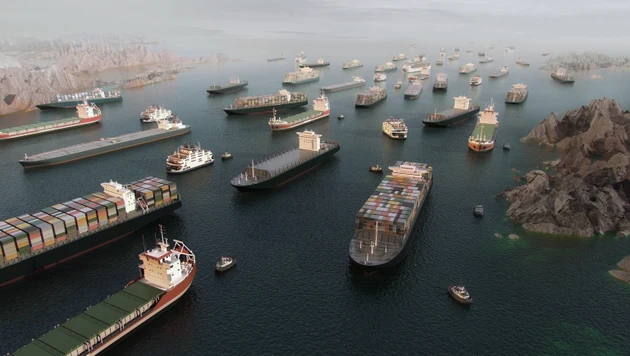
Much of this supply is currently stuck on tankers near the Strait of Hormuz, which is closed.

Countries including Kenya, Ethiopia and Zambia are reporting shortages.

Africa’s largest oil refinery in Nigeria is pumping out crude at maximum capacity, but that’s nowhere near enough to meet the continent’s needs.

In addition, Africa’s energy infrastructure has suffered from years of underinvestment.

So, what choices do governments have to contain the crisis?

Source link

S. Korea secures 60 mln barrels of alternative oil supplies for May: officials

A fuel tank truck enters a tunnel in the city of Goyang, northwest of Seoul, in this file photo taken March 5, 2026. Photo by Yonhap

South Korea has secured an additional 60 million barrels of alternative oil supplies for May that will replace supplies from the Middle East that have been blocked due to the effective closure of the Strait of Hormuz, the government said Tuesday.

The country has secured a total of 110 million barrels of oil — 50 million for April and 60 million for May — so far from 17 countries, including Saudi Arabia, the United States, the United Arab Emirates, Brazil and Canada, Yang Ghi-wuk, deputy minister for trade, industry and resource security, said in a regular press briefing.

The amount secured for this month and May each represents about 60 percent and 70 percent, respectively, of monthly oil supplies to South Korea when things run as usual, he added.

Regarding the oil swap system introduced last week, Yang said the country’s major four refiners have submitted plans to borrow more than 30 million barrels under the program, with around 8 million barrels to be delivered this week.

Under the oil swap system, South Korean refiners can borrow crude oil from the national reserve and return the same volume once shipments of their crude supplies secured abroad arrive.

“Refiners have expressed interest in the oil swap system and are willing to utilize it,” he said.

Touching on naphtha, a crucial raw material in petrochemical manufacturing, Yang said he expects imports for the raw material to reach 770,000 tons this month, which will be equivalent to some 70 percent of the amount imported during the same month last year.

Also, the aggregate naphtha supply is projected to reach around 80 to 90 percent of the amount needed for the month on a normal basis when adding around 1.1 million tons of the material produced within the country, Yang added.

“We plan to work with companies to make efforts in securing naphtha supplies once the supplementary budget passes and the extra budget is allocated,” he said.

Copyright (c) Yonhap News Agency prohibits its content from being redistributed or reprinted without consent, and forbids the content from being learned and used by artificial intelligence systems.

Source link

Markets send mixed signals ahead of Trump’s deadline to escalate Iran war

Published on

Both European and Asian markets opened slightly lower on Tuesday as investors brace for US President Donald Trump’s deadline for Iran to either agree to a deal, or have their energy infrastructure targeted by air strikes.


ADVERTISEMENT


ADVERTISEMENT

The deadline falls at 8 pm Eastern Time (2 am CET), giving Iran until then to accept a deal that would keep the Strait of Hormuz open to all shipping or face what Trump has called the “complete demolition” of its civilian infrastructure, including every power plant and bridge in the country.

At the time of writing, Benchmark US crude is trading at $113.5 a barrel while Brent crude, the international standard, is around $111. Both prices are up around 1%.

The Euro Stoxx 50 and the broader pan-European Stoxx 600 are both up 0.5% as well.

The UK’s FTSE 100 is flat while Germany’s DAX 30 is around 0.2% higher, and France’s CAC 40 and Italy’s FTSE MIB have risen close to 1% each.

Over in Asia, there is a mixed reaction from markets in anticipation of the deadline.

South Korea’s Kospi has jumped 0.8% while Tokyo’s Nikkei 225 is effectively trading flat.

Hong Kong’s Hang Seng is down 0.8% while the Shanghai Composite is slightly higher by 0.3%. Additionally, Australia’s ASX 200 and Taiwan’s Taiex both rose 2%.

On Easter Sunday, President Trump renewed the threat publicly for the last time before the deadline stating that “Tuesday will be Power Plant Day, and Bridge Day, all wrapped up in one, in Iran. There will be nothing like it!!!”

US futures and precious metals

On Tuesday morning, US futures are all trading between 0.1% and 0.3% lower.

The moves follow a strong close on Monday as the S&P 500 rose 0.4%, coming off its first winning week in the last six. The Dow Jones Industrial Average added 165 points, or 0.4%, and the Nasdaq composite climbed 0.5%.

Monday also offered the first chance for US markets to react to a report from Friday that stated American employers hired more workers last month than economists expected.

These were encouraging signals for an economy that’s had to absorb painful leaps in costs for gasoline since the Iran war started.

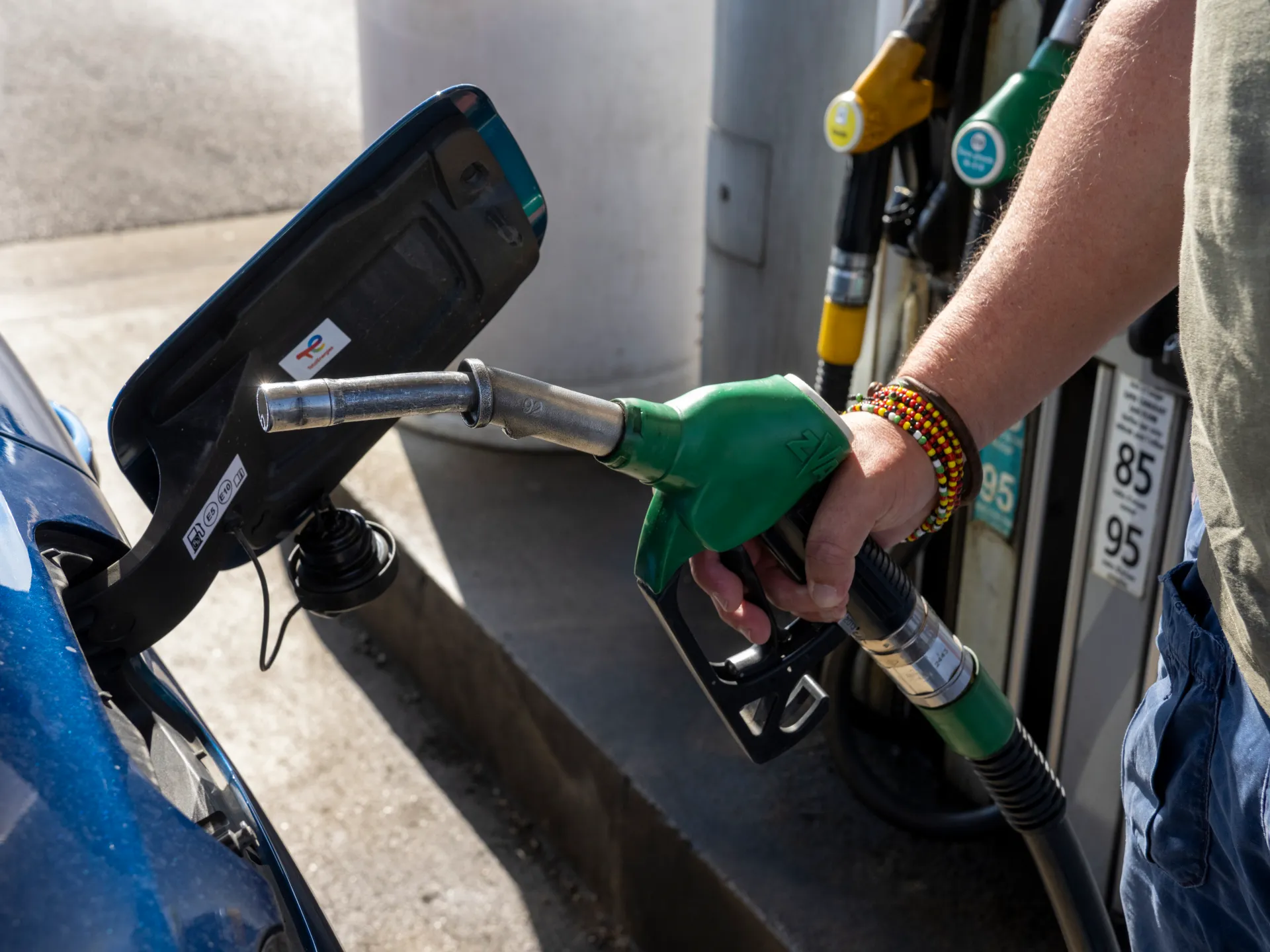
The average price for a gallon of regular gasoline is nearly $4.12 across the country, according to AAA. It was below $3 a couple days before the US and Israel launched attacks to begin the war in late February.

In other trading, gold is up 0.77% at around $4,685 while silver is rose roughly 0.2% to $72.95 an ounce.

Source link

Sheinbaum says TV coverage of oil spill hurting Veracruz tourism

Mexico’s president, Claudia Sheinbaum, on Monday accused some television networks of harming hotel and restaurant businesses in the state of Veracruz. File Photo by Isaac Esquivel/EPA

April 6 (UPI) — Mexico’s president, Claudia Sheinbaum, on Monday accused some television networks of harming hotel and restaurant businesses in the state of Veracruz through negative coverage of a hydrocarbon spill in the Gulf of Mexico.

During her morning press conference, Sheinbaum called for direct dialogue between media outlets and business owners. She said the way the issue has been reported has had economic impacts on sectors that depend on tourism along the coastal region.

“It would be very good for business owners in Veracruz’s tourism sector to speak directly with the television network. Mexicans have the right to information, we have the right to the truth. There may be disagreements with the government, there may be political differences with the government. But something very different is the permanent attack that harms third parties,” the president said.

Civil organizations, academics and local residents have reported that hydrocarbon contamination is already affecting nearly 900 kilometers of coastline, from Campeche to Tamaulipas, and that the situation remains out of control.

At the same time, the National Action Party said the authorities’ response has been insufficient and warned that the damage is worsening in communities that depend on fishing and tourism, especially during the Holy Week season, as it coincides with the start of sea turtle nesting. According to the party, this context turns the crisis into a growing social emergency.

Sheinbaum added that the coverage affects not only the federal administration but also workers in the service sector.

“Not only the government of Mexico, but also third parties, which are precisely restaurant owners, hotel owners and all the people who work in services in Veracruz and, in general, throughout the Gulf of Mexico,” she said.

The hydrocarbon spill in the Gulf of Mexico has raised concerns about its environmental effects and its impact on tourism in the region. Sheinbaum linked visitor flows to sea conditions and said occupancy levels have remained high.

“Fortunately, fewer and fewer people are watching them, because otherwise we would not have had the level of occupancy that Veracruz had,” she said.

She added that the country’s main tourist destinations are reporting occupancy rates close to 80%.

The president said Tourism Secretary Josefina Rodríguez Zamora will present a report on hotel occupancy after the Holy Week and Easter holiday period.

“We are waiting until next Monday for Josefina, the secretary of Tourism, to inform us about Holy Week and Easter week. She will give us a general report on hotel occupancy in different locations,” she said.

Sheinbaum also announced a meeting for Tuesday with an interdisciplinary group that will analyze the origin of the spill and containment actions. The team will include Petróleos Mexicanos, the state oil company known as Pemex; the Secretariat of Environment and Natural Resources; and specialists from academic institutions focused on studying the Gulf of Mexico.

“Regarding the spill, tomorrow I have a meeting with the interdisciplinary group we formed, which includes Pemex, the Secretariat of Environment and Natural Resources, and researchers from different institutes in the country that are specifically dedicated to analyzing the Gulf, so they can give me a comprehensive review of the causes of the spill,” she said.

The meeting aims to establish a permanent environmental monitoring system with participation from universities and research centers to track conditions in the Gulf of Mexico.

Source link

2 U.S. lawmakers visiting Cuba denounce island’s ‘economic bombing’ under energy blockade

Two U.S lawmakers called for a permanent solution to Cuba’s crises after witnessing the effects of a U.S. energy blockade during an official visit to the island.

Democratic Reps. Pramila Jayapal of Washington and Jonathan Jackson of Illinois met with Cuban President Miguel Díaz-Canel, Foreign Minister Bruno Rodríguez and members of Parliament during a five-day trip that ended Sunday.

Díaz-Canel wrote on X Monday that upon meeting with Jayapal and Jackson, he “denounced the criminal damage caused by the #blockade, particularly the consequences of the energy embargo imposed by the current US administration and its threats of even more aggressive actions.”

Díaz-Canel added: “I reiterated our government’s willingness to engage in serious and responsible bilateral dialogue and find solutions to our existing differences.”

Both the U.S. and Cuba have acknowledged recently that talks are ongoing at the highest level, but no details have been disclosed.

Jayapal told reporters she believes that recent steps taken by Cuba, such as opening the economy to certain investments by Cuban Americans living abroad; the recent announcement that more than 2,000 prisoners would be pardoned; and the arrival of an FBI team to collaborate in the investigation of a fatal shooting involving a U.S.-flagged boat, “indicate that the moment is here for us to have a real negotiation between the two countries and to reverse the failed U.S. policy of decades, a Cold War remnant that no longer serves the American people or the Cuban people.”

Cuba’s government has released the pardoned prisoners who were accused of a variety of crimes, although none so far appear to be political prisoners.

In late January, President Trump threatened to impose tariffs on any country that would sell or provide oil to Cuba, although he made an exception for a Russian ship that reached the island last week with 730,000 barrels of crude oil. It was the first petroleum shipment in three months to dock in Cuba, which produces only 40% of the oil it needs.

“This is cruel collective punishment — effectively an economic bombing of the infrastructure of the country — that has produced permanent damage. It must stop immediately,” Jayapal and Jackson said in a statement released Sunday.

Critical oil shipments from Venezuela were halted after the U.S. attacked the South American country in early January and arrested its leader, Nicolas Maduro.

Cubans already suffering from five years of economic crisis have acutely felt the impact of the fuel shortage: national blackouts, gasoline shortages and rationing, lack of public transport, cuts in working hours, paralyzed hospitals and surgeries, and suspension of flights, among other things.

Russia has promised a second delivery of petroleum, although it’s not clear when it might arrive. Experts have said that the first shipment could produce about 180,000 barrels of diesel, enough to feed Cuba’s daily demand for nine or 10 days.

Jayapal said that while such shipments are critical, they are only temporary solutions: “We need a longer, permanent solution for the Cuban people and the American people.”

Meanwhile, Jackson compared the blocking of the Strait of Hormuz off Iran’s coast to the oil blockade in Cuba, adding that the island “is the most sanctioned part of Earth.”

“Our government is fighting to keep the Strait of Hormuz open so there is a free flow of oil around the world. We want, for humanitarian reasons, a free flow of oil, fuel, and energy in our own hemisphere,” he said.

Jackson and Jayapal said they would prepare a report and continue to work on initiatives proposed by fellow members of the U.S. House of Representatives to lift sanctions against Cuba to alleviate the ongoing humanitarian crisis.

Mesquita and Rodríguez write for the Associated Press.

Source link

OPEC+ to hike crude output: Will it make a difference to oil prices?

Published on Updated

OPEC+ members met virtually on Sunday and afterwards announced plans to hike crude quotas by 206,000 barrels per day (bpd) in May as the Strait of Hormuz, which is the world’s most important route for black gold, continues to face disruptions as a result of the US-Iran conflict.


ADVERTISEMENT


ADVERTISEMENT

However, the modest rise agreed by the eight key producing countries — Saudi Arabia, Russia, Iraq, the UAE, Kuwait, Kazakhstan, Algeria and Oman — is not likely to bring down oil prices as it represents less than 2% of the supply disrupted by the Hormuz closure. Moreover, the increase is more symbolic than material as the oil can’t be exported until the Strait of Hormuz opens.

“In their collective commitment to support oil market stability, the eight participating countries decided to implement a production adjustment of 206 thousand barrels per day from the 1.65 million barrels per day additional voluntary adjustments announced in April 2023. This adjustment will be implemented in May 2026,” the group said in a statement.

The members’ statement also noted that the 1.65 million barrels per day may be returned in part or in full subject to evolving market conditions and in a gradual manner.

“The countries will continue to closely monitor and assess market conditions, and in their continuous efforts to support market stability, they reaffirmed the importance of adopting a cautious approach and retaining full flexibility to increase, pause or reverse the phase out of the voluntary production adjustments, including reversing the previously implemented voluntary adjustments of the 2.2 million barrels per day announced in November 2023,” the statement also said.

Efforts to stabilise soaring oil prices

The latest statement from OPEC+ comes as oil prices have surged since the Iran conflict began, with Brent and US crude nearing $120 a barrel, driving up fuel costs and putting pressure on consumers and businesses worldwide.

Meanwhile, J.P. Morgan said in a note on Thursday that oil prices could go as high as $150 a barrel if supply flows remain disrupted until mid-May.

US President Donald Trump has given Iran a deadline of Tuesday to open the Strait of Hormuz and has vowed to hit the country’s power plants and bridges otherwise.

European markets were closed on Monday for the Easter holiday.

Source link

OPEC agrees on another oil production boost as Strait remains blocked

OPEC+ members announced Sunday they would modestly boost production as worldwide oil supplies tighten and prices spike amid the American-Israeli war on Iran. File Photo by Olivier Matthys/EPA

April 5 (UPI) — Members of the Organization of the Petroleum Exporting Countries said Sunday they will again modestly boost oil production as war rages in Iran and the Persian Gulf, although the move is largely symbolic as the Strait of Hormuz remains closed.

As first they did in March, the eight OPEC+ countries — Saudi Arabia, Russia, Iraq, United Arab Emirates, Kuwait, Kazakhstan, Algeria and Oman — on Sunday agreed to a 206,000 barrel-per-day production increase amid attacks by Iran on the oil and gas facilities of several of its members in the Persian Gulf.

Iran has blocked the key Strait of Hormuz shipping lane in response to the American and Israel attacks that started on Feb. 28.

Since then the global price of oil has shot up by close to 60% while gas prices at the pump in the United States have surpassed $4 per gallon.

Although the waterway remains choked off, the OPEC+ move indicated producers will likely ramp up production to help alleviate the worldwide oil shock once the Strait is reopened and production facilities in the Gulf states are secured from Iranian drones and missiles.

U.S. President Donald Trump on Sunday continued to threaten Iran with destruction of civilian and military infrastructure by Tuesday unless Tehran loosens its grip on the Strait.

But Iran has remained defiant, continuing to launch drone attacks against OPEC members who host U.S. military facilities, particularly targeting Kuwait, Bahrain and the UAE, where critical infrastructure again came under attack on Sunday.

Damage was sustained at civilian facilities in all three countries, officials reported.

The Kuwait Petroleum Corp. announced “significant material losses” after Iranian drone attacks on several of its facilities, the KUNA news agency reported.

Meanwhile, Kuwaiti Interior Ministry spokesman Brig. Gen. Nasser Bousleib said officials had registered nine reports of falling shrapnel during the preceding 24 hours, boosting the total of such incidents since the beginning of the Iranian aggression to 678.

An Iranian flag stands amid the destruction in Enghelab Square following the attacks carried out by the United States and Israel on Tehran, Iran, on March 4, 2026. Photo by Nahal Farzaneh/UPI | License Photo

Source link

OPEC+ agrees to hike oil output, warns of slow recovery after attacks | OPEC News

The rise is largely symbolic as some key members are unable to raise ​production amid the US-Israel war on Iran.

The Organization of the Petroleum Exporting Countries (OPEC) has agreed to increase oil output quotas by 206,000 barrels per day for May, a rise that is largely symbolic as some of its key members are unable to raise production due to the US-Israeli war on Iran.

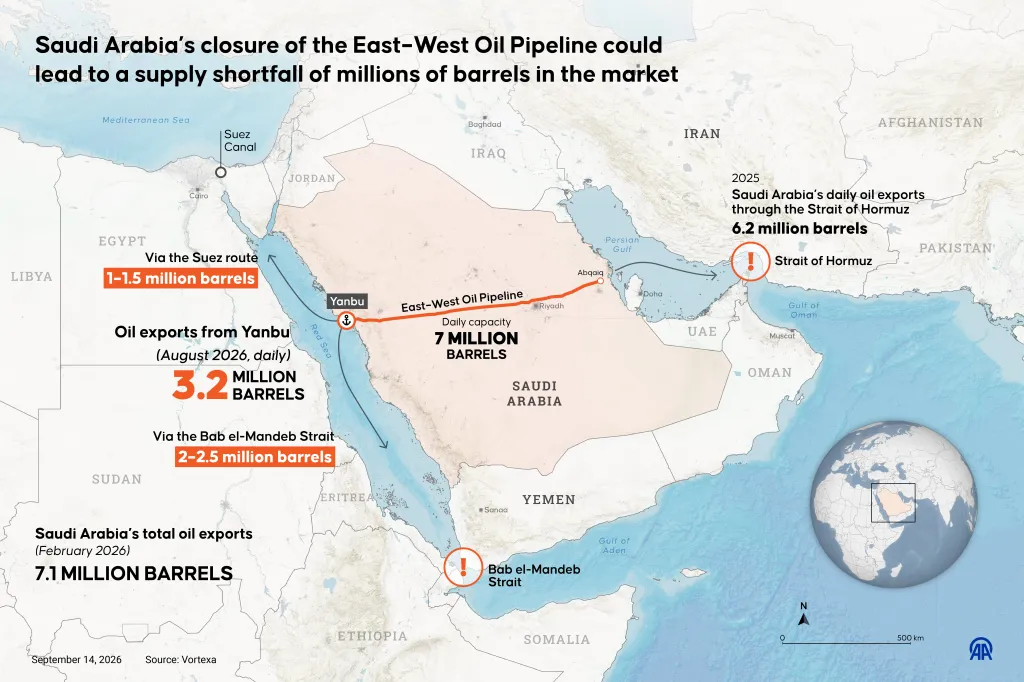
The war has effectively blocked the Strait of Hormuz – the world’s most important oil route – since the end of ⁠February and cut exports from OPEC+ members Saudi Arabia, the United Arab Emirates (UAE), Kuwait and Iraq.

Recommended Stories

list of 3 itemsend of list

In a statement on Sunday, eight members of OPEC+, including Saudi Arabia, Russia, Iraq, the UAE, Kuwait, Kazakhstan, Algeria, and Oman, agreed to increase May quotas during a virtual meeting.

“The countries will continue to closely monitor and assess market conditions, and in their continuous efforts to support market stability,” the statement read.

“The eight countries also expressed concern regarding attacks on energy infrastructure, noting that restoring damaged energy assets to full capacity is both costly and takes a long time, thereby affecting overall supply availability,” it added.

While the quota increase represents less than two percent of the supply disrupted by the closure of the strait, OPEC+ sources told the Reuters news agency that the pledge had signalled readiness to raise output once the waterway reopens.

Crude prices have surged to a four-year high amid the war, close to $120 a barrel, leading to higher prices for transport fuels.

On Thursday, JPMorgan said oil prices could spike above $150, an all-time high, if oil flows through the Strait of Hormuz remain disrupted into mid-May.

May’s increase is the same as the eight members had agreed on for April at their last meeting on March 1. But amid the war, oil supply disruption on record is estimated to have removed as much as 12 to 15 million bpd or up to 15 percent of global supply.


INTERACTIVE - Different types of crude oil - March 13, 2026-1773391867
(Al Jazeera)

With the strait still closed, Iran has allowed some countries in the region to use the waterway.

Iran has said Iraq was exempt from any transit restrictions through the strait, with shipping data on Sunday showing a tanker loaded with Iraqi crude passing through the waterway.

Oman’s Foreign Ministry announced on Sunday that deputy foreign minister-level talks were being held with Iran to discuss ⁠⁠options to ensure the smooth transit of vessels through the Strait ‌‌of Hormuz.

US President Donald Trump threatened to escalate attacks and target Iranian civilian infrastructure, including bridges and power plants, if the Strait of Hormuz is not reopened by Monday.

Source link

Opposition floor leader slams budget, calls for targeted oil relief

Song Eon-seok, floor leader of the People Power Party, speaks at a party Supreme Council meeting at the National Assembly in Seoul on Wednesday. At right is party leader Jang Dong-hyuk. Photo by Asia Today

April 3 (Asia Today) — Song Eon-seok, floor leader of the People Power Party, on Thursday criticized the government’s proposed 26.2 trillion won (about $19.6 billion) supplementary budget, calling it a “misguided plan” that relies on cash handouts instead of addressing the impact of high oil prices.

Speaking at a party strategy meeting at the National Assembly, Song said the proposal “diagnoses high oil prices but prescribes cash handouts,” arguing that it fails to support those most affected by rising fuel costs.

He said the government has become overly focused on distributing cash while neglecting vulnerable groups, adding that one-time payments of 100,000 won (about $75) would not meaningfully help people facing mounting living costs.

Song also criticized the exclusion of workers directly impacted by fuel prices, including truck drivers, delivery workers and taxi drivers, from key support measures.

“We will transform this supplementary budget from a war-related or election-driven budget into a ‘people’s survival budget,'” he said, pledging to shift from broad cash payments to targeted assistance.

He said the party would seek to cut spending items deemed unrelated to high oil prices during the review process, including renewable energy projects, independent film production support and regional development programs in Changwon. Savings from those cuts, he added, would be redirected to groups most affected by fuel price increases.

Song proposed expanding the fuel tax reduction from 15% to 30% and providing fuel subsidies of 600,000 won (about $450) to roughly 700,000 workers in transportation and delivery sectors.

He also suggested additional support measures, including subsidies for delivery and takeout packaging costs for about 670,000 self-employed business owners, as well as a 50% discount on the K-Pass public transportation program for six months.

Regarding the government’s plan to implement an odd-even license plate driving system, Song said the policy should be reconsidered. If implemented, he said, it should be accompanied by adequate compensation for affected citizens.

— Reported by Asia Today; translated by UPI

© Asia Today. Unauthorized reproduction or redistribution prohibited.

Original Korean report: https://www.asiatoday.co.kr/kn/view.php?key=20260403010000948

Source link

Trump speech on Iran war and recent remarks on oil, NATO, daycare costs land with a thud

President Trump’s meandering speech on the Iran war late Wednesday — in which he paired promises of a swift exit with new threats of escalated bombing and denied responsibility for the Strait of Hormuz — did little to assuage U.S. allies and world markets concerned about the conflict’s ongoing disruptions to the global oil supply.

Stocks dropped after markets opened Thursday and oil prices soared, with the price of U.S. crude oil jumping more than 10%, to above $110.

In the wake of the speech, diplomats from more than 40 nations — not including the U.S. — met to strategize on how to lift Iran’s continued stranglehold on the strait, the vital oil corridor that the U.S.-Israeli war drove Iran to restrict but which Trump on Wednesday said wasn’t his problem.

Iranian officials remained unbowed, asserting the U.S. and Israel “know nothing” of its remaining capabilities, that “not a single life will be spared” if either attempts a ground incursion into its territory, and that “every last” Iranian would become a soldier if necessary.

“Iranians don’t just talk about defending their country. They bleed for it,” Iranian parliament Speaker Mohammad Qalibaf, a pugilistic figure and one of Iran’s most prominent wartime voices, wrote on X. “You come for our home… you’re gonna meet the whole family. Locked, loaded, and standing tall. Bring it on.”

Meanwhile, remarks Trump made earlier Wednesday about leaving NATO elicited subtle rebukes from both international and domestic allies, including French President Emmanuel Macron and Senate Majority Leader John Thune (R-S.D.), while the president’s comments about the U.S. not being able to focus on social services like Medicare or other domestic needs such as child care as it wages its foreign war sparked outrage at home.

Far from a call for a unified push to end the war alongside allies, Trump’s speech — his first formal address to the nation since the war began a month ago — further isolated the U.S. and the Trump administration on the global stage.

Trump firmly asserted in his speech that reopening the Strait of Hormuz to oil tanker traffic was not the responsibility of the U.S., despite it causing the war, because it receives less oil from the corridor than other nations.

“The countries of the world that do receive oil through the Hormuz Strait must take care of that passage. They must cherish it. They must grab it and cherish it. They could do it easily. We will be helpful, but they should take the lead in protecting the oil that they so desperately depend on,” Trump said.

“To those countries that can’t get fuel, many of which refuse to get involved in the decapitation of Iran — we had to do it ourselves — I have a suggestion: No. 1, buy oil from the United States of America. We have plenty. We have so much,” Trump continued. “And No. 2, build up some delayed courage.”

He said those nations should have been better assisting the U.S. in its war effort already, but should now “go to the strait and just take it, protect it, use it for yourselves.”

“Iran has been essentially decimated,” he said. “The hard part is done, so it should be easy.”

Trump has consistently downplayed the threat Iran continues to pose in the region. And securing the strait — which runs along Iran’s mountainous coast, full of strategic locations from which Iranian forces can threaten ship traffic — is not an easy task, as was acknowledged by the foreign diplomats meeting to solve the issue without the U.S. on Thursday.

“We have seen Iran hijack an international shipping route to hold the global economy hostage,” said U.K. Foreign Secretary Yvette Cooper.

Meanwhile, Macron, speaking in South Korea, said the U.S. “can hardly complain afterward that they are not being supported in an operation they chose to undertake alone.”

Macron also slammed Trump’s criticism of NATO, which Trump called a “paper tiger” in remarks prior to his speech Wednesday.

“If you cast doubt on your commitment every day, you erode its very substance,” Macron said.

Trump for weeks has suggested that NATO allies who declined to join the U.S. war had failed to live up to their treaty obligations, and that remaining in the alliance may not be worth it for the U.S., though he made no mention of NATO in his Wednesday evening speech.

Trump has no power to unilaterally withdraw the U.S. from NATO. That power sits with Congress — where Trump’s own allies downplayed the idea.

“We got an awful lot of people who think that NATO is a very critical, incredibly successful post-World War II alliance,” Thune said. “I think in the world today, you need allies.”

Trump’s formal speech appeared to be geared in part toward his allies at home, including his MAGA base, where frustrations with the war have mounted among the cohort of Trump supporters who’d championed his “America First” message and campaign promises to extricate the U.S. from foreign entanglements, not start new ones.

Trump said he has promised since his first foray into politics in 2015 that he would never let Iran develop a nuclear weapon. He told Americans listening that the war “is a true investment in your children, and your grandchildren’s future,” because it was making the world safer.

However, Trump exacerbated frustrations over the war’s distraction from domestic priorities with separate comments he made earlier on Wednesday at a private Easter luncheon, video of which the White House posted online and then deleted.

In those remarks, Trump said U.S. military needs had to take priority over social services and other major costs for Americans, such as child care, which maybe states could pay for by increasing taxes.

“It’s not possible for us to take care of daycare, Medicaid, Medicare, all these individual things,” Trump said. “They can do it on a state basis. You can’t do it on a federal. We have to take care of one thing: military protection. We have to guard the country.”

The president’s political opponents leaped on the remarks as out of touch.

“Trump says we can pay for war in Iran but can’t afford childcare,” Rep. Ro Khanna (D-Fremont) wrote on X, before asserting that the billions of dollars the U.S. has spent in Iran could have been used to offset Americans’ daycare costs.

White House Press Secretary Karoline Leavitt, in response, accused Democrats and the media of taking Trump’s remarks “out of context,” and claiming he was only talking about “stopping the scams” and rooting out fraud in such programs.

Democrats also took broader swipes at Trump’s framing of the war.

“Donald Trump’s month-long war with Iran has come at a big cost to taxpayers and has tragically taken the lives of 13 American service members. He dragged our country into a conflict that rattled markets, drove up gas prices, squeezed working families, and further destabilized the Middle East,” Sen. Alex Padilla (D-Calif.) wrote on X. “With his poll numbers falling to record lows, Trump is now trying to cut and run with little to show for it. He started this unauthorized war with no clear or consistent justification and the consequences of his choices won’t disappear when he walks away.”

United Nations Secretary-General António Guterres on Thursday said the war was “inflicting immense human suffering and already triggering devastating economic consequences,” and called directly on the U.S. and Israel to end it. He also called on Iran to “stop attacking their neighbors” and “respect navigational rights and freedoms along critical maritime routes, including the Strait of Hormuz.”

“Conflicts do not end on their own,” Guterres said. “They end when leaders choose dialogue over destruction.”

In addition to defending NATO, Macron and other French politicians on Thursday were also reacting to Trump mocking Macron in his remarks Wednesday. He mimicked a French accent while accusing Macron of only wanting to aid the U.S. war effort once the battle had been “won” and referenced a moment last year when Brigitte Macron was caught on video pushing her husband’s face, which he said was them joking with each other.

“There is too much talk, and it’s all over the place,” Macron said, according to French newspaper Le Monde. “We all need stability, calm, a return to peace — this isn’t a show!”

Yaël Braun-Pivet, president of France’s lower house of parliament, told the French broadcaster franceinfo that the Iran war is “having consequences for the lives of millions of people, people are dying on the battlefield, and we have a president who is laughing, who is mocking others.”

Times staff writer Nabih Bulos in Beirut contributed to this report.

Source link

Environmental groups accuse Mexico of lying about source of oil spill in the Gulf

Environmentalist groups accused Mexico’s government of lying about the source of a massive oil spill in the Gulf of Mexico, something authorities promptly denied.

The spill of off the coast of the southern state of Veracruz has spread more than 373 miles and into seven nature reserves. Turtles and other marine life have been found on sea shores coated in oil, and fishermen have been unable to work in waters they have fished for decades.

Mexico’s government reported that 800 tons of hydrocarbon-laden waste have spilled into the ocean. The government said the spill started in March and the sources were a ship anchored off the coastal state of Veracruz and two sites from which oil naturally flows.

On Monday, a group of 17 organizations — including Greenpeace Mexico, the Mexican Alliance Against Fracking and the Mexican Center for Environmental Rights, or CEMDA — contradicted that claim and said that satellite images they captured show the root of the spill was actually a pipeline from Mexico’s state-run oil company, Pemex, and that a large oil slick appeared in early February.

“All this lack of information is causing massive economic and environmental damage. So far no one has been held accountable,” Margarita Campuzano, spokesperson for CEMDA, said Tuesday.

Images from February circulated by the activists match images obtained by The Associated Press on Tuesday through Copernicus, the European climate agency. The photos show a boat floating over a sea clouded with what the groups say is oil, which appears to be streaming out of a platform.

The groups said that the boat in the images is Árbol Grande, which specializes in pipeline repair — implying that the government knew about the spill before it had reported it and “hid it.”

Pemex called the information and images circulated by the groups “inaccurate” and said the Árbol Grande boat traverses the Gulf of Mexico continually, “carrying out preventive inspections of platforms and specialized spill response operations.”

Campuzano called for greater transparency and more aggressive investigations by authorities.

“They’re trying to dilute their responsibility when technology makes it very easy to know where this occurred and who is responsible,” she said.

Mexican President Claudia Sheinbaum on Tuesday denied the accusations during her morning press briefing and said that up until now, “no leak has been reported” in state oil infrastructure and that such natural seeps in the Gulf have happened in the past.

She said the government was investigating with scientists whether the spill was “due to these natural seeps in the area, which have been reported on many occasions and are well-documented in scientific literature, or a leak from one of the facilities.”

Sheinbaum said that it was more probable that the spill came from the natural seeps, and added that teams were hard at work cleaning up the spill and mitigating the effects.

While government officials recognized the impacts on turtles, birds and fish, and the spread to protected ecosystems, they also insisted that it had not caused “severe environmental damage.”

The accusations come as environmental groups in the United States have also raised alarm after the Trump administration exempted oil and gas drilling in the Gulf of Mexico from the Endangered Species Act, saying environmentalists’ lawsuits threatened to hobble domestic energy supplies during the U.S.-Israeli war with Iran.

Critics said the move could harm marine life and also doom a rare whale species.

Janetsky writes for the Associated Press. Associated Press writer Teresa de Miguel in Mexico City contributed to this report.

Source link

Stocks jump and oil drops as Trump renews hopes of Iran war ending

Published on

Renewed optimism over a possible de-escalation in the Iran war, now in its fifth week, gave a strong boost to stock markets in Europe and Asia on Wednesday.


ADVERTISEMENT


ADVERTISEMENT

At the time of writing, the Euro Stoxx 50 is up over 1%, while the broader pan-European Stoxx 600 is around 2.5% higher.

In London, the FTSE 100 has risen roughly 0.8% with Germany’s DAX 30 and France’s CAC 40 making equal moves to the upside. Italy’s FTSE MIB has jumped the most and is 1.7% higher.

During a press gaggle at the White House on Tuesday, US President Donald Trump stated that the country would “probably” stop attacks on Iran within two to three weeks “‘whether we have a deal or not”.

Following Trump’s comments, the front month future contracts for oil also saw a sharp decline, with Brent crude and WTI both trading around 4% lower and below $100 a barrel.

Trump also stressed that the US would “not have anything to do with” what happens next in the Strait of Hormuz.

Despite the relief, markets are eagerly anticipating Trump’s address to the nation about the conflict, which will occur overnight on Wednesday, according to the White House Press Secretary.

Asian markets, US futures and precious metals

Asian shares also rose sharply on Wednesday after Trump’s statement.

At the time of writing, South Korea’s Kospi has recovered losses from earlier this week, surging over 8%, while Tokyo’s Nikkei 225 rose more than 2%.

A survey by Japan’s central bank released on Wednesday showed that business sentiment among major manufacturers had improved despite concerns over the Iran war.

Hong Kong’s Hang Seng index is also over 2% higher, while the Shanghai Composite has jumped around 1.5%. Additionally, India’s Sensex rose roughly 2%, Australia’s ASX 200 is up 1% and Taiwan’s Taiex climbed more than 4%.

“De-escalation hopes have given markets a lift, but we think the effects of the war would, in many cases, persist even if it were to end soon,” said Thomas Mathews, head of markets for Asia Pacific at Capital Economics, in a research note on Wednesday.

US futures are also all trading between 0.7% and 1.2% higher.

The move comes after US stocks recorded their strongest day in almost a year on Tuesday, when the S&P 500 rose 2.9%, its largest gain since May.

The Dow Jones Industrial Average climbed 2.5%, while the Nasdaq jumped 3.8%.

“It’s worth considering how markets might respond if the war were to end very soon. Do markets have further to recover if sentiment continues to improve? The answer is almost certainly yes,” Mathews added.

In other trading, gold rose is up 1.4% trading at around $4,730 while silver is down roughly 1% to $74.3 an ounce.

Source link

Trump tells UK ‘go get your own oil’ and ‘King sent to US’

The headline on the front page of the Daily Mail reads: "Trump's taunt exposes a PM without a plan."

“Trump’s taunt exposes a PM without a plan” says the Daily Mail. The paper says MPs have accused Sir Keir Starmer of not having a clear plan after it emerged that the UK’s last known shipment of jet fuel from the Middle East is due to arrive within two days. Elsewhere, the paper continues its coverage on the BBC’s sacking of radio presenter Scott Mills. The broadcaster sacked Mills on Monday over allegations related to his personal conduct. The BBC has not given any further details over the allegations and it is not clear what, if any, role a police investigation into sexual offences played in his sacking. The investigation, which began in 2016, was closed in 2019 after the Crown Prosecution Service (CPS) deemed there was insufficient evidence to bring charges. Mills has been approached for comment.

Source link

U.S. exempts oil, gas drilling in gulf from endangered species rules

The Trump administration on Tuesday exempted oil and gas drilling in the Gulf of Mexico from the Endangered Species Act after Defense Secretary Pete Hegseth said environmentalists’ lawsuits against the industry threatened to hobble domestic energy supplies as the U.S. wages war against Iran.

Critics said the move by the government’s Endangered Species Committee could doom a rare whale species and harm other marine life. Nicknamed the “God Squad” by groups that say it can decide a species’ fate, the committee comprises several Trump administration officials and is chaired by Interior Secretary Doug Burgum.

It met Tuesday for the first time in more than three decades amid global oil shocks and soaring energy prices brought on by the Iran war. The U.S. pumps more oil than any other nation, but that hasn’t insulated it from spiking prices: The national average for a gallon of gasoline topped $4 on Tuesday for the first time since 2022.

“Disruptions to Gulf oil production doesn’t hurt just us, it benefits our adversaries,” Hegseth told the committee. “We cannot allow our own rules to weaken our standing and strengthen those who wish to harm us. When development in the Gulf is chilled, we are prevented from producing the energy we need as a country and as a department.”

Environmental groups sought unsuccessfully to block Tuesday’s meeting and pledged to challenge the exemption. They say the exemption would speed the extinction of the rare Rice’s whale, which is found exclusively in the Gulf of Mexico. Government biologists say only about 50 of the animals remain.

“If Trump is successful here, he could be the first person in history to knowingly extirpate a species from the face of the Earth. That’s how precarious the condition of the Rice’s whale is,” said Patrick Parenteau, emeritus professor of law at Vermont Law School.

President Trump has made increased fossil fuel production a central focus of his second term. He wants to open new areas of the gulf off the Florida coast to drilling and has proposed sweeping rollbacks of environmental regulations disliked by industry.

Hegseth had notified Burgum on March 13 that an Endangered Species Act exemption for oil and gas drilling in the gulf was “necessary for reasons of national security.”

Hegseth told committee members Tuesday that Iran’s efforts to block shipping through the world’s busiest oil route, the Strait of Hormuz, underscored the national security imperative of having robust domestic oil production. He said the energy industry is under threat from pending litigation from environmental groups challenging government approvals for drilling.

Industry observers said the Endangered Species Act exemption could have significant implications for energy companies by streamlining approvals of new projects and impeding opponents’ ability to derail drilling plans.

“Serial litigation from activist groups targeting a lawful, well-regulated industry should not be allowed to indefinitely obstruct projects of clear national importance,” said Erik Milito with the National Ocean Industries Assn., which represents offshore developers.

The Gulf of Mexico is one of the nation’s top oil regions, producing 2 million barrels a day. It accounts for almost 15% of crude pumped annually in the U.S., plus a small share of domestic natural gas production.

But the gulf also has been the scene of environmental disasters such as BP’s Deepwater Horizon blowout in 2010, which killed 11 workers and spilled 134 million gallons of oil. A spill in the gulf earlier this month spread 373 miles, contaminating at least six species and polluting seven protected natural reserves.

The Trump administration in mid-March approved BP’s new $5-billion ultra-deepwater drilling project in the Gulf of Mexico.

A 2025 National Marine Fisheries Service analysis determined the gulf oil and gas program was likely to harm several species of whales, sea turtles and gulf sturgeon that face potential harm from ship strikes, oil spills and other impacts.

The Endangered Species Committee was established in 1978 as a way to exempt projects from the Endangered Species Act, which makes it illegal to harm or kill species on a protected list, if no alternative would provide the same economic benefits in a region or if it was in the nation’s best interest.

Before this week, the panel had convened just three times in its 53-year history and issued only two exemptions. The first was in 1979 to allow construction on a dam on the Platte River in Wyoming, home to the whooping crane. It last met in 1992, allowing logging in northern spotted owl habitats in Oregon. That exemption request was later withdrawn.

Its latest meeting follows a federal judge’s ruling on Monday that struck down attempts during Trump’s first term to weaken rules regarding endangered species.

The panel’s members include the secretaries of Agriculture, Interior and the Army, the chairperson of the Council of Economic Advisors, and the administrators of both the Environmental Protection Agency and the National Oceanic and Atmospheric Administration. They all voted in favor of Hegseth’s request for an exemption.

Brown writes for the Associated Press.

Source link