news

EU agrees to restore full trade ties with Syria | News

The European Council says the move ‘sends a clear political signal of the EU’s commitment to re-engage with Syria and support its economic recovery’.

The European Council has terminated the partial suspension of a cooperation agreement with Syria, thereby restoring fuller trade ties with the country as it seeks to emerge from nearly 14 years of war.

The council said on Monday the move marked an important step towards strengthening relations between the European Union and Syria.

Recommended Stories

list of 4 itemsend of list

The decision “sends a clear political signal of the EU’s commitment to re-engage with Syria and support its economic recovery”, the European Council added in a statement.

At the same time, the EU’s foreign ministers met in Brussels with top Syrian diplomat Asaad al-Shaibani, kicking off a high-level political dialogue 18 months after the removal of Syrian strongman Bashar al-Assad.

The 27-nation bloc has launched a new chapter with Syria after al-Assad was swept from power in December 2024.

Meeting in Damascus

European Commission chief Ursula von der Leyen promised after meeting interim Syrian President Ahmed al-Sharaa in Damascus in January that Europe would “do everything it can” to support Syria’s recovery.

The commission proposed that EU states fully reactivate the bloc’s cooperation agreement with Syria last month.

The deal, which abolished duties on imports of most industrial products from Syria, was partially suspended in 2011 when al-Assad’s regime cracked down on antigovernment protests at the start of a civil war.

Syria-EU trade had peaked in 2010 at more than 7 billion euros ($9.1bn at the 2010 exchange rate).

By 2023, EU imports from the country had dwindled to 103 million euros ($120m) while European exports to Syria stood at 265 million euros ($310m).

On the sensitive matter of Syrian refugee returns, Germany, home to the EU’s largest Syrian community at more than a million people, is on the front line.

Chancellor Friedrich Merz has embraced tougher migration policies as he seeks to counter the far right, and he triggered a backlash by declaring during a visit by Syria’s president last month that he hoped 80 percent of Syrian refugees would return home within three years.

He later clarified this was a figure put forward by al-Sharaa himself.

Source link

Iran says its demands were seeking peace, while the US’s are ‘unreasonable’ | US-Israel war on Iran

NewsFeed

Iranian foreign ministry spokesman Esmaeil Baqaei says Iran’s latest response to the US had asked for an end to the war, removal of the naval blockade, and release of assets.

The US had dismissed the Iranian response, Baqaei said, as it clings to its ‘unreasonable demands’.

Source link

Dodgers left frustrated after losing two games against Braves

From Maddie Lee: Dodgers left-hander Justin Wrobleski had a chance to slam the door shut on the Braves’ second-inning rally. He fielded Sean Murphy’s comebacker, and set his feet to start a would-be inning-ending double play at second base.

Angled up the mound, however, he sailed the throw, which second baseman Alex Freeland wrangled to at least salvage an out.

The way the Dodgers’ offense has been scuffling, however, their 7-2 loss hinged on that four-run second inning.

Go beyond the scoreboard

Get the latest on L.A.’s teams in the daily Sports Report newsletter.

“It’s just,one half-inning of being pissed off about it, and then you’ve got to keep going back out there and doing your thing,” said Wrobleski, who was charged with seven runs but gutted out a career-high 8⅔ innings. “So yeah, it’s frustrating. It’s annoying because now I look back at it and, yeah, that’s what cost me from having a good outing.”

With the Dodgers’ rubber-match loss, the Braves took sole possession of the best record in the majors. The Dodgers (24-16) dropped the series to the Braves (28-13) after scoring three or fewer runs in each game.

“I thought we turned the corner in Houston,” manager Dave Roberts said. “We kind of got back down a little bit this series. … It’s hard to articulate. There’s some empty at-bats, there’s some early outs that are not just quality outs. There’s the passing the baton to the next guy — and sometimes it just doesn’t happen.”

After Wrobleski cruised through the first inning in just six pitches — first-pitch flyout, four-pitch strikeout, first-pitch groundout — he had an uncharacteristically long second inning.

Continue reading here

Dodgers-Braves box score

MLB scores

MLB standings

LeBron James has been missing for Lakers

Lakers star LeBron James slaps hands with coach JJ Redick on his way to the bench.

Lakers star LeBron James slaps hands with coach JJ Redick on his way to the bench in a blowout loss to the Oklahoma City Thunder in Game 3 of the Western Conference semifinals at Crypto.com Arena on Saturday night.

(Robert Gauthier / Los Angeles Times)

From Bill Plaschke: They possessed a halftime lead with one of the most accomplished playoff players in NBA history.

They lost by 23.

They possessed the best scorer in NBA history at the controls of a sizzling offense in a loud arena against a team that had every reason to pack it in.

They lost by 23.

To those who witnessed the first three games of these Western Conference semifinals between the Luka Doncic-less Lakers and the defending champion Oklahoma City Thunder, it is no surprise that the Thunder lead three games to none.

What is shocking is that, with a 131-108 win Saturday night at Crypto.com Arena, the Thunder steamrolled to victory over the prone body of an NBA legend.

Continue reading here

Lakers still see a path toward winning

Lakers forward Rui Hachimura tries to shoot a layup in front of Oklahoma City Thunder forward Jaylin Williams.

Lakers forward Rui Hachimura tries to shoot a layup in front of Oklahoma City Thunder forward Jaylin Williams in Game 3 on Saturday.

(Robert Gauthier / Los Angeles Times)

From Broderick Turner: In their darkest playoff hour, Lakers coach JJ Redick advised his players during practice Sunday to take the same mental approach for the win-or-go-home Game 4 that they’ve used since the first day of training camp.

The Lakers trail the Oklahoma City Thunder 3-0 in the best-of-seven Western Conference semifinal series. The Lakers must beat the Thunder at Crypto.com Arena on Monday night or their season is over.

“Our first slide that we put up in training camp was [to] win the day,” Redick said. “Today was a quick offensive review and then just going over some stuff defensively. Got to win today and we got to win tomorrow. We know what we’re facing being down 3-0. So it’s just more of a mindset check than anything else.”

Continue reading here

Ducks defeat Golden Knights in Game 4

Ducks forward Alex Killorn, second left, celebrates with teammates after scoring against the Vegas Golden Knights.

Ducks forward Alex Killorn, second left, celebrates with teammates after scoring against the Vegas Golden Knights in Game 4 of the Western Conference semifinals Sunday at Honda Center.

(Allen J. Schaben/Los Angeles Times)

From Kevin Baxter: The Ducks’ second-round playoff showdown with the Vegas Golden Knights has become a best-of-three series.

With a 4-3 victory Sunday before a raucous sold-out crowd at the Honda Center, the Ducks evened the series 2-2 as it heads back to Las Vegas for Game 5 on Tuesday. But it wasn’t easy, with the Golden Knights twice rallying from one-goal deficits, only to see the Ducks answer each time.

And the Ducks’ power play, so lethal in the team’s first-round win over Edmonton and so ineffective in the first three games of this series, finally found a spark, scoring goals in each of the first two periods.

The Ducks’ goals came from Beckett Sennecke, Mikael Granlund, Alex Killorn and Ian Moore. Pavel Dorofeyev, Brett Howden and Tomas Hertl scored for Vegas.

Continue reading here

Ducks-Vegas summary

NHL scores

Sparks don’t hold back after season-opening loss

Sparks guard Kelsey Plum, left, and forward Dearica Hamby, right, battle Las Vegas center A'ja Wilson.

Sparks guard Kelsey Plum, left, and forward Dearica Hamby, right, battle Las Vegas center A’ja Wilson for the ball during the Sparks’ 105-78 loss at Crypto.com Arena on Sunday.

(Luiza Moraes / Getty Images)

From Marisa Ingemi: Before the Sparks opening day loss to the Las Vegas Aces, coach Lynne Roberts said that this year “felt different.”

After one game, though, it feels a lot like the same.

During their season opener, the Sparks couldn’t get momentum against the defending champion Aces and fell 105-78 behind a remarkably efficient shooting day from the visitors at Crypto.com Arena.

After posting the worst defense in the WNBA last season (88.2 points per game), the Sparks made a flurry of offseason moves prioritizing stopping opponents. It’s why they brought in Nneka Ogwumike, Ariel Atkins and Erica Wheeler.

Continue reading here

Sparks-Aces box score

WNBA scores

WNBA Standings

More: Sparks sign fan favorite Kate Martin to developmental pool

Washington wins NBA draft lottery

The Washington Wizards won the draft lottery on Sunday and are poised to pick first overall for the first time since 2010.

The Washington Wizards won the draft lottery on Sunday and are poised to pick first overall for the first time since 2010.

(Nam Y. Huh / Associated Press)

From the Associated Press: The league’s worst team this season is getting the No. 1 pick in the NBA draft.

The Washington Wizards won the draft lottery on Sunday and are poised to pick first overall for the first time since choosing John Wall in that spot in 2010. Wall was the Wizards’ on-stage representative for the lottery.

Washington had a 14% chance of winning No. 1, tied with Brooklyn and Indiana for the best odds. The Wizards had basically a 50-50 chance of getting either a top-four pick or the No. 5 spot.

Continue reading here

Angels end their winless streak

Oswald Peraza celebrates after hitting a two-run home run for the Angels.

Oswald Peraza celebrates after hitting a two-run home run for the Angels in the fifth inning of a 6-1 win over the Toronto Blue Jays on Sunday.

(Cole Burston / Getty Images)

From the Associated Press: Jo Adell hit a pair of solo homers, José Soriano struck out seven over 7⅔ innings to stop a three-start winless steak and the Angels avoided a three-game sweep by beating the Toronto Blue Jays 6-1 on Sunday.

Oswald Peraza added a two-run homer as the Angels ended an eight-game road losing streak dating to April 16, while also ending a nine-game slump in Toronto.

Soriano (6-2) gave up two hits and a walk in the first inning, including Kazuma Okamoto’s RBI double, but didn’t allow another runner until Myles Straw reached in the eighth with an infield hit, ending a streak of 20 consecutive outs.

Continue reading here

Angels-Blue Jays box score

LAFC can’t keep up with Houston

Houston’s Antonio Carlos, top, heads the ball over LAFC’s Eddie Segura, left, and Ryan Porteous.

Houston’s Antonio Carlos, top, heads the ball over LAFC’s Eddie Segura, left, and Ryan Porteous during LAFC’s 4-1 loss Sunday at BMO Stadium.

(Ronaldo Bolanos / Los Angeles Times)

From the Associated Press: Jack McGlynn scored a goal in each half and the Houston Dynamo thumped LAFC 4-1 on Sunday night at BMO Stadium.

McGlynn used an assist from Lawrence Ennali in the 25th minute to score on a shot from well outside the box, giving Houston a 1-0 lead. It was McGlynn’s first goal after scoring a career-high six times last season.

Guilherme Santos scored off a free kick in the 34th minute for a two-goal lead. The first-year midfielder has six goals in 11 matches.

Continue reading here

Lakers playoff schedule

Second round
All times Pacific
Game 1: at Oklahoma City 108, Lakers 90 (box score)
Game 2: at Oklahoma City 125, Lakers 107 (box score)
Game 3: Oklahoma City 131, at Lakers 108 (box score)
Game 4: Monday at Lakers, 7:30 p.m., Amazon Prime
Game 5*: Wednesday at Oklahoma City, ESPN
Game 6*: Saturday at Lakers, TBD
Game 7*: Monday at Oklahoma City, TBD
*- if necessary

Ducks playoffs schedule

Second round
All times Pacific
Game 1: at Vegas 3, Ducks 1 (summary)
Game 2: Ducks 3, at Vegas 1 (summary)
Game 3: Vegas 6, at Ducks 2 (summary)
Game 4: at Ducks 4, Vegas 3 (summary)
Game 5: Tuesday at Vegas, 6:30 p.m., ESPN
Game 6: Thursday at Ducks, 6:30 p.m., TNT, truTV, HBO MAX
Game 7*: at Vegas, TBA, ABC or ESPN
*-if necessary

This day in sports history

1892 — Azra, ridden by Alonzo Cayton, wins the first three-horse field in the Kentucky Derby, nipping Huron by a nose.

1900 — James J. Jeffries KOs James J Corbett in 23 for heavyweight boxing title.

1918 — Exterminator, a 30-1 long shot ridden by Willie Knapp, loses the lead but regains it to win the Kentucky Derby by one length over Escoba.

1923 — Setting several Pacific Coast League records, Pete Schneider of Vernon hit five homers and a double to drive in 14 runs in a 35-11 romp over Salt Lake City.

1928 — British Open Men’s Golf, Royal St George’s GC: Walter Hagen wins 3rd of his 4 Open Championship titles, 2 strokes ahead of fellow American Gene Sarazen.

1959 — New York Yankees catcher Yogi Berra’s errorless streak of 148 games ends.

1963 — LA Dodgers pitcher Sandy Koufax throws his second career no-hitter.

1966 — European Cup Final, Heysel Stadium, Brussels: Fernando Serena scores the winner as Real Madrid beats Partizan Belgrade, 2-1; Madrid’s 6th title.

1968 — The Montreal Canadiens win the Stanley Cup, completing a four-game sweep over the St. Louis Blues with a 3-2 victory.

1972 — The Boston Bruins win the Stanley Cup in six games with a 3-0 victory over the New York Rangers.

1977 — Ted Turner manages an Atlanta Braves game.

1980 — Pete Rose, 39, steals second, third, & home in one inning for Phillies.

1983 — Aberdeen of Scotland win 23rd European Cup Winner’s Cup against Real Madrid of Spain 2-1 in Gothenburg.

1988 — KV Mechelen of Belgium win 28th European Cup Winner’s Cup against Ajax of Netherlands 1-0 in Strasbourg.

1992 — The Portland Trail Blazers win the highest-scoring playoff game in NBA history, 153-151 in double overtime against the Phoenix Suns in the Western Conference semifinals.

1994 — The Phoenix Suns, down 104-84 with 10 minutes left, come back to force overtime and beat Houston 124-117 for a 2-0 lead in the Western Conference semifinals. The Suns start the fourth quarter trailing by 18 and are down 20 with 10 minutes to go. Phoenix holds the Rockets to eight points in the quarter and Danny Ainge hits a three to tie the game at 1:08 and send the game into overtime.

2008 — PGA Players Championship, TPC at Sawgrass: Sergio García of Spain claims the biggest win of his career to date in a sudden-death playoff over American Paul Goydos.

2009 — Cleveland makes it an NBA-record eight straight wins by double digits with an 84-74 victory over Atlanta to advance to the Eastern Conference finals. The Cavaliers are the second team to sweep the first two rounds of the playoffs since the NBA expanded the first round to best-of-seven in 2003.

2013 — English FA Cup Final, Wembley Stadium, London (86,254): Wigan Athletic upsets Manchester City, 1-0; Ben Watson scores 90+1′ winner.

2016 — Max Scherzer strikes out 20 batters, matching the major league record for a nine-inning game as he pitches the Washington Nationals past the Detroit Tigers 3-2.

2014 — PGA Players Championship, TPC at Sawgrass: German Martin Kaymer leads after each round to win by 1 stroke ahead of Jim Furyk; first 8-figure purse in golf with winner’s share $1.8 million.

2018 — Top-ranked Rafael Nadal loses to Dominic Thiem 7-5, 6-3 in the Madrid Open quarterfinals, breaking the defending champion’s run of 21 straight wins on clay courts. Nadal hadn’t lost a single set on clay since falling to Thiem a year ago in the Italian Open quarterfinals. Nadal had come to this event fresh off winning his 11th titles at both Monte Carlo and Barcelona.

Compiled by the Associated Press.

Until next time…

That concludes today’s newsletter. If you have any feedback, ideas for improvement or things you’d like to see, email me at houston.mitchell@latimes.com. To get this newsletter in your inbox, click here.

Source link

Who is Gerhard Schroeder, Putin’s pick for Ukraine peace talks mediation? | Russia-Ukraine war News

Russian ⁠President Vladimir ⁠Putin has suggested that former German Chancellor Gerhard Schroeder could coordinate talks with the European Union to secure a ⁠peace deal in Ukraine – a proposal met with scepticism by EU officials.

European Council President Antonio Costa said recently he believed there was “potential” for ⁠the EU to negotiate with Russia and to discuss the future of Europe’s security architecture.

Recommended Stories

list of 3 itemsend of list

Asked on Saturday whom he would like to see restarting talks with Europe, Putin said he would “personally” prefer Schroeder, who led Germany from 1998 to 2005 and has remained close to the Kremlin leader since leaving office.

A day later, the Russian leader said the ⁠four-year-old war may be “coming to an end”, adding that he was ready to hold direct talks with his Ukrainian counterpart, Volodymyr Zelenskyy, in Moscow or a neutral country.

Speaking after Saturday’s celebrations for Victory Day, which marks Russia’s victory over Nazi Germany in 1945 at the end of World War II, Putin added he would be willing to meet Zelenskyy only once the terms of a peace agreement had already been settled.

Russia had announced a unilateral two-day ceasefire on May 8-9 to mark Victory Day, while Zelenskyy countered it with his own proposed pause in fighting starting earlier, on the night of May 5-6.

As part of a broader Washington-led push for ⁠peace, United States President Donald Trump on Friday announced a three-day pause in the conflict, but both sides have since accused the other of breaking it.

As US-backed peace talks between Kyiv and Moscow stall, here is a look at who Schroeder is and whether he could be a trustworthy mediator.

Who is Gerhard Schroeder?

The 82-year-old leader of the Social Democratic Party (SPD) served as Germany’s chancellor from 1998 to 2005, focusing his political goals on European integration, reducing unemployment, liberalising German citizenship laws, curbing nuclear power and rebuilding the economy.

Disagreements over the Iraq war caused a serious rift in German-US relations in 2003, when Germany sided with France and Russia in opposing military intervention in the country over claims that the then-Iraqi president, Saddam Hussein, was producing weapons of mass destruction.

After leaving office in 2005, Schroeder ⁠almost immediately took a job as chairman of a controversial German-Russian ⁠consortium building a gas pipeline under the Baltic Sea. He held key roles in Russian energy projects, including work on the Nord Stream gas pipelines and a seat on the board of Russian oil firm Rosneft, which he gave up in 2022.

While he quit that role, the former chancellor has remained close to Putin, standing apart from most Western leaders since Russia invaded Ukraine in 2022 and facing heavy ⁠criticism in Germany.

His failure to publicly condemn Russia’s invasion of Ukraine has cost him several privileges normally granted to former chancellors, including receiving a state-funded office, making him a controversial figure at home.

What is his relationship with Putin?

Schroeder referred to Putin as “a flawless democrat” in 2004, declaring himself “thoroughly convinced that the Russian president wants to transform Russia into a democracy and that he is doing so out of a deeply held conviction”.

The then-German chancellor had little to say about Russian attempts to influence the elections in Ukraine during those years or about the Kremlin’s attacks on press freedom. On the contrary, under his leadership, Germany deepened its economic ties with Russia, grew trade and increased its dependency on Russian oil and natural gas.

In his book Klare Woerter (Straight Talk), Schroeder spoke about his relationship with the Russian leader, who worked as a KGB spy in the then-East Germany in the 1980s and is fluent in German.

“The most important thing for a friendship is a common language,” Schroeder, who has two adopted children from Russia – Viktoria and Gregor – said. “It makes everything easier.”

Their friendship reportedly continued to blossom over the years. Schroeder criticised moves to impose sanctions and eject Russia from the Group of Eight and even backed a Kremlin argument comparing the annexation of Ukraine’s Crimea region with NATO’s intervention in Serbia’s Kosovo province in 1999, which he himself helped lead as the German chancellor.

How are the Russia-Ukraine negotiations going?

The US-backed talks have faltered over the latest Russian offensive to seize the remaining parts of Ukraine’s eastern Donetsk ⁠region, which Moscow has demanded Kyiv cede before it considers ending its war. Meanwhile, the two sides continue to carry out strikes against each other, with Ukraine making significant inroads in destroying Russian energy infrastructure in recent weeks.

On Sunday, Ukrainian officials said Russian attacks had killed at least three people, and that close to 150 combat engagements had occurred on the front lines in the previous 24 hours, despite the three-day pause in fighting.

“In other words, the Russian army is not observing any silence on the front and is not even particularly trying to,” Zelenskyy said in his evening address, adding that Ukrainian troops were responding and defending their positions.

On Sunday, Russia’s Ministry of Defence accused Ukraine of violating the pause, saying it had ‌downed 57 Ukrainian drones over the past day and “responded in kind” on the battlefield.

Control of the Russian-occupied Zaporizhzhia Nuclear Power Plant, Europe’s largest, has also been a point of contention.

While Putin suggested the war was “coming to an end” on Saturday, Kremlin spokesman Dmitry Peskov said peace in Ukraine was a “very long way” away.

On Sunday, Russia’s Interfax news agency quoted Kremlin adviser Yury Ushakov saying that US envoys Steve Witkoff and Jared Kushner would visit Moscow “soon enough” to continue talks with Russia.

INTERACTIVE-WHO CONTROLS WHAT IN UKRAINE-1778056072

Are Ukraine and the West likely to trust Schroeder?

EU foreign policy chief Kaja Kallas reacted with scepticism to Putin’s proposal. “If we give the right to Russia to appoint a negotiator on our behalf, you know, that would not be very wise,” she told reporters on Monday in advance of foreign ministers’ talks in Brussels.

“Gerhard Schroeder has been a high-level lobbyist for Russian state-owned companies. So it’s clear why Putin wants him to be the person so that actually, you know, he would be sitting on both sides of the table,” she added.

Germany dismissed Putin’s suggestion on Sunday. The Reuters news agency quoted a German official as saying the offer was not credible because Russia had not changed any of its conditions, stressing that any talks with the EU would need to be closely ‌coordinated ‌with member states and Ukraine.

The official, who ⁠spoke on condition ⁠of anonymity, said Putin had made a series of bogus offers aimed at dividing the Western alliance.

Source link

Two more cruise ship passengers test positive for hantavirus | Health News

One French passenger and one from the US test positive after being evacuated from the vessel in the Canary Islands.

A French woman and an American man have tested positive for hantavirus infections as countries around the world repatriate passengers from a cruise ship hit by a deadly outbreak.

French Health Minister Stephanie Rist said on Monday that a French passenger who was on the MV Hondius cruise ship tested positive for the virus and her condition was deteriorating, the Reuters news agency reported.

Recommended Stories

list of 3 itemsend of list

“What is key is to act at ⁠the start and break ⁠the virus transmission chains,” Rist told France Inter radio, pointing to the “decree ⁠that came out today that will allow us to ⁠strengthen isolation measures for ⁠contact cases and to protect the population”.

Another four French passengers have so far tested negative, and authorities have identified 22 contact cases.

The US Department of Health and Human Services said on Sunday that an American on a repatriation flight had tested “mildly positive” for the virus and another had mild symptoms. Both were travelling “in the plane’s biocontainment units out of an abundance of caution” and all 17 MV Hondius passengers on board would undergo clinical assessment upon arrival in the US.

The Dutch flagged hantavirus-stricken cruise ship MV Hondius arrives to the industrial port of Granadilla de Abona on the island of Tenerife in Spain's Canary Islands
The Dutch-flagged, hantavirus-stricken cruise ship MV Hondius arrives at the port of Granadilla de Abona on the island of Tenerife in Spain’s Canary Islands [File: Jorge Guerrero/AFP]

The two new cases bring the total number of confirmed cases to 10. The World Health Organization (WHO) has so far confirmed two deaths and one probable death, and as of Friday, four people were hospitalised with one in intensive care in South Africa.

The MV Hondius was anchored near the Canary Island of Tenerife after being stranded for weeks following an outbreak of the hantavirus on the luxury cruise ship. Health authorities have been locating and monitoring passengers who disembarked from the ship before the outbreak was identified.

Investigations into the source of the outbreak are ongoing.

The evacuation ⁠of passengers from the cruise ship will be completed on Monday with flights to Australia and the Netherlands, Spain’s health minister said.

One flight to Australia will evacuate six passengers ⁠from Tenerife and another to the Netherlands will take 18 passengers. Both flights are to also carry passengers from other countries that did not send their own repatriation flights, officials said.

Hantaviruses can cause severe respiratory illness and are usually spread by rodents but can also, in more rare cases, be transmitted between people. Symptoms can begin between one and eight weeks after exposure and include headaches, fever, chills, gastrointestinal issues and respiratory distress.

The fatality rate of the Andes strain of the hantavirus, identified in the ship’s outbreak, can reach 40 to 50 percent, particularly among elderly people.

The WHO has recommended a quarantine of 42 days for the cruise passengers. Experts are stressing the need for calm, noting that the virus is far less contagious than COVID-19.

Robin May, chief scientific officer at the United Kingdom Health Security Agency, said the risk to the public was “extremely low”, the Press Association news agency reported.

Source link

The Fragile Ukraine Ceasefire Reveals the Limits of Diplomacy in Prolonged Modern Warfare

The continued clashes and drone strikes reported by Ukraine despite a United States brokered ceasefire reveal the deep structural difficulties facing diplomatic efforts to end the Russia Ukraine war. Although both Moscow and Kyiv formally agreed to a temporary ceasefire between May 9 and May 11, reports of ongoing battlefield engagements, drone operations, and civilian casualties demonstrate how fragile and limited such agreements have become in the context of prolonged modern warfare.

The ceasefire emerged as part of a broader diplomatic push led by United States President Donald Trump to reduce hostilities and create momentum toward wider peace negotiations. However, within days both Russia and Ukraine accused each other of violations, exposing the absence of trust, verification mechanisms, and shared strategic objectives between the two sides.

The developments illustrate a broader reality increasingly visible in contemporary conflicts. Ceasefires no longer necessarily represent steps toward peace. Instead, they often function as temporary tactical pauses within wars that continue politically, militarily, and psychologically even during formal periods of de escalation.

The Structural Fragility of Modern Ceasefires

The Ukraine conflict demonstrates why ceasefires in modern interstate wars are becoming increasingly difficult to sustain. Unlike traditional wars where front lines were relatively static and centralized military command structures exercised greater control, contemporary conflicts involve decentralized operations, drone warfare, rapid communication systems, and continuous battlefield surveillance.

In such environments, even limited military activity can quickly trigger accusations of violations and retaliation. The reported drone attacks, artillery clashes, and combat engagements along the front line reflect how difficult it is to fully halt military operations across an extensive and heavily militarized battlefield.

Furthermore, both Russia and Ukraine continue to pursue strategic objectives incompatible with lasting compromise. Russia seeks to consolidate territorial gains and maintain pressure on Ukrainian forces, while Ukraine aims to resist occupation and preserve sovereignty. Without broader political agreement regarding the war’s fundamental issues, temporary ceasefires remain highly vulnerable to collapse.

The result is a situation where ceasefires may reduce the intensity of conflict in some areas while violence continues in others, creating ambiguity regarding whether peace efforts are genuinely progressing.

Drone Warfare and the Transformation of the Battlefield

One of the most significant features of the current conflict is the central role of drones in sustaining military operations even during ceasefire periods. Ukraine’s military reported thousands of so called kamikaze drone deployments, while Russia simultaneously accused Ukraine of launching drone attacks into Russian territory.

Drone warfare fundamentally alters the nature of ceasefires because unmanned systems allow states to maintain pressure without large scale troop offensives. Drones can conduct reconnaissance, target infrastructure, disrupt logistics, and inflict psychological pressure while remaining below the threshold of full conventional escalation.

This creates a strategic grey zone where both sides can continue military activity while formally claiming commitment to ceasefire agreements. The low cost, flexibility, and deniability associated with drone operations make them especially attractive during periods of limited diplomatic engagement.

The widespread use of drones also reflects the broader transformation of modern warfare into a technologically driven conflict characterized by constant surveillance and persistent low intensity attacks. In this environment, the distinction between war and ceasefire becomes increasingly blurred.

The apparent breakdown of the ceasefire also highlights the growing limitations facing United States led diplomatic efforts. Although Washington remains deeply influential in shaping international negotiations surrounding the conflict, its ability to enforce compliance remains constrained.

Temporary ceasefires require more than political announcements. They depend on verification systems, mutual trust, enforcement mechanisms, and shared incentives for de escalation. None of these conditions currently exist at sufficient levels between Russia and Ukraine.

Moreover, both sides appear to view military pressure as essential to strengthening their negotiating positions. This creates a paradox where diplomacy and warfare occur simultaneously rather than sequentially. Ceasefires therefore become instruments for tactical adjustment rather than genuine pathways toward peace.

The involvement of the United States also introduces additional geopolitical dimensions. Russia continues to frame the conflict as part of a broader confrontation with Western influence, while Ukraine depends heavily on Western military and diplomatic support. These dynamics complicate efforts to establish neutral or mutually accepted mediation frameworks.

Humanitarian Consequences and Civilian Vulnerability

Despite diplomatic initiatives, civilians continue to bear the costs of ongoing violence. Reports of deaths and injuries across regions including Zaporizhzhia, Kherson, Kharkiv, Donetsk, and Mykolaiv demonstrate how even limited ceasefire violations can produce severe humanitarian consequences.

Modern conflicts increasingly expose civilian populations to continuous insecurity because fighting extends beyond conventional front lines. Drone strikes, missile attacks, and artillery exchanges create environments where daily life remains unstable regardless of official diplomatic announcements.

This persistent insecurity also produces long term social and psychological effects. Populations living under repeated cycles of ceasefire and renewed violence may gradually lose confidence in diplomatic processes altogether. Such conditions weaken public trust in negotiations and reinforce perceptions that military outcomes remain more decisive than political agreements.

The humanitarian dimension therefore remains central to understanding the broader implications of the war. Beyond territorial disputes and geopolitical competition, the conflict continues to reshape civilian life, displacement patterns, and regional stability across Eastern Europe.

The Strategic Logic Behind Continued Fighting

The continuation of battlefield clashes despite the ceasefire reflects rational strategic calculations by both parties. Neither Russia nor Ukraine wishes to allow the other side opportunities to regroup, reinforce positions, or gain battlefield advantage during temporary pauses.

For Russia, maintaining pressure along advancing sectors preserves momentum and signals military resolve. For Ukraine, continued resistance demonstrates operational resilience and prevents normalization of Russian territorial control.

This strategic logic makes limited violations almost inevitable in prolonged wars where military outcomes remain uncertain. Ceasefires become fragile because both sides fear that restraint could weaken their broader position in future negotiations or battlefield developments.

The situation also reflects how wars of attrition generate incentives for constant pressure rather than stable pauses. Each side seeks to exhaust the opponent economically, militarily, and psychologically over time.

Analysis

The reported ceasefire violations in Ukraine demonstrate the growing difficulty of achieving meaningful de escalation in modern high intensity conflicts. Temporary agreements may reduce some forms of violence, but they rarely address the deeper strategic, political, and technological dynamics sustaining prolonged warfare.

The Ukraine conflict illustrates several important realities shaping contemporary international security. First, ceasefires without comprehensive political frameworks remain highly unstable. Second, drone warfare and decentralized military technologies blur the distinction between peace and conflict. Third, diplomatic efforts increasingly coexist with ongoing military operations rather than replacing them.

The events also reveal the limits of external mediation in wars where core strategic objectives remain fundamentally incompatible. As long as both Russia and Ukraine continue viewing military pressure as essential to their long term goals, ceasefires are likely to function more as tactical interruptions than genuine transitions toward peace.

Ultimately, the fragility of the current ceasefire reflects a broader transformation in warfare itself. Modern conflicts are no longer defined solely by formal declarations of war or peace, but by continuous cycles of negotiation, limited escalation, technological warfare, and strategic uncertainty.

With information from Reuters.

Source link

Turkey Developing Its Own Bladed ‘Ginsu’ Precision Guided Munition

Among the latest products from Turkey’s prolific defense industry is a weapon directly inspired by the secretive AGM-114R9X variant of the widely used Hellfire, the effects of which TWZ was the first to identify back in 2017. Named Neşter, which is Turkish for scalpel, the new weapon features exactly the same kind of array of pop-out, sword-like blades as used on the AGM-114R9X, a weapon popularly dubbed “Flying Ginsu” or “Ninja” due to its unusual capabilities.

ROKETSAN, NEŞTER’i tanıttı

🚀NEŞTER, MAM-L ürününün bir varyantı olarak, minimum ikincil hasar prensibiyle yüksek hassasiyetli vuruşlar yapmak üzere tasarlandı. Klasik çözümlerden farklı olarak, bulundurduğu yaklaşma sensörü sayesinde, hedefe temas öncesinde devreye giren ve… pic.twitter.com/bwpHUw3T2Y

— SavunmaTR (@SavunmaTR) May 5, 2026

Produced by Roketsan, the Neşter was unveiled today at the SAHA 2026 International Defense and Aerospace Exhibition in Istanbul. Like the AGM-119R9X, the new weapon was developed explicitly to prosecute targeted strikes while minimizing the risk of collateral damage to an extreme degree.

ROKETSAN’dan ‘cerrahi hassasiyetli’ yeni mühimmat: NEŞTER

Akıllı mühimmat MAM-L’nin varyantı olarak geliştirilen füze, #SAHA2026‘da tanıtıldı.

NEŞTER, patlayıcı içermeyen harp başlığı ve kesici yapısıyla hedefi noktasal ve kontrollü şekilde etkisiz hale getirebiliyor. pic.twitter.com/XWIn1m8kCX

— TRT HABER (@trthaber) May 5, 2026

The Neşter is a derivative of the same company’s MAM-L, which is described as a “lightweight smart micro-munition.” The compact dimensions of the MAM-L mean that it can be easily integrated on uncrewed aerial vehicles (UAVs), as well as light attack aircraft. Indeed, the MAM-L has become a munition synonymous with the Turkish Bayraktar TB2 drone, which has been used to great effect in various conflicts, including in SyriaLibya, Ukraine, and in the conflict between Armenia and Azerbaijan.

A MAM-L under the wing of a Bayraktar TB2 drone. Roketsan

Already, Roketsan offered the MAM-L with a range of different warheads, including armor-piercing, high-explosive blast-fragmentation, and thermobaric.

The Neşter differs in that it’s strictly focused on assassination strikes, with no warhead at all, instead featuring blades that make it an extremely low-collateral-damage weapon. As we have seen repeatedly with the AGM-114R9X, a weapon of this kind can target not just a vehicle, but a specific occupant inside it, slashing through the car at just the right spot.

A 2025 U.S. Central Command video showing, for the first time, the AGM-114R9X in action:

CENTCOM Forces Kill the Senior Military Leader of Al-Qaeda Affiliate Hurras al-Din (HaD) in Syria

On Feb. 23, U.S. Central Command (CENTCOM) forces conducted a precision airstrike in Northwest Syria, targeting and killing Muhammed Yusuf Ziya Talay, the senior military leader of… pic.twitter.com/trhDvgdgne

— U.S. Central Command (@CENTCOM) March 1, 2025

So far, very few specific details about the new Turkish weapon have been released.

As for the MAM-L, the manufacturer states that this is around 3.3 feet long, has a diameter of 6.3 inches, and a range of 9.3 miles. The munition reportedly weighs around 48 pounds. The new weapon is likely broadly similar in terms of dimensions and range. The Hellfire is a considerably bigger weapon than the MAM-L, being around 5.2 feet long and weighing closer to 100 pounds.

It should be noted that the MAM-L was developed from the L-UMTAS guided missile, essentially being an unpowered version featuring a similar guidance system. It’s not clear if the Neşter is powered or not, but being unpowered would reduce the kinetic effect of its impact, at least compared with the AGM-114R9X, and, without a warhead, this is critical for its destructive power.

L-UMTAS thumbnail

L-UMTAS


Both the basic AGM-114R series and the MAM-L use laser guidance. However, the AGM-114R9X is thought to feature a unique additional guidance capability that leverages automation in order to strike so precisely on just one part of a vehicle.

One possibility could be a very fine-tuned imaging infrared (IIR) guidance package that zeroes in on a specific section of a vehicle automatically. This could be paired with laser guidance for initial cueing or be a standalone IIR seeker and logic package.

Images show the result of an AGM-114R9X strike on a car in Syria in 2025:

#Syria: fragments of the missiles used today by US to kill a former Horas Al-Din member near Killi (N. #Idlib).
Those Hellfire missiles (R9X) use blades instead of explosives.
Impact point in the vehicle also pictured. pic.twitter.com/i1N0BExedE

— Qalaat Al Mudiq (@QalaatAlMudiq) February 23, 2025

Other guidance options could be available for the Neşter, including a so-called “human-in-the-loop” system, something Israel pioneered and perfected, with an actual operator correcting its course in the terminal phases of flight. That capability, however, would require compatible datalinks, and the Neşter’s ground control ground terminal would have to support it. 

The Neşter is known to feature a proximity sensor, which activates the blade mechanism just before contact with the target. Before they deploy, the six blades (the same number as on the AGM-114R9X) are stowed in slots that run along the missile’s body.

The Neşter on display, with blades deployed, on the Roketsan stand at the SAHA 2026 International Defense and Aerospace Exhibition in Istanbul. Roketsan

As for the AGM-114R9X, this was developed in secret and has been used increasingly over the last decade or so, including in very high-profile operations. It is thought to be a weapon of choice for targeted assassinations using MQ-9 Reaper drones operated by the shadowy Joint Special Operations Command (JSOC), as well as the Central Intelligence Agency.

It can easily be imagined that the Turkish Armed Forces, and even Turkish paramilitary branches, could find a similar use for the Neşter, especially from the country’s growing arsenal of drones. If available with a motor, it would be suitable for the T129 ATAK helicopter and other rotorcraft as well.

The first Turkish Police T129B ATAK. Note the rocket pods carried under the stub wings. via X

The Turkish Armed Forces and police branches regularly launch (often combined) offensive operations over Turkish territory, including providing close air support to law-enforcement forces and troops on the ground. These frequently include the proactive engagement of those deemed to be terrorists, like the Kurdistan Workers’ Party (PKK).

While the PKK has waged an insurgency in Turkey since 1984 and also operates extensively across its borders in Iraq and Syria, Ankara has stepped up its operations against the militants since a ceasefire with them ended in 2015.

VAN, TURKEY - JANUARY 16: A military helicopter is seen as Turkish soldiers conduct a military operation to combat PKK, listed as a terrorist organization by Turkey, the U.S. and the EU, and Syrian Kurdish YPG militia, which Turkey regards as a terror group, during cold weather, below minus 20 degrees Celsius, at winter season, in Calyan tableland of Van, Turkey on January 16, 2020. 14 teams of 200 people consisting of commando and gendarmerie special operations participated in the operation. The soldiers were transported to the operation area with helicopters. This operation aims to decipher the activities of the terrorist organizations in the region. (Photo by Ozkan Bilgin/Anadolu Agency via Getty Images)
A UH-60 helicopter is seen as Turkish soldiers conduct a military operation to combat the PKK, in the eastern Van province of Turkey, in January 2020. Photo by Ozkan Bilgin/Anadolu Agency via Getty Images Anadolu

The appearance of the Neşter at this point is therefore both in line with likely Turkish requirements for its counterinsurgency operations, and reflects the fact that the country is fast developing and widely exporting a wide range of drones as well as the munitions to arm them. By offering the Neşter specifically, Roketsan is cognizant of the growing requirement for munitions that can help prevent civilian casualties, while also targeting particular high-value individuals.

For export customers, the Neşter, like other Turkish munitions, would not be subject to the restrictions imposed by the U.S. International Traffic in Arms Regulations (ITAR) guidelines, which can limit the transfer of defense and military technologies and services — especially the more sensitive ones — to certain countries.

At the same time, while the United States has very deliberately kept the AGM-114R9X under wraps, perhaps on account of the gruesome nature of its effects, it seems that Turkey is not nearly as coy. However, it still needs to complete the development work on the Neşter, something that is more challenging than it might at first appear.

Contact the author: thomas@thewarzone.com

Thomas is a defense writer and editor with over 20 years of experience covering military aerospace topics and conflicts. He’s written a number of books, edited many more, and has contributed to many of the world’s leading aviation publications. Before joining The War Zone in 2020, he was the editor of AirForces Monthly.


Source link

Timberwolves win, tie Playoff Series after Spurs’ Wembanyama is ejected | Basketball

Edwards’ 36 points give Minnesota 114-109 win and tie the Western Conference semifinals 2-2 against San Antonio Spurs.

Anthony Edwards scored 16 of his 36 points in the fourth ‌quarter and the Minnesota Timberwolves took advantage of Victor Wembanyama’s ejection to post a 114-109 win over the San Antonio Spurs.

The Timberwolves’ win on Sunday ⁠night in Minneapolis tied the Western Conference ⁠second-round series at two games apiece.

Recommended Stories

list of 4 itemsend of list

Naz Reid contributed 15 points and nine rebounds off the bench for Minnesota. He also took an elbow from Wembanyama into his chin on the play in which the Spurs’ star was ejected in the second quarter.

Jaden ⁠McDaniels scored 14 points, Julius Randle scored 12 and Rudy Gobert had 11 points and 13 rebounds for the Timberwolves. Ayo Dosunmu added 10 points for Minnesota.

De’Aaron Fox and reserve Dylan Harper scored 24 points apiece and Stephon Castle added 20 for the Spurs. Devin Vassell tallied 14 points for San Antonio. Wembanyama ⁠had four points, four rebounds and no blocks in 12-plus minutes.

“We never expected them just to go away,” Timberwolves coach Chris Finch said. “They won a game in the Portland series without Wembanyama, so they’re very good, very good team.”

The Spurs trailed by seven before Harper made two free throws with 29.1 seconds left and Julian Champagnie hit two with 20.6 seconds remaining to bring San Antonio within 112-109.

Dosunmu answered with two free throws with 9.8 ‌seconds left as Minnesota closed it out.

“Just small-time plays,” Edwards told reporters when asked how the Timberwolves won Game 4. “Small-time plays win big-time games. That’s what we needed. Diving on the floor, offensive rebounds and it was a great sub by Finchie for putting in Ayo for that last minute-and-a-half.”

Earlier, Wembanyama grabbed a rebound and was trying to protect the ball from two Timberwolves when he turned and unleashed a vicious right elbow into the chin of Reid and was called for a foul with 8:39 left in the first half.

The officiating crew studied views of the play before upgrading the foul to a flagrant 2, which is an automatic ejection. Crew chief Zach Zarba said, “There was windup, impact and follow-through above the neck ⁠of an opponent.”

“I’m glad he [Wembanyama] took matters into his own hands,” Spurs coach Mitch Johnson said. “Not in terms of ⁠hitting Naz Reid, I want to be very clear about that. I’m glad Naz Reid is OK and I didn’t want him to elbow him. But [Wemby’s] going to have to protect himself if no one else does for him. And I think it’s disgusting.”

Minnesota led 60-56 at the break. Edwards scored 18 in the half while Castle led San Antonio with 14 ⁠first-half points.

Despite the loss of Wembanyama, the Spurs scored 20 of the first 28 points in the third quarter and led 76-68 after a basket by Vassell with 4:33 left in the period.

“I thought offensively, we were really doing ⁠a lot of good things,” Finch said. “We lost our way a little bit, and gave them ⁠life.”

San Antonio’s Keldon Johnson drove for a hoop with 21.9 seconds remaining for an 84-80 advantage entering the final stanza.

Fox buried a 3-pointer to give San Antonio a 94-86 lead with 8:51 left in the contest before Edwards scored 12 points during the Timberwolves’ 14-5 run.

“We had a chance to win,” Johnson said. “We didn’t close it out the way we wanted to. … Minnesota made ‌some plays and finished the game.”

Edwards started the burst with a jumper and he soon scored five consecutive points on a short floater and a long straightaway 3-pointer to cut the Minnesota deficit to three with 7:10 remaining. He later canned two free throws with 5:51 left to bring the Timberwolves within ‌97-95 ‌before drilling a 3-pointer 39 seconds later to give Minnesota a one-point edge.

Gobert later delivered a thunderous dunk to give the Timberwolves a 107-101 lead with 1:56 to play.

Minnesota shot 44.7 percent from the field, including 10 of 27 from 3-point range, while the Spurs made 47.7 percent of their attempts and hit just 6 of 26 from behind the arc.

Game 5 is Tuesday in San Antonio.

Source link

Where Are The Carriers As Of May 11, 2026: 20 Warships Enforce Iran Blockade

Here’s TWZ’s weekly carrier tracker monitoring America’s flattop fleet, including deployed Carrier Strike Groups (CSGs) and Amphibious Ready Groups (ARGs), using publicly available open-source information. Check out last week’s map here.

More than 20 U.S. Navy warships, two carrier strike groups among them, are enforcing the blockade of Iran in the U.S. Central Command (CENTCOM) area of responsibility (AOR). To date, CENTCOM has redirected 61 commercial vessels linked to Iran and disabled at least four attempting to run the blockade.

USS John Finn (DDG 113) sails behind USS Milius (DDG 69), USNS Carl Brashear (T-AKE-7), and USS George H.W. Bush (CVN 77) in the Arabian Sea.

Over 20 U.S. warships are enforcing the blockade against Iran. CENTCOM forces have redirected 61 commercial vessels and disabled 4 to… pic.twitter.com/gG9B2K5c9p

— U.S. Central Command (@CENTCOM) May 10, 2026

The Navy released new images last week of both CSGs supporting the blockade. The USS George H.W. Bush was conducting flight operations in the Arabian Sea on May 6, and recently spotted with 25 F/A-18E/F Super Hornets, two E-2D Hawkeyes, and three MH-60 Seahawks of Carrier Air Wing 7 visible on the flight deck. Unlike the Abraham Lincoln CSG, also operating in the AOR, George H.W. Bush is not equipped with 5th-generation carrier-based F-35Cs.

Nimitz-class aircraft carrier USS George H.W. Bush (CVN 77) sails in the Arabian Sea, May 3, 2026. George H.W. Bush is deployed to the U.S. 5th Fleet area of operations to support maritime security and stability in the Middle East. (U.S. Navy photo)
Nimitz-class aircraft carrier USS George H.W. Bush (CVN 77) sails in the Arabian Sea, May 3, 2026. George H.W. Bush is deployed to the U.S. 5th Fleet area of operations to support maritime security and stability in the Middle East. (U.S. Navy photo) U.S. Central Command Public Affa

The Gerald R. Ford CSG transited the Strait of Gibraltar westbound and is steaming toward Norfolk. The strike group has been deployed for 322 days, as of May 11, and is expected to return home in the coming weeks. The CSG departed Norfolk in June 2025 and was initially supposed to return in January, but its deployment was extended twice to support combat operations in the Caribbean and the Middle East.

Three carriers are now underway training in preparation for future deployments. The Dwight D. Eisenhower CSG, which recently completed a 15-month availability, is working up off the east coast with AIS turned on. The George Washington CSG got underway on May 10, according to ship spotters, leaving port in Yokosuka, Japan, escorted by guided-missile cruiser USS Robert Smalls. The Theodore Roosevelt CSG is “conducting advanced training to bolster strike group readiness and capability” in the Pacific Ocean.

PACIFIC OCEAN (May 4, 2026) –The Nimitz-class aircraft carrier USS Theodore Roosevelt (CVN 71) conducts flight operations, May 4, 2026. Theodore Roosevelt, flagship of Carrier Strike Group (CSG) 9, is underway in the U.S. 3rd Fleet area of operation conducting advanced training to bolster strike group readiness and capability. An integral part of U.S. Pacific Fleet, U.S. 3rd Fleet operates naval forces in the Indo-Pacific and provides the realistic, relevant training necessary to execute the U.S. Navy’s role across the full spectrum of military operations. (U.S. Navy photo by Mass Communication Specialist 3rd Class Aaron Haro Gonzalez)
PACIFIC OCEAN (May 4, 2026) –The Nimitz-class aircraft carrier USS Theodore Roosevelt (CVN 71) conducts flight operations, May 4, 2026. Theodore Roosevelt, flagship of Carrier Strike Group (CSG) 9, is underway in the U.S. 3rd Fleet area of operation conducting advanced training to bolster strike group readiness and capability. An integral part of U.S. Pacific Fleet, U.S. 3rd Fleet operates naval forces in the Indo-Pacific and provides the realistic, relevant training necessary to execute the U.S. Navy’s role across the full spectrum of military operations. (U.S. Navy photo by Mass Communication Specialist 3rd Class Aaron Haro Gonzalez) Seaman Aaron Haro Gonzalez

USS Nimitz is anchored off Rio de Janeiro, Brazil, for a five-day liberty port call. Nimitz is circumnavigating South America en route to her new homeport in Norfolk. Originally slated to be decommissioned this year, her service life was recently extended into 2027.

USS Nimitz (CVN 68) Nimitz-class aircraft carrier and USNS Patuxent (T-AO-201) Henry J. Kaiser-class replenishment oiler along with a Brazilian attack submarine in Rio de Janeiro, Brazil – May 7, 2026 SRC: X-@dmdst12 pic.twitter.com/Qch7agZEDJ

— WarshipCam (@WarshipCam) May 7, 2026

Another Marine Air-Ground Task Force is set to arrive in CENTCOM in the near-term. While the Boxer ARG has not been confirmed in CENTCOM as of publication, an arrival announcement could come as soon as next week. The 11th Marine Expeditionary Unit (MEU) is comprised of a command element, a Ground Combat Element, Battalion Landing Team 3/5, an Aviation Combat Element with two squadrons, Marine Medium Tiltrotor Squadron (VMM) 163 (Reinforced) and Marine Fighter Attack Squadron (VMFA) 122, and a logistics combat element. The approximately 5,000 Marines and Sailors aboard Boxer ARG will join the Tripoli ARG, already on station in the Middle East, and significantly enhance the United States’ expeditionary capabilities in the region.

U.S. Marine Corps F-35B Lightning II assigned to Marine Fighter Attack Squadron (VMFA) 122, 11th Marine Expeditionary Unit, land during flight operations aboard Wasp-class amphibious assault ship USS Boxer (LHD 4) in the Pacific Ocean, May 2, 2026. The 11th MEU, embarked aboard the Boxer Amphibious Ready Group, is a persistent, combat credible force contributing to deterrence and crisis response in the U.S. 7th Fleet area of operations. U.S. 7th Fleet, the U.S. Navy's largest forward-deployed numbered fleet, routinely interacts and operates with allies and partners to preserve a free and open Indo-Pacific. (U.S. Marine Corps photo by Sgt. Trent A. Henry)
U.S. Marine Corps F-35B Lightning II assigned to Marine Fighter Attack Squadron (VMFA) 122, 11th Marine Expeditionary Unit, land during flight operations aboard Wasp-class amphibious assault ship USS Boxer (LHD 4) in the Pacific Ocean, May 2, 2026. The 11th MEU, embarked aboard the Boxer Amphibious Ready Group, is a persistent, combat credible force contributing to deterrence and crisis response in the U.S. 7th Fleet area of operations. U.S. 7th Fleet, the U.S. Navy’s largest forward-deployed numbered fleet, routinely interacts and operates with allies and partners to preserve a free and open Indo-Pacific. (U.S. Marine Corps photo by Sgt. Trent A. Henry) Sgt. Trent A. Henry

Note: Positions are general approximations. Non-deployed LHA/LHD amphibious warships are not shown.

Contact the author: ian.ellis-jones@teamrecurrent.io


Source link

Thailand’s Thaksin Shinawatra released from prison | News

Influential former prime minister released on parole after spending about eight months behind bars.

Thailand’s former Prime Minister Thaksin Shinawatra has been released from a prison in Bangkok after spending eight months of a one-year sentence there over a corruption-related charge.

Hundreds of people, including the 76-year-old billionaire’s family and political allies, greeted him on Monday, chanting, “We love Thakisn” as he left the Klong Prem Central Prison.

Recommended Stories

list of 4 itemsend of list

Thaksin remade ⁠and dominated Thai politics for a quarter-century, but his influence has waned of late following his jailing and his once formidable Pheu Thai Party’s worst election performance on record ⁠earlier this year.

His hair closely cropped and in a simple white shirt, Thaksin walked out of prison at about 7:40am local time (00:40 GMT) and was immediately surrounded by family members, including his daughter, Paetongtarn Shinawatra, who was sacked as prime minister by ‌a court order in August last year, weeks before his imprisonment.

He smiled brightly as he walked around to greet his supporters, but left without speaking to reporters.

Thaksin had served as prime minister from 2001 until a military coup toppled him in 2006, while he was abroad.

After 15 years in self-exile, he returned to Thailand in 2023 to face an eight-year sentence for conflicts of interest and ⁠abuse of power relating to his time in office. That sentence ⁠had been commuted to one year by the king.

But he was in prison for only a few hours following his homecoming before complaining of heart trouble and chest pains. He then spent six months in the VIP ⁠wing of a hospital until he was freed on parole.

In September last year, the Supreme Court ruled that Thaksin must serve ⁠that time in prison, concluding that he and his doctors ⁠had intentionally prolonged his hospital stay with minor surgeries that were unnecessary.

A Ministry of Justice panel agreed last month to grant him parole as part of a review of more than 900 eligible prisoners’ cases, citing his good behaviour in prison, his age and the low risk that he would repeat his offence.

According to the corrections department, Thaksin will be required to wear an electronic ankle monitor for the remainder of his sentence.

In a video streamed by the Thairath news outlet on Monday, Thaksin was seen rolling down the car window to greet a small group of supporters outside his home in western Bangkok and responding to reporters’ shouted questions that “I was in hibernation; I can’t remember anything now”.

Thaksin’s Pheu Thai Party, which slipped to third place in February’s elections, joined the governing coalition of conservative Prime Minister Anutin Charnvirakul.

Thaksin’s nephew, Yodchanan Wongsawat, who became Pheu Thai’s standard-bearer ahead of the February election, was made minister of higher education in Anutin’s cabinet.

Thaksin’s daughter, Paetongtarn, became the country’s youngest prime minister in 2024, but was removed from office by Thailand’s Constitutional Court after a recording was released of a compromising phone call with former Cambodian leader Hun Sen.

Source link

Missiles Clobber Target Ship In Highly Strategic Luzon Strait

A former Philippine Navy warship was sent to the bottom today by the combined effects of maritime strike drills launched by Japanese, Philippine, and U.S. forces in the Luzon Strait, one of the world’s most strategic and tense bodies of water. The maneuvers, which reportedly involved a variety of anti-ship missiles and rocket artillery, were part of the broader Balikatan exercise, which is especially important in the context of rising tensions in the Indo-Pacific.

多国間共同訓練 バリカタン 26 (Balikatan 2026) において、88式地対艦誘導弾の射撃を行う、陸上自衛隊 第1特科団 第1地対艦ミサイル連隊。88式地対艦誘導弾の直撃を受けた標的艦はその後沈没した。 pic.twitter.com/V1Y4OCb4rU

— The Military Archives of Japan (@Archives_Japan) May 6, 2026

Located roughly 50 miles offshore, the target vessel for a live-fire sinking exercise (SINKEX) campaign was the decommissioned Philippine Navy Rizal class patrol corvette, the former BRP Quezon. The ship was originally completed for the U.S. Navy as an Auk class minesweeper during World War II, serving as the USS Vigilance before being transferred to the Philippines and serving in a new role in the late 1960s. The BRP Quezon, which had a standard displacement of 890 tons, was decommissioned in 2021.

日本陸上自衛隊在菲律賓「肩並肩」演習科目,實彈發射兩枚88式反艦飛彈,成功命中靶船 pic.twitter.com/ZooDgOxM5b

— 新‧二七部隊 軍事雜談 (New 27 Brigade)🇹🇼🇺🇦🇮🇱 (@new27brigade) May 6, 2026

The maritime strike (MARSTRIKE) drills were conducted on the island of Luzon, which sits at the northern end of the Philippines, and is the country’s largest and most populous island. Specifically, the live-fire drills took place around the Paoay Sand Dunes, in the coastal region of Ilocos Norte.

The drills began around 10:00 a.m. local time with a U.S. Army M30/31 Guided Multiple-Launch Rocket System (GMLRS) fired as a “probing round,” with the location of the target vessel being confirmed around 10:15 a.m.

U.S. Airmen assigned to the 317th Airlift Wing and 21st Air Task Force and U.S. Soldiers assigned to U.S. Army Pacific prepare a U.S. Army Guided Multiple Launch Rocket System pod for transport in support of Exercise Balikatan 2026 at Puerto Princesa, Palawan, Philippines, April 29, 2026. Balikatan is a longstanding annual exercise between the Armed Forces of the Philippines and U.S. military that represents the strength of our alliance, improves our capable combined force, and demonstrates our commitment to regional peace and prosperity. (U.S. Air Force photo by Senior Airman Jade M. Caldwell)
U.S. soldiers prepare a U.S. Army Guided Multiple Launch Rocket System pod for transport in support of Exercise Balikatan 2026 at Puerto Princesa, Palawan, Philippines, April 29, 2026. U.S. Air Force photo by Senior Airman Jade M. Caldwell

The GMLRS artillery rocket is a highly precise, rapid-strike weapon that can attack targets to a distance of around 50 miles, which would put it right at the limit of its range. It is fired from the M142 High Mobility Artillery Rocket System (HIMARS) that can launch six guided or unguided 227mm artillery rockets or a single Army Tactical Missile System (ATACMS) missile without reloading. GMLRS is not capable of engaging moving targets, so it has limited application in the traditional anti-ship mission set.

In a combined strike, anti-ship missiles were reportedly then launched from a U.S. Marine Corps Navy-Marine Expeditionary Ship Interdiction System (NMESIS) and from a Philippine Navy C-Star system.

Of these, NMESIS employs an uncrewed variant of the 4×4 Joint Light Tactical Vehicle (JLTV), also known as the Remotely Operated Ground Unit Expeditionary-Fires (ROGUE-Fires), on which is mounted a launcher with two ready-to-fire Naval Strike Missiles (NSM). These have a range of around 130 miles and have low-observable features, making them harder for enemy air defenses to detect and engage.

U.S. Marine Corps Lance Cpl. Bryzden Michener, a field artillery cannoneer assigned to 3rd Littoral Combat Team, 3rd Marine Littoral Regiment, 3rd Marine Division, operates a Navy-Marine Expeditionary Ship Interdiction System on to a U.S. Army Landing Craft Utility during Exercise Balikatan 2026 at Calayan, Cagayan, Philippines, May 2, 2026. Balikatan is a longstanding annual exercise between the Armed Forces of the Philippines and U.S. military that represents the strength of our alliance, improves our capable combined force, and demonstrates our commitment to regional peace and prosperity. Michener is a native of California. (U.S. Marine Corps photo by Cpl. Ernesto Lagunes)
A U.S. Marine Corps Navy-Marine Expeditionary Ship Interdiction System is loaded onto a U.S. Army Landing Craft Utility during Exercise Balikatan 2026 at Calayan, Cagayan, Philippines, May 2, 2026. U.S. Marine Corps photo by Cpl. Ernesto Lagunes

NMESIS is meant to be rapidly deployable and capable of highly dispersed operations in austere areas. As an uncrewed vehicle-launcher combo, small teams of Marines monitor multiple launchers dispersed around an area and move them regularly to keep them from being targeted by the enemy. The system was first deployed in a Balikatan exercise last year, as you can read about here.

While Philippine media reports that the NMESIS, operated by the Hawaii-based 3rd Marine Littoral Regiment, fired a missile during today’s drill, this is refuted by a report from Stars and Stripes. The 3rd MLR is notable in itself, being expressly designed to fight within an enemy’s own littorals, with all the challenges that brings.

Meanwhile, the C-Star is the Philippine Navy’s primary anti-ship missile. Produced by South Korea’s LIG Nex1, a version of this missile is used by the Republic of Korea Navy as the Haeseong. The Philippines uses the C-Star to arm its two Miguel Malvar class and two Jose Rizal class frigates, which are also made in South Korea. Similar to the U.S.-made Harpoon, the C-Star is a turbojet-powered, sea-skimming missile with a range of around 90 miles.

Philippine Navy Jose Rizal-class guided-missile frigate BRP Antonio Luna (FFG 15), left, Royal Australian Navy Anzac-class frigate HMAS Toowoomba (FFH 156), center, and Japan Maritime Self-Defense Force Murasame-class destroyer JS Ikazuchi (DD107) transit in formation during the group sail exercise for Exercise Balikatan 2026 in the South China Sea, April 24, 2026. Balikatan is a longstanding annual exercise between the Armed Forces of the Philippines and U.S. military that represents the strength of our alliance, improves our capable combined force, and demonstrates our commitment to regional peace and prosperity. (U.S. Marine Corps photo by Cpl. Kenneth Twaddell)
The Philippine Navy Jose Rizal class guided-missile frigate BRP Antonio Luna, left, transits in formation with other warships for Exercise Balikatan 2026 in the South China Sea, April 24, 2026. U.S. Marine Corps photo by Cpl. Kenneth Twaddell

In the drill, the C-Star was likely fired from the Philippine Navy frigates BRP Miguel Malvar and Antonio Luna, both of which are known to be taking part in Balikatan.

These were followed by two rounds fired from a Japanese land-based Type 88 anti-ship missile system, fired for the first time during a Balikatan exercise, and for the first time anywhere outside Japan. The Japanese missiles reportedly struck the hull of the target ship around 10:30 a.m.

JSDF Type 88 missiles fire for the first time in Balikatan 2026 | GMA News thumbnail

JSDF Type 88 missiles fire for the first time in Balikatan 2026 | GMA News


Developed by Mitsubishi Heavy Industries in the 1980s, the Type 88 (also known as the SSM-1) is the primary coastal anti-ship missile system of the Japan Self-Defense Forces, with a range of around 100 miles, although more capable and further-reaching weapons are now in development, as you can read about here.

Interestingly, in a video released of the live-fire event in Ilocos Norte, close protection was being provided to the truck-mounted Type 88 launcher by a Marine Air Defense Integrated System (MADIS), also from the 3rd Marine Littoral Regiment. MADIS utilizes the JTLV and distributes different sensors and effectors between individual JLTVs, as you can read more about here. In this kind of scenario, it would be tasked with protecting the coastal missile battery against kamikaze drones and other aerial threats at short ranges.

A U.S. Marine Air Defense Integrated System with 3rd Littoral Anti-Air Battalion, 3rd Marine Littoral Regiment, 3rd Marine Division, fires an XM950 training practice round at a moving target during an integrated air and missile defense event as part of Exercise Balikatan 2026 at Naval Station Leovigildo Gantioqu, Philippines, April 28, 2026. Balikatan is a longstanding annual exercise between the Armed Forces of the Philippines and U.S. military that represents the strength of our alliance, improves our capable combined force, and demonstrates our commitment to regional peace and prosperity. (U.S. Marine Corps photo by Sgt. Atticus Martinez)
A U.S. Marine Air Defense Integrated System with 3rd Littoral Anti-Air Battalion, 3rd Marine Littoral Regiment, 3rd Marine Division, fires an XM950 training practice round at a moving target during an integrated air and missile defense event as part of Exercise Balikatan 2026 at Naval Station Leovigildo Gantioqu, Philippines, April 28, 2026. U.S. Marine Corps photo by Sgt. Atticus Martinez

The vessel sank rapidly, meaning that the Philippine Air Force wasn’t able to deliver more munitions onto the target. FA-50 light combat aircraft and A-29 Super Tucano turboprop close support aircraft had both been prepared to strike the same ship, but were stood down.

Philippine Air Force Pilots with the 15th Strike Wing, conduct pre-flight checks on an A-29B Super Tucano during Exercise Balikatan 2026 at Laoag International Airport, Laoag City, Philippines, April 28, 2026. Balikatan is a longstanding annual exercise between the Armed Forces of the Philippines and U.S. military that represents the strength of our alliance, improves our capable combined force, and demonstrates our commitment to regional peace and prosperity. (U.S. Army photo by Sgt. Duke Edwards)
Philippine Air Force Pilots with the 15th Strike Wing conduct pre-flight checks on an A-29B Super Tucano during Exercise Balikatan 2026 at Laoag International Airport, Laoag City, Philippines, April 28, 2026. U.S. Army photo by Sgt. Duke Edwards

Other air assets taking part included a U.S. Navy P-8 Poseidon maritime patrol aircraft and an MQ-9 drone.

With the ship sunk or sinking, a coup de grace was provided by a U.S. HIMARS, which fired onto the same coordinates.

Also involved in Balikatan is the Royal Canadian Navy frigate HMCS Charlottetown, although it appears that it didn’t take part in the live-fire event.

According to a Philippine military spokesperson, another round of live-fire drills will take place tomorrow as part of Balikatan, utilizing a stand-by target vessel. This will also allow Philippine Air Force aircraft to take part.

The live-fire drills, conducted under the Balikatan exercise, signaled a notable expansion of Japan’s military role in the region as Tokyo strengthens security partnerships with its allies amid growing tensions with Beijing.

A Japan Maritime Self-Defense Force ShinMaywa US-2 aircraft assigned to Air Rescue Squadron 71 (ARS-71), Fleet Air Wing 31 lands during a casualty evacuation exercise as part of Exercise Balikatan 2026 in the South China Sea, April 27, 2026. Balikatan is a longstanding annual exercise between the Armed Forces of the Philippines and U.S. military that represents the strength of our alliance, improves our capable combined force, and demonstrates our commitment to regional peace and prosperity. (U.S. Marine Corps photo by Cpl. Kenneth Twaddell)
A Japan Maritime Self-Defense Force ShinMaywa US-2 amphibious aircraft lands during a casualty evacuation exercise as part of Exercise Balikatan 2026 in the South China Sea, April 27, 2026. U.S. Marine Corps photo by Cpl. Kenneth Twaddell

Overall, the live-fire exercise is highly significant due to its proximity to the Chinese mainland and the long range of some of the missiles that have been employed.

The Luzon Strait, into which the various missiles and rockets were fired, sits between Taiwan and the Philippines, spanning about 220 miles at its narrowest point. It serves as a vital shipping route and a highly strategic military corridor, particularly for China’s rapidly expanding naval forces. From this passage, assets stationed in the South China Sea can move into the Philippine Sea and the wider Pacific, and back again. This includes China’s growing fleet of nuclear-powered submarines, some of which underpin its second-strike nuclear deterrent.

A U.S. Army AH-64 Apache helicopter assigned to Task Force Saber, 25th Combat Aviation Brigade, flies over open water during a counter landing live-fire exercise as part of Exercise Balikatan 2026 over the Luzon Strait, Philippines, May 4, 2026. Balikatan is a longstanding annual exercise between the Armed Forces of the Philippines and U.S. military that represents the strength of our alliance, improves our capable combined force, and demonstrates our commitment to regional peace and prosperity. (U.S. Army photo by Sgt. Olivia Cowart)
A U.S. Army AH-64 Apache helicopter assigned to Task Force Saber, 25th Combat Aviation Brigade, flies over open water during a counter-landing live-fire exercise as part of Exercise Balikatan 2026 over the Luzon Strait, Philippines, May 4, 2026. U.S. Army photo by Sgt. Olivia Cowart

The strait is also a crucial gateway for the U.S. Navy entering the South China Sea and would likely be a central battleground in any major conflict over Taiwan. Because of its importance, the area is closely monitored for activity both above and below the surface. In the event of war, it would quickly turn into a dense anti-ship missile engagement zone (SMEZ). The live-fire campaign today gave just a small taster of that kind of contingency.

Earlier this week, the U.S. Army test-fired a Tomahawk cruise missile from a Typhon launcher in the central Philippines, successfully hitting a target around 370 miles away in Nueva Ecija.

On this occasion, the Tomahawk missile was supporting ground troops in a night land maneuver exercise led by the 25th Infantry Division in Fort Magsaysay, part of the Balikatan exercise.

US Army Soldiers assigned to Charlie Battery (MRC), 5th Battalion, 3rd Field Artillery (Long Range Fire Battalion), 1st Multi-Domain Task Force, position training canisters during Mid-Range Capability (MRC) certification training as part of Exercise Balikatan 24 in Northern Luzon, Philippines, April 30, 2024. This was the first time certification was completed on the MRC in a deployed environment, a milestone for the unit. BK 24 is an annual exercise between the Armed Forces of the Philippines and the US military designed to strengthen bilateral interoperability, capabilities, trust, and cooperation built over decades of shared experiences. (US Army photo by Captain Ryan DeBooy)
U.S. Army soldiers position training canisters during Typhon Mid-Range Capability (MRC) certification training as part of an earlier edition of Exercise Balikatan in Northern Luzon, Philippines, April 30, 2024. U.S.Army photo by Captain Ryan DeBooy

The Typhon ground-based missile system can also fire SM-6 multi-purpose missiles, which are used in this application in a quasi-ballistic missile land-attack mode. As for the Tomahawk cruise missile, this provided land attack and anti-ship capabilities

As we have discussed before, Typhon’s arrival in the Philippines in 2025 sent a clear signal to Beijing and throughout the region. It is a glimpse of what’s to come as the service works through plans to permanently base these systems in China’s backyard.
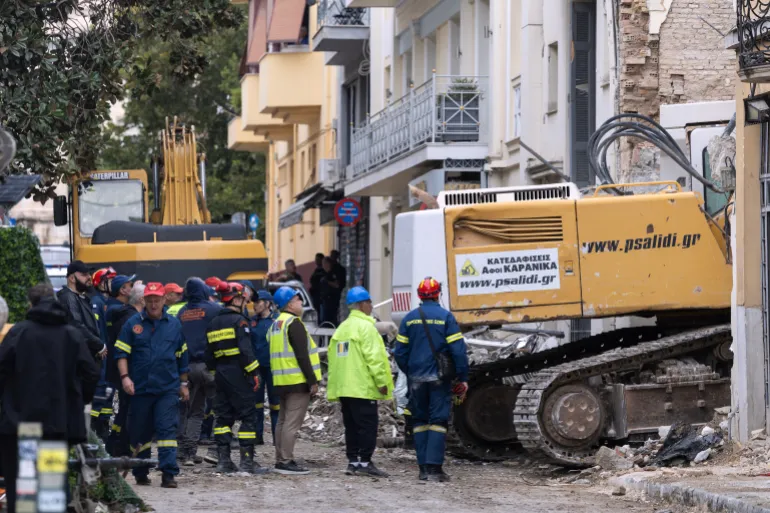
U.S. Indo-Pacific Command (USINDOPACOM) J7 Pacific Multi-Domain Training and Experimentation Capability (PMTEC) offloads a maritime drone target from U.S. Army ocean-contracted vessel MB480 in Palawan, Philippines, prior to the counter-landing live-fire exercise during Exercise Balikatan 2026 on April 27, 2026. The advanced unmanned maritime drone simulates an adversarial amphibious fighting vehicle. PMTEC provided maneuverable maritime and aerial targets to enable Philippine, Australian, New Zealand and U.S. forces to rehearse the full spectrum of detection, tracking, and engagement in a dynamic, contested environment. Balikatan is a longstanding annual exercise between the Armed Forces of the Philippines and U.S. military that represents the strength of our alliance, improves our capable combined force, and demonstrates our commitment to regional peace and prosperity. (Courtesy photo by Torch Technologies Inc., Philip Neveu)
A maritime drone target — clearly replicating a Chinese Type 05 amphibious armored vehicle — after disembarking from U.S. Army ocean-contracted vessel MB480 in Palawan, Philippines, ahead of a counter-landing live-fire exercise during Exercise Balikatan on April 27, 2026. Courtesy photo by Torch Technologies Inc., Philip Neveu

Compared to the longer-range Typhon, which is deployed further from the Luzon Strait, for the Balikatan exercise, the shorter-range NMESIS and Type 88 anti-ship missiles are pushed much closer to the zone in which their likely wartime targets would be found. As we have explored in the past, anti-ship missiles of this kind, and especially NMESIS, can also be deployed deeper into the strait, making use of smaller Philippine islands, like the Batanes island chain, although that ratchets up their exposure to counterstrikes considerably.

LOOK: The Japan Self-Defense Forces (JSDF) on Wednesday fired their Type 88 surface-to-ship missile during the maritime strike, part of Balikatan Exercise 2026.

The Armed Forces of the Philippines confirmed that the missiles launched hit the target—decommissioned Philippine Navy… pic.twitter.com/7QkzlB4qvW

— Bianca Dava-Lee 🐱 (@biancadava) May 6, 2026

For both these kinds of missiles, their survival would rely upon the dispersal of launchers and other vehicles, as well as regularly moving them around to help prevent them from being targeted by the enemy. Of course, with the uncrewed NMESIS, this is designed from the ground up to not put personnel in harm’s way. All of this kind of doctrine is central to the Marines’ Expeditionary Advanced Base Operations (EABO) strategy, which is now a core tenet of how it would fight in the Pacific.

U.S. Marines with 3rd Littoral Combat Team, 3rd Marine Littoral Regiment, 3rd Marine Division, and U.S. Army Soldiers with 7th Infantry Division, Multi-Domain Command - Pacific, guide an M142 High Mobility Artillery Rocket System off a U.S. Army Landing Craft Utility during a ship-to-shore movement for Exercise Balikatan 2026 at Calayan, Cagayan, Philippines, April 28, 2026. Balikatan is a longstanding annual exercise between the Armed Forces of the Philippines and U.S. military that represents the strength of our alliance, improves our capable combined force, and demonstrates our commitment to regional peace and prosperity. (U.S. Marine Corps photo by Cpl. Ernesto Lagunes)
U.S. Marines with 3rd Littoral Combat Team, 3rd Marine Littoral Regiment, 3rd Marine Division, and U.S. Army soldiers with 7th Infantry Division, Multi-Domain Command — Pacific, guide an M142 High Mobility Artillery Rocket System off a U.S. Army Landing Craft Utility during a ship-to-shore movement for Exercise Balikatan 2026 at Calayan, Cagayan, Philippines, April 28, 2026. U.S. Marine Corps photo by Cpl. Ernesto Lagunes

Already, China has voiced its displeasure at the deployment of the U.S. Army’s Typhon system to the Philippines. What is now becoming a regular appearance of NMESIS, backed up by other highly mobile strike systems, including allied anti-ship missiles, within reach of the Luzon Strait, will undoubtedly trigger similar concerns in Beijing. However, the live-fire sinking exercise today underscores how critical this waterway is to the U.S. military and its allies in the region, just as it is to China. Having more varied and more mobile anti-shipping assets in the northern Philippines complicates targeting for China, while extending the capabilities of the anti-access strategy of the U.S. military and its allies in the Luzon Strait, should a conflict break out.

Contact the author: thomas@thewarzone.com

Thomas is a defense writer and editor with over 20 years of experience covering military aerospace topics and conflicts. He’s written a number of books, edited many more, and has contributed to many of the world’s leading aviation publications. Before joining The War Zone in 2020, he was the editor of AirForces Monthly.


Source link

Thaksin Shinawatra: Thailand’s ex-PM is out of jail, but is his era over?

From the moment he swept to power in January 2001 Thaksin, a brash, self-made billionaire, has sought to reshape his country, winning devoted supporters and bitter opponents in equal measure. His parties kept winning elections, even after he was deposed by a coup in September 2006, but fear of his vaunting ambition in the powerful royalist establishment led to multiple court rulings against his allies, years of violent street clashes, and another coup in 2014.

Source link

What next for Real Madrid after Barcelona’s La Liga and Clasico triumph? | Football News

The fall may not have been deep, but the landing has been hard.

A second trophy-less season for Real Madrid, the most successful La Liga and Champions League club, was confirmed in the worst way possible: a defeat at Barcelona, who, with their win, defended the Spanish title.

Recommended Stories

list of 4 itemsend of list

Los Blancos kept the title race alive by their fingernails as they crawled their way to Catalonia, knowing that doing so could result in the cruellest of heartbreaks for their fans. And so it came to pass.

Down by two at half-time at Camp Nou – and it could have been a lot more –  hanging in there to limit the damage and humiliation was key, but the 2-0 defeat will have cut deeply for a club that has lifted 36 league and 15 Champions League titles.

The defeat means Real will finish second this season, not an unusual circumstance in what has regularly been a two-horse race in La Liga. The manner, however, of their failure this season – including their quarterfinal exit from Europe’s top table – has left far more questions than answers in the Spanish capital after another season of discontent.

How do Real solve a problem like Mbappe?

The signing of Kylian Mbappe from Paris Saint-Germain two seasons ago was seen as a return to the days of collecting the world’s finest talents and collectively calling them “galacticos”.

Real had just completed the league and European double under the illustrious Carlo Ancelotti, the most successful manager in European history and no stranger to managing the top names, having led a list of galacticos in his previous spell as Los Blancos manager.

Last season did not go to plan, though.

Mbappe’s arrival broke up the 4-3-3 formation that had served Real so well for so long, with English midfielder Jude Bellingham playing a key, advanced role, while Vinicius Junior thrived in front of and around him.

Both were forced to shift position to accommodate Mbappe, who prefers to drop deep from his central position to link up play or run with the ball.

It trod on the toes of the two key performers. Even Ancelotti was not immune to the famed Real chop as rumours circulated all season that his failure to gel the team would bring to an end the Italian’s Spanish love affair.

Enter Xabi Alonso.

Heralded as the answer to Madrid’s problems after sweeping through German football with Bayer Leverkusen, Alonso is also hailed as a midfield maestro as a player for both Madrid and the Spanish national team.

Rumours were rife from the off that the players did not buy into Alonso’s system, and friction was often apparent with Mbappe, despite the forward’s refound scoring ability. His 24 goals have him two clear at the top of this season’s Spanish scoring chart.

Alonso’s time was clearly up long before the end came, just after the clock ticked in the new calendar year. Alvaro Arbeloa was given the task of guiding the seemingly rudderless ship to the end of the season as interim head coach.

Mbappe’s troubles were only just beginning, though. By the end of the season, a “Mbappe out” petition raised more than 33 million signatures, and the Frenchman was the latest focal point of the Madridistas’ displeasure.

Reconnecting Mbappe with the fans and connecting him with his teammates’ style of play will be the number one focus for the new season.

Real Madrid's Kylian Mbappe, Vinicius Junior and Jude Bellingham line up before a La Liga match
Geling three of the world’s leading talents, Kylian Mbappe, Vinicius Junior and Jude Bellingham, has proved to be a tough task for successive Real Madrid managers [Marcelo Del Pozo/Reuters]

Can Real resolve Vinicius Jr’s fallout with fans?

Prior to the campaign waged against Mbappe, Vinicius fell foul of the home support, with boos for the forward ringing around a series of performances either side of the Champions League exit at the hands of Bayern Munich.

The Brazilian went on a 19-game run without a goal for club and country between October 10 and January 11.

Ironically, he broke his unwanted streak in the 3-2 Spanish Super Cup final defeat by Barcelona, Alonso’s last game in charge.

The ruptures were apparent, however, and rumours abounded that the 25-year-old’s stay at the only club he has ever known could be coming to an end.

Manchester United were the first to be linked with a move for the versatile forward, but all of Europe’s elite will be on red alert should there be any indication that Real may consider Vinicius as the way to reshape the team around their most bankable asset on and off the field: Mbappe.

Will Valverde and Tchouameni survive dressing-room bust-up?

As the day of destiny at Barcelona approached, the last thing Real needed were more unwanted headlines, let alone from two of the brighter spots in an otherwise dark campaign.

Uruguay’s Federico Valverde and France’s Aurelien Tchouameni were involved in a training-ground bust-up on Thursday, which left the former needing a trip to hospital for a head injury, ruling the midfielder out of the coming weeks.

Real swiftly fined both players on Friday, but Tchouameni was still named in the starting lineup at Barcelona.

Should Real decide that one or both were required to leave to avoid a potential toxic fallout in the dressing room, then, much like in the case of Vinicius, the phone lines of Europe’s top clubs will be working overtime to seal one or the other.

Real Madrid's coach Jose Mourinho (R) shakes hands with Pepe and Cristiano Ronaldo as they celebrate their Spanish league first division 32nd title at Santiago Bernabeu
Real Madrid coach Jose Mourinho, right, is greeted by Pepe, second right, and Cristiano Ronaldo, third right, in 2012, as they celebrate their 32nd La Liga title [Paul Hanna/Reuters]

Is Jose Mourinho’s return the answer for Real?

Cometh the hour, cometh the man?

Given the extent of the discontent across the club, the job of replacing Alonso on a full-time basis will require something not far short of a miracle.

Mourinho was not a popular choice in his time in the Real dugout, given his pragmatic tactics, seen as defensive by some, which were out of keeping with Real’s free-flowing philosophy.

Given the chasm between Los Blancos and Barca – not to mention the German and French top teams and the financial power of the English Premier League – Real fans may find themselves being a little more forgiving of Mourinho’s style.

The return of Ancelotti – a man born out of an Italian Serie A that only knew a defence-first mindset – proved successful and popular, and Real are known for their desire for managers with lengthy and proven track records.

Mourinho, who says there has been no contact to date with Real, would ruffle feathers, as his stint at Manchester United proved. But he regarded his second-placed finish behind cross-city rivals City with the Old Trafford club as one of his greatest achievements.

Lifting Real one place from their successive runner-up spots in La Liga may not be beyond the 63-year-old, who won La Liga, the Copa Del Rey and the Spanish Super Cup with Real in his 2010-2013 stint. The spell also resulted in three Champions League semifinal appearances.

The Portuguese also provided an early-season wake-up call for Real in this campaign, when his Benfica side claimed a 4-2 league-phase win that pushed Los Blancos into the Champions League playoffs, which they did eventually progress from with a win against Benfica in a rerun over two legs.

Who else could be the next Real manager?

The rally-rousing Jurgen Klopp would certainly help with the reconnection Real so desperately need with their fans. He is renowned in his title-winning spells, both domestic and European, with Borussia Dortmund and Liverpool, for uniting the players and fans in a shared, focused mindset. It could be the antidote for the current malaise, a cathartic approach that contrasts with the momentum building behind Mourinho’s latest comeback.

Another widely respected German is Julian Nagelsmann, who is currently in charge of his country’s national side, but may call time on the role after the 2026 World Cup.

At 38 years old, it may be seen as a risk – not dissimilar to the 44-year-old Alonso – but a three-year stay with Bayern Munich, prior to taking on the German job in 2023, may count in his favour.

It is thought that Didier Deschamps may also be coming to the end of his time in charge of the France team, and his former French international teammate Zinedine Zidane is also linked with a second spell at Real. Despite his 57 years, Deschamps has limited experience as a club manager, a contrast with another of the perceived frontrunners, Massimiliano Allegri, who led Juventus to five consecutive league titles in his native Italy.

The task of leading one of the most successful clubs in football is becoming unenviable. But the rebuild begins now, and the rise will start out of the ashes of the crash and burn that culminated in Sunday’s defeat, deep in enemy territory, at Camp Nou.

Source link

Somalis rally against government-ordered evictions in Mogadishu | Protests

NewsFeed

Demonstrators rallied across the Somali capital in support of families displaced by a wave of government-led home demolitions. Opposition figures, who organised the protests, say security forces shot and killed one person while trying to disperse the crowds.

Source link

Israeli weapon fires tiny metal cubes into people in Lebanon, like Gaza | Israel attacks Lebanon News

The same tiny tungsten cubes that spray out of Israeli bombs, causing devastating internal injuries to people in Gaza are being found in wounded civilians in Lebanon, war surgeon Dr Tahir Mohammed says. He draws parallels between what Israel is doing in both places and describes the weapons as “indiscriminate”.

Source link

Trump to discuss Iran with Xi Jinping during China visit: Officials | Donald Trump News

Official says US president will likely ‘apply pressure’ on China over Beijing’s purchase of Iranian oil amid war.

Donald Trump is set to arrive in Beijing on Wednesday evening to discuss the Iran war and other issues with his Chinese counterpart President Xi Jinping.

White House Principal Deputy Press Secretary Anna Kelly said an opening ceremony and meeting will be on Thursday morning, and the trip will conclude on Friday. The US plans to host the Chinese leader during a reciprocal visit later this year.

Recommended Stories

list of 3 itemsend of list

Kelly said that this week’s trip would be of “tremendous symbolic significance” and focus on “rebalancing the relationship with China and prioritising reciprocity and fairness to restore American economic independence”.

Trump’s visit, initially scheduled for earlier this year but postponed in March due to the US-Israel war on Iran, comes as the US president struggles to contain the fallout from the war, both at home and abroad.

A senior administration official told news outlets in an anonymous briefing on Sunday that Trump could “apply pressure” to China on Iran in areas such as oil sales and Tehran’s purchase of potential dual-role military-civilian goods.

US Treasury Secretary Scott Bessent last week accused China of “funding” Iran.

“Iran is the largest state sponsor of terrorism, and China has been buying 90 percent of their energy, so they are funding the largest state sponsor of terrorism,” Bessent told Fox News.

Iran closed the Strait of Hormuz in response to US-Israeli attacks, restricting passage through a key artery of global energy transport.

China has said that it wants to see the war end and hosted Iranian Foreign Minister Abbas Arraghchi last week. At the same time, Beijing has refused to recognise Washington’s “unilateral” sanctions on Iran’s oil sector.

Disruptions stemming from the war have disrupted the global economy, with Asian states that depend on imports from the Middle East especially hard hit.

Trump could also bring up China’s support for Russia during the talks, along with trade and rare earth minerals, a vital resource for the US tech sector. Business executives from aerospace manufacturer Boeing and a handful of agricultural companies are set to travel with the US delegation.

The anonymous administration official said that no change was expected regarding the US stance on Taiwan, a main sticking point in relations between Washington and Beijing. China considers the self-ruling island a part of its territory, but the US has deep security and economic commitments to Taiwan.

Source link

Barcelona beat Real Madrid 2-0 in El Clasico to retain La Liga title | Football News

Barcelona clinched their 29th La Liga title with a 2-0 El Clasico victory over bitter rivals Real Madrid, opening an unassailable 14-point lead at the top of the table with three games remaining.

Marcus Rashford and Ferran Torres struck in the first half on Sunday to help Hansi Flick’s side clinch La Liga in consecutive years, while consigning Madrid to a trophy-less season.

Recommended Stories

list of 4 itemsend of list

This was only the second time the outcome of La Liga has been decided directly by the result of a Clasico, with record 36-time champions Real Madrid winning their first title in 1932 after a draw with Barca.

Flick’s team were disappointed to be knocked out in the Champions League quarterfinals by Atletico Madrid in April, but still determined to celebrate in style.

“This title is more special for winning it at home against Madrid. Now we have to enjoy it with the fans,” Barca midfielder Frenkie de Jong told Movistar.

“We have been the best team in Spain. Of course, we [also] want to win the Champions League – that’s the objective.

“Next year, we will have another opportunity.”

Madrid arrived at the match embroiled in chaos after midfielder Fede Valverde was ruled out with a head injury following a training ground scuffle with teammate Aurelien Tchouameni, who started.

Barca coach Flick also received bad news before the game, with his father passing away, but he still took his place on the touchline to oversee his side’s comfortable triumph.

The German opted for the energetic Rashford, on loan from Manchester United, on the right wing in place of the injured teenage star Lamine Yamal.

The Catalans, who only needed to avoid defeat, came out with their eyes firmly locked on the prize, racing into a two-goal lead inside 18 minutes.

Rashford opened the scoring with a superb free kick, whipping the ball into the top left corner from 20 yards out, right of centre.

Barcelona's English forward #14 Marcus Rashford (R) celebrates scoring his team's first goal during the Spanish league football match between FC Barcelona and Real Madrid CF at Camp Nou Stadium in Barcelona on May 10, 2026. (Photo by Lluis GENE / AFP)
Rashford celebrates scoring his team’s first goal [Lluis Gene/AFP]

Torres doubled the hosts’ advantage at a jubilant Camp Nou, the 62,000-strong crowd enjoying the first Clasico back there since the stadium was reopened.

Dani Olmo produced a clever backheel to allow Torres to burst into the box and ram past Thibaut Courtois.

Gonzalo Garcia, playing in place of injured Madrid superstar Kylian Mbappe, prodded narrowly wide after racing in behind Barca’s high defensive line.

Urged on by coach Alvaro Arbeloa on the touchline, unlikely to be at the helm next season, Madrid battled to stem the bleeding.

Rashford could have added a third before the break but fired wide, with Fermin Lopez unmarked and well placed to finish.

Torres should have struck early in the second half but Courtois saved from the Spain international as he ran through.

Jude Bellingham put the ball in Barcelona’s net but the goal was ruled out for offside, while Joan Garcia thwarted Vinicius Junior as Madrid threatened.

Barca fans batted inflatable beach balls around to taunt the Brazilian over his unfulfilled Ballon d’Or ambitions, and lapped up the party atmosphere.


Courtois saved from substitutes Raphinha, back after injury, and Robert Lewandowski as Madrid saw out the remainder of the match without taking further damage.

Flick’s side remain on course to match the record of 100 points in a league season and can win all their home matches if they defeat Real Betis in the one remaining.

Barcelona’s boss told La Liga TV that he “will never forget this day” following the match.

“It was a tough day for me to start – my father passed away. But my team is fantastic. It is like a family,” Flick said.

“They gave everything today. I am proud of the fans. It is amazing [to win] in this stadium and in an El Clasico against Real Madrid to win La Liga.

“It was not easy. Everyone thought we could win this, but Real is a fantastic team. We played really good and made the goals in the right moment.”

Meanwhile Madrid finish a second consecutive season without a major trophy, staring down the barrel of a summer reshuffle, including former coach Jose Mourinho being linked with a potential return.

Arbeloa congratulated Barcelona and said his side would “learn from what happened this season and work even harder” in comments to the media after the game.

“I feel a greater responsibility now, knowing that our season ended today. The one thing we can’t do is give up, absolutely not,” he said.

“There are three matches left that we must go out and win. Here, we’re defending something much bigger than all of us and much bigger than our personal pride; it’s the Real Madrid crest and millions of fans.”

Source link

Bauta A Matsayin Ungozama – HumAngle

Saurara a: Apple Podcast | Spotify | RSS


Adisu Abba wata mata ce mai shekaru 45 kuma uwa ga ‘ya’ya biyar. Ta fito daga Dikwa, Jihar Borno, a arewa maso gabashin Najeriya. Tun kafin rikici ya tarwatsa rayuwarta, ta riga ta fara koyon aikin da zai zama ginshiƙin rawarta a cikin al’ummarta—ta koyi yadda ake taimaka wa mata wajen haihuwa.

An yi garkuwa da Adisu a hannun ‘yan ta’adda na tsawon shekaru uku,a wannan lokacin, ta taimaka wajen haihuwar jarirai biyar.
A wannan shirin na #BIRBISHINRIKICI, mun bada labarinta da kuma abin da yake nufi yin aikin ungozoma yayin da take tsare a hannun ƙungiyar ta’addanci ta Boko Haram.


Mai Gabatarwa: Rukayya Saeed

Marubuciya: Sabiqah Bello

Muryoyin Shiri: Sabiqah Bello

Fassara: Rukayya Saeed

Edita: Aliyu Dahiru

Furodusa: Mu’azu Muhammad

Babban Furodusa: Anthony Asemota

Babban Mashiryi: Ahmad Salkida

Source link