Demonstrators protest against UK government’s proscription of Palestine Action as a terrorist organisation.
Published On 28 Sep 202628 Sep 2026
Police in the United Kingdom have arrested more than 50 people protesting in support of the banned Palestine Action group outside a Labour Party conference in the northwestern English city of Liverpool.
The local Merseyside Police confirmed the arrests in a statement published on Sunday.
Recommended Stories
list of 3 itemsend of list
The police said those taken into custody at the protest, organised by Defend Our Juries, had displayed material in support of Palestine Action, proscribed as a “terrorist” group by the Labour government in July 2025 under the Terrorism Act.
According to the statement, police respected the rights of people to protest lawfully while aiming to keep the peace and ensure the public are safe.
A police officer speaks to a supporter of the group Palestine Action as demonstrators gather to protest outside the conference venue on the first day of the annual Labour Party conference in Liverpool, northwest England, on September 27, 2026 [Oli Scarff/AFP]
More than 250 protesters sat outside the conference centre holding banners with words supporting the group on Sunday, before dozens of police began making arrests.
English band Massive Attack singer Robert Del Naja was among those arrested.
After asking demonstrators if they were going to continue holding up the signs, officers led people away, telling them they had been arrested under the Terrorism Act.
Reporting from Liverpool, Al Jazeera correspondent Milena Veselinovic said the protesters wanted to put proscription “front and centre of the UK Prime Minister Andy Burnham’s agenda” on the first day of his party’s annual conference.
“Being arrested is nothing in comparison to what the people in Gaza are going through, and it’s also worth it, because this is about our right to free speech,” one protester told Al Jazeera.
Another said that “there are priests, there are healthcare workers, there are people who deeply care, and deeply care about right and wrong.”
Kerry Moscogiuri, chief executive of Amnesty International UK, said protesting “is one of the most effective tools” to make government leaders listen and described the arrests as “a truly shameful attack on freedom of speech”.
“The new prime minister can reform our laws so that communities are protected in coming together and demonstrating on the issues they care about. Will he do so?” she said.
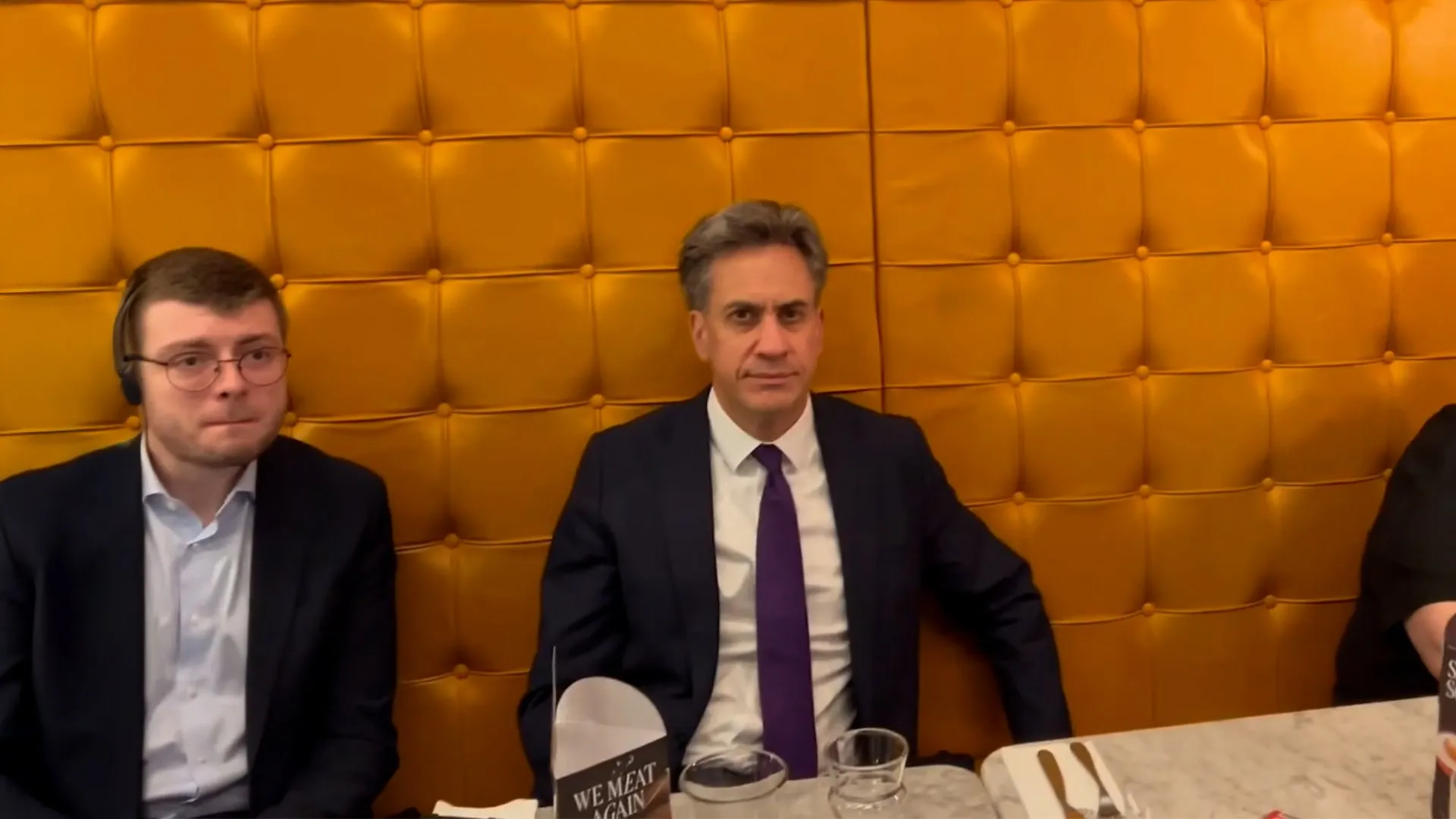
Activists also confronted Foreign Secretary Ed Miliband inside a restaurant in Liverpool, demanding that he lift the ban on the group and declare Israel’s genocide in Gaza.
The activists left after Miliband reportedly refused to comment.
A civil disobedience campaign has emerged since Palestine Action was outlawed in July 2025, with more than 3,600 people arrested for showing their support for the group, often while holding signs reading, “I oppose genocide. I support Palestine Action.”
The UK Supreme Court is now set to hear the case after London’s Court of Appeal upheld the government ban in June.
Nobel laureate Maria Corina Machado has been living in exile, with plans to return to Venezuela spoiled multiple times.
Published On 28 Sep 202628 Sep 2026
Hundreds of supporters of Venezuela’s opposition leader Maria Corina Machado have taken to the streets to demand her safe return and presidential elections that could lead to a democratic transition in the country.
In Caracas, hundreds of activists in sky blue shirts – the colour of Machado’s Vente Venezuela party – rode motorcycles through the capital’s main avenues on Sunday, honking their horns and waving Venezuelan flags. Similar demonstrations were held in state capitals, including Valencia, Maracaibo and Merida.
Recommended Stories
list of 3 itemsend of list
“This is not a matter of parties or politics,” said Flavio Valentini, a Vente Venezuela activist in Caracas who grabbed a megaphone and addressed the crowd. “This is a movement for the people and by the people.”
Machado has been living in exile for the past nine months and has had plans to return to Venezuela spoiled multiple times. Opposition activists have accused Venezuela’s government of blocking her return, a claim the authorities deny. Machado’s party said that on Monday night, the opposition leader made three unsuccessful attempts to return.
“We hope this transition process leads us to presidential elections and consolidates a free, democratic country that will be the main ally of the United States,” said Anthony Romero, a leader for Vente Venezuela, in the nation’s capital.
The government has been widely accused of stealing elections, jailing dissidents and stifling freedom of speech. But late last week, Venezuela released more than three dozen political prisoners following a second round of talks backed by the US between the interim government and the opposition.
Machado, one of Venezuela’s most popular political leaders, was barred from running in Venezuela’s last presidential election by courts under the control of former President Nicolas Maduro. But her stand-in candidate is widely believed to have won the election with almost two-thirds of the vote.
Maduro claimed victory nevertheless and unleashed a violent crackdown against dissidents who protested the official results, forcing Machado and dozens of opposition leaders to go into hiding. Machado smuggled herself out of Venezuela last year after she was awarded the Nobel Peace Prize for her efforts to restore democracy in the country.
US special forces abducted Maduro from his Caracas home in January, but Machado has been unable to return to Venezuela since then.
The government is now led by Delcy Rodriguez, a Maduro ally who has opened Venezuela’s oil industry to foreign investment and is working closely with the administration of US President Donald Trump.
Rodriguez told the United Nations General Assembly (UNGA) on Wednesday that Venezuela would hold elections as part of a transition to “full democracy”, but did not give a date for the vote.
UK Foreign Secretary Ed Miliband was confronted by activists at a Pizza Express restaurant in Liverpool over the proscription of Palestine Action. Nearby, more than 50 demonstrators were arrested while protesting in support of the group outside a Labour Party conference.
Durban, South Africa – Bishop Raphael Bahebwa is in hiding, afraid he could be attacked for speaking out for the rights of foreigners in South Africa.
“I am in hiding now because they say they are going to kill me for speaking about the rights of foreigners,” he told Al Jazeera.
Bahebwa has lived in South Africa for 26 years, after arriving as a refugee from the Democratic Republic of the Congo (DRC).
In that time, he has watched antiforeigner sentiment flare repeatedly in the country he came to call home. But he says this year feels different.
A September 30 deadline declared by March and March, an anti-immigration movement that has led protests across South Africa this year, has renewed fears of violence among migrant communities.
The group has called for undocumented foreign nationals to leave South Africa and has warned of further demonstrations if its demands are not met.
For Bahebwa and other refugees in Durban, however, the distinction between documented and undocumented migrants offers little comfort. They say the hostility they experience on the streets rarely begins with a request to see their papers.
Fears of renewed violence
South Africa will hold local government elections on November 4, in a campaign in which migration has become an increasingly prominent political and social issue.
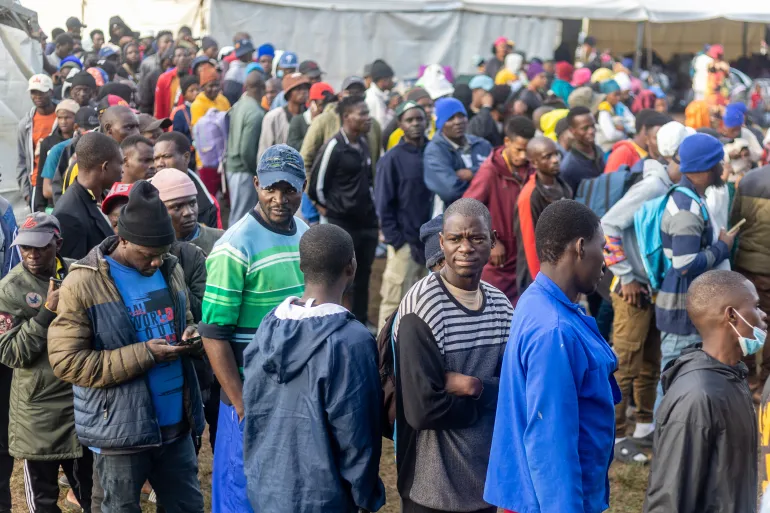
For months, Bahebwa was among hundreds of refugees and asylum seekers who slept on the pavement outside the Durban Refugee Reception Centre on Che Guevara Road.
Many were from the DRC and Burundi, with others from Uganda, Mozambique and Tanzania. They said they had fled their communities because they feared antiforeigner attacks.
They arrived outside the Department of Home Affairs (DHA) office seeking safety.
Instead, the pavement became their home.
For roughly four months, men, women and children slept outside, exposed to the elements and dependent on civil society organisations and volunteers for food and other necessities.
“It has been very tough,” Bahebwa said. “Never before have I experienced something like this.”
Some of the migrants told Al Jazeera that conditions became desperate. They described irregular access to food and medication and said one man who had tuberculosis died while living at the camp. Al Jazeera has not independently established the circumstances of his death.
The camp was also not far removed from the hostility its residents said they had fled.
On September 3, members of March and March confronted refugees and asylum seekers living outside the centre. Violence broke out, and police intervened. At least four people were reported injured.
At another protest days later, police officers stood between the two groups, forming a barrier as tensions rose.
March and March has described its mobilisation as a campaign against undocumented immigration, crime and deteriorating conditions in South African communities.
The group says the government’s response to immigration enforcement has been insufficient.
Its leaders have repeatedly rejected accusations that their campaign is xenophobic and insist their target is undocumented migration rather than foreign nationals generally.
Bahebwa said documented and undocumented migrants alike have been caught in the hostility.
Earlier this year, six refugees working in salons around Durban’s Warwick Street Market were beaten by men carrying sticks, according to public-interest news outlet GroundUp. Two were hospitalised.
Bahebwa said the migrants had also struggled to obtain help from the authorities after earlier attacks.
“Police said we can’t open cases because we are foreigners. We had nowhere to go,” he alleged. Police have not publicly responded to that specific allegation.
Nowhere obvious to return to
In mid-September, the government moved to clear the makeshift camp outside the refugee centre.
The refugees were given a choice: return to the communities they had fled or accept temporary accommodation at the Lindela facility in Gauteng, hundreds of kilometres from Durban. Lindela is a government-run immigration detention facility used to hold people facing deportation.
The choice divided them.
Malawi migrants to South Africa line up for supplies at an informal refugee camp in Sherwood, Durban, South Africa, after fleeing their homes amid fears of xenophobic attacks [File: EPA]
Some feared going to Lindela, a facility historically associated with immigration detention and repatriation. Others felt they could no longer endure life on the pavement.
On September 15, 274 people were transported by bus from Durban to Lindela. About 150 others chose to remain in Durban and began trying to find alternative accommodation.
For those who stayed behind, leaving the pavement did not resolve the problem that had brought them there in the first place.
Kafuti Muyumba, a small business owner from the DRC and a representative of the refugee community, said many were afraid to return to neighbourhoods where they had built businesses and lives.
People are afraid, he said. “Even the police allow March and March violence. They came with sticks and say we are attacking them,” Muyumba told Al Jazeera.
He said many refugees had lost their livelihoods during the months of upheaval and were now desperate to find accommodation.
“This is not the first time we are experiencing xenophobia,” he said. “In 2008 and then in 2015 we also experienced this.”
In 2008, xenophobic violence spread through townships and informal settlements, killing dozens and displacing thousands.
Further outbreaks of violence against foreign nationals followed in subsequent years.
For Muyumba, those memories make the rhetoric surrounding September 30 difficult to dismiss.
“We don’t trust the police. They are not being fair with us. Some of them are also saying we must go,” he said.
Police have said there are no plans to change their normal policing approach because of the September 30 deadline and that any protesters will be expected to remain within the law.
March and March said all it wants is for undocumented immigrants to leave the country and return home.
But Muyumba said returning to the DRC is not a viable alternative for many Congolese refugees.
“There is still war there,” he said.
A country tightening its borders
In response to ongoing protests, the South African government said it had intensified its immigration enforcement.
Between June 14 and August 20, authorities processed 86,596 foreign nationals for deportation and repatriation, according to the government’s Inter-Ministerial Committee on Migration.
Malawians made up the largest group, followed by Zimbabweans and Mozambicans.
Government data says 90 percent of those repatriated had entered South Africa illegally, while 95 percent were classified as having crossed the border outside official ports of entry.
The government says the operations form part of a broader effort to strengthen border management and enforce immigration law.
At the same time, officials have repeatedly warned private groups against taking immigration enforcement into their own hands.
March and March’s September 30 deadline has no legal authority. The government says common citizens cannot deport anyone from South Africa.
Protesters hold placards during an anti-immigration march in Durban, South Africa, calling for tighter border controls and the deportation of undocumented migrants [File: Thuli Dlamini/Reuters]
But deadlines do not need legal force to create fear, as was the case for an earlier deadline of June 30. For the refugees who spent months sleeping outside the DHA office in Durban, September 30 is another uncertainty layered on top of many others.
Some have been moved hundreds of kilometres away.
Others are trying to find new homes in the same communities they once fled. But among the migrants Al Jazeera spoke to, there is a shared anxiety that paperwork may offer limited protection when anger is directed first at being foreign.
Bahebwa has spent more than a quarter of a century in South Africa. For now, he says he is hiding and does not know what September 30 will bring.
“They are scapegoating us as foreigners,” he said. “It is not going to end on September 30. It has to do with the elections.”
The man has been identified as 56-year-old Leighton Brown, an employee of the New York City Housing Authority.
According to local news, he was walking through east Brooklyn neighbourhood working an extra shift when the deadly incident occurred.
“We mourn deeply for the loss of Leighton Brown, a NYCHA employee who faithfully served Brooklyn residents and who was known for his warm personality,” the Office of the NYC Public Advocate wrote on social media.
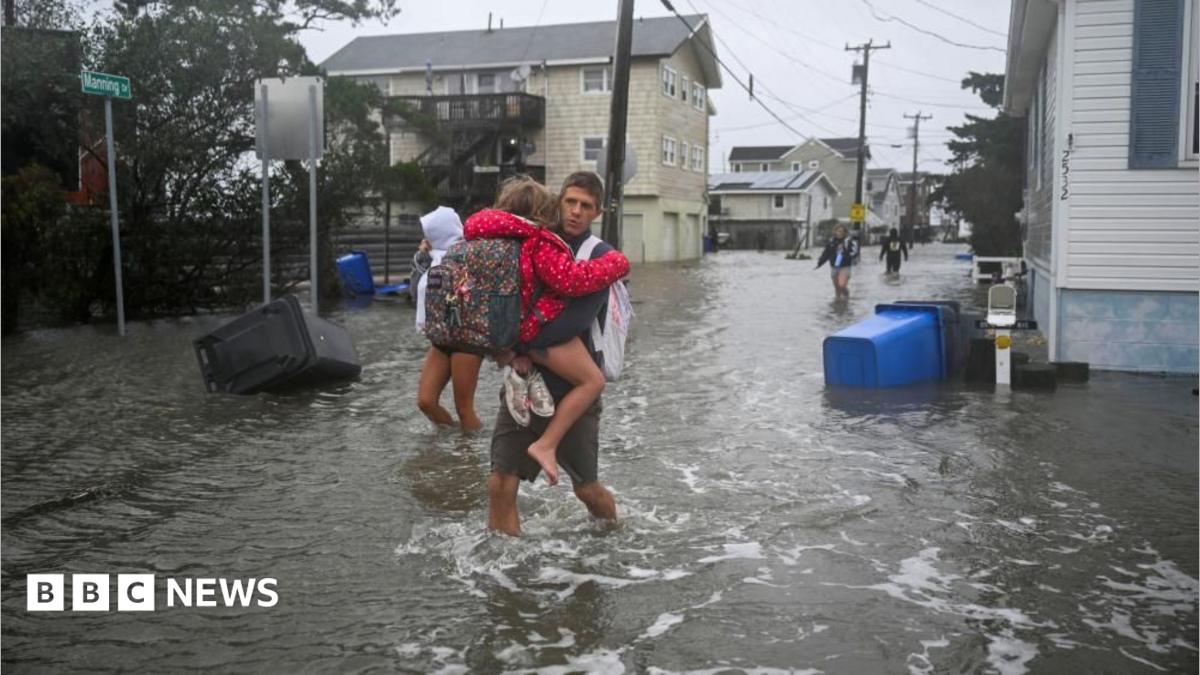
The nor’easter has caused widespread power cuts. More than 160,000 households, nearly all in the north-eastern US, have lost electricity, according to tracker PowerOutage.
More than 2,400 flights were delayed and another 1,199 grounded on Saturday, according to FlightAware.
A full moon was projected to worsen coastal flooding. Streets and homes were inundated with floodwater in the coastal New Jersey communities of Surf City and Manasquan on Saturday.
Head of the Roman Catholic Church holds ’emotional’ two-hour meeting with seven abuse victims in French town of Lourdes.
Published On 27 Sep 202627 Sep 2026
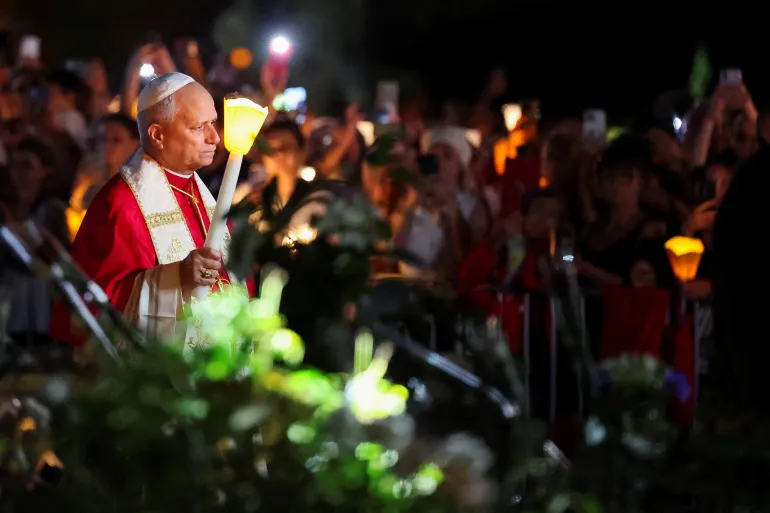
Pope Leo XIV has thanked a group of survivors of clerical abuse “for their painful testimony” and “reaffirmed his commitment” to end harm by Catholic priests at a meeting in southwestern France, the Vatican said.
On Sunday, the pontiff visited the pilgrimage town of Lourdes, where he privately met seven survivors of child abuse, now adults, and promised to further efforts to reform the Church in the wake of the global sexual abuse scandal.
The group said in a later news conference that the meeting was emotional and touching.
“When he saw the state I was in, he took me into his arms,” survivor Jean-Marie Delbos said, adding, “It was an extraordinary moment.”
The 80-year-old was abused as a pupil at the nearby boarding school of Notre-Dame de Betharram, where staff have been accused of physical and sexual abuse over several decades.
The survivors said they felt heard and that they were impressed by Leo’s compassion and knowledge of their individual cases.
But they hoped the words would be accompanied by action.
Jerome Guillement, who has written about a priest abusing him as a teenager, said at the news conference that the pope understood the “systemic” nature of sexual abuse in the Church.
“From his point of view, the perpetrators are individuals, but what allows it to continue is the systemic dimension within the institution,” he said.
“He certainly believes that the Church has done a great deal in France, but he also believes that the Church in France still has a tremendous amount left to do.”
Pope Leo participates in a candlelight procession at the Sanctuary of Our Lady of Lourdes in Lourdes, France, September 27, 2026, as part of his four-day apostolic journey to France [Stephane Mahe/Reuters]
Local leaders hoped Leo’s visit would help repair the Church’s standing after a 2021 independent inquiry found that some 330,000 French children had been abused by Catholic clergy and lay leaders over seven decades.
The pope told an estimated 150,000 people gathered for a Mass in a field near the famed Catholic shrine in Lourdes earlier on Sunday that the Church must have the courage to face its past.
Veronique Garnier, another survivor who met with the pontiff, said she had found the Mass, in which Leo referred to abuse without directly apologising for it, troubling and wondered why she had attended.
But she said she was encouraged by her meeting with Leo.
“I do indeed believe there is hope – hope that there can be change and truly listening to us at a deep level, rather than just superficially with beautiful words that are never followed by any real action,” she said.
Leo also spoke about the abuse scandals in a closed-door meeting with French bishops on Sunday, according to a Vatican-provided text.
He was expected to visit the northeastern city of Metz on Monday before returning to Rome the same day.
Student protests at Lovely Professional University in northern India have turned violent following social media claims that a female student was raped at a girls’ hostel by a worker. The university has denied the allegations as rumours, while police have launched an investigation.
The nor’easter causes another round of flooding in low-lying areas in New Jersey and New York City and knocks out power to tens of thousands of homes into New England.
Published On 27 Sep 202627 Sep 2026
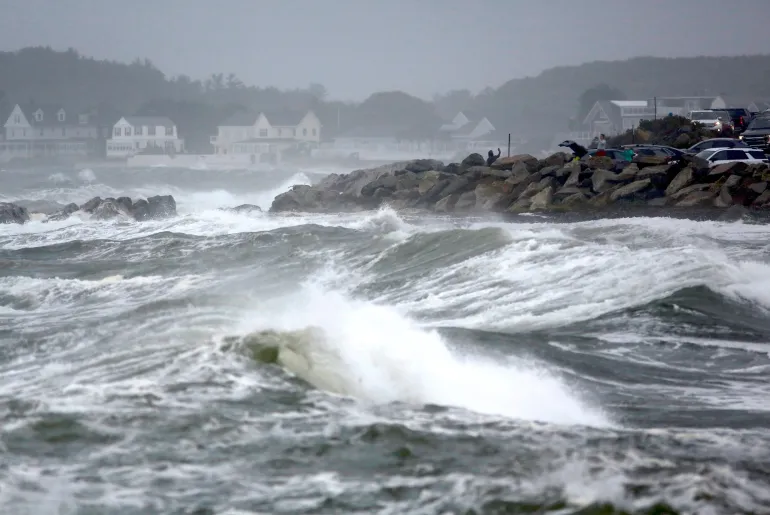
A powerful storm is pummelling the shoreline in the northeastern United States for a second day, causing another round of flooding in low-lying areas and knocking out power to tens of thousands of homes.
Tidal surges swamped low-lying neighbourhoods in New Jersey on Sunday, while wind gusts toppled trees on New York’s Long Island, damaging homes and bringing down utility poles.
Recommended Stories
list of 3 itemsend of list
In New York City, streets in the Howard Beach neighbourhood of Queens were inundated.
The slow-moving storm, which killed a New York City housing authority worker when a tree fell on Saturday, was expected to linger through Sunday, with heavy rain, strong winds and dangerous surf all the way to New England.
Extreme amounts of rain – more than 10cm (4 inches) since Friday in some spots in New Jersey – combined with a surging ocean led to flooding amounts not seen for close to a decade in places used to dealing with high water, residents said.
The storm, known as a nor’easter, triggered memories of Hurricane Sandy, which left behind more than $60bn in damage across the eastern US in 2012. While this storm’s impact has been nowhere near that, it could be the first of several along the East Coast this fall because of an El Nino climate pattern disrupting this year’s weather.
Images of waves crashing into sea walls and onto beaches raised concerns about coastal erosion.
More than 100,000 customers were without power across the Northeast and mid-Atlantic at times on Sunday, according to PowerOutage.us. The most widespread outages were in counties along the coast from New Jersey to Connecticut.
Numerous flights were cancelled or delayed up and down the coast. More than 250 flights had been cancelled at Boston Logan International airport by late Sunday morning as wind gusts reached 64km/hour (40 mph), according to the Massachusetts Port Authority.
The worst of the remaining rainfall was expected on Sunday from northern New Jersey into southern New England.
While the storm was gradually weakening, tidal flooding would stay through high-tide cycles Sunday night, said Bob Oravec, a lead forecaster with the National Weather Service in College Park, Maryland.
People watch the ocean as a nor’easter storm hits Rye, New Hampshire, US, on September 27, 2026 [Caleb Jones/AP Photo]
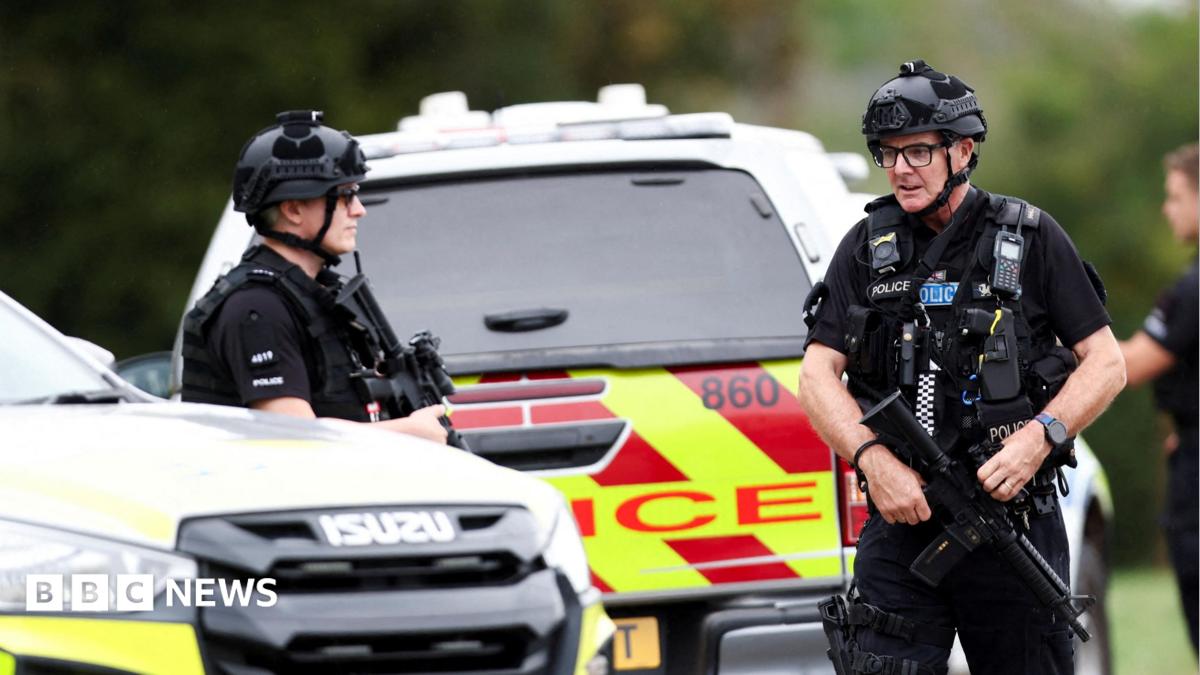
A local resident told the BBC she alerted the police to suspicious activity near the base early on Sunday.
The woman, who did not want to be named, said she initially called the Ministry of Defence (MoD) police but nobody answered, and then called 999. She said she had seen three parked vans and a group of men wearing masks.
The MoD declined to comment.
Several residents said they had been led from their homes in the early hours and evacuated to a leisure centre.
Julian Tudsbury said he was woken up at 07:00 by police banging on his door in Whelford, where 85 households were advised to evacuate.
“There were several police, three police cars in the drive, and they said you need to evacuate, there’s been a major incident, said he couldn’t elaborate,” he said.
He said another local had seen three vehicles making their way to the base and called the police “straight away”.
Ireland’s players wore black armbands in support of Palestinians, bowed their heads during the Israeli anthem, and refused pre-match handshakes.
Published On 27 Sep 202627 Sep 2026
The Republic of Ireland has won the first of two football matches against Israel at the UEFA Nations League, defeating the Israeli team 3-0 after calls to boycott the match drew international attention.
Ireland’s players wore black armbands at the game in Hungary on Sunday in support of Palestinians killed during Israel’s genocidal war on Gaza. Irish players also bowed their heads during Israel’s national anthem and did not shake the hands of the Israeli team. Ireland’s captain, Dara O’Shea, has also pledged to donate all of his earnings from the match to aid Gaza.
Recommended Stories
list of 3 itemsend of list
On Saturday, Football Association of Ireland (FAI) chief executive David Courell said the players would wear black armbands “in recognition of all lives lost in the conflict” as he confirmed that the match would take place after hours of talks and a vote among the team. Israel was informed in advance by the FAI that Ireland’s players would not shake hands, and UEFA accepted the arrangement.
After the FAI confirmed that it would participate in the match, the Republic of Ireland’s first-choice goalkeeper, Gavin Bazunu, became the only player to publicly opt out of the fixture.
Bazunu posted a statement on social media on Saturday, saying he felt “it would be wrong to participate in the upcoming fixtures against Israel”.
He withdrew from both legs of the fixture, including the next match set to take place on October 4 in Backa Topola, Serbia.
Fans protest an upcoming match between the Republic of Ireland and Israel during the international friendly match between the Republic of Ireland and Qatar on May 28, 2026, at Aviva Stadium in Dublin, Ireland [File: Charles McQuillan/Getty Images]
The match on Sunday proceeded despite months-long pressure on the FAI to boycott the match due to Israel’s genocide in Gaza.
Since May, leading Irish footballers have joined a campaign run by Irish Sport for Palestine, urging Ireland to boycott the match against Israel. More than 160 Irish athletes signed an open letter urging the FAI to reconsider its decision to proceed with the games.
The campaign says Israel has breached UEFA and FIFA statutes by allowing teams to play on occupied Palestinian land and should be stripped of its membership at both football bodies.
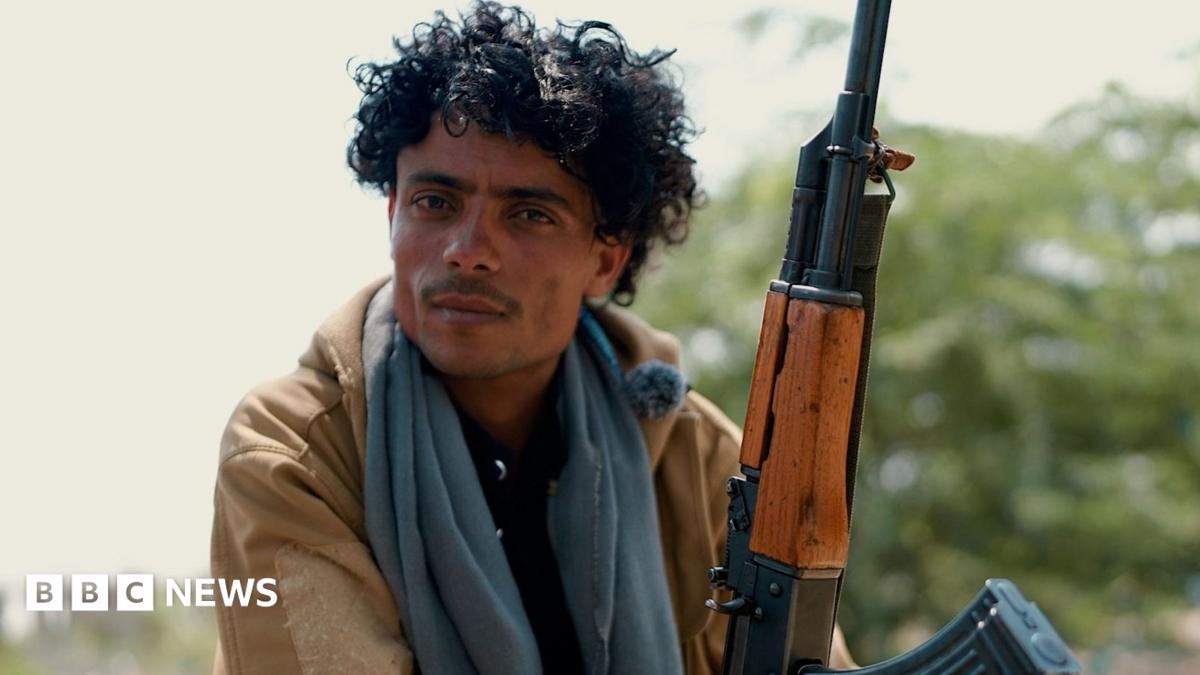
He told me he had sent his children to a displacement camp because they could no longer cope with the shelling and gunfire. He had stayed with his wife and sisters to look after their animals.
“I am terrified,” he said, “but I have no choice, we will all go hungry without our animals and die anyway.”
He gave only his first name, fearful of repercussions if the Houthis take over the area in the days ahead. Contacts from the Houthi side have told us they are consolidating troops, preparing for a major offensive. When we asked government forces about this they said they are aware and were preparing too.
At the closest checkpoint to the front line, we met some fighters who had just returned from positions high on the mountain, just a few hundred metres from advancing Houthis. One of them said the bodies of 18 government soldiers lay in an area his unit could fire across but not reach.
“We shoot over them, but we can’t pull them out,” he said.
Fighting around Taiz has intensified since the Houthis seized the strategic Red Sea port of Mokha, 85km to the west of the city, on 10 September, after a ceasefire that had largely held for four years unravelled.
The group took control of a swathe of territory overlooking the strategic Bab al-Mandab Strait – a crucial shipping corridor linking Europe and Asia. This contributed to a rise in oil prices as fears rose of further disruption to supplies from the region.
Cuba’s deputy foreign minister slams US sanctions, labelling them ‘equivalent to genocide’.
Published On 27 Sep 202627 Sep 2026
A senior official in Cuba has warned that any prospective United States military action taken against the island nation would constitute a serious international crime, and has rejected claims made by US President Donald Trump that Cuba is a failed state.
On Sunday, Carlos Fernandez de Cossio, the country’s deputy foreign minister, told the US cable television channel C-SPAN’s flagship programme, Washington Journal, that it would be an “atrocious international crime for the US to use military force against Cuba, which is a peaceful neighbouring country”.
His comments come after Trump said during his Tuesday speech at the United Nations General Assembly (UNGA) that “freedom will be coming” to the island. His remarks prompted the Cuban delegation to exit the assembly hall. On Saturday, Trump brought up military action, telling reporters, “I don’t think we’ll need the military. Cuba is failing very badly.”
Fernandez de Cossio said that coercing nations who do not “submit” by disrupting their commercial shipments, attempting to handicap a population through starvation, depriving it of stable healthcare and withholding fuel, as the US has “done for nine months now”, is “equivalent to a genocide”.
The US has maintained a foreign policy of maximum economic pressure against Cuba for more than 60 years. The Trump administration has previously said that it wants a shake-up in Cuba’s government. Earlier this year, the administration enforced an additional oil and fuel blockade against the island, which has crippled the nation’s infrastructure, causing widespread fuel scarcity and rolling power outages. Government officials in Cuba cited systemic difficulties in securing food supplies and other basic necessities for the country of more than 10 million.
Fernandez de Cossio said Havana must ready its citizens for the prospect of US military aggression, adding that while Cuba recognises it might stand alone, it will still exercise its legitimate right to self-defence.
He explained that bilateral diplomatic channels with the US remain open but have yielded minimal results due to the economic stranglehold of ongoing sanctions, adding that Havana remains willing to engage with Washington in a “respectful manner” only if discussions accommodate mutual dignity, benefit both populations, and respect state sovereignty.
Several countries condemned the US’s continued economic sanctions and blockade of Cuba during the UNGA earlier this week.
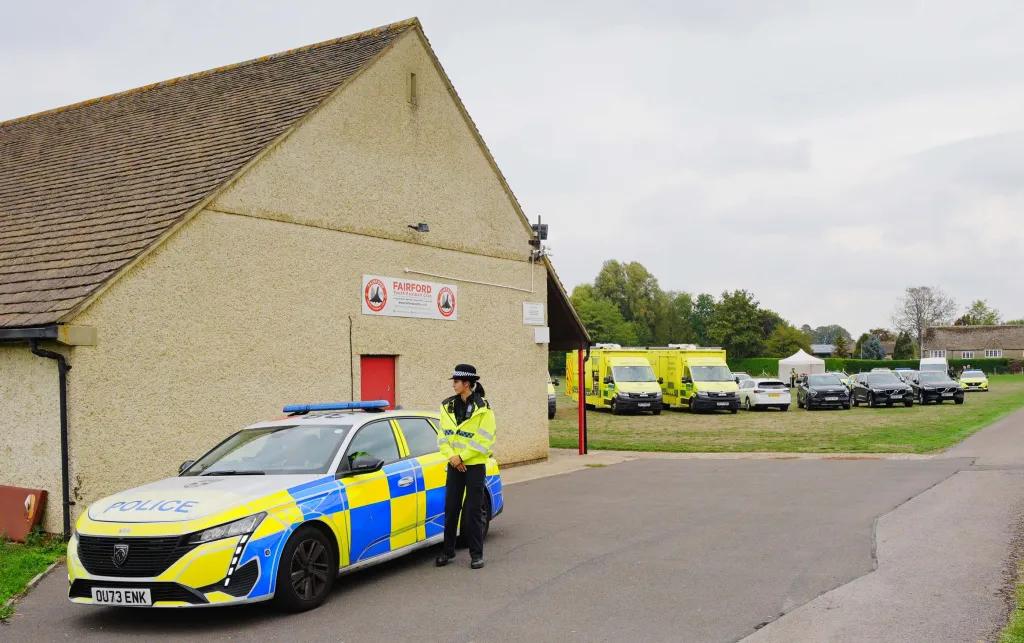
Details continue to come in, but police in the United Kingdom have declared a “major incident” and ordered evacuations near RAF Fairford after the arrest of “several men on suspicion of offenses under the explosives act,” the Gloucestershire Constabulary stated.
RAF Fairford is a major hub for U.S. military aircraft in the United Kingdom. It is a regular host of strategic assets, including bombers and U-2 spy planes. It also acts as a pit stop for other aircraft, including fighters, that are being ferried to and from the United States. Bomber strikes launched from Fairford were a central aspect of major U.S. combat operations against Iran earlier this year.
“A number of properties are currently being evacuated in the Whelford area following the declaration of a major incident,” the Gloucestershire Constabulary also announced today in light of the incident.
Emergency services in Fairford after a major incident has been declared, with armed police manning a cordon near the village of Whelford in Gloucestershire, near RAF Fairford, which is used by the United States Air Force (USAF). (Photo by Ben Birchall/PA Images via Getty Images) Ben Birchall – PA Images
The evacuations were spurred by the arrests.
“The Army’s specialist explosive ordnance disposal team are currently examining a number of vehicles,” Gloucestershire Constabulary added. “The local residents are being evacuated to a nearby leisure center.”
“A cordon is currently in place, but we’d like to reassure people that we believe this incident is contained,” the law enforcement agency explained. “We are working closely with our partners and are enacting the well-rehearsed plans we have in place.”
The incident began around 12:45 AM local time Sunday “when police received a call relating to three suspicious vehicles traveling towards RAF Fairford,” according to Gloucestershire police Assistant Chief Constable Richard Ocone. “Armed officers responded and subsequently arrested five men in the Whelford area on suspicion of committing offenses under the Explosives Act. The men were taken into custody, where they remain.”
“A 400-meter cordon has been put in place around the vehicles while the army’s explosive ordnance disposal unit examined them,” Ocene continued. “As a precaution, around 85 households have been advised to evacuate while these examinations take place.”
BREAKING:
The British authorities issue a first official statement on the suspected terror plot against RAF Fairford
They sent in a local low-ranking policemen to deliver a statement saying 5 men have been arrested and that people shouldn’t speculate about the case.
Video has emerged showing British military explosive ordnance disposal robots reportedly defusing the vans used by the suspects.
“We are aware of the current reporting, for questions regarding off-base incidents please contact the local authorities,” a U.S. Air Force spokesperson told us in response to our questions about whether the incident had raised force protection levels at RAF Fairford or other installations in the area hosting American forces. Unconfirmed reports by the local aviation spotter community claimed RAF Fairford had been placed under what is called FPCON Delta, the highest level of alert at U.S. military installations.
The incident at RAF Fairford has been escalating overnight, this is what is clear so far.
Gloucestershire Police has announced that they have arrested multiple men on suspicion of offences under the Explosives Act, and that they have declared a Major Incident.
“For operational security reasons we will not discuss specific force protection measures,” the Air Force spokesperson added. “The 501st Combat Support Wing and our fellow UK-based Wings remain vigilant and will take appropriate actions to ensure the safety and security of our U.S. service members, civilians, contractors, and their families. We constantly assess a variety of factors that determine what measures we institute or modify to protect our installations, our people and their families.”
It is unclear if airfield operations at RAF Fairford have been affected. U.S. Air Force officials did not immediately respond to our request for comment.
The British Defense Ministry did not immediately provide comment on this unfolding event.
RAF Fairford is a major hub for U.S. military aircraft, with strategic assets, like B-1B Lancer bombers, being forward deployed to the base and tactical and other assets often using it as a pit stop during flights ‘across the pond.’
A U.S. Air Force B-1B Lancer at RAF Fairford. (U.S. Air Force photo by Tech. Sgt. Robert M. Trujillo) Tech. Sgt. Robert Trujillo
As mentioned, RAF Fairford played a key role in major combat operations against Iran earlier this year. No connection has been established yet between today’s incident and any particular group, but the base has drawn direct threats from the regime in Tehran in the past.
“The American aggressor army, which used to launch cruise missiles from its vessels in the Indian Ocean in its aggression after the official resumption of the war, with the end of the missile reserves of the aforementioned vessels, yesterday switched to using B1 planes flying from Fairford Air Base, England,” Tasnim News Agency, a quasi-state outlet in Iran with ties to the country’s powerful Islamic Revolutionary Guard Corps (IRGC), claimed on Telegram on July 23. “As the officials of the Ministry of Foreign Affairs also stated, any base that is used to invade Iran’s territory is our legitimate goal.”
the enemy must pay the price for its breach of promises, and this time we will not allow America to use deceptive ceasefires to replenish its oil and ammunition stockpiles and then resume attacks once again.
Considering its importance to U.S. military operations, the base is a major potential target for nefarious actors, in general. Like other bases across Europe, it is a major potential target for Russia’s ‘hybrid war’ or ‘gray zone’ activities, as well.
Asked about the threats at the time, a British official told us that the country was prepared to defend itself.
“Our Armed Forces are ready to keep the United Kingdom safe from any kind of attacks, whether it’s on our soil or from abroad,” a government official told TWZ. “The UK stands ready 24/7 to defend itself. This includes through operating a layered approach to air and missile defense, provided by Royal Navy, British Army and Royal Air Force assets equipped with a range of advanced capabilities, working closely with our NATO allies.”
“In the Defense Investment Plan we have made air and missile defense a priority after years of underfunding, dedicating £790 million to enhance protection of the UK homeland and overseas bases from air, drone and missile threats,” the official added. “That is complemented by more than £2 billion of funding to deliver further air defense and counter-drone capabilities, and to upgrade and sustain our Typhoon fleet.”
This is a developing story.
UPDATE: 10:49 AM Eastern –
A Temporary Flight Restriction (TFR) has been imposed over Whelford, Gloucestershire, following the incident. It applies to all aircraft, including “any small balloon, any kite, any UAS and any parachute, including a parascending parachute or paramotor,” according to the FAA. “Pilots are forbidden to fly within the designated area without permission.”
South Korea’s presidential office criticises Ukraine for denying POW nondisclosure agreement.
Published On 27 Sep 202627 Sep 2026
The South Korean president’s office has expressed “strong regret” over Ukraine’s disregard for a nondisclosure agreement with Seoul in the transfer of two North Korean prisoners of war (POWs) to Seoul, South Korean media reported.
Last week, Ukraine’s President Volodymyr Zelenskyy said in an address to the United Nations General Assembly (UNGA) that his country transferred two North Korean POWs to South Korea.
Recommended Stories
list of 3 itemsend of list
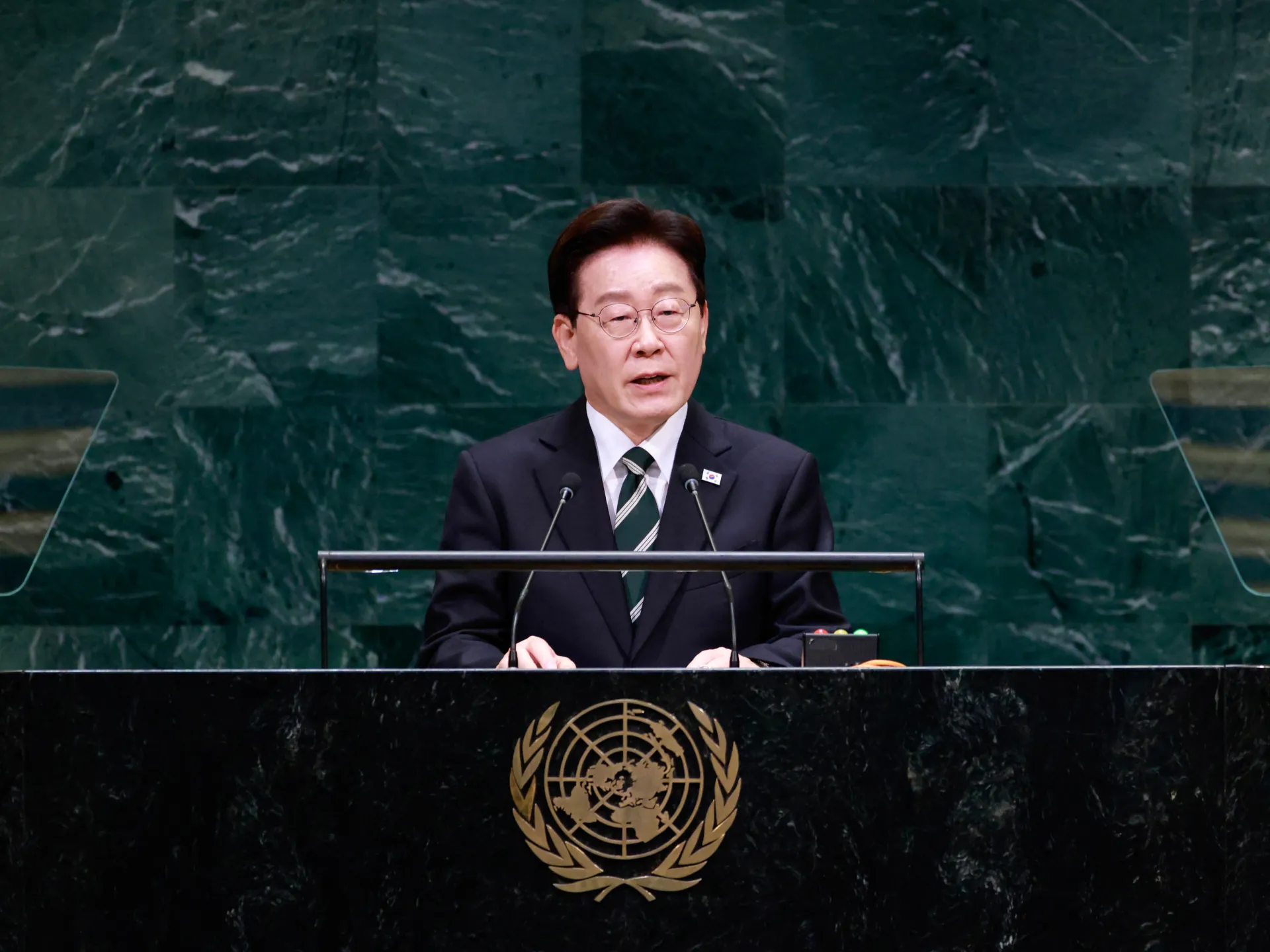
President Lee Jae Myung’s office “expresses strong regret over Ukraine’s unilateral disclosure [of the transfer] and its subsequent false announcement that there had not been a non-disclosure agreement”, the Yonhap news agency quoted Seong Ghi-hong, South Korea’s senior presidential secretary for public relations, as saying in a statement on Sunday.
The office said the nondisclosure agreement aimed to safeguard the soldiers from dangers they could face if their transfer were to be disclosed, in accordance with international law and humanitarian principles.
According to Yonhap, a South Korean media outlet, the Ukrainian presidential office said it had disclosed the transfer of the POWs without extensive details on the process, claiming that it would have been strange to keep the entire transfer a secret. Ukrainian media outlets reported a Ukrainian presidential source as denying the existence of a confidentiality agreement with Seoul, Yonhap said.
The South Korean presidential office said the Ukrainian presidential office’s “false” denial of the confidentiality agreement “seriously hampers” bilateral trust and causes serious disruptions to bilateral friendship.
Seong Ghi-hong said the government was considering additional measures over the issue, if necessary, Yonhap added.
North Korean POWS
Ukrainian forces captured the two North Korean soldiers in Russia’s Kursk region in January 2025.
Mounting evidence, including from intelligence reports and testimonies of defectors, has indicated that North Korean soldiers resorted to self-detonation or other forms of suicide rather than be captured.
In his UN address, Zelenskyy said, “These guys are not easy to capture alive.” He added, “One of them, when he realised he was going to be taken prisoner, tried to kill himself. And he was shocked that fate did not let him die.”
South Korean media reported that the two captured soldiers had expressed their desire to defect to South Korea.
The issue of North Korean prisoners of war was a key topic during the NATO summit in Ankara, Turkiye, where Lee met Zelenskyy in July.
Senior presidential spokesperson Kang Yu-jung stated afterwards that both leaders agreed to resolve the status of North Korean POWs in accordance with international law. This built on a prior agreement reached during the South Korea-Ukraine foreign ministers’ meeting in March, where both nations pledged to cooperate on the POW issue.
According to South Korean intelligence, North Korea is estimated to have deployed approximately 14,000-15,000 soldiers to support Russia’s efforts in its war with Ukraine since 2024, primarily in the Kursk border region. South Korean, Ukrainian and Western officials said they suffered heavy casualties, with more than 6,000 North Korean soldiers killed in the fighting.
The transfer comes as South Korea has backed efforts to revive dialogue with North Korea, while United States President Donald Trump has renewed his willingness to engage with Pyongyang.
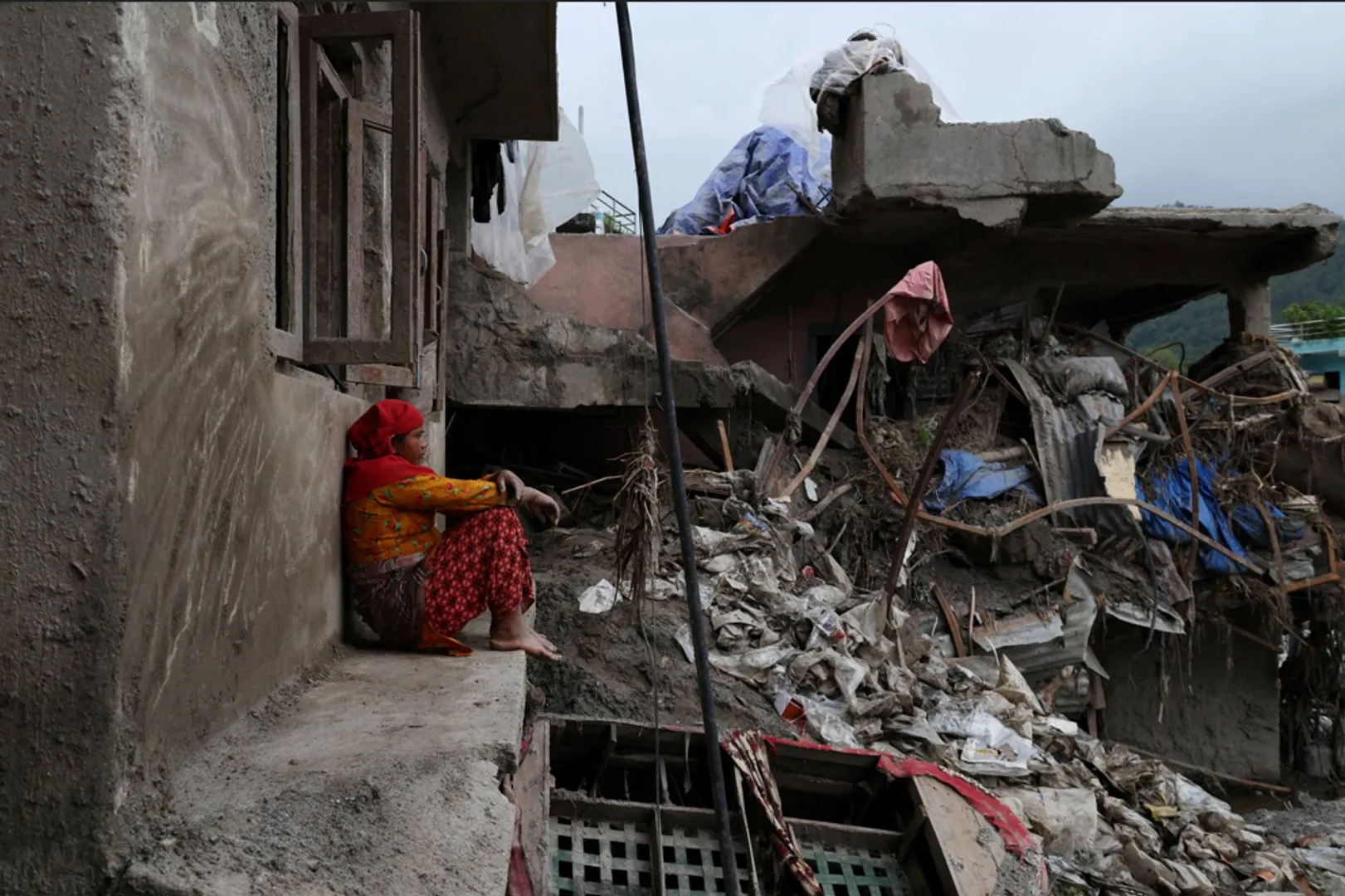
A month after catastrophic floods tore through Nepal, 5,285 people remain missing and more than 1,100 are still in holding centres. Fresh rains are now worsening conditions for displaced families living in temporary shelters, as the country faces a $4.78bn rebuilding bill.
As part of previous negotiations aimed at ending its war on Iran, the United States offered to sell Tehran uranium for use in a civilian programme, but Iran refused, a top US official said on Sunday.
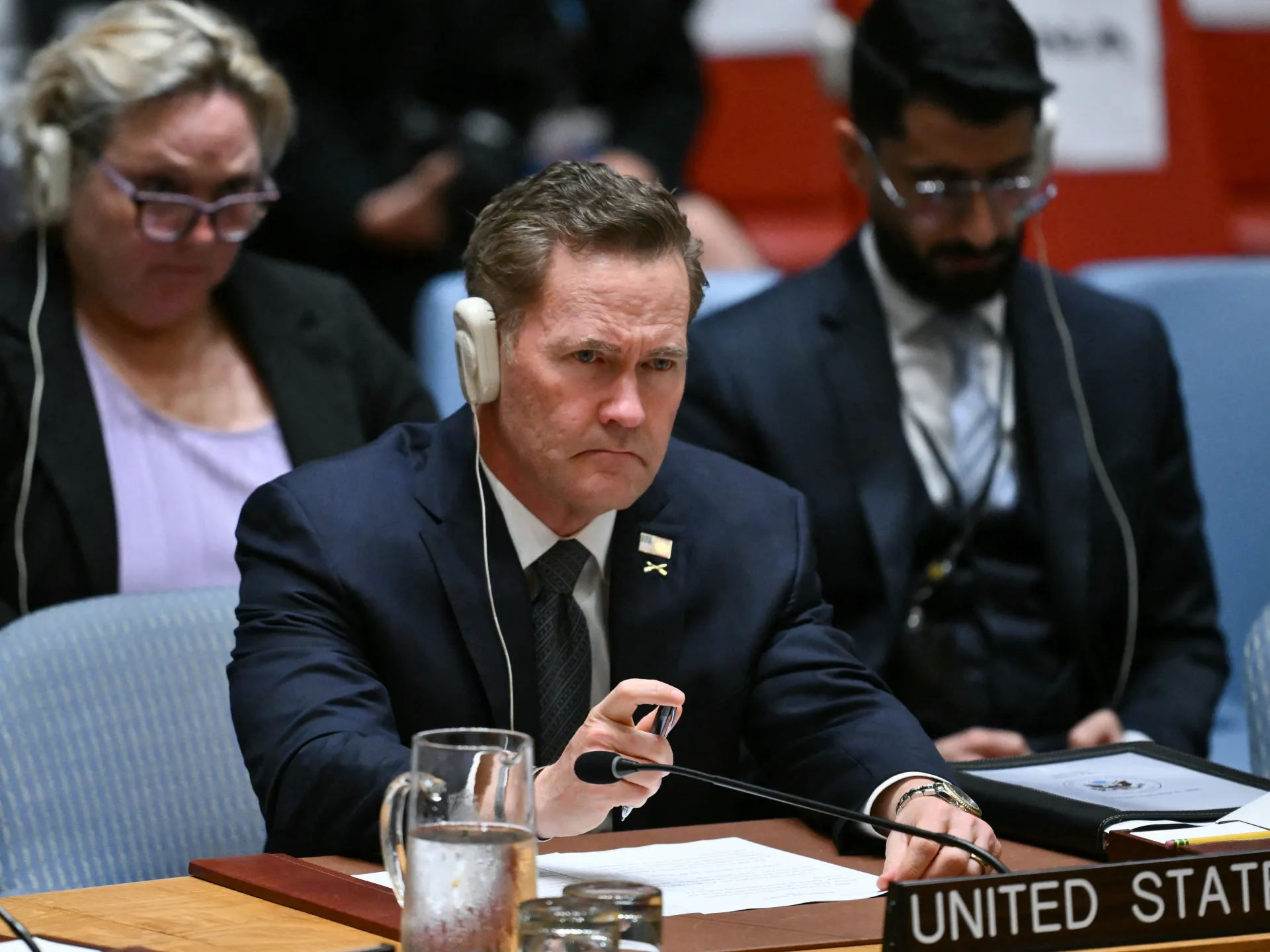
“Heck, our negotiators even offered to sell them uranium,” US Ambassador to the United Nations Mike Waltz said on NBC’s Meet the Press. He said the agreement would have been akin to that with the United Arab Emirates, which has “a peaceful programme, right there in their neighbourhood, and they abide by international law and inspection regimes”.
Recommended Stories
list of 3 itemsend of list
Waltz said the administration of US President Donald Trump was open to allowing Iran to keep a civilian nuclear programme, provided it agreed to its obligations in accordance with international law and the Nuclear Non-Proliferation Treaty (NPT).
There were “a number of ways” President Trump was open to dealing with Iran to ensure it did not have access to highly enriched uranium, or the ability to reconstitute highly enriched uranium, including by having Tehran “hand over” any such material it currently has, Waltz said.
The UAE, a signatory to the NPT, generates electricity from a nuclear power plant and signed an agreement with the US in 2009. Under those agreements, the UAE has agreed not to produce enriched uranium domestically, and not to reprocess spent fuel on its own. Trump said Saudi Arabia and the US reached an agreement on civilian nuclear use this year, but details have not yet been made public, and the US president has also claimed the deal is contingent on Riyadh agreeing to the controversial Abraham Accords. Around the region, Egypt and Turkiye also operate civilian nuclear programmes.
Pakistan openly operates a nuclear arsenal, while experts have long believed Israel secretly possesses one of its own. Neither country is a signatory to the NPT.
A key point of contention between Iran and the US has been what should be done with the uranium that Tehran currently has, and how, or even if, to ensure any future supply of the material is not capable of being used for producing a nuclear weapon. Iran has insisted it has no plans to create a nuclear weapon, and any uranium it possesses and enriches is only for civilian purposes, including for generating electricity and use in medical treatments and scientific research.
Iran is estimated to have more than 440kg (970lb) of uranium enriched at 60 percent purity. Uranium enriched to around 90 percent purity is suitable for a nuclear weapon. Enriching uranium is a complex process that involves isolating the most radioactive isotope in a quantity of uranium. Under the 2015 Joint Comprehensive Plan of Action (JCPOA), Iran agreed to cap its uranium enrichment at 3.67 percent under strict international supervision in exchange for lifting sanctions against its economy. Trump scrapped that deal in 2018, saying it was too generous to Iran.
On September 10, the International Atomic Energy Agency (IAEA) said it was concerned over Iran’s “continued noncompliance” with the Nuclear Non-Proliferation Treaty, of which it is a signatory. Under the treaty, Iran agrees not to produce nuclear weapons and to meet IAEA safeguards to control its supply of uranium used for civilian purposes. The agency has not had access to key Iranian nuclear facilities since June 2025, when Israel and the US attacked sites in the country as part of a 12-day war.
Iranian officials have responded to the IAEA by saying the finding was made “under political pressure from the US and its allies”, and that they have not stopped respecting their treaty obligations, but could not allow inspections until facilities were safe from US and Israeli attacks.
At times, Trump has said he will destroy the enriched uranium Iran has or retrieve it by force. In April, the US president claimed to have convinced Iran to turn over the enriched uranium it had, which he referred to as “nuclear dust”. Iranian officials quickly dismissed those claims, saying enriched uranium would not be transferred outside the country under any circumstances.
On Saturday, Trump rejected a plan submitted by Iran to reopen the Strait of Hormuz within seven days, as Tehran continued to insist that only diplomacy can solve the conflict between the two countries. Speaking to reporters at the White House, Trump said on Saturday that Iran wants to make a deal to open the vital maritime corridor immediately only “because they are losing so badly”.
In an interview on Meet the Press on Sunday, Iran’s foreign minister, Abbas Araghchi, said that Iran is prepared for war to resume, “even if it comes to a doomsday war”.
He added, “If you ask us, there is no reason why we should go back to diplomacy. But I’m still trying diplomacy, because I think we shouldn’t miss any chance for peace.”
The two pandas, Ping Ping and Fu Shuang, arrived from southwestern China.
Published On 27 Sep 202627 Sep 2026
Two giant pandas, Ping Ping and Fu Shuang, have arrived in the US state of Georgia on a 10-year loan as a soft-power gesture from China.
A new agreement between Zoo Atlanta and the China Wildlife Conservation Association makes Atlanta one of three zoos in the US to house giant pandas.
The diplomatic gifts departed early on Sunday from Chengdu Shuangliu International Airport in southwestern China, according to Chinese state media. They arrived after the high-level three-day Washington summit with China last week, where closed-door talks between United States President Donald Trump and Chinese President Xi Jinping yielded no major policy breakthroughs on prickly issues such as AI, trade, Taiwan and the war with Iran.
Although the pandas’ transfer had been finalised back in April, Xi officially announced the arrival timeline on Thursday at the White House, noting that the black and white mammals could reach Zoo Atlanta from the Chengdu Research Base, China’s premier hub for giant panda conservation, breeding and research, within the next few days. The dispatch of the vulnerable species aimed to signal a renewed bilateral friendship between the leaders of the world’s two biggest economies.
Ahead of their arrival, Zoo Atlanta had upgraded its panda habitats and secured a stable, long-term supply of locally grown Atlanta bamboo, which shares a near-identical climate with Chengdu.
The bears completed a 16-hour charter flight across the International Date Line, landing in Atlanta, Georgia, shortly before 7:00am (11:00am GMT).
Midway through its journey through Alaska, the FedEx Boeing 777 had spiked to the top of Flightradar24’s global tracking charts.
Steamed corn buns, bamboo shoots and carrots were prepared to keep the pandas nourished during their flight, Chinese state-run media reported. The US also mobilised a specialised care team to accompany the duo on their flight, they said.
A spokesperson for the zoo told Al Jazeera that their team had “done everything possible to accommodate them”, but a definitive timeline for their arrival – much less their public debut – remains “unconfirmed”.
“This is a thrilling day for Zoo Atlanta and a historic moment for the City of Atlanta, the state of Georgia and beyond,” Zoo Atlanta President and CEO Raymond B. King said in a statement. “We are elated to welcome Ping Ping and Fu Shuang and could not be more excited about sharing that joy with our Members, guests, city and community in the coming weeks.”
Zoo visitors will have to wait a while to see Ping Ping and Fu Shuang, officials said. The bears will be quarantined for about a month in a biosecure area of the wildlife park’s new giant panda complex. The zoo last had pandas in 2024.
Ping Ping, a male, and Fu Shuang, a female, were born in 2020.
Globally revered, the iconic furry animals have been sent across the globe for decades, serving as diplomatic emissaries loaned by China under its infamous “panda diplomacy” initiative through soft-power projection. Beijing leverages the animals’ immense public appeal to cultivate international goodwill, seal lucrative trade deals and burnish its geopolitical image abroad. Similarly, when foreign relationships fray or tensions arise, Beijing lets the loan agreements expire.
Xi has said this latest loan programme was an example of “friendship between the Chinese and Americans”.
Last week’s summit was Xi’s first visit to Washington in more than a decade and the second meeting this year with Trump.
Tangible outcomes of the meetings remain modest, restricted to a two-month extension of the trade truce, Beijing’s revival of giant panda loans and Xi’s support for Trump’s rebranding of artificial intelligence as “super intelligence”.
Hundreds of Muslims have gathered in the Indian city of Ujjain to protest the partial demolition of a mosque they say is more than 600 years old. The BJP-led state government says the action is needed to widen roads ahead of the 2028 Hindu pilgrimage, which is expected to draw large crowds.
Relations strain further as Afghanistan and Pakistan trade accusations over terrorism and cross-border violence.
Published On 27 Sep 202627 Sep 2026
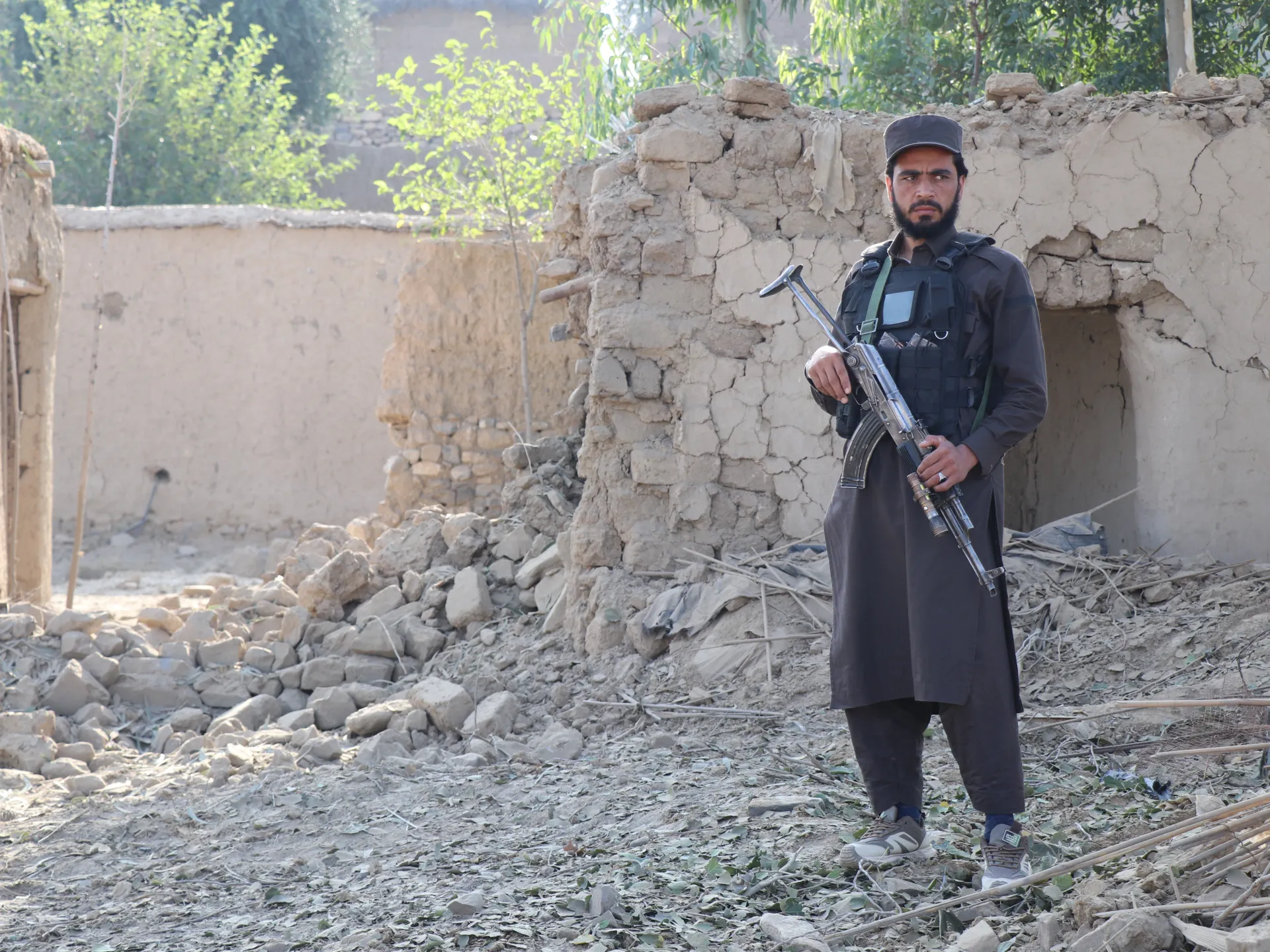
Afghanistan’s Ministry of Defence said its forces killed 28 fighters in the eastern province of Nuristan who had crossed the border from Pakistan.
In a statement posted to X, the Taliban’s defence ministry confirmed it had engaged in clashes with the opposing group on Sunday.
Recommended Stories
list of 3 itemsend of list
The defence ministry alleged that most of the fighters were former Afghan government security personnel recruited by Pakistan’s intelligence services with promises of asylum and well-paid employment in foreign countries.
The defence ministry claimed the fighters included ISIL (ISIS) fighters who were supported by Pakistani militias.
Pakistan’s Ministry of Information and Broadcasting rejected the allegations, describing them in a post on X as “frivolous, baseless and devoid of any truth”.
Pakistan denied that its security forces or intelligence agencies were involved in clashes in Nuristan, had recruited or trained former Afghan security personnel, or had facilitated ISIL (ISIS) or other armed groups in Afghanistan.
Pakistan’s information ministry also said the Taliban “should take credible and verifiable action against terrorist organisations operating from its territory” and fulfil its obligation so that “Afghan soil will not be used for terrorism against Pakistan or any other country rather than attempting to deflect responsibility through fabricated accusations”.
Escalating tensions
The clashes follow increasing tension between the two countries.
Last week, Pakistan launched air strikes on 10 locations in Afghanistan it said were used to store and launch drones, some of which were used in cross-border attacks.
The Pakistani air strikes on Thursday killed at least four people, a spokesman for the Afghan Taliban government said while promising to deliver an “appropriate response”.
Pakistan has repeatedly accused Afghanistan of sheltering fighters who attack its territory, a charge Kabul denies.
Sunday’s incident also follows Pakistani air strikes in Afghanistan on September 21 that Islamabad said killed 28 fighters. Afghan officials said civilians were killed and the U.N. mission in Afghanistan confirmed three civilian deaths.
Tehran, Iran – Hours after US President Donald Trump rejected a diplomatic solution put forward by Iran to reopen the Strait of Hormuz, explosions were heard in the waterway, according to Iranian media.
Reports of blasts near southern Iran’s Qeshm Island in the Strait of Hormuz suggested that multiple antiship missiles and drones were fired at vessels transiting the waterway against Tehran’s wishes.
Recommended Stories
list of 4 itemsend of list
While Iranian authorities did not confirm any attacks in the Strait of Hormuz that day, shipping continues to be attacked in the waters, including an Indian cargo ship last week, which killed a sailor.
The Islamic Revolutionary Guard Corps (IRGC) maintains that the strait is closed to any ship that does not coordinate with Iranian authorities. On Sunday afternoon, it released video of what it said was a second US underwater drone seized this month.
Tehran has issued instructions to shipping companies transiting the Strait of Hormuz to use a temporary route approved by Iranian authorities and pay relevant fees. But it has also said the strait will not fully reopen until the US blockade on Iranian ports ends.
Iran’s Persian Gulf Strait Authority announced on Saturday that it would blacklist any shipping charterer company which orders crews to use routes it considers to be unauthorised.
It also published what it described as an apology from an unnamed shipowner blaming commercial pressure from its charterer for trying to pass through the strait.
Washington still insists that its warships are successfully guiding oil tankers out of the strait via a different route. US Energy Secretary Chris Wright told Fox News on Sunday that the “running average” of crude oil in transit was nearly 13 million barrels per day.
A September 19 operational update by US Central Command claimed that its forces had helped move more than one billion barrels of crude out of the Gulf over roughly two months.
The US military also says its forces have redirected 122 commercial vessels to enforce the naval blockade of Iran’s ports, halting all Iranian crude exports.
Tehran has claimed that the US is providing false information regarding Strait of Hormuz traffic to project control over the key waterway. Shipping has been severely disrupted since the US and Israel started their war on Iran on February 28.
Andreas Krieg, associate professor at King’s College London, said Iran’s strategy of launching maritime attacks has spread the economic costs of the conflict beyond its borders.
While Iran has suffered economically from war damages, the US naval blockade and sanctions, it would be a mistake “to assume that reaching that threshold produces submission”.
“The next Iranian move is therefore likely to be an attempt to increase the pain experienced by the Gulf rather than simply absorb further American pressure,” Krieg said.
“That could mean more aggressive vessel interdictions in Hormuz, attacks on energy infrastructure, greater Houthi pressure around Bab al-Mandeb and pressure from Iranian-aligned groups against alternative Saudi export routes. We are already seeing how pressure on Hormuz, the Red Sea and Saudi infrastructure can interact.”
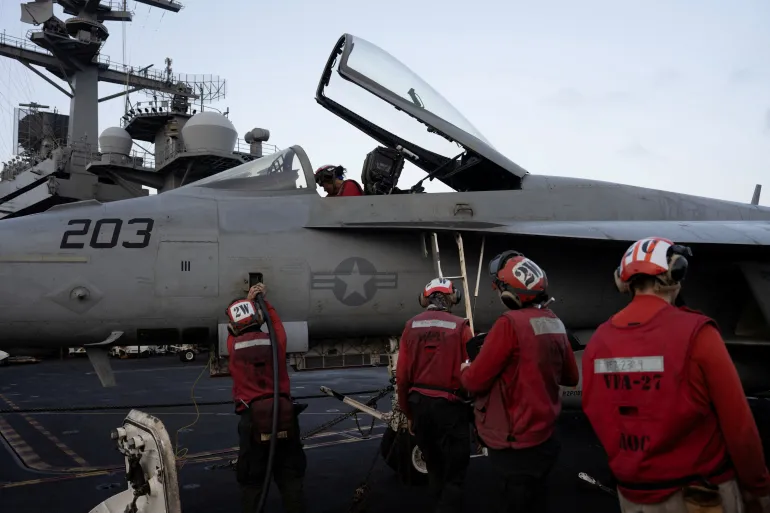
The flight deck of the USS George Washington aircraft carrier in the Arabian Sea, September 11, 2026 [Ed Ou/Reuters]
More escalation on the way
At the United Nations General Assembly in New York, Iran projected a message of defiance while also proposing to reopen the Strait of Hormuz within a week if its seven conditions were met.
They included lifting the blockade on Iran, the release of frozen Iranian funds and an end to attacks on all fronts, including Israel’s assault on Lebanon. The demands mostly amounted to a return to the June memorandum of understanding between the US and Israel.
Tehran has added that reopening the strait must be undertaken through a bilateral arrangement already finalised with Oman, the only other country with territorial waters in Hormuz.
US President Donald Trump told reporters he rejected the offer, but Iran’s Foreign Minister Abbas Araghchi said on Sunday they were adamant about the conditions and would await an official response through mediators, such as Pakistan, Qatar and Oman.
Abolfazl Shekarchi, chief spokesman of the Iranian armed forces, warned that if the US further intervenes in the Strait of Hormuz, “it will get slapped”.
“The Americans have no way out other than withdrawing from the West Asia region. The sooner they leave, the fewer losses they will incur and the region will certainly become safe after that,” he said.
Iranian army spokesman Mohammad Akraminia said conditions were deteriorating so badly for the US that it might launch another “military aggression” on Iran.
Krieg said that as the US moves to isolate Iran via sanctions, Tehran, unable to respond with mutual financial measures against Washington, will be forced to rely on continued coercion in the Strait of Hormuz.
“The most likely level remains controlled attrition rather than an immediate return to the massive air campaign of the opening months,” Krieg said.
“Over the coming weeks, I would expect further attacks or attempted attacks on tankers, US-enabled shipping and regional infrastructure, followed by limited US strikes against IRGC maritime assets, coastal missile positions, drones or vessels involved in those operations. That tit-for-tat cycle has already re-emerged around Hormuz.”
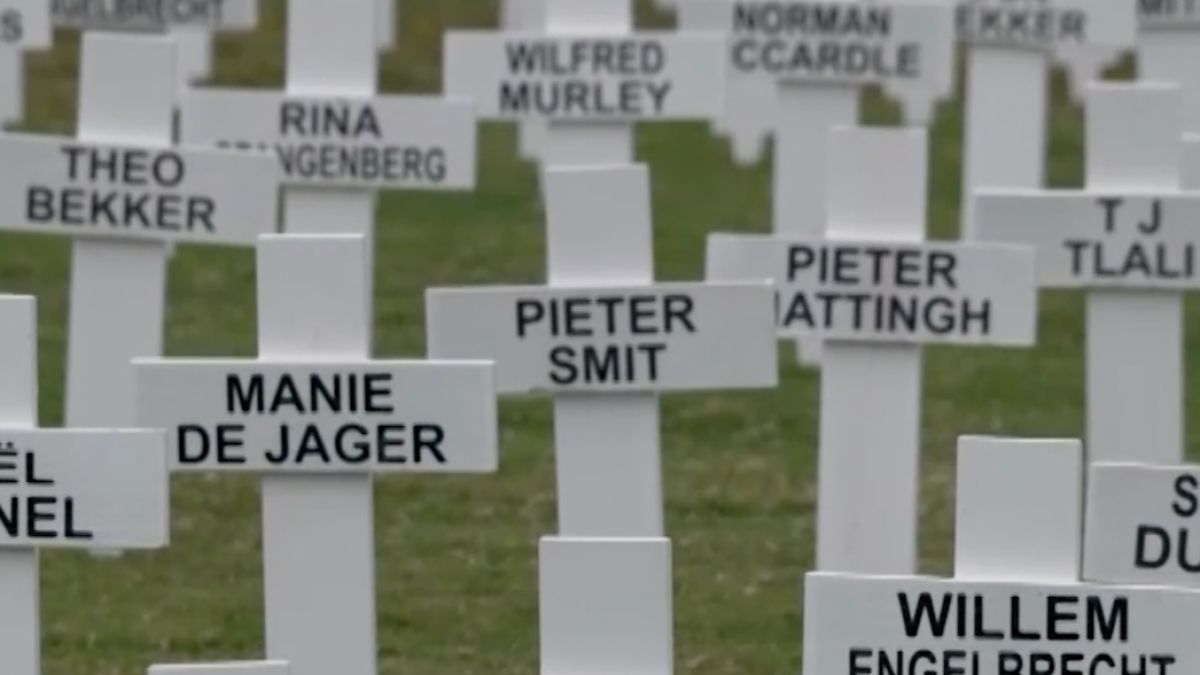
Memorial crosses installed in Washington DC have revived erroneous claims of a ‘white genocide’ against farmers in South Africa, a narrative echoed by US President Donald Trump. South Africa’s government rejects the allegation as baseless, saying crime and violence affect people across all racial groups.

![A policeman speaks to a supporter of the proscribed group Palestine Action as they gather to protest outside the conference venue on the first day of the annual Labour Party conference in Liverpool, north-west England on September 27, 2026 [Oli Scarff/AFP]](https://i0.wp.com/occasionaldigest.com/wp-content/uploads/2026/09/AFP__20260927__C9GU2MN__v1__HighRes__BritainPoliticsLabourConferencePalestineConflic-1790556936.jpg?w=640&ssl=1)

![Protesters hold placards during an anti-immigration march in Durban, South Africa, calling for tighter border controls and the deportation of undocumented migrants [Thuli Dlamini/Reuters]](https://i0.wp.com/www.aljazeera.com/wp-content/uploads/2026/06/2025-11-07T155727Z_1005019881_RC2NRHA84QWK_RTRMADP_3_SAFRICA-PROTEST-1782784993.jpg?w=640&ssl=1)


![Pope Leo participates in a candlelight procession at the Sanctuary of Our Lady of Lourdes as part of his four-day apostolic journey to France, in Lourdes, France, September 27, 2026 [Stephane Mahe/Reuters]](https://i0.wp.com/occasionaldigest.com/wp-content/uploads/2026/09/2026-09-27T202553Z_140704132_RC2VRNAYDPZJ_RTRMADP_3_POPE-FRANCE-1790546103.jpg?w=640&ssl=1)
![People watch the ocean as a nor'easter storm hits Rye, New Hampshire, US on Sunday, September 27, 2026 [Caleb Jones/AP Photo]](https://i0.wp.com/occasionaldigest.com/wp-content/uploads/2026/09/AP26270677753401-1790545375.jpg?w=640&ssl=1)