The global fallout of the closure of the Strait of Hormuz may create the impression that the world cannot function without fossil fuels. Nothing could be further from the truth. Every single industry can and must decarbonise.
For global shipping, this process would be relatively easy because technological solutions exist and a single United Nations agency can set legally binding rules for all ships. The first steps have already been made.
In 2025, member states of the International Maritime Organization (IMO) agreed on a policy mechanism to cut shipping emissions: the Net-Zero Framework (NZF). But they opted to postpone a decision on formal adoption of this landmark agreement.
This delay is emblematic of obstructive tactics used by countries opposing climate action.
The IMO Framework – the world’s first global carbon price on any international polluter – took years of compromises and watering-down. As it stands, it is the lowest possible bar Pacific Island states like the one I represent can accept. We cannot give in another inch.
While I join the First Conference on Transitioning Away from Fossil Fuels in Santa Marta, Colombia, next week, delegates will gather again at the IMO in London to decide whether to uphold their unanimous commitment to phase out fossil fuels in a just and equitable way.
The delegates of Vanuatu who travel to London have a mandate to push for the adoption of the NZF this year.
Should anyone reopen the framework to water it down, our position is clear: We will revert to our original Pacific demand for a universal levy on emissions of $150 per tonne of carbon dioxide.
Last year my country abstained from the vote on the NZF agreement. We reached that decision because the mechanism is not nearly ambitious enough. Even so, it is a starting point we can work with.
But since then, the tide has shifted dramatically.
After the delay in adoption, a small group of countries is now suggesting further weakening the ambition in the framework to meet the demands of particularly influential states whose current policy positions are not aligned with climate ambition. This strategy is problematic as reducing our collective actions to align with those that want no climate action at all is incompatible with our people’s continued survival.
The world’s poorest countries, and the planet, simply cannot afford anything less than what is already on the table.
The framework, as it is, gives the world and the industry some chance of meeting the climate obligations that IMO countries committed to in 2023, namely reaching net-zero emissions by 2050 in a just and equitable way.
The NZF introduces penalty fees – eg emission pricing for noncompliance with the regulation. This provides the regulation with a “stick” to ensure ships comply or else they must pay.
The penalties also represent revenues, up to $10bn to $12bn a year, to both incentivise industry transition and enable a fair transition for all. This fund is a lifeline for developing – and especially least developed – states to be able to afford clean maritime energy upgrades and compensate for the rising trade costs because of this transition.
Some claim that revenues raised by the NZF will blow out transport costs. This is preposterous.
The penalties charged through this framework come down to less than $1.50 per year for every living human being – although the biggest polluters should pay this cost. If the richest 10 percent of the world’s population foots this bill, it adds up to less than $15 per person. That’s a few coffees a year, which the world’s richest can easily spare.
Losing both financial penalties for noncompliance and financial support for countries like mine in the name of a political compromise with rich oil-producing states is a bad deal. Not just for all climate-vulnerable states but also for the industry that demands and deserves clarity.
If anything, we need more action and more ambition in the framework.
For years, Pacific states have pushed for the IMO regulation to be in the form of a universal levy on emissions, by pricing all emissions. We managed to get the majority of IMO member states on board, including the European Union, South Korea and Japan, as well as important Global South states, such as Panama and Liberia. However, the US has been very effective in exerting its influence in this area, which is resulting in shifts to some positions to the detriment of us all.
Our position was always backed by the best available scientific evidence.
A levy on all shipping emissions is the best way to send an unambiguous signal to the industry: Invest in the future now! The revenues, up to 10 times more than those from the NZF, serve as both a bigger stick for polluters and a bigger carrot for first movers and cash-poor countries.
This is not a handout: Hitting net zero by 2050 is not possible if our countries cannot invest in clean ships.
The bridge we have built in the form of the NZF through years of compromise and evidence is still standing. Let us cross it together by adopting it as agreed without any further dilution.
Pacific states stand ready to fight for what science and justice demand, and we call on our partners to stand with us.
The views expressed in this article are the author’s own and do not necessarily reflect Al Jazeera’s editorial stance.
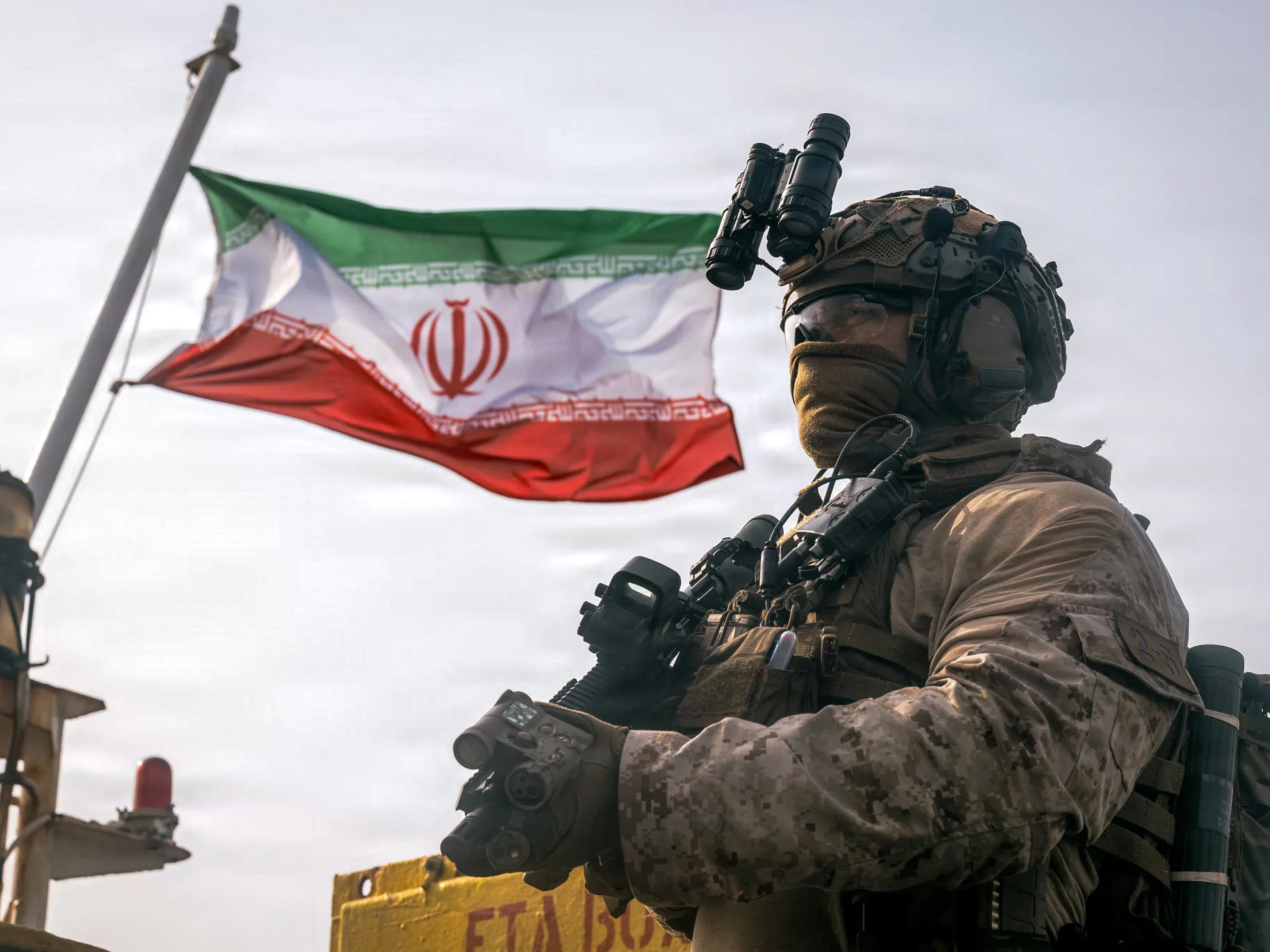
US forces have released video appearing to show the capture of an Iranian-flagged ship near the Strait of Hormuz, which President Donald Trump says was attempting to breach its naval blockade. Iran has condemned the operation as ‘maritime piracy,’ warned of retaliation, and cast doubt on new talks with the US. Here’s what we know.
The goals came from Artturi Lehkonen late in the second period and Logan O’Connor early in the third. The Kings made a game of it late, pulling goaltender Anton Fosberg with 2:57 to play and getting a power-play goal from Artemi Panarin 35 seconds later.
But if the Kings lost the game they also gained a ton of confidence with the way they played against the winningest team in the NHL during the regular season.
“The guys did what they had to do and played the right way,” interim coach D.J. Smith said “It is what it is. We’re down in the series, but a lot of good things.”
Get the latest on L.A.’s teams in the daily Sports Report newsletter.
By continuing, you agree to our Terms of Service, which include arbitration and a class action waiver. You agree that we and our third-party vendors may collect and use your information, including through cookies, pixels and similar technologies, for the purposes set forth in our Privacy Policy such as personalizing your experience and ads.
Thursday: Colorado at Kings, 7 p.m., TNT, truTV, HBO Max
Sunday: Colorado at Kings, 1:30 p.m., TNT, truTV, HBO Max
*Wed., April 29: Kings at Colorado, TBD
*Friday, May 1: Colorado at Kings, TBD
*Sunday, May 3: Kings at Colorado, TBD
*- If necessary
Ducks playoffs schedule
All times Pacific
Monday: Ducks at Edmonton, 7 p.m., ESPN2
Wednesday: Ducks at Edmonton, 7 p.m., TBS, HBO Max
Friday: Edmonton at Ducks, 7 p.m., TNT, truTV, HBO Max)
Sunday: Edmonton at Ducks, 6:30 p.m., ESPN
*Tuesday, April 28: Ducks at Edmonton, TBD
*Thursday, April 30: Edmonton at Ducks, TBD
*Saturday, May 2: Ducks at Edmonton, TBD
*-if necessary
Dodgers lose to Rockies
From Mirjam Swanson: What do you know? The once-stampeding Dodgers have been caged by the Colorado Rockies.
With a 9-6 loss Sunday at Coors Field, the two-time defending World Series champions lost back-to-back games for the first time this season. The Dodgers again couldn’t hold a lead, letting the Rockies tee off for 15 hits.
Nor could the Dodgers keep up offensively at the hitter-friendly park — though they put some pressure on in the ninth inning, when Shohei Ohtani led off with a ground-rule double and the Dodgers scored twice to cut the lead to three runs. Then the new guy, Ryan Ward, made the final out in his big league debut, robbed of a hit and a chance to keep chipping away by a diving Troy Johnston in right field.
Before that, the Rockies — who beat the Dodgers twice in 13 meetings all of last season — chased starter Roki Sasaki from the game in the fifth inning and then ruffled the Dodgers’ relievers. That included closer Edwin Díaz, who came on in the eighth and promptly gave up three singles, a walk and two runs before being pulled with the Dodgers trailing 8-4.
Xander Bogaerts and Bryce Johnson delivered two-out RBIs as the San Diego Padres defeated the Angels 2-1 on Sunday.
Bogaerts broke a scoreless tie with an RBI single in the fourth inning, and Johnson added a two-out RBI single in the seventh as San Diego took two of three games in the series. Johnson finished with two of San Diego’s five hits for his multihit game of the season.
Michael King (3-1) gave up one hit over five scoreless innings, striking out six and walking four while working through traffic. He combined with Ron Marinaccio, Kyle Hart, Bradgley Rodriguez and Mason Miller to hold the Angels to two hits.
From Bill Plaschke: The Lakers limped painfully into the playoffs Saturday night only to delightfully discover a miracle salve.
An opponent as mangled as they were.
Yes, the Lakers are beginning this tournament seriously hampered by the indefinite absences of Luka Doncic and Austin Reaves.
But — surprise, surprise — the Houston Rockets showed up with a bad leg of their own, a recently suffered knee contusion that sidelined leading scorer Kevin Durant for at least the first game of this first-round series.
The result? Check out the wide-mouthed scream unleashed by the Lakers’ Luke Kennard midway through the fourth quarter.
at Lakers 107, Houston 98 (box score) Tuesday: Houston at Lakers, 7:30 p.m., NBC Friday: Lakers at Houston, 5:30 p.m., Amazon Prime Video Sunday: Lakers at Houston, 6:30 p.m., NBC *Wed., April 29: Houston at Lakers, TBD *Friday, May 1: Lakers at Houston, TBD *Sunday, May 3: Houston at Lakers, TBD
It came in the form of a caution on the 58th lap, allowing him to overtake front-runner Felix Rosenqvist exiting pit lane and hold the lead the rest of the way, taking the checkered flag by 3.96 seconds for his third triumph in five IndyCar Series races this season and his first at Long Beach.
Right after being showered with applause and confetti at victory lane, the 29-year-old Spaniard thanked his crew, whose quick work on the last pit stop proved to be the difference.
Ousseni Bouda scored two goals in the second half, ending LAFC goalie Hugo Lloris’ scoreless run to begin the season at 593 minutes, and the San José Earthquakes stunned LAFC 4-1 on Sunday night in an early Western Conference showdown.
San José (7-1-0) moves into a first-place tie with the Vancouver Whitecaps in the Western Conference and Supporters’ Shield races in the Earthquakes’ second season under head coach Bruce Arena.
Daniel De Sousa Britto missed a chance to tie Lloris with a sixth clean sheet on an own goal by Reid Roberts in the 74th minute. He had three saves.
1958 — The Montreal Canadiens win the NHL Stanley Cup for the third straight year with a 5-3 victory over the Boston Bruins in the sixth game.
1986 — Chicago’s Michael Jordan sets an NBA single-game playoff scoring record with 63 points in a 135-131 double overtime loss to the Boston Celtics, in Game 2 of the first round in the Eastern Conference.
1991 — Mark Lenzi becomes the first person to score 100 points on a single dive. On his last dive, Lenzi scores 101.85 points on a reverse 3½ somersault from the tuck position to win the 3-meter springboard title at the U.S. Indoor Diving Championships.
1996 — NFL Draft: Keyshawn Johnson from USC first pick by New York Jets.
1997 — Chicago’s Michael Jordan wins an unprecedented ninth scoring title with an average of 29.6 points, the first time in those nine seasons that he fails to average at least 30 points.
1997 — PGA Seniors’ Championship Men’s Golf, PGA National GC: Defending champion Hale Irwin wins his second of three straight Senior PGA Championships.
2002 — NFL Draft: Fresno State quarterback David Carr #1 pick by Houston Texans.
2007 — Roger Federer wins his 500th match, defeating David Ferrer 6-4, 6-0 in the quarterfinals of the Monte Carlo Masters.
2008 — Danica Patrick becomes the first female winner in IndyCar history, capturing the Indy Japan 300 in her 50th career start. Patrick takes the lead from pole-sitter Helio Castroneves on the 198th lap in the 200-lap race and finishes 5.8594 seconds ahead of Castroneves.
2008 — Lorena Ochoa becomes the first LPGA Tour player in 45 years to win four tournaments in consecutive weeks. Ochoa shoots a three-under 69 in the final round of the Ginn Open and beats rookie Yani Tseng by three strokes for her fifth victory in six starts. Mickey Wright did it in 1963.
2014 — Bernard Hopkins, 49, becomes the oldest to win a unification light-heavyweight bout as he captures a split 12-round decision over 30-year-old Beibut Shumenov of Kazakhstan. Hopkins, who improves to 55-6-2, retains his IBF title and wins the WBA and IBA belts.
2015 — Lelisa Desisa of Ethiopia wins the 119th Boston Marathon, his second victory here. Desisa, who finishes in 2:09:17, also won the 2013 race just hours before a pair of bombs exploded at the finish line. Caroline Rotich of Kenya wins the women’s race.
2017 — LeBron James finishes with 41 points, 13 rebounds and 12 assists, and the Cleveland Cavaliers set an NBA postseason record by erasing a 25-point halftime deficit to beat the Indiana Pacers 119-114 and take a 3-0 lead. Cleveland trailed by 26 in the first half and was still down 74-49 at halftime. The largest halftime deficit overcome to win a playoff game had been 21 points by Baltimore against Philadelphia in 1948.
2017 — Roman Josi scores twice, Pekka Rinne has 30 saves and the Nashville Predators beat the Chicago Blackhawks 4-1 to complete a surprising sweep of the Western Conference’s top seed. It’s the first time a No. 1 seed is swept in the first round since the NHL adopted its current playoff format in 1994.
2021 — All six EPL clubs withdraw from the controversial European Super League just 3 days after it was announced – Chelsea, Manchester City, Liverpool, Arsenal, Manchester United and Tottenham.
Compiled by the Associated Press
This day in baseball history
1910 — Addie Joss of Cleveland pitched the second no-hitter of his career, a 1-0 win over the White Sox in Chicago.
1912 — Fenway Park was opened in Boston and the Red Sox defeated the visiting New York Highlanders, later known as the Yankees, 7-6 in 11 innings. Tiger Stadium in Detroit also opened its doors as the Tigers defeated the Cleveland Indians 6-5.
1916 — The Chicago Cubs played their first game at Weeghman Park — renamed Wrigley Field in 1926 — defeating the Cincinnati Reds 7-6 in 11 innings.
1920 — Manager Gavy Cravath of the Philadelphia Phillies inserted himself as a pinch-hitter and beat the New York Giants with a three-run homer, 3-0. It was his last home run in the majors.
1937 — Gee Walker hit for the cycle on opening day to lead the Detroit Tigers to a 4-3 win over Cleveland. Walker hit the cycle in reverse order: home run, triple, double, single.
1938 — Cleveland’s Bob Feller pitched the first of 12 career one-hitters, beating the St. Louis Browns 9-0.
1939 — In his first major league game, Ted Williams hit a 400-foot double as the Boston Red Sox lost 2-0 to New York at Yankee Stadium.
1941 — The Brooklyn Dodgers become the first major league team to wear protective headgear.
1967 — Tom Seaver of the New York Mets recorded his first major league victory with a 6-1 triumph over the Chicago Cubs. Seaver went 7 2-3 innings and gave up eight hits and one run.
1982 — The Atlanta Braves recorded their 12th consecutive victory from the beginning of the season — a 4-2 decision over Cincinnati in Atlanta — and eclipsed the major league record set a year earlier by the Oakland A’s.
1988 — The Baltimore Orioles set a major league record with their 14th straight defeat at the start of the season, losing to the Milwaukee Brewers 8-6.
1990 — Seattle’s Brian Holman lost his bid for baseball’s 13th perfect game with two out in the ninth inning on Ken Phelps’ pinch-hit home run in the Mariners’ 6-1 victory over the Oakland Athletics.
1997 — The Chicago Cubs stopped their season-opening losing streak at 14 games, rallying in the sixth inning to beat the New York Mets 4-3 in the second game of a doubleheader. The Mets won the opener 8-2. Chicago’s 0-14 start set a National League record and was the second worst behind the 1988 Baltimore Orioles, who began 0-21.
1999 — Cincinnati Reds owner Marge Schott agrees to sell her controlling interest in the Reds to a group headed by Carl H. Lindner, ending her 14-year tenure.
2001 — Carlos Delgado of the Blue Jays hit three homers for the second time this season, as Toronto beat the Kansas City Royals 12-4.
2006 — Julio Franco became the oldest player in major league history to hit a home run when he hit a two-run, pinch-hit shot in the eighth inning to help the New York Mets rally for a 7-2 win over San Diego. Franco, 47, replaced Athletics pitcher Jack Quinn in the record book who was 46 years, 357 days old when he homered on June 27, 1930.
2007 — Alex Rodriguez went 3-for-5 with two home runs in a 7-6 loss to Boston and joined Mike Schmidt, who hit 12 homers in the first 15 games in 1976, as the fastest to reach a dozen in baseball history.
2008 — The Blue Jays release former superstar Frank Thomas, who has 516 major league home runs.
2010 — Pitcher Edinson Volquez of the Reds is suspended for 50 games for failing a PED test during spring training.
2011 — Commissioner Bud Selig steps in and takes control of the day-to-day operations of the Dodgers from owner Frank McCourt.
2012 — Drew Stubbs had three hits and drove in three runs to lead the Cincinnati Reds to a 9-4 win over the Chicago Cubs — the 10,000th victory in franchise history.
2021 — Corbin Burnes strikes out 10 batters and walks none in 6 innings in a 6-0 Brewers win over the Padres.
Compiled by the Associated Press
Until next time…
That concludes today’s newsletter. If you have any feedback, ideas for improvement or things you’d like to see, email me at houston.mitchell@latimes.com. To get this newsletter in your inbox, click here.
Madrid, Spain – Venezuela’s opposition leader Maria Corina Machado is aligned with Spain’s main right-wing party on its economic visions, but they are divided by social issues such as abortion, analysts say.
On a visit to Spain this weekend, Machado chose to snub an invitation to meet Socialist Prime Minister Pedro Sanchez and the left-wing coalition government officials.
Recommended Stories
list of 2 itemsend of list
The Nobel Peace Prize winner said she had chosen not to meet Sanchez because he was hosting a summit of left-wing leaders from Latin America in Barcelona.
“What has transpired in the past few hours at the meeting held in Barcelona with various political leaders from different countries is proof that such a meeting was not advisable,” Machado told a meeting in Madrid on Saturday.
Instead, she held a series of meetings with leaders from the opposition conservative People’s Party (PP) and the far-right Vox party.
Machado received a rapturous welcome from Alberto Nunez Feijoo, the PP party leader and Venezuelan emigres in Madrid, on Friday.
On Saturday, the Venezuelan opposition leader met Isabel Diaz Ayuso, the populist conservative Madrid regional leader, one of Sanchez’s fiercest critics and a possible rival to Feijoo.
Ayuso presented Madrid’s gold medal to Machado, while Madrid’s Mayor Jose Luis Martinez-Almeida – also of the PP – handed her the keys to the city before a rally with Venezuelan supporters.
Machado also met Santiago Abascal, the leader of Vox, in the Spanish capital.
Feijoo praised how Machado had championed freedom even at the cost of going into hiding in Venezuela away from her family.
“Spain knows well the value of freedom; it cost us dearly to obtain it. The generations of our parents and grandparents know what it is to live without freedom. That is why we cannot look the other way,” Feijoo said.
What divides Venezuela and Spain’s opposition?
Despite the cordial welcome, there are significant differences between Machado and Feijoo, commentators said.
A liberal conservative, who has said she is an admirer of Margaret Thatcher, Machado has been dubbed Venezuela’s “Iron Lady”.
She moved from the right politically to the centre-ground during the 2024 presidential campaign to attract voters in the middle ground.
As a conservative, Machado heads a Venezuelan opposition that is split and which also contains more liberal factions.
In contrast, Feijoo heads a well-organised conservative political party, which has only recently suffered divisions after the formation of the hard-right Vox party in 2013, analysts said.
Carlos Malamud, an expert on Latin America at the Real Elcano Institute, a think tank in Madrid, said the structure of both opposition groups was different.
“Machado is the leader of a small, disorganised opposition, while Feijoo is the head of the PP, which is a well-organised national political party,” he told Al Jazeera.
Malamud said Machado did not demonstrate the traits of a would-be Venezuelan president by refusing to see Sanchez.
“If Machado wants to be the president of Venezuela next year, she needs to be prepared to meet the head of the Spanish government, whoever that may be,” he explained.
“Perhaps the Venezuelan opposition sees the Spanish Socialist Party as being allied to (former Spanish prime minister) Jose Rodriguez Zapatero.”
Zapatero has played a controversial role in acting as a mediator between Spain and the government of former Venezuelan President Nicolas Maduro, who was abducted by the United States in January.
Maduro faces charges of narcoterrorism, conspiracy to commit narcoterrorism, drug trafficking, money laundering and corruption, which he denies.
Machado ‘more conservative’ on social issues
Malamud said one factor which unites Machado and Feijoo is that they came from political systems which suffered from polarisation.
“Venezuelan politics is the same as Cuban politics, or like Spanish. They all suffer from the same degree of polarisation,” he added.
Ana Ayuso, an investigator in Latin American affairs at the Barcelona Centre for International Affairs, said Machado shared the liberal economic theories of Feijoo, but they differed on social issues.
“She is in favour of freedom of trade and a small state, so she is quite liberal on economic affairs like Feijoo,” Ayuso told Al Jazeera.
“She is also closer to Isabel Diaz Ayuso in terms of economics, in terms of free trade and the participation of the state.”
“However, she is more conservative when it comes to social issues. Machado is against abortion, and religious affairs are important to her. She is close to the [Roman] Catholic Church. Feijoo supports the right to abortion.”
In an interview in 2024 with Spanish newspaper El Pais, Machado said she was against abortion but in favour of changing the law in Venezuela to allow abortion in cases of rape.
At present, the law in Venezuela allows abortion only when there is a risk to the life of the mother or child. Otherwise, it is illegal and can carry a jail sentence of up to two years.
“Machado does not have any similarities with Vox. Venezuela does not have a problem with immigration. Emigration is the problem,” added Ayuso.
She said the Venezuelan opposition leader had initially been a staunch supporter of US President Donald Trump, but he had shunned her in support of Delcy Rodriguez, the acting Venezuelan president.
Machado was now closer to Marco Rubio, the US secretary of state, who supported her cause within the MAGA movement, she added.
Russia’s FSB accused the woman, found with a bomb in her backpack, of taking part in a plot hatched by Ukraine.
Published On 20 Apr 202620 Apr 2026
Russian authorities say they have thwarted a Ukraine-linked bomb plot against security services and arrested a German woman found with a makeshift bomb in her backpack.
Russia’s FSB security agency said the unnamed woman was detained on Monday in the southern city of Pyatigorsk.
Recommended Stories
list of 3 itemsend of list
In a statement cited by Russia’s state-run TASS news agency, the FSB said it had “prevented a terrorist attack planned by the Kyiv regime against a law enforcement facility in the Stavropol region, involving a German citizen born in 1969”.
It said the woman had been recruited by a citizen from a Central Asian country, who was working on orders from Ukraine. That man was found and arrested near the targeted site.
According to the FSB, the device contained an explosive charge equivalent to 1.5kg (3 pounds) of TNT and was intended to be detonated remotely. The agency said the blast was ultimately prevented by electronic jamming.
Video of the purported arrest published by Russia’s state RIA Novosti news agency showed armed Russian security agents approach the woman as she was face down in a car park.
Another video showed masked plainclothes agents pulling a man into a station, followed by a controlled explosion of the backpack.
Russia’s previous allegations
Russia has arrested dozens of people throughout the four-year war, mostly its own citizens, on allegations of working for Ukraine to carry out sabotage attacks.
Russia has previously accused Ukraine of working with Islamic fundamentalists to carry out attacks inside Russia, without providing evidence.
Officials initially alleged that the perpetrators of a 2024 massacre at a concert hall on the outskirts of Moscow that killed 150 people were ISIL (ISIS) members in coordination with Ukraine.
ISIL claimed responsibility for that attack, making no reference of any Ukrainian involvement, for which no evidence was presented by Moscow and which Kyiv denies.
Ukraine’s military intelligence says it struck two large landing ships in Sevastopol Bay in Russian-occupied Crimea.
Published On 20 Apr 202620 Apr 2026
Ukraine and Russia have attacked each other overnight, with Ukrainian drones striking Russian assets in Black Sea ports and Russia hitting several regions across Ukraine, including the capital Kyiv.
Ukraine’s GUR military intelligence unit claimed attacks on two Russian landing ships and a radar station in Sevastopol Bay in Russian-occupied Crimea. It says the $150m vessels were successfully hit and radar equipment destroyed.
Recommended Stories
list of 3 itemsend of list
In Russia, Ukrainian drones targeted the port of Tuapse, killing at least one person, injuring another and damaging transport infrastructure, according to regional governor Veniamin Kondratiev.
The strike was the second on the port in three days, hours after a fire from a previous attack was extinguished.
Russia’s Defence Ministry said air defences destroyed 112 Ukrainian drones overnight.
(Al Jazeera)
Ukraine reported a series of Russian attacks on Ukrainian territory overnight, including in Kyiv, Kharkiv, Kherson, Sumy and Zaporizhia regions.
Drones hit a car in the city of Putyvl in Ukraine’s border region of Sumy, injuring three women, as well as two homes in Kyiv’s Brovary district, damaging them and injuring one person, according to Ukrainian officials.
“Tonight, the enemy is again attacking the Kyiv region with drones. Under the sights are peaceful people, homes,” said Kyiv regional military administration head Mykola Kalashnyk.
Russian attacks also damaged railway infrastructure in the northeastern city of Kharkiv, according to the Interfax-Ukraine news agency.
Over the past 24 hours, Russian attacks in the Kherson region killed one person and injured seven, while injuring four others in the Zaporizhia region, Ukrainian officials said.
Moscow’s forces have hit civilian areas almost daily since the all-out invasion of its neighbour more than four years ago, with the regular assaults occasionally punctuated by massive attacks.
More than 15,000 Ukrainian civilians have died in the strikes, according to the United Nations.
There have been several rounds of United States-brokered negotiations in recent months, but they have failed to reach an agreement to stop the fighting, with the process further stalled since the outbreak of the US-Israel war on Iran.
Even before the war on Iran, progress towards a peace deal in Ukraine had been slow, due to differences over territorial issues.
Ukraine has proposed freezing the conflict along current front lines. Russia rejects that, saying it wants the whole of the Donetsk region, despite it being partly controlled by Ukraine – a demand Kyiv says is unacceptable.
New video from the US military is said to show an operation by its forces to seize an Iranian-flagged ship which attempted to bypass the US blockade of Iranian ports. The US says the cargo ship Touska was linked to a sanctioned company, while Iran condemned the move as ‘piracy’ and a violation of the ceasefire.
Islamabad, Pakistan – Pakistan is gearing up to host the second round of talks between the United States and Iran aimed at ending their war, but rising tensions in recent hours have cast uncertainty over Tehran’s participation, as the deadline nears for the end of the two-week ceasefire.
Unlike the first round of talks held in Islamabad on April 11, the upcoming negotiations could last for multiple days until a temporary deal – mediators are calling it a memorandum of understanding – is signed, effectively extending the ceasefire, sources close to these efforts have told Al Jazeera. If the MoU is agreed, it would give negotiators a longer window – even up to 60 days – to secure a longer peace deal.
Recommended Stories
list of 4 itemsend of list
But all of that hinges on the participation of Iran, which – as of Monday morning – has not confirmed that it will be sending its negotiators to Islamabad. That follows a rapid escalation in tensions over the past 24 hours.
US President Donald Trump announced on Sunday that his representatives were heading to Pakistan for a second round of negotiations with Iran, as a fragile ceasefire, due to expire on Wednesday, edges towards its deadline. But Trump accompanied his announcement with a revival of earlier pre-ceasefire threats to bomb Iran’s energy and power facilities.
“My Representatives are going to Islamabad, Pakistan. They will be there tomorrow evening, for Negotiations,” Trump wrote on Truth Social. He accused Iran of a “Total Violation of our Ceasefire Agreement” after Iranian gunboats fired on vessels in the Strait of Hormuz on Saturday, hitting ships including a French vessel and a British freighter.
“We’re offering a very fair and reasonable DEAL, and I hope they take it because, if they don’t, the United States is going to knock out every single Power Plant, and every single Bridge, in Iran,” Trump wrote. “NO MORE MR. NICE GUY!”
The tensions did not ease overnight. In the early hours of Monday, Trump announced on Truth Social that the US Navy guided missile destroyer USS Spruance had intercepted an Iranian-flagged cargo ship, the Touska, nearly 900 feet (274 metres) long, in the Gulf of Oman after its crew refused to heed warnings to stop.
“Our Navy ship stopped them right in their tracks by blowing a hole in the engine room,” Trump wrote. US Marines have now taken charge of the vessel, which Trump alleged was under US Treasury sanctions for prior illegal activity.
Iran has described the seizure of the ship as “piracy”.
The Serena Hotel is scheduled to host the anticipated next round of talks between the US and Iran. [Sohail Shahzad/EPA]
Pakistan’s preparations
Amid those military and social media exchanges between Iran and the United States, Pakistan has been busy getting ready to host talks that it – as the principal mediator between Washington and Tehran – hopes will yield a deal to end the war, now into its eighth week.
Islamabad’s Marriott Hotel asked guests to vacate by Sunday afternoon. The Serena Hotel, just a few kilometres away and the venue for the first round of talks a week earlier, soon issued the same order and stopped taking reservations.
Roads into the Red Zone, the capital’s most heavily fortified area, were sealed. The district houses key government buildings, including the National Assembly, foreign embassies and both five-star hotels. Thousands of additional police and paramilitary personnel arrived from across the country.
Barbed wire and barricades lined the streets, and most access routes were shut.
But even before Trump’s latest threat to blow up Iranian energy and power facilities, and the subsequent hijacking of the Iranian ship, Tehran was unclear about whether it would join the talks.
Minutes before Trump’s Truth Social message, Iran’s ambassador to Pakistan, Reza Amiri Moghadam wrote on his social media that violations of international law, the continuation of the US naval blockade of the Strait of Hormuz, threats of further strikes, and what he described as unreasonable demands could not be reconciled with a genuine pursuit of peace.
“As long as the naval blockade remains, faultlines remain,” he added.
The negotiators: The US and Iranian teams
Trump first said on Sunday that Vice President JD Vance, who had led the US team in the first round of Islamabad talks, would not visit the Pakistani capital this time around, because of security concerns.
But White House Press Secretary Karoline Leavitt later said that Vance would join the US delegation, alongside special envoy Steve Witkoff and Trump’s son-in-law, Jared Kushner, the same team that led the first round.
Flight tracking data showed at least four US government aircraft carrying communications equipment and motorcade support landed on Sunday at PAF Base Nur Khan in Rawalpindi, the primary VIP entry point for Islamabad.
However, by late night, sources close to mediators told Al Jazeera that it was once again unclear whether Vance would travel to Islamabad on Monday. They said that the US might now send Witkoff and Kushner to Islamabad first, and if the talks actually happen, Vance might join them.
Amid Iranian hesitation over whether to join the Islamabad talks, Pakistani Prime Minister Shehbaz Sharif spoke with Iranian President Masoud Pezeshkian. The call lasted about 45 minutes, the Pakistan PM’s office said.
Sharif briefed Pezeshkian on his recent visits to Saudi Arabia, Qatar and Turkiye, where he met with their leaders, describing those engagements as helpful in “building consensus in support of a sustained process of dialogue and diplomacy”.
But by early Monday morning, Trump’s revived threats and the capture of the Iranian cargo ship have left the prospects of talks in Islamabad even more on edge than before.
Iran pushes back
Tehran pushed back sharply against Trump’s flurry of social media posts on Sunday.
Iran’s state news agency IRNA said reports of a second round of talks in Islamabad were “not correct”, and blamed the lack of progress on what it described as American “greed”, unreasonable demands, shifting positions and “continuous contradictions”.
According to IRNA, the naval blockade – imposed by Trump last Monday, two days after the first round of Islamabad talks – violated the ceasefire understanding and had “so far prevented progress in negotiations”.
It added that “no clear prospect for productive negotiations is foreseen” under current conditions and dismissed US statements on talks as “a media game”, aimed at pressuring Iran through a “blame game”.
A satellite image shows shipping movement in the Strait of Hormuz on April 17, 2026, in Space. [Handout/ European Union/Copernicus Sentinel via Reuters]
In a post on X, foreign ministry spokesman Esmaeil Baghaei went further, describing the US naval blockade as “unlawful and criminal” and saying it amounted to “war crime and crime against humanity”.
Despite the public denials, Iranian sources earlier on Sunday indicated a delegation was expected in Pakistan on Tuesday. It could include Parliamentary Speaker Mohammad Bagher Ghalibaf, who led Tehran’s team in the first round, and Foreign Minister Abbas Araghchi, who had joined him then.
Pakistan’s foreign ministry said Araghchi and his Pakistani counterpart Ishaq Dar spoke by phone on Sunday and discussed “the need for continued dialogue and engagement as essential to resolving the current issues as soon as possible”.
Analysts say the gap between Iran’s public stance and private signalling reflects a deliberate strategy.
“This gap reflects a dual-track negotiation strategy,” Seyed Mojtaba Jalalzadeh, an international relations analyst based in Tehran, told Al Jazeera. “At the public level, Iran maintains a hardline position to preserve domestic legitimacy and increase its leverage; at the non-public level, by dispatching a team to Islamabad, it signals that it has not abandoned diplomacy but is instead testing its conditions.”
Fahd Humayun, an assistant professor of political science at Tufts University, agreed.
“When warring parties come to the table to negotiate, they come with the understanding that there is occasionally a gap between public posturing and private positions,” he told Al Jazeera. “My sense is that they will pick up from where they left off, rather than getting too caught up in the rhetoric that has emerged since”.
That divergence extends to the pace of negotiations.
Washington has pushed for a rapid resolution, with Trump repeatedly declaring the war “close to over” even as fighting continues. Tehran, by contrast, has shown little inclination to be rushed.
A diplomat in Islamabad, who has followed the talks closely, described the contrast.
“The previous round of talks is a great example. It appeared as if the Americans brought a stop-watch, whereas the Iranians came armed with a calendar,” the diplomat said on condition of anonymity.
What is achievable?
Officials do not expect a final deal this week.
The immediate goal is likely to be a ceasefire extension, with both sides in Islamabad working towards a limited understanding.
Pakistani officials expressed cautious optimism, saying the process was moving in a positive direction while stressing that a final agreement would require sustained engagement and compromise.
Unlike the first round, talks could run for several days, with the aim of agreeing on a framework for broader negotiations in the coming weeks and months.
Pakistan’s Prime Minister Shehbaz Sharif with Iranian Parliament Speaker Mohammad Bagher Ghalibaf before anticipated peace talks in Islamabad, April 11, 2026. [Handout/Office of the Iranian Parliament Speaker via Reuters]
Humayun cautioned against viewing the first round as a failure.
“I wouldn’t characterise the first round as having failed, that assumes expectations of resolving the most difficult issues early on, which is unlikely in talks of this nature where the issues are so complex,” he said.
For this round, a ceasefire extension would be “a meaningful outcome in itself”, while both sides would likely be “probing for any shifts or flexibility in positions since they last spoke”.
It is that movement, he added, that would allow both sides to “politically sanction an extension of the ceasefire”.
“A ceasefire extension could represent the most minimal form of agreement achievable in this round,” Jalalzadeh said, adding that the deal Washington seeks is “far broader in scope and is rooted in a history stretching back 47 years”.
Iran’s Deputy Foreign Minister Saeed Khatibzadeh, speaking on the sidelines of the Antalya Diplomacy Forum in Turkiye over the weekend, said “significant progress” had been made in the previous round but stressed that a framework must be agreed upon before talks could advance.
He described US demands on Iran’s nuclear programme as “maximalist”.
Ghalibaf was more direct. “There are many gaps and some fundamental points remain,” he said in televised remarks on Saturday night. “We are still far from the final discussion”.
The core sticking points, Iran’s nuclear programme and control of the Strait of Hormuz, remain unresolved since the first round, held on April 11, which lasted 21 hours and ended without agreement.
A separate Israel-Lebanon ceasefire is now in place, removing one of Tehran’s stated conditions for talks.
But Jalalzadeh said the ceasefire fell well short of satisfying Iran’s demands. “The current Israel-Lebanon ceasefire is temporary, fragile, and incomplete,” he told Al Jazeera, noting that Hezbollah – Tehran’s most powerful regional ally – was absent from the agreement, which the Lebanese government negotiated with Israel.
“This ceasefire is a tactical palliative, not a substitute for Iran’s strategic demand,” he said, adding that Tehran’s insistence on Lebanon being part of any broader deal, rather than handled through a separate arrangement, remained unchanged.
Humayun said Iran would want the Israel-Lebanon truce to hold and ideally include “some form of assurance against violations”.
US Vice President JD Vance with Pakistan’s Prime Minister Shehbaz Sharif for talks about Iran in Islamabad, April 11, 2026. [Jacquelyn Martin/Pool via Reuters]
The broader question, he said, is “whether Iran can secure at least some degree of US pressure on Israel to adhere to the ceasefire and to refrain from further escalation”.
The Sharif-Pezeshkian call capped an intensive week of Pakistani diplomacy.
Field Marshal Asim Munir travelled to Tehran last Wednesday, carrying what officials described as a new message from Washington.
Iranian Ambassador Reza Amiri Moghadam said last week in Islamabad that Tehran would “do talks in Pakistan and nowhere else, because we trust Pakistan”.
Analysts say Pakistan’s value as a mediator lies in the rare credibility it holds with both sides.
Humayun said that even if this round produces no breakthrough, it would not necessarily erode trust in Islamabad.
“All parties understand how difficult these issues are and that, without Pakistan’s facilitation, they may not have reached this point at all,” he said.
Jalalzadeh offered a more cautious assessment, saying Pakistan’s role ultimately depends on results.
“If this round also fails, its standing as an effective mediator will be weakened, even if it continues to function as a minimal communication channel,” he said.
Still, he noted, Islamabad has already distinguished itself among countries that have attempted mediation, filling a gap left by others and establishing itself as a credible host.
Trump, however, insisted a deal would come regardless.
“It will happen. One way or another. The nice way or the hard way,” he told ABC News. “You can quote me.”
Islamabad talks in limbo as Tehran says it will retaliate after US marines capture an Iranian-flagged ship near the Strait of Hormuz.
Published On 20 Apr 202620 Apr 2026
Donald Trump announced on Sunday that a second round of US-Iran talks is to be held in Pakistan on Monday – but Tehran has not confirmed participation, two days before a ceasefire deal expires.
The capture by US Marines of an Iranian-flagged container ship near the Strait of Hormuz on Sunday has further clouded the Islamabad talks, as Tehran has pledged to retaliate.
Recommended Stories
list of 4 itemsend of list
The attack came hours after President Trump announced he is sending a team to Islamabad for talks, while once again threatening to knock out Iran’s power plants and bridges if there is no deal. The ceasefire, which ended more than a month of war, expires on Wednesday.
Pakistan’s Prime Minister, Shehbaz Sharif, spoke on Sunday with Iranian President, Masoud Pezeshkian, as he reaffirmed his government’s readiness to mediate the conflict.
Here is what we know:
In Iran
Iran’s top joint military command, Khatam al-Anbiya, accused the US of violating the ceasefire by shooting at an Iranian ship in the Gulf of Oman and vowed to retaliate.
President Trump posted on Truth Social on Sunday that US Marines captured a vessel that tried to get past the American blockade on Iranian ports, adding that US forces stopped the ship by blowing a hole in its engine room.
Iran executed two men convicted of cooperating with Israel’s Mossad intelligence service and planning attacks inside the country, the judiciary’s news outlet Mizan reported on Sunday.
French shipping company, CMA CGM, confirmed on Sunday that “warning shots” were fired at one of its ships in the Strait of Hormuz on Saturday.
Iran’s armed forces turned back two tankers attempting to transit the Strait of Hormuz on Sunday after issuing warnings. The semi-official Tasnim news agency said that was a result of the continuing US maritime blockade on Iran.
International flights from Mashhad airport in northeast Iran will resume on Monday, the civil aviation authority said.
War diplomacy
Iranian state media reported that Tehran had rejected new peace talks, citing the ongoing blockade, threatening rhetoric, and Washington’s shifting positions and “excessive demands.”
Iranian state media reported on Sunday that Tehran was not planning to take part in talks with the United States, hours after Trump said he was dispatching negotiators to Islamabad.
The US president posted on Truth Social on Sunday that representatives are going to Islamabad “tomorrow night” for Iran negotiations. “We’re offering a very fair and reasonable deal, and I hope they take it because, if they don’t, the United States is going to knock out every single power plant, and every single bridge, in Iran,” Trump wrote.
Pakistan’s Prime Minister Sharif said on Sunday that he spoke with Iran’s President Masoud Pezeshkian about the conflict in the Gulf. Sharif posted on X that he shared insights with Pezeshkian regarding his recent conversations with the leaders of Saudi Arabia, Qatar and Turkiye.
“I appreciated Iran’s engagement, including its high-level delegation to Islamabad for the historic talks, and recent discussions with Field Marshal Syed Asim Munir in Tehran,” Sharif said.
Turkiye’s Foreign Minister, Hakan Fidan, said on Sunday he was “optimistic” that a two-week ceasefire between Iran and the United States, which expires on Wednesday, would be extended, allowing more time for talks between the sides. Vice President JD Vance led the US delegation for the first round of talks in Islamabad. They ended without a deal [Jacquelyn Martin/Pool/AP Photo]
In the US
Trump said on Sunday that the guided-missile destroyer, USS Spruance, fired on and seized the Iranian-flagged cargo ship, Touska, in the Gulf of Oman, and US Marines were “seeing what’s on board!”
The US president said Iran has committed a “serious violation” of the ceasefire but still thinks he can get a peace deal, ABC News reporter Jonathan Karl posted on X on Sunday. Trump added that a peace deal “will happen. One way or another”.
In Israel
Argentine President Javier Milei, has reaffirmed his country’s support for the campaign against Iran, citing his government’s earlier decision to designate the Iranian Revolutionary Guards as a “terrorist organisation”.
Milei, who is visiting Israel for the third time since taking office, declared on Sunday that the joint US-Israel war against Iran was the “right thing to do”, as he signed on to the so-called Isaac Accords aimed at deepening bilateral ties between Israel and Latin American countries.
In Lebanon
The Israeli military on Monday warned residents in southern Lebanon not to move south of a specified line of villages or approach areas near the Litani River, saying its forces remain deployed in the area during a ceasefire due to what it described as continued Hezbollah activity.
The Israeli army also said it had determined that an image circulating on social media showing a soldier in south Lebanon hitting a statue of Jesus Christ is authentic and depicts one of its troops.
The viral photo of the Israeli soldier hitting the Jesus statue with a sledgehammer has sparked outrage.
French President Emmanuel Macron is due to meet Lebanese Prime Minister Nawaf Salam in Paris on Tuesday. The announcement follows the killing of a French peacekeeper in Lebanon during the fragile 10-day ceasefire between Israel and Iran-backed militant group Hezbollah.
Israel’s Defence Minister Israel Katz said the military will use “full force” in Lebanon – even during the ongoing ceasefire – should Israeli troops face any threat from Hezbollah.
Lebanon’s military said it has reopened a road and bridge between Nabatieh and Khardali, which were damaged by Israeli strikes in the south.
Oil prices rise
Oil prices surged on Monday following the re-escalation of hostilities in the Middle East war However, lingering hopes that a deal to end the seven-week crisis continued to support equities, despite Tehran saying it was not planning to attend peace talks.
Victor Wembanyama set a new San Antonio record for the most points in an NBA playoff debut as the Spurs outlast Portland.
Published On 20 Apr 202620 Apr 2026
Victor Wembanyama scored 35 points in his postseason debut as the host San Antonio Spurs used a fourth quarter run to create separation in a 111-98 win over the Portland Trail Blazers on Sunday in Game 1 of their Western Conference first-round playoff series.
The Spurs took a 1-0 lead in the best-of-seven series with Game 2 on Tuesday in the Alamo City before switching to Portland for Games 3 and 4.
Recommended Stories
list of 4 itemsend of list
Wembanyama broke Tim Duncan’s franchise record (32 in 1998) for most points in a playoff debut. He led all first-half scorers with 21 points – a league record for most in the first half of an NBA playoff debut going back to 1997, the start of the play-by-play era.
“It’s good to get this one out of the way,” Wembanyama said. “We just tried to do the things we’ve been doing all year and stay solid. There was pressure on us to win the first game, but it wasn’t that much pressure if we just stayed to the plan.”
San Antonio, the second seed in the West, led by 10 at halftime and by 15 after three quarters before all but cementing the win by scoring the first six points of the fourth quarter to go up 93-72.
The seventh-seeded Trail Blazers clawed their way back to within 11 via a 13-3 run capped by Deni Avdija’s dunk with 4:27 to play, but San Antonio held strong down the stretch.
“Something that we learned is that every possession matters,” Scoot Henderson said. “Next game I think we are all gonna be more aggressive defensively. I feel like I could be more aggressive. Defensively I think there could be something more in the tank.”
Stephon Castle and De’Aaron Fox added 17 points apiece for the Spurs, with Devin Vassell scoring 15 and Luke Kornet hitting for 10.
Avdija racked up 30 points and 10 rebounds to lead the Trail Blazers. Henderson scored 18, Robert Williams III had 11, Shaedon Sharpe hit for 10 and Jrue Holiday distributed 11 assists along with nine points.
Wembanyama #1 drives to the basket during the playoff game against Portland [Jesse D. Garrabrant/Getty Images via AFP]
The Spurs jumped to the front in the game’s early moments, building a nine- point lead on Fox’s stepback 3-pointer at the 2:35 mark of the first quarter and jumping out to a 30-21 advantage after 12 minutes of play.
San Antonio stoked the margin to 50-34 when Kornet threw down an alley-oop dunk from Castle with 5:24 to play in the second quarter. Avdija’s three-point play with 2:28 left culled the deficit to seven points before Wembanyama poured in a layup and then a 3-pointer on back-to-back possessions to push the lead back to a dozen points. The Spurs led 59-49 at the break.
“(Wembanyama) has lofty expectations and goals for himself, and being in the playoffs is squarely a part of a lot of that,” Spurs coach Mitch Johnson said. “So it’s good to get the first one and kind of get that experience under your belt.”
Avdija paced the Trail Blazers with 19 points over the opening two periods.
The Trail Blazers reeled off the first eight points of the third quarter and had four chances to tie the game or go in front but committed three turnovers and missed a shot over that stretch.
“It’s hard to say,” said Portland coach Tiago Splitter when asked if the team’s lack of playoff experience played a role in the loss. “It’s the first time we’ve played against Wemby this season so there’s a lot to learn. It wasn’t our best night. It’s really hard to take him out of the paint. Those five threes really hurt us.”
San Antonio regained its stride and built the lead to a game-high 17 points on Julian Champagnie’s 3-pointer with 53 seconds to play in the period before settling for an 87-72 lead heading into the final 12 minutes.
“Our first timeout, in the first quarter, I think it took everybody a minute to kind of settle in,” Vassell said. “Even in the second half, it took a minute when (Portland) went on a run. Basketball is a game of runs, so if we can withstand that, get some stops and start getting some good looks we knew we’d be all right.”
Social media users condemn Western silence on attacks on religious symbols and sites by Israeli soldiers and settlers.
Published On 19 Apr 202619 Apr 2026
A viral photograph showing an Israeli soldier hitting a statue of Jesus Christ in southern Lebanon with a sledgehammer has sparked outrage.
In a statement on Monday, the Israeli military confirmed the authenticity of the image that was widely shared online, garnering more than 5 million views on X.
It said that following an initial review, it was determined that the photograph showed an Israeli soldier “operating in southern Lebanon”, where Israel last month launched a ground invasion in conjunction with aerial bombardment amid its joint war with the United States on Iran.
The military added that an investigation had been opened and that “appropriate measures will be taken against those involved in accordance with the findings”.
Commenting on social media, Ayman Odeh, a Palestinian member of the Israeli parliament, wrote pointedly: “We’ll wait to hear the police spokesperson claim that ‘the soldier felt threatened by Jesus’.”
Ahmad Tibi, another Palestinian member of the Knesset, wrote on Facebook that those who blow up mosques and churches in Gaza and spit on Christian clergy in Jerusalem without punishment are not afraid to destroy a statue of Jesus Christ and publish it.
“Perhaps these racists have also learned from Donald Trump to insult Jesus Christ and insult Pope Leo?” he asked, referring to the US president’s recent controversies, including his now-deleted AI-generated image that portrayed him as a Jesus-like figure and his feud with the head of the Roman Catholic Church, who has criticised the war on Iran.
Several activists, academics and writers also criticised the desecration of the statue, which was located on the outskirts of the village of Debl in southern Lebanon, near the border with Israel.
Social media users also condemned the international silence following attacks by Israeli soldiers and settlers against religious sites and symbols.
“When the Western world remains silent, racists go further,” said Tibi.
Israeli forces repeatedly attacked religious sites, including mosques and churches, during Israel’s genocidal war on Gaza. In the occupied West Bank, meanwhile, settlers vandalised or attacked 45 mosques last year, according to the Palestinian Authority’s Ministry of Religious Affairs.
Separately, the Religious Freedom Data Center (RFDC) documented at least 201 incidents of violence against Christians, primarily committed by Orthodox Jews targeting international clergy or individuals displaying Christian symbols, between January 2024 and September 2025.
The majority of these incidents, which included multiple forms of harassment, including spitting, verbal abuse, vandalism and assaults, took place in Jerusalem’s Old City, located in occupied East Jerusalem.
In recent months, the frequency and intensity of attacks in northern Nigeria have shattered the comforting illusion that the region’s long insurgency has receded into the background of national life. As violent incidents have proliferated, many Nigerians have refused to confront this uncomfortable reality and have opted instead to embrace conspiracy theories suggesting that the resurgence is somehow tied to renewed American involvement in Nigeria’s counterterrorism efforts.
It is not difficult to see why the theory of foreign collusion with terrorist groups resonates in Nigeria. In February 2025, United States Congressman Scott Perry claimed that the US Agency for International Development (USAID) had funded Boko Haram, but offered no evidence for the allegation. Richard Mills, then the US ambassador to Nigeria, rejected Perry’s statement, but by then the claim had already acquired a life of its own in the public space and on social media.
Then, American officials like Congressmen Ted Cruz and Chris Smith made statements that fuelled the “Christian genocide” narrative, which falsely claims that the killings in Nigeria exclusively target Christians.
Attacks on Christians have happened, including most recently on a church in Kaduna state on Easter Sunday, but Muslim communities have also been regularly targeted. The truth is that terrorist groups have long operated indiscriminately.
What this moment demands, therefore, is to go beyond the seduction of easy explanation, and embark on serious analysis of what is really happening in northern Nigeria.
That diagnosis must begin with clarity about what the attacks reveal. First, they reveal that the insurgency has adapted in both form and method. Second, northern Nigeria’s insecurity can no longer be understood in isolation from the rest of the region; it is part of the wider regional disorder across the Lake Chad basin and the Sahel. And third, the violence continues to feed on deeper domestic vulnerabilities that extend far beyond the battlefield: chronic poverty, educational exclusion, weak local governance, and the long erosion of the social contract in parts of the North.
Let us begin with the first point. Recent attacks demonstrate that the insurgent ecosystem has learned, adapted, and expanded beyond the old image of a crudely armed rebellion fighting in predictable ways. The ISIL affiliate in West Africa Province (ISWAP), in particular, has become more adaptive in structure and tactics, while its conflict with Boko Haram has weakened the latter and left ISWAP as the more organised and deeply entrenched threat in the Lake Chad region. It has consolidated its presence in parts of the Lake Chad basin and expanded into Sambisa Forest, widening the space from which it can threaten civilians and military formations alike.
This matters because insurgencies are sustained not by ideology alone, but by terrain, supply routes, local economies, and the ability to move men and materiel through spaces where the state is weak or absent. In that sense, the insurgency is no longer merely surviving in familiar hideouts; it is entrenching itself in a broader and more fluid battlespace, with ISWAP’s control of trade in and around Lake Chad now a major pillar of its resilience.
ISWAP has also refined the way it fights, demonstrating a growing capacity for coordinated assaults, night raids, ambushes, and operations designed not merely to inflict casualties, but to isolate military positions and slow the movement of reinforcements. This challenge is magnified by the sheer scale of the theatre itself.
Borno, Yobe, and Adamawa states are each comparable in size to entire European countries: Borno is slightly larger than the Republic of Ireland; Yobe is roughly the size of Switzerland; and Adamawa is slightly larger than Belgium. Policing territories of that scale would test any state, all the more so when they border a fragile regional neighbourhood.
The terrain has also shaped the rhythm of the conflict, with the dry season, particularly the first quarter of the year, ushering in an intensification of attacks.
At the heart of this adaptation is the evolution of technology. What once seemed unthinkable in this theatre has now entered the insurgent repertoire. Drones, including commercially available models modified for combat, are now part of the operational environment. The significance of this shift is not merely technical; it is also psychological and strategic.
Beyond technology, the insurgency’s growing mobility has sharpened the threat further. Rapid assaults by motorcycle-mounted units demonstrate the extent to which insurgent violence now depends on speed, concentration, and dispersal. Fighters can assemble quickly, strike vulnerable locations, and disappear into difficult terrain before an effective response can take shape.
The advantage here lies not in holding territory in the conventional sense, but in imposing uncertainty, stretching the state’s defensive attentions, and proving that the insurgents can still choose where and when to shock the system.
Perhaps the most dangerous dimension of this adaptation is the infiltration of foreign fighters. Their significance lies not only in their numbers, but in what they bring with them: technical knowledge, battlefield experience, tactical imagination, and links to wider militant networks.
Their presence points to a deeper cross-fertilisation between local insurgency and global terrorist currents. More troubling still, they are now playing a more active role in the conflict, not only refining tactics and skills but also participating directly in combat.
That is why the regional dimension must be central to any serious analysis. The weakening of regional cooperation has come at the worst time, creating openings that insurgents are only too ready to exploit. A threat that has always been transnational becomes harder to confront when neighbouring states no longer act with sufficient cohesion.
Niger’s withdrawal from the Multinational Joint Task Force after the reaction of the Economic Community of West African States (ECOWAS) to the military coup there has sharpened that challenge and weakened the perimeter defences of the north-east theatre. The force, comprising troops from Nigeria, Niger, Cameroon, and Chad, with a smaller Beninese contingent at its headquarters in N’Djamena, was instrumental in earlier gains and remains vital for reinforcing positions, conducting operations in difficult terrain, denying insurgents safe havens, and intercepting the movement of foreign fighters.
Yet even regional analysis, necessary as it is, does not fully explain the problem. Insurgencies endure not only because they move across borders, but because they can recruit, regroup, and exploit social weakness at home.
Violence in northern Nigeria is sustained by a combination of doctrinal extremism, chronic poverty, educational exclusion, and a state whose presence is often too limited to command confidence in the communities where armed groups seek recruits. The argument, therefore, cannot remain confined to the military sphere.
Poverty and lack of education do not directly produce terrorism, but they increase vulnerability, especially where alienation, weak institutions, and manipulative ideological narratives are already present. This is why the educational crisis in northern Nigeria should be seen not only as a developmental challenge, but as part of the wider security landscape. Education does more than impart literacy and numeracy; it provides structure, routine, and pathways to self-actualisation and social belonging.
It is important to note that the government is not without a response. In 2024, President Bola Ahmed Tinubu signed the Student Loans (Access to Higher Education) Act into law, and the rollout of the Nigerian Education Loan Fund has since opened a wider path to post-secondary education and skills development. But the more decisive educational challenge lies earlier, at the basic level, where literacy begins, habits are formed, and attachment to institutions is either built or lost. By the time a young person reaches the threshold of higher education, the foundational work has already been done or neglected.
This is why local governance matters more to security than is often recognised. In Nigeria’s federal structure, primary education sits closest to the weakest and most politically distorted tier of government. If local government remains fiscally weak, administratively paralysed, or politically captured, one of the country’s most important long-term defences against radicalisation will remain fragile.
That is why local government autonomy, though often framed in dry constitutional terms, has direct implications for security. President Tinubu, an ardent champion of local autonomy, welcomed the Supreme Court’s July 2024 judgement affirming the constitutional and financial rights of local governments and has pressed governors to respect it. Resistance, however, is unsurprising: many governors have long treated local governments as subordinate extensions of their authority.
So what does the present moment demand from Nigeria? It demands, certainly, continued military pressure on insurgent sanctuaries. It demands stronger force protection, sharper intelligence, surveillance and reconnaissance, improved rural and urban security, and a more serious approach to trans-border diplomacy. It demands that regional diplomacy be treated not as a luxury of peacetime statecraft, but as part of the operational infrastructure of security.
But the crisis cannot be addressed by military action alone. It also calls for social, institutional, and educational measures across all tiers of government. The state must confront extremism not only through force, but through education and functioning local institutions. It must rebuild governance, restore trust, and close the social and institutional fractures through which violence renews itself.
The views expressed in this article are the author’s own and do not necessarily reflect Al Jazeera’s editorial stance.
A photo of an Israeli soldier smashing a statue of Jesus Christ with a sledgehammer in southern Lebanon has sparked widespread condemnation. Israeli officials confirmed the image is genuine and ‘promised to investigate’.
Brent crude rises more than 7 percent as Washington and Tehran offer conflicting accounts on ceasefire negotiations.
Published On 20 Apr 202620 Apr 2026
Oil prices have risen sharply following attacks on commercial vessels in the Strait of Hormuz and conflicting messages about the prospect of renewed negotiations between the United States and Iran.
Brent crude futures, the primary benchmark for global prices, jumped more than 7 percent in Asia on Monday as the outlook for peace between Washington and Tehran darkened.
Recommended Stories
list of 4 itemsend of list
Prices eased somewhat later in the morning, with the benchmark at $94.69 a barrel as of 02:05 GMT, up from just under $90.40 on Friday.
The latest price surge came after US President Donald Trump said US forces seized an Iranian-flagged cargo vessel that had attempted to evade the US blockade of Iran’s ports.
Trump’s announcement followed reports by the United Kingdom Maritime Trade Operations (UKMTO) Centre over the weekend that two vessels came under attack while transiting the strait.
Iranian gunboats fired on a tanker, while an “unknown projectile” struck a container ship, according to the UKMTO.
After declaring the strait “completely open” on Friday, Tehran reversed course less than 24 hours later, citing the ongoing US blockade.
Earlier on Sunday, Trump said that a US delegation would travel to Pakistan on Monday to hold a second round of ceasefire talks with Iranian officials.
Iranian state news outlet IRNA later reported that Tehran would not participate in the talks, citing the US blockade and Washington’s “excessive demands” and “unrealistic expectations”.
A two-week ceasefire between Washington and Tehran is set to expire on Wednesday if the sides cannot agree on an extension.
An initial round of talks held in Islamabad earlier this month broke down without any agreement between the sides.
Iran’s effective closure of the strait, which usually carries about one-fifth of global oil and natural gas supplies, has driven a surge in fuel prices worldwide, forcing governments to tap emergency supplies and roll out energy-saving measures.
Nineteen vessels crossed the strait on Saturday, up from 10 the previous day, but far below the historical average of 138 daily transits, according to the UKMTO.
Asia’s main stock markets opened higher on Monday despite the dimming prospects of de-escalation.
Japan’s Nikkei 225 rose more than 1 percent in morning trading, while South Korea’s KOSPI gained about 1.3 percent.
Hong Kong’s Hang Seng Index rose about 0.5 percent, while the SSE Composite Index in Shanghai gained more than 0.4 percent.
The United States army announced last month that it would raise the maximum age at which Americans can enlist from 35 to 42 years to expand its pool of eligible candidates amid recruiting challenges in recent years.
An updated version of US Army Regulation 601–210, dated March 20, outlined the changes, including the elimination of rules requiring anyone with a single conviction for marijuana possession or drug paraphernalia to obtain a waiver to enlist.
Recommended Stories
list of 3 itemsend of list
Government data shows that while the US army has met its recruitment goals over the last two years, it fell short in 2022 and 2023 and has consistently failed to meet targets for the Army Reserve, shortcomings that analysts have attributed to several possible factors.
The new age limit was announced during the US-Israel war on Iran, towards which young people have expressed widespread opposition.
Here’s what you need to know about the changes.
New recruits participate in the Army’s future soldier prep course that gives lower-performing recruits up to 90 days of academic or fitness instruction to help them meet military standards, at Fort Jackson, a US Army Training Center, in Columbia, South Carolina, on September 25, 2024 [File: Chris Carlson/AP Photo]
When does the regulation go into effect?
The updated version of Army Regulation 601–210 officially takes effect on Monday, April 20.
What has the military said about the changes?
The US army announced updated enlistment regulations on March 20, with the changes scheduled to take effect one month later on April 20 and applying to the Regular Army, Army Reserve, and Army National Guard.
The maximum enlistment age is raised from 35 to 42, and previous restrictions requiring anyone with a single conviction for possession of marijuana or drug paraphernalia to obtain a waiver to enlist are done away with.
Do these changes apply to the whole US military?
The changes announced in March are specific to the US army.
The military news outlet Stars and Stripes reported that those changes bring the army into greater alignment with the maximum enlistment age of other branches of the military, such as the Air Force, Navy, Coast Guard, and Space Force, which accept enlistees in their early 40s.
The maximum enlistment age for the US Marines is 28.
What factors explain the change?
While the US army did not comment on the reasons for the increase, data from the US Army Recruiting Command show that the army has struggled with recruitment challenges.
While the army met 100 percent of its recruitment goals in 2025 and 2024, it missed its target by about 23 percent in 2023 and 25 percent in 2022.
That data also shows that the army has fallen short of recruitment targets for the Army Reserve for the last six years in a row.
The average age of army recruits has risen in recent years to 22.7, up from 21.7 in the 2000s and 21.1 in the 2010s, according to the military news outlet Army Times, citing data from a US army spokesperson.
The US Army Recruiting Command has attributed such challenges to issues such as changes in the labour market, limited awareness about military service, and a lack of qualified young people due to issues such as obesity, drug use, and mental health issues.
A 2018 poll listed concerns over possible injury and death, post-traumatic stress disorder (PTSD), separation from family and friends, and other career interests as top reasons offered by young people for not joining the military.
Does the change have to do with the war in Iran?
Analysts have been discussing the possibility of raising the enlistment age for years as a means of addressing recruiting challenges, with a 2023 research report from the RAND Corporation, a US think tank, calling “older youth” a “crucial, largely untapped, yet high-quality pool of potential recruits”.
While the military has not suggested that the change is linked to the US-Israel war on Iran, where US President Donald Trump has previously said he could deploy ground troops, some social media users were quick to note the timing of the announcement.
Some in the online community joked that older supporters of the war would now be available to enlist.
“They raised the enlistment age to 42,” one X user said in response to a video of the conservative commentator Ben Shapiro praising Trump’s decision to attack Iran. “Why are you still here?”
Surveys have found that younger people are more likely to oppose the US war on Iran than those aged 65 and up, and polls in recent years have found that young people are more generally sceptical of US intervention abroad than older generations.
A 2024 Pew Research Center poll found that people between the ages of 18 and 29 were the only age bracket in the US who viewed the military more negatively than positively, with 53 percent saying the military had a negative effect versus 43 percent who said it had a positive effect.
How many people are currently in the US military?
According to the Pew Research Center, the US military has about 1.32 million active members. The US army accounts for the largest share, with nearly 450,000, while the US Navy is second with more than 334,000.
The Air Force has more than 317,000, the Marines more than 168,000, the Coast Guard nearly 42,000, and the Space Force nearly 9,700.
Data from the US Army Recruiting Command shows that about 80 percent of recruits in the Regular Army were men in 2025.
Black and Latino recruits also make up a larger share of army recruits than their percentage of the population, each making up about 27 percent of recruits while comprising 14 percent and 20 percent of the general population, according to data from the 2024 census.
White people made up about 40 percent of US army recruits, while about 57 percent of the general population.
Weekly insights and analysis on the latest developments in military technology, strategy, and foreign policy.
The U.S. Air Force is continuing to expand on the capabilities of the Angry Kitten electronic warfare pod, which just recently made its combat debut on the F-16 fighter in the latest conflict with Iran.
New testing has focused on improving the ability of HC-130J Combat King II combat search and rescue aircraft carrying the pods to receive reprogramming updates in near-real-time via satellite. HC-130Js just recently flew extremely high-risk and high-profile sorties over Iran as part of the effort to rescue the crew of a downed F-15E Strike Eagle. Being able to rapidly refine and optimize Angry Kitten’s capabilities will help the system remain as effective as possible, even in a very quickly evolving threat environment, and could be a stepping stone to more advanced functionality.
An HC-130J Combat King II assigned to the 129th Rescue Wing seen carrying an Angry Kitten electronic warfare pod while flying in the Point Mugu, California area on September 11, 2025. Fred Taleghani / FreddyB Aviation Photography
The pods have also been test flown on Air Force A-10 Warthog ground attack jets and Navy F/A-18 Super Hornet fighters. As noted, it is now being employed operationally on Air Force F-16s, as well. Angry Kitten was originally developed to replicate hostile electronic warfare threats during testing and training, as part of a cooperative effort between the Air Force and the Navy, and worked so well that it was adapted to operational use. We will come back to this later on.
An F-16C fighter with an Angry Kitten pod on its centerline station, seen flying a sortie in support of Operation Epic Fury against Iran. CENTCOMAn Angry Kitten pod under the wing of a Navy F/A-18E Super Hornet. USN Naval Air Warfare Center Weapons
During Bamboo Eagle, “AATC’s primary evaluation centered on the Angry Kitten electronic warfare pod integrated aboard a HC-130J Combat King II. The force development evaluation built directly on an operational assessment completed the previous year, which found the system potentially effective and suitable on the platform,” according to a press release that the center put out last week. “Testers incorporated recommendations from that assessment while the 130th Rescue Squadron flew the pod against simulated ship-based and ground-based threats during exercise vulnerability periods, evaluating both survivability and the system’s broader electronic attack capability.”
The 130th Rescue Squadron is part of the California Air National Guard’s 129th Rescue Wing.
“Running alongside that effort, AATC continued maturing the Ka/Ku-band communications suite, which enables over-the-horizon communications and near-real-time electronic warfare reprogramming via satellite link,” the release adds. “The suite compresses what was previously a multi-day technique development and distribution process to near-real-time between sorties.”
AATC has previously disclosed that it has been working on this capability, which looks to be unique to the integration of Angry Kitten on the HC-130J, at least currently. The Combat King II has the benefit of a wide-band satellite communication system, which is also found on U.S. special operations C-130 variants and other aircraft. The HC-130J carries the pod using a Special Airborne Mission Installation and Response (SABIR) system installed in place of its left rear paratrooper door.
An HC-130J with an Angry Kitten pod on a SABIR system mounted in place of its left rear paratrooper door. USAFA look inside the HC-130J during testing of the Angry Kitten pod. USAF
“The C-130 testing features innovative real-time updates to electronic warfare techniques,” AATC said in a previous press release in March 2025. “Unlike the F-16 tests, where pre-programmed mission data files were used, the C-130 testing includes development engineers aboard the aircraft who can modify jamming techniques mid-mission based on feedback from range control.”
As can be seen above, to date, AATC has largely framed the benefits of this reprogramming capability within the context of accelerating continuing test and evaluation of Angry Kitten. At that same time, this would also be extremely valuable in an operational context.
In general, electronic warfare systems use built-in threat libraries to accurately detect, categorize, and respond to waveforms. In turn, their effectiveness is inherently determined by the breadth of data in that library. Specialists, often working in purpose-built reprogramming laboratories far from the front lines, have to work tirelessly to keep these systems up to date. Historically, this has been a very lengthy process, and one that has increasingly had trouble keeping pace with the rate at which threats are evolving.
A member of the 16th Electronic Warfare Squadron, another unit with the 350th Spectrum Warfare Wing, analyzes radio frequency signals at the B-1 Lab at Eglin Air Force Base in Florida. (This photo has been altered for security purposes by blurring out portions of monitors). USAF
As noted, Angry Kitten was developed first as a training and testing tool. It is a direct outgrowth of the AN/ALQ-167 electronic warfare pod, variants of which have been used in those contexts for decades to mimic hostile electronic warfare threats. However, Angry Kitten was designed from the start to be more readily updatable and modifiable in order to make it easier to adapt it to new and evolving threats.
“At the core of that technology is Angry Kitten’s Technique Description Language architecture. Georgia Tech designed TDL as a hybrid that pairs dedicated hardware modules for speed and bandwidth with software for complex decision-making,” according to a press release Naval Air Systems Command (NAVAIR) put out last month. “The practical result: government programmers can reprogram the jammer to counter new threats without sending it back to the contractor for expensive, time-consuming code changes. When an adversary adapts its radar tactics, NAWCWD’s team can update the jammer’s response in days instead of waiting months for a contract modification.”
Angry Kitten is also known to make use of advanced Digital Radio Frequency Memory (DRFM) technology. Using DRFM, radio frequency (RF) signals can be detected and ‘captured.’ Those same signals can then be manipulated and retransmitted. As an example of what this means in practice, signals from enemy air defense radars or radar seekers on incoming missiles can be recorded and pumped back in a way that creates false or otherwise confusing tracks. That same data can also be used as part of the reprogramming process to improve the stability capabilities, as well as be further exploited for general intelligence-gathering purposes.
An Angry Kitten pod on a stand during test. USN
This all already contributed to the evolution of Angry Kitten into an operational system.
“We had a jammer called ‘Angry Kitten.’ It was built to be an adversary air jamming tool,” now-retired Air Force Gen. Mark Kelly, then commander of Air Combat Command (ACC), told TWZ and other outlets back in 2022. “And all of a sudden, the blue team said, ‘you know, hey, we kind of need that, can we have that for us?’ And so I see this iterating and testing our way into this.”
When it comes to near-real-time updates for Angry Kitten, even if the communications suite used on the HC-130J won’t fit on smaller tactical jets, it could potentially be ported over into a capability that is readily deployable to forward locations. Another possibility is that an aircraft with a wide-band satellite communications system could then pass updates for Angry Kitten to other aircraft within line of sight using other datalink capabilities.
Another view of the F-16 carrying the Angry Kitten pod during a mission in support of Operation Epic Fury. CENTCOM
The underlying developments have further implications when it comes to developing so-called cognitive electronic warfare capabilities. Cognitive electronic warfare is a broad area of development focused on new technologies to further automate or otherwise accelerate the reprogramming process. The absolute ‘holy grail’ of the overall concept is an electronic warfare system that can adapt autonomously in real time to new threat waveforms, or known ones being modulated in unexpected ways, even right in the middle of a mission. You can read more about all of this here.
Ongoing work to expand and improve Angry Kitten’s capabilities will also now benefit from lessons learned from the employment of the pods in combat sorties over and around Iran.
The multi-day effort to recover the crew of an F-15E Strike Eagle downed in that country earlier this month also highlighted the immense risks involved in combat search and rescue (CSAR) operations, and the importance of adding new self-protection capabilities to the HC-130J, specifically. Air Force Combat King IIs can expect to face far greater threats while conducting CSAR missions during a conflict with a near-peer adversary like China. This has prompted questions about the utility of HC-130Js and other traditional CSAR assets in the context of any future high-end fight.
In the meantime, Angry Kitten continues to evolve in significant ways, including its growing ability to receive key updated data remotely in near-real-time when paired with the HC-130J.
Weekly insights and analysis on the latest developments in military technology, strategy, and foreign policy.
The Air National Guard is pushing Congress to boost fighter numbers as it seeks to modernize its aging inventory. With the Air Force at large feeling the effects of years of underinvestment in new fighters, and with China presenting a massive pacing challenge, the move is the latest effort to ensure that the service can keep up in terms of numbers and capability.
According to a report from Air & Space Forces Magazine, Air National Guard adjutants general from more than 20 states sent a letter to Congress last week that requests multiyear funding for the acquisition of between 72 and 100 new fighters each year.
An F-15C assigned to the 123rd Fighter Squadron, Portland Air National Guard Base, Oregon, taxis to the runway at Nellis Air Force Base, Nevada, while an F-15EX assigned to the 85th Test and Evaluation Squadron, Eglin Air Force Base, Florida, prepares to take off. U.S. Air Force photo by William R. Lewis William Lewis
These numbers would be a significant hike compared with recent years: not since 1998 has the Air Force bought more than 72 new fighters in a single year.
“The United States Air Force is the oldest, the smallest, and the least ready in its 78-year history,” the letter states. “We must build a fighting force that will win.”
Specifically, the letter urges the minimum annual purchases of the 48 F-35As and 24 F-15EXs, with a preferred goal of 72 F-35As and 36 F-15EXs.
The 123rd Fighter Squadron was the first operational unit to receive the F-15EX. The first example for the unit is seen arriving at Portland Air National Guard Base on June 5, 2024. Oregon Air National Guard
While the letter was signed by Air National Guard leaders, these totals would be expected to furnish units of the Active, Guard, and Reserve components.
By comparison, the Air Force requested funding for 48 F-35As in Fiscal Year 2024, followed by 42 in 2025, 24 in 2026, and 38 in the proposed 2027 budget.
The Fiscal Year 2027 budget request also includes funding for the purchase of 10 F-35Bs and 37 F-35Cs for the Marine Corps and the Navy, which is already a notable uptick in planned acquisitions. At the same time, the F-35 program has faced worrisome delays in work on a new radar, as well as a host of other critical upgrades.
F-35As assigned to the 115th Fighter Wing, Truax Field, Madison, Wisconsin, receive fuel from a KC-135 Stratotanker assigned to the 128th Air Refueling Wing in Milwaukee. U.S. Air National Guard photo by Staff Sgt. Cameron Lewis Staff Sgt. Cameron Lewis
For the F-15EX, budget documents show the service requested 24 aircraft in 2024, 18 in 2025, 21 in 2026, and 24 in 2027.
A sustained annual buy of even 24 F-15EXs would represent an acceleration over current production plans for the Eagle II, after the Fiscal Year 2026 budget request increased the program of record from 98 to 129 aircraft, including funding for 21 jets in a single year. In its latest budget request, the Air Force provides no details about whether there may be any new changes to the planned total fleet size for the F-15EX.
One of those who signed the letter is Brig. Gen. Shannon Smith, head of the Idaho Air National Guard, who toldAir & Space Forces Magazine that, “We are burning these jets and the airmen over time to support the joint force to accomplish the president’s goals with Epic Fury in this conflict with Iran.”
U.S. Air Force Brig. Gen. Shannon D. Smith, pictured in 2024 when he was commander, District of Columbia Air National Guard. U.S. Air National Guard photo by Staff Sgt. Daira Jackson 113th Wing D.C. Air National Gua
On top of the demands of combat operations, Brig. Gen. Smith warned that the Air National Guard fighter fleet is rapidly aging, meaning that “Most of the money will go to keep them flying. In a few years, they’ll be struggling to be flyable, let alone be relevant.”
While plans are in place to replace A-10s and F-15Cs, even older F-35As will need replacement before too long, Smith added. More urgent is the looming requirement to supersede the more numerous F-16s.
A row of A-10Cs assigned to the 127th Wing, Michigan Air National Guard, under their shelters at Selfridge Air National Guard Base, Michigan. Photo by Terry L. Atwell/U.S. Air Force
In total, the Air National Guard has 24 fighter squadrons, 11 of which have already received new fighters or are planned to. While some Guard F-16 units have transitioned to the F-35, there is no plan in place for the Guard’s remaining 13 Viper squadrons. Taken together, the Guard’s inventory constitutes close to half of all combat-coded F-16s.
In the past, thought has been given to a new light fighter, to balance the more costly and capable F-35 and, now, the F-47, although that would be extremely costly and take years. Another option would be to start buying new F-16 Block 70/72 jets, although the production line is already burdened by multiple export orders.
Even if Congress supports the Air National Guard chiefs’ recommendations and the budget is available, getting new jets on ramps will be far from easy.
As well as boosting capabilities and ‘combat mass,’ new fighters bring other advantages in terms of reduced maintenance demands, easier access to spare parts, longer airframe life, and overall higher availability.
An F-16C fighter assigned to the Arizona Air National Guard’s 162nd Wing. Air National Guard
The issue of spare parts is a critical one. Back in 2024, we looked at how, by the Air Force’s own estimates, hundreds of its aircraft are at risk of being left grounded due to a lack of spares, thanks to a $1.5-billion shortfall in its budget request.
However, meeting the aim of 72 to 100 new fighters each year would demand a significant uptake in production capacity, which is already stretched. With that in mind, the Air National Guard projects it could still take 10 to 15 years to re-equip units now flying older fighters.
One option to re-equip Guard and Reserve units would be to cascade fighters down from the Active component, but Air National Guard chiefs warn against this, too, since it only pushes recapitalization with new fighters further down the line.
What is unclear is how the Air Force’s plans for the F-47 sixth-generation fighter might play into this.
A rendering of the F-47 developed under the Next Generation Air Dominance (NGAD) program. U.S. Air Force graphic Secretary of the Air Force Publi
At this point, however, there are still questions about how exactly the F-47 will fit into the Air Force’s future force structure and how many of the jets the service might actually procure. The jet was originally planned as a replacement for the F-22, but that appears to have changed, or is at least in limbo. It is by no means clear how long the F-22 will be around after the F-47 is introduced, but if the F-47 is delayed, it could come at the end of the F-22’s service life. If the Air Force intends to operate the two at the same time, at least for the earlier part of the F-47’s career, but delays in fielding it occur, this could also open up another gap in the combat mass.
Another factor is the service’s emerging plans for fielding its future fleets of Collaborative Combat Aircraft (CCA) drones, which are being designed from the ground up to work in close concert with current and future crewed jets. In the past, the Air Force has signaled that it wants to buy over 1,000 CCAs. However, this number is understood to cover multiple CCA increments, with Increment 1 being procured in numbers between 100 and 150 units, at least to start with.
Three examples of the YFQ-42A Dark Merlin, developed to meet the Increment 1 CCA requirement. General Atomics
Ultimately, the CCA effort aims to drastically improve the tactical jet fleet combat mass, which could offset the dwindling fighter force, and active-duty F-35 and F-22 units will get them first. Thereafter, they could be quickly rolled out to fourth-generation jets, too. On the other hand, the CCA concept still has much to prove and is not without risk.
In the background to all this are the concerns within the U.S. military leadership at large about the significant advances being made by the Chinese military and, in this case, its air arms. The People’s Liberation Army Air Force is rapidly expanding and modernizing at a scale that threatens to surpass the United States in both numbers and capability. Warning signs of a massive fighter expansion include an apparent new J-35 factory and the many Chinese CCA programs.
An underside view of the new-generation Chinese J-36 combat jet. Chinese internet via X
As long as the U.S. government continues to procure aircraft at comparatively slower rates, China has the opportunity to race ahead and is already producing advanced fighters in large quantities, creating a growing imbalance in the Indo-Pacific region.
Clearly, there are very many factors at play, not least budgetary. However, in making their case to Congress, Air National Guard bosses are once again underscoring the continued demand for crewed combat jets within the service, and at the same time, highlighting some of the challenges in keeping the fighter force at the top of its game.
Weekly insights and analysis on the latest developments in military technology, strategy, and foreign policy.
We have just gotten our first full overhead image ever of the B-21 Raider. The photo was taken during the Raider’s initial aerial refueling trials, which TWZ was first to report on. While a head-on slightly elevated image of the B-21 has been released, one showing the entire aircraft from a steep upper perspective has not. The same can be said for any image showing the next generation bomber’s exhaust, which is one of the most sensitive parts of a very low observable aircraft’s design.
The images of the first B-21 airframe, nicknamed Cerberus, undergoing testing in the pre-contact position behind the tanker were included with a release from its manufacturer, Northrop Grumman. It states, in part:
“As the most fuel-efficient bomber ever built, the B-21 consumes a fraction of the fuel used by fourth- and fifth-generation aircraft. This reduces demand for theatre tanker logistics and provides operational commanders with greater flexibility in force packaging.
With more than $5 billion invested in digital technologies and manufacturing infrastructure for the B-21 program, Northrop Grumman is accelerating its production, with the first aircraft planned to arrive at Ellsworth Air Force Base in 2027.“
The B-21’s extreme endurance is a key component of the Long-Range Strike Bomber (LRS-B) concept. The aircraft is smaller than a B-2, but will be able to fly farther, relying on a planform design that predated the B-2 Spirit and is optimized for high-altitude, highly-efficient flight. The B-21 likely relies on two engines, based on images showing the aircraft’s contrails and general design cues, not four, as found in its predecessor. The aircraft will also have a smaller weapons payload than the B-2, but will carry an extreme amount of fuel to help it reach farther from a tanker. You can learn more about the evolution of the B-21 and its B-2 roots in this past feature of ours.
The tanker that is seen in the images is Edwards AFB’s ‘Ghost’ tanker, tail number 61-0320. TWZ just spent time with this special aircraft and its crews at Edwards AFB. You can learn all about their unique mission in the feature video below that we posted to YouTube as part of our Special Access video series:
Inside The Air Force’s Elite Ghost Tanker Unit
In this new overhead image, we get a good look at the Raider’s open refueling receptacle and the paint markings around it, which mirror those found on the USAF’s 5th generation stealth fighters, the F-22 and F-35. We also get a great look at the B-21’s deeply-blended air inlets, also one of the most sensitive parts of its stealth design. Above all else, we are shown Raider’s exhausts, which appear very impressive, if not a bit confounding.
We must state that the image very well could have been altered so as to not give certain features of the B-21’s exotic exhausts away. Once again, this is a very sensitive area of the bomber. Regardless, what we see is the deeply-sunk chevron-shaped (inverse direction compared to B-2) low-observable exhausts placed very far forward of the aircraft’s trailing edge to help mask its infrared signature. But what’s missing is any kind of special material that would attenuate the heat generated from the hot gasses and protect the airframe from it.
There also isn’t any planar area for active cooling, as is found on the B-2, or a trough-like section that connects the buried engine’s exhaust ducts with the upper area of the aircraft’s empennage. Exactly how all this is accomplished is unclear, but again, the image could be touched up to conceal parts of this area.
(Northrop Grumman) The B-2 from a similar angle. (USAF) Vincent De Groot
Another feature that we have pointed out since the B-21 was revealed that is really clear in this image is just how small the cockpit windows are. As we originally speculated, their unique design was likely driven by aerial refueling requirements balanced against minimizing the frontal radar cross-section of the aircraft. The B-21’s higher operating altitude should make the cockpit area less of an issue for most aerial and ground based radars, but still, it appears that minimal cockpit glazing was used to keep the Raider hard to detect as possible.
We also got a side view of the aerial refueling formation trial showing the B-21’s trailing its instrumented drogue as it cozies up behind 61-0320. This angle gives an idea of just how short the length of the B-21 is. Likely about the length of an F-15 front to back. Our estimation of its wingspan remains around 145 to 155 feet.
(Northrop Grumman)
Overall, from what we understand about the still very secretive program is that it’s on schedule and on budget — a remarkable achievement considering the history of its progenitor. You can read all about how the B-2’s unfortunate fiscal ‘death spiral’ likely heavily influenced the B-21’s design in our previous feature linked here.
Regardless, it’s great to see new perspectives of what is the most cutting-edge manned aircraft known to the public and it is a good sign that we will be seeing a lot more imagery of the B-21 as the test program accelerates towards initial operational capability.
UPDATE:
Here is an annotated view of the B-21’s upper fuselage showing some of its main features, minus the conformal antennas and other bits:
TWZ got a personal tour of a U.S. Army UH-60M Black Hawk utility helicopter by its pilot during the Dubai Air Show in November 2025. Sikorsky has built more than 5,000 examples of the Hawk family of helicopters for 36 nations worldwide. Together they’ve racked up more than 15 million flight hours, including five million in combat.
The UH-60M Black Hawk has a maximum gross weight of 22,000 pounds (9,979 kg) and can transport 12 fully-equipped troops (seated). The variant has also been missionized for various roles, including for U.S. special forces as the MH-60M.
Whether used by the National Guard to respond to disasters, delivering humanitarian aid across Europe, supporting relief operations in the Philippines, battling wildfires in the Firehawk version, or hoisting stranded hikers, the Black Hawk is a truly versatile multi-mission helicopter.
Sikorsky’s Black Hawk modernization efforts will enable more power, greater payload and extended range while reducing fuel consumption.
Furthermore, with a digital Modular Open-System Approach and autonomy for unmanned operations in its new U-Hawk variant, the Black Hawk will be able to support fast capability integration and enhanced survivability through uncrewed battlefield operations.
Check out the full walk-around video below:
U.S. Army UH-60M Black Hawk Tour And Mission Brief With Its Pilots