Hundreds gather near the border as coalition figures push to rebuild communities evacuated in 2005.
Published On 19 Jul 202619 Jul 2026
Israeli cabinet members and parliamentarians have joined a march towards Gaza to call for the rebuilding of Jewish settlements in the besieged Palestinian territory.
The march on Sunday defied a military order that restricted their route at the last minute over concerns that some participants planned to cross the fence into the besieged Palestinian territory.
Recommended Stories
list of 3 itemsend of list
The rally is the latest sign of how calls to resettle Gaza have moved from the political margins into Israel’s mainstream political discourse.
Prime Minister Benjamin Netanyahu’s Likud party was listed among the rally’s sponsors, despite his insistence that Gaza will not be resettled.
Earlier, the Israeli army designated the surrounding area a closed military zone for 24 hours, saying it was meant to stop marchers from crossing into Gaza.
Nachala, the settler group behind the event, called it the “March of Thousands” and said more than 10,000 attended, although Israeli media reports estimated the crowd at only a few hundred.
Nachala is led by Daniella Weiss, who has long advocated Israel resettling Gaza. Speaking at a Likud party conference, she said Palestinians would “disappear” from the territory.
Some marchers bypassed checkpoints through nearby hillsides to reach the Gaza border. Video verified by Al Jazeera’s verification unit showed dozens of Israelis gathered at the border fence.
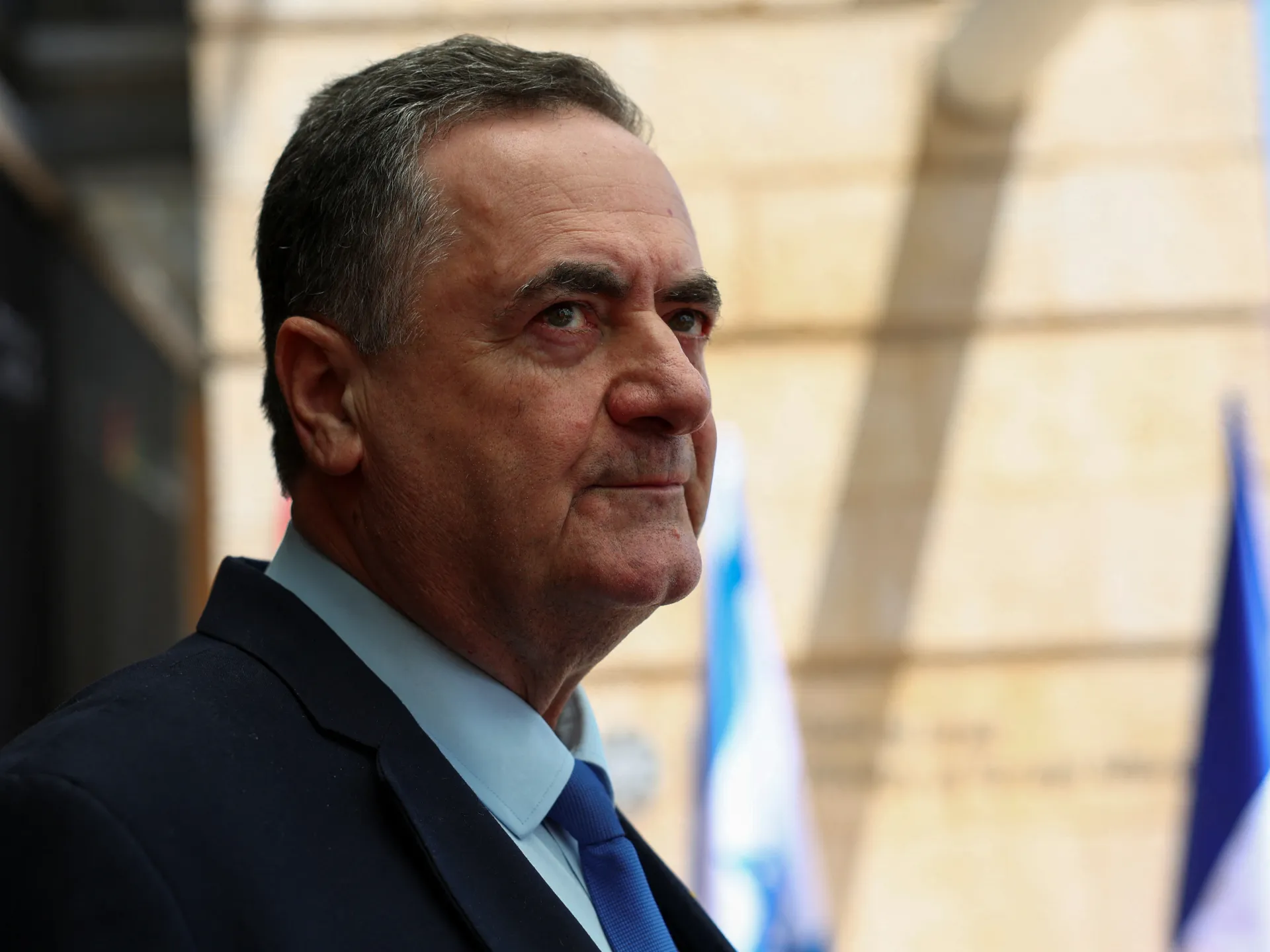
Also on the march were Finance Minister Bezalel Smotrich, who also oversees settlement affairs, National Security Minister Itamar Ben-Gvir and more than two dozen ministers and legislators, Israeli media reported.
Smotrich and Ben-Gvir have been sanctioned by several European countries.
Marching under the banner “returning home after 21 years,” they demanded the reconstruction of Elei Sinai, Dugit and Nisanit, three settlements evacuated when Israel withdrew from Gaza in 2005.
Ben-Gvir, a member of Netanyahu’s cabinet, posted a video of himself among the marchers with a caption: ‘Gaza is ours’. Fellow cabinet minister Smotrich also a called on Israelis not to miss a “historic opportunity” to rebuild settlements in Gaza.
Palestinian lawyer and analyst Diana Buttu told Al Jazeera that Israel’s settlement drive has been enabled by a lack of accountability.
“Because Israel has never been punished for its crimes, it’s only natural that a country that commits genocide and ethnic cleansing feels emboldened to steal more land”, she said.
In December, a group of Nachala activists briefly crossed into Gaza and planted an Israeli flag before soldiers brought them back across the fence.
All the biggest talking points and stats from the first 45 minutes of a goalless World Cup final in New Jersey in the US.
Published On 19 Jul 202619 Jul 2026
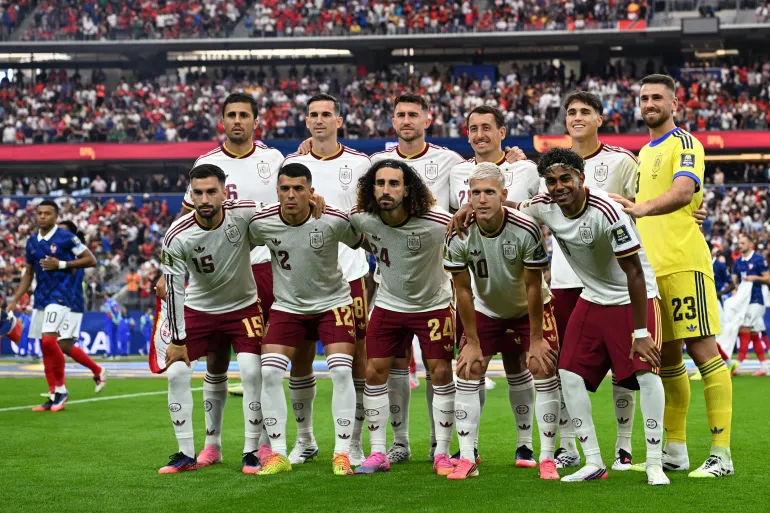
After a star-studded tournament ceremony and the logistical delays caused by the arrival of US President Donald Trump, the World Cup final between Spain and Argentina ended in a goalless scoreline at half-time.
The match at the New York New Jersey Stadium on Sunday has been a cagey affair, with Spain enjoying greater possession and Argentina looking to make the game into a scrap.
The final kicked off six minutes late in New Jersey following a pre-match show that included singer Robbie Williams and actor Tom Cruise.
Once the football actually began, Spain looked to control the ball and force Argentina to chase the game. The South American giants were mostly restricted to their own half and looked to make it a physical battle.
Here are some of the biggest talking points from the first half.
A cagey affair in New Jersey
It all started so promisingly, with Lamine Yamal forcing a save from Emi Martinez after just five minutes. The teenager shot from a tight angle inside the box following some brilliant link-up play with Dani Olmo.
Since then, chances have been at a premium, with just three shots at goal in the entire first half, all by La Roja, with Argentina yet to register an effort.
Spain striker Mikel Oyarzabal tested Martinez on 39 minutes, but his shot from just outside the area was easily saved by the Argentine keeper. Marc Cucurella also dragged an effort wide late on.
While Spain saw more of the ball, Argentina looked to get stuck in and make it a scrappy final. So far, the defending champions’ game plan has worked.
Spain’s Rodri and Argentina’s Enzo Fernandez fight for the ball [AFP]
Referee keeps his cards in his pockets
Slovenian official Slavko Vincic declined to brandish a yellow card until the 40th minute, despite some hefty challenges in the first half.
Spain were furious when the referee didn’t penalise Alexis Mac Allister after a late challenge on Olmo just 15 minutes into the final.
The Argentine midfielder dived in, missing the ball entirely as he wiped Olmo out. The Spanish bench erupted, but the referee decided not to book the Liverpool man.
The first yellow card was eventually shown when Lisandro Martinez dragged Oyarzabal down from behind.
Lisandro Martinez fouls Mikel Oyarzabal [Jeenah Moon/Reuters]
Martinez heads off injured
Argentina suffered a late blow in the first half as key defender Lisandro Martinez was forced off with an injury.
Martinez has played a crucial role at the heart of defence for Argentina in this tournament, but they will now have to cope without him for the second half of the final.
Veteran defender Nicolas Otamendi is now tasked with keeping the likes of Yamal and Oyarzabal quiet.
What were the head-to-head stats in the first half of the Spain-Argentina final?
Spain saw a lot more of the ball and enjoyed 64.6 percent possession. They also had three shots at goal, compared to none for Argentina.
The South Americans committed two more fouls than their opponents and picked up one yellow card.
Spain have been awarded two corners so far, whilst Argentina have had none.
Hundreds of Argentinian fans packed Boca Juniors steakhouse in the Elmhurst, Queens neighbourhood of New York City’s Little Argentina hours before the World Cup final kickoff against Spain. The steakhouse, known for its festive atmosphere, has been a “temple” for the Argentinian diaspora during the 2026 World Cup.
Georges Hana Dib, known as Dr Food, was sentenced for smuggling hashish out of Lebanon in cake packaging.
Published On 19 Jul 202619 Jul 2026
Beirut, Lebanon – The popular Lebanese food influencer, known as Dr Food and dubbed Lebanon’s Breaking Bad, has been sentenced to life in prison with hard labour for drug smuggling.
Hashish reportedly hidden in cake packaging produced in Baalbek in eastern Lebanon was transported to Turkiye and then shipped internationally.
Georges Hanna Dib and other Lebanese and Syrian nationals were sentenced under Lebanon’s Narcotics Law, which covers the manufacturing of banned drugs, according to reports.
Judge Elie al-Helou, sentenced him to life imprisonment with hard labour and fined him 120 million Lebanese pounds ($1,341).
The sentencing comes after a 2024 drug bust involving 820kg (1,800 pounds) of hashish hidden in cake packaging.
Dib, who is not a real doctor but has more than five million followers on TikTok, is believed to be out of the country. He and others who were sentenced in their absence were also stripped of their civil rights.
Dib was recommended a life sentence and hard labour in February last year when a Mount Lebanon investigative judge charged him with “manufacturing, trafficking, and smuggling drugs abroad”.
On Sunday, Dr Food’s Instagram page made no mention of the court case or any reaction to the sentencing. The page shared a giveaway that his food product brand was running.
People who received the message, posted it on TikTok and received 100,000 views would win $100 from the influencer.
In one video posted to Instagram, Dr Food appears to be filming himself in his car but does not address the court’s decision.
His last story was posted on March 27 from Beirut’s waterfront. There, he is asking displaced Lebanese what they miss eating and then proceeds to order food for them from some of Lebanon’s most popular food chains.
Lebanon’s Bekaa Valley is notorious for hashish production. Last November, Lebanese police arrested Noah Zaiter, a 48-year-old drug trafficker, known as the Lebanese Pablo Escobar. He was sentenced to four months in prison in February.
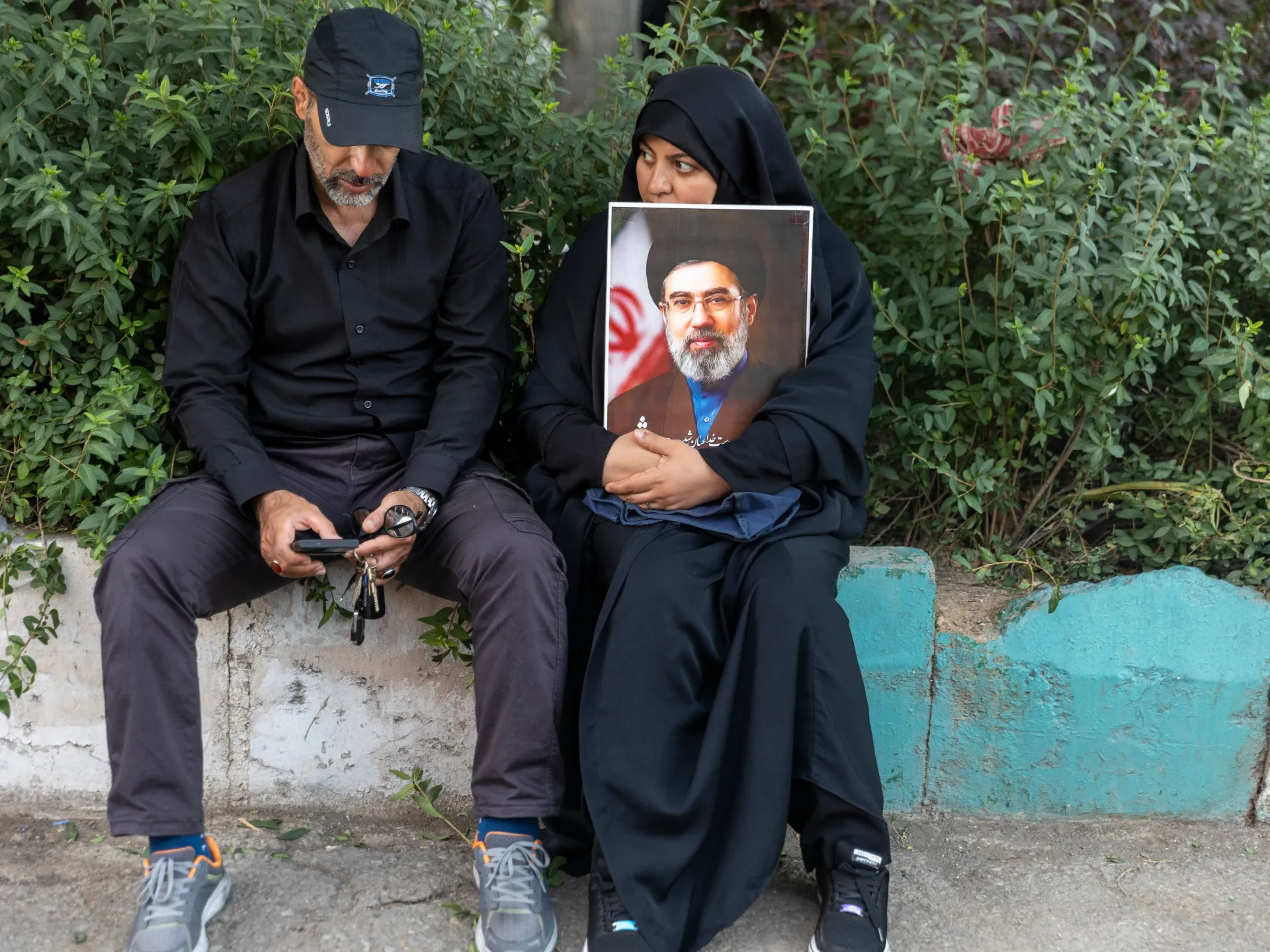
A message attributed to Iran’s Supreme Leader Mojtaba Khamenei has promised “unforgettable lessons” to Washington during their escalating conflict. But it also homed in on another theme that tempered some of the fire of his warnings against the US, amid eight nights of renewed fighting between the two countries.
Khamenei, who has not been seen or heard from since being made supreme leader in March, said Iranians must uphold “sacred unity” as a fundamental imperative, particularly against the United States.
Recommended Stories
list of 4 itemsend of list
His message also stated that it was a duty for the Iranian population and officials to refrain from “division, political disputes, and increases in social differences”. Iran’s enemies, he said, likely referring to the US and Israel, “must not detect any sign of weakness from us”.
The call for national unity comes against the backdrop of events in June, when another Khamenei statement stirred debate and controversy among some of the most hardline supporters of the Islamic Republic regarding the recently signed memorandum of understanding (MoU) with the US.
Khamenei said that although he “held a different view” about the agreement to pause four months of fighting, he approved it after President Masoud Pezeshkian, as chairman of the Supreme National Security Council, accepted responsibility for the deal.
This fired up unyielding supporters of the Islamic Republic who continue to take to city squares and streets at night with backing from armed security forces, angered about the deal.
Critics believe Khamenei was being forced into accepting a bad deal, and hardline clerical lawmaker Mahmoud Nabavian even resorted to reading from classified material on live television in an apparent attempt to derail the arrangement. He was removed from the parliament’s National Security and Foreign Policy Committee earlier this month.
Others went as far as accusing officials of treason, and the president and other officials linked to the deal were heckled during the funeral ceremonies for assassinated Supreme Leader Ayatollah Ali Khamenei earlier this month.
The MoU has been suspended by Tehran but was already effectively on the verge of collapse after Iran and the US traded fire over control of the strategic Strait of Hormuz over the past week.
Projection of military and political unity
Since Mojtaba Khamenei’s statement on Saturday, other officials have strived to present a united front between armed forces and the political and diplomatic apparatus, each with their own views on the MoU.
Ali Abdollahi, the head of Iran’s wartime joint command, vowed that the armed forces will heed Khamenei’s directive for “sacred unity and national cohesion”.
But he also warned the US, which he referred to as a “big Satan and criminal enemy”, that it will face a “decisive and destructive response” for its recent attacks on Iran, which has seen bridges, roads, and other civilian infrastructure destroyed.
President Pezeshkian thanked the supreme leader’s “wise” message and highlighted the part where he urged “trust” in the heads of government, parliament and judiciary.
“Adherence to the means of sacred unity and refraining from division and discord is the key to victory at this historic juncture,” he wrote on X.
Mohammad Bagher Ghalibaf, the parliament speaker who has faced harsh criticism from hardliners as chief negotiator in talks with the Americans, said following Khamenei’s directive is critical to Iran’s success.
“We must regard obedience to this religious and national decree of the supreme leader of the revolution as an important part of our historical role in national resistance and governance of the country,” he also tweeted in Persian on Sunday.
These messages appeared aimed at foreign audiences, coming shortly after senior US officials, anonymously briefing media in Washington, tried to blame the Hormuz escalation on an “errant” hardline faction inside Iran seeking to obstruct negotiations.
The state-linked Khorasan newspaper published an editorial on Sunday saying that Khamenei’s latest statement carried the message that “criticism is accepted, but never accusations” against officials.
“To those who claim to be revolutionaries, the supreme leader’s message was an ultimatum for you: Stop telling lies about the authorities,” the article read.
Iran’s military and political officials did not directly address the claim earlier this month, but released more statements proclaiming a unified view on how to address the conflict and regarding control of the Strait of Hormuz.
Speaking during an interview released on Sunday, Iran’s Foreign Minister Abbas Araghchi continued to back a negotiated end to the war, which has seen Iran’s civilian infrastructure systematically targeted in US air strikes over the past week.
“If we had reached the [April] ceasefire 10 days earlier, we still had Larijani, Khatib, Asaluyeh and Foolad Mobarakeh,” the chief diplomat said in reference to assassinated security chief Ali Larijani, intelligence minister Esmail Khatib, and the country’s heavily bombed petrochemical facilities and steel plants.
But as tit-for-tat strikes continue between the two sides, there is no sign of both parties returning to the negotiating table.
Abandoned as a baby with severely underdeveloped limbs and brought up by nuns in Baghdad, Kelly will be performing at the World Cup final alongside some of the biggest global stars.
Among the headline performers at the first-ever FIFA World Cup half-time show alongside Shakira, BTS, Justin Bieber and Madonna is a man with a remarkable life story – Iraqi-born singer Emmanuel Kelly.
Kelly says he was found abandoned in a box as a baby, and was brought up by nuns at Mother Teresa’s orphanage in Baghdad. Some of his limbs were severely underdeveloped, and at the orphanage he became friends with another boy called Ahmed, who had a similar condition.
Recommended Stories
list of 3 itemsend of list
In 1998, when Emmanuel was around four years old, the Australian Catholic humanitarian worker Moira Kelly visited the orphanage and witnessed the plight of Emmanuel and Ahmed.
She was determined to bring the boys to Australia for medical treatment, and after two years, she succeeded.
Emmanuel and Ahmed arrived in Australia in 2000, and both underwent multiple surgeries to enable them to wear prosthetic limbs. They were adopted by Moira the same year, and in 2009 they officially became Australian citizens.
In an interview published on the FIFA website in 2025, Emmanuel said the surgery and prostheses enabled him and his brother to be self-reliant for the first time.
“We learned all the basic things I think that humans take for granted sometimes, like walking and feeding themselves and things like that,” he said. “Eventually I decided I wanted to pursue entertainment and music.”
Emmanuel Kelly attends the Variety Club Showbusiness Awards 2025 October 19, 2025 in London, England [Shane Anthony Sinclair/Getty Images]
In 2011, at the age of 17, Emmanuel was a contestant in the Australian version of television talent show The X Factor. His rendition of John Lennon’s song Imagine captivated the live audience and was viewed millions of times online. Although he was eliminated relatively early in the series after forgetting the words to a song he was performing, this was the start of his musical career.
His brother Ahmed, meanwhile, became a competitive swimmer, representing Australia multiple times and winning the silver medal in the men’s 150-metre individual medley at the 2020 Tokyo Paralympics.
In 2016, as the band Coldplay were preparing for concerts in Australia, lead singer Chris Martin saw a video of Emmanuel Kelly performing and resolved to meet him. Kelly was invited onto the stage at the Coldplay concert in Melbourne and sang Imagine in a duet with Martin.
The two became friends, and in 2024 Kelly was invited to be the headline opening act for Coldplay for their four concerts in Australia during their Music of the Spheres tour.
“Chris has been my brother, Chris Martin, for eight years or so, and he said to me, ‘Hey, come on tour with me and join me on a stadium tour.’ I did that, and that was pretty epic,” Kelly said in his FIFA interview.
Last year, Martin was asked by FIFA to curate the half-time show at the Club World Cup final at the MetLife Stadium in New Jersey. Kelly was one of the singers Martin asked to take part in the performance. He was described by organisers as “the first differently abled artist to headline a FIFA half-time show”.
Sunday’s World Cup final between Spain and Argentina is taking place in the same stadium. Once again, Martin is curating the musical performance, and Kelly will be one of those on stage for what FIFA hopes will be the most viewed half-time show in history.
“What an exciting opportunity to get to represent true full-scale global unity,” Kelly said in a video on Instagram ahead of the show. “No matter how different you are, you will still be seen.”
Rohit Sharma becomes the first Indian to score a one-day century at Lord’s as he scored 138, in an innings that included 22 boundaries, to give India hope of chasing down a record 388 in the decisive third and final One Day International against England.
The Asia Pacific’s geopolitical balance is under change. While the U.S. remains the main architect of the plan, it is Australia that is becoming the executor of the strategy in the Oceania region. Through the signing of multiple defense agreements with the small island states, Canberra is transforming itself from a middle power to a regional security player in the South Pacific region.
Australia, being the most trusted ally of the United States and a member of the two most important defense cooperations, i.e., AUKUS and QUAD, makes it suitable to provide security to its neighbors. By signing the bilateral agreements in the defense domain, Australia, particularly, and the United States, generally, want to counter China’s rising military presence in the Pacific region. The defense deals signed with Papua New Guinea, Vanuatu, and Fiji collectively demonstrate that work on a broader security plan is under process. Instead of deploying American military bases directly in these states, Washington is relying on Canberra to expand its security footprint in the South Pacific region.
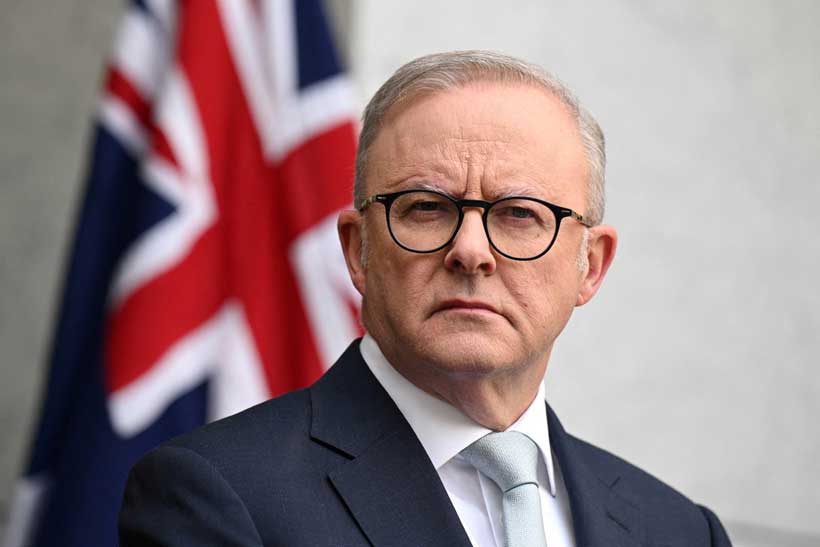
The recent signing of the Australia-Fiji agreement named “Ocean of Peace Alliance” on July 6, 2026, is the latest in the series. This agreement marks Fiji’s first mutual defense treaty and Australia’s fourth, following treaties with the United States, New Zealand, and Papua New Guinea. Secondly, the announcement of the Pukpuk Treaty entering into force between Australia and Papua New Guinea by PM Anthony Albanese and PM Honourable James Marape MP on July 8, 2026, also showcases a mutual defense commitment. Thirdly, the signing of the Nakamal Agreement between Australia and Vanuatu in June 2026 prevented China from creating military bases in the country.
In addition to this, the new PM of the Solomon Islands, Matthew Wale, has also shown interest in reducing the country’s dependence on China. He stated that the Solomon Islands-China pact, signed in 2022, needs to be revised, which would allow China to deploy its military and police personnel. By signaling on revising the agreement, it clearly demarcates that the Solomon Islands do not want to allow their land to be used for Chinese military bases. This statement proved a silver lining for Australia’s hegemonic designs in the region, as it was fearful that the Solomon Islands would be a foothold for China in the Pacific.
Stay ahead of the geopolitical week.
MD Briefing delivers expert analysis across five global fronts — the Indo-Pacific, energy, geoeconomics, European security, and the Middle East — every Monday morning. Free.
The momentum and process of acquiring a broader Pacific security strategy are extending, as New Zealand PM Christopher Luxon has also shown interest in joining the recently signed Ocean of Peace Alliance. This also marks Australia’s victory in that these Pacific states are gradually turning away from China and moving towards Western allies. This also shows defense cooperation, military exercises, information sharing, and maritime cooperation. In such a case, when there is an attack on any ally in these domains, then others will come to aid and rescue.
Also, the opening of the US Embassy in the Solomon Islands back in 2023 and the agreement between another QUAD member, i.e., Japan, and the Solomon Islands also strengthen Australia’s position in the Pacific region.
Now, the bigger question here is why this change in geopolitical balance is happening and why the regional players are taking the lead despite having the hegemon, i.e., the United States. Rising interference of China by expanding its naval capabilities has drawn concerns of the states in the Oceania region. The recent firing of a long-range ballistic missile in the South Pacific region on the same day that Australia and Fiji signed the treaty sends a clear message that China will not remain quiet on these expanding relations. Although Chinese state media have stated that this firing was just a mere test using dummy warheads. But the concerns of the government officials of the Pacific countries and their rising apprehensions have clearly shown that concerns for Australia and its allies are increasing against China. This fear has enabled them to move towards a securitization strategy and maximize their security capabilities.
Along with benefits, there are various risks for Australia and partnering nations as well by entering into these defense deals. The original plan of keeping the Indo-Pacific free and open for trade for all is gradually turning into a hub of militarization. Therefore, strategic competition between China and Australia will increase more than ever before, compelling Canberra to engage in more economic and defense treaties in the broader Indo-Pacific region to maintain its central position. Additionally, small island states are also in turmoil as they are caught between China and the Western bloc.
Thus, it is clear that the US is expanding its network in the South Pacific region by making Australia a regional security player. This also sends a signal to China that its growing capabilities and tactics will not go unanswered. Moreover, Pacific Island countries are also diversifying their options by signing defense agreements and are not predominantly relying on China. These agreements also reduce the possibility of Beijing having a military presence in the Oceania region. Therefore, whether Australia’s expanding defense network succeeds or not depends on mutual trust. By not compromising the sovereignty of these states, Canberra can only become the regional security provider on its own terms.
Mercedes driver won his sixth GP of 2026 as championship rival and teammate George Russell crashes out on first lap.
Published On 19 Jul 202619 Jul 2026
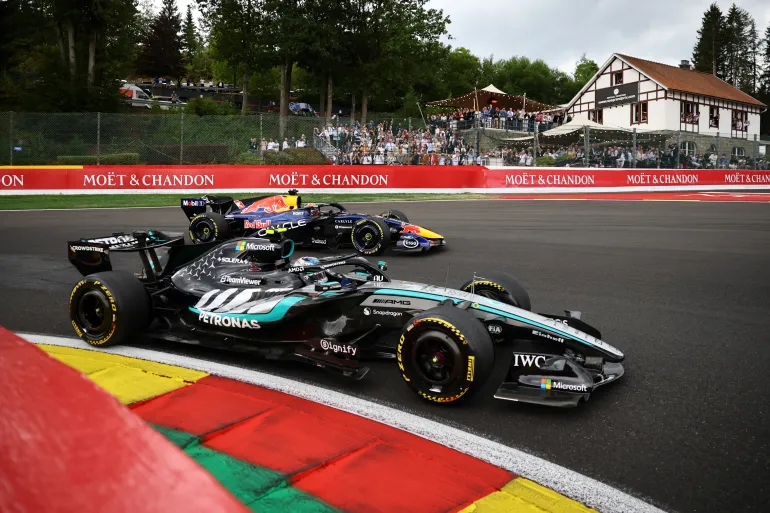
Kimi Antonelli won the Belgian Grand Prix for Mercedes on Sunday to stretch his Formula One lead to 45 points over Ferrari’s Lewis Hamilton on a bleak day for teammate George Russell, his closest title rival heading into the race.
Russell had been the 19-year-old Italian’s closest rival before the start at Spa-Francorchamps, but the Briton spun off into the gravel on the opening lap after a collision with Hamilton while trying to make up places lost at lights out.
Recommended Stories
list of 4 itemsend of list
Ferrari’s Charles Leclerc was second in the 44-lap race, 1.952 seconds behind after leading, thanks to a pit stop while a virtual safety car was deployed, with Max Verstappen third to give Red Bull their 300th Formula One podium.
Hamilton finished fourth, despite serving a five-second penalty for the collision with Russell, but remained under investigation for an unsafe release from a pit stop that could drop him to fifth and further stretch Antonelli’s lead.
Mercedes’ Kimi Antonelli leads Red Bull Racing’s Max Verstappen at the beginning of the Belgian Grand Prix [Sarah Meyssonnier/POOL via AFP]
It was Antonelli’s sixth win in 10 rounds this season, leaving him 50 points clear of Russell. Antonelli was first in qualifying, continuing Mercedes’ clean sweep of pole positions this season.
“It’s great to be back on the top step after a few difficult rounds,” said Antonelli, who had drawn a blank in two of the past three rounds.
“It was a hard-fought race. We lost first place with the VSC but then we managed to make our way back.
“The momentum was always there. It was just about getting the results,” he added. “Today we were a bit lucky with what happened in terms of the championship but you have to take every opportunity because we saw how much it can swing.”
McLaren’s Oscar Piastri finished fifth, with Isack Hadjar sixth for Red Bull from last on the grid. Reigning champion Lando Norris was seventh for McLaren after starting 13th due to a 10-place grid drop.
Gabriel Bortoleto brought more points for Audi in eighth place, with Arvid Lindblad ninth for Racing Bulls and Argentine Franco Colapinto completing the scoring in 10th place for Renault-owned Alpine.
On Tuesday, the Chairman of the Knesset’s Education Committee, Zvi Sukkot of the far-right Religious Zionist Party, arrived at a Palestinian school in East Jerusalem for a “surprise visit” – his second in two weeks. He did not come to evaluate pedagogy or classroom conditions or needs. Instead, he smashed the school’s entrance sign because it featured a Palestinian flag and publicly pledged to shut it down.
This storming of the school was more than just a publicity stunt meant to appeal to his political base ahead of Israel’s October 2026 elections. It was the physical embodiment of a sweeping state campaign targeting Palestinian education in unlawfully occupied and annexed East Jerusalem.
Sukkot is using his position to physically police Palestinian schools. This move comes on top of the Knesset’s aggressive legislative campaign to destroy Palestinian education in East Jerusalem that lawmakers have pushed in recent years.
One such law, passed in January 2026, bars graduates of Palestinian universities in the West Bank from working as teachers in Israel and in East Jerusalem. This law is based on racist ideology and extremist claims that graduates of these universities are inherently dangerous and morally unfit to be educators.
The motives of the law’s proponents were made clear during Knesset deliberations: advancing what several MKs called the “Israelisation” of the educational system and of the students, even at the expense of access to education. In a May 2025 Education Committee session, one Likud MK claimed that this law is needed as teachers who graduate from Palestinian universities “do not cultivate Israelisation” among their students.
The law passed despite the devastating consequences it is bound to have on the already fragile and disadvantaged Palestinian education system in East Jerusalem. This system is largely dependent on graduates of West Bank universities – who are overwhelmingly women – and it already has a serious shortage of teaching staff and classrooms.
Another law, passed in November 2024, which is widely referred to as the “Silencing Law”, gives the Israeli Ministry of Education full discretion to suspend or dismiss teachers through a fast-track administrative process. It targets speech the ministry deems to be “incitement to terrorism”, based on the ambiguous and arbitrary clauses of the Israeli Counter-Terrorism Law, which has become a catch-all mechanism to criminalise Palestinian speech.
The 2024 law also gives the ministry the right to revoke funding from schools on these same grounds, potentially leading to their closure.
Here too, the Knesset Committee’s deliberations on this law revealed an explicit targeting of the Palestinian education system in East Jerusalem and lawmakers’ views that this system is a security threat that must be dealt with. As a Likud MK said during an early 2024 Education Committee discussion on this proposed legislation: “It’s very important that they become Zionists… If I was an Arab from East Jerusalem, the first thing I would be is a Zionist. Above all”.
MK Sukkot’s pledge to shut down the school he attacked is not an idle threat. It follows the closure of six schools in East Jerusalem and its outskirts in 2025, which left 800 Palestinian children suddenly without access to formal education. These closures were the immediate result of the 2024 and 2025 anti-UNRWA laws passed by the Knesset.
The legislation and MK Sukkot’s physical vandalism of a Palestinian school demonstrate the state’s efforts to impose “Israelisation” on young Palestinian students living under occupation, and to erase any trace of Palestinian education and identity, even at the cost of trampling on every legitimate pedagogical need along the way.
Adalah – The Legal Center for Arab Minority Rights in Israel – is currently challenging all of these laws before the Israeli Supreme Court, with pending petitions against the ban on Palestinian university graduates, the “Silencing Law” targeting teachers’ political expression, and the anti-UNRWA laws.
We will continue to do all that we can to legally resist the campaign against Palestinian education. But the state’s assault on Palestinian schools will not stop until there is genuine international pressure on the Israeli government to stop its violations of nearly all the human rights of the occupied Palestinian population in East Jerusalem, including the right to education and the right to dignity.
The views expressed in this article are the author’s own and do not necessarily reflect Al Jazeera’s editorial stance.
So as Argentina prepares to face Spain in the World Cup final why is the team so white in comparison to its South American neighbours? Al Jazeera’s Rahul Pathak explains.
By Agence France Presse, Reuters and The Associated Press
Published On 19 Jul 202619 Jul 2026
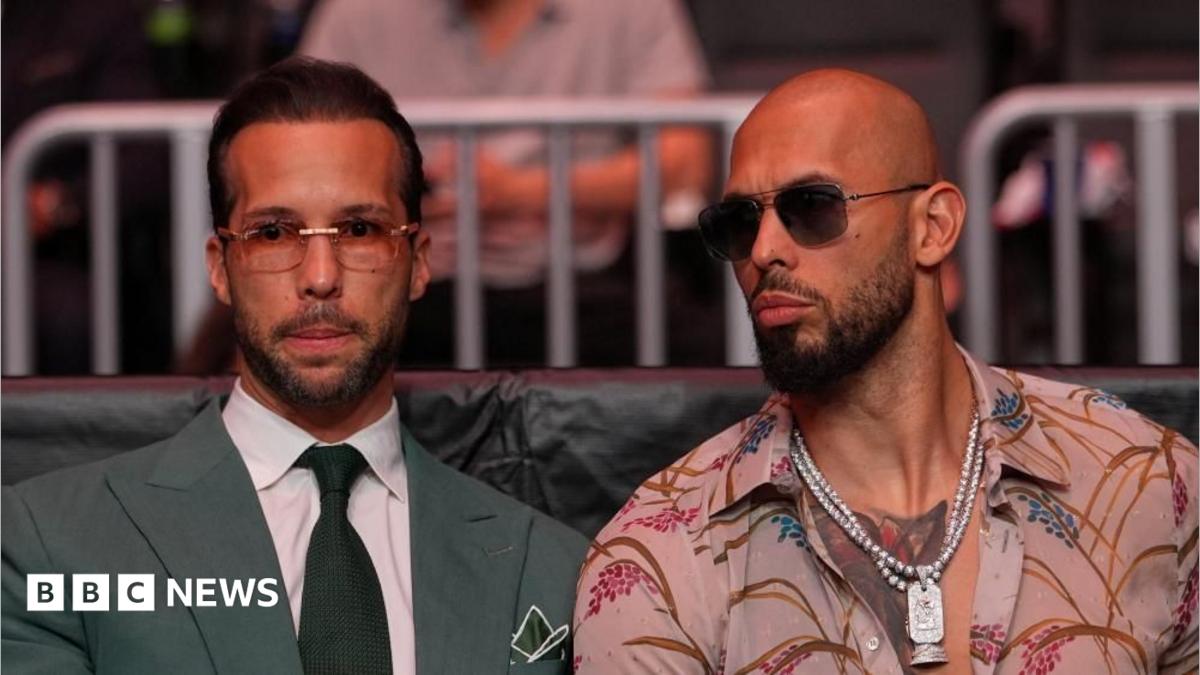
Influencer brothers Andrew Tate and Tristan Tate have been arrested in Miami, in the US state of Florida, after prosecutors in the United Kingdom brought further rape and sex trafficking charges against them.
The brothers were taken into custody on Saturday on a sealed warrant, the United States Marshals Service said, placing the US at the centre of an international legal saga that has stretched from Romania to the UK.
Recommended Stories
list of 4 itemsend of list
Raised in the UK, the Tate brothers hold dual US and UK citizenship. The UK government says it will seek their extradition to face 38 new charges of rape, sex trafficking and assault.
Here is what we know about the Tate brothers, their arrest and the possibility of extradition:
Who are the Tate Brothers?
Andrew, 39, and Tristan, 38, are former professional kickboxers. They are known for their social media empire promoting wealth, male dominance and misogyny.
Andrew is one of the most prominent proponents of the so-called “manosphere” network of communities, many of them online, that focus on traditional masculinity, antifeminism and self-improvement. He promotes his divisive views, often incorporating alpha-male and aggressively misogynistic themes, to millions on social media, including 10.8 million followers on X.
Andrew has been banned from platforms like YouTube, TikTok and Instagram for violating hate speech guidelines. He also runs an online academy where he says he teaches young men how to get rich and attract women.
The brothers are also avid supporters of US President Donald Trump.
What are the new charges against the Tates?
British prosecutors say the 59 new charges – 42 against Andrew and 17 against Tristan – relate to alleged offences that took place between 2010 and 2017.
They said Andrew was charged with seven further counts of rape, three counts of arranging or facilitating trafficking for sexual exploitation, three counts of assault, and 19 charges for offences relating to indecent images of a child and extreme pornography.
Tristan was charged with one count of sexual assault, two counts of rape and three counts of arranging or facilitating sex trafficking.
“We have decided to prosecute Andrew and Tristan Tate for further offences including rape, arranging or facilitating trafficking for sexual exploitation and offences relating to indecent images of a child,” the UK Crown Prosecution Service (CPS) said in a statement.
Since the arrest warrant was sealed, US Marshals did not disclose the charges on which the Tate brothers were arrested.
Their lawyer, Joseph McBride, said the brothers “are innocent”.
“We are confident that once a competent judge sees the facts, and once the Department of Justice confronts this egregious abuse of its own authority, Andrew and Tristan Tate will walk free,” McBride said in a statement.
What are the other charges against the brothers?
Andrew and Tristan already face multiple charges in the UK and Romania, where they moved to in 2016.
Four women have accused Andrew of physical and sexual abuse.
The claimants, who have been granted anonymity, allege the elder Tate subjected them to physical or sexual violence between 2013 and 2015. Two say they were in an intimate relationship with him, while two worked for his online webcam business.
In June, a UK High Court judge threw out a legal bid by the Tates to be told the names of their accusers.
In Romania, the siblings were arrested in late 2022 along with two Romanian women. The four were accused of participating in criminal schemes to lure women for sexual exploitation. They denied the allegations and the Romanian case has not gone forward because of legal and procedural problems. The case has not been closed.
Andrew has repeatedly claimed that prosecutors in Romania have no evidence against him and that there is a political conspiracy to silence him.
The Tate brothers are also accused of tax evasion and money laundering in the UK.
The UK CPS said it is seeking their extradition.
“The CPS has requested the extradition of the Tates from the US,” it said, adding that the latest charges stem from receipt of new evidence from Bedfordshire police that brings the total number of alleged victims in the Tates’ case to seven.
The British police previously sought the Tates’ extradition to the UK once their legal proceedings in Romania concluded.
But in February 2025, they were allowed to leave Romania after authorities lifted travel restrictions, and they flew to Florida on a private jet.
Romania’s foreign minister said at the time that a US official in the Trump administration had expressed interest in the brothers’ legal case in Romania.
Trump said he knew “nothing about” the case when asked if his administration pressured the Romanian government to release the Tates.
“Yesterday, using multiple one-way attack surface drones, CENTCOM forces successfully struck a submarine and ship maintenance facility in Iran,” the command stated on X Monday morning. “Three Corsair unmanned surface vessels hit the port at Bandar Abbas Naval Base, marking the first time American forces have employed sea drones in combat operations. Last night’s strikes degraded Iran’s ability to continue attacking commercial shipping.”
Yesterday, using multiple one-way attack surface drones, CENTCOM forces successfully struck a submarine and ship maintenance facility in Iran. Three Corsair unmanned surface vessels hit the port at Bandar Abbas Naval Base, marking the first time American forces have employed sea… pic.twitter.com/bOM2kmgRxz
This attack is the latest iteration of the U.S. Navy’s use of drone boats in combat. Last month, a Saronic Corsair USV rescued the crew of a U.S. Army AH-64 Apache that crashed in the Gulf of Oman after it was downed by Iran. That was the first known instance of a drone boat being used to recover personnel as part of a search and rescue mission, and has major implications for these operations going forward.
“The surface drone that assisted in last night’s rescue of the Apache crew off the coast of Oman was a U.S. Navy Corsair unmanned surface vessel operated by U.S. 5th Fleet’s Task Force 59,” U.S. Navy Capt. Tim Hawkins, a CENTCOM spokesman, told TWZ at the time. “The task force began fielding these drones in theater in late March.”
Historic sea drone rescue near Strait of Hormuz for Apache helicopter crew members
Established in 2021, Task Force 59 is a testbed unit that is tasked with experimenting with the integration of new uncrewed and artificial intelligence (AI) capabilities into day-to-day naval operations across the Middle East. It appears that the task force is starting to operationalize those technologies more broadly. Using USVs in an attack role could help reduce the burden on aircraft and crews for strikes, at least against certain targets out to sea and along the coast. Above all else, it creates another vector for kinetic operations against the enemy, which complicates their defensive plans.
In a recent interview with TWZ, Saronic co-founder Rob Lehman declined to provide any details about this mission set or any others Corsair was conducting in the region. However, he did say its success will reverberate across the USV industry.
“I think the tangible impact to the industry is that autonomous systems are now perceived as real credible capabilities rather than a science and technology kind of sideshow where we’re desperately trying to prove that the tech can play a role in these types of operations,” Lehman told us. “So my hope is that not just for Saronic, but all of our partners on the commercial side, that it’s an accelerant to getting more of these capabilities in the war fighters’ hands.”
Many successful attacks have been recorded against Black Sea Fleet vessels and facilities, forcing the general evacuation of Russian naval assets from occupied Crimea to bases in Russia proper.
You can see the January 2017 attack in the video below.
فيديو يؤكد الهجوم الانتحاري على الفرقاطة السعودية
As we have frequently noted, the U.S. and Iran signed a 14-point Memorandum of Understanding (MoU) on June 17. The MoU provided a 60-day extension of the ceasefire to iron out an agreement to end fighting throughout the region, including Lebanon, prevent Iran from seeking nuclear weapons, end U.S. sanctions and resume the flow of traffic through the Strait of Hormuz, among other points.
Control over the Strait has proven to be the biggest flashpoint, as evidenced by the aforementioned flare-up of fighting.
The Islamic Revolutionary Guard Corps (IRGC) has continued to claim it controls the Strait.
⚡️BREAKING
Iran’s Armed Forces on Trump owning the Strait of Hormuz:
“The United States interference in the Management of the Strait of Hormuz have seriously Jeopardized Regional Security and International Trade
As we noted earlier in this piece, Trump just proclaimed that the U.S. would take over the Strait.
“We hit them very hard last night,” Trump told Fox News. “Every time they send a drone, we hit them very hard. But we had a deal. What nobody knows, we had a deal. It was a done deal, and then they broke it. They always break it. We’ve had 10 deals with these people, and so we’re just going to hit them very hard, and we’re going to keep the Strait, and we’ll probably run it.”
“We’ll become the guardian of the Strait,” the American leader added. “Maybe we’ll call it the guardian angel of the Strait.”
Trump suggested that the U.S. be paid for this effort.
“And we should be reimbursed for that,” he posited. “When we do that, we’re going to be reimbursed because the other nations are very wealthy.”
HAPPENING NOW: President Trump issues a scathing warning to Iran following a broken military agreement, revealing that the U.S. hammered their equipment overnight and may permanently take over security operations in the Middle East.
Trump also took to his Truth Social network to say that he is reinstating the naval blockade on Iranian ports that was removed when the MoU was signed last month. He added that the U.S. will impose a toll on shipping.
“The U.S.A. will be, from this point forward, known as “THE GUARDIAN OF THE HORMUZ STRAIT,” but as such, and as a matter of FAIRNESS, will be reimbursed, at the rate of 20% on all cargo shipped, for any and all costs necessary to do the job of providing safety and security to this very volatile section of the World,” the president proffered. “The process and formation will begin immediately.”
BREAKING: Trump:
The Hormuz Strait is OPEN, and will remain OPEN, with or without Iran. We are reinstating the THE IRANIAN BLOCKADE, so named because it is only stopping Iran’s ships or customers from entering or leaving. All other countries will have fair and open use of the… pic.twitter.com/4WNwrKdzs8
The U.S. military using drone boats in a kinetic strike role sets a new precedent not just for operations in the CENTCOM region, but also those in other flashpoints, including the Pacific. It comes as the Pentagon has adopted a number of other capabilities that have been ‘borrowed’ from other conflicts, including the first use of one-way attack drones loosely based on Iran’s Shahed-136, for instance. But it is interesting that these kamikaze drone boats were not deployed at the start of the war, when sea and shore targets were plentiful. That points to the Pentagon still racing to catch-up with some weapons developments from conflict zones overseas or at least at opening the aperture for how and when those technologies are used operationally.
Given the frequency of U.S. airstrikes on Iran’s key naval base at Bandar Abbas during this conflict, it is unclear how Iran still had any of these vessels left.
As we previously reported, U.S. forces apparently sunk another Ghadir class boat in March. It was struck by an AGM-114 Hellfire missile, a U.S. official told TWZ. At the time, we questioned how many Ghadir class submarines were in Iran’s inventory before the current conflict. However, prior estimates had generally put the size of that fleet at between 16 and 20 hulls.
The Ghadir class boat in the new CENTCOM video was sitting on the dock, so it is possible Iran pulled it out after the ceasefire went into effect.
A Corsair drone boat is seen approaching what appears to be an Iranian Ghadir class submarine. (CENTCOM screencap)
UPDATE: 1:01 PM EDT –
Saronic released a statement.
“The U.S. military has confirmed that Saronic Corsairs were used by U.S. Central Command in operations against Iran. According to CENTCOM, three military variant Corsair unmanned surface vessels (USVs) struck a submarine and ship maintenance facility at Bandar Abbas Naval Base — the first time American forces have employed sea drones in combat operations,” the company stated. “We are proud that our technology supported this mission and helped degrade threats to commercial shipping. Saronic remains committed to delivering autonomous maritime systems that strengthen the security of the United States and its allies.”
UPDATE 2:38 PM EDT –
CENTCOM provided an update on the blockade.
“At the Commander in Chief’s direction, U.S. Central Command (CENTCOM) forces will resume blockading maritime traffic entering and exiting Iranian ports on July 14 at 4 p.m. ET,” the command stated on X. “CENTCOM forces will enforce the blockade against vessels transiting to or from Iranian ports and coastal areas. The U.S. military continues to support traffic flow through regional waters for all vessels not violating the blockade.”
“The resumption of the U.S. blockade against Iran follows the initial implementation from April 13 to June 18,” the command added. “CENTCOM forces redirected more than 140 compliant vessels, disabled nine non-compliant ships, and allowed over 50 commercial vessels supporting humanitarian aid to pass through the blockade during the two-month period.”
“All mariners are advised to monitor Notice to Mariners broadcasts and contact U.S. naval forces on bridge-to-bridge channel 16 when operating in the Gulf of Oman and Strait of Hormuz approaches,” CENTCOM noted. “Additional information will be provided to commercial mariners through a formal notice.”
If you feel like your favorite morning news or talk show is frequently trying to sell you something, you’re right.
Shopping segments within the program content of NBC’s “Today,” ABC’s “Good Morning America” and “CBS Mornings” have grown in recent years. Using QR codes on the screen, viewers are taken directly to dedicated e-commerce sites where they can put in their orders, with the program getting 20% or more of the revenue generated.
The segments typically feature a contributor or expert presenting household items, fashion or personal care products, alongside the host viewers know and trust. While hosts typically don’t do the actual pitching, their presence provides a seal of approval that helps drive a purchase.
The segments are also a staple of talk shows and syndicated programs such as “The View,” “The Jennifer Hudson Show,” “Entertainment Tonight” and “Inside Edition” and have spread to local TV stations. Ownership groups have signed deals with companies that match them up with brands looking for exposure that goes far beyond what they get with a 30-second commercial.
“This is the savior for media, if they really focus on it,” said Brian Meehan, co-founder of Knocking, a Connecticut-based company that specializes in embedding e-commerce into TV and digital content.
That may seem bit hyperbolic, but there is little doubt that TV outlets are looking for help as they navigate the upended media industry.
Streaming has pulled viewers away from traditional television, driving down ad revenues. Since 2022, ad spending on broadcast and cable TV has dropped 23%, to $51 billion in 2025. Consumers bypassing or canceling their cable subscriptions are cutting into the fees stations receive from pay TV providers.
As a result, both networks and TV stations have had to make significant cuts in their news operations to maintain profit margins. The daytime syndication business has declined dramatically as well, with NBCUniversal exiting the market and canceling “Access Hollywood” and “The Kelly Clarkson Show.”
Networks and stations don’t reveal how much they earn from the shopping segments, which typically run four minutes, but insiders say it’s well into the eight-figure range.
Bill Hague, executive vice president for the media research firm Magid, said more TV stations are turning to the segments to help fill the additional hours of local news they are programming instead of syndicated talk shows.
“Why invest in syndication when you can have the same audience and more revenue tied to it?” Hague said, adding that the company’s research shows consumers don’t believe the practice diminishes the quality of a newscast.
Jeff Rossen, a former consumer reporter for NBC News, recently pitched online shopping deals for Tegna’s TV local stations. The products he demonstrated sold briskly, likely helped by the credibility and trust he has accrued as a journalist.
That authority matters to viewers. NBC says its research shows that 94% of “Today” viewers trust the product recommendations made on the program.
Morning shows, with their mix of hard news, entertainment segments and lighter fare, have always had more latitude in what they present. But the current dire circumstances of the TV business explain why there is little pushback.
“If helping me buy a better blender also helps pay for an investigative reporter, I’m fine with it,” said Andrew Heyward, a former CBS News president who has consulted for TV station groups.
Heyward said consumers have gotten accustomed to editorial content being a gateway to online shopping. The New York Times gets a cut of sales linked to its Wirecutter product review site. Book reviews in the Los Angeles Times are linked to Bookshop.org, and the newspaper gets a commission for any sales.
Amazon and other web platforms have made e-commerce account for 21.8% of all U.S. retail purchases, according to the Department of Commerce.
Direct selling on traditional media goes back decades. In 1978, a Clearwater, Fla., radio station accepted 112 electric can openers from an advertiser who could not afford to pay for commercial time. Station owner Bud Paxson had a newscaster auction the inventory over the air and it sold out quickly, leading to a regular show called “Suncoast Bargaineers.”
In 1982, Paxson moved the concept to a local Tampa cable outlet, called it Home Shopping Channel and, after a few years, took it national as Home Shopping Network. HSN soon had celebrities pitching their own product lines, a technique that is now occasionally used by the morning shows.
Candi Carter, whose Cistus Media handles e-commerce for Tegna, said viewers have long been accustomed to seeing products touted inside of programming content, going back to the days of Oprah Winfrey’s “favorite things” segments.
“Brands do it for visibility,” Carter added. “They don’t have to pay a product integration fee and they get revenue from the sales.”
The broadcast networks experimented with direct selling to viewers over the years. NBC even put its name on ShopNBC, a cable channel it co-owned in the 1990s. But the concept was not mastered until NBC’s “Today” introduced “Steals and Deals” in 2010 as an occasional segment that grew over time.
The program now has 30 contributors who present wares in about 350 shopping segments each year. They are available across digital, social, newsletters and mobile platforms after they air on “Today.”
ABC’s “Good Morning America” started its own version in 2011, brazenly calling it “Deals and Steals.” The network now has daily segments on both “GMA” and the afternoon hours “GMA 3” and “The View.” Network contributor Tory Johnson has handled “Deals and Steals” since its launch and has long been one of the most familiar faces on “GMA.” Other contributors, such as former fashion magazine editor Laurie Bergamotto, have been added over the years.
Meehan recalls the biggest hurdle to launching the segments at ABC was the language explaining the arrangement to viewers — making it clear that the network stands to benefit.
“It came down to the attorneys just saying, ‘ABC may receive promotional or financial consideration,’” he said. “It took a long time to go through that process.”
CBS News, historically cautious about any endeavors that could tarnish its legacy as a journalism organization, was the last of the traditional networks to get into e-commerce in 2022 after COVID-19 lockdowns depressed ad revenues. The division was also under pressure to improve its financial performance as Shari Redstone, then-chair of parent Paramount, was intent on improving the company’s balance sheet ahead of a sale.
“Shop CBS” segments, as they’re called, are presented multiple times a week on “CBS Mornings” and “CBS Saturday Morning” and have become key revenue drivers for the struggling news division. Any resistance from producers or on-air talent recedes once they learn how much money e-commerce takes in, according to one veteran at the division not authorized to discuss the matter publicly.
While ABC and NBC broker their e-commerce deals in-house and through some of their contributors, CBS turned to Knocking to develop its segments. The company makes deals with product suppliers looking for in-program exposure, supplies the on-air talent that does the pitching with the network’s hosts and builds the websites that handle the transactions.
While on-air network journalists appear in the segments, they are not asked to do the selling. When CBS News signed on with Knocking, the division insisted the talent and producers involved be able to test the products before putting them on air. When they can react with enthusiasm, it’s a big help.
“When ‘CBS Mornings’ co-host Nate Burleson puts on a massager and he’s like, ‘Ooh, wow, this feels like real human hands,’ — none of that is scripted,” said Meehan.
Still, programs are putting their credibility on the line by selling the products. There is little margin for error or customer dissatisfaction, as disgruntled viewers will tune out.
Meehan said Knocking does its best to mitigate that possibility by accepting returns up to six months after purchase.
“A bad experience will hurt both the product or service being featured, and the broadcaster,” Heyward said. “All the parties have a vested interest in honesty, and in a good user experience.”
The FIFA World Cup 2026 final is not far away, and the predictions are coming in thick and fast.
Spain, the reigning European champions, are eyeing their second World Cup title, 16 years on from their maiden triumph in South Africa. But standing in their way are holders Argentina, the South American giants aiming to become just the third country to win back-to-back World Cup titles.
Recommended Stories
list of 4 itemsend of list
Stats provider Opta predicts Spain as the favourites to win the 2026 World Cup, with a 59.56 percent probability of lifting the trophy in New Jersey. La Roja are also the picks of several former players and pundits.
Former England striker Michael Owen said world number two Spain are the “deserved” winners of the tournament.
“Spain haven’t got the greatest individual players, I think France probably have … but Spain as a team are everything England are not – they are brave, courageous with the ball,” Owen told The Straits Times.
“Spain are just a great team that pass the ball confidently and play amazing football as a collective.”
Spain, the reigning European champions, are looking to add a second world title to their trophy cabinet [File: Mauro Pimentel/AFP]
Zlatan Ibrahimovic, the ex-Barcelona and Manchester United striker who represented Sweden at two World Cups, expects Spain to dominate the final, which comes two years on from their Euro 2024 triumph.
Spain handled France very good [in the semifinals]. I believe they can handle this Argentina,” Zlatan, now a pundit on US broadcaster Fox Sports, said.
“Argentina is not a counterattacking team. Spain are going to do their thing. They’re going to play collectively … I believe Spain are going to dominate that game.”
Spain were also John Terry’s favourites for glory, with the former England captain saying on the Sports Uncensored show that Luis de la Fuente’s side have “got too much for Argentina”.
Former goalkeeper Iker Casillas, the Spain captain during their maiden World Cup triumph in 2010, expressed his confidence in the team’s ability to bring home a second, sharing a picture of another star halfway stitched on the top of their badge.
A star represents every World Cup a team has won.
[Translation: And why not?]
While a lot of the consensus centred around a Spain win, some think Argentina have a chance, even if it is slim.
Alan Shearer, one of England’s greatest strikers of all time, backed the reigning champions, saying on The Rest is Football podcast, “If there’s one team that can do it in terms of stopping them [Spain], it’s Argentina because of their mentality and togetherness.
“They have been down so many times and in trouble, and somehow managed to get a win. That’s what you’ve got to admire about them.
“When you’ve got a genius in your side,” he added, referring to Messi, “you’ve always got a chance.”
But how can Argentina beat favourites Spain in the title clash?
English football pundit Micah Richards thinks the answer to that is low-block transition – the strategy of teams sitting back closest to their goal and, after winning possession, rapidly shifting from a compact defensive shape into an offensive counterattack.
“Get the ball to Messi, whereas [Julian] Alvarez or [Lisandro] Martinez just make it horrible, make it how they did with England,” he added.
“I think Argentina need to stay in the game as they did against England and turn it on when they see a shift in momentum.”
Can Lionel Messi, centre, guide Argentina to their fourth World Cup victory [Handout/Michael Regan/FIFA via Getty]
Meanwhile, another of England’s greats, Gary Lineker, stuck with his pretournament pick, Spain, but added that Argentina are “so gritty”, making the predictions a very tough choice.
“You cannot go against that little fella [Messi]. He’s so great; it’s going to be really, really close. It’s genuinely 50-50.”
Unlike others, New York City Mayor Zohran Mamdani refused to pick a side.
“Everyone I root for has lost,” he said, with a laugh. “So I feel like whoever I say is going to lose at this point.
“I’m gonna say the classic politician’s answer – I’m excited for a good game.”
Controversial influencer Andrew Tate and his brother Tristan have been arrested in the US after British authorities issued 38 new charges against the pair.
The UK’s Crown Prosecution Service (CPS) said Andrew was being charged with seven further counts of rape, as well as charges relating to sex trafficking and indecent images of a child.
Tristan’s charges include two counts of rape and three counts of arranging or facilitating trafficking for sexual exploitation.
The total number of charges against the brothers is now 59, Bedfordshire and Hertfordshire police said.
The alleged offending is said to have taken place between July 2010 and August 2017. The Tates have previously denied any wrongdoing.
Following their arrest, prosecutors will begin legal proceeding to extradite the brothers, who are dual British-US citizens, to the UK, the CPS said.
“These charging decisions followed receipt of a further file of evidence from Bedfordshire Police and bring the total number of alleged victims in this case to seven,” Malcolm McHaffie, Head of the Special Crime Division at the CPS, said.
Bedfordshire and Hertfordshire police have been investigating a number of offences in what it called a “complex investigation”.
As a result, 38 new charges were authorised against the brothers, meaning Andrew, 39, faces a total of 42 charges in the UK and Tristan, 37, faces 17.
Rescue operations for remaining passengers and crew ongoing, authorities say.
Published On 19 Jul 202619 Jul 2026
Rescuers in Guyana are racing to find dozens of people missing at sea after a ferry carrying 116 passengers and crew capsized off the country’s coast, according to local authorities.
The MV Barima, which issued a distress call at about 11pm on Saturday (03:00 GMT on Sunday), capsized near Iron Punt while travelling from Guyana’s capital Georgetown to Port Kaituma.
Recommended Stories
list of 3 itemsend of list
Guyana’s Prime Minister Mark Phillips told the AFP news agency on Sunday that 53 people had been rescued. He said authorities expected to rescue more people as the search operation progresses during daylight hours.
The operation involves Guyana’s coastguard and private vessels, according to Guyana’s Public Works Minister Juan Edghill.
Edghill said the ferry was equipped with some 250 life jackets, eight lifeboats and other safety gear.
He added that a medical team was being dispatched to the search area to treat people “as soon as they are rescued”.
“There is an active search and rescue operation that is taking place, and we pray for the safety of all,” Edghill said in a video post shared on Facebook.
The circumstances surrounding the boat accident were not immediately clear.
New Jersey, United States – Tobin Heath knows everything about winning a football World Cup and defending it successfully.
As a key member of the peerless USA women’s football team of the late 2000s and 2010s, Heath won the FIFA World Cup in 2015 and 2019, as well as Olympic gold medals in 2008 and 2012.
Recommended Stories
list of 4 itemsend of list
But it is not just the medals and honours that elevated her to the pantheon of football greats. Instead, it was Heath’s role in revolutionising the women’s game as a skilful and gifted forward that set her apart.
From mazy runs around defenders while running down the flanks to jaw-dropping assists and finishes inside the penalty area, Heath is often regarded as one of the most technically gifted playmakers in football history.
It is no surprise, then, that Heath’s analysis of World Cup teams as a member of FIFA’s Technical Study Group went viral on social media and prompted questions about why she has not been seen on popular football shows prior to the tournament.
The 38-year-old hung up her boots in 2025 after career-ending injuries forced her into retirement. Her 181 international appearances brought her 36 goals but left an indelible mark on the game.
Having followed the knockout matches as the only female member of an elite panel of analysts at a men’s World Cup, Heath’s insights stood out as the tournament progressed towards the final.
As a World Cup replete with goals – 307 in 103 matches, at an average of nearly three goals per match – the ongoing tournament has left some fans questioning whether more scoring equates to a better overall spectator experience.
In an exclusive interview with Al Jazeera Sport, Heath shares her thoughts on the goals, players, styles of play and teams that stood out at the FIFA World Cup 2026 and the tournament’s legacy:
Al Jazeera: Have more teams and more matches led to a record number of goals at the World Cup? Is it correct to rank this tournament as the most entertaining edition?
Tobin Heath: Yeah, that’s the biggest factor. For me, this is the evolution of football. It’s an evolution of football that the fans are obviously enjoying.
There are multiple factors [behind the high goal average] that we are analysing. But the top one is where these teams are winning the ball back, how they’re counter-pressing and the use of attack in wide areas. The use of the full-backs in the attack has been a key theme and a big positive for football.
We always want to see more goals. So we have to look at the increased team format and the diversity of the teams that are being matched up with each other. Personally, I love seeing diversity in football.
Stylistically, it makes for very interesting matches, and I think we saw some of those most interesting matches in the group stages and towards the beginning of the knockout rounds, where we saw teams that typically play different styles going toe-to-toe with the giants of football.
Al Jazeera: What impression did the likes of Cape Verde, Egypt, DR Congo and other African teams leave on you?
Heath: It was fantastic. Cape Verde are top of my mind in terms of their results. If you look at their result against Spain in particular, and then the thrilling game against Argentina, it’s basically the two finalists. There’s a direct correlation there, which is fascinating to see. And just the bravery with which they played – with so many low blocks – is very rare.
And then in the Egypt game, another outstanding match against Argentina. The result, very well, could have gone either way for me. It was just a beautiful display of football.
I remember watching the African club teams in the Club World Cup last summer and enjoying African football. I’ve enjoyed playing African teams in the World Cup, too. For me, as a football player, it gives you a different problem to solve.
Another team that stood out for me and that I thoroughly enjoyed this tournament was Ivory Coast. I loved their football, I loved their style, I loved their individual brilliance.
For African football, this is a big positive, and another step in the growth of football on that continent with various styles. And I hope to see more of the same in the Women’s World Cup next summer.
Al Jazeera: Having been a big exponent of attractive football in your playing days and a proponent of it after your retirement, how would you rate the different styles on display at the World Cup? And did you think it was an entertaining World Cup?
Heath: Oh my gosh, 100 percent! What we have seen in the level of creativity in this tournament has been nothing short of inspiring.
I became a huge fan of France because at any given moment on the pitch, you could see something that has never been done before in football. You’d see innovative football, innovative individual players.
Creativity has been at an all-time high. When you see the best players in the world performing at the top level, being highest in all the metrics. You look at (Jude) Bellingham, (Kylian) Mbappe, (Lionel) Messi, (Erling) Haaland – these are the best players that were showcasing their best football in this tournament.
There’s something in the water in the US that we just love our stars, we love putting them on a platform and the stars showed up big time at this World Cup.
Heath says she became a huge fan of France at the World Cup 2026 as the likes of Kylian Mbappe and Ousmane Dembele, pictured here, built fluid attacks against their opposition [File: Dylan Martinez/Reuters]
Al Jazeera: Which young players have impressed you the most and what do their performances mean for the future of football?
Heath: The most incredible name that stands out for me is (Pau) Cubarsi.
To be so young, to play so many minutes and be so effective with this Spanish defence, it highlights an incredible way that Spain is generationally able to really connect the ideas and implementation of the type of football that they want to play.
I hope and pray that we see Lamine Yamal perform in a supersonic way in the final. He’s due for a moment. The anticipation has been there all tournament.
We talked about these young players, but we also have to highlight what Messi is doing and the age at which he’s doing it. It’s nothing short of extraordinary. I was laughing that we should give out a veteran award, but he could also win player of the tournament.
From the young superstars to the old, football is in good hands for generations to come.
Spain’s Pau Cubarsi, centre, has been the standout player for Heath, who wants to see Lamine Yamal, left, shine in the final [File: Lisi Niesner/Reuters]
Al Jazeera: What do you think about the future of football in the US and what this World Cup has done for it?
Heath: It’s so interesting because I’ve been thinking about this a lot. Our culture and society move fast. There are so many things that capture the attention of Americans at any given moment, and the World Cup captured the audience.
We put on a fantastic event; we showcased incredible stadiums and what the different parts of our country look like in the summertime, from the Pacific Northwest to the Miami heat. Stadiums with roofs to uncovered stadiums.
And yet, I’m left wondering how it affects football for us, especially men’s football in our country.
We talk about stars and the importance of stars in our country, but when I think about the players who had a good tournament, including Malik Tillman and Folarin Balogun, there’s no stardom. It’s a little lacklustre for what the USA team and the World Cup have done in terms of the popularity and interest in this country.
I hope that there is a direct correlation with players to come, both girls and boys, who can point to this World Cup as their inspiration. It will be the greatest indication of whether this tournament was a success.
Our country has been captured by the moment of watching the World Cup, but no one knows if they’ve been captured with it in their soul. It feels a little bit like a flash in the pan.
Al Jazeera: What is the biggest footballing aspect that stood out for you at this World Cup?
Heath: The gap between the possibility of winning a World Cup and actually winning a World Cup. It’s still extremely wide.
We had competitive matches, smaller teams going toe-to-toe with the biggest giants in the world, but it still seems that the closer you get, the bigger the gap between the top teams that can realistically go far in the tournament and the ones we enjoyed watching in the beginning.
I always say, winning is a muscle. It’s no surprise that we have two teams in the final that have enjoyed a lot of success in international football.
We see this both in men’s and women’s football. It will take something truly special to be able to break into that group.
Argentina and Messi will look to become only the third team to successfully defend the World Cup [File: Ashley Landis/AP Photo]
Note: This interview has been edited for clarity and brevity.
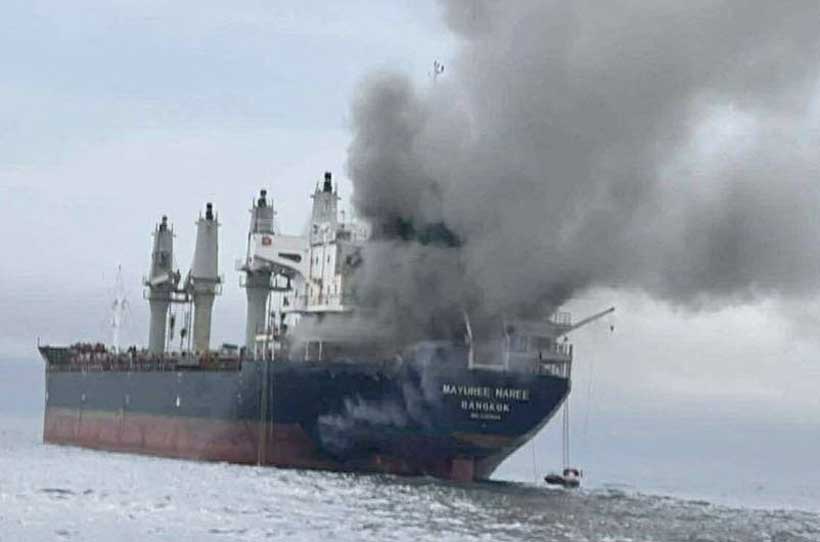
On July 14 the crews of the Mombasa and the Al Bahiyah found out. Two UAE-flagged tankers were hit by Iranian cruise missiles in the southern lane, inside Omani territorial waters, according to the Emirati defense ministry. An Indian sailor was killed and eight others were hurt, six Indians and two Ukrainians, and India summoned Iran’s deputy ambassador the same day. The Revolutionary Guard said the ships had run dark and ignored repeated warnings on a mined route. They had been following the other government’s instructions.
This is what a diplomatic technique looks like when it fails in public.
The technique has a name, and for fifty years the profession has been proud of it. Constructive ambiguity, Henry Kissinger’s phrase, is the art of writing a sentence that lets two enemies sign the same page while believing opposite things. Resolution 242 called for Israeli withdrawal from “territories” occupied in 1967, and the missing definite article has been argued over for fifty-nine years. The Good Friday Agreement left the sovereignty question deliberately unfinished. Ambiguity is not a drafting failure. It is often the only reason a war stops on the day it stops.
The Islamabad Memorandum, signed on June 17 by Donald Trump and Masoud Pezeshkian and brokered by Pakistan, used the same tool. Read Paragraph 5 and you can watch it happen. Iran undertakes to use “best efforts” for the safe passage of commercial vessels “with no charge, for 60 days only,” and to open a dialogue with Oman on the strait’s future administration “in line with the applicable international law and the sovereign rights of coastal states. ” Tehran reads that as recognition that Iran determines safe passage and will price it when the clock runs out. Washington and the Gulf states read best efforts as an obligation to facilitate passage and nothing more. Fourteen points. One waterway. Two meanings, both sincere.
Stay ahead of the geopolitical week.
MD Briefing delivers expert analysis across five global fronts — the Indo-Pacific, energy, geoeconomics, European security, and the Middle East — every Monday morning. Free.
Here is what the drafters missed, and it is the reason the strikes came back and the market is repricing this week. Constructive ambiguity works on questions that can sit still. A border can stay contested for six decades because a border does nothing in the meantime. Sovereignty over Northern Ireland is not exercised on Tuesday at 4 p.m. by a specific person who has to make a call.
A strait is not like that. Before the war, roughly 130 vessels crossed Hormuz every day. That is one ship approaching the disputed sentence about every eleven minutes, each one requiring somebody to physically wave it through or turn it back. Paragraph 5 does not get to be undecided. It gets decided, hundreds of times a day, by a coastal battery commander at Bandar Abbas and a watch officer on a destroyer, neither of whom has the luxury of interpretation.
The memorandum deferred two questions to a second phase. One of them, Iran’s nuclear program, can wait, because centrifuges do not require a daily ruling. The other cannot wait an afternoon. The drafters treated them as the same kind of problem, and only one of them is shooting. JD Vance, who runs the American side of the file, conceded the point on a podcast Wednesday without appearing to notice he had made it: the nuclear negotiations he leads have stalled over the strait.
Everything since follows from that. Six consecutive nights of American strikes. A naval blockade of Iranian ports has been back in force since Wednesday, with a Curacao-flagged tanker disabled by Hellfire missiles fired into its smokestack near Kharg Island. Iran’s ambassador filed a letter at the U.N. listing 42 American violations of a text Trump declared dead on July 8 and Tehran stopped complying with on the 13th, which tells you the memorandum has become useless as a truce and indispensable as a claim. Both capitals still cite Paragraph 5. Neither will be governed by it. They are both telling the truth about a sentence that says two things.
Trump’s week makes more sense in this light than in any other. On Monday he declared the United States “guardian” of the strait and announced a 20% charge on cargo passing through it. By Tuesday the fee was gone, swapped for promises of Gulf investment, after the International Maritime Organization said there is no legal basis for mandatory tolls simply to transit a strait and shipowners refused to play. On Thursday, IRNA reported that Tehran is preparing environmental compensation fees on transiting ships. Both governments have now tried to invoice the same water in the same week, and neither can collect. That is not a strategy, and it is not a neoconservative plot. That is what happens when the document you signed does not contain the authority you thought you had bought.
He said on Tuesday that next week come the bridges. The bridges came Friday. American strikes hit six of them around Bandar Khamir and a railway junction outside Bandar Abbas, cutting Iran’s main port off from the roads inland, and collapsed the control tower at Chabahar. Iran’s health ministry counts 38 dead and more than 400 wounded since the strikes resumed. Even Trump’s own deadlines are now being decided faster than he sets them.
The market is the only participant being paid to read Paragraph 5 honestly, and its verdict is arriving. Brent touched $86 on Tuesday, a one-month high, and held above $85 through a week in which the peace was formally alive. Traffic tells it better than price. Eleven ships crossed on the day Iran declared the strait closed. Seven crossed on Wednesday. Three crossed Thursday, the fewest since May, against 130 a day before the war. One ship every eleven minutes has become one ship every eight hours.
Rory Johnston of Commodity Context makes the harder point, and it deserves more attention than it has received. The stock cushion that absorbed the spring’s supply shock has been drawn down, which means the next shock will not be padded the way the last one was. The price is not high because the war is bad. It is high because the peace is unreadable.
Americans are paying in a currency the ceasefire never touched. Thirteen of the fourteen U.S. service members killed in this war died in March, before any truce existed. What has climbed through every pause is the wounded count, now 414, most of them with traumatic brain injuries. Truces here have reliably stopped the funerals and never stopped the concussions.
The mediators still working the phones in Islamabad, Doha, and Cairo do not need a grand bargain by August 16, when the memorandum’s sixty-day clock runs out and Iran has promised to start charging. They need something duller and much harder. They need to convert one sentence into a procedure: who physically waves the ship through, on whose radio frequency, under whose flag, and with what recourse when someone gets it wrong. Not sovereignty over the strait. Traffic control of it. The nuclear file can keep. The lane cannot.
Iran released an American detainee on Wednesday, which some in Washington read as a hand reaching for a rail. Nobody has set a date for the conversation that would matter. If none is set, the war will not restart in August. It will simply stop pretending to have paused, and a ship’s master off Oman will keep making a sovereign decision on behalf of two governments that refuse to make it for him.
Constructive ambiguity is a loan against the future. Most disputes let you pay it back slowly. Hormuz charges interest by the hour.
The survivors were found clinging to a fish trap and floating debris at sea three days after the boat sank.
Published On 19 Jul 202619 Jul 2026
Five people have been rescued, including a seven-year-old girl, who were stranded at sea off the Indonesian coast for three days after their boat sank south of Sulawesi. A search is ongoing for at least 20 others.
The five survivors – one man, three women and the girl – were located by a fishing boat before dark on Saturday near Matallang Island off the coast of Sulawesi and taken to a search-and-rescue vessel.
Recommended Stories
list of 3 itemsend of list
They had stayed afloat by clinging to a fish trap and buoyant debris after the KM Nurul Salsa suffered engine failure and sank on Wednesday with 78 passengers and crew members on board.
“After the ship sank, each of them saved themselves using whatever equipment or makeshift flotation they could find,” local search-and-rescue official Muhammad Arif Anwar said.
“They rigged together jerry cans and pieces of cork tied up with rope, then climbed on top of them.”
They told rescuers they had been part of a group of 25 people, but during their ordeal they were separated from the others by strong winds.
Local media reported 47 people had been rescued the day after the boat sank, and one person is known to have drowned.
Five large ships, a reconnaissance aircraft and a helicopter are being used in ongoing search efforts for those still missing.
The KM Nurul Salsa was en route from Jampea Island to the port of Benteng on Selayar Island in South Sulawesi province. It sank about 43 nautical miles (79km) from the port.
Passenger boats are a common form of transport in Indonesia, an archipelago with more than 17,000 islands. Lax safety standards and problems with overcrowding frequently result in accidents.
The 2026 World Cup final will feature two live performances: one before kickoff and another at half-time.
The match will be played at MetLife Stadium in New Jersey on Sunday, July 19, with some of the world’s biggest musicians taking the stage as part of the celebrations.
Recommended Stories
list of 4 itemsend of list
Here is what to know:
When is the World Cup 2026 final?
The World Cup final between Spain and Argentina will take place on Sunday, July 19.
Kickoff is scheduled for 3pm local time in East Rutherford, New Jersey, which is 19:00 GMT.
The match will be played at MetLife Stadium, home of the NFL’s New York Giants and New York Jets. During the tournament, the venue has been temporarily renamed New York-New Jersey Stadium.
The multipurpose stadium can hold up to 82,500 spectators for football matches. It also hosted the 2025 FIFA Club World Cup final and both semifinals.
What time does the World Cup closing ceremony start?
The World Cup closing ceremony will begin at 1:30pm local time (17:30 GMT) in New Jersey on Sunday, July 19.
Jennifer Hudson will also perform the United States national anthem before kickoff.
The ceremony will celebrate the 48 teams that competed across the three host countries and 16 host cities during the tournament.
When does the half-time show start?
Unlike the closing ceremony, which takes place before kickoff, the half-time show will be staged during the interval between the first and second halves. With kickoff at 3pm local time (19:00 GMT), it is expected to begin just after 3:45pm local time (19:45 GMT), depending on stoppage time.
The half-time performance is expected to last about 11 minutes, although FIFA has not officially confirmed the length of the interval. Reports suggest the break could be extended beyond the standard 15 minutes to between 20 and 25 minutes to allow time for the stage to be installed and removed.
Under the Laws of the Game set by the International Football Association Board (IFAB), half-time should not exceed 15 minutes. However, competition rules can allow a longer interval with the referee’s approval, and FIFA has not explained how the extended break will be implemented.
Although this will be the first half-time show in a World Cup final, FIFA tested the concept at last year’s Club World Cup final at MetLife Stadium. That performance took place on a stage above the stands and the interval lasted just over 24 minutes.
Unlike the Club World Cup final, Sunday’s stage will be built directly on the pitch before being removed ahead of the second half. Organisers say it has been designed to be assembled and dismantled within minutes.
Longer half-time breaks are not unusual in major sporting events. Shakira’s performance at the 2024 Copa America final delayed the restart by about 26 minutes.
Chris Martin, J Balvin, Tems, Doja Cat and Emmanuel Kelly perform during the half-time show at the Club World Cup Final [File: Jeenah Moon/Reuters]
Who is performing at the World Cup closing ceremony?
On Wednesday, football’s governing body said American rapper-singer Post Malone will headline the ceremony.
The World Cup closing ceremony will also feature performances by Italian singer Laura Pausini, American singer Nicole Scherzinger, British pop star Robbie Williams and YouTube creator IShowSpeed. Actor Tom Cruise is also set to make a special appearance.
Produced by Balich Wonder Studio, the ceremony is designed to celebrate the tournament’s defining moments and the global appeal of football after a month of competition across the United States, Canada and Mexico.
FIFA has said additional performers and special guests will be announced closer to the final.
“Echoing the spirit of the opening ceremonies, which welcomed the world to the greatest stage in Canada, Mexico and the US, the closing ceremony will bring the FIFA World Cup 2026 full circle through music, culture and football, before we kick off the highly anticipated match that will crown the champions of this groundbreaking tournament,” said Heimo Schirgi, chief operating officer.
Who is performing at the half-time show?
Justin Bieber will join Madonna, Shakira and BTS as headliners of Sunday’s halftime show.
They will be joined by Nigerian singer Burna Boy, Venezuelan conductor Gustavo Dudamel and New York’s PS22 Chorus, with the performance curated by Coldplay frontman Chris Martin.
The show will support the FIFA Global Citizen Education Fund, which aims to raise $100m to expand access to education for children.
“The FIFA World Cup brings the world together in a way nothing else can,” Bieber said in a statement. “I’m grateful to be part of this half-time show, and even more grateful knowing it’s already helping expand access to education for children around the world.”
Burna Boy, who collaborated with Shakira on the tournament’s official song, Dai Dai, said performing at the final was “a privilege and a responsibility” and an opportunity to represent Africa on the global stage.
How can I watch the World Cup final and shows?
In the US, the match will air in English on FOX and in Spanish on Telemundo and Universo, with streaming available through the FOX Sports app, FOX One and Peacock.
In Canada, viewers can watch on CTV and TSN, while audiences in Mexico can tune in through TelevisaUnivision, TV Azteca and ViX.
Across the Middle East and North Africa, the match will be broadcast live on beIN Sports.
With the ruins of the Gaza Strip lying around him, Israeli Defence Minister Israel Katz last week renewed his push to set up illegal settlements in the battered territory’s north.
“I intend to establish three Nahal outposts, which is also a military entity, in those places that were in northern Gaza,” Katz told Channel 14, referring to bases that combine farming with an armed presence in a bid to consolidate control over a territory.
The minister said, in his view, establishing these settlements would enhance security – but execution would have to be “in the right way, at the right timing, while coordinating”.
It was not the first time the member of Prime Minister Benjamin Netanyahu’s Likud party has made such remarks. In December, Katz said the Israeli military would “never leave all of Gaza” but “in due course” would establish Nahal posts despite a United States-brokered plan stipulating a full Israeli military withdrawal and barring the re-establishment of Israeli settlements.
His comments also echoed a recent statement by Finance Minister Bezalel Smotrich that “the groundwork to establish three settlements in the North Gaza area” had been completed. Smotrich, who also holds the portfolio of “settlement administration” in the Ministry of Defence, has repeatedly called for the full occupation of the Gaza Strip.
Such a push has been central to the goals of Israel’s settler movement, which in January 2024 organised a conference attended by government ministers to advocate for the re-establishment of settlements in the Strip.
“This is their ideology. They want the Gazans out of Gaza and they want to settle there like they settle in the West Bank,” former Israeli diplomat Alon Liel told Al Jazeera.
All settlements on Palestinian land are illegal under international law, but settlement expansion and annexation have been a core objective of Netanyahu’s hard-right government. In recent years, it has carried out unprecedented settlement expansion, resulting in the forced displacement of dozens of Palestinian communities and the de facto annexation of land in the occupied West Bank.
Issam Younis, a prominent Palestinian human rights defender and director of the Al Mezan Center for Human Rights, said he was not surprised by Katz’s latest comments. “It was very clear from day one in the genocide that the main goal was to make life impossible in Gaza by destroying everything,” he told Al Jazeera. “It’s a race for time – take over land, starve Gaza and deny it any chance at life, then expel the population and build settlements.”
Younis said Israel’s conduct during its genocidal war against Palestinians in Gaza and the “ceasefire” agreed in October under the US plan clearly showed that expelling the population is the main objective of the Israeli government.
“Dehumanising statements by senior Israeli officials reaffirmed this: calling Palestinians in Gaza ‘human animals’, saying that there are no civilians in Gaza, then saying clearly that the objective was to expel the population and create settlements in the Gaza Strip,” Younis added.
Israel made no secret of that objective. In early 2025, the government announced it was setting up an agency to oversee the “voluntary migration” of Palestinians from Gaza as part of a plan proposed by Katz.
The announcement drew widespread international condemnation. Experts warned that such a move would amount to a war crime. Last month, the Israeli government decided to rebrand the agency and replace talk of “voluntary migration” with the “free movement plan” while using “language deemed more acceptable internationally”, according to Israeli media.
The policy enjoys widespread support in Israel. A 2025 poll commissioned by the University of Pennsylvania found that 82 percent of Jewish Israelis support the expulsion of Palestinians from Gaza.
Meanwhile, nine months into a “ceasefire”, during which Israeli attacks have killed at least 1,127 Palestinians, conditions in Gaza remain unbearable.
The United Nations says at least 265 children have been killed during the period while hunger persists and the debilitated healthcare system continues to suffer acute medicine shortages.
“Only 20 percent of what Gaza needs has been allowed to enter – things related to water and health and to life in general,” Younis said, referring to Israeli restrictions on aid entering the Strip. “Gaza is being starved and parched for water.” For him, the aim is clear: expulsion, “even if they call it voluntary migration”.
Liel said Israel is doing the minimum on the humanitarian track to avoid upsetting US President Donald Trump, who has set up what he has named the Board of Peace to oversee the administration and reconstruction of the Strip.
“I don’t think that Israel wants Gaza to be reconstructed like Trump is dreaming,” he said.
Palestinians have been increasingly frustrated with the Board of Peace’s failure to pressure Israel or implement the recovery and construction plans outlined in Trump’s “ceasefire” plan, including the entry of critically needed assistance.
“The Board of Peace is complicit until it moves to rebuild Gaza immediately,” Younis said. “Otherwise, it would not be allowing Israel to create the conditions that make life impossible for Palestinians in Gaza, which will result in expulsion.”
Israeli forces have also expanded the “Yellow Line”, demarcating Israeli-controlled areas within Gaza, to encompass 70 percent of the Strip. “We are not retreating from the ‘Yellow Line’, unequivocally, as long as Hamas does not truly disarm, and even after that, we remain inside Gaza,” Katz told Channel 14 during his tour of northern Gaza, saying the destruction of the territory was “the result of a deliberate policy”.
The settlement push comes as Israel is gearing up for elections, which will be held on October 27.
According to Liel, Katz and other ministers are openly talking about building settlements in Gaza because their calculation is that it would boost their electoral chances amid a shift to the right by the electorate.
Many observers expected the weeks leading up to the polls to be accompanied by a serious escalation in Gaza, the West Bank and other Israeli “war fronts” without changing the political situation in Israel.
“The wish of this Israeli government was that as many [Palestinians from Gaza] will leave. Hopefully voluntarily. If not, Israel will help, and this is the reason you don’t want to rebuild Gaza,” Liel said.