Nearly half a million people are displaced in Rakhine as a result of the conflict between the military and rebel groups.
Published On 28 Sep 202628 Sep 2026
An air strike carried out by Myanmar’s military has killed at least 33 people in territory controlled by rebel factions.
The attack near a market in the north of the Rakhine state in the west of the country on Monday also wounded 36 people, rescue and rebel group officials reported. The strikes are the latest in a series of assaults against pro-democracy and ethnic armed groups by the military government, which took power in a coup in 2021, sparking armed opposition.
Recommended Stories
list of 4 itemsend of list
The Arakan army said a fighter jet dropped two bombs near a local market in the town of Kyauktaw at noon local time (0530 GMT), killing 33 people, including vendors, shoppers, and pedestrians. It said the death toll “may continue to increase”.
Wai Hun Aung, a senior rescue official in Rakhine, confirmed the details to the Associated Press news agency. He said the market was the region’s main wholesale centre, drawing traders and shoppers from across the state.
“This is one of the most severe airstrikes in Rakhine,” he said. Photos and videos posted on social media showed buildings on fire, damaged vehicles and parts of a nearby bridge destroyed.
Myanmar’s military did not immediately comment, but it has previously said it strikes only legitimate military targets and accused resistance groups of “terrorism”.
Smoke billows from fires in a residential area following a Myanmar military air attack on a market and adjacent bridge in Kyauktaw, Rakhine state, September 28, 2026 [AFP]
Myanmar has been gripped by conflict since the elected government led by Aung San Suu Kyi was ousted in the 2021 coup. A nationwide resistance movement has since evolved into a civil war between the military government and an array of armed ethnic and pro-democracy groups.
President Min Aung Hlaing, Myanmar’s former military government chief, was elected by a military-backed Parliament in April, formalising his grip on power after five years of army rule.
The Arakan army is a well-trained and well-armed military group seeking autonomy for Rakhine’s ethnic minority. It launched an offensive in November 2023 and has since captured strategically important military headquarters and 14 of the state’s 17 townships.
The military has imposed severe restrictions on trade routes to Rakhine since the fighting there intensified, worsening food shortages.
In December, a military airstrike on a hospital in Rakhine’s Mrauk U township killed at least 33 people and wounded 70 others.
Nearly half a million people are displaced in Rakhine as a result of the conflict, according to United Nations data. The UN added in August that the human rights situation in Myanmar has plummeted “to a new low”, citing “brutal abuse” against the Rohingya minority and the devastating impact of illicit economic activity, including illegal mining for rare earth minerals.
Rebel groups and Myanmar’s military are now both using drones in the protracted conflict, which has killed more than 100,000 people, according to the Armed Conflict Location and Event Data (ACLED) project.
Matthew VanDyke and six Ukrainians were accused of smuggling weapons and drones to armed ethnic groups fighting India.
Published On 28 Sep 202628 Sep 2026
Matthew VanDyke, a United States citizen held in India for more than six months and accused of supporting ethnic separatist groups, has been temporarily released on bail and returned to the US.
The 47-year-old arrived on Saturday morning and reunited with his family, according to a family spokesperson.
India’s main opposition Congress party said that, despite being “accused of plotting terrorist acts”, VanDyke was allowed to return home from New Delhi.
“Obviously US pressure determined this outcome, but what did India get in return?” Jairam Ramesh, a legislator and spokesperson for the party, posted on X.
VanDyke’s family told Al Jazeera before his release that his health was failing and he had lost weight after going on a month-long hunger strike in Tihar Jail to try to improve conditions in prison. He had to use a wheelchair to attend hearings, according to his mother, Sharon. VanDyke denied the accusations against him, and his family said he was in the region documenting the situation faced by minority ethnic groups.
Matthew VanDyke, who spent months in Libyan prisons before joining rebel forces who opposed dictator Moammar Gadhafi, speaks with reporters after his flight arrived at Baltimore-Washington International Airport, Saturday, November 5, 2011. [Patrick Semansky/Reuters]
Earlier this month, Indian prosecutors declined to bring terrorism charges against VanDyke and the others. Instead, prosecutors formally accused them of visa violations for entering restricted areas along the Myanmar border.
The Maryland native is a former filmmaker and rebel fighter during the Arab Spring and spent about six months in a Libyan prison during the Muammar Gaddafi regime. He was held alongside James Foley, a journalist who was later killed by ISIL in Syria. In recent years, VanDyke was based in Ukraine, where his consultancy helped train Ukrainian military forces.
In a statement to Al Jazeera before VanDyke’s release, James Foley’s mother, Diane, who now heads a foundation named after him, said she was “deeply saddened by his arrest in India and by his apparent poor health.” She added that her foundation called for “his release on humanitarian grounds.”
For the US economy, a ban could deliver short-term relief at the pump by flooding the domestic market with excess supply.
However, energy analysts warn it could backfire.
David Fyfe, chief economist at Argus Media, notes that cutting off American supply would likely cause international prices to skyrocket.
That would push up global freight, food, and industrial costs, ultimately “feeding inflation back into the global economy”.
“At a stroke, the US’s reputation as a reliable supplier of energy to the world would be shot,” Fyfe added.
Removing more than a million barrels of daily American supply would trigger a fierce bidding war among importing nations in Latin America and Europe.
Sarah Raffoul, analytics manager at Argus Media, noted that while higher international prices would eventually curb demand, the immediate gap would severely strain trade relationships and accelerate global inflation.
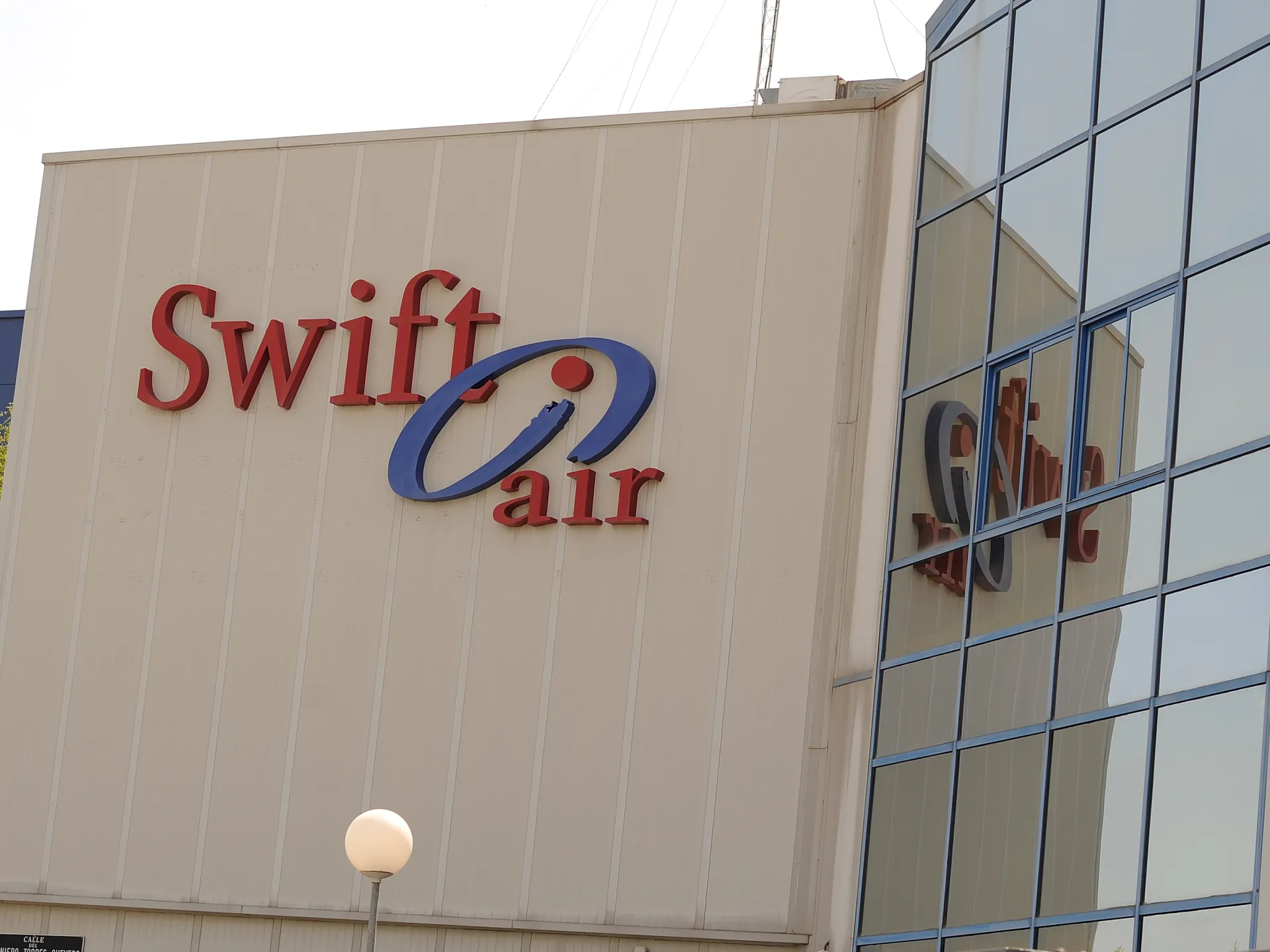
Spain’s Swiftair was fined 225,000 euros ($256,000) in France for corporate manslaughter over the 2014 Air Algerie disaster in Mali.
Published On 28 Sep 202628 Sep 2026
A Paris court has found Swiftair guilty of corporate manslaughter over the 2014 Air Algerie crash that killed 116 people in northern Mali.
On Monday, a French judge ordered the Spanish airline to pay the maximum fine in France of 225,000 euros ($256,000) for corporate manslaughter after a three-week trial earlier this year.
Recommended Stories
list of 3 itemsend of list
Air Algerie Flight AH5017 was flying from Ouagadougou, the capital of Burkina Faso, to Algiers, Algeria when it crashed less than an hour after takeoff in July 2014, killing everyone on board.
The Swiftair-owned McDonnell Douglas MD-83 was operated by the Spanish airline on behalf of the Algerian carrier.
Investigators said the aircraft went into a stall when it was hit by ice as an anti-icing system remained switched off.
On Monday, the court said “negligence” in Swiftair’s training with icy conditions had played a role.
The captain had failed to complete an adequate proficiency check, while the crew lacked the required refresher flights following a period of inactivity.
“This ruling comes as a relief to families who have been fighting for more than 12 years for justice to be done,” said Sebastien Busy, a lawyer representing a group of relatives.
The airline has 10 days to appeal the ruling.
Swiftair attempted to have the trial dropped on the grounds that a Spanish court previously dismissed the case without any charges.
In a statement to AFP, Swiftair reiterated that the trial should not have gone ahead and that safety regulations had been followed.
The ruling marks the second time an airline has been found guilty of corporate manslaughter in France after Air France and Airbus were both found guilty earlier this year over the 2009 crash of a jetliner flying from Rio de Janeiro to Paris. The crash killed all 228 people on board, marking the worst aviation disaster in French history.
Fatalities reached 3,901 across the DRC as health workers battle community anger and a vaccine-resistant strain.
Published On 28 Sep 202628 Sep 2026
The Democratic Republic of the Congo (DRC) has recorded over 8,000 cases of Ebola, including almost 4,000 deaths, amid the worst outbreak in the country’s history, according to government data.
The latest report, published on Monday by the DRC’s public health institute, put the number of cases at 8,067 and deaths at 3,901, representing a fatality rate of 48.4 percent.
Recommended Stories
list of 4 itemsend of list
People’s mistrust and anger towards government policies have become a major obstacle in limiting the outbreak since it was officially declared on May 15. A senior member of the ruling UDPS party was beaten to death after raising awareness about the epidemic on radio, a party representative said on Monday. The killing happened on Sunday in Butembo in North Kivu province, which has become a hotspot in the ongoing Ebola outbreak.
The number of cases has levelled off after a rapid increase, according to the African Union’s health agency, Africa CDC, though it still considers the outbreak “not under control”.
Several treatments and vaccines are being trialled against the Bundibugyo strain of the Ebola virus, for which there is no approved vaccine or treatment.
The current outbreak, which is the DRC’s 17th, has spread rapidly. Experts say that weak health infrastructure, the region’s remoteness and ongoing conflict near the DRC’s borders with South Sudan, Uganda and Rwanda have damaged efforts to respond to cases quickly and effectively.
Those issues have also hindered the government’s efforts to fight the outbreak, increasing public mistrust and anger towards its suggested prevention measures.
Marie-Celestin Karondwa, acting president of the UDPS party’s federal executive committee in Butembo, was attacked by local residents after appearing on a radio show where he discussed Ebola prevention measures, according to the Congolese health authorities.
In their latest case report, authorities highlighted a “low capacity” to treat cases at health centres in Ituri province and described a “complete shortage” of stocks of an experimental vaccine against the Bundibugyo strain in the northeastern province of Tshopo, where cases have been recorded.
The World Health Organization has said the outbreak is “far from over” and on track to surpass the regional 2014-2016 West Africa Ebola outbreak. It killed more than 11,000 people, primarily in Guinea, Liberia and Sierra Leone.
The United States announced last week that it was releasing a further $267 million to help fight Ebola. It is hoping for pledges from other countries to meet a target of $2 billion to fight the disease, mainly found in the DRC.
Beef prices are soaring in China. Across the Pacific Ocean in the United States, cattle farmers are complaining that their businesses are becoming increasingly unsustainable. And in India, poultry rearers are slashing their production targets because they cannot afford feed.
More than 90 percent of the world’s population eats meat in one form or another — and a looming meat crisis threatens to affect what they buy at the market, what they cook at home, and what’s served on the table.
At the heart of this is a chain of decisions and uncertainties that consumers rarely see. A cow has to be raised for years before it can become beef. Chickens need feed, much of it tied to global grain and soya bean markets. Farmers need land, water and weather conditions that allow them to keep animals alive and productive.
When any link in this chain is disrupted, a spiralling crisis ensues.
So what is putting the pressure on meat production, and what does it mean for billions of people around the world?
Declining cattle stocks in Brazil, US and China
Brazil, the US and China are the world’s three biggest beef producers, together supplying more than half of the world’s beef. But their cattle herds are shrinking at the same time.
According to a March estimate by the US Department of Agriculture (USDA), Brazil’s total herd this year is estimated at 177.4 million cattle — a nearly 8 percent drop from 192.5 million in 2024.
Over in the US, cattle numbers are at a historic low.
The USDA counted 86.2 million cattle and calves on farms on January 1, 2026. The number of beef cows — the females needed to produce future calves — was 27.6 million, down 1 percent from a year earlier. The 2025 calf crop was also down 2 percent.
In China, the USDA estimated a cattle head count of 94 million in January 2026, down 14 percent from 105 million in January 2024.
In all three cases, beef production is also projected to be down in 2026.
The USDA predicts a 2 percent decline in Brazil’s beef production and a 5 percent fall in exports. As for the US, beef production in 2026 is likely to be 4 percent lower than last year. China’s total beef supply this year is projected to be 12 percent lower than 2024.
The decline in domestic production, coupled with shrinking supplies that can be imported, has sent prices soaring in China — the world’s largest beef consumer and importer.
What’s driving down cattle herds and beef production?
The reasons are many, and they vary from country to country.
Brazil counts China and the European Union as two major markets for its beef exports. But both have imposed import restrictions that have disincentivised Brazilian beef manufacturers. That is partly responsible for the country’s decreased cattle head count, according to an analysis by Augusto Neto at S&P Global, the market intelligence firm.
Additionally, Brazil is currently in what is known as a cattle reversion cycle — when rearers reduce the slaughter of animals and instead try to preserve their female stock to help rebuild their herd — according to the USDA.
In the US, droughts have hit 60 percent of the country’s cattle-rearing area, according to a report by Sampad Nandy of S&P Global. With grazing areas decreasing, feed costs have risen.
Three major organisations, representing breeders in the states of Texas, Oklahoma and Kansas, issued a joint statement this week arguing that Immigration and Customs Enforcement (ICE) raids were disrupting their already strained operations. The meat industry depends heavily on immigrant workers.
If beef prices are rising, shouldn’t rearers want to produce more beef?
In theory, yes. But in practice, high prices do not automatically mean that more cattle can be produced quickly.
Cattle production is constrained by biological supply cycles, Kenneth Foster, professor of agricultural economics at Purdue University, told Al Jazeera. It can take a couple of years for a producer who receives a signal from the market to expand production and actually see the resulting animals enter the beef supply. The quickest way to rebuild a herd is to keep female cattle that might otherwise have been sold and use them for breeding. That is what Brazil is now doing.
But that creates a difficult economic calculation. A producer can sell an animal today at a high price, or keep it for breeding and wait for the next generation. That means carrying the costs and risks of keeping the animal while waiting for it to reproduce.
The result is a market in which strong demand and limited supply can persist even when prices are already high.
The USDA expects the cattle herd to begin rebuilding in the US, but the process is gradual.
The US and Brazil cases illustrate one of the central problems facing meat production: sometimes the constraint is not technology, land or money.
It is time.
Europe’s move from beef to poultry
Meanwhile, Europe presents a different picture. The continent is witnessing a structural change in what consumers are eating.
The EU produced about 42.7 million tonnes of meat in 2025. But EU meat production is projected to decline by about 3 percent between 2025 and 2035, with beef production projected to fall by 10 percent and pork by 7 percent. Poultry is the exception: production is projected to rise by 5 percent.
This shift is also visible in consumption.
Consumption of EU beef and pigmeat is projected to decline through 2035, while poultry consumption is expected to increase by 9 percent.
Beef and pork require longer production cycles and face different economic and environmental pressures. Poultry, by contrast, can respond much more quickly to changes in demand because chickens reach market weight within weeks rather than years.
That difference is becoming increasingly important. The OECD-FAO Agricultural Outlook expects poultry to be the fastest-growing major meat category globally over the next decade, helped by its relatively low cost and short production cycle.
Europe is therefore becoming an example of how a meat system can adapt without simply producing more of everything. Some forms of meat become harder or more expensive to produce, while others expand to fill part of the space.
Poultry has problems too — as India shows
Yet the poultry industry faces its own challenges, with India offering an example.
In June, a large section of India’s poultry industry announced plans to cut production by 25 percent after soya meal prices rose by more than 40 percent in a month.
The decision was announced by the All India Poultry Breeders’ Association after producers faced sharply higher feed costs and a seasonal decline in demand. Producers also began culling parent breeder stocks — birds needed to produce future generations of poultry.
Soya meal is an important protein source in animal feed. When its price rises sharply, poultry producers face a choice: absorb higher costs, raise prices, or reduce the number of birds they produce.
In India’s case, producers chose to cut production.
The consequences extended beyond individual farms. The Reuters news agency reported in May that Indian soya meal prices had risen 41 percent in one month to a four-year high of 66,000 rupees ($687.5) per tonne. India subsequently cancelled 25,000 tonnes of soya meal export contracts and began turning to soya bean imports from African countries.
The takeaway: a shock in one part of the agricultural system can move quickly through the meat supply chain globally.
As farmers try to protect their livelihoods and families try to keep food on the table, changing climates, rising prices, shifting dietary preferences and growing trade barriers are together reshaping the future of meat — and what we eat.
An alternative approach is to ensure that everyone who is eligible, based on their needs, should get state-funded personal care that is free at the point of use.
This would be provided free regardless of an individual’s means and whether it was received by an elderly person in their own house or a residential care home.
Scotland has implemented such a system.
However, it’s important to note that personal care takes in things like helping frail elderly people wash and dress and go to the toilet.
But it does not include accommodation, food and everyday living costs which are subject to means testing.
The Health Foundation think tank estimates that implementing a Scottish-style system in England would cost £7.5bn a year by 2036.
Like Scotland, Japan and Germany have systems which base entitlement to personal social care mainly on people’s care needs rather than their ability to pay.
Japan and Germany though have a mandatory long-term care insurance system which is funded through contributions from workers and employers.
Both countries also do not usually cover the full cost of personal care so individuals are responsible for some of the expenses.
Israel’s national security minister declares ‘we are the owners of the place in Al-Aqsa’ during heavily guarded incursion.
Published On 28 Sep 202628 Sep 2026
Hundreds of Israelis led by far-right National Security Minister Itamar Ben-Gvir have stormed the Al-Aqsa Mosque compound under police protection.
The Jerusalem governorate on Monday said Israeli forces closed intersections and streets surrounding the Old City that lead to the Al-Aqsa Mosque compound, which Jews refer to as the Temple Mount, in occupied East Jerusalem on the third day of the Jewish holiday of Sukkot.
Recommended Stories
list of 4 itemsend of list
It said the Israelis danced in circles and sang inside the courtyards of Al-Aqsa Mosque during the raid, noting that 900 people entered the compound in the morning.
“We are the owners of the place in Al-Aqsa and in the prisons, and we have turned the lives of terrorist prisoners into hell,” Ben-Gvir said.
“The people of Israel are on the path to absolute victory, and today we pray in Al-Aqsa, which is the most important place for the Jewish people.”
Monday’s intrusion came as Israeli authorities forced dozens of Palestinian shopkeepers to close their businesses and residents to remain inside their homes in areas near the mosque to allow Jewish prayers during Sukkot.
“Dozens of Palestinian owners of shops, cafes and restaurants in the Cotton Merchants Market in Jerusalem’s Old City were forced to close them during the Jewish Sukkot holiday to make way for Jewish prayers in the market,” the Association for Civil Rights in Israel said in a statement.
‘Playing with fire’
Palestinian presidential spokesman Nabil Abu Rudeineh described the incursion as “playing with fire and a dangerous provocation to the feelings of Muslims around the world”.
He also warned that Israel was seeking to ignite a “religious war” in the region.
Since 2003, Israeli police have allowed groups of Israelis to make daily incursions into the Al-Aqsa Mosque compound, except on Fridays and Saturdays.
Israel often imposes restrictions on Palestinian worshippers. It prevented Eid al-Fitr prayers at Al-Aqsa this year, allowing only 10,000 Palestinians from the occupied West Bank, home to 3.3 million people, into one of Islam’s holiest sites for the first Friday prayers of Ramadan.
Indian police used tear gas and batons on demonstrators as hundreds of people gathered for the second day to protest against the scheduled demolition of a mosque in the city of Ujjain. Several people were arrested, while work began to knock down part of the building.
Hi, and welcome to another edition of Prep Rally. I’m Eric Sondheimer. League play begins this week in high school football for the best of the best. That means get ready for some great matchups in the Trinity League, the Mission League, the Alpha League, the Marine League and many others.
Get our high school sports newsletter
Prep Rally is devoted to the SoCal high school sports experience, bringing you scores, stories and a behind-the-scenes look at what makes prep sports so popular.
By continuing, you agree to our Terms of Service, which include arbitration and a class action waiver. You agree that we and our third-party vendors may collect and use your information, including through cookies, pixels and similar technologies, for the purposes set forth in our Privacy Policy such as personalizing your experience and ads.
League play begins
Coach Carson Palmer of Santa Margarita will try to help his team win a Trinity League title.
(Craig Weston)
St. John Bosco’s Koa Malau’ulu looks to pass while pressured against Bishop Gorman.
(Ian Maule/ LA Times)
It’s time for a dose of reality. Lots of teams are off to great starts with nonleague schedules designed to get them enough early wins to be able to get an at-large playoff berth in case they stumble in league play.
League play begins, so some of the unbeaten teams are about to be no longer unbeaten.
Santa Margarita was the best team in the state in 2025, but the Eagles didn’t win the Trinity League. St. John Bosco was the champion, and with league play beginning Friday, both schools have ambitions to finish on top.
Santa Margarita (5-0) plays Mater De (3-2) in its opener at Saddleback College and St. John Bosco (4-1) hosts JSerra (4-1). The other league game is Servite (3-2) facing Orange Lutheran (3-2) at Orange Coast College.
What’s different this season is that any of the six Trinity teams look capable of winning on a given night. But some of the teams are about to be strengthened by the addition of sit-out period transfer students that become eligible effective Monday.
The Mission League is all about which team will finish second to unbeaten Sierra Canyon (5-0). A good Friday opener has Chaminade (5-0) hosting Sherman Oaks Notre Dame (5-0).
The new Alpha League will feature weekly battles with Mission Viejo, San Clemente, Edison, Yorba Linda, Los Alamitos and San Juan Hills. The likely title decider on Oct. 16 has Mission Viejo at San Clemente.
Harvard-Westlake has started 5-0, but the Wolverines receive their first major test with a Del Rey League opener against Salesian on Friday.
In the City Section, Birmingham, which has won every West Valley League title since 2018, faces unbeaten Cleveland on Friday at home in a West Valley League opener. San Pedro and Banning have their annual Marine League rivalry game Friday at Banning.
Marshall takes a 5-0 record into the start of Northern League play at Franklin.
Freedom day arrives
It’s freedom day on Monday for Southern Section football players who have been sitting out the first half of the season after transferring without moving.
St. John Bosco can’t wait to insert offensive tackle Elisha Mueller, a transfer from Servite and one of the top prospects from the Class of 2028. Also becoming available is sophomore defensive back Kingston Fatu, a transfer from Tustin who will help a secondary that has been struggling in trying to deny big plays.
Santa Margarita adds 6-foot-3, 285-pound sophomore transfer Karras Vandermade, a defensive lineman. Servite has six players who could compete for major roles, with four on defense that will add much needed depth. Orange Lutheran gains 6-5 tight end Hudson Ploog and linebacker Jamaal Fay, who started for two years at Leuzinger. JSerra adds 6-7, 315-pound offensive lineman Wyatt Martin.
Other schools are also about to be strengthened. Unbeaten Sierra Canyon adds physical wingback/linebacker Fletcher Thomas. Unbeaten Chaminade, hoping to challenge the Trailblazers in the Mission League, picks up sophomore receiver Champ Ross and junior cornerback Jayden Woods.
Long Beach Poly fans will get their first look at Mater Dei transfer Trevor Scott, a sophomore quarterback. Quarterback Daniel Mielke becomes eligible at Chino Hills. Corona Centennial gains Brody Black, an offensive lineman from Servite. San Clemente picks up receiver Titus King, a speedster from Santa Margarita. Amir Morton, a junior running back who transferred from Sierra Canyon, is expected to provide immediate help for Crespi.
Cornerback Tadd Mitchell, a Montana commit, joins Oxnard Pacifica along with lineman Miguel Macias Santiago.
Matix Frithsmith demonstrated his versatility in Hart’s 34-17 Foothill League win over Saugus. He rushed for 218 yards and four touchdowns, including a 91-yard run. Here’s the report.
Corona Centennial traveled to Northern California to take on De La Salle and what a game it was. De La Salle won 35-32 behind Duece Jones-Drew, who rushed for 211 yards. Here’s the report.
Centennial has lost three close games to Santa Margarita, Mater Dei and De La Salle. As soon the Huskies get back to full strength with the return of standout safety/kicker Jaden Walk-Green and others, beware.
Cleveland High running back Moyosoreoluwa Odebunmi gives the thumbs-up after the Cavaliers defeated Crenshaw on the road.
(Joel Beers / For The Times)
Cleveland pulled off the upset of the week in going on the road to improve to 5-0 and beat Crenshaw. Here’s the report.
Receiver Andrew Cordero (left) and quarterback Jeremy Mellalieu have led Chaminade to a 5-0 start.
(Eric Sondheimer / Los Angeles Times)
It’s midseason in high school football, so it’s a good time to check who has lived up to expectations or come out of nowhere to be a major contributor.
When a coach takes his team out of state and plays two players who are listed on the Southern Section transfer portal as not being cleared to play and are also missing from the team’s MaxPreps roster to possibly prevent others from knowing who’s playing, is a two-game coach suspension adequate punishment?
That’s the scenario involving Inglewood football coach Mil’von James, who missed two games after the Southern Section alerted the school that James played two ineligible players during a game in Texas last month. Since Inglewood lost, forcing the school to forfeit was moot. James returned to coaching the team on Friday and told the Daily Breeze that it was an “administrative decision” for him to sit out two games.
The Southern Section has no power to discipline James, but schools and districts are expected to impose appropriate punishment for violating CIF rules.
Huntington Beach won its own tournament championship.
Los Angeles Wilson is off to a 9-1 start and could be the favorite in the City Section. Wilson at defending City Section Open Division champion Marshall on Monday is a big Northern League opener.
Carson is 8-3 and has handed the only loss to Wilson.
Girls golf
Santa Margarita keeps producing low scores in girls golf.
Santa Margarita girls golf are champions of the prestigious Lady Tritons Invitational (6th time in a row) at San Clemente Municipal GC (Par 73), hosted by San Clemente High School. 1st: Santa Margarita / 357 2nd: Peninsula HS / 380 3rd: Huntington Beach HS / 390 SMCHS Junior,… pic.twitter.com/pY4S7QRraA
— SANTA MARGARITA Catholic High School (@SMCHSEagles) September 15, 2026
The defending Southern Section Division 1 champions are stronger than ever. The team is 6-0 and 3-0 in the Trinity League.
Girls varsity golf final score: Santa Margarita Total: 175 OLutheran HS Total: 185 Trinity League Match Marbella CC – Par 36 Medalists: SM Nora Qu (33) and SM Sophia Nguyen – (33) Eagles are now: 6-0 Overall | 3-0 Trinity League pic.twitter.com/OvUqd2S4O3
— SANTA MARGARITA Catholic High School (@SMCHSEagles) September 25, 2026
All-female officiating crew
An all-female officiating crew for Orange County game on Thursday: Kristi Wilson (left, head linesman), Sarita Stamps (back judge), Mary Margaret Montgomery (referee), MaryAnne Menlove (umpire), Nina Berbiglia (line judge).
(Orange County Officials Assn.)
An all-female officiating crew is set to become a first for the Orange County Football Officials Assn. when they work a Thursday game between La Quinta and Garden Grove Santiago on Thursday night at Garden Grove High.
Notes . . .
There’s trouble brewing at Van Nuys High, where the baseball coach has been removed for building an unauthorized batting cage during the summer. Also the softball field had a protective fence demolished earlier this week that was a safety measure to protect fans and dugouts could be next demolished. Here’s the report.
El Camino Real’s boys’ soccer team, going for a third straight City Section championship, has three players committed to Cal State Northridge. Here’s the report….
In girls’ tennis, Corona del Mar defeated Portola in a rematch of last year’s Division 1 final. Here’s a report….
Orange Lutheran baseball player Evan Dugdale has committed to Oklahoma….
Junior catcher Jordan Lindsay of Birmingham has committed to Wake Forrest….
Junior pitcher Eli Martinez of Aquinas has committed to UC Santa Barbara….
Jaylen Maroney of Edison has committed to Sacramento State for women’s soccer….
Junior pitcher Julian Pardinas of La Mirada has committed to UCLA….
Junior pitcher Jayden Singer of Calabasas has committed to USC….
Junior outfielder/pitcher Noah Esquival of South Hills has committed to St. Mary’s….
Left-handed pitcher Charlie Hoye of Palos Verdes has committed to Cal Poly in San Luis Obispo….
Shooting guard Jeremiah Profit from Rancho Christian has committed to Northwestern….
Junior softball player Bailey Holder from Long Beach Poly has committed to Washington….
Junior slapper Makayla Encinas of Chino Hills has committed to UCLA….
Devon Richardson is the new basketball coach at Sun Valley Poly, replacing Joe Wyatt, who’s now the coach at North Hollywood. He was an assistant coach at L.A. Valley College and former head coach at Blair….
The Southern Section has announced its playoff schedule for fall sports. Here’s the link.…
The Orange County Football Officials Assn. announced that it will have its first all-female varsity officiating crew for an Oct. 1 game between La Quinta and Garden Grove Santiago.
Southern Section schools are required to pick a 14-day dead period each summer that all their sports teams have to follow. Now there’s a proposal to allow basketball players participate in CIF-approved recruiting events known as Section 7 and CaliLive. It will be voted on next year by the Southern Section Council….
Sophomore quarterback Marcus Washington of Cajon has committed to Kentucky….
Offensive lineman Kaden Franco of St. John Bosco has committed to Brown….
From the archives: Vernon Adams
Eastern Washington quarterback Vernon Adams Jr. in 2014.
(Elaine Thompson / Associated Press)
After being a star quarterback at Bishop Alemany, Vernon Adamswent on to play quarterback at Eastern Washington and Oregon and has made a strong career in the Canadian Football League. They season playing for the Calgary Stampeders, he has passed for 3,261 yards and 27 touchdowns.
He’s 33 and has been playing in Canada since 2016.
From The Times, a look at Orange junior quarterback Star Thomas III.
Tweets you might have missed
Two Narbonne football players have been given six-game suspensions for a fight during game with Compton. One Compton player was ejected. More Narbonne players are facing one-game suspensions for leaving the bench. Narbonne players can appeal to drop suspension to three games.
Have a question, comment or something you’d like to see in a future Prep Rally newsletter? Email me at eric.sondheimer@latimes.com, and follow me on Twitter at @latsondheimer.
Did you get this newsletter forwarded to you? To sign up and get it in your inbox, click here.
Thai police have arrested a jetskier for joyriding through a flooded street in Bangkok. Police charged the rider with causing a public nuisance and said they will ask a court to confiscate the jet ski.
A fatal house fire that killed a mother and her three children was caused by a lithium-ion battery, the fire service has said.
Elisha Brabin, 36, and her children, Leo, 16, Ellis, eight, and Prudence, seven, died after a blaze “spread rapidly” inside a house on Stone Square in Bootle, Merseyside, in the early hours of 22 September.
Following an investigation with Merseyside Police, Merseyside Fire and Rescue Service (MFRS) said the fire was caused by an electrical event linked to a lithium-ion battery, which are used in e-bikes and e-scooters.
Kev Johnson, of MFRS, said: “This tragedy highlights the very real risks posed by lithium-ion batteries, which we confirmed as the source of the fire.”
Six fire engines were at the scene at the height of the blaze at the semi-detached property, at 03:45 BST last Tuesday.
MFRS said four people “showing no signs of life” had been found in an upstairs bedroom.
A fifth casualty was taken to hospital suffering from burns.
“This is a devastating incident, and our thoughts are very much with the family and friends of the mother and children who lost their lives and those who were injured,” said Johnson, head of prevention at the fire service.
He commended the efforts of staff and NWAS colleagues “who made every effort to provide a different outcome”.
“Sadly this was not the case due to the speed and intensity of the fire”.
‘Yes, we lose in football. But where we don’t lose? The IDF.’
Israeli football fans started chanting about their military after losing 3-0 to Ireland at the UEFA Nations League on Sunday. The Israeli military has committed war crimes in Gaza.
Lovely Professional University in Punjab suspends classes for 10 days due to campus unrest over rape allegations that university officials deny.
Published On 28 Sep 202628 Sep 2026
A university in the Indian state of Punjab has suspended classes for 10 days after protests on campus over an alleged rape last week, a claim that university officials have denied.
In an announcement on Monday, Lovely Professional University in Phagwara also postponed midterm examinations due to the demonstrations, which turned violent.
Recommended Stories
list of 3 itemsend of list
“Students may, in consultation with their parents/guardians, travel to their hometowns during this 10-day period, if they wish to do so,” it said in a statement.
“Students who stay back are advised to stay inside their hostels/places of residence and avoid unnecessary movement or involvement in any unrest-related activities in the interest of their own safety.”
According to posts on social media, a female student was raped on campus. Some claimed the student committed suicide. Police said they were investigating the alleged incident, adding that the identity of the student had not been established, the news magazine India Today reported.
The protests escalated on Sunday as demonstrators clashed with police, and reports in local media said there were incidents of vandalism inside the university.
Protesters allegedly threw stones, smashed windows and set fire to vehicles on campus as well as damaging police vehicles, according to reports. Students also reportedly blocked a nearby highway.
University registrar Monica Gulati denied the rape had taken place, saying on Sunday that there was “no truth” to the allegations.
“The manner in which such false and misleading information is being systematically circulated appears to be a deliberate and concerted attempt to malign the reputation of the university and tarnish its image,” The Times of India, the country’s largest English newspaper, reported.
Meanwhile, three female students residing in the same building where the alleged rape took place appeared in a video featuring Gulati and backing the registrar’s claims that no rape had taken place.
However, according to the news channel NDTV, a separate video emerged later in which the same three students said they were instructed on what statements to make.
Ongoing concerns around sexual violence
The incident comes as the Supreme Court on Monday pushed for accountability over a recent spate of rape cases in the national capital and neighbouring districts, saying they reflected a “failure of law enforcement”.
Hundreds of students protested in Delhi last week to demand better safety for women after a teenager said she was raped by three men at a park in the city.
Last month, a 17-year-old girl was allegedly raped in a moving bus by the driver and conductor, local media reported.
Sexual violence is a major problem across India with more than 80 rapes reported to police every day, according to the National Crime Records Bureau. Activists said that number is a major undercount and many victims do not report rapes because of social stigma or coercion.
British wrestler Benjamin Satterley, known as Pac, has died, his representatives have confirmed.
All Elite Wrestling (AEW) said it was “saddened to announce the passing” of Satterley, 40, who they said had signed with them in 2019.
The wrestler’s death was confirmed just a day after he participated in AEW’s “All Out” event at an arena in Chicago on Saturday evening.
“A native of Newcastle upon Tyne, England, Satterley began his wrestling career in 2004 and went on to perform for wrestling organizations all over the world, captivating fans with innovative high-flying moves and incredible in-ring ability,” AEW said in a statement.
No cause of death has been provided.
Satterley held multiple AEW Championships, and the organisation said he had competed in “some of the most memorable matches in AEW history”.
Prior to his partnership with AEW, he also performed in World Wrestling Entertainment (WWE), New Japan Pro-Wrestling and Consejo Mundial de Lucha Libre in Mexico.
He had a number of different personas during his career including Pac, Adrian Neville and “The Man that Gravity Forgot”. The latter was in reference to a signature finishing move which saw him spin 360 degrees from the top rope of the wrestling ring and land on his opponent.
Diesel prices have hit an all-time high of 199.18p per litre, according to the motoring organisation RAC, as the war in the Middle East continues to push up the cost of fuel.
Petrol prices are also still rising, with a litre currently costing 174.13p.
Over the past seven months, the Iran war has severely disrupted the production and transportation of wholesale oil across the region, causing the price of fuels made from oil to surge.
RAC said diesel prices had entered “uncharted territory” and served as a reminder of “just how exposed the UK is to events occurring far away”.
The vote marks the first time the far-right party gained enough seats to form its own caucus.
Published On 28 Sep 202628 Sep 2026
France’s far-right National Rally (RN) party and its allies have secured a record 14 seats in the Senate, effectively quadrupling its number in the 348-seat chamber just months before a presidential election.
Sunday’s indirect election of senators marked the first time Marine Le Pen’s party won enough seats to form its own caucus.
Recommended Stories
list of 3 itemsend of list
“The results have exceeded our expectations,” Le Pen, the party’s leader and presidential candidate, said in a post on X.
“This is a historic victory, and a major milestone with the formation for the first time of a group in the Senate.”
RN entered the Senate for the first time with two seats in 2014, when it was known as the National Front, and won three seats in 2023.
It emerged as the single largest party in the lower-house National Assembly after President Emmanuel Macron called snap polls in 2024, though it fell well short of a majority.
Le Pen is preparing to run in next year’s presidential election when centrist Macron steps down.
RN president Jordan Bardella said the party’s senators would form an alliance with the Union of the Right for the Republic (UDR).
The right, centre and left-wing Socialists looked set to remain the three major forces in the upper house, according to initial results.
The police prevented an early morning attempt by the Orange Order to make a controversial parade down a road which had previously been blocked by protesters.
A group of men tried to march from Drumcree Church down the mainly-nationalist Garvaghy Road in Portadown in the early hours of Monday but a line of police Land Rovers stood in the way.
They had been unable to make the permitted parade on Sunday morning because protesters had gathered on the Garvaghy Road. The stand-off continued throughout Sunday, with the Orangemen waiting at the church, around a mile from the road, for the go-ahead from police.
Sinn Féin First Minister Michelle O’Neill joined the protest, prompting Democratic Unionist Party leader Gavin Robinson to accuse her of acting unlawfully.
Northern Ireland Secretary Sir Chris Bryant called for “compromise”.
Breandán Mac Cionnaith, from the Garvaghy Road Residents Coalition, said he was meeting the secretary of state and chief constable on Monday, and that he would not prejudge those conversations.
Nigel Dawson, who is the Orange Order’s Portadown district master, told BBC News NI there was frustration.
He said they had a legal right to parade down the Garvaghy Road and the police should facilitate their route.
“We have been open and honest, and were seeking mediation to seek a resolution suitable to both sides that would bring this to a successful conclusion,” he added.
Democratic Unionist Party (DUP) MP Carla Lockhart, who came back to Drumcree in the early hours of Monday, said the Police Service of Northern Ireland’s chief constable needed “to take a grip of this very quickly or his position will become untenable”.
The Drumcree parade, which in the 1990s sparked some of the most serious disorder in Northern Ireland’s history, was due to go ahead for the first time in 30 years after a series of legal challenges.
Since 1998, the Orange Order had been banned from completing its Drumcree march – and until this year had been repeatedly refused permission to finish the route by the Parades Commission, which was set up to adjudicate disputes.
The Orange Order is a Protestant pro-British organisation, while the area where it wants to walk – specifically along the Garvaghy Road – is largely Catholic and predominantly inhabited by pro-Irish nationalists.
The United States and China have unveiled a list of goods recommended for reduced tariffs following last week’s summit between Presidents Donald Trump and Xi Jinping.
The release of the list on Sunday comes after Trump and Xi agreed to work towards lowering tariffs on $60bn worth of trade.
Recommended Stories
list of 4 itemsend of list
The agreement, which covers $30bn of each side’s imports, identifies 77 Chinese goods and more than 1,600 US products to be considered for more favourable tariff treatment.
Chinese goods on the list include microwave ovens, fish hooks, artificial flowers and weighing scales.
US exports identified for lower tariffs include poultry, dairy products, noodles, eggs, peanuts, canned tomatoes, pure-breed breeding horses, and silk.
US Trade Representative Jamieson Greer said the agreement would improve market access for about 30 percent of US exports to China and also benefit US consumers.
“The Trump Administration will continue to pursue fair, balanced, and reciprocal trade with China by ensuring compliance with commitments on agricultural and energy purchases, pursuing balanced trade in non-sensitive goods, and securing market access for American farmers, manufacturers, businesses, and workers,” Greer said in a statement.
China’s Ministry of Commerce, which confirmed the list on Monday, shortly after the White House announcement, said the sides would discuss “a reciprocal tariff reduction framework of $30 billion for $30 billion, aiming to reach a consensus”.
“This arrangement will help stabilize China-US trade, create better conditions for Chinese exports of relevant products to the US, meet domestic market demand, and strengthen trade cooperation in agricultural products, energy, manufactured goods, and consumer goods,” the ministry said in a statement.
While Trump and Xi’s summit was heavy on pomp and ceremony, their talks wrapped up on Friday with few concrete announcements on the myriad divisions between the superpower rivals, which span everything from trade to artificial intelligence and Taiwan.
Trump and Xi, who have held three face-to-face summits since last October, are expected to meet again at the Asia-Pacific Economic Cooperation (APEC) summit in Shenzhen, China, in November, and the Group of 20 gathering in Miami, Florida, in December.
Trade between the US and China, the world’s two largest economies, has declined substantially since Trump, a longtime critic of free trade policies, returned to the White House in January last year.
Two-way trade totalled $495bn in 2025, down 25 percent from the previous year, according to the US Trade Representative.
Deborah Elms, head of trade policy at the Hinrich Foundation in Singapore, said the latest announcement did not point to a major shift in US-China trade.
“Instead, both sides have largely listed goods that do not move the needle on overall trade flows,” Elms told Al Jazeera.
“They may reduce some prices in the US for consumers, but none is going to make a dramatic difference in inflation figures or result in meaningful sighs of relief by most US buyers,” Elms added.
“The same is broadly true with the Chinese list. Although there are many different agricultural products on the list, most are not actually exported to China or not exported in meaningful quantities.”
China said on Monday that a two-month extension of its trade truce with the United States would give both sides more time to assess the implementation of their existing arrangements and discuss further steps to resolve economic and trade disputes.
China’s Commerce Ministry confirmed that the truce would remain in place through January 10, saying the extension would provide a “relatively stable and predictable policy environment” for businesses and allow the two countries to continue their talks.
The extension was among the main outcomes of a summit between Chinese President Xi Jinping and US President Donald Trump in Washington last week, their second meeting this year.
Background
The United States and China have spent years imposing tariffs and other trade restrictions on each other, with tensions extending beyond tariffs to technology, investment, supply chains and market access.
Stay ahead of the geopolitical week.
MD Briefing delivers expert analysis across five global fronts — the Indo-Pacific, energy, geoeconomics, European security, and the Middle East — every Monday morning. Free.
The latest extension follows an agreement by the two sides to establish a trade council that will oversee discussions on a range of economic issues.
One of its first tasks will be to discuss reciprocal tariff reductions covering about $30 billion worth of goods, with the aim of maintaining more stable economic and trade relations between the two countries.
China’s Commerce Ministry said the arrangement would also create better conditions for Chinese exporters seeking access to the US market.
The two sides will hold regular discussions on investment opportunities and barriers, policy transparency and predictability, and concerns raised by businesses.
Why it matters
The extension gives US and Chinese companies more time to operate under a relatively predictable trade environment while negotiators work through remaining disputes.
Agriculture is one of the main areas covered by the latest arrangements. A White House list showed that China plans to reduce tariffs on a range of US agricultural products, including corn, wheat, dairy products and meat, although soybeans were not included.
The proposed cuts appear linked to a US-stated Chinese commitment to purchase $17 billion worth of agricultural products. China has already resumed large-scale purchases of US soybeans under an agreement reached last year that called for annual purchases of 25 million metric tons.
The countries will also establish an agriculture working group under the new trade council, with its first meeting expected before the end of the year.
Energy trade is another part of the agreement. China will import 10 million metric tons of US coal annually in 2027 and 2028, according to the White House. That would account for about 2% of China’s annual coal imports. US liquefied natural gas and oil were not included in the list.
The arrangements extend beyond traditional trade. The two countries have agreed to establish a communication channel for artificial intelligence related incidents and hold another dialogue by the end of November.
China will also consider approving foreign financial institutions, including US backed firms, to operate and open branches in the country. Washington and Beijing will meanwhile continue discussions on increasing direct flights between the two countries.
What’s next
The immediate focus will be on implementing the agreements reached at the presidential summit.
The agriculture working group is expected to meet before the end of the year, while the AI dialogue is due to continue by the end of November. The two countries will also use the new trade council to discuss tariffs, investment, market access and regulatory concerns.
The extension runs until January 10, giving negotiators another two months to evaluate whether the existing arrangements are being implemented and determine what further agreements can be reached.
Whether the two sides can turn the temporary truce into longer-term trade arrangements will depend on progress across the different areas covered by their negotiations, including tariffs, agricultural purchases, investment and technology.
Dozens of motorcycles were impounded in Sudan’s Blue Nile State, after their riders were accused of flouting a strict curfew between the hours of 5:00 PM and 6:00 AM. The curfew was imposed by the army amid fighting with paramilitary Rapid Support Forces.
Ukrainian President Zelenskyy says Moscow launched nearly 4,000 drones, aerial bombs and missiles against his country in past week.
Published On 28 Sep 202628 Sep 2026
A Russian military strike on northeastern Kharkiv, Ukraine’s second-largest city, has injured at least 22 people, including children, less than a day after eight people were killed in attacks nationwide.
Kharkiv Mayor Ihor Terekov said on his Telegram account that a guided Russian aerial bomb hit an apartment block early on Monday, destroying two floors of the multistorey building.
Recommended Stories
list of 3 itemsend of list
He said six children were among the injured.
Russian attacks were also reported across Ukraine on Sunday.
Ukrainian Minister of Internal Affairs Ivan Vyhivskyi said three people, including a 16-year-old girl, were killed in air strikes that damaged a children’s centre in the northern city of Sumy.
Authorities in the Odesa region, meanwhile, said a “massive strike” on the south of the Black Sea region killed one person and damaged residential buildings, a shop, a hotel, a medical building, and a grain warehouse.
And in the capital, Kyiv, Mayor Vitali Klitschko said a woman and two 16-year-olds were injured and hospitalised.
“The enemy continues to relentlessly attack the Kyiv region with strike drones,” the city’s administration said.
“Sixteen sites have been damaged”, including 12 houses, a warehouse and a production facility, it added.
Ukrainian President Volodymyr Zelenskyy said on Sunday that three people were killed in strikes in the southern Zaporizhia region and that a Russian drone strike had killed one man in Kyiv.
Zelenskyy said in a post on his X account that Russia had launched more than 2,200 attack drones, 1,630 aerial bombs and 38 missiles of various types against Ukraine in the past week.
“If Russia were truly preparing for any real steps towards de-escalation, as it claims, particularly to American negotiators, this wave of Shahed terror would not be happening,” Zelenskyy said in later comments, referring to the Iran-developed drones Moscow has used against Ukraine.
In Moscow, Russia’s Ministry of Defence said it had bombed a Kyivstar data centre in Kyiv and another belonging to the Omega Telecom company. It said that the firms were providing services to the Ukrainian army.
Russian Minister of Foreign Affairs Sergey Lavrov told the United Nations General Assembly in New York on Saturday that Moscow intended to continue its military campaign “to the end”.
Ukrainian drones struck an oil depot in Russia’s Krasnodar region on Monday, according to local reports.
Ukrainian Telegram channel Exilenova+ published footage of a large fire and identified the facility as the Pavlovskaya oil depot.
No injuries have been reported so far.
Ukraine has intensified its targeting of Russian oil infrastructure in recent weeks.
United States-led talks to end the war, which began with Russia’s full-scale invasion of Ukraine in February 2022, have failed to produce a breakthrough, and the UN has highlighted the growing civilian toll.

![Smoke billows from fires in a residential area following a Myanmar military air attack on a market and adjacent bridge in Kyauktaw, Rakhine state, September 28, 2026 [AFP]](https://i0.wp.com/www.aljazeera.com/wp-content/uploads/2026/09/afp_6abaab2c736e-1790618412.jpg?w=640&ssl=1)