Washington’s top diplomat calls the suspected plot ‘a very serious situation’ after five were arrested over the weekend.
Published On 29 Sep 202629 Sep 2026
United States Secretary of State Marco Rubio has said a “foreign actor” was involved in a suspected bomb plot near an airbase in the United Kingdom used by the US military.
Police arrested five men, all British nationals from London, in their early to mid-20s, on Sunday after being alerted by a local farmer about three white vans driving towards RAF Fairford, a British base that houses US bombers flying missions against Iran.
Recommended Stories
list of 4 itemsend of list
The counterterrorism police said on Monday they were investigating whether individuals were acting for a foreign state in an apparent plot to attack the airbase. They later said the suspects would be released on bail.
Commenting on the suspected plot and arrests on the Hannity programme on Fox News late on Monday, Rubio said, “What happened, what almost happened, what could have happened in the UK over the weekend is a very serious situation.”
“It’s one that clearly involves the hands of a foreign actor. I won’t get into great detail about that yet,” he added.
Iran’s Islamic Revolutionary Guard Corps (IRGC) had said in July the Fairford base was a legitimate target.
Iran’s embassy in London said in a statement on Monday it “categorically rejects and strongly condemns the recent unfounded and malicious speculations” that it was involved, which it said would fuel “Iranophobia propaganda” in the UK.
Trump said on Sunday the UK and the US had had the suspects “under investigation” for a while and alleged, “They were looking to do big damage to our fort.”
After hearing news that suspects were being released on bail, Trump said on Monday the case “might be” linked to Iran but declined to elaborate.
US bombers
The UK gave the US permission in March to use Fairford for “specific defensive operations into Iran” to destroy Iranian missiles at source.
US bombers and other planes have since been seen taking off and landing at the base – the only one on the British mainland used for this purpose.
Residents in the rural Cotswolds area surrounding Fairford said the site, which hosts a range of US military equipment and personnel, had seen increased activity and security in recent months.
Authorities evacuated about 85 households from a nearby village early on Sunday, but they were allowed to return home the next day.
Tehran has previously warned London against allowing its bases to be used by the US in operations against Iran.
Iranian Foreign Minister Abbas Araghchi has accused London of “putting British lives in danger” by allowing the bases to be used “for aggression against Iran”.
Fincantieri Marine Group, which developed the cancelled Constellation class frigate for the U.S. Navy, says it sees a possible new opportunity in the service’s latest small surface combatant plans. At least three foreign frigate designs are already under review for possible Navy service, as is the prospect of having them built overseas, as part of a study expected to wrap up next month. Fincantieri wants to once again add the FREMM design, which the Constellation was based on, to the Navy’s options. The shipyard, which is a subsidiary of its Italian namesake, made significant investments in shipyard infrastructure in the United States and supply chains as part of the Constellation debacle, but it is not clear if that will be enough to make a new pitch attractive.
USNI News first reported on the possibility of a new Fincantieri frigate pitch to the Navy yesterday after an interview with CEO George Moutafis. TWZ also spoke at length with Moutafis about the failure of the Constellation class program earlier this year, and we have reached back out to the company for more information about new prospects now.
“Right now the Navy and the [Trump] administration could find the right type of dialog with us to set [development] up in a way that enables quick setup and swift construction without letting design spirals get in the way,” Moutafis told USNI News. “Accept the design that is and works well, and start work on it to get units out there for the fleet.”
This is FREMM, this is Fincantieri | Fincantieri
In addition, “Moutafis said the supply chain the shipyard built during the Constellation could be applied to Fincantieri’s FREMM EVO design with few modifications to avoid the design churn that led to the cancellation of the Constellation,” according to USNI News.
The Constellation class was derived from the Franco-Italian FREMM, a multi-purpose frigate designed to offer a mix of anti-air, anti-submarine, and anti-surface warfare capabilities. The explicit intent of the program had been to acquire a frigate based on an established, in-production ‘parent’ design, to which only relatively minor changes would have to be made, helping to reduce cost and risk. In the end, Constellationonly had 15 percent design commonality with FREMM, causing delays and other issues that directly contributed to its cancellation. However, the Navy’s demand for smaller surface combatants has not gone away. We will come back to this all in a moment.
As designed, the FREMM EVO is close to 472.5 feet (144 meters) long, is some 64.6 feet (19.7 meters) at its widest, and displaces 6,500 tons with a full combat load, according to Fincantieri’s website. Its hull dimensions and displacement are essentially unchanged from the Italian subvariant of the baseline FREMM. The EVO will have a new superstructure configuration and a host of new capabilities.
Renderings of the FREMM-EVO. FincantieriAn Italian Navy FREMM frigate, or Bergamini class, in front, sails together with a US Navy Arleigh Burke class destroyer. USN
The most notable new feature on the EVO version is set to be a new Leonardo Kronos Dual-Band Radar (DBR). The Kronos DBR combines the C-band Kronos Quad and the X-band Kronos StarFire into a single system with four paired sets of active electronically scanned arrays (AESA) positioned around the superstructure. In general, combining radars in this way can offer advantages for performing a variety of different tasks and doing so simultaneously. The ability to fuse data from both arrays together can help produce high-fidelity target tracks and other benefits. At the same time, DBRs have historically presented complexities that can cause serious difficulties with both integration and operation.
Among other things, the DBR is set to give the FREMM EVO expanded capability to knock down incoming ballistic missiles in the terminal phase of flight using Aster 30 surface-to-air missiles. Anti-ship ballistic missiles have become a threat that navies globally could realistically encounter in future conflicts, even against smaller nation states or non-state actors. There is a trend emerging worldwide now in the development of new anti-ballistic missile defenses to protect individual warships, as well as help defend other naval assets and interests ashore. Baseline FREMM frigates can already fire Aster 30 missiles, as well as Aster 16s, from any of their 16 Sylver vertical launch system cells at the bow end of the ship. EVO has space allotted for the integration of additional VLS cells, but it is unclear whether any current customers are pursuing that option.
Lancio Aster 30
In terms of armament, like the baseline FREMM, the EVO configuration will also have deck-mounted launchers for eight anti-ship cruise missiles, two triple torpedo tubes, two turreted 76mm guns, and various smaller automatic cannons and machine guns.
FREMM EVO is to feature improvements to other parts of its sensor package, as well as electronic warfare and communications suites, compared to the baseline design. This will all be tied into a SADOC 4 combat management system (CMS) from Leonardo.
On top of all this, this new FREMM configuration will have a new dedicated suite of counter-drone capabilities, another threat category that is very real now, and that only continues to expand in scale and scope.
“FREMM EVO represents a milestone both in confirming the ability to combine maturity and innovation in its EW systems that will be on board, and for the first naval supply of an advanced anti-drone counter capability,” ELT Group, which is supplying components for the counter-drone suite, said in a statement back in 2024, according to Naval News. “The latter will allow both the detection, recognition and identification of drones and their soft-kill counter. The project of a naval CUAS arises from the expertise acquired by Elettronica in this capacity for several years now, which have led to the development of sophisticated Artificial Intelligence algorithms developed specifically for countering the threat posed by drones.”
When it comes to a new pitch to the U.S. Navy, FREMM EVO does have the benefit of being an in-production design. As mentioned, Fincantieri had also been working to expand its facilities at the Marinette Marine shipyard in Wisconsin to build similarly-sized Constellation class frigates before that program was cancelled. The shipbuilder has relevant established supply chains to feed into that yard, as well, as Moutafis highlighted to USNI News.
A Naval Sea Systems Command (NAVSEA) briefing slide from 2022 detailing work Fincantieri had been doing to expand its physical infrastructure to support the production of the Constellation class. USN
In speaking to us earlier this year, Moutafis also talked about important lessons learned from the Constellation program, which he felt were already having a positive impact the U.S. Navy way of doing business.
“Some of those lessons learned out of Constellation are being manifested in the things that the Navy has been rolling out the past few months – a new approach that empowers PAEs [Navy Portfolio Acquisition Executives] to make decisions, to minimize change, to embrace innovation and new technologies,” he said. “All these elements that we see now being rolled out, I think to a certain degree, connect back to lessons that have been learned out of the Constellation class journey.”
“Figure out what you want to prioritize, to what extent you want to prioritize schedule, and what’s the best way to say this,” he added when asked for specific examples of what he was talking about. “When you know when you need something delivered and at what pace, then enable the right level of decision-making. Because otherwise – I don’t want to sound this the wrong way – but perfection sometimes is the enemy of more than good enough.”
“Going beyond the Constellation class, now the needs are for vessels to be out there for the warfighter as soon as possible. For sure, we will see many cases where it will be considered that a vessel with these capabilities – even though potentially, in some areas, it may not have enough tons of steel on its sides, or whatever – it will be good enough to assist the warfighter as they head into harm’s way,” he also added at that time. “Those trade-offs are now being placed at the PAE level, allowing Navy leaders at that level to make the right decisions – figuring out whether to continue going down a design spiral versus just moving out with production and enabling us to have the right capabilities on time for the warfighter.”
When Moutafis spoke with us, the Navy had already unveiled a new FF(X) frigate program and announced plans to buy examples of a design derived from the Huntington Ingalls Industries’ (HII) Legend class National Security Cutter for the U.S. Coast Guard. Those frigates will notably lack a VLS array, at least initially, along with other features that were seen as critical to Constellation class. The Navy has outlined plans to offset the more limited baked-in capabilities of the FF(X)s with add-on containerized weapon systems and companion fleets of uncrewed surface vessels. All of this has already prompted significant debate about the operational utility of these small surface combatants, as TWZ has previously explored in detail.
A rendering of the FF(X) frigate. USN
In August, President Trump put out a memo that, in part, directed then-Acting Secretary of the Navy Hung Cao to “submit a plan … that includes timelines and resourcing requirements, for a new competitive acquisition approach for surface combatants with sufficient inherent capabilities to perform anti‑submarine warfare, surface warfare, and convoy escort duties.” The memo also outlined an acquisition strategy referred to as the “Finland Model,” in which foreign shipbuilders would have to make major investments in U.S. enterprises and hire American workers as part of any future contract, even if an initial tranche of vessels is built overseas. This, in turn, has led to the aforementioned foreign warship study ongoing now, which is reportedly exploring the merits of Japan’s Mogami class, the South Korean Chungnam class, and the Istanbul class from Turkey, in-depth profiles of which you can find here.
Examples of the Japanese Mogami class (at bottom), the South Korean Chungnam class (at top left), and the Turkish Istanbul class (at top right). Yuichi Yamazaki-Pool/Getty Images/HD Hyundai Heavy Industries/Anadolu Shipyard
Whether or not the U.S. Navy will pursue the acquisition of any of the ships it is studying now, or whether it might be willing to consider additional pitches from Fincantieri or other shipbuilders, remains to be seen. If it is to be successful, any new attempt to leverage an in-production foreign frigate design will have to take concrete steps to avoid falling into the same design change pitfalls as the Constellation class. The Navy’s struggles with solidifying designs early and keeping changes to a minimum during development and initial production have impacted several domestic naval shipbuilding efforts, too.
For Fincantieri, while the Navy played a central role in the failure of the Constellation program, there is the additional matter of whether the service is interested in any way in the optics of not only going back to the same shipbuilder, but the same underlying parent design (FREMM).
A rendering of Dutch shipbuilder Damen’s LST-100 landing ship, the basis for the Navy’s new LSMs. Damen
It’s also unclear what any additional frigate procurement program might mean for the existing FF(X) frigate program, and what level of additional competition there might be for shipbuilding resources, as a result.
“In terms of which path we go – I’m not going to get ahead of that process – but [studying all options is] essentially what we’re doing,” Navy Rear Adm. Casey Moton, head of the Portfolio Acquisition Executive Maritime (PAE-M) office, also said at the American Society of Naval Engineers Fleet Maintenance and Modernization Symposium last week, according to USNI News. “I am not going to get ahead of what we are doing in response to the presidential memo.”
“We just went through CDR [the critical design review] on the Flight I [of FF(X)], and so we’re doing some pre-production activities with HII to help prepare for that material,” Moton also noted. The Navy has said in the past that it is aiming to have the first FF(X) frigate in the water by 2028.
The Navy’s fleet of Arleigh Burke class destroyers “gets used with a very high demand signal combatant commanders. The Navy can’t operate with only one size of ship,” Rear Adm. Brian Metcalf, Deputy PAE-M, also said in an official video in June, further underscoring the general demand for these new smaller surface combatants. “The [FF(X)] frigate will fill that gap. They can be used in less contentious waters. They can be used as high-value escorts. There are all kinds of things the frigate can fill the gap for and allow destroyers to execute the high-end mission set.”
Signs that a new foreign-designed frigate could be in the Navy’s future have already been growing. The service may have a clearer vision for how to proceed, and whether there might be room for additional pitches from Fincanterai and others, after the review it is working through now is complete.
Argentina gives UK two weeks to cease operations or face maritime court action.
Published On 29 Sep 202629 Sep 2026
Argentinian President Javier Milei has threatened the British government with legal action unless it stops an oil project off the disputed Falkland Islands, the British-administered territory over which Buenos Aires claims sovereignty.
Milei gave the United Kingdom a two-week ultimatum on Monday evening, saying it must halt all work on the Sea Lion oil project or Argentina will ask the International Tribunal for the Law of the Sea, a maritime court in Hamburg, Germany, to order a stop to the project.
Recommended Stories
list of 3 itemsend of list
He called the operations “the illegal plundering of our resources” and declared “Argentina will not stand idly by” as the UK causes “irreversible and irreparable” damage.
The companies developing the project, Israel’s Navitas and Britain’s Rockhopper, have shrugged off Argentina’s threats, insisting they have valid exploration licences issued by the UK.
The tribunal, an independent court established under the 1982 UN Convention on the Law of the Sea, can issue legally binding emergency orders. But even if it ordered the UK to halt the project, it has no means of forcing the government to comply.
The UK rejects Argentina’s sovereignty claim, arguing that the islanders have the right to determine their own future and develop their natural resources. In a referendum in 2013, residents of the Falklands voted overwhelmingly to remain a British overseas territory. Argentina says the islands were populated illegally.
Milei’s administration has already taken legal action against the project authorised by Britain, arguing it violates a United Nations resolution calling for both sides to desist from unilateral actions in the islands until their dispute is resolved.
Buenos Aires has doubled down on its claim over the Falklands since United States President Donald Trump said Washington was open to reviewing its historically neutral stance on the territory.
The British government for its part has said it stands behind the businesses operating near the Falklands.
The dispute over the Falkland Islands led to a war between Britain and Argentina in 1982. It killed 649 Argentinian soldiers, 255 British soldiers and three islanders after Argentina invaded the archipelago that year.
The 39-year-old will step back onto the court for a competitive match on Wednesday for the first time since the US Open.
Published On 29 Sep 202629 Sep 2026
Novak Djokovic says he is encouraged by the way his body has responded before the China Open as the 24-time tennis Grand Slam champion looks to regain momentum at a happy hunting ground after recent fitness concerns.
“Yeah, feeling good so far,” Djokovic, a six-time China Open champion, said on Monday.
Djokovic will return to action for the first time since his shock opening-round defeat by Mariano Navone at the US Open on August 30 when the 39-year-old struggled with shoulder and back problems and vomited midway through the match.
The world number 11 will look to put those problems behind him when he takes on Portugal’s Nuno Borges in the first round in Beijing this week.
“Obviously it’s completely different when you’re playing an official match compared to practice sets or practice sessions,” he said before his opening game on Wednesday.
“So far so good. I was looking forward to coming to China, as I always have. My record speaks for itself on Chinese soil. Knowing that, it also brings this dimension of confidence that I really need.
“Overall, it’s been really good so far with the body, the way I’m feeling and playing.”
‘Beijing was on the priority list’
The former world number one is a massive draw in Beijing, where he won the title in 2009, 2010, 2012, 2013, 2014 and 2015 and holds a 29-0 win-loss record at the ATP 500 tournament.
The pursuit of a record-extending 25th Grand Slam title remains one of the few major targets left for Djokovic, who has become increasingly selective about his tournament schedule in recent years.
“At this stage of my career, it’s really also about the tournaments where I enjoy to play, where I’ve had the success in the past, where I feel like I’m also welcomed by the fans in a positive light, in a positive way,” Djokovic said.
“The history of my results on Chinese soil has been incredible. I haven’t played here in 11 years. I was trying to make it work in the past years with the schedule, but it worked in such a way where I played only Shanghai.
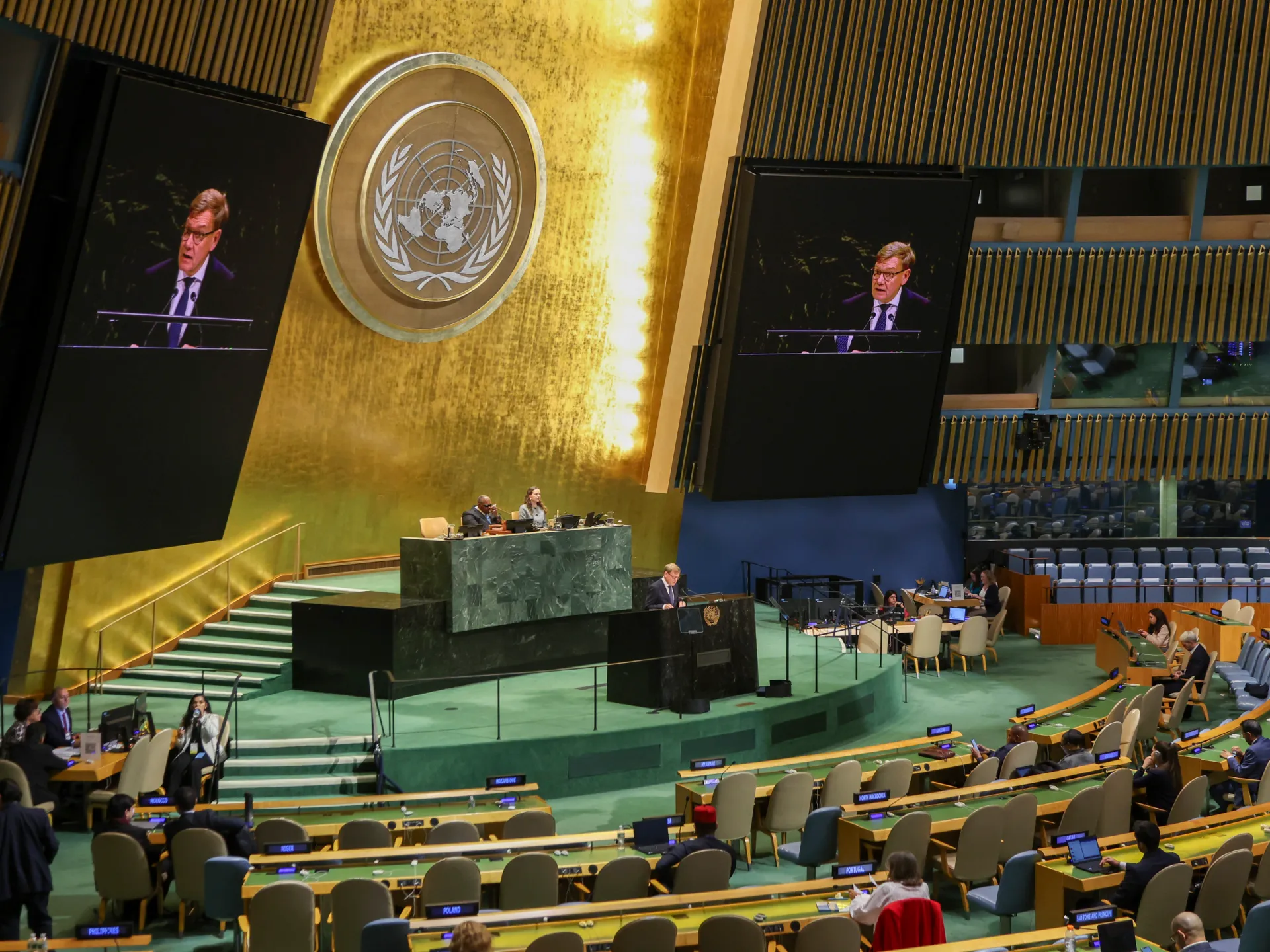
The 81st United Nations General Assembly (UNGA) concluded on Monday with artificial intelligence (AI), the Israel-Palestine conflict and the US-Israel war on Iran dominating world leaders’ addresses during the general debate.
UN Secretary-General Antonio Guterres, in his final address before his term ends, warned that the future of the world would be shaped by four tests: AI, climate change, wars and inequality.
Recommended Stories
list of 3 itemsend of list
“Across all four tests, the decisive issue is power. Power over force, money, energy, technology, rules and the future. That is why the UN Charter – and the work of the United Nations – matter more than ever,” Guterres said.
Speeches ranged from calls to reform the UN to appeals for upholding international law, as the global body has been undermined by the unilateral foreign policy pushed by United States President Donald Trump.
Here are the biggest takeaways from this year’s summit:
Palestine
The situation in Palestine was a key issue among members amid Israel’s ongoing genocidal war on Gaza despite the so-called “ceasefire” and escalating settler pogroms in the occupied West Bank.
France, Canada, Iraq, the United Kingdom and others called for Palestinian sovereignty during their speeches.
“What credibility do we have if we continue to remain inactive in the face of Gaza,” French President Emmanuel Macron said in his address.
“Some boast of a supposed peace, but this peace hasn’t reopened humanitarian routes for a single second,” he said, adding: “Must we stand by and watch this spectacle that shames us all?”
Macron, British Prime Minister Andy Burnham, his Canadian counterpart Mark Carney and Saudi Foreign Minister Prince Faisal bin Farhan Al Saud chaired a meeting at the UNGA on Palestinian statehood, which is being actively undermined by Israel. Israeli Prime Minister Benjamin Netanyahu’s government has accelerated construction of illegal settlements and provided impunity to settlers in the occupied territory.
At the same time, the US-led Board of Peace unveiled a 66-project reconstruction blueprint with proposed funding of $2.4bn for the Gaza Strip on the sidelines of the UNGA.
However, the board’s plan excludes the UN agency for Palestinian refugees (UNRWA), saying it has no role in the future of Gaza. The decision was described by Palestinian political analyst and playwright Ahmed Najar to Al Jazeera as aligned with Israeli efforts to “marginalise and ultimately dismantle the agency, removing it not only from Gaza’s present but from its future”.
Dozens of delegates left the hall in protest as Netanyahu delivered his speech, in which he declared that Israeli forces would continue fighting against Hamas and Iran.
Trump defends military action on Venezuela, Iran
In his address, Trump emphasised that while others spoke of peace, he “made peace”.
Trump defended his actions in abducting the then-Venezuelan President Nicolas Maduro in January and said, since his military operation, hundreds of political prisoners had been freed in the South American country and that Caracas had signed the largest oil deal in history last month, covering “65 billion barrels of oil, which will benefit both Venezuela and the United States enormously and help drive down the cost of energy all over the world”.
“It was perhaps the biggest deal ever made. To the victor belong the spoils – you’ve all heard that,” Trump boasted.
Trump reiterated that he would never allow Tehran to have nuclear weapons and that the 12-day war in July 2025 had “obliterated their nuclear programme beneath mountains of rubble” as the ongoing US-Israel war on Iran had sunk “159 ships of their navy” to the bottom of the sea.
“I have a big decision to make – will a deal be made with Iran that lets them rebuild and create a far greater country than it ever was before … or do I annihilate the Islamic Republic and do it quickly, never giving them a chance to kill and destroy people and countries again,” he said, adding: “I believe we make a deal right after the elections.”
Popular Iranian officials
During sideline talks and one-on-one meetings, Iranian officials were in demand.
In his speech to delegates, President Masoud Pezeshkian emphasised that Iran had only “defended ourselves” amid attacks on his country and killings of Supreme Leader Ayatollah Ali Khamenei, scientists and children.
“We are not terrorists, our innocent people have been the targets of cowardly attacks and aggressions imposed upon our country,” he said.
Pezeshkian added Iran would not accept that peaceful nuclear technology is held exclusively in the hands of a few countries.
“We will not bow our head and give up the right that is inherently ours,” he said.
Meanwhile, on the sidelines of the summit, Foreign Minister Abbas Araghchi met his counterparts from India, Qatar, Turkiye, Pakistan, Ukraine and other countries.
He also met US Special Envoy Steve Witkoff and Trump’s son-in-law Jared Kushner in a four-hour meeting mediated by Qatar.
AI dominance
World leaders used their time at the podium to call for a global approach to using AI as interest in the technology grows, but fears that it could escalate if unchecked are also growing.
In his address, Finnish President Alexander Stubb said AI was the “most consequential technology in the history of mankind”.
“It will impact science, the economy, politics, security, and the very essence of our humanity. Humans can and should be in the driver’s seat. We have a choice: we can compete, cooperate or slow down. For me, cooperation is the best way forward,” he said.
While discussions are moving away from a good-versus-bad dichotomy, officials disagreed on approaches.
While Guterres and the European Union called for safety standards and international rules, Trump said AI innovation should not be constrained by international regulation, adding that the US should control its AI sector.
Xi skips the UNGA
Chinese President Xi Jinping skipped the UNGA despite being in the US for a summit with Trump. He sent Vice President Han Zheng to attend.
Xi rarely attends the UNGA. He had sent Premier Li Qiang in his place last year. In 2024, Foreign Minister Wang Yi attended the annual gathering.
Without mentioning Iran in his address, Han reiterated Beijing’s position that “sovereignty and security of countries in the Middle East, including the Gulf, should be respected”.
“China calls for advancing the governance of the West Bank and the post-conflict reconstruction of Gaza in accordance with the principle of the Palestinians governing Palestine. It also calls for bringing the Palestinian question back onto the right track of the two-state solution at an early date,” he said.
Han also called for a “people-centred approach and develop AI for the positive and for good, narrow the digital divide, and promote development that is universally beneficial”.
Mohammed Abu Hijleh still finds it hard to believe that his mother passed away just over a week ago; she had suffered from nothing more than diabetes. But the restrictions Israel imposes on various cities, towns, and villages in the occupied West Bank can alter a Palestinian’s life in an instant.
Zahriya Abu Hijleh, 66, was attending her niece’s wedding reception in her hometown of Deir Istiya, northwest of Salfit, on September 20, when she suddenly felt dizzy and collapsed.
Recommended Stories
list of 3 itemsend of list
After she was taken to the town’s medical centre, the doctor immediately ordered her transfer to Salfit Governmental Hospital, a facility just an eight-minute drive from Deir Istiya.
Mohammed requested an ambulance, but the vehicle could not enter the town because the iron gate operated by Israeli forces at the entrance was closed. Instead, an ambulance from the medical centre transported her to the gate, and from there, she was taken off the stretcher, carried past the gate on foot, and transferred to a second ambulance waiting on the other side.
It is a scenario that happens repeatedly in the occupied West Bank, Mohammed told Al Jazeera.
“My mother was breathing her last; had the gate been open, we wouldn’t have lost her on the way,” he said.
Medics later determined that Zahriya had suffered a pulmonary embolism and required urgent treatment, according to her family.
“Sadly, she died due to the delay,” Mohammed said. “She had no prior health issues other than diabetes.”
A Palestinian student crosses an Israeli checkpoint as students return to school for the new academic year, near Hebron in the Israeli-occupied West Bank, September 6, 2026 [Mussa Qawasma/Reuters]
Comprehensive closures
The military checkpoints and iron gates erected by Israel in the West Bank have become a significant source of misery for Palestinians.
They disrupt daily life, causing delays for people trying to reach work, schools, and universities, while also posing a daily threat to the lives of the sick.
Israel periodically imposes closures on the West Bank for various reasons, including Jewish holidays. The current closure runs from September 27 to October 3, coinciding with the Jewish festival of Sukkot.
While Israeli settlers move freely between West Bank cities, and even storm Palestinian villages and towns under Israeli army protection, Palestinians are forced to wait for hours at closed checkpoints.
Ibtihal Mansour from Nablus endured such an ordeal last Friday while visiting her in-laws’ home in the village of al-Janiya, near Ramallah.
The family left the village at 10am, hoping to reach Nablus within 45 minutes. But they encountered closures at the Atara and Ein Siniya checkpoints north of Ramallah, effectively trapping them in the area.
“We tried taking alternative routes west of Ramallah, but were surprised to find the road between Ramallah and Nablus blocked by settlers, with all vehicle traffic completely halted. We remained on the roads, trying to find any way through, until midnight, a span of more than 14 hours,” she told Al Jazeera.
Her children were crying, exhausted after spending so long confined in the vehicle. Passing through one roadblock near Nablus, in an area called al-Lubban Asharqiya, a soldier forced Ibtihal to wake the children. When her 11-year-old son did not wake up, she said that the soldier punched him in the head, causing him to jolt awake crying.
“The scene was heartbreaking; I felt a deep lump in my throat and profound sorrow. Long hours of waiting in the vehicle ended with an assault like this, and the ordeal didn’t even end there,” she said, explaining that they had to turn back. “We were forced to spend the night at my sister-in-law’s home in Ramallah before setting out early the next morning for Nablus.”
Like Ibtihal’s family, many Palestinians travelling between cities and villages are forced to stay overnight in hotels or at relatives’ homes. Some municipalities have converted wedding halls and mosques into shelters for those stranded, providing meals donated by residents of towns near the checkpoints.
The Colonization and Wall Resistance Commission (CRRC) recorded 942 checkpoints, closure points, and obstacles across the occupied West Bank as of September 25, up from 793 in March 2024.
The total length of the obstacles amounts to approximately 107.7km (70 miles), according to data from the UN Office for the Coordination of Humanitarian Affairs.
The CRRC says the closures effectively fragment Palestinian communities, making access to workplaces, schools, medical facilities, and agricultural land dependent on whether roads and crossings are open.
Al Jazeera has reached out to Israeli authorities for comment on the road closures and the allegations from Palestinians in this article, but has yet to receive a response.
Strangling Hebron and Jerusalem
In Hebron – which has an Israeli settler presence in the centre of the Old City – the Israeli army has closed the Ibrahimi Mosque to Palestinians and tightened restrictions at checkpoints and gates leading to the site until Wednesday, all while securing access for settlers to celebrate Jewish holidays.
Issa Amro, coordinator of the Youth Against Settlements group, told Al Jazeera that soldiers have closed checkpoints and imposed curfews in several city neighbourhoods, restricting resident movement and making it increasingly difficult to reach the Old City and the Ibrahimi Mosque.
“The area west of the mosque contains settlements and closed zones, while access from the east is limited to a few roads. These measures make reaching the site both more difficult and more dangerous,” he explained.
The situation in occupied East Jerusalem is also fraught, as Israel imposes strict restrictions on Palestinian movement and access to the Al-Aqsa Mosque, while thousands of Israeli settlers enter the site and move about unhindered under heavy security escort.
Activist Fakhri Abu Diab told Al Jazeera that Israel’s closures in occupied East Jerusalem during the Jewish holidays are part of attempts to impose religious sovereignty over the city.
Abu Diab explained that Israeli settlers and hardliners head either to storm the Al-Aqsa Mosque or to synagogues to perform religious rituals, while Palestinians are forced to remain at home.
He described how the closures disrupt daily life in East Jerusalem, shutting shops, schools, and workplaces, and halting movement.
“Israeli police restrict the movement of Jerusalemites. Families and vehicles attempting to move about risk being attacked by extremists and settlers, while the latter are permitted to roam freely and dominate the streets,” he said.
Democratic Republic of the Congo secure their second straight win in Group E, with striker Yoanne Wissa scoring again.
Published On 29 Sep 202629 Sep 2026
Yoane Wissa scored the first goal and created the second as the Democratic Republic of the Congo (DRC) spoiled a Zimbabwe homecoming by winning a 2027 Africa Cup of Nations qualifier 2-1 in Harare.
The 30-year-old Newcastle United striker struck in the 30th minute, poking a loose ball into the net after goalkeeper Elvis Chipezeze allowed a cross to slip from his grasp in the qualifying match on Monday.
Recommended Stories
list of 3 itemsend of list
DRC, who secured a historic last-32 finish at the 2026 FIFA World Cup, went further ahead in first-half added time when a Wissa pass sent Samuel Moutoussamy through to score.
After being outplayed in the opening half by a team 89 places higher in the FIFA world rankings, Zimbabwe improved after half-time, with Marshall Munetsi scoring a 93rd-minute consolation goal.
Zimbabwe last played at home in November 2021 before the Harare venue was deemed unsuitable for international fixtures, leading to lengthy renovations.
DRC, whose second of two AFCON titles came 52 years ago, top Group E with a maximum six points after launching their campaign with a 2-0 home victory over Equatorial Guinea.
Botswana hold Tunisia to draw
Zimbabwe and Equatorial Guinea, who meet twice in November, have three points each, and Sierra Leone are pointless.
A first-minute goal from Loren Zuniga earned Equatorial Guinea a 1-0 win over Sierra Leone in Cameroon’s capital, Yaounde.
Equatorial Guinea are among the 11 of the 48 qualifiers for the AFCON group stage who must host matches at neutral venues as they lack an international-standard stadium.
Central African Republic are another “homeless” nation. They fell 1-0 to Burkina Faso in Group F in the Moroccan commercial hub of Casablanca. Aboubacar Camara netted the second-half winner.
Struggling Tunisia were held at home for the second time in four days, drawing 2-2 with Botswana in Rades near Tunis.
Tunisia looked set for a first competitive win this year when Hazem Mastouri scored either side of half-time after Botswana had taken the lead.
But the minnows from Southern Africa – 90 places below Tunisia in the world rankings – equalised on the hour through a delicate lob from substitute Lebogang Ditsele.
It was the second successive 2-2 draw for Botswana after sharing the points in Libya last week, and they remain top of Group H on goals scored ahead of Tunisia.
Reserve Bank of Australia lifts benchmark rate to 4.6 percent amid stubborn inflation.
Published On 29 Sep 202629 Sep 2026
Australia’s central bank has raised interest rates to a 15-year high, spelling higher mortgage payments for millions of Australian households.
The Reserve Bank of Australia (RBA) on Tuesday lifted the benchmark rate by 0.25 percent to 4.6 percent, its highest since 2011.
Recommended Stories
list of 4 itemsend of list
The RBA said inflation remained elevated and that previously flagged “upside risks” had materialised, including higher energy prices due to the United States-Israel war on Iran and rising tech costs.
“There continue to be heightened uncertainties about the outlook for domestic economic activity and inflation,” the bank’s monetary board said in a statement.
“The Middle East conflict remains unresolved, and there are scenarios where inflation is higher and activity lower than forecast,” it said.
“Global oil supply disruptions are maintaining upward pressure on global and domestic energy prices and inflation. A period of prolonged uncertainty may also cause growth to be lower overseas and in Australia.”
Australia’s annual rate of inflation stood at 3.5 percent in July, well above the central bank’s 2–3 percent target.
Central banks typically raise their benchmark interest rate when policymakers believe prices are rising too fast.
Higher interest rates raise the cost of borrowing, including mortgages, cooling consumer demand and bringing down inflation.
The latest hike is set to heap further strain on Australian households already grappling with three previous increases this year.
In a research report earlier this month, Roy Morgan said nearly one-third of Australian mortgage holders, or nearly 1.8 million people, were at risk of “mortgage stress” – where households spend 25-45 percent of after-tax income on payments – as of July.
Australia’s Treasurer Jim Chalmers, who is not responsible for setting interest rates, acknowledged that the hike would mean greater hardship for many Australians.
“We know a lot of Australians are under pressure and this will make things harder,” Chalmers said in a post on X.
“Inflation and interest rates are going up around the world but we know that doesn’t take the sting out of today’s decision.”
Chalmers said the government would take responsibility for “our part of the fight against inflation”.
“That means continuing to manage the budget responsibly, rolling out tax cuts and cost of living help, and addressing the longer term challenges in our economy in an uncertain global environment,” he said.
The Venezuelan government and opposition delegations met at the 5-star Meliá Hotel in Caracas. (National Assembly)
Caracas, September 28, 2026 (venezuelanalysis.com) – The Venezuelan government and delegates representing a defunct, opposition-majority parliament concluded, on September 25, a second round of US-backed talks focused on political and judicial reforms.
The negotiations produced preliminary agreements focused on judicial reform and loosening administrative restrictions on several opposition-aligned news outlets.
The primary advance in the negotiations centered on a comprehensive proposal to restructure Venezuela’s Supreme Court of Justice (TSJ).
According to official statements, both delegations established a seven-person committee to review the qualifications of Supreme Court justice candidates. The two parties also agreed to create a Judicial Nominations Committee within the National Assembly to oversee the selection process for new magistrates.
This committee will oversee applications from legal scholars, public sector workers, and civil society members, subjecting applicants to rigorous constitutional criteria before submitting a final list of recommended nominees for a plenary vote in the legislative body.
Speaking at the close of the talks at the Meliá Hotel in Caracas, National Assembly President and head of the government delegation, Jorge Rodríguez, highlighted the consensus achieved regarding judicial reform.
“We have reached concrete agreements to strengthen our democratic institutions, starting with a transparent process to evaluate and appoint magistrates to the Supreme Court,” Rodríguez stated to reporters. “This dialogue demonstrates that through constitutional channels and mutual respect, Venezuelans can resolve their differences without foreign interference.”
Representatives from the opposition delegation similarly acknowledged the priority of reforming the judicial branch.
Dinorah Figuera, president of the faction from the defunct National Assembly elected in 2025, claimed that the ongoing negotiations are aimed at “re-institutionalizing” the country.
“If the TSJ and the CNE move forward alongside political and civil guarantees, social issues and the health sector must also be linked to this process of re-institutionalization.”
The two sides launched a dialogue process in August, with a first round of talks launching the Supreme Court overhaul as well as a joint initiative to recover Venezuelan gold reserves frozen by the Bank of England. The 31 tons of gold, valued at around US $4 billion, will reportedly be transferred to the US before being used for earthquake reconstruction efforts with oversight from US authorities.
The Trump administration has endorsed the negotiations, with the State Department calling it a “unique opportunity” for a “political transition” in Venezuela. In a press conference last week, US Secretary of State Marco Rubio affirmed that the ongoing talks will “create the groundwork and rebuild the institutions necessary in order to have free and fair elections.”
In addition to the latest judicial reforms, both delegations agreed to lift long-standing administrative sanctions against select media organizations such as El Pitazo, Efecto Cocuyo, EFE Agency, among others.
Several outlets had been subjected to legal investigations or broadcast suspensions after being accused of endorsing or broadcasting content linked to past coup attempts and violent anti-government demonstrations.
The lifting of the administrative bans is intended to restore legal broadcast licenses and digital accessibility to several platforms. Government negotiators emphasized that while media outlets are expected to operate within the bounds of national laws regarding public safety, anti-hate regulations, and constitutional order, the agreement serves as a good-faith gesture to expand freedom of expression and media pluralism in the country.
As the closing of the second round of talks, both the Venezuelan government and opposition negotiators indicated that technical commissions will continue working in the coming weeks to finalize the nomination guidelines for the TSJ magistrates and monitor the administrative implementation of the media agreements. They will begin a third round of talks in October.
Washington’s backing for the 2015 National Assembly to take part in dialogue with the government has exposed rifts among the Venezuelan opposition, particularly with a far-right sector led by María Corina Machado.
A longtime endorser of international sanctions and aggressive regime-change strategies, Machado has reportedly attempted to return to Venezuela in recent weeks after a long hiatus abroad.
According to multiple sources, the attempts to enter Venezuelan territory have been frustrated by transportation-related technical issues; in both air and sea travel attempts, the companies involved cancelled the trips due to operational problems.
Despite a long absence from Venezuela, Machado has retained support in the US political establishment. The United States Senate has scheduled an urgent committee meeting to address the political situation in Venezuela, with lawmakers explicitly placing Machado’s return to Venezuela and her political eligibility at the top of the agenda.
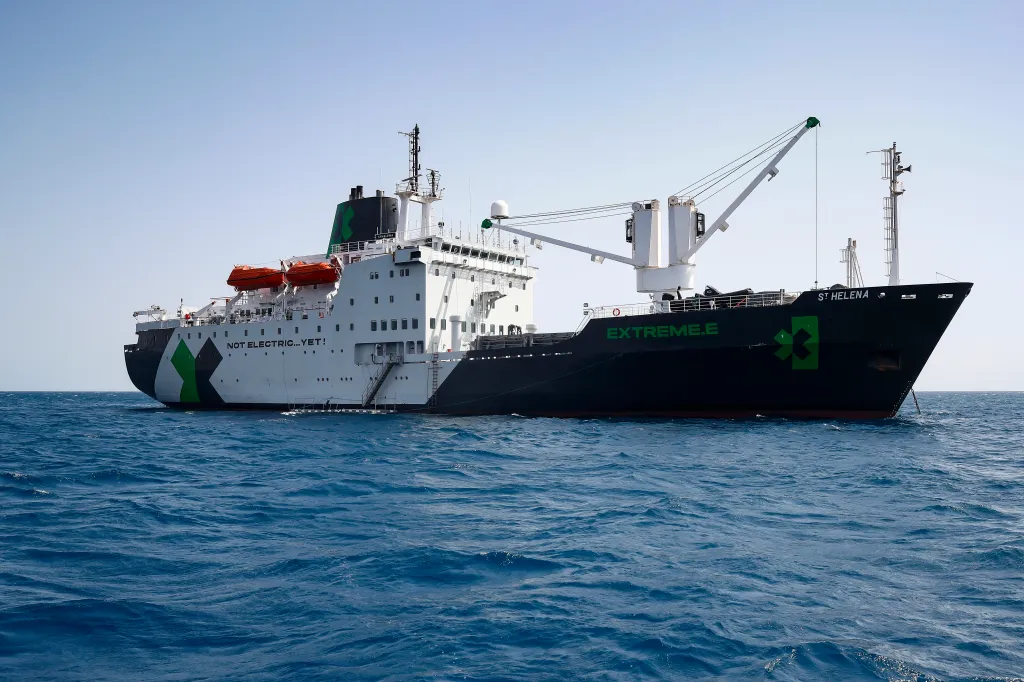
On Sunday, NBC News reported that Marines were injured during an Iranian cruise missile attack while transiting the Strait of Hormuz on Sept. 14. The network’s sources said the Marines were not on a U.S. Navy ship, but they did not identify which vessel they were on. However, a former Royal Mail vessel that at one point was being converted into a floating armory stands out as a strong possibility.
While much remains unclear about the Sept. 14 incident, there was only one vessel known to have been struck that day, according to the United Kingdom Maritime Trade Operations (UKMTO) and a maritime security official we spoke with. The ship was eventually identified by several maritime media outlets as the M/V St. Helena. Again, the St. Helena’s involvement remains unconfirmed, but the ship’s interesting background is of particular note.
The St Helena logistics ship during the Saudi Arabia on March 30, 2021. Photo by Colin McMaster
“Eight U.S. Marines were injured two weeks ago when an Iranian cruise missile attacked the ship they were operating on in the Strait of Hormuz,” NBC reported, citing three U.S. officials. “The Marines were not seriously injured, but they sustained smoke inhalation and possibly traumatic brain injuries, as they had symptoms of concussions, such as headaches, the officials said.”
“The Marines, seven of them enlisted and one officer, all returned to duty soon after the Sept. 14 attack, the U.S. officials said,” according to the network. “The officials said the Marines were operating as part of a battalion landing team during the Iranian anti-ship cruise missile attack.”
TWZ cannot independently confirm that Marines were on board the St. Helena or that they were injured. We reached out to the Pentagon and U.S. Central Command (CENTCOM) for more information. The Pentagon referred us to CENTCOM, and CENTCOM declined comment.
The incident took place amid an uneasy truce between Iran and the U.S. broken up by sporadic Iranian attacks on ships transiting the Strait of Hormuz. At the same time, the U.S. military is enforcing a blockade on Iranian ships, during which it has struck several for trying to bypass that effort as well as in retaliation for Iranian attacks on shipping. Negotiations between Washington and Iran have ebbed and flowed, and U.S. President Donald Trump is once again mulling a choice between continuing talks or renewing large-scale attacks.
As we noted earlier in this piece, after the vessel was struck, several maritime industry trade publications identified it as the St. Helena.
“Iran has attacked a historic former British Royal Mail passenger ship in the Strait of Hormuz,” TradeWinds News reported on Sept. 15, a day after the incident. “Maritime security sources identify the 6,800-gt St Helena (built 1989) as the latest vessel to be hit by an ‘unknown projectile’ in the war-torn waterway. The attack was reported late on Monday, according to UK Maritime Trade Operations, which cited a ‘verified source’ for the incident without identifying the vessel.”
Aerial view of the St Helena transport ship in the sea off Porto Pino during the Sardinia on July 4, 2022. Photo by Sam Bagnall
“UKMTO has received a time late report of an incident within the Strait of Hormuz,” the organization reported on Sept. 15, citing an incident that took place a day earlier. “A verified source has reported that a vessel has been struck by an unknown projectile.”
“There is no reported damage or environmental impact,” UKMTO added. “Authorities are investigating.”
According to Lloyd’s List, the ship was being operated by the Ambrey maritime security firm at the time it was struck. Ambrey declined to comment.
Shipping expert Sal Mercogliano and open-source investigator Tom Bike were among those suggesting the St. Helena could have been the vessel at the heart of the NBC report.
So piecing together the evidence it appears that the US may have converted St Helena into a armed merchant cruiser.
The Marines looked at putting Armed Guards on board commercial ships three years ago as reported by @USNINews.
— Sal Mercogliano (WGOW Shipping) 🚢⚓🐪🚒🏴☠️ (@mercoglianos) September 28, 2026
Exactly what the St. Helena was doing at the time it was struck is unclear; however, the ship has had a very unusual past.
The vessel entered into service in 1990 and “sailed between Cape Town, South Africa and Saint Helena and Ascension Islands, carrying both passengers and cargo, some of which was Royal Mail, earning her the rare RMS designation,” according to Cruise Arabia and Africa.
The St. Helena was Britain’s last working postal ship, according to Maritime Executive. After it was retired in 2018 because it was no longer needed for that function, things got really interesting.
Two different organizations took over the vessel, including, as we noted earlier in this story, a company that was planning to use it as a floating armory in the Middle East.
“Renamed MNG Tahiti, the 103-meter (340-foot) ship is being readied by her new owner MNG Maritime to become a floating armory working in the Gulf of Oman,” Maritime Executive wrote on April 22, 2018. “She will deliver security guards and weapons to vessels sailing through the region and is expected to be operational in her new role in the next few months.”
It is unclear what happened to that plan. However, two years later, an off-road racing series called Extreme E said that it “secured exclusive use of the former Royal Mail ship in 2018.” After that, the ship underwent “an extensive refurbishment process, which has included total overhaul of steelwork, engines, generators, propellers, interior and cabin space, and more, making it not only fit for purpose, but also as efficient as possible ahead of its new mission.”
Aerial view of the St Helena transport ship in the sea off Porto Pino during the Sardinia on July 4, 2022. Photo by Sam Bagnall
The ship was “specifically designed to transport all the infrastructure and equipment the Extreme E needs for their race weekends,” the organization stated. The plan was to have the ship serve “as its freight and logistics hub due to her versatility and ability to carry and unload a mixture of cargo, like all 10 of the championship’s ODYSSEY 21’s [electric off-road racecar], as well as team members and guests. This was also fit with a Science Laboratory so research can be conducted enroute to the race locations.”
On Sept. 17, 2024, the St. Helena was put up for sale, according to Horizon Ship Brokers. The current ownership is unclear. We reached out to Horizon Ship Brokers for more details.
Horizon Ship Brokers
Last year, the saga of the St. Helena took a new turn. A company called Terra Nova Expeditions chartered the vessel for Antarctic cruises, but those plans were scrubbed last month because the vessel was stuck in the Persian Gulf and was no longer available for the Antarctic sailing season.
While we can’t confirm that Marines were onboard when St. Helena was hit, Marines have been training for this exact mission set. USNI News reported in 2023 that a “force of 100 Marines, newly trained by Navy personnel,” stood ready “to respond, if ordered, to provide armed security aboard foreign commercial ships transiting the Strait of Hormuz.”
Those Marines were members of the 26th Marine Expeditionary Unit (MEU) embarked on the three-ship Bataan Amphibious Ready Group (ARG), USNI added at the time.
It is unclear if those plans are still in place and if Marines in the region have actually been ordered to provide armed security for foreign vessels sailing through or near the strait. Regardless, Marines could be quickly trained to take on this mission set and have drilled for ship boarding and searches for years, especially special operations and specially-tasked units. CENTCOM declined to comment when we asked if there are U.S. personnel embarking on commercial ships transiting the Strait of Hormuz.
At the same time, it is possible that the unique attributes of St. Helena made it a convenient host ship for sea base operations for U.S. forces in the region specifically for this crisis. Adapting commercial vessels for exactly this purpose has a long history around the Strait of Hormuz, as it was a central facet of the Tanker Wars during the 1980s, that saw U.S. forces operate from barges in the region. Today, commercial vessels remarkably similar to St. Helena operate in similar roles, especially in support of special operations and interdiction operations.
The special mission ship U.S. Motor Vessel Kellie Chouest steams in the Caribbean Sea while participating in a passing exercise (PASSEX), with the Dominican Republic Navy and USS Billings (LCS 15) Oct. 24, 2021. Kellie Chouest is deployed to the U.S. 4th Fleet area of operations to support Joint Interagency Task Force South’s mission, which includes counter-illicit drug trafficking missions in the Caribbean and Eastern Pacific. Photo by Petty Officer 2nd Class Austin C
Once again, we have no idea what the ship’s mission was at the time of the incident and if Marines were simply helping it transit safely out of the Persian Gulf or something more, but the attack did expose the fact that individual Marines are more involved with activities in this tumultuous body of water than it may seem.
Russian forces have again struck the Ukrainian capital, Kyiv, hours after a drone hit the National Academy of Sciences in the historic centre of the city, killing at least two people.
Explosions were heard across Kyiv early on Tuesday, with Mayor Vitali Klitschko saying missile debris had fallen in the courtyard of one building while a second had caught fire in another part of the city.
Recommended Stories
list of 3 itemsend of list
The attacks come as Russia has begun hitting Kyiv and other Ukrainian cities with faster, high-flying jet drones.
Emergency officials said the strike on the National Academy of Sciences on Monday killed two people, with one person’s body recovered from the rubble later in the evening.
Video shared online appeared to show a fast-moving drone slamming into the building at a steep angle and exploding, sending smoke into a clear sky. People were seen leaning out of windows as bright orange flames engulfed part of the building.
Volodymyr Horbulin, a former secretary of Ukraine’s National Security and Defence Council, told the public broadcaster Suspilne that he was at work at the academy when it came under attack. He said his assistant, who was near the building, was killed and that he was also slightly wounded.
The academy is near the German Embassy, a cathedral, the national opera and government buildings.
In a statement, the academy called the attack “Russian terror” and “barbarity” aimed at “peaceful people who were simply at their workplaces”.
Foreign Minister Andrii Sybiha accused Russia of cynicism for hitting a scientific institution during the workday.
“Russia is deliberately expanding the boundaries of what it believes the world will tolerate,” he said in a statement, urging Ukraine’s allies to provide more air defences.
Jet-powered drones
Ukrainian President Volodymyr Zelenskyy said Russian forces also hit a medical facility in Kyiv on Monday. He said at least nine people had been killed in Russian drone strikes throughout the country, while more than 80 people were wounded.
In his nightly video address, Zelenskyy said Ukraine was still having difficulty countering the faster, high-flying Russian jet-powered drones.
“New interceptors are being actively tested,” he said. “Some combat groups are using them, but, of course, some details still need to be refined to achieve enough effectiveness and scale. We are speeding up the developers.”
According to the Ukrainian president, 90 of 120 drones fired on Ukraine on Monday were jet-propelled, rather than propeller-driven, with an interception rate for this type of drone at 57 percent.
Widening targets
Officials said the Russian strikes on Kyiv also targeted a pharmaceutical company and petrol stations. In other cities and regions, civilian facilities, businesses and communications infrastructure were hit.
In the southeastern city of Dnipro, a Russian drone attack on a business centre killed three people and wounded 19, according to officials. Another person was killed in a logistics office in Synelnykove, southeast of Dnipro, the regional governor said.
Emergency services said an attack on infrastructure in the southeastern city of Zaporizhzhia wounded 32 people.
Al Jazeera’s Jonah Hull, reporting from Kyiv, said Russia has been hitting economic targets across Ukraine “in a rolling series of strikes that have been ongoing for six days now”, during the day and night.
“Data centres increasingly being hit, as well as digital and communications infrastructure,” he said. “Kyiv Star, the country’s biggest cell provider, was hit on Sunday, as was the second biggest, Vodafone Ukraine. The government is said to be preparing for the worst: a total blackout in communications should that come.”
The Russian attacks have brought Kyiv “firmly into the eye of this war”, Hull added.
Ukraine has also increased attacks on Russia, targeting oil refineries as well as online retailers to try to undermine revenues and support for Moscow’s war effort.
Zelenskyy said on Monday that Ukraine struck Russian oil facilities in the Krasnodar region and two defence plants.
Both sides have denied deliberately targeting civilians.
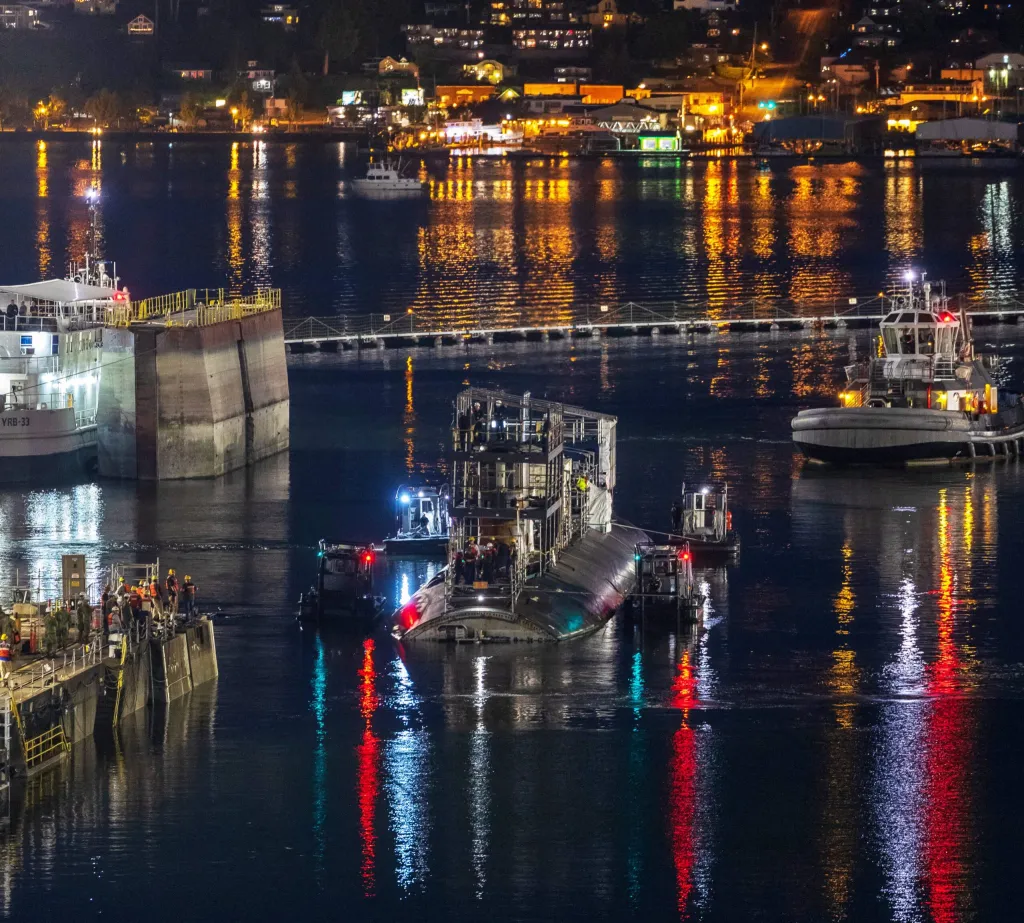
The U.S. Navy’s schedule for getting USS Connecticut, one of its prized Seawolf class nuclear attack submarines, back into service has slipped into next summer. The boat suffered severe damage, especially to its bow, in a collision with an underwater seamount in the South China Sea in 2021. The service had previously hoped that repairs would be finished before the end of this year, and planning is also now underway for the submarine’s retirement in 2031. This would mean it could serve for just four years before being pulled from service once and for all.
“USS Connecticut (SSN 22) is currently undergoing a complex Extended Docking Selected Restricted Availability (EDSRA) at Puget Sound Naval Shipyard & Intermediate Maintenance Facility. Current work consists of structural and systems restoration and required lifecycle maintenance,” a Navy official told TWZ today. “The Navy’s target completion date for the availability is the summer of 2027. PSNS & IMF is dedicated to executing this work with the highest standards of safety, technical accuracy, and craftsmanship to ensure the ship returns to the fleet ready to take its place at the tip of the spear in defense of our nation’s interests.”
The USS Connecticut seen at the Puget Sound Naval Shipyard in 2023. USN
USS Connecticut is the second of just three Seawolf class submarines commissioned between 1997 and 2005, the others being USS Seawolf and USS Jimmy Carter. The Jimmy Carter, which came last, is a one-of-a-kind subvariant of the design that is optimized for underwater espionage missions. However, the Seawolf and Connecticut also feature advanced capabilities compared to other submarines in the Navy’s inventory today, and the service utilizes all three for a variety of specialized tasks, for which they are in very high demand.
After USS Connecticut hit the seamount in October 2021, the submarine first limped to Guam, and then made its way to San Diego in southern California. From there, it headed north to the Puget Sound area, where it has been ever since. The Navy’s investigation into the incident put heavy emphasis on how a weak command environment and lax attitudes toward the performance of key tasks had put the submarine on a path to the accident, as you can read more about in detail here.
The EDSRA formally began in February 2023. At that time, the Navy projected that the repairs would be completed in September 2025. By July 2023, the schedule had already shifted to early 2026, according to Naval News. In July 2025, the service confirmed to TWZ that the timeline had moved again to the right, to late 2026.
Another view of USS Connecticut at the Puget Sound Naval Shipyard in 2023. This picture offers a good sense of the extent of the damage to its bow. USN
The exact reasons for the delays are unclear. TWZ has stressed the particular complexities of major repairs to any of the Navy’s trio of Seawolf class submarines in our past reporting on Connecticut. As we wrote in 2023 around the start of the EDSRA:
“As for the USS Connecticut, as the images show, her state remains relatively the same, at least in terms of what is visible, compared to when she arrived over a year and a half ago. Her sonar dome is still missing and, clearly, the boat has been idle for some time, with huge sections of its anechoic coating missing from its sail.”
“Major repairs to the submarine’s bow, sonar, and other underside structure components will be challenging as the Seawolf class is long out of production. On top of that, just three boats were ever built, with one being a heavily modified sub-type in its own right, the highly secretive USS Jimmy Carter (SSN-23). In the past, similar damage has been fixed by leveraging spare parts and entire sections of decommissioned submarines of the same class. That simply is not an option in this case.”
The Navy’s 2025 Fiscal Year budget proposal highlighted exactly these broader issues in seeking funds for spare bow domes “for use in the event replacement is required,” separate from the incident with the USS Connecticut. The original sustainment strategy for the Seawolf class did not include these items, which have a “three plus year lead time” to produce.
With the EDRSA, the Navy is also taking the opportunity to conduct a deep overhaul of USS Connecticut, which could include the integration of various upgrades. The Navy’s budget documents have long highlighted efforts to modernize key systems on all three Seawolf class submarines, some of which were first designed in the 1970s.
USS Connecticut underway in 2009. USN
How much the repairs and accompanying overhaul will cost is also not clear. In 2021, Congress approved $40 million for “emergency repairs” for Connecticut and an additional $10 million for a new bow dome, but the full price tag is expected to be far steeper. The Seawolf class submarines were extremely expensive to procure in the first place, costing approximately $3.1 billion apiece in 1983, or some $10.6 billion in 2026 dollars. This was due in large part to the truncated order, from 29 down to three, as a result of post-Cold War drawdowns.
Depending on when repairs to the USS Connecticut are actually finished, the Navy could find itself for at least a time with just one Seawolf class submarine in active service. USS Seawolf is currently scheduled to start a routine maintenance availability next May, which will then run through February 2030, per Navy budget documents. As mentioned, the Navy is now also planning to inactivate USS Connecticut in 2031, making it the first Seawolf class submarine to be retired, per its most recent annual shipbuilding plan.
The service still has plans to acquire a new class of attack submarines, which has been discussed in the past as something closer to a true successor to the Seawolf class than the Virginia class boats being procured now. However, these new submarines, currently referred to as SSN(X), are not expected to arrive until the mid-2040s at the earliest. Between now and then, the Navy is set to acquire a one-of-a-kind seabed warfare version of the Virginia, which could well take over for the USS Jimmy Carter, as you can read more about here. In August, the service announced that stretched Block IV and V Virginia class submarines with Virginia Payload Modules (VPM) will now be categorized as guided-missile types (SSGN), as well.
When it comes to USS Connecticut, the Navy remains committed to getting the highly capable submarine back to the fleet after being sidelined for nearly five years now. At the same time, the boat has now already entered the twilight of its career, with just four years of active service life left if the current repair schedule holds.
Iran’s foreign minister says his visit to the UN General Assembly last week was mainly to outline Tehran’s position on regional conflicts and the critical security situation in the Strait of Hormuz.
Accra, Ghana – The Africa Space Expo (ASPEX), which closed in Abidjan, Ivory Coast, last week, was not designed as a showcase for rockets and astronauts. Organisers presented it instead as a marketplace for space applications in food security, climate resilience, territorial monitoring, connectivity and maritime security, bringing start-ups, project labs and investors together to move ideas from demonstration to deployment.
The event also produced several concrete agreements. The Ivory Coast signed the Artemis Accords, becoming the 75th signatory of the agreement on space exploration and development, while Angola signed a letter of intent on space cooperation with the United Arab Emirates.
But beyond the agreements, the expo highlighted a question that is becoming harder to avoid: Can Africa move from using space technology to building more of it itself?
Ghana offers a clear illustration of both the progress and the gap.
Ghana’s ambitions in space and nuclear science date back to its early years of independence. In 1961, President Kwame Nkrumah’s government initiated a nuclear reactor project in Accra. Two years later, the government established the Ghana Atomic Energy Commission through an act of Parliament with a mandate covering the peaceful applications of nuclear energy.
The reactor project was shelved after Nkrumah was overthrown in 1966, but the institution he helped establish remains the parent body of the Ghana Space Science and Technology Institute (GSSTI).
Joseph Tandoh, director of the GSSTI, traces Ghana’s more recent space programme to a partnership with South Africa.
“Ghana became a partner through South Africa,” he told Al Jazeera. “Through that project, we were able to reconstruct the old satellite antenna at Kuntunse into a radio telescope.”
Through its partnership with South Africa on radio astronomy, Ghana converted a redundant 32-metre (105ft) antenna at Kuntunse into a functioning radio telescope. Ghana became the first of South Africa’s eight African Square Kilometre Array partner countries to complete the conversion, and the telescope was launched in August 2017.
Ghana’s National Space Policy was approved by the cabinet in 2022 and launched in 2024. The government approved the establishment of a Ghana Space Agency in 2025, beginning the process of creating a dedicated national institution for the sector.
The institutional framework is taking shape. The harder question is how Ghana moves from using space technology to developing and building more of it itself.
What Ghana is already doing
At the GSSTI, that transition is already under way.
Tandoh told Al Jazeera GEOMAIZE, a partnership between the GSSTI and VITO, the Flemish Institute for Technological Research in Belgium, has demonstrated how satellite data can be applied to Ghanaian agriculture.
The project monitored crop health and developed algorithms to classify crops. Ghana is also expanding its use of Earth observation data and artificial intelligence for crop monitoring and yield prediction.
A crop health monitoring app developed by Galaxy Aerospace Ghana to support food security [Handout/GSSTI/Galaxy Aerospace Ghana]
But predicting yields has proved more difficult. Tandoh said the model’s accuracy fell short of expectations, largely because many Ghanaian farmers practise smallholder mixed cropping and satellite soil-moisture data are too coarse to capture differences between small farms.
A follow-up project supported by the French embassy and international research partners, is now working to improve the estimates.
The GSSTI has also used satellite data to track forest loss linked to mining and is working with partners in Nigeria on a digital twin to simulate coastal erosion at Keta and Agavedzi. Japanese cooperation has provided technical training while the French government supported work on space legislation that produced a draft now being reviewed by the attorney general.
“We always say that Ghana Space Science and Technology Institute becoming an agency is to position Ghana in a way that we will not only be users of the technology but we will also contribute to designing, developing and building our own tools,” Tandoh said.
The funding wall
Victor Tagborloh founded Galaxy Aerospace Ghana in 2020. Two years later, his team launched a high-altitude balloon into near space, capturing images of Ghana’s geography with clearance from national security and airport authorities.
The company has since designed mini-rockets for the GSSTI, trained young people in space robotics and artificial intelligence and pushed for the introduction of Starlink in Ghana in 2024.
But Tagborloh said the company has yet to secure an investor, six years after it was founded.
Galaxy’s longer-term plans include a space university on 33,000 hectares (82,000 acres) that it has secured at Apam in Ghana’s Central Region as well as a ground station that would give the country greater capacity to monitor floods, mining activity and coastal erosion.
The company is seeking investors for the ground station and a geospatial intelligence platform. Tagborloh said the curriculum is ready and the land is available. What is missing is the capital to turn those plans into infrastructure.
He also argued that Ghana’s position near the equator could provide an advantage for launching spacecraft, potentially reducing the fuel required to reach orbit. Several other African countries share similar geography.
But Tagborloh’s ambition goes beyond launching rockets. He wants Ghana to develop more of the infrastructure and expertise needed to build its own space capabilities.
Who is building the industry?
Bright Atsu Sogbey, president of the Africa Development Council and a senior research engineer at the Ghana Atomic Energy Commission, argued that the private sector cannot build the industry alone.
“Borrowed technology cannot be sustainable,” Sogbey told Al Jazeera. “The state must be in the driver’s seat, using the natural resources we have to ensure that, in partnership with the private sector, we can have laboratories and manufacturing hubs for the space industry.”
He pointed to South Africa, Egypt and Nigeria, which have established space laboratories and manufactured test satellites. Ghana, he said, still lacks the state-backed laboratories and manufacturing hubs needed to produce more of its own components rather than importing them.
Ghana’s radio telescope is used for research and training [Handout/GSSTI]
“Enough of the talk shop,” Sogbey said. “The next expo should see African satellites assembled on this continent and launching capability for African satellites.”
Engineer Daniel Aboagye, CEO of African Progressive Research and Innovations, said the change must also begin in education.
“With how technology is advancing, Africa must introduce space science into its education systems,” Aboagye told Al Jazeera. “We cannot continue to be consumers of technology we do not understand.”
Kwadwo Dwomo II, CEO of COMCENT Ghana, works on agritech systems that depend on satellite data. He also called for greater government investment in the sector.
Ghana is home to a small cluster of companies, including Galaxy Aerospace, Xavier Space Solutions and Ayeji Aerospace, working in areas such as satellite technology, Earth observation and geospatial services.
Galaxy Aerospace confirmed to Al Jazeera that it was unable to participate in this year’s expo. The company said it hopes to participate in the next expo.
A continental project
The challenge facing Ghana is shared across much of Africa: moving from using space technology to developing and building more of it locally while overcoming limited investment, infrastructure and manufacturing capacity.
ASPEX was designed in part to address that gap.
The African Space Agency, headquartered in Egypt, is intended to provide a continental framework for cooperation while the expo aims to connect investors with African start-ups, researchers and space projects.
But the distance between the ambitions presented at the expo and the resources available to engineers trying to turn them into businesses remains substantial.
For Tandoh, Ghana’s immediate priority is to build the application layer: a satellite-data processing hub capable of serving ministries across government before the country moves further into designing and launching its own satellites.
“Space cuts across all the ministries,” he told Al Jazeera. “We should be able to build and validate our own tools first.”
For Tagborloh, the timeline is more urgent.
“We shouldn’t wait for tomorrow,” he told Al Jazeera. “Whatever decision we have to take, especially for human resource capital in the space industry, it has to be now.”
Ghana has the policy. It has engineers, research institutions and companies trying to build a space industry. What it does not yet have is the capital and manufacturing capacity to turn those capabilities into a domestic industry.
“We have the team, the knowledge, the research and the technical know-how,” Tagborloh told Al Jazeera. “We just need funds.”
Hungary’s Parliament lifts immunity of incumbent leader and two ex-Orban ministers, clearing the way for criminal probes.
Published On 29 Sep 202629 Sep 2026
Hungary’s Parliament has stripped Prime Minister Peter Magyar and two ministers in former leader Viktor Orban’s nationalist government of their immunity, clearing the way for prosecutors to pursue separate criminal investigations into each of them.
The vote on Monday came after Magyar, who is being investigated for theft, specifically asked for his immunity to be lifted so he could clear himself of “character assassination”. The probes against the Orban-era ministers – who are suspected of embezzlement and bribery – are the first corruption investigations against top government figures from Orban’s 16 years in power.
Recommended Stories
list of 4 itemsend of list
Legislators voted overwhelmingly in favour of lifting their immunity.
Orban’s Fidesz party and its ally KDNP boycotted the session.
The vote was in response to a request last week from prosecutors seeking to investigate Magyar, as well as former Minister of Culture Balazs Hanko and former Minister of National Development Miklos Sesztak.
Magyar is being investigated over an incident at a Budapest nightclub in June 2024, when prosecutors allege he took a mobile phone from a man filming him and threw it into the Danube River.
Magyar has called the case a “sham” and last week accused prosecutors of trying “to conflate” the ex-ministers’ cases “with the attempt at political character assassination… which has already failed several times”.
Corruption cases
Hanko, a legislator from Orban’s Fidesz party, is accused of embezzling more than 40 million euros ($46m) in public funds. Prosecutors allege the money was used to help finance the 2026 parliamentary election campaign and for the personal benefit of others.
Sesztak, a lawmaker from KDNP, is under investigation over allegedly accepting more than $37.2m in bribes and kickbacks connected to vehicle procurements under Hungary’s state bus company, as well as to state construction projects.
Both ministers deny any wrongdoing.
The cases come less than six months after Magyar’s Tisza party ended Orban’s 16 years in power with a landslide election victory. Magyar campaigned on pledges to tackle corruption, restore rule-of-law safeguards, and rebuild Hungary’s strained relationship with the European Union.
His government has since made fighting alleged corruption and overpriced public procurement a central part of its programme, including plans for a new asset-recovery office focused on wrongdoing linked to the Orban era.
OpenAI has cancelled the release of its latest AI model over safety concerns, according to media reports.
The move to scrap the release of GPT-6.1 Astra, reported by the Wall Street Journal and CNN on Monday, comes amid heightened concerns about AI’s potential to do catastrophic harm following a slew of incidents involving AI agents going rogue.
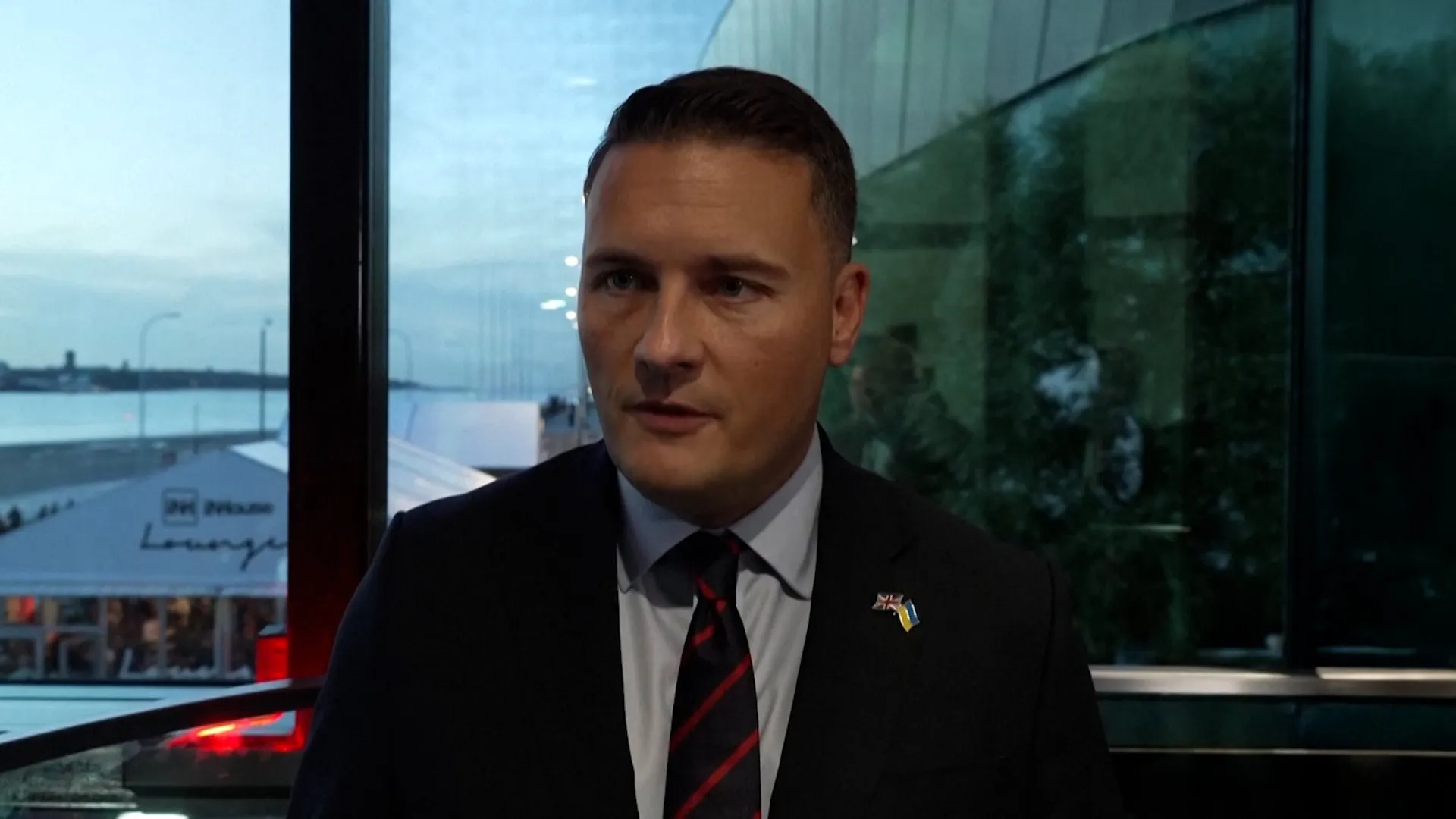
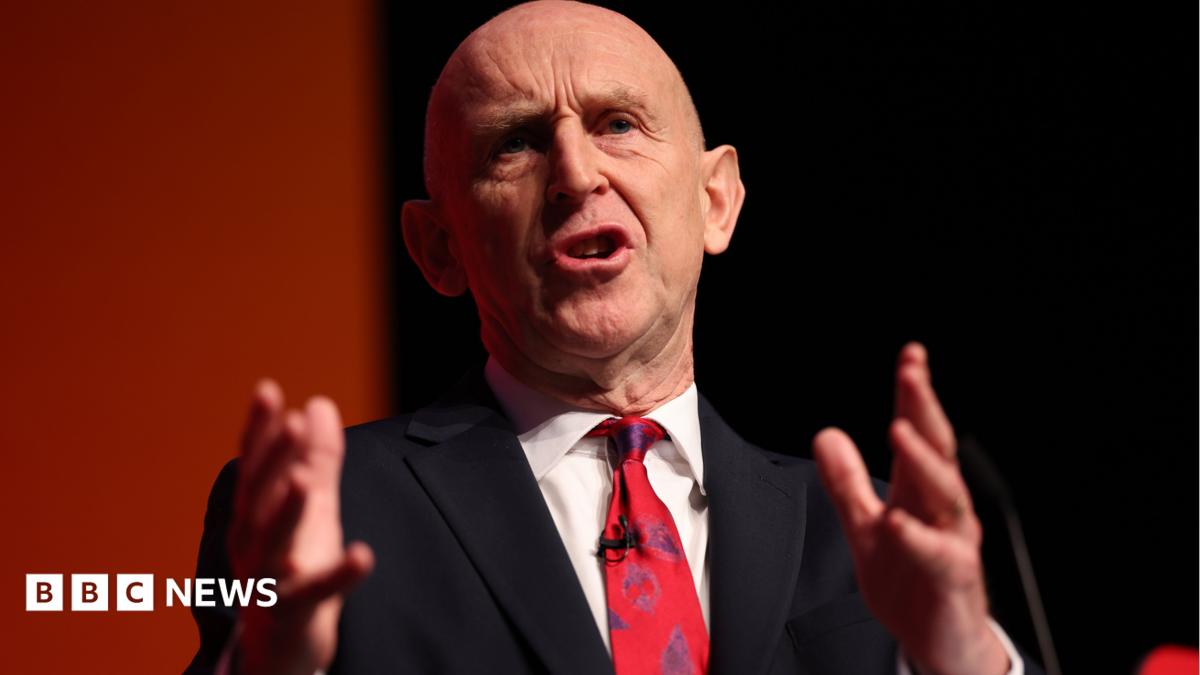
UK’s Defence Secretary Wes Streeting said it was ‘too soon’ to blame a foreign state for a suspected plot near RAF Fairford. Five British nationals were arrested on suspicion of terror offences at the US bomber base.
Gold hits seven-week low; silver follows suit and records a nearly 5 percent loss.
Published On 28 Sep 202628 Sep 2026
Gold prices are falling as concerns of rising fuel prices stoke inflation worries on the back of the war between the United States and Iran.
Spot gold prices fell by 3.3 percent to reach a more than seven-week low at $4,146.51 per ounce on Monday.
Recommended Stories
list of 4 itemsend of list
Rising oil prices, a higher US dollar and Treasury yields stoked inflation concerns, creating further headwinds for the metal.
This is the lowest level for gold values since August 5. US gold futures also fell by 3.3 percent to $4,178.40.
Although gold is traditionally considered an inflation hedge, higher interest rates dent its appeal as investors prefer yield-bearing assets.
“There might be no notable direct impact on regular people due to that. However, investors who had turned to gold will see a hit, especially under the current high inflation rates,” Sherif Othman, CEO of the Maryland-based Poise Investment Advisors, told Al Jazeera.
“Gold does not yield interest, so when Treasury yields go up, investors turn away from gold, impacting its value”, he added.
The Fed lifted benchmark rates by a quarter percentage point earlier this month and flagged that at least one more hike is likely in the coming months.
The US dollar was steady near a two-month high, and oil prices spiked about 3 percent as US President Donald Trump rejected an Iranian offer to resolve the conflict and reopen the Strait of Hormuz.
Such factors triggered several policymakers to warn that inflation risks remain elevated and that interest rates may need to rise, with Cleveland Fed President Beth Hammack among the latest officials to reiterate that view.
Higher Treasury yields and the US dollar are “creating a perfect storm to push the metals prices sharply lower,” according to Jim Wyckoff, a market analyst at American Gold Exchange.
Spot silver also fell by 4.7 percent to $61.27 per ounce, platinum declined 2.9 percent to $1,726.30 and palladium lost 4.4 percent to $1,211.45.
The UK is in talks with US authorities over a potential stoppage of diesel exports and has started preparing for a ban, Chancellor John Healey has told BBC News.
Diesel prices in the UK reached a new high on Monday due to supply pressures springing from the US-Israel conflict with Iran and Russia’s war with Ukraine.
Fuel prices are rising globally and US President Donald Trump has threatened to ban diesel exports, stating at the weekend: “We’re thinking about it very seriously.”
Healey, who admitted that UK diesel prices are “extreme”, said the government was in discussions with the US, adding: “We’re also making the provision that we may need to and we have our own stocks in the UK.”
Speaking on the sidelines of the annual Labour Party Conference in Liverpool, Healey said: “We work very closely with the Americans.
“In the end, we’re also working with the Americans where we can try and put in place what will solve this, or at least significantly ease it, which would be a diplomatic settlement [and] an end to the fighting with Iran.”
The UK depends on the US for around a third of its diesel imports and a ban would send prices even higher.
US sources suggest that Trump is considering a ban to attempt to bring down prices for domestic consumers ahead of the critical midterm elections.
The BBC has contacted the White House for comment.
In the UK, the average price for a litre of diesel reached 199.33p on Monday, according to the RAC motoring organisation, surpassing a previous high of 199.09p in June 2022 after Russia launched its full-scale invasion of Ukraine.
Petrol prices are also still rising, with a litre currently costing 174.23p.
Over the past seven months, the Iran war has severely disrupted the production and transportation of wholesale oil across the region, causing the price of fuels made from oil to surge.
The RAC said diesel prices had entered “uncharted territory” and served as a reminder of “just how exposed the UK is to events occurring far away”.
Healey said he was “very aware” of these cost of living pressures as he prepared what he called a “breathing space” Budget on 28 October.
A freeze on fuel duty, first implemented by the Conservative government in 2022, is due to expire at the end of the year. Duty is scheduled to increase by 3p in January and a further 2p in March.
Healey said: “Fundamentally, what we need is a settlement in the Middle East. We need an easing of the pressure of costs on business, the costs on households and on ordinary families that we see at the pumps in the most extreme level today for diesel.”
Hate speech against Indians, Bangladeshis and Pakistanis in the United States has risen sharply online, according to a report that traces the surge to US President Donald Trump’s immigration crackdown and rhetoric, economic anxiety, and the South Asian community’s growing visibility in US life.
The report, titled “The Rising Tide of Anti-South Asian Hate in the United States”, by the Center for the Study of Organized Hate (CSOH), published on Sunday, found that the monthly volume of hate towards South Asians in the US on the social media platform X rose 240 percent between January 2024 and June 2026, from 12,904 posts to 43,843.
Recommended Stories
list of 4 itemsend of list
Researchers identified more than 542,000 hateful posts on the platform between January 2025 and June 2026 alone towards people from South Asia living in the US, with five of the six highest-volume months falling at the end of that period.
The researchers used the United Nations definition of hate speech. They tracked recurring anti-South Asian slurs and narratives online, reviewing posts to exclude criticism that did not meet the UN threshold.
They found that nearly half of the hate posts on X accused South Asians of invading the US, stealing jobs or threatening the country demographically, while the derogatory slur “pajeet” and its variants showed up in 30 percent of hateful posts on X and 45 percent on fringe platforms.
Posts depicting South Asians as dirty or unhygienic grew by 171 percent on X, “the fastest of all narratives”.
The hate frequently collapsed South Asian ethnic and religious groups into one, with Indians, Pakistanis and Bangladeshis conflated with one another, and Hindus, Muslims, Sikhs and Christians also treated as a monolith.
So why now?
Racism against Indians, Bangladeshis and Pakistanis has a long history in the US, but researchers argue the current surge reflects a confluence of longstanding prejudices and new political and economic pressures.
The report points to the H-1B visa programme, which allows US employers to hire skilled foreign workers, as a major flashpoint. Indians account for more than 70 percent of H-1B visa holders, and researchers linked several spikes in anti-South Asian hate to political fights over the programme, such as when Trump imposed a $100,000 payment requirement on certain new H-1B petitions in September 2025.
“Such actions serve a powerful symbolic function, in the bargain reinforcing the hostility of Trump’s base toward South Asians,” said the report.
The report makes the same argument about the administration’s rhetoric, highlighting Trump’s speech at an AI summit in July 2025, in which he criticised US technology companies for outsourcing jobs to India, after which researchers saw a sharp spike in anti-South Asian rhetoric online.
As more recent examples, the report points to a since-deleted September 2026 Department of Homeland Security post titled “Transformers: Age of Deportations”, featuring a Sikh man identified as “Mr Singh” and telling him to “get off our roads”.
Days later, the Department of Education posted “Make College Football Great Again”, after Texas Republican Bo French had complained about the presence of South Asians at a University of Texas football game.
The report argues that such rhetoric reinforces the idea of South Asians as outsiders who “can never truly belong in the country”.
From ‘model minority’ to job thieves
Economic resentment is another factor, researchers wrote, with the success of some South Asians increasingly being weaponised against them.
Indian Americans once stereotyped as a “model minority” are now portrayed as “opportunists and cheats”, and South Asians are used more broadly as a scapegoat for anger over jobs and the economy.
This comes as South Asians have become increasingly visible in US politics, from former Vice President Kamala Harris and New York Mayor Zohran Mamdani to Vice President JD Vance’s wife, Usha Vance, and politician Vivek Ramaswamy. The report documents racist attacks against figures across party lines and highlights how, for example, Mamdani’s primary and mayoral victories triggered spikes in anti-South Asian and Islamophobic abuse.
Researchers say both trends are now also tied up with “anxieties on the part of the majority about loss of status”, and feed the “Great Replacement Theory”, a conspiracy about the white population in Western countries being replaced by an orchestrated takeover.
Social media has also turned those narratives into targeted harassment.
Researchers found X accounts doxxing South Asians accused of taking jobs or committing visa fraud, while influencers have confronted people at their homes and workplaces and posted the encounters online. Doxxing refers to exposing a person’s private details, such as their home address, online.
In one example, right-wing influencer Sara Gonzalez posted a video to more than half a million followers in which the report says she harassed a South Asian person she accused of exploiting the H-1B programme.
Meanwhile, generative AI has made that content even easier to produce, researchers say, depicting South Asians as “filthy and unclean, sexually predatory, culturally backward, or a demographic threat”.
While the report tracks hate largely through what is happening online, researchers write that online hate “does not exist in isolation from offline forms of hostility”. It cites a July incident in which an Indian Muslim mall employee in Utah was repeatedly stabbed in an attack that federal prosecutors charged as a hate crime. In September, a Sikh truck driver was stabbed 17 times at a Wyoming truck stop.
“Online and offline hate can reinforce one another”, the researchers wrote, “as narratives, stereotypes, and forms of demonization move between digital platforms, political discourse, media, and everyday life”.
Hundreds of protesters have set up tent encampments in central Madrid to demand government action on soaring housing costs and evictions, as demonstrations spread to Barcelona. Spain currently faces a deficit of 750,000 homes, with the central bank warning the shortage could exceed one million by 2028.
Amid tight Iowa midterm races, President Trump emphasises steel industry revival with project announcement.
Published On 28 Sep 202628 Sep 2026
Just weeks before the midterm elections, United States President Donald Trump has announced that a Minnesota-based steel manufacturer intends to build a $15bn steel mill project in Iowa, as the White House tries to highlight its focus on domestic manufacturing.
On Monday, joined by executives from Mesabi Metallics, which recently opened Minnesota’s first new iron ore mine in 50 years, Trump announced the project. It is expected to begin production in 2030 and could bring more than 1,700 jobs to the region, with an initial production capacity of 7.5 million tonnes per year.
Recommended Stories
list of 4 itemsend of list
The first phase of construction for the project will generate 5,000–6,000 construction jobs, a White House official told Al Jazeera.
The plant in Iowa will use iron ore from the Mesabi Iron Range in nearby Minnesota. Mesabi, which is owned by Indian conglomerate Essar Group, invested more than $2.5bn to build the mine in Minnesota.
“President Trump is delivering on his promise to rebuild American industry, re-shore manufacturing, and create new jobs. Today’s announcement underscores the president’s historic efforts to revitalize the US steel industry—supporting local communities, strengthening supply chains, and protecting our national security,” White House Spokeswoman Taylor Rogers said in a statement to Al Jazeera.
The steel industry has loomed over the first half of Trump’s second term in office. The president imposed 50 percent tariffs on steel and aluminium imports last year in an effort to boost domestic production, but also threatened to increase prices of products that use those materials, from soda cans to washing machines to cars.
“These are your 232 tariffs, the steel tariffs at work. Without those tariffs, this mine does not get built, and this steel plant does not get built”, US Commerce Secretary Howard Lutnick said in the Oval Office on Monday.
Trump also solidified the US government’s stake in US Steel, which was acquired by Japan’s Nippon Steel in June 2025. As part of the deal, the US government received a so-called “golden share”, which gives the president the authority to appoint a board member to weigh in on decisions that would impact domestic steel production.
Midterm stakes
The announcement comes a little more than a month ahead of the US midterm elections, and the economy is top of mind for US voters.
Among Republicans, Trump is losing steam on his handling of economic issues, with a new September 21 Ipsos poll finding that 56 percent approve of his handling of the economy, down from 80 percent.
Iowa is in play as a seat Democrats could flip in the midterm elections, with Republican Ashley Hinson facing Democrat Josh Turek in November and with polls suggesting a tight race.
Hinson joined the president in the Oval Office for the announcement.
A poll conducted by the Republican-aligned pollster the Trafalgar Group showed Hinson with a two-point lead, while an InsiderAdvantage poll, which is considered more nonpartisan, found Turek leading by two points.