Middle East

Does Trump have to submit the Iran memorandum of understanding to Congress? | US-Israel war on Iran News

Lawmakers and pro-Israel groups have issued calls for United States President Donald Trump to ask Congress to review a recent memorandum of understanding (MoU) designed to end the US-Israeli war with Iran.

They cite the Iran Nuclear Agreement Review Act (INARA) as a precedent. Passed in 2015, the law says any agreements with Iran related to its nuclear programme must be submitted to Congress for review and a possible vote of disapproval.

Recommended Stories

list of 3 itemsend of list

The act came into effect when former US President Barack Obama was negotiating the now-defunct Joint Comprehensive Plan of Action (JCPOA) with Iran, and it remains on the books today.

US Senator Lindsey Graham was among the first lawmakers to invoke the act after this week’s memo was announced.

“Under our law, any nuclear deal with Iran will be sent to Congress for review and a vote. I look forward to reviewing the final product,” Graham, a longtime Iran hawk, wrote in a social media post on Sunday.

Critics, including some Democrats and pro-peace groups, have questioned the newfound interest in Congress asserting its powers, after Republicans repeatedly flouted the legislature’s authority during the war itself.

Some see the push as an effort to give the memorandum greater legitimacy, as Trump comes under fire for its terms. Others question whether Iran hawks are invoking INARA to push for a return to war.

Here’s what to know about the debate:

What does the law say?

INARA creates requirements for any agreement between the US and Iran “related to the nuclear program of Iran”, no matter “the form it takes” or whether the agreement is legally binding.

Ahead of its passage in 2015, it was championed by bipartisan opponents of the JCPOA. That deal, which saw Tehran curtail its nuclear programme and submit to regular inspections in exchange for sanctions relief, was subsequently subject to provisions of the law.

The law requires the president to submit the text of any agreement he strikes with Iran to Congress within five days, along with any related materials. That triggers a 30-day approval period.

During that period, members of Congress can choose to pass a joint resolution of disapproval to scuttle the deal.

Still, such a resolution would be subject to the presidential veto. A successful disapproval resolution would therefore require a two-third majority from both chambers to override any vetoes, an extremely high bar.

During the congressional review period, the president “may not waive, suspend, reduce, provide relief from, or otherwise limit the application of statutory sanctions with respect to Iran under any provision of law or refrain from applying any such sanctions pursuant to [the] agreement”, the law states.

Those terms could limit this week’s memorandum, as it includes sanctions relief for Iran.

Does INARA apply to the memorandum of understanding?

Trump has suggested he was open to sending the US-Iran memorandum to Congress, telling reporters earlier this week: “I like the idea. I mean, who wouldn’t approve it?”

But his administration has not yet done so. Administration officials have also not articulated a stance on whether or not they believes the memo is subject to the law. Trump, after all, has frequently denied needing congressional approval for his actions against Iran.

This week’s memorandum opens the Strait of Hormuz, lifts the US blockade on Iran’s ports, and halts fighting on all fronts, including in Lebanon.

It also immediately lifts US sanctions on Iran’s fossil fuel industry, while launching negotiations on the future of Iran’s nuclear programme, among other issues.

As part of the deal, both countries agree to maintain their nuclear “status quo” during ongoing negotiations, and Iran commits to diluting its highly enriched uranium “on site”, with details to be determined during the negotiations.

While Trump has yet to acknowledge INARA’s authority, legal experts from across the ideological spectrum have argued that his memorandum is subject to the law.

Tess Bridgeman, a legal adviser for the Obama White House, wrote that the law applies to “this new MoU, and any future final agreement that might be negotiated in the coming months”.

But in an article published in the policy forum Just Security, she argues that INARA should be repealed, so as to not impede the ongoing diplomacy.

“INARA was never an appropriate way for Congress to engage on Iran’s nuclear program, and that is even more true today,” Bridgeman wrote.

Jack Goldsmith, a Harvard Law School professor and fellow at the conservative American Enterprise Institute, also believes that the memorandum should trigger an INARA review.

He also notes that Trump’s commitment to “immediately” lift sanctions on Iran’s oil industry appears to run afoul of INARA.

“I don’t think the president has the authority under domestic law to issue these waivers,” Goldsmith wrote on the Executive Functions website.

Still, he anticipates that neither Congress nor the judicial branch will confront Trump over the issue.

Will Trump comply with the law?

Trump’s second term has been defined by a broad interpretation of presidential power.

His administration has previously flouted the US Constitution’s provision that Congress alone has the power to declare war.

Trump has maintained that Iran represented an “imminent threat” to the US, which allowed him to launch defensive strikes without congressional approval.

Administration officials have also argued that the president is not beholden to the legal requirement that he gain congressional approval within 60 days of launching an attack. The war, which started on February 28, has lasted nearly three and a half months.

In an interview with the news outlet Axios on Thursday, Trump mused that the war taught him there are “no limits” to his power as president.

It remains unclear if Trump will change course and embrace the congressional collaboration required for diplomacy under INARA.

In her article, Bridgeman argued that Trump could flout the law in whole or in part, particularly when it comes to the immediate sanctions relief, because his party controls Congress.

Goldsmith, meanwhile, pointed out that the administration could also try to argue that the memorandum only sets out terms to reach an eventual agreement and is not an agreement itself.

While Goldsmith believes that argument is faulty, he noted that “it’s doubtful that any institution will make the president comply with INARA”.

A newfound interest in congressional oversight?

Several pro-Israel groups, including The Jewish Institute for National Security of America (JINSA) and the American Israel Public Affairs Committee (AIPAC), have been among the loudest voices calling for congressional involvement in the deal.

Since the outset of the war, JINSA defended Trump’s claims that Iran represented an “imminent threat” to the US, thereby granting him authority to attack without congressional approval.

However, the group also called on Congress to pass an Authorisation for the Use of Military Force (AUMF) to bolster his actions.

Congress, however, has repeatedly sought and failed to re-assert over its authority to send the US to war.

Since February, several war powers resolutions have been introduced to halt US action against Iran and force Trump to engage with Congress.

Initially, several Democrats backed by AIPAC, including Senator John Fetterman, Representative Jared Moskowitz and Representative Josh Gottheimer, broke from the party to oppose those efforts.

Moskowitz and Gottheimer eventually shifted their stances in March to vote in favour of one of the resolutions. But Congress has yet to pass a bill with enough votes to overcome an eventual Trump veto.

Meanwhile, Republicans in both the House and Senate chose to ignore a 60-day deadline in May that legally required Trump to get congressional approval for continued military operations — or stop fighting.

In a statement on Friday, Democratic Senator Chris Van Hollen characterised the Republican embrace of INARA as evidence of hypocrisy.

“Republican senators who were AWOL [absent without leave] regarding their constitutional duties around STARTING the war against Iran all of a sudden demand that Congress play a role in STOPPING the war,” he wrote.

“A whole lot of warmongering going on.”

Source link

Iran deputy FM says ‘ready to move forward’ in deal with US | Donald Trump News

Khatibzadeh tells Al Jazeera diplomacy is way forward, but US must ensure that Israel stops its attacks on Lebanon.

Iran’s deputy foreign minister says Tehran wants to continue the diplomatic process with Washington, if the United States is serious about respecting their agreement and ensures Israel abides by the terms of the memorandum of understanding (MoU).

“We are ready to move forward step by step, if the other party demonstrates the same seriousness,” Saeed Khatibzadeh told Al Jazeera Arabic in an interview on Friday.

Recommended Stories

list of 4 itemsend of list

His comments came after talks between the US and Iran that were due in Switzerland on Friday were called off, and US Vice President JD Vance cancelled his planned trip there.

Earlier, officials including mediators Pakistan and Qatar said the two sides would meet in Burgenstock to begin negotiations on a host of issues as outlined in the MoU signed between the US and Iran this week.

Reports said the talks may have been called off after intense fighting between Israel and Hezbollah in southern Lebanon on Friday. Lebanon’s health ministry said Israeli attacks killed at least 47 people since midnight.

Speaking to Al Jazeera, Khatibzadeh denounced the latest Israeli attacks in Lebanon, saying Israel’s “continued war-making” would have “serious and immediate consequences”.

He said Iran was seeking “peace on all fronts, including Gaza”, and explained that Lebanon had been included in the MoU because of its direct connection to the conflict.

Article 1 of the MoU explicitly states that ending the war in Lebanon is an integral part of the broader ceasefire arrangement across all fronts.

“There will be no peace or stability in Lebanon and the region without ending the occupation and Israel’s commitment to international law,” Khatibzadeh added.

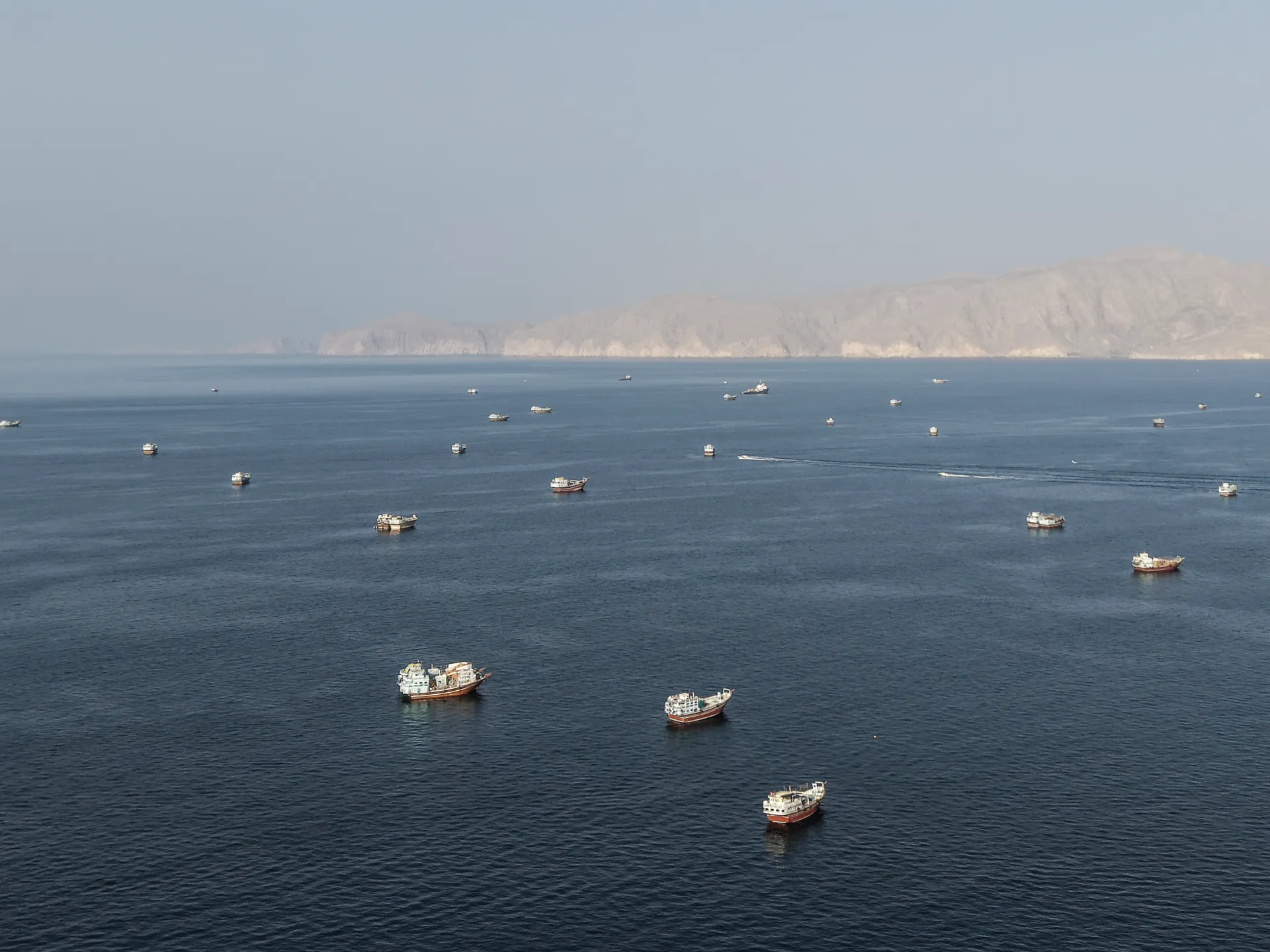
On the Strait of Hormuz, he said Iran would continue to provide navigation services in coordination with Oman and in accordance with international law.

He added that Tehran would not impose passage fees during the 60-day period outlined by the agreement, but said a new mechanism for managing the waterway would be introduced afterwards and presented to regional countries.

Khatibzadeh also said that any future agreement must include the release of all frozen Iranian funds.

Esmaeil Baghaei, spokesperson for Iran’s ministry of foreign affairs, said on Friday that the necessary consultations involving the US deal are being carried out through mediators, and that if the conditions for starting negotiations are met an official announcement will be made.

Regarding the Lebanon ceasefire required for talks between the US and Iran to continue, a Hezbollah official told Al Jazeera that the ceasefire would hold if Israel abided by it.

Israel’s ambassador to the US Yechiel Leiter said on X: “Israel remains firmly committed to an immediate ceasefire. If Hezbollah honours the agreement and ceases its hostilities, they will be met with quiet”.

Source link

Syrian activist Hassan Akkad detained in Damascus | Police News

Syrian journalist Mousa al-Omar reportedly filed a complaint about Akkad’s social media comments prior to his arrest.

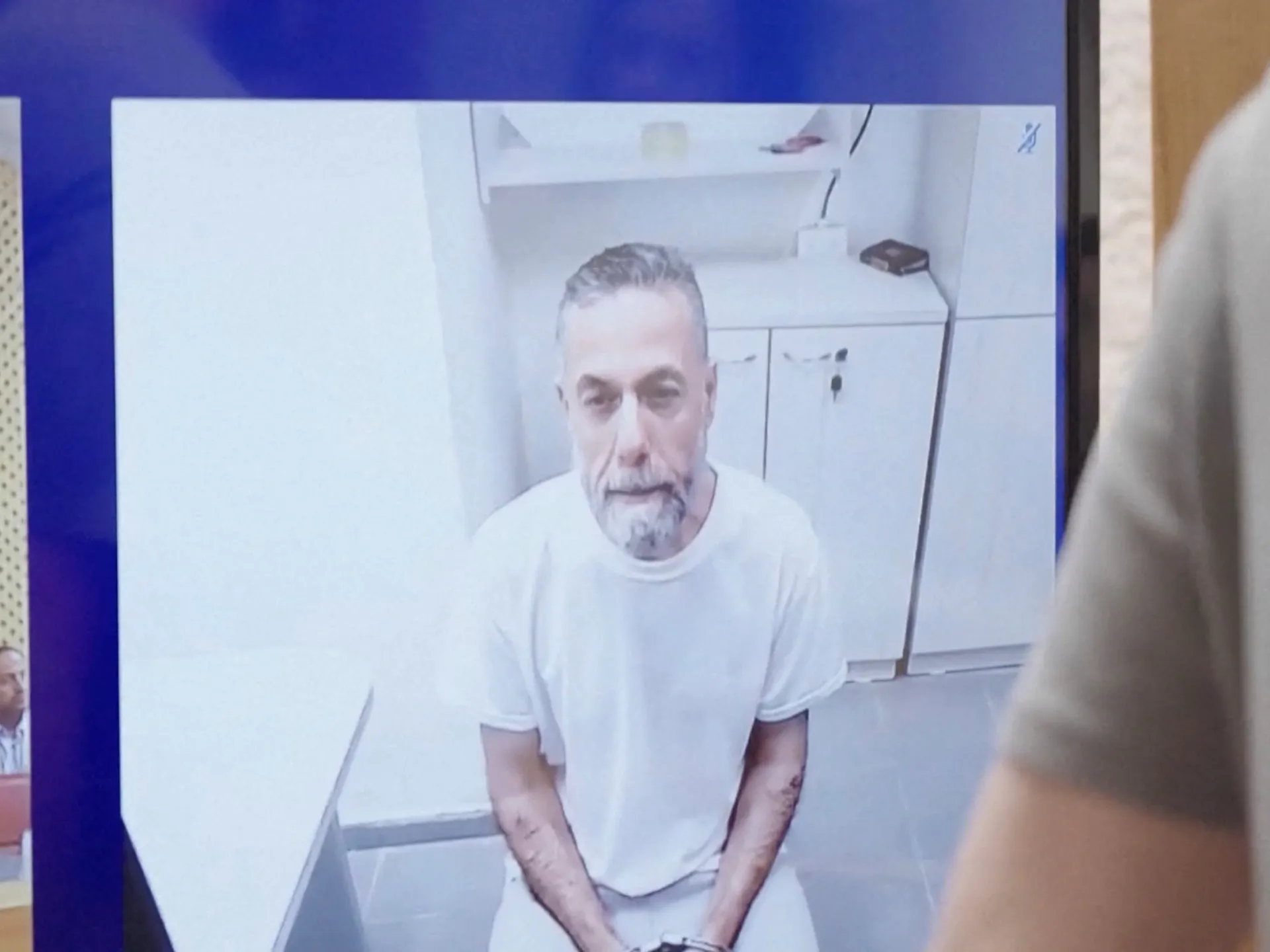
British Syrian activist Hassan Akkad has been detained by security forces in Damascus, in an alleged response to his online comments criticising a prominent journalist.

Akkad, founder of the Give Us the Money That You Owe! campaign, was taken into custody on Wednesday at about 9:45pm local time (18:45 GMT) while at a cafe in the capital’s al-Malki neighbourhood, the statement said.

Recommended Stories

list of 3 itemsend of list

His detention appears to be related to a legal complaint filed by Syrian journalist and presenter Mousa al-Omar in relation to “Hassan’s social media activities and public comments”, the campaign reported.

It added that he was summoned by the cybersecurity branch on June 4. Al Jazeera understands that Akkad is still detained.

“He later became aware that additional cases had also been filed against him, although he was not informed of the identities of the complainants,” the campaign said.

Al Jazeera reached out to the Syrian government regarding he case but has yet to receive a response regarding the activist’s arrest.
Public Prosecutor Judge Hossam Khattab confirmed that Akkad had been detained due to a search warrant being issued for him, but that the case against him had been dropped.

Al-Omar told Al Jazeera that he had instructed his lawyer to tell the police that he had dropped the case against Akkad and said he was “saddened” by what had happened.

“I am sorry for what happened to Hassan as a result of his mistakes; I followed the legal path under the cybercrime law… Everything I pledged, amounting to $700,000 in projects and cash, was paid in the donations,” he said.

Akkad’s campaign tracks financial commitments related to a public drive for donations to fund Syria’s reconstruction since the ouster of President Bashar al-Assad.

The activist reportedly criticised al-Omar on social media in recent weeks for allegedly failing to deliver on his financial pledges to the country’s rehabilitation efforts, pledges he claimed were worth thousands of dollars.

The campaign said after Akkad was summoned, he paused his online activities related to the case, to “allow the investigation and legal process to proceed”.

Akkad, a refugee and former English teacher in his late 30s, previously won BAFTA and International Emmy awards for documenting his journey from Turkiye to Europe after fleeing the Syrian civil war that began in 2011, during which he was arrested by the al-Assad’s authorities.

He eventually settled in the United Kingdom in 2015, returning to Syria after years in exile when al-Assad fled the country.

According to witness accounts cited in the statement, five plainclothes security officers entered the coffee shop where Akkad was meeting with several journalists.

Witnesses said the officers initially requested Akkad’s mobile phone before informing him that he was being arrested.

His lawyers said the arrest raises questions about whether authorities followed established legal procedures.

“No legal basis for the arrest … was presented at the time of his detention,” the statement said,

It added that since the allegations appear to be related to his online commentary, the arrest raises “broader concerns regarding the protection of freedom of expression”.

The statement further questioned the reported use of a cybersecurity law enacted during the rule of al-Assad, arguing that reliance on such legislation “appears inconsistent with the interim government’s commitments to expand protections for freedom of expression following the collapse of the previous regime”.

Source link

Foreign Office updates travel advice for 14 countries including Turkey, Cyprus and UAE

The Foreign Office has issued fresh travel advice for 14 countries following the announcement of a ‘memorandum of understanding’ between the US and Iran amid Middle East tensions

Significant travel updates have been released by the Foreign Office for 14 countries after the US and Iran revealed a ‘memorandum of understanding’, in the wake of the Middle East conflict.

The Foreign Office has now removed its travel ban to destinations including the United Arab Emirates and Qatar, while also providing additional updates for 12 other nations. The Foreign, Commonwealth & Development Office (FCDO) published new guidance on Thursday, 18 June, for the 14 countries amid “regional tensions”.

On the Foreign Office’s ‘warnings and insurance’ section for each nation, they confirmed: “The US and Iran have announced a memorandum of understanding in relation to the conflict in the Middle East.”

The complete list of nations receiving the updated guidance includes: Cyprus, Turkey, Oman, Saudi Arabia, Qatar, United Arab Emirates, Bahrain, Jordan, Yemen, Syria, Palestine, Israel, Iran and Kuwait, reports the Express.

While the FCDO has warned of regional tensions, it “no longer advises against all but essential travel to the UAE”. Since March, there had been a warning in place against all but essential travel to the UAE, but with the update today (June 18), it’s the first time it’s been waived.

In additional guidance, the FCDO outlined that should “hostilities resume”, Brits should take the following steps:

  • Read if you’re affected by a crisis abroad – GOV.UK. This includes guidance on “how to prepare for a crisis” with suggestions on what you might include in your emergency supplies and “what to do in a crisis”
  • Sign up to FCDO Travel Advice email alerts
  • Monitor local and international media for the latest information
  • Sign up to local information alerts/resources and follow the instructions of the local authorities
  • Keep your departure plans under review, and ensure your travel documents are up to date.

Source link

Rial rebounds and stocks soar, but Iranians still grapple with high prices | US-Israel war on Iran News

The value of Iran’s currency has risen by more than 15 percent against the US dollar, and its stock market has shattered records in the wake of the memorandum of understanding agreed between the United States and Iran on Sunday.

However, Iranians suffering for years from extremely high inflation and a plunging rial have found little economic relief as the prices of basic goods, such as food, remain high despite the diplomatic breakthrough.

Recommended Stories

list of 4 itemsend of list

The Iranian economy has suffered due to decades of US sanctions. The economic crisis was exacerbated after the US and Israel launched a war against Iran on February 28. As subsequent US naval blockade on Iranian ports further added to the misery of Iranians.

In Ferdowsi Street, the beating heart of Tehran’s foreign exchange market, the scene on Thursday was a stark departure from the panic of recent months. Exchange office boards flashed rapidly changing numbers as foreign currencies, led by the dollar, took a sharp dive.

“We closed our doors just hours before the official announcement of the US-Iran understanding at a rate of 1.8 million rials to the dollar,” Amir, a 35-year-old exchange office worker who asked to remain anonymous, told Al Jazeera. “Now it has fallen to 1.54 million rials, and we expect further declines.”

Amir noted a significant increase in sales volumes although buyers remained scarce as many anticipated the rial would strengthen further, potentially dropping to 1.4 million to the dollar or lower.

The recent gains mark a sharp turnaround. After the outbreak of the war, the exchange rate jumped to a historic peak of 1.9 million rials (190,000 tomans) to the dollar in March before settling at about 1.685 million just before recent attacks carried out despite a ceasefire.

A disconnect in the grocery aisles

Despite the rial’s recovery, a walk through Tehran’s grocery stores reveals a starkly different reality. For Iranians grappling with the economic fallout of crippling sanctions and the US naval blockade, the diplomatic thaw has yet to lower the cost of living.

Shoppers browse for fresh produce at a market in Tehran. Consumers report that despite the rial's recovery, prices for basic food items and everyday goods remain stubbornly high.
Shoppers browse for fresh produce at a market in Tehran. Consumers report that despite the rial’s recovery, prices for basic food items and other necessities remain stubbornly high [Rasol Alhaei/Al Jazeera]

Reza, a 42-year-old Tehran resident, told Al Jazeera that prices for daily staples like milk, cheese, cooking oil and flour remain unchanged. “They say the dollar dropped, but my shopping basket costs the same as last week,” he said. “This means the agreement hasn’t reached our pockets yet.”

From behind the cash register, 55-year-old shop owner Ramin echoed his customer’s frustration. He explained that while the government continues to distribute subsidised goods like bread, the fluctuations of the free-market dollar do not immediately impact basic food prices.

The value of the dollar on the free market varies from the official exchange rate.

Pointing to a shelf of imported goods, another shopkeeper named Karim noted that items like shampoo, toothpaste and laundry detergent are still locked at inflated prices.

“Distributors say they bought these goods two months ago at the old dollar rates,” Karim explained. “Prices will remain high until the old stock runs out and new goods enter at the lower exchange rates.” He estimated it would take at least two weeks for the market to adjust, meaning Iranians will continue to face compounding inflation in the interim.

Euphoria on the trading floor

While Main Street struggles, Tehran’s stock market is experiencing an unprecedented boom amid expectations of improved economic conditions. The trading floor has been awash in green since the initial leaks of the Washington-Tehran agreement emerged.

On Monday, the main index jumped by a record-breaking 161,000 points in a single session, marking the highest-ever influx of cash from individual investors.

By Tuesday, the market continued its staggering ascent, climbing another 112,000 points to cross the psychological barrier of 5 million, ultimately settling at a historic high of 5.1 million.

A screen displays a sea of green on the Tehran Stock Exchange. The market shattered historical records, crossing the five-million-point mark following the announcement of the US-Iran deal.
A screen displays a sea of green on the Tehran Stock Exchange. The market shattered records, crossing the 5 million mark after the announcement of the US-Iran deal [Rasol Alhaei/Al Jazeera]

Saeed, a 40-year-old investor, called it a “historic day”. He noted that investors are rushing to buy shares in the energy and petrochemical sectors, betting heavily on the resumption of exports and the reopening of global markets.

However, Saeed remained cautiously optimistic. “The stock market is often driven by rumours,” he warned. “I don’t want to repeat the experience of the 2015 nuclear deal when the market soared and then collapsed after the US withdrawal.”

He was referring to US President Donald Trump’s 2018 withdrawal from the agreement, under which Iran agreed to restrictions on its nuclear programme in exchange for sanctions relief.

Stagnation in real estate and electronics

The wait-and-see approach in effect has paralysed other sectors of the economy. In central Tehran’s electronics hubs, 38-year-old shop owner Reza reported that while the prices of imported appliances have dropped in tandem with the dollar, sales have stalled because customers are holding out for steeper discounts.

A similar freeze has gripped the housing market. Nasrin, a 36-year-old real estate agent in northern Tehran, observed that a recent price surge that accompanied the initial truce has now given way to stagnation. Many property owners are clinging to inflated prices, seemingly unaware that the market dynamics have shifted, bringing property transactions to a virtual standstill.

‘Not a magic wand’

For macroeconomic experts, the mixed market signals are entirely expected. Hossein Selahvarzi, the former head of the Iran Chamber of Commerce, Industries, Mines and Agriculture, cautioned that the new agreement is “not a magic wand” capable of instantly fixing years of structural issues in the economy.

While the war severely damaged Iran’s infrastructure, Selahvarzi emphasised that the roots of the country’s economic malaise were firmly planted well before the bombing began.

“War is the enemy of investment, production, trade and public welfare,” Selahvarzi told Al Jazeera. He warned against the analytical mistake of believing that a peace memorandum alone would revive the economy.

“Ending the military confrontation does not necessarily mean the beginning of economic prosperity,” he said, stressing that restoring stability to the business environment remains the country’s most urgent priority.

“What we have before us is a limited and fragile opportunity to correct course and rebuild the economy, and this opportunity could be lost quickly if not managed correctly.”

Source link

Latest Foreign Office advice for Cyprus and Turkey as it issues new update

The Foreign Office has updated its travel advice for 14 countries including Cyprus and Turkey

The Foreign Office has updated its travel advice for a number of countries including Cyprus and Turkey, in relation to the Middle East War.

The UK government has issued an update around ‘regional tensions’ in the two holiday hotspots, after the US and Iran announced a ‘memorandum of understanding’ this week. It also comes as a warning against travel to the UAE has been lifted, including the likes of Dubai and Abu Dhabi.

The Foreign Office hasn’t advised against travel to either Cyprus or Turkey throughout the conflict, which started earlier this year. At the time of writing, it only has one warning in place for a region in Turkey, which was unrelated to the conflict, warning against “all travel to within 10km of the border with Syria due to fighting and a heightened risk of terrorism”.

Now, the government body has issued an update for Brits planning to head to Cyprus and Turkey for holidays in time for the peak holiday season.

The updated advice explains: “The US and Iran have announced a memorandum of understanding in relation to the conflict in the Middle East. The situation remains unpredictable and attacks could resume at short notice.

“Should hostilities resume, British nationals should:

  • read If you’re affected by a crisis abroad – GOV.UK. This includes guidance on “how to prepare for a crisis” with suggestions on what you might include in your emergency supplies and “what to do in a crisis”
  • follow advice from the local authorities
  • sign up to FCDO Travel Advice email alerts
  • monitor local and international media for the latest information
  • stay away from areas around security or military facilities
  • keep your departure plans under review, and ensure your travel documents are up to date
  • if you are advised to take shelter, stay indoors or find the nearest safe building or designated shelter. An interior stairwell or a room with as few external walls or windows as possible may provide additional protection. The greatest risk is from falling debris caused by intercepts. You are safest inside a secure structure

“Before the 8 April ceasefire, the Iranian regime had stated its intention to target locations associated with the United States and Israel. This included US or Israeli-linked organisations, businesses, facilities and institutions. Iran has previously targeted civilian infrastructure across the region such as ports, hotels, roads, bridges, energy facilities, oil production sites, water systems, and airports.”

Source link

Foreign Office lifts travel ban to UAE including Dubai but issues stark warning for Brits

The Foreign Office has lifted its warning against travelling to the United Arab Emirates including Dubai and Abu Dhabi

The Foreign Office has lifted its travel ban to the United Arab Emirates.

The FCDO has had a warning against all but essential travel to the UAE in place since March, due to the Middle East war, but today (Thursday 18th June), it updated its advice and no longer warns against travel to the region. It has also issued updates for 14 countries including Cyprus and Turkey.

However, the government body still has a stark warning in place for Brits. As part of an update on ‘regional tensions’ it warns:

“The US and Iran have announced a memorandum of understanding in relation to the conflict in the Middle East. The situation remains unpredictable and attacks could resume at short notice.

“Should hostilities resume, British nationals should:

  • read If you’re affected by a crisis abroad – GOV.UK. This includes guidance on “how to prepare for a crisis” with suggestions on what you might include in your emergency supplies and “what to do in a crisis”
  • follow advice from the local authorities
  • sign up to FCDO Travel Advice email alerts
  • monitor local and international media for the latest information
  • stay away from areas around security or military facilities
  • keep your departure plans under review, and ensure your travel documents are up to date
  • if you are advised to take shelter, stay indoors or find the nearest safe building or designated shelter. An interior stairwell or a room with as few external walls or windows as possible may provide additional protection. The greatest risk is from falling debris caused by intercepts, and you are safest inside a secure structure

“Before the 8 April ceasefire, the Iranian regime had stated its intention to target locations in the Gulf associated with the US and Israel. This included US or Israeli-linked organisations, businesses, facilities and institutions. Iran has previously targeted civilian infrastructure across the region such as ports, hotels, roads, bridges, energy facilities, oil production sites, water systems, and airports.”

Source link

Martin Lewis confirms ‘5 per cent’ energy price change after US-Iran deal

The money-saving expert said earlier in the week that he expected energy prices to drop soon in some rare ‘good news’ for hard-pressed Brits

US and Iran sign initial deal promising to end war in 60 days

Martin Lewis says that energy deals are already becoming more affordable following an agreement between the US and Iran. The money-saving expert stated earlier this week that he anticipated prices would fall soon in some rare ‘good news’ for financially stretched British households concerning energy costs.

This followed an announcement of an accord between the US and Iran to cease hostilities and reopen the crucial Strait of Hormuz. The memorandum of understanding, which is now active, was signed on Wednesday by Donald Trump and Iranian president Masoud Pezeshkian.

This has seen the cost of oil and natural gas decline, resulting in a reduction in energy prices. At the time of writing, Brent crude has fallen by approximately $7 a barrel and UK natural gas by roughly 14 per cent.

Mr Lewis confirmed that fixed energy deals were already being made available that were around 5 per cent more affordable. He stated: “Energy fixes have started to get cheaper, now 5% below April price cap.”

Content cannot be displayed without consent

However, Mr Lewis cautioned earlier this week that people shouldn’t anticipate a substantial reduction in the next price cap, which runs from October to December.

The next price cap is expected to be announced on August 26 by energy regulator Ofgem. Approximately 60 per cent of households in England, Scotland, and Wales remain on a standard variable tariff, meaning their costs are governed by the price cap.

The current energy price cap is due to increase on July 1 by 13 per cent. This means that a home with typical energy consumption paying by direct debit will face charges of £1,862 annually.

That marks a rise of £221 compared to the previous price cap – and Mr Lewis cautioned it could climb even higher, despite the cessation of hostilities.

He stated: “The US and Iran signing a framework deal has pushed natural gas prices down. These wholesale prices are a key driver of UK gas and electricity bills. As the six-month graph shows, though, prices still have a long way to fall before returning to pre-conflict levels.

“The good news is that this could lead to slightly cheaper fixed tariffs being launched in the coming days. However, without substantial further drops the October price cap still looks likely to be significantly higher than it is today.”

He was subsequently questioned about why he believed the price cap would increase from October. He responded: “It’s the same reason the energy Price Cap HASN’T yet risen due to the Middle East crisis. It is time-lagged. So slow to rise, slow to fall.”

Source link

US must ‘force’ Israel to change its policy on Lebanon | Israel attacks Lebanon

NewsFeed

Israel may ‘symbolically’ pull back its troops from southern Lebanon after the US and Iran signed a peace deal which included an end to Israel’s war on Lebanon, according to analyst Rami Khouri. But he attests, real policy change will only happen when the US forces Israel’s hand.

Source link

Diplomat confirms that US and Iran have signed MoU electronically | US-Israel war on Iran News

Iran’s Ministry of Foreign Affairs spokesperson, Esmaeil Baghaei, has announced that a memorandum of understanding with the United States has been finalised and signed electronically by both sides.

He added that the agreement has already gone into effect.

Recommended Stories

list of 3 itemsend of list

“The text of the Islamabad Memorandum of Understanding was finalised with the signatures of the presidents,” Baghaei told the news agency IRNA. “Now it is time to test the implementation of the agreement.”

Wednesday’s statement appears to confirm that the US and Iran have agreed to suspend military operations, paving the way for further negotiations.

Given that both sides signed the agreement electronically, Baghaei noted that there would be no signing ceremony on Friday in Geneva, Switzerland, as had previously been expected.

Negotiating teams, however, still plan to be in the Swiss city. A decision on a possible in-person meeting between them is expected in the coming hours, though for now such plans are paused, according to Baghaei.

While the office of US President Donald Trump has yet to issue a formal statement on the signing, Al Jazeera correspondent Mike Hanna explained that a White House spokesperson confirmed earlier in the day that it happened.

But Hanna warned that the memorandum is likely to face domestic backlash in the US, where Trump had been under right-wing pressure to take a hard line against Iran.

“There’s a great deal of dissatisfaction with the memorandum of understanding, as it has been outlined to the public at this particular point, even among some Republicans who have expressed the concern that Iran is being treated leniently,” Hanna said.

He also emphasised the administration’s position that the memorandum is not a full-fledged deal but rather a prelude to more negotiations.

“The administration is fighting hard to persuade the American public and American politicians that this is not a defeat for the United States,” Hanna said.

Since February 28, the US and Israel have been jointly engaged in a war against Iran, though a temporary ceasefire suspended much of the most intense fighting on April 8.

Trump has repeatedly said his goal in launching the war was to prevent Iran from acquiring a nuclear weapon.

Since the memorandum was revealed, he has highlighted the document’s assurances that Iran will not seek a nuclear weapon, though Tehran has long denied any intention of doing so.

But according to a US account, the memo goes beyond the question of nuclear weapons. It sets up a 60-day timeline for a final deal to be struck, and it indicates that the US will rally “regional partners” to create a $300bn for Iran’s reconstruction.

US sanctions would also work towards lifting its sanctions against Iran, and the country would issue waivers for the export of Iranian fuel.

Iran has touted those terms as a victory. On Wednesday, chief negotiator Mohammad Bagher Ghalibaf told Fars, an Iranian state news agency, that the US had failed to achieve its goals with Iran and pointed to the memo as proof.

“The agreement is a record of US failure,” Ghalibaf said. “People will see it and judge.”

He also explained that the Strait of Hormuz would not return to “pre-war conditions” after the 60-day period for negotiations stipulated in the agreement. He suggested that Iran will expect payments for use of the waterway.

“I emphasise again that the Strait of Hormuz will never return to the previous conditions,” Ghalibaf said.

“Iran has the right to sovereignty over the Strait of Hormuz, and of course, we will receive a fee for services.”

That position is likely to put pressure on the Trump administration, which had pledged that the strait, a key waterway for trade, would be “permanently toll-free”.

Since the start of the war, Iran has blocked the waterway, sending global prices for fuel, fertiliser and other goods soaring.

The US had responded with its own blockade of Iranian ports, though that effort is slated to end under the memorandum.

Both sides, however, have emphasised that the memorandum of understanding is not a final agreement on all issues of dispute. More negotiations are expected to resolve lasting impasses.

“It will only become a deal, as such, at the end of the 60-day negotiation period. At least, that’s the intention,” Hanna reported.

Source link

Tehran says considering plan for Iran, US presidents to sign deal | News

Under the MOU, an initial 60-day negotiation period, which can be extended, will begin once the preliminary agreement is signed.

Iran’s Foreign Ministry has said that the signing of a memorandum of understanding in Switzerland, expected to take place on Friday, could take place in the presence of President Masoud Pezeshkian and Donald Trump.

Previously, Iran had said that Washington and Tehran would be represented by Vice President JD Vance and Parliament Speaker and top negotiator Mohammad Bagher Ghalibaf, respectively.

Recommended Stories

list of 3 itemsend of list

On Wednesday, ministry spokesperson Esmaeil Baghaei told reporters that Iran’s plans “for the Swiss summit have not changed”.

“Regarding the manner of signing the memorandum of understanding, one of the ideas is for it to be done by the presidents of the two countries, which is currently being considered,” he added.

Speaking at the G7 summit in France earlier, Trump said he expected the agreement with Iran to be signed “shortly” without specifying the exact date.

“The deal we reached with Iran on Sunday will be signed shortly, tomorrow [Thursday], maybe the next day [Friday],” Trump told a news conference after previous announcements that it would be signed on Friday in Switzerland.

Hormuz to be ‘restored to normal’

In a statement, Baghaei added that maritime traffic in the Strait of Hormuz will be restored to normal within a defined timeframe, while insisting that outside powers will have no role in the process and that managing that process would be handled by Iran alone.

“This is our own task, and we alone will do it, and there will be no need for participation or intervention from other parties,” he stated.

“Iran and Oman will cooperate to develop a mechanism for managing the Strait of Hormuz, and we will exchange views with other countries in the region wherever necessary.

He said that Iran and the US agreed to “negotiate a final agreement within 60 days”, adding that the naval blockade “must end within 30 days.

A senior US official, briefing reporters on Wednesday, said the MOU establishes a new “minimum” threshold for downblending Iran’s stock of highly enriched uranium and contains measures aimed at safeguarding Lebanon’s “territorial integrity” following Israel’s latest strikes on Hezbollah inside the country.

In exchange, Washington would move to waive, though not fully lift, some of its broad sanctions on Iran once the agreement is signed.

The US-drafted text also guarantees toll-free transit through the Strait of Hormuz for a period of just 60 days, and leaves open the possibility that transit fees could be imposed later, the official added on condition of anonymity.

Source link

Israeli air strikes on Lebanon continue despite US-Iran deal | Israel attacks Lebanon News

Israeli air strikes have continued to target towns in southern Lebanon despite an agreement between the United States and Iran set to be formally signed on Friday to end the war on all fronts.

Israeli drones carried out three attacks in Tyre that resulted in injuries while a drone also targeted the Bint Jbeil district in Nabatieh, Lebanon’s state-run National News Agency said on Wednesday.

Recommended Stories

list of 4 itemsend of list

The fighting in Lebanon is considered one of the biggest threats to the framework agreement in the US-Israel war on Iran with Tehran warning that new Israeli strikes on Lebanon and continued occupation of its territory would be regarded as a violation of the deal.

Earlier on Wednesday, Al Jazeera Arabic correspondents on the ground reported that Israeli forces carried out an air strike on the outskirts of Kfar Tebnit, also in the Nabatieh district. They also launched raids on the town of Nabatieh al-Fawqa and shelled the Ali al-Taher heights and the outskirts of the town.

Hezbollah fighters, meanwhile, launched at least 10 rockets towards Israeli forces near Kfar Tebnit.

A day earlier, Israeli attacks killed at least four people in Nabatieh, including in drone strikes on several vehicles.

There has been a reduction in violence since the US-Iran agreement was announced, but attacks have not stopped, Al Jazeera’s Zeina Khodr said, reporting from Beirut.

“Security sources believe that the Israeli army is trying to occupy more ground, especially strategic high ground around Nabatieh,” she said.

“Yes, families have started to return to their villages, but people are worried. They say they don’t trust that Israel will abide by the ceasefire.”

United Nations spokesperson Stephane Dujarric said the number of projectiles fired between Israeli forces and Lebanon fell to 174 on Sunday, compared with 705 the previous Sunday.

Of these, 169 were attributed to Israel and five to Hezbollah, he said.

Lebanon ‘most sensitive issue between the sides’

The situation in Lebanon is one of the main pillars of the US-Iran agreement, Al Jazeera’s Almigdad Alruhaid said, reporting from Tehran.

“As we approach the signing of the deal, it is becoming the most sensitive issue between the sides,” Alruhaid said.

Iran said the Israeli military has violated the ceasefire in Lebanon 84 times in the past two days and warned that Israel should expect “a harsh response” if it does not stop its attacks, he reported.

This came after Iranian Foreign Minister Abbas Araghchi said the withdrawal of the Israeli military from Lebanese territory is one of the core demands right now to move forward with the framework agreement Iran has with the US, Alruhaid said: “So the Iranians say the situation in Lebanon, in particular southern Lebanon, is an integral part of the memorandum of understanding.”

Lebanon was among the top priorities for the Iranians when they started negotiations with US President Donald Trump’s administration, according to Mohammad Eslami from Tehran University.

“Once the Iranians not only retaliated against the Israeli attacks on Dahiyeh and Beirut but also pre-emptively attacked Israeli territory, they showed right from the outset they are determined and very serious about supporting Lebanon, the Lebanese people, the Lebanese government and the resistance factions in Lebanon,” Eslami told Al Jazeera.

Israel’s invasion akin to ‘war crimes’

Meanwhile, the human rights group Amnesty International said on Wednesday that the Israeli army’s mass forced displacement orders in Lebanon amount to war crimes under international law.

“In parts of southern Lebanon, the Israeli military’s forced displacement of civilians and prevention of their return amounts to unlawful transfer – which is a war crime,” Amnesty said in a statement.

The Israeli army has “radically expanded” its use of such orders, displacing hundreds of thousands of people across Lebanon, it said.

“Instead of forcibly uprooting communities and designating entire swathes of Lebanese land as ‘no-go zones’ for civilians, Israeli forces must immediately withdraw from Lebanese territory,” said Kristine Beckerle, Amnesty International’s deputy regional director for the Middle East and North Africa.

The Israeli military declared about 4.6 percent of Lebanon as a “no-go zone” on November 28, 2024, a day after a previous ceasefire took effect, Amnesty noted.

This year, just three days after an April 17 ceasefire announcement, the restricted area was expanded to about 6 percent of the country, and residents were ordered not to return to villages previously home to tens of thousands of civilians.

Lebanese officials said Israel, which has been carrying out a large-scale offensive in the country since March 2, has killed more than 3,800 people, wounded 11,850 and displaced more than one million.

Source link

China pledges new humanitarian aid packages for Lebanon and Iran | Humanitarian Crises News

NewsFeed

China has announced it will send a round of humanitarian aid to Lebanon and Iran and play an active role in fostering regional peace. The foreign ministry spokesman described Beijing as ‘deeply saddened’ by the humanitarian disaster.

Source link

Zidane Iqbal: The footballer who gave Pakistan its first World Cup moment | World Cup 2026

Islamabad, Pakistan – The scoreline read 4-1 to Norway. Iraq had been heavily beaten in their first World Cup match in 40 years. Manchester City striker Erling Haaland scored twice in his World Cup debut as Norway cruised to victory in Group I.

But for Pakistan, the result barely mattered.

Recommended Stories

list of 4 itemsend of list

When Zidane Iqbal crossed the touchline for Iraq at Boston Stadium in Foxborough, Massachusetts, in the 59th minute on Tuesday, history was made. He became the first player of Pakistani heritage to appear in a FIFA World Cup.

Pakistan’s national team has never qualified for the tournament. It sits 198th in FIFA’s rankings. For decades, more than 250 million Pakistanis have watched football’s biggest event from the outside.

That changed, in its own complicated way, through a 23-year-old born in Manchester, England.

Between three nations

Zidane Ammar Iqbal was born on April 27, 2003, to a Pakistani father and an Iraqi mother. His father, Aamar, is from the city of Sahiwal in Punjab while his mother, Ayat, was born in southern Iraq.

Growing up in Manchester, Iqbal was eligible to represent England, Pakistan or Iraq. The decision he eventually made was not a calculated one.

Iraq found him the way many things happen now: through social media.

A large Instagram page tracking Iraqis around the world contacted him to ask whether rumours about his heritage were true.

Word eventually reached the Iraq Football Association, which pursued him through a series of video calls with Iqbal and his parents.

Asked by the sports news outlet The Athletic why he chose Iraq, Iqbal said: “All the love and support from the fans in Iraq and across the world and how hard the FA tried to bring me. When someone shows so much love, it’s only right that you feel it.”

He had never visited Iraq before receiving an under-23 call-up in 2021.

The culture shock, he admitted, was real. But he kept returning. Gradually, a country that had once been only part of his heritage began to feel like home.

The road not taken

Iqbal joined Manchester United’s academy at the age of eight and spent 12 years at the club. In December 2021 at 18, he became the first British South Asian player in nearly two decades to appear for United in the UEFA Champions League.

Soccer Football - FIFA World Cup - AFC Qualifiers - Group B - Iraq v Indonesia - King Abdullah Sport City, Jeddah, Saudi Arabia - October 11, 2025 Iraq's Zidane Iqbal celebrates scoring their first goal with Merchas Doski REUTERS/Stringer
Iraq’s Zidane Iqbal celebrates scoring in a World Cup qualifying match against Indonesia in October 2025 [File: Reuters]

But regular first-team football never followed. He eventually moved to FC Utrecht in the Dutch Eredivisie for about 1 million euros ($1.1m).

His performances during Iraq’s gruelling 21-match qualification campaign, including a winning goal against Indonesia, kept him central to the team’s plans throughout.

The Pakistan Football Federation (PFF) had monitored his progress. But it was never truly a contest.

Ali Ahsan, editor of FootballPakistan.com, said the structural gap between the two football systems was simply too wide.

“We are struggling to attract players from bigger clubs, our ranking, the lack of a professional set-up. The PFF still has no technical director or dedicated national team recruitment staff,” Ahsan told Al Jazeera.

“For Zidane, he picked Iraq to be able to play major tournaments, which he probably wouldn’t have gotten with Pakistan,” Ahsan said.

“Had he chosen Pakistan, he could have had a big impact on raising Pakistani football’s profile internationally. He was still at United at the time. He could have started a serious conversation about how football needs to be improved, inspired kids to take it more seriously. Iraq is already a well-established team with a dedicated history, structure and fanbase.”

For Iqbal, the path led elsewhere. But for Pakistan, the moment still mattered.

“I hope there are children – whether Asian, Arab, whatever you are – who watch that and think they can do it,” Iqbal told The Athletic. “It’s definitely possible. And if I’ve done it, why can’t they?”

Iraq next face France on Monday before taking on Senegal in their final group match on June 26. Few expect them to advance. But few expected them to be there at all.

Against Norway, Iraq lost. For Pakistan, history was made anyway.

Source link

Inside the ‘unacceptable’ UK fair selling property in Israeli settlements | Israel-Palestine conflict News

London, United Kingdom – Activists who gained access to the widely condemned Great Israeli Real Estate Event in London have shared photos with Al Jazeera that show property in illegal settlements being marketed.

The invite-only event, held at Edgware United Synagogue, was part of a roadshow promoting the sale of land and property in Israel, but in reality, these included homes in areas such as Givat Zeev and Tivuch Shelly in the occupied West Bank, as well as settlements in East Jerusalem.

Recommended Stories

list of 4 itemsend of list

“Exciting new project just 10 minutes from Jerusalem!” read a leaflet advertising homes, “some with pools!” in Maale Adumim, a West Bank settlement illegal under international law.

Maale
Activists saw leaflets marketing homes in illegal Israeli settlements at the controversial property fair [Courtesy of Jewish Anti-Zionist Action group]

Isabel, a member of the Jewish Anti-Zionist Action group who spoke to Al Jazeera on condition of anonymity, said that the mood at the fair was peaceful and heavily protected, including by plainclothes men fitted with body cameras.

She did not hear any participants mention Palestinians, she said, adding that when it came to the occupied Palestinian territory, real estate agents spoke of “Anglo-communities” where English-speaking people from the United States, the UK and South Africa could relocate to.

She said a popular selling point used by real estate agents was that due to the war on Gaza, it was a good time to buy property in Israel, as prices had dropped and they might be willing to offer a discount.

The atmosphere reminded her of the opening week of university with social chatter, stalls and strangers pushing flyers at attendees.

“Unlike outside the synagogue, where there was lots of protests, it was calm inside with a heavy police presence, [security] people even wearing body cams. The room was all set up with stalls, in what I would describe as like freshers’ fair. On the tables were free pens, chocolates.”

Great Israeli Real Estate Event
Brochures offered people information about buying homes in ‘the heart of Israel’ [Courtesy of Jewish Anti-Zionist Action group]

When Isabel spoke with representatives from the Israeli real estate company Harey Zahav, she was shown advertisements for properties in Jerusalem as well as Netanya, a resort city in central Israel.

More than 100 British legislators, including members of Prime Minister Keir Starmer’s Labour Party, had signed a letter on Friday urging the government to “uphold its obligations under international law” and ensure the event “promoting illegal activities does not proceed”.

Layla Moran, a British MP of Palestinian descent and one of the letter’s signatories, described the sales as “unacceptable”.

Gaza war could mean discounts, said participants

When Isabel told participants she was interested in something a little quieter, they said in hushed tones that they also had a portfolio of properties in “Judea and Samaria”, the Israeli term for the occupied West Bank.

One representative said that organisers asked them not to advertise properties in these locations. When asked why, he said it was due to these “crazy times” when people wanted to stop purchasing property in Israel.

He said they had all the information packs for those properties, but requested her details so he could send them to her afterwards.

People from pro-Palestinian activist groups gather outside the Edgware United Synagogue, during a demonstration against the "Great Israeli Real Estate Event" organised by real-estate agency, 'My Home in Israel', which markets property in Israeli settlements in the occupied West Bank, in London, Britain, June 14, 2026. REUTERS/Toby Shepheard REFILE - CORRECTING TIMELINE FROM "AFTER A DEMONSTRATION" TO "DURING A DEMONSTRATION".
Pro-Palestine protesters, MPs and several rights groups had called on the UK to ban the event [Toby Shepheard/Reuters]

At the stand of Tivuch Shelly, another Israeli real estate company, Isabel said representatives were more reticent to discuss properties in the occupied West Bank, but were openly advertising properties in Givat Hamatos and Ramat Eshkol, two settlements in occupied Jerusalem, on their flyers.

An activist with Jewish Anti-Zionist Action at one point shouted out that “this event sells property on illegally occupied stolen Palestinian land” before he was removed by security.

But the overall mood inside the fair was in sharp contrast to the protests and tense atmosphere outside the event.


In the buildup, rights groups, including Amnesty International, as well as the mayor of London, Sadiq Khan, slammed the event for openly advertising the sale of land in illegal Israeli settlements.

Outside, hundreds of protesters shouted slogans and held posters reading, “Stop Israel’s illegal sale of stolen Palestinian land” and “Thou shalt not steal”.

The Metropolitan Police said 15 people were arrested during the demonstrations “for a range of offences, including public order matters”.

Green Party leader Zack Polanski has written to Khan, calling for the event to be investigated by the Metropolitan Police.

Khan earlier said he had discussed the event with the London police force and had been told that any allegations of criminality relating to the potentially unlawful sale of property at the fair would be assessed by the Met as part of a probe.

Israeli settlement expansion

Israeli settlers are Israeli citizens who live illegally on Palestinian land.

Israel started building illegal settlements after capturing the West Bank, East Jerusalem and the Gaza Strip in the June 1967 Six-Day War, and now, more than 700,000 settlers – 10 percent of Israel’s population – live in 150 illegal settlements and 128 outposts spread across the occupied West Bank and East Jerusalem.

The government has openly funded and built settlements, and Israeli authorities give their settlers in the occupied West Bank about $5.6m a year to monitor, report and restrict Palestinian construction in Area C, which is administered solely by Israel and comprises more than 60 percent of the West Bank.

United Nations bodies and most countries view the West Bank settlements as illegal, citing international conventions.

But the US has provided diplomatic cover to Israel for decades, with Washington consistently using its veto power at the UN to protect Israel from diplomatic censure.

A police officer stands guard near counter-protesters as people from pro-Palestinian activist groups gather near the Edgware United Synagogue, during a demonstration against the "Great Israeli Real Estate Event" organised by real-estate agency, 'My Home in Israel', which markets property in Israeli settlements in the occupied West Bank, in London, Britain, June 14, 2026. REUTERS/Toby Shepheard
A police officer stands guard near counterprotesters, as people from pro-Palestine groups gathered near the Edgware United Synagogue for a demonstration against the property fair organised by real-estate agency My Home in Israel, which markets property in illegal Israeli settlements in the occupied West Bank, in London, June 14, 2026 [Toby Shepheard/Reuters]

Source link