Middle East

Anyone with summer 2026 holidays booked warned ‘keep all receipts’ in new alert

Travel insurance specialist has issued advice, as cancellations and delays may happen

As airlines continue to navigate fuel supply challenges caused by the Middle East conflict, some flights may be disrupted, or fares may increase. Some energy bosses have claimed Europe only has six weeks’ worth of jet fuel left. Tom Vaughan, a travel insurance specialist at Confused.com, has offered advice for passengers with summer holidays coming up.

He also warned that cancellations and delays may happen, and stressed the importance of preparing in advance and knowing what to do if a trip is axed. “For Brits planning to travel this summer, it’s worth being aware that flight cancellations and delays could happen as airlines respond to operational pressures,” he said.

“Disruptions like this can leave travellers unsure about their rights and what steps to take next if they are affected. The good news is that UK passengers have rights if their flight is cancelled.

“Airlines should offer a refund or an alternative flight, even if your ticket was non-refundable.” If passengers do experience disruption, Tom has shared some steps to follow.

Firstly, he says travellers should contact their airline as soon as possible to confirm their options, including rebooking or a refund. He also recommends: “Keep receipts for any essential costs like food, accommodation or transport, as these may be reimbursed”.

Tom said passengers may still be entitled to assistance (such as meals or a hotel stay) while waiting for a new flight. “If you booked a package holiday, check if it’s ATOL protected and contact your travel provider for support”, he added.

The travel insurance specialist went on to say that people who pay by credit card “may have additional protection if things don’t go to plan”. Lastly, he urged people to review their travel insurance policy and speak to their insurer to understand what extra costs they could claim back.

He also says it is “always sensible” to take out travel insurance before going away. “Even if you are able to claim directly via the airline, an insurer can guide you on how to make a claim,” he explained.

Tom continued: “With the right policy in place, you may also be able to claim back for other parts of your holiday that were affected as a result. If you’ve recently experienced flight cancellations, our flight compensation guide will help to break down your options.”

Inflation climbed higher last month as the knock-on effects from the Iran war started to hit the cost of living for UK households. The Office for National Statistics reported an annual rate of Consumer Prices Index (CPI) inflation of 3.3% for March, increasing from 3% last month.

It meant inflation picked up to its highest level since December, with higher fuel prices a significant driver. The ONS indicated that fuel prices were the main area where the impact of the Iran conflict had already been reflected in their data.

While jet fuel costs have risen, the ONS said that air fares are based on previously booked flights, meaning that the March data was not yet impacted by inflation linked to the conflict. This means airfare inflation is likely to continue rising this year as higher jet fuel costs are passed on to passengers.

KLM has made several adjustments to its flight schedule for the coming month. The airline says: “This concerns a limited number of flights within Europe that, due to rising kerosene costs, are currently no longer financially viable to operate. There is no kerosene shortage. KLM will operate 80 fewer return flights to and from Schiphol, which is less than 1% of its European flights during that period.

“Passengers affected by these changes will be rebooked onto the next available flight. As these are destinations KLM serves multiple times a day — such as London and Düsseldorf — travellers can usually be accommodated quickly. KLM expects a busy May holiday period and is making sure passengers can travel to their holiday destinations as planned.”

In a new statement, Lufthansa has said: “The Lufthansa Group has secured (“hedged”) approximately 80 per cent of its kerosene requirements for 2026 and approximately 40 per cent for 2027 based, among other things, on the price of crude oil – both at pre-crisis price levels. With this level of hedging, we are in a better position than most competitors.”

Meanwhile, easyJet has said it is not currently seeing any disruption to flights and doesn’t plan to make any changes to its flight schedule.

Source link

Iran’s gunboat fires on container ship off Oman coast | US-Israel war on Iran News

The IRGC says the aggression came in response to what it described as the US seizure of an Iranian commercial vessel.

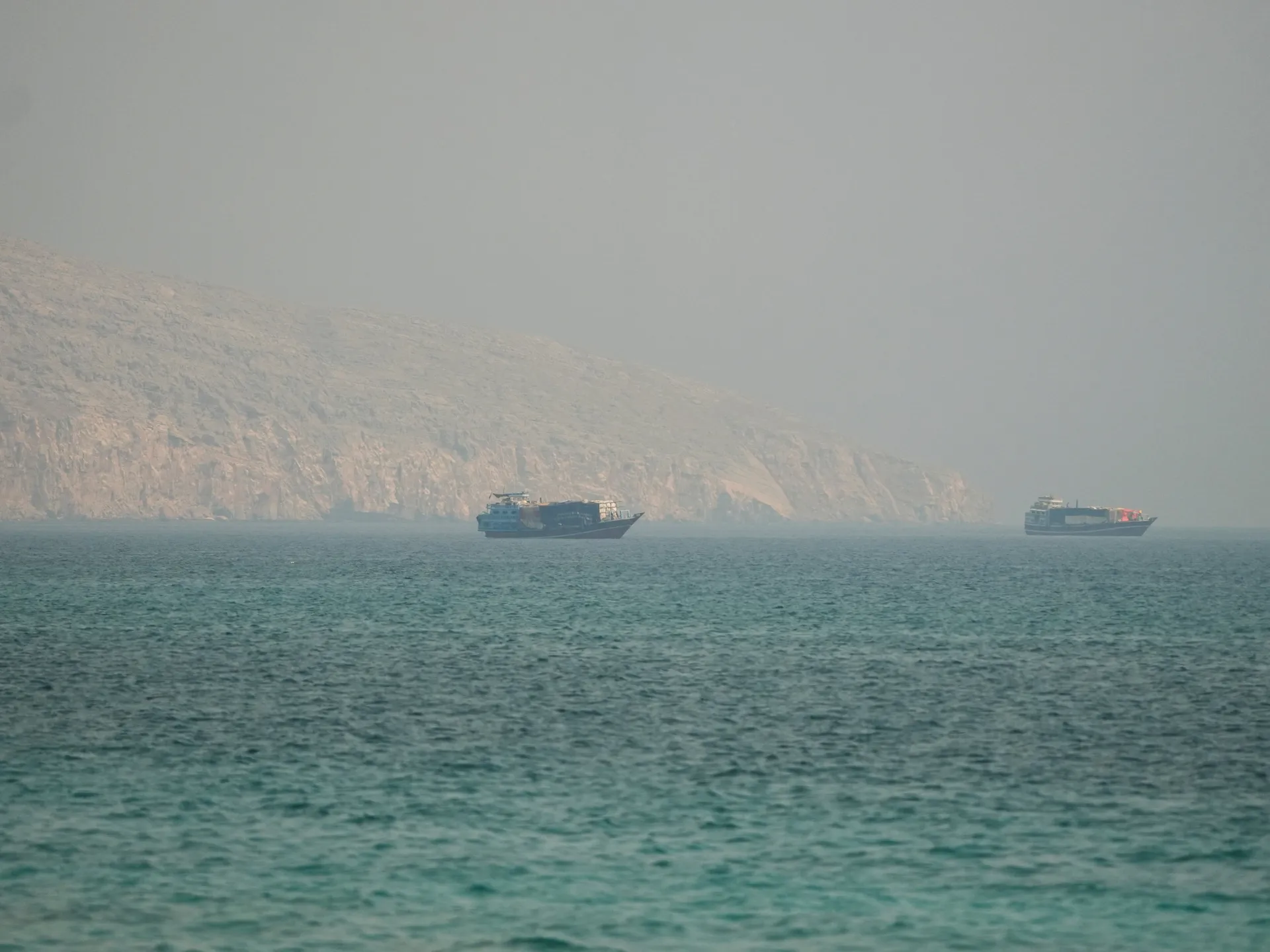
An Iranian gunboat has fired on a container vessel near the coast of Oman, according to a British maritime monitoring agency, in an incident that occurred hours after United States President Donald Trump said he would extend a ceasefire with Iran.

The United Kingdom Maritime Trade Operations (UKMTO) centre said on Wednesday that the ship’s captain reported that the vessel had been approached by a vessel of Iran’s Islamic Revolutionary Guard Corps (IRGC) before shots were fired.

Recommended Stories

list of 4 itemsend of list

It “has caused heavy damage to the bridge. No fires or environmental impact reported,” the agency added. No casualties were reported, and all crew members were said to be safe.

British maritime security firm Vanguard Tech said the ship was sailing under a Liberian flag and had been informed it had permission to pass through the Strait of Hormuz, one of the world’s most strategically important waterways.

Iranian news agency Tasnim, however, said the vessel had ignored warnings issued by Iran’s armed forces.

The incident followed a warning from the IRGC’s Khatam al-Anbiya Central Headquarters after what it described as the US seizure of an Iranian commercial ship in the Sea of Oman, the IRNA news agency reported.

It accused Washington of violating the ceasefire and carrying out “armed piracy” after allegedly firing on the Iranian vessel and disabling its navigation systems.

Trump extends ceasefire

Trump earlier announced he would delay a planned military attack on Iran after requests from Pakistan’s army chief Asim Munir and Prime Minister Shehbaz Sharif.

Writing on Truth Social, Trump said the decision was made because Iran’s government was “seriously fractured” and needed time to present a unified position.

“We have been asked to hold our Attack on the Country of Iran until such time as their leaders and representatives can come up with a unified proposal,” he wrote.

He added, however, that the US naval blockade of the Strait of Hormuz would remain in place and said the military had been ordered to stay “ready and able”.

The announcement marked a shift from comments made a day earlier, when Trump said it was “highly unlikely” he would extend the truce beyond Tuesday.

‘Positive and negative signals’ from Tehran

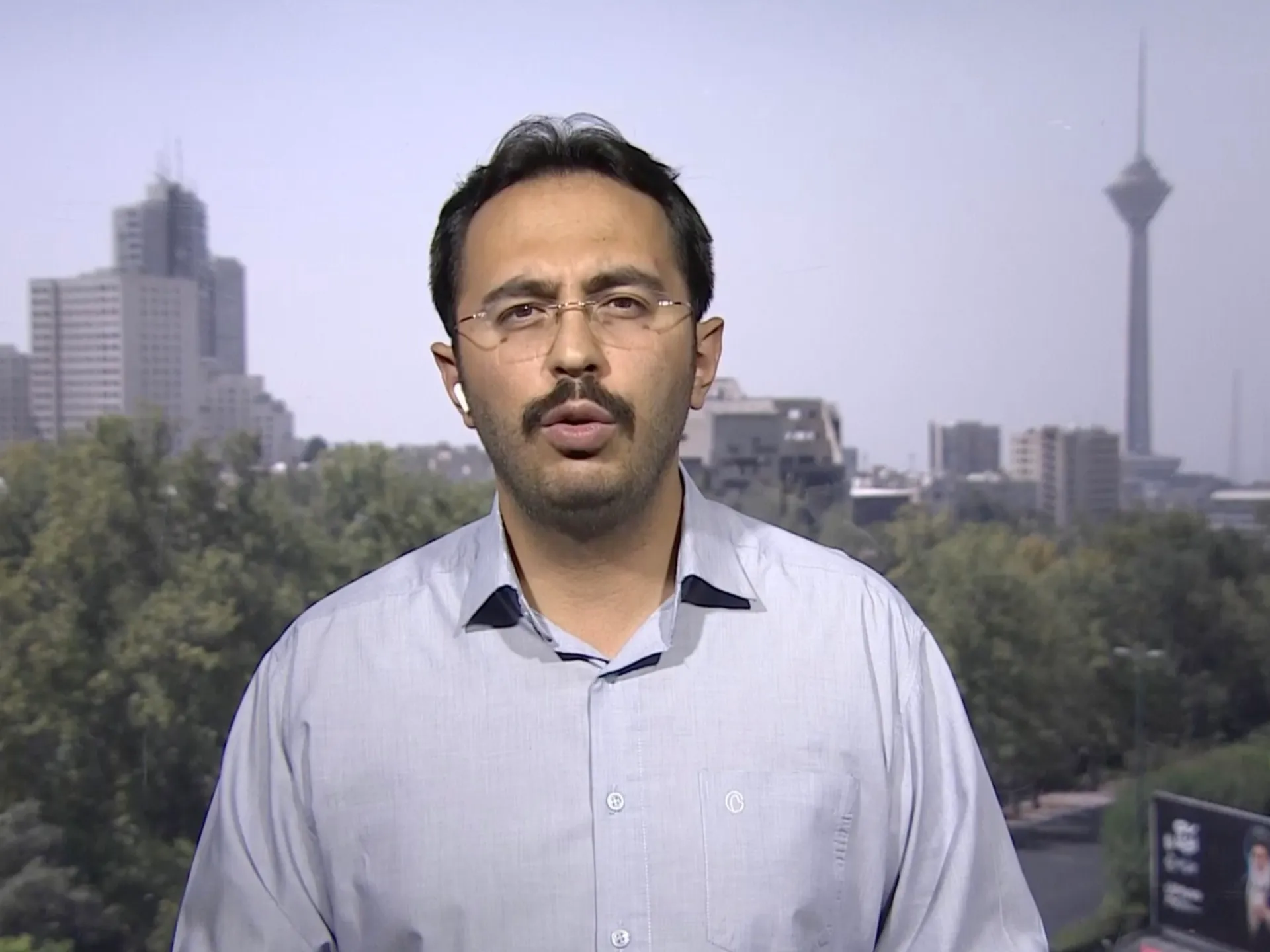
Al Jazeera’s Tohid Asadi, reporting from Tehran, said Iranian officials were sending mixed messages over the ceasefire and the prospects for negotiations.

“Tehran is saying they won’t negotiate under imposed terms and conditions … when we compare the initial 10-point and 15-point proposals by the Iranians and Americans, we can understand that the two sides are poles apart,” he said.

“The atmosphere is also clouded by this mistrust in Tehran towards the United States, as well as the simultaneous military rhetoric related to a potential failed negotiation … It is a warning that another round of confrontation may be ahead.”

He said Iran still viewed the Strait of Hormuz as a key source of leverage in any talks.

“It’s trying to exercise authority over the ships and vessels transiting this strategically significant chokepoint,” he said.

Asadi added that Iranian officials framed their regional position as based on mutual security. “Iranians are saying that the basis of their foreign policy behaviour, particularly when it comes to Israel, is security for all versus security for none,” he said.

Source link

Iran war: What’s happening on day 54 as Trump extends ceasefire? | US-Israel war on Iran News

President Trump said the US would extend the ceasefire until Iran presents a proposal and talks are concluded, but a naval blockade of its ports continues.

President Donald Trump said the United States is extending the ceasefire until Tehran submits its latest proposal with conditions for ending the war, and until negotiations conclude, keeping diplomacy open while maintaining pressure on Iran.

However, Trump said the US naval blockade on Iran would remain. Iran has insisted that the blockade represents a violation of the ceasefire, and has said it will not negotiate under the “shadow of threats” or while the blockade remains in place, underscoring the fragile and uncertain path to talks.

Meanwhile, violence continues across the region, with Israeli settlers killing two people, including a child, in the occupied West Bank, and Israeli strikes in southern Lebanon wounding civilians and damaging homes despite a 10-day ceasefire.

In Iran

  • The Islamic Revolutionary Guard Corps (IRGC) said oil production across the Middle East could be targeted if attacks were launched from Gulf neighbours’ territory.
  • The US is continuing its naval blockade of Iranian ports despite the truce, a move Iran says undermines the ceasefire.
  • An adviser to Iran’s parliamentary speaker said the ceasefire extension could be a “ploy to buy time” for potential military escalation.
  • Foreign Minister Abbas Araghchi described the US naval blockade as an “act of war” and a violation of the truce.

War diplomacy

  • Tehran open to diplomacy: Reporting from Tehran, Al Jazeera’s Almigdad Alruhaid said there was no official response to Trump’s ceasefire extension, but officials signalled openness to talks. The US blockade of the Strait of Hormuz is seen as a violation of the truce, with commanders saying forces are fully prepared to respond to any escalation.
  • US sanctions widened: The US imposed new sanctions linked to Iran’s weapons programmes, while the European Union is moving to expand its own measures.
  • Talks planned in Washington, DC: The US is set to host ambassador-level negotiations between Israel and Lebanon, as Lebanese Prime Minister Nawaf Salam pushes for a full Israeli withdrawal from the country’s territory as Beirut’s main objective.

INTERACTIVE_LIVETRACKER_IRAN_US_ISRAEL_MIDDLEEAST_ATTACKS_April 21_2026_GMT0830

In the Gulf

  • Trump said a potential currency swap with the United Arab Emirates is “under consideration”, adding Washington would support the Gulf ally if needed, after reports the idea was raised with US officials amid concerns the war could strain the UAE’s economy.

In the US

  • The US president said he was extending a ceasefire with Iran to give more time for negotiations, but would maintain the naval blockade of Iranian ports.
  • Reporting from the White House, Al Jazeera’s Alan Fisher said Trump has shifted between conciliatory and hardline rhetoric, linking the blockade of the Strait of Hormuz to forcing Iran to negotiate, while warning of military action if negotiations fail.
  • The mixed messaging has unsettled markets, but some analysts argue the strategy shows calculated pressure and a willingness to wait for Iran’s response.

In Israel

  • Israeli Prime Minister Benjamin Netanyahu said the country has been strengthened by its campaigns against Iran and its allies, claiming joint efforts with the US weakened Tehran’s capabilities and boosted Israel’s regional position, opening the door to new alliances.

In Lebanon

  • Prime Minister Salam said on Tuesday that Lebanon needed $587m to address the conflict’s ongoing humanitarian fallout amid a fragile ceasefire between Israel and Hezbollah.
  • Tensions remain high as Israel and Hezbollah accuse each other of breaching the truce. Israel said rockets were fired at its troops in southern Lebanon and that it responded with strikes, while Hezbollah said its attacks were retaliation for Israeli shelling and ongoing strikes on Lebanese areas.

Oil and global economy

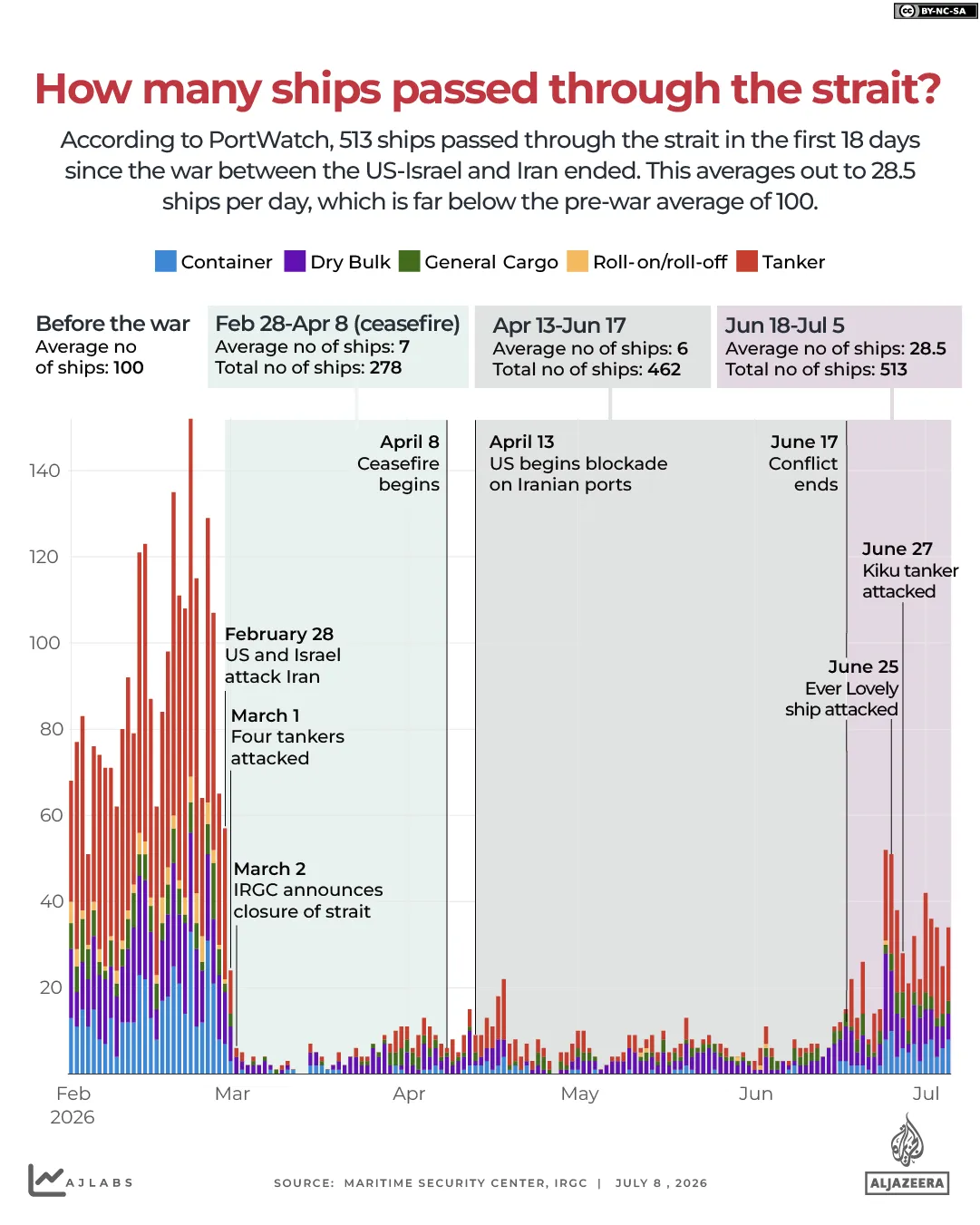
  • Shipping through the Strait of Hormuz remains severely limited, raising concerns over global oil flows.

Source link

Trump extends ceasefire and hopes for ‘unified proposal’ | Newsfeed

NewsFeed

In a social media post, President Trump announced an extension of the ceasefire in the war on Iran, but with the US blockade still in place. Al Jazeera’s Alan Fisher says there are signs of movement as Trump shifts towards discussing a ‘unified proposal’.

Source link

Pro-Palestine legal aid requests stay high in 2025 amid US campus pressure | Donald Trump News

Washington, DC – Requests for legal support related to pro-Palestine advocacy remained high in the United States last year, as President Donald Trump threatened activists and universities with penalties.

In an annual report released on Tuesday, Palestine Legal, an organisation that “supports the movement for Palestinian freedom in the US”, said it received 1,131 queries for legal support in 2025.

Recommended Stories

list of 3 itemsend of list

The figure is below the record 2,184 requests the group received in 2024, when pro-Palestine protests swept US campuses — and were regularly met with crackdowns from both school administrators and law enforcement.

Despite universities enacting new restrictions on protests across the country, the figures from 2025 show that pro-Palestine advocacy has persisted, according to Dima Khalidi, the executive director of Palestine Legal.

“Our 2025 year-end report shows that while universities have largely cowered and caved to coercive pressure from the Trump administration and its pro-Israel supporters, student activists for Palestinian and collective freedom remain a model of moral conviction and courage,” Khalidi said.

“Even when facing punitive consequences for speaking out, they are holding the line of dissent against injustice from the US to Palestine, because they understand the cost of surrender for all of us.”

Palestine Legal said that the “overwhelming majority of requests” for legal support came from university students and faculty in 2025, but a growing number, 122, were categorised as “immigration and border-related”.

The group received 851 requests from people or organisations targeted for their Palestine-related advocacy, as well as 280 more asking for legal guidance on conducting advocacy.

Despite the drop from 2024, the rate of complaints last year remained 300 percent higher than in 2022, the year before Israel began its genocidal war in Gaza on October 7, 2023.

Since then, at least 72,560 Palestinians have been killed in Gaza.

Pressure campaigns

In 2024, Trump campaigned for a second term in the White House in part on a pledge to crack down on the pro-Palestinian protest movement, which sought to shine a light on the human rights abuses unfolding during the war.

He has framed such protests as anti-Semitic, and since his inauguration in 2025, he has led a campaign to penalise schools that played host to pro-Palestinian activism.

To date, five universities have struck deals with Trump after he threatened to withhold billions in federal funding. They include Columbia University, where a pro-Palestine encampment and resulting police crackdown drew international attention.

Columbia eventually reached a $200m settlement with the Trump administration and moved to make several policy changes it said were aimed at combatting anti-Semitism.

Rights groups have condemned such policies as conflating pro-Palestine advocacy with anti-Jewish sentiment. They also warn that Trump’s actions risk dampening free speech, a protected right under the First Amendment of the US Constitution.

All told, nearly 80 of the students who took part in Columbia’s protests faced serious academic discipline, including expulsions, suspensions, and degree revocations, as of July 2025.

Meanwhile, the Trump administration used immigration enforcement to target pro-Palestine protesters and advocates, including scholars like Rumeysa Ozturk, Mohsen Mahdawi, Badar Khan Suri and Mahmoud Khalil.

To date, the deportation proceedings against Ozturk, who was in the US on a student visa, and Mahdawi, a US permanent resident detained at his citizenship hearing, have been abandoned.

Ozturk has since voluntarily returned to her native Turkiye after completing her doctoral studies at Tufts University.

The government is still proceeding with deportation efforts against Khan Suri, a Georgetown University researcher, and Mahmoud Khalil, a Columbia University graduate and permanent US resident.

Separately, the Federal Bureau of Investigation (FBI) raided five homes connected to pro-Palestine activists at the University of Michigan in April 2025, sparking outrage. Federal authorities seized properties, but no arrests were made.

Despite the restrictive climate across the country, Palestine Legal hailed a string of legal victories in 2025 that upheld the right to pro-Palestinian protest.

Last August, for instance, a federal court dismissed a complaint that sought to penalise UNRWA USA, a non-profit that supports the United Nations Relief and Works Agency for Palestine Refugees (UNRWA), under the Antiterrorism Act of 1990.

A separate lawsuit launched by Palestine Legal and the Council on American-Islamic Relations (CAIR) charged that the University of Maryland had tread on the free speech rights of students by banning Students for Justice in Palestine (UMD SJP). That case resulted in a $100,000 settlement.

Meanwhile, federal judges have sided with Harvard University and the University of California, Los Angeles (UCLA), in their challenges to the Trump administration’s defunding efforts.

“The fights that Palestine Legal and our partners have waged affirm that the Trump administration, universities, and Israel advocacy groups cannot, without consequence, run roughshod over growing demands to respect and protect Palestinian rights,” Palestine Legal said at the conclusion of its report.

“The developments throughout 2025 made crystal clear that if we allow our right to stand for Palestinian freedom to be trampled, all of our fundamental rights will be in jeopardy in the face of an authoritarian slide.”

Source link

Rabbi accused of war crimes selected for Israel’s national celebration | Israel-Palestine conflict News

As the sun sets on Israel’s Memorial Day, 12 torches, together symbolising the spirit of the nation, are lit to mark the beginning of Independence Day, the anniversary of the country’s establishment in 1948 – which led to the ethnic cleansing of at least 750,000 Palestinians.

To be selected to light one of the torches over the resting place of Theodor Herzl, the man widely credited with the creation of modern Zionism, is regarded as one of the greatest honours in Israel.

Recommended Stories

list of 4 itemsend of list

This year, among those selected to light the torch on Tuesday evening is Avraham Zarbiv, a rabbi so controversial that even the Israeli military – an organisation that admits to having killed more than 70,000 Palestinians in Gaza – has publicly distanced itself from him. A military spokesperson said last week that Zarbiv “was not selected in coordination” with the military, and was not representing it at the ceremony, despite his being an army reservist.

Obliterate

Zarbiv first came to national prominence in Israel in the early months of 2024, when the 52-year-old rabbi and state rabbinical judge was filmed throwing grenades at Palestinians in Khan Younis during a firefight.

Since then, he has recorded himself gleefully demolishing Palestinian homes – his name even becoming a verb meaning to flatten or obliterate – and has delivered sermons from the ruins of Rafah promising “victory and settlement”. Zarbiv pairs it all with the traditional mannerisms of a religious leader, punctuating his threats and violence with footage of him blowing on a traditional ram’s horn, or shofar, as well as reciting prayers and parts of the Torah.

Zarbiv has also shared footage of himself taking part in the demolition of homes in southern Lebanon, where Israeli forces are accused of deploying the same scorched earth tactics as they did during Gaza’s genocide.


Speaking to Israel’s right-wing Channel 14 in January 2025, Zarbiv boasted of the destruction inflicted on Gaza.

“There are tens of thousands of dead. The dogs and the cats ate them because no one collected them,” he said. “Tens of thousands of families – they have not a piece of paper, no childhood photo, no IDs, they have nothing. No home, there is nothing. They come, they have no idea where their house is. It’s something unbelievable.”

While the army leadership itself might be seeking to distance itself from Zarbiv, the rabbi himself says that he represents his fellow soldiers.

“I am one soldier among many, I am a soldier of the Givati Brigade,” he said in an interview last week.

Illegal settlement

Last week, the Israeli organisation Kerem Navot, which monitors illegal settlement construction in the occupied West Bank, filed a complaint to Israel’s judicial watchdog after confirming that Zarbiv had built his home illegally on private Palestinian land in the Beit El settlement, accusing him of violating the ethics rules for both judges and rabbinic judges.

That had no bearing, however, on Transport Minister Miri Regev’s decision to nominate Zarbiv for the torch-bearing ceremony.

“Rabbi Zarbiv, a father of six, continues to serve in reserve duty and combines in his life in an inspiring way between the book and the sword – between Torah and the army, between study and action, and between spiritual leadership and security responsibility,” the right-wing minister said.

She continued, describing the man now accused of multiple war crimes as representative of a generation “that refuses to part with responsibility, that chooses to bear the burden and continue to build, out of great faith in the future”.

Avraham Zarbiv
Avraham Zarbiv in Gaza, December 2023. ‘The Rabbinical Court of Khan Younis’ is graffitied on the wall behind him [Courtesy of Social Media]

Nevertheless, in January 2025, The Hind Rajab Foundation, the Belgian-based NGO that seeks to prosecute Israeli soldiers on the basis of the video evidence they themselves frequently provide, filed an official complaint against Zarbiv with the International Criminal Court (ICC). According to the foundation’s lawyers, Zarbiv’s gleeful boast of destroying 50 buildings per week in Gaza, participating in the complete destruction of entire neighbourhoods, and having publicly incited violence and hatred through his appearances on Israeli media, were clear enough breaches of the Geneva Convention and Rome Statute to deserve prosecution.

Zarbiv was not a neutral public figure being honoured for civic virtue, Dyab Abou Jahjah, cofounder of The Hind Rajab Foundation, told Al Jazeera. Rather, “he is a notorious perpetrator of grave international crimes”, Abou Jahjah said.

“His selection [for the Independence Day ceremony] is therefore not incidental – it is revealing,” Abou Jahjah added. “When an individual implicated in acts that constitute genocide is elevated in this way, it reflects the underlying logic of a state project historically rooted in the dispossession and ethnic cleansing of Palestinians. From that perspective, his selection is entirely consistent.”

Avraham Zarbiv
Avraham Zarbiv is an Israeli army reservist [Courtesy of Social Media]

B’tselem, the Israeli rights group, is also

among those objecting to Zarbiv’s selection.

“The government’s decision to laud Zarbiv as an ‘exemplary citizen’, after more than two years of genocide in Gaza and amid a reality of unprecedented state and settler violence in the West Bank, represents a state-level endorsement of the complete dehumanization of Palestinians and the systematic destruction of Palestinian life,” B’tselem said in a statement.

“This selection sends a clear message to the citizens of Israel and the entire world: In Israel, genocide, ethnic cleansing, and war crimes are the ‘spirit of the nation’,” the group added.

Source link

Palestine weekly wrap: Coordinated attacks and evictions in Gaza, West Bank | Israel-Palestine conflict News

There was a time when various developments from this past week – such as the Israeli government spending hundreds of thousands of dollars promoting ultra-nationalist marches, a sanctioned settler leading army-escorted livestock raids on a Palestinian village, and the Israeli finance minister calling for the full military occupation and settlement of Gaza while speaking at once-dismantled occupied West Bank settlements – would have been met with outcry or debate in some corners of Israeli society.

This week, however, they have become routine, as United Nations experts describe Israeli policy as “ethnically cleansing the West Bank through daily attacks resulting in killing, injury, and harassment of women and children, and the widespread destruction of Palestinian homes, farmland and livelihoods”.

Recommended Stories

list of 3 itemsend of list

Against that backdrop, this past week brought intense and coordinated settler attacks on villages near Ramallah, continued Israeli strikes on civilians in Gaza, new evictions and demolitions in occupied East Jerusalem, and US-Hamas diplomatic talks in Cairo that showed some glimmers of progress – while falling well short of what either side has demanded.

Gaza: Strikes, starvation, and a partial offer on weapons

Across the Gaza Strip, Israeli air strikes, gunfire and drone attacks continued throughout the week as the humanitarian crisis worsened.

On April 14, a strike on a police vehicle on al-Nafaq Street in Gaza City killed four people, including three-year-old Yahya al-Malahi, whose father said his family had been leaving a relative’s wedding. A strike on the Shati refugee camp later the same day killed at least five more.

On April 16, brothers Abdelmalek and Abdel Sattar al-Attar were killed in Beit Lahiya in an area that witnesses said fell outside the zone under Israeli military control along the so-called “yellow line”. On April 17, brothers Mahmoud and Eid Abu Warda were shot dead by a drone while trying to get water in Gaza City’s Shujayea neighbourhood; a drone separately struck a water desalination facility in the same area, killing one more. The following day, two civilian contractors delivering water on behalf of the United Nations Children’s Fund (UNICEF) were shot dead by Israeli troops in northern Gaza.

Since the October ceasefire, 777 Palestinians in Gaza have been killed and at least 2,193 injured, as of April 20. Since October 7, 2023, the cumulative death toll stands at 72,553 – a figure revised upwards this week after the Gaza Ministry of Health certified an additional 196 deaths.

Meanwhile, aid access into Gaza remains severely constrained. According to the UN Office for the Coordination of Humanitarian Affairs (OCHA), United Nations and partner aid inflows declined by 37 percent between the first and second three-month periods following the ceasefire. Bakeries have scaled back production due to dwindling flour and fuel, with Palestinians reporting hours-long queues for bread.

Board of Peace envoy Nickolay Mladenov told an Egyptian news channel this week that Israeli restrictions at border crossings remain “the primary obstacle” preventing sufficient aid from reaching Gaza.

On the diplomatic front, direct US-Hamas talks in Cairo this week focused on implementing phase-one commitments before any discussion of disarmament. No official agreement has been reached.

Israeli Finance Minister Bezalel Smotrich, meanwhile, called on Israeli Prime Minister Benjamin Netanyahu to order the military to “immediately prepare for the full occupation of the Gaza Strip” and establish Israeli settlements there if Hamas refuses to disarm entirely. Smotrich made the declaration while attending a ceremony commemorating the re-establishment of the illegal settlement of Sa-Nur, which had previously been dismantled by Israel in 2005 along with settlements in Gaza and several others in the northern West Bank.

Coordinated attacks and killings in the West Bank

The week’s most sustained violence in the West Bank took place across a cluster of villages northeast of Ramallah – Khirbet Abu Falah, al-Mughayyir and Turmus Aya – where three new illegal Jewish outposts have been established in the past two months, all on privately owned Palestinian land in Area B, which is supposed to be under limited administrative control of the Palestinian Authority. One such outpost was built on land from which the Abu Najjeh community – itself already forcibly displaced from Ein Samiya in the summer of 2023 – was recently violently expelled from.

On April 18, settlers launched simultaneous coordinated attacks on all three villages, according to local activists. In Turmus Aya, settlers arriving in more than a dozen vehicles burned a home and a car, with a military force near the outpost refusing to intervene, according to local activists. In Khirbet Abu Falah, dozens of settlers gathered at a newly established outpost before descending on Palestinian homes; soldiers subsequently raided the village themselves, according to locals. In al-Mughayyir, soldiers stopped two small children playing in the street, pushing them to the ground. They drove away before settlers on a government-supplied quad bike attacked a Palestinian driver on the nearby road.

The following morning, settlers raided a sheep pen in al-Mughayyir and stole 70 sheep. When residents pursued them, settlers fired live ammunition, activists said. Israeli military and police then escorted the Or Nachman outpost’s founder, Amishav Malt, back into the village, where he led a raid that he claimed was to recover stolen sheep – a tactic local activists say is routinely used to justify further theft. One Palestinian resident was beaten unconscious by police, according to local activists. Soldiers then enabled Neria Ben Pazi – the founder of another local illegal outpost who is internationally sanctioned by Australia, Belgium, France and Britain – to steal sheep from a restrained Palestinian resident. At least 20 military vehicles subsequently laid siege to the village entrance.

Beyond these villages, settler attacks on shepherds, farmers and residents were documented across numerous communities, including olive trees cut down in Yatma near Nablus, and the theft of livestock and crops in Jifna and several communities in Masafer Yatta. Settlers erected a barbed wire fence on the path that children from Umm al-Khair use to reach their school, blocking their safe access ever since.

On April 16, Israeli forces staged a raid on Beit Duqqu, northwest of Jerusalem, during which they shot dead 17-year-old Mohammed Rayan. Soldiers prevented ambulances from treating him, instead removing his body – denying his family proper Muslim burial rites. Four others were shot with live fire. On April 18, Israeli forces killed Mohammed Suwaiti, 25, in Khirbet Salama, southwest of Hebron, claiming he was approaching the illegal settlement of Negohot.

According to the latest OCHA humanitarian situation report, in 2026, more than 2,500 Palestinians have been displaced by demolitions, settler attacks, and evictions – including more than 1,100 children. Settler attacks now account for 75 percent of all displacement recorded this year, with March recording the highest monthly settler injury toll since documentation began in 2006.

Al Jazeera has reached out to the Israeli military for comment on the incidents reported on this week, but has yet to receive a reply.

East Jerusalem evictions

In occupied East Jerusalem, demolitions and evictions continued at an elevated pace. Israeli authorities demolished the home of 80-year-old cancer patient Abu Kamel Dweik in Silwan’s al-Bustan neighbourhood, at least the eighth demolition in the area this month.

According to OCHA, since January 2026, at least 86 Palestinian-owned structures have been demolished in East Jerusalem, displacing more than 250 people, with roughly half demolished by their owners to avoid additional fines.

In addition to further home demolitions in al-Bustan expected shortly, the extended Basha family – six households comprising 12 people, most over 60, who have lived in the Old City’s Muslim Quarter for nearly a century – now face court-ordered eviction by April 26.

The week also saw reports from Israeli media that the Netanyahu government is allocating approximately 1.2 million shekels ($400,000) to expand the ultra-nationalist Jerusalem Day marches across the country next month – yearly events marked by vulgar, racist slogans and violent attacks on Palestinian neighbourhoods.

With such funding, the marches are being expanded to several mixed Jewish-Arab cities including Lydd (Lod), where Jerusalem Day clashes in 2021 escalated into days of violence. That the state is now directly subsidising such events reflects the broader influence of National Security Minister Itamar Ben-Gvir, whose reach over police operations has itself become the subject of a rare legal challenge.

Israel’s High Court this week ordered Ben-Gvir to reach an agreement with the attorney general to curb his political interference in police work, after his repeated alleged violations of a prior agreement not to do so. Critics say his tenure has radicalised the police’s approach toward Palestinians – a charge given weight by documented incidents of police facilitating settler attacks and, in some cases, participating directly in violence against Palestinian residents.

Source link

EU credibility is on the line over Israel, says Spanish foreign minister | Russia-Ukraine war

NewsFeed

Spain’s foreign minister has warned the EU risks losing credibility if it fails to apply the same principles to Israel’s “perpetual war” in the Middle East as it does to Russia’s invasion of Ukraine. He urged a unified stance, citing human rights clauses in the EU–Israel agreement and criticising ongoing violence in Gaza, the West Bank and Lebanon.

Source link

What was the Iran nuclear deal Trump dumped in search of ‘better’ terms? | US-Israel war on Iran News

United States President Donald Trump has said a nuclear agreement currently being negotiated with Iran will be “far better” than the 2015 Joint Comprehensive Plan of Action (JCPOA), which he withdrew from in 2018 during his first term in office.

The original 2015 accord took roughly two years of negotiations to reach and involved hundreds of specialists across technical and legal fields, including multiple US experts. Under it, Iran agreed to restrict the enrichment of uranium and to subject itself to inspections in exchange for the relaxation of sanctions.

Recommended Stories

list of 3 itemsend of list

But Trump took the US out of that pact, calling it the “worst deal ever”. Before the initial US-Israeli strikes on Iran at the end of February, the US had made new demands – including additional restrictions on Tehran’s nuclear programme, the restriction of its ballistic missiles programme and an end to its support for regional armed groups, primarily in Lebanon, Yemen and Iraq.

Trump’s latest remarks come amid growing uncertainty about whether a second round of talks will proceed in the Pakistani capital Islamabad, as a two-week ceasefire between the US-Israel and Iran approaches the end in just a day.

So, what was the JCPOA, and how did it compare to Trump’s new demands?

What was the JCPOA?

On July 14, 2015, Iran reached an agreement with the European Union and six major powers – China, France, Russia, the United Kingdom, the US, and Germany – under which these states would roll back international economic sanctions and allow Iran greater participation in the global economy.

In return, Tehran committed to limiting activities that could be used to produce a nuclear weapon.

These included reducing its stockpile of enriched uranium by about 98 percent, to less than 300kg (660lb), and capping uranium enrichment at 3.67 percent – far below weapons-grade of 90 percent, but high enough for civilian purposes such as power generation.

Before the JCPOA, Iran operated roughly 20,000 uranium-enriching centrifuges. Under the deal, that number was cut to a maximum of 6,104, and only older-generation machines confined to two facilities, which were subject to international monitoring.

Centrifuges are machines which spin to increase the concentration of the uranium-235 isotope – enrichment – in uranium, a key step towards potential bomb-making.

The deal also redesigned Iran’s Arak heavy water reactor to prevent plutonium production and introduced one of the most intrusive inspection regimes ever implemented by the global nuclear watchdog, the International Atomic Energy Agency (IAEA).

In exchange, Iran received relief from international sanctions which had severely damaged its economy. Billions of dollars in frozen assets were released, and restrictions on oil exports and banking were eased.

The deal came to halt when Trump formally withdrew Washington from the nuclear deal in 2018, a move widely criticised domestically and by foreign allies, and despite the IAEA saying Iran had complied with the agreement up to that point.

“The Iranian regime supports terrorism and exports violence, bloodshed and chaos across the Middle East. That is why we must put an end to Iran’s continued aggression and nuclear ambitions. They have not lived up to the spirit of their agreement,” he said in October 2017.

He reimposed crippling economic sanctions on Tehran as part of his “maximum pressure” tactic. These targeted Iran’s oil exports, as well as its shipping sector, banking system and other key industries.

The goal was to force Iran back to the negotiating table to agree to a new deal, which also included a discussion about Tehran’s missile capabilities, further curbs on enrichment and more scrutiny of its nuclear programme.

What has happened to Iran’s nuclear programme since the JCPOA?

During the JCPOA period, Iran’s nuclear programme was tightly constrained and heavily monitored. The IAEA repeatedly verified that Iran was complying with the deal’s terms, including one year after Trump announced the US’s withdrawal from the agreement.

Starting in mid-2019, however, Iran began incrementally breaching the deal’s limits, exceeding caps on uranium stockpiles and enrichment levels.

In November 2024, Iran said it would activate “new and advanced” centrifuges. The IAEA confirmed that Tehran had informed the nuclear watchdog that it planned to install more than 6,000 new centrifuges to enrich uranium.

In December 2024, the IAEA said Iran was rapidly enriching uranium to 60 percent purity, moving closer to the 90 percent threshold needed for weapons-grade material. Most recently, in 2025, the IAEA estimated that Iran had 440kg (970lb) of 60-percent enriched uranium.

What are Trump’s latest demands for Iran’s nuclear programme?

The US and its ally, Israel, are pushing Iran to agree to zero uranium enrichment and have accused Iran of working towards building a nuclear weapon, while providing no evidence for their claims.

They also want Iran’s estimated 440kg stock of 60pc enriched uranium to be removed from Iran. While that is below weapons-grade, it is the point at which it becomes much faster to achieve the 90 percent enrichment needed for atomic weapons production.

Iran has insisted its enrichment effort is for civilian purposes only. It is a signatory to the 1970 Treaty on the Non-Proliferation of Nuclear Weapons (NPT).

In March 2025, Tulsi Gabbard, the US director of national intelligence, testified to Congress that the US “continues to assess that Iran is not building a nuclear weapon”.

On Sunday, Iranian President Masoud Pezeshkian, in a strongly worded statement, said Trump had no right to ⁠⁠”deprive” Iran of its nuclear ⁠⁠rights.

INTERACTIVE- NPT
(Al Jazeera)

What else is Trump asking for?

Restrictions on ballistic missiles

Before the US-Israel war on Iran began, Tehran had always insisted negotiations should be exclusively focused on Iran’s nuclear programme.

US and Israeli demands, however, extended beyond that. Just before the war began, Washington and Israel demanded severe restrictions on Iran’s ballistic missile programme.

Analysts say this demand was at least partly triggered by the fact that several Iranian missiles had breached Israel’s much-vaunted “Iron Dome” defence system during the 12-day war between the two countries in June last year. While Israel suffered only a handful of casualties, it is understood to have been alarmed.

For his part, Trump has repeatedly warned, without evidence, about the dangers of Iran’s long-range missiles, claiming Iran is producing them “in very high numbers” and they could “overwhelm the Iron Dome”.

Iran has said its right to maintain missile capabilities is non-negotiable. The JCPOA did not put any limits on the development of ballistic missiles.

However, a United Nations resolution made when adopting the nuclear agreement in July 2015 did stipulate that Iran could not “undertake any activity related to ballistic missiles designed to be capable of delivering nuclear weapons”.

Ending support for proxy groups

The US and Israel have also demanded that Iran stop supporting its non-state allies across the Middle East, including Hezbollah in Lebanon, the Houthis in Yemen and a number of groups in Iraq. Together, these groups are referred to as Iran’s “axis of resistance”.

In May last year, Trump said Tehran “must stop sponsoring terror, halt its bloody proxy wars, and permanently and verifiably cease pursuit of nuclear weapons”, during a GCC meeting in Riyadh.

Three days before the war on Iran began in February, during his State of the Union address to Congress, Trump accused Iran and “its murderous proxies” of spreading “nothing but terrorism and death and hate”.

Iran has refused to enter a dialogue about limiting its support for these armed groups.

Can Trump really get a new deal that is ‘much better’ than the JCPOA?

According to Andreas Kreig, associate professor of Security Studies at King’s College, London, Trump is more likely to secure a new deal that closely resembles the JCPOA, with “some form of restrictions on enrichment, possibly with a sunset clause, and international supervision”.

“Iran might get access to frozen assets and lifted sanctions much quicker than under the JCPOA, as it will not agree to a long drawn-out, gradual lifting of sanctions,” Krieg pointed out.

However, he warned that the political landscape in Tehran has hardened. “Iran now is a far more hardline and less pragmatic player that will play hardball at every junction. Trump cannot count on any goodwill in Tehran,” he said.

“The IRGC is now firmly in charge… with likely new powerful and tested levers such as the Strait of Hormuz,” he said, referring to the Islamic Revolutionary Guard Corps, which operates as a parallel elite military force to the army and has a great deal of political and economic power in Iran. It is a constitutionally recognised part of the Iranian military and answers directly to the supreme leader.

Overall, Krieg stressed, the US-Israel war on Iran “leaves the world worse off than had Trump stuck to the JCPOA”, even if a new compromise is eventually reached.

Moreover, since the revocation of the JCPOA, the US and Israel have waged two wars on Iran, including the current one. The 12-day war in June last year included attacks on Iran’s nuclear sites and killed more than 1,000 people.

Attacks on Iran’s nuclear infrastructure have continued since the latest war began on February 28, including on the Natanz enrichment facility, Isfahan nuclear complex, Arak heavy water reactor, and the Bushehr nuclear power plant.

Iran nuclear facilities

Nevertheless, King’s College’s Krieg said there is still room for a negotiated outcome if Tehran and Washington scale back their demands.

“Both sides can compromise on enrichment thresholds, and on temporary moratoriums on enrichments. But Iran will not surrender its sovereignty to enrich altogether, and the Trump administration will have to meet them halfway,” he said.

“While the Iranians will commit on paper not to develop a nuclear weapon, they will want to keep R&D [research and development] in this space alive.”

Economic incentives will be central, he added. “Equally, Iran would want to get immediate access to capital and liquidity. Here, the Trump administration is already willing to compromise.”

Source link

Spain, Slovenia, Ireland push EU to debate Israel pact suspension | Gaza News

In a letter to EU foreign policy chief Kaja Kallas, the three governments say Israel is violating ‘human rights’.

Spain, Slovenia and Ireland have urged the European Union to debate suspending its association agreement with Israel, saying the bloc can no longer remain “on the sidelines” as conditions worsen in Gaza, the occupied West Bank and Lebanon.

Speaking before a meeting of EU foreign ministers in Luxembourg on Tuesday, Spanish Foreign Minister Jose Manuel Albares said the three countries had formally requested that the issue be placed on the agenda.

Recommended Stories

list of 4 itemsend of list

“Spain, along with Slovenia and Ireland, has requested that the suspension of the Association Agreement between the European Union and Israel be discussed and debated today,” Albares said.

“I expect every European country to uphold what the International Court of Justice and the UN say on human rights and the defence of international law. Anything different would be a defeat for the European Union,” he added.

In a joint letter sent last week to EU foreign policy chief Kaja Kallas, the three governments said Israel had taken a series of measures that “contravene human rights and violate international law and international humanitarian law”, adding that it breached the 1995 agreement that outlines political, economic and trade relations between the EU and Israel.

They said repeated appeals to Israel to reverse course had been ignored. The ministers pointed to a proposed Israeli law that would impose the death penalty by hanging on Palestinians convicted in military courts, describing it as “a grave violation of fundamental human rights” and a further step in the “systematic persecution, oppression, violence and discrimination” faced by Palestinians.

They also cited the humanitarian crisis in Gaza, saying conditions there were “unbearable”, with continuing violations of the ceasefire agreement and insufficient aid entering the territory.

The letter warned that violence in the occupied West Bank was also intensifying, with settlers acting “with absolute impunity” alongside ongoing Israeli military operations, causing civilian deaths.

“The European Union can no longer remain on the sidelines,” the ministers wrote, calling for “bold and immediate action” and saying all options should remain on the table.

The three countries argued Israel was in breach of Article 2 of the EU-Israel Association Agreement, which ties relations to respect for human rights. An earlier EU review had already found Israel was failing to meet those obligations, they said, adding that the situation had deteriorated further since then.

During a donor conference in Brussels, Kallas said the estimated cost of rebuilding Gaza had risen to $71bn.

Ireland and Spain first pushed for a review of the agreement in 2024, but the effort failed to win enough backing from member states supportive of Israel. A later Dutch-led initiative succeeded in triggering an EU assessment, which concluded Israel had “likely” breached its obligations under the pact.

Possible trade measures, including suspending parts of the relationship, were later discussed but not implemented after Israel pledged to significantly increase humanitarian aid entering Gaza.

Occupied Territories Bill

Ireland is also seeking to revive its Occupied Territories Bill, first introduced in 2018, which would ban trade in goods and services from illegal settlements in the occupied Palestinian territory, including the West Bank. Progress has stalled despite unanimous backing in the lower house of parliament, the Dail.

Meanwhile, Spain and Slovenia have moved to curb trade with illegal Israeli settlements in the occupied West Bank following sustained public protests and growing political pressure. In August last year, Slovenia banned imports of goods produced in Israeli-occupied territories, becoming one of the first European states to take such a step.

Spain followed later that year with a decree banning imports from illegal Israeli settlements, with the measure coming into force at the start of 2026.

All three countries formally recognised the State of Palestine in May 2024, in what was widely seen as a coordinated diplomatic move aimed at increasing pressure for a two-state solution.

Source link

My dreams in Iran were already dead before the ceasefire came | US-Israel war on Iran News

Sina* is a 28-year-old video editing assistant who fought hard to build a life in Tehran. After completing mandatory military service, he refused to return to his hometown of Neyshabur in eastern Iran, knowing opportunities for a young man with a background in film editing and independent student theatre were bleak there. Through a college friend, he found his footing at a video content creation studio in the capital, climbing from camera assistant to assistant video editor within six months, before losing his job as a result of the US-Israel war on Iran. As told to Arya Farahand. 

It has been a few days since the guns fell silent, and the sliver of hope I felt when the ceasefire was announced is already fading. Out of all the resumes I sent in desperation, only one company called me for an interview. The salary they offered would not cover the bare minimum to survive. My family keeps calling from Neyshabur, repeating the same line: “Come back, there’s work for you here.” What they intend as a lifeline feels like salt in the wound.

Recommended Stories

list of 3 itemsend of list

I had stopped taking money from my father, my salary grew, and I was buying gifts for my two sisters. I was, for the first time in my life, truly independent. Now, I am sitting in my grandmother’s empty apartment in Tehran, staring at a phone with almost no internet, waiting for a job offer that’s not coming.

This is what the war has done to me. Not a scratch on my body, but everything else – gone.

Croissants on the roof

The morning the war started, we were in a briefing meeting, drinking tea. A colleague had brought fresh croissants. Then we heard the roar of a fighter jet, a whistle, and seconds later, an explosion.

Our initial instinct wasn’t terror, but naive curiosity. Against every survival guide we had read from the previous war, we piled into the elevator and went up to the roof, mugs still in hand. Pillars of smoke were rising across the city. Then, another explosion hit, deafeningly close. We sprinted for the stairs.

Our manager sent us home. The city had seized up. My driver called to say he couldn’t get through the gridlock, so we started walking – 40 minutes under the glaring sun, past stranded people and stalled cars. At one point, a middle-aged driver lost his nerve, swerving into the bus lane against traffic. A bus appeared head-on and deadlocked the lane. Trapped, he looked ready to explode. I didn’t stick around. I just kept walking.

I went to my grandmother’s house. Hard of hearing, she hadn’t heard a single blast and was simply overjoyed to see me. I drank tea, sat in front of the television, tried to process what was happening, then ate lunch and slept.

The city hollowing out

When I woke up, I reached for my phone, only to be reminded that the internet was dead. I am someone who fills every spare moment with online gaming or Instagram. Without either, the boredom was stifling. I couldn’t smoke in front of my grandmother, and the forced abstinence only added to my agitation.

In the days that followed, the city hollowed out. Whenever I stepped into the alley – using a quick errand as a pretext to sneak a cigarette – I saw fewer and fewer people. In our building, only five of the 12 units remained occupied. I could tell by the empty spaces in the parking garage.

When my cigarette supply ran out, the corner shop didn’t have my brand and the supermarket was charging double. With no certainty that my March salary would be paid, I settled for a cheaper, unknown brand. It was like inhaling truck exhaust.

The days blurred: the unemployment anxiety, the stifling boredom, the desperate secret cigarettes. I tried buying VPNs twice. The first worked for a single day. The second – the seller blocked me the moment I transferred the money.

The closest I have come to death

The true nightmare came on the night of March 5. A mild explosion jolted me awake around 4m. I walked to the kitchen for water. Then a blast ripped through the air – a sound seared into my brain for life. I froze. My grandmother stumbled out of her bedroom in terror. I pulled her into the kitchen.

Then came the barrage. More than 10 consecutive explosions, each less than 10 seconds apart. My grandmother sat on the floor beside me, arms wrapped tightly around my leg, head buried. It was the closest I have ever felt to death.

When it finally stopped, the windows held. My grandmother, shaken, recalled how during the Iran-Iraq war, sirens had warned them in time to reach shelters. What she found most painful about this war was the absolute lack of warning – no sirens, no shelters. Just sitting, waiting for the next blast. With tired legs, she climbed back into bed. I did not sleep until morning.

Ten voices in my head

Through all of it, I kept telling myself, “Hold on”. Our manager had hoped this war, like the previous conflict, would end in under two weeks. Whenever my parents called, begging me to return to Neyshabur, I said no.

On March 17, we had our final online meeting. The studio’s debts were mounting, invoices unpaid, and our manager saw no end in sight – for the war or the internet blackout. For the new Iranian year, starting on March 21, only 200 resources staff would remain. The rest of us were laid off, without pay.

As the call ended, it felt like 10 different voices were screaming in my head. I couldn’t rely on my grandmother’s meagre pension. My father was already supporting a family of four. The calculation was merciless: move back to Neyshabur and work at my uncle’s supermarket. Instead of planning how to improve my life, I was plotting survival.

I packed up and left. It was a gruelling 10-hour bus ride through eerily quiet roads. What haunted me most were the final moments in Tehran. The city felt hollow, silent, swallowed by a darkness I had never seen before.

The void

From Neyshabur, I called my manager, hoping against hope. He laid out the brutal math. During the previous war and the December protests, waiting out the shutdowns had been viable. But a relentless year of economic bleeding, capped by this blackout, had driven revenue to zero. Even if the internet were restored tomorrow and we worked nonstop for months, it wouldn’t be enough. The studio hadn’t paused. It had collapsed.

I updated my resume, bought a return bus ticket, and went back to my grandmother’s apartment. There was nothing to go back to. I just needed to feel like I was doing something.

When the ceasefire was announced, I felt a sliver of hope. It lasted about a day.

My life used to be a blur of motion: the studio, independent theatres, cafes with friends, early mornings and late nights. Now, my entire existence has shrunk to four walls. The war has ended, at least for now. The internet remains largely throttled, the economy is in ruins, and the job market that existed before February 28 has not returned with the ceasefire.

Outside, people are beginning to move through the streets again. For them, perhaps, something is resuming. For me, there is nothing to resume.

I don’t know how much longer I can hold out.

*Name changed for security reasons

Source link

Global fallout grows over Israeli soldier smashing Jesus statue in Lebanon | Israel attacks Lebanon

NewsFeed

Outrage continues to grow over the Israeli soldier who was photographed desecrating a statue of Jesus Christ in southern Lebanon, including among Trump’s former MAGA allies. From a Polish MP to a Palestinian theologian, observers say it reveals a wider pattern.

Source link

Outcry grows over Israeli soldier smashing Jesus statue in Lebanon | Israel attacks Lebanon News

A photo of an Israeli soldier smashing a statue of Jesus Christ in Lebanon has sparked outrage in the United States, adding to the anger Israel is facing, including from parts of US President Donald Trump’s base.

Although the incident is only one among a broad range of atrocities that Israel is accused of committing in the region in recent years, it garnered condemnations across the world and prompted a response from Israel’s Prime Minister Benjamin Netanyahu.

In the US, where support for Israel was once unchallenged – especially in right-wing circles that purport to espouse Christian values – the desecration of the Christian religious symbol added fuel to the criticism that the Israeli government is facing from some Republicans.

“You would never know it by consuming American corporate media, but this kind of incident is not rare,” said right-wing commentator Tucker Carlson, a former Trump ally.

“The Israeli government has permitted its soldiers to behave like barbarians for decades, all while sucking up generous funding from the United States. The only difference between now and the past is that social media has exposed Israel’s behavior for the world to see,” Carlson wrote in his newsletter on Monday.

‘Horrific’

Former Republican Congresswoman Marjorie Taylor Greene – who fell out with Trump over his hawkish foreign policy – highlighted that Israel receives billions of dollars in US military aid annually.

“‘Our greatest ally’ that takes billions of our tax dollars and weapons every year,” she wrote in a comment on X in response to the photo showing an Israeli soldier taking a sledgehammer to the head of the statue of Jesus.

Matt Gaetz, another former Republican congressman and Trump ally, said, “Horrific”.

For his part, independent journalist Glenn Greenwald mocked how Christian Zionists may defend Israel over smashing the statue.

“Christian Zionists: This Israeli soldier was absolutely justified in smashing the head of the Jesus Christ statue because Hezbollah and Hamas were hiding inside. We owe him our gratitude,” Greenwald wrote on X.

The anger echoed growing scepticism of the close alliance with Israel in Trump’s “Make America Great Again” (MAGA) constituency.

Trump is already facing pressure over joining Israel in starting a war against Iran, which sent oil prices soaring. Earlier on Monday, the US president addressed and denied claims that Netanyahu dragged the US into the conflict.

Support for Israel in the US is at a historic low, recent public opinion polls show.

While Israel still enjoys near-unanimous Republican support in Congress, that consensus is starting to fray, with dissent being expressed by the likes of Carlson, in part due to prolonged wars in the Middle East and attacks on Christians.

Israel says it will investigate

The desecration of the statue, which took place near the town of Debl in south Lebanon, according to local reports, prompted an unusually swift response from the highest level of the Israeli government.

“I condemn the act in the strongest terms. Military authorities are conducting a criminal probe of the matter and will take appropriately harsh disciplinary action against the offender,” Netanyahu said in a statement on Sunday.

Israel rarely holds its soldiers accountable for well-documented abuses in Gaza, the occupied West Bank and Lebanon, including sexual violence.

Netanyahu, who has been evading an arrest warrant by the International Criminal Court (ICC) over war crimes charges in Gaza since 2024, went on to argue that Israel treats Christians better than any other country in the region.

“While Christians are being slaughtered in Syria and Lebanon by Muslims, the Christian population in Israel thrives unlike elsewhere in the Middle East,” the Israeli prime minister claimed.

“Israel is the only country in the region that the Christian population and standard of living is growing.”

Lebanon has the largest per capita Christian population in the Middle East, and its president is a Maronite Catholic.

Israeli Foreign Minister Gideon Saar joined Netanyahu in denouncing the desecration of the statue, saying that it is “entirely contrary” to Israeli values.

But while Israel’s supporters tried to portray smashing the statue as an isolated mistake by one soldier, the incident reflects a pattern of Israeli attacks against houses of worship, including churches.

In 2024, Israeli troops filmed a mock wedding between two soldiers at a church in Deir Mimas in Lebanon and vandalised the building.

An Israeli tank demolished a statue of Saint George in the southern Lebanese village of Yaroun last year, as well.

Israel has bombed Palestinian churches several times in Gaza since the start of its genocidal war in the enclave, including an attack that killed at least 18 people in 2023.

Israel destroyed more than 1,000 mosques and three churches in Gaza during the war, according to local officials.

Catholic leaders respond

The Assembly of Catholic Ordinaries of the Holy Land denounced the attack on the statue on Monday.

“This act constitutes a grave affront to the Christian faith and adds to other reported incidents of desecration of Christian symbols by [Israeli] soldiers in southern Lebanon,” it said in a statement.

“It further reveals a disturbing failure in moral and human formation, wherein even the most elementary reverence for the sacred and for the dignity of others has been gravely compromised.”

The incident came as Israeli soldiers pushed to completely destroy homes and civilian infrastructure in dozens of Lebanese villages in order to prevent residents from returning to them.

“The outrage shouldn’t be about a destroyed statue of Jesus – abhorrent as that is,” Palestinian pastor Munther Isaac wrote in a social media post on Monday.

“The real outrage is the targeting of civilians, the assault on human dignity, the devastation in Gaza and Lebanon. War is evil. We need Accountability.”

The Council on American-Islamic Relations (CAIR) called on Trump and Congress to intervene and end Israeli violations after the destruction of the statue.

“For years, our government has ignored and enabled persistent Israeli attacks on churches and Christians in Lebanon, Gaza, and elsewhere,” CAIR said.

“Our message to American public officials is simple: If you continue sending more weapons and provide political cover for Israel’s rogue actions, you own what you see in this picture.”

Source link

Iran expands limited internet access but restrictions remain for most | US-Israel war on Iran News

Tehran, Iran – Iranian authorities have been slowly expanding a list of individuals and entities deemed eligible to have limited internet access. However, the action serves only to illustrate that most of the population of more than 90 million people remains disconnected during the war with the United States and Israel.

The government imposed a near-total internet shutdown across Iran within hours of the first bombs falling in downtown Tehran on February 28. The move has seen internet connectivity reduced to about 2 percent of pre-war levels at most, according to monitors.

Recommended Stories

list of 3 itemsend of list

A limited intranet functions to keep some local services and apps alive, but people are highly frustrated, and the economy has suffered billions of dollars in lost revenue as a result of more than 1,200 hours of the digital blackout. One business, however, is thriving: the black market for internet connections.

This week, tens of thousands of people and organisations selected by the state based on their positions and professions signed up or received text message invitations to connect through a service called Internet Pro.

That is the name selected for a limited and metered internet connection through which thousands of sites and most global messaging services are blocked but some applications, app stores and Google services function.

The service is being sold in the form of 50-gigabyte data packages by three top state-linked telecommunications companies. State authorities can also issue limited internet protocols (IPs) for global connectivity to designated office spaces of approved companies and businesses.

Applicants need to provide full identification and professional or referral documents. Business owners and traders introduced to the Ministry of Information and Communications Technology and other authorities through their guilds and chambers of commerce were among the first to be connected this month.

Doctors, university professors, researchers and academics in various fields were nominated by the Ministry of Science this week. Freelancers were told to sign up through a webpage set up by the state-linked Iranian ICT Guild.

This is a separate service from that enjoyed by holders of “white SIM cards”, which offer less restricted connections and are reserved for officials, state-linked entities and individuals, journalists and some civilian supporters of the establishment perceived to be helping “get the message out” on behalf of the government.

A tiered system in action

For years, Iranian authorities have stressed that they are against a tiered internet system, which in effect renders connectivity a privilege, not a fundamental right in an age of rapid digital advancement.

But with such a system now in action and expanding, some state media are now framing it as a necessity despite harsh criticism regarding such an idea from the population over the years.

The state-linked ISNA news agency this week branded Internet Pro an “expert option providing a stable connection for professional activities”. The outlet encouraged potential applicants to contact the three telecommunications companies to see if they are eligible.

No such tiered system was implemented at a significant scale around the short-lived internet blackout imposed during the 12-day war with Israel in June or the 20-day near-total shutdown in January during deadly nationwide protests.

But the extended and unprecedented internet shutdown now in place sees eligible people and businesses giving in and electing to sign up.

Not all are convinced, however. Many are reported to have taken to state-run online platforms and news sites with demands for the full restoration of the internet.

On the local technology-focused site Zoomit, which can be reached through the intranet, thousands of people have recounted experiences of lost jobs and disrupted lives as a result of the shutdown.

“I’m a cybersecurity and network expert. Our servers and systems have not received security updates for about two months, and we’ve lost all our integration with open-sourced communities,” one user wrote. “This has significantly increased risks and stopped development, it’s unclear if my team will have its contract renewed this year in these economic conditions.”

Iranians circumventing the filternet through virtual private networks (VPNs) and other methods have also rejected the tiered system.

Aliasghar Honarmand, the editor in chief of an online privacy news website and an online medical news and research service, wrote on X that he has ignored multiple offers for Internet Pro over recent days.

“Access to the free internet is a fundamental and basic right for all people,” he wrote, adding that giving it to elites based on state classifications leads to normalising severe internet disruptions, creating an illusion of free connectivity, undermining social cohesion, violating personal privacy and propagating a black market.

Getting around the gatekeepers

Since the start of the war, Iranians going online from inside and outside the country have observed a battle between developers working on behalf of the state to deepen internet restrictions and those trying to skirt them.

This week, a circumvention method known as SNI (server name indication) Spoofing became popular after an unidentified user reported that he managed to establish a secure connection and published a guide.

The method tricked internet censors into thinking the users were visiting a permitted site or service when they were accessing blocked content. However, the authorities quickly moved to block gateways allowing the method to work, resulting in its demise within days.

Two experts who spoke with Al Jazeera said authorities are now deploying a heavily restrictive and centralised internet architecture through something called a national NAT (network address translation): a single country-scale gateway that all internet traffic must pass through.

This allows the authorities to reroute and bundle connectivity across Iran through a central operator with the aim of achieving higher levels of control and monitoring and an improved capacity to combat circumvention efforts.

But the method is hardware-intensive and costly, can lead to degraded or lagging connections and could potentially act as a single point of failure for saboteurs to exploit, the experts said.

One young resident of Tehran who has used Internet Pro issued for her university professor mother told Al Jazeera that most platforms considered essential by many people, such as Telegram, WhatsApp and Instagram, remain blocked on the service. ChatGPT was also blocked, but China’s DeepSeek was available on the service, she added.

“This is ridiculous and stupid because all groups of society, for whatever reason, need and deserve the internet. This move excludes most people who have no links to get them connected, including the elderly, and serves to keep the internet out for longer,” she said.

Source link

‘Israel never talked me into the war with Iran,’ Trump says | US-Israel war on Iran News

Donald Trump has denied being dragged into war with Iran by Israel, as the United States president faces increasing criticism over the conflict, including from segments of his own base.

“Israel never talked me into the war with Iran, the results of Oct. 7th, added to my lifelong opinion that IRAN CAN NEVER HAVE A NUCLEAR WEAPON, did,” Trump wrote in a social media post on Monday.

Recommended Stories

list of 3 itemsend of list

There is no public evidence linking Iran directly to Hamas’s October 7, 2023 attack against Israel. Trump’s own intelligence chief Tulsi Gabbard also testified to Congress in March that Iran is not building a nuclear weapon.

For eight months prior to the war, Trump had been saying repeatedly that the June 2025 US strikes on Iranian facilities “obliterated” the country’s nuclear programme.

Many of Trump’s critics have argued that Iran did not pose an imminent threat to the US, and that the war only advances the interests of Israel at the expense of the safety and prosperity of Americans.

Iran responded to the joint US-Israeli strikes – which killed the country’s Supreme Leader Ali Khamenei, other top officials and hundreds of civilians on February 28 – by blocking the Strait of Hormuz, sending oil prices soaring.

In the US, energy costs have skyrocketed, fuelling inflation. The price of one gallon (3.8 liters) of petrol has remained over $4 – up from less than $3 before the war, more than a week after the truce between Washington and Tehran came into effect.

A recent poll by NBC News suggested that two-thirds of Americans disapprove of Trump’s handling of the war.

With dissatisfaction growing, many of the president’s critics have pointed to Israel as the real power behind the war – portraying Trump as a weak leader following Israeli Prime Minister Benjamin Netanyahu.

“He entered a war – got pulled into it by Bibi Netanyahu, let’s be clear about that – entered a war that the American people do not want,” Kamala Harris, Trump’s 2024 Democratic opponent, said last week.

Harris served as vice president in the Joe Biden administration, which provided diplomatic and military support for Israel’s genocidal war on Gaza for more than two years.

During the 2024 campaign, Trump presented himself as the “peace” candidate, promising to end wars that were started under the Biden administration.

Trump’s National Security Strategy, released last year, also said that Washington would pivot its foreign policy and military resources from the Middle East to the Western Hemisphere.

But Netanyahu, who has visited Trump in the US six times in one year, has continued to push for a hardline against Iran. The most vocal supporters of the war in Washington have also been Israel’s closest allies.

On Monday, Trump renewed his attacks on the mainstream media for its coverage of the war with Iran.

“I watch and read the FAKE NEWS Pundits and Polls in total disbelief. 90% of what they say are lies and made-up stories, and the polls are rigged, much as the 2020 Presidential Election was rigged,” the US president wrote.

He also touted his policies in Venezuela, where the country has remained stable and become more friendly to Washington after US forces abducted President Nicolas Maduro in January.

In Iran, however, the US-Israeli strikes led to the closure of Hormuz and sustained Iranian attacks across the region for nearly six weeks.

The conflict is now paused, and further talks between US and Iranian officials could take place in Pakistan this week. But both sides have threatened to renew the fighting if a deal is not reached.

“Just like the results in Venezuela, which the media doesn’t like talking about, the results in Iran will be amazing – And if Iran’s new leaders (Regime Change!) are smart, Iran can have a great and prosperous future!” Trump wrote.

Source link

What we know about the US capture of Iranian vessel near Hormuz | US-Israel war on Iran

NewsFeed

US forces have released video appearing to show the capture of an Iranian-flagged ship near the Strait of Hormuz, which President Donald Trump says was attempting to breach its naval blockade. Iran has condemned the operation as ‘maritime piracy,’ warned of retaliation, and cast doubt on new talks with the US. Here’s what we know.

Source link

Ten airlines cancelling and grounding flights because of the fuel crisis

Europe is facing a severe jet fuel crisis due to the Middle East conflict, with International Energy Agency chief Fatih Birol warning the region has ‘maybe six weeks or so’ of jet fuel left and that flight cancellations could follow

Europe has just six weeks’ worth of jet fuel remaining due to the ongoing Middle East conflict, with major airlines grounding flights.

Fatih Birol, executive director of the International Energy Agency (IEA), warned that flight cancellations could follow “soon” if oil supplies continue to be restricted by the Iran war. Iran maintains a firm grip on tankers navigating through the Strait of Hormuz, with Mr Birol telling the Associated Press this is triggering “the largest energy crisis we have ever faced”.

He warned that Asian nations such as Japan, India and China, which depend heavily on Middle Eastern energy supplies, are on “the front line”, with the pressure set to “come to Europe and the Americas” shortly after.

Europe has just six weeks of fuel left, according to the IEA director. He added that if the Strait of Hormuz remains blocked, the knock-on effect could mean “some of the flights from city A to city B might be canceled as a result of a lack of jet fuel”.

READ MORE: Jet2 holidays changes to 14 day rule for all travellers and sends emailREAD MORE: Flight cancellations over fuel as passengers told to know their rights

Which airlines are cancelling flights?

A number of airlines have warned that they might have to cancel flights if the situation continues, but the number of those that have already done so is fewer.

Swedish flag carrier SAS has said it would cancel 1,000 flights in April because of high oil and jet fuel prices, after cancelling a “couple hundred” flights in March.

United Airlines said that five per cent of flights would be cancelled in the second and third quarters of 2026, while Dutch airline KLM has cancelled 160 flights for the coming month.

South Korean airline Asiana will slash 22 flights between April and July due to the fuel cost increase.

Hong Kong airline Cathay Pacific will cut some flights from mid-May until the end of June, with about 2% of its scheduled passenger flights grounded. Its budget airline HK Express is cutting around 6% of flights.

German airline group Lufthansa said it would ground 27 planes servicing its short-haul CityLine subsidiary earlier than it had planned, blaming jet fuel prices.

Vietnam Airlines plans to cancel 23 flights per week across domestic routes from April.

Air New Zealand will be cutting back on flights over the next two months, it announced in March. It is expected that 1,100 flights will be impacted.

Norse Atlantic Airways has removed all flights to Los Angeles International Airport from its summer schedule, blaming the fuel shortage.

Although major airlines including British Airways, Ryanair and easyJet have highlighted the potential impact of the fuel price rise on ticket costs and schedules, they are yet to cancel flights as a direct consequence.

However, BA is stopping its route from London Heathrow to Jeddah, although this is due to a shift in demand, according to the airline.

Last week, easyJet chief executive Kenton Jarvis sought to reassure passengers, stating that all airports the airline serves are “operating as normal”.

He continued: “We only ever in this industry have three to four weeks’ visibility (of jet fuel supplies), and that is the same as it was pre-crisis. We have visibility to the middle of May, and we have no concerns. What we’re seeing is airports and fuel suppliers working well to bring jet fuel to the airports.”

EasyJet revealed the Middle East conflict set the airline back roughly £25 million in elevated jet fuel costs last month. The Luton-based carrier said it anticipates reporting a headline pre-tax loss of between £540 million and £560 million for the six months ending in March.

The conflict has created “near-term uncertainty around fuel costs and customer demand”, easyJet revealed.

Bookings have dropped by two percentage points for the three-month periods ending in both June and September when compared with the previous year.

The alert regarding larger-than-anticipated first half losses sent easyJet shares tumbling by as much as 9% during early Thursday trading, before stabilising around 4% down.

Source link