Middle East

Trump berated Netanyahu? Analysts question US-Israel feud rumours | US-Israel war on Iran News

In January 2024, the publication Axios reported that the United States president at the time, Joe Biden, was “running out of patience” with Israeli Prime Minister Benjamin Netanyahu.

Israel’s genocidal war on Gaza had been raging for months by that point, and Biden was facing public backlash over US support for the conflict.

Recommended Stories

list of 3 itemsend of list

The assault would continue for the rest of Biden’s term and bleed into the first 10 months of Donald Trump‘s second presidency.

Since then, media outlets have continued to publish anonymous accounts of rifts and “frustrating” calls between Trump and the Israeli prime minister. But US support for its Middle East ally has never wavered.

Another anonymously sourced report about a furious, expletive-laden call between US and Israeli leaders came out this week, and it spread rapidly across international media.

Axios reported on Monday that Trump called Netanyahu “f***ing crazy” and berated him over Israel’s escalation in Lebanon.

Around the same time, an Israeli attack killed six people, including two children, in the southern Lebanese town of al-Marwaniyah.

Experts say that despite leaks of feuds and harsh words between US leaders and Netanyahu, policies are ultimately what matters, and they have changed very little.

Ryan Costello, the policy director at the National Iranian American Council Action (NIAC), said political observers have grown to “mock” reports of closed-door anger from US presidents against Netanyahu.

“What’s really important is what actually happens in practice,” Costello told Al Jazeera.

Two administrations, same reports

Though there are reports of Trump giving Netanyahu a dressing-down, Isabelle Hayslip, an advocacy manager at the US-based rights group DAWN, said that US policy remains aligned with Israeli interests.

“Single-source reporting of Trump as a strongman who picks up the phone and yells at Netanyahu for undermining US policy is contradicted by the actual policy outcomes where Netanyahu gets exactly what he wants,” Hayslip told Al Jazeera.

“Trump has no final say over Israeli actions. Like his predecessors, the president has proved completely unable to prioritise American interests, instead catering to Israel’s expansionist whims.”

The latest report comes as Trump faces increasing pressure from his Democratic rivals and segments of his base over his handling of the war on Iran, which he launched jointly with Netanyahu on February 28.

The conflict, which saw Iran close the Strait of Hormuz, has sent gasoline prices soaring in the US and fuelled inflation.

Critics have accused Trump of allowing Israel to drag the US into a war that does not advance Washington’s priorities.

With negotiations to end the war stagnating, Israel’s escalation in Lebanon and its threat to bomb Beirut risks derailing the fragile truce that came into effect in April.

Iranian officials have suggested that they cut off contact with the US over the Israeli attacks in Lebanon.

Before the Axios report, Trump announced he had spoken to Netanyahu and an unidentified Hezbollah representative, and both sides agreed that “all shooting will stop”.

But Netanyahu was quick to assert that the Israeli military “will continue to operate as planned in southern Lebanon”, where it is deepening its invasion and turning entire towns into rubble.

Advocates say Israeli atrocities in Lebanon and across the region could not have happened without US backing.

Since the start of Israel’s genocidal war on Gaza in October 2023, the US has provided Israel with nearly $25bn in military aid, helped fend off retaliatory Iranian attacks against the country and vetoed several ceasefire resolutions at the United Nations Security Council.

Nonetheless, anonymous accounts that the US president is angry at Netanyahu have become a regular feature in the media.

Such reports are attributed to US officials, but it is unclear how leaks with a similar message on the same topic have continued across two administrations from different political parties.

‘Moderating the anger’

Publicly, aides of both Biden and Trump have largely refrained from criticising Israel.

Trump has regularly praised the Israeli prime minister, arguing on more than one occasion that Israel would have ceased to exist without Netanyahu’s leadership.

In December, the US president also called the Israeli prime minister a “hero” during a meeting in Florida.

“We’re with you, and we’ll continue to be with you,” Trump told Netanyahu.

Two weeks earlier, Axios reported that the White House had “scolded” Netanyahu over Israel’s ceasefire violations in Gaza.

“The White House message to Netanyahu was: ‘If you want to ruin your reputation and show that you don’t abide by agreements, be our guest, but we won’t allow you to ruin President Trump’s reputation after he brokered the deal in Gaza,” the publication quoted a US official as saying.

Few people know the exact content of high-level calls at the White House. Sometimes, top officials, including members of the National Security Council, sit in on conversations between the president and world leaders after briefings.

Negar Mortazavi, a senior fellow at the Center for International Policy, a research nonprofit, said the leak about the tense call between Trump and Netanyahu may be aimed at making Trump look tough on Israel to quell outrage over the war.

“It could be sort of a way of moderating the anger or the blame at the US for continuing this unpopular, illegal, unnecessary war,” Mortazavi told Al Jazeera.

She added that the message it sends is, “Look, we’re very angry at Israel. We yell at them. We call them names.”

But Mortazavi stressed that policy is more important than rhetoric: “Does that change the facts on the ground?”

Information war

For his part, Costello argued that the leak was likely directed at Iran.

“I see this one primarily as a signal to the Iranians that Trump is serious, and he wants to insulate what’s happening in Lebanon and Israel’s attacks from the Iran negotiations,” Costello said.

“It remains to be seen the extent to which that excoriation has actually led to a change in Israel’s policies, and I think there is a strong incentive for continued defiance from Netanyahu.”

Axios, meanwhile, has defended its coverage.

“We stand by our reporting, which by the way noted ‘Trump and Netanyahu have had several tense calls in the past but have still coordinated closely on Iran and other issues,’” Jake Wilkins, a spokesperson for the publication, told Al Jazeera in an email.

Mortazavi warned that all sides of the war on Iran are trying to influence public perceptions of the conflict.

She pointed to recent reports that Iranian President Masoud Pezeshkian had resigned, a rumour that was promptly denied by his office.

“This is a very hybrid war. It’s a war on the battlefield. It’s an intelligence war. It’s a war of narratives,” Mortazavi told Al Jazeera. “And then there’s also an information war, which includes disinformation, half-truths and strategic leaks.”

Source link

‘Trapped’: Gaza patients flown to Iraq stuck in administrative limbo | Gaza

More than two years ago, Gaza resident Hanin Muhammad accompanied by her 39-year-old sister Sabreen, a kidney transplant recipient, was flown to the Iraqi capital Baghdad for medical treatment. But Muhammad has since been confined to the Private Nursing Home Hospital inside Baghdad’s Medical City complex, thousands of miles away from her home in Gaza, as her travel documents have been confiscated by Iraqi authorities.

“My six children are in Gaza, and I am entering my third year without seeing them,” 40-year-old Muhammad told Al Jazeera.

Recommended Stories

list of 4 itemsend of list

Her family home in Rafah was destroyed by Israeli forces, forcing her children to be displaced into makeshift tents located between Rafah and Khan Younis.

“I check on them through other people because they lack internet connection. I am begging anyone to intervene so we can get back to Egypt, register, and see our children,” she said. Currently, Palestinians can go in and out of Gaza only using the Rafah crossing, which opens into Egypt.

Samah Abdul Moati, 65, an oncology patient stranded in Baghdad, lost two sons in the war and says she no longer cares about her treatment, wishing only to return to her family. [Courtesy of Samah Abdul Moati]
Samah Abdul Moati, 65, an oncology patient stranded in Baghdad, lost two sons in the war and says she no longer cares about her treatment, wishing only to return to her family [Courtesy of Samah Abdul Moati]

Muhammad, who travelled to Iraq as a medical companion to her sister, is part of a forgotten cohort of 46 Palestinians evacuated to Iraq, comprising 21 patients and 25 family escorts.

According to health authorities tracking the group, the clinical breakdown of the patients highlights the severity of their conditions, which include five oncology patients, four suffering from blood disorders, one cardiac patient, one kidney disease patient, and 10 patients wounded in the ongoing genocidal war that has killed nearly 73,000 Palestinians and wounded more than 172,000.

The group was flown to Baghdad in March 2024 on a military aircraft in coordination with the Iraqi and Egyptian governments, with a symbolic presence from the Palestinian Embassy in Cairo.

These rare evacuations highlight a much broader medical crisis back home. According to Gaza’s Health Ministry, more than 20,000 patients and wounded people are currently waiting to travel abroad for medical treatment.

Zaher al-Waheidi, head of the ministry’s Information Unit, reported that 1,200 children in Gaza now suffer from spinal cord injuries and paralysis directly resulting from Israeli attacks, while some 4,000 children require urgent treatment abroad.

Despite the overwhelming need, official data provided by al-Waheidi shows that only 154 children have been allowed to leave Gaza since the Rafah crossing, the enclave’s only gateway to the outside world, partially reopened in February amid heavy Israeli restrictions.

The crisis is equally dire for newborns: in 2025, more than 4,000 women had premature deliveries, and at least 4,800 babies were born with low birth weights – double the pre-war figure. Last year alone, 457 infants died in their first week of life.

For the handful who made it out, like the group in Iraq, the promised sanctuary quickly devolved into a cage defined by confiscated documents, restricted movements, and systemic neglect.

Confiscated documents and suspended lives

Upon their arrival from Egypt’s Heliopolis Hospital, the promised short-term recovery windows evaporated. Evacuees state that their primary identification and travel documents were immediately seized.

“When we left Egypt for Iraq, the Iraqi authorities took our identification papers from the Egyptians, and we haven’t seen them since,” Muhammad told Al Jazeera.

“When we asked for them, they told us they were held by Iraqi Intelligence and the Ministry of Foreign Affairs. We demand them back, but no one answers us.”

The Palestinian Embassy in Baghdad issued new passports for those lacking them, but according to Muhammad, these documents remain unstamped by the Iraqi government and are functionally useless. She noted that without the official stamps, they cannot travel anywhere.

This administrative vacuum has completely frozen the lives of the companions. Noor Ibrahim, a pseudonym for a young woman who arrived as an escort for her cancer-stricken aunt, is stranded along with four of her aunt’s children.

“I have been engaged for four years, and my fiancé and family are in Gaza,” Ibrahim told Al Jazeera. “We left on the promise that it would be a temporary six-month treatment trip, but now, two years have passed.”

She expressed deep frustration as she is stuck inside the medical complex, emphasising that she just wants to return to Egypt, from where she can travel to Gaza to complete her marriage and start her life.

The stress of the confinement has also severely exacerbated underlying health conditions. Ibrahim noted that while her aunt received the necessary cancer treatment, she has developed various other undisclosed health complications in Iraq, and her psychological state is exhausted from leaving her husband and family behind in war-ravaged Gaza.

Retaliation and dire conditions

For the Palestinians living inside Baghdad’s Medical City complex, daily life has become a grind of material deprivation and psychological distress. The evacuees are completely cut off from any monetary stipends, leaving them entirely dependent on the hospital for basic shelter and local citizens for additional charity.

This picture taken on December 24, 2023 shows a view of the Baghdad Medical City hospital complex overlooking the Tigris river in the centre of Baghdad. Stricken by drought, Iraq's already-dwindling rivers are suffocating under medical waste and sewage contamination. (Photo by AHMAD AL-RUBAYE / AFP)
This picture taken on December 24, 2023, shows a view of the Baghdad Medical City hospital complex overlooking the Tigris river in the centre of Baghdad [File: Ahmad Al-Rubaye/AFP]

Samah Abdul Moati, 65, who battles leukaemia, liver cancer, and an arm injury, is accompanied by her injured 43-year-old son and her daughter-in-law. She painted a grim picture of their daily life.

“The hospital brings food every day, but no one can eat it because it is unfit for consumption,” Abdul Moati told Al Jazeera. “We are surviving on the grace of local well-wishers who don’t fail us. But we don’t care about the treatment any more – we just want to return to our children.”

Abdul Moati’s situation is compounded by unfathomable grief: two of her sons were killed in the war, two others have platinum implants from injuries, her husband is fighting cancer in a Gaza intensive care unit with no one to care for him, and her daughters and orphaned grandchildren are living in tents for displaced people.

“The hardest feeling is that I am trapped between the hospital walls while my heart is outside with my family and my people,” Abdul Moati said. “My husband is in the intensive care unit alone, and my children and grandchildren are in tents under the cold and fear.”

Compounding their alienation, evacuees who have tried to protest or publicise their predicament faced swift administrative blowback. When they demanded their right to travel five months ago and spoke to the media, hospital management retaliated by locking down the ward and banning them from even visiting the hospital garden.

Muhammad revealed that they were only allowed out after journalists wrote about their situation, adding that officials continuously throw them from one department to another without providing any straightforward answers.

Bureaucratic runaround

The spokesperson for the Iraqi Ministry of Health, Saif Albadr, did not answer repeated calls from Al Jazeera.

While the head of public relations at the Health Ministry, Ruba Falah Hassan, told Al Jazeera that the case is “political.”

“Frankly, this is a political issue, not health-related.. I’m not authorised to talk about it,” she stated.

The newly appointed Iraqi government spokesperson, Haidar Al-Aboudi, told Al Jazeera that he “will look into the matter”.

For the Palestinians stranded in the Medical City, they maintain that they lack the financial means to buy commercial airline tickets even if their papers are returned, meaning they desperately need a coordinated effort by a charity or government body to facilitate their travel back to Egypt.

“I am not asking for a luxury or an exception,” Abdul Moati pleaded in her final remarks.

“I am asking for a simple human right: that my family does not remain divided between life and death. Open a safe path, facilitate our family reunification, and let me return to my family before it is too late.”

Source link

China Tech Stocks Surge on AI Optimism Despite Middle East Risks

Technology stocks led a broad market rally across China and Hong Kong on Tuesday as investors poured into artificial intelligence related companies despite continuing uncertainty surrounding developments in the Middle East.

The strongest gains came from major technology firms including Tencent and Meituan, helping push Hong Kong’s technology index to one of its biggest daily advances in months. The rally reflected growing investor confidence in China’s technology sector, particularly in artificial intelligence, even as markets monitored fragile diplomatic efforts and ceasefire discussions involving regional conflicts.

The performance highlights an increasingly important theme in global markets: investors are weighing geopolitical risks against the powerful growth narrative surrounding artificial intelligence and technology innovation.

Background

Chinese technology stocks have experienced a volatile few years marked by regulatory scrutiny, slowing economic growth, property market challenges, and shifting investor sentiment.

However, the global artificial intelligence boom has provided a fresh catalyst for the sector.

As major technology companies race to develop AI models, digital assistants, and enterprise applications, investors have increasingly focused on firms capable of benefiting from the next phase of technological transformation.

At the same time, geopolitical developments continue to influence market sentiment. Escalating tensions in the Middle East, concerns about energy prices, and broader uncertainty in global financial markets have periodically weighed on risk assets.

Against this backdrop, Tuesday’s rally suggests that technology driven growth expectations remain a dominant force in investor decision making.

What Happened?

Major Chinese and Hong Kong equity indices posted strong gains:

  • Hong Kong’s Hang Seng Index rose 2.5 percent.
  • The Hang Seng Tech Index surged 4.7 percent.
  • China’s STAR 50 Index gained 1.6 percent.
  • The ChiNext Index climbed 2.7 percent.
  • The CSI300 advanced 1.5 percent.
  • The Shanghai Composite Index increased 0.4 percent.

Technology stocks were the primary drivers of the rally.

Tencent shares jumped more than 10 percent following reports that the company is moving closer to launching an artificial intelligence agent integrated into WeChat, China’s largest social media and messaging platform.

Meituan also gained strongly after investors reacted positively to signs that intense competition in China’s food delivery industry may be beginning to ease.

The rally extended beyond technology, with artificial intelligence related shares and non ferrous metal companies also recording significant gains.

Tencent’s AI Push Captures Investor Attention

Why Tencent’s Move Matters

The strongest market reaction centered on Tencent.

Reports suggesting that the company is nearing the launch of an AI agent for WeChat generated excitement because of the platform’s enormous user base of approximately 1.4 billion people.

If successfully deployed, such an AI assistant could become one of the largest consumer facing artificial intelligence applications in the world.

The development is significant because AI competition is increasingly shifting from standalone chatbots toward integration within existing digital ecosystems.

Companies that already possess massive user networks may have advantages in scaling AI services rapidly.

The Strategic Importance of WeChat

WeChat occupies a unique position within China’s digital economy.

The platform combines messaging, payments, shopping, business services, entertainment, and social networking into a single ecosystem.

Integrating AI directly into this environment could significantly enhance user engagement while creating new revenue opportunities through advertising, commerce, and premium services.

Investors appear to be viewing Tencent’s AI ambitions as a potentially transformative growth driver.

Why Meituan’s Gains Matter

Signs of Competitive Stabilization

Meituan’s rise may appear surprising given its latest quarterly loss.

However, investors focused less on earnings and more on indications that subsidy driven competition in China’s rapid delivery sector is beginning to moderate.

For much of the past year, food delivery companies have engaged in aggressive pricing battles designed to capture market share.

While beneficial for consumers, these strategies have pressured corporate profitability.

Evidence that the competitive environment is stabilizing could improve future earnings prospects across the sector.

Shift Toward Profitability

Investors often reward companies when they believe industry conditions are becoming more rational.

For Meituan, expectations of reduced subsidy spending may be viewed as a pathway toward stronger margins and improved financial performance.

The AI Investment Narrative Continues

Artificial Intelligence Remains a Global Theme

One of the most important lessons from Tuesday’s rally is that artificial intelligence continues to dominate market thinking.

Despite geopolitical uncertainty, investors remain eager to identify companies positioned to benefit from AI adoption.

This trend is not limited to the United States.

Chinese technology firms are increasingly being evaluated based on their ability to develop competitive AI products, infrastructure, and services.

Zhipu AI’s Listing Plans

Another development attracting attention was the announcement that Zhipu AI intends to pursue a domestic stock market listing in Shanghai.

The move highlights growing confidence among Chinese AI firms and demonstrates the sector’s increasing importance within China’s capital markets.

A successful listing could further strengthen investor interest in domestic AI development.

The Middle East Factor

Why Investors Remain Cautious

Although technology optimism drove markets higher, geopolitical developments remain a significant source of uncertainty.

Investors continue monitoring negotiations involving the United States, Iran, Israel, and regional actors.

Potential disruptions to energy markets remain a key concern because rising oil prices can increase inflation pressures and slow economic growth globally.

Markets Are Balancing Two Competing Forces

Current market behavior reflects a balancing act.

On one side are geopolitical risks, including conflict, energy market volatility, and diplomatic uncertainty.

On the other side is enthusiasm surrounding technological innovation and artificial intelligence.

Tuesday’s rally suggests that, at least for now, investors believe technology driven growth opportunities outweigh immediate geopolitical concerns.

Analysis: Why China’s Technology Sector Is Regaining Momentum

The significance of Tuesday’s rally extends beyond a single trading session.

It reflects a broader reassessment of China’s technology sector.

For several years, investors viewed Chinese technology companies primarily through the lens of regulatory risk, slowing growth, and geopolitical tensions.

Today, artificial intelligence is changing that narrative.

Investors increasingly see Chinese firms as participants in a global technological transformation rather than merely domestic internet companies.

Tencent’s gains illustrate this shift particularly well.

The market reaction was not driven by short term earnings or cost cutting measures. Instead, it was driven by expectations regarding future technological capabilities and growth potential.

Another important factor is capital flows.

China remains one of the few major emerging markets attracting investment across equities, bonds, and currencies simultaneously. This provides a supportive backdrop for asset prices even when external risks remain elevated.

At the same time, investors should not ignore underlying challenges.

China’s economy continues to face pressures from weak consumer demand, property sector difficulties, and slower growth compared with previous decades.

Artificial intelligence enthusiasm may boost valuations, but sustained market strength will ultimately require broader economic improvement.

Nevertheless, Tuesday’s performance suggests that global investors increasingly view China’s technology sector as a key participant in the AI revolution rather than merely a recovery story.

Future Scenarios

Scenario One: AI Momentum Continues

Technology companies successfully launch new AI products and attract additional investment.

This could drive further gains across China’s technology sector and strengthen market sentiment.

Scenario Two: Economic Weakness Limits Gains

Artificial intelligence enthusiasm remains strong, but broader economic challenges constrain corporate earnings and consumer spending.

Technology stocks continue rising, though at a slower pace.

Scenario Three: Geopolitical Risks Reemerge

Escalating tensions in the Middle East or worsening global economic conditions trigger risk aversion.

Investors shift away from growth assets, leading to increased market volatility.

What’s Next?

Investors will closely watch Tencent’s progress in launching AI features for WeChat and monitor adoption rates if the product is introduced.

Attention will also focus on upcoming earnings reports, AI related announcements, and developments surrounding Zhipu AI’s planned listing.

Beyond technology, markets will continue evaluating geopolitical developments in the Middle East and their potential impact on energy prices and global investor sentiment.

The interaction between technological optimism and geopolitical uncertainty is likely to remain one of the defining themes for financial markets throughout the coming months.

Conclusion

Tuesday’s rally demonstrates that artificial intelligence remains one of the most powerful forces shaping global investment decisions. Strong gains in Tencent, Meituan, and other technology companies highlight growing confidence in China’s ability to participate in the next phase of AI driven innovation.

While geopolitical risks continue to create uncertainty, investors appear increasingly willing to look beyond short term tensions and focus on long term technological opportunities. Whether this momentum can be sustained will depend not only on AI breakthroughs but also on the broader health of China’s economy and the stability of the global geopolitical environment.

With information from Reuters.

Source link

Australia, don’t conflate anti-Semitism with criticism of Israel | Racism

Suggestions that criticism of the State of Israel is anti-Semitic in Australia risk hardwiring a dangerous confusion. Questioning the behaviour of a foreign state is not the same as denigrating or attacking a people who may have links with that state. The State of Israel is represented by its embassy in Canberra, not by the Jewish community in our cities and suburbs.

But the knee-jerk reaction to the attack on a Jewish celebration in Sydney is solidifying that confusion. On December 14, 2025, as Jewish families gathered near Sydney’s Bondi Beach to celebrate Hanukkah, two gunmen opened fire, killing 15 people and injuring many others in one of the worst attacks in Australia’s history. In response, the federal government set up a Royal Commission on Antisemitism and Social Cohesion, led by former High Court justice Virginia Bell. On April 30, 2026, the commission delivered its interim report, raising serious concerns about how we define anti-Semitism.

The commission has adopted the International Holocaust Remembrance Alliance (IHRA) working definition of anti-Semitism. The IHRA offers examples that include criticism of Israel as evidence of anti-Semitism. But such a broad definition collapses critical commentary on Israel’s policy in Gaza, its treatment of Palestinians in the West Bank and Israeli officials’ dehumanising comments about Palestinians into a racist attack on Australia’s Jews. How does that make sense to anyone?

This is not an abstract question. The blurring of these categories acts as a brake on public debate. It narrows the range of permissible language used to describe Israel’s conduct in Gaza, where Australians have watched entire neighbourhoods destroyed and tens of thousands of civilians killed.

The official line from governments in relation to Israel is that Israel has a “right to exist” and an obligation to defend its citizens, which appears to give Israel carte blanche to decimate the entire Gaza Strip and kill tens of thousands of Palestinians. But no other state enjoys this exceptional treatment. No other state can do what it wishes simply because it has a “right to exist”. Australia has that right, but that right has never shielded governments in Canberra from fierce criticism, whether over First Nations dispossession, offshore detention or climate inaction. When Prime Minister Kevin Rudd apologised to the Stolen Generations in 2008 for the wrongs past governments had done to Aboriginal and Torres Strait Islander people, Australia’s legitimacy as a state was not under threat. Rudd was reflecting the public mood by distancing his government from the policies of the past. It was not seen as challenging Australia’s right to exist.

Yet in debates about Israel, the invocation of the “right to exist” and anti-Semitism operates as a conversation stopper. It closes the door to a frank discussion about the State of Israel and its behaviour. We cannot talk about occupation, apartheid and war crimes because that is anti-Semitic. This is a troubling precedent that insulates Israel from moral and political accountability.

The commission was established in response to a real and deeply upsetting surge in anti-Semitic violence. But its framework could cast suspicion on genuine inquiry into the behaviour of Israel. It entrenches a form of exceptionalism that actually weakens Australia’s democratic norms.

A liberal society must be able to draw a clear line: hatred, discrimination or violence against Jews is anti-Semitic and unacceptable; criticism of a foreign government is not.

There is also a cost to Jewish Australians when that line is blurred. Public debate routinely treats “the Jewish community” as a single, pro-Israel bloc, represented by a handful of bodies. This is simply not true. Many Australian Jews are alarmed to see the destruction of Gaza in their name. Some have mobilised against Israel’s actions.

To assume unanimous Jewish support for Israeli actions is to deny Jewish Australians their agency. Worse, it risks casting Jewish dissenters as inauthentic. If the policy settings shaped by this commission casts such voices as anti-Semitic, they will be erased twice over: excluded from the definition of the community and penalised for speakingup. This is silencing dissent, masquerading as protection.

If public institutions reinforce the idea that criticism of Israel is criticism of Jews, they risk feeding anti-Semitism.

Images of Gaza’s destruction on the news have galvanised global public opinion. Many young Australians have marched for an end to Israeli policies and freedom for Palestine. The message that such protests against Israel are anti-Semitic could not be any more counter-productive and harmful for Australian democracy. That will only breed resentment against the Australian political system for ignoring what everyone sees on their TV screens, and, dangerously, feed the very anti-Semitic narratives the commission should be challenging. Those who already hold anti-Semitic views will feel confirmed in their belief that Jews act collectively through Israel. The commission cannot afford to fall into this trap.

To the credit of the Australian Broadcasting Corporation (ABC) and the Special Broadcasting Service (SBS), they have avoided the conflation of Israel and Jewish people and have not adopted the IHRA definition. The interim commission report has not embraced the most heavy-handed proposals in circulation; there is no rush to ban protest slogans or criminalise political expression. There is room for optimism that the commission can still address the issue in its final report.

Here are the standards it needs to uphold to protect social cohesion in Australia:

First, an unambiguous distinction between anti-Semitism and criticism of Israel. Second, a recognition of the diversity of Jewish opinion, including among those who oppose Israel’s actions, and the inclusion of those voices in efforts to combat anti-Semitism. Third, a defence of political space for Palestinians and their allies to describe their experiences of occupation, dispossession and siege in their own terms, while  rejecting any dehumanising or racist language about Jewish people.

Anti-Semitism in Australia is a threat to the Jewish community (regardless of political views) and the very foundation of our social cohesion. But seeking to address the scourge of anti-Semitism by conflating critical views of the State of Israel with hatred of Jews will only make matters worse. Such approach will suppress debate, limit freedom of speech and inquiry that has already led to self-censorship at our universities and entrench the very confusion that sustains anti-Semitism.

The views expressed in this article are the author’s own and do not necessarily reflect Al Jazeera’s editorial stance.

Source link

Rafael Grossi: the next Iran nuclear deal will look very different | US-Israel war on Iran

NewsFeed

IAEA Director General Rafael Grossi says the 2015 Iran nuclear deal is no longer a workable model. Iran’s nuclear technology and capabilities have advanced significantly, and any future agreement must reflect today’s realities, including the impact of the recent conflict.

Source link

Woman assaulted by Dutch police at asylum centre speaks to Al Jazeera | Police

NewsFeed

Malak Mahmoud, the heavily pregnant woman filmed being thrown to the ground by a Dutch police officer as her Palestinian husband from Gaza was detained, has spoken to Al Jazeera.

Police in Zeist issued a statement saying they are reviewing the use of force and have opened an investigation, but have not responded to Al Jazeera’s request for comment.

Source link

Who attended this year’s Israel Day Parade in New York? | Newsfeed

NewsFeed

As Israel faces growing international scrutiny for its actions in Gaza and Lebanon, Al Jazeera’s Ava Warriner takes a look at the Israeli and US officials who joined the annual Israel Day parade in New York – the world’s largest gathering in support of the State of Israel.

Source link

Gaza-bound aid ship begins voyage from Sweden | Military

NewsFeed

A Gaza-bound ship carrying aid has begun its voyage from Sweden, weeks after Israeli forces abducted activists on a similar mission in international waters. The ‘Handala II’ vessel says it is carrying humanitarian supplies for Palestinians to break the Israeli blockade on the enclave.

Source link

‘Spoiled insulin’: Sudan war disrupts drug supplies, fuelling smuggling | Conflict News

On a modest bed inside his war-battered home in the Khartoum North neighbourhood of the Sudanese capital, Khartoum, Murtada Mohieddin, a diabetic patient in his early 50s, carefully counts his remaining doses of insulin. His search for medicine has transformed into a harrowing battle – not just to find the treatment he needs to survive his diabetes, but to ensure the medicine is not expired or ruined.

“Sometimes the insulin is spoiled,” Mohieddin tells Al Jazeera, inspecting his limited supply. “You wouldn’t know if it is ruined or expired. You can check the expiration date, but it could still be damaged from poor storage.”

More than three years of civil war have crippled Sudan’s healthcare infrastructure: hospitals, health centres and pharmaceutical factories have been shut and vital medical supply chains and storage across the country have been disrupted.

The war, which erupted as a power struggle between Sudanese Armed Forces (SAF) and the paramilitary Rapid Support Forces (RSF), has killed more than 50,000 people and displaced 14 million – nearly a quarter of the country’s population.

The devastating conflict has paralysed domestic pharmaceutical production and collapsed vital supply chains across the country.

According to a World Health Organization (WHO) news release dated April 14, 2026, Sudan represents the world’s largest humanitarian crisis, with 21 million people lacking basic healthcare services out of 34 million needing aid.

In the void left by the closure of pharmaceutical companies, smuggling networks have flourished, flooding the market with unregulated drugs locally known as “Boko” medicines.

These include critical intravenous malaria medications smuggled across borders. Because they completely bypass strict temperature controls and quality checks during transit, these drugs are frequently spoiled, rendering them either totally ineffective or lethally toxic to patients.

A double threat

Inside local pharmacies in Omdurman, located on the outskirts of Khartoum, the crisis is not just limited to scarcity. Patients now face the double threat of exorbitant costs and life-threatening quality issues, as these illicit medicines are often severely spoiled due to a lack of proper storage and refrigeration.

Mutawakil Hamza, a pharmacist based in Omdurman, said the reliance on unregulated channels is putting lives at immediate risk.

“Most malaria medicines are now brought in through smuggling,” Hamza said. “These are ultimately injections for intravenous use, and this is highly dangerous to a patient’s health.”

Because intravenous treatments bypass the body’s natural defences and require absolute sterility, administering improperly stored or degraded smuggled injections can rapidly cause severe bloodstream infections, systemic shock, or death.

The war has effectively dismantled local manufacturing, reversing years of medical self-reliance. Yasser Ahmed Youssef, a pharmaceutical industry expert whose factory is located in Khartoum, noted the stark contrast to the pre-war era, when local factories managed to produce “very large quantities of life-saving medicines, including drugs for blood pressure, diabetes, colds, and paediatric care”.

Now, the majority of those production lines are silent, leaving the population dependent on a shattered healthcare system. According to the October 2025 Health Resources and Services Availability Monitoring System (HeRAMS) report cited in a WHO Public Health Situation Analysis from January 6, 2026, 40 percent of health facilities nationwide are entirely nonoperational.

The situation is even more drastic regionally, with 87 percent of facilities shut down in Khartoum and 85 percent closed in North Kordofan, whose control is contested between the rival sides.

In active conflict zones such as Gezira, Khartoum, Darfur and the Kordofan regions, the shortages are particularly dire.

A United Nations Population Fund (UNFPA) emergency report from August 2025 highlighted that the only functioning maternity hospital in the besieged city of el-Fasher faces critical medicine shortages and risks imminent closure.

El-Fasher, the last SAF stronghold in the western region of Darfur, was taken over by the RSF in late October 2025, trapping approximately 700,000 civilians – mostly women and children. People have been cut off entirely from food and medicine and subjected to attacks.

Collapsed warehouses and supply lines

In the government-funded public sector, the National Medical Supplies Fund maintains that it is working to secure essential medicines despite the fighting, claiming to have achieved 75 percent availability for cancer medications and fully secured supplies for kidney patients.

However, officials admit the overarching infrastructure is in ruins, with the local health ecosystem almost destroyed.

“We have been massively affected by the ongoing war inside Sudan,” said Abubakar Salouha, a department director at the fund. “The medical supplies have been severely impacted; there has been a collapse at the level of the main warehouses at the headquarters.”

International aid deliveries from neighbouring countries also face enormous logistical hurdles.

The WHO’s January 6 situation analysis detailed that cross-border transit times for medical commodities can take up to 90 days to reach remote regions like Darfur from the Cameroonian city of Douala via Chad. Compounding these suffocating delays, armed groups have repeatedly targeted medical infrastructure, looting pharmacies and stripping remaining hospitals of their vital medical supplies.

Recent attacks highlight this systematic destruction by rival sides. On March 20, 2026, a drone attack on Al-Daein Teaching Hospital in East Darfur state killed at least 64 people, including medical personnel, and injured 89 others. Sudanese rights group the Emergency Lawyers reported that the army was behind the attack.

On April 2, another drone attack struck Al-Jabalain Hospital in White Nile state, killing 10 staff members, including the hospital’s director while he was performing surgery. That same day, the Family Hospital in el-Daein was looted, and patients and health workers were assaulted and expelled. Similarly, a hospital in Kurmuk, Blue Nile state, was looted on March 25, its equipment destroyed, and patients forced out. The RSF was blamed for these attacks.

“Sudan is confronting one of the gravest humanitarian and public health emergencies in the world today. The ongoing conflict has pushed the health system to the edge of complete collapse,” warned WHO Director-General Tedros Adhanom Ghebreyesus on April 4.

“These incidents are stark reminders of the urgent need for renewed international solidarity and decisive political and humanitarian action. Sudan cannot endure this crisis alone.”

Source link

Iran war day 94: US strikes Iranian sites; Kuwait intercepts missiles | US-Israel war on Iran News

While a peace deal between the US and Iran remains elusive, Israel has deepened its offensive into southern Lebanon.

The United States military says it has struck Iranian military sites, and Iran’s Islamic Revolutionary Guard Corps (IRGC) says it has targeted a US base in response, the latest in a series of exchanges as negotiations to end the three-month US-Israel war on Iran are conducted.

US President Donald Trump also on Monday described Iran as eager to reach an agreement.

“Iran really wants to make a deal, and it will be a good one for the USA and those that are with us,” he posted on his Truth Social platform.

Here is the latest on the US-Iran negotiations as both sides announced on day 94 of the war on Iran that they traded attacks:

In Iran

  • Production restored at South Pars: Iran has restored gas production at three offshore platforms in the South Pars gasfield after Israel attacked them in March.
  • US says it attacks Iranian military sites: The US military’s Central Command (CENTCOM) said it conducted “self-defense strikes” on Iranian radar and drone sites in the city of Goruk and on Qeshm Island at the weekend.
  • Iran executes two men over January protests: Iran executed two men convicted over their role in antigovernment protests in January, according to the Mizan news agency. The men were found guilty of setting fire to a mosque in Tehran, damaging public property and clashing with security forces, Mizan reported.

War diplomacy

  • Iran says messages being sent to US: Iranian Foreign Minister Abbas Araghchi said Tehran is continuing to exchange messages with the US on a deal to end the war.
  • Trump’s stance: Araghchi’s comments came after US media reported that Trump has called for tougher terms in the preliminary agreement.

In the Gulf

  • Kuwait intercepts missiles and drones: The General Staff of the Kuwaiti army said its air defences were “confronting hostile missile and drone attacks”. If sounds of explosions are heard, they are the result of air defences intercepting the projectiles, the army added.

In Lebanon

  • Israel pushes farther into Lebanon: Prime Minister Benjamin Netanyahu has ordered Israel’s military to push farther into Lebanon after Israeli forces made their deepest incursion into the country in more than 25 years.
  • Hezbollah says it downs Israeli drone: The Lebanese armed group said it shot down an Israeli Hermes 450 drone over the western sector of southern Lebanon using a surface-to-air missile on Sunday evening. It said in a statement on Telegram that the strike was in response to Israeli violations of a ceasefire that went into effect on April 8.
  • Hezbollah strikes Israeli forces in southern Lebanon: Hezbollah also said its fighters fired a large number of rockets and artillery shells at Israeli forces on the eastern outskirts of the town of Yohmor al-Shaqif in southern Lebanon early on Monday.
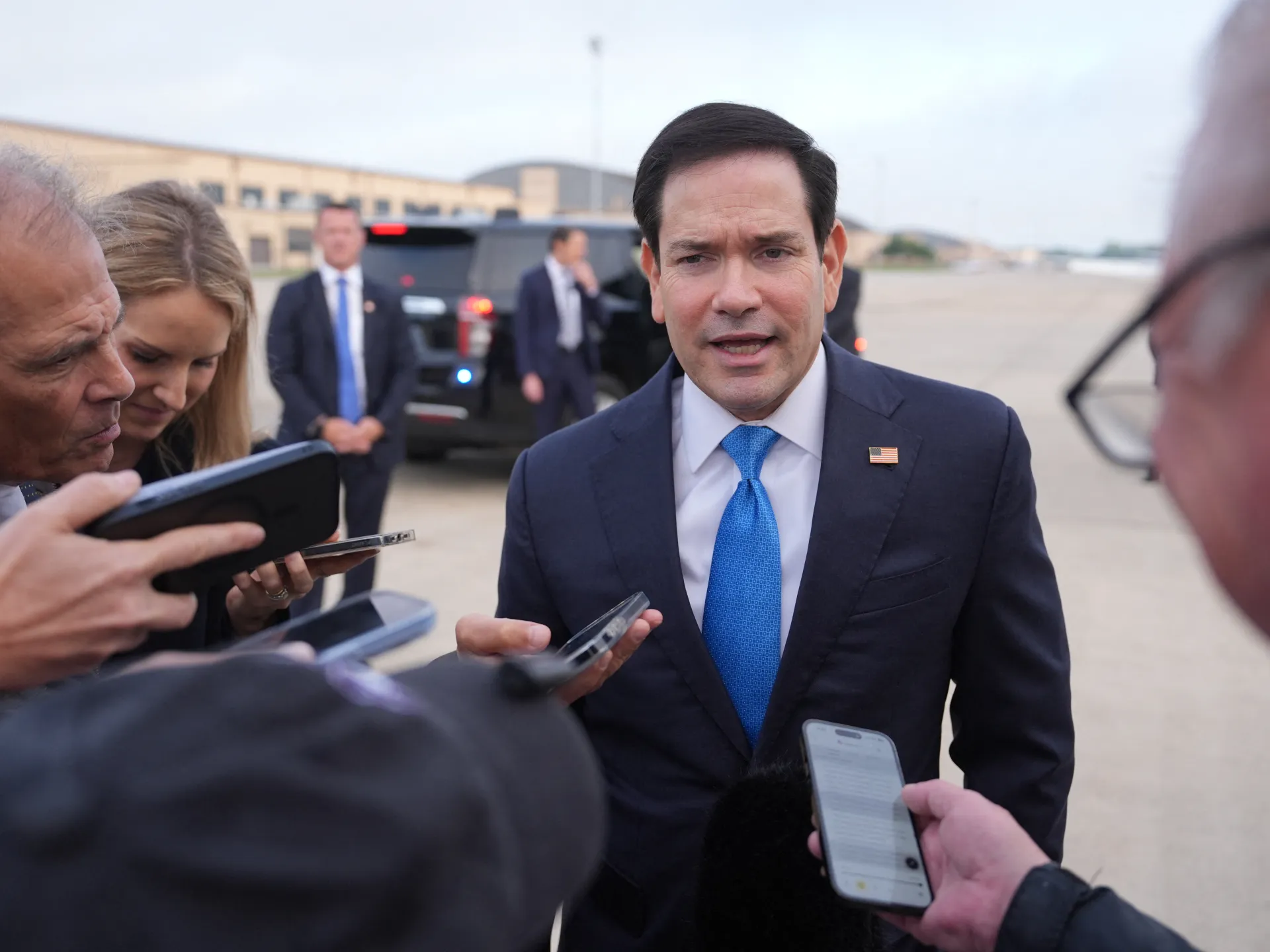
  • US proposes new plan: The US has put forward a proposal to de-escalate hostilities in Lebanon, a US official told Al Jazeera, adding that Secretary of State Marco Rubio held separate talks with Lebanese President Joseph Aoun and Netanyahu.

In Israel

  • Israel said rocket fired from Lebanon intercepted: The Israeli military said it intercepted a rocket that set off sirens in northern Israel and destroyed the launcher from which Hezbollah fired the projectile. Earlier, Israel’s Ynet News website reported that air raid sirens had been heard in Western Galilee, the town of Kiryat Shmona and surrounding areas.

In the US

  • The IRGC says it strikes US airbase: The IRGC said it struck an airbase that was used for an attack on a telecommunications tower on Sirik Island, located in the southern province of Hormozgan, Iran’s Fars news agency reported. The IRGC did not specify the location of the facility.
  • Trump says Iran wants to make a deal: In a new Truth Social post, Trump claimed Tehran “really wants to make a deal” and whatever deal is reached will “be a good one” for the US “and those that are with us”.

Source link

Israel airstrike kills at least two Palestinians at Gaza port | Gaza News

NewsFeed

At least two Palestinians were killed and around a dozen wounded when an Israeli air strike hit a crowded cafe at Gaza’s seaport. Witnesses said people had gathered there to escape the heat and enjoy a public holiday, as attacks continue despite an October ceasefire.

Source link

US Congress moves to deepen military ties with Israel: Why it matters | Military News

Lawmakers in the United States are quietly advancing a proposal that could deepen military ties between the US and Israel in unprecedented ways, at a time when public support for Israel among Americans is increasingly fractured.

Among the provisions included in the 2027 National Defence Authorisation Act (NDAA) released this week is Section 224, the “United States-Israel Defence Technology Cooperation Initiative”.

Recommended Stories

list of 4 itemsend of list

The NDAA, which Congress passes annually to set military policy and authorise defence spending, will undergo further debate and amendments before becoming law. Some legislators have already signalled opposition, with Representative Thomas Massie saying he would seek to remove the provision if it reaches the House floor.

The measure remains at an early stage, but analysts say if passed, it would limit political oversight over the defence relationship.

Analysts added that it could mark a significant shift in the US-Israel relationship, moving beyond a model centred on American military aid towards deeper institutional integration between the two countries’ defence industries and militaries.

Critics argue that such a move would make support for Israel less a matter of political choice and more a structural feature of US national security policy, embedding the relationship within joint military and industrial programmes that would be difficult to unwind.

What does the proposal include?

Section 224 incorporates elements of the US-Israel Future of Warfare Act legislation introduced by Representative Ronny Jackson, according to Track AIPAC. While the legislation did not advance as a standalone bill, key elements of it were instead folded into the NDAA.

The provision would require the US defence secretary to designate an official responsible for coordinating military cooperation between the two countries. According to the text, that official would be tasked with “synchronising cooperative efforts between the United States and Israel”, including “bilateral defence technology research, development, testing, evaluation, integration and industrial cooperation”.

The legislation envisages cooperation across a wide range of military technologies. It specifically identifies as priority areas; “counter-unmanned systems including aerial, maritime and ground platforms”, “anti-tunnelling and subterranean threats”, and “missile and air defence technologies”.

The proposal also seeks to deepen collaboration on emerging technologies, including “artificial intelligence, quantum machine learning and autonomous systems”, as well as “directed energy and advanced sensing”, “cyber defence, electronic warfare and digital resilience”, and “biotechnology, biomanufacturing, and medical defence”.

The inclusion of “network integration” and “data fusion” has drawn particular attention because it suggests significantly closer integration of military information systems between the two countries.

The United States and Israel already cooperate on defence projects, including missile defence systems such as Iron Dome. However, analysts say that Section 224 would expand cooperation into nearly every major area of emerging military technology, and could create a “lock-in” between the two countries military infrastructure.

Mark Hilborne, a senior lecturer, the School of Security Studies at King’s College London, told Al Jazeera the proposal goes well beyond the traditional foundations of the US-Israel defence relationship.

“While historically, the US-Israel defence relationship has included US military aid and weapons transfers, joint missile defence programmes such as Iron Dome, David’s Sling and Arrow, and intelligence and operational cooperation, the proposed agreement increases cooperation to include a wider set of emerging technologies,” he said.

“So this all suggests a much tighter integration – less about provision and perhaps sharing technologies and capabilities, and more about jointly developing these.

“It would point to a more institutionalised relationship, and perhaps one that might survive changing administrations in the US, as some of the development cycles could be very long and would become entrenched,” he said.

Why is it controversial?

The proposal comes amid growing debate in the US over military support for Israel, particularly as Israel’s genocidal war on Gaza continues, and concerns mount over the use of US-made weapons.

Human rights organisations and United Nations experts have repeatedly raised concerns about Israeli military actions in Gaza, where despite a so-called ceasefire in place since last October, at least 850 Palestinians have been killed. Israel is also advancing into southern Lebanon, where it has killed more than 3,000 people since the beginning of March.

These wars have led to increasing scepticism among Americans towards unconditional support for Israel, recent opinion polls suggest.

A New York Times poll in May found that only 30 percent of respondents believed Donald Trump made the right decision in ordering military strikes against Iran, while 64 percent said it was the wrong decision.

An Institute for Global Affairs poll released last week found that only 16 percent of Americans support continuing weapons transfers to Israel without additional restrictions. Thirty-eight percent said the US should stop supplying weapons entirely, while 24 percent said military aid should be conditioned on how the weapons are used.

Opposition has also emerged from parts of the Republican Party, which traditionally has always been aligned with Israel.

Former Representative Marjorie Taylor Greene criticised the proposal on social media, writing: “This is what complete capture to a foreign government looks like, and there hasn’t been a single shot fired.”

Massie, who has opposed military aid to Israel, likewise pledged to introduce an amendment removing the provision from the NDAA. The Republican senator was defeated in the primary elections last month, highlighting the financial and political influence of pro-Israel lobby groups in the US.

Influential conservative commentator, Tucker Carlson, has increasingly criticised US support for Israel, reflecting divisions within the broader MAGA movement. Criticism has also intensified among left-wing Democrats, with many calling for restrictions on military aid to Israel.

What could it mean in practice?

Critics of the measures warn that the proposal could create a form of institutional “lock-in” that makes both countries simultaneously reliant on each other for military development and procurement.

Some analysts say such integration would move key aspects of the US-Israel relationship away from highly visible aid votes or commercial contracting, and into the less transparent world of defence procurement and industrial partnerships at a state-to-state level.

Hilborne from the King’s College said the initiative could also have direct implications for Palestinians. “If joint R&D produces more effective technology, then systems related to surveillance, autonomous vehicles, AI and targeting, and various counter-drone or counter-missile technology would be improved, providing a capability boost to Israeli forces operating in Gaza or the West Bank,” he said.

“This enhanced integration would further embed US technology into Israeli forces. These would all be concerns from a Palestinian perspective.”

Critics also point to the economic implications, where expanded co-production agreements could lead to new manufacturing facilities and defence jobs in the United States, creating a further reliance on Israel.

Hilborne also argued that deeper integration could reduce Washington’s leverage over Israel. “The deeper integration may also mean that the US loses some degree of leverage over Israel, as it would be less able to withhold certain capabilities from Israel,” he said.

“As a consequence, Israel might be emboldened in its policies.”

The proposal could also have implications beyond the US-Israel relationship, according to Imad Salamey, an international relations professor at the Lebanese American University. “The proposed US-Israeli defence integration can be seen as the next phase of the Abraham Accords: moving from normalisation toward a US-backed regional security regime centred on Israel as the dominant military and technological hub,” he told Al Jazeera.

Such a framework would strengthen efforts to contain Iran, limit Turkiye’s independent regional influence and deepen security cooperation with Arab partners, he said.

“For Lebanon and Gaza, it may translate into greater pressure to accommodate Israeli-led security arrangements as part of a broader emerging Middle Eastern order.”

Whether Section 224 survives the legislative process is uncertain.

But its inclusion in the NDAA shows how some politicians, many backed by the pro-Israel lobby group AIPAC, are attempting to bind the two countries’ militaries closer together, creating long-term industrial links that future administrations may find difficult to reverse.

Source link

Trump tightens terms on Iran war deal, US media say | Donald Trump News

US officials indicate Tehran may take days to respond to Trump’s tougher terms on a potential agreement to end the nearly three-month war.

President Donald Trump sought to change several terms of a proposal to end the US-Israel war on Iran, according to media reports in the United States, as a finalised deal remains elusive.

The New York Times reported on Saturday that Trump’s changes involved toughening the deal terms, and the US has sent the new framework back to be considered by Iran, according to officials familiar with the proceedings.

Recommended Stories

list of 3 itemsend of list

The report said it was not immediately clear what the changes entailed. However, Axios reported Trump wanted to reinforce multiple points of the deal that he felt were important, such as what to do with Iran’s nuclear material.

A senior US official told Axios that Trump was informed it could take three days for Iran to respond.

“They’re literally in caves, and they’re not using email,” the official told Axios.

“There will be a deal. The imminence of it, we’ll see. We’re willing to wait so the president gets what he asks for. It could be a week. It could be less. It could be more. At the turn of the week, we hope to have something,” the official added.

The new tweaks could prolong negotiations between the parties for days before a decision is reached on whether the deal would end the war, which began after the US and Israel attacked Iran on February 28.

US sources told the AFP news agency that the proposal had been waiting on Trump’s sign-off, but he made no decision after a White House Situation Room meeting on Friday.

Trump has said his priorities for any deal included Iran agreeing to never develop nuclear weapons and the reopening of the blockaded Strait of Hormuz, through which roughly 20 percent of the world’s oil supply transits.

On Saturday, the Iranian military’s Khatam al-Anbiya Central Headquarters reasserted the country’s control over the strait, warning that foreign commercial and military vessels would be targeted if they did not comply with regulations governing passage through the strategic waterway.

Tehran has also said repeatedly that it does not intend to build nuclear weapons. In March 2025, Tulsi Gabbard, the former US director of national intelligence, testified to Congress that Washington “continues to assess that Iran is not building a nuclear weapon”.

Source link

Missing Syrian chess champion’s children likely dead, authorities say | Child Rights News

Syrian commission confirms the deaths of Rania al-Abbasi’s six children, missing since 2013 under Bashar al-Assad’s rule.

Syria’s National Commission for Missing Persons (NCMP) says the children of dentist and former chess champion Rania al‑Abbasi, who disappeared with their parents more than a decade ago under then-President Bashar al-Assad, are likely dead.

“We have reached reliable and corroborating results that allow us to conclude with a high degree of professional certainty that Dr Rania al-Abbasi’s children are deceased,” the NCMP said in a statement on Saturday.

Recommended Stories

list of 3 itemsend of list

The fate of the children, unknown for years, became a symbol of the plight of other missing children of detainees and those forcibly disappeared during al-Assad’s rule, which ended with his ouster in 2024.

Al-Abbasi went missing along with her husband, Abdul Rahman Yasin, and their six children, aged three to 15, in March 2013 after government forces raided their home in Damascus, according to rights groups.

The commission, set up by the country’s new rulers in May 2025 to investigate missing and forcibly disappeared people, said its findings were “based on multiple verification and analysis procedures” conducted in coordination with national authorities.

“Efforts to find the remains … are still ongoing,” it added.

Hassan al-Abbasi, Rania’s brother, confirmed the children’s deaths in a video posted on Facebook.

He said the family had been able to view video recordings linked to the main suspect in a 2013 massacre in a Damascus district, including one showing him accusing children in a dark room of being “major financiers of terrorism”.

“They turned out to be our children,” Hassan al-Abbasi said. “We finally saw them … but they were martyred.”

The fate of Rania and her husband remains officially unknown after all contact with them was lost following their arrest on accusations linked to opposition to the Assad government.

Rights groups and media reports suggest they may have died, though their bodies were never found.

The issue of missing people remains one of the most pressing in Syria. They include detainees who vanished in government prisons as well as people who went missing during fighting, at checkpoints or while fleeing their homes over the years of civil war.

Tens of thousands of people were detained or disappeared during the war, which erupted in 2011 after a brutal crackdown on antigovernment protests by al-Assad.

The NCMP said last year that the number of people who went missing over decades of al-Assad family rule may exceed 300,000.

Notorious al-Assad regime figure linked to killings

Separately on Saturday, the Syrian Ministry of Interior said its investigation into the disappearance of al-Abbasi’s children had uncovered evidence linking Amjad Youssef – a notorious figure during al-Assad’s rule and the perpetrator of the 2013 Tadamon massacre – to their killing.

In a statement, it said interrogations of detainees, together with videos and information shared by the NCMP, had helped strengthen the case.

Youssef was arrested in April, prompting many Syrians to demand “just punishment” for a man they say carried out the massacre in cold blood.

The Tadamon case drew international attention after footage surfaced documenting the killings.

In 2022, The Guardian newspaper in the United Kingdom published footage it said had been leaked by a conscript in a pro-government militia showing members of the Assad-era Military Intelligence Branch 227 killing at least 41 people and burning their bodies.

The video showed an intelligence officer, identified as Youssef, shooting blindfolded and bound detainees.

Source link

Panic on beach in northern Israel during Hezbollah strikes | Israel attacks Lebanon

NewsFeed

Videos on social media show people on a beach in northern Israel running for shelter as Hezbollah rockets are launched towards the region, according to Israeli media. It was the first barrage fired from Lebanon towards Nahariya in three weeks.

Source link

Lebanese army ‘overly stretched’ to fight off latest Israeli invasion | Israel attacks Lebanon

NewsFeed

Geopolitical analyst Joe Macaron says the Lebanese army is ‘overly stretched’ as Israeli troops expand their occupation of Lebanese territory. The Israeli army has pushed north of Lebanon’s Litani River and appears poised to encircle the major city of Nabatieh.

Source link