Middle East

Israel-Lebanon talks held in Washington as expiration of ceasefire nears | Israel attacks Lebanon News

NewsFeed

Al Jazeera’s Manuel Rapalo reports from Washington, where the first of two days of US-mediated ambassador-level talks between Israel and Lebanon concluded on Thursday. A ceasefire between them expires on Sunday, though Israel has killed 512 Lebanese since its implementation on April 17.

Source link

Cautious optimism in Lebanon as direct talks with Israel progress | Israel attacks Lebanon News

A third round of direct talks between Israel and Lebanon has kicked off in Washington, DC, days before the expiration of a “ceasefire” that hardly halted Israeli attacks and Hezbollah’s response to them.

The talks, which began on Thursday, represent a step towards more serious negotiations, with higher-level envoys from Lebanon and Israel taking part after the initial preparatory sessions were headed by the ambassadors of the two countries to Washington.

Recommended Stories

list of 3 itemsend of list

Lebanese officials are hoping that the two-day negotiations will yield a new ceasefire deal and pave the way for tackling a series of thorny issues, including the withdrawal of Israeli forces from southern Lebanon and the disarmament of Hezbollah.

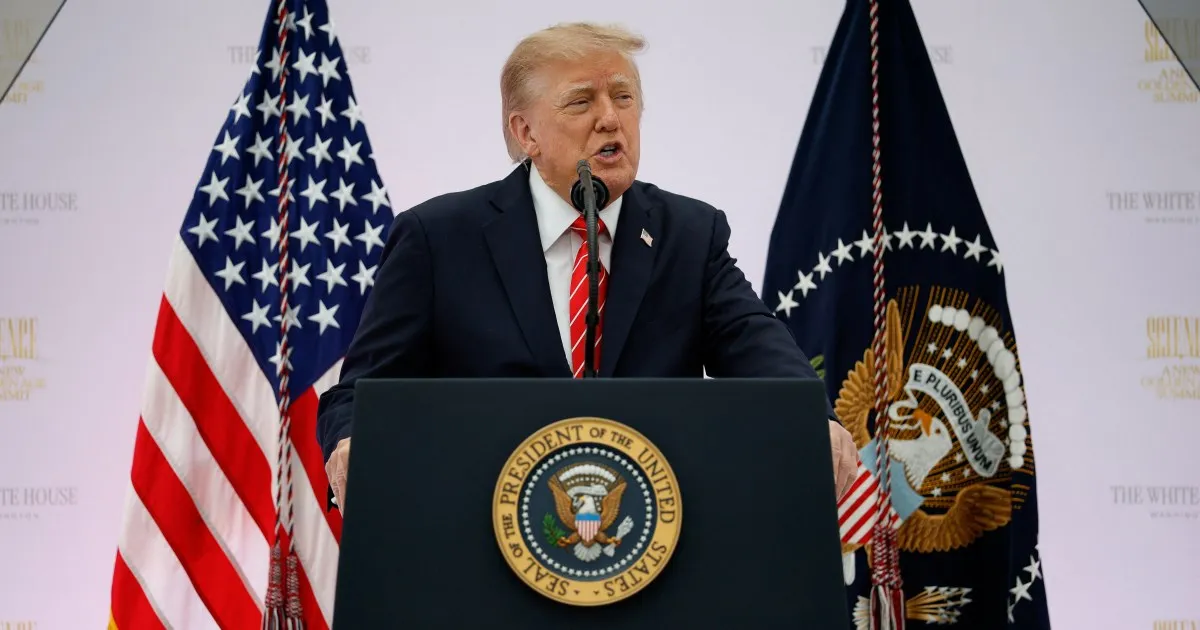
US Secretary of State Marco Rubio, who attended the first Israel-Lebanon meetings in Washington in April, was with US President Donald Trump on a visit to China and did not attend Thursday’s session.

Lebanon’s envoy heading up Thursday’s talks, Simon Karam, is an attorney and well-connected former Lebanese ambassador to the United States who recently represented Lebanon in indirect talks with Israel over implementation of the ceasefire that preceded the latest outbreak of war between Israel and Hezbollah.

On the Israeli side, Deputy National Security Adviser Yossi Draznin was set to attend.

“We do not want to downplay the significance of these talks, but they are ambassador-level talks, excluding top leadership from Israel, Lebanon and the US,” said Al Jazeera’s Manuel Rapalo, reporting from Washington, DC, adding that there is no diplomatic relationship between Lebanon and Israel.

Trump has publicly called for a meeting between Lebanese President Joseph Aoun and Israeli Prime Minister Benjamin Netanyahu, while Aoun has declined to meet or speak directly with Netanyahu at this stage – a move that would likely generate blowback in Lebanon.

Hezbollah, meanwhile, is not part of the talks and has been vocally opposed to Lebanon engaging in direct negotiations with Israel.

A lawmaker from the Iran-backed group, Ali Ammar, on Thursday reiterated his group’s rejection of the direct talks, saying they amounted to “free concessions” to Israel.

Still, “there is optimism”, said Al Jazeera’s Rapalo.

“The cessation of hostilities agreement is due to expire on Sunday, so there is an expectation that this will be front and centre in discussions,” he said.

“Of course, the immediate objective is to prevent the situation along the border from escalating into a broader regional conflict.”

Cautious optimism

The United Nations earlier on Thursday expressed hope for the new round of direct negotiations.

“We hope that the latest round of direct talks between Lebanon and Israel in Washington, planned for today and tomorrow, will contribute to an effective and durable ceasefire and open a path towards lasting peace,” deputy spokesman Farhan Haq told the reporters.

Haq said the UN Interim Force in Lebanon (UNIFIL) continues to observe “significant” aerial and military activity across its area of operations, including multiple air strikes on Wednesday by Israel.

“We reiterate our call on all the parties to exercise maximum restraint, ensure the protection of civilians and humanitarian personnel and fully respect their obligations under international humanitarian law,” he added.

In Lebanon, people also hope for an end to violence as the diplomatic efforts continue.

“I think people here in southern Lebanon are cautiously optimistic about the possible results from these meetings,” said Al Jazeera’s Obaida Hitto, reporting from Tyre, Lebanon.

“Everyone understands that Lebanon is not ready for normalisation, legally speaking. There is a part of the constitution that prevents Lebanon from actually having normalisation with Israel. People realise this might be a huge obstacle to move forward and find a way to live in peace with Israel.”

Still, the Lebanese population wants the violence to stop, said Hitto.

“It’s been more than two months of ongoing Israeli strikes, artillery strikes, air strikes, drone strikes, coordinated, systematic demolitions of entire towns and villages,” he said.

The Israeli army continues daily strikes in Lebanon despite a ceasefire that was announced on April 17 and later extended until May 17.

Three people were killed in Israeli strikes in southern Lebanon on Thursday, Lebanese media reported.

Since March 2, Israeli attacks in Lebanon have killed at least 2,896 people, injured over 8,824, and displaced more than 1.6 million, about one-fifth of the country’s population, according to Lebanese officials. In that time, at least 200 children in Lebanon have been killed in Israeli attacks, the UN Children’s Fund (UNICEF) said on Thursday.

Source link

‘The world is sounding an alarm’: Why big tech is the new colonist | Features

Istanbul, Turkiye – When investigations by Al Jazeera and other media outlets in 2024 revealed that Israeli-linked artificial intelligence (AI) systems such as Lavender and Gospel had helped generate thousands of military targets in Gaza, critics warned that warfare was entering a new era – one driven not only by soldiers and bombs, but by algorithms, data, and surveillance technology.

Then, in September 2024, thousands of pagers and walkie-talkies used by members of Hezbollah exploded in coordinated attacks in Lebanon, widely attributed to Israeli intelligence operations that had turned ordinary communication devices into weapons.

And, last year, reporting by Al Jazeera also raised concerns about the use of cloud and data infrastructure linked to major US technology companies in Israeli surveillance operations involving Palestinians.

For a growing number of scholars, economists and political thinkers, such developments reflect more than just the changing nature of conflict. They show how power in the modern world is increasingly exercised not just through military force, but through technology, finance and control over information.

That argument has revived broader debates around decolonisation – a term historically associated with the dismantling of European empires after World War II, when countries across Asia, Africa and the Middle East gained formal independence.

But many proponents of what is termed “decolonial theory” – a school of thought arguing that colonial-era systems of power and hierarchy still shape modern politics, economics and knowledge – argue that colonial power structures never fully disappeared. Instead, they evolved, embedding themselves in global financial systems, technology platforms, media networks and even the production of knowledge itself.

Dependence of Global South countries on Western technology, digital infrastructure and global markets can create new forms of political and economic vulnerability, particularly across the Global South.

“A generation may have grown up believing they had never experienced colonialism or exploitation,” Esra Albayrak, board chair of the NUN Foundation for Education and Culture and daughter of Turkish President Recep Tayyip Erdogan, told Al Jazeera during the World Decolonization Forum in Istanbul on May 11-12.

“Yet, mentally, they may still be living under colonial influence.”

The war in Gaza marked a turning point, Albayrak says, shining a spotlight on how international principles are not applied equally. Global institutions have so far failed to stop what many countries and rights groups have described as genocide against Palestinians.

“The world is sounding an alarm, and we can no longer afford to remain indifferent to it,” she said.

A techno-feudal era

Albayrak argues that a handful of technology companies are emerging as new, invisible centres of power, shaping how information is produced, circulated and consumed in the digital age.

She describes the digital sphere as the realm of what she calls “future colonialism”, warning that AI systems trained largely on Western-centric data risk reinforcing existing global inequalities.

“When AI systems are run by those tech companies and trained on Western sources, they risk carrying the hierarchies of the past into tomorrow’s digital world, as they now have personalised data, suppressing identity,” Albayrak said.

By this, she means that most major AI models are still trained largely on English-language and Western-produced data – a pattern critics say risks sidelining non-Western languages, cultures and perspectives.

On social media platforms, algorithms tend to amplify some conflicts while rendering others nearly invisible, effectively shaping what billions of users see, discuss and remember online.

Walter D Mignolo, professor at Duke University, argues that while what we historically see as “formal colonialism” may have largely ended, systems of Western dominance continue through economics, culture, technology and knowledge production.

“Coloniality is not over. It is all over the world,” Mignolo said, arguing that modern ideas of development and progress often have the effect of pressuring societies to conform to Western norms.

Rather than simply resisting those systems, he said, societies must find a way to “re-exist” by rebuilding intellectual and cultural autonomy outside dominant global frameworks.

Colonisers in the financial age

The March 2026 Global Debt Report by the Organisation for Economic Co-operation and Development (OECD) reveals that 44 countries face severe debt burdens, often aggravated by global conflicts, forcing some governments to spend more on interest payments than on health or education.

This is not a new phenomenon, as developing countries have been labouring under the weight of foreign debt for decades.

But British political economist and author Ann Pettifor told Al Jazeera that modern forms of domination are now increasingly embedded not in empires or nation-states, but in financial systems operating beyond democratic oversight.

Pettifor points to the growing influence of “shadow” banking networks – financial institutions operating largely outside traditional banking regulations – and giant asset managers such as BlackRock, which manages $13 trillion in assets.

Much of the global financial architecture now functions largely outside the regulatory control of governments, she says, including that of Western states themselves.

“This is not a state colonising other states,” Pettifor said. “This is the financial system colonising the whole world, including my country and the US.”

She argues that elected governments increasingly struggle to control key economic realities – from energy prices to commodity markets – because those systems are dictated by global financial actors operating far beyond public accountability.

In Nigeria, for example, Pettifor says, efforts to expand domestic refining capacity continue to face pressure from international financial institutions and global energy markets to keep fuel prices tied to global markets and maintain reliance on imported refined oil products, despite its vast oil reserves.

Coordinated cooperation between developing nations may be necessary to challenge the dominance of Western-centred financial systems, Pettifor says, pointing to growing efforts across parts of West Africa to expand regional refining capacity and reduce dependence on imported fuel. Yet such ambitions can also leave critical sectors dependent on the decisions and influence of a small number of powerful private actors.

Global financial markets, algorithm-driven platforms, and foreign-controlled digital infrastructure increasingly define everyday life – from fuel and food prices to the information people consume online and the technologies governments and societies depend on, observers say.

A ‘mastery complex’

As wars become increasingly influenced by AI, digital infrastructure and financial dependency, debates around colonisation are focusing less on territorial control and more on who influences energy prices, lending systems, access to technology and the flow of information across borders, observers say.

Albayrak draws a parallel between today’s debates around technology and global power and Rudyard Kipling’s 1899 poem “The White Man’s Burden”, published as the US took control of the Philippines following the Spanish-American War. The poem framed colonial expansion as a moral obligation to “civilise” other societies rather than an exercise of domination.

Albayrak said such traces of “mastery complex” still survive today, though in different forms – not necessarily through military occupation, but through technological, financial and informational influence.

But what the world really needs, she argues, is a global order built not on hierarchy, but on shared responsibility.

“The burden should belong to humanity collectively.”

Source link

Two killed as Israel ramps up southern Lebanon attacks ahead of US talks | Israel attacks Lebanon News

Lebanon’s National News Agency reported that Israeli warplanes targeted the Ezzedine residential project in Srifa on Thursday morning.

Israel has ramped up its attacks on southern Lebanon, killing two people and issuing several forced displacement orders as the two sides prepare for United States-brokered talks on extending a ceasefire.

Lebanon’s National News Agency (NNA) reported on Thursday morning that Israeli warplanes targeted the Ezzedine residential project in the town of Srifa, killing two people.

Recommended Stories

list of 3 itemsend of list

The Israeli army announced in a post on Telegram that it had begun targeting alleged Hezbollah infrastructure sites in several areas in southern Lebanon.

Earlier, the Israeli army’s Arabic language spokesperson, Avichay Adraee, announced on X the forced evacuation orders for the towns and villages of Libbaya, Sahmar, Taffahata, Kafr Malek, Yohmor (Bekaa), Ain Tineh, Houmin al-Fawqa and Mazraat Sina.

NNA reported that one person was injured following a raid by an Israeli drone near the vocational school between the towns of Breqa and Zrarieh.

An air strike was also reported on the town of Ain al-Tineh in the Western Bekaa.

Reporting from Beirut, Al Jazeera’s Rory Challands said in the past few days Israel has launched one of its “most intense periods of aerial bombardment in weeks”.

“There have been many individual strikes – usually by drones – on cars and motorbikes. Several of these have happened on the main coastal highway that leads south from Beirut,” he said.

According to Lebanon’s Ministry of Public Health on Wednesday, at least 2,896 people have been killed in Israeli attacks since the conflict resumed in early March.

At the same time, the Israeli army announced on Telegram that a drone launched by Hezbollah had fallen in Israeli territory near the shared border, injuring several people who were evacuated to hospital for treatment.

Israel-Lebanon talks

Representatives from both sides are expected to meet in Washington, DC, on Thursday for a new round of talks aimed at extending the ceasefire, which is scheduled to expire on Sunday.

“The discussions are controversial here in Lebanon. One of the reasons is that Hezbollah is not at the table. Hezbollah doesn’t want these talks to go ahead at all,” Challands explained.

“It says any direct discussions between Lebanon and Israel are basically capitulation. It wants first a full-on ceasefire, for Israel to have withdrawn from the country, for hundreds of thousands of displaced people to return to their homes, and for reconstruction to have started,” he said, adding that the Lebanese government, however, believes these points can be discussed during the talks with Israel.

Source link

Federal judge blocks US sanctions against UN rapporteur Francesca Albanese | Israel-Palestine conflict News

US sanctions imposed on UN expert Francesca Albanese by the Trump administration have been temporarily ⁠blocked by a judge.

A federal judge has temporarily ⁠blocked United States sanctions against Francesca Albanese, a United Nations expert on the occupied Palestinian territory.

UN Human Rights Council Special Rapporteur Francesca Albanese was sanctioned in July 2025 after she publicly criticised Washington’s policy on Israel’s genocidal war against Palestinians in Gaza.

Recommended Stories

list of 3 itemsend of list

Albanese’s husband and daughter filed a lawsuit in February against the Trump administration over the sanctions. It argued that the sanctions were an effort to punish Albanese for bringing attention to Israel’s rights abuses against Palestinians.

In his court order on Wednesday, US ⁠District Judge Richard Leon granted a preliminary injunction against the sanctions.

He found that the Trump administration sought to regulate ‌her speech because of the “idea or message expressed”.

“Albanese has done nothing more than speak,” judge Leon wrote in his memorandum opinion. “It is undisputed that her recommendations have no binding effect on the ICC’s actions – they are nothing more than her opinion.”

Albanese, who said the US sanctions were “calculated to weaken my mission” when they were first imposed, celebrated the ruling on social media.

“Thanks to my daughter and my husband for stepping up to defend me, and everyone who has helped so far,” Albanese said in a statement on X.

“Together we are One.”

Since 2022, Albanese, a legal scholar, has served as the special rapporteur for the West Bank and Gaza, where she monitors human rights abuses against Palestinians. The UN Human Rights Council selected her for the position.

The Trump administration sanctioned her last July, calling her “unfit” for her role and accusing her of “biased and malicious activities” against the US and its ally, Israel. Albanese had also recommended that the International Criminal Court (ICC) pursue war crimes prosecutions against Israeli and US nationals.

The sanctions barred the Italian lawyer and human rights expert from entering the US, using US banks and payment systems, and prevented anyone else in the US from doing business with her.

Albanese’s husband and her daughter, a US citizen, claimed in the lawsuit that the US ⁠sanctions were “effectively debanking her and making it nearly impossible to meet the needs of her daily life”.

Source link

Could Iran war trigger a hunger crisis? | US-Israel war on Iran

The UN warns disruptions in the Strait of Hormuz could drive up food and fertiliser costs, and worsen global hunger.

The next global food crisis is unfolding in a narrow stretch of water.

The United Nations warns that if fertilisers cannot pass through the Strait of Hormuz within just a few weeks, the world could face mass starvation.

It says the consequences could be severe if shipping disruptions linked to the Iran conflict drag on.

Food prices are already at a three-year high, while fertiliser costs critical for agriculture have rocketed.

Aid agencies fear a prolonged disruption could push tens of millions more people into hunger.

For vulnerable economies already struggling with debt and high import costs, the risks are growing fast.

Source link

Iran’s US-bound World Cup squad given public sendoff in Tehran | World Cup 2026 News

Thousands of people cheered Team Melli as Iran’s World Cup kit was unveiled before the team’s training camp in Turkiye.

Iran hosted a departure rally for its FIFA World Cup squad, witnessed by thousands of fans in Tehran’s Enqelab Square, amid concerns about ⁠the team travelling to the United States to compete.

The players were cheered ⁠by the crowd as they made patriotic statements from a stage on Wednesday.

Iran’s World Cup 2026 kit was also unveiled at the event, following which the team will travel to Turkiye to continue their preparations at a training camp.

“This is the best sendoff in the ⁠last four World Cup campaigns,” Mehdi Taj, president of the Football Federation Islamic Republic of Iran (FFIRI), told state TV.

“The players are with the people, and the crowd stands with the country’s dignity, honour, and strength. Whatever the result, may Iran’s flag be raised there and defended.”

Iran’s participation in the World Cup has been in question since the US and ‌Israel attacked Iran, starting a regional war on February 28.

People gather to attend the farewell ceremony of Iran's national football team ahead of their departure for the 2026 FIFA World Cup, in Tehran on May 13, 2026. The president of the Iranian Football Federation said late May 9 that if Iran dropped out of the World Cup, it would deprive the country of a "major diplomatic asset". World football's governing body FIFA has insisted for weeks that Iran will take part. Iran, who are due to be based in Tucson, Arizona, during the World Cup, face New Zealand, Belgium and Egypt in Group G. The Iranians open their World Cup campaign against New Zealand in Los Angeles on June 15. (Photo by ATTA KENARE / AFP) /
People gather to attend the farewell ceremony of Iran’s national team in Tehran [Atta Kenare/AFP]

An FFIRI delegation, led by Taj, turned back at Toronto’s main airport, citing their treatment by Canadian immigration, and missed a pre-World Cup FIFA gathering in Vancouver. They alleged “unacceptable behaviour of immigration officials” despite holding valid visas.

In 2024, Canada listed Iran’s Islamic Revolutionary Guard Corps as a terrorist organisation, and statements from the Canadian government indicated that Taj was denied entry due to his alleged ties with the IRGC.

The incident triggered fears there may be issues for some of the Iranian delegation getting into the US.

As in Canada, the IRGC is classified as a “terrorist entity” in the US, and Secretary of State Marco Rubio has said no one with ties to ⁠the organisation would be admitted to the country.

Iran has placed responsibility for ⁠getting the players and team officials into the US, where Team Melli are scheduled to play all three World Cup group matches, firmly in the hands of FIFA.

“Nothing has arrived yet regarding the visas. We hope it will definitely ⁠be handled within this timeframe,” Hedayat Mombeini, FFIRI secretary-general, told state TV at the rally.

“FIFA has made promises, and hopefully those promises ⁠will lead to results, and the players will receive their ⁠visas on time.”

Iran ‌will play The Gambia in a World Cup warm-up in Antalya on May 29. Mombeini said the FFIRI was in the process of arranging another friendly for the training camp in Turkiye.

Source link

Holiday prices to go up after 296 UK flights cancelled, says air travel boss

Industry leaders have not ruled out fuel shortages this summer

Airlines will not be able to continue “absorbing the cost” of disruption caused by the closure of the Strait of Hormuz in the long term, according to the director general of the International Air Transport Association. Willie Walsh told the BBC there was no need to panic over potential jet fuel shortages, but warned rising fuel prices would inevitably feed through into higher ticket prices.

He said: “There’s just no way airlines can absorb the additional costs they’re experiencing. There may be some instances where airlines will discount to stimulate some traffic flow… but over time it’s inevitable that the high price of oil will be reflected in higher ticket prices.”

While Mr Walsh did not think there would be widespread cancellations, he added: “I think the concern will be that if sufficient alternative supply isn’t sourced, there may be some shortages when we get into the peak summer period.”

Last week, British Airways’ parent company IAG warned its profits will be hit as it expects to spend about two billion euro (£1.72 billion) more than planned on fuel this year. Chief executive Luis Gallego said IAG does not believe there will be “any interruption for the summer” in terms of jet fuel supplies.

Earlier this month, Transport Secretary Heidi Alexander said summer holiday plans will not face major disruption because of shortages. She revealed that more fuel has been imported from America, and UK refineries have upped their production.

The Government has also introduced a temporary rule change allowing airlines to group passengers from different flights together onto fewer planes to save fuel. It comes amid data that showed airlines have increased the number of flight cancellations for May.

Aviation analytics company Cirium said that as of Tuesday, airlines have axed 296 departures from UK airports this month, equivalent to 0.75% of the total. That is up from 120 cancellations six days ago.

Figures for the peak summer months show week-on-week schedule reductions are currently limited. The number of outbound flights planned for June is 48 lower than a week ago, after 0.2% of flights were cancelled.

For July the week-on-week reduction is 31, while the figure for August is just four. Airlines avoid being liable for compensation if they axe a flight with at least two weeks’ notice, meaning they can delay decisions on summer cancellations and still avoid payouts.

The price of jet fuel has more than doubled since the start of the war in the Middle East, as Iran continues to have a stranglehold on tankers passing through the Strait of Hormuz. A Government spokesperson said: “UK airlines are clear that they are not currently seeing a shortage of jet fuel.

“Aviation fuel is typically bought in advance and airports and suppliers keep stocks of bunkered fuel to support their resilience. We continue to work with fuel suppliers, airports, airlines and international counterparts to keep flights operating.

“We are also consulting on measures to help airlines plan realistic flight schedules which will avoid last-minute disruption and protect holidays.”

Source link

Crowds gather in Tehran to send off Iran’s World Cup team | World Cup 2026

NewsFeed

Huge crowds gathered in Tehran’s Revolution Square to celebrate and send off Iran’s national football team ahead of the 2026 World Cup. The new jersey of the Iranian national team, which will be worn in the World Cup competitions, was unveiled at the event.

Source link

Will the boycott of Eurovision have any impact? | Gaza News

The decision by five nations to boycott the song contest comes amid Israel’s genocide in Gaza.

Five nations are boycotting Eurovision, citing Israel’s participation. Their action is against Israel’s war in Gaza and allegations of vote manipulation in the song contest.

But why is it so important for Israel to take part? And is the competition’s future under threat?

Presenter: Folly Bah Thibault

Guests:

Steve Wall – Musician, actor and member of the Ireland Palestine Solidarity Campaign

Jonathan Hendrickx – Assistant professor in media studies at the University of Copenhagen

Ori Goldberg – Political commentator

Source link

Ronaldo’s Al-Nassr kept waiting for Saudi Pro League title by own goal | Football News

Goalkeeper Bento’s bizarre injury-time own goal denies Al-Nassr a title-crowning 1-0 win over rivals Al Hilal at home.

Cristiano Ronaldo and his Al-Nassr teammates were left frustrated when their goalkeeper Bento scored an injury-time own goal, denying the club their first Saudi Pro League title in seven years.

Riyadh-based club Al-Nassr were leading 1-0 and seconds away from defeating local rivals Al Hilal, who are second in the league, when Bento fumbled an overhead save that sent the ball into his own net in a highly anticipated match on Tuesday.

A win would have sealed the 11th league title for Al-Nassr and the first for the Portuguese superstar since he famously joined the club in January 2023.

Al-Nassr top the league table with 83 points from 33 games, while Al Hilal are second on 78 points from 32 games. Ronaldo, who captains Al-Nassr, cut a picture of frustration on the bench when the equaliser was scored by the Brazilian goalkeeper.

The 41-year-old football icon has not won a domestic title with Al-Nassr since his then-record-breaking move from Manchester United after the FIFA World Cup 2022 in Qatar.

Al-Nassr’s last league title came in 2019, while Al Hilal won the league in 2024.

Fans of the home team were given free team shirts at the beginning of the match, making the stands a sea of yellow in anticipation of the title win.

Barring a shock result against 15th-place Damac in their final league game, Al-Nassr are favourites to win the league on May 21 .

“The dream is close,” Ronaldo said in his post-match social media posts to his 770 million-plus followers.

Source link

Trump backs Pakistan as Iran mediator after criticism from Lindsey Graham | US-Israel war on Iran News

US president lauds Islamabad, but his Republican ally says he does not trust Pakistan to facilitate Iran diplomacy.

Donald Trump has reasserted his support for Pakistan to serve as a mediator between Iran and the United States after Senator Lindsey Graham, a close ally of the US president, disparaged Islamabad’s diplomacy.

In remarks on Tuesday, the US president lauded Pakistan’s Prime Minister Shehbaz Sharif and its army chief Asim Munir, who helped negotiate a fragile ceasefire in Iran that came into effect last month.

Recommended Stories

list of 3 itemsend of list

Trump added he is not reconsidering Pakistan as a mediator.

“They’re great. I think the Pakistanis have been great. The field marshal and the prime minister of Pakistan have been absolutely great,” Trump told reporters.

Hours earlier, Graham had pressed Pentagon chief Pete Hegseth and top US general Dan Caine about a CBS News report claiming that Pakistan is allowing Iran to park military assets on its airfields, in order to shield them from potential US and Israeli attacks.

Both officials declined to comment on the veracity of the report, citing the sensitive nature of the talks between the US and Iran.

Asked by Graham whether it would be “consistent” for Pakistan to act as a fair mediator if the CBS report is confirmed, Hegseth said, “I wouldn’t want to get into the middle of these negotiations.”

The Republican senator quickly interrupted the defence secretary.

“I do. I want to get in the middle of those negotiations,” Graham said.

“I don’t trust Pakistan as far as I can throw them. If they actually have Iranian aircraft parked in Pakistan bases to protect Iranian military assets, that tells me maybe we should be looking for somebody else to mediate. No wonder this damn thing is going nowhere.”

The senator — an outspoken foreign policy hawk who has been calling for regime change in Iran — is seen as one of the most influential figures in Trump’s circle.

Graham has also been one of the most vocal supporters of the war with Iran, repeatedly cautioning Trump against agreeing to a deal that would include concessions to Tehran.

Weeks before the war broke out on February 28, Graham met the US president in Florida, where he handed Trump a hat that says, “Make Iran Great Again.”

Pakistan has been pushing to revive the stalled diplomacy between Iran and the US, following the April 8 ceasefire agreement.

On Sunday, Trump said Tehran’s latest proposal to end the war was “unacceptable”.

In late April, the US president announced he was sending his envoys to Pakistan to meet Iranian officials, but he called off the trip after Iran pushed the US to lift the naval blockade against its ports as a condition for resuming the talks.

Source link

Africa’s richest man plans new Mombasa oil refinery: Why this matters | Business and Economy News

After successfully launching Nigeria’s only operational oil refinery in 2024, billionaire businessman Aliko Dangote has set his sights on East Africa as the next location for another mega refinery project, according to recent reports.

It comes as African countries are actively seeking ways to make energy more secure, following huge global disruptions amid the US and Israel’s war on Iran and Tehran’s subsequent closure of the Strait of Hormuz, through which about 20 percent of the world’s oil and natural gas is shipped.

Recommended Stories

list of 3 itemsend of list

Dangote, Africa’s richest man, appeared to be one of the winners from this fallout when his newly operational refinery, located in Nigeria’s commercial Lagos State, began selling large volumes of crude oil across the continent as the war on Iran escalated in March and global oil prices soared.

At present, West, South and East Africa rely primarily on importing refined petroleum products from the Middle East, meaning they are highly vulnerable to disruptions there.

Neighbours of Nigeria – Cameroon, Togo, Ghana and even Tanzania, further to the east – are among the countries that have turned to Nigeria as supplies from the Middle East dry up.

By the end of March, the refinery, which has the capacity to produce 650,000 barrels per day (bpd), reported it was also receiving orders from beyond the continent, especially for severely scarce jet fuel as hundreds of flights were cancelled across regions.

Supply from Dangote’s refinery has cushioned the impact of the war in terms of fuel supply for Nigeria and neighbouring countries, analysts say.

Nigeria is Africa’s largest oil producer, and the $19bn project in Lagos is currently the world’s largest single-train refinery, meaning it employs a single processing line rather than multiple units. But it hit full production capacity in February 2026, the same month the war with Iran started.

Nigeria has no functional state-owned refinery, so Dangote’s refinery is now positioning the country to be a net exporter of jet fuel and diesel.

Here’s why more refining capacity in Africa matters for the continent:

Dangote
Petroleum trucks line up at the gantry inside the Dangote Industries oil refinery and fertiliser plant site in the Ibeju Lekki district of Lagos, Nigeria, March 2, 2026 [Sodiq Adelakun/Reuters]

What is Dangote’s plan for an East Africa refinery?

In April, Kenya’s President William Ruto announced that East African countries were in talks to build a joint oil refinery at Tanzania’s Tanga port, which would have a similar capacity to Dangote’s Lagos operation.

“We do not want to be held hostage any more by the Strait of Hormuz,” Ruto said at a Nairobi business event in April, which Dangote was present at.

“We do not want to be held hostage by wars that are started by other people. We have our resources here, and we are saying we are going to use our African resources to industrialise our region.”

In an interview with the Financial Times on Sunday, however, Dangote said he would prefer to build the new operation in Kenya rather than Tanzania.

“I’m leaning more towards Mombasa because Mombasa has a much larger, deeper port,” the billionaire told the UK newspaper.

“Kenyans consume more. It’s a bigger economy,” he said, adding that “the ball is in the hands of President Ruto … Whatever President Ruto says is what I’ll do.”

He has projected construction costs of between $15bn and $17bn.

But venturing into East Africa, which has a very different commercial landscape from West Africa, could prove a challenge, analyst Dumebi Oluwole of Lagos-based intelligence firm Stears told Al Jazeera.

“Dangote has proven it [his operation] can build at scale,” she said. “The East African test will be whether it can also navigate the political and logistical landscape of a fragmented, multi-country market.”

Why aren’t African countries already producing more oil?

Despite having sizeable crude reserves, African countries only refine about 44 percent of the total oil consumed themselves, with imports making up the rest, according to a 2022 African Union report.

The top producers of refined oil are Algeria, Egypt and South Africa. There are about 21 refineries in North Africa.

Southern Africa has another seven, while West Africa has 14. However, most refineries in the two regions are either not operating or are producing below the capacity they are equipped to.

East Africa’s only existing refinery is in Mombasa, but it stopped operating in 2013 due to a combination of slow government policies and exiting investors, who deemed it commercially unviable as a result.

There is currently no refining capacity at all in East Africa, despite the region having about 4.7 billion barrels of crude reserves, according to the African Union, mainly in Uganda, South Sudan, Kenya and the Democratic Republic of the Congo.

Kenya imported 40 million barrels of petroleum in 2025. It regularly buys oil from the UAE, Saudi Arabia, India and Oman, all of which have been hampered by Iran’s closure of the Strait of Hormuz.

Nigeria itself is Africa’s biggest net crude producer with a 1.5 million to 1.6 million bpd capacity. The country has not refined meaningfully since 2019.

What difference will local refineries make for African countries?

Exporting most of its crude to then import refined products is expensive and puts Africa on the back foot, analyst Oluwole said.

More oil refined on the continent would mean lower petrol pump prices, lower transport costs, and more energy available for people and businesses, in theory. It would also mean greater access to by-products like fertilisers for farmers, for example, or petrochemicals for manufacturers.

“Dangote has demonstrated that a viable, scalable, intra-African energy supply option is possible – that proof of concept matters enormously,” said Oluwole.

“It reflects a growing continental conviction that Africa can provide for itself, and that this is no longer wishful thinking,” she added.

In Nigeria’s case, Dangote’s refinery is yet to ease pressures, though. Local airlines, for example, have complained about having to pay high prices for jet fuel even with improved local supplies. Analysts say that could be because Nigeria’s government removed fuel subsidies in 2023. Bureaucracy within the state oil company also forced Dangote’s refinery to import crude.

Still, the refinery is contributing to “a more transparent and competitive market”, Oluwole said, adding that results should eventually show.

Other countries are stepping up. Last week, Angola’s $470m Cabinda refinery began supplying domestic as well as foreign markets. The project is owned primarily by the United Kingdom’s Gemcorp Capital and has a capacity of 30,000bpd, with plans to double by the end of 2026.

Dangote’s planned refinery in Kenya, if completed, could also help to reduce East Africa’s reliance on the Middle East.

A separate, government-funded refinery project in Uganda’s Hoima region is also in the works. Authorities expect the project to be able to refine 60,000bpd when it starts operations in 2029. It will be fed by the joint Uganda-Tanzania East African Crude Oil Pipeline (EACOP), an ongoing project which will transport crude from Uganda’s Lake Albert to Tanzania’s Tanga Port.

Uganda also plans to produce diesel, jet fuel, kerosene and Liquefied Petroleum Gas (LPG).

With big plans in place, Oluwole says it’s now left to African governments to create enabling business environments for the private sector.

“Dangote has opened the door,” she said. “The question now is whether African institutions and governments will walk through it.”

Source link

Social media becomes a ‘goldmine’ for fraudsters in Jordan | Crime News

Fake online advertisements and social media groups are luring people in Jordan with promises of “quick profits” from cheap gold with sellers disappearing once funds have been transferred or customers defrauded with counterfeit and substandard metals, Jordanians tell Al Jazeera.

Mohammed Nassar said he was quoted a price for gold lower than local market rates due to an “online store” claiming it was exempt from manufacturing fees, government licensing costs or shop rents.

The Jordanian shopper transferred the money to secure what he thought was a bargain before the website disappeared and Nassar realised he had become the victim of a scam.

In another case, a young woman named Tala Al-Habashneh told Al Jazeera that she bought gold through a social media platform after agreeing with the seller and transferring the promised amount.

On closer examination of the product, she found that her gold was counterfeit, mixed with other metals and lacking any official stamps or invoices to prove its origin or carat.

Tala immediately filed a complaint with the Cybercrime Directorate of Jordan’s Public Security Directorate. The case is pending.

Government monitoring

Wafaa Al-Momani, assistant director general for Regulatory Affairs and director of the Jewelry Directorate at the Jordan Standards and Metrology Organisation (JSMO), told Al Jazeera that the institution is the only entity in the kingdom responsible for monitoring precious metal jewellery – such as gold, silver and platinum – and overseeing jewellery trading.

All imported jewellery is examined and stamped by the JSMO before being released onto the market, she said, while local workshops are also required to submit jewellery for inspection and verification before it can be sold.

FILE PHOTO: A woman picks a gold earring at a jewellery shop in the old quarters of Delhi, India, May 24, 2023. REUTERS/Anushree Fadnavis/File Photo
Gold is an important commodity for savings and investment in many parts of Asia [File: Anushree Fadnavis/Reuters]

Al-Momani said her organisation has received some complaints about companies, websites and social media groups engaged in fraud by “promoting the buying and selling of gold, especially broken gold [used or damaged], through unlicensed individuals”.

The JSMO is monitoring sellers engaged in fraud in coordination with security authorities to prevent jewellery from being sold outside licensed shops.

Al-Momani said the JSMO is tightening oversight of gold shops and sellers in the kingdom and said any store found selling unstamped jewellery or violating legal standards will face legal penalties but also warned Jordanians that buying gold through unofficial channels “does not guarantee that the jewellery conforms to legal standards or carats”.

Adornment and treasure

Rabhi Allan, the head of the Jordanian Association of Jewelry and Goldsmiths, explained that gold remains a traditional means of saving and investment for Jordanians as well as an accessory, quoting the popular saying: “Gold is an adornment and a treasure.”

However, he described the sale of gold through social media as “alien to Jordanian society” and stressed that transactions of this “cash commodity” should only take place via official shops with invoices clearly stating the weight, carat and labour costs of the product.

He said the association had filed complaints with the Cybercrime Directorate against unlicensed and anonymous sites, noting that these pages “appear and disappear without warning”, a situation that leaves victims without the ability to secure their consumer rights.

The association has documented numerous complaints and court cases resulting from gold sales conducted through social media platforms that often use edited or fabricated images and fake offers to attract buyers.

Others offer gold at prices significantly below market value to lure buyers, but the product sold is often counterfeit, nonexistent or contains far less of the precious metal than advertised.

He urged citizens to buy gold only via licensed and accredited shops that display official prices and issue proper invoices to protect buyers’ rights.

While questions have been raised about whether some gold sales conducted through social media could be linked to illegal activities, Allan said the cases monitored so far appear to be “individual incidents that do not amount to money laundering”.

Security warning

The Cybercrime Unit of the Public Security Directorate also warned citizens against buying gold through social media advertisements and confirmed that the body has received multiple complaints of fraud linked to the trade.

Colonel Amer Al-Sartawi, Public Security Directorate spokesperson, told Al Jazeera that the grievances ranged from cases where money was wired to fraudsters who subsequently disappeared without delivering the promised gold to incidents in which buyers received counterfeit pieces made from other less valuable metals, such as copper or iron.

Al-Sartawi urged citizens not to deal with such pages and to buy gold exclusively from licensed and accredited shops.

Source link

Israel approves law on public trials, death penalty for October 7 detainees | Israel-Palestine conflict News

Rights groups warn that the bill makes the death penalty easier to impose and strips fair trial protections.

Israeli legislators have approved a bill to establish a special tribunal with the power to impose the death penalty on Palestinians accused of involvement in the Hamas-led attacks of October 7, 2023.

The bill passed 93-0 in Israel’s 120-seat parliament, the Knesset, late on Monday.

Recommended Stories

list of 4 itemsend of list

The remaining 27 legislators were absent or abstained from voting.

Israeli and Palestinian rights groups warn that the bill will make the death penalty too easy to impose while also doing away with procedures safeguarding the right to a fair trial.

Muna Haddad, a lawyer with Adalah – The Legal Center for Arab Minority Rights in Israel, told Al Jazeera that the bill intentionally lowers the legal protections to a fair trial to secure the mass conviction of Palestinians.

“The bill explicitly permits mass trials that deviate from standard rules of evidence, including broad judicial discretion to admit evidence obtained under coercive conditions that may amount to torture or ill-treatment,” Haddad said.

“This constitutes a severe violation of fair trial guarantees that falls well short of international law requirements.”

In a departure from standard Israeli judicial practice, which typically prohibits courtroom cameras, the bill mandates the filming and public broadcasting of key moments in the trials on a dedicated website.

This includes opening hearings, verdicts and sentencing.

Haddad warned that this provision effectively “transforms proceedings into show trials at the expense of the accused’s rights”.

“The provisions governing public hearings… violate the presumption of innocence, the right to a fair trial, and the right to dignity,” Haddad explained. “The framework effectively treats indictment as a finding of guilt, before any judicial examination has begun.”

Israel has been holding an estimated 200-300 Palestinians, including those captured in the country during the October 7 attacks, who have not yet been charged.

The Hamas-led assault on Israeli communities along Israel’s southern fence with Gaza killed at least 1,139 people, mostly civilians, according to an Al Jazeera tally based on official Israeli statistics. About 240 others were seized as captives.

Israel’s subsequent genocidal war on Gaza has killed at least 72,628 Palestinians, including at least 846 since a United States-brokered “ceasefire” came into effect last October.

The war, which United Nations experts say could amount to genocide, has left the Palestinian territory in ruins.

Several Israeli rights groups – including Hamoked, Adalah and the Public Committee Against Torture in Israel – said on Monday that while “justice for the victims of October 7 is a legitimate and urgent imperative”, any accountability for the crimes “must be pursued through a process which includes rather than abandons the principles of justice”.

The bill is separate from a law passed in March that approved the death penalty for Palestinians convicted of murdering Israelis, a measure harshly condemned by the international community and rights groups as discriminatory and inhumane.

That law applies to future cases and is not retroactive, so it could not apply to the October 2023 suspects.

Hamas spokesperson Hazem Qassem said the new law “serves as a cover for the war crimes committed by Israel in Gaza”.

The International Criminal Court is probing Israel’s conduct of the Gaza war and has issued arrest warrants for Prime Minister Benjamin Netanyahu and former Minister of Defence Yoav Gallant, as well as ‌three ‌Hamas leaders who have all since been killed by Israel.

Israel is also fighting a genocide case at the International Court of Justice.

It rejects the allegations.

Source link

Israeli attacks kill at least four in southern Lebanon | Israel attacks Lebanon News

Strikes come after forced displacement warnings by Israel for nine towns in southern and eastern Lebanon.

Israeli strikes in southern Lebanon have killed at least four people and wounded eight others, according to Lebanese media.

The state National News Agency (NNA) reported injuries to two medics as they rushed to offer aid to victims of the latest attacks by the Israeli military in violation of the official ceasefire.

Recommended Stories

list of 4 itemsend of list

The medics were wounded when an air strike hit a civil defence team affiliated with the Islamic Health Society in Toul in Nabatieh, as they responded to an earlier attack, NNA said.

Two men were killed and five others injured in an air raid on the town of Ebba in Nabatieh.

NNA added that a drone strike on a car in the town of Haris in Bint Jbeil district killed one man and injured his brother.

Israeli warplanes targeted the home of a former municipal chief in Sajd, while other strikes were reported in Kfar Rumman and Safad al-Battikh. No casualty information was immediately available.

Forced displacement threat

Ahead of the attacks, the Israeli army issued a forced displacement threat for nine towns in southern and eastern Lebanon.

They are: Rihan, Jarjou, Kfar Rumman, Nmairiyeh, Arabsalim and Harouf in Nabatieh, and Jmayjmeh, Mashghara and Qlayaa in eastern Lebanon.

Posting on X, army spokesman Avichay Adraee urged residents there to evacuate due to what he called Hezbollah infrastructure in the towns.

The Israeli military said a soldier was killed by a drone launched by Hezbollah near the border. Also in southern Lebanon, three Israeli soldiers were injured by a booby-trap drone explosion.


Israeli forces continue to exchange fire with Hezbollah and carry out attacks, despite the ceasefire which began on April 17 and later extended to mid-May.

Since March 2, Israeli attacks have killed at least 2,840 people in Lebanon, injured almost 8,700 and displaced more than a million, according to Lebanese figures.

The United States is preparing to host more peace talks between Israel and Lebanon in Washington on Thursday and Friday. Hezbollah has criticised the Lebanese government for taking part.

Source link

Iran denies proposal sent to US contains ‘excessive demands’ | US-Israel war on Iran

NewsFeed

Iran’s Foreign Ministry spokesperson Esmail Baghaei says Tehran’s response to the latest US proposal to end the war was “not excessive.” He says it’s the US that continues to make “unreasonable demands” during negotiations over ending the war and reopening the Strait of Hormuz.

Source link