




Middle East

Qantas flight forced to divert after ‘passenger bites flight attendant’

The plane was forced to be diverted and ended up at its target destination several hours behind schedule after refuelling in Tahiti

A Qantas flight bound for Dallas was forced to make an emergency diversion to Tahiti after a passenger allegedly bit a cabin crew member mid-flight.

The dramatic incident unfolded aboard QF21, which had departed Melbourne for the gruelling 18-hour journey to the US.

Crew members and passengers reportedly stepped in to assist the flight attendant after the alleged attack took place in the air.

The aircraft was diverted to Papeete, the capital of French Polynesia, where local police boarded the plane and removed the passenger.

Qantas confirmed the man has since been banned from flying with the airline.

A spokesperson for the carrier said: “We have zero tolerance for disruptive or threatening behaviour on our flights.”

After refuelling in Tahiti, the aircraft resumed its journey to Dallas but arrived several hours behind schedule.

It is not yet known what sparked the alleged altercation onboard.

It comes after a weekend of flight chaos.

Airports in Japan, China, India, the UAE, Singapore and Thailand have all been impacted, with airlines cancelling 366 flights and delaying a further 2,949 services, according to aviation tracking data reported by Travel and Tour World.

Major airlines affected include China Eastern Airlines, IndiGo, AirAsia and Etihad Airways, with disruption concentrated around major transit hubs including Tokyo Haneda Airport, Shenzhen Bao’an International Airport, Kempegowda International Airport, Singapore Changi Airport and Zayed International Airport.

Industry analysts say the disruption is being driven by a combination of heavy storms across parts of Asia, congestion at key airports and the continuing impact of Middle East airspace restrictions, which have forced airlines to reroute aircraft and absorb significantly higher fuel costs.

The wider aviation sector is also dealing with fallout from geopolitical tensions linked to the conflict involving Iran, which has led to airspace closures and longer flight times on major Europe-Asia routes.

It has been reported this week that several carriers have already begun scaling back international schedules because of soaring operating costs.

Source link

Thousands protest at Eurovision final as five countries boycott over Israel | Protests News

Spain, Netherlands, Ireland, Iceland and Slovenia all withdrew in protest against Israel’s participation in the midst of its war on Gaza.

As the Eurovision Song Contest took to the stage for the Saturday night final in Vienna, thousands protested outside against Israel’s inclusion, and five countries boycotted the event over the genocidal war on Gaza.

Protesters marched through the Austrian capital to highlight what critics described as a double standard. The European Broadcasting Union (EBU) organisers refused to exclude Israel, despite banning Russia following its invasion of Ukraine four years ago.

Recommended Stories

list of 3 itemsend of list

Eurovision, which attracted 166 million viewers last year, is seeing the largest boycott in its 70-year history.

Spain, the Netherlands, Ireland, Iceland and Slovenia all withdrew because of Israel’s inclusion, with some of their national broadcasters refusing to air the show.

Spain’s Prime Minister Pedro Sanchez, who has emerged as one of Israel’s strongest critics in Europe, said on Friday that the decision puts Spain on “the right side of history”.

Last month, more than 1,000 artists called on fans to boycott Eurovision in an open letter against Israel’s participation. Among the artists were outspoken critics of Israel, Macklemore and Paloma Faith. Macklemore has released songs protesting against Israel’s war in Gaza.

Double standards

On Monday, Amnesty International Secretary-General Agnes Callamard denounced the EBU for allowing Israel to participate.

“The failure of the European Broadcasting Union to suspend Israel from Eurovision, as it did with Russia, is an act of cowardice and an illustration of blatant double standards when it comes to Israel,” she said.

Reporting from Vienna, Al Jazeera’s Charlie Angela said 2,000 demonstrators gathered in the city earlier on Saturday to protest against Israel’s participation.

Angela reported that protesters accused the competition of normalising Israel’s actions in Gaza, adding that Eurovision was “bending over backwards” to justify including Israel while excluding Russia.

Russia has faced a widespread cultural boycott following the Ukraine invasion. It is banned from international football tournaments, and FIFA and UEFA have excluded Russian domestic teams from all competitions, including the Champions League.

The winner of Eurovision will be selected by both a professional jury and TV viewers voting for their favourite act.

Austria won the competition last year, with Israel second.

The Israeli government was later accused of unfairly influencing voting. New rules have since been introduced.

Source link

Major airlines reschedule 2,949 flights and cancel 366 as airports face chaos

Airports in Japan, China, India, the UAE, Singapore and Thailand have all been impacted, with major airlines cancelling 366 flights and delaying a further 2,949 services.

Hundreds of flights have been axed this weekend as severe weather, airspace chaos and growing operational strain cause widespread disruption.

Airports across Japan, China, India, the UAE, Singapore and Thailand have all been hit, with airlines scrapping 366 flights and delaying a further 2,949 services, according to aviation tracking data reported by Travel and Tour World.

Major carriers affected include China Eastern Airlines, IndiGo, AirAsia and Etihad Airways, with the disruption centred on major transit hubs such as Tokyo Haneda Airport, Shenzhen Bao’an International Airport, Kempegowda International Airport, Singapore Changi Airport and Zayed International Airport.

Industry experts say the chaos is being fuelled by a mix of heavy storms battering parts of Asia, congestion at key airports and the ongoing impact of Middle East airspace restrictions, which have forced airlines to reroute planes and shoulder significantly higher fuel bills.

The broader aviation sector is also grappling with the fallout from geopolitical tensions linked to the conflict involving Iran, which has resulted in airspace closures and extended flight times on major Europe-Asia routes.

It has been reported this week that a number of carriers have already started cutting back international schedules due to spiralling operating costs. Air India has confirmed temporary reductions to several long-haul services between June and August, attributing the move to fuel pressures and operational challenges stemming from diversions around restricted airspace.

Despite the turbulence affecting much of the region, Singapore Airlines has revealed plans to boost capacity on certain routes as passengers increasingly opt for direct Asia-Europe flights that bypass Middle Eastern stopovers.

Australian government travel guidance has also cautioned travellers to anticipate continued disruption related to the conflict, including cancellations, delays and fuel supply problems impacting global aviation networks.

Passengers flying through major Asian hubs this week have been advised to verify flight status updates before departing for the airport, with airlines cautioning that additional schedule alterations remain likely should weather patterns and geopolitical disruption persist.

Source link

Francesca Albanese on Israeli sexual violence suffered by Palestinians | Politics

Francesca Albanese speaks to Redi Tlhabi on sexual violence against Palestinians by Israeli forces and its coverage.

A recent New York Times article highlighted the sexual violence suffered by Palestinians at the hands of Israeli forces. But the allegations have been documented for years by human rights groups and Palestinian organisations. So why does the world only seem to pay attention when a Western news organisation does?

This week on UpFront, Redi Tlhabi speaks with UN Special Rapporteur Francesca Albanese about sexual violence, Israeli impunity – and the double standards of Western attention.

Source link

Israel’s Image Crisis: Becoming Too Big to Spin? | TV Shows

As criticism of Israel mounts over its wars on Gaza, Lebanon and Iran, along with the escalating settler violence in the occupied West Bank, the country is ramping up its PR offensive.

From a carefully managed appearance of Benjamin Netanyahu on CBS’s 60 Minutes to a major expansion of Israel’s Hasbara operation, the push includes pouring money into digital campaigns and media messaging.

The goal is to reverse the collapse of public support for Israel, especially in the US, but no amount of spin can make audiences unsee what they have watched in real time.

Contributors:
Miriyam Aouragh – Professor of digital anthropology, University of Westminster
Matt Lieb – Host, Bad Hasbara podcast
Emily Schrader – Journalist, ILTV News
Oren Ziv – Reporter, Local Call

On our radar

Israeli officials have dismissed a recent New York Times report on sexual violence against Palestinians as “blood libel”.

But while the government denounces the allegations, many of the claims in the report have been openly discussed in the Israeli media.

Nicholas Muirhead reports.

Zaragoza Data Farms

The generative AI boom is prompting a global race to build vast, energy-hungry data centres. In Spain’s Aragon region, authorities have welcomed tech giants and the jobs, investment and digital transformation they claim to bring.

But behind the glossy narrative lies a different reality – one in which enormous facilities consume natural resources and exploit legal loopholes, often at the expense of the communities that live alongside them.

Featuring:
Alonso Llorente – Journalist, Arainfo
Pablo Jimenez Arandia – Investigative reporter
Mar Vaquero – Vice president, Aragon Minister of Economy, Employment & Industry

Source link

Israeli settler blindfolds and detains Palestinian in occupied West Bank | Israel-Palestine conflict News

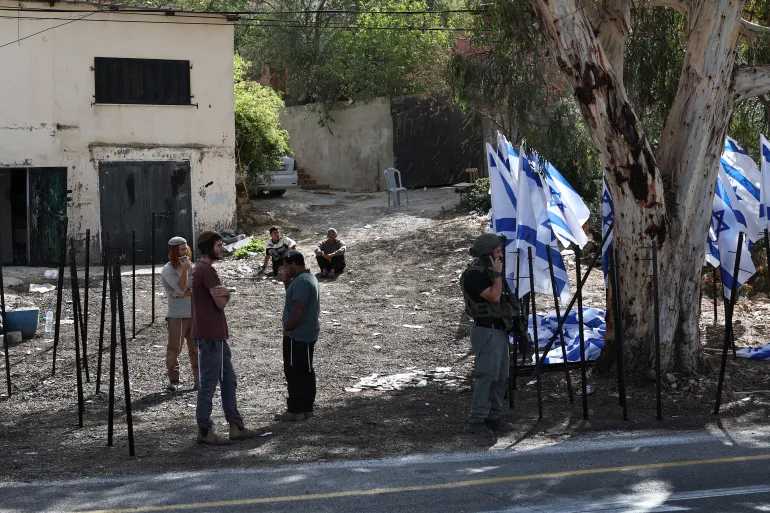
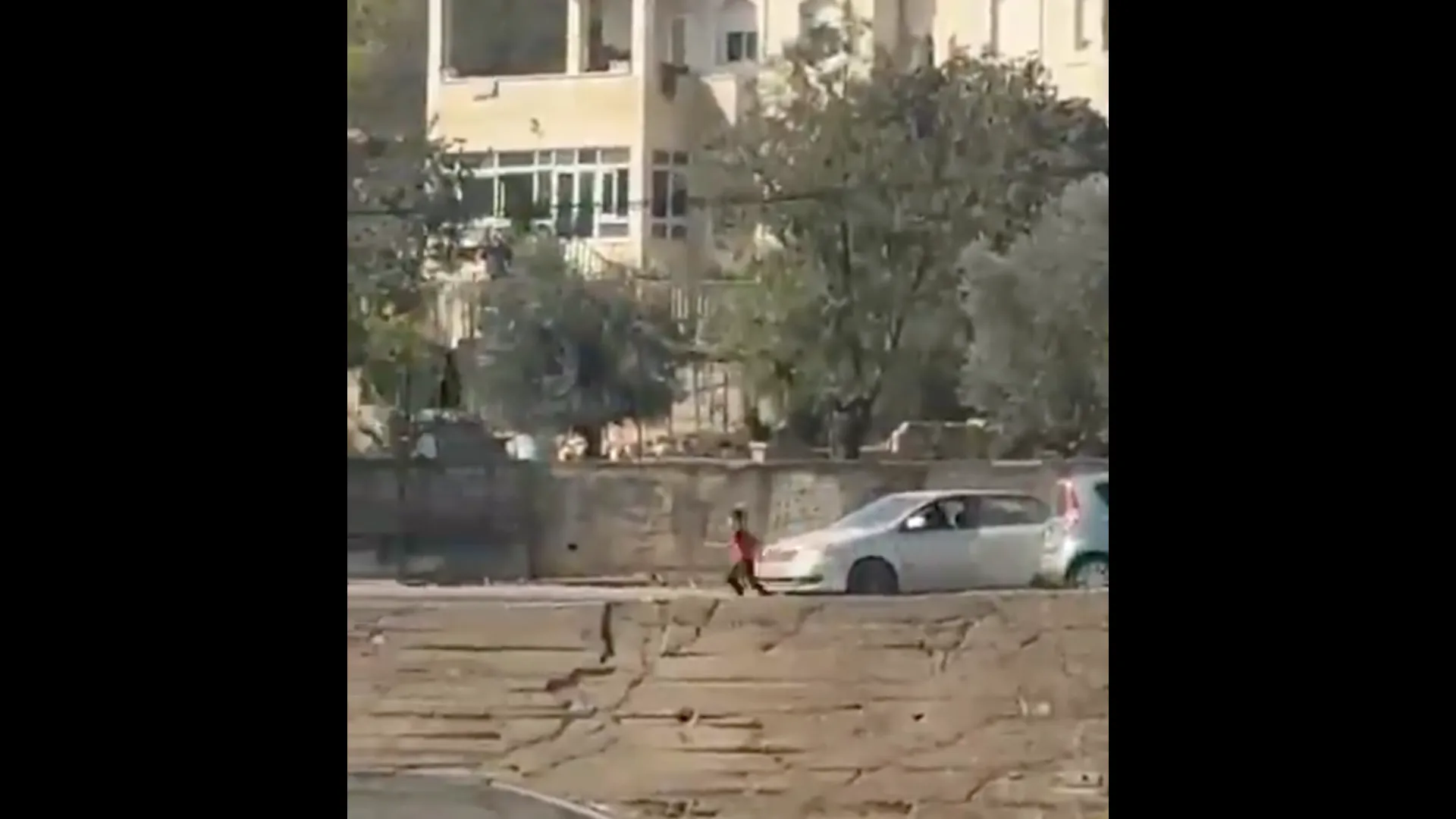
An armed Israeli settler blindfolded and detained a Palestinian man near the village of Beit Iksa in the occupied West Bank, dragging him onto a road as Israeli forces stood nearby. The Palestinian farmer was reportedly trying to reach his land before he was captured.

Source link

Israel launches deadly air strikes on Gaza City apartment building | Gaza

NewsFeed

At least seven Palestinians were killed when Israeli air strikes hit a residential building and a civilian vehicle in Gaza City Friday night. Israel says it was targeting the head of the armed wing of Hamas in Gaza. Al Jazeera has not independently verified Israel’s claims.

Source link

British Airways cancels flights from Heathrow and Gatwick as hundreds stranded at airport

Hundreds of passengers were left stuck at major UK airports as airlines included British Airways cancelled departing flights alongside hundreds of other delays

Hundreds of passengers have been left stranded at major UK airports after several flights have been cancelled.

British Airways were one of many airlines who cancelled flights on Friday, May 15, leaving travelers stuck at several airports across the nation.

The significant wave of disruption saw a total of 465 flight delays and 25 cancellations on the one day.

Flights from British Airways, American Airlines, Norse Atlantic Airways, Delta Air Lines and United Airlines were among those impacted.

London Heathrow was the most significantly impacted, with 233 flights delayed.

A total of 22 flights were also cancelled from the busy travel hub, with 17 of these being British Airways flights.

At Gatwick, cancellations were kept to a minimum with only one British Airways journey called off.

Despite this, 142 flights from the London airport departed later than scheduled.

In Scotland another British Airways flight did not go ahead, with a further 58 delays logged from Edinburgh airport.

Glasgow also saw a cancellation from British Airways.

The disturbance comes as the travel industry is suffering at the hands of the Middle East conflict due to hiking fuel costs as the Strait of Hormuz remains blocked.

Data shows that airlines have dramatically ramped up flight cancellations for May as jet fuel costs continue to soar.

In total, Cirium recorded 296 departures from UK airports scrapped this month as of Tuesday; a sharp rise from 120 cancellations just six days earlier.

Last week, British Airways’ parent company IAG warned its profits will be hit as it expects to spend about two billion euro (£1.72 billion) more than planned on fuel this year.

Chief executive Luis Gallego said IAG does not believe there will be “any interruption for the summer” in terms of jet fuel supplies.

Source link

UK artist defends ‘Drawings Against Genocide’ after show cancelled | Israel-Palestine conflict

NewsFeed

British artist Matthew Collings says his exhibition “Drawings Against Genocide”, depicting Israeli violence against Palestinians, has been falsely portrayed as anti-Semitic. After outrage and protests, the London show has been cancelled.

Source link

Mahmoud Khalil calls for deportation to be halted in light of new evidence | Israel-Palestine conflict News

The lawyers for Mahmoud Khalil, a former Columbia University student targeted for deportation by the United States government over his pro-Palestine advocacy, have called on an immigration appeals court to reopen and terminate his case.

The latest legal appeal points to new evidence, some of which was documented in media reports, that Khalil’s lawyers said it “suggests that the Trump Administration secretly engineered the outcome of his immigration case to make an example of him”.

Recommended Stories

list of 3 itemsend of list

It comes just over a month after the Board of Immigration Appeals issued a final order of removal for Khalil, who was first detained by immigration enforcement agents in March 2025, one of several students targeted for their participation in pro-Palestine campus protests that swept the US the previous year.

Khalil, a US permanent resident who is married to a US citizen, has long maintained that he has been unjustly targeted for his political views.

His legal team said on Friday that “apparent procedural abnormalities” support that view.

“It’s clear that the revelations of DOJ misconduct corroborate what we have known since Mahmoud was arrested–that the administration has reverse-engineered its desired outcome by weaponising a farcical proceeding littered with abnormalities,” Johnny Sinodis, a lawyer representing Khalil, said in a statement.

The new evidence includes a report by The New York Times that found that Khalil’s case had been flagged as high priority before it had arrived at the Board of Immigration Appeals, in what his lawyers say indicated the case was being “fast-tracked”.

The report, citing case documents, also found that the court had been instructed to treat Khalil’s case as if he were still in detention custody, which typically results in an expedited processing timeline.

Khalil was released from immigration detention in June 2025 following a federal judge’s order. An appeals court later ruled the judge did not have jurisdiction over the matter. He is also appealing that decision, during which time authorities are barred from re-detaining or deporting him.

The New York Times report also found that three judges at the Board of Immigration Appeals recused themselves from the case. While the reasons for the recusals were not made public, experts familiar with the board’s procedures have said the rate of recusals was extremely rare.

The Board of Immigration Appeals is meant to be independent. Like other immigration courts, it falls under the Department of Justice in the executive branch, which critics say makes it more vulnerable to interference.

Other federal courts fall under the independence of the judicial branch.

The Trump administration has framed Khalil’s deportation as part of a crackdown on anti-Semitism. They have presented no evidence to back the claims against him, and Khalil has never been charged with a crime.

This week, The Intercept news site reported that shortly after he was detained by immigration agents, the FBI had closed an investigation into a tip that Khalil had called for “violence on behalf of Hamas”, saying it did not warrant further investigation.

In targeting Khalil, US Secretary of State Marco had invoked a rarely used provision of the Immigration and National Act that allows the deportation of individuals deemed to be a national security threat based on “past, current or expected beliefs, statements, or associations that are otherwise lawful”.

The manoeuvre raised questions over freedom of speech and whether those protections extended to permanent residents like Khalil. The government later added the claim that Khalil had intentionally failed to disclose his past work for the UN agency for Palestinian refugees (UNRWA) on his immigration application.

Administration officials have repeatedly stood by the claims and maintained that Khalil received proper due process.

In a statement on Friday, Khalil said the administration “wants to arrest, detain, and deport me to intimidate everyone speaking out for Palestine across this country, and they are willing to violate longstanding US rules and procedures to do it”.

He added, “No lies, corruption, or ideological persecution will stop me from advocating for Palestine and for everyone’s right to free speech.”

Source link

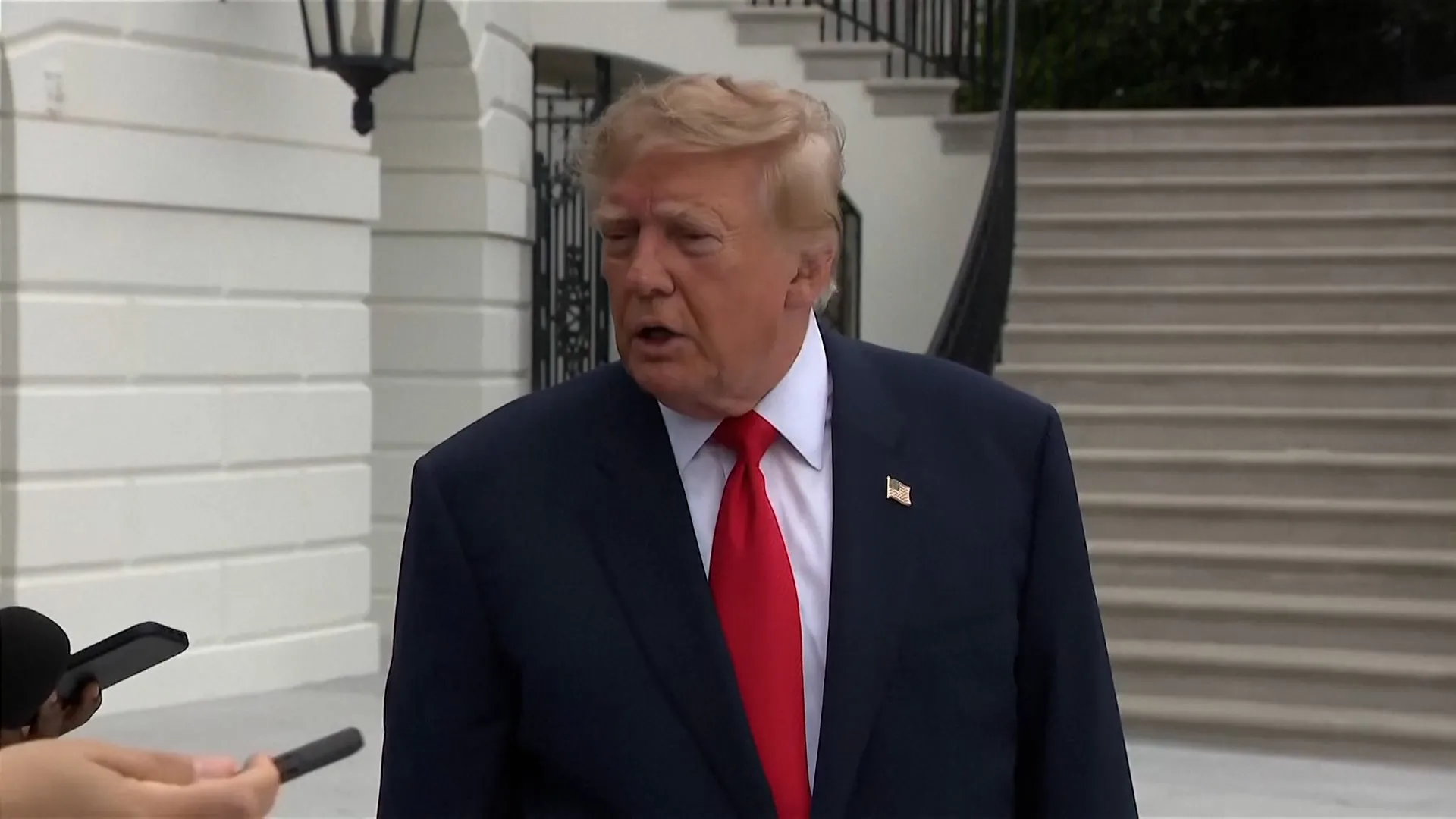
Iran war day 77: Trump, Xi discuss Hormuz as Tehran rallies BRICS | US-Israel war on Iran News

The US and Chinese leaders agreed during talks in Beijing that the Strait of Hormuz should remain open to ensure global energy supplies.

United States President Donald Trump and Chinese President Xi Jinping discussed the Strait of Hormuz during talks in Beijing, with the White House saying Xi agreed the strategic waterway “must remain open to support the free flow of energy” as tensions over the Iran war continue to roil global markets.

Meanwhile, Iran’s Foreign Minister Abbas Araghchi urged fellow BRICS nations at a meeting in New Delhi, India, to condemn the US-Israel war on Iran as a violation of international law, insisting Tehran would “never bow to any pressure”.

At the same time, a third round of direct talks between Lebanese and Israeli negotiators is under way in Washington, DC, aimed at ending hostilities, even as Israeli attacks continue across towns and villages in southern Lebanon.

Here is what we know:

In Iran

  • Iran urges BRICS to condemn US and Israel: Araghchi told the BRICS+ bloc that Iran was a “victim of illegal expansionism and warmongering” and called on member states to oppose “Western hegemony” by condemning the actions of the US and Israel.
  • Iran accuses UAE over war: Araghchi also accused the United Arab Emirates of playing an active role in the war against Iran, saying during the BRICS summit in India that the UAE was “directly involved in the aggression against my country”.
  • Iran signals new Hormuz strategy: Iranian media reported that more than 30 ships, including some linked to Chinese companies, were allowed to transit the Strait of Hormuz overnight as Tehran signalled the waterway was “open to all commercial ships” that cooperate with Iranian naval forces.

War diplomacy

  • Xi offers help on Hormuz: Trump said Xi Jinping had offered China’s help to open the Strait of Hormuz and pledged not to send military equipment to aid Iran in its war against the US and Israel.
  • Trump-Xi summit held amid ‘promise fatigue’: Analyst Drew Thompson said Washington and Beijing remain deeply distrustful after years of unmet expectations, with both sides accusing the other of breaking promises. He described the summit as “carefully managed” and focused on preventing further deterioration in ties.
  • US says Israel-Lebanon talks ‘positive’: A US official said talks in Washington on Thursday between Israel and Lebanon about an expiring ceasefire were “positive” and will take place as planned for a second day.

In the US

  • Trump wants Iran’s uranium for ‘public relations’: The US president suggested that hunting down Iran’s enriched uranium was primarily for political optics, after Israel demanded it as a goal in the war. “I just feel better if I got it, actually, but it’s – I think, it’s more for public relations than it is for anything else,” Trump told Fox News.
  • Trump says Iran must make deal: In the same interview, Trump told Sean Hannity he was running out of patience to reach a truce with Iran as peace talks have stalled. “I’m not going to be much more patient… They should make a deal. Any sane person would make a deal, but they might be crazy,” Trump said.

In Israel

  • NYT lawsuit: Israel says it will sue The New York Times after the newspaper published an article by columnist Nicholas Kristof detailing rape allegations by Palestinian detainees against Israeli forces. The Israeli Prime Minister’s Office announced the legal move three days after the report, which was based on accounts from 14 male and female Palestinian victims.

In Lebanon and Syria

  • Hezbollah claims attacks on Israeli forces: The group said it launched rockets, drones and artillery attacks on Israeli troops and military vehicles in southern Lebanon, and claimed to have downed Israeli drones.
  • Israel-Lebanon talks face uncertainty: According to Al Jazeera’s Manuel Rapalo, Israel is seeking stronger security guarantees and Hezbollah’s disarmament, while Lebanon wants a permanent ceasefire and Israeli troop withdrawal from the south. Rapalo says Hezbollah’s refusal to commit to any future agreement adds significant uncertainty, although diplomats still view the talks as a breakthrough.
  • Amnesty urges Israel to conduct Syria war crimes probe: The rights group called for investigations into Israeli raids and shelling in southern Syria, which residents say have destroyed homes and farmland and led to detentions. Israel has also seized additional territory beyond the occupied Golan Heights, in violation of the 1974 disengagement agreement.

Source link

How David Ben-Gurion got the Palestinians wrong in 1948 | Israel-Palestine conflict

When European Jewish settlers embarked on brutal ethnic cleansing to establish Israel in 1948, they thought the Palestinian population would be the least of their problems. In fact, Zionist leaders like David Ben-Gurion believed that “the refugee problem would resolve itself”.

There was deep-seated conviction among Zionists that the Palestinians lacked an identity, and they would just flee to neighbouring Arab countries and assimilate. They would not come back to claim their stolen land.

But what happened was the exact opposite.

Decade after decade, the Palestinian national cause grew stronger. Today, few survivors of the Nakba of 1948 remain, but the national commitment to Palestinian rights and historical justice is as strong as ever. That is because the older generations did not teach the younger ones to forget the trauma and move on; they taught them to remember and to keep the keys to their ancestral homes in their minds.

The “refugee problem” did not “resolve itself” not just because of Palestinian determination and resilience, but also because the Israeli policies of violence and dispossession backfired.

Israel’s theft of land and resources and violent displacement of Palestinians was the starting point for every Palestinian generation to reject and resist occupation.

As Israel succeeded in usurping more and more Palestinian land, it failed miserably in controlling the Palestinian consciousness.

Despite continuous Israeli efforts to turn refugee camps into isolated enclaves, recruit agents and collaborators to undermine unity, and introduce international bodies to redefine the refugee issue as a purely humanitarian one, it failed to dismantle the Palestinian national cause.

Those who were dispossessed and violated – the Palestinian refugees – became the most ardent carriers of the idea of resistance. Refugee camps became the centres of peaceful and armed struggle. These camps gave birth to prominent Palestinian thinkers, doctors, educators and leaders, who spread one message: the rejection of the Israeli occupation and the insistence on Palestinian rights.

Palestinian refugees were the drivers of the first Intifada of 1987 and the second Intifada of 2000. They were at the centre of any subsequent mobilisation to resist the Israeli occupation.

The colonial project saw no option but to ratchet up its brutality. Repeated massacres, mass imprisonment and relentless efforts to uproot communities did not achieve subjugation. This approach failed and the Gaza Strip – where 80 percent of the population are refugees – stands as the clearest evidence of that failure.

After the launch of its genocidal assault on Gaza in October 2023, the Israeli government repeatedly described the war as “existential”. If Israel itself acknowledges today that the fourth generation of Palestinians, the descendants of the survivors of the Nakba, represent a threat to its existence, then this is in itself an admission of the collapse of Ben-Gurion’s prediction and the strategic failure of the Israeli project to eliminate the Palestinian people.

But Israel has not just failed, it has also become trapped. It is stuck in the paradox of the futility of its own brutal power. The more violence, mass killings and displacement it carries out and the more it reproduces the Nakba, the more determined the Palestinian people become to resist. Repression is not uprooting Palestine, it is helping it take deeper root.

The Gaza genocide is perhaps the best illustration of this deadly paradox. More than 72,000 Palestinians have been massacred, more than 170,000 injured, and 1.9 million displaced. Most homes have been damaged or destroyed.

What is the result of all this? When a Palestinian child is born today in a tent and grows up without most of his family, without a school, a playground, proper healthcare, or a home, he or she won’t need a complex historical narrative to understand who is responsible for this and what needs to be done to achieve justice.

But the self-defeating impact of Israeli brutality is not limited to Palestine alone. Israel’s genocide has backfired on a global scale. It has allowed the Palestinian cause to grow beyond the confines of a marginal, left-wing issue into one that increasingly attracts attention across the political spectrum in the West but also elsewhere in the world.

Activists and ordinary citizens of different political convictions now stand in solidarity with the Palestinian cause. Many do so, despite facing retribution, arrest and prosecution for their support of Palestinian rights.

The Palestinian cause has also become an influential factor in local elections in many countries, including the United States and United Kingdom, where support for the Israeli occupation and genocide can cost candidates an electoral win.

As a result, the Palestinian issue has grown beyond a regional struggle to become a defining moral question for people across the world.

This has left the occupation locked in a permanent confrontation with what cannot be defeated: memory. The more it tries to erase the Palestinian cause, the more it is etched in the Palestinian and global consciousness.

If he had been alive today, Ben-Gurion would have been dismayed to learn that Zionism secured its own defeat the moment it embarked on the Nakba.

The views expressed in this article are the author’s own and do not necessarily reflect Al Jazeera’s editorial stance.

Source link