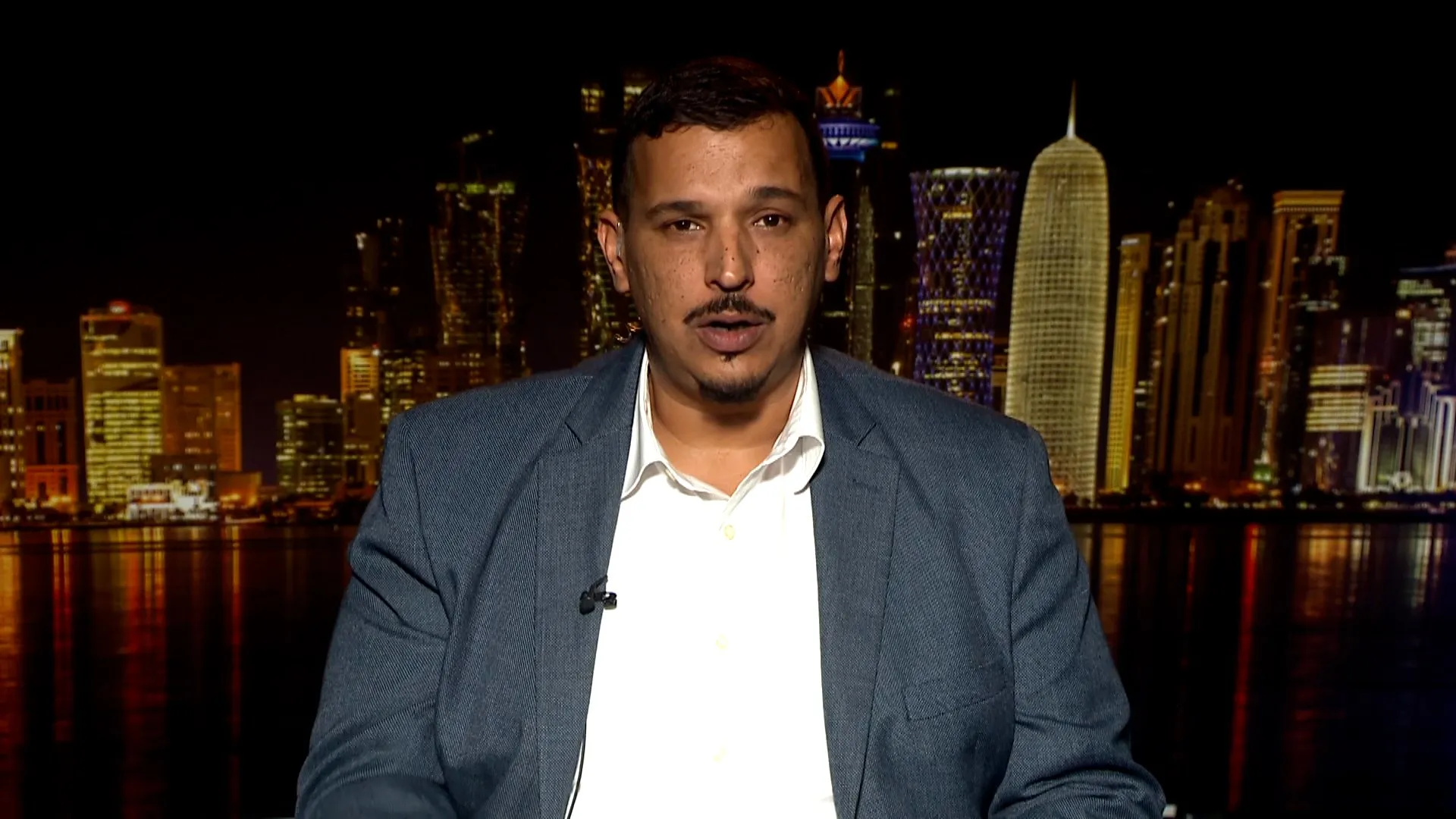
Sheikh Tamim bin Hamad Al Thani says Qatar has demonstrated its strength and cohesion.
Published On 13 Oct 202613 Oct 2026
Qatar’s Emir Sheikh Tamim bin Hamad Al Thani has told the Shura Council that the region has faced “exceptional events”, following months of instability amid the United States-Israeli war on Iran.
Speaking in the Qatari capital, Doha, on Tuesday morning, Sheikh Tamim said the events had demonstrated the strength and cohesion of the country’s state institutions.
“Our country and the region have faced exceptional events that have once again proven the cohesion of state institutions,” the Emir said.
Qatar has found itself caught up in the war, which began on February 28 and has triggered a global energy crisis. The Gulf state has been directly attacked by Iran on several occasions, including in March, when Tehran struck Qatar’s Ras Laffan gas facility, the world’s largest liquefied natural gas (LNG) production site.
Sheikh Tamim said Qatar had been able to absorb the consequences of the regional instability due to policies implemented before the war, stressing that Doha’s preference was to resolve conflicts through peaceful means and dialogue. However, the Emir maintained that the Gulf Cooperation Council’s (GCC) security was non-negotiable.
“The security of the Gulf Cooperation Council states and the preservation of their sovereignty is a matter that cannot be compromised on,” he said.
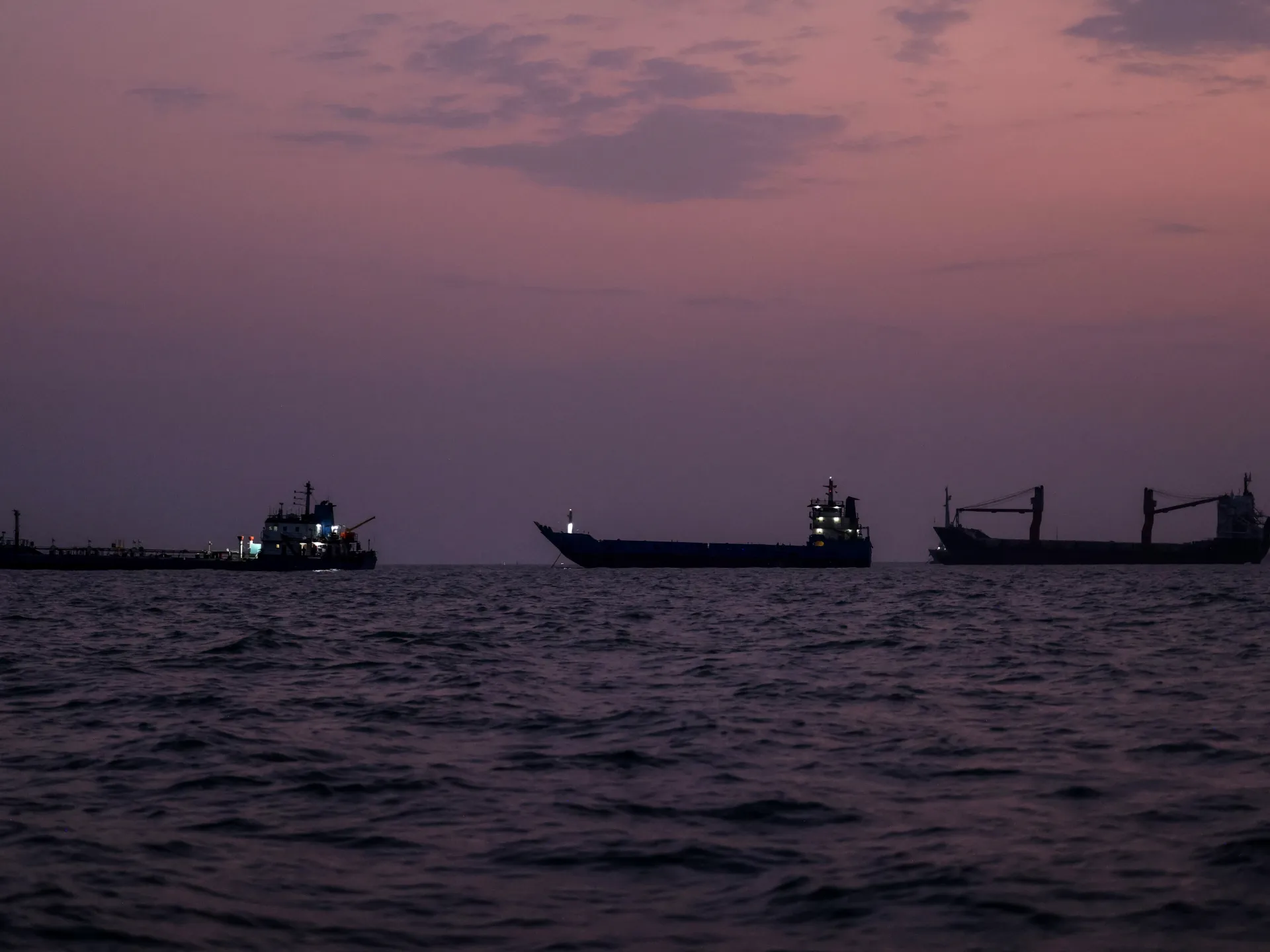
The war on Iran has disrupted global supply routes, particularly the Strait of Hormuz, which Tehran has effectively blocked since the start of the conflict.
Sheikh Tamim said efforts to safeguard maritime routes must be increased.
“Efforts must be doubled to secure navigation in the Gulf and the Strait of Hormuz and to protect energy facilities and civilian infrastructure.”
Iraq, Bahrain, Kuwait and Qatar face double-digit declines in GDP amid the fallout from the US-Israel war on Iran.
Published On 13 Oct 202613 Oct 2026
The economy of the Middle East and Central Asia is set to shrink in 2026 amid the fallout of the US-Israel war on Iran, with countries such as Kuwait and Qatar facing double-digit contractions, according to the International Monetary Fund (IMF).
The region’s gross domestic product (GDP) is forecast to contract by 0.3 percent this year, a sharp downgrade from the 1.9 percent expansion projected in April, the IMF said in its latest economic outlook on Tuesday.
Recommended Stories
list of 4 itemsend of list
The IMF cited the prolonged disruption to shipping in the Strait of Hormuz, a conduit for one-fifth of global oil supplies in peacetime, for the downgraded outlook.
Kuwait, Iraq and Qatar are forecast to have the most severe economic contractions, with their GDPs expected to shrink by 16.7 percent, 16 percent and 15.6 percent, respectively.
Bahrain’s GDP is forecast to contract by 11.3 percent, while Iran’s economy is projected to shrink by 7.6 percent.
Saudi Arabia, which has partially offset the hit to its energy sector by boosting oil exports through the East-West pipeline, is projected to record negative growth of 3.3 percent.
Kyrgyzstan is expected to have the strongest growth in the region, with GDP forecast to expand 9 percent.
The Middle East and Central Asia is the only region that is expected to experience negative growth in 2026.
Emerging and developing Asia’s GDP is forecast to grow 5.1 percent, while the economies of Sub-Saharan Africa and Latin America and the Caribbean are projected to expand 4.5 percent and 2.3 percent, respectively.
The United States and China, the world’s two largest economies, are forecast to register growth of 2.3 percent and 4.5 percent, respectively, while the eurozone’s GDP is estimated to grow 1.1 percent.
The IMF said it expected global GDP to grow 3.1 percent, up from 3 percent in its previous outlook.
The Washington, DC-based institution said while economic activity had proved resilient this year, the global economy faced multiple risks.
“Further escalation in conflicts, a reassessment of expectations surrounding artificial intelligence (AI), renewed trade tensions, and fiscal vulnerabilities could weaken growth,” it said.
“On the upside, stronger momentum in AI investment and productivity gains from AI or a sustained easing of geopolitical and trade tensions could strengthen growth.”
Portuguese superstar Cristiano Ronaldo waved a scarf with the Saudi flag after Al Nassr’s victory in the AFC Champions League. The match was delayed after a missile alert in Riyadh. Yemen’s Houthi fighters have targeted the Saudi capital, hitting the international airport.
The Saudi Arabia-led coalition fighting in Yemen has said its forces intercepted another ballistic missile launched by the Houthis towards the Saudi capital, Riyadh, as the city reels from attacks that have killed at least 14 people in recent days.
In a statement on X, Turki Al-Maliki, the spokesperson for the coalition, said the Houthis fired one ballistic missile at Riyadh and two towards Khamis Mushait, a city in the southwest.
Recommended Stories
list of 4 itemsend of list
All three were “intercepted and destroyed”, he said.
Residents of Riyadh reported several powerful explosions on Monday night, moments after a text message to their phones warned of an aerial threat.
The Houthis, who control Yemen’s most populous areas, including the capital, Sanaa, said their target in Riyadh had been King Khalid International airport.
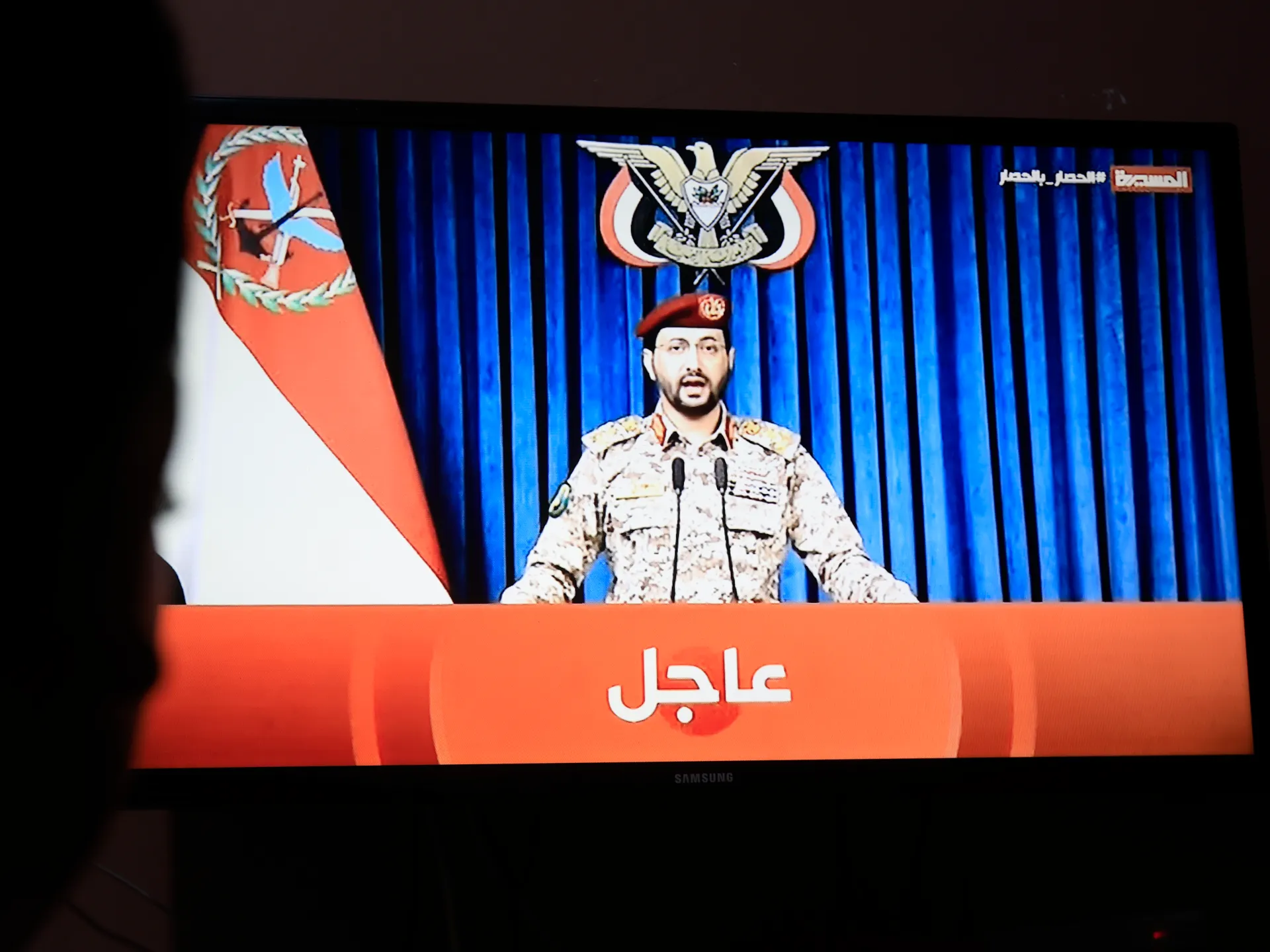
Yahya Saree, a Houthi military spokesman, said the group had also sent a drone towards a military airbase at Khamis Mushait, near the Yemeni border. He again warned international airlines and travellers “against operating flights to airports” in Saudi Arabia, except in the holy cities of Mecca and Medina, saying the facilities were “unsafe”.
The renewed attacks came as King Khalid International airport in Riyadh remains closed after a Houthi attack on Saturday that killed at least 13 people and wounded more than 300 others. Another strike on Sunday killed one person and wounded 11.
Saudi authorities said the airport would remain closed until this Saturday, and airlines have canceled flights. The Houthis have also struck Saudi oil facilities.
The attacks come as the Houthis fight forces aligned with Yemen’s internationally recognised government for control of the country. The Saudi-led coalition has carried out an air campaign against the Houthis and backed the government’s ground forces. The fighting erupted amid regional tensions set off by the United States and Israel’s war on Iran.
Speaking at an energy conference in Riyadh, Saudi Arabia’s Energy Minister Prince Abdulaziz bin Salman Al Saud said the attacks on airports over the last week have tested the kingdom’s resilience.
“The events of recent weeks are serious,” the minister said. “Our response must be equally serious.” He added that Vision 2030, Crown Prince Mohammed bin Salman’s plan to diversify the Saudi economy, “must continue. Investment must continue”.
Saudi authorities have meanwhile opened an investigation into why the country’s air defences failed to stop the barrage, according to two regional officials who spoke to The Associated Press on condition of anonymity. An initial inquiry found that the Houthis first launched several drones to clear a path for a mix of cruise and ballistic missiles, which then reached the airport, the officials said.
The Houthis possess ballistic missiles with warheads that can change direction in flight, posing a challenge to the Patriot interceptors and other systems the Saudis rely on.
One official told AP that investigators also wanted to know why the defences had not given earlier warning of an attack in which missiles and drones flew more than 1,000km, or 620 miles, to reach Riyadh.
US President Donald Trump separately criticised the Houthis but gave no indication that Washington would intervene. “Well, the Houthis are misbehaving very badly. No good,” he told reporters when asked what he planned to do about the group.
A Houthi official warned that US involvement would bring retaliation.
“If the US becomes involved in the aggression against Yemen, we will not deliberate over the decision to respond; rather, there will be a swift and painful response targeting the US and all its interests in the region,” Mohammed al-Bukhaiti, a member of the Houthis’ political bureau, told the AFP news agency.
Al-Bukhaiti also warned “all employees and workers at Saudi oil facilities and airports to stay away from these sites, as they have become legitimate targets”.
The attacks have put events scheduled in Riyadh this month under pressure, including the kingdom’s flagship investment conference and the WPC Energy Congress, where several top oil executives were dropped from the programme.
The United Arab Emirates’s national carrier Etihad Airways announced on Monday that it was cancelling all flights to and from Riyadh until next week. It also suspended flights to Dammam and Jeddah.
Bahrain’s national carrier Gulf Air said it, too, was cancelling all Riyadh flights until Saturday.
US operator Delta announced it would delay the launch of direct flights from Atlanta to Riyadh, scheduled for October 23.
Addis Ababa, Ethiopia – As renewed fighting in Ethiopia’s Tigray region threatens to destabilise the Horn of Africa, public backing by the United Arab Emirates (UAE) of Ethiopia’s federal government and Saudi Arabia’s record of regional diplomacy are drawing scrutiny.
Both Gulf powers have strategic interests in the Horn of Africa, but their roles differ. The UAE has publicly backed Ethiopia’s government while Saudi Arabia has previously helped broker an Ethiopia-Eritrea rapprochement and was reported to have offered to mediate between the two countries in 2025.
The renewed fighting threatens to unravel the November 2022 Pretoria peace agreement, which ended a war between Ethiopia’s federal government and Tigrayan forces. As tensions with Eritrea add to the risks of a wider confrontation, the positions of Abu Dhabi and Riyadh offer a window into the interests of external powers in the crisis.
The UAE: Clear alignment, unproven leverage
On September 25, the UAE condemned attacks by the Tigray People’s Liberation Front (TPLF) and its allied armed groups against Ethiopian federal forces, the seizure of airports in Tigray and the escalation in the neighbouring regions of Afar and Amhara.
Sheikh Shakhboot bin Nahyan Al Nahyan, the UAE minister of state, expressed solidarity with Ethiopia’s government and people, reaffirmed support for the country’s sovereignty and territorial integrity, and called for an end to hostilities, the protection of civilians and adherence to the Pretoria Agreement.
The statement made Abu Dhabi’s public position clear: It backs Ethiopia’s federal government while calling for de-escalation and dialogue. It did not establish whether the UAE was providing military assistance or had secured commitments from the parties to end the fighting.
The UAE also has commercial interests across the Horn of Africa. Dubai Ports World (DP World) operates Berbera port in Somaliland, and a shipping route launched in 2025 connects the port with Jebel Ali in the UAE, providing an additional corridor for cargo serving inland destinations, such as Ethiopia. Landlocked since Eritrea’s independence in 1993, Ethiopia relies heavily on Djibouti for access to international trade.
These commercial links help explain Abu Dhabi’s interest in regional stability and its relationship with Addis Ababa. However, they do not establish that the UAE can influence the TPLF, persuade Eritrea to de-escalate or change Ethiopia’s military calculations.
The extent to which Abu Dhabi can use its relationship with the federal government to encourage a political response to the conflict remains unclear.
Saudi Arabia: Diplomatic experience, uncertain engagement
Saudi Arabia has yet to publicly announce its position on the latest fighting in Tigray.
The kingdom has not publicly commented on the renewed war, according to an October 1 analysis by Critical Threats, although it undertook diplomatic efforts earlier this year to reduce tensions between Ethiopia’s federal government and the TPLF.
Saudi Arabia has previously sought to mediate between Ethiopia and Eritrea. In November 2025, Chatham House reported that sources said Riyadh had offered to mediate between the two countries amid rising tensions over maritime access and regional security.
A June 2026 analysis by Germany’s SWP think tank said previous Saudi mediation efforts had failed, partly because negotiations did not address Ethiopia’s interest in the Eritrean port of Assab.
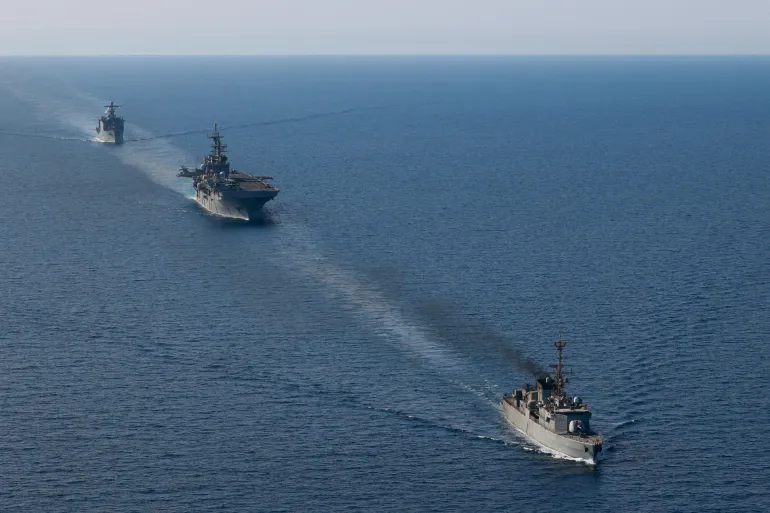
A Saudi navy frigate sails alongside US 5th Fleet ships during operations to support security in the Red Sea, where rising tensions between Ethiopia and Eritrea have raised concerns about wider regional stability [File: Reuters]
The kingdom’s broader regional alignment also matters. An August 2026 analysis by the Soufan Center described Saudi Arabia and Egypt as backing Eritrea in opposition to Ethiopia’s ambitions for Red Sea access.
This is an assessment of regional alignment, however, not evidence that Saudi Arabia is directly providing military support to Eritrea or the TPLF in the current fighting.
Saudi Arabia has a strong interest in Red Sea security, a vital corridor for international shipping and its own oil exports. Whether Riyadh will take a more public diplomatic role as tensions escalate remains unclear.
Egypt’s rivalry with Ethiopia adds to regional tensions
Egypt’s role in the crisis is shaped by its longstanding dispute with Ethiopia over the Grand Ethiopian Renaissance Dam (GERD) and its growing ties with Eritrea.
Cairo has also stressed that responsibility for the governance and security of the Red Sea rests with countries bordering the waterway, a position shared by Asmara. The issue has added to regional tensions as Ethiopia seeks reliable access to the sea.
In September, Ethiopia’s army chief, Field Marshal Birhanu Jula, accused Egypt and Sudan of supporting armed groups fighting the federal government, including the Tigray People’s Liberation Front (TPLF).
His remarks, reported by Al Jazeera on September 28, did not provide evidence substantiating the accusation. Egypt’s Foreign Ministry spokesperson, Nader Zaki, subsequently reaffirmed Cairo’s commitment to state sovereignty and non-interference, rejecting suggestions that it had departed from those principles.
He did not directly address the specific allegation of Egyptian support for the TPLF.
Egypt’s relationship with Eritrea has nevertheless become an important part of the regional picture. President Abdel Fattah el-Sisi met Eritrean President Isaias Afwerki in Cairo on June 8, 2026.
According to Egypt’s presidency, the talks covered bilateral cooperation, developments in the Horn of Africa and Red Sea security.
The two leaders also stressed the importance of coordination to maintain regional stability. The meeting highlighted closer cooperation between Cairo and Asmara, but did not establish that either country was involved in the renewed fighting in Tigray.
For Cairo, the dispute with Ethiopia extends beyond Tigray to the Nile and the balance of power in the Horn of Africa.
Its relations with Eritrea and its disagreements with Addis Ababa form part of the wider regional context, but they are not evidence of direct Egyptian involvement in the renewed conflict. Whether these regional relationships will affect the course of the fighting remains uncertain.
From Tigray to a wider regional crisis
The risks extend beyond Tigray. Ethiopia’s pursuit of maritime access has become a source of tension with Eritrea, whose Red Sea coastline includes the port of Assab. Addis Ababa argues that reliable access to the sea is a national priority while Asmara rejects any threat to its sovereignty.
Ethiopia has accused Eritrea of sending troops across the border and supporting armed groups. Eritrea denies the allegations and has called on the United Nations Security Council to intervene. The allegations remain contested, but deteriorating relations have raised the stakes of renewed fighting in northern Ethiopia.
A wider confrontation could put more civilians at risk, complicate humanitarian access and disrupt regional trade and security. It would also test whether external partners could encourage restraint without appearing to endorse either side’s military objectives.
The UAE’s close ties with Addis Ababa could provide a channel for diplomatic engagement while Saudi Arabia’s record of regional diplomacy offers a possible opening for renewed talks. However, the available public evidence does not establish that either country is currently leading an initiative to contain the crisis.
Influence must be measured by outcomes
The UAE and Saudi Arabia should not be cast as pursuing opposing strategies simply because one has publicly backed Ethiopia’s federal government while the other’s current position is less visible. Their interests and diplomatic approaches differ, but the evidence does not show that either has decisive influence over the fighting.
Their contribution should be assessed by whether they can help secure concrete steps towards de-escalation, renewed political dialogue and a reduction in tensions between Ethiopia and Eritrea. Public statements, commercial interests and past diplomatic achievements may create opportunities for engagement, but they are not substitutes for progress on the ground.
The Pretoria Agreement remains the framework for a political settlement in Tigray, yet renewed fighting underscores the difficulty of sustaining peace while underlying disputes persist. A durable settlement will depend primarily on the parties themselves. External partners could contribute by encouraging restraint and supporting credible negotiations.
For now, the UAE’s public alignment with Ethiopia and Saudi Arabia’s diplomatic record offer different potential channels for engagement. Whether either country can turn those relationships into a meaningful contribution towards de-escalation remains unresolved.
As the United States maintains a naval blockade of Iran’s ports and imposes more sanctions on its oil exports, Tehran is confronting another problem: billions of dollars in revenue from previous oil sales that it says have gone missing.
A spokesperson for Iran’s judiciary said in September that a network of oil intermediaries known as “trustees” owed the Iranian government between 10 billion euros ($11bn) and 11 billion euros ($12bn). That figure was equivalent to half of the total oil revenue projected in Iran’s government budget for the current fiscal year.
Recommended Stories
list of 3 itemsend of list
US officials, including Treasury Secretary Scott Bessent, have tied Iran’s struggles to access oil revenues as evidence that its economic pressure campaign is having an effect. In August, Bessent said that “Iran’s shadow banking system was buckling” under pressure from the US campaign against the country, which has been ramped up as Washington seeks a way to force Tehran to capitulate in the war between the two countries, launched by the US and Israel in late February.
So who are the oil intermediaries, why does Iran depend on them, and what has happened to the billions of dollars they owe? Let’s take a closer look.
The debt, and the crisis it has created for the Iranian government, both stem from an oil-sales arrangement Tehran adopted in 2012 in response to US sanctions targeting Iranian oil exports.
American and European sanctions targeting Iranian oil sales and revenue collection began in 2012. The stated rationale behind both sets of measures was that revenue from oil sales helped finance Iran’s nuclear programme and that restricting Iranian oil exports could prevent the programme from advancing.
In response, the Iranian government devised a way to circumvent international sanctions on its oil sales. Unable to sell oil through the Oil Ministry and receive the proceeds through the Central Bank, it began selling oil to domestic buyers or using it to settle outstanding obligations to institutions and organisations owed money by the state.
This arrangement gave rise to a network of oil intermediaries often referred to in Iran as the “trustee network”. Rather than selling all its oil through official government channels, the state entrusted crude oil to institutions, individuals and companies to sell on its behalf. The proceeds were supposed to be transferred to the government’s treasury, with the sellers or recipient institutions subsequently recovering their agreed costs and outstanding claims. Some institutions sold the oil themselves, while others contracted private trading companies to handle the sales.
The Oil Industry Pension Fund, established for retired Oil Ministry employees familiar with the oil-sales process, was among the first institutions to receive crude oil for sale. Other recipients included Khatam al-Anbiya Construction Base, a major hub for large-scale infrastructure projects. Even the municipal police received payments owed to them by the government in the form of crude oil.
Effect of the nuclear deal
Even in those early experiments, discrepancies emerged between the revenue expected from oil sales and the amounts sellers actually deposited into the government’s treasury. These discrepancies eventually gave rise to some of Iran’s largest economic corruption cases.
The accounting discrepancies and the government’s inability to recover money from private sellers entrusted with Iranian oil persisted until 2016, when the Joint Comprehensive Plan of Action (JCPOA) nuclear deal was signed and when sanctions on Iranian oil sales were lifted. The government was subsequently able to regain control over oil sales.
Individuals who had sold Iranian oil but failed to return the proceeds were imprisoned. With the ability to sell oil again through legal and transparent channels, the government was able, for a time, to manage its oil revenues and spending with greater control.
How did money from oil sales go unreturned?
After US President Donald Trump withdrew the United States from the JCPOA in 2018 during his first presidential term, the Iranian government once again had to rely on private oil traders to sell its oil. But the problems associated with selling oil through intermediaries rather than official state channels, including delays in returning revenues, accounting discrepancies, debts owed by oil sellers to the government, and the occasional seizure of Iranian oil shipments at sea, once again constrained the government’s ability to manage its oil revenues.
Moreover, the US expanded its sanctions beyond Iranian government institutions and interests, adding bank accounts involved in transactions with the Iranian government, currency-exchange offices, companies, and individuals to its sanctions lists. As a result, the time between individuals participating in Iran’s oil-trading network and being sanctioned themselves, along with their assets and companies, and having their accounts blocked or frozen grew progressively shorter.
This contributed to an accumulation of debts owed by sanctioned oil traders – no longer able to access their accounts – to the government. It also left Iran with little choice but to expand its private oil-sales network. That meant increasing the number of people involved in trading Iranian oil, reducing the volume of oil allocated to each individual or company and, ultimately, increasing the risk that the proceeds would not be returned.
Iranian officials have also accused trustees of exploiting the sanctions workarounds to enrich themselves.
The billions of dollars owed by private oil sellers to the Iranian government are a combination of outstanding payments, disputed financial obligations and allegations of corruption. Iran’s judiciary chief recently addressed the issue, warning that oil sellers who refuse to return the proceeds from oil sales will face legal action. But such warnings do not change the sanctions environment or remove the obstacles that prevent some oil sellers from returning the money.
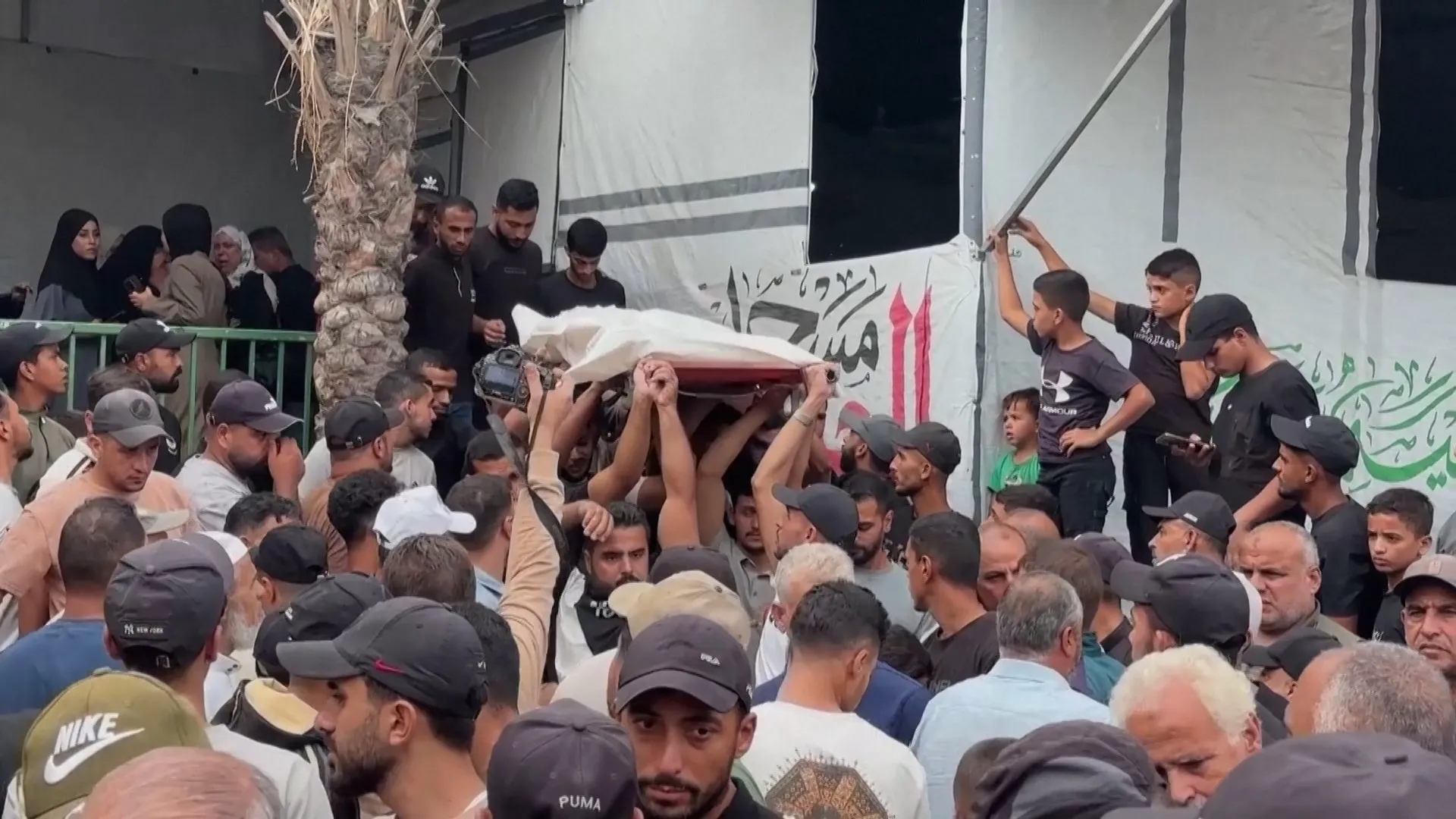
Palestinians attended funerals Monday of three people killed in an Israeli airstrike on a tent in Khan Younis a day earlier, as well as victims of other attacks. The latest strikes come amid mounting tensions over the Gaza ceasefire.
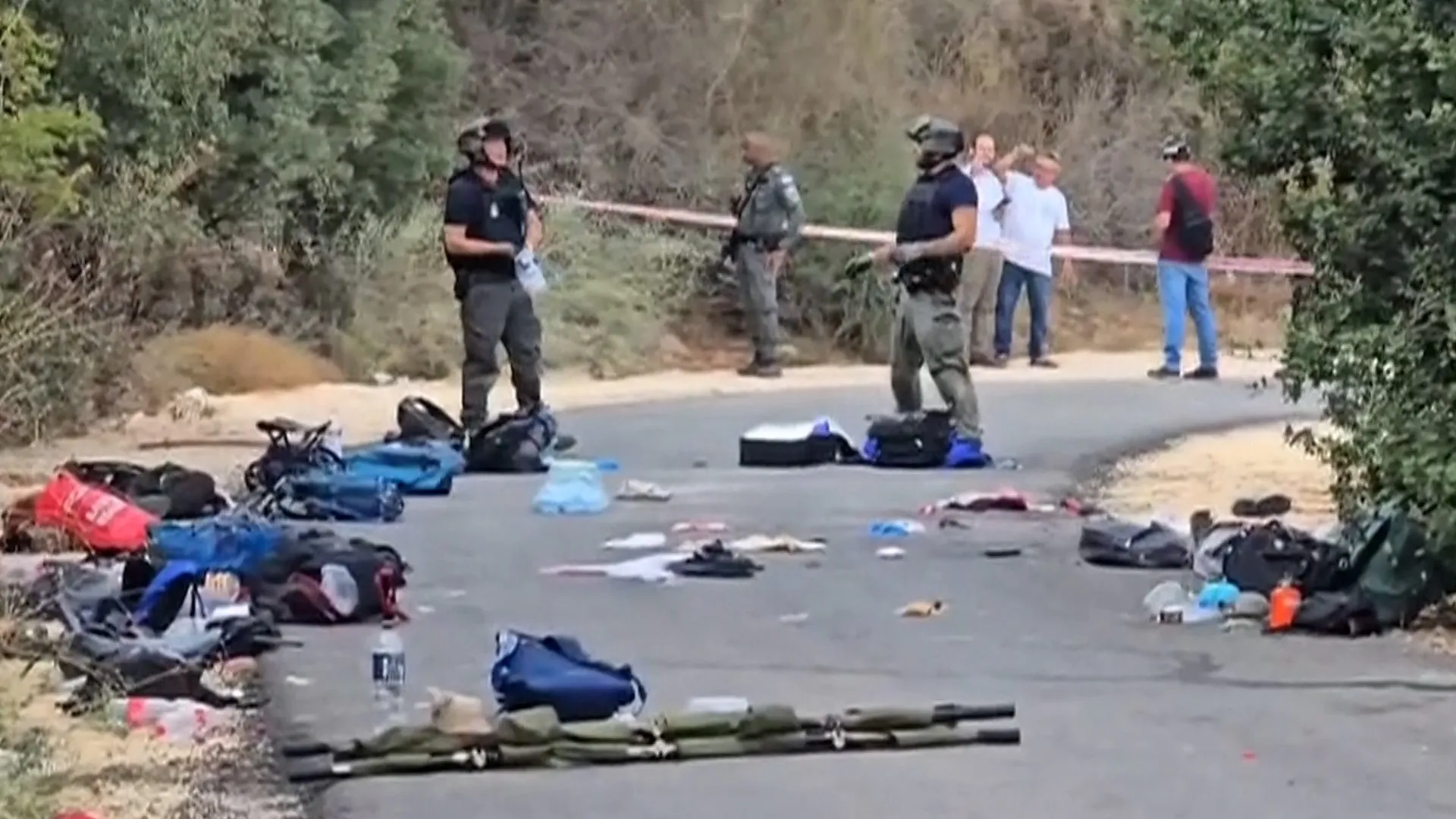
A 15-year-old was killed and around 20 people injured when unexploded ordnance detonated during a school trip in northern Israel. The army is investigating whether the munition came from Hezbollah or Israeli forces, amid recent fighting near the Lebanon border.
Tehran, Iran – Iranian authorities have signalled they intend to disrupt an Arab-operated and United States-assisted shuttle system that has enabled more energy exports through the Strait of Hormuz during the US-Israel war on Iran.
With the US naval blockade of Iran’s southern ports in place and sanctions tightening, Tehran has said it will pursue military and diplomatic efforts to put pressure on Washington to submit to its demands regarding reopening the Strait of Hormuz.
Recommended Stories
list of 3 itemsend of list
This strategic waterway, through which roughly a fifth of global oil and gas flowed before the war, has been largely closed to shipping following Iranian attacks since the US and Israel launched strikes on Iran on February 28.
But the US Navy has reportedly opened up a route so Gulf states can export oil and other commodities amid an energy crisis.
Iran’s security chief Mohsen Rezaei responded on Sunday night, saying the shuttle system is now an explicit target for Tehran.
Rezaei claimed that the US Central Command, with the assistance of the United Arab Emirates military, was using smaller vessels to transfer oil to larger tankers. He claimed Iran had been striking five or six participating vessels nightly for weeks.
“You are smuggling, but the strait is under Iran’s control, and we manage it,” he asserted.
This appeared to be a taunt aimed at US President Donald Trump, who has hailed energy exports at times reaching pre-war levels over recent weeks.
Rezaei appeared to give the impression that Iran wants to have lasting authority over Hormuz, and promised a harsh response if Iran’s energy and civilian infrastructure were attacked again.
His threats appeared aimed at Arab regional states, with a warning that digital infrastructure could be targeted. Rezaei threatened US-linked cables, data centres and artificial intelligence facilities in the UAE and around the Strait of Hormuz.
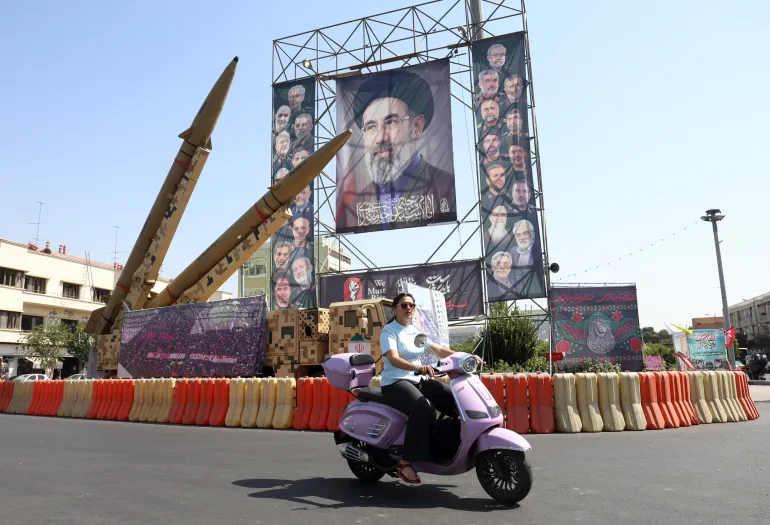
A woman rides her scooter past Iranian Zolfaghar missiles placed in front of a billboard of Iranian Supreme Leader Ayatollah Mojtaba Khamenei at Baharestan Square in downtown Tehran, Iran, September 28, 2026 [Abedin Taherkenareh/EPA]
Rezaei also accused Saudi Arabia of helping the US move oil around Iran’s restrictions. But he did not threaten a direct attack against Riyadh – which is currently being targeted by Yemen’s Tehran-aligned Houthis.
In early September, Iran’s Islamic Revolutionary Guard Corps (IRGC) threatened tankers at ports and anchorages in Kuwait and Bahrain, citing US attacks on Iranian tankers. It accused both countries of complicity through hosting US armed forces.
Iran has claimed the US accepted some of Tehran’s seven conditions for the full reopening of the Strait of Hormuz and ending the war. But Tehran insists that a deal will only materialise when all its demands are met.
Hamidreza Azizi, a senior Iran analyst at the Crisis Group, said this reflects Tehran’s apparent assessment that it is under no immediate pressure to reach an agreement with the US since its pressure in the Hormuz has a global impact.
“The question, however, is whether Tehran is overestimating its ability to sustain this pressure, given the growing economic costs of the confrontation for Iran itself,” Azizi wrote on X.
Transfer system
The system involves very large crude carriers (VLCCs) and smaller vessels coordinating with the US military to load crude oil at Arab ports and use southern corridors near the coast of Oman to exit the strait.
Vessels often switch off their transponders and travel at night to minimise the risk of being targeted by the Iranians. After ship-to-ship transfers in the Gulf of Oman, some of the shuttles come back to load more.
Multiple vessels were targeted overnight Sunday to Monday, including two outbound tankers and one in anchorage near Oman’s port city of Sohar, where ship-to-ship transfers are allegedly being conducted.
The IRGC has also increasingly driven a narrative that naval mines, believed to have been planted across the Strait of Hormuz since the start of the war, pose a serious threat to vessels attempting to navigate the waterway without coordinating with Iran’s Persian Gulf Strait Authority.
The IRGC said three tankers suffered major damage over the weekend after being struck by mines. It also released footage of one ship ablaze that is said to have been struck by a mine, although the footage did not appear to show a mine going off.
‘Cascading impact’
The shuttle system has provided Arab national oil companies with a way out of Hormuz via the southern corridor near Oman.
Michelle Wiese Bockmann, a London-based senior maritime intelligence analyst at Windward, said this system has proven highly effective.
“Under international maritime law, which underpins 11 billion tonnes of seaborne trade annually, vessels have what’s called the right of transit passage,” Bockmann told Al Jazeera. “So, what Oman has done is allow vessels to go through under international maritime law, but they have had US military assistance.”
Tehran says shipping will be disrupted so long as the US continues its choking naval blockade against Iran, which has also stepped up its efforts to counter efforts by Arab states to export oil. At least 15 ships are believed to have been targeted in October so far, according to Winward.
“The more effective the route has become in facilitating the transport of oil and gas, the less leverage Iran has over Hormuz, and more attacks we are seeing on vessels that are using that southern corridor,” Bockmann said.
Windward’s data shows 31 ships transited the Strait of Hormuz daily in the final week of September. This was considerably lower than the 138 before the war.
Eighty-seven percent of the 45 ships targeted by Iran during the third quarter of 2026 were tankers.
Around 47 percent belonged to Gulf Arab energy companies’ national shipping fleets, Windward noted, and 93 percent of the strikes took place in the Strait of Hormuz. Most attacks targeted vessels transiting the southern corridor with their transponders turned off.
These attacks have contributed to a massive increase in freight costs. Freight represented 25-30 percent of Gulf crude’s cost, versus just 1 to 3 percent before the war, according to Windward. National oil companies have resorted to offering discounts of up to $35 per barrel below official selling prices.
The main reason for the rise is a shortage of tankers willing to make the dangerous crossing. Between 15 and 20 percent of very large crude carriers (VLCCs) are tied up with an inefficient logistics system that relies on shuttle transfers, complicated by escalating attacks and exposure at loading ports and anchorages.
“This is having cascading impacts for all vessel classes on freight and values across the world,” Bockmann said.
Iran has offered to facilitate talks between Saudi Arabia and Yemen’s Houthi group after a series of deadly attacks on the kingdom, raising questions about Tehran’s diplomatic calculations as fighting intensifies across the region.
Iranian Foreign Minister Abbas Araghchi spoke with his Saudi counterpart, Prince Faisal bin Farhan Al Saud, on Sunday, in their first publicly reported contact since the Iran-aligned Houthis stepped up attacks on Saudi Arabia.
Recommended Stories
list of 3 itemsend of list
The diplomatic outreach comes after strikes on Riyadh’s international airport over the weekend killed 14 people and wounded hundreds, while Saudi-backed forces continued their offensive against the Houthis, also known as Ansar Allah, in Yemen.
The talks also come against the backdrop of the wider US-Israel war on Iran, with Tehran potentially seeking to avoid being dragged into another confrontation.
“Tehran is an ally of Ansar Allah and has influence with the movement, although it does not control its decisions,” Negar Mortazavi, senior fellow at the Washington, DC-based Center for International Policy, told Al Jazeera.
“By offering to facilitate talks with Riyadh, Iran is positioning itself as an indispensable party to a broader regional settlement.”
So what discussions are happening between Riyadh and Tehran, and why is Iran offering to facilitate talks?
What did Iran and Saudi Arabia talk about?
According to the Saudi state news agency, the two foreign ministers discussed the recent escalation in the region and efforts to reduce tensions. Iran’s Foreign Ministry also confirmed the development.
Following the discussions, Araghchi on Sunday warned against pursuing a military solution to the conflict and offered Tehran’s assistance in facilitating dialogue between Saudi Arabia and Yemen.
“Insisting on a military approach and disregarding a political solution would only further complicate the situation,” Araghchi said, according to Iran’s Foreign Ministry.
On Monday, ministry spokesman Esmaeil Baghaei reiterated Tehran’s willingness to mediate, saying Iran was deeply concerned about developments in the Arabian Peninsula.
“We absolutely do not want hostilities and war to continue between two Islamic countries,” Baghaei said, urging dialogue to resolve the conflict.
What is Iran’s stance on the war in Yemen?
Iran has repeatedly called for a diplomatic settlement to Yemen’s conflict and says it supports a political solution rather than continued military action.
Tehran backs the Houthis, who control Yemen’s capital, Sanaa, and other parts of the country.
The armed group forms part of the Iran-aligned “axis of resistance”, which also includes Lebanon’s Hezbollah and armed groups in Iraq.
Saudi Arabia, meanwhile, has led a military coalition supporting Yemen’s internationally recognised government since 2015.
Baghaei said on Monday that the conflict served Israeli interests, framing a negotiated settlement as preferable to further fighting.
What is the latest in the Yemen fighting?
Fighting has intensified in Yemen, after the internationally recognised government’s forces announced Operation Dawn of Yemen on October 4 to reverse recent Houthi territorial gains, including the capital, Sanaa.
Government forces, backed by Riyadh, have reported advances near the strategic Bab al-Mandeb strait, a vital international shipping route. However, competing battlefield claims remain difficult to independently verify.
The Houthis have responded with missile and drone attacks on Saudi airports, energy infrastructure and other targets.
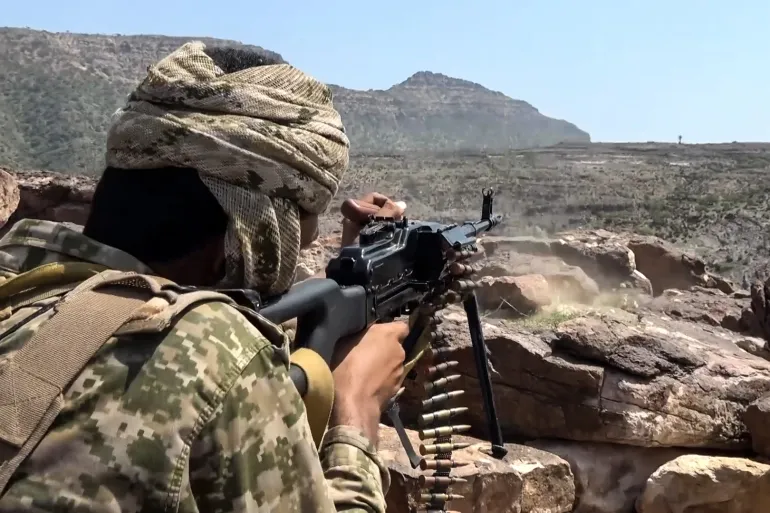
A Houthi fighter participates in an offensive against Saudi-backed Yemeni forces in Taiz province, Yemen [Handout screen grab from video made available by the Houthi-run Al Masirah TV, October 8, 2026/EPA]
Two strikes on Riyadh’s King Khalid International Airport on Saturday and Sunday killed 14 people and wounded more than 300. The casualties included foreign nationals from Bangladesh, Pakistan and Palestine.
The escalating violence has also disrupted commercial flights, businesses and schools in Riyadh, underlining the growing economic and civilian consequences of the conflict.
UN Special Envoy for Yemen Hans Grundberg warned on Friday that Yemen had returned to “full-scale war”, with civilians bearing the brunt of the attacks.
Why is Iran willing to facilitate talks between Saudi Arabia and the Houthis?
Iran’s offer to facilitate talks between Riyadh and the Houthis could be an attempt to strengthen Tehran’s diplomatic position and secure a wider regional agreement that extends beyond Yemen.
“I think Iran is trying to turn Yemen from a military liability into a diplomatic asset,” Andreas Krieg, a Middle East security analyst at King’s College London, told Al Jazeera.
He said Tehran recognises that Saudi Arabia is struggling to reverse Houthi territorial gains, particularly around Taiz and Bab al-Mandeb, despite intensifying its military campaign.
“Araghchi’s offer is an attempt to position Iran as part of the solution to a crisis in which it has also helped sustain the problem,” Krieg said.
Analyst Mortazavi, meanwhile, said Iran’s diplomatic outreach is part of a broader effort to link the conflicts unfolding across the region.
“The larger political objective is an informal non-aggression arrangement between Iran and its allies on one side and the United States and its regional partners on the other,” she said.
Such an agreement, she argued, would require an end to hostilities across multiple fronts, including Yemen and Lebanon, rather than a settlement confined to the US-Iran conflict.
Moreover, academic Krieg said there was also an important “Saudi dimension” to the discussions.
“Riyadh is increasingly uncomfortable with its dependence on Washington, frustrated by the limited American willingness to intervene in Yemen and reluctant to become dependent on the UAE again,” he said.
“Iran sees an opportunity to demonstrate that engagement with Tehran can deliver something Saudi Arabia’s traditional security partnerships have struggled to provide.”
There are also economic considerations, the analysts noted. Iran is under significant pressure from the US blockade, while Gulf countries are gradually recovering their energy exports to pre-war levels despite Iranian disruptions.
“Offering Riyadh a way out of Yemen potentially gives Iran leverage well beyond the Yemeni theatre, particularly in negotiations over Hormuz, sanctions relief and the wider regional security architecture,” Krieg said.
However, Krieg cautioned against overstating Iran’s influence over the Houthis, who have their own political ambitions and demands.
“Ansar Allah is not simply an Iranian proxy awaiting instructions,” Krieg said. “Its leadership has its own political ambitions, increasingly sees itself as a regional military actor and believes its recent territorial gains have strengthened its negotiating position. Iran can facilitate talks and potentially influence the intensity of escalation, but it cannot simply order the Houthis to surrender their gains around Mocha or Bab al-Mandeb.”
For Mortazavi, the broader message is that regional security cannot be addressed in isolation.
“Ultimately, Tehran’s message is that regional security cannot be divided,” she said. “Saudi Arabia cannot obtain security from attacks, while Iran and its allies remain under military and economic pressure.”
An Israeli settler was filmed abusing and reportedly poisoning livestock in the village of Al-Mughayyir, northeast of Ramallah in the occupied West Bank. The animals reportedly belonged to Israelis and were poisoned in an attempt to frame Palestinians for killing them.
Israel has expanded its military occupation in the Gaza Strip in violation of a United States-brokered ‘ceasefire’, forcing Palestinians into an ever-smaller share of the besieged territory, devastated by Israel’s ongoing genocidal war.
Nearly two-thirds of Gaza is now under Israeli military control or subject to access restrictions.
The original ‘Yellow Line’, established under US President Donald Trump’s 20-point plan to end the war, marked the area to which Israeli forces initially withdrew. They were expected to make further withdrawals gradually, but instead, they have seized more territory.
On Sunday, Israeli forces moved yellow concrete blocks dozens of metres west in Shujayea, a neighbourhood in southeastern Gaza City, forcing Palestinian families to flee and bringing more of the neighbourhood under Israeli military control.
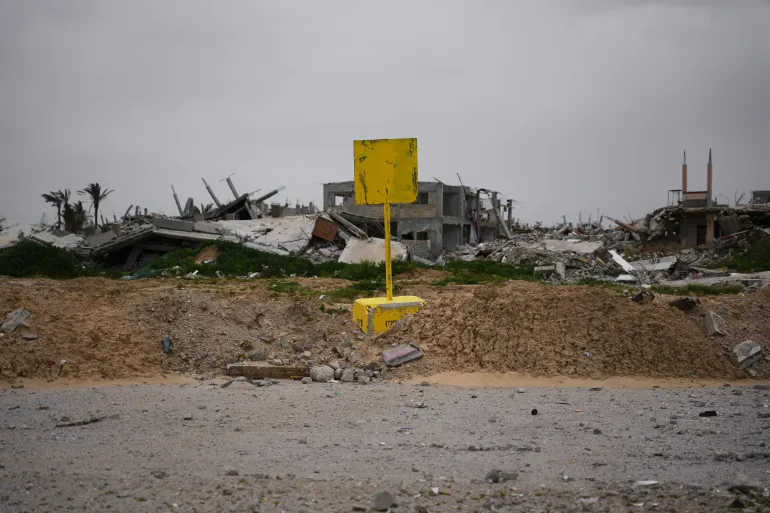
A yellow block demarcating the ‘Yellow Line’, which has separated the Gaza Strip’s Israeli-held and Palestinian zones since a ‘ceasefire’ began a year ago, is seen in Khan Younis in the southern Gaza Strip on January 22, 2026 [Abdel Kareem Hana/AP Photo]
“It’s not simply about where the ‘Yellow Line’ is today but where it can move next,” Al Jazeera’s Ibrahim al-Khalili said, reporting from Gaza City. “For families who have been repeatedly displaced in the past three years, the situation remains dire, and they have to make the impossible decision of where they can go.”
More than 90 percent of Gaza’s 2.1 million population has been forcibly displaced by Israel’s war, launched on October 7, 2023, after Hamas-led attacks on southern Israel.
Using maps, Al Jazeera shows how much of Gaza Israel has grabbed since the ‘ceasefire’.
Gaza before the war
Before the war, Palestinians were spread across the Gaza Strip, a 365sq km (141sq-mile) territory roughly 41km (25 miles) long and from 6km to 12km (4 to 7 miles) wide.
That made it one of the most densely populated places on Earth with about 6,000 people per square kilometre, similar to Nairobi or London. Each person had, on average, about 160sq metres (1,722sq ft) of land.
Even then, not all of Gaza’s land was accessible. Israel enforced a buffer zone along the fence with Israel, and Palestinians who approached it risked being shot. In 2010, the United Nations Office for the Coordination of Humanitarian Affairs (OCHA) estimated that the restricted area covered 17 percent of Gaza’s land and 35 percent of its farmland.
Gaza has been under an Israeli land, air and sea blockade since 2007.
Gaza at the ‘ceasefire’
Under the first phase of the “ceasefire”, Israeli forces were to withdraw to the “Yellow Line” within 24 hours, after which a 72-hour period began for the handover of Israeli captives held in Gaza. Trump first published a map of the line on his Truth Social platform.
The line left Israel in control of 53 percent of the Strip, mostly farmland and border areas in the east, and confined Palestinians to the remaining 47 percent, about 172sq km (66sq miles).
By October 2025, two years of war had killed more than 67,000 Palestinians, and tens of thousands more had left the territory, reducing Gaza’s population to about 2.1 million.
Pushed into less than half of Gaza’s territory under the “ceasefire”, its density doubled to about 12,000 people per square kilometre, comparable to New York City. Each person was left with about 82sq metres (883sq ft).
(Al Jazeera)
Gaza today
Since the “ceasefire”, Israeli forces have repeatedly moved the yellow concrete blocks marking the “Yellow Line” farther west, sometimes overnight, expanding the areas under their control. Satellite imagery has also documented continued demolitions in areas held by Israeli forces.
The research group Forensic Architecture estimated that Israel controlled 58 percent of Gaza by December. In March, the Israeli military sent aid agencies maps of a new “orange line”, a restricted zone beyond the “Yellow Line” where humanitarian movements must be coordinated with the army.
According to OCHA, restrictions now cover 65 percent of Gaza. Israel itself said it controls about 70 percent of the territory, a UN official told the Security Council in June.
(Al Jazeera)
That leaves 2.1 million people in about 35 percent of the Strip, roughly 128sq km (49sq miles). The population density has nearly tripled since before the war to about 16,000 people per square kilometre, close to central Tokyo.
Each person now has about 61sq metres (657sq ft) of land for everything: shelter, roads, schools, hospitals and farmland.
Unlike Tokyo, Gaza has little space left to house its people. The UN Satellite Centre, UNOSAT, found 82 percent of structures in the Strip are damaged or destroyed. The UN Food and Agriculture Organization says only 3 percent of Gaza’s cropland is both undamaged and accessible.
(Al Jazeera)
OCHA says the remaining 35 percent of Gaza is “already overcrowded” and access restrictions are a key obstacle as aid groups try to relocate families before the rainy season. More than 950,000 people live in displacement sites at risk of flooding, according to the UN, most of them in tents and makeshift shelters, as seen in the satellite image below.
Approaching the ‘Yellow Line” can be deadly. Israel treats areas beyond it as a free-fire zone, and Palestinians who come near it have been shot. Nearly 1,500 people have been killed across Gaza since the ceasefire was announced.
Mexican boxer tells Turki Al-Sheikh he ‘fears nothing’ and will face M’billi in Riyadh on October 31 ‘no matter what’.
Published On 12 Oct 202612 Oct 2026
The world title fight featuring Saul “Canelo” Alvarez and Christian M’billi will go ahead this month in Saudi Arabia despite attacks on the country’s airports, which have killed at least 14 people in Riyadh in two days, Saudi sports promoter Turki Al-Sheikh confirms.
Alvarez vs M’billi is scheduled for October 31 in the Saudi capital, which has repeatedly come under attack from Yemen’s Houthis, but Al-Sheikh sought to allay the doubts over the bout on Sunday.
One person was killed and 11 were injured on Sunday when a projectile struck King Khalid International Airport in Riyadh, according to Saudi Arabia’s General Authority of Civil Aviation (GACA).
A Houthi strike on the same airport on Saturday killed 13 people and injured more than 300, making it the deadliest attack on Saudi Arabia in more than a decade.
The Houthis claimed responsibility for all four strikes on Saudi airports before Sunday’s attack, which has yet to be claimed by any group.
Alvarez, who has held multiple world titles across several weight classes, will face WBC super-middleweight champion M’billi in a highly anticipated bout.
“Canelo reached out and told me he’ll still fight in Riyadh this October, no matter what happens,” Al-Sheikh, chairman of Saudi Arabia’s General Entertainment Authority, wrote in a social media post. “He [Alvarez] fears nothing.”
The Mexican boxer, a former two-time undisputed super-middleweight champion, has not fought since he was beaten by American Terence Crawford in September 2025.
US, Australia, Canada, Japan, South Korea and New Zealand among countries urging citizens to avoid travel to Kingdom.
Published On 12 Oct 202612 Oct 2026
Several countries have warned their citizens against travel to Saudi Arabia following a series of Houthi attacks on airports in the kingdom.
On Monday, Australia and New Zealand became the latest to issue advisories against travelling to the kingdom, following similar warnings from the United States, Canada, the UK, South Korea, and Japan.
Recommended Stories
list of 4 itemsend of list
Australia’s Department of Foreign Affairs and Trade said Australians should avoid King Khalid International Airport in Riyadh and “reconsider” travel to other Saudi airports.
New Zealand’s Ministry of Foreign Affairs and Trade urged citizens not to travel to the Saudi capital’s main gateway and the provinces of Najran, Jazan and Asir for any reason, and to avoid “non-essential” travel to Saudi Arabia as a whole.
The US embassy in Riyadh on Sunday advised US citizens to reconsider travel to the kingdom, citing the threat of attacks by Iran and the Iranian-backed Houthis.
Global Affairs Canada issued an advisory against non-essential travel to any part of Saudi Arabia.
South Korea’s Ministry of Foreign Affairs recommended that its citizens in Saudi Arabia leave unless they are on essential business and advised anyone planning to travel to the kingdom to cancel their trip.
The UK’s Foreign, Commonwealth and Development Office urged citizens to avoid travel to Jeddah and Dammam, and to all airports apart from Medina International Airport, except for essential reasons.
The warnings come as Saudi Arabia reels from five attacks on its airports in less than a week.
One person was killed and 11 others were injured on Sunday when a projectile struck King Khalid International Airport, according to Saudi Arabia’s General Authority of Civil Aviation (GACA).
A Houthi strike on the same airport on Saturday killed 13 people and injured more than 300 others, marking the deadliest attack on Saudi Arabia in more than a decade.
The Houthis claimed responsibility for all four strikes on Saudi airports before Sunday’s attack, which has yet to be claimed by any group.
King Khalid international airport and King Fahd international airport in Dammam remain closed following the attacks, causing significant disruption to aviation across the Middle East.
The attacks have also disrupted flights to and from King Abdulaziz International Airport in Jeddah.
More than 150 flights were cancelled and 374 flights were delayed at the Jeddah airport on Sunday, according to the flight tracking website Flightradar24.
Brendan Sobie, an independent analyst and consultant in Singapore, said it was too early to predict the ramifications of the attacks for aviation across the region and beyond.
“As has been the case with the Iran war and the impact from that crisis on the UAE, Kuwait and Bahrain, the impact of this latest crisis really depends on how long it lasts, how long Riyadh airport remains closed, and how long and to what extent are the restrictions once it reopens,” Sobie told Al Jazeera.
Documentary draws on 24 anonymous Israeli sources accusing military of killing Palestinians in Gaza using AI systems.
Published On 12 Oct 202612 Oct 2026
Israeli Prime Minister Benjamin Netanyahu has called for an investigation into the anonymous sources featured in a documentary alleging that Israel’s military killed civilians in Gaza using AI-powered targeting systems.
The award-winning film, NAZA, draws on testimony from 24 unnamed Israeli military whistleblowers accusing the army of using the systems to kill numerous civilians in the besieged territory.
Recommended Stories
list of 3 itemsend of list
“I demand that the chief of general staff, the head of the Shin Bet, and the attorney general launch a comprehensive investigation into the participants in the film ‘Naza’ and prosecute them for serious information security violations, criminal libel, and harm to Israel’s diplomatic and security interests,” Netanyahu said on X on Saturday evening.
“The film presents a false, misleading, and biased narrative that defames the State of Israel and the [Israeli military] internationally, severely damaging Israel’s standing,” he added.
In a statement last month, the Israeli military said it “categorically” rejected the whistleblowers’ allegations, calling some of their assertions “absurd’ and contradictory.
It insisted that the selection and approval of strikes “are made by human personnel only”, in line with the military’s guidelines.
Israeli army Chief of Staff Eyal Zamir has called for legal action against the participants to be considered and ordered an investigation into suspected leaks of classified military information used in the film’s production.
NAZA takes its name from the Israeli military term for civilian casualties expected in air strikes, an abbreviated form of the Hebrew phrase for “collateral damage”.
The film was awarded a special jury prize at the Venice International Film Festival and received a historic 25-minute standing ovation.
It has also triggered a political storm in Israel.
The film’s directors, Yuval Abraham and Rachel Szor, have been accused of “treason”. Netanyahu and Culture Minister Miki Zohar have threatened to revoke their Israeli citizenship.
Last week, the head of Israel’s National Public Diplomacy Directorate, Tzipi Hotovely, awarded the creators of another film, NAZA: The Real Story, certificates of recognition for countering the “blood libels” made in the original NAZA film.
According to a statement from the Prime Minister’s Office, NAZA: The Real Story features testimony from soldiers refuting the original claims.
In contrast, 43 Israeli rights groups defended the filmmakers of NAZA and denounced the threats being directed at them, according to Israel’s Channel 12 news.
Israel’s genocidal war on Gaza began on October 7, 2023, after Hamas’s armed wing, the Qassam Brigades, and other Palestinian groups attacked southern Israel, killing 1,139 people and taking about 240 captive.
Since then, Israel has killed at least 74,000 Palestinians, including at least 21,000 children, according to Gaza’s Ministry of Health.
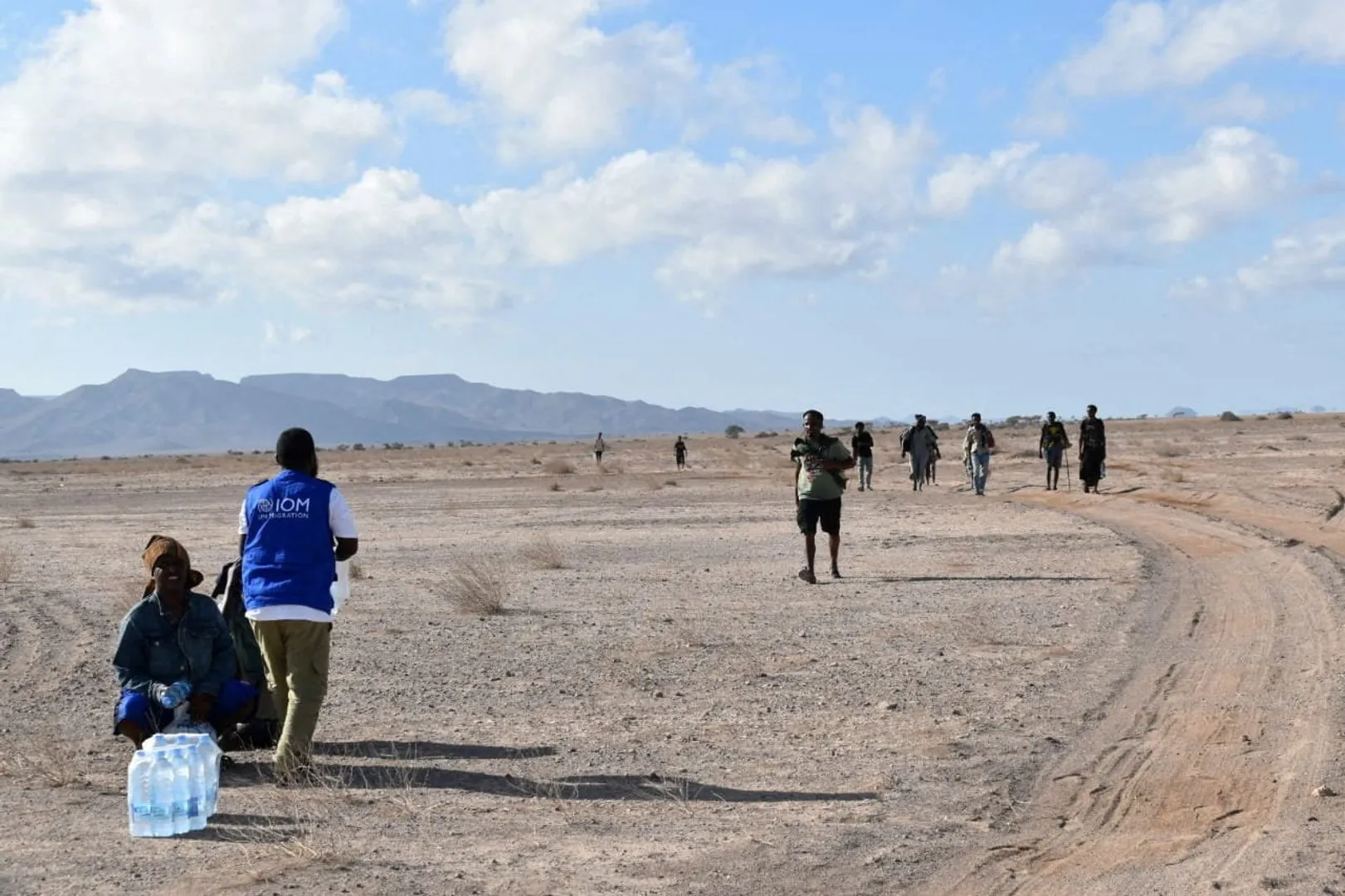
At least 139 migrants, including 15 children, have died and 84 remain missing after a boat carrying more than 300 people capsized off Djibouti en route to Yemen. The disaster highlights the dangers of the Eastern Route, where more than 900 people died or went missing in 2025.
Sunday’s strike on King Khalid International airport kills a Pakistani national.
Published On 12 Oct 202612 Oct 2026
A projectile has struck Saudi Arabia’s King Khalid International airport, killing one person and injuring 11, according to the country’s civil aviation authority.
The General Authority of Civil Aviation (GACA) identified the deceased in Sunday’s attack as a Pakistani resident and said the injured were transferred to several hospitals for medical care.
Recommended Stories
list of 3 itemsend of list
The strike on terminals 3 and 4, which serve domestic flights, occurred a day after a Houthi missile hit the airport, killing 12 people and wounding more than 300, according to the Saudi-led coalition fighting Iran-backed Houthi rebels in Yemen.
India’s embassy in Saudi Arabia said one of its citizens died on Sunday of injuries sustained in Saturday’s attack, which would bring the toll to 13.
Following Sunday’s attack, GACA said damage assessments and safety inspections of the airport were under way.
A witness on board a taxiing aircraft at the airport told the Reuters news agency that a projectile struck the tarmac next to several parked planes at about 8:30pm (17:30 GMT) on Sunday, causing a fire.
The witness said the aircraft returned to the gate, where the passengers disembarked and were told to leave.
The Riyadh airport has been struck four times in the past five days. Houthi attacks on King Khalid airport on Thursday killed at least three Saudi citizens, including a pilot, according to GACA.
The airport has been closed since Saturday’s attack, which was the deadliest in the country since the US-Israel war on Iran began in late February.
The Houthis claimed responsibility for the strikes before Sunday’s.
The airport attacks have escalated the war in Yemen and threaten to draw in the US military. US President Donald Trump says he is weighing whether to join the fight against the Houthis.
The escalation puts further pressure on global oil supplies and prices, as well as on commercial shipping through the Bab al-Mandeb strait off the Yemeni coast, a crucial alternative waterway to the Strait of Hormuz.
Trump had said he intends to speak with Saudi Crown Prince Mohammed bin Salman, who is seeking help against the Houthis, but there were no signs on Sunday that the US president had followed up on his claim.
There are fears that US intervention could prompt the Houthis to halt shipping through Bab al-Mandeb, further restricting the flow of oil out of the Gulf.
The rebels seized key areas along the strait last month. The Saudi-led coalition, backing forces loyal to Yemen’s internationally recognised government, has been trying to seize them back.
Despite a ceasefire agreement reached between Israel and Lebanon in June, Israeli attacks continue.
Published On 11 Oct 202611 Oct 2026
Two men have been killed in southern Lebanon’s Bint Jbeil district while taking part in an annual olive harvest, according to Lebanese state media and local authorities, as attacks by Israel continue.
One of the men died Sunday in the village of Froun from a munition left behind by recent fighting and the other in Yater as a result of Israeli shelling that “targeted the outskirts of the town while he was inspecting his land and olive harvest”, according to the official National News Agency (NNA).
Recommended Stories
list of 3 itemsend of list
The Lebanese army blamed Israeli tank fire and called the ongoing attacks “a flagrant breach of existing agreements”.
Afterwards, the Yater municipality urged residents “to avoid the outskirts of the town and refrain from crossing the earthen barrier separating some unsafe neighbourhoods” for fear of Israeli attacks.
In Froun, the NNA reported that “a foreign object” left over from previous Israeli operations exploded and killed the man, who was an engineer, as he and others tended their trees.
The engineer had come down from Beirut, where he lives, for the harvest, Froun mayor Hassan Bazzi told AFP.
The incident prompted local residents to call off the harvest and wait for “the Lebanese army to complete the decontamination of the village”, Bazzi said.
Displaced people
Since an agreement between Lebanon and Israel was struck in June, violence in the south has lessened, but not stopped.
Lebanon was pulled into conflict on March 2, when Hezbollah struck Israel in support of Tehran during the US-Israel war on Iran. Subsequently, Israel launched a bombing campaign and a ground invasion that authorities say have killed more than 4,300.
In August, Lebanon’s Prime Minister Nawaf Salam accused Israel of intentionally targeting homes and civilian infrastructure across the country. The International Organization for Migration (IOM) recorded nearly 350,000 internally displaced people in late August, a sign of the worsening displacement crisis.
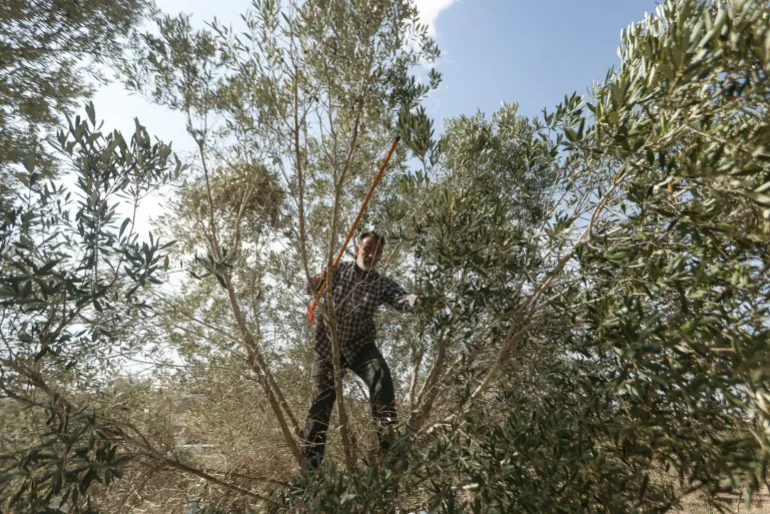
One of the volunteers from Lebanon’s northernmost province of Akkar and the city of Sidon takes part in an olive-picking initiative in the southern Lebanese village of Jebchit near Nabatieh on October 11, 2026 [AFP]
Volunteers from the nearby town of Jebchit and locals came to help their southern neighbours with the harvest in an act of solidarity.
“From north to south, one people and one land,” said organiser Ahmad Chahhal.
Saudi authorities say a Pakistani national was killed and several people injured in a second strike on Riyadh’s King Khalid International Airport. Sunday’s strike followed an attack on Saturday that killed 12 people and injured more than 300. Al Jazeera’s Malik Traina reports.
CCTV footage released by Al Arabiya shows the moment of a Houthi strike on Riyadh’s international airport on Saturday. The attack killed at least 12 people and injured more than 300. A warning this video contains distressing images.



![A Royal Saudi Navy frigate sails alongside US 5th Fleet ships during operations to support maritime security in the Red Sea, where rising tensions between Ethiopia and Eritrea have raised concerns about wider regional stability. [File: Reuters]](https://i0.wp.com/www.aljazeera.com/wp-content/uploads/2026/09/2023-08-10T091620Z_2126421058_RC2LJ2A97N2D_RTRMADP_3_GULF-SECURITY-1789646493.jpg?w=640&ssl=1)