Middle East

Pakistan PM, army chief wrap up key trips in push for more US-Iran talks | US-Israel war on Iran News

Field Marshal Asim Munir leaves Tehran while premier Shehbaz Sharif heads home from Turkiye amid hopes of another round of US-Iran talks.

Pakistan’s army chief and the prime minister have wrapped up separate diplomatic visits aimed at advancing efforts to end the United States-Iran conflict, with Field Marshal Asim Munir leaving Tehran and Prime Minister Shehbaz Sharif returning from Turkiye.

Munir met Iran’s leadership and peace negotiators during a three-day visit to Tehran, a Pakistani military statement said on Saturday.

Recommended Stories

list of 4 itemsend of list

The visit demonstrated Pakistan’s “unwavering resolve to facilitate a negotiated settlement… and to promote peace, stability and prosperity,” the military said ahead of expected US-Iran talks in Islamabad in the coming days.

Munir held talks with the country’s president, foreign minister, parliament speaker and head of Iran’s military central command centre.

Parliament Speaker, Mohammad Bagher Ghalibaf, and Foreign Minister, Abbas Araghchi, led the Iranian delegation to Islamabad for peace talks with the US last week, the highest level face-to-face contact between Washington and Tehran in decades.

Those talks ended without agreement, and a ceasefire is due to expire on April 22.

But diplomacy has continued, with Pakistan’s Prime Minister, Shehbaz Sharif, visiting Saudi Arabia, Qatar and Turkiye to push the peace process.

His three-country trip concluded on Saturday, with Sharif and Foreign Minister Ishaq Dar departing a diplomacy forum in Antalya, according to statements from both officials.

“I leave Antalya [Turkish city] with fond memories and a renewed commitment to further strengthening the enduring fraternal bonds between our two nations, and to continuing our close cooperation to advance dialogue and diplomacy for lasting peace and stability in the region,” Sharif posted on X.

The flurry of diplomacy comes as further negotiations are expected in Pakistan in the coming days as Islamabad intensifies contacts with regional and global leaders in an effort to sustain momentum towards a US-Iran deal.

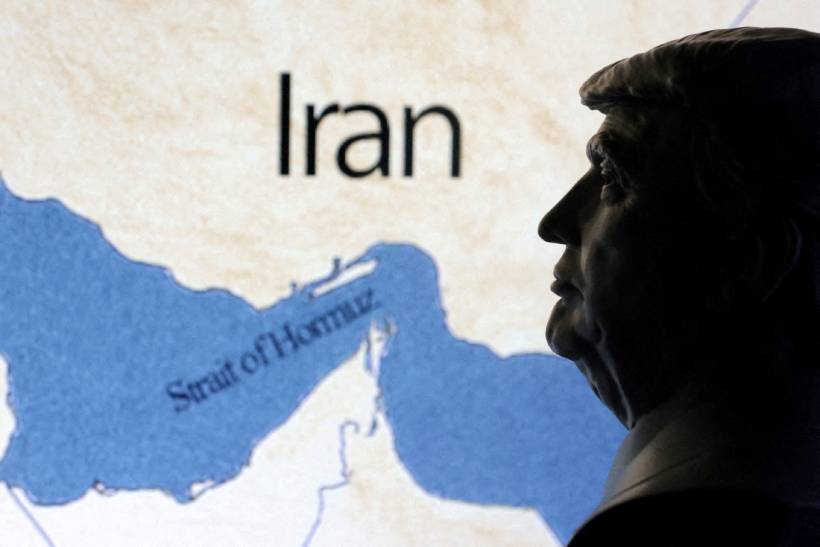
Pressure for a deal between the two countries has grown after Iran reimposed restrictions on the Strait of Hormuz, hours after its reopening following the start of a ceasefire in Lebanon. Tehran accused the US of violating a deal to reopen the strategically important waterway.

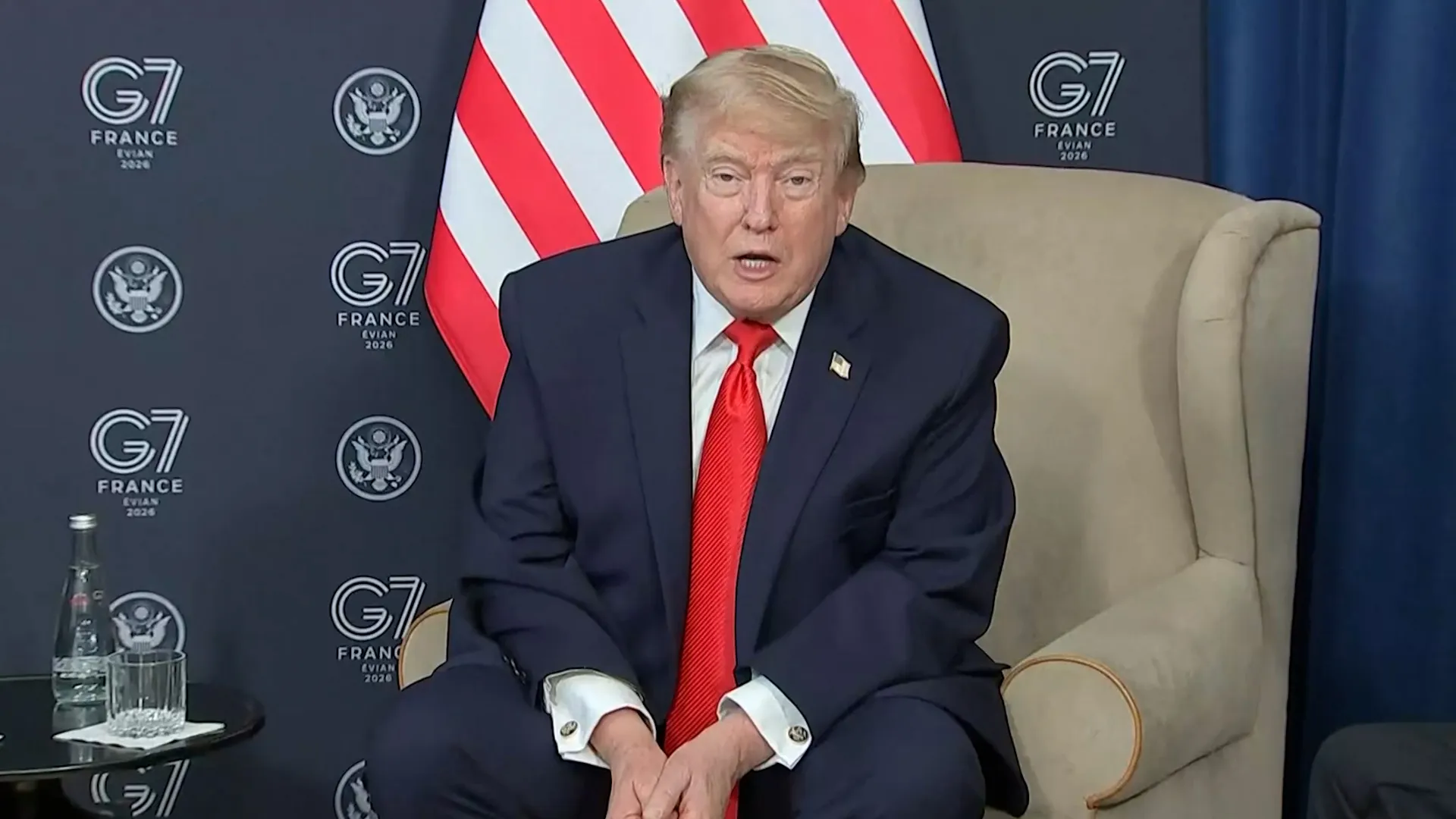
Donald Trump has said a second round of talks with Iran could be held in Pakistan in the coming days. The New York Post reported that Trump praised Munir, saying he was “doing a great job”.

Reporting from Islamabad, Al Jazeera’s Kamal Hyder said Munir landed back home on Saturday as Pakistan prepared for another round of US-Iran talks expected “within the next few days”.

“We have also seen a lot of praise from the Trump administration on social media, praising the Pakistani leadership. So all eyes are on Islamabad. Serious differences remain, but there is a flurry of diplomatic activity and a hope and expectation that some sort of breakthrough may happen,” he said.

Source link

Israeli police destroy children’s footballs at Al-Aqsa mosque | Israel-Palestine conflict

NewsFeed

Video shows Israeli police confiscating and destroying footballs that were being played with by children in the courtyards of Al-Aqsa mosque in occupied East Jerusalem, in what mosque authorities described as part of ongoing restrictions on Palestinians inside the holy site.

Source link

Lebanese man removes Israeli flag from castle in southern Lebanon | Newsfeed

NewsFeed

A Lebanese man who returned to his village in southern Lebanon after the temporary ceasefire was announced removes the Israeli flag from Beaufort Castle (Qalaat al-Shaqif). The castle which dates back to the 12th century is in the Nabatiyeh Governorate.

Source link

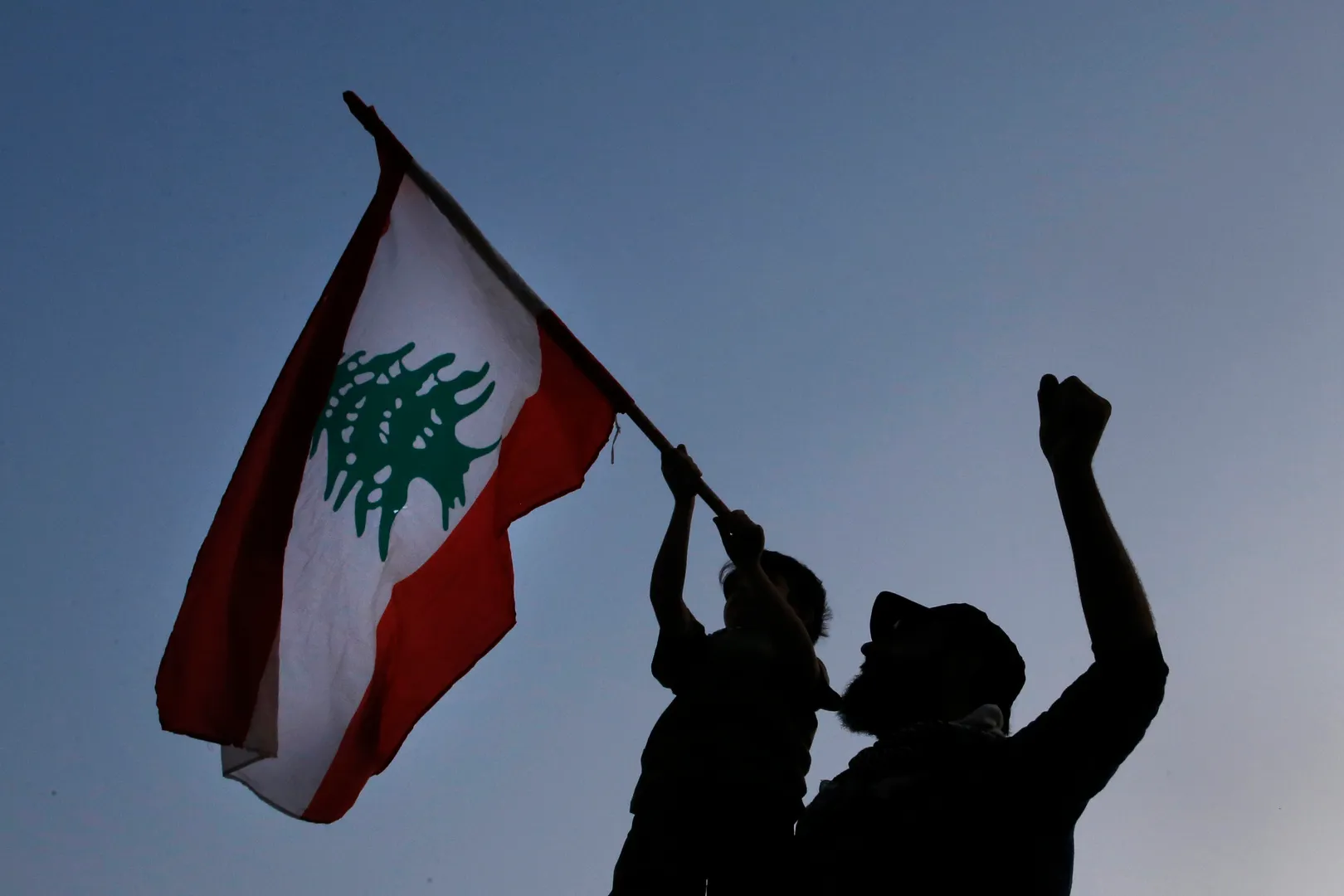
Lebanon president says country is no longer a pawn amid Israel ceasefire | News

President Joseph Aoun promised to work to preserve Lebanon’s sovereignty and freedom.

Lebanese President Joseph Aoun has said that the country would no longer be an “arena for anyone’s wars”, and that the ceasefire with Israel should lead to work on permanent agreements.

In a televised address to the Lebanese public on Friday, he said that Lebanon was no longer “a pawn in anyone’s game, nor an arena for anyone’s wars, and we never will be again”.

Recommended Stories

list of 3 itemsend of list

His speech comes a day after a 10-day ceasefire was announced between Lebanon and Israel, bringing respite from Israeli attacks that began on March 2, after Hezbollah fired at Israel, and have left more than 2,200 dead and more than a million displaced.

Aoun said that they were entering a phase of “transition from working on a ceasefire to working on permanent agreements that preserve the rights of our people, the unity of our land, and the sovereignty of our nation.”

He expressed gratitude to those who he said helped end the hostilities, naming United States President Donald Trump and “all our Arab brothers, foremost among them the Kingdom of Saudi Arabia”.

Aoun promised that any agreement reached would not infringe on the country’s rights or relinquish any of its land, and that the negotiations were not a weakness or a concession.

The ceasefire was announced days after Lebanon and Israel held their first direct talks in decades in Washington, which prompted criticism from the Lebanese population.

“Our objective is clear and declared: to stop Israeli aggression against our land and our people, to obtain Israeli withdrawal, to extend state authority over all its land by its own forces, to ensure the return of prisoners, and to enable our families to return to their homes and villages, in safety, freedom and dignity,” the president said.

Israel continues to occupy areas of southern Lebanon despite the truce, with Israeli Prime Minister Benjamin Netanyahu saying troops would not withdraw during the ceasefire.

Source link

World reacts to Strait of Hormuz reopening amid US-Iran conflict | US-Israel war on Iran News

Iran’s Foreign Minister Abbas Araghchi and United States President Donald Trump have said that the Strait of Hormuz is open to commercial vessels.

Araghchi declared on Friday that the strategic waterwat was “completely open” in line with the ceasefire between Israel and Lebanon that took effect the previous day.

Recommended Stories

list of 3 itemsend of list

Trump affirmed on social media that the strait was open, later claiming that Iran had agreed to “never close the Strait of Hormuz again”. However, he also posted that the US naval blockade on Iranian ports would “remain in full force”.

In parallel, France and the United Kingdom hosted a meeting in Paris involving about 40 countries, which agreed to play a role in restoring freedom of navigation in the Strait of Hormuz once the US-Israeli war on Iran stops.

The blocking of tankers from using the strait, through which about 20 percent of the world’s crude flows on a typical day, has led to a global surge in fuel prices.

World leaders have welcomed the news with cautious optimism amid mixed messages from the US and Iran:

United States

“The Strait of Hormuz is completely open and ready for business and full passage, but the naval blockade will remain in full force and effect as it pertains to Iran, only, until such time as our transaction with Iran is 100% complete,” Trump wrote on Truth Social.

Minutes later, he issued another post saying the US Navy’s blockade on Iranian ships and ports “will remain in full force” until Tehran reaches a deal with the US, including on its nuclear programme.

Later, Trump told the news agency AFP that a deal to end the war on Iran was “close”, saying there were “no sticking points” left between Washington and Tehran.

Iran

Foreign Minister Abbas Araghchi posted on X that the strait was “declared completely open” and would remain open for the remaining period of the 10-day Israel-Lebanon ceasefire, which took effect overnight Thursday into Friday.

Some Iranian state media reports later appeared to contradict Araghchi’s announcement, with a senior military official telling state media that only nonmilitary vessels would be allowed to transit with permission from the Iranian Islamic Revolutionary Guard Corps (IRGC) Navy.

The Fars news agency, which is close to the IRGC, noted a “strange silence from the Supreme National Security Council”, the de facto top decision-making body in the country, as the status of the new supreme leader, Mojtaba Khamenei, remains unknown.

United Kingdom

UK Prime Minister Keir Starmer cohosted a summit on a potential military mission to secure the Hormuz Strait with French President Emmanuel Macron in Paris on Friday, with about 30 to 40 countries participating in person or by video conference.

On the sidelines, Starmer cautiously welcomed news of the strait’s reopening but said it must become “both lasting and a workable proposal”.

He said the UK and France would lead a “strictly peaceful and defensive” multinational mission to protect freedom of navigation as soon as conditions allow.

France

Speaking after the gathering, Macron said, “We all demand the full, immediate and unconditional reopening of the Strait of Hormuz by all parties.”

“We all oppose any restrictions or system of agreements that would, in effect, amount to an attempt to ⁠privatise the strait – and, of course, any toll system,” he added.

Macron’s office said roles for members of the international coalition working to reopen the strait could include “intelligence, mine-clearing capabilities, military escorts [and] communication procedures with coastal states”.

Germany

Chancellor Friedrich Merz said Germany could contribute mine clearance and intelligence capabilities to the international mission, but would need parliamentary support and a ″secure legal basis″ such as a UN Security Council resolution.

He said he wanted US involvement in the international mission to secure shipping through the Strait of Hormuz. “We believe this would be desirable,″ he said.

Trump later appeared to rebuff his overtures, saying on social media that he had received a call from NATO, but declined its assistance in no uncertain terms.

Finland

Finnish President Alexander Stubb, who participated in the Paris summit, said on X, “We welcome Iran’s announcement on opening the Strait. Lasting solutions require diplomacy,”

United Nations

United Nations Secretary-General Antonio ⁠Guterres on ⁠Friday welcomed the opening ‌of Strait of Hormuz by Iran ⁠and said ⁠it was “a ⁠step in the ⁠right ⁠direction”.

International Maritime Organisation

Arsenio Dominguez, secretary-general of the UN shipping agency said, “We are currently verifying the recent announcement related to the reopening of the Strait of Hormuz, in terms of its compliance with freedom of navigation for all merchant vessels and secure ‌passage.”

Shipping companies

The Norwegian Shipowners’ Association said several things had to be clarified before any ships can transit the strait, including the presence of mines, Iranian conditions and practical implementation.

“If this represents a step towards an opening, it is a welcome development,” said Knut Arild Hareide, CEO of the association, which represents 130 companies with some 1,500 vessels.

A spokesperson for Germany’s Hapag-Lloyd Shipping Company said, “We are now beginning to assess the new situation and the risks involved … For the time being, therefore, we are still refraining from passing through the strait.”

In a statement, Denmark’s Maersk said: “We have noted the announcement. The safety of our crew, vessels and customers’ cargo remains our priority. Since the outbreak of the conflict, we have followed the guidance of our security partners in the region, and the recommendation so far has been to avoid transiting the Strait of Hormuz.

“Any decision to transit the strait will be based on risk assessments and close monitoring of the security situation, with the latest developments also included in the ongoing assessments.”

Markets

Oil prices plunged after Iran’s announcement that passage for commercial vessels would remain “completely open” for the duration of a 10-day ceasefire in Lebanon.

“This news is having an immediate impact on markets,” said Kathleen Brooks, research director at XTB. “This is the biggest development so far during the ceasefire, and it gives hope that the war will end soon, and supply chains will return to some normality.”


Source link

Shipping firms seek clarifications before crossing Hormuz | US-Israel war on Iran News

Shipping companies said several things had to be clarified, including the presence of mines, Iranian conditions, practical implementations.

Shipping companies have cautiously welcomed Iran’s announcement that the Strait of Hormuz is open but said they would require clarifications, including about the risk of mines, before vessels move through the entry point to the Gulf.

Iran’s Foreign Minister Abbas Araghchi said on Friday that the Strait of Hormuz was open to all commercial vessels during a 10-day Lebanon ceasefire accord, prompting a fall in oil and other commodity prices while stock markets rose.

Recommended Stories

list of 4 itemsend of list

All commercial ships, including United States vessels, can sail through the strait, although their plans need to be coordinated with Iran’s Islamic Revolutionary Guard Corps, a senior Iranian official told the Reuters news agency.

Transit would be restricted to lanes which Iran deemed safe, adding that military vessels were still prohibited, the official said.

“We are currently verifying the recent announcement related to the reopening of the Strait of Hormuz, in terms of its compliance with freedom of navigation for all merchant vessels and secure passage,” said Arsenio Dominguez, secretary-general of the United Nations shipping agency, the International Maritime Organization.

The Norwegian Shipowners’ Association said several things had to be clarified before any ships could transit the strait, including the presence of mines, Iranian conditions and practical implementation.

“If this represents a step towards an opening, it is a welcome development,” said Knut Arild Hareide, CEO of the association which represents 130 companies with some 1,500 vessels.

Shipping association BIMCO cautioned members on returning to the strait.

“The status of mine threats… is unclear and BIMCO believes shipping companies should consider avoiding the area,” said Jakob Larsen, BIMCO’s chief safety and security officer.

The threat posed by mines in parts of the strait is not fully understood, and avoidance of the area by ships should be considered, a US Navy advisory on Friday, seen by Reuters, also said.

German shipping group Hapag-Lloyd on Friday said it was working for its ships to sail through the strait “as soon as possible”, but added that several questions remained.

“Our crisis committee is in session and will try to resolve all open items with the relevant parties within the next 24-36 hours,” it added.

Its Danish peer Maersk said it was closely monitoring the security situation and would act based on its risk assessment.

France’s CMA CGM and Norwegian oil tanker group Frontline declined to comment.

A recent route imposed by Tehran through its territorial waters near Larak Island would present navigational challenges even if vessels were not required to pay a toll, and would raise questions regarding compliance and insurance, said Matt Wright, lead freight analyst at data intelligence firm Kpler.

US President Donald Trump on Friday said Iran had agreed to never close the strait again, and that it was removing sea mines from it.

One of the world’s most important maritime chokepoints, disruption in the strait has forced shipping companies to suspend sailings, reroute cargo and rely on costly workarounds to keep goods moving in and out of the Gulf.

Source link

World Cup 2026: Saudi Arabia sack coach Herve Renard | Football News

Frenchman Herve Renard, who won AFCON with Zambia and Ivory Coast, departs Saudi role despite World Cup qualification.

Frenchman Herve Renard has been relieved of his duties as Saudi Arabia coach, less than two months before the start of the FIFA World Cup 2026 in North America.

The 57-year-old had returned for a second spell as Saudi coach at the end of 2024, having led them at the last World Cup four years ago in Qatar.

Recommended Stories

list of 4 itemsend of list

“That’s football … Saudi Arabia have qualified for the World Cup seven times, including twice with me,” Renard told the news agency AFP on Friday.

“And there’s only one coach who has led them through both the qualifiers and the World Cup; that’s me, in 2022. At least there will be that sense of pride.”

Saudi Arabia players celebrate with French coach Herve Renard during the FIFA World Cup 2026 Asian qualifier football match between Saudi Arabia and Iraq at King Abdullah Sports City in Jeddah on October 14, 2025. (Photo by Abdel Ghani BASHIR / AFP)
Saudi Arabia players celebrate with French coach Herve Renard after securing World Cup qualification [File: Abdel Ghani Bashir/AFP]

Renard, a two-time Africa Cup of Nations (AFCON) winner with Zambia and the Ivory Coast, was in charge of Saudi Arabia from 2019 to 2023 before being replaced by Italian coach Roberto Mancini.

From 2023 to 2024, he served as coach of the France women’s team and reached the quarterfinals of both the 2023 Women’s World Cup and the 2024 Paris Olympics.

Ex-Morocco coach Renard was later brought back by Saudi Arabia to succeed Mancini, as the Italian left his role after an underwhelming 14-month stint.

Former Greece international Georgios Donis is reportedly being lined up as the man to take over from Renard. A source close to the negotiations told AFP that talks are under way between the federation and Saudi club Al Khaleej, where Donis has been in charge since 2024.

Saudi Arabia's French head coach Herve Renard (C) and members of Saudi Arabia's delegation pose on the red carpet upon arrival to attend the draw for the 2026 FIFA Football World Cup taking place in the US, Canada and Mexico, at the Kennedy Center, in Washington, DC, on December 5, 2025. (Photo by Roberto SCHMIDT / AFP)
Saudi Arabia’s French head coach Herve Renard, centre, and members of Saudi Arabia’s delegation at the 2026 FIFA Football World Cup draw [Roberto Schimdt/AFP]

Saudi Arabia are in Group H at the 2026 World Cup, alongside two former champions, Spain and Uruguay, and debutants Cape Verde. All their group games are scheduled to be played across the United States.

The Arab nation has made six World Cup appearances, with a round of 16 finish in 1994 in the US their best result thus far.

The Saudi team suffered a group-stage exit in the last World Cup in 2022, but made headlines worldwide with a shock 2-1 group win over eventual champions Argentina.

Saudi Arabia is also due to host the 2034 World Cup.

Source link

Lebanese return to devastated south as fragile 10-day truce takes hold | Israel attacks Lebanon News

Hezbollah warns it has its ‘finger on the trigger’ in case of Israeli violations of the temporary ceasefire.

Displaced Lebanese have begun cautiously returning to their homes in the south after Lebanon and Israel agreed to a 10-day truce, even as the Lebanese army calls on residents to delay their return and Hezbollah warns it has its “finger on the trigger” in case of Israeli violations.

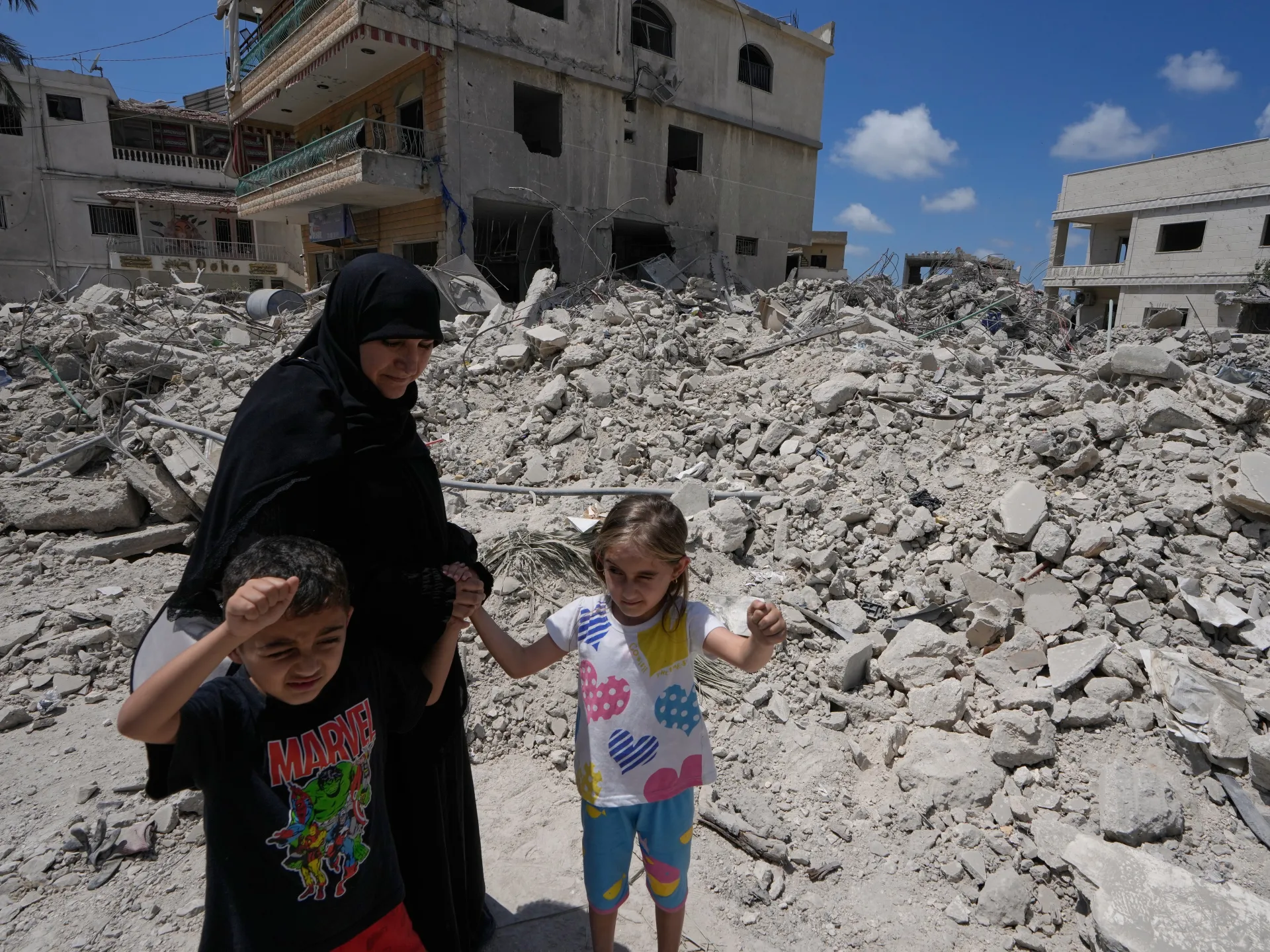
Tens of thousands of people poured into areas of southern Lebanon on Friday morning hours after the truce went into effect, many heading back to homes and villages battered by more than a month of Israeli attacks.

Recommended Stories

list of 3 itemsend of list

“People just couldn’t wait,” reported Al Jazeera’s Zeina Khodr from Nabatieh, one of the hardest hit areas.

“Even if it’s 10 days, they want to return to their homes. Some of them are just coming to see what remains of their homes, what remains of their lives.

“They want to show that they don’t want to give up their lands,” added Khodr.

While the ceasefire largely appeared to hold, Lebanon’s army accused Israel of several early violations on Friday, including intermittent shelling of ‌southern Lebanese villages.

Lebanon’s National News Agency also reported that unexploded ordnance killed a boy in the town of Majdal Selem, while rescuers uncovered the bodies of at least a dozen people killed in earlier attacks in Tyre.

French President Emmanuel Macron warned that the ceasefire “may already be undermined by ongoing military operations” and called for “the safety of civilians on both sides of the border”.

Hezbollah said its fighters “will keep their finger on the trigger because they are wary of the enemy’s treachery”.

Israeli air strikes and a ground invasion of parts of southern Lebanon have killed more than 2,100 people and displaced some 1.2 million in the latest round of fighting, according to Lebanese authorities.

Hezbollah attacks, meanwhile, killed two Israeli civilians, while 13 Israeli soldiers were killed in Lebanon, according to Israel.

Israeli officials have said they intend to maintain control over Lebanese territory extending to the Litani River as a “buffer zone” against Hezbollah.

‘Unliveable’

As residents assessed the damage to their hometowns, some pledged to stay, while others – finding nothing to return to or fearing the fragile truce could collapse – said they would leave again.

“There’s destruction and it’s unliveable. Unliveable. We’re taking our things and leaving again,” said Fadel Badreddine, who returned to Nabatieh with his young son and wife. “May God grant us relief and end this whole thing permanently – not temporarily – so we can return to our homes and lands.”

Al Jazeera’s Khodr said “wherever you look you see damage, destruction” in Nabatieh. “So much has been lost in this conflict in the past 46 days.”

If the ceasefire holds, it could ease one of the main points of tension in US-Iran negotiations. Iran and mediator Pakistan had maintained that Lebanon should be covered in a separate US-Iran ceasefire framework, while Israel claimed it was not part of that deal and continued its attacks.

Ali Akbar Dareini, a researcher at Iran’s Center for Strategic Studies, said the Israel-Lebanon ceasefire had removed one obstacle to wider negotiations between the US and Iran because Tehran views the regional conflict as interconnected, describing this as a “unity of fronts”.

Pakistani Prime Minister Shehbaz Sharif, whose country hosted last week’s ceasefire talks between the US and Iran, welcomed the Israel-Lebanon truce on Friday and expressed “hope that it will pave the way for sustainable peace”.

He also praised the mediation role of US President Donald Trump, who has invited Israeli Prime Minister Benjamin Netanyahu and Lebanese President Joseph Aoun to the White House for “meaningful talks”.

“Pakistan reaffirms its unwavering support for the sovereignty and territorial integrity of Lebanon, and will continue to support all efforts aimed at lasting peace in the region,” Sharif said on X.

Source link

Iran war’s big winners: Wall Street, weapons firms, AI and green energy | Business and Economy News

The International Monetary Fund has downgraded its global growth forecast for 2026 from 3.3 to 3.1 percent, citing the impact of the United States-Israeli war on Iran and the shutdown of the Strait of Hormuz on the world economy.

The war has damaged energy infrastructure across the Gulf, while critical exports like oil, gas, chemicals and fertiliser remain largely stranded by Iran’s shutdown of the strait and the subsequent US naval blockade of Iranian ports.

Recommended Stories

list of 4 itemsend of list

In the worst-case scenario of a prolonged war, the IMF said global growth could fall to 2.5 percent in 2026, with low-income and developing economies hit the hardest by soaring commodity and energy prices. The global shipping and logistics industry is facing a separate crisis.

But every economic crisis also has beneficiaries: despite the dire macroeconomic outlook, some corners of the global economy are thriving on the uncertainty.

Here’s a look at five industries that are doing well either despite – or because of – the darkening economic outlook.

Wall Street investment banks

Global investors have been on a rollercoaster since the start of US President Donald Trump’s second term last year. The president’s erratic decision-making, where he often issues an ultimatum one day and then changes it the next, has led traders to coin the term “TACO trade”, where TACO stands for “Trump Always Chickens Out”.

The recent volatility has made some investors anxious, but it’s been a boon to investment banks, which make millions in commissions and revenue from the surging volume of trade, according to Sean Dunlap, a director of equity research at Morningstar Research Services.

“Clients want to reposition, so they trade frequently,” he told Al Jazeera. “Spreads tend to increase, which increases the profitability for trade intermediaries like banks.”

First-quarter results for 2026 – released this week – showed that Morgan Stanley reported a profit of $5.57bn, up 29 percent year on year, while Goldman Sachs reported a profit of $5.63bn, up 19 percent year on year.

JP Morgan Chase also reported major gains, with first-quarter earnings of $16.49bn, up 13 percent year on year. The banks all cited high levels of trading, deal-making, and “robust client engagement” as the reasons behind surging profits.

The boomtime for banks could reverse course, however, if volatility persists for too long, Dunlap warned, because investors may become increasingly cautious and less willing to borrow money to make trades.

Prediction markets

As mainstream Wall Street banks reap profits, the crypto-based prediction platform Polymarket has been earning upwards of $1m a day since the start of the month by letting users make peer-to-peer bets on everything from sports tournaments to elections.

Polymarket has been doing well since the start of the war, but it revised its fee structure on March 30 to cash in even more on its popularity.

Rival platforms like Kalshi, Novig and Robinhood also follow the same business model, but Polymarket has been the standout winner of 2026 because it controversially allows users to bet on the outcome of conflicts like the Iran war.

Polymarket revised its fee structure on March 30 to cash in on its popularity. The change has already netted the platform more than $21m in fees since April 1, up from $11.6m for all of March and $6.23m for all of February, according to DefiLlama, a website that provides data analysis for decentralised finance platforms.

If the current trend continues, Polymarket could make $342m in fees this year alone, according to DefiLlama’s analysis.

Anonymous users have also made millions correctly predicting the dates of major events like the US-Iran ceasefire, but the outcomes for rank-and-file users are typically less impressive.

Researchers found that the top 1 percent of Polymarket users captured 84 percent of all trading gains, according to a new report released this month analysing 70 million trades from 2022 to 2025. The returns are so high that US federal regulators have pledged to crack down on insider trading in prediction markets following suspiciously well-timed bets on Iran war outcomes.

Aerospace and defence

Unsurprisingly, the aerospace and defence industries are booming this year due to major conflicts in Ukraine, Iran, Sudan, Gaza and Lebanon and a surge in global defence spending.

About half of the world’s countries have increased their military budgets over the past five years, according to an April report from the IMF, which means they are also buying everything from drones to missiles — more than ever before. Demand is growing particularly fast in Europe, where NATO countries have committed to raising defence spending to 5 percent of gross domestic product (GDP) by 2035.

The defence industry has, in turn, seen major gains on the stock market. The MSCI World Aerospace and Defence Index – which tracks aerospace and defence stocks across 23 global markets – reported net returns of 32 percent year on year at the end of March.

The defence index outpaced the MSCI World Index, which tracks 1,300 large and mid-cap companies across the same 23 markets. The index, which gives a broader overview of global stock markets, reported net returns of 18.9 percent over the same period.

Artificial intelligence

Last year, the United Nations Trade and Development (UNCTAD) office predicted that the AI industry would grow from $189bn in 2023 to $4.8 trillion by 2033, and the Iran war does not seem to have dented the outlook.

“Despite the shocks from the Iran war, we’re still seeing resilience in a lot of sectors like artificial intelligence and renewable energy,” said Nick Marro, lead analyst for global trade at the Economist Intelligence Unit.

One metric for the AI boom has been the high volume of semiconductor chips still being exported out of East Asia, he said. At the top of the chart is chipmaking powerhouse Taiwan, which reported record-breaking merchandise exports of $80.2bn in March, up 61.8 percent year on year, according to EIU analysis.

The surge was led by exports to the US, which grew by 124 percent year on year, the EIU said.

Taiwan Semiconductor Manufacturing Company, the world’s top chipmaker better known by its acronym “TSMC,” on Thursday posted a net income of 572.8 billion New Taiwan Dollars (NTD) ($18.1bn) for the first three months of 2026 – up 58 percent year on year in NTD.

Another metric, initial public offerings or “IPOs,” also shows that the industry is confident for the moment, with industry leaders Anthropic and OpenAI both planning to go public this year.

Renewable energy

The Iran war has highlighted the need to transition from fossil fuels not only for environmental reasons, but also for reasons of energy security. The war marks the third major energy shock this decade, following the COVID-19 pandemic and the 2022 Russian invasion of Ukraine.

The Iran war has “boosted” renewable energy “given the urgency to switch away from fossil fuels and diversify towards renewable sources,” Marro of the EIU said.

Even before the Iran war began, the International Energy Agency reported that global governments were already taking active measures to invest in renewable energy for geopolitical reasons.

According to an IEA report released this month, “150 countries have active policies to advance renewable and nuclear deployment, 130 have energy efficiency and electrification policies, and 32 have policies to incentivise supply chain resilience and diversification across critical minerals and clean energy technologies.”

The Iran war has triggered another flurry of policymaking in Asia, which typically buys 80 to 90 percent of the oil and gas that transits through the Strait of Hormuz. Since the shutdown, the region has been struggling to find alternative sources of energy, forcing governments to deploy emergency measures like fuel rationing and price caps.

South Korea, Thailand, India, Cambodia, Indonesia, Vietnam and the Philippines have all announced a variety of measures from tax breaks for at-home solar panels to commissioning new renewable energy projects – and even restarting nuclear reactors.

The surge in policymaking has been good for the renewable industry. The S&P Global Clean Energy Transition Index, which tracks 100 companies that produce solar, wind, hydro, biomass and other renewable energy across emerging and developed markets, is up 70.92 percent year on year.

Source link

France arrests suspect over 1982 attack on Jewish restaurant | Crime News

Mahmoud Khader Abed Adra, sought for over four decades, was surrendered by Palestinian authorities

A man suspected of organising a deadly attack on a Jewish restaurant in Paris has been arrested and placed in custody in France after being handed over by Palestinian authorities.

Mahmoud Khader Abed Adra, also known as Hicham Harb, arrived in France on Thursday after Palestinian officials surrendered him to French authorities, a handover that French President Emmanuel Macron linked directly to France’s recent recognition of Palestinian statehood.

Recommended Stories

list of 3 itemsend of list

On August 9, 1982, three to five men threw a grenade into Jo Goldenberg, a Jewish-owned restaurant in the Rue des Rosiers, in Paris’s historic Marais district, before opening fire on the street outside.

Six people were killed and 22 wounded in the incident.

The attack was blamed on the Fatah-Revolutionary Council, a Palestinian armed faction that had split from the mainstream Palestine Liberation Organization (PLO).

Adra was arrested in the West Bank by Palestinian security forces in September last year.

French antiterrorism prosecutors filed an extradition request days later, and he was flown to the Villacoublay military airbase outside Paris on Thursday, where he was taken into custody.

His lawyer described the extradition as “a serious violation of Palestinian fundamental law”.

“Forty-four years is too long,” said David Pere, a lawyer representing several families.

Two other suspects are already in French custody, and in February, France’s highest court confirmed that a trial will proceed, a ruling that had been challenged by the defendants.

Macron praised the Palestinian Authority’s cooperation, saying it reflected a commitment by President Mahmoud Abbas to work with France on counterterrorism.

Abbas had told French newspaper Le Figaro late last year that France’s recognition of Palestinian statehood in September 2025 had “created an appropriate framework” for the extradition request.

Source link

‘Trump forced Israel into a ceasefire’ with Lebanon | Israel attacks Lebanon

NewsFeed

Abed Abou Shhadeh, a political commentator based in Israel, says the ceasefire between Israel and Lebanon is ‘extremely problematic, not only for Netanyahu, but for the Israeli public who were promised for two and a half years now, absolute victory’.

Source link

People in Beirut wary of trusting Israel will uphold Lebanon ceasefire | Newsfeed

NewsFeed

Lebanon’s residents say they are wary of trusting that Israel will abide by the ceasefire agreement announced by US President Donald Trump. Al Jazeera’s Justin Salhani reports from Beirut where residents tell him they are not celebrating.

Source link

‘Endless grief’: Turkiye mourns victims of second school shooting in a week | Gun Violence News

Death toll rises to 10 after shooting by 14-year-old student at the Ayser Calik School in Kahramanmaras.

Mourners have gathered in Turkiye’s southern province of Kahramanmaras for the funerals of victims killed in the second of two school shootings that rocked the nation this week.

Funerals were held on Thursday for eight students and maths teacher Ayla Kara, 55, who were killed in Wednesday’s shooting, The Associated Press news agency reported.

Recommended Stories

list of 3 itemsend of list

A 10th victim died while being treated in hospital on Thursday, authorities said. Six of those wounded in the attack were in critical condition, officials said.

Isa Aras Mersinli, 14, opened fire on two classrooms in the Ayser Calik School in Kahramanmaras city on Wednesday. The attacker was later found dead.

Interior Minister Mustafa Ciftci said the attacker is believed to have used guns that belonged to his father, a former police officer.

Coffin of a victim of a school shooting in Turkiye
People carry the coffin of a victim of a school shooting during the funeral prayers at a mosque in Kahramanmaras, Turkiye, on April 16, 2026 [Ensar Ozdemir/Reuters]

At a funeral for four of the victims held near Kahramanmaras city’s main mosque on Thursday, one father sat motionless beside the coffin of his daughter, 10‑year‑old Zeynep, the AFP news agency reported.

“Our grief is endless. These children were like our own. They were all innocent,” said Vezir Yucel, father of a student named Yusuf, who lost his close friend, 10-year-old Bayram, in the shooting.

Nilgun Ruci, a 55‑year‑old homemaker, told AFP that she rushed to Ayser Calik School after hearing gunshots. When she arrived, she saw the daughter of a neighbour lying gravely wounded.

“She had been shot in the leg and the shoulder,” Ruci said. “At first, I thought she had fainted. Today I learned that she died.”

Second attack in two days

The attack was the country’s second school shooting in two days, coming after Tuesday’s attack at a high school in Sanliurfa province in the southeast, which was carried out by a former student who wounded 16 people.

As of Thursday, 20 people had been detained in connection with Tuesday’s shooting in Sanliurfa.

The interior and education ministries held a joint school security meeting in the capital, Ankara, on Thursday, which was attended by both ministers and all 81 of Turkiye’s provincial governors, as well as police chiefs and provincial education directors.

Until this week, school shootings were rare in Turkiye. But dozens of students were arrested Thursday over alleged social media posts implying they might stage similar attacks.

Justice Minister Akin Gurlek announced that 67 social media users were detained over posts targeting 54 different schools.

Source link