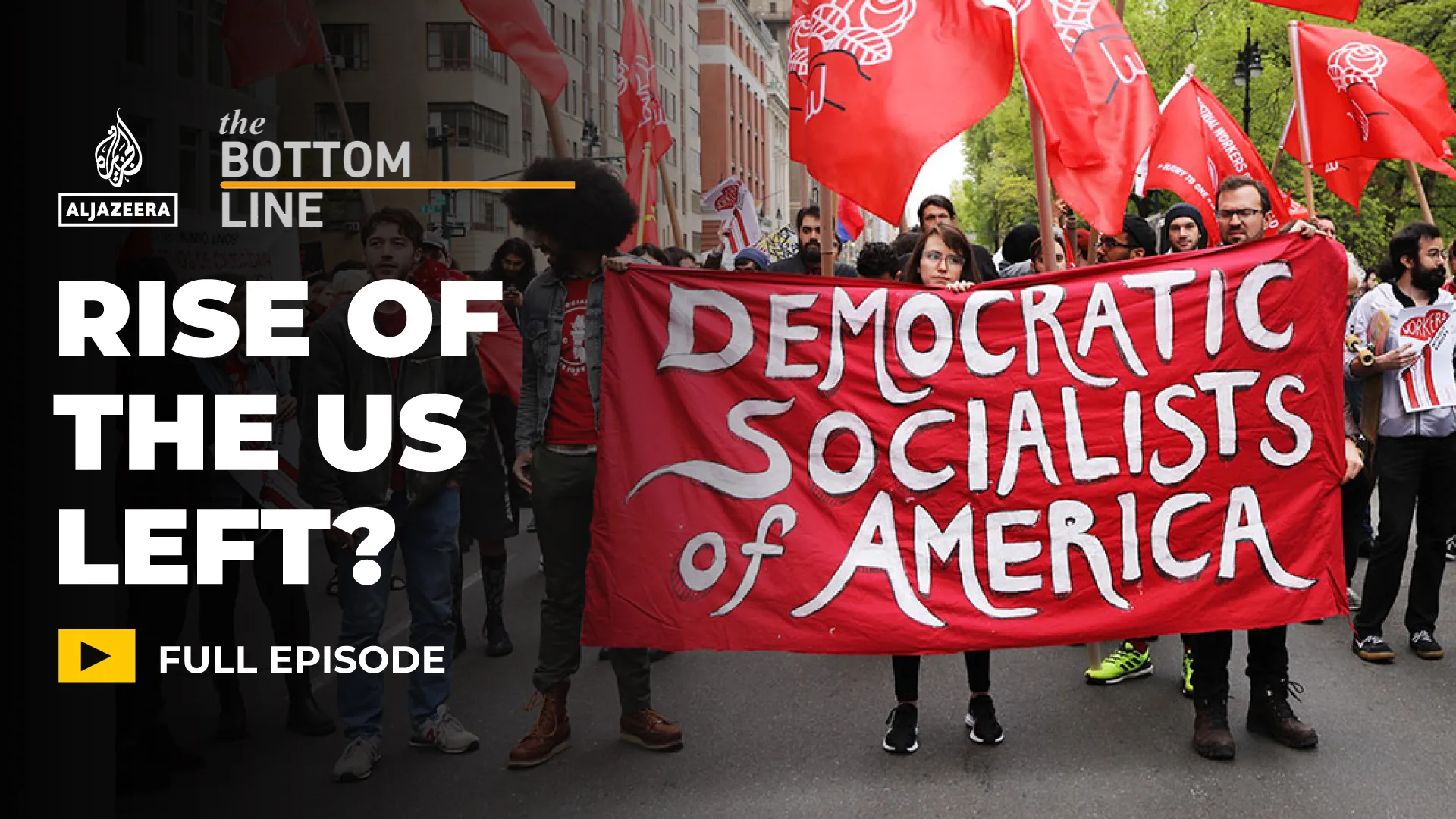
The left is rising because Americans ‘want more from the Democrats’, US Representative Jim McGovern argues.
Progressive Democratic politicians who refuse to take donations from pro-Israel groups have won several party primary elections across the United States.
Democratic Congressman Jim McGovern tells host Steve Clemons that the left is rising because Americans “want more from Democrats”.
“Right now, we’re doing a lot of bad things all around the world, and people need to protest,” McGovern says. On US policy ranging from Cuba to Israel, he argues that Congress has become “just a rubber stamp on whatever this president wants to do”.
“We need to fight for the soul of this country,” McGovern adds.
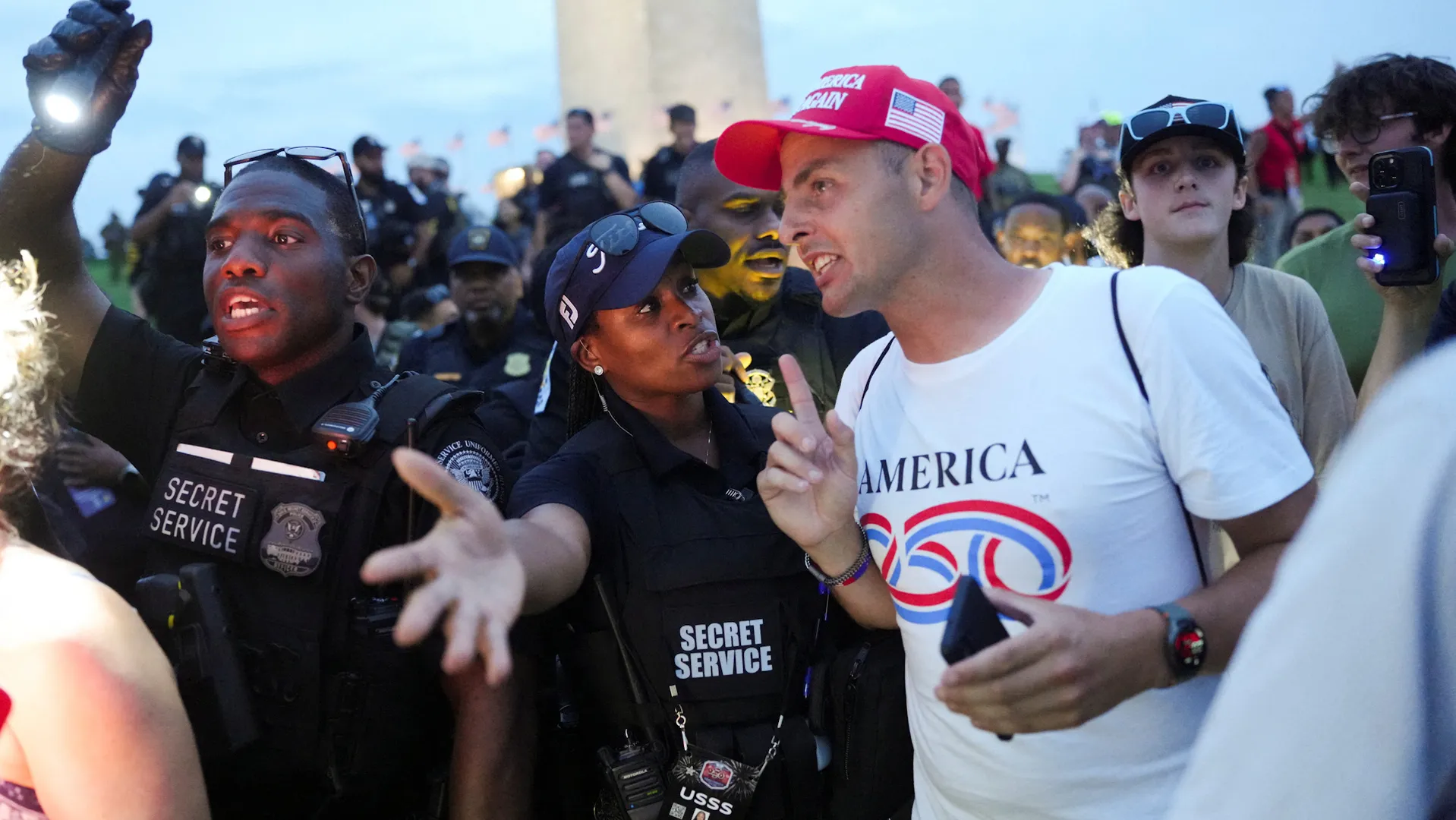
Extreme weather disrupted the US’s 250th anniversary celebrations, forcing evacuations, cancellations and delays. Despite setbacks including a National Mall evacuation and a fireworks display setting the Brooklyn Bridge on fire, Trump called the day ‘one of the most joyous and glorious’ in US history.
Starting July 4, parents can open “Trump accounts” that, for children born during President Donald Trump’s second term as president, include a $1,000 investment deposit. File Photo by John Angelillo/UPI | License Photo
July 4 (UPI) — The Trump administration officially launched “Trump Accounts” on July 4, which have been set up for parents to save money for their children.
The accounts, which include $1,000 for each child who is born between Jan. 1, 2025, and Dec. 31, 2028 — President Donald Trump‘s current term in office — can now be set up by parents after their authorization in last year’s “Big Beautiful Bill.”
The federal savings program is available for any child under 18, and can accept up to $5,000 in contributions per year, although the $1,000 seed funds for the accounts are only available to children born during Trump’s current term.
The Treasury Department said in a press release that more than 50 companies have committed to also contributing to accounts established for their employees’ children, regardless of their eligibility for the government contributed $1,000.
“Trump accounts are now live, giving every child a stake in the American Dream from day one,” Treasury Secretary Scott Bessent said in a statement on X.
“The Trump Accounts app is now updated with the full suite of account capabilities: you can start funding your child’s account, exploring financial education modules and more,” Bessent said.
The administration said that the accounts are aimed at “helping children start with a foothold in the American from birth or early childhood” with an investment account, which is part of a program that includes educational programs for both parents and children on how investment markets work.
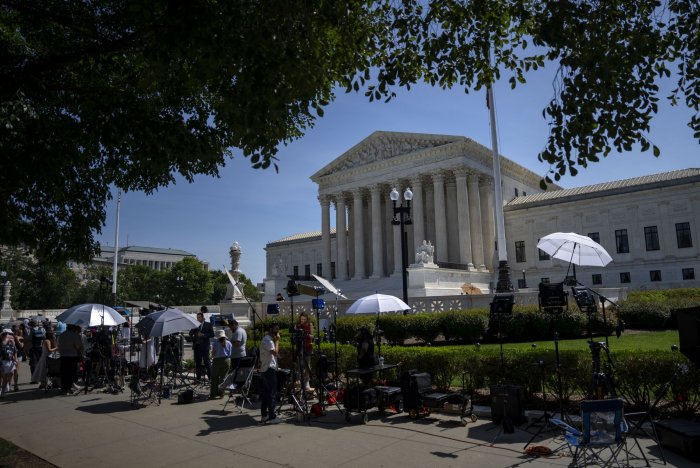
News anchors are seen outside the Supreme Court of the United States as the court releases their final opinions before summer recess on Tuesday. The court upheld birthright citizenship and also state laws banning transgender women and girls from playing on school athletic teams. Photo by Bonnie Cash/UPI | License Photo
There will be an update from Jet2 this week(Image: Pavel1964 via Getty Images)
Jet2 is set to make a key announcement on Wednesday.
Shareholders in what is one of Britain’s largest package holiday operators will be eagerly awaiting news on whether US-Iran peace negotiations have helped boost travel demand and stabilise jet fuel supplies as the summer booking season gets under way. Jet2 is set to unveil its full-year financial results on Wednesday, following a turbulent period for the travel sector.
The airline and package holiday giant informed investors it was anticipating an operating profit of between £435 million and £440 million for the year ending March. Passenger bookings for the summer were up in April compared with the same period last year, across both package holidays and flights, fuelling hopes of a bumper season ahead.
Jet2 disclosed that holidaymakers were increasingly leaving it later to book their trips, suggesting that anxiety surrounding the Middle East conflict was pushing travellers towards last-minute decisions.
AJ Bell analysts Russ Mould and Dan Coatsworth said shareholders will be keen to learn how travel demand has held up since US President Donald Trump announced he had struck a peace deal with Iran last month.
“Jet2’s commentary on current trading will be much more important than its full-year numbers to March 31,” they said. “Reports suggest holiday companies have enjoyed a strong bounce in trading since Donald Trump said a peace deal had been agreed with Iran.
“We’ve already seen oil prices return to pre-Iran war levels and there are reports from various holiday companies of a surge in bookings to Cyprus and Turkey.”
Jet2 offers holidays to both destinations and throughout the Mediterranean. The effective closure of the Strait of Hormuz, which had severely restricted shipping since the outbreak of the Iran war, resulted in a drop in the global supply of jet fuel, prompting some airlines to scale back their summer travel schedules.
However, Jet2 moved to reassure holidaymakers in May that its flight schedule would run as normal throughout the summer, and pledged not to impose surcharges on any pre-booked trips to offset the increased costs.
In addition, the company launched its first flights from a brand new base at London Gatwick airport earlier this year, which it hopes will unlock bookings from an extra 15 million potential customers.
On Thursday morning, a small group of advocates gathered outside the United States federal courthouse in San Diego, California.
One of them pointed to a poster of a young man in a US Navy uniform, three golden medals pinned to his chest.
“This is my brother, Benito Miranda Hernandez, US Navy veteran,” said James Smith, the founder of Black Deported Veterans of America.
Smith and the other advocates had organised the demonstration on behalf of Hernandez, who was miles away at that moment, stuck in an immigration detention facility.
Brought from Mexico to the US as a baby, Hernandez had completed three tours of duty with the US military during the Iraq war. His military service was meant to be his path to citizenship.
But now, Hernandez is among the immigrant veterans fighting deportation under US President Donald Trump.
“These men and women were promised that they were going to get their citizenship if they served,” Smith said. “Help this brother come home.”
Trump has pledged to prioritise immigrants with criminal records in his push for mass deportation.
But advocates for US military members argue that veterans are particularly vulnerable, given their over-representation in prisons and jails. The majority have reported suffering from mental health problems after their service.
Hernandez, for instance, said he struggled to reintegrate into civilian life after leaving the military. But on June 14, he had finally completed his years-long sentence for a drug conviction.
As he waited for his mother, Maria Miranda, to pick him up, agents from US Immigration and Customs Enforcement (ICE) detained him.
Only afterwards did Miranda and her other son arrive. They spent hours that day looking for him, not knowing where he had gone.
“He was doing things right,” Miranda told Al Jazeera in Spanish. “He had so many hopes, so many dreams.”
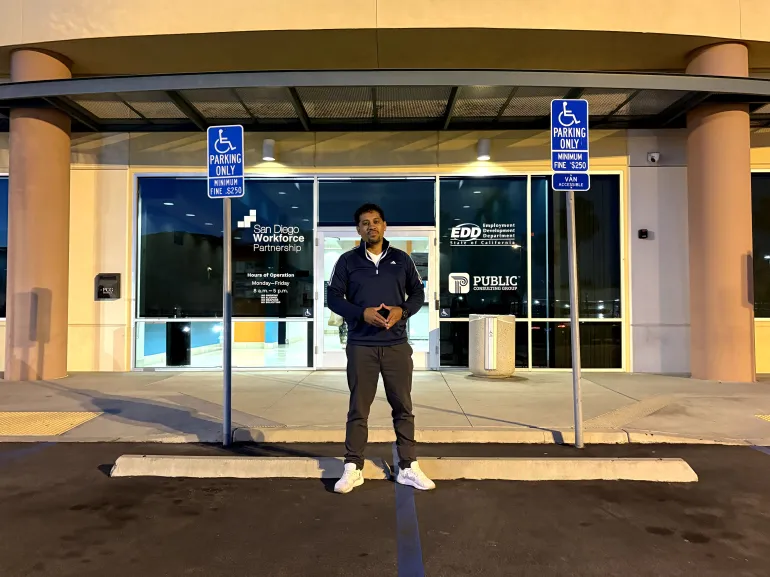
Benito Miranda Hernandez stands outside the reentry programme where he recently worked, before he was detained by immigration officials in June [Anna Oakes/Al Jazeera]
Hernandez has since been transferred to the Otay Mesa Detention Center in San Diego. He faces deportation, despite having received his green card for permanent residency earlier this year. He previously spoke to Al Jazeera about his experiences for an article published in April.
Hernandez’s detention is part of a trend under the Trump administration.
While the exact number of deported veterans is impossible to pin down – ICE has long failed to collect the veteran status of the people it detains, as is required – several advocates told Al Jazeera that they have been witnessing a rise in the deportations of US veterans during Trump’s second term.
The New York Times reported in March that at least 34 veterans have been placed in deportation proceedings in the last year.
Some cases have received media attention. But advocates say other immigrant veterans have avoided the spotlight, fearing it may have a negative impact on their immigration cases.
“As the ICE raids continue and revamp across the country, there’s going to be people that are veterans that have not become US citizens that unfortunately will end up falling through the cracks,” said Robert Vivar, cofounder of the Tijuana-based Unified US Deported Veterans Resource Center.
Veterans, like other immigrants across the country, have been detained while pursuing the mandatory steps in their immigration process, according to Danitza James, the president of Repatriate our Patriots, an advocacy group.
They are often flagged for having outstanding warrants or criminal convictions that have not been vacated. James said she is in contact with about six veterans who had been detained by ICE in 2026 alone.
“Our government, they don’t place any value in the service that our immigrants have,” James, who is herself a veteran and naturalised citizen, told Al Jazeera. “They honestly see us as disposable.”
Danitza James, a former US military member, has led a push to repatriate deported veterans [Alejandro Cossio/Al Jazeera]
For decades, the US military has recruited immigrants to enlist in its wars abroad to help address staffing shortages.
Recruiters often tell immigrant enlisters that military service offers a shortcut to naturalised citizenship.
In theory, it should. But while deployed, many immigrant soldiers, like Hernandez, have reported delays in the naturalisation process.
By the time Hernandez was called for his citizenship interview in 2006, two years had passed since he finished his last deployment. He had a criminal conviction by that point – and his citizenship case was denied.
The failure to protect immigrant veterans is representative of the government’s larger failures to reckon with its military policies, according to advocates like Smith.
“The United States government is failing to take accountability for what they’ve created,” Smith told Al Jazeera. “You bring us in and strip us of part of our humanity so that we can kill without repercussions.”
“Then, when you get out, there is no process that gets you ready to be in the civilian world.”
Several bills to protect immigrant veterans are currently under consideration in Congress. But recruiters continue to target immigrant communities with the promise of expedited citizenship.
The next steps for Hernandez are not yet clear. At Thursday’s rally, a lawyer with a local immigration nonprofit told Smith and other advocates that the group may be interested in helping with Hernandez’s case.
In the meantime, Hernandez’s mother has been trying to keep his spirits up.
Miranda takes his calls from the ICE detention centre and sees him during the facility’s visiting hours on Saturdays. But the two-hour drive from Anaheim to San Diego is difficult for her health.
“On Saturday, when I saw him, he was very, very depressed,” Miranda told Al Jazeera.
“He said, ‘I don’t want to cause you any more problems. I don’t want to upset you any more, Mom. I’m doing things right. I’m praying for myself,'” Miranda recalled, in tears.
“They clipped the wings of a bird, and all the hopes he had. They threw them in the trash.”
In many ways, Saturday was a typical July 4 holiday in the United States.
The country marked the anniversary of its Declaration of Independence with hotdog-eating contests, parades, fireworks and baseball games.
But this Independence Day was different, not least because it marked the country’s semiquincentennial: the 250th year since the US’s founding.
It also was one of the most politically charged Independence Day celebrations in recent memory.
President Donald Trump is expected to speak this evening from the National Mall in Washington, DC, right before what has been billed as the “world’s largest fireworks display”.
More than 850,000 fireworks are expected to launch from barges in the Potomac River, lighting up the sky above the capital.
But while Independence Day festivities have long been billed as non-partisan events, Trump has pledged to make the night’s celebration “the most spectacular TRUMP RALLY of them all”.
The event comes as Trump’s Republican Party seeks to defend its control of Congress in November’s midterm elections, with a heated primary season already under way.
Trump’s involvement in the semiquincentennial has long been controversial.
On January 29, 2025 — just nine days into his second term as president — Trump issued an executive order establishing a White House task force to oversee celebrations for the 250th anniversary. Trump named himself its chair.
That task force would eventually set the groundwork for Freedom 250, a public-private partnership that organised some of the biggest events of the semiquincentennial, including the Great American State Fair on the National Mall.
But Freedom 250 was accused of funnelling resources away from America250, a congressionally approved panel that had likewise been charged with planning semiquincentennial celebrations since its founding in 2016.
The existence of the two groups has also spurred confusion. In late May, for instance, a suite of performers dropped out of the Great American State Fair, alleging they had been misled about its affiliation with Trump.
Before Saturday’s events, Democrats in the House of Representatives released a report (PDF) accusing Trump of using Freedom 250 for political purposes, including by awarding contracts to Trump allies.
It also alleges that Freedom 250 has been “operating outside the transparency and accountability requirements” Congress imposes on such celebrations — and that it may even have committed wire fraud by redirecting “unsuspecting donors” away from America250 and towards its own programmes.
“Under President Donald Trump, this anniversary has been hijacked and perverted into a hotbed of corruption and self-enrichment,” the report reads.
But speaking at a naval parade in New York City on Saturday, Vice President JD Vance brushed aside the criticisms. He called on revellers to reject the “small but loud voices” that “speak obsessively” of the US’s “imperfections”.
“What I’d ask you to do, my fellow Americans, on our 250th birthday, is to reject the two-dimensional view of your fellow citizens and reject the two-dimensional view of your country,” he said.
“Reject that America is a place for zero-sum thinking because it is not. Our history is one of people carving a great civilisation out of the wilderness. Reject the view of your nation that sees only its sins but not its grace and its greatness.”
The United States is about to celebrate its 250th birthday, but as millions across the country prepare to gather this weekend for parades, concerts and festivals, an intense heat wave has settled over much of the eastern US.
Officials across the region are warning that the extreme heat could pose serious health risks over the Fourth of July weekend.
Recommended Stories
list of 3 itemsend of list
Here’s what you need to know about how the weather will affect the celebrations.
What is America’s 250th anniversary?
It has been 250 years since the United States adopted the Declaration of Independence on July 4, 1776. Unlike a typical Independence Day, this year’s celebrations are unfolding on a much bigger scale, capping years of preparation and planning.
Landing in the midst of a highly polarised moment in American politics, planning for the anniversary has also been contentious.
A decade ago, Congress tasked a bipartisan commission known as America250 with organising the celebrations.
But last year, US President Donald Trump issued an executive order to put his own “Freedom 250” planning committee in charge of many of the anniversary’s marquee events, including the Great American State Fair on the National Mall.
Initially, a variety of musicians were announced as performers for the fair, including country singer Martina McBride, the soul group The Commodores and the pop duo Milli Vanilli. But many withdrew in late May and early June over concerns over the fair’s affiliation with Trump.
Last week, in lieu of the performers, the US president delivered a speech to open the fair, billing himself as the “Number One Attraction anywhere in the World”.
He has also promised to mark the July 4 holiday in Washington, DC, with “the most spectacular TRUMP RALLY of them all”.
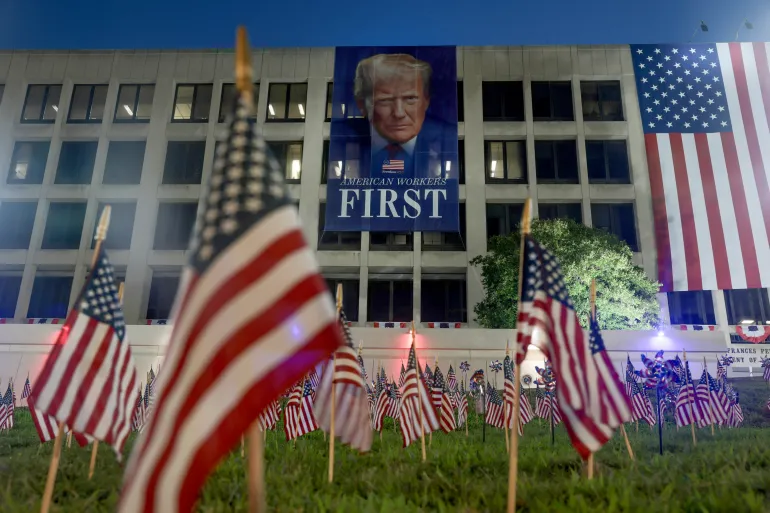
The Department of Labor building in Washington, DC, displays US flags on the eve of July 4th festivities [Joe Raedle/Getty Images/AFP]
What will celebrations look like across the country?
Among thousands of smaller, locally organised celebrations nationwide — including historical reenactments, picnics, concerts and fireworks displays — some of the highest-profile events include:
Washington, DC: Hundreds of thousands are expected to arrive in the city, where the Great American State Fair will be held along the National Mall, the 2.5 km (1.5 mile) promenade linking the US Capitol to the Washington Monument. It will feature state pavilions, food, live music and a Ferris wheel. Trump has also promised “the largest fireworks show in history.” Around one million people attended the fireworks display for the US’s bicentennial anniversary in 1976.
Los Angeles: As part of its America’s Block Party event, America250 will hold a benefit concert hosted by Queen Latifah, featuring artists such as Chris Stapleton, Maren Morris and the Smashing Pumpkins.
Philadelphia: The city where the Declaration of Independence was signed is hosting one of the country’s biggest commemorations, including the burial of a 400kg (900 pounds) time capsule, containing artefacts from across the country, meant to be opened at the next semiquincentennial in 250 years.
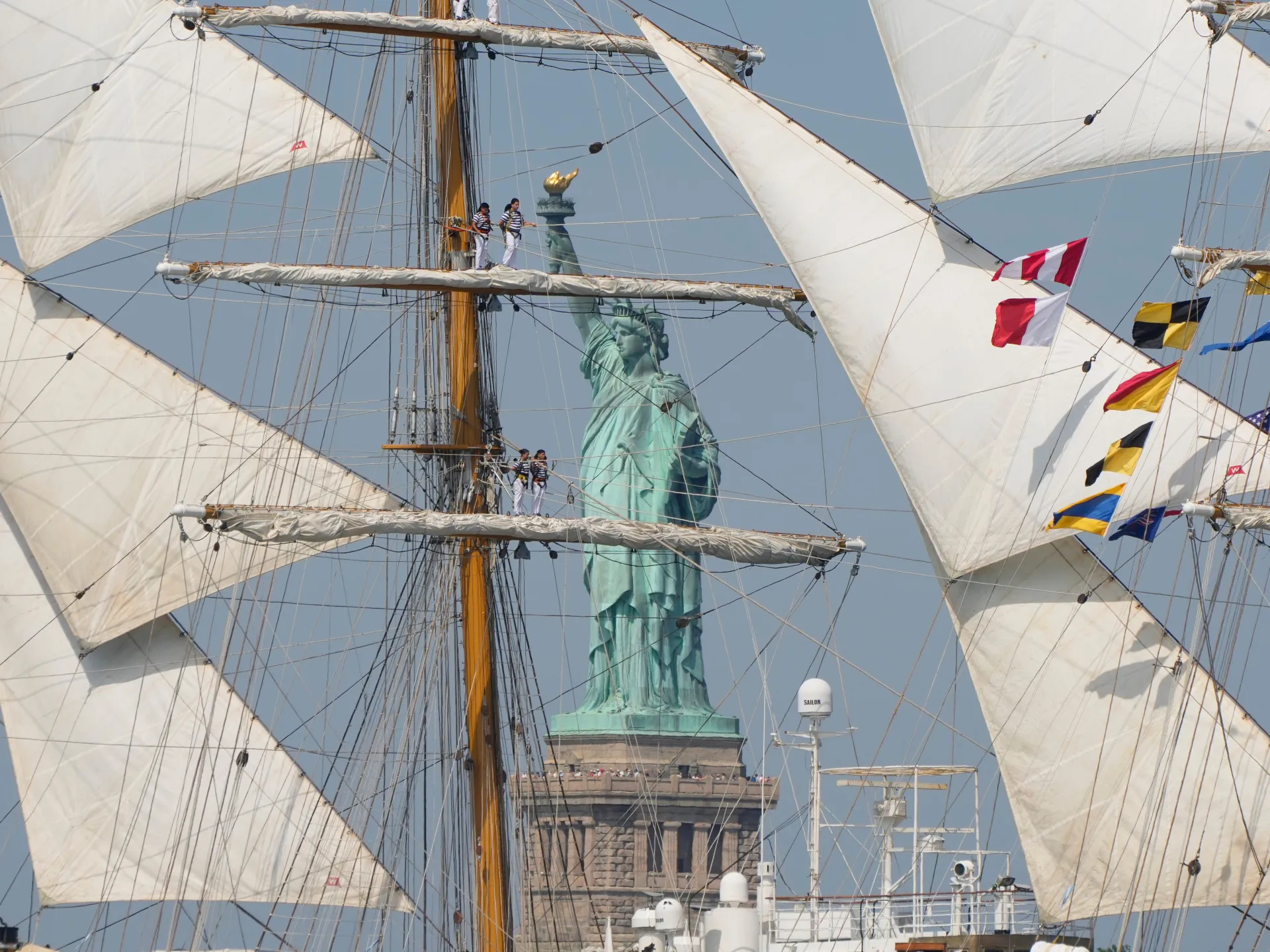
New York: More than 40 tall ships are expected to sail into New York Harbour with almost 20,000 sailors aboard, while more than 200 aircraft fly overhead.
Boston: Celebrations will include the annual Boston Pops Fireworks Spectacular — a free concert followed by a fireworks display — and a public reading of the Declaration of Independence from the balcony where it was first read aloud to Bostonians in 1776.
How will the heat affect celebrations?
Some celebrations are already being disrupted, with organisers forced to adapt to extreme heat.
On Friday, the Great American State Fair temporarily closed as temperatures reached over 39 degrees Celsius (102 degrees Fahrenheit) in parts of Washington, DC.
But the capital was not the only area affected by the extreme heat.
In Philadelphia, for example, officials announced that the Salute to Independence Semiquincentennial Parade was cancelled, after initially planning to shorten the route to mitigate heat-related risks.
A celebration in Pennsylvania’s Lower Windsor Township was also rescheduled for July 8, while in nearby Norristown, officials cancelled another parade, citing safety concerns.
The heat is also affecting transportation. Amtrak announced several train cancellations in the northeast region and warned that other trains could face delays due to high temperatures, which can affect railway infrastructure.
“Extreme heat can cause rail, bridge and overhead wires to expand,” it said in a statement on Thursday. “As a precaution, Amtrak may enact heat restrictions, which can require locomotive engineers to operate trains at lower speeds, resulting in potential delays.”
What will it actually feel like outside?
While air temperatures in cities such as Philadelphia and Boston are expected to reach around 38 degrees Celsius (100 degrees Fahrenheit), high humidity can make it feel significantly hotter.
That’s because humidity makes it harder for sweat to evaporate and cool the body. Weather agencies use the heat index, often called the “feels like” temperature, to estimate what people will actually be experiencing.
Experts also warn that cities can become even hotter than forecasts suggest as concrete, asphalt and steel absorb heat.
“The number on your phone may actually not reflect the true temperature profile that you’re going out into,” Vijay Limaye, a climate scientist at the Natural Resources Defense Council, told The Associated Press.
What precautions are officials taking?
Aside from changing or cancelling some Fourth of July events, cities across the eastern United States are rolling out broader measures to help people cope with the heat.
In New York City, for example, more than 200 teams of government workers and volunteers are checking on homeless residents and directing people to hundreds of cooling centres, including public buildings, mobile cooling vans and outdoor sites equipped with misting fans.
Mayor Zohran Mamdani urged people to stay inside and avoid “extraordinary temperatures”. He also asked residents to set their air conditioners to 26 degrees Celsius (78 Fahrenheit) to avoid straining the power grid.
Boston is offering residents free admission to several air-conditioned museums, while Providence, Rhode Island, has extended hours at public pools and water parks.
How can people stay safe?
The National Weather Service (NWS) recommends drinking a lot of water, even if you don’t feel thirsty, especially if you’re spending an extended amount of time outside and taking hourly breaks in shade or air conditioning.
Health authorities also urge people to occasionally check in on seniors and other vulnerable populations.
Alcohol can make dehydration worse, so experts also recommend limiting drinking during long outdoor events.
Signs of heat illness include cramping, rapid pulse, heavy sweating, hot red skin, dizziness, confusion, nausea and vomiting, according to the NWS. If you see any of those warning signs, seek medical attention immediately.
At Mount Rushmore, Trump warns of ‘communist menace’, ties rhetoric to immigration ahead of November midterms.
Published On 4 Jul 20264 Jul 2026
United States President Donald Trump has used the opening weekend of the nation’s 250th anniversary celebrations to praise the US military and critique democratic socialists, warning of a “communist menace” that he claims poses a major threat to the country.
Speaking beneath the granite monument at Mount Rushmore on the eve of Independence Day on July 4, Trump invoked national identity and ideology ahead of the November midterm elections.
Recommended Stories
list of 3 itemsend of list
“We created the strongest and most powerful military. We won two world wars,” he said, claiming that the Cold War had left the US’s enemies “in the depths of history”.
He also said the US “beat Venezuela in one day” and “knocked the hell out of Iran”.
The address comes amid voter concerns over persistent inflation and elevated energy prices driven by the ongoing US-Israel conflict with Iran.
Briefly addressing the Iran war, Trump said Tehran is “dying to settle” and that Washington had granted “a week off for a funeral because we’re nice”, in reference to the days-long state funeral being held for late Iranian Supreme Leader Ali Khamenei, who was killed in a strike on the first day of the US-Israeli war.
‘Communist menace’
A larger chunk of Trump’s address was focused on what he considers ideological threats at home.
“There is now a resurgence of the communist menace in our land, including from newcomers to our country who embrace ideas totally opposed to our way of life,” the president said, calling communism “the enemy of the Constitution”.
He pledged that “the citizens of the United States of America will vanquish communism quickly.”
Trump tied his anti-communist rhetoric to a hardline immigration stance, suggesting that left-wing political figures and certain undocumented arrivals should be removed from the country.
He labelled the rise of democratic socialists the “greatest threat to our country since its founding”, comparing the movement’s potential impact with World War II and the September 11 attacks.
He closed the address by calling the anniversary “the beginning of the golden age of America.”
Trump’s ‘grip on America steadily slipping away’
Speaking to Al Jazeera, Republican strategist Eli Bremer said parts of the speech were unifying enough that they “could have been delivered by Ronald Reagan … 45 years ago,” but added that “the gap between the American left and the American right has really never been wider”.
However, Democratic strategist and former Obama campaign adviser, Ameshia Cross, told Al Jazeera that Trump wants to wipe out the country’s diverse history.
Trump “is upset that there is a younger crop of Democrats who are running and winning across this country,” she said, adding that the speech reflected “a president who sees his grip on America steadily slipping away”.
She noted that it also came “on the heels of him losing a Supreme Court decision just a couple of days ago to eradicate birthright citizenship“.
The address highlighted the contrasting visions framing the country’s milestone anniversary.
In New York, progressive Mayor Zohran Mamdani offered an alternative narrative during a naturalisation ceremony, using a desk once belonging to George Washington to praise immigrants’ contributions and frame civic dissent as patriotism.
Democrats have also criticised the administration’s handling of the anniversary, alleging a conservative group took control of 250th-anniversary planning from a previously bipartisan congressional commission.
In 2016, Nakajima received psychiatric care at Cedars-Sinai Medical Center, diagnosed with depression, PTSD and suicidal ideation. Her doctors searched for ways to manage her stress by exposing her to various activities, including video games, serene Icelandic landscapes and an aerial silks performance. The last brought her anxiety down, revealing that the arts were the answer. Her doctor prescribed the arts, comedy specifically, so she went to the Upright Citizens Brigade for class.
She found a calling and a safe space in comedy.
“I didn’t know I was born a comedian,” Nakajima said. “Finally, I really felt I was accepted as a comedian, validated for who I am.”
Nakajima shares her healing journey to the stage in “Made in America,” which just had an encore performance at UCB on Tuesday after its award-winning run in 2022 (it is also available for streaming on UCB’s website through Tuesday). The one-woman show arrives in time for the United States’ 250th anniversary on Saturday, documenting Nakajima’s search for the American dream as a first-generation Japanese American woman. “Made in America” premiered in 2022 at the Hollywood Fringe Festival during Joe Biden’s presidency and following the Jan. 6 United States Capitol attack. In 2026, its musings on identity and belonging pierce through today’s political landscape shaped by Donald Trump’s second presidency.
“I wanted to let people know this is an American story,” she said.
“Made in America” is about Nakajima’s life. It begins in her mother’s womb. She felt so safe there, she yearned to return. Growing up, she experienced an emotionally and physically abusive life at home, recalling her father breaking furniture and her mother’s alcohol-induced belittling comments. But her name, Teruko, translates to a “shining child.” Thus, she proclaims in the show, “I’m a superstar!”
The beauty in “Made in America” is Nakajima’s ability to find the humor in her trauma. When the show transitions to her life in America, she talks about her life as a dominatrix in New York City and her struggles with romance in Los Angeles. Her comedic jabs at the American economy and humorous reflections juxtapose somber moments of stillness in the midst of her struggles. This balance puts her life into perspective, revealing a positive personality beneath a dark saga.
Nakajima performs “Made in America” at Upright Citizens Brigade Theater.
(Nick Rasmussen)
“I look very happy-go-lucky and cheerful, but actually, I am a very dark person because I have a dark history,” she said. “I always wanted to leave my story behind. I wanted to leave my mark in this world before I died, so I needed to make something.”
The first class Nakajima took at UCB was John Flynn’s storytelling course. There, she started building pieces of the show without realizing it. As they added up, the idea for a show surfaced. After class one day, she asked Flynn to direct it. Flynn, who has been teaching at UCB in New York and L.A. for about 20 years, agreed.
“She disarms people,” Flynn said. “There’s something about her that is just so unique and so delightful that you won’t forget her.”
Flynn first met her at his storytelling open mic. She walked in with her emotional support dog Titi (also known as Tiny Teruko), wearing her signature red heart-framed glasses, without lenses. Soon, these glasses would make him double over in laughter when she performed and cried, dabbing her eyes with tissue through the frame.
“When you start to learn her story and the experiences she’s had, it is amazing that she is so positive,” he said. “She’s such a sort of undeniable positive energy that she just radiates all the time, which is so compelling and why people are so drawn to her.”
Revived at UCB amid Trump’s second term and the nation’s 250th birthday, Nakajima’s show doubles as a defiant immigrant love letter to America — and a refuge for audiences feeling alone.
(Nick Rasmussen)
Nakajima puts all of herself into the show. Aside from comedy, she has been a cheerleader in Japan, a salsa dancer in New York and a sculptor on the side — she loves sculpting MLB players’ butts; Derek Jeter is her favorite. In the show, she folds these aspects of her life into a single story, dancing from section to section. Comedy is more than just laughs; it’s storytelling.
“I am so good at cheering people up, since I was very little,” she said. “I had no competition with others because I’m the one and only. Nobody looks like me.”
Together, Flynn and Teruko parsed through her life stories to give the show an arc. For Flynn, it’s like carving away at what is already there to create something fun and cohesive, like a sculpture. “What’s fun about directing one-person shows like this is that it’s usually just two people in a room putting something together,” Flynn said.
Bringing the show back this year, the work gets sharper and tighter, but the biggest shift is in its conclusion. Once optimistic about the future of life in America, the show now has a stronger desire to make change. There was a sense of hope in 2022 for women like Nakajima, an immigrant who sought safety in a new country and struggled with abuse from her family and strange men. Today, as Trump’s immigration policies lean on deportation and discrimination, she simply wants to be seen.
“America, thank you for not giving up on me,” Nakajima said toward the end of the show. She is proud to be American, not just because she gets to have the same nationality as her dog Titi, but primarily because of the new life it offered her. America promised happiness. Whether it actually comes is another story, but in this one, the promise itself gave her a sense of purpose.
“After the show, people come to me in person and through messages,” she said. “A lot of people said, ‘I felt like I am not alone.’ That gives me so much hope and unity. I feel safe and like I have something to look forward to because I’m not the only one.”
Flynn realized how much he took for granted while working on the show with Nakajima. “I think, even though these are scary times and things seem to be going in directions that aren’t the best, there are still great people, and there’s something that is still there and is not dying and is still fighting,” Flynn said.
When she began her acting journey, Nakajima thought she’d turn to drama, but there’s something more unguarded in comedy.
Nakajima holding up her dog Titi during a performance of “Made in America.”
(Nick Rasmussen)
“I’m very authentic and invincible through comedy,” she said.
By the end of “Made in America,” Nakajima is no longer trying to find her way back to her mother’s womb. She is confident in her place in the world. She remembers that she is a star. She brings out her dog Titi, who was hidden on stage throughout the entire performance, and shares that UCB gave her a new outlook on life. Comedy breaks away her stresses and allows viewers to be vulnerable with her.
“I always wanted to feel safe,” she said. “I never had that. Finally, I found a safe space, and then I realized that I’m actually important. I’m actually worthy. I’m so happy right now to be able to express myself through comedy because it’s the truth.”
July 3 (UPI) — The Justice Department on Friday called on states to investigate whether businesses and individuals are artificially inflating gas prices amid complaints from President Donald Trump that costs are too high.
Associate Attorney General Stanley Woodward Jr. along with Federal Trade Commission Chairman Andrew Ferguson sent a letter to state attorneys general asking them to join federal investigators in probing potentially illegal practices.
“Recent volatility in crude oil prices does not suspend either the antitrust laws or state consumer protection laws, and it does not authorize companies to manipulate retail prices or collude with their competitors,” the letter read.
“We also encourage State Attorneys General to use all tools available under your state laws to investigate and prosecute any misconduct causing unjustified prices increases — particularly conduct that violates state antitrust and consumer protection statutes.”
Gas prices have been on the rise since late February when the United States and Israel began attacks on Iran. Tehran, in return, largely shut down the Strait of Hormuz to traffic, crippling the the transport of oil through the waterway. About one-fifth of the world’s gas supplies pass through the strait.
An agreement between the United States and Iran reopened the strait, but Trump took to Truth Social on June 23 to complain that gas prices had not dropped fast enough.
“The big Oil Companies are not dropping their price at the pump commensurate with the sharply lower prices they are paying for Oil,” he wrote. “Those prices are dropping like a rock! In other words, customers are being ‘gouged.’
“I have instructed the DOJ to immediately start looking into this. Gasoline prices better start going down a lot faster than what I’m seeing!”
AAA reported Friday that the current national average gas price was $3.82 per gallon for regular gasoline, down from $4.26 a month prior. One year ago, it was $3.16 per gallon.
Back and forth over defence spending comes as NATO leaders set to meet in Ankara next week.
Published On 3 Jul 20263 Jul 2026
German Chancellor Friedrich Merz has defended his country’s NATO defence spending, shortly after US President Donald Trump re-upped his criticism of alliance members.
The statement on Friday came as NATO leaders were set to meet next week in Ankara. Trump has decried defence spending by members of the bloc throughout his political career, calling the balance of spending “ridiculous” and “one-sided” in his latest Truth Social posts on the issue earlier this week.
Recommended Stories
list of 3 itemsend of list
In one post, Trump said Germany’s spending was “MUCH LOWER” between 2014 and 2025 than the US or other NATO allies, which he again called “Ridiculous!”
When asked about the comment, Merz said Germany would double its defence budget within four years.
“This is the greatest effort we have ever made to strengthen our defence capabilities. In this respect, we have no reason to shy away from anyone,” Merz said.
“We will state this, with all due modesty, and we are doing so as the European Union’s largest member state, bearing a responsibility within Europe,” he said.
US and European ties have been strained throughout Trump’s first term from 2017 to 2021 and his current term, which began in January 2025.
However, while largely dismissive of the president during his first four years in office, several European leaders have sought a more amenable approach to the president this time around.
At the behest of the US, NATO leaders agreed to spend 3.5 percent of their countries’ GDP on core defence items, such as weapons and troops, by 2035, an increase of the previous goal set by the bloc of 2 percent of its GDP.
However, relations have since frayed over several issues, including Trump’s pledges to take control of the autonomous Danish territory of Greenland. Denmark is a member of NATO.
The US-Israeli war in Iran has also proven to be a major wedge, with Trump launching the conflict without consulting European allies who have dealt with the fallout of the closure of the Strait of Hormuz.
Trump had repeatedly condemned European allies for not joining the war effort.
Merz, meanwhile, roiled the president by saying in April the US had been “humiliated” by Iran. Trump, in turn, said the US would withdraw 5,000 troops currently stationed in Germany.
Speaking on Friday, Merz said Germany was ahead of schedule to reach its NATO commitments.
“We will reach the 3.5 percent benchmark set in The Hague as early as 2029,” he told reporters, “well ahead of the agreed deadline”.
THE White House has shared its own Taylor Swift-inspired post ahead of the popstar’s lavish wedding to Travis Kelce.
The official White House Instagram account shared a photo of “America’s Eras Tour” in the same style as Taylor’s iconic Eras Tour poster.
Sign up for the Showbiz newsletter
Thank you!
The White House shared a poster on Instagram featuring Donald Trump in a similar style to Taylor Swift’s Eras Tour posterCredit: Getty Images for Theodore RoosevThe post included photos of Trump alongside previous presidents and moments in US history, such as the moon landingCredit: Instagram / WhitehouseTaylor is expected to get married at Madison Square Garden over the Fourth of July weekendCredit: Getty Images for TAS Rights ManaCrews were seen outside of Madison Square Garden unloading items ahead of Taylor and Travis’ weddingCredit: Felipe Ramales for the U.S. Sun
The image showed President Donald Trump in the middle with his fist raised, surrounded by ten photos depicting moments in American history.
There were other images showing a hockey game, the moon landing, and a photo from the end of World War II showing a US Navy sailor kissing a woman in Times Square.
“It’s been a long time coming…” the caption read, a nod to Taylor’s lyrics.
The timing of the post appeared to throw some shade toward Taylor, whose wedding extravaganza is taking place around the Fourth of July weekend and the celebration of America’s 250th anniversary.
Trump and Taylor have had a longtime feud, where the president blasted the singer as “no longer hot” in a Truth Social post from 2025.
“Has anyone noticed that, since I said ‘I hate Taylor Swift,’ she’s no longer ‘hot?’” he wrote.
“The only one that had a tougher night than the Kansas City Chiefs was Taylor Swift,” he wrote on Truth Social after making history as the first sitting president to attend the Super Bowl.
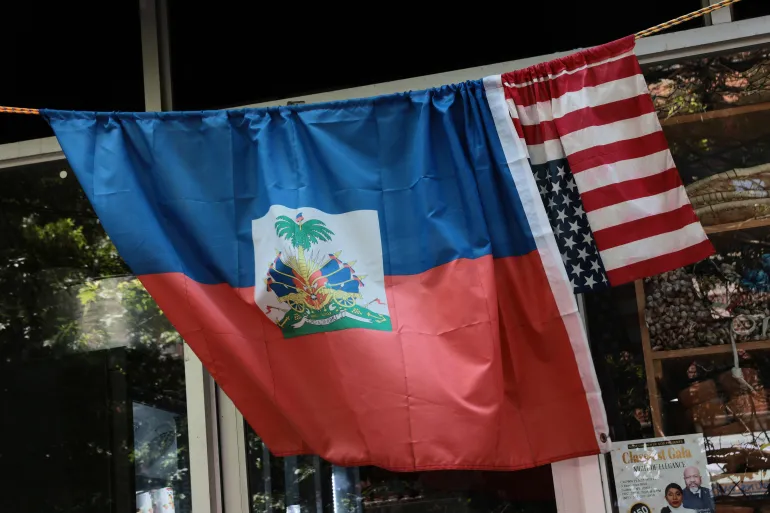
On June 25, the United States Supreme Court decision allowed President Donald Trump and his administration to end Temporary Protected Status (TPS) for Haitians, paving the way for their legal immigration status to be removed.
Trump has pushed to end TPS for several groups, as part of his efforts to restrict immigration into the US.
Recommended Stories
list of 3 itemsend of list
But lawmakers from both political parties have argued that stripping Haitians of their TPS status could create a caregiving crisis, given their presence in key industries like healthcare.
“Of the 350,000+ lawful Haitian TPS holders, roughly 1/3 work in our healthcare system. Immediately shutting off TPS will create a crisis in our hospitals, nursing homes, and in the [intellectual disabilities] community,” Republican Representative Mike Lawler wrote on the social media platform X.
Democratic Representative Ayanna Pressley echoed that sentiment in a statement.
“Seniors will lose their caregivers when we already have a caregiving crisis, and seniors will lose their ability to age in community with much-needed assistance,” she wrote.
The Temporary Protected Status programme allows nationals from countries experiencing crises, such as natural disasters or armed conflict, to live in the United States for up to 18 months. The federal government had previously renewed the designations, making them effectively permanent, before President Trump took office for a second term in 2025.
Lawler’s estimates about how many Haitians with TPS work in the US healthcare system are within the range of what the data show.
The Trump administration decision — and Supreme Court ruling — affect about 330,000 Haitians whose TPS-related work authorisations expire on July 10. They face deportation unless they qualify for another status. The ruling also applies to Syrians and Venezuelans.
About 158,000 Haitians in Florida have TPS, the majority of whom are in South Florida. The Sunshine State has the largest population of TPS recipients in the US: nearly 404,000 people. More than half are from Venezuela and about one-third are from Haiti, according to the nonpartisan Congressional Research Service.
With an ageing population and an existing caregiver shortage, healthcare experts say the end of TPS for Haitians will have a significant effect on the US healthcare industry.
Of the 330,000 Haitian TPS holders, about 13,000 work daily as nursing assistants, caring for 65,000 patients, The Boston Globe found. Another 8,000 Haitian caregivers serve 12,000 children and ageing people, according to Americans for Immigrant Justice, a Miami-based nonprofit law firm that provides free representation to low-income immigrants.
Experts said the TPS healthcare workforce exodus will be felt most acutely in New York, Massachusetts and Florida.
With its high populations of older people and immigrants, Florida is expected to be particularly hard-hit.
David Grabowski, a Harvard Medical School healthcare policy professor, said the decision will “have a major impact on nursing homes, assisted living facilities and home care agencies”.
What will happen if most Haitians with TPS are deported?
Healthcare researchers say deporting Haitian recipients of Temporary Protected Status will add pressure on a strained system.
Immigrants who have TPS are more likely to work in healthcare, with one 2025 study finding that recipients represent 15 percent of all noncitizen healthcare workers. (TPS recipients make up about 2.1 percent of the total immigrant population.)
Immigrants make up a large share of direct care workers — people who are home health aides, personal care aides and nursing assistants.
There is already a national shortage of home health aides, personal care aides, nursing assistants and other long-term care and eldercare workers, but the US will need even more in the future. The US 65-and-up population is expected to rise from 58 million to 82 million by 2050 — a 42 percent increase.
Nearly half of US nursing homes report limiting admissions due to staffing shortages, and 19 percent recently met the minimum staffing levels set by the Centers for Medicare & Medicaid Services. In 2023, shortages of nurses and other employees caused about two-thirds of US hospitals to operate below capacity.
“People who run nursing homes, chronic care hospitals and home care agencies – they are all saying this is a crisis,” said Dr Steffie Woolhandler, a distinguished professor of public health at City University of New York’s Hunter College. “There has long been a shortage of folks who are willing to do direct care work as nursing aides, and there’s still a shortage now, so, of course, if the US deports them all, it’s just going to make it worse.”
Drishti Pillai, the director of immigrant health policy at the research nonprofit KFF, said, “The long-term care industry is already facing shortages prior to these immigration policy changes, so I think it’s accurate to say that this is going to further exacerbate the situation.”
Hundreds of thousands of Haitian TPS holders live in the US, in neighbourhoods like New York City’s Little Haiti [Michael M Santiago/Getty Images via AFP]
Why do so many Haitians with TPS work in caregiving?
Healthcare experts pointed to several reasons for TPS holders’ high numbers in direct care, including job availability, an easier certification process compared with other healthcare jobs, and prior experience caring for family members.
“We do not have sufficient native-born workers to fill all the caregiving jobs,” Grabowski, the healthcare policy professor, said.
These positions also typically have lower barriers to entry for licensure, or no English language requirements, experts said. Refugee settlement organisations often recommend the work to immigrants for those reasons.
The positions are “extremely difficult to fill” because they’re physically and emotionally demanding, with low pay and with little or no employee benefits, said Priya Chidambaram, senior policy manager with KFF’s programme on Medicaid and the uninsured.
Some Haitians also have experience caring for sick family members in their homes, given the lack of nursing home infrastructure in their home country.
In the end, experts said there will be many more people who need this care than people who will be able to provide it.
“This was true before the ruling,” Chidambaram said. “Now, the impact will only be worse.”
The administration of United States President Donald Trump has announced felony charges against a former Olympic athlete for allegedly harming the Lincoln Memorial Reflecting Pool in Washington, DC.
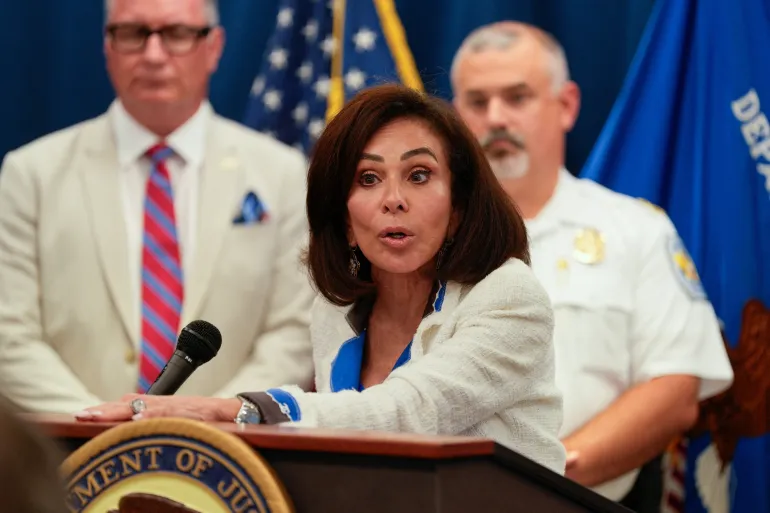
At a news conference on Thursday, US Attorney Jeanine Pirro accused professional canoeist David Hearn, 67, of deliberately vandalising the pool.
Recommended Stories
list of 3 itemsend of list
“Today, a grand jury has returned a felony indictment against a defendant, David Hearn, for felony destruction of property, for which he faces 10 years in prison,” Pirro, a Trump appointee, said.
She proceeded to call the destruction of national monuments “one of the most offensive images” she has ever seen.
“This unchecked vandalism and civil disorder turns into criminal behaviour, and that’s why we’re here today,” Pirro said. “They are an affront to the dignity of our shared history.”
But in media interviews, Hearn has denied any vandalism, saying that, like many Americans, he was simply curious about the Reflecting Pool when he visited on June 19.
US Attorney Jeanine Pirro discusses charges related to vandalism of the Lincoln Memorial Reflecting Pool on July 2 [Cheney Orr/Reuters]
The Reflecting Pool had been the subject of a renovation effort Trump began in April, as part of a wider initiative to reshape Washington, DC, through controversial construction and maintenance projects.
Trump awarded a no-bid contract to a firm to seal and resurface the granite pool in a colour he dubbed “American flag blue”. But observers noted that, as soon as the pool reopened in early June, it suffered an algae bloom, and blue paint began to peel from its bottom.
Faced with criticism about the $13.1m renovation contract, Trump countered that vandals had sabotaged the Reflecting Pool.
At least seven people, including Hearn, have been arrested on allegations they may have harmed the pool’s blue-painted bottom.
Hearn has maintained his innocence. He says he was cycling by the Reflecting Pool when he stopped to look at the peeling paint, and he reached in the water to feel it. He denies removing any part of the pool.
Pirro, however, described a different scene. She said National Park Service employees observed Hearn “forcefully and violently pulling up and removing the bottom liner with both hands”, damaging roughly 2 square feet — or around 0.18 square meters — of pool sealant.
“A parks employee actually told Hearn to stop his behaviour and stop what he was doing. Hearn reacted by shouting at that parks employee,” Pirro alleged.
Reporters confronted Pirro with questions about whether charging Hearn with a felony was disproportionately punitive, since similar cases have been considered misdemeanour offences.
One journalist asked Pirro if her decision to seek a felony indictment was influenced by Trump, who wrote on Truth Social that a 10-year prison sentence should “be fully enforced” for any attempted damage to the Reflecting Pool.
“I didn’t charge anything harshly. I charge according to the evidence,” Pirro replied. She argued that Hearn caused damage exceeding $1,000, thereby necessitating a felony charge.
She also dismissed comparisons with the millions of dollars in damage caused by Trump supporters during the attack on the US Capitol on January 6, 2021. Nearly all of those defendants were pardoned on the first day of Trump’s second term.
“Are you really talking about January 6th? I’m not,” Pirro told one reporter. A hearing in Hearn’s case is scheduled for July 9.
The Reflecting Pool has been fenced off amid ongoing work to kill the algae bloom and fix the peeling paint [Holden Lombardo/Al Jazeera]
On Thursday, preparations for the July 4 fireworks show began at the Reflecting Pool, with large nets spread across the entire structure.
According to a police officer on the site, the nets are intended to catch the debris that could fall into the pool during the show. The site remains fenced off to visitors.
Still, many have come to look at the pool and see the controversial renovations firsthand.
Brian Williams, a 31-year-old from Roscoe, Georgia, praised Trump for his efforts to beautify the city. He said that algae was normal for a pool full of still water in the heat of summertime.
“I don’t think people have any business vandalising anything,” Williams added. “If you have something that you dislike about the president, don’t take it out on the people’s pool.”
But others were more sceptical of Trump’s claims. Jon Delgado, a 40-year-old Navy veteran from Collierville, Tennessee, expressed frustration at seeing the Reflecting Pool in its current state.
“I came here with my wife and my family to show them the beauty of America, the spirit of what we fought for,” he said. “To see it trashed like this, it just makes me angry.”
Delgado called Trump’s accusations about vandalism at the site “really crazy”.
“We have just got to ask ourselves: Is this where we’re at, in the state of America, that we’re believing something like this? You can look for yourself: This thing has pond scum all in it, and it stinks. There’s no vandalism,” he said.
July 1 (UPI) — A federal judge has temporarily blocked the Defense Department from enforcing its escort policy, at least for reporters with The New York Times, dealing another blow to the Trump administration’s attempt to restrict media access at the Pentagon.
It was not entirely clear whether the order applied to all credentialed reporters or just those associated with The New York Times.
U.S. District Judge Paul Friedman in D.C. issued his preliminary injunction Tuesday, finding the plaintiffs were likely to succeed on their claims that the escort policy was retaliatory and infringed on their First Amendment rights.
“This Court has spoken at several points about the critical importance of protecting the freedoms enshrined in the First Amendment, and that evergreen principle bears repeating: ‘Those who drafted the First Amendment believed that the nation’s security requires a free press and an informed people and that such security is endangered by government suppression of political speech,'” Friedman said in his Tuesday opinion, quoting from one of his previous opinions in the case.
“‘That principle has preserved the nation’s security for almost 250 years.'”
The ruling comes in a protracted case that began when the Defense Department announced a new policy in October permitting the revocation of Pentagon credentials for collecting and reporting information it deemed unauthorized.
After Friedman ruled in March that the policy was unconstitutional, the Department of Defense came back with a new policy that, among other restrictions, mandated reporters be escorted by Defense Department personnel at all times within the Pentagon.
The Trump administration has argued that the new requirements are for national security purposes. By limiting access and requiring escorts, the Department of Defense said it could prevent the gathering and public disclosure of what it calls classified national security information and controlled unclassified information.
The Times then challenged the revised policy, with the court again siding against the Defense Department, which appealed, seeking only a limited stay pending appeal to allow the implementation of only the escort requirement.
In late April, a divided three-judge appeals panel granted the Trump administration’s emergency request, finding that it was likely to succeed in showing that the escort requirement was not within the scope of the lower court’s original order, without weighing the merits of the case. The Times then filed a new, second lawsuit challenging the Pentagon’s escort policy.
The Pentagon on Wednesday said it “strongly disagrees” with the court and will appeal the decision.
In a statement, Sean Parnell, chief Pentagon spokesperson, argued that the removal of the escort policy will make it easier for “sensitive and classified information to reach our adversaries.”
“Unescorted access to the Pentagon allowed journalists to observe activity patterns and develop relationships that contributed to repeated unauthorized disclosures of operational plans and intelligence,” Parnell said.
“The court’s order effectively restores that risky environment at a time when protecting our military’s secrets is more critical than ever.”
The Times argued that the policy was not only a restriction on its reporters’ First Amendment rights, but also retaliatory, an argument that Friedman said would likely succeed in court, pointing to numerous instances of Trump administration officials, including President Donald Trump and Defense Secretary Pete Hegseth, insulting the newspaper and other news organizations.
UPI has contacted The Times for comment.
The Freedom of the Press Foundation celebrated the ruling online, while calling for punishment if the Trump administration tries to find another workaround to enforce its media-restriction policies.
“The DoD can’t be allowed to punish journalism or evade court orders without consequences,” it said in an online statement.
“If the Pentagon keeps trying to avoid this ruling, the court should respond with sanctions or contempt.”
President Donald Trump has sought to limit mail-in voting and has ordered his administration to impose limits on the practice.
Published On 1 Jul 20261 Jul 2026
A federal judge in the United States has blocked proposed restrictions on mail-in voting that were championed by President Donald Trump.
On Wednesday in Washington, DC, District Judge Emmet Sullivan sided with the NAACP, a civil rights organisation, in its case against the US Postal Service (USPS).
Recommended Stories
list of 3 itemsend of list
Sullivan found that the restrictions would likely violate a 2021 settlement requiring expedited handling for mail-in ballots.
He therefore granted the NAACP’s motion to enforce compliance with the settlement, dealing another setback to the Trump administration’s efforts to reshape the US voting landscape.
“NAACP has plausibly suggested — and the Postal Service has not disputed — that the Proposed Rule is already having a ‘real impact on present day affairs’,” Sullivan wrote in his ruling.
The case revolves around a rule the Postal Service put forward in May that would require states to provide lists of absentee and mail-in voters. Ballots that do not conform to the list would be returned.
The proposed rule would also require a new envelope design for mail-in ballots, governing logos and barcode placements. Failure to comply would result in the Postal Service refusing to deliver the ballots.
The NAACP argued that the proposal would run afoul of a 2021 legal settlement that forces Postal Service officials to take “extraordinary measures” to ensure timely delivery of ballot mail.
The settlement “stipulated that the Postal Service agreed ‘to prioritize monitoring and timely delivery of election mail’”, Sullivan wrote in Wednesday’s ruling.
The decision comes less than five months before the November 3 midterm elections, which will decide whether Trump’s Republican Party retains control over both chambers of Congress.
Trump has expressed fears that he may be subject to a third impeachment if Democrats flip the legislature.
He has also spread unfounded theories that US elections are vulnerable to “vote rigging”, pointing to commonplace election tools like mail-in voting and electronic voting machines.
Elections are administered by state and local election officials, as established in the US Constitution. But the Postal Service’s proposed rule came as the result of efforts under the Trump administration to impose new limits on voting.
In March, Trump issued an executive order called “Preserving and Protecting the Integrity of American Elections”. In it, he directed the Department of Justice to take action against states that “fail to comply” with certain standards for mail-in ballots.
He also accused states that accepted absentee or mail-in ballots after Election Day of violating the law.
But in another blow to Trump, the Supreme Court on Monday upheld a state law that allows mail-in ballots to be counted even if they were received after Election Day, so long as they were postmarked on or before that date. The president’s executive order has also been blocked by lower courts.
Civil rights advocates applauded the court’s Wednesday decision and warned against Trump’s efforts to limit mail-in voting.
“The court today correctly recognized that USPS’s plan to create roadblocks to mail-in voting was inconsistent with its commitment to timely deliver election mail,” said Allison Zieve, director of the Public Citizen Litigation Group, which argued on behalf of the NAACP.
“USPS’s plan was unwise, unlawful, and a threat to the millions of voters who rely on mailed ballots to participate in our democracy.”
Sam Spital, the associate director-counsel of the Legal Defense Fund, which also argued for the NAACP, called the Postal Service’s proposed plan “a blatant attempt” to disenfranchise voters who rely on mailed ballots.
“Today’s decision recognizes that USPS cannot disregard its legal obligation to timely deliver mail-in ballots to all voters,” Spital said.
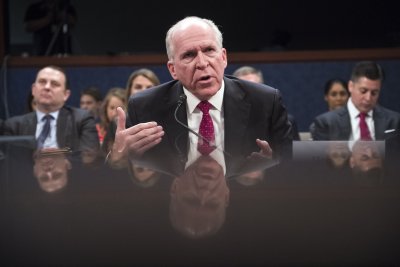
John Brennan, former director of the Central Intelligence Agency, testifies in 2017 on Russian meddling in the 2016 U.S. presidential election during a House Intelligence Committee hearing on Capitol Hill in Washington, D.C. Brennan is suing the Trump administration, asking a judge to preserve all records of a Department of Justice investigation against him. File Photo by Kevin Dietsch/UPI | License Photo
July 1 (UPI) —John Brennan, former director of the CIA and a longtime foe of the Trump administration, filed a lawsuit Wednesday asking a federal court to preserve all records related to the administration’s investigation of him.
The Justice Department has been eyeing Brennan for months, with lawyers interviewing former intelligence officials and issuing subpoenas as part of a conspiracy investigation, The Washington Post reported.
Justice Department officials have alleged that Brennan and others violated President Donald Trump‘s civil rights in a conspiracy back to the Obama administration that included efforts to prosecute Trump and investigate his ties to Russia, The Post said. Rep. Jim Jordan, R-Ohio, also referred Brennan to the Justice Department, alleging that he lied during testimony to Congress.
Brennan’s attorneys requested that a judge order the administration to preserve any internal records and communications from the investigation.
The records could be used as part of defense arguments that the investigation and any prosecution are part of Trump’s attempt to vindictively punish Brennan, the attorneys said, citing an administration policy “of using criminal process and prosecution to punish the president’s perceived adversaries,” The Post said.
“Administration officials from the acting attorney general to the FBI director and the counselor overseeing the Brennan investigations have been publicly declaring Director Brennan a criminal, not only before securing a conviction in court but even before a full investigation and indictment,” the lawyers wrote, CNN reported.
“And, certain officials in the Department of Justice are engaging in demonstrably irregular prosecutorial activity in order to gin up a case that will satisfy the president’s direction,” they wrote.
Brennan has also said the court should preserve any records that could be used in any broader “grand conspiracy” investigation by the Justice Department. He has denied any wrongdoing. The lawsuit names Trump, acting Attorney General Todd Blanche, FBI Director Kash Patel and prosecutors in Florida overseeing the investigation.
The US and Israel have signed a deal allocating land for a permanent US embassy in West Jerusalem, years after a temporary one was established during Trump’s first term in office. The move is yet another blow to the hopes of a future Palestinian capital.
The White House submitted a 927-page financial disclosure to the US Office of Government Ethics on Tuesday, offering the fullest picture yet of how US President Donald Trump’s fortune has grown since he returned to office in January 2025.
ADVERTISEMENT
ADVERTISEMENT
Barely established when he was sworn in, Trump’s crypto businesses now generate more revenue than large parts of the property empire he spent decades assembling with his family, earning the US president more than $1.2 billion (€1.05bn) last year.
Two ventures account for the bulk of the crypto windfall.
World Liberty Financial, the firm launched in 2024 by Trump’s sons and business partners, brought in more than $500 million (€438mn) from selling new crypto products, among them so-called governance tokens, which grant holders voting rights in certain company decisions but no ownership stake.
A separate business tied to the $TRUMP “meme” coin, a cryptocurrency bearing the US president’s face and name, generated a further $635 million (€557mn) from token sales.
Trump’s crypto activities appear to be a major driver of the near tripling of his personal fortune, which Forbes estimates rose from $2.3 billion (€2bn) to $6.5 billion (€5.7bn) between 2024 and 2026.
For many buyers, the story has been far less lucrative.
The $TRUMP coin, which briefly traded above $74 in the days after its launch, has since collapsed to under $2, while World Liberty’s tokens have shed around 80% of their value since they began trading last September.
Since the disclosure lists only revenue and not profit, the true scale of Trump’s personal gains cannot be known. However, the filing shows that the US president and his family collected fees and royalties up front, while many investors have seen the value of their holdings fall sharply.
Among those investors was Chinese-born crypto billionaire Justin Sun, who poured $75 million (€65.7mn) into the governance tokens and $200 million (€175.3mn) into both $TRUMP and $MELANIA meme coins.
A US fraud case against him was later paused before being resolved with a $10 million (€8.7mn) settlement. Sun has denied any connection between his spending and the outcome of his legal troubles.
After the release of the filing, the White House also rejected suggestions of any ethical concerns.
“Neither the President nor his family has ever engaged, or will ever engage, in conflicts of interest,” Principal Deputy US Press Secretary Anna Kelly said in a statement to AFP.
Kelly said US President Donald Trump had “proudly made the United States the crypto capital of the world.”
“All actions by President Trump and his administration are taken in the best interest of the American people, and any so-called ‘reporters’ pushing otherwise are recycling the same, tired, false narrative that Democrats and the legacy media have been pushing for a decade,” Kelly added.
Beyond crypto: Trump’s wider business empire
The filing also details an aggressive international expansion, with new hotel, resort and condominium agreements generating millions of dollars in countries that were negotiating with Washington over trade and security at the same time.
A development in the United Arab Emirates earned the Trump business around $10.4 million (€9.1mn) last year, one in Saudi Arabia roughly $9 million (€7.9mn), and projects in Qatar, Romania and Vietnam were $5 million (€4.3mn) apiece.
Closer to home, the US president’s established businesses boomed alongside all the new ventures.
Mar-a-Lago, Trump’s private club in Florida, generated around $77 million (€67.5mn), a jump of roughly 50% on the previous year, as heads of state and executives flocked to the property during his new term.
The disclosure also reveals the wide range of ways the Trump brand is now monetised.
The US president earned millions from a sprawling range of branded goods, from sneakers and watches to bumper stickers, with Trump-branded watches alone bringing in $4.7 million (€4.1mn), and more than $200,000 (€175,300) coming from the “God Bless the USA” Bible, a branded edition promoted with country singer Lee Greenwood.
Branded merchandise of this kind, sold by a sitting US president, has no precedent.
A 1978 law requires the president and vice president of the United States to declare their income as well as their assets.
First Lady Melania Trump’s income is also set out in her husband’s financial disclosure, including more than $10 million (€8.7mn) tied to a biographical Amazon documentary and over $500,000 (€438,250) from her memoir.
For comparison, US Vice President JD Vance reported between $1 million (€876,500) and $5 million (€4.4mn) in royalties from his 2016 book “Hillbilly Elegy”.
Critics have long argued that such arrangements blur the line between public office and private profit. The White House rejects the charge outright.
July 1 (UPI) — President Donald Trump has announced that the Republican Party will hold a midterm convention, an unprecedented development seemingly aimed at mobilizing the GOP base ahead of November’s midterm elections.
The convention highlights the importance Trump has placed on the midterms, framing Republican control as necessary to protecting his presidency and the implementation of his America First agenda. He has warned Republicans that if they lose the House, Democrats would seek to impeach him and use their investigative powers to probe him, his family and other GOP officials.
Trump announced the convention Tuesday on his Truth Social media platform, saying it will be held Sept. 9-10 in Dallas, Texas.
“It will be fantastic! It has never been done before, and will be a truly Historic Event,” he said, describing it as an opportunity to promote his administration’s purported accomplishments.
“We are going to celebrate the GREAT AMERICAN COMEBACK, and the incredible successes of the American People who transformed our Country through the America First Agenda.”
GOP Chairman Joe Gruters emphasized that the event will be centered on the president, calling it “Trumpapalooza” in an online statement.
“This historic midterm convention will highlight President Trump’s many accomplishments and unwavering commitment to restoring America!” Gruters said, adding that the event will “showcase the work Republicans have done to advance the America First agenda!”
The convention will be held in a solidly red state but comes as Trump’s approval sinks and a as November Senate race is competitive.
Democrat James Talarico is running against Texas Attorney General Ken Paxton in the Senate contest, and the convention may give draw attention to the GOP’s candidate.
Texas state Rep. Cassandra Garcia Hernandez, a Democrat, said the convention was proof that both the national and Texas Republican parties were worried about the Senate seat.
“They’re not only holding their first-ever midterm convention, they’re holding it right here in our state,” she said in an online statement.
“The battleground for our nation runs through Texas.”
Trump first said in September 2025 that the Republican Party would hold a midterm convention, saying it would “show the great things we have done since the Presidential Election of 2024.”
Democratic National Committee Executive Director Roger Lau responded to Trump’s September announcement by saying his party would be more reserved and precise with how it uses its resources.
“Republicans were baited into wasting time and money on a midterm convention that will sink their swing-seat candidates by tying them directly to Trump’s wildly unpopular policies,” Lau said in a statement.
June 30 (UPI) — President Donald Trump reported billions of dollars in income, revenue and other proceeds during his first year back in the White House, much of it tied to cryptocurrency ventures, according to his annual financial disclosure released Tuesday.
Trump reported at least $2.1 billion in income, revenue and other proceeds last year, according to his financial disclosure made public by the U.S. Office of Government Ethics, with more than half tied to cryptocurrency.
Though Trump was initially skeptical about cryptocurrencies,, he embraced the digital currencies — and their supporters — during his third campaign for the White House. After being elected, he created what some analysts have called a crypto-friendly administration.
During his first year in office, he took several actions in support of the crypto industry, including signing a digital-assets executive order during his first week in office and creating a strategic Bitcoin reserve and U.S. digital asset stockpile.
The 927-page financial disclosure states the president reported more than $1.4 billion in cryptocurrency income and proceeds, including $635 million from his $TRUMP meme coin and nearly $800 million from World Liberty Financial, a Trump family-linked cryptocurrency venture.
The $TRUMP memecoin was a cryptocurrency Trump announced days before his inauguration. He announced the $MELANIA memecoin the day before he was inaugurated.
Memecoins are cryptocurrencies with little to no intrinsic utility, often derived from Internet memes and supported by online communities or fans.
After Trump announced the coins, critics accused him of attempting to profit from the presidency.
The disclosure also shows that Trump reported tens of millions in revenue from golf, resort and real estate-related holdings, including $121.9 million from Trump Doral, $77.5 million from Mar-a-Lago, $37.6 million from his Lamington Farm Club, $36.9 million from Trump International Golf Club in West Palm Beach and $31.6 million from his Jupiter Golf Club, among others.
Iranian Foreign Minister Abbas Araqchi speaks at a press conference in Baghdad, Iraq, on June 28, 2026. Iranian and U.S. envoys will travel to Doha, Qatar, to discuss the cease-fire with Qatari intermediaries. Photo by Iran MFA/UPI | License Photo
June 30 (UPI) — American and Iranian delegates arrived Tuesday in Doha, Qatar, for “technical talks” to discuss the memorandum of understanding that created a cease-fire between the two countries.
Qatari Foreign Ministry spokesman Majed al-Ansari said Tuesday that these are not high-level talks.
Unlike the recent talks in Switzerland with Vice President JD Vance and Iranian chief negotiator Mohammad Bagher Ghalibaf, these will be led by U.S. Special Envoy Steve Witkoff and Iranian Deputy Foreign Minister Kazem Gharibabadi. They will not meet in person and the talks will be mediated by Qatari officials. President Donald Trump‘s son-in-law Jared Kushner also participated.
Witkoff and Kushner met with the prime minister of Qatar, Sheikh Mohammed bin Abdulrahman al-Thani.
The discussions will “produce documents that will be elevated to principles in the high-level meetings to agree upon,” al-Ansari said.
Some of the topics expected to come up are: Financial restrictions and lifting sanctions on Iran, how to establish the free flow of vessels through the Strait of Hormuz, the future of Iran’s nuclear program, the potential release of Iran’s frozen assets and regional security, CNN reported.
Iran insists that the MOU gives it authority over the strait and has threatened ships that don’t travel on Iranian-mandated routes.
“If vessels pass through other routes, we will oppose it, we will try to prevent it, and if anything happens to those vessels, the responsibility will be their own,” Gharibabadi said on Monday, according to Iranian state media.
Iranian Foreign Ministry Spokesperson Esmaeil Baghaei said on Tuesday that the discussions will be about the MOU.
“What will probably take place in Doha tomorrow is a discussion with the Qatari side on the implementation of some provisions of the memorandum of understanding, including the provision concerning the release of Iran’s restricted assets,” Baghaei said.
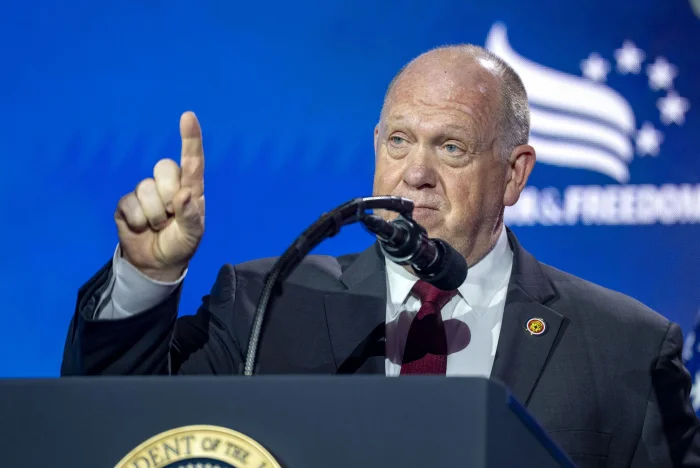
White House Border Czar Tom Homan speaks during the Faith and Freedom Coalition 2026 Road to Majority Policy Conference at the Washington Hilton on Friday. Photo by Bonnie Cash/UPI | License Photo