Donald Trump

Advocates push for major probe as US boat strikes in Latin America kill 157 | Donald Trump News

Washington, DC – In September, the United States began launching dozens of deadly military strikes against alleged drug-smuggling boats in the Caribbean Sea and eastern Pacific.

Nearly half a year later, remarkably little is known about the strikes. The identities of the nearly 157 people killed have not been released. Any purported evidence against them has not been made public.

Recommended Stories

list of 3 itemsend of list

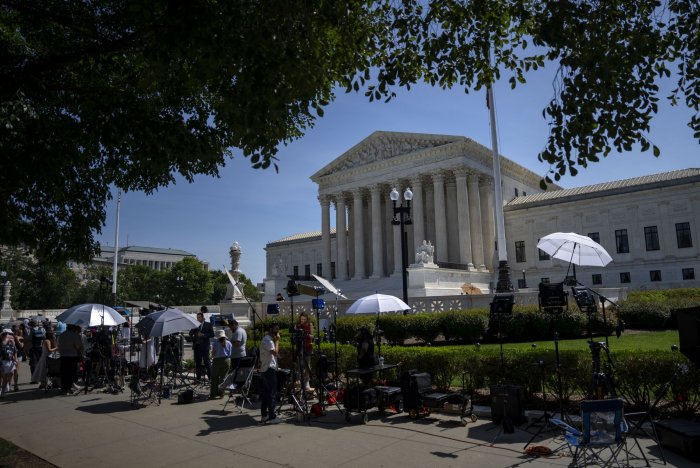
But a group of United Nations and international law experts are hoping to change that on Friday, when they testify at the Inter-American Commission on Human Rights (IACHR).

The international hearing will be the first of its kind since the strikes began on September 2, and rights advocates hope it can help lead to accountability as individual legal cases related to the strikes proceed.

Steven Watt, a senior staff lawyer with the American Civil Liberties Union’s human rights programme, said the goal of the hearing will be threefold.

“Our ask will be to conduct a fact-finding investigation into what’s going on,” Watt said.

The second aim, he continued, would be “to assert or to arrive at a conclusion that there is no armed conflict here”, in what would be a rebuke to US President Donald Trump’s previous claims.

Finally, Watt said, he hopes the proceedings will yield long-sought transparency from the Trump administration on “whether or not they have a legal justification for these boat strikes”.

“We don’t think there are any,” Watt added.

‘We don’t know the names’

The experts set to testify at Friday’s hearing said the IACHR has a unique mandate to uncover the truth behind the US strikes.

The commission, based in Guatemala City, Guatemala, is an independent investigative body within the Organization of American States, of which the US was a founding member in 1948.

While the Trump administration has claimed it has a right to carry out the deadly attacks as part of a wider military offensive against so-called “narco-terrorists”, rights groups have decried the campaign as a series of extrajudicial killings.

They argue that Trump’s deadly tactics deny those targeted of anything that approaches due process.

Legal experts have also dismissed Trump’s claims that suspects in drug-related crimes are equivalent to “unlawful combatants” in an “armed conflict”.

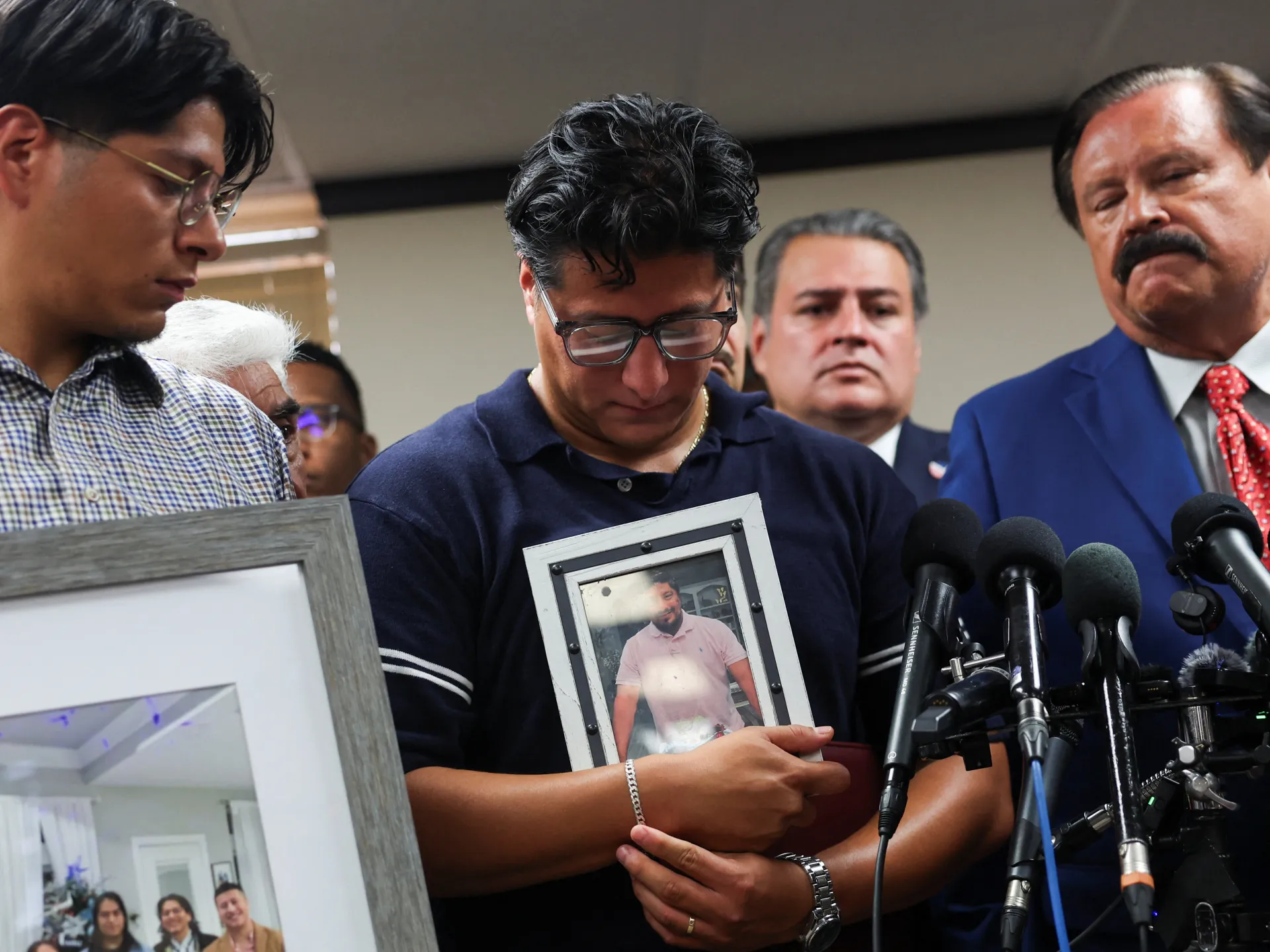
Few details have emerged from the air strikes. Several families have come forward, however, to informally identify the dead as their loved ones.

Victims are said to include 26-year-old Chad Joseph and 41-year-old Rishi Samaroo, who were sailing home to Trinidad and Tobago when they were killed in October, according to relatives.

A complaint filed against the US government said both men travelled often between the islands and Venezuela, where Joseph found work as a farmer and fisherman, and Samaroo laboured on a farm.

The family of Colombian national Alejandro Carranza, 42, have also said he was killed in September when the US military attacked his fishing boat off the country’s coast.

The US has yet to confirm the victims’ identities, and only two survivors have ever been rescued in the 45 reported strikes.

A clearer picture of what happened will be a significant step towards accountability, according to experts like Watt.

“[The IACHR] is uniquely positioned to identify who all these persons are,” Watt said. “We just know the numbers from the United States. We don’t know the names or the backgrounds of these people.”

The IACHR has launched a range of human rights investigations in recent decades, including probes into the 2014 mass kidnapping of 43 students in Iguala, Mexico, and a series of murders in Colombia from 1988 to 1991 dubbed the Massacre of Trujillo.

The commission has also examined US policies, including extrajudicial detentions at Guantanamo Bay, Cuba, during its so-called “global war on terror”.

The IACHR has the power to seek resolutions to human rights complaints or refer them for litigation before the Inter-American Court of Human Rights.

Just last week, the court ordered Peru to pay reparations to the family of a woman who died during a government-led forced sterilisation campaign in the 1990s.

The Carranza family has filed its own complaint to the IACHR, and the families of Joseph and Samaroo have also lodged a lawsuit against the US in a federal court in Massachusetts.

Angelo Guisado, a senior staff lawyer at the Center for Constitutional Rights (CCR), said a fuller accounting of the US actions is needed to prevent future abuses. He is among the experts testifying on Friday.

“You can’t normalise assassinating fishermen off the coast of South America,” Guisado told Al Jazeera. “That’s just sadistic and an abomination to the rules-based order that we’ve created.”

“So we hope that the commission can do some investigation.”

A war against ‘narco-terrorists’?

One of Guisado’s goals for Friday’s hearing will be to unpack the Trump administration’s argument that the attacks are necessary from a national security standpoint.

Even before the US strikes began, the Trump administration began framing the Latin American drug trade as an existential threat to the US.

As part of that re-framing, the administration borrowed messaging from its “global war on terror”, taking the unorthodox approach of labelling several cartels “foreign terrorist organisations”.

Speaking last week at a meeting of Latin American leaders, White House security adviser Stephen Miller maintained there is no “criminal justice solution” to drug cartels.

Instead, he affirmed that the US would use “hard power, military power, lethal force, to protect and defend the American homeland”, even if that meant carrying out deadly operations throughout the Western Hemisphere.

Guisado, however, noted that the administration has admitted that the targeted boats were largely carrying cocaine, not the highly addictive fentanyl responsible for the majority of US drug overdoses.

He explained that the administration has done little to prove its claims that drug traffickers are part of a coordinated effort to destabilise the US.

Such hyperbolic language, Guisado added, could be used as a smokescreen to conceal illegal actions.

“When you invoke national security interest, it seems as if scrutiny and any legitimate analysis or condemnation gets pushed to one side in favour of an ersatz martial law,” Guisado said.

“The idea that you could just proclaim anyone a narcoterrorist and do whatever you want with them is just so repugnant to our system of fairness, justice and law.”

Watt, meanwhile, said he hopes the IACHR will draw a clear “line in the sand”, separating drug crimes from what is conventionally considered an armed conflict.

He also would like to see the IACHR clearly outline the US’s human rights obligations.

“But even if there was an armed conflict — of which there isn’t — the laws of war would prohibit the type of conduct that the United States is engaging in here,” Watt explained.

“It would be an extrajudicial killing. It would be a war crime.”

Transparency or accountability

Friday’s hearing will only be an initial step towards accountability, and critics question how effective the IACHR will ultimately be.

The US has regularly shrugged off human rights probes at international forums, and it is not party to entities like the International Criminal Court in The Hague, raising barriers to the pursuit of justice.

Despite being a member of the OAS, the US has also not ratified the American Convention on Human Rights, one of the organisation’s founding documents.

It is, therefore, unclear how binding any IACHR decisions could be, although Watt argued that it is “longstanding jurisprudence of the commission that the declaration imposes obligations on non-ratifying member states”.

Still, legal experts said Friday’s hearing may yield clarity on the Trump administration’s legal argument for the boat strikes.

The IACHR has said US government representatives are set to appear at the hearing.

To date, the US Department of Justice has not released the Office of Legal Counsel’s official reasoning for the boat strikes, considered the foundational legal document for the military actions.

A separate memorandum from that office addressed the US abduction of Venezuelan President Nicolas Maduro on January 3, which it framed as a drug enforcement action.

That memo touched on the boat strikes, but it only served to raise further questions about Trump’s rationale.

“This will be an opportunity for the United States to put its case before the commission,” Watt said.

“But of course, it depends on US cooperation,” he continued. “They’re going down there, but it’ll be interesting to see what they actually say”.

Source link

Five vessels attacked amid reports of Iranian drone boats, sea mines | US-Israel war on Iran News

Iranian explosive-laden boats appear to have attacked two fuel tankers in Iraqi waters, setting them ablaze and killing one crew member, after projectiles struck three vessels in Gulf waters, according to reports.

The ships targeted in late-night ⁠attacks on Wednesday in the Gulf near Iraq were the Marshall Islands-flagged Safesea Vishnu and the Zefyros, which had loaded fuel cargoes in Iraq, two Iraqi port officials told the Reuters news agency.

Recommended Stories

list of 4 itemsend of list

“We recovered the body of a foreign crew member from the water,” one port security official said, as Iraqi rescue teams continued searching for other missing seafarers. It was not immediately clear which ship that person was linked to.

One Iraqi port security source said Zefyros is flagged ‌in Malta and provided Reuters with a list of crew names.

Al Jazeera’s correspondent in Baghdad, Iraq, Mahmoud Abdelwahed, said the tankers were loaded with crude oil from the Umm Qasr port in southern Iraq in the Basra province, and were attacked soon after their voyage got under way.

“Iraqi officials say this is a flagrant violation of Iraq’s sovereignty given the fact this act, they say, of sabotage has happened in Iraq’s territorial waters,” Abdelwahed said.

Reuters said that reports of the use of explosive-laden unmanned surface vessels, which Ukraine has used with great effect in its war with Russia, come as Iran has blocked oil shipments from transiting the key Strait of Hormuz, through which one-fifth of ⁠the world’s oil transits but has been blocked amid the United States-Israeli war on Iran.

Reuters, citing two unnamed sources, also reported on Wednesday that Iran ‌has deployed about a dozen mines in the strait, while US President Donald Trump said US forces had struck 28 Iranian mine-laying vessels, amid warnings by Trump of severe repercussions should Iran lay mines in the key waterway for global shipping.

Strait of Hormuz sealed

Iran’s Islamic Revolutionary Guard Corps (IRGC) have warned that any ship passing through the Strait of Hormuz will be targeted.

The Thai-flagged Mayuree Naree dry bulk vessel was struck by “two projectiles of unknown origin” while sailing through the strait earlier on Wednesday, causing a fire and damaging the engine room, the ship’s Thai-listed operator Precious Shipping said in a statement.

“Three crew members are ⁠reported missing and believed to be trapped in the engine room,” Precious Shipping said.

“The company is working with the relevant authorities to rescue these three ⁠missing crew members,” it said, adding that the remaining 20 crew members had been safely evacuated and were ashore in Oman.

Images shared by Thai news outlet Khaosod English showed what were reported to be crew members of the ship after their rescue by Oman’s navy.

The IRGC said in a statement carried by the semi-official Tasnim news agency that the ship was “fired upon by Iranian fighters”, suggesting the first direct engagement by the IRGC, who have previously fired missiles or drones.

The Japan-flagged container ship ONE Majesty also sustained minor damage on Wednesday from an unknown projectile 25 nautical miles (about 46 kilometres) northwest ⁠of Ras al-Khaimah in the United Arab Emirates, two maritime security firms said. Its Japanese owner Mitsui OSK Lines and a spokesperson for Ocean Network Express, its charterer, said the vessel was struck while at anchor in the Gulf, and an inspection of the hull revealed minor damage above the waterline.

All crew are safe, they said, adding that the vessel remains fully operational and seaworthy. The owner said the cause of the incident remained unclear and was under investigation.

A third vessel, a bulk ‌carrier, was also hit by an unknown projectile approximately 50 nautical miles (about 93km) northwest of Dubai, maritime security firms said.

The projectile had damaged the hull of the Marshall Islands-flagged Star Gwyneth, maritime risk management company Vanguard said, adding that the vessel’s crew were safe. Owner Star Bulk Carriers said the ship was hit in the hold area while it was anchored. There were no crew injuries and no listing.

The US Navy has refused near-daily requests from the shipping industry ⁠for military escorts through the Strait of Hormuz since the start of the war on Iran, saying the risk of attacks is too high for now, sources familiar with the matter told Reuters.

Source link

Gen. Joshua Rudd confirmed to lead NSA, Cyber Command

March 11 (UPI) — Gen. Joshua Rudd was confirmed by the Senate to lead the National Security Agency and U.S. Cyber Command Tuesday.

Rudd is already the deputy chief of the U.S. Indo-Pacific Command. The Senate voted to confirm him in a 71-29 vote.

Sen. Ron Wyden, D-Ore., voiced his objections to Rudd because he doesn’t have cybersecurity experience. He had put a procedural hold to block Rudd’s confirmation but the chamber was able to get around it.

“He is not qualified for this job,” Wyden wrote in a letter addressed to President Donald Trump that was submitted to the Congressional Record. “And, when it comes to the cybersecurity of this country, there is simply no time for on-the-job learning. The threat is just too urgent for that. For these reasons, I oppose the nomination.”

The position of NSA director had been vacant since April, when retired Gen. Timothy Haugh and his civilian deputy Wendy Noble were ousted.

Lt. Gen. William Hartman has been acting head and plans to retire when Rudd is sworn in. No date has been announced yet.

“General Rudd is a war hero with a lifetime of service to our nation. He is the right choice to lead the protection of our nation from cyberattacks by Iran, Russia and China,” Sen. Tom Cotton, R-Ark., said in a statement.

During nomination hearings before Senate committees, Rudd defended Section 702 of the Foreign Intelligence Surveillance Act, a data-collection law that is set to expire in April.

Source link

Oil Underinvestment Could Hinder US’ Iran-Crisis Response: Here’s Why

Home News Oil Underinvestment Could Hinder US’ Iran-Crisis Response: Here’s Why

No matter how the Iran war gets resolved, the US and other countries will be forced to reckon with a global oil market in complete disarray.

Underinvestment in the oil industry makes the current supply shock much riskier worldwide, industry experts say, forcing the US, the EU, and various Gulf countries into a scramble over where and how to extract.

Prior to the US’ attack on Iran on February 28, the situation had already been precarious. Iran basically controls the Strait of Hormuz, the world’s busiest oil shipping channel. Transportation through this channel is currently closed, despite President Donald Trump’s promise to keep it open. Regardless of how this situation resolves, the broader implications of structural underinvestment across the oil and gas value chain have exposed just how unstable the global energy infrastructure is.

“This is not your father’s energy sector anymore,” Adam Turnquist, Chief Technical Strategist for LPL Financial, says.

Essentially, there was a shift from “drill drill drill” to returning cash to shareholders through dividends and free cash flow, he explained. This change led to better stock performance and improved financial metrics, such as credit spreads and default swaps. But, Turnquist adds, “there’s evidence of under-investment.”

‘A Multi-Million-Barrel Disruption’

Recall the 2011‑2014 time frame when oil prices were above $100 per barrel. Major oil companies like ExxonMobil, Chevron Corp, BP plc, Shell plc and TotalEnergies SE enjoyed strong cash flows, allowing them to generate substantial profits and reward shareholders.

When oil prices collapsed between 2014 and 2016, institutional shareholders pushed hard for capital discipline instead of growth. Corporations, rather than drilling aggressively, returned troves of cash to investors via buybacks and dividends.

In 2023, alone, Exxon, Chevron, Shell, TotalEnergies, and BP returned a record $114 billion to shareholders — 76% higher than their average payouts.

“That translated into lower reinvestment rates, fewer long‑cycle megaproject sanctions, and a bias toward short‑cycle barrels, even as global demand continued to grow,” Benny Wong, Senior Energy Analyst at PitchBook, told Global Finance.

There was also an energy transition, and companies prioritized ESG (environmental, social, and governance) over long-term oil projects, leading major funds to reduce fossil fuel investments.

“The result is a thinner spare capacity buffer and a smaller pipeline of readily deployable projects, which limits the industry’s ability to backfill a sudden, multi‑million‑barrel disruption like the one arising from the Iran conflict,” Wong added.

Oil Prices Spike

So far, the shock is reverberating across the globe. Brent crude, the international benchmark, entered 2026 oversupplied, with forward prices in the $50s, according to Chas Johnston, CreditSights senior analyst.

On Monday, the price of Brent crude spiked to $119.50 per barrel—the highest it has been since the summer of 2022, when Russia invaded Ukraine.

“It’s nearly the same cadence,” Turnquist says, citing Bloomberg data. See the chart below.

West Texas Intermediate (WTI), the U.S. benchmark, also saw similar price spikes, briefly reaching $119.48 per barrel. By late Monday, prices fell back below $90 per barrel, following mixed signals from US leadership, including contradictory statements from Trump and Defense Secretary Pete Hegseth about the conflict’s timeline.

And it could get worse, according to Wood Mackenzie, a consultancy firm for the energy sector. On Tuesday, the firm determined that $200 per barrel “is not outside the realms of possibility in 2026.”

To quell the panic, extreme measures are under consideration. The 32 member countries of the International Energy Agency (IEA) agreed on Wednesday to make 400 million barrels of oil from their emergency reserves available to the market to address the current disruption. That’s double the amount the IEA put into the market in 2022.

Over the weekend, Energy Secretary Chris Wright said the US could potentially release oil from its 400 million barrels of reserve to lower gas prices.

Trump subsequently confirmed that he would ease sanctions on certain countries to help reduce oil prices. This followed a recent 30-day waiver announced by US Treasury Secretary Scott Bessent on sanctions for Russian oil sales to India, due to global supply pressures.

Can Any Country Fill The Gap?

Further complicating matters, oil-producing countries like Bahrain and Kuwait declared “force majeure,” stopping production as storage nears capacity and exports falter. With Iran, Israel, and the U.S. each targeting energy infrastructure and the narrow Strait of Hormuz under threat, it remains unclear which alternative transport routes or supply sources could fill the gap.

Saudi Arabia and the United Arab Emirates remain two key options because they hold most of OPEC’s effective spare capacity. However, analysts still question how much cushion truly exists and how long they can sustain it. Reports already suggest Saudi Arabia and the UAE have begun reducing output by several million barrels per day.

“In other words,” Wong says, “the buffer is meaningful but not unlimited, particularly if the disruption is prolonged or widens regionally.”

West African and Guyanese deepwater projects won’t quickly replace lost supply, either. However, they could strengthen global production over the medium to long term, Wong says. Guyana’s rapidly developing offshore sector, for example, could add more output in the coming years, though expansion will still take time.

Then there’s Namibia, which has had significant offshore discoveries in recent years. BP, Shell and TotalEnergies are among the companies that have set up shop there, but as Wong puts it: “Commercial production is still a few years away.”

US Shale Is Another Issue

As for the US, a rapid ramp now requires more than just a strong price signal.

“Producers are operating with much tighter capital discipline, and scaling quickly requires having available rigs, completion crews, frac sand and pipeline takeaway capacity, all of which can act as bottlenecks,” Wong says.

CreditSights’ Johnston agrees.

“The ability for US producers to respond is also quite limited, because it still takes six to nine months to bring new production online, even from the short-cycle shale industry,” he says.

Until then, the stakes remain high. Wood Mackenzie projects roughly 15 million barrels per day (mbpd) of Gulf oil exports could be lost if the Strait of Hormuz remains disrupted. They note that alternatives like US shale and uncompleted wells might only add a few hundred thousand barrels per day over months — not even close to filling the 15 million‑barrel gap.

The circumstances are enough to give analysts pause, given the cavalier attitude coming from the US.

Turnquist echoed a point his firm’s chief macro strategist made during a recent call: “You can’t shake the hornet’s nest and then put it back away.” Once geopolitical issues ignite, they rarely resolve quickly, he said, pointing to wars in Iraq, Afghanistan and Russia-Ukraine as examples.

“There’s really no concrete signs that it’s going to end anytime soon,” he added.

Source link

‘No endgame’: Why US Democrats say Iran war hearing has them worried | US-Israel war on Iran News

A group of Democrats in the United States Senate is demanding public hearings on the country’s war against Iran after receiving a series of classified briefings from officials in President Donald Trump’s administration.

Lawmakers say the White House has not clearly explained why the US entered the conflict, what its goals are, or how long it may last.

Republicans currently hold a narrow, 53-47 Senate majority, which gives them the power to control what legislation comes to the floor for debate.

Some Democrats have expressed frustration after the latest closed-door briefing. Trump has not ruled out sending US ground ⁠troops into Iran.

“I just came from a two-hour classified briefing on the war,” Senator Chris Murphy from the state of Connecticut said on Tuesday. “It confirmed to me that the strategy is totally incoherent.

“I think this is pretty simple: if the president did what the Constitution requires and came to Congress to seek authorisation for this war, he wouldn’t get it – because the American people would demand that their members of Congress vote no,” he added.

Here is what we know:

What has happened so far?

Since the US and Israel launched attacks on Iran on February 28, senior officials, including Secretary of State Marco Rubio and Defense Secretary Pete Hegseth, have held several closed-door meetings to brief Congress members on the military campaign and its progress.

Because the meetings are classified, lawmakers are restricted in what they can publicly disclose about the information they received.

U.S. President Donald Trump listens to U.S. Secretary of State Marco Rubio
US President Donald Trump listens to Secretary of State Marco Rubio [File: Nathan Howard/Reuters]

What are Democrats saying?

Several Democratic senators have said they left the briefings frustrated, arguing that the administration had not provided clear answers about the war’s objectives, timeline or the long-term strategy guiding their approach to the conflict.

Earlier this week, six Democratic senators also called for an investigation into a strike on a girls’ school in Minab, in southern Iran. Reports indicate the attack, which investigators say involved US forces, killed at least 170 people, most of them children.

“There seems to be no endgame,” Democratic Senator Richard Blumenthal said. “The president, almost in a single breath, says it’s almost done, and at the same time, it’s just begun. So this is kind of contradictory.”

Senator Elizabeth Warren from Massachusetts raised concerns about the cost of war.

“The one part that seems clear is that while there is no money for 15 million Americans who lost their health care, there’s a billion dollars a day to spend on bombing Iran,” Warren said on Tuesday.

“The one thing Congress has the power to do is to stop actions like this through the power of the purse,” she added.

Others seem worried that a ground deployment could take place.

“We seem to be on a path toward deploying American troops on the ground in Iran to accomplish any of the potential objectives here,” Blumenthal, of Connecticut, told reporters after Tuesday’s classified briefing.

“The American people deserve to know much more than this administration has told them about the cost of the war, the danger to our sons and daughters in uniform and the potential for ⁠further escalation and widening of this war,” he added.

Richard Blumenthal
Democratic Senator Richard Blumenthal of Connecticut [File: Ben Curtis/AP]

What are Republicans saying?

Republicans, who have slim majorities in both houses of Congress, have almost unanimously backed Trump’s campaign against Iran, with only a handful expressing doubt about the war.

Some Republican leaders say the strikes are necessary to curb Iran’s military capabilities, missile programme and regional influence.

They have also argued that the operation is limited in scope and designed to weaken Iran’s ability to threaten US forces and allies in the region.

Republican Representative Brian Mast of Florida, chairman of the House Foreign Affairs Committee, last week publicly thanked Trump for taking action against Iran, saying the president is using his constitutional authority to defend the US against the “imminent threat” posed by Tehran.

But some Republican members of Congress have voiced concerns.

Representative Nancy Mace from South Carolina said she did “not want to send South Carolina’s sons and daughters into war with Iran”, in a post on X.

Rand Paul, a Republican senator from Kentucky, accused the Trump administration of changing its narrative and rationale for the war on a daily basis.

“We keep hearing new reasons for war with Iran—none convincing,” he wrote on X. “‘Free the oppressed’ sounds noble, but where does it end? We’ve been told for decades Iran is weeks from a nuke. War should be a last resort, not our first move. A war of choice is not my choice.”

Why does the debate matter?

The dispute has revived a long-running debate in Washington, DC, about the limits of presidential war powers.

Under the US Constitution, Congress has the authority to declare war, but modern presidents have frequently launched military operations without formal congressional approval, often citing national security or emergency threats.

The law allows the president to deploy US forces for up to 60 days without congressional authorisation, followed by a 30-day withdrawal period if Congress does not approve the action.

Some lawmakers and legal experts say the war on Iran highlights the need for stronger congressional oversight of military action.

“In the 1970s, we adopted something called the War Powers Resolution that gives the president limited ability to do this,” said David Schultz, a professor in the political science and legal departments at Hamline University.

“And so, either you could argue that what the president is doing violates the Constitution by… not [being] a formally declared war; or b, it exceeds his authority, either as commander-in-chief or under the War Powers Act,” he added.

“And therefore, you could argue that domestically, his actions are illegal and unconstitutional,” Schutlz said.

The Trump administration has argued that the February 28 strikes were justified as a response to an “imminent threat”, a rationale often used by presidents to justify military action without prior congressional approval.

However, US intelligence agencies had themselves said before the start of the war that they had no evidence of an imminent Iranian threat to the US or its facilities across the Middle East.

Source link

White House disputes claim of Navy escort on Strait of Hormuz

March 10 (UPI) — President Donald Trump posted on social media that the United States has destroyed 10 inactive mine-laying vessels on the Strait of Hormuz while the White House cleared up a claim by another administration official.

White House press secretary Karoline Leavitt said Tuesday that the U.S. Navy did not escort an oil tanker through the Strait of Hormuz after Energy Secretary Chris Wright claimed it did on social media.

Leavitt said President Donald Trump may consider using Navy escorts for oil tankers on the strait but that has not happened yet.

“The U.S. Navy has not escorted a tanker or vessel at this time,” Leavitt told reporters during a press briefing Tuesday.

Earlier in the day, Wright posted that the U.S. Navy “successfully escorted an oil tanker through the Strait of Hormuz to ensure oil remains flowing to global markets.”

Leavitt said she was “made aware of this post,” but had not spoken with Wright about it.

The post was later taken down.

The price of crude oil fell below $80 per barrel briefly following Wright’s post. It climbed again after the post was deleted.

Iran has taken measures to close the Strait of Hormuz, a critical oil trade route, since the United States and Israel launched strikes on Feb. 28.

To combat the impact the military conflict with Iran will have on the global oil market, the United States has discussed plans to escort oil tankers through the Strait of Hormuz. However, retaliatory strikes by Iran have demanded more military resources, Wright previously said.

Source link