Donald Trump

U.S. government lifts export ban on Anthropic models

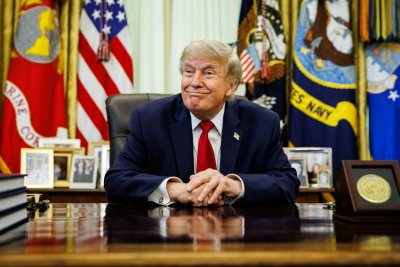
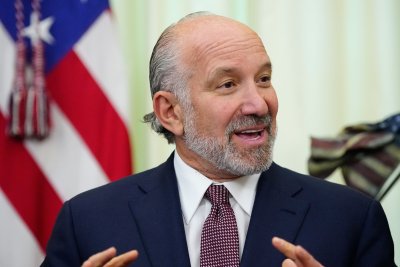
Howard Lutnick, U.S. commerce secretary, speaks June 22 during an executive order signing in the Oval Office of the White House in Washington, D.C. Anthropic said Tuesday that Lutnick’s Department of Commerce has lifted export restrictions on its Fable 5 and Mythos 5 artificial intelligence models. Photo by Bonnie Cash/UPI | License Photo

June 30 (UPI) — The Trump administration has lifted export restrictions on artificia lintelligence company Anthropic’s Fable 5 and Mythos 5 models, the company said Tuesday evening.

“We’ve received notice that the Department of Commerce has lifted export controls on Claude Fable 5 and Mythos 5,” Anthropic said in a statement, CNN reported. “We’ll begin restoring access tomorrow, and will share an update soon.”

The statement came not long after Commerce Secretary Howard Lutnick posted on social media about Anthropic, saying “we have worked closely with Anthropic to analyze and approve Fable 5 to ensure alignment across the U.S. government and strengthen America’s leadership in AI.”

Anthropic disabled customer access to Fable, a consumer version of its Mythos AI model with more safeguards, and Mythos itself several weeks ago after the export ban June 12. The ban required the company to suspend all use by foreign nationals inside or outside the United States, including Anthropic employees.

In a statement then, Anthropic said its understanding was that “the government it has become aware of a method of bypassing, or ‘jailbreaking,’ Fable 5.”

“We reviewed a demonstration of this specific technique being used to identify a small number of previously known, minor vulnerabilities,” the company said. “These vulnerabilities all appear relatively simple, and we have found that other publicly available models are able to discover them as well without requiring a bypass.”

The government loosened some of the restrictions on Mythos on Friday, Politico reported.

Anthropic and the U.S. government have had a rocky relationship. Anthropic leaders’ concerns about military and intelligence usage of its products caused issues with the Department of Defense.

President Donald Trump called it a “radical left, woke company” and ordered federal agencies to stop using Anthropic products, while Pete Hegseth, the secretary of defense, called the company a supply chain risk to national security.

Anthropic has sued the Trump administration to reverse the blacklisting, and that lawsuit is ongoing.

Source link

Donald Trump reports $1.4bn in cryptocurrency income in government filing | Donald Trump News

Trump has launched a slate of crypto-friendly policies since returning to the White House for a second term.

A new government report has shown that United States President Donald Trump made millions from cryptocurrency and settlements with media companies last year, raising questions about possible conflicts of interest.

On Tuesday, the US Office of Government Ethics released annual financial disclosure forms for both Trump and his vice president, JD Vance.

Recommended Stories

list of 3 itemsend of list

One 927-page document itemises all of Trump’s reported assets and income for 2025. They include more than $1.4bn from his family’s cryptocurrency ventures.

Trump received more than $500m from World Liberty Financial, a crypto venture he and his sons co-founded. The president also reported another $635m from the sale of his $TRUMP meme coins.

The report suggests that investments in digital assets now generate one of the largest tranches of Trump’s income, overtaking even the real estate empire he inherited from his father.

The revelation is likely to intensify scrutiny of Trump’s policies.

Since returning to the White House in January 2025, Trump has launched a slate of crypto-friendly policies as he seeks to make the US the “crypto capital of the world”.

Early in his second term, for instance, the president announced that his government would create a national strategic cryptocurrency reserve to help ensure the stability of certain digital assets.

He also hosted the first-ever White House cryptocurrency summit.

The forum included several technology leaders that had been under investigation during the administration of Trump’s predecessor, Democrat Joe Biden.

But Trump reversed those actions. In February 2025, for instance, the Securities and Exchange Commission announced it would drop charges against Coinbase, the largest US-based cryptocurrency exchange, after it was accused of acting as an unregistered broker.

Other digital currency firms came under suspicion for fraudulent transactions.

Trump has coupled the shift away from government oversight with efforts to champion new legislation, including the GENIUS Act.

The law, passed in Congress in July 2025, created a general regulatory framework that required stablecoin, a type of cryptocurrency, to be backed one-to-one by US dollars. Advocates said the law would help to make cryptocurrency more mainstream.

“The entire crypto community: For years, you were mocked and dismissed and counted out,” Trump said during the law’s signing ceremony. “You were counted out as little as a year and a half ago, but this signing is a massive validation.”

But Trump’s increasingly close ties to the cryptocurrency industry have drawn criticism for its potential for corruption.

Last week, five Democratic senators, including Elizabeth Warren and Richard Blumenthal, called on their Republican colleagues to join them in forcing Trump administration officials to testify under oath about their cryptocurrency dealings.

They pointed to investments from the United Arab Emirates (UAE) in World Liberty Financial, the company the Trump family co-owns with government envoy Steve Witkoff’s sons.

Those investments, they argued, “raise questions about what more the UAE may receive — or may have already received – at the expense of U.S. national security after investing in the Trump family crypto company”.

The five Democrats urged immediate hearings on the matter.

Source link

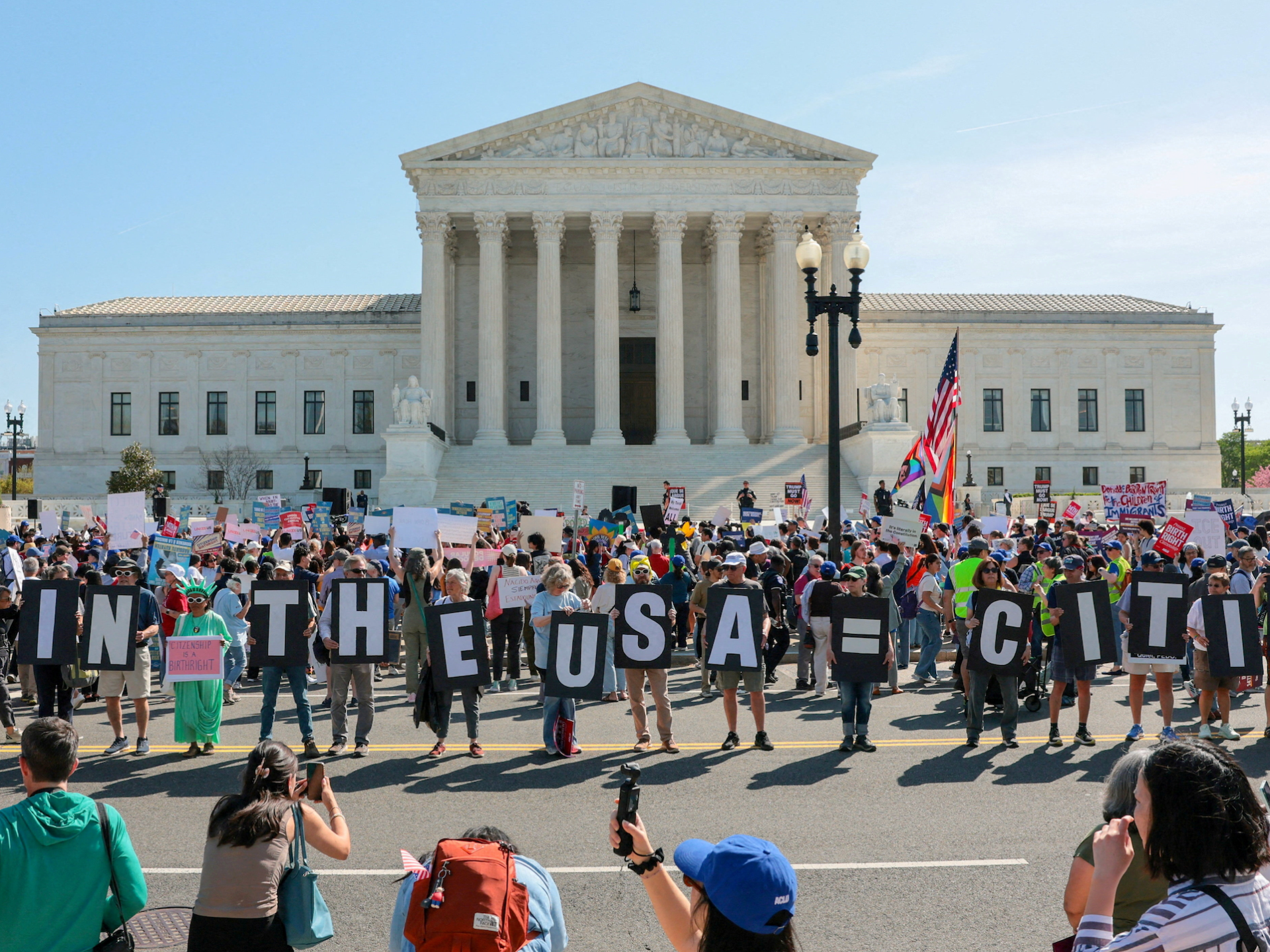
SCOTUS rules against Trump’s order limiting birthright citizenship | Donald Trump

NewsFeed

The US Supreme Court has blocked President Donald Trump’s executive order to end birthright citizenship for all individuals born on US soil, ruling that children born in the country remain entitled to citizenship under the Constitution.

Source link

Exiled Chinese entrepreneur Guo Wengui gets 30 years for fraud

June 30 (UPI) — A U.S. federal judge has sentenced exiled Chinese entrepreneur Guo Wengui to 30 years in prison for defrauding investors of more than $1 billion.

Guo, also known as Ho Wan Kwok and Miles Guo, is a Chinese national who made his fortune in Chinese real estate before fleeing China, in 2014, relocating to the United States around 2015.

He was arrested in March 2023 on a series of fraud and money laundrying charges. Federal prosecutors alleged that, beginning around 2018, he led a conspiracy that defrauded his online followers of more than $1 billion through investment and membership schemes tied to his anti-Chinese Communist Party movement and related business ventures.

In sentencing him on Monday to the three-decade punishment that the prosecutors had requested, Judge Analisa Torres in a Manhattan courtroom said Guo had “preyed on people seeking to bring democracy to China,” The New York Times reported.

During the trial, the prosecutors alleged that in around 2018, he created two nonprofit organizations, which he used to amass followers aligned against the CCP and who were inclined to believe his business advice.

In the years that followed, Guo established several investment opportunities that he advertised to his online followers, who gave him hundreds of millions of dollars over the years.

Prosecutors alleged that Guo had used the money he stole from his followers to line his own pockets, buying himself and cloase relatives luxuries, such as a 50,000-square-foot mansion, a $4.5 million Ferrari sports car and two $36,000 mattresses. He also used the money to finance a $37 million luxury yacht, they said.

Guo denied the accusations.

During sentencing Monday, Torres also imposed ann $889 million forfeiture order against Guo, chastising his “exploitation of a philanthropic purpose, his history of intimidation of critics and his refusal to accept responsibility,” The Guardian reported.

Yanping “Yvette” Wang, Guo’s former chief of staff, was sentenced to 10 years in January 2025 after pleading guilty to related wire fraud and money laundering charges. A second co-defendant, Kinn Ming Je, also known as Willian Je, has been charged with several fraud and money laundering charges.

Guo is also an associate of Steve Bannon, a longtime ally and former top aide to President Donald Trump.

Bannon was arrested in August 2020 aboard a yacht owned by Guo on charges related to a crowdsourced campaign to raise money to build barriers along the U.S.-Mexico border.

Source link

DOJ sues Massachusetts, Rhode Island to end in-state tuition for noncitizens

June 30 (UPI) — The Trump administration has filed lawsuits challenging Massachusetts and Rhode Island laws that offer in-state tuition benefits to certain undocumented immigrants, alleging they unlawfully discriminate against U.S. citizens.

The lawsuits announced Monday are the latest the Justice Department has filed against state laws that offer in-state rates, financial aid or scholarships to certain undocumented immigrants who meet state residency or education requirements, which generally consist of living in the state for a number of years and attending high school there.

Justice Department lawyers allege these laws are illegal because they offer noncitizens benefits denied to U.S. citizens from other states.

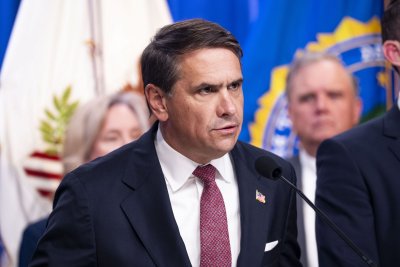
“The Department of Justice is committed to fulfilling President Trump’s promise that illegal aliens will not receive taxpayer benefits or preferential treatment over America’s own citizens,” Associate Attorney General Stanley Woodward said in a statement.

“As our nation marks 250 years of freedom, we will continue to challenge state laws that place aliens over citizens in clear defiance of Congress’ commands.”

Massachusetts has extended eligibility for in-state tuition benefits, financial aid and scholarships at Massachusetts state schools to qualifying undocumented immigrants since 2023, while Rhode Island has allowed qualifying undocumented immigrants to pay in-state tuition costs going back to 2011. Rhode Island then codified this law in 2021.

The lawsuits filed Monday ask the courts to enjoin enforcement of these laws, saying they violate a federal statute, enacted in 1996, that specifically bans offering in-state tuition to any noncitizen “unless a citizen or national of the United States is eligible for such a benefit … without regard to whether the citizen or national is such a resident.”

Proponents of these laws, sometimes referred to as Dream Act laws, argue that without offering in-state tuition rates, post-secondary education will be kept out of reach for undocumented immigrants living in the United States, while such laws can reduce high school dropout rates as well as raise student incomes and tax contributions, among other economic benefits.

The Trump administration has been targeting these laws as part of President Donald Trump‘s aggressive immigration policy that has seen mass roundups and deportations of noncitizens.

In April 2025, Trump signed an executive order directing the attorney general to identify and stop the enforcement of state laws and policies “favoring aliens over any groups of American citizens,” specifically highlighting laws that “provide in-state higher education tuition to aliens but not to out-of-state American citizens.”

Since then, federal prosecutors have challenged laws in 12 states. Four lawsuits, against Texas, Kentucky, Oklahoma and Nebraska, have resulted in orders permanently enjoining the states’ in-state tuition laws, while Kansas last week joined the Justice Department in seeking a proposed consent decree that must be approved by the court.

The remaining challenges are pending against Illinois, Minnesota, Virginia, California, New Jersey, Massachusetts and Rhode Island, all Democratic-led states.

According to the Higher Ed Immigration Portal, about 20 states and Washington, D.C., provide in-state tuition to undocumented students, while 18 and the nation’s capital also provide state financial aid.

Source link

Trump nominates acting Labor chief Sonderling for secretary

June 30 (UPI) — President Donald Trump has nominated Keith Sonderling to be the U.S. secretary of labor, a position the attorney has held on the interim basis since Lori Chavez-DeRemer resigned in April.

Trump announced his nomination of Sonderling to the post permanently on Monday in a statement, describing Sonderling as a man who has throughout his career “proven his dedication to delivering strong results for the Hardworking People of our Country, and I know he will do an incredible job in his new role.”

Sonderling served as deputy and acting administrator of the Department of Labor’s Wage and Hour Division during Trump’s first term, and as deputy secretary — the department’s chief operating officer — during Trump’s second.

The 43-year-old was made interim head of the department on April 20, replacing Chavez-DeRemer, who had resigned as she faced a series of allegations of professional misconduct.

She stepped down as a Labor Department inspector general’s investigation was examining allegations that she kept a stash of alcohol in her office, maintained a relationship with a member of her security team and used agency resources for a variety of personal activities.

In a statement Monday, Sonderling said he was “deeply grateful to President Trump for his trust and confidence.”

“Serving in both President Trump’s administrations has been the greatest honor of my life,” he said on social media.

“If confirmed by the Senate, I look forward to continuing that service as secretary of labor and advancing the president’s agenda on behalf of America’s workers, families, unions and job creators.”

Following Trump’s announcement, a number of Republicans congratulated Sonderling on his nomination.

“Congratulations to Keith Sonderling on his nomination to be secretary of labor,” Sen. Bill Cassidy, R-La., said online.

“He is the kind of pro-worker leader that Americans deserve.”

Source link

Trump says he’s undecided on landmark housing bill, calls it ‘a yawn’

June 29 (UPI) — As Speaker of the House Mike Johnson prepared to send a bipartisan, landmark housing affordability bill to President Donald Trump‘s desk on Monday, the president told reporters that he remains undecided on whether to sign it.

Trump called the 21st Century ROAD to Housing Act” so unimportant,” CNN reported. One week ago, the president abruptly canceled the originally planned signing of the housing bill, which the Senate and House passed by overwhelming margins.

“When I look at the (housing) bill, it’s a bill,” Trump said to reporters Monday, The Hill reported. “When I look at the SAVE America Act, it’s about saving America.”

The housing bill is “a yawn,” the president said. “To me, compared to the SAVE America Act, everything is a big yawn.”

The housing bill’s provisions include measures that encourage renovating older homes, encourage communities to build more housing through funding and grant programs, cut some red-tape issues around building housing and effectively ban private equity from buying up single-family homes.

When canceling the original signing of the bill, Trump said he wouldn’t sign it until Congress passed the SAVE America Act, which would require voters to prove their citizenship before they register to vote

Critics say the controversial act could disenfranchise millions of Americans, and Republicans have said that they don’t have the votes to pass it.

Trump acknowledged this Monday, The Hill reported, saying the SAVE America Act is “probably not going to happen because we have four Republican senators, maybe five, that just won’t vote for it. It’s crazy.”

The president said that the housing bill’s bipartisan backing was part of his issue with it.

“It’s very bipartisan — that means the Democrats like it,”he said. “They’re getting things that I wouldn’t necessarily agree to.”

Speaker Johnson, a Republican, said Sunday that he believed Trump would sign the housing bill after it was sent to him, “because we’re delivering for the people, and that’s what he wants to do.”

If Trump does not sign the bill, it could still go into effect. The U.S. Constitution stipulates that a bill will become law automatically if a president does not take action for 10 days, as long as Congress is in session.

Trump could also veto the bill. If that happens, Congress has the power to override the veto by passing the act by a two-thirds vote in both the House and Senate.

Source link

Supreme Court to hear Arizona proof-of-citizenship voting case

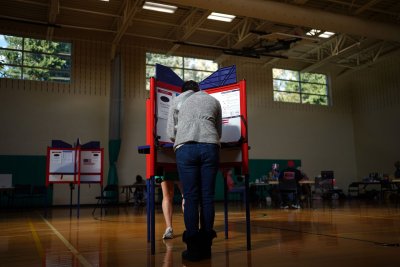
Voters cast their ballots in the 2024 Presidential Election on Election Day at the Walter Reed Recreation Center in Arlington, Va., on Nov. 5, 2024. The U.S. Supreme Court has agreed Monday to hear a case over Arizona’s election law requiring documentary proof of citizenship in voting. File Photo by Bonnie Cash/UPI | License Photo

June 29 (UPI) — The U.S. Supreme Court has agreed Monday to hear a case over Arizona’s election law requiring documentary proof of citizenship in voting.

The high court will hear arguments over whether federal law prohibits such a law when voting in state elections. The court will hear the case during its next term which starts in October.

It is already illegal for non-U.S. citizens to vote in federal and state elections. Some municipalities allow noncitizen voting in local elections.

President Donald Trump has called for a national proof-of-citizenship requirement in elections while continuing to repeat unfounded claims of election fraud. The SAVE Act, a bill being mulled by Congress that Trump is in support of, includes a proof-of-citizenship requirement which Trump is in support of.

In 2022, the Arizona legislature adopted a law requiring voters to provide proof of citizenship when registering to vote on a state form. Documentary proof of citizenship that is allowable under Arizona’s law includes but is not limited to a birth certificate and a passport.

Nonprofit advocacy organizations Mi Familia Vota and Voto Latino filed the lawsuit challenging the proof-of-citizenship requirement.

The Republican National Committee appealed a lower court decision that struck down the proof-of-citizenship law.

The legislature also passed a law outlining how state election officials review voter rolls, putting in place a procedure to cancel the voter registrations of noncitizens.

Source link

Supreme Court allows Trump FTC firing, blocks Lisa Cook’s firing

June 29 (UPI) — The U.S. Supreme Court ruled Monday that Congress’ restriction of the president from firing independent agency employees without cause violates the separation of powers.

The court upheld President Donald Trump‘s firing of Rebecca Slaughter, a Democratic member of the Federal Trade Commission, overturning 90 years of precedence. The ruling came down along ideological lines with the conservative majority upholding Slaughter’s firing in a 6-3 decision.

Writing the majority opinion, Chief Justice Roberts said Congress’ “for cause” removal protections, meant to shield independent agencies from political influence, violate the separation of powers.

“What text, history, and structure settle, our precedent confirms — the president may remove his subordinates at will,” Roberts wrote.

Justice Sonia Sotomayor wrote in the minority opinion that the decision has given the president “far greater power than ever before.”

“It is a power, however, that neither the People, nor Congress, nor the Constitution bestowed upon him. In granting the President this unbridled authority, the Court upends its precedent, misconstrues our history, and sheds any pretense of judicial modesty. I respectfully dissent.”

The court’s decision upends the precedent set in 1935 in the case Humphrey’s Executor vs. United States. The high court in that case ordered that Congress could restrict the president from firing members of the FTC without cause.

“Although it is up to the Senate to decide whether to confirm those with whom the President would prefer to work with, neither Congress nor the courts may saddle him with those with whom he cannot work,” Roberts wrote. “Subordinates who exercise the President’s power are subject to removal by him. Then, and only then, can they remain accountable to the President, and the President to the people.”

While the high court allowed Trump to fire Slaughter, it rejected his bid to fire Fed Governor Lisa Cook from the Federal Reserve for the moment.

Trump attempted to pause a federal court ruling that prevented him from firing Cook last year. A lawsuit was filed challenging the attempt. In a 5-4 ruling Monday, the Supreme Court rejected the attempt by Trump.

Roberts penned the majority opinion in this case as well, joining the three liberal justices and conservative Justice Brett Kavanaugh.

“Not only the fact of independence but also the appearance of independence is key to the Federal Reserve’s design,” Roberts wrote.

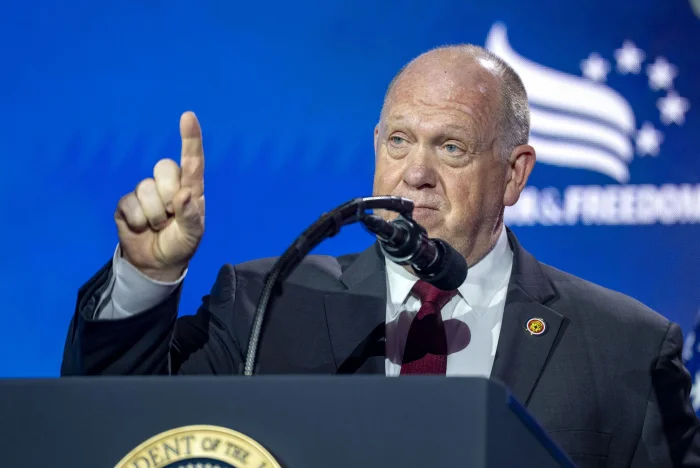
White House Border Czar Tom Homan speaks during the Faith and Freedom Coalition 2026 Road to Majority Policy Conference at the Washington Hilton on Friday. Photo by Bonnie Cash/UPI | License Photo

Source link

Supreme Court declines to hear Trump’s effort to overturn E. Jean Carroll verdict

1 of 2 | Journalist E. Jean Carroll departs from the courthouse after the conclusion of the damages trial against Donald Trump at Manhattan Federal Court on January 26, 2024, in New York City. On Monday, the Supreme Court declined to hear Trump’s challenge to the judgment. File Photo by John Angelillo/UPI | License Photo

June 29 (UPI) — The U.S. Supreme Court on Monday refused to hear President Donald Trump‘s request for the panel to overturn a ruling that found him liable for sexually abusing and defaming writer E. Jean Carroll.

Trump sought to have his $5 million civil penalty tossed, but the high court’s decision Monday leaves that in place, along with a separate $83.3 million in compensatory and punitive damages she was awarded for defamation.

A jury awarded the damages in 2023 after finding him liable for sexually abusing Carroll in a Manhattan department store dressing room in the 1990s and for defaming her by denying the allegations in 2019.

An appeals court also upheld the verdict in 2024. The 2nd U.S. Circuit Court of Appeals said Trump’s lawyers failed to show any errors in the ruling that would lead to a new trial.

Trump has denied Carroll’s allegations since she first made them and called the $5 million judgment excessive.

White House Border Czar Tom Homan speaks during the Faith and Freedom Coalition 2026 Road to Majority Policy Conference at the Washington Hilton on Friday. Photo by Bonnie Cash/UPI | License Photo

Source link

Speaker Johnson to send housing affordability bill to Trump for signature Monday

1 of 2 | Speaker of the House Mike Johnson speaks during the Faith and Freedom Coalition 2026 Road to Majority Policy Conference at the Washington Hilton in Washington, D.C., on Friday. He said Sunday he plans to send a housing affordability to President Donald Trump on Monday for a signature. Photo by Bonnie Cash/UPI | License Photo

June 28 (UPI) — Speaker of the House Mike Johnson said Sunday he plans to send housing affordability legislation to President Donald Trump for a signature Monday despite his refusal to sign the package last week.

In an appearance on Fox News’ Sunday Morning Futures, Johnson said he believes Trump will sign the legislation.

“I’m going to send the bill over to him Monday, and it will become law,” Johnson said.

“I certainly want him to take the biggest, boldest marker that he has and do that big Trump signature proudly on that legislation because we’re delivering for the people, and that’s what he wants to do.”

Both chambers of Congress overwhelmingly voted in favor of the 21st Century ROAD to Housing Act last week. The legislation seeks to lower housing costs, expand homeownership access, and limit corporate and institutional ownership for rental purposes.

The bill includes 60 pieces of legislation that would also seek to ease bureaucracy to hasten housing development, modernize federal housing programs and banking regulations, and incentivize local governments to prioritize housing.

The non-profit National Low Income Housing Coalition said the United States is facing a shortage of 7.2 million affordable units for low-income renters, resulting in a housing crisis in every state.

The House voted 358-32 and the Senate voted 85-5 in favor of the bill.

Trump was originally scheduled to sign the legislation Wednesday, but he canceled those plans, saying he won’t sign housing legislation until lawmakers approve the SAVE America voting bill.

There haven’t been enough votes to pass the legislation, which would require people to prove their citizenship before they can register to vote. Opponents to the law say it would disenfranchise millions of legitimate voters.

In an appearance Sunday on NewsNation‘s The Hill Sunday, Rep. Suhas Subramanyam, D-Va., said he wouldn’t be surprised if Trump doesn’t sign the housing legislation.

“I don’t know with this president, because he’s said that he doesn’t care about rising costs,” Subramanyam said.

“He said … if he doesn’t have a housing problem and his friends don’t have [a] problem with housing, then it doesn’t matter to him. So I actually wouldn’t be surprised if he doesn’t sign it.”

White House Border Czar Tom Homan speaks during the Faith and Freedom Coalition 2026 Road to Majority Policy Conference at the Washington Hilton on Friday. Photo by Bonnie Cash/UPI | License Photo

Source link

Israeli government recognizes Armenian genocide

June 28 (UPI) — The Israeli government on Sunday voted unanimously to recognize the mass killings of Armenians in the early 20th century as a genocide.

Minister of Foreign Affairs Gideon Sa’ar proposed the vote during a cabinet meeting.

“Despite the extensive and unambiguous historical documentation, the Armenian genocide remains to this day the subject of an institutionalized campaign of denial and minimization, including manipulative rewriting of history, mainly by the Turkish government,” Sa’ar said during the meeting.

“It is widely believed that the Ottoman Empire committed crimes amounting to genocide in a systematic manner, with the aim of destroying the Armenian people.”

The fact that the Armenian genocide happened beginning in 1915 is well-accepted within academic circles. However, the Turkish government has continued to deny the culpability of its predecessor — the Ottoman Empire. More than 1.5 million Armenians were killed between 1915 and 1923.

Ahead of the vote, Turkish Vice President Cevdet Yılmaz described the Israeli resolution as “an attempt to cover up their own crimes.”

In 2024, the Armenian government officially recognized an independent Palestinian state, months after the Oct. 7, 2023, attack by Hamas on Israel that sparked the Gaza war. Armenia said a two-state solution, which is backed by other nations including the United States, is the best option to bring peace to the region.

In response, Israel summoned the Armenian ambassador for a “harsh reprimand conversation.”

Israel joins more than 30 countries across the globe that have acknowledged the Armenian massacres, using the term “genocide,” Politico reported. Among them are France, Germany, Lebanon, Syria and the United States.

President Donald Trump, however, has repeatedly declined to use the term and rejected a 2016 congressional vote to formally and symbolically recognize the genocide.

The last U.S. president to publicly acknowledge the massacres as a genocide was Joe Biden, who, in 2021, marked the 106th anniversary of the atrocities on April 24, Armenian Remembrance Day.

“Each year on this day, we remember the lives of all those who died in the Ottoman-era Armenian genocide and recommit ourselves to preventing such an atrocity from ever again occurring,” Biden said.

“We honor the victims of the Meds Yeghern so that the horrors of what happened are never lost to history,” he said, using the Armenian term for the genocide. “And we remember so that we remain ever-vigilant against the corrosive influence of hate in all its forms.”

An Armenian woman prays during a memorial mass marking the 100th anniversary of the Armenian massacre by Ottoman Turks in 1915, in St. James Cathedral in the Old City of Jerusalem, Israel, April 24, 2015. An estimated 1.5 million Armenians were massacred by the Ottoman Empire in the first genocide of the 20th century. Photo by Debbie Hill/UPI | License Photo

Source link

Iran targets U.S. sites in Bahrain, Kuwait

Iranian Foreign Minister Abbas Araghchi (L) and Iraqi Foreign Minister Fuad Hussein hold a joint press conference following their meeting at the Ministry of Foreign Affairs in Baghdad, Iraq, on Sunday. Photo by Ceerwan Azeez/EPA

June 28 (UPI) — The Iranian military launched fresh attacks at U.S. sites in Bahrain and Kuwait on Sunday morning amid an escalation of violence that threatens a fragile peace agreement.

Bahraini and Kuwaiti government sources said each intercepted attacks from Iran, including two ballistic missiles in Kuwait’s airspace. Bahrain said one of the strikes damaged a residential building near an international airport, The Guardian reported.

Neither country declared any casualties, The New York Times reported.

The renewed violence came after an Iranian drone struck a Singapore-flagged cargo ship while transiting the Strait of Hormuz on Thursday. The U.S. military accused Iran of also striking a Panama-flagged tanker carrying oil on Saturday.

The United States responded Saturday with its own attacks targeting Iranian drone sites. U.S. Central Command said the strikes were “in direct response to continued Iranian aggression against commercial shipping.”

President Donald Trump announced the U.S. strikes in a post on Truth Social that also threatened further violence against Iran. He accused the country of violating a memorandum of understanding that both he and Iranian President Masoud Pezeshkian signed earlier this month.

“It is very possible that they will never learn!” Trump wrote of Iran.

“There may come a point when we are no longer able to be reasonable, and will be forced to militarily complete the job that we very successfully started. If that happens, the Islamic Republic of Iran will no longer exist!”

Shipping via the Strait of Hormuz largely came to a halt in March after the United States and Israel launched attacks on Iran beginning Feb. 28. Iranian Foreign Minister Abbas Araghchi said Sunday that under the MOU signed June 17, Iran is the sole country responsible for managing the strait.

He warned the United States against interfering in shipping through the waterway, the Times reported. He said that further interference could delay the full reopening of the strait.

“Under the memorandum of understanding, no other entity or country has any responsibility in this regard,” he said at a news conference in Baghdad.

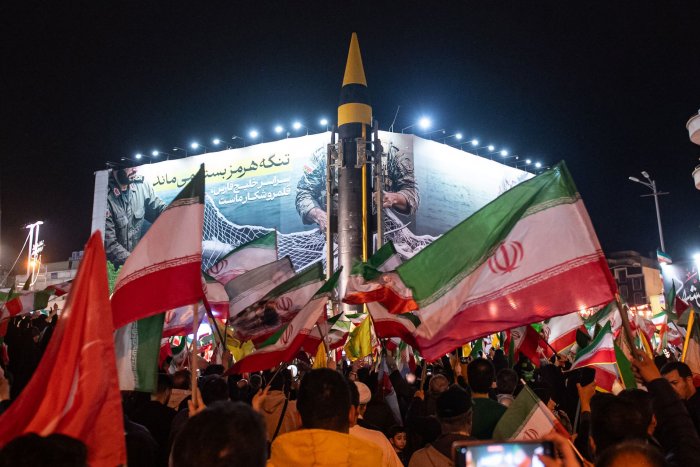
A missile identified as “Khorramshahr-4” was on display during a public rally in Tehran’s Enghelab Square on April 21, 2026. Photo by Behnam Tofighi/UPI | License Photo

Source link

U.S. strikes Iran drone sites; Iran hits Bahrain

June 27 (UPI) — The United States attacked Iranian drone sites Saturday morning, and Iran hit Bahrain in response.

In Bahrain, two one-way attack drones hit the country, according to the New York Times. One was shot down by a ground-launched air-defense weapon, a U.S. official told the Times, and the other landed without harm in a remote airfield.

“This constitutes a flagrant violation of its sovereignty, a blatant threat to the safety of citizens and residents,” Bahrain’s foreign ministry said in a statement.

The United States used six F35 and F16 Air Force jets to hit four Iranian sites in the strait, an anonymous official told The Times.

Ebrahim Azizi, a conservative Iranian lawmaker, said in a social media post that the U.S. attacks on Friday were a “reckless violation of the cease-fire” and warned that the attacks would lead the United States to “retreat and regret.”

Azizi added that the strikes show that President Donald Trump “has no commitment to the principles of negotiations.”

On Friday afternoon, Trump ordered strikes on Iran after it staged a drone strike on a shipping vessel transiting the Strait of Hormuz. The president had made vague threats on Iran and said that the country had attacked ships in the strait.

Vice President JD Vance, who has been handling the negotiations, posted on X that the United States had honored the MOU.

“If they have disagreements about how the MOU is being applied, they can pick up the phone,” he posted. “But violence will be met with violence.”

Saturday morning, another ship was hit in the strait by an “unidentified projectile” damaging its bridge but causing no injuries to the crew, according to the United Kingdom Maritime Trade Operations Center. The organization didn’t say who launched the attack.

Mohsen Rezaei, a former Iranian military chief who advises Supreme Leader Mojtaba Khamenei, accused the United States of “continuing to create tensions” in the strait. “The response to the violation of any article of the memorandum of understanding will be swift and decisive,” he said in a post on social media, The Times reported.

White House Border Czar Tom Homan speaks during the Faith and Freedom Coalition 2026 Road to Majority Policy Conference at the Washington Hilton on Friday. Photo by Bonnie Cash/UPI | License Photo

Source link

Trump to nominate former Oklahoma state trooper for ICE director

Lance Schroyer, who is a 29-year veteran of law enforcement and has been working as a senior advisor to Homeland Security Secretary Markwayne Mullin, was nominated on Saturday by President Donald Trump to be director of Immigration and Customs Enforcement. Photo by Department of Homeland Security

June 27 (UPI) — President Donald Trump on Saturday announced that he nominated former Oklahoma state trooper Lance Schroyer to be director of Immigration and Customs Enforcement.

Schroyer, a senior advisor at the Department of Homeland Security and retired U.S. Marine, will replace former acting ICE Director Todd Lyons, who announced in April that he would leave the agency on May 31.

Trump announced that he is nominating Schroyer for the position in a post on Truth Social, touting his 29 years in law enforcement, including in previous partnership roles with ICE.

“He is a PATRIOT with real operational experience, and proven leader with DECADES of experience locking up the worst of the worst,” Trump said in the post.

“Lance has firsthand experience getting Illegal Aliens OFF our streets and, just like ME and our Secretary of Homeland Security Markwayne Mullin, he LOVES the men and women of ICE!” Trump said.

DHS said in a press release endorsing the nomination that Schroyer’s role as senior advisor to Mullin has included overseeing coordination of immigration enforcement and serving as a liaison between involved law enforcement agencies.

Before his position at DHS, Schroyer was a major in the Oklahoma Department of Public Safety with responsibility for its Emergency Services Unit and a longtime Oklahoma state trooper.

In a statement, Mullin noted that ICE has not had a Senate confirmed director in more than a decade and, echoing Trump’s post, said the Senate needs to quickly confirm Schroyer.

“Lance will play a vital role in helping deliver on the President’s mandate from the American people to target, arrest and deport illegal aliens,” Mullin said.

“Lance is coming straight from the operational field where he ran large scale operations and worked alongside state and federal partners to remove illegal aliens from Oklahoma under the 287g program,” he said.

Lyons was appointed by Trump in March 2025 after his predecessor, Caleb Vitello, did not start removing people from the United States who allegedly were illegally in the country.

In his roughly one year in the job, Lyons oversaw more than 475,000 removals of people from the country and nearly 379,000 arrests.

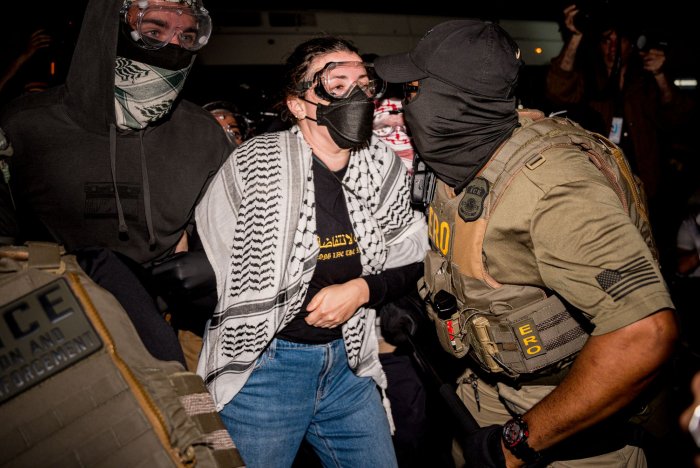
Protestors and federal agents clash outside Delaney Hall Detention Center in Newark, N.J., on May 27, 2026. Photo by Angelina Katsanis/UPI | License Photo

Source link

US launches second night of strikes on Iran after ship hit by drone | US-Israel war on Iran News

For a second day in a row, the United States has launched strikes on Iran, once again citing an attack against a commercial vessel as a motivation.

Saturday’s renewed attacks are the latest indication that a Middle East ceasefire, established as part of a June 17 memorandum of understanding between the US and Iran, might be at breaking point.

Recommended Stories

list of 3 itemsend of list

In a statement, US Central Command (CENTCOM), which directs military action in the Middle East, explained that the latest attacks came “at the Commander in Chief’s direction”.

“CENTCOM forces launched strikes today in direct response to continued Iranian aggression against commercial shipping,” the command centre wrote.

“U.S. military aircraft targeted Iranian military surveillance infrastructure, communication systems, air defense sites, drone storage facilities, and minelayer capabilities.”

Explosions were reported in southern Iran, around the village of Tahrui, near the port of Sirik, which was also the focal point of Friday’s US attacks. State media also indicated that Qeshm Island had been hit.

Responses to cargo ship strikes

Saturday’s strikes against Iran followed a similar playbook to Friday’s.

Early on Saturday morning, at about 4:30am Eastern US time (08:00 GMT), the Panama-flagged tanker Kiku was travelling through the Strait of Hormuz when it was reportedly hit by an unidentified projectile.

No crew members were injured, and no leakage was reported from its cargo.

CENTCOM said the ship had been carrying more than 2 million barrels of crude oil when it was hit by a “one-way attack drone”.

The website MarineTraffic.com indicates that the tanker left the Al Shaheen oilfield on Thursday and is due to dock in Fujairah, in the United Arab Emirates, on Sunday.

A similar sequence of events prompted Friday’s volley of US attacks.

In that case, a Singapore-registered container ship, the Ever Lovely, was struck by a drone as it sailed through the Strait of Hormuz on Thursday. No one on board was injured, and the boat continued on its travels.

But US President Donald Trump denounced the drone strike on Friday as a “foolish violation” of the June 17 memorandum.

By that evening, the US and Iran had exchanged fire, with the US targeting the area around Sirik, and Iran hitting US military installations in the Middle East.

CENTCOM referenced Friday’s actions in announcing the latest round of strikes.

“After yesterday’s U.S. strikes in response to the Iranian attack on M/V Ever Lovely, Iran was given a chance to honor the ceasefire agreement,” CENTCOM wrote.

Iran “elected not to”, it added, citing the Kiku drone strike. CENTCOM also maintained that commercial traffic through the Strait of Hormuz, a sticking point in ceasefire negotiations, would continue, with US military backing.

“U.S. forces remain vigilant, lethal, and ready,” CENTCOM said in its statement.

Controlling the strait

Central to the latest round of fighting is control over the Strait of Hormuz, a key artery for maritime traffic. Nearly 20 percent of the world oil supply passed through the narrow waterway in peacetime, as well as significant quantities of fertiliser and natural gas.

But after the US and Israel launched attacks on Iran on February 28, launching the present-day war, Tehran moved to shut down traffic through the strait, which sits between its shores and Oman’s.

Iran’s decision sent global fuel prices skyrocketing, and that generated pressure, both domestic and international, for the Trump administration.

The June 17 memorandum was designed to provide relief. Though it was a prelude to further negotiation, the deal called for the US, Iran and their allies to “declare the immediate and permanent termination of military operations on all fronts, including in Lebanon”.

It also outlined a 60-day period during which time Iran was to make its “best efforts” at allowing commercial traffic to transit through the Strait of Hormuz at no charge.

That part of the memorandum specified that Iran and Oman, the two countries that border the strait, would determine “future administration and maritime services” in the waterway.

But continued fighting in Lebanon has prompted Iran to threaten the strait’s closure once more.

Then, there is the question of the memorandum’s terms. Experts say the US and Iran have come to different understandings of how the June deal should be enforced.

Al Jazeera correspondent Resul Serdar Atas explained that Iran believes it should be allowed to restrict commercial traffic that does not have prior clearance to pass through the strait.

“Article Five of the memorandum of understanding, according to the Iranian officials, is clearly saying that any ship, whether it’s going through the Iranian territorial water or the Omani territorial water, has to be in full coordination with the Iranian authorities,” he said.

“But that is not understanding of Americans. The Americans are saying, ‘Well, if it is going through the Omani territorial waters, they do not need to coordinate with the Iranian authorities.’”

That, in turn, is leading to a disagreement over who is violating the terms of the ceasefire. The US sees Iran as violating the agreement by interfering with commercial vessels, while the Iranians perceive the US as breaking its commitment to stop fighting.

“That is the pattern,” Serdar Atas said. “For Americans, keeping the Strait of Hormuz open is quite important for the stability of the global economy. But for Iran, the Strait of Hormuz being under Iranian control is the ultimate deterrence and the biggest leverage.”

Tit-for-tat ‘could get out of hand’

Some of the hostilities are a result of the high level of distrust between Iran and the US, according Hassan Ahmadian, a professor at the University of Tehran.

He noted that Iran’s insistence that ships passing through the Strait of Hormuz receive its clearance could be read as a defensive action.

“I think the Iranians will not let go of this because obviously they want only commercial ships, according to the MoU, to pass through the strait. So any ship that doesn’t coordinate might be a military one, might carry military stuff,” Ahmadian said.

He believes that the latest flurry of US attacks may prompt Iran to halt any deliberations with the Trump administration as they seek to cement a peace deal.

The US side, meanwhile, is likely to face pressure from rising oil prices as the result of the renewed fighting, according to Harlan Ullman, a retired US naval officer and chairman of The Killowen Group, a global advisory firm.

Still, Ullman warned that the latest exchange of fire could spiral into an escalation in violence, rendering the memorandum of understanding moot.

“The agreements are very, very fragile, and this tit-for-tat could get out of hand,” Ullman said.

“If prices go up, as I suspect they will, that will be a moderating influence, and I think the United States will consider that rising oil prices are not good, and it will probably continue the negotiations.  But right now, who knows?”
Source link

Trump unveils new-look passport design with his name, image

President Donald Trump released an image of the new, limited-edition design for U.S. passports to mark the 250th anniversary of the United States in a post on social media, which includes an image of him posing behind the Resolute Desk. Photo by Donald Trump/Truth Social

June 27 (UPI) — President Donald Trump released the new design for the cover of U.S. passports, which features an image of him on one side and the signing of the Declaration of Independence on the other side.

The updated design follows a State Department announcement in April that a “limited-edition” passport with Trump’s image on it would be available this summer to commemorate the 250th anniversary of the United States of America.

The “specially designed” passport is expected to be available only at the Washington Passport Agency in Washington, D.C., with no extra cost, although design options online or in other locations will retain the current design, the department said at the time.

Trump shared the image in a post on Truth Social on Friday, as did the official White House account on X, with that account referring to it as the “Patriot Passport.”

“The U.S.A.’s New passport, which says, “Welcome, but be good!” Trump said in the post, which included an image of the front and back of the new design.

The limited-edition passport will be available at the D.C. passport office starting on July 6, and people who would like to get one must schedule an in-person appointment at the agency, the State Department said on Friday.

The department also has scheduled two special passport acceptance events specifically for the limited edition version, the first on Aug. 22 and the second on Sept. 26, both of which will be held at the Washington Passport Agency.

Source link

D.C. settles lawsuit over arrest for ‘Imperial March’ protest

June 26 (UPI) — The District of Columbia and the American Civil Liberties Union on Friday settled a lawsuit over the wrongful arrest of a man for protesting the National Guard’s presence in the capital.

Sam O’Hara, who was arrested last year for repeatedly playing the “Imperial March” — Darth Vader‘s theme music in the Star Wars movie franchise — behind members of the Guard who were on patrol in the District, will be paid an undisclosed amount of money in exchange for dropping his lawsuit.

The ACLU filed the finalized settlement on behalf of O’Hara on Friday, ending a months-long negotiation with officials in Washington, D.C., and its Metropolitan Police Department, but a suit against the Ohio National Guard sergeant who had him cuffed and detained was still in litigation, USA Today reported.

“Our right to free speech grants us the freedom to criticize the government,” Scott Michelman, legal director for the ACLU’s Washington, D.C., chapter, told The New York Times.

“Government officials don’t have to like it, but they can’t punish someone for their speech,” Michelman said, noting that O’Hara’s settlement was “not a significant amount” and that the number will not be disclosed.

O’Hara had for months been protesting President Donald Trump‘s deployment of the National Guard in Washington, D.C., by playing Vader’s theme music toward members of the Guard and recording the interactions.

On Sept. 11, however, an Ohio National Guard sergeant told O’Hara that if he continued his protest the MPD would be called to “handle” the situation.

When O’Hara ignored the command, MPD officers were called to the scene and handcuffed him in an effort to end the protest and accused him of harassing members of the Guard, but later released him without charges.

In a statement, O’Hara said the law enforcement effort to end his protest “ultimately backfired and brought more attention to the unjust deployment of the National Guard in Washington, D.C.”

“This settlement serves as a reminder that constitutional freedoms are worth defending, especially when those in power would prefer we stay quiet,” O’Hara said.

The MPD said in a statement after the settlement was announced that its internal affairs bureau is investigating the incident, but also noted that its department policies would not change.

“MPD recognizes the importance of upholding First Amendment rights of individuals to peacefully express their views and is dedicated to facilitating lawful demonstrations while maintaining public safety and order,” the department said in its statement.

Residents keep with their normal routine and run past National Guard troops on the National Mall near the Washington Monument on August 12, 2025. Photo by Pat Benic/UPI | License Photo

Source link

Trump justifies strikes on Iran amid ceasefire | Conflict News

NewsFeed

The US has struck Iranian missile and drone storage sites in retaliation for what it says was an Iranian attack on a commercial ship in the Strait of Hormuz. The tit-for-tat has raised doubts about the stability of the US-Iran agreement, as Kimberly Halkett reports.

Source link

Trump threatens 100% tariffs for nations with digital service taxes

June 26 (UPI) — President Donald Trump on Friday threatened to impose a 100% tariff on any country that enacts a digital services tax against a U.S. company.

The new tariff would be applied to all goods shipped into the United States and be levied on top of any other tariff already in effect for that country, Trump said in a post on Truth Social.

At least a dozen nations have digital services taxes, which are meant to limit the influence of large technology companies — especially large U.S. companies such as Apple, Amazon and Meta — and are being considered by several European countries, CNBC and Politico reported.

Canada last year rescinded a digital services tax hours before it was set to go into effect in order to restart trade negotiations with the United States, which Trump held back on until the tax was canceled.

“Please let this statement serve to represent that any Country that imposes such a Tax will immediately be met with a 100% TARIFF on any and all Goods sent to the United States of America,” Trump said in the post.

“This TARIFF will supersede Trade Deals made with the Country, whether implemented, signed, or not,” Trump said. “Additionally, the 100% TARIFF will be immediately imposed, if they proceed.”

Canada’s tax was to be levied against online marketplace and advertising services companies, as well as social media companies, but Trump called it a “direct and blatant attack” on the United States and canceled talks on the tax was rescinded.

White House Border Czar Tom Homan speaks during the Faith and Freedom Coalition 2026 Road to Majority Policy Conference at the Washington Hilton on Friday. Photo by Bonnie Cash/UPI | License Photo

Source link

UN rights chief calls for probe into migrant deaths in US detention centres | United Nations News

Deaths of immigrants held in US detention centres have surged during Donald Trump’s second term.

The United Nations High Commissioner for Human Rights, Volker Turk, has called for an independent investigation into the severe uptick in deaths in migrant detention centres during President Donald Trump’s second term in office.

In a statement on Friday, Turk expressed concern over the lack of transparency over those deaths, at least 19 of which have occurred so far this year, according to US government statistics.

Recommended Stories

list of 3 itemsend of list

“Those responsible for violations of the law must be held to account, and the rights of the victims’ families to truth, justice and reparation and guarantees of non-recurrence must be upheld,” the UN rights chief said.

Deaths in immigrant detention centres have surged during Trump’s second term in office, a by-product of what rights groups and immigration lawyers have depicted as systematic neglect, inhumane conditions and abuses.

The Trump administration has sought to rapidly expand the network of immigrant detention centres, some operated by private contractors, as it seeks to carry out the mass deportation of immigrants in the US.

Trump stated in a social media post on Friday that his administration has the “Highest Average Daily Arrest Rate by ICE and CBP, including Total Detention, with Final Orders of Removal, than any other president, by far!”

The reported death of a Georgian man, Mamuka Artmeladze, in a detention facility in Louisiana on June 4 increased the number of fatalities so far this year to 19, compared to 33 last year and 11 in 2024.

“The mortality rate of deaths in ICE custody is at its highest level in over a decade and has more than doubled since Trump’s second term began,” the watchdog group Human Rights Watch wrote in a report on detention deaths earlier this month. “The rate is nearly four times that of the Biden administration and more than two and a half times as high as that of the first Trump administration.”

That report said the 52 people who have died in detention during Trump’s second term ranged in age from 19 to 75 and came from 20 different nationalities.

Turk wrote on Friday that there have been “concerning allegations regarding the use of force” at such facilities and that five of the deaths recorded in 2026 were classified as suicides.

He also expressed concern over the reported use of solitary confinement, which is associated with a heightened risk of suicide and considered a form of torture by the UN after a period of 15 days.

“All these factors exacerbate vulnerability and raise serious concerns as to whether some of these deaths in ICE custody could have been prevented,” he said.

Source link

DNC plans weekend of events to focus on affordability concerns

The Democratic National Committee is organizing hundreds of community events across the country this weekend in hopes of harnessing the same concerns about affordability that President Trump capitalized on to return to the White House.

The events include school supply giveaways, food bank drives, neighborhood door knockings and organizer trainings.

“Everything costs too damn much under Donald Trump and the Republicans,” Democratic National Committee Chair Ken Martin said in a statement.

Martin said party members planned “to reach, engage, register, and mobilize voters who will make the difference in races up and down the ballot.”

Two years ago, Democrats were the ones accused of being indifferent to Americans’ anger about rising prices. Now they’re pointing the finger at Trump, who has downplayed the effect of lingering inflation.

He has described affordability concerns as a “hoax” and recently said, “I love the inflation” because he expects costs to drop as he tries to resolve his war with Iran.

About one-third of U.S. adults approve of how Trump is handling the economy, according to an AP-NORC poll from June. That’s down from the start of his second term, when 40% approved.

About 7 in 10 U.S. adults say the country’s economy is “poor,” according to an AP-NORC poll from June. That’s up from 65% in March, and underscores Americans’ ongoing unhappiness with the cost of living, which is being compounded by high gas prices because of the war in Iran.

Slightly more U.S. adults say the Democratic Party would do a better job than the Republican Party in handling inflation and the cost of living, according to a Marquette Law School/SSRS poll from May. Roughly one-third of U.S. adults — 35% — said the Democrats would do a better job, while 28% believe the Republicans would. Roughly one-third say the parties would be the same, or neither would be good.

This weekend’s events vary by region.

In New Mexico, Gov. Michelle Luján Grisham will convene a training for 150 potential campaign staffers. Nevada’s statewide campaigns will knock on doors in rural and working class neighborhoods. Others will call voters in swing districts with competitive U.S. House races to talk about the rising price of gas.

Some events are geared toward directly helping voters to persuade them that Democrats are concerned about affordability.

For instance, the local party in Kenosha County, Wis., plans to collect and distribute school supplies to poor families. And canvassers will fan out to discuss affordability issues in Arizona, Pennsylvania and Wisconsin.

The Republican National Committee dismissed the weekend’s events.

“Despite being millions of dollars in debt, the DNC is choosing to throw pitiful pep rallies to distract from the fact they created the inflation crisis,” said Delanie Bomar, an RNC spokeswoman. “Meanwhile, Republicans are hard at work fixing the economic mess Joe Biden and the Democrats created.”

Democrats hope that the events will show that their time in the political wilderness has made them more serious and effective at tackling kitchen table issues. But some fear their agenda may not be heard by voters in an increasingly fractured media environment.

“One of Donald Trump’s greatest strengths is that he’s so loud,” said Brian Derrick, a Democratic strategist. He said that events like the weekend’s itinerary help Democrats focus on an “Achilles’ heel” issue for Trump, “which right now is his lack of interest in addressing everyday costs for people.”

Brown writes for the Associated Press.

Source link