Donald Trump

Federal judge says Trump sued IRS for ‘improper purpose’

July 13 (UPI) — A federal judge in Florida said Monday that President Donald Trump sued the Internal Revenue Service for an “improper purpose” to reach a settlement with the Justice Department earlier this year.

U.S. District Judge Kathleen Williams in the Southern District of Florida added that the settlement Trump reached with the Justice Department protecting him and his family from tax audits is no longer valid.

Williams said Trump’s settlement with a Cabinet-level agency that he presides over is an attempt to “manipulate the judicial process.”

“The nature of the suit itself and the conduct of the Parties and counsel from its filing make plain that this was an attempt to use the Court to provide some legitimacy to an agreement to confer immunity to people and entities affiliated with the President and to earmark billions of dollars from American taxpayers to redress grievances not defined in the law,” Williams wrote.

“In abdicating its responsibility to zealously defend the interests of the United States, the Government entered into a ‘settlement’ that deviated from its litigation posture in similar actions, disregarded DOJ policies, and accomplished objectives beyond those authorized, as well as those specifically prohibited, by law.”

Trump reached a settlement with the government after suing the IRS for $10 billion over a contractor leaking his tax information. Trump is the first president or nominee from the two major political parties in more than 40 years to not disclose his tax information.

Williams has referred Trump’s attorney in the lawsuit, Alejandro Brito, to the Florida bar. The bar will consider whether Brito should be disciplined based on Williams’ finding in her order. She is also sending a copy of her order to the State Bar of New York, where Acting Attorney Todd Blanche is a member.

Olympic canoeist David Hearn departs the Moultrie Courthouse after pleading not guilty to damaging the Lincoln Memorial Reflecting Pool on Thursday. Hearn was indicted on July 2 on one count of destruction of property of more than $1,000 for allegedly damaging the Reflecting Pool, carrying a maximum penalty of 10 years in prison if convicted. Photo by Bonnie Cash/UPI | License Photo

Source link

Concern for renewed war in Iran as US attacks military, civilian targets | US-Israel war on Iran News

Tehran, Iran – Several days of military attacks by the United States across Iran have marked the most intense rounds of bombardment since the two sides reached a vague memorandum of understanding last month.

US fighter jets and warships have hit hundreds of military targets and a number of civilian ones in nearly a week of strikes, with Iranian authorities reporting attacks in at least 10 provinces, mainly in southern Iran near the strategically important Strait of Hormuz.

In Tehran, life for more than 10 million people has carried on mostly as usual since the capital has not been recently attacked. But the economy is in the doldrums and the outlook is increasingly uncertain, more than four months after the US and Israel began their aerial campaign.

“Everything is too chaotic right now to guess what will happen next but it doesn’t look good,” Farshad, a 21-year-old resident of eastern Tehran, said on Sunday.

“I just really hope all-out war doesn’t start again because I don’t have the nerve for daily bombing on top of everything else,” he told Al Jazeera.

The Islamic Revolutionary Guard Corps (IRGC) said overnight into Sunday that the Strait of Hormuz was once again considered closed due to US military intervention. Two vessels opting to transit using the Western-backed southern route near Oman, rather than Iran’s designated path to the north of the strait, had been struck, the IRGC added.

Iran said it had also attacked US interests across the region, including in Bahrain, Kuwait, Jordan, Qatar and Oman, in response to US strikes, as prospects for negotiations to replace military escalation remained slim.

Another Tehran citizen, Nastaran, said the overnight escalation felt more serious than previous attacks.

“I didn’t expect it would be this bad when I picked up my phone this morning to check the news,” she said. “I think there will be more attacks soon.”

Growing US aggression

The US military has been expanding its attacks over the past week.

US Central Command said more than 300 military targets were hit during three waves, including coastal surveillance, logistics, communications, as well as missile, drone and naval assets. It has not acknowledged striking civilian objectives.

As with other flare-ups over recent weeks, numerous attacks were launched on the province of Hormozgan, including the major port city of Bandar Abbas, as well as on Siri, Qeshm and Jask overlooking the strait. Port, fishing, coastal-control infrastructure and air defences were extensively bombed, reportedly killing a soldier and leaving multiple fishermen dead or wounded in separate strikes.

US projectiles have also targeted multiple areas in Bushehr province, with one attack impacting the perimeter of Iran’s only nuclear power plant without damaging it.

Provincial authorities in the southwestern province of Khuzestan said three areas were hit, but not the capital, Ahvaz. Local authorities in the provinces of Kohgiluyeh, Boyer-Ahmad and Lorestan also reported projectile attacks.

In Sistan and Baluchestan to the southeast, attacks were reported in Chabahar, Konarak and Iranshahr, where a strike on airport facilities killed a firefighter. Video recorded by a local from Chabahar and shared online showed the destruction of the city’s renowned maritime control tower.

Over the past week, the US military has launched some of its deepest strikes into Iranian territory since full-scale military operations were suspended by the “ceasefire” agreed in April.

One of them was in the northern province of Golestan, where the Aq Tekeh Khan railway bridge was struck on the Gorgan-Incheh Borun line.

Authorities said the bridge, which carries both passengers and cargo, was repaired and services resumed quickly. However, the attack showed that inland corridors could also become targets to increase pressure on Iran by limiting its trade, including imports of essential goods.

The transit route connects Iran to Turkmenistan and onwards to Kazakhstan, Russia, China as well as Eurasian rail networks. Crucially, during the US naval blockade of Iran’s southern ports, it provided an overland alternative to the Strait of Hormuz.

Last week, when assassinated Supreme Leader Ayatollah Ali Khamenei was being buried in his hometown of Mashhad in northeastern Iran, authorities said the US struck a bridge about 55km (34 miles) from the city, disrupting passenger journeys to the funeral procession.

Iranian authorities say electricity infrastructure – which Trump has repeatedly threatened with more strikes – has also been significantly impacted since the start of the war, worsening the long-running energy crisis.

The attacks have reduced Iran’s capacity for electricity generation by about 4,200 megawatts, just as summer temperatures reached 40 degrees Celsius (104 Fahrenheit) this week, Mohammad Allahdad, head of Tavanir, the government-owned parent company for the operation of Iran’s power grid, said on Sunday.

After the conclusion of the funeral ceremonies for Ali Khamenei, a statement from new Supreme Leader Mojtaba Khamenei, who has not been seen public since succeeding his father, emphasised the necessity for revenge.

Similar messages continue to be broadcast by state media and hardline religion-backed factions supporting the Islamic Republic, who on Sunday also cheered the death of US Republican Senator Lindsey Graham. State television hailed what it called the “dispatching to hell” of a pro-war hawkish politician.

For its part, Israel has effectively undermined the MoU signed between Iran and the US on June 17 by pushing deeper into southern Lebanon and signalling readiness to return to military strikes in Iran.

Speaking to an Israeli programme on Saturday night, Defence Minister Israel Katz, who has threatened to assassinate Mojtaba Khamenei, said “southern Lebanon would become Gaza” and that the Israeli army will “apply the Rafah model” of conquest there.

Source link

Who will replace Trump ally Lindsey Graham in the US Senate? | Politics News

The US president suggests he is considering a potential candidate to fill the late senator’s seat in South Carolina.

The disadvantage that the Republican majority in the United States Senate has suffered from the death of Lindsey Graham is likely to be short-lived.

Currently, Republicans hold 52 seats in the 100-member chamber, after losing Graham to a “brief and sudden illness” late on Saturday, according to his office.

Recommended Stories

list of 3 itemsend of list

But South Carolina’s election laws give Republican Governor Henry McMaster the authority to immediately appoint a replacement to fill Graham’s seat.

“In case of a vacancy in the office of United States Senator from death, resignation or otherwise, the Governor may fill the place by appointment,” the law says.

Graham’s term was set to expire in January. He was running for re-election in the November midterm vote.

A primary will be held next month to determine who will take his place as the Republican nominee. The first round of voting is set for August 11, and if no candidate wins a majority of the votes, a run-off would take place on August 25.

McMaster has released a brief statement mourning Graham, without mentioning plans to replace him. The law does not set a timeline for the appointment, but the governor is likely to fill the seat quickly to ensure that President Donald Trump’s agenda is not disrupted in the Senate.

Graham was one of Trump’s closest allies on Capitol Hill.

In his statement, McMaster called the late senator the “fiercest of fighters for South Carolina and America and a loyal and steadfast friend”.

“We grieve with Darline, his family and his devoted staff,” McMaster said, referring to Graham’s sister. “May God hold him gently in the palm of his hand. We shall not see his likes again.”

It is so far unclear who McMaster might select as Graham’s replacement. The governor might appoint a placeholder candidate who would fill the seat without seeking a full term in November’s midterms, to avoid influencing the election process.

He may also opt for someone who would run for the full term, which would give his pick the incumbent status that would boost their profile — and therefore, their chances at the ballot box.

Other governors have faced similar dilemmas. In California, for instance, Democratic Governor Gavin Newsom pursued both paths in separate appointments in recent years.

When Kamala Harris vacated her Senate seat to serve as US vice president in 2021, Newsom picked state legislator Alex Padilla to replace her. Padilla won a special election for the seat the following year.

But in 2023, when Senator Dianne Feinstein died, Newsom appointed political operative Laphonza Butler, who did not end up running in the 2024 election.

In Graham’s case, however, the White House might weigh in. Trump has suggested that he is considering backing a candidate to replace the senator.

“I have somebody that I think would be great, but I don’t want to say it now because it’s just too soon with Lindsey,” the US president told NBC News.

“I don’t want to even talk about anybody, but I do have somebody that I think is really good.”

South Carolina, a southern state on the US’s Atlantic coast, has been a Republican stronghold for decades. Trump won the state by nearly 18 percentage points in 2024.

But polls have suggested that Graham was not cruising to re-election. His Democratic opponent, paediatrician Annie Andrews, was closing the gap on him.

A June poll by Impact Research showed the late senator leading by only three percent.

Graham had become a polorising figure even within the Republican base, due to his staunch devotion to Israel and support for the US-Israeli war on Iran.

On Sunday, Andrews praised Graham without mentioning elections or politics.

“I hope that South Carolinians will join me in setting partisanship aside and offering gratitude to Senator Lindsey Graham for his service to the great state of South Carolina,” she said in a statement.

Source link

Sen. Lindsey Graham dies after sudden illness

Sen. Lindsey Graham, R-S.C., died on Saturday night at age 71 after a sudden, short illness, his office announced. File Photo by Bonnie Cash/UPI | License Photo

July 12 (UPI) — Republican Sen. Lindsey Graham died suddenly on Saturday night, two days after his 71st birthday, his office announced.

Graham had just returned from a trip to Ukraine, where he toured a drone factory and met with Ukrainian President Volodymyr Zelensky, CBS News and The Washington Post reported.

“On the evening of Saturday, July 11, U.S. Senator Lindsey Graham passed away from a brief and sudden illness,” his office said in a statement posted to X.

“Senator Graham’s family appreciates prayers at this time and asks for privacy during this incredibly difficult period,” the statement said.

Graham had been scheduled to appear on NBC’s “Meet The Press” on Sunday morning, which instead featured an interview with President Donald Trump, who said that he’d spoken with the senator on Saturday after he’d returned from Ukraine.

“Other than being tired, he was fine,” Trump said.

Graham, who was first elected to the Senate in 2002, had already won South Carolina’s Republican Senate primary and now will have to be replaced on the ticket.

The state is expected to hold a special primary in the next few weeks so that voters can choose a new candidate.

Bonnie Tyler

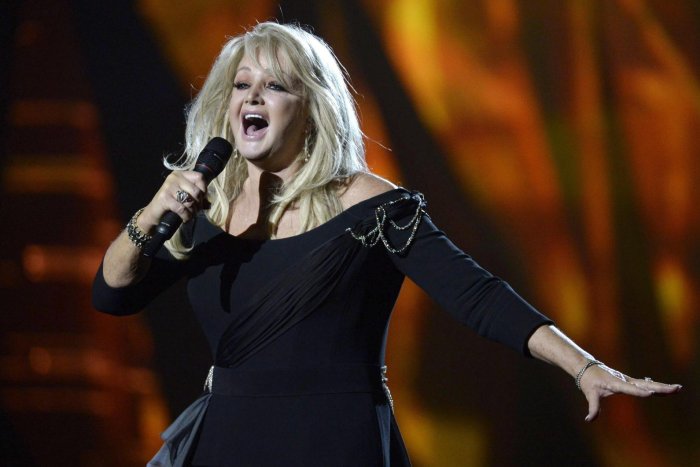
Singer Bonnie Tyler performs the song “Believe in Me” during the dress rehearsal for the Eurovision Song Contest in Malmo, Sweden, Sweden, on May 17, 2013. Tyler, best known for her hit songs “Total Eclipse of the Heart” and “Holding Out For a Hero,” died at the age of 75 on July 8. Photo by Jessica Gow/EPA

Source link

Housing bill becomes law without Trump’s signature

July 11 (UPI) — A housing bill passed by Congress became law at midnight Saturday when President Donald Trump refused to sign it, but didn’t veto it.

The 21st Century ROAD to Housing Act is a comprehensive law that was designed to make housing more affordable and increase housing supply. Trump refused to sign it because he wanted Congress to pass the SAVE America Act, an election reform bill that would require those registering to vote to provide proof that they are U.S. citizens.

But Congress doesn’t have the votes to pass the SAVE Act.

On Friday, Trump announced that he again would not sign the ROAD to Housing bill.

“I will not sign the Housing Bill, which has been fully approved by Congress and sent to the White House, in PROTEST over the fact that the United States Senate is not capable of passing THE SAVE AMERICA ACT,” he said on Truth Social.

The housing bill includes measures that modernize building standards, encourage renovating older homes, encourage communities to build more housing with funding and grant programs, local governments to reform restrictive zoning policies around building housing and effectively ban private equity from buying up single-family homes. Critics of the bill say it doesn’t go far enough, but they acknowledge it’s a good first step.

“This bill becoming law is a genuine milestone — and I don’t use that word lightly,” Dennis Shea of the Bipartisan Policy Center told the BBC. “Getting Congress to move on housing supply and affordability has been a long time coming, and the American people made clear they were ready for it.”

Earlier this year, a BPC survey found that 89% of voters wanted congressional action to make housing more affordable.

Congressional leaders had planned a bill signing ceremony last month, ready to show voters that they are trying to bring down costs, a key issue to Americans. But hours before it was scheduled to begin, Trump canceled it.

Sen. Elizabeth Warren, D-Mass., criticized Trump’s ongoing refusal to sign Friday.

“At the stroke of midnight, a huge bipartisan bill to lower housing costs became law without the President’s signature. Why did President Trump sit on the landmark housing bill for more than 2 weeks? Maybe because there was nothing in it for him personally – no gold-encrusted ballroom, no Qatari jet, no $2 billion crypto deal. Nothing in the 21st Century ROAD to Housing except ways to make housing more affordable,” she said in a statement. “Donald Trump couldn’t pick up the pen because he just isn’t interested in lowering costs for American families.”

At 4 a.m. Saturday, she posted on X: “BREAKING: the clock struck midnight and our bipartisan housing bill is now law. Trump refused to sign it, but he couldn’t stop it.”

“This law is GROUNDBREAKING. It will build more housing, bring down costs, and for the first time, stop private equity from buying up homes,” she said.

Trump had called the housing bill “so unimportant” and “a yawn.”

Speaker of the House Mike Johnson, R-La., defended the bill without criticizing Trump’s comments.

He said, “the president has a lot going on, and I think it’s safe to say he’s not read through every line of that piece of legislation.

“What he was saying is in comparison to ensuring election integrity, which is now represented by the SAVE America Act, nothing is as important,” Johnson said. “That’s not to say that there are not also incredibly important issues, and the cost of living and affordability is among them. It’s top of mind.”

“So I hope he does sign it. If he doesn’t, it’s still law; we’ll still celebrate it,” Johnson said. “But he’s trying to make a point and I think he’s making it very effectively.”

Olympic canoeist David Hearn departs the Moultrie Courthouse after pleading not guilty to damaging the Lincoln Memorial Reflecting Pool on Thursday. Hearn was indicted on July 2 on one count of destruction of property of more than $1,000 for allegedly damaging the Reflecting Pool, carrying a maximum penalty of 10 years in prison if convicted. Photo by Bonnie Cash/UPI | License Photo

Source link

Trump threatens to ‘decimate and destroy’ Iran if they try to kill him

1 of 2 | A handout photo made available by the Iranian Supreme Leader Office shows crowds taking part in the burial of late Iranian Supreme Leader Ayatollah Ali Khamenei in the city of Mashhad, Iran, Thursday. Photo handout by Iranian Supreme Leader Office/EPA

July 11 (UPI) — President Donald Trump threatened to “decimate and destroy” Iran if they carried out an assasination attempt on him.

“1000 Missiles are Locked and Loaded and aimed at the Islamic Republic of Iran, with thousands of more to immediately follow, should the Iranian Government act on its threat, pronounced in many corners of the Globe, to assassinate, or attempt to assassinate, the sitting President of the United States of America, in this case, ME! Orders have already been given, and the U.S. Military is ready, willing, and able, for a one year period of time, subject to extension, to completely decimate and destroy all areas of Iran – PRAISE BE TO ALLAH!,” the president said on Truth Social Friday night.

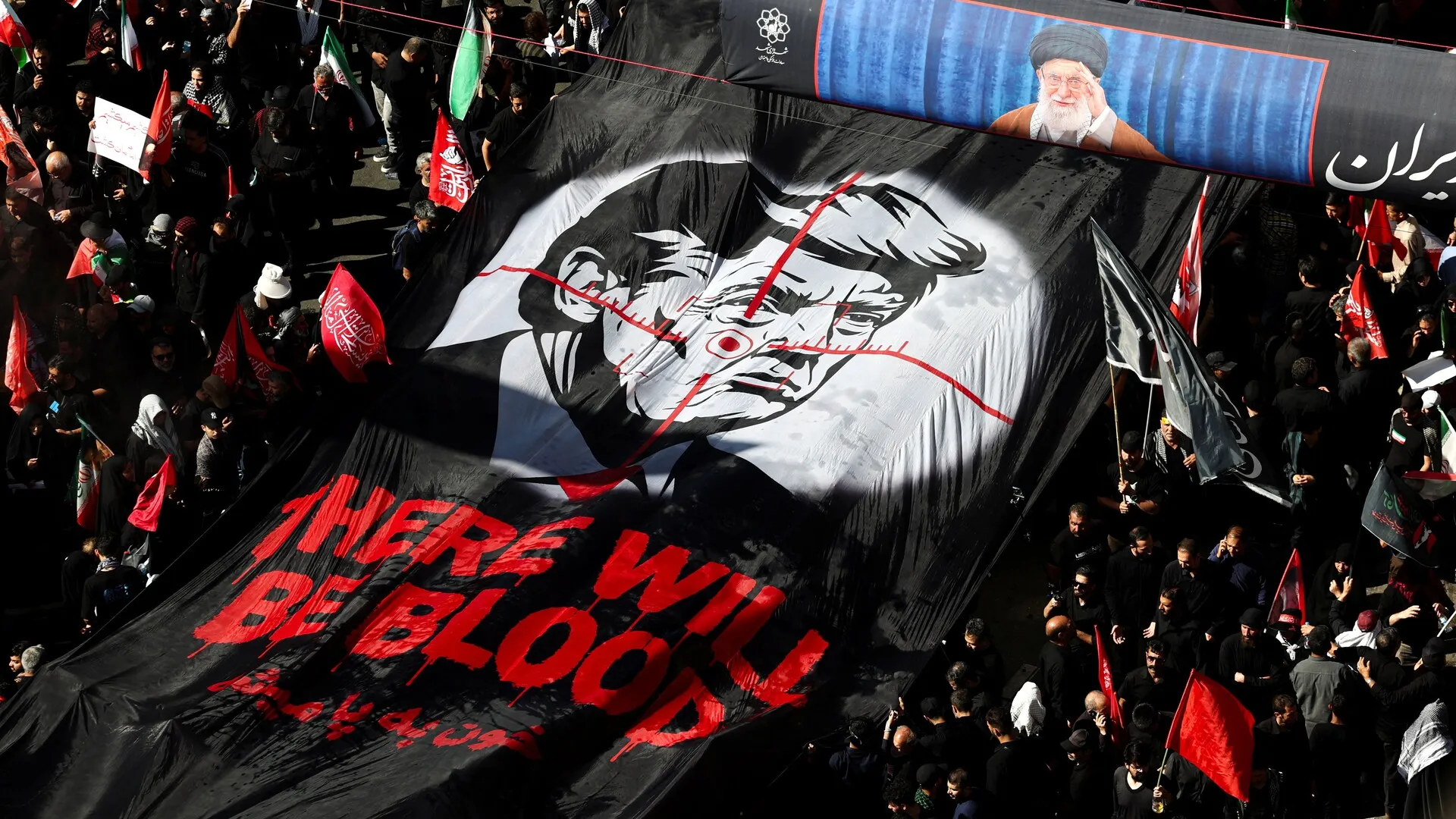
The comments are likely in response to new intelligence from Israel that Iran has a plan to kill the president, reported by The Wall Street Journal on Thursday. Also, Iran has been holding funeral rites for its supreme leader Ayatollah Ali Khamenei, and photos have emerged of mourners carrying signs that say, “Kill Trump.” Khameinei was killed by an American and Israeli attack on Iran in February.

In a post on X Saturday, Khamenei’s son and successor Mojtaba Khamenei promised to avenge the deaths of those killed in U.S. strikes.

“This vengeance is what our nation is demanding, and this must definitely be done,” Mojtaba Khamenei said.

On Friday, Trump told The New York Post that he “left instructions” for the military to attack if anything happened to him.

“I’ve been on their list for a long time. That’s what we’re dealing with,” he said. “The only thing is, I’ve left instructions — if anything happens, to just literally bomb them at levels that they’ve never seen before.”

He said there was no new intelligence on a plot.

“No, no. Israel came up with nothing. No, no,” he said. “I’ve been No. 1 [on Iran’s kill list] for a long time, and it’s the way life is, you know.”

Olympic canoeist David Hearn departs the Moultrie Courthouse after pleading not guilty to damaging the Lincoln Memorial Reflecting Pool on Thursday. Hearn was indicted on July 2 on one count of destruction of property of more than $1,000 for allegedly damaging the Reflecting Pool, carrying a maximum penalty of 10 years in prison if convicted. Photo by Bonnie Cash/UPI | License Photo

Source link

US judge dismisses January 6 case against Proud Boys after Trump order | Donald Trump News

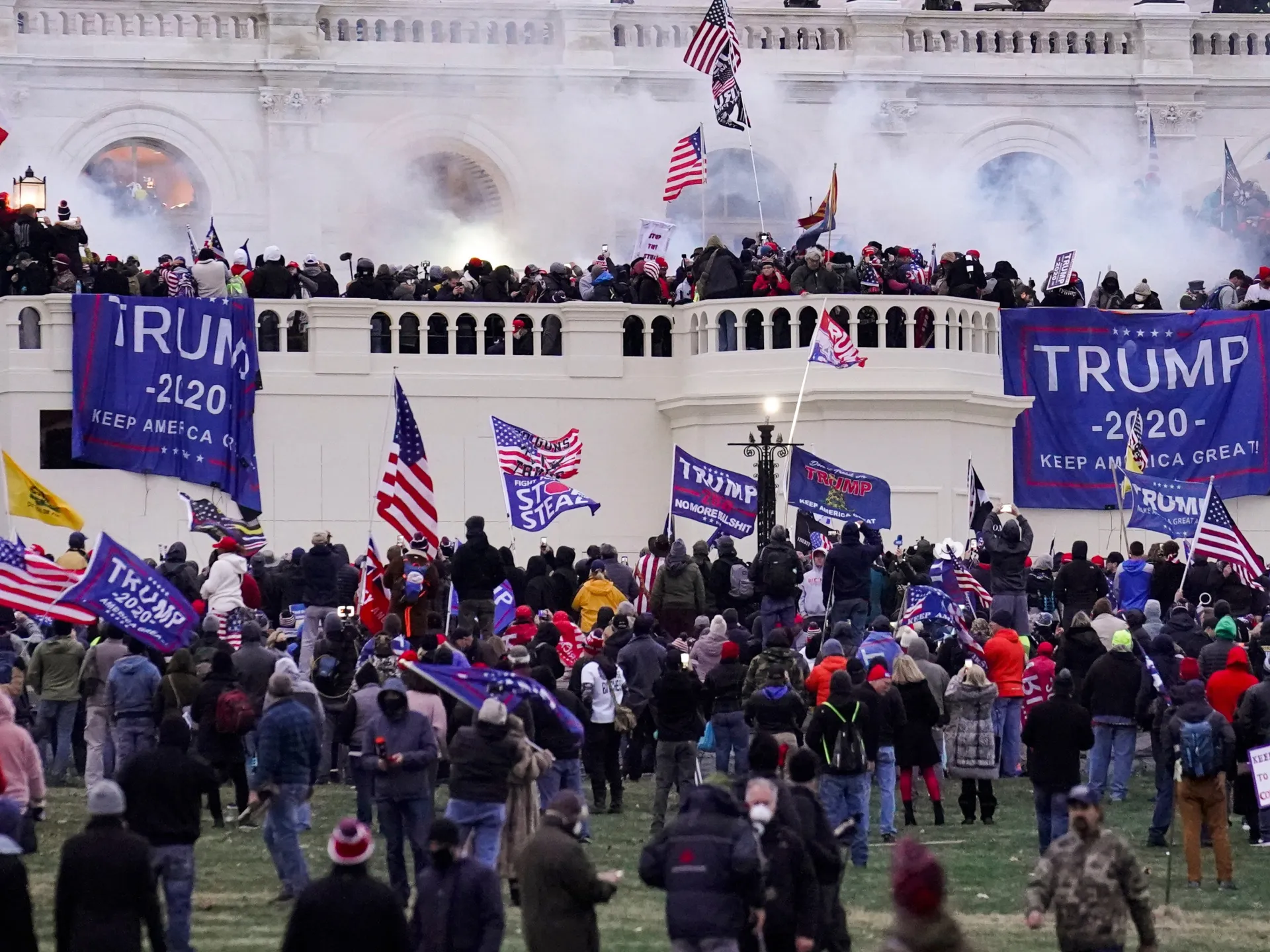
A United States federal court has dismissed the seditious conspiracy cases against four members of the Proud Boys, the far-right group involved in the attack on the US Capitol on January 6, 2021.

On Friday, Judge Timothy J Kelly, an appointee of President Donald Trump, granted the government’s motion to dismiss the case with prejudice, meaning it cannot be revived in future.

Recommended Stories

list of 3 itemsend of list

But Kelly made it clear that the defendants — Ethan Nordean, Joseph Biggs, Zachary Rehl and Dominic Pezzola — had been “convicted of serious offences”.

He wrote in his seven-page ruling that his decision was ultimately rooted in the separation of government powers, not in the merits of the case.

“As the Court has said many times, the attack on the Capitol on January 6, 2021 was a perilous event. It was an attack on people, including police officers, many of whom were injured,” Kelly wrote.

“It was an attack on the Constitution’s mechanism to facilitate the peaceful transfer of power from one president to the next,” he added.

Inside the January 6 riot

Friday’s ruling was yet another milestone in Trump’s efforts to end the prosecution of January 6 rioters.

The attack on the Capitol came shortly after Trump lost his bid for re-election in 2020 to Democrat Joe Biden. But in the aftermath of his loss, Trump spread false claims that the election had been rigged.

January 6, 2021, was the day Congress was scheduled to certify the Electoral College votes, confirming Trump’s defeat.

His vice president at the time, Mike Pence, held a ceremonial role overseeing the certification that day. But behind the scenes, Trump reportedly pressured Pence to reject the results of the election.

At midday, Trump held a “Save America” rally in front of the White House, repeating to his supporters that he had won “by a landslide”.

“If Mike Pence does the right thing, we win the election,” Trump said at one point. At another, he said, “If you don’t fight like hell, you’re not going to have a country anymore.”

Afterwards, some of his supporters marched to the Capitol and broke into the building, attacking police officers and causing millions of dollars worth of damage. Participants signalled their aim was to stop the vote certification, with some chanting, “Hang Mike Pence.”

The attack proved to be deadly. One rioter was shot by police as she climbed through a broken window to enter the House Speaker’s Lobby. An officer died from a stroke the following day after being beaten. Others died by suicide after the attack. Members of Congress had to be led to safety.

Under the Biden administration, the Department of Justice opened criminal cases against nearly 1,600 people involved.

But Trump has long defended the rioters and called their prosecution a “national injustice”.

Trump himself faced two criminal indictments — one at state level, the other federal — over his alleged attempts to subvert the election results, though the charges were dropped upon his re-election in 2024.

Unravelling the prosecutions

Calling the January 6 prosecutions an example of government “weaponisation”, Trump had campaigned during the 2024 race on a promise to pardon the rioters.

He followed through with that pledge on the first day of his second term. On January 20, 2025, Trump signed an executive order granting “a full, complete and unconditional pardon” to most of the defendants involved in the Capitol attack.

Trump also commuted the sentences of 14 people, including Nordean, Biggs, Rehl and Pezzola. Under his authority, the Department of Justice also proceeded to seek the dismissal of ongoing January 6 cases.

Judge Kelly cited that series of events in Friday’s ruling, though he appeared to express a measure of scepticism.

“No one should mistake the Court’s granting of the Government’s motion for its agreement with those decisions,” Kelly wrote.

In May 2023, a jury in Washington, DC, found Nordean, Biggs and Rehl guilty of charges including seditious conspiracy, alongside Proud Boys leader Enrique Tarrio.

Pezzola, meanwhile, was found not guilty of seditious conspiracy, but he was convicted of several felonies, including assaulting a police officer. At sentencing, the four men received prison terms ranging from 10 to 18 years, with Pezzola receiving the lightest sentence of the group.

But in weighing the future of the case against the four men, Judge Kelly explained that it was “hard to see” any other course forward other than dismissal.

The court system, Kelly explained, cannot “compel” the executive branch to pursue prosecutions. Trump’s executive order had also required the Department of Justice to seek the case’s dismissal.

“The Court will grant the motion because there are no grounds for it to withhold leave for the Government to dismiss the case with prejudice,” Kelly concluded.

But he ended his decision with a word of warning about protecting the future of American democracy from further attacks.

“Moving forward, if this Nation’s experiment in self-government is to last another 250 years, the American people — no matter their partisan preferences — will have to act together to preserve, protect and defend that miracle through our constitutional framework,” Kelly wrote.

Source link

Trump administration subpoenas New York Times reporters over coverage | Donald Trump News

The administration of United States President Donald Trump has issued subpoenas against journalists from The New York Times, in what advocates say is an escalating attack on the free press.

Late on Friday, the Times reported that at least four of its reporters have received subpoenas, some delivered to their homes by federal agents.

Recommended Stories

list of 3 itemsend of list

Those subpoenas compel them to testify before a grand jury in Manhattan on Wednesday.

“The appearance of federal law enforcement agents on the doorstep of news reporters should shock the conscience of any American who believes in the Constitution and the press freedom it protects,” said David McCraw, the newspaper’s lawyer, in a statement quoted by the Times.

News of the subpoenas prompted outcry from leading news groups including the Committee to Protect Journalists (CPJ), which demanded their withdrawal.

“The subpoenas are an extraordinary escalation in President Trump’s efforts to threaten and intimidate independent news organizations, and have a chilling effect on the work of journalists across the country,” said CPJ’s chief executive officer Jodie Ginsberg.

The subpoenas were authorised by a top official in Trump’s Department of Justice: Jay Clayton, the US attorney for the Southern District of New York.

Clayton is in line to succeed Bill Pulte as the director of national intelligence, a cabinet-level role Pulte holds on an interim basis. The Senate is set to begin hearings on Clayton’s confirmation next week.

Scrutiny on NATO travel coverage

At issue is The New York Times coverage of Trump’s return flight from the 2026 NATO summit in Ankara, Turkiye, this week.

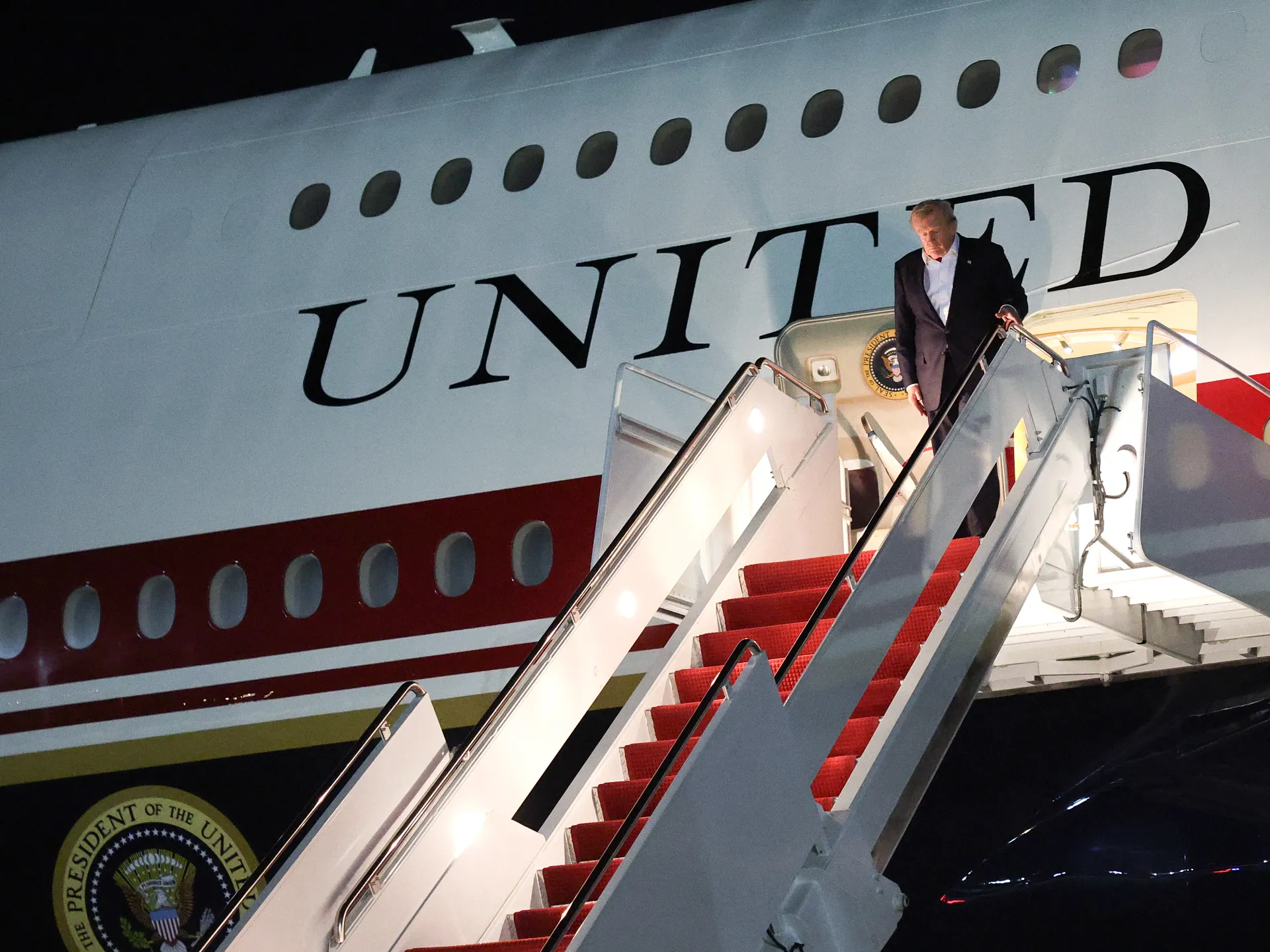
While Trump flew to Europe on his new Air Force One, a jet gifted by Qatar and retrofitted by the US military, he left on the old Air Force One.

Trump claimed the switch was made to allow the new jet to visit RAF Mildenhall, an air force base in Suffolk, England, that supports US military operations.

He framed it as an opportunity to allow military members to tour the aircraft.

“It’s going to go to a couple of bases,” Trump said at the time, “so the soldiers can see it because it’s truly magnificent.”

But at the same July 8 news conference, Trump referenced concerns about his safety.

When asked about the airline switch by a reporter from The New York Post, Trump responded, “You know, the life of a president is very dangerous.” He proceeded to add that he’s “number one on the kill list for Iran”.

That same day, The New York Times reported swapped his new presidential jet for his old one because of security concerns, citing anonymous sources. The change reportedly came at the urging of the Secret Service.

Then, the next day, the Times expanded its coverage with a follow-up report, indicating that the new Air Force One lacked the security capabilities of the old jet.

The article anonymously cited two former Air Force officials as saying there would not have been enough time to make the necessary upgrades before the Ankara flight.

It is unclear what modifications have already been made, but experts have estimated that the updates could cost up to $1bn.

Friday’s subpoenas targeted four of the journalists involved in the Times’s reporting on the subject: Eric Schmitt, Tyler Pager, Eric Lipton and Julian E Barnes.

According to the Times, before the subpoenas were issued, the newspaper was contacted by a senior official from the FBI.

That person, who was unnamed, asked the newspaper to hold off on its reporting about Air Force One, citing national security. The FBI official also requested information on the Times’s anonymous sources.

The newspaper, however, declined to provide such information, in line with standard journalistic practice.

A testy relationship with journalists

The subpoenas mark the latest clash between the Trump administration and US media outlets that report on its activities.

Trump himself has a long-running feud with the Times. In September, he sued the newspaper for $15bn in damages, alleging it had defamed him and attempted to “sabotage” his candidacy in the 2024 presidential election, which he won.

After his initial complaint was thrown out as “improper”, Trump refiled it in October.

The Times, for its part, has sued the Department of Defence under Trump over its attempts to impose media restrictions on journalists.

Just this week, the Times also filed a countersuit against the Equal Employment Opportunity Commission, after it alleged the newspaper had discriminated against a white, male employee for failing to give him a promotion.

The Times has described the effort as an attempt to muffle the press, in violation of the free-speech protections enshrined in the US Constitution’s First Amendment.

The Times is not the only newspaper to face legal backlash from the Trump administration. In December, Trump launched a $10bn lawsuit against the BBC, arguing that a documentary it aired misrepresented his speech before the attack on the US Capitol on January 6, 2021.

Trump is also seeking $10bn from The Wall Street Journal over its reporting on a birthday message he allegedly sent to convicted sex offender Jeffrey Epstein. After that suit was thrown out, Trump refiled it in May.

The Trump administration has also taken actions against individual journalists.

In January, for instance, the FBI executed a raid on the house of Washington Post reporter Hannah Natanson, who covered the Trump administration’s efforts to scale back the federal workforce.

The raid came as part of an investigation into a government contractor accused of leaking information to the news media, but at least two judges have barred the Trump administration from using the information it seized from Natanson.

The Trump administration has denied seeking to erode the freedom of the press, instead citing national security needs.

But McCraw, the Times lawyer, argued that, with the latest subpoenas, the White House was trying to restrict “the American public’s right to know how their government is operating”.

“This brazen act should be seen as nothing more than an attempt to prevent the public from knowing what is happening in their country by intimidating journalists from doing their jobs,” he said.

Top Democrats, including Senate Minority Leader Chuck Schumer, also weighed in on the subpoenas, using them to slam Trump as corrupt.

“Donald Trump is one of the weakest, most thin-skinned individuals the world has ever seen,” Schumer wrote on social media.

“Reporters have the right and duty to report the truth. It’s not their fault his foreign-gifted plane is a national security threat. This subpoena is a gross overreach and a disgusting misuse of federal law enforcement resources that should alarm every American.”
Source link

Land sold for Kushner-backed Albania resort suspected of forged deeds | Donald Trump News

Albanian prosecutors probe forged deeds tied to Kushner resort land as protests over the project intensify.

Albania’s anticorruption prosecution service is investigating whether the deeds to a stretch of protected coastline earmarked for a Jared Kushner-backed resort were forged, according to case files reviewed by the Reuters news agency, adding another legal complication to a project that has already provoked months of street protests.

The files, compiled by the Special Structure Against Corruption and Organised Crime (SPAK), name Artur Shehu, a Miami-based businessman, as the seller who transferred the land to Albania Land Development, the entity behind the Kushner-linked scheme, in April.

Recommended Stories

list of 3 itemsend of list

Prosecutors allege Shehu and his associates funnelled proceeds from cocaine trafficking into Albanian property, using falsified titles to disguise the money’s origin, and have since frozen roughly 110 million euros ($126m) tied to the sale in a notary’s account.

Shehu’s lawyer, Kujtim Cakrani, rejected the allegations outright. “Nothing that has been alleged regarding Mr Artur Shehu’s character is true,” he told Reuters, adding that his client was neither a trafficker nor a document forger and had lawfully sold land his family had held since Ottoman times.

Cakrani said Shehu was untroubled by the arrest warrant, arguing it was widely assumed in Albania that prosecutors answered to political and business interests. He also said Shehu fled to the United States and won asylum in 1998 after gang violence killed his brother and uncle.

The SPAK files, running to 200 pages and not previously made public, were issued the same day the agency unveiled separate arrest warrants for 20 people accused of narcotics trafficking and money laundering.

Reuters found no evidence that Kushner, Sazan Real Estate Development or other backers of the resort knew of any suspicions surrounding Shehu when the land changed hands.

The disclosure comes amid sustained unrest over the development, which sits on wetlands and beaches along Albania’s southern coast that are home to sea turtles and flamingos, the latter adopted as a symbol by the self-styled “Flamingo Revolution” against the resort and alleged government corruption in general.

Kushner and his wife, Ivanka Trump, have said the idea for the resort came to them after they spotted the coastline from a yacht. He unveiled renderings of hotels, villas and marinas on social media in 2024.

Nightly rallies that began in May, initially focused on the project, have broadened into a wider movement demanding Prime Minister Edi Rama’s resignation over accusations of corruption.

A crackdown last week saw riot police deploy tear gas and water cannon against demonstrators outside parliament, injuring 15 officers and leading to 25 arrests. A Tirana court freed 19 of those detained on Sunday, placing two under house arrest and ordering a dozen others to report periodically to judicial police.

Entela Koja, one of the protesters, said “this is a revolution against the big guys who want to use Albania like a playground for the rich.”

Villagers near the site have separately pursued a decade-long legal challenge to Shehu’s ownership claim, presenting title deeds and tax records they say establish that they are the rightful owners.

Nikolin Markpalaj, one of the landowners, told Al Jazeera: “I told them it would not be easy for them to take this land and enjoy someone else’s land and property. What is happening in this country is madness.”

Rama’s government has dismissed the protests as orchestrated by political rivals and insists the project complies with Albanian and European Union law.

Source link

Canada, Michigan to open Gordie Howe International Bridge at end of July

July 10 (UPI) — Canada and the state of Michigan on Friday announced that a long-planned new bridge linking Ontario and Detroit will open at the end of July, 14 years after construction started.

The $4.4 billion Gordie Howe International Bridge between the two cities is set to open on July 27 and is set to offer improved transit on what leaders from Canada and Michigan called one of the busiest transportation corridors in North America.

The mile-and-a-half-long bridge includes new ports of entry on either side, with Canada and the United States establishing a 15-year economic development fund that has been tied to profits from crossing tolls.

President Donald Trump earlier this year threatened to prevent the bridge from opening over disagreements with previously existing trade agreements, his administration’s tariff regime and objections to Canada making trade deals with China.

“The Gordie Howe International Bridge has always been a great deal for our state,” Michigan Gov. Gretchen Whitmer said in a statement.

“Thousands of Michigan workers built this critical bridge, which will speed up auto production, lower costs, ease traffic, strengthen agriculture and give people on both sides of the border better-paying jobs and brighter futures,” she said. “This bridge is a testament to the enduring partnership between Michigan and Canada.”

The bridge project originated with the state’s then-Republican Gov. Rick Snyder agreeing to the six-line bridge because it would alleviate congestion accommodate future travel and create new transportation capabilities between U.S. and Canadian manufacturing regions.

Canada’s minister for housing and infrastructure, Gregor Robinson, hailed the completion and impending opening of the bridge as “strengthening one of the world’s most important trade corridors.”

“This nation-building project is a testament to what Canada can accomplish when we come together with a shared vision,” Robinson said in a statement.

“The Gordie Howe International Bridge will create new opportunities, strengthen our economy and bring economic benefits on both sides of the boarder for generations,” he said.

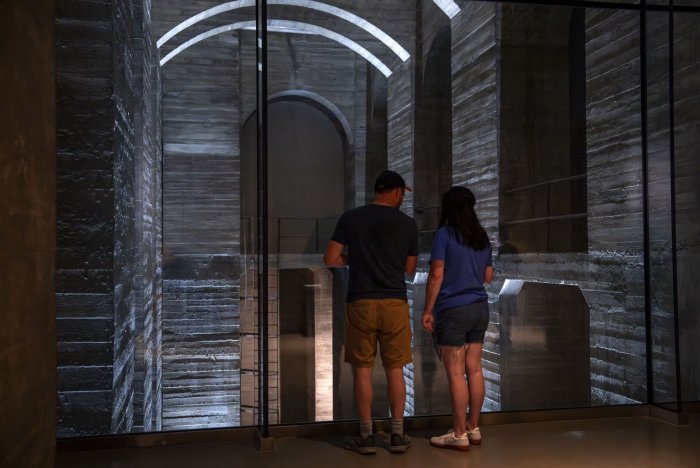
Visitors tour the newly remodeled undercroft beneath the Lincoln Memorial in Washington, D.C., on July 10, 2026. Photo by Bonnie Cash/UPI | License Photo

Source link

Donald Trump removes final members of independent US election commission | US Midterm Elections 2026 News

The dismissals leave the federal election body vacant as Trump presses for broader changes to US voting rules.

President Donald Trump has removed the last remaining members of an independent federal commission that helps support United States elections, leaving the bipartisan body with no sitting commissioners.

The White House confirmed the news on Friday, with only months to spare before November’s midterm elections.

Recommended Stories

list of 3 itemsend of list

“The President, and head of the Executive Branch, reserves the right to remove individuals that may not be totally aligned with the important task of securing America’s elections,” the White House said in a statement.

It added that the administration had been “working across all agencies and local partners to safeguard elections from fraud and abuse” in the run-up to the midterms.

The decision concerns the Election Assistance Commission (ECA), an independence office created by Congress in 2002 to support state and local election officials. Among its duties are creating non-binding election guidelines, certifying voting systems and maintaining the national mail voter registration form.

Four commissioners typically helm the agency. But on Thursday, the two Democratic appointees — Thomas Hicks and Benjamin Hovland — were fired by email, according to the news agency Reuters.

The lone remaining Republican, Christy McCormick, resigned. A fourth commissioner, Republican appointee Donald Palmer, had already left in April.

The commission is required by law to be made up evenly of Democrats and Republicans, and it was put in place to help after the disputed 2000 presidential election.

Trump’s decision to fire the remaining commissioners has further raised concerns that he may seek to intervene in the upcoming midterm elections, which will decide control of Congress for the rest of his term.

Under the US Constitution, election administration is the responsibility of the state, not the federal government.

The Election Assistance Commission had previously declined to implement part of Trump’s March 2025 executive order that called upon it to require proof of citizenship on the national mail voter registration form.

A federal judge later blocked that part of that executive order, ruling the president had exceeded his authority. Trump has appealed the ruling.

Voters are already required to affirm their citizenship before voting, as non-citizen voting is illegal in the US. Instances of non-citizen voting are rare.

The firings are the latest in a broader effort by the president to reshape how elections are conducted.

The Trump administration has pushed to tighten vote-by-mail rules and threatened to withhold some federal funding from states that refuse to adopt new election requirements. Many of those efforts have been challenged in court.

Earlier this week, the administration also sent out letters warning election officials that they could face prosecution if they fail to remove noncitizens from voter rolls.

Trump has defended the actions as necessary to protect election integrity. He has repeatedly claimed that his loss to Democrat Joe Biden in the 2020 election was the result of fraud, a claim not backed by evidence.

The latest firings come after the US Supreme Court last month expanded the president’s power to fire members of independent agencies, even without cause.

The court ruled six to three in Trump’s favour, arguing that “neither Congress nor the courts may saddle” the president with executive-branch leaders he does not approve of.

The president is allowed by law to appoint replacements to the commission. It is not yet clear whether Trump plans to nominate replacements or leave the seats vacant.

Source link

Can the agreement between Iran and the US be rescued? | US-Israel war on Iran News

Latest attacks jeopardise ceasefire and memorandum of understanding.

United States President Donald Trump declared that the agreement pausing the war with Iran was over this week – and ordered a series of strikes.

He accused Iranian forces of violating the ceasefire by attacking ships in the Strait of Hormuz.

Tehran was quick to respond, targeting US interests in Kuwait, Bahrain and Qatar.

The escalation was the worst since the two sides signed a memorandum of understanding last month.

It was meant to pave the way to more talks and a permanent deal to end the war.

Now regional mediators are working to ease the tension.

But does diplomacy still stand a chance?

Presenter: Per Nyberg

Guests:

Hakimeh Saghaye-Biria – Assistant professor at the University of Tehran

Salman Shaikh – Founder of The Shaikh Group, a peacebuilding organisation

Kirsten Fontenrose – Non-resident senior fellow at the Scowcroft Middle East Security Initiative at the Atlantic Council

Source link

Trump refuses to sign US housing bill over voting act standoff | Politics News

The housing legislation will become US law at midnight with or without President Donald Trump’s signature.

United States President Donald Trump says he will not sign a bipartisan housing affordability bill in protest at the Senate not passing the controversial SAVE America Act voting legislation.

In a post on Truth Social on Friday, Trump said he would not support signing the unrelated housing bill, which would speed up environmental reviews for construction projects, expedite development, and limit the number of single-family homes institutional investors can buy.

Recommended Stories

list of 4 itemsend of list

The bill will become law with or without the president’s signature. Once a bill reaches the president’s desk, the officeholder has 10 days to either sign it into law or veto the legislation. If he does neither, it becomes law at midnight.

House Speaker Mike Johnson said the president is unlikely to issue a last-minute veto.

The housing legislation, known as the 21st Century ROAD to Housing Act, which Trump called a “yawn” on June 29, was a rare moment of bipartisan agreement in a starkly divided US Congress. It passed the Senate by a vote of 85-5 and the House by a vote of 358-2.

The provisions included in the legislation are popular. A Bipartisan Policy Center poll suggested that 70 percent of Americans support banning institutional investors that own more than 350 homes from buying additional single-family homes.

The legislation would also establish incentive programmes for communities to build more housing and encourage the development of modular homes. It also includes provisions that would make it easier for communities to convert underutilised land into residential housing.

Housing remains a major pressure on Americans, with 79 percent saying the cost of housing is either “an extremely important” or “very important” issue, according to the Bipartisan Policy Center.

The US median home price hit a record $440,600 in June, while mortgage rates remain elevated. The average 30-year fixed mortgage rate is currently at 6.49 percent.

Voting act pressures

Trump cancelled the original signing ceremony for the housing legislation on June 24 in an effort to pressure Republicans to pass the SAVE America Act. Among its provisions, the bill would require proof of citizenship to register to vote and create a national voter database using state records.

It would also impose new limitations on mail-in voting, even though roughly one-quarter of Republicans voted by mail in the 2024 presidential election, according to an MIT survey.

A version of the voting legislation passed the House but failed to clear the Senate’s 60-vote filibuster threshold.

Under current election law, states administer elections, not the federal government.

The White House did not respond to Al Jazeera’s request for comment.

Source link

Housing bill to become law at midnight if Trump doesn’t veto it

July 10 (UPI) — A bipartisan housing bill that swept the House and Senate is set to become law at midnight Friday if President Donald Trump doesn’t veto it, and he said Friday morning on social media that he won’t sign it.

The 21st Century Road to Housing Act was passed on June 29 by a wide margin of Democrats and Republicans in both chambers of Congress, but the president canceled a signing ceremony at the last minute and said he wouldn’t sign it until Congress passed Trump’s pet project, the SAVE America Act, which they don’t have the support to do.

On Friday, he posted on Truth Social that he refuses to sign it.

“I will not sign the Housing Bill, which has been fully approved by Congress and sent to the White House, in PROTEST over the fact that the United States Senate is not capable of passing THE SAVE AMERICA ACT, which is polling at 97% with the Republican Party, and very high with the non-politician Dumocrats,” he wrote.

He didn’t mention a veto, but it’s still a possibility.

“The Act states, quite simply, that to Vote a person must show PHOTO VOTER I.D., PROOF OF CITIZENSHIP, AND THAT THERE WILL BE NO MORE CROOKED, CORRUPT, & DESTABILIZING MAIL-IN BALLOTS (EXCEPTIONS for Military, Disabled, Illness, and Travel!). THE SAVE AMERICA ACT’S non-passage is CRAZY, and a serious threat to any politician who votes against it! If the Dumocrats, or any RINO (or worse!) working with them, do not allow a positive Vote on SAVE AMERICA, TERMINATE THE FILIBUSTER, and pass this, and every other Bill that true Republicans have ever dreamt of (In addition to the upcoming Budget BOMB and the 1929 catastrophic style DEBT CEILING BILL!). The Dumocrats will TERMINATE THE FILIBUSTER, if and when they ever get the chance to do so, in their very first hour – And I will no longer be able to call them Dumocrats again! The title of DUMB will revert to the Republicans who allowed this horrible calamity to happen to our Party, and our Nation, itself! MAKE AMERICA GREAT AGAIN!” he wrote.

If the president vetoes the bill, Congress will likely have the votes to override it. It would need a two-thirds majority to pass the override in the House and Senate.

“This is the exact kind of bill they want to point to and say Republicans are working on issues that their voters care about, and Democrats would want the same,” Julian Zelizer, a history and public affairs professor at Princeton University, told The Washington Post. “That’s not the signal that the administration is sending.”

Since the bill passed and Trump refused to sign it, he has called it “a yawn.”

“To me, compared to the SAVE America Act, everything is a big yawn,” he said.

The SAVE Act is an election bill that would require voters to prove they are citizens when registering to vote. Critics argue that it would disenfranchise too many voters because of the types of proof it would require.

The housing bill includes measures that modernize building standards, encourage renovating older homes, encourage communities to build more housing with funding and grant programs, local governments to reform restrictive zoning policies around building housing and effectively ban private equity from buying up single-family homes. Critics of the bill say it doesn’t go far enough, but they acknowledge it’s a good first step.

It’s the first bipartisan measure that’s passed this Congress.

Some Democrats have been publicly pushing the president to sign the bill.

“It’s been sitting on President Trump’s desk long enough. Sign the bill,” Sen. Amy Klobuchar, D-Minn., posted on X.

Sen. Mark Kelly, D-Ariz., said on X, “Republicans and Democrats worked together to pass a bill to build more housing and stop hedge funds from buying up single-family homes, but Trump is holding it hostage. He needs to stop playing games and sign the bill so more Americans can finally afford homes.”

Olympic canoeist David Hearn departs the Moultrie Courthouse after pleading not guilty to damaging the Lincoln Memorial Reflecting Pool on Thursday. Hearn was indicted on July 2 on one count of destruction of property of more than $1,000 for allegedly damaging the Reflecting Pool, carrying a maximum penalty of 10 years in prison if convicted. Photo by Bonnie Cash/UPI | License Photo

Source link

Global oil demand set for first annual drop since the COVID-19 pandemic, IEA says

Published on

Global oil demand will fall by one million barrels a day in 2026, the IEA said on Friday, making it the first annual contraction since 2020, when Covid lockdowns grounded aviation and shuttered industry.


ADVERTISEMENT


ADVERTISEMENT

The comparison flatters this year’s decline in one respect, since demand collapsed by around eight million barrels a day at the height of the pandemic, but it underlines how severely the closure of the Strait of Hormuz has damaged the global economy.

The contraction is “highly skewed in both product and regional terms”, the agency noted in its monthly report.

Earlier IEA analysis traced the sharpest losses to Asia’s import-dependent economies and to petrochemical feedstocks such as naphtha and liquefied petroleum gas, whose supply chains run through the Strait of Hormuz.

At the time of writing, the front month contract on Brent crude, the international benchmark, was trading at around $76 a barrel, roughly 6% higher than before the US and Israel launched strikes on Iran in late February, and far below the peaks near $120 reached in March at the height of the conflict.

The US benchmark, WTI, was trading lower at around $72 a barrel.

June’s fragile rebound

Supply improved sharply last month, if from a desperately low base.

Global production jumped by 4.1 million barrels a day in June to 98.8 million as the partial reopening of the Strait of Hormuz allowed Gulf producers to restart shut-in wells, though output was still running 9.4 million barrels a day beneath its pre-war level.

Gulf exports, counting cargoes rerouted around the strait, climbed by 6.5 million barrels a day to 16.1 million. Before the fighting began in late February, the region shipped an average of 24 million barrels.

Global oil inventories grew for the first time since US and Israeli strikes on Iran ignited the conflict, halting months of record drawdowns, although stockpiles in the wealthiest economies shrank further as buyers held back from importing.

The truce unravels

The IEA’s forecasts rest on an assumption now under visible strain which is that a ceasefire holds and the Strait of Hormuz gradually reopens.

On that basis, global supply would contract by 3.7 million barrels a day this year, leaving production 860,000 barrels a day short of demand, before expanding by 7.5 million next year and tipping the market into surplus.

Stronger output elsewhere and weaker demand than expected before the war could still restore a surplus by the end of the year, allowing countries to rebuild depleted reserves, the IEA noted.

This week brought the second and far larger breach of last month’s truce.

After Iranian forces struck three commercial vessels on Monday and Tuesday, US Central Command hit more than 80 targets across Iran, including air defences, coastal radar and over 60 Revolutionary Guard small boats, while Washington revoked the licence permitting Iranian oil exports.

Iran fired drones and missiles at Bahrain and Kuwait, causing no major damage, and US President Donald Trump has since declared the ceasefire over.

Tehran insists the only safe passage is the route it sets in the Strait of Hormuz as traffic fell to 13 tankers on Wednesday, against an average of 33 a day the previous week, according to shipping data from Kpler.

Additional sources • AFP

Source link

Eighth suspect charged in alleged White House UFC terror plot

July 10 (UPI) — An eighth suspect has been arrested and charged in an alleged plot to attack last month’s Ultimate Fighting Championship event held at the White House, federal prosecutors said.

The suspect was identified as 21-year-old Chandler Scaggs of Chapmanville, W.Va.

The Justice Department said in a statement that he and the other seven suspects were charged in an indictment returned Thursday in Columbus, Ohio, with two conspiracy counts: providing material support to terrorists and conspiring to murder government officials on government grounds. Jail records indicate that Scaggs was arrested Tuesday, with federal prosecutors saying he was taken into custody by the FBI in West Virginia.

Federal prosecutors allege that the eight suspects, who range in age from 19 to 32, were among nearly two dozen people conspiring to attack the White House’s Freedom 250 UFC event on June 14, staged in celebration of the United States’ 250th anniversary and President Donald Trump‘s 80th birthday.

According to the indictment, the co-conspirators allegedly planned to attack the north side of the event with explosive-laden drones, which would force fight spectators to evacuate to the south, where stationed snipers would open fire on the fleeing crowd.

Prosecutors alleged that Scaggs was to be one of the snipers.

The indictment states that the eight defendants began plotting the alleged attack in May, with the conspiracy to provide material support to terrorists stemming from allegations that they worked together to procure money, firearms, ammunition, body armor, drones and other resources to further the plot. The charge is punishable by up to 15 years’ imprisonment.

They are alleged to have developed plans and encouraged one another in online chat groups and forums on encrypted applications, such as Signal, and on social media platforms, including TikTok and Instagram.

The indictment states that the second charge of conspiracy to murder government officials stems from allegations that the suspects planned to murder Trump, Vice President JD Vance and “other high-value targets” as well as Elon Musk and Israeli Prime Minister Benjamin Netanyahu, whose attendance at the event was not immediately confirmed. If convicted, the charge carries a potential penalty of up to life in prison.

The first five suspects arrested and charged in the scheme were taken into police custody last month after the parents of one of the suspects, 19-year-old Tycen Proper, alerted police to their son’s purchase of weapons and online activities.

Court documents state the group’s alleged grievances appear to be purported government corruption and U.S. lawmakers’ involvement with Israel.

As part of the scheme, Proper was allegedly supposed to pick up Scaggs and drive to Washington, D.C., for the event.

Prosecutors said that after Proper’s arrest, Scaggs allegedly indicated to the rest of his co-conspirators that he was still willing to carry out the attack and made arrangements with a second co-conspirator, who was not named, to pick him up.

The Thursday indictment follows earlier criminal complaints filed against the original seven defendants.

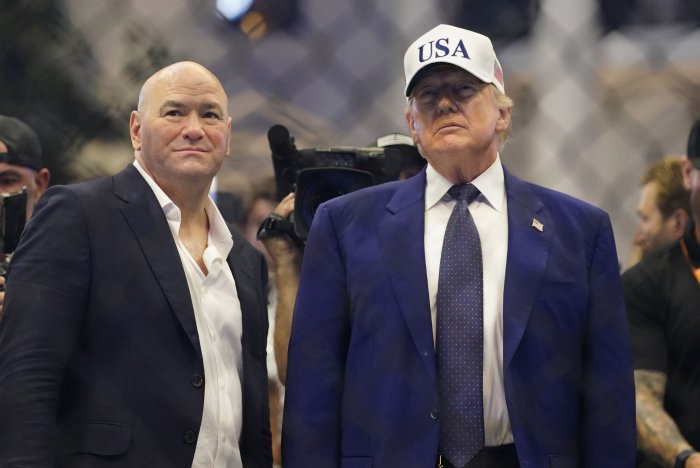
President Donald Trump and UFC CEO Dana White stand in the octagon after the UFC Freedom 250 event on the South Lawn of the White House in Washington, on June 14, 2026. Photo by Bonnie Cash/UPI | License Photo

Source link

Trump reportedly removes remaining members of election commission

July 10 (UPI) — President Donald Trump has reportedly fired the three remaining members of an independent, bipartisan commission that helps states administer elections, intensifying Democratic concerns that he is trying to interfere in November’s midterm elections.

Trump fired the Election Assistance Commission’s two Democrats, Benjamin Hovland and Thomas Hicks, while allowing its Republican commissioner, Christy McCormick, to resign on Thursday, according to The New York Times, NPR and ProPublica, which was the first to report on the development.

With the exit of the three commissioners, the commission has no sitting members. Republican Commissioner Donald Palmer resigned in late April.

The EAC was established by the Help America Vote Act of 2002 in response to issues surrounding the 2000 election. Its mission is to improve the administration of elections and help Americans participate in the voting process, according to the Congressional Research Service.

The midterm elections have loomed large over Trump’s second term. He has repeatedly warned that Democratic impeachment proceedings and investigations would follow Republicans losing the House, which they hold by a narrow 218-212 majority.

Trump has sought to influence the outcome by pushing Republican-led states to conduct unorthodox mid-decade redistricting to create additional GOP-favored seats, setting off a redistricting fight with Democrats. The president, who wrongly maintains that the 2020 election was stolen from him, has also repeatedly voiced skepticism over the integrity of U.S. elections, pushing legislation to impose stringent voting restrictions that critics say would disenfranchise voters.

Democrats and critics have been warning that Trump is trying to undermine the upcoming midterm elections and create a pretext for his administration to intervene. They say the hollowing out of the EAC removes election expertise and oversight from the process.

“Firing every remaining member of the bipartisan Election Assistance Commission months before the midterms is a brazen attempt to seize control of our elections before a single vote is cast,” Senate Minority Leader Chuck Schumer, D-N.Y., said in a statement.

“He is gutting the independent agency that certifies voting systems and helps election officials run secure elections.”

Sen. Alex Padilla, D-Calif., ranking member of the Senate Rules Committee, and Rep. Joe Morelle, D-N.Y., ranking member of the Committee on House Administration, called the firings illegal.

“Trump continues to double down on his efforts to erode trust in our elections, undermine independent oversight and further his administration’s attempt to ‘take over’ elections,” the Democratic pair said in a statement, referencing Trump’s repeated calls for Republicans to “take over” the election process.

“Americans deserve elections that are safe, secure and run free from political interference — not overseen by partisan loyalists and election deniers beholden to Trump.”

Michael Waldman, president and CEO of the Brennan Center for Justice at NYU Law, described the ousting as “deeply concerning” given “Trump’s relentless efforts to interfere in elections.”

“Until bipartisan replacements are confirmed, the agency cannot lawfully make any decisions that affect how Americans vote,” he warned in a statement.

Source link

D.C. planning panel advances plans for Trump’s triumphal arch

July 9 (UPI) — A federal Washington, D.C., planning agency advanced plans Thursday night for President Donald Trump‘s 250-foot triumphal arch, clearing a key procedural hurdle toward construction despite staunch opposition from historic preservation groups.

The National Capital Planning Commission approved preliminary site and building plans in an 8-1 vote, with three members voting present, during a meeting at its Washington headquarters.

The sole objector, Evan Cash, representing D.C. Council Chair Phil Mendelson on the panel, said he would not vote in its favor. He said the plans would “have the effect of upending decades of NCPC practice and thee century-old height framework.”

According to the proposed plans, the arch would be constructed across the Potomac River in Virginia. At 250 feet tall and 166 feet wide, it would be twice the height of the Lincoln Memorial.

Rob Nieweg, senior vice president of the National Trust for Historic Preservation, also objected to the project.

Nieweg told the commission that the arch would “overwhelm” nearby historic landmarks, including the Lincoln Memorial, Arlington House and Memorial Bridge, while being inconsistent with “the solemn character of Arlington National Cemetery.”

“Each new rendering submitted for this proposal is totally inappropriate in its scale and location,” he said.

“The new images clearly show that the arch blocks the view of the Lincoln Memorial from vantage points on the Virginia side. It looms larger on the skyline than everything other than the Washington Monument. From the District side, placing the arch in the foreground completely overpowers the sacred rolling wooded hills and rows of white grave markers at Arlington National Cemetery.”

The vote comes after the U.S. Commission of Fine Arts approved a modified design of the arch in May. A final vote on the plan will take place at the September commission meeting, NCPC Chair Will Scharf said.

“It’s disappointing that the NCPC approved the preliminary site and building plans for the Monumental Arch today, and we remain strongly opposed to its scale and locations,” the National Trust for Historic Preservation told UPI in an emailed statement.

Trump proposed the arch as he has sought to remake the capital in his own image, including plans for a new White House ballroom and renaming the John F. Kennedy Center for the Performing Arts to include his name, among others. Several of those efforts have been met with lawsuits.

Olympic canoeist David Hearn departs the Moultrie Courthouse after pleading not guilty to damaging the Lincoln Memorial Reflecting Pool on Thursday. Hearn was indicted on July 2 on one count of destruction of property of more than $1,000 for allegedly damaging the Reflecting Pool, carrying a maximum penalty of 10 years in prison if convicted. Photo by Bonnie Cash/UPI | License Photo

Source link

Senate hopeful Haley Stevens knows how to win in Michigan. Democrats must decide if that’s enough

U.S. Rep. Haley Stevens is spending the closing weeks of Michigan’s Democratic Senate primary making a simple case: she’s the candidate who wins.

Stevens flipped a Republican-held House seat in suburban Detroit in 2018 and hasn’t lost since, including surviving a bruising primary against a fellow Democratic incumbent after redistricting in 2022. She says it’s what sets her apart from her opponent in the Aug. 4 primary, progressive Abdul El-Sayed.

“It is not a hypothetical that I beat Republicans,” Stevens told The Associated Press after a campaign stop in West Michigan this week. “I win tough races. I have had Republicans throw everything at me and still managed to win.”

Holding Michigan’s Senate seat is essential to any Democratic path back to the Senate majority this fall. That imperative only grew this week after Democrats’ nominee in Maine, Graham Platner, said he planned to drop out after he was accused of sexual assault, threatening another seat the party had hoped to keep competitive. While no Republican has won a U.S. Senate seat in Michigan since 1994, former U.S. Rep. Mike Rogers came within 20,000 votes of doing so in 2024.

That calculation has led Senate Democratic leader Chuck Schumer and influential Michigan Democrats, including former Sen. Debbie Stabenow, to rally behind Stevens, arguing she gives Democrats their strongest chance in November against Rogers, who is running again.

But if electability is the party establishment’s top priority, it’s an open question whether Democratic primary voters agree.

“Democratic leadership should think more in terms of what we want to accomplish, and less about, ‘We’ve got to make it appeal to everybody,’” said Dave Burdick, 71, of Douglas, Michigan. He’s backing El-Sayed, who has surged by arguing that Democrats don’t have to run to the middle to win.

El-Sayed has built his campaign around bold policy proposals, rejecting corporate PAC money and casting himself as an alternative to the status quo of the Democratic Party.

“People don’t want a moderate. They want somebody who’s going to come in and effect change,” Burdick added.

Stevens makes the case for retail politics

On a summer afternoon in South Haven, a community along Lake Michigan, Stevens walks into a pet supply store with the ease of a seasoned campaigner. Within minutes, she’s chatting with the owner about the area, greeting reporters by first name and striking up conversations with customers. She slips easily between small talk and campaign mode, asking about customers’ lives before mentioning legislation she’s championed and asking for their vote.

“I thought she was great fun,” said owner Roxanne Leder. “She was energetic and had a positive outlook.”

It’s the kind of campaigning Stevens’ allies say has defined her political career. They acknowledge she lacks the viral progressive moments that have fueled El-Sayed’s rise, but say she’s at her best in small rooms, union halls and local businesses — which they say is where elections are won.

Stevens has leaned into that contrast herself.

“Unlike my opponent, I’m not running at the first mic or camera I see,” Stevens said during a debate Tuesday. “We do not need a celebrity senator. We need a workhorse.”

It’s also a style familiar to Michigan Democrats. From former Gov. Jennifer Granholm to current-Gov. Gretchen Whitmer, successful statewide candidates have often paired an upbeat, personable campaign style with a pragmatic message centered on economic issues.

But unlike Granholm or Whitmer, Stevens has yet to generate the kind of broad grassroots enthusiasm that defined their statewide campaigns. El-Sayed, meanwhile, has packed rallies with progressive supporters and high-profile endorsers.

Stevens has leaned more heavily on tens of millions of dollars in outside spending, which could become one of Stevens’ biggest liabilities in the primary. Outside groups have spent more than $30 million to boost her candidacy, dwarfing the spending behind El-Sayed. The largest spender, United Democracy Project, the super PAC affiliated with the American Israel Public Affairs Committee, or AIPAC, has spent more than $13 million on Stevens’ behalf and reserved another $7 million before the primary.

For Burdick, the 71-year-old El-Sayed supporter, that spending is disqualifying. He said he would not vote for Stevens in the general election because of her support from AIPAC.

Leder, by contrast, said she expects to vote for Stevens in August because she’s far more familiar with the congresswoman than with El-Sayed. She said she still plans to do more research before making a final decision.

“I’m just a Democrat,” said Leder. “Please, please no Mike Rogers.”

Michigan has a populist streak

El-Sayed is running on Medicare for All, campaign finance reform, abolishing the U.S. Immigration and Customs Enforcement agency and ending all U.S. weapons sales to Israel. He’s also a Muslim who has never held elected office.

To many Democratic leaders in Washington, that makes him a risky nominee in a battleground state often viewed as moderate and centered on manufacturing.

But Michigan has repeatedly rewarded candidates who cast themselves as outsiders challenging the political establishment. In 2016, Sen. Bernie Sanders defeated Hillary Clinton in the state’s Democratic presidential primary by running against party leaders. Donald Trump later built his own anti-establishment coalition, carrying Michigan in 2016 and again in 2024.

Burdick, a self-described “old white guy living in rural Michigan” who is a democratic socialist, said Trump and Sanders resonated with voters because they were upset.

“Well, you know what? They’re still mad,” he said. “They portray people like Abdul as unrealistic, but I think it’s unrealistic to think that we can continue the way that we’re heading.”

A two-person race changes the calculus

On Sunday, state Sen. Mallory McMorrow suspended her campaign. It prompted establishment Democrats to jump off the sidelines and back Stevens, including Democratic group EMILY’s List and Attorney General Dana Nessel.

“Haley is wicked smart, has won multiple highly competitive races, and she connects with people on a level so sincere and genuine that everyone who meets her feels truly seen and heard,” Nessel said in a statement.

El-Sayed has also built support among labor groups that have played an influential role in Democratic politics, including an endorsement from the United Auto Workers.

Fems for Dems, an influential Democratic grassroots group in the state, is not endorsing in the primary. But its founder, Lori Goldman, told AP in an interview that she planned to vote for El-Sayed.

“I personally am not going to have business as usual when I go to the ballot box. I want to vote for people, candidates that are going to go there and fight on our behalf,” she said.

Goldman, who founded the group 10 years ago in the politically important Oakland County, acknowledges the changing dynamics of Democratic primaries.

“Who would the natural choice be 10 years ago? Haley Stevens, right? Because we just followed the party line,” she said.

“People are breaking away from the party line. People want change.”

Cappelletti writes for the Associated Press.

Source link