FORGET garden centres, DIY jobs and lazy weekends at home – a growing number of Brits are flying to European cities for just a few hours before heading home the very same day.
Called “extreme day tripping,” the new trend is thanks to cheap return flights costing less than a meal out.
Sign up for the Travel newsletter
Thank you!
More Brits than ever are going on extreme day trips to Europe – including Emily Benham (pictured)Lisa Houston raved about how easy they are too
These adventurous travellers manage to squeeze in croissants in Paris, canal cruises in Amsterdam and pizza in Milan without booking a hotel room.
Lisa Houston, from Edinburgh, caught the extreme day trip bug after taking her son to Paris in January.
“My son had recently split up from his girlfriend and I wanted to give him something completely different to look forward to,” she said.
“He hadn’t been abroad since he was seven, so I surprised him with a day trip to Paris.
“We saw Les Invalides: Napoleon’s Tomb, sailed down the Seine, ate croissants in a little Parisian cafe and stood gazing at the Eiffel Tower. He absolutely loved it.”
The pair flew out at 7am and returned home the same evening.
“The flights were about £100 each, but you can often get them much cheaper,” Lisa said. “It was enough time to enjoy the city without feeling rushed.”
The trip sparked a love for Lisa and has since ticked off Amsterdam, Copenhagen, Milan and Dublin, with Barcelona, Paris and Poland still to come later this year.
One of her biggest bargains was Copenhagen, where she managed to secure return flights for just £34.
After spotting photos of the colourful waterfront district of Nyhavn on Instagram, Lisa booked the trip and spent the day exploring the Danish capital.
Places like Copenhagen often have cheap flights and easy-to-navigate streetsCredit: Alamy
“By lunchtime I was sitting outside a cafe with Nyhavn behind me,” she said.
Despite the early starts – often leaving home before 3am to catch the first flight – Lisa insists it’s worth every minute.
“I treat the whole day as the adventure, not just being in the destination,” she said.
Like other Extreme Day Trippers, Lisa gets some inspiration from a Facebook Group of like-minded people but said the appeal fitting in holidays around busy schedules.
“I’ve got a busy job, a granddaughter living with me, elderly parents and caring responsibilities,” she said.
“Sometimes I just need a day that’s all about me. Telling people that I’m ‘off to Paris to have lunch’ is my vibe these days.”
She estimates most of her trips cost around £150 in total, including flights, food and attractions.
“I think it’s brilliant value for money – in a couple of hours you’re somewhere you’ve never been before, seeing things you’ve only dreamed of. That’s priceless.”
“We left home at 4am and arrived in Pisa at 11am,” she said.
Cassie Goodfellow said you can fit in more than you think in a day
“Our flights were £125 each – I would have preferred them to be £75 or under as I think part of the fun is keeping it as cheap as possible but my daughter chose the destination and it was worth it.”
“A highlight was seeing the Leaning Tower for the first time. It was breath-taking.”
The pair spent eight hours exploring the city, visiting the cathedral, eating pizza and wandering the back streets before heading home that evening.
“It was my first extreme day trip and I’ve already booked another one to Frankfurt with my brother and sister,” she said.
For Cassie Goodfellow, from Bathgate, an extreme day trip was the perfect way to celebrate turning 40.
After spotting inspiration online, she booked a return flight to Copenhagen and spent 12 hours exploring the city solo.
Even places like Pisa can be done for the dayCredit: Alamy
“Most people thought I was a bit crazy,” she admitted.
“They couldn’t understand why I’d travel abroad for just a day or the fact I was doing it solo, But the memories and experience made it worthwhile.”
Flights cost just £63 return, while her total spend for the day came to around £160.
“The highlight was wandering Copenhagen’s beautiful streets and landmarks,” she said.
“I was surprised by how much I managed to fit into one day.”
Looking back, she says it was one of the best things she has ever done.
“There’s something exciting about proving you can have a meaningful travel experience in a single day,” she said.
Iran has marked the second day of funeral processions for its late Supreme Leader Ali Khamenei. Masses of supporters came to view his body despite a sweltering heatwave, with water misters installed at Tehran’s Grand Mosalla Hall and volunteers distributing cold drinks to mourners.
In 1776, the Continental Congress adopted the Declaration of Independence, proclaiming U.S. independence from Britain.
In 1826, in one of history’s notable coincidences, former U.S. Presidents John Adams and Thomas Jefferson both died, 50 years to the day after the Declaration of Independence was adopted.
In 1863, Union troops defeated Confederate forces in a battle at Vicksburg, Miss.
In 1895, the poem “America the Beautiful,” by Wellesley College Professor Katherine Lee Bates, was published. The poem with music by Samuel A. Ward was published as a song in 1910.
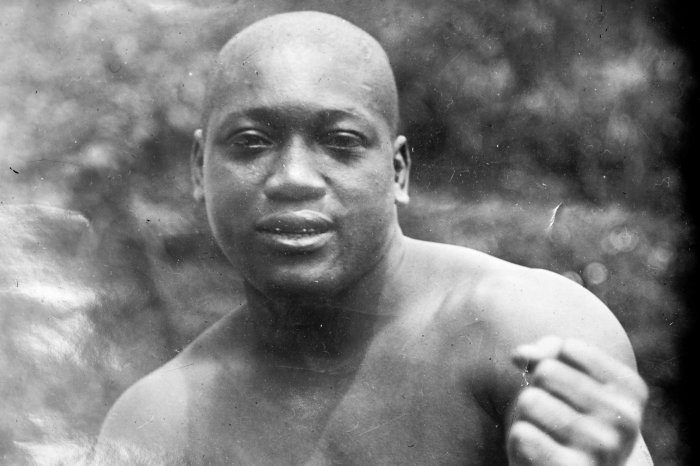
In 1910, American boxer Jack Johnson took on former undefeated heavyweight champion James J. Jeffries, beating him in 15 rounds, to stake his claim as the as the greatest heavyweight in the world.
File Photo by Library of Congress/UPI
In 1939, Lou Gehrig gave his “luckiest man on the face of the Earth” speech in announcing his retirement from the New York Yankees. Gehrig had been diagnosed with amyotrophic lateral sclerosis, a debilitating motor neuron disease. United Press writer Jack Cuddy wasn’t impressed with the Yankees’ “Lou Gehrig Appreciation Day,” saying doctors made up his ailment to explain his unexpected retirement.
In 1976, Israeli commandos raided the airport at Entebbe, Uganda, rescuing 103 hostages held by Arab militants.
In 1986, more than 250 sailing ships and the United States’ biggest fireworks display honored the Statue of Liberty in its 100th birthday year.
In 1995, the British Parliament reconfirmed John Majors as prime minister.
In 1997, NASA’s Pathfinder reached Mars to become the first U.S. spacecraft to land on the planet in more than two decades. Pathfinder returned more than 16,000 images and some 8.5 million measurements back to Earth before its final transmission on September, 27, 1997.
File Photo courtesy of NASA
In 2006, North Korea test-launched seven ballistic missiles in what it called “routine military exercises,” causing a firestorm of anger among its neighbors and the United States.
In 2010, U.S. Army Gen. David Petraeus took command of the Afghan war, acknowledging the “tough fight” ahead for NATO forces while pledging “We are in this to win.”
In 2013, the Statue of Liberty reopened to the public nine months after it was closed because of damage caused by Hurricane Sandy.
In 2018, Hong Kong’s high court ruled unanimously that same-sex couples are entitled to spousal visas like married heterosexual couples.
In 2022, seven people died and dozens others were injured in a mass shooting during an Independence Day parade in Highland Park, Ill., near Chicago. Far-right activist Robert Crimo III, then 22, was charged with murder for the shooting.
A participant of the March Fourth rally to ban assault weapons holds a sign for Eduardo Uvaldo, a victim of the Highland Park shooting, outside the Senate office buildings at the U.S. Capitol in Washington, D.C., on July 13, 2022. File Photo by Bonnie Cash/UPI
PHILADELPHIA — The Philadelphia Flyers are prepared to pay Ducks center Leo Carlsson the highest annual salary at $18 million since the salary cap era began in 2005, now giving the Ducks seven days to match the offer.
The Flyers tendered the five-year, $90-million offer sheet to Carlsson on Friday, which would require four of the Flyers’ first-round draft picks in each of the next four seasons as compensation.
The Ducks have seven days to exercise their right of first refusal on the player, per the NHL collective bargaining agreement.
The offer sheet comes 14 years after the Flyers, under previous management, offer-sheeting Nashville defenseman Shea Weber for $110 million over 14 years, which the Predators matched.
The 21-year-old Carlsson had 29 goals, 38 assists for 67 points in 70 games last season with the Ducks. He added 11 points in 12 playoff games to help lead the Ducks to the second round.
A native of Karlstad, Sweden, Carlsson has 141 points (61 goals, 80 assists) in 201 regular-season games with the Ducks. The 6-foot-3, 208-pound center was selected by the Ducks second overall in the 2023 draft.
The Minnesota Wild in September signed Kirill Kaprizov to an eight-year, $136 million extension, giving him the richest contract in NHL history.
Kaprizov will count $17 million against the salary cap beginning next season, through 2034. That’s the highest annual average salary of any player since the league’s cap era began in 2005, surpassing Edmonton’s Leon Draisaitl at $112 million over eight years, a $14 million annual average. Alex Ovechkin’s 13-year, $124-million contract signed with Washington in 2008 was previously the highest total value.
Cut to a seedy alley behind a Chinese restaurant in Rome: A dozen mobsters menace a slight young man who suddenly pulls out a pair of nunchucks. He swings the traditional stick-and-chain weapons and makes quick work of his enemies, who fall one by one, groaning in pain.
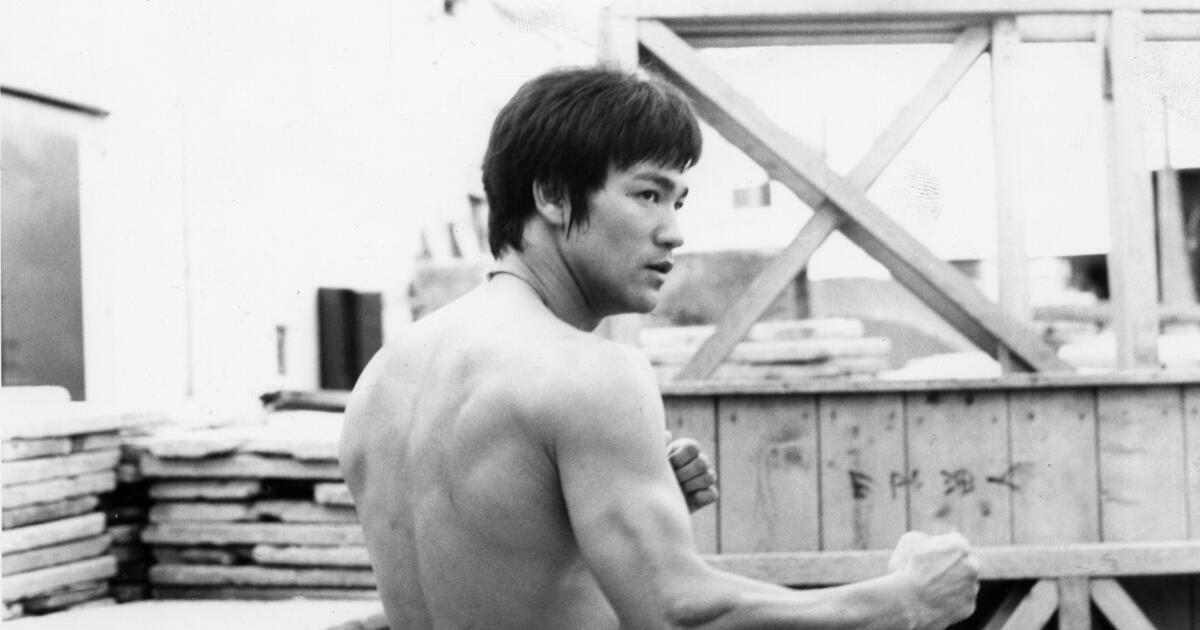
The comedic, legendary action scene is from the 1972 film “The Way of the Dragon,” written, directed and starring Bruce Lee. The martial arts star was a trailblazer, allowing Asian Americans to see themselves represented in a strong, positive light on-screen.
And now he has secured a place in California history, becoming the first Chinese American in state history to have a day designated in his honor.
Lee was born in 1940 in San Francisco. His mother was of European descent and his father was a Cantonese opera star who was on tour in the city, affording his son birthright citizenship.
Lee grew up in Hong Kong, where he followed his father’s path as a performer, acting in more than a dozen films as a child and studying the close-quarters southern Chinese martial art Wing Chun.
On May 17, 1959, an 18-year-old Lee returned to San Francisco and eventually made his way to Hollywood. He went on to influence an industry that was at the time bereft of Asian American talent, and helped to popularize the genre of martial arts films and ignite Western interest in Hong Kong action cinema.
In recognition of his contributions, state Assemblymember Matt Haney (D-San Francisco) introduced a bill designating May 17 as “Bruce Lee Day” in California. The bill, signed into law Tuesday by Gov. Gavin Newsom, encourages schools and communities to honor Lee’s life and cultural impact.
Haney has described Lee as a “symbol of pride, resilience and possibility for generations who rarely saw themselves reflected with strength and dignity.”
Lee, who saw himself not only as an actor but also as a poet and philosopher, encountered repeated barriers. Up for the main role in the 1970s television series “Kung Fu,” for example, he was rejected in favor of white actor David Carradine.
In 2020, filmmaker Bao Nguyen sought to show how Lee dispelled anti-Asian sentiment and long-held stereotypes of emasculated Asian men in his ESPN documentary “Be Water.”
“The Asian male was the face of the enemy to many Americans,” Nguyen told The Times in 2020. “It was this vicious cycle of society reflecting media and culture, and media and culture reflecting society. There had to be some kind of intervention there and Bruce, in a way, was that intervention. He was the hero that we hadn’t seen before.”
Lee learned much about the systemic oppression that Black Americans faced from his first student, Jesse Glover, who had been a victim of police brutality.
And scholars have pointed out that, although his films had far-from-perfect politics, they touched on themes of fighting oppression. The 1971 movie “The Big Boss” showed Lee battling alongside laborers. “Fist of Fury” saw him opposing Japanese colonialism and discrimination.
Lee died young in 1973, at age 32 — before he was able to witness the full extent of his stardom. He died just one month before the release of “Enter the Dragon,” which was a box-office sensation and is considered a masterpiece of martial arts filmmaking.
WASHINGTON — Immigration and Customs Enforcement arrested 10,000 people over a five-day period at the end of June, marking a major push by the agency tasked with carrying out the Trump administration’s mass deportations agenda.
The arrest numbers, obtained from a person familiar with the information who spoke anonymously to discuss data that has not been publicly released, comes after the agency shifted its approach from high-profile arrest sweeps in major American cities to quieter ways to reach President Trump’s deportation goals.
The figures indicate that while the administration is no longer cracking down on individual cities, the arrests continue and are surging.
The total number of arrests during the five-day period starting Friday and ending Tuesday translates to roughly 2,000 arrests per day. It was not clear where the arrests had taken place.
The spike in arrests was first reported by The New York Times.
“Since Day One, DHS law enforcement has been delivering on President Trump’s promise to the American people to arrest and deport criminal illegal aliens including murderers, rapists, pedophiles, gang members, and terrorists,” said the Department of Homeland Security in a statement. “Our message is clear: if you come to our country illegally, we will find you, we will arrest you, and we will deport you.”
The arrests news also comes as the number of people entered into ICE detention facilities climbed in June to roughly 39,000 after hovering near 30,000 per month since February, according to information obtained by the Associated Press.
ICE doesn’t publicly release arrest data, making exact comparisons with previous periods difficult. But according to data provided to UC Berkeley’s Deportation Data Project and analyzed by The Associated Press, 2,000 arrests per day would mark a sharp increase over previous periods.
December had the most ICE arrests since the beginning of the Trump administration, and that month only averaged 1,283 arrests per day nationwide.
In January, at a time when the administration flooded the streets of Minneapolis and surrounding regions with hundreds of immigration enforcement officers, arrests averaged about 1,212 per day across the country.
But that proved to be a turning point in the Trump administration’s mass deportations agenda after two American citizens were killed by immigration officers while protesting the crackdown in Minneapolis.
Border advisor Tom Homan started drawing down the number of officers in Minnesota as the agency stepped back from the flashy surge operations that had been common during the tenure of then-Homeland Security Secretary Kristi Noem.
Operations under Noem, headed by former Border Patrol Chief Gregory Bovino, were marked by frequent clashes between immigration enforcement officers and protesters in footage that was often splashed across the Department’s social media channels.
In February, immigration arrests fell to 1,057 a day, according to information from the Deportation Data Project. The Project sued through the Freedom of Information Act to obtain the ICE arrests data, and it is only current through February.
After Noem was fired, her successor at Homeland Security, Markwayne Mullin, suggested he’d be taking a more low-profile approach to immigration enforcement and he aimed to get the department out of the headlines. But Mullin was expected to adopt Trump’s priorities on immigration.
LONDON — Claire Liu packed her bags and checked out of her London hotel room on Wednesday morning before heading to the All England Club.
It was more pragmatism than pessimism — a reality of a qualifier navigating her Wimbledon journey one day at a time.
But as her boyfriend reminded her while organizing her luggage: “Just because you’re packing doesn’t mean you’re leaving,” Liu recalled with a laugh.
He was right.
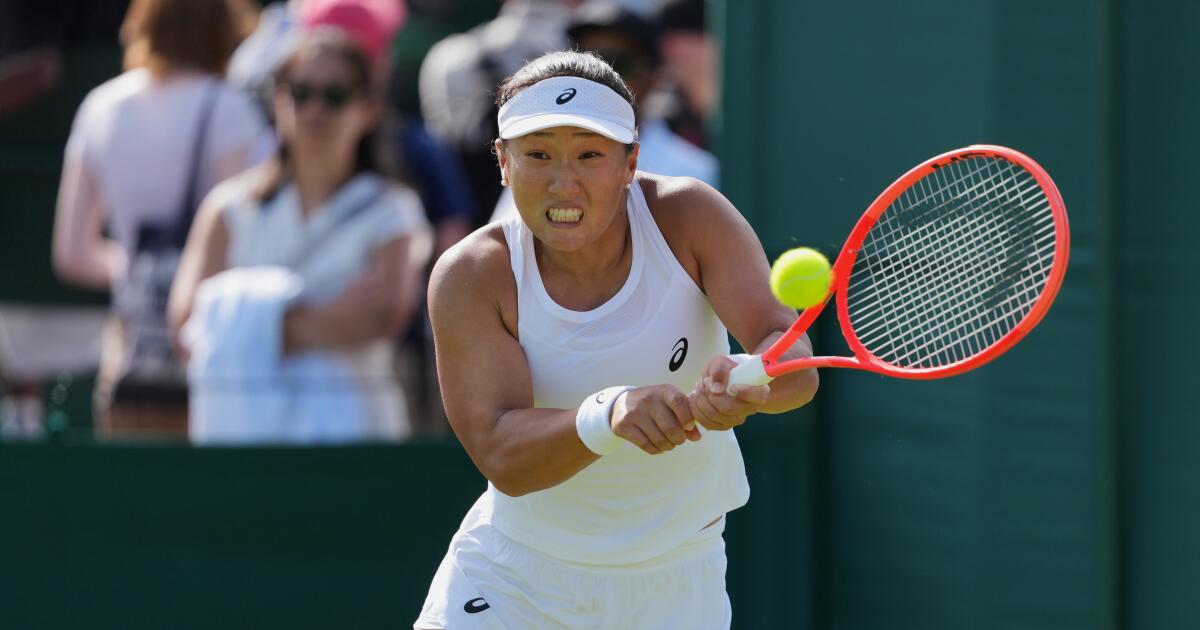
The Thousand Oaks native went on to win her second-round match against 51st-ranked Zeynep Sonmez of Turkey 7-5, 6-3, advancing to the third round of a Grand Slam for the first time in her professional career. She had tried 29 previous times at majors, including qualifying rounds, since 2015.
“I was just super relieved to get through that,” said Liu, noting she had blown a set and a break lead in the French Open’s second round last month.
For Liu, who turned 26 in May, returning to the manicured lawns of SW19 brings her tennis journey full circle. Nine years ago, she captured the 2017 Wimbledon girls’ singles title — the first American to do so since Chanda Rubin in 1992 — and was the No. 1 junior in the world. She still holds fond memories of that heady achievement, including chatting with her idol, Roger Federer, at the Wimbledon Champions Ball.
Yet, the transition from teenage phenom to professional mainstay has been anything but a linear ascent. When asked if she expected to be in the third round of a major this late in her career given her junior success, Liu was candid.
“Younger me would have believed it more than now,” she said.
That shift in perspective comes after weathering some brutal setbacks.
Liu climbed as high as No. 52 in early 2023 but then endured a wrist injury and took a months-long mental health hiatus in 2024 that eventually saw her ranking plummet outside the top 400 last year.
Currently sitting at No. 146, she’s been rebuilding her standing by playing a mix of WTA 125 events and ITF tournaments before returning to the main WTA Tour, with 2026 stops in far-flung places from Bahrain to Boca Raton and plenty of places in between.
“My goals haven’t changed, but I think the stress of how I got there really took a toll on me,” said Liu.
To navigate the darkness, Liu leaned heavily into both sports psychology and traditional therapy, including EMDR, a technique that helps people process traumatic experiences. She also started a Substack newsletter called “Finding Claire-ity,” where she openly chronicles her life and struggles on the tour.
The Southern California native, who has trained at the USTA facility in Carson since she was 9 years old and resides in Redondo Beach, also split with her longtime coach last season, a difficult decision, and hired Clemens Wagner.
The switch following the U.S. Open last year is clicking.
“I saw in her someone who fought a lot of battles inside herself,” says Austrian-born Wagner, who has a background in tennis analytics.
Together, they have focused on keeping an “aggressive undertone” on the grass, emphasizing coming to the net and squeezing the most out of her game.
Wagner notes that the 5-foot-7 player’s game isn’t the flashiest, but describes her as a “silent killer” who excels at “redirecting pace, standing close to the baseline, constantly putting pressure on her opponents.”
The reboot is starting to pay significant dividends.
Liu put together her best stretch in years this spring, winning a lower-tier title in Trnava, Slovakia, her first professional title since 2024, and then qualifying for the French Open.
Having again successfully navigated three rounds of qualifying to reach the main draw here, Liu has now won five consecutive matches at Wimbledon. Not surprisingly, she currently has no sponsors, just equipment support from Head Sport and Asics Corp., making her Wimbledon run particularly lucrative. By reaching the third round, Liu achieved her highest career payday: around $250,000. A victory Friday would boost that to nearly $400,000.
First, she faces her biggest test yet: a third-round contest against two-time major champion Coco Gauff on No. 1 Court, which perhaps fittingly is the same show court where Liu won the girls’ title almost a decade ago.
Gauff, 22, noted that she and Liu haven’t crossed paths much since Liu is older, but expects a serious battle. Gauff won both of their previous meetings on hard courts.
“I feel like anytime you’re playing a qualifier, it’s always tough because they have three matches already,” the seventh-seeded American said.
Liu, who didn’t even know she was playing Gauff until a reporter told her after her match, is purposefully keeping her focus narrow.
“I will just take today to be happy for winning, and then tomorrow I’ll think about it,” Liu said. “Obviously she’s one of the best players in the world right now, so that’ll be a good experience.”
Veteran Jessica Pegula, 32, the top-ranked American who also toiled away on the sport’s lower tier before becoming a top-10 mainstay, appreciates Liu’s resolve.
“It’s always nice to see girls that are figuring it out slowly but surely,” the No. 4 seed said. “I think I can relate to that.”
Liu’s accommodations? Fortunately, her mother was able to rebook the same hotel after the match, which eased some of the logistical issues for her unexpectedly extended stay in London.
“It definitely makes me stay in the moment, like, day by day,” Liu smiled of her lodging limbo.
On Wednesday morning, Liu packed her bags expecting she might leave Wimbledon. Instead, she emptied them one more time, with the biggest match of her career still waiting.
The Dodgers welcome their bitter rivals to Dodger Stadium on Thursday for what should be a big four-game series, but the San Diego Padres are a mess. They trail the Dodgers by 12 games in the National League West. Their best batter by WAR, according to Baseball Reference, is journeyman infielder Ty France.
However, standings and statistics be damned, the Dodgers are coming for the Padres, their closest pursers in the division even if “close” is relative. The Dodgers didn’t have to say anything out loud, but you could see it on the field Wednesday.
Shohei Ohtani was the scheduled starting pitcher, but the Dodgers pushed him back so he could face the Padres this weekend. The Padres will face Roki Sasaki on Thursday, Ohtani on Friday and Yoshinobu Yamamoto on Sunday.
And the Dodgers still won a series in Sacramento, behind Eric Lauer and Justin Wrobleski. Now comes a 10-game sprint to the All-Star break against division rivals, starting with the Padres.
“They’re all big for us,” Dodgers manager Dave Roberts said. “We try to take every series with the same importance, but obviously winning that series is the goal.”
For the final game of the Athletics series Wednesday, with Ohtani held back, the Dodgers used Jack Dreyer as a first-inning opener, then handed the ball to triple-A callup Charlie Barnes and told him to go as long as he could.
That did not go well and still went exactly according to plan.
In what was billed as a bullpen game, Barnes handled the final seven innings, leaving the varsity bullpen in fine shape for the Padres series.
“For him to be able to save everyone else puts us in a great position for the four games this weekend,” Roberts said.
The innings were not great. The first batter Barnes faced, Jonah Heim, deposited a 444-foot home run on the roof of the Dodgers’ clubhouse beyond the center-field fence.
The A’s bunched 11 hits over the first four innings against Barnes and his 90-mph fastball, and still the Dodgers gave Barnes the rest of the game, because a 12-game lead affords you the chance to sacrifice today in order to line up your pitching for your tomorrows.
In all, Barnes gave up seven runs and 12 hits, including three home runs. He did make a very reasonable 79 pitches over his seven innings.
Barnes, a 30-year-old still in search of his first major league victory, barely had a chance to take in the evening before Roberts told him immediately after the game that he would return to triple-A, with Paul Gervase coming up as a fresh arm.
“It’s tough for me to enjoy it when you give up seven,” Barnes said. “That’s part of the business. I did my job in providing length. Any time they need that or may want that, I’ll do my best to give it to them.”
This was not all on Barnes, to be sure. When Wrobleski won his 10th game in a 9-3 victory on Tuesday, he said the offense deserved a fair share of the credit for his success.
“We bang,” Wrobleski said, “so you can get a lot of wins if you go deep in games and go five innings. That’s more of a team thing than it is a performance thing for me, but it’s super cool.”
After collecting 17 hits here on Monday and 14 more on Tuesday, the Dodgers mustered five hits Wednesday, including a 431-foot home run from Freddie Freeman.
The Dodgers went hitless with runners in scoring position, leaving the bases loaded in the first inning, two men on in the third and two more in the eighth.
Will Smith out until after All-Star break
The first half of the season will conclude with Will Smith in the same place he has been for the last month: the injured list.
The Dodgers’ three-time All-Star catcher has been on the IL since June 8 because of what the Dodgers list as neck inflammation. Smith said he had been diagnosed with an inflamed disk.
Roberts said he “just can’t see any world” in which Smith would return before the All-Star break, which concludes July 16.
“It’s certainly longer, I know, than all of us expected,” Roberts said. “But I don’t think it’s anything real, kind of affecting-the-season type thing.”
Will Smith has been sidelined by an injured neck.
(Rick Scuteri / Associated Press)
Roberts said Smith has not been able to accelerate his rehabilitation to the point of doing baseball activities.
Dalton Rushing, who has taken over as the Dodgers’ primary catcher in Smith’s absence, is batting .210 with one home run and 20 strikeouts in 19 games while Smith has been on the injured list. The Dodgers gave Rushing most of the day off Wednesday, although he struck out as a late-game replacement.
The Dodgers were 14-6 with Smith on the IL entering play Wednesday.
Also Wednesday, the team scratched shortstop Mookie Betts from the starting lineup because of a sore right wrist. Roberts said he expected Betts to play Thursday.
“The World Cup is ruining my life,” a neighbor recently said with a laugh. “I’m supposed to be working; instead I’m watching World Cup. I’m supposed to be doing chores; instead I am watching World Cup.”
I laughed in guilty recognition. We had met on the street by chance while I was walking the dog. Having just spent the last two hours watching, then celebrating Lionel Messi’s hat trick during Argentina’s first-game victory over Algeria, I had less than an hour to get back in time to watch Austria play Jordan.
That was on Day 6, and it’s only gotten worse. If I had to calculate my own ratio of work done to soccer watched … well, as I am not a sports reporter, I don’t think my editor would be thrilled. (Though I’m sure she appreciated the England/Congo updates I provided as I finished this piece.)
Like millions worldwide, my family and I have been deeply, and in our case, weirdly, engrossed in this year’s games. “Weirdly” because we do not follow men’s soccer. The World Cup is different, of course — going in, I figured I would check out the U.S., keep an eye on Messi, then tune into the final few games. Perhaps my husband would join (but only if he at least pretended to understand the offside rule), but with our two oldest children out of the house, it is, with the exception of the Super Bowl, unheard of for our family to concurrently view any sporting event in real time.
Until this World Cup. I’m not quite sure how it happened, but suddenly we’ve got game times written onto our calendar. Entire days have been spent in front of the TV with at least one child and the others watching from their homes, our family texts studded with “are you watching…?,” “did you just see that?” and, of course, “OMG MESSI!”
(I would attempt to calculate my recent ratio of chores done to Messi videos watched if I weren’t legitimately concerned that my family would have me committed.)
The fact that my son and his girlfriend live in Kansas City certainly helped spark our newfound fascination. Yes, Los Angeles is also a host city, but L.A. hosts so many things; inevitably we were mostly concerned about what it would do to the traffic. KC, on the other hand, is the smallest and most unlikely of the host cities, and over the last few years we have seen — on visits and through my son’s accounts — all the construction, effort and can-do spirit that has gone into preparing for the event.
We were thrilled when it was announced that Argentina, England, the Netherlands and Algeria would be based in or near KC. We wanted the city to shine, and it has — from nearby Lawrence’s enthusiastic adoption of Algeria to Messi’s historic hat trick at Kansas City Stadium.
Team USA defender Mark McKenzie, left, and Turkey midfielder Baris Alper Yilmaz in the World Cup match at Los Angeles Stadium on June 25.
(Robert Gauthier / Los Angeles Times)
But it’s more than vicarious Midwestern pride. When our older daughter began texting out missives from the earliest games and our son sent pictures of fans streaming into Kansas City Stadium, we started watching as a way to stay connected.
First, as a family, and then to our country and the rest of world.
The games have been inevitably exciting, especially as now that they’re in the knockout round, but the overall sensation was unexpected relief, a soul-soothing balm.
At a time when the news cycle seems to serve up nothing but conflict, crisis and woe, the World Cup offers shelter, a truly international event in which conflict is defined by long-term sports rivalries and questionable referee decisions.
We want our national or preferred teams to win, of course, but no matter the outcome, it’s impossible not to be thrilled by the sight of phenomenal play, underdog tenacity and so many adoring and enthusiastic fans.
Soccer is called the beautiful game for many reasons, and hours/days/weeks of sustained beauty is impossible to resist. Even social media has surrendered to spectacular highlights along with tales of Japan supporters cleaning up stadiums, fans of the victorious consoling fans of the defeated and Europeans discovering the glories of free refills and ranch dressing.
None of this changes the realities we face in America and the rest of the world. Grocery and gas prices remain catastrophically high; Iran continues to contradict U.S. claims of diplomatic resolution to an unpopular war. The unnecessarily revamped reflecting pool in Washington remains a swamp of algae and tourist arrests, as the semiquincentennial struggles under the weight of our president’s self-centered hubris.
But for a few blessed weeks, the World Cup offers inspiration, escape and cultural healing.
It has also, thus far, escaped President Trump’s so often internationally insulting social-media notice and more importantly, his presence. Historically, the leaders of host countries attend the opening match; Trump has, apparently, been too busy (including planning and attending the UFC Freedom 250 cage match recently held on the South Lawn.)
Given his tendency to suck the oxygen out of any room (like his recent reception at Game 3 of the NBA Finals in New York), it’s definitely for the best. If nothing else, the World Cup has given us a chance to take a break from politics and talk instead about Messi, France’s Kylian Mbappé, England’s Harry Kane and all the amazing goalkeepers, including Cape Verde’s now-iconic Vozinha.
Never before have I so understood the therapeutic power of sport.
Who wouldn’t want to at least take a break from rising measles cases, the latest federal or Supreme Court decisions and primary tea-leaf readings to lose themselves in a game where exquisitely patient passing suddenly bursts into spectacular feats of speed and footwork? Where a well-defended ball can suddenly become a goal with a nearly undetectable flick of a foot, or a perfectly placed shot blocked by a goalie’s incredible ability to launch into space? Where an outcome that seems assured can be overturned in the final minutes to the collective roar of an international cast of thousands?
Vozinha of Cape Verde makes a save during the World Cup match between Spain and Cape Verde at Atlanta Stadium on June 15.
(Justin Setterfield / Getty Images)
Like many Americans, I have been occasionally embarrassed by the World Cup’s exposure of my world-geography ignorance — I know where Bosnia and Herzegovina lies on a map, but until recently, I couldn’t place Cape Verde, Curacao or, if I’m being completely honest, Cote d’Ivoire.
Isn’t it wonderful, though, to have a reason to reacquaint yourself with a world map that isn’t related to war, natural or man-made disaster or economic and political tension? The current U.S. administration may seem to be at odds with just about everyone, but visiting World Cup fans are here to remind us of all we share, beneath our crazy wigs and face paint, our cheers, groans and chants.
And we, as hosts, have shown them that America is so much more than the sum of our current government’s policies and posturing.
Watching all this happen, in real time, has been magical, miraculous and magnetic.
Not every moment, of course. Various visa issues created unnecessary and embarrassing drama; high ticket prices and transportation issues were blamed for empty seats at some of the early games. Members of the Iranian team and its coaching staff criticized the way they were treated (though the team left a handwritten note in the dressing room of Los Angeles Stadium, thanking L.A. for its hospitality). The controversial hydration breaks, and the extra commercials they accommodate, can be irritating (though when it’s close to 100 degrees in many stadiums, quite necessary). And though it didn’t matter in terms of standing, watching the U.S. lose to Turkey wasn’t much fun for American fans (though the Turkish exuberance was pretty infectious).
Overall, the 2026 World Cup has done exactly what it was supposed to do: create, in this country, a stage for the finest teams and players in the world’s most popular sport and, more important, carve out five weeks in which we can all spend a few hours removed from the political and cultural divisiveness that threatens to define us.
It’s space in which we can cheer, gasp and leap out of seats along with our families, friends and all the millions we will never meet but to whom we are connected all the same.
Now if you’ll excuse me, the next game is about to start.
Iran and U.S. negotiators will meet with intermediaries Wednesday to discuss the cease-fire agreement. Photo by Abedin Taherkenareh/EPA
July 1 (UPI) — Envoys Steve Witkoff and Jared Kushner and their Iranian counterparts are planning to meet with Qatari negotiators Wednesday for ongoing peace talks.
Iran and Qatar have said that there will be no direct, high-level meetings between United States and Iranian officials and that all discussions will be through Qatari intermediaries, The New York Times reported. Today’s negotiations will be about the cease-fire agreement and getting it implemented, a spokesperson told The Times.
Iran’s negotiator Mohammad Bagher Ghalibaf, in an interview with Iran’s state media Tuesday, laid out the most important provisions of the memorandum of understanding signed on June 17.
Ghalibaf said the most important prerequisite provisions to Iranian negotiators were Articles 1, 4, 5, 10 and 11, CNN reported.
Article 1 demands an end to all fighting, including in Lebanon. Israel and Lebanon signed a cease-fire agreement on Saturday, but Hezbollah hasn’t agreed to it.
Article 4 says that the United States must lift its naval blockade and Iran must allow shipping traffic through the Strait of Hormuz. The U.S. Navy is no longer blocking the strait but it still has a presence there. Article 5 says that Iran will allow passage through the strait with no tolls for 60 days.
The next two articles are about Iranian money and oil sales. Article 10 says the U.S. will allow waivers for Iran to sell its oil, which has happened – at least for 60 days. And Article 11 says that the United States will make frozen Iranian assets available, which is unclear. The United States has said that Iran must fulfill its commitments first.
Traffic through the strait is picking up, with 34 ships passing through on Tuesday, CNN said, though that’s far from pre-war levels, which saw about 100 per day.
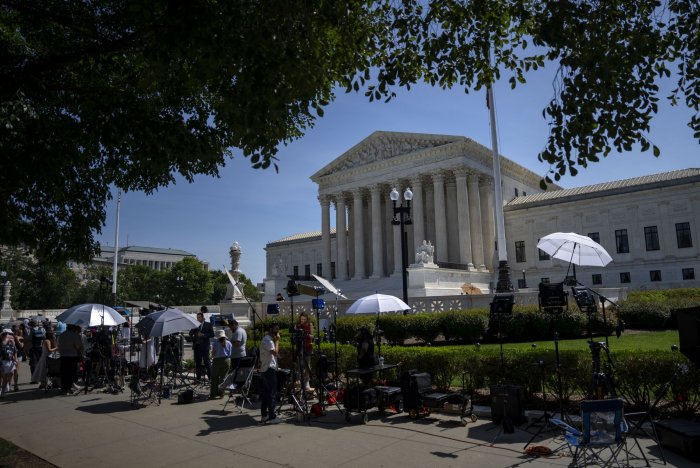
News anchors are seen outside the Supreme Court of the United States as the court releases their final opinions before summer recess on Tuesday. The court upheld birthright citizenship and also state laws banning transgender women and girls from playing on school athletic teams. Photo by Bonnie Cash/UPI | License Photo
FOR less than a visit to the British seaside, one man flew thousands of miles away for a day trip.
Aleksander Sikora, from Surrey, took a 24-hour break to Kosovo for just £88 – including his return flights.
Sign up for the Travel newsletter
Thank you!
Aleksander Sikora took a six-hour return day trip to KosovoCredit: SWNS
Taking a day off from his job, Aleksander took a six-hour round trip to the lesser visited capital city of Pristina in Kosovo.
He started his day at 7.25am and was back at the airport for his return flight at 11.55pm.
Aleksander said: “I decided to go to Kosovo because I’ve never been there before and it’s something a bit different to just going to Spain or Portugal.
“It’s cheaper than a seaside day out, a train from London to Brighton could be around £40, and with food and drinks it could be over £100.”
Aleksander managed to get Wizz Air return flights to Kosovo for just £42.
On top of that, his parking at Luton Airport cost £20.
A return bus journey into the city centre was £6, an eSIM was £10, and he spent just £10 on food and drink.
All in all, the one day trip cost him £88.
As for what to do in the city, Aleksander saw the Cathedral of Mother Teresa and the National Library of Kosovo, which has been dubbed the “ugliest building in the world”.
He added: “The library was my favourite part because it’s so unusual.”
Aleksander took a trip to the lesser-visited country for £88Credit: SWNSFlights to Kosovo from the UK takes three hoursCredit: SWNS
Aleksander also went to see the Newborn monument, which represents Kosovo becoming an independent nation.
There’s also a statue of Bill Clinton, which was put up in 2009 to honour the part the former president had in Kosovo achieving independence.
When it was time to eat, Aleksander bought jam pastries for 80p and a sandwich for €3 (£2.58).
He said: “I would absolutely recommend Kosovo as a day trip.
“I know the flight is three hours, but it’s a completely different way of life, and I made some great memories.”
Since its opening in 1967, Pirates of the Caribbean has stood as an anchor at Disneyland, a statement piece that has defined the direction of the park.
And that remained true last week when Walt Disney Imagineering unveiled a new audio-animatronic pirate. It’s wow-inducing. It’s also narrative-wrecking. And it fundamentally shifts the vibe of the attraction’s early scenes.
The high-tech pirate, we can bet, is just a small preview of the park’s next-gen toys. Because when changes come to Disneyland, they often hit Pirates of the Caribbean first. Over a half-century ago, the robotic figures of Pirates were a symbol of Disneyland’s technological ambitions, dazzling audiences with characterized but lifelike movements. With the ride, Disneyland made it clear that as the world advances, so, too, would the park.
You’re reading Mr. Todd’s Wild Ride newsletter
Todd Martens’ newsletter delivers news and commentary on the past, present and future of theme parks, right from the theme park capital of the world — Southern California.
By continuing, you agree to our Terms of Service, which include arbitration and a class action waiver. You agree that we and our third-party vendors may collect and use your information, including through cookies, pixels and similar technologies, for the purposes set forth in our Privacy Policy such as personalizing your experience and ads.
As culture shifted and the lecherous buccaneers of the ride began to look more like symbols of sexual harassment, they would be forced to undergo some welcome personality adjustments. A redheaded victim of sex trafficking would transform into one of the ride’s most striking characters, and a number of rides from the Jungle Cruise to Splash Mountain would eventually undergo similar reassessment.
For Pirates of the Caribbean, after all, is the attraction that defined the Disneyland template. Its mastery is that it is a series of larger-than-life dioramas constructed around an abstracted narrative where themes of greed, lust and intemperance take precedence over a plot with a firm beginning, middle and end. And thus it made sense for Imagineering, the outfit of the company responsible for theme park experiences, to unveil its latest tech-driven master work on the ride.
A new animated pirate on Disneyland’s Pirates of the Caribbean shifts from living to dead using projection technology.
(Todd Martens / Los Angeles Times)
Reaction, however, has been less than enthused. Disneyland’s own social media accounts are flooded with pointed critiques, but even if we consider that social media tends to lead with gripes, some of the park’s most ardent fan sites have referred to the reimagined scene as a gutting. Why so much hullabaloo over a single robot? If we allow that Disneyland is a place that generations make pilgrimages to, then Pirates of the Caribbean is its most sacred temple. Handle with care.
Where once was a foreboding skeleton frozen in time atop a treasure and swords, there is now an animated figurine built with the latest in projection technology. The latter transitions from living to dead, caught in a perpetual loop with each glimpse of the cavern’s “cursed treasure,” which it continually lifts and drops. The pirate is placed after the ride’s two dips in a gold-filled room among the winding, mysterious underground chambers that help set its tone.
Dead pirates fill the caverns of Disneyland’s Pirates of the Caribbean.
(Todd Martens / Los Angeles Times)
Since the attraction’s opening, the only living beings in this portion were a lone seagull and maybe a stray sea critter or two. It is here where the mystique of Pirates of the Caribbean is set, and guests are placed in the active role of piecing together the time-shifting narrative. Story is hinted at rather than fed to us. We hear tales of the hexed fortunes found in the caves via ghostly narration, but see only its after-effects — skeletons locked in a chess battle or standing behind the wheel of a crumbling ship.
The centerpiece treasure room, where our new pirate is found, has long been a breathtaking scene. Previously, a now decayed body sat atop a mountain of wealth, an empty, soulless figure done in by selfish pride. It was disquieting, and a bit ghoulish. Stray, soft musical notes underscored the tragedy. Further on, a trapped pirate quietly transitions from living to dead via an old theatrical mirror illusion, and the boats float into a city filled with battles and buffoonery.
Gone is the subtlety. A somber tableau is now relatively loud, as our eyes no longer take in the full set but zero in on a bright and at times lively figurine. I cannot deny that it is an impressive piece of technology. On the multiple rides that I took Monday morning, I overheard two teens describe it as “pretty cool” and watched as a young child excitedly shouted to his mom and dad that the figure’s face was changing.
The caverns of Pirates of the Caribbean set a foreboding tone.
(Todd Martens / Los Angeles Times)
Such reactions are no doubt what Imagineering is hoping for. Part of the job of stewarding a classic attraction, after all, is ensuring it maintains an appeal to future generations. But I believe two things can be true. The new pirate may captivate some audiences and it can also stylistically and tonally clash with the attraction. This is the right tech, perhaps, for a more animated experience, one such as the in-development “Coco” ride coming to Disney California Adventure. Unfortunately, in Pirates it’s misplaced. Worse, it’s distracting, as we’re immediately drawn to its movement, grunts and quick-transitioning face.
I lament losing what was there. Projected figures, even the best of them, such as this one, are still media and can still gleam with light. And while the original Pirates of the Caribbean designs by Marc Davis were exaggerated, they were brought back to reality by Blaine Gibson, who sculpted them with bold, hardened features that made them at once heightened but believable. They may have been cartoonish, but they weren’t actual cartoons, and this figure is too much of a contrast, its comic-like excess feeling less relatable, less human. And that says nothing of its snort-like laughs, which reminded me too much of the huffs and puffs of the ride’s donkeys.
It also raises more story questions than it answers. Why, for instance, aren’t the other skeletons caught in a loop? Sometimes more is said by saying less, and this feller leans silly in a portion of the ride that calls for spooky. Ultimately, it just feels unnecessary, a symptom of our often exhausting, tech-obsessed, digital-drenched age where new, needless tools are shoved in our faces daily.
Thankfully, the rest of the attraction serves as a reminder that no computer wizardry can out-class old-school theater. Theme parks should evolve with the times, but sometimes it takes artful restraint to not mess with what’s already timeless.
This week in SoCal theme parks
Disney California Adventure turns Soarin’ Over California into Soarin’ Across America. The makeover will be unveiled July 2, just in time for the Fourth of July holiday and the celebration of America’s semiquincentennial. While Soarin’ Across America is already open at Florida’s Walt Disney World and I’ve written about the patriotic re-imagining, I’ve waited to see it in the flesh and will have impressions next week.
Fireworks! If you’re looking for them this weekend, our theme parks have got you covered. Disneyland, of course, has an annual Fourth of July show with patriotic music, and the park will be running “Disney’s Celebrate America! — A Fourth of July Concert in the Sky” Friday through Sunday. If you’re heading to Knott’s, be sure to check out the park’s free-to-visit Independence Hall, a replica of the Philadelphia landmark that will be offering guided tours Friday and Saturday, while Six Flags will feature fireworks Friday through Sunday. Universal Studios Hollywood will on Friday and Saturday debut a new Fourth of July-themed fireworks show.
Shattered glass on Fast & Furious: Hollywood Drift. Fans are eagerly awaiting the opening of Universal Studios Hollywood’s new “Fast & Furious”-inspired coaster, and word spread via social media recently that a panel of glass on one of the ride’s sound barriers had shattered. Universal declined to comment, but sources familiar with the ride characterized it as an “installation error” that shouldn’t delay the public launch of the ride, which is expected by mid-summer. I reached out to California’s Division of Occupational Safety and Health’s Amusement Ride & Tramway Unit (Cal/OSHA), which monitors the state’s theme park attractions. A spokesperson said the situation was looked into but did not warrant further evaluation.
Have a theme park tale to share? Whether it was a good day or less-than-perfect day, I would love to hear about it. Have a question? A tip? A fun photo from the parks to share? Email me at todd.martens@latimes.com. I may feature your note in an upcoming newsletter.
Ride on,
Todd Martens
P.S.
Visitors tie paper tags bearing wishes onto trees in the courtyard of the Broad as part of an exhibition dedicated to Yoko Ono.
(Kayla Bartkowski / Los Angeles Times)
Theme parks often are about the power of imagination, allowing us to play pretend in heightened, alternate worlds. And I had theme parks on my mind while I traversed the Broad’s excellent current exhibit dedicated to Yoko Ono.
What, perhaps you wonder, does Ono have to do with theme parks? “Yoko Ono: Music of the Mind” documents the entirety of the artist’s career, and much of her early work centers on play. Real, philosophical play, essentially the idea that through creativity, fantasy and a bit of silliness, we can all see the world differently.
Whether it was communicating with her audience while in a bag (1964’s “Bag Piece”), an antecedent to Meow Wolf’s “Experience Tube,” or offering instructions to count stars, tally our wrinkles, drop off peas on a morning walk, attach wishes to a tree or create fictional maps of our neighborhoods, much of Ono’s career was dedicated toward building community and connections through playfulness and imagination.
It’s freeing work, and a reminder that a little frivolity via participatory art — and that’s really what theme parks and so-called immersive entertainment provide — is a necessary ingredient for happiness.
Zulu community members in Durban participate in a national day of protest on Tuesday demanding the repatriation of undocumented immigrants to their home countries with marches also held in Johannesburg and other major cities. Photo by Stringer/EPA
June 30 (UPI) — Security forces across South Africa were braced Tuesday for demonstrations coinciding with anti-immigrant and vigilante groups’ self-declared deadline for undocumented migrants to leave the country, amid fears that the protests could turn violent.
Tuesday’s events follow weeks of rallies that have been blamed for inciting violence against migrants in the country, both illegally and legally, by people who believe they are taking jobs from South Africans, carrying out criminal offenses and overburdening schools, hospitals and other essential services.
March and March, one of the anti-migrant organizations, had used the threat of the protests to try to force the “immediate massive deportation of all illegal foreigners currently in the country” by June 30.
However, President Cyril Ramaphosa’s direct appeals for cool heads and for demonstrators not to engage in “intimidation, threats or ultimatums” appeared to have been heard with the Police Ministry reporting that, apart from some looting, the protests went off mostly without incident.
In Johannesburg, five people were arrested for allegedly looting a foreign-owned store in Soweto township while windows of apartments in Yeoville, home to many migrants from other African countries, were smashed by brick-hurling protesters, police said.
Five people were also arrested in Hammarsdale in KwaZulu-Natal province after they allegedly broke into a shop there.
Ramaphosa met leaders of the protests on Monday, ordering them not to resort to violence while acknowledging that the immigration system needed fixing.
“Some foreign nationals who live in South Africa are here lawfully. They work, study, raise families, invest in our economy and contribute positively to our society. They too are entitled to the protection of our laws and our Constitution. The right to protest and freedom of expression does not allow people to threaten or intimidate others, or to engage in acts of vandalism or violence,” he wrote in his weekly blog.
Ramaphosa’s intervention came too late for many immigrants, frightened into leaving by the violence and anti-migrant sentiment in the country.
At least three foreign nationals have been killed in violent attacks in the past month: two Mozambicans when a mob razed a shanty settlement in the Western Cape and a Malawian man at another encampment near Durban during a march against undocumented immigrants that forced hundreds of migrants to flee to the safety of churches and mosques.
Nigeria evacuated 269 of its citizens on Monday — taking the number it has flown home to date to about 600 — with more flights planned over the next few days.
Gardener Kauga Nyirenda told CNN two men turned up at his home threatening to kill him if he didn’t go back to his native Malawi.
“They asked me: ‘When are you going to leave the country? We want to fix our country. If you don’t leave now, you’re going to leave in a coffin because we don’t need anyone after 30th of June,'” said Nyirenda.
In the run-up to Tuesday, about 25,000 others have been sent back to their home countries, mostly elsewhere in Africa, with about 50,000 people detained as illegal migrants since January, according to government agencies, with many of those in temporary camps for their own safety, pending repatriation processing.
Malawi has repatriated about 7,000 of its citizens. Ghana, Mozambique and Zimbabwe have also been laying on air and road repatriation transport for their nationals.
Official figures show there are at least three million documented foreign nationals in South Africa.
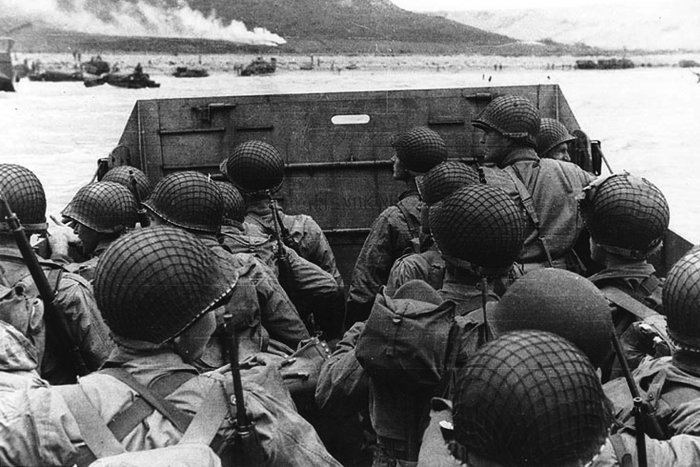
Troops in landing craft approach Omaha Beach on D-Day in Normandy, France, on June 6, 1944. D-Day was the largest seaborne invasion in history and turned the tide of World War II. Photo by UPI | License Photo
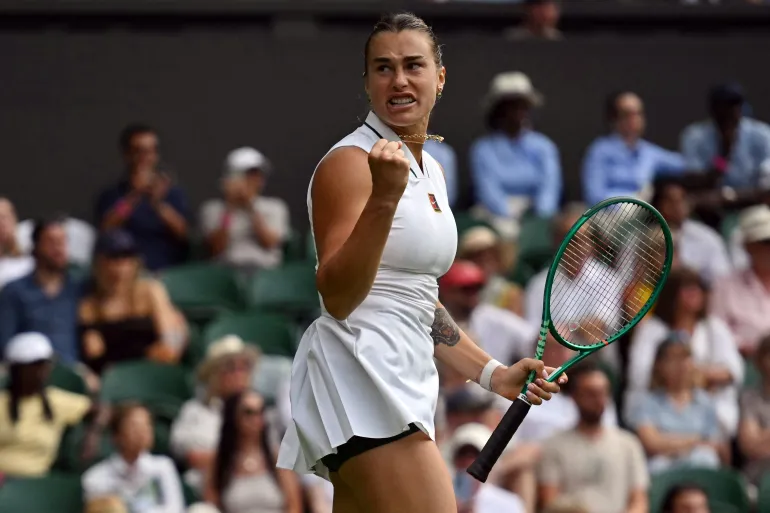
Men’s defending champion Jannik Sinner and women’s top seed Aryna Sabalenka both arrived at Wimbledon with question marks hanging over them but answered the doubters with contrasting first-round victories.
Italy’s Sinner – playing his first match since his shock collapse and defeat in the second round of the French Open on a scorching day in Paris – was stretched to the limit by Serbia’s Miomir Kecmanovic but survived, winning 4-6, 6-3, 6-7(6), 6-2, 6-3 on Monday.
Recommended Stories
list of 4 itemsend of list
Sabalenka, who left Paris in a “deep, dark place” after losing the last 10 games of her quarterfinal against Diana Shnaider, followed Sinner onto Centre Court and breezed past Serbian qualifier Teodora Kostovic 6-2, 6-3.
While world number one Sinner, the overwhelming favourite in the absence of Spain’s Carlos Alcaraz, lived to fight another day, there were some early seeded casualties.
Norway’s 11th seed Casper Ruud was handed a tough draw in the shape of big-serving Pole Hubert Hurkacz and duly lost 6-4, 6-2, 7-6(7), while 12th seed Andrey Rublev was edged out in a five-set battle against fellow Russian Roman Safiullin, losing a deciding set tiebreaker 14-12 after missing two match points.
There was heartbreak too for surprise French Open runner-up Maja Chwalinska as she lost 2-6, 7-5, 6-2 to Thai qualifier Mananchaya Sawangkaew on Monday after the Pole fell and hurt herself while on match point.
Several women’s seeds moved through on a day mercifully cooler than the heatwave that gripped London last week.
Japan’s Naomi Osaka once again dressed to impress, walking on court in a Kill Bill-inspired white kimono and tennis shoes that shone as the 14th seed beat Elsa Jacquemot 6-1, 7-5.
American fourth seed Jessica Pegula beat Darja Vidmanova 7-5, 6-3, while newly crowned French Open champion Mirra Andreeva, seeded fifth, beat Magda Linette 7-5, 6-4.
Swiss 11th seed Belinda Bencic had far too much experience for young wildcard Mika Stojsavljevic, whose defeat was one of many on a miserable day for home players.
Home hopes ebb away
It was a grim day for the home nation, who failed to celebrate a single victory.
Twenty-one players, including 12 wildcards, were in the first-round draw, but after Emma Raducanu withdrew with an injury on the eve of the tournament, she was followed on Monday by Jack Draper, who announced he was also pulling out with an arm injury.
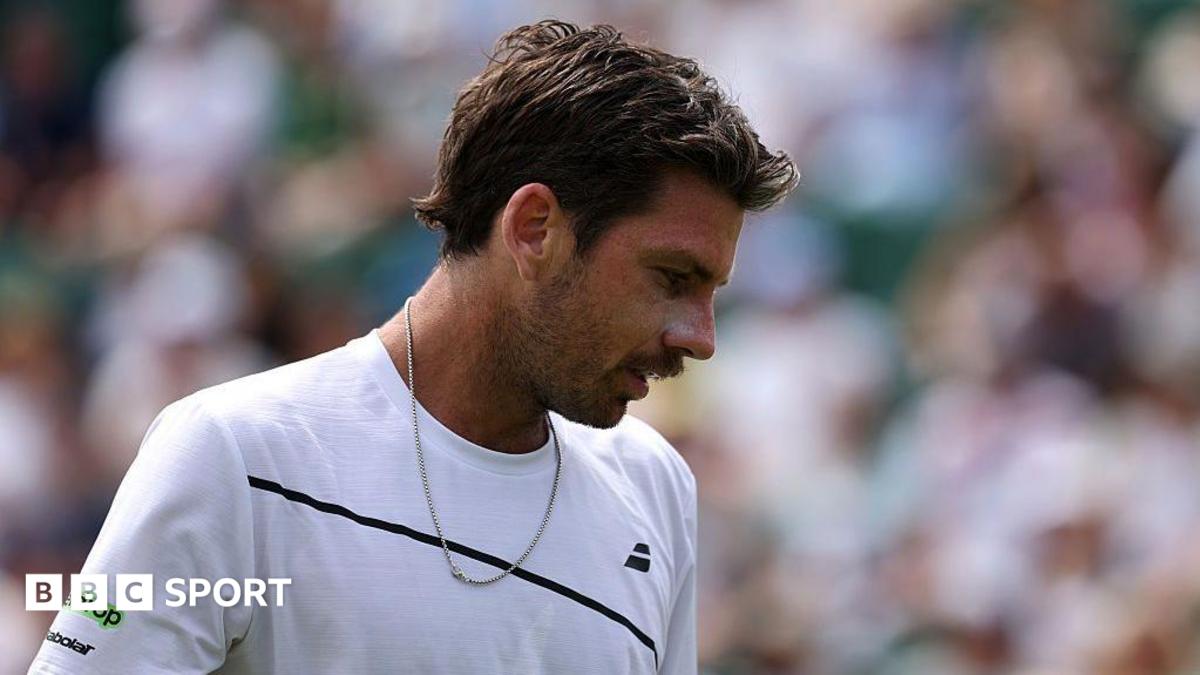
Ten British players lost, including British number one Cameron Norrie, seeded 26, beaten in five sets by inspired American qualifier Michael Zheng.
Sinner’s meltdown in the Roland Garros furnace against Juan Manuel Cerundolo had raised questions about his durability in long matches, but he answered those, albeit in relatively cool conditions, against Kecmanovic.
Sinner racked up his 94th Grand Slam match win, equalling the Italian record of Nicola Pietrangeli, but shed plenty of sweat and a little blood in reaching that mark, his white shoe stained red after injuring a nail in a fall.
“It was a little tight in the beginning; I didn’t play at my best, but I tried to get into it,” he said. “I’m happy I turned it around because the third set was very tough to swallow.”
Sinner had a point to go two sets to one ahead but lost it, and Kecmanovic pounced. Sinner was in danger of becoming only the third defending Wimbledon men’s champion to lose in the first round, but dominated from then on and later said his foot injury was not serious despite the pounding it took during his third-longest match at Wimbledon at three hours and 30 minutes.
“I’m actually surprised that they let me keep playing, because my all-white outfit turned into a little red,” he added.
New generation triumph
Court One fans expecting to see Raducanu in action were left disappointed as the replacement match saw home hope Harriet Dart beaten by Latvia’s Jelena Ostapenko.
Next up was a duel between two more former US Open champions, Daniil Medvedev and Marin Cilic, but that fell flat as Cilic was made to look all of his 37 years as eighth-seed Medvedev romped to a 6-1, 6-2, 6-4 win.
Two of the new men’s generation lit up the opening day.
Brazil’s Joao Fonseca, cheered on by a large contingent of fans in yellow football shirts, beat Spanish veteran Roberto Bautista Agut 7-6(4), 6-4, 6-3, before heading off to watch Brazil beat Japan to reach the last 16 at the World Cup.
Rising Spanish teenager Rafael Jodar, also aged 19, made an impressive debut, beating British wildcard Felix Gill 6-3, 6-3, 7-5.
California officials cheered a U.S. Supreme Court ruling Monday that allows states to continue counting mail ballots postmarked by election day but received in the days after — calling it a win for voter participation and access, including in the upcoming November midterm.
They also acknowledged delays in recent vote counting have spurred frustration, and promised to speed the process through other solutions — including by investing millions into new election infrastructure and vote processing capabilities.
Gov. Gavin Newsom — who called the court ruling a “win for voters, plain and simple” — has previously said the state should be able to count ballots faster, and his latest budget includes $29 million for “increased staffing, technology and equipment upgrades and purchases for counties,” $10 million for voter education and outreach at the state and county levels and $750,000 for combating election misinformation.
The court decision, a loss for President Trump and other critics who contend such policies contribute to unacceptable delays in vote counting, specifically upheld a Mississippi policy to accept mail ballots received within five business days of an election.
But it also lets stand similar policies in other states — including California, which counts ballots postmarked by and received within seven days of an election.
California Secretary of State Shirley Weber, who has long prioritized voter participation over a speedy count, called the high court’s ruling a “win for voters, for the rule of law, and for the future of our democracy.”
She said that she will “keep working to ensure every eligible Californian has the opportunity to be heard, because our democracy is strongest when every voice and vote count.”
Dean Logan, head of the Los Angeles County registrar-recorder/county clerk’s office, said in a statement to The Times that the ruling “affirms what Los Angeles County voters deserve: the assurance that a ballot cast by Election Day will be counted if received within the legal timeframe established in State Law.”
“Our office will continue to provide voter education, multilingual outreach, and leverage available resources to ensure voting access for our 5.8 million registered voters,” Logan said.
Many voting rights experts agree California’s vote counting should and could be faster, but disagree with the Trump administration’s efforts to step in with policies such as election day deadlines.
In 2024, California counted more than 406,000 late-arriving mail ballots, but they represented only about 2.5% of the statewide total. Experts say California’s delayed results have far more to do with the massive influx of mail ballots that are placed in ballot drop boxes or arrive at processing facilities on or just before election day.
Rick Hasen, an election law expert and director of the Safeguarding Democracy Project at UCLA Law, said the court’s decision was a “symbolic loss” for Trump, in that the court rejected his preferred policy on mail ballots, but “doesn’t appreciably change how long it takes to count ballots” because late-arriving ballots were never the problem.
In a report published Thursday, the California Voter Foundation recommended statewide adoption of “sign, scan, and go” programs that allow elections officials to immediately process mail ballots that voters submit in person at polling centers or drop boxes.
The foundation recommended ballot curing programs that speed up the process by utilizing a secure text platform when double checking whether a ballot is legitimate when a voter’s signature doesn’t match state records.
It also urged the state to invest $35 million in a voter education campaign to encourage early ballot returns, and more than $55 million in improving counting capacity and efficiency in county elections facilities.
Trump and other conservatives had called for an end to state policies allowing late-arriving mail ballots to be counted as an overdue fix to a voting system that often can’t produce election results in close races for days after polls close, as was the case in California’s recent primary races for governor and L.A. mayor.
Trump has pointed to California’s time-consuming count as proof of widespread fraud to undermine Republican candidates, though he has never produced evidence to support that claim and Democrats have fiercely denied it.
On Monday, Trump called the high court’s decision to uphold such state policies a “tremendous loss,” and more reason to pass the Save America Act — a bill he has backed that would enforce new voter ID and proof of citizenship requirements and ban mail ballots except for military personnel, individuals suffering from illness, disability, and in other rare circumstances.
He said politicians have “no excuse” other than “CHEATING!” to oppose such measures, especially at “a time when there is a powerful Communist Movement taking place in our Country, one more dangerous than World War I, World War II, Pearl Harbor, or September 11th.”
But California leaders rejected that — saying the criticisms of mail ballots are baseless and an attempt by Trump and his allies to undermine elections in which they are poised to lose, particularly in big blue states such as California, by attempting to wrest control over voting processes that have always been the purview of states, not the federal government.
California Atty. Gen. Rob Bonta said Monday that states have been “primarily responsible for regulating elections” since the nation’s founding, and his office was “pleased that the U.S. Supreme Court has respected that authority.”
“Today’s decision recognizes a basic reality: Mail delays happen. When people vote by election day, their ballots should not be discarded because of those delays,” he said.
Sen. Alex Padilla (D-Calif.), the ranking Democrat on the Senate Rules and Administration Committee, which has oversight over federal elections, praised the high court Monday for acknowledging that nothing in federal law precludes states from counting mail ballots in the days after an election.
“Today’s decision is a victory for voting rights and a rejection of Trump’s attacks on mail and absentee voters,” Padilla said.
Liberal groups and many voting rights experts also hailed the ruling as a win for voters.
Moving up deadlines for mail ballots is just one effort in a much broader political war over voting and the rules that govern it. The U.S. Constitution generally gives states the authority to run their own elections, but the Trump administration has been trying to assert greater federal control — especially around mail ballots.
Earlier this year, Trump signed an executive order directing the U.S. Postal Service to assert control over mail balloting by designing new envelopes with special bar codes that would allow the federal government to ensure ballots only go to and get returned by eligible voters. The order prompted the Postal Service to propose new rules requiring states to hand over their voter mailing lists so it could implement Trump’s directive.
In a letter to U.S. Postmaster General David Steiner on Wednesday, Democratic senators denounced the proposed rule as an “unconstitutional and illegal attempt to transform [USPS] into an election administration agency controlled by the White House and President Trump.”
In a Senate hearing the same day, Steiner said that under the new rule, the USPS would not mail the ballots of a state that refused to turn over its voter lists, but also that his agency would adhere to any court orders curtailing its implementation.
On Thursday, just such an order came down in a federal case in which California and other Democrat-led states challenged Trump’s executive order. U.S. District Judge Indira Talwani ruled that the Constitution does not grant the president “any specific powers over elections,” and blocked his order as unlawful.
Nevada Secretary of State Cisco Aguilar, who is chair of the Democratic Assn. of Secretaries of State, said states such as California were right to focus on increasing investment in their own election infrastructure rather than accepting the Trump administration’s “bad policy ideas” for speeding things up.
Newsom’s office on Monday said that is exactly what California has been doing. It pointed to laws passed by the state Legislature last year that allow election officials to begin processing mail ballots earlier and require them to finish counting ballots sooner.
Norrie had played just one match on grass before this year’s Wimbledon after retiring injured in the French Open first round with a rib injury.
And the former world number eight looked rusty as he broke Zheng, ranked 144th, just once in the entire match.
Zheng hit 21 aces to Norrie’s four, while the 22-year-old committed just four double faults to Norrie’s 10.
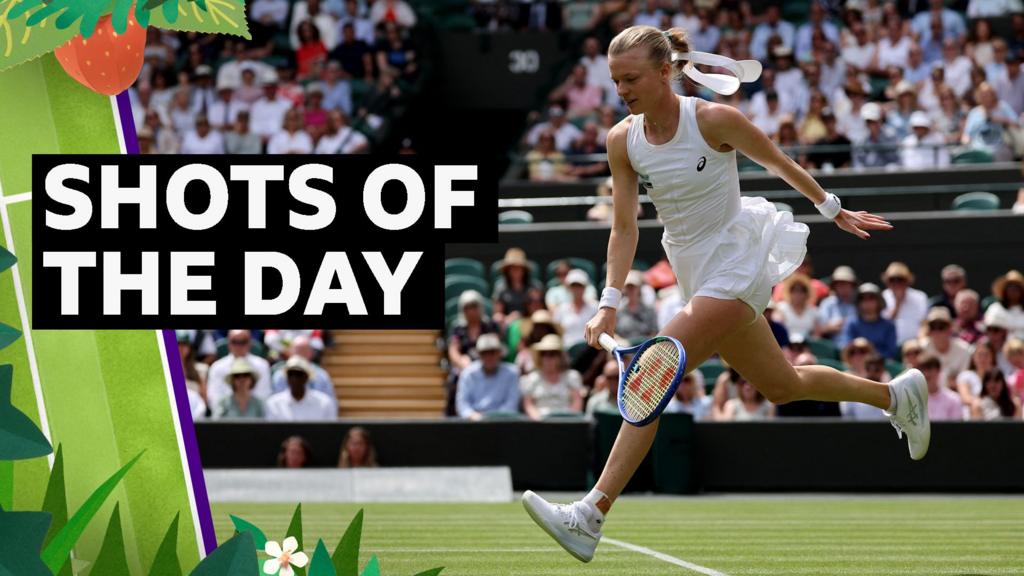
Harriet Dart came close to completing a gritty comeback win but ultimately fell 6-3 3-6 6-4 to former French Open champion Jelena Ostapenko.
The pair were scheduled to play on Court 17 on Monday, but Raducanu’s withdrawal saw their match moved to Court One.
Wildcard Dart made sure fans with tickets for the show court were not disappointed as she forced a deciding set against the world number 31 in an entertaining two-and-a-half hour display.
Ostapenko will face either Antonia Ruzic of Croatia or compatriot Darja Semenistaja – the lucky loser who replaced Raducanu in the draw.
Meanwhile, 17-year-old British wildcard Mika Stojsavljevic lost 6-2 6-1 to 2021 Olympic champion and 11th seed Belinda Bencic.
Felix Gill and Max Basing were beaten on their Grand Slam main-draw debuts, losing to 23rd seed Rafael Jodar and qualifier Shintaro Mochizuki respectively.
Alicia Dudeney, who was also making her main-draw major bow, lost 6-3 6-3 to American Alycia Parks.
Mimi Xu and Hannah Klugman, both navigating the step up to senior tennis, lost to Daria Kasatkina and 2024 Wimbledon singles champion Barbora Krejcikova respectively, while Oliver Tarvet was beaten by 25th seed Arthur Rinderknech in four sets.
There are 19 home players across the two singles draws – although 17 are playing opponents ranked inside the world’s top 55.
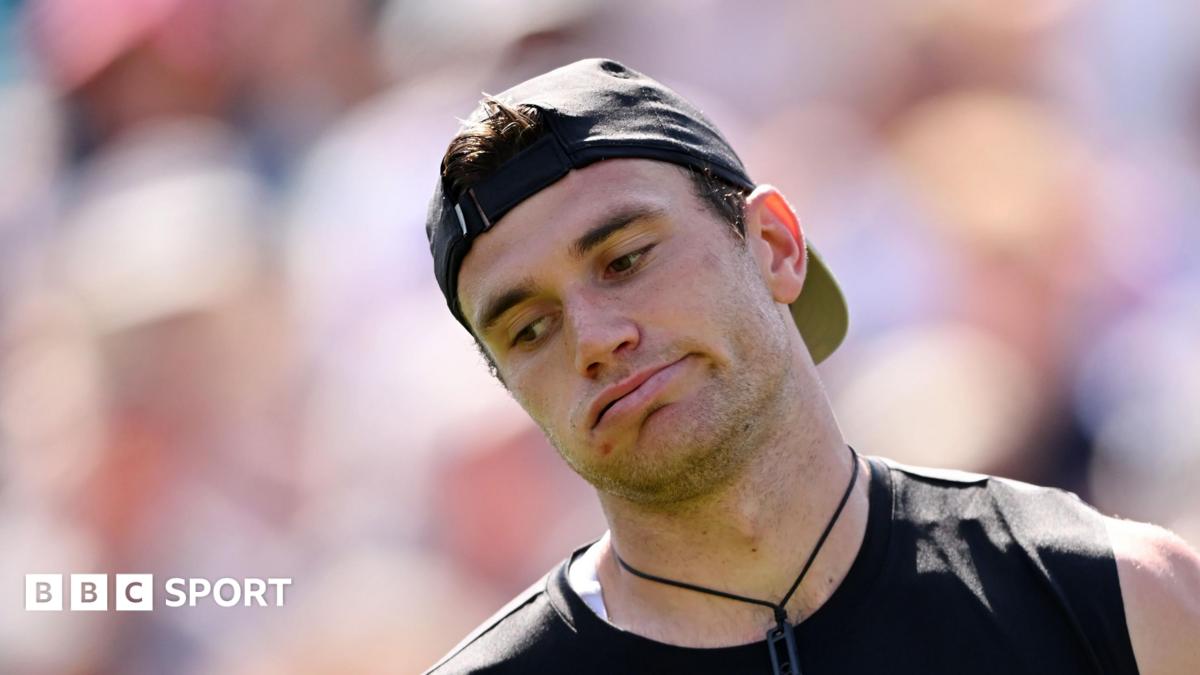
Britain’s Jack Draper says he is “devastated” after withdrawing from Wimbledon just 24 hours before his first-round match with a long-term arm injury.
Draper, fresh off a run to the Eastbourne semi-finals last week, was due to face American sixth seed Taylor Fritz on Centre Court on Tuesday.
However, the arm problem that stopped him playing for most of the past year has once again prevented him from competing in a Grand Slam.
“There have been a lot of painful moments in the last 12 months, but this one is definitely the absolute worst,” Draper said.
It is the second significant injury blow for British interest, following Emma Raducanu’s withdrawal on Sunday because of a stress fracture in her right leg.
Draper spoke to media at Wimbledon on Sunday and gave no indication he was struggling again with the bone bruising in his serving arm.
However, Draper did say he felt the amount of injuries suffered by leading players is “pretty worrying”.
School’s (almost) out … and with a long summer stretching ahead, we want you to share fun activities that will help others fill the family diary. We’d love to hear about your favourite summer days out and adventures in the UK. Perhaps it’s a trip to an outdoor sculpture park or gallery, a great picnic spot by a river, a small theme park or coastal hike to a quiet cove.
The best tip of the week, chosen by Tom Hall of Lonely Planetwins a £200 voucher to stay at a Coolstays property – the company has more than 3,000 worldwide. The best tips will appear in the Guardian Travel section and website.
Keep your tip to about 100 words
If you have a relevant photo, do send it in – but it’s your words we will be judgingfor the competition.
We’re sorry, but for legal reasons you must be a UK resident to enter this competition.
The competition closes on Monday 6 July at 10am BST
Your responses, which can be anonymous, are secure as the form is encrypted and only the Guardian has access to your contributions. We will only use the data you provide us for the purpose of the feature and we will delete any personal data when we no longer require it for this purpose. For alternative ways to get in touch securely please see our tips guide.
If you’re having trouble using the form click here. Read terms of service here and privacy policy here.
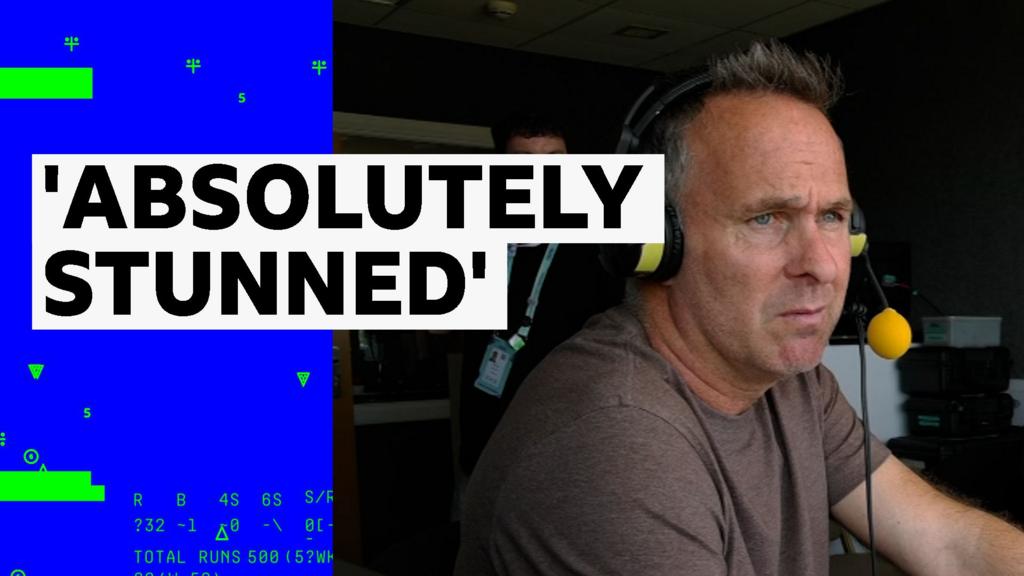
Watch the moment former England captain Michael Vaughan finds out on Test Match Special that current England captain Ben Stokes is retiring at the end of the third and final Test match against New Zealand at Trent Bridge.