conflict

State Department has cut jobs with deep expertise in Middle East as Iran crisis escalates

In the escalating war in Iran, the State Department’s Bureau of Near Eastern Affairs would ordinarily be at the center of the geopolitical fray.

Typically led by a veteran diplomat, the bureau’s role would be to coordinate U.S. foreign policy across an 18-country region, much of which has become a chaotic battlefield scarred by drone and missile strikes as the U.S. and Israel remain locked in conflict with Iran.

The Trump administration for a time put Mora Namdar, a lawyer of Iranian descent with limited management experience, in charge before later moving her to a different post. One of her credentials was her contribution to Project 2025, a conservative think tank’s blueprint for the second Trump administration. Namdar’s last Senate-confirmed predecessor was a longtime Middle East expert who had been with the department since 1984 and had served as the U.S. ambassador to the United Arab Emirates.

Now that bureau is also working with far fewer resources. The administration’s most recent budget proposed a 40% cut to the bureau, though Congress eventually enacted less dramatic cuts. The administration also eliminated the dedicated Iran office, merging it with the Iraq office.

Staff reductions and management choices hamper emergency response

These kinds of personnel and management choices — coupled with President Trump’s moves to shrink government and confine decision-making to a tight circle — are limiting the ability of the United States to handle a global emergency, according to interviews with more than a dozen current and former U.S. officials, many of whom recently left government.

In divisions of the State Department that typically would handle the Iran response, numerous veteran diplomats with decades of collective experience were fired, retired or were reassigned — replaced by more junior officials or political appointees. The administration cut more than 80 staffers in Near Eastern Affairs, according to numbers compiled by a State Department employee who was terminated last year based on surveys of colleagues. (The department does not release official figures on Foreign Service officer staffing levels but did not dispute the number.)

The Trump administration has left the assistant secretary position in charge of Near Eastern Affairs vacant, along with key ambassadorships in the Middle East. Four of the five supervisors in the bureau have temporary titles.

The current and former officials, some of whom asked for anonymity to discuss sensitive internal matters during an active conflict, paint a portrait of an understaffed government workforce struggling to execute the president’s agenda. Those who remain tell colleagues that their analysis, recommendations and advice go unheeded.

The State Department vigorously disputed those assessments.

“As far as we can tell, AP’s entire ‘report’ on the evacuations does not include any conversations with people actually involved. Instead, it relies on ‘outside’ or ‘former official’ sources that have no idea what they are talking about. We walked AP through specific inaccuracy after specific inaccuracy — indeed how the whole premise was wrong,” State Department spokesman Tommy Pigott said.

More than 3,800 State Dept. employees departed since Trump took office

The State Department saw a departure of more than 3,800 employees since President Trump took office through a combination of reductions in force, staffers taking the Fork in the Road deferred resignation plan and ordinary retirements. According to estimates by the American Foreign Service Association, the labor union that represents foreign service officers, senior foreign service ranks were disproportionately represented in the layoffs compared to their share of the overall workforce.

“He’s making choices without the larger expertise of the United States government that would flag issues of consequence,” said Max Stier, CEO of the nonpartisan Partnership for Public Service, a nonprofit group that studies federal workforce issues. “Sometimes government is slow-moving because there are a lot of different factors that need to be balanced against each other.”

For instance, the administration appears to have been caught off guard by what would happen once the U.S. struck Iran — something Trump himself acknowledged this week when he expressed surprise that Tehran retaliated with strikes on American allies in the region. “Nobody expected that. We were shocked. They fought back,” Trump told reporters this week.

Pigott said staffing reductions “are not having any negative impact on our ability to respond to this operation, our ability to plan, and our ability to execute in service to Americans.” He added that the department “rejects the premise that key decisions were made without meaningful input from experienced professionals.”

But Iranian retaliation on U.S. allies was predictable, according to former officials, as well as previous war games and conflict models run by both the U.S. military and private organizations. The National Security Council, which Trump has pared, typically would have presented the president with analysis from experts within the bureaucracy.

Instead, decisions are made by a small group of officials close to the president without the planning or coordination of the larger machinery of government, including Secretary of State Marco Rubio, who also serves as the president’s national security adviser.

“In the Trump Administration, decisions are made by President Trump and senior administration officials and not by no-name bureaucrat leakers who whine to the press about not being consulted about highly classified operations,” White House spokesperson Dylan Johnson said.

Advice from career officials often went unheeded

“In the time that I was there, there was no policy process to speak of,” said Chris Backemeyer, who served in Near Eastern Affairs as a deputy assistant secretary of state before resigning last year. Backemeyer was a major proponent of the Iran deal that Trump abandoned. He recently left government to run for Congress as a Democrat in Nebraska.

“They did not want to hear any advice from career people,” said Backemeyer.

Namdar was later moved to be the head of Consular Affairs, the part of the department responsible for providing assistance to American citizens overseas and issuing visas to foreign visitors.

When the U.S. made the decision to strike Iran, Ambassador to Israel Mike Huckabee offered embassy staff in Jerusalem the opportunity to evacuate — a sign that he knew strikes were coming. But some other embassies in the region did not make similar arrangements — leaving nonessential personnel and their families stranded in a war zone.

The department said it has been issuing travel warnings since January and was fully staffed to handle the crisis the moment the strikes were launched.

Evacuation planning was chaotic

Still, little planning appears to have gone into how to evacuate the Americans who were living, working, visiting or studying in many of the countries that became engulfed in the conflict — in part because the White House seems to have underestimated the possibility of the strikes expanding into a prolonged multi-country war, as evidenced by Trump’s own remarks.

After Iranian attacks on allies like Saudi Arabia, Qatar and the United Arab Emirates, the State Department began calling for Americans to leave the region. But numerous former Consular Affairs staffers say such planning should have begun long before U.S. strikes started.

In a statement posted to social media, Namdar only told Americans to evacuate several days into the conflict, when airspace was largely closed and many commercial flights were unavailable.

“The messaging that went out to American citizens — after the U.S. struck Iran — was woefully late and, initially, confusing,” said Yael Lempert, who served as U.S. ambassador to Jordan until 2025. Lempert is one of five former ambassadors expected to speak about the department’s failures at an event Thursday at the American Academy of Diplomacy in Washington.

Other poorly executed evacuations, such the Biden administration’s withdrawal from Afghanistan, have drawn criticism.

But this time they’re compounded by the loss of experienced people, officials say. Consular Affairs has lost more than 150 jobs in the Trump administration due to a combination of reductions in force, dismissals of probationary employees and retirements, according to a U.S. official who asked for anonymity — though other parts of the department were hit much harder.

The department notes that it has offered assistance to nearly 50,000 Americans impacted by the conflict, with more than 60 flights evacuating citizens from the region. In total, the department says more than 70,000 Americans have been able to return home since the outbreak of hostilities on Feb. 28.

Democrat says personnel reduction imperiled safety

“The loss of experienced personnel through these RIFs has clearly undermined the Bureau of Consular Affairs’ ability to fulfill its most important mission, to protect Americans abroad,” Sen. Jeanne Shaheen, the top Democrat on the Senate Foreign Relations Committee, said in a statement.

Language skills at the department are also atrophying. Thirteen Arabic speakers and four Farsi speakers, all trained at taxpayer expense, were among employees let go, according to a draft letter being circulated by former foreign service officers.

It can cost $200,000 to train a foreign service officer in a language. The letter estimates that the total number of people fired by the State Department in the name of efficiency received more than $35 million in taxpayer-funded language training and more than $100 million in total training and other career development.

The State Department has set up two temporary task forces to deal with the crisis in the Middle East. One aims to bolster the capacities of Near East Affairs and another is aimed at helping Consular Affairs evacuate Americans.

A group of more than 250 Foreign Service officers were part of the administration’s reduction-in-force last year but still remain on the State Department’s payroll. Many have volunteered to return to the department to work on either a task force or do any other job that needs to be done with the outbreak of a global crisis.

“I haven’t been given any separation paperwork. I still have an active clearance. I could go back to the department tomorrow, either to backfill or staff a task force,” said one foreign service officer who asked for anonymity because they are still technically on the department’s payroll and are not authorized to speak to the press. “I will do the scutwork jobs.”

The department hasn’t responded to their offer but said in a statement that the task force is “fully staffed.”

Tau writes for the Associated Press.

Source link

Iran’s strike on Qatar gas facility will reduce supply for 3 to 5 years | International Trade

NewsFeed

Iran’s strike on Qatar’s Ras Laffan gas facility will cut an estimated 17% of the country’s Liquefied Natural Gas export capacity for up to five years, officials say. The damage is a major blow to the global energy market, which could disrupt supplies to Europe, Asia and beyond.

Source link

Ben-Gvir visits gallows museum, threatens the death penalty | Israel-Palestine conflict

NewsFeed

Israel’s National Security Minister has filmed himself in front of gallows at a Jerusalem museum, threatening the death penalty for “terrorists”. Itamar Ben-Gvir is leading a campaign to expand the grounds for execution, which human rights groups have slammed as discriminatory.

Source link

Contributor: The U.S. desperately needs functional counterterrorism

On Monday came the latest evidence of dysfunction within the Trump administration’s counterterrorism apparatus, when Joe Kent, the director of the National Counterterrorism Center, resigned, citing his opposition to the war in Iran. But the disarray is not new.

In July 2025, Sebastian Gorka, the senior director for counterterrorism on President Trump’s National Security Council, announced that he was “on the cusp of releasing the unclassified new presidential U.S. counterterrorism policy.” Yet eight months later, while America wages war on a notorious state sponsor of terrorism, the strategy has yet to be released.

Meanwhile, the Department of Homeland Security has not published a National Terrorism Advisory since September and has failed to issue the annual Homeland Threat Assessment report since Trump returned to office. This remains the case, even as counterterrorism experts have warned about the possibility of Iranian-backed sleeper cells being activated because of the current conflict with Iran.

Without a strategy that clearly lays out American priorities and responses, America’s counterterrorism defenses are divided, disorganized and under-resourced. It is this malfunction that left Trump answering a question about whether Americans should expect more violence in the homeland with an effective shoulder shrug: “I guess.”

The homegrown backlash to the Iran conflict began on March 1, when a naturalized U.S. citizen opened fire at a bar in Austin, Texas. The gunman, who was wearing clothing pointing to his support of Iran, killed three before being killed by police gunfire. On March 7, two Islamic State-inspired teens hurled improvised explosive devices at a group of far-right protesters outside the New York City mayor’s mansion. March 12 then saw two attacks. First, a shooting erupted at Old Dominion University, as a former U.S. National Guardsman who had been prosecuted for Islamic State-related plotting killed an ROTC instructor. Then, a U.S. citizen with family ties to Lebanon drove his vehicle into Temple Israel in West Bloomfield, Mich., before dying in an exchange of gunfire with synagogue security officers.

In three of the four attacks, further violence was stopped by heroic takedowns on scene. Perhaps most notably, the Old Dominion attacker was neutralized by students, who stabbed the gunman to death. The heroic stories, while worth uplifting, underscore a bleaker truth: amid war abroad, Americans have been forced to take counterterrorism into their own hands in their own communities, left to fend for themselves against AR-15s, improvised explosive devices and weaponized vehicles.

The diversity of the attacks and the perpetrators makes matters worse. The attackers include a U.S. National Guard veteran who served several years in prison on terrorism charges, two teenagers who traveled to a different state with violent intentions, a man with an apparently long history of mental illness, and a U.S. citizen who lost family members in the latest Israeli-Hezbollah hostilities. Their targets also point to a complex and unpredictable terrorism environment.

Absent more predictable trends, law enforcement will be spread thin, asked to protect an impossible array of locations across the country against an impossible diversity of threats. In this environment, an effective national counterterrorism strategy would likely point to stopping terrorism further upstream, interrupting radicalization and violent mobilization at an earlier stage. Yet the Trump administration has effectively eviscerated its prevention infrastructure, largely dismantling the Department of Homeland Security’s Center for Prevention Programs and Partnerships.

Notably, too, none of the attacks to date seem to be coordinated or directed by the Iranian regime, with the war instead inspiring Western lone actors to attack their own communities. Yet Iran has long engaged in assassination plots in the United States, often by enlisting third-party criminal groups, and may yet seek to activate such a program. As journalists Peter Beck and Seamus Hughes warn: “Iran’s past calculus was low-grade operations in the United States, enough to keep the FBI busy but not large enough to trigger serious military consequences. With the latter now already a reality, the Islamic Republic has less to lose by orchestrating bolder attacks.”

The Trump administration has repeatedly invoked Iran’s history of support for terrorist proxies to justify the conflict: On March 2, for instance, Trump explained that one of the operation’s objectives was “ensuring that the Iranian regime cannot continue to arm, fund and direct terrorist armies outside of their borders.” Indeed, should it follow its historical model, Iran will likely continue to make external operations and inspired violence a significant part of its response, adding sleeper cell activation and sponsored individuals to the ranks of homegrown violent extremists who have so far plagued America’s homeland since hostilities broke out. But without a more defined strategy, America will likely struggle to mount an effective response.

If, as the old saying goes, “all politics is local,” then the modern-day corollary in an era of smartphones is, “all conflict is global.” Whenever there is a war in the Middle East, as kicked off in Gaza following the Hamas terror attacks in southern Israel on Oct. 7, 2023, it exacerbates the terrorism threat landscape around the world, including in the West. When images and videos of the errant U.S. missile attack on a girls’ school flood the internet, it raises the temperature, making attacks by lone actors and other violent extremists with only tangential connections to the conflict more likely.

The breadth of the violence, however, was not guaranteed or pre-ordained. As a Shiite-majority nation, Iran has long held fractious and even hostile relationships with Sunni jihadist actors. The extent of the violence indicates a broader anti-American sentiment prevailing across diaspora communities, likely precipitated by the decades-long war on terror, greatly aggravated by Israeli abuses in Gaza since Oct. 7, 2023, and punctuated by the killings of schoolchildren. The Iran war, in other words, seems to be superseding earlier grievances and instead uniting disparate extremist forces against the United States.

In this environment, the Trump administration needs to stop being so cavalier about counterterrorism. Devoid of an actual strategy and without a director of the National Counterterrorism Center, the United States is even more vulnerable to an attack on the homeland than it would be with those in place. Writing on X, Robert A. Pape, a longtime scholar of terrorism, posted: “After tracking terrorism for 25 years, this is a flashing red light — as bright as I’ve seen prior to a serious attack.”

Only a serious approach to countering terrorism will keep the United States safe, and this is the moment for the Trump administration to demonstrate that it recognizes the stakes. In counterterrorism, inattention can be deadly.

Jacob Ware is a terrorism researcher and the co-author of “God, Guns, and Sedition: Far-Right Terrorism in America.” Colin P. Clarke is the executive director of the Soufan Center. His research focuses on terrorism, counterterrorism and armed conflict.

Source link

Amid ruins, Palestinians struggle to preserve Gaza’s historic markets | Israel-Palestine conflict News

Khan Younis, Gaza Strip – Historic landmarks often withstand centuries of volatile change, but when rockets and missiles fall, even the most enduring stones become fragile.

For generations of families in Gaza’s southern city of Khan Younis, the Grain Market was the first stop when they went shopping.

Recommended Stories

list of 3 itemsend of list

Reaching it meant walking past the historic Barquq Castle, a centuries-old structure dating back to 1387 and the very foundation of Khan Younis.

But for residents, the castle was more than an old monument; it was a familiar landmark marking the entrance to one of the city’s liveliest commercial spaces.

The aromatic scent of spices and dried herbs would accompany any walk towards the Grain Market.

But that was before Israel’s genocidal war on Gaza began. Israeli attacks inflicted heavy damage on the Grain Market and the Barquq Castle. The market has now been reduced to shattered alleys, with dust and heavy silence filling the air.

Sitting in his store along a row of damaged old shops, 60-year-old Nahed Barbakh, one of the city’s oldest and most well-known traders of staple food supplies, spent decades watching customers stream through the market. Now, only a handful pass by his shop.

“I’ve been in this spot for decades, day in and day out, watching people bring life to this place,” Nahed said. “Look at it now – it’s empty. These days, there shouldn’t even be space to walk because of the crowds preparing for Eid.”

He paused before gesturing towards the nearby castle.

“We always felt the weight of history here because we are so close to Barquq Castle. Now that history and life itself have been struck by the occupation.”

But Israeli fire did not take into account the market’s historic status. The Grain Market, long considered the economic heart of Khan Younis, was also among the first sites of destruction during the second month of Israel’s genocidal war on Gaza. More than two years of Israeli bombardment and repeated waves of displacement have left the market unrecognisable.

“The occupation killed many of our friends who worked here,” Nahed said quietly. “Those who survived have been financially broken. That’s why you see most of these shops are still closed.”

He pointed to some shelves behind him.

“My shop used to be fully stocked with goods at its high capacity. We even had extra warehouses to supply what people needed, especially during the busiest seasons.”

Before he could finish his sentence, a deafening blast interrupted him — the sound of an Israeli tank fire.

“And this is the biggest reason people are afraid to return,” Nahed said abruptly. “The yellow line is only a few hundred metres away from this street. At any moment, bullets can reach here.”

The yellow line is the name given to the demarcation line behind which Israeli forces withdrew as part of the first phase of October’s ceasefire agreement. It effectively divides Gaza into two, and Palestinians have repeatedly been shot for approaching it.

The yellow line has divided Khan Younis, dramatically reshaping the city’s geography. Israel has repeatedly shifted the line, moving it deeper into Gaza.

The Grain Market, once firmly at the centre of urban life, now sits close to the yellow line.

What used to be the city’s commercial heart has effectively turned into its edge, where people hesitate to walk, leaving the revival of daily commerce life a distant prospect.

Nahed Barbakh, 60, shop owner and trader, sits at a table in front of his store
Nahed Barbakh, a 60-year-old shop owner and trader, sits at a table in front of his store [Ahmed al-Najjar/Al Jazeera]

Centuries of endurance

The Grain Market traces its origins to the late 14th century, when the Mamluk ruler Younis al-Nawruzi established Khan Younis in 1387 as a strategic stop along the trade route linking Egypt and the Levant.

Built as an extension of the Barquq Castle, which functioned as a caravanserai for travelling merchants, the market became a central commercial hub where traders and travellers exchanged goods, moving between Africa, the Levant and beyond.

The Grain Market occupies roughly 2,400sq metres (25,830sq feet). Its single-floor shops line a central street running east to west, intersected by narrow alleys branching towards smaller courtyards. The buildings preserve elements of their original construction, including sandstone walls and traditional binding materials that have survived centuries of repairs and modifications.

Over time, the market evolved into the primary commercial centre of Khan Younis, adapting to modern commerce while retaining its historic character.

But today, many of its shops stand damaged or shuttered.

According to Gaza’s Ministry of Tourism and Antiquities, the market is now among more than 200 heritage sites damaged in attacks by Israeli forces across the Gaza Strip since October 2023.

At the southern end of the Grain Market, where rows of vegetable stalls once overflowed with fresh produce, only one makeshift stand has opened.

Om Saed al-Farra, a local, stepped cautiously towards the stall, inspecting the small piles of vegetables laid out on a wooden crate. The expression on her face reflected more than surprise; it was disbelief at what the market had become.

“The market is deplorable now,” she said. “There used to be many stalls here and many choices for people.”

She gestured towards the empty stretch of the market’s vegetable section, once one of its busiest corners.

“These days were once filled with extensive joyful preparations for Eid, when families crowded the market to shop for food and essentials,” al-Farra said. “Now the market feels unusually gloomy, its stalls largely empty and its familiar vibrance gone. Everything is limited. Even if you have money, there are hardly any places left here for us to buy from.”

Rows of damaged and closed shops in the market
Rows of damaged and closed shops in Khan Younis’s Grain Market [Ahmed al-Najjar/Al Jazeera]

Economic collapse under fire

Although parts of the market’s infrastructure remain physically standing, many traders have not returned.

According to Khan Younis Mayor Alaa el-Din al-Batta, the Grain Market was once one of the city’s most vital economic lifelines.

“Just as it once connected continents, even under blockade, it continued to connect people across Gaza,” al-Batta said. “It holds a deep place in the memory of our residents. But once again, the occupation has brought destruction, targeting both our history and a critical lifeline for the people.”

For nearly two decades, Israel has controlled Gaza’s land crossings, airspace and coastline under a strict blockade. Since the genocide began in October 2023, restrictions have tightened further, pushing businesses and trade to collapse.

In a narrow western alley where scattered stones cover the ground, two cloaks hung outside a small shop. Inside, 57-year-old tailor Mohammad Abdul Ghafour leaned over his sewing machine, carefully stitching a torn shirt.

His shop was the only one open in the grey alley.

“I’ve been here since childhood,” Abdul Ghafour said. “My father opened this shop in 1956, and I grew up learning the profession right here in the market.”

Israel’s bombardment not only destroyed the place where he worked; it also killed dozens of his family members.

“On December 7, 2023, Israel committed a horrific massacre against my family,” he said. “I lost my father, my brothers, and more than 30 relatives.”

Burying his family members was only the beginning of the long, painful separation from the market and his shop.

“We were forced into displacement more than 12 times. I had many chances to leave as two of my children live in Europe,” Abdul Ghafour said. “But all I could think about was returning to my shop.”

When Israeli forces withdrew to the yellow line, he came back alone.

“I cleaned the street by myself. And if I had to do it again, I would. Whoever loves his land never abandons it,” he said. “I charge my batteries for my machine and come every day. My return encouraged some residents to come back too. But people still need shelter, water, and basic services before more families return.”

Resident Mohammad Shahwan stood in Nahed’s shop checking a list of items he hoped to buy.

“We left the crowded al-Mawasi as soon as we could to return to our damaged home,” he said, referring to the stretch of coastal Khan Younis that thousands of Palestinians have been forcibly displaced to. “But the number of residents here is still very small because of the destruction and lack of services.”

Still, Mohammad Shahwan said he was relieved to find the shop open at all.

“For the first time in two years, we’ll make traditional Eid biscuits,” he said, holding the list of ingredients. “The last two Eids were dark for my family after we lost my 17-year-old son, Salama. He and his aunt were killed by an Israeli strike.”

He could have bought the now-expensive supplies elsewhere, he said, but returning to the Grain Market carried its own meaning. “I wanted to buy them from here, just like we always did.”

Mohammad Abdul Ghafour, 57, Palestinian tailor.
Mohammad Abdul Ghafour, 57, a Palestinian tailor in Khan Younis [Ahmed al-Najjar/Al Jazeera]

Waiting for restoration

According to Mayor al-Batta, restoring the historic market will require a major reconstruction effort.

“The Grain Market needs a comprehensive restoration process to function again,” he said. “So far, our work has only been limited to clearing rubble and delivering limited water supplies for returning residents.”

The rebuilding process will require specialised materials and expert restoration work to preserve what is left of the historic structure. Municipal workers have already collected leftover stones from the ruins in the hope that they can one day be used in rebuilding parts of the market.

But reconstruction remains impossible under current conditions.

“More than five months have passed since the ceasefire began, yet not a single bag of cement has entered Gaza,” al-Batta said.

“We want to restore our historic identity and revive life for our people. But neither can happen while Israeli restrictions and violations continue.”

Source link

How Iran defied Trump threats to emerge as Strait of Hormuz gatekeeper | US-Israel war on Iran News

As United States President Donald Trump tries to build a coalition of navies willing to open the Strait of Hormuz, some countries are negotiating safe passage directly with Iran, underscoring a new de facto reality, analysts say: Regardless of military results, Tehran is calling the shots on who gets to use the world’s most important energy waterway.

After US-Israeli strikes on Iran began on February 28 and killed Supreme Leader Ali Khamenei, the Iranian military leadership responded by focusing on its most potent form of leverage – Iran’s geography. The country controls the northern shore of the Strait of Hormuz, through which 20 percent of global crude oil and natural gas supplies pass. It is 33km (20 miles) wide at its narrowest point, so any naval force that wants to cross it becomes easy prey for Iranian attacks coming from the mainland.

Recommended Stories

list of 3 itemsend of list

Considering insurance companies’ low appetite for risk, it took relatively few attacks on vessels in the strait – or just the threat of them – to undermine market confidence and send insurance premiums shooting up, causing a near paralysis in maritime traffic. About 20 vessels have been attacked since the start of the war.

“Iran has effectively proven that it dictates the terms of passage through the strait. They have now shown they are the gatekeeper of this important chokepoint. This will elevate the status of Iran in the geography of the Gulf,” said Andreas Krieg, an associate professor in Security Studies at King’s College London and a fellow at King’s Institute of Middle Eastern Studies. This will be the new reality for the foreseeable future, he added.

Meanwhile, crude prices have risen above $100 a barrel, more than 20 percent higher than pre-war prices, forcing countries to make the biggest releases of emergency reserves in history. Gas prices have risen by more than 40 percent since the war began.

Trump initially floated the idea of ordering the US Navy to escort vessels through the waterway. He then appealed to some countries to send warships and warned NATO members they would face “a very bad” future if these allies failed to help in opening the strait. But the appeal was either turned down or received noncommittal responses. Japan said it had no plans to deploy naval vessels. Australia ruled out sending ships. The United Kingdom said it would not be drawn into the wider war. Germany sent a clear message: “This is not our war”.

Others decided to take action – but not of the kind that Trump asked for. On Saturday, two India-flagged gas tankers passed through the strait after days of negotiations between New Delhi and Tehran, including a phone call between Indian Prime Minister Narendra Modi and Iranian President Masoud Pezeshkian. Ships from Pakistan, Turkiye and China also have transited through the Strait of Hormuz. The Financial Times has reported that Italy and France have also reached out to Iran for deals although Italian authorities have rejected making such an overture.

Meanwhile, Windward, a maritime intelligence tracking group, said that while traffic in the strait on Tuesday remained 97 percent below average, a growing number of ships have been passing through Iran’s territorial waters, suggesting that Tehran is allowing “permission-based transit”.

‘It is up to us to decide’

There is a precedent for US naval forces to escort convoys through the strait dating back to the Iran-Iraq War in the 1980s. But today’s scenario is different, experts said. Back then, the US, while it was backing Iraqi leader Saddam Hussein, was not a direct party to the conflict. Iran was still in a post-revolutionary process of consolidating power, and its Islamic Revolutionary Guard Corps was nowhere near as organised as it is today.

Today, Iran has drones that its factories are capable of producing on a large scale and has been using them. Iranian forces could also use small boats to assault tankers, deploy mines and engage in other guerrilla-style tactics. While there are conflicting reports on whether Iran has placed mines in the strait, experts said it would be a counterproductive move for Tehran because it would disrupt the passage for any ships – Iranian vessels included – and it would take away from Tehran the power to choose who may pass.

Iranian officials are aware of their geographic advantage. “This is up to our military to decide,” Iranian Foreign Minister Abbas Araghchi said on Sunday, referring to who will be allowed to use the strait.

Pro-government figures increasingly frame the Strait of Hormuz as a strategic bargaining tool beyond the war itself, suggesting the waterway could be used to extract compensation, sanctions relief or broader economic concessions after the war, Hamidreza Azizi, an expert on Iran and visiting fellow with the German Institute for International and Security Affairs, commented on X.

Recent attacks seem to suggest that Iran wants to increase its pressure on the energy market.

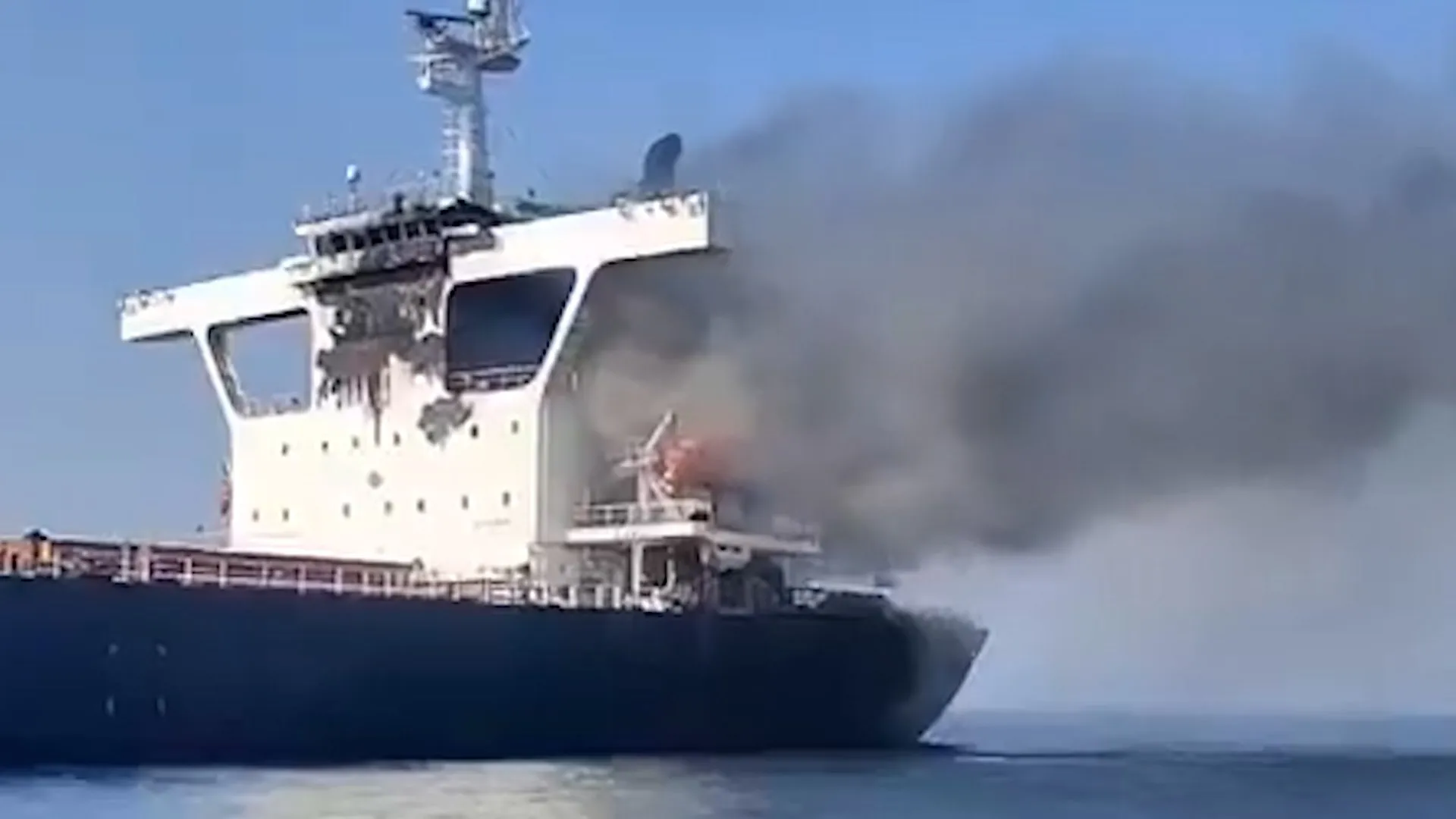
On Tuesday, a drone attack caused a fire at the port of Fujairah, the United Arab Emirates’s only crude export terminal. It is located outside the eastern entrance of the Strait of Hormuz, allowing its exports to circumvent it. The Iran-backed Houthis in Yemen could also further squeeze oil prices by disrupting the Bab al-Mandeb strait. That would force the US to operate across multiple maritime theatres. So far, the Houthis have not carried out such attacks, but this month, they said they were ready to strike at any ‌moment.

Still, the US is focused on applying maximum pressure on Tehran and forcing it to open the Strait of Hormuz. The US Central Command, the US military’s combat command responsible for operations in the Middle East, said early on Wednesday that its forces had used 2,270kg (5,000lb) bunker-busting munitions against antiship missile sites along Iran’s coastline near the Strait of Hormuz.

Trump has also ordered amphibious ships carrying thousands of US Marines to move to the Middle East, and some experts believe the US might try to seize Kharg Island, a tiny piece of land in the northern Gulf where 90 percent of Iranian crude oil is exported from. The US has already bombed what it said were military sites on the island.

Such an operation, however, might do little to force Iran into opening the Strait of Hormuz, Krieg said. The island is 500km 310 miles) from the strait, and should the US take control of it, it would expose US Marines to Iranian fire. Should Iran see its key terminal being seized, it could also opt to mine the strait outright, having fewer reasons to allow some vessels to pass through.

“The issue with the Strait of Hormuz is really not a military one. … It’s a market issue, and confidence cannot be restored by the military. Confidence can be restored through diplomacy only,” Krieg said.

Source link

Israel bombs central Beirut, killing 6, strafes south, east Lebanon | US-Israel war on Iran News

Wave of Israeli air attacks launched as ground offensive widens in south where Hezbollah are fighting Israeli forces.

Israel has attacked a building in Bashoura, a neighbourhood in the heart of Beirut, Lebanon’s National News Agency (NNA) reported, with a blast and smoke rising over the area shortly after Israel issued an evacuation threat for the site.

The attack was part of a deadly wave of Israeli strikes across Lebanon that killed at least 20 people and wounded 24 on Wednesday, according to the country’s Ministry of Public Health, with raids stretching from the capital through southern and eastern parts of the country, a devastating front in the wider United States-Israel war against Iran embroiling the region.

Recommended Stories

list of 2 itemsend of list

At least six people were killed in the air strikes in Beirut, with dozens injured.

Al Jazeera’s correspondent in Beirut, Zeina Khodr, reported that intense Israeli attacks hit multiple regions across Lebanon, including central Beirut, overnight.

Speaking from in front of a 15-storey building struck in one of the attacks, Khodr said its lower floors had been targeted a week earlier. In the early hours, however, the structure was completely demolished, with the Israeli army claiming Hezbollah had stored cash there.

“You can see the widespread damage across this whole neighbourhood,” Khodr said.

Israel’s military said it had launched what it described as limited ground operations in southern Lebanon, issuing evacuation threats for residents of four towns near the Zahrani River and the Tyre area, warning them to head north immediately.

Lebanon’s NNA also reported strikes on Tyre and the nearby area of Al-Burj Al-Shamali in the pre-dawn hours.

At least four people were killed in an Israeli attack that targeted four houses in the town of Sahmar in eastern Lebanon’s Bekaa Valley.

The intensifying assault has now killed at least 912 people in Lebanon, including 111 children, and wounded more than 2,200 since Israel launched its offensive on March 2, according to Lebanese Health Ministry figures.

More than one million people have been forced from their homes. The United Nations warned on Tuesday that Israeli attacks on residential buildings and civilian infrastructure may constitute war crimes under international humanitarian law.

A spokesperson for the UN human rights office said that deliberately targeting civilians or civilian objects “amounts to a war crime”, adding that Israel’s sweeping displacement orders for southern Lebanon may themselves violate international law.

Khodr said that Hezbollah’s secretary general, Naim Qassem, last night laid down conditions for the war to end, including Israel stopping attacks, displaced people being permitted to return to their homes, those detained over the last two years by Israel being released and the Israeli army withdrawing.

Across southern Lebanon, Khodr said Hezbollah was “still present in the area, trying to repel the Israeli army’s advance”, adding that Hezbollah’s aim was not just territorial control of the region, but preventing Israel from gaining new positions in the country.

The conflict was ignited on February 28 when US and Israeli forces assassinated Iranian Supreme Leader Ali Khamenei in Tehran, prompting Hezbollah to launch rockets into northern Israel on March 2.

Israel has since killed more than 2,000 people across Iran and Lebanon in its attacks.

German Chancellor Friedrich Merz, a staunch Israeli ally, added his voice to growing international concern, warning that Israel’s ground offensive in Lebanon was an “error” that risked worsening what he described as an already dire humanitarian situation.

Source link

Families search for loved ones after deadly Pakistan strikes on Kabul rehab | Conflict News

Afghan authorities say a Pakistani attack killed hundreds of civilians; Islamabad rejects claim as ‘false’.

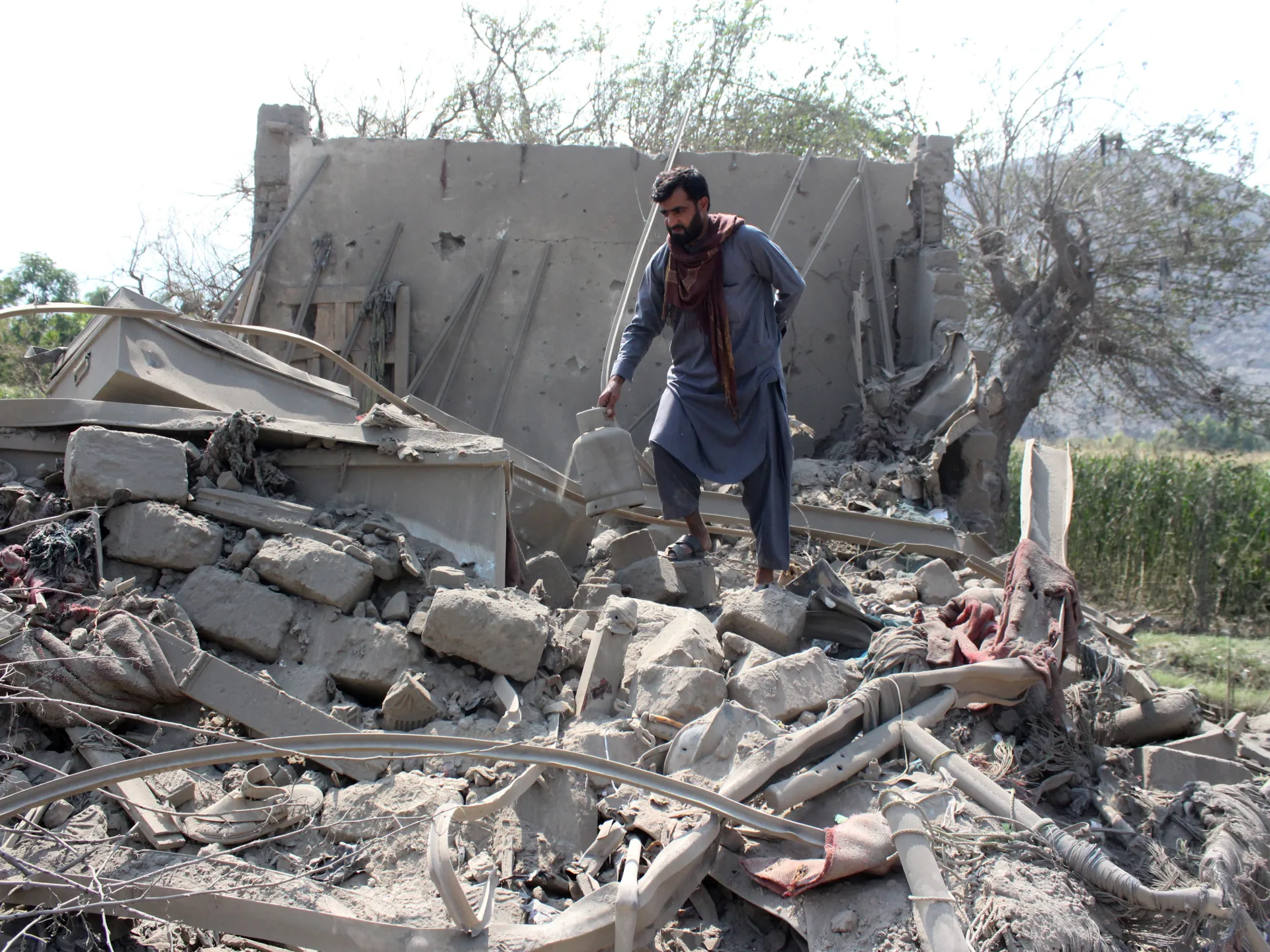
Families have gathered outside a drug treatment centre in the Afghan capital, Kabul, looking for their loved ones after it was hit in a Pakistani air strike, which Taliban authorities said killed 408 people.

The attack on Kabul’s Omar Addiction Treatment Hospital took place at about 9pm local time (16:30 GMT) on Monday.

Recommended Stories

list of 4 itemsend of list

Baryalai Amiri, a 38-year-old mechanic, was at the 2,000-bed facility on Tuesday to look for his brother, who was admitted about 25 days ago.

“We are not given the proper information,” Amiri told the AFP news agency, as rescuers picked through the rubble nearby. “So far, we don’t know where he is.”

Afghanistan and Pakistan have been in conflict for months, with Islamabad accusing its neighbour of harbouring armed groups that have mounted deadly cross-border attacks.

The latest round of violence that began last month⁠, two days before the world’s focus shifted sharply to the US-Israel war on Iran, is the worst ever between the neighbours.

The two nations share a 2,600km (1,600-mile) border. The conflict had ebbed amid attempts by friendly countries, including China, to mediate and end the fighting before flaring up again.

Pakistan denied Afghan claims that its latest attack targeted civilians, instead insisting that it carried out precision strikes on “military installations and terrorist support infrastructure”.

“Pakistan’s targeting is precise and carefully undertaken to ensure no collateral damage is inflicted,” the Ministry of Information and Broadcasting said. Islamabad dismissed the claim as “false and aimed at misleading public opinion”.

The health authorities said there were about 3,000 patients from across Afghanistan at the clinic at the time of the attack, which triggered panic in Kabul just after residents had broken their daily Ramadan fast.

The United Nations special rapporteur on the situation of human rights in Afghanistan, Richard Bennett, said he was “dismayed” by reports of the air raids and civilian casualties.

“I urge parties to de-escalate, exercise maximum restraint & respect international law, including the protection of civilians and civilian objects such as hospitals,” he posted on X.

‘It was like doomsday’

A spokesman for Afghanistan’s Ministry of Interior Affairs said on Tuesday that the attack killed 408 people and injured 265.

Witnesses said they heard three explosions just as people in the hospital were completing evening prayers. Two of the bombs struck rooms and patient areas, they said.

“The whole place caught fire. It was like doomsday,” 50-year-old Ahmad told the Reuters news agency.

“My friends were burning in the fire, and we could not save them all,” he said, giving only his first name as he was under treatment at the facility.

Ambulance driver Haji Fahim told Reuters that he arrived at the site shortly after the air raids.

“When I arrived [last night], I saw that everything was burning, people were burning,” Fahim said on Tuesday. “Early in the morning, they called me again and told ⁠me to come back because there are still bodies under the rubble.”

The clinic was established in 2016 and has treated hundreds of people, also providing them with vocational training, such as tailoring and carpentry, to make them employable, according to local media reports.

Source link

Major airline cancels all flights to Dubai until June amid ongoing Iran conflict

BRITISH Airways has cancelled all flights to Dubai until June as the ongoing crisis in Iran continues to affect travel.

The flag carrier confirmed yesterday that they have suspended operations until May 31.

British Airways Boeing 777 taxiing past other British Airways planes.
British Airways has cancelled all Dubai flights until JuneCredit: Getty

This includes to the UAE city of Dubai, as well as Amman in Jordan and to Bahrain.

British Airways usually operates around 20 flights a week to Dubai so thousands of passengers are expected to be affected.

Flights to Doha have been suspended until the end of April.

And the airline has cancelled the rest of their Abu Dhabi flights for the season, meaning they won’t restart until October 25.

GROUNDED

Major airline cancels over 1,000 flights due to rise in fuel prices


TRAVEL ADVICE

Is Cyprus safe to travel to? Latest holiday advice after flights cancelled

An spokesman said: “Due to the continuing uncertainty of the situation in the Middle East and airspace instability, and to provide more clarity to our customers, we’ve extended the temporary reduction in our flying schedule in the region.

“We’re keeping the situation under constant review and are directly in touch with affected customers to offer them a range of options.

“Since the situation in the Middle East began, we’ve helped thousands of customers return home and operated eight relief flights from Muscat in Oman.”

British Airways confirmed that they are operating more flights via other international hubs in replacement of Dubai, which is one of the world’s busiest airports.

This includes four more flights via Singapore and three more flights via Bangkok.

Passengers affected will be able to rebook with another airline, or move their travel to a different date.

Otherwise full refunds are being given to anyone with bookings up to May 31.

The ongoing Iran crisis is still causing chaos for travellers, not just those in the Middle East.

Virgin Atlantic has already ended its Dubai flights for the season early, which were due to conclude on March 28.

Emirates and Qatar Airways have launched limited flights again from Dubai and Doha, respectively.

However, Dubai Airport as forced to suspend flights again yesterday after a drone strike hit a fuel tank.

A number of flights were cancelled in response, with some airlines forcing to turn back after take off.

The Sun’s Travel Expert has answered all of your holiday questions here.

And here are the European destinations seeing huge demand following the conflict.

Aerial view of Dubai International Airport with the city center skyline in the background.
Dubai Airport is one of the busiest in the worldCredit: Alamy

Source link

Trump calls on allies to help guard the Strait of Hormuz. Most have refused

President Trump expressed frustration Monday that U.S. allies were not enthusiastic about sending warships to protect merchant vessels passing through the Strait of Hormuz, a sign of Washington’s growing isolation as it tries to stabilize one of the world’s most critical shipping lanes amid its war against Iran.

Trump declined to name the “numerous countries” he said had agreed to help reopen the oil route, which has come under the threat of retaliation from Iran, but was annoyed that most longtime allies were hesitant about joining his international police force. He said they should be “jumping to help us.”

“Some countries that we have helped for many, many years, we’ve protected them from horrible outside sources and they weren’t that enthusiastic — and the level of enthusiasm, it matters to me,” Trump said at the White House.

For Trump, securing allies’ help is as much a domestic economic need as it is international diplomacy. Since the hostilities against Iran began on Feb. 28, Tehran has retaliated by targeting regional oil facilities and at least 20 vessels operating in and around the Persian Gulf, the Strait of Hormuz and the Gulf of Oman.

The result has been “the largest supply disruption in the history of the global oil market,” according to the International Energy Agency, and it has led to international oil prices surging more than 30% to over $100 a barrel as the war entered its third week with no clear end in sight.

The diplomatic friction, meanwhile, reflects the limits of Trump’s influence at a moment when the global economy is absorbing one of the worst oil supply shocks in modern history, a dynamic that has prompted Trump to warn that countries refusing to help may find Washington a far less generous partner in turn.

Despite Trump‘s demands, several key allies have publicly rebuffed his calls for support.

French President Emmanuel Macron formally rejected the request, saying that France would maintain a “defensive and protective” posture focused on stability rather than escalation.

German Foreign Minister Boris Pistorius was blunter, saying, “This is not our war; we didn’t start it.”

British Prime Minister Keir Starmer also declined to commit, saying the U.K. “will not be drawn into the wider war.” Italy, Spain, Australia and Japan similarly declined, while South Korea and China have not publicly stated their intentions.

The rejections seems to have only sharpened Trump’s demands. At one point during an event Monday, the president turned to House Speaker Mike Johnson (R-La.) and said he would share a list of nations that declined to help, suggesting Congress could have a role in any retaliatory measures against reluctant allies.

“Why are we protecting countries that don’t protect us?” Trump said.

Yet Trump also sent conflicting signals about how much allied help he actually needs. At one point he claimed the United States did not require assistance from other countries.

“We don’t need them, but it’s interesting — I am doing it, in some cases, not because we need them, but because I want to see how they react,” Trump said.

On the threat to merchant ships, Trump projected uncertainty. He said the possibility of mines was “enough to keep people” from transiting the waterway, but said that “we don’t even know” if Iran has placed any mines in the strait.

“They may have no mines,” he said. “We hit every one of their mine ships. Every one of them is gone — but it only takes one.”

Speaking aboard Air Force One on Sunday, Trump also sent mixed messages about the threats and the need for help. He said the United States was coordinating with roughly seven countries to deploy naval forces to “police the straits — before adding, in the same remarks, that “maybe we shouldn’t even be there at all.”

He suggested American forces should not be there because other nations depend more heavily on oil shipments through the oil route, an about-face that drew criticism from allies, who said it created confusion about Washington’s strategy in a conflict the United States had itself started.

“To keep the strait open, I have a very hard time believing that China and the other countries the president enlisted are really going to be escorting ships through the strait. That just really doesn’t add up to me,” Sen. Adam Schiff (D-Calif.) said in an NBC “Meet the Press” interview Sunday.

“The bottom line is, we really don’t know how long this war is going to be,” he added.

Trump, however, is keeping the pressure on allied countries, making the future of the conflict more open-ended depending on their response.

Trump insisted Monday that “numerous countries have told me they are on their way,” but said he would “rather not say” who they are.

He then said the tepid responses from some U.S. allies had reinforced his skepticism about the value of the NATO alliance, echoing comments he made over the weekend when he warned that a failure to assist would be “very bad for the future of NATO” and that the U.S. would “remember” those who did not step up.

When asked if he was confident Macron will help with the reopening of the strait, Trump told reporters: “Yeah, I mean sure. … I think he’s gonna help. I mean I’ll let you know.”

Europe has nonetheless been drawn deeper into the conflict.

The U.K. initially refused to support U.S. military operations, but softened its position after Trump mocked Starmer as “no Winston Churchill” and called Britain a “once great ally.” France also said last week that it was preparing a separate “purely defensive” naval mission to escort commercial vessels through the strait once it was safe to do so.

Moving forward, it is unclear how the European Union and other nations around the world will respond to Trump’s pressure.

“Nobody wants to go actively in this war. And of course, everybody is concerned what will be the outcome,” Kaja Kallas, the European Union’s top diplomat, said Monday after a meeting of foreign ministers in Brussels. “This is not Europe’s war, but Europe’s interests are directly at stake.”

Source link

Hotel in Iraqi capital Baghdad struck as attacks on US embassy intercepted | Conflict News

No group has claimed responsibility for the attacks, which took place amid the escalating Israel-US war on Iran.

A prominent hotel in central Baghdad’s heavily fortified Green Zone was struck by a drone, amid reports that Iraqi air defences intercepted an attack over the United States Embassy.

The strike on Monday evening hit the top floor of Al-Rasheed Hotel, causing damage but no casualties, according to two Iraqi security officials cited by The Associated Press (AP) news agency.

Recommended Stories

list of 3 itemsend of list

No group has claimed responsibility for the attack.

Security sources told the Reuters news agency that two Katyusha rockets had been intercepted that evening near the US Embassy in the Green Zone, which houses diplomatic missions as well as international institutions and government offices.

Earlier Monday, the Iran-backed Kataib Hezbollah announced that Abu Ali Al-Askari, a prominent security official with the paramilitary group, had been killed, without giving details on the circumstances.

Kataib Hezbollah is one of the largest groups in the Popular Mobilisation Forces (PMF) operating in Iran, which was founded in 2014 to stop lightning advances by ISIL (ISIS).

On the same day, AP reported that six PMF fighters were killed in a strike on a checkpoint in western Iraq’s Anbar province, and two others were killed in a separate strike on the headquarters of a PMF brigade in the same area.

Two Iraqi security officials told AP that the Majnoon oilfield in Iraq’s southern Basra province was targeted by two drones. No casualties were reported, and it was not immediately clear if there was damage to the facilities.

Iraq’s oil industry has been severely impacted by the US and Israel’s war on Iran and Iran’s closure of the Strait of Hormuz, a vital oil trading corridor.

Iraqi Minister of Oil Hayan Abdul-Ghani said in a video statement on Monday that a pipeline from the northern city of Kirkuk to Turkiye would be operational within a week, allowing the country to resume its oil exports, which have been interrupted by the ongoing war.

Also on Monday, air defences intercepted and shot down a drone near Erbil airport in the semi-autonomous Kurdish region of northern Iraq, according to security sources.

Source link

Iran Conflict Sparks Risk, And Opportunity, For Egypt: CIB CEO Hisham Ezz Al-Arab

Home Executive Interviews Iran Conflict Sparks Risk, And Opportunity, For Egypt: CIB CEO Hisham Ezz Al-Arab

As the regional conflict involving Iran intensifies and shipping through the Strait of Hormuz has nearly come to a halt, business leaders across the Middle East are considering both the risks and potential opportunities. Hisham Ezz Al-Arab suggests that some oil shipments might shift to the Suez Canal.

As CEO and board member of Commercial International Bank (CIB), Egypt’s largest private-sector bank, Hisham Ezz Al-Arab sees first-hand how the war is shaking regional financial markets, disrupting emerging economies, and putting pressure on currencies as investors rush toward safe-haven assets.

Global Finance: How is the current war on Iran affecting the economies and the financial sector of the region?

Hisham Ezz Al-Arab: The region faces a lot of uncertainty as markets react more strongly than they did during last June’s 12-day war. Oil prices crossed the $100/bbl mark for the first time since 2022 as a result of the closure of the Strait of Hormuz, which controls around 25% of global oil and 20% of gas shipments, in addition to refineries that shut down due to security risks. This poses a key risk on GCC countries, particularly Qatar and Kuwait with both high oil production and reliance on the Strait of Hormuz, as well as increased freight and insurance costs. 

GF: What is the impact on Egypt?

Ezz Al-Arab: In the short term, the situation impacts Egypt in terms of the uncertainty. Emerging markets — including Egypt — have seen major portfolio outflows, particularly placing pressure on the Egyptian pound and reversing its progress against the US dollar over the past year to reach an all-time low. This has subsequently triggered a hike in safe-haven assets, including USD and gold, as risk-averse investors have reallocated their investments from emerging markets. In the long term, risks include inflation re-accelerating and Central banks keeping rates on hold.

GF: What is your take on the currency adjustment?

Ezz Al-Arab: I think the central bank (CBE) is doing an excellent job with its flexible approach to managing the exchange market, particularly regarding cash repatriation. With a significant volume of carry trades being unwound — estimated at roughly $7 billion–$8 billion out of a total $35 billion–$40 billion — the CBE has allowed the pound to move from approximately 47 to 53 EGP per dollar. In the past, this was not possible. We had fixed rates, which drove capital away, rather than retaining it. The shift to a flexible exchange rate framework has proven to be a critical tool in absorbing external shocks, and I think the CBE will not hesitate to let the pound gradually drift as long as more money is coming out.  

GF: Can you see some opportunities for Egypt?

Ezz Al-Arab: I believe the conflict provides an opportunity for Egypt as it hosts alternatives to the Hormuz Strait: The Sumed pipeline (2.5mb/d capacity), as well as being a possible bridge to Saudi Arabia’s Red Sea pipelines (5mb/d capacity). This places Egypt as a strategic partner in the current crisis as well as provides the country with preferential access to a congested oil market. 

Additionally, the situation will positively impact the Suez Canal. The ships that used to go through the Strait of Hormuz to reach Gulf nations will likely now unload in Jeddah and Yambu on Saudi Arabia’s Western coast. So whatever is coming from Europe will now go through the Suez Canal with a lower risk, as well as all the traffic coming to Saudi or out of Saudi, even in terms of oil or products. Another potential upside is that recent regional tensions may prompt some travelers to consider alternative destinations, and Egypt remains well-positioned given the strength and diversity of our tourism sector.

GF: How is the situation affecting the 3 million Egyptians employed in the Gulf, especially in Saudi Arabia and the UAE?

Ezz Al-Arab: I think whoever doesn’t have a second residence in Egypt will start to think about buying one, and that should have a positive impact on demand for real estate. But on the other hand, we wouldn’t like to see the economy in the GCC being impacted because potential job losses or an exodus of workers could ultimately lead to a decline in remittances.

Source link

Rafah crossing closure leaves Gaza patients trapped without treatment | Israel-Palestine conflict News

Gaza City, the Gaza Strip – On February 28, Lama Abu Reida was just a few hours away from what she hoped would change the fate of her sick infant daughter, Alma.

The family had finally been informed that the baby girl – fewer than five months old and unable to breathe without an oxygen machine – was eligible for medical evacuation.

Recommended Stories

list of 3 itemsend of list

The small travelling bag was packed, the medical documents in order, and Abu Rheida ready to go. All that remained was to exit the Rafah crossing between Gaza and Egypt and from there head to Jordan, where Alma could undergo a surgery that was not available in the Gaza Strip.

But just one day before the scheduled March 1 trip, Israel shut Gaza’s crossings “until further notice”, citing security reasons. The decision coincided with the launch of a joint military attack alongside the United States on Iran – and shattered Abu Rheida’s hopes.

“They told me the crossing had been closed without any warning because of the war with Iran,” the mother says in a choked voice.

Alma, who suffers from a lung cyst, has been at Nasser Hospital in Khan Younis, in southern Gaza, for more than three months now, with her mother staying by her side day and night.

“She cannot do without oxygen at all,” Abu Rheida says. “Without it, she becomes extremely exhausted.”

‘I don’t know what might happen’

The Rafah crossing, Gaza’s main gateway to the outside world, was closed for long periods during Israel’s genocidal war against Palestinians in the Strip that began in October 2023.

On February 1, Israel announced a limited reopening as part of a trial phase following a “ceasefire” with the Palestinian group Hamas. This allowed some movement under the agreement’s arrangements, particularly for medical cases.

But only a few patients were able to travel, and thousands remained on waiting lists until the February 28 closure, which stopped the transfer of wounded patients abroad, as well as medical evacuations of patients like Alma.

Doctors had told her family the only option for Alma, who was previously admitted to intensive care three times within a month, was to have surgery abroad to remove the cyst from the lung. While not particularly risky, such an operation cannot be done inside Gaza due to limited medical resources.

“My daughter’s life depends on a single surgery, and afterwards she could live a completely normal life,” Abu Rheida says.

“If her travel is delayed any longer … I don’t know what might happen. Her condition is not reassuring,” she adds in despair.

On Sunday, Israeli authorities said ⁠the Rafah crossing will ⁠open again on Wednesday for ”limited movement of people” in both directions.

A baby boy sitting in a hospital bed
Hadeel Zorob’s late son, Sohaib [Courtesy of Hadeel Zorob/Al Jazeera]

‘The closure killed my children’

The very thing Abu Rheida fears is something Hadeel Zorob has already endured.

Zorob’s six-year-old son, Sohaib, died on March 1, 2025, while her eight-year-old daughter, Lana, passed away on February 18 last month. The two children suffered from a rare genetic disease that causes gradual deterioration in the body’s functions.

They were both waiting for medical referrals to travel abroad for treatment – but that never happened.

“I watched my children die slowly in front of my eyes, one after the other, without being able to do anything,” says Zorob, 32, breaking down in tears.

Lana was only a few days away from travelling before she passed away.

“My daughter’s travel had been scheduled around the same period when the crossing was later closed, but she died before that,” Zorob says.

“When the news of the crossing closure came, my grief for my daughter returned all over again as I remembered the many children who will suffer the same fate.”

Zorob says her children were still able to move and play relatively normally in the early stages of their illness.

Before Israel’s war on Gaza, both children were receiving specialised hospital treatment, which helped stabilise their condition to some extent. But as the Israeli attacks intensified, their condition gradually worsened until it reached a life-threatening stage. The collapse of Gaza’s healthcare system left the family struggling to access the medications they relied on.

“We even tried to bring the medicine from the West Bank, and I asked the Red Cross and the World Health Organization, but nothing worked,” Zorob says.

During the war, she and her family had to leave their home and move into a tent in the al-Mawasi area. The new displacament conditions made caring for the children much harder.

“Both were bedridden … in diapers, and their blood sugar needed regular monitoring. We had to give fluids and watch their food … all this in a tent with no basic necessities.”

Zorob says she feels like “going crazy” when she thinks that her children might have survived and improved if they were able to get treatment abroad.

“The closure of the crossings killed my children!” she adds, her voice filled with anguish. “The world gives no value to our lives or to the lives of our children … this has become something normal.”

Zorob says she is trying to stay strong for her third child, four-year-old Layan, despite the persisting pain.

“All I want is that what happened to my children does not happen to any other mother … that the crossing be reopened and that children and patients be allowed to travel.”

‘Is that too much to ask?’

According to the Health Ministry in Gaza, more than 20,000 patients and wounded people are waiting to travel abroad for medical treatment.

Among them are about 4,000 cancer patients in need of specialised care unavailable in Gaza, and roughly 4,500 children.

The lists also include around 440 “life-saving” cases needing urgent intervention and nearly 6,000 wounded people who require continued hospital care outside of Gaza.

The Al-Dameer Association for Human Rights has called the Rafah crossing’s closure a form of collective punishment for civilians in Gaza, warning that it “sentences more patients to death” and deepens Gaza’s humanitarian crisis.

Amal Al-Talouli
Amal al-Talouli, 43, has been suffering from breast cancer for five years [Maram Humaid/Al Jazeera]

For Amal al-Talouli, the closure of the Rafah crossing was another devastating blow in her battle with cancer.

The 43-year-old has been suffering from breast cancer for about five years. Although she underwent treatment before the war, the disease returned and spread to other parts of her body, including the spine.

“Praise be to God, we accept our fate,” the mother of two says. “Still, why should our suffering worsen because we are prevented from travelling and the crossings are closed?”

Al-Talouli is currently living with relatives after losing her home in the Beit Lahiya project area, in northern Gaza, during the war.

Displacement was not an easy choice due to her health condition, she says. The situation is compounded by a severe shortage of medications and specialised medical staff – a reality also experienced by other cancer patients in Gaza.

“There is a shortage of everything,” al-Talouli says. “I developed osteoporosis and eye fluid from chemotherapy. Chemo needs good nutrition, but malnutrition and famine made it much harder.”

Al-Talouli says the shutdown of the crossings made things worse.

“[It] affects us very, very much. No medicines are entering, and no essential treatments are coming in,” says al-Talouli, whose name was on a waiting list to travel outside of Gaza for treatment.

She stresses that cancer patients in Gaza urgently need support.

“Now I only want the crossing to reopen so I can have a chance to recover and continue my life with my children,” she says. “Is that too much to ask?”

Source link

One Battle After Another’s big night: Key takeaways from the 2026 Oscars | Arts and Culture News

As anticipated, it ended up being One Battle After Another’s night at the 98th annual Academy Awards, with the political thriller carting away six Oscars out of a total of 13 nominations.

But while Paul Thomas Anderson’s magnum opus continued its march towards award-season domination, there were moments of genuine surprise and subversion in Sunday’s ceremony.

Recommended Stories

list of 3 itemsend of list

Some of those moments had to do with the current political climate in the United States.

Host Conan O’Brien and his fellow presenters deftly avoided mentioning President Donald Trump by name, but their barbs took direct aim at his policies since returning to office.

Other surprises came from within the filmmaking community itself. For only the seventh time in Oscar history, a tie was announced: Two films had gotten an equal number of votes for Best Live Action Short.

As a result, both the surrealist thriller Two People Exchanging Saliva and the moody bar-room drama The Singers shared the Academy Award.

Here are six key takeaways from the night.

(L/R) US actor Michael B. Jordan holds the Oscar for Best Actor in a Leading Role for "Sinners" and US director Ryan Coogler holds the Oscar for Best Writing (Original Screenplay) for "Sinners" in the press room during the 98th Annual Academy Awards at the Dolby Theatre in Hollywood, California on March 15, 2026. (Photo by VALERIE MACON / AFP)
Actor Michael B Jordan holds the Oscar for Best Actor next to director Ryan Coogler, who earned an Oscar for Best Original Screenplay [Valerie Macon/AFP]

A two-horse race between Sinners and One Battle

The vampire film Sinners came into Sunday night’s ceremony with a record 16 Oscar nominations. But the big question of the night was: How many nods could it actually convert into wins?

Its biggest competition was, of course, Anderson’s One Battle After Another, which had the second highest tally of nominations.

Sinners director Ryan Coogler and Anderson were in direct competition in several top categories, including Best Picture and Best Director.

In both cases, Anderson came out ahead, though he acknowledged how fickle such awards can be.

“ I just want to say that, in 1975, the Oscar nominees for Best Picture were Dog Day Afternoon, One Flew Over the Cuckoo’s Nest, Jaws, Nashville and Barry Lyndon,” the four-time Best Director nominee said, listing films now considered to be Hollywood classics.

“There is no best among them. There is just what the mood might be that day.”

In the categories for Best Supporting Actor and Best Film Editing, One Battle After Another also triumphed, as well as for the inaugural award for Best Casting.

But in a sign of how well matched their two films were, both Coogler and Anderson emerged from the night with writing Oscars.

Anderson picked up Best Adapted Screenplay award for his use of the Thomas Pynchon novel Vineland, while Coogler made off with the Best Original Screenplay Oscar for Sinners, a work inspired by his uncle’s love of the blues.

US cinematographer Autumn Durald Arkapaw poses in the press room with the Oscar for Best Cinematography for "Sinners" during the 98th Annual Academy Awards at the Dolby Theatre in Hollywood, California on March 15, 2026. (Photo by VALERIE MACON / AFP)
US cinematographer Autumn Durald Arkapaw poses in the press room with her Oscar for Best Cinematography [Valerie Macon/AFP]

Jordan dunks on Chalamet in Best Actor race

Sinners, which won four Academy Awards overall, earned some of the most emotional, nail-biting victories of the night.

In the Best Cinematography category, for instance, Autumn Durald Arkapaw became the first woman to top the field.

It was her first nomination and first win, with Arkapaw besting veteran cinematographers like Marty Supreme’s Darius Khondji and Frankenstein’s Dan Laustsen, both multiple nominees.

Another big win for Sinners came in the form of Michael B Jordan, the actor whom Coogler has cast in every film since his directorial breakout in 2013’s Fruitvale Station.

Jordan, 39, was in a tight race for Best Actor with another young performer, 30-year-old Timothee Chalamet of the 1950s ping-pong drama Marty Supreme.

But Chalamet’s aggressive campaigning may have ultimately sabotaged his prospects. Multiple cracks were taken throughout the night at Chalamet’s recent comments disparaging opera and ballet.

“Nobody cares anymore” about either art form, Chalamet said in an interview last month.

“We can change society through art, through creativity, through theatre and ballet and also cinema,” director Alexandre Singh said pointedly during his acceptance speech for Best Live Action Short.

O’Brien, meanwhile, acknowledged the backlash with a joke about heightened security at the night’s Oscar ceremony.

“I’m told there are concerns about attacks from both the opera and ballet communities,” O’Brien said, before turning to Chalamet. “They’re just mad you left out jazz.”

This handout picture courtesy of the Academy of Motion Picture Arts and Sciencies (AMPAS) shows Irish actress Jessie Buckley during the 98th Annual Academy Awards at the Dolby Theatre in Hollywood, California on March 15, 2026.
Irish actress Jessie Buckley celebrates her win during the 98th Annual Academy Awards [AFP]

A conga line of snubs

Given the dominant performances from Sinners and One Battle After Another, plenty of critically acclaimed films left empty-handed, or nearly so.

Guillermo del Toro’s Frankenstein, as expected, earned three wins in technical categories, including Best Production Design, Best Costumes and Best Hairstyling and Makeup.

Netflix’s smash hit KPop Demon Hunters, meanwhile, also fulfilled expectations that it would dominate in its categories, Best Animated Feature and Best Original Song.

But then there were former frontrunners like Hamnet that failed to generate much traction, including for director Chloe Zhao, a past Oscar winner. Out of eight nominations total, it only came away with one win: a Best Actress trophy for Irish performer Jessie Buckley.

Marty Supreme and the Brazilian film The Secret Agent fared worse, however. Despite having nine nominations and being considered an early shoo-in for Best Actor, Marty Supreme scored no wins.

The Secret Agent, which swept the Best Actor and Best Director categories at the 2025 Cannes Film Festival, also earned nothing at this year’s Oscars.

Same was true for the quirky kidnapping drama Bugonia, from Oscar darling Yorgos Lanthimos.

South Korean-US singer Ejae poses with the Oscar for Best Music (Original Song) for "Golden" from "KPop Demon Hunters" during the 98th Annual Academy Awards Governors Ball at the Dolby Theatre in Hollywood, California on March 15, 2026. (Photo by ANGELA WEISS / AFP)
South Korean-US singer Ejae poses with the Oscar for Best Original Song for the film KPop Demon Hunters[Angela Weiss/AFP]

Fears about artificial intelligence

The ceremony, however, did occasionally veer away from the competition between the films to discuss issues facing the film industry and the country as a whole.

Among those was the creeping growth of artificial intelligence (AI) in the creative sector.

In the weeks leading up to the 98th Oscars, an AI-generated video clip had gone viral, appearing to show Hollywood icons Brad Pitt and Tom Cruise in a rooftop brawl worthy of a James Bond movie.

The clip had been generated through AI software developed by the Chinese firm ByteDance, and Hollywood leaders quickly denounced it as a threat to their livelihood, not to mention a copyright infringement.

Those concerns reverberated on the Oscar stage on Sunday, with O’Brien and others addressing the growing use of AI.

“Tonight we are celebrating people, not AI, because animation – it’s more than a prompt,” actor Will Arnett said emphatically as he introduced the animation awards.

O’Brien, meanwhile, joked that, by next year, his hosting gig would be taken by “a Waymo in a tux”.

US Comedian host Conan O'Brien performs onstage during the 98th Annual Academy Awards at the Dolby Theatre in Hollywood, California on March 15, 2026. (Photo by Patrick T. Fallon / AFP)
Host Conan O’Brien performs onstage during the 98th Annual Academy Awards [Patrick T Fallon/AFP]

Trump skewered for threatening free speech

Another concern looming over the night’s Oscar ceremony came in the form of President Donald Trump, who has courted controversy by launching deadly military attacks in Venezuela and Iran, as well as leading a violent immigration crackdown in the US.

At no point was Trump mentioned by name. But his leadership was alluded to throughout the night.

O’Brien, the host, set the tone early on with his oblique jabs at the Republican president in his opening monologue.

“When I hosted last year, Los Angeles was on fire,” the two-time Oscar emcee said in remarks dripping with sarcasm. “But this year, everything’s going great.”

Fellow comedian Jimmy Kimmel was even more direct. Last September, his show was briefly suspended after Trump criticised the comedian.

The head of the Federal Communications Commission, a Trump appointee, subsequently threatened the broadcasting license of the TV channel Kimmel performs on.

“There are some countries whose leaders don’t support free speech. I’m not at liberty to say which. Let’s just leave it at North Korea and CBS,” Kimmel quipped, referring to another channel that cancelled a fellow late-night comedy show.

Several filmmakers honoured at the Oscars likewise waded into the controversies surrounding Trump.

Best Documentary Feature winner David Borenstein, for instance, implied a parallel between his film — an exploration of authoritarianism in Russia — and what is currently happening in the US.

“Mr Nobody against Putin is about how you lose your country,” Borenstein explained.

“What we saw when working with this footage is that you lose it through countless small little acts of complicity: when we act complicit, when a government murders people on the streets of our major cities, when we don’t say anything, when oligarchs take over the media.”

Indian actress Priyanka Chopra and Spanish actor Javier Bardem present the award for Best International Feature Film onstage during the 98th Annual Academy Awards at the Dolby Theatre in Hollywood, California on March 15, 2026. (Photo by Patrick T. Fallon / AFP)
Indian actress Priyanka Chopra and Spanish actor Javier Bardem present the award for Best International Feature Film [Patrick T Fallon/AFP]

Political speeches avoid mention of Iran war

The Oscars come roughly seven months ahead of the pivotal midterm elections in the US, which could see Trump’s Republican Party lose its majorities in Congress.

But while several filmmakers did hint at their anti-Trump stances, few explicitly denounced his policies.

For example, Norway’s Joaquim Trier, the winner of the Best International Feature category, veiled his criticism in a James Baldwin quote about the duty to protect children.

“Let’s not vote for politicians who don’t take this seriously into account,” Trier said.

No artist during the night referenced the US and Israeli war against Iran either, though its effects were felt among the participants of this year’s Oscar crop.

Writer-director Jafar Panahi, whose work was up for two Oscars on Sunday, has already said he plans to return to his native Iran after the awards season concludes.

Meanwhile, Iranian politician Sara Shahverdi — the subject of a nominee in the Best Documentary Short category — was prevented from attending the Oscars at all due to Trump’s ban on visas for 39 countries.

Palestinian actor Motaz Malhees, star of the Oscar nominee The Voice of Hind Rajab, likewise told media outlets he could not be present at the ceremony due to the travel ban.

The most pointed acknowledgements of the US-led and US-backed conflicts in the world were brief. When Spanish actor Javier Barden took the Oscar stage to present an award, he offered up six words, “No to war, and free Palestine!”

Russian filmmaker Pavel Talankin, meanwhile, made a similar appeal to the audience. “In the name of our future, in the name of all of our children, stop all of these wars now,” he said.

But by and large, the Oscar winners and presenters kept their remarks vague, emphasising global unity over political criticism.

“If I can be serious for just a moment, everyone watching right now around the world is all too aware that these are very chaotic, frightening times,” O’Brien told the audience at the outset of the night.

“It is at moments like these that I believe that the Oscars are particularly resonant. Check it out. Thirty-one countries across six continents are represented this evening, and every film we salute is the product of thousands of people speaking different languages.”

Cinema, he and others argued, transcended borders. The talent on stage was not the US’s alone.

Source link

A dozen arrests as hundreds attend Al-Quds Day rally in London | Israel-Palestine conflict News

Police make 12 arrests as demonstrators defy government restrictions to gather on Thames embankment.

Hundreds gathered in central London for the annual Al-Quds Day demonstration, an international show of solidarity with Palestinians that this year took place under sweeping new restrictions and a heavy police presence.

Crowds assembled on Sunday along the Albert Embankment of the River Thames, where demonstrators waved Palestinian flags, held banners, and chanted slogans – some carrying images of Iran’s late Supreme Leader Ayatollah Ali Khamenei, who was killed earlier this month during US-Israeli attacks on Iran.

Recommended Stories

list of 2 itemsend of list

Police made 12 arrests during the event, including for showing support for a proscribed organisation and threatening or abusive behaviour.

Chants of “from the river to the sea” and “Israel is a terror state” were heard. Al-Quds Day is named after the Arabic name for Jerusalem.

More than 1,000 officers were deployed across the area ahead of what police Assistant Commissioner Ade Adelekan warned would still be “a difficult public order weekend”. Earlier estimates suggested 12,000 people could attend, but only hundreds showed up.

The demonstration marked the first time in more than a decade that authorities banned the march through the capital.

Home Secretary Shabana Mahmood approved Scotland Yard’s request for a month-long prohibition on marches, with the government citing public disorder risks linked to the “volatile situation in the Middle East”, and potential clashes between different groups of demonstrators.

Organisers from the Islamic Human Rights Commission proceeded with a “static” rally in defiance, telling supporters the event would go ahead regardless.

The group accused London police of having “capitulated to the pressure of the Zionist lobby”.

‘Words have consequences’

Al-Quds Day takes place annually on the final Friday of Ramadan, with rallies held worldwide in solidarity with Palestinians and in opposition to Israel’s occupation of Palestinian territory. It was held on Sunday in London as Friday was a regular workday.

Police put demonstrators on notice that “intifada” chants and displays of support for proscribed groups would result in arrest, with Adelekan stating “these words have consequences”.

On the opposite bank, a smaller counterprotest organised by Stop The Hate and the Lion Guard of Iran drew Iranian dissidents and others opposed to the Islamic Republic, some waving Israeli flags.

Scotland Yard used the River Thames as a physical barrier, with police boats patrolling the water and Lambeth Bridge closed to separate the two sides.

Both demonstrations were confined to the stretch between Vauxhall and Lambeth bridges and permitted only between 1pm and 3pm.

Both demonstrations wrapped up at 3pm, with police saying the security plan had worked and neither side attempted to breach conditions by marching.

LONDON, ENGLAND - MARCH 15: People take part in an Al Quds Day rally on March 15, 2026 in London, England. Britain's Home Secretary, Shabana Mahmood, has formally banned the Al Quds Day London march organised by the Islamic Human Rights Commission after a request from the Metropolitan Police citing a high risk of "serious public disorder" due to ongoing tensions in the Middle East. While the moving march is prohibited, a static rally is proceeding because UK law does not currently grant the power to ban stationary assemblies. This marks the first time a protest march has been banned in the UK since 2012. (Photo by Carl Court/Getty Images)
The rally was the first protest march to be banned in the United Kingdom since 2012 [Carl Court/Getty Images]

Source link

Trump calls for naval coalition to open Strait of Hormuz: Can it work? | Explainer News

United States President Donald Trump has called for a naval coalition to deploy warships to secure the Strait of Hormuz, through which one-fifth of world oil shipments transit, as oil markets reel from supply disruptions caused by the US-Israeli war with Iran.

What is essentially the closure of the Strait of Hormuz by Iran in response to the attacks by the US and Israel has sent oil prices soaring to more than $100 per barrel.

Iran’s new supreme leader, Mojtaba Khamenei, has promised to keep the maritime artery closed while another top official in Tehran warned that oil prices could shoot up beyond $200 per barrel.

Trump said he hoped a naval coalition could secure the vital waterway, which connects the Gulf to the Gulf of Oman and the Arabian Sea. Iran has struck more than a dozen ships trying to sail through the narrow waterway since the hostilities started two weeks ago.

But will Trump’s solution work?

hormuz
A tanker sits at anchor in Port Sultan Qaboos in Muscat, Oman, as oil shipments through the Strait of Hormuz have plummeted [File: Benoit Tessier/Reuters]

What has Trump said?

The US president has been facing domestic pressure over starting the war alongside Israel with no endgame or off-ramps in sight.

“On the strait of Hormuz, they had NO PLAN,” US Democratic Senator Chris Murphy wrote in a post on X. “I can’t go into more detail about how Iran gums up the Strait, but suffice it [to] say, right now, they don’t know how to get it safely back open.”

After threatening to bomb Iran more, Trump called on China, France, Japan, South Korea and the United Kingdom to send warships to secure the strait.

Trump claimed “100% of Iran’s military capability” had already been destroyed but added that Tehran could still “send a drone or two, drop a mine, or deliver a close-range missile somewhere along, or in, this waterway”.

“Hopefully China, France, Japan, South Korea, the UK, and others, that are affected by this artificial constraint will send ships to the area so that the Hormuz Strait will no longer be a threat by a nation that has been totally decapitated,” Trump wrote in a post on his Truth Social platform.

“In the meantime, the United States will be bombing the hell out of the shoreline, and continually shooting Iranian Boats and Ships out of the water. One way or the other, we will soon get the Hormuz Strait OPEN, SAFE, and FREE!”

Not long after, Trump returned to the keyboard, extending the invitation to all “the Countries of the World that receive Oil through the Hormuz Strait” to send warships, adding that the US would provide “a lot” of support to those who participated.

trump
Israeli soldiers walk by a billboard commissioned by the evangelical Christian group Friends of Zion during the US-Israel war on Iran in Tel Aviv, Israel [File: Nir Elias/Reuters]

What has Iran said?

Alireza Tangsiri, commander of the Islamic Revolutionary Guard Corps Navy, said in a statement that claims by the US about destroying Iran’s navy or providing safe escort for oil tankers were false.

“The Strait of Hormuz has not been militarily blocked and is merely under control,” he said in a statement.

Iranian Foreign Minister Abbas Araghchi later doubled down on this, saying the strait remained open to international shipping except for vessels belonging to the US and its allies.

“The Strait of Hormuz is open. It is only closed to the tankers and ships belonging to our enemies, to those who are attacking us and their allies. Others are free to pass,” Araghchi said.

Khamenei – son of the late Supreme Leader Ali Khamenei, who was killed on the first day of the US-Israeli strikes – suggested in his first statement since taking power that the Strait of Hormuz would remain closed to provide leverage for Iran during the conflict.

iran
F-18 combat aircraft are parked on the deck of the USS Abraham Lincoln aircraft carrier in the Gulf of Oman near the Strait of Hormuz during a 2019 deployment [File: Ahmed Jadallah/Reuters]

What are the challenges in the Strait of Hormuz?

The strait, which is just 21 nautical miles (39km) wide at its narrowest point, is the only maritime passage into the Arabian Gulf (known as the Persian Gulf in Iran). Shipping lanes in the waterway are even narrower and more vulnerable to attacks.

It separates Iran on one side from Oman and the United Arab Emirates on the other.

In brief, there is no way in or out by sea when the Strait of Hormuz is closed.

Alexandru Hudisteanu, a maritime security expert who served 13 years in the Romanian navy, told Al Jazeera that in the type of coalition that Trump is hinting at, “interoperability is the biggest hurdle.”

“That’s the ability of cruises to work together or with different units and different doctrine when basic communication would be an issue,” he said.

Then, there is the geography of the Strait of Hormuz: “a very unforgiving environment to sail with this type of wartime threats”, Hudisteanu said. “Especially difficult under missile threats and these asymmetric potential mines or unmanned systems that could damage or destroy ships.”

Providing escorts to ships would be a costly option, and it would pose risks to participating foreign warships from possible Iranian attacks, which would likely further drag more countries into the ongoing war.

From Iran’s point of view, “the fact that the shoreline is so close and the actual maritime passage is highly congested and confined is an advantage by default,” Hudisteanu added. Geographically, Iran keeps it as a gauntlet, with no way out for the ships unless Tehran allows it.

Another major challenge for any naval coalition trying to secure the passage would be the timeline of any operation.
”The security of the strait could be achieved. It’s just a matter of how much time you need and how many assets you need,” the analyst said. Rushing through it “could have negative implications for the security of the mission and the region”.

Smoke rising from a ship after an attack.
Smoke rises from the Thai bulk carrier Mayuree Naree near the Strait of Hormuz after an attack on March 11, 2026 [Handout/Royal Thai Navy via AFP]

How have countries responded?

No country has so far publicly agreed to Trump’s call to send warships to secure the Strait of Hormuz.

London said it is “intensively looking” at what it can do to help reopen the maritime passage. British Energy Secretary Ed Miliband said: “We are intensively looking with our allies at what can be done because it’s so important that we get the strait reopened.”

Chinese Ministry of Foreign Affairs officials said Beijing is calling for hostilities to stop and “all parties have the responsibility to ensure stable and unimpeded energy supply.”

Japan said the threshold is “extremely high” to send its warships on such a mission. “Legally speaking, we do not rule out the possibility, but given the current situation in which this conflict is ongoing, I believe this is something that must be considered with great caution,” said Takayuki Kobayashi, policy chief of Japan’s ruling Liberal Democratic Party.

France also confirmed that it will not send ships. The Ministry for Europe and Foreign Affairs said in a statement on Saturday: “Posture has not changed: defensive it is,” in reference to President Emanuel Macron’s assertion that France will not join the war against Iran.

South Korea, which imports 70 percent of its oil from the Gulf, said it was “closely monitoring” Trump’s statements and “comprehensively considering and exploring various measures … to ensure the safety of energy transport routes”.

INTERACTIVE - Strait of Hormuz - March 2, 2026-1772714221
(Al Jazeera)

Are countries negotiating with Iran?

Some countries have been negotiating with Iran to secure passage for their petroleum shipments.

Two Indian-flagged tankers carrying liquefied petroleum gas (LPG) have sailed through the Strait of Hormuz. New Delhi depends on this passage for 80 percent of its LPG imports.

The war on Iran has caused a critical shortage of cooking gas for India’s 333 million households. New Delhi has long had ties with Iran, but the government of Prime Minister Narendra Modi has not condemned the killing of Ali Khamenei. It has condemned Iran’s retaliatory attacks on Gulf countries, where millions of Indian citizens work and send $51bn in remittances home every year.

Iran’s ambassador to India, Mohammad ⁠Fathali, said Tehran had allowed some Indian vessels to pass through the Strait of Hormuz in a rare exception to the blockade but did not confirm the number of vessels.

A Turkish-owned vessel was similarly granted permission last week after Ankara negotiated passage directly with Tehran. Fourteen more Turkish vessels are awaiting clearance.

France and Italy also reportedly opened talks with Iranian officials to negotiate a deal to allow their vessels through the strait, but there has been no official confirmation yet.

“Iran is affecting maritime supply,” Hudisteanu said. “It’s affecting the maritime security of the region and the entire ecosystem and bringing the entire world to the table as the global price for oil and gas increases.”

Source link

Strategic oil release may calm markets but cannot fix Hormuz disruption | Conflict News

Hundreds of tankers sit idle on both sides of the Strait of Hormuz as Iran has effectively closed the waterway, pushing oil prices above $100 – the highest since 2022, after the start of the Russia-Ukraine war.

Oil tanker traffic in the strait, through which one-fifth of global oil passes, has plunged after Israel and the United States launched attacks on Tehran on February 28. Asian countries, including India, China and Japan, as well as some European countries, source large portions of their energy needs from the Gulf. A disruption in supply will rattle the global economy.

With an aim to cushion from the shock, the International Energy Agency (IEA) has decided to release 400 million barrels of oil from emergency reserves, the largest coordinated drawdown in the agency’s history. But it has failed to push the prices down.

The agency had released about 182 million barrels after Russia’s invasion of Ukraine to stablise the oil prices.

According to the agency, oil shipments through the strategic waterway have fallen to less than 10 percent of pre-war levels, threatening one of the most critical arteries in the global energy system.

IEA members collectively hold about 1.25 billion barrels in government-controlled emergency reserves, alongside roughly 600 million barrels in industry stocks tied to government obligations.

A large number in a massive market

The figure may appear vast, but it shrinks quickly against the scale of global energy demand.

“This feels like a small bandage on a large wound,” energy strategist Naif Aldandeni said, describing the world’s largest coordinated emergency oil release as governments scramble to steady markets shaken by war.

The US Energy Information Administration (EIA) estimates world consumption of petroleum and other liquids will average 105.17 million barrels per day in 2026. At that rate, 400 million barrels would theoretically cover just four days of global consumption.

Even when compared with normal traffic through the Strait of Hormuz – around 20 million barrels per day – the released oil equals only about 20 days of typical flows.

Aldandeni told Al Jazeera that emergency reserves can calm panic in markets but cannot replace the lost function of a disrupted shipping corridor.

“The release may soften the shock and calm nerves temporarily,” he said, “but it will remain limited as long as the fundamental problem — the freedom of supply and tanker movement through Hormuz – remains unresolved.”

Oil prices reflect those anxieties. Brent crude ended trading on Friday at $103.14 per barrel, after surging to nearly $120 earlier as fears of disrupted production and shipping intensified.

Geopolitical risk premium

Oil expert Nabil al-Marsoumi said the price surge cannot be explained by supply fundamentals alone.

“The closure of the Strait of Hormuz added roughly $40 per barrel as a geopolitical risk premium above what market fundamentals would normally dictate,” he told Al Jazeera.

From that perspective, releasing strategic reserves serves primarily as a temporary tool to dampen that premium rather than fundamentally rebalance the market.

Prices above $100 per barrel are uncomfortable for major consuming economies already struggling to curb inflation and protect economic growth.

Recent EIA projections suggest global demand has not yet declined significantly because of the war, remaining close to 105 million barrels per day. The market pressure, therefore, stems less from falling consumption and more from fears of supply shortages and delays in deliveries to refineries and consumers.

Threats to oil infrastructure

The latest escalation could deepen those fears.

United States President Donald Trump said on Friday that the US Central Command (CENTCOM) had “executed one of the most powerful bombing raids in the History of the Middle East and totally obliterated every MILITARY target in Iran’s crown jewel, Kharg Island”.

He added that “for reasons of decency” he had “chosen NOT to wipe out the Oil Infrastructure on the Island”, but warned Washington could reconsider that restraint if Iran continues to disrupt shipping through the Strait of Hormuz.

CENTCOM confirmed the operation, stating US forces had struck “more than 90 Iranian military targets on Kharg Island, while preserving the oil infrastructure”.

Iranian officials have meanwhile warned they would target energy facilities linked to the US across the region if Iranian oil infrastructure comes under direct attack.

Kharg Island is not simply a military location. It serves as the primary export terminal for Iranian crude, making it a critical node in the country’s oil supply network.

If attacks move from obstructing shipping to targeting export infrastructure itself, the crisis could shift from a chokepoint disruption scenario to one involving direct losses of production and export capacity.

In such circumstances, the oil released from emergency reserves would act only as a temporary bridge rather than a lasting solution to lost supply.

Major oil companies such as QatarEnergy, the world’s largest producer of liquefied natural gas (LNG), Kuwait Petroleum Corporation and Bahrain state oil company Bapco have shut production and declared force majeure, while Saudi Aramco, the world’s largest oil producer, and UAE state oil company ADNOC have shut down their refineries.

Limits of emergency reserves

Even under a less severe scenario – where maritime disruption persists but infrastructure remains intact — the ability of strategic reserves to stabilise markets remains constrained by logistics.

The US Department of Energy said the US Strategic Petroleum Reserve held 415.4 million barrels as of 18 February 2026. Its maximum drawdown capacity is 4.4 million barrels per day, and oil requires about 13 days to reach US markets after a presidential release order.

That means even the world’s largest emergency stockpile cannot flood the market with crude immediately. The release must move through pipelines, shipping networks and refining capacity before reaching consumers.

Aldandeni said the current intervention would likely produce only a temporary stabilising effect, while al-Marsoumi warned that prolonged disruption in the Strait of Hormuz – or the spread of threats to other chokepoints such as the Bab al-Mandeb Strait in the Red Sea could quickly send prices further higher.

Source link