Iran’s aviation officials negotiate with Oman and Iraq as Secretary Bessent targets carriers seven months into the conflict.
Published On 22 Sep 202622 Sep 2026
Flights from Iran to Baghdad and Muscat will be cancelled starting at midnight ahead of new United States sanctions taking effect Wednesday, Tasnim News Agency reported.
A spokesman for Iran’s Civil Aviation Organization told the news agency on Tuesday that the agency is “negotiating so that flights whose destination is Baghdad can be redirected to [Iraq’s] Najaf Airport”.
Recommended Stories
list of 3 itemsend of list
Iran’s ISNA news agency reported that negotiations with Oman were likewise ongoing, adding that all remaining international flights, including those to Istanbul, will operate as scheduled.
US Treasury Secretary Scott Bessent said on Monday that all Iranian airlines would be shut down on September 23 through the threat of secondary sanctions on aviation service providers, seven months into the war between the US and Iran.
Bessent told CNBC that when Iranian carriers land at an airport, “you cannot provide them with fuel, you cannot provide them with landing services, you cannot sell them tickets, or you will be knocked out of the dollar system”.
The move marks the latest step in Washington’s expanding sanctions campaign against Tehran. Aviation analysts told Al Jazeera that although the US lacks authority to close foreign airspace, targeting local refuelling and ground-handling providers achieves a similar outcome by cutting off essential operational support.
Earlier this month, the US issued stricter measures administered by the Treasury Department’s Office of Foreign Assets Control (OFAC), placing restrictions on trade, energy and financial institutions.
The administration of President Donald Trump also expanded secondary sanctions in late August, warning that foreign firms doing business with Iran across shipping, technology, gold and digital assets face penalties of their own.
Tehran, however, signalled on Saturday that it remains open to talks mediated by Qatar to reach a long-term resolution, while maintaining a combative stance towards Washington.
“It is in Washington’s interest to accept these conditions,” Mohsen Rezaei, Iran’s security chief, told Al Jazeera in an interview last week. “Trump’s threats will not achieve any results. We are prepared for a decisive war.”
Washington, DC – Palestinian Americans have held a day of advocacy at the United States Capitol under the spectre of a new $2.8bn arms transfer to Israel reportedly approved by the administration of US President Donald Trump.
The Americans for Justice in Palestine Action (AJP Action) group, which organised Tuesday’s event, said more than 300 constituents from across the country met with the offices of more than 100 US lawmakers. They advocated on behalf of a slate of legislative initiatives related to Israel’s genocidal war in Gaza, surging Israeli settler violence in the occupied West Bank, and efforts to use immigration law to stifle Palestinian advocacy in the US.
Recommended Stories
list of 3 itemsend of list
Jenna Escheik, a 19-year-old meeting with lawmakers and staffers from Virginia, including Democratic Senator Tim Kaine and Republican Representative Rob Wittman, said she was planning to speak with “some very challenging and interesting people”.
“I think the main point that we’re trying to get across to every single office is that we’re all proud to be American, and we all have our taxpayer dollars that we just don’t want to see going to wars,” said Eschiek, who is originally from outside of Ramallah in the West Bank.
Yaseen Shaikh, a 22-year-old who travelled with a delegation from Cleveland, Ohio, said he will be meeting with the offices of Republican Senator Jon Husted, who faces a competitive midterm race against former Democratic Senator Sherrod Brown, as well as the state’s other Republican Senator, Bernie Moreno.
Both Republican senators have consistently voted against legislative efforts to limit arms sales to Israel.
“As I stand among my peers here, among people who I stand on their shoulders, I can only feel hopeful and optimistic that we will make a difference and that change will come,” Shaikh told Al Jazeera.
“We just have to be vehicles for that,” he said.
Palestinian rights ‘catching up’ with lawmakers
Successive presidential administrations, as well as Congress, have for decades resisted calls to condition US military aid to Israel, including throughout Israel’s latest war in Gaza, which will reach its three-year mark early next month.
To date, nearly 74,000 Palestinians have been killed in Gaza since October 7, 2023, with nearly 1,400 killed since a “ceasefire” agreement went into effect in October 2025.
Last week, US media widely reported the Trump administration approved a US taxpayer-funded $2.8bn military package to Israel, which included 907kg (2,000-pound) MK-84 bombs known to have already caused widespread civilian devastation in the Palestinian enclave.
The package reportedly included 20,000 of those munitions, as well as 20,000 BLU-117s, a close variant.
Several Democrats have vowed to block the transfer, with the ranking member of the House Foreign Affairs Committee, Gregory Meeks, using his leverage last week to at least slow congressional clearance.
Osama Abu Irshaid, AJP Action’s executive director, said the new weapons package runs counter to public opinion polls, which have regularly found majority support for conditioning at least some weapons to Israel, as well as surging support for Palestinian rights.
Abu Irshaid said the polls underscore a new political reality for lawmakers.
“I think now we are functioning within this context, where what happens in Palestine, the genocide that took place and continues to take place, what the terrorist settlers are doing in the West Bank, what the US and Israel are doing in the Middle East is catching up with us here,” Irshaid said, “and we’re paying a price”.
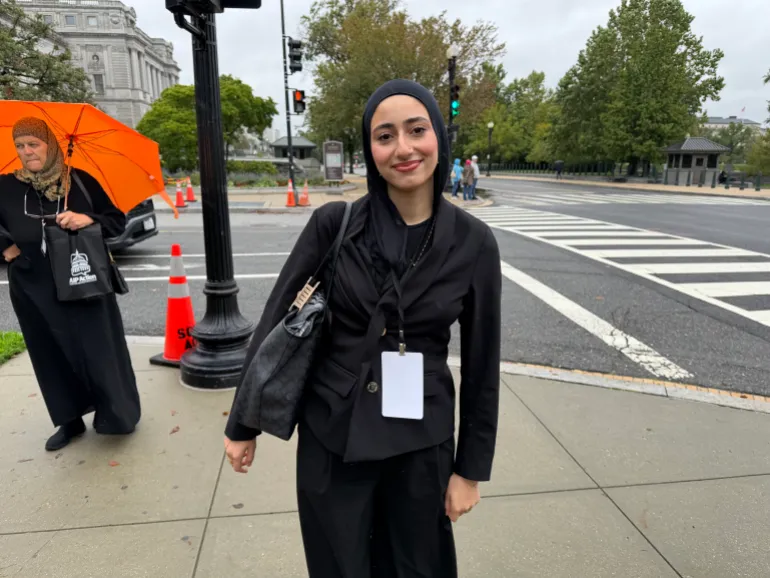
Jenna Escheik was among the Palestinian Americans meeting with US lawmakers in Washington, DC [Joseph Stepansky/Al Jazeera]
While entrenched support for arming Israel has persisted among some segments of the Democratic Party, advocates have hailed what they see as a historic shift in recent months.
In July of last year, 26 Democrats in the Senate voted to block some arms transfers to Israel, the first time in history a majority of Democratic lawmakers in the chamber did so. In April, similar resolutions gained a record 40 votes in the Senate, all Democrats, but ultimately failed to pass in the 100-member chamber.
The so-called Block the Bombs Act in the House, which calls for a partial arms embargo against Israel, reached 81 co-sponsors as of August.
Twenty-two Democratic senators also introduced a resolution last week to force the US Department of State to conduct an investigation into the violence committed by Israeli forces and settlers in the West Bank, in which at least nine US citizens have been killed in recent years.
Abu Irshaid was optimistic that headway could also be made among Republicans, who have been reckoning with an internal divide over US support for Israel, with exceedingly few members of the party currently willing to vote to limit aid.
A December poll by the IMEU Policy Project found a majority of Republicans under 45 said they would prefer to support a presidential candidate in 2028 who “supports reducing taxpayer-funded weapons to Israel”.
“I think what we’re seeing now is that the dam within the Republican Party is cracking,” Abu Irshaid said.
“But the question is, ‘What is after Donald Trump when Donald Trump no longer owns the Republican Party, owns the MAGA movement?’ I think that’s when you will see more cracks taking place.”
‘The same system’
Advocates on Tuesday also focused on what they called the Trump administration’s practice of using immigration law to stifle pro-Palestine advocacy.
Among their policy priorities, those meeting with lawmakers sought to reform language in the Immigration and Nationality Act of 1952, which the Trump administration has cited in efforts to deport individuals whose presence in the US the administration deems to have “adverse foreign policy consequences”.
Among those speaking at the US Capitol on Tuesday was Salah Sarsour, the president of the Islamic Society of Milwaukee, who was detained by ICE in April and released in June. His legal team has charged that the three-decade US resident was targeted based on a coerced confession when Sarsour was detained by Israeli forces as a young man.
Sarsour, who continues to face deportation proceedings, said the ICE detention reminded him of being held in Israeli detention.
“Those criminals that [detained me], they still exist,” he said. “The same criminals that destroy Gaza, they killed tens of [thousands] of children and women, and men and family members.”
Leqaa Kordia, who was among those targeted by immigration enforcement agents following a wave of pro-Palestine protests that swept US campuses in 2024, also recounted the “dehumanisation” of her 368 days in ICE detention.
“And then it hit me that…the same system that threw me in an ICE jail is the same system that funds and arms the military prisons in Israel,” said Kordia, who, like Sarsour, still faces deportation proceedings.
“The same dehumanisation logic that allowed a guard to humiliate me allows the Israeli soldier to kidnap Palestinians and throw them into the shadows,” she told those gathered.
“The same power that keeps my case in limbo is the same power that sends billions of US tax dollars in bombs and weapons to fuel the Palestinian genocide.”
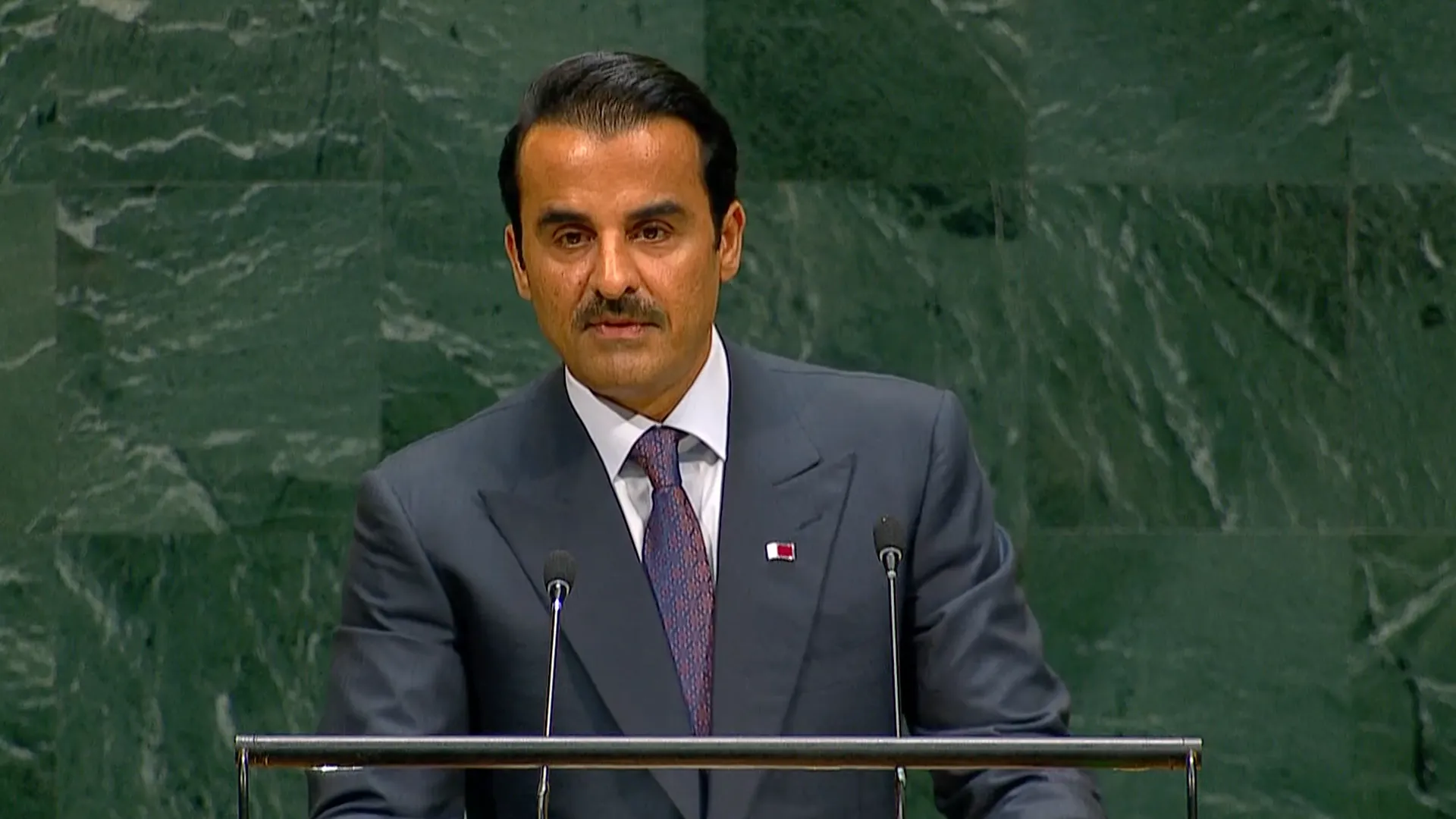
Qatari Emir Sheikh Tamim bin Hamad Al Thani has denounced Israeli aggression in neighbouring countries, saying Israel openly declares it will not abide by its agreements in Lebanon.
Seven armed groups announce alliance to topple government.
Despite decades of peace deals and ceasefires, armed groups in Ethiopia have continued to battle each other, as well as the military. Now, some of these former rivals have formed an alliance to push out the government in Addis Ababa.
They warn Ethiopia is on the brink of disintegration, and blame Prime Minister Abiy Ahmed. Abiy says the country can defend itself, but Ethiopians fear they could be on the verge of another civil war.
So, could these former rivals, with deep political and ideological divides, achieve their common objective?
Presenter:
Rob Matheson
Guests:
Samuel Getachew – Political commentator who specialises in Ethiopian affairs
Ngala Chome – Horn of Africa analyst
Kjetil Tronvoll – Professor of peace and conflict studies at Oslo New University College
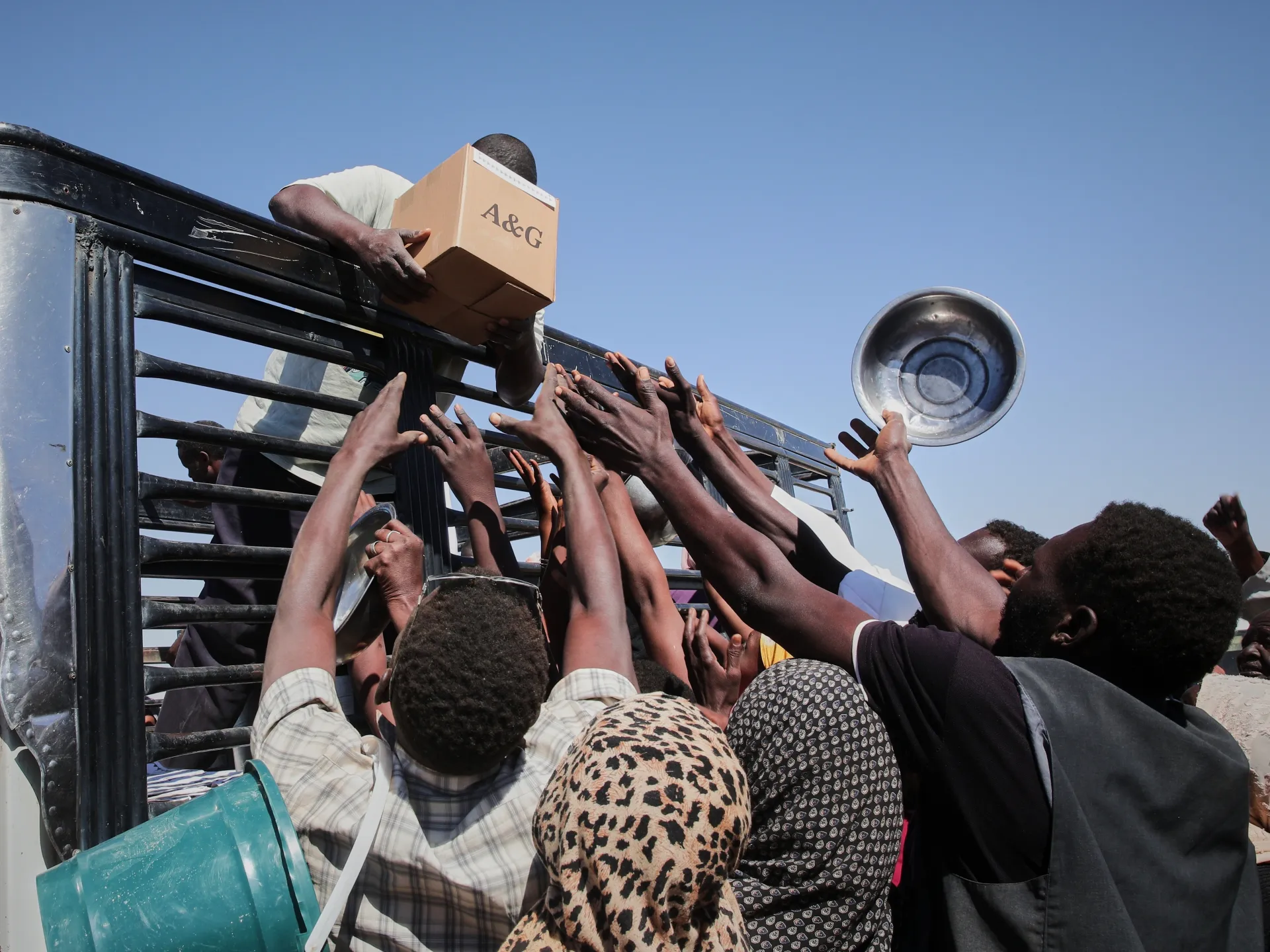
Sudan’s collective memory has long carried stories of famine-induced tragedies. Now, as war pushes the country deeper into a catastrophic food crisis, historians and humanitarian activists fear that some of those horrors are being repeated.
The ongoing war between the Sudanese army and the paramilitary Rapid Support Forces, which erupted in April 2023, has plunged the country into one of its worst modern food crises, with conditions deteriorating sharply since 2024.
Recommended Stories
list of 3 itemsend of list
Sudan has endured severe famines before, often triggered or made worse by drought and other environmental shocks. However, the current hunger crisis, which has triggered famines in Sudan in 2024 and 2025, has been brought on by a man-made factor: war.
Past starvation
One of the earliest recorded major food crises in what is now Sudan occurred in 1684, during the Funj Sultanate. The crisis, which lasted several years, brought severe grain shortages across central Sudan. Historical accounts describe people driven to desperation, and in some cases forced to eat dog meat. The hunger triggered mass displacement, as well as a deadly smallpox outbreak.
Similar climate-driven crises were recorded in 1750 and again between 1835 and 1838 during a period of Ottoman-Egyptian rule, exacerbated by severe drought and low water levels in the River Nile.
The famine most deeply embedded in Sudanese popular memory occurred between 1888 and 1889, during the rule of Khalifa Abdullahi al-Taashi.
Drought, locust infestations and conflict combined to cause widespread hunger and death. Some historical estimates put the death toll at more than one million people, although precise figures from the period are difficult to establish. The crisis was reported to have been so severe that some families shut themselves inside their homes to die rather than going out to beg for food.
Sudan experienced more periods of food shortages during the 20th century. Droughts and poor harvests during the colonial period of the first half of the century forced the authorities at times to import grain from abroad.
Then, in 1984, during the rule of President Jaafar Nimeiri, a devastating drought hit western Sudan, including Darfur and Kordofan, where there were widespread crop and livestock losses, displacing hundreds of thousands of people from rural areas to the capital, Khartoum.
Man-made catastrophe
Unlike many of those historical crises, the current famine is distinctly man-made.
War has disrupted agricultural production and trade, forced farmers to leave their land, and made it difficult to move food and humanitarian aid across the country.
Abdullah al-Tijani, a social historian and humanitarian activist, noted the unprecedented scale of the current disaster.
“Most previous famines were often confined to specific regions, as happened in 1984, or areas in southern Sudan before its secession in [2011], while the capital and major cities continued to have the necessities of life and services,” al-Tijani told Al Jazeera.
This time, he said, hunger and the collapse of basic services have spread across the entire country.
“A comprehensive food crisis has struck the heart of major urban and agricultural centres in the states of Khartoum, Gezira, Sennar, Darfur, and Kordofan, causing millions of citizens to be displaced inside and outside the country,” al-Tijani added.
He pointed to what he described as the “systematic destruction of infrastructure, disruption of large agricultural projects, and targeting of markets, bakeries, and crops, along with disrupting the banking system and communication networks, which isolated entire regions”.
Al-Tijani also cited the “restrictions on humanitarian access and delays in granting transit permits for relief workers”. He accused the warring parties of using control over food supplies as a tool of war, while warning that international funding has fallen short of the size of the crisis.
Lost agricultural potential
The scale of the crisis is stark because of Sudan’s agricultural potential. The country has immense resources, including roughly 200 million acres (81 million hectares) of arable land, abundant water from the Nile, and extensive livestock resources, but Sudan’s potential as a global breadbasket remains unfulfilled.
Mohammed Abdul Rahman, an economic researcher, explained that the current food security crisis reflects a clear development gap, and a longstanding weakness in Sudan’s agricultural sector compounded by war.
“Wars and armed conflicts are among the most influential factors on food production,” Abdul Rahman said, “along with the displacement of farmers from their lands, the absence of political stability and agricultural policies, weak funding and government guarantees, and reliance on traditional farming methods.”
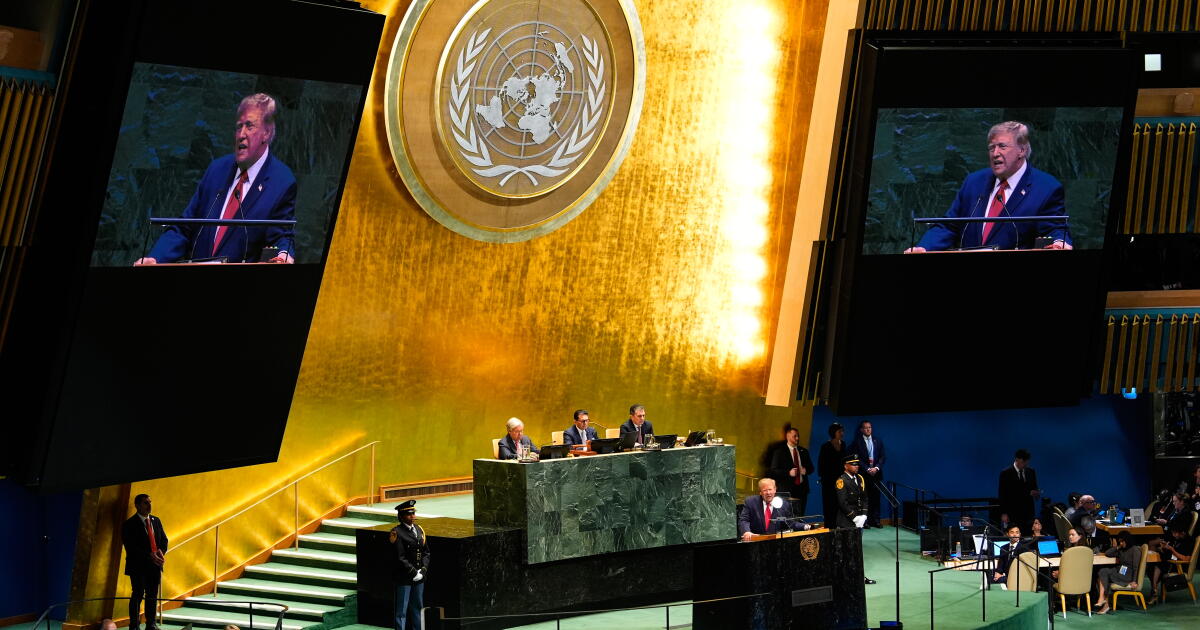
NEW YORK — President Trump threatened to escalate the war with Iran by “annihilating” the Islamic Republic if it fails to negotiate a deal over its nuclear program, delivering a defensive speech justifying the mission at the United Nations on Tuesday.
His remarks come more than six months into a war that has grown increasingly unpopular at home, with fewer than a third of Americans approving of the president’s handling of the conflict, according to recent polls.
“I have a big decision to make,” he told world leaders gathered at the U.N. General Assembly in New York, with Iranian diplomats in attendance.
“Will a deal be made with Iran that lets them rebuild and create a far greater country than it ever was before — maybe one of the greatest in the Middle East or even the world? Or do I annihilate the Islamic Republic, and do it quickly, never giving them a chance to kill and destroy again?
“Do I drive them into hell,” he continued, “with no chance of survival and no hope of future greatness?”
The war has carried steep political costs for the president and his party ahead of the U.S. midterm elections in November, increasing inflation and energy prices due to disruptions in commercial shipping traffic through key waterways in the Middle East.
Defense officials say the conflict has also placed a huge burden on U.S. munitions stockpiles, as Iran continues firing ballistic missiles and drones at American assets and bases throughout the region.
But Trump denied that the war has depleted U.S. stocks. “That’s not true,” he said.
“I believe we’ll make a deal right after the election,” Trump said. “We must be equally united in maintaining pressure.”
The rise in global gas prices has sparked protests around the world. But Trump’s vow to ensure Tehran never acquires a nuclear weapon — an issue that for decades united the international community — generated applause throughout the chamber.
Launching Operation Epic Fury in February, Trump projected the campaign would last roughly six weeks, with the stated objective of disabling Iran’s ballistic missile program, its navy and its nuclear infrastructure. He also vowed a day would soon come when the Iranian people could rise up against their government and reclaim their country.
More than six months later, the Islamic Republic stands. Iran’s ballistic missiles continue to test U.S. air defenses across the Middle East, shipping through the Strait of Hormuz remains depressed, and talks over the future of Iran’s nuclear program have collapsed.
Explaining his decision to start the war, Trump said that he decided not to let the problem of Iran’s nuclear work “fester,” and warned that its ballistic missile program was being designed as a shield to protect its nuclear program from foreign attack.
“Iran’s goal was to complete their mad dash to a nuclear bomb from behind this conventional nuclear shield,” Trump said. “They were the bully of the Middle East, but they’re the bully no more.”
The United States has repeatedly offered a deal with Iran that would open up economic cooperation between the two nations in exchange for an end to their nuclear work, he said.
“They absolutely refused,” he added. “That was a big mistake.”
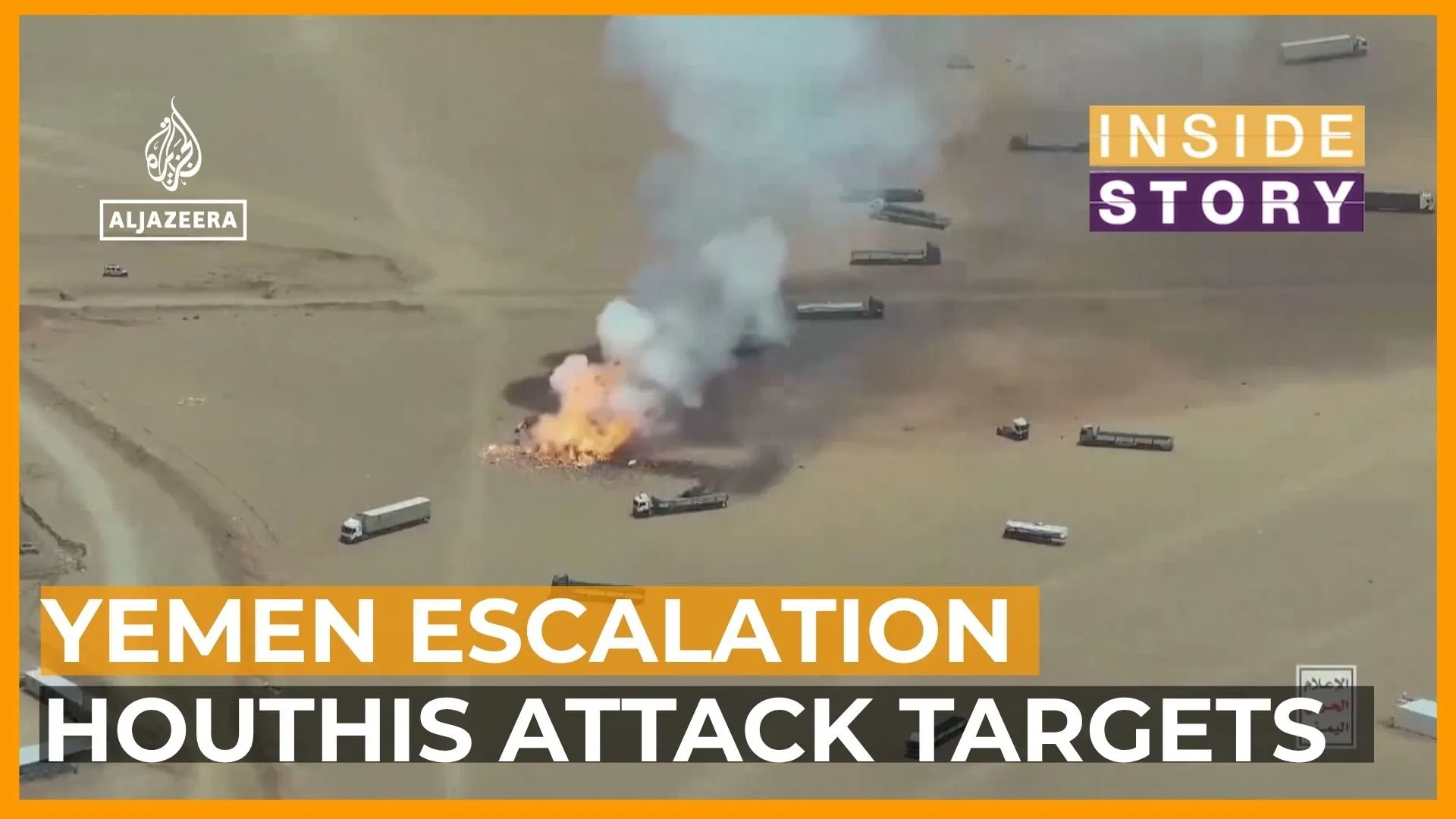
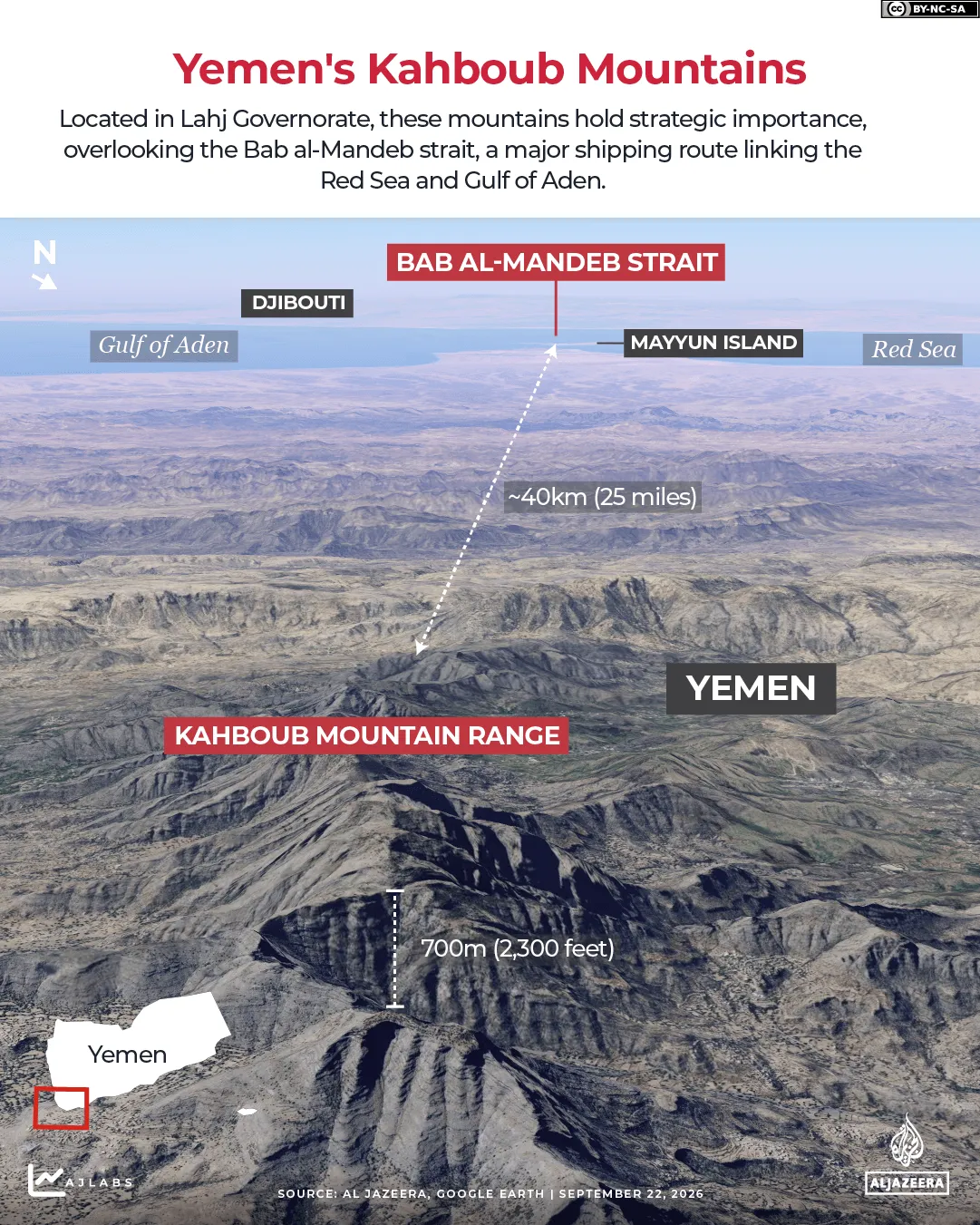
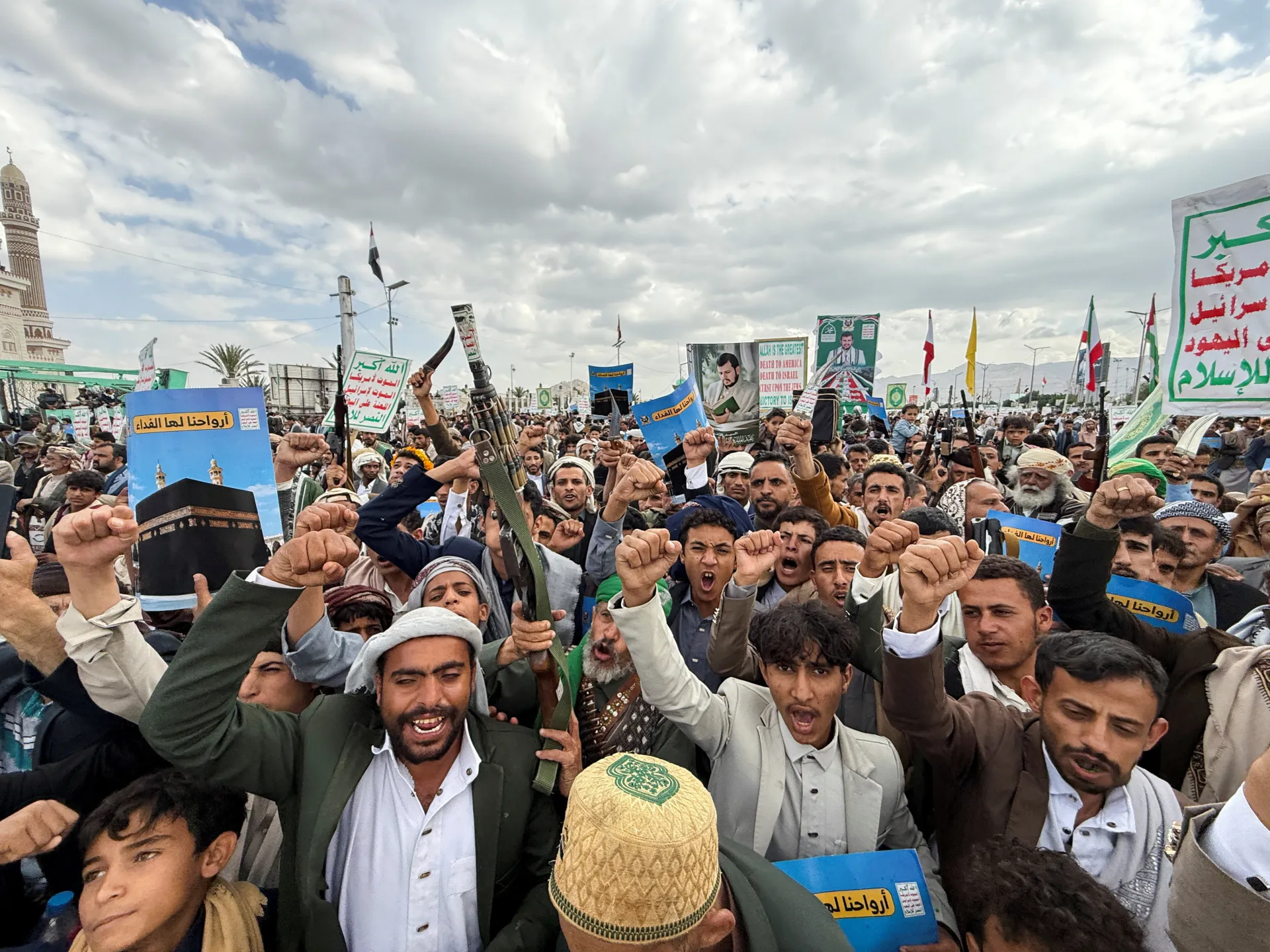
The Houthis are attempting to push into the Kahboub Mountains after seizing much of Yemen’s Red Sea coast in a lightning offensive this month – an advance that experts say could dramatically shift the balance of power in the country’s war if successful.
The renewed fighting in recent months with forces aligned with Yemen’s Saudi-backed, internationally recognised government has brought an end to the relative calm that had largely held since 2022. In recent days, the conflict has moved into the rugged highlands overlooking the approaches to Bab al-Mandeb, one of the world’s most important shipping routes.
Recommended Stories
list of 3 itemsend of list
The strait connects the Indian Ocean to the Red Sea and the Suez Canal, and its importance is only growing as shipping through the Strait of Hormuz remains disrupted by the Houthis’ main ally: Iran.
Experts said taking the high ground would help the Houthis defend the newly captured coastline and make it far harder for government forces to push them back. While the mountains may not necessarily be used as a launchpad for attacks on ships, controlling them would provide defensive depth and cover for Houthi positions closer to the coast, making missile and drone operations in the Red Sea easier to sustain and harder to disrupt.
The Houthis have said they do not intend to target United States shipping and attacks would be limited to vessels linked to Saudi Arabia. But the group has repeatedly attacked ships in the Red Sea in previous years, including vessels with no clear connection to its stated targets.
The Houthi advance has taken on added urgency after The New York Times reported that US President Donald Trump came close to ordering air attacks against the Houthis on Sunday, only to call them off at the last minute. Britain, meanwhile, said it will support Saudi Arabia with defensive refuelling.
Why is Kahboub strategically important?
Kahboub, a mountainous region spanning parts of the Lahj and Taiz governorates in southern Yemen, derives much of its strategic importance from its proximity to Bab al-Mandeb. Some of its heights lie about 40km (25 miles) from the waterway, providing commanding views across a stretch of the Red Sea, through which a significant share of global maritime trade and millions of barrels of oil pass each day.
While that vantage point has considerable military value, experts said the mountains are unlikely to serve directly as a launchpad for attacks in the Red Sea. Their more immediate importance for the Houthis lies in securing the territory the group has already captured.
“The mountains are the natural wall that protects the Houthis’ rear on the coast. Controlling them would cut the coast off from the government-held south and place direct pressure on Lahj and, in the longer term, Aden,” Faozi Al-Goidi, a visiting fellow at the Middle East Council on Global Affairs, told Al Jazeera.
Securing their rear would help the Houthis prevent government forces from attacking their coastal positions from behind or severing the routes connecting their newly captured territory. Until the high ground is secured, Houthi forces stationed along the Red Sea remain vulnerable to attacks from government-held areas to the south and east.
Capturing the elevated positions, therefore, would make Kahboub less important as a potential launchpad for maritime attacks than as a defensive shield for the Houthis’ military gains along the coast.
Ewa K Strzelecka, a visiting senior fellow at the London School of Economics, told Al Jazeera that controlling the coastline, Mayyun Island and the neighbouring highlands would give the Houthis “strategic resilience”.
(Al Jazeera)
“Holding the coastline, Mayyun and the adjacent highlands together would give the Houthis a much deeper and more defensible position around one of the world’s principal maritime chokepoints,” she said.
Those positions would allow the Houthis to move fighters, weapons and supplies along the coast with less risk of their routes being severed from behind.
“From the high ground, the Houthis could monitor movements along the coast, around Mayyun Island and towards the chokepoint while protecting missile, drone and potentially unmanned-boat infrastructure positioned farther inland,” Andreas Krieg, a senior lecturer at the School of Security Studies at King’s College London, told Al Jazeera.
The battle is already proving slower than the Houthis’ rapid advance across the coastal plains. Footage circulated on X by the Taiz Military Axis Command’s media centre appears to show intense fighting between forces aligned with the Yemeni government, local fighters and the Houthis on mountain fronts. The footage could not be independently verified by Al Jazeera.
“This is not an easy battle,” said Mohammed al-Basha, an analyst and a former spokesperson for Yemen’s embassy in Washington. “The fighting is taking place across some of Yemen’s most unforgiving terrain where control of a single hilltop or mountain peak can come at a heavy cost.”
Could the Houthis isolate Taiz by controlling Kahboub?
Control of Kahboub could also place greater pressure on Taiz, a symbolically and strategically important city, as the Taiz governorate forms a bridge between the Houthi-held north and the government-held south and the Red Sea coast. Whoever controls it gains the upper hand in the movement of weapons and supplies between the interior and the southern port city of Aden. Losing it, therefore, could deal a serious blow to the government.
Murad Al-Arefi, an editor at the Sana’a Center, told Al Jazeera that taking Kahboub would “increase pressure on the southern and western approaches to Taiz” although he cautioned that it should not yet be seen as evidence of a broader attempt to encircle the city.
The immediate threat to the Taiz-Aden connection is less direct because Kahboub does not itself sit across the route. “What matters is whether the Houthis can subsequently push farther east through Al-Wazi’iyah and towards the Al-Turbah-Lahj axis, which would place much greater pressure on the southern approaches to Taiz and potentially weaken its connection with Aden,” Strzelecka said.
A further advance, therefore, could leave government forces defending several mountain fronts simultaneously while relying on fewer secure routes to move troops, weapons and supplies, leaving Taiz increasingly exposed. One of Yemen’s largest population centres, Taiz became an important centre of resistance to the Houthis after they seized Sanaa in 2014, and was besieged by the rebel group for years. A major Houthi breakthrough there, therefore, would carry symbolic significance far beyond the territory captured.
What could it mean for Red Sea shipping?
Officially, the Houthis have said their current restrictions in Bab al-Mandeb would apply only to Saudi-linked shipping.
But during its previous Red Sea campaign, the group struck or endangered ships with no clear connection to Israel – their purported target during Israel’s genocidal war on Gaza – raising questions about how narrowly any new restrictions would be applied. Seizing the Kahboub Mountains would further strengthen the Houthis’ position by helping them secure the coastline overlooking Bab al-Mandeb and making it harder for their opponents to push them back.
Simon Mabon, a professor of international relations at Lancaster University, told Al Jazeera that the offensive showed the Houthis using their momentum to capture more territory, weaken their opponents and “dominate Yemen further”.
“This is the Houthis trying to seize more ground and diminish the capacity of their enemies while increasing their strategic ability to close Bab al-Mandeb,” Mabon said.
A gold mine collapse in northern Sudan has killed at least 10 people and injured 21, according to survivors, bringing renewed attention to the dangers facing workers in one of the country’s most important and least regulated industries.
The collapse took place on Sunday at the Awny mining area near Sudan’s border with Egypt. Miners told the AFP news agency they had recovered 10 bodies and pulled 21 injured workers from the site, while the search continued for people believed to be trapped beneath the rubble. It is unclear how many people are trapped in the collapsed mine.
The disaster comes just days after another deadly accident at a gold mine in West Kordofan State. A collapse at the al-Zaraa mine near en-Nahud, a town in central Sudan, left at least 82 people dead.
Sudan is one of Africa’s top gold producers, recording 70 tonnes of production last year, according to the Sudanese government.
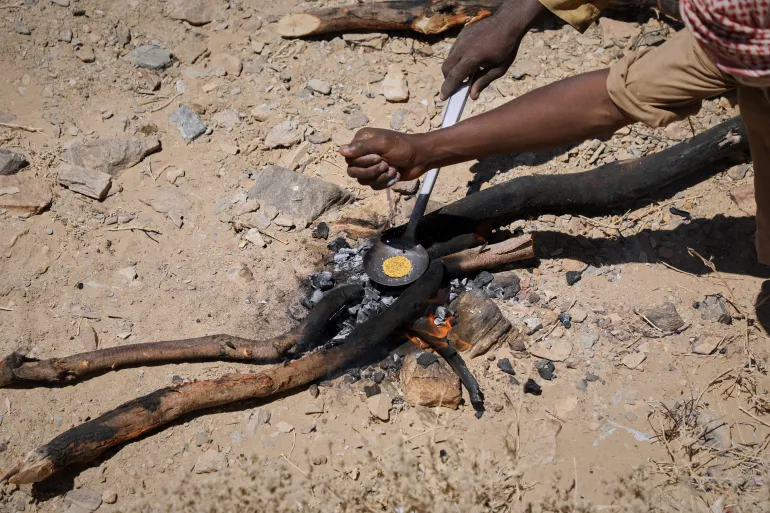
Miners heat processed gold concentrate over an open fire at an artisanal mining site in Dalago Mahas, Sudan’s Northern State, Friday, May 8, 2026 [Mohaned Bilal/AP Photo]
Since fighting broke out in April 2023 between Sudan’s army and the paramilitary Rapid Support Forces (RSF), businesses have been devastated, agriculture has been disrupted, millions of people have been displaced, and Sudan’s formal economy has weakened. In that environment, gold has remained one of the country’s most valuable sources of income.
In July 2025, it was reported by local agencies that Sudan’s gold production rose sharply despite the ongoing conflict, reaching 64 tonnes in 2024, 53 percent higher than the 41.8 tonnes recorded in 2022, and generating $1.57bn in legal export revenues.
However, the gold trade has also become a point of international scrutiny. Most of the gold exports end up in the UAE. In March 2025, Sudan went to the International Court of Justice (ICJ), accusing the UAE of supporting and funding the RSF using gold. The UAE has denied accusations that it supplies weapons to the RSF.
Sudan’s gold deposits are spread across the country, with the majority in the northeast. Port Sudan, the country’s main port, is home to most of the deposits and has been largely controlled by the Sudanese Army since the war began. However, areas controlled by the RSF are also populated by gold deposits.
At the moment, “much of Sudan’s gold is taken out of the country through smuggling or illicit networks instead of passing through government channels that could directly contribute to public revenue,” said Joseph Tucker, senior analyst on the Horn of Africa at the International Crisis Group.
But amid that diplomatic battle and the accusations surrounding gold, the mining deaths in northern Sudan have also raised larger questions over how the country manages the sector, analysts say.
“This disaster is yet another example of the deadly hazards facing those working in Sudan’s gold mines,” Tucker told Al Jazeera. “Most of these (gold mines) are informal, artisanal mines in remote areas that are unregulated and lack modern mining technology, adequate infrastructure, and specialised safety equipment.”
This year, Sudanese Prime Minister Kamil Idris met with the minister of minerals and spoke on the policies for regulating traditional mining and the management and control of various mineral markets. According to French-based Sudanese media, Sudanese authorities called for swift action to address the environmental damage and public health hazards caused by mining activities across the country.
Yet, despite the dangers, Tucker said the state of the Sudanese economy made gold mining appear lucrative to many Sudanese.
During the war, the Sudanese currency’s value has crashed. Before the outbreak of fighting in 2023, about 570 Sudanese pounds could buy a US dollar. By April 2026, the currency had slid to a sixth of that value: It cost 3,500 pounds or more to afford a dollar. That has led to sharp food inflation and a surge in the costs of transport and fuel.
According to estimates by the United Nations Development Programme, Sudan lost $6.4bn of its gross domestic product (GDP) in 2023 alone: That’s a quarter of the country’s $26bn GDP that year. In August, the UN agency reported that 90 percent of the agrarian nation’s farmers had seen yields drop over the previous year.
That economic crisis, Tucker said, “fuels the demand for gold and willingness of miners to work in poor conditions” – even if it proves deadly.
Ministers demand an end to maritime shipping attacks and urge Iran to stop arming the Yemeni group.
Published On 22 Sep 202622 Sep 2026
The foreign ministers of the Group of Seven (G7) nations have condemned what they called “unacceptable continued strikes” by Yemen’s Houthis against Saudi Arabia.
The ministers issued the statement on Monday following an informal meeting on the sidelines of the United Nations General Assembly in New York.
Recommended Stories
list of 3 itemsend of list
“We condemn in the strongest terms the unacceptable continued strikes carried out by the Houthis in Yemen and against the Kingdom of Saudi Arabia,” the ministers of the UK, Canada, France, Germany, Italy, Japan and the United States said in the statement.
The ministers urged the Houthis “to immediately cease all military actions, all threats and attacks against civilian shipping, and to return to the political process in good faith”.
They also called on Iran to stop arming and supporting the group, saying Tehran is in violation of past UN Security Council resolutions. They added that Iran’s backing of the Houthis constituted a dangerous pattern of escalation that risked undermining international trade and creating global instability.
The latest escalation in the Arab region’s most impoverished nation follows a period of relative calm that had largely held since the UN-brokered ceasefire in 2022 between the Iran-aligned group and the Saudi-backed Yemeni government.
Scott Bessent says airports and companies servicing Iranian carriers risk being cut off from the US dollar system.
Published On 21 Sep 202621 Sep 2026
United States Treasury Secretary Scott Bessent says Iranian airlines could effectively be shut out of international travel from Wednesday, as Washington threatens foreign companies with secondary sanctions if they continue servicing the country’s carriers.
“On September 23, all the Iranian airlines will be shut down around the world,” Bessent told CNBC on Monday.
Recommended Stories
list of 3 itemsend of list
The warning is aimed not just at the airlines themselves, but at the airports, fuel suppliers, ticketing companies and other businesses they rely on to operate abroad.
“If they land, you cannot provide them with fuel, you cannot provide them with landing services, you cannot sell them tickets, or you will be knocked out of the dollar system,” Bessent said.
The threat marks the latest step in US President Donald Trump administration’s escalating economic campaign against Tehran, which has continued alongside the war between the US and Iran.
Earlier this month, the US Treasury imposed sanctions on all remaining Iranian airlines that had not already been targeted, as well as companies outside Iran accused of supporting the country’s aviation sector.
Iran’s aviation industry was already heavily constrained by years of US sanctions, which have made it difficult for carriers to buy new aircraft and obtain spare parts and maintenance services.
The measures are part of a much broader sanctions regime aimed at isolating Iran from the international financial system. US secondary sanctions threaten foreign companies that do business with Iran across sectors including energy, shipping, technology, gold and digital assets with penalties of their own.
China ‘very engaged’ on Iran sanctions
Bessent’s comments came a day after talks with Chinese Vice Premier He Lifeng, ahead of Trump’s meeting with Chinese President Xi Jinping on Thursday.
China is one of Iran’s most important economic partners and diplomatic backers, making Beijing’s cooperation potentially significant to Washington’s efforts to financially isolate Tehran.
Bessent said Chinese officials had been “very engaged” in the US pressure campaign. Washington was holding what he described as positive talks with Chinese financial authorities, including People’s Bank of China Governor Pan Gongsheng, about compliance with US sanctions on Iran.
Tehran threatens retaliation as Trump weighs military action while Qatar pushes to revive talks.
Published On 21 Sep 202621 Sep 2026
Iran’s central military command says it has received information that the United States is preparing to resume strikes on the country.
The warning, issued on Sunday by the Khatam al-Anbiya Central Headquarters, which oversees Iran’s armed forces, raises the prospect of a new round of fighting after months of reduced direct attacks.
Recommended Stories
list of 2 itemsend of list
Tehran said any renewed US assault would bring retaliation against American bases and interests in the Middle East and warned regional countries against helping Washington.
The military command said states that allowed their territory or facilities to support US attacks would be “considered complicit” and could face an Iranian response.
US President Donald Trump told Fox News on Sunday that he was in a “deciding mode” over Iran and said his options included further military action, economic pressure or a deal.
He also said he would be open to meeting Iranian President Masoud Pezeshkian on the sidelines of the United Nations General Assembly in New York this week.
Iran’s Foreign Minister Abbas Araghchi left Tehran on Sunday evening for the UN General Assembly in New York, state media announced, adding that he is making a brief stopover in Qatar.
Parliament Speaker Mohammad Bagher Ghalibaf told lawmakers on Sunday that Tehran should use military force to push back its opponents before turning to diplomacy to secure any gains.
Tehran has told Qatari and Pakistani mediators that conditions for renewed talks include an end to the war and US attacks, the release of frozen Iranian funds and the lifting of the US naval blockade on Iranian ports.
Ghalibaf said the Strait of Hormuz would remain closed until Washington met what Iran says are its commitments under an earlier agreement.
Al Jazeera correspondent Tohid Asadi, reporting from Tehran, said Iranian officials were sending a deliberate two-track message, signalling that they remained open to diplomacy while preparing for renewed fighting.
Qatar, a Gulf state mediating between the two sides, says its officials are travelling between capitals and exchanging proposals aimed at restarting negotiations.
Qatari Foreign Ministry spokesperson Majed al-Ansari said Doha had heard assurances from US officials that Washington wanted an agreement.
The confrontation is already disrupting the Strait of Hormuz, a narrow waterway linking the Gulf to the Arabian Sea and a key route for global energy shipments.
Shipping data showed 12 commodity vessels crossed the strait over the weekend, down from 35 the previous weekend. The war began in late February after joint US-Israeli strikes on Iran.
A 60-day memorandum reached in June reduced full-scale fighting but expired last month, with attacks around Hormuz increasing since then.
Mark Pfeifle, a Republican strategist and former White House national security official, told Al Jazeera that both countries were “locked in this frozen conflict” and trying to increase pressure before possible diplomacy around the UN gathering.
Former adversaries say they will settle differences as fears grow of expanding war in Ethiopia.
Published On 21 Sep 202621 Sep 2026
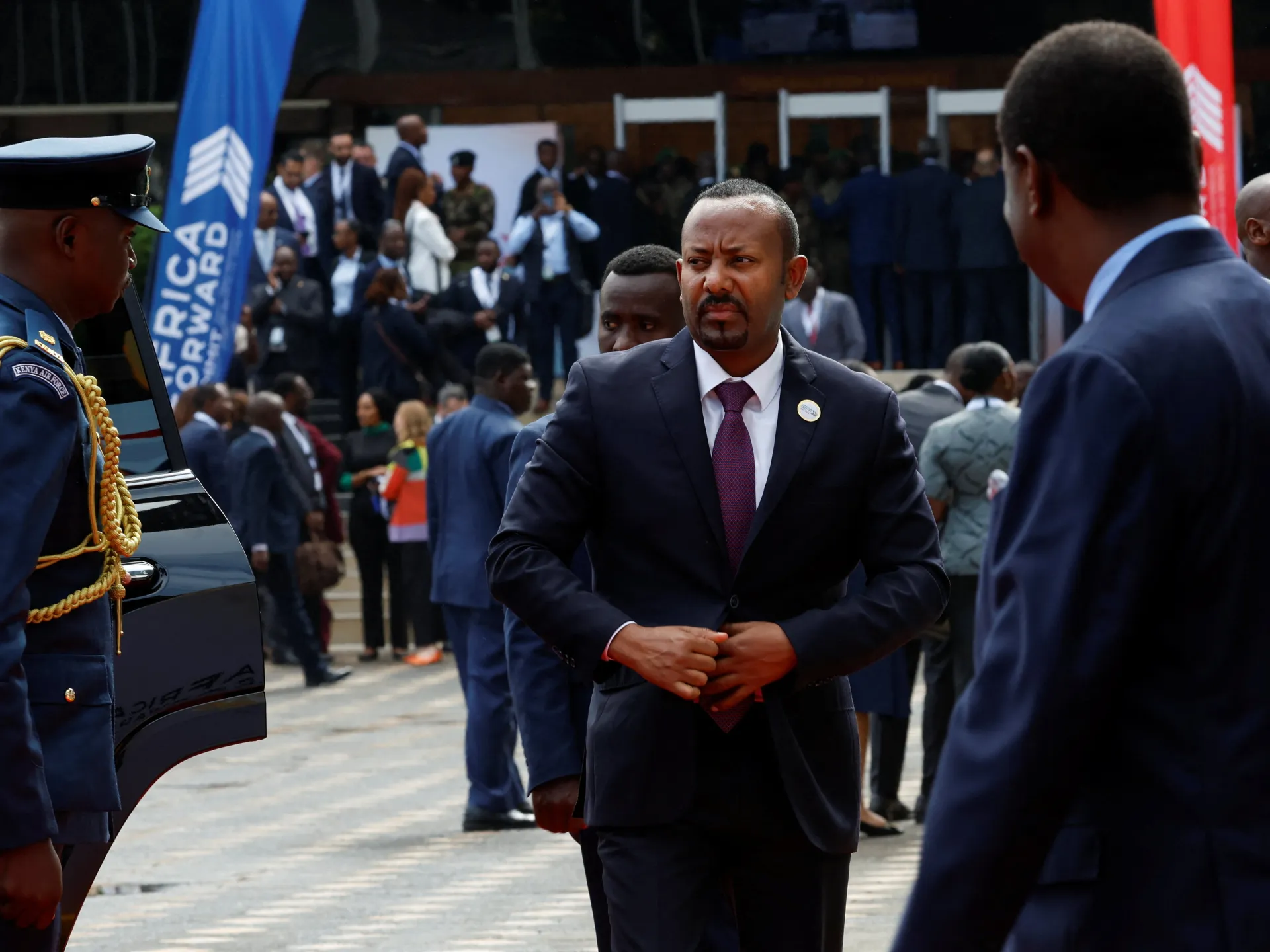
Seven Ethiopian armed groups have formed an alliance aimed at overthrowing the government of Prime Minister Abiy Ahmed.
The groups announced the alliance on Sunday, saying that they would work together to set up an inclusive transitional government.
Recommended Stories
list of 2 itemsend of list
“We have established a joint alliance called the Ethiopian Peoples’ Forces Alliance for Survival, known in short as the Alliance for Survival,” the groups said in a joint statement.
The alliance includes the Amhara Fano National Movement, a coalition of Fano factions that has fought federal forces in the Amhara region since 2023; the Tigray People’s Liberation Front (TPLF), which dominated Ethiopian politics for nearly three decades before Abiy took office; and the Oromo Liberation Army (OLA), which has fought federal forces in Oromia since 2018.
Four smaller groups – the Ogaden National Liberation Front (ONLF), the Afar Revolutionary Democratic Unity Front (Ugugumo), the Benishangul Peoples’ Liberation Movement and the Gumuz Peoples’ Democratic Movement – make up the rest.
Abiy Ahmed has served as Ethiopia’s prime minister since 2018, when he came to power promising sweeping reforms. [File: Reuters]
The groups’ leaders had been talking to form the alliance for about a year, a source close to Fano told Al Jazeera on Sunday.
The announcement comes weeks after clashes in the northern region of Tigray, one of the most serious breaches yet of a 2022 peace deal, deepened fears of a return to full-scale war.
Fighting has gripped parts of Oromia since 2018 and Amhara since 2023.
Abiy came to power in 2018 promising sweeping reforms. He freed journalists, activists and other political prisoners and revoked bans on many political parties after taking power.
But his opponents and human rights activists accuse his government of reversing those gains in recent years.
In the statement, the alliance accuses the government of imposing “dictatorial rule” that has pushed the country towards break-up.
It also says a transitional government guided by a charter would work to end the wars, protect rights and open a national dialogue.
Jaal Marroo, the OLA’s military leader, told a local broadcaster earlier this month that they had met several times before settling on the final announcement.
Zemene Kassie, the Fano leader, first publicly indicated that deals had been reached in an interview with the Swiss newspaper Le Temps, published on August 16.
The government has not publicly commented on Sunday’s announcement.
Fano fought alongside federal forces against Tigray’s fighters in the Tigray war of 2020 to 2022, which killed hundreds of thousands.
Amhara and Tigray also both claim Western Tigray, which Amhara nationalists have administered since the war ended.
Ethiopian academic Eyob Tilahun told Al Jazeera on Sunday that the competing groups had agreed to have a dialogue and form an alliance “in the best interests of the public”.
“Those allied forces believe that they all face a survival threat from the government,” Eyob said.
The 2022 peace agreement, signed in Pretoria, South Africa, ended the war between the federal government and Tigray’s forces but left disputes over disarmament and the TPLF’s legal status unresolved.
In mid-July, the TPLF declared the 2022 Pretoria peace deal “effectively dead”.
For a decade, the United Nations’s most visible role in the Sahel was its peacekeeping mission in Mali.
The United Nations Multidimensional Integrated Stabilization Mission in Mali (MINUSMA) was established by the Security Council in 2013. Its mandate was terminated in June 2023 at the request of Mali’s transitional government, and the mission completed its withdrawal by the end of that year.
But the end of MINUSMA did not end the UN’s engagement with the region.
Its political work continues through the UN Office for West Africa and the Sahel (UNOWAS), while the wider UN system remains involved in humanitarian and development work.
What has changed is the space in which that engagement takes place.
Burkina Faso, Mali and Niger formally left the Economic Community of West African States (ECOWAS) on January 29, 2025. The three countries have also deepened cooperation through the Alliance of Sahel States (AES), putting sovereignty and strategic autonomy at the centre of their political message.
The humanitarian pressures, meanwhile, have not eased.
Displacement, insecurity, food insecurity and other pressures continue to cross borders, even as governments increasingly insist on handling their security and political affairs on their own terms.
The question is what influence the UN can exercise after the departure of the peacekeeping force that once represented its most substantial presence in the region.
What does the UN’s presence look like now?
The UN’s role today is less about troops and more about diplomacy, mediation, humanitarian assistance and development.
UNOWAS is a special political mission rather than a peacekeeping operation. Its work includes preventive diplomacy, good offices, political mediation, conflict prevention and support for political dialogue.
“The influence the UN can actually exercise is narrow. The AES states have stripped away the mechanisms that once gave outside institutions leverage, leaving ECOWAS and the Rome Statute, and building their own confederation and joint force instead,” said Mubarak Aliyu, a political and security analyst in Nigeria.
In February 2026, the Security Council extended UNOWAS’s mandate until January 31, 2029, while requesting an independent strategic review of its mandate and activities, to be finalised by September 30, 2026.
The review comes as West Africa’s political landscape is being reshaped by military governments, new regional alliances and a stronger emphasis on sovereignty.
Russia has also become an important part of that changing security picture.
“What has actually shaped events this year is Russia’s Africa Corps, which helped Mali’s and Niger’s military governments survive shocks the UN was never positioned to influence, functioning mainly as regime protection rather than counterinsurgency,” Aliyu said.
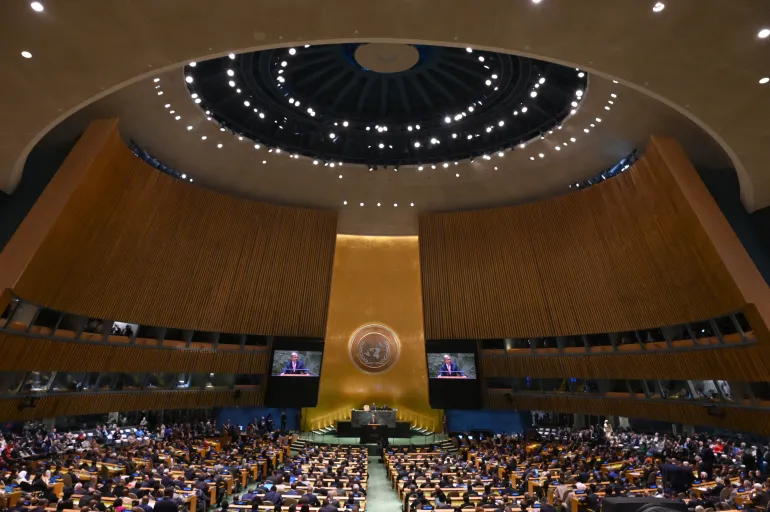
UN continues its engagement in a Sahel where governments are placing greater emphasis on sovereignty and strategic autonomy [File: Timothy A Clary/AFP]
“Moscow’s leverage extends into the Security Council chamber too, since its veto shapes what collective action the Council can attempt on Mali in the first place.”
Kabir Adamu, founder and managing director of Beacon Security and Innovations Limited, an Abuja-based firm that provides security solutions in Nigeria, the Lake Chad Basin and the Sahel, said the UN should shift its approach away from large deployments of UN troops to diplomatic and towards diplomatic and development solutions.
“Looking ahead, the UN’s priorities in the Sahel should promote effective security sector governance and security sector reform. This will mean pivoting from traditional, large-scale peacekeeping to deep-rooted and core preventive strategies and diplomacy that addresses the root causes of fragility, conflict and violence, as well as instability,” Adamu said.
For the United Nations, diplomacy has become more important as governments turn to other security partnerships and regional arrangements.
How has sovereignty changed the political space?
Burkina Faso, Mali and Niger have made sovereignty and strategic autonomy central to their political outlook and built the AES as a framework for closer cooperation.
Their departure from ECOWAS has changed the regional architecture through which West African governments have traditionally dealt with political and security crises.
The UN still works with regional organisations, including ECOWAS and the African Union, but governments no longer share one political framework or the same approach to external engagement.
Consequently, for the UN, maintaining vital political channels has become potentially more difficult.
Adamu said the fragmented security architecture means the UN should seek to work with and through regional organisations and groups, rather than establishing its own large-scale forces.
“As national security structures remain weak and extractive, and regional security architecture fragments, marked by the rise of the Alliance of Sahel States and shifting ECOWAS dynamics, the UN should prioritise pragmatic, inclusive mediation to bridge divides between Sahelian and coastal states, while actively bolstering alternative, functioning frameworks like MNJTF [Multinational Joint Task] and the Accra Initiative,” he said.
Have the problems in the Sahel gone away?
The retreat of peacekeepers has not removed the pressures that brought international organisations into the region in the first place.
Displacement, armed violence, organised crime, food insecurity and climate pressures continue to overlap across the Sahel.
Climate change is perhaps not the root cause of the instability, but environmental and economic pressures can add to existing vulnerabilities, particularly where state institutions are weak and communities are already dealing with conflict and displacement.
For the UN, humanitarian work remains one of the areas where engagement can continue, even when governments reject large-scale military intervention.
Humanitarian work also places greater emphasis on local and regional capacity.
“Crucially, the UN must double down on the core UNISS pillars of governance, resilience, and security by integrating climate-peace initiatives and empowering local capacities, ensuring that international engagement remains flexible, locally owned, and focused on sustainable, multidimensional stability rather than solely militarised responses,” Adamu said.
While the UN cannot determine the security partnerships of sovereign governments or force political processes on authorities that reject them, it can still facilitate dialogue, support humanitarian operations and raise regional crises before the wider international community.
What does UNGA 81 mean for the Sahel?
The 81st session of the United Nations General Assembly opened on September 8, 2026, with its General Debate due to begin on September 22.
The UNGA meets with no UN peacekeeping mission in Mali and with Burkina Faso, Mali and Niger outside ECOWAS, while the AES has become a separate framework for their political and security cooperation.
“That leaves the UN closer to an advocate and service provider than a shaper of outcomes,” Aliyu said. “It can report, brief, fund aid operations and press for access, but it cannot compel it or offer the regime security that has made Russia indispensable to the military governments.”
Yet for the Sahel, insecurity, displacement, humanitarian needs and economic and climate pressures remain.
In the changed regional environment, the UN’s influence is more likely to come through diplomacy than force, through access rather than authority, and through regional relationships rather than a large international security presence.
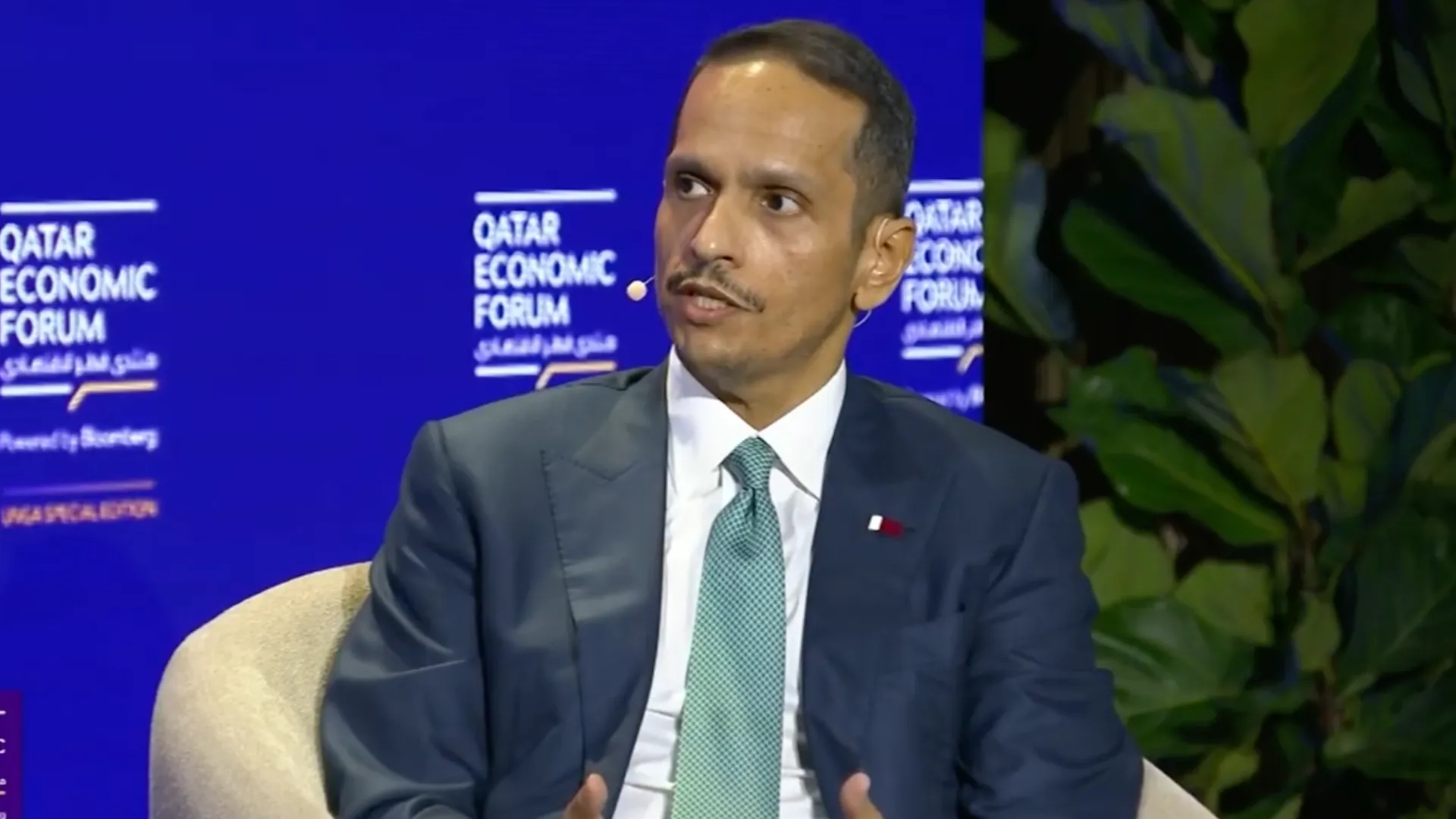
Qatar’s Prime Minister tells Bloomberg, the Gulf won’t be the same as before the war, unless there’s a security framework ensuring no one is a threat to each other. Speaking at the Qatar Economic Forum in New York, Sheikh Mohammed bin Abdulrahman Al Thani says the region needs to have good relations.
Artists in Gaza are painting murals on destroyed walls, honouring US rapper Macklemore for his support for Palestine. Despite a ceasefire agreement, Israel continues to kill Palestinians in frequent strikes across Gaza.







![UN continues its engagement in a Sahel where governments are placing greater emphasis on sovereignty and strategic autonomy [File photo: Timothy A. Clary / AFP]](https://i0.wp.com/occasionaldigest.com/wp-content/uploads/2026/09/33VL2ZN-highres-1695130635.jpg?w=640&ssl=1)