Tensions have escalated between Iran and Israel while ongoing diplomatic efforts have failed to yield a lasting peace deal.
Published On 8 Jun 20268 Jun 2026
Iran and Israel were on Monday locked in tit-for-tat missile attacks, as the fragile ceasefire that has held in place since April 8 appeared closer to collapse than at any point in the past seven weeks.
These escalating hostilities between Iran and Israel come as the United States-Israel war on Iran enters its 101st day on Monday.
Here is what is happening:
In Iran
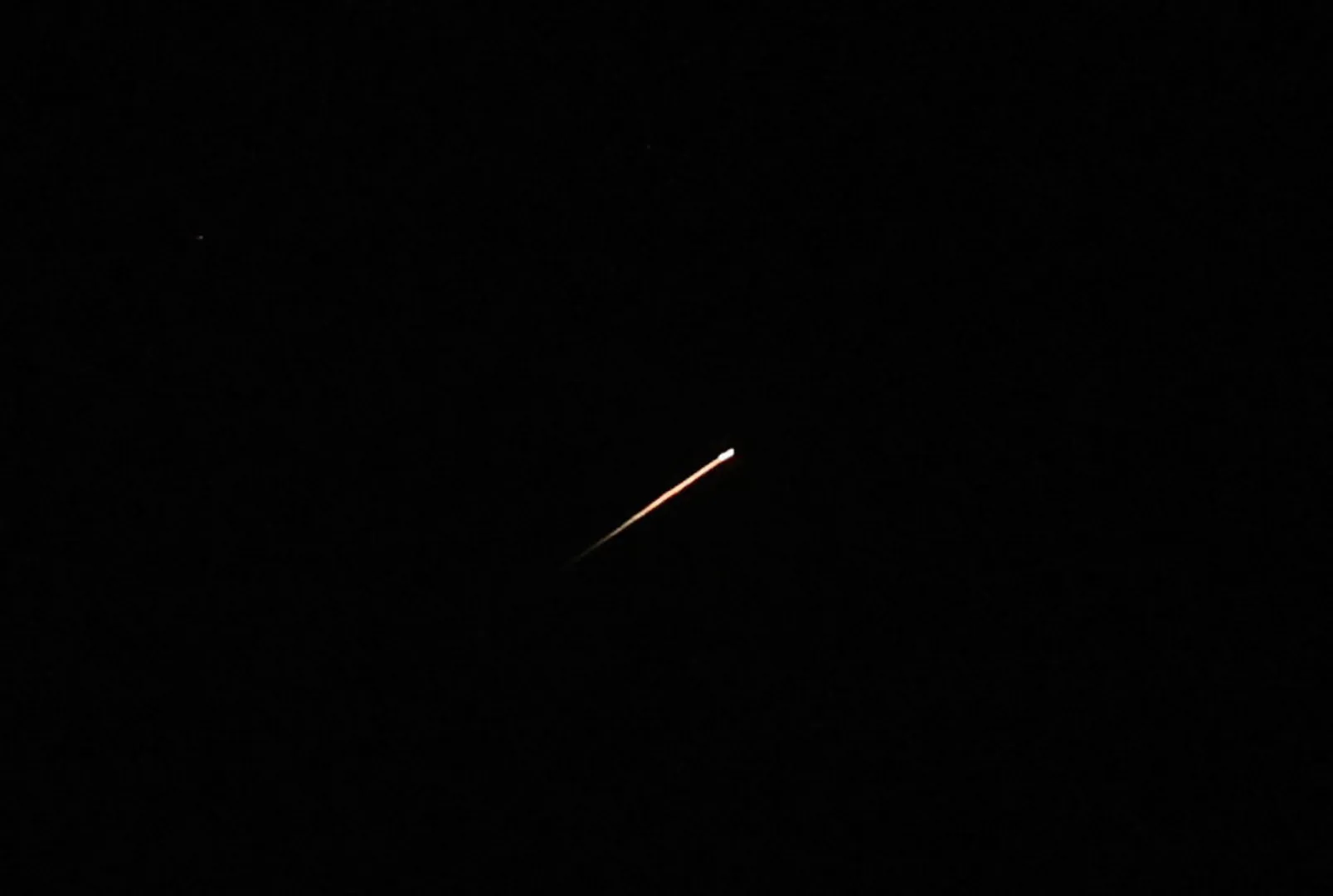
Explosions heard in Iran: Iran’s IRNA news agency reported that at least “two powerful explosions” were heard in Tehran and at least three in the city of Isfahan. The broadcaster also reported that explosions were heard in Tabriz. The Israeli military had said it “attacked military targets” in western and central Iran.
Power plant in Mahshahr attacked: A security officer in the southwestern Khuzestan governorate told the Fars news agency that Israeli forces have attacked the Karun Petrochemical Company in the city of Mahshahr. The Israeli army confirmed striking the petrochemical plant. The Mahshahr Petrochemical Special Economic Zone announced that its workers have evacuated the site following the Israeli strike.
Iran denies attacking base in Saudi Arabia: Responding to reports of an explosion at the Al-Kharj airbase in Saudi Arabia, Iran’s IRIB broadcaster cited a military official as saying that “Iran has not fired any shots.”
Red Crescent on standby: The Iranian Red Crescent says it is standing by to respond to any fallout from Israel’s attacks across the country this morning.
In Israel
Security cabinet meeting: Israeli Prime Minister Benjamin Netanyahu will convene a security cabinet meeting at 11am local time (08:00 GMT) amid escalating hostilities with Iran, according to multiple Israeli media reports.
The Israeli military issued a series of alerts starting Sunday over waves of missiles launched from Iran towards Israeli territory.
Iran’s Islamic Revolutionary Guard Corps (IRGC) said on Monday that they launched attacks against Israel’s Nevatim and Tel Nof airbases as a response to attacks on radar sites within Iran, the Fars news agency reported.
Israel’s Channel 12 broadcaster and Ynet News said a missile fired from Yemen was intercepted.
In the US
The US State Department issued a security alert for citizens in Jordan over reports of projectiles in the country’s airspace – presumably missiles fired by Israel towards Iran, or by Iran towards Israel.
Democratic Senator Chris Murphy said Israel’s latest attack on Iran “compounds” the “humiliation” for US President Donald Trump, as it comes after the US president reportedly told Netanyahu not to retaliate to Iran’s missiles fired at northern Israel.
In Lebanon
Explosions were heard in the Lebanese capital Beirut early on Monday, but these were likely rocket interceptions, Al Jazeera’s Zeina Khodr reported from Beirut.
On Sunday, Israel had hit the suburbs of Beirut, in attacks that Iran described as crossing a red line in terms of violating a ceasefire between Lebanon and Israel. Iran then said its decision to hit northern Israel was in response to these attacks near Beirut.
War diplomacy
Israel defends attacks on Iran: The Israeli ambassador to the US, Yechiel Leiter, defended the attacks on Iran, saying “no self-respecting country” would tolerate Iran’s missile launches against Israel.
Canada expresses concern: Canada’s Foreign Ministry has expressed concern about the resumption of conflict between Iran and Israel, saying it jeopardises the ongoing negotiations and “the prospects for peace”.
Saudi-Qatari foreign ministers speak: Saudi Foreign Minister Prince Faisal bin Farhan Al Saud spoke by phone with his Qatari counterpart, Sheikh Mohammed bin Abdulrahman bin Jassim Al Thani, the Saudi Foreign Ministry said.
Qatari-Iranian foreign ministers speak: The Qatari foreign minister, who is also the country’s prime minister, spoke by phone with Iranian Foreign Minister Abbas Araghchi about mediation efforts between Iran and the US, as well as the latest developments in Lebanon, according to a Qatari statement.
As the World Cup nears, many Iranians say their normal enthusiasm for the event has been dampened by the co-host US’s war against their country as well as economic hardships.
Iran and Israel exchanged threats after Tehran launched missiles towards Israel in response to Israeli strikes on Beirut’s southern suburbs. Israel vowed to deepen attacks on Lebanon, while Iran warned of further action if the strikes continue.
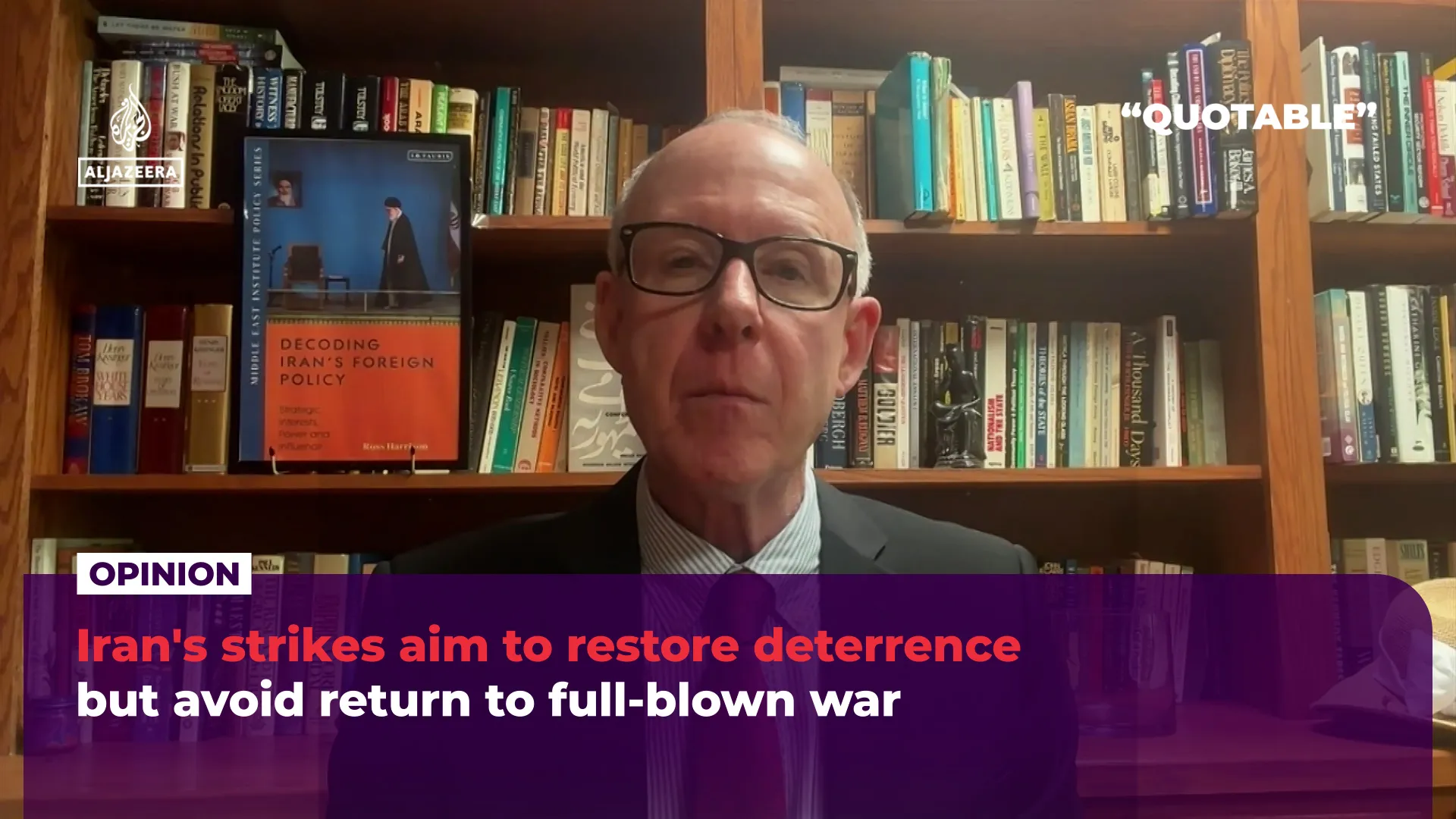
Ross Harrison, a senior fellow at the Middle East Institute, says that Iran’s renewed missile strikes on Israel aim to restore deterrence without reigniting full scale war.
A US influencer and actor have caused outrage after mocking Palestinians subject to rape and beastiality in Israeli prisons. Elon Gold and Lizzy Savetsky made the comments at the Tribeca Film Festival as they promoted a new film made in Israel.
Department reports raise concerns about increased espionage activity amid US-Israeli war with Iran, ceasefire talks.
The Pentagon’s intelligence arm has raised the assessed threat level on Israeli spying from “high” to “critical” in recent weeks, according to US media.
NBC News first broke news of the change on Friday, with The New York Times issuing its own report the following day.
Recommended Stories
list of 3 itemsend of list
The news outlets cited anonymous sources as saying the switch came in light of concerns over increasingly aggressive tactics related to the US-Israeli war with Iran.
They said the Pentagon’s Defense Intelligence Agency (DIA) had raised the alert level amid fears that Israel is increasingly attempting to surveil top US officials. The aim is allegedly to understand internal White House deliberations about ending the war.
US President Donald Trump and Israeli Prime Minister Netanyahu have publicly diverged in their approach to the war, which the US and Israel started on February 28.
Trump, on one hand, has repeatedly said he wants to bring the war to a close, amid mounting political pressure at home.
Netanyahu, meanwhile, has called for war to resume, despite an April 8 ceasefire. The fighting has been mostly paused since the temporary truce was announced, but efforts to reach a lasting agreement have repeatedly stalled.
The New York Times reported that, while Israel has been known to spy on the US, the DIA cited an uptick in activities beginning in late 2024, as the administration of US President Joe Biden increased pressure on Israel over its genocidal war in Gaza.
That increase continued into 2025, as Trump returned to the presidency and began deliberating about how to approach Iran.
The newspaper added that other recent intelligence assessments have also documented evidence that there are Israeli efforts to monitor Trump’s special envoy Steve Witkoff as well as Elbridge Colby, a top policy official at the Pentagon, and his deputy Michael DiMino IV.
Witkoff had been the lead negotiator in nuclear talks that preceded the initial US-Israeli attack on Iran in February.
Both NBC News and The New York Times cited unnamed US officials in their reports. The US Department of Defense did not immediately respond to a request for comment from Al Jazeera.
However, an unnamed spokesperson told both news organisations that the reports were “false”.
Still, the reported concerns are likely to raise questions over the close intelligence and military coordination between Israel and the US.
Washington has, for years, provided billions in military aid and weapons sales to Israel, including throughout the genocide in Gaza.
The US Congress is also currently debating a section of a new defence bill, which would integrate the two countries’ research and development for weaponry to an unprecedented degree.
While the US and its allies are known to regularly conduct intelligence operations on each other, officials told both NBC and The New York Times that Israel’s recent vigour was unique.
The New York Times reported that the increased DIA designation surpasses all current allies, as well as a handful of countries with more fraught relations.
Recent incidents included Israel’s military intelligence trying to plant listening devices at the DIA headquarters in 2021, according to the newspaper.
In 2025, Israel’s domestic intelligence agency, Shin Bet, was found to have tried to plant a similar device in a Secret Service vehicle, the report said.
Casualty toll is expected to increase, reports Al Jazeera’s Hani Mahmoud.
Published On 6 Jun 20266 Jun 2026
At least five people have been killed while attending a wedding in Gaza City after Israeli forces bombed the wedding tent.
Al Jazeera’s Hani Mahmoud, reporting from the enclave on Saturday, said several projectiles exploded in or near tents that were part of the wedding, with shrapnel flying into surrounding areas.
A source at al-Shifa Hospital told Al Jazeera reporters on the ground that more than a dozen people were wounded in the attack.
Women and children are believed to be among the casualties, Mahmoud said, adding that the casualty toll is expected to rise.
Irish Taoiseach Martin says the far-right ministers have shown ‘a desire to see the elimination of Palestinians from Palestine’.
Published On 5 Jun 20265 Jun 2026
Ireland has barred Israel’s National Security Minister, Itamar Ben-Gvir and Finance Minister, Bezalel Smotrich, from visiting the country, citing their conduct towards pro-Palestinian activists and support for policies that would displace Palestinians from their homeland.
Ireland’s Prime Minister Micheal Martin – known as the Taoiseach – confirmed the move on Friday, saying the two far-right ministers had advocated positions that amounted to “a desire to see the elimination of Palestinians from Palestine”.
Martin also referenced the treatment of pro-Palestinian activists who were part of a Gaza-bound aid flotilla last month.
Ben-Gvir provoked widespread condemnation when he shared video of himself mocking the detained activists as they knelt on the floor, blindfolded, with their hands bound.
In a statement, Ireland’s justice ministry said Justice Minister Jim O’Callaghan had instructed immigration officers to refuse entry to Ben-Gvir and Smotrich should they seek to enter the state.
Ben-Gvir became a minister in 2022, after an alliance with Smotrich’s far-right Religious Zionist party came third in legislative elections.
Smotrich, who himself lives on an illegal Israeli settlement, has been a vocal advocate of Israel annexing the occupied West Bank, saying he hopes to “kill the idea” of a Palestinian state.
Together, Ben-Gvir and Smotrich form a cornerstone of Israeli Prime Minister Benjamin Netanyahu’s right-wing coalition.
‘Justifies EU sanctions’
Addressing Ireland’s travel ban at a summit in Montenegro, Martin said the two Israeli ministers should also be subject to EU sanctions.
“In my view, their behaviour justifies sanctions at EU level as well, and that’s something that we will raise, whether we can get sufficient support across the European Union is a different matter,” Martin was quoted by Irish broadcaster RTE.
Since Israel’s genocidal attacks on Gaza, Ireland has been among the most outspoken critics of Israel.
Ben-Gvir and Smotrich have faced bans from other European countries over their conduct, including Britain, Spain and Slovenia. Last month, France banned Ben-Gvir from entry.
Israel strikes Lebanon despite ceasefire, while Hezbollah rejects deal as death toll tops 3,500.
Published On 5 Jun 20265 Jun 2026
Israel has continued to carry out deadly strikes across Lebanon despite the announcement of a new US-brokered ceasefire agreement reached by Lebanese and Israeli officials in Washington, DC.
The violence has pushed the number of casualties higher, with Lebanon’s Ministry of Public Health reporting that at least 3,526 people have been killed and 10,733 wounded in Israeli attacks since March 2.
Meanwhile, Hezbollah leader Naim Qassem has dismissed the ceasefire as a “farce”, warning that northern Israel will remain a target as long as Israeli forces continue bombing Lebanon, raising more doubts about the prospects for a lasting truce.
Here is what we know:
In Iran
Iran adviser flags concerns over draft deal: Mohsen Rezaei, an adviser to Iran’s Supreme Leader Mojtaba Khamenei, said the draft memorandum of understanding being negotiated to end the war still contains “ambiguities” that need to be clarified. Speaking to Iranian state television, Rezaei also accused US President Donald Trump of trying to pressure Tehran into accepting Washington’s terms while keeping Iran’s own conditions “in a vague state”.
War diplomacy
Questions over US strategy: Reporting from Washington, DC, Al Jazeera’s Kimberly Halkett said the White House is facing growing questions over why a negotiated agreement with Iran is still needed after President Donald Trump repeatedly claimed US military action had “obliterated” Iran’s nuclear programme. Halkett said critics are asking: “If these military objectives have been achieved, then is there still a need for talks?” She added that “with each passing week that this war drags on” and negotiations remaining stalled, it is becoming increasingly difficult for the administration to reconcile its claims of success with the continued push for diplomacy.
Hezbollah rejects conditional ceasefire: Hezbollah leader Naim Qassem rejected the limited truce agreed to by Lebanese and Israeli representatives in the US, demanding a complete ceasefire and a full Israeli pullout from the country. Qassem also warned of more attacks on northern Israel, highlighting the difficulties in reaching a lasting peace. Both sides have blamed each other for breaking a previous ceasefire announced in April.
The Gulf
Oman oil terminal disruption: Reuters reported that Oman has suspended crude oil loading operations at its key Mina al-Fahal terminal after an explosion near its single-buoy mooring (SBM) berths. Citing unnamed sources, the agency said the blast occurred between SBM 1 and SBM 2 and was allegedly caused by a drone attack.
In the US
Trump says US does not need a deal to access Iran’s uranium: The US president said Washington could access Iran’s enriched uranium without reaching an agreement with Tehran, arguing the material is effectively “entombed”. Trump also said he does not plan to meet Iran’s Supreme Leader Mojtaba Khamenei, but he suggested a meeting could be possible if a deal is eventually reached, adding that “if it happened … I’d be respectful”.
In Israel
Ultra-Orthodox protest blocks major highway: Hundreds of ultra-Orthodox Israelis blocked Highway 1 in protest against the government’s enforcement of military conscription for religious students, according to Israel’s Channel 10. The demonstrations began after police stopped two ultra-Orthodox students and transferred one to military authorities. Large numbers of police and border guards were deployed to clear the highway and disperse protesters.
In Lebanon
Hezbollah rejection raises fears of escalation: Reporting from Beirut, Al Jazeera’s Ali Hashem said Hezbollah remains the key actor on the Lebanese side when it comes to decisions about fighting and any potential halt to hostilities with Israel, “regardless of what the Lebanese government says”. Given Hezbollah’s rejection of the US-brokered ceasefire, Hashem warned that further escalation is likely from both Hezbollah and Israel. He noted that southern Lebanon and the western Bekaa Valley experienced significant Israeli air and ground attacks on Thursday, adding that Hezbollah’s position suggests “it is going to be a very difficult situation” in the days ahead.
Mogadishu, Somalia – Mustafa, 33, dreads election time in Somalia. He drives a bajaj — a three-wheeled taxi — and says that when tensions rise, as they always do when polls are near, the whole city feels it, and drivers like him are among the first.
On Wednesday, he was passing through the Hawl Wadaag district when heavy gunfire between government and opposition forces erupted all around him.
Recommended Stories
list of 2 itemsend of list
“I couldn’t even think. Everyone was shouting and running for their lives, and we all fled from the bullets,” he told Al Jazeera. “We haven’t seen fighting this bad in years.”
The shooting that began that afternoon around the homes of former Prime Minister Hassan Ali Khaire and, later, former President Sheikh Sharif Sheikh Ahmed, came as opposition figures were planning to organise protests against what they describe as an illegal term extension by incumbent President Hassan Sheikh Mohamud.
Khaire and Sharif Sheikh Ahmed were among opposition leaders spreadheading the planned protests amid rising tensions with the federal government.
The government said the planned protests would undermine security in a city still grappling with persistent armed violence.
Hundreds of families fled neighbourhoods near the fighting, and by the next day, many of the capital’s central areas had emptied. The sudden eruption of violence ended a period of improving security in Mogadishu, shattering the perception that the city had begun turning a corner.
“The most frustrating thing is that we have nothing to do with it, and it impacts so many of us,” Mustafa said. “We make our living in this city”.
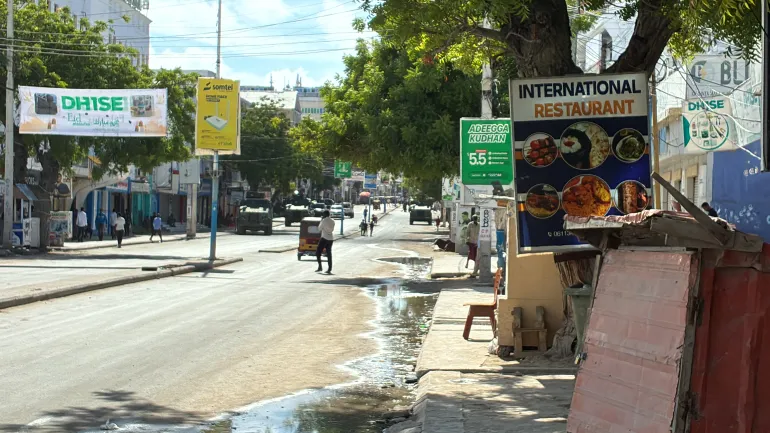
Security forces sealed Maka al-Mukarama Road, one of Mogadishu’s main arteries, while Bakara market, the largest commercial hub in the city, was effectively closed for business.
Maka al-Mukarama Road, Mogadishu’s main thoroughfare, is usually a bustling commercial hub, but recently, it has been largely empty, with the exception of military vehicles [Faisal Ali/Al Jazeera]
“Look, it’s midday, and there’s almost no one here, shops are closed, and usually by this time the place is jammed,” Ahmed, a street vendor at Bakara market, told Al Jazeera, gesturing at shuttered stalls.
Ali Wardheere, the deputy central bank governor, estimated the direct cost to businesses and services at $3.8m, though he stressed the figure was a model-based projection, not an official or final tally.
Like most Somalis, Mustafa has never voted for a president or a member of parliament. The country has not held a direct election for national leadership since the late 1960s.
Since the state was re-established in 2012 after its 1991 collapse, leaders have been selected through an indirect system negotiated by clan elders and political elites.
As presidential terms near their end, low trust among political actors often leads to intense competition over power — and at times violence — as disputes over the electoral timetable come to a head.
At a press conference in late May, Sharif warned that the political deadlock could turn violent if negotiations failed.
“Where do things stand? [We say] Leave, and [you say] I won’t leave. What comes next? Bullets.”
The warning echoed events in 2021, when then-President Mohamed Abdullahi Farmaajo remained in office more than a year beyond the end of his term, triggering clashes in Mogadishu before a political agreement was reached.
Higher stakes this election
This time, the political standoff carries higher stakes.
President Hassan Sheikh Mohamud says that constitutional amendments approved by parliament extended his mandate by an additional year from May 15. The opposition rejects that and has begun referring to him as a “former president”.
Two of Somalia’s most influential federal states also reject the amendments, leaving the country divided over the constitutional framework governing the next election, with no constitutional court to resolve the dispute.
After parliament approved the changes, Mohamud declared that the “provisional constitution, and the provisional era, was a sun which set yesterday,” signalling that his administration would press ahead despite objections from its opponents.
Tensions had been building for days. Ahead of a protest planned for Thursday, opposition leaders left the heavily fortified “green zone” near Mogadishu’s airport and returned to their residences across the city.
Some opposition figures said they would deploy their own armed guards at the demonstration, a proposal Mohamud rejected. The dispute heightened fears of a confrontation before fighting eventually broke out.
Both sides blame the other for starting the clashes. Khaire accused Mohamud of directing a “sustained and indiscriminate military assault” that lasted more than 20 hours, a claim Sharif echoed after fighting reached his own residence.
Ahmed Moalim Fiqi, the defence minister, accused the opposition of militarising the standoff, likening it to Sudan’s Rapid Support Forces and alleging that opposition figures had “distributed mortars and artillery across the capital”.
“Force and militias,” he said, would no longer be allowed to “seize power or block the state.”
How it came to this
The roots of the crisis run back to the 2012 provisional constitution, which set up a federal, parliamentary system built on broad consensus and clan-based power-sharing, which every government since has promised to achieve and failed to attain.
This year, after a long review, parliament amended the constitution through a disputed process that split the political class. The government has insisted that the new constitution advances the statebuilding process and that the Somali public should be allowed to directly elect its representatives.
For Ahmed Abdi Koshin, a federal MP who boycotted the draft, the danger is that the whole settlement comes apart. The process, he said, “clearly doesn’t have buy-in,” and the original constitution, for all its faults — “an imperfect product of compromise” — was the “only glue holding Somalia together”.
Koshin is not against a direct vote in principle, he said, but does not believe the country is ready for one. “We don’t have legislation for a direct vote; censuses and the security situation remains compromised. It really is up to the president to either reach a deal and save Somalia, or watch it fall apart,” he said.
The opposition, organised as a coalition known as the Somali Future Council and including two serving federal-state presidents, former prime ministers and a former president, has pressed Mohamud to accept that his mandate has ended and negotiate a new electoral framework, as in past transitions.
It alleges that his push for a direct vote is a pretext for extending his term and potentially securing another.
The government rejects that, casting a national one-person, one-vote election — the first since the 1960s — as essential to a drawn-out state-building project. When electoral talks collapsed on May 15, the Ministry of Information accused the opposition of bringing demands that ran counter to “the citizen’s fundamental right to vote and to be voted for”, and vowed to press ahead.
Mohamed Ibrahim Moalimuu, a lower-house MP who backed the amendments, said further delay could not be justified. “We’ve waited for more than 12 years,” he told Al Jazeera.
“If they had arguments against them, they should have taken part in the process and raised their issues. A constitution isn’t a Quran, and they should come back and work through parliament to make their views clear.”
A whole generation of Somalis, he noted, have never cast a ballot, and a real election “would be a major milestone and would bring some hope”.
The old indirect system, he added, was notoriously corrupt, with parliamentary seats changing hands for anywhere from $100,000 to as much as $1.3m. “This system is too dirty and keeps people out,” said Maliumuu. “It needs to be changed.”
A deeper problem
A regional official, speaking on condition of anonymity because he was not authorised to talk to the media, described an elite “divided strategically over what type of country they want, whether a strong centralised state or a weak decentralised one, and tactically over who the right candidate is to take them there”.
Mohamud, the official said, had moved from a decentralised vision for Somalia that embraces federalism towards a stronger executive, and his early, promising relationships with the federal-state leaders had since soured.
Those fractures have opened on several fronts at once.
Somaliland, which declared independence in 1991 and has stayed out of the constitutional review entirely, was recognised by Israel late last year after earlier courting Ethiopia.
Puntland and Jubaland, two of Somalia’s six federal states, have withdrawn from the federal system over the new constitution, while more than 100 MPs and senators from both boycotted the final vote.
Broader regional crises, from Sudan’s civil war to disease outbreaks elsewhere on the continent, have pushed Somalia further down the list of international priorities, leaving international engagement more fragmented and inconsistent.
The country is also grappling with a deepening humanitarian crisis and aid cuts, prompting famine monitors to warn of a heightened risk of hunger in parts of Somalia.
Yusuf Aynte, a veteran religious leader and former MP, said Somalia’s leaders needed to build consensus rather than push through changes that risk deepening divisions.
“The president says what he is doing is good, and that may be so,” he told Al Jazeera. “But the most important thing is what everyone can agree on.
“At the moment, Somalia has too many problems, and can’t afford to be distracted like this.”
Jamal Shiil, a youth activist, told Al Jazeera that Somalia’s large youth population would ultimately bear the cost of the persistent instability.
“Young people want to make a living here, for Somalia to be peaceful and not to have to leave because of the problems,” he said. “But if things don’t change it won’t leave them much of a choice”.
A congressional panel in the United States has rejected an effort to revoke a provision from the defence budget that would further integrate the US and Israeli militaries.
An amendment to sink the pro-Israel measure, introduced by Democratic Congressman Ro Khanna, failed in a voice call on Thursday in the House Armed Services Committee.
Recommended Stories
list of 3 itemsend of list
That defeat paves the way for the proposal to advance to the floor of the House of Representatives.
Khanna had argued that the provision in the National Defense Authorization Act (NDAA), formally called Section 224, rewards Benjamin Netanyahu at a time when the Israeli prime minister is trying to dictate US policy in the Middle East.
The progressive Democrat cited recent reports that President Donald Trump is angry at Netanyahu over Israel’s escalation in Lebanon.
“Everyone in America — whether you’re a Republican, an independent or a Democrat — says that we need to tell Netanyahu that America calls the shots, not the prime minister of any other country,” Khanna said.
“They want less cooperation and blank checks to Israel, not more. Only the United States Congress would dream up at this moment, ‘Let’s actually do more for Israel.’”
The vote on the amendment was taken by calling on committee members to say aloud either “yes” and “no”, and the “nays” clearly were more numerous. It was not recorded as a roll-call vote, which would require each member’s preference to be logged.
Section 224 would require the Pentagon chief “to designate an executive agent responsible for synchronising cooperative efforts between the United States and Israel”.
That official would be in charge of overseeing several joint initiatives, “including bilateral defence technology research, development, testing, evaluation, integration, and industrial cooperation”, the NDAA reads.
Netanyahu’s endorsement
Critics have raised concern that Section 224 may make US military aid to Israel more opaque, concealing the assistance as cooperation rather than a separate expense.
The measure also risks tethering the US military to its Israeli counterpart technologically at a time when the American public is rapidly turning against Israel, according to recent public opinion polls.
“As political pressure builds to reduce US military assistance to Israel, Section 224 provides the framework for continuing — and expanding — US-Israel military ties by entrenching Israeli technology within the US defense supply chain in a way that would shield it from the annual appropriations process,” the nonprofit lobbying group A New Policy said in a brief last week.
“The use of must-pass legislation as the NDAA as a mechanism of integration speaks to the plummeting popularity of continuing unconditional support to Israel.”
The measure comes as Netanyahu pushes to transform US aid to Israel from direct assistance to military “cooperation”.
The Israeli prime minister wrote a letter to Republican Congressman Marlin Stutzman endorsing a bill facilitating that transition.
In the letter, Netanyahu said, “The time has now arrived for us to move from aid recipient to partner.”
He added he supported Stutzman’s plan for a “new framework of joint defense cooperation, codevelopment, coproduction and mutual investment in areas including advanced missile defense, artificial intelligence … and next generation military platforms”.
Referencing the letter on Thursday, Khanna argued that Section 224 “directly” follows Netanyahu’s language.
“I am for Team America. I am for the interests of this country, and I believe that when Donald Trump ran, he ran ‘America First’,” the Democrat said.
“That includes American interests against any foreign country. We should have American sovereignty and make it clear that we strike 224. If we want to give aid to Israel, if we want to sell them weapons, that should be a vote for the entire Congress.”
But both Democrats and Republicans pushed back against his argument, saying that the provision aims to streamline existing cooperative programmes that benefit the US.
Key Democrat backs Section 224
Congressman Adam Smith, the top Democrat on the panel, said he was “very sympathetic” to Khanna’s frustration with Netanyahu.
“Mr Netanyahu insisted on this war with Iran that has strengthened Iran and weakened our position. I do not like his leadership of Israel or where he is going,” Smith said.
But he added that it is in the US’s interests to have deep military ties with Israel, a country accused by leading rights groups and United Nations investigators of committing genocide in Gaza.
“The reason that we have these partnerships with Israel, where we may not have as many developed partnerships with other NATO countries, is because Israel has actually been having to fight,” Smith said.
“They have faced drone attacks and missile attacks. They have had to develop new technologies, technologies that we’ve benefitted from.”
Rights advocates often decry the promotion of Israel’s weapons as “battle-tested” — because they have been tested on the Palestinian and Lebanese communities that they devastated, killing tens of thousands of people along the way.
Earlier on Thursday, Palestinian rights advocates warned against approving Section 224 during a news conference on Capitol Hill.
“It is unfathomable that this is the American response to a country that has, over the past two and a half years, carried out a genocide against Palestinians and started wars in both Iran and Lebanon,” said Margaret DeReus, the executive director at the Institute for Middle East Understanding (IMEU).
Republican Congressman Thomas Massie has promised to introduce an amendment to revoke Section 224 when the NDAA goes to a full House vote.
Israel’s Supreme Court rejects government ban on prisoner visits, affirming Red Cross access under international law.
Published On 4 Jun 20264 Jun 2026
Israel’s Supreme Court has unanimously rejected a government policy banning representatives of the International Committee of the Red Cross (ICRC) from visiting Palestinian detainees in Israeli prisons.
The court ruled on Wednesday that by preventing the Red Cross from visiting prisoners, the government had contravened Israeli and international law, and therefore the policy must be repealed.
Recommended Stories
list of 3 itemsend of list
It also ruled that the government failed to present a legal foundation for its policy on annulling all visits after the Hamas-led attack on October 2023, in which more than 1,100 people were killed and more than 240 were taken captive.
The assault triggered a brutal war in Gaza, which has been defined as a genocide by several prominent scholars and an independent United Nations inquiry. The Israeli army killed more than 72,950 people in the enclave, according to Gaza’s Health Ministry, and reduced most of the besieged territory to rubble, and forced the displacement of nearly 1.9 million Palestinians.
Violence across the occupied West Bank perpetrated by Israeli forces also intensified to unprecedented levels. All visits to prisoners were halted, and information about them was not shared – something that used to be standard practice before the war. Back then, Israeli authorities accused Hamas of failing to secure access to the captives in Gaza.
It was the first time in 50 years that Israel prevented Red Cross visits, according to the Association for Civil Rights in Israel (ACRI), which filed the petition.
“For the first time in nearly three years, the over 9,000 Palestinian security prisoners being held in Israeli prisons and military detention centers will receive Red Cross visits,” ACRI said. The ban remained in place even after a “ceasefire” was agreed last October.
Initial petition
The petition by ACRI, Physicians for Human Rights, Israeli rights group HaMoked and Israeli NGO Gisha against the government policy was first filed in Israel’s High Court in February 2024. But the state of Israel asked for 27 extensions before a hearing was held at the end of October last year.
The ICRC welcomed the decision, saying it was ready to resume its visits. “We are continuing our dialogue with the Israeli authorities to resume our work in detention as soon as possible,” it said in a statement. It added that access to detainees and the ability to meet with them privately are obligations under international law.
Wednesday’s decision comes amid growing concerns over the ill-treatment of Palestinian detainees in Israeli prisons.
Last week, the United Nations released its annual report on conflict-related sexual violence verified in 2025. It cited torture, rape, gang rape, forced nudity and “cavity searches conducted without apparent security justification perpetrated” by Israeli armed forces and security forces primarily during detention and interrogation and across several sites, including the infamous Sde Teiman military camp, among others.
Israel and the Lebanese government have agreed to implement a new US-mediated ceasefire, the Trump administration has said, despite Israel’s defence minister insisting the military will continue operations in Lebanon.
Furthermore, while Lebanese President Joseph Aoun said on Thursday that the ceasefire would come into force within 24 hours of approval by all concerned parties, Hezbollah leader Naim Qassem has dismissed the deal, labelling it a “surrender and defeat”.
Recommended Stories
list of 4 itemsend of list
The Trump administration announcement comes just weeks after a previous agreement to cease hostilities was supposedly reached on April 16. Since then, however, more than 600 people have been killed in Israeli strikes across Lebanon while Israel has expanded its military presence in the south of the country, now occupying about one-fifth of the country.
The renewed diplomatic push also comes as Washington pursues parallel shuttle negotiations with Iran. Tehran, a close ally of Hezbollah, has made a ceasefire in Lebanon a condition for any broader agreement to end the war with the US and has repeatedly called for Israel to withdraw from southern Lebanon.
Iran’s position was underlined when Quds Force commander Esmail Qaani said the baseline demand in Lebanon is for Israeli forces to withdraw to the positions they held before the start of the US-Israel war on Iran at the end of February – a demand that is not explicitly reflected in the agreement.
Iran and Hezbollah’s responses to the US announcement, coupled with Israel’s insistence that military operations will continue, have cast serious doubt on its viability. Critics of Israel’s war on Lebanon also point to the April truce, which they say has completely failed to halt Israeli attacks or Israel’s occupation of the south of the country.
What has been announced?
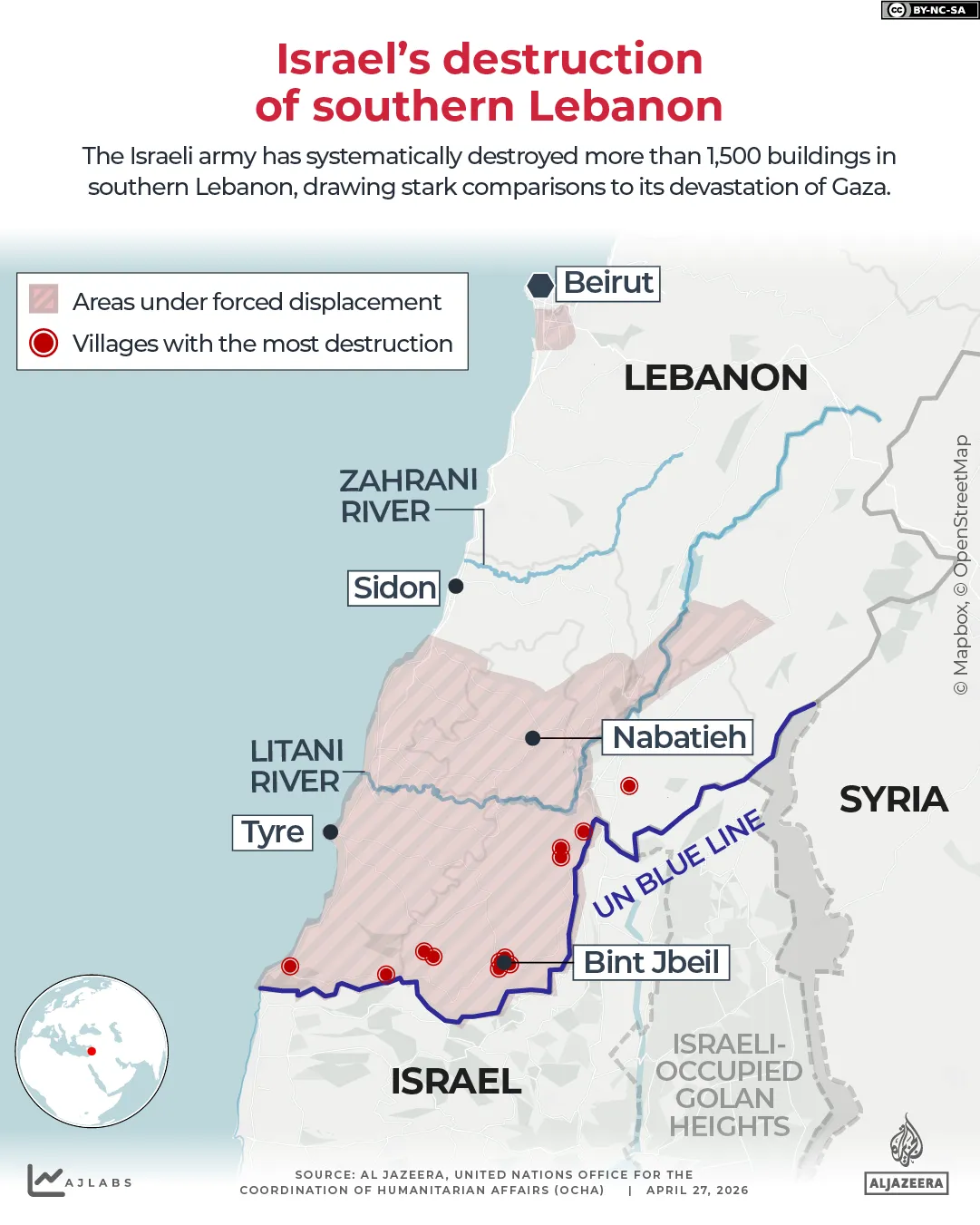
According to the Trump administration, Israel and Lebanon have agreed to implement a ceasefire contingent on a “complete cessation” of Hezbollah fire and the evacuation of its fighters from the area south of the Litani River.
The agreement also calls for the creation of “pilot zones” where Lebanese Armed Forces would take exclusive control “to the exclusion of all non-state actors”. The stated aim is to move towards a wider political and security agreement, including the dismantling of non-state armed groups and preventing their re-emergence.
But Hezbollah was not party to the talks and has already rejected the agreement. Lebanon was represented by government diplomats, even though the Lebanese army is not a party to this conflict.
According to the wording of the agreement, the parties are due to reconvene during the week of June 22 to continue diplomatic and security talks, with the US facilitating communications in the meantime. It remains unclear if that stage of the agreement will ever be reached.
[Al Jazeera]
What was agreed in April?
The April agreement used different language, saying Israel and Lebanon would implement a “cessation of hostilities” from April 16, and never actually used the word ceasefire.
It also included a clause allowing Israel to “take all necessary measures in self-defence, at any time, against planned, imminent or ongoing attacks”.
That clause does not appear in the new text, which could be interpreted as a small concession. That was until Israel Katz said Israel would continue its military operations in Lebanon regardless.
The latest agreement also repeats Israel’s longstanding demand that Hezbollah withdraw from south of the Litani River.
Meanwhile, there is one major glaring omission. While the text focuses heavily on Hezbollah’s withdrawal from parts of southern Lebanon, it does not mention Israel’s withdrawal from southern Lebanon.
Lebanese journalist and analyst Souhayb Jawhar told Al Jazeera the agreement is defined as much by what it leaves out as by what it includes.
The text, he said, focuses on Hezbollah’s obligations and those of the Lebanese state: removing armed elements from south of the Litani and creating zones where the Lebanese army holds exclusive control.
“This point alone explains much of the scepticism within Hezbollah and its political environment,” Jawhar told Al Jazeera. “From the party’s perspective, any agreement should include a clear ceasefire, an Israeli withdrawal, and a framework for addressing outstanding issues, rather than becoming a document focused primarily on restructuring Lebanon’s internal security landscape.”
What else is different this time?
Other points of contention regarding the new agreement are the “pilot zones”, which appear to go beyond stopping the fighting and instead test a new security model in southern Lebanon – one that could eventually be expanded elsewhere, analysts say.
“This is why many observers see these zones as the beginning of a gradual transition from a security environment in which Hezbollah played the dominant role to one in which the Lebanese state and its armed forces become the sole security authority,” Jawhar said.
He added that the fate of the agreement may depend less on Lebanon-Israel talks than on the US-Iran track. If Washington and Tehran reach a wider understanding, the ceasefire in Lebanon will have a stronger chance of holding because both sides will have an interest in stabilising the Lebanese front.
“If those negotiations stall or collapse, Lebanon could quickly return to being one of the main arenas of pressure and confrontation between the two sides,” Jawhar added.
What is the situation in Lebanon now?
Southern Lebanon remained under heavy military pressure on Thursday, with Israeli strikes on Kafra and al-Mansouri in the southwest of the country. In the Bekaa Valley, one person was killed and four others wounded in an Israeli strike on Sohmor, according to Lebanon’s state-run National News Agency (NNA).
A separate strike hit Tell al-Aqareb, while further raids targeted Haddatha, Tibnin, Haris, and Harin. The NNA also reported more Israeli strikes across southern Lebanon as drones flew at low altitude over Beirut. In Maaroub, one person was killed and another wounded when Israeli forces targeted a motorcycle.
Israeli warplanes also struck towns and villages across the south, including Zawtar al-Sharqiya, Zawtar al-Gharbiya, Shoukin, Barachit, Srifa, Zibdin, Haris and Deir Zahrani. Jets and drones have also been flying over the south for much of the morning, including a drone seen at extremely low altitude over Tyre.
Lebanon’s Civil Defence authorities have warned people not to return south, citing the continued danger to civilian life in towns and villages across southern Lebanon.
More than 3,000 people have been killed, and more than one million have been forced from their homes since Israel renewed its assault on Lebanon in early March.
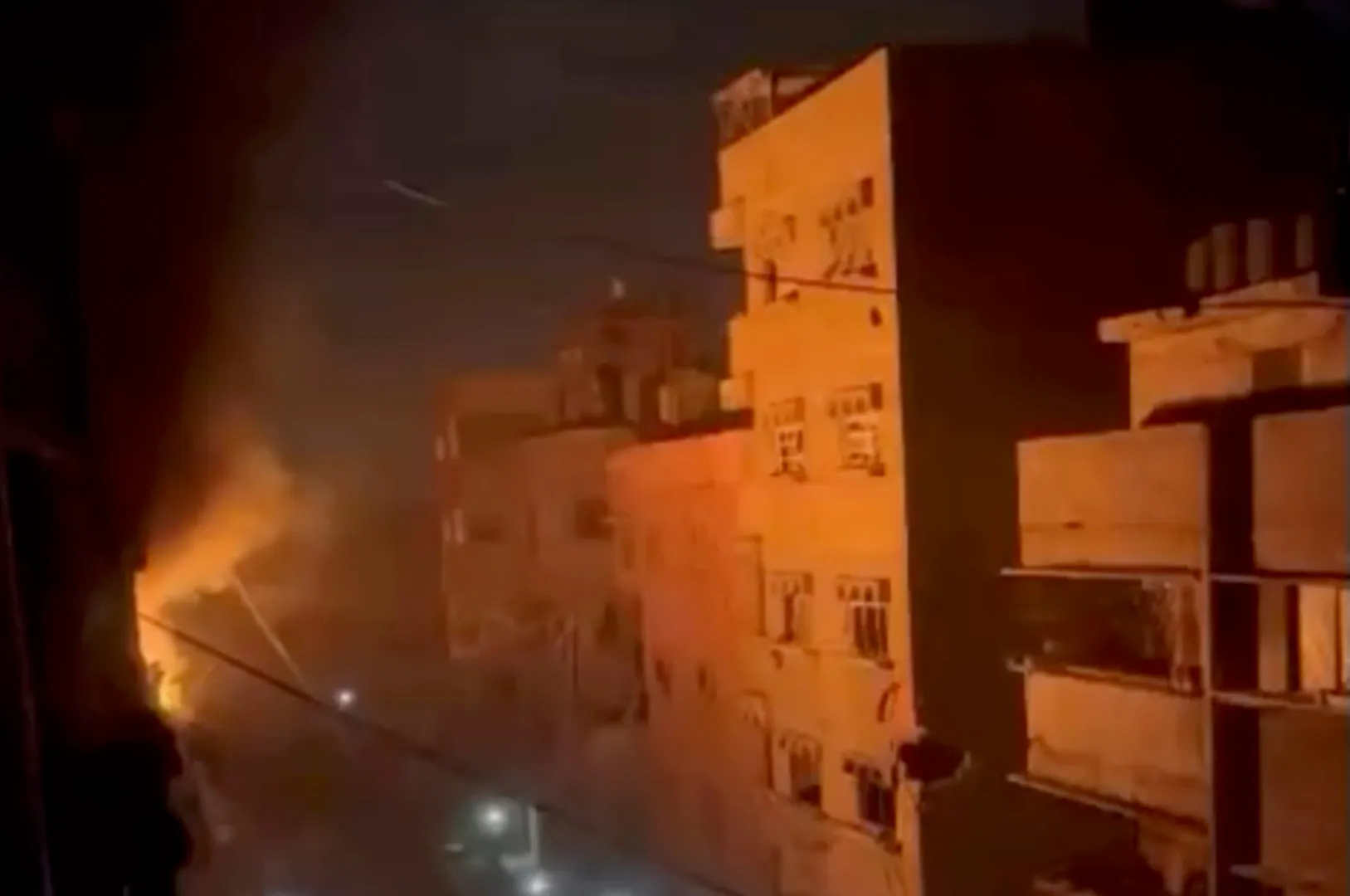
Israeli strikes on residential buildings have killed nine Palestinians, setting homes ablaze and leaving widespread destruction. Footage from the scenes showed rescue efforts amid the flames and ambulances transporting casualties.
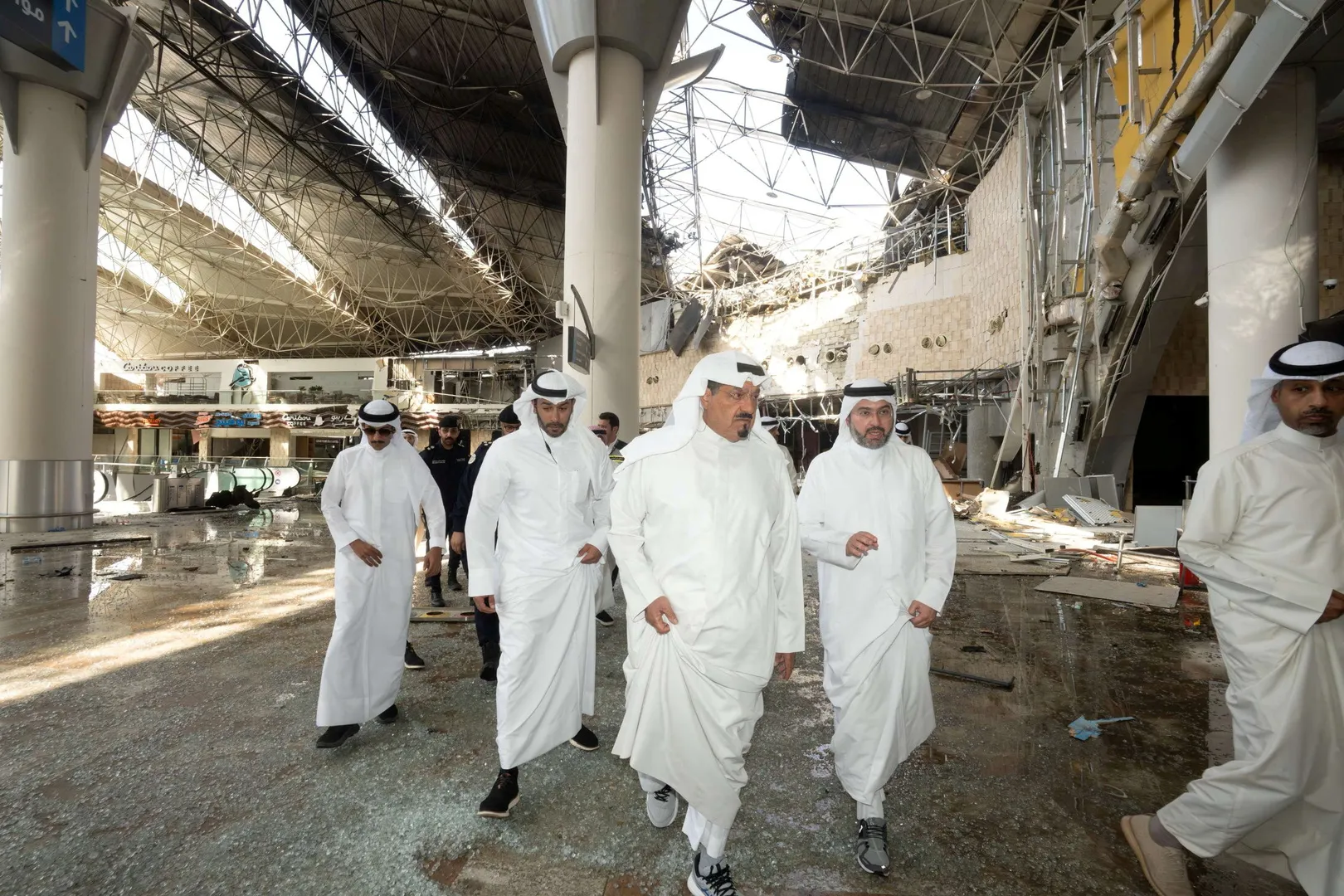
Kuwait’s defence ministry has labelled an attack on the country’s international airport as ‘heinous Iranian aggression’. One person was killed and dozens were injured after Iranian drones struck a terminal on Wednesday, causing ‘significant material damage’.
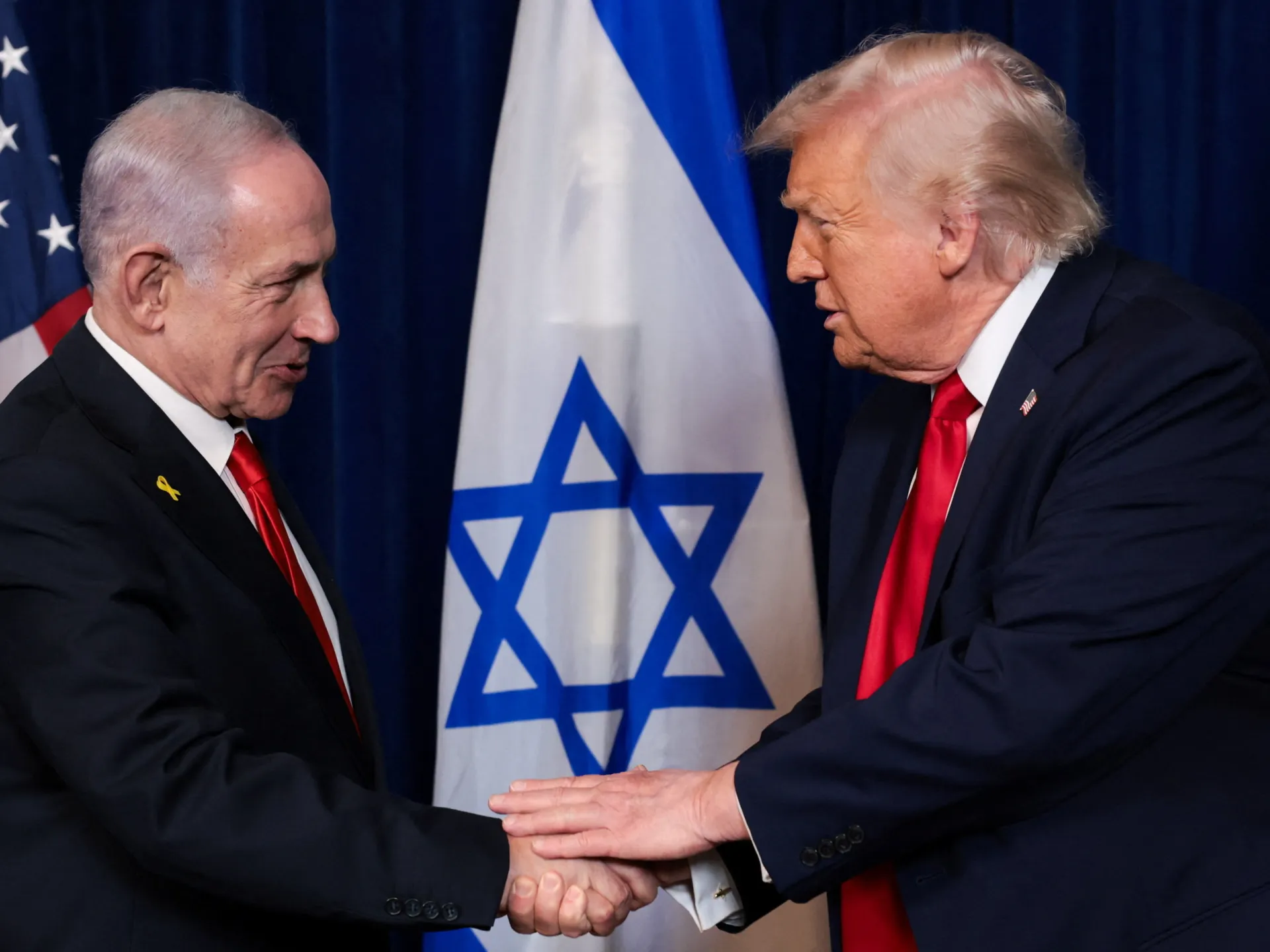
In January 2024, the publication Axios reported that the United States president at the time, Joe Biden, was “running out of patience” with Israeli Prime Minister Benjamin Netanyahu.
Israel’s genocidal war on Gaza had been raging for months by that point, and Biden was facing public backlash over US support for the conflict.
Recommended Stories
list of 3 itemsend of list
The assault would continue for the rest of Biden’s term and bleed into the first 10 months of Donald Trump‘s second presidency.
Since then, media outlets have continued to publish anonymous accounts of rifts and “frustrating” calls between Trump and the Israeli prime minister. But US support for its Middle East ally has never wavered.
Another anonymously sourced report about a furious, expletive-laden call between US and Israeli leaders came out this week, and it spread rapidly across international media.
Axios reported on Monday that Trump called Netanyahu “f***ing crazy” and berated him over Israel’s escalation in Lebanon.
Around the same time, an Israeli attack killed six people, including two children, in the southern Lebanese town of al-Marwaniyah.
Experts say that despite leaks of feuds and harsh words between US leaders and Netanyahu, policies are ultimately what matters, and they have changed very little.
Ryan Costello, the policy director at the National Iranian American Council Action (NIAC), said political observers have grown to “mock” reports of closed-door anger from US presidents against Netanyahu.
“What’s really important is what actually happens in practice,” Costello told Al Jazeera.
Two administrations, same reports
Though there are reports of Trump giving Netanyahu a dressing-down, Isabelle Hayslip, an advocacy manager at the US-based rights group DAWN, said that US policy remains aligned with Israeli interests.
“Single-source reporting of Trump as a strongman who picks up the phone and yells at Netanyahu for undermining US policy is contradicted by the actual policy outcomes where Netanyahu gets exactly what he wants,” Hayslip told Al Jazeera.
“Trump has no final say over Israeli actions. Like his predecessors, the president has proved completely unable to prioritise American interests, instead catering to Israel’s expansionist whims.”
The latest report comes as Trump faces increasing pressure from his Democratic rivals and segments of his base over his handling of the war on Iran, which he launched jointly with Netanyahu on February 28.
The conflict, which saw Iran close the Strait of Hormuz, has sent gasoline prices soaring in the US and fuelled inflation.
Critics have accused Trump of allowing Israel to drag the US into a war that does not advance Washington’s priorities.
With negotiations to end the war stagnating, Israel’s escalation in Lebanon and its threat to bomb Beirut risks derailing the fragile truce that came into effect in April.
Iranian officials have suggested that they cut off contact with the US over the Israeli attacks in Lebanon.
Before the Axios report, Trump announced he had spoken to Netanyahu and an unidentified Hezbollah representative, and both sides agreed that “all shooting will stop”.
But Netanyahu was quick to assert that the Israeli military “will continue to operate as planned in southern Lebanon”, where it is deepening its invasion and turning entire towns into rubble.
Advocates say Israeli atrocities in Lebanon and across the region could not have happened without US backing.
Since the start of Israel’s genocidal war on Gaza in October 2023, the US has provided Israel with nearly $25bn in military aid, helped fend off retaliatory Iranian attacks against the country and vetoed several ceasefire resolutions at the United Nations Security Council.
Nonetheless, anonymous accounts that the US president is angry at Netanyahu have become a regular feature in the media.
Such reports are attributed to US officials, but it is unclear how leaks with a similar message on the same topic have continued across two administrations from different political parties.
‘Moderating the anger’
Publicly, aides of both Biden and Trump have largely refrained from criticising Israel.
Trump has regularly praised the Israeli prime minister, arguing on more than one occasion that Israel would have ceased to exist without Netanyahu’s leadership.
In December, the US president also called the Israeli prime minister a “hero” during a meeting in Florida.
“We’re with you, and we’ll continue to be with you,” Trump told Netanyahu.
Two weeks earlier, Axios reported that the White House had “scolded” Netanyahu over Israel’s ceasefire violations in Gaza.
“The White House message to Netanyahu was: ‘If you want to ruin your reputation and show that you don’t abide by agreements, be our guest, but we won’t allow you to ruin President Trump’s reputation after he brokered the deal in Gaza,” the publication quoted a US official as saying.
Few people know the exact content of high-level calls at the White House. Sometimes, top officials, including members of the National Security Council, sit in on conversations between the president and world leaders after briefings.
Negar Mortazavi, a senior fellow at the Center for International Policy, a research nonprofit, said the leak about the tense call between Trump and Netanyahu may be aimed at making Trump look tough on Israel to quell outrage over the war.
“It could be sort of a way of moderating the anger or the blame at the US for continuing this unpopular, illegal, unnecessary war,” Mortazavi told Al Jazeera.
She added that the message it sends is, “Look, we’re very angry at Israel. We yell at them. We call them names.”
But Mortazavi stressed that policy is more important than rhetoric: “Does that change the facts on the ground?”
Information war
For his part, Costello argued that the leak was likely directed at Iran.
“I see this one primarily as a signal to the Iranians that Trump is serious, and he wants to insulate what’s happening in Lebanon and Israel’s attacks from the Iran negotiations,” Costello said.
“It remains to be seen the extent to which that excoriation has actually led to a change in Israel’s policies, and I think there is a strong incentive for continued defiance from Netanyahu.”
Axios, meanwhile, has defended its coverage.
“We stand by our reporting, which by the way noted ‘Trump and Netanyahu have had several tense calls in the past but have still coordinated closely on Iran and other issues,’” Jake Wilkins, a spokesperson for the publication, told Al Jazeera in an email.
Mortazavi warned that all sides of the war on Iran are trying to influence public perceptions of the conflict.
She pointed to recent reports that Iranian President Masoud Pezeshkian had resigned, a rumour that was promptly denied by his office.
“This is a very hybrid war. It’s a war on the battlefield. It’s an intelligence war. It’s a war of narratives,” Mortazavi told Al Jazeera. “And then there’s also an information war, which includes disinformation, half-truths and strategic leaks.”
A Gaza-bound ship carrying aid has begun its voyage from Sweden, weeks after Israeli forces abducted activists on a similar mission in international waters. The ‘Handala II’ vessel says it is carrying humanitarian supplies for Palestinians to break the Israeli blockade on the enclave.
On a modest bed inside his war-battered home in the Khartoum North neighbourhood of the Sudanese capital, Khartoum, Murtada Mohieddin, a diabetic patient in his early 50s, carefully counts his remaining doses of insulin. His search for medicine has transformed into a harrowing battle – not just to find the treatment he needs to survive his diabetes, but to ensure the medicine is not expired or ruined.
“Sometimes the insulin is spoiled,” Mohieddin tells Al Jazeera, inspecting his limited supply. “You wouldn’t know if it is ruined or expired. You can check the expiration date, but it could still be damaged from poor storage.”
More than three years of civil war have crippled Sudan’s healthcare infrastructure: hospitals, health centres and pharmaceutical factories have been shut and vital medical supply chains and storage across the country have been disrupted.
The war, which erupted as a power struggle between Sudanese Armed Forces (SAF) and the paramilitary Rapid Support Forces (RSF), has killed more than 50,000 people and displaced 14 million – nearly a quarter of the country’s population.
The devastating conflict has paralysed domestic pharmaceutical production and collapsed vital supply chains across the country.
According to a World Health Organization (WHO) news release dated April 14, 2026, Sudan represents the world’s largest humanitarian crisis, with 21 million people lacking basic healthcare services out of 34 million needing aid.
In the void left by the closure of pharmaceutical companies, smuggling networks have flourished, flooding the market with unregulated drugs locally known as “Boko” medicines.
These include critical intravenous malaria medications smuggled across borders. Because they completely bypass strict temperature controls and quality checks during transit, these drugs are frequently spoiled, rendering them either totally ineffective or lethally toxic to patients.
A double threat
Inside local pharmacies in Omdurman, located on the outskirts of Khartoum, the crisis is not just limited to scarcity. Patients now face the double threat of exorbitant costs and life-threatening quality issues, as these illicit medicines are often severely spoiled due to a lack of proper storage and refrigeration.
Mutawakil Hamza, a pharmacist based in Omdurman, said the reliance on unregulated channels is putting lives at immediate risk.
“Most malaria medicines are now brought in through smuggling,” Hamza said. “These are ultimately injections for intravenous use, and this is highly dangerous to a patient’s health.”
Because intravenous treatments bypass the body’s natural defences and require absolute sterility, administering improperly stored or degraded smuggled injections can rapidly cause severe bloodstream infections, systemic shock, or death.
The war has effectively dismantled local manufacturing, reversing years of medical self-reliance. Yasser Ahmed Youssef, a pharmaceutical industry expert whose factory is located in Khartoum, noted the stark contrast to the pre-war era, when local factories managed to produce “very large quantities of life-saving medicines, including drugs for blood pressure, diabetes, colds, and paediatric care”.
Now, the majority of those production lines are silent, leaving the population dependent on a shattered healthcare system. According to the October 2025 Health Resources and Services Availability Monitoring System (HeRAMS) report cited in a WHO Public Health Situation Analysis from January 6, 2026, 40 percent of health facilities nationwide are entirely nonoperational.
The situation is even more drastic regionally, with 87 percent of facilities shut down in Khartoum and 85 percent closed in North Kordofan, whose control is contested between the rival sides.
In active conflict zones such as Gezira, Khartoum, Darfur and the Kordofan regions, the shortages are particularly dire.
A United Nations Population Fund (UNFPA) emergency report from August 2025 highlighted that the only functioning maternity hospital in the besieged city of el-Fasher faces critical medicine shortages and risks imminent closure.
El-Fasher, the last SAF stronghold in the western region of Darfur, was taken over by the RSF in late October 2025, trapping approximately 700,000 civilians – mostly women and children. People have been cut off entirely from food and medicine and subjected to attacks.
Collapsed warehouses and supply lines
In the government-funded public sector, the National Medical Supplies Fund maintains that it is working to secure essential medicines despite the fighting, claiming to have achieved 75 percent availability for cancer medications and fully secured supplies for kidney patients.
However, officials admit the overarching infrastructure is in ruins, with the local health ecosystem almost destroyed.
“We have been massively affected by the ongoing war inside Sudan,” said Abubakar Salouha, a department director at the fund. “The medical supplies have been severely impacted; there has been a collapse at the level of the main warehouses at the headquarters.”
International aid deliveries from neighbouring countries also face enormous logistical hurdles.
The WHO’s January 6 situation analysis detailed that cross-border transit times for medical commodities can take up to 90 days to reach remote regions like Darfur from the Cameroonian city of Douala via Chad. Compounding these suffocating delays, armed groups have repeatedly targeted medical infrastructure, looting pharmacies and stripping remaining hospitals of their vital medical supplies.
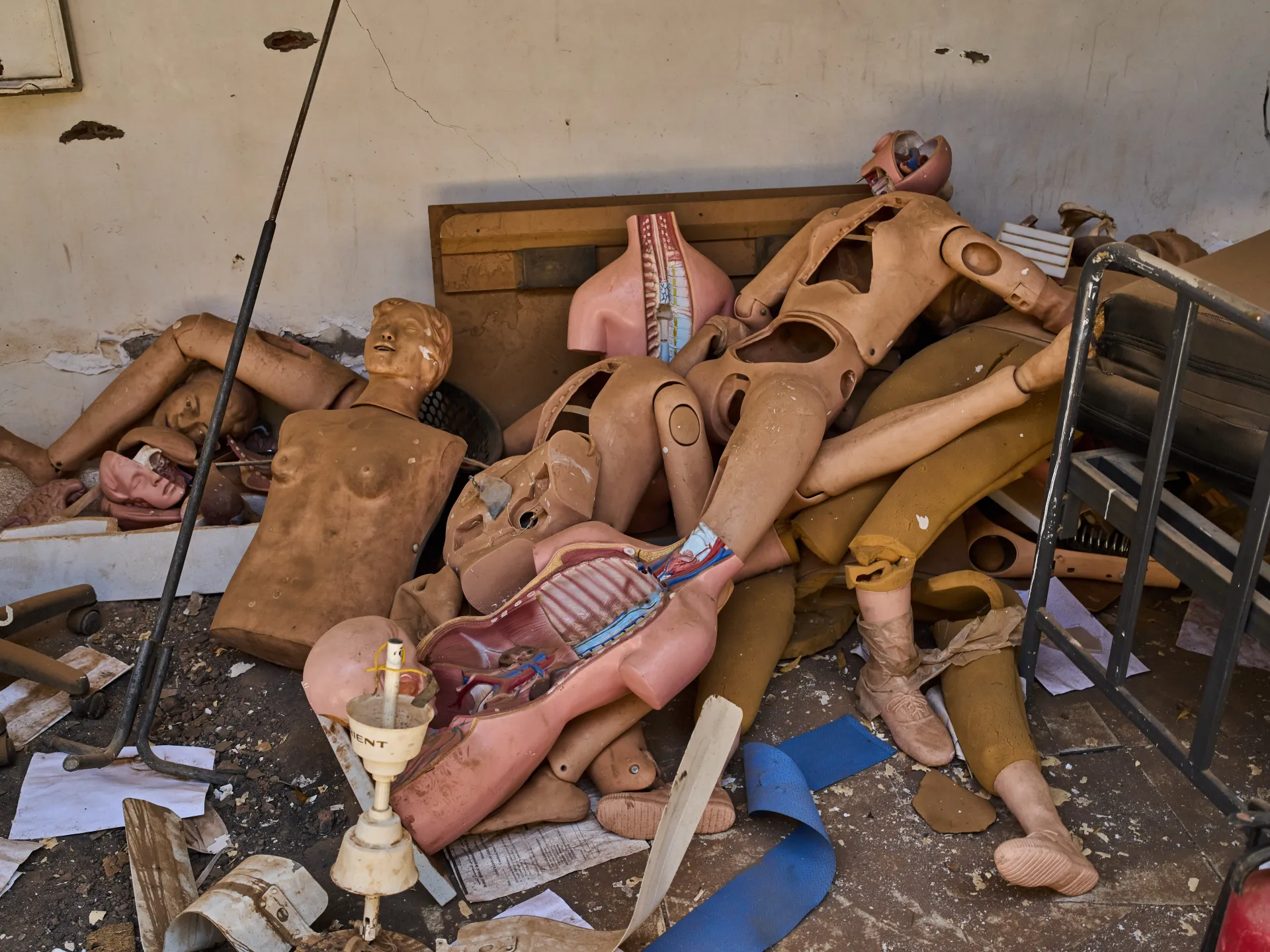
Recent attacks highlight this systematic destruction by rival sides. On March 20, 2026, a drone attack on Al-Daein Teaching Hospital in East Darfur state killed at least 64 people, including medical personnel, and injured 89 others. Sudanese rights group the Emergency Lawyers reported that the army was behind the attack.
On April 2, another drone attack struck Al-Jabalain Hospital in White Nile state, killing 10 staff members, including the hospital’s director while he was performing surgery. That same day, the Family Hospital in el-Daein was looted, and patients and health workers were assaulted and expelled. Similarly, a hospital in Kurmuk, Blue Nile state, was looted on March 25, its equipment destroyed, and patients forced out. The RSF was blamed for these attacks.
“Sudan is confronting one of the gravest humanitarian and public health emergencies in the world today. The ongoing conflict has pushed the health system to the edge of complete collapse,” warned WHO Director-General Tedros Adhanom Ghebreyesus on April 4.
“These incidents are stark reminders of the urgent need for renewed international solidarity and decisive political and humanitarian action. Sudan cannot endure this crisis alone.”
While a peace deal between the US and Iran remains elusive, Israel has deepened its offensive into southern Lebanon.
Published On 1 Jun 20261 Jun 2026
The United States military says it has struck Iranian military sites, and Iran’s Islamic Revolutionary Guard Corps (IRGC) says it has targeted a US base in response, the latest in a series of exchanges as negotiations to end the three-month US-Israel war on Iran are conducted.
US President Donald Trump also on Monday described Iran as eager to reach an agreement.
“Iran really wants to make a deal, and it will be a good one for the USA and those that are with us,” he posted on his Truth Social platform.
Here is the latest on the US-Iran negotiations as both sides announced on day 94 of the war on Iran that they traded attacks:
In Iran
Production restored at South Pars: Iran has restored gas production at three offshore platforms in the South Pars gasfield after Israel attacked them in March.
US says it attacks Iranian military sites: The US military’s Central Command (CENTCOM) said it conducted “self-defense strikes” on Iranian radar and drone sites in the city of Goruk and on Qeshm Island at the weekend.
Iran executes two men over January protests: Iran executed two men convicted over their role in antigovernment protests in January, according to the Mizan news agency. The men were found guilty of setting fire to a mosque in Tehran, damaging public property and clashing with security forces, Mizan reported.
War diplomacy
Iran says messages being sent to US: Iranian Foreign Minister Abbas Araghchi said Tehran is continuing to exchange messages with the US on a deal to end the war.
Trump’s stance: Araghchi’s comments came after US media reported that Trump has called for tougher terms in the preliminary agreement.
In the Gulf
Kuwait intercepts missiles and drones: The General Staff of the Kuwaiti army said its air defences were “confronting hostile missile and drone attacks”. If sounds of explosions are heard, they are the result of air defences intercepting the projectiles, the army added.
In Lebanon
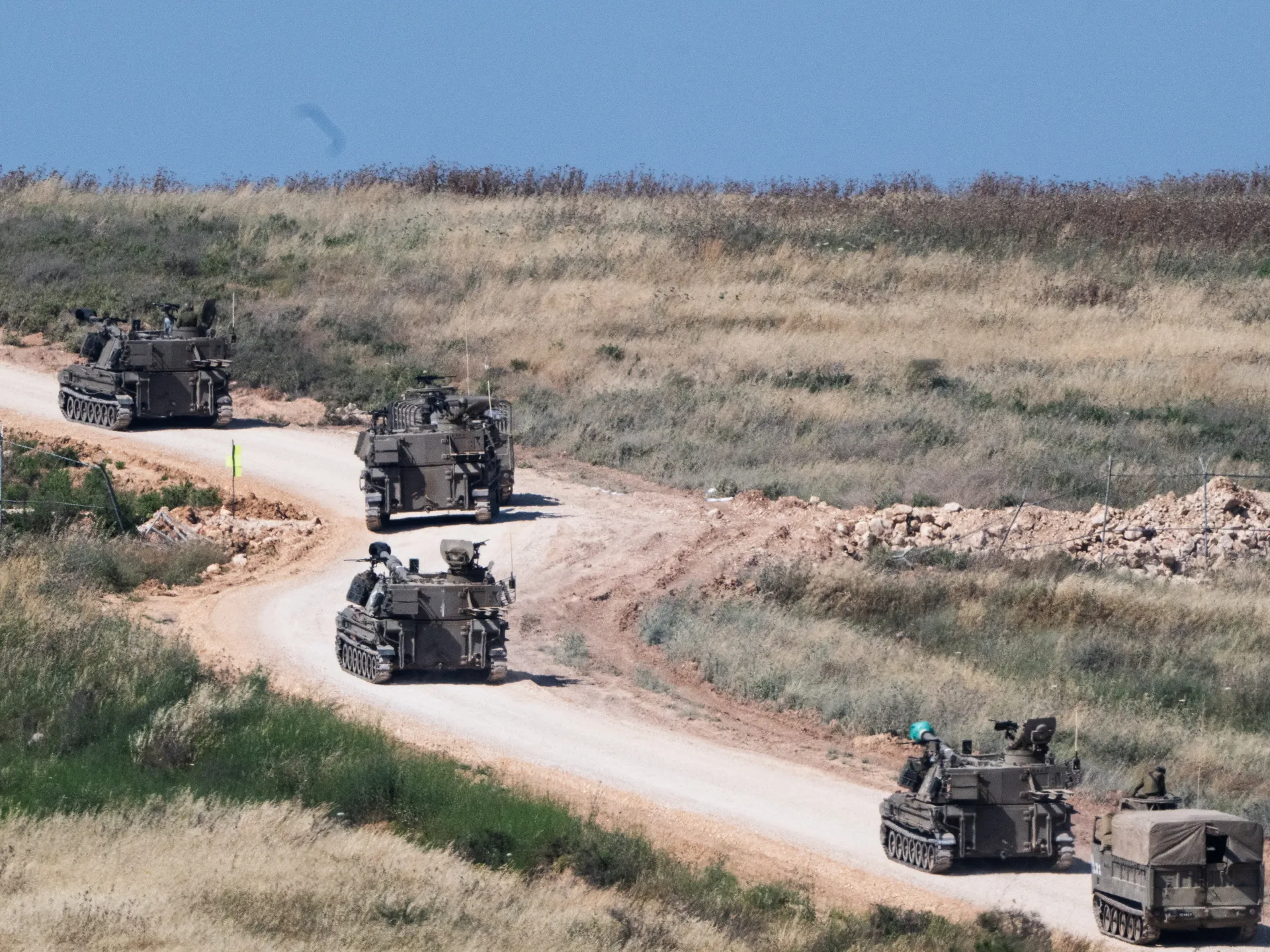
Israel pushes farther into Lebanon: Prime Minister Benjamin Netanyahu has ordered Israel’s military to push farther into Lebanon after Israeli forces made their deepest incursion into the country in more than 25 years.
Hezbollah says it downs Israeli drone: The Lebanese armed group said it shot down an Israeli Hermes 450 drone over the western sector of southern Lebanon using a surface-to-air missile on Sunday evening. It said in a statement on Telegram that the strike was in response to Israeli violations of a ceasefire that went into effect on April 8.
Hezbollah strikes Israeli forces in southern Lebanon: Hezbollah also said its fighters fired a large number of rockets and artillery shells at Israeli forces on the eastern outskirts of the town of Yohmor al-Shaqif in southern Lebanon early on Monday.
US proposes new plan: The US has put forward a proposal to de-escalate hostilities in Lebanon, a US official told Al Jazeera, adding that Secretary of State Marco Rubio held separate talks with Lebanese President Joseph Aoun and Netanyahu.
In Israel
Israel said rocket fired from Lebanon intercepted: The Israeli military said it intercepted a rocket that set off sirens in northern Israel and destroyed the launcher from which Hezbollah fired the projectile. Earlier, Israel’s Ynet News website reported that air raid sirens had been heard in Western Galilee, the town of Kiryat Shmona and surrounding areas.
In the US
The IRGC says it strikes US airbase: The IRGC said it struck an airbase that was used for an attack on a telecommunications tower on Sirik Island, located in the southern province of Hormozgan, Iran’s Fars news agency reported. The IRGC did not specify the location of the facility.
Trump says Iran wants to make a deal: In a new Truth Social post, Trump claimed Tehran “really wants to make a deal” and whatever deal is reached will “be a good one” for the US “and those that are with us”.
At least two Palestinians were killed and around a dozen wounded when an Israeli air strike hit a crowded cafe at Gaza’s seaport. Witnesses said people had gathered there to escape the heat and enjoy a public holiday, as attacks continue despite an October ceasefire.