conflict

Afghanistan accuses Pakistan of air attacks on homes in Kabul, Kandahar | Conflict News

Women and children were among those killed in the attacks, according to the Taliban.

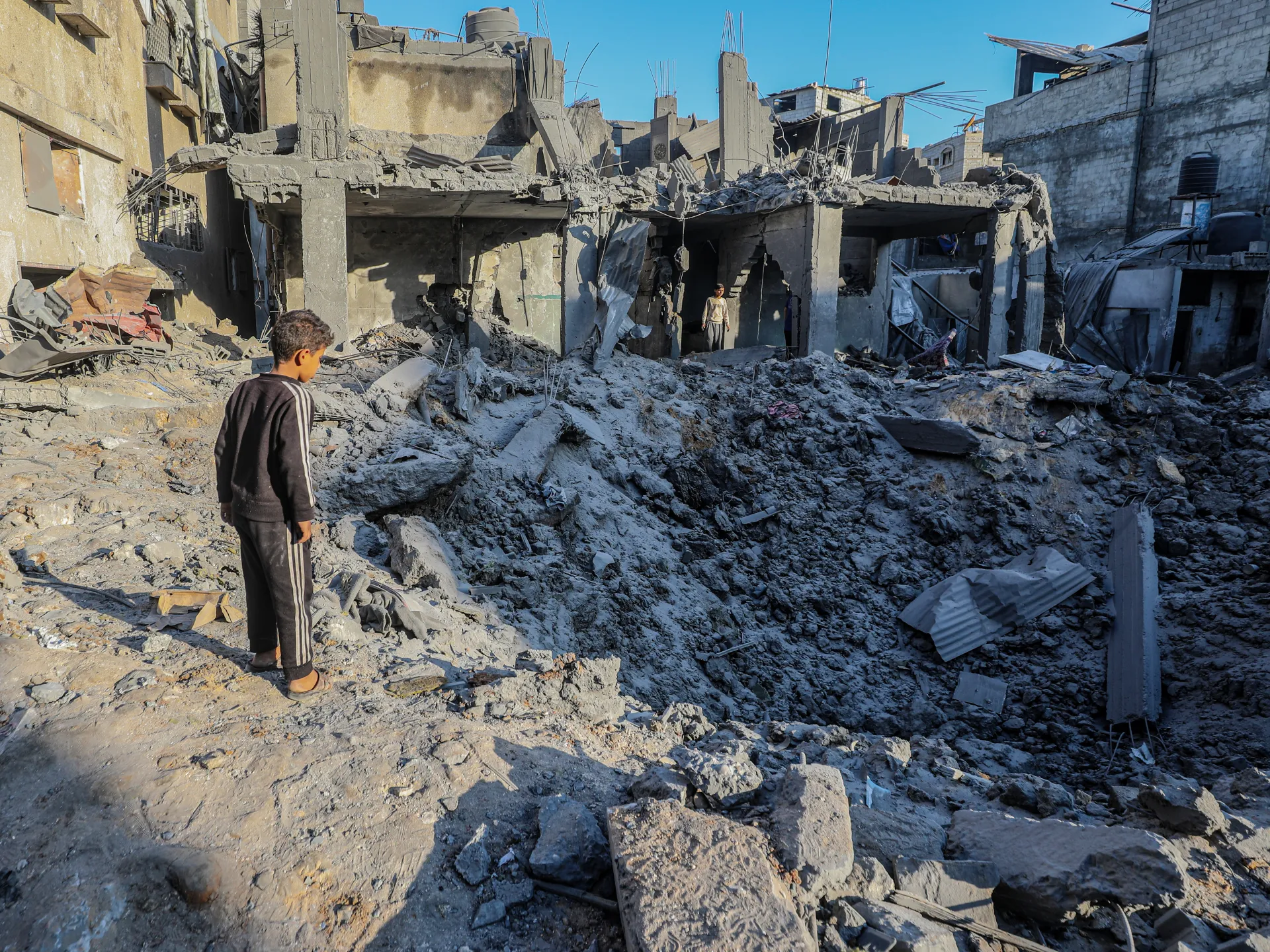
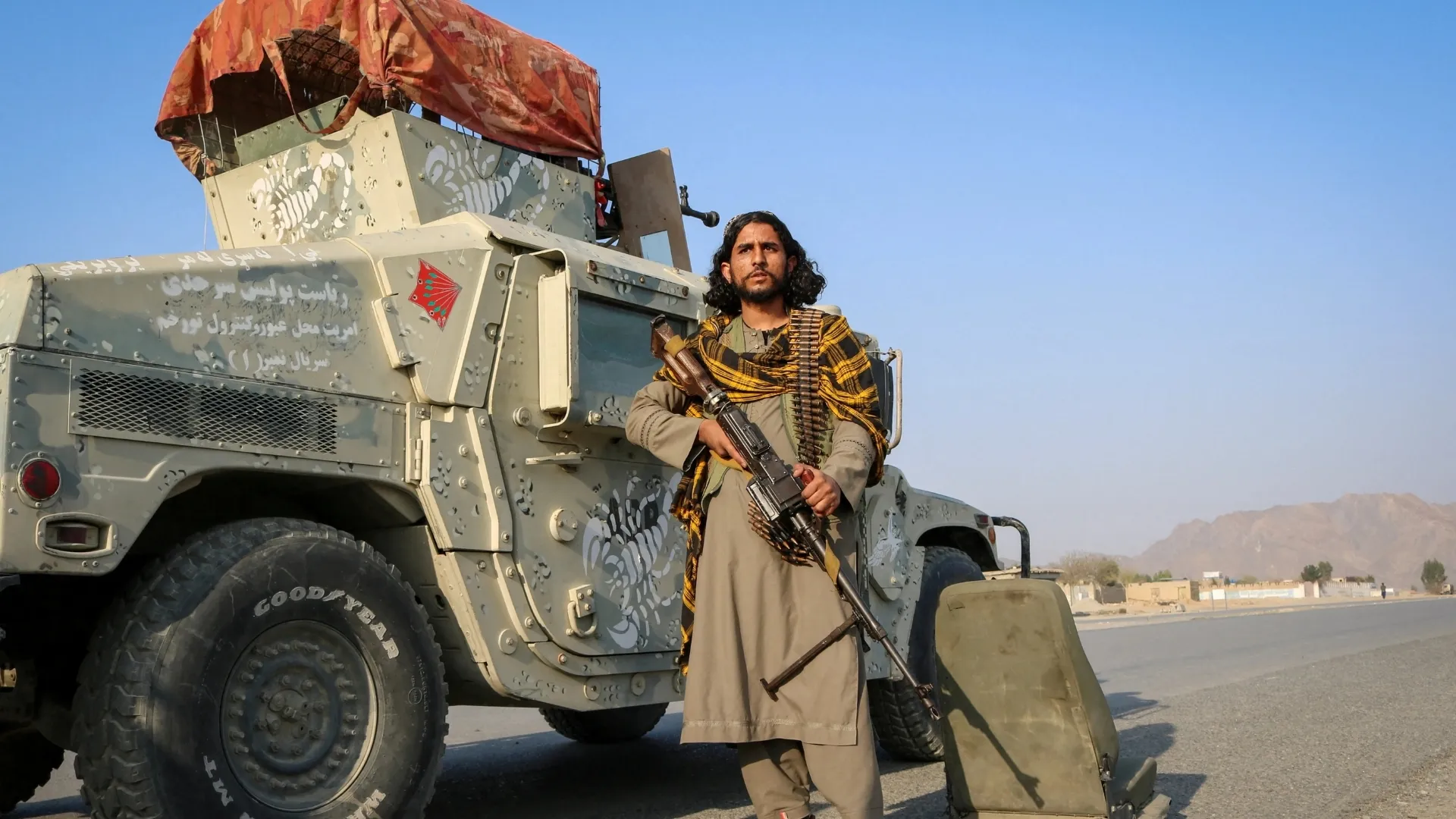
Afghanistan’s Taliban government has accused Pakistan of targeting civilian homes in overnight air attacks in the capital Kabul and the southern province of Kandahar, as fighting between the two neighbours entered its third week, overshadowed by the United States-Israel war on Iran igniting the middle East.

Women and children were among those killed in the attacks, according to the Taliban.

Recommended Stories

list of 3 itemsend of list

Government spokesman Zabihullah Mujahid said on X Friday that Pakistan’s aircraft also struck fuel depots belonging to the private airline Kam Air near Kandahar airport.

There was no immediate comment from Pakistan’s military or government.

Calls for restraint from the international community have gone unheeded by both sides.

On Thursday, the Taliban government said four members of the same family, including two children, were killed by Pakistani artillery and mortar fire in eastern Afghanistan.

The deaths reported on Thursday brought the toll to seven people killed in Afghanistan since Tuesday in cross-border clashes, according to authorities in Kabul. That could rise with the latest attacks on Friday.

Fighting between the two countries intensified on February 26 when Afghanistan launched an offensive along their shared border in retaliation for earlier Pakistani air attacks on the Pakistan Taliban, just two days before the US and Israel attacked Iran, starting a sprawling regional war.

Pakistan maintains that it does not target civilians, and casualty claims from both sides are difficult to verify independently.

Islamabad accuses Kabul of harbouring fighters from the Pakistan Taliban, which has claimed responsibility for a series of deadly attacks inside Pakistan, and from the ISIS (ISIL) affiliate in Khorasan province. Afghan authorities deny the charge.

The United Nations mission in Afghanistan has said 56 civilians have been killed there, including 24 children, by Pakistani military operations from February 26 to March 5.

Pakistani officials have confirmed about 12 soldiers were killed and 27 wounded in the latest bout of fighting, while the Taliban claims to have killed more than 150.

About 115,000 people have been forced to leave their homes, according to the UN.

Source link

The Palestinians forced to demolish their own homes by Israel | Israel-Palestine conflict News

Occupied East Jerusalem – Basema Dabash sheds tears daily for the home she and her husband, Raed, were forced to demolish in Sur Baher, in the south of occupied East Jerusalem.

For years, the couple lived under the spectre of losing their home, ever since the Israeli authorities issued a demolition order in 2014. In January of this year, the eviction notice came. And then, on February 12, the family were forced to demolish their home. If they didn’t, they would have been forced to pay the municipality to carry out the demolition.

Recommended Stories

list of 3 itemsend of list

“We were forced to start demolishing the house ourselves to avoid the municipality’s demolition fees, which can reach 100,000 shekels [$32,000],” Basema, 51, said. “We started by breaking down the inside of the house and sent the municipality photos to confirm that we had begun the demolition, but they demanded that we demolish it from the outside as soon as possible.”

The family soon completed the demolition of the two houses where eight people, including three children, lived. However, this didn’t waive the fine of 45,000 shekels ($14,600), which will continue to be paid in instalments until 2029.

‘Self-demolition’ haunts Palestinians living in East Jerusalem, which has been controlled by Israel since 1967, and illegally merged with West Jerusalem under one Israeli-run administration.

The choice between self-demolition and paying a further fee to the municipality is a simple one – the vast majority of Palestinians can’t afford to pay the exorbitant amount, and resort to demolishing their own homes, despite the immense pain and profound psychological impact it causes.

‘How did we come to this?’

Basema’s troubles started in 2014, when she received a building violation notice from the Israeli municipality in Jerusalem for the building she and her husband shared with their married son, Mohammed, and his family. They appealed at the time to an Israeli court in an attempt to freeze the demolition order.

For more than a decade, the family was forced to pay accumulated fines in an attempt to keep their home. Then, on January 28, they received an eviction notice, giving them a deadline to vacate the house and have it demolished.

The house slated for demolition was 45 square metres (485sq feet), an extension Basema had added to her existing 45-square-metre home. She had also built a similar-sized residence for her married son on top of the extension. The demolition order targeted both the extension and her son’s residence.

The Dabash family tried to obtain a building permit for the house several times, but their requests were rejected by Israel. Despite this, the municipality fines Palestinians and demolishes their homes under the pretext of lacking permits.

“We chose to demolish our own house not only to avoid the fine, but also because the municipal crews show no mercy to anything around the house and deliberately vandalise the entire area under the pretext of demolition, breaking trees and causing extensive damage that we could have done without,” Basema said.

Basema, along with her husband and one of her sons, Abdelaziz, now lives in what remains of their home. Mohammed has also moved in with them, while his wife and children live in her family’s home. The demolition has thus scattered her son’s family, who haven’t yet been able to find a small house to rent due to the high cost of housing.

The family also incurred significant expenses removing the rubble and redesigning the older section of the house to accommodate everyone, not to mention the psychological toll, which has been devastating.

“I stand to wash the dishes and find my tears falling on their own. How did we come to this? Why are we being subjected to this injustice? The house has become cramped and barely fits us. My grandchildren visit us and then cry bitterly when they leave for their grandfather’s house because we have no space,” Basema said sadly.

Increased demolitions

As illegal Israeli settlements continue to expand in East Jerusalem and the occupied West Bank, with building permits easily obtained, Palestinians say the double standards are obvious.

Human Rights Watch has found that Israeli authorities make it “virtually impossible for Palestinians to obtain building permits”, and the Israeli human rights organisation B’Tselem said planning policies in East Jerusalem make it “very difficult for residents to obtain building permits”.

Marouf al-Rifai, spokesperson for the Palestinian Authority’s Jerusalem Governorate, told Al Jazeera that 15 self-demolitions were carried out last February, five in January, and 104 in December.

Demolitions, in general, escalated to unprecedented levels after October 2023, when Israel’s genocidal war on Gaza began. Al-Rifai said that 400 demolitions were carried out in 2025 in East Jerusalem and its surrounding area, either by municipal crews or by homeowners themselves. Prior to that, the number of demolitions had reached a maximum of 180 per year.

The United Nations has reported that demolitions in 2025 displaced 1,500 Palestinians.

“Even the method of carrying out demolitions changed after the war on Gaza,” al-Rifai said. “Previously, demolitions were only carried out after exhausting all legal avenues and giving residents the opportunity to appeal to the courts and freeze the demolitions.”

But Israeli authorities have taken a more punitive position since demolition policy fell under the influence of far-right Israeli National Security Minister Itamar Ben-Gvir, who began pushing for Israeli army bulldozers to carry out demolitions without even notifying the homeowners, al-Rifai said.

In addition, the Palestinian Authority official said, demolition notices for Palestinian homes in Jerusalem increased from 25,000 before the war to 35,000. The town of Silwan alone has received 7,000 demolition notices since 1967.

Fakhri Abu Diab, a member of the Committee for the Defence of al-Bustan Neighborhood in East Jerusalem, told Al Jazeera that self-demolition is a double punishment and pain for the homeowner after the effort and hardship involved in building the house.

“Israel’s goal is to break the morale of the Palestinians and to brainwash them into becoming tools for implementing its plans to demolish homes. When we demolish our own homes, it’s as if we are demolishing a part of our own body,” he explained.

Israel can only demolish a limited number of Palestinian homes annually due to logistical, financial, budgetary, and logistical constraints. Demolition by Palestinians multiplies the number of homes demolished, thus turning the victim into a “demolition contractor”, as he put it.

“I refused to demolish my house myself because of the negative consequences that I and my family would have to live with for the rest of our lives, and the Israeli bulldozers demolished it. If I had done it myself, it would have remained a nightmare that would haunt me.”

view from above of a demolished home
Saqr Qunbur says he has already received a total of $26,000 in fines for building his house, and so can’t afford to pay more for Israeli crews to demolish it [Ahmad Jalajel/Al Jazeera]

No alternative

But the cost of a demolition carried out by Israeli municipal crews ranges between 80,000 and 120,000 shekels ($26,000-$39,000).

Saqr Qunbur couldn’t pay that, and was forced instead, on December 26, to demolish his 100-square-metre (1,076sq-foot) house in Jabal al-Mukabber under the pretext of lacking a permit. He had built it in 2013 and was immediately issued a building violation notice.

Saqr told Al Jazeera that he had lived in the house with his wife and four-year-old child. Since building the house, he has received a total of 80,000 shekels ($26,000) in fines that he’s still paying despite his home being demolished.

Saqr had nowhere to live after being forced to demolish his house, so his neighbour gave him a dilapidated room to live in while he found a place to rent.

“My child has been suffering psychologically since we demolished the house. Every day he asks me why I demolished it, and I don’t know what to tell him. I say it’s so I can build him a better house, but deep down I know I won’t even be able to rent a suitable place,” he explained with anguish.

Saqr chose to demolish his house himself after he says an Israeli officer threatened him, saying, “Demolish it, or I’ll demolish it over your head”. He also wanted to avoid the humiliation that accompanies demolitions carried out by Israel, where police sometimes fire live ammunition and tear gas at family members and carry out assaults, as documented by human rights groups.

“I developed diabetes and high blood pressure after my house was demolished. The doctor said it was due to anger and grief. This is an occupation that wants to expel us from our land, and we want to stay,” he concluded.

Source link

Iran’s president sets terms to end the war: Is an off-ramp in sight? | US-Israel war on Iran News

Iranian President Masoud Pezeshkian has laid out terms for ending the war with the United States and Israel in what analysts say is a possible sign of de-escalation from Tehran as the US-Israel war on Iran entered its 13th day on Thursday.

In a post on Wednesday on social site X, Pezeshkian said he had spoken to his counterparts in Russia and Pakistan, and that he had confirmed “Iran’s commitment to peace”.

Recommended Stories

list of 4 itemsend of list

“The only way to end this war – ignited by the Zionist regime & US – is recognizing Iran’s legitimate rights, payment of reparations, and firm int’l guarantees against future aggression,” Pezeshkian wrote.

This is a rare posture from Tehran, which has maintained a defiant stance and initially rejected any possibility of negotiations or a ceasefire when war broke out nearly two weeks ago.

Pezeshkian’s statement comes as pressure mounts on the US to halt what has become a very costly mission. Analysts say speculation from Washington that Iran would quickly submit after the killing of Supreme Leader Ayatollah Ali Khamenei were misguided.

Tehran is likely going to determine the end of this war, not the US or Israel, because of its ability to inflict economic pain broadly, they say.

Amid a military pummelling by the US and Israel, Iran has launched heavy retaliatory strikes at US assets and other critical infrastructure in Gulf countries, upsetting global supplies. It has also adopted what analysts call “asymmetric” tactics – such as disrupting the critical Strait of Hormuz and threatening US banking-linked entities – to inflict as much economic pain on the region and wider world as it can.

This is what we know about Pezeshkian’s stance and what the pressures are on both sides to draw the conflict to a close, quickly.

Emergency personnel work at the site of a strike
A building lies in ruins after a strike, amid the US-Israeli conflict with Iran, in Tehran, Iran, on March 12, 2026 [Majid Asgaripour/WANA (West Asia News Agency) via Reuters]

What has the war cost so far?

Economically, both sides have weaponised energy. Israel first targeted Iran’s oil facilities in Tehran on March 8, prompting an outcry from global health experts over the potential risk of air and water pollution.

Iran has, meanwhile, tightened its chokehold on the Strait of Hormuz shipping route – the only route to open sea for oil producers in the Gulf – with its military promising on Wednesday that it has the capabilities to wage a long war that could “destroy” the world economy.

Attacks on ships in the strait, through which about 20 percent of global oil and gas traffic normally passes, have effectively closed the route.

Oil prices rocketed above $100 per barrel late last week, up from around $65 before the war, with ordinary buyers feeling the increases at pumps in the US, Europe and parts of Africa.

On Wednesday, Iran upped the ante, saying it would not allow “a litre of oil” to pass through the strait and warned the world to expect a $200-per-barrel price tag.

“We don’t know how quickly it’ll revert back,” Freya Beamish, chief economist at GlobalData TS Lombard, told Al Jazeera. “We do think it’ll revert back to $80 in due course, but the ball is to some degree in Iran’s court,” she said, adding that because Iran needs oil revenue, the price hikes are expected to be time-limited.

The International Energy Agency agreed on Wednesday to release 400 million barrels from the emergency reserves of several member states but it is not yet clear what impact that will have, nor how quickly this quantity of oil can be released.

Tehran has also been accused of directly attacking oil facilities in neighbouring countries this week. Iraq shut all its oil port operations on Thursday after explosive-laden Iranian “drone” boats appeared to have attacked two fuel tankers in Iraqi waters, setting them ablaze and killing one crew member.

A drone was filmed striking Oman’s Salalah oil port on Wednesday, although Tehran has denied involvement.

What are Iranian officials saying about ending the war?

There has been conflicting messaging from the Iranian leadership.

Iran’s elite army unit and parallel armed force, the Islamic Revolutionary Guard Corps (IRGC), continues to show defiance, issuing threats and launching attacks on Israel and US military assets and infrastructure in neighbouring Gulf countries.

However, the political leadership has appeared more inclined towards diplomacy, analysts say. On Wednesday, President Pezeshkian said that ending the war would take the US and Israel recognising Iran’s rights, paying Iran reparations – although it’s unclear how much is being asked for – and providing strong guarantees that a future war will not be waged.

In a video recording last week, he also apologised to neighbouring countries for the strikes and promised that Iran would stop hitting its neighbours as long as they do not allow the US to launch attacks from their territory.

“I personally apologise to the neighbouring countries that were affected by Iran’s actions,” the president said, adding that Tehran was not looking for confrontations with its neighbours.

However, it is not known how much sway the political leadership has over the IRGC. Hours after the president’s apology last week, air defence sirens went off in Saudi Arabia, Qatar, the UAE and Bahrain, as strikes continued on the Gulf.

So, what is Iran’s actual position?

“Iran wants to go to the end to make sure that the United States and Israel never attack Iran again … so this has to be the final battle,” Al Jazeera’s Resul Serdar Atas explained.

Indeed, the IRGC sees this as an existential war, but the timing of Pezeshkian’s statement about ending the conflict also shows Tehran is pressured economically, politically and militarily, Zeidon Alkinani of Qatar’s Georgetown University told Al Jazeera.

“These differences and divisions [between IRGC and political leaders] always existed even prior to this war but we may notice it now more, given the fact that the IRGC believes that it has the right to take the front seat in leading this regional war, which is why a lot of the statements and positions are contradicting with the official ones from Pezeshkian,” he said.

The IRGC reports directly to Iran’s Supreme National Security Council (SNSC) and not to the country’s political leadership. That council is led by Ali Larijani, a top politician and close aide to the late supreme leader, Ali Khamenei, who analysts describe as a “hardliner”.

In a post on X on Tuesday, Larijani responded to threats from Trump about attacks on the Strait of Hormuz, saying: “Iranian people do not fear your hollow threats; for those greater than you have failed to erase it … So beware lest you be the ones to vanish.”

The newly elected supreme leader, Mojtaba Khamenei, was once in the IRGC and was put forward by the unit as the next ayatollah after his father was killed on the first day of the war, analysts say. He is thus not expected to follow the reformist, diplomatic ideals of President Pezeshkian and other political leaders which his father managed to marry with the IRGC militarised stance, they say.

Mojtaba Khamenei, son of Iran's supreme leader Ayatollah Ali Khamenei, attends a gathering.
Mojtaba Khamenei, son of Iran’s late Supreme Leader Ayatollah Ali Khamenei, attends a gathering in Tehran on March 2, 2016. Iran marked the appointment of Ayatollah Mojtaba Khamenei to replace his father as its supreme leader with a barrage of missiles against Israel and the Gulf states [File: Rouhollah Vahdati/ISNA via AFP]

What do the US and Israel say about ending the war?

There have also been conflicting messages from the Trump administration and Israel regarding when the war mission on Iran, codenamed Operation Epic Fury, is likely to end.

Trump told US publication Axios on Wednesday that the war on Iran would end “soon” because there’s “practically nothing left to target”.

“Anytime I want it to end, it will end,” he added. He had said earlier on Monday that “we’re way ahead of our schedule” and that the US had achieved its goals, even as speculation mounts about a possible US ground mission.

On the other hand, Israel’s Defence Minister Israel Katz said on Wednesday that the war would go on “without any time limit, for as long as necessary, until we achieve all the objectives and decisively win the campaign”.

Analysts say Trump’s stance that the conflict will be quick reflects increasing pressure on his administration ahead of upcoming mid-term elections in November.

Trump’s advisers privately told him this week to find a quick end to the war and avoid political backlash, according to reporting by The Wall Street Journal. That came as polls from Quinnipiac University and The Washington Post suggested that most Americans are opposed to the war in Iran.

In his 2024 presidential campaign, Trump promised to lower prices, and inflation had stabilised at 2.4 percent ahead of the war, according to government data released on Wednesday. Analysts speculate the conflict will likely push it back up.

The US spent more than $11.3bn in the first six days of the war, Pentagon officials told lawmakers in a classified briefing on Tuesday, Reuters reported this week – nearly $2bn a day.

The Washington-based think tank, Center for Strategic and International Studies (CSIS), estimated that the war cost Washington $3.7bn in its first 100 hours alone, or nearly $900m a day, largely due to its expenditure on costly munitions.

“It’s quite ironic that [Trump] chose a war that would make affordability worse, not better,” Rebecca Christie, a senior fellow at the Bruegel think tank, told Al Jazeera’s Counting the Cost.

“Every time the US loses even one object, air defence or a plane or something like that, that represents an awful lot of money that could have been used on some of these issues that have an impact on people’s day-to-day lives in the United States.”

Source link

UK Grows Its Defensive Posture Abroad In Response To Iran Conflict

British Armed Forces assets continue to flow into Cyprus, as the United Kingdom bolsters its military presence in the eastern Mediterranean in response to the war in the Middle East. While the British government has not taken part in direct military action against targets within Iran, the expanding conflict has also put Cyprus under direct threat. Meanwhile, the rush to bolster the U.K.’s military capabilities in the region has highlighted some glaring deficits in the British Armed Forces.

The British military response to the conflict in the Middle East has centered on the island of Cyprus in the eastern Mediterranean, which has long been home to a U.K. Armed Forces presence. As well as providing a ‘landing pad’ for British forces operating in the region, for example, during the counter-ISIS mission, Cyprus has long been used by the British for training and exercises. The so-called Sovereign Base Areas on Cyprus comprise the airbase of RAF Akrotiri and Dhekelia Station (a former airfield), which have been in British hands since the Republic of Cyprus was established in 1960.

British bases in Cyprus in relation to the wider eastern Mediterranean. Google Earth
RAF Akrotiri. Google Earth

Fighter assets

Before the Iran war began, eight Royal Air Force Typhoon multirole fighters were already deployed to Akrotiri, where they were still operating on the U.K. counter-ISIS mission, Operation Shader. Other U.K. Armed Forces personnel were also in Iraq under Shader.

In the wider region, there was also an existing RAF Typhoon footprint in Qatar, where a squadron of the jets is operated jointly with the Qatar Emir Air Force. This unit was strengthened in January, when another four Typhoons deployed there from the United Kingdom, specifically for air defense.

Today, we can confirm we are sending four additional @RoyalAirForce Typhoon jets to Qatar, to support defensive operations in the region.

These aircraft are in addition to the existing jets from the UK-Qatar Joint Typhoon Squadron that we deployed in January to reinforce… pic.twitter.com/WZZDEj3Vfa

— Ministry of Defence 🇬🇧 (@DefenceHQ) March 5, 2026

Typhoons from No. 12 Squadron, the joint U.K.-Qatar Typhoon squadron, conduct a flypast over Doha. Crown Copyright AS1 Tomas Barnard RAF

In February, six RAF F-35B Lightnings were sent to Akrotiri in Cyprus, joining the Typhoons already deployed there.

As Iran and its proxies have launched drones and missiles at countries across the region, the U.K. Armed Forces have been active in intercepting drones (and potentially also cruise missiles).

The real wakeup call came overnight on March 1, when a drone launched by Hezbollah in Lebanon hit Akrotiri. There were no reported casualties and only “minimal damage,” although this was, significantly, an impact that tore a hole in the hangar used by the U.S. Air Force U-2 Dragon Lady spy planes that are also regularly detached to Cyprus. Two more drones heading toward Cyprus were reportedly intercepted the same day.

Another two drones heading for Cyprus were intercepted on March 4, according to a Cypriot government spokesperson.

The U.K. Ministry of Defense has confirmed that the four Typhoons in Qatar, as well as the Cyprus-based F-35Bs, have since been active in bringing down hostile drones. The F-35B achieved its first air-to-air victories in British hands when one of the fighters shot down a pair of Iranian drones, announced on March 3.

The pilot involved in that historic engagement was a Royal Navy aviator embedded within the RAF’s joint-force No. 617 Squadron, the “Dambusters.”

The pilot fired two infrared-guided Advanced Short-Range Air-to-Air Missiles (ASRAAM) in the space of 20 minutes, each from a range of less than a mile, to destroy the Shahed-type drones over Jordan. They subsequently told The Telegraph:

“Your adrenaline is pumping pretty hard, you’re working down low at night above the desert in unfamiliar terrain. Emotionally, those things get pushed aside in the moment. It’s not until after landing that it begins to settle in.”

Pictured: 9th February 2026 – 617 Sqn F-35B Lightning jets conduct QRA (Quick Reaction Alert) training, operating from RAF Akrotiri. F-35B Lightning, a 5th Generation, multi-role, stealth fighter, is usually based at RAF Marham. The Station is also home to a range of engineering support functions, from maintenance to frontline support. [Names have been blurred from jets and surcoats to protect PERSEC]
An F-35B jet conducts Quick Reaction Alert training, operating from RAF Akrotiri. Crown Copyright AS1 Amber Mayall RAF

Lt. Col. Mike Carty, commanding officer of No. 617 Squadron, added: “The tempo of flying here is greater than anything the Lightning Force has embarked upon before. The sheer amount of sorties and flying hours is quite high. People are being stretched and working incredibly hard, but nobody is under any particular strain. We are set up here to be able to sustain this.”

The continued threat posed by Iranian drones and cruise missiles has also seen the decision made to send another four Typhoons to Qatar. RAF Typhoons have also successfully shot down drones targeting Bahrain, Jordan, and Qatar.

Destroyer deployment

The United Kingdom has also elected to beef up its defensive capabilities in the eastern Mediterranean with the deployment of a Type 45 destroyer. This was the subject of considerable debate before it was finally announced that HMS Dragon would sail for the region. The warship departed yesterday for a voyage that will take around 10 days.

Royal Navy destroyer HMS Dragon today departed the UK to head to the Eastern Mediterranean to bolster British defences in the region today (10/03/2026). The crew’s loved ones joined hundreds of well-wishers lining the seawall as Dragon slipped out of Portsmouth Harbour, while last week drone-busting Wildcat helicopters departed from RNAS Yeovilton, and on Monday a Merlin Mk2 helicopter from RNAS Culdrose in Cornwall arrived in Cyprus. The Portsmouth-based warship will use her Sea Viper missile system to help safeguard UK assets and interests – assisted by Wildcats from 815 Naval Air Squadron equipped with Martlet missiles able to deal with the aerial drone threat. The decision to send the Royal Navy assets came as Iran’s attacks continue to target British interests in the region and the UK Armed Forces continue to adapt to the changing threats. It builds on the UK increased defensive presence in the region in recent weeks, including deploying radar systems, air defence, and F-35 stealth fighters which are already conducting air defence sorties. Based in Portsmouth and each with a crew of around 200 sailors, the Royal Navy’s six Type 45 destroyers are the Fleet’s first line of defence against aerial threats – aircraft, missiles, drones – and are capable of protecting an area up to five times the size of Cyprus. HMS Dragon can track hundreds of targets simultaneously – and eliminate them with the Sea Viper system which can launch eight missiles in under ten seconds and direct up to 16 missiles on to their targets simultaneously, closing in for the kill at up to four times the speed of sound, manoeuvring at G-Forces no human can endure. *** Local Caption ***
HMS Dragon departs Portsmouth Harbour, U.K., to head to the eastern Mediterranean to bolster British defences in the region today, on March 10, 2026. Crown Copyright LPHOT Tim Lombard

However, the Type 45 is the United Kingdom’s most balanced and capable air defense platform, at least against drones and cruise missiles.

HMS Dragon has begun her journey to the eastern Mediterranean to join the UK’s defensive operations in the region.

Hundreds of well-wishers, including loved ones of the ship’s crew, lined the seawall as the ship sailed from Portsmouth.

🔗https://t.co/xQqazM6Mcd pic.twitter.com/ScskyAu0CF

— Royal Navy (@RoyalNavy) March 10, 2026

The basic Type 45’s weapons fit includes Aster 30 missiles fired from the Sea Viper system, which represents the Royal Navy’s outer air defense layer. According to the Royal Navy, the Sea Viper is able to track “hundreds” of potential threats to an individual ship or task group at ranges up to 250 miles, using Aster 30 missiles to eliminate them when they close to “around 70 miles.” Other sources suggest the Mach-3 missile has a range of more than 75 miles.

On the 15th of May 2025 HMS Dragon took part in a Sea viper Live firing against a supersonic sea skimming target. This is the first time in Royal Navy history this has been achieved. During the exercise HMS Dragon was working with other NATO Ships conducting missile firings. HMS Dragon is currently on exercise Formidable Shield. The purpose of the exercise is a joint, live-fire, integrated air and Missile defense exercise. The exercise consists of 10 NATO countries involving ships, aircraft, ground forces and deployed staff. Parts of this package have been manipulated for operational Security.
HMS Dragon fires a Sea Viper missile against a supersonic sea-skimming target. Crown Copyright LPhot Oliver Leach

There is also the Aster 15 with a range of around 18 miles, optimizing it for close-in and local-area and point defense. For aerial threats even closer to the warship, the Type 45 can call upon a pair of Phalanx close-in weapon systems (CIWS) armed with 20mm ‘Gatling’ cannons, 30mm guns, and various machine guns.

When it comes to ballistic missile defense, the Type 45 is much more limited, however.

While HMS Diamond did shoot down one of the Houthis’ anti-ship ballistic missiles (ASBMs) in 2024, this is an easier threat to deal with than the medium-range ballistic missiles (MRBMs) that Iran is currently launching toward Israel.

“Smoke” (infrared) decoy employment aftermath seen from HMS Diamond’s bridge during the ballistic missile engagement. One of the decoy launchers can be seen beneath the 30mm gun sponson, loaded with the by now familiar mix including Chemring Large Payload Carriers. pic.twitter.com/1TgWrgrDzP

— Gabriele Molinelli (@Gabriel64869839) April 26, 2024

Also in 2024, the U.K. Ministry of Defense announced that it would invest around $515 million to upgrade Sea Viper, making it “even more lethal against new and growing threats from hostile drones and missiles.”

Under the upgrade, the Aster 30 missile will be modernized to improve its capabilities against ASBMs, with an enhanced warhead plus new guidance and seeker software. The upgrade will also address the Sampson multi-function radar as well as the command-and-control system and combat management system.

A second phase will see the evaluation of a new missile, the Aster 30 Block 1NT, currently under development by France, Italy, and the United Kingdom. This missile features a new seeker, which would further improve the ballistic missile defense capabilities of the Type 45. In particular, Block 1NT will be better equipped to intercept MRBMs carrying maneuverable reentry vehicles (MaRVs), which you can read more about here.

However, these upgrades are yet to be fielded.

More generally, there have long been questions about the availability of the Type 45s, despite their undoubted capabilities. These six vessels are still very modern, but they have spent a notably long time in maintenance. Typically, only two are actually available to deploy at any given time. With one of the warships normally earmarked for the North Atlantic and Russia, and another needed to escort one of the U.K. aircraft carriers when that is at sea, there is very little capacity left to play with.

This also brings us to the question of the two British aircraft carriers of the Queen Elizabeth class. With the war entering its second week, HMS Prince of Wales appeared poised to deploy, with the crew at five days’ notice to sail. Earlier this week, however, the Prime Minister’s official spokesman gave the following statement: “HMS Prince of Wales has always been on very high readiness. The MoD is increasing the preparedness of the carrier — reducing the time it would take to set sail for any deployment — but there is no decision taken to deploy her.”

HMS Prince of Wales and HMS Queen Elizabeth are pictured at sea for the first time together in 2021. Crown Copyright HMS Prince of Wales and HMS Queen Elizabeth pictured at sea for the first time. Wednesday 19 May 2021 saw a historic moment in Britain’s carrier renaissance as HMS Queen Elizabeth and HMS Prince of Wales met at sea for the first time. Petty Officer Photographer Jay Allen

Critics of the hugely costly aircraft carrier program might ask why these warships, which are designed to respond to just this kind of crisis, are being held back.

U.S. President Donald Trump also used the lack of carrier deployment as a stick with which to beat the U.K. government. On his Truth Social platform, Trump said that the United States did not need Britain’s carriers in the conflict and suggested they would have been useful had they deployed before the war began.

Short-range air defense

To help cover short-range air defense over Cyprus, the United Kingdom has deployed two Royal Navy Wildcat helicopters armed with Martlet missiles. On the plus side, each helicopter can carry up to 20 of these missiles, which are ideal for bringing down drones. On the other hand, the missiles have a range of only around five miles, and with just two ‘cabs’ available, the Wildcat deployment is really only capable of providing limited point defense.

A Royal Navy Wildcat HMA2 lifts off for a training flight after arrival at a British base in Cyprus on March 8, 2026. Crown Copyright AS1 Joshua Whiting

With that in mind, it’s somewhat surprising that the British Army hasn’t deployed any of its Sky Sabre short-range air defense systems to Cyprus, or anywhere else in the region. The Sky Sabre is intended to bring down aircraft, as well as drones and cruise missiles. However, it’s unclear how many batteries are currently deployable. One is stationed in the Falkland Islands, and another has been deployed on NATO’s eastern flank, in Poland, and the 12 batteries on order are still being delivered.

The Sky Sabre fires the Common Anti-Air Modular Missile, or CAMM, also known as the Land Ceptor. The same CAMM missile is also used in naval applications — including aboard Royal Navy warships — as the Sea Ceptor. Fitted with an active-radar seeker, the CAMM is derived from the aforementioned ASRAAM. The CAAM has a reported range of more than 15 miles and is said to be able to tackle a wide range of threats, including low-observable targets, high-speed missiles, drones, and precision-guided air-to-ground weapons.

Pictured: The British Army Sky Sabre state-of-the-art intermediate air defence system. It marks a wholesale upgrade to the venerable Rapier system that was in service for nearly five decades. Sky Sabre, comprising of three separate components: The Agile Multi-Beam Surveillance Targeting radar (affectionally referred to as the Giraffe, pictured left), the Battle Management Command & Control Communications (not shown), and the Land Ceptor CAMM (Common Anti-Air Modular Missiles) missile delivery vehicle (right). All are pictured together for the purposes of the photographs; on the battlefield, they could be expected to operate up to 15Km apart. The system is designed to respond to sophisticated missile attacks and can defend against saturation attacks of supersonic anti-ship cruise missiles, aircraft and other high-performance targets. at a range of 120Km using the CAMM (Common Anti-Air Modular Missile), travelling at over 2300 miles per hour. It does this via multiple channels of fire, providing 360-degree simultaneous coverage and high degrees of manoeuvrability.
The British Army Sky Sabre air defense system. Sky Sabre comprises three separate components: the Agile Multi-Beam Surveillance Targeting radar (Giraffe, pictured left), the Battle Management Command & Control Communications (not shown), and the Land Ceptor CAMM (Common Anti-Air Modular Missiles) missile launcher vehicle (right). Crown Copyright Corporal Adam J Wakefield

Meanwhile, the ability to surveil the airspace around Cyprus received an upgrade yesterday with the arrival of a Royal Navy Merlin HM2 Crowsnest helicopter, with airborne surveillance and control (ASaC) capabilities.

The Merlin brings a look-down sensor capability, making it something of a ‘pocket’ version of the E-7 Wedgetail. From altitude, the radar has an excellent field of view to spot low and slow-flying targets, even if they are relatively small. This makes it especially useful for tracking drones and cruise missiles.

Image of a Royal Navy Merlin helicopter from RNAS Culdrose, seen here departing for the Middle East today (07/03/2026). Merlin HM2 helicopters are equipped with anti-submarine warfare (ASW) and airborne surveillance and control (ASaC). Additional typhoon jets have arrived in the Middle East, further strengthening the UK's defensive capabilities in the region. The UK is conducting air operations in defence of British interests and allies.
A Royal Navy Merlin Crowsnest helicopter from RNAS Culdrose, seen here departing for the Middle East on March 7, 2026. Crown Copyright Royal Navy

Other British counter-drone units have also been active in the wider region.

Few details have been provided, but these are likely to consist of non-kinetic systems (like the ORCUS) and man-portable air defense systems (like the Starstreak missile) used by troops who have a limited presence in Jordan and Iraq, where they have been since before the Iran war began.

Pictured: Air Defence Troop of 29 Commando armed with StarStreak react to a simulated F-35 Lightning B attack from their observation post on the mountains during Ex Green Dagger 25. Royal Marines from 45 Commando have deployed to the Mountain Warfare Training Centre at Pickel Meadows in California, USA for Exercise Green Dagger. During nearly two months at Pickel Meadows, Arbroath-based 45 Commando of the UK Commando Force will operate closely with the US Marine Corps, perfecting skills required to survive and fight in the mountains. The Commandos will be conducting a range of mountain warfare scenarios, including testing new weapons, kit and equipment across the arid terrain. They will operate closely with US Marines, honing skills together and further develop their ability to work together in extreme environments. Green Dagger will culminate in both forces testing their warfare skills against each other. 45 Commando are the UK Commando Force’s Mountain and Arctic warfare experts, required to keep techniques and procedures sharp in case they are called upon to deploy to these extreme places
The Air Defence Troop of 29 Commando, armed with Starstreak, reacts to a simulated F-35 attack during Exercise Green Dagger 25, in California. Crown Copyright LPhot Stainer- Hutchins

Overall, though, the conflict has highlighted the somewhat limited nature of U.K. ground-based air defense capabilities.

More generally, the deployments so far, in a purely defensive capacity, have raised concerns about the breadth, depth, and readiness of U.K. military power and its relevance in international affairs.

The question of “going kinetic”

The United Kingdom initially denied permission for the U.S. military to use its airbases — including Diego Garcia in the Indian Ocean — for strikes against Iran, as we discussed at the time. This was soon revised, with Prime Minister Keir Starmer saying his government had agreed to a U.S. request to use British military bases for “defensive” strikes.

The Prime Minister of the United Kingdom, Keir Starmer, visits RAF Akrotiri in December 2024. Crown Copyright

Were the British stance to change, it is questionable whether RAF jets, as currently deployed, would be able to make a significant contribution, based on their small numbers, their other taskings, and the long distance to targets in Iran.

According to an assessment by the U.K.-based Royal United Services Institute (RUSI) think-tank, realistically, the fighter force at Akrotiri would only have been able to fly 28 strike sorties against Iran, had they been committed to Operation Epic Fury. This is very much a best-case scenario, and would also have required significant tanker support.

A British offensive campaign against Iran would otherwise rely primarily upon the Royal Navy, which operates nuclear-powered attack submarines that can launch Tomahawk Land Attack Missiles (TLAM). However, this is a capability that has suffered from poor availability in recent years. Currently, only one of five in-service Astute class submarines, HMS Anson, is at sea, and it was in the Indo-Pacific region as of January.

22 Feb 2026 - HMS Anson in transit to HMAS Stirling. A Royal Navy submarine has arrived in Australia for an historic visit to strengthen the UK’s commitment to the security of the Indo-Pacific. HMS Anson docked at HMAS Stirling – the Astute-class boat’s first visit Down Under – as part of the trilateral security partnership between Australia, the UK and the United States, known as AUKUS. The visit is seen as a crucial part of the ongoing process of supporting Australia to develop the skills and capabilities necessary to operate, maintain and steward conventionally armed, nuclear-powered submarines. During her visit to the base, near Perth, the boat will host a series of high-profile engagement activities and will be in the country for the 125th anniversary of the Royal Australian Navy. *** Local Caption *** HMS Anson has arrived at HMAS Stirling for a Submarine Maintenance Period. This the first visit by an Astute class submarine to Australia since October 2021 and the first maintenance activity to occur for a UK SSN in Australia. The visit marks another key milestone in the implementation of the Optimal Pathway and Australia's preparation for the start of Submarine Rotational Force-West in 2027.
HMS Anson arrives in Australia earlier this year for a historic visit to strengthen the U.K.’s commitment to the security of the Indo-Pacific. Crown Copyright LAC Thomas Clarke-Kelly

So far, however, the U.K. government has held back from committing to any kind of direct offensive action against Iran, although there have been voices raised across the political spectrum urging that the United Kingdom should back the United States more actively, including taking part in strikes. Kemi Badenoch, leader of the opposition Conservative Party, berated Starmer this week for not doing more to “stop the people who are attacking us” and said the U.K. Armed Forces should “do more than catch the arrows” and should “catch the archer” — a reference to striking missile and drone facilities directly.

For the time being, the U.K. Armed Forces, ravaged by decades of post-Cold War cuts, are bringing some useful but fairly limited in capacity air defense capabilities to the region. Should the U.K. government’s policy regarding Iran become aligned with that of the United States, then much more serious questions will be answered about the relevance and resilience of British military power in an operation of this kind.

Contact the author: thomas@thewarzone.com

Thomas is a defense writer and editor with over 20 years of experience covering military aerospace topics and conflicts. He’s written a number of books, edited many more, and has contributed to many of the world’s leading aviation publications. Before joining The War Zone in 2020, he was the editor of AirForces Monthly.


Source link

‘Life covered in soot’: Gas shortage forces Gaza families to cook over wood | Israel-Palestine conflict News

Gaza City, the Gaza Strip – Shortly before the call to sunset prayer, Islam Dardouna stretches her hand towards a pot hanging over a makeshift stove fashioned from a battered metal can, with scraps of paper and pieces of wood feeding the fire beneath it.

Then she pauses. She turns her face away from the rising tongues of smoke. Her face stained with a thin layer of soot and her clothes steeped in the lingering smell of fumes, she takes a deep breath but does not immediately lift the lid.

Recommended Stories

list of 3 itemsend of list

In her right hand, Dardouna holds an asthma inhaler as though it were a ladle or tongs. With her other hand, she tries to prepare food for her three children.

“I can no longer tolerate the fire at all,” the 34-year-old says in a strained voice as she raises the inhaler to her mouth.

“We heat water on it, cook on it … everything. It completely destroyed my health,” she said, pointing to her chest.

Islam Dardouna suffers from respiratory problems that have worsened significantly due to constant exposure to wood smoke and relies regularly on asthma inhalers
Islam Dardouna suffers from respiratory problems that have worsened significantly due to constant exposure to wood smoke, and relies regularly on asthma inhalers [Abdelhakim Abu Riash/ Al Jazeera]

Dardouna has been displaced from Jabalia in northern Gaza since the start of Israel’s genocidal war against Palestinians in the territory in October 2023.

She now lives with her husband – 37-year-old Muath Dardouna – and their children in Sheikh Ajleen, west of Gaza City.

A year and a half ago, their home was destroyed. Since then, the family has moved from place to place until they eventually settled in this camp alongside other displaced families.

Everything changed after the war began. But for Dardouna, having to cook daily over an open fire in the face of cooking gas and fuel ranks among the worst.

“Our entire life now is a struggle, searching for wood and things we never imagined we would need one day,” she says. “There is no cooking gas and no gas cylinders. We lost all of that during displacement.”

What makes the situation even harder is that she suffers from asthma and chronic chest allergies, conditions she says began during Israel’s 2008 war on Gaza when she inhaled the smoke of a phosphorus bomb that dropped on her house. Her situation improved over the years, but has dramatically worsened during the current war.

“I developed airway obstruction, and recently there were masses found in my lungs,” said Dardouna, who in January was hospitalised for six days after suffering from oxygen shortage.

“The doctors prescribed an oxygen cylinder for me,” she says, quietly. “But unfortunately, I cannot afford it.”

A prolonged shortage

Like so many others across Gaza, Dardouna is struggling amid a prolonged shortage of cooking gas and fuel that has persisted since the start of the war.

Supplies have remained severely limited even after a “ceasefire” came into effect in October that included provisions allowing the entry of fuel and essential goods into the territory.

However, the quantities that have entered since then remain far below the population’s actual needs, according to official sources in Gaza and United Nations agencies.

The UN Office for the Coordination of Humanitarian Affairs says the availability of cooking gas in Gaza remains “critically constrained”, with the limited quantities entering the territory covering less than three percent of what is required.

As a result, many families have been forced to rely on alternative and often hazardous cooking methods.

UN data indicates that about 54.5 percent of households rely on firewood for cooking, roughly 43 percent burn waste or plastic, and only around 1.5 percent are able to cook with gas.

Humanitarian groups warn that such unsafe alternatives endanger people’s health and the environment due to prolonged exposure to smoke and toxic fumes produced by burning plastic and other waste.

Amid these conditions, cooking over open fires made from wood, scrap materials or plastic has become a daily reality across displacement camps and neighbourhoods throughout Gaza.

The crisis has intensified during the Muslim holy month Ramadan, when families must prepare both suhoor meals before their daily fast and iftar meals afterwards.

Firewood has become expensive, requiring a daily budget. Lighting the fire before dawn is also often difficult due to the lack of lighting and unfavourable weather conditions, so the family often skips the pre-dawn meal entirely.

“Today, for example, it’s raining and windy. I couldn’t light the fire,” said Darduna’s husband, Muath, who is also helping out with the daily cooking.

“Even when we break our fast, we wish we could drink a cup of tea or coffee afterwards, but we can’t, because lighting the fire again is another struggle.”

A former psychosocial support worker for children, Muath says it pains him to see his children fasting without suhoor.

“Every detail of our lives is literally suffering,” he says. “Fetching water is suffering. Cooking is suffering. Even going to the bathroom is suffering. We are truly exhausted,” he added.

“Our lives are covered in soot,” Muath says, pointing to the black smoke stains left by the fire.

Soot and black smoke stains left by wood fires cover the hands and skin of Islam and many other women forced to cook over open fires since the war on Gaza began
Soot and smoke stains left by wood fires cover the hands of Islam Dardouna and many other women forced to cook over open fires since the war on Gaza began in October 2023 [Abdelhakim Abu Riash/ Al Jazeera]


He describes gas as “one of our dreams”, recalling how “it felt like Eid day” when the family got a gas cylinder a few months ago. “
But we don’t even have the stove to use it, and many families are like us,” he said.

“We are living on the edge of nothing. Displacement and war stripped us of everything,” he adds. “We are willing to live with the simplest rights in tents. But there is no heating, no gas, no lighting. It feels like we are living in open graves on Earth.”

Serious implications

In a statement on Wednesday, the General Petroleum Authority in Gaza warned of the “catastrophic and dangerous consequences of the continued halt in cooking gas supplies” to the territory, stressing that the crisis “directly affects the lives of more than two million residents” amid already dire humanitarian conditions.

The authority said Gaza had already been facing a shortfall of about 70 percent of its actual gas needs compared with the quantities that entered after the “ceasefire” announcement.

It added that the “complete suspension of gas supplies places the Gaza Strip before a looming disaster that threatens food and health security”, particularly during Ramadan.

The authority also said that preventing gas from entering the enclave constitutes a “clear violation of the ceasefire understandings”, calling on mediators and international actors to intervene urgently to ensure the regular flow of cooking gas into Gaza.

Across Gaza, many families now rely on ready-made meals from aid distributions and charity kitchens because of economic collapse and the difficulty of cooking.

“Even when food arrives ready hours before iftar,” Muath says, “heating it becomes another problem.”

The frustration of daily survival pushes Muath to the brink.

“As a father now, I cannot even provide the most basic things,” he says. “Imagine my son simply wants a cup of tea … even a little wind can stop me from making it.”

‘The fire suffocates you’

In a nearby tent, Amani Aed al-Bashleqi, 26, sits watching food being cooked over an open fire for iftar while her husband stirs the pot.

She said cooking on fire makes food taste “flavourless” – not because the taste changes, but because “exhaustion and suffering have become part of every bite”.

“We start cooking early so we can finish by iftar, and after breaking the fast, my husband and I are completely exhausted and covered in soot.”

At times, Amani says she cannot boil water for her baby’s milk because lighting the fire is difficult and not always possible
At times, Amani Aed al-Bashleqi says she cannot boil water for her baby’s milk because lighting the fire is difficult and not always possible [Abdelhakim Abu Riash/ Al Jazeera]

Like Dardouna, al-Bashleqi says the smoke causes severe headaches and health problems.

“The fire suffocates you. All the women in the camp suffer health problems from cooking on fire,” she says. “But we have no choice.”

She has a seven-month-old baby, and her biggest worry is boiling water for his milk.

“Sometimes I boil water and keep it in a borrowed thermos, but I don’t always have one,” she says. “And sometimes when he wakes up at night, I mix the milk with water without boiling it, even though I know that’s not healthy. But what can I do?”

Nearby, Iman Junaid, 34, displaced from Jabalia to western Gaza City, sits with her husband Jihad, 36, in front of the fire preparing food.

Junaid blows on the flames while she pushes an empty plastic oil bottle under the fire.

Behind them, bags full of plastic bottles are piled up. The family collected them to fuel the fire because cooking gas has been unavailable for months.

A mother of six, Junaid says she knows the health dangers of burning plastic, but has “no other choice”.

Iman Junaid and her husband Jihad rely on empty plastic bottles to fuel their cooking fire because they cannot afford the rising price of firewood
Iman Junaid and her husband Jihad rely on empty plastic bottles to fuel their cooking fire because they cannot afford the rising price of firewood [Abdelhakim Abu Riash/Al Jazeera]

“My little daughter is one year old, and her chest always hurts because she inhales the smoke,” she says. “Our life is collecting and burning plastic and nylon.”

“With the price of wood rising, we now wish we could even find wood. Gas has become almost impossible … we’ve forgotten it.”

She said there were many promises that gas would enter Gaza after the “ceasefire”, but “nothing happened”.

For Dardounah, the solution is not simply bringing cooking gas into Gaza. “What we need is for life to become possible again,” she says.

“Let gas enter. Let goods enter at reasonable prices. Let there be basic necessities for a normal life.”

Source link

‘No endgame’: Why US Democrats say Iran war hearing has them worried | US-Israel war on Iran News

A group of Democrats in the United States Senate is demanding public hearings on the country’s war against Iran after receiving a series of classified briefings from officials in President Donald Trump’s administration.

Lawmakers say the White House has not clearly explained why the US entered the conflict, what its goals are, or how long it may last.

Republicans currently hold a narrow, 53-47 Senate majority, which gives them the power to control what legislation comes to the floor for debate.

Some Democrats have expressed frustration after the latest closed-door briefing. Trump has not ruled out sending US ground ⁠troops into Iran.

“I just came from a two-hour classified briefing on the war,” Senator Chris Murphy from the state of Connecticut said on Tuesday. “It confirmed to me that the strategy is totally incoherent.

“I think this is pretty simple: if the president did what the Constitution requires and came to Congress to seek authorisation for this war, he wouldn’t get it – because the American people would demand that their members of Congress vote no,” he added.

Here is what we know:

What has happened so far?

Since the US and Israel launched attacks on Iran on February 28, senior officials, including Secretary of State Marco Rubio and Defense Secretary Pete Hegseth, have held several closed-door meetings to brief Congress members on the military campaign and its progress.

Because the meetings are classified, lawmakers are restricted in what they can publicly disclose about the information they received.

U.S. President Donald Trump listens to U.S. Secretary of State Marco Rubio
US President Donald Trump listens to Secretary of State Marco Rubio [File: Nathan Howard/Reuters]

What are Democrats saying?

Several Democratic senators have said they left the briefings frustrated, arguing that the administration had not provided clear answers about the war’s objectives, timeline or the long-term strategy guiding their approach to the conflict.

Earlier this week, six Democratic senators also called for an investigation into a strike on a girls’ school in Minab, in southern Iran. Reports indicate the attack, which investigators say involved US forces, killed at least 170 people, most of them children.

“There seems to be no endgame,” Democratic Senator Richard Blumenthal said. “The president, almost in a single breath, says it’s almost done, and at the same time, it’s just begun. So this is kind of contradictory.”

Senator Elizabeth Warren from Massachusetts raised concerns about the cost of war.

“The one part that seems clear is that while there is no money for 15 million Americans who lost their health care, there’s a billion dollars a day to spend on bombing Iran,” Warren said on Tuesday.

“The one thing Congress has the power to do is to stop actions like this through the power of the purse,” she added.

Others seem worried that a ground deployment could take place.

“We seem to be on a path toward deploying American troops on the ground in Iran to accomplish any of the potential objectives here,” Blumenthal, of Connecticut, told reporters after Tuesday’s classified briefing.

“The American people deserve to know much more than this administration has told them about the cost of the war, the danger to our sons and daughters in uniform and the potential for ⁠further escalation and widening of this war,” he added.

Richard Blumenthal
Democratic Senator Richard Blumenthal of Connecticut [File: Ben Curtis/AP]

What are Republicans saying?

Republicans, who have slim majorities in both houses of Congress, have almost unanimously backed Trump’s campaign against Iran, with only a handful expressing doubt about the war.

Some Republican leaders say the strikes are necessary to curb Iran’s military capabilities, missile programme and regional influence.

They have also argued that the operation is limited in scope and designed to weaken Iran’s ability to threaten US forces and allies in the region.

Republican Representative Brian Mast of Florida, chairman of the House Foreign Affairs Committee, last week publicly thanked Trump for taking action against Iran, saying the president is using his constitutional authority to defend the US against the “imminent threat” posed by Tehran.

But some Republican members of Congress have voiced concerns.

Representative Nancy Mace from South Carolina said she did “not want to send South Carolina’s sons and daughters into war with Iran”, in a post on X.

Rand Paul, a Republican senator from Kentucky, accused the Trump administration of changing its narrative and rationale for the war on a daily basis.

“We keep hearing new reasons for war with Iran—none convincing,” he wrote on X. “‘Free the oppressed’ sounds noble, but where does it end? We’ve been told for decades Iran is weeks from a nuke. War should be a last resort, not our first move. A war of choice is not my choice.”

Why does the debate matter?

The dispute has revived a long-running debate in Washington, DC, about the limits of presidential war powers.

Under the US Constitution, Congress has the authority to declare war, but modern presidents have frequently launched military operations without formal congressional approval, often citing national security or emergency threats.

The law allows the president to deploy US forces for up to 60 days without congressional authorisation, followed by a 30-day withdrawal period if Congress does not approve the action.

Some lawmakers and legal experts say the war on Iran highlights the need for stronger congressional oversight of military action.

“In the 1970s, we adopted something called the War Powers Resolution that gives the president limited ability to do this,” said David Schultz, a professor in the political science and legal departments at Hamline University.

“And so, either you could argue that what the president is doing violates the Constitution by… not [being] a formally declared war; or b, it exceeds his authority, either as commander-in-chief or under the War Powers Act,” he added.

“And therefore, you could argue that domestically, his actions are illegal and unconstitutional,” Schutlz said.

The Trump administration has argued that the February 28 strikes were justified as a response to an “imminent threat”, a rationale often used by presidents to justify military action without prior congressional approval.

However, US intelligence agencies had themselves said before the start of the war that they had no evidence of an imminent Iranian threat to the US or its facilities across the Middle East.

Source link