The delay, filed in court on Friday, can cost Paramount $1.7bn in fees if the deal is not closed by next June.
Published On 24 Jul 202624 Jul 2026
Paramount Skydance has agreed to pause its $110bn acquisition of Warner Bros Discovery until after a federal judge rules on states’ challenge to the deal, according to court papers.
The delay, filed in court on Friday, could cost Paramount Skydance about $7m a day in fees it agreed to pay Warner Bros shareholders if the merger does not close by September 30.
Recommended Stories
list of 4 itemsend of list
“We look forward to proving our case at trial,” Paramount’s spokesperson said.
Twelve states, led by California, sued on July 13, arguing the deal would “extinguish competition” in Hollywood and lead to fewer choices for consumers, particularly moviegoers and cable customers. Paramount has called the states’ claims meritless and pledged to “vigorously defend” its merger.
“Halting this merger while our case proceeds is a critical victory in our efforts to uphold the law and protect the film and television industries,” said New York Attorney General Letitia James, who is suing to block the deal.
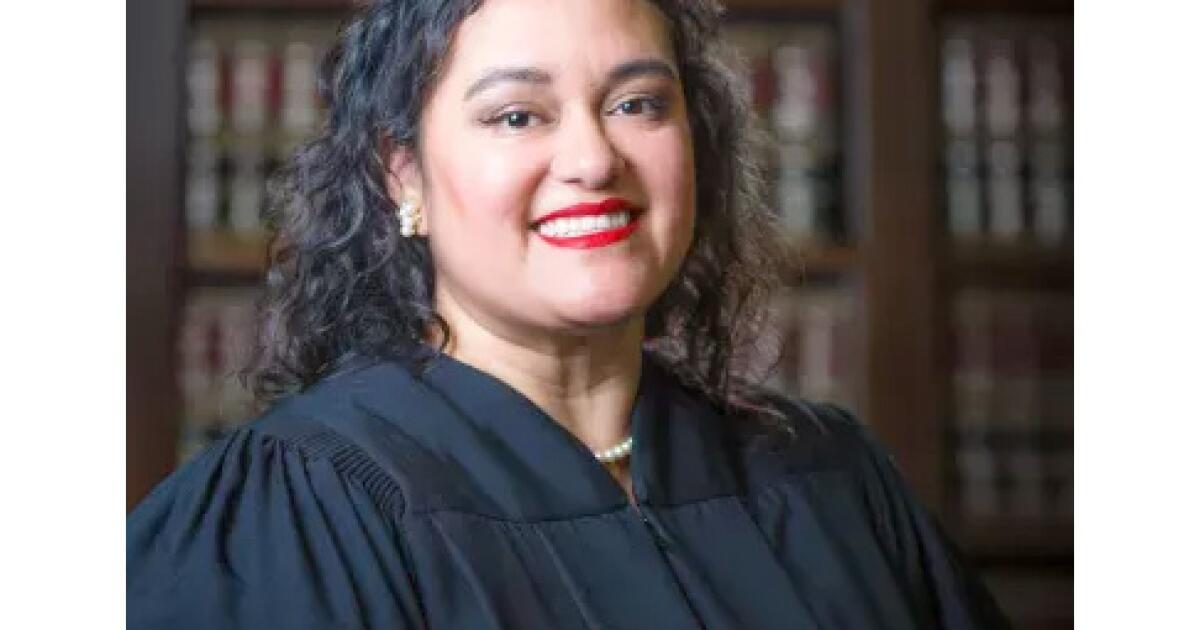
Friday’s move arrives just days after US District Judge Araceli Martinez-Olguin granted a temporary restraining order requested by the states to freeze the transaction for several weeks.
The companies agreed to pause the deal until five days after the judge rules on the merits of the case, or June 1, 2027, whichever comes first. Paramount could owe as much as $1.7bn in ticking fees to Warner Bros shareholders if the deal is delayed until then.
Similar merger challenges have taken an average of eight months for a judge to rule, a review of recent cases by the Reuters news agency has found.
There have also been concerns over a media stranglehold as the merger would have brought CNN, currently owned by Warner Bros, under the umbrella of Paramount. The latter already owns CBS, which has seen a fair amount of turmoil amid allegations of bias in favour of US President Donald Trump under the leadership of CEO David Ellison, whose father, tech billionaire Larry Ellison, is a Trump ally.
For more than a quarter-century, a lawsuit settlement from a case brought in Los Angeles federal court has dictated conditions for children held in immigration detention.
But now, the long-standing settlement — which set minimum standards for housing, education and medical care for migrant kids in federal custody, while strictly limiting how long they can remain there — hangs in the balance in the 9th Circuit Court of Appeals after a challenge by the Trump administration.
At the same time, the federal judge in L.A. who presides over the agreement appears poised to appoint a powerful new enforcer to uphold it.
President Trump has long sought to scrap the Flores settlement, which dates back to the Clinton era. In recent months, the Trump administration has waged a legal battle to cancel the agreement, while also pleading with the district court not to order an independent monitor to boost its compliance.
“[Flores] is the only thing standing between them and indefinite detention of families,” said Leecia Welch, chief legal director at Children’s Rights, a plaintiff in the case.
Last month, Assistant Atty. Gen. Brett A. Shumate pressed the 9th Circuit court to give the administration “the thumbs-up or thumbs-down” on its bid to tear up the settlement and end what he called “judicial micromanagement” of federal immigration policy.
“The Flores consent decree is an agreement which goes well above the constitutional floor,” Shumate told the court during oral arguments in June. “We’re asking that [the Department of Homeland Security’s] compliance with the law be assessed based on the law, not a 30-year-old settlement agreement.”
The three-judge panel sharply questioned the Justice Department’s legal claims, saying little had changed since the government last petitioned the court to have the agreement dissolved in 2020 — a request that was rejected.
The judges also pressed Trump administration lawyers to respond to evidence from scores of declarations filed in district court since last summer, in which detainees describe struggling to sleep in freezing, brightly lit rooms, vomiting from eating spoiled food, and begging for diapers, baby formula and asthma inhalers.
“You’ve said a lot of the reason you’re doing this is to discourage families from coming in the first place, so you’re basically punishing children because their parents brought them here,” Judge Marsha S. Berzon said.
Berzon, a Clinton appointee who issued a fiery dissent last year in a case that challenged the administration’s use of armed troops in immigration enforcement operations, asked: “You’re saying there’s no constitutional problem there?”
“I understand the detention of children at the border is a controversial policy issue, but that’s a policy decision,” Shumate said.
Just a day earlier, Chief U.S. District Judge Dolly M. Gee scolded a pair of government attorneys from her bench in Los Angeles, signaling she would probably appoint a new special master to force compliance with the settlement agreement.
“We’re talking about 11 years of this,” Gee said during the June 1 status conference. “None of these issues are new to me. These are all issues on which I have issued orders. I am very displeased about the fact that my orders are being disregarded and are not being complied with, not in good faith.”
“Both sides seem to be operating in different planes of reality,” Gee said.
The disputed settlement emerged from a 1985 lawsuit over the fate of 15-year-old Jenny Flores, a Salvadoran refugee who was picked up by federal immigration enforcement and left to languish in detention in Pasadena. At the time, there was little awareness that children were among the tens of thousands of migrants fleeing civil war and state collapse in Central America — with virtually no U.S. government infrastructure to protect them.
“It was a surprise,” said Benjamin Roth, a professor at the University of South Carolina College of Social Work and an expert on the agreement. “There was no thought then that there were kids in this mix.”
The current court fight centers on an immigration detention center in Dilley, Texas, run by the private prison company CoreCivic, where the vast majority of children and families in immigration custody are held.
In court filings earlier this month, U.S. Immigration and Customs Enforcement said it has “maintained core Flores-related services” at Dilley and argued its length-of-stay numbers were skewed by a small number of families it was forced to keep because they are considered “national security risks.” U.S. Customs and Border Protection likewise boasted its July 1 report “shows our highest level of compliance to date.”
Immigrant rights advocates called those claims “a fiction.”
“We see the same sorts of problems and concerns and misery that we’ve been seeing for the last 15 months,” said Welch, the Children’s Rights attorney.
In dozens of declarations collected as part of the court record, detainees recounted broccoli full of worms, diapers doled out one at a time, and staff tearing up children’s drawings.
One mother said medical staff laughed off her 8-year-old’s broken arm. Another said she was denied treatment for hepatitis B, even after doctors told her she could develop liver cancer and pass the infection on to her unborn daughter.
Still others described unexplained rashes, outbreaks of diarrhea and infestations of lice, among a host of other maladies for which many said they were offered only Tylenol or allergy medication. Even Christmas brought misery in the form of an ICE agent dressed up as Santa, who shoved away children trying to hug him, according to the detainee declarations submitted to the court.
“What happened on Christmas Day can only be described as an atrocity,” one mother recalled. Children “dropped everything, ran up to him, begged for candy and wanted to take pictures. Some children even cried and begged him for their freedom. Santa himself acted very indifferent.”
The Department of Justice argued that immigrant kids could still sue over poor conditions if the Flores settlement is unwound. But experts say existing protections would collapse without the legal architecture of the consent decree to support them.
“[Under the settlement], the federal government has built out a very efficient system to provide temporary care for kids,” Roth said. “If Flores is dissolved, it’s not going to be easy to stand up this same set of programs.”
If the Trump administration loses before the 9th Circuit, the fight over Flores could soon escalate to the Supreme Court.
“I’d be shocked if the 9th Circuit rules for the government, and I’d be shocked if the Trump administration doesn’t appeal,” said Eric J. Segall, a law professor at Georgia State University and an expert on the high court.
But consent decrees are legally and politically complicated, and the treatment of migrant children further tangles the situation. Given the legal and political complexity, the Supreme Court could rule to keep the settlement in place, or decline to take the case at all, experts said.
“It’s more likely than not the court would stay away from this,” Segall said.
For now, both the district judge and the 9th Circuit panel appear fed up.
“I think my patience has come to an end,” Gee said during the recent hearing in her Los Angeles courtroom.
July 23 (UPI) — Arizona health officials have confirmed the state’s first infection of an mpox strain responsible for a global outbreak, identifying the case as having been infected while traveling outside the United States.
The Arizona Department of Health and Services said in a statement Wednesday that it has confirmed its first case of Clade I mpox, involving a person with recent international travel.
“ADHS and local public health officials are working to prevent additional infections through monitoring and follow-ups with people who may have been exposed,” the state health agency said.
“There is currently no evidence of local transmission connected to this case.”
Little information about the patient was made public. The ADHS said it was notified of a confirmed travel-associated case of the mpox strain this month.
It is the state’s 34th case of the disease this year, with all but the most recent patient having contracted Clade II mpox.
Mpox is an infection caused by the monkeypox virus, which is spread through physical contact, including direct skin-to-skin contact and sharing of personal items, including bedding, towels and clothing, the ADHS said.
The virus has two main clades: Clade I, which is endemic to Central Africa, and Clade II, which is associated with West Africa.
According to the U.S. Centers for Disease Control and Prevention, Clade I was historically reported to have a much higher case-fatality rate than Clade II, though recent data suggest case-fatality rates for both clades are low, especially when medical care is provided.
Clade II is the cause of the ongoing mpox outbreak that began in 2022, infecting more than 114,000 people worldwide, including about 37,500 people infected in the United States, CDC statistics show. ADHS statistics show Arizona had 582 mpox infections in 2022, followed by 20 in 2023, 66 in 2024 and 17 last year.
Clade I is also responsible for an ongoing mpox outbreak that began in Central Africa in late 2023, and which has since spread internationally, resulting in more than 55,000 confirmed cases, including more than 150 deaths, since January 2024, the CDC said.
The United States reported between 1,700 and 2,800 mpox cases a year from 2023 through 2025, though nearly all have been Clade II.
The CDC said Clade I cases have increased in frequency in the country since March, with more than 20 cases reported in the United States as of June.
Trump-endorsed Republican gubernatorial candidate Steve Hilton formally launched his general election campaign Wednesday by pitching himself to California’s abundance of anti-Trump voters.
In a speech, Hilton said Democrats had “abandoned” working-class and Latino communities and crushed small businesses. He criticized Gov. Gavin Newsom for leading the state into decline, pointing to low literacy rates and slow responses to crises such as the Boyle Heights warehouse fire.
Hilton, a British-born conservative political commentator and former Fox News host, faces an uphill battle in California, a Democratic stronghold. In June, Hilton clinched second place in California’s gubernatorial primary behind veteran Democratic politician Xavier Becerra.
In an effort to persuade voters who are dissatisfied with the status quo, Hilton bought a full-page ad in the Wednesday editions of the Los Angeles Times and San Francisco Chronicle.
The ad read, “Can you be anti-Trump and still vote for me?,” followed by a checklist readers could use to “test” if they shared common ground with Hilton.
“I can’t stand Trump, but I’m not happy with the way things have been run in California lately,” reads one line in the ad.
“I want to fight climate change, but $6.00 gas is crazy!” reads another.
At a news conference Wednesday, Hilton said the ad is aimed at voters who “know that we need change in California.”
Trump’s unpopularity in the state “doesn’t matter because we’re not talking about national policies here,” he said. “This is about what we can do in our state to make life better for Californians.”
Hilton then framed himself as a “pragmatic, problem-solving change-maker” focused on affordability, promising to lower gas prices, electricity costs and taxes and the cost of homes.
“We may not agree about national politics, but I think we can agree that we need change in California, and I’m going to bring that change,” he said.
The news conference, which marked the formal launch of Hilton’s general election campaign, took place at a Boyle Heights auto body shop across the street from the Lineage cold storage facility that was destroyed by a fire last month.
The location was chosen because it is a “symbol of Democrat failure,” Hilton said. The nauseating stench of rotting food filled the surrounding neighborhood. Swarms of flies buzzed about, occasionally landing on top of Hilton’s head.
Hilton said he’s not expecting Trump to campaign on his behalf in California. But, he added, “I’m proud to be endorsed by the president and I think it’s a very good thing to have a governor who has a good relationship with the federal administration.”
No Republican has been elected to a statewide office since 2006. A poll by the Public Policy Institute of California published earlier this month showed Becerra with support from 61% of likely voters, compared with 36% for Hilton.
Hilton insists his campaign is different from previous Republican bids.
“We’ve got to the point in California where people are looking for a positive alternative,” Hilton told The Times. “We’re going to be fighting very hard … already in the last year and a half I’ve fought a campaign like no one’s seen in California for 20 years. I’ve been to nearly every single county in our state.”
Seoul Mayor Oh Se-hoon speaks to reporters outside the Central District Court in Seoul, South Korea, 22 July 2026, after the court sentenced Oh to a 10 million-won (USD 6,600) fine for accepting illegal political funds in connection with opinion poll results he obtained ahead of the 2021 mayoral by-election. Photo by YONHAP / EPA
July 22 (Asia Today) — Seoul Mayor Oh Se-hoon was fined 10 million won ($6,600) Wednesday after a court found him guilty of having a political supporter pay for opinion polls he commissioned before the 2021 mayoral by-election.
Oh would lose his position as mayor if the sentence is upheld by the Supreme Court. He rejected the ruling and said he would appeal immediately.
The Seoul Central District Court also ordered Oh to forfeit 21 million won ($13,900).
Former Seoul Vice Mayor for Political Affairs Kang Chul-won, who was indicted with Oh, was fined 3 million won ($2,000). Businessman and political supporter Kim Han-jung was fined 5 million won ($3,300).
Prosecutors accused Oh of receiving the results of 10 private opinion polls from political broker Myung Tae-kyun before the April 7, 2021, Seoul mayoral by-election.
They alleged that Oh instructed Kang, then his chief of staff, to have Kim pay about 33 million won ($21,900) in polling costs.
The court found Oh guilty of arranging payment of 21 million won for five polls, including three that were not intended for publication and two that were released publicly.
The court said Oh complained when poll results were unfavorable and sought to delay their release to minimize their negative effect.
“The commissioning and payment of the polls were also connected to an effort to publish and report candidate-commissioned opinion polls prohibited under the Public Official Election Act,” the court said. “The nature of the offense is serious.”
The court said Oh had previously served as Seoul mayor and should have been familiar with the purpose and requirements of the Political Funds Act.
It also said he led the offense but repeatedly attempted to avoid responsibility during the trial by presenting arguments the court found difficult to accept.
Oh disputed the ruling after leaving the courthouse.
“The court found five opinion polls unlawful today, but I cannot accept that conclusion,” Oh told reporters. “The correct decision would have been to find me not guilty on every count.”
Oh said the conviction was based on Myung’s statements and circumstantial evidence rather than direct evidence.
His legal team said in a statement that it regretted the court’s decision to convict Oh without objective evidence.
“It is difficult to accept a conclusion reached by piecing together some of Myung’s exaggerated statements and various circumstances,” the statement said.
The defense said it would file an immediate appeal.
The case is governed by an expedited trial provision requiring a first-trial ruling within six months of indictment and appellate and Supreme Court rulings within three months of the preceding decision.
A final Supreme Court ruling is expected by January at the latest.
My theme park day begins with gunfire. A jailbreak! But shortly after, I‘m attending a wedding. Next I’m on a mission, helping the local postmaster justify his uncontrollable desire to open everyone’s packages, and trying to find a way to do so without telling a lie.
This is just another Sunday morning at Knott’s Berry Farm’s “Ghost Town Alive!,” a now-10-year-old interactive show — live-action role-playing game is more accurate — that has become the best summer offering at any theme park, and not just in SoCal but in America. There’s a daily story, including three editions of a single-page newsletter that are updated every day. There’s also lots of improv. Over the years, I’ve found myself on the prowl for mysterious elixirs, playing matchmaker, collaborating on group stories in a schoolhouse, doing police work, participating in a mustache contest or flashing a press badge.
“Ghost Town Alive!” ultimately is the promise of theme parks fulfilled, that is that we can enter a fantasy world and play as cartoonish, or maybe even idealized, versions of ourselves.
You’re reading Mr. Todd’s Wild Ride newsletter
Todd Martens’ newsletter delivers news and commentary on the past, present and future of theme parks, right from the theme park capital of the world — Southern California.
By continuing, you agree to our Terms of Service, which include arbitration and a class action waiver. You agree that we and our third-party vendors may collect and use your information, including through cookies, pixels and similar technologies, for the purposes set forth in our Privacy Policy such as personalizing your experience and ads.
It’s a rarity, an event with 46 actors — about 30 of whom appear each afternoon — who lead guests through scavenger hunts, puzzles or just conversations about life in Calico, the fictional town of Knott’s Berry Farm’s Ghost Town area. The cast ranges from those just out of college to those in their mid-70s, and no character is ever played by more than one actor. This gives Calico a sense of life, an illusion that it’s actually populated, but also allows actors to fully develop a personality and let their characters evolve.
Before creative director Andy Crocker was working on “Ghost Town Alive!,” she was visiting it as a fan. Crocker, an experiential designer who has worked on projects for companies as wide-ranging as the Los Angeles Public Library and Walt Disney Imagineering, specializes in particular on guest-to-actor interactions.
“Ghost Town Alive!” unfolds like a live-action role-playing game. But expect plenty of silliness.
(Allen J. Schaben / Los Angeles Times)
“I will never forget the first time I saw it as a guest,” Crocker tells me. “I came with my husband, and we did not bring our kid. We walked in, and I saw a little girl in a pink cowboy hat with a painted-on mustache following an outlaw off to jail. That outlaw was giving a gritty HBO performance. Wasn’t patronizing. Wasn’t talking down. He was giving her a hero moment, and I burst into tears. I didn’t know this was possible to do on this scale with such an institution. The empowerment that performer gave to that guest, I will never forget.”
To make a theme park feel personal is no easy feat. In fact, designers have long been trying to solve this problem, whether by creating interactive attractions that feel responsive to the guest, or short-lived experiments such as the late but great Star Wars: Galactic Starcruiser, colloquially known as the Star Wars hotel.
Crocker says others have asked for the “secret sauce” to “Ghost Town Alive!” They’ve tried — and are trying — but she’s not so sure the magic can be replicated. One, Knott’s is blessed with a real, 100-year-old Ghost Town. That allowed for the investment to be solely in the cast and performance rather than infrastructure. And yet actors, of course, aren’t cheap.
A single-page newspaper is printed three times a day during “Ghost Town Alive!”
(Todd Martens / Los Angeles Times)
“The amount of people that we have, that’s tough for a lot of places,” Crocker says. “They try to do it with less, and it doesn’t quite work.”
Speaking on a panel hosted by trade group the Themed Entertainment Assn., Jeff Tucker, Knott’s Berry Farm’s show writer, says one early mistake Knott’s made was thinking everyone who works in Ghost Town could partake. That meant, for instance, taping dialogue cues to cash registers in the saloon in the hopes that bartenders could become a character. The concept failed. “It’s a logistical nightmare,” he says. The lesson: Hire actors to perform. Let bartenders be bartenders and retail staff be retail staff.
Another reason Crocker tells me “Ghost Town Alive!” is so rare, and will remain so: It doesn’t rely on intellectual property, or a known franchise, which has become the lifeblood of modern theme parks. “With things that are heavy IP, it’s very tricky to control your IP and to allow for real play, guest agency, and, honestly, artist agency,” she says.
Evan Battle, center, who plays Deputy Chester Davenport, at Knott’s Berry Farm’s “Ghost Town Alive!” in 2024. The interactive theatrical experience allows guests to mingle with about 30 actors.
(Allen J. Schaben / Los Angeles Times)
That’s important, as “Ghost Town Alive!” can shift with the whims of the guest. There’s a core storyline this year. A rich, Beverly Hills-like family is revealed to be the true owners of Calico, and how the residents respond is the key narrative of the day. But there are multiple tales to uncover, including hidden factions (check out the Calico Historical Society) and who is taking who to the 4 p.m. hoedown, which ends each daily game of “Ghost Town Alive!”
But Crocker has also seen it get rather heartwarming.
“My mom came to see it,” she says. “She has some health concerns. There was a character who was in a crazy mix-’em-up and said he would not make it to the hoedown and that this would be his last day on Earth. This character and my mom ended up having this conversation about how if you know you don’t have a lot of time left, what would you do with your time? I was surprised by that pivot.”
It helps, Crocker says, that she’s noticed one commonality among the “Ghost Town Alive!” staff. They play — or were weaned on — tabletop role-playing games such as “Dungeons & Dragons,” which at their best allow for an anything-goes approach designed to follow the direction of the players rather than a strict script.
Tucker on the panel said there was one rule the crew lives by that defines the success of “Ghost Town Alive!”: “It’s not real,” he said. “We can do whatever we want.”
This week in SoCal theme parks
Not yet ready for prime time, Knott’s Berry Farm has delayed the opening of Montezooma: The Forbidden Fortress.
(Todd Martens / Los Angeles Times)
Montezooma is not yet zooming. Knott’s Berry Farm initially intended to launch its reimagined Montezooma’s Revenge, now known as Montezooma: The Forbidden Fortress, this week. Late Thursday, the park delayed its public unveiling, with a spokesperson citing additional fine-tuning that surfaced during its final days of testing. The delay is not expected to be a prolonged one. “We appreciate everyone’s understanding and look forward to welcoming media and guests in the coming days when we can showcase the attraction exactly as intended,” read a statement from the park.
A monthlong Lego celebration. Carlsbad’s Legoland likes to describe its Lego Festival, which started Monday and runs through Aug. 30, as a child’s first fest. Expect lots of characters and an assortment of play-focused areas. One is dedicated to music, another is a free-run creative zone and a third is a Lego garden designed to soothe. New this year is a game-heavy center dedicated to the Pokémon franchise, as well as a challenge-filled F1 installation.
It’s now more expensive to eat at Disneyland. Price hikes, unfortunately, are a yearly-occurrence at the Disneyland Resort, and this summer, like every summer, hundreds of food items have ever-so-slightly increased in cost. Most are in the range of a dollar or so — give or take a quarter or two — but expect to pay $7, up from $6.50, for a scoop of popcorn. I admittedly do not keep a database of Disneyland food prices, but sites like Mickey Visit or Theme Park IQ have tracked the most egregious price bumps. Looking at their data, you may want to think twice about dining at Disneyland’s Rancho del Zocalo Restaurante, where prices have been increasing even as portions over the years have been declining.
Where is Fast & Furious: Hollywood Drift? We’re now in midsummer, and Universal Studios Hollywood’s Fast & Furious: Hollywood Drift still does not have an official opening date. While sources familiar with the coaster’s operations point to routine mechanical issues that have arisen during its test and adjustment phase, one thing is certain: It’s not delayed due to noise complaints from neighbors, as rumors suggested last week. A Universal spokesperson pushed back on the notion that the coaster is delayed, stating it would still open this summer, which lasts into late September.
The best thing I ate at the parks
The hearty cottage pie from Downtown Disney’s Gordon Ramsay at the Carnaby.
(Todd Martens / Los Angeles Times)
I’ve been eagerly anticipating the opening of Gordon Ramsay at the Carnaby at the Disneyland Resort’s Downtown Disney, the latest concept in which the celebrity chef has agreed to lend his name. This one is an upscale gastropub, and while I’ll leave the full cuisine analysis to the professional food writers, as a parkgoer I do believe it fills a void in Disneyland’s shopping and entertainment district, bringing the area an adult-focused space with upscale (read: expensive) twists on old favorites like fish and chips ($33) and cottage pie ($38). And after reading breathless press release-like articles and posts from my theme park peers (“utter perfection,” proclaimed one) I couldn’t have been more excited to dine there this weekend.
Let’s start with the vibe, which I found to be rather confused. I was seated in the tiny, uncomfortable indoor bar, a place that felt like an afterthought and leaned airport terminal drinking hole, as it’s situated at the top of a stairwell and serves primarily as a thoroughfare into the dining hall. That a pub, especially one with an extensive cocktail menu (I did love my $22 cotton candy-infused Old Fashioned) would treat its introductory bar as a throwaway rather than a centerpiece of the experience was disappointing (an outdoor bar is significantly more enticing). The core dining space leans contemporary more than a traditional, wood-infused pub, feeling cafe-like with its ‘60s rock posters and framed portraits of those in mod outfits. More theme-ing would have been welcome, as I read it as slightly cold and corporate rather than homey and intimate. Instead of, say Pasadena’s Lucky Baldwins, this felt like a nice break room at a major record label.
But my dish was delightful. I had my heart set on the cottage pie, this one infused with a hearty portion of short rib. I probably should have taken leftovers, because it’s heavy, but in the best way possible. The potato-rich top felt creamy and buttery, while the meat was equally soft. The whole thing felt invitingly plush. I walked away mixed. No complaints on my entrée, and I’m eager to come back and try the fish and chips, and yes, that viral sticky toffee pudding dessert, but longing for a more welcoming atmosphere, especially at this price point.
Tell us your stories. Ask us your questions.
Have a theme park tale to share? Whether it was a good day or less-than-perfect day, I would love to hear about it. Have a question? A tip? A fun photo from the parks to share? Email me at todd.martens@latimes.com. I may feature your note in an upcoming newsletter.
Ride on,
Todd Martens
P.S.
Drowned Out Productions’ “The Shoebox Museum” explores love and loss.
(Drowned Out Productions. )
There’s a show running Saturday and Sunday in Los Angeles that I believe theme park fans should make time for. “The Shoebox Museum,” at North Hollywood’s After Hours theater, is a walk-through immersive experience at its most thoughtful. It’s short, at around 30 minutes, but it stayed with me for hours after it concluded.
“The Shoebox Museum,” from Drowned Out Productions’ Jackson Mancuso, who does theme park design by day, is a mediation on heartbreak, asking what we want to leave behind, and take with us, as we explore our grief. It’s meticulously designed, as we follow light cues through byzantine rooms filled with everyday ephemera — the type of stuff that only holds meaning to those who were in love. It’s a show about how an once broken heart, even mended, still finds ways to haunt us.
Wilfredo Engalla, a 51-year-old Filipino immigrant, alleged in a medical malpractice case that Kaiser doctors misdiagnosed him with colds and allergies for years before eventually informing him he had terminal lung cancer.
He died before his complaint could be heard by an arbitrator, which his Kaiser policy required. His case prompted a withering rebuke from the California Supreme Court, which said Kaiser’s system of arbitrating legal disputes was subject to long delays and unfair to its members. The year was 1997.
Nearly three decades after the landmark decision, the HMO giant — which made a series of sweeping reforms after the ruling — is once again facing questions over whether its arbitration system is stacked against the interests of its members.
Plaintiffs attorneys, legislators and patients say Kaiser’s private and confidential process for arbitrating legal disputes over medical care still has key flaws that favor Kaiser over patients bringing malpractice cases. The company insures about 25% of Californians, including some employees of the Los Angeles Times.
“Kaiser has really lost its way,” said Assemblyman Robert Garcia (D-Rancho Cucamonga). Garcia, who is a longtime Kaiser member, recently introduced a bill to require the California attorney general to oversee arbitrations mandated by any health plan.
Kaiser defended its arbitration system, saying in a statement that it was fair for both patients and the nonprofit.
Many companies and other organizations, including some hospitals, HMOs and physician groups, require their customers or patients to take their complaints to private arbitration rather than to court.
But unlike most other companies, which send claims to large arbitration firms, Kaiser created its own system back in 1971.
Under Kaiser’s system, once a neutral arbitrator is selected, either party can opt to disqualify that person without cause. There is no limit on the number of disqualifications.
Although the health plan designed the system to be fair, patients and their lawyers have alleged that in reality Kaiser’s greater knowledge of arbitrators’ past rulings and its ability to veto arbitrators give it an advantage to pick favorable judges.
Critics such as Arlan Cohen, a physician and attorney who has brought more than two dozen cases against the health plan, say the system also provides a financial incentive to arbitrators to rule in Kaiser’s favor in order to be selected for future cases.
While Kaiser has access to all the decisions made by arbitrators in its system, the patient’s family gets a more limited disclosure of an arbitrator’s history of cases, lawyers say, adding that it’s not easy to see which arbitrators have ruled frequently for Kaiser.
Kaiser said it disagreed that the system allowed it to select favored arbitrators.
“The appointment process is not influenced by whether the arbitrator has ruled for or against KP or has a record of ruling against Kaiser Permanente,” its statement said.
“As required by law, both parties receive information about potential arbitrators and can decline to move forward with any they are not comfortable,” the statement said.
One problem is what experts call the “repeat player effect,” in which a large company appearing repeatedly before the same panel of arbitrators allegedly gains an advantage over the individual bringing a single complaint.
David Allen Larson, past chair of the American Bar Assn.’s dispute resolution section, said the repeat player effect happens because the patient will likely be choosing an arbitrator on the health plan’s system just once, while “Kaiser is selecting them every single day.”
“They know the system. They know the rules,” Larson said of Kaiser. “The entire process gives them an advantage.”
Alan Kang, a lawyer, in a recent petition filed in L.A. County Superior Court, contends that the fees the arbitrators earn from hearing cases — as much as $2,000 an hour — give them an incentive to rule in Kaiser’s favor so they are chosen to hear more cases.
“When a judge’s future income is at stake, it is impossible to be impartial,” Kang wrote in the petition.
The petition seeks to void the December decision of an arbitrator who ruled against the family of Evangelina Aquino, a Kaiser employee who died of cancer at age 40.
Kang, the Aquino family and the medical experts they hired for the case say her cancer would have been treatable if Kaiser doctors had found it with a test they said her symptoms called for. Kaiser argued it was a different kind of cancer that was aggressive and untreatable. The arbitrator agreed with Kaiser in the December decision.
After the ruling, Kang began analyzing data from Kaiser’s system.
His review of dozens of cases in the last six years found that judges overseeing the most cases nearly always ruled for Kaiser.
“The message is clear: deliver wins for Kaiser and you will get additional business,” Kang wrote in his court petition.
The Oakland-based health plan declined to answer questions about its arbitration system and Kang’s claims, but said in a statement that its “arbitration process is designed to be fair, impartial, and accessible to all members. While some arbitrators may handle multiple Kaiser Permanente-related cases, they are not employed by Kaiser Permanente, and they are selected by both parties, in accordance with the law.”
“We recognize that arbitration cases often involve difficult and deeply personal experiences for patients and families,” the statement said, “and we take all concerns raised through these processes seriously.”
Kaiser’s unique arbitration system
Arbitration can have advantages over the court system, including allowing Kaiser to save on legal costs, which otherwise would raise the price of premiums it charges to families, employers and governments.
Kaiser offers to pay the arbitrators’ fees, which can save families tens of thousands of dollars.
Arbitration may also lead to faster outcomes, possibly avoiding years of litigation. Unlike civil litigation, arbitration decisions are especially difficult to appeal.
After the criticism by the state Supreme Court in 1997, Kaiser reformed the system by creating the Office of the Independent Administrator. The office is funded by a Kaiser trust and the $150 fee each patient filing a claim must pay, said Marcella Bell, who serves as the independent administrator.
Bell said the office works independently from Kaiser.
The office selected 195 retired judges and lawyers to serve on a panel that patients and Kaiser can choose from when selecting a neutral arbitrator to oversee and decide a malpractice case.
Rules written by the independent administrator, in consultation with the health plan and an advisory board, allow Kaiser and the family to cut an arbitrator they don’t like, at multiple steps in the process.
The administrator’s office randomly selects 12 members from its panel. Both sides can each remove any four of those arbitrators. The two sides then rank the remaining arbitrators in order of preference. The administrator selects the top-ranked arbitrator to hear the case.
The two parties then still have the ability to disqualify that selection without cause.
Members of the United Nurses Assns. of California and Union of Healthcare Professionals strike outside Kaiser Permanente in Oakland on Jan. 28.
(Jessica Christian / San Francisco Chronicle)
Last year, Kaiser’s arbitration system closed 529 arbitration cases.
The arbitrators threw out 14% of the cases, ruling in favor of Kaiser’s motion for summary judgment, and dismissed an additional 5% of cases on technical or procedural grounds.
Only 23 cases, or 4% of the total, went to a hearing. Among those, the arbitrator decided for Kaiser in 17, with the patient winning the remaining six.
Patients and their families withdrew their claim in 20% of the cases. About half of those patients did not have a lawyer and had tried to represent themselves.
The parties settled for an undisclosed sum in 57% of the cases. The settlements are confidential.
Patient safety questions
Those who have studied the use of arbitration by Kaiser and other HMOs for medical malpractice claims say the secrecy of the settlements and the closed hearings could keep safety problems from coming to light.
“The secrecy of arbitration proceedings may prevent publicity that could reveal poor doctors,” the California Research Bureau warned in a report in 2000 that analyzed Kaiser’s system. That compares with public court cases that could deter “bad behavior” in the future, the researchers wrote.
In December 2023, 53-year-old Francisco Delgadillo arrived at the Kaiser ER in Vallejo with severe chest pain. After an initial assessment, he waited eight hours for care, according to state regulators.
He died in the lobby. A state and federal investigation found multiple violations, including that Kaiser failed to have a licensed nurse monitoring the dozens of patients in the ER’s waiting room.
The Delgadillo family filed an arbitration claim. Their lawyer Jeff Mitchell said the case settled for a confidential sum and he could not discuss it.
Mitchell agreed that the secrecy raised patient safety concerns.
“They love the system, otherwise they would not be so hellbent to keep it,” Mitchell said of Kaiser’s repeated efforts to dispel criticism. “They don’t want these cases to get in front of juries.”
A licensed practical nurse attends to a patient at a Kaiser Permanente in Culver City in September.
(Allen J. Schaben / Los Angeles Times)
Calls for reform
Despite the changes Kaiser made after the 1997 court decision, patients and their families have continued to complain.
According to the administrator’s 2025 annual report, the “most common” complaint the office heard last year was about the neutral arbitrator.
“Most complained that the arbitrator was biased, partisan, unjust, and in Kaiser’s favor,” the report said.
Stephen Martinez, a retired aerospace engineer from Bellflower, is leading the effort to pass the state bill introduced by Garcia.
At an April hearing in the state Assembly, Martinez spoke about how his wife had found a lump in her breast and asked for an appointment with her longtime caregiver at Kaiser to examine it. Instead she was sent to a physician assistant, who dismissed it, he said.
“The PA prescribed warm compresses, a sports bra, and limited chocolate,” Martinez testified. “We would later find that Lindalee did have breast cancer that had already spread.”
Martinez and his wife said they spent $175,000 on lawyers and medical experts to bring that arbitration case. A chief breast surgeon at Kaiser and another surgeon who had retired from that job both testified that the Kaiser physician assistant failed to follow the health system’s guidelines.
Kaiser’s expert argued that the physician assistant did an appropriate exam and that his low suspicion of breast cancer was reasonable. The neutral arbitrator concurred and ruled against the couple.
After passing the Assembly, Assembly Bill 1770 is now in the state Senate for consideration. The bill lets the attorney general decide what actions they will take to ensure health plan arbitrations are handled fairly and transparently. If the bill passes, the state would add four deputy attorneys general, a legal analyst and three legal secretaries to do that work, according to a legislative analyst’s report.
Kaiser says it has concerns about the bill, including that it would “create overlapping state oversight and duplicative reporting requirements.”
Kaiser Permanente’s corporate offices in downtown Oakland in January 2025.
(Jane Tyska / East Bay Times via Getty Images)
Questions of a missed diagnosis
When Janene Fowler was 22, her body seemed to turn against her. She grew weak, pain shot through her hands and feet, her heart raced. She soon required a wheelchair.
Fowler’s medical chart detailed what could have caused her disabling problems. A test eight years before had found a deficiency of vitamin B12, according to the chart. Over the years, Kaiser doctors noted problems such as depression, unexplained pain, shortness of breath, a sore tongue and an abnormal gait — all possible symptoms of vitamin B12 deficiency.
In February 2022, after her family complained about her not being able to see a neurologist, she got an appointment. The specialist noted her vitamin deficiency, telling the nurse to start her on a supplement at once. But the treatment did not begin because the paperwork was lost, her medical records show.
Two weeks later, Fowler left Kaiser to see a doctor at UCLA. A doctor there quickly started injections of B12.
Her symptoms gradually got better, but her new doctors say the years-long deficiency left permanent damage. She still can’t walk without help.
The arbitrator, a retired judge, sided with Kaiser’s doctors and experts, who questioned whether Fowler’s problems were caused by a deficiency of vitamin B12. While one test showed a deficiency, he noted that a second test failed to confirm it. He wrote that Fowler and her lawyers had failed to prove that Kaiser “breached its duty of care.”
Cohen, Fowler’s lawyer, asserted that the retired judge’s decision was contrary to UCLA medical records, which detail her deficiency and treatment.
Fowler now spends most of her time at home. She can’t drive. She often falls when she tries to get around with a cane. She loves to cook, but said she burns herself when she tries.
“My hands don’t really do what I tell them,” she said.
Kaiser declined to answer questions about her case, citing patients’ privacy rights.
Fowler said she’s angry about how the health plan’s doctors and its arbitration system treated her.
“I thought I was going to die, and no one at Kaiser seemed to care,” she said. “What justice can you have in a system that is run by those you are trying to sue?”
Influencer brothers Andrew and Tristan Tate, whose social media empire promoting wealth, male dominance and misogyny has made them among the world’s most polarizing internet personalities, were arrested Saturday in Miami as British authorities sought their extradition on rape and sex trafficking charges.
The brothers were taken into custody by the U.S. Marshals Service on a sealed warrant, agency spokesperson Brady McCarron told the Associated Press, placing the United States at the center of an international legal saga that has stretched from Romania to Britain.
The dual U.S. and British citizens moved to Romania in 2016. They were arrested there in 2022, accused of participating in schemes to lure women for sexual exploitation. They denied those allegations, and the Romanian case hasn’t gone forward because of legal and procedural problems.
Last year, they were allowed to leave Romania and flew to Florida on a private jet.
The brothers are expected to appear in Miami’s federal court early next week, according to a person familiar with the matter who spoke on the condition of anonymity to discuss sensitive law enforcement operations.
The pending charges in the United Kingdom accused the brothers of abusing women in an area north of London, where they grew up. Their lawyers had said they denied the allegations.
Joseph McBride, an attorney representing the Tate brothers, said in a phone interview Saturday evening that he has not been able to speak with his clients but called the new charges in the U.K. “filth and slander” intended to derail defamation lawsuits filed by the brothers in the U.S.
“They’re pulling out all the stops to make sure these guys never get their day in court,” McBride said.
“We are confident that once a competent judge sees the facts, and once the Department of Justice confronts this egregious abuse of its own authority, Andrew and Tristan Tate will walk free. America does not do Britain’s political dirty work.”
Andrew Tate, 39, first reached a mainstream audience as a contestant on the U.K. reality television show “Big Brother” in 2016. He was removed from the show when a video surfaced that appeared to show Tate assaulting a woman. He and his brother Tristan, 38, are vocal supporters of President Trump.
Andrew Tate has amassed more than 10 million followers on X but has been banned from platforms including YouTube, TikTok and Instagram for violating hate speech guidelines. His most widely condemned rhetoric includes comments that women who are sexually assaulted should bear some responsibility for their attacks, graphic descriptions of how he might attack women and criticisms of people who seek treatment for mental illness.
The Tate brothers have consistently denied allegations of abuse and human trafficking, claiming that violent and misogynistic statements have been taken out of context or were intended as jokes.
In a statement Saturday, the U.K.’s Crown Prosecution Services said that in addition to the charges announced against the brothers in 2025, involving alleged crimes against three women, it was bringing a total of 38 new charges related to “four further victims.”
Both brothers are accused of rape and human trafficking. Andrew Tate faces an additional charge of profiting from prostitution, and 19 charges “for offenses relating to indecent images of a child and extreme pornography,” according to U.K. authorities.
“There is no place for male violence against women and girls, and we will continue to work tirelessly to support victims and investigate all reports made to us,” said Karena Thomas, an assistant chief constable of the Bedfordshire Police, which investigated the case.
Durkin Richer writes for the Associated Press. AP writer Savannah Peters in Santa Fe, N.M., contributed to this report.
Paramount Skydance’s top antitrust attorney told a judge Friday that David Ellison’s company would voluntarily delay its proposed $111-billion takeover of Warner Bros. Discovery at least until mid-August amid a legal challenge brought by 12 state attorneys general.
The states, led by California Atty. Gen. Rob Bonta, have asked a judge to issue a temporary restraining order that would prevent Paramount from finalizing its deal as the court battle ramps up. Paramount made the pledge in hopes of avoiding such a ruling that would tie its hands — and give the states an early win in the litigation.
Federal District Judge Araceli Martínez-Olguín said she would decide by Wednesday whether to issue a restraining order.
Tech scion David Ellison has been a regular in Washington D.C. this year as he races to consolidate Warner Bros. Discovery — less than a year after his family bought Paramount.
(Anna Moneymaker / Getty Images)
Friday’s hearing in Oakland opened the first chapter in the fight over the blockbuster deal that both sides agree would dramatically reshape Hollywood. Two century-old film studios — with rights to Harry Potter, Batman, “Top Gun,” “The Big Bang Theory” and “Game of Thrones” — would be combined, and HBO and CNN would come under new ownership.
Antitrust attorney James H. Weingarten, of the Washington law firm Milbank, represents California and the other states. He told the judge it would be impossible to untangle the two companies if they are allowed to combine.
“If this merger is allowed to close … the harms begin,” Weingarten said. “The job losses, the synergies — that’s the fancy word for ‘we’re going to save money and there might be job cuts.’ All of that process starts rolling.”
Bonta filed the suit Monday, alleging the proposed merger — the largest in Hollywood in decades — would violate the U.S. Clayton Antitrust Act, a 112-year-old law to prevent mergers that weaken competition and raise costs for consumers.
The lawsuit alleges antitrust violations in three markets where the two companies currently compete: wide-release films, potential blockbuster movies and cable television, where the combined entity would own more than 50 cable channels.
Paramount shares fell 4.3% to $8.75 on Friday. Warner stock slipped 1.5% to $26.87 — below Paramount’s offer of $31 a share.
More than two dozen lawyers attended Friday’s hearing, including from Colorado, Oregon, Washington and New York who came to support California, which is leading the case.
Paramount, represented by antitrust lawyer Jeffrey L. Kessler, argued a temporary restraining order was not necessary. The two sides should instead focus on the next big step — whether the judge issues a preliminary injunction, he said. Such a ruling could delay the deal for months.
Kessler said Paramount should be allowed a hearing to defend against a preliminary injunction by the end of August. The company wants to wrap up the litigation by late September to avoid a higher payout to Warner Bros. Discovery shareholders.
In a show of confidence earlier this year, Paramount offered Warner Bros. Discovery shareholders a “ticking fee” of 25 cents for every quarter after Sept. 30 — until the deal was done. Such payments would cost Paramount more than $7 million a day, which Kessler called a “massive injury.”
California Atty Gen. Rob Bonta is leading a coalition of 12 state attorneys general to try to halt Hollywood’s biggest merger in decades.
(Genaro Molina/Los Angeles Times)
Paramount would also have to pay Warner a $7-billion breakup fee should the deal fall apart.
Kessler argued the states had not made a sufficient case that competition would be harmed. “We don’t think they’ve come close to jumping through that hurdle,” Kessler said.
Earlier this year, Kessler represented the state attorney generals in their winning case against Live Nation Entertainment. A jury found that Live Nation, which owns Ticketmaster, operated as a monopoly. This time, Kessler is representing corporate interests.
Prominent Los Angeles litigator Daniel Petrocelli is representing Warner Bros. Discovery.
Paramount hired attorney Jeffrey Kessler to lead its antitrust defense.
(Noah Berger / Associated Press)
The case was assigned to Martínez-Olguín Wednesday after Paramount requested an earlier judge be removed because he formerly worked as a labor attorney.
Martínez-Olguín said she inherited the case because she was already overseeing another lawsuit dealing with the merger — not because Paramount had agitated for a change.
Paramount Skydance has prevailed in its first court move to defend its Warner Bros. Discovery merger — prompting the departure of a judge who initially had been assigned the high-profile antitrust case.
Late Wednesday, U.S. District Judge Araceli Martínez-Olguín took over the case brought by California Atty. Gen. Rob Bonta and 11 other Democratic state attorneys general. The states’ coalition is attempting to derail Paramount’s proposed $111-billion purchase of Warner Bros. Discovery, alleging it violates a century-old antitrust law.
Court records show U.S. District Judge P. Casey Pitts, based in San Jose, had initially been assigned. Early Wednesday, Paramount filed a motion requesting that Pitts step aside, citing his previous role as a labor lawyer, including for the Writers Guild of America.
The WGA joined the legal fray Tuesday by bringing its own antitrust complaint against Paramount, alleging the proposed union of two of Hollywood’s biggest studios would lead to fewer jobs and lower pay for writers.
In its motion, Paramount argued that Pitts’ past association with the Hollywood union was problematic.
“A reasonable person would question Judge Pitts’ impartiality in this case based on his prior work,” Paramount’s attorneys, led by Jeffrey Kessler, wrote in their eight-page motion.
Martínez-Olguín has been overseeing a separate lawsuit that also challenges Paramount’s merger with Warner Bros.
Five Paramount+ subscribers sued in late April to unravel the merger, claiming Paramount’s proposed consolidation of streaming services, film studios and national news networks — CBS News and CNN — would lead to higher prices and harm to consumers.
Paramount, in its motion, had requested that Martínez-Olguín preside over the state attorneys general lawsuit.
Martínez-Olguín, in an order, said she would now conduct a hearing that Pitts had scheduled for Friday to evaluate Bonta’s request for a temporary restraining order to prevent Paramount from finalizing the blockbuster transaction while the litigation is pending.
The Oakland-based judge joined the federal bench three years ago after being nominated by former President Biden. She was confirmed by the Senate in 2023 when former Vice President Kamala Harris cast a deciding vote to break a Senate deadlock.
The judge is a former immigration attorney.
Pitts, who is based in San José, also has served as a judge for three years. In December, he decided a significant case against U.S. Immigration and Customs Enforcement that barred ICE agents from making courthouse arrests.
Both sides went along with the judge switch, following a long-standing legal practice of having one judge oversee related cases.
The three lawsuits, all filed in the Northern California district, may eventually be combined. On Wednesday, Martínez-Olguín said the cases could travel together but she stopped short of consolidating them.
Prosecutors in Milan have requested that a sports fraud case against Gianluca Rocchi, the man in charge of assigning referees in Italy’s top flight, be dismissed.
The former international referee suspended himself in April after being placed under investigation for “complicity in sporting fraud” during the 2024-25 season.
Rocchi, the National Referees Commission’s referee designator for Serie A and Serie B, has always protested his innocence.
According to Italian news agency Ansa,, external prosecutors concluded after a two-year inquiry that there was no evidence of match-fixing, saying they did not “identify a structured system aimed at interfering with appointments”.
It was claimed that Rocchi was behind the selection of a referee for an Inter Milan game as he was “liked by Inter”.
A video assistant referee decision not to intervene when an Inter player elbowed an opponent in another game was also under scrutiny.
The simultaneous case against Inter has been dropped as well.
Rocchi was also accused of pressuring a VAR official to encourage a referee to check on the pitchside monitor for a handball offence during Udinese’s 1-0 win over Parma in March last year.
The referee and VAR official had already decided not to award a penalty but changed their minds, it is claimed, leading to Florian Thauvin scoring the only goal of the game.
Prosecutors have now forwarded the case documents to the sports justice authorities and the Italian Olympic Committee’s General Prosecutor’s Office to assess whether any disciplinary breaches within a sporting context may have occurred.
Sporting fraud is a criminal offence in Italy and carries a maximum sentence of six years in prison.
Todd Martens’ newsletter delivers news and commentary on the past, present and future of theme parks, right from the theme park capital of the world — Southern California.
By continuing, you agree to our Terms of Service, which include arbitration and a class action waiver. You agree that we and our third-party vendors may collect and use your information, including through cookies, pixels and similar technologies, for the purposes set forth in our Privacy Policy such as personalizing your experience and ads.
So when I had the opportunity to talk to Chris Mortensen, one of the Disneyland Resort’s longest-tenured vacation planners, I wanted to know his.
Mortensen recently celebrated his 40th year with the company, and has spent more than 20 of them in his current role as director of West Coast Travel Operations. That means a significant part of his job is talking on the phone with those who want advice on how to plan their Disneyland days.
He comes from a Disney family. His wife has spent about 30 years with the resort, and one of their children is also a cast member. If anyone should know how to plan a special day at Disneyland, it’s Mortensen.
One of his key pieces of advice: Decide what’s most important to you as a guest. “Is it a thrill ride? Is it entertainment? Is it food?” Mortensen asks. “One of the things that I like to tell people is that you’re going to have a really busy day, but take time for yourself.”
Here are some of Mortensen’s other favorite park tips. We steered the conversation to Southern California locals, and those who may want a little glimpse of what makes Disneyland so special.
Get around the park by train
Here’s one hint, off the bat, that Mortensen says he gives most everyone: “Use the Disneyland Railroad as a form of transportation. Yes, it’s a great little attraction. Seeing the dinosaurs is one of my favorites. But it’s also a great way to get from one place to another. If you’re on Main Street and don’t want to walk all the way back to see ‘Bluey,’ jump on the railway. It’s a great way to get a little rest, and experience the park.”
Decompress at Disneyland’s most tranquil spot
Disneyland’s Snow White Grotto is a tranquil spot overlooked by many guests.
(Todd Martens / Los Angeles Times)
Mortensen notes that it’s impossible to see all Disneyland has to offer in a single day, but rather than stressing about rushing from attraction to attraction, prioritize those that are important to you, and then take a breather at some overlooked park elements, especially those that add to its beauty and tranquility. I couldn’t agree more, and was pleased when Mortensen singled out one of my favorite places in the park: the Snow White Grotto, which is on a path on the eastern side of Sleeping Beauty Castle.
Sculpted by Leonida Parma from Carrara marble, the initial figures have, according to Disney’s fan club D23, been since replaced by fiberglass ones built from the original molds. The eight figures are still a sight, and Disney legendary designer John Hench constructed the fountain that holds them in 1960. The character figures, in the midst of a collection of jutting rocks and log bridges surrounding a peaceful waterfall, are all the same height, so Hench used forced perspective illusions to make it seem like Snow White was towering over the dwarf sculpts.
“The Snow White wishing well — you won’t find that anywhere [else],” Mortensen says. “Bring a quarter and toss it in, experience that.”
Take time for the Sleeping Beauty Castle Walkthrough, a lesser-known attraction
Don’t sleep on the Sleeping Beauty Castle Walkthrough at Disneyland.
(Todd Martens / Los Angeles Times)
“People don’t know about it,” Mortensen says of the self-guided mini-tour that tells the tale of Princess Aurora.
Indeed, I had the Sleeping Beauty Castle Walkthrough to myself one late Sunday morning. The attraction, best experienced with patience in mind, is largely inspired by the artwork of Eyvind Earle. Earle’s approach, after all, is designed to transport us, to place us in lush, fairy-tale-like environments that contain an ever-so-slightly foreboding atmosphere.
Think of this as a mini-art gallery where illuminated dioramas spring to life and transform before us. The walk-through was updated with new effects and artwork in 2008 but dates to 1957.
It’s Disneyland. Order the iconic turkey leg.
Mortensen and I clearly have different palates. If I’m recommending a must-try Disney snack, it’s not the churro. It’s the corn dog. Mortensen, however, is voting for the turkey leg. A brave choice, I believe, as it’s a hefty item and, well, a lot of tough meat. Mortensen, however, made his case.
“It’s unique,” he says. “Yes, you can get a churro, but where else can you walk around and just literally bite out of a turkey leg? It’s about trying to create memories. Every time we have conversations with someone, it’s about, ‘What’s going to make a memory for you?’ You’re always going to remember walking around Disneyland as a 5- or 6-year-old little boy or girl with a turkey leg.”
Turn It’s a Small World into a scavenger hunt
Cinderella is one of the many Disney characters that was added to It’s a Small World in the late 2000s.
(Todd Martens / Los Angeles Times)
Mortensen had my attention when he declared It’s a Small World a must-do attraction at the park. After all, the Mary Blair-styled boat excursion is my favorite Disneyland ride.
Mortensen highlights a once controversial but now beloved late 2000s renovation that added more than two dozen Disney and Pixar characters to the attraction. When riding It’s a Small World, he says, try to spot as many as possible. Disneyland even recently placed Miguel from “Coco” in the ride. Focusing on the scavenger hunt, says Mortensen, helps turn a familiar attraction into one that feels fresh.
“There’s more to it than just riding the attraction,” he says.
Spot details in the windows of Main Street
Enjoying a horse-drawn trip around Main Street, U.S.A., is a relaxing start to a Disneyland day.
(Todd Martens / Los Angeles Times)
Disneyland’s introductory land is a joy. Often, I start my day with a ride on one of Disneyland’s horse-drawn carriages, which venture from the foot of Main Street, U.S.A., to the Sleeping Beauty Castle and back. It’s a relaxing way to settle into the theme park and take a look at the exquisite designs of the Main Street buildings, which many guests rush past on their way to one of the park’s many rides.
Mortensen wanted to call specific attention to Main Street’s windows, which celebrate those who were integral to the development of the park. Many are nods to famed Disneyland designers. Most recently, the park awarded a window to the just-retired Kim Irvine and her mother, Leota Toombs. Irvine and Toombs were longtime creatives with Walt Disney Imagineering vital to the development of the park.
“I love to point out the windows on Main Street,” Mortensen says. “If you and I were walking in, that’s what I would do. I’d grab a box of popcorn, and just point out two or three of the names. Some people you may recognize. Some people you may not.”
And I certainly won’t argue with popcorn for breakfast.
This week in SoCal theme parks
Disney legend Don Iwerks died last week at 96.
(Lori Shepler / Los Angeles Times)
A legend was lost. Don Iwerks, whose inventiveness helped transform Disney’s theme parks, died July 9 at the age of 96, reported the Walt Disney Co. For Disney and his own studio, Iwerks Entertainment, Iwerks helped develop technologies and techniques like Circle-Vision, the 360-degree camera behind “America the Beautiful” and other early Disney attractions, and the 3D effects used in attractions like Captain EO and Star Tours. He also had major contributions to the world of cinema, instrumental, particularly, in the effects sequences of “Mary Poppins.” Read more about Iwerks in The Times’ obituary by Corinne Purtill.
Fiesta Village is no more. The Inland Empire amusement park, which stood for more than 50 years, closed for good last weekend. A center for mini golf, roller skating and go-karting, Fiesta Village announced the closure last week, citing rising operation costs and declining attendance.
Montezooma’s Revenge is back. The reimagined coaster, now known as Montezooma: The Forbidden Fortress, is set to return to Knott’s Berry Farm on Monday. Shuttered for the last four years, the ride has essentially been rebuilt, now featuring enhanced Aztec theming, new trains and a modern launch system. Look for a report on the remade coaster next week.
It’s almost Halloween season. Disneyland in mid-August will launch its Oogie Boogie Bash, Universal will follow in early September with Halloween Horror Nights and Knott’s Berry Farm isn’t far behind with its Knott’s Scary Farm. The latter is the longest-running Halloween event in the Southland, and defined the maze-focused haunt formula. Tickets are now on sale for all three happenings.
Happy 71st anniversary, Disneyland! On Friday, Disneyland will turn 71. While the occasion won’t be as grand as the 70th anniversary, which has been celebrated for the past year and will essentially continue up until the start of the park’s Halloween activities, the Anaheim theme park typically recognizes the birthday with some light festivities for guests. Think, perhaps, a character cavalcade or some specialty treats.
Tell us your stories. Ask us your questions.
Have a theme park tale to share? Whether it was a good day or less-than-perfect day, I would love to hear about it. Have a question? A tip? A fun photo from the parks to share? Email me at todd.martens@latimes.com. I may feature your note in an upcoming newsletter.
Ride on,
Todd Martens
P.S.
The initial news for those who purchased Disneyland’s specially priced $59 nighttime ticket is good. While now sold-out, Disneyland launched the promotional evenings this past Sunday, and the park didn’t appear flooded with twilight guests. Attendance was continuing a summer trend of being relatively light, and though wait times increased in the evening, nothing was headache-inducing.
At times, even showcase attraction Star Wars: Rise of the Resistance stood at about 40 minutes, with Space Mountain often showing a similar wait time. Most rides, however, were even more approachable, topping off at around 25 minutes throughout the night. Since the evening ticket only gives guests a taste of Disneyland — five hours worth — it’s a positive sign that the event’s opening night kept things manageable, providing those who bought in at a budget price a prime experience.
A vehicle believed to be carrying former South Korean President Yoon Suk Yeol enters the Seoul court complex in southern Seoul on Monday. Photo by Yonhap
A Seoul district court on Monday sentenced former President Yoon Suk Yeol to two years in prison after finding him partially guilty of accepting illegal political funds in the form of free opinion polls from a self-proclaimed power broker.
The Seoul Central District Court convicted the jailed former president on charges of violating the Political Funds Act in a ruling that marked a departure from a separate trial where his wife was acquitted on the same charges.
Special counsel Min Joong-ki’s team earlier indicted Yoon on charges of colluding with his wife, former first lady Kim Keon Hee, and receiving 58 opinion polls worth about 270 million won (US$180,100) in total for free from the power broker, Myung Tae-kyun, between April 2021 and March 2022.
In its ruling, the court recognized that Yoon had received 14 opinion polls from Myung for free over the period, sentencing him to prison and ordering a forfeiture of 13.96 million won.
It recognized the special counsel team’s argument that Yoon had promised to support former Rep. Kim Young-sun’s nomination as a candidate for the conservative People Power Party in the parliamentary by-elections in June 2022 in exchange for the opinion polls.
“The defendant’s actions sowed distrust in politics and undermined the public trust in the development of democracy,” the court said. “A punishment commensurate with the wrongdoing is inevitable.”
The court also sentenced Myung to 18 months in prison on the charges.
The special counsel team had sought a four-year prison sentence for Yoon and a three-year term for Myung.
The ruling diverged from an appellate court’s acquittal of Yoon’s wife on charges of accepting free opinion polls from Myung in a separate trial.
In Kim’s acquittal in April, the Seoul High Court ruled the couple could not be seen as profiting off the opinion polls as Myung had provided them to other people as well. Min’s team has appealed that ruling.
After the ruling, Yoon’s lawyers vowed to appeal, saying the verdict was “difficult to understand” given the former first lady’s acquittal in her trial.
The special counsel team called the latest ruling “very meaningful,” noting the bench appeared to have closely considered the various evidence and arguments presented in its judgment.
It marked the latest conviction for Yoon, who has been standing multiple trials following his failed 2024 martial law bid. In February, Yoon was sentenced to life imprisonment for leading an insurrection through his short-lived imposition of martial law.
Copyright (c) Yonhap News Agency prohibits its content from being redistributed or reprinted without consent, and forbids the content from being learned and used by artificial intelligence systems.
WASHINGTON — A federal judge has dismissed the remnants of the government’s landmark case against far-right Proud Boys members who were convicted of seditious conspiracy for plotting to attack the Capitol to keep President Trump in the White House after he lost his reelection bid more than five years ago.
The case’s dismissal late Friday became a foregone conclusion when Trump last year used his pardon powers to erase every case that the government prosecuted after a mob of his supporters stormed the building on Jan. 6, 2021. The judge who presided over the Proud Boys leaders’ trial saw no basis to preserve the convictions after Trump’s sweeping act of clemency last year.
U.S. District Judge Timothy Kelly, whom Trump nominated during his first term, said there is “little mystery” about why the second Trump administration decided to abandon this case and every other Jan. 6 riot case.
“President Trump’s views about the prosecution of those who attacked the U.S. Capitol on January 6 — whether those views are based on fact or fiction — are well known, as is his intention to extend clemency to them,” Kelly wrote.
The judge stressed that his order should not be mistaken as an endorsement of the Department of Justice’s decision to abandon the case. He referred to the Capitol riot as “a perilous event” and an assault on the constitutional imperative for a peaceful transfer of power between presidents.
“Moving forward, if this Nation’s experiment in self-government is to last another 250 years, the American people — no matter their partisan preferences — will have to act together to preserve, protect and defend that miracle through our constitutional framework,” Kelly wrote.
Juries in the nation’s capital separately convicted leaders of the Proud Boys and another extremist group, the antigovernment Oath Keepers, of orchestrating violent plots to keep Trump in power after he lost the 2020 presidential election to Democrat Joe Biden.
A different judge has not ruled yet on the Justice Department’s related request to throw out Oath Keepers’ seditious conspiracy convictions.
Friday’s ruling applied to four of five Proud Boys members who were convicted after a jury trial: Ethan Nordean, Joseph Biggs, Zachary Rehl and Dominic Pezzola. Trump commuted their prison sentences, but they were not covered by the president’s mass pardons.
Former Proud Boys national chairman Enrique Tarrio was convicted at the same trial but received a pardon from Trump. Kelly had sentenced Tarrio to 22 years, the longest prison term in any Capitol riot case.
Kunzelman and Durkin Richer write for the Associated Press.
A United States federal court has dismissed the seditious conspiracy cases against four members of the Proud Boys, the far-right group involved in the attack on the US Capitol on January 6, 2021.
On Friday, Judge Timothy J Kelly, an appointee of President Donald Trump, granted the government’s motion to dismiss the case with prejudice, meaning it cannot be revived in future.
Recommended Stories
list of 3 itemsend of list
But Kelly made it clear that the defendants — Ethan Nordean, Joseph Biggs, Zachary Rehl and Dominic Pezzola — had been “convicted of serious offences”.
He wrote in his seven-page ruling that his decision was ultimately rooted in the separation of government powers, not in the merits of the case.
“As the Court has said many times, the attack on the Capitol on January 6, 2021 was a perilous event. It was an attack on people, including police officers, many of whom were injured,” Kelly wrote.
“It was an attack on the Constitution’s mechanism to facilitate the peaceful transfer of power from one president to the next,” he added.
Inside the January 6 riot
Friday’s ruling was yet another milestone in Trump’s efforts to end the prosecution of January 6 rioters.
The attack on the Capitol came shortly after Trump lost his bid for re-election in 2020 to Democrat Joe Biden. But in the aftermath of his loss, Trump spread false claims that the election had been rigged.
January 6, 2021, was the day Congress was scheduled to certify the Electoral College votes, confirming Trump’s defeat.
His vice president at the time, Mike Pence, held a ceremonial role overseeing the certification that day. But behind the scenes, Trump reportedly pressured Pence to reject the results of the election.
At midday, Trump held a “Save America” rally in front of the White House, repeating to his supporters that he had won “by a landslide”.
“If Mike Pence does the right thing, we win the election,” Trump said at one point. At another, he said, “If you don’t fight like hell, you’re not going to have a country anymore.”
Afterwards, some of his supporters marched to the Capitol and broke into the building, attacking police officers and causing millions of dollars worth of damage. Participants signalled their aim was to stop the vote certification, with some chanting, “Hang Mike Pence.”
The attack proved to be deadly. One rioter was shot by police as she climbed through a broken window to enter the House Speaker’s Lobby. An officer died from a stroke the following day after being beaten. Others died by suicide after the attack. Members of Congress had to be led to safety.
Under the Biden administration, the Department of Justice opened criminal cases against nearly 1,600 people involved.
But Trump has long defended the rioters and called their prosecution a “national injustice”.
Trump himself faced two criminal indictments — one at state level, the other federal — over his alleged attempts to subvert the election results, though the charges were dropped upon his re-election in 2024.
Unravelling the prosecutions
Calling the January 6 prosecutions an example of government “weaponisation”, Trump had campaigned during the 2024 race on a promise to pardon the rioters.
He followed through with that pledge on the first day of his second term. On January 20, 2025, Trump signed an executive order granting “a full, complete and unconditional pardon” to most of the defendants involved in the Capitol attack.
Trump also commuted the sentences of 14 people, including Nordean, Biggs, Rehl and Pezzola. Under his authority, the Department of Justice also proceeded to seek the dismissal of ongoing January 6 cases.
Judge Kelly cited that series of events in Friday’s ruling, though he appeared to express a measure of scepticism.
“No one should mistake the Court’s granting of the Government’s motion for its agreement with those decisions,” Kelly wrote.
Pezzola, meanwhile, was found not guilty of seditious conspiracy, but he was convicted of several felonies, including assaulting a police officer. At sentencing, the four men received prison terms ranging from 10 to 18 years, with Pezzola receiving the lightest sentence of the group.
But in weighing the future of the case against the four men, Judge Kelly explained that it was “hard to see” any other course forward other than dismissal.
The court system, Kelly explained, cannot “compel” the executive branch to pursue prosecutions. Trump’s executive order had also required the Department of Justice to seek the case’s dismissal.
“The Court will grant the motion because there are no grounds for it to withhold leave for the Government to dismiss the case with prejudice,” Kelly concluded.
But he ended his decision with a word of warning about protecting the future of American democracy from further attacks.
“Moving forward, if this Nation’s experiment in self-government is to last another 250 years, the American people — no matter their partisan preferences — will have to act together to preserve, protect and defend that miracle through our constitutional framework,” Kelly wrote.
CONCORD, N.H. — Two transgender girls who were the first to challenge President Trump’s executive order, “Keeping Men Out of Women’s Sports,” have withdrawn their lawsuit in New Hampshire based on a recent U.S. Supreme Court ruling that upheld state bans on transgender athletes in girls’ sports and their own personal hardships, their lawyer said.
“This case was always about two courageous young girls who simply wanted the same opportunities as their peers to participate in school life,” their lawyer, Chris Erchull of GLAD Law, said in a statement Thursday. “Their willingness to stand up to extraordinary hostility made clear the human cost of laws that target transgender youth.”
The teenagers, Parker Tirrell and Iris Turmelle, took on Trump’s executive order last year, amending their 2024 complaint against New Hampshire’s law on banning transgender girls from school sports. A federal judge had granted a court order allowing them to play as the case proceeded.
For Tirrell, it meant being able to keep playing on her high school girls’ soccer team. For Turmelle, it was having a chance to try out for different sports.
Both sides agreed to pause the case and wait for a ruling from the Supreme Court as it considered similar state laws barring transgender girls and women from playing on school and college athletic teams in Idaho and West Virginia. Last month, the court upheld the laws. It also said that barring transgender girls and women doesn’t run afoul of the federal law known as Title IX, which prohibits sex discrimination in education.
One teen and her family decided to move from New Hampshire
Turmelle and her family moved out of New Hampshire last summer following proposed legislation against transgender people. One measure signed into law by Republican Gov. Kelly Ayotte last year prohibits medical professionals from providing puberty blockers and hormone replacement therapy to new transgender patients under age 18.
“Though there may be a carve-out for people already receiving gender-affirming care, that is way too close a call for us to risk staying,” Turmelle’s mother, Amy Manzetti, wrote in an op-ed piece at the time. “Other New Hampshire laws also seek to erase her.”
Most Republican-controlled states in the past five years have adopted laws or policies limiting gender-affirming care for transgender minors and limiting which school bathrooms transgender people can use, as well as sports restrictions. The Williams Institute at UCLA estimates that about 3% of youth ages 13 to 17 identify as transgender.
“The challenges with relocation are significant and burdensome — this includes having to find new employment, buying and selling homes, packing and moving possessions, integrating kids with a new school system, losing access to longstanding family and friends, and potential loss of income,” Corinne Goodwin, the executive director of Eastern PA Trans Equality Project in Pennsylvania, said in an email.
“But these families do so because they love their kids and know that supporting them with the care and opportunities they need is critical to their long-term success and happiness.”
The other teen gave up playing soccer at high school
Tirrell, 17, began her junior year last fall on the girls’ junior varsity soccer team. Things were fine at first, and each time she scored a goal, she got a round of ice cream from her parents. But a few weeks into the season, she decided to stop playing.
“With all of the political stuff going on, soccer wasn’t just about the game anymore,” her mother, Sara Tirrell, told The Associated Press in an interview.
It became more about preparing for the possibility of conflict.
“Were there any local Facebook groups where they were sort of agitating about potential protests and how do we prepare, and what are we walking into, and we never kind of knew,” she said. “We were on a lot of pins and needles, especially after the previous season.”
She was referring to a controversy at an away game where two dads from an opposing team were banned from school grounds for wearing pink wristbands marked “XX” to represent female chromosomes. They sued the school district and a judge ruled against them. They have appealed their case.
Last fall, there was an increased presence of school administrators at the games and bus drivers pulled in closer to the field so the students weren’t in the parking lot, she said.
“Parker didn’t talk about it a lot, but I think she could see that stress for everybody — for her, for her teammates, for her coaches,” Sara Tirrell said. “She felt kind of bad about pulling them all into that circus again. And so she ultimately said, ‘This isn’t fun anymore and I don’t want to do it.’”
Parker’s father described the atmosphere as “palpable tension.”
Even playing on her own turf, “there would typically be a couple of police officers at the home games where there weren’t previously,” Zach Tirrell said.
In the past, Parker also played soccer in a recreation league and could still do so.
“But I think it all kind of still sort of weighs on her,” her mother said. “It’s the same group of kids that she plays with who, honestly, have been very supportive and love to have her on the team and have expressed that to her many times over. But I think she still has that worry in her brain around, ‘What are other people going to say and do if I show up at a game?’”
Parker’s parents hope she’ll return to playing soccer some day. In the meantime, “she plans to be around and use her voice to continue standing up to discrimination,” her mother said. “In some ways she’s had to grow up a lot faster than some of her peers.”
McCormack writes for the Associated Press. AP writer Geoff Mulvihill in Haddonfield, N.J., contributed to this report.
July 9 (UPI) — Mexico’s Attorney General’s Office formally accused former U.S. Ambassador Ken Salazar of violating his diplomatic duties by allegedly misleading Mexican authorities about the 2024 capture of alleged Sinaloa cartel co-founder Ismael “El Mayo” Zambada.
The accusation alleges that Salazar knowingly made false statements when he said U.S. agencies had not participated in the operation that led to Zambada’s capture and transfer in July 2024.
The complaint followed reports by Mexican media outlets Milenio and Azteca Noticias that the FBI recently displayed the aircraft used in the operation at the War Eagles Air Museum in Santa Teresa, N.M., describing it as an FBI success.
Mexican President Claudia Sheinbaum backed the Attorney General’s Office on Thursday, saying the former ambassador misled the Mexican government by insisting that U.S. agencies had no role in the operation.
Sheinbaum said Mexico’s consulate in New Mexico directly verified that the aircraft was on display at the museum.
“On Aug. 9, 2024, then-U.S. Ambassador to Mexico Ken Salazar said his government did not participate in this operation, that it was not a U.S. aircraft, nor its pilot, nor its agents or personnel in Mexico, but rather an operation between cartels,” Attorney General Ernestina Godoy said.
The Attorney General’s Office also said it had identified the pilot who flew the aircraft that transported Zambada. Although authorities did not identify the person, Mexican media reported the pilot may be Mauro Núñez, also known as “El Jando,” who is described as a trusted pilot for Los Chapitos, the faction of the Sinaloa cartel led by the sons of Joaquín “El Chapo” Guzmán.
Mexican media reported that “El Jando” is facing proceedings in federal court in Washington.
The Attorney General’s Office also pointed to what it described as a causal link based on the close timing between judicial benefits granted in the United States to Ovidio Guzmán López, one of Guzmán’s sons, and Zambada’s alleged kidnapping on Mexican territory.
Mexican authorities contended the events were not coincidental, but rather part of a coordinated strategy and an unlawful agreement between Los Chapitos and U.S. agencies, primarily the FBI.
The formal accusations further strain relations between Mexico and the United States by directly accusing a U.S. federal law enforcement agency of violating Mexico’s sovereignty and alleging that Salazar misled the Mexican government.
However, officials from the Attorney General’s Office said that while they could establish Salazar’s responsibility for withholding information, he would not face criminal consequences because he is protected by diplomatic immunity.
Salazar rejected the allegations in a statement posted on social media, reiterating the position he maintained while serving as ambassador.
“It was not our plane, not our pilot and not our operation,” Salazar wrote.
Statement by Former Secretary of the Interior Ken Salazar
President Claudia Sheinbaum has asked a question: who told the truth? Let me answer it plainly:
Attorney General Merrick Garland and I communicated to the Mexican government in our public statements and to the Mexican…— Ken Salazar (@KenSalazar) July 8, 2026
The dispute comes as excerpts from Salazar’s forthcoming memoir, The Borders: My Fight for an Inclusive United States, have begun circulating, prompting additional friction with the Mexican government.
WASHINGTON — A former Olympic canoe racer pleaded not guilty on Thursday to deliberately damaging the recently renovated Lincoln Memorial Reflecting Pool, a politically charged case that his defense attorneys and other Trump administration critics have derided as an abuse of prosecutorial power.
David Hearn, who competed in three Summer Olympics, entered the plea through one of his attorneys during his initial appearance in Washington, D.C. Superior Court. Hearn, 67, of Bethesda, Md., was indicted last Thursday on a single felony count of property destruction.
In front of a packed courtroom, D.C. Superior Court Judge Carmen McLean did not require Hearn to be supervised by the court while he is free awaiting a trial. A status hearing was scheduled for Aug. 5.
Prosecutor Kevin Reddington said the government wasn’t seeking any court supervision for Hearn, but just a “ stay-away order” without specifying in court where it wanted to keep Hearn away from.
Mary Dohrmann, one of Hearn’s attorneys, urged the judge not to impose any conditions of court supervision, calling Hearn an “upstanding citizen and member of the community.”
“The government’s evidence is weak,” she added.
Dozens of supporters, many carrying homemade signs, gathered outside the courthouse and waited for Hearn to leave after the hearing.
President Trump ordered a multimillion-dollar renovation of the Reflecting Pool ahead of the nation’s 250th anniversary this month, but the project has been plagued with problems. Workers have used chemicals to curtail an algae bloom. Trump has said the pool likely would need to be drained again for liner repairs after chunks of blue coating were seen floating at the surface.
Trump has claimed without substantiation that vandals dumped fertilizer into the pool and slashed the coating with a box cutter. U.S. Atty. Jeanine Pirro, the top federal prosecutor for the District of Columbia, said last week that six other people were arrested on misdemeanor charges related to the $16 million pool project.
Hearn’s attorneys have said the charges against him are based on a “concocted narrative” and “should be alarming to every American.”
“This indictment reflects the administration’s effort to shift blame for their own failures,” the lawyers said in a statement. “The justice system exists to determine facts, not to provide political cover.”
Hearn previously told the Associated Press that he was detained by National Guard troops and U.S. Park Police for five hours after stopping by the pool during a 64-mile bike ride on June 19. He said he reached in to examine newly peeled coating and briefly touched a chunk attached to the side of the pool, but obeyed a park worker who told him to let go of it.
Pirro accused Hearn of causing more than $1,000 in damage by ripping up recently installed sealant from the pool and acting belligerently toward an employee who told him to stop.
When it comes to fear of heights, Maddi Haferling was born with the opposite gene — loving heights.
The Woodbridge High senior started climbing a door at home at age 4 trying to reach a pull-up bar. By 10, she was signed up for a climbing academy. At 17, she won a gold medal in speed climbing last week at the USU19 National Championship in Salt Lake City.
On Thursday, she leaves for Arco, Italy, to compete at the Youth World Championships.
“It’s pretty cool,” she said.
At 5 feet tall, her challenge is climbing a standardized 15-meter wall course and finishing with the fastest time going against an opponent climbing an identical course. She’s attached to a safety rope in case there’s a fall.
Maddi Haferling of Woodbridge won a gold medal in speed climbing.
(Haferling family)
Being a climber, I have a lot of strength that oust don’t have,” Haferling said. “I can do 25 pull-ups that can impress you.”
So what happens if a Woodbridge football player challenges her to a pull-up contest?
“I think they know they’d lose,” she said.
She trains five days a week, three hours a day at a Santa Ana climbing facility lifting weights and practicing speed climbing techniques with other team members.
“It’s nice I can push myself in a sport and commit to something,” she said. “Being on a team is amazing.”
The police marksman who shot Chris Kaba may no longer face misconduct proceedings after the government changed the rules on how officers’ use of force is judged.
Sgt Martyn Blake shot 24-year-old Kaba in Streatham, south London, in 2022 after he tried to ram his way past police cars.
Blake was cleared of murder following a trial in 2024 but was subject to a separate disciplinary hearing, which the Independent Office for Police Conduct (IOPC) paused while it waited for the changes to be published.
The legal test for misconduct in officers’ use-of-force cases has been raised to the same used in criminal law, meaning conduct that would not amount to a crime should not amount to misconduct either.
After Blake’s acquittal, then home secretary Yvette Cooper said she would raise the legal test used to decide whether to charge officers over use of force.
On Wednesday, the watchdog said it now believes the case should not go ahead. It will consult the Kaba family, who argue there are exceptional circumstances why it should still proceed.
Dozens of other non-fatal use-of-force cases could also be affected if forces take the same approach.
IOPC director of strategy and policy Andrew Johnson said: “We carefully considered the law change and its stated intent to address the perceived unfairness and lack of proportionality of the civil law test.
“We believe this position provides consistency across impacted cases and is fair to officers who are facing potential dismissal for misconduct, which if it occurred now, would not amount to misconduct under the new law.
“We expect the number of relevant cases that are affected by this law change to be relatively small.”
Metropolitan Police deputy commissioner Matt Jukes, referring to Blake by his cypher NX121, said: “We have consistently said since the criminal trial that there is no basis for further action against this officer and that remains our position.
“That is why I welcome the recent changes to the law, introducing a presumption of anonymity for firearms officers during court proceedings until conviction, and restoring the criminal test for the use of force in misconduct cases.”
The family of Chris Kaba said the decision had a damaging impact on bereaved families in cases involving use of force by the police, and that “it gives every appearance that the IOPC has a closed mind on this specific case”.
Temi Mwale and Kayza Rose from the Justice for Chris Kaba Campaign said they were “appalled” by the IOPC’s decision.
They added: “The only just approach would have been to conclude all existing cases under the rules that were in place when those proceedings began.
“Instead, the rules have been changed mid-process to ensure that Martyn Blake will face no professional accountability.”
The campaigners described the decision as a blow to public confidence and said Britain was “moving backwards on police accountability”.
On the night Kaba died, police had followed and boxed in the Audi he was driving because it had been linked to three firearms incidents in the previous five months.
Officers did not know his identity at the time. He was later reported by police to have links to a street gang and to two shootings in the six days before his death.
In Shohei Ohtani, who on Tuesday became the first Japanese player to hit 300 home runs in MLB, the Dodgers had the first National League All-Star voted in this year.
They still have a chance for a late addition.
Dodgers manager Dave Roberts has been lobbying for two members of his pitching staff to be named replacement players: left-handed starter Justin Wrobleski and left-handed reliever Tanner Scott.
“There’s going to be some changes and some talks here,” Roberts said before the Dodgers’ 4-3 loss against the Colorado Rockies at Dodger Stadium. “There’s continual talks about both guys.”
Earlier Tuesday, MLB announced replacements for three NL pitchers who won’t be eligible to appear in the All-Star Game. Pittsburgh’s Braxton Ashcraft, Philadelphia’s Jesús Luzardo and St. Louis’ Riley O’Brien claimed spots as Pittsburgh’s Paul Skenes, Milwaukee’s Jacob Misiorowski and Miami’s Max Meyer bowed out.
“Obviously it’s disappointing,” Wrobleski said after holding the Rockies to one run through seven innings. “You want to be an All-Star. It’s something that, regardless of the year, whenever, it’s always a big deal. It’s something I wanted to do. It’s frustrating to not get that nod. But like I said before, it’s just more reason to try and keep getting better. Hopefully I can gain the respect of players and everybody else and maybe be in there next year.”
There should continue to be movement on the All-Star roster, especially on the pitching side, with rotation schedules limiting which starters can participate. Dodgers right-hander Yoshinobu Yamamoto, for example, is lined up to start Saturday, which may take him off the table for the All-Star Game next Tuesday.
That could open the door for Wrobleski and Scott.
Asked to make his pitch for Wrobleski, Roberts pointed to his ERA (2.69, No. 8 among qualified NL pitchers), average of more than six innings per start and 10 wins.
“We run a six-man rotation, and I just don’t want him to get dinged for not making a couple more starts that he potentially could have had,” Roberts said. “I just think that he’s performed enough to earn that opportunity.
“And also, Tanner had a rough one [Monday], but I still think that … he’s one of the elite relievers in the National League.”
Scott, after notching just his second blown save Monday, compared to his 12 saves and 2.70 ERA, didn’t have an opening to improve on his All-Star campaign Tuesday.
Wrobleski, however, strengthened his.
He stayed true to his identity, pounding the strike zone and inducing weak contact to go with nine strikeouts. The only run he gave up came on a groundout in the sixth inning with runners on the corners.
In a nod to Wrobleski’s new nickname, “The Shark,” coined by Hall of Fame pitcher Pedro Martínez, Dodger Stadium organist Dieter Ruehle played a snippet of the “Jaws” theme to punctuate Wrobleski’s punchouts, and as he walked off the mound for the last time.
Justin Wrobleski was great for seven innings Tuesday.
(Eric Thayer / Los Angeles Times)
Once Wrobleski’s job was done, he paced in the dugout, interrupted once in a while by a hug or handshakes from a teammate. Catcher Dalton Rushing held his hand up to his forehead like a shark fin.
The name and attacking reputation had stuck. Would it be enough for an All-Star nod?
“If it happens, great,” Wrobleski said. “If it doesn’t happen, some time off and just chill for a couple days. Either way, I’m all good.”
On the offensive side, Ohtani’s leadoff homer made him the first player to notch 300 home runs and 100-plus stolen bases in his first nine MLB seasons, according to ESPN Insights. Tuesday was his 1,101st game with at least one plate appearance. By that measure, he was the fifth-fastest to 300 home runs, according to mlb.com and Elias Sports Bureau, behind only Aaron Judge (953), Ralph Kiner (1,086), Ryan Howard (1,091) and Juan González (1,093).
“It was quite the homer,” Roberts said. “I mean, it was [112 mph] off the bat, low launch angle. It was squared up, got out in a hurry. And 300 — he got there pretty quickly for us. I just marvel at him every day.”
Defense unravels late
The Dodgers widened their lead to two runs but gave it up in the eighth on a pair of errors, including one on a sacrifice bunt.
Shortstop Miguel Rojas, who botched a grounder to his left earlier in the inning that enabled a run to score, was late breaking to cover third, leaving the bag wide open. Second baseman Alex Freeland tried to hit Rojas in stride with his throw and was charged with an error when it got away and the go-ahead run scored.
“Physical errors happen, and I’m OK with that,” Rojas said. “I’m not perfect, and I’m going to make errors, and physical errors are OK. But mental errors are the ones that are disappointing. I should have been on third base, I shouldn’t be putting Alex Freeland in the situation of throwing the ball with me on the run there. That’s the one that I kick myself for.”
Said Roberts: “This guy’s as dependable as they come. So that it happens, we don’t like it, doesn’t feel good, but you know that player. I give him a lot of grace, because he is very dependable.”
Right-hander Evan Phillips made his first major-league appearance in 14 months, after undergoing Tommy John surgery last summer, and had two strikeouts in a scoreless ninth inning. But the Dodgers offense didn’t muster a comeback, as the top of the batting order went down in order with two runners on.
Ohtani on track
Ohtani is still in line to pitch Friday against the Arizona Diamondbacks, Roberts said.
The right biceps issue that flared in Ohtani’s final at-bat last Friday, and sidelined him Saturday, raised the question of whether he should skip his last start before the All-Star break. But Roberts said Ohtani’s catch play has been normal and he hasn’t reported any concerns with his biceps.
“As he goes through the next couple days, if he doesn’t feel great, we’ll pivot, and we’re prepared to pivot,” Roberts said. “But as we sit here, I don’t see that changing.”
Roberts said he doesn’t think Ohtani will pitch in the All-Star Game or participate in the home run derby. But he does expect him to take an at-bat or two as the NL’s starting designated hitter.
“He understands the responsibility he has,” Roberts said. “So I do think that there’s a middle for what’s best for him, what potentially could be downside, but also what’s best for the game.”
MADISON, Wis. — The Wisconsin Supreme Court on Tuesday rejected an attempt by a conservative activist to obtain guardianship records in an effort to find ineligible voters in the presidential battleground state.
The case has been wending its way through the courts for years and stems from attempts by conservatives to overturn President Biden’s victory in Wisconsin over President Trump in 2020.
Here’s what to know:
A conservative activist brought the case
The case tested the line between protecting personal privacy rights and ensuring that ineligible people can’t vote.
Former travel executive Ron Heuer and a group he leads, the Wisconsin Voter Alliance, brought the lawsuit in 2022 alleging that the number of ineligible voters doesn’t match the count on Wisconsin’s voter registration list. The lawsuit doesn’t specify how many people could be affected.
In Wisconsin, a guardianship order is granted by a court giving a person certain legal rights over another who is determined to be unable to make decisions about their life. A court has the power to remove the right to vote from a person under a guardianship order if the person is determined to be unable to understand “the objective of the election process.”
Heuer asked the state Supreme Court to rule that counties must release records filed when a judge determines that someone isn’t competent to vote so that those names can be compared to the voter registration list.
Heuer’s attorney, Erick Kaardal, argued that privacy concerns could be balanced with the public’s right to access government records by redacting identifying or sensitive information on the forms.
But the attorney for Walworth County said those seeking access to the records wanted to cross-check ineligible voters against the names of those registered. They can’t do that, attorney Sam Hall said during oral arguments, without releasing the person’s name and address.
Hall praised the ruling, saying it “protects the privacy of vulnerable individuals while preserving their dignity.”
Kaardal did not immediately return an email seeking comment.
The Wisconsin Freedom of Information Council, which advocates for public access to documents but did not take a position on this case, said the court’s decision was “narrowly tailored and should not have a huge impact.”
The council praised the court for clarifying the standard for deciding similar cases in the future, but that “it’s always disappointing when access to public information is curtailed.”
Signs supporting Judge Susan Crawford, and voting and election officials adorn the front yard of a home on South 16th Street on election day April 1, 2025, in Milwaukee.
(Kayla Wolf / Associated Press)
Liberal justices who control Wisconsin Supreme Court reject the case
In the 5-2 ruling on Tuesday, the Wisconsin Supreme Court’s liberal majority along with conservative Justice Brian Hagedorn ruled that the records are not public as the conservative activist had claimed.
The court took the case after two lower state appeals courts issued divergent rulings. One appeals court, based in Madison, denied access to the records while another appeals court, based in Waukesha, said in 2023 that the records should be made public.
It ordered Walworth County to release them with birth dates and case numbers redacted.
The Supreme Court overturned the appeals court ruling that the records should be made public.
State law is clear that the records being sought are not public and “the Alliance has no right to the records,” Justice Janet Protasiewicz wrote for the majority.
Conservative justices Annette Ziegler and Rebecca Bradley dissented, saying the court adopted “an overbroad and unworkable definition of what records pertain to a finding of incompetency” to include the forms that indicate a person has been found ineligible to vote.
Those forms are not pertinent to the finding of incompetency and are therefore subject to the open records law, Ziegler and Bradley wrote.
The case was one of several targeting the 2020 election
The case was an attempt by those who questioned the outcome of the 2020 presidential race to cast doubt on the integrity of elections in the presidential swing state. Heuer and the WVA filed lawsuits in 13 Wisconsin counties in 2022 seeking guardianship records.
Heuer and the WVA have pushed conspiracy theories about the 2020 election in a failed attempt to overturn Biden’s win in Wisconsin. Heuer was hired as an investigator in the discredited 2020 election probe led by former Wisconsin Supreme Court Justice Michael Gableman. The probe found no evidence of fraud or abuse that would have changed the election results.
The WVA also filed two unsuccessful lawsuits that sought to overturn Biden’s win in Wisconsin.
Trump won Wisconsin in 2024 after losing in 2020
Biden defeated Trump by nearly 21,000 votes in Wisconsin in 2020, a result that has withstood independent and partisan audits and reviews, as well as lawsuits and the recounts Trump requested. Trump won Wisconsin in 2024 by about 29,000 votes.
There are no pending lawsuits challenging the results of the 2024 election or calls to investigate the outcome.