Introduction:
In recent years, the security strategy and foreign policy of the United States have witnessed a fundamental transformation in their main principles, as demonstrated by the second US-Israeli war against Iran, which this author refers to as the “Second Iran War” to distinguish it from the first military confrontation between these three parties in the summer of 2025, known as the “Twelve-Day War.”
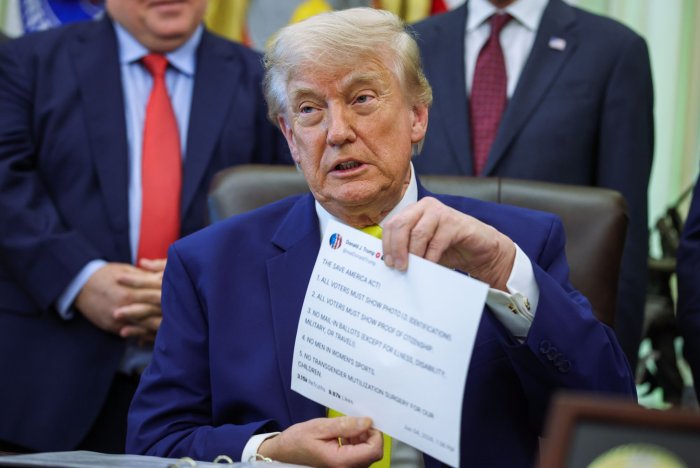
The leadership factor, represented by President Donald Trump, has become an unprecedentedly broad influence on the decision-making process related to US foreign policy and national security, whether concerning the declaration and conclusion of war, or even in peacetime, particularly regarding Washington’s relations with its traditional allies in Europe and the Middle East.
This analysis focuses on the case of the “Second Iran War” as a clear example of the increasing role of the US president’s personal characteristics in shaping strategic decisions related to this war and managing Washington’s relations with its partners in the Arabian Gulf region.
This analysis is divided into two main sections, as follows:
First, the traditional determinants of US security strategy and foreign policy.
Second, the Trump administration and the growing role of the president in foreign policy and national security.
Third, the Second Iran War as a model for the increasing influence of the leadership factor in the US decision-making process.
First, the traditional determinants of US security strategy and foreign policy:
There is a set of traditional constraints governing decision-making in the United States, both in domestic and foreign policy. These constraints stem intrinsically from the nature of the American political system, the constitutional and societal environment within which it operates, and the historical development of the nation some 250 years ago.
In summary, these constraints can be divided into the following:
1. Constitutional and historical constraints, including the federal constitution and the practical actions of foreign and security policy-making institutions over the past decades.
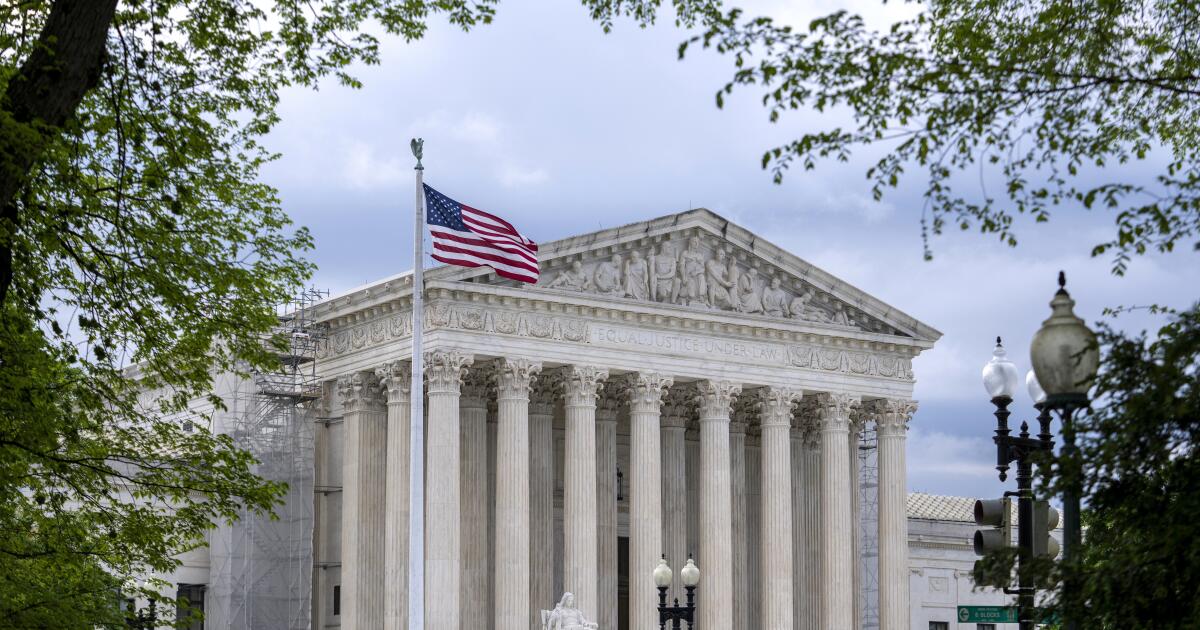
2. Institutional determinants, which consist of the roles exercised by the legislative, executive, and judicial branches as defined by the Constitution, including: Congress (the House of Representatives and the Senate), and the federal departments and agencies concerned with U.S. foreign policy and national security (the Departments of State and Defense, the National Security Council, and the various intelligence agencies, most notably the Central Intelligence Agency (CIA)).
3. Political determinants, foremost among them the role played by the President of the United States in decision-making—what political literature calls the “leadership factor”—which is determined, broadly or narrowly, by a range of considerations, including: the President’s political experience, personal characteristics and interests, and ideological orientations, convictions, and personal preferences.
Traditionally, American historical experience indicates that constitutional and institutional constraints have a dominant influence on foreign policy and national security decision-making, compared to the limited influence of the president’s personal characteristics and psychological environment.
This has resulted in a near-consistency in the general direction of US foreign policy and security strategy across successive administrations, regardless of the president’s party affiliation (Democrat or Republican) or personality traits.
Second, the Trump administration and the growing role of the president in foreign policy and national security:
Unlike previous administrations, Republican President Donald Trump, since his first presidential term (2016-2020), has expanded his role in the decision-making process related to US foreign policy and its security strategy abroad, to the point of bypassing the federal institutions responsible for making this policy and strategy, or at the very least marginalizing the role of these institutions and failing to coordinate with them in advance in an unprecedented manner.
Trump’s interference in this regard, and his violation of institutional limits during his second presidential term, which began in January 2025, has increased to the point of causing great embarrassment to those in charge of American foreign and security policy-making institutions on the one hand, and on the other hand, it has led to pushing towards taking decisions – or at best adopting a declared political discourse – that has caused great damage to the foreign relations of the United States and posed a threat to its strategic interests as a superpower, whether with its immediate geographical neighborhood in the Americas (Canada, Mexico, Venezuela, and Cuba), or with its traditional transatlantic allies (Europe and NATO), and finally with important partners in the Middle East region.
Without going into detail about the reasons for this excessive interference by President Trump in American foreign policy and security strategy, in our estimation, this is largely due to the psychological and personal characteristics of the Republican president, whose political discourse and vocabulary indicate that he considers himself the “savior” of the United States and personally qualified to restore it to its glory, which he expresses in his election slogan “Make America Great Again.”
Third, the Second Iran War as a model for the increasing influence of the leadership factor in the US decision-making process:
The events of the second Iran-Iraq War, which began on February 28, 2016, provide a clear example of the growing influence of leadership dynamics, at the expense of constitutional and institutional constraints, in shaping and implementing American foreign policy and security strategy decisions under the Trump administration.
This assertion is supported by two key indicators, as follows:
1. Washington’s Decisions to Launch the War and the Negotiations Related to Ending It:
A close examination of Washington’s decision to launch the war against Iran on the morning of Saturday, February 28, 2026, reveals that President Trump based this decision on his personal convictions regarding the reliability of the reports and information provided to him by Israeli Prime Minister Benjamin Netanyahu – with whom he has a friendly and politically harmonious relationship – concerning the threat posed by Tehran’s nuclear program and its ballistic missile capabilities to Israel, America, and the region. He believed that the opportunity was ripe to quickly eliminate the religious regime in Iran by launching a powerful and swift military strike that would lead to its downfall after instigating an internal uprising.
In contrast, Trump ignored warnings from US foreign policy, national security, and defense institutions about the risks and feasibility of a war against Iran from the perspective of vital US interests in the Middle East. The Republican president also disregarded the reservations of senior administration officials regarding this military strike, including Vice President J.D. Vance, Secretary of State Marco Rubio, and Special Envoy for Middle East Peace Steve Wittkopf.
Further bolstering this claim are Trump’s attempts to deny that Israel pushed him into this war. He has asserted on more than one occasion that he made the decision himself, and even that he was the one who pushed Tel Aviv to engage in it. He has also emphasized on other occasions that the matter of negotiating and ending the war is solely his responsibility, and that Netanyahu is simply doing what he asks of him regarding the war with Iran.
According to the literature of political psychology and the principles of political communication, when politicians exaggerate their denial of something, or deny it without directly accusing them, it often confirms the accusation, not the other way around.
This claim is is further supported by reports in the US indicating that Trump sent the Israeli Prime Minister a draft memorandum of understanding between Washington and Tehran to end the war, as part of the US president’s consultations to reach a final decision on ending the conflict.
This means that Trump made his decision to wage war on Iran—and will most likely make his final decision regarding negotiations to end it—based on elements of his psychological environment and personality traits, and not on the factual data contained in the reports and recommendations of the foreign policy and national security agencies, which are based primarily on the strategic interests of the United States and its international and regional orientations.
2. The Harshness and Crudeness of US Presidential Rhetoric Towards Strategic Partners in the Arabian Gulf:
President Trump’s public political discourse since the start of the war has included statements characterized by an unprecedented level of harshness in American policy towards Washington’s strategic partners in the Gulf Cooperation Council (GCC) countries.
For decades, the United States has maintained a balanced and rational approach to its relations with the Gulf states, a relationship cemented by strategic alliances and defense agreements since the 1991 Gulf War. This was true even during periods of open tension or simmering resentment between the US and some Gulf capitals.
In our estimation, this is explained by the fact that successive administrations and presidents in the White House have based their decisions, policies, and political discourse in general, and towards their allies and strategic partners in particular, on the constitutional and institutional parameters for drawing up and making Washington’s foreign policy and security strategy, especially in the vital geographical areas for national security and American strategic interests, as is the case with the Middle East region and at its heart the Arabian Gulf region.
However, in a departure from this approach and in an unprecedented move, the second Iran-Iraq War witnessed Trump’s political rhetoric, which included insults to some Gulf Cooperation Council (GCC) states and belittling of others. He even went so far as to issue explicit and public threats against one of the Gulf Arab states, the Sultanate of Oman, in a surprising, shocking, and unprecedented act.
On May 28, 2016, Trump threatened Oman, saying he would “blow it up” if it cooperated with Iran on joint management of the Strait of Hormuz. The US Treasury Department also threatened to impose sanctions on Muscat if it proceeded with an agreement with Tehran to manage the strait, which Iran had used as a weapon of economic pressure during the war.
Conclusion:
The leadership factor, represented by the president’s personal characteristics, psychological environment, and political beliefs, has become the pivotal and most important factor in shaping US foreign policy and national security decisions during the administration of President Donald Trump, including the decision to go to war. This has come at the expense of the diminishing influence of other objective determinants, most notably constitutional and institutional ones.
This was clearly evident in Trump’s behavior and political rhetoric during the Second Iran War. This unprecedented development is likely to continue during the remaining two years of the Republican president’s term, until 2028.
The second Iran war demonstrated that such actions would negatively impact Washington’s future relations with its allies and strategic partners, or at the very least, erode trust in it as a reliable and credible international partner.
Furthermore, it would severely damage the prevailing image of the United States, both in the eyes of American and international public opinion, as an international superpower governed by institutions rather than individuals.