Banks

12 of the most beautiful Wetherspoons in the UK from former banks to huge converted cinemas

CHEAP drinks and great grub – Wetherspoons pubs are a British institution and in some cases, they’re in the most beautiful buildings.

From old bank vaults to beautiful bath conservatories, here are some of the prettiest in the country.

The Victorian Pavilion in West Sussex has a huge arching glass roofCredit: Alamy Stock Photo

The Winter Gardens, Harrogate

The Winter Gardens began its life as part of the Royal Baths in Harrogate where people went to unwind.

The baths had first opened in 1897 and even though it later turned into a Wetherspoons, it still has lots of its original features.

There’s two grand staircases leading up to the bar and it has a huge glass ceiling which lets the light in.

The Corn Exchange, Bury St Edmunds

One of the most stunning Wetherspoons in the UK can be found in West Suffolk inside a building that was originally a place for Victorian merchants and farmers to trade in the 1800s.

GRUBS UP

Best pubs, fish and chip shops and cafes in Sussex – by Sun readers & locals


SHORE THING

‘It’s the best beach in England’ – Sun readers’ favourite Sussex seasides

It has a grand interior features an arching glass roof and elegant wooden panelling.

Unlike lots of other pubs, this one is found on the first floor as there are shops underneath.

The Royal Victoria Pavilion, Ramsgate

Not only is the Royal Victoria Pavilion one of the prettiest pubs, it’s also the biggest ever Wetherspoons.

As its name suggests, the pub is inside a former Grade II listed pavilion that dates back to the Victorian period.

To make it ever better, it’s just a short walk from the beach.

For those who want to make the most of being at the seaside, step out onto the balcony where you can see the sweeping beach in all its glory.

Samuel Peto, Folkestone

Right by the beach, Samuel Peto is inside an old church that has painted cloud ceilings and the organ still sits at the back of the pub.

It has pretty chandeliers with huge stained glass windows letting in most of the light.

Deputy Travel Editor Kara Godfrey called it “certainly one of my favourites I’ve ever been to.”

You can still see the old organ in Kent’s Samuel Peto WetherspoonsCredit: Alamy Stock Photo
The Corn Exchange in Bury St Edmunds is one of the most beautiful WetherspoonsCredit: Alamy
On a summer’s day the balcony is the perfect place to enjoy a drink in RamsgateCredit: Alamy

The Caley Picture House, Edinburgh

The former art-deco cinema is now a unique Wetherspoons that looks like it could be in the backdrop if a 1920s movie.

It still has original features including a large screen area and balcony – and you can enjoy a pint up on the mezzanine level which has views over the bar.

The building used to be part of a hotel before it was transformed into a cinema.

Hamilton Hall, London Liverpool Street

Outside of Liverpool Street Station is a Hamilton Hall – the Wetherspoons is inside what was once the Great Eastern Hotel.

It might not look like much from the outside, but the pub is actually inside an old ballroom.

It has a huge circular bar, enormous windows and a hanging chandelier.

The Caley Picture House is a former art-deco cinema in EdinburghCredit: News Group Newspapers Ltd
London Liverpool Street’s Hamilton Hall is inside what was once the Great Eastern HotelCredit: Alamy
At the opera house in Royal Tunbridge Wells, you can sit in the old theatre seatsCredit: Alamy

Opera House, Royal Tunbridge Wells

Possibly one of the most well-known Wetherspoons for being unique is the one in Royal Tunbridge Wells.

As its name suggests, the Opera House, is inside a former opera house that welcomed the public through its doors for performances back in 1902.

Later on, it was used as a cinema and a bingo hall.

It has original features from its hey-day as a theatre like its colourful booths and stalls – and of course it has Wetherspoons touches too, like the bar and classic patterned carpet.

The North Western, Liverpool

Inside the 330-room North Western Hotel that once was a stopping point for Liverpool Lime Street Station passengers is this pretty Wetherspoons.

The hotel first opened in 1871 but later fell vacant until 1996 when it became university student accommodation.

Eventually it opened as a Wetherspoons pub in 2015 and is very popular with commuters thanks to it being right next to Liverpool Lime Street.

Inside this historic hotel in Liverpool is the North Western WetherspoonsCredit: Alamy
The Palladium in Llandudno was built in the 1920sCredit: JD WETHERSPOONS
The Counting House in Glasgow has an impressive glass dome above the barCredit: Alamy Stock Photo

The Palladium, Llandudno

Another Wetherspoons pub that used to be a cinema is in north Wales – and it’s a showstopper.

It first opened to the public in the 1920s, has eye-catching decor with a ceiling with gold detailing and red carpet.

The pub stretches across three floors thanks to its remaining stalls, dress circle and balcony.

The Counting House, Glasgow

Another Scottish Wetherspoons is The Counting House which is inside a former bank.

It’s an Italian Renaissance style building and inside has high ceilings with pretty detailing including a glass dome over the bar.

You can even have a drink in the old underground banking vaults.

Waterend Barn, St Albans

St Albans is known as having lots of places to enjoy a drink, and it’s home to a pretty Wetherspoons too next to the River Lea.

It’s formed of two listed barn buildings and inside has high ceilings lined with beams and an outside area with picnic tables.

The Velvet Coaster, Blackpool

One pub that has incredible beach is The Velvet Coaster which is right next to Blackpool’s South Pier and metres from Blackpool Pleasure Beach.

It’s been described by punters as a Wetherspoons with “beautiful views”.

The pub opened in 2015, it’s set across three floors including a bar on each level and there’s a beer garden on the ground floor.

There’s also a balcony on the first floor, and a roof garden on the top level.

The interior is inspired by elements from Blackpool’s surroundings like the sea and nearby rollercoasters.

For more on pubs, here are ten of the UK’s cosiest pubs with bed and breakfast from £99.

And here are Britain’s most beautiful pubs from historic beer houses to cosy village bars.

St Albans’ Wetherspoons has high ceilings with beamsCredit: Unknown
The Velvet Coaster has a modern decor and is close to Blackpool Pleasure BeachCredit: Google maps
The beautiful Winter Gardens is inside a former Royal Baths in HarrogateCredit: Unknown

Source link

South Korean banks tighten corporate guarantees amid risks

An illustration shows slowing growth in South Korean banks’ payment guarantees alongside a rising won-dollar exchange rate. Graphic by Asia Today and translated by UPI

March 22 (Asia Today) — South Korea’s four largest banks are tightening corporate payment guarantees as exporters face mounting pressure from U.S. tariffs and a prolonged period of high exchange rates.

The combined value of guarantees issued by KB Kookmin Bank, Shinhan Bank, Hana Bank and Woori Bank reached 79.2 trillion won (about $59 billion) at the end of last year, up 3.9% from a year earlier, according to financial industry data.

The increase marks a sharp slowdown compared with double-digit growth in previous years, reflecting a more cautious approach by banks amid rising economic uncertainty.

Banks have scaled back new guarantees as U.S. tariff policies weigh on export profitability and a weaker won raises costs for companies. The won-dollar exchange rate has hovered around 1,500 won, adding further pressure on corporate balance sheets.

Payment guarantees, commonly used by exporters, allow companies to secure financing or complete trade transactions by relying on a bank’s credit backing. If a company defaults, the bank assumes the repayment obligation.

Industry data show that firm guarantees – where the amount is fixed and the bank assumes the debt – rose 8.5% to 60.9 trillion won (about $45 billion), while contingent guarantees fell 8.8% to 18.3 trillion won (about $13.7 billion).

Analysts said banks are favoring lower-risk transactions and reducing exposure to more complex contingent guarantees, which are harder to manage.

The slowdown also reflects weaker demand. Large exporters, which drove much of last year’s trade growth, often do not require bank guarantees, while rising delinquency risks have prompted lenders to focus on balance sheet stability.

Looking ahead, growth in guarantees is expected to remain subdued as geopolitical tensions in the Middle East and global logistics disruptions continue to weigh on trade.

A prolonged period of high exchange rates could further increase risks, as most guarantees are denominated in foreign currencies, meaning their value rises in won terms even without new issuance.

Experts say stabilizing the foreign exchange market and expanding trade finance support will be key to preventing broader financial strain on companies.

— Reported by Asia Today; translated by UPI

© Asia Today. Unauthorized reproduction or redistribution prohibited.

Original Korean report: https://www.asiatoday.co.kr/kn/view.php?key=20260323010006560

Source link

US Fed keeps interest rates steady amid economic, geopolitical uncertainty | Banks News

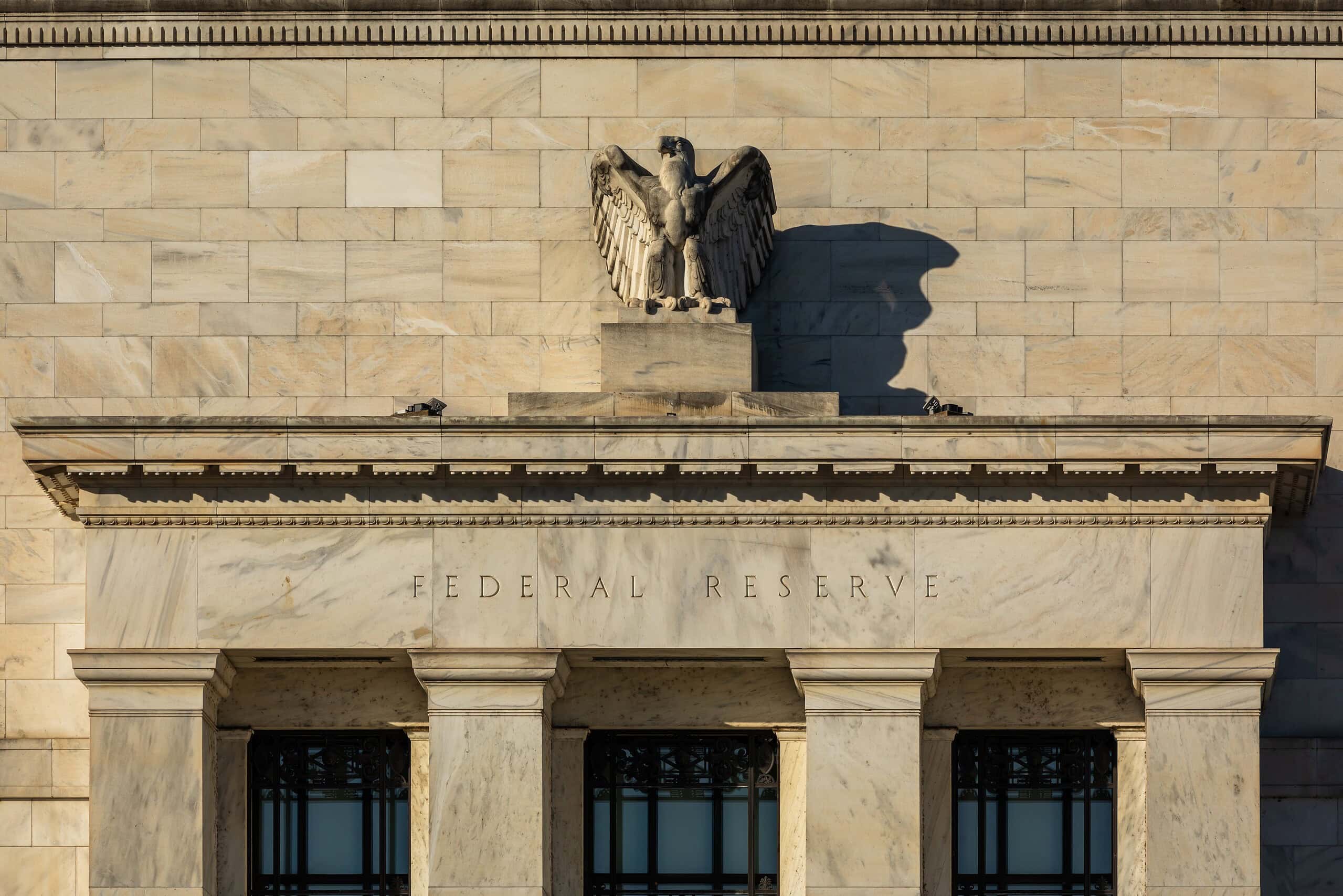
The United States Federal Reserve will hold interest rates steady as the labour market cools and prices on goods and services surge following the US and Israel’s joint strikes on Iran.

The central bank will maintain its benchmark rate at 3.5–3.75 percent, consistent with the Fed’s decision last month, when it also held rates steady.

Recommended Stories

list of 4 itemsend of list

“The Committee seeks to achieve maximum employment and inflation at the rate of 2 percent over the longer run. Uncertainty about the economic outlook remains elevated. The implications of developments in the Middle East for the US economy are uncertain,” the central bank said in a statement announcing its policy decision and referring to its Federal Open Market Committee.

“The Committee is attentive to the risks to both sides of its dual mandate.”

Holding rates steady was in line with estimates. CME FedWatch, a tool that tracks monetary policy decisions, forecast that there was a 99 percent chance that rates would hold steady.

The stall comes after three rate cuts in 2025.

Global gripes

Consumers are also facing the repercussions of US President Donald Trump’s trade and military policies in their daily expenses.

“Despite meaningful progress on inflation in 2024, Trump’s tariffs have stalled progress and kept inflation persistently above the Fed’s target. Wholesale prices are running hot as service prices surge, and now, Trump’s war in Iran is rocking commodity markets around the globe,” Elizabeth Pancotti, managing director of policy and advocacy at Groundwork Collaborative, an economic think tank, said in comments provided to Al Jazeera.

Last month, the US Supreme Court ruled against the president for his use of the International Emergency Economic Powers Act (IEEPA). The high court said the president exceeded his authority and that the tariffs imposed under that order must be refunded. However, the president then imposed new tariffs not covered by IEEPA.

The White House announced a 15 percent tariff through Section 122, which allows the president to impose tariffs for 150 days. Those changes were reflected in the producer price index report released by the US Department of Labor’s Bureau of Labor Statistics on Wednesday.

Wholesale prices rose by 0.7 percent for the month, marking the biggest one-month surge in a year. Goods prices rose 1.1 percent overall after tumbling for two months. Energy prices rose by 2.3 percent, with the cost of gas or petrol rising by 1.8 percent. Those costs are expected to get higher as tensions rise in the Strait of Hormuz following joint US-Israel strikes on Iran in late February and the subsequent retaliation.

“In the near term, higher energy prices will push up overall inflation; however, it is too soon to know the scope and duration of the potential effects on the economy,” Fed Chair Jerome Powell told reporters.

In the last month, petrol prices have jumped for US consumers. The average price for a gallon of regular gasoline is $3.84, up from $2.92 this time last month.

“The Fed’s inflation worries extend beyond weathering a fleeting wave of one-off price hikes associated with tariffs and, more recently, an energy price spike,” Stephen Stanley, chief US economist at Santander US Capital Markets, told the Reuters news agency.

Labour market stalls

Holding rates steady also comes as the job market stagnates. The latest jobs report, which was released earlier this month, showed that the US economy lost 92,000 jobs, with unemployment rising to 4.4 percent.

Meanwhile, the Job Openings and Labor Turnover Survey, or JOLTS report, which came out last week, showed 6.9 million open jobs in the US, unchanged from the month prior. That shows that employer hiring has stalled and that those who have jobs are seldom leaving for new ones.

“This might be one of the toughest moments in recent memory for the Federal Reserve’s Open Market Committee,” Michael Linden, Senior Policy Fellow at the Washington Center for Equitable Growth, said in remarks provided to Al Jazeera. “Recent data has revealed that economic growth in the back half of last year was extremely weak, the labour market seems to be on the precipice of disaster, and prices keep rising faster than anyone feels comfortable with.”

Political undercurrents

Wednesday’s decision is the second-to-last one of current Fed Chair Powell, whose term is up in May. Powell, who was first appointed by Trump during his first administration, has been a target of Trump’s scorn and criticisms for not cutting interest rates fast enough.

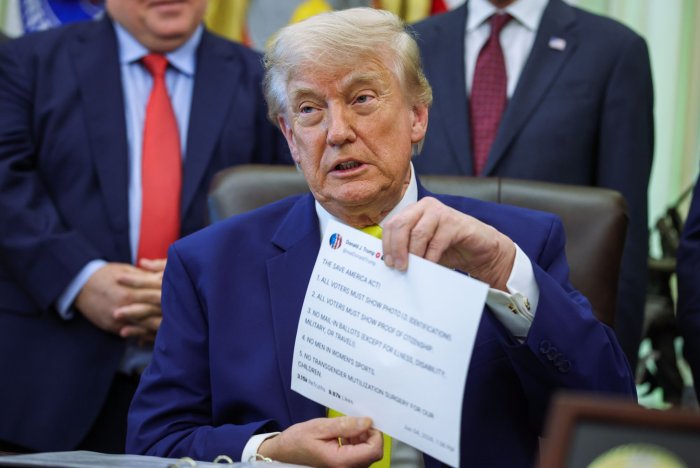
“When is ‘Too Late’ Powell lowering INTEREST RATES?” Trump posted on his social media platform Truth Social on Wednesday morning ahead of the decision.

Previously, Trump said he would not nominate someone to lead the central bank unless the nominee agreed with his position.

“Anybody that disagrees with me will never be the Fed Chairman!” Trump said in a post on Truth Social in December.

“We at the Fed will continue to do our jobs with objectivity, integrity and deep commitment to serve the American people,” Powell told reporters.

Trump’s nominee to succeed Powell, Kevin Warsh, has his nomination in flux as Republican Senator Thom Tillis said he would not vote to advance any of Trump’s nominees to the central bank until a criminal probe into the current chairman, Powell, is closed.

Tillis sits on the Senate Banking Committee, which vets nominees for the central bank, including Warsh. He said he will not approve Trump’s Fed nominees until the probe of Powell is closed. The criminal probe of Powell centres on Fed building renovations after a judge quashed grand jury subpoenas and called the investigation a pretext to pressure the central bank to lower interest rates.

If Warsh has not been confirmed by the Senate in time for the Fed’s June 16–17 meeting, Powell would continue to lead the rate-setting Federal Open Market Committee.

“If my successor is not confirmed by the end of my term as chair, I would serve as chair pro tem until he is confirmed. That is what the law calls for,” Powell said.

“On the question of whether I will leave while the investigation is ongoing, I have no intention of leaving the board until the investigation is well and truly over with transparency and finality.”

Source link

Top Banks In Saudi Arabia

From the first oil discoveries to the ambitious economic diversification of Vision 2030, Saudi Arabia’s banks have been indispensable partners in the Kingdom’s transformation.

Once a land of pearl diving and desert trade routes, Saudi Arabia is today one of the world’s largest economies and a powerful force in global finance, with a banking sector that ranks among the most dynamic and well-capitalized in the Middle East.

Regulated by the Saudi Central Bank (SAMA), the country’s banking sector has undergone successive waves of modernization, from the Saudization of foreign-owned banks in the 1970s to the digital transformation reshaping the industry today. Saudi banks are now at the forefront of financing multi-billion-dollar mega-projects — from NEOM’s futuristic, car-free, zero-carbon urban living to the Red Sea Project’s regenerative, marine-focused luxury tourism — while championing Islamic finance innovation and expanding their reach across the region and beyond.

These are the leading banks in Saudi Arabia, listed alphabetically, each with its own distinctive strengths and unique history.

Al Rajhi Bank

What began as a small family currency exchange operation in Riyadh has grown into the world’s largest Shariah-compliant institution with assets nearing $300 billion. Al Rajhi Bank traces its origins to 1957, when four brothers —Sulaiman, Saleh, Mohamed and Abdullah Al Rajhi— who were born in poverty to become one of Saudi Arabia’s most prominent families, began building a network of individual banking and commercial entities. In 1978, these entities were consolidated under the Al Rajhi Trading and Exchange Corporation, and in 1988 the bank was formally established as a Saudi joint stock company.

Al Rajhi Bank has been essential in bridging the gap between modern financial demands and Shariah compliance, pioneering products such as Islamic credit cards, lease financing and Sukuk, and blending dense branch coverage with heavy digital adoption.  It serves approximately 20 million customers through a network of over 500 branches and more than 4,000 ATMs across Saudi Arabia, and maintains an international presence in Kuwait, Jordan and Malaysia. Al Rajhi Bank is a repeat winner of Global Finance awards, including for Best Islamic Bank, Best Consumer Digital Bank and Best Foreign Exchange Provider.

Alinma Bank

Established by Royal Decree in 2006, Alinma Bank is the youngest of Saudi Arabia’s major banks and —matching its name, which means “growth” or “development” in Arabic — one of its fastest-growing.  Its purple branding incorporates the Khuzama (Wild Lavender), a Saudi symbol of the welcoming desert after rain, to signal a departure from legacy institutions, and position Alinma as a modern, boutique and consumer-centric alternative.

With assets of more than $80 billion, the bank was founded by three of the country’s most powerful state entities—the Public Investment Fund, the Public Pension Agency, and the General Organization for Social Insurance—each holding an equal 10% stake, with the remaining 70% offered to the public in April 2008, making it one of the most anticipated IPOs in Saudi market history.

Fully Shariah-compliant across all its operations, Alinma provides a comprehensive range of retail, corporate, investment and treasury services. With over 100 branches, more than 1,500 ATMs and an extensive digital platform, the bank serves close to 6 million customers. Alinma has earned recognition from Global Finance, including for Best Islamic Bank and in the Best Digital Banks category.

Arab National Bank

Established in 1979 by Royal Decree, Arab National Bank (ANB) took over the operations of six branches previously run by the Jordan-headquartered Arab Bank in the Kingdom, and has since grown its network to over 120 locations.

Always at the forefront of innovation, ANB introduced the TeleMoney international money-transfer service in 1992. In 2000, it became the first bank to launch an internet banking service in Saudi Arabia, evolving into a major player in the Middle East with a strong focus on digital transformation while remaining, to this day, a close collaborator with the FinTech sector.

With total assets close to $70 billion, Arab National Bank delivers a comprehensive suite of financial services spanning retail and private banking, corporate and commercial banking, treasury operations, and insurance. Its Shariah‑compliant products are offered through its subsidiary, Arab National Investment Company. The bank’s financing capabilities range from microlending to project and structured finance, including dedicated support for Small and Medium Enterprises (SMEs), a segment for which ANB was recognized by Global Finance in the Best Bank in Saudi Arabia category.

Bank Albilad

Established in 2004, Bank Albilad is one of Saudi Arabia’s newer and smaller full‑service institutions. As a born‑digital Sharia‑compliant bank that never had to unwind legacy systems, it was designed for modern digital‑first banking, positioning itself early as a nimble provider of services to personal, SME, and corporate clients, who can also rely on a network of over 100 branches across the Kingdom.

Beyond conventional banking services, Bank Albilad has built a diversified group of subsidiaries that strengthen its market offering: Albilad Capital provides investment banking, brokerage, and asset management; Enjaz has emerged as a leader in international remittance services, processing some of the largest outbound transfer volumes in the region; and Albilad Real Estate and Financial Solutions Company round out the group’s capabilities. The bank has also been ranked among the Safest Islamic Banks in the Gulf Cooperation Council by Global Finance magazine.

Bank AlJazira

Established in 1975, by 1979 Bank AlJazira had already transitioned to become a fully Islamic banking institution, earning the distinction of becoming the first bank in the Kingdom to offer fully Shariah-compliant services. In 2002, it again broke new ground by introducing Takaful Ta’awuni, giving Saudis the first fully Shariah-compliant alternative to conventional life insurance.

Today, the Jeddah-headquartered bank manages around $40 billion in assets and serves customers through approximately 80 branches and 60 Fawri Remittance Centers across the Kingdom, offering retail, corporate, investment and private banking services. Its investment arm, AlJazira Capital, extends that reach into brokerage, asset management, and corporate advisory. Global Finance has recognized Bank AlJazira as one of the Safest Islamic Banks in the GCC.

Banque Saudi Fransi

With roots stretching back to the French colonial-era banking institution Banque de l’Indochine et de Suez, Banque Saudi Fransi (BSF) has one of the most international pedigrees of any bank in the Kingdom. When the Saudi government enacted its Saudization policy in the late 1970s and converted all foreign bank branches into Saudi joint stock companies with majority local ownership, BSF was established in 1977 by Royal Decree as a joint venture between prominent Saudi shareholders and its French predecessor. Its cosmopolitan legacy is reflected to this day in its enduring strength in trade finance and cross-border corporate banking through its affiliation with Crédit Agricole Corporate and Investment Bank, an arm of the storied French banking group.

With assets valued at approximately $80 billion, a workforce of around 3,000 employees, and over 80 branches and 570 ATMs nationwide, Banque Saudi Fransi serves approximately 1.3 million customers across four primary segments: retail, corporate, treasury, and investment banking. BSF has been recognized by Global Finance numerous times, including for Best Bank for Cash Management in the Middle East, and in the Best Bank, Safest Banks, and Top Innovators categories.

Riyad Bank

Established in 1957, Riyad Bank is the oldest publicly held bank in Saudi Arabia. Its founding coincided with a period of rapid transformation in the Kingdom, as oil revenues began reshaping the economy and creating demand for sophisticated financial services. Today, the Saudi government retains a 51% stake in the institution, the third-largest in the Kingdom with assets of about $140 billion.

Riyad Bank provides a comprehensive range of fully Shariah-compliant products and services to retail, corporate, and SME clients through over 330 domestic branches, while its investment banking subsidiary, Riyad Capital, is a top player in IPO advisory and asset management.

Much like in its early years, the bank remains a leading arranger of syndicated loans in the oil, petrochemicals, and infrastructure sectors. Yet, the seven‑decade‑old banking institution is very much committed to digital innovation and alignment with Vision 2030. Riyad Bank has been recognized by Global Finance for excellence in Best Corporate/Institutional Digital Banks, Best Investment Bank and Safest Bank categories, among others.

Saudi Awwal Bank

The story of Saudi Awwal Bank (SAB) is, in many ways, the story of banking in Saudi Arabia itself. One of its predecessors, Alawwal Bank—originally the Netherlands Trading Society, established in 1926—was the first bank in the Kingdom and played a crucial role in the country’s early financial development. The other half of SAB’s lineage is the Saudi British Bank (SABB), created in 1978 when the operations of the British Bank of the Middle East were transferred to a new Saudi joint‑stock company in partnership with HSBC, which continues to hold approximately 31% of SAB’s capital.

In 2018, the Saudi British Bank announced its merger with Alawwal Bank. The integration was completed in 2021, resulting in SAB, a universal bank offering the full spectrum of banking and financial services, with approximately $120 billion in assets and more than 100 branches in Saudi Arabia, as well as one in London. SAB has been recognized numerous times by Global Finance, earning awards in the Best Bank, Best Private Bank, Best Trade Finance Provider, Best SME Bank, and Best Bank for Sustainable Finance categories.

Saudi Investment Bank

The Saudi Investment Bank (SAIB) was founded by Royal Decree in 1976 and started operations a year later with a primary mandate to provide medium and long-term industrial financing in support of the Kingdom’s economic development.

Over the years, the bank broadened its scope into full commercial banking, and in 2006 it launched its Alasalah Islamic Banking brand, offering a dedicated range of Shariah-compliant products and services through a network of specialized branches. SAIB has also established a range of joint ventures and subsidiaries spanning investment banking, share trading, asset management, leasing, mortgages, insurance, and credit cards.

A publicly listed company on the Saudi Exchange, with total assets exceeding $46 billion, SAIB caters to about one million customers through its 50 branches across the Kingdom, while keeping a dedicated focus on financing quasi-government and private industrial sectors, alongside trade finance solutions designed to support imports and grow Saudi exports.

Saudi National Bank

Also known as SNB AlAhli, the Saudi National Bank (SNB) is the largest financial institution in Saudi Arabia and one of the largest banks in the Middle East. Its principal heritage is the National Commercial Bank (NCB), which was founded in December 1953 and became the first bank to be officially licensed and operate in the Kingdom under a Royal Decree. For decades, NCB served as the anchor of Saudi banking, financing the country’s development across oil, infrastructure, and commerce. In April 2021, following one of the largest banking mergers in regional history, NCB combined with Samba Financial Group —itself originally established as Citibank’s Saudi operations, nationalized in 1980— to create the Saudi National Bank.

With total assets of over $300 billion, SNB serves approximately 15 million customers through over 480 branches and 20 retail service centers across the Kingdom, with international offices in Bahrain, the UAE, Qatar, as well as in Singapore, China, South Korea, and the United Kingdom.

The Public Investment Fund and the General Organization for Social Insurance are among its largest shareholders. SNB is also the preeminent financier for Saudi Arabia’s landmark Vision 2030 infrastructure and diversification projects, and regularly wins Global Finance awards in the Safest Bank, Best Bank, and Best Digital Bank categories.

Source link

Oil Shock From Iran War Raises Fears of Financial Stress for Central Banks

The surge in oil prices triggered by the war in Iran is increasingly becoming a major concern for global central banks, which are closely monitoring the potential economic and financial consequences of the shock.

More than a week of conflict in the Middle East has disrupted energy supply routes and pushed crude prices sharply higher, raising fresh fears about inflation. For policymakers already grappling with fragile economic conditions, the oil spike presents a complex policy dilemma.

Historically, oil shocks have posed a difficult challenge for central banks. Rising energy prices can drive inflation higher while simultaneously weakening consumer spending and business activity by raising costs. In such circumstances, policymakers face an uncomfortable choice: tighten policy to control inflation or ease financial conditions to support economic growth and employment.

The current situation could potentially produce both outcomes at once, creating a scenario where inflation rises even as economic demand weakens a combination that complicates monetary policy decisions.

Inflation Versus Economic Growth

Central banks traditionally respond to inflationary pressures by raising interest rates or maintaining tighter monetary policy. Some policymakers argue that responding quickly to inflation triggered by an oil shock can prevent inflation expectations from becoming entrenched and reduce longer-term economic damage.

Others, however, advocate “looking through” temporary energy-driven price spikes, arguing that aggressive tightening could unnecessarily damage economic growth. This approach gained prominence after the pandemic, when many central banks initially viewed inflation as temporary a judgment widely criticised in hindsight.

The decision facing policymakers now depends on several uncertainties, including how long the conflict lasts, how severely energy supplies are disrupted, and whether governments intervene with subsidies or price caps to protect consumers.

Given these unknowns, many central banks may prefer to adopt a cautious approach, waiting to see how markets and economic conditions evolve before making significant policy adjustments.

Financial Stability Risks Enter the Picture

Beyond inflation and growth concerns, central banks must also consider a third responsibility that has gained prominence since the global financial crisis: financial stability.

Senior policymakers worry that the oil shock could expose vulnerabilities that have been building in global financial markets for years. A large macroeconomic disturbance involving energy prices, inflation, interest rates and currency volatility could trigger a broader financial stress event.

Much of the concern centres on the growing role of “shadow banking” institutions, financial intermediaries operating outside traditional banking regulation. These entities have become increasingly important providers of credit to companies and governments.

One major area of focus is the rapid expansion of private credit funds, which now manage more than $3 trillion globally. These funds allow asset managers to lend directly to businesses, often outside the scrutiny of public markets or traditional banking standards.

Regulators worry that during a major shock, investors could rapidly withdraw funds from these vehicles, potentially creating liquidity problems for borrowers and spillover risks for banks that help finance or manage the funds.

Pressure in Bond and Repo Markets

Another major source of concern lies in government bond markets, where highly leveraged hedge funds have become increasingly active. Many of these funds use repurchase agreements, or “repo” markets, to borrow money and finance large trades involving government bonds.

These strategies often rely on exploiting small price differences between cash bonds and futures contracts, but they involve substantial leverage. While such activity can help smooth government financing, it can also create systemic vulnerabilities during periods of market stress.

The Financial Stability Board, which monitors risks to the global financial system for the G20, warned earlier this year that sudden deleveraging in repo markets could disrupt sovereign bond markets.

More than $16 trillion in repo transactions backed by government bonds were outstanding last year, with about 60% concentrated in the United States. A sudden withdrawal of leveraged investors could therefore have significant ripple effects across global financial markets.

New Fragilities: Stablecoins and Technology Stocks

Regulators are also monitoring emerging risks linked to digital finance. Stablecoins cryptocurrencies pegged to traditional currencies such as the U.S. dollar have grown rapidly and are increasingly investing reserves in government bonds.

With the stablecoin market now worth roughly $300 billion and expanding, any loss of confidence in these assets could trigger large-scale sales of the bonds that back them. Such an event could add stress to already volatile financial markets.

At the same time, some investors remain concerned about high valuations and heavy market concentration in the rapidly growing artificial intelligence sector, which could amplify market volatility during periods of economic uncertainty.

Analysis: Oil Shock Could Trigger Wider Financial Stress

The Iran war oil shock illustrates how geopolitical crises can interact with financial vulnerabilities to create broader economic risks.

Higher energy prices directly increase inflation and strain household finances. At the same time, they can force central banks to reconsider interest-rate policies, potentially leading to higher borrowing costs and greater volatility in financial markets.

Such conditions could expose weaknesses in highly leveraged sectors of the financial system, particularly in shadow banking, hedge funds and digital financial markets.

Although previous shocks including the economic turmoil following Russia’s invasion of Ukraine did not ultimately trigger a major financial crisis, policymakers remain cautious. The brief turmoil in the U.S. regional banking sector in 2023 demonstrated how quickly financial stress can emerge when economic conditions shift.

If oil prices remain elevated and central banks are forced to respond aggressively, the resulting tightening of financial conditions could amplify existing vulnerabilities across markets.

For now, the disturbances appear manageable. But the combination of geopolitical conflict, energy market disruption and financial fragility ensures that central banks will continue to watch the situation with increasing concern.

With information from Reuters.

Source link