KHARTOUM: The World Food Programme’s funding for Sudan — the world’s largest hunger crisis — has fallen by about half this year, its acting head told Reuters, as war drives more people into hunger while the regional crisis raises prices and aid budgets plummet.
Speaking from the Darfur region after a trip across the country, acting Executive Director Carl Skau said that while access had represented humanitarians’ largest obstacle in the past, now “we have (a) presence that we are not fully utilising because of the lack of funding.”
The gap to sustain current operations was just short of $300 million, he said.
This year, we’re about half what we were in terms of funding last year, says Carl Skau, Acting executive director of The World Food Programme
“This year, we’re about half what we were in terms of funding last year,” Skau said. Last year, the agency received $645 million, but almost three-quarters into this year funding is only at $206 million.
The war between Sudan’s army and the paramilitary Rapid Support Forces has devastated wide swathes of the country, displacing up to 14 million people, ruining harvests and decimating the economy.
Almost 20 million people face hunger in Sudan, but budget cuts have forced the agency to focus efforts on the 5 million most in need, of whom it has recently scaled up to reach 4 million people.
Even then, the organization, the UN’s largest by budget, is forced to make difficult decisions.
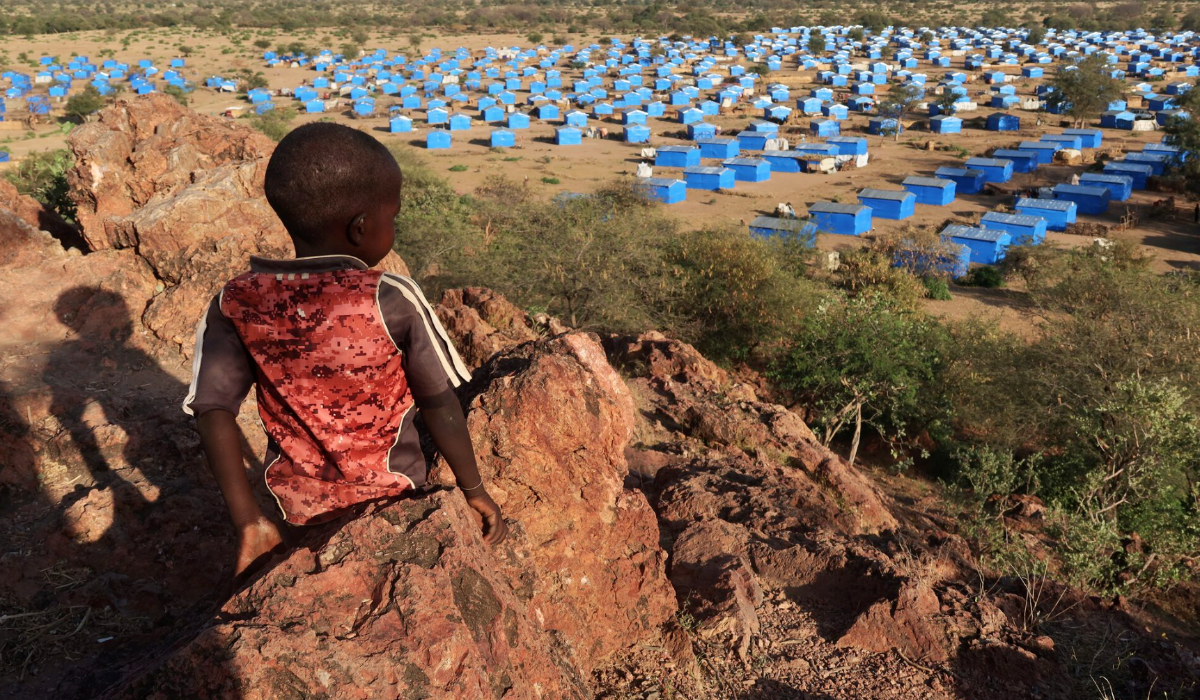
In Tawila, North Darfur, the makeshift home to about 1 million people, the agency is able to reach everyone monthly but with only a half ration that covers two weeks’ food, Skau said.
“It’s not clear how they really are surviving the other two weeks,” he said.
In El-Obeid, the central Sudanese city where about 1 million and counting have sought refuge since the start of the war in April 2023, the agency is only able to provide help to those who arrived in the past several months.
“We are providing, but less and less. A year ago it was better because of resources,” Skau said.
agency recently began providing aid in the city of Al-Fashir, once home to 1 million people, where an RSF attack last year, “bore the hallmarks of genocide,” according to investigators. Skau said, “there is little sign of life having returned.”
His organization is not the only one struggling as major donors reduce aid. The International Organization for Migration said on Monday that emergency relief supplies for hundreds of thousands of people displaced by the war could run out within weeks unless donors step in with urgent funding.
The UN agency said supplies of shelter materials, sanitation items and emergency household goods are expected to run out by the end of September. The aid system itself can only keep functioning until December without more money.
Aid groups like IOM are struggling with funding shortfalls after the Trump administration — the US was previously the world’s biggest aid donor — cut billions of dollars in foreign assistanceto UN agencies and charities over the past year. Other major donor countries have also cut aid budgets, citing tight finances and higher defense spending.
“We simply can’t turn our back on the people of Sudan,” IOM Director General Amy Pope said in a statement, adding: “The entire humanitarian system could collapse within weeks if we don’t act now.”
IOM says 8.6 million people remain displaced within Sudan, while another 4.9 million have returned to their homes. The agency says it needs $15 million to keep the aid pipeline running for the rest of the year, supporting about 305,000 people. Without it, more than 100 humanitarian organizations would struggle to quickly deliver lifesaving aid.
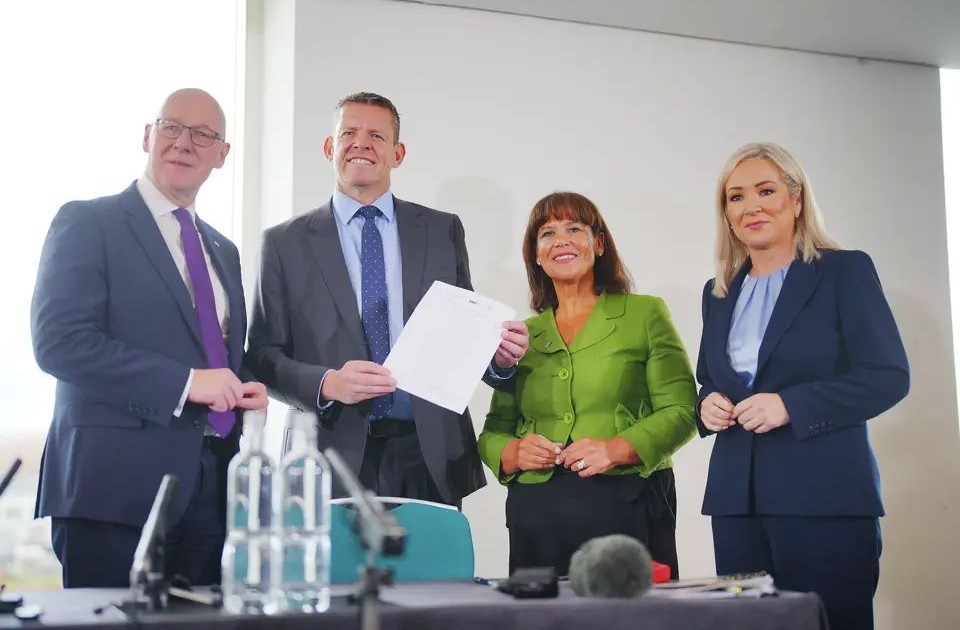
LONDON: The leaders of Wales, Scotland and Northern Ireland signed a pact Monday that threatens to lead to the breakup of the United Kingdom.
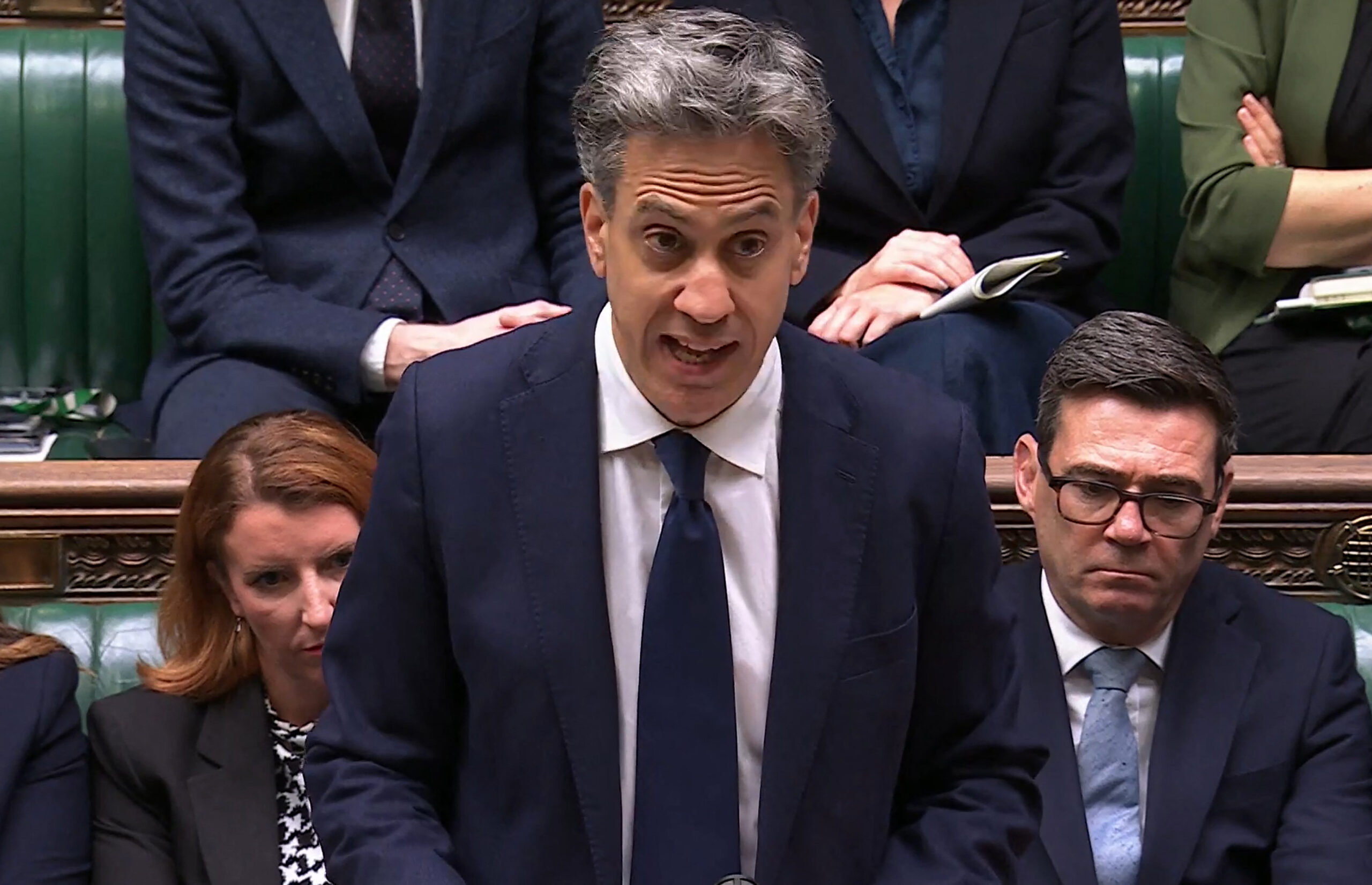
The first ministers of the three semiautonomous regions of the U.K. told Prime Minister Andy Burnham and his government to prepare for constitutional change and that their future lies with the European Union.
“For people watching across these islands — for people watching around the world — there could be no clearer sign that Westminster’s time is coming to an end,” they said in a memorandum of understanding, referring to Parliament.
The announcement came about 48 hours after U.S. President Donald Trump waded into the waters of the politically contentious issue when he said he would “ love to see ” a reunified Ireland during a trip to visit his golf course hosting the Irish Open.
It’s the first time the leaders of all three countries are either from pro-independence parties, or pro-unification in the case of Northern Ireland, which was partitioned and remained part of the U.K. when Ireland won independence from Britain over a century ago.
Tensions remain despite devolution of power
Burnham’s spokesperson brushed aside the threat and said the prime minister strongly believes in the union and was more focused on lowering the cost of living than dealing with constitutional debates.
“The United Kingdom is at its best when people come together around our shared values and problem-solving, rather than division,” Tom Wells said.
Nicola McEwen, director of the University of Glasgow Center for Public Policy, said the summit was symbolically important but has no legal significance.
“I don’t see the threat to the union being bigger today than it was yesterday,” McEwen said.
In the late 1990s, the U.K. passed legislative acts that decentralized government through the process of devolution, giving each country except England some level of policy independence and self-governance through their own parliaments. But tensions have remained with the U.K.-wide government in London, which retained control over national issues and those concerning England.
Scotland’s John Swinney and Northern Ireland’s Michelle O’Neill called for independence referendums in their countries, while Rhun ap Iorwerth did not provide a timetable for one in Wales.
The three leaders appeared in their political capacity, rather than their official one, possibly because O’Neill is in a power-sharing government with the Democratic Unionist Party.
Northern Ireland’s Deputy First Minister Emma Little-Pengelly, of the DUP, accused O’Neill, of the Sinn Fein party, of “weaponizing” the role of first minister by signing the agreement.
“I am first minister in the north of Ireland,” O’Neill replied. “This is about historic change happening all around us.”
Scottish nationalists believe support for independence is rising
Scotland tried unsuccessfully to break away in 2014, with voters rejecting a referendum 55% to 45%. But McEwen said support for Scottish independence has grown since Brexit, in which the U.K. formally left the European Union in January 2020, following a referendum in June 2016.
Swinney, leader of the Scottish National Party, said he believed voters would now vote for independence if the U.K. government approved a referendum.
Burnham told Parliament last week he would allow such a vote to be held if there was a “clear consensus” in Scotland, but later sent Swinney a letter saying a vote was “off limits.”
The 1998 Good Friday peace accord that ended three decades of sectarian violence in Northern Ireland known as “The Troubles,” requires a vote on unification if polls there indicate it would likely pass, a threshold the U.K. government says has not been met. Ireland would also have to approve the change in a referendum.
Burnham has made devolution a major theme since taking office less than two months ago, but his focus has been on regional governments across England, a reflection of his years as mayor of Greater Manchester.
Swinney tried to turn Burnham’s ideology to his advantage, saying his frequent talk of devolution “leads you to the logic of recognizing the right of the people of Scotland, in my case, to decide their own future.”
Beyond any threat of departing the union, McEwen said the greatest impact of the three joining forces could be that they agreed to cooperate with each other routinely and that could help to exert more influence on the U.K. government.
“It does keep on the agenda that question about, well, if the United Kingdom is a union based on consent, what is the pathway where it looks like that consent may no longer be there?” McEwen said. “Any U.K. government has been very reluctant to engage in that discussion.”
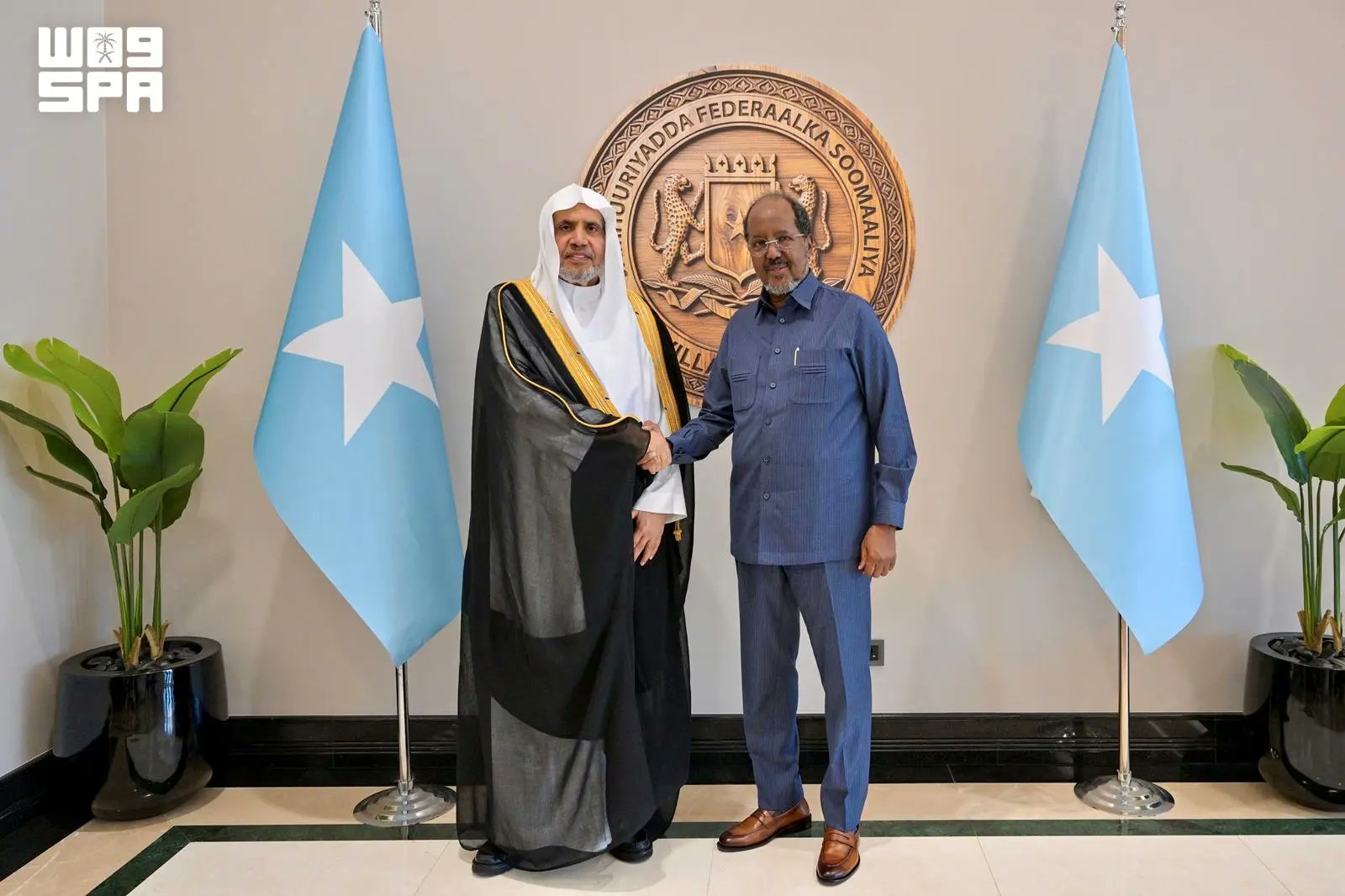
RIYADH: The President of Somalia Hassan Sheikh Mohamud received the Secretary-General of the Muslim World League Sheikh Dr. Mohammed Al-Issa on Monday.
During the meeting at the presidential palace in Mogadishu, the two officials discussed various topics regarding MWL contributions to Somalia across religious, intellectual, and humanitarian spheres.
The president commended the efforts of the league in supporting the Somali people.
Earlier during his visit to the country, Al-Issa met with leading Somali scholars for an intellectual gathering and attended a forum where participants discussed efforts to confront extremist ideologies.
WASHINGTON: US President Donald Trump said Monday that Ukraine and Russia had agreed not to target each other’s energy facilities, a day after he chastised Kyiv for hitting Russian oil refineries.
“Ukraine has agreed not to hit Russian Energy targets. Russia has agreed to do, likewise!” Trump said on his Truth Social network.
“The World’s Diesel price rise is mostly caused by the Russia/Ukraine War, not Iran.”
There was no immediate confirmation from Kyiv or Moscow of any deal.
Trump’s claim comes as oil prices continue to soar in the seventh month of the Iran war, raising American fuel costs and inflation just weeks before crunch US midterm elections.
The US leader has insisted that the Iran war will finish immediately after the midterms and gas prices will drop — but has in the meantime apparently found a new target to blame for the cost at the pump.
Trump had lashed out at Ukraine’s President Volodymyr Zelensky during a trip to Ireland on Sunday, saying he had to do “one thing” and “stop knocking out diesel fuel” refineries in Russia due to growing shortages.
“Let him go after targets, but not diesel fuel, because he’s causing a shortage of diesel,” Trump said, again insisting the Russia-Ukraine war — not the US-Israel conflict with Iran — was to blame.
Trump added he had spoken to Ukraine’s leader about the country’s stepped-up attacks on such sites over recent months.
“There are plenty of other targets. Don’t hit diesel fuel because that’s hurting. That’s hurting the world. We don’t want him to hit diesel fuel… He’s hitting diesel refineries.”
Ukraine has hit numerous Russian oil refineries far from its border with Russia, while Moscow has also intensified its long-range attacks in recent months, leading to a jump in civilian deaths.
Kyiv has been firing record numbers of drones at Russia, while Moscow has been launching all-time high missile attacks.
Trump said last week he had a “great conversation” with Russian President Vladimir Putin, insisting that Putin wanted to make a deal to end Moscow’s war on Ukraine.
Putin “is wanting to make a deal, and if Zelensky is wanting to make a deal, that’d be very nice,” Trump told reporters on Wednesday.
Zelensky said last week he would be willing to meet Putin at the G20 summit at Trump’s own Doral resort in Miami in December, but the Kremlin immediately ruled it out.
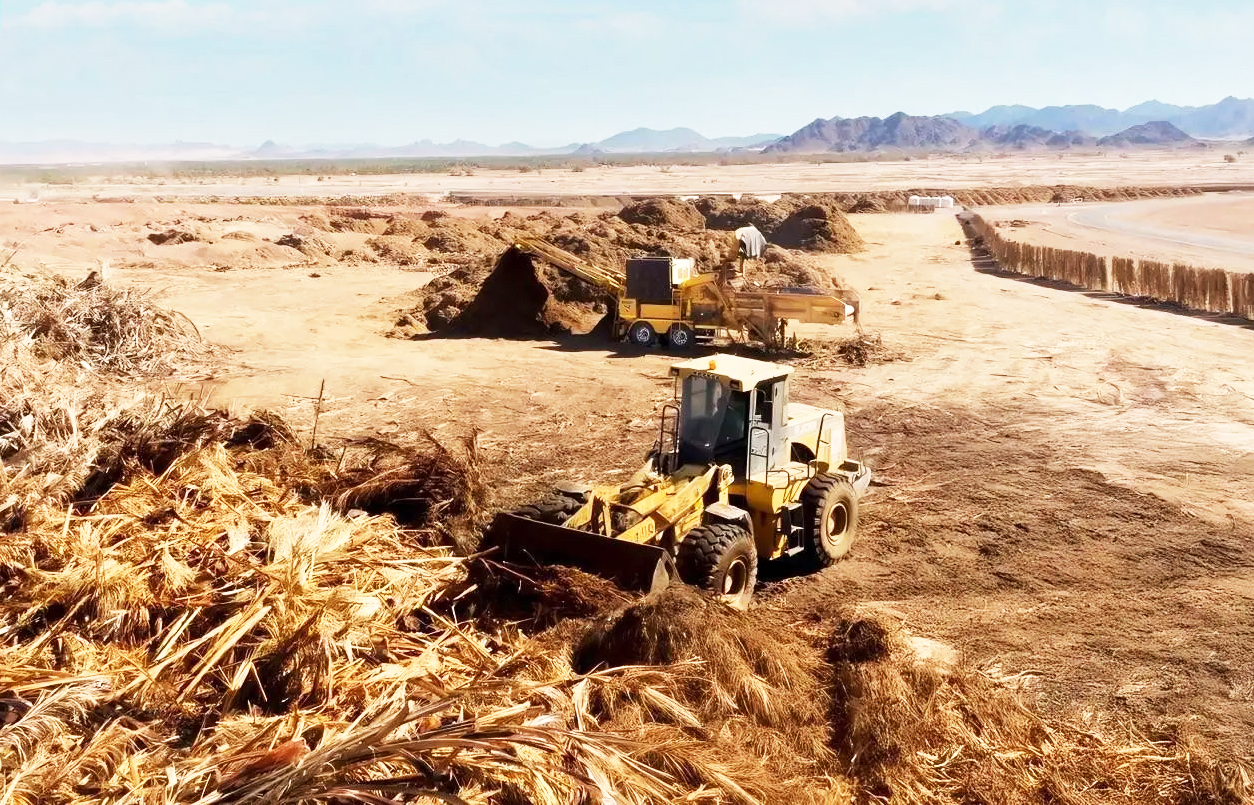
RIYADH: Madinah region has strong potential to turn date palm waste into value-added products, leveraging its competitive advantage in the palm and date sector to create investment opportunities in the circular economy.
According to Al-Madinah Al-Munawarah Chamber’s economic bulletin, the region has about 26,000 farms and approximately 8.1 million date palms, representing nearly 21 percent of Saudi Arabia’s total.
Each palm generates between 20 and 23 kg of waste annually, bringing the region’s estimated annual total to between 162,000 and 186,000 tonnes, the Saudi Press Agency reported.
Products made from date palm waste include wood and composite boards, organic fertilizer, biochar, charcoal briquettes, biofuel pellets, natural fibers, insulation materials, date seed oil, wooden products and handicrafts.
These industries could create new production chains, from waste collection, sorting and processing to manufacturing and marketing. This would open investment opportunities, diversify the palm sector’s products and improve resource-use efficiency.
RIYADH: Saudi Arabia’s Tadawul All Share Index rose on Monday, gaining 13.89 points, or 0.13 percent, to close at 10,878.46.
The total trading turnover of the benchmark index was SR4.19 billion ($1.12 billion), as 78 of the listed stocks advanced, while 182 retreated.
The MT30 Index also rose, gaining 1.38 points, or 0.09 percent, to close at 1,460.13.
The Kingdom’s parallel market Nomu slipped 78.28 points or 0.36 percent to close at 21,500.91. This comes as 25 of the listed stocks advanced, while 46 retreated.
Top performers
The best-performing stock was Saudi Arabia Refineries Co., surging by 9.98 percent to close at SR58.95.
Other top performers included Wafrah for Industry and Development Co., which saw its share price rise by 6.25 percent to SR22.77, and Mutakamela Insurance Co., up 4.72 percent to SR13.32.
Worst performers
On the downside, the worst performer of the day was Riyadh Cement Co., whose share price fell by 4.91 percent to SR22.46.
Armah Sports Co. and Advanced Building Industries Co. also saw declines, with their shares dropping by 4.18 percent and 3.66 percent to SR68.85 and SR27.34, respectively.
The agreement adds approximately SR2 billion to the company’s backlog, following its previously announced five-year contract with SLB covering 11 existing land rigs.
Together, the two contracts add approximately SR5 billion to backlog, taking Arabian Drilling’s total backlog to a record SR16 billion, the highest in its history, and constituting the largest Gas LSTK commitment ever secured by the Company.
The financial impact of the new contract is expected to begin reflecting on the company’s results starting from the final quarter of 2026.
Arabian Drilling Co.’s shares rose 2.99 percent to close at SR96.35.
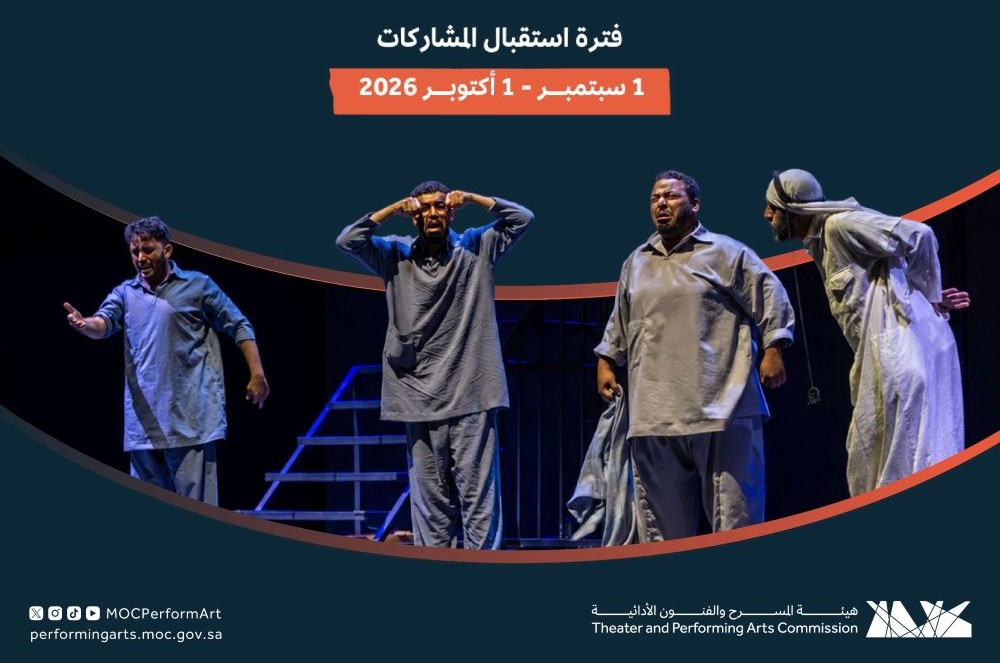
RIYADH: The performing arts in the Kingdom is undergoing a transformation driven by cultural investment, new venues, international collaboration, and a growing network of local professional and academic institutions, making it tempting for young Saudis to pursue.
While academic study in the field is comparatively new, Saudi theatrical production is not. The Kingdom has long produced recognized theater throughout the Gulf and regionally, but many practitioners studied overseas.
Today, Saudi Arabia is localizing the education of its creative talent through academic and professional training in the country.
Since 2020, Saudi has dedicated a Theater and Performing Arts Commission to regulate and develop a sector encompassing theater, dance, circus, improvisational comedy, street performance, ballet and opera.
Not only through training but also national competitions and workshops.
Undergraduate programs are offered at King Saud University, Princess Nourah University and most recently the Riyadh University of Arts. While the Royal Institute of Traditional Arts provides postgraduate and diploma-level education, Scene Institute, and Ithra have further professional training.
As Saudi universities begin their academic year, many students are continuing their conventional degrees. Other creatives are pursuing their passions academically, making the most of the opportunities the Kingdom has to offer.
Osama Almutairi, a final-year Bachelor of Arts in Theater student at King Saud University, spoke to Arab News about the feasibility of his academic choice.
“My love and passion for the arts, particularly theater, naturally led me to this specialization.”
Theater was not his first choice. “I initially considered studying political science but was accepted into theater as part of the first cohort at the College of Arts,” he said.
“Despite my initial interest in pursuing a conventional degree in the humanities, the continuous development of Saudi Arabia’s arts sector encouraged me to take this step.”
Saudi Arabia has been taking proactive measures while localizing performing arts scholarships.
The Ministry of Culture has been running a fully funded Cultural Scholarship Program that supports creative specializations at 278 approved institutions across 15 countries, including performing arts.
One beneficiary is Majed Al-Muwallad, an actor and theater teacher at Afaq Academy, who completed his Bachelors in Theater Studies at Royal Holloway, University of London.
“I travelled to London in 2021. During my studies, I participated in several theatrical productions, ranging from small projects to larger, more academically oriented university productions.
“I had loved acting since I was about 14 years old. I loved films, acting, stories and dramatic texts. When the scholarship opportunity appeared, I thought: ‘Why should I let this opportunity pass?’ I decided to take it.”
Al-Muwallad said he left a job at Aramco to pursue his childhood dream, although members of his community were uncertain about his unconventional choice.
“They were not sure about the professional opportunities available or where such a career could lead,” he said.
“It was a major career change, and leaving Aramco to pursue acting was an unfamiliar idea. People do not usually leave Aramco to become actors,” he added.
Now that he has graduated and is teaching Saudi youth to act, Al-Muwallad believes it was a good decision.
He is even considering pursuing a master’s degree in the performing arts, specifically in performance design. For him, the opportunities are not limited to acting. He hopes to build on his studies in costume, lighting and set design.
“Every theatrical production needs design. It requires a set, costumes and lighting. Rather than limiting myself to the acting and performance side of theater, I would like to develop expertise in design and contribute to the audience’s overall visual experience.”
Almutairi believes perceptions will continue to change as Saudi artists demonstrate the value of academic training.
“The future is wide open for the arts and artists. Society’s perception will continue to change as academically trained Saudi artists demonstrate their ability to represent their communities and country.
“This change is already becoming evident, with society playing an increasingly important role in supporting the success of Saudi artists nationally and internationally.”
For Al-Muwallad, theater should be approached holistically — not only as a career or degree, but also as a journey of self-discovery.
“I learned a great deal before I even began teaching the students. I had to learn how to communicate theatrical knowledge and present information in a way students could understand.
“The experience has taught me a lot about communication and how to identify students’ talents. Theater teaches communication and helps students discover themselves.”
Al-Muwallad encourages young people in Saudi Arabia to pursue their passions academically. “My advice is not to treat university as merely a stage that you pass through and finish,” he said.
“Students should engage with the experience deeply and benefit from it in every possible way.”
He said soft skills can be learned through theater, including communication, emotional intelligence and teamwork.
“Another piece of advice we were always given in London was to always ask questions. A question produces an answer, and that answer often generates another question.
“Asserting that openness and eagerness to learn is vital to a good actor, theater itself is founded on curiosity.
“Students should watch a wide variety of theater and explore different traditions, including Arab, English, Greek and Russian theater, as well as influential approaches such as Russian (theatre practitioner Konstantin) Stanislavski’s.”
On Saudi having a relatively emerging academic orientation to performing arts, Almuwallad sees it as a big opportunity rather than a challenge or a barrier.
“Saudi Arabia is still developing in this field, which means students now have an opportunity to participate in shaping it. What they create can become visible and make an impact relatively quickly.”
“Students should recognize that they are important. They should not treat themselves as secondary characters in this development. They have the opportunity to play a central role because the field is still new.”
For Saudi youth choosing an arts degree over a safer, conventional path, there is an opportunity to turn passion into a profession, and ultimately shape the nation’s creative scene.
During a recent visit to the Shizuoka Cancer Center, a leading medical and research institution in Japan’s Shizuoka Prefecture, I found myself confronting two realities at once.
The first was an impressive expression of modern medicine: advanced treatment, exacting research and an institution seeking to connect clinical care with pharmaceutical innovation. The second was quieter but more powerful. Nearly every patient I passed was facing cancer and beside most stood a relative whose life had also been changed by the diagnosis.
A hospital may contain some of humanity’s most advanced knowledge. It also contains some of its oldest fears.
In such a place, medical excellence is anything but an abstraction. In a hospital, every scientific advance eventually arrives at one person in a vulnerable moment. Every diagnosis enters a life filled with memories, relationships, responsibilities and hopes. Illness inhabits one person but its consequences touch a family and a community.
This is where any serious consideration of health resilience should begin.
Health resilience is not one program within transformation; it is part of transformation’s capacity to serve human life
Dr. Ghazi Faisal Binzagr
The term is commonly associated with the ability of health systems, including hospitals, to withstand emergencies: pandemics, natural disasters, supply shortages or sudden pressure on medical capacity. These capabilities are indispensable. COVID-19 demonstrated, however, that a health emergency does not remain within healthcare. It also moves through families and schools, work and travel, economies and supply chains, and ultimately into the heart of national decision-making and security.
Yet a health system may remain operational while the health of society deteriorates.
Health resilience must therefore mean more than keeping institutions functioning through crisis. It must encompass the ability of a society to cultivate health before illness, respond intelligently when illness arrives and preserve dignity and meaning when medicine cannot restore the body to what it once was.
Such resilience is not created by strong institutions standing apart. It grows when their knowledge and capabilities remain connected — to one another and to the human being they ultimately serve.
Not far from the cancer center, at the University of Shizuoka, I encountered two practical examples of how such connections are cultivated.
Japan and Singapore are very different yet each has cultivated something approaching a national miracle
Dr. Ghazi Faisal Binzagr
Students of pharmaceutical sciences were being trained in the administration of medicines, including injections, although many would never perform such procedures professionally. The purpose was not to blur professional boundaries but to prevent pharmaceutical knowledge from becoming detached from human experience. A medicine is not only a compound to be formulated, tested or dispensed. It eventually enters a living body, carried by trust and accompanied by consequence.
Nearby, the university’s botanical garden, used in pharmaceutical, nutritional and food studies, extended the same principle in another direction. If the training connected medicine to the person who receives it, the garden connected modern science to the living world from which much medical knowledge first emerged. It did not ask students to choose between inherited observation and scientific rigor but to understand how one can inform the questions the other tests.
The cancer center, the pharmaceutical training and the botanical garden were not simply three interesting encounters. Together, they revealed that health resilience depends not only on the strength of individual institutions but on their capacity to remain connected: to the person who suffers, to the professional who carries responsibility, to the society in which illness occurs, and to the sources from which medicine continues to learn.
Saudi Arabia’s transformation gives this understanding immediate relevance. Vision 2030 has widened the connections through which the Kingdom understands progress, while COVID-19 revealed how inseparable health is from the economy, education, mobility and national security. Health resilience is not one program within transformation; it is part of transformation’s capacity to serve human life.
The burden of chronic disease makes this urgent. Diabetes affected an estimated 5.3 million Saudi adults in 2024, with an age-standardized prevalence of 23.1 percent. At such scale, illness cannot be treated as a succession of isolated clinical episodes. It is a continuous human reality and care must learn to become continuous with it.
Behind those numbers, in Saudi Arabia today is a person who can sleep while their glucose levels continue to be monitored. As family members rest nearby, readings can reach health institutions, helping reveal change, anticipate risk and guide care. Technology does not replace the concern of those beside that person; it allows the health system to join them in caring, extending institutional capability into the home without displacing the relationships that make it a place of belonging.
But continuity cannot begin only after diagnosis.
Through my years with the Saudi Sports for All Federation, I have witnessed how accessible movement, rooted in families, neighborhoods and communities, can turn health from something medicine repairs into something society creates. Health transformation, Sports for All and the Kingdom’s quality of life ambitions shape the same human life from different directions.
The encounters in Shizuoka formed part of a larger Japanese lesson. Japan’s longevity is a civilizational achievement but it is also requiring the country to reconsider care, independence, community and purpose. Its value lies in the knowledge it continues to accumulate: how to support older people within their communities, connect medical and long-term care, use technology to strengthen human presence rather than replace it, and ensure that years added to life remain years of contribution and belonging.
Japan’s use of robotics offers a striking example. Wearable systems can assist movement, surgical robots can extend the physician’s precision and robotic avatars can enable people confined by illness or disability to participate from afar. The machine matters but the deeper achievement is human: preserving agency and belonging when physical strength changes form.
Saudi Arabia is shaping new systems while its population remains comparatively young; Japan is adapting established systems as longevity transforms society. Their differences make them valuable to one another. The opportunity is not simply to transfer solutions but to discover how health systems can remain technically advanced, socially connected and fully human.
My years in Japan have reminded me of another country I have visited and studied repeatedly for more than a decade. Singapore’s achievement lies not in one health program but in its practice of national transformation: balancing access, quality and affordability while connecting health to housing, mobility, economic sustainability and quality of life.
What has impressed me most is the movement between scale and detail. National objectives provide direction; close observation reveals where policy must be refined. Concepts are tested against daily life and reconsidered whenever progress in one field creates consequences in another.
Japan and Singapore are very different yet each has cultivated something approaching a national miracle — not perfection but a distinctive capacity built from history, necessity and human effort. Saudi Arabia brings its own: the energy of a society transforming at exceptional speed, technological ambition joined to enduring family bonds, and a vision placing quality of life within national progress.
The invitation is larger than an exchange of best practices. It is for societies to bring their finest qualities into a deeper relationship. No country contains the complete wisdom the future requires. Through the quality of their connections, nations may create possibilities that none could produce alone.
These reflections return me to where they began: the Shizuoka Cancer Center and to the unsettling lesson cancer itself offers about change. Life depends upon change: cells divide, organisms adapt and societies renew themselves. Yet not every change serves life. Growth detached from the order that sustains the whole can become destructive.
The analogy must not be pushed too far. But it raises a question at the heart of every national transformation: How can change strengthen the whole rather than advance one part at the expense of others?
Speed is not, by itself, evidence of progress, nor is the accumulation of technology or wealth. A healthy transformation holds together economic sustainability, good governance, security and a quality of life that reveals what they are ultimately for. Its measure is whether the whole has grown more capable of sustaining human life — especially when life becomes vulnerable.
For vulnerability is not a temporary defect that successful societies will eliminate. It is part of being human. We begin life dependent upon others. Many will encounter illness or disability. Those who live long enough will experience some loss of physical capacity. A society reveals its understanding of progress not only in how it celebrates strength but in how it accompanies people when strength changes form.
Arabic and Islamic tradition offers a name for the wisdom such a society requires. The physician was often called “al-hakim,” the wise one. The word implied more than command of remedies. It joined knowledge with judgment, the body with the person and the act of treatment with responsibility for the balance of life.
Perhaps the future asks us to enlarge this meaning beyond the individual physician. The wisdom of al-hakim may become a collective quality: science exact enough to determine what can be done; judgment broad enough to ask what should be done; and societies humble enough to place their finest knowledge in one another’s service.
For we are embodied beings but we are not bodies alone. We are memory and relationship, aspiration and responsibility, matter and spirit. Medicine can preserve life and relieve suffering. Society must help ensure that the life preserved can still find belonging, dignity and meaning.
The future of health will not be decided only by what medicine becomes. It will also be decided by what society remembers a human being to be.
GENEVA: The United Nations rights chief called Monday for countries and “frontier” artificial intelligence companies to act urgently to rein in a technology he warned posed “unprecedented risks”.
In a letter sent to countries and AI developers and shared with the media, Volker Turk cautioned that the world was “on the cusp of irreversible change, affecting not just us but generations of humanity to come”.
“The current race towards ever more powerful AI is a step change towards greater existential risks to every aspect of our lives.”
He sent the letter at a time when worries over the risks of “superintelligent” computer systems have been on full display, after a researcher publicly resigned from leading AI firm Anthropic over fears that the technology could escape human control.
Another Anthropic employee, who did not resign, stated publicly that “we really do earnestly believe AI could kill all humans”, and that he thought the chances were greater than “10 percent within the next decade”.
Amid the outcry, Anthropic CEO Dario Amodei called Saturday for AI companies to “pace the frontier” — or coordinate a slowdown in the technology’s development, with his chief competitors, xAI’s Elon Musk and OpenAI’s Sam Altman, publicly supporting him.
“In today’s world, we are almost entirely reliant on a small number of powerful companies to make the right choices on Al development for all of humanity,” Turk lamented.
“I call on States and companies to mobilise urgently through multilateral fora to chart a path for action to govern advanced, frontier AI models, grounded in international human rights law.”
DUBAI: British Lebanese actor Razane Jammal has kicked off the awards season with a big win — in style.
Jammal accepted the Best Actress in a Cinematic Role Award at the 17th edition of the Arab Satellite Festival in Cairo, while wearing an all-black gown from Lebanese designer Georges Chakra.
Jammal took to Instagram to celebrate the win, writing: “Incredibly proud to accept the Best Actress in a Cinematic Role Award for ‘Asad.’ Layla is a character very close to my heart because she reminds me of my mother in so many ways. She was a strong-willed woman who was way ahead of her time, who defied social norms and wasn’t afraid to speak up against injustice. A woman who fiercely protected her loved ones and showed up for any person in need, no matter what she was going through. Your spirit is imprinted in Layla mommy, so for you I dedicate this award, my angel.”
Helmed by Egyptian filmmaker and Marvel’s “Moon Knight” director Mohamed Diab, Jammal stars alongside Egyptian actor Mohamed Ramadan in “Asad.”
Jammal, famous for her roles in the Netflix series “The Sandman” and “Paranormal,” is joined by Maged El-Kedwany, Khaled El-Sawy, Sherif Salama and Ahmed Abdelhamid in the film.
The action-romance is set in the 1800s, with 2,000 extras being drafted in for the production. It features large-scale action sequences led by renowned stunt designer Kaloyan Vodenicharov.
In a trailer shared by Jammal last year, snippets from the film showed its lead star being dragged along by a horse, as well as scenes of a budding romance involving Ramadan and Jammal’s characters.
Jammal made a bold statement earlier this month in a striking red gown from Carolina Herrera’s Spring 2026 collection by Wes Gordon at the Murex d’Or 2026 ceremony. The sleeveless design featured delicate spaghetti straps, a rounded neckline, and dramatic side cutouts. She completed the scarlet look with a red clutch and pointed-toe lace heels.
In June, she launched her own children’s book, titled “Lulu and Blu.” Published by Turning Point Books, the story was illustrated by Sasha Haddad, a Lebanese illustrator who graduated from Cambridge School of Arts in 2014.
For all the hysterical outrage that accompanied the announcement of the UK’s measures against illegal Israeli settlements last Tuesday, the world did not end. The reality is that these steps were merely bringing Britain into line with its legal obligation to act against an unlawful occupation and narrow the gaping chasm between the reality on the ground in Palestine and the rhetoric deployed in Westminster.
The reaction of those who support the Israeli settlements — war crimes under the Rome Statute — was frenzied. Anti-Palestinian bodies bellowed outrage. The chief rabbi declared this would be a “dark day for British Jews,” as if somehow they were the target of the measures or the victims of what has been happening. His comments were dangerous as he, along with “establishment” UK Jewish groups like the Board of Deputies of British Jews, blurred the distinction between the actions of the state of Israel and British Jews. This deliberately conflates antisemitism with anti-Israel sentiment.
Others also claimed, with no evidence, that the measures would make British Jews unsafe. The deplorable increase in antisemitic attacks in the UK and elsewhere has never been motivated by British actions against Israel, not least as there has hardly ever been any such action.
In fact, a sizable segment of the British Jewish community welcomed the settlement trade ban or at least accepted it as a reasonable response to the unprecedented building of settlements and frenzy of state-backed Israeli settler violence.
The reaction of those who support the Israeli settlements — war crimes under the Rome Statute — was frenzied
Chris Doyle
The mainstream media coverage was frequently dire. Many columnists depicted British Jews as a victim of the settlement ban. Very few outlets dared suggest that the actions were designed to help Palestinians under threat of ethnic cleansing, forced dispossession and settler pogroms. Once again, the victims were erased from the story.
The other claim was that the US would retaliate against London. This was triggered in large part by the knee-jerk reactions of US Ambassador to Israel Mike Huckabee, who posted: “The Brits have lost it. The Jew hate of their government knows no boundaries and knows no facts.” He denies it but he probably did not know Ed Miliband, the foreign secretary, is a British Jew whose parents were refugees from Nazi-occupied Europe. But Huckabee is an extremist maverick, an ardent Zionist who believes in a “Greater Israel.”
Far from retaliating, the US State Department made clear Huckabee’s comments were not authorized. He had been freelancing again. One official said Washington was “staying out of it.” Secretary of State Marco Rubio was far more measured in his comments. He did not even condemn the British actions. President Donald Trump, who is rarely shy of airing any disagreement, has said nothing. In short, the US has taken zero steps. Trump looks increasingly disenchanted with Israeli Prime Minister Benjamin Netanyahu, not Andy Burnham or Miliband. The president has yet to declare support for Netanyahu ahead of next month’s Israeli elections, as the beleaguered leader hopes.
The settlement lobbies were almost certainly shocked by the 11 countries that joined the UK in confirming they were or would be adopting similar measures. This included France and Canada, meaning three of the G7 states are acting.
Those states yet to adopt the ban have at least condemned the settlements and are not opposing London’s actions
Chris Doyle
Britain was far from isolated, quashing yet another criticism. Those states that have yet to adopt the ban have at least condemned the settlements and are not opposing London’s actions.
In contrast, it is Israel and the US that find themselves once again in a crowd of two. These two states, as they were with the foolhardy war on Iran, align themselves against international law and accountability.
The retaliatory Israeli measures will also hardly dent the British interest. Foreign Minister Gideon Sa’ar announced the closure of the British Consulate in Jerusalem, the ejection of the British participants in the International Gaza Support Center that oversees aid flows into Gaza and the termination of the British support team that is helping to train the Palestinian Authority.
Note that all these measures hit Palestinians far more than the UK, which is of course the Israeli priority. It means fewer states overseeing aid into Gaza, less support to the PA and, by closing diplomatic premises linked to the Palestinians in Jerusalem, further severs the remaining Palestinian ties to the city.
Expect a raft of settlement announcements shortly. This will be the primary Israeli response to the actions of these dozen states.
Will these measures have an impact? Are they sufficient? Almost certainly not. And the Netanyahu coalition, in election season, will just press the accelerator on the aggression and violence. Other Israeli politicians may get the message: The patience of international actors has finally worn out, albeit decades too late.
These steps should not be belittled. The 12 states have shifted from a declaratory poise to a position of action. For once, the Israeli government is going to have to bear a cost for the occupation that has hitherto not existed.
The message is clear. If Israel behaves like a pariah state, it will start to be treated like a pariah state.
Chris Doyle is director of the London-based Council for Arab-British Understanding (CAABU). He has worked with the council since 1993 after graduating with a first class honors degree in Arabic and Islamic Studies at Exeter University. He has organized and accompanied numerous British parliamentary delegations to Arab countries. Twitter: @Doylech
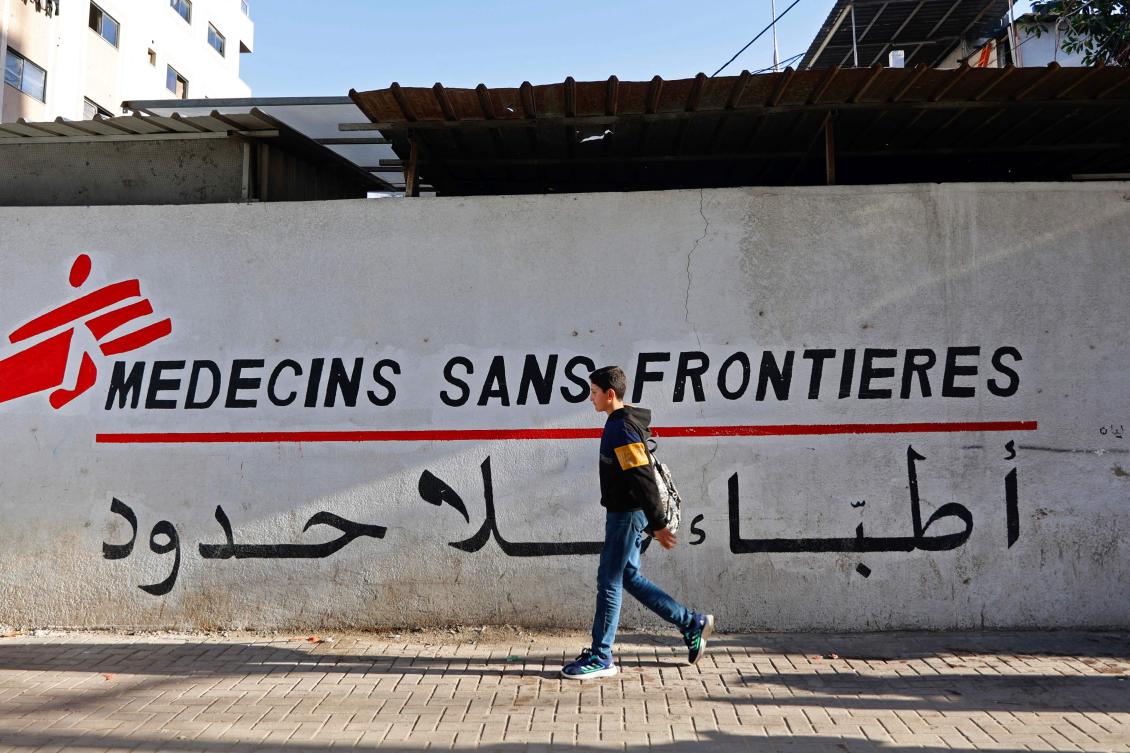
DUBAI: Medecins Sans Frontieres has rejected claims by Israeli authorities that it employed individuals with links to Hamas in Gaza, saying the allegations were only brought to the organization after the accused were killed.
“Medecins Sans Frontieres unequivocally refutes the allegations made by the Israeli authorities that we knowingly hired people with ‘ties to terrorism,’” MSF told Arab News in a statement.
“MSF would never knowingly employ anyone involved in military activities, which contradicts our core values and ethics. The MSF staff members whom Israel has alleged to have ‘ties to terrorism’ were only reported as such to our organization after they had been killed.”
On Friday, British newspaper The Telegraph revealed that Israeli lobby group UK Lawyers for Israel had written to British Home Secretary Shabana Mahmood, urging that the humanitarian organization be banned for its links to terrorism.
A report, produced by UKLFI, alleged links between MSF employees and militant groups, including Fadi Jihad Mohammed Al-Wadiya, an accused Palestinian Islamic Jihad member who was killed in Gaza City last year.
Al-Wadiya, a physiotherapist employed by MSF from 2018 to 2022 and again from Oct. 7, 2023, was killed in an Israeli airstrike in Gaza City on June 25, 2024. MSF condemned the strike at the time.
MSF initially rejected claims linking Al-Wadiya to the group. However, on Feb. 24 this year, Palestinian Islamic Jihad published a poster naming him as a “martyr commander” and identifying him as deputy head of its military manufacturing unit.
The charity later updated its post about Al-Wadiya, who remained listed as an employee on its website, to note that Palestinian Islamic Jihad had publicly stated on Feb. 24, 2026, that he had been a member of the group.
The report also accused Nasser Hamdi Abdelatif Al-Shalfouh, an MSF driver, of being a sniper for the Hamas Jabaliya battalion.
MSF questioned the reliability as well as the intention of Israeli authorities, who failed to consult with the organization prior to killing the supposed members.
“If Israeli authorities had reliable information about any MSF staff involvement in military activity, they never shared it with us before their deaths.”
The organization told Arab News that the latest allegations were part of a broader disinformation and smear campaign seeking to discredit it.
“For months, MSF has been the target of a disinformation campaign, and we strongly condemn the intentional spread of false allegations.”
Founded in 1971, MSF, also known as Doctors Without Borders, is an international medical humanitarian organization that provides emergency healthcare in conflict zones, disease outbreaks and other crises.
In Gaza, MSF’s teams provide surgical care, wound and burn treatment, maternal and pediatric services, physiotherapy, vaccinations, mental health support, water and sanitation assistance, and treatment for chronic diseases through hospitals, field hospitals and clinics.
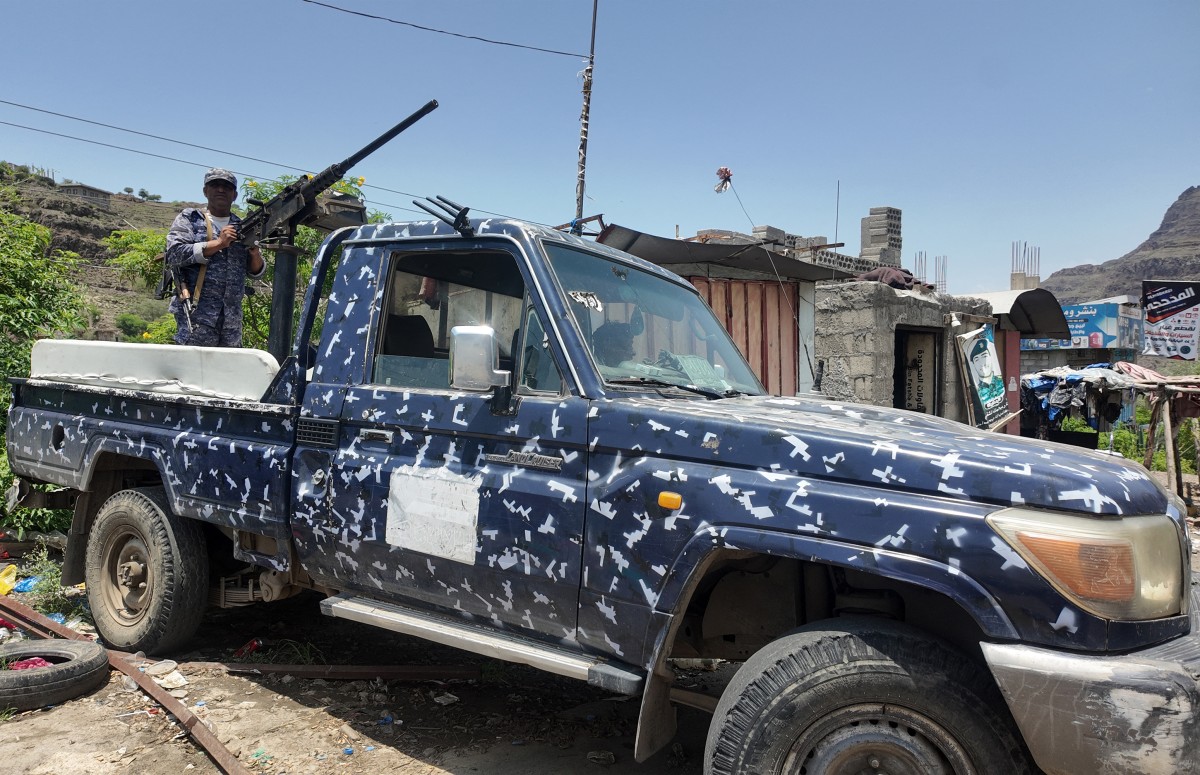
DUBAI: Fighting in Yemen intensified on Sunday as government forces claimed fresh gains against the Houthis in Taiz, state news agency Saba reported.
Yemeni government forces recaptured positions overlooking the Jardad area in western Taiz and advanced toward Gail Bani Omar, the agency reported citing a military source.
The source said government forces seized military equipment and inflicted heavy losses on the Houthis.
Government aircraft also carried out strikes on Houthi positions, gatherings and vehicles in several parts of Taiz, including Dhubab, Al-Wazaiya and Haifan, according to the source.
An airstrike on a Houthi gathering in the Afira area of Jabal Habshi district destroyed several military vehicles and detonated a stockpile of medium-weapons ammunition, killing at least 10 Houthi fighters, the source said.
The latest fighting comes amid a wider escalation across Yemen, with government forces also conducting operations in Marib, Jouf, Al-Bayda and Al-Dhalea, according to the Yemeni presidency.
President Rashad Al-Alimi has held talks with members of the Presidential Leadership Council, the prime minister, military commanders and provincial officials to assess developments on the various fronts.
He said individual changes along the front lines would not alter the government’s objective of restoring state control across Yemen.
Houthi attacks on Saudi Arabia
The escalation has also extended beyond Yemen’s borders, with the Houthis continuing attacks on Saudi Arabia.
Saudi Arabia’s Civil Defense issued emergency alerts early on Monday covering Khamis Mushait, Abha, Jazan and Najran in the southwest of the Kingdom before announcing that the danger had passed.
Civilian toll rises
The fighting has also triggered a major new displacement crisis inside Yemen.
Yemen’s Ministry of Human Rights said on Sunday that 150 civilians had been killed and more than 200 wounded since Sept. 3 in fighting and attacks in Taiz, Hodeidah and Marib.
The ministry said about 85,000 people had been displaced during the same period, while citing International Organization for Migration data showing that around 2,000 people had arrived in Djibouti as a result of the escalation.
The ministry accused the Houthis of launching ballistic missiles, drones and other weapons on populated areas, displacement camps and civilian convoys.
It also reported attacks on civilian and medical facilities, kidnappings, arbitrary detention, looting and alleged field executions.
The ministry called on the international community, the UN and human rights bodies to protect civilians and displaced people, investigate alleged violations and ensure humanitarian access.
Paris: The French government submitted a reworked proposal to ban social media for children, after its previous ban was struck down by the country’s top constitutional authority, President Emmanuel Macron said on Monday.
“After rigorous technical work the government today is notifying” the European Commission of the new draft, Macron wrote on X. The notification is a key step, as it ensures that the legislation is in line with European Union laws.
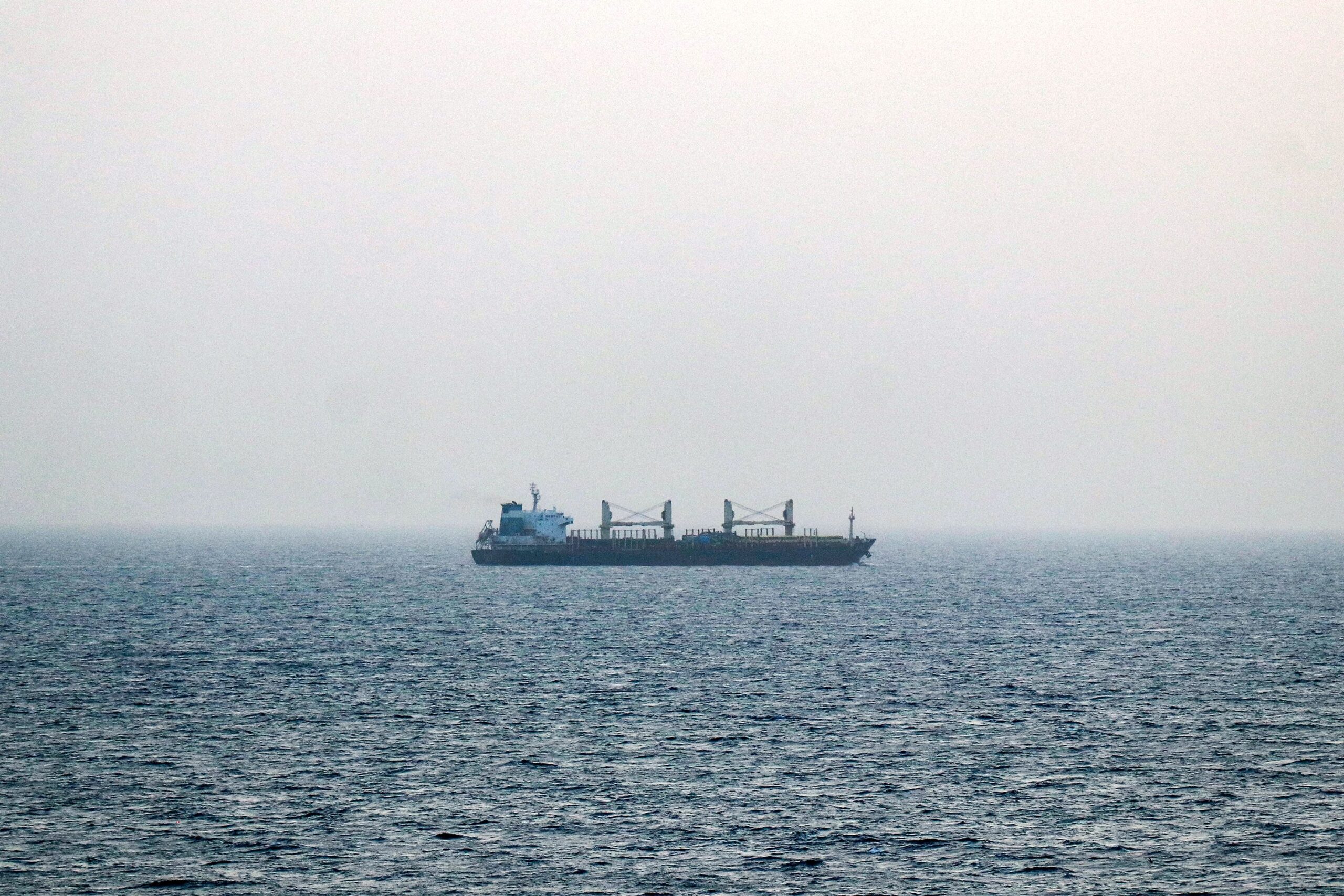
SINGAPORE: Commodity vessel transits through the Strait of Hormuz fell to a single digit per day at the weekend, preliminary shiptracking data showed on Monday, well below a 10-day average of 14.
Over the weekend, four vessels exited the Gulf through the strait, including a Handysize vessel sailing in ballast, a Handy vessel carrying LPG, a Supramax carrying fertilizer and a Suezmax laden with crude or condensate.
Ten vessels entered the Gulf, including a mini-bulker carrying minor bulk commodities, a Handymax carrying grain, a Panamax carrying metals and a Supramax carrying dry bulk cargo, the data showed.
The figures exclude any vessels that might have crossed the strait with their Automatic Identification System transponders turned off to avoid detection.
A vessel was struck by an unknown projectile while transiting the Strait of Hormuz, the United Kingdom Maritime Trade Operations said early on Sunday.
It said the crew’s status, damage assessment and environmental impact were unknown.
Meanwhile, the vital East-West oil pipeline in Saudi Arabia, which has helped relieve the logjam in the Strait of Hormuz, was temporarily shut down by a drone attack coming from Iraq, Saudi officials said.
Before the Iran war started on February 28, the strait typically handled about 125 large, commercial vessels per day, including tankers, gas carriers, bulkers and container vessels, accounting for some 20% of the world’s daily crude oil and liquefied natural gas supply.
A US blockade of Iran-related shipping has halted Iranian crude oil exports since it was reimposed in mid-July. In the Bab el-Mandeb strait, 24 and 27 commodity vessels travelled through respectively on Saturday and Sunday, tracking data showed, compared with an average of around 27 ships over the last 10 days.
Los Angeles: The brightest stars in television are set to walk the red carpet Monday at the Emmy Awards, with horror-comedy series “Widow’s Bay” and gritty hospital drama “The Pitt” expected to win big.
Apple TV’s “Widow’s Bay,” which stars Matthew Rhys as the leader of an isolated New England island that appears to be haunted, has emerged as one of the most talked-about debut series of the year.
“People just love that show,” Christopher Rosen, deputy editor of Hollywood news outlet The Ankler, told AFP.
It scooped up eight awards in the pre-gala ceremonies, and is in position to become the most awarded comedy series in a single year, surpassing the 13 trophies won last year by Seth Rogen’s Hollywood satire “The Studio.”
Rosen said he believes that Rhys — a winner for best drama actor for “The Americans” in 2018 — could now earn his first comedy Emmy.
A strong night for “Widow’s Bay” does not bode well for “Hacks,” the tale of a stand-up comedian trying to revive her career and the dysfunctional millennial assistant who helps her.
Its one solid bet left in the running – and maybe its only statuette, says Rosen – is a best actress prize for Jean Smart.
“That’s a great way to honor the final season,” Rosen told AFP. “She’s never lost from playing this part. I don’t see why she would lose for the final season.”
Smart, who turned 75 on Sunday, has won four Emmys for the show so far.
A win on Monday would give her eight acting Emmys, tying her with Julia Louis-Dreyfus and Cloris Leachman for the most ever by a performer. Allison Janney is also vying for her eighth Emmy, for “The Diplomat.”
’The Pitt’ expected to repeat as best drama
“The Pitt,” last year’s winner for best drama, follows the stressed-out workers in a Pittsburgh emergency room, with each episode unfolding in real time.
Tackling everything from abortion rights to immigration crackdowns to mass shootings, the show is the odds-on favorite to sweep several drama prizes including best series.
“If ‘The Pitt’ doesn’t win, it would be a tremendous shock,” Rosen said.
It led all shows with 25 nominations, and already won four awards in the early ceremonies, including best casting for a drama series.
Star Noah Wyle, who has racked up awards over the past year including an Emmy, is expected to triumph again. Seven of his co-stars are hopefuls in the supporting acting categories.
For best drama actress, Rosen says it will be a race between “Pluribus” star Rhea Seehorn and Keri Russell for political soap opera “The Diplomat.”
In the limited series categories, HBO Max’s “DTF St Louis” – the tale of a middle-aged love triangle gone wrong – is a top contender.
The show has scooped up six prizes so far, including two for actors David Harbour and Linda Cardellini.
Dolly tribute
The 78th Emmy Awards gala will be hosted by “Law and Order: SVU” star Mariska Hargitay, who won two Emmys for her documentary “My Mom Jayne.”
It will feature a tribute to late country music icon Dolly Parton, who was also an Emmy winner, and a performance from Noah Kahan, who will sing “Bridge Over Troubled Water” during the broadcast’s In Memoriam segment.
The gala also will deliver some TV nostalgia, with “Buffy the Vampire Slayer” stars Sarah Michelle Gellar and David Boreanaz among the presenters, along with “Charlie’s Angels” stars Kate Jackson, Cheryl Ladd, and Jaclyn Smith.
Zendaya, a past winner and current nominee for best drama actress for “Euphoria,” is on the list of presenters, guaranteeing at least one bona fide red carpet moment.
The Emmys ceremony begins at 5:00 pm Monday (0000 GMT Tuesday).
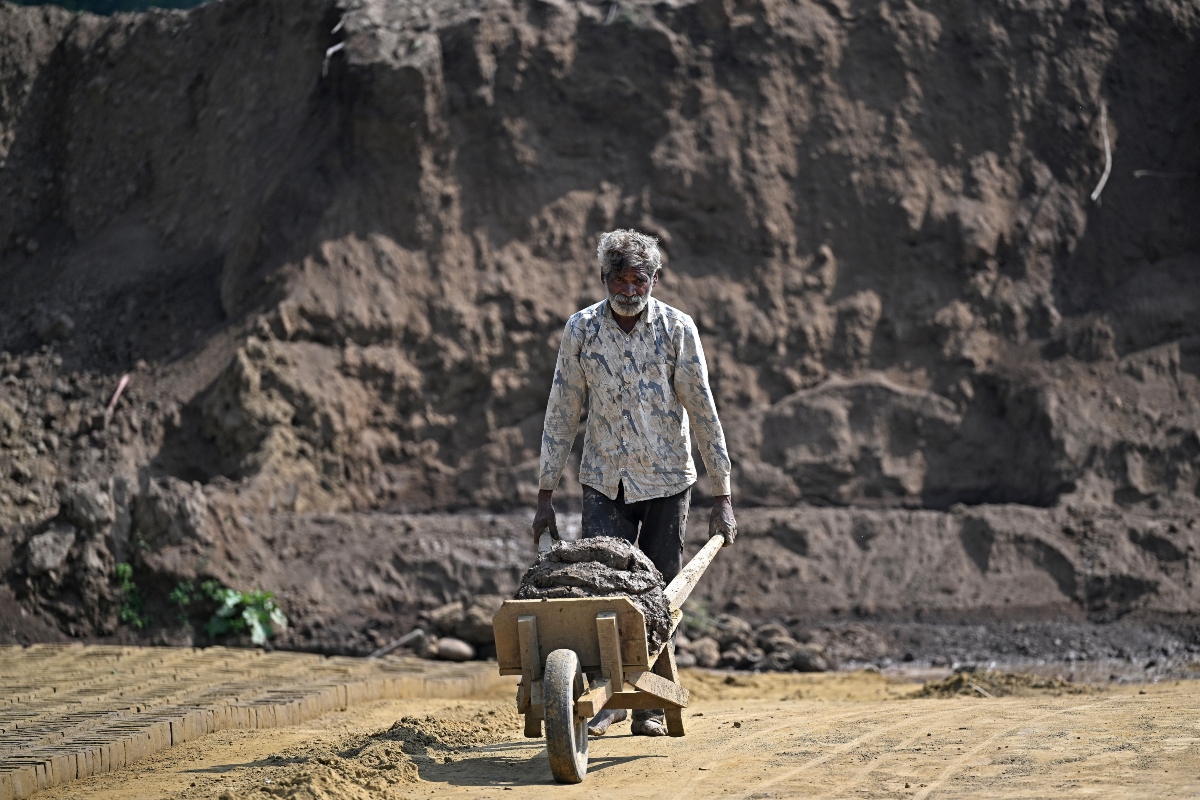
Srinagar: Every spring, mason Mohammad Ghulam Sarwar boards a train to Indian Kashmir, seeking higher wages despite the risk of being targeted by militants in the disputed Himalayan region.
Sarwar, 25, is one of an estimated half a million migrant workers who stream into the Himalayan region each year, forming the backbone of an economy increasingly reliant on labour from some of India’s poorest states.
The dependence has endured despite decades of insurgency and a series of militant attacks that have made migrant workers vulnerable targets.
Since 2019, at least 24 migrant workers have been killed in militant attacks across the territory, according to local media reports.
More than 1500 people were killed in the same period, according to the South Asia Terrorism Portal, 219 of them civilians.
The latest attack last month saw gunmen shoot dead two brick kiln workers from the central state of Chhattisgarh.
But for workers like Sarwar, the rewards outweigh the risks.
“Kashmir is real paradise. I will keep coming every year for as long as I have the strength to work,” Sarwar, from the eastern state of Bihar, told AFP.
While millions of Indians seek jobs in the Gulf, some workers say Kashmir offers nearly comparable earnings without the costs and complications of overseas migration.
Sarwar earns 1,200 rupees ($12) a day in Kashmir, compared with about 700 rupees in Bihar for the same work, if he could find any at all.
The Muslim-majority region, battling some of India’s highest unemployment rates, has become increasingly dependent on outsiders to perform jobs that many locals consider menial, including domestic work, agriculture and construction.
Local businesses say they struggle to find workers willing or able to take up many jobs.
“Outside the handicrafts sector there is not nearly enough local skilled labour available in Kashmir,” said Mohammad Ashraf Mir of the Kashmir Chamber of Commerce and Industry.
“We see a rising dependence on migrant workers, tending towards absolute dependence.”
Waiting to be hired
Each morning, groups of labourers gather at prominent squares in the main city of Srinagar, waiting to be hired.
Most stay for about eight months before departing ahead of Kashmir’s harsh winter, when construction slows and agricultural activity dwindles.
Muslim-majority Kashmir has been divided between India and Pakistan since their independence in 1947, while an insurgency against Indian rule that erupted in 1989 has claimed tens of thousands of lives.
Although the rebellion has been largely weakened in recent years, sporadic attacks continue.
Sarwar said he saw a barber from his home state shot dead by suspected rebels some years ago.
While he was saddened by the incident, it failed to deter him.
“Life and death are in the hands of God,” he said.
“If I remain fearful, I will have nothing. But if I overcome, I will have everything.”
Sarwar shares a building in Srinagar with around 200 other labourers. Some 7-10 workers squeeze into tiny rooms, sleeping and cooking in the same cramped space while paying little more than five dollars a month each.
Outside, security is conspicuous.
Paramilitary troops, armoured vehicles and police special operations units patrol streets. CCTV cameras monitor the compound around the clock.
“They have been soft targets for the terrorists in the past,” a senior security official said on condition of anonymity.
“But security arrangements for them have become robust over time.”
‘Feels peaceful’
Police encourage labourers to live in clusters and avoid venturing out after dark.
A labourer from West Bengal said many Hindu workers adopt Muslim-sounding names while in Kashmir, fearing that displaying their religion could make them targets.
Rebel groups say they target migrant workers to avenge police harassment of their families.
Many labourers are reluctant to discuss security concerns publicly.
“I face no troubles here,” said Mohammad Iqbal, a 53-year-old painter from Uttar Pradesh state who has worked in Kashmir since before the insurgency began and is now accompanied by his son.
“It feels peaceful.”
Others are more candid.
“I am afraid of terrorists here,” said Shahid Sofi, a 24-year-old mason from Bihar who previously worked in Delhi and Mumbai.
“But overall working conditions here are good, the weather is good, and I like working in the wide, open spaces of Kashmir.”
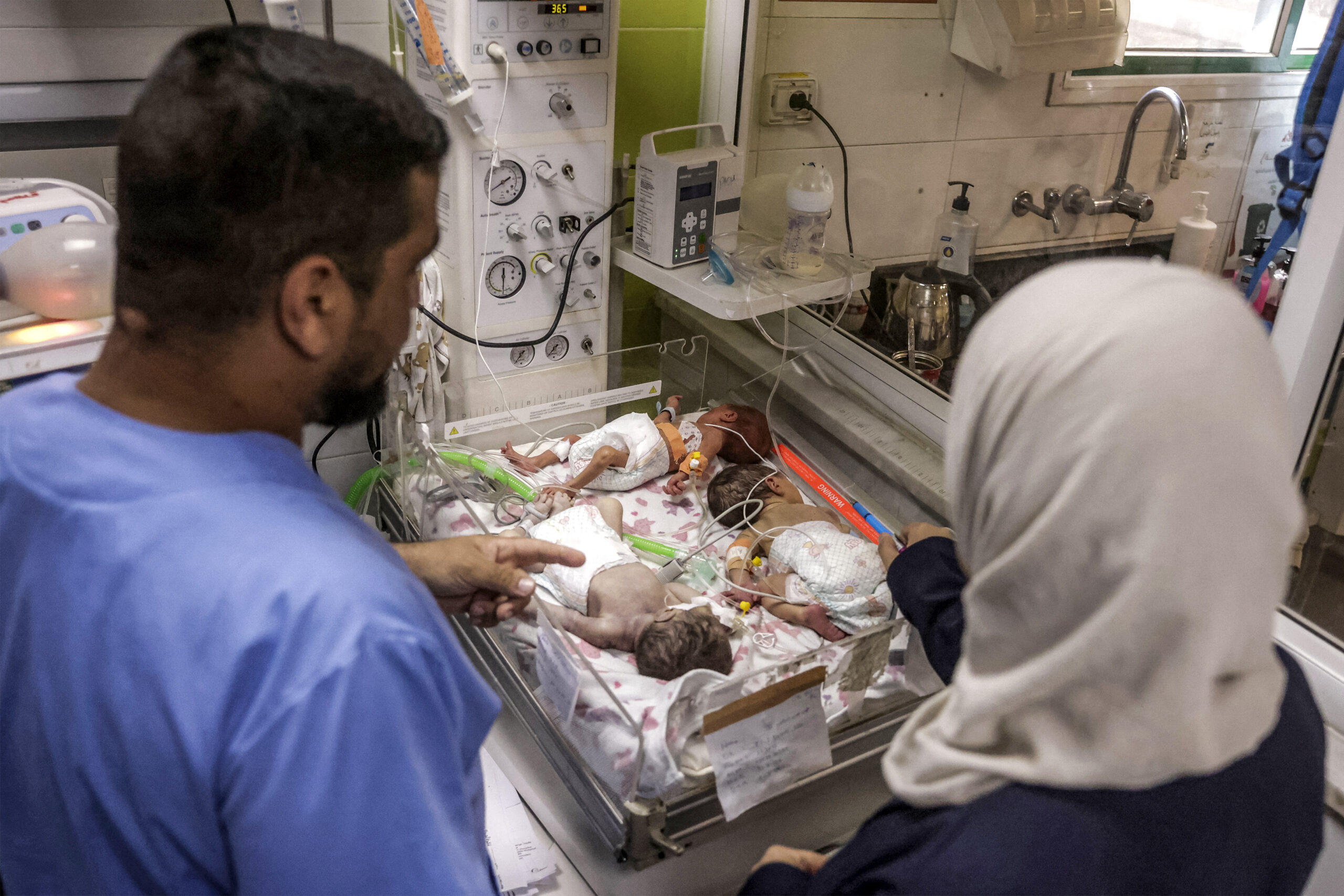
Khan Yunis: As monitors beep and doctors consult near them, two tiny newborns lie silently side-by-side, sharing a single incubator in a southern Gaza hospital running short on space and supplies.
Gaza’s youngest already face an extremely precarious entry into the world, given the dire humanitarian situation in the war-shattered territory that borders Israel and Egypt.
But for babies needing specialist care, such as those born prematurely, the road ahead is even more perilous.
“The situation is dire: there is no oxygen available for them, nor is there any spare incubators in the hospital,” said Hatem Dhahir, head of the neonatal department at Nasser hospital in the southern city of Khan Yunis.
“We’re trying to transfer them to other hospitals, but they’re always full and the situation is very bad. Most of the children need oxygen and are very underweight, and things are going from bad to worse,” he told AFP.
The war between Israel and Hamas has devastated the Palestinian territory’s healthcare system, with many medical facilities rendered completely or partially unusable.
Ongoing Israeli restrictions on goods entering the Gaza Strip mean medical supplies and specialist equipment are also running low.
Dhahir said Nasser hospital had seen a significant increase in the number of premature births in recent months, as well as twins and triplets.
The influx was forcing staff to place two or even three babies in each incubator, he said.
In March, the UN’s humanitarian agency OCHA said that one in three pregnancies in Gaza were high-risk and 70 percent of newborns were premature or underweight.
Incubator sharing significantly increased mortality risks, it said.
‘No room’
Nearly the entirety of Gaza’s population was displaced at least once during the devastating war which started in October 2023.
The fighting flattened swathes of the territory, left hundreds of thousands of people living in tents and temporary shelters and shattered vital infrastructure such as sanitation and access to safe water.
Despite a US-backed ceasefire declared in October 2025, the Israeli military continues to target Palestinians it says are militants.
A UN-mandated inquiry published in June said that severe shortages of food, medical supplies, fuel and the collapse of healthcare services had an enormous impact on maternal health.
“Against this background, rates of miscarriage, stillbirth, low-birthweight infants and congenital defects have increased,” the UN’s Independent International Commission of Inquiry said.
Heart conditions were among three types of congenital defects to have particularly increased, the commission said, citing medical practitioners.
In southern Gaza, Mona Ahmad was accompanying a baby taken to Nasser hospital in late August and diagnosed with a serious congenital defect in which the heart’s two main blood vessels are switched in position.
“We received a final report stating that the baby was suffering from transposed arteries and needed to be transferred, as there was absolutely no treatment available for her here,” Ahmad told AFP.
“The baby spent a full week in the neonatal unit and was discharged because there was no room for her there,” she added.
In a bid to revive Gaza’s neonatal care system, the UN children’s agency UNICEF has scaled up its work to supply medical equipment such as incubators, ventilators and monitors to hospitals.
Including work that began before the ceasefire, UNICEF has supplied 93 incubators to six facilities across the Gaza Strip.
But challenges remain immense and more needs to be done, said Toby Fricker, chief of advocacy and communications for UNICEF Palestine, following a visit to a neonatal intensive care unit in the territory.
For now, “through the pure… resilience of the doctors, of people, things are working,” he said.
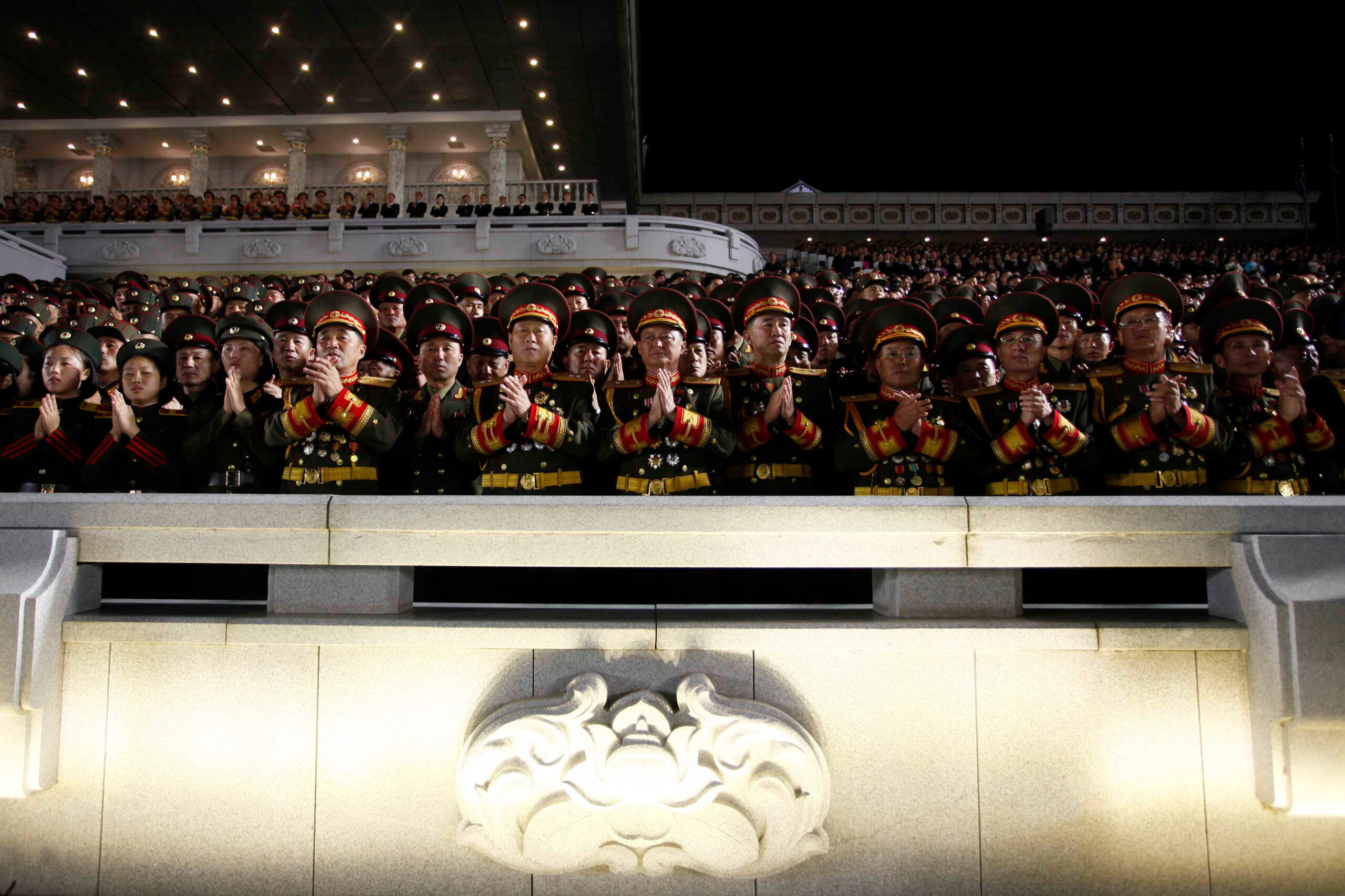
SEOUL: North Korea said Monday it conducted a joint live-fire drill involving missiles, artillery and drones that it claimed demonstrated “huge destructive power.”
The test included firing different types of weapons simultaneously, likely aiming at developing the ability to overwhelm South Korean and U.S. air defenses.
Experts say North Korea is not slowing its testing activities even after U.S. President Donald Trump recently scaled back a military exercise with South Korea in an apparent effort to revive diplomacy with leader Kim Jong Un.
The North’s official Korean Central News Agency said Saturday’s drill was meant to practice the operations of an integrated weapons control system. South Korea’s military earlier said it detected short-range ballistic missile launches from North Korea’s eastern coastal Wonsan area on Saturday morning.
After observing the firing drill, North Korean Marshal Pak Jong Chon said the drill would “improve the level of specialization to bring down the enemy’s armed forces organizationally and structurally once an order is issued.” He added that the weapons systems mobilized demonstrated “the huge destructive power of concentrated fire,” according to KCNA.
It’s extremely difficult to independently verify North Korean claims on its weapons tests. South Korea’s Joint Chiefs of Staff said several missiles fired Saturday each flew about 250 kilometers (155 miles) toward North Korea’s eastern waters. The flight distances signal that the weapons are designed to strike targets in South Korea including U.S. military bases.
The firing drill, which included North Korea’s first public ballistic missile launches in about three weeks, came a day after the United States, South Korea and Japan wrapped up a trilateral military exercise that North Korea views as a provocation.
In August, Trump ordered the Pentagon to “substantially reduce” a major bilateral military exercise with South Korea, citing what he called a good relationship with Kim. But North Korea rebuffed Trump’s overture, saying that shortening the drill didn’t change its “provocative, aggressive nature.” The Ulchi Freedom Shield exercise eventually ended six days earlier than originally scheduled.
Buoyed by his advancing nuclear arsenal and deepened ties with Russia and China, experts say Kim likely thinks he has greater leverage in possible diplomacy with the U.S. than when he first met Trump in 2018-2019.
Kim said earlier this year that he could return to talks if the U.S. drops its “hostile policy” against his country and respects what he calls the North’s status as a nuclear state.
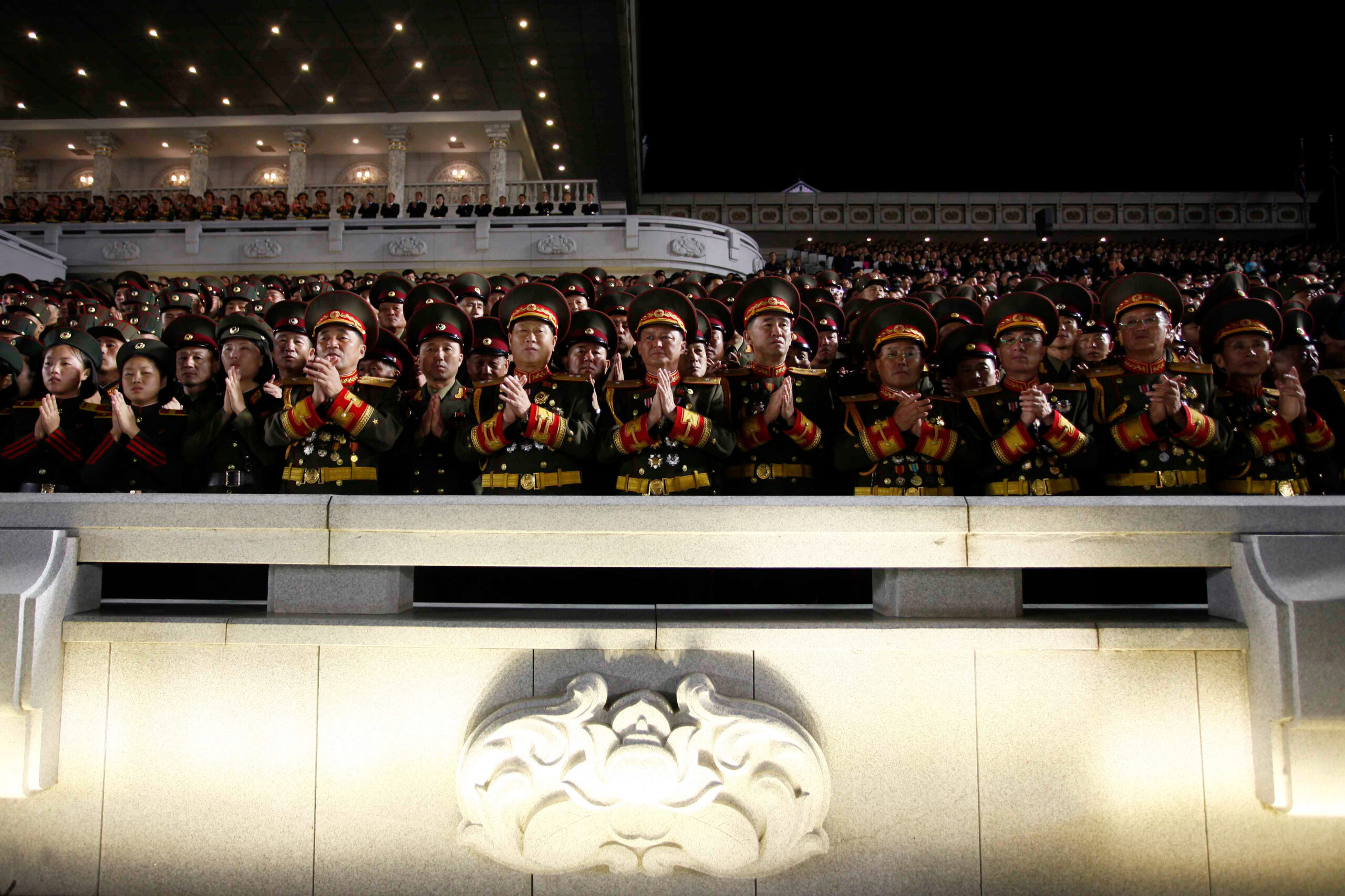
SEOUL: North Korea said Monday it conducted a joint live-fire drill involving missiles, artillery and drones that it claimed demonstrated “huge destructive power.”
The test included firing different types of weapons simultaneously, likely aiming at developing the ability to overwhelm South Korean and U.S. air defenses.
Experts say North Korea is not slowing its testing activities even after U.S. President Donald Trump recently scaled back a military exercise with South Korea in an apparent effort to revive diplomacy with leader Kim Jong Un.
The North’s official Korean Central News Agency said Saturday’s drill was meant to practice the operations of an integrated weapons control system. South Korea’s military earlier said it detected short-range ballistic missile launches from North Korea’s eastern coastal Wonsan area on Saturday morning.
After observing the firing drill, North Korean Marshal Pak Jong Chon said the drill would “improve the level of specialization to bring down the enemy’s armed forces organizationally and structurally once an order is issued.” He added that the weapons systems mobilized demonstrated “the huge destructive power of concentrated fire,” according to KCNA.
It’s extremely difficult to independently verify North Korean claims on its weapons tests. South Korea’s Joint Chiefs of Staff said several missiles fired Saturday each flew about 250 kilometers (155 miles) toward North Korea’s eastern waters. The flight distances signal that the weapons are designed to strike targets in South Korea including U.S. military bases.
The firing drill, which included North Korea’s first public ballistic missile launches in about three weeks, came a day after the United States, South Korea and Japan wrapped up a trilateral military exercise that North Korea views as a provocation.
In August, Trump ordered the Pentagon to “substantially reduce” a major bilateral military exercise with South Korea, citing what he called a good relationship with Kim. But North Korea rebuffed Trump’s overture, saying that shortening the drill didn’t change its “provocative, aggressive nature.” The Ulchi Freedom Shield exercise eventually ended six days earlier than originally scheduled.
Buoyed by his advancing nuclear arsenal and deepened ties with Russia and China, experts say Kim likely thinks he has greater leverage in possible diplomacy with the U.S. than when he first met Trump in 2018-2019.
Kim said earlier this year that he could return to talks if the U.S. drops its “hostile policy” against his country and respects what he calls the North’s status as a nuclear state.
DAMASCUS: Syria’s civil aviation sector is moving beyond the restoration of suspended international routes toward a broader rebuilding of its air transport network, with foreign airlines returning, regional airports reopening and projects underway to expand capacity and connectivity.
After years of disruption and limited international services, Arab, regional and European carriers have gradually restored flights to Syria, initially through Damascus and Aleppo international airports. The recovery has since extended eastward, with Deir Ezzor International Airport returning to service and Qamishli International Airport nearing reopening.
Air traffic through Syrian airspace has also increased sharply, while airport expansion projects and new aviation ventures point to a wider revival of the sector.
International airlines return
One of the early signs of recovery came in March 2025, when Aleppo International Airport reopened after rehabilitation work. Royal Jordanian operated a test flight to the airport on March 23 to assess security and safety ahead of resuming regular services following a 14-year interruption.
European carriers followed. Romania’s Dan Air resumed flights to Syria on June 15, while Air Mediterranean operated a flight to Damascus from Austria and Greece on June 30.
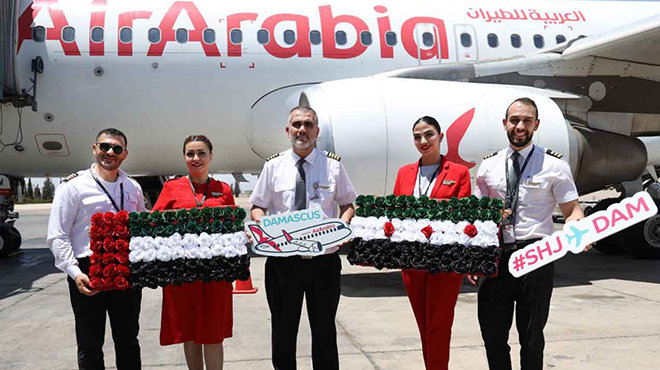
Gulf carriers also restored connections. Air Arabia returned to Damascus from Sharjah on July 10, followed six days later by Emirates, which resumed flights after a 13-year interruption.
Air Arabia became the first of Gulf carriers that had restored connections to Syria on July 10. Emirates resumed flights six days later. (SANA)
The first Emirates flight carried 286 passengers, including UAE Minister of Sports Ahmad Belhoul Al Falasi. The carrier announced three weekly Damascus-Dubai services, restoring a route that had carried nearly 2.5 million passengers between its launch in 1988 and suspension in 2012.
The expansion accelerated in 2026. AJet restored Istanbul-Aleppo flights in April, followed by Pegasus Airlines in June. Etihad Airways began scheduled Abu Dhabi-Damascus flights on June 14, while Jazeera Airways launched Kuwait-Aleppo service later that month.
Traffic through Syrian airspace surges
The recovery has been reflected in air traffic over Syria.
The General Authority of Civil Aviation and Air Transport said the number of aircraft transiting Syrian airspace rose from 32 in March, after the airspace was closed amid regional tensions, to 2,523 in April.
The increase coincided with the resumption of operations by 12 international airlines through Damascus and Aleppo airports.
Authorities have also focused on restoring direct air links with Europe through coordination with international aviation organizations on safety and operational requirements.
On July 2, the first Syrian Airlines flight from Amsterdam arrived at Damascus International Airport, launching a service three times a week. The airline said the route was the first in a series of international destinations planned for the carrier.
Air Arabia restored daily Sharjah-Aleppo flights on July 4 after an interruption of about 12 years, while Flydubai announced daily services to Aleppo beginning July 20.
Kuwait Airways also returned to Damascus in July.
The first LEAV Aviation flight from Düsseldorf, Germany, arrived at Damascus International Airport on July 29.
On July 29, the first LEAV Aviation flight from Düsseldorf arrived at Damascus International Airport, opening the first regular air service between Syria and Germany in 14 years.
The flight followed a final air transport agreement signed by the Syrian and German governments on July 16. The agreement includes services from four German airports operated by two German airlines.
Aleppo prepares for major expansion
Aleppo International Airport reached another milestone Aug. 1 when it received inaugural flights from three international airlines in a single day: Türkiye’s SunExpress, Germany’s LEAV Aviation and Saudi Arabia’s Flynas.
The development underscored the accelerating recovery of Syrian civil aviation and growing confidence among international carriers.
Authorities are also preparing to expand the airport’s capacity. Development work at the existing Aleppo airport is scheduled to begin in early 2027, with annual passenger capacity expected to exceed 2 million.
The project aims to improve operational efficiency, technical capabilities and passenger services while preparations continue for a new Aleppo International Airport.
On August 1, 2026, Aleppo International Airport received the inaugural flights of three international airlines in a single day: Türkiye’s SunExpress, Germany’s LEAV Aviation and Saudi Arabia’s Flynas. (SANA)
The plans followed talks in Jeddah from Sept. 7 to 10 between a Syrian civil aviation delegation and Saudi Arabia’s Elaf Investment Fund, led by Bin Dawood Investment Group.
The agreement covers development and operation of the existing airport and construction of a new international facility. The new airport is planned in stages, with initial capacity of about 6 million passengers annually eventually rising to 12 million.
The project also includes financing for an integrated navigation radar system covering Syrian airspace.
Aviation recovery extends eastward
The expansion is no longer limited to Damascus and Aleppo.
Deir Ezzor International Airport returned to service Aug. 5 after rehabilitation work and years of suspension. Syrian Airlines resumed flights from Damascus, while Jazeera Airways launched regular direct Kuwait-Deir Ezzor service Aug. 8. A World Food Programme flight arrived two days later as humanitarian air operations resumed.
Three days after Deir Ezzor International Airport returned to service on August 5, it welcomed Syrian Airlines flights from Damascus, while Jazeera Airways launched regular direct Kuwait-Deir Ezzor service. (SANA)
On Sept. 1, German carrier LEAV Aviation operated its first direct flight from Cologne to Deir Ezzor, becoming the first European carrier to provide scheduled service to the airport.
Authorities said three additional regional destinations were being prepared, with technical teams expected to inspect airport equipment, infrastructure and safety and security procedures.
Qamishli International Airport is also nearing reopening as rehabilitation work enters its final stages. The project, which began Feb. 25, is expected to help reconnect Hasakah province and the wider eastern region with Syria’s national air transport network.
New aviation ventures
New aviation projects are emerging alongside the restoration of existing routes.
During a visit to Riyadh on Sept. 7, Syrian aviation officials met Flynas CEO Bandar Almohanna to review implementation of an agreement establishing “flynas Syria” and discuss expanding aviation cooperation between Syria and Saudi Arabia.
The meeting followed talks between Syrian and Saudi aviation authorities on boosting air traffic and coordination.
In February, the two sides signed an agreement to establish “nas Syria” as a new low-cost airline as part of a broader package of Syrian-Saudi commercial agreements.
During a visit to Riyadh on September 7, the head of Syria civil aviation authority met Flynas CEO Bandar Almohanna to review implementation of an agreement to establish “flynas Syria”. (SANA)
Authorities are also planning to convert Mezzeh Airport in Damascus from a military facility into an airport for limited civilian operations, mainly serving private and executive aviation.
Preliminary work includes rubble removal and upgrades to air navigation infrastructure, while technical, operational, environmental and regulatory studies are underway. The airport is expected to complement Damascus International Airport.
Reconnecting Syrians and supporting the economy
The restoration of air routes is facilitating family reunification after years of separation and reducing reliance on costly indirect flights and transit connections for Syrians living in Europe and the Gulf.
The expanding network is also expected to strengthen links between expatriates and their homeland and facilitate the return of skilled professionals.
Economically, improved air connectivity could support trade, investment and tourism while strengthening Damascus and Aleppo as regional economic centers. Plans for Aleppo airport also envisage increased passenger and cargo traffic and greater support for industrial and commercial activity in northern Syria.
The revival has coincided with closer aviation cooperation with Arab and European countries, including the air transport agreement with Germany and expanding coordination with Saudi Arabia.
From restoring routes to rebuilding a network
From only a handful of flights in early 2025 to more than a dozen international airlines operating through Damascus and Aleppo by mid-2026, Syria’s aviation network has undergone a marked transformation.
Routes now connect Syria with Türkiye, Germany, the United Arab Emirates, Kuwait, Saudi Arabia, the Netherlands, Austria and Romania.
At the same time, Aleppo is preparing for major capacity expansion, Deir Ezzor has returned to domestic and international service, Qamishli is nearing reopening, Mezzeh is being considered for limited civilian operations and a new low-cost airline venture is under development.
What began as the restoration of routes suspended for years is developing into a broader rebuilding of Syria’s aviation network, reconnecting its provinces, linking Syrians abroad with their homeland and expanding the country’s connections to regional and international air transport networks.
BEIJING: Oil prices jumped more than two percent on Monday, after new Houthi strikes on Saudi Arabia and Iranian attacks on ships in the Gulf compounded supply concerns following the closure of a key Saudi oil pipeline.
Brent crude futures rose $2.90, or 2.77 percent, to $107.51 per barrel as of 2313 GMT. WTI futures rose $2.27, or 2.27 percent, to $102.32 per barrel. Prices had initially risen more than 3 percent at market open.
Saudi Arabian state media on Sunday released video footage of damage to homes and a mosque from what it said was a Houthi attack on the country’s southern Jazan province. The Houthis said they had also struck a Saudi military base in a neighboring province.
A vessel in the Strait of Hormuz was struck by a projectile, causing a fire and forcing the crew to be evacuated, the British maritime security agency UKMTO said on Sunday.
Iran said one person was killed and four crew wounded aboard an Iranian commercial vessel struck off its coast.
Oil prices had been expected to rise on Monday amid growing concerns about risks to supply from Saudi Arabia, the world’s largest oil exporter, whose East-West oil pipeline was shut on Friday by a drone strike that originated in Iraq.
The loss of the pipeline, which helped Saudi Arabia re-route its exports avoiding the Strait of Hormuz, threatens up to 4 percent of global oil supply.
Meanwhile, Yemen’s Iran-aligned Houthis had reached the strategic island of Perim on Friday, moving to tighten their control over the Bab Al-Mandab Strait, another key oil transit lane that has been shipping 4-5 percent of global supply in recent months.
Oil surged 8 percent higher on the week due to the disruptions, rising above $100 for the first time since July.
“Looking ahead, unless this week’s talks in Oman produce something operational — or the East-West pipeline is brought back online quickly — the risk is that crude oil continues to extend its gains toward the $119.48 high of early March,” IG market analyst Tony Sycamore said in a note on Sunday.
Omani Foreign Minister Badr Albusaidi said on X later on Sunday, however, that a scheduled Monday meeting in Oman between Gulf countries and Iran to discuss the Strait of Hormuz had been postponed.
No peace talks have been held in the war, launched six months ago by the United States and Israel, since an interim agreement in June collapsed after a few weeks.