Arab

Arab News | China, Iran among countries that have used AI to aid spying, Anthropic says

SAN FRANCISCO, California: Anthropic said Thursday it shut down multiple cases of state-sponsored surveillance operations that used its artificial intelligence (AI) models, and warned that governments and state-aligned actors are increasingly using AI to spy on ethnic minorities and dissidents.

The incidents were found and disrupted between January and July, and they originated in China, Iran and west Africa, Anthropic said in a report about misuse of its models.

These surveillance campaigns “targeted the same diaspora and dissident communities these regimes have historically targeted. These include pro-democracy figures in Hong Kong, Tibetan and Falun Gong communities across Asia, and Iranian minority communities and opponents of the Iranian regime abroad,” the report said.

In one case, Iranian actors developed a way to identify people through their social media accounts; in another, a contractor working for Malian national security authorities used Claude “to design the underlying software that enabled the intelligence gathering.”

“AI is now being used in place of an engineering workforce,” the report said.

Anthropic also disrupted efforts by users to design weapons, conduct questionable biological research, and create dating scams.

The San Francisco-based AI lab also accused Chinese developers of deceptively using Claude to produce responses to user queries while simultaneously “distilling” that data to improve their own models.

Distilling is an industry term that refers to a process where one AI model is used to train another one.

Chinese developers have previously been accused of using that technique without permission, essentially stealing resources from American labs such as Anthropic and OpenAI.

Now Anthropic alleges that China’s Moonshot and Deepseek have also secretly used Claude to generate answers given to its users.

“In one instance, over a ten-day period, Moonshot relayed almost 300,000 customer requests to Anthropic” through a “network of 5,380 fraudulent accounts, most of which appeared to be located in Singapore and Japan,” the report said.

Some of that data contained sensitive user information, potentially in violation of privacy agreements.

“We do not know if Moonshot notified their customers that their requests were being rerouted to Anthropic and exposed to a third party,” the report said.

Deepseek used similar techniques.

When it comes to the research Anthropic detected and blocked that was related to biological weapons, the intent of the actors was less clear-cut and the AI lab did not identify them.

“The individuals implicated in these case studies are working scientists. We do not assert that they intended harm, and identifying them or their labs could expose them to harm,” the report said.

The scientific research in those cases involved work around the mosquito-born chikungunya virus, a “highly-pathogenic” strain of the bird flu, a family of viruses that include smallpox and mpox, venoms and other toxins.

Source link

Arab News | Trump says he does not regret Iran war despite impact it may have on midterm elections

WASHINGTON: President ‌Donald Trump said he did not regret going to war against Iran despite the impact the conflict may have ​on the November US midterm elections.

“I don’t believe in the word ‘regret.’ You can always question yourself a little bit,” Trump said in an interview with Fox News host Laura Ingraham when asked if he regretted the Iran war due to the impact it may have on the elections.

“If ‌I had ‌it do again, I would ​do ‌exactly ⁠as ​I did,” ⁠Trump said in the interview broadcast on Thursday on “The Ingraham Angle” show.

Trump dismissed suggestions that some of his supporters were upset and demoralized about the war.

“I don’t think they’re demoralized. I think they’re very proud of the fact that I’m not letting ⁠Iran have a nuclear weapon,” Trump said.

Trump ‌reiterated his thinking that ‌the war will end immediately after ​the midterm election.

“It ‌ends right after the election,” Trump said in ‌the interview. He made similar comments on Wednesday, alleging Tehran was trying to influence the elections that will determine whether Trump’s Republican Party retains control of Congress.

The rise in ‌oil and gas prices due to the US-Israeli war on Iran has become ⁠a major ⁠issue for Republicans in the lead-up to the elections.

The US and Israel attacked Iran on February 28 and Iran responded with its own strikes on Israel and Gulf states that host US bases. US-Israeli strikes on Iran and Israeli attacks on Lebanon have killed thousands and displaced millions.

Trump has cited weakening Iran’s nuclear capabilities as one of his war objectives. Iran does not have ​nuclear weapons and says ​its uranium enrichment program is for peaceful purposes. The US is nuclear-armed.


Source link

Arab News | Aryna Sabalenka moves a win from a 3rd straight US Open title by beating Jessica Pegula

NEW YORK: Aryna Sabalenka moved a win away from her third straight US Open title, beating Jessica Pegula 7-5, 6-2 on Thursday night.

Sabalenka blasted her way out of what was a dead-even match for most of the first set, pouncing on Pegula’s second serves and turning the second set into perhaps her most impressive stretch of tennis in the tournament.

“No complaints,” Sabalenka said. “I’m just super happy that I was able to pull out such tennis.”

The No. 1 seed will face No. 2 Elena Rybakina or No. 4 Coco Gauff on Saturday, needing a victory to become the first player to win three in a row in Flushing Meadows since Serena Williams from 2012-14.

Rybakina will replace Sabalenka atop the women’s tennis rankings next week, and Sabalenka said this week she would be fine ceding No. 1 after she held it 99 consecutive weeks if it she was able to win another US Open trophy.

It will be hard to prevent that if she hits the ball Saturday the way she did against Pegula.

Sabalenka pounded 29 winners to Pegula’s 12, turning their third straight meeting at the end of the US Open into a rout, after her victory in the 2024 final and 2025 semifinals were tight most of the way.

“I was so desperate for the win, I wanted it badly,” Sabalenka said.

She has won 19 straight matches at the US Open since losing to Gauff in the 2023 final.

Source link

Arab News | Rain halts England charge with Pakistan 52-2 and 268 behind in Edgbaston cricket test

BIRMINGHAM, England: Rain prevented England from putting Pakistan in a deeper hole than 52-2 and 268 runs behind on day two of the Edgbaston cricket test on Thursday.

Pakistan walked out after tea 320 runs behind to begin its second innings in gloomy, lights-on conditions perfectly suited for England’s four-man pace attack which has dominated the series.

Pakistan has yet to crack a 200 total, and Ollie Robinson was the man of the moment again.

Robinson got Saim Ayub to nick to the slips off the first ball and became only the fifth bowler in test history to twice take a wicket with the first ball of an innings in a series. The last person was Zaheer Khan for India against Bangladesh in 2007. Bill Voce was the only previous Englishman in 1937 against Australia.

Ayub was playing Twenty20s in the Caribbean 10 days ago but was summoned in mid-series in a panic call by the Pakistan Cricket Board to play his first test in 20 months. He bagged a pair.

Robinson struck again with his fourth ball, nicking off Abdullah Shafique.

That made Pakistan start 0-2 for the sixth time ever in tests and the second time against England. The other was at the same ground in 1982. The bowler was Ian Botham.

From 0-2, Azan Awais and Shan Masood dug out Pakistan to 52-2 in 12 overs. Awais had 29 and Masood 21 after being dropped on 13 by Ben Duckett off the luckless Gus Atkinson.

Wet weather came sooner than forecast and guaranteed Pakistan lived to fight at least one more day in a three-test series already lost. England, up 2-0, should complete the sweep on Saturday with no test going the distance.

Fifties and no hundreds again

England began the day already in front with a lead of 23 at 156-4.

In two sessions, 50 overs, they added 297 runs at a pacy 5.9, its fastest rate on any day all summer. Three more batters scored fifties to add to Emilio Gay’s gritty 60 and Harry Brook’s unbeaten 52 on Wednesday but the effort looked nothing like Bazball.

However, Brook, Dan Lawrence, Jamie Smith and less so Robinson would have thought a century was at their mercy.

The former trio spent more than two hours at the crease, three hours in Brook’s case, but all fell tamely and showed obvious frustration to miss out on a century on a fair pitch against a popgun attack.

Brook ran himself out on 75, Lawrence dragged on on 65, and Smith chipped back to fast bowler Razaullah Khan on 69.

Robinson’s breezy 50 from 47 balls highlighted the merciless contribution from the tailenders of 116 runs and 15 boundaries.

Brook resumed on a restrained 52 and Dan Lawrence on 5, and in sunny conditions they plundered seven runs per over in the first hour.

Brook then mistakenly took on Shan Masood at midwicket and has now been involved in five run outs in tests — only Virat Kohli (6) has been in more. Brook has gone 11 tests without a century but was still averaging more than 40.

Lawrence, filling Ben Stokes’ old spot, had in hand his third fifty in three tests when he chopped on. He gave up an agonizing “No” and Mohammad Imran’s first test wicket.

“Bitterly disappointed to get out in the 60s,” Lawrence said. “Something I’ve prided myself on this season is kicking on. I really wanted a big hundred today.

Pakistan still went to lunch with an air of resignation as Smith collected an unbeaten 47 of the 143 runs in the session.

Smith got his third 50 of the summer straight after lunch by crashing Razaullah through the covers, but Razaullah got him caught and bowled on 69.

No. 9 batter Robinson greeted the new ball by lofting Mohammad Abbas for six over cow corner and got his second 50 of the season from 46 balls. The entertainment was ended by a good catch from Masood in the covers.

Source link

Arab News | UN Security Council ‘can’t call for de-escalation’ while support still flows to Houthis, Saudi envoy warns

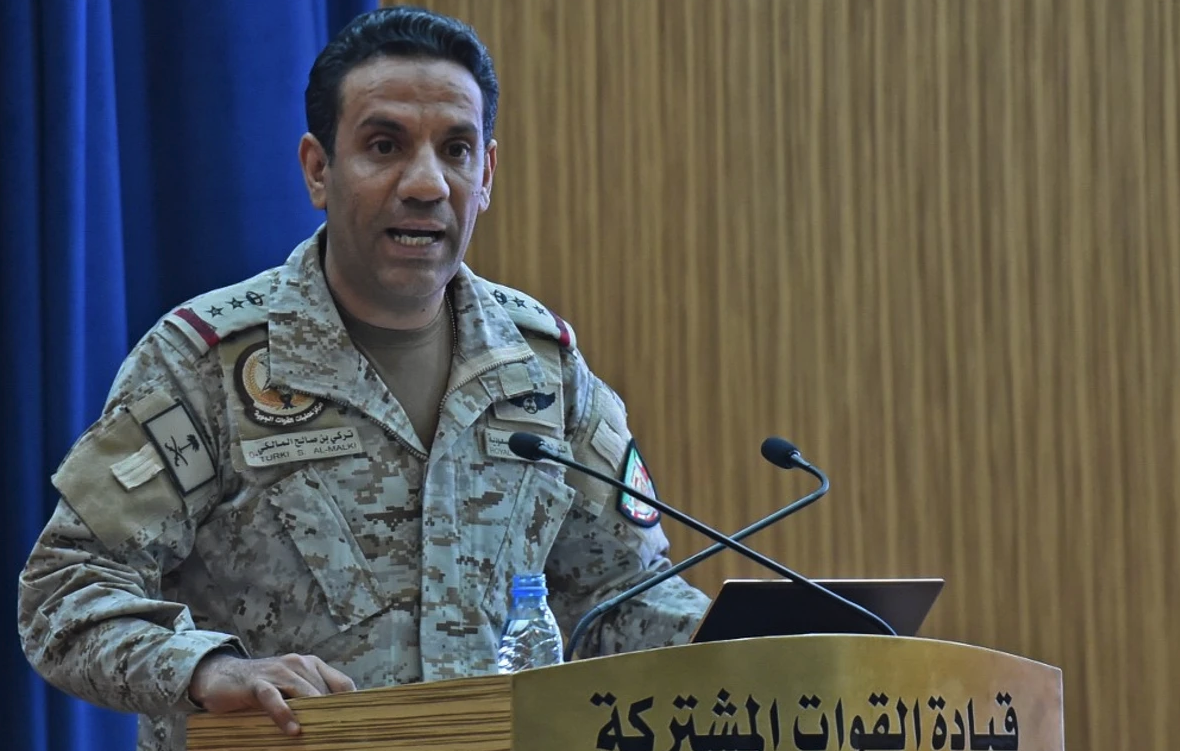
NEW YORK CITY: Saudi Arabia’s ambassador to the UN warned the Security Council on Thursday that “the international community cannot call for de-escalation” in Yemen “while at the same time allowing the continued flow of support that enables this (Houthi) militia to continue its hostile and criminal conduct.”

The warning from Abdulaziz Alwasil came during an emergency council session to discuss Houthi attacks against the Kingdom this week. It was requested by the UK, the penholder on Yemen, and Bahrain.

He said the latest strikes on Saudi cities, which began on Tuesday, were not an isolated episode but “an extension of a systematic, hostile approach pursued by this militia since its coup against the legitimate Yemeni government in 2014,” and part of a pattern that has also targeted commercial shipping and threatened freedom of navigation in the Red Sea and the Bab Al-Mandeb Strait.

He said a press statement by the council on Aug. 7 condemning Houthi missile strikes on the Kingdom since July 13, and attacks against commercial vessels since July 22, had gone unheeded, and the militia had answered the international warnings with further escalation.

Alwasil said Saudi Arabia had backed nearly every major effort to end the Yemen war — including the Gulf Initiative, the transitional period, the National Dialogue Conference, the Geneva, Kuwait and Stockholm talks, a 2021 initiative and the UN-brokered truce in 2022 — but the Houthis had repeatedly met those efforts with renewed violence.

“My country affirms its legitimate right to defend itself, its citizens and residents, and to safeguard our national resources,” he said, adding that Riyadh “will not hesitate to take all measures necessary to deter Houthi attacks and to protect our security, sovereignty and territorial integrity.”

He called on the council to enforce Resolutions 2216, which imposed an arms embargo and sanctions on the Houthis, and 2722, which demanded an immediate halt to Houthi attacks on commercial shipping in the Red Sea, and to send “a clear and firm message” that leaves no room for misinterpretation that attacks on the Kingdom must stop.

Yemen’s ambassador, Abdullah Alsaadi, affirmed Sanaa’s “full solidarity with the Kingdom of Saudi Arabia, its leadership, government and people,” and its “absolute rejection of the use of any part of the Yemeni territory as a platform for launching missiles and drones, or for threatening the security of the Kingdom or any neighboring country.”

He said the attacks amounted to the “hijacking” of Yemen’s own sovereign decisions over war and peace, carried out by a militia that operates outside of state institutions and was “militarily and technically supported by the Iranian terrorist regime.”

Saudi Arabia had shown “a great degree of restraint,” Alsaadi said, and been “the principal partner of the Yemeni people and state” in supporting institutions, salaries and services throughout the war. But he cautioned that “restraint should not be misconstrued as weakness.”

The security of Yemen and of Saudi Arabia “cannot be separated from one another,” he added, as he called for full enforcement of the arms embargo on the Houthis, and accountability for those who finance and arm the group.

Source link

Arab News | Saudi entrepreneur brings live shopping, auctions to Saudi Arabia

JEDDAH: While the COVID-19 pandemic forced millions of people around the world to move their lives online, one young Saudi technology entrepreneur was watching more closely.

He was not just looking at how people were adapting to a new digital reality, he was watching what was happening elsewhere — particularly in China, where livestream shopping was rapidly becoming a mainstream way to buy.

For Taher Alblowe, the idea was simple but powerful — and he decided to build a live Saudi social shopping and auction marketplace.

“It is called Rwaj; we built it so a seller can go live, sell at a fixed price or by auction, get paid and ship without leaving the app, and a buyer can purchase or bid knowing their money is protected until the item is in their hands,” he explained to Arab News. “This lets us reach many more sellers and buyers in the region and beyond.”

Before founding Rwaj, Alblowe founded and served as CEO of Geeks Valley, an education and digital fabrication company that grew to more than SAR23 million in cumulative revenue and worked with government entities, leading universities, and international companies.

“Live selling in our region did not need to be invented. It needed to be made safe, and made native,” he said.

He sees Rwaj as being more than another shopping application; it is an attempt to anticipate how commerce could evolve and to build that future.

“When I saw the same model start to take hold in the US and then in Europe, I was convinced the timing was right to build it for the Middle East, from the ground up and in Arabic,” he said.

Today, through Rwaj, Alblowe is focused on building a new generation of commerce for Saudi Arabia and the wider Gulf Cooperation Council, combining livestream shopping, real-time auctions, entertainment, and direct interaction between buyers and sellers into a more engaging and trusted shopping experience.

A technologist at heart, he and his team had to build not only the technology that allows sellers to broadcast live, but also the systems behind every transaction — from seller verification and payments to escrow and logistics.

On Rwaj, sellers must go through a verification process before they can sell, while payments are held in escrow and released only after the buyer receives an item and confirms it is as described. For Alblowe, building that layer of trust from the beginning was part of the promise he wanted to make to users.

Asked what makes Rwaj different from existing e-commerce and social-commerce platforms, he replied: “Three things. First, trust and safety are built into the product, not bolted on — every seller is verified and every purchase, fixed price or auction, runs through escrow. Second, the format itself — a seller can sell instantly at a fixed price and run timed live auctions in the same stream, so buyers get both convenience and the excitement of bidding. Third, it is built for this region — Arabic-first and fully bilingual.”

The journey has gone through many challenges, but he kept going. “Every startup faces challenges, especially in the early days,” he said, pointing to logistics and the complexity of building a reliable trust system before reaching significant scale.

Yet none of those issues changed his conviction that live commerce has a future in Saudi Arabia and the wider region.

Alblowe, who has been recognized by Forbes Middle East, believes Saudi Arabia has many of the ingredients needed for that future — a young and digitally connected population, widespread use of smartphones and social media, fast mobile networks and increasingly sophisticated digital payments.

But perhaps his biggest ambition is to make live selling accessible beyond major brands and influencers.

Rwaj, founded in 2025, recently closed a $1.2 million (SR4.5 million) pre-seed funding round, which the company plans to use to accelerate growth and product development across the region.

For the founder, however, the funding appears to be less an end point and more another step in a much longer journey. He already sees Rwaj beyond Saudi Arabia and the Gulf: “I want Rwaj to be serving the world,” he said.

The ambition may sound big for a company still in its early stages, but it reflects the same mindset that led him to start the business in the first place: looking at where people’s behavior is heading and trying to build for tomorrow rather than today.

His vision is of a future in which livestream selling becomes as normal as walking into a store, where every shopping district could have people whose job is to sell live to customers who may never physically enter.

“Rwaj is building the infrastructure for that: the streaming, the payments, the trust layer, and the logistics,” he said.


Source link

Arab News | McIlroy battles blustery Irish Open conditions as Niemann leads

DUBLIN: Rory McIlroy battled against fierce winds to remain in contention at the Irish Open on Thursday with a one under par opening round to sit four shots behind leader Joaquin Niemann.

US President Donald Trump is set to jet in to attend the event over the weekend, which is being held at his resort in the County Clare village of Doonbeg.

Northern Irishman McIlroy is defending his title and aiming to win for the first time since collecting a second green jacket at the Masters in April.

A double bogey six at the 13th set the world number two back, but those were the only dropped shots of his round, which was disrupted by the blustery conditions leading to a glacial pace of play.

“I hung in there, shot under par, and at least don’t feel like I’m out of the tournament. A good day tomorrow gets me right back in it,” said the six-time major champion.

“There were a couple of things that were tough today. Obviously the wind and the strength of the wind was one thing, and then the pace of play.”

“This course isn’t conducive to sort of letting you get in a flow. Especially the first two days with so many people in the field, there is a lot of stopping and starting.”

Niemann made four birdies in a row from the 14th to forge ahead.

“It’s a really tricky course and a really fun golf course to play with, especially with the Irish weather,” said the Chilean. “(I’m) getting used to this weather and the rain, so it was fun.”

Delays caused by the conditions meant that some players will have to return early on day two to complete their opening rounds.

Home favourite Shane Lowry is among a five-strong group, two shots behind Niemann after a 67.

Adrian Meronk, Maximilian Steinlechner and Renato Paratore were also at three under when bad light brought their opening day to an end without completing their rounds.

Jon Rahm was level par on a rare appearance back on the DP World Tour.


Source link

Arab News | Italian team Como welcome older fans to the stadium for their UCL debut

COMO, Italy: Como marked their Champions League debut with a gesture of respect by inviting their older fans to the game against Leipzig on Thursday.

President Mirwan Suwarso and some directors made the magnanimous decision of giving away their own seats, allowing supporters born in 1950 or earlier to attend the sold-out game.

“We will be honored to give up our seat for them,” Suwarso had posted on Instagram.

Capacity was reduced to around 10,000 because the delightful Stadio Giuseppe Sinigaglia stadium on the shores of Lake Como underwent modifications for the Champions League.

The 119-year-old club reached the competition under coach Cesc Fabregas, a standout goal-scoring midfielder during a stellar club career with Arsenal, Chelsea and Barcelona. He played for the Spain team that won the 2010 World Cup.

Fabregas guided Como to fourth place last season ahead of Juventus and AC Milan to claim Serie A’s final Champions League spot with a high-pressing brand of soccer.

Goals have been coming from 22-year-old playmaker Nico Paz, who has stayed on loan from Real Madrid and burly Greece center forward Anastasios Douvikas.


Source link

Arab News | UN-backed ‘Quintet’ bloc rejects idea of parallel Rapid Support Forces rule in Sudan

NEW YORK CITY: A five-member international bloc known as the “Quintet” on Thursday rejected the prospect of any “parallel governing structures” in Sudan.

As its representatives wrapped up a “Good Offices” mission to Khartoum, they reaffirmed the need for full respect for the country’s sovereignty, unity and territorial integrity.

The rebuke, a reference to a rival administration the paramilitary Rapid Support Forces seeks to establish amid its conflict with the Sudanese Armed Forces, came after the Quintet — the African Union, the Intergovernmental Authority on Development, the Arab League, the EU and the UN — held talks with Sudanese leaders in an effort to revive a Sudanese-led political process to end the civil war, which began in April 2023.

The delegates met the chair and deputy chair of Sudan’s Transitional Sovereignty Council, the prime minister, and the undersecretary of the Ministry of Foreign Affairs and International Cooperation. They also attended a working dinner hosted by the finance minister that drew a number of political and civilian figures.

Beyond government officials, the Quintet said its representatives met a range of political and civilian groups, including the Democratic Bloc, and heard from a committee tasked with fostering the conditions for a nationwide “Sudanese Dialogue,” which briefed the delegates on its work. A meeting with independent women’s and youth groups concluded the Quintet’s mission.

The bloc described the visit as being “in the spirit of listening to the stakeholders on the ground,” with the aim of linking its diplomatic engagement outside of Sudan with initiatives emerging within the country.

“There is no military solution to the conflict in Sudan,” the Quintet said, adding that any durable political process must be paired with concrete steps to protect civilians and end hostilities.

The bloc said it remained convinced that a “credible and inclusive Sudanese led and Sudanese owned” political track can still deliver a transition to a democratic, civilian-led government that reflects the aspirations of the Sudanese people.


Source link

Arab News | Host Germany beat Belgium 93-74 to storm into women’s FIBA World Cup semifinals, France await

BERLIN: Buoyed by partisan home fans, host Germany upset Belgium 93-74 to reach the semifinals of the women’s FIBA World Cup on Thursday.

Leonie Fiebich scored 17 points and had 10 rebounds to lead Germany to a showdown with France on Saturday. Nyara Sabally also had a double-double with 16 points and 12 rebounds.

“I can’t quite believe it yet,” forward Frieda Bühner said. “We’re among the best four teams in the world. I can’t believe it. It’s crazy.”

The players screamed and whooped in celebration. Germany had never reached the semifinals before.

“Everyone stepped up today and we did it from the first second to the very last,” said Alexandra Wilke, who scored 10 points.

Germany lost their opening game by 30 points to Spain, but bounced back with impressive wins over Japan and Mali before routing South Korea in a playoff to reach the quarterfinals.

Egged on by fervent commentary from the announcer, fans cheered, jumped and waved Germany flags at the Berlin Arena to help the home team keep their momentum going.

“It’s always really cool to play in front of such a crowd,” Sabally said. “I couldn’t have wished for more, especially in Germany. It’s really cool to see that there’s so much hype and the whole venue is caught up in it. It’s really, really cool.”

It’s the sixth straight World Cup at which the host have made the final four since China failed to make the semifinals in 2002.

Belgium, the European champion, were one of three teams that advanced through group play without a loss.

Emma Meesseman led Belgium with 29 points and added eight rebounds, but her team were unable to regain the lead after Bühner made it 20-19 toward the end of the first quarter.

Germany did not qualify for the World Cup since the unified country’s only previous appearance as host in 1998. East Germany’s women’s basketball team finished fourth at the 1967 tournament.

France rout China

Marine Johannès and Janelle Salaün led France to the semifinals for the first time by beating China 90-61 earlier.

Both Johannès and Salaün scored 15 points while Gabby Williams contributed 14 as the Olympic finalists put themselves in contention for a first World Cup medal since the inaugural tournament in 1953, when France finished third in the final round.

“It means a lot,” Williams said of reaching the semifinals for the first time. “We want to be one of the greatest teams ever to put on the French jersey. Obviously, we have a big goal this tournament, but it’s great to check this off the list.”

Chants of “Allez les Bleues” rang around the Berlin Arena before Williams opened the scoring, and the French supporters made sure they were heard for the rest of the game as their team dominated on the court below. France have been fluid and free-scoring, beating their four opponents so far by a combined 156 points.

The team set a tournament record for 3-pointers in a single game by netting 22 in their final group game on Monday. The French players connected on 14 of 37 attempts Thursday, with Johannès and Salaün scoring three triples each.

“We are lucky because we are a group that have known each other for a couple of years now,” Salaün said of France’s team spirit. “We went through a lot of things, the Olympics, training camp(s), so we just know each other and we know what we want. We have a goal and we want to do everything to get to this goal.”

Salaün had an ice pack bound to her right knee. France coach Jean Aime Toupane told The Associated Press it was just a precaution.

Zhang’s impact limited

The French defense limited the impact of China’s 7-foot-3 Zhang Ziyu, who had the attention of two French players any time she received the ball. The 19-year-old sensation was held scoreless over her 7 minutes, 18 seconds of play in the first half, though she contributed in defense with three blocks before halftime.

There was nothing Zhang could do to stop Johannès from scoring successive 3-pointers in the third quarter, when she also got on the scoreboard. Zhang finished the game with seven points, eight rebounds and seven turnovers.

Han Xu, who had a double-double in each of her four games at the tournament, again led China with 21 points and nine rebounds.

US never in danger

The United States, the four-time defending champion, routed Hungary 108-56 in the first quarterfinal with Napheesa Collier scoring 19 points to stretch their winning run in the tournament to 34 games since a semifinal loss to Russia in the 2006 semifinals.

The US await the winner of Spain-Australia in the last quarterfinal later.

Source link

Arab News | Coach crash in Switzerland leaves several dead

GENEVA: A road accident involving a tourist coach in eastern Switzerland has left several people dead and others injured, police said on Thursday.

The accident happened between the communes of Susch and Zernez in the far-eastern canton of Graubunden.

“Several people died in the coach crash in Susch. Several others were also injured,” the cantonal police said on X, without giving details on the circumstances of the accident or the victims’ identities.

Footage broadcast by Swiss media showed many rescue workers rushing about around the coach, which has overturned onto its side below the road, and helicopters stationed nearby.

According to the Swiss press, the bus belonged to the Dutch Oad tour operator, which offers trips across Europe.

Zernez is the entry point for visitors to the Swiss national park, a vast Alpine reserve stretching more than 100 square kilometers (40 square miles) across the mountainous Engadine valley.


Source link

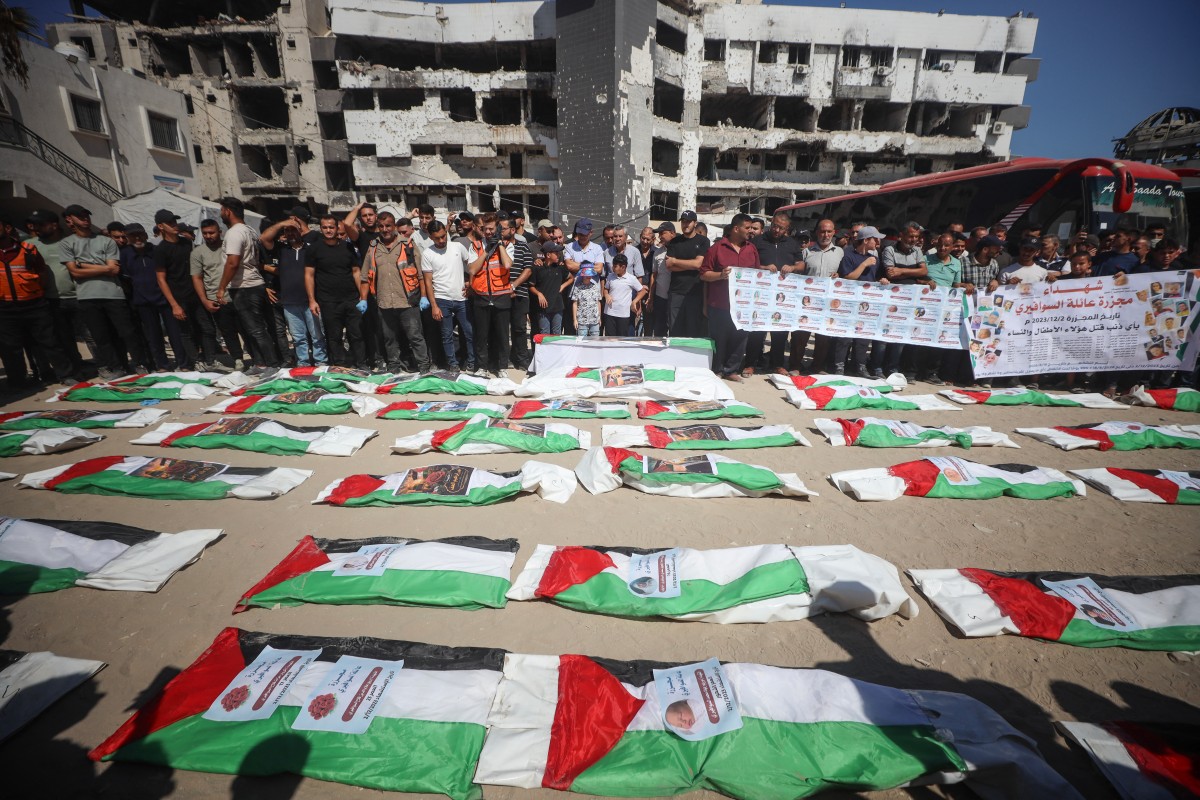
Arab News | 4,000+ Palestinians displaced in West Bank this year by demolitions and settler violence

NEW YORK CITY: About 4,100 Palestinians have been displaced across the West Bank so far this year as a result of demolitions and settler violence, UN deputy spokesperson Farhan Haq said on Thursday.

He warned of a sharp rise in demolitions in the Masafer Yatta area of the southern West Bank in recent days. The Office for the Coordination of Humanitarian Affairs said Israeli authorities demolished 20 homes and other structures, including a water cistern and solar panels, in two Palestinian herding communities there on Tuesday.

This activity, and demolitions in a nearby third community on Wednesday, displaced nearly 60 people, half of them children, and affected a further 30 seasonal residents. Many of the destroyed properties were built with donor support, Haq said.

Masafer Yatta is home to about 1,200 Palestinians in 13 communities, all of whom have been under pressure to leave after Israeli authorities designated the area a “firing zone.”

Haq said humanitarian officials have reported increased violence by Israeli settlers targeting those communities following the establishment in recent years of settlement outposts nearby.

Representatives of the UN and its humanitarian partners visited Masafer Yatta on Tuesday to speak with displaced residents who are receiving emergency shelter, food, hygiene items, baby products and psychosocial support, Haq said.

Across the West Bank, he added, about 1,500 Palestinians have been displaced so far this year as a result of demolitions, and more than 2,600 have been displaced by settler violence and related access restrictions.


Source link

Arab News | Morocco says not involved in Ceuta migrant influx

Rabat: Morocco said on Thursday there were “no facts” establishing its involvement in the massive migrant rush into Spain’s North African exclave of Ceuta in July.

More than 70,000 migrants entered Ceuta from Morocco on July 30 and 31 in an unprecedented, chaotic surge that left scores dead and sparked European Union infighting over the touchy issue of migration.

The Moroccan foreign ministry said there were “no facts or reports proving any involvement by the Moroccan authorities”.

The ministry added that Rabat refused to become the “scapegoat for political score-settling” in Spain.

The statement marked the kingdom’s first official reaction to a Spanish police report accusing Morocco’s security forces of “total permissiveness” when the mass crossing took place.

Spain’s Prime Minister Pedro Sanchez has consistently avoided blaming Morocco, noting that there was no “solid proof” that the North African country orchestrated the migrant rush.

Source link

Arab News | UN sanctions committee paralyzed as nuclear watchdog refers Iran to Security Council for first time in 20 years

NEW YORK CITY: A UN Security Council committee tasked with overseeing sanctions on Iran remained blocked for a fourth consecutive quarter on Thursday.

Council members traded accusations over the panel’s inertia, against a backdrop of intensifying US-Iran hostilities and a landmark decision by the UN’s nuclear watchdog to refer Tehran back to the council for the first time in 20 years.

The 1737 Sanctions Committee has not met in the year since it was reestablished with the backing of most council members, and no report on its activities was presented during Thursday’s session after China and Russia once again blocked it.

The impasse has also stalled the appointment of experts to a panel, the mandate for which is due to expire on Sept. 27, that is intended to support the sanctions-monitoring work of the committee.

The dispute dates back to August 2025 when France, Germany and the UK triggered a so-called “snapback” mechanism under the 2015 Joint Comprehensive Plan of Action, commonly known as the Iran nuclear deal, to reimpose pre-2015 UN sanctions on Tehran.

China and Russia dispute the legality of that move, arguing that all sanctions lapsed on Oct. 19, 2025, with the scheduled expiration of the deal, and so the council’s consideration of the Iranian nuclear file was effectively ended.

Against this backdrop of an unresolved procedural fight, the Security Council session on Thursday was dominated by more recent developments: the International Atomic Energy Agency’s formal referral of Iran to the Security Council and the General Assembly this week; and the continuing military exchanges between Iran and the US.

The agency’s board of governors voted 23-3 on Wednesday to refer Iran over its noncompliance with international nuclear safeguards, the first such referral in two decades. China, Niger and Russia voted no and eight countries abstained.

Ambassador Jennifer Locetta, the US alternate representative for special political affairs, told the council that the IAEA “has not received information from Iran regarding the status of its declared nuclear materials or facilities” and has been denied access to carry out verification procedures.

The agency’s director general, Rafael Mariano Grossi, has again urged Tehran to engage constructively with the process, she added. Locetta dismissed Iranian claims that inspections were being blocked as a result of security concerns, noting that “Ukraine has been a worse and more constant war zone” and yet IAEA inspectors had still been able to work there throughout the conflict.

Washington, she said, would “look to partners in the coming days to weigh options” for strengthening the sanctions regime.

China’s deputy permanent representative, Sun Lei, voted against the meeting’s agenda and placed the blame for the deteriorating situation squarely on Washington. He said the US strikes and campaign of “maximum pressure” on Iran were the “primary causes” of the crisis.

A memorandum of understanding between the US and Iran in June was “undermined shortly after it took effect” by renewed military clashes, he added, and Washington had since “intensified unilateral sanctions” and “launched a new round of military strikes” against Tehran.

Beijing, he said, opposed further use of force and called for a return to efforts to reach a political and diplomatic settlement based on “equality and mutual respect.”

France’s ambassador to the UN, Jerome Bonnafont, said Iran’s stockpile of more than 440 kilograms of uranium enriched to 60 percent had “no credible civilian justification” and was sufficient for about 10 nuclear devices.
He cited the latest report by Grossi as saying the situation “raises an issue of proliferation and should be addressed with the greatest urgency.”

France backed a US-drafted resolution for the renewal of the expert panel’s mandate, Bonnafont added. He called for the full reopening to international shipping of the Strait of Hormuz, and offered a French naval presence there, alongside the UK, to help secure freedom of navigation.

Pakistan’s permanent representative, Asim Iftikhar Ahmad, told the council that the “upsurge of violence in the Middle East in the last few days” was “unsettling for the prospects of peace,” and said Islamabad was engaged in back-channel diplomacy to encourage de-escalation.

He urged “all sides to exercise restraint” and voiced concern over the continuing divisions within the council.

A memorandum of understanding between Washington and Tehran in June, which paused hostilities and set a 60-day window for a final nuclear agreement, expired on Aug. 17 without any deal.

The Strait of Hormuz remains effectively closed to international shipping, attacks on vessels have continued, and the US has revoked sanctions waivers on Iranian oil exports. A Security Council vote on renewal of the Iran sanctions expert panel’s mandate is scheduled for Sept. 17.


Source link

Arab News | Spain approves citizenship for Sahrawis born under Spanish rule

MADRID: Spain’s ‌lower house voted on Thursday to grant citizenship to Sahrawis born when Madrid administered the North African territory of Western Sahara as a colony, a move that could inflame delicate relations with Morocco.

The legislation, which a statement from parliament said was approved with 168 votes in favor, 31 against and 145 abstentions, would also allow descendants of those granted citizenship to acquire it.

Some 70,000 to 110,000 Sahrawis could be eligible for Spanish citizenship, according ‌to local media.

Spain’s ‌ruling Socialist Party and its junior ‌left-wing partner Sumar, which filed the initiative, were among those who supported the bill, while the opposition conservative People’s Party abstained and far-right Vox voted against it.

“With the adoption of this legislation, we are restoring – and I emphasise, restoring – the Spanish national identity card to those Sahrawis who once held it and from whom this state ‌took it away,” said Tesh ‌Sidi of the leftist Sumar coalition, the first woman of Sahrawi ‌origin to serve in parliament.

Tensions with Morocco

Tensions have ‌grown between Spain and Morocco following the mass arrival of at least 70,000 migrants in Spain’s North African enclave of Ceuta in July.

Spain controlled Western Sahara under various administrative arrangements ‌from 1884 until 1976. Morocco claims sovereignty over Western Sahara and began asserting control over the territory after Spanish rule ended.

The Algerian-backed Polisario Front independence movement seeks recognition of an independent state called the Sahrawi Arab Democratic Republic.

Many Sahrawis live in refugee camps in Tindouf, Algeria, or elsewhere abroad, while others remain in Western Sahara. Spain had supported a referendum in the territory — in line with United Nations resolutions — until Sanchez’s government reversed course in 2022 and backed Morocco’s position. Tensions eased somewhat after that shift, with Madrid describing Rabat’s autonomy proposal for Western Sahara as “serious, credible and realistic”.

Source link

Arab News | Leclerc and Hamilton clear the air but no written rules of engagement

MADRID: Charles Leclerc and Ferrari teammate Lewis Hamilton said they had cleared the air face-to-face after a clash at last weekend’s Italian Grand Prix but there were still no written rules of engagement between the pair.

Seven-times Formula One world champion Hamilton had called for written rules after being forced off onto the gravel by Leclerc on the opening lap and dropping from fourth to 10th.

The Briton eventually finished sixth while Leclerc crashed out. Asked at the Spanish Grand Prix on Thursday whether ‌anything had been ‌put in writing, Hamilton replied, “There was not.

“I’m sure ‌at some stage we’ll discuss how we can be better but we’ve not had a lot of time to turn around. You can’t change things in two days.”

Hamilton said there had been no shying away between the two drivers when they came to discuss what had happened.

“We sat face to face, just him and I, and talked about it,” he said. “We were just both open and honest and we squashed it. And ‌we can move on… I think ‌it’s healthy. It’s a relationship we have built over time.”

“Of course there’s going ‌to be frustrations… I’m sure there will be more times (where) we ‌are close (on track) because we are very close on pace. We both want to win just as much as each other and we both want to do well for the team as well.”

Ferrari are second in the championship ‌after 13 rounds, 122 points behind Mercedes. Hamilton is third overall, 76 points behind Mercedes’ leader Kimi Antonelli.

Leclerc told reporters he had reviewed footage after the race and recognised he had gone too far.

“I said it to Lewis and I think it’s very clear what we should do or should avoid going forward but I won’t go into much more details of what we’ve said,” added the Monegasque.

“The only thing I can say is it definitely did not affect the good relationship that we have and it will not affect anything going forward and that is the most important for me really.”

Leclerc said his crash at Monza at the end of the second lap had felt like a big one and he had suffered a tight neck for a couple of days after but was now fine.


Source link

Arab News | Lebanese army reinforces presence in Nabatiyeh amid fears of Israeli incursion

BEIRUT: The Lebanese army and other security agencies reinforced their presence in the southern city of Nabatiyeh Thursday amid continued Israeli military escalation. An official Lebanese source told Arab News that Beirut had received no guarantees that the city would be spared an Israeli incursion following Israel’s takeover of the Ali Al-Taher ridge.

The Lebanese source said the enhanced army deployment was intended to “remove Israeli pretexts” for advancing into and occupying the city. “No foreign party, including the Americans, has provided Lebanon with guarantees that Israel will be restrained from pursuing its ambitions,” the source said.

Concerns are mounting over the city’s fate since Israel announced taking control of Ali Al-Taher, amid silence from Hezbollah, raising fears that Nabatiyeh could become vulnerable militarily. Nabatiyeh is approximately 12-15 km from the Israeli border.

Any slide toward widespread destruction would mark a major escalation in the conflict. Recent Israeli attacks have struck government and public facilities in Nabatiyeh, prompting President Joseph Aoun to condemn the targeting of a Finance Ministry building and the destruction of Ghandour Hospital.

In a statement, Lebanese Army Command stressed that the reinforcements did not constitute a new deployment, as army units were already present in Nabatiyeh and other areas not occupied by Israeli forces. It said the military had instead intensified its duties to reassure residents.

Interior Minister Ahmad Al-Hajjar said reinforcing the military and security presence was “an essential step to reassure residents,” adding that the state would continue strengthening its presence in the south to create conditions for people to return safely.

Prime Minister Nawaf Salam told Nabatiyeh Mayor Abbas Fakhruddin that supporting the resilience of residents was a priority. He said he was following up with security chiefs on increasing the presence of official state agencies alongside the army in Nabatiyeh. Lebanon is seeking to consolidate its authority inside the city and turn it into a broader model of state administration in areas exposed to Israeli military pressure.

The developments at Ali Al-Taher have made those efforts more urgent, with concerns that any area not quickly brought under effective state authority could, under the current balance of power, become the target of further Israeli military pressure.

The push coincided with a statement from the US Embassy on Thursday, as public calls grew in southern Lebanon against Hezbollah’s weapons. Residents of Tyre and Nabatiyeh have urged the Lebanese army to deploy and for weapons to be restricted exclusively to state institutions, while backing the government’s efforts to secure an Israeli withdrawal.

The US Embassy in Lebanon said Thursday that “the Lebanese people are making clearer every day their preference for Lebanese state institutions over Hezbollah’s weapons.” It added that “southern Lebanon does not belong to regional actors or militias.”

The embassy reaffirmed US support for the government’s declared objective of asserting sovereignty, with the Lebanese army responsible for enforcing it and decisions of war and peace remaining exclusively in the hands of the Lebanese state. The Lebanese army, meanwhile, issued a detailed statement outlining its activities since the signing of the US-sponsored framework agreement between Lebanon and Israel.

The statement came in response to what the army described as continued Israeli efforts to undermine existing arrangements, obstruct the army’s field operations and continue attacks on civilians that killed and wounded dozens of people a week ago. Lebanese Army Command said the escalation in Israeli strikes, alongside demolition and explosive operations in the south, “leaves no room for doubt regarding the aggressive intentions of the Israeli occupation.”

It said the Israeli escalation threatened implementation of the framework agreement between Lebanon and Israel, while continued attacks endangered existing understandings and arrangements and obstructed the army’s efforts to establish stability in the south. The army also warned that Israeli attacks and violations demonstrated an effort to undermine its credibility both inside Lebanon and before the international community.

The continuation and escalation of these attacks, alongside brutal demolition and explosive operations in the south, left no doubt about Israel’s aggressive intentions and contradicts international law, the statement added. Lebanese Army Command said specialist units had seized about 1,818 weapons and ammunition items during their operations.

The seized material included 10 rocket-launching platforms, seven rockets, seven drones, 51 projectiles, 10 aerial bombs and 1,560 pieces of light ammunition, in addition to large numbers of mines and explosive devices.

The army said units had also searched some homes in accordance with Lebanese law and with owner consent. It said residents had cooperated with the measures, particularly those related to removing unexploded ordnance and other dangers left behind by the war. Military units also opened roads totaling about 12 km in length as part of efforts to rehabilitate damaged areas, facilitate the movement of residents and troops and consolidate the army’s presence.

The measures included controlling movement in and out of operational areas, giving deployed units greater ability to monitor the area and prevent unauthorized armed activity. Lebanese Army Command said there had been no corresponding Israeli compliance.

According to army monitoring, Israel has committed about 7,700 violations since the framework agreement was signed on June 26. These include multiple attacks, as well as incidents in which Israeli forces opened fire near Lebanese army personnel and patrols.


Source link

Arab News | Countries demanding rights for Afghan women while cutting aid is ‘hypocrisy’: NRC’S head

KABUL: The head of the Norwegian Refugee Council aid group, Jan Egeland, criticised on Thursday what he called the “hypocrisy” of countries demanding rights for Afghan women while cutting humanitarian assistance.

In an interview with AFP in Kabul, Egeland said that “I think it’s right of them to demand, like we do, education for Afghan girls, work rights for Afghan women… but it is hypocrisy when one does that from abroad in a seminar in some capital in Europe and cut aid for food to Afghan girls and even for primary education for Afghan girls.”


Source link

Arab News | Antimigrant protesters bringing militancy to UK’s streets

The number of migrants arriving on British shores in small boats so far this year has fallen by more than 40 percent compared to the same period last year, with the people smugglers being forced into a change of tactics due to the French and British police’s closures of many gaps. However, the last week has seen alarming incidents of “intimidating and thuggish behavior” — as described by a government spokesperson — by far-right activists.

On Sunday, roads in Portsmouth were blocked after a boat carrying 140 migrants was brought ashore there. This came the day after similar scenes of direct action had blocked roads and disrupted travel in and out of the Port of Dover. In both incidents, organized men in black, with some wearing balaclavas, blocked traffic and even smashed the windscreens of police cars.

Though largely peaceful, the protests reflect a change in tactics, raising questions about policing, intelligence gathering and the lack of robust measures taken against them. The threat posed by these groups should not be belittled. There is the potential not just for a climate of fear among immigrants but also a threat to law and order and the standing and reputation of the UK as a tolerant country.

The police, the government and officials from all parties condemned the protests. Many rightly questioned the scale of Kent police’s failure after it emerged a tipoff was received the day before the far-right agitators blocked Dover’s roads. Details were apparently passed to police after residents of a nearby village heard individuals boasting in a pub about going to Dover to “attack Muslims.” That information fell on deaf ears and Kent police even later described the protest as “spontaneous.”

Far-right groups are of the opinion that no action taken or policy adopted by the government is good enough

Mohamed Chebaro

Nick Lowles, the chief executive of Hope Not Hate, an organization that charts far-right activity, told the BBC: “To have 300, 400 people with balaclavas marching down the streets, stopping traffic. You know, it’s not just good enough. We need to call these people out for their politics and for the type of Britain that they want to see.” He added: “We’ve got different ways to register our protest. We do not go on the street. We do not burn people out of their houses. We do not cause trouble and threaten to fight the police.”

We should be careful about the repercussions of these images and videos being widely shared and the normalization of those scenes and the messages they convey. They are not viewed only by people in the UK but are also disseminated around the world.

Hope Not Hate was quicker than the police to inform the public that the Dover disturbances were organized by a far-right group called Patriot Platform. This new network was launched in June, uniting smaller, localized antimigrant groups. It claims to represent a Christian “army of patriots,” rallying around a vision of reclaiming the country’s borders and a message that Britain belongs to the British. It seems its adherents are ready to adopt vigilante methods to combat immigration in an effort to revive the country’s Christian values, as the group claims.

After winning power in July 2024, the Labour governments of first Keir Starmer and now Prime Minister Andy Burnham have fought to curb the arrival of small boats across the Channel, using a variety of laws and tactics to deter people from making the dangerous journey. But the past two years have also shown that far-right groups are of the opinion that no action taken or policy adopted by the government is good enough, as if antimigrant agitation could be a conduit to replacing Labour with Reform UK, the party led by colorful euroskeptic politician Nigel Farage.

Surely those that marched in Dover and Portsmouth are not like the Blackshirts just yet. But the resemblance is there

Mohamed Chebaro

After two nights of vigilante, militant-style action against migrants, people have begun to question whether the UK is witnessing the rise of fascism. What we saw at the weekend was a reminder of Italy’s Blackshirts, the violent private army and paramilitary wing of Benito Mussolini’s National Fascist Party, which was founded in 1919. Not long after them came the Hitler Youth of the 1930s, which transitioned from a fringe, violent paramilitary wing into a powerful, mandatory state apparatus.

Surely those that marched in Dover and Portsmouth are not like the Blackshirts of Oswald Mosley’s British Union of Fascists just yet. But the resemblance is there to be seen. This time, the “enemy” is not the Jews of the 1930s but migrants, who are seemingly considered to all be of the Muslim faith.

How the government can act against this clear and present danger is not obvious, as it could end up with more ugly scenes. Already, citizens have taken it upon themselves to “defend the realm” through encircling hotels and government facilities housing migrants or wearing black uniforms and balaclavas and blocking roads and ports. Surely the obvious thing to ask is who is behind them? Who is financing and organizing these acts, which we are told are only the beginning?

It is going to be very difficult for the British government to undo the damage caused by the men in black at Dover and Portsmouth. Launching an investigation to find any lapses of intelligence or policing should be the first step.

Governments across Europe seem to be increasingly at the mercy of far-right forces that are riding high in a changing world. This emerging threat rests on three aspects: the far-right nativist ideology; a warped digital realm that magnifies and spreads toxic, hate-filled content; and an unexplained financial lifeline.

The task ahead is daunting. The so-called patriotic drive of the far right is not aimed at migrants alone — its real enemies are democracy, liberties and the rule of law. Its methods are not peaceful protests but organized activism bordering on vigilantism and militancy.

  • Mohamed Chebaro is a British-Lebanese journalist with more than 25 years of experience covering war, terrorism, defense, current affairs, and diplomacy.

Mohamed Chebaro is a British-Lebanese journalist with more than 25 years’ experience covering war, terrorism, defense, current affairs and diplomacy. He is also a media consultant and trainer.

Source link

Arab News | Kingdom’s modernization is not Westernization, says executive coach

RIYADH: After more than 20 years in the legal and investment sectors, Khadija Grabinski transitioned into executive coaching, where she helps leaders navigate change through meaningful conversations.

Having lived in Saudi Arabia for the past year, she also shares her experience of the Kingdom on social media, offering an authentic perspective on its culture, people, and transformation.

Grabinski and her husband moved to the Kingdom from the US and she felt this new period of her life was an opportunity to make some changes.

 The daily routine she and her husband experienced during their time in the US during the COVID-19 pandemic inspired them to explore opportunities and make changes.

 “I spent 20 years in my field (as a litigator), so I guess it was enough … it was the right moment for me to change and to be more connected to people. This is why I chose to transition,” she said.

 Grabinski added that her new work life allows her to have meaningful conversations with people, providing them the space to talk about how they want to grow in professionally.


“I mean, for me, meaningful conversation gives more clarity. You think better. I mean, when you talk to people, even friends, and when you are in the deep conversation, it becomes like something more clear. You know where you are going. So this is why.”

 When Saudi Arabia launched Vision 2030 in 2016, much of the world’s attention focused on its bold plans for economic diversification and landmark development projects.

 Yet, nearly a decade later, the social transformation unfolding across Saudi Arabia has proven every bit as significant. Anchored in Vision 2030’s vibrant society pillar, this transformation is reshaping daily life in the Kingdom.


“As a coach, what I see is the other side of the transformation. It’s like people are excited for the future, but at the same time, they feel the pressure. So, they are wondering if their job will be the same in five or 10 years.”

 Grabinski added that leaders in today’s environment leaders have to acquire more skills, reinvent themselves, or simply adapt because there is both excitement and uncertainty.

 “For a country that grew that fast, which is totally normal to be honest, there is what I call growing pains. You know, like (when a) teenager (grows) too fast, it’s the same for a company. For people and for countries. So, there were some growing pains,” she said.


She added that today’s successful leaders need to possess interpersonal communication skills, which machines and artificial intelligence cannot easily replicate.

 “Leaders will need to communicate better. Listen more. And help their teams to navigate uncertainty and lead by example. Always and where do you see emotional intelligence being basically a huge factor of that, like, how is that going to turn into a valuable skill set for a leader?

 “I mean, by learning, the need to learn, it’s like a muscle, leadership,” she said.

 Grabinski shares her experiences and opinions about living in Saudi Arabia through her accounts titled Simone Executive Coach|Common Ground on TikTok and Instagram.


Source link

Arab News | Morocco and Spain joust over which will host 2030 World Cup final amid border crisis

CASABLANCA, Morocco: Morocco and Spain are arguing over the right to host the 2030 World Cup final — with besieged FIFA boss Gianni Infantino hovering backstage.

FIFA has yet to officially announce which country will host the biggest match of the biggest event in soccer. And even though the 2026 edition just finished with Spain winning the title this summer, Moroccan and Spanish officials are staking their claim on the next final.

The tussle over the soccer match also comes with Spain still reeling from a massive border crossing by tens of thousands of migrants who pushed through the frontier from Morocco into the north African Spanish enclave in late July.

One big game for two proud countries

The head of Moroccan soccer boasted that his country had it locked up on Thursday.

“The city of Benslimane will host the World Cup final. Hate it or love it, and if anyone wants to talk on top of that, let them talk,” Moroccan federation president Fouzi Lakjaa told a political rally.

“The city is Benslimane, the Hassan II stadium is the stadium, and I hope that Morocco will be playing it,” he added.

This week, the head of the Spanish soccer federation, Rafael Louzán, insisted it was Spain that deserved the game, while acknowledging that it has not been guaranteed that honor.

“We all signed to accept the candidacy … it’s too bad that, regarding the final, it wasn’t made clear, totally clear, where it is to be played,” Louzán said. “Spain, as world champion both in men’s and women’s soccer, must host the final.”

European soccer officials believe that the sprawling, multi-nation 2030 event, which includes Portugal and even a handful of games in South America, should be considered a European event with the final on the continent.

In a request for comment by the Associated Press on Thursday, FIFA said its decision will be made “in due course.”

Infantino has found support in Morocco

The dispute over the final comes with Infantino under intense pressure after UEFA, the umbrella organization of European soccer federations, led a successful revolt to scuttle his plan to sell stakes in the World Cup.

By contrast, six Arab nation federations, including Morocco’s, have backed him since that fiasco.

The King Hassan II Stadium near Casablanca is being built in Benslimane, on the outskirts of Casablanca. It is planned to seat 115,000 spectators. Spain can offer the home stadiums of Real Madrid or Barcelona as potential sites for the final.

Infantino has recently made two trips to Morocco, meeting with King Mohammed VI during annual celebrations of his ascent to the throne in July and then holding a FIFA crisis meeting there in August.

World Cup final spat among other tensions

When confirmed three years ago, the joint candidacy between Spain, Portugal and Morocco looked like a perfect event to bridge Europe and Africa and strengthen bonds between the western Mediterranean neighbors.

But the dispute over the final comes with diplomatic tensions between Madrid and Rabat already frayed over who was responsible when tens of thousands of mostly Moroccans driven by posts on social media pushed into the small Spanish enclave of Ceuta that borders Morocco. Spain’s prime minister said 140 people died in the crossing.

Spain’s government has been under political pressure at home to get tough on Morocco, which it has said acted in good faith in the border crisis. Spanish police assessments couldn’t rule out complicity by Moroccan security forces but said that it was unlikely the Moroccan government had intentionally orchestrated it.


Source link

Arab News | Why Bab Al-Mandab matters as Yemen fighting intensifies

DUBAI: Renewed fighting along Yemen’s Red Sea coast has put the strategic Bab Al-Mandab Strait back in focus, raising concerns over a key maritime route linking Europe and Asia.

The strait is a narrow passage between Yemen and the Horn of Africa that connects the Red Sea with the Gulf of Aden and the wider Indian Ocean.

For ships travelling between Asia and Europe, it forms part of the route linking the Indian Ocean to the Red Sea and the Suez Canal, making it one of the world’s most important maritime chokepoints.

Why is it so important?

Bab Al-Mandab is the southern gateway to the Red Sea. Ships travelling through the Suez Canal between Europe and Asia generally pass through the Red Sea and then Bab Al-Mandab before entering the Gulf of Aden.

The route has ships carrying oil, fuel and other commercial goods.

Oil flows through the strait fell sharply after Houthi attacks on shipping began disrupting Red Sea traffic.

The US Energy Information Administration said oil trade through Bab Al-Mandab averaged about 4 million barrels per day in the first eight months of 2024, compared with 8.7 million barrels per day in 2023.

Why does the latest fighting matter?

Yemen’s western coastline runs alongside the strait, making control of nearby territory strategically important.

The port city of Mokha lies north of Bab Al-Mandab, while Dhubab is close to its entrance. Any expansion of Houthi control along this stretch of coast could increase the group’s ability to threaten or monitor shipping through the waterway.

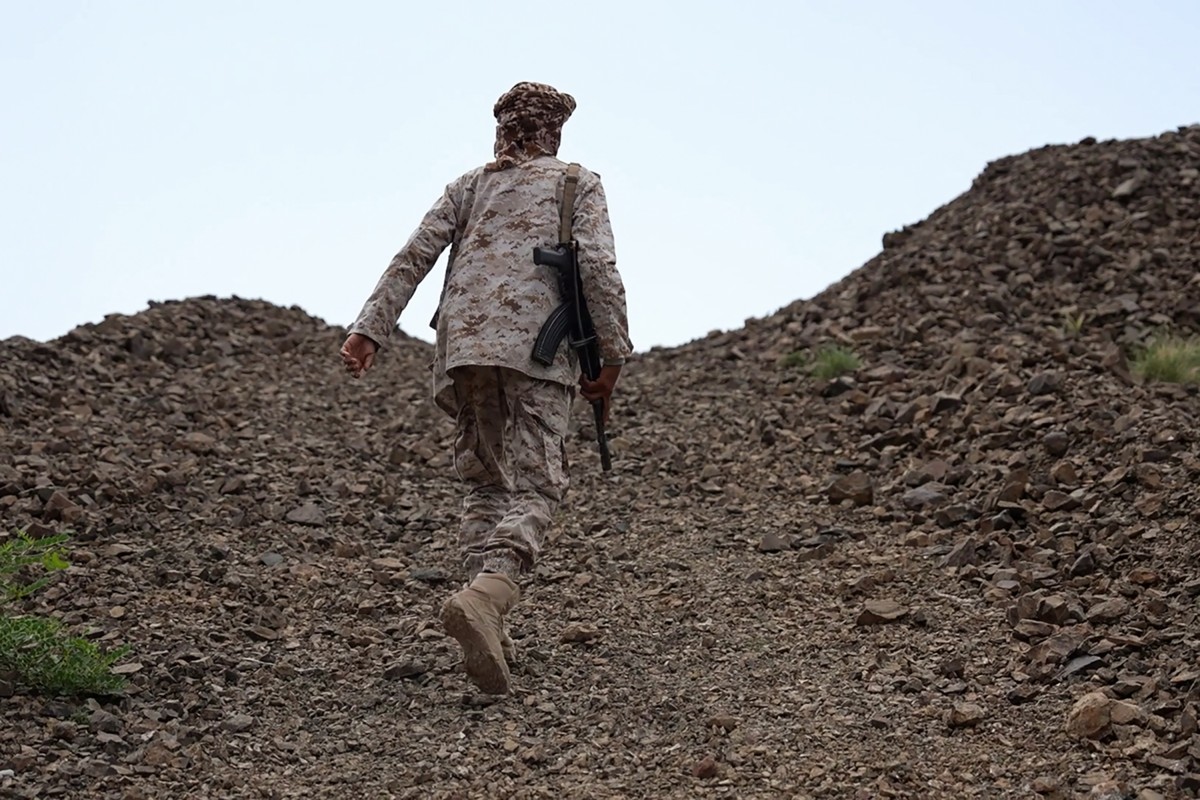
Reuters reported on Thursday that Houthi forces were moving toward Mokha and Dhubab as they sought greater control of Yemen’s Red Sea coast. Yemeni government military sources said this could give the Houthis significant leverage over Bab Al-Mandab.

The reports have not been independently verified, and they do not mean the Houthis control the strait. But any further Houthi advance toward the coast could increase the risk to commercial shipping.

The Houthis have previously targeted commercial vessels in and around the Red Sea, forcing many ships to avoid the route.

What happens if shipping is disrupted?

Ships can avoid Bab Al-Mandab and the Red Sea by sailing around the Cape of Good Hope in South Africa.

But that can add thousands of kilometers to some journeys, increasing sailing times, fuel consumption, insurance costs and freight rates.

The consequences can therefore extend well beyond Yemen, affecting the movement and cost of energy, manufactured goods and other products travelling between Asia, the Middle East and Europe.


Source link