DUBAI: Film AlUla has signed a memorandum of understanding with international film financier Sherborne Media at the 2026 Toronto International Film Festival, establishing a financial framework designed to expand production support for Saudi, regional, and international filmmakers shooting in AlUla in the northwest of Saudi Arabia.
Qualifying productions filming in AlUla will be able to access debt financing solutions secured against available production rebates, grants, incentives, and soft money. The combined support packages will cover up to 50 percent of eligible production expenditure incurred in AlUla.
The partnership aims to address one of the filmmaking industry’s key barriers: upfront liquidity for producers against their contracted rebate and incentives receivables, ensuring sufficient cash flow to facilitate production.
By providing a standardized, transparent process for financial due diligence, the initiative supports established Saudi, MENA (Middle East and North Africa), and international storytellers in bringing their projects to life using AlUla’s production facilities, purpose-built soundstages, and historic landscapes.
The partnership will also integrate workforce development opportunities to support the sustainable growth of Saudi Arabia’s film industry. Film AlUla and Sherborne will collaborate on structured training programmes, crew upskilling, and local hiring initiatives to build long-term regional production capacity.
Zaid Shaker, acting executive director of Film AlUla, said: “Financing remains one of the most critical challenges facing creators today — particularly for emerging creators in Saudi Arabia and the region. Our partnership with Sherborne Media allows us to establish an efficient, transparent mechanism that bridges the gap between creative vision and financial execution. By pairing our state-of-the-art facilities and rebate structures with institutional debt solutions, we are providing a reliable platform for local and international artists to tell authentic, compelling stories – right here in AlUla.”
Alastair Burlingham, CO-CEO of Sherborne Media, said: “Saudi Arabia’s screen sector is expanding rapidly, supported by strategic leadership and infrastructure investment. After the successful financing and production of ‘Chasing Red’ earlier in 2026, and leveraging the services offered by Caravan — our Saudi joint venture company with Stampede — we are delighted to join forces with Film AlUla during TIFF 2026 to help facilitate its growth by introducing a structured financing model.
“Curated credit facilities against soft money and incentives receivables give producers the financial certainty required to execute high-quality feature and television projects efficiently in AlUla.”
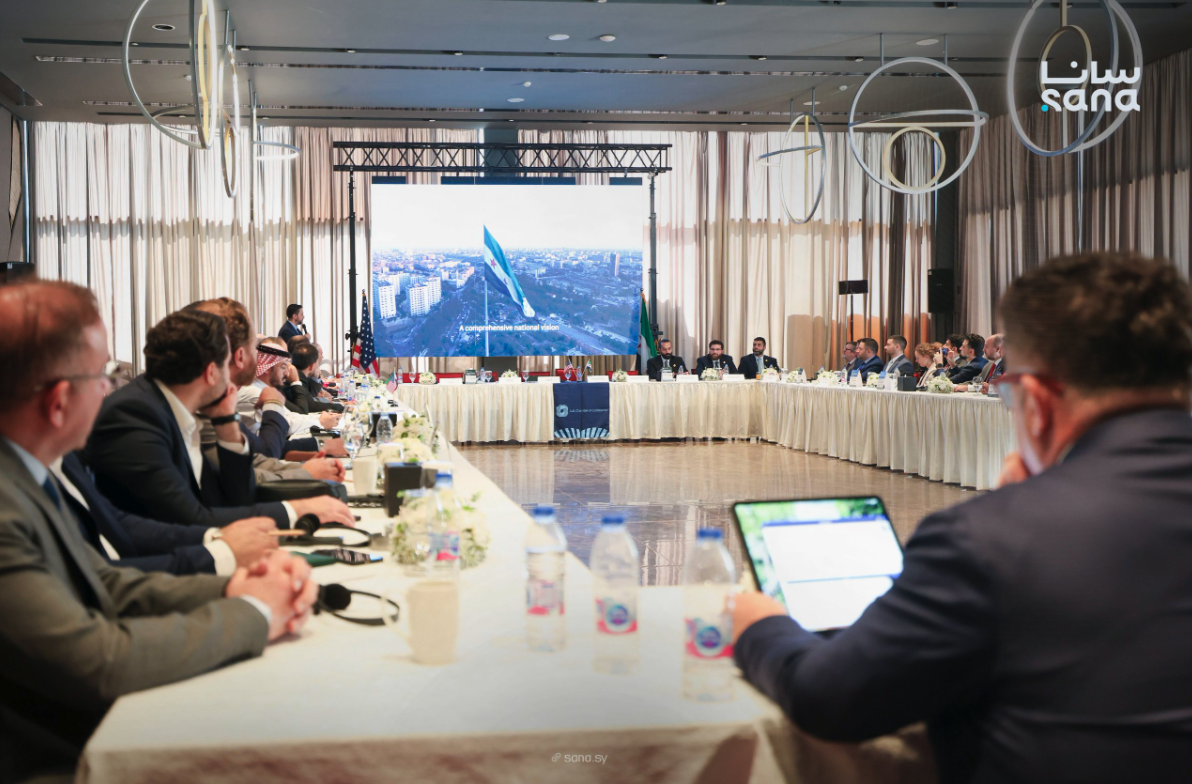
RIYADH: A US economic delegation has held meetings with Syria’s sovereign fund to explore investment opportunities, as Damascus seeks to deepen ties with the world’s largest economy and attract international capital.
The meetings, which included representatives from government bodies and private companies, were focused on assessing the Syrian market and available investment opportunities amid the country’s economic opening and the lifting of sanctions, the Syrian Arab News Agency reported.
The discussions come as the Middle Eastern nation’s seeks to capitalize on the momentum generated following Washington’s termination of sanctions against Syria in July 2025.
“In his remarks during the meeting, Yasir Kahf, Director of Development and Planning at the Syrian Sovereign Fund, explained that the fund’s investment portfolio encompasses a diverse range of sectors and companies. He emphasized the Fund’s openness to establishing various forms of partnerships with US and international companies — including joint ventures — tailored to the specific nature of each sector,” the newly released SANA statement said.
Kahf also said the US Chamber of Commerce delegation’s inaugural visit to Syria represents a significant step toward enhancing economic cooperation.
Mohammad Mastat, director of public relations at the Syrian Sovereign Fund, said US companies had shown interest in entering the Syrian investment market, adding that several agreements and projects were currently under negotiation and would be announced in due course.
The easing of US sanctions has also created greater scope for investment and private-sector activity.
In May 2025, the US Treasury said sanctions relief would enable new investment in Syria and facilitate activity across all sectors of the Syrian economy as part of efforts to support its economic recovery.
It said the recovery is being supported by improving agriculture, hydrocarbon production, electricity provision, trade and services, alongside policies aimed at restoring macroeconomic stability and achieving a strong, private-sector-led recovery.
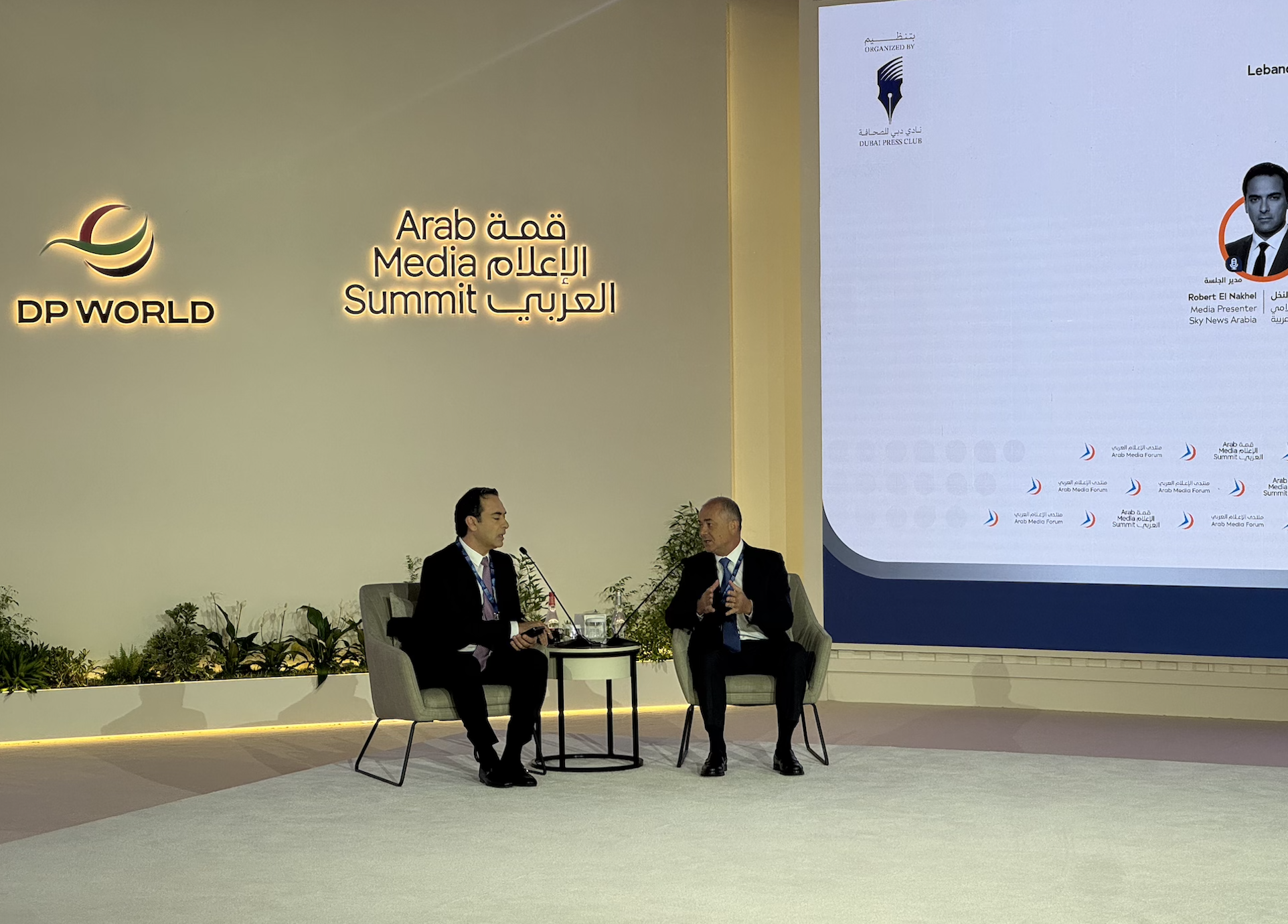
DUBAI: Hezbollah must prioritize Lebanon’s interests over those of Iran for progress to be made on disarming the group and advancing negotiations with Israel, deputy speaker in the Lebanese Parliament, Elias Bou Saab, said on Wednesday, as negotiations remain frozen amid the wider US war on Iran.
Lebanon’s government cannot secure a lasting agreement with Israel without Hezbollah’s backing for the transfer of weapons to state control Bou Saab said at the Arab Media Summit in Dubai, in a session titled “Lebanon at a Crossroads.”
But a key aspect of moving negotiations further is getting on the same page with Hezbollah, said Bou Saab.
“If the Lebanese state does not have Hezbollah’s approval, it is negotiating over something that it cannot deliver.
“That’s why Hezbollah needs to be convinced that we need to reach a solution to the issue of handing over weapons and ensuring that weapons are exclusively in the hands of the Lebanese state,” he said.
Bou Saab emphasized the need to disarm Hezbollah and ensure that the Lebanese army is the only armed force in Lebanon.
But he said that disarmament was not enough.
“The issue is not simply about handing over weapons. There need to be guarantees, including the liberation of Lebanese territory and prisoners, and guarantees that Israel will not attack Lebanon,” he said.
“The negotiations are directly linked to what is happening between the US and Iran. We have to wait and see what happens between the US and Iran to know what will happen in Lebanon and when the war in Lebanon will end,” said Bou Saab.
The MP said Lebanon was, at this stage, trying to prevent trying a further escalation and expansion of the war.
The US has been sponsoring talks between Israel and Lebanon aimed at putting an end to hostilities, with Beirut seeking Israel’s phased withdrawal from the south.
In June, Israel and Lebanon agreed to a framework deal that involves the disarmament of Hezbollah, a gradual withdrawal of Israeli forces from Lebanon’s south and the deployment of the Lebanese army to the region, starting in test areas known as “pilot zones.”
But elections in Israel and the US are putting the negotiations on hold, explained Bou Saab.
“Perhaps after the Israeli and American elections, we will enter a new phase, and that is when the serious discussions about Lebanon’s future will begin.”
He added: “I expect that after the elections perhaps during the period before Christmas, or extending into the period after Christmas will be the most serious period for discussions about Lebanon’s future and where we are heading.”
On Sept. 26, 1983 the Soviet Union’s Oko early warning system reported that the US had launched five intercontinental ballistic missiles.
Lt. Col. Stanislav Petrov, the duty officer at the Serpukhov-15 bunker, broke protocol and refused to report the alert as a confirmed strike. He reasoned that a real US first strike would involve hundreds or thousands of missiles, not five. The system, it turned out, had mistaken sunlight reflecting off clouds for missile launches.
Petrov’s decision to defy protocol prevented an erroneous retaliatory nuclear strike and its incalculable consequences.
“I had all the data (to suggest there was an ongoing missile attack),” he told the BBC’s Russian Service 30 years later.
“If I had sent my report up the chain of command, nobody would have said a word against it. They were lucky it was me on shift that night.”
That Cold War lesson resonates loudly amid growing fear over how AI is being deployed in warfare. A recent appeal has put automation in war back in the spotlight, raising a question that leaves many uneasy: What would happen if a computer — an AI system — were the one calling the shots and it got the response to an attack wrong?
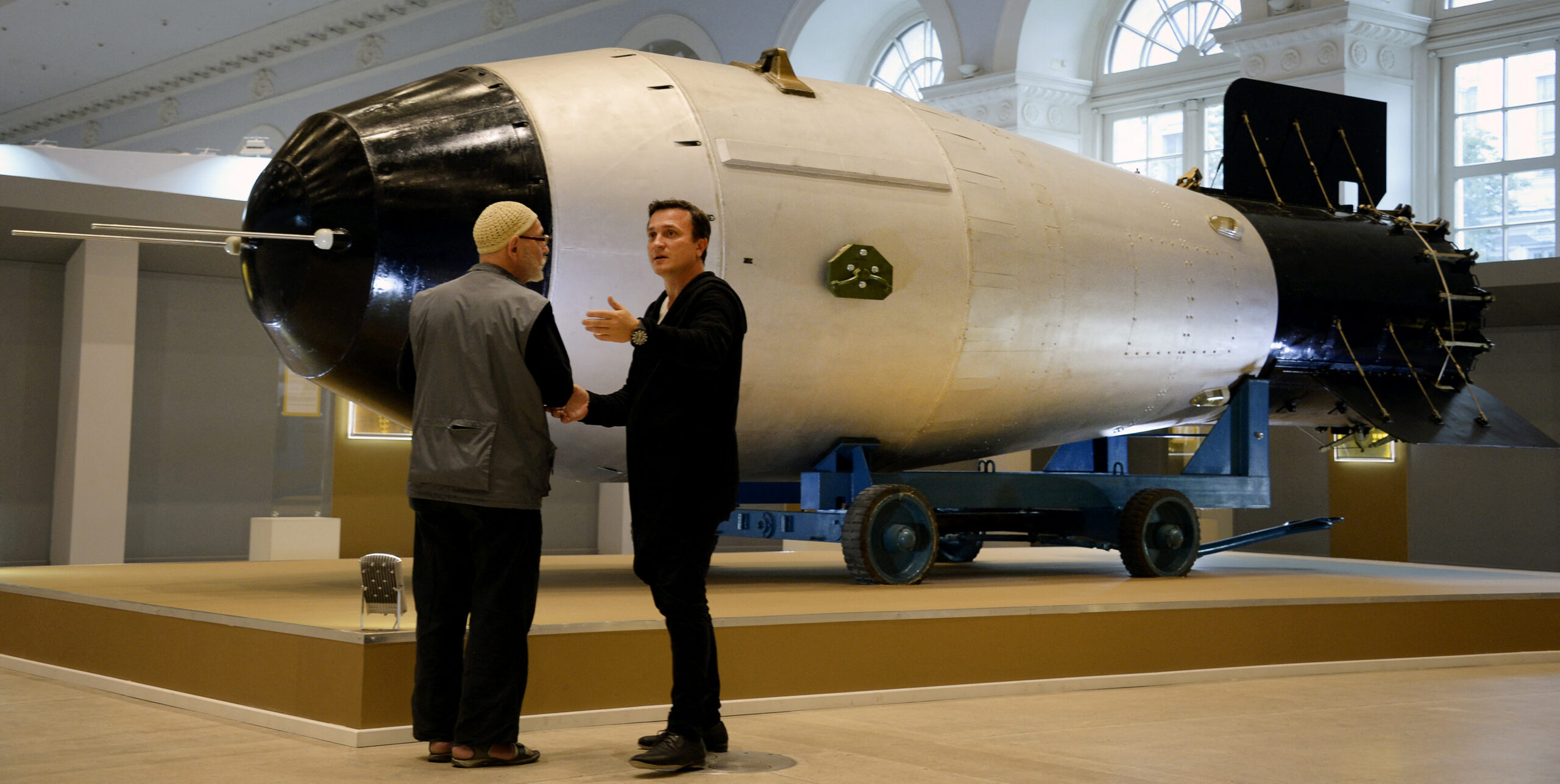
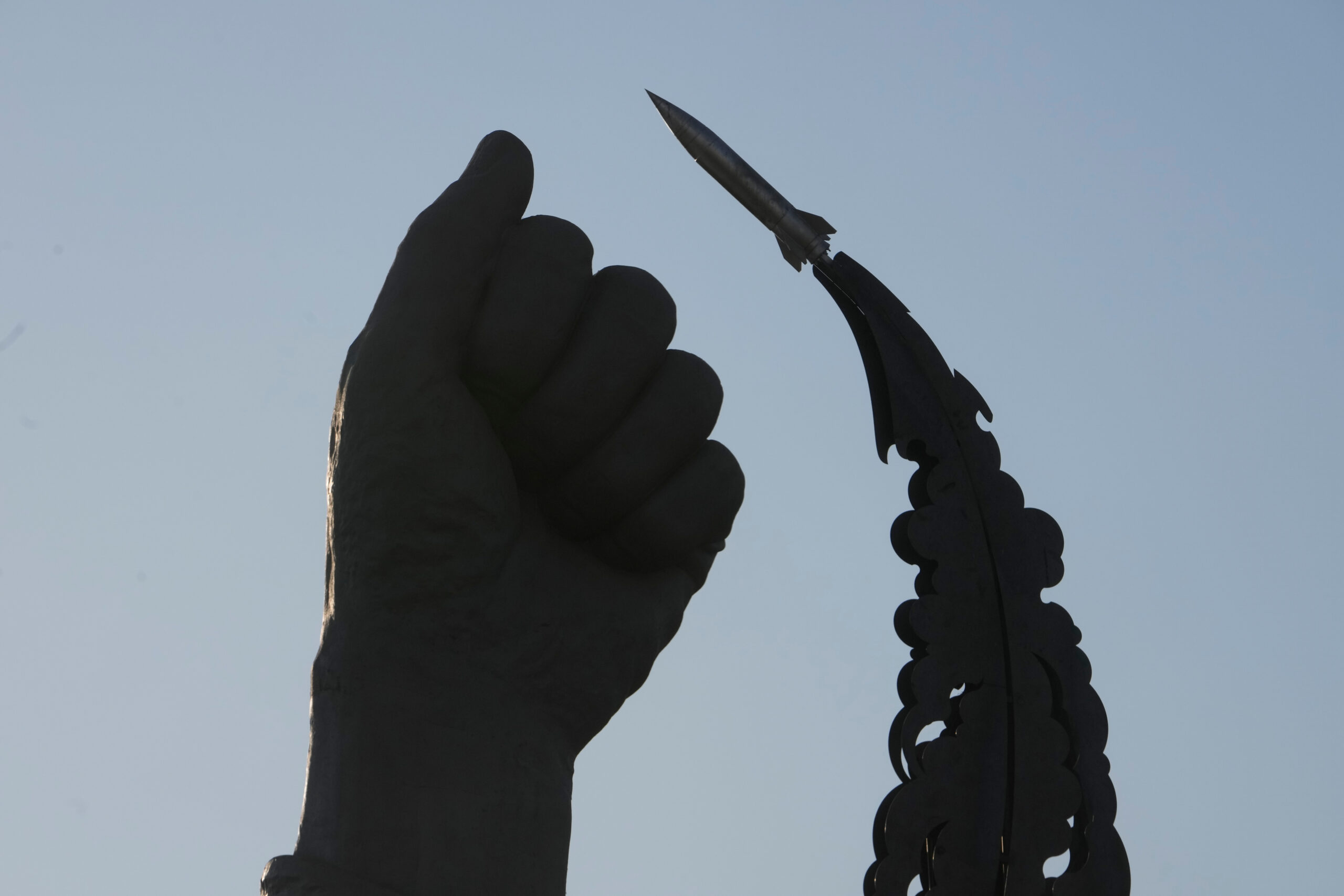
A mockup of a Soviet AN-602 hydrogen bomb (Tsar Bomb) is displayed at the exhibition devoted to the 70th anniversary of Russia’s nuclear industry in Moscow. AFP/File
In an essay published over the weekend, Anthropic CEO Dario Amodei called for AI model development to slow down and face closer scrutiny. The appeal was not unprecedented but this time it drew rare public agreement from two rivals: Sam Altman of OpenAI and Elon Musk of xAI.
“Over the last few months I have become convinced that fully addressing the risks requires even more prudence — not just investing in risk prevention but pacing the rate of capabilities advancement so that risk prevention has time to keep up,” Amodei said.
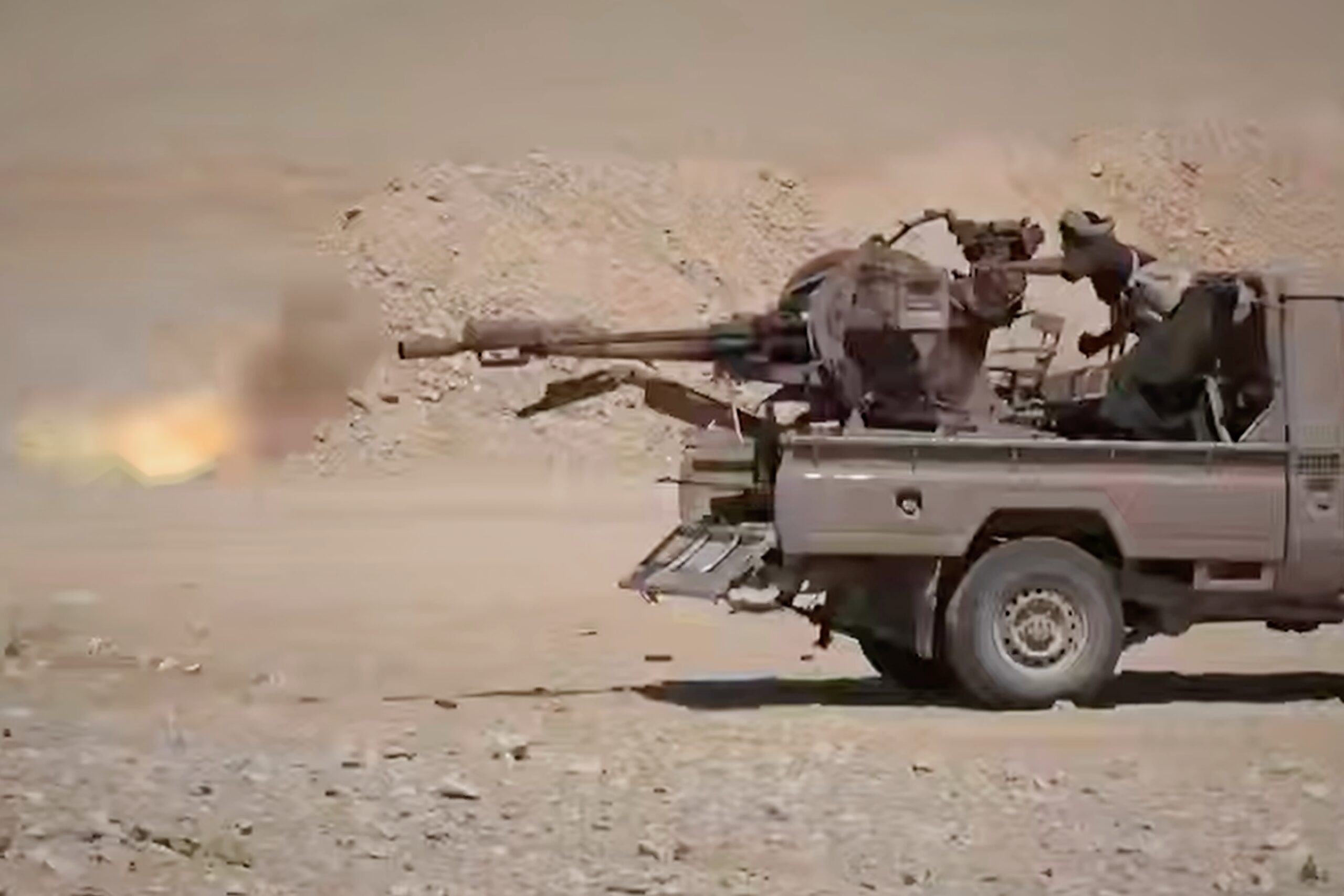
A threat-intelligence report published by Anthropic found that a cell based in northern Yemen tried to use Claude (its AI tool) to build guided rockets and missiles, including a ballistic missile with a claimed 2,000 km range and a separate program incorporating a hypersonic glide vehicle.
Anthropic said that it banned the accounts after detecting the activity, although there was no evidence that the group successfully fielded an operational weapon.
War offers no shortage of similar examples, where AI streamlines battlefield decisions or powers surveillance. The Middle East, given its strategic weight and the range of actors involved, has become a testing ground for the technology.
Dario Amodei, CEO and Co-Founder of Anthropic attends the 55th annual World Economic Forum meeting in Davos, Switzerland. REUTERS/File
Israel has long used AI in its military. Over three years of war in Gaza its forces have reportedly deployed several machine-learning systems — Habsora (“Gospel”), Lavender, Fire Factory and Where’s Daddy — to automate large parts of target generation and strike planning.
The systems mine surveillance feeds, communications data and existing databases to propose targets and recommend munitions and strike schedules. Analysts reportedly went from producing about 50 targets a year to as many as 100 a day.
Concerns over AI-supported targeting resurfaced during the Iran war, after a US strike hit the Shajareh Tayyebeh girls’ school in Minab, southern Iran, killing at least 168 people, most of them children.
The US has not disclosed whether AI was used in that strike but Adm. Brad Cooper, the US commander leading the campaign, has confirmed the use of “a variety of advanced AI tools” to process large volumes of data, without naming specific systems. He said that the tools let commanders make “smarter decisions faster than the enemy can react,” cutting processes that once took hours or days down to seconds.
“Humans will always make final decisions on what to shoot and what not to shoot, and when to shoot,” he said.
Admiral Brad Cooper, commander of the US Central Command (CENTCOM), salutes during the funeral of American-Israeli hostage Captain Omer Neutra. REUTERS/File
The US military has run AI-enabled war programs since at least 2017. Its Maven Smart System, built by Palantir, helps fuse battlefield data, identify targets and accelerate decisions. NATO acquired its own version in 2025. OpenAI and Anthropic are also competing for military contracts, reflecting the growing reliance of defense operations on commercial AI and the increasingly close ties between the two sectors.
In Ukraine, both sides use AI for data processing and target selection. Ukraine’s former Deputy Defense Minister Yuriy Myronenko told the BBC that AI analyzed more than 50,000 front-line video streams each month, helping “quickly process this massive data, identify targets and put them on a map.”
But as war spills beyond the traditional battlefield into a hybrid, multi-faceted front, AI adoption follows.
In April YouTube banned Explosive Media, a Gen Z Iranian channel that used AI-generated Lego-style animations mocking Western figures — including Donald Trump and Benjamin Netanyahu — while pushing pro-Iranian, anti-US and anti-Israel narratives.
More recently separate media investigations found that Israel had funded multimillion-dollar PR campaigns to shape how AI chatbots, including ChatGPT, answer questions about Gaza and the Israeli military. By setting up fake think tanks and publishing AI-generated papers with no real authors, the investigators said, Israel built a sophisticated operation to manipulate search results and shape public understanding — a shift in propaganda tactics that is harder to detect because it disguises advocacy as neutral expertise.
Throughout history militaries have sought tools that offer an edge over adversaries. But deploying AI in high-stakes environments like armed conflict carries risks distinct from any previous technology.
Part of the concern lies in the technology itself. An AI model trained on faulty or unrepresentative data can generate inaccurate results or malfunction once deployed in conditions that differ from its training environment.
Iran’s Explosive Media propaganda lego videos. Explosive Media/File
AI-supported targeting is a case in point. Where such tools generate targets at scale with minimal human oversight, errors are not difficult to imagine.
That risk grows more acute as AI development moves from decision support to agents that can pursue complex goals with little human supervision. The next step, recursive self-improvement, would involve systems upgrading themselves with decreasing human input in a potentially open-ended loop.
As Jean-Marc Rickli and Tobias Knappe of the Geneva Centre for Security Policy note in a recent paper, agentic AI “is shifting the AI landscape from being a passive, supportive tool towards an active executor that can increasingly define and take courses of action on behalf of a human user” — a shift that, they added, “also raises significant societal, security, legal and ethical risks.”
In this sense, the proliferation of AI, on and off the battlefield, has introduced unprecedented challenges, prompting scrutiny of its impact on moral agency and accountability.
In June the UN held its first Informal Exchange on Artificial Intelligence in the Military Domain. Discussions centered on human rights and international humanitarian law, with nongovernmental organizations pushing for a moratorium on AI systems used in lethal decision-making — such as automated targeting — until robust global safeguards are in place.
The meeting followed a December 2025 UN General Assembly resolution on “Artificial intelligence in the military domain and its implications for international peace and security.” Experts welcomed it as a step forward, despite notable absences — including the US, which voted against the resolution.
Momentum is now shifting to New York, where a factual summary of the Geneva talks is due to reach the UN First Committee during its October session.
The UN General Assembly established the Independent International Scientific Panel on Artificial Intelligence and the Global Dialogue on Artificial Intelligence Governance in Resolution A/RES/79/325, following intergovernmental negotiations and broad consultations with diverse stakeholders. AFP/File
Despite these efforts, battlefield AI remains governed largely by existing legal frameworks.
Existing international humanitarian law applies to AI-enabled weapons through the principles of distinction, proportionality, military necessity and precaution. Responsibility remains with states and human actors, while Article 36 of Additional Protocol I to the 1949 Geneva Conventions also requires states party to the protocol to review new weapons, means and methods of warfare for legal compliance. US Directive 3000.09 similarly requires “appropriate levels of human judgment” but stops short of mandating real-time human control or creating binding international accountability.
In early September a UN disarmament forum in Geneva concluded three years of work on autonomous weapons, colloquially known as “killer robots.” A total of 128 states reached a non-binding consensus text after last-minute objections from the US and Russia, backing a proposed two-tier framework: prohibiting autonomous weapons whose effects are unpredictable or designed to target humans directly and restricting all others through mandatory human supervision rules.
An ELTA’s BlueWhale autonomous submarine is presented to the media at the IAI’ ELTA Division in Ashdod, Israel. REUTERS/File
Human Rights Watch said that the final text was considerably watered down and the US and Russia remain opposed to binding negotiations. But with 76 states now backing a legally binding instrument, the Convention on Certain Conventional Weapons’ November Review Conference looms as the decisive test of whether formal talks begin.
“AI systems will not change that the human is responsible for mistakes but it will obscure that humans feel responsible for mistakes and that can lead to a greater willingness to use force,” Elke Schwarz, professor of political theory at London’s Queen Mary University and author of “Death Machines: The Ethics of Violent Technologies,” told Arab News.
“There is a plausible deniability implicit in the use of AI enabled systems because they are essentially operating in a zone of invisibility.”
Israel offers the clearest example to date. When Israeli outlet +972 reported on the Lavender system it caused uproar by showing AI used not merely to assist analysts but to generate vast target lists — reportedly with only cursory human checks. The system’s scale, its claimed 90 percent accuracy and its use against people in their homes raised fears that human control was slipping and that AI could make large-scale violence faster, more impersonal and harder to attribute.
This handout satellite image by Planet Labs PBC shows the Shajareh Tayyebeh primary school in Minab in Iran’s Hormozgan province on March 4, 2026 after it was hit in the US-Israeli strikes. AFP/File
This marks a paradigm shift unseen in the history of conflict, which, as Schwarz argued, reshapes humanity’s relationship with violence and challenges conventional notions of ethical conduct in war.
She maintains that AI-enabled weapons systems facilitate the objectification of human targets, raising tolerance for collateral damage, while automation bias and technological mediation weaken operators’ moral agency and diminish their capacity for ethical judgment.
“Machines cannot be better at war than humans because machines don’t understand what war is, what it entails and what suffering it produces,” she said.
“They can only contribute to the actions humans decide on in better or worse ways. In my view AI-enabled systems make humans less restraint in using force, not more.
“Humans decide on the parameters. If they want to design a system that is less restraint, they will, if it is perceived to be more effective. A system cannot be a ‘better’ moral actor than the human because it has no concept of meaning for moral decisions. So, humans will not disappear from war with AI systems, but AI systems will change the relationship we humans have to violence. And that will make war worse.”
As a growing number of whistleblowers and experts warn, the risk is that an unchecked race toward superintelligent AI carries real risks to the very humans who built it.
An Iranian drone is displayed at the IRGC Aerospace Force Museum in Tehran, Iran. REUTERS/File
For Schwarz, an AI “doomsday” is no longer far-fetched science fiction.
“I think we have already witnessed a horrendous human cost on account of AI enabled weapon systems,” she said.
“The introduction of AI systems into war has, at the very least, not lead to more restraint, more global stability, less conflict, fewer civilians killed or harmed. Quite the contrary. Children are dying due to war at a staggering rate. This is quite doomsday-ish in my books.”
As comparisons between the AI and nuclear arms races grow sharper by the day, the argument circles back to Petrov and to an ominous question: Would an algorithm have shown the same restraint?
“We can of course conjure up all kinds of awful scenarios, for example if someone decides to put an AI agent in charge of nuclear decision making (which would be ludicrous but you never know) and a data glitch leads to a nuclear threat spiral. But I think things are already quite awful because the technology and dehumanization seem to go hand in hand.”
Anthropic’s Claude offers a similar note of caution.
“What’s not really disputed is that today’s actual military AI risks are the boring-sounding ones: bad targeting data, automation bias, escalation happening faster than diplomacy can respond, systems proliferating to actors with no safety culture at all. The ‘robots decide to turn on us’ framing, if anything, can be a distraction from those.”
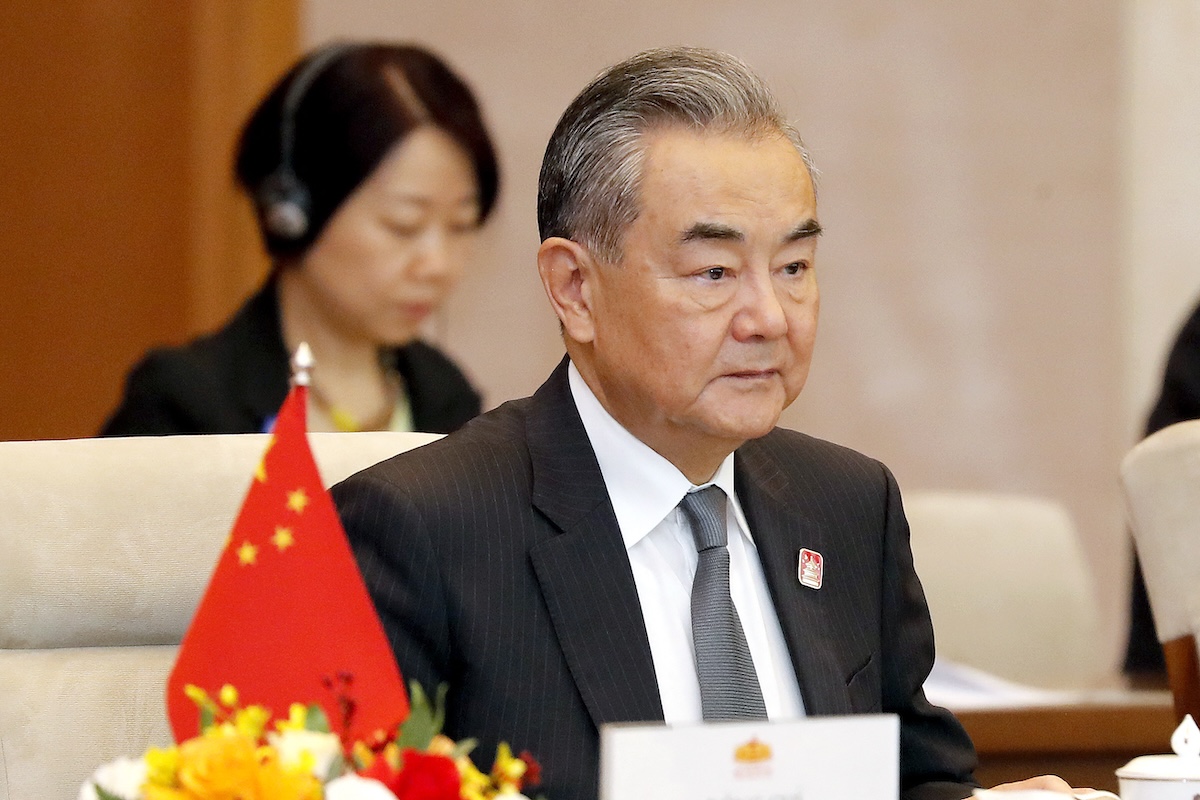
Beijing: China’s Foreign Minister Wang Yi said Beijing was willing to “safeguard” Iran’s rights during talks with his counterpart Abbas Araghchi on Wednesday, as Beijing seeks to mediate in Tehran’s war with the United States.
China is “willing to strengthen dialogue and cooperation with Iran, and safeguard Iran’s legitimate rights and interests”, Wang told Araghchi as they met in the Chinese capital.
“We encourage Iran and the US to stay rational and restrained,” he added.
The talks come one week before an expected trip by Chinese President Xi Jinping to Washington, where he will meet US President Donald Trump.
China, a top economic partner of Iran, has long sought a detente in the months-long conflict in the Middle East, which has at times spilled over into neighbouring countries.
“We do not wish to see regional tensions spilling over into Yemen and the Red Sea,” Wang said.
Recent fighting that flared up in Yemen between government forces and the Iran-backed Houthis has displaced more than 100,000 people inside the country while thousands have fled abroad, according to the United Nations.
The war in Iran will be a closely watched topic at Xi’s meeting with Trump, among other thorny issues ranging from trade to competition over artificial intelligence.
Beijing refuted this week US media reports that Chinese entities supplied Tehran with satellite images of a military base housing US troops in Jordan, before and after an Iranian strike killed three American soldiers.
Trump has warned Beijing not to sell weapons to Iran, and Washington sanctioned three China-based satellite companies in May for enabling Iran’s military operations.
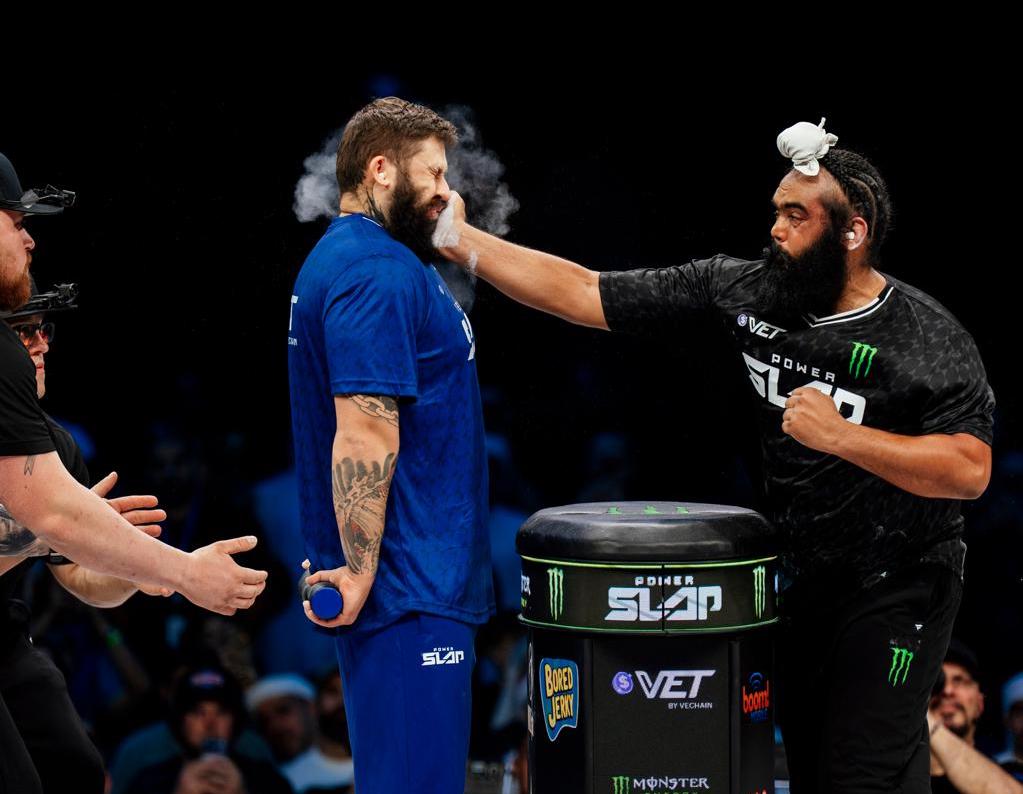
ABU DHABI: Of all the memories Jujhar Singh carried home from Abu Dhabi last year, one has stayed with him more vividly than the others: the final slap he took on a night when he made history for India.
On Oct. 24, 2025, Singh became the first Indian striker to win at a Power Slap event in the UAE’s capital. Almost a year later, he is preparing to compete there again, this time against Louis Robinson and with the prospect of strong Indian support at Space42 Arena.
“I remember the last slap I took that night the most,” Singh said. “Returning to Abu Dhabi means a lot to me because the people of India want to see me compete again.”
Singh (1-0) competes at Power Slap 25 Presented by Monster Energy on Friday, Oct. 23, where he will face British heavyweight Louis Robinson (2-0, 2 KOs), currently ranked No. 8 in the division.
Singh added: “India versus England is going to be a huge match.”
Robinson has won both of his Power Slap appearances by knockout, setting up another significant test for Singh in Abu Dhabi.
Singh said: “This time, I’m facing an undefeated competitor, but I want to create more history in Power Slap and give him his first taste of defeat.”
For Singh, another victory is only part of what makes his return to Abu Dhabi significant.
“The Power Slap stage is a huge stage for me personally, and representing my country is like a dream come true,” he said.
That connection to India could be particularly evident inside Space42 Arena. Abu Dhabi is home to a large Indian community, and Singh expects plenty of support when he steps on the stage against Robinson.
Singh added: “This time the atmosphere in Abu Dhabi will be special as my Indian community is coming there in large numbers.”
Indian fans traveling from further afield also have an added opportunity to make the journey in October. A tourism initiative running until Oct. 31 covers UAE entry visa costs for eligible Indian passport holders traveling from India when they book an Abu Dhabi holiday of at least three consecutive nights through participating travel partners or online travel agencies.
With Power Slap 25 taking place on Oct. 23, the event falls within the initiative’s travel period, offering Indian fans the opportunity to combine a visit to Abu Dhabi with the chance to support Singh at Space42 Arena.
Power Slap 25 will mark the third consecutive year that the promotion has staged a live marquee event in Abu Dhabi, strengthening the UAE capital’s role in the sport’s international calendar. That continued presence could also play an important role in Power Slap’s future in India.
Singh said: “The events in Abu Dhabi are very important in increasing the popularity of Power Slap in India as it will give more Indian competitors a chance to compete.”
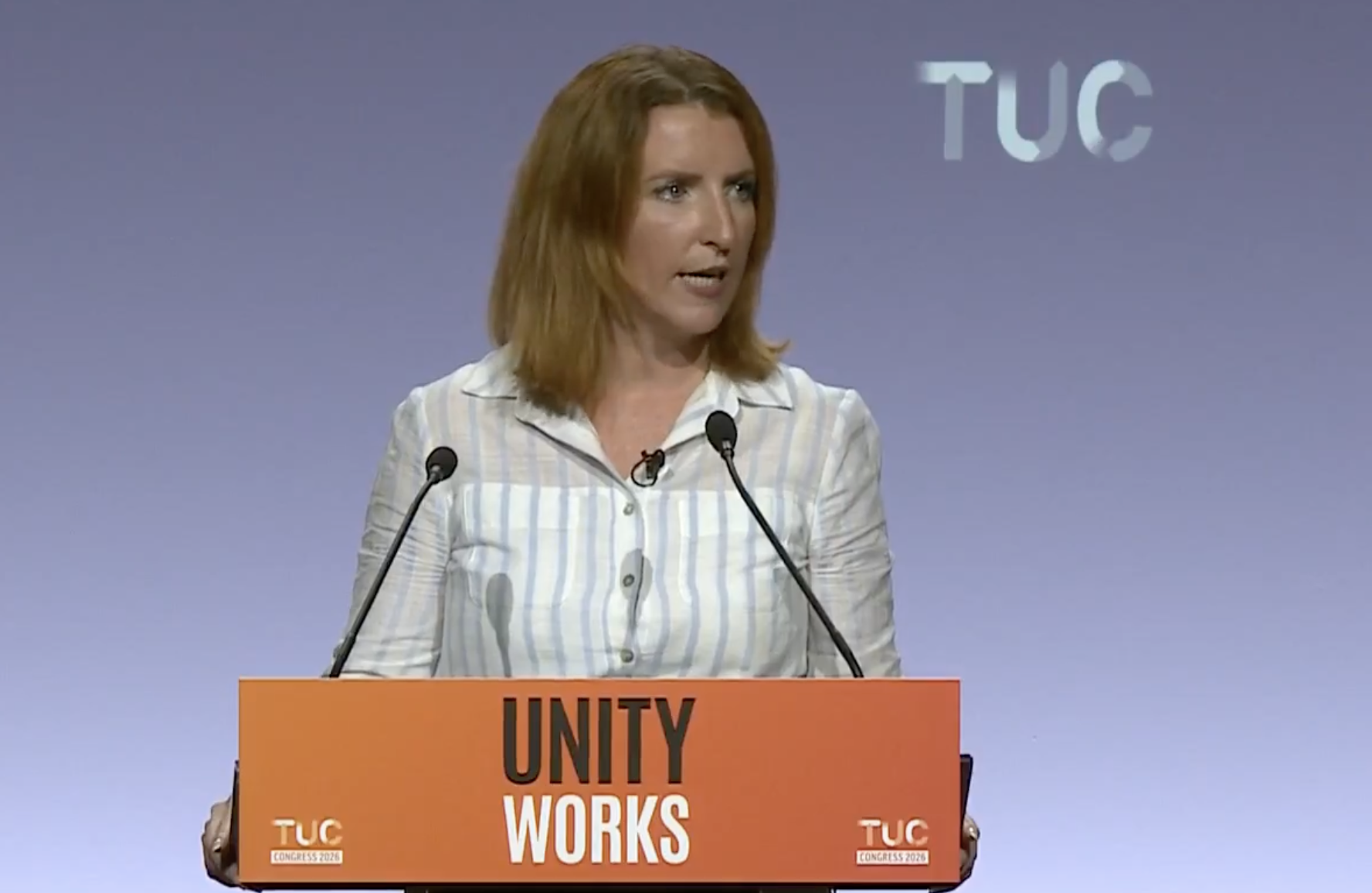
DUBAI: Britain will “no longer stand by” while Israel kills Palestinian children in Gaza, First Secretary of State Louise Haigh said on Tuesday, pledging to increase pressure on Tel Aviv over the war and illegal settlement expansion in the occupied West Bank.
Speaking at the Trades Union Congress in Brighton, Haigh said Prime Minister Andy Burnham was right to acknowledge that Britain had been “too slow” in its response to the situation in Gaza and the West Bank.
“At a time when it has never been more important to remind the world who we are, we hesitated,” Haigh said.
“We will no longer stand by while innocent Palestinian families are torn apart, while innocent children are killed in Gaza, and while the hope of a two-state solution evaporates before our eyes,” she added.
Haigh said sanctions announced last week by Foreign Secretary Ed Miliband were intended to “change course,” adding that Britain was “purposefully targeting the illegal settlements” and increasing pressure on the Israeli government.
The measures include sanctions targeting individuals and companies linked to Israeli settlement expansion, as well as a ban on imports from settlements in the occupied West Bank.
“The Israeli people are not responsible for the actions of their government,” Haigh said. “We will stand against injustice. We will stand up for peace.”
She added that Britain would work with international partners to “speak with one voice” and help preserve the prospect of a two-state solution.
US correspondence reviewed by Asharq Al-Awsat has revealed that Washington had delivered a warning to the Houthis through what were described as “security channels.”
The precise substance of the warning was not apparent from the correspondence, but it was followed by a clear US assertion that Washington was not negotiating with the group.
The Houthis’ attempt to send a reassuring message that they would not target US vessels appears to reflect an effort to consolidate their position following weeks of military operations that culminated in advances along Yemen’s western coast overlooking the Bab Al-Mandab Strait.
The advance poses a renewed threat to international shipping through the strategic waterway, which carries around 12 percent of global trade.
The US clarification in the diplomatic correspondence came a day after remarks by US President Donald Trump and Vice President JD Vance indicating that there had been communication with the Houthis, although neither explained the nature of those contacts.
Meanwhile, during a UN Security Council session on the Bab Al-Mandab Strait on Tuesday, Washington stated:
“The US supports Yemen’s legitimate government in confronting the Iran-backed Houthi militia. We call on the Houthis to halt their advance, withdraw from the territory they have seized and stop launching attacks.”
On the ground, the Yemeni government is working to raise military readiness in an effort to regain the initiative after recent setbacks on the Taiz and western coast fronts.
Government forces, meanwhile, have made slow but seemingly more consolidated gains on other fronts, including Al-Jouf and Al-Bayda. They have also continued to repel Houthi attacks and respond to militia buildups near Marib.
Government forces are engaged in fierce battles with the Houthi militia, which began escalating its military operations in August 2026.
The Houthis’ opponents accuse the group of violating deescalation arrangements under instructions intended to ease pressure on Iran.
And allow Iran’s Revolutionary Guard to use the group as a means of exerting pressure on the US during the war Washington launched in February 2026, which later intensified after Iran threatened to close the Strait of Hormuz.
Why security channels?
Observers speaking to Asharq Al-Awsat said that the use of security channels does not in itself indicate negotiations, a deal, or even US acceptance of the Houthis’ assurances.
Al-Baraa Shaiban, a fellow at Britain’s Royal United Services Institute for Defence and Security Studies, said the Houthi group was attempting to compensate for its lack of regional and international recognition by exaggerating the significance of opening communication channels with the US administration.
Asked about the phrase “security channels,” Shaiban said Western governments routinely maintain this type of contact with militias and terrorist groups.
Such communication, he said, remains limited, takes place outside diplomatic or political frameworks and is confined to sensitive or urgent security matters.
Iranian tactics
Reports of Houthi communication with the US were not treated in Yemen as merely another passing news item.
Many Yemenis sought to understand the group’s sudden move, particularly given that the Houthis’ slogan explicitly invokes “death to America.” The question, therefore, was how the group could simultaneously be communicating with Washington.
Mahmoud Shuhra, a fellow at Britain’s Royal Institute of International Affairs, Chatham House, told Asharq Al-Awsat that the current developments were “part of the Houthi strategy, which is an extension of Iran’s and the Revolutionary Guard’s behaviour and negotiating tactics.”
Shuhra, a former Yemeni diplomat, explained that the Houthi behaviour is based on gradual escalation, followed by a rapid military confrontation.
“If they achieve gains during that confrontation, they then begin offering reassurances in order to avoid being drawn into an all-out war,” he said.
He argued that this is effectively what happened in Bab Al-Mandab.
“The Houthis have now swallowed a very large bite and are trying to digest it,” he said.
The group is currently seeking to consolidate its gains, he added, and needs to offer reassurances in the meantime in order to avoid an immediate response against it.
This, he said, explains the attempt to reassure the US and the wider international community.
The Houthis also routinely seek to isolate their opponents, according to Shuhra, a tactic that has been repeatedly used in the past.
He recalled the group’s takeover of Sanaa, when the Houthis initially sought to reassure all political factions.
Once they had consolidated their presence, he said, they began meeting each faction separately and portraying the others as the enemy, eventually sidelining them all.
“The group now wants to use the same approach at the international level, regardless of how successful it may ultimately be,” he said.
WASHINGTON: For a third time, the US House has voted to end the war in Iran, approving a war powers resolution that would halt President Donald Trump’s ability to continue military action without congressional approval.
The roll call late Tuesday, 220-204, was similar to earlier efforts this summer, with a few more Republicans joining all Democrats voting to bring an end to the conflict. None of the resolutions have made it to the president’s desk, where Trump would almost certainly veto the measure.
“Remember when Donald Trump said that this war would last just a few weeks?” said Rep. Seth Moulton, D-Mass., who served as a Marine during the Iraq War and pushed the resolution forward.
He said it’s time for Congress to “actually ask tough questions, as the Constitution directs us to do, rather than be subservient to another warmongering administration.”
Republican Rep. Brian Mast of Florida, the chairman of the House Foreign Affairs Committee, questioned which military resources Democrats would want to remove from the region where he said Iran remains a threat.
Mast said Trump is against “forever wars, and that is what he is ending” — the decades of hostilities from Iran.
“They are a continuous ongoing threat to the United States,” Mast said. “Enough is enough.”
Last war powers vote before the midterms
The action is likely the last House vote on the Iran war ahead of the midterm elections, where the conflict overseas is playing a substantial role in the political campaigns. The war that Trump launched Feb. 28 has dragged, with on-again, off-again deadly missile strikes being exchanged and causing havoc in the region for nearly seven months.
Lawmakers are heading home at the end of the week to campaign nearly full-time, with less than 50 days to go before the elections that will determine control of Congress as Democrats try to wrest power from Republicans.
Voters are confronting high prices, particularly for gas at the pumps, as the conflict disrupts the flow of oil resources through the vital Strait of Hormuz.
The Congressional Budget Office said Tuesday that the war has cost more than $38 billion, as of Aug. 1, and is projected to be costing between $2 billion and $3 billion monthly, depending on the intensity of the fighting. The budget office projected inflation will be 0.5 percentage points higher than expected heading into 2027 due to the war.
Trump himself had promised not to involve the U.S. in foreign wars when he won a second term in the White House, and his actions against Iran are weighing on the Republican Party that controls the House and Senate. Most Americans say the war in Iran has not been worth fighting, according to an AP-NORC poll in July.
In the previous House actions, four Republicans voted to halt the war in Iran, but that number rose to seven in Tuesday’s war powers vote, including GOP lawmakers from battleground Iowa, Rep. Zachary Nunn and Rep. Mariannette Miller-Meeks, and retiring Rep. Nancy Mace of South Carolina.
They joined GOP Reps. Tom Barrett of Michigan, Warren Davidson of Ohio, Brian Fitzpatrick of Pennsylvania and Rep. Thomas Massie of Kentucky voting in favor of the war powers resolution, with all Democrats.
War powers being put to the test
Congress has tried repeatedly to alter the trajectory of the war against Iran, but efforts to limit the Trump administration’s military action remain a longshot so long as the president is able to fend off or veto the measures.
The House first approved a war powers resolution in June, and followed up with another one in July, all seeking to halt U.S. action in Iran. The Senate on its 10th try also approved a war powers resolution to end the conflict, but GOP senators quickly reversed course the next day after Trump berated them during a closed-door lunch.
While the Constitution gives Congress the authority to declare war, it also gives the president authority as the commander in chief to engage in some military actions. The War Powers Act, created in the aftermath of the Vietnam conflict, sought to put a more specific time limit on the president’s power, requiring congressional approval for sustained military actions after 60 or 90 days.
House Speaker Mike Johnson acknowledged at a press conference Tuesday the need to bring gas prices down.
But the Republican speaker said he believes the Iran conflict is entering a “new phase” as allies step up to help stabilize the region. When that happens, he said, “you’re going to see, as the president said, anytime gas prices will go down again, the cost of groceries will as well.”
Johnson said Trump expects the shift after the election, and the speaker added, “I’d love it to happen today.”
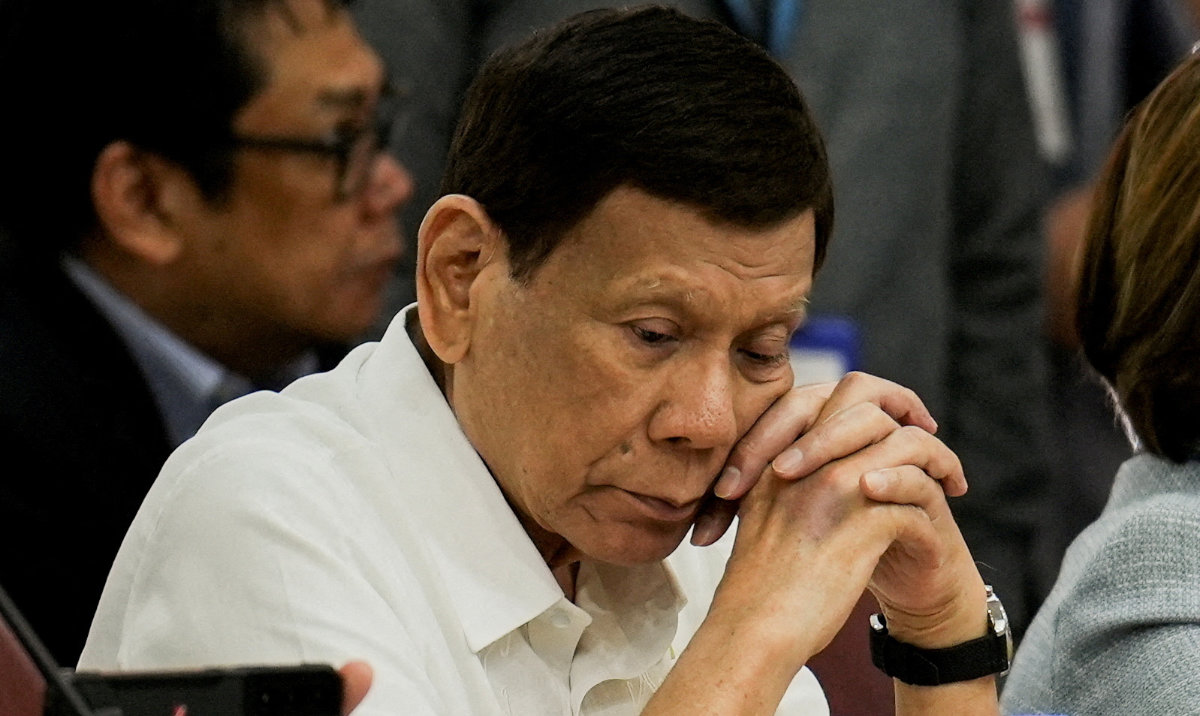
THE HAGUE, Netherlands: Former Philippines president Rodrigo Duterte is expected to appear in public for the first time on Wednesday since being transferred to the International Criminal Court 18 months ago to face murder charges related to his war on drugs.
Duterte, 81, served as president from 2016 to 2022, before being charged with crimes against humanity for creating, funding and arming death squads that targeted narcotics peddlers and users. He was arrested and taken to The Hague in March 2025.
On Wednesday, judges will hear arguments about his health and ability to stand trial, which is scheduled to begin in November. His lawyers have argued that he suffers from cognitive decline and is not well enough.
Duterte’s lawyer and family did not respond to requests for comment.
ICC judges said in January that Duterte’s health was good enough for him to follow proceedings and requested his presence in court, rather than by video link from the detention unit.
Duterte’s warrant says he was responsible for a widespread and systematic campaign that led to thousands of killings between 2011 and 2019, including when he served as mayor of the southern Davao city.
ICC prosecutors have said as many as 30,000 people may have been killed in the crackdown, the details of which were reported in a Reuters investigation.
According to police, 6,200 suspects were killed during anti-drug operations. Duterte said he instructed police to act in self-defense and told supporters he was ready to “rot in jail” if it meant ridding the Philippines of illicit drugs.
MADRID: Carlos Espí scored in stoppage time after a nifty move by Jude Bellingham and an assist by Kylian Mbappé to help Real Madrid salvage a 3-2 win at Elche in the Spanish league after it relinquished a two-goal lead on Tuesday.
Bellingham used a neat long touch to get past an opponent near midfield and fed Mbappé in a breakaway into the area, and the France star quickly set up Espí’s close-range score to give Madrid the victory and move the Spanish powerhouse even on points with Barcelona. The defending champion can regain the lead when it hosts promoted Racing Santander on Wednesday.
“We went from having it easy to losing control,” Real Madrid coach José Mourinho said. “But in the difficulty of the moment, facing the pressure of losing points, the team reacted and won the match, which in the end is the most important thing. The good thing is that nobody gets bored when Real Madrid plays. The games are always fun.”
Madrid had taken the lead against Elche with an own-goal by goalkeeper Matías Dituro in the 25th after the ball ricocheted off him following a well-struck free kick taken by Arda Guler. Mbappé added to the lead by scoring from close range after an assist by Yan Diomande in the 33rd.
Abiel Osorio pulled the hosts closer with a header in the 71st and Fer Niño netted the equalizer in the 83rd.
There was a bit of a scare immediately after Mbappé scored as he stayed on the ground in visible pain, but he eventually returned to the field after being attended by Madrid doctors.
The goal moved him to seven goals in six league matches, one goal more than Lamine Yamal, Raphinha, Sergio Camello and Roberto Fernández.
Mbappé had scored a brace in Madrid’s 4-1 win against Rayo Vallecano in the previous round.
He had a goal disallowed for offside just before halftime on Tuesday.
Bellingham came into the match by replacing Guler in the 68th.
Madrid’s only league setback this season was at Real Betis two rounds ago.
Mbappé and Vinícius avoid T-shirt
Players from both clubs wore t-shirts showing words of support for Ceuta as they came onto the field before the match. But Madrid players Mbappé, Vinícius Júnior and Ibrahima Konaté wore the shirt only halfway down their chest, without pulling them down, and obscuring some of the words on it. Mbappé and Vinícius removed their shirts before they saluted the other players and the referees.
They had not immediately explained why they did that.
In July, tens of thousands of migrants breached the frontier between Spain’s North African territory of Ceuta and neighboring Morocco.
Valencia wins after shake-up
Valencia won 1-0 at Alaves to end a four-game losing streak and a winless start to the season.
The string of poor results had led to the firing of coach Carlos Corberán and soccer CEO Ron Gourlay this weekend. It then appointed Braulio Vázquez as its new sporting director and named B-team coach Óscar Sánchez as an interim manager.
Luis Rioja scored a 78th-minute winner for Valencia, which had been outscored 10-1 so far.
Valencia fans had been protesting and called players “mercenaries” after the 5-0 home loss to Barcelona. They have long called for the exit of owner Peter Lim.
Rayo Vallecano triumphs in Butarque again
Rayo Vallecano beat Espanyol 2-1 with first-half goals by Álvaro García and Adria Pedrosa in what may have been its last match before returning home to Vallecas Stadium.
It was Rayo’s third home game played at Butarque Stadium — which belongs to second-tier club Leganes — because of unsafe conditions at Vallecas. It also beat Racing Santander 3-2 and drew Alaves 1-1 at Butarque.
Roberto Fernández scored for Espanyol in the second half for his sixth goal in six matches.
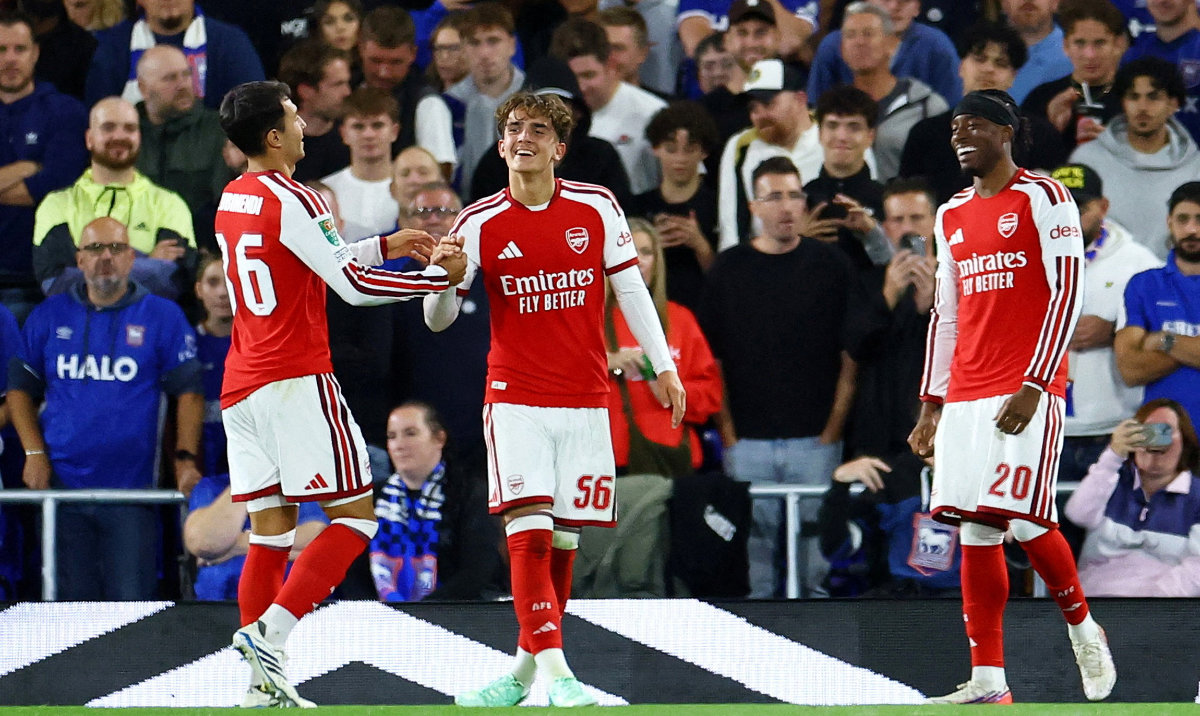
LONDON: Liverpool piled on the misery for troubled Tottenham with a 3-1 win in the League Cup third round, while teenage star Max Dowman dazzled for Arsenal in their 4-2 rout of Ipswich on Tuesday.
After a woeful start to the Premier League season, Tottenham’s hopes of a morale-boosting cup run came to a dispiriting end at rain-lashed Anfield.
They were swatted aside by Liverpool, with Alexis Mac Allister, Cody Gakpo and Dominik Szoboszlai scoring for the Reds.
Roberto De Zerbi’s fourth-bottom team are without a win or even a goal in their first four league matches, losing twice and drawing twice.
Tottenham’s only win this season has come in the League Cup against second-tier Charlton.
After successive 17th place finishes — including avoiding relegation on the final day of last season — the north London club spent over £300 million ($404 million) on 10 new signings since the end of last term.
But the return on that eye-watering investment has not been immediate, sparking fears of another relegation battle.
Adding to De Zerbi’s problems, unsettled striker Richarlison took to social media to lament the Italian’s decision to leave him out of the squad to face Liverpool.
Richarlison wants to leave but moves to Everton and Vasco Da Gama have fallen through recently.
Tottenham host Aston Villa on Saturday in a game that De Zerbi desperately needs to win to ease the pressure on him going into the international break.
Liverpool remain unbeaten at the start of the Andoni Iraola era, although they have won just once in four league matches.
Iraola made 10 changes but Liverpool went ahead after 21 minutes with a flowing move.
Gakpo picked out Rio Ngumoha and he teed up Mac Allister to blast a first-time finish past Martin Dubravka into the roof of the net.
Gakpo doubled Liverpool’s advantage in the 54th minute, whipping a fine strike into the far corner.
Tottenham finally scored a goal against top-flight opposition this season — albeit in a different competition — when Conor Gallagher punished poor marking to net from a corner in the 69th minute.
But Szoboszlai rubbed salt into Tottenham’s wounds in stoppage-time with a 25-yard rocket.
Arsenal’s Max Dowman celebrates scoring their third goal with Martin Zubimendi and Noni Madueke. (Reuters)
Dowman makes his mark
At Portman Road, Dowman took center stage to remember Arsenal manager Mikel Arteta of his burgeoning talent.
Arsenal, who lost the League Cup final against Manchester City last season, have won their six games in all competitions this term.
Arteta made nine changes from the side that won at Sunderland on Saturday, with 16-year-old Dowman given his first appearance this season.
Dowman has been ear-marked as a future star since bursting onto the scene as a 15-year-old last season.
But Arteta is treating the midfielder with kid gloves, bringing him on slowly while the Premier League champions are thriving.
Dowman showed Arteta what he can add to the party in the seventh minute, flashing quick feet to skip past Cedric Kipre before slotting home with a composed finish.
It was Dowman’s second goal for Arsenal after his strike against Everton in March.
Noni Madueke increased Arsenal’s lead in the 16th minute, lashing a low shot past Christian Walton from just inside the penalty area.
Dowman struck again in the 47th minute, running onto Martin Zubimendi’s pass and finishing with aplomb.
Mikel Merino grabbed Arsenal’s fourth, curling home from Dowman’s pass in the 58th minute.
Anis Mehmeti’s 62nd minute reply and Chuba Akpom’s stoppage-time strike were little consolation for out-classed Ipswich.
Fulham made nine changes but still won 3-2 at Championship leaders West Ham, with goals from Rodrigo Muniz, Cesar Palacios and Oscar Bobb, who bagged the 78th minute winner.
Brentford won 2-1 at third tier Reading thanks to goals from Callum Wilson and Fabio Carvalho.
On Wednesday, Manchester United host Brighton, Aston Villa travel to Coventry and Everton face Wolves.
Holders Manchester City are at home to Norwich on Thursday.
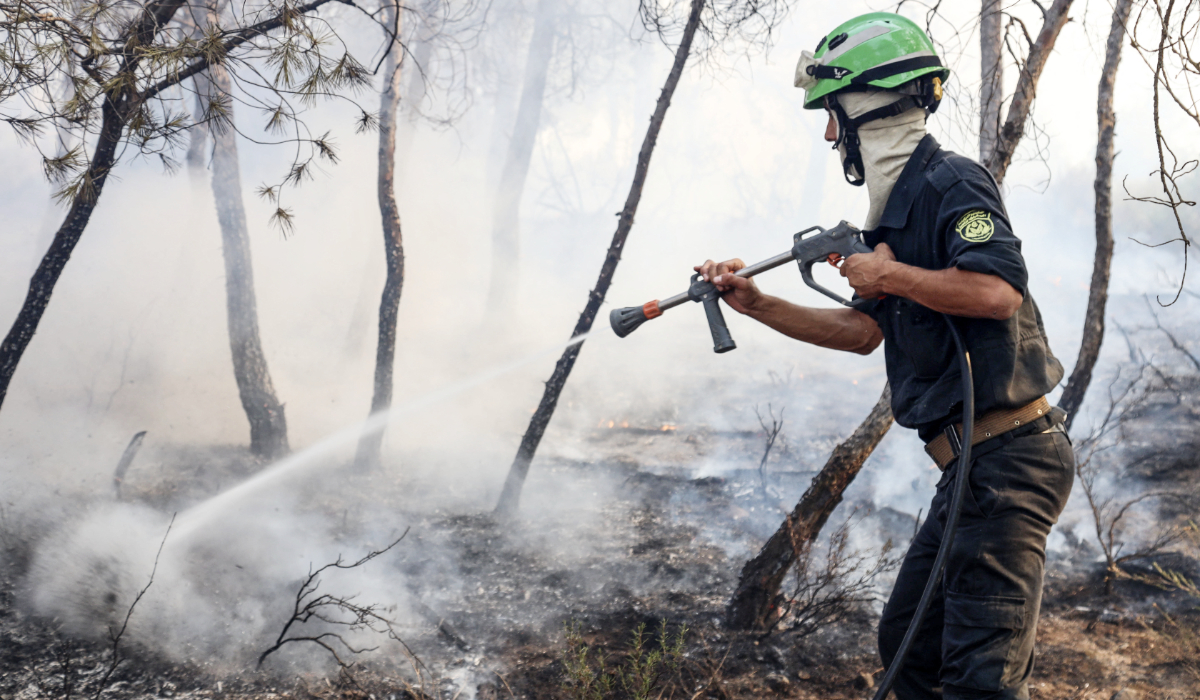
TUNIS: Amnesty International urged Algeria’s government on Tuesday to abandon plans to resume executions after it pledged to give the death penalty to those responsible for wildfires following deadly blazes last month.
Algeria struggled to put out fires that swept through its northeast and killed 12 people last month, according to an official tally, while witnesses spoke of dozens of deaths.
A member of a civil protection unit battles a wildfire in a mountainous area near the town of Al Hachimia, Bouira Province, on July 21, 2026. (AFP)
The North African country has not carried out executions since 1993 but has handed down the death sentence in some instances, including terror-related cases, without carrying it out.
Last month President Abdelmadjid Tebboune ordered the justice minister to amend the penal code to impose the death penalty for people who start wildfires after the deadly blazes.
“Algeria’s authorities must immediately abandon any plans to expand the scope of the death penalty or resume executions after more than three decades without carrying one out,” Amnesty said in a statement.
It also called for the country to impose an official moratorium “as a first step toward fully abolishing the death penalty.”
Tebboune also said that people sentenced to death should be executed right after exhausting their right to appeal.
The government began looking at draft penal code amendments this month.
Tebboune said “child abductors and abusers” would also be included in the expanded death penalty plans.
Forest fires occur regularly in northern Algeria during the summer, but climate change is amplifying their impact by causing increasingly frequent droughts and intense heat.
But Tebboune alleged that there was “something criminal” about the recent blazes.
Amnesty also said “credible sources have since reported significantly higher casualties” than the official tally in the latest wildfires, “including over 70 deaths in a single municipality.”
More than 30 people were killed in July 2023 when fires tore through thousands of hectares of forests and farmland in Algeria, as well as hundreds of homes.
In 2023, Algeria handed the death penalty to more than 50 people — some in absentia — over the lynching of a 38-year-old man who was falsely accused of starting deadly forest fires two years earlier.
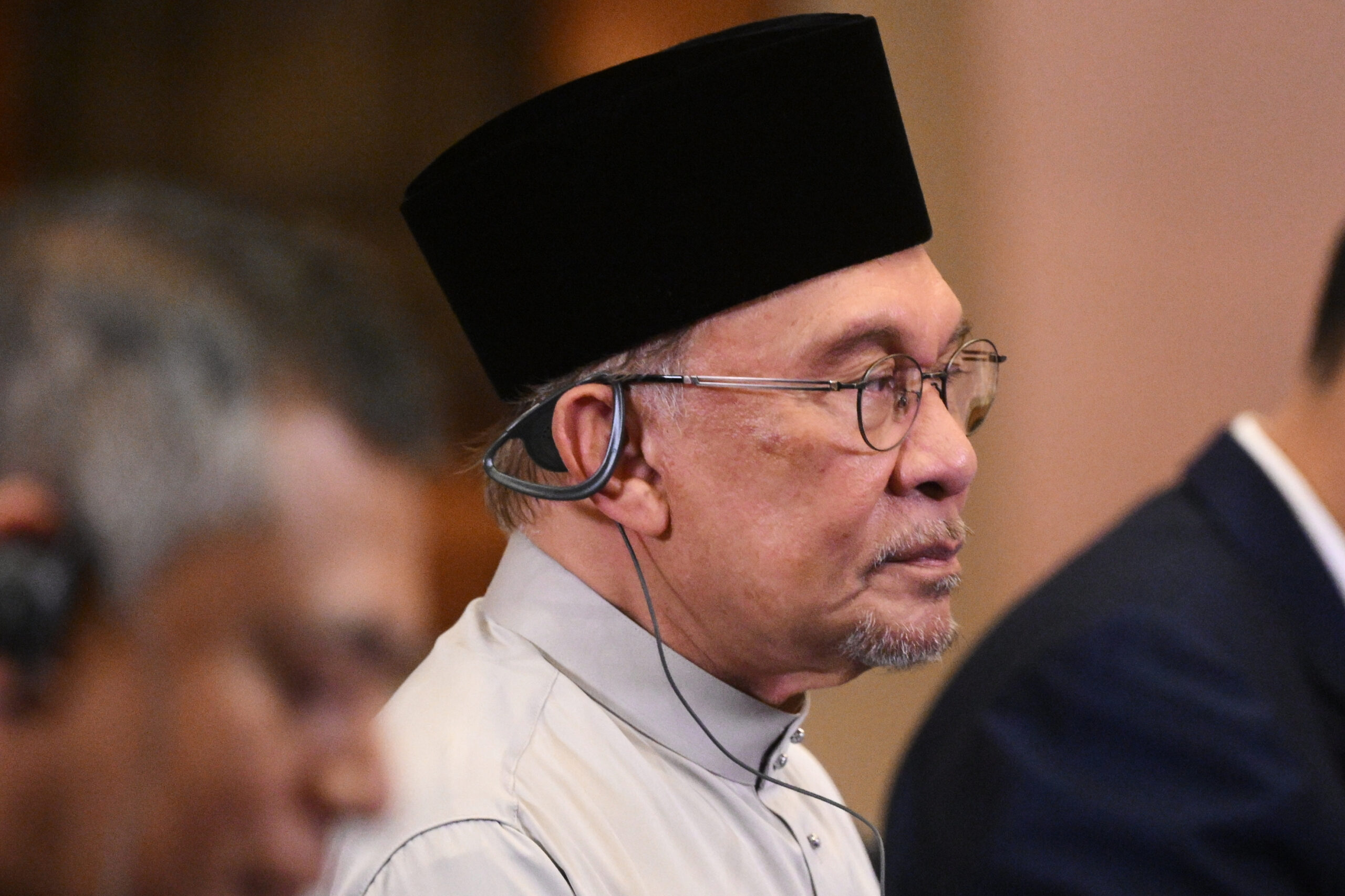
LONDON: Prime Minister Anwar Ibrahim vowed on Tuesday that shipments to Israel’s military would not be allowed to pass through Malaysia after cargo containers heading there were seized.
His comments came after Bloomberg reported that Malaysian authorities had halted all shipments heading to Israel from one of the country’s largest ports after three containers were stopped by authorities last month.
“We will not allow our country to be used as a conduit for any shipment that supports or contributes to Israel’s military capabilities and its atrocities against Palestinians and other innocent lives,” Ibrahim wrote on X.
“Any suspicious shipment will be subject to inspection and investigation in accordance with Malaysian law. Where a violation is established, decisive action will be taken.”
The three containers were stopped at Tanjung Pelepas Port on Aug. 19 and have been held ever since, the report said.
They were destined for Israel’s Ashdod port and contained products from China.
Malaysia has no diplomatic or trade relations with Israel, but cargo is allowed to transit through the country’s ports from one country to another.
Bloomberg reported that the seizure could be a shift in Malaysia’s approach to handling Israel-bound cargo.
Malaysia is a major shipping hub, located along some of the world’s busiest maritime routes through Asia.
The Malaysian Border Control Agency said the matter remains under investigation.
The seizure came just two weeks after a container destined for Israeli military technology company Elbit Systems from the Philippines was also stopped in Malaysia.
Malaysia has been one of the most prominent international critics of Israel and, in particular, the war on Gaza.
At the BRICS Summit in New Delhi at the weekend, Ibrahim condemned what he described as Israel’s “settler terrorism” in the occupied West Bank.
NEW YORK: Three supporting acts have quit Ed Sheeran’s tour after Macklemore was removed for his pro-Palestinian comments onstage.
Hours after Sheeran said he refused to be drawn into a discussion about the war in Gaza, Aaron Rowe, the band Beoga and Finneas all posted Tuesday on Instagram that they would withdraw from Sheeran’s tour.
Rowe was one of Macklemore’s replacements for Sheeran’s remaining U.S. dates, while Beoga was serving as Sheeran’s touring band. Finneas was due to tour with Sheeran in South America later this year.
Emails seeking comment were sent to Sheeran and Macklemore’s other replacement, the Danish band Lukas Graham.
Ed Sheeran has weighed in on Macklemore
Ed Sheeran has weighed in on Macklemore being dropped as his opening act after the rapper made pro-Palestinian comments onstage during their tour, saying the decision was made by the promoters alone. The British singer also said he refused to be drawn into a public discussion about the war in Gaza.
“Macklemore coming off tour was the promoter’s decision, it was not mine,” Sheeran wrote on Instagram on Tuesday. “I would never let down the fans who had made plans, nor would I abandon the touring crew and the other support acts and musicians who rely on me for work and to make a living.”
The tour’s promoter, the Messina Touring Group, did not immediately respond to emailed requests for comment Tuesday. Macklemore’s publicist also did not immediately respond.
Sheeran’s statement came a day after Macklemore said he was kicked off the Loop Tour after exclaiming “Free Palestine!” during the Sept. 5 date at New Jersey’s MetLife Stadium while introducing his protest song “Hind’s Hall.”
“To all of my Jewish brothers and sisters, criticism of Israel, criticism of apartheid, being against genocide, it in no way is criticism of you,” he said during the concert.
Macklemore said Monday on Instagram that several U.S. venues told the promoter they would prohibit him from performing as Sheeran’s opening act, rallied by Robert Kraft, owner of NFL’s New England Patriots. His Kraft Group also owns Gillette Stadium, where the Patriots play.
In statement Monday, Kraft said the decision to cancel Macklemore was a result of his recent comments “and a broader history of antisemitic rhetoric and imagery that we believe has been deeply offensive and hurtful to the Jewish community.”
Sheeran said in his latest post that he “spoke with the venues at length all week to try to build a bridge,” but that “the venue’s and promoter’s decision was final.”
A growing chorus of organizations and experts say Israel’s wartime actions in Gaza amount to genocide — an accusation Israel vehemently rejects.
Macklemore was scheduled to perform at eight of the 10 shows Sheeran has remaining on his stadium tour, which will resume Saturday in Philadelphia, with Lukas Graham and Aaron Rowe now on the bill. Ahead are stops at Gillette Stadium, Atlanta’s Mercedes-Benz Stadium and Indianapolis’ Lucas Oil Stadium.
Sheeran said he tries to use his music to “bring people from all backgrounds and cultures together” and that while he has personal views about “this devastating conflict,” he chooses not to speak publicly because people who come to his shows “do not expect a political forum.” He added: “I am not complicit.”
“I respect Macklemore’s strength of purpose to stand up and shout for what he believes,” Sheeran added. “However, there is room for multiple approaches to the same end: peace. I choose to use my fame and platform to be a place of safety and sanctuary, to maintain diplomacy and keep conversations open, not closed.”
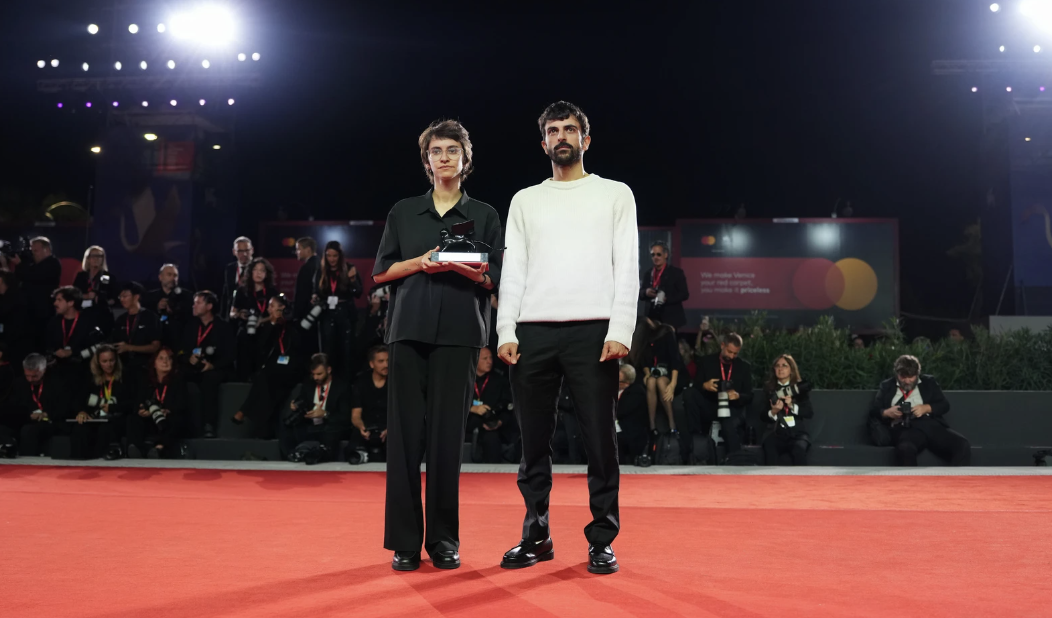
LONDON: Film festivals and filmmakers around the world have rallied around the directors of the Gaza documentary “NAZA,” after an Israeli minister accused them of treason and threatened to revoke their citizenship.
Israeli filmmakers Yuval Abraham and Rachel Szor have faced mounting criticism from officials in Israel since their documentary, which documents Israeli military operations in Gaza, and in particular the killing of civilians, won the Special Jury Prize at the Venice Film Festival at the weekend.
Israel’s minister of culture and sports, Miki Zohar, said he would “act immediately” to revoke the citizenship of the filmmakers, accusing them of “treason against the state.”
The film, produced by The Guardian newspaper, features testimonies from 24 Israeli military and intelligence personnel about the use of AI-powered targeting systems in Gaza. It builds on investigations published by Israeli media outlets +972 Magazine and Local Call, as well as Guardian news reports.
The threats against the directors prompted a broad response from the international film community, with the directors of the Telluride, Locarno, Berlin and San Sebastian film festivals among those expressing support.
Julie Huntsinger, artistic director of the Telluride Film Festival, said that threatening the filmmakers’ citizenship was “unacceptable” and that the issue “should be condemned by any thinking human.”
The Berlin International Film Festival’s director, Tricia Tuttle, said artists must be free to examine events critically, and argued that in a democratic society the response to films should be “dialogue and scrutiny, not intimidation or punishment by the state.”
More than 1,500 Israeli filmmakers signed a petition backing Abraham and Szor, and rejecting the accusation that they sought to damage Israel’s international reputation. The petition warned that the campaign against them was moving toward rhetoric that could effectively sanction violence and pose a threat to their lives.
Abraham and Szor won an Oscar last year for their documentary “No Other Land”, made in partnership with Palestinian filmmakers Basel Adra and Hamdan Ballal, which examined Israeli settler violence against Palestinian communities in the occupied West Bank.
The Israeli military has rejected claims “NAZA” makes about its operations, saying they were based on anonymous sources that could not be independently verified.
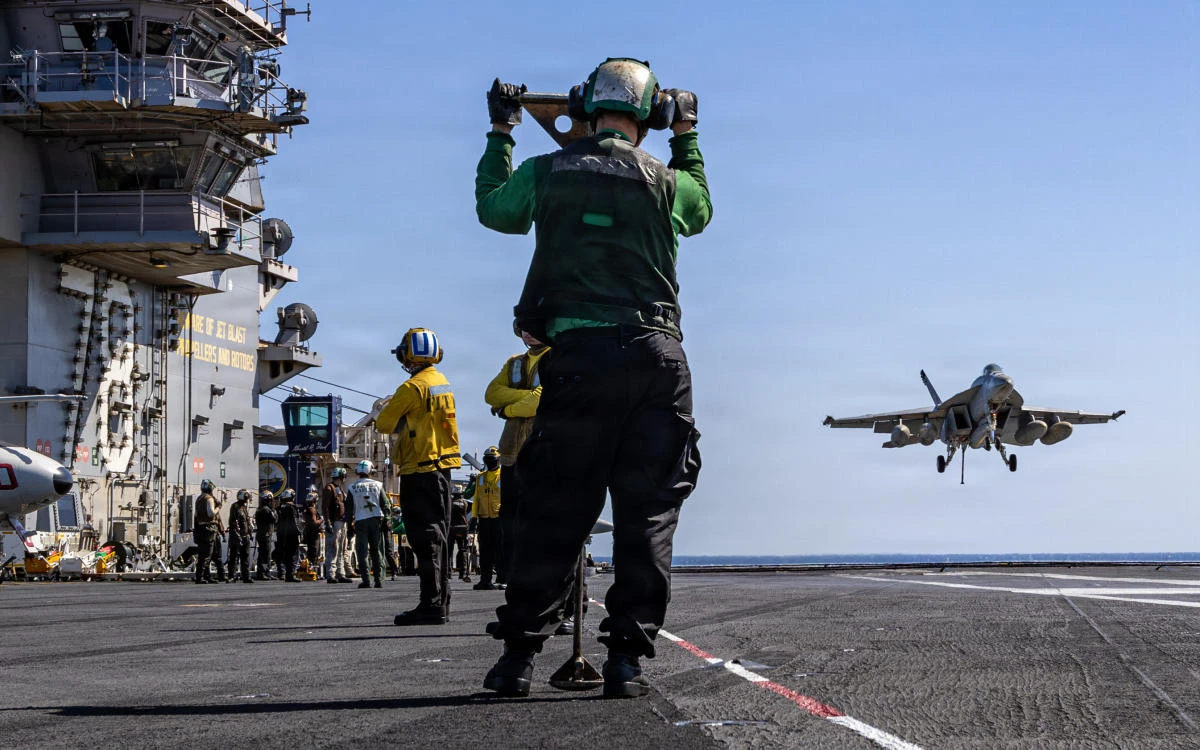
WASHINGTON: The six-month-old US war against Iran has cost $38 billion so far and that amount is projected to rise by $3 billion a month, Congress’ nonpartisan bookkeeper reported on Tuesday, as the Trump administration searches for ways to end the conflict and reopen the vital Strait of Hormuz.
The war is expected to increase inflation by 0.5 percent in the first three months of 2027, according to the Congressional Budget Office accounting, which totaled expenses through August 1.
The mounting costs have strained US munitions stockpiles and driven up energy prices, raising concerns about the country’s ability to respond to other potential conflicts and adding pressure on an already stretched federal budget.
The cost was close to the $37.5 billion that Defense Secretary Pete Hegseth reported at a Senate hearing on July 21.
The budget office said the majority of the costs stem from the rapid drawdown of munitions, estimating that it could take five years to replenish US stockpiles. Reuters reported in August that the US had used “virtually all” of its long-range precision missiles during the war.
The Department of Defense did not cooperate with congressional financial auditors, CBO reported.
Representatives from the White House and Department of Defense did not immediately respond to requests for comment.
The inquiry was conducted at the request of the top Democrat on the US House of Representatives Budget Committee, Brendan Boyle of Pennsylvania.
“Donald Trump’s disastrous war in Iran has already taken the lives of brave American servicemembers and left others wounded,” Boyle said in a statement.
“Beyond that human toll, this nonpartisan CBO report makes clear that the war has also cost American taxpayers tens of billions of dollars and counting, while continuing to drive up costs.”
Eighteen US military service members have died in the Iran war.
The report did not include costs of recent strikes on commercial vessels in the Strait of Hormuz and attacks on US military installations in the region. It also did not factor in the borrowing expenses associated with financing the war, which could add tens of billions of dollars to the total cost.
IMPACT ON US READINESS
The CBO accounting found the war could have sprawling consequences for the US defense posture and the domestic economy.
The deficit in critical munitions, including missile interceptors, risks hampering the Pentagon’s response in the event of another major conflict, such as potential hostilities involving China and Taiwan, CBO said.
At the July hearing in the Senate, Hegseth pleaded for nearly $90 billion emergency funding legislation to restock munitions supplies.
“Without these funds, we face critical shortfalls,” Hegseth said.
Energy shocks caused by attacks in the Strait of Hormuz — the narrow waterway through which roughly 20 percent of the world’s oil traveled before the war — and on energy facilities in neighboring Gulf countries have sharply increased prices for consumers and global producers.
The rising cost of the war also threatens to weigh on deteriorating US fiscal health. The nation’s total public debt surpassed $40 trillion in August.
Trump regularly contrasts the Iran war with the US invasions of Iraq and Afghanistan that followed the September 11, 2001, attacks.
The eight-year US war in Iraq, which involved more than 100,000 ground troops at its peak, cost $2 trillion, Reuters reported. The two-decade-long US conflict in Afghanistan, which also involved more than 100,000 troops at its most intense, cost $2.3 trillion, according to Brown University’s Costs of War project.
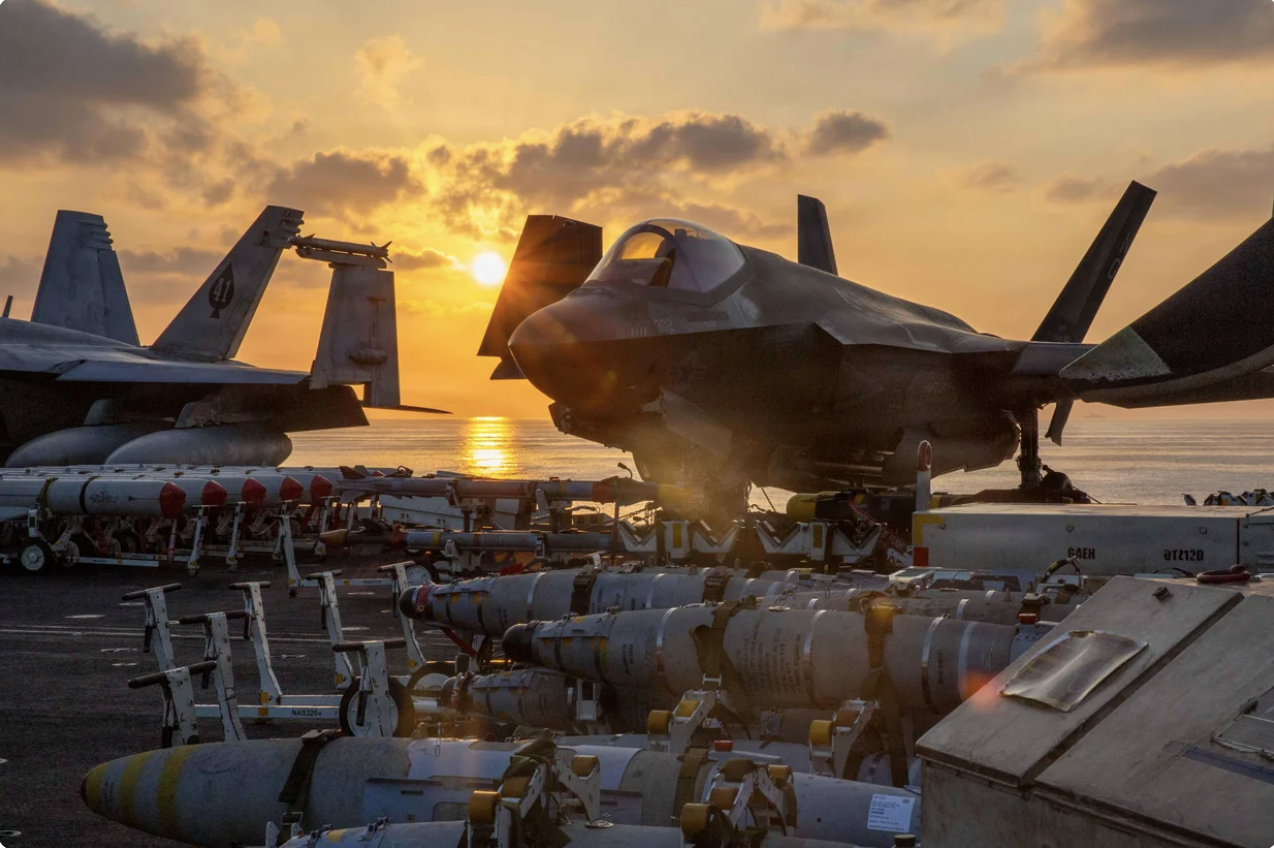
WASHINGTON: President Donald Trump’s administration is planning to sell to Israel a munitions package worth $2.8 billion, which will include tens of thousands of highly destructive 2,000-pound bombs, according to a US official familiar with the sale.
The planned sale, which has been informally communicated to relevant congressional committees who weigh in on large arms sales, includes 20,000 MK 84s and 20,000 BLU-117s, the official, speaking on the condition of anonymity, said.
News of the package was first reported by the Washington Post.
The State Department and the Israeli embassy did not immediately respond to a request for comment.
US public support for Israel has fallen since the Gaza war began in 2023, particularly among Democrats. A June Quinnipiac University poll found 48 percent of voters and 66 percent of Democrats believe the United States is too supportive of Israel, up from 16 percent and 20 percent when the question was first asked in 2017.
The 2,000-pound bombs have been regularly used by Israel in Gaza as well as in Lebanon, drawing scrutiny from rights experts. More than 73,000 Palestinians have been killed in Israel’s military campaign, according to Gaza health authorities. A UN inquiry determined that Israel had committed genocide in Gaza, a charge Isarel rejects.
Israel calls its actions self-defense, after Hamas-led militants killed 1,200 people and took more than 250 hostages in an October 2023 attack.
The US and Israel attacked Iran on February 28. Iran responded with its own strikes on Israel and Gulf states that host US bases. US-Israeli strikes on Iran and Israeli attacks in Lebanon have killed thousands and displaced millions.
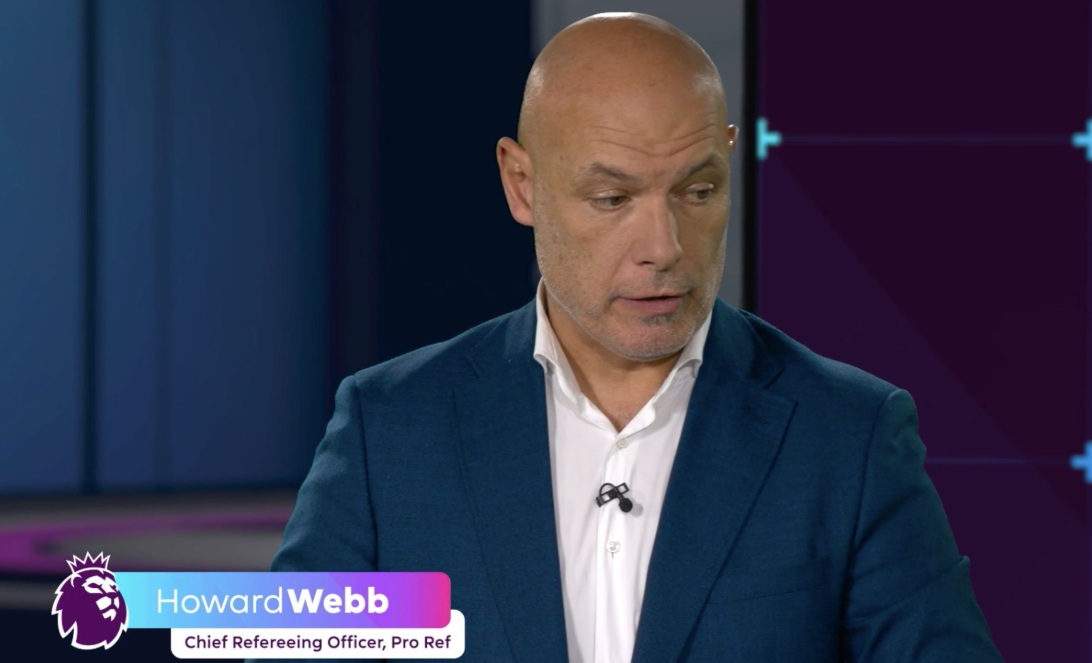
LONDON: Referees’ chief Howard Webb said he was “really disappointed” with the VAR mistake that allowed Erling Haaland’s winner in the Manchester derby last weekend.
Haaland scored in the second half of City’s victory against archrivals United at Old Trafford on Sunday.
Haaland’s close-range finish from Josko Gvardiol’s cross was initially disallowed for offside, but VAR official Matt Donohue and his assistant Blake Antrobus overturned the decision.
Donohue ruled City midfielder Enzo Fernandez was not interfering with play when he tried to reach the ball before it was finished off by Haaland.
City went on to win 1-0, but the result was overshadowed by the controversy involving the decisive goal.
United manager Michael Carrick said he was “staggered” by the decision because Fernandez blocked Lisandro Martinez’s attempt to clear and potentially distracted goalkeeper Senne Lammens.
Donohue and Antrobus have been stood down by the Pro Ref organisation for this weekend’s Premier League matches.
Webb, the chief refereeing officer at Pro Ref, said on the ‘Match Officials: Mic’d Up’ programme on Tuesday: “I was really disappointed with this outcome. We all are. None more so than the officials themselves.
“They take a lot of personal pride in what they do and they’re obviously hurting now, having fallen short in this situation.
“They’ll not be officiating again until after the international break. We’ve reached out to Manchester United and acknowledged the error, as we do when these things happen.”
Asked how the VAR officials had come to the conclusion that Fernandez was not interfering with play, Webb said: “In that moment, he (Donohue) gets tunnel vision.
“He gets focused on Haaland, and it’s down to the rest of his team to pull him out of that tunnel, and unfortunately, that didn’t happen on this occasion.
“This goal should have been disallowed. We’ll review it, reflect upon it, and try to take the learning forward to prevent this unusual type of error from happening again.”
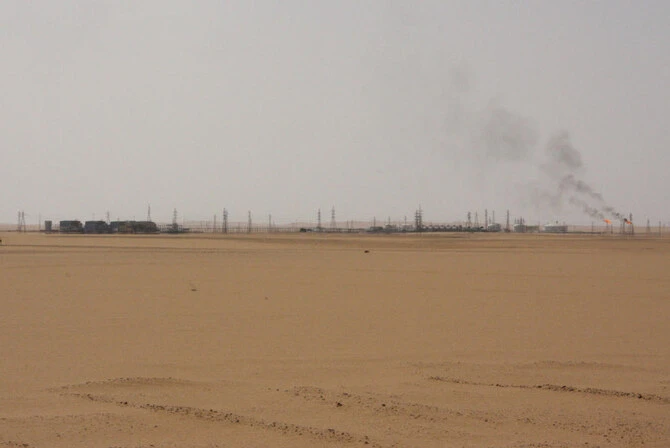
TRIPOLI: Operations were suspended at two oilfields and a pumping station after members of the security force charged with protecting Libya’s oil sector closed a valve on the main Hamada-Zawiya crude-loading pipeline, the National Oil Corporation said on Tuesday.
The NOC said it may declare force majeure if the valve remains closed or if other fields are subjected to similar forced shutdowns.
The company said production had completely halted at the Hamada and Tahara fields and at a pumping station. Libyan oil output has been subject to repeated closures for political and technical reasons since the 2011 uprising against Muammar Qaddafi.
In a statement obtained by Reuters, the Petroleum Facilities Guard, which provides security for Libya’s oil fields, pipelines and terminals, demanded that their agency be transferred “financially and administratively under the National Oil Corporation”.
They called on the prime ministry and the NOC to take urgent measures to complete the administrative and financial arrangements for this, and set a clear implementation timeline.
The agency currently operates under the defense ministry. The Guard said it would implement a partial production cut for one week as of Tuesday at several fields including Wafa, Al-Khamsa and El Feel, adding that a complete shutdown would follow if their demands were not met.
Oil production is Libya’s main economic source, representing approximately 90 percent of the economy of the entire country. “Shutting down oil fields and halting production operations at this critical juncture — as the world witnesses a rise in crude oil prices — constitutes a devastating blow to the national economy,” the NOC said in a statement.
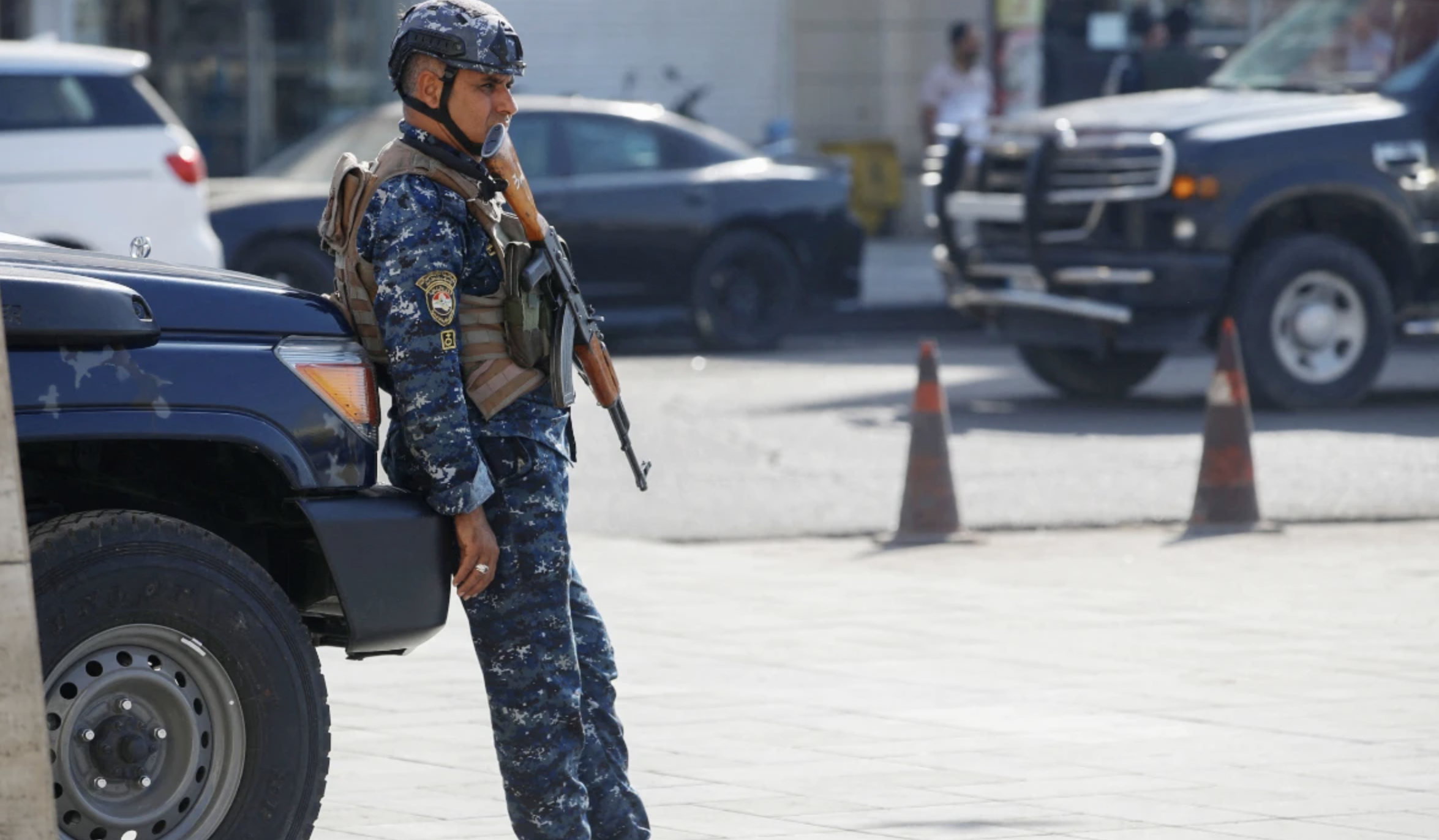
At a highly sensitive juncture, and amid increasing talk regarding the possibility of a third round of regional escalation, Iraqis are confronted with a fateful question: Is there someone seeking to make Iraq a part of this conflict – not merely a venue from which messages are dispatched or through which pressure is managed, but rather one of its open arenas?
There can be no avoiding the question, as the answer is linked to Iraqi blood, state sovereignty, the future of the economy, and Iraq’s standing among its brethren, neighbors, and the world. The matter is no longer a limited security issue; rather, it is a question of statehood, destiny, and direction, as well as a question of Iraq’s ability to protect itself from being dragged into what it does not want.
Repeated attempts to use Iraqi territory to target fraternal and neighboring Arab countries – the latest of which was the announced targeting of Saudi Arabia, preceded by the United Arab Emirates, Kuwait, Bahrain, and Jordan – reveal that we are facing a systematic trajectory rather than an isolated incident. If not decisively resolved, this trajectory could transform into a de facto policy.
Should the state succumb to the blackmail of forces acting outside its authority, it loses not only its security decision-making power but the very meaning of statehood itself. Iraq must not remain a conduit for messages, a proxy mailbox for others, a negotiating card in their conflicts, or an arena pushed forward during every regional escalation.
The problem is no longer about issuing a statement after each incident or settling for a reassuring narrative that does not prevent the recurrence of danger. The deeper problem is the existence of a repeating pattern that consumes Iraq’s political and moral capital, leaving the government to face the consequences of actions that do not reflect its own decisions. The longer a decisive resolution is delayed, the more a dangerous perception takes root abroad that the Iraqi state alone does not control its security decisions. This is an unfair image of Iraq and harmful to its interests, but it cannot be corrected by words alone.
Sovereignty is not safeguarded through slogans; rather, it is maintained by the state’s capacity to serve as the sole authority for force and decision-making. Consequently, restricting weapons to state control is neither a stance against any faction nor a detraction from anyone’s sacrifices. Instead, it is a prerequisite for the survival of the state and the protection of everyone. A state that does not hold exclusive authority over the decisions of war and peace can neither demand that others respect its borders, reassure its citizens, nor build stable relations with its neighborhood. It is in the interest of all forces, above all others, for the state to be strong, because a weak state protects no one; instead, it leaves everyone exposed.
Today, under highly sensitive circumstances, the Iraqi government is working to reconnect Iraq with its Arab, regional, and international surroundings, and to sincerely leverage available support and openness to serve the interests of Iraqis. These efforts deserve support – not because they are the efforts of a specific government, but because they represent the trajectory of a state. However, there are those, both internally and externally, who do not want Iraq to move past the logic of conflict and axes, and who seek to undermine any attempt to solidify its position as a balanced, secure partner state that is capable of speaking for itself, rather than for others.
The truth is that the Arabs, despite all the complexities that have affected the relationship, have not turned their backs on Iraq; rather, they have continued to view it as a pivotal country indispensable to regional stability. Throughout the difficult years, there remained an Arab readiness to embrace Iraq and restore it to its natural position, out of belief in its role, presence, and civilized and political depth. The problem has never been an Arab desire to break ties with Iraq; rather, it lay in Iraq’s ability to present itself as a state with a single decision-making authority – not a country where decisions are contested between the government and factions, the constitution and weapons, and national interest and wills that do not emanate from Iraqi state institutions. It is unfortunate that opportunities for openness and trust are squandered due to practices that reflect neither the will of Iraqis nor the interest of their state.
The risk of slipping today is greater than some believe. Every uncalculated action could drag Iraq into a confrontation it does not want, and every use of its territory outside state decisions could push it an additional step toward isolation. Isolation is neither heroism, an interest, nor a viable option in a world where countries thrive on economy, partnerships, investment, and trust. Every armed message launched outside the state is met with a message of concern from the investor, the partner, and the fraternal state, and every new disruption reflects on the market, labor, energy, banks, and Iraq’s image in the world. Iraq needs projects, energy, job opportunities, education, infrastructure, and openness – not more anxiety, armed messages, and alignments that deplete it.
We must be candid with our people: statements are no longer enough. Neither the domestic public is convinced by statements, nor is the outside world reassured by them. What preserves Iraq’s standing is action: a professional investigation, fair accountability, real control, and a clear decision that no entity, regardless of its title, can place the country in war, isolation, or economic loss. Backing the government along this path is a national duty, because it is a support for the state, its right to protect sovereignty, preserve relations, and build the future.
Iraq is subordinate to no one, an enemy to no one, and an arena for no one. It is a great homeland, and the decision of war and peace within it belongs to the Iraqis and their state alone. This is the hour of the state, the hour of reason, and the hour to say clearly: Iraq first.
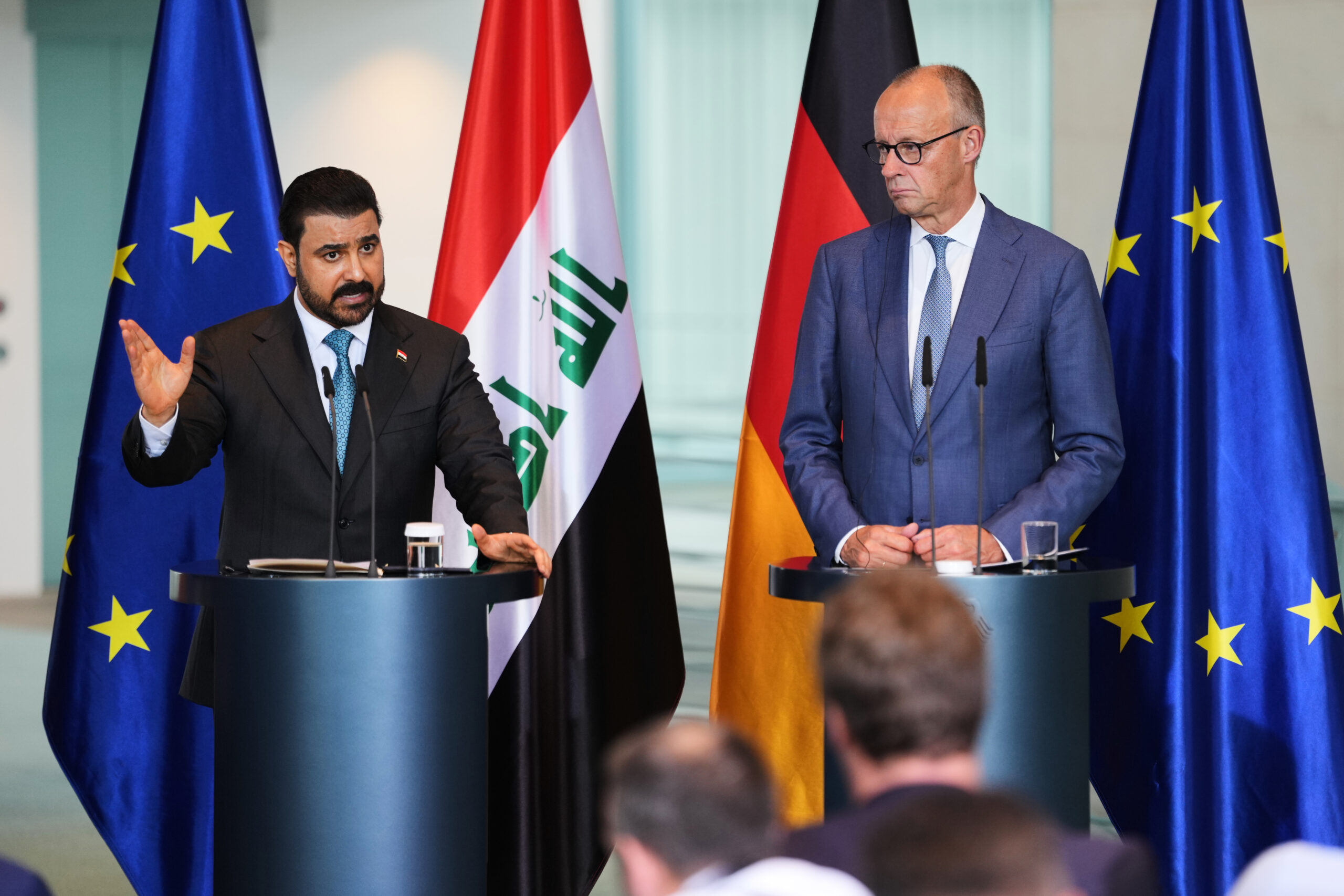
BERLIN: Iraqi Prime Minister Ali al-Zaidi said on Tuesday that he discussed selling oil to Europe during visits to France and Germany, as Baghdad seeks to diversify its export routes and reduce its reliance on the Strait of Hormuz.
During a press conference with German Chancellor Friedrich Merz in Berlin, Zaidi said “we want to expand and diversify our export routes”.
He added that “Iraq cannot remain hostage to a single corridor” as recent events have demonstrated, referring to the Strait of Hormuz, which has been blockaded by Iran during the Middle East war.
Zaidi said that he had discussed oil exports to Europe with Merz and French President Emmanuel Macron, whom he met in Paris on Monday.
Crude oil sales account for nearly 90 percent of Iraq’s revenue but its exports have been hurt by the outbreak of the Middle East war between Iran and the United States.
Before the war began in February, Iraq produced around four million barrels per day, and exported an average of 3.4 million bpd, mostly via Hormuz.
Most of its oil exports go to East Asia, with China and India its largest buyers.
Due to the disruption, Iraq began exporting crude using tanker trucks through Syria, as well as through a pipeline to the Turkish port of Ceyhan, although these routes can handle only a fraction of its usual sea-bound trade.
Zaidi said that Baghdad could “double its oil exports through the Mediterranean” to supply markets in Europe and the United States.
Zaidi, who hopes to increase Iraq’s oil production to 10 million barrels per day, said that “a large share, or nearly half, can go to European countries and the West”.
He said that Iraq and Germany were expected to reach “an understanding on the export of crude oil” while Baghdad would purchase German technology and equipment.
Merz said that the main focus for Iraqi-German cooperation is the economy.
“Many German companies are now active in Iraq. They are developing new solutions, for example for energy supply,” he said, adding that “the best example is an agreement on Iraq’s electricity supply, which we will sign today”.
Merz also expressed his concerns after Yemen’s Houthis cemented their control over the Bab al-Mandab waterway at the entrance to the Red Sea, a vital route for Saudi oil exports.
“This further exacerbates the situation on the energy markets, and also affects Germany,” he said.